Tag: Uttar Pradesh

  • GIRLS NOT SAFE ON UP ROADS AFTER SUNSET, SAYS GOA CM

    GIRLS NOT SAFE ON UP ROADS AFTER SUNSET, SAYS GOA CM

    PANAJI (TIP):

    In potentially controversial remarks, Goa chief minister Manohar Parrikar on Thursday said girls would “disappear” if they walk on the roads in Uttar Pradesh in the evening and invoked the legendary Bhagat Singh to justify foreign study trips by his cabinet colleagues. “Any girl can walk without fear on Goa streets even at midnight. But in Uttar Pradesh, if a girl walks at 6 in the evening, she will disappear,” he said in the assembly while seeking to address worries expressed by the ppposition on the law and order situation in the BJP-ruled coastal state.

    He claimed some states with interest in tourism were busy spoiling the name of Goa which attracts millions of holiday-makers, both domestic and international, every year. Parrikar also alleged “a big news channel” has vested interest in “defaming” Goa. “There is a big news channel which has vested interest in defaming Goa. They act as if they have the right over Goa. I have stopped watching the channel, let them carry what they want”, he said. A beach in Goa visited by thousands of tourists every year Parrikar cited the life of revolutionary patriot Bhagat Singh to argue that there were two ways of looking at things.

    His remark was in context of some ministers going abroad to study garbage disposal systems. “It was not a junket, it was a preoperative expense. If I had not sent them, I would have been accused of constructing (waste treatment) plants without studying them,” he said. “There are two ways of looking at anything. We look at Bhagat Singh as a martyr but Britishers used to look at him at as a terrorist. We need proper prospective to look at everything,” Parrikar added.

  • BJP A ‘CHALU’ PARTY, SAYS AKHILESH

    BJP A ‘CHALU’ PARTY, SAYS AKHILESH

    LUCKNOW (TIP): Lok Sabha poll debacle still not out of his mind, chief minister Akhilesh Yadav on Thursday called Bharatiya Janata Party a “chalu” (fast) party for its anti-Samajwadi Party campaign. He also chided opposition parties for first ridiculing his “secularsocialist” laptop scheme by calling it a ‘jhunjhuna’ and now criticising him for scrapping it.

    Targeting the Bahujan Samaj Party, he claimed the SP government had focused on infrastructure and several bridges left incomplete during Mayawati’s rule were completed in his regime. He reminded all of the focus of his budget on improving roads and building new ones across the state. With a reference to the rail overbridge coming up near former chief minister Mayawati’s residence, Akhilesh took a dig at Leader of Opposition Swami Prasad Maurya of BSP, saying “when your government comes to power, I know you will plan a similar bridge near my house. But, there is no railway line near my house.

    When I have to settle somewhere it would be in Saifai and there is no railway line in my village.” Four-laning of the roads has been initiated by SP government and more of it would be done, he said, adding that the only such roadway developed in the state by BSP was on the Mathura Expressway. Akhilesh added that work on metro line has begun in three districts and it would be done in Lucknow too. He took another dig at BSP saying there was no place for elephant (the latter party’s poll symbol) in the lion safari coming up in Etawah.

  • Govt on overdrive to rescue Indians trapped in Iraq

    Govt on overdrive to rescue Indians trapped in Iraq

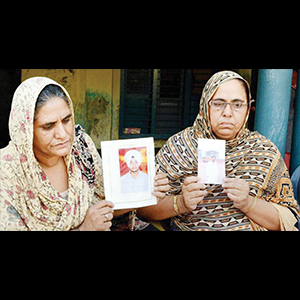
    NEW DELHI (TIP): The new government led by Prime Minister Narendra Modi on Thursday, June 19 scrambled to secure the release of 40 Indians being held in war-torn Iraq but asserted it was doing its “very best” to ensure their safety in the strife-torn country. While the ministry of external affairs said that it had information on the location where the Indians are being held captive, external affairs minister Sushma Swaraj — who met families of some of the abducted Indians – said the government would leave no stone unturned to free the Indian workers. The mass abductions have arguably presented the new government with the first big challenge since it assumed power last month. Most of the abducted Indians, working for a Turkish construction company, hail from Punjab though a few are from Himachal Pradesh and Uttar Pradesh.

    “I am personally mulling over all options. The government is making all kinds of efforts. We are not leaving any stone unturned,” Swaraj told reporters. “I am personally supervising this…I want to assure the families that the government and I will try our very best… make every effort,” she added. The government has already dispatched a former ambassador to Baghdad to coordinate rescue efforts in Iraq where large parts have been overran by Sunni insurgents. External affairs ministry spokesperson Syed Akbaruddin said during briefing, “We do have an understanding of the location (of the workers).

    Given that the matter is underway, at this stage, I will not be able to share details of their location and what Iraqi authorities have shared with us”. Punjab chief minister Parkash Singh Badal and his Himachal Pradesh counterpart Virbhadra Singh appealed to the Centre to ensure the safe return of the abducted Indians. Badal has said he is willing to pay a ransom to gain the freedom of the workers from Punjab. Earlier in the day, Sushma Swaraj met a delegation of families of seven of the abducted Indians.

    “The 40 men are safe… When the situation normalises, we will try to get them released,” she told the delegation accompanied by Badal. Himachal chief minister Virbhadra Singh said that the government has so far learnt that at least eight persons hailing from different parts of the state are missing in Iraq. “We are concerned about the safety of the all Himachal employed in Iraq,” he added. Official sources said, at least 16 residents of Haryana are believed to be stranded in strife-torn Iraq.

    Tamil Nadu chief minister J Jayalalithaa also sought the Prime Minister’s personal intervention to secure safety of 46 Indian nurses, including six from the state, trapped in Iraq. In Jammu, the family-members of Rajesh Kumar, 34, informed that his phone is switched off for the last one week. “We are constantly trying but his phone is switched-off for one week. It has never happened before,” a sobbing Reema, his wife, said. Eight migrants from Gorakhpur and Deoria in Uttar Pradesh are feared stuck in the Iraq turmoil.

  • Terror threat: Security to be stepped up at Ayodhya, Varanasi and Mathura

    Terror threat: Security to be stepped up at Ayodhya, Varanasi and Mathura

    NEW DELHI (TIP): Security at religious places in Ayodhya, Varanasi and Mathura will be enhanced following intelligence inputs which suggested that terror outfits may try to attack them. This decision was taken at a meeting held here on Thursday and chaired by Union home secretary Anil Goswami.

    It was attended by DGP of CRPF Dilip Trivedi, Uttar Pradesh DGP A L Banerjee, principal secretary (home) Deepak Singh Singhal among others. More CCTV cameras and other electronic devices will be put in place as per the new security drill which will be carried out at the religious sites. CRPF, which is guarding the sites, has been asked to deploy more forces and remain alert round-the-clock to foil any possible attempt by terrorists to attack these sites. Ayodhya and Varanasi had witnessed terror attacks in the past.

    On July 5, 2005, five terrorists attacked the makeshift Ram temple at the Ram Janambhoomi-Babri Masjid complex in Ayodhya. All five terrorists were shot dead in the gunfight with CRPF personnel, while one civilian died in a grenade attack. The CRPF suffered three casualties. Terrorists carried out blasts in Varanasi twice. In July 2006, three explosions hit the temple town while the Aarti was in progress. In December 2010, an explosion occurred at Sheetla Ghat, adjacent to the main Dashashwamedh Ghat, where the evening prayer ritual had commenced. A two-year-old girl was killed and her mother was critically injured along with 38 others.

  • 18 Indian pilgrims killed in Nepal

    18 Indian pilgrims killed in Nepal

    KATHMANDU (TIP): At least 18 Indian pilgrims were killed and 53 others injured when an overloaded bus carrying them veered off a mountain road and rolled about 100m before plunging into a river in Nepal, officials said on Tuesday. “All 18 people who died in the accident were Indian nationals, mostly from Uttar Pradesh,” chief district administrator Ram Bahadur Purumbang said. A total of 56 people were injured in the accident when the bus plunged into the Madi river in Pyuthan district, 750km west of Kathmandu on Monday night.

    There were 74 passengers and all except three people —the bus driver, his helper and a lady — were Indian nationals who were returning from a Hindu pilgrimage in Swargadwari, Purumbang said. Fifteen died on the spot and three breathed their last while undergoing treatment at a local hospital, he said.

  • ‘Am I not a citizen of India?’

    ‘Am I not a citizen of India?’

    An inner cry of a Dalit from the heartland of India

    Why I am asked about my caste when I go to the police? Am I not a citizen of India?” The father of one of the girls gang raped and brutally murdered asked the Samajawadi Party leader and Badaun Member of Parliament Dharmendra Yadav. It is time that this pertinent question needs to be answered not just by few politicians across the party lines but by the nation itself. What happened in Katra village in India’s northern state of Uttar Pradesh is a horrific crime of brutality against women.

    Millions of Indians everywhere must be feeling the shame of India in the news on the continuing assaults on women. However, it is more than just isolated incident of criminal wrong doings but rather emanating from an entrenched caste-driven mindset of these mad men who feel that they have the god-given right to them and are a privileged sect who can therefore get away with murder. According to press reports, in Badaun District, U.P, on the night of 28 May, two girls, cousins aged 14 and 15 years, stepped out of their house in Katra village to relieve themselves.

    When the father, a farm laborer went to police last week to report that his daughter and her cousin had gone missing, a constable slapped him in the face and sent him away. Hours later, he found the two girls hanging by their necks from a nearby mango tree. An autopsy revealed that they had been raped and strangled. The reaction from Akhilesh Yadav, the Chief Minister of the state while questioned on the brutality of this Taliban type of execution was nothing but a cold, callous and insensitive one as he chided the woman journalist who asked the question — ‘you aren’t in any danger are you?’.

    It is reminiscent of his father and the Samajawadi honcho Mulayam Singh Yadav’s statement in the past that ‘boys make mistakes, should we hang them for it? What is in it with these political leaders who have taken the oaths to uphold the law? Are they plain incompetent or willfully negligent in carrying out the responsibilities as elected representatives? His inaction during and after the Muzaffarnagar riots is on record that has already left a huge question mark on his leadership credentials as well as his impartiality in dealing with these human tragedies.

    This case has shocked the nation for a number of reasons; first and foremost, it once again shows the ugly truth about the age-old caste system which is not only thriving in India but exploited by various political parties. Mr. Shashi Tharoor, a former Congress Minister and Member of Parliament recently was quoted as saying ‘when India castes the votes in an election, it is voting the castes’.

    The family of the victims belongs to the Dalit community whereas the perpetrators of this heinous crime belonged to the higher caste Yadavs. If one looks at the history, the Dalits have been at the receiving end for centuries being discriminated against by the higher castes with impunity often being harassed and murdered without having a price to pay. Sadly, Uttar Pradesh is the epicenter of these crimes targeted at these helpless women who were taunted and raped at will, many times, just for the simple reason that they belong to the Dalit community.

    The recent election of Modi appeared to have given a boost to the upper caste majoritarian sentiment as evidenced in the current makeup of the Cabinet that consists two-thirds of the Ministers belonging to the RSS (Rashtriya Swayamsevak Samaj), a powerful ultranationalist grassroots movement raising serious doubt that whether an egalitarian shift would take place under this new Administration. At a rally in Muzaffarpur in March, BJP’s prime ministerial candidate Narendra Modi had stood beside Dalit leader Ram Vilas Paswan of the Lok Janshakti Party, and declared that the coming decade would be a “decade of dalits” and weaker sections of the country.

    Back in Gujarat however, over the last decade nearly Rs 3,689 crore of funds for targeted programs to uplift Dalits and economically and socially backward classes, went unutilized, according to Dalit group Navsarjan. The December 2012 gang rape in New Delhi, the country’s capital shook us all that prompted Congress-led UPA government to pass stricter laws. However, the rapes and abuse of women continue to occur unabated. Recent reports show that a rape is committed every 22 minutes though, the statistics and official records would never reveal the true picture as many of these cases go unreported.

    The social stigma attached to a rape often results in silencing the victim who might be ostracized or ridiculed publicly if they choose to go public. The law enforcement system is not geared to provide sympathetic ears, if anything, they impart fear. On that fateful night, the route these two girls took is familiar for the women of the village. It is probably the only time in the day when they step out alone, unaccompanied by the men of the family, in the dark. “Men go out in the day, so women can go only early in the morning or late at night” said one of the neighbors.

    This is a familiar, every day routine in rural India where the acute shortage of basic toilet facilities forces women and girls to venture out to open fields that makes them obvious targets for sexual violence. Nearly two months ago, four girls from Bhagna in Haryana who had stepped out to answer nature’s call were picked up from right outside their residence. They were raped and then dumped at the Bhatindia railway station in Punjab. It took the families an entire day to get the FIR registered and the medical examination took even longer. Five people were arrested in connection with that case, though the man alleged to be the main culprit, the village sarpanch continues to roam free.

    Most of that family fled the village fearing for their lives and they have been holding a protest at Jantar Mantar, for nearly two months. To those observers, the horrific crimes in both Badaun and Bhangana display the power politics as well as the prevalent caste and gender discrimination and there is no relief in sight with caste oriented policies of those who are in power. The National Campaign for Dalit Human Rights states that over one-sixth of India’s population, some 170 million people, live a precarious existence, shunned by much of Indian society because of their rank as “untouchables” or Dalits – literally meaning “broken” people – at the bottom pf India’s caste system.

    Dalits are discriminated against, denied access to land and basic resources, forced to work in degrading conditions, and routinely abused at the hands of police and dominant-caste groups that enjoy the state’s protection. Among the Dalit community and its supporters & sympathizers, Dr. Ambedkar’s statement resounds today more than ever; ‘My final words of advice to you are; educate, agitate and organize’ have faith in yourself. With justice on our side I do not see how we can lose our battle.

    The battle to me is a matter of joy. This battle is in the fullest sense spiritual. There is nothing material or social in it. For ours is a battle not for wealth or power. It is a battle for freedom. It is the battle of reclamation of human personality’. Are the NRIs only ashamed of the News itself or this entrenched system of enslavement? Will we ever show the courage to join this ‘ battle for freedom’ as Ambedkar called it for the sake of India?
    (The author is Chairman, Indian National Overseas Congress (I), USA)

  • Meet the new Chief Minister of Gujarat

    Meet the new Chief Minister of Gujarat

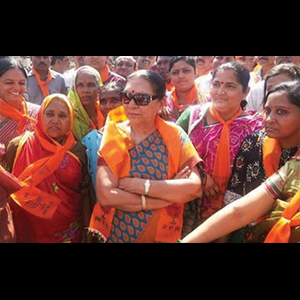
    Anandiben Patel, the new Chief Minister of Gujarat, is a long-time confidante of her predecessor Narendra Modi, and is often described as Gujarat’s “Iron Lady”. The stern-faced Anandiben, regularly seen wearing colorful saris and a bindi (the dot many Hindu women wear as decoration on their forehead), has been a Gujarat government minister since 1998 and has built a reputation as a tough, no-nonsense taskmaster like Modi.

    The septuagenarian is not seen as a mass leader and many say she lacks charisma. Rajiv Shah, the former political editor at the Times of India newspaper in Ahmedabad, Gujarat’s largest city, who has met her several times, described Patel as “extremely curt”. But many agree she has evolved into an effective administrator credited for improving the state’s schools and playing a key role in infrastructure development.

    Patel first came to the attention of senior BJP party leaders in Gujarat in 1987 when she was given a bravery award for rescuing two female students from drowning. On her official website she described the episode as “a life changing event” which propelled her into the role of president of Gujarat BJP’s women’s wing. After three decades as a teacher, Patel was elected in 1994 as a member of the Rajya Sabha, the upper house of India’s parliament.

    Close relationship
    Four years later, she secured a seat in state assembly polls on a BJP ticket in her home state and was made minister of two departments – education and women and child welfare – by Gujarat’s former chief minister Keshubhai Patel. Under Modi, Patel’s responsibilities grew. Since 2001 when he became Gujarat’s Chief Minister, she has been in charge of a number of departments including revenue, roads and buildings, disaster management, and urban development and urban housing.

    For years now, she has been seen as the second in command. “When Modi is out of the state, she is the one virtually in charge,” The Indian Express newspaper wrote after featuring her for the first time this year in its annual list of the 100 most powerful Indians. The two leaders have a close relationship. “Those who cannot reach the CM [Modi], approach her for permissions and sanctions,” the Ahmedabad Mirror newspaper remarked in a 2012 article.

    Patel’s estranged husband, Mafatlal Patel, a former BJP member with whom she has two grown-up children, once complained about Modi’s influence over his wife in letters to the former Prime Minister Atal Bihari Vajpayee. “When she entered politics, she severed all ties with the family for no fault of ours. Her behavior has become deformed and Narendra Modi is responsible for it,” Patel was quoted as saying in a 2009 news article. Possibly the only other individual to enjoy as close a connection with India’s next Prime Minister is Amit Shah, a former Home Minister of Gujarat, who led the BJP’s successful poll campaign in Uttar Pradesh state.


    34

    Shah is also an accused in the extrajudicial killing of Sohrabuddin Sheikh, a Muslim civilian, and is still on bail. Patel, who was odds-on favorite to take over in Gandhinagar, Gujarat’s capital, has long had differences with Shah. Siddharth Varadarajan from the Delhibased Centre for Public Affairs and Critical Theory, has described the pair as Modi’s “acolytes” and says that is why they have been able to flourish politically.?

    Gender barriers
    From a young age, Patel broke gender barriers. Her parents enrolled her into a primary school where she was the only female student and it was the same story years later in 1960 when she entered college, according to the biography on her official website.As a politician, she has championed women’s issues.

    But as Gujarat’s first female Chief Minister, political commentators say it is unlikely she will prioritize issues like maternal mortality and female literacy despite a human development index report released by a government-appointed panel last year categorizing the state as “less developed”. ?Instead, they say, she will govern like her predecessor and portray herself as a business-friendly leader to ensure rapid economic growth in the state of 60 million people.

  • SP dissolves all state units, Akhilesh spared

    SP dissolves all state units, Akhilesh spared

    LUCKNOW: Samajwadi Party (SP) national president Mulayam Singh Yadav on Thursday dissolved his party’s state unit. But his son and chief minister, Akhilesh Yadav, got way with it and would continue to be SP state chief. The fresh move has led to demands of similar action against other senior party leaders, who headed the Lok Sabha election campaign. Akhilesh had, on Wednesday, sacked 36 heads of corporations a day after Mulayam indicated he was in no mood to spare those responsible for the party’s humiliating defeat.

    A section of the party, particularly the younger lot, which has been at the receiving end of the dissolution of the state unit, has demanded action against senior leaders at the helm of affairs during the elections. “The senior leaders cannot escape their responsibility. They were the ones who selected the candidates. Why should not they be held responsible for the debacle?” asked a party leader.

    The party had given tickets about a year in advance. But at least 40 candidates were replaced and some of them as late as three months before the elections, said a youth leader. “This automatically created rebels within the party — something which was completely avoidable,” he said.

  • BJP MAKES INROADS INTO NEW AREAS

    BJP MAKES INROADS INTO NEW AREAS

    The party has increased vote shares in states that are not its strongholds

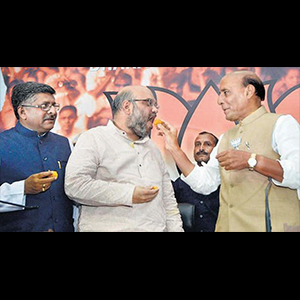
    NEW DELHI (TIP): Announcing the BJP’s historic victory, party president Rajanth Singh quoted former Prime Minister Atal Bihari Vajpayee’s famous lines, “Andhera Chatega, Suraj Nikalega, Kamal Khilega [the darkness will dissipate, the sun will shine and the lotus will bloom]” and with unmistakable pride added: “Aaj kamal khil chuka hai aur asha ki nayi subah ho gayi hai [the lotus has bloomed and there is a new dawn of hope].”

    What the party has accomplished in Uttar Pradesh, Rajasthan and Madhya Pradesh is not as is its performance in States such as Tamil Nadu (5 per cent of votes polled), Odisha (21 per cent) , Jammu and Kashmir (32 per cent), Assam (36 per cent), and West Bengal (16 per cent). By winning Ladakh in Jammu and Kashmir for the first time, it has also stormed into the Congress and the National Conference bastion.

    This improved performance in areas that were not BJP strongholds is being attributed to the acceptance of Narendra Modi as a national leader and Prime Minister. “This is the love of the people from across the country that reflects in the increased vote share even in areas like the North East, East and South. Mr. Modi’s leadership converted the mood in these areas to a pro-BJP wave,” said senior leader Ravi Shankar Prasad. He said the “political witch-hunt” and “motivated campaigns” against Mr. Modi were not enough to block his ascend.

    “His promise of good governance attracted people to him. He was seen as the embodiment of hope and change.” The BJP’s revised election strategy in the Lok Sabha polls had been to cover the last mile. Extensive campaigns were undertaken in distant parts of the country and people were promised employment, development, security and growth. Separate manifestoes were drafted for each of the North-Eastern States and at rallies in the region Mr. Modi focused on development, protection of border areas, illegal immigration and even the ecology.

    For instance, in Manipur, where the party has a vote share of 11 per cent, construction of arterial roads has been promised, the contentious issue of the Armed Forces (Special Powers) Act, 1958 has been touched upon and decentralisation of administration has been spoken of. In West Bengal, between the Left and the Trinamool, it has managed to carve out a space for itself. Here again, the promise is of growth and a better economy.

    The BJP may not have bagged seats, but by securing 16 per cent of the votes it has made a beginning. Similarly, with a vote share of 10 per cent in Kerala, 32 per cent in Jammu and Kashmir, 36 per cent in Assam, 21 per cent in Odisha, eight per cent in Meghalaya and 11 per cent in Manipur, the BJP is no longer confined to the North, West and Central India and is staking its claim as a true national party.

  • MAYAWATI LOSES UP, BSP DRAWS ZERO IN LOK SABHA ELECTIONS

    MAYAWATI LOSES UP, BSP DRAWS ZERO IN LOK SABHA ELECTIONS

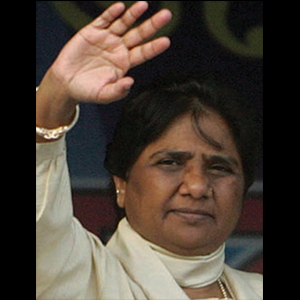
    NEW DELHI (TIP): The Modi blitzkrieg May 16 destroyed the BSP, leaving Mayawati, who once harboured hopes of becoming India’s first Dalit prime minister, without a single Lok Sabha seat in Uttar Pradesh. In a verdict that sent the BSP in mourning, not one of its candidates could claim victory despite hectic campaigning by Mayawati and two of her trusted lieutenants: Naseemuddin Siddiqui and Satish Chandra Mishra.

    The Bahujan Samaj Party won 20 Lok Sabha seats in 2009. But Election Commission data showed that the BSP had finished second in 33 of the 80 constituencies in the sprawling state. Having lost the 2012 assembly polls to arch rival Samajwadi party, the BSP was widely expected to bounce back in the Lok Sabha battle, largely owing to strong anti-incumbency against the Akhilesh Yadav government.

    The results, party leaders admitted, were most unexpected. “This is a body blow to us. We need to sit and do a post-mortem,” a senior outgoing BSP MP who lost told IANS. But the writing was on the wall, and Mayawati had apparently read it in time. And the not-so-media savvy Mayawati addressed a flurry of pressers during the last 10 days of campaign, trying to make course corrections vis-a-vis the caste matrix and her captive Dalit vote bank.

    Aware that Dalits were being poached by BJP’s prime ministerial candidate Narendra Modi, Mayawati was jittery after the fourth phase when her feedback was that Dalits were flocking to Modi. Her second major constituency, Muslims, also failed to come to her rescue. The BSP fared badly in the 2012 assembly polls largely because Muslims deserted her.

    The same was repeated in the Lok Sabha ballot as many Muslim voters felt that the BSP could join hands with the BJP later. The BSP fielded 17 Dalit candidates, 15 Other Backward Class candidates, 19 Muslims, 21 Brahmins and eight Thakurs. But her rainbow coalition that clicked in the 2007 assembly election did not find enough takers this time. The BSP took a serious drubbing in western Uttar Pradesh and Poorvanchal belt which have been traditionally with the party.

  • BJP crushes rivals in UP

    BJP crushes rivals in UP

    LUCKNOW (TIP): The manner in which the ruling Samajwadi Party, the Bahujan Samaj Party and the Congress have been swept aside in Uttar Pradesh clearly indicates that the “BJP versus the rest” in the Lok Sabha polls has been a no-contest. SP chief Mulayam Singh and BSP president Mayawati campaigned vigorously for their parties, little knowing that the voters had other plans. But the BSP drew a blank.

    In 2009, the BSP won 20 seats with a 27.42 per cent vote share. It can be said that while Ms.Mayawati’s core Dalit support base has remained more or less intact, the Other Backward Classes, the Most Backward Classes and the Brahmins have deserted her. The SP, which won 23 seats in 2009 with a vote share of 23.26 per cent, has won only five seats in the State, all by members of Singh’s family in Azamgarh, Mainpuri, Kannauj, Budaun and Firozabad. The BJP appears to have gained from the switchover of the SP’s Yadav and OBC votes, while the fight between the ruling party and the BSP has proved disastrous for both.

    In a nutshell, the BJP, with a projected vote share of 42.3 per cent, has reaped the dividends of the consolidation of Hindu votes. The Muslim vote appears to have been divided between the SP, BSP and the Congress, with no benefit for any party. For the Congress, which won 21 seats in 2009 with a vote share of 18.25 per cent, it has been a great fall in 2014.

    While Congress president Sonia Gandhi has retained Rae Bareli by a margin of over 3.4 lakh votes, her son and Congress vicepresident Rahul Gandhi won Amethi by a reduced margin. For Yadav, the verdict in U.P. has turned out to be a huge disappointment. His Third Front chant has been rejected by the voters and now he is faced with the more challenging task of keeping his son Akhilesh Yadav’s government stable in Uttar Pradesh.

  • From Rahul to Akhilesh, from Ajit Pawar to media: why Modi needs to thank them

    From Rahul to Akhilesh, from Ajit Pawar to media: why Modi needs to thank them

    By Rajdeep Sardesai

    Barring a miracle, at some stage on Friday, Narendra Modi will be poised to fulfill his long-cherished ambition of being the next prime minister. Yes, exit polls have a spotty record in the country, but unless we have all got it horribly wrong, there is no reason to believe that there isn’t a Modi ‘wave’ in large parts of the country, if not a tsunami.

    When Modi writes his blog and thanks the Indian voter, here are a few more thank you cards he should send out. On top of the list will be Rahul Gandhi. No individual can be held solely responsible for a party’s electoral defeat, but the fact is, Gandhi had his chance and fluffed it. His approach to the elections was collegiate: Almost as if he was participating in a student council election and not in a battle for the heart of India.

    The Congress campaign was listless and confused, perhaps because the general wasn’t in a position to set the agenda. The ‘face’ of a party needs to offer a big idea: Modi offered hope and aspiration, Gandhi stood for the status quo. His refusal to take an office of responsibility in the Manmohan Singh government or launch a sustained campaign on any specific issue was equally calamitous. The ‘divine right to rule’ principle no longer holds in Indian politics: Gandhi needed to prove himself by doing the real heavy lifting, not by midnight stays in a Dalit home or suddenly waking up to call his own government’s ordinance “nonsense”.

    By the time he eventually agreed to lead the ship in January this year, he had been pigeonholed as Rahul Baba, a dynast who couldn’t be taken seriously. The next thank you card must be sent to Manmohan Singh. We are in the age of communication and to have a prime minister who was in near permanent silent mode was a disaster. Frankly, he should have stepped down well before he finally announced his retirement this year.

    Maybe he should have asserted himself on day one of UPA 2 when he was forced to take back A Raja into his Cabinet. Even if he had stepped down in September last year when he was publicly humiliated by Gandhi on the ordinance on convicted MPs, he might have saved himself from an utter loss of face. As it is, a decent man will go down in the history books as little more than a political survivor.

    Maybe a thank you note also needs to go to 10 Janpath. Sonia Gandhi’s economic philosophy meant that UPA 2 ran a government on dole, not growth. However wellintentioned, the populist rhetoric created an unsustainable growth model, aggravated by a global economic crisis. No government can survive prolonged inflation and low growth: Jobs, not hand-outs, win you votes.

    The weaknesses of Singh and the Gandhis meant that Modi’s muchhyped “chappan kee chaati” (56-inch chest) actually appeared even broader than the reality. Leaders emerge in a context: A government in a state of drift and hobbled by corruption charges allowed the Gujarat chief minister to position himself as India’s Mr. Fix-it, someone whose despotic streak and questionable role in the 2002 riots could be forgiven in the overarching need for a ‘decisive’ leader. The next thank you card must go to Akhilesh Yadav. Uttar Pradesh was always going to be the Kurukshetra of Modi’s political ambitions.

    The BJP needed to win big in this state to achieve its ‘Mission 272+’. The party didn’t have the organizational muscle to achieve its aim. But Yadav’s dysfunctional government made it that much easier for Modi’s master strategist Amit Shah to get a foothold in UP. From its handling of the Muzaffarnagar riots to the return of goonda raj, anger against the Samajwadi Party government provided the perfect platform for Modi’s message of change. Modi may also wish to send a thank you card to Mani Shankar Aiyar.

    The backbencher Congress MP’s derisive chaiwallah remark was just the kind of opening the BJP’s mascot was looking for. It allowed Modi to rediscover his tea boy past, and contrast his social origins with the elitist moorings of the Congress. Chaiwallah versus shehzada in a merit-driven new India: Even Salim-Javed couldn’t have written a better story line. Other Congress leaders who chose to liken Modi to ‘bhasmasur’ and a ‘cockroach’ could also be thanked since the demonization allowed the BJP’s poster boy to cleverly position himself as a ‘victim’ and an antiestablishment ‘outsider’.

    A thank you card might also be sent to Ajit Pawar, the politician who has become the ‘face’ of an arrogant and insensitive Maharashtra government. When confronted with a drought in the state, if a senior leader chooses to ask people to urinate in the dams, then no amount of repentance will lead to public forgiveness. Along with UP, Maharashtra is the other big state turnaround for the BJP. A thank you card should also be sent to corporate India. Never before in the history of Indian elections, has so much big money been riding on the fortunes of one man.

    Team Modi ran a brilliant campaign, but it was driven by unlimited access to funds, changing the face of Indian elections, perhaps forever. The final thank you card should be sent to the media: Never before have the Indian media been so open about their role as a political cheerleader. Instead of a serious interrogation of the Gujarat model of development, a powerful section of the media allowed Modi to get away with a mix of genuine achievement, clever marketing and half-truths.

    When Modi, for example, almost claimed credit for Gujarat’s ‘White revolution’, the media even forgot to remind him of a certain Verghese ‘Amul’ Kurien. In the making of Brand Modi, the man from Vadnagar owes a huge debt to the media.

  • LOK SABHA POLLS: PHASE 7 SEES 66% VOTER TURNOUT

    LOK SABHA POLLS: PHASE 7 SEES 66% VOTER TURNOUT

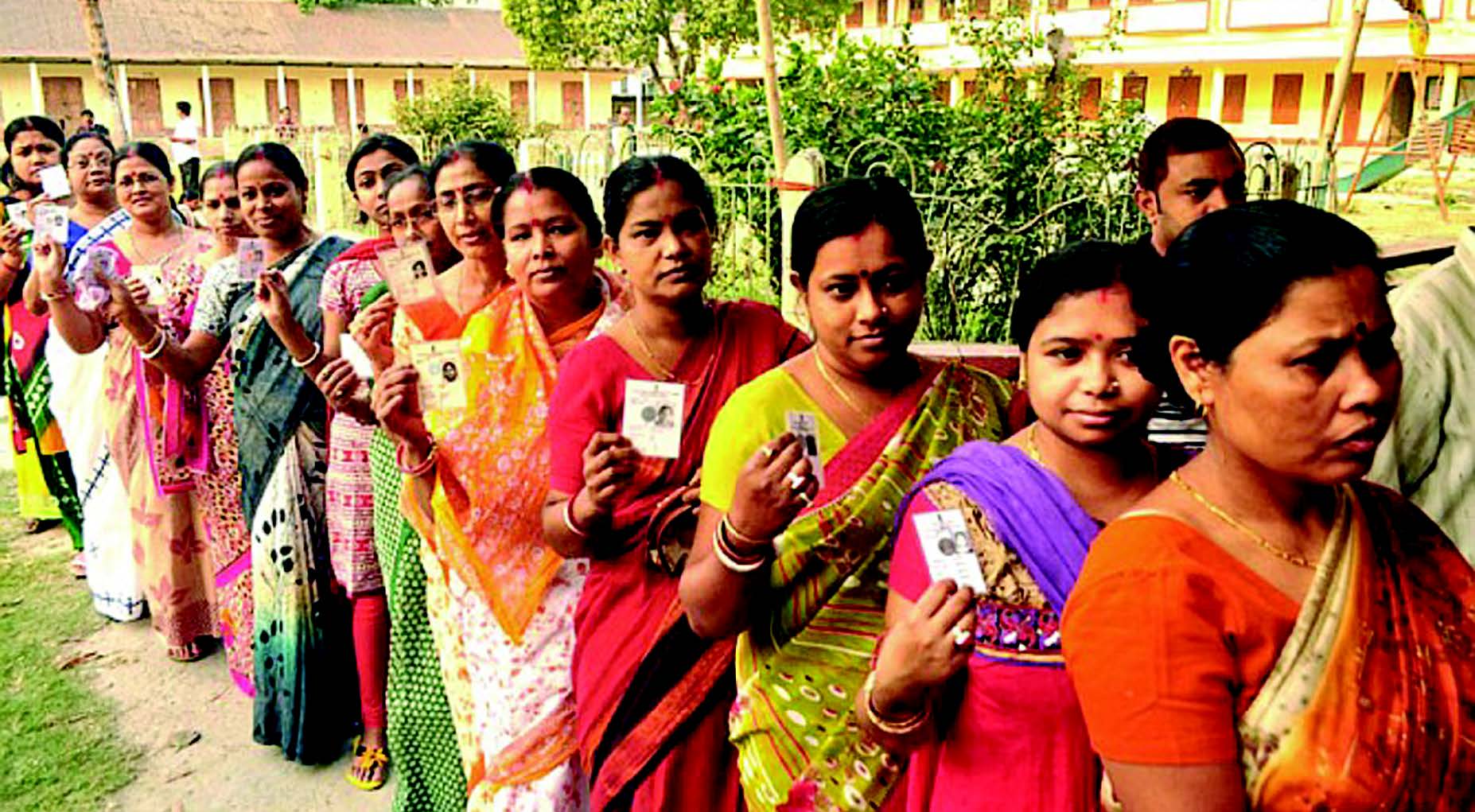
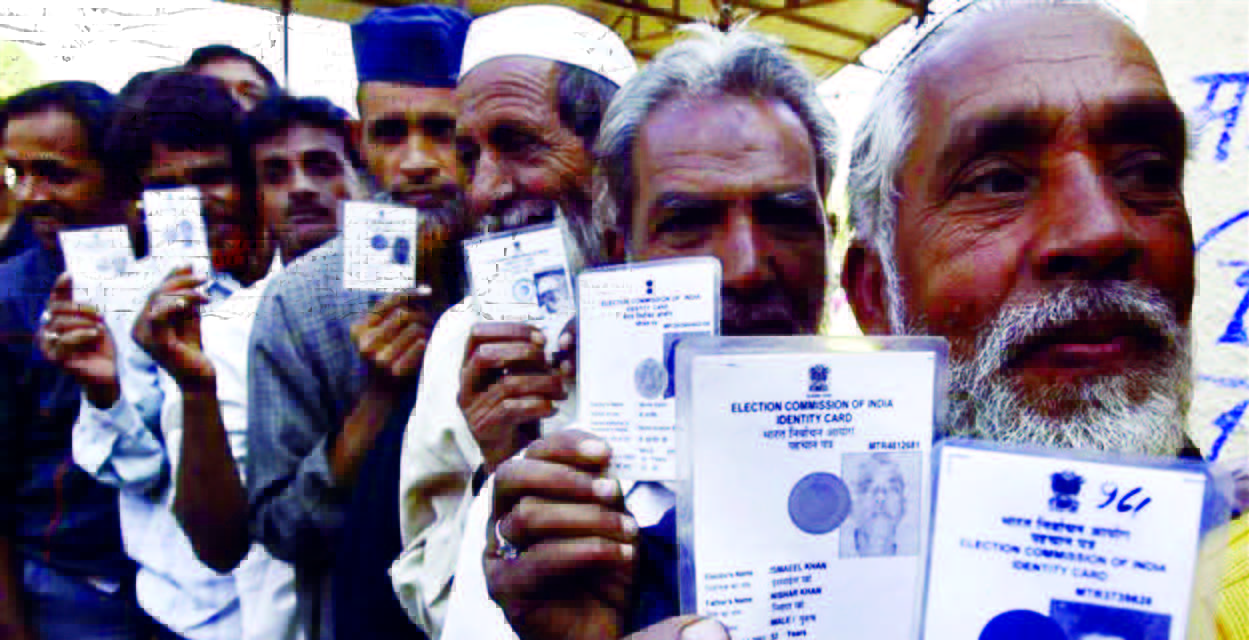
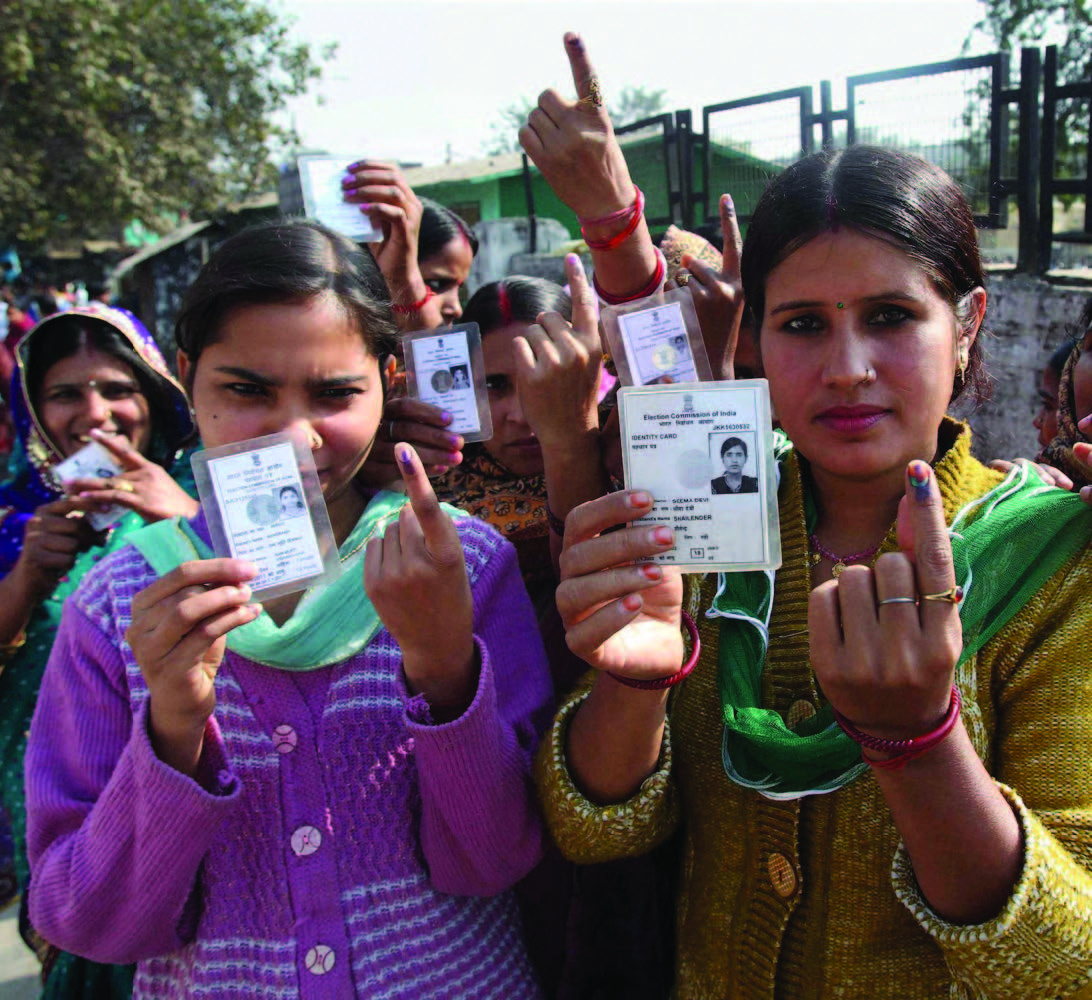
    NEW DELHI (TIP): Nearly 66% of the electorate exercised its franchise on Wednesday in the seventh phase of the 16th general election, in line with the heavy turnout that marked the earlier rounds of voting. More than 139 million people were eligible to cast their votes in the phase that decided the electoral fortunes of political heavyweights including the Bharatiya Janata Party’s (BJP) prime ministerial candidate Narendra Modi and his senior colleagues Rajnath Singh, L.K. Advani, M.M. Joshi and Arun Jaitley, besides Congress party president Sonia Gandhi.

    The day also marked what Modi claimed was the first police complaint registered against him in his life. The first-information report (FIR) was registered against him at the behest of the Election Commission. The BJP is eyeing at least 62 of the seats up for grabs in Wednesday’s voting, by the end of which elections were completed in 438 of the 543 Lok Sabha constituencies. Elections to the remaining 105 constituencies will he held on 7 May (64 seats) and 12 May (41). The results will be declared on 16 May.

    The 438 Lok Sabha constituencies where voting has taken place so far have witnessed a 66.2% voter turnout, compared with 57.6% in 2009. Some 62.4% polling was recorded in Gujarat, where all 26 Lok Sabha constituencies in the state went to the polls on Wednesday. Vadodara, where Modi is in the electoral fray, had witnessed a high turnout of 70% well before polling ended. “There is a phenomenal increase in the voter turnout in Gujarat…,” said Akshay Rout, director general of the Election Commission. “The voter turnout for the state in the 2009 general election was 47.8%.” In the last five Lok Sabha elections, the average voter turnout in Gujarat was less than 50%.

    The turnout is expected to be higher this time around following a voter awareness drive carried out by the Election Commission and with Modi being selected the BJP’s prime ministerial candidate, political experts said. After casting his vote in Gandhinagar constituency, Modi told reporters that this was the end of India’s “mother-son government”—a reference to Sonia Gandhi and her son, Congress vice-president Rahul Gandhi. Modi said the Congress appeared to have accepted defeat after signalling it may support a Third Front (non-Congress, non- BJP) government at the Centre to keep Modi out.

    “The Congress has accepted defeat as it is now saying that it will support the Third Front to keep me out of the race. The Prime Minister, the finance minister and other senior ministers are not in the contest. Tall leaders of the Congress are running away from the elections,” Modi said. “Now, some are trying to save their chairs, some are trying to save themselves and some are trying to save prestige of the Congress party,” he added. Modi suffered a setback, with the Election Commission asking the Gujarat state authorities to register two first FIRs against him for holding a media briefing outside a polling station in Gandhinagar and also holding the BJP’s symbol, the lotus, while talking to reporters.

    “Tone and tenor of the address made by Narendra Modi and the statements made by him, the manner in which the symbol lotus of the BJP was being displayed by him, it is evident that the address was in the nature of political speech intended and calculated to influence and affect the result of elections in the constituencies going to polls today, not only in Ahmedabad but also in all other constituencies in Gujarat and elsewhere in the country,” the poll watchdog said in a statement. Addressing a rally in Tirupati, Modi referred to the FIR. “I will never forget 30 April. Today was the first time an FIR was registered against me,” he said.


    28

    Modi claimed he had never violated the law hadn’t even got a parking ticket in his life. Gujarat is considered to be a bastion for the BJP and the party is looking to make a clean sweep in the state this time around. Modi is also contesting from Varanasi in Uttar Pradesh. In the 2009 Lok Sabha election, the BJP won 15 seats and the Congress 11. The BJP increased its tally in by-elections—in the outgoing Lok Sabha, the BJP has 17 seats while the Congress has nine. On Wednesday, Punjab also recorded its highest-ever turnout at 73%. The voter turnout was 76% in Daman and Diu, 81.35% in West Bengal, 73% in Punjab, 59% in Uttar Pradesh, 70% in the Telangana region of Andhra Pradesh, 60% in Bihar, 85% in Dadar and Nagar Haveli, and 25% in Jammu and Kashmir.

    Telangana vote
    Andhra Pradesh’s Telangana region, which will become India’s 29th and newest state on 2 June, also went to the polls on Wednesday. The region recorded a turnout of 59.3% as of 3pm. Medak (65%) had recorded the highest polling while Hyderabad district (51%) recorded the lowest, a bulletin by the state election commission showed. About 28.1 million voters in Telangana were registered to elect candidates to 17 Lok Sabha and 119 state assembly seats at 30,000 polling stations.While 265 candidates were in the fray for parliamentary constituencies, 1,669 candidates were in the race for the state assembly.

    Voters in Telangana are simultaneously electing representatives to the Lok Sabha and to what will become the Telangana state assembly. The other part of Andhra Pradesh will exercise its mandate a week later on 7 May. The 294-member Andhra Pradesh state assembly will be divided according to constituencies once Telangana becomes a state. The main parties and groupings in the race to form the first government of Telangana are the Telangana Rashtra Samithi (TRS), and two alliances—one between the Congress and the Communist Party of India and the other between the Telugu Desam Party (TDP) and the BJP. The winner in the 119-member Telangana assembly has to get a simple majority of at least 60 seats to form the new government in the would-be state.

    Polling was not devoid of incidents. Actorpolitician K. Chiranjeevi landed himself in an embarrassing position when a youngster objected to him skipping the queue at a polling booth. Chiranjeevi, who is chairman of the Andhra Pradesh Congress Committee, then beat a hasty retreat and stood at the end of the queue. TDP chief N. Chandrababu Naidu, too, landed himself in an embarrassing position when he revealed who he cast his ballot for. “Due to our pre-poll arrangement, I cast both my votes for lotus symbol (of the BJP),” Naidu told waiting media.

    The state election commission did not take kindly to this. “Secrecy of vote has to be maintained by every voter,” Andhra Pradesh chief electoral officer Bhanwar Lal said. As a result, the returning officer of the polling booth will declare Naidu’s vote ineligible. “He should act responsibly,” Lal said. “If we don’t delete that (ballot), action will be taken against us.”

  • EC ACTING LIKE GOD, SAYS AZAM

    EC ACTING LIKE GOD, SAYS AZAM

    LUCKNOW (TIP): Samajwadi Party leader Azam Khan, who has been banned by the Election Commission from campaigning in Uttar Pradesh for his allegedly controversial speeches made at the start of the elections, on Thursday said the poll panel could not behave like God and dared it to cancel his membership of the state assembly.

    Taking to reporters in Rampur, he said instead of behaving like God, the EC should adopt a line of action best suited for democracy and in the spirit of the Constitution. Khan said if he was wrong, then the poll body should exhibit courage and cancel his membership of the UP assembly. On April 23 the EC had issued a show-cause notice to Khan for reportedly making objectionable remarks against it and circumventing a ban imposed on him from campaigning in UP.

    The notice was issued days after the EC banned him from campaigning following his controversial remarks on the Kargil war. Alleging the EC behaved in a partial manner with him because he was a Muslim, Khan said: “I don’t need any person’s kindness or leniency since I’ve been acknowledged as a man of principles and high ideals from the beginning of my political career.”

    Without naming BJP general secretary and UP in-charge Amit Shah, Khan said: “A person who has widely been termed a hooligan or assassin of humanity by different political bodies as well as prominent social and religious outfits was allowed to campaign for BJP’s candidates, but the EC has taken action against me because I’m a Muslim.” Khan threatened to go on a fast if the EC ban on him was not lifted.

  • Mayawati is like my aunt, says Akhilesh

    Mayawati is like my aunt, says Akhilesh

    LUCKNOW (TIP): Samajwadi Party state president and UP chief minister Akhilesh Yadav tried to dilute the ongoing war of words between his party and the BSP on May 1 by referring to Mayawati as his ‘bua’ (father’s sister). Addressing a public meeting in Azamgarh, where Akhilesh made an emotional pitch for his father, he said, “I am here as the son of one of the senior-most political leaders of the country and seek your support,” Akhilesh said.

    In an obvious reference to the controversy over Mulayam’s statement in which he referred to Mayawati as “Shrimati, Kumari or Behenji”, Akhilesh said, “I have always given full respect to all senior leaders. Because my seniors call someone Behenji, I have always called her my bua,” Akhilesh said. In response to Mulayam’s remark, Maywati had said he must get himself examined. However, other SP leaders launched vitriolic attack on the BSP chief.

    Talking to the media after addressing a public meeting in Allahabad, Akhilesh’s uncle and senior minister Shiv Pal said Mayawati needs medical help. “I demand this for her,” Shiv Pal said. Another minister Gayatri Prasad Prajapati said, “Humare Neta ko keh rahi hain lekin sach to yeh hai ki Mayawati to khud apna dimaagi ilaaj karwana chahiye” (she is talking about our leader, the fact is that she herself needs medical attention for her mental imbalance).

  • Phase 5: Voter turnouts higher than 2009 poll figures

    Phase 5: Voter turnouts higher than 2009 poll figures

    NEW DELHI (TIP): Voter turnouts higher than the 2009 poll figures marked the fifth and biggest round of Lok Sabha elections covering 121 seats across 12 states amidst largely peaceful balloting on April 17. A good turnout is considered a strong sign of antiincumbency, a cause of worry for the Congress. While the Election Commission was yet to announce the final voting figures late on Thursday, nearly 65% of the eligible electors cast their ballot across the 12 states.

    The highest turnout of 81.57% was recorded in four constituencies in West Bengal, which has a total of 39 seats, while the lowest was recorded in Madhya Pradesh at 54%. While 80.6% had voted in the four seats in West Bengal in the 2009 general elections, the Madhya Pradesh figure stood at 46%. “After this phase, a large section of India has already voted,” said BJP’s prime ministerial candidate Narendra Modi. “People have voted in the heat and have voted for a strong government.”

    He added that the long queues of first-time and women voters “are positive steps”. In the key battleground state of Karnataka, where polling was held in the all the 28 seats, the voting percentage was 66% and in the 11 seats of Uttar Pradesh, electorally the most important state with 80 seats in the Lower House, the turnout was 62.52%, up from 2009’s 54.2%. A good show for Congress in Karnataka could help it check the BJP’s perceived surge nationally. In the previous Lok Sabha poll in the state, the BJP had won 18 seats in the state but is struggling this time. Maoists struck in Jharkhand, exploding a land mine at Bokaro in Giridih constituency and injuring four paramilitary troopers.

    They also blew up a school building and a rail track. Allegations of voter intimidation came from parts of Bihar and West Bengal. The Election Commission ordered repolling in nine polling stations in Bihar. Thursday’s election covered a vast part of the Indian landscape — from Jammu and Kashmir in the north to Karnataka in the south, from Maharashtra along the west coast to West Bengal in the east. Polling took place in all 28 Lok Sabha seats in Karnataka, 20 of the 25 in Rajasthan, 19 of the 48 in Maharashtra, 11 seats each in Odisha and Uttar Pradesh, 10 in Madhya Pradesh, seven in Bihar, six in Jharkhand, four in West Bengal, three in Chhattisgarh and one seat each in Manipur and Jammu and Kashmir.

    Simultaneous balloting was held for 77 of the 147 assembly seats in Odisha and two assembly bypolls in West Bengal. The BJP claimed it was confident of winning most seats contested on April 17. “We are sure of winning all 25 seats (in Rajasthan),” chief minister Vasundhara Raje said in Jaipur. Former central minister Ananth Kumar voiced confidence about the BJP’s ability to do well in Karnataka, where it is the main opposition party to the ruling Congress. Central ministers Sushilkumar Shinde and Jyotiraditya Scindia brushed aside the BJP’s claims. “There is no Modi wave,” Scindia said after voting in Guna in Madhya Pradesh. Shinde said in Sholapur: “There is no Modi wave here, only Shinde wave.”

    With Thursday’s round, polling has been completed in 232 of the 543 seats in the Lok Sabha. Thursday was important both for the BJP and the Congress, which held 40 and 36 of the Lok Sabha seats that went to the polls, as well as the Janata Dal-United, Jharkhand Mukti Morcha, Janata Dal-Secular, Shiv Sena, Maharashtra Navnirman Sena, Aam Aadmi Party, Biju Janata Dal, Samajwadi Party, Bahujan Samaj Party and Trinamool Congress. Around 70% votes — up from the 2009 figure of 44.9% — were polled in Jammu and Kashmir’s Udhampur seat where elections passed off peacefully. In Bihar, where polls were held in seven Lok Sabha constituencies, 56% voting was recorded as compared to 39.3% during 2009 Lok Sabha elections.

    Polling in Odisha saw 70% people vote as compared to 66.28% in 2009. In Chhattisgarh, 63.44% polling was reported. Polling in another important state, Maharashtra, which has a total of 48 seats, 19 constituencies which went to poll on Thursday saw a turnout of 61.7%. Prominent candidates in the fray included Ananth Kumar and Nandan Nilekani (Bangalore South), Jaswant Singh (Barmer), Sachin Pilot (Ajmer), Ashok Chavan (Nanded), Misha Bharti (Pataliputra), Supriya Sule (Baramati), BS Yeddyurappa (Shimoga), Ghulam Nabi Azad (Udhampur), Maneka Gandhi (Pilibhit), Shatrughan Sinha (Patna Sahib), M Veerappa Moily (Chikkaballapur), Sushilkumar Shinde (Solapur), V Balakrishnan (Banglaore Central), and SS Ahluwalia and Bhaichung Bhutia (Darjeeling).

    About 1.37 million staff oversaw the polling, watched over by hundreds of thousands of police and paramilitary personnel. April 17 saw the largest number of Lok Sabha seats in contention on any one day since the staggered balloting started April 7. Four more rounds of voting are due until May 12. The result will be declared May 16.

  • SP backs Mulayam’s rapist remarks, faces criticism from Congress, BJP

    SP backs Mulayam’s rapist remarks, faces criticism from Congress, BJP

    NEW DELHI (TIP): Samajwadi Party supremo Mulayam Singh Yadav got himself embroiled in yet another controversy as he defended rapists saying sometimes boys make mistakes but don’t deserve the death penalty which was strongly criticised by his rivals. While addressing a rally in Moradabad, he even went to the extent of saying if voted to power his party will scrap death penalty for repeat rape offenders.

    He said, “Rapists should not be given the death sentence. Sometimes boys make mistakes. My government will try to change the law.” He was referring to the Shakti mills gangrape case in Mumbai where repeat offenders have been sentenced to death under the strict anti-rape laws enacted after the December 16, 2012 Delhi gangrape incident. This is not the first time that Mulayam has courted controversy on gender issues. The SP has consistently opposed even the Women Reservation Bill in Parliament.

    SP leader Naresh Agarwal backed the party chief saying, “Such strong rape laws are being misused by many and it’s acting against the innocent. If Mulayam said so, then he is right.” Mulayam’s son and Uttar Pradesh Chief Minister Akhilesh Yadav refused to comment saying he does not know in which context remarks were made. Mulayam’s statement, however, drew sharp reactions from political adversaries.

    BJP leader Subramanian Swamy hit out at the SP chief saying, “Mulayam Singh Yadav should think before he speaks. He wants to play minority politics over rape case.” Another BJP leader Mukhtar Abbas Naqvi said, “Mulayam’s government will never come to power. But if by some chance it does, then all the goons would be out of jail, roaming free and harming the country with their deeds.” Congress leader Shobha Oza also condemned Mulayam’s statement saying, “This is unfortunate.

    No leader should say anything that would encourage rape.” Aam Aadmi Party leader Medha Patkar said death penalty should not be awarded. She said, “Rape is a very serious offence and it should not be pardoned. But personally speaking, I am against the death penalty. A life sentence is fine, but I don’t think a death sentence is the right step.” With the SP government already facing flak over the law and order situation in Uttar Pradesh, the statement does little to redeem SP’s record on this front.

  • High voter turnout in 91 seats in LS polls, crosses the 2009 mark

    High voter turnout in 91 seats in LS polls, crosses the 2009 mark

    NEW DELHI (TIP): Marking a considerably high voter turnout as compared to the 2009 Lok Sabha elections, India voted for 91 constituencies in 14 states and Union Territories which went to polls in the third and substantial phase on April 10, with Chandigarh witnessing the highest percentage of 74.

    The national capital of Delhi, too, recorded a 64 per cent voter turnout in the mega-battle for seven Lok Sabha seats where a faction-ridden BJP tried to sail on ‘Modi wave’ while AAP and Congress attempted to regain the lost ground. A substantial increase of 12 per cent was seen in the voter turn in Delhi as compared to the 2009 polls. Muzaffarnagar and Shamli in Uttar Pradesh, which witnessed communal riots in August 2013, recorded “above average” voter turnout of 67.78 per cent and 70.85 per cent, respectively.

    The 10 seats of Uttar Pradesh, which went to polls on Thursday, reported a record turnout of 65 per cent as compared to 51.30 per cent recorded in the last LS polls. The turnout in Delhi was 64 per cent, up by 12 per cent as against 2009 elections. Chandigarh constituency recorded the highest turnout of 74 per cent, against 64 per cent in 2009 polls. Kerala, which went to polls in single phase, recorded 73.4 per cent voter turnout, up from 73.2 per cent last time. Chhattisgarh’s Bastar seat witnessed the lowest voter turnout among the 91 seats of 51.4 per cent.

    But it was higher as compared to 47.33 per cent recorded in the last LS polls. There was a voter turnout between 67 and 55.9 per cent for the 21 Lok Sabha seats in three states and a union territory, besides 70 Assembly constituencies in Odisha in eastern India. An estimated 50 per cent of the 191 million electorate had voted in eight hours of brisk polling, with men and women of all age groups queuing up at the 140,850 voting centres from the time they opened at 7 am. EC maintained that the turnout could be “much higher” in all the seats as final reports were yet to come in with voting still on after the stipulated hours in various areas.

    Although the polls were mostly peaceful, there were some incidents of violence reported from Chhattisgarh, Odisha and Bihar in Naxal related violence. In Bihar, two Central Reserve Police Force (CRPF) personnel were killed when Maoists exploded a concealed land mine in Munger district when they were on their way to neighbouring Jamui where polling was on. Maoists also blasted a school in Bihar’s Lakhisarai district. In Odisha, Maoists snatched EVMs and took away the battery of one voting machine. Though the staggered nine-phase balloting began April 7, the first two rounds involved only 13 constituencies from the country’s northeast where the BJP is not a major player. While the people of India have made their choice, the results will be known when the votes are counted on May 16.

    CONSTITUENCY-WISE VOTER TURNOUT FOR LS SEATS IN 2014

    BIHAR
    1. Sasaram – 54 per cent
    2. Karakat – 51 per cent
    3. Aurangabad – 47.5 per cent
    4. Gaya – 51.64 per cent
    5. Nawada – 49 per cent
    MAHARASHTRA
    1. Buldhana -44 per cent
    2. Akola -39 per cent
    3. Amravati – 46 per cent
    4. Wardha – 42 per cent
    5. Ramtek -40.3 per cent
    6. Nagpur – 48 per cent
    7. Bhandara-Gondiya – 53 per cent
    8. Gadchiroli-Chimur – 59 per cent
    9. Chandrapur -43.49 per cent
    10. Yavatmal-Washim -40 per cent
    JAMMU & KASHMIR
    1. Jammu – 68 per cent
    CHHATTISGARH
    1. Bastar – 47 per cent
    UTTAR PRADESH
    1. Saharanpur – 68.40 per cent
    2. Kairana – 64.90 per cent
    3. Muzaffarnagar – 63.53 per cent
    4. Bijnor – 62.96 per cent
    5. Meerut – 60.50 per cent
    6. Baghpat – 61.52 per cent
    7. Ghaziabad – 60.20 per cent
    8. Gautam buddha nagar – 47.20 per cent
    9. Bulandshahar – 61.60 per cent
    10. Aligarh – 55.60 per cent
    DELHI
    1. Chandni chowk – 66.8 per cent
    2. West Delhi – 65.64 per cent
    3. East Delhi – 65.59 per cent
    4. South Delhi – 62.67 per cent
    5. Northwest Delhi – 61.38 per cent
    6. North-East Delhi – 67.08 per cent
    HARYANA
    1. Ambala – 70.7 per cent
    2. Kurukshetra – 75.8 per cent
    3. Sirsa – 76 per cent
    4. Gurgaon – 70.02 per cent
    5. Faridabad – 60.08 per cent
    JHARKHAND
    1. Chatra – 53.88 per cent
    2. Kodarma – 60.97 per cent
    3. Lohardaga – 59 per cent
    4. Palamau – 59.30 per cent
    LAKSHADWEEP
    1. Lakshadweep – 71.36 per cent
    ANDAMAN & NICOBAR ISLANDS
    1. Andaman & Nicobar Island – 70 per cent
    MADHYA PRADESH
    1. Satna -53.77 per cent
    2. Rewa -53.99 per cent
    3. Sidh -56.45 per cent
    4. Shahdol -60.79 per cent
    5. Jabalpur -48.14 per cent
    6. Mandla -65.53 per cent
    7. Balaghat -62.52 per cent
    8 Chhindwara -70.93 per cent
    9. Hoshangabad -65.01 per cent

  • BJP and the great communal divide

    BJP and the great communal divide

    Unless the leaders of India, especially from the secular parties show some courage to stand up to fundamentalism that may emanate from any quarters whether it is Hindu, Muslim, Sikh or Christian and stop exploiting religion and caste for vote bank politics, India’s democracy is headed for serious trouble”, says the author who visited Muzaffarnagar, last month, and got reactions of people there.

    On my recent visit to Muzaffarnagar in Uttar Pradesh, at the refugee camp of the September 2013 riot victims, the name of Amit Shah often came up during discussions. Mr. Shah is the newly appointed Campaign manager for Narendra Modi in Western U.P. For those who are keeping a close tab on the human rights situation in India, Amit Shah’s name rings an alarm bell. The appointment of Amit Shah appears to have a lot of political underpinnings.

    How this man who is charged with murder in Gujarat end up being the campaign manger in U.P? Sajjad, an aid worker to the riot victims wondered aloud in disbelief ! Uttar Pradesh has become a pivotal ground for BJP’s election strategy and Mr. Shah, who has a winning track record in Gujarat has the full confidence of Modi and the BJP. In order for Modi to become the Prime Minister, UP’s share of BJP seats has to be substantially increased from nine seats at present. Amit Shah, who has been charged with murder, extortion, kidnapping and five other sections under IPC for the killing of Sohrabuddin and his wife Kausar Bi in 2005.

    He was minister of state for Home in the Gujarat government under Chief Minister Narendra Modi, but had to resign in 2010 after he was arrested on charges of having ordered a series of “encounter” killings by the State Police. Currently on judicial bail, the Supreme Court has directed that he may not enter his home state of Gujarat where he may influence the investigations of the encounter killings. In Muzaffarnagar, they would all agree that it is the first time in history of the region that Jats and Muslims have killed each other. They are culturally the same people and the Muley Jats are converts from the Hindu Jat community. For instance, both communities observe the custom of pagri rasam ritual which consecrates a new head of a family, lineage or clan. The worship of Goga Pir, a local saint is common among both communities, remembering of ancestors.

    In a recent incident when an Imam issued a Fatwa against the use of cell phones by Muslim women, the entire community got together and filed an FIR and thereby forcing the withdrawal of such a dictate. The community is primarily known as owner cultivators who also tend cattle and raise chicken farms. The Jat-Muslim combine was first formed by Charan Singh and was efficiently used fielding Jat and Muslim candidates for a great win that catapulted him to become the Prime Minister of the country in 1979. The BSP in 2009 followed the same strategy and got encouraging results. For BJP and Samajawadi party, the Jat-Muslim combine has become an obstacle for 2014 election strategy and had to be broken and thereby breaking the hold of BSP.

    Two Jat youths named Sachin and Gaurav Singh had first killed Mohammed Shahnawaz, a Muslim youth of the village of Kawal after a traffic incident. Later a Muslim mob lynched to death the killers. It looks like it was a perfect situation handed down on a silver platter to these political operatives to put together a game plan and score for their party. The rest of the events are there for the record. For BJP, it presented an opportunity to consolidate the Hindu vote overriding caste divisions in U.P. They went on an overdrive even directly involving Members of the Legislative Assemblies to aggravate the situation by inciting the rioters. FIRs are filed against 19 MLAs though only 4 were arrested and all of them were shortly released.

    For Samajawadi party, the slow response to the worsening situation in Muzaffarnagar was alleged to be a calculated move as well. They were determined to break the supremacy of BSP in the region in order to add additional seats as SP President Mulayam Singh Yadav who is eyeing the post of Prime Minister in the upcoming election. Seema Mustafa, Director of Center for Policy Analysis doesn’t mince words when naming the perpetrators behind the violence. ‘The BJP, RSS and VHP, supported by the Bharatiya Kisan Union (BKU), were behind the violence. Moreover, the Samajwadi Party government did not do anything to prevent or control the violence, nor did it rehabilitate the displaced’.

    BJP seems to have accomplished its goal by fracturing the Jat-Muslim combine and their support for the Lok Dal and BSP. Samajawadi may be biggest loser in this whole affair as they have alienated Muslims who voted with them (40%) in the past. Jats who live not only in U.P. but also in Haryana and Rajasthan are indeed tilting towards BJP as the strategy of divisive politics beginning to pay dividends. To add insult to injury, those BJP MLAs who incited the community into violence are now rewarded with tickets to run for the Parliament. That includes Mr. Sangeet Som who created a fake video which is blamed for much of the anger and frustrations by the Hindu mob that participated in the melee.

    Sadhvi Prachi, a BJP leader was also arrested for violation of prohibitory orders and inciting communal violence by speeches in meetings at Nagala Madore area of Muzaffarnagar is heralded as a great champion for the promoting the Hindutva agenda. If one looks back at the history, Babri Masjid demolition and subsequent riots were results of careful and intensive strategizing by the Hindutva leadership. The demolition of the ancient Mosque in 1992 is the one incident in India’s social and political history that marks the climax of the politics of religious identity, and is the source from which caste identity politics originated and became powerful .

    There were 24 riots that happened last year alone and the public might even have missed noticing those reports. Soon after assuming responsibility for UP campaign, Amit Shah reportedly visited the Babri Masjid site and said the temple should be built there. Although he said it was not an election campaign issue, many observers made the connection as soon as the riots broke out, with minority affairs minister Rahman Khan telling India Today magazine that Shah had been sent expressly to stir up communal tension. ‘Any polarization along the religious lines would naturally help BJP’ another observer pointed out.

    Riots seem to be engineered for political purposes and BJP is mastering the art of creating communal tension for the sole purpose of political leverage or electoral gains. By driving own citizens from their homes to refugee camps, these parties are in gross violation of their oath to safeguard the life and property of all its citizens guaranteed by the constitution. Unless the leaders of India, especially from the secular parties show some courage to stand up to fundamentalism that may emanate from any quarters whether it is Hindu, Muslim, Sikh or Christian and stop exploiting religion and caste for vote bank politics, India’s democracy is headed for serious trouble.

  • LUCKNOW: THE CITY OF NAWABS

    LUCKNOW: THE CITY OF NAWABS

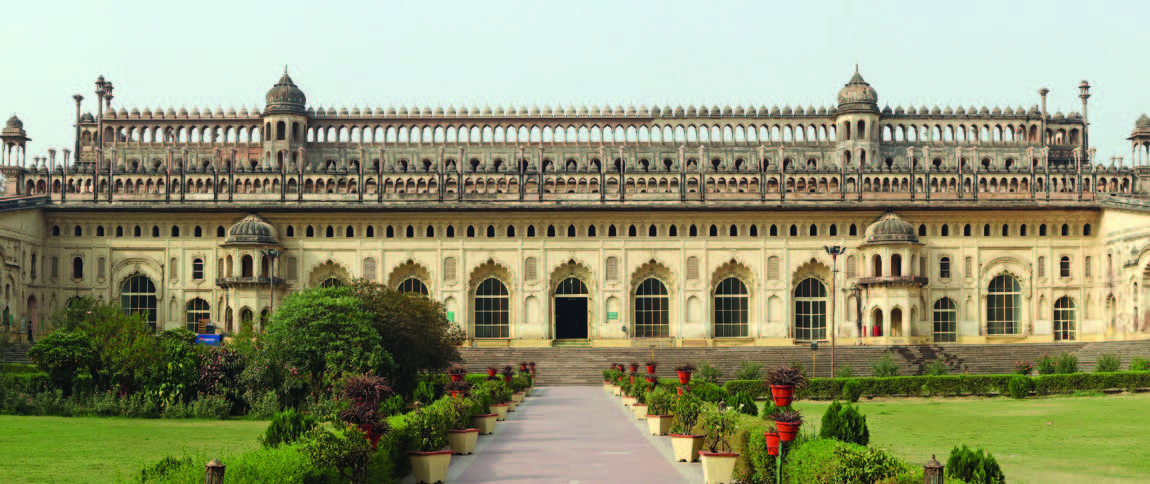
    Lucknow the capital of Uttar Pradesh, extends along the banks of the river Gomti.The creator of Lucknow as it is today was Nawab Asaf-ud-Daula.The city became known as a centre for Urdu poetry and courtly diction, and reached its zenith during the reign of Wajid Ali Shah who was a connoisseur of music and poetry.

    It was during his reign that the British appropriate Awadh.Today the city id dotted with remnants of its rich historic past.Lucknow is also known for its elaborate cuisine and “Chikankaari” or exquisite shadow work embroidery on fine muslin cloth. This is also popularly referred as “City of Nawabs”.

    PLACES TO SEE
    Bara Imambara

    Bhool Bhulaiya : This is the first place to visit. Bara Imambara a beautiful splendid building was built by 4th Nawab of Awadh, Asaf-Ud-Dowhala and the construction work was taken up in the year 1784. It took 14 years to complete. It was designed by the Architect Hafiz Kifayat ullah, Shahjahanabadi, a prominent Architect of that time. Visiting Imambara is a pleasing and unique experience. The Main Hall is of 163′ lengh, 53′ and height 50 ‘and the two halls are Kharbuja and Suraj Mukhi hall. The Main Hall consists of a number of doors. The remarkable feature of the Imambara is the absence of pillars for support to the 50 ft. high main hall. The famous Bhool Bhulaiya (Labyrinth) of Lucknow is constructed on its upper floor .

    Shahi Bawli- The Royal well with bathrooms
    This Royal well is in the same campus. This amazing structure is on the eastern side. This is Shahi Bavali. You can go downstairs to see the well with blue water on surface and the bathrooms constructed around the well on ground, first and second floors of the Well. So what is amazing in it ? You can watch anyone coming inside through the Main gate of the Bawli with the help of a colored image (shadow) in the water of the well. It is said that Nawab Wazid Ali Sah left the keys of his treasure in this bawli before leaving for Kolkata.

    Asifi Masjid
    You can also see on the western side of the Bara Imambara, a beautiful building – This is Asafi Masjid with sculptured domes and minarets, it provides a most splendid look and many thousand of people of Lucknow reach here on Friday to offer namaz.

    Rumi Darwaja
    The Signature Building of Lucknow – On the main road – quite near to above complex. Looks so beautiful that you may not resist your temptation to have a close look at this 3 Storey building It is called the signature building of Lucknow and also Turkish Gate. Since it was made by workers from Rome, hence its name is Roomi Gate. The architecture design was made by Kifayatulla.

    Clock Tower
    Just after Rumi Darwaja, you will see 221′ tall Clock Tower. It is called Hussainabad Clock Tower. The Hussainabad Clock Tower is truly the finest structure of British architecture in India. It was built by Hussainbad Endowment Trust in the year 1887 at a cost of 1.75 lakhs at that time, to mark the arrival of Sir George Cooper, who was the first Lt. Governor of the Awadh. It was built in the year 1881 with a cost of about 1.25 lakhs. It is 221′ in length and 20 sq. in width. The clock of the Tower was brought from London. The Diameter is 13′. It is biggest clock tower of India. At the top you can see direction bird. Presently the clocks are working.


    21

    Hussainabad Picture Gallery
    Hussainabad Picture Gallery in Lucknow is situated near the Chhota Imambara and the Gallery Building is visible from the main road. Built by the third Nawab of Awadh, Nawab Mohammad Ali Shah in the year 1838 for being used as a Royal summer house, Picture Gallery is one of the most liked tourist spot in Lucknow. It has some very unique and large size photos of Nawabs. It is said that these paintings are made on the Elephant skin and the colours used were made of diamonds. These paintings are amazing. You can find some parts of the paintings moving along with you.

    Satkhanda
    Built in 1842 by Nawab Mohammad Ali Shah, Satkhanda (now being renovated) looks like the leaning Minar of Pisa in Italy. The Building was not in good condition but still you can see it as shown in the picture. It is matter of great pleasure for all that renovation work has been taken up and soon it will look like as what Nawab Mohammad Ali Shah had thought in his imagination in 1840.

    Chhota Imambara
    Few meters away from Satkhanda, Chhota Imambara is situated .It is also called the Hussainabad Imambara and well known as a Palace of Lights.This beautiful building was built in 1837 -40 by Nawab Muhammad Ali Shah, the third Nawab of Avadh to serve as his own mausoleum. Attractive chandeliers brought from Belgium are some of the most appreciated items. You can see 3 more buildings inside.

    Jama Masjid
    In the year 1839 in Lucknow City, King Muhammad Ali Shah started constructing Jama Masjid in Tahsinganj area of the city with the intention to surpass the Jama Masjid at Delhi in size and look. But due to the sudden death of the king, the construction work of this grand Masjid was taken up and completed by one of his wives, Malika Jahan Begum in 1845 AD. It is said that she spent almost all her treasure in its construction and create an excellent place Masjid in Lucknow.

    Lucknow Residency
    Not more than a kilometer from Laxman Tila, you can view a mook witness of the First war of India’s Independence -Constructed in 1775, Residence is a place of historical buildings. You may see here Museum as the rest of buildings are broken. AD.

    Tomb of Saadat Ali Khan
    In Hazratganj area, this beautful Maqbara was constructed by Badshah Gajiuddin Haider son of Nawab Saadat Ali Khan, This Maqbara is really beautiful and stones are carved with beautiful designs. The floor of the building is made of marble and other precious stones. 4 burj and multiple doors The grave of the Nawab is in underground Tehkhana with 16 stylist windows.

    Tomb of Begum Murshidjadi
    Equally beautiful, Tomb of Begum Murshidjadi is just a few meters away from Saadat Ali Khan’s Maqbara. The dome of the building is most beautiful. There are graves of Begum Murshidjadi and one of this sons. During 1857 war, freedom fighters kept canons on the on both tombs and firing was done on 17 March 1858 when Gen. Havloc’s 16 soldiers died at this place.

    Shah Najaf Imambara
    It is one of the most liked tourist attraction. Constructed by Nawab Ghazi-ud- Din Haider in the year 1816 to serve as his mausoleum, this splendid building attracts a large number of tourists owing to its historical importance and look.

  • SREI TO ROLL OUT WHITE LABEL ATMS

    SREI TO ROLL OUT WHITE LABEL ATMS

    KOLKATA (TIP): Srei Infrastructure Finance, engaged in infrastructure financing, is planning to start roll-out of its while label ATMs (WLAs) between July and September starting with a pilot of 200 Tier- III towns in Uttar Pradesh and Bihar.

    The Reserve Bank of India authorisation is effective March 25, 2014. (Non-bank entities that intend setting up, owning and operating ATMs, would be christened White Label ATM Operators.) J. Moses Harding, Group CEO, Liability and Treasury Management, Srei Infrastructure Finance, said back-end and front-end connectivity was in place and now the delivery of the ATM machines had to begin.

    Srei plans to launch the service in Tier-II to Tier-V towns in Uttar Pradesh, Bihar, Odisha, West Bengal, Assam and Tamil Nadu. The RBI authorisation allows Srei to set up a minimum of 9,000 WLAs in the next three years in rural India. The sponsor bank is Axis Bank.Mr. Harding told The Hindu that the initial plan was to target the taluq headquarters where footfall was high.

    “Srei will offer this service as an add-on to its current initiatives through Sahaj footprints”. Sahaj e-Village Limited is a Srei initiative with a focus on rural India. It has offices in Assam, Bihar, Odisha, Tamil Nadu, Uttar Pradesh and West Bengal and is seen as one of the largest implementers of ICT-based projects in India, providing a distribution network for government, private and social sectors to deliver their services. He said that the WLAs would operate on a revenue-sharing model with the stakeholders, including the clearing service providers and Sahaj.

  • BSP MOVES EC FOR JUMBO PAY-BACK

    BSP MOVES EC FOR JUMBO PAY-BACK

    LUCKNOW (TIP): The BSP will petition the Election Commission to direct the Samajwadi Party government in Uttar Pradesh to drop the word ‘Samajwadi’ from its various welfare programmes.

    Two years ago, a similar petition by SP had led to the EC ordering covers on statues and memorials to BSP leaders, including Mayawati, as these had elephant motifs — the election symbol of BSP. As a result, over 200 elephant statues were draped in pink polythene in Lucknow and Noida at a cost of Rs 1 crore as per the EC order.

    Pink was chosen as a neutral hue as it didn’t represent any party’s official colour. The UP government has tagged its ‘108’ medical emergency service ‘Samajwadi’ Ambulance Service. It’s being run in 40 districts across UP. In all, there are over 1,000 such ambulances across the state. Likewise, the ‘Samajwadi’ pension scheme is being used to woo dalits, OBCs and Muslims.

    According to a government order of February 6, the scheme aims to cater to 12 lakh SC/ST and 10 lakh minority (essentially Muslims) families across the state. BSP sources said the party would petition EC to get the word ‘Samajwadi’ covered. Confirming this, BSP state president, Ram Achal Rajbhar, said it gave undue electoral and political advantage to the SP in the state. “Now that the election code of conduct is out, the petition is being drafted to be sent to the EC,” Rajbhar told TOI.

    He said the word is being deliberately used by the SP government to influence voters in various districts. UP chief electoral officer Umesh Sinha said EC would certainly be looking at the issue. EC sources said the draping of statues was backed by a petition, based on which there was a specific directive from the Supreme Court. “We’ll go into why such a demand is being put forth and then commission will take a decision,” said a senior EC official. The official said the commission can’t sit as a mute spectator when the ruling party takes political advantage and campaign at the government’s expense

  • Nine days, five weeks

    Nine days, five weeks

    India votes between April 7 and May 12

    NEW DELHI, MARCH 5: The process of constituting the 16th Lok Sabha got underway on March 5 with the Election Commission announcing the poll schedule. Polling to elect 543 members to the Lok Sabha will be spread over nine days, between April 7 and May 12. Simultaneously, elections will also be held for three State Assemblies: Andhra Pradesh, Odisha and Sikkim.

    With the announcement of poll dates, the model code of conduct, which prohibits the Government from taking any policy decisions that can influence the decision of a voter, comes into effect. The counting of votes for both the Lok Sabha and Assemblies will take place on May 16 and all the results are expected to be announced on the same day, Chief Election Commissioner V Sampath told newspersons here on Wednesday.

    Nine-day affair
    The Lok Sabha election process is spread over nine days and not over nine phases, Sampath said and added that 814 million electors will be eligible to cast their vote, an increase of about 10 crore voters from the last General Elections, in 2009. The 21 States that will complete the election process in a day include Tamil Nadu (April 24), Karnataka (April 17), Delhi and Kerala (April 10). In five States, including Andhra Pradesh, Odisha and Rajasthan, elections will be spread over two days while Uttar Pradesh and Bihar will complete the process over six poll days.

    Young voters
    Over 23 million voters in the 18-19 years age group have been added to the electoral rolls, constituting 2.88 per cent of the electorate, up from 0.75 per cent in the last elections. There will also be a 12 per cent increase in the number of polling stations across the country with 930,000 polling stations to be set up, compared to 830,000 during the last elections, Sampath said. Electronic voting machines will be used at all polling stations.

    In order to ensure that the maximum number of people exercise their franchise, the Election Commission has directed that a special camp be organised on March 9 during which people can view the electoral rolls. Those whose names are missing can fill up application forms and get their voter cards. The poll schedule has been drawn keeping in mind the weather conditions in various parts of the country and the examination schedule, as educational institutions and personnel are deployed for poll duty, and also to ensure that the elections are peaceful, Election Commission officials said.

    Sampath added that adequate steps had been taken to prevent the use of black money. On the issue of elections in Andhra Pradesh, Sampath said: “We conduct elections according to the law, whether they are for Assembly or Parliamentary constituencies, as per description of the State today. When the new State comes into being, as per law, elected representatives will automatically become MPs and MLAs of the newly created State from the appointed day. It is seamless.” The total cost of the elections is estimated at ?4,000 crore, officials said.

    Poll dates
    ● April 7 polling will cover six constituencies in two states.
    ● April 9 will cover seven constituencies in five states.
    ● April 10 to cover 92 constituencies in 14 states.
    ● April 12 to cover three States and five constituencies.
    ● April 17, the largest chunk of 122 Lok Sabha seats will go to polls in 13 states.
    ● April 24 will cover 117 constituencies in 12 States.
    ● April 30 in 89 constituencies in nine states.
    ● May 7 will be held in seven States covering 64 constituencies.
    ● May 12 will cover three States and 41 constituencies.

  • Six from Muzaffarnagar arrested with 11 pistols near Pakistan border

    Six from Muzaffarnagar arrested with 11 pistols near Pakistan border

    ATTARI (TIP):
    Six people including two women were arrested and eleven pistols seized from their possession on their return from Pakistan on the Samjhauta Express at the Attari Railway station on March 6. During customs checking at Attari station, eleven pistols were found concealed in a meat cutter machine along with twenty two magazines, a customs official said. All the six, hail from Muzaffarnagar in Uttar Pradesh and had returned after visiting their relatives in Pakistan. Although they have been arrested, their identities are yet to be revealed, the official said.

  • AAP-BJP clashes- Police failure, bias to the fore

    AAP-BJP clashes- Police failure, bias to the fore

    Almost every newspaper headline on March 6 said the same thing: “Kejriwal’s detention sparks AAP-BJP clashes”. The media, including TV channels, focused on three things: the detention of Arvind Kejriwal and attack on his car in Gujarat; AAP workers’ protests outside the BJP offices in Delhi and elsewhere leading to violent clashes.

    In Delhi 13 AAP activists and 10 BJP supporters were injured. Jhansi, Kanpur and Allahabad also witnessed a similar backlash. This was the day when the Election Commission announced the Lok Sabha poll schedule. It is an ominous beginning. Violence in any form by anyone is unacceptable.

    Arvind Kejriwal’s Gujarat visit would not have attracted the media attention that it did had the Gujarat police not detained his cavalcade. There were protests against his visit to Narendra Modi’s home state and his car was attacked.

    Why was no police protection provided to the former Chief Minister of Delhi? Yet the detention and the attack gave AAP workers no right to resort to protests, that too violent, without prior permission of the authorities when the code of conduct had come into force. The police in Delhi, Lucknow and elsewhere waited for clashes to happen before taking action.

    Why were the workers allowed to gather outside the centrally located BJP office in Delhi? Finally, since the clashes involved workers of both parties, why did the police single out AAP workers for registering cases of rioting and damage to public property against them? Obviously, the police in Delhi, Uttar Pradesh and Gujarat have a lot to answer.

    In the war of words that followed Wednesday’s developments BJP spokespersons were all full of sound and fury, while Arvind Kejriwal, a cool-headed master media strategist, apologized and asked his party workers to maintain calm. Narendra Modi, who is still the Chief Minister of Gujarat, has preferred to keep quiet. Perhaps, he does not want to involve himself in a slanging match with a challenger he calls too small to matter.