Tag: Uttar Pradesh

  • NO CHANGE IN US STAND ON THE COMMUNAL VIOLENCE IN GUJARAT, JEN PSAKI SAYS

    NO CHANGE IN US STAND ON THE COMMUNAL VIOLENCE IN GUJARAT, JEN PSAKI SAYS

    WASHINGTON (TIP): The United States continues to express concern about communal violence in India, the Obama administration has said, strongly refuting reports that it has gone soft on the Gujarat communal riots in 2002 and the alleged role of its chief minister Narendra Modi.

    “I wouldn’t characterize our assessment that way. I think you’ll find if you review the text that we’re very clear about our concerns about several episodes of communal violence across India,” US state department spokesperson Jen Psaki told reporters on Thursday. Psaki was responding to a question on the latest annual Country Reports on Human Rights Practices released by secretary of state John Kerry. “If Modi was mentioned in previous human rights reports for India by name, then (why) he is not mentioned in this one,” she was asked. Paski said that there is no change in the US policy on the communal riots that took place in Gujarat about a decade ago.

    Both the annual reports of the 2011 and 2012 mentions Modi in its report but it in no way refers to his role in the communal riots. The latest report said that, “Civil society activists continued to express concern about the Gujarat government’s failure to protect the population or arrest many of those responsible for communal violence in 2002 that resulted in the killings of more than 1,200 persons, the majority of whom were Muslim, although there was progress in several court cases,” the report said. “The Gujarat government appointed the Nanavati-Mehta Commission to investigate the 2002 violence.

    In December the Gujarat government granted an extension for the 21st time, extending the commission to June 30, 2014,” it said. The state department said the Gujarat government withdrew its consent to seek death penalty for former minister Maya Kodnani and others convicted in the 2002 Naroda Patiya violence that killed 97 Muslims. The investigating agency questioned the Gujarat government’s move in a petition in the Supreme Court in June. Kodnani, the first senior politician to be convicted for 2002 violence, was sentenced to a 28-year jail term for her involvement in the post- Godhra riots case.

    The report also talked about last year’s communal violence in the Muzaffarnagar area of Uttar Pradesh that led to 65 reported deaths, and left 42,000 people displaced, and led to hundreds of injuries during the months of August and September. “The violence started with a sexual harassment incident between a Muslim man and a Hindu Jat woman and escalated following a political meeting of officials and others from more than 300 local villages during the weekend of September 7-8,” it said.

  • 29th STATE JUST A SIGNATURE AWAY

    29th STATE JUST A SIGNATURE AWAY

    Rajya Sabha approves Telangana bill amid din and chaos
    NEW DELHI (TIP): With the Rajya Sabha putting its seal of approval on the Bill for creating Telangana amid bedlam, the birth of the 29th State of the Union is just a presidential signature away. The historic development was preceded by prolonged “labour pangs” beginning from July 30 last year, the day the Congress Working Committee (CWC) approved a resolution for bifurcation of Andhra Pradesh.

    On Feb 20, there was a great deal of anxiety about the fate of the State as the BJP, which had helped the government push through the Bill in the Lok Sabha on Tuesday, put a spanner in the works by insisting that without a Constitution amendment it faces the danger of being legally challenged. But, thanks to hectic backroom negotiations at the highest level of the government and the BJP, it was smooth sailing in the Upper House despite protests from Seemandhra MPs, who parked themselves in the Well of the House throughout the day with banners and placards.

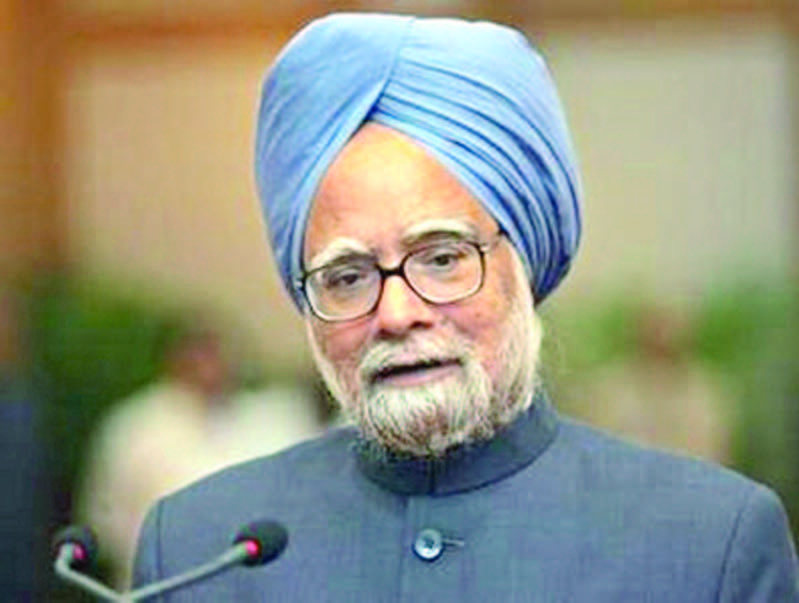
    Prime Minister Manmohan Singh and his team of Ministers succeeded in persuading top BJP leaders not to press for a Constitution amendment, which would have complicated the process. Mr. Singh’s team convinced the BJP brass that the government was on sound legal footing on giving special powers to the Governor over safety and security of the residents of Hyderabad, which will be the joint capital for a maximum of 10 years. It was the understanding between the government and the BJP which prompted CPI(M) leader Sitaram Yechury and all others who opposed the Bill to describe it as a classic case of “match-fixing.”

    At the meeting, it was agreed that the Prime Minister would announce a package to address the concerns of the Seemandhra people as well as those in the backward regions of Telangana. Intervening in the debate in the Rajya Sabha, the Prime Minister announced that for the purposes of Central assistance, special category status would be extended to the successor state of Andhra Pradesh for five years. He said the Centre would take steps to offer tax incentives to promote industrialisation and economic growth in both States.

    In addition, a special development package for the backward regions of the successor state of Andhra Pradesh, in particular the districts of Rayalaseema and north-coastal Andhra Pradesh, will be given on the lines of the K-B-K (Koraput- Bolangir-Kalahandi) Special Plan in Odisha and the Bundelkhand special package in Madhya Pradesh and Uttar Pradesh. Speaking about the commitment of his party to creating Telangana, Leader of the Opposition Arun Jaitley expressed dismay over the manner in which the UPA had handled the entire issue. Initiating the debate, the BJP’s M. Venkaiah Naidu said: “Telangana and Andhra Pradesh are brothers and are Telugu-speaking. Telangana people want Telangana, we are saying yes… We are not dividing the country; we are only dividing a state for speedy development.” He blamed the Congress for delaying the creation of Telangana and playing “vote bank” and “opportunistic” politics.

  • Seemandhra to get special status for 5 years, says PM

    Seemandhra to get special status for 5 years, says PM

    NEW DELHI (TIP): Prime Minister Dr Manmohan Singh has said special status will be given for five years to Seemandhra region – the residual state of Andhra Pradesh following creation of a separate Telangana. Speaking in the Rajya Sabha on the bill to create a separate Telangana state, Dr. Singh said: “I have listened very carefully to the views expressed by the Leader of Opposition and all the other members who have spoken, especially those from Andhra Pradesh.

    The Home Minister has already mentioned the specific steps our Government will take to address the concerns of all regions of the state, particularly of Seemandhra.” Dr. Singh further said he would like to make a few further announcements in this regard. “First, for purposes of Central assistance, Special Category Status will be extended to the successor state of Andhra Pradesh comprising 13 districts, including the four districts of Rayalaseema and the three districts of north coastal Andhra for a period of five years. This will put the state’s finances on a firmer footing,” he said.

    “Second, the Bill already stipulates that the Central Government shall take appropriate fiscal measures, including offer of tax incentives to the successor states in order to promote industrialization and economic growth in both the states. These incentives will be along the lines extended to some other states,” he added. “Third, the Bill already provides for a special development package for the backward regions of the successor state of Andhra Pradesh, in particular for the districts of Rayalaseema and North Coastal Andhra Pradesh. This development package will be on the lines of the K-B-K (Koraput-Bolangir-Kalahandi) Special Plan in Odisha and the Bundelkhand special package in Madhya Pradesh and Uttar Pradesh,” he said.

    “Fourth, I would like to reassure Honourable Members that if any further amendments are needed to facilitate smooth and full Rehabilitation and Resettlement(Rand R) for the Polavaram project, they will be given effect to at the earliest. Our government will execute the Polavaram project-let there be no doubt about it,” he added. Dr. Singh further informed that the appointed day for the formation of the new State will be so fixed in relation to the notified date so as to enable preparatory work relating to personnel , finance and distribution of assets and liabilities to be completed satisfactorily.

    “The resource gap that may arise in the successor state of Andhra Pradesh in the very first year, especially during the period between the appointed day and the acceptance of the 14th Finance Commission recommendations by the Government of India, will be compensated in the Regular Union Budget for 2014-15,” he added. ” I hope these additional announcements will demonstrate our steadfast commitment to not just the creation of Telangana but also to the continued prosperity and welfare of Seemandhra,” he further stated. The prime minister read his statement in house amid din and slogan shouting by members opposing the bill to create the new state.

  • 29th STATE JUST A SIGNATURE AWAY

    29th STATE JUST A SIGNATURE AWAY

    Rajya Sabha approves Telangana bill amid din and chaos

    NEW DELHI (TIP): With the Rajya Sabha putting its seal of approval on the Bill for creating Telangana amid bedlam, the birth of the 29th State of the Union is just a presidential signature away. The historic development was preceded by prolonged “labour pangs” beginning from July 30 last year, the day the Congress Working Committee (CWC) approved a resolution for bifurcation of Andhra Pradesh.

    On Feb 20, there was a great deal of anxiety about the fate of the State as the BJP, which had helped the government push through the Bill in the Lok Sabha on Tuesday, put a spanner in the works by insisting that without a Constitution amendment it faces the danger of being legally challenged. But, thanks to hectic backroom negotiations at the highest level of the government and the BJP, it was smooth sailing in the Upper House despite protests from Seemandhra MPs, who parked themselves in the Well of the House throughout the day with banners and placards.

    Prime Minister Manmohan Singh and his team of Ministers succeeded in persuading top BJP leaders not to press for a Constitution amendment, which would have complicated the process. Mr. Singh’s team convinced the BJP brass that the government was on sound legal footing on giving special powers to the Governor over safety and security of the residents of Hyderabad, which will be the joint capital for a maximum of 10 years. It was the understanding between the government and the BJP which prompted CPI(M) leader Sitaram Yechury and all others who opposed the Bill to describe it as a classic case of “match-fixing.”

    At the meeting, it was agreed that the Prime Minister would announce a package to address the concerns of the Seemandhra people as well as those in the backward regions of Telangana. Intervening in the debate in the Rajya Sabha, the Prime Minister announced that for the purposes of Central assistance, special category status would be extended to the successor state of Andhra Pradesh for five years. He said the Centre would take steps to offer tax incentives to promote industrialisation and economic growth in both States.

    In addition, a special development package for the backward regions of the successor state of Andhra Pradesh, in particular the districts of Rayalaseema and north-coastal Andhra Pradesh, will be given on the lines of the K-B-K (Koraput-Bolangir-Kalahandi) Special Plan in Odisha and the Bundelkhand special package in Madhya Pradesh and Uttar Pradesh. Speaking about the commitment of his party to creating Telangana, Leader of the Opposition Arun Jaitley expressed dismay over the manner in which the UPA had handled the entire issue. Initiating the debate, the BJP’s M. Venkaiah Naidu said: “Telangana and Andhra Pradesh are brothers and are Telugu-speaking. Telangana people want Telangana, we are saying yes…We are not dividing the country; we are only dividing a state for speedy development.” He blamed the Congress for delaying the creation of Telangana and playing “vote bank” and “opportunistic” politics.

  • Mumbai Police Commissioner Satyapal Singh resigns

    Mumbai Police Commissioner Satyapal Singh resigns

    MUMBAI (TIP): Mumbai Police Commissioner Satyapal Singh has resigned from service and is said to be prepping to contest the general elections.

    The 1980-batch IPS officer, who was due to retire next year, is reportedly considering contesting the upcoming Lok Sabha polls either from Mumbai or Uttar Pradesh, his native state. “So far I worked for a limited jurisdiction, for Mumbai Police, for Mumbai city. Now I would like to expand my area of operation and I would like to devote my time and my energy for social harmony, national reconstruction and world peace,” Singh said.

    “I want to do something for the nation. I have not decided to join any party. You will get to know about this in a few days’ time,” he added. Singh has received several police awards, including a special service medal for extraordinary work in the Naxal-hit areas of Andhra Pradesh and Madhya Pradesh.

  • Muzaffarnagar riots

    Muzaffarnagar riots

    Beginning on August 27 2013, clashes between the Hindu and Muslim communities of Muzaffarnagar district in Uttar Pradesh claimed over 60 lives. Thousands were displaced from their homes and forced to live in refugee camps; there were also reports of widespread rape. The attacks have been described as “the worst violence in UP in recent memory,” with the army, as a result, being deployed in the state for the first time in 20 years.

  • 34 children died in Muzaffarnagar riot camps, says Panel

    34 children died in Muzaffarnagar riot camps, says Panel

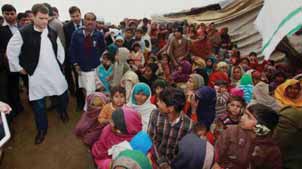
    LUCKNOW (TIP): Contradicting Mulayam Singh Yadav’s claim, a high-level official panel has said a total of 4,783 “displaced” people were still living in relief camps for riot-hit victims in Muzaffarnagar, where at least 34 children below 12 years lodged there had also died. After Rahul Gandhi’s sudden visit to the relief camps, Yadav, the chief of ruling Samajwadi Party, stoked a controversy on Monday claiming there are no riot victims at all in the camps and that people staying there are conspirators from the Congress and the BJP.

    According to the report of the panel submitted to the Uttar Pradesh government, 4,783 people are still living in five camps, including the one in Loi (Muzaffarnagar) and Madarsa Taimul Shah, Malakpur, Barnavi and Edgah (all in Shamli). To a question on whether there are any “conspirators” in the camps, Principal Secretary (Home) A K Gupta told reporters that the committee has said that “only displaced people are living in the camps”. “Most of the children who lost their lives are the ones who had been taken outside the camps for treatment by their parents or were referred to government hospitals for treatment,” Gupta said amid allegations that children in relief camps who died perished due to cold wave.

    The report quoted by Gupta said the deaths of the 34 children occurred between September 7 and December 20. “The cause of the death of all these children is different with about four dying because of pneumonia while some others died because of dysentery and one due to premature birth,” Gupta said. On the conclusion of the report, Gupta said that it has been recommended that the quality and facilities in the camps should be improved, and steps should be taken for early return of the people living in the camps to their homes. He said that all the children had got medical attention and “it cannot be termed as medical negligence or incapability of the doctors”.

    The panel headed by Commissioner Meerut had District Magistrates of Muzaffarnagar, Shamli and Chief Medical officers (CMOs) of these districts as members. It was constituted by the UP government to go into the factual details of the deaths of children as reported in the media. Union Minister Beni Prasad Verma, meanwhile, demanded an “apology” from Yadav over his remarks that those living in relief camps are conspirators.

  • 21 years on, Ayodhya farmers still await land compensation

    21 years on, Ayodhya farmers still await land compensation

    AYODHYA (TIP): This December 6 will mark 21 years of Babri mosque demolition. In past two decades, several governments have changed in Uttar Pradesh but 16 farmers of Ayodhya are still awaiting full payment of compensation for their land which was acquired for the construction of Ram temple. Their land was adjacent to the disputed Babri mosque site. The 29 acre land of farmers was acquired in 1989 by then UP government, headed by ND Tewari. The government had told farmers that it was acquiring the land for construction of Ram Katha Park, social activist Vineet Maurya told TOI.

    Maurya has taken up farmers’ cause with the government. The land was later transferred to the tourism department for Ram Katha Park. In March 1992, Kalyan Singh government acquired 31 acre nazul land, and granted 60 acre (including 29 acre acquired by Congress government) to Ram Janmabhoomi Nyas on a lease of 99 years at the rent of Re 1 per year. But after the demolition of the Babri mosque, the Central government took control of this 60 acre land in January 1993. The government had fixed Rs 15 per sq feet as compensation and released Rs 2 crore in the account of tourism department.

    The money was to be paid to farmers. But the actual amount distributed by then land acquisition officer of Faizabad was just Rs 2.40 per sq feet, which came to around Rs 33 lakh. The remaining amount has not reached the famers till date. In a reply to an RTI query, the regional tourism office of Faizabad stated that all related documents are missing from the records and it would not be possible to provide any information in this regard.

  • Criminality in the Indian Political System

    Criminality in the Indian Political System

    In their own long-term interest, all political parties must jointly agree to stop sponsoring criminal candidates, says the author.

    Criminality in politics, or more pointedly, criminals sitting in our Parliament and legislatures, is an issue that has for long been debated in many forums and has also been at the forefront of reform proposals sent by the Election Commission of India (ECI) to the government. With elections to five States under way, and the 16th General Election due to be completed before May 31, 2014, India is now gripped by that special fever that besets us every five years.

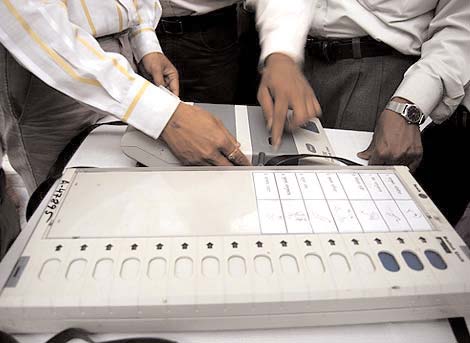
    Unexpectedly, part of the backdrop already stands influenced by a few recent decisions of the Supreme Court. The Supreme Court has importantly passed three orders that relate directly to the conduct of elections. The first relates to the distribution of “freebies”, wherein the ECI has been asked to frame guidelines in consultation with political parties. The second is directing the installation of the None-of-The-Above (NOTA) button in the Electronic Voting Machines, which has already been implemented in the current round of Assembly elections.

    The third is the court’s order of July 10, 2013 in the Lily Thomas vs Union of India matter, wherein the Supreme Court has declared unconstitutional Section 8 (4) of the Representation of the People Act, 1951. The importance of this order cannot be overemphasized. The position that prevailed before this order was enacted was that all convicted MPs and MLAs enjoyed a threemonth period in which to appeal against their conviction, and during this period they crucially retained their memberships in Parliament or legislatures respectively. What has changed is that while they still have the right to appeal, now they immediately cease to be members the House.

    While previously they were able to file appeals within the stipulated three months without giving up their membership, they managed, in effect, to remain MPs or MLAs often for long years after their terms had expired. Not only have these orders already impacted the elections under way but they will continue to have a profound impact on cleansing our political system. The Lily Thomas matter was applied by the court prospectively and not retrospectively. The court would have had many reasons not to apply its order retrospectively, not the least of which is that it would possibly have thrown our current polity into disarray.

    Be that as it may, in the present and future, every parliamentarian or legislator who stands convicted for an offence that leads to a sentence of imprisonment for two years and more, will also be debarred from contesting an election for six years after his or her prison term ends. Moreover and equally importantly, there are offences which are already on the statute book and where conviction (even without sentence of imprisonment) leads to disqualification.

    These include conviction for rape, for promoting enmity and hatred between and among different classes or groups, conviction relating to bribery, and conviction under the Prevention of Corruption Act, the Foreign Exchange Regulation Act (FERA) and The Prevention of Terrorism Act, 2002 (POTA). Once again, since the grace period for remaining an MP or MLA has ended, this in effect means that the six year axe of debarment comes immediately into operation in these categories of cases as well.

    Criminals among MPs, MLAs
    Close on the heels of this order, the nation witnessed the jailing of Lalu Prasad, the president of a once nationally recognized political party, the RJD, as well as Rasheed Masood, a former Minister and sitting MP of the Rajya Sabha. While both stand debarred from contesting elections for six years after their jail terms are completed, in effect such a long banishment might well put an end to their political careers. For, as is well known, politics abhors a vacuum.

    The abhorrence of criminality in politics is a common thread running through practically every student audience I have addressed across India in the last seven years. They are well aware of the figures compiled by non-governmental organizations such as NEW and ADR from the affidavits submitted to the ECI by contestants. Two vital orders of the Supreme Court in 2002 and 2003 made it compulsory for all candidates to file information regarding any and all criminal cases pending against them, as well as figures of the combined wealth or assets of the candidates and their spouses, and indeed their educational qualifications.

    With this information, the court hoped that voters could make informed choices about whom to vote for or not. Most of my student audiences knew the statistics; that in the present Parliament as many as 30 per cent of sitting Lok Sabha MPs and 31 per cent of Rajya Sabha MPs have criminal cases pending against them, that the Bihar Assembly (2010) has a high of 58 per cent criminals among its MLAs, while the Uttar Pradesh Assembly (2012) has 41 per cent. The Congress has 21 per cent declared criminals; the Bharatiya Janata Party has 31 per cent. At the other extreme, the Jharkhand Mukti Morcha has 82 per cent criminals among its MPs and MLAs.

    Is it any surprise then that student audiences inevitably ask what is the point of clean election processes if the end result is to elect tainted men and women? When the government decided to rush headlong into enacting an Ordinance to counter the July 10, 2013 Order of the Supreme Court, this resulted in a surge of public sentiment bordering on revulsion, against what would arguably have been a very regressive step in the development of our democratic institutions. The dramatic demise of the proposed Ordinance ironically became a critically important milestone in the strengthening of our democratic edifice, which I think many of us realize is still a work in progress.

    Three issues

    In the rash of commentaries that followed the Supreme Court Order of July 10, followed in turn by the legislative proposals sought to be placed before the winter session of Parliament and finally by the Ordinance that the Cabinet cleared, I would like to comment on three issues. First, it is no secret that many politicians have their own criminal elements to protect and whom they need to use in elections to round up voters.

    They spend clandestinely and sometimes devise mafia-like strategies to reinforce the “winnability” concept that has now come to be the “mantra” which has displaced any truly democratic relationship between candidates and the public whom they seek to represent. Hence the political establishment quickly closed ranks in favor of the Ordinance. The second issue to my mind was whether the President (who called in senior Ministers for consultation to raise questions and seek clarifications), would have signed this Ordinance, or whether he would have just let it asphyxiate itself.

    The third issue is that it took Rahul Gandhi to speak out and publicly criticize the Ordinance. In the aftermath of his intervention, the cacophony of opinions on our news channels reached a crescendo. One of the few voices that I managed to hear over the din of panelists and anchors, was that of The Hindu’s N. Ram, who cut aside all rhetoric on the non-use of parliamentary language by saying, “Rahul Gandhi singlehandedly killed the wretched Ordinance. Instead of acknowledging that, do we need to make a fuss about the words he used?” For what we must also recognize is that if this Ordinance had been passed, it would have officially endorsed that criminality in parliamentary ranks was perfectly acceptable.

    It would also have rendered our elected representatives even more distant from our people. Not only that, it would almost certainly have put the Executive and the Supreme Court on a collision course, leading to unnecessarily troubled relations between vital institutions. We have only to look in our own neighborhood to understand how such conflicts have in varying measure stunted the growth of democratic structures. I read in the press with increasing disappointment that many political leaders and parties including the Congress and the BJP have since given the ticket in these elections to either criminals or to their family members as proxies.

    This, sadly, concedes the “winnability” factor over “clean” politics. Surely the time is finally here for all political parties to jointly agree to step away from sponsoring criminal candidates. It would be in their long-term interest to do so, because now some ground realities have changed, for upon conviction such candidates would have to resign anyway and make way for by-elections. In the short-term, they may win an election, but in the longer term they will, once again, strike a blow to the development of a healthy, wholesome and robust democracy that our freedom fighters fought for, and our constitutional framers had envisaged.

  • Muzaffarnagar: fresh killings bleed peace efforts

    Muzaffarnagar: fresh killings bleed peace efforts

    MUZAFFARNAGAR (TIP): With October 30 killing of three youth — Afroz, 20, Meherban, 21, and Ajmal, 22, of Mohammadpurraisingh village of Muzaffarnagar peaceniks have lost another round to communal tension that has engulfed the western Uttar Pradesh district for the last two months. Many Muslim families of Mohammadpurraisingh, a Jat-dominated village, took shelter in the nearby Muslim-majority village Hussainpur after the September violence. “These families wanted to return to their village and a peace committee had been formed with Chaudhry Feru of Mohammadpurraisingh and Shahnawaz Khan, husband of village Pradhan or chief of Hussainpur as members. An understanding was reached that after Diwali the displaced Muslim families of Mohammadpurraisingh will go back to their houses. But on Wednesday three youths from Hussainpur were killed and whole process now looks impossible as of now,” says district magistrate Kaushal Raj Sharma. “When my husband Rajendra Fauzi, a resident of Mohammadpurraisingh, had gone to water his fields in the evening, he was beaten up. When other villagers saw the condition of my husband they went back looking for those responsible for it but they were fired upon and in the clash that followed the three boys of Hussainpur were killed,” says Kavita Rani, wife of Rajendra Fauzi, who is now in police custody.

    Rajanth blames state
    BJP president Rajnath Singh said violence wouldn’t have returned to Muzaffarnagar had the authorities taken “severe and unbiased” action against those responsible for the earlier riots. “The trouble begins when such sad incidents are politicised. It only exacerbates the issue. I think if severe action was taken against those responsible for violence earlier….if just and fair action was taken, the violence would not have been repeated.”

  • Aarushi murdered by parents, CBI tells court

    Aarushi murdered by parents, CBI tells court

    NEW DELHI (TIP): The CBI on October 17 concluded its arguments in the Aarushi murder case and told the Special CBI court that Rajesh Talwar and wife Nupur had killed their daughter. The CBI told the court said the Talwars killed Aarushi and domestic help Hemraj, dressed up the crime scene and destroyed evidence. Trial in the Aarushi-Hemraj murder case began a year and three months ago at Ghaziabad in Uttar Pradesh. The crime was committed more than six years ago. Fourteen-year-old Aarushi was found murdered in her apartment in Noida on May 16, 2008. The next day, the body of Hemraj was discovered on the apartment’s terrace. The dentist couple, Rajesh and Nupur, were in the house on the night the crime was committed.

  • Security intensified in Ayodhya, SMSes banned

    Security intensified in Ayodhya, SMSes banned

    AYODHYA (TIP): The Uttar Pradesh government has put a ban on short messaging services (SMS) in Ayodhya to clamp down on Vishwa Hindu Parishad’s (VHP) ‘Sankalp Sabha’ scheduled for October 18, an official said. More than 1200 people across the state have been placed under preventive arrest. Officials said strict vigil was being kept on movement of people to the temple town of Ayodhya and all borders to Faizabad were sealed Thursday. At least 42 people, including leaders associated with the Ram temple movement Mahant Nritya Gopaldas, Mahant Suresh Das, Brijmohan Das, Abhishek Mishra and Manmohan Das were placed under house arrest in Ayodhya. At least 366 people were arrested in the state capital. This included the state convener of the Bajrang Dal, Surendra Mishra and spokesman Sharad Sharma. Officials warned VHP and its affiliates not to try and move to Ayodhya.

    Director general of police (DGP) Devraj Nagar, principal secretary (Home) Anil Kumar Gupta are camping in Ayodhya to ensure fool proof security. Traffic between Lucknow-Gorakhpur has been diverted through Barabanki, Gonda-Basti and Sultanpur, officials said. Inspector General (IG) Law and Order, RK Vishwakarma said that while Ram Vilas Vedanti had gone underground, there was no information on senior VHP leader Ashok Singhal so far. Officials, however, fear the ageing leader could turn up disguised at Ayodhya and hence, strict checking at entry points to Faizabad was being carried out and raids were continuing at possible hide outs of VHP leaders. Meanwhile, principal secretary (Home) Anil Kumar Gupta warned the VHP leadership not to try and enter Ayodhya. DGP Devraj Nagar said the contents of the ‘Sankalp Patra’ preceding the ‘Sankalp Sabha’ were “very inflammatory and could result in communal flare up”. Gupta added that such moves will never be tolerated or allowed to vitiate communal harmony.

  • UNNAO GOLDEN TREASURE HUNT TAMASHA: ALL EYES ON ASI DIGGING UP OLD FORT IN UP

    UNNAO GOLDEN TREASURE HUNT TAMASHA: ALL EYES ON ASI DIGGING UP OLD FORT IN UP

    UNNAO (TIP): This dusty hamlet in the interior of Uttar Pradesh near the flowing Ganga river has suddenly become the centre of attraction for a battery of TV news channel reporters, Peepli Live style. Hordes of curious onlookers have flocked to this place in anticipation of the one thousand tonnes of gold, which a sadhu “saw in his dream”. Like the Bollywood potboiler film Peepli Live, shops selling trinkets and food items have sprung up near the fort, where people till last week hardly used to visit. The cynosure of all eyes is a shady sadhu named Shobhan Sarkar, who has dreamed up about a hanged 1857 martyr Raja telling him in sleep that 1,000 tonnes of gold lay hidden beneath the grounds of the fort. One of his disciples contact the Union minister from Chhatisgarh Charan Das Mahant, who, in turn, pressurized the Archaeological Survey of India to take up the matter. First, the Geological Survey of India experts came with equipment, and earmarked at least five places on the grounds indicating metal being present beneath the surface.

    On October 18, ASI experts begun digging in layers in search of the supposedly hidden golden treasure, in front of scores of TV cameras. TV news channels have stationed their outdoor broadcasting (OB) vans at the site in Daundia Kheda to relay live, the digging of the fort’s ground with excited reporters telling the world about minute-by-minute details of the digging. People from as faraway places as Lakhimpur Khiri, Kanpur, Kannuaj and Lucknow have flocked to the scene eager to see the elusive golden treasure that will surely warm the cockles of a government facing a severe CAD (current account deficit) conundrum. Draughtsmen, surveyors, photographers from ASI have been lined up alongwith the labourers for the digging. The ASI team itself has no idea from where to begin. The team has planned to dig up three places two metres deep and 10 metres apart for the treasure hunt. The initial digging will only be a trial, says P K Mishra, Lucknow circle head of ASI.

    The three holes two-metre deep will be square shaped, and ASI will be checking the soil with big sieves. When the digging will reach 20 feet deep, each layer of the soil will be checked. Initially the layer is expected to be dry, and the deeper it digs, the soil may be wet, given the Ganga flowing nearby. The third layer could be of rocks, followed by water. ASI experts feel, excavation work may hit a roadblock, if water seeps out. The labourers hired for excavation have been trained for ASI work – not digging indiscriminately but with infinite patience. The results are expected to come within two months, says ASI circle head P K Mishra. If the “first trial” fails, the ASI will take up the “second trial”. Meanwhile, from faraway Pune, Dr Arun Bapat, a geologist, says, ASI can located the golden treasure even without excavation. “On has to use gravity meter and ground penetrating radar to find out where the treasure lies”, says Dr Bapat. “The gravity meter will tell you at what depth the treasure lies”, says the geologist.

  • Raja Bhaiya re-inducted as minister in UP cabinet

    Raja Bhaiya re-inducted as minister in UP cabinet

    LUCKNOW (TIP): In an apparent bid to woo the Thakur community, Uttar Pradesh chief minister Akhilesh Yadav on October 11 expanded his council of ministers and reinducted controversial leader Raghuraj Pratap Singh alias Raja Bhaiya as a cabinet minister. Governor BL Joshi administered the oath of office and secrecy to Raja Bhaiya at Raj Bhawan at about 10.15am. Raja Bhaiya, an independent MLA from Kunda in Pratapgarh district, had resigned from the state cabinet on March 4, 2013, following the murder of Kunda deputy superintendent of police Zia ul-Haq, a village pradhan, Nanhe Yadav, and his brother, Suresh Yadav at Balipur village in Pratapgarh. On March 2, the police officer had gone to Nanhe’s house on getting the news of his killing at the village market place. But when he reached there, a rampaging mob led by Suresh overpowered him and beat him up to death. Suresh got killed after being hit by a bullet from his own rifle that went off accidently. The police officer’s wife had accused Raja Bhaiya of conspiring in the murder of her husband. Succumbing to the pressure mounted by opposition parties, he had resigned as minister till the investigation was completed. The state government recommended a CBI probe to ensure a fair inquiry. Besides interrogating Raja Bhaiya, the CBI had also conducted a narco test on him. The investigation agency gave Raja Bhaiya a clean chit in August 2013, and speculations were rife that he would be re-inducted in the cabinet. Minister for parliamentary affairs Mohammad Azam Khan had also early this week met Raja Bhaiya, apparently to convey to him that the SP leadership was open to take him back into the Cabinet.

  • 12 CRORE FIRST-TIME VOTERS HOLD KEY TO 2014 LOK SABHA POLLS

    12 CRORE FIRST-TIME VOTERS HOLD KEY TO 2014 LOK SABHA POLLS

    CHENNAI (TIP): Close to 12 crore youths will be eligible to vote for the first time in the 2014 Lok Sabha elections. To put that in perspective, no single party garnered more than 12 crore votes in the 2009 polls, showing how significant this segment can be if all of them register to vote. In the 2009 polls, the Congress polled 11.9 crore votes, the BJP 7.8 crore, BSP 2.6 crore and CPM 2.2 crore. No other party polled even a crore of votes across the country.

    79 crore eligible voters
    The draft electoral rolls published by various states at this stage show that the national total is just under 79 crore votes. Uttar Pradesh will have the highest potential firsttime voters with 2.3 crore young people crossing 18 in time for the polls. They will account for 17.6% of the state’s electorate of 12.9 crore. Maharashtra comes next with 1.05 crore first-time voters or 13.2% of the state’s electorate. Bihar is third with 94.3 lakh youths, followed by West Bengal with 90 lakh. These figures are derived from the age data released recently by the census, and are based on all those aged between 15 and 19 at the time of the 2011 census. All of them will be old enough to register to vote in 2014; none of them would have been eligible in 2009. The numbers have been reduced on the basis of the age-specific death rate for people between 15 and 19 years to account for people in this age group dying between 2011 and the polls. The state-wise numbers may vary slightly if one takes into account interstate migration from this age group, but the national number would be unaffected. “As per the latest census, UP and Bihar have the maximum number of children due to high birth rate. Naturally, there will be more young people eligible to vote,” said P Arokiasamy of the International Institute for Population Sciences. The Election Commission (EC) does a study to arrive at the number of eligible voters before every general election.

    “It examines the data of those in the 18 to 25 age group. If enrolment is low, state chief electoral officers conduct special campaigns to enlist more young people. On the other hand, if there are too many voters over the age of 80, officials check again to ensure that names of all dead voters have been deleted,” said N Gopalaswami, former chief election commissioner. Among the southern states, Andhra Pradesh will have more than 80 lakh potential first-time voters followed by Tamil Nadu with 62 lakh. Karnataka and Kerala could have 58 lakh and 26 lakh such voters respectively. Delhi, which goes to the assembly polls in December, has 16.6 lakh youths eligible to register as voters. Rajasthan has 72.9 lakh and Madhya Pradesh 74 lakh. Smaller states like Himachal Pradesh and Union territories will have less than 10 lakh first-timers each. “We have tied up with internet browsing centres to make it easy for first-time voters and others to be included in the electoral rolls,” said Tamil Nadu chief electoral officer Praveen Kumar. “Volunteers are running campaigns in universities and colleges to register eligible students to vote.”

  • PROGRESS BLOW TO GUJARAT

    PROGRESS BLOW TO GUJARAT

    Human indicators put state that brags about growth behind Tripura and Sikkim

    NEW DELHI (TIP): A new development index has identified Gujarat as a less developed state, while ranking Odisha and Bihar along with eight others as “least developed” and Goa and Kerala among the seven “relatively developed” states. A panel headed by Raghuram Rajan, now the RBI governor, which submitted its report to finance minister P Chidambaram, also recommended a fresh approach to devolution of funds to states and moved away from the special category classification to devise three categories – least developed, less developed and relatively developed. According to the index, there are 10 least developed states, 11 less developed and seven relatively developed states in the country. The slotting of Gujarat, which has attracted attention due to its development model, in the “less developed” category is likely to escalate the already bitter political debate on the ‘Gujarat model of development’.

    The other states in this category are Manipur, West Bengal, Nagaland, Andhra Pradesh, Jammu and Kashmir, Mizoram, Tripura, Karnataka, Sikkim and Himachal Pradesh. The least developed states include, apart from Odisha and Bihar, Madhya Pradesh, Chhattisgarh, Jharkhand, Arunachal Pradesh, Assam, Meghalaya, Uttar Pradesh and Rajasthan. The relatively developed states according to the index are Haryana, Uttarakhand, Maharashtra, Punjab, Tamil Nadu, Kerala and Goa. The panel has developed a multidimensional index of backwardness based on monthly per capita consumption expenditure, education, health, household amenities, poverty rate, female literacy, percent of SC-ST population, urbanisation rate, financial inclusion and connectivity.

    The panel said less developed states rank higher on the index and would get larger allocations based on the need criteria. “The committee has proposed a general method for allocating funds from the Centre to the states based on both a state’s development needs as well as its development performance,” Chidambaram told reporters. “The committee has recommended that each state may get a fixed basic allocation of 0.3% of overall funds, to which will be added its share stemming from need and performance to get its overall share,” Chidambaram said. The panel was set up after persistent demand from Bihar CM Nitish Kumar who insisted a the special category status to help access more funds for its development. This sparked off a demand from several other states such Odisha for the special category state status. While the new index will ensure more funds for Bihar from the central kitty, it has stopped short of conferring the “special category” tag on the state, Shaibal Gupta, seen as Nitish’s nominee on the panel to submit a 10-page dissent note.

    However on Thursday, Nitish concealed his disappointment, if any, to celebrate the recommendation as a triumph even as BJP taunted him for failing to have his way despite cozying up to Congress. “It is a very decent report. For example under this index Odisha is at the bottom of the list and then Bihar. Therefore it recognizes that Odisha, Bihar, Madhya Pradesh are among the most backward states of India. That is I think the demand,” Chidambaram said. “The demand of these states is please recognize the fact that for a variety of reasons we are the most backward states. I think this index captures the degree of backwardness and acknowledges that Bihar is among the most backward states of India. Special category is the present categorisation. Now they are moving away from that,” finance minister said while detailing the recommendations of the panel.

    “This is not an answer to all the demands of the states. This is meant only to be a way forward on how to devolve funds to the more backwards states and areas of India. He said the index better captures the stage of development in a state, how backward it is or how relatively less backward it is and is a good measure for planning and devolution of funds. “Because some states are small very limited resources it is necessary to have a threshold below which the devolution of funds does not fall. So the committee has recommended that each one of the states will get a basic allocation of 0.3%,” Chidambaram said. The finance minister said that the report will be examined by various stakeholders before being implemented. “It will not be in the current year. It has to go through the examination process and will be implemented in an appropriate time in the next financial year.

    To which funds this should be applied a decision will be taken,” Chidambaram said. The report said that the National Development Council had accorded the status of special category state to eleven out of 28 states. They were based on a number of characteristics such as hilly and difficult terrain, low population density and or sizeable share of tribal population, strategic location along the borders with neighbouring countries, economic and infrastructural backwardness and non-viable nature of state finances. State under this category have a low resource base and are not in a position to mobilise resources for their developmental needs even though the per capita income of some of these states is relatively high, the report said.

  • UP ORDERS FRESH PROBE IN DURGA NAGPAL CASE

    UP ORDERS FRESH PROBE IN DURGA NAGPAL CASE

    Lucknow (TIP): he Uttar Pradesh government has ordered a fresh probe as it was not satisfied with the written reply given by suspended IAS official Durga Shakti Nagpal to the chargesheet served on her. Chief Minister Akhilesh Yadav late Thursday night appointed Principal Secretary (home) R.M. Srivastava as the inquiry officer in the case and called for a report within the next 15 days. Another official of the home department will assist him. Officials said in her response, submitted last week to the government, Nagpal had stuck to her earlier stand that she had done no wrong. In her reply, Nagpal had also said that the boundary wall of the under-construction mosque at Kadalpur village in Gautam Budh Nagar was being built on Gram Sabha land and not on private land. Officials said that authorities concerned had studied Nagpal’s response after which the chief minister decided to order a fresh probe to “get to the bottom of the episode”. Nagpal was suspended as sub-divisional magistrate (SDM) July 27, attached with the state revenue board and served a charge sheet Aug 4. The UP government in the charge sheet had accused her of taking a hasty administrative decision that lacked foresight and imperiled communal harmony in the region.

  • UP Accounts For Over 80% Of Illegal Arrests In India

    UP Accounts For Over 80% Of Illegal Arrests In India

    NEW DELHI (TIP): Uttar Pradesh’s high-handedness is not just reflected in the arbitrary transfer of officers such as Durga Sakthi Nagpal and slapping of bogus cases against dissenters (as in the case of Dalit scholar Kanwal Bharti), it can also be seen in the massive number of illegal arrests made by the UP police.

    According to National Human Rights Commission data, UP records an overwhelming majority of illegal arrests in the country, accounting for more than 80% of all such cases. In fact, it tips its nearest competitor, Delhi, by over 3,000% almost year after year. In the past three years (April 2010 to July 2013), UP accounted for 3,397 illegal arrests out of 3,950 such cases recorded across India by NHRC.

    The count for the rest of the 27 states and seven union territories put together was just 553. “What do you expect from a state where many politicians themselves are criminals? How do you expect them to have any respect for law and order or human rights?” says Colin Gonsalves of Human Rights Law Network.

    From April 2012 to March 2013, NHRC recorded 703 cases of illegal arrests in all. As many as 589 of these were against the UP police. UP accounts for 161 of 192 illegal arrests in ’13 Its closest rivals in this dubious distinction, Uttarakhand and Delhi, were way behind with 14 cases each. Data for this period shows only two other states where the number of illegal arrests had crossed double figures — Karnataka (12) and Andhra Pradesh (10).

    In 2013 too (April 1 to July 20), UP accounted for 161 such cases of the total of 192 recorded by NHRC in the entire country. Its closest rival, Delhi, was again was behind with only five cases.

  • INDIA’S JOURNEY TO BECOMING AN ECONOMIC SUPERPOWER

    INDIA’S JOURNEY TO BECOMING AN ECONOMIC SUPERPOWER

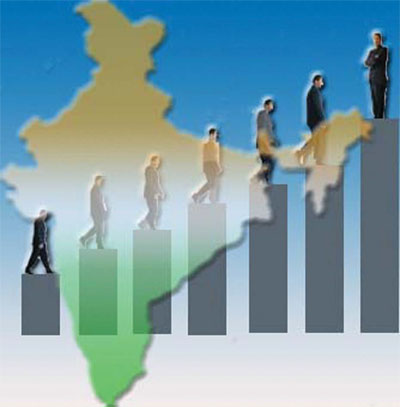
    The economic development in India followed socialist-inspired policies for most of its independent history, including state-ownership of many sectors; India’s per capita income increased at only around 1% annualised rate in the three decades after Independence. Since the mid-1980s, India has slowly opened up its markets through economic liberalisation.

    After more fundamental reforms since 1991 and their renewal in the 2000s, India has progressed towards a free market economy. In the late 2000s, India’s growth reached 7.5%, which will double the average income in a decade. Analysts] say that if India pushed more fundamental market reforms, it could sustain the rate and even reach the government’s 2011 target of 10%. States have large responsibilities over their economies.

    The annualised 1999-2008 growth rates for Tamil Nadu (9.8), Gujarat (9.6%),Haryana (9.1%), or Delhi (8.9%) were significantly higher than for Bihar (5.1%), Uttar Pradesh (4.4%), or Madhya Pradesh (6.5%). India is the tenth-largest economy in the world and the third largest by purchasing power parity adjusted exchange rates (PPP). On per capita basis, it ranks 140th in the world or 129th by PPP. The economic growth has been driven by the expansion of services that have been growing consistently faster than other sectors.

    It is argued that the pattern of Indian development has been a specific one and that the country may be able to skip the intermediate industrialisationled phase in the transformation of its economic structure. Serious concerns have been raised about the jobless nature of the economic growth. Favourable macroeconomic performance has been a necessary but not sufficient condition for the significant reduction of poverty amongst the Indian population.

    The rate of poverty decline has not been higher in the post-reform period (since 1991). The improvements in some other non-economic dimensions of social development have been even less favourable. The most pronounced example is an exceptionally high and persistent level of child malnutrition (46% in 2005-6). The progress of economic reforms in India is followed closely. The World Bank suggests that the most important priorities are public sector reform, infrastructure, agricultural and rural development, removal of labour regulations, reforms in lagging states, and HIV/AIDS.

    [5] For 2012, India ranked 132nd in Ease of Doing Business Index, which is setback as compared with China 91st and Brazil 126th. According to Index of Economic Freedom World Ranking an annual survey on economic freedom of the nations, India ranks 123rd as compared with China and Russia which ranks 138th and 144th respectively in 2012. India ranks second worldwide in farm output.

    Agriculture and allied sectors like forestry, logging and fishing accounted for 18.6% of the GDP in 2005, employed 60% of the total workforce and despite a steady decline of its share in the GDP, is still the largest economic sector and plays a significant role in the overall socioeconomic development of India. Yields per unit area of all crops have grown since 1950, due to the special emphasis placed on agriculture in the five-year plans and steady improvements in irrigation, technology, application of modern agricultural practices and provision of agricultural credit and subsidies since the green revolution.

    India is the largest producer in the world of milk, cashew nuts, coconuts, tea, ginger, turmeric and black pepper. It also has the world’s largest cattle population (193 million). It is the second largest producer of wheat, rice, sugar, groundnut and inland fish. It is the third largest producer of tobacco. India accounts for 10% of the world fruit production with first rank in the production of banana and sapota. The required level of investment for the development of marketing, storage and cold storage infrastructure is estimated to be huge.

    The government has implemented various schemes to raise investment in marketing infrastructure. Amongst these schemes are Construction of Rural Go downs, Market Research and Information Network, and Development / Strengthening of Agricultural Marketing Infrastructure, Grading and Standardisation.

    Main problems in the agricultural sector, as listed by the World Bank, are:

  • Cases Of Drunk Driving Accidents Decline

    Cases Of Drunk Driving Accidents Decline

    The continuous decline in accidents caused due to intake of alcohol/drugs in the past three years has come as a breather for the government. While in 2010 such violation caused 31,000 accidents, the number of such mishaps reduced to 23,979 last year. Even the fatalities have fallen from 9,976 in 2010 to 7,835 in 2012. Uttar Pradesh reported maximum fall in fatalities in this category from 4,635 in 2011 to 2,400 last year.

    Other states that have reported decline include Andhra Pradesh (by 50% in past three years), Maharashtra, Odisha and Rajasthan. However, there was increase in such deaths in states including Bihar, Jharkhand and Tamil Nadu for the past three years. To put a check on dink driving, some state governments have decided not to give fresh licences for liquor shops along National Highways. Some of the cities including Delhi, Mumbai, Hyderabad and Jalandhar have intensified crack down on such offenders.

  • HONESTY PUNISHED

    HONESTY PUNISHED

    How sand mafia framed IAS officer Durga

    NEW DELHI (TIP): Indian Administrative Service office Durga Shakti Nagpal was suspended for demolishing a mosque, thereby “disturbing” communal harmony “Arrey, Madamji, who gives their own land to build a mandir, masjid or gurdwara? Of course, they are built on government land, which is grabbed for this purpose…” a criminal lawyer in the Noida district court says laughingly when quizzed about the alleged action of razing a wall purportedly belonging to a mosque on government land that got Sub- Divisional Magistrate Durga Shakti Nagpal suspended and put in the doghouse.

    At 28, the 2009 batch IAS officer who was 20th on the merit list and who got her cadre changed from Punjab to Uttar Pradesh to be closer to her husband Akhilesh, also an IAS officer, might have been naiive enough to believe that she was sincerely upholding the law. But her seniors in the district say that she may have contributed to creating a law and order problem when she ordered the demolition of a structure coming up illegally on public land. They probably knew that if they did not comply with the verbal orders emanating from the chief minister’s secretariat, the same fate that has befallen Nagpal may have been reserved for them.

    The way the state government works is as follows: if there is misconduct on the part of a junior officer, the senior officer’s report is sought. Then action is taken. It would be interesting to know what Gautam Budh Nagar District Magistrate Ravi Kumar Singh wrote in his report about Nagpal’s action. Locals say it is not clear whether he tried to defend her. This much is certain: ever since builders descended on Noida and Greater Noida, sand mining along the Yamuna has become big business.

    The government gives out contracts for sand mining, but enormous amount of illegal mining goes on alongside. Hundreds of dumpers transport sand from the Yamuna riverbed every day and money in lakhs changes hands. Locals say regardless of the nature or colour of the government, miners who have the protection of the local representatives carry on their trade unabashedly; governments come and go but the ‘rate’ doesn’t change.

    Nagpal was an impediment to this high-level complicity. She took on the sand mafia, ordered the seizure of dumpers and got many offenders arrested last month. Besides, she also deployed a flying squad to rein in the menace. The sand mafia was obviously annoyed and was waiting to even the score. The opportunity came in the socalled demolition of a religious structure.

    Locals also say an illegal wall on government land was built in a village near Dankaur in Greater Noida. Some say the wall even had a plaque saying Narendra Singh Bhati, the local MLA and minister in the UP government, had laid the foundation stone of the mosque. Others say nobody even knew it was a mosque, it was just a wall. At any rate, Nagpal told residents that it was illegal to build a structure on government land, and it was demolished by residents voluntarily.

    But her intervention in preventing the sand mafia from its trade has had unintended consequences, for it brought into spotlight, the activities of people who are politically powerful. What’s more, the political subtext and rivalries came spilling out. While Chief Minister Akhilesh Yadav’s uncle Shivpal said the officer needed to be suspended for fomenting religious tension, his other uncle, Ram Gopal, suggested an enquiry be started and the officer be reinstated. For another ‘uncle’, Azam Khan, who is a close associate of Samajwadi Party chief Mulayam Singh Yadav, it was an opportunity to vent out his dislike for Akhilesh.

    “Ram Raj mein loot machi hai, loot sake to loot (there is mayhem in paradise, make the most of it if you can),” he said. It is the world’s worse kept secret that Azam Khan was extremely critical of Akhilesh being made the chief minister of UP and virtually revolted at the time. All this usually happens when there is a combined deficit of political authority and administrative competence. Surrounded by family, Akhilesh is as hamstrung as Arjun was when he saw all his brothers and uncles standing across him in the battlefield.

    An enquiry is going on against the contractors Akhilesh’s uncle Shivpal appointed for road building in Etawah and Mainpuri. His half brother Prateek wants to join politics and contest the Lok Sabha seat of Azamgarh, but another Yadav, Balram Singh, already represents the seat. Akhilesh is caught in the vortex of all these crosscurrents. It can’t help that frequently father and son appear not to be on the same page.

    The UP IAS Association, an extremely powerful body, has taken on the chief minister and has petitioned the government of India against the suspension of Durga Shakti Nagpal. The Lucknow bench of the Allahabad High Court is hearing a petition on her suspension on Friday. UP is under the scanner again.

  • CBI Gives Clean Chit To Raja Bhaiya In DSP Murder Case

    CBI Gives Clean Chit To Raja Bhaiya In DSP Murder Case

    NEW DELHI: The CBI has given a clean chit to former UP Minister Raghuraj Pratap Singh alias Raja Bhaiya in the murder of Kunda DSP Zia-ul-Haq as it has not found any anomaly in the lie detector test conducted on him. CBI sources said the agency has not found sufficient evidence to prosecute Raja Bhaiya. The sources said the agency will seek merging of the FIR filed by Haq’s wife Parveen Azad, in which Raja Bhaiya has been named as accused, with the one filed by Uttar Pradesh Police in connection with the violence and murders, as two cases for the same crime are “not sustainable.”

    The agency has filed its charge sheet in connection with the murder, but did not name Raja Bhaiya as accused. The former Food and Civil Supplies Minister was questioned by the CBI on May 15 and 16. He was also subjected to a polygraph test on June 20 at the Central Forensic Laboratory here. Haq was shot dead on March 2 in Balipur village in Kunda area of Pratapgarh district where he had gone to probe murder of village head Nanhe Yadav. Haq’s wife Parveen Azad had accused Raja Bhaiya of being involved in his murder, after which the former Minister had to resign from the Cabinet on March 4.

  • BJP Wave In MP, Party On A Comeback In Rajasthan, UP

    BJP Wave In MP, Party On A Comeback In Rajasthan, UP

    NEW DELHI (TIP): The northern states of Rajasthan, Madhya Pradesh and Uttar Pradesh present a very contrasting picture when it comes to the political battle.While Rajasthan and Madhya Pradesh are basically a twohorse race with the Congress and the Bharatiya Janata Party (BJP) being the rivals, in Uttar Pradesh, which sends the largest number of MPs to the Lok Sabha, it is a four-cornered fight in most of the seats.

    According to the CSDSCNN- IBN Election Tracker survey, the BJP has a lot to cheer as the party is expected to give a tough fight to the Congress in Rajasthan to consolidate its position in Madhya Pradesh. Whereas in Uttar Pradesh, the party is on a comeback trail and is likely to bag the largest number of seats. The Congress, inspite of being in power in Rajasthan, is expected to do badly while in Madhya Pradesh it is being swept away by the BJP tide.

    Uttar Pradesh presents a very interesting picture with the two regional forces – the Samajwadi Party (SP) and the Bahujan Samaj Party (BSP) – not on a strong wicket with the Congress most likely ending fourth as the survey reveals that the grand old party of India is unable to repeat its good show of 2009 elections. The BJP has been on resurgences in all the three states and a good show by the party is likely to propel it closure to power at the Centre after the 2014 Lok Sabha elections.

  • Not In The Race For Prime Minister : RAJNATH SINGH

    Not In The Race For Prime Minister : RAJNATH SINGH

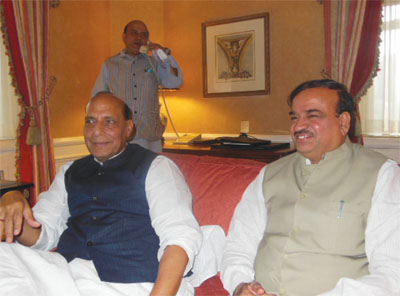
    NEW YORK (TIP): The Bharatiya Janata Party President Rajnath Singh on Saturday, July 20, categorically denied that he is in the race for Prime Minister of India if BJP returns to power at the Center. “I am more interested in getting the BJP back into power in Center and packing off the corruption-ridden bad governance of the Congress in my tenure as President of the party,” he said addressing a news conference of Indian-American media at Hotel Waldorf Astoria in Manhattan.

    On the question of party president not being projected as Prime Ministerial candidate in the Lok Sabha elections, he said it is not necessary that the two positions be placed in the hands of one person. “It’s not necessary that party president should also be a crowd puller and a prime ministerial candidate. I have an assignment to do for my party. I have a job to deliver – that is victory of the party in the 2014 elections.”

    “Seven months before the elections, I have nominated Gujarat Chief Minister Narendra Modi as chairman of the party campaign committee. What is unusual in that? We have nominated Modi like other parties do and why read between lines. I have named him as campaign head in view of his image, popularity and commitment to the party,” he said. He said Modi is certainly the most popular and the tallest leader of India.

    He is a crowd puller not only in Gujarat but also in Tamil Nadu, Andhra Pradesh, Uttar Pradesh and Bihar – from North to South, East to West. He is one single leader with a national appeal. His popularity will help the party in the elections. On the issue of visa rejection issue of Narendra Modi, he said he would take up the issue with the US lawmakers in Washington.

    “I will appeal to the US government to clear the US visa to the Gujarat Chief Minister.” People of India have now realized that BJP is the only solution after comparing the performance-oriented BJP led NDA Government and corruption-ridden inefficient Congress UPA dispensation, he said. The performances of several BJP-ruled states like Gujarat, Madhya Pradesh, Chhattisgarh are there for the people to see and if these states can provide 24 hour power supply, clean and efficient government, fillip to industries compared to poor performance of many Congressruled State governments what would people prefer? People have made up their mind, he said.

    Detailing steps taken by the BJP to face the national elections in 2014, he said the party had brought changes in organizational level by forming polling booth committees in every booth. “We have formed a committee consisting of 10 to 15 party men at grassroots level to strengthen the organization at village level,” he said Congress ruled for 10 long years at national level and what are their achievements other than wholesale corruption and compromise in national and international security, he asked.

    Indian voters are now realized that when the Center can’t guarantee growth rate of five percent or less, the growth rate in Gujarat, Madhya Pradesh and Chhattisgarh are approximately 10 percent. No one can fool Indian voters any more, he said. On the recent debacle of the party in Karnataka and setbacks in other states, the BJP President said assembly elections and municipal elections are different from parliament elections where people vote for a stable government.

    Voters are intelligent enough to compare the two governments and Congress will be out of power soon. They have ruled for 10 long years and now its time to give them rest, he said “We are confident that the failure of the Congress government will help BJP return to power in the center. Any political party that aspires to come to power should give good governance and satisfy the needs of the people.

    If they fail in this front, they will be out of power.” There is wholesale failure on economic front, compromise on internal and external security and diplomatic fronts as well. People are demanding a change very badly. If people want any change, the only choice is BJP who can provide an alternative to this government, he said. On allies deserting the party, he said BJP will try to get a clear majority in Lok Sabha polls but at the same time will not forget its allies – old and new.

    “Despite a clear majority in sight, we want our allies to participate in the government at the center. Now we have Shiv Sena and Shiromani Akali Dal and may get some nearer to the elections. There is also a possibility of post poll alliance with like minded parties if there is a need,” he said. In the coming Lok Sabha elections, Congress will be routed in Andhra Pradesh due to its ambiguity on Telengana issue.

    The BJP is the only national party that favors separate Telengana and it was passed as a resolution in our national executive committee meeting, he said. There is no ambiguity in the BJP unlike the Congress camp in the matter and BJP is in favor of Telengana. But it’s not in favor of bifurcation of UP and other states as Telengana issue is a totally different one. On the question of poll promises, he said BJP would rather go in for developmental debate than Ram Janma Bhoomi issue. “Ram temple was not a major poll issue anytime.

    It was at best a national issue but not an election issue,” he added. BJP government will consider instituting an inquiry commission to go into the corruption and scandals of the Congress government and will provide transparent and honest government with people’s interest as uppermost, he said. Ananth Kumar, party general secretary and chairman of Parliamentary Foreign Affairs Committee who is accompanying Rajnath Singh on the US tour, said the four member BJP delegation will meet members of the US Senate and House Representatives from both sides of the aisle – Democratic Party and the Republicans especially members of the Congressional Caucus of Indians and Indian Americans at the Capitol Hill.

    Ananth Kumar said Rajnath’s visit to the US is a two track outreach program – to outreach the Indian Diaspora to assess the mood of three million Indian-Americans across the nation who occupy important and powerful positions besides being opinion makers; and to meet with India Caucus Congressmen to impress on them that a change is sweeping in India on the heels of Lok Sabha elections.

    The other two members of the delegation are Dr. Sudhanshu Trivedi, party spokesman and advisor to the BJP President and Vijay Jolly, BJP national convener for Overseas Affairs and a former Delhi MLA. Jolly said the visit was to re-connect the Party President with the Indian-American Diaspora that plays a leading role in fostering friendship between the two countries. “We want to work closely with Non Resident Indians.” BJP – both as a government and party – will work with mainstream American and Indian-American business community on economic and investment matters.

    clearly is of the view that India and the US have a close correlation in internal and external security and they are strategic partners being natural allies, he said. Jolly said the Overseas Friends of BJP in the US has over 7000 members across the US and project a positive image of the party among Indian-Americans and policy makers. The Foreign Affairs Committee of the party will address the concerns of Indian Diaspora and include in them in the BJP parivar by assigning a major role in the ensuing elections.

    Rajnath Singh said it was NDA government under Vajpayee that gave voting rights to Non-Resident Indians and introduced Overseas Citizens Card (OCI) and Persons of Indian Origin (PIO) card. It was under Vajpayee’s leadership that the first Pravasi Bharatiya Divas was held in 2003 in New Delhi to bring all the Non- Resident and Diaspora Indians to work for the welfare of India. “All these were made possible due to the visionary leadership of Vajpayee and only the BJP has done a lot for NRIs and PIOs.”

    On the spate of killing of Hindu and BJP leaders in Tamil Nadu, he said he would appeal to Tamil Nadu Chief Minister to give protection to party leaders. “I appeal to Jayalalithaa to help stop the killing of Hindu and BJP leaders in Tamil Nadu. We will try to build pressure on state government so that it takes it seriously to put an end to such killings.”

  • Cabinet Gives Nod To Mega Plan For Smoother NCR Traffic

    Cabinet Gives Nod To Mega Plan For Smoother NCR Traffic

    NEW DELHI (TIP): In an effort to decongest the growing traffic in the National Capital region (NCR), the Union Cabinet today gave its approval for the setting up of a National Capital Region Transport Corporation Limited (NCRTC) under the Companies Act with an initial seed capital of Rs 100 crore. The new corporation has been set up with the focus on constructing three Regional Rapid Transit System corridors connecting Delhi with Panipat, Alwar and Meerut.

    The NCRTC has been approved for designing, developing, implementing, financing, operating and maintaining Regional Rapid Transit system (RRTS) in the NCR to provide comfortable and fast transit to its towns. This company may form subsidiary companies for implementing each corridor. The NCRTC shall be set up within two months after approval of the Cabinet. The corporation is proposed as the implementing agency for taking up the RRTS project in the NCR.

    It is envisaged to undertake design construction, operation and maintenance of the RRTS project on a similar pattern as the Delhi Metro Rail Corporation (DMRC). It will cover the states of Delhi, Haryana, Rajasthan and Uttar Pradesh. The Centre and state governments would contribute equally to the initial seed capital of Rs 100 crore. While the Urban Development and Railway ministries would contribute 22.5% of the amount, the National Capital Region Planning Board would contribute 5%. The remaining amount would be contributed by Delhi, Haryana, Rajasthan and UP.

    While a total of eight RRTS corridors have been identified for development in the NCR area, the NCRTC will take up three corridors on priority. These are the Delhi-Sonipat-Panipat, Delhi – Gurgaon – Alwar and the Delhi – Ghaziabad – Meerut, corridors. The Delhi – Sonipat – Panipat is 111-km-long corridor and the daily ridership is estimated to be 3.77 lakh in 2016 which may grow to 9.83 lakh by 2041.

    The Delhi – Gurgaon – Alwar is 180-km-long stretch and estimated to carry 6.9 lakh people daily in 2016 which will go up to 15.1 lakh by 2041. The Delhi – Ghaziabad – Meerut is 90-km-long and would carry an estimated 5.7 lakh people every day in 2016 and 11.4 lakh by 2041. The total length of the three corridors to be developed by NCRTC is 381 km. The actual cost, financing plan, RRTS alignments, real estate development, financing through transit oriented development and more will be firmed up and frozen in the DPRs of these projects.