Year: 2013

  • Bhola sings on SAD leaders

    Bhola sings on SAD leaders

    PATIALA (TIP): Revelations by wrestler-turned-drug lord Jagdish Singh alias Bhola are apparently spelling trouble for ruling Shiromani Akali Dal (SAD). Sources said that interrogation of Bhola has revealed involvement of two Akali leaders of Majha region in the drug cartel of Bhola, including one known in the region for flaunting his over a dozen vehicle bedecked with fancy registration number “0001” and the other for staking claim to fight 2007 assembly elections on SAD ticket. Following revelations by Bhola that both the leaders were supplying precursor drug to the former wrestler to process it into drugs, police on Thursday arrested Jagjit Singh Chahal, a resident of Romana Chack village in Amristar district and Manjinder Singh Aulakh alias Bittu Aulakh of Preet Larhi village of the same district. While Chahal was supplying precursor chemicals to the drug lord through a “go-between person”, Aulakh was operating an independent supply chain of the precursor chemicals for Bhola and was procuring these from the pharmaceutical sector and supplying them to Bhola, police said.

    Chahal, who comes from a humble business background and owns a large-scale business of tyres in the region, had shot into limelight around a year-andhalf ago when he purchased the fancy registration number CH-01-AN-0001 for Rs 17 lakh, the highest amount paid so far in the region to get the vanity number. The bid for the number was made at registration and licensing authority, Chandigarh, in June 2012. Flaunting his craze for fancy numbers, he then said that he owned a fleet of 10 luxury cars, all of which had “0001” registration number. He reportedly claimed that he also owned 10 motorcycles, all having registration number “1000” of different series, which are being used by employees working in his firm. On the other hand, Aulakh, who also holds a position in Shiromani Youth Akali Dal, was former sarpanch of Vairokae village and an aspirant SAD (B) candidate from Lopoke assembly constituency during last assembly elections. Aulakh is a prominent hotelier and owns Sanjog Hotel on Court Road in Amritsar. He had also been election campaign incharge of sitting SAD (B) MLA from Ajnala constituency. Interestingly, both the leaders come from fairly respectable backgrounds and were often seen with senior Akali leadership of the state.

    “Chahal is normally seen with SAD leaders in his luxury Pajero cars bearing 0001 registration number,” said former Congress MLA from Beas constituency, Jasbir Singh Dimpa. He said Aulakh also had gunmen for his security. “The gunmen were used for the smuggling racket,” alleged Dimpa. Police said Chahal was operating three factories using precursor chemicals — ephedrine and pseudoephedrine — which were diverted illegally from the medicine sector to manufacture synthetic drug ICE. Police added that 2 kg pseudoephedrine (worth Rs 2 crore) and 250 gm ICE (worth Rs 1.25 crore) have been recovered from Chahal and another 2 kg pseudoephedrine (worth Rs 2 crore) has been seized from Aulakh. Police have also uncovered three factories of Chahal — MBP Pharmaceuticals Ltd, Baddi, Montek Bio-Pharma Ltd, Baddi and Tulip Formulations, Damtal, near Pathankot — where he used to process the drugs.

  • KERAN OPS: GOVT IN A FIX AS ARMY, INTEL AGENCIES DIFFER

    KERAN OPS: GOVT IN A FIX AS ARMY, INTEL AGENCIES DIFFER

    NEW DELHI (TIP): A month after the operations ended in the Keran sector along the Line of Control (LoC) in Jammu and Kashmir, the government has made it clear that it was not ready to accept the gaps in two different narratives on the incident. In what appears to be a fight between two powerful wings of government, the narratives of the Indian Army and that of the Indian intelligence agencies on the Keran incident do not match. At a high level review meeting on November 1, discussions revolved around management of borders, arrangement to guard the borders and matters of surveillance and intelligence gathering. The Keran operations was called off on October 8. Sources said, at the meeting, there was no dispute whether or not there was an infiltration by the militants from Pakistan Occupied Kashmir (PoK). But the intensity, intent and nature of the infiltration was discussed and there was a gap in the narratives provided by the two sides. The Ministry of Defence has backed the Indian Army operations before the Parliamentary Standing Committee on Defence and other forums. But within the government, the difference of opinion has cropped up after the civilian agencies, which function under the Ministry of Home Affairs, had different reports to narrate. The figure of 30-40 intruders given by the Army has been contested by the intelligence agencies, who have said that the number was lower. But the claim has been contested by the MoD and the Army on the grounds that agencies are not based at the LoC. Hence, they would not have first-hand knowledge of the incident.The place where the operations took place is not even inhabited. Therefore, there would be little chance of a local informer being present.

  • Second bus catches fire in fortnight, 7 dead

    Second bus catches fire in fortnight, 7 dead

    BANGALORE (TIP): Seven people were charred and 43, including two African nationals, injured when a Mumbai-Bangalore Volvo bus operated by National Travels caught fire after an accident near Kunimullalli village in Haveri district, about 350 km from Bangalore, in the early hours of November 14. A Jabbar Travels Volvo had similarly gone up in flames on the Bangalore-Hyderabad route on October 30, killing 45 people. Like in the accident a fortnight ago, the National Travels bus hit a bridge before bursting into flames around 2.30 am on Thursday. Passengers who noticed a thick plume of smoke engulfing the unventilated main cabin of the bus soon after the accident helped break the glass windows with emergency equipment, preventing the casualties from mounting. Most passengers who died were in the front of the bus. Six of the injured are critical, while the remaining, including the Africans, were discharged after treatment at the Haveri district hospital. National Travels belongs to former Karnataka home and transport minister B Z Zamir Ahmed Khan, a JD(S) MLA. It announced Rs 5 lakh each to the families of the dead, while the Karnataka government will give Rs 1 lakh. “The bus crashed into a bridge. As a result, its fuel tank was damaged and it caught fire. Seven people, including three children, were charred,” Haveri Superintendent of Police N Shashikumar said. “The main driver (Muzbeer) fled after he noticed the fire. The back-up driver (Nayaz), who was sleeping, was charred,” said Haveri Deputy Commissioner of Police Panduranga B Naik. “But for that of the back-up driver none of the bodies is identifiable. The spare driver was from Bangalore, while the six passengers were from Mumbai.” All bodies have been shifted to KIMS Hospital for DNA-testing.

    Mangala Express derails near Nashik; 4 feared dead
    NASHIK/MUMBAI (TIP): Four passengers were feared killed and several others injured when ten coaches of a train derailed at Ghoti near Igatpuri in Nashik district on November 14 morning. The mishap took place at around 6.20am today when 12618 Nizamuddin-Ernakulam Mangala Express train was passing through the Ghoti-Igatpuri section near Nashik of the Central Railway, a Central Railway spokesperson said in Mumbai. The cause of the accident is not yet known, he said. According to rural police, four passengers were feared dead and several others injured in the derailment. The injured have been rushed to Ghoti, Kasara and Nashik civil hospitals, while rescue operations were in progress, police added. The Central Railway has set up a helpline for anxious relatives and kin of the passengers to enquire about them, the official said, adding that a medical relief van has already reached Ghoti.

  • LAWYER ALLEGES SEXUAL ASSAULT BY EX-JUDGE

    LAWYER ALLEGES SEXUAL ASSAULT BY EX-JUDGE

    NEW DELHI (TIP): The Supreme Court has set up a committee of three judges headed by Justice RM Lodha to verify a law student’s allegation that she was sexually harassed in a hotel room on the eve of Christmas 2012 when she was doing internship with an apex court judge, who is now retired. A Bench headed by Chief Justice P Sathasivam gave this information to Attorney General GE Vahanvati, who moved the court terming the allegation as an extremely serious matter and seeking action. “We are also anxious to know whether or not the allegation is true,” the Bench, which included Justices Ranjan Gogoi and Shiva Kirti Singh, told the AG who mentioned the issue at 2.20 pm. The other members of the committee that would go into the issue are Justices HL Dattu and Ranjana Prakash Desai. “Let them go into it. Based on their report, we will take action,” the CJI assured the AG. “The committee is going to issue notice to all concerned persons this evening itself. First, we have to assess the correctness of the allegation,” the CJI said. The AG said speculations over the judge in question “must stop”. According to the victim, she had “heard” that the judge in question had misbehaved with three other girls while at least four others had faced harassment at the hands of other judges, but not to the extent of her ordeal. The other incidents had taken place in judges’ chambers in the presence of other people.

    She did not identify the judge who had harassed her or the other judges. The victim had written on November 6 about the ordeal she had undergone on December 24, 2012 in a blog. She graduated from Kolkata’s National University of Juridical Sciences (NUJS) this year and is a fellow with an organisation called ‘Natural Justice: Lawyers for Communities and the Environment’. “Last December was momentous for the feminist movement in the country – almost an entire population seemed to rise up spontaneously against the violence on women, and the injustices of a seemingly apathetic government. In the strange irony of situations that our world is replete with, the protests were the backdrop of my own experience. “In Delhi at that time, interning during the winter vacations of my final year in university, I dodged police barricades and fatigue to go to the assistance of a highlyreputed, recently retired Supreme Court judge whom I was working under during my penultimate semester. “For my supposed diligence, I was rewarded with sexual assault (not physically injurious, but nevertheless violating) from a man old enough to be my grandfather. I won’t go into the gory details, suffice it to say that long after I’d left the room, the memory remained, in fact, still remains, with me,” she wrote. She said the incident had taken place in a hotel room. People “saw me walking in voluntarily, saw me walking out very calmly. I didn’t even walk out fear. At that moment I felt I need to walk out very calmly. I never mentioned anything the same day to anybody,” she said in an interview to the website ‘Legally India’.

  • YEDDYURAPPA OFFERS UNCONDITIONAL MERGER WITH BJP

    YEDDYURAPPA OFFERS UNCONDITIONAL MERGER WITH BJP

    NEW DELHI (TIP): Saffron rebel and former Karnataka CM B S Yeddyurappa has offered to merge his Karnataka Janata Paksha unconditionally with the BJP, tempting the party leadership with the promise to deliver bulk of the 28 seats in the state to Narendra Modi. Yeddyurappa’s offer has been conveyed to the party leadership and has reopened the debate on what it should do with the Lingayat strongman who played a key role in the party’s rise in Karnataka and whose revolt majorly contributed to the embarrassing defeat in the assembly elections in the state which was not long ago considered to be the BJP’s bridgehead for south India. Yeddyurappa had earlier indicated that he would join the NDA and prefer an alliance with the BJP to re-conversion. BJP sources confirmed that the fresh overture has enhanced the prospect of the return of Yeddyurappa, who was removed as CM because of corruption charges, to the fold any day after December 8 when the results of the five state polls will be out. Yeddyurappa’s trusted associate Lehar Singh refused to confirm that he had conveyed the former CM’s offer to party leaders, but did indicate that the latter was ready for a “nostrings- attached” return.

    Asked whether KJP would prefer to return to the BJP, Singh said, “A merger will be in the interest of both parties as it will ensure a smooth synergy and boost the chances of BJP repeating its performance in the last Lok Sabha elections when it won 19 of the 28 Lok Sabha seats.” Asked specifically, he denied Yeddyurappa will seek positions for himself, his sons and his associates in exchange for the homecoming. “Yeddyurappa is not hankering for posts either for himself, members of his family or his associates. He has always held Modiji in high regard and his admiration for BJP’s PM candidate did not diminish even after he had to leave the party in unfortunate circumstance,” Singh, who has been Yeddyurappa’s emissary to Delhi and is known for channeling the Lingayat chieftain’s views, said. A significant section among the party brass had always seemed comfortable with the idea of Yeddyurappa’s return, but was chary of advocating the viewpoint forcefully for the fear of annoying veteran L K Advani and the former CM’s known opponent, Ananth Kumar. Sources in the party also said leader of opposition in Lok Sabha Sushma Swaraj was not too enamoured with the idea of KJP’s merger. However, sources said Yeddyurappa’s unconditional offer may tip the scales in favour of blending; especially in view of the party’s objective to retake the Centre.

    Sources said those opposed to Yeddyurappa’s return could not refute the argument of the party benefiting from the merger, but always cited the fear of the strongman seeking to extract a stiff price to justify their stance. Party sources count Karnataka as the only state with a significant number of Lok Sabha seats where Congress, based on its convincing win in the assembly elections, stands to improve its score in the 2014 Lok Sabha elections. BJP tacticians feel the losses that the BJP seems set to suffer can be averted by joining forces with Yeddyurappa whose KJP polled over 9.9% votes against BJP’s 19% in the assembly elections, stacking the odds against the saffron party when it was reeling under a heavy burden of incumbency in any case. Going by assembly elections, Congress will win 22 seats against two for BJP and four for JD(S) if the terrain remains the same for the Lok Sabha polls. If the votes of BJP, Yeddyurappa and B S Sriramulu, another saffron rebel who polled 2% of the assembly vote, are added, then the saffron outfit will overtake Congress in 11 LS constituencies while Congress will be ahead in 14. Though the assembly elections can’t be replicated, party strategists say the idea that they will gain is unquestionable. They also feel that the alliance route will not deliver goods because the two sides can not be expected to have a perfect understanding on seat sharing and will, thus, leave open the possibility of sabotage.

  • Modi Makes History and Facts be Damned

    Modi Makes History and Facts be Damned

    Long years ago, at a cultural event in a European country, the then Indian Ambassador (let him not be named) introduced the modernist Hindi novelist and poet, Agyeya (who also carried the name Vatsyayan) as the famous author of the Kama Sutra. As was to be expected, his subsequent career in the foreign service receives a set back. Unlucky man, born at the wrong time among the wrong set of rulers whose fetish about factual accuracy in public pronouncements after all thwarted his flamboyant leap of imagination, whereby a modern day writer was transmogrified into an avatar of the ancient Vatsyayan. You might say, what could have been a more telling remark on the unbroken continuities of the Sanatan Dharma wherein time and space are but ephemeral shadows skimming as mere superficial illusions over the deep mysteries of the timeless and the spaceless? Yet, far from being rewarded, the poor servicer was to suffer pedestrian rebuke. Think how this victim to facticity might have flourished under a prospective Narendra Modi prime ministership of Bharat. Months before being sworn in as prime minister of this land of no beginning and no end (Hegel was to write “India has no history; it is a repeat of the same old majestic ruin”), Mr. Modi has been giving us glimpses and intimations of how a creative and esemplastic (to use Coleridge’s famous description of the “Primary Imagination” in Biographia Literaria) Mind (as opposed to mere mind) may with a wave of two majestic fingers alter time and space at will to suit a great vision.

    Thus, among the fanciful gems that he has thus far strewn among the public spaces and at thousands of gawking hoi polloi are the following: –that the Macedonian warrior-king, Alexander, was defeated in a battle along the Ganges river proximate to the Indian state of Bihar; fact: Alexander never crossed the Satluj in western Punjab, returning westward to die of an affliction in Alexandria (Egypt); –that the ancient seat of learning, Taxila, was also in Bihar, when in fact that also was in western Punjab (now Pakistan); –that the Mauryan emperor, Chandragupta (emperor Ashok’s grandfather) was actually Chandragupta II of the Gupta dynasty; between the two lay some eight centuries of historical time; –that the first Prime Minister of India (who, don’t you know. was the chief wrecker of India’s domestic and foreign fortunes, however great a man and world leader you might have thought him) did not have the grace to attend the funeral (1950) of the then Home Minister/Deputy Prime Minister of newly Independent India as a last expression of his sibling resentment, as it were; fact: not only did Nehru love and admire Patel, as Patel did him, despite many principled differences on policy, but was the chief distressed mourner at the latter’s funeral; –that the late Shyama Prasad Mookherjee, a born and bred Bengali, was a “great son of Gujarat”; that he it was he who established the “India House in London under the very nose of the English”; that he was considered the “guru of Indian revolutionaries”; and that the said Mookherjee “died in 1930, but before he did so, he expressed the wish that his ashes be kept carefully so they could be returned to a free India.”

    Poor Mookherjee was of course innocent of all these attributions; he was a Bengali, who first joined the Congress party, then switched to the right wing and became the founder of the Jana Sangh (1951); he died in a hospital in Srinagar, Kashmir in the year 1953. The man Modi was speaking of was Shyama Krishna Varma. But as the Bard queried, “what is in a name?” For all you know, Germany might have been England, and India the Soviet Union; thus, Hitler may have been Churchill, and Gandhi may have been Stalin. Which tells us how limiting, after all, dry -as -dust facts can be when, in fact, there need be no end to what the mind may do with history and/or geography, from time to time as the “national interest” dictates. Mr.Modi is slated to address we are told more than a hundred rallies more till the time arrives for the General Elections to India’s Parliament in early 2014. Minds boggle in salivating anticipation of how many creative splendors yet await us. At the rate he is going, it is a safe bet that by the time we come to the event, our inspired headpieces may have learnt to reformulate the history and geography of this ancient land in ways that the rest of the world may have become part of the Sanatan landscape of our refurbished Hindutva vision.

    Remember, after all, what a not-so-old document of the Vishwa Hindu Parishad told us: –that “Jerusalem was actually Yedu Shalyam, which means the shrine of the Lord of the Yadus i.e. Krishna”; –“that the Dome on the Rock in Jerusalem and the nearby Al-Aqsa mosque, are ancient temples of the Hindu deity, Krishna”; –“that St.Paul’s Cathedral in London was originally Gopal Mandir”; –“that the Notre Dame church in Paris was actually the temple of Devi Bhagwati, Parvati alias Durga”; –that “Paris itself was actually the Hindu city of Parameshwariam”; –that “the K’aaba at Mecca was originally a gigantic Vishnu temple”; –and, to cap all history, that “in pre- Christian times all people everywhere in the entire world were Hindus.” (Cited from H.K.Vyas, VHP, Communist Party of India Publication, 1983; Vyas sources these gems to the Hindu Vishwa, journal of the Vishwa Hindu Parishad.) Clearly, then, Mr.Modi’s reconstructions of facts issue from well-established tradition of the Hindu right wing, wherein historiography is more often a matter of unanalyzed prejudice and timely convenience than of adherence to fact and evidence. What wonders then might be unleashed on domestic and foreign fora once Mr.Modi becomes India’s most erudite first executive; and, alas, what a future the unlucky aforementioned Ambassador may have been thought to have lost by having done service under mere mortals who had not the largesse to leap the fact to make a “new heaven and a new earth” (quoting now both Coleridge and Wordsworth, who in turn drew from the Book of Revelation.)

  • Not to miss: Modi sir’s history class

    Not to miss: Modi sir’s history class

    Modis’ gaffes on historical facts inspired Akash Deep Ashok of New Delhi to come up with the following dramatization. We hope the satire will amuse our readers.
    SCENE

    Agroup of impish-looking students are sitting in a class in session. The teacher is seated in a chair on a slightly-elevated podium and speaking to them. MODI: History is treacherous. At times, you make it. At times, it makes you. Sometimes it forgets you. Some other time you forget it. That last one plagues me. A STUDENT: Sir, you were telling about how Biharis defeated Alexander, The Great? MODI: Oh yes. See, how I forget. Anyway, I told you how Alexander’s army conquered the entire world, but was defeated by the Biharis. That’s the might of this land. ANOTHER STUDENT: But sir, Alexander defeated by the Biharis…?! MODI: That’s why I keep saying an understanding of politics is crucial to learning history. Not all gaffes are meant for guffaws. Historical gaffes can be political. Likewise political gaffes can be historic, too! What I meant to say about Alexander was not easy to understand. Let me explain. A young Chandragupta Maurya met Alexander at one of his camps near Taxila. Greek historian Plutarch makes a mention of this meeting in his famous book ‘Parallel Lives: Life of Alexander’. Chandragupta wanted Alexander’s help in ridding India of the tyrannical rule of the Nanda dynasty. However, the meeting did not fructify and Alexander apparently lost his temper and asked the young Chandragupta to leave his camp. Now you see the correlation here. Chandragupta was a Bihari. Even if that’s in doubt, he and his successors ruled Bihar for more than a couple of centuries. Right? STUDENTS, IN A CHORUS: Right, sir. MODI: And Alexander lost something when he met Chandragupta, even if it was his temper only. Right? STUDENTS, IN A CHORUS: Right, sir. MODI: That’s what I meant to say: Alexander was defeated by the Biharis. That’s the might of this land.

    Am I crystal clear now? STUDENTS, IN A CHORUS: Right, sir. MODI: There is another angle to prove how I was cent per cent right about Alexander. After Chandragupta became the king, he became well known in the Hellenistic world for conquering Alexander the Great’s easternmost satrapies, and for defeating the most powerful of Alexander’s successors, Seleucus I Nicator, in battle. Now you re-analyze what I had said. I said: Alexander’s army conquered the entire world, but was defeated by the Biharis. That’s the might of this land. Did I say Alexander or Alexander’s army? ANOTHER STUDENT: Sir, but you also said Taxila, the learning hub of ancient times, was in Bihar. MODI: Yes, I did. And I stand by it even today. See, Bihar, then called Magadh, was the seat of power. It ruled India, a name which did not exist then. So where could Taxila be? STUDENTS, IN A CHORUS: Bihar, sir. ANOTHER STUDENT: But then, you recently said Nehru did not attend Patel’s funeral and they flashed photographs of a grim-looking Nehru at his funeral. MODI: Exactly. Nehru was Patel’s friend of a lifetime. He was too shocked to be there mentally. Physically, he might have attended the funeral. But did I specify mentally or physically? STUDENTS, IN A CHORUS: No, sir. You did not. MODI: Any more questions? Or should we wrap up the class? Where is the monitor? A bearded, healthy-looking student, who goes by the name of Master Shah, casts a menacing look at the students who obediently rise to leave the room. The curtain falls. All the characters used in this one act play are imaginary. Any resemblance to anybody in politics is merely coincidental.

  • Obamacare-how caring?

    Obamacare-how caring?

    Some 106,185 people signed up for Obamacare in its first month of operation, a period marred by major technological problems with both the federal and state enrollment websites.

    Troubled HealthCare.gov is unlikely to work fully by end of November, says an official with knowledge of the project. According to this source of information, software problems with the federal online health insurance marketplace, especially in handling high volumes, are proving so stubborn that the system is unlikely to work fully by the end of the month as the White House has promised. The insurance exchange is balking when more than 20,000 to 30,000 people attempt to use it at the same time – about half its intended capacity, said the official, who spoke on the condition of anonymity to disclose internal information. And CGI Federal, the main contractor that built the site, has succeeded in repairing only about six of every 10 of the defects it has addressed so far. Government workers and technical contractors racing to repair the Web site have concluded, the official said, that the only way for large numbers of Americans to enroll in the health-care plans soon is by using other means so that the online system isn’t overburdened.

    This inside view of the halting nature of HealthCare.gov repairs is emerging as the insurance industry is working behind the scenes on contingency plans, in case the site continues to have problems. And it calls into question the repeated assurances by the White House and other top officials that the insurance exchange will work smoothly for the vast majority of Americans by Nov. 30. Speaking in Dallas a week ago, President Obama said that the “Web site is already better than it was at the beginning of October, and by the end of this month, we anticipate that it is going to be working the way it is supposed to, all right?” Julie Bataille, director of communications at the Centers for Medicare and Medicaid Services (CMS), which is part of the Department of Health and Human Services, said: “We are working 24/7 to make improvements so that by the end of the month the site is working smoothly for the vast majority of users.We are making progress, including fixes to reduce error rates and get the site moving faster. “The challenges we are addressing today,” she added, “are a snapshot of November 12th, not November 30th.” Meanwhile, pressure intensified Tuesday on the Obama administration to address the growing complaints of Americans whose individual insurance policies are being canceled because they do not comply with new government rules for coverage. The online magazine Ozy published a video interview with former president Bill Clinton saying that Obama must “honor the commitment” he made to Americans that they could keep their insurance – even if it requires a change in the law. Fewer than 27,000 Americans selected an insurance plan through the federal healthcare.gov site, which is handling enrollment for 36 states, according to figures released Wednesday by the Obama administration.

    The site is still far from fully operational, leaving tech experts racing to get it working by month’s end, as the administration promised. The states running their own exchanges are responsible for the bulk of the sign-ups. Nearly 79,400 people have selected a plan through state-based exchanges, with California leading the way with nearly 35,400 selecting a plan. States have also been battling system errors, with Oregon having yet to accept online applications. Only 11 states reported sign-up figures Wednesday. These figures reflect people who have selected insurance plans through the exchanges, but not necessarily paid for them. Americans have until Dec. 15 to pay if they want coverage to begin on Jan. 1. Open enrollment lasts through March 31. Kansas Insurance Commissioner Sandy Praeger said she and her counterparts in other states have offered suggestions to the White House on how best to address the problem of canceled policies. The most obvious solution, she said, would be to allow customers to renew policies early to let them stay in effect until November 2014. But that would come with a trade-off, she said: Those people would not receive federal subsidies for which they might be eligible if they bought a plan on the exchange. She said that she and other insurance commissioners are trying to address consumers’ desire to use the federal exchange. “Honestly,” she said, “it’s just a big mess right now. .?.?. I don’t know what to tell people.” Debate over how to respond to Americans who are irate about losing their insurance is intensifying on Capitol Hill.

    The House plans to vote this week on a bill introduced by Energy and Commerce Committee Chairman Fred Upton (R-Mich.) that would extend this year’s insurance plans for a year. On Tuesday, Sen. Dianne Feinstein (D-Calif.) said she is co-sponsoring a bill with Sen. Mary Landrieu (D-La.) that would require insurers to offer 2013 plans on the individual market indefinitely. The software defects that ware making the Web site unstable with too much volume mean that some people face frozen computer screens when they try to enter information – and then get timeout errors, said the official with knowledge of the project. Call centers have had problems, too. Within the network of 17 federally sponsored call locations staffed by more than 10,000 people, consumers are discovering that telephone representatives lack the authority to correct errors in online applications. And sometimes, consumers with more than routine questions are promised that specialists will call them back, but the calls never come. Insurance companies, which have been pressing the White House for greater ability to sign up customers directly, are stuck at the moment, unable to complete enrollments. That is because they must connect with the federal online system to determine whether customers’ incomes qualify them for tax credits to help pay for their insurance – a part of the system that does not work. According to the official, workers are trying to streamline the computer system so that it can handle outside queries from insurers and the call centers about whether people are eligible for subsidies. Technical workers are striving to have this part of the system working reliably within two to three weeks.In a telephone call with reporters earlier Tuesday, Bataille said that HHS is emailing about 275,000 consumers who have gotten stuck while trying to shop for and buy health plans. The e-mails encourage them to try again. Asked whether the Web site could handle all those consumers if they logged on at once, Bataille replied, “That’s why we are sending this series of e-mails in waves.” The CMS has said it has cut the waiting time for pages on the federal Web site from an average of eight seconds to one second and has reduced errors that have blocked consumers from 6 percent to 2 percent.

  • Our strife-torn world needs heed Guru Nanak’s Message

    Our strife-torn world needs heed Guru Nanak’s Message

    As the Sikhs across the world get ready to celebrate the 544th birth anniversary of their First Master Guru Nanak Dev Ji, it is pertinent to ask if the Great Master’s message is kept in mind while celebrating the momentous event in Gurdwaras and elsewhere. The universal message of Guru Nanak has always had relevance. It is more relevant today when the world is getting more and more strife ridden and people are taking to the path of hatred and violence, forgetting the virtues of love and peace. Guru Nanak, more than five hundred years ago, preached a philosophy that could rid the world of much of its ailments and miseries. He preached universal brotherhood. He declared that he recognized human race as one. “Maanas ki jaat sabhe eke pahchanbo”, he said. Again, he said, “Na ko bairi, nahe bigana, sagal sang humko ban aayee” which means there are no strangers. I am on terms with all. Peace, harmony, love are the virtues Nanak gave value to. In fact, in recognizing human race as one, he was only taking forward the old Indian idea of “Vasudhaiva Kutumbkam” which means the whole world is a family. In Guru Nanak’s times in India, there were two major religious groups- the Hindus and the Muslims.

    The latter came to India as invaders and forced many Hindus to convert to Islam. There was natural hatred amongst the Hindus for their Muslim oppressors. Guru Nanak raised his voice against the tyranny of the Muslim rulers but never became a part of the hate campaign. He had two constant companions- one a Hindu, Bala, and the other, a Muslim, Mardana. He gave out a message of love and oneness of humanity in having the two of them from rival communities. It is said when Guru Nanak left this world his body was claimed by both the Hindus and the Muslims for the last rites. We need a Guru Nanak today. And we can find him in his teachings. The world can certainly become a better and a more beautiful place to live in if we turned to Guru Nanak for guidance on the art of living in love and peace as brethren.

  • Gen denies payment to J & K Ministers

    Gen denies payment to J & K Ministers

    V K Singh does a volte-face on his claim that ministers and MLAs in Kashmir get payments, saying no such thing happens

    NEW DELHI (TIP): Under intense attack and criticism, former Army Chief Gen V K Singh on Tuesday made a Uturn on his claim that ministers and MLAs in Jammu and Kashmir are getting payments from the army, saying no such thing happens. He sought to wriggle out of the controversy by claiming that he had cited purported comments attributed to former US Ambassador to India David Mulford when he said “certain ministers” of Jammu and Kashmir were being paid by the Army for stability. “I have never said that they (ministers and MLAs) are paid money under Sadbhavna (civic action schemes undertaken by the Army). I have just said that certain projects are taken up which help in stabilizing. This can be a bridge or a transformer,” Singh told PTI in an interview. The former chief was asked to explain the remarks made by him that the Army was paying money to MLAs and ministers in the trouble-torn state to bring stability and this had been going on since Independence. When pressed on the issue, he again said, “I have never said that in the book. I have not even said that in the interview.” He was referring to his recentlyreleased book ‘Courage and Conviction’. It was pointed out to him that he had said so in an interview some months back.

    He replied: “I have said that they may have been paid but David Mulford has said that in 2011. You read the Wikileaks reports in a national business daily. I have repeated what he has said.” Asked whether he wanted to now say that Army does not pay any minister or MLA in Jammu and Kashmir, he replied, “Yes, you can say that.” Singh, who retired as Army Chief in May last year, has been attacked over his claim. He has also earned the wrath of Jammu and Kashmir Assembly which has issued him a show cause notice. Talking about the notice, he said, “I have already a reply to the notice issued by the state Assembly. Let them deal with it accordingly.” After the uproar over his claims, he had said the next day that this money was not a bribe and suggested that it was given under Operation Sadbhavna of the force for “winning the hearts and minds” of the people. He said the Operation Sadbhavna, under which the Army carries out civic actions such as building schools and other projects for local population in Jammu and Kashmir, has been going on in one name or the other for a long time. “Op Sadbhavna has been there for long. Earlier it was called military civic action, then it was called civic action and then in 2000 Lt Gen Arjun Ray started calling it Operation Sadbhavna. These are all crafts which a state employs for strife torn areas such as northeast and other areas,” the former Army chief said. Singh has also been under attack over the controversial army intelligence unit Technical Support Division, which was accused of making attempts to destabilize the Jammu and Kashmir government by paying Rs 1.19 crore to a minister in the state. “This is all laughable…If someone can write in a report that Rs one crore was meant to destabilize the state government, that person does not have any brain,” he said. -PTI

  • OBITUARY

    OBITUARY

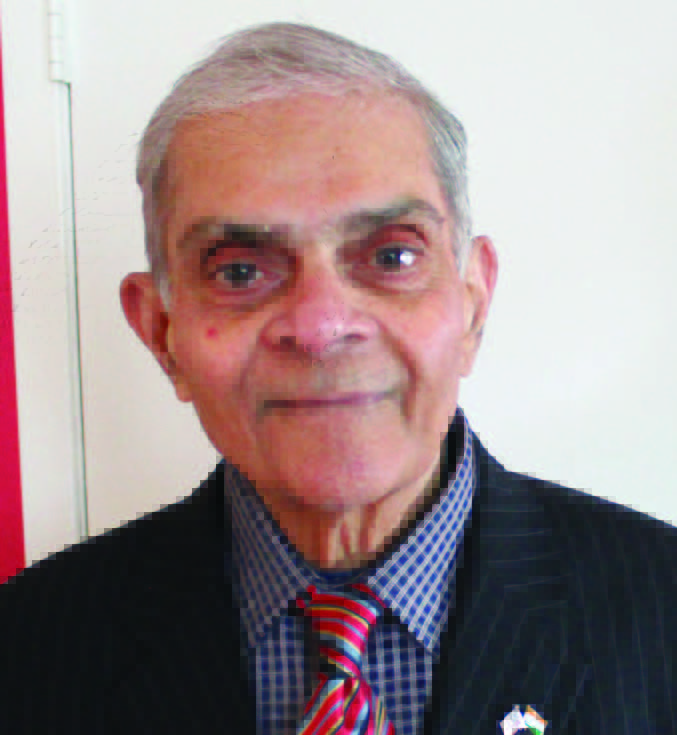
    Sureshchandra Bahadkar was born on May 28, 1940 in Mumbai, India and passed away on November 10, 2013 in Elmont, NY. Suresh was a pure and innocent soul and was the happiest when surrounded by family and friends. A businessman, Suresh was an exporter/importer of fashion textile until he retired in 2001. He was passionate about fashion and the performing arts. In fact, while in India, Suresh participated in numerous theatrical productions. Suresh lived an altruistic life. He received great joy and happiness by assisting not only his family, but also others in achieving great success. His concern for the welfare of others was a deep rooted part of what defined his character. Suresh was an active member of the Indian community. Specifically, he volunteered and assisted in the coordination of various events for The Indian Association of Long Island, India Home, and Indian American Forum, Inc. Suresh was recently honored by India Home for his outstanding volunteering efforts. Suresh is survived by his wife, Jaya Bahadkar, his two children: Rahul Bahadkar and Rakhi Bahadkar, his sister, Pratima Chowdhari, and brother, Mohan Bahadkar. He was also a proud grandfather of Asha Bahadkar. A puja will be held at the Arya Samaj in Hicksville on Friday, November 15, 2013 at 5:30pm.

  • Mangano Favors Tax Assessment by Towns and Cities

    Mangano Favors Tax Assessment by Towns and Cities

    HICKSVILLW, NY (TIP): “I’m 110 percent supportive of assessment going to them (cities) and would like to get everyone involved in a conversation about it,” Nassau County Executive Ed Mangano said. “We would have to see where everybody is; we would have to work on a plan,” said Mangano, who has criticized Nassau’s assessment system as broken. In an interview, Mangano said he intended to gather town and city representatives and others to discuss whether such a move was possible and whether it would work. Mangano’s comments marked the first time a county executive has said publicly that he would consider moving Nassau toward a system already in place in the rest of New York State. Nassau is the only county that handles assessment for its towns and cities. In 1948, the county’s administrative code was amended so that Nassau would keep any surplus taxes and pay out any refunds.

  • Substantial Foreign Direct Investment in the United States: Report

    Substantial Foreign Direct Investment in the United States: Report

    WASHINGTON (TIP): The United States has been the world’s largest recipient of foreign direct investment (FDI) since 2006. Every day, foreign companies establish new operations in the United States or provide additional capital to established businesses. With the world’s largest consumer market, skilled and productive workers, a highly innovative environment, appropriate legal protections, a predictable regulatory environment, and a growing energy sector, the United States offers an attractive investment climate for firms across the globe.

    Foreign direct investment in the United States is substantial
    ● In 2012, net U.S. assets of foreign affiliates totaled $3.9 trillion. The United States consistently ranks as one of the top destinations in the world for foreign direct investment (FDI), with inflows totaling $1.5 trillion in FDI just since 2006. For 2012, FDI inflows totaled $166 billion.
    ● The U.S. manufacturing sector draws a considerable share of FDI dollars, led by pharmaceuticals and petroleum and coal products. Outside manufacturing, wholesale trade; mining; non-bank holding companies; finance and insurance; and banking receive the greatest shares of foreign investment.
    ● Investment flows into the United States come mostly from a small number of industrial countries. Since 2010, Japan, Canada, Australia, Korea, and seven European countries collectively have accounted for more than 80 percent of new FDI. Although still small, flows from emerging economies like China and Brazil are growing rapidly.

    Foreign direct investment benefits the U.S. Economy
    ● In 2011, value-added by majority-owned U.S. affiliates of foreign companies accounted for 4.7 percent of total U.S. private output.
    ● These firms employed 5.6 million people in the United States, or 4.1 percent of private-sector employment. About one-third of jobs at U.S. affiliates are in the manufacturing sector.
    ● These affiliates account for 9.6 percent of U.S. private investment and 15.9 percent of U.S. private research and development spending.
    ● In the 2008-09 recession and subsequent recovery, employment at U.S. affiliates was more stable than overall private-sector employment. As a result, U.S. affiliates’ share of total U.S. manufacturing employment rose from 14.8 percent in 2007 to 17.8 percent in 2011.
    ● Compensation at U.S. affiliates has been consistently higher than the U.S. average over time, and the differential holds for both manufacturing and non-manufacturing jobs. Looking ahead, the United States will remain an attractive destination for foreign investment, and this investment will help bolster our economy. However, we need to continue to nurture and build upon the underlying strengths of the U.S. economy that make firms want to invest here; including an open investment regime, a large economy, a skilled labor force, community colleges, world-class research universities, predictable and stable regulatory regime, adequate infrastructure, and new energy sources.

  • Bacon painting sells for record $142.4 million

    Bacon painting sells for record $142.4 million

    WASHINGTON (TIP): Economic crisis? Financial slowdown? What are you talking about? Demonstrating that the rich are seldom constrained by crises faced by the plebs, the auction house Christie’s racked up a record $691.5 million on Tuesday for 69 works of art, many of which fetched highest ever prices. That included a staggering $142.4 million for a 1969 triptych by British artist Francis Bacon, of whom Margaret Thatcher once derisively said ”that man who paints those dreadful pictures.” It is a new record for a work by any artist, comfortably beating the May 2012 milestone when Edvard Munch’s pastel of “The Scream” sold at Sotheby’s for $119.9 million. Hollywood moguls, New York real estate tycoons, hedge fund managers, and other masters of the universe jostled in Christie’s Rockefeller Center showroom in Manhattan for a piece of the action, if not the works, oblivious to the workaday crowd outside. Christie’s had expected $500 million for the much-hyped art stash, but amid frenetic bidding by folks in designer suits and fur coats, the baseline was overrun effortlessly even though six of the works remained unsold.

    The highpoint of the auction came when Bacon’s triptych, a three-panel portrait of the artist’s friendturned- artistic-foil Lucian Freud sitting, cross-legged, in a wicker chair against a taxicab-yellow background, was wheeled out. Christie’s had estimated a $85 million payola for the work, but apparently it did not contend with frenzy it generated on account of its unique background by an unapologetically gay artist who began life as a interior decorator and a furniture designer. A 1933 biography of Bacon is titled “The Gilded Gutter Life of Francis Bacon.” The story goes that Bacon painted the triptych in 1969 and was irritated to learn that each one had been sold separately when he wanted them kept together. The panels were reunited many years later after much struggle by an Italian magnate who then sold it to an anonymous American buyer who in turn put it up for auction. On Tuesday it was snapped up by another faceless buyer fronted by a New York art dealer, although several well known collectors who were physically present bid up to $100 million during the 10 electrifying minutes it was centerstage. The crowd burst into applause when New York dealer Bill Acquavella, bidding by telephone on behalf of an unnamed client, placed the winning bid of $127 million, which added up to $142.4 million with Christie’s commission.

  • American University teaches Bhagavad Gita

    American University teaches Bhagavad Gita

    SOUTH ORANGE, NJ (TIP): The Bhagavad Gita has become compulsory for every student joining Seton Hall University in New Jersey. This is a catholic university founded in 1856. The translation of Bhagavad Gita by Stephen E Mitchell is the text. None of the teachers is a Hindu. The university wanted a transformational course that will influence the character and life of the students. It wanted a course that seeks answers to perennial questions like the purpose of life, why are we here, where are we going, “The journey of transformation”. Seton Hall consists of more than 10,800 students and this is a core course for all students, whatever the discipline. America is becoming increasingly more spiritual as predicted by Swami Vivekananda over 120 years ago. The Bhagavad Gita is universally acknowledged as one of the world’s literary and spiritual masterpieces. It has been treasured by American writers from Emerson and Thoreau to T. S. Eliot, who have called it one of the greatest philosophical poems in the world.

  • Kerry to Congress: ‘Calm down’ over Iran sanctions

    Kerry to Congress: ‘Calm down’ over Iran sanctions

    WASHINGTON (TIP): US Secretary of State John Kerry urged lawmakers to “calm down” on Wednesday over proposed new sanctions on Iran, warning they could scuttle diplomatic efforts to rein in Tehran’s nuclear drive. “The risk is that if Congress were to unilaterally move to raise sanctions, it could break faith with those negotiations and actually stop them and break them apart,” Kerry said. Washington’s top diplomat was speaking before beginning a closeddoor meeting with senators, many of whom are skeptical of the White House’s request for a freeze on new sanctions. The House of Representatives has already passed legislation that toughens already-strict sanctions on Iran, whose economy by all accounts is reeling from the punitive action. The Senate Banking Committee is mulling new sanctions too, and some key members of President Barack Obama’s own Democratic Party back a tougher stance despite the diplomatic opening. “What we’re asking everybody to do is calm down, look hard at what can be achieved and what the realities are,” Kerry told reporters.

    “Let’s give them a few weeks, see if it works,” he said, adding that there was “unity” among the six powers — UN Security Council permanent members Britain, China, France, Russia and the United States, plus Germany — negotiating with the Islamic republic. “If this doesn’t work, we reserve the right to dial back up the sanctions.” In that event Kerry said he would return to Capitol Hill “asking for increased sanctions. And we always reserve the military option.” Washington and Western allies allege Iran is trying to develop a nuclear weapon, a charge Tehran denies. Obama has vowed he will not allow Tehran to develop an atomic weapon. But last week’s Geneva negotiations between Iran and six world powers failed to reach an interim deal to halt its program. Kerry faces tough questions from Senate Republicans and Democrats who bristled when the White House warned Tuesday that toughening sanctions could trigger a “march to war.” The administration’s remarks marked a significant hardening of Obama’s stance towards Congress on sanctions as Washington prepares to resume talks with Iran on November 20. As he entered the meeting, Kerry addressed criticism that negotiations failed in Geneva, saying Iran would have jumped at the interim deal if it was to their benefit. “We have a pause because it’s a tough proposal, and people need to think about it, obviously,” Kerry said.

  • Yo Yo Honey Singh releases new song in NYC; announces new dates for US tour

    Yo Yo Honey Singh releases new song in NYC; announces new dates for US tour

    NEWYORK (TIP): India’s leading rapper and musician, Yo Yo Honey Singh, released his newest single, “Blue Eyes,” at a packed media event in New York Nov 8. The Flatiron Hotel in Manhattan was abuzz with fans, waiting patiently to catch a glimpse of their favorite singer. During the evening press conference at the hotel’s penthouse, Yo Yo Honey Singh also announced the new dates for his rescheduled US tour, promoted by DJ Kucha & Pria Haider of Club Kucha and their team comprising Amit Jaitly, Raj Bawa, Mandeep Sandhu and Suman Nagpal. The New York show is now rescheduled for Dec 28 while the one in Washington, DC is set for Dec 27. The US concerts were rescheduled because of US visa issuance delays to Yo Yo Honey Singh’s entourage given the recent US government shutdown. The situation has been eventually resolved and US visas were issued thanks to the efforts of Naresh Gehi, the principal of Gehi and Associates, the official immigration law firm of Club Kucha. Yo Yo Honey Singh said at the press conference that his troupe was eagerly looking forward to perform live in New York and Washington, DC in December. “This will not be your typical sit-down-only concert,” DJ Kucha explained at the press conference. “The concert is meant for all ages, families and youngsters alike and is going to be a memorable experience for many years to come.”

  • Awesome Internet Television (AIT) & 3rd Rock International

    Awesome Internet Television (AIT) & 3rd Rock International

    ‘Awesome Internet Television’ (AIT) launched by two South Asians in New Jersey creates history by becoming the First Television network that will stream LIVE telecast on the Internet with its futuristic concept, taking television to its new heights.

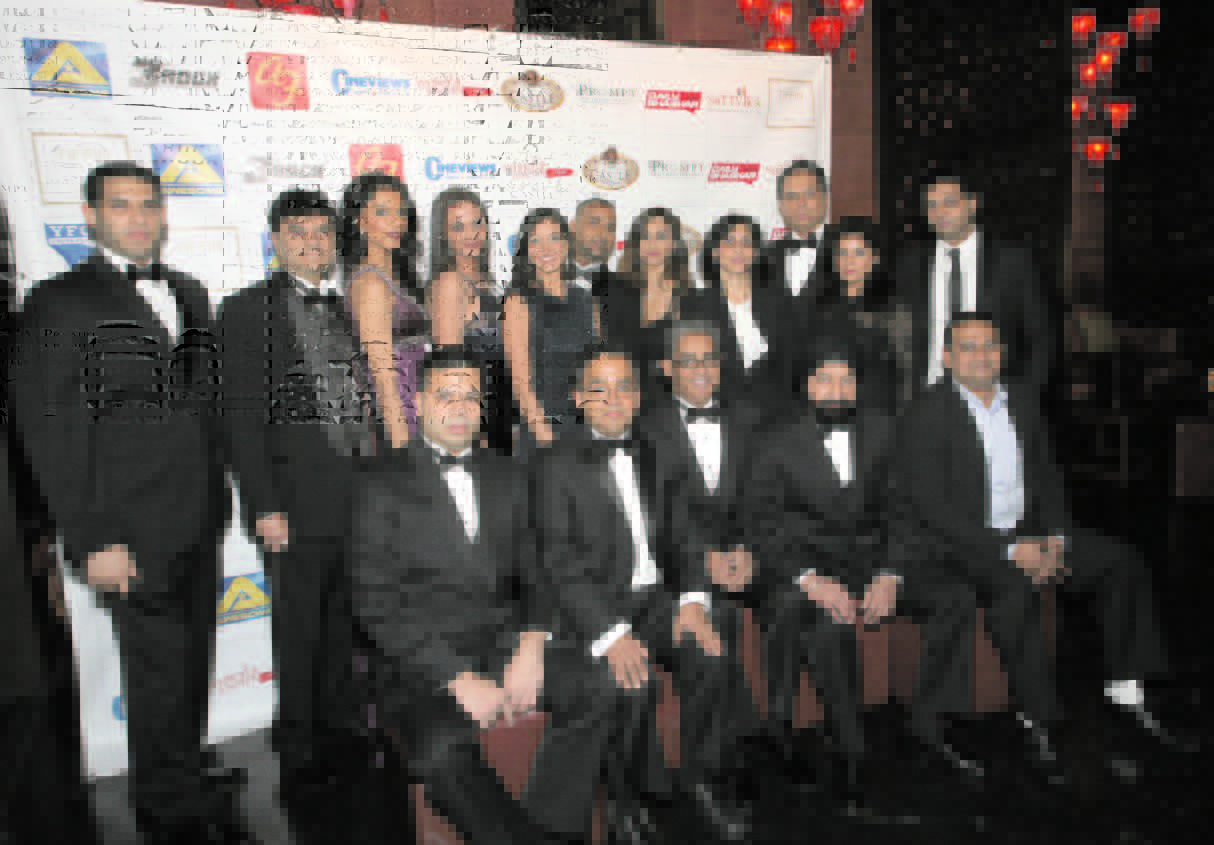
    NEWYORK (TIP): It was the night where all roads led to Katra, the moroccan-themed lounge and restaurant on the Lower East side in Manhattan. The glitterati, all dressed to please, heralded an event that had an enormous impact on the Indian entertainment industry not only in America, but all over the world. It was the DUAL LAUNCH of Awesome Internet Television(AIT) and 3rd Rock International. In short, history was being made that night! The lounge was jam-packed and there was the pitter patter of laughter and an all-round whispers of the event to come. As the excitement built up and the drinks were served in a serene, yet exciting atmosphere of Katra, the lights dimmed and everyone was called to attention. The crowd turned in unison to face the raised enclosure where the whole team of Awesome Internet Television(AIT) and 3rd Rock International stood…most of them dressed in tuxedos& gorgeous dresses. As the lights went out and a big applause filled the room, the young and pretty host of the event, gave everyone a brief outlook of the evening to follow. Following the brief introduction, Ritesh Parikh &Nutan Kalamdani, founders of AIT, took the microphone and gave everyone a glimpse into the workings of Awesome Internet Television and the ‘awesome’ things to expect from it. AIT is the brainchild of Ritesh Parikh and Nutan Kalamdani. Entertainment in all its forms is not at all new to both of the coowners. They have dabbled in producing movies, television, event management, party promotions and talent management and everything in between.

    Awesome Internet Television is a 24-hour TV channel freely available online that will telecast world-class entertainment while investing in leading edge technologies and providing a platform for advertising and marketing opportunities. AIT will be available on your TV, Laptop, Tablet or cellphone. And, the best part…it’s FREE. Next came brief introductions to all the team members present including Tirthankar Das, Gunjesh Desai, Ajayendra Loka, Nikhil Kalamdani, Grace Subervi, Sonny Mujumdar, Sanyya Gardez, Monica Gill, Nisha Kalamdani, Viral Shah, David Puran & the promising production crew. Ritesh Parikh & Nutan Kalamdani rallied the crowd with their speech and made them all cheer throughout, ending with a loud applause. On their cue, a small video presentation was screened on Awesome Internet Television, which was jazzy and informative at the same time and was well received by the audience. AIT also boasts of an impressive Advisory Board consisting of veteran media person John Perry, Shailesh Jhalani, Paul Singh, Jeetender Singh, and Sunil Shah. Finally, Aarnavv Shirsat of 3rd Rock Entertainment and Director of India Operations for AIT, spoke a few words and introduced his company with a small video presentation.

    He is an expert in event management & promotions, brand activations, movie promotions and International artist concerts in India and has been associated with more than 37 Hindi film promotions as well as Hollywood films like Riddick, Jack Reacher, Fast & Furious 5, Escape Plan and more. He has also organized concerts with international artists like Pitbull, Bryan Adams, Fatboy Slim, Guns ‘N Roses and over 15 individual DJ tours. 3rd Rock launched its US division in New York – 3rd Rock International which will collaborate with Awesome Television as its strategic partner on many upcoming projects in the near future. Among the many VIP guests that attended, were actor Bill Sorvino, filmmaker Tirlok Malik, actor Samrat Chakrabarti, Juned Qazi, Film Distributors, Event organizers, Top Industrialists, Media personnel and several others. The evening celebrations continued with drinks and a small selection of Indian delicacies, both vegetarian and non-vegetarian dishes sponsored by Castle (Raja Jhanjee) including delectable desserts sponsored by Sattvika. In addition, the gala booklets were sponsored by American Professional Management (Kamal Mohideen). When the event ended, everyone left with a feeling of excitement for awesome things to come.

  • Typhoon Haiyan: US carrier boosts Philippines relief effort

    Typhoon Haiyan: US carrier boosts Philippines relief effort

    TACLOBAN (TIP): The relief operation in the central Philippines to help those affected by Typhoon Haiyan is making progress following the arrival of a US aircraft carrier and its escort of two cruisers. More victims are receiving help but a BBC correspondent at the scene says there is still no largescale food distribution taking place. The first mass burials have been carried out in Tacloban. The confirmed death toll, more than 2,300, is expected to continue rising. More than 11 million people have been affected by the typhoon, according to the UN.

  • David Cameron, Manmohan Singh meet, discuss trade ties

    David Cameron, Manmohan Singh meet, discuss trade ties

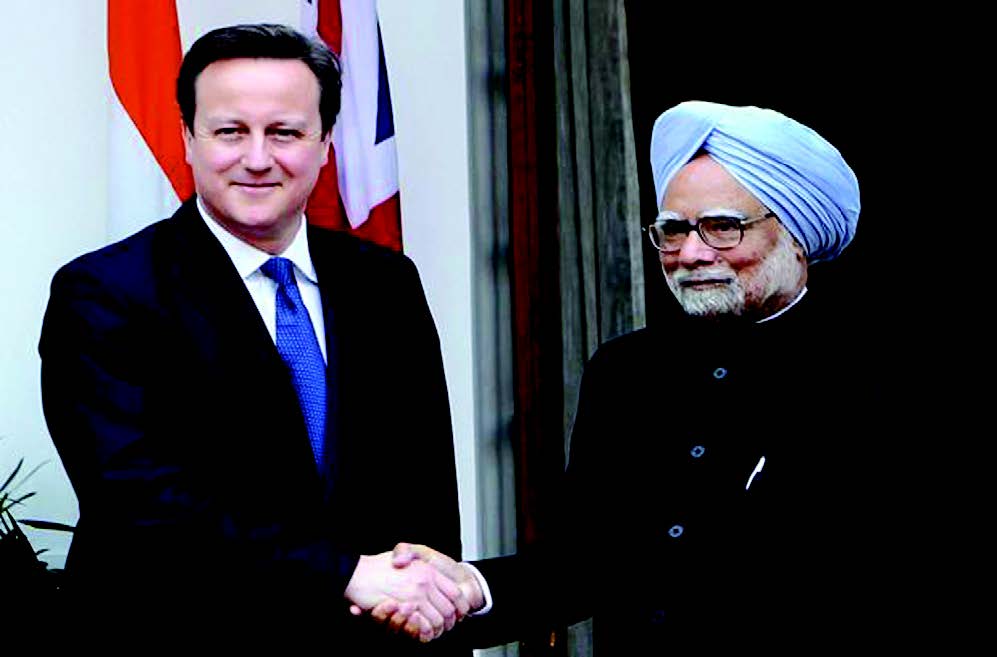
    NEW DELHI (TIP): India and Britain reviewed bilateral economic ties on November 14, including plans for setting up an economic corridor linking hub Bangalore and India’s financial capital Mumbai, people familiar with the matter said. The two countries also discussed the importance of an India-European Union broad-based trade and investment agreement—the subject of negotiations since 2007. The discussions came up during talks between visiting British Prime MinisterDavid Cameron and his Indian host Prime Minister Manmohan Singh. Cameron is on a brief visit to India on his way to Colombo for the three-day Commonwealth Heads of Government Meeting (CHOGM) starting Friday. Cameron’s current visit is his second this year and third in three years. The British Prime Minister was in New Delhi in February with a large business delegation. Both the leaders were “happy at the progress that has been made; the terms of reference for the feasibility study of the BMEC (Bangalore-Mumbai Economic Corridor) have been finalized”, one of the people aware of the development cited earlier said.

    The corridor is expected to be like the $90 billion (around Rs.5.7 trillion today) Delhi-Mumbai Industrial Corridor that India is building with Japanese help. It covers 1,483km and incorporates nine mega industrial zones of 200-250 sq. km, a high-speed freight line, three ports, and six airports. The aim of the project is to develop new industrial cities to expand India’s manufacturing and services base. Singh and Cameron also went over the progress in bilateral relations since the latter’s visit in February, a second person aware of the developments said. “Both leaders expressed satisfaction that despite the continuing global economic slowdown and the euro zone difficulties, India-UK trade ties have been resilient,” this person said. “Investments on both sides have also progressed satisfactorily. They felt that there was a need to take this process further through increased interaction in various fields, and regular steps and measures to continue this positive momentum.” Britain’s total foreign direct investment in India since April 2000 totals about $17.08 billion. Some 700 Indian companies have set up base in Britain, according to Indian foreign ministry figures. Other engagements of Cameron in New Delhi included a meeting with Indian business leaders. At the meeting, Cameron said he respected Singh’s decision to not participate in CHOGM in Sri Lanka, but added that he was in favour of participating in such multilateral events as it provided an opportunity to focus attention on issues like human rights. “I think the advantage of going to a multilateral organization is that you can help lead it. I think, actually, going to Sri Lanka will help to shine the light on some issues,” Cameron was cited as saying by PTI.

    “I totally respect the decision (by Singh to not go)…it’s a decision that they have to make.” Singh decided on 10 November to not go for CHOGM due to pressure from Tamil parties in India who say Sri Lanka’s President Mahinda Rajapaksahas not done enough to re-integrate Sri Lanka’s Tamil minority into the national mainstream since the end of the nearly three-decade-old civil war in May 2009. Tamils in India, who share close cultural ties with Sri Lankan Tamils, are also upset with Sri Lanka’s majority Sinhala community for alleged atrocities committed during the last phases of the civil war. The ruling All India Anna Dravida Munnetra Kazhagam party in Tamil Nadu and the opposition Dravida Munnetra Kazhagam are demanding a complete boycott of CHOGM by India. The country is being represented at the meeting by foreign minister Salman Khurshid. In his comments to Indian businessmen, Cameron also said he was open to meeting Gujarat chief minister Narendra Modi, the prime ministerial candidate of India’s main opposition Bharatiya Janata Party. Modi was treated as a pariah by European nations, including Britain, due to his allegedly turning a blind eye to the communal riots in Gujarat that saw the deaths of an estimated 2,000 people, mostly Muslims, in 2002. Two British Muslims were among those killed in the riots, sparked allegedly by a Muslim mob setting fire to a train carriage carrying Hindu pilgrims.But in October last year, Britain announced it was ending a 10-year boycott of Modi, following which British High Commissioner to India James Bevanmet the Gujarat chief minister. Asked if he would like to meet Modi in the near future, Cameron said, “In time, yes. It’s good to meet. We have an approach of meeting all politicians and leaders. In the end, it will be for the people of India whom to elect. But I’m open to meeting elected leaders.”

  • Sri Lanka rights abuse allegations divide Commonwealth

    Sri Lanka rights abuse allegations divide Commonwealth

    COLOMBO (TIP):THE heads of government of the 53 nations of the Commonwealth come together every two years for a summit. This time, several have decided to stay away, to boycott the gathering in Sri Lanka. The prime ministers of Canada, India and Mauritius say they cannot take part. Their basic complaint: Sri Lanka’s President, Mahinda Rajapaksa, should not have been allowed to host the Commonwealth and then take over for the next two years as chairperson of an organisation committed to values of democracy and human rights which he is accused of flouting. Other leaders are still coming, despite pressure on them to join the boycott. So Britain’s Prime Minister, David Cameron, has flown in from neighbouring India, although his counterpart, India’s Manmohan Singh, has pulled out. Mr Cameron says it’s better to engage and ask tough questions rather than risk making the Commonwealth irrelevant as an organisation. The case against Sri Lanka’s government stems partly from allegations against the security forces of war crimes, including the killing of civilians, rape and sexual violence against women, particularly during the final months in 2009 of a civil war against Tamil separatists. Critics also say there is considerable evidence of abuses both then and more recently, including the abduction or “disappearance” of opponents and the murder of journalists. The government in Colombo rejects all these allegations, a denial repeated to me in a BBC interview by the country’s minister of mass media and information, as Commonwealth leaders arrived in the country.

    Test of will
    “We wanted zero civilian casualties,” said the minister, Keheliya Rambukwella, who is the government’s spokesman. He added that it was well documented that the Tamil Tigers or LTTE, whom he called “terrorists”, “used civilians as human shields”. The minister also rejected demands from Britain’s prime minister. David Cameron is calling for an end to the intimidation of journalists and human rights defenders, action to stamp out torture, demilitarisation of the north and reconciliation between communities. Mr Cameron says there needs to be a thorough investigation into alleged war crimes, and that if it does not happen rapidly, then an international independent investigation will be needed. The Sri Lankan government accuses him of colonialism, of trying to dictate to a sovereign nation and of abusing his invitation to come to Colombo to discuss the issues on the formal agenda of this summit. But that agenda includes debate over what should replace the United Nations Millennium Development Goals when they expire in 2015. That may allow any leader in the room to raise a whole host of human rights concerns, precisely because they are central to many people’s belief that you cannot eradicate poverty without at the same time upholding rights, including the freedom to make political choices and freedom of speech. Some people ask whether or not anyone would notice if the Commonwealth disappeared.

    Supporters argue its achievements are often ignored. They point to a strong set of rules on democracy and elections: Commonwealth observer missions often play a significant role in limiting or preventing ballot-rigging. Military takeovers are punished. Thirty years ago many Commonwealth countries were ruled by men in uniform. Not any more. The Commonwealth is also much more than a club of political leaders. Its grassroots organisations, bringing together civil society groups around the globe, or professional associations exchanging best practice, or promoting trade are often more effective than gatherings of the political elite. Small states also value the collective political weight they can sometimes exert via the Commonwealth in a world where their voices might otherwise be drowned out. Critics, on the other hand, assemble lists of Commonwealth failings. Many have to do with promises made by leaders and then broken. Other charges involve rules which are not rigorously enforced. The current controversy over the decision to meet in Colombo is seized on by the critics as further evidence the Commonwealth is all too flexible when it comes to sticking to its principles. This year’s new Commonwealth Charter commits leaders to uphold these principles. So this summit will be seen by many as a test of the Commonwealth’s real commitment to values and a test of its collective will.

  • The 13th Guru Nanak Day Parade in Richmond Hill Draws Thousands

    The 13th Guru Nanak Day Parade in Richmond Hill Draws Thousands

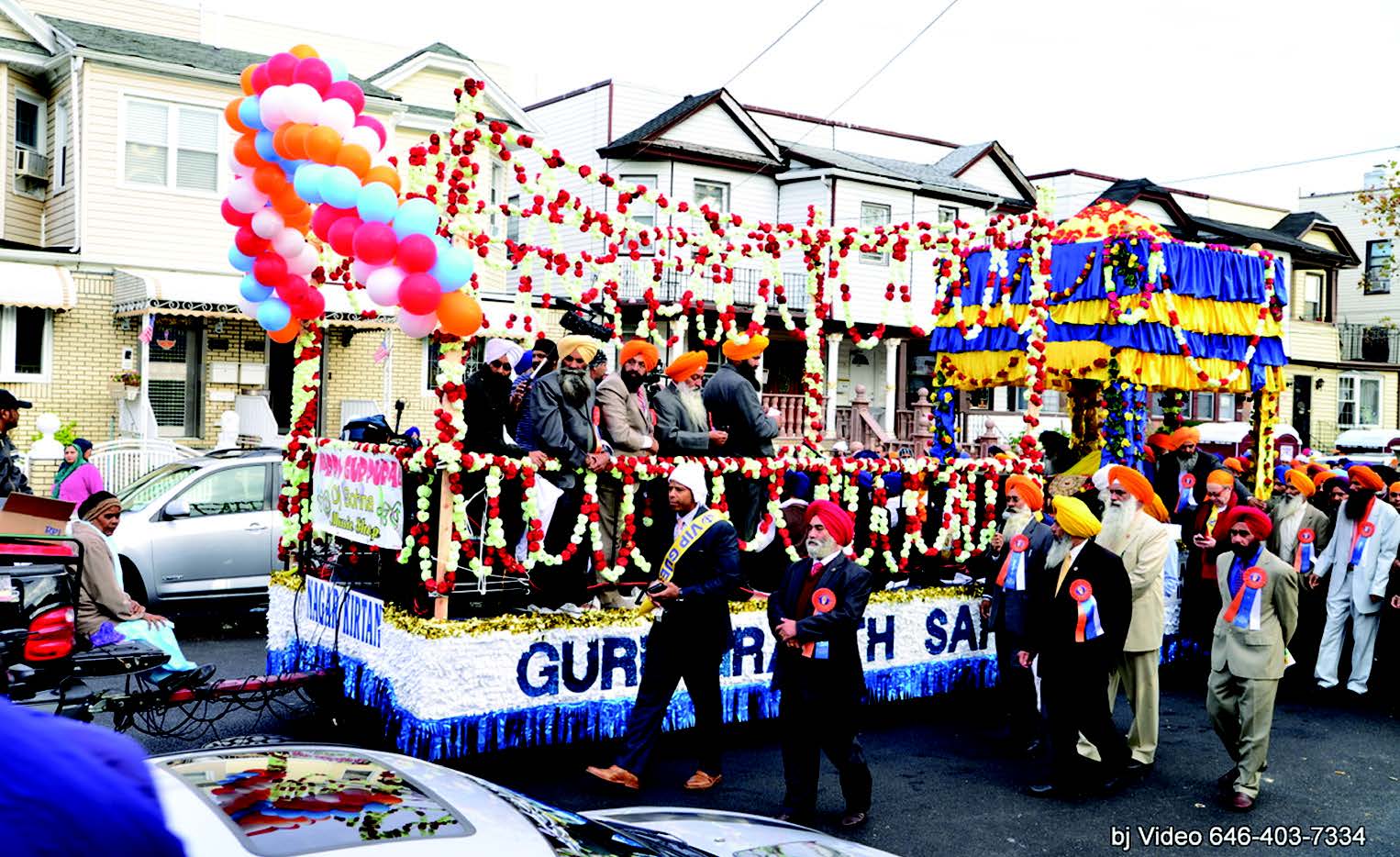
    RICHMOND HILL, NY (TIP): Sikhs have a tradition of taking out a parade which they call Nagar Kirtan to celebrate the birth anniversaries of their masters, and their creation in 1699, by the Tenth Master Guru Gobind Singh, which they celebrate as Sikh Day Parade. The parade is not only the showcase of the community’s well fabricated structure, it is the Sikh way to spread the message of their Gurus (Masters). The Richmond Hill Parade to celebrate the birth anniversary of the First Master of the Sikhs, Shri Guru Nanak Dev Ji, was started by Gurdwara Makhan Shah Lobana in 2001. A bright, shining, cherubic Sun and a balmy weather provided a fitting setting to the 13th Guru Nanak Day Parade in Richmond Hill on November 9. The weather god certainly pleased around 10,000 Sikh devotees who came out to join the parade to mark the 544th birth anniversary of their First Master, Shri Guru Nanak Dev Ji.


    img10

    The annual Guru Nanak Day Parade organized by Gurdwara Baba Makhan Shah Lobana, with cooperation from all New York gurdwaras and Sikh institutions and organizations, started from Gurdwara Baba Makhan Shah Lobana, located on 114 Street and 101 Avenue in Richmond Hill. Having taken a turn to Liberty Avenue on 111 Street, it took a left turn on 123 Street to Atlantic Avenue. On 118 Street on Atlantic Avenue, it took a left turn to Gurdwara Sikh Cultural Society where the Parade was received by the management of the Sikh Cultural Society at a brief halt. This was done to let the Gurdwara Sikh Cultural Society management pay their obeisance to Shri Guru Granth Sahib, the Holy Scripture of the Sikhs that is regarded as the Living Master. The Parade then moved on to 101 Avenue from where it took a turn towards 114 Street, where finally it terminated. That was for the route of the parade. The Living Guru, Shri Guru Granth Sahib, was taken out on an ornately decorated float at the head of the parade that was led by the Panj Piaras-the Five Beloveds. It was a wonderful sight to watch the priests in attendance of the Holy Scripture while the bards sang the holy hymns. Service (Seva) and langar (community kitchen) are amongst the major characteristics of the Sikh community life. Guru Nanak Dev enjoined upon his followers to share food with others.


    img7

    That is why in Sikh shrines, one always gets food. Also, Guru Nanak who believed in equality of all, enjoined upon his followers to sit together in the community kitchen to take food. That is why, all along the route of the Parade, food and beverages were served at dozens of points in the 5 mile stretch of the Parade route. Extremely generous and hospitable, the Sikh community has no equal when it comes to service and hospitality. The Parade is just a prelude to celebration that marks Guru Nanak’s birth anniversary. The real celebration will take place on the Master’s birth anniversary on November 17 in all Sikh shrines. The community gathers in the Gurdwaras, which organize special programs, to listen to the praises of the Lord. Each Gurdwara tries to get the best bards and preachers from India and elsewhere. There is a special feast for all in the Gurdwaras. At the stroke of the midnight, the Master is offered floral greetings, followed by exchange of greetings amongst the congregation. The Master appears like light and all dark is dispelled. Take a trip to a Sikh shrine to see for yourself how much reverence the Sikh community has for their Master and how much love they have for fellow human beings. After all, their Master had told them more than five hundred years ago to “Consider the human race as one”. The local police did a good job of policing and received praise for being helpful and cooperative in organizing the Parade. Walki

  • India, US at odds over Bangladesh policy

    India, US at odds over Bangladesh policy

    NEW YORK (TIP): Reports emanating from diplomatic circles here and in New Delhi reveal that publicly, India and the US may appear to be on the same page regarding the situation in Bangladesh but in reality, India is increasingly uncomfortable with the US position, and believes it can have negative implications for Bangladesh and the region. Last week, US Ambassador to Dhaka, Dan Mozena, visited South Block in New Delhi and spent long hours meeting India’s Foreign Secretary Sujatha Singh and other senior officials. As picketing, shutdowns and street violence take over domestic politics in Bangladesh, India and the US have shared concerns regarding the country’s stability. Sources said Sheikh Hasina had invited her rival Begum Khaleda Zia for a meeting and dinner to end the impasse over the caretaker government. But main opposition, Bangladesh Nationalist Party (BNP), is unwilling to end the violence and insisting on a neutral dispensation. But India remains more concerned about the color of politics being pursued by BNP. This is where Indian and the US positions diverge. The US appears much more comfortable with the BNP-Jamaat combine, who have made no secret of their radicalized politics. India believes if this succeeds, Bangladesh would be very different as a nation. The politics of BNP and Jamaat have become more radicalized in the past couple of years.

    Indian intelligence has detected influences of both Pakistan-based Lashkar-e-Taiba (LeT) and al-Qaeda. There is a lot of funding available to these groups from West Asian countries, and some from Pakistan. The US is less comfortable with Sheikh Hasina’s government, especially after the PM’s confrontation with Mohammed Yunus of Grameen Bank – the fracas over funding for the Padma barrage project – and also the war crimes tribunal. There appears to be a part of official thinking in the US that believes, according to sources here, BNP-Jamaat have better free market credentials, and that they would move away from radical Islam once they are in power. “They are too far away to have a realistic view of the street,” they said. India is haunted by the 2001 Pyrdiwah massacre, when 15 BSF personnel were massacred by BDR troops in an ugly confrontation. BNP had explained Jamaat’s place in government thus: it would be better to have them in than out. But once in government, Jamaat occupied the ministries crucial to furthering their radical agenda. Those years saw the flowering of Jama’atul Mujahideen Bangladesh (JMB) and other terror groups like HuJI. India is opposed to a return to those days. An added regional vulnerability is the Rohingya problem in Myanmar. With heightened communal tensions in Myanmar along with considerable Rohingya population in Bangladesh, New Delhi believes that the situation is ripe for disaster. The implications of increased radicalized politics in Bangladesh would have terrible implications for Myanmar’s stability. Again, reports of LeT and al- Qaeda infiltration among Rohingyas are popping up frequently. The instability as a result of radical politics could spread to India’s north-east and even China’s Yunnan province.

  • DIWALI: LIGHT UP YOUR LIFE

    DIWALI: LIGHT UP YOUR LIFE

    Deepawali or Diwali is certainly the biggest and the brightest of all Hindu festivals. It’s the festival of lights (deep = light and avali = a row i.e., a row of lights) that’s marked by four days of celebration, which literally illumines the country with its brilliance, and dazzles all with its joy. Each of the four days in the festival of Diwali is separated by a different tradition, but what remains true and constant is the celebration of life, its enjoyment and goodness.

    The Origin of Diwali
    Historically, the origin of Diwali can be traced back to ancient India, when it was probably an important harvest festival. However, there are various legends pointing to the origin of Diwali or ‘Deepawali.’ Some believe it to be the celebration of the marriage of Lakshmi with Lord Vishnu. Whereas in Bengal the festival is dedicated to the worship of Mother Kali, the dark goddess of strength. Lord Ganesha, the elephant-headed God, the symbol of auspiciousness and wisdom, is also worshiped in most Hindu homes on this day. In Jainism, Deepawali has an added significance to the great event of Lord Mahavira attaining the eternal bliss of nirvana. Diwali also commemorates the return of Lord Rama along with Sita and Lakshman from his fourteen year long exile and vanquishing the demon-king Ravana. In joyous celebration of the return of their king, the people of Ayodhya, the Capital of Rama, illuminated the kingdom with earthen diyas (oil lamps) and burst crackers.

    These Four Days
    Each day of Diwali has its own tale, legend and myth to tell. The first day of the festival Naraka Chaturdasi marks the vanquishing of the demon Naraka by Lord Krishna and his wife Satyabhama. Amavasya, the second day of Deepawali, marks the worship of Lakshmi, the goddess of wealth in her most benevolent mood, fulfilling the wishes of her devotees. Amavasya also tells the story of Lord Vishnu, who in his dwarf incarnation vanquished the tyrant Bali, and banished him to hell. Bali was allowed to return to earth once a year, to light millions of lamps to dispel the darkness and ignorance, and spread the radiance of love and wisdom. It is on the third day of Deepawali — Kartika Shudda Padyami that Bali steps out of hell and rules the earth according to the boon given by Lord Vishnu. The fourth day is


    17

    The Significance of Lights & Firecrackers
    All the simple rituals of Diwali have a significance and a story to tell. The illumination of homes with lights and the skies with firecrackers is an expression of obeisance to the heavens for the attainment of health, wealth, knowledge, peace and prosperity. According to one belief, the sound of fire-crackers are an indication of the joy of the people living on earth, making the gods aware of their plentiful state. Still another possible reason has a more scientific basis: the fumes produced by the crackers kill a lot of insects and mosquitoes, found in plenty after the rains.

    The Tradition of Gambling
    The tradition of gambling on Diwali also has a legend behind it. It is believed that on this day, Goddess Parvati played dice with her husband Lord Shiva, and she decreed that whosoever gambled on Diwali night would prosper throughout the ensuing year. Diwali is associated with wealth and prosperity in many ways, and the festival of ‘Dhanteras’ (‘dhan’ = wealth; ‘teras’ = 13th) is celebrated two days before the festival of lights.

    From Darkness Unto Light…
    In each legend, myth and story of Deepawali lies the significance of the victory of good over evil; and it is with each Deepawali and the lights that illuminate our homes and hearts, that this simple truth finds new reason and hope. From darkness unto light — the light that empowers us to commit ourselves to good deeds, that which brings us closer to divinity. During Diwali, lights illuminate every corner of India and the scent of incense sticks hangs in the air, mingled with the sounds of firecrackers, joy, togetherness and hope. Diwali is celebrated around the globe. Outside India, it is more than a Hindu festival, it’s a celebration of South- Asian identities. If you are away from the sights and sounds of Diwali, light a diya, sit quietly, shut your eyes, withdraw the senses, concentrate on this supreme light and illuminate the soul.

  • CBI can’t act as a police force, Gauhati high court rules

    CBI can’t act as a police force, Gauhati high court rules

    NEW DELHI (TIP): In a startling decision which has ramifications for sensitive cases, the Gauhati high court has ruled that the Central Bureau of Investigation (CBI) was legally not a police force and stripped it of its powers to investigate crimes, arrest suspects and file charge-sheets. The ministry of home affairs (MHA) had, by a resolution dated April 1, 1963, constituted the CBI as a police force under the Delhi Special Police Establishment (DSPE) Act, 1946. The CBI had drawn its powers to investigate cases from the DSPE Act. A division bench of the high court comprising Justice IA Ansari and Justice Indira Shah on Wednesday upheld the constitutional validity of DSPE Act but held that “the CBI is neither an organ nor a part of the DSPE and the CBI cannot be treated as a ‘police force’ constituted under the DSPE Act”. Unless this ruling is reviewed and amended by a higher court, the CBI will not function as a police force and will be unable to proceed further — in fact, not even file FIRs — in highprofile cases like Coalgate, 2G spectrum scam and those related to the Gujarat riots.

    In these cases, the CBI was directed by the Supreme Court to investigate and report to it. Once the cover of the law under DSPE Act is taken away, the very existence of the CBI comes to naught. A worried Centre is preparing to rush to the SC on Friday to appeal against the HC judgment. “We hereby also set aside and quash the impugned (under challenge) resolution dated April 1, 1963, whereby the CBI has been constituted,” the HC said. Interestingly, the HC also limited the application of DSPE Act to Union Territories. This means, even if a new police force was set up validly as per the HC’s logic, its power to investigate crimes would remain confined to the UTs. The bench said, “A careful reading of the preamble to the DSPE Act, 1946, would make it evident that the DSPE Act, 1946, has been made for the Union Territories. This legislative power cannot be exercised by Parliament except under Article 246(4) of the Constitution, which enables Parliament to enact laws on subjects covered by List-II (State List), in respect of Union Territories.”

    Chargesheets invalid
    Allowing a writ petition filed by one Navendra Kumar, the bench quashed the chargesheet filed against him by the CBI but said the alleged offence could be investigated afresh by the regular state police. As a triggering effect, this judgment would render all chargesheets filed by the CBI till date invalid. The HC had on January 20 this year directed the CBI to produce records relating to the creation of the agency. After scrutinizing these, the HC said that the 1963 MHA Resolution creating the CBI under the DSPE Act did not even receive the President’s assent. “Hence, strictly speaking, the resolution in question cannot even be termed as the decision of the Government of India. That apart, it is apparent from the records that the CBI is a newly constituted body and not the same as DSPE,” said Justice Ansari, who authored the judgment on behalf of the bench. The HC went through the 1963 resolution minutely and relied on Constituent Assembly debates on the role of the force to be created through legislation under Entry 8 of Union List. It said, “The central government had set up altogether a new body known as CBI by the impugned Resolution… Admittedly, at that time, no legislation was made to set up the CBI and the source of power being traced to Entry 8 of Part-I (Union List), which reads ‘Central Bureau of Intelligence and Investigation’.

    ” The HC said: “The word ‘investigation’; was, therefore, according to the Constituent Assembly debates, intended to cover general ‘enquiry’ for the purpose of finding out what was going on and this ‘investigation’, which amounts to a mere ‘enquiry’, is not an ‘investigation’ preparatory to the filing of chargesheet against an offender, for, such an ‘investigation’ can be carried on only by a police officer, under the Criminal Procedure Code, and none else”. “This apart, it is the state legislature, which is entitled to constitute a ‘police force’ for the purpose of conducting ‘investigation’ into crime,” it said. “From the above discussion, which took place in the Constituent Assembly, it becomes crystal clear that Parliament cannot, by taking resort to Entry 8 of List-I (Union List), make any law empowering a police officer to make ‘investigation’ in the same manner as is done, under the Criminal Procedure Code, by a police officer while conducting an ‘investigation’ into an offence for the purpose of bringing to book an offender,” it said.

    ‘CBI probe under statutory rules’
    What the sc had said on CBI In Vineet Narain Judgment delivered on December 18, 1997: “In 1994 due to increased workload relating to bank frauds and economic offences a separate Economic Offences Wing was established in CBI with the result that since then the CBI has three investigation divisions, namely, anticorruption division, special crimes division and economic offences division.” “We are informed that almost all the state governments have given concurrence for extension of the jurisdiction of the Delhi Special Police Establishment in their States with the exception of only a few. The result is that for all practical purposes, the jurisdiction in respect of all such offences is exercised in the consenting states only by the CBI and not by the state police. This is the significance of the role of the CBI in such matters and, therefore, technically the additional jurisdiction under the general law of the state police in these matters is of no practical relevance.” “Once the CBI is empowered to investigate an offence generally by its specification under Section 3, the process of investigation, including its initiation, is to be governed by the statutory provision which provide for the initiation and manner of investigation the offence. This is not an area which can be included within the meaning of “superintendence” in section 4(1).” “It is, therefore, the notification made by the central government under Section 3 which confers and determines the jurisdiction of the CBI to investigate an offence; and once that jurisdiction is attracted by virtue of the notification under Section 3, the actual investigation to be governed by the statutory provisions under the general law applicable to such investigation. This appears to us the proper construction of section 4(1) in the context, and it is in harmony with the scheme of the act, and section 3 in particular.”