Year: 2013

  • 4 killed on last day of strike in Bangla

    4 killed on last day of strike in Bangla

    DHAKA (TIP): At least four persons were killed as fresh violence erupted on October 29 across Bangladesh on the final day of a 60-hour opposition strike demanding a caretaker regime to oversee the next general election, taking the overall death toll in the political unrest to 20. A youth leader of the ruling Awami League was hacked to death by unidentified persons in Chittagong, police said. Reports from Cox’s Bazar district said two workers of the right-wing Jamaat-e-Islami , a key ally of the main opposition BNP, died when police fired on protesters. Witnesses said a BNP cadre was killed in clashes between police and protesters in western Magura district. An injured worker of the Awami League died overnight in northern Kishorganj, officials said. The BNP-led 18- party opposition alliance called the shutdown to press for the restoration of the neutral caretaker government system to oversee the next election. The polls are to be held by January 25, 2014. Supporters of BNP and Jamaat torched a bus in Manikganj and vandalized at least eight vehicles in Gazipur . Opposition activists earlier exploded crude bombs in front of Awami League leaders houses in Dhaka.

  • Policeman arrested, 6 suspended over deadly shooting in China

    Policeman arrested, 6 suspended over deadly shooting in China

    BEIJING (TIP): A Chinese policeman was arrested after he allegedly shot a woman dead and injured another in China’s southern Guangxi Zhuang Autonomous Region. Head of Pingnan County’s public security bureau, where the policeman worked, as well as five other lower-ranking police officers, were suspended from their duties for investigation yesterday, according to officials.

    The policeman surnamed Hu, who was reportedly drunk, went to a rice noodle shop to buy food and shot and injured the female shop owner surnamed Wu and her husband after a brawl. Wu died later after emergency treatment failed while her husband’s condition was stated to be stable, state-run Xinhua news agency reported.

  • Australian PM Tony Abbott makes surprise visit to Afghanistan

    Australian PM Tony Abbott makes surprise visit to Afghanistan

    CANBERRA (TIP): Australian Prime Minister Tony Abbott made a surprise visit to Afghanistan on October 28 to mark the impending end of Australia’s military involvement in the conflict, his office said. Abbott arrived at the Australian headquarters at Tarin Kowt under tight security for a ceremony to mark the end of Australia’s involvement in the war that has cost the lives of 40 Australian soldiers over more than a decade, the Prime Minister’s office said in a statement. The headquarters will be given to the Afghan army and most of Australia’s 1,500 troops will be withdrawn by Christmas. “Australia’s longest war is ending not with victory, not with defeat, but with, we hope, an Afghanistan that is better for our presence here,” Abbott told a large crowd of Australian and international soldiers. Abbott said it the withdrawal was a “bitter-sweet” occasion, and that “Afghanistan remains a dangerous place despite all that has been done.” Australia is the largest provider of troops to the Afghanistan war outside NATO.

  • Law bans foreign firms from making political donations

    Law bans foreign firms from making political donations

    NEW DELHI (TIP): The law forbids a “foreign company” to make any donation to political parties even if it has an Indian subsidiary. Yet, the home ministry and the two leading parties, Congress and BJP, have all filed affidavits claiming that a political donation is allowed if the majority shareholding in the foreign company registered abroad is of an Indian.

    The affidavits were filed in August before the Delhi high court in response to a PIL filed by Association for Democratic Reforms (ADR) and retired civil servant EAS Sarma. The PIL alleged that Congress and BJP have for years been receiving donations to the tune of tens of crores from foreign companies through their Indian subsidiaries.

    The one example cited against the government and the two parties is of UK-registered Vedanta Resources, in which Indian citizen Anil Agarwal holds at least 50% of the paid-up capital. Referring to the donations admittedly made by Vedanta through three of its Indian subsidiaries, Sterlite, Sesa Goa and MALCO, the petitioners alleged that the government had not taken any action against Congress and BJP because, among other reasons, finance minister P Chidambaram had been on the board of directors of the parent company.

    The PIL has asked for a court-monitored investigation as foreign funding of political parties is prohibited by at least two laws. In a bid to prevent “utilization of foreign contribution for any activities detrimental to the national interest”, Section 29B of the Representation of the People Act stipulates that no political party be allowed to accept any donation from “any foreign source”. Accordingly, Section 3(1)(e) of the Foreign Contribution Regulation Act (FCRA) prohibits any financial contribution from any foreign company to a political party. Section 2(1)(g)(ii) of FCRA clarifies that a foreign company includes its Indian subsidiaries.

    In their separate but similarly argued affidavits, the government and the two named political parties contended however that contributions from the subsidiaries of a foreign company such as Vedanta were allowed by FCRA. Their justification is that one of definitions of a foreign company, spelt out in Section 2(1)(g)(i) of FCRA, is an entity “within the meaning of Section 591 of the Companies Act”. The implication of this reference, in their interpretation, is that a donation made by any foreign company through its Indian subsidiary will not be regarded as a foreign contribution so long as an Indian holds a majority stake in the parent company.

  • Two Indians among three arrested in Nepal poll candidate murder

    Two Indians among three arrested in Nepal poll candidate murder

    KATHMANDU (TIP): Two Indian nationals were among three people arrested for the murder of a constituent assembly election candidate in Bara district in southern Nepal in October. Police said on Sunday that Mohamed Alam, a CPN (UML) candidate for the November 19 general elections was killed by a rival from his own party Ramchandra Pyasi Kushwaha with help from Indian nationals Atik Khan and Raju Srivastava. Alam was shot outside the a flour mill on October 4 by two men on a motorcycle with Indian license plates and died in hospital in Kathmandu without regaining consciousness a week later. Kushwaha is a former lawmaker while Khan runs a business in Birganj in Nepal and Srivastava is from Indian border city of Raxual. They hired professional assassins to kill Alam, a day after he was announced as a candidate from Bara – 4 constituency. According to the police, there had been two previous unsuccessful attempts to kill Alam. The general elections is expected to be marred by violence as the breakaway CPN-Maoist has declared that it will disrupt the polls and its main target will be candidates of it mother party UCPN (Maoist).

  • Ad bill nails Modi’s claim on UPA forgetting Sardar Patel

    Ad bill nails Modi’s claim on UPA forgetting Sardar Patel

    NEW DELHI (TIP): BJP prime ministerial candidate Narendra Modi’s claim that UPA had forgotten Sardar Patel till this year is far off the mark. The government’s publicity arm, directorate of advertising and visual publicity (DAVP), has spent Rs 8.5 crore in advertisements to commemorate Sardar Patel’s birth anniversary over the last four years. Ironically, the shoe may be on the other foot.

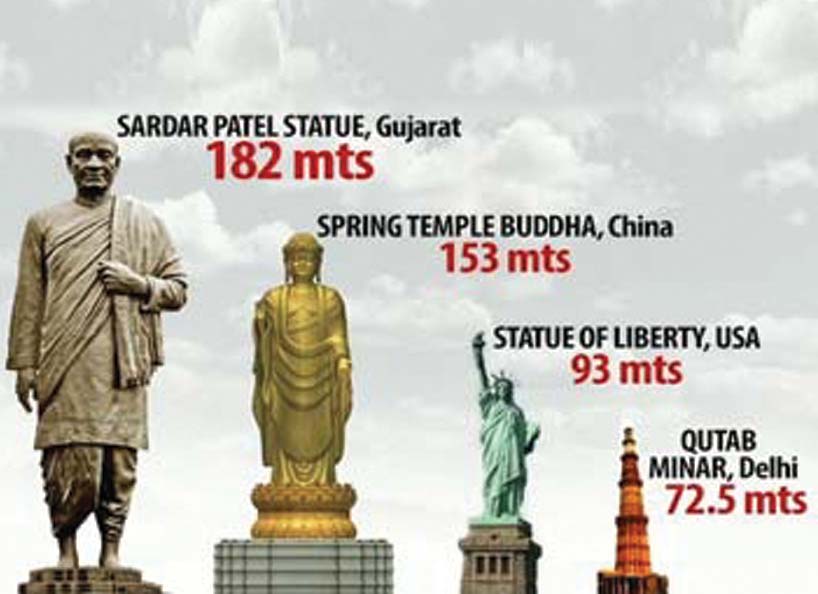
    In its tenure — between 1999 and 2004 — the NDA government did not issue advertisements for Patel for two years in a row (2001 and 2002). “On earlier birth anniversaries of Sardar Patel, no advertisements were seen. Today, newspapers across the country have advertisements on Sardar Saheb … this is the Gujarat effect,” Modi said on Thursday speaking at the foundation laying ceremony of 182-metre tall “Statue of Unity” of Patel at Kevadia in Gujarat.

    However, DAVP records show that UPA spent Rs 30 lakh in 2009-10, Rs 4.10 crore (2010-11), Rs 2.7 crore (2011- 12) and Rs 1.4 crore (2012-13). When asked about Modi’s allegations, information and broadcasting minister Manish Tewari said, “It is evident that the newly-anointed prime ministerial candidate of the BJP doesn’t allow fact to come in the way of myth-making.”

    UPA missed issuing an advertisement in 2008, which Tewari said could be due to the severe economic recession that year. However, the amount spent on Patel by the UPA is much lower than the amount spent every year on the Nehru-Gandhi family’s birth and death anniversaries. DAVP spent about Rs 33 crore on birth and death anniversary of Mahatma Gandhi, Rs 21 crore for former PM Rajiv Gandhi, Rs 14.5 crore for Indira Gandhi and Rs 9.38 crore for Jawaharlal Nehru in print advertisements.

    When asked about the difference in ad spends Tewari said, “This should not be looked at from the prism of advertising spends because the cost can depend on various factors like the size of the advertisements or costs that year. The real point of inflection is consistency of effort which shows our commitment as opposed to those who pay lip-service and are trying to appropriate the legacy of a leader without even reading it.”

    MODI AIMS AT HISTORY AND GANDHIS WITH WORLD’S TALLEST STATUE

    NEW DELHI (TIP): Narendra Modi launched the construction of the world’s tallest statue on October 31, a $338 million project in honour of one of the country’s founding fathers, that he is using to undermine the ruling Nehru- Gandhi political family. The statue of Sardar Vallabhbhai Patel, who was first Prime Minister Jawaharlal Nehru’s deputy and his interior minister, but often at odds with him, is to be built on a river island in Gujarat, the home state of both Patel and Modi.

    It will be built in four years and will be twice the height of the Statue of Liberty. “The world will be forced to look at India when this statue stands tall,” said Modi, who rules Gujarat as chief minister and is the leading opposition candidate for prime minister in general elections due by next May.

    His main rival in the election is the ruling Congress party’s Rahul Gandhi, Nehru’s greatgrandson. Thursday marked the 138th birth anniversary of Patel, and Modi said earlier this week: “Every Indian regrets Sardar Patel did not become the first prime minister. Had he been the first prime minister, the country’s fate and face would have been completely different.”

    The comments, and the project, are seen as a not-so-subtle bid by Modi and his Hindu nationalist Bharatiya Janata Party (BJP) to appropriate an independenceera hero associated with Congress, a party largely run by the Nehru-Gandhi family. Members of the family have ruled India for more than half the 66 years since it became an independent nation.

  • Only 248 signed up for Obamacare in first two days

    Only 248 signed up for Obamacare in first two days

    WASHINGTON (TIP: Enrollment in health insurance plans on the troubled Obamacare website was very small in the first couple of days of operation, with just 248 Americans signing up, according to documents released on October 31 by a US House of Representatives committee. The Obama administration has said it cannot provide enrollment figures from HealthCare.gov because it doesn’t have the numbers. The federal website, where residents of 36 states can buy new healthcare plans under President Barack Obama’s law, was launched on October 1. “We do not have any reliable data around enrollment, which is why we haven’t given it to date,” Health and Human Services Secretary Kathleen Sebelius told lawmakers on Wednesday. But the documents, which are labeled “war room” notes and appear to be summaries of issues with the problematic website beginning on October 2, indicate a mere six enrollments had occurred by that morning – the day after the website was launched and almost immediately crashed. “High capacity on the website, direct enrollment not working,” the October 2 notes said. By later that day, “approximately 100” enrollments had taken place. “As of yesterday, there were 248 enrollments,” said the notes from the morning of October 3.

    The documents were released by the House Oversight and Government Reform Committee, which has been demanding information from the administration about the website’s problems. The committee is chaired by Representative Darrell Issa, a Republican opponent of Obamacare. The notes were from meetings at the Centers for Medicare and Medicaid Services, the arm of the Health and Human Services Department that has been overseeing the website, an Issa spokeswoman said. The documents were first reported by CBS News. Health and Human Services spokeswoman Joanne Peters said the department will release Obamacare enrollment statistics on a monthly basis after coordinating information from different sources. This will including call centers, paper applications for insurance, and data from insurers and states. The first release of enrollment data will likely be mid-November, she said. “These appear to be notes, they do not include official enrollment statistics,” Peters said of the documents Issa’s panel released. “As the secretary (Sebelius) said before Congress, we are focused on providing reliable and accurate information and we do not have that at this time … We have always anticipated that the pace of enrollment will increase throughout the enrollment period.” HealthCare.gov has been plagued with technology problems since its rollout. It was back up on Thursday after not being fully functional for much of Wednesday. Both the federal exchange and the exchanges built by 14 other states and Washington D.C. were set up to let residents enroll in new plans created under the Affordable Care Act, Obama’s 2010 healthcare reform law commonly known as Obamacare. The government has said it expects about 7 million people to enroll for individual insurance in 2014, many of whom are expected to receive government subsidies.

  • US Senate panel approves some limits on surveillance

    US Senate panel approves some limits on surveillance

    WASHINGTON (TIP): Leaders of a Senate panel that oversees US intelligence issues said on October 31, it has approved a plan to scale back how many American telephone records the National Security Agency can sweep up. But critics of US surveillance programmes and privacy rights experts said the bill does little, if anything, to end the daily collection of millions of records that has spurred widespread demands for reform. Legislation by the Senate Intelligence Committee, which was approved by an 11-4 vote, would increase congressional and judicial oversight of intelligence activities. It also would create 10-year prison sentences for people who access the classified material without authorization, according to a statement released by committee chairwoman Sen. Dianne Feinstein, a Democrat, and Sen. Saxby Chambliss, the panel’s top Republican. Just how far it would scale back the bulk collection of Americans’ telephone records was unclear. The statement said the plan would ban bulk collection of records “under specific procedures and restrictions.” Chambliss spokeswoman Lauren Claffey said some of the telephone metadata collection would continue, so long as intelligence officials followed rules for how it can be used. Only certain people would have access to the phone data, according to the bill. It also would bar the NSA from obtaining the content of the phone calls.

    The current programme only allows the NSA to collect phone numbers and times of calls and cannot listen in on phone calls without a warrant from a secret court. “The threats we face _ from terrorism, proliferation and cyberattack, among others _ are real, and they will continue,” Feinstein said in the statement. “Intelligence is necessary to protect our national and economic security, as well as to stop attacks against our friends and allies around the world.” She said “more can and should be done” to increase transparency of the surveillance and build public support for privacy protections. But Rep. Adam Schiff, a Democrat who sits on the House Intelligence Committee, said the legislation allows the bulk collection to continue under certain safeguards. He called the safeguards a positive first step but said the NSA should stop sweeping up Americans’ phone records and only obtain those that are connected to a specific terror plot. Privacy advocates who have long called for the end of broad government snooping objected to the bill, which they said would merely legalize the surveillance that the NSA has quietly undertaken since 2006.

    David Segal, executive director of advocacy group Demand Progress, said “Lawmakers must immediately recognize this legislation for the sham that it is _ and reject it outright.” The Senate intelligence bill rivals one put forward earlier this week, by House and Senate judiciary committees, that would eliminate the phone data collection program that was revealed earlier this year in classified documents that were released to the media by NSA leaker Edward Snowden. The dueling legislation means that Congress ultimately will have to decide how broadly the US government can conduct surveillance on its own citizens in the name of protecting Americans from terror threats. Polls indicate that Americans widely oppose the surveillance programme. Meanwhile, the NSA issued a more forceful statement rejecting reports that it illegally collected millions of records from communications links between Yahoo and Google data centers around the world.

  • 45 BURNT ALIVE AS BUS CATCHES FIRE IN ANDHRA PRADESH

    45 BURNT ALIVE AS BUS CATCHES FIRE IN ANDHRA PRADESH

    MAHBUBNAGAR (TIP): Forty-five passengers were charred to death as a private luxury bus burst into flames after its fuel tank caught fire in Mahbubnagar district of Andhra Pradesh early on October 30. “Charred bodies of 45 persons have been retrieved from the bus,” Deputy Inspector General (Hyderabad Range) V. Naveen Chand said.

    The accident occurred at 5.10 AM when the diesel tank of the Hyderabad-bound bus owned by Jabbar Travels from Bengaluru hit against a culvert near Palem in Mahabubnagar, around 140 kms from Hyderabad on NH-44 (Bengaluru- Hyderabad), police said, adding the entire bus was engulfed in flames in a matter of minutes.

    Fifty-two persons, including 50 passengers, were travelling in the Volvo bus when the mishap occurred. Initial reports had said that some software engineers were among the victims. The bodies have been burnt beyond recognition and it is difficult to ascertain how many of the dead are men or women, Chand said.

    Five passengers, the driver Feroze Khan and cleaner Ayyaz, managed to escape with burn injuries and were undergoing treatment at different hospitals, another police officer said. Mahabubnagar District Collector Girija Shankar and District SP D. Nagendra Kumar, who were supervising the rescue operation said, “The identification of the deceased will be determined after conducting DNA tests and collecting blood samples of the relatives.

    “The mortal remains will be handed over the kin of the deceased after the DNA tests,” the Collector said. A team of doctors from Gandhi Hospital and Osmania General Hospital and forensic experts from Hyderabad rushed to the spot to conduct post-mortem of the bodies. The bus started from Bengaluru at 11 PM Tuesday night. “It seems the bus was travelling at a high speed when its fuel tank hit the roadside culvert and caught fire and got burst.The passengers in the bus were burnt beyond recognition.

    The entire bus has been gutted,” Wanaparthy DSP Srinivas Reddy said. Police said they had collected the list of passengers from the private bus operators and found that the online booking list had names of 33 bus-passengers and other travellers may have boarded the bus later. Sources said that the rescue team spotted the body of a mother, who stuck to her child tightly. Both of them died in the fire.

    A bus passenger, who survived the accident, and is undergoing treatment at a hospital, said, “All passengers were sleeping when the bus caught fire.Some of us tried to break open the window glass, however, we were unable to do so. I immediately moved towards the emergency (exit) window and broke it and managed to jump out of the bus.” According to the cleaner of the bus, most of the passengers were sleeping when the accident took place. The cleaner, who has been admitted to a hospital in Hyderabad, said he was pulled out of the burning bus by the driver of a car passing through the area.

  • WE COULD HAVE CHASED DOWN 296, SAYS SKIPPER MS DHONI

    WE COULD HAVE CHASED DOWN 296, SAYS SKIPPER MS DHONI

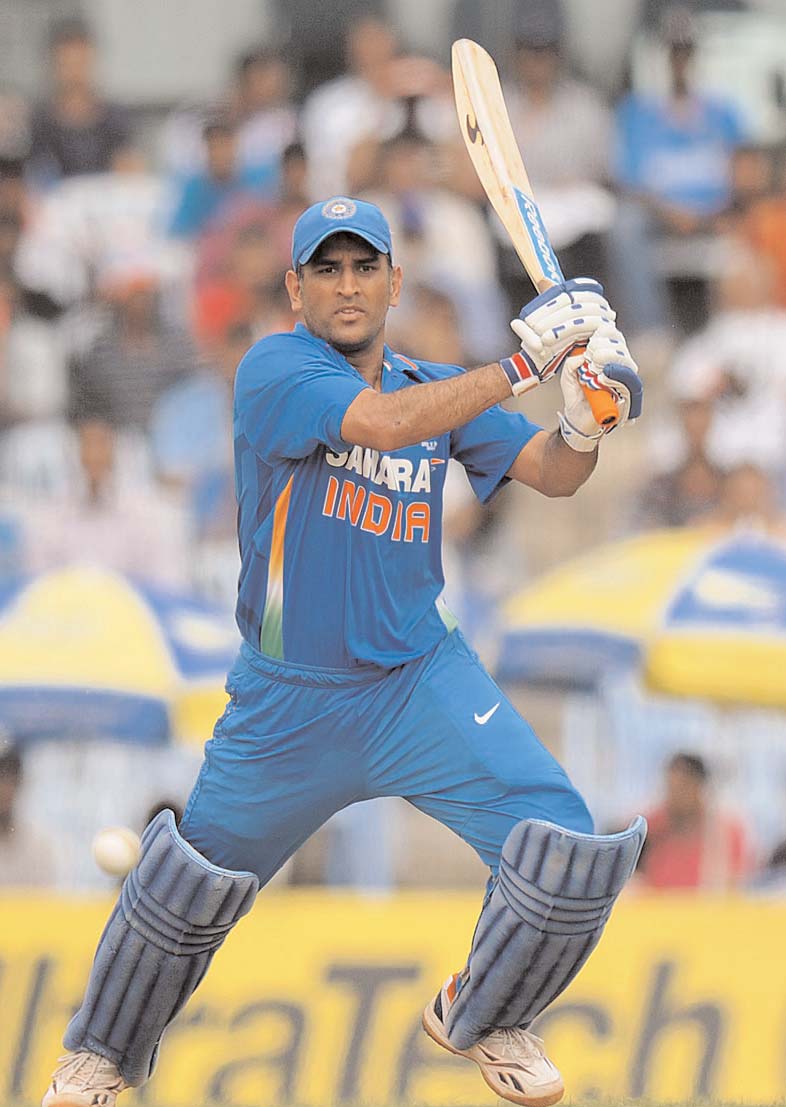
    RANCHI (TIP): Anything close to 300-run mark is always tough to chase down but India captain Mahendra Singh Dhoni backed his batsmen to overhaul the 296-run target set by Australia in the fourth ODI which was called off due to rain on October 23. Dhoni said all that his side would have needed was a good start to chase down the target after Australia made 295 for eight after being asked to bat at the JSCA Stadium. “It depended on the first 15 overs, on the start we get. If we didn’t lose too many wickets the pitch would have become better to bat on,” he said after the match was washed out. India were 27 for no loss in 4.1 overs when heavens opened up for the second time during the match. The match was stopped at 6.18 pm because of light drizzle which later intensified, making the ground unplayable. The match was called off after the umpires found out that the ground was too water logged to continue the proceedings. “The weather is not in our control. To some extent you are a bit disappointed, but whatever result it was we have to accept it. We wouldn’t have minded a 20 over game with the start we had,” Dhoni said. The Indian skipper was full of praise for fast bowler Mohammed Shami (3/42) who impressed with his deceptive bowling. “He (Shami) is deceptive. He bowls quicker than you think. What was important was he bowled full and the wickets he got, he was hitting the bails,” Dhoni said.

    “In the death he was getting the yorkers in pretty consistently. I know they will come back strong.” India’s fielding was not up to the mark today as they dropped as many as six catches, but Dhoni backed his butterfingered fielders to come back strongly in the next match. “At times it happens, some of the stadiums it is difficult to sight the ball,” he said. Australian captain George Bailey, who top-scored for his team with a 94-ball 98, also expressed disappointment with the wash out. “It could have been a reasonably good game of cricket. We snuck away with the bat, thanks to Glenn Maxwell’s innings. There was a little bit of swing and seam and he assessed the conditions well, especially considering he had to bat longer than he is normally used to,” he said. With a lively pitch on offer, Bailey said he backed his side to win the match. “We fancied our chances, with the pitch providing a bit of seam and pace and Mitch ( Mitchell Johnson) was getting it to go,” he said. “But it’s obviously important to be in the lead in any series and hopefully we’ll get to Cuttack and get a good game in and get a win.”

    Watch out for Shami:

    Bailey Rattled by Mohammed Shami’s threewicket burst with the new ball in the abandoned fourth ODI, Australian skipper George Bailey has instructed his batsmen to watch out for the rookie Indian pacer in the remaining games of the ongoing sevenmatch series. Taken aback by Shami’s pace and swing, Bailey said: “Obviously Shami bowled very well. He’s someone we haven’t seen in the series and he was a little bit quicker than what we expected. He certainly got movement off the seam,” Bailey told reporters after the fourth one-dayer at the JSCA Stadium on Wednesday. “That’s something to be pretty aware of for the rest of the series. That’s obviously what’s going to be coming at us,” he said. Shami rocked the Australian top-order but half-centuries from Bailey (98) and Glenn Maxwell (92) in a record 153-run fifth wicket stand enabled them to post a challenging 295/8. However, rain played spoilsport when India were 27 for no loss after 4.1 overs and the match was abandoned with Australia continuing to lead the series 2-1. Amassing 318 runs, Bailey on October 23 became the first Australia skipper to go past 300 in any bilateral ODI series. Yet a modest Bailey said it was ridiculous for him to think of making to the Ashes squad in the Australian summer. “I think there’s probably eight guys who have got a chance of playing in that Ashes team. It’s so far away. It’s just ridiculous to look at it,” Bailey said. “There are guys who will be at home playing Shield cricket, we’ve got Australia A games when we get back. It’s a completely different format. I don’t think there’s anyone out playing in these games thinking about that series.” Asked whether he had any special preparation for the series in India, Bailey said: “I didn’t do anything different. I think coming over here you focus a little bit more on how you’re going to play spin, because India have good spinners. “It’s important to be at the top of your game there. I’d done a lot of that leading into England as well, so that wasn’t too much different.”

    The lower-order added just 57 runs in the last 10 overs as Australia posted a less than 300-plus total for the first time in the series but Bailey begged to differ in his assessment. “I actually thought we played really really smartly in the last 10 overs. We were two or three wickets further down than we wanted to be. So it was really important that James (Faulkner) and Mitch ( Mitchell Johnson) actually got us into the latter part of that innings. “If we’d lost one of them there then 295 would’ve been 250 or 260. It was really important that they actually took some time out of the game and continued to score. I thought they played it better than I expected.” Standing in as skipper in the absence of an injured Michael Clarke, Bailey has impressed one and all with his smart captaincy and he attributed this to his Tasmanian skipper Dan Marsh. “I learnt a lot from him. He’s now the Tasmanian coach. Both temperament, the way he communicated, his knowledge of the game, I don’t think I’ll ever have that but I certainly learnt a lot and continue to learn a lot off him,” Bailey said. The 31-year-old also said he had learnt a lot from Ricky Ponting and Clarke. “I think you take little bits from absolutely everyone you play. Playing a year with Ricky last year was fantastic, just to see how he was around the group and how hard he trained, how he communicated with guys and how much he backed his own team was great. “And I’ve loved playing under Pup too. From everyone you play under and everyone you play with, you learn so much. There’s so much to learn if you’re willing,” he signed off.

    Rains travel with teams
    Even as India and Australia teams arrived in Bhubaneswar on October 24 afternoon amid cheers of cricket enthusiasts and were given a warm welcome, rain continued to play havoc at the Barabati stadium in Cuttack for the fifth day on the trot. The teams are scheduled to play the fifth ODI of the 7-match series in Cuttack on October 26. While curator Pankaj Patnaik and his 50 odd staff members were elated to see clear skies in the morning and were working on war footing to get the outfield in order at the Barabati Stadium, after 9.30 am it started pouring again which continued till late afternoon, much to the frustration of the groundstaff. Quizzed about the ground conditions, Patnaik said, “We are helpless if rain does not stop. The continuous rain for last 4-5 days has even raised water level of the drain outside the stadium. So even if we pump out water from the ground, where does it go?” Asked if it would be possible to have nets at the venue on Friday, the curator said, “It would not be possible on the outfield. But we have five pitches at the centre and we can devote two of those for practice if there is no rain from Friday.” He informed that the pitch and the area within the 30-yard circle has been covered. If there is hot sun on Friday and no rain there would be no problem in having a full match.

  • THE LEGEND WHO WAS HIS OWN VOICE

    THE LEGEND WHO WAS HIS OWN VOICE

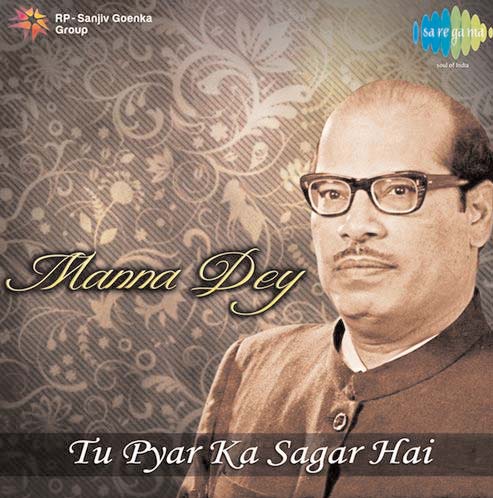
    Irony was the constant refrain of Manna Dey’s life. A world happy to sway to jingles could not always appreciate the steeped-in-classicism kalaam of Manna Da. Not blessed with the rare yodelling skills of Kishore Kumar or the soaked-in-romance style of Mohammed Rafi, there were a few things Manna Dey could do which his contemporaries could not aspire to. He could whip up a Lagi chunari mein daag, or Aayo kahan se Ghanshyam with such ease that he made a mockery of all predictions of the songs being difficult or challenging. Music directors Shankar-Jaikishen, indeed Mohammed Rafi too, felt he was the best choice when it came to songs with classical leanings. Manna Da though wanted to break the stereotype, ready at a moment’s notice to improvise, to innovate. He could dish out Aao twist karein too but the Hindi film world gave him only occasional opportunities to show his range, always keen to tap into his classical reservoir. In some ways, he remained an under-valued genius, the Dadasaheb Phalke Award notwithstanding. His voice was never associated with any hero, his name never doing the rounds of any music director’s camp for all songs of a movie; he charted his own path. A man most humble who did his own grocery purchases, he, however, was not happy about being the voice of Mahmood in Padosan. The song, Ek chatur naar, a kind of a singing contest in which he shared the baton with Kishore Kumar, was filmed on Sunil Dutt and Mahmood with Manna Da’s voice being used for the comedian. It left him unimpressed and he had to be persuaded to allow the song to be used in the film. Yet the same Manna Da once refused to sing with Pandit Bhimsen Joshi out of reverence for Pandit ji.

    The song in question, Ketki gulab juhi had Bhimsen’s character losing to Manna Da’s character in the film Basant Bahar. So Manna Da lost to Kishore Kumar in Padosan and defeated Bhimsen Joshi a decade before that! Ketki gulab juhi, however, was the not the biggest hit from Basant Bahar. That honour went to Sur na saje kya gaoon main”, where again only Manna Da could have done justice to all the ebbs and crests of music. Sur na… was picturised on Bharat Bhushan, a fine case of Manna Da singing for the hero, otherwise though his voice continued to be used for non-heroes. Another memorable case being Yaari hai imaan mera in Zanjeer, which was lipsynced by Pran, not the hero Amitabh Bachchan. The ironies did not leave Manna Da there. Mukesh was generally regarded as the voice of RK Films. Yet Manna Da gave some of his best songs for Raj Kapoor in films like Chori Chori, Shree 420 and even Bobby. In Chori Chori he gave us superhits like Aaja sanam madhur chandni mein hum and Ye raat bheegi bheegi while Rafi had to make do with the now forgotten “All line clear”. Born in 1919, he started as a music assistant in 1942. The following year he got his first whiff of public appreciation with songs of Ramrajya. It was, however, not until Upar gagan vishal in Mashaal (1950) that he began to be taken seriously as a solo singer. By the time he left youth, he was an accomplished performer, a diligent artiste who toiled endlessly yet never compromised on his music.

    In a delicious irony of life, Manna Da, who was never taken to be voice of any romantic hero of the era – the likes of Dev Anand, Shammi Kapoor and Rajesh Khanna used Kishore Kumar and Rafi’s voice – managed to give us two ultimate romantic songs for people young, and those young at heart. His Pyar hua iqrar hua hai pyar se phir kyun darta hai dil from Shree 420 (1955) was used in an advertisement campaign to promote contraceptives some 40 years after it became a chartbuster. If this song was an ode to love young and fearless, his number in Waqt was all about love that has withstood the test of tide and time. The song Ae meri Zohra Jabeen under the baton of music director Ravi, was a mischievous blend of seasoned love with innocent pranks with both Balraj Sahni and Achala Sachdev doing a wonderful job on the screen. Little appreciated, but Manna Da was a constant factor in the films of V. Shantaram; his songs of Do Ankhen Barah Haath and Navrang have scarcely been forgotten. His voice which could encapsulate almost all shades of life was used for patriotic as well as devotional songs. The irony could not have been greater – at one time Manna Da was ready to quit the country when an article by Rupayan Bhattacharya in a Kolkata daily compelled him to change his mind. And in the industry cine-goers hardly thought beyond Rafi or Mahendra Kapoor when it came to patriotic songs. Yet Manna Da gave us Ae mere pyare watan in Kabuliwala. Similarly, he lent his voice to the ever soothing Tu pyar ka sagar hai, a song from Seema, which the faithful play in praise of the Almighty. His voice had the haunting quality of a companion left behind.

    It could also have a tinge of a friend extolling you to march on. The two examples being provided by songs of Safar and Shor, where he sang Nadiya chale chale re dhara and Jeevan chalne ka naam — the latter being one of the few songs he sang with Mahendra Kapoor. Interestingly, he sang more than 50 songs with Rafi and 100 songs each with Lata Mangeshkar and Asha Bhonsle. Memorable as his songs were in Hindi cinema, Manna Da, who, for all his accomplishments, lived a humble life, sang in many Indian languages — notably Bengali, Assamese, Gujrati and Malayalam. His non-film albums too made a mark in the market, Yeh Awaara Raatein being truly remarkable. In ‘live’ shows too, he was peerless. Always holding the audience captive with his mastery over the medium. For many years, he confined himself to his residence in Bangalore, venturing out but rarely. Old age did not allow him to grace Kolkata on the opening day of IPL-VI, which was a disappointment for all, notably for Manna Da too as he was a keen student of the game. He had deep interest in soccer as well, being among a handful of artistes in cinema whose interests went beyond movies. His departure leaves a vacuum nobody will dare attempt to fill. But as Manna Da himself sang Chalat musafir, it is time for the second innings of the journey called life. History might appreciate him better.

    BOLLYWOOD MOURNS LEGEND’S DEATH
    Amitabh Bachchan: Manna Dey, stalwart of the music world, passes away. Flooded with memories and his songs. In particular his rendition of Madhushala. RIP… Prayers and condolences to loved ones and family! Strange how we connect events of our life with his songs! At work but shall keep a minutes silence, in Manna Dey’s memory on set before we start…
    Mahesh Bhatt: Manna Dey passes away. His voice shall linger forever.R.I.P.
    Manoj Bajpayee: Manna Dey is no more! A great singer! Lets pray for him! My condolences to his family! His music will live for 1000 yrs. RIP.
    Kailash Kher: Manna Dey, the legend is no more, and his contribution to music and films is unmatchable, RIP. Transformed from physical to divine, prayers.
    Sunidhi Chauhan: Heartbroken at Manna Da’s shocking demise.
    Vishal Dadlani: The world is a darker place, as one of the greatest musical lights to ever shine, has left us. May the immortal Manna De-saab rest in peace.
    Shekhar Ravjiani: The legend is no more… But he’ll forever live in our hearts through his songs and his
    voice. RIP Sir Manna Dey.
    Madhur Bhandarkar: Manna da, a legendary singer with a golden voice, that ruled our hearts for decades, will be missed by all. Zindagi kaisi hai paheli haye.
    SHABANA AZMI: Manna Dey had a unique voice. He will live on through his songs Ai Meri Zohra Jabeen/ dil ka haal suney dilwala/ poocho na kaise maine RIP.
    KUNAL KOHLI: Manna Dey, last of the greats, along with Kishore, Rafi and Mukesh, passes away.RIP.’ek chattur naar’ to ‘ae mere pyaare watan’ what a range.
    Shaan: From Rock n roll to pure classical to melancholy to slapstick… no one like Manna Da! Long live Manna Dey!
    Shreya Ghoshal: Zindagi kaisi hai paheli, Puchho na kaise, ek chatur naar, aao twist karein, aaja sanam madhur.. Such versatility and command over all genres. Rest in peace Manna Dey saab.. You and your voice are immortal.. Your songs will continue to inspire millions forever..
    Shankar Mahadevan: Zindagi … Kaisi hai paheli haaye .. Kabhi toh hasaaye … Kabhi ye rulaaye .. Manna da … Bless us!
    Anupam Kher: Manna Dey was one of the first legendary singers I heard live on stage in Shimla. He was gentle and calm. Just like his voice. Will miss him. RIP.
    Paoli Dam: ‘Coffee house er shei adda ta aaj aar nei’… the legend passes away! Manna Dey… RIP.
    Ashoke Pandit: Sad to hear about the demise of Manna Dey. A geart singer and a great human being. RIP.
    Sushma Swaraj: My respectful homage to the memory of the great singer Manna Dey
    Harsha Bhogle: Oh no. Such terrible news to get up to. Manna Dey no more? Less melody in the world.

  • ASTRONOMERS DISCOVER THE MOST DISTANT GALAXY

    ASTRONOMERS DISCOVER THE MOST DISTANT GALAXY

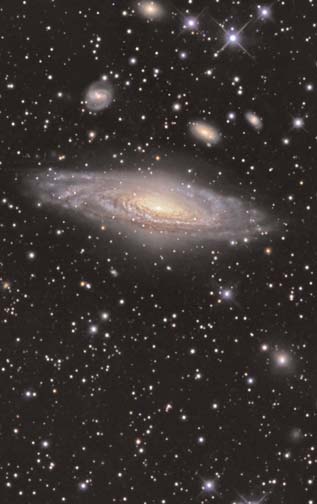
    LONDON (TIP): Astronomers have discovered the most distant galaxy known to man to date. They have also confirmed this galaxy was created within 700 million years after the Big Bang, raising interesting questions about the origins and the evolution of the universe. While the Milky Way creates about one or two Sun-like stars every year or so, the newly discovered galaxy, being called z8_GND_5296, forms about 300 a year and was observed by the researchers as it was 13 billion years ago. That’s the time it took for the galaxy’s light to travel to Earth. A single light year, which is the distance light travels in a year, is nearly six trillion miles. Because the universe has been expanding the whole time, the researchers estimate the galaxy’s present distance to be roughly 30 billion light years away. “Because of its distance we get a glimpse of conditions when the universe was only about 700 million years old — only 5% of its current age of 13.8 billion years,” said Professor Casey Papovich from Texas A&M University. University of California, Riverside astronomers Bahram Mobasher and Naveen Reddy are members of the team that has discovered the galaxy. In collaboration with astronomers at the University of Texas at Austin, Texas A&M University and the National Optical Astronomy Observatories, Mobasher and Reddy identified a very distant galaxy candidate using deep optical and infrared images taken by the Hubble Space Telescope. Follow-up observations of this galaxy by the Keck Telescope in Hawaii confirmed its distance.

    In searching for distant galaxies, the team selected several candidates, based on their colours, from the approximately 100,000 galaxies identified in the Hubble Space Telescope images taken as a part of the CANDELS survey, the largest project ever performed by the Hubble Space Telescope, with a total allocated time of roughly 900 hours. Using colours to sort galaxies is tricky because some nearby objects can masquerade as distant galaxies. Therefore, to measure the distance to these galaxies in a definitive way, astronomers use spectroscopy — specifically, how much the wavelength of a galaxy’s light has shifted towards the red-end of the spectrum as it travels from the galaxy to Earth, due to the expansion of the universe. This phenomenon is called redshift. Since the expansion velocity (redshift) and distances of galaxies are proportional, the redshift gives astronomers a measure of the distance to galaxies. “What makes this galaxy unique, compared to other such discoveries, is the spectroscopic confirmation of its distance,” said Mobasher. Mobasher said because light travels at about 186,000 miles per second, when we look at distant objects, we see them as they appeared in the past. The more distant we push these observations, the farther into the past we can see. “By observing a galaxy that far back in time, we can study the earliest formation of galaxies,” he said. “By comparing properties of galaxies at different distances, we can explore the evolution of galaxies throughout the age of the universe.”

  • Scientists finally unravel mystery of why kettles whistle

    Scientists finally unravel mystery of why kettles whistle

    LONDON (TIP): An Indian aero acoustics scientist has finally worked out why and how a kettle actually whistles – a problem which has puzzled scientists for more than 100 years. A team of British researchers from Cambridge University claim to have solved the conundrum and in the process developed the first accurate model for the whistling mechanism inside a classic stove kettle. Using the knowledge gained from the study, researchers now say they could potentially isolate and stop similar, but far more irritating whistles – such as the noise made when air gets into household plumbing or damaged car exhausts. It may come as a surprise but in all the years that people have been brewing tea, no-one has ever quite been able to work out why kettles whistle. The physical source of the noise and the specific reason for the whistling sound have both remained elusive until now. Two researchers – Dr Anurag Agarwal, a lecturer in aero acoustics at Cambridge and his student Ross Henrywood identified the source of the sound itself and have also been able to pinpoint two separate mechanisms, which not only create the sound but specifically cause a kettle to whistle, rather than making the rushing noise a flow might create in other household items, such as a hairdryer.

    A basic kettle whistle consists of two plates, positioned close together, forming a cavity. Both plates have a hole in the middle, which allows steam to pass through. Although the sound of a kettle is understood to be caused by vibrations made by the build-up of steam trying to escape, scientists have been trying for decades to understand what it is about this process that makes sound. As far back as the 19th century, John William Strutt and author of the foundational text The Theory of Sound, was trying to explain it. In the end, he posited an explanation that Henrywood and Agarwal have proven to be flawed. Henrywood and Agarwal started by making a series of slightly simplified kettle whistles then tested these in a rig in which air was forced through them at various speeds and the sound they produced was recorded. This enabled them to plot the frequency and amplitude of the sound, and the data was then subjected to a nondimensional analysis, effectively a set of calculations using numbers without any units, which allowed them to identify trends in the data. Finally, they used a two-microphone technique to determine frequency inside the spout. Their results showed that, above a particular flow speed, the sound itself is produced by small vortices – regions of swirling flow – which at certain frequencies can produce noise. As steam comes up the kettle’s spout, it meets a hole at the start of the whistle, which is much narrower than the spout itself. This contracts the flow of steam as it enters the whistle and creates a jet of steam passing through it. The steam jet is naturally unstable, like the jet of water from a garden hose that starts to break into droplets after it has travelled a certain distance. As a result, by the time it reaches the end of the whistle, the jet of steam is no longer a pure column, but slightly disturbed.

  • NOW, WALLET THAT RUNS AWAY TO HELP YOU SAVE MONEY

    NOW, WALLET THAT RUNS AWAY TO HELP YOU SAVE MONEY

    NEW YORK (TIP): A Japanese company has developed a crafty wallet to keep your spending in check – if you are short on cash, it rolls away when you reach for it. The “Living Wallet,” developed by a Japanese company, syncs with a bookkeeping smartphone app called Zaim. The product has two modes depending on your cash: Save Mode and Consumption Mode. When you are running short on cash, and you try to reach for it, the wallet will slink away from you or spin around to dodge your hand, ‘New York Daily News’ reported. When you inevitably catch it and open it, the wallet will start yelling and asking for help. The wallet can even call or email your mother to discourage you from making an unnecessary purchase. However, if your bank balance is in the green and you have the extra cash to spend, the wallet will switch to Consumption Mode and encourage spending. According to the product website, there are no plans to sell the Living Wallet to the public.

  • Nasa’s laser communication system transmits data from Moon

    Nasa’s laser communication system transmits data from Moon

    WASHINGTON (TIP): Nasa’s gen-next laser communication system has made history using a pulsed laser beam to transmit data over the 384,633 kilometres between the Moon and Earth. The data transmission was accomplished at a recordbreaking download rate of 622 megabits per second (Mbps) – six times faster than radio communications from the Moon. Lunar Laser Communication Demonstration (LLCD) is Nasa’s first system for two-way communication using a laser instead of radio waves. It has also demonstrated an error-free data upload rate of 20 Mbps transmitted from the primary ground station in New Mexico to the spacecraft currently orbiting the Moon. “LLCD is the first step on our roadmap toward building the next generation of space communication capability,” said Badri Younes, Nasa’s deputy associate administrator for space communications and navigation (SCaN) in Washington. “We are encouraged by the results of the demonstration to this point, and we are confident we are on the right path to introduce this new capability into operational service soon,” Younes said in a statement. Since NASA first ventured into space, it has relied on radio frequency (RF) communication.

    However, RF is reaching its limit as demand for more data capacity continues to increase. The development and deployment of laser communications will enable NASA to extend communication capabilities such as increased image resolution and 3-D video transmission from deep space. LLCD is a short-duration experiment and the precursor to NASA’s long-duration demonstration, the Laser Communications Relay Demonstration (LCRD). LCRD is a part of the agency’s Technology Demonstration Missions Programme, which is working to develop crosscutting technology capable of operating in the rigors of space. It is scheduled to launch in 2017. LLCD is hosted aboard Nasa’s Lunar Atmosphere and Dust Environment Explorer (LADEE), launched in September from Nasa’s Wallops Flight Facility on Wallops Island. LADEE is a 100-day robotic mission to provide data that will help Nasa determine whether dust caused the mysterious glow astronauts observed on the lunar horizon during several Apollo missions. It also will explore the Moon’s atmosphere.

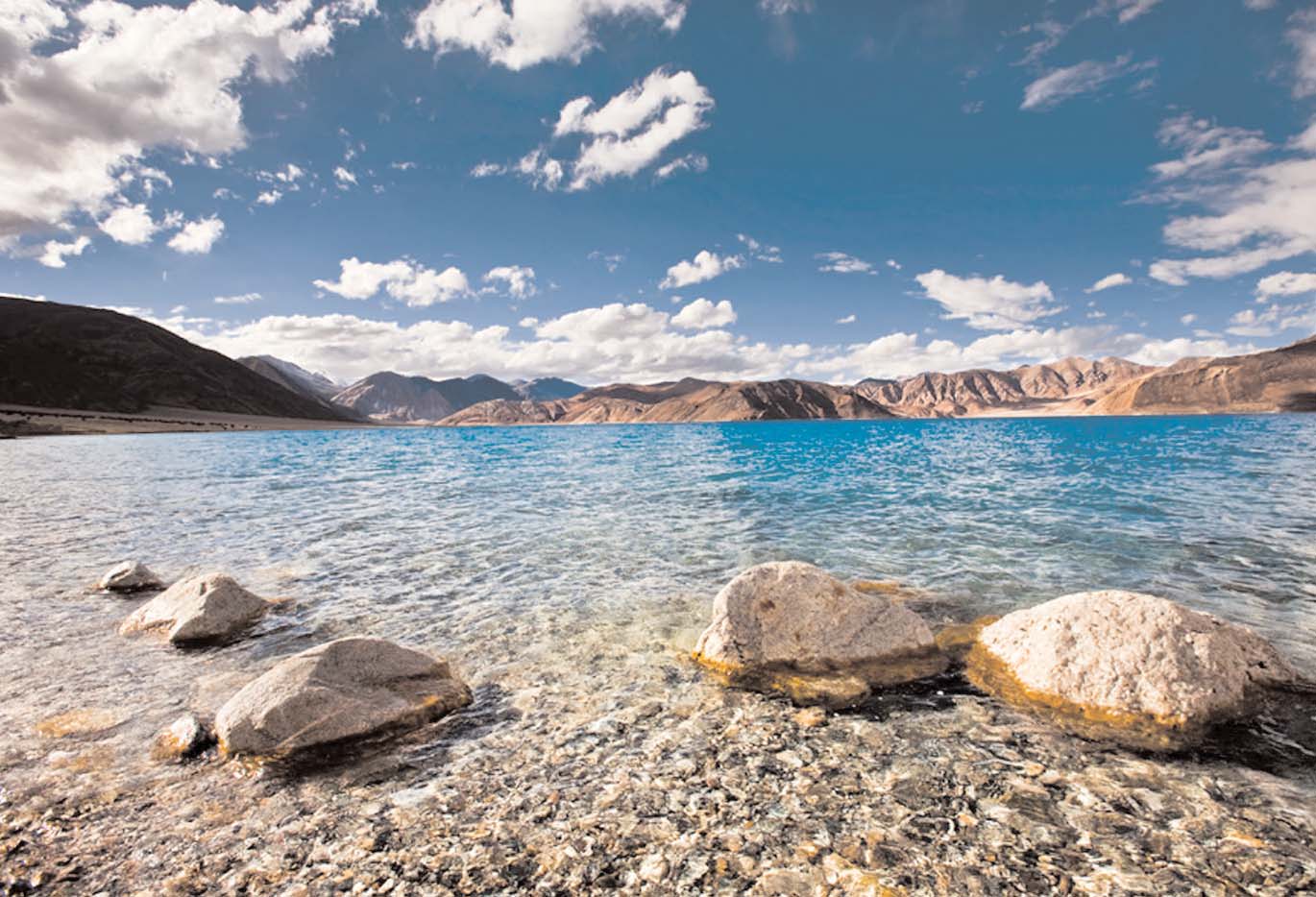
  • LADAKH, THE MOUNTAIN KINGDOM

    LADAKH, THE MOUNTAIN KINGDOM

    Nestled at an altitude of 3,500 meters above the sea level, between the Kunlun Mountain Range in the north and the main Great Himalayas to the south, is a small, yet bustling town of Leh. Being the largest city of Ladakh, Leh enjoys the maximum tourism. It not links one of the sleepy hamlets and valleys of the district, but is also one of the few remaining Buddhist destinations in South Asia. Being a cold desert, this arid terrain experiences drastic weather changes. The temperatures are so extreme that while one in winters experiences temperatures range between 0 degrees to -28 degrees, in summers one gets to face temperatures like 3 degrees to 30 degrees. Since the temperatures are diverse and the altitude only gets higher, travellers are suggested to have preventive medication for altitude sickness before embarking on their journey.


    img34

    Must see
    The Leh Palace, which is situated behind the main market has eight stories and is similar to the Potala Palace of Lhasa and still belongs to the royal family of Ladakh. Just ahead of the palace is the famous Chamba Temple, which is a oneroomed shrine that has a huge icon of Maitreya, the Buddha to come. Since this temple cannot be found easily, it is essential to enquire about it in the second row of shops. Also in the bazaar, at the top of the street, one can see the Jama Masjid. This has been painted in green and white colour. Another place that you must visit is the Sankar Gompa, which is situated within the city and is one of the oldest structures here. At one time, this monastery only welcomes maximum twenty monks and is a fairly active one. Also the monks here are extremely hospitable and always offer yak butter tea to those visiting the monastery. Also a visit to the famous Thikse Monastery is a must. This monastery is the largest such structure in central Ladakh and is primarily known for its magnanimous statue of Maitreya (future Buddha) in its Maitreya Temple. This statue is 15 meters (49 ft) high and the largest such statue in Ladakh. The Buddha here is unusually portrayed as seated in the lotus position rather than his usual representations as standing or in a sitting posture on a high throne.

    Must do
    On Old Leh Road exists the Tibetan Refugee Market which is an ideal place for shopping in Leh. Tibetan markets are popular for their metal-ware. The visitors here who have an eye for artistic pieces would find sonorous bowls made of nine metals like cymbals, decorative brass and copper trumpets. Besides, cymbals that have religious themes that are used in meditation are also found here. Also if one is fond of jewellery, it is possible to find relevant items like unpolished silver and turquoise jewellery and chunky shell bangles worn by Ladakhi women. There are also a range of excellent rugs and carpets that have traditional Persian and Kashmiri themes. Some other attractions of these markets are the native Thangka paintings, jewellery made of semi-precious stones, small prayer wheels, shawls, stoles and music bowls. One can also find the lapis lazuli from Afghanistan and the rubies from Burma.

    Must know
    The cheapest way to travel within the region is by the state buses, which ply on fixed routes according to fixed time schedules. The most comfortable and convenient though expensive mode of travel, however, is taxi, which is available for hire on fixed point-topoint tariff basis. For visits to the newly opened areas of Nubra, Dah-Hanu, Tsomoriri, Tsokar and Pangong Lake, it is mandatory to engage the services of a registered and recognised travel agency that makes the requisite arrangements including internal transport.

    How to reach
    By road

    The overland approach to Ladakh from Kashmir Valley via Kargil is approximately 434 kms, which remains open for traffic from early June to November. The most dramatic part of this road journey is the ascent up the 11,500 feet 3,505 m high Zoji-La, the pass in the Great Himalayan Wall that serves as the gateway to Ladakh. There is also a motorable route between Manali and Leh which is 473 kms long. Manali-Leh Road has been serving as the second overland approach to Ladakh. Open for traffic from around mid-June to early October, this high road traverses the upland desert plateau of Rupsho, where altitude ranges from 3,660m to 4,570m. A number of high passes fall enroute among which the highest one known as Taklang-La is the world’s second highest motorable pass at an altitude of 17,469 feet/5,235 m. Both the Himachal Pradesh Tourism (HRTC) and J&K State Tourism (SRTC) operate daily deluxe and ordinary bus services between Manali-Leh and Srinagar-Leh. The bus journey between Leh and Manali takes about 19 hours or two days with an overnight halt in camps at Serchu or Pang. And the Srinagar- Leh trip takes 17 hours.

    By air
    Ladakh is well connected by air with New Delhi, Jammu and Srinagar.

  • AHOI ASHTAMI

    AHOI ASHTAMI

    Celebrated in autumn on the Ashtami day, the Ahoi festival or Ahoi Ashtami is a fast observed by mothers for the well-being of their sons. The Ahoi Ashtami is usually celebrated in the months of October-November or the Karthik month (specifically the 8th day after full moon) in the Hindu calendar. Very similar to Karwa Chauth, although not as popular, the Ahoi Ashtami is performed mostly by people living in the North of India.

    The story behind Ahoi Ashtami
    The story of Ahoi Ashtami relates to a woman who lived in a village with her seven sons. During the process of renovating and painting her house, she went to the forest to bring soil. This was during the month of Karthik just before the Diwali festival. While digging the soil, the axe accidentally falls and hurts a cub in a nearby den. Subsequently, the cub dies and the woman feels sorry and responsible for what happened to the cub. However, she takes the soil from the forest and returns home. Over the next year, her seven sons die and she feels it is a fallout of what happened with the cub in the forest. Unable to bear her guilt, she confesses her sin to some of her neighbors in the village. The neighbors tell her that by confessing her sin she has almost negated the effect of her sin. As atonement for her sin, they also suggest that she offer prayers to the goddess Ashtami Bhagawati by sketching the face of the cub. So, the woman fasts on the Karthik Krishna Ashtami by praying and observing a fast regularly. She eventually gets back all her seven sons by the power of her prayer and ever since it becomes a ritual to worship the goddess Ahoi Ashtami Bhagawati every year. This story became popular and even today mothers fast and pray to Ahoi Mata for the well-being and bright future of their sons.

    The procedure
    The Ahoi Ashtami fast and prayer are almost similar to that of Karwa Chauth. People from different parts of North India celebrate the fast with a few variations. But broadly the following method is followed to observe the fast and prayer. Mothers fast all day and offer prayers to Ahoi Mata. They wake up before sunrise, have some refreshments and proceed to the temple to offer prayers for their children. The fast ends in the evening when the moon appears. Some families also break their fast once they see the stars in the sky. The picture of Ahoi Mata is painted on a wall and a bowl of water is placed on it. Printed calendars, posters and pictures of Ahoi Mata are now available and can be used in place of the wall painting. An untwisted red colored thread is wrapped around the bowl of water and the edges are smeared with turmeric powder and placed on the left of the picture. Then the story of Ahoi Mata is read out by an elderly lady in the household. All the other women sit down to listen to the story. The other essentials required for the prayer include grains that are placed in a plate and positioned in the center of the picture. The food offerings include puris, halwa, boiled channa and jowar, etc. Of late, people have been offering sweets that their children like to eat. Money offerings are also placed before the Mata’s picture. Once the reading of the story is done, the sweets and money are distributed among children and elders of the family. Some families also have the tradition of making a garland with silver coins or keepsakes. They keep adding to this garland when a child is born in the family or a son gets married. Every year the Ahoi Mata picture is adorned with this garland and this tradition is passed on to future generations.

  • Importance of keeping one’s word

    Importance of keeping one’s word

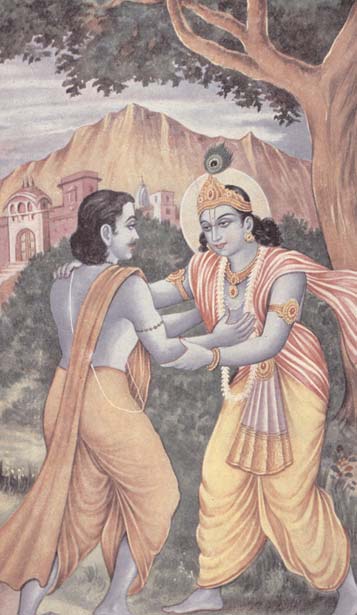
    We all know that the pandavas left their kingdom for 13 long years for keeping up their word! Well, for Arjuna going away from the bhogas of a king, for the sake of truth, was not new. He did it once well before the aranyavaas. The story goes like this: The kalyaanam of pandavas with Draupadi was an unusual one. However, it was perfectly according to dharma shastras. Infact Draupadi is one of the greatest pativratas and praised even by Lord Krishna for her Dharma vartana. A few reasons to justify the kalyaanam: Kunti Devi, the mother of pandavas, who never knew what a lie was, gave her will. Vyaasa Maharshi, one of the avataar of Lord Vishnu, ordered the kalyaanam to be done. Lord Shiva, pleased with her tapas, gave a boon to Draupadi to marry the pandavas. Pandavas, though were five physically, were all amshas of Indra, the King of the Gods. Hence, pandavas were actually one. Naarada, again an avataar of Lord Vishnu, suggested some rules to be followed by pandavas and Draupadi for living together. This is because, though they were amshas of Gods and Godesses, since they had a human form some addition rules according to dharma shastras needed to be followed.

    One of the rules was that: Draupadi should spend one year with each of the pandavas and while she was with one of them, no other pandavas should visit the palace where they might be. In case of any breach of their rule, one-year pilgrimage was prescribed by way of penance leaving the kingdom.The pandavas and Draupadi were living happily until one day: a brahmana came running to Arjuna saying that the thieves had stolen his cows. Arjuna wanted to rush with him to catch the thieves but he realised that his bow and arrows were kept in Yudhisthira’s palace and he was there in the company of Draupadi. He hesitated for a while, then seeing brahmana’s plight he rushed in to Yudhisthira ‘s palace took his bow and arrows and ran to catch the thieves. After he caught the thieves and punished them, after restoring the cows of the brahmana, Arjuna came back to Yudhisthira and told him about his transgression of the rule. Yudhisthira, knowing the reason of the breach of their rule, said their is no need for Arjuna to take the pilgrimage. Since it is a mistake committed towards him, and that too for a good reason, he will pardon arjuna . However, Arjuna would never break his word. He immediately set out for a one-year pilgrimage. May be this is why Arjuna is such a favourite sakha of Lord Krishna.

  • SRI GURU GRANTH SAHIB

    SRI GURU GRANTH SAHIB

    CONTD FROM Vol 7 ISSUE 41 Preparing the field of the body, he plants the Seed of the Creator. One knows the Truth only when he receives true instruction. Showing mercy to other beings, he makes donations to charities. One knows the Truth only when he dwells in the sacred shrine of pilgrimage of his own soul. He sits and receives instruction from the True Guru, and lives in accordance with His Will. Truth is the medicine for all; it removes and washes away our sins. Nanak speaks this prayer to those who have Truth in their laps. || 2 || PAUREE: The gift I seek is the dust of the feet of the Saints; if I were to obtain it, I would apply it to my forehead. Renounce false greed, and meditate single-mindedly on the unseen Lord. As are the actions we commit, so are the rewards we receive. If it is so preordained, then one obtains the dust of the feet of the Saints. But through smallmindedness, we forfeit the merits of selfless service. || 10 || SHALOK, FIRST MEHL: There is a famine of Truth; falsehood prevails, and the blackness of the Dark Age of Kali Yuga has turned men into demons. Those who planted their seed have departed with honor; now, how can the shattered seed sprout? If the seed is whole, and it is the proper season, then the seed will sprout.

    O Nanak, without treatment, the raw fabric cannot be dyed. In the Fear of God it is bleached white, if the treatment of modesty is applied to the cloth of the body. O Nanak, if one is imbued with devotional worship, his reputation is not false. || 1 || FIRST MEHL: Greed and sin are the king and prime minister; falsehood is the treasurer. Sexual desire, the chief advisor, is summoned and consulted; they all sit together and contemplate their plans. Their subjects are blind, and without wisdom, they try to please the will of the dead. The spiritually wise dance and play their musical instruments, adorning themselves with beautiful decorations. They shout out loud, and sing epic poems and heroic stories. The fools call themselves spiritual scholars, and by their clever tricks, they love to gather wealth. The righteous waste their righteousness, by asking for the door of salvation. They call themselves celibate, and abandon their homes, but they do not know the true way of life. Everyone calls himself perfect; none call themselves imperfect. If the weight of honor is placed on the scale, then, O Nanak, one sees his true weight. || 2 || FIRST MEHL: Evil actions become publicly known; O Nanak, the True Lord sees everything. Everyone makes the attempt, but that alone happens which the Creator Lord does. In the world hereafter, social status and power mean nothing; hereafter, the soul is new. Those few, whose honor is confirmed, are good.

    || 3 || PAUREE: Only those whose karma You have pre-ordained from the very beginning, O Lord, meditate on You. Nothing is in the power of these beings; You created the various worlds. Some, You unite with Yourself, and some, You lead astray. By Guru’s Grace You are known; through Him, You reveal Yourself.We are easily absorbed in You. || 11 || SHALOK, FIRST MEHL: Suffering is the medicine, and pleasure the disease, because where there is pleasure, there is no desire for God. You are the Creator Lord; I can do nothing. Even if I try, nothing happens. || 1 || I am a sacrifice to Your almighty creative power which is pervading everywhere. Your limits cannot be known. || 1 || Pause || Your Light is in Your creatures, and Your creatures are in Your Light; Your almighty power is pervading everywhere. You are the True Lord and Master; Your Praise is so beautiful. One who sings it, is carried across. Nanak speaks the stories of the Creator Lord; whatever He is to do, He does. || 2 || SECOND MEHL: The Way of Yoga is the Way of spiritual wisdom; the Vedas are the Way of the Brahmins. The Way of the Khshatriya is the Way of bravery; the Way of the Shudras is service to others. The Way of all is the Way of the One; Nanak is a slave to one who knows this secret; he himself is the Immaculate Divine Lord. || 3 || SECOND MEHL: The One Lord Krishna is the Divine Lord of all; He is the Divinity of the individual soul. Nanak is a slave to anyone who understands this mystery of the allpervading Lord; he himself is the Immaculate Divine Lord.

    || 4 || FIRST MEHL: Water remains confined within the pitcher, but without water, the pitcher could not have been formed; just so, the mind is restrained by spiritual wisdom, but without the Guru, there is no spiritual wisdom. || 5 || PAUREE: If an educated person is a sinner, then the illiterate holy man is not to be punished. As are the deeds done, so is the reputation one acquires. So do not play such a game, which will bring you to ruin at the Court of the Lord. The accounts of the educated and the illiterate shall be judged in the world hereafter. One who stubbornly follows his own mind shall suffer in the world hereafter. || 12 || SHALOK, FIRST MEHL: O Nanak, the soul of the body has one chariot and one charioteer. In age after age they change; the spiritually wise understand this. In the Golden Age of Sat Yuga, contentment was the chariot and righteousness the charioteer. In the Silver Age of Traytaa Yuga, celibacy was the chariot and power the charioteer. In the Brass Age of Dwaapar Yuga, penance was the chariot and truth the charioteer. In the Iron Age of Kali Yuga, fire is the chariot and falsehood the charioteer. || 1 || FIRST MEHL: The Sama Veda says that the Lord Master is robed in white; in the Age of Truth, everyone desired Truth, abided in Truth, and was merged in the Truth. The Rig Veda says that God is permeating and pervading everywhere; among the deities, the Lord’s Name is the most exalted. Chanting the Name, sins depart; O Nanak, then, one obtains salvation.

    In the Jujar Veda, Kaan Krishna of the Yaadva tribe seduced Chandraavali by force. He brought the Elysian Tree for his milk-maid, and revelled in Brindaaban. In the Dark Age of Kali Yuga, the Atharva Veda became prominent; Allah became the Name of God. Men began to wear blue robes and garments; Turks and Pat’haans assumed power. The four Vedas each claim to be true. Reading and studying them, four doctrines are found.With loving devotional worship, abiding in humility, O Nanak, salvation is attained. || 2 || PAUREE: I am a sacrifice to the True Guru; meeting Him, I have come to cherish the Lord Master. He has taught me and given me the healing ointment of spiritual wisdom, and with these eyes, I behold the world. Those dealers who abandon their Lord and Master and attach themselves to another, are drowned. The True Guru is the boat, but few are those who realize this. Granting His Grace, He carries them across. || 13 || SHALOK, FIRST MEHL: The simmal tree is straight as an arrow; it is very tall, and very thick. But those birds which visit it hopefully, depart disappointed. Its fruits are tasteless, its flowers are nauseating, and its leaves are useless. Sweetness and humility, O Nanak, are the essence of virtue and goodness. Everyone bows down to himself; no one bows down to another. When something is placed on the balancing scale and weighed, the side which descends is heavier.

    The sinner, like the deer hunter, bows down twice as much. But what can be achieved by bowing the head, when the heart is impure? || 1 || FIRST MEHL: You read your books and say your prayers, and then engage in debate; you worship stones and sit like a stork, pretending to be in Samaadhi.With your mouth you utter falsehood, and you adorn yourself with precious decorations; you recite the three lines of the Gayatri three times a day. Around your neck is a rosary, and on your forehead is a sacred mark; upon your head is a turban, and you wear two loin cloths. If you knew the nature of God, you would know that all of these beliefs and rituals are in vain. Says Nanak, meditate with deep faith; without the True Guru, no one finds the Way. || 2 || PAUREE: Abandoning the world of beauty, and beautiful clothes, one must depart. He obtains the rewards of his good and bad deeds. He may issue whatever commands he wishes, but he shall have to take to the narrow path hereafter. He goes to hell naked, and he looks hideous then. He regrets the sins he committed. || 14 || SHALOK, FIRST MEHL: Make compassion the cotton, contentment the thread, modesty the knot and truth the twist. This is the sacred thread of the soul; if you have it, then go ahead and put it on me. It does not break, it cannot be soiled by filth, it cannot be burnt, or lost.

    Blessed are those mortal beings, O Nanak, who wear such a thread around their necks. You buy the thread for a few shells, and seated in your enclosure, you put it on. Whispering instructions into others’ ears, the Brahmin becomes a guru. But he dies, and the sacred thread falls away, and the soul departs without it. || 1 || FIRST MEHL: He commits thousands of robberies, thousands of acts of adultery, thousands of falsehoods and thousands of abuses. He practices thousands of deceptions and secret deeds, night and day, against his fellow beings. The thread is spun from cotton, and the Brahmin comes and twists it. The goat is killed, cooked and eaten, and everyone then says, “Put on the sacred thread.” When it wears out, it is thrown away, and another one is put on. O Nanak, the thread would not break, if it had any real strength. || 2 || FIRST MEHL: Believing in the Name, honor is obtained. The Lord’s Praise is the true sacred thread. Such a sacred thread is worn in the Court of the Lord; it shall never break. || 3 || FIRST MEHL: There is no sacred thread for the sexual organ, and no thread for woman. The man’s beard is spat upon daily. There is no sacred thread for the feet, and no thread for the hands; no thread for the tongue, and no thread for the eyes. The Brahmin himself goes to the world hereafter without a sacred thread.

    Twisting the threads, he puts them on others. He takes payment for performing marriages; reading their horoscopes, he shows them the way. Hear, and see, O people, this wondrous thing. He is mentally blind, and yet his name is wisdom. || 4 || PAUREE: One, upon whom the Merciful Lord bestows His Grace, performs His service. That servant, whom the Lord causes to obey the Order of His Will, serves Him. Obeying the Order of His Will, he becomes acceptable, and then, he obtains the Mansion of the Lord’s Presence. One who acts to please His Lord and Master, obtains the fruits of his mind’s desires. Then, he goes to the Court of the Lord, wearing robes of honor. || 15 || SHALOK, FIRST MEHL: They tax the cows and the Brahmins, but the cow-dung they apply to their kitchen will not save them. They wear their loin cloths, apply ritual frontal marks to their foreheads, and carry their rosaries, but they eat food with the Muslims.

  • AROMATHERAPY TO DE-STRESS

    AROMATHERAPY TO DE-STRESS

    We are all aware that stress, can be very harmful for our health — it lowers our resistance and makes us more vulnerable to illness and disease. Stress can also be mentally crippling and that is what makes it even more necessary to combat. Natasha Tuli, co-founder and CEO of a lifestyle brand that deals in aromatherapy products says, “When you use aromatherapy to break the pattern of circular thinking that is keeping you stressed, even when there is nothing you can do about a situation, you can easily get past the thoughts that are interfering with the task you need to focus upon and become more efficient in your work, or play.” Aromatherapy is the practice of using volatile plant oils, including essential oils, for psychological and physical well-being. Essential oils, the pure essence of a plant, have been found to provide both psychological and physical benefits when used correctly and safely.

    Do it right

    “Close your eyes and envision sitting a rock on a mountain top with a clear running stream below your feet, breath in the calming aroma and imagine listening to the flowing water,” says Natasha. Essential oils are generally very concentrated and highly effective. She adds, “Take a few drops of essential oils on a wet cotton ball and place these balls in your living room, bedroom and office to always be surrounded in the pleasant world of aroma.”

    Popular stress relieving essential oils

    Clary Sage, Orange, Bergamot, Lavender, Lemongrass and YlangYlang. Clary sage is instrumental in calming the nervous system. – Lavender is known to be an all round healer. The sweet fragrance is calming and gives a sense of clarity to thinking. – Bergamot brings freshness by uplifting the mood almost instantaneously. – Lemongrass invokes fresh energy within one’s body making it more dynamic. – Orange, with its fruity fragrance and feeling, lifts the spirit bringing peace and happiness to the mind. – YlangYlang helps get rid of feelings of anger, tension and nervous irritability. It is also known to relax the body and make one lose their inhibitions that usually are a major source of stress.

  • LOW VIT D LEVELS UP ANEMIA RISK IN KIDS

    LOW VIT D LEVELS UP ANEMIA RISK IN KIDS

    Anew study has revealed that low levels of vitamin D may increase a child’s risk of anemia. Investigators at the Johns Hopkins Children’s Centre caution that their results are not proof of cause and effect, but rather evidence of a complex interplay between low vitamin D levels and haemoglobin. The investigators said several mechanisms could account for the link between vitamin D and anemia, including vitamin D’s effects on red blood cell production in the bone marrow, as well as its ability to regulate immune inflammation, a known catalyst of anemia. To capture the interaction between the two conditions, researchers studied blood samples from more than 10,400 children, tracking levels of vitamin D and hemoglobin. It was found that vitamin D levels were consistently lower in children with low hemoglobin levels compared with their non-anemic counterparts. The sharpest spike in anemia risk occurred with mild vitamin D deficiency, defined as vitamin D levels below 30 nanograms per milliliter. Investigators also found that black children had higher rates of anemia compared with white children (14 per cent vs. 2 per cent) and considerably lower vitamin D levels overall, but their anemia risk didn’t rise until their vitamin D levels dropped far lower than those of white children.

  • 10 GLASSES OF WATER A DAY TO CUT FAT

    10 GLASSES OF WATER A DAY TO CUT FAT

    We have all heard this advice innumerable times. Drink eight to 10 glass of water a day. Experts say that if you are overweight or tend to get most of your calories from processed and salty food, eight to 10 glass of water could actually help you reduce your weight. Water could lower your BMI. If you drink eight to 10 glass of water everyday you will end up eating less and also drink fewer calorie-laden beverages. Drinking about 500 ml of water before meal can cut the calories and help in losing weight and as a result lower body mass index (BMI). Water helps in burning fat. You can burn about 50 per cent more fat after drinking water compared with a higher calorie beverage. Water helps you play your sports better. Sweating away just two per cent of your body’s water content affects the performance of a sportsperson to a great extent. Drinking enough water can improve your game and save you from the risk of dehydration. Water can fight hangovers. Being adequately hydrated is the best way not to feel lousy and grouchy after a late night party. Drink a couple of glasses of water hours before the event. Even when you are flying a long distance flight, staying hydrated helps you fight hangover.

  • Surviving the puff challenge

    Surviving the puff challenge

    Smoking is a hard habit to break. Ask Ajay Devgn. Experts help you identify the pitfalls to watch out for once you’ve told yourself that you have quit

    Your vigilance falters
    You were enthusiastic at first but a few weeks in and you’ll find your urge to smoke returns with a vengeance and you’re tempted to have “just one”. You must prepare a counter-argument to this powerful inner voice telling you that one won’t hurt. Be ready to remind yourself of your health, the cash you are saving and the fresh, smoke-free breath you now have.

    You fall into old habits
    Smoking’s an incredibly powerful addiction, based on patterns of behaviour. For instance, you stroll out each morning and pop into your favourite cafe near work for coffee, and suddenly you’re holding a cigarette in the smokers’ area. You’ve gone on autopilot into your old chain of habitual behaviour. Keep focused until you’ve ‘retrained’ yourself not to be caught out if offered a cigarette.

    You need a crisis buddy
    Hook up with someone who’s already trying to quit. You’ll feel highly motivated. When you have a bad moment, he/she can be your personal crisis buddy.

    You continue to drink
    For many smokers, cigarettes go hand in hand with alcohol, coffee and tea. That old craving hits hard with a drink in your hand or the morning cuppa. Be prepared to muster the strength to fight it off.

    You have an unhelpful friend
    There’s always one joker who tells you it doesn’t matter if you have the occasional cigarette. Often, they are smokers themselves, they want company and your good efforts make them feel guilty. When you are trying to stop, don’t be surprised by those who wriggle a cigarette under your nose. Have a reply ready: “No, thanks”.

  • A ROMANTIC TOUCH

    A ROMANTIC TOUCH

    Bedroom decor should have a romantic essence to it, don’t you think? Considering that we spend a major part of our lives in our bedrooms, we should make it one of the most comfortable zones in our homes. It should be a room that spells romance and makes you feel good as soon as you step inside — a space that stimulates your senses. So, what do you need to make your boudoir a cosy love nest? Read on to find out some tips…

    Make it look great

    The way your bedroom is lit, can make or break the look you want to create. Interior designer Ketki Passi says, “The right kind of lighting can help create a romantic ambience.” Candles can work wonders — they are what romance is all about. the mysterious light and shadow effect of a candle can give a very special aura to your bedroom. Bright, harsh bulbs are a big no-no. For the ideal romantic look dim, soft lights are key. Use heavy curtains to escape the glare of harsh streetlights. Of course, table and floor lamps are indispensable.

    Make it comfortable

    A bed that looks comfortable is a basic essential here. Four-poster beds look romantic. Use light fabric drapes in pastel shades around the bed to get a soft look. When it comes to bedspreads and covers, avoid rough and uncomfortable fabrics — soft, smooth and comfortable ones like satin, silk and very good quality airy cotton are essential. Using sexy colours makes your room look, well, sexy. Choose bright bold colours like red, orange or rust. Place plush pillows on the bed of different sizes to make it look comfortable and inviting. Two large pillows, four medium rectangular pillows and around four to five smaller square cushions. A fluffy and soft comforter can add to the romantic look.

    Prioritise privacy

    Curtains spell romance — pretty, flimsy, sheer curtains that sway with the breeze, light ones in lovely pastel shades that leave you feeling calm and relaxed. Of course, you should also have those heavy drapes to guard your privacy.

    Indulge the senses

    Romance is about titillating the senses and the sense of smell is important. Spraying room freshener is passe. Opt for fragrances of incense sticks, scented sachet, aromatic candles in lavender, vanilla, and camomile etc. Go and have fun doing up your bedroom!

  • BROWN SUGAR FOR HEALTHY, RADIANT SKIN

    BROWN SUGAR FOR HEALTHY, RADIANT SKIN

    Did you know that scrubbing with sugar can instantly make your skin glowing? If you’ve been wondering which kitchen ingredient can give you a flawless radiant skin — the answer is sugar. This beauty treatment is easy, good for your skin, low maintenance and also cheap. Use as an exfoliator: Make sure that you are using brown sugar as an exfoliator, rather than normal white sugar. Brown sugar’s granulated particles exfoliate your skin, clearing away dry and dead skin cells. This helps create a smoother skin and lends a youthful glow. Brown sugar also has anti-bacterial properties and glycolic acid that keeps your skin radiant and healthy. It also moisturises your skin and conditions it and protects your skin from harmful toxins. You can also use it as a form of aromatherapy. A warm sugar scrub smells delicious and can be used at home as a relaxing spa treatment to exfoliate dead skin cells from your body and also works as a body polisher. You can also mix brown sugar along with olive oil to add moisture and create a sticky consistency that is easy to apply. You can apply this paste all over your body and face every day to make your skin gently and radiant.