Year: 2013

  • U.S. failure to pay bills hurts everyone

    U.S. failure to pay bills hurts everyone

    If Congress does not raise the debt limit soon, seniors, veterans, kids, among others, are at risk.

    In an op-ed published in the October 4, 2013 edition of USA TODAY, Treasury Secretary Jacob J. Lew discusses the importance of Congress raising the debt limit immediately to avoid self-inflicted wounds that could impede economic growth and create uncertainty for families and businesses.
    It might be hard to believe, but there is a dangerous debate underway in Congress right now over whether the United States, the world’s strongest economy, should pay all of its bills. This is not a debate about reducing future spending or cutting the deficit. This is about making sure the United States can meet its existing obligations to our citizens, businesses and investors – and the stakes could not be higher. If the United States cannot pay its bills in full and on time, each and every American will be affected, including seniors who rely on Social Security, veterans who depend on disability payments, children in need of food assistance, and doctors and hospitals who treat Medicare patients, among others.

    The stock market, including investments in retirement accounts, could tumble, and it could become more expensive for Americans to buy a car, own a home and open a small business. We cannot put our nation in the position of not paying its bills because Congress has refused to raise the country’s debt limit. It is important to note that increasing the debt limit does not give the government the ability to spend more money. An increase in the debt limit simply allows us to pay our bills. Without a debt limit increase, our government will – in a matter of days – not have the resources it needs to make good on its commitments. Only Congress has the power to lift the debt limit. That means only Congress can clear the way for our government to meet all of its financial obligations. The United States has met all its financial obligations for more than 200 years. We are a nation that keeps our word. We are a nation that stands behind our full faith and credit. Some claim that the United States does not need to meet every one of its commitments. They argue that the government could pay certain bills and let others go unpaid without consequences.

    The United States cannot be put in a position of having to choose which commitments it should meet. How could we possibly decide among supporting our veterans, maintaining food assistance for children in need, or sending Medicare payments to hospitals? President Obama has made clear that he stands ready to find a sensible solution to curb spending and bring down our deficits. He has already worked with Congress to shrink our deficits by more than half by the end of this year. And he has put forward a budget plan that contains spending cuts favored by Republicans because he is committed to making compromises to strengthen our economic future. He has also made clear, however, that we will not negotiate over whether the United States pays its bills for past commitments. It is a solemn responsibility with which Congress has been entrusted. Congress has met that responsibility consistently throughout our history. It must do it again now.

  • Unemployment & Inequality

    Unemployment & Inequality

    Social safety net for jobless and sick needed

    Even if GDP growth rises, there will be growing inequalities unless there are strong policies aimed at the uplift of the vulnerable sections and the rich are taxed in an efficient and judicious manner. There should be some insurance against unemployment and sickness which will enable low income families to live with dignity”, suggests the author.
    The Indian economy is faltering even though there are some rays of hope. Exports are rising again due to the weakened rupee and agricultural growth is poised to be higher after a good monsoon. But one bad news is that unemployment has risen in the last one year from 3.8 per cent to 4.7 per cent, according to the Labor Bureau’s survey. This is hardly surprising because there has been a slackening of manufacturing growth to unprecedented levels and it is the manufacturing sector which creates jobs for the semi-skilled labor force. Agricultural growth has not been high either and it is the paucity of nonagricultural jobs that is causing an increase in unemployment in the villages. India’s unemployment rate, however, is lower than some of the member countries of the EU, such as Spain, Portugal, Greece and France. In India, even part-time workers call themselves ’employed’, so there is always an underestimation involved. Even if unemployment has risen to 4.7 per cent, it is still much lower than the unemployment in European countries, the US or UK. But unlike in the EU, the Indian unemployed do not get any dole.

    The unemployed youth in India pose a big problem for the future. There are going to be 423 million jobseekers by 2030. Only rigorous skill training of youth will enable them to get jobs. Unemployment, especially in the lower income groups, is a personal disaster and people with meager savings recede into debt rapidly. One illness in the family can reduce the family to penury and push it below the poverty line. The lack of any kind of social insurance or security is what is lacking in India and has to be corrected. We are wasting millions of rupees on unnecessary expenditure like foreign travel of ministers and dignitaries but we still do not have in place a social safety net that may provide a minimum income to the poorest families to tide over their education and health expenditure. Families with low incomes, and who are without job guarantee or pension, are most vulnerable today, yet no one is talking of a universal social safety net. On the other hand, an increase in unemployment will only widen the income inequalities in the country. Already the inequalities are rising as is evident from an increase in the Gini coefficient (a number between 0 and 1) which has risen in recent years from 0.34 to 0.38 (at perfect equality of incomes, Gini is 0). But according to experts, India’s Gini coefficient is not a proper indicator of rising inequalities because it takes into account the expenditure data rather than income data.

    According to them, the Gini coefficient is much higher at 0.54 when it is measured by income levels. Inequalities are rising because in every sector there is wide disparity between the big players and the small ones. In agriculture, 80 per cent are small and marginal farmers and the disparity of income between the big farmers and the small ones is huge. This disparity is increasing further with fall in agricultural incomes and inflation. Also as has been pointed out, the agricultural subsidies like free power and low priced fertilizers are cornered by big farmers rather than the small and marginal. In manufacturing sector too, most units are small or medium scale. There is a profusion of micro units and the small-scale sector contributes to 45 per cent of exports and employs 60 million people. Their productivity and incomes are low. Around 40 per cent of the employees in the manufacturing sector are in the lowpaying food, beverages, textiles, leather, and garment units. The large industrialists have big incomes and capability to invest and earn high profits. Their deep pockets enable them to undersell their products and wean away competitors. In the service sector, too, only 2 per cent are high earners, who are in the finance, insurance or real estate sectors.

    Most of the service sector employees are in the informal or unorganized sector and are low-income earners. All domestic servants, guards, cleaners, street vendors, construction workers are in the service sector, but the difference in income between the top earners and the bottom ones is huge. This widening income disparity is evident everywhere – in towns, villages and big cities. The ultra-high net worth Indians are growing at the fastest rate among BRICS. They are worth $30 million and their number is at 7,850 in India. Counting in dollars, there are 69 billionaires and 2 lakh millionaires in India who can afford the lifestyle of the richest in the world. There is inequality in every country and Joseph Stiglitz in his book “The Price of Inequality” describes the growing inequality in the US. But in India, the contrast is glaring and unpalatable. People living without basic needs and human dignity are within a stone’s throw of big mansions of the rich. The fatalistic nature of Indians enables them to tolerate such contrasts with stoic silence. There are few protests in India, considering the way the poor live and how they are treated. In the past, Indian industrialists were known for their simple living and philanthropic acts. Unfortunately, that era is gone and today only 19 per cent of the rich engage in philanthropic deeds. If we go deeper we find that government policies have been somewhat pro poor since Independence but have been diluted over the years.

    With the latest food security Bill as an example of equitable distribution, the UPA government can earn kudos for thinking about the poor. But on the whole, the government has not been able to eradicate corruption or establish better governance so that expenditure meant for the poor reaches them. All we hear of is how the middle men have pocketed the food grain meant for the poor or the money meant for the welfare of the downtrodden. Every country has had problems after the global financial crisis but many have tried to provide for the low income population in a humane and efficient manner. Hopefully with the news of rising unemployment there will be some action taken for the benefit of those in the lowest income bracket. Even if GDP growth rises, there will be growing inequalities unless there are strong policies aimed at the uplift of the vulnerable sections and the rich are taxed in an efficient and judicious manner. There should be some insurance against unemployment and sickness which will enable low income families to live with dignity.

  • Punishment, at last

    Punishment, at last

    Corruption got a jolt with RJD chief and former Bihar chief minister Lalu Prasad being sentenced to five years in jail and fined Rs 25 lakh in a fodder case – RC 20 A/96 – by a special CBI court on October 3 in Ranchi. With the sentencing Lalu has also been disqualified from Parliament and has lost his Lok Sabha seat. Another former Bihar chief minister Jagannath Mishra has been sentenced to four years in jail and fined Rs 5 lakh in the same case. Janata Dal United MP Jagdish Sharma, another accused, has also got a four-year jail term and he also loses his Lok Sabha seat. In all, there are 44 persons, besides Lalu who have been found guilty. The case went on for more than 17 years. On Monday, September 30th, special CBI judge Pravas Kumar K Singh held Lalu and 44 others guilty in the fodder scam case. Lalu has been convicted of corruption, criminal conspiracy and cheating. The other politicians who have been convicted and jailed are former Legislators RK Rana, Dhruv Bhagat and Vidya Sagar Nishad. The sentencing also renders Lalu ineligible for contesting elections for 11 years. One hopes, the punishment to politicians and bureaucrats in the fodder scam case will send the right signal to all and will prove to be a deterrent to corrupt practices. India needs more such convictions to instill fear in the mind of people in public service who have made corruption a sacred way of their lives.

  • A Government shutdown in the United States

    A Government shutdown in the United States

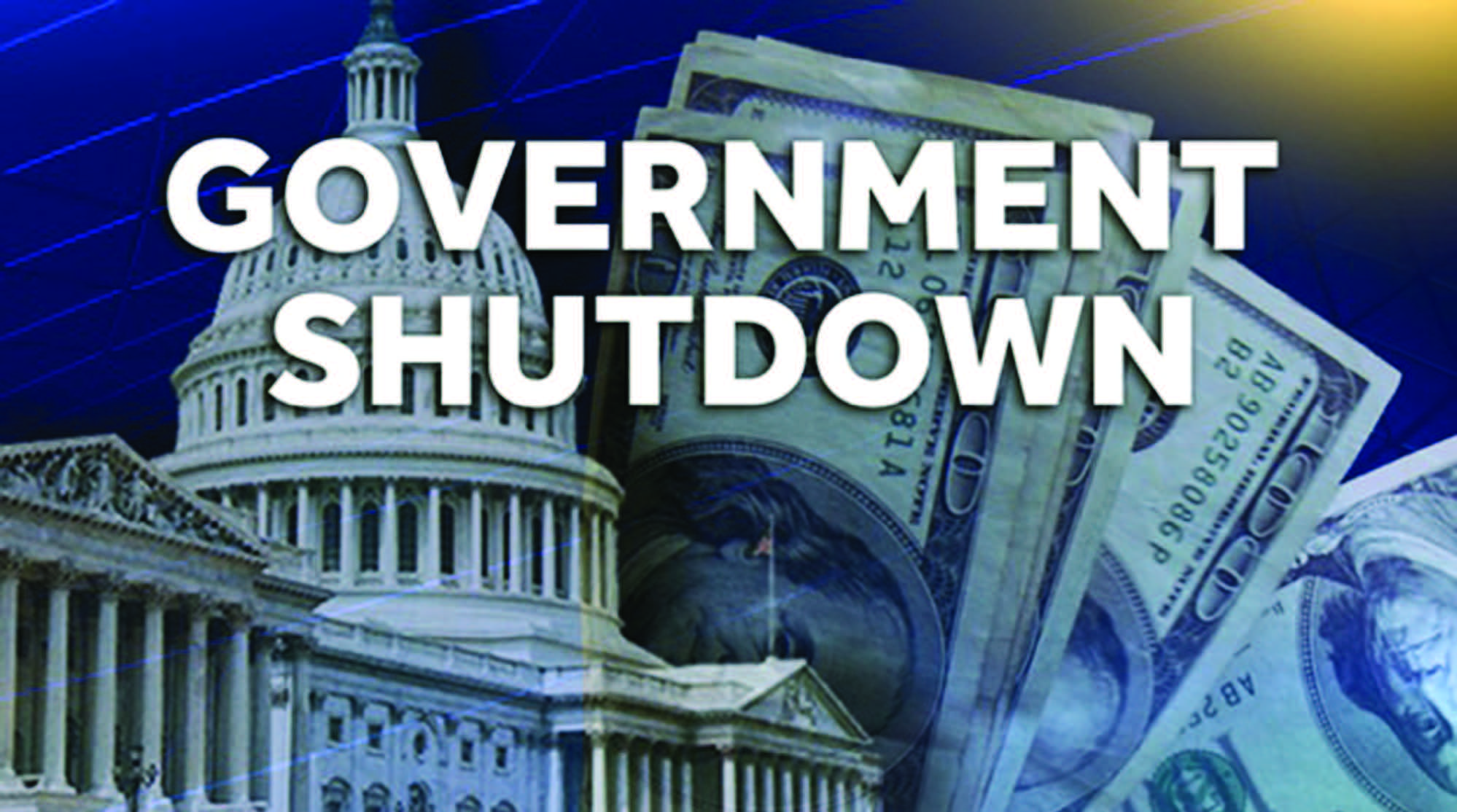
    In U.S. politics, a government shutdown is a situation in which Congress fails to pass authorization for sufficient funds for government operations. Typically, the government stops providing all but “essential” services at first, but since Congress must authorize all expenditures, there is no law protecting any government service from stoppage. Federal services that may continue for a time after a shutdown include the National Weather Service and its parent agencies, medical services at federal facilities, armed forces, air traffic management, and corrections (the penal system). During the Ford and Carter administrations, there were 6 partial government shutdowns that affected only the departments of Labor and Health, Education, and Welfare. These partial shutdowns lasted from 8 to 18 days and the primary issue of dispute was federal funding for abortion. During the Reagan administration, there were 8 full government shutdowns that lasted only 1 to 3 days each, primarily over the issue of the United States budget deficit. There was a similar 4-day shutdown during the first Bush administration. During the Clinton administration, after conservatives made massive congressional gains in the 1994 Republican Revolution, there were two full government shutdowns lasting 5 and 21 days respectively, the second of which was by far the longest of its kind to that date. The primary issue was again the United States budget deficit. The United States federal government shutdown of 2013 is ongoing, having begun on 1 October 2013. The primary issue of dispute between the Republican-controlled House of Representatives and the Democratcontrolled Senate (the latter supported by President Obama) is the Republicans’ desire to oppose the Affordable Care Act, signed into law in 2010.

    Mechanism of a Shutdown
    Under the separation of powers created by the United States Constitution, both the Senate and House of Representatives must approve an agreed budget, which then goes to the President of the United States for signature. If the President vetoes the budget, it goes back to Congress, where the veto can be overridden by a two-thirds vote. Government shutdowns tend to occur when the President and one or both of the chambers of Congress are unable to resolve disagreements over budget allocations before the existing budget cycle ends. Shutdowns of the type experienced by the United States are nearly impossible in other democracies. Under the parliamentary system used in most European nations, the executive and legislative branch are not separate, with the parliament designating all executive officials, typically called “ministers”. In non-parliamentary democracies, a strong executive branch typically has the authority to keep the government functioning even without an approved budget. This was the case in the United States up until 1980, when the administration of Jimmy Carter interpreted the 1884 Antideficiency Act to limit the power of federal agencies in the lack of congressional approval.

    What’s Affected by a Government Shutdown?
    Below, find an overview of some of the government services and operations that will be impacted until Congress passes a budget to fund them again. * Vital services that ensure seniors and young children have access to healthy food and meals may not have sufficient Federal funds to serve all beneficiaries in an extended lapse. * Call centers, hotlines and regional offices that help veterans understand their benefits will close to the public. * Veterans’ compensation, pension, education, and other benefits could be cut off in the case of an extended shutdown. * Every one of America’s national parks and monuments, from Yosemite to the Smithsonian to the Statue of Liberty, will be immediately closed. * New applications for small business loans and loan guarantees will be immediately halted. * Research into life-threatening diseases and other areas will stop, and new patients won’t be accepted into clinical trials at the National Institutes of Health. * Work to protect consumers, ranging from child product safety to financial security to the safety of hazardous waste facilities, will cease.

    The EPA will halt non-essential inspections of chemical facilities and drinking water systems. * Permits and reviews for planned energy and transportations projects will stop, preventing companies from working on these projects. Loans to rural communities will be halted. * Hundreds of thousands of Federal employees including many charged with protecting us from terrorist threats, defending our borders, inspecting our food, and keeping our skies safe will work without pay until the shutdown ends. * Hundreds of thousands of additional federal workers will be immediately and indefinitely furloughed without pay. Shutdowns in the past have also affected the Washington, D.C., municipal government, closing schools and suspending utilities such as garbage collection. Starting in 1976, the United States Federal Government has shut down on 18 occasions. The highest number of shutdowns-8- was in the Presidency of Reagan, followed by 5 in the presidency of Carter.

  • SAPAC 2013 Annual Lunch Meet Promises Attendance of Political Elite

    SAPAC 2013 Annual Lunch Meet Promises Attendance of Political Elite

    HICKSVILLE, NY (TIP): The South Asian -American Political Action Committee, better known as SAPAC, was founded by a community and political activist Zahid Syed with the avowed objective of educating the large South Asian community on politics and government and preparing them to play an active role in the mainstream politics. In order to realize its objective, SAPAC brings together the community and political and civic leaders together on various occasions when they network and interact. However, the most important of these events is the annual lunch which is usually attended by political elite of New York State. SAPAC annual lunch has the honor and exception of being the rarest of rare events of South Asian Community where US Congressmen, State Senators, Assemblymen, County officials, Town Supervisors, District Attorney and many more politicians of various hues can be found interacting with the community. Over the years, this annual lunch has become a must attend event of the South Asian Community with who’s who of Politicians, Officials , Businessmen & Community Leaders networking and discussing issues important to the community.

    When asked to highlight some of the achievements of SAPAC, Zahid Syed, its Chairman said “SAPAC has played an instrumental & vital link in highlighting as well as getting addressed some of the very important issues facing our South Asian Community, by the elected officials. We have got representation for the community on different boards, forums and agencies. We have also been successful in getting jobs for a number of our South Asian brothers and sisters”. “But our biggest achievement, what I think is that we have spread awareness about need for political representation in the election process for the South Asian Community and hence seeing so many candidates with South Asian background running for different elected offices”, commented Zahid when asked what he considers SAPAC’s biggest achievement. “We help to ensure a candidate’s success through financial help and getting them votes as well volunteers”, said Zahid. SAPAC has undoubtedly established itself as one of the highly successful community mobilization machines, through fundraisers with votes to the right candidates, who are attentive to the cause of South Asian community. “This wouldn’t have been possible without the help of our friends and supporters”, concluded Zahid. The next annual lunch of SAPAC is scheduled for October 20 at Mint Long Island, one of the best known South Asian Restaurants in Long Island. For further information, please contact Zahid Syed at ZahidSyed9@aol.com or call him on 516-832-6151.

  • Gurmail Singh of Richmond Hill, NY pleads guilty of tax fraud

    Gurmail Singh of Richmond Hill, NY pleads guilty of tax fraud

    WASHINGTON (TIP: An Indian-American has pleaded guilty of tax fraud by concealing his checkcashing activities from his tax return preparers resulting in an estimated revenue loss of between $400,000 and $1 million. Gurmail Singh, a resident of Richmond Hill in New York, had pleaded guilty in July, 2013 in US District Court in the Eastern District of New York, the Justice Department and Internal Revenue Service said. Singh faces a potential maximum sentence of three years in prison and a maximum fine of $250,000. Sentencing is scheduled for January 6, 2014. According to the indictment, court records and admissions made by Singh, he used check-cashing services to cash more than $2.9 million in checks paid to his construction company, Fancy and Vicky Construction Co. Inc. in Richmond Hill, for services between 2006 and 2008. Singh concealed his check-cashing activities from his tax return preparers, and this income was not included as gross income on the company’s tax returns, prosecutors alleged. Singh diverted the cash receipts earned by his companies for his own personal use. He admitted that his failure to report Fancy and Vicky’s gross receipts caused a tax loss of between $400,000 and $1 million, the Department of Justice said.

  • New York State Relief Commission Announced

    New York State Relief Commission Announced

    ALBANY, NY (TIP): Since taking office, Governor Cuomo has been committed to growing the economy while cutting taxes for middle class families and small businesses. Thanks to the Governor’s reforms, middle class families in New York now pay the lowest tax rate in 62 years, and New York businesses will save nearly $800 million in tax relief over the next three years. In addition, the Governor’s groundbreaking initiative – START-UP NY – will create zero-tax communities on SUNY campuses to attract start-ups and new businesses to create jobs for our people. In addition to the Governor’s ongoing efforts to streamline and improve New York’s tax code to make the state more affordable and competitive, the Governor announced the New York State Relief Commission today that will identify ways to reduce the State’s property and business taxes. The new Tax Relief Commission includes two of our state’s most respected leaders, former Governor Pataki and Comptroller Carl McCall, and will collaborate with the Tax Reform and Fairness Commission, launched last December.

  • Govt bows before Rahul, withdraws ordinance plan

    Govt bows before Rahul, withdraws ordinance plan

    Also goes back on bill shielding convicted lawmakers; partygovt relations take a hard knock

    NEW DELHI (TIP):In a complete U-turn, the UPA government decided to withdraw the proposed ordinance as well as the bill seeking to protect the right of a convicted MP or MLA to save his seat and seek re-election. The bill is pending before a standing committee of Parliament. The ordinance was drafted to resolve the imbalance arising from a Supreme Court order decreeing Article 8(4) of the Representation of the People Act (which prevents disqualification in case of conviction) illegal. After the outburst of Congress Vice- President Rahul Gandhi who termed the proposed ordinance ‘nonsense’ while Prime Minister Manmohan Singh was abroad, Gandhi met the PM on Wednesday morning for 25 minutes. That was followed by a meeting of the Congress core committee, a meeting between the President and the PM, and later in the day, a meeting of the Cabinet which “unanimously” resolved to withdraw both legislative proposals. Agriculture Minister Sharad Pawar spoke briefly during the Cabinet meeting where he said “it seems we failed to study the ordinance enough”.

    Law Minister Kapil Sibal rebutted this and said he had studied judgments and laws in great detail. Non-conventional Energy Sources Minister Farooq Abdullah said what had happened was unfortunate because it sent the message that the government was not pulling as one. The PM was silent. While the withdrawal of the proposed ordinance was on expected lines since the time Rahul Gandhi trashed it, the withdrawal of the bill came as a surprise. Briefing reporters after the Cabinet meeting, I&B Minister Manish Tewari said, “A special motion at an appropriate time would need to be moved to withdraw the bill, which is now the property of Parliament.” While this seemed to signal the end of a frantic week of high drama, the balance of power between the Congress party and the government stands altered. Interestingly, Sonia and Rahul Gandhi called on Defence Minister A K Antony, who is recuperating from an operation at a military hospital here. The meeting lasted nearly an hour. Rahul Gandhi has publicly acknowledged Antony as “my leader” and, before his Press Club of India bombshell, had asked colleagues what Antony’s position on the ordinance had been at the Cabinet meeting that considered it. During his return flight from the US, the PM did not deny that he disapproved of Rahul Gandhi’s public dismissal of a move that had been mulled by the government and party over days. When asked a pointed question about Rahul Gandhi’s description of the ordinance as ‘nonsense’ at a time when the PM was abroad, Singh wryly remarked, “Well, I am not the master of what people say.

    It has happened and when I go back I will try to find out the reasons why it had to be done that way and how do we handle it.” That the relationship appeared to have been damaged was clear from the body language of the PM and Congress President Sonia Gandhi at their first interaction upon his return. At Rajghat to pay homage to Mahatma Gandhi, both appeared stiff and ill at ease and, in a departure from protocol, Sonia Gandhi left the premises while the PM was still sitting there. Though that could be temporary awkwardness, interested parties seized upon it. Alliance partners like the Nationalist Congress Party (NCP) said they would stand by what the Prime Minister and the Cabinet decided, not act on the basis of an interjection by some individual from the Congress party. “We are allies of the UPA, not some individuals in the Congress,” said Tariq Anwar, minister of state for agriculture. “If this was the position of the Congress party, there should have been some discussion in the Cabinet.” The PM had made it clear he would not heed to the advice of former advisors and quit. But in a malaise that appeared to go deeper, the chief minister of a Congressruled state said the entire incident suggested the emergence of a ginger group within the party getting impatient at the ‘compromises’ the government was making. “Now you know why Rahul Gandhi never became a minister. If he had, this kind of thing… differences with the government would have been a routine, daily affair,” he said. There were suggestions that the group would lobby publicly that the Right to Information law apply to political parties. Some UPA alliance partners no longer appear sure that they would want to do business with a party whose leader — likely to be Rahul Gandhi come 2014 — would be so unilateral in his outlook. “Doctor Sahib (the PM) is a consensus man. By this incident, Rahul Gandhi has proved he is not. We will have to watch this tendency carefully. It will be a factor in our judgment about future dealings,” a leader of an ally party said.

  • Ramdev and Swami hit out at Gandhis and Congress at Hindu Unity Day Celebrations

    Ramdev and Swami hit out at Gandhis and Congress at Hindu Unity Day Celebrations

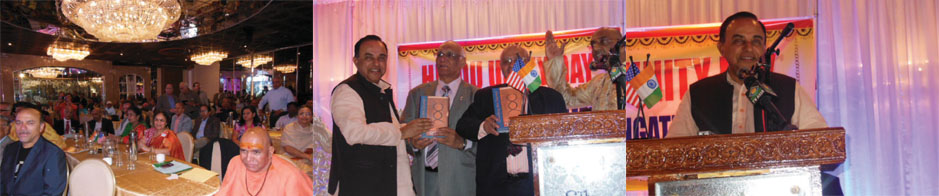
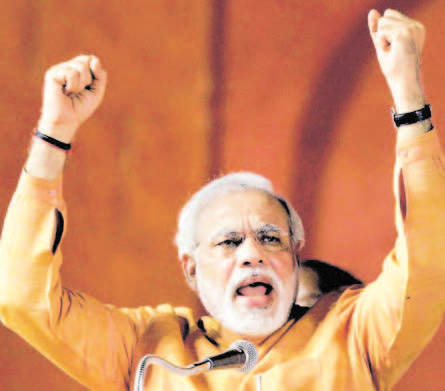
    HICKSVILLE, NY (TIP): Hitting out at Sonia Gandhi and Rahul Gandhi in his characteristic phlegmatic style, Baba Ramdev called upon the gathering at the Hindu Unity Day celebrations organized by the Indian American Intellectuals Forum on September 29th, to show the door to the corrupt Congress party and bring in Narendra Modi as the Prime Minister of India. He predicted a cakewalk for the saffron party in the 2014 general elections and decimation of Congress, the ‘party of Englishmen’. He said BJP under Modi will get as many as 300 Lok Sabha seats, forming the government, and then the glory of India of old will be restored. He said he had vowed to travel to every nook and corner of the country to seek ouster of the Congress party and its replacement with BJP under Modi. Baba Ramdev recalled the glorious heritage and culture of the Hindus. He said, “We were born to rule”. The time has now come to occupy our rightful place, he said. Paying tribute to NRIs, the Baba said that the number of NRIs in America may be small but they are number one in per capita income in the country.


    img13

    “You should now make India No. 1 in the world,” he exhorted the Indian American audience. Dr. Subramanian Swami, who has been a regular at Hindu Unity Day celebrations, spoke disparagingly of the Gandhis, blaming Sonia for being the high priestess of corruption. He dwelt at length on stories of corruption and involvement of Sonia and others from her family in them. He held Congress party responsible for culture of political corruption in India. He called upon the gathering to drive out the corrupt Congress party for ever. He heaped praise on Narendra Modi for being an upright man whose sole concern was glory to India and Indians. Dr. Swami also took digs at Dr. Manmohan Singh whom he described as a weak person, unable to withstand pressures, particularly from Sonia and Rahul to whom he is slavish. Speaking about terrorism and Pakistan’s support to it, Swami said Pakistan was no match for India and could be annihilated provided China was neutralized. He blamed the government of India for not having done enough to neutralize China and taken on Pakistan. Interestingly, both Baba Ramdev and Dr. Swami made identical remarks on Sonia, Rahul, Dr. Manmohan Singh and Pakistan. A day later, Modi also made similar remarks which leaves no doubt in the mind that the BJP is running a well orchestrated propaganda against the Congress party and its leaders. It is no coincidence that they touched upon the same issues and had the same remarks except for the difference in expression. The pattern cannot be missed.

  • Fodder scam: Lalu Prasad jailed for 5 yrs, loses LS seat

    Fodder scam: Lalu Prasad jailed for 5 yrs, loses LS seat

    CBI court holds Lalu and 44 others guilty; Lalu convicted of corruption, criminal conspiracy and cheating

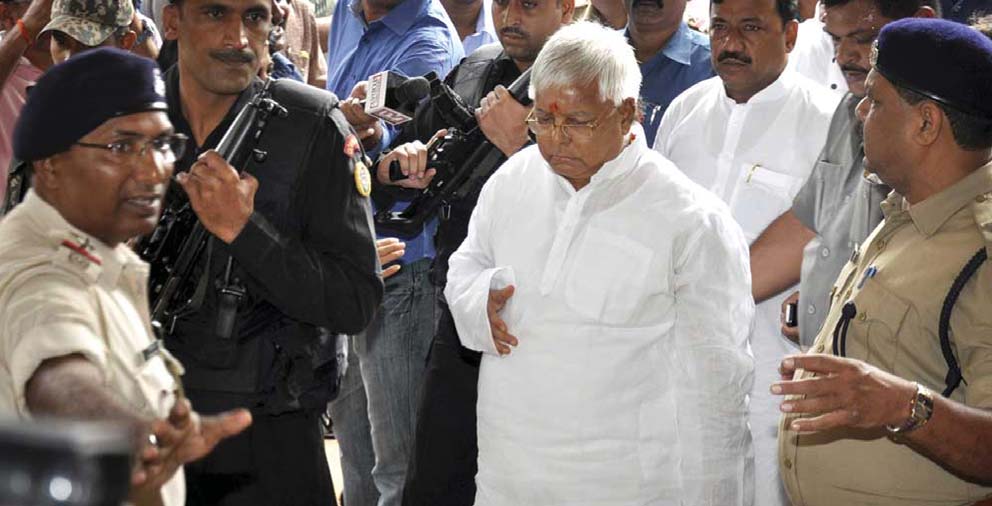
    NEW DELHI (TIP): RJD chief and former Bihar chief minister Lalu Prasad has been sentenced to five years in jail and fined Rs 25 lakh in a fodder case – RC 20 A/96 – by a special CBI court on October 3 in Ranchi. With the sentencing Lalu has also been disqualified from Parliament and has lost his Lok Sabha seat. Another former Bihar chief minister Jagannath Mishra has been sentenced to four years in jail and fined Rs 5 lakh in the same case. Janata Dal United MP Jagdish Sharma, another accused, has also got a four-year jail term and he also loses his Lok Sabha seat. While Lalu represented Bihar’s Saran constituency, Sharma was the MP from Jehanabad. The case went on for more than 17 years. On Monday, special CBI judge Pravas Kumar K Singh held Lalu and 44 others guilty in the fodder scam case. Lalu has been convicted of corruption, criminal conspiracy and cheating. The other politicians who have been convicted and jailed are former legislators RK Rana, Dhruv Bhagat and Vidya Sagar Nishad. The sentencing also renders Lalu ineligible for contesting elections for at least six years as per a recent Supreme Court order.

    Lalu was arrested and sent to Birsa Munda Central Jail in Ranchi a few minutes after the verdict. His only hope – an ordinance and Bill to shield convicted legislators – was withdrawn by the Union Cabinet on October 2. As per a recent Supreme Court judgement a legislator convicted in a case where the minimum sentence is two years in jail will lose his/her seat immediately. Lalu was one of the 45 people facing charges in the RC 20 A/96 case and had been charged with fraudulent withdrawing Rs 37.7 crore on fake fodder bills from Chaibasa treasury in the 1990s. Chaibasa was then part of undivided Bihar and is now in Jharkhand. There were a total of 56 accused in the case. But during the trial, seven accused died, two turned approver, one admitted to the crime and one was discharged. Lalu and Jagannath are accused in a total of five fodder scam cases. Lalu quit as Bihar chief minister on July 25, 1997 when his name figured in the CBI investigations in the scam, which surfaced in 1996. After stepping down, he rather surprising pulled his wife Rabri Devi out of the “chowka” (kitchen) and made her the chief minister and continued to rule through proxy.

  • ‘International Day of Non- Violence’ commemorated at the United Nations

    ‘International Day of Non- Violence’ commemorated at the United Nations

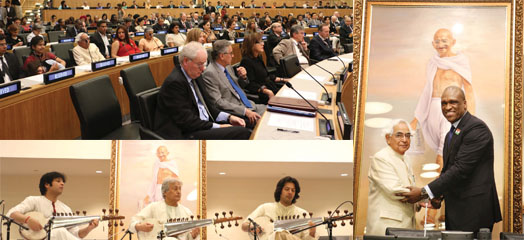
    UNITED NATIONS (TIP): The Permanent Mission of India to United Nations, New York hosted a special event on October 2 at the United Nations to commemorate the “International Day of Non Violence”. UN Secretary General (UNSG) H.E. Mr. Ban ki-moon and President of the 68th UN General Assembly (PGA) H.E. Ambassador John Ashe graced the event and delivered the key note and presidential address respectively. Other speakers on the distinguished panel included the Permanent Representative of South Africa to UN, H.E. Ambassador Kingsley Mamabolo, and featured interventions by the Permanent Representative of Argentina, H.E. Ambassador María Cristina Perceval, the Permanent Representative of Czech Republic, H.E. Ambassador Edita Hrda, and Permanent Representative of Norway H.E. Ambassador Geir O. Pedersen.


    img8

    The event had a packed audience of 450 plus, which included 65 Permanent Representatives of UN Member states, in addition to members of the media and several other dignitaries including Ambassador Vijay Nambiar, the Special Adviser on Myanmar to U.N. Secretary-General and other senior UN officials. Ambassador Asoke K Mukerji, Permanent Representative of India to UN, welcomed the distinguished gathering and underscored the increasing relevance of Gandhian ideals by stating ‘that the path of non-violence and dialogue is the surest path to sustainable peace, sustainable development and indeed, sustainable reforms. It is through such an approach that we would be best equipped to deal with the challenges of change, whether political, social, economic or environmental, and find solutions on the basis of the strength of dialogue.’ Delivering the key note address UN Secretary General called on member states to ‘draw strength from the courage of individuals like Mahatma Gandhi’ and quoting him said : “I object to violence because when it appears to do good, the good is only temporary; the evil it does is permanent” . UNSG emphasized that it was from this ideology that the UN has “insisted throughout the war in Syria that all concerned must work for a political solution” and reiterated that “whatever one’s sympathies or convictions, violence is a poor means to an unsatisfactory end.” In his Presidential Address, Ambassador John Ashe, President of the 68th UN General Assembly, stated that as the General Assembly embarks upon setting the post 2015 development agenda, it was important that “laying the groundwork for this new agenda, is laying the groundwork for a non-violent world – one that values peace and well-being for all”.

    In the subsequent statements by the Ambassadors of South Africa, Czech, Argentina and Norway, the need for the world to resort to ‘non violent’ pathways as the only available solution to conflicts around the world, was emphasized as a common resonating theme. Ambassador John Ashe, President of the 68th UN General Assembly was also presented with a life size portrait of Mahatma Gandhi by renowned artist, Dr. R.D. Pareek, who had flown in from Mumbai to present his painting to the PGA. In addition, a ‘special edition book’ on the life of Mahatma Gandhi was presented to the UN Secretary General for his personal collection by the Permanent Representative of India to UN, Ambassador Asoke K Mukerji. The Special Event also featured an exclusive Sarod recital by Ustad Amjad Ali Khan, his sons Amaan and Ayaan and accompanying artists. The performance included special renditions of tunes of ‘Vaishnav Jan to Tene Kahiye’ and ‘Raghupati Raghav Rajaram’ to mark the occasion and drew a standing ovation from the packed audience at the UN. It may be recalled that the UN General Assembly had adopted resolution 61/271 with a record number of 143 co sponsors in June 2007, whereby it declared October 2, the birthday of Mahatma Gandhi, as “International Day of Non Violence” and invited all member states, NGOs and individuals, including the United Nations to organize events to commemorate this day.

  • India, US Seal First Commercial Civil Nuclear Power Deal

    India, US Seal First Commercial Civil Nuclear Power Deal

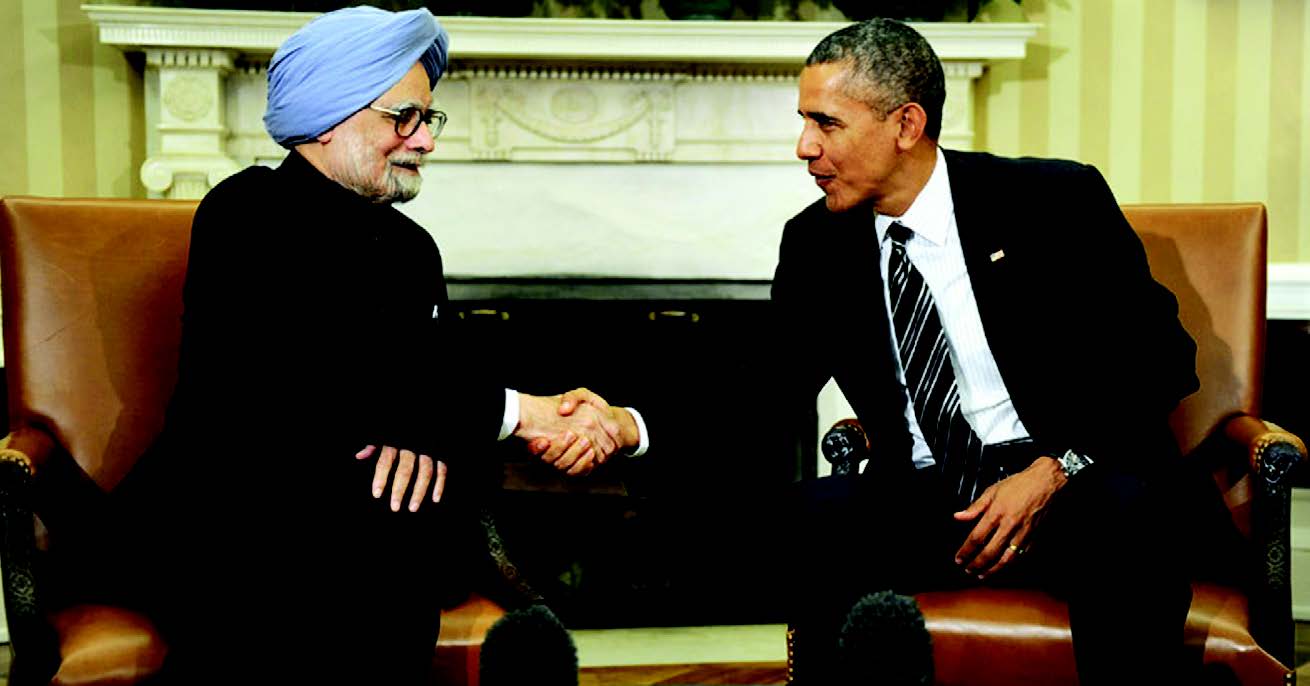
    WASHINGTON (TIP): India and the US have reached the first commercial agreement on civilian nuclear power, five years after a landmark deal between the two countries was clinched. Addressing a joint media interaction after talks with Prime Minister Manmohan Singh, President Barack Obama disclosed that the two countries have sealed the agreement. “We’ve made enormous progress on the issue of civilian nuclear power, and in fact, have been able to achieve just in the last few days an agreement on the first commercial agreement between a US company and India on civilian nuclear power,” Obama said.

    India’s nuclear operator NPCIL (Nuclear Power Corporation of India Limited) and US firm Westinghouse have signed an agreement that will pave the way for setting up an atomic plant in India. However, there was no word on the tough nuclear liability clause in the Indian laws over which the US firms had strong objections. There was a major uproar in India last week over the agreement because of apprehensions that it entailed bypassing the Civil Nuclear Liability Law in place in the country by waiving the operator’s right to recourse with the supplier. Reiterating his commitment for strong ties, Obama said India is not just a regional, but also a global power. Prime Minister Singh reciprocated the feelings, saying US is as an indispensable partner for India. “India, as a significant not just regional power but world power, has worked closely with us on a whole range of issues from climate change to how we can help feed the world, alleviate poverty and deal with disease,” Obama told reporters in his Oval Office following their hourlong meeting. Praising the Prime Minister for his leadership in strengthening India-US ties, Obama said Singh has been a great friend and partner to the United States and to him personally.

    “Across the board, Prime Minister Singh has been an outstanding partner,” Obama said, adding that India continues to grow at an amazing rate, but obviously there are a lot of people in India that are still trapped in poverty. He said US is a strong partner to help India realize that vision because if there is a strong India, that is good for the world and it’s ultimately good for the US. In his remarks, Singh said Obama has imparted a powerful impetus to that process of the two countries being on the same page. “I’ve always believed that India and America are indispensable partners. During the time that I have been Prime Minister, and particularly during the time that President Obama and I have worked together, I think President Obama has made an outstanding contribution to strengthening, widening and deepening of our cooperation in diverse ways,” he said. Singh said India and America are working together to build on the cooperation and widening and deepening it in diverse directions. “We are cooperating in expanding the frontiers of trade investment in technology. Our bilateral trade today is USD 100 billion. Investments in India are USD 80 billion. And they are growing, despite the slowdown in the global economy,” Singh said, referring to the increasing trade between the two sides. “Outside the area of trade technology and investment, we are exploring avenues of cooperation in new areas like energy cooperation, clean coal technology, energy-efficient technology, cooperation in the field of environment, cooperation in the field of defense and securityrelated, cooperation with regard to the intelligence gathering and counterterrorism. In all these areas, India needs the United States to be standing by our side,” Singh said.

  • TARGET TO DEVELOP 10,000 MW POWER THROUGH SOLAR ENERGY BY 2017

    TARGET TO DEVELOP 10,000 MW POWER THROUGH SOLAR ENERGY BY 2017

    NEW DELHI (TIP): Ministry of New and Renewable Energy has set a target of generation of 10,000 Megawatt of power through solar energy by the year 2017. Addressing the Solar Power Developers Meet in the Capital today, the Minister for New and Renewable Energy Dr. Farooq Abdullah said that the Phase I of the Jawaharlal Nehru National Solar Mission has been very successful wherein 1685 MW of solar power was generated as against the target of 1100 MW. The Minister informed that large tracks of land have been identified in Rajasthan, Kargil and Ladakh which have immense potential of generation of solar power. Dr. Abdullah said that the main challenge was starting a transmission line in the areas of Kargil and Ladakh so that power could be evacuated to the other parts of the country.

    He also focused on the need for breakthrough in new research to ensure storage of solar energy for greater time period. The Minister highlighted the new initiatives for ensuring greater use of solar power in the Government buildings and also said that the Ministry planned to use mobile towers in a way that they could generate power through solar and wind energy. On this occasion, the Minister gave awards to 13 organisations/ companies for having done commendable work in the first phase of the Jawaharlal Nehru National Solar Mission. He expressed the hope that the corporate sector will continue to contribute in a major way to the efforts of the Government in making India one of the leading producers of solar energy. Ratan P.Watal, Secretary, MNRE, highlighted importance of development of solar power for meeting the solar requirements of around 40% of the population which lacked access to energy resources. Even providing one unit of power to such houses throughout the year would in itself need a generation of 15,000 MW of solar power.

    The Jawaharlal Nehru National Solar Mission was launched on 11th January, 2010 by the Prime Minister. The Mission has set the ambitious target of deploying 20,000 MW of grid connected solar power by 2022. The Mission has targeted a capacity of grid connected solar power generation of 1000 MW within three years of its launch and to reach installed power capacity of 10,000 MW by the year 2017. The target of 20,000 MW for 2022, which if successful, could lead to conditions of grid-competitive solar power.

  • CARE Ratings to enter Europe via Singapore consortium

    CARE Ratings to enter Europe via Singapore consortium

    NEW DELHI (TIP): Credit rating agency Credit Analysis & Research Ltd (CARE) is entering the European market through a Singapore-based international arm. It has joined hands with credit rating agencies in four other countries — Brazil, Malaysia, South Africa and Portugal — to set up a Singapore-based entity called ARC Rating Holding. CARE will hold 20 per cent stake in this Singapore entity, which will hold 100 per cent in ARC Rating Europe, D. R. Dogra, Managing Director and CEO, CARE Ratings, told Business Line. “We can’t go international on our own and that is why the joint venture route. But we see lot of growth opportunities for us in Europe. ARC Rating Europe will have an office in London,” Dogra said. ARC Rating Europe will cater only to large companies and not offer rating services for small businesses. CARE, which had launched an initial public offering in December 2012, is the country’s second largest credit rating agency by revenue.

    A presence in London will help it serve Indian corporate clients, which have spread their wings in Europe, better. Indian companies need not only look to entrenched foreign credit rating players in those markets for their needs, it was pointed out. Dogra also said that CARE will set up an entity in Mauritius this fiscal, in which it would have a controlling interest of 51 per cent. The remaining stake may be picked up by African Development Bank, South African credit rating company Global Credit Rating (GCR) and others. CARE would look to enter Africa through the Mauritius entity. In Africa, plans are afoot to offer rating services for large companies as well as small and medium businesses, he said.

  • FOREIGN CURRENCY BANK BORROWINGS NORMS EASED

    FOREIGN CURRENCY BANK BORROWINGS NORMS EASED

    MUMBAI (TIP): The Reserve Bank of India (RBI) on September 25 eased the norms for banks borrowing through foreign currency. For bank borrowings exceeding half the unimpaired tier-I capital made on or before November 30 for availing of RBI’s swap facility, the central bank lowered the maturity requirement from three years to a year. After November 30, the maturity for foreign currency borrowing by banks beyond 50 per cent of their tier-I capital would have to be at least three years, RBI said.

    “This move is directed towards attracting foreign flows; it is easier to get borrowings for a year, rather than three years,” said S Srinivasaraghavan, head of treasury at Dhanlaxmi Bank. Experts said the move was aimed at helping the rupee appreciate against the dollar. On Wednesday, the rupee ended at 62.44/dollar, against the previous close of 62.77/dollar. It touched a low of 62.89 and a high of 62.33 during intra-day trade. The appreciation resulted from dollar sale by companies and custodian banks.

  • Swedish hygiene products company to set up Rs 145-cr manufacturing facility in India

    Swedish hygiene products company to set up Rs 145-cr manufacturing facility in India

    CHENNAI (TIP): Global hygiene and forest products company SCA will set up a manufacturing facility for hygiene products with an investment of about Rs 145 crore in India. The facility is expected to commence production in 2015, a statement from the company said. The brands that SCA intends to launch in India over the coming months are TENA – for incontinence care, Libero baby care, Tempo – for hand and face hygiene and Tork, a range of away-from-home tissues. “SCA aims to grow organically and has extensive experience in the hygiene business, which should help to provide better hygiene for the Indian consumer. The large population and the low penetration of hygiene products provide the potential for SCA’s future growth,” adds Cecilia Edebo – Vice President Consumer Goods SCA India, said in a statement.

    “In order to achieve this goal we have done thorough research of the Indian market and developed a solid plan that takes into account regional specifics as well as preferences of our target audiences,” Milind Pingle – managing director of SCA said. The Swedish company will now compete with Procter & Gamble’s Pampers, Kimberly Clarke’s Huggies and Unicharm’s Mamy Poko Pants in the Rs 4,000-crore baby diaper market in India. “The investment is in line with our strategy of strengthening SCA’s presence in emerging markets”, Jan Johansson, president and CEO of SCA said.

  • Nargis Dutt Memorial Foundation Crosses another Milestone

    Nargis Dutt Memorial Foundation Crosses another Milestone

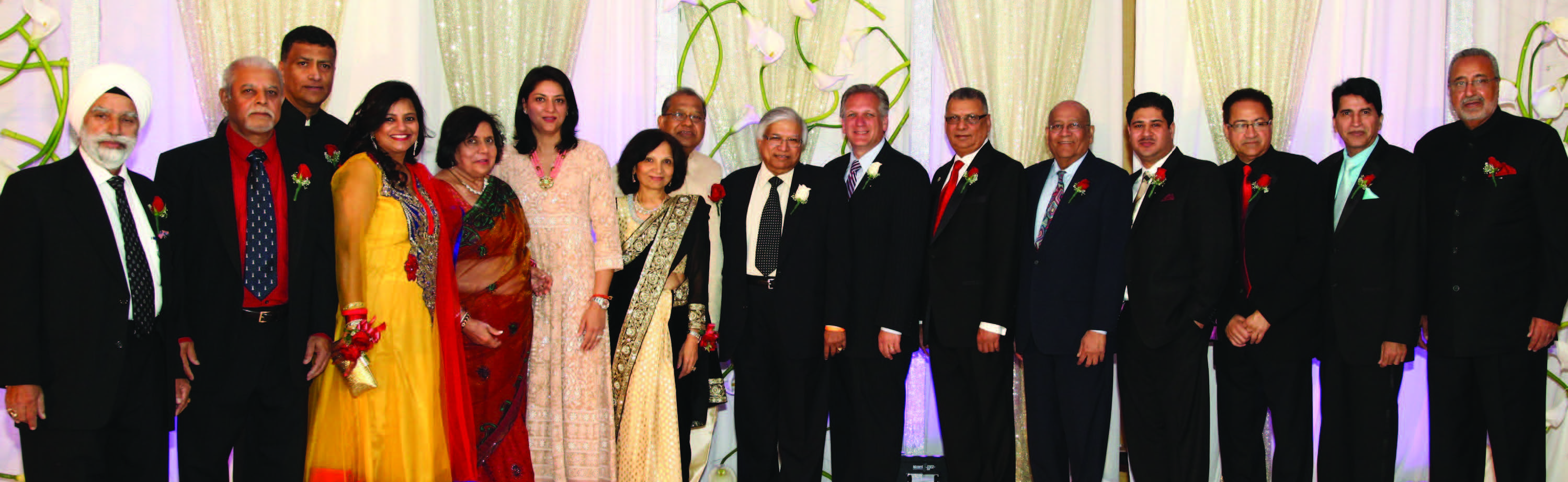
    NEW YORK (TIP): The 32nd Gala dinner of Nargis Dutt Memorial Foundation was held on September 22 at Long Island Marriott Hotel & Convention Center. The event, as usual, attracted a large number of Indian Americans sympathetic to the cause the NDMF has espoused for the last 32 years-providing help to medical fraternity in India to fight the terrible menace of cancer. Ms Priya Dutt, Member of Parliament, and Patron of the Foundation, who had flown in to New York to be at the event, in her presidential remarks, appreciated the generous contributions of the Indian American community to the Foundation which has helped it to make available to hospitals in India the much needed equipment to cure patients of the dreaded disease of cancer. She exhorted them to come up with ideas and funds to help the Foundation to continue with greater vigor the good work it has been doing. She congratulated the honorees for the honor conferred on them and said that each honoree has made a singular contribution in life for which they have been honored. She had a word of appreciation for the Nargis Dutt Memorial Foundation Board of Directors, led by the President Sher Singh Madra. She said the hard work of the team is evident from the response of the community.

    The Foundation President Sher Singh Madra thanked the supporters of the Foundation “for helping us to give the impoverished communities within India a fighting chance against cancer.” He said, “India has the highest incidence of cancer in any country in the world. Yet, there are many without the resources available to fight the disease. Your support tonight helps us to give back to the home of our hearts and for that, I, again, thank you.” Mr. Madra recalled with obvious satisfaction that the Foundation which is 32 years old has made significant achievements. He said, “During its history, it has provided valuable cancer detection and treatment equipment. For example, a radiation field analyzer was procured by the organization and sent to the Indore Cancer Hospital. The organization has completed over 50 projects of this type. Additionally, it has provided training to Indian doctors so that they increase their expertise in fighting cancer.” Welcoming Ms Priya Dutt, Mr. Madra said, “I thank Priya Ji, daughter of Sunil Ji and Nargis Dutt Ji and Member of Parliament of India for her continued support, guidance and involvement with the Foundation. She is the bridge from the founders of this organization to this organization’s foreseeable future. We greatly appreciate that she took time from her busy schedule to fly from India to be here with us.” The honorees included Mr. Harendra H Singh (Lifetime Achievement), Mr. Saleem Iqbal (Excellence in Finance), Mr. Chintu Patel (Business Entrepreneur), Vaijinath M. Chakotem MD (Excellence in Healthcare), Vijaypal Arya, MD (Excellence in Healthcare), Mr. Manohar S. Toor (Business Entrepreneur), and Prem C. Goel, MD (Lifetime Achievement).

    Nassau County Chief Executive, Edward Mangano was the chief guest of the evening which witnessed the presence of a large number of who’s who of the Indian American community. A scintillating fashion show by Karamjit Singh Bhinder and a singing session provided an evening of entertainment. A profusely illustrated souvenir journal was brought out on the occasion. Mr. Peter Bheddah who was Chairman for the souvenir journal said it was “a great privilege and honor to be in charge of this year’s souvenir journal celebrating Nargis Dutt Memorial Foundation’s 32nd Annual Dinner”. Mr. Gurdip Singh Narula, who has been the Treasurer of the Foundation since 2006 said he had played his innings well and wanted to retire. It is believed he has already made a request to the Board of the Foundation to be relieved of his responsibility. One of the founders of the Foundation, Mr. Inder Bindra was full of praise for the NDMF team who, he said, worked in close cooperation with each other to ensure the Foundation goes from strength to strength. Dr. Shakir Mukhi, a friend to late Sunil Dutt, suggested involvement of younger people in the activities of the Foundation. He said young people are more idealistic and better suited for the vision of the Foundation.

  • Schneider Electric starts support facility for data centres

    Schneider Electric starts support facility for data centres

    HYDERABAD (TIP): Schneider Electric has commissioned a services bureau in Bangalore as a nerve centre and a support facility for data centres in India and the Asia-Pacific region. The French major, which provides energy management solutions, describes the new services bureau as a Centre of Excellence. This centre integrates information management systems, monitoring solutions, data science, technical and operational expertise. This bureau will address the requirement of its data centre services clients in verticals such as telecom, retail banking, healthcare, manufacturing. It has been set up to help customers optimise their infrastructure, senior company officials told Business Line.

    Philippe Arsonneau, Senior Vice-President APJ Schneider Electric, IT Business Unit said: “Data centres are becoming increasingly complex to manage and operate, as the business risks associated with failure of such critical infrastructure equipment is too significant to disregard. Schneider Electric through this bureau will help customers optimise their investments without any problems.”

  • President seeks clarifications on ordinance protecting convicted lawmakers

    President seeks clarifications on ordinance protecting convicted lawmakers

    NEW DELHI (TIP): President Pranab Mukherjee has sought clarifications from senior Cabinet ministers on the justification for bringing an ordinance that allows convicted lawmakers to hold on to their seats in Parliament and state legislatures. The President, who was forwarded the ordinance cleared by the Cabinet on Tuesday, sought clarifications separately from home minister Sushil Shinde, parliamentary affairs minister Kamal Nath and law minister Kapil Sibal. The inquiry came against the backdrop of demands from the BJP, the Left, the Aam Aadmi Party and civil society activists that the President reject the ordinance. Government sources sought to play down the President’s queries, saying that as a stickler for norms, he was doing due diligence and may approve the ordinance after meeting the AAP delegation on Friday.

    Ordinances are meant for urgent situations during the periods when Parliament is not in session. Opposition and others have argued that in this instance, there is no urgency except the government’s anxiety to save RJD boss Lalu Prasad from a possible setback in a Ranchi court which is trying him for complicity in the fodder scam. The politically crucial judicial order is set for Monday. The government strongly supported the ordinance disregarding growing concern within its own ranks that the ordinance would boomerang on the Congress at a time when it’s already facing heat over corruption, particularly in urban areas. A BJP delegation led by L K Advani and comprising Leaders of Opposition in the two Houses, Sushma Swaraj and Arun Jaitely, earlier called on President to urge him to reject the Ordinance. “The Indian government is trying to dilute this (convicted lawmakers) decision of the Supreme Court.

    It should realize that the ordinance is against the Constitution,” Advani told reporters after meeting the President.With the debate escalating, finance minister P Chidambaram questioned the BJP’s opposition to the ordinance, saying the main opposition party was changing its stand. He cited the case of a BJP minister in Gujarat who continued to hold office despite being convicted. “Mr Bokhiria is minister of mines and belongs to the BJP. He has been convicted for a period of three years,” Chidambaram told reporters.

  • SUPREME COURT GIVES VOTERS RIGHT TO REJECT ALL CANDIDATES

    SUPREME COURT GIVES VOTERS RIGHT TO REJECT ALL CANDIDATES

    NEW DELHI (TIP): In a landmark judgement on Friday, the Supreme Court for the first time allowed voters to cast negative vote by pressing a button saying none of the candidates is worthy of his vote. The SC asked the Election Commission to provide None Of The Above (NOTA) button on EVMs and ballot papers. The apex court said the right to vote and the right to say NOTA are both part of basic right of voters. “When a large number of voters will press NOTA button, it will force political parties to choose better candidates. Negative voting would lead to systemic change in polls,” the apex bench observed. The bench also observed that implementation of NOTA option was akin to ‘abstain option’ given to MPs and MLAs during voting in respective houses. The SC directed the EC to start implementing NOTA button on EVMs forthwith in a phased manner and asked the Centre to render all assistanc

  • PROGRESS BLOW TO GUJARAT

    PROGRESS BLOW TO GUJARAT

    Human indicators put state that brags about growth behind Tripura and Sikkim

    NEW DELHI (TIP): A new development index has identified Gujarat as a less developed state, while ranking Odisha and Bihar along with eight others as “least developed” and Goa and Kerala among the seven “relatively developed” states. A panel headed by Raghuram Rajan, now the RBI governor, which submitted its report to finance minister P Chidambaram, also recommended a fresh approach to devolution of funds to states and moved away from the special category classification to devise three categories – least developed, less developed and relatively developed. According to the index, there are 10 least developed states, 11 less developed and seven relatively developed states in the country. The slotting of Gujarat, which has attracted attention due to its development model, in the “less developed” category is likely to escalate the already bitter political debate on the ‘Gujarat model of development’.

    The other states in this category are Manipur, West Bengal, Nagaland, Andhra Pradesh, Jammu and Kashmir, Mizoram, Tripura, Karnataka, Sikkim and Himachal Pradesh. The least developed states include, apart from Odisha and Bihar, Madhya Pradesh, Chhattisgarh, Jharkhand, Arunachal Pradesh, Assam, Meghalaya, Uttar Pradesh and Rajasthan. The relatively developed states according to the index are Haryana, Uttarakhand, Maharashtra, Punjab, Tamil Nadu, Kerala and Goa. The panel has developed a multidimensional index of backwardness based on monthly per capita consumption expenditure, education, health, household amenities, poverty rate, female literacy, percent of SC-ST population, urbanisation rate, financial inclusion and connectivity.

    The panel said less developed states rank higher on the index and would get larger allocations based on the need criteria. “The committee has proposed a general method for allocating funds from the Centre to the states based on both a state’s development needs as well as its development performance,” Chidambaram told reporters. “The committee has recommended that each state may get a fixed basic allocation of 0.3% of overall funds, to which will be added its share stemming from need and performance to get its overall share,” Chidambaram said. The panel was set up after persistent demand from Bihar CM Nitish Kumar who insisted a the special category status to help access more funds for its development. This sparked off a demand from several other states such Odisha for the special category state status. While the new index will ensure more funds for Bihar from the central kitty, it has stopped short of conferring the “special category” tag on the state, Shaibal Gupta, seen as Nitish’s nominee on the panel to submit a 10-page dissent note.

    However on Thursday, Nitish concealed his disappointment, if any, to celebrate the recommendation as a triumph even as BJP taunted him for failing to have his way despite cozying up to Congress. “It is a very decent report. For example under this index Odisha is at the bottom of the list and then Bihar. Therefore it recognizes that Odisha, Bihar, Madhya Pradesh are among the most backward states of India. That is I think the demand,” Chidambaram said. “The demand of these states is please recognize the fact that for a variety of reasons we are the most backward states. I think this index captures the degree of backwardness and acknowledges that Bihar is among the most backward states of India. Special category is the present categorisation. Now they are moving away from that,” finance minister said while detailing the recommendations of the panel.

    “This is not an answer to all the demands of the states. This is meant only to be a way forward on how to devolve funds to the more backwards states and areas of India. He said the index better captures the stage of development in a state, how backward it is or how relatively less backward it is and is a good measure for planning and devolution of funds. “Because some states are small very limited resources it is necessary to have a threshold below which the devolution of funds does not fall. So the committee has recommended that each one of the states will get a basic allocation of 0.3%,” Chidambaram said. The finance minister said that the report will be examined by various stakeholders before being implemented. “It will not be in the current year. It has to go through the examination process and will be implemented in an appropriate time in the next financial year.

    To which funds this should be applied a decision will be taken,” Chidambaram said. The report said that the National Development Council had accorded the status of special category state to eleven out of 28 states. They were based on a number of characteristics such as hilly and difficult terrain, low population density and or sizeable share of tribal population, strategic location along the borders with neighbouring countries, economic and infrastructural backwardness and non-viable nature of state finances. State under this category have a low resource base and are not in a position to mobilise resources for their developmental needs even though the per capita income of some of these states is relatively high, the report said.

  • US COURT ISSUES SUMMONS TO MANMOHAN SINGH

    US COURT ISSUES SUMMONS TO MANMOHAN SINGH

    JALANDHAR (TIP): Weeks after securing a summons from a US court against Congress president Sonia Gandhi for protecting perpetrators of the 1984 anti-Sikh riots, rights group Sikhs For Justice has now obtained another summons from a federal court in Washington against Prime Minister Manmohan Singh for his alleged role in sanctioning cash rewards in the 90s for Punjab cops involved in fake encounters and protecting the architects of the riots. The case has been docketed and assigned to US district judge James E Boasberg. The plaintiffs have 120 days to serve summons on the PM, who will be in Washington this week to meet US president Barack Obama. However, SFJ legal advisor Gurpatwant Singh Pannu said that since it was an uphill task to serve summons to the PM through regular process during his meeting with Obama in White House, an emergency motion will be filed in the court seeking alternative means to deliver it to the White House staff and members of PM’s security personnel.

    Justifying the filing of rights violation lawsuit against the Prime Minister, SFJ said that he should be held accountable for funding crimes against humanity and protecting security force personnel involved in extrajudicial killings of Sikhs in Punjab. The human rights violation suit, filed under Alien Tort Claims Act (ATCA) and Torture Victim Protection Act (TVPA) for funding several counter-insurgency operations in Punjab resulting in killings of people, is seeking compensatory and punitive damages. Under ATCA and TVPA, US federal courts have jurisdiction over cases of human rights violations even though incidents occurred on foreign soil. The complaint filed on September 25 alleged that Manmohan’s culpability in the crimes started in 1991 when he took office of the finance minister. Manmohan approved and financed, as head of finance ministry, “cash rewards” for killing Sikhs through extra-judicial means. The 24-page complaint also claimed that during his tenure as PM, Manmohan has been actively shielding and protecting members of his political party who were involved in anti-Sikh riots. Sikh groups are also holding a “justice rally” on September 27 in front of the White House during Obama-Manmohan meeting.

  • LALIT MODI EXPELLED FROM BCCI

    LALIT MODI EXPELLED FROM BCCI

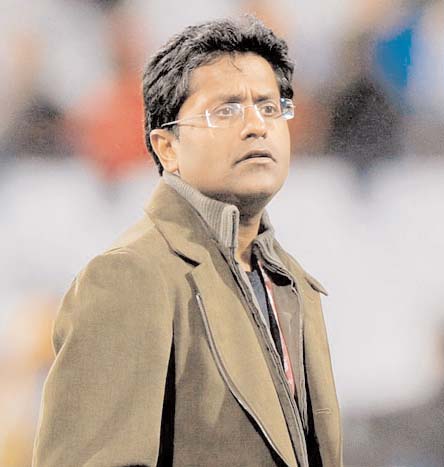
    CHENNAI (TIP) : The decision to ban Lalit Modi from BCCI for life was taken much ahead of the board’s special general meeting (SGM), which started at 2:05 pm on September 25 and was over by 2:20 pm. Modi the maverick became history as his sworn enemy, president-in-exile N Srinivasan, clinically packed him off, gaining a huge advantage ahead of the annual general meeting (AGM) on Sunday. The 29-0 scoreline in an electorate of 30 (the J&K representative was absent) said it all. There was no voice of support for Modi who was desperately trying to prolong his administrative career. All Srinivasan needed was a two-thirds majority (21 votes), but there was no voice of dissent, proving beyond doubt who is the supreme boss in BCCI at the moment. “Modi is guilty of committing acts of misconduct and indiscipline, and therefore, in exercise of powers as per Regulation 32 of the Memorandum of Rules and Regulations of the BCCI, Modi is hereby expelled from the board,” a terse note written by BCCI secretary Sanjay Patel was sent to the media. Modi’s Special Leave Petition in the Supreme Court to stop the SGM was rejected and a letter that he had sent to BCCI urging the members to allow him to present his case or defer the meeting to a date after the Sunday AGM wasn’t paid attention to.

    “Please note that I do intend to appear before the SGM and place my version and the facility that was extended to the BCCI witnesses for the purposes of recording of their evidence, that is by way of video conferencing, may kindly be extended to me as well,” Modi had said in his letter. According to a BCCI member present in the meeting, they were informed about the contents of Modi’s letter but they didn’t feel it important enough to attach importance to it. “He was found guilty by the disciplinary committee and there was no reason to waste too much time on it any longer. And Modi wasn’t available for video conferencing either,” a BCCI member present in the meeting said. “It was a unanimous choice to ban Modi. The proposer was Anirudh Chaudhury from the Haryana Cricket Association and the seconder was Ranjib Biswal from Orissa Cricket Association. There was no voice of opposition,” Rajeev Shukla said. IS Bindra, the president of Punjab Cricket Association and a known Modi sympathizer, didn’t attend the meeting and MP Pandove, who represented the association, went in favour of the motion. The only office-bearer absent from the meeting chaired by Srinivasan was North Zone vice-president Arun Jaitley, who was busy with a BJP rally in Bhopal.

    Officials only interested in themselves: Lalit Modi
    In a video interview to ESPN Cricinfo, Modi said: “Board officials are not interested in doing what is good for cricket. They are only interested in what they are getting out of it.” Modi spoke about how ridiculous it was for Srinivasan to stand for elections in the midst of a burning spot fixing controversy involving his son-inlaw. “There is unanimity in allowing him to continue. You never see a lone ranger standing out because they shut them all up. Only I S Bindra and myself have been lone rangers in the past, “ he said.

  • TWIN TERROR STRIKES BRING BACK PAST MEMORIES

    TWIN TERROR STRIKES BRING BACK PAST MEMORIES

    JAMMU (TIP): The twin terror attacks on September 26 along the busy Jammu-Pathankot national highway brought back memories of deadly strikes in the past in the townships along the road that links Jammu and Kashmir to the rest of the country. Residents of Hiranagar (Kathua) and Samba woke up to the sound of gunfire and grenade explosions at terrorists first struck at a police station before moving to an army camp in audacious strikes in quick succession. Locals in the two towns fear more such strike. Memories of the may 14, 2002 attack at an army station in Kaluchak that killed 38 people including soldiers and their family members, are still fresh in their memory. “More terrorists might have sneaked into the Indian side and they might try to accomplish their evil designs,” said Des Raj, a resident of Samba. “We have no other option but to stay awake during nights as we fear more terrorists may have sneaked into the Indian side. In the past, we have witnessed many attacks in Samba,” said Sunil Singh, another villager. Apprehensions of the more similar terror attacks from the locals have some reasons as people living along Jammu Pathankot Highway have some horrifying memories to further substantiate their fears regarding terror attacks. Residents of Kathua also remember the Ghatti encounter of September, 2003 in Kathua between the Army and the Lashkar-e-Toiba militants that lasted more than a week. They also recalled the 12-hour encounter during a terror attack on the family quarters in the cantonment at Kali Mandi in Samba on May 11, 2008 which left six people, including a photojournalist, two army jawans and two women dead.

    Has the Army lowered its guard?

    NEW DELHI (TIP): The Army seems to have let its guard slip both at the border as well as the hinterland in Jammu and Kashmir this year. From beheading of soldiers along the Line of Control to cross-border ambushes, from attack on convoys to camps, the Army has been literally caught napping. Much like the beheading of an Indian soldier and mutilation of another’s body by a Pakistani ‘border action team (BAT)’ in the Mendhar sector on January 8, the five Indian soldiers killed in the Poonch sector on August 6 could not even open fire in the wellplanned cross-border ambush. The Army swung into action only later with retaliatory fire across the LoC.

    In between, on June 24, another eight soldiers were killed and several others injured when their military convoy was attacked by militants in Hyderpora on the Jammu-Srinagar- Muzaffarabad highway. Again, the soldiers failed to respond effectively. What makes the terror strike on the 16 Cavalry unit camp in Samba on Thursday morning all the more worrisome is that the Army had received intelligence inputs recently that jihadi outfits, on the instructions of their Pakistan handlers, were trying to “widen the arc of terrorism” to engulf the Jammu region as well. “Alertness levels, however, were quite low. The terrorists had a free run for close to two hours from the first attack on the Hiranagar police station to the Samba camp around 20 km away. Information did not flow swiftly despite the Unified Command structure in J&K. No red alert was sounded. No barricades or roadblocks were set up,” said a senior official.

    The terrorists, in fact, seemed to have had a relatively easy entry into the armoured regiment camp at Samba after killing the solitary sentry on duty at the officers’ mess gate, the first of the three gates to the camp, on the highway from Hiranagar to Samba. The rudimentary perimeter defences, with no fortified defences, electronic surveillance devices and other security measures, proved no obstacle for the well-armed militants. This is not the first time that Army camps have been targeted by fidayeen (suicide) squads in J&K. The deadliest was the massacre at Kaluchak in May 2002, which left 31 people dead and many more wounded, at the height of the Army’s forward deployment during Operation Parakram in wake of the terror strike on Parliament. After the initial assault plan in January 2002 was deferred, India came close to war with Pakistan for the second time that year after the Kaluchak incident.

    The first such major fidayeen attack was launched against the Badamibagh cantonment in Srinagar in November 1999, which left nine soldiers dead. In 2003, there were successive attacks on the Sunjivan camp near Jammu in June, which left 12 soldiers dead, and the Tanda Army camp in July, which killed another eight soldiers, including a brigadier. The latter attack also injured the then Northern Army commander Lt-General Hari Prasad and Nagrota-based 16 Corps commander T P S Brar, among others. But the lessons, it seems, have not been learnt properly.

  • ‘AGGRESSIVE’ RAHUL RALLIES TRIBALS, TAUNTS GUJARAT CM

    ‘AGGRESSIVE’ RAHUL RALLIES TRIBALS, TAUNTS GUJARAT CM

    JAGDALPUR (TIP): Congress general secretary Rahul Gandhi on September 26 addressed a rally a mere 43km from the spot where the Maoists wiped out the entire party brass little more than three months ago, and said the leaders were killed to silence the voice of the common people. Showing rare aggression, he said the BJP government’s failure led to their slaughter. “Thirty-two people were killed in the Maoist attack. Where was the government? The tallest Opposition leader was killed, where was the government? When the leaders of tribals are not safe, what about masses?” he asked. Attacking the BJP and its prime ministerial candidate Narendra Modi, Rahul said just one man can’t run the nation. “The BJP thinks just one man can run the nation,” Rahul said, in a barb at Modi. He also took on the Raman Singh government for poor infrastructure and acquisition of tribal land. “Have you seen any doctor in hospitals and health centres in Bastar?” he asked. The crowd roared in the negative.

    “Our aim is to empower tribals by vesting power in their hands. We believe the nation is run by the people,” Rahul said. Criticising the BJP government for Chhattisgarh’s dilapidated health infrastructure, Rahul said hundreds of people die of gastroenteritis every year, but hospitals are in a shambles. “The land belonging to tribals is taken away. If they want land of the rich, they will buy it. If it’s of the poor, it’s acquired,” he said. The event brought leaders of warring factions of the state Congress on a common platform for the first time in more than three months in Rahul’s presence. How long will the warring groups led by former CM Ajit Jogi and Pradesh Congress chief Charandas Mahant remain on the same page is open to question. Criticising the Raman Singh government, Rahul said he had stopped at a village with a population of 2,000. “I tried to find out how many people have passed the 12th standard. There was one. What kind of government you have?” he said. The Centre has pumped in more than Rs 10,000 crore for development, but the government changed its names to take credit of Central schemes, he said.