It is unfortunate that a city of immigrants has to face the scourge of hate crimes. In a diverse and multicultural society, one expects to see greater tolerance and accommodation. But in New York, it is not happening. This is not the first time that a Sikh has been subjected to assault and battery. It has happened earlier, too. Also, it is not just the bearded Sikhs who are objects of hate crimes. Even kids of Sikhs in the schools have often been subjected to indignities. The latest attack of an assistant professor with Columbia University in Harlem on Saturday, September 21 must be taken as a wake up call by the City administration. Dr. Prabhjot Singh, the victim, is a suave person, given to academics. It is inconceivable that a thorough gentleman like him could have been treated so cruelly. The least that New York Police can do is to bring the culprits to book. The community, should meanwhile, not get exercised and lose patience.
Year: 2013
-

Congressman condemns remarks against Miss America
As a Member of Congress who represents a large population of Americans of Indian descent, I am deeply troubled by the outrageous remarks aimed at the winner of the 2013 Miss America Pageant and a fellow New Yorker, Nina Davuluri. Ms. Davuluri embodies the American dream-the daughter of immigrants who graduated from a prestigious university and plans to pursue a medical degree. She is American in the truest sense, and the fact that this would be questioned is despicable. Embracing diversity is an American value, and one that I have always cherished. I am the product of grandparents who fled Russia due to persecution and found an accepting home here in America. I have spent my life honoring their memory by fighting against hatred, bigotry and persecution. When I heard of the vitriol being directed toward Ms. Divuluri, I felt compelled to respond. I join with the voices of the many Americans who have cried out against these hateful remarks. And I will continue to work in Congress to fight against hatred.
-

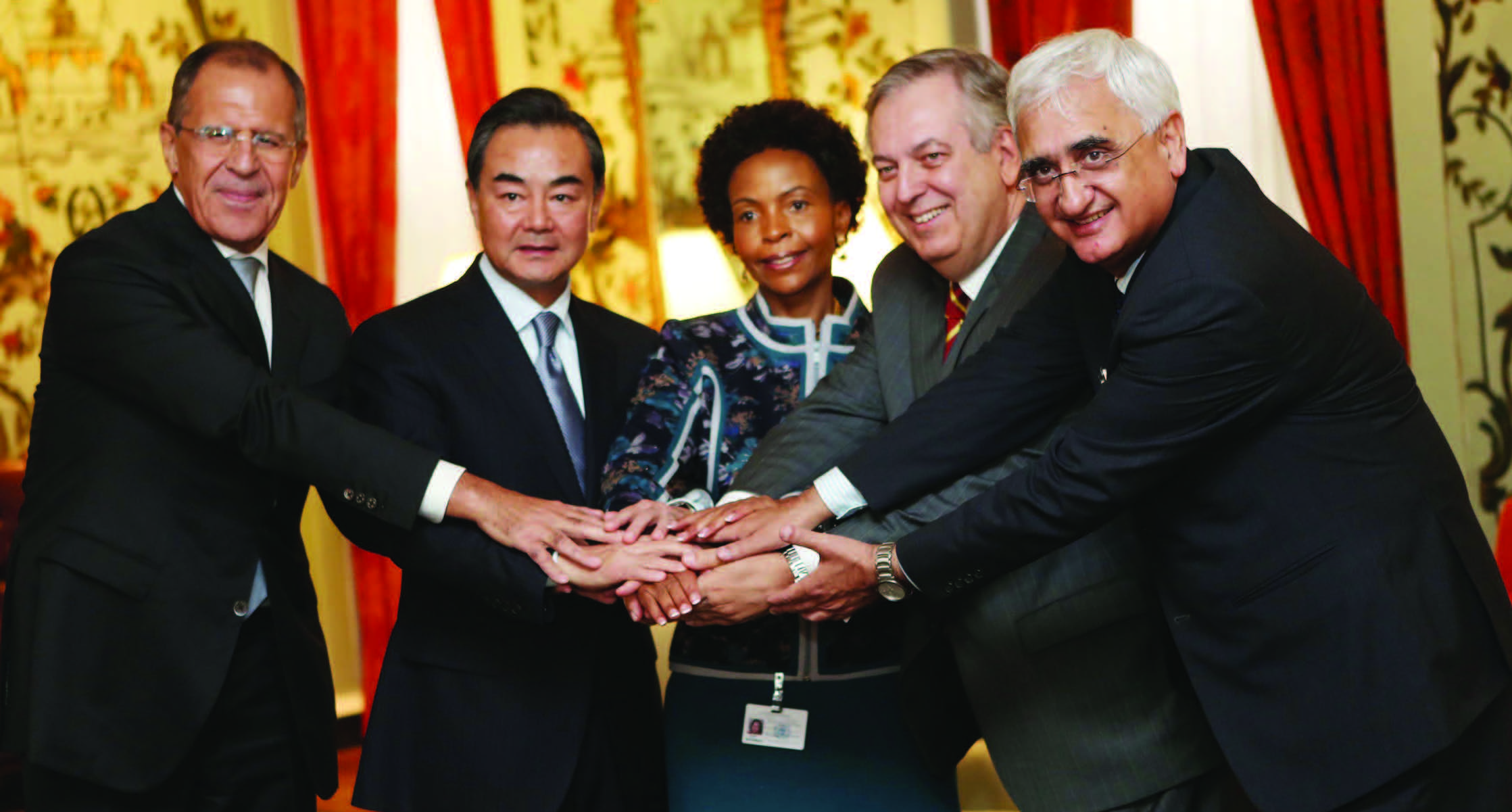
The BRICS Foreign Ministers meet to discuss United Nations Agenda
NEW YORK (TIP): The BRICS Foreign Ministers met on 26th September on the margins of the 68th session of the United Nations General Assembly. The Ministers congratulated the South African Presidency and appreciated the good pace of implementation of the Thekwini Action Plan. The Ministers exchanged their points of view on the following issues of the United Nations agenda.
SYRIA
The Ministers expressed deep concern about the ongoing violence and the deterioration of the humanitarian situation in Syria. They called upon all parties to commit immediately to a complete cease-fire, to halt violence and to end all violations of human rights and humanitarian law. Taking note of the Report of the United Nations Secretary-General, the Ministers strongly condemned the use of such weapons by anyone in any circumstances. The Ministers expressed satisfaction with recent important developments that bring renewed hope for a peaceful resolution to the Syrian conflict. They welcomed the framework agreement for the elimination of Syrian chemical weapons reached by Russia and the United States. They further welcomed, in particular, the decision of the Government of the Syrian Arab Republic to accede to the Chemical Weapons Convention and the commitment of the Syrian authorities to provisionally apply the Convention prior to its entry into force and the delivery of the initial roster. They recognised the key responsibility of the Organisation for the Prohibition of Chemical Weapons (OPCW) in this regard and look forward to the decisions of the OPCW and the Security Council in support to the Framework Agreement.The Ministers reiterated that there is no military solution to the conflict and that it is time for diplomacy. They stressed that the elimination of chemical weapons and the political process aimed at resolving the Syrian conflict should be pursued in parallel. They also reiterated their support for the convening of an international conference on the Syrian situation as early as possible. They stressed that only an inclusive political process, led by the Syrians, as recommended in the Action Group on Syria Communiqué issued in 2012 could lead to peace, to the effective protection of civilians and to the realization of the legitimate aspirations of the Syrian society for freedom and prosperity. They expressed their full support to the efforts of the UNArab League Representative Lakhdar Brahimi in helping finding a political solution to the crisis.
MIDDLE-EAST PEACE PROCESS
The Ministers welcomed the announcement of the resumption of negotiations between Palestinians and Israelis as an encouraging development. They reaffirmed that the resolution of the Israeli-Palestinian conflict is a prerequisite for building a sustainable and lasting peace in the Middle East region. They expressed their expectation that this renewed effort will lead to a two-state solution with a contiguous and economically viable Palestinian state, existing side by side in peace with Israel, within internationally recognized borders, based on those existing on 4 June 1967, with East Jerusalem as its capital. In recalling the primary responsibility of the UNSC in maintaining international peace and security, they noted the importance that the Quartet reports regularly to the Council about its efforts, which should contribute to concrete progress. They expressed concern about the construction of Israeli settlements in the Occupied Palestinian Territories, which constitutes a violation of international law and is harmful to the peace process.CYBER SECURITY
The Ministers expressed their concern about the reported practices of unauthorized interception of communications and data from citizens, businesses and members of governments, compromising national sovereignty and individual rights. They reiterated that it is important to contribute to and participate in a peaceful, secure, and open cyberspace and emphasized that security in the use of Information and Communication Technologies (ICTs) through universally accepted norms, standards and practices is of paramount importance. The Ministers thanked Brazil for the briefing on the plans and preparations for the VI BRICS Summit to be held in 2014. -

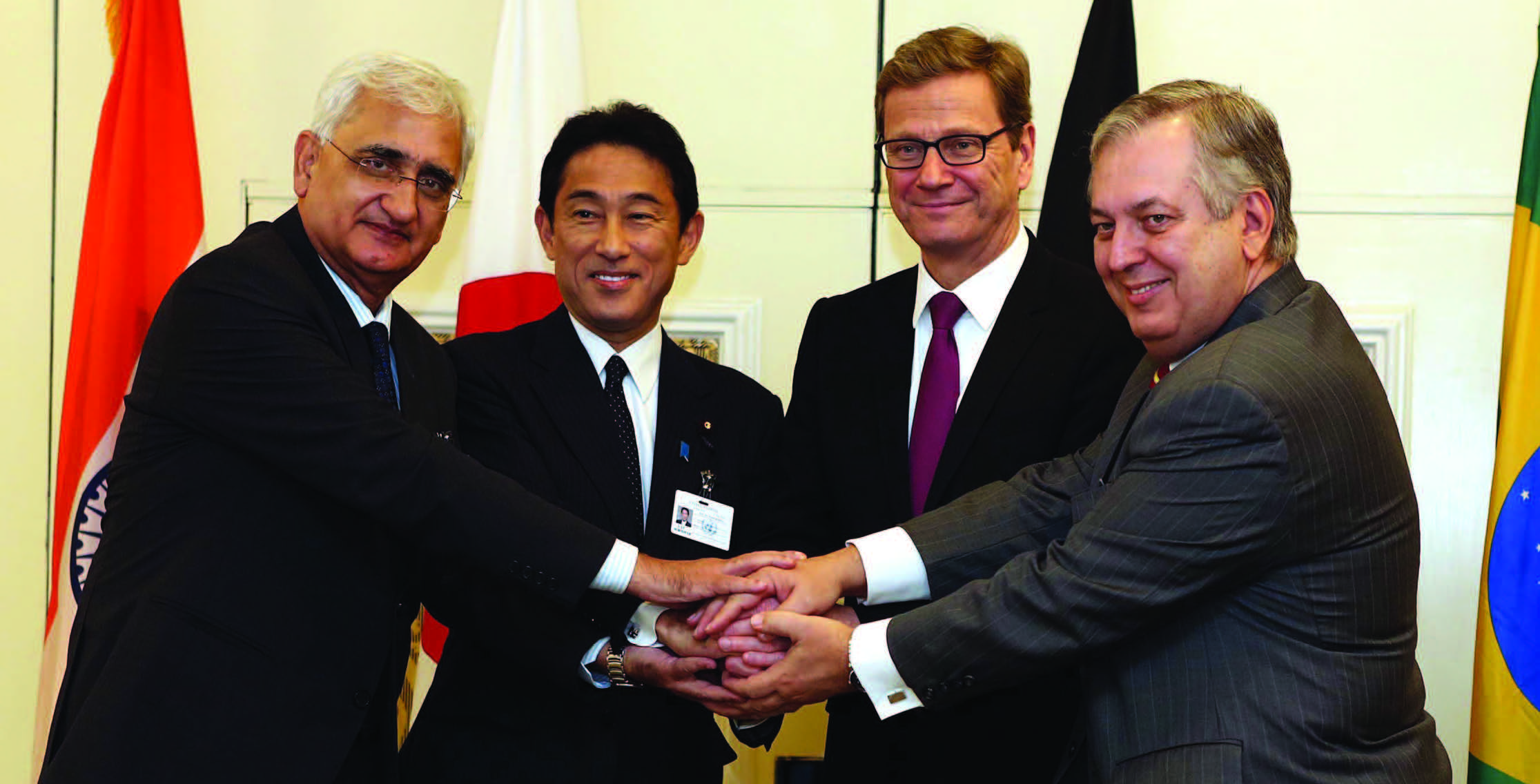
Security Council Reform discussed at the Ministerial Meeting of the G4 Countries
NEW YORK (TIP): The Minister of External Relations of Brazil, the Federal Minister for Foreign Affairs of Germany, the Minister of External Affairs of India and the Minister for Foreign Affairs of Japan met in New York on 26 September 2013, in the margins of the opening of the 68th Session of the United Nations General Assembly, to exchange views on Security Council reform. The Ministers underscored that, almost 70 years after the creation of the United Nations, reform of the Security Council is long overdue. They agreed that difficulties of the Security Council in dealing with international challenges, including current ones, have further highlighted the need for U.N. Security Council reform in order to better reflect geopolitical realities of the 21st century and make the Council more broadly representative, efficient and transparent and thus to further enhance its effectiveness and the legitimacy and?implementation of its decisions.
The Ministers recalled that almost 10 years ago, in the Outcome Document of the 2005 World Summit, international leaders committed themselves to an early reform of the Security Council. The Ministers stressed the need to intensify efforts to translate, at the latest by 2015, the existing agreement into concrete outcomes. Recalling previous G4 joint statements, the Ministers reiterated their common vision of a reformed Security Council, taking into consideration the contributions made by countries to the maintenance of international peace and security and other purposes of the organization, as well as the need for increased representation of developing countries in both categories, in order to better reflect today’s geopolitical realities. The G4 countries reiterated their commitments as aspiring new permanent members of the UN Security Council, as well as their support for each other’s candidatures. They also reaffirmed their view of the importance of developing countries, in particular Africa, to be represented in both the permanent and nonpermanent categories of an enlarged Council.
In this context, the Ministers emphasized the importance to enhance dialogue and outreach with African countries on Security Council reform and commended the initiative of the Government of Japan in having convened the first Japan-Africa Summit Meeting on U.N. Security Council Reform in June. In addition, the Ministers noted with appreciation the directive of CARICOM Heads of State and Government in February 2013 calling for ‘greater urgency in achieving lasting Security Council Reform’ and the initiative of CARICOM to reinvigorate the Intergovernmental Negotiation process. The Ministers recognized the need for greater involvement of civil society, the media and academia on the discussions about the reform of the Security Council and in this context, they welcomed the Brazilian initiative of hosting a seminar, in April this year, to broaden the debate on the urgency and inevitability of the reform of the United Nations Security Council. The Ministers also discussed the outcome of the ninth round of the intergovernmental negotiations on Security Council reform. The Ministers emphasized the important role the Chairman of the intergovernmental negotiations, H.E. Ambassador Zahir Tanin, has played in the negotiations, notably reflected in his letter dated 25 July 2012 to the President of the General Assembly, and welcomed anew his recommendations therein.
In this context, the Ministers reiterated that, given the overwhelming support by member states for an expansion of the Security Council in both categories of membership, permanent and non-permanent, this should be a key parameter in the negotiation process among member states. They called for the drafting of a concise working document as the basis for further negotiations, in line with the recommendations of the Chairman. The Ministers welcomed the decision by the General Assembly to immediately continue the process of intergovernmental negotiations in the informal plenary of the 68th Session, building on the progress achieved and the recommendations made by the Chairman. The Ministers underlined the need to achieve concrete progress in the 68th Session of the UN General Assembly and, in this context, expressed their commitment to continue to work in close cooperation and in a spirit of flexibility with other Member States and Groups of Member States, in particular Africa, in genuine text-based negotiations. The Ministers expressed gratitude for the efforts made by the President of the 67th General Assembly, H.E.Mr. Vuk Jeremic and the Chairman of the Intergovernmental Negotiations, H.E. Ambassador Zahir Tanin. They looked forward to working closely with H.E. Mr. John Ashe, the President of the 68th General Assembly, and the Chair of the Intergovernmental Negotiations in order to bring about the urgently needed reform of the Security Council.
-

PAKISTAN GETS THREE NEW ISLANDS FOLLOWING EARTHQUAKE
GWADAR, PAK (TIP): Pakistan has just got three brand new islands — thanks to a major earthquake. When the shock of the temblor subsided on September 24, people living in the coastal town of Gwadar were stunned to see a new island in the sea. That’s not all. Two other islands have come up along the Balochistan coast. “The island near Gwadar is about 600 feet in diameter and has a height of about 30 feet,” Muhammad Moazzam Khan, technical advisor at WWF — Pakistan, told IANS over telephone. He said “gas was coming out” of the island, which primarily consists of “stones and soft mud”. The two islands near Ormara town are small. Khan said the islands had a diameter of about “30-40 feet and a height of about 2-3 feet”. “Gas is also coming out,” he said. He said that while some islands which form suddenly “stay on”, others gradually fade away. He explained that the islands were formed following the massive earthquake that rocked Balochistan province Tuesday. The death toll in the 7.7-magnitude earthquake has reached 348, and a total of 20,000 houses were destroyed. This is not the first time islands have formed off the Pakistan coast. “In 1945, two big islands had formed near the coast. One was two kilometers long while the other was half kilometre long,” said Khan.
-

Deal reached on UN resolution on Syrian chemical weapons
UNITED NATIONS (TIP): The five permanent members of the deeply divided UN security council reached agreement on September 26 on a resolution to eliminate Syria’s chemical weapons, a major step in taking the most controversial weapon off the battlefield of the world’s deadliest current conflict. Senior US, Russian, British and French diplomats confirmed the agreement, which also includes China. Britain’s UN ambassador Mark Lyall Grant said he would introduce the text to the security council’s 10 nonpermanent members on September 26 night. A vote on the resolution still depends on how the full council responds to the draft, and on how soon an international group that oversees the global treaty on chemical weapons can adopt a plan for securing and destroying Syria’s stockpile. Diplomats said the earliest the security council could vote would be late Friday.
On Twitter, Lyall Grant said the five vetowielding members, known as the P-5, had agreed on a “binding and enforceable draft … resolution.” A senior US state department official said the Russians agreed to support “a strong binding and enforceable resolution.” But the draft resolution, seen by The Associated Press, makes clear that there is no trigger for any enforcement measures if Syria fails to comply with the provisions of the resolution or the dismantling of its chemical weapons stockpile. Instead, it states that in the event of non-compliance, or any use of chemical weapons, the Security Council will “impose measures under Chapter 7 of the United Nations Charter,” which will require a second resolution. Chapter 7 allows for military and nonmilitary actions to promote peace and security. Russia, Syria’s most powerful ally, had opposed any reference to it. US Secretary of State John Kerry and Russian foreign minister Sergey Lavrov met in hastily scheduled, closed-door talks on Thursday afternoon to resolve several lastminute disputes on the text, and the agreement was announced soon afterward. The security council has long been paralyzed in dealing with the 2 1/2-year Syrian conflict, which has killed more than 100,000 people and spilled over its borders, because of differences between Russia and China, who back Syrian President Bashar Assad’s government, and the US, Britain and France, who support the opposition.
Russia and China have vetoed three Western-backed resolutions aimed at pressuring Assad to end the violence. The flurry of diplomatic activity was spurred by the August 21 poison gas attack that killed hundreds of civilians in a Damascus suburb, and by President Barack Obama’s threat of US strikes in retaliation. After Kerry said Assad could avert US military action by turning over “every single bit of his chemical weapons” to international control within a week, Russia quickly agreed. Kerry and Lavrov signed an agreement in Geneva on Sept. 13 to put Syria’s chemical weapons under international control for later destruction, and Assad’s government accepted the broad proposal. Tough negotiations, primarily between Russia and the United States, followed on how Syria’s stockpile will be destroyed. US ambassador Samantha Power tweeted Thursday evening that the draft resolution establishes that Syria’s chemical weapons “is threat to international peace & security & creates a new norm against the use of CW.” While the resolution now works its way through the security council, the Organization for the Prohibition of Chemical Weapons, the Hague-based body that will be in charge of securing and destroying the stockpile, was working on its own document to set out its exact duties. The UN resolution will include the text of the OPCW’s declaration and make it legally binding _ so the OPCW must act first.
The OPCW said Thursday it was optimistic it could quickly schedule a meeting of its 41-nation executive council to approve its roadmap for Syria’s stockpile. A UN diplomat, speaking on condition of anonymity because consultations have been private, said the OPCW board wasn’t likely to meet before Sunday, which means that security council adoption of the resolution likely won’t take place until next week. French foreign minister Laurent Fabius told reporters on Thursday evening that “we’ve advanced well.” He cited agreement on three difficult issues that France had pushed for: the inclusion of a sentence saying the use of chemical weapons in Syria and anywhere else is a crime; the inclusion of a reference to Chapter 7 that contains the same wording as in the US-Russia agreement reached in Geneva; and the inclusion of a statement saying those responsible for using chemical weapons must be held accountable. The Geneva agreement did not have an automatic Chapter 7 trigger for enforcement _ a point France’s UN ambassador Gerard Araud confirmed Thursday evening. He said a second resolution will be needed if Syria violates the resolution’s provisions.
-

History making Indian Diwali at Times Square mesmerizes visitors
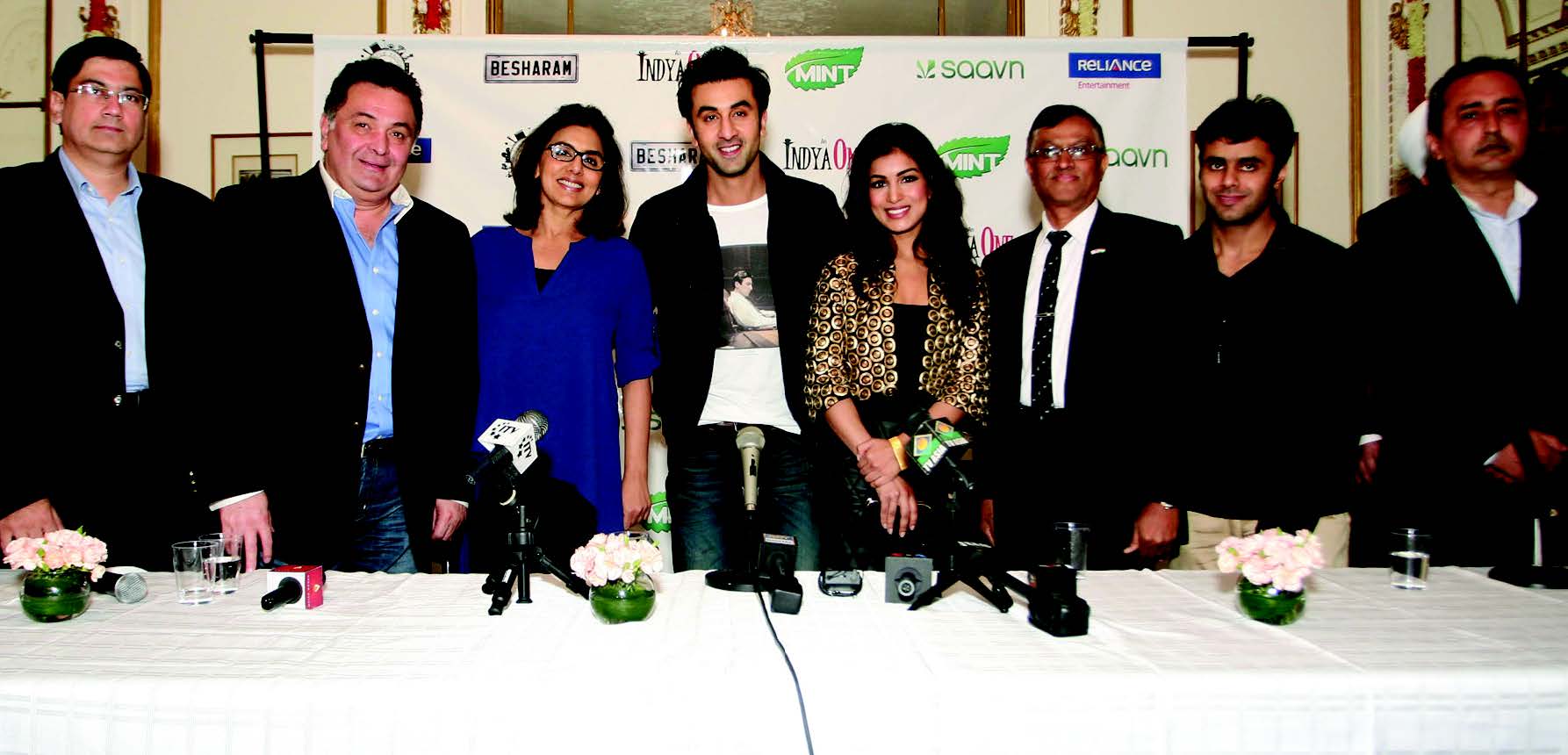
NEW YORK (TIP): Diwali maybe a month away but for Indian Americans at Times Square, festivities started as early as September 22 when the entire cast of Besharam made a special appearance at the ‘Maharashtra Tourism Diwali at Times Square’. But Diwali at Times Square was much more than just the special performances from the Besharam team. Roughly about 30,000 people attended the Diwali event on Sunday at the busiest area for pedestrians in the world where 3,00,000 people visit every day. In a bid to tap major international source markets and increase tourist arrivals, the Maharashtra Tourism Development Corporation (MTDC) participated in the early Diwali celebrations. Speaking on the occasion Minister for Tourism, Government of Maharashtra, Chhagan Bhujbal said, “Due to this event, the image of Maharashtra is going to be boosted in all international markets, not just in the USA. We want foreign tourists to come to Maharashtra, explore its rich cultural heritage and UNESCO world heritage sites like Ajanta, Ellora and Elephanta caves.

They should also visit Tadoba Tiger Sanctuary, near Nagpur, where any tourist would spot tigers. It is my pleasure to invite all international tourists to indulge in the luxurious Deccan Odyssey train which covers the beautiful Maharashtra.” Mr. Satish Soni, Director – Tourism, Government of Maharashtra said, ‘It’s an extravagant event for Maharashtra tourism in a foreign land. We are glad at its grand success as thousands of people visited and enjoyed the event at the magnificent Times Square. We appeal to the people of the world to come to Maharashtra for an unforgettable experience. “There were many enquiries for the Deccan Odyssey train followed by the wildlife reserves, mostly from foreigners and local Americans,” said one of the organizers at the tourism booth. The festivities showcased Indian music, cuisine and fashion. Times Square between 45th to 47th streets was bustling with tourists and visitors dressed in traditional attire as they lined up to get the saffron Kolhapuri turbans, pointed mustache masks, Gandhi caps and chudis (bangles). The cultural festival included dance, diya, rangoli painting, Indian arts and crafts, fashion show, photo booths with ethnic outfits, celebrity autograph/photo booth and much more. The event saw some famous dancers performing Lavani, and other well-known Marathi dances styles, Bhangra, fusion etc.

Dhol – Tasha and Tutari enthralled the crowds eagerly waiting to catch a glimpse of their favorite Bollywood stars. Groups like Sangharsh and Sankalp promoted Govinda festival by forming human pyramids. Late in the evening at the Light Up Times Square concert had the music maestro Shankar Mahadevan also created a sensation through his voice and musical troupe. “Where in my dreams did I think that I will sing Ganpati bhajan at Times Square,” said Mahadevan. The concert also saw Canada based group Culture Shock perform live on a mix of songs. Although Indian Americans dominated the crowd many tourists as well as local Americans enjoyed the festivities. “This is my first ever encounter with India. I have heard a lot about the country that it is colorful and vibrant but experienced it for the first time. I loved the energy and the sense of community and also the samosas. My next holiday destination is India for sure,” said Suzan Lew. The festival encountered mixed reactions from the Indian Americans. “Diwali is a festival of lights and what better place to celebrate than Times Square. It is like a mela out here, I have never seen such a crowd in the US. Only Indians can party like this, I am proud to be an Indian,” said Pragya Mahajan who wore a saffron turban. “Celebrating Diwali at Times Square is celebrating the cultural capital of the world (India) at the cultural capital of the United States,” said Sunny Doshi, a new Jersey resident.
While there were positive responses to the event, many Indian Americans were disappointed with the ‘westernized’ Diwali celebrations and poor management. “Speakers at the very end did not work. We tried to go forward but feared stampede and because there were no screens to look at we headed back,” said Reetu Kumar who had come with her 68 year old grandmother. The night culminated into the star studded performances from Bollywood actors Ranbir Kapoor, and debutant Pallavi Shardha who made a special appearance along with Rishi and Neetu Kapoor to promote their upcoming film Besharam. The crowd gathered at Times Square went ballistic on catching a glimpse of one of Bollywood’s most eligible bachelors. Dressed in a black ‘sherwani’, the young Kapoor danced and interacted with his fans as his father recalled visiting the city years ago and expressing gratitude for the adulation shown to him and his family. Congratulating Maharashtra Tourism for its achievement, Rishi Kapoor said, “I am proud to be a part of Maharashtra.” Complimenting ASB Communications and Event Guru, Shankar Mahadevan said, “Congratulations for pulling this off. To do this at Times Square was close to impossible. God bless”. “I came to the USA over 36 years ago and I still remember being awed by Times Square when I first saw it. I told myself even at that time that I will showcase the diversity and richness of India at this location. I am so thankful to all those who came here today. I am equally thankful to Maharashtra Tourism Development Corporation, Air India, MoneyGram, DishWorld, Wells Fargo, Bank of Baroda and all other sponsors without whose support this event would not have been possible”, said Neeta Bhasin, President, ASB Communications, the conceptualizer of the event.
-

PM condemns terror attacks in J&K; says peace process with Pakistan will continue
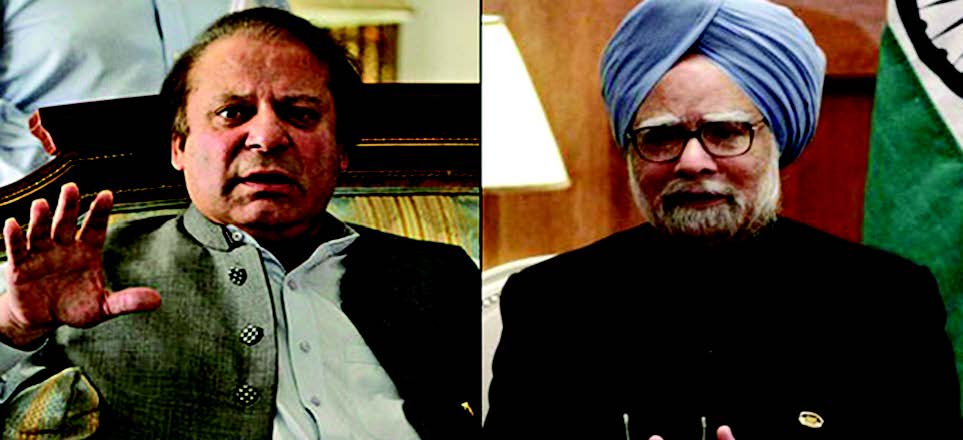
NEW YORK (TIP): Prime Minister Manmohan Singh, on September 26, strongly condemned the “provocative” terror strikes in Jammu region by the “enemies of peace”, but said such attacks will not succeed in derailing efforts to resolve all problems through a process of dialogue.Singh, who will be meeting Pakistan Prime Minister Nawaz Sharif in New York on Sunday for talks, said: “the terrorist menace” continues to receive “encouragement and reinforcement” from Pakistan and India is firmly resolved to combat and defeat such forces. “This is one more in a series of provocations and barbaric actions by the enemies of peace,” Singh said in a statement here en route to the US. “Such attacks will not deter us and will not succeed in derailing our efforts to find a resolution to all problems through a process of dialogue,” he said, indicating that the talks with Sharif will go ahead as per schedule. (Read the full story of attack on Page 23) At the meeting on September 29, the Indian side will see what the new Pakistan Prime Minister, who has made “some nice statements” about the relationship, has to offer to address its concerns over ceasefire violations on the Line of Control and International Border, continued terrorism and inaction against the perpetrators of the 2008 Mumbai attack.
Bilateral relations soured after five Indian soldiers were killed by Pakistani troops along the Line of Control last month. India has also been urging Islamabad to take steps to stop terrorism emanating from Pakistani soil and to prosecute those responsible for the 2008 Mumbai attacks. The situation on the LoC and terrorism will be discussed, highly placed sources said about the talks that will take place against the backdrop of a chill in bilateral ties.Emphasizing the need for talks with Pakistan, the sources said it is all the more essential after the “barbaric incidents” on the LoC. The sources said the two leaders will review the status of bilateral relations to see “where we are and where we need to go”. They, however, sought to keep expectations low, emphasizing that any substantial outcome should not be hoped for. The sources further said there will be no joint statement. They underlined the need for talking to Pakistan, arguing that “you don’t need to make peace with friends but with enemies”. “We are ready to talk on all issues. We know what the issues are,” a source said.
-

New president Hasan Rouhani: I have power to ensure Iran will never seek nuclear bomb
TV interview comes days before first appearance at the UN General Assembly
TEHRAN (TIP): Iran’s recently installed President has said his country won’t seek a nuclear bomb, and claimed – contrary to Western perception – he has the authority to make such decisions. Hasan Rouhani spoke to the American TV station NBC in Tehran, ahead of his first appearance on the world stage when he attends the UN General Assembly in New York. Described widely as a moderate, the Glasgow-educated former nuclear envoy was elected on a promise to ease tensions with the West and free the country from painful trade sanctions. The sanctions have slashed Iran’s vital oil exports by more than half in the past two years, sent inflation soaring and severely undercut the value of its currency. According to an NBC translation of the interview, Mr Rouhani said: “We have never pursued or sought a nuclear bomb and we are not going to do so.
“We have time and again said that under no circumstances would we seek any weapons of mass destruction, including nuclear weapons, nor will we ever.” That denial – along with the accompanying claim that Iran’s uranium enrichment programme is for energy production – has been made before, including by Rouhani’s predecessor, Mahmoud Ahmadinejad. It hasn’t yet convinced UK or US administrations. The US and its allies suspect Iran is trying to develop a nuclear weapon, a feat some experts say the country might be able to accomplish as early as next year. During past nuclear negotiations with the West, and despite the seemingly endless discord between the two sides, Rouhani became a respected and well-liked figure. But Iran’s Supreme Leader, Ayatollah Ali Khamenei, is known to control all important matters of state, with Rouhani not thought to have the clout to make decisions about nuclear policy. Rouhani denied this in the interview, saying: “In its nuclear programme, this government enters with full power and has complete authority. We have sufficient political latitude to solve this problem.”
He also said he received a “positive and constructive” letter from US President Barack Obama upon his election in June. He said: “From my point of view, the tone of the letter was positive and constructive. It could be subtle and tiny steps for a very important future.” White House spokesman Jay Carney said there were no plans for Mr Obama to meet Mr Rouhani at the UN General Assembly. He said: “I think it’s fair to say that the President believes there is an opportunity for diplomacy when it comes to the issues that have presented challenges to the United States and our allies with regards to Iran. “And we hope that the Iranian government takes advantage of this opportunity.”
-

Japan economy expected to withstand sales tax hike: Poll
TOKYO (TIP): Japan’s economic recovery is expected to survive the impact from scheduled increases in the sales tax, a Reuters poll showed, as the government prepares economic stimulus measures to soften the blow. Prime Minister Shinzo Abe is set on Oct. 1 to sign off on an increase in the 5 percent sales tax to 8 percent in April and then to 10 percent in October 2015 to pay for welfare costs. The world’s third-largest economy is forecast to grow 2.8 percent in the fiscal year to March 2014, a Reuters poll of 24 economists showed. The survey, conducted Sept. 12-19, was little changed from the August poll. Growth is expected to slow to 0.7 percent in the following fiscal year as the first increase in the sales tax will slow consumer spending. That forecast also was little changed from last month’s poll. In fiscal 2015, growth will then accelerate to 1.5 percent, higher than 1.1 growth forecast last month, as declines in consumption will be temporary.
“Growth in Q1 next year should be boosted by spending being brought forward ahead of the consumption tax hike, which should slow growth in the second quarter,” said Marcel Thieliant, economist at Capital Economics. Japan is considering $50 billion in economic stimulus to cushion the blow of the national sales-tax increase, which is meant to rein in the government’s massive debt, people involved in the decisions have told Reuters. The tax hike is the biggest effort in years by a Japanese government to contain a public debt that, at more than twice the nation’s annual economic output, is the biggest in the world. The economy grew an annualised 3.8 percent in the second quarter, driven in large part by strong consumer spending, boosting the case for Abe to go ahead with the sales tax hike. Critics of the plan have called for a delay or watering down of the tax increase on the view Japan’s economy is still too weak to take the pain. Many politicians blame the last sales-tax hike, in 1997, for plunging the country into recession. The poll also showed that Japan’s core consumer prices were expected to rise 0.8 percent for the fiscal year starting April 2014 and 0.8 percent for fiscal 2015, excluding the effect of the expected sales tax hike. In comparison, the Bank of Japan’s latest forecasts are for a 1.3 percent rise and a 1.9 percent increase, respectively. The BOJ overhauled monetary policy in April in a bold move to pull Japan out of 15 years of mild deflation.