Year: 2014

  • Benefits of coconut water

    Benefits of coconut water

    Coconut water has been used to treat a variety of health problems from time immemorial. It is used as a medicinal tonic to sports drink because of its high content of potassium and antioxidants.

    With much less sugar than other sports drink and fruit juices, it is the most natural way to replenish the supply of electrolytes in our body and prevent dehydration and acidity. Here go some of the health benefits of coconut water:

    It has significant anti-ageing and anti-carcinogenic properties which helps to minimize skin aging and keeps the connective tissue hydrated and strong.

    Regular consumption of coconut water increases the metabolism rate which helps to burn sugar and lose fat faster.

    Coconut water also helps in dissolving kidney stones because of the presence of potassium, which plays a key role in urine alkalizing and preventing formation of kidney stones.

    Coconut water helps in easy digestion. The water has minerals like calcium, manganese and zinc that helps in replenishing the body.

    Coconut water has less sugar and sodium content and has high content of potassium, calcium and chloride which helps to hydrate, replenish and rejuvenate the body.

    Coconut water is rich in calcium and is needed for healthy bones, muscles and also tissues.

    Coconut water helps to control diabetes. It has the ability to improve blood circulation, widen the blood vessels which get restricted due to the formation of plaque within them and helps the blood to flow smoothly through them.

    Coconut comes as a great aid in lowering blood pressure.

  • Govt slammed over live telecast

    Govt slammed over live telecast

    The live telecast of RSS chief Mohan Bhagwat’s address in Nagpur by Doordarshan today stoked a controversy with opposition slamming the government for “misusing” the state broadcaster while BJP defended it.

    Congress spokesman Sandeep Dikshit termed the hour-long telecast as a “dangerous tradition”, saying RSS is a controversial religious and political organisation.

    “It is a dangerous tradition. This is not an organisation which is completely neutral. It is a controversial organisation,” he said, adding it is a political decision of the government.

    His party colleague Abhishek Manu Singhvi feared that from now on, the country would be ruled through the official media “for Nagpur, by Nagpur and of Nagpur”.

  • DURGA IDOL SHINES

    DURGA IDOL SHINES

    KOLKATA (TIP): In a first-of-its-kind touch to the season’s festivities, the idol of the goddess Durga was covered with diamond jewellery in a display worth Rs 10 crore, bringing an added sparkle to the puja celebrations of millions of devotees and revellers here.

    The pandal at the Shreebhumi Sporting Club Durga Puja in the eastern suburbs of Kolkata attracted people in millions, who jostled with each other for elbow room just to catch a glimpse of the deity and her four children – Durga, Lakshmi, Saraswati, Kartik and Ganesha –adorned in diamonds.

    The particular puja committee, that is known for its extravagant displays and had decorated the idols in gold worth Rs 5 crore last year, outdid itself this time after it tied up with Nemichand Bamalwa and Sons (NCB), a leading jewellery chain.

    “The crowns of all the five deities are diamond studded to bring the glittering effect. Even the nose rings and earrings of Durga, Lakshmi and Saraswati have been crafted out of diamonds to add an extra touch,” said D K Goswami, the club’s general secretary.

    Bachraj Bamalwa from NCB told a news agency that the ornaments adorning Durga alone are worth nearly Rs 5 crore. “While her crown is the biggest, she has also been adorned with nose and ear rings, bangles and a 30-inch diamond necklace. The other idols have also been adorned with diamond-studded crowns,” he said.

    Trinamool Congress MLA Sujit Bose, the driving force behind the Puja, said that this is the first time that diamond jewellery has been used in any such Puja pandal. “We have created a record of sorts. I don’t think anywhere such a thing has been done anywhere in the country,” he said, adding that the ornaments will be taken off before the idols are taken for immersion. While Bose said the average daily footfall at the pandal had already crossed the 10 lakh mark by Monday, the Shreebhumi Sporting Club has become one of the most popular Durga Puja destination in the city with visitors’ pictures of the diamond-studded idols becoming a rage on social networking sites. The pandal’s popularity and the decorations worth Rs 10 crore also mean that the club will have the tightest security till the festive season ends on Saturday. Organisers have sought the help of the city police with around two dozen policemen marking the security cordon. “We have also arranged for more than 50 private security guards and installed CCTV cameras in and around the pandal to keep an eye 24×7,” the TMC legislator said. A similar fortress is the Durga Puja pandal at the Ekdalia Evergreen Club in Gariahat, where the idols have been decorated with around 18 kg of gold.

  • Defused grenade found on Modi’s standby aircraft

    Defused grenade found on Modi’s standby aircraft

    NEW DELHI: Indian security establishment has gone in a tizzy with the discovery of a defused grenade inside an Air India aircraft kept standby in Delhi for Prime Minister Narendra Modi’s recent trip to the US.

    The Boeing-746 was kept on standby at IGI Airport, which means it was fully ready to fly out for the PM in case the Jumbo Jet being used by him developed a snag. According to sources, the aircraft was released for commercial operation when Modi landed here.

    “The B-747 was sent on a Delhi-Mumbai-Hyderabad-Jeddah flight. On reaching Jeddah in the early hours of Saturday (India time), security agencies there found a defused grenade inside the business class of the aircraft. This sensational discovery of a defused bomb on an aircraft kept standby for the PM has sent everyone in a tizzy,” said highly placed sources.

    The aircraft is now grounded in Jeddah and held back from operating, as per schedule, to Calicut.

    “Jeddah airport security has sanitized the aircraft and given it the clearance to fly out. But now Indian security agencies have taken over this case and are investigating how a defused grenade could make it inside the aircraft. All night long, AI and security agencies have been trying to resolve this mystery, which would be a serious security lapse unless it happens to be an exercise by the security/intelligence agencies to check the alertness of our aviation security wing,” said sources.

  • RSS chief praises Modi govt for good governance

    RSS chief praises Modi govt for good governance

    Nagpur (TIP): In an address that was telecast live on national broadcaster Doordarshan, RSS chief Mohan Bhagwat on October 3 patted the Narendra Modi government for initiatives on national security, economy and international relations in a short period of four months.

    Speaking at the customary function on Dusshera which coincides with 89th foundation day of his organisation, he said positive signs are emanating that give people the hope that India is emerging stronger on the international stage.

    The hour-long broadcast by DD for the first time of an RSS function stoked a controversy with Congress and CPI(M) attacking the government for “misuse” of the state broadcaster while BJP defended it, saying RSS genuinely contributed to patriotism and always patronised ‘justice to all’ philosophy.

    In his address, Bhagwat said people should give some more time to the government for expedition and efficient execution of its policies.

    Unless the last person in the country feels satisfied with welfare initiatives, security and safety, the government cannot complete its task, he said.

    “We don’t have a magic wand to change but the government seems committed,” the Sangh chief said.

    Bhagwat said Modi’s recent visit to the US has sent positive signals and has ushered a new enthusiasm among people of the country.

    “A new ray of hope has entered in the hearts of the people. The entire country was feeling proud of the visit and the subsequent talks with the US government,” he said, adding, the world needs India.

    He also lauded the efforts of the Centre and volunteers of the RSS for undertaking rescue works in Jammu and Kashmir which has recently witnessed worst-ever floods.

    While paying homage to those killed in the floods, Bhagwat said, “Our sympathies are with the families.”

    Speaking on terrorism, Bhagwat said “jehadi” activities were increasing in Kerala and Tamil Nadu and alleged that illegal immigration from Bangladesh into the states of West Bengal, Assam and Bihar will endanger the life of “Hindu society” there.

    He said RSS workers were being killed in Tamil Nadu and Kerala and the pace of investigations was slow.

    The Sangh chief accused the western countries of acting on “selfish interest” of procuring oil in West Asia and attributed this as the cause of rise in terror activities of the Islamic State (IS).

    “Self-centred collective greed gives rise to exploitation, suppression, violence and fanaticism. The basis of selfish interest by the western countries is fully responsible for a new incarnation of terror and fundamentalism that emerged in West Asia in the name of ISIS which is terrorising the world,” Bhagwat said.

    There is no doubt that most countries and religious groups of the world are unitedly fighting against the menace, he said.

  • SHARAD PAWAR: NO GROUSE AGAINST SONIA, CHAVAN TO BLAME

    SHARAD PAWAR: NO GROUSE AGAINST SONIA, CHAVAN TO BLAME

    PUNE (TIP): NCP chief Sharad Pawar said on October 3 he holds no grouse against Congress president Sonia Gandhi as she was not responsible for breaking the 15-year-old Congress-NCP alliance in Maharashtra. Putting the blame on outgoing chief minister Prithviraj Chavan, he indicated that his party will pose difficulties for his election bid from the Karad South constituency.

    “I found (Sonia) undoubtedly positive about continuing the alliance. I have not even uttered the name of Rahul (Gandhi) in this regard,” he said to journalists’ questions. He was addressing a press conference ahead of NCP’s convention in Pune. NCP has withdrawn its candidate from Karad South, but party workers say they will support sitting Congress MLA Vilasrao Patil-Undalkar, who is contesting as an independent. Pawar said, “I felt my party should not contest against the (former) CM. Undalkar has requested our support. A decision will be taken at the local level.”

    The NCP chief ruled out joining hands with BJP to form government. “We have been hearing these rumours since 1999… Our target is very clear. We want a clear majority in the state,” he said. He said the new generation of politicians had no communication between them. “I had a good personal rapport with Bal Thackeray. But today, I have no communication with the current generation of Thackerays. There is a generation gap.”

    On irrigation schemes, he said some people were creating a false impression about them in the state. “The state government had to go ahead with the projects to claim its right over water. Project cost increases if there are delays,” said the NCP president.

  • Chautala meets supporters despite Delhi HC notice

    Chautala meets supporters despite Delhi HC notice

    JIND (TIP): Former Haryana chief minister Om Prakash Chautala, out on bail on health grounds, met his supporters, days after he and the CBI were put under notice by the Delhi high court on a plea seeking directions to the politician to surrender. Indian National Lok Dal (INLD) chief went to residences of his supporters in Jind besides visiting the party’s election office.

    INLD is fighting a battle for the October 15 assembly polls in alliance with Shiromani Akali Dal (SAD) after being out of helm of affairs for a decade. “Chautala arrived here last night. He met party workers and this morning left for Uchana to take a round of the village,” said a party spokesman.

    Chautala, however, maintained distance from the media. At the residence of an INLD supporter in the city he had breakfast. His supporters were seen touching his feet and offering him garlands. Chautala also visited the residence of a BJP leader on Gohana road where two saffron party politicians announced that they are joining the INLD.

    Ucahana in the Jat heartland from where his grandson and country’s youngest MP Dushyant is fighting his maiden assembly battle against Congress-turned -BJP leader Birender Singh’s wife Prem Lata.

    On October 1, the Delhi high court had issued notice to CBI and Chautala after senior advocate Vivek Tankha appearing for the petitioner lawyer contended that Chautala intends to
    “misuse the grace period of 17 days given to him to surrender” by planning to campaign during the period. While issuing notice to CBI and Chautala, the court had questioned, “Why has CBI not taken note of all this (election campaign)? CBI does not seem to be aggrieved by this.” The court also questioned the maintainability of the application. The petition had also contended that Chautala is “misusing the orders of the court and taking the court for a jolly ride, thereby abusing the process of law”.

    According to the petition, Chautala, who has been convicted and sentenced to 10 years jail term in a teachers’ recruitment scam case, was granted bail on medical grounds on May 21, 2013 and since then he has been out by extending it on the same ground.

  • Jaya spent Rs 3 crore on Sudhakaran’s wedding: Spl court

    Jaya spent Rs 3 crore on Sudhakaran’s wedding: Spl court

    BANGALORE (TIP): Holding that it was AIADMK supremo Jayalalithaa who had paid for the arrangements for the lavish marriage of her now estranged foster son V N Sudhakaran, the special court in the disproportionate assets case against her pegged the expenses incurred by her at Rs three crore.

    Sudhakaran’s marriage, dubbed as “mother of all weddings” was held in 1995 when Jayalalithaa was Chief Minister and had raised a huge controversy, inviting public criticism for ostentation, protests and petitions to court.

    “It is established in evidence that huge amount was spent towards the printing of invitation, publication of thanks in the dailies, ‘tamboolam’ and valuable presents given to the guests, all of which would certainly entail an expense of more than Rs three crores even by modest and conservative estimation,” Special Judge John Michael D’ Cunha said.

    “Taking into consideration all the above facts and circumstances, a sum of Rs three crores is taken as the expenses incurred by A-1 (Jayalalithaa) towards arrangement for the marriage of A-3 (Sudhakaran),” he said rejecting their contention that the expenses were met by the bride’s family.

    The judge noted that oral and documentary evidence produced by the accused in support of their defence is “replete with the inconsistencies and irreconcilable contradictions”.

    The evidence indicates that the arrangements were sponsored by Jayalalithaa and at her instance all the arrangements were made and even the payment was made by her, he said.

    The prosecution had come up with the case that over Rs six crore was spent for the marriage.

    The judge also said that witnesses have clearly stated that VIPs were invited and had attended the marriage and accommodation was arranged for them in hotels, the payment of which was made by Jayalalithaa.

    “All these circumstances falsify the contention of the accused that the marriage expenses were met by the family of the bride,” he said.

    The prosecution had come up with the case that a sum of Rs.6,45,04,222 was spent for the marriage, out of which, Rs 5,21,23,532 were spent for putting up pandals.Though the said amount looks exorbitant, but having regard to the accommodation provided to more than 40,000 to 50,000 people at two places and special arrangements made for the stage and decoration, the said amount does not appear to be unreasonable, the judge said.

  • INDIA’S FARM SOPS UNDER LENS AT WTO

    INDIA’S FARM SOPS UNDER LENS AT WTO

    NEW DELHI (TIP): The United States and Pakistan have questioned several of India’s farm trade policies, including its land holding laws and the subsidy mechanism at the World Trade Organization, which is the latest assault being faced by the country after it raised the red flag over domestic support to farmers in Bali.

    Since the Bali ministerial meeting last December, WTO members have repeatedly put the lens on India’s farm sector policies, especially those related to exports and the scrutiny has only gone up since the BJP government blocked a deal on trade facilitation this July, arguing that it will not back it till concerns over domestic support for public stockholding are sorted out.

    In a document released by WTO on Wednesday, Australia and Brazil’s attempts to get some answers to their concerns over the export subsidy for sugar once again come through. In a detailed questionnaire, they not only asked about the support that is provided, but Australia has reiterated that the subsidy is not compatible with WTO rules.

    Similarly, the US and Canada have expressed concern over India exporting subsidized wheat and the Americans have even given a detailed cost analysis, which includes calculations from Comptroller & Auditor General’s report. The government has, however, parried the questions and did not disclose the data, arguing that the tender process was underway.

    In fact, several countries have blocked India’s attempts to push through the plan to allow limitless minimum support price (MSP), arguing that it will help it export subsidized grains into the world market, and distort the price. The government has been exporting excess stock of wheat to reduce the burden on overflowing silos, raising fears that subsidized grains are being sold in the international markets.

    Pakistan – which was part of the coalition that was pushing the food subsidy proposal at the WTO but walked out at the last minute – has also alleged that India is following a “double subsidization” process, which means that subsidized inputs such as power and fertilizer are given to farmers along with MSP to offer an assurance to buy the rice and wheat. While India countered it by saying that the policies were in line with the WTO agreement on agriculture, the US and Pakistan have sought detailed data, arguing that India is the largest rice exporter in the world.

    For the US, even the farm holdings and land laws in India are a big area of concern as data released by India has showed that between 2000-01 and 2010-11, there was a spurt in the proportion of land with marginal and small farmers, while the population of those with large farms went down. India has responded by saying that this is due to an increase in the holdings or population with existing hereditary laws.

  • XOOM ANNOUNCES INSTANT DEPOSIT SERVICE

    XOOM ANNOUNCES INSTANT DEPOSIT SERVICE

    XOOM ANNOUNCES INSTANT DEPOSIT SERVICE TO ICICI BANK ACCOUNTS IN INDIA

    Expands instant deposit service to one of India’s leading financial institutions

    NEW YORK/ SAN FRANCISCO, CA (TIP): Xoom Corporation (NASDAQ: XOOM), a leading digital money transfer provider, is now offering instant deposits to ICICI Bank accounts in India. This revolutionary service allows Xoom customers to instantly deposit money into their recipients’ ICICI Bank accounts, 365 days a year, including bank holidays. Instant deposits to ICICI Bank are processed through Xoom’s partnership with Punjab National Bank.

    A company statement said: “Through our partnership with Punjab National Bank and the breakthrough IMPS technology, we are thrilled to expand our instant deposit service to ICICI Bank, one of India’s largest banks,” said Julian King, Senior Vice President of Marketing and Business Development for Xoom. “Instant deposits are available 365 days, including bank holidays, so customers will never have to wait. Speed and convenience are what customers expect from Xoom’s service and we continue to do just that in our mission to provide instant deposit to even more banks in India.”

    In addition to ICICI Bank, Xoom also offers instant deposits to Punjab National Bank, HDFC Bank, Union Bank of India, Bank of Baroda, Federal Bank and Yes Bank.

    Xoom provides great locked-in exchange rates for money transfers to India, and there is no fee when customers send more than $1,000 and pay with their U.S.-based bank account. Plus, Xoom continues to provide fast bank deposits within four hours to all other banks in India, including to NRE and NRO accounts, when sent during bank processing hours in India.

    Customers can also download the Xoom App for Android and iOS mobile devices for free. Visit https://www.xoom.com/india for more information.

    About Xoom
    Xoom is a leading digital money transfer provider that enables consumers to send money to 30 countries in a secure, fast and cost-effective way, using their mobile phone, tablet or computer. During the 12 months ended June 30, 2014, Xoom’s more than 1.1 million active customers sent approximately $6.3 billion to family and friends. The company is headquartered in San Francisco and can be found online at www.xoom.com.

  • BILL GATES RANKED RICHEST AMERICAN BY FORBES

    BILL GATES RANKED RICHEST AMERICAN BY FORBES

    NEW YORK (TIP): Microsoft co-founder Bill Gates topped Forbes’ latest list of the 400 richest Americans for the 21st straight year.

    The list, released on Monday, was largely unchanged for 2014 and showed the rich getting richer. The combined wealth of those on the list rose 13 percent to $2.29 trillion, helped by a stronger US stock market.

    Gates’ net worth totaled $81 billion, up $9 billion from 2013. Investor Warren Buffett, the head of Berkshire Hathaway Inc, remained in second place at $67 billion. Oracle Corp co-founder Larry Ellison also kept his No. 3 spot with $50 billion.

    Brothers Charles and David Koch, co-owners of Koch Industries Inc, stay tied for fourth with $42 billion each.

    There were 27 new members of the list, including WhatsApp co-founder Jan Koum in the 62nd spot. Facebook announced plans to buy the mobile messaging app for $19 billion in February. The biggest gainer is Facebook CEO Mark Zuckerberg, No. 11, whose net worth grew $15 billion since last year to $34 billion.

    The net worth of America’s wealthiest people has risen in the years since the financial crisis, widening the gap between the exceptionally well-to-do and the rest of the country. The average net worth of a Forbes 400 member is $5.7 billion, up from $5 billion last year.

    The top 10
    Bill Gates, $81 billion
    Warren Buffett, $67 billion
    Larry Ellison, $50 billion
    Charles Koch, $42 billion
    David Koch, $42 billion
    Christy Walton & family, $38 billion
    Jim Walton, $36 billion
    Michael Bloomberg,$35 billion
    Alice Walton, $34.9 billion
    S Robson Walton,$34.8 billion

  • TOYOTA RECALLS 690,000 PICKUPS IN US OVER FIRE RISK

    TOYOTA RECALLS 690,000 PICKUPS IN US OVER FIRE RISK

    WASHINGTON (TIP): Toyota said it was recalling about 690,000 Tacoma pickup trucks in the United States to fix a suspension system flaw that could result in vehicle fires.

    The safety recall covers model years 2005-2011 Tacoma 4×4 and Tacoma PreRunner pickup trucks, the US unit of Toyota Motor Corporation said.

    The trucks’ rear suspension system contains springs that could fracture due to stress and corrosion, it warned. If the broken spring moves out of position and contacts the fuel tank repeatedly, it could puncture the tank, causing a fuel leak that increases the risk of a vehicle fire. Toyota, the world’s largest automaker, said it was not aware of any fires, crashes, injuries or fatalities associated with the condition. A Toyota spokeswoman said the company also was recalling about 100,000 of the Tacoma trucks outside the US.

    US-traded shares in Toyota were down 0.6 percent at USD 117.95 in early-afternoon trade on the New York Stock Exchange.

    It was the third safety recall issued by Toyota USA this month, bringing the total to 840,000 vehicles. On September 18, the Japanese automaker recalled 20,000 cars due to bad welding on a fuel delivery pipe in the engine compartment that could cause a fuel leak and subsequent fire.

  • Rajan hints at higher G-sec limit for foreign investors

    Rajan hints at higher G-sec limit for foreign investors

    MUMBAI (TIP): The Reserve Bank of India governor Raghuram Rajan has hinted at increasing the ceiling for foreign investment in government debt. The governor, however, ruled out India being part of JP Morgan bond indices as the ceiling on foreign investment in debt will continue but the central bank is in talks with European bond trading platform Euroclear to encourage foreigners to invest here.

    Rajan said that the RBI will re-examine foreign investment limit in government debt. Rajan said that he expects the allocation available for foreign investors in government bonds to increase as short-term debt matures, but added the central bank will over time “re-examine the limit and see what we can do”.

    Commenting on the pros and cons of being included in JP Morgan’s bond index, Rajan said, “Inclusion in global indices has some advantages. We become part of portfolio invested by foreign investors. But we know there are issues increasing the vulnerability when things turn the other way. It also requires some changes on our side in terms of regulation and policy,” said Rajan. The main roadblock to India being included in the JP Morgan indices is the limit for foreign investors. Global indices require all the debt in the market to be open to international investors.

  • MAJOR CAR COMPANIES CONTINUE TO SEE REVIVAL

    MAJOR CAR COMPANIES CONTINUE TO SEE REVIVAL

    NEW DELHI (TIP): With auto industry continuing on the revival mode, major car makers including Maruti Suzuki, Hyundai, Honda, Toyota and M&M reported good domestic sales growth in September ahead of the festive season.

    Others like Tata Motors, General Motors and Ford India, however, reported decline in sales in September during which the 15-day ‘shraadh’ period, considered inauspicious by some Hindus for new purchases, was observed.

    Maruti Suzuki said its domestic sales during the month stood at 99,290 units, up 9.8 % from 90,399 units in September last year. The company’s sales were driven by its compact cars, comprising Swift, Estilo, Celerio, Ritz and Dzire, which clocked 43,304 units as against 36,679 units in the year-ago month, up 18.1 %.

    Sales of mini passenger cars, including Alto, A-Star and WagonR, were down 13.4 % at 35,547 units as against 41,061 units in the same month previous year. Rival Hyundai Motor India sold 35,041 units last month in the domestic market as compared to 30,601 units in September 2013, up 14.5 %.

    HMIL senior vice-president (sales and marketing) Rakesh Srivastava said the domestic growth was on the back of strong performance of new models, including the new Elite i20, that clocked 8,902 units. “In this festive season, we are seeing a significant increase in first time buyers and exchange buyers which is very encouraging as it will accelerate the positive momentum already being experienced in the last few months,” he added.

    Honda Cars India also reported 45 % increase in domestic sales in September 2014 at 15,015 units as against 10,354 units in the same month last year. “We continue to perform strongly with strong demand for all our models during this festival period,” HCIL senior vice-president
    (marketing and sales) Jnaneswar Sen said. He added that the company has resumed production of its flagship model Honda City during September 2014 and in coming months, the firm would be able to ensure better availability and timely deliveries to fulfil the huge demand.

    Toyota Kirloskar Motor (TKM) said its sales in domestic market stood at 12,552 units during the month, up 4.46 % as compared to 12,015 units in the same month last year.

    TKM Senior Vice President (Sales and Marketing) N Raja said: “We have registered growth this month. The industry is beginning to gradually turnaround. Positive market sentiments combined with the festive season is expected to boost sales in the coming months as well.”

  • ASIAN GAMES 2014 | A glance at winners who made India proud on Day 14 in Incheon

    ASIAN GAMES 2014 | A glance at winners who made India proud on Day 14 in Incheon

    The Day 14 of Asian Games saw India’s unhindered supremacy in the Asian Games’ kabaddi competition continued after both the men’s and women’s teams successfully defended their respective gold medals with hard-fought final triumphs over Iran here on Friday. Staging a fantastic second-half recovery, Indian men surged to their seventh straight gold by defeating Iran 27- 25 in a thrilling final at the Songdo University Gymnasium.

    India thus completed a golden double on the kabaddi mat for the second successive edition after the women defeated the same nation 31-21 in their final held earlier in the day. The country thus boosted its overall gold tally to 11 on the final day of competitions here.

    ASIAN GAMES 2014 A glance at winners who made India proud on Day 14 in Incheon1

    But it was touch and go for the Indian men, who have won the gold medal with ease on the six previous occasions since kabaddi was introduced in the 1990 Games at Beijing. They played catch-up with Iran for most part of the game before drawing level with the last seven minutes of the 40-minute match left.

    The winners were trailing by a big margin of 13-21 at half time and a huge upset was on the cards before the defending champions pulled it around in the second half with some aggressive raiding and smart catching.

    Captain Rakesh Kumar, who played with a bandaged head after getting injured by a rival defender’s knee during his raid in the second half, said after the game, “By god’s grace we won. It was tougher than we expected. Iran is a good team, but we made some mistakes initially and fell behind before recovering.”

    Rakesh also said at half time, the strategy chalked out was to pack off Iran quickly for a ‘lona’ — with only four players of the rivals left as compared to their own five — at that stage and come back into the game. “That’s what we did. Had we fallen even further behind then, it would have been curtains,” he conceded.

    India started on the wrong foot against the super-fit Iranians who looked like men possessed as they raided with gusto and defended with zeal to jump to a 17-7 lead before the Indians, who even conceded a ‘lona’ (after being all out), knew what happened.

    Experienced raider Jasvir Singh appeared to be a bit overconfident and paid the penalty for that as he was packed off when raiding thrice in the initial stages. It was left to India’s most experienced player Anup Kumar to pull in three points with a good raid and narrow the lead.

    With five minutes left for the end of the opening half, India trailed 11-18 which became 13-21 before the first half ended. The crucial turnaround happened soon after the start of the second half when India secured a ‘lona’ and then caught up with their rivals at 21-all.

    They, however, slipped down to 21-24 before staging another recovery to catch up at 24-all when seven minutes were left. Anup raided to secure a valuable point to help India lead 25-24, the first time they had done in the entire match. They added one more when Iranian’s fast raider Meraj Sheykh was caught and though Anup failed in his next raid, Meraj was again caught just as the clock ticked to full time with India ahead by two points.

    Earlier, Indian women too staged a strong second half performance to get the better of a fighting Iran 31-21 to retain the gold.

    The Indian women led 15-11 at the halfway stage of the 30-minute final but then put up a determined show in the second half to maintain their supremacy for the second edition running, having clinched gold when the event made its debut four years ago in Guangzhou.

    They, in fact, had only a two-point lead at 12-10 soon after securing the first of their two lonas (all outs) in the gold medal contest against the fitter-looking Iranian women who played with head scarves and leggings. Abhilasha Mhatre then effected a crucial raid to not only get back two points for her side but also revive two players who had been packed off by Iran’s aggressive raider Khalaj Ghazal.

  • Hockey hero Sreejesh claims he kept his emotions in check against Pakistan

    Hockey hero Sreejesh claims he kept his emotions in check against Pakistan

    NEW DELHI (TIP) Still revelling in India’s triumph against Pakistan in the Asian Games hockey final, “The Wall of Indian Hockey” goalkeeper PR Sreejesh said that he had entered the field with an intuition to win but keeping his emotions under check was the key to a great performance.

    “When I entered the ground the only thought came in my mind was that we have to win this and we can win this. I had the intuition that it will be our day and we will create history,” Sreejesh told PTI Bhasha from Incheon, South Korea. A spirited India edged past defending champions Pakistan 4-2 in a nerve-wracking shoot-out to regain the Asiad men’s hockey gold after a gap of 16 years and also sealed a direct entry into the 2016 Rio Olympic Games.

    Hero of the match Sreejesh, who excelled in regulation time and shoot out as well, said that handling pressure is always key. ”There was pressure as it was a match against Pakistan but I took it as any other normal match. Everyone including me did not let emotions dominate us and we played with passion . That was our key to success,” he said.

    It was not an easy task to cope up with additional pressure while playing the final against a side which had also beaten them in the league phase, but Sreejesh opined that the first loss was an eye opener.

    “The loss against Pakistan in pool phase was an eye opener . After that we worked harder and were more focused that resulted in semifinal win against strong team like Korea,” he said. Asked about the heart-breaking 1-7 Asiad final loss against Pakistan in 1982, Sreejesh said that the present win will wipe out all the bad memories.

  • Manju Bala’s wins silver medal

    Manju Bala’s wins silver medal

    Manju Bala’s wins silver medal in Asian Games 2014 after China’s Zhang Wenxiu fails dope test

    INCHEON (TIP): Indian athlete Manju Bala’s Asian Games women’s hammer throw bronze, which she won September 28, was upgraded to silver after China’s Zhang Wenxiu, who won the gold, was stripped of the medal following a failed dope test. A sample taken from Zhang Sep 26 was found to contain the banned substances Zeranol and its metabolite. Zeranol is approved for use as a growth promoter in livestock, reports Xinhua.

    “The competitor has been disqualified from the competition as well as these Games and as such her accreditation cancelled, and gold medal was withdrawn,” said an Olympic Council of Asia (OCA) statement. The disqualification means the gold will now go to Zhang’s compatriot Wang Zheng, the silver to Manju and the bronze to Japan’s Aya Masumi.

  • Hockey India lays out grand welcome to Bronze medal winning women’s team

    Hockey India lays out grand welcome to Bronze medal winning women’s team

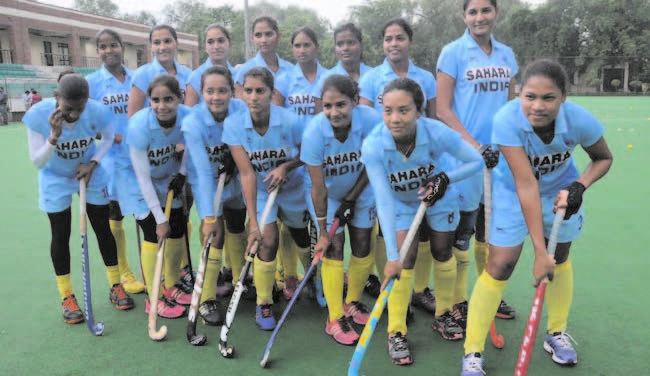
    NEW DELHI(TIP): Hockey India (HI) congratulated its bronze medal winning women’s team and extended a grand welcome to them on their return here from the Incheon Asian Games.

    The team defeated Japan 2-1 to claim third spot. South Korea won gold while China clinched silver. ”It’s a proud moment for the country that our women’s team have won the bronze medal at the 17th Asian Games. Each player of the team contributed towards this glory and I am proud of this team and wish them continued success in the future,” HI secretary general Narinder Batra said.

    India captain Ritu Rani said her team will aim to better themselves in the future. ”The entire team is ecstatic by this win. When we lost our semi-final, we were adamant to take the bronze by beating Japan. I am happy that we played with elan and won the match. We will aim to continue this form and better ourselves in our performances in the future,” Ritu said.

  • Sarita Devi calls for better judging after Asian Games 2014 Controversy

    Sarita Devi calls for better judging after Asian Games 2014 Controversy

    NEW DELHI (TIP) She has offered unconditional apology for an emotionally-charged protest at the Asian Games but Indian boxer L Sarita Devi hoped that her outburst would ensure better judging at next month’s World Championship in Korea — the country where she felt “wronged”.

    After returning from Incheon, Korea with a controversial bronze medal, which she refused to accept at the presentation ceremony, Sarita said the episode has left her “mentally drained”.

    “I hope the judging is better in the World Championship (scheduled from November 13 to 25 in Jeju Islands). Korea is hosting it and I am hoping that my protest will make some difference to the standard of judging. I hope nobody feels wronged like I did. No boxer should go through this, we work so hard,” she said. Sarita lost a contentious semifinal in the Asian Games to Korean Jina Park despite dominating the bout. The Indian later cried bitterly at the podium and refused to wear the medal that was presented to her.

    instead gave it to Park as a mark of protest during the ceremony, prompting the International Boxing Association (AIBA) to initiate disciplinary proceedings against her.

    Sarita later offered an “unconditional apology” to AIBA for her actions. “I apologised because I did not want any other Indian boxer to suffer. I fight for my country and by apologising I have tried to ensure that no other Indian gets affected. I feel I was wronged,” she said.

    “We suffered a lot due to the federation’s termination earlier, I didn’t want anything new to affect our boxers.” Recalling her emotional moments at the podium, Sarita said she was not in control.

    “I could not control myself on the podium. I offered her (Park) the medal because that’s what she deserved. I deserved better. She came to me to return the bronze but I could not take it, I was too overwhelmed. She requested me to take it back,” Sarita recalled. “I am not angry with her. She was just fighting like me. The wrong was done by others. It was not her fault,” she added. Sarita had to borrow money to lodge a protest after the semifinal as no Indian official came forward to help her but the boxer said she does not want to dwell on it anymore.

  • Asian Games 2014: Kabaddi heroes and heroines get special message from PM Narendra Modi

    Asian Games 2014: Kabaddi heroes and heroines get special message from PM Narendra Modi

    NEW DELHI (TIP) Good news from kabaddi continues,” Prime Minister Narendra Modi said today as he congratulated the women’s and men’s kabaddi teams for winning gold medals in Incheon Asiad games today. In separate congratulatory messages, Modi said “the Indian women’s Kabaddi team has made us very proud. I congratulate them on winning the Gold. A phenomenal accomplishment!”

    After the men’s team won the gold a few hours later, the Prime Minister said “good news in Kabaddi continues and this time it is the men’s team. Congrats for the gold. We are delighted.” Indian women staged a strong second half performance to get the better of a fighting Iran 31-21 to retain the Asian Games kabaddi.

    The Indian men’s kabaddi team clinched its seventh successive gold medal at the Asian Games after coming from behind to beat a spirited Iran 27-25 in the summit clash today. The Indian team, which has been winning gold ever since the sport was introduced on the Asiad roster in 1990, was given a massive scare by Iran which had finished runners-up in the 2010 edition as well.

  • Modi’s American Journey Building bridges for the future

    Modi’s American Journey Building bridges for the future

    By S Nihal Singh

    “Behind the new approaches being made by the two countries to revive the elan of earlier years are the geopolitical realities of Asia and the balancing of the great power status of an assertive China”, says Singh.

    Modi’s American Journey Building bridges for the future

    Above (President Barack Obama shakes hands with Indian Prime Minister Narendra Modi, Tuesday, Sept. 30, 2014, in the Oval Office of the White House in Washington. Modi’s five day visit to the U.S. was a useful bridge-building exercise in an important relationship that had gone cold)

    Prime Minister Narendra Modi went to New York and Washington on an official visit and wowed both non-resident Indians (NRIs) and stay home people. Thisparadox speaks of the limits of a first visit in office of a man denied a US visa for a decade but adept at creating an impact.

    While Mr. Modi himself has expressed satisfaction over his five-day visit, the verdict must be that it was a useful bridge-building exercise in an important relationship that had gone cold. The Prime Minister pressed all the right buttons, including meetings with Israeli Prime Minister Benjamin Netanyahu and representatives of the influential Jewish lobby, American politicians and office holders from President Barack Obama down and the chiefs of major companies.

    If at the end of the exercise and tour de force, there was no prize catch to grasp in the way of a major investment deal, the fault was not entirely the Prime Minister’s. There were simply too many problem areas left over from the previous five years and the conclusion of those with the power and ability to invest billions of dollars was encapsuled in the adage former US President Ronald Reagan was fond of citing: Trust but verify.

    US business tycoons liked what they heard from the Prime Minister, but, given the Indian record, wanted Mr. Modi to deliver what he promised. In essence, he has a six-month window, which could be stretched to the next budget, to show results. Indo-US problems fall largely into two categories: the hurdles to investments and setting up businesses more susceptible to Mr. Modi’s steamroller and knottier problems involving legislation and the states’ cooperation.

    Foremost in the latter category are the introduction of GST, goods and services tax, and the elephant in the room, the nuclear question former US President George W. Bush did so much to promote and conclude. Thanks to the narrow-minded legislation the Bharatiya Janata Party did so much to help pass, the horrific penalties suppliers are saddled with have kept American companies (and some others) out of any nuclear deal.

    On foreign investments, India has tied itself in knots by the kind of labor and land laws that have been passed at several levels making it arduous to acquire land and set up businesses. True, some BJP-ruled states are beginning to peel away some of the penal labor laws but it is patchy work very much in progress. And the BJP’s own bugbear, opposition to foreign direct investment in retail, is another hurdle to be crossed.

    On the broader political plane, Mr. Modi had some success in moving the stalemate that had developed, partly from the United Progressive Alliance-II having lost steam and distracted by scams, partly from President Obama’s own distractions and loss of interest in India. The defense cooperation agreement has been extended by another 10 years and there has been a significant movement in cooperation in counter-terrorism operations and sharing of intelligence although neither side expected India formally to commit itself to fighting the ISIS or the Islamic State. New Delhi was pleased at the inclusion of Pakistani terrorist organizations within the ambit.

    Behind the new approaches being made by the two countries to revive the élan of earlier years are the geopolitical realities of Asia and the balancing of the great power status of an assertive China. New Delhi itself is seeking to balance China, not in the sense of containing it, but in seeking to place limits on Beijing’s tendency to appropriate sea lanes and territory to its advantage through partnerships with the US, Japan and perhaps Australia. In any event, India has expressed its interest in East Asia while linking to the West.

    The BJP has an advantage in practicing realpolitik in international affairs because it does not suffer from the inhibitions of the Congress Party stemming from ideological reasons. Somewhat unexpectedly, Mr. Modi has demonstrated a sure touch in his dealings with world leaders during his earlier visit to Japan and now the United States while playing host to China’s President Xi Jinping.

    However, for Mr. Modi, international politics is only a route to economic diplomacy and commerce. Indeed, in his heart, he must have been disappointed that despite his marathon efforts, he could not take home even one major investment deal from his US trip. Suspicions of Indian methods of doing business and making retrospective legislation simply run too deep in the American trading community to melt their hearts to Mr. Modi’s seductive blandishments.

    The essence of the argument is that Mr. Modi must now win his battles at home before much of the world will walk the red carpet he has spread out for foreign investors. In view of the BJP’s lack of numbers in the Rajya Sabha and the expedient of calling a joint session to pass legislation can only be an exception, rather than the rule, he must devise innovative ways to cross the hurdles to foreign investment.

    In a sense, Mr. Modi must be rejuvenated by his American visit because his ethos is very American in the free-wheeling ways of commerce he prefers and the limitless opportunities offered to a hardy entrepreneur. Indian enterprises, particularly those in the competitive service industries, have their own legitimate grouses because projected immigration laws will further restrict the work of Indian professionals. And on the political plane, US policy is weighted in favor of Pakistan despite its misdemeanors because Washington needs it in withdrawing its troops and heavy equipment from Afghanistan.

    Perhaps Mr. Modi’s appeal to the non-resident Indians to have “one foot in India” by investing at home will yield more immediate results and he was generous in distributing sweeteners not only to NRIs but also to persons of Indian origin to simplify their visa and stay requirements, also promising American citizens visas on arrival. Apparently, the Navratri fast he observed during his entire stay in the US did not interfere with his schedule.

  • INDIA- US RELATIONS

    INDIA- US RELATIONS

    I.S. Saluja

    Prime Minister of India, Narendra Modiarrives in New York today, September 26, on afive day visit to USA. His visit, the first asPrime Minister, is being viewed as a powerful push to ensure the relationship between the two democracies of the world acquires genuine warmth, which, over the last few years, hasnoticeably been on the decline.

    Only for a brief period, during the Prime Ministership of Atal Behari Vajpayee, the relationship really warmed up but again, over the years, there have been many hiccups inspite of the loud protestations of “strategic relationship and partnership”.The question which every Indian Americanis asking is : “Will Modi’s visit bring about achange in the US perception of India and createconditions for a genuine friendly relationship,realizing equal partnership and based onmutual respect.In order to obtain a perspective, I spoke withone of the best known Indian Americans, asuccessful and eminent Attorney, Ravi Batra,who has considerable inroads in to the mainstream politics and is familiar with thethinking of US lawmakers, being friendly withquite a few of them.

    EXCERPTS:

    ” It would well serve India to make regulardeposits of goodwill in the generational Bank of Goodwill, such as the one that exists betweenUS and England. I wish to see India see UnitedStates as its inseparable nation-partner”.Another one.” Just remember that United States and India are destined to be joined at the geo-political and economic hip, even as ourpeople share the identical Dream.”Yet another. “Every relationship between living breathing people has irritants. Same istrue of nations. But to define the US-Indiarelationship from the irritant-lens is bothinaccurate and offensive. India and USA are “onthe same page” more often than not. But everyelection, here or elsewhere, gives a turbo-boostin a longstanding relationship, such that itexperiences a honeymoon period again andagain. It’s the Honeymoon period now.”And, finally, this. Be honorable and loyalCitizens of the United States, and continue toreach for the stars – and become worthy ofbeing included in pictures, rather than askingto be in one!

    Here is the full interview.

    Q. What factors have dominated andgoverned the relationship between India andUSA?

    USA?People and governments, and the near-law ofphysics when applied to geopolitics.You must remember that the Americanpeople have loved India all the way back toVasco Da Gama and Christopher Columbus – it’sin America’s soul at birth – this India-love thing.Then came Mahatma Gandhi – a love object ofall humanity, even as governments abhorredhim as a pain without equal. The recent post-Cold War relationship has been economicallydriven, rather than strategically, for Pakistanwas much better located as a buffer to the oldSoviets. The recent IT revolution, however, andIndia’s youthful citizenry has made India,previously known as a “Golden Sparrow” morelike a “Golden Falcon” to the great AmericanBald Eagle – I take some pleasure in that nameand description. Remember now that the young1.3 billion Indians can add value to everynation’s bottom line, even as they produce, andconsume goods and services from across theglobe.

    Q. How far the initial Socialistic character ofIndia in the first 40 years of IndependentIndia has been responsible for distancingbetween India and USA?

    Well, systems come and go, as do strategicalliances. Communism has been discreditedwithout doubt. Capitalism, while it has its faults,has been proven to be the best engine of growthand development. Now, the environmentalistswould argue that development and growth arethemselves the enemy – I disagree. Even to arrestclimate change, we need development of the”green” variety, flying on the wings ofcapitalism. But to answer your question directly,United States which pushed Britain to let Indiabecome free wasn’t happy with the old Soviet-India connection. Glad, that is over. Now, likePresident Obama in his GA speech onWednesday, I look forward to Russia, having”absorbed” Crimea, will return into the fold andbehave in a law-respectful way rather than a PacMan of others’ sovereignty. With Obamapresiding over the Security Council, Russiavoted with everyone to overcome the evil of ISIS.

    Q. In International politics, what have beenthe expectations of US from India and viceversa and how far have these been fulfilled?

    United States expects India to be one of ourcloset allies, without trying to get the best dealin every transaction every time. It would wellserve India to make regular deposits of goodwill in the generational Bank of Goodwill,such as the one that exists between US andEngland. I wish to see India see United States asits inseparable nation-partner.As for India, I am not qualified to answer.

    Q. What have been the significant convergingpoints in the relationship between the twocountries?

    Civilizations that value culture, education,family, education, hard work, and separation ofchurch and state. And then there was terror:9/11 and 26/11.We are joined at the hip in thefight against terror.

    Q. What have been the major discordant notesin the relationship?

    India has had to change its dance partnerafter the collapse of the Soviet Union, and riseof extremism. Sometimes, we in the UnitedStates have not treated India with sufficientrespect, such that it bordered on downrightinsult.

    Q. Can you identify some highs and lows in therelationship between the two countries,clearly analyzing the causes?

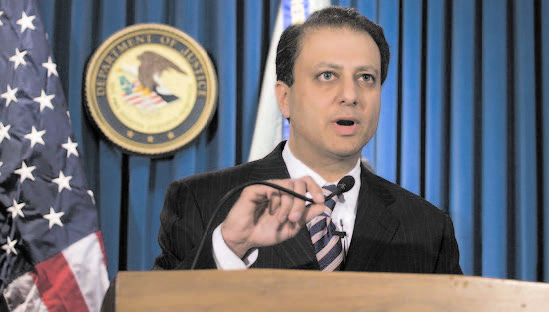
    President Bush gave India the Civil Nucleardeal, even as India bought its nuclear powerplants from France and Russia – not nice, nomatter the price differential.While clearly not as important, KrittikaBiswas and Devyani Khobragade to name twoevents. Obviously, had the Indian citizenry notgotten emotionally involved, these casesbelonged in the minor item category. Krittikawill be remembered for America setting thingsright, due to our great independent judiciary.Devyani has now been resolved – I happilypushed the nice Ambassador. Nancy Powellinto early retirement for her apparentobstruction of Indian laws. And PresidentObama has given us – all of us – the highesthonor of appointing an Indian-American asour ambassador to India; this exceedsappointing the now-legendary Preet Bharara asSDNY US Attorney and Sri Srinivasan as afederal Circuit Judge.Wow. This is the “feelgood” stuff. There is so much more on agovernment-to-government basis that securesIndia’s safety.Just remember that United States and Indiaare destined to be joined at the geo-political andeconomic hip, even as our people share theidentical Dream.

    Q. How far do you think the significantly largepresence of people of Indian origin serving inimportant areas like medical services and IThas influenced US attitude towards India?

    Well, being around hardworking people doinggood for many is always goodwill causing. Byand large, our Indian-American doctors havegreat bedside manners beyond their dedicationand smarts. Our folks in the IT section ofsociety have become a brand – that’s how cool itis. Being of Indian blood makes youautomatically IT brilliant.Well, I’m anexception now – for I need kids help to programanything.

    Q. Do you think US will give in to India’sdemands on H1 B visa and other concessionswith respect to immigration, desired by India?

    We should, for its good for the Americaneconomy. But, “immigration” is a near-Thirdrail of national politics, as many Americanshave not recovered from the Great Recessionand see immigrants, legal and illegal, as jobeating,when H1B are highly skilled andunavailable in United States.When emotionsget married with politics, don’t expect reason torule.Q. Another concern of India is US support toPakistan? Do you think US will do somethingto change its policy towards Pakistan, toplacate India?United States owes Pakistan for its loyaltyduring the 50 odd years of the Cold War. Thatwe need exit routes or entry routes, as the casemay be, for Afghanistan and such only serves toremind that Pakistan needs to be treated better.I think we should support Pakistan-India opentradeso that open people-exchange can followin a decade or so. It is not right that people whoshare near-identical culture have had wars andgovernments have sowed distrust when theoverwhelming commonality should be a jointasset.We need to improve everyday Pakistani’slife, if we want to ever live free of local terror.Then, we ought to do so world-wide, to be reallyfree of terror.We need everyone to be living theAmerican Dream, when merit rules, so peace isas durable as the Pax Romana was.

    Q. India’s overtures towards Japan and Chinaand its involvement in BRICS have beingviewed with suspicion by US . What can Indiado to remove this suspicion?

    BRICS were intended to cause suspicion, andhence, drive up the price for India and other BRICS nations. Of course, it was also a sort ofNAFTA across the air and sea among suchnations.

    Q. Do you think, US will act fast to acceleratethe process of reform of the Security Council,whereby seating India on the Council?

    The world order is based upon the P5 powersharing.That is the true geo-political axis that193 nations revolve around and exist with. It’sas real as the Sun in the sky. Yes, reforms areneeded, and Germany, Japan, India and SouthAfrica fantasize most about them. Ask me thisquestion in 25 years, and let’s see if it’s stillrelevant – as I suspect it will be.

    Q. Do you think Mr. Modi ‘s visit to US willgive new momentum to India- US relations ,given the fact that there are quite a fewirritants in their relationship?

    Every relationship between living breathingpeople has irritants. Same is true of nations.But to define the US-India relationship from theirritant-lens is both inaccurate and offensive.India and USA are “on the same page” moreoften than not. But every election, here orelsewhere, gives a turbo-boost in a longstandingrelationship, such that it experiences ahoneymoon period again and again. It’s theHoneymoon period now.

    Q . What would be your suggestions to the twocountries to strengthen their relations?

    Whatare the areas where the two can cooperate?Don’t do stupid stuff, like Devyani; for itmasks and overshadows tons of good stuffbetween the two nations that occur no matterwho governs in either capitol. Aside foravoiding an intended insult that Devyani was,avoid the unintended insult.During the official US/India RoundtableDiscussion in July 2014 held under theCongressional Dome to which my wife, Ranjuand I were independently invited to, I hadbluntly given my love potion: Respectful Reset,even as the “Reset,” between us and Russiadidn’t do so well. India and United States arenow a grown-up relationship, and discord needsnever to enter the public domain. Period.

    Q. What, do you think, the Indian Americancommunity should do to promote the processof strengthening of relations?

    Be honorable and loyal Citizens of the UnitedStates, and continue to reach for the stars – andbecome worthy of being included in pictures,rather than asking to be in one!
    Page 23

    Page 231

  • India Joins the Space Elite with Successful Mars Mission

    India Joins the Space Elite with Successful Mars Mission

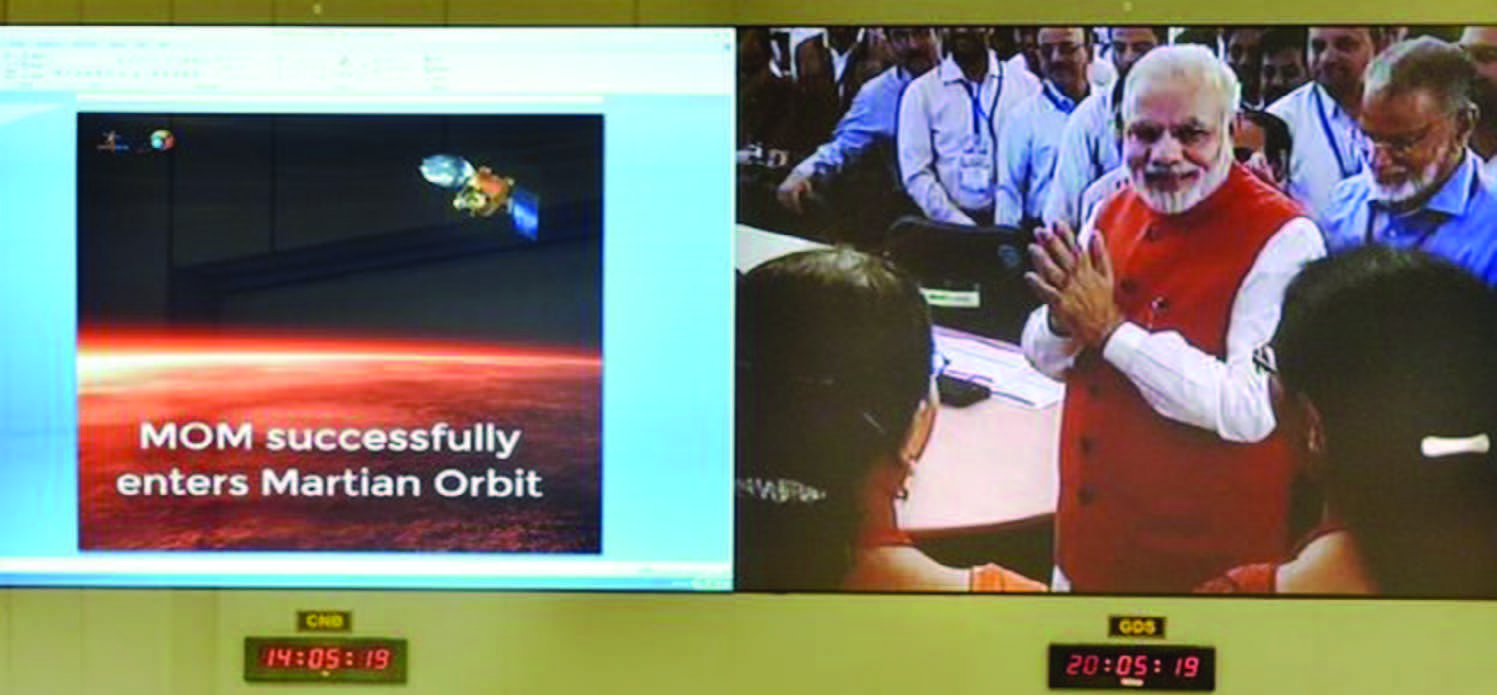
    BENGALURU (TIP): “We have gone beyond the boundaries of human enterprise and innovation,” an exultant Prime Minister Narendra Modi said, standing alongside Indian Space Research Organization (ISRO) scientists at the command center in the southern tech hub of Bangalore. “We have navigated our craft through a route known to very few.” India is the first country to reach Mars’ orbit on a maiden venture and the first Asian country to launch a successful Mars mission, all with a much cheaper price tag than any Mars mission before it.

    India now joins an elite club of nations who have successfully carried out interplanetary space missions, and has scored a significant point in its rivalry with China. The Mangalyaan satellite was confirmed to be in orbit shortly after 0800, Indian time., September 24 . It is, without doubt, a considerable achievement. This is a mission that has been budgeted at 4.5bn rupees ($74m), which, by Western standards, is staggeringly cheap. The American Maven orbiter that arrived at the Red Planet on Monday is costing almost 10 times as much. Back in June, Indian Prime Minister Narendra Modi even quipped that India’s real-life Martian adventure was costing less than the make-believe Hollywood film Gravity. Even Bollywood sci-fi movies like Ra.One cost a good chunk of what it has taken to get Mangalyaan to Mars. So how has India done it? For sure, people costs are less in this populous nation, and the scientists and engineers working on any space mission are always the largest part of the ticket price. Home-grown components and technologies have also been prioritized over expensive foreign imports. But, in addition, India has been careful to do things simply.

    “They’ve kept it small. The payload weighs only about 15kg. Compare that with the complexity in the payload in Maven and that will explain a lot about the cost,” says Britain’s Prof Andrew Coates, who will be a principal investigator on Europe’s Mars rover in 2018. “Of course, that reduced complexity suggests it won’t be as scientifically capable, but India has been smart in targeting some really important areas that will complement what others are doing.” Mangalyaan has gone equipped with an instrument that will try to measure methane in the atmosphere. This is one of the hottest topics in Mars research right now, following previous, tantalizing observations of the gas. Earth’s atmosphere contains billions of tons of methane, the vast majority of it coming from microbes, such as the organisms found in the digestive tracts of animals. The speculation has been that some methane-producing bugs, or methanogens, could perhaps exist on Mars if they lived underground, away from the planet’s harsh surface conditions.It is a fascinating prospect. So, even though Mangalyaan has a small payload, it will actually address some of the biggest questions at the Red Planet. Western scientists are excited also to have the Indian probe on station. Its measurements of other atmospheric components will dovetail very nicely with Maven and the observations being made by Europe’s Mars Express. “It means we’ll be getting three-point measurements, which is tremendous,” says Prof Coates. This will enable researchers to better understand how the planet lost the bulk of its atmosphere billions of years ago, and determine what sort of climate it could once have had, and whether or not it was conducive to life.

    I have read a lot about the criticism of Mangalyaan and India’s space program.There’s an assumption among many, I guess, that space activity is somehow a plaything best left to wealthy industrial countries; that it can have no value to developing nations. The money would be better spent on healthcare and improved sanitation, so the argument goes.But what this position often overlooks is that investment in science and technology builds capability and capacity, and develops the sort of people who benefit the economy and society more widely. Space activity is also a wealth generator. Some of the stuff we do up there pays for stuff down here. The industrialized nations know it; that’s one of the reasons they invest so heavily in space activity. Consider just the UK. It has dramatically increased its spending on space in recent years.

    The government has even identified satellites as being one of the “eight great technologies” that can help rebalance the UK economy and drive it forward. India wants a part of this action, too, and in Mangalyaan and its other satellite and rocket programs, the nation is putting itself into a strong position in international markets for space products and services. Commenting on the spectacular success of the Mars Mission, New York based attorney Ravi Batra said in a statement to The Indian Panorama: “India’s MOM’s success as the 1st nation to do so, and that too on a $74 million budget, speaks to India’s riches being in its people. PM Modi’s arrival in the United States for the GA and Pres. Obama now has a new credential – India’s people are smart and driven to touch the stars. Want to play together and build a better economy with Indian smarts?”

  • Prime Minister Modi calls for ‘global commitment and more concerted multilateral action’

    Prime Minister Modi calls for ‘global commitment and more concerted multilateral action’

    NEW DELHI (TIP): Prime Minister Narendra Modi, on his five-day visit to the U.S. arrives at JFK Airport in New York today, September 26. He will spend two days in New York, during which he will address the United Nations General Assembly and attend a community reception to welcome him before heading to Washington for his first meeting with US President Barack Obama. In a statement ahead of his departure, Modi said he was “confident that the visit will mark the start of a new chapter in our strategic partnership”. Time bound reform of UN Security Council, reforming international financial institutions, development agenda for third world countries and strong coalition to fight global terror will top the agenda of Narendra Modi’s maiden speech as India’s PM at UN General Assembly in New York on September 27. Modi, who will deliver his speech in Hindi, will utilize this opportunity to outline his global vision, sources said.

    This is his maiden foray at global stage, the first being BRICS Summit at Brazil in July. The PM gave a glimpse of his focus at UN in his statement on Thursday, September 25 before departing for New York via Germany. “I will call for a stronger global commitment and more concerted multilateral action in meeting these challenges. I will urge early adoption of the Post-2015 Development Agenda with focus on growth, development and elimination of poverty. As we head towards the 70th Session of the UNGA in 2015, I will also stress the urgency of early reforms in the United Nations, to ensure that it remains relevant and effective in dealing with the challenges of the 21st Century’ said Modi in his statement.

    Besides, global economic and health challenges will also be his focus at the maiden outing in the General Assembly. Here is the text of PM Modi’s statement before he left for his US trip: I am visiting the United States from 26 to 30 September 2014. I will attend the United Nations General Assembly in New York and, thereafter, visit Washington DC on 29-30 September 2014 for a bilateral summit with U.S. President Barack Obama. Since its participation as a founding member of the United Nations in 1945, India has shown unwavering commitment to multilateral processes to advance peace and security and promote broad-based inclusive economic development in the world. India’s contribution to UN peacekeeping operations over decades is a strong testimony of our efforts to contribute to the achievement of the objectives of the UN charter. The 69th session of the UN General Assembly is meeting at a moment of many pressing challenges for the international community – a still fragile global economy, turbulence and tension in many parts of the world, growth and spread of terrorism, the Ebola health crisis in Africa, climate change and the endemic global challenge of poverty.

    I will call for a stronger global commitment and more concerted multilateral action in meeting these challenges. I will urge early adoption of the Post-2015 Development Agenda with focus on growth, development and elimination of poverty. As we head towards the 70th Session of the UNGA in 2015, I will also stress the urgency of early reforms in the United Nations, to ensure that it remains relevant and effective in dealing with the challenges of the 21st Century. I will also meet the United Nations Secretary General Ban Ki Moon and leaders from other countries on the margins of the UNGA. The New York leg of my visit will also cover important elements of our bilateral relations with the United States. I look forward to meeting business leaders to invite them to participate more actively in India’s economic growth and transformation. This is message that I will also convey to the U.S. business community in Washington DC. My participation in a public event in Central Park in New York that on poverty is to focus international attention on this great challenge for humanity and affirm my support for global civic action, especially involving the youth, to address it. I keenly await the opportunity to meet the Indian American Community at the Madison Square Garden in New York. Their success in diverse fields, their contribution to the United States, their abiding bonds with India and their role as a vibrant bridge between the two largest democracies is a source of pride for us.

    They serve as a window to our heritage, progress and potential. I look forward to meeting President Obama over two days in Washington DC. This will be my first meeting with him. His life’s journey is a remarkable testimony to the rights and opportunities that democracies provide, and an inspiration for people around the world. Shared values, convergent interests and complementary strengths provide the foundation for natural partnership between the world’s oldest and largest democracies. I see the United States as a vital partner for our national development, drawing especially on the rich possibilities of partnership in education, skills, research, technology and innovation – and, above all, a shared commitment to human values. Working together, and with others, we can bridge the many divisions of our times and contribute to building a more peaceful, stable, secure, sustainable and prosperous world. I will discuss with President Obama how we can use the strength of all that we share and all that we have built so far to take our relationship to a new level in the interest of our two countries and the cause of this world. I am confident that the visit will mark the start of a new chapter in our strategic partnership.

  • MAKE IN INDIA

    MAKE IN INDIA

    The Prime Minister’s call for making India a manufacturing hub and creating jobs should boost small and medium enterprises as well

    By Charan Singh Prime Minister Narendra Modi’s ‘Make in India’ campaign is creating waves both in India and abroad. Given the government’s intention to boost domestic manufacturing and create new jobs, its proposal to introduce a new policy for Micro, Small and Medium Enterprises (MSMEs) deserves a closer look. While Mr. Modi’s invitation to international companies to make investments has been receiving a lot of attention, the government’s close interaction with industry associations from different regions and sectors within India to discuss specific problems inhibiting domestic enterprises deserves equal consideration. India’s MSME sector has recorded more than 10 per cent growth in recent years despite the economic slowdown. MSMEs contribute nearly eight per cent to the national GDP, employing over eight crore people in nearly four crore enterprises and accounting for 45 per cent of manufactured output and 40 per cent of exports from India. Thus, the focus of the government on MSMEs at this juncture is justified given their potential for providing growth and employment.

    Significant initiatives In view of the significance of the sector, the government had announced a number of measures in its first budget. Some of the significant initiatives were setting up of Rs.10,000 crore of venture capital fund and establishing a nationwide, district-level incubation and accelerator program for encouraging entrepreneurship. Other important budgetary announcements included establishing a network of Technology Centers; revising the definition of MSMEs for providing higher capital ceiling, friendly legal bankruptcy framework to enable easy exit, a program to facilitate forward and backward linkages with multiple value chain of manufacturing and service delivery to be put in place, and launching the Skill India movement for youth with an emphasis on employ ability and entrepreneurship. A committee was also proposed to examine the financial architecture with a view to removing bottlenecks and creating new rules and structures for the sector.

    The government recently inaugurated a holistic, innovative and low-cost National Small Industries Corporation’s online e-commerce shopping portal for buying and selling of products produced by MSMEs. MSMEs are mainly classified as manufacturing and service enterprises. There is a specific stipulated limit on investment in plant and machinery for each of the respective micro, small and medium segments in manufacturing with a maximum limit of Rs.10 crore, and for equipment in service enterprises with a maximum limit of Rs.5 crore. MSMEs with 94 per cent of units unregistered are highly diverse in terms of their size and the level of technology employed. The production in the sector ranges from output of grass-root village industries and auto components, to microprocessors, electronic components and electro-medical devices. Since 1948, successive governments have been making intense efforts to encourage MSMEs but the sector continues to be under stress. The office of Development Commissioner for MSMEs was set up in 1954 and a dedicated Ministry for MSMEs in 1999. The Small Industries Development Bank of India (SIDBI), established in 1990, is the principal financial institution for promotion, financing and development of the MSMEs in addition to commercial banks, State financial corporations, and State industrial development corporations. Despite such efforts, some of the key problems faced by MSMEs continue to be related to availability of technology, infrastructure and managerial competence, and limitations posed by labor laws, taxation policy, market uncertainty, imperfect competition and the skill level of the workforce. The problems faced by MSMEs need to be considered in a disaggregated manner for successful policy implementation as they produce very diverse products, use different inputs and operate in distinct environments. In general, there is need for tax provisions and laws that are not only labor-friendly but also entrepreneur-friendly. More importantly, there is need for skill formation and continuous upgrade both for labor and entrepreneurs. While the government has to strengthen the existing schilling efforts for labor, there is an urgent need for managerial skill development for entrepreneurs running MSMEs – an area that is considerably neglected. These programs for entrepreneurs could be offered in a structured way in Industrial Training Institutes and management schools to include modules on management, labor laws, accounting, financial markets, procurement and marketing skills. Further, the government could consider dedicated television and radio programs, similar to agriculture, to help educate entrepreneurs running small businesses. Consumer tastes have been evolving as greater integration with global markets takes pace. In order to keep pace with changing tastes, large corporate firms have made substantial investment in extensive research and developing suitable product ranges. However, due to shortage of office space and financial resources, many micro and small enterprises are unable to invest in R&D and develop new products, and perish as a result. Therefore, government support in undertaking research to help develop new products that are being produced by MSMEs could be very helpful, similar to what agriculture universities do. Similarly, to encourage products manufactured by MSMEs, India could illustratively showcase and promote their products such as phulkari of Punjab, bamboo works of Assam and West Bengal, and cotton weaving of Tamil Nadu via galleries and museums.

    Credit crunch Issues related to credit, like adequacy, timely availability, cost and mortgages continue to be a concern for MSMEs. Consequently, 93 per cent of units in the MSME sector are dependent on self-finance. Profit margins are extremely thin due to stiff competition and the small size of firms. The government drive for financial inclusion could benefit MSMEs. The government could consider dedicating specialized financial schemes for addressing difficulties in assessing and providing credit for the MSMEs, as also providing line of credit to firms which are under financial stress. Given the grand financial inclusion initiative, maximum employment and growth with minimum difficulty to the entrepreneur will augur well for the country. (Charan Singh is RBI Chair Professor of Economics, IIM Bangalore.)