Month: June 2015

  • US says Iran nuclear deal deadline may ‘slip’

    US says Iran nuclear deal deadline may ‘slip’

    VIENNA (TIP): High-stakes talks to nail down a historic deal with Iran to curtail its nuclear programme may “slip” past a June 30 deadline, a top US official admitted on June 25 ahead of crunch weekend negotiations in Vienna.

    “We may not make June 30, but we will be close,” the senior official told reporters as top US diplomat John Kerry prepared to head Friday for what could be the last talks between Iran and global powers on the deal.

    The official said the target date to finalise the historic deal — the main outlines were agreed in April in Lausanne, Switzerland –would only “slip” by a few days.

    “The intent of everybody here — the P5+1, the European Union, Iran — is to stay until we get this done, or find out we can’t. And our intent is to get it done,” the official told reporters, asking not to be named.

    Others, including Iranian Foreign Minister Mohammad Javad Zarif, who is due in Vienna on Saturday, have said the deadline may be missed by a few days but until now Washington had insisted it still aimed to get a deal on schedule.

    “We can truly see a path forward that gets us to a very good agreement here. We know what the pieces of it are,” the US official said, adding that in the end, Iran was facing
    “critical choices.”

    Kerry, addressing reporters after unveiling an annual rights report, said he was “always hopeful… I’m not conferring optimism, but I’m hopeful.”

    Iran, which has engaged in something of a rapprochement with the West since the election of President Hassan Rouhani in 2013, denies wanting nuclear weapons, saying its nuclear programme is exclusively peaceful.

    Under the Lausanne framework, which was also agreed several days late, Iran will downsize its nuclear activities in order to make any attempt to make a nuclear weapon all but impossible.

    This includes Iran cutting the number of centrifuges enriching uranium, which is used in nuclear power but also for a bomb when highly purified, as well as slashing its uranium stockpiles and changing the design of a new reactor.

    In return, UN and Western sanctions that have caused Iran major economic pain would be progressively lifted, although the six powers insist they can be easily “snapped back” in place if Tehran violates the accord.-

    – Spanners in the works –

    French Foreign Minister Laurent Fabius will also arrive in Vienna on Saturday, an aide said Thursday, while a source in Brussels said EU foreign policy chief Federica Mogherini was expected “this weekend.”

    The mooted final accord between Iran and the “P5+1” — Britain, China, France, Russia and the United States plus Germany — will be a highly complex agreement 40-50 pages long, including several appendices.

    It will set out an exact timetable of sanctions relief and reciprocal steps by Iran, as well as a mechanism for handling possible violations by either side.

    Tricky issues include how UN sanctions might be re-applied, the reduction of Iran’s uranium stockpile and its future research and development on newer, faster types of centrifuges.

    Iran must also address lingering questions about the possible military dimensions of its nuclear program to the satisfaction of the UN watchdog, the IAEA.

    Amid unease in Iran’s conservative-dominated parliament that Tehran is giving too much away, the country’s supreme leader, Ayatollah Ali Khamenei, on Tuesday appeared to throw several spanners in the works.

  • Jindal plays down Indian roots, faces online backlash

    Jindal plays down Indian roots, faces online backlash

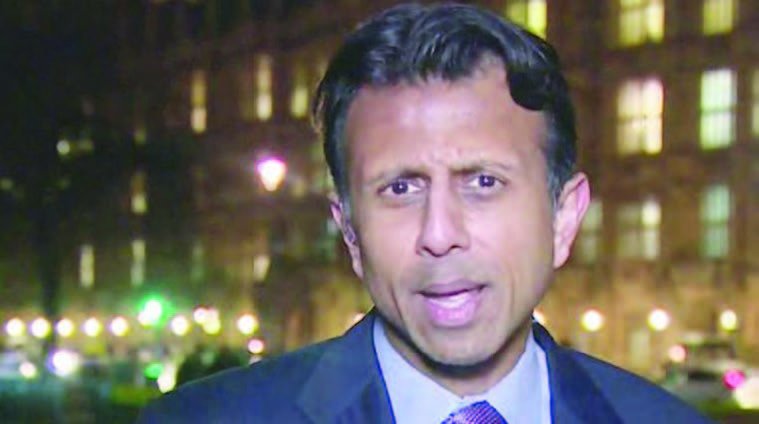
    WASHINGTON (TIP): They could soon be calling him Boo-Boo Jindal. First, there was that creepy video of an ostensibly private – and orchestrated – family conversation about his Presidential run that was made public. Then Indian-Americans, the hyphenated-group that Jindal was formerly proud to belong to, twitted him on twitter with corrosive jokes.

    The Louisiana governor is being ridiculed and laughed out of the US Presidential election only hours after he announced his White House run.

    The video first: In what was meant to be a display of old-fashioned family values where important things are discussed at the family kitchen table, Jindal and his wife Supriya apparently wanted to let their three children know that he was running for President and life was about to get more hectic.

    ”Mommy and daddy have been thinking and talking a lot about this, and we have decided that we are going to be running for president this year,” Jindal solemnly tells the three children in a moment captured by a security camera mounted in a tree. ”We’re going to talk to you first and then you can’t go tell your friends,” he adds.

    No reaction from the kids. None. Nada. ”How do you feel about that?” Supriya Jindal asks. One son gives a quick two thumbs up, their daughter shrugs, and another son remains indifferent.

    Not exactly the kind of ringing endorsement daddy and mommy were expecting, but typical of young kids who may not always grasp outsized adult developments.

    But releasing the 90-second video on the campaign website (it has subsequently pulled it) to emphasize ”family values” brought even more pain – and ridicule.

    ”Bobby Jindal campaign gets off to strange start with ‘Paranormal Activity’ video,” sneered the Washington Post. Others described the effort as ”weird” and ”creepy,” questioning why anyone would publicize a private moment with children captured on a nanny-cam.

    It got worse after Indian-Americans, the ethnic group Jindal formerly was happy to belong to, got after him after he repeated his disdain for the tendency in U.S to hyphenate its population along ethnic lines, such as Indian-American, Irish-American, African-Americans. ”If we wanted to be Indians, we would have stayed in India,” Jindal had asserted before.

  • No Excuses, Mr. Modi. Live up to your declarations of corruption free governance

    No Excuses, Mr. Modi. Live up to your declarations of corruption free governance

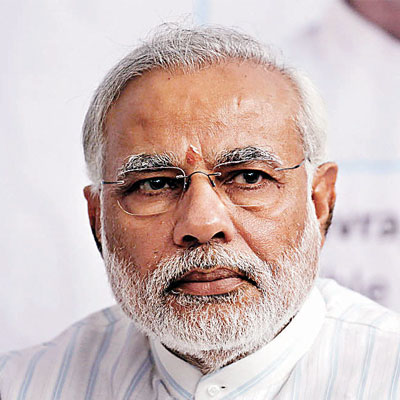
    Politicians will be politicians. They do not take time to change tracks. A Mr. Modi who has been relentlessly condemning the UPA government for the rampant corruption by its ministers and party leaders has suddenly and strangely gone dumb when his party’s ministers have been involved in unseemly controversies, and, in cases of corruption, if corruption is not remain confined to financial bungling alone; and I am sure, corruption embraces all doings which are   not   legally and morally permissible.

    In the case of Vasundhara Raje Scindia, the BJP Chief Minister of Rajasthan, the evidence of her wrong doing is incontrovertible. How can a responsible citizen, and in her case, a leader of standing, go against the interests of the nation and her people to support and protect a fugitive from law? Yet the party is trying to defend the indefensible. Strangely enough, a party which would have shouted itself hoarse demanding resignation and hanging of the wrongdoing minister from any other party is keeping quiet. Where are gone the high moral standards of Mr. Modi and his cohorts?

    It is pathetic to find BJP spokespersons alleging that Sonia or Rahul misrepresented their educational qualifications when the issue of Smriti Irani submitting three different versions about her educational qualifications is raised. Let Sonia and Rahul be penalized for any breach of law. But why defend Smriti? Why should she not bear responsibility for the wrong information provided to the Election Commission? Why the Prime Minister should not order a probe and ease out the minister till the probe is completed? Mr. Modi used to make fun of Dr. Manmohan Singh that he keeps “maun” (silent). Let him now ask himself if he is any better than Dr. Manmohan Singh. Easier to preach than to practice. Mr. Modi. Discipline your flock. Or, else, you will soon find yourself in no better position than Congress party is today.

  • Pakistan heatwave deaths reach 780; lawmakers trade blame

    Pakistan heatwave deaths reach 780; lawmakers trade blame

    KARACHI (TIP): A heatwave has killed nearly 800 people in Pakistan’s financial hub of Karachi and piled pressure on a beleaguered provincial government, as rivals blame it for severe blackouts and crumbling public services that have added to the woe.

    The powerful military, which heavily criticized the government for corruption last week, is winning praise after it set up 22 health centres to distribute aid.

    “They (the army) are at least handing out cold wet towels, juice and rehydration salt,” said Ahmed Sultan, as he squeezed a towel soaked in ice water over his sweat-soaked clothes at a military tent set up outside an overflowing public hospital.

    “This government just keeps on giving us the death toll … this government is a total failure.”

    The heat wave has once again exposed Pakistan’s fledgling civilian government’s failure to fund social services, making for a glaring contrast to the military, which often takes the lead in responding to natural disasters.

    The lion’s share of the national budget goes to the military, which has ruled Pakistan for about half of its history.

    Public services in the nuclear-armed nation of 190 million people are starved of resources because almost all its wealthy evade taxes. Fewer than 0.5 percent of citizens pay income tax; many legislators are among the tax dodgers.

    The death toll in Karachi, a city of 20 million people, had reached 780 by Wednesday, said Anwar Kazmi, a senior official of the Edhi Foundation, a private charity. “We are planning to expand the Edhi morgue to cope with a situation like this in future,” he said.

    Government health officials did not return calls seeking comment.

    BLAME GAME

    Angry lawmakers blamed each other in parliament for the crisis, feeding perceptions that the city’s political leaders are floundering after a week of temperatures that touched 44 degrees Celsius (111 Fahrenheit).

    Civilian and military officials traded barbs over corruption in Karachi, which is home to Pakistan’s main stock market, central bank and biggest port.

    “Two years have gone by. Where are the government’s power projects?” demanded lawmaker Asad Umar, of the opposition Pakistan Tehreek-e-Insaf party.

    “Projects worth billions are not progressing because they are in the hands of incompetent cronies.”

    The federal minister of water and power, Khawaja Asif, blamed the provincial government, led by an opposition coalition.

    “If there is shortage of water in Karachi, that is not the federal government’s responsibility,” he said. “If the water board has not paid its bills, that is not the federal government’s responsibility.”

    Provincial officials said they plan a protest against the power cuts outside the offices of utility K-electric, which supplies Karachi.

    The cuts left many Karachi residents without working fridges, fans or water. Many of the deaths among the elderly and poor were caused by dehydration.

    The company says it is doing its best to tackle the daily blackouts. Federal and provincial governments owe it more than $1 billion in outstanding bills, a spokesman said.

  • Nepal to hold donor conference on post-quake reconstruction

    KATHMANDU (TIP): External Affairs Minister Sushma Swaraj will be among a host of leaders who will attend an international donor conference here for reconstruction efforts following the devastating earthquake that hit Nepal in April.

    The International Conference on Nepal’s Reconstruction (ICNR) 2015 is scheduled to take place here on June 25 to raise international assistance for rebuilding the country ravaged by the April 25 earthquake and its aftershocks.

    Besides Swaraj, foreign ministers from China and Norway, finance ministers from Bhutan and Bangladesh and disaster management minister from Sri Lanka have confirmed their participation in the international conference, Nepalese finance minister Ram Shara Mahat said today.

    Nepal had initially invited PM Narendra Modi to attend the conference. President of the Manila-based Asian Development Bank, vice-president of the World Bank, president of Japan International Technical Cooperation (JAICA), commissioner of the European Union and the UN deputy general secretary of the United Nations have also confirmed their participation.

  • Many Bangladeshis suspect Pakistan’s hand behind attacks on secular bloggers

    DHAKA (TIP): With the recent killings of three secular bloggers in Bangladesh by fundamentalists, the country’s intellectuals here are suspecting Pakistan’s hand behind the brutal attacks and feel that an international intervention is required to ensure their safety.

    “These attacks may be executed by radical elements here but the brain behind those attack is Pakistani establishment who have been vehemently opposing trials and sentences of war criminals,” said Imran H Sarkar, a leading blogger of the country, and one of the main architects behind the 2013 Shahbag protests. Bloggers, who have been constantly living under the threat of being killed by the fundamentalists, feel that Bangladesh government should be more proactive in stopping the attacks on bloggers and intellectuals of Bangladesh.

    “Those attacks on bloggers and threats to liberal-minded intellectuals are a handiwork of Jamaat-e-Islami and other radical fundamentalist elements,” Sarkar said.

    In the last six months, three bloggers were brutally hacked to death for being vocal against religious fundamentalism and demanding severe punishment for the war criminals of 1971 Bangladesh Liberation war.

  • Myanmar military retains veto after constitution change vote fails

    Myanmar military retains veto after constitution change vote fails

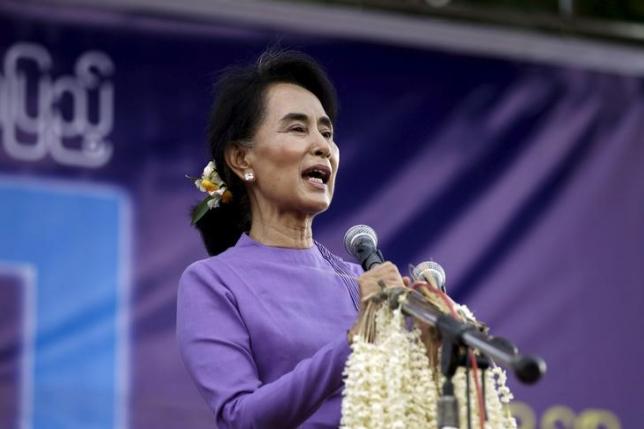
    NAYPYITAW (TIP): A move to amend Myanmar’s constitution to remove the military’s legislative veto on key decisions fell short of the required 75 percent support in parliament on Thursday, preserving the armed forces’ powerful political role in the Asian nation.

    The result was no surprise given that a quarter of the seats in the house are, by law, held by the military, which ruled Myanmar for half a century until 2011. The proposal aimed to trim the share of house votes needed to amend the constitution to 70 percent.

    Another vote on a clause that effectively bars Nobel laureate Aung San Suu Kyi from becoming president also failed. The motion voted on would have only partially amended that article, however, meaning the 70-year-old democracy icon would still have been ineligible had it been passed.

    Suu Kyi, whose National League for Democracy (NLD) won the last free election by a landslide in 1990 – a result ignored by the junta – cannot become president because her two children are British citizens, as was her late husband.

    The NLD suffered persecution under the former junta and says the military’s ability to shoot down changes to the constitution puts a limit on democratic reforms in Myanmar, where a general election is expected in November.

    Critics see it as an enshrined safeguard to protect the armed forces’ sizeable economic and political interests.

    Suu Kyi said the outcome was of no surprise and it was “obvious” the military would not support amendments. The vote, she said, showed the electorate which forces in politics were for or against progress in Myanmar.

    Resistance to change

    “Today’s failure to amend the constitution doesn’t mean that the future of the country becomes hopeless,” she told a news conference.

    “Just because there are people who neglect what the people wish for, it doesn’t mean we will stop trying.

    “People realize now for whom to vote in the election and which people want change.”

    Just one of the proposed changes put up for voting was accepted, a minor tweak to the wording of a clause that requires a presidential candidate to be “well-acquainted” with various affairs, removing the word “military” and replacing it with “defence”. Any approved changes require endorsement in a public referendum.

    The NLD’s attempts to change the constitution prior to the election have met with resistance from the military and the ruling Union Solidarity and Development Party (USDP), which has former officers and businessmen with ties to the army among its ranks.

    Suu Kyi took a swipe at the USDP for agreeing to debate only minor amendments and said military lawmakers voting as a bloc was understandable because of their allegiance to armed forces supremo, Senior General Min Aung Hlaing.

    Suu Kyi has taken a more conciliatory tone towards the military since becoming a lawmaker but spoke out against Min Aung Hlaing, the protege of former ruler Than Shwe, for wielding influence over parliament.

    “He’s not elected by the people, so why does he have the right to decide whether the constitution will be amended or not?” she said.

    Military lawmakers gave a series of speeches during the debate, which began on Tuesday, defending the continued political role of the armed forces and arguing that Myanmar’s transition to democracy was still fragile and needed to be protected.

    The NLD, which has a history of boycotting what it saw as flawed political processes inspired by the former military dictatorship, has yet to confirm whether or not it will run in the election.

    Suu Kyi said the decision did not ride on the amendment vote and the party needed “to consider other problems too.”

  • Satnam Singh Parhar eyes to represent District 23 of New York City Council

    Satnam Singh Parhar eyes to represent District 23 of New York City Council

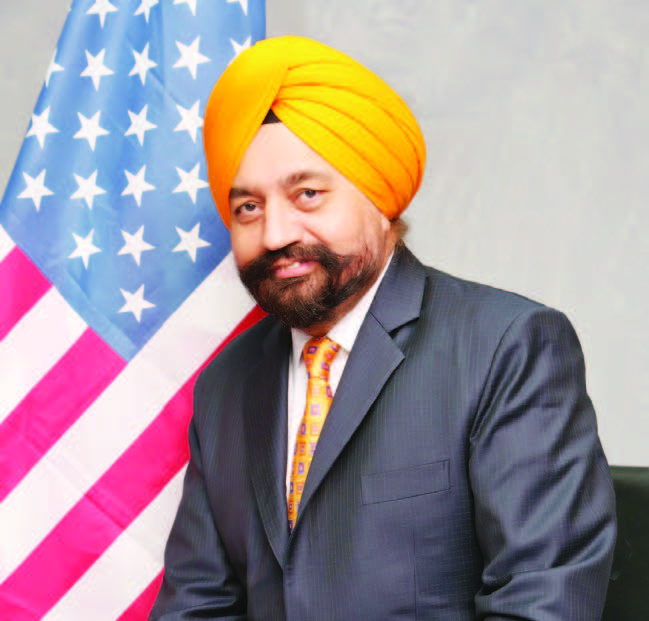
    BELLEROSE, NY (TIP): Satnam Singh Parhar announced, June 25, his candidacy for New York City Council to represent District 23, which includes several diverse communities across North-Eastern Queens. The office is left vacant as former Councilman Mark Weprin (D) joins the staff of Governor Andrew Cuomo as deputy secretary of legislative affairs.

    Born in the village of Kukowal in Punjab, India, Mr. Parhar completed his Bachelors in Commerce from Punjab University, Chandigarh. While at Punjab University, Mr. Parhar was heavily involved in student and community activism. He was General Secretary of the Student Union and was a well-regarded soccer player. A resident of New York for almost four decades, Mr. Parhar has since 1976 brought the same spirit of activism to his local community, where he has since involved himself in a number of commercial, community, and philanthropic ventures.

    Beginning with the competitive fashion industry of the late seventies, Mr. Parhar opened boutiques that introduced cutting-edge women’s designs, which rapidly matured into four major high-end boutiques, spurring successful import operations from India, France, Bali, and Indonesia. His next and most enduring venture was in construction and development. Well established in the industry, Mr. Parhar has under his belt numerous successful development projects in the private, public and community sectors.

    Mr. Parhar has long been involved with the India Association of Long Island (IALI), an organization proudly serving the Indian communities of Queens, Brooklyn, Nassau and Suffolk-having served as Executive Council member since 2008, Vice-President since 2013, and President since 2014. In his capacity as President, Mr. Parhar has worked to establish a permanent headquarters for the IALI, lovingly called IALI Home. Working with the Association, he has raised funds for the IALI Home where cultural, educational, and outreach activities are provided. Mr. Parhar spends hours every weekend at the IALI Home to meet with people from the community and address their concerns.

    Mr. Parhar is the founder of Sant Baba Nidhan Singh Ji Cultural Society, and the founder and chairman of Rajput Cultural Society. While involved in these and other associations he has organized nagar kirtans at Gurdwara Sant Sagar, Bellerose, and sponsored many local soccer and other sports tournaments. Mr. Parhar has organized inmate-support programs in various prisons and detention centers in New York. Mr. Parhar has made routine visits with various airports, schools, and precincts to bring awareness to these institutions and the public about Sikhism.Mr. Parha’s faith and specifically the Sikh turban, a proud emblem of Mr. Parhar’s identity.

    In 2011, Mr. Parhar had the  honor of participating in the introduction of the New York City Workplace Religious Freedom Act in co-operation with former mayor Michael Bloomberg and Councilman Weprin. He has organized fundraisers and election rallies in support of New York State Senator Anthony Avella, Assemblyman David Weprin, and Councilman Mark Weprin.

    Mr. Parhar, an avid runner and sportsman, has completed a number of races including the TCS New York City Marathon.

    Mr. Parhar is supported by his loving family, including his wife, Dalgit Parhar, a Registered Nurse at Jamaica Hospital, his daughter-in-law, Dr. Sumit Parhar, grand-daughter Noor K. Parhar, and daughter Manpreet K. Parhar who is pursuing a Ph.D. from Notre Dame of Maryland University. Mr. Parhar’s son Dr. Ravindira “Romeo” Parhar, who passed away last year, offered heartfelt support for his father’s continued political successes.

    Satnam Singh Parhar-a fresh face with a bold new outlook-in keeping with principles of honesty and transparency humbly urges the voters of District 23 to show their support in the September 10 special election.

    (Press Release)

  • Sateesh Nori Esq. is  New York  Law Journal’s  2015 Rising Star

    Sateesh Nori Esq. is New York Law Journal’s 2015 Rising Star

    NEW YORK (TIP): Sateesh Nori, the Attorney-in-Charge of the Queens Neighborhood Office, has been selected as one of 50 young lawyers who are 2015 Rising Stars by a panel of 24 judges from the New York Law Journal.

    The judges reviewed nearly 300 nominations of attorneys age 40 and under who have established a record of accomplishments and demonstrated that they are top contributors to the practice of law and their communities.

    Sateesh served as the Director of Housing Litigation at Bedford-Stuyvesant Community Legal Services from 2010 until 2013. Previously, he was a Staff Attorney in The Legal Aid Society’s Housing Development Unit in the Harlem Community Law Office, and started his career in 2001 as a housing staff attorney in Legal Aid’s Brooklyn Neighborhood Office. Sateesh is a highly regarded expert on housing and community development. Throughout his career and continuing to the present, he has represented low-income tenants and tenants’ associations, led trainings for members of the community and members of the bar, and run a mock-trial and mentorship program for youth in Brooklyn and East Harlem. He has written on the fundamentals of housing practice, Section 8, group representation, negotiating in Housing Court, and getting repairs done in residential apartments. He is the current Chair of the New York City Bar’s Housing Court Committee and a board member of Housing Court Answers. He also teaches at Cardozo School of Law. Sateesh is a graduate of New York University School of Law and the Johns Hopkins University.

  • Luxury Fashion boutique Sitara opens doors

    Luxury Fashion boutique Sitara opens doors

    NEW YORK (TIP): At a standing room only, media event, marking the launch of the fashion boutique Sitara, owner Nitu Huda, spoke about the need for a luxury-shopping destination in New York. “We are always looking for quality western wear, but when it came to Indian, I couldn’t find anyplace where I could shop for good quality designer clothes,” she said, “and that’s why Sitara”

    Luxury Fashion boutique SitaraA Glamorous shop that houses collections from top rated Indian designers like Tarun Tahiliani, Anita Dongre, Mapxencars, Vikram Phadnis, Satya Paul, Priya Singh, Rohit Verma, and many others, Sitara is set up to be the shopping destination for those with exquisite taste.

    The boutique also houses an exclusive bridal collection along with eveningwear and casual outfits that fit every mood. At a glittering fashion show where the models walked the runway to show off some of the exquisite collection, one could hear cheers and applause as the models walked by.

    Having so many well known, authentic Indian designers labels under one roof is something new and fresh for the South Asian fashion scene.

    The exclusive bridal boutique will operate on an appointment only basis to give individual attention to each and every bride. Sitara is conveniently located on Roosevelt Avenue and 63rd Street in Woodside, NY, just a short walk or drive from Jackson Heights.

    For more information please visit www.sitaraonline.com

  • 1865 Independence Day celebration at Old Bethpage Village Restoration: Mangano

    1865 Independence Day celebration at Old Bethpage Village Restoration: Mangano

    OLD BETHPAGE, NY (TIP): Nassau County Executive announced, June 25, that Old Bethpage Village Restoration will celebrate Independence Day as observed in the 1860’s on Saturday, July 4thand Sunday, July 5th from 10:00 a.m. – 4:00 p.m. The Independence Day Parade and Ceremony will begin at 2:30 p.m.

    Old Bethpage Village Restoration’s annual 1865 Independence Day Celebration offers a look at the region’s past and features a parade and ceremony, historic craft demonstrations, contra dancing, storytelling, military drills, fiddle music and brass band concerts.

    Old Bethpage Village Restoration provides visitors with a unique and wonderful opportunity to step back in time and experience life in a recreated mid-19th Century American village set on more than 200 acres. Old Bethpage Village, located at 1303 Round Swamp Road in Old Bethpage is open Wednesday – Saturday from 10:00 a.m. – 4:00 p.m. and on Sunday from 11:00 a.m. – 5:00 p.m. Admission is $10.00 for adults and $7.00 for children (5-12), seniors, and volunteer firefighters.

    For more information about Old Bethpage Village Restoration, please call: (516) 572-8401 or visit the website at: www.nassaucountyny.gov/parks.

  • ‘Ekal Vidyalaya Foundation’ Committed Rs. 2 Crores for Nepal Victims

    ‘Ekal Vidyalaya Foundation’ Committed Rs. 2 Crores for Nepal Victims

    NEW YORK (TIP): On April 25, 2015 when the 7.8 magnitude earthquake hit Himalayan range nation of Nepal, it took one of the worst catastrophic tolls in human history in terms of lives destroyed, lives lost and the economic damage it inflicted on all facets of poor country’s life. At last count, more than 9,000 people had reportedly lost their lives, 28,000 were injured, almost 40,000 people were homeless, millions were displaced and tens of thousands businesses were destroyed. Worst hit were the Villages. Unlike other rescue-relief Organizations that converged on Nepal in the aftermath of earthquake, ‘Ekal Vidyalaya’ already had deep roots in Nepal for years and therefore had personal stake in rebuilding this nation and its lives. As of April’2015, Ekal had 1,500 schools operating in Nepal’s rural areas. Ekal, was not only familiar with its people, its culture and life’s necessities, but also, had well-established rapport with the local governments.

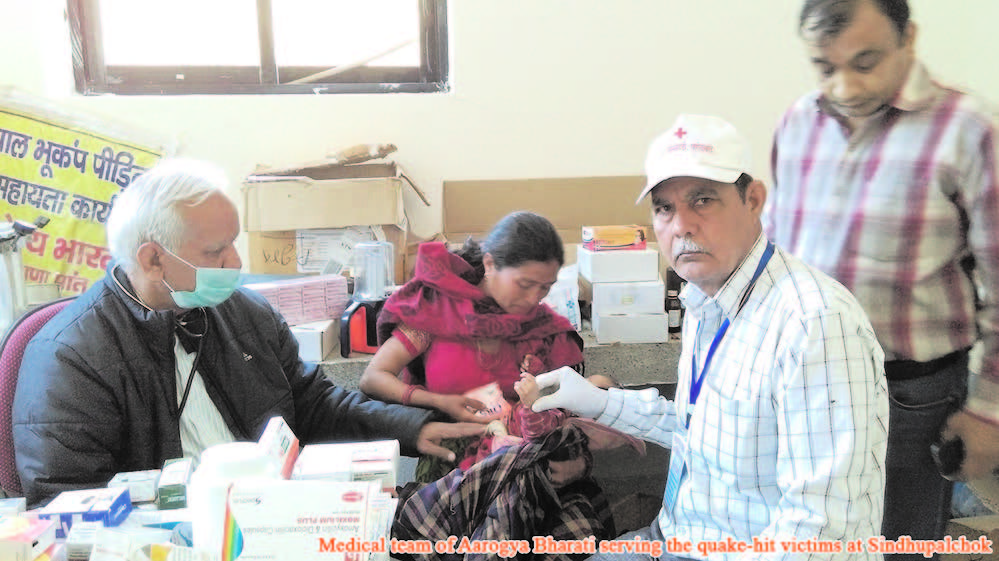
    Ekal Vidyalaya Foundation 1Shri Shyamji Gupta, Founder-Chairman of “Ekal-India” happened to be in Nepal when the earthquake struck and so he personally initiated the relief efforts after witnessing the tragedy first-hand that unfolded. As the news of destruction hit the world, ‘Ekal Orgz’ under the leadership of Shri Ravidevji Gupta sprang into action to start coordinating rescue, relief, and rehabilitation efforts with its selfless volunteering force of 1,600 Nepali regulars, within hours. A comprehensive plan for helping out victims was charted. Food and water were made available immediately. Medicines and shelter equipment for the displaced were dispatched overnight from India.

    Considering the extent of mind-boggling human toll, Shri Bajrangji Bagra, President, Ekal-India immediately allocated Rs. 1 Crore for this humanitarian work. Within a couple of days, its own survey indicated that 626 Ekal-Villages were affected, 365 Ekal teacher’s housings were destroyed and over 250 Ekal schools were badly damaged. In earthquake ravaged regions, Ekal extended help irrespective of people’s personal affiliations, caste, region and creed as its motto is. Besides, essential food items and medicines, 9743 tarpaulin, and 11,500 blankets were distributed through Ekal-Parivar, which benefited approximately 5,000 families in 400 villages. The team of Doctors also treated 500 patients in ‘Sindupalchowk’ district and 400 patients in ‘Lalitpur’ district alone for wounds, gastric problems, psychiatric interventions and orthopedic injuries.

    Ekal-USA, through its appeals to Donors raised hundred thousand Dollars for Nepal-relief. According to Subhashji Gupta, an Advisor to Ekal-USA, Ekal’s total commitment in Nepal is likely to exceed Rs. 2 Crores. Ekal-Pariwar’s future plans include building 4 hostels for earthquake-afflicted children where they could be appropriately looked after and groomed and also establishing community centers in badly affected village for collective activities. Ekal is also exploring possibilities of adopting ‘villages’ for rehabilitations. This is going to require lot more funding. Therefore, Ekal is currently seeking generous financial support from our community-at-large. Pl donate generously at www.ekal.org. “Ekal Vidyalaya Foundation” is tax-exempt duly registered charity Organization in USA.

  • New rebate program to apply to households making less than $275,000 a year

    New rebate program to apply to households making less than $275,000 a year

    ALBANY, NY (TIP): If New York property-tax payers want to get a slice of a new $1.3 billion rebate program, their local governments and school district will have to stay under the state’s tax cap.

    As part of a wide-ranging deal to close the Legislature’s 2015 session, Gov. Andrew Cuomo and state lawmakers have agreed to a four-year rebate program that will apply to households making less than $275,000 a year.

    According to lawmakers briefed on the plan, it would work like this: In 2016, upstate property owners who qualifies for an existing STAR tax exemption would receive a $185 check by Oct. 15, 2016 – just before Election Day. The check would be $130 for those living within the Metropolitan Transportation Authority’s service zone, including much of the Hudson Valley. New York City property owners aren’t eligible.

    In the following three years, the rebate checks would be a percentage of the homeowners STAR exemption, with lower-income households getting a larger percentage than higher earners. But in all four years, the checks will only go out to taxpayers living in areas where local governments and school districts have complied with the state’s 2 percent property-tax cap.

    “In the first year, it will be a rebate check for everyone,” Assembly Speaker Carl Heastie, D-Bronx, told reporters. “But then years two, three and four, it will be income-based.”

    For example, a homeowner earning less than $75,000 a year would get a check worth 28 percent of his or her basic STAR exemption in 2017, while someone making between $200,000 and $250,000 would get 5.5 percent.

    By 2019, those making less than $75,000 would get 80 percent, while those making$200,000 to $275,000 would get 10 percent.

    Seniors getting an enhanced STAR exemption would get a lower percentage, starting at 12 percent in 2017 and ramping up to 34 percent in 2019.

    All told, 2.5 million homeowners are expected to be eligible.

  • DOE introduces new mobile friendly online registration system for the NYC Schools account

    NEW YORK (TIP): Earlier this month, the DOE launched the NYC Schools account, a mobile-friendly online tool available in 10 languages, for parents to view critical information about their children. “As part of our ongoing dialogue with parents, we encouraged feedback about the account and the sign-up process” says Yuridia Peña Deputy Press Secretary, NYC Department of Education.

    She added, “We understand families are busy and we want to make it as convenient as possible for parents to access their children’s grades, attendance records and other important information so they can become more involved in their child’s education.

    “To make this process easier, we created a new online registration system for the NYC Schools account that does not require a parent to visit their child’s school. Beginning today, Wednesday, June 24, parents will be able to sign up for a NYC Schools account from any Internet-connected device and access their child’s secure data. Schools will be sending letters home with clear instructions on how to sign up.

    “The letter will include an “Account Creation Code” unique to each child. To register, parents will visit the secure site and enter the Account Creation Code, along with their child’s nine-digit student ID number, which can be found on report cards or obtained directly from the school. Parents will then create the new account using their email address and a password of their choosing. Families will still have one account for all their children. The process makes it easier for families to register while preserving the vital security protections already in place. All data is encrypted and no outside entity has access to the system.

    “We encourage parents to get an NYC Schools account in whatever way works best for them – by registering online, visiting their child’s school to register, or by taking advantage of workshops the DOE will host over the summer to sign up. Right now, families can use the account to see report card information, attendance records, student profiles and the contact information on file at the school. State test scores for math, English Language Arts and Regents exams will be available after they are released this summer. There is no deadline to sign up and parents can register at any time.

    “We will continue to gather feedback through the comment feature to improve the user experience.

    “You can use this quote attributable to Chancellor Farina: “Parents are our partners and we are constantly soliciting feedback to best serve students. We listened to families and to best enable them to engage in their child’s academic career, we have made it even easier for parents to track data about their child using the NYC Schools account. We are meeting parents where they are – and in 10 languages – to foster deep and meaningful involvement.”

  • ‘Indian- American’ Louisiana Republican Gov. Bobby Jindal throws his hat in Presidential Ring

    ‘Indian- American’ Louisiana Republican Gov. Bobby Jindal throws his hat in Presidential Ring

    KENNER, LOUISIANA (TIP): Louisiana ‘American’ Governor Bobby Jindal became the 13th Republican to announce that he is running for president in 2016.

    Jindal, 44, an Indian-American (who hates to be called an Indian American and prefers to be called only an American), joins the crowded field of Republican contenders in what even his supporters call a long-shot candidacy.

    Standing before a giant American flag at an event center in this New Orleans suburb, June 24, Jindal presented himself as a policy writer whose resume – as a two-term governor and a former congressman who once led the state health agency and the University of Louisiana system – sets him apart. Jindal said that Louisiana cut the number of “government bureaucrats” by more than 30,000 positions, and that the state now had the highest population in its history, with more people moving to Louisiana than leaving it. He invoked the success story of his immigrant parents but once again distanced himself from his Indian roots by asserting that “we are all Americans” and not hyphenated Americans.

    In his speech, Piyush “Bobby” Jindal said, “I’m sick and tired of people dividing Americans. And I’m done with all this talk about hyphenated Americans. We are not Indian-Americans, Irish – Americans, African-Americans, rich Americans, or poor Americans – we are all Americans.” He further accused Obama of racism; and said Obama has “been trying to divide us…by gender, by race, by geography, and by religion.”

    Mr. Jindal was born in America to parents who emigrated from India. As a teen he converted from Hinduism to Christianity.

  • Boston Marathon bomber Dzhokhar Tsarnaev gets death

    Boston Marathon bomber Dzhokhar Tsarnaev gets death

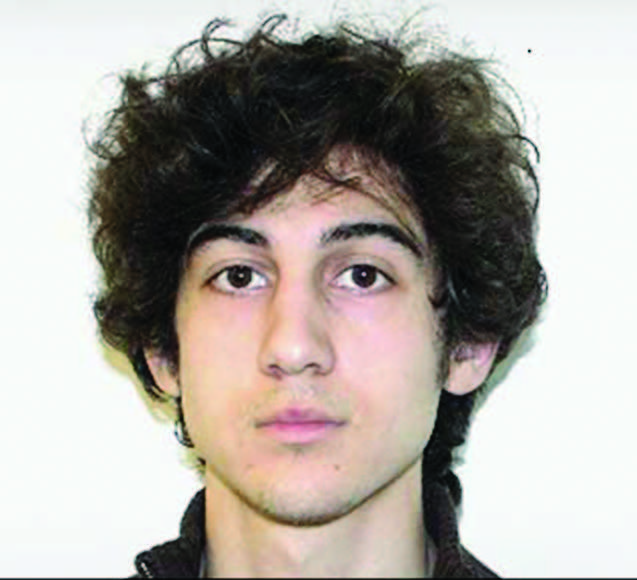
    BOSTON (TIP): To the surprise of his victims, Boston Marathon bomber Dzhokhar Tsarnaev, June 24, made his first public statement during his months-long trial – an apology for the terrorist attack at the Boston Marathon finish line two years ago.

    “I am sorry for the lives that I’ve taken, for the suffering that I’ve caused you, for damage that I’ve done. Irreparable damage,” Tsarnaev said to a silent courtroom.

    Dressed in a suit, Tsarnaev stood hunched over as he spoke, and looked straight ahead -never glancing back at his victims in the gallery.

    Tsarnaev told the court that he’d been listening throughout his trial, even as he kept up an inscrutable demeanor.

    “I learned their names, their faces, their age,” Tsarnaev said. “And throughout this trial more of those victims were given names, more of those victims had faces, and they had burdened souls.”

    At the end of the hearing, US District Judge George A. O’Toole Jr. sentenced Tsarnaev to death on six of the 30 charges he was convicted of, and gave him consecutive life sentences for some of his other crimes. O’Toole was bound by the jury’s decision to sentence Tsarnaev to death – a sentence that is subject to an automatic appeal.

    The jury condemned Tsarnaev to death specifically for the bomb he placed that killed two people – not for a separate bomb his older brother placed.

    O’Toole, in his remarks before he issued the sentence, told Tsarnaev he will be remembered solely for his “evil.”

    “What will be remembered is that you murdered and maimed innocent people and that you did it willfully and intentionally,” O’Toole told him.O’Toole ended his remarks by saying: “I sentence you to the penalty of death by execution.”

    Tsarnaev delivered his brief statement in a thick accent. He did not explain why he participated in the Marathon bombing that killed three and injured hundreds, the worst terror attack on US soil since Sept. 11, 2001.

  • International Day of Yoga celebrated at the United Nations

    International Day of Yoga celebrated at the United Nations

    NEW YORK (TIP): The First International Day of Yoga was celebrated at the United Nations on Sunday, 21st June.

    The Function, held under the threat of heavy rain, was presided over by the External Affairs Minister of India Sushma Swaraj and attended by the UN Secretary General, the President of the 69th UN General Assembly, diplomats and Congresswoman Tulsi Gabbard.

    It also featured a special lecture cum demonstration by the Founder of Art of Living Foundation, Sri Sri Ravi Shankar.

    The function was broadcast live globally on UN TV, as well as to an audience of thousands at Times Square, New York, where another celebration of the Solstice Day was observed with thousands performing yoga exercises.

    Around 250 persons participated in the yoga conducted by Sri Sri Ravi Shankar. The UN Secretary General Ban ki moon and his wife; Congresswoman Tulsi Gabbard; diplomats; as also Permanent Representative of India to the United Nations Ambassador Asoke Mukerji and Consul General Dnyaneshwar Mulay joined in the yoga  exercises. It will be pertinent to recall that the 69th Session of the United Nations General Assembly adopted by acclamation draft Resolution A/Res/69/131 in December 2014, with a record number of 177 countries co-sponsoring it. The Resolution established the International Day of Yoga for observance by the United Nations on 21st June each year.

    The idea for declaring an International Day of Yoga at the United Nations was formally proposed by the Prime Minister of India, Narendra Modi, in his maiden address to the 69th UNGA on 27 September 2014. The Prime Minister had said:

    “We need to change our lifestyles. Energy not consumed is the cleanest energy. We can achieve the same level of development, prosperity and well being without necessarily going down the path of reckless consumption. It doesn’t mean that economies will suffer; it will mean that our economies will take on a different character. For us in India, respect for nature is an integral part of spiritualism. We treat nature’s bounties as sacred. Yoga is an invaluable gift of our ancient tradition. Yoga embodies unity of mind and body; thought and action; restraint and fulfillment; harmony between man and nature; a holistic approach to health and well being. It is not about exercise but to discover the sense of oneness with yourself, the world and the nature. By changing our lifestyle and creating consciousness, it can help us deal with climate change. Let us work towards adopting an International Yoga Day.”

    The  Prime Minister had indicated that 21st June, one of the two solstices, which is the longest day in the Northern Hemisphere, has special significance in many parts of the world, and could be considered for adoption as the International Day of Yoga by the United Nations each year.

  • Supreme Court Rejects Challenge to Obama Health Care Law

    Supreme Court Rejects Challenge to Obama Health Care Law

    WASHINGTON (TIP): The U.S. Supreme Court on Thursday, June 25, rejected a challenge to the reach of the Obama health care law, rescuing the program from a potentially fatal legal challenge for the second time since Obamacare’s inception.

    “Today is a victory for hardworking Americans all across this country whose lives will continue to become more secure in a changing economy because of this law,” the president said on Thursday in remarks after the ruling.

    By a 6-3 vote, the justices said consumers qualify for a subsidy that lowers the cost of premiums whether they buy their coverage through federal or state exchanges. Chief Justice John Roberts wrote the opinion.

    “Congress passed the Affordable Care Act to improve health insurance markets, not to destroy them. If at all possible, we must interpret the Act in a way that is consistent with the former, and avoids the latter,” the court wrote in its majority opinion.

    Justice Antonin Scalia, writing for the dissenters, said people should start calling the law “SCOTUScare.” “This Court, however, concludes that this limitation would prevent the rest of the Act from working as well as hoped. So it rewrites the law to make tax credits available everywhere. We should start calling this law SCOTUScare.”

    More than six million lower-income Americans who get their health insurance through the federal marketplace or exchange -HealthCare.Gov – depend on the subsidies, reducing their premiums an average of 72 percent, saving an average of $270 a month. Opponents of the law claimed that the actual wording of the Affordable Care Act passed by Congress made subsidies available only to insurance customers who bought their policies through “an exchange established by the state” where the policyholders live.

    If the challengers had prevailed, customers who bought their insurance on the federal exchange – by far the majority of those insured by Obamacare – would have lost the subsidies. Only 16 states now have their own health exchanges up and running. The health insurance industry had warned that if the challenge succeeded, the Affordable Care Act would have entered a “death spiral” – with costs rising for a shrinking number of participants, eventually causing the system to collapse. Among the law’s provisions are requirements that insurance companies cover people with pre-existing conditions and that nearly all Americans obtain health insurance. Congress knew that those components of the health care system would not work, the Obama administration had argued, if the subsidies that make insurance affordable for millions of people were available only on state exchanges.

    Most Americans wanted the Supreme Court to side with the government on deciding whether the feds can continue subsidizing insurance premiums in all 50 states under the health care law, according to polls in recent months. Few, however, had much confidence that the court would rule objectively in the case, King v. Burwell. Outside of the court the mood was jubilant.

    Dozens of people outside of the Supreme Court building steps held up signs with the abbreviations of states and the number of people now covered there. The Center for American Progress organized the gathering and people chanted “ACA is here to stay” and “Fight, fight, fight. Healthcare is a human right.”  Supreme Court Upholds Obama Health Care Law 2:03

    “I agree that healthcare is a human right and I’m here today because I feel that the Affordable Care Act takes a big step forward in securing that right for millions of Americans across the country,” said Krystin Racine of Vermont. “I think the most important thing is visibility. I think it’s important that people see that there are

    people who support the law and that it has helped a lot of people.” Meanwhile, doctors groups and patients breathed a sigh of relief Thursday when the Supreme Court upheld one of the most important provisions of Obamacare: the federal subsidies.

    “We did dodge a bullet. In the short run if this had gone the other way, then millions of people would have lost health insurance,” said Tal Gross, a health policy expert at Columbia University’s school of public health.

    Conservatives vowed to press on with their efforts to bring attention to flaws in a law they see as broken. “That we’re even discussing another of Obamacare’s self-inflicted brushes with the brink – again – is the latest indictment of a law that’s been a rolling disaster for the American people,” Senate Majority Leader Mitch McConnell said on the Senate floor Thursday after the court ruling was announced. “Today’s ruling won’t change Obamacare’s multitude of broken promises, including the one that resulted in millions of Americans losing the coverage they had and wanted to keep. Today’s ruling won’t change Obamacare’s spectacular flops, from humiliating website debacles to the total collapse of exchanges in states run by the law’s loudest cheerleaders. Today’s ruling won’t change the skyrocketing costs in premiums, deductibles, and co-pays that have hit the middle class so hard over the last few years.”

  • FREE, HEALTHY SUMMER MEALS FOR ALL!

    FREE, HEALTHY SUMMER MEALS FOR ALL!

    Starting June 29 through September 4, free, healthy summer meals will be available for all children 18 years or younger at more than 1,000 locations across the city and for the first time families can download the Apple and Android user-friendly mobile app, Schoolfood to choose from more than 1,000 sites and access daily menus.

    Last year, more than 8 million meals were served, a spike from the 7.6 million meals served during the previous summer. The DOE has launched a multi-lingual campaign to reach millions of more families this summer.

    In New York City, more than 477,000 children face hunger – about one in four, making them vulnerable to infections, diseases and more likely to be hospitalized. Eating healthy meals is critical for a child’s development and by providing free, accessible breakfast and lunch for children of all ages, the DOE is helping to continue good habits during the summer months to all families, regardless of their zip code.

    Summer meals will be available at schools, libraries, parks, public housing sites, community based organizations, and soup kitchens throughout the five boroughs. Sites will serve breakfast weekdays from 8 a.m. to 9:15 a.m. and lunch from 11 a.m. to 1:15 p.m. Summer meals items, which are low in fat, sodium and prepared without artificial colors or sweeteners include blueberry pancakes, yogurt and granola and cheese omelet with salsa, beef taco, black bean and corn salad.

    And for the first time, food trucks will be open for lunch from 10:30 a.m. to 3:00 p.m., Monday to Friday at Orchard Beach in the Bronx and 7 days a week at the Queens Zoo parking lot at Flushing Meadows-Corona Park, Corona Plaza at Roosevelt Ave. and 103rd St. in Queens and the Rivington Playground at the Sara D. Roosevelt Park in Manhattan’s Lower East Side. Participation requires no ID, registration or documentation. Children don’t need to be enrolled in summer school to participate in the summer meals program and no application is required.

    For more information parents may text “nycmeals” to 877-877 or visit the following websites:

    www.nyc.gov/311
    www.schoolfoodnyc.org
    http://www.nokidhungry.org/
    http://www.nycgovparks.org/

  • In whose interest?

    In whose interest?

    Economics is a seriously inexact science. Economic phenomena are hard to predict, and harder still to govern. The instruments of economic policy are not unlike allopathic medication, in that they can have side-effects, some of which are unforeseeable and most of which are unpleasant. It therefore calls for experience, for ‘a feel for things’, for knowledge and expertise, in order to be able to judge the efficacy of policy interventions and their optimal timing. This, presumably, is why responsibility for policy-making is vested with specialized agencies and the professionals heading them. Their job is hard enough, without their having to factor in the demands and expectations of government into their decisions. Both respect for autonomy and a proper sense of their accountability to the society they serve demand that they should be allowed to function without let or hindrance within the jurisdiction of their authority and mandate.

    Economists will tell you that their concern is with public good, with the welfare of a society. That’s a nice fiction to broadcast, not least when it emanates from professionals who are chosen by a government to advise and assist it with its economic policies. But it’s also a nice working assumption, and if there’s one thing at which my tribe is adept, it’s in the matter of making assumptions. (Broadcasting fiction is another.) So let’s make that assumption about economic policy being directed toward the good of the people. The trouble is that it’s almost always the case that policy that’s good for some people may not be good for other people — an instance of what is commonly referred to as conflict of interest (a lowly pun, as we shall see, in the context of today’s column). Lower commodity prices, for instance, benefit consumers but hurt producers. Raising the marginal tax rate of the ultra-rich and using the proceeds to build schools for the poor would benefit the latter but hurt the former. (If you don’t believe me, ask the ultra-rich, the poor things.)

    And so it is with the rate of interest. Simple economic theory would argue along the following lines. (I must introduce the caveat here that much of what I have to say will be couched in very simple terms, since it is directed at the lay person, not the specialist. The knowledgeable are therefore persuaded to be patient, or to altogether quit reading this.) The rate of interest is simply the price of money. Price and demand, as we know, are inversely related, so that a drop in the interest rate might be expected – other things equal — to stimulate an increased borrowing of money leading, in turn, to increased levels of private spending, and therefore to increased general economic activity and increased prices of goods and services. In this simple story, a drop in the interest rate is not a good thing for inflation, while a rise is.

    On the other hand, for precisely the reason that a drop in the interest rate makes borrowing money more attractive, and given that investment is financed substantially by credit, a reduction in the rate of interest might be expected to stimulate investment, raise aggregate demand, enhance incomes, and improve the prospect of employment and growth. Conversely, when the rate of interest rises, retaining money as savings in the bank is a relatively more attractive proposition than investing in capital (in general, the  rate of return on investment must be at least as high as the rate of interest, after allowing for inflation,  if investment  is to be attractive).  (For a friendly piece on the subject, see Jean Folger’s ‘What is the Relationship Between Inflation and Interest Rates?’ in ‘Investopedia’, available at http://www.investopedia.com/ask/answers/12/inflation-interest-rate-relationship.asp.) Briefly, and in this simple story, a drop in the interest rate is a good thing for investment, and a rise is not. The two components of the story just outlined explain what economists call a Phillips Curve (named after the scholar A. W. Phillips) who postulated, many decades ago, the existence of a tradeoff between inflation and unemployment, as reflected in a negatively sloping curve obtained from plotting the one against the other.

    How is the tradeoff to be effected? By, among other things, a reckoning of who will benefit, who will be hurt, how much, and by what.  Inflation – especially food inflation of the type and magnitude we have been witnessing in the recent past — presumably hurts the poor and the working classes a good deal more than it does the entrepreneurial classes. If the judgment is that, all things considered, it is more important to stabilize the rate of increase of prices than it is to stimulate the economy, then there would be a case in favor of not being in an all-fired rush to lower the rate of interest.  One must also ask if the relationship between interest rates and private investment levels is as strong as is sometimes automatically assumed to be the case.

    Investment depends not only on the price of money, but also on the state of aggregate demand, on the availability of infrastructure such as power and water, on a substantial easing in supply-side constraints, on the ‘general climate for investment’,  and on expectations and what Keynes called ‘animal spirits’.  The seriously disheartening performances of the agricultural and manufacturing sectors in India, combined with our arid record of jobless growth, hardly suggest a situation in which private capital is eagerly waiting for a drop in the interest rate as a signal for the lowering of the last and only barrier to investment. Indeed, a clue to the constituency that a pro-wealthy government would aim to please is offered in a fine article in the Economic and Political Weekly (‘The Interest Rate Affair’, EPW, April 04, 2015) by economist Sugata Marjit. He suggests that the principal effect of a cut in the interest rate would be not so much to stimulate investment as to directly increase corporate profit by, presumably, reducing prices and increasing the sales turnover of consumer durables.

    It is a matter, as indicated earlier, of making a judgment on where and how to effect the tradeoffs. I have always understood that that is why we have an autonomous monetary institution such as the Reserve Bank of India — precisely so that it can make unbiased and un-pressured professional judgments of the type that are called for in such matters. The Governor of the RBI should be allowed to do his job, without being subjected to second-guessing and being leant on, by the Finance Ministry. I am not necessarily holding a brief for the Governor — but for his office, yes. It is unseemly, undignified, and ultimately injurious to the institutional health of a polity for its autonomous agencies to be pestered or disciplined into governmental compliance.

  • Indian American Vikram Virk kills teen friend Jaskaran Singh in a Russian Roulette game

    Indian American Vikram Virk kills teen friend Jaskaran Singh in a Russian Roulette game

    DALLAS (TIP): An Indian American in Texas shot dead his friend in a deadly game of Russian Roulette.

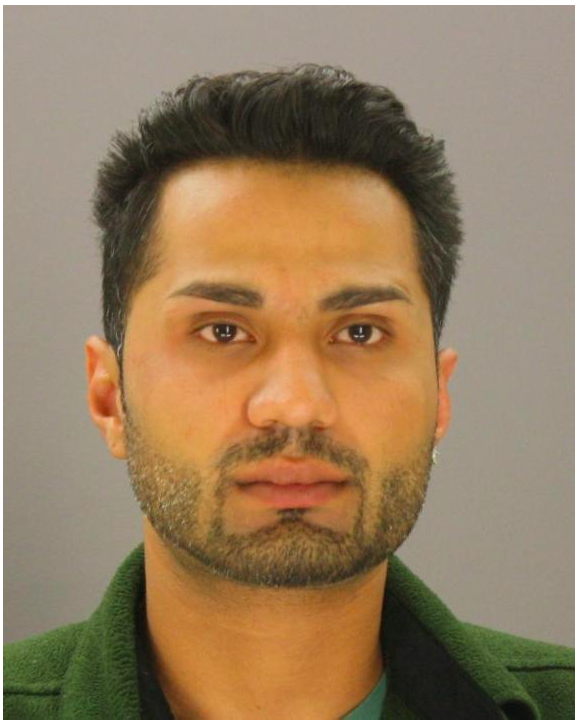
    Vikram Virk, 27, and 18-year-old Jaskaran Singh were playing Russian roulette in Virk’s car in the parking lot of a Dallas Red Roof Inn motel on Saturday, June 13,  when the game took an inevitable turn for the worse.

    Virk told police that he and Singh were taking turns firing the gun at each other, reported numerous local outlets.

    According to details provided in an arrest affidavit, Virk was sitting in a car with Singh outside the Red Roof Inn at 13685 North Central Expressway late Saturday afternoon, reported WFAA, a local ABC affiliate.

    Virk said he emptied his gun and handed it to Singh, who pulled the trigger twice; the weapon did not fire.

    When Virik took his turn pulling the trigger on his friend, the gun fired the second time, fatally hitting Singh in the head.

    Virk rushed Singh to a local hospital, where Singh died. Hospital personnel recovered the handgun used to shoot Singh from Virk’s car and turned it over to police, according to CBS News. He initially said Singh shot himself, according to police, but during questioning allegedly admitted that he killed his friend.

    Russian roulette is a potentially lethal game of chance in which a player places a single round in a revolver, spins the chamber, places the muzzle against his or her head, and pulls the trigger.

    Police have charged Virk with manslaughter. He is being held on $150,000 bond.


  • String of Dallas ATM robberies continues

    String of Dallas ATM robberies continues

    DALLAS (TIP): Police are searching for five suspects who busted through a Shell gas station and food mart Thursday, June 25 morning and took off with a bolted-down ATM while a clerk was working.

    The business at the corner of Composite Drive and Walnut Hill Lane is the latest victim in a string of smash-and-grabs.

    Surveillance video shows a truck backing into the wall twice. Four masked men wearing gloves get out, snatch the ATM in just minutes, then take off. A fifth suspect stayed inside the vehicle.

    “It’s pretty sad,” said customer Ever Perez. “I asked the guy, and he’s still shocked he didn’t want to talk about it.”

    Thursday’s crime marks the 22nd successful smash-and-grab of 2015, a trend Dallas police are trying to break.

    “To come in and see the ATM ripped out like that when people are working inside, that’s pretty brave,” said Danny Jezek.

    Tire marks show where are White 1990s GMC pickup rammed into the flood mart and plowed through merchandise around 5:30 a.m. Thursday.

    “It’s pretty messy,” added Perez. “He doesn’t even have time to clean it up cause he still has a business to run,” he said of the store manager.

    Regular customers like Jezek feel for the employees whose nerves are rattled and who now have a long day of cleaning up.

    “It’s not their ATM machine so I guess they don’t have to worry about losing their money, but somebody could have gotten hurt,” said Jezek. “Luckily they didn’t.”

    Dallas police created a task force back in January to catch ATM thieves. While nearly two dozen have gotten lucky this year, there were 30 other attempted smash-and-grabs.

    This is second in two days and fifth in two weeks police are investigating.


  • Man turns self in 29 hours after murdering wife

    Man turns self in 29 hours after murdering wife

    DALLAS (TIP): An internal investigation will be conducted into how Dallas Police handled a disturbance this week. Officers may have arrived at the scene of a murder Monday, June 22 night without taking immediate action, police said.

    A man called police to tell them he had suffocated his wife over 24 hours after the murder.

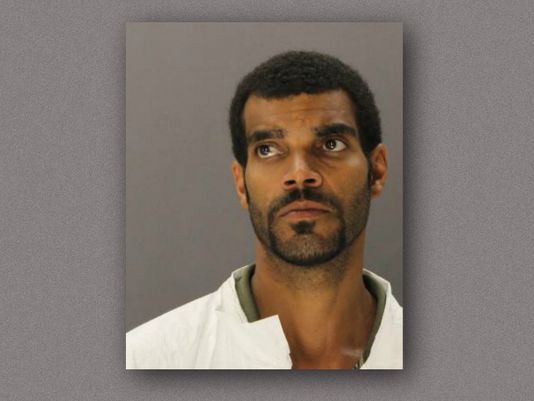
    Jonathan Edelen, 34, admitted early Wednesday, June 24 morning to suffocating his wife after a fight late Monday night at a Dallas apartment, police said.

    Police said Edelen “gave a voluntary statement” to officers, saying he had killed his wife, 28-year-old Ceaira Ford on June 22. Edelen admitted to killing Ford by holding a pillow over her head.

    “Put the cuffs on me and take me to jail, I killed my wife,” Edelen said, according to the arrest affidavit released by Dallas Police.

    Officers were first sent to the scene when a neighbor, a woman in her 90s, called to report a disturbance Monday night at 10:45 p.m., according to Randy Blankenbaker of Dallas PD. The woman didn’t answer her door when officers arrived, he said.

    A man who police believe is a close friend of Edelen’s answered the door at the unit where Ford was killed, Blankenbaker said. Blankenbaker said that, when officers arrived just after 11 p.m., Edelen may have been in another room with a deceased Ford. The man who answered the door told officers he was home alone.

    Police were working Thursday to determine whether that close friend played a role in the homicide.

    Blankenbaker said Edelen’s mother and two children, ages 4 and 6, were at the apartment with them Monday night. Police left the scene thinking no disturbance had occurred, Blankenbaker said.

    Edelen called police just before 4 a.m. Wednesday, roughly 29 hours after suffocating Ford, to report that his wife had stopped breathing.

    The arrest affidavit indicates that Edelen told police his wife “wouldn’t stop talking” after she called Edelen to come home from work Monday night. Edelen’s account of the fight included him taking a TV out to the patio to destroy it in order to keep Ford from talking, the affidavit reads.

    The couple left the patio and continued to fight in the bedroom, where Edelen told police he placed a pillow over Ford’s head until she stopped moving.

    Edelen was charged with murder and placed in Dallas County’s Lew Sterrett Justice Center, according to police. Records show he was being held on $500,000 bond.

    An investigation was ongoing.


  • Woman carrying cocaine in breast implants arrested at Colombia airport

    COLOMBIA (TIP): A Honduran woman carrying 1.5kg (3.3 lbs) of liquid cocaine in her breast implants was arrested at the airport in Colombia’s capital Bogota on Friday, police said.

    Paola Deyanira Sabillon, 22, was attempting to travel to Spain when her apparent nervousness aroused suspicion in the security line, airport police colonel Diego Rosero told journalists.

    X-rays revealed a recent surgery on Sabillon’s breasts and she confessed that an unknown substance had been implanted which she was meant to take to Barcelona, police added. Authorities said a preliminary investigation showed that the surgery took place at a clandestine clinic in the city of Pereira, in western Colombia.

    The implants were removed at a Bogota hospital where Sabillon is also being treated for an infection.

    Some 300 tonnes of cocaine are produced per year in Colombia, long a hub for drug production and trafficking.

  • Thousands lose power when naked woman crashes into Seattle-area utility pole

    SEATTLE (TIP): More than 4,000 people in a Seattle suburb lost power on June 26 after a woman driving naked crashed her car into a utility pole, police said.

    There were live power wires down on the car when a police sergeant came across the crash scene in Shoreline, just north of Seattle, around 1:30 a.m., said Detective Jason Houck, a spokesman for the King County Sheriff’s Department.

    Firefighters and utility crews disabled the wires and found a 24-year-old woman inside the car who was in and out of consciousness, he said.

    She was not wearing any clothes, he said. The woman, who was not badly injured, was taken to a hospital where blood was drawn to determine if she was driving under the influence of drugs or alcohol, Houck said.

    She could face criminal charges depending on the outcome of the test.

    The crash knocked out power to about 4,400 people for about four hours, Houck said.

    Seattle City Light had power restored by about 5:30 a.m., the utility said.

    “Many people didn’t know until they woke up late for work because their alarms didn’t go off,” Houck said.