Month: November 2015

  • Priyanka Chopra May Play The Role Of Late Astronaut Kalpana Chawla In Biopic

    Priyanka Chopra May Play The Role Of Late Astronaut Kalpana Chawla In Biopic

    Priyanka Chopra is on an unstoppable streak in the America. After her amazing performance in ‘Quantico’, she has been approached to play the lead in biopic on late astronaut Kalpana Chawla, according to media reports.

    Currently, Priyanka Chopra is busy with Sanjay Leela Bhansali’s ‘Bajirao Mastani’ which is slated for a December 18 release and would commit to it once she is back in India from her ‘Quantico’ shoot.

    Chawla was the first Indian-American astronaut and first Indian woman in space. She first flew on Space Shuttle Columbia in 1997 as a mission specialist and primary robotic arm operator. She died on her second expedition in February 2003 along with seven other astronauts in a space shuttle explosion. She invested 31 days, 14 hours and 54 minutes in space. She was awarded the Congressional Space Medal of Honor by the United States for her exceptional work.

    Kalpana Chawla, Indian-American astronaut who died during the failed re-entry of Space Shuttle ColumbiaKalpana Chawla was born on March 17, 1962 in Karnal, Haryana. She completed her earlier schooling at Tagore Baal Niketan Senior Secondary School, Karnal and completed her Bachelor of Engineering degree in Aeronautical Engineering at Punjab Engineering College at Chandigarh in 1982. She moved to the United States in 1982 where she obtained a Master of Science degree in aerospace engineering from the University of Texas at Arlington in 1984. Determined to become an astronaut even in the face of the Challenger disaster, Chawla went on to earn a second Masters in 1986 and a PhD in aerospace engineering in 1988 from the University of Colorado at Boulder.

  • Probe Reveals Former Duke Professor Anil Potti Engaged in Research Misconduct

    Probe Reveals Former Duke Professor Anil Potti Engaged in Research Misconduct

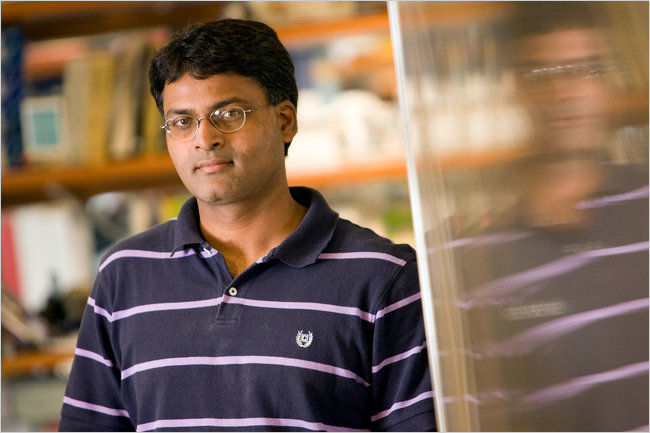
    Indian American Dr. Anil Potti, the former Duke University researcher whose work once offered hope for cancer patients, engaged in research misconduct involving atleast six grants after concluding its review of the case, said The Office of Research Integrity (OCI), a federal agency that investigates fraud in federally-funded medical research.

    A notice published in the Federal Register said OCI had taken final action in the case against the disgraced doctor who left Duke a few years ago. The government said Potti had “engaged in research misconduct by including false research data” in a number of papers, manuscripts, grant applications and research records.

    Back in 2006, Potti claimed to identify genetic markers that would allow customized treatment for cancer patients based on the types of tumors they had. The technology could predict which type of treatment to which a cancer patient would react best. Potti’s research garnered worldwide acclaim until others couldn’t replicate Potti’s results.

    In one grant, Potti claimed in his paper that six of 33 patients responded positively to a treatment when he actually only had four patients enrolled in the research. None of the four responded to the treatment.

    Potti additionally altered data sets to improve the accuracy of predictors for response to treatments. The altered data was submitted to Clinical Cancer Research. In 2008, he provided a file of falsified data to a colleague; and in 2010, he provided additional misleading data to the NCI, according to the Duke article.

    Potti’s falsified results were published in at least nine of the world’s most prestigious scientific journals, including the New England Journal of Medicine, Nature Medicine, the Journal of the American Medical Association and Lancet Oncology. Those papers were retracted in the fallout from a scandal that brought Duke international attention.

    As part of a voluntary settlement with the government, Potti agreed that he would not conduct research without government-approved supervision for the next five years. But he has not engaged in any federal research since 2010, and told the government he had no intention of doing so, according to the notice.

    The agreement was struck, the notice said, “to conclude this matter without further expenditure of time, finances, or other resources.” As part of the deal, Potti neither admitted nor denied the office’s finding of research misconduct, and the settlement “is not an admission of liability” by Potti, the notice said.

    In May, Duke settled lawsuits with the families of eight cancer patients who participated in clinical trials based on Potti’s phony science.

    Potti graduated in 1995 from the Christian Medical College in Vellore, India. He conducted his residency through a UND program in Fargo from 1996 to 2000.

    From 2000 to 2003, he taught at UND, winning an award for humanism in medicine in 2003, the year he left for Duke.

    The report says Potti has not done any such research since 2010.

  • Waiter shot dead by customers for being late in Pakistan

    Waiter shot dead by customers for being late in Pakistan

    LAHORE: A 25-year-old waiter was killed for being late at a local hotel in Lahore’s Liberty Market, report Dawn.

    According to police officials, two unidentified customers came to Karachi Paratha Roll on Wednesday, November 25, night and placed an order for Chicken Karahi with the waiter.

    Waiter Muhammad Safeer who took the order, got late in serving the order that prompted an extreme reaction from customers; who opened fire at waiter and fled the crime scene on their motorcycle.

    Safeer, 25, hailed from Pak-occupied-Kashmir, died on the spot.

    Police have registered and FIR on the request of deceased’s family and a search for the suspected murderers is underway, SHO Gulberg Inspector Yousuf Butt has been quoted as saying.

  • Pakistan-India Cricket series likely to happen from Dec 15: reports

    Pakistan-India Cricket series likely to happen from Dec 15: reports

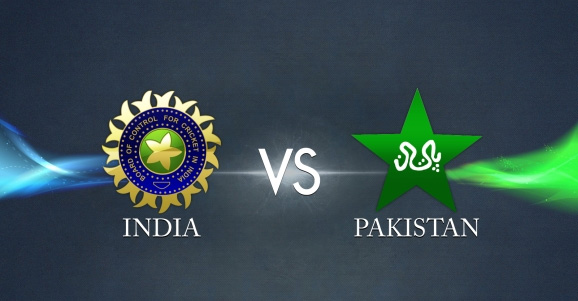
    After a series of deliberations, the Board of Cricket Control of India (BCCI) and the PCB have reportedly agreed on Sri Lanka as possible venue.

    IPL Chairman and BCCI functionary Rajeev Shukla on Thursday, November 26, revealed that the much-anticipated India-Pakistan series is likely to happen from December 15 in Sri Lanka.

    According to Pakistani media reports, Pakistan’s Prime Minister Nawaz Sharif has reportedly given the approval for Pakistan-India limited-over series proposed to be played in Sri Lanka.

    Shukla’s comment came hours after Pakistan Prime Minister Nawaz Sharif gave his approval to the Pakistan Cricket Board (PCB) to send the national team to Sri Lanka.

    “I am optimistic that the government will give the go-ahead to us. Both the parties (Boards) have agreed for Sri Lanka as a venue. The whole idea is to resume cricket between the two countries,” Shukla said.

    The series will comprise three one-day internationals and two Twenty20s.

    Asked about voices that oppose the resumption of cricket ties, Shukla said cricket should be kept separate from politics.

    “From day 1 I have been maintaining that cricket should not be brought into political controversy. Even the (Atal Bihari) Vajpayee government had given the nod in worse situation for resumption of cricket. We had sent the Indian team to Pakistan. I think, we should play Pakistan,” Shukla told a news channel.

    Sri Lanka was agreed upon as the neutral venue by the two boards after the Board of Control for Cricket in India (BCCI) proposed it in a meeting between its president Shashank Manohar and PCB president Shahryar Khan earlier this week in Dubai.

    India had refused to play in the UAE and PCB chairman turned down BCCI’s offer to send the Pakistan team to India.

    The final step towards the series coming to fruition will be clearance from the Government of India, which the BCCI still awaits.

    The two neighbours haven’t played each other in a full bilateral series since 2007 when Pakistan toured India, though Pakistan did visit India in 2012 for a limited-overs series.

    The Manohar-Shahryar meeting in Dubai on Sunday was mediated by England and Wales Cricket Board (ECB) president Giles Clarke, with Najam Sethi also in attendance.
    With only a month’s window available between India’s last home Test against South Africa, which is scheduled to end December 7, and the first ODI in Australia on January 12, the Indo-Pak series will be a limited-overs affair.

    The two boards had signed an MoU during N Srinivasan’s regime in the BCCI, according to which the two teams will play six bilateral series over eight years.

  • Paris 13/11: What Next?

    Paris 13/11: What Next?

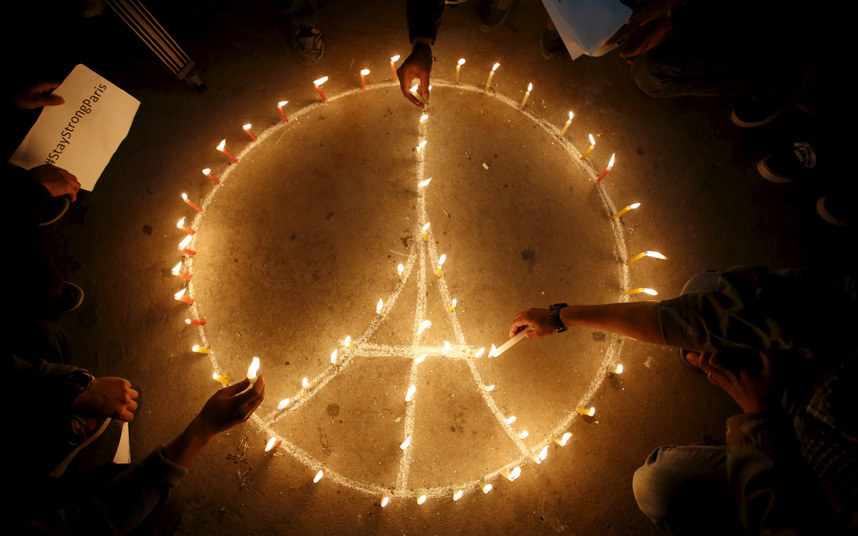
    The diligently coordinated and utterly condemnable November 13 terrorist attacks in Paris killing 129 and wounding 352 innocent human beings have terrorized France and the rest of the West. The Islamic State (IS) claimed ‘responsibility’ with much alacrity and satisfaction. The previous day, IS had killed 43 and wounded 200 in Lebanon, with the Western media and Western governments hardly taking any note of that incident. In contrast, Paris 13/11 has evoked moral outrage and expressions of solidarity with France. The colours of the French flag adorned prominent buildings in many Western capitals. Looking back, Mumbai 26/11 in 2008 that killed 164 people got less international media attention and governmental responses.

    Under President Francois Hollande, France has responded more or less in the same vein as the United States led by President George Bush did post-9/11. We now know that the US response under Bush was disastrous. Far from weakening, let alone eliminating terror, his Global War on Terror (GWOT) globalised terror and strengthened the terrorists especially in the WANA region. (This observation does not apply to the Indian subcontinent where the Jaish-e-Mohammed and Lashkar-e-Taiba had started carrying out terrorist attacks in the mid-1990s.) As far as the WANA region is concerned, it was the ill-conceived invasion of Iraq in 2003 and its criminally incompetent occupation based on false assumptions that created the preconditions necessary for the emergence of Jihadi Terrorism (JT). IS is only one form of JT that has emerged in that region. 13/11 Paris is only one of the acts of terror of the IS. The link between 13/11 Paris and GWOT has to be recognised. Without that recognition, it will not be possible for decision-makers to address the threat of IS and the rest of JT.

    When the attack on Charlie Hebdo occurred in January 2015 in Paris, France showed a degree of willingness to look deeper into the causes of that attack. It was recognized that the deprived conditions in the suburbs inhabited by Muslim immigrants — inadequate access to education and employment – needed to be rectified, even though there was not much follow-up action.
    But in response to 13/11, Hollande declared that France was at war and vowed to destroy the IS. He also stated that: Constitution will be amended to give more powers to security forces to arrest suspects; those who hold double nationality can be deprived of their French nationality if they are found involved in terrorism; the security agencies will get more personnel; and if a choice is to be made between security and liberty, France will unhesitatingly choose the former.

    Hollande addressed the two houses of Parliament at the historic Palace of Versailles. His audience sang The Marseillaise, one of the most militaristic of national anthems, after he completed his address. Originally, it was composed in 1792 when Revolutionary France was threatened by the European monarchies. Napoleon replaced it by another. His nephew Napoleon III introduced another, Partant pour La Syrie (Going to Syria), to recall Napoleon’s military campaign in Egypt and Syria (1798-1801). That military campaign was a disaster.

    Hollande is not, however, expected to send the army to Syria to fight the IS. He has only intensified air raids that France has been conducting since September against the IS. In fact, France had already declared war on the IS with these raids. If France did not expect any retaliation by IS, that is rather surprising.

    We do not know why France was taken in by surprise. Perhaps, some pundits misled the French government. For a while, they have been theorising on the difference in approach between Al Qaeda and the IS. The former attacks the ‘far enemy’ while the latter attacks the ‘near enemy’ and captures territory.

    It is not difficult to figure out why Paris was attacked. IS has suffered much under Russian air raids starting from 30 September. It has lost territory in Sinjar, cutting the road connection between Mosul, its most important territorial possession, and its capital at Al Raqqa. It brought down a Russian airliner carrying Russian tourists from Sharm al-Sheikh in Sinai. As Turkey has tightened its border controls, it is difficult for foreign volunteers wanting to join the IS to get into Syria. It was necessary to keep them occupied and the IS decided to make use of its assets in Belgium and France. To argue that the IS carried out the attacks because it has visceral hatred for Western values is to miss the central point. IS has that hatred, but essentially 13/11 was an act of vengeance against France and others who have been bombing the IS. Hence, there was good reason to anticipate an attack as IS lacks aircraft to bomb Paris.

    The day after the Paris attacks, Vienna once again hosted a meeting of the International Support Group on Syria (ISGS). The first meeting had been held earlier on 30 October. The role of Basher al Assad came up once again. The US and its allies want him to exit from power as early as possible. But they have realized that, with support from Russia and Iran, Assad is able to cling on to power. France has now accepted that the primary focus should be on destroying the IS and not on removing Assad. Thus, the Western opposition to Assad has become weaker. Yet, there is no clear agreement on this matter and that will come in the way of progress towards a negotiated solution. Turkey and Saudi Arabia remain adamant in their demand for Assad to step down. The US has realised the impracticality of taking that line, and is trying hard to persuade Saudi Arabia and Turkey in this regard. It might or might not succeed. Essentially, the US and its allies are demanding Assad’s exit without being able to do anything to enforce it. They lack the necessary political clout as well as military means.

    The ISGS succeeded in coming out with a statement by concealing internal differences through the use of clever words. It was decided that the UN will arrange for a meeting by January 1, 2016 between the Syrian government and its opposition to start the political process. The ISGS has also supported a cease-fire between the Assad regime and its non-terrorist opponents. The terrorists have to be destroyed and Jordan was tasked with listing the terrorists to be destroyed by consultations among the concerned intelligence agencies. This will not be an easy task as deep differences remain.

    It will not be realistic to expect much progress as the ground realities prevent it. Even the so-called non-terrorist opposition is not prepared to deal with Assad. He has also said that the political process cannot start till the terrorists are defeated. The prospects for any result-producing meeting are bleak. To talk of the writing of a constitution and the holding of an election is frankly irresponsible. All that Vienna 2 has done is to consolidate the opposition to the IS and that too up to a point. Conference rhetoric has to be taken with a pinch of salt.

    At the G-20 summit held on 15-16 November at Antalya, Turkey, Paris 13/11 and the IS dominated the discussions. Obama smiled at Putin when they two for 35 minutes, in contrast to their previous meeting in New York in September when Obama’s body language was markedly hostile. He has realised that Syria cannot be addressed without Putin’s cooperation. Putin has come out of the isolation imposed on him after he annexed the Crimea in early 2014. The US and Russia will coordinate operations against the IS, though their differences on Syria remain and the US cannot easily forget that rebels supported by it were bombed by Russia. Russia has not given its word that it will stop bombing these rebels.

    As a result of Paris 13/11, there is a backlash against refugees from Syria and elsewhere. When refugees started coming in large numbers through Greece, Europe led by German Chancellor Angela Merkel welcomed them. Even before 13/11, resistance had built up against refugees. 13/11 has made it more difficult to get people in Europe to accept Syrians and others. There is fear, not necessarily justifiable, that terrorists might come in as refugees. In the US, Congress has passed a resolution suspending Obama’s plan to take in 10,000 Syrians next year. 47 Democrats broke with the President and voted for the resolution.

    Paris 13/11 has provoked a debate among the candidates running for the US presidential election next year and Obama will come under increasing pressure to change his policy on Syria. He has categorically stated that he would not send ground troops to Syria. But what will he do if the US were to be attacked? An IS video has threatened to attack Times Square in New York, but it might not be a serious threat. The intention may be to cause panic. The IS may not have the capability to carry out any operations in the US.

    The IS likely to be there after Obama leaves office. Some military analysts have argued that with 500 air sorties a day the US should prepare the ground for Arab armies to fight with the IS. Retired General Tom Mclnerney has sharply criticised Obama and argued the case for carpet bombing so that nothing is left moving on the road between Mosul and Al Raqqa. We do not know how Obama’s successor will act.

    The Security Council’s unanimously passed Resolution 2249 calls upon Member States that “have the capacity to do so to take all necessary measures in compliance with international law” to “redouble and coordinate their efforts to prevent and suppress terrorist acts” committed by IS, Al Nusra, Al Qaeda and others. The weakly worded resolution does not invoke Chapter 7 and there is no obligation to act. Moreover, the division within the Council was apparent when the Russian draft urging cooperation with the Syrian government in fighting terrorism had to be withdrawn.

    Are we witnessing the beginning of the end of the IS? Hardly. IS can be brought down only by ground attacks on a major scale and there are no signs thereof yet. Neither France nor the US is in a position to send ground troops. Only Assad and his ally Iran can send ground troops, but the IS might be able to resist them at least for a while. The Arab powers are not actively fighting the IS. Saudi Arabia stopped its bombing campaign in September, Bahrain in February, the UAE in March, and Jordan in August. That they are busy in Yemen fighting an unwinnable war might be only part of the reason for their reluctance to fight the IS.

    In short, the IS has succeeded in spreading panic in the West. Brussels remains shut down as Belgium has reasons to fear a big attack. On the other hand, the adversaries of IS have redoubled their determination to intensify air raids and their efforts to weaken it. But there is no prospect as of now of any ground operations against the IS. The ongoing ground operations by Assad’s army assisted by Iran and the Hezbollah are not sufficient to decisively defeat the IS.

    Views expressed are of the author and do not necessarily reflect the views of the IDSA or of the Government of India
  • Fighting the Islamic State: Role of the P-5 Nations and India

    Fighting the Islamic State: Role of the P-5 Nations and India

    In the course of one week in November 2015, militants from Abu Bakr Al-Baghdadi’s self-proclaimed Islamic Caliphate – also called ISIS, ISIL and Daesh – struck multiple targets in Beirut, Paris and Mali. Earlier, on October 31, ISIS claimed to have brought down a Russian civilian aircraft flying from Sharm al-Sheikh to St. Petersburg.

    The ISIS militia, numbering between 20,000 and 30,000, now controls approximately 300,000 square kilometre of territory straddling the Syria-Iraq border. Its brand of fundamentalist terrorism is gradually spreading beyond West Asia and the militia is slowly but surely gaining ground. In Africa, ISIS fighters and their associates have been active in Algeria, Lebanon, Libya, Mali, South Sudan and Tunisia in recent months. Boko Haram, the militant Islamist group in Nigeria, has pledged allegiance to ISIS.

    Fighting Back
    Recent acts of terrorism have steeled the resolve of the international community. Significant help is being provided to the government of Iraq by the US and its allies. The Peshmerga, forces of the Kurdistan Regional Government (KRG) which had captured oil-rich Kirkuk, have joined the fight against the ISIS and recaptured the Syrian (Kurdish) border town of Kobani.

    The US began launching air strikes against the ISIS militia about a year ago, while simultaneously arming anti-Assad forces like the Free Syrian Army with a view to bringing about a regime change in Syria. The US has been joined in this endeavour by Australia, Britain, Canada, Denmark, France and Netherlands as well as five Arab countries (Bahrain, Jordan, Saudi Arabia, Qatar and the United Arab Emirates). The air strikes have resulted in substantial collateral damage. It is being gradually realised that the ISIS militia cannot be defeated from the air alone.

    Putin’s Russia joined the fight on September 30, 2015 with the twin aims of defeating the ISIS and destroying anti-Assad forces. However, the initial air strikes launched by the Russian Air Force were directed mainly against the forces opposed to President Assad of Syria. Russian ground troops are also expected to join the fight soon. The Russians have also descended on Baghdad to establish a military intelligence coordination cell jointly with Iran, Iraq and Syria – a move that has not been appreciated by the Americans.

    In a rare show of unity after the Paris attacks, the United Nations Security Council passed a unanimous resolution stating that “The Islamic State in Iraq and the Levant constitutes a global and unprecedented threat to international peace and security,” and called upon all member states to join the fight against the ISIS.

    Diplomatic moves have been initiated to coordinate operations and work together for peace and stability in the region. The US and Russia agree that the objective of their interventions should be to end the civil war in Syria through a political deal and that both Iraq and Syria should retain their territorial integrity. They also agree that the ISIS extremists must be completely eliminated. Iran has agreed to join the negotiations to resolve the conflict in Syria. However, while the political objectives are similar, the methods being used to achieve them are different and are designed to extend the influence of each of the protagonists in the region.

    Implications for South Asia
    Al-Baghdadi has openly proclaimed the intention of ISIS to expand eastwards to establish the Islamic state of Khorasan that would include Afghanistan, the Central Asian Republics, eastern Iran and Pakistan. The final battle, Ghazwa-e-Hind – a term from Islamic mythology – will be fought to extend the caliphate to India. An ISIS branch has already been established in the Subcontinent. It is led by Muhsin al Fadhli and is based somewhere in Pakistan. Some factions of the Tehrik-i-Taliban Pakistan have declared their allegiance to al-Baghdadi. Afghanistan’s new National Security Adviser, Mohammad Hanif Atmar, has said that the presence of Daesh or the ISIS is growing and that the group poses a threat to Afghan security. And, some ISIS flags have been seen sporadically in Srinagar.

    Instability and major power rivalry in West Asia do not augur well for India’s national security and economic interests. Combined with the increase in force levels in the Indian Ocean, the heightened tensions in West Asia may ultimately lead to a spill-over of the conflict to adjacent areas. India now imports almost 75 per cent of the oil required to fuel its growing economy and most of it comes from the Gulf. The long-drawn conflicts of the last two decades of the 20th century had forced India to buy oil at far greater cost from distant markets, with no assurance of guaranteed supplies. The 1991 oil shock had almost completely wrecked India’s foreign exchange reserves. The situation could again become critical. Oil prices had shot up to USD 115 per barrel in June 2014, soon after the Caliphate was proclaimed, but have since stabilised around USD 50 to 60 per barrel.

    Since the early 1970s, Indian companies have been winning a large number of contracts to execute turnkey projects in West Asia. The conflict in the region has virtually sealed the prospects of any new contracts being agreed to. Also, payments for ongoing projects are not being made on schedule, leading to un-absorbable losses for Indian firms involved, and a dwindling foreign exchange income from the region.

    India also has a large Diaspora in West Asia. A large number of Indian workers continue to be employed in West Asia and their security is a major concern for the government. Some Indian nurses had been taken hostage by ISIS fighters, but were released unharmed. All of these together constitute important national interests, but cannot be classified as ‘vital’ interests. By definition, vital national interests must be defended by employing military force if necessary.

    US officials have been dropping broad hints to the effect that India should join the US and its allies in fighting ISIS as it poses a long-term threat to India as well. India had been invited to send an infantry division to fight alongside the US-led Coalition in Iraq in 2003. The Vajpayee government had wisely declined to get involved at that time as it was not a vital interest.

    It must also be noted that India has the world’s third largest Muslim population. Indian Muslims have remained detached from the ultra-radical ISIS and its aims and objectives, except for a handful of misguided youth who are reported to have signed up to fight. This could change if India sends armed forces to join the US-led coalition to fight the ISIS militia.

    Prime Minister Narendra Modi proposed at the G-20 summit in Antalya last week that the war against terrorism must isolate and contain the sponsors and supporters of terrorism. He clearly implied that India is willing to join the international coalition against the ISIS and other non-state actors. Besides contributing to the global war against terrorism, India’s participation would help to isolate the Pakistan Army and the ISI – the foremost state sponsors of terrorism.

    Direct Indian military intervention against the ISIS militia would depend on the manner in which the situation unfolds over the next one year. It could become necessary if ISIS is able to extend the area controlled by it to the Persian Gulf as that would affect the supply of oil and gas from the Persian Gulf to India – clearly a vital national interest. For the time being, India should cooperate closely with the international community by way of sharing information and intelligence and providing logistics support like port facilities if asked for. India should also provide full diplomatic support and work with the United Nations for evolving a consensual approach in the fight against the ISIS.

    A concerted international effort is needed to first contain and then comprehensively defeat the ISIS and stabilise Iraq and Syria, failing which the consequences will be disastrous not only for the region, but also for most of the rest of Asia and Europe. Helping the regional players to gradually eliminate the root causes of instability will not be an easy challenge for the international community to address. As an emerging power sharing a littoral with the region, India has an important role to play in acting as a catalyst for West Asian stability.


  • Intolerance is on the rise: Aamir Khan

    Intolerance is on the rise: Aamir Khan

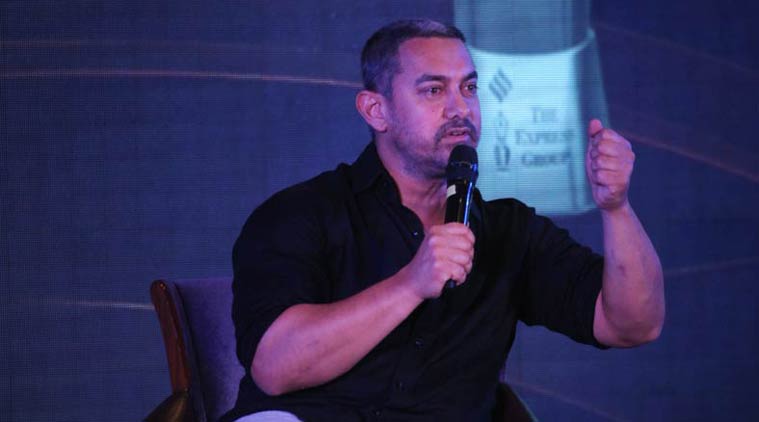
    NEW DELHI (TIP): Bollywood actor Aamir Khan spoke out earlier this week, at the Ramnath Goenka Excellence in Journalism Awards in New Delhi, against what he described as a rising tide of religious intolerance in India.

    Khan said in the event, “(Wife) Kiran and I have lived all our lives in India. For the first time, she said, should we move out of India? That’s a disastrous and big statement for Kiran to make to me.”

    “She fears for her child. She fears about what the atmosphere around us will be. She feels scared to open the newspapers everyday. That does indicate that there is a sense of growing disquiet.”

    “You feel why this is happening, you feel low. That sense does exist in me.”

    Khan meanwhile applauded the number of Indian writers, scientists and filmmakers who have since returned awards bestowed upon them by the country — an act of protest against, as biologist P.M. Bhargava phrased it, “the government’s attack on rationalism.”

    “For creative people, to voice what they feel is important. A number of creative people – historians and scientists – have increasingly had a certain feeling that they feel they need to express. One of the ways of expressing their dissatisfaction or disappointment is to return awards.”

    He said: “As long as you don’t resort to violence, all individuals have a right to protest and they can protest in any manner they feel is right”.

    “This is certainly a way to protest for creative people.”

    Earlier this month fellow superstar Shah Rukh Khan also spoke out against what he called “extreme intolerance” in India.

    A movement that began with writers returning state awards has spread to scientists, historians and filmmakers. They have cited the killing of rationalists M M Kalburgi and Govind Pansare, as well as the lynching of a man over suspicions he consumed beef, as examples of rising intolerance in the country.

    Some excerpts from the interview.
    Anant Goenka : Aamir, are you agreeing with the protest or do you think it’s called for… do you think it is premature?
    Aamir: Well, I think, if I am not mistaken there are so many people in this room who are much more knowledgeable than me so I am feeling intimidated to speak in front of all of you. But my understanding is that a lot of people from the creative fraternity are protesting because of the growing discomfort they felt or the growing atmosphere of intolerance that they felt around them… growing sense of insecurity and disappointment with that, and as a result that was their way of showing that they are not happy with the situation.
    As an individual myself, as a part of the country, as a citizen, we read in newspapers what’s happening and certainly I have also been alarmed. I can’t deny that I am alarmed.. by a number of incidences. For any society it is very important to have a sense of security. I mean there will be acts of violence in world for different reasons. But for us as Indians, as a part of society to have a sense of security… two-three things are very important, I feel. One is sense of justice. If there is a wrong step that anyone takes, then a correct justice is what is required. Common man should feel that justice will be done. That’s what gives a sense of security. The second and very important sense of security is the people who are our elected representatives – people who we select to look after us for five years if at state level or Centre. When people take law in to their hands and when there is a sense of insecurity, we look upon these people to take a strong stance, make strong statements and speed up the legal process to prosecute cases. When we see it happening there is a sense of security but when we don’t see that happening there is a sense of insecurity. So it does not matter who the ruling party is. It’s happened across ages. On television debates, we see where one political party, in this case, the BJP which is ruling right now, is accused of various things. They said, ‘But what happened in 1984?’. But that doesn’t make right what’s happening now. What happened in ‘84 was disastrous and horrendous. At other times also, through ages, whenever there is a violent act, when an innocent person is killed, be it one or a large number, that’s very unfortunate. And these unfortunate moments are the ones when we look towards our leaders to take a strong step. Make statements that are reassuring to the citizens.

    The Indian Panorama analyst shares a similar opinion and maintains that the storm over actor Aamir Khan’s statement on ‘rising intolerance’ needs to be understood against the backdrop of the recent political temperature.

    There is nothing wrong with what Aamir said, or what his wife asked him, given the nature of divisive politics being played in India, where such issues are drummed up by opposition parties and played down by Government.

    The common sentiment within the dissent is a belief that the government of Prime Minister Narendra Modi, who leads the right-wing Bharatiya Janata Party (BJP), has fostered a climate of discrimination against India’s religious minorities.

    Prime Minister Narendra Modi is known for his “Hindutuva” ideology and has maintained a studied silence on growing intolerance. His party members have taken his continued silence on the issue as his approval and continue to fuel anti-minority sentiments.

    It is a dangerous trend, one which may create an atmosphere of violence which ultimately could destabilize the nation. For a country of 1.25 billion people and their multiple diversities, insecurities and concerns involving caste, religion, and ethnicity, being secular & tolerant needs to be a way of life.

  • Rahul Gandhi caught on the wrong foot again; this time at Mount Carmel College in Bengaluru

    Rahul Gandhi caught on the wrong foot again; this time at Mount Carmel College in Bengaluru

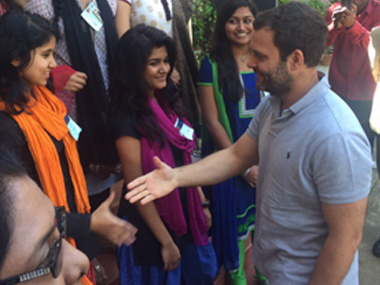
    BENGALURU (TIP): Congress Vice President Rahul Gandhi faced some embarrassing moments when a large section of the audience at Mount Carmel women’s college responded with an overwhelming “yes” to his poser on whether they thought Prime Minister Narendra Modi’s ambitious Swachh Bharat and Make in India campaigns were working.

    During an interaction with students of the Mount Carmel College on Wednesday, November 25, the Congress Party leader took an instant poll asking the young audience about the twin flagship programs while slamming the Modi government.

    Gandhi hastened to tell the audience that he differed with them. “You might see it, I don’t,” said Gandhi, who sported a grey T shirt, adding, “Anyway, I don’t clearly see a vision that the BJP is projecting.”

    His interaction was the first in a series planned with students across campuses in the country. Gandhi, later talking to reporters, said the nature of the response of the students to his questions was not clear.

    “Actually it was not clear. On Swachh Bharat, half the room said nothing had happened and some said something had happened. On Make in India, I think more people said not much had happened, some said things have happened,” he maintained.

    The Bharatiya Janata Party lost no time to comment on the incident. BJP spokesman Sambit Patra said the meeting had exposed Gandhi’s “disconnect” with people.
    “Rahul was shocked. Why was he shocked? Because of the very fact that he has a great disconnect, he does not know the vibrations on the ground. Leave aside the country, he cannot lead the youth of the country,” Patra said.

    Congress Party spokesperson Randeep Surjewala said Gandhi answered questions, unlike Prime Minister Modi who hardly ever answers questions.

    “This is the way the leader of the country should interact with the young and the countrymen everywhere — sometimes disagreeing with them, sometimes agreeing with them and answering their basic inquisitiveness on how India should look in five years, 10 years and 20 years. Rahulji has answered, what no other political leader has done,” Surjewala said.

  • Megastar Amitabh Bachchan confirms his affliction with Hepatitis B Virus

    Megastar Amitabh Bachchan confirms his affliction with Hepatitis B Virus

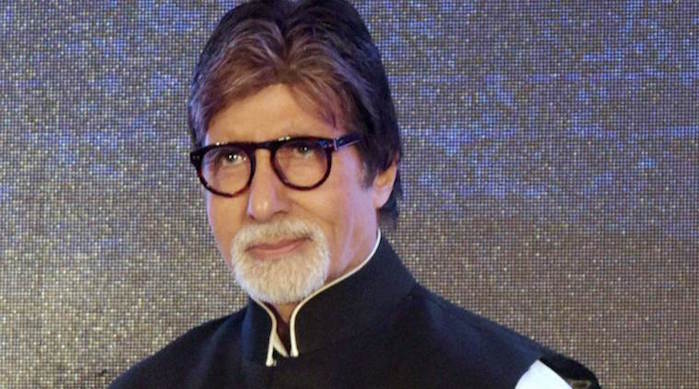
    MUMBAI (TIP): Bollywood megastar Amitabh Bachchan revealed that he has been battling with Hepatitis B, a disease that affects the liver, for the last 20 years. The actor said he is surviving only on 25 per cent of his liver today, having lost the rest 75 percent to the deadly virus.

    The actor was at the Hepatitis B Awareness Drive launched by Health and Family Welfare Ministry in association with UNICEF.

    The UNICEF Celebrity Ambassador said, “Hepatitis B came to me accidentally. After my accident on the sets of Coolie, I was infused with blood of about 200 donors and 60 bottles of blood were injected into my system. The Australian antigen Hepatitis B had only been detected three months ago and it was very new for being detected also among various tests needed to be carried out before giving blood to another patient. One of my blood donors was carrying Hepatitis B virus which went into my system. I continued to function normally till the year 2000 and almost 18 years after the accident, during a very normal medical checkup, I was told that my liver was infected and I had lost 75 per cent of my liver. So, if I am standing here today, you are looking at a person who is surviving with 25 per cent of liver. That is the bad part. The good part is you can survive even with 12%. But no one wants to get to that stage,” said Amitabh Bachchan.

    “It has highlighted to me how a small oversight during growing up years can prove to be detrimental to not only one’s own life but also others”, he said.

    The actor further added, “Immunization against Hepatitis B is a very personal issue for me, and I am very happy to associate with Ministry of Health and Family Welfare and UNICEF India. I narrate my story to the Indian population to create awareness about this cause.”

    While taking about the healthcare services and the level of Doctors in India, Bachchan said “I went through a medical course and during all my ailments, I relied on medical experts and doctors in my country despite having the means to do go abroad but I had faith in the medical professionals and doctors of India. When we took a second opinion abroad, I found out that whatever diagnosis was commanded to me by Indian doctors was no different from the foreign ones.”

  • Guru Nanak – The First Master of the Sikhs

    Guru Nanak – The First Master of the Sikhs

    “There is but One God. His name is Truth. He is the Creator. He fears none. He is without hate. He never dies. He is beyond the cycle of births and death. He is self illumined; He is realized by the kindness of the True Guru. He was True in the beginning. He was True when the ages commenced and has ever been True. He is True now. He will ever be True. “— Guru Nanak

    “Guru Nanak’s vision of life embraced all nations, all races and all times”, commented eminent Dr. K.T. Lalwani, author of Nanak, the Mystic. Another religious luminary, His Holiness Dalai Lama said of Guru Nanak, “Guru Nanak, due to his unique life style, is the brightest star among most brilliant ones in the sky.”

    Guru Nanak was an early democrat. He preached and practiced the values of freedom and democracy long before any of the countries became a democratic nation. He always stood for equality of humans. He always championed the cause of the common people. A social reformer, par excellence, his was the voice of protest against injustice, inequality, oppression and tyranny. He gave to humanity the greatest gift-a way of living in this world so that life here in this world is a happy one and, on a spiritual level, bliss in the realms hereafter-“Lok sukhiye, parlok suhele”.

    He recommended a life that was a balance between the physical and the spiritual, between the mundane and the heavenly. Guru Nanak preached against discrimination and prejudices due to race, caste, status, etc. He said: “See the brotherhood of all mankind as the highest order of Yogis; conquer your own mind, and conquer the world.” (SGGS page 6). Also, “There is one awareness among all created beings.”And finally, “One who recognizes the One Lord among all beings does not talk of ego”. He urges all the peoples of the world to “conquer” their minds to these evil practices. All human beings had the light of the Lord and were the same — only by subduing one’s pride and ego could one see this light in all.

    Golden Temple illuminates on the eve of 547th birth anniversary of Guru Nanak Devji in Amritsar on Tuesday. (Source- PTI Photo)
    Golden Temple illuminates on the eve of 547th birth anniversary of Guru Nanak Devji in Amritsar on Tuesday. (Source- PTI Photo)

    Equality of women

    In about 1499 when the world offered low to no status or respect to women, Guru Nanak sought to improve the respect of women by spreading this message: “From woman, man is born; within woman, man is conceived; to woman he is engaged and married. Woman becomes his friend; through woman, the future generations come. When his woman dies, he seeks another woman; to woman he is bound. So why call her bad? From her, kings are born. From woman, woman is born; without woman, there would be no one at all. 0 Nanak, only the True Lord is without a woman.” In so doing, he promoted women’s rights and equality – a first for the 15th century!

    Universal message for all people

    It had been a custom at the time for religious leaders to address only their own congregation and for segregation of the different religions –but Guru Nanak broke with tradition and spoke to all humanity. To the Muslim he said: “And when, O Nanak, he is merciful to all beings, only then shall he be called a Muslim; to the Hindus he said, “O Nanak, without the True Name, of what use is the frontal mark of the Hindus, or their sacred thread?; and to all he preached: “To take what rightfully belongs to another is like a Muslim eating pork, or a Hindu eating beef.”

    Guru Nanak, the founder of the Sikh faith, lived at a momentous time in the history of India. His life spanned a period mid-way in ten centuries of foreign rule in India. The Hindu-Muslim conflict in the society and the tyranny of rulers of his time underpins much of Guru Nanak’s thought. He learned Persian and Arabic, the languages of the elite but he gave them up in favor of the language of the masses to whom he spoke directly, as did the Sufi mystics-Kabir and Farid- before him. His inspired utterances are known as the ‘baani’ from the Sanskrit word ‘vani’ meaning both sound and speech. So divine were they, far beyond the confines of orthodox thought and the temper of the times, that they became the basis of a fervent spirituality rather than a religion, spirituality with a universalistic outlook.

    The son of a Kshatriya (warrior) family, Guru Nanak studied Hinduism and Islam. He got married but then he abandoned his family and became an ascetic. Wandering for many years he came under the influence of both Hindus and Muslims (especially Sufi). The Muslim teacher Kabir who died in 1398 made a deep impression on Guru Nanak. He said, “There is no Hindu, there is no Muscleman”.

    Born in the month of ‘Kartik’ (October/November), his birthday is known as Guru Nanak Jayanti. He was born in 1469 A.D. at Talwandi some 30 miles from Lahore. He was a great seer, saint and mystic. He was a prolific poet and a unique singer of God’s laudation. A prophet of peace, love, truth and renaissance, he was centuries ahead of his times. His universal message is as fresh and true even today as it was in the past and Sikhs all over the world practice what Guru Nanak preached, to reaffirm their beliefs in the teachings of their founder.

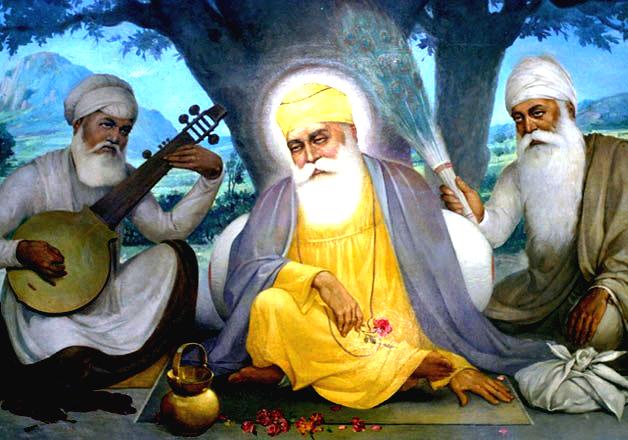
    It was during his stay in Sultanpur that Nanak attained Enlightenment, at the age of thirty-six. According to popular accounts, when he and Mardana (the Muslim rabab player, his friend from his birthplace, Talwandi, who became his constant companion) went for the customary dip in the river nearby, absorbed in thoughts of God, Nanak mysteriously disappeared. Mardana raised an alarm and searched for him everywhere. His biographers state that on the third day he reappeared changed in appearance, glowing with an unusual radiance. Nanak said that he had been ushered into Divine Presence, blessed by the Almighty and told to go forth and preach the holy name of God. It was to be the mission of his life thenceforth.

    read-more

  • Blindfolded Muslim man with sign “Do you trust me?” hugs hundreds in Paris

    Blindfolded Muslim man with sign “Do you trust me?” hugs hundreds in Paris

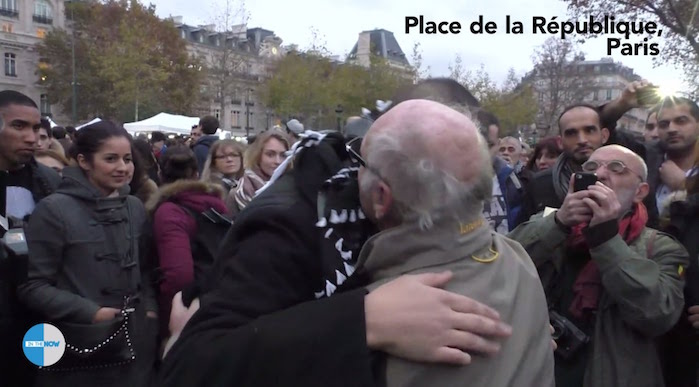
    A Muslim man stood holding two signs near a mourning site at Place de la Republique in Paris, days after Islamic State terrorists attacked the city.

    STORY SNAPSHOT
    • Muslim blindfolds himself and stands among mourners in French capital 
    • Stands by placards saying: ‘I trust you. Do you trust me? If yes, hug me’
    • To his delight, dozens of tearful onlookers approach him one by one
    • He later thanks them all, saying: ‘I did this to send a message to everyone’ 


    “I’m a Muslim, but I’m told that I’m a terrorist” and “I trust you, do you trust me? If yes, hug me,” said the signs held up by the blindfolded man.

    Parisians didn’t let the man down. As a tearful crowd of mourners looked on, they approached the man, one by one, and embraced him, as a heartwarming YouTube video shows.

    The beleaguered European city is fraught with tension following terror attacks last Friday by the Islamic State that killed 130 people.

    After taking off his blindfold, the unnamed man thanked every one who gave him a hug. “I did this to send a message to everyone. I am a Muslim, but that doesn’t make me a terrorist. I never killed anybody. I can even tell you that last Friday was my birthday, but I didn’t go out,” he said.

    He further said that he feels deeply feel for all the victims’ families.

    “I want to tell you that “Muslim” doesn’t necessarily mean “terrorist”. A terrorist is a terrorist, someone willing to kill another human being over nothing. A Muslim would never do that. Our religion forbids it.’

    Similat videos went viral earlier this year, after the Charlie Hebdo attacks.

  • French President Francois Hollande to be 2016 R-Day chief guest

    French President Francois Hollande to be 2016 R-Day chief guest

    New Delhi: France President Francois Hollande is going to be India’s chief guest at the 67th Republic Day ceremony on January 26, 2016, according to a French daily Le Monde. Hollande’s presence will be seen as a moment and gesture of solidarity after the Islamic State’s terrorist attacks on Paris.

    The invitation to Hollande was extended by Prime Minister Narendra Modi earlier and has been accepted by the Elysees Palace. India had strongly expressed its support for France in the wake of the Paris tragedy and Modi urged stronger and concerted international action against terrorism at the G 20 meeting that took place soon after in Turkey.

    Hollande’s presence also marks the steadily rising profile of the Republic Day, a process that began under UPA with significant world leaders attending the function. Earlier this year US president Barack Obama and his wife Michelle were guests on January 26.

    French presidents have been a favourite at Republic Day celebrations – Chirac came in 1998, Nicolas Sarkozy was here in 2008, so Hollande will be the third French president in India on Republic day in 2016.

    The news was first tweeted by a South Asia correspondent of the newspaper and was later confirmed by sources in the Indian government. France President Francois Hollande is going to be India’s chief guest at the 67th Republic Day ceremony on January 26, 2016, according to a French daily Le Monde.

    India’s relations with France have been cemented by defence deals like Mirage and now Rafale fighters and cooperation in nuclear energy.

    The visit would be a way to express solidarity with France after the deadly terror attacks last weekend. PM will meet Hollande in a few weeks during the climate change conference.

  • Sikh Body Gives Scholarships Worth $200,000 to Students in Punjab

    Sikh Body Gives Scholarships Worth $200,000 to Students in Punjab

    WASHINGTON:  A US-based Sikh body has given scholarships worth USD 200,000 to poor students in Punjab to improve their access to higher education, according to a media report.

    Sikh Human Development Foundation (SHDF), which is based in Washington said, the scholarship has been given to 583 needy students in Punjab this year.

    Sikh Human Development Foundation
    Sikh Human Development Foundation

    SHDF financially assist meritorious and needy students in Punjab and other Northern Indian states to improve their access to higher professional education.

    “Over the years, the organisation has awarded a total of 4001 scholarships,” said Gajinder Singh Ahuja, chairman of SHDF.

    Jaspreet Kaur Ahuja, secretary general of SHDF, said 68 per cent of the recipients belong to rural areas of Punjab and adjoining areas.

    Maintaining the past trends, female students represented 74 per cent of the total number of scholarship recipients.

    Among the awardees, 32 per cent are pursuing medical and nursing, 33 per cent engineering, 23 per cent management related, five per cent IT and seven per cent other professional courses.

    Rajwant Singh, outreach director of SHDF, said the scholarships are awarded on need and merit basis.

    All students come from families earning less than USD 190 (Rs. 12000) a month and many with income less than USD 1 a day.

  • Indian-American Anita Datar Killed in Mali Terrorist Attack

    Indian-American Anita Datar Killed in Mali Terrorist Attack

    WASHINGTON:  An Indian-American woman is among at least 27 people killed during a deadly siege of a Mali hotel by Islamic extremists.

    Anita Ashok Datar, 41, is the sole US citizen to have been killed in the attack yesterday, State Department Spokesman John Kirby said.

    “We mourn American Anita Datar and all those lost in Mali Attacks,” US Secretary of State John Kerry said in a tweet yesterday.

    “We extend condolences to family & friends and stand with the Malian people,” he said.

    In a statement released through the US State Department, Ms Datar’s family said that they are devastated by the news.

    “We are devastated that Anita is gone-it’s unbelievable to us that she has been killed in this senseless act of violence and terrorism,” the family said.

    Anita Dater lived in Takoma Park in Maryland, a suburb of Washington DC.

    “Anita was one of the kindest and most generous people we know. She loved her family and her work tremendously,” the statement said.

    As word spread among friends and colleagues, Datar’s death touched off a wave of mourning that on Saturday reached from colleagues in Washington and neighbors in Maryland to the front-runner for the Democratic presidential nomination.

    “The world is a darker place without your light,” one stunned friend wrote on Datar’s Facebook page Saturday. “I am praying for your little boy.”

    Her family issued a statement Friday voicing similar devastation.
    “It’s unbelievable to us that she has been killed in this senseless act of violence and terrorism,” her brother Sanjeev Datar said in the statement. “Anita was one of the kindest and most generous people we know. She loved her family and her work tremendously.

    Everything she did in her life she did to help others – as a mother, public health expert, daughter, sister and friend.”

    Ms Datar was born in western Massachusetts and grew up in northern New Jersey.

    She earned an MPH and MPA from Columbia University’s Joseph Mailman School of Public Health and School of International and Public Affairs.

    She worked in Senegal for two years with the Peace Corps (1997-1999) and spent much of her career working to advance global health and international development, with a focus on population and reproductive health, family planning and HIV.

    She was a senior manager at Palladium Group and a founding member of Tulalens, a not-for-profit organisation connecting underserved communities with quality health services.

    Armed extremists stormed Radisson Blu hotel in Mali’s capital town locking in 170 people, killing at least 27 of them. Twenty captured Indians were evacuated without any harm.

  • First Gurudwara Opens Near Johannesburg after 8 Years of Legal Battle

    First Gurudwara Opens Near Johannesburg after 8 Years of Legal Battle

    JOHANNESBURG:  The Sikh community today got its first Gurudwara after an eight-year-long legal battle near Johannesburg.

    The 2,500 square metres Gurudwara was officially opened in the suburb of Sandton, the economic hub of the country, by the country’s Minister of International Relations and Cooperation Maite Mashabane-Nkoane.

     “Sandton is supposed to be the citadel of where those who have money live and the opening of the Gurudwara here is making the statement that indeed God is for us all, rich and poor,” said Ms Maite Mashabane-Nkoane.

    “Every humble human being can now walk in and pray at any time, irrespective of colour or creed,” the minister said as she conveyed congratulations on behalf of President Jacob Zuma and all South Africans to the Sikh community.

    Ms Mashabane-Nkoane, a former High Commissioner to India, said she had been privileged to visit the Golden Temple in Amritsar, and was amazed at the Sikh community’s principles of caring for humanity.

    “Every time I interact with the people of the Sikh community, I remember our own (African) values of ‘Ubuntu’, which means ‘I am because you are’; we are all creatures of God.”

    Harbinder Singh Sethi, Chairman of the Johanensburg Gurudwara, said the, “We now have a Gurudwara Sahib here which is built with Sikh architecture but in a very modern way.”

    “It was difficult to build even one square centimetre in this corner of Sandton and now we have a jewel of 2,500 square metres here,” Mr Sethi said.

    Vikram Singh Sahney, President of the World Punjabi Organisation asked the local municipality to consider renaming the street where the Gurudwara is situated to ‘Khalsa Street’.

    Indian High Commissioner Ruchi Ghanashyam said that the Sikh community, wherever they were in the world helped drive the economy through their hard work and also assisted greatly in community upliftment ventures, in line with their religious principles.

    The large Sikh community in South Africa consists wholly of migrants who came here after the release of Nelson Mandela in 1990, as immigration from India was stopped by the apartheid government in 1948.

  • Former-Disney Workers Replaced by H1-B Visa Holders File Complaint

    Former-Disney Workers Replaced by H1-B Visa Holders File Complaint

    WASHINGTON:  Replaced by H-1B visa workers, at least 23 former Disney IT workers have filed a complaint alleging discrimination.

    In a complaint filed before the federal Equal Employment Opportunity Commission, the fired Disney employees alleged that they are victims of national origin discrimination, Computer World reported.

    The report is the first step towards filing a discrimination against the major US Company.

    “These employees are making discrimination claims with the EEO under Title VII of the Civil Rights Act of 1964, citing in part ‘hostile treatment in forcing the Americans to train their replacements’. The claims include discrimination based on national origin and age,” the report said.

    However, Disney spokeswoman Jacquee Wahler asserted that the company complies with all applicable employment laws.

    “We comply with all applicable employment laws. We are expanding our IT department and adding more jobs for US IT workers,” she was quoted as saying.

    “I’m hoping that it signifies that American workers are being brave and standing up and doing something about it,” said Sara Blackwell, the attorney representing these workers.

    In June, Disney had laid off about 250 employees and replaced them with Indians holding H1-B visas.

  • Indian-Origin Scientist from Concordia University Discovers New Green Power Source

    Indian-Origin Scientist from Concordia University Discovers New Green Power Source

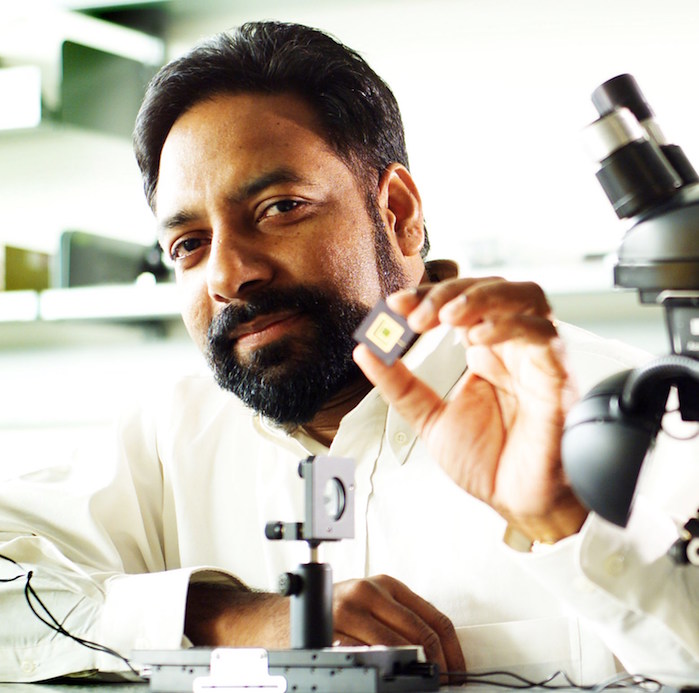
    MONTREAL: Researchers led by an Indian-origin scientist and his team from Concordia University have developed a novel technology that harnesses electrical energy from blue-green algae that could be used to power cell phones and computers in future.

    Both photosynthesis and respiration, which take place in plants cells, involve electron transfer chains.

    “Both photosynthesis and respiration, which take place in plants cells, involve electron transfer chains. By trapping the electrons released by blue-green algae during photosynthesis and respiration, we can harness the electrical energy they produce naturally,” said engineering professor Muthukumaran Packirisamy who did his MS in Mechanical Engineering from Indian Institute of Technology, Madras.

    Also known as cyanobacteria, blue-green algae are the most prosperous microorganisms on earth.

    “By taking advantage of a process that is constantly occurring all over the world, we have created a new and scalable technology that could lead to cheaper ways of generating carbon-free energy,” said Mr Packirisamy who is member of the American Society of Mechanical Engineers.

    The invention, however, is still in its early stages.

    “We have a lot of work to do in terms of scaling the power cell to make the project commercial,” he said.

    Currently, the photosynthetic power cell exists on a small scale and consists of an anode, cathode and proton exchange membrane.

    The cyanobacteria or blue green algae are placed in the anode chamber.

    As they undergo photosynthesis, the cyanobacteria release electrons to the electrode surface.

    An external load is connected to the device to extract the electrons and harness power.

    Mr Packirisamy hopes that the micro-photosynthetic power cells will soon be used in various applications, such as powering cell phones and computers.

    “And maybe one day, they will power the world,” he added in a paper published in the journal Technology.

  • 16 hurt as Shooting breaks out at music video filming in New Orleans

    16 hurt as Shooting breaks out at music video filming in New Orleans

    A dispute between two groups of people in a New Orleans park Sunday escalated into a shooting that injured at least 16 people, police said late Sunday, November 22.

    The shooting took place at around 6 p.m. local time after approximately 500 people had gathered at Bunny Friend Playground in the city’s 9th Ward to film a music video, the New Orleans Police Department said in a statement. 
    “Witnesses told police that both groups left the park on foot immediately after the shooting,” police said. Officers were already in route to break up the gathering, when the shooting broke out.

    “They were about a block away when they heard gunshots,” police said.

    Emergency medical workers took 10 of the injured to hospitals. Six more of the injured made their way to hospitals by other means.

    Detectives are searching for surveillance video of the shooting and suspects.

    Story highlights

    Several hundred people had gathered at Bunny Friend Playground for an impromptu music video filming

    Officers were already in route to break up the gathering, when a firefight broke out

  • Charlie Sheen opens up about HIV diagnosis

    Charlie Sheen opens up about HIV diagnosis

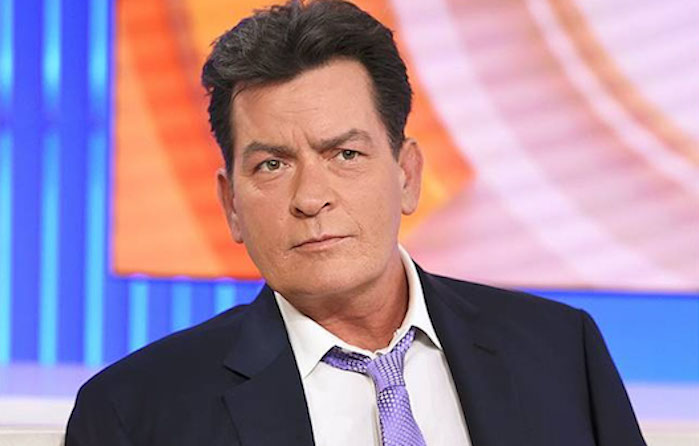
    Charlie Sheen CONFIRMS he is HIV positive in an exclusive TODAY interview with Matt Lauer. Sheen revealed that he has been HIV-positive for the past four years. He told Matt Lauer that he had paid millions to sexual partners in order to keep his disease secret, and had been the target of “shakedowns” for more money.

    Sheen said that he had unprotected sex with some sexual partners after his diagnosis, but had done so safely to ensure that none would contract HIV. He also told Lauer that he had informed his sexual partners of his diagnosis prior to engaging in sexual relations. That has raised questions among the public, and has been contested by at least one former sexual partner.

    Here is an ‘open letter’ from Charlie Sheen on his diagnosis  

    Roughly four years ago, I suddenly found myself in the throws of a seismic and debilitating three-day cluster-migraine-like headache. I was emergently hospitalized with what I believed to be a brain tumor or perhaps some unknown pathology. I was partially correct. Following a battery of endless tests, that included a hideous spinal tap, it was sadly and shockingly revealed to me that I was, in fact, positive for HIV.

    The news was a “mule kick” to my soul. Those impossible words I absorbed and then tried to convince myself, that I was stuck, suspended, or even stranded inside some kind of alternate reality or nightmare, were to the absolute contrary. I was awake. It was true… reality.

    Under the brilliant and perfect care of Dr. Robert Huizenga as well as “the” leading infectious disease expert in the known universe, I began a rigorous and intensive treatment program. Not missing a beat, a med dose, or one shred of guidance, quickly my viral loads became undetectable. Like every other challenge in my life, again, I was victorious and kicking this disease’s ass. I wish my story had ended there. Unfortunately, for my family and myself, it had only just begun. (As quoted by today.com)

    The personal disbelief, karmic confusion, shame and anger lead to a temporary yet abysmal descent into profound substance abuse and fathomless drinking. It was a suicide run. Problem was, I’d forgotten that I’m too tough for such a cowardly departure. Yet, despite this loathsome and horrific odyssey, I was vigilant with my anti-viral program.

    READ: Charlie Sheen says he is HIV positive

    My medical team could only shake their heads as each and every blood test returned levels revealing a state of remission. Even though I might have been trying to kill myself, one thing was radically evident; the disease was not.

    In and around this perplexing and difficult time, I dazedly chose (or hired) the companionship of unsavory and insipid types. Regardless of their salt-less reputations, I always lead with condoms and honesty when it came to my condition. Sadly, my truth soon became their treason, as a deluge of blackmail and extortion took center stage in this circus of deceit.

    To date, I have paid out countless millions to these desperate charlatans.

    Locked in a vacuum of fear, I chose to allow their threats and skulduggery to vastly deplete future assets from my children, while my “secret” sat entombed in their hives of folly (or so I thought).

    News Flash: This ends today. I’m claiming back my freedom. The scales of justice will swiftly and righteously re-balance themselves.

    In conclusion, I accept this condition not as a curse or scourge, but rather as an opportunity and a challenge. An opportunity to help others. A challenge to better myself.

    Every day, of every month, of every year, countless individuals go to work, man their stations, fulfill their professional obligations with a host of disabilities. Diseases, imperfections, hurdles, detours. These maladies range from lupus to cancer, from paralysis to blindness, from diabetes to obesity. “Treated,” HIV is no different.

    My partying days are behind me. My philanthropic days are ahead of me.

    Ernest Hemingway once wrote, “Courage is grace under pressure.”

    I’ve served my time under pressure; I now embrace the courage, and the grace.

    Love and peace, Charlie Sheen

  • INDIA’S LARGEST PAYMENT PLATFORM LAUNCHES MONEY TRANSFER IN THE USA

    INDIA’S LARGEST PAYMENT PLATFORM LAUNCHES MONEY TRANSFER IN THE USA

    CAMBRIDGE, MA (Oct. 28, 2015) – Oxigen USA, Inc. is happy to announce the launch of Money Transfer to India with the best exchange rate guaranteed. Indian-Americans can now send money from New Jersey and Florida to their loved ones in India at an effective rate of 70 Rupees per Dollar for a limited time only.

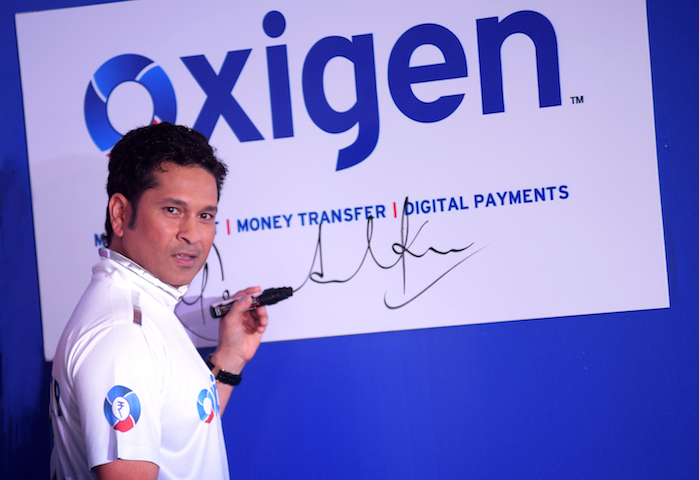
    “I am excited to be associated with Oxigen services, which is at the threshold of exponential growth”, says Sachin Tendulkar, Oxigen’s Brand Ambassador. The Cricket Legend Sachin Tendulkar will be in New York in early November and Oxigen customers can win a chance to meet Sachin in person. They can simply register on Oxigen.com, join Oxigen’s Inner Circle and initiate a money transfer by November 3, 2015.

    Oxigen.com brings to the US market a new way of transferring funds to India that is far more efficient and hassle-free. Oxigen.com offers several unique features such as 2-click payments, a shopping cart experience that allows multiple types of transfers to multiple recipients in a single check out, and the highest True Exchange Rate (net of fees) guaranteed, enabled by a daily comparison to competitor exchange rates. You can pay your family’s monthly phone, Internet, TV, and utility bills instantly from your US credit card.

    Senders can use the Oxigen Happiness Meter to track the “happiness levels” of their loved ones based on how much value they have transferred over time, advancing their recipients through four stages of happiness, with happiness regression for forgetting to send happiness.

    Oxigen USA’s Chief Happiness Officer Amir Alexander Hasson said,  “As the Diwali gifting season approaches and Oxigen Brand Ambassador Sachin Tendulkar comes to New York for the All Star Cricket Series, it’s hard to think of a better time to launch Oxigen’s US money transfer service”.

    For information on Oxigen, visit Oxigen.com/the-inner-circle and Facebook.com/OxigenUSA

  • Diwali Celebrated with fun and festivity at BAPS Shri Swaminarayan Mandir, Dallas, TX

    Diwali Celebrated with fun and festivity at BAPS Shri Swaminarayan Mandir, Dallas, TX

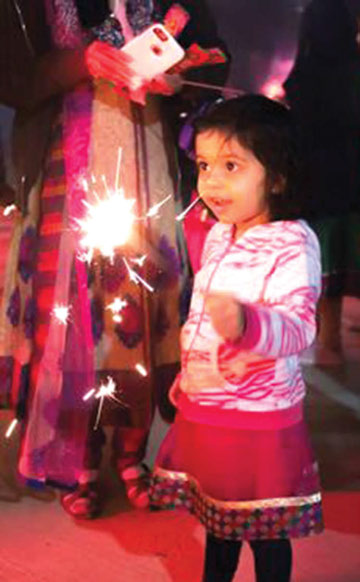
    DALLAS (TIP): November 14, 2015 – Diwali serves as a time to gather with friends and family to welcome the New Year and celebrate the year past. During this time of togetherness, reflection, and introspection, devotees at the BAPS Shri Swaminarayan Mandir in Dallas, TX organized various events to share in ancient traditions with the local community. Across North America, thousands of volunteers begin preparations months in advance of the festivities – from decoration design and creation to food preparation for the annakut (offering of vegetarian dishes to Bhagwan). Celebrating Diwali with great enthusiasm and excitement inspires every generation of Indians to honor their deeply rooted Hindu heritage.


    The five days of Diwali are filled with optimism and enthusiasm as volunteers and devotees work side by side, looking past their differences, to build the annakut and prepare for Diwali events at each mandir. Inspired by His Holiness Pramukh Swami Maharaj, the spiritual leader of BAPS, devotees welcome guests to the mandir with well wishes for the New Year. Swamis visit with community members to offer their prayers for peace and prosperity among families. This year, BAPS Mandirs across North America marked the auspicious festival of Diwali with fireworks and cultural exhibitions so visitors would find their experiences both entertaining and educational.

    “Diwali is my favorite festival because of the excitement that fills the air when the festival nears. But having recently migrated to the US, I did not know what to expect.” said Chintan Vyas, “After coming to the BAPS Shri Swaminarayan Mandir, Dallas, TX, I felt like I was in India. I experienced Indian culture while getting a taste of fine Indian cuisine. I truly felt at home.”

    This year, a special exhibition on Family Unity and Harmony demonstrated the benefits and avenues of how families can take time out of busy daily routines to spend time with each other. “Diwali is that time of the year when family, friends and relatives get together and strengthen their bonds through various festivities. These bonds are reinvigorated to last throughout the year”, said Dr. Sejal Mehta. “Preparations for the festivities begin months in advance. Devotees, young and old, sacrifice their time to help in creating decorations, food preparation, children’s Diwali celebration arrangements, as well as decorating the stage for the most significant ritual of Diwali, the Annakut,” concluded, Naresh Patel.

    Diwali is also a time when children look forward to the joy it brings. On November 1, 2015, the Children’s Diwali Celebration took place. The celebration was as much fun as it was educational. The children learned the history and origin of this festival, played a variety of exciting games, and were given an assortment of gifts and goodies.

    This year His Holiness Pramukh Swami Maharaj celebrated Diwali and Annakut in Sarangpur, Gujarat, India. He blessed the devotees on the New Year day.

  • Pakistan military expands its power, and is thanked for doing so

    Pakistan military expands its power, and is thanked for doing so

    ISLAMABAD (TIP): The most popular man in public office in Pakistan does not give speeches on television, rarely appears in public and rejects news interviews.

    He is Gen. Raheel Sharif, the Pakistani army chief, who has presided over the country’s armed forces at a time when they are riding high after curbing domestic terrorism and rampant political crime.

    Aided by a new-media publicity campaign, the military command’s popularity has helped it quietly but firmly grasp control of the governmental functions it cares about most: security and foreign affairs, along with de facto regulatory power over the news media, according to interviews with Pakistani officials and analysts.

    In a country with a long history of military coups, the current command has gotten what it wants, edging aside the civilian government of Prime Minister Nawaz Sharif, who is not related to Raheel Sharif, without the messiness or the international criticism a complete takeover would bring. And it is being thanked for doing it.

    “I wouldn’t describe it as a soft coup, but I would definitely say the civilian leadership has yielded space to the military — for their own survival and because there were major failures on their part,” said Talat Masood, a retired lieutenant general and military analyst.

    Raheel Sharif, known as Gen. Raheel here, took over the military command late in 2013. He was appointed to the post a few months after the new civilian government was inaugurated, and the country was in trouble. There were suicide bombings, political party killings, rampant crime and violence in its big cities, and assassinations of political leaders. Some politicians were calling for negotiations with the Pakistani Taliban as military efforts to set the militants back appeared to have stalled.

    Then the Pakistani Taliban carried out a cruel attack on a school for army families in Peshawar last December, killing 145 people — including 132 schoolchildren methodically gunned down in their classrooms. Supported by a huge public backlash against terrorism, the army ramped up its crackdown on some of the militant groups sheltering in the country’s northwestern tribal areas, especially in North Waziristan.

    Capital punishment was restored, and the military was handed new power, starting its own counterterrorism court system alongside the badly backlogged and compromised civilian justice system.

    This year, the Pakistani Taliban have managed to carry out only a single major suicide bombing. The army’s success against the Taliban emboldened it to take on violent political parties and criminal gangs in the country’s biggest city, Karachi, through a paramilitary group known as the Sindh Rangers. Despite complaints of human rights abuses in Karachi, and millions of internally displaced people from the tribal areas, most Pakistanis were simply relieved to see the violence hugely reduced.

    Through it all, Sharif’s public appearances have been less ostentatious than those of some of his predecessors. But at the same time, his face has become ubiquitous on social media, after giving a free hand to the officer commanding the Inter-Services Public Relations office, the military’s media arm, to modernize that service.

    The office, known as ISPR, had long been headed by lower-ranking officers, and it remained decidedly lodged in the analog era. But by this year, the leader of the office, Asim Saleem Bajwa, had been promoted to lieutenant general — a three-star rank normally reserved for corps commanders — and his agency had become an impressively slick machine.

    Bajwa’s Twitter account has more than 1.5 million followers, and the agency’s Facebook account has more than 2.8 million likes. A film division is pumping out offerings for television, as it had long done, but it has added short videos tailored to YouTube-style platforms.

    The social media accounts show in daily detail the commander’s movements— visiting the front lines in Waziristan or reviewing troops. Video links showed army units in combat, sometimes the same day it occurred, and troops helping earthquake victims. Professionally produced martyr-style videos show, for instance, a mother mourning a son killed in the field, who returns from the dead to present her with his beret.

    The ISPR declined to comment for this article unless a draft of it were submitted to the office for advance review, according to a spokesman for the agency.

  • Thousands Join Funeral of Colonel Mahadik Who Died Fighting Terrorists in J&K

    Thousands Join Funeral of Colonel Mahadik Who Died Fighting Terrorists in J&K

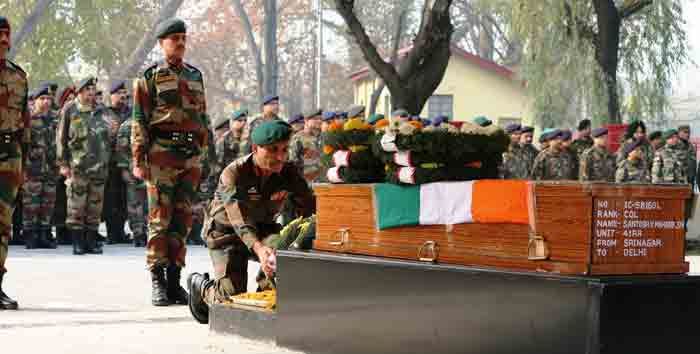
    Satara, Maharashtra: Thousands of grieving people turned up on Thursday for the funeral of Col. Santosh G. Mahadik, who was killed while fearlessly leading his men in an operation against militants in Jammu and Kashmir on Tuesday, an official said.

    Defense Minister Manohar Parrikar, Chief Minister Devendra Fadnavis and other dignitaries paid homage to Mahadik and offered sympathies to his family members, including parents, wife Sashwati, two children and brothers.

    Later, the slain hero’s body was brought in an army cortege to his native village Pogarwadi and kept for people to pay their last respects.

    Mahadik, who was decorated with a Sena Medal, was accorded a funeral with full military honors in an open ground in the village, the official said.

    Commanding officer of 41 Rashtriya Rifles, Mahadik, 38, was leading a search party and was critically injured when militants, holed up in a dense forested area of Haji Naka in Kupwara district, fired at him.

    Hailing from Satara, Mahadik belonged to a small farmer’s family and joined the Satara Military School before joining the army in 1998.

    A family friend described Mahadik as “a gentle, soft-spoken officer who never conveyed the looks of a special forces officer, besides being a forceful orator who spoke his mind.”

    The last rites were performed in the presence of his immediate and extended family members, Pogarwadi villagers and people from Satara district who raised cries of “Santosh Mahadik amar rahe.”

    An expert paratrooper and a combat underwater diver, Mahadik became the second commanding officer to be martyred in terrorist encounter this year.

    On Jan. 27, Col. Munindra N. Rai of the Gorkha Rifles was martyred at Handora village in Tral, south Kashmir, just a day after he was honored with the Yudh Seva Medal in the Republic Day awards.

    Rai was posthumously conferred the Shaurya Chakra on Independence Day.

    Source: IANS

  • Shah Rukh-Kajol ignite chemistry in song ‘Gerua’ | Dilwale hits the big-screen on December 18

    Shah Rukh-Kajol ignite chemistry in song ‘Gerua’ | Dilwale hits the big-screen on December 18

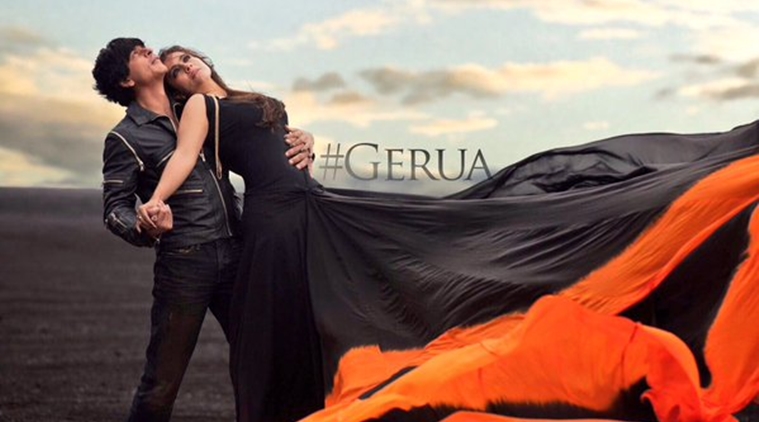
    Gerua is the first song from Dilwale that was released on Wednesday, November 18. Shah Rukh and Kajol themselves appeared at Marathi Mandi cinema to launch the song. With embraces, caresses and intense gazes, Shah Rukh Khan and Kajol display their love and affection in this love smitten song.

    The song gives us a taste of what their upcoming action-romance film Dilwale would be like, with the release of Gerua. The song has been shot at exotic and scenic locations in Iceland. In the more-than-four minute song, Shah Rukh Khan romances Kajol. From hilly areas to snowy grounds, the background is perfect for the song’s theme.

    The romantic number is dreamy and beautiful, featuring the lead pair – Shah Rukh and Kajol. With embraces, caresses and intense gazes, they display their love and affection for each other. Shah Rukh Khan looks terrific for a man who just turned 50, while Kajol looks like the ethereal beauty in gorgeous chiffon saris, blowing in the wind.

    Talking about the track, Shah Rukh says, “Since Kajol and I are coming back together on-screen after years, Rohit felt that we should try and make Gerua stand out better than all the other songs we have done earlier. We have done many beautiful songs are really fortunate to have done those. But Rohit was very clear and precise about how he would like to shoot this one. He paid attention to every detail starting from choice of location, costumes and every other technicality because it was essential to him.”

    Kajol on her part added, “We shot the song in a start to finish schedule of 7 days. We worked really hard and it was severe cold had a great time in all as the song itself is so good that we enjoyed performing. I am sure the audiences will also find it magical once they see it on-screen”.

    Gerua has been written by Amitabh Battacharya and composed by Pritam. For the song, Arjit Singh and Antara Mitra lent their voices.

    Dilwale has been directed by Rohit Shetty, who has had success with Shah Rukh in their previous venture Chennai Express.  The movie also stars Kriti Sanon and Varun Dhawan in prominent roles beside Shah Rukh Khan and Kajol.

  • Coffee-drinkers less likely to die from certain diseases

    Coffee-drinkers less likely to die from certain diseases

    MIAMI, United States: People who report drinking three to five cups of coffee per day are less likely to die prematurely from heart disease, suicide, diabetes or Parkinson’s disease, US researchers said. 

    Both caffeinated and decaffeinated coffee were shown to have benefits, said the study by researchers at the Harvard University Chan School of Public Health published in the November 16 edition of the journal Circulation.

    The study compared people who don’t drink coffee, or drank less than two cups daily, to those who reported drinking “moderate” amounts of coffee, or up to five cups daily.

    The study did not prove a cause-and-effect for coffee and the reduced likelihood of certain diseases, but uncovered an apparent link that aligns with previous research, and that scientists would like to probe further.

    “Bioactive compounds in coffee reduce insulin resistance and systematic inflammation,” said first author Ming Ding, a doctoral student in the Department of Nutrition.

    “That could explain some of our findings. However, more studies are needed to investigate the biological mechanisms producing these effects.”

    No protective effect was found against cancer in this study. Some previous research has pointed to a link between coffee consumption and a lower risk of certain cancers.

    The study was based on data gathered from three large, ongoing surveys including some 300,000 nurses and other health professionals who agree to answer questionnaires about their own medical conditions and habits at regular intervals over the course of 30 years.

    “In the whole study population, moderate coffee consumption was associated with reduced risk of death from cardiovascular disease, diabetes, neurological diseases such as Parkinson’s disease, and suicide,” said the findings.

    Researchers also accounted for potential confounding factors such as smoking, body mass index, exercise, alcohol consumption, and diet. But the fact that the research relied on surveys, which use self-reported behavior, could raise questions about its reliability.

    And experts warned that coffee — a substance adored by many devotees — may not be right for everyone.

    “Regular consumption of coffee can be included as part of a healthy, balanced diet,” said senior author Frank Hu, professor of nutrition and epidemiology at Harvard.

    “However, certain populations such as pregnant women and children should be cautious about high caffeine intake from coffee or other beverages.”