Year: 2015

  • Dr. Kiran Bedi In New York | Exclusive interview with The Indian Panorama

    Dr. Kiran Bedi In New York | Exclusive interview with The Indian Panorama

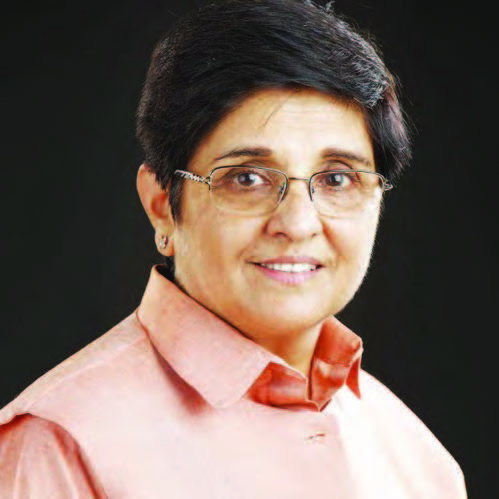
    Dr. Kiran Bedi, in an exclusive interview with The Indian Panorama editor Prof. Indrajit S Saluja, speaks about  her social and charitable work and her vision of future of India. She wants parents, principals, police, politicians, prosecution, prisons, and the press ( 7 Ps) to be equal stake holders in rape-crime prevention. She sees a bright future if next five years led by Mr. Modi and his Government is allowed and does deliver, as also each State leadership performs.

    ISS: Welcome to New York, Dr. Bedi. Thank you for finding time to speak with The Indian Panorama, despite your busy schedule, and, of course, not a very benign weather in New Jersey/ New York. Since you have put a time constraint, I would prefer to leave out questions on your foray in to politics and concentrate  on your visit and your mission. 

    What brought you to the United States? On whose invitation did you come? What is the purpose of your visit? What other places are you visiting? When are you going back from USA and what are your other destinations, if any, before reaching India? 

    KB: Several reasons….Two prestigious speaking engagements, one from the India Conference Forum at Harvard and second from Women Changing the World Symposium at Bernard College of Columbia University, along with Fund Raiser being organized by Pam Kwatra’s G 30 Group, as also to be with my sister for a family occasion.

    Am leaving for home tomorrow morning…lots of work now awaits me back home….

    ISS:  Briefly, please tell us what you said at Harvard and at Columbia conferences? 

    KB: At Harvard I was asked to speak on Women empowerment…the unfinished agenda….I identified several areas to be addressed. Such as issues of Security, Financial Dependence, and cost of marriage for parents of daughters. At Bernard I spoke of what makes a person make the difference in others lives? I said difference for others happens when by habit one refuses to accept injustice on one’s own self…

    ISS: Can you please tell us about your organization and  your mission? What future plans do you have for your organization?

    KB : My two Foundations, Navjyoti India Foundation and India Vision Foundation have been filling in the vacuum in society for nearly 30 years. We like minded police officers of Delhi police decided way back in 1986, to break the nexus between crime and poverty, illiteracy, drugs selling and drug abuse, as well as neglected child hood. We worked in Delhi’s slums and achieved what we set out to.

    Today the same organizations are full fledged skills development schools, community development centers, empowering thousands of poor, the weak, the underprivileged, girls, women, and  the aged. For more visit their websites to see the reach of this work. It’s been a silent revolution and are now models of social reform.

    Future is to consolidate, sustain, share and expand…for largest good. And to continue to make the difference in people’s lives.

    Dr. Bedi at  Anna Hazare's rally
    Dr. Bedi at Anna Hazare’s rally

    ISS: What do you expect of the chapters you are  now  creating abroad?

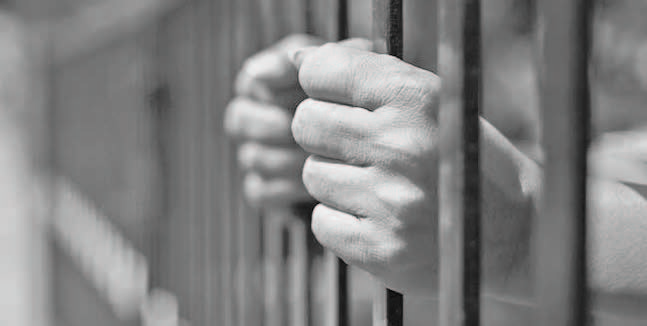
    KB: Exactly this. Its full credit to Ms Pam Kwatra and her team of very dedicated persons like Eric Kumar, Flora Parekh and Rahul Bathla who are self driven to serve and make the difference. Their Support enables educate and skill more and more children of incarcerated mothers…it’s a project most unique internationally.

    ISS: How do you plan to involve NRI’s who can contribute in a big way?

    KB: India is a mother to every NRI. It is for them to think how best he or she can strengthen his Mother land. Mother needs all her children. The more one loves ones’ mother more one take scare of her…one does not contribute towards ones mother. One loves her without her asking. It’s up to us adults to see what our mother needs…and give her unconditional love..

    ISS:  Your current visit- schedule, highs and lows?

    KB: High points have been invites from India Conference at Harvard, and Women Changing the World conference at Bernard College ( Columbia University) Also being with my sister Anu Peshawaria, in San Francisco,I could attend the engagement ceremony of my nephew, which was so very joyful.

    Dr. Bedi at a fundraiser in New York on March 15. From L to R:Pam Kwatra,  Chamunda Swami, Manny Sethi, Kiran Bedi
    Dr. Bedi at a fundraiser in New York on March 15. From L to R:Pam Kwatra, Chamunda Swami, Manny Sethi, Kiran Bedi

    Being at home in New Jersey with my God given sister and Brother in Law, Pam Kwatra and Mr. Lal Kwatra. They are the most caring and generous hosts one can ever be with..

    Low has been the impact of sudden changes of weather has had on me, traveling between snow and sunshine…

    ISS: What will you say on gender equality in India? Does it exist in India? If not, what needs to be done?  What will YOU do for it?

    KB: India has very entrenched patriarchy. It needs a very comprehensive sustained social, and cultural revolution to neutralize it.

    ISS: And, how do you think, crimes against women, particularly , the more heinous ones as rape, can be curbed? 

    KB: By making parents, principals ,police, politicians, prosecution, prisons, and the press ( 7 Ps) equal stake holders in rape-crime prevention. Analyze each case and share widely what caused it….to learn from others mistakes…that shall make all them understand their role in prevention and be responsible in planning proper strategies of crime prevention. Every one’s contribution will matter.

    ISS: What future for India do you envision?

    KB: Well I see a bright future if next five years led by Mr. Modi and his Government is allowed and does deliver…as also each State leadership performs. Each day matters now as we have huge shortfalls in infrastructure which has caused millions of unskilled youth unemployable. If we get on to ‘Make in India’ we will have Made India…

  • Mumbai airport’s new luxury lounge

    Mumbai airport’s new luxury lounge

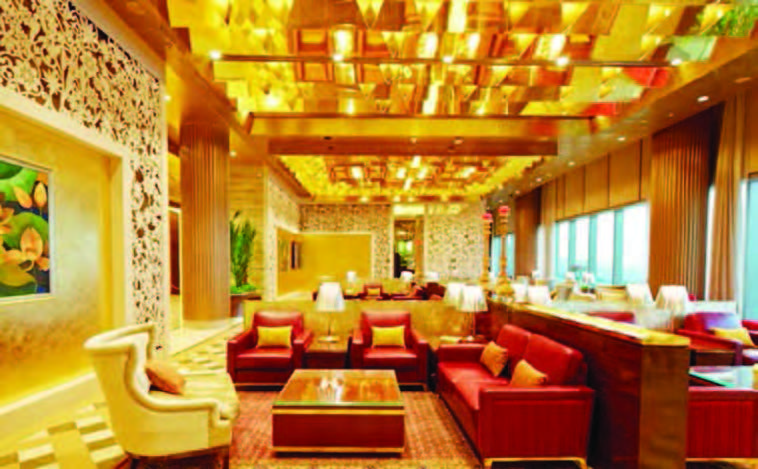
    Since it opened earlier this year, Terminal 2 at Mumbai’s Chhatrapati Shivaji International Airport has been getting a lot of love-it was chosen by travelers as their second most Favorite International Airport in the world. Now, it just got better with the opening of the GVK Lounge, the world’s first luxury airport lounge common to passengers of all airlines.

    [quote_box_center]Why you should check out Mumbai airport’s new luxury lounge [/quote_box_center]

    The look

    Spread across 30,000sqft over levels 3 and 4, the lounge can accommodate up to 440 passengers. Designed by celebrated fashion designer Sandeep Khosla and acclaimed architect Alfaz Miller, the lounge sports an Indian theme, accentuated through jali screens, contemporary chandeliers, a strategic lighting display and the signature glass peacock installation. While level 3 has silver theme, level 4 has been given a gold theme.

    What you get

    The lounge is divided into three categories: First, Business and Premium Class. Located on level 4, the First Class section offers personalized services, as well as amenities such as à la carte dining and individual spa treatments. The Premium Class section, also on level 4, comes with an opulent buffet area (connected to a live tandoori kitchen), a juice bar and a whiskey lounge, plus additional services such as foot massages. The maximum privacy is, however, assured to Business Class guests on level 3, who can also partake of a range of multi-cuisine dishes and barista offerings.

    Key facilities include:

    • Concierge services
    • A smoking zone
    • Food and beverages
    • Bar
    • A luxurious spa
    • Shower facilities
    • A relaxation area
    • Library
    • A business centre

    Who can use the lounge

    The lounge is available for First and Business Class passengers. Access is at the airline’s discretion.

    CREDIT CARD ACCESS PROGRAMMES

    (Please check if the credit card/s you hold permits use of the Mumbai lounge)

    Globally, credit card providers offer their premium customers access to lounges. Both MasterCard (for its World, Platinum and World Elite cardholders) and Visa (for its Signature and Infinite cardholders) provide lounge-access programs at major airports in cities such as New Delhi, Mumbai, Bengaluru, Chennai and Kolkata. But depending on the provider and the bank issuing the card, the number of visits may vary. For example, Visa limits free lounge access to two visits per quarter, while MasterCard (depending on the type of card) offers unlimited access. Check out premium cards from Axis Bank, Citibank, HDFC, HSBC, ICICI, IndusInd, Kotak Mahindra, SBI and Standard Chartered, which all give desirable privileges. Unlike most others, Citibank’s Premier Miles World MasterCard allows ‘add-on cardholders’ complimentary lounge access. American Express operates its own branded lounges at Mumbai (Domestic, T1C) and New Delhi (Domestic, T3) airports, and gives free access to Platinum cardholders.

    PAY-IN LOUNGES

    These are independently run lounges that a traveller can access for a fee.

    Priority Pass

    With more than 600 airport lounges in 100 cities, including London, Paris, Jeddah, Phuket and Goa, Priority Pass is one of the world’s largest pay-in lounge operators. To take advantage of it, you have to be a member. Standard Membership costs US$99 (Rs6,100) per year and comes with an additional per-visit fee of US$27 (Rs1,660), which can be redeemed against unlimited food and beverages as well as use of the wi-fi, conference rooms and, at some airports, showers. Priority Pass also has Standard Plus Membership for US$249 (Rs15,300) per year, which grants 10 complimentary visits, after which, he or she pays US$27 (Rs1,660) per visit. If you would rather make a one-time annual payment, opt for its Prestige Membership at US$399 (Rs22,500). Many credit cards (such as ICICI, HSBC and HDFC) offer free Standard Membership to Priority Pass on their premium-category cards.

    (www.prioritypass.com) 

    Plaza Premium Lounge

    Plaza has one of the largest pay-in lounge networks in Asia, with a strong presence in China (Beijing, Shanghai, Macau and Hong Kong), Malaysia, Singapore and the Middle East (Saudi Arabia, UAE and Oman). It’s ideal for infrequent travelers, as it does not require an annual membership; however, you will be charged per visit. Two hours in its New Delhi lounge in Terminal 1D costs Rs1,000-Rs1,500, while the Hong Kong lounge offers two-hour packages for HK$400 (Rs3,170). You gain access to food, drinks and showers. The Plaza network also offers VIP Meet and Greet services, as well as transit beds, concierge, baggage handling and delivery and limousine services.
    (www.plaza-network.com)

    AIRLINE LOUNGES

    If you’re spending a lot of time flying within or through America, consider buying an annual membership to a specific airline’s lounge. Or, if you’re using different airlines, opt for day passes. The Alaska Airlines Board Room, American Airlines’ Admirals Club, United’s Red Carpet Club, Delta’s Sky Club and the US Airways Club can be accessed with a day pass, (US$45-US$55 or Rs2,800-Rs3,400) per day, or about US$500 (Rs31,530) annually. Save money by buying a day pass in advance: US Airways almost halves its fee if you buy one along with your ticket. Remember that most of these airlines’ passes are limited to their US domestic lounges.

  • Lovely nostalgic memories of Air India

    Lovely nostalgic memories of Air India

    Air India was a part of J.R.D”s vision for India. Being India’s first true business scion, Tata was a director at Tata Sons Limited; one of Asia’s largest industrial companies. In July of 1932, he created an aviation department at the company; and began the first un-subsidized (i.e.: no mail contract from the British) domestic air service in India after receiving a license for through flights between Madras (Chennai) and Karachi via Bombay
    (Mumbai) on October 15th, 1932.

    1973 Air India Ad that read” Next time you fly 747 to New York, be unfaithful.”

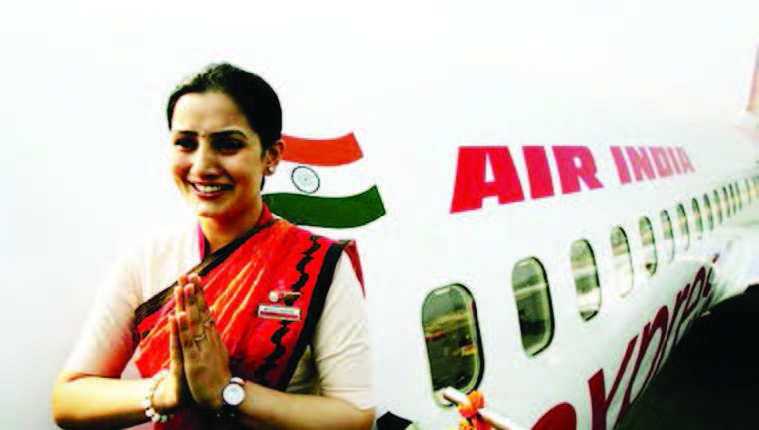
    The Sari becomes the official dress code for Air India since 1960.

    “Memories of dark-haired beauties”, is what a traveler brings back from India, in an advertisement published in 1970. “Long after you leave India, India will still be with you,” the tag line reads. Guess who the model was? -Zeenat Aman.Air India

    Vidal Sassoon was onboard giving Air India hostess Ruby Bharucha a few hints on grooming hair at 40,000 feet, en route from London to New York in 1965.

    Now experience the new Air India that is a member of the largest airline alliance STAR Alliance with access to over 1000 lounges worldwide among other niceties.

    Air India operates nonstop services from Chicago’s O’Hare, New York’s JFK to T3 of New Delhi, and another from Newark’s EWR to T2 of Mumbai BOM, with a fabulously convenient schedule departing afternoons and arriving afternoon with over 45 domestic connections and many more to other countries.

  • BHEL SELLOFF LIKELY IN APRIL, GOVT MAY GET RS 3,200 CRORE

    BHEL SELLOFF LIKELY IN APRIL, GOVT MAY GET RS 3,200 CRORE

    NEW DELHI (TIP): The government has firmed up a list of PSUs for divestment of minority stakes in the fiscal beginning next month, starting with BHEL, as it gears up to raise Rs 41,000 crore through such stake sales in 2015-16.

    Other companies which are on the list include NMDC, NALCO and IOC, with proposal for selling 10% stake in each. Besides, 5% stake sales in ONGC, PFC and REC are also on the cards. Official sources said the disinvestment department has completed overseas roadshows in London, Singapore and Hong Kong for a 5% stake sale in BHEL and the shares can be sold next month itself. At the current market price of around Rs 260 a share, a sale of 5% —or over 12.23 crore shares — in BHEL would fetch the exchequer about Rs 3,200 crore.

    Sources said the disinvestment department feels shares of BHEL have been holding steady and the time may be right for going ahead with the stake sale. The government holds 63.06% in BHEL. In March 2014, the government had sold a 4.66% stake in BHEL to LIC through a block deal for around Rs 1,800 crore. According to sources, the process is on for disinvestment in other PSUs. Specifically for 5% stake sale in ONGC, the government is working out a subsidy-sharing roadmap to give clarity to investors.

  • Oil prices resume downtrend in Asia

    SINGAPORE (TIP): Another surge in US stockpiles pushed oil prices lower again on Thursday, giving up some of the big gains in New York that came after the Federal Reserve cooled the chances of an early summer interest rate hike.

    US benchmark West Texas Intermediate (WTI) for April delivery was down $1.11 to $43.55 while Brent crude for May tumbled 78 cents to$55.13 in afternoon trade.

    WTI gained $1.20 in US trade and Brent jumped $2.40 after the US central bank signalled it was in no hurry raise rates, which sent the dollar tumbling.

    A weaker US currency makes dollar-priced oil cheaper, fuelling demand and boosting prices.

    But the rally was shortlived as the fundamentals of an oversupplied market and weaker demand took hold of sentiment following the US crude inventory report, analysts said. The US Department of Energy on Wednesday said stocks jumped 9.6 million barrels for the week ending March 13.

    “The report indicates a build up in the global supply glut that has been pushing prices down thus far,” said Shailaja Nair, associate editorial director at energy information provider Platts.

    Daniel Ang, an investment analyst with Phillip Futures in Singapore, said prices would remain under pressure for as long as supply was outpacing demand.

    “Fundamentals have not changed and just a short-term jolt in prices from the weakening US dollar will not change that fact,” he said in a market commentary.

  • UAE road show to promote tourism from India

    ABU DHABI (TIP): The United Arab Emirates’ (UAE) National Council for Tourism and Antiquities has launched a road show in India to promote tourism from India and to provide them with special offers tailored to meet the Indian market needs.

    The road comprises tourism representatives from national airline companies, travel and tourism groups and hotels.

    Mohammed Khamis bin Hareb Al Muhairi, director-general of the National Council for Tourism and Antiquities, said that the Indian market is one of the major markets contributing to the tourism industry in the world, and the UAE in particular, due to the geographical proximity and the ancient cultural ties between India and the Gulf.

    He added that the convoy will be visiting three of India’s largest cities — New Delhi, Mumbai and Bangalore. It will also meet with a large number of specialists, decision makers, and other significant figures representing various sectors in the Indian tourism industry.

    The meetings intend to introduce them to UAE’s tourism landmarks and to finalise deals between companies in the two countries regarding touristic packages for the future.

    He said that the road show, organized under the hashtag “VisitUAE”, was launched by Sheikh Nahyan bin Mubarak Al Nahyan, minister of culture, youth community development, and chairman of the National Council for Tourism and Antiquities, to promote UAE tourism through information and pictures. Al Muhairi said that the road show is the second tourism promotion show to India. The first in 2012 achieved very good results, and prompted many companies and organizations to advocate for a repeat which has been organised in cooperation with strategic partners from local tourism associations in Abu Dhabi, Dubai, Sharjah, Ras al-Khaimah and Fujairah.

    He added that the National Council for Tourism and Antiquities invited more than 200 companies in each of the Indian cities the road show plans to visit to attend meetings.

  • AAI to take 26 percent share in Kannur airport

    KANNUR (TIP): The Airports Authority of India (AAI) has formally agreed to take 26 percent equity share in the upcoming Kannur International Airport (KIAL).

    The agreement was finalised in a high-level meeting that ports minister K Babu had with civil aviation minister Ashok Gajapathi Raju, minister of state for civil aviation Mahesh Sharma and other senior officials in New Delhi on Wednesday, said a press release.

    Though the decision was taken during the regime of the previous UPA government, it was not finalised that time owing to lack of clarity in the agreement.

    K Babu also requested the civil aviation minister to include Kochi international airport in the list of the hub airports. As per the draft civil aviation policy, only six metropolitan airports – Delhi, Mumbai, Chennai, Kolkata, Bangalore and Hyderabad – will be getting the hub airport status and the international airlines will operate from these airports only.

    Further, he requested the civil aviation ministry to give international status to Thiruvananthapuram, Kozhikode and Kannur airports.

  • RATAN TATA TO HEAD PANEL TO TURN AROUND RAILWAYS

    NEW DELHI (TIP): Industrialist Ratan Tata will head the new innovation council of railways, called ‘Kaya Kalp’, formed to turn around the ailing state-run transporter. Kaya Kalp will also have two prominent railway union leaders, Shiv Gopal Mishra and M Raghuvaiah, as members.

    The move is seen as an attempt to rope in railway unions which have opposed moves to restructure the railway board and privatization of the national transporter. Mishra is general secretary of All-India Railwaymen Federation while Raghuvaiah heads National Federation of Indian Railwaymen.

    A railway official said more members would soon be inducted into the council, announced by minister Suresh Prabhu in his rail budget to suggest ways to turn around the public transporter. The official said the terms and references for the council were being finalized.

    Soon after taking over, Prabhu had set up committees to review, restructure and revive rail finances, administration, rules and the railway board itself.

    While his predecessor Sadananda Gowda had set up a committee under economist Bibek Debroy for restructuring of the railway board, Prabhu has so far set up committees under former financial services secretary D K Mittal to review finances and under former Delhi Metro Rail Corp managing director E Sreedharan to suggest measures for transparency. Another eight-member panel, headed by railway board’s additional member Mohd Jamshed, has been asked to identify factors and issues affecting growth of freight and passenger traffic.

    While the Debroy panel faced stiff resistance from railway unions and is yet to finalize its report, the Sreedharan committee has submitted its report and based on its recommendations, Prabhu has delegated financial powers from the minister to board members, general managers and divisional railway managers.

    The Mittal panel has also submitted its report.

    In his budget speech, Prabhu had said, “Every dynamic and thriving organization needs to innovate and reinvent its practices. In accordance with the vision of prime minister for innovation, technology development and manufacturing, the Indian Railways intends to set up an innovation council called ‘Kaya Kalp’ for the purpose of business re-engineering and introducing a spirit of innovation in railways.”

  • CHINA NOW WORLD’S THIRD-BIGGEST ARMS EXPORTER: SIPRI

    CHINA NOW WORLD’S THIRD-BIGGEST ARMS EXPORTER: SIPRI

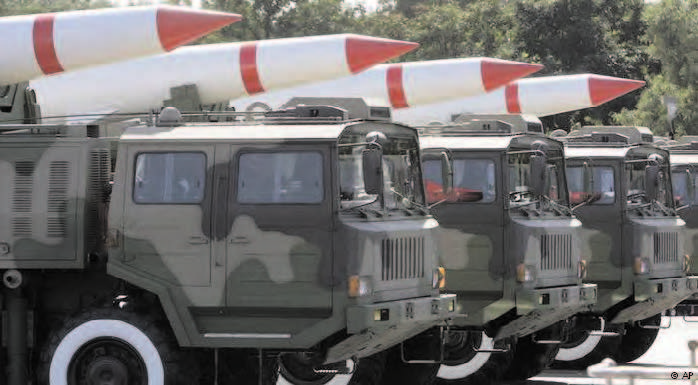
    BEIJING (TIP): China has overtaken Germany to become the world’s third-biggest arms exporter, although its 5 per cent of the market remains small compared to the combined 58 per cent of exports from the US and Russia, a new study says.

    China’s share of the global arms market rose 143 per cent during the years from 2010- 2014, a period during which the total volume of global arms transfers rose by 16 per cent over the previous five years, the Stockholm International Peace Research Institute said in a report released Monday.

    Its share of the world market was up from 3 per cent in the 2009-2014 period, when China was ranked ninth among exporters of warplanes, ships, side arms and other weaponry, said the institute, known as SIPRI.

    The data show the growing strength of China’s domestic arms industry, now producing fourth-generation fighter jets, navy frigates and a wide-range of relatively cheap, simple and reliable smaller weapons used in conflicts around the globe.

    China had long been a major importer of weapons, mainly from Russia and Ukraine, but its soaring economy and the copying of foreign technology has largely reversed the trend, except for the most cutting-edge designs and sophisticated parts such as aircraft engines.

    China supplies weapons to 35 countries, led by Pakistan, Bangladesh and Myanmar, SIPRI said.

    Chinese sales included those of armored vehicles and transport and trainer aircraft to Venezuela, three frigates to Algeria, anti-ship missiles to Indonesia and unmanned combat aerial vehicles, or drones, to Nigeria, which is battling the Boko Haram insurgency in its north.

    China’s comparative advantages include its low prices, easy financing and friendliness toward authoritarian governments, said Philip Saunders, director of the Center for the Study of Chinese Military Affairs at the US National Defense University.

    “Generally speaking, China offers medium quality weapons systems at affordable prices, a combination attractive to cash-strapped militaries in South Asia, Africa and Latin America,” Saunders said.

    Notable successes include a co-production deal with Pakistan to produce the JF-17 fighter, widespread sales of the basic but effective C- 802 anti-ship cruise missile, and an agreement to sell the HQ-9 air defense missile system to Turkey that has run into controversy over its incompatibility with NATO weapons systems.

    China also has exploited niche markets such as North Korea and Iran that the West won’t sell to, emphasizing its attractiveness to impoverished countries and pariah states, said Ian Easton, research fellow at The Project 2049 Institute, an Arlington, Virginia-based Asian security think tank.

    Both those US foes appear to have received satellite jamming and cyber warfare capabilities from China, along with technologies to break into private communications and spy on government opponents, Easton said.

    “All of these sales should be very disconcerting to American policymakers and military leaders,” he said, calling China’s rise to the third-place spot among exporters a “disturbing development” that could threaten the security of the US and its allies.

    China also offers leading-edge drone technology at competitive prices. One model, known variously as the Yilong, Wing Loong or Pterodactyl, has become especially popular with foreign buyers, although Chinese secrecy surrounding such sales makes it difficult to know how many are in service and where.

    Chinese state broadcaster CCTV quoted retired People’s Liberation Army Gen. Xu Guangyu saying at an air show two years ago that the unmanned aircraft, which can be armed with two guided missiles, would cost only about $1 million each. That is about 10 to 20 per cent of the price of a comparable US model such as the MQ-1 Predator. Rumored buyers include the United Arab Emirates, Uzbekistan and Saudi Arabia.

    However, China’s incremental growth and the yawning gap with industry leaders America and Russia show the limitations of its aspirations.

    The US retained a 31 per cent share of the global arms market, exporting to at least 94 recipients, SIPRI said. Countries in Asia and Oceania took 48 per cent of US exports, followed by the Middle East with 32 per cent and Europe at 11 per cent, it said.

    Russia was second with a 27 per cent global share, 39 per cent of which went to India — the world’s largest arms importer overall. China took 11 per cent of Russia’s exports, followed by Algeria.

    SIPRI uses a five-year moving average to account for fluctuations in the volume of arms deliveries from year-to-year and doesn’t provide monetary values, which are often distorted by governments providing weapons as gifts or at below-market prices.

  • Israeli minister accuses Iran of Argentina terror attacks

    Israeli minister accuses Iran of Argentina terror attacks

    BUENOS AIRES (ARGENTINA) (TIP): Israel’s agricultural minister on Thursday accused Iran of orchestrating two terrorist attacks in Argentina in the 1990s and urged the world not to negotiate with the Middle Eastern country on the future of its nuclear program.

    Agricultural Minister Yair Shamir led a delegation to Buenos Aires to commemorate the 1992 attack on the Israeli Embassy that killed 29 people and wounded hundreds.

    ”Iran continues to sow destruction and horror in all the world, but the world continues on as if nothing was happening,”Shamir said, speaking in Hebrew and accompanied by a Spanish translator.

    Shamir, the son of former Prime Minister Yitzhak Shamir, said the world takes on a “hypocritical attitude” that ignores that Iran is aiming ”at the civilized world, including Israel.” 

    Israel and Argentina have long accused Iran of both the embassy bombing and a car bomb attack on a Jewish community center in 1994 that killed 85 people.

    Speaking to the US Congress earlier this month, Israeli Prime Minister Benjamin Netanyahu mentioned the attacks in Argentina, arguing the world would be better off without a nuclear deal with Iran.

    Iran has denied involvement in both attacks. Nobody has been convicted in either attack.

    The annual commemorative event took on extra meaning this year after the mysterious death of prosecutor Alberto Nisman, who had led the investigation into the Jewish center bombing for more than a decade.

    Four days before he was found shot dead Jan. 18, Nisman had accused Argentine President Cristina Fernandez and other top government officials of orchestrating a secret deal to cover up the alleged role of several Iranians in the 1994 attack.

  • PRINCE HARRY TO QUIT BRITISH ARMY IN JUNE

    LONDON (TIP): It’s a soldier’s life no more for Britain’s Prince Harry. Royal officials said on Tuesday that the 30-year old prince will leave the armed forces in June after 10 years of service that included two tours of duty in Afghanistan.

    Harry’s final army duties will include a four-week assignment in April and May with the Australian Defence Force. The prince will spend time in Darwin, Perth and Sydney and attend centenary commemorations of the World War I Gallipoli campaign in Turkey.

    Harry said that leaving the army had been “a really tough decision” but he was excited about the future.

    In a statement, Harry said he felt “incredibly lucky” to have had the chance to serve in the armed forces.

    “From learning the hard way to stay onside with my Color Sergeant at Sandhurst, to the incredible people I served with during two tours in Afghanistan _ the experiences I have had over the last 10 years will stay with me for the rest of my life,” he said. “For that I will always be hugely grateful.”

    Harry, who is fourth in line to the British throne, graduated from Sandhurst officers’ academy in 2006 and joined the Household Cavalry as an armored reconnaissance troop leader. He served in Afghanistan as a battlefield air controller for 10 weeks in 2007-2008 until a media leak cut his tour short.

    Keen to return to the front lines despite fears he would be a top Taliban target, Harry retrained as a helicopter pilot and served in Afghanistan in 2012-2013 as an Apache co-pilot gunner. Most recently he has served as a staff officer in the army’s London headquarters, playing a big role in bringing the Invictus Games _ an international sports competition for wounded troops _ to Britain.

  • EU LEADERS DAMPEN GREEK HOPES FOR BAILOUT RELIEF

    EU LEADERS DAMPEN GREEK HOPES FOR BAILOUT RELIEF

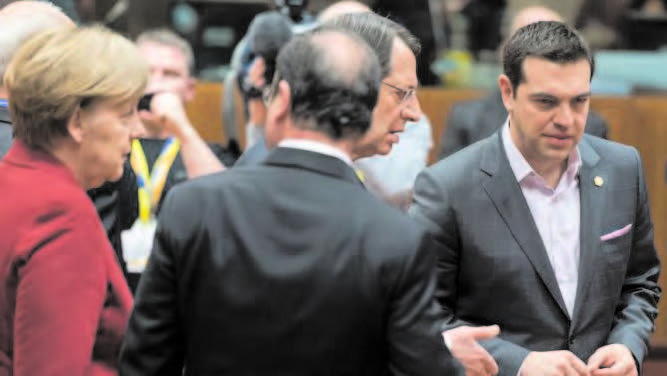
    BRUSSELS (TIP): Exasperated leaders of the European Union pressed the Greek prime minister to speed up plans to improve his country’s balance sheet in a meeting that stretched into the early hours Friday.

    ”A deal is a deal,” Dutch Prime Minister Mark Rutte said ahead of the meeting, reflecting frustration among many leaders at an EU summit about the pace at which Greek Prime Minister Alexis Tsipras is implementing a Feb. 20 agreement to push through reforms in exchange for their help in keeping Greece solvent.

    Tsipras strode into the summit beaming and defiant, saying it is the rest of Europe that needs more ambition.

    ”The European Union needs bold political initiatives,” he said.

    Hanging over the summit of 28 heads of state and government are fears that the hard line of the Greek government formed in January could cause the country to drop out of the euro, something that would trigger a crisis for the currency shared by 19 nations.

    Tsipras made a last-minute request for a mini-summit Thursday night with half a dozen top EU officials. Those officials agreed to the meeting _ over the objections from some of the other leaders, who complained they were being left out _ but made it clear they have no intention of re-negotiating the terms of the Greek bailout. ”There can be a solution only on the basis of the agreements reached in the eurogroup,” Merkel said, referring to the meeting last month of the eurozone’s 19 finance ministers.

    ”Progress,” added the head of the eurogroup, Jeroen Dijsselbloem. “That is not going to happen tonight.” 

    In addition to Merkel and Tsipras, the meeting included French President Francois Hollande, European Central Bank President Mario Draghi and EU President Donald Tusk. None of the EU leaders gave any indication that they were willing to make concessions.

    “We can always have political discussions if that alleviates the pain, but there will be no changes,” Finnish Prime Minister Alexander Stubb said.

    Tsipras, brushing aside the criticism, insisted his government will end austerity and increase social spending. On Wednesday the Greek parliament approved an anti-poverty bill. It was the first piece of legislation that his government has put through _ and it did so without full consultation from its creditor partners.

    Greece’s economic policies drew criticism even from nations outside the eurozone. British Prime Minister David Cameron marveled Thursday at how poorly the Greek economy has fared compared to his own.

    ”When I first came here as prime minister five years ago, Britain and Greece were virtually in the same boat. We had similar-sized budget deficits,” he said. ”The reason we are in a different position is we took long-term, difficult decisions and we had all of the hard work and effort of the British people.” 

    French President Francois Hollande said that if Greece wants to spend more it needs to find the money inside its own borders.

    ”That the Greek government makes an effort for the poor is not shocking to me. What we ask Greece, is that it asks the richest to pay taxes,” he said.

    Greece is banking on the fact that its European partners all want to keep the eurozone intact, fearing that if Greece pulls out others might as well.

    ”Nobody wants a so-called Grexit and everybody wants to avoid this risk,” Tusk said.

  • Libyan government forces bomb Tripoli airport

    Libyan government forces bomb Tripoli airport

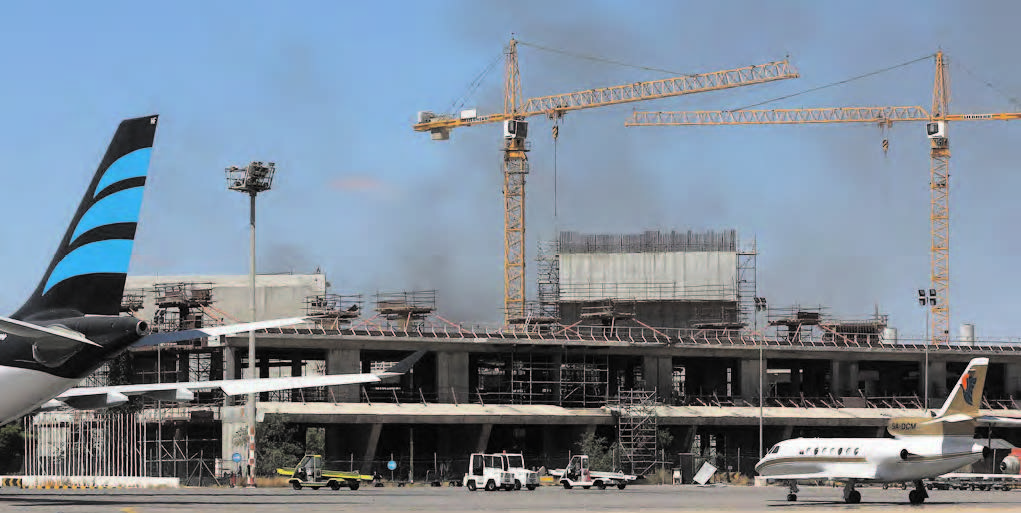
    TRIPOLI/RABAT (TIP): Warplanes from Libya’s internationally recognised government on Thursday bombed the only functioning commercial airport in Tripoli on March 19, delaying the departure of a delegation from a rival parliament for UN peace talks, officials said.

    The attack on Matiga airport, a military base used for commercial flights after the main airport closed following heavy fighting there last summer, damaged the runway but repairs should be finished later on Thursday, an airport spokesman said.

    No casualties were reported.

    But the bombing held up the departure of a delegation from Tripoli for Morocco for talks hosted by the United Nations to persuade the country’s warring parties to form a national government.

    Libya is locked in a power struggle between two governments and parliaments battling for control of the large North African country and its oil resources four years after rebels ousted veteran autocrat Muammar Gaddafi.

    Internationally recognised Prime Minister Abdullah al-Thinni and the elected parliament have been confined to eastern Libya since an armed faction seized Tripoli last summer, reinstating the previous assembly and setting up a rival administration.

    “Fighter jets conducted air strikes on Matiga airport early today which damaged the runway,” said airport spokesman Abdulsalam Buamoud.

    Mohamed El Hejazi, a spokesman for forces allied to Thinni, said the attack was carried out as “part of a war against terrorism that will continue until Libya has been freed of terrorism”.

    The attack came days after officials in Zintan, a western region allied to Thinni, accused the Tripoli-based government of launching air strikes against its local airport.

  • Con artists ‘sold’ US embassy in Rome

    LONDON (TIP): Four con artists have gone on trial for allegedly duping a German businessman of 1.3 million by pretending to sell him key buildings in Rome, including the US embassy and the UN food agency headquarters.

    Wolfang Kroll, 57, appeared in a court along with three accomplices last week, according to Italian newspaper Corriere della Sera. The group is accused of tricking the businessman to shelling out 1.3 million in a series of fake deals to buy key buildings in Rome.

    Kroll, also German, and his accomplice Donato Perazzolo were able to convince their victim to send 400,000 to buy the Porta di Roma shopping centre. The duo then took the help of Walter Baccini, who impersonated a government official, and Anna Lisa Morganti to “sell” the US embassybuilding for 580,000,and the headquarters of FAO for 600,000. The businessman transferred a further 900,000 to the group.

  • ISIS claims Tunisia attack that killed 23

    TUNIS (TIP): The Islamic State group issued a statement on March 19 claiming responsibility for the deadly attack on Tunisia’s national museum that killed 23 people, mostly tourists. The statement described on March 18 attack in Tunisia as a “blessed invasion of one of the dens of infidels and vice in Muslim Tunisia”, and appeared on a forum that carries messages from the group. The statement said there were two attackers and they weren’t killed until they ran out of ammunition and it promised further attacks.

    “Wait for the glad tidings of what will harm you, impure ones, for what you have seen today is the first drop of the rain,” the statement, which was also announced by US-based SITE Intelligence Group. The jihadist group (also known as ISIS), which is based in Syria and Iraq, has affiliates in neighboring Libya, where many Tunisians have gone to fight and train with extremist groups. Earlier this week, a prominent Tunisian field commander for IS was killed in fighting inside Libya. Tunisia’s government, meanwhile, announced the arrest of nine people — four of whom were connected directly to the attack and five others who supported them elsewhere in the country, authorities said.

  • IAS officer found dead at home in Bengaluru – Order CBI probe: Sonia to K’taka CM

    IAS officer found dead at home in Bengaluru – Order CBI probe: Sonia to K’taka CM

    [vc_row][vc_column width=”1/2″][vc_column_text]

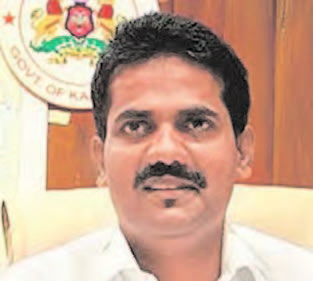
    BENGALURU (TIP): IAS officer D K Ravi, posted as Additional Commissioner (Enforcement) of Commercial Tax Department, was found dead at his residence near Koramangala on March 16.

    The 2009-batch IAS officer was found hanging from a ceiling fan at his ninth-floor flat (Number 903, E block) at Prestige St John’s Wood Apartment at Suddguntepalya on Tavarekere Main Road by Kusuma, his wife, at around 6:30 pm. Police Commissioner M N Reddi said:

    “Prima facie, it looks like a case of suicide. Until the inquest is conducted, we cannot come to a conclusive understanding.”

    Ravi, 35, had moved to this official flat, provided by the department, just one-and-a-half months ago. He had married Kusuma, daughter of former Rajarajeshwarinagar CMC president Hanumantharayappa, four years ago.

    Ravi, from Tumakuru, used to visit his father-in-law’s house in Mallathalli, off Nagarabhavi, on weekends. This weekend, too, he was at his in-laws’ house, and left for office from there on Monday morning.

    At 10:35 am, he left office for his apartment. His driver waited for him at the parking lot from 10:45 am.

    The police said it was only in the evening that his wife and other family members grew suspicious when there was no response to repeated calls on Ravi’s cellphone.

    Kusuma opened the door to their flat using a duplicate key around 6:30 pm. “His wife and father-in-law found him hanging from the bedroom ceiling fan by a cloth. A special team led by DCP (Southeast) Rohini Katoch Sepat, a qualified medical doctor, will probe the case,” said Reddi.

    The young bureaucrat had hit headlines when, as deputy commissioner of Kolar, he initiated a drive to clear encroachments on government lands. Kolar residents had observed a bandh to protest his transfer last November.

    [/vc_column_text][/vc_column][vc_column width=”1/2″][vc_column_text]

    Amidst outrage over the mysterious death of IAS officer KD Ravi in Karnataka, Congress president Sonia Gandhi today asked state Chief Minister Siddaramaiah to hand over the inquiry into the incident to CBI.

    “The Congress president has advised the Karnataka Chief Minister to hand over the inquiry into IAS officer DK Ravi’s death to CBI,” party general secretary in-charge of Karnataka Digvijay Singh said.Muniyappa, Congress MP from Kolar, today took up a position contrary to what his party government in Karnataka is maintaining and said he would prefer CBI investigation into Ravi’s death. He said that he had talked to Sonia Gandhi and AICC general secretary Digvijay Singh (in-charge of the party’s Karnataka unit) on the subject.

    Siddaramaiah to clear air on Monday

    • Karnataka Chief Minister Siddaramaiah is expected to make an announcement whether he would hand over the probe to CBI or not on the floor of the House on Monday
    • Congress MP Muddahanumegowda said all nineCongress Lok Sabha members from Karnataka were in favour of a CBI probe into Ravi’s death and had conveyed it to AICC chief Sonia Gandhi

    On day of death, Ravi made 44 calls to a woman

    • Various murky details about personal life of DK Ravi (in pic) have found their way to a section of media ever since the CID started probing his death
    • Ravi, who was married, was allegedly smitten by a woman colleague. He called her 44 times during the one hour he spent in the office on the day of his death
    • The woman refused to entertain Ravi and that allegedly drove him to take his own life. The woman has been identified and the calls have been crosschecked from Ravi’s phone

    [/vc_column_text][/vc_column][/vc_row][vc_row][vc_column width=”1/1″][vc_column_text]

    From the day he took charge as Additional Commissioner (Enforcement South) on November 14, 2014, Ravi led several raids on various business establishments—especially real-estate majors—for tax evasion.

    While there were reports that Ravi was being receiving threats from the underworld over the raids, the police commissioner said Ravi had informed neither the police nor his superiors of any such call.

    “He did not contact anyone after 11 am. He was not in the habit of returning to his flat early. Also, he used to have lunch at office. We have not found any suicide note from the apartment. Naturally, his family is not in a position to respond to our queries. Forensic experts have examined the spot and have stated that prima facie it is a case of suicide,” said Reddi.

    The IAS officer’s body was shifted to Victoria Hospital where the post-mortem will be conducted on March 17.

    Hundreds of people from Kolar and Kunigal gathered at the hospital and protested, saying that the corrupt system had led to Ravi’s death.

    IAS officer D K Ravi’s mysterious death has led to public outrage and his family has refused to accept reports that he had committed suicide, suspecting it to be murder, and demanded a CBI probe, an issue on which opposition stalled the Assembly proceedings.

    With emotions running high, IAS officer D K Ravi’s family in a sudden move, staged a dharna in front of the Vidhana Soudha, the state secretariat, demanding “justice” and a probe by CBI, even as the government refused to budge to a similar demand by the Opposition parties in the Assembly.

    Ravi’s father Kariyappa, mother Gowramma and brother Ramesh staged a protest in front of the Vidhana Soudha and threatened suicide if their demand was not met, a development that brought a rattled administration under more pressure.

    “We only want a CBI probe. We want justice,’ Gowramma said, with the other two also echoing the same, as the family hinted at “political pressure” on Ravi, who was found hanging from a ceiling fan at a room in his apartment on Monday evening, with government saying it was prima facie a case of suicide.

    [/vc_column_text][/vc_column][/vc_row]

  • MINES, MINERALS BILL GETS RAJYA SABHA’S NOD

    NEW DELHI (TIP): The bill on mines and minerals, paving the way for auction of blocks for prospecting, was passed by the Rajya Sabha on March 20, even as opposition parties, notably the Congress, wanted it to be referred again to the relevant select committee.The bill was pressed for voting — 117 members were in favour and 69 against it.Once it gets presidential consent, the new legislation will replace the Mines and Minerals (Development and Regulation) Amendment Ordinance of 2015), promulgated on Jan 12. The bill has already been approved by the Lok Sabha.

    The taking up of the bill had to be deferred on Thursday as the opposition said that mineral-bearing states had not been consulted in preparation of the bill and wanted the select committee, which had sent it back without changes on March 18, to take a re-look.

  • Collegium system of appointing judges is illegal: Govt

    NEW DELHI (TIP): While speaking in favour of the proposed National Judicial Appointments Commission (NJAC), the Centre said before the Supreme Court on Wednesday that the collegium system of appointing judges was illegal.

    The government said that the collegium system that was put in place in 1993, wherein a panel of judges appointed other judges, was not mandated under the Constitution.

    Attorney General Mukul Rohatgi submitted before a three-judge bench, presided over by Justice A R Dave, that the new system as mandated under the NJAC is broad-based, which could be put to the test of Constitutional validity only after it comes into force. “The government is of the view that collegium system is illegal but I would not like to go into it for now. Nowhere is such a system prevalent where judges appointed judges. Can the elected representatives of Parliament not have their say,” he asked. He said that according to the Constitution, only President appoints judges.

    Defending the proposed six-member panel to appoint judges, which includes executive members, Rohatgi submitted that several other constitutional posts—like the Comptroller and Auditor General or heads of 25 tribunals that replace high courts—are selected through a system where the executive also plays a role. Rohatgi described a batch of petitions challenging the legality of the NJAC Act as “academic based on surmises and conjectures” since the notification for the proposed law was yet to be passed. Speaking further on the pleas challenging the NJAC, Rohatgi said: “It is not somebody’s fundamental right to be appointed as judge. The petitioners cannot claim any injury caused to them through the proposed law.”

    Senior advocate Dushyant Dave, appearing for the Supreme Court Bar Association, contended that the matter could not be heard at present as no act had come in force. He submitted that the case relating to challenge the NJAC Act was also not to be referred to a five-judge bench. Dave claimed that it was a fallacy to claim that the new law would strike the basic structure of the Constitution, that is the independence of judiciary, since its impact and effect were yet to be seen.

  • BJP’s Goa CM opposes beef ban

    NEW DELHI (TIP): BJP-ruled Goa would not ban beef as it is an essential part of the cuisine of minority communities in the state, chief minister Laxmikant Parsekar told ET, adding that it had taken several years for his party to earn the trust of the state’s Christians and Muslims.

    “Regardless of what the Centre does -in Goa minorities are 3940% -if it is part of their food habits, why and how can we ban it? For people -especially minorities -eating beef is part of their food,” said Parsekar. The Goan CM’s comments assume significance as it comes days after Maharashtra and Haryana imposed blanket bans on beef. The move had also triggered speculation that the BJP-led Central government could be considering a nation-wide plan to ban beef distribution and consumption.

    Parsekar, a former state-level functionary of RSS, said that he is also conscious about the sentiments of a section of Hindus concerning slaughter of cows.

    “Sentiments are hurt with regards to killing cows, not in the case of oxen or bulls. We don’t permit killing of cows, and even oxen are not killed there (in Goa) now. It (beef) is brought from Karnataka and sold here, which we allow since it is a part of cuisine of Catholics and Muslims, and I feel it should not be banned,” he said.

    The Goa CM also felt that there was a concerted effort from some quarters, including media, to paint BJP as antiminority by blaming the recent attacks on churches on the party. Such incidents are happening even in states where BJP is not in power, but the party is being blamed, he said.

    Parsekar said the BJP managed to grow “gradually” and achieve a full majority government for the first time in the state because of it having “build confidence” among the minority community.

    “In fact, we favour the minorities,” he said, adding, “In Goa, we are always one step ahead (in reassuring the minority community). We favour the minorities -whether it is for (setting up their) institutions or any other help. For your information, exposition of the holy relics of Saint Xavier’s was organised this year. We spent a lot of money for raising infrastructure for that event. It went on for 45 days and 46 lakh people arrived from the world over. We had put up a secretariat comprising top officers for monitoring the event and spent more than Rs 50 crore at the campus.”


  • Militants walked from across border: Omar

    JAMMU (TIP): Former Jammu and Kashmir Chief Minister Omar Abdullah today said the militants who carried out a Fidayeen attack on a police station in Rajbagh area of Kathua district came from across the border. Omar said the attack was carried out on the past pattern. “These Fidayeen will have walked across the border last night and launched their attack this morning which is the past pattern as well,” Omar said on his twitter account.”My thoughts are with those brave security personnel dealing with the Fidayeen attack in Kathua town of Jammu this morning,” he tweeted. A group of two to three Fidayeen militants stormed into Rajbagh Police Station in wee hours today and opened indiscriminate firing, killing one policeman and injuring another, a senior police office said, adding the encounter is going on.

  • CHURCH VANDALISED IN HARYANA, CROSS REPLACED WITH HANUMAN IDOL

    CHURCH VANDALISED IN HARYANA, CROSS REPLACED WITH HANUMAN IDOL

    HISAR (TIP): An under-construction church in Kaimri village near here was vandalised by a group and the cross replaced with an idol of Hanuman, triggering tension in the area in Haryana.

    Father Subhash Chand of Williwarsh church lodged a complaint against 14 people, following which a case was registered by police under sections 147 (Punishment for rioting), 153A (promoting enmity between groups), 295 (destroying, damaging a place of worship with intent to insult the religion of any class of persons), 380 (theft in a building), 506 (criminal intimidation) of IPC.

    The complainant stated that the accused fragmented the cross and installed the statue of Hanuman and a flag depicting Lord Ram and threatened to kill him.

    He alleged that they stole a cooler and some items from the worship place that was under construction.

    Hisar range Deputy Inspector General (DIG) Saurabh Singh said that the situation was under control.

    Meanwhile, Christian Front Haryana has condemned the incident and has demanded immediate arrest of the accused, all residents of Kaimri.

  • ARREST OVER OBJECTIONABLE REMARK: SC SEEKS RESPONSE OF UP COPS

    NEW DELHI (TIP): The Supreme Court today sought explanation from UP Police on the circumstances leading to the arrest of a boy for allegedly posting on Facebook objectionable comments against senior SP leader Azam Khan.

    A bench comprising justices J Chelameswar and R F Nariman asked the UP police to file response to the petition alleging that the Supreme Court advisory that section 66A of the Information Technology Act would not be invoked without consultation of high ranking police officers like IG or DCP was violated.”We will examine,” the bench said and posted the matter after four weeks.

    Senior advocate Soli Sorabjee, appearing for petitioner in the matter, drew the attention of the bench to the apex court’s May 16, 2013, advisory which made it clear that no case would be lodged under the controversial provision of the law unless and until there is an approval from high ranking officers like IG or DCP.

    The counsel appearing for UP government said that nothing has been left in the matter as the boy has been released on bail and there are remedies available to him under the law.

    When Sorabjee said that during the hearing of petitions challenging the validity of the section 66A of the IT act he should have pressed for the stay of the operation of the provision, the bench said, “Very often the laws are misused but we can not stay all laws because of being misused.”

    The SC had yesterday agreed to hear the plea seeking explanation from the UP Police on the matter in which a Class XII student was arrested for allegedly posting on Facebook
    ‘objectionable’ comments against the leader.

    By the time advocate Manali Singhal made an oral mention of the application, news had reached that the 19-year-old youth was granted bail and would walk out of the jail shortly on completion of formalities.

    A local court had on March 18 sent the Bareilly youth to 14 day judicial custody.The present application questioning his arrest was filed by a Delhi-based girl and law student Shreya Shingal, who was the first person to file a PIL challenging the validity of section 66A of the IT Act.

    She has also sought amendment in Section 66A of the Act, after two girls — Shaheen Dhada and Rinu Shrinivasan — were arrested in Palghar in Thane district as one of them posted a comment against the shutdown in Mumbai following Shiv Sena leader Bal Thackeray’s death and the other ‘liked’ it.

  • US Congresswomen in Los Angeles applaud the services of NFIA

    US Congresswomen in Los Angeles applaud the services of NFIA

    LOS ANGELES (TIP): The National Federation of Indian American Associations (NFIA), which is the largest umbrella organization in the US, representing over 3.5 million Americans who trace their roots to India, held its 18th biennial convention, March 6-8, 2015, at the Sheraton Cerritos Hotel in Cerritos, California,

    The three day event was replete with intellectually stimulating seminars, graced by three members of the US Congress, Mayor of the city, Consul General of India San Francisco, Minister from Indian Embassy and other political leaders. On the nights of both Friday and Saturday were filled with excellent entertainment by local talent.

    NFIA 2015 Convention Committee  & NFIA Executive Committee 2012-14
    NFIA 2015 Convention Committee & NFIA Executive Committee 2012-14

    The convention started with a welcome reception/dinner and inauguration by Indian Consul General Venkatesan Ashok and California State Treasurer John Chiang on Friday, March 6th, followed by a full day of conference on Saturday.

    The convention theme was “Indian Americans Making an Impact in America”. After an opening session on the theme chaired by NFIA Founder President Dr. Thomas Abraham, three more sessions followed: Indian Americans Contributing to India, chaired: Inder Singh, Past NFIA Chairman; Indian American Impact in The Area of Technology & Medicine, chaired by Boeing Company Technical Fellow Paul Sikand and Impact in US-India Trade & Business, chaired by Amritt Inc. Managing Director Gunjan Bagla. Various eminent speakers included: Long Beach Vice Mayor Suja Lowenthal, former Anaheim Councilman Harry Sidhu, Stem cell therapy practitioner Dr. Gaurav Goswami, and Attorney Sunny Kalara.


    Newly elected Board
    Newly elected Board

    In the election for the new NFIA Board, many of the positions were unopposed. However, the elections were conducted for the other positions, in a very fair and transparent manner by the Election Committee chaired by Dr. Thomas Abraham of Connecticut (Founder of NFIA), Pramod Kamdar of San Diego and Inder Singh of Los Angeles.

    At the General Body Meeting (GBM) chaired by President Sohan Joshi of Chicago, various reports were presented including reports from President and Secretary (Satheesan Nair of Chicago). Secretary Nair also presented treasurer’s report. Selfless and lifelong service of the Executive Director, Dr. Joydeb Roy, was acknowledged and applauded.

    Coming off from a successful Convention the night before, the mood was upbeat and reinvigorating. A general discussion ensued on the progress and future of NFIA with many former NFIA Presidents making enlightening and spirited statements. Three (Dr. Thomas Abraham, Subash Razdan and Dr. Parthasarthy Pillai) of the former NFIA presidents are also accomplished global NRI leaders and recipients of the Pravasi Samman Award from the Government of India.

    As part of the unfinished businesses from the past GBM, the subject of change of the 2 year term of office to a 1 year term was discussed and voted on after former President Subash Razdan (of Georgia) made the motion to change the 2 year term to a 1 year term with some qualifiers. This was seconded by Om Sharma (of Washington DC) and was approved by a voice vote, with a near unanimity.

    At the conclusion of the GBM the general elections were declared open along with a sumptuous luncheon. The delegates from across the USA made a beeline for electing the remaining officers of NFIA for the term of 2014-2016 and as follows:

    In the election of NFIA officers, Ashok Madan from Southern California was elected as President without opposition. Sudip Gorakshakar from Washington State was elected as Executive Vice President. The three vice presidents elected without opposition were Ajoy Dube from California, Babu K. Patel from Illinois, and Satheesan Nair also from Illinois.

    The position of the NFIA secretary went to Dr. Yogendra Gupta from Maryland, VA, and Joint Secretary to Vasu Pawar from Southern California. Makam Subbarao from Southern California was elected as the Treasurer.

    The seven Directors-at-Large were Rachel Verghese (Texas), Anjali Sachdev (Washington State), Dr. Satish Misra (Maryland), Madhavan Nair (Illinois), Ramesh Ramnani (Southern California)., Sachin Amin and Ashok Patnaik from California.

    The six Regional Vice Presidents (RVP) elected unopposed were: Dr. Om Sharma (National Capital Region), Vandana Jhingan (Illinois), Mihir Patel (New York), Raj Razdan (Georgia), Lavanya Reddy (Washington State), and Kewal Kanda (California) 

    In closing and customarily, NFIA veteran Dr. Rajen Anand administered the Oath of Allegiance to the NFIA for the newly elected officers, with assurance of contribution of the newly elected leaders of their personal time, money, communication and talent.

    The new Board under the presiding officer, Ashok Madan met after the elections and appointed: 

    1. Chandu Patel from Southern California as Chairman of the NFIA Foundation,
    2. Dr. Hari Har Singh from NCR as Executive Director (Administration)
    3. Dr. Joydeb Roy from NCR as Executive Director 

    Angela Anand was appointed by the President to chair the taskforce on Women’s Affairs.

    The remaining 6 vacant RVPs positions are yet to be filled, for which the NFIA leadership under the newly elected Board will seek qualified and well-known community leaders from the following regions: Great Lakes (IN, MI, OH); Mid Atlantic (DE, PA, NJ); New England (CT, ME, MA, NH, RI, VT); Mountain (ID, CO, KS, MT, NE, ND, SD, UT, WY); South (AK, AL, KY, MS, LA, TN); South-West (AZ, OK, TX, NM).

    After review of their resumes, their commitment of time, talent, money and connections, the NFIA Board will appoint them in the next Board meeting. NFIA has urged its media partners to help promote and help find qualified candidates for the above vacant positions. The main qualifier being the interested RVP has to belong to that region and commit to do a major activity in the region in compliance with NFIA goals, objectives and Bylaws.

    The event on Saturday night was very successful with a packed hall for the Gala Awards Banquet. Indian Embassy was represented by Counsel General of India San Francisco, Mr. Venkatesan Ashok and Minister of Personnel and Community Affairs, Mr. N.K. Mishra from Washington DC.

    Congresswomen, Judy Chu, Loretta Sanchez, Linda Sanchez, and Mayor of Cerritos, Mark Pulido graced the banquet and enlightened the audience with their thoughts on India and the Indian American community in the USA.

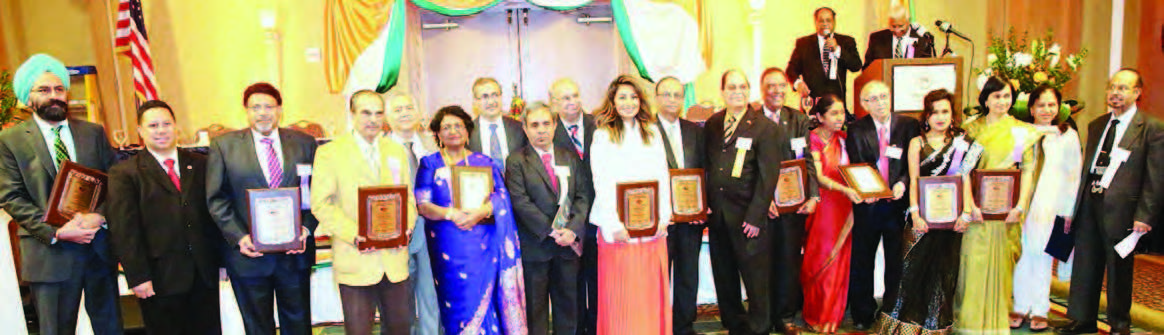
    NFIA, with Lal K. Motwani as the chair of awards committee, honored high achiever Indian Americans including, physician Bharat Barai and Aparna Hande for community service, TV Asia chairman H.R. Shah for mass media, musician Rita Sahai and Kathak dancer Amrapali Ambegaokar for performing arts, psych-pharmacologist Rangaesh Gadasalli for medicine and health sciences, and management consultant K.V. Kumar and attorney Navneet S. Chugh in business and finance. The late New York cardiologist B.N. Viswanath was honored posthumously for his lifetime contribution to NRIs through broadcasting and philanthropy. In addition, Heart and Hand for Handicapped, a New York-based organization, received an award for its outstanding services to the handicapped in the U.S. and India.

    (Based on a press release)

  • Mike Ghouse of World Muslim Congress to speak at Aligarh Muslim University

    Mike Ghouse of World Muslim Congress to speak at Aligarh Muslim University

    WASHINGTON DC (TIP): Aligarh Muslim University has organized a two day International conference with the theme -“Intellectual Crises of the Muslim Ummah: Rethinking Traditional Solutions”

    The speakers from around the world will speak on a variety of subjects focused on the theme and Mike Ghouse with the World Muslim Congress, a think tank will be presenting a paper on “Does Islam need a Reform or we just need new interpreters?  He will be participating in a few other panels, including “Can Muslims lead a conglomeration of faith communities?And is United Islam Possible?

    Mike Ghouse added, “I am pleased to see the efforts of Muslims in India, United States and elsewhere to hold these conferences and advance the idea of an inclusive world, where all of God’s creation is respected as members of one family. We all came from a single couple Adam and Eve, and were made into many communities and nations, as the Abrahimic religions put it, and the Dharmic traditions have its equivalent wisdom in Vasudhaiva Kutumbukum” meaning the whole world is one family.”

    Ghouse defines pluralism in action as “if we can learn to respect the otherness of others and accept the God given uniqueness of each one of us, then conflicts fade and solutions emerge to create a cohesive world, where no human has to live in apprehension or fear of the other.”  Mike plans to release soon on YouTube a 45 Minutes video on Pluralism and Islam.

    Mike has written over 2500 articles on Pluralism in religion, politics, society, work place and Islam. Readers can Google search “Pluralism speaker”, “Interfaith speaker” or “Muslim Speaker” for his articles. Dallas Morning News has published over 225 articles and Huffington post over 125 pieces with publication in myriad of other news and media outlets, including The Indian Panorama.


  • Indian-American doctor arrested on charges of taking kickback

    Indian-American doctor arrested on charges of taking kickback

    WASHINGTON (TIP): An Indian-American doctor in the US has been arrested on charges of receiving kickbacks for referring patients for medical treatment, a March 14 PTI report says.

    Neil Sharma, who was arrested on Friday, March 13, faces a maximum potential penalty of up to five years in prison, a fine of up to $25,000, and full restitution, prosecutors said.

    According to federal charges, Sharma, 34, of Lemont, Illinois, a licensed Illinois physician and the medical director of an Illinois healthcare company, received a kickback of $2,500 in cash, from an individual in return for his referring Medicaid and Medicare patients to the individual’s company for medical treatment.

    In February 2015, Sharma offered an individual who owns Company B an additional 500 patients at an increased rate. He also offered to refer to Company B Medicaid and Medicare patients in two new programs Company A planned to implement.

    In exchange, Sharma wanted a cash payment immediately and additional cash payments every month after for an unidentified length of time.

    He planned to conceal the payments received from the individual by being named the medical director for the individual’s other health care companies not contracted with Company A,

    That individual went to the FBI before meeting with Sharma in Rockford on Feb. 27 and giving him $2,500 in cash, according to court documents. The meeting was monitored by federal agents, who witnessed Sharma leaving with the money.