Year: 2015

  • Strikes kill 34 militants in Pakistan’s northwest

    Strikes kill 34 militants in Pakistan’s northwest

    ISLAMABAD (TIP): At least 34 militants were killed on March 18 when fighter jets pounded their positions in the restive northwestern tribal region, the Pakistani military said.

    Pakistan intensified operations against Tehreek-e-Taliban Pakistan (TTP) militants after the grisly Peshawar school attack in December in which at least 136 students were killed.

    The army said in a statement that precise aerial strikes were launched against militants in the remote Tirah valley area of Khyber tribal region which borders Peshawar. It said that “34 terrorists were killed” in the attacks.

    The toll could not be confirmed through independent sources as the region is out of bounds for the media.

    The Taliban have so far not commented on the attack.

    The Pakistan army claims that it killed more than 1,700 militants since launch of operation Zarb-e-Azb in North Waziristan in June.

    But the Taliban are far from defeated as they attacked two Christian churches on Sunday near Lahore, killing at least 15 people.

  • Burqa-clad suicide bomber kills provincial Afghan police chief

    KANDAHAR (TIP): A suicide bomber wearing a burqa blew himself up in the Afghan capital Kabul, killing an influential provincial police chief, officials said March 19.

    The Taliban immediately claimed responsibility for the death of Matiullah Khan, head of police in central Uruzgan province, where he had worked closely with NATO troops during their combat mission.

    Afghanistan’s interior ministry said in a statement that a “terrorist clad in a burqa” had killed Khan and strongly condemned the murder.

    General Farid Afzali, head of the criminal police in Kabul, confirmed to AFP the attack, which took place late on Wednesday.

    “Last night, Matiullah Khan was targeted by a suicide attack in Kabul and killed,” said Dost Mohammad, a spokesman for the governor of Uruzgan.

    It was not immediately clear why Khan was in Kabul, more than 300 kilometres (miles) from his province.

    Taliban spokesman Qari Yousuf Ahmadi claimed responsibility for the killing, which comes as Afghanistan prepares to celebrate Persian New Year called Nowruz.

    Taliban insurgents have been waging a deadly campaign in Afghanistan since they were overthrown from power 14 years ago.

    They have stepped up suicide attacks on government targets following an Afghan army offensive which began in southern Helmand province two months ago, but are under pressure to enter peace talks.

    The offensive in Helmand is seen as a key test of the ability of Afghanistan’s military to curtail the insurgency following the end of the US-led NATO mission in late December.

  • 18 killed, 11 injured in bus accident in Nepal

    KATHMANDU (TIP): At least 18 people, including a three-month-old baby, were killed and 11 others injured today when a bus skidded off from a rain-drenched mountain road in northwestern Nepal.

    The bus was heading for Nagam in Kalikot district from Jumla district, carrying 29 passengers.

    Thirteen people died on the spot, two others on their way to hospital and another two succumbed to their injuries upon reaching a hospital.

    Three of the injured passengers are said to be in critical condition. One of the passengers escaped unhurt. A three-month-old boy also succumbed to injuries during treatment bringing the death toll to 18, Himalayan Times reported.

    Police Inspector Indra Bahadur Raut said three seriously injured persons were airlifted to Kohalpur Medical College, Banke for treatment.

    Others are being treated at Jumla-based Karnali Institute of Health Sciences. Meanwhile, police have identified all of the victims.

    The incidents of road mishaps have increased in the recent past across the country which are attributed to poor road conditions, old vehicles and negligence of drivers.

    On December 8 last year, at least 18 people were killed and 49 others injured when an overcrowded bus fell off a mountain road and rolled 600 meters down a slope in western Nepal.

  • Navy has right to shoot anyone who intrudes: Lankan PM

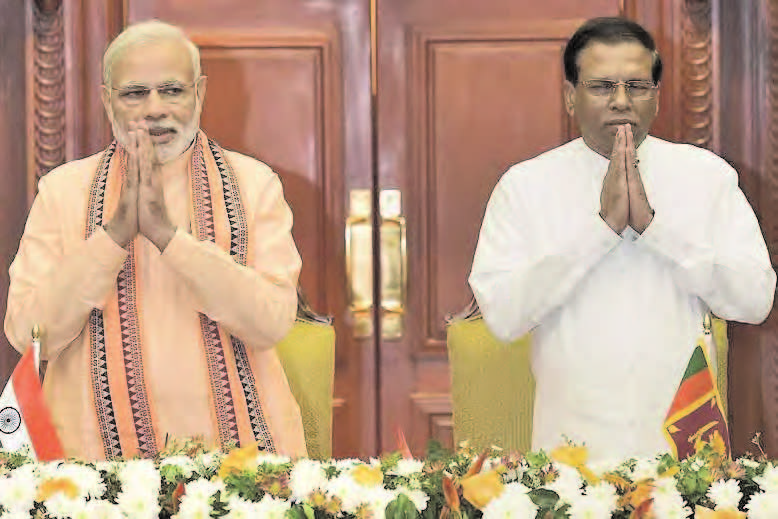
    COLOMBO (TIP): Sri Lanka’s Prime Minister Ranil Wickremasinghe has again said that his country’s navy has the right to shoot anyone who intrudes into its territorial waters, notwithstanding India’s forthright disapproval.

    “The Lankan navy has the right to shoot in any part of the country if anyone enters territorial waters, this is nothing new,” he told NDTV, two days after his Indian counterpart Narendra Modi’s trip to the island nation.

    Ahead of Prime Minister Modi’s visit, Wickremasinghe had told a Tamil news channel, “If someone tries to break into my house, I can shoot. If he gets killed… Law allows me to do that,” drawing India’s ire.

    Wickremasinghe said Modi’s trip to the country was a “successful visit”.

    The two nations are trying to resolve the fishermen issue, he said.

    The main issue, Wickremasinghe said, was bottom trawling and it has to stop. “That has been acknowledged by all sides,” he said.

    Modi, during his Sri Lanka visit had discussed the fishermen’s issue – a major irritant in bilateral ties – with President Mithripala Sirisena, and said this complex question involves livelihood and humanitarian concerns on both sides.”This complex issue involves livelihood and humanitarian concerns on both sides. We should handle it from this perspective. At the same time, we need to find a long term solution to this issue,” Modi had said.

  • Lankan govt may lift ban on Tamil diaspora groups

    COLOMBO (TIP): Sri Lankan government on Wednesday said it may lift the ban on Tamil diaspora groups imposed by the previous Mahinda Rajapaksa regime to achieve reconciliation with the minority community.

    Foreign minister Mangala Samaraweera told the Parliament that the government may lift the ban on Tamil diaspora groups imposed by the previous Rajapaksa regime.

    Samaraweera said that building national reconciliation was important and Sinhala, Tamil or Muslim diaspora groups have a role to play in taking Sri Lanka forward as a nation.

    Tamils voted in large numbers for President Maithripala Sirisena to defeat the pro-Sinhala Rajapaksa in the January 8 polls.

    Sirisena today said Prime Minister Narendra Modi’s call to implement the 13th Amendment would be taken up after the next parliamentary election and asserted that finding a solution to the vexed Tamil issue remains a priority for his government.

  • Pakistan sacked ‘some people’ to keep N-programme safe: Report

    ISLAMABAD (TIP): Pakistani authorities sacked some people having “negative tendencies” working with the country’s sensitive nuclear programme to keep it safe, according to a report.

    “We filtered out people having negative tendencies that could have affected national security,” said Brig
    (retd.) Tahir Raza Naqvi, who works for strategic plans division, the administering body for the nuclear programme.

    Those sacked were the “incorrigible” ones, he said, and quickly added: “Our checks are very solid.” 

    The sacked nuclear workers could not clear the personnel reliability programme that was started in mid-2003/04 to screen the employees working on the sensitive programme, Naqvi was quoted as saying by the Dawn.

    He was addressing a seminar on Wednesday on ‘Future security outlook of South Asia: Trends and challenges’ organised by an Islamabad-based thinktank, Centre for International Strategic Studies, and Konrad Adenauer Stiftung of Germany.

    Naqvi said all employees of the nuclear programme are periodically checked for family background, education, political affiliation and religious inclinations.

    He would not say how many were sacked over the years or why they failed to clear the screening.

    At least 12 people linked to disgraced nuclear scientist Dr Abdul Qadeer Khan were removed when the proliferation scandal surfaced in 2003. But those firings took place before personnel reliability programme was instituted.

    Prof Siegfried Hecker of Stanford University said Pakistan had real security concerns and its perceived need for a robust strategic deterrent was now recognised by the West.

    However, he said that concerns remained about the increase in fissile material production and development of diverse delivery systems (missiles).

    He said Pakistan must keep its nuclear weapons, material and know-how under strict government control.

    “Safety and security is paramount to manage nuclear enterprise,” he maintained, adding that safety and security was “not a destination, but a journey and the first line against nuclear terrorism”.

    Pakistan is believed to be sitting on something like 120 nuclear warheads and has recently brought into play two new heavy water plants that will enable them to produce about 24 nuclear warheads a year.

    The West fears Pakistan’s nuclear arsenal could be vulnerable to penetration by militant groups.

  • Sri Lanka as Indian Ocean pivot

    Sri Lanka as Indian Ocean pivot

    Prime Minister Modi should be congratulated for his bold decision to visit Sri Lanka for a bilateral visit, after Rajiv Gandhi in 1987. Perhaps, Modi has no internal political pressures or coalition objections that had prevented earlier bilateral visits to Sri Lanka.

    Having made a breakthrough, Modi should now build a strong partnership with Sri Lanka in achieving long-term national interests of India. Such an approach will have to accommodate the voices and sentiments of its federating units, but not get blackmailed by the latter. In this context, both his visit to Sri Lanka and the earlier visit of the new Sri Lankan President to India a few weeks back, provide a breakthrough, but not a substantial base to erect a bilateral superstructure.

    India needs big-ticket items; openings such as visa and custom relaxation, constructing a university stadium and a rail link are important but not grandiose. Both capitals require a strategic edifice that would chart the course. In cricket parlance, both countries should look for a Virat Kohli or Kumara Sangakkara and not a Ravindra Jadeja or Thisara Perera. The latter form a useful contribution in bits and pieces, but do not become a platform for the course of a match.

    New Delhi for long has allowed bilateral relations as the primary vehicle of interaction between India and Sri Lanka -both at political and economic levels. Sri Lankan Tamils and the Indian fishermen had become New Delhi’s pivot towards Sri Lanka.

    Unfortunately, the previous governments also allowed the bilateral issues and domestic opposition to dictate in not building a larger partnership with Sri Lanka.

    Today, the rise of the Indian Ocean provides an opportunity for New Delhi to build such a strategic partnership, outside bilateral relations. Geographically the Indian Ocean has become strategic; concepts and issues such as the Indo-Pacific, maritime security and safety of sea lanes of communication, along with new groupings, exercises and dialogues such as the Indian Ocean Naval Symposium, Milan, Indian Ocean Regional Association and the Indian Ocean Dialogue highlight the new reality and potential.

    Not just the Indian Ocean, but the entire maritime Asia is an important geography today. US, China, Japan, Australia and the EU – all are extremely interested in the Indian Ocean for economic and security reasons. India has a natural advantage in this region, and with a partnership, should not only aim to exploit the Indian Ocean, but the entire “Maritime Asia”.

    India can play a major role in the Indian Ocean, with Sri Lanka as its pivot. Situated a few miles away from the major shipping lanes of the Indian Ocean, Sri Lanka and its ports, especially Colombo and Hambantota, are strategically located. Perhaps, the Chinese understood this and invested billions of dollars in two projects in the Hambantota deep sea port and the now controversial Colombo Port City.

    While India pursues Afghanistan and Myanmar as its gateway to Central Asia and Southeast Asia respectively, and made substantial investments, there has been no similar approach in the South. On the maritime side, Sri Lanka does occupy a crucial position in the Indian Ocean and could become New Delhi’s pivot and gateway.

    Elsewhere, in the late 1990s, a few countries came together to establish an “Arctic Council” to discuss issues relating to sustainable development and environmental protection, along with studying climate change, shipping and exploration of oil and gas. Since Modi has renewed India’s approach towards SAARC emphasizing on regional cooperation with “all or some” of the countries, and has already established a BBIN network involving Bangladesh, Bhutan and Nepal, similar sub-regional cooperation can be pursued in the Indian Ocean.

    With Sri Lanka and Maldives, India can lead a “SIM Council on the Indian Ocean” focusing on similar issues relating to the Arctic Council such as maritime economy, shipping, climate change etc, and leading to sustainable and inclusive development of the Indian Ocean. While we have made enormous leaps in the space research, our investments and outputs on marine research remain primitive.

    Narendra Modi during his address in the Sri Lankan Parliament highlighted the importance of the “ocean economy” holding “enormous promise for both” the countries. The Joint Task Force on Ocean Economy is an important measure in this context, but both countries have to move forward and expand substantially. From marine economy to maritime tourism, the Indian Ocean remains absolutely untapped.

    While there have been numerous proposals to link India and Sri Lanka through tourism circuits, linking the port cities for maritime tourism would reap rich dividends. Imagine Cruise Liners linking Goa and Kochi in the western coast of India with Cox Bazaar in Bangladesh through the port cities in Sri Lanka and the eastern coast of India!

    Maritime disaster management in the Indian Ocean is another subject, where the proposed SIM Council could undertake substantial research and share experiences in managing it. Marine biology and the biodiversity of the Indian Ocean can become a part of a scientific agenda for the SIM Council.

    As the initiative expands, other countries could be brought in. It could expand beyond South Asia and link with West Asia and Southeast Asia. In fact, such an initiative could go well up to East Asia and Australia, with the Indian Ocean becoming the Centre of action.

    Outside the SIM Council idea, with a few countries in the Indian Ocean such as Sri Lanka and Maldives, New Delhi can project an “Asian Sea Lane” with support from the World Bank and/or Asian Development Bank.

    There have been two similar projects at the Asian level – the Asian Highway and the Asian Railway, supported by the international institutions. Asian Sea Lane can be projected as a maritime extension of the above two projects. India cannot pursue such a big project on its own or along with Colombo and Male. It needs huge financial support; while China may have the ability to build its own Maritime Silk Road, India will need the support of financial institutions and partner countries. From Japan to the EU, and from ADB to WB, such support can be sought for building infrastructure.

    Let there be a “Colombo Dialogue” that would bring countries for an initial discussion and provide a platform to discuss the larger idea. In fact, such a democratic platform leading to the creation of an Asian Sea Lane will even help address larger issues and make the process transparent. This will also help India devise its own strategy on the models of the Chinese Maritime Silk Road.

    Finally, India will have to move away from a strategy of “do this and don’t do this” vis-a-vis Sri Lanka. The Sri Lankan Tamil situation and the presence of China undermining India’s position certainly are substantial for New Delhi; but both the issues should not be allowed to overwhelm the bilateral relations.

    Modi has started off well with Sri Lanka. He has addressed the bilateral issues without undermining the interest of any particular party. He has signed a few agreements on what could be considered as harmless small-ticket items. Now he has to build large partnerships and establish a few big-ticket items. New Delhi has to be seen as an equal partner by Colombo and a constructive neighbor by the Sri Lankans; that will provide a larger leverage for India in addressing its own bilateral concerns.

  • How India is bidding adieu to Non-Alignment

    How India is bidding adieu to Non-Alignment

    The US president’s visit to India in January as the chief guest at the Republic Day celebrations has imparted a new sense of dynamism to a relationship that was seemingly drifting in recent years. A weak government in Delhi coupled with Washington’s lack of interest in India ensured that the two nations continued to talk past the other. The possibilities engendered by the civilian nuclear agreement, announced in 2005 and concluded in 2008, were a thing past with the bilateral relationship becoming a victim of recriminations and unfulfilled expectations.

    Today the relationship stands on the threshold of new possibilities, and much of the credit for this remarkable turnaround should go to India’s Prime Minister Narendra Modi, who in a short eight months has given a new direction to Indian foreign policy.

    For a leader viewed as provincial before elections, Modi has shown great diplomatic agility. The sheer audacity with which he seems to challenge the foreign policy shibboleths of the past is striking. The non-alignment ideologues in India stand confounded by the prime minister’s diplomatic successes. For years, the nation has been told that the only way the foreign policy establishment can secure Indian interests is by working within the rubric of non-alignment. Even a recent template on how Delhi should conduct its foreign and security policy by some of the best and the brightest in the Indian foreign policy establishment was termed “Non-Alignment 2.0.”

    But today Indian foreign policy is being shaped by a government not trapped in the rhetoric of the past, busily engaging major global powers with a confidence not seen in previous administrations. Defensiveness of the past is now replaced by an explicit acknowledgment of convergence with key partners including the US. Though Modi was denied a US visa in 2005, his government boldly reached out to Washington after coming to power. He recognized that the challenges India faces with a domestically fragile Pakistan, political uncertainty in Afghanistan, instability around India’s periphery and an ever-more assertive China cannot be managed without a productive US-India relationship, and Modi lost no time in reaching out to Washington, agreeing on a September 2014 bilateral summit meeting with President Barack Obama in Washington. Modi showed his trademark decisiveness in attempting to mend Indo-US ties, which had tapered off under his predecessor, and underscored the significance of the United States in Indian foreign-policy priorities. Modi cemented his reputation as a leader not only willing to stand up for Indian interests but also ready to find ways to move forward with others after signing a pact on the sidelines of the East Asia Summit in Nay Pyi Daw in November, reassuring the United States that India was not opposed to World Trade Organization’s nearly-completed Trade Facilitation Agreement (TFA).

    The prime minister followed this with a surprising move when he invited Obama to the 2015 Republic Day celebrations – an invite traditionally viewed as a celebration of India’s closest diplomatic partnerships. Obama’s visit to India saw the two leaders trying to sort out issues ranging from the nuclear deal to defense cooperation. The nuclear deal had been held up for six years amid concerns over the liability for any nuclear accident.

    A great leap forward was made after Obama used his executive powers to roll back the condition that US authorities be allowed to monitor use of nuclear material purchased by India even from third countries, and the US agreed to India’s proposal to build a risk-management insurance pool with a liability cap of 15 billion rupees, or US$244 million, to provide cover to suppliers who shunned the civil nuclear agreement over liability in the event of a nuclear accident.

    Bilateral defense cooperation was also energized with the two states agreeing to extend the Defense Cooperation Agreement for another 10 years, expanding its scope by declaring partnerships on issues including “technology transfers, trade, research, co-production and co-development.” Modi’s arrival in office gave new momentum to the India-US Defense Trade and Technology Initiative (DTTI), originally launched in 2012, to promote technological collaboration and co-development of critical defense systems ranging from anti-tank missiles to launch systems for aircraft carriers. There is an attempt underway to make the DTTI more operational and result-oriented. Since its institutionalization in 2012, no major projects emerged, but now scheduling has begun. This is a major step forward and also ambitious, with talk of working groups on aircraft-carrier and jet-engine technologies.

    Apart from the US, the Modi government is trying to increase its scope for diplomatic maneuvering vis-à-vis China by building substantive ties with states like Japan, Vietnam and Australia. This week Modi is visiting Indian Ocean island nations – the Seychelles, Mauritius and Sri Lanka -offering military and civilian assistance and shoring up India’s credibility as a net security provider in a region where China’s dominance has become significant in the last few years.

    At a time when the US-India relationship is being viewed through the prism of strategic changes in the larger Asia-Pacific and Indian Ocean region, it’s striking how marginal Pakistan has become in the relationship. The nation was not mentioned during the joint press conference of Modi and Obama. In their joint statement, the two leaders merely reiterated their call for Pakistan to bring the perpetrators of the 2008 terrorist attack in Mumbai to justice even as they reaffirmed the need for joint and concerted efforts to disrupt entities such as Lashkar-e-Tayyiba, Jaish-e-Mohammad, D Company and the Haqqani network.

    There is growing nervousness in Pakistan about the changing US role in South Asia. Islamabad has moved quickly to reinforce its all-weather partnership with Beijing, and Chinese President Xi Jinping is likely to visit Pakistan sometime this year in what will be the first trip by a Chinese head of state to the western neighbor in nine years. Chinese officials have also now confirmed that Beijing is involved in at least six nuclear power projects in Pakistan and is likely to export more to the country. Taking aim at Obama’s robust support for India’s permanent membership of the UN Security Council, China and Pakistan have underlined that any change in the 15-member body should be achieved through “consensus.”

    Underscoring its desire to play a more active role in South Asia, China has offered in recent months to mediate in stalled efforts to engage the Afghan Taliban in peace negotiations. Though there are tensions in the Sino-Pak bilateral relationship, especially pertaining to the presence in Pakistan of the East Turkestan Islamic Movement, founded by separatists from the Uighur ethnic minority native to the western Chinese region of Xinjiang, both sides have an interest in maintaining a viable partnership, especially as US-India ties take an orbital leap. Pakistan is also reaching out to new actors like Russia from which it hopes to buy three dozen Mi-35 helicopters. With trouble in Russia’s ties with the West and Moscow losing its privileged position in the Indian defense policy, new equations in South Asia won’t be too surprising.

    Under the Modi government, India charts new territory in its foreign policy, predicated on the belief that rather than proclaiming non-alignment as an end in itself, India needs deeper engagement with friends and partners to develop leverage in dealings with adversaries and competitors. The implications are already being felt in the region and beyond as India’s interlocutors try to configure responses to New Delhi’s proactive diplomatic maneuvering.

  • Status Quo in Israel

    The re-election of Prime Minister Benjamin “Bibi” Netanyahu after his Likud Party secured the first place with 30 out of the 120 seats in the 2015 Israeli legislative elections came as a bit of a surprise. Exit polls pointing to a better showing by the centrist-moderate coalition, the Zionist Union including the Labour Party, turned out to be wrong as the Likud emerged with far more votes than what was expected. While the Likud lacks a majority of its own, it now gets the right to form the government in coalition with other parties, and it is clear that Mr. Netanyahu will be Prime Minister for a fourth term.

    The Likud victory, belying expectations, can be attributed to the polarizing campaign led by Mr. Netanyahu who took a hyper-racist position denouncing Israeli Arabs and rejecting, in the run-up to the polls, the statehood demand by Palestinians. The triumph of the right wing also reflects the sharp change in attitudes in Israeli society that has become militantly opposed to any gesture of substantive peace with Palestinians. The silver lining in the elections was the emergence of the Joint List – a group of leftist and Arab parties – as the third largest grouping with 12 seats in the Knesset. Israeli Arabs have a larger and more inclusive voice in the Knesset than before.

    Globally, Mr. Netanyahu’s victory must frustrate even Israel’s closest ally, the United States, which was unable to dissuade the Israelis from the brutal bombardment of Gaza in 2014. A hardliner victory in Israel as the U.S. is battling the Islamic State hardly helps the larger strategic plan of easing tensions in West Asia. The U.S. has expressly supported a two-state solution and it must be worried by Mr. Netanyahu’s explicit rejection of Palestine nationhood during the election campaign. The U.S. could support a UN resolution explicitly defining a Palestinian state with pre-1967 borders as a response to Mr. Netanyahu’s change of views, but it is perhaps unlikely to happen.

    The U.S. is currently engaged in complex negotiations with Israel’s geopolitical rival Iran towards a nuclear treaty and would not want to upset its special relationship with Israel. Mr. Netanyahu’s allies go far beyond the White House and the U.S. State Department, with the powerful pro-Israel lobby spread across bipartisan lines in the U.S., especially in the resurgent Republican Party. However, Mr. Netanyahu’s uninhibited Zionist chauvinism might actually work to persuade western actors beyond the U.S. to see the Palestinian point of view on issues such as illegal Israeli settlements or the UN according statehood to the Palestinian Authority.

    (The Hindu) 

  • India Association of Long Island (IALI) celebrates Holi, the Festival of Colors

    India Association of Long Island (IALI) celebrates Holi, the Festival of Colors

    HICKSVILLE, NEW YORK (TIP): India Association of Long Island (IALI) celebrated the Indian festival of colors- Holi on Sunday March 8, 2015. The event, which had an overwhelming turnout of more than 200 guests, was celebrated in style, with lots of fun and Holi spirit. As guests arrived, they were welcomed with Gulal Teeka and served Thandai which is traditional drink of Holi. They were also served delicious snacks and sumptuous lunch by Antun’s.

    President of the association Satnam Singh Parhar in his welcome note requested all members to donate generously to IALI to help pay for renovation and maintenance of IALI Home (India Center) which was purchased recently.

    Women members of IALI  making Holi colorful with their dance performance
    Women members of IALI making Holi colorful with their dance performance
    Donors' generosity  recognized
    Donors’ generosity recognized
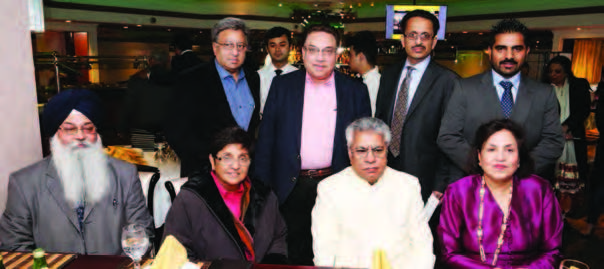
    Movers and shakers of IALI
    Movers and shakers of IALI

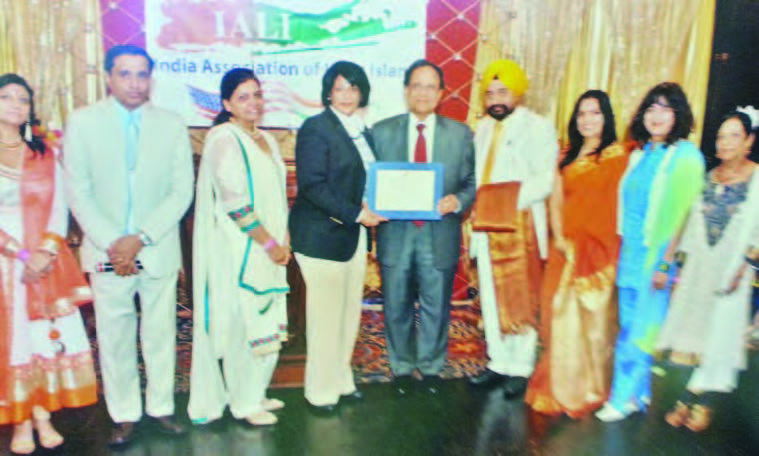
    His speech was followed by lighting of the lamp by the IALI Past Presidents and IALI officers. Padma Shri Dr. Dattatreyudu Nori was the guest of honor and was recognized for his accomplishments in the field of medicine. He was presented a plaque by Satnam Parhar and honored with a citation by
    Mrs.Nasrin Ahmad, Town Clerk of Town of Hempstead. Satnam Parhar acknowledged and presented Certificate of Appreciation to Bronze donors who donated up to $2000 for the purchase of IALI Home
    (India Center).

    An entertainment program followed, with lovely performances by students of Ms. Shilpa Jhurani, presentation by Ms. Teen USA, dances by Arya Academy, Holi song  by Parth Merai and an energetic folk dance performance by Ms. Preya Patel.

    Holi atmosphere was captured by elegant and enchanting dance performance by Ms. Gunjan Rastogi & Ms. Garima Bhatia to the melodious singing of Holi songs by Ms. Jyoti Gupta. The performers were showered with  rose petals and confetti manifesting the colors of Holi. IALI Secretary, Ms. Rekha Valliappan proposed a vote of thanks.

  • Reforming the Credit Reporting Industry

    Reforming the Credit Reporting Industry


    NEW YORK (TIP): Thanks to a settlement with the Attorney General, the three leading national credit reporting agencies will now improve credit report accuracy; increase fairness in resolving consumer disputes of credit report errors; and protect consumers from unfair harm to their credit histories due to medical debt. It has been widely reported over the last few years that there are gross inaccuracies that can be found on the average consumer’s credit report. Mistakes like these can misrepresent a consumer’s creditworthiness and routinely block people’s access to housing and jobs, particularly low income people and people of color. The Attorney General’s agreement will reform the entire industry and provide vital protections for millions across the country. The Attorney General also offered important tips for consumers looking to check their credit report.

  • MTA DIGS IN TO POCKETS OF RIDERS

    MTA DIGS IN TO POCKETS OF RIDERS

    NEW YORK (TIP): A sweeping price hike that covers subway, bus, rail fares and tolls, takes effect on Sunday, March 22.

    A monthly Metro Card price will go up from $112 to$116.50, a single trip will rise from $2.50 to $2.75, and the weekly card goes up a buck to $31.

    Riders will get some relief with a larger bonus for loading money on their Metro Cards.

    It will be increased from 5 percent to 11 percent, but straphangers will now have to load at least $5.50 to get the bonus. Before, they could get it by putting $5 on their cards.

    Cash tolls on the Verrazano will go from $15 to $16. Staten Island residents who use E-ZPass for 3 more trips a month will see a 24-cent increase to $6.24 a trip.

    For crossings like the Throgs Neck Bridge and Queens Midtown Tunnel, cash tolls will go from $7.50 to $8.

    The MTA’s financial woes include a $15 billion deficit in its capital plan, which funds big projects like the Second Avenue Subway and bringing the LIRR to Grand Central.

    It said it has cut its annual spending by more than a billion a year. The fare hike will bring in an additional$210 million for the MTA this year, and more than $260 million a year by 2018.

  • International Hindi Conference on April 3 to 5, 2015

    International Hindi Conference on April 3 to 5, 2015

    NEW YORK (TIP): The International Hindi Conference 2015 being held from April 3 to 5 at Rutgers University, New Jersey will focus on subject- The Expanding World of Hindi: Possibilities and Challenges.

    According to information provided by Conference Coordinator Ashok Ojha, the  following is the program, in brief.

    April 3rd (Fri): (2pm-4pm) Pre-conference workshop on World Readiness Standards for Hindi-Urdu by Dr. Vijay Gambhir, University of Pennsylvania: LLB 104 Building # 3036, 20, Seminary Place, College Avenue, New Brunswick, NJ.

    Hindi instructors, administrators, material developers are welcome to attend. However, they must register through our website and let us know that they are attending the pre-conference workshop by Vijay Gambhir, by emailing to: hindiconferencenyc2014@gmail.com

    The Inaugural Event will take place at: Rutgers University, Van Dyck Hall, 16 Seminary Place, New Brunswick, NJ 09801-1108 (April 3, 5-9 pm)

    April 4th (Sat) and 5th (Sun): All Sessions will take place at: Rutgers College Avenue Student Center, 126 College Avenue, New Brunswick, NJ 08901

    For details please visit:
    http://www.hindiconferenceamericas.com/agenda/

  • NYC homeless shelters see record high number of children in 2014

    NYC homeless shelters see record high number of children in 2014

    NEW YORK (TIP): A record-high 42,000 kids slept in a city homeless shelter last year – including 1 in 17 of New York’s black children, a report has found.

    Overall, one in 43 city children were among the 116,000 people forced into shelters during the year, according to a Coalition for the Homeless analysis that portrays a dire housing crisis that is hitting kids and African-Americans the hardest.

    “It’s a shocking finding – the crushing toll homelessness is taking on children,” said Mary Brosnahan, president of the coalition. “I don’t think it’s hyperbole to say this is the future of the city at stake.”

    Over the last decade, the number of families with children in shelters jumped 27%, and the number of African-American families jumped 41%.

    Jessica Pendergrass, 30, said homelessness has taken a toll on her daughter, Kayla Wilson, 12. They’ve been living in a Queens shelter for two months since Pendergrass lost her job as a home health aide and was kicked out of her grandmother’s apartment.

    “I was bawling, crying my eyes out, because I literally have nowhere to go,” said Pendergrass. “I’m just floating in the breeze because I really don’t know what I’m going to do. I can’t make rent in New York City,” she said.

    “It’s been hard,” said Kayla – but she recognized things could be worse. “I have a bed to lie in every night. I’m just grateful,” she said.

    The total nightly shelter population was 60,670 in January by the coalition’s estimates, a 13% increase from a year before.

    The number has dipped slightly, down 300 families from December. According to the Department of Homeless Services, which calculates the population differently, there were 57,718 people in shelters as of Tuesday.

    “The coalition’s report rightfully calls into focus income inequality, low wages and lack of affordable housing as clear drivers of homelessness. DHS is taking concrete steps to reduce a record-high homeless population,” said Commissioner Gilbert Taylor.

    Brosnahan credited Mayor de Blasio’s policies, like creating a rental assistance program, with making a dent in the crisis, but said more must be done.

    The group is pushing de Blasio to set aside 2,500 NYCHA apartments per year for the homeless, up from 750, as well as 10% of his 200,000 planned affordable apartments. They say Gov. Cuomo must fund rental assistance and supportive housing.

  • Indian-American Vijay Kumar named dean of Penn Engineering College

    Indian-American Vijay Kumar named dean of Penn Engineering College

    NEW YORK (TIP): An Indian-American expert, known for his groundbreaking work on autonomous robots, has been named dean of a prestigious US university in Pennsylvania.

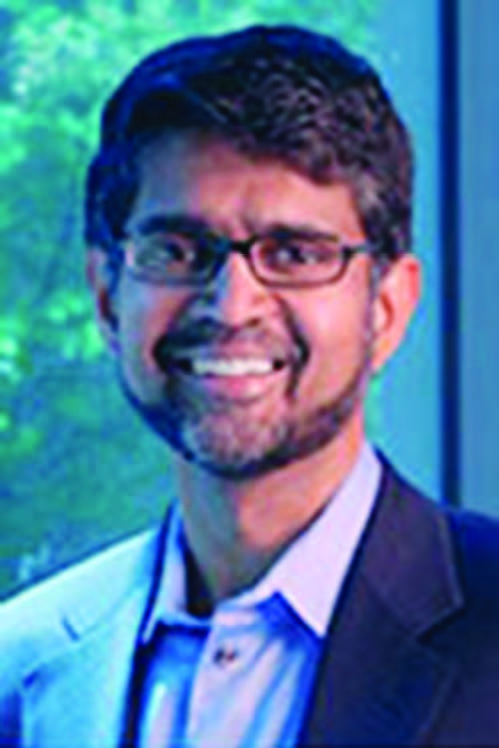
    Vijay Kumar has been named dean of Penn Engineering, effective July 1. A scholar and teacher of international renown, Dr. Kumar has been a member of the Penn Engineering faculty for more than two decades and has served in a wide range of key leadership roles. The announcement was made by Penn President Amy Gutmann and Provost Vincent Price.

    “Vijay’s superb academic judgment, compelling vision for the future of engineering and applied science and proven track record as a leader and administrator make him the perfect choice to lead Penn Engineering to even greater heights,” President Gutmann said.

    Dr. Kumar joined the Penn Engineering faculty in 1987 and currently serves as UPS Foundation Professor with appointments in the departments of mechanical engineering and applied mechanics, computer and information science, and electrical and systems engineering. As deputy dean for education from 2008-2012, he was instrumental in the creation of several innovative master’s degree programs. Earlier, he served as chair of the department of mechanical engineering and applied mechanics from 2005-2008, deputy dean for research from 2000-2004 and director of the General Robotics, Automation, Sensing and Perception (GRASP) Laboratory, a multidisciplinary robotics and perception laboratory, from 1998-2004. During a scholarly leave from 2012-2014, he served in the White House as assistant director for robotics and cyber physical systems in the Office of Science and Technology Policy.

    Dr. Kumar is recognized around the world for his groundbreaking work on the development of autonomous robots and on biologically inspired algorithms for collective behavior. The author of more than 400 refereed articles and papers and more than 20 books and book chapters, he is also a member of the National Academy of Engineering and a Fellow of the American Society of Mechanical Engineers (ASME) and of the Institute of Electrical and Electronic Engineers (IEEE). He is the recipient of numerous awards and honors, including the National Science Foundation Presidential Young Investigator Award, Penn’s Lindback Award for Distinguished Teaching (Almanac April 23, 1996), the ASME Mechanisms and Robotics Award, the IEEE Robotics and Automation Society Distinguished Service Award and the Engelberger Robotics Award.

    He has mentored outstanding doctoral students who are themselves leaders in research and education. He is also an exemplar of Penn’s commitment to innovation and entrepreneurship. He and his students have founded several companies using technologies and tools developed in his research programs.

    The selection of Dr. Kumar as the next dean of Penn Engineering successfully concludes a comprehensive search to find a successor to Eduardo Glandt, whose extraordinary 17-year term as dean is a fitting capstone to a brilliant career at Penn that stretches back nearly four decades. Under Dr. Glandt’s leadership, the School of Engineering & Applied Science has grown in both size and stature, adding superb and diverse faculty and students with a commitment to interdisciplinary teaching and scholarship. The school’s research and teaching facilities have been similarly expanded and upgraded with exceptionally modern and beautiful new buildings, including Levine Hall, Skirkanich Hall and most recently the Singh Center for Nanotechnology, which the Wall Street Journal called one of the best new buildings in the nation in 2013.

    “Vijay Kumar has the experience and vision-and the deep knowledge of Penn and Penn Engineering-that are critical to moving the engineering & applied science programs to a position of global preeminence,” President Gutmann said.

  • A Fundraiser for Kiran Bedi’s G30 for India Vision Foundation

    A Fundraiser for Kiran Bedi’s G30 for India Vision Foundation

    NEW YORK (TIP): The spirit of giving back to the community continued in the inspirational presence of Dr. Kiran Bedi, founder of India Vision Foundation at the Grand Gala Night under the overall motivational leadership of Pam Kwatra, founder & National Chairwoman of G30 for India Vision Foundation.

    Under the overall coordination of Pam Kwatra & Eric Kumar, the Co-founder & Co-Chair, the National Executive team of G30 for IVF, Rahul Bathla-Youth Director, Flora Parekh Development Director, Rajinder Chandihok Director of Recruiting along with several G30 for IVF Team members and volunteers, hosted a Grand Gala Dinner Night where many community leaders and generous donors were present.

    Spiritually blessed by Chamunda Swamiji & generously sponsored by D.P. Singh, H.K. Shah of Vegetarian Vision, Flora & Paresh Parekh, Manny Sethi & Jarnail Singh and the esteemed presence of Congress women Grace Meng, the Gala Night turned out to be an outstanding success. Emotions filled the air when over 67 children were generously adopted by the community, thereby laying an excellent example of “Giving Back to the Community”.

    India Vision Foundation (IVF) focuses on educating children of prisoners to save them from being the next victims. By adopting and educating a child we are not helping him/her but making them self reliant and they also became bread earners for their parents.

    “We should lessen the gap between Haves and Havenots”, says Dr. Kiran Bedi. We must stay connected & keep a watch on what is happening around us, which will empower us with greater responsibility for a better world.

    “G30 for India Vision Foundation provides an overseas platform and opportunity to connect generous hearts and donors with these needy children” says Eric Kumar, Master of Ceremonies of the evening.

    G30 for India Vision Foundation started in small gathering, under the leadership of Dr. Bedi, Pam Kwatra & Eric Kumar at Eric Kumar’s home over 4 years ago.

    “Practice what you preach, our action should be an example. We make choices to keep our conscience in check” says Pam Kwatra . In Feb 2013 & in 2015 Dr. Kiran Bedi was voted “the most trusted and most admired woman in India” (1.2 billion population)! says Rahul Bathla. Master of Ceremonies, Flora Parekh appealed for generous support, and adopt the needy children for just “A Dollar a day” “Yes!! A dollar a day can change a child’s life!” – says Flora Parekh.

    The spirit started at the gala Night with the inspirational message, lamp lighting and blessings by Chamunda Swamiji followed by devotional song by Pooja Kakkar – a youth volunteer for the organization. The spirit continued with the presentations and, videos played by Monica Dhawan, the Director of India Vision Foundation educated the audience on their various projects and activities.

    G30 For India Vision Foundation can be reached at
    www.TEAMIVFUSA.org.

    (Based on a Press Release)

  • First  ‘Red Bangle Award’ bestowed on Kayce Jennings and the film  ‘Girl Rising’

    First ‘Red Bangle Award’ bestowed on Kayce Jennings and the film ‘Girl Rising’

    NEW YORK (TIP): Women’s Education Project (WEP) honored Kayce Freed Jennings of The Documentary Group and the film Girl Rising with WEP’s first Red Bangle Award. The ceremony was held on March 16 at the Consulate General of India, New York.

    Ambassador Dnyaneshwar M. Mulay in his welcome note emphasized the need for empowering women
    Ambassador Dnyaneshwar M. Mulay in his welcome note emphasized the need for empowering women

    Celebrating, in part, International Women’s Day, WEP’s Red Bangle is awarded to”exceptional women, who by their life and accomplishment demonstrate the indomitable eloquence of the human spirit and inspire others to higher goals”.

    The film, from Academy Award nominated Director Richard E. Robbins presents the stories of nine courageous young women, each from different developing country and the challenges they face and overcome to pursue their dreams.

    The celebration began with Consul General of India in New York, Ambassador Dnyaneshwar M. Mulay’s opening remarks. He spoke about woman empowerment, gender equality, and gender budgeting – an initiative taken by the Modi Government recently. He also pointed out how we can proactively address the issues related to abuse of women.

    Zoe Timms, Founder and Director of Women’s Education Project – New York presented Kayce Jennings the Red Bangle. She accepted the award on behalf of the nine young women who are featured in the film. “I am proud to represent them. They (the 9 girls) have shown that they can change the world, if given the  opportunity,” said Ms. Jennings.

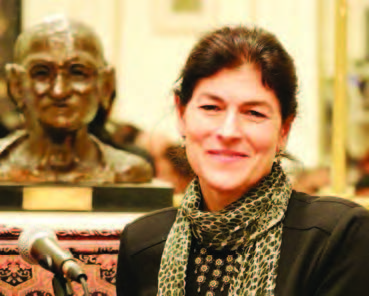
    At the lively discussion and a Q & A. (From L to R): Mythili Rao of WNYC, Zoe Timms, Founder and Director of Women's Education Project, and Kayce Freed Jennings of The Documentary Group.
    At the lively discussion and a Q & A. (From L to R): Mythili Rao of WNYC, Zoe Timms, Founder and Director of Women’s Education Project, and Kayce Freed Jennings of The Documentary Group.

    “The transformative power of education is overwhelming in the best sense so we’re incredibly excited to have the opportunity to bring the Girl Rising campaign to India. With the support and guidance of an extraordinary group of local partners, we look forward to using all the persuasiveness of Girl Rising story telling to focus attention on the critical goals of raising secondary school completion rates for girls and reducing gender-based discrimination,” she further added.

    A short film on WEP about their activities and a trailer from the film Girl Rising were screened. The event concluded with a discussion between Jennings and Timms, moderated by Mythili Rao of WNYC followed by a Q&A session.

  • IRS Comes knocking – Construction Companies are jittery

    IRS Comes knocking – Construction Companies are jittery

    NEW YORK (TIP): Internal Revenue Service officials are reported to have raided, March 18, the business premises and home of a prominent Indian American construction contractor in Queens. The raid has sent tremors of fear in the industry which relies heavily on unaccounted for transactions and several irregularities.

    The Indian Panorama has learnt from reliable sources that the IRS raid on the construction contractor’s premises is the result of complaints submitted to the department.

    Whatever the reason for the IRS raid, the construction contractors are said to be running to their accountants and CPA’s to seek their advice. Majority of the contractors is said to be fearful of an audit.

  • World record in academics established by Indian American Joshua Chari

    World record in academics established by Indian American Joshua Chari

    The 16-year-old is scheduled to receive gubernatorial honors Thursday for completing much of his undergraduate studies and pocketing eight — yes, eight — associate degrees along the way.

    How’d he do it? Chari is one of hundreds of students who have taken part in the Richardson Independent School District’s dual credit program, where qualifying students can garner credit for both high school and college at the same time.

    Joshua will soon be a Berkner High School alumnus, but at the time this article was published, his only alma mater was Richland College.

    [quote_box_right]The Indian Panorama was the First to report this story which is now been picked by other News agencies like CNN[/quote_box_right]

    DALLAS (TIP): A Richardson ISD  and Richland College student. Aged 16  has earned a world record of 7  A.S degrees while still in his final year of high school.

    Joshua Chari, son of Raj & Manjusha Chari of Richardson, Texas has earned a record 7 Associate degrees, moving past the known US record of 4 A.S degrees in parallel with the high school diploma. Joshua achieved this mostly through the “Early College Education” program in some US states which allow high school students to sign up for advanced level classes which give high school and college credit at the same time.

    Joshua attended  Richland College, Dallas, from where he earned his degrees in Liberal Sciences, Computer Science, Electrical, Bio-Medical, Telecommunications, Software and Computer Engineering. Joshua started taking college credit classes since he was in the 7th grade. He will get his 8th and final  Associates’ degree in Mechanical Engineering in May, 2 weeks before he gets his high school diploma.

    Joshua has been honored by various government and educational institutions for his stellar academic achievements by proclamations and awards, pictures and videos of which could be seen on the internet. he Texas State legislature has recognized and honored Joshua by passing a bill exclusively in his honor through house bill HR480.

    After high school, Joshua plans to go to Univ. of Texas at Dallas, in for a fast-track BS/MS degree with Dual Majors in Bio-Medical and Mechanical Engineering with dual minors in Nano-Technology and Business. He already has a full ride Academic Excellence Scholarship for the entire college studies.

    Links to some of Joshua’s TV interviews and honors and articles in the news are as follows:

    1. Text of the Bill HR480, honoring Joshua Chari, by the 84th Texas House of Legislature:
    https://legiscan.com/TX/text/HR480/1119381

    2. Dallas Morning News article : http://bit.ly/1Ajo7go

    3. Richardson School District Newsletter, Joshua Chari’s article:
    http://www.risd.org/SchoolTimes/010915/index.html#a2

    4. Richardson Mayor and City Council presenting Joshua with a Proclamation:
    https://www.facebook.com/video.php?v=754213557950559&se t=vb.100000857648884&type=2&theater

    5. Dallas County Commissioners and County Judge recognizing Joshua for his achievements at the county
    administration offices:
    https://www.facebook.com/video.php?v=741545482550700&se t=vb.100000857648884&type=2&theater

    6. WKRC TV channel:
    https://www.youtube.com/watch?v=J5lVvsGucug

    7.     ABC TV channel: http://6abc.com/494187.

  • Indian Consulate’s  Community Outreach to Boston

    Indian Consulate’s Community Outreach to Boston

    NEW YORK (TIP): As part of the Indian Consulate’s Community Outreach program for the New England area, Indian delegates met Ms. Amy Hariani of US India Business Council members, US Dept. of Commerce Director Mr. James Paul, Massachusetts Office of International Trade & Investment (MOITI), Massachusetts Tech Collaborative, Massport’s Michelle Lampa, and distinguished members  Mr. Kamaljit S. Bawa, and business representatives  Mr. Amit Kanodia and Mr. Anil Matta on March  13. The event was coordinated ably throughout by Mr. Amit Dixit, ED – South Asian Arts Council at Boston.

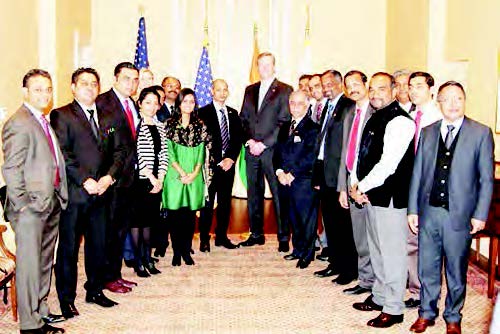
    The Indian delegates were received by Boston Mayor Martin J. "Marty" Walsh, displaying the plaque that was presented to him by the Consul General of India Mr. Mulay, who is seen to the right of the Mayor.
    The Indian delegates were received by Boston Mayor
    Martin J. “Marty” Walsh, displaying the plaque that was presented to him by the Consul General of India Mr. Mulay, who is seen to the right of the Mayor.

    The Indian delegation was represented by Ms. Ridhika Batra of FICCI and Ms. Sumani Dash of CII, several Indian Banks, Air India, Ms. Ruby Chadha of MakeMyTrip, Air India and senior Consular officials  Mr. Manoj Mohapatra, Mr. Ngaihte and Mr. Sreenivasa Rao led by Consul General Mr. Dnyaneshwar Mulay.

    A community event was organized in the evening, with over 200 in attendance, with several speakers of the Indian delegation, including Indian Banks.

    Air India presentation made by  Rishikant Singh  was very well received by the audience.

    (Based on a Press Release) 

  • South Asian Film Festival in Dallas thrills Thousands

    South Asian Film Festival in Dallas thrills Thousands

    DALLAS (TIP) It was a rich fare  for three days  for film lovers in Dallas during the  first ever South Asian film festival held in  Dallas, Texas which saw over a thousand film lovers attending the event that featured films focusing on issues affecting the continent. The three-day Dallas-Fort Worth South Asian Film Festival, held at the Angelika Film Center in Plano, North Texas from Feb. 27 to Mar. 1, featured 14 shorts, documentaries and feature films. Carefully selected films had a focus on issues affecting the South Asian subcontinent and explored the lives and stories of the South Asian Diaspora in the United States.

    “The response was fabulous, especially given the crappy weather as news reports warned North Texans not to leave their homes because of the snowstorm, and we still had completely packed theaters for our screenings. It has been a very humbling experience, and we’re already preparing for DFW SAFF 2016,” said  Jitin Hingorani, Jingo Media CEO and DFW SAFF founder and festival director.

    The Indian Panorama team of editor Prof. Indrajit Saluja, Dallas Bureau Chief Lovllien Kaurr and Photo journalist Zia Khan attended the film festival on Saturday, February 28. Prof. Saluja and Lovllien Kaurr are seen with Jitin Hingorani, Jingo Media CEO and DFW SAFF founder and festival director, and festival organizers
    The Indian Panorama team of editor Prof. Indrajit Saluja, Dallas Bureau Chief Lovllien Kaurr and Photo journalist Zia Khan attended the film festival on Saturday, February 28. Prof. Saluja and Lovllien Kaurr are seen with Jitin Hingorani, Jingo Media CEO and DFW SAFF founder and festival director, and festival organizers


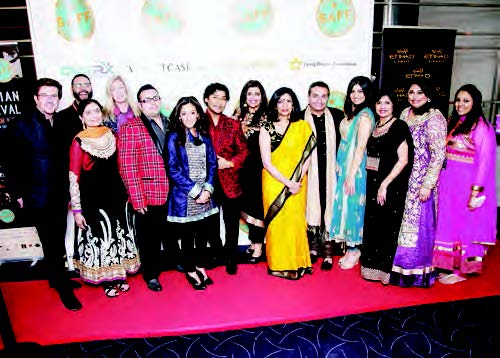
    The producers, directors and actors who attended the festival and walked the red carpet included Viveck Vaswani, Tannistha Chatterjee, Mahesh Pailoor, Jeffrey D. Brown, Jane Charles, Dylan Mohan Gray, Suma Reddy, Fahad Mustafa, Deepti Kakkar, Tarun Verma, Arun Sukumar and Ryan Matthew Chan.

    The festival kicked off with the opening night film “Brahmin Bulls” Feb. 27, followed by shorts and documentaries “Katiyabaaz/Powerless,” “Asian Pride Project,” “Fire in the Blood” and “Tomorrow We Disappear,” and women’s programming “Blouse,” “Happy Raksha Bandhan” and centerpiece film “Sold” Feb. 28.

    Makers of "Sold" and "Blouse" were honored  at Angelika Film Center,  Plano.
    Makers of “Sold” and “Blouse” were honored at Angelika Film Center, Plano.


    The showcase films screened Mar. 1 included family programming “Ravi and Jane” and “The World of Goopi and Bagha,” followed by youth programming shorts “Therapy,” “Just Friends” and “Acceptance.”

    A question answers session on February 28th night  after the screening of “Sold” and “Blouse” was indeed remarkably interesting. The makers of the two films  candidly answered questions from a number of spectators. The Indian Panorama editor Prof. Indrajit Saluja congratulated the director and producer of “Bold” for highlighting the issue of girl trafficking  which  is a serious challenge to  society everywhere, not just Nepal and India, the locations in the movie. He  said the movie had stirred the conscience of viewers.

    Film makers at the film festival  pose for a photograph with Jitin Hingorani
    Film makers at the film festival pose for a photograph with Jitin Hingorani

    “Rough Book.”  was premiered on the closing night.

  • Russian military threat – U.S. admiral raises alarm

    Russian military threat – U.S. admiral raises alarm

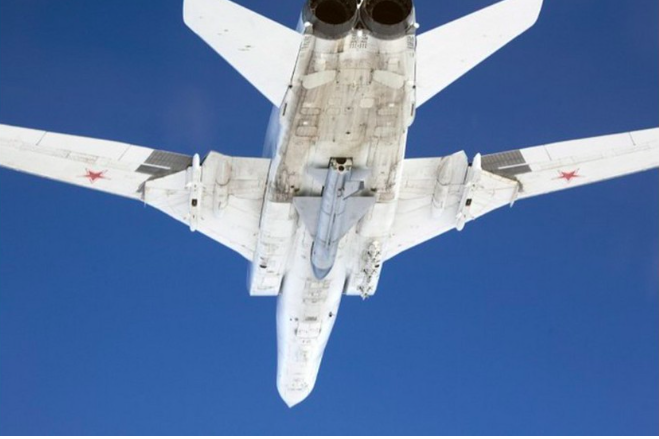
    Washington (TIP) – The ability of the U.S. and Canadian military to defend North America could be jeopardized by stepped up Russian military activity, according to the commander of the North American Aerospace Defense Command.

    Adm. William Gortney told the Senate Armed Services Committee on Thursday that Russia is continuing to work on its program to deploy “long-range conventionally armed cruise missiles,” that can be launched from its bomber aircraft, submarines and warships. This is giving the Kremlin “deterrent” options “short of the nuclear threshold,” Gortney said.

    “Should these trends continue over time, NORAD will face increased risk in our ability to defend North America against Russian air, maritime and cruise missile threats,” he said.

    Gortney’s remarks came in written testimony submitted to the committee. 

    “This past year has marked a notable increase in Russian military assertiveness,” on the world stage, he said. Russian heavy bomber aircraft flew more patrols outside Russian airspace “than in any year since the Cold War,” though he did not offer a specific number. There have also been increased Russian air patrols across the coastlines of Europe.

    The NORAD commander later said that Russian flights, even down the English Channel, are at a pace “that has not been what they’ve done in the past, even back with the Soviet Union.”

    Under NORAD operations, the U.S. and Canada routinely send fighter jets into the skies to monitor any Russian military aircraft approaching the U.S. coastline. The Russian operations have not extended to actually flying into U.S. or Canadian airspace, but in the last year Russia is clearly trying to keep a closer eye on NORAD.

    “We have also witnessed improved interoperability between Russian long-range aviation and other elements of the Russian military, including air and maritime intelligence collection platforms positioned to monitor NORAD responses,” he said. 

    Gortney said the Russian air patrols, in part, are designed to “communicate its displeasure with Western policies, particularly with regard to Ukraine.”

    One of the security challenges for the U.S. is to determine whether the cruise missiles on its bomber aircraft, submarines and warships are indeed conventional or may be nuclear tipped. When carried aboard submarines, ships and in the internal bays of bombers it’s nearly impossible for U.S. intelligence to know with certainty. The concern remains that the Russian deployments of aircraft and ships into Crimea and the Kaliningrad region could give Moscow a platform for the deployment of the weapons that concern the U.S.

    “They can range critical infrastructure in Alaska and in Canada that we rely on for a homeland defense mission,” Gortney told senators, explaining the reach of the long-range of the Russian cruise missiles.

  • India’s does its first hand transplant at AIMS

    India’s does its first hand transplant at AIMS

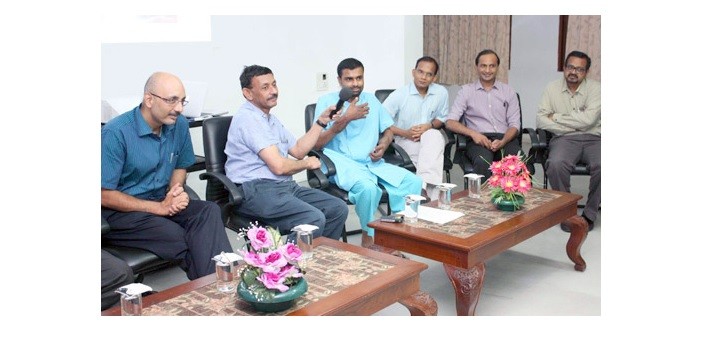
    India’s first hand transplant was carried out successfully at the Amrita Institute of Medical Sciences, Kochi, on January 13, 2015 though several have been performed globally over the last decade. The milestone has already been lauded by international experts.

    Hand transplants are considered to be more cost effective and efficient compared to prosthetic hands, especially in bilateral amputees. So far, hand transplants and other composite tissue transfers including the face have been done only in USA, European countries, China and Australia.

    The one carried out on January 13, 2015 was the first hand transplant in a coloured skin population in the world and the first in India.

    The transplant team was led by Dr. Subramania Iyer, Professor and Chairman of Plastic Surgery. The surgical team comprised of senior consultants in Plastic Surgery – Dr. Mohit Sharma, Dr. Sundeep Vijayaraghavan, Dr. Kishore P. and Dr. Jimmy Mathew. The immunosuppression management was under Dr. George Kurian supported by Dr. Anil Mathew, Dr. Rajesh and Dr. Zachariah. The rehabilitation was carried out by the team led by Dr. Surendran and Dr. Ravi. The center was approved for carrying out hand transplant by the Government of Kerala after the inspections by the medical education directorate.

    The operation lasted for 16 hours and ended by 8 PM on Tuesday. More than 20 surgeons participated in the procedure. Each of the hand required connecting two bones, two arteries, 4 veins and about 14 tendens. The immune suppressant drugs were started before the start of the surgery and continued after it.

    Internal organ transplants are very common. But the transplant of external parts like face and hand (called composite tissue allotransplant) is rare, but is getting accepted as the best modalities of rehabilitation for many patients. In bilateral hand amputees hand transplants are the best option. 

    The details of the transplant has been added to the international registry of hand transplants which maintains stringent standards in the followup of these cases.

  • PocketSurfer smartphones starting at Rs. 1,999 or $33

    PocketSurfer smartphones starting at Rs. 1,999 or $33

    Akash tablet maker DataWind is back with another product which will be the most affordable smartphone starting at just Rs 1,999 in collaboration with Reliance Communications. 

    The new range of PocketSurfer smartphones is powered with free unlimited internet browsing for one year on Reliance.

    The new PocketSurfer smartphones allow the consumers to join the digital age at an affordable cost. The PocketSurfer 2G4 has a 3.5 inch screen, Dual SIM, EDGE network while PocketSurfer 3G4 is a four inch, Dual SIM, Dual camera, 3G network compatible smartphone.

    The President and CEO of DataWind, Suneet Singh Tuli, emphasized on the power of internet. “Internet pervades our lives. From education to businesses, internet is everywhere. Today, no business model can effectively run without its online presence,” said Tuli. “With these ultra-low cost smartphones, we wish to create a digitised India and make technology accessible to every common man,” he added.

    The products will be available on Naaptol’s TV, print and online shopping platforms. The products will also be available from March 24 at Sangeetha Mobiles, Spice Hotspot Retail and retail partners. With this launch, DataWind targets tier II and tier III cities of the country.

    India will be the world’s second largest smartphone market. With a population of just over 1.2 billion, India has nearly as many people as China. Yet, unlike China, India’s smartphone penetration is still extremely low. More than 900 million Indians have a mobile subscription, but only about 110-120 million have a smartphone, according to most estimates.

    Samsung & Micromax control most of the smart phone market along with the Apple iPhone loyalists. The Indian touch screen smart phone market is estimated to grow the fastest in the world as per reports.


  • BJP’s Amit Shah threatens PDP over Kashmir issue – Alliance in deep waters

    BJP’s Amit Shah threatens PDP over Kashmir issue – Alliance in deep waters

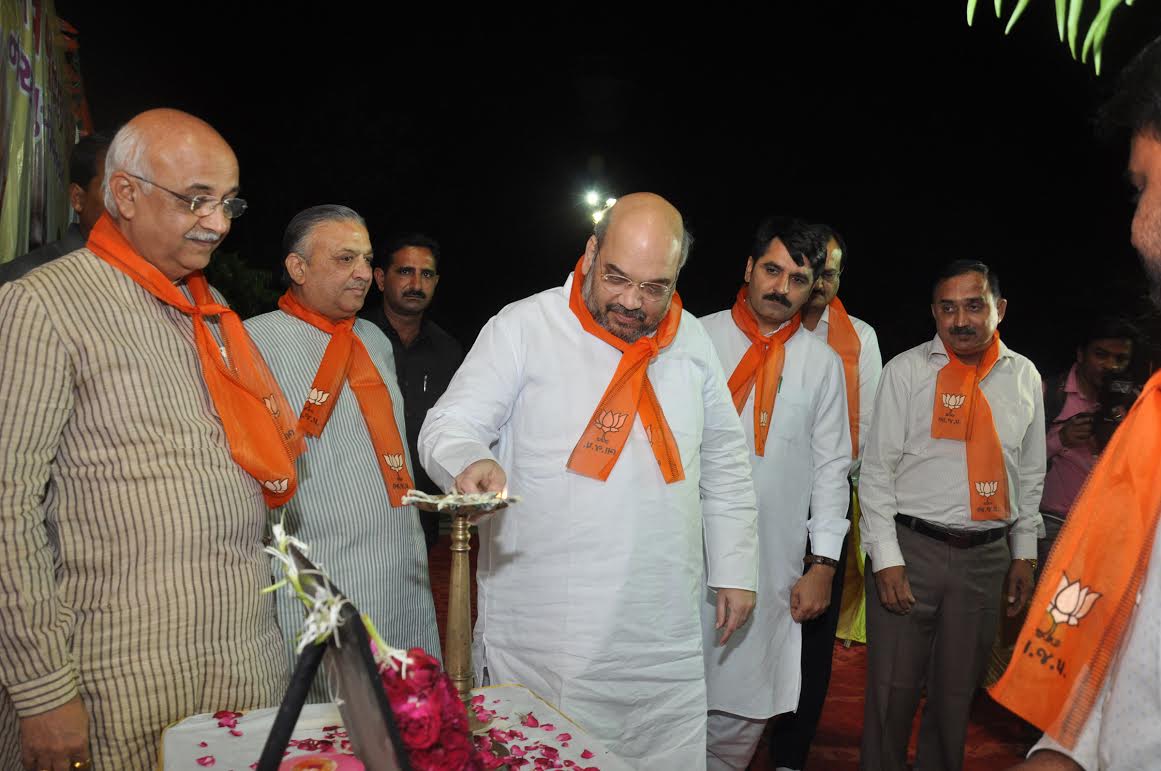
    BJP chief Amit Shah said that his party would not compromise on national interest and could end its alliance with PDP, if “Kashmir issue” is not solved.  

    “People of this country have blessed us like Lord Shiva and given us very big responsibility. BJP will never compromise on national interest, merely to remain in power in Jammu and Kashmir,” Shah said, addressing BJP workers in his assembly constituency Naranpura yesterday. 
     
    “The government (in J&K) has been formed only to solve Kashmir issue and I have full trust that we will find a solution to this issue. If it (solution of Kashmir issue) does not come about, then nobody can stop our party workers from leaving the coalition government,” Shah said. 

     
    However, BJP’s spokesperson Harshad Patel in Gujarat said that Shah merely said that national interest is the party’s priority and he never categorically said anything about breaking the BJP’s alliance with the PDP. 

    “He (Amit Shah) merely said that national interest is our priority and BJP will not allow any anti-national activities on the soil of Jammu and Kashmir,” Patel said. 

    Prime Minister Narendra Modi had also clarified before the Lok Sabha that Alam’s release is not acceptable and that the government won’t tolerate any compromise on the nation’s integrity. 

    Union Home Minister Rajnath Singh had also echoed the sentiments saying that his government’s top priority was national security and not continuance of the government in the state.