Year: 2015

  • Immigration: 26 states claim Obama Administration misled judge in lawsuit

    Immigration: 26 states claim Obama Administration misled judge in lawsuit

    HOUSTON (AP) — A coalition of states suing to stop President Barack Obama’s executive action on immigration alleges the government misled a judge about not implementing part of the plan before the judge temporarily halted it.

    The allegation comes after the Justice Department said in court documents this week that federal officials had given 100,000 people three-year reprieves from deportation and granted them work permits under a program that protects young immigrants from deportation if they were brought to the U.S. illegally as children.

    Justice Department attorneys had previously said federal officials wouldn’t accept requests under an expansion of the 2012 Deferred Action for Childhood Arrivals program, known as DACA, until Feb. 18.

    The federal government’s immigration actions regarding DACA as well as a program that would extend deportation protections to parents of U.S. citizens and permanent residents who have been in the country for some years, were put on hold on Feb. 16 by U.S. District Judge Andrew Hanen in Brownsville, Texas. Justice Department attorneys have asked Hanen to lift his hold while they appeal the ruling to the 5th U.S. Circuit Court of Appeals in New Orleans. Hanen has not made a decision on that request.

    Obama’s action, first proposed in November, could spare from deportation as many as 5 million people who are in the U.S. illegally. Many Republicans strongly oppose his action and 26 states, most of them led by Republicans, sought to block the Obama orders as unconstitutional.

    “News that tens of thousands of expanded work permits have already been issued to illegal immigrants while President Obama’s executive action, which we believe is illegal, is being contested in the courts is both outrageous and unacceptable,” Texas Lt. Gov. Dan Patrick said in a statement.

    In court documents filed Tuesday, the Justice Department said that between Nov. 24 and Feb. 16, federal immigration officials granted the three-year reprieves to 100,000 individuals who were already eligible under the original 2012 guidelines of DACA.

    The Justice Department said the federal government recognizes that its identification of Feb. 18 as the date when requests under the new and expanded eligibility would be accepted “may have led to confusion.”

    Justice Department attorneys said they don’t believe the preliminary injunction requires federal officials to take any steps to reverse the three-year reprieves already granted.

    In court documents filed Thursday, the states said they don’t understand why the U.S. government doesn’t consider the approval of the 100,000 reprieves to have been done under the new and expanded guidelines of DACA.

    The 2012 DACA guidelines provided two-year deportation reprieves and work permits. Obama’s new immigration action would expand that to three years.

    “This newly disclosed conduct is difficult to square with (the federal government’s) prior representation to the Court that ‘nothing is going to happen’ until weeks after” a Jan. 15 court hearing on the preliminary injunction request, the states said in court documents.

    The states, led by Texas, asked Hanen to allow them to request additional information from the federal government about how it approved the DACA requests while the lawsuit was going through the courts.

    In his Feb. 16 decision on the injunction, Hanen wrote the federal government had indicated that Feb. 18 would be the date it planned to accept requests under the expansion of DACA. Hanen also wrote that while his injunction did not affect the 2012 DACA program, it did put on hold its expansions and additions proposed by Obama’s action.

    The other major part of Obama’s immigration action extending deportation protections to parents of U.S. citizens and permanent residents who have been in the country for some years, had not been expected to begin until May 19.

  • China Responds to US Concern Over Counterterrorism Law

    China Responds to US Concern Over Counterterrorism Law

    China’s drafting of its first counterterrorism law is a domestic issue, China’s foreign ministry said on Tuesday in response to comments made by the US.

    US President Barack Obama on Monday said he was concerned that the law would require technology firms to hand over encryption keys, the passwords that protect data.

    The formulation of a counterterrorism law is an important step of rule of law and combating terrorism. The content of the draft law is based on real experiences in the fight against terrorism and has taken into account lessons learned by other countries, state-run Xinhua news agency cited foreign ministry spokesperson Hua Chunying as saying at a daily news briefing.

    “The formulation of the counterterrorism law is China’s internal affair. We hope the United States can calmly and objectively handle it,” she said.

    “Every country is taking measures to ensure their information is secure,” Hua said.

    She said China had always opposed network monitoring and supported the drawing up of cyberspace rules within the UN’s framework.

    In September 2011, China, together with Russia, Tajikistan and Uzbekistan, submitted an “International Code of Conduct for Information Security” to the 66th session of the UN General Assembly, which promoted such norms and rules.

    An updated draft was proposed to the UN in January 2015, to promote peace and stability in cyberspace and governance without interference in the domestic affairs of other countries.

  • USE CINNAMON IN YOUR BEAUTY ROUTINE

    USE CINNAMON IN YOUR BEAUTY ROUTINE

    While cinnamon is a spice that lends great flavour to your food, it can also be used in your make-up and skincare routine! We tell you how.

    Use it like a bronzer. Combine cinnamon, nutmeg, corn starch and cocoa powder and mix them together. Check the colour; if you want a darker shade, add a little more cinnamon, or if you want a lighter shade, add some corn starch.

    If you have dyed your hair in a reddish hue, you can use cinnamon to keep the colour flaming and bright!Add cinnamon to your conditioner and once you have applied it to your hair, wrap them up in a shower cap. Leave your hair for six to eight hour. Wash your hair and you will notice the difference. You can use it to make a delicious lip balm. Add a tablespoon of powdered cinnamon to hot coconut oil. Once this mixture sets, it will turn into a balm.

  • FOODS THAT KEEP YOU HAPPY

    FOODS THAT KEEP YOU HAPPY

    To lead a quality life you need to be energetic and happy. There are magic foods that can help you when clubbed in a trio

    FOODS TO BOOST ENERGY

    Whether you are heading out for an exercise session or suffering from a mid-afternoon slump, there are times when we all need energy boost. Here are three instant pick-me-up foods.

    Oats

    If you’re feeling worn out, weak or unable to concentrate, you could be deficient in certain B vitamins. These vitamins not only help to keep the brain functioning properly, they also help the body to break down carbohydrates into glucose to fuel the body. For a good source of B vitamins, try incorporating oats into your diet; a morning bowl of porridge should do the trick.

    Chocolate

    Amongst the many reported health benefits of dark chocolate (including its ability to lower heart disease risk, prevent wrinkles and boost the mood), the popular treat is also a great pick-me-up snack, which is great news for chocoholics. Chocolate is high in energy-boosting chemicals including theobromine (a stimulant found in many popular energy drinks) and caffeine.

    Beetroot 

    Beetroot not only provides a multitude of health benefits, the vibrant vegetable is also a great source of longlasting energy. First of all, beetroot has a high sugar content which helps to provide an instant energy boost. It is also high in many energy-boosting nutrients including magnesium, iron, vitamin C and nitrate.

    FOODS TO BEAT THE BLUES

    We all go through periods of feeling anxious, irritable or depressed. The foods you eat can directly influence the way you feel, so check out these top three foods to cheer you up.

    Marmite

    If you’re feeling anxious, stressed or depressed, a dose of Marmite, rich in B vitamins, could help to lift your mood. B vitamins are important for normal brain function and producing moodboosting serotonin, with vitamins B12 and B6 being particularly beneficial for regulating your mood.

    Oily fish

    Omega-3 fatty acids found in oily fish are well known for being good for the heart. However, they are equally beneficial for our brain health and mood. A recent study found that participants who had lower levels of omega-3 fatty acids in their blood were more likely to be moderately depressed and have a negative outlook.

    Bananas

    Bananas are high in natural sugars, making them a great remedy for low energy levels which can leave you feeling down. On top of this they are a great source of tryptophan, an essential amino acid which boosts serotonin levels, helping to regulate your mood.

    FOODS TO HELP YOU SLEEP

    Whether it’s a one-off occurrence before a big event or a nightly struggle, most of us suffer from insomnia at one time or another. Fortunately, there are foods that can help you sleep a little easier.

    Dairy products

    If you’re struggling to get a good night’s sleep, foods containing tryptophan should be a first port of call. Tryptophan, an essential amino acid, helps to raise serotonin and melatonin levels in the body, both of which can help induce sleep. Bedtime-friendly sources include dairy products such as yoghurt and milk.

    Oats Again 

    While many of us associate oats with breakfast time, they are also the perfect evening snack. Oats are a good natural source of melatonin, which is often taken as a sleep aid due to its ability to help regulate the body’s internal clock. They are also another good source of tryptophan, especially when combined with milk.

    Flax seeds

    Flax seeds are great for increasing levels of sleepregulating substance serotonin in the body due to their high levels of both tryptophan and omega-3 fatty acids. Furthermore, the omega-3 fatty acids they contain have been proven to help reduce the anxiety, depression and stress which are leading causes of insomnia.

  • PEN TO HELP DIABETICS MONITOR BLOOD SUGAR LEVELS

    PEN TO HELP DIABETICS MONITOR BLOOD SUGAR LEVELS

    WASHINGTON (TIP): Ballpoint pens filled with high-tech bio-inks can be used to draw sensors directly on the skin to help detect glucose levels in diabetics, scientists say. The research leads to an era when anyone will be able to build sensors, anywhere, according to researchers at the University of California, San Diego.

    The team has developed high-tech bio-inks that react with several chemicals, including glucose. They filled off-the-shelf ballpoint pens with the inks and were able to draw sensors to measure glucose directly on the skin and sensors to measure pollution on leaves. Researchers envision sensors drawn directly on smartphones for personalized and inexpensive health monitoring or on external building walls for monitoring of toxic gas pollutants.

    The team used pens, loaded with an ink that reacts to glucose, to draw reusable glucose-measuring sensors on a pattern printed on a transparent, flexible material which includes an electrode.

  • Soon, you could talk with computers like friends

    Soon, you could talk with computers like friends

    NEW YORK (TIP): Humans may soon be able to talk to computers and robots the same way they talk to their friends, scientists say.

    A new programme from the US Defence Advanced Projects Agency (DARPA) aims to get computers to express themselves more like humans by allowing them to use spoken language, facial expressions and gestures to communicate.

    “Today we view computers as tools to be activated by a few clicks or keywords, in large part because we are separated by a language barrier,” said Paul Cohen, DARPA’s Communicating with Computers (CwC) programme manager.

    “The goal of CwC is to bridge that barrier, and in the process encourage the development of new problem-solving technologies,” Cohen said.

    One of the problem-solving technologies that CwC could help further is the computer-based modelling used in cancer research.

    Computers previously developed by DARPA are already tasked with creating models of the complicated molecular processes that cause cells to become cancerous.

    But while these computers can churn out models quickly, they are not so adept at judging if the models are actually plausible and worthy of further research.

    If the computers could somehow seek the opinions of flesh-and-blood biologists, the work they do would likely be more useful for cancer researchers.

    To get computers up to the task of communicating with people, CwC researchers have devised several tasks that require computers and humans to work together toward a common goal, ‘Live Science’ reported.

    One of the tasks, known as “collaborative composition,” involves storytelling. In this exercise, humans and computers take turns contributing sentences until they have composed a short story.

    “This is a parlor game for humans, but a tremendous challenge for computers,” Cohen said.

    “To do it well, the machine must keep track of the ideas in the story, then generate an idea about how to extend the story and express this idea in language,” Cohen added.

    Another assignment that the CwC is planning is known as “block world,” which would require humans and computers to communicate to build structures out of toy blocks. But neither humans nor computers will be told what to build.

    Instead, they’ll have to work together to make a structure that can stand up of its own accord.

    Better communications technologies could help robot operators use natural language to describe missions and give directions to the machines they operate both before and during operations.

  • Oil up in Asia trade despite US inventories rise

    Oil up in Asia trade despite US inventories rise

    SINGAPORE (TIP): Oil prices climbed in Asian trade as signs that a refineries strike in the United States is weakening overshadowed a rise in US crude stocks, analysts said.

    US benchmark West Texas Intermediate added 21 cents to $51.74 a barrel and Brent gained four cents to$60.59 in afternoon trade.

    Daniel Ang, an investment analyst with Phillip Futures in Singapore, said despite the rise in US inventories, traders focussed on signs that a refineries strike the the US could be settled, allowing more crude oil to be processed.

    “Although they have not come to a conclusion (on ending the strike) it seems that workers are coming back to work, which shows weakness in the strike and suggests that the strike is coming to an end soon,” he said.

    Workers and management are trying to end the strike at three major US refineries operated by Royal Dutch Shell following a stalemate on February 20.

    More than 5,000 workers spread across around a dozen installations have been on strike since February 1 demanding improved wages and safety conditions.

    The US Department of Energy (DoE) on Wednesday said commercial crude inventories jumped by 10.3 million barrels in the week February 27, higher than analyst forecasts.

    Inventories have set new records for five straight weeks, and US oil production is already high at 9.3 million barrels per day.

    Sanjeev Gupta, who heads the Asia-Pacific Oil and Gas practice at professional services firm EY, said the oil market is also closely watching developments in the talks between Iran and the US on Tehran’s nuclear ambitions.

    “Any positive news about likelihood of lifting of sanctions will lead to downward pressure on the price of Brent,” Gupta said.

    US Secretary of State John Kerry and his Iranian counterpart Mohammad Javad Zarif wrapped up three days of “intense” nuclear negotiations in the Swiss lakeside town of Montreux on Wednesday with still no deal, as a March 31 deadline for a framework agreement looms.

    Iran and the so-called P5+1 – Britain, China, France, Russia, the United States and Germany – are trying to strike a deal that would prevent Tehran from developing a nuclear bomb, a goal it denies having.

    In return, Iran is seeking an easing of punishing economic sanctions.

  • CURING MOUTH SORES

    Sore gums can be the result of bad eating habits and unhygienic mouth conditions. But they can be extremely painful and can render you food-less for a long time, if they grow too big. Here’s how you can heal them at home.

    Baking soda 

    Baking soda has acidic properties that can heal sores. Just make a thick paste my mixing it with a little water and apply directly on the sores. Leave it on for 20 minutes after which you can wash mouth with some regular water. Repeat this process several times a day.

    Onions

    Onions have enzymes present in them that prevent the bacteria from spreading further and also work at killing them. They also have cooling properties that internally cool the body. You can heal sores by either eating a raw onion or applying onion juice over them.

    Teabags

    Teas have tannins that are effective in healing all kinds of inflammations. All you have to do is wash used tea bags and put them in the refrigerator for two-three hours to chill. Use these over your mouth sores. Since there is no direct application involved you can use them as many times as you wish.

  • THREE-FIVE CUPS OF COFFEE DAILY GOOD FOR HEART

    People consuming three to five cups of coffee a day have the lowest risk of clogged arteries and heart attacks, says new research.

    An international team of researchers led by the Kangbuk Samsung Hospital, Seoul, South Korea, set out to examine the association between coffee consumption and the presence of coronary artery calcium (CAC) which is an early indicator of coronary atherosclerosis (when arteries become clogged).

    It can cause the arteries to harden and narrow, leading to blood clots which can trigger a heart attack or a stroke.

    They studied a group of 25,138 men and women -average age 41 – who had no signs of heart disease.

    The researchers estimated the CAC score ratios associated with different levels of coffee consumption compared with no coffee consumption.

    They categorised coffee consumption as none, less than one cup a day, one to three cups a day, three to five per day and at least five or more per day.

    The calcium ratios were 0.77 for people who had less than one cup per day, 0.66 for those having one to three cups every day, 0.59 for those consuming three to five cups per day, and 0.81 for people having at least five cups or more every day compared with non-coffee drinkers.

    The researchers found the prevalence of detectable CAC was 13.4 percent among the whole group of people and the average consumption of coffee was 1.8 cups per day.

    Possible explanations for the findings, said the researchers, were that chronic coffee consumption had a possible link to reduced risk of Type 2 diabetes, a strong risk factor for atherosclerosis.

    “Coffee consumption might be inversely associated with CVD (cardiovascular disease) risk. Further research is warranted to confirm our findings and establish the biological basis of coffee’s potential preventive effects on coronary artery disease,” the authors concluded.

  • IRAQ SAYS ISLAMIC STATE MILITANTS ‘BULLDOZED’ ANCIENT SITE

    IRAQ SAYS ISLAMIC STATE MILITANTS ‘BULLDOZED’ ANCIENT SITE

    BAGHDAD (TIP): Islamic State militants “bulldozed” the ancient Nimrud archaeological site near the northern Iraqi city of Mosul on Thursday using heavy military vehicles, the government said.

    A statement from Iraq’s Ministry of Tourism and Antiquities didn’t elaborate on the extent of the damage, saying only that the group continues to “defy the will of the world and the feelings of humanity” with this latest act.

    Nimrud is a 13th century B.C. Assyrian archaeological site located on the Tigris River just south of Iraq’s second largest city, Mosul, which was captured by the Islamic State group in June. The extremists, who control a third of Iraq and Syria, have attacked other archaeological and religious sites, claiming that they promote apostasy.

    Turkey rules out combat mission to to help Iraq retake Mosul

    Earlier this week a video emerged on militant websites showing Islamic State militants with sledgehammers destroying ancient artifacts at the Mosul museum, sparking global outrage.

    Last year, the militants destroyed the Mosque of the Prophet Younis – or Jonah – and the Mosque of the Prophet Jirjis, two revered ancient shrines in Mosul. They also threatened to destroy Mosul’s 850-year old Crooked Minaret, but local residents surrounded the structure, preventing the militants from approaching.

    Iraq’s national museum in Baghdad opened its doors to the public last week for the first time in 12 years in a move Prime Minister Haider al-Abadi said was to defy efforts “to destroy the heritage of mankind and Iraq’s civilization.”

    The Islamic State group has imposed a harsh and violent version of Islamic law in the territories it controls and has terrorized religious minorities. It has released gruesome videos online showing the beheading of captives, including captured Western journalists and aid workers.

    A U.S.-led coalition has been striking the group since August, and Iraqi forces launched an offensive this week to try to retake the militant-held city of Tikrit, on the main road linking Baghdad to Mosul.

  • China police shoot man dead after 9 hurt in knife attack

    China police shoot man dead after 9 hurt in knife attack

    BEIJING (TIP): A man was shot dead by police and another detained after a knife attack at a Chinese train station which left nine people wounded March 06, police said.

    The incident at the main station in Guangzhou happened as China’s communist-controlled parliament meets in Beijing and just over a year after a mass stabbing at a railway station in Kunming, when 31 people were killed and four attackers died.

    “Someone with a knife slashed a crowd at Guangzhou train station,” the southern city’s municipal public security bureau said on its verified account on Sina Weibo, China’s version of Twitter.

    Police shot dead one suspect and captured another, the statement said. No further details were provided, and Guangzhou police did not respond to calls from AFP.

    Domestic reports said one of the suspects cut a policeman’s right hand. A lone attacker was shot and detained after a slashing attack that wounded six people at the same station last May.

    Authorities blamed separatists from the restive mainly Muslim region of Xinjiang for the attack last March in Kunming, the capital of the southwestern province of Yunnan.

    Hundreds of people died in Xinjiang last year, most of them members of the Uighur minority according to rights groups.

    On March 05 in Beijing China opened the annual session of the National People’s Congress, the legislature which is subordinate to the Communist Party.

  • World’s oldest person celebrates 117th birthday in Japan

    World’s oldest person celebrates 117th birthday in Japan

    TOKYO (TIP): The world’s oldest person says 117 years doesn’t seem like such a long time.

    Misao Okawa, the daughter of a kimono maker, made the comment on Wednesday, at a celebration a day before her 117th birthday. Appropriately, she was wearing a pink kimono decorated with cherry blossom prints.

    Okawa, born in Osaka on March 5, 1898, was recognized as the world’s oldest person by Guinness World Records in 2013.

    “It seemed rather short,” she said after Osaka government official Takehiro Ogura, who brought her a big bouquet, asked how she felt about living for 117 years.

    Okawa, her hair decorated with a pink daisy pin, looked up from her wheelchair and said she was “very happy” to be that age.

    Asked for the secret of her longevity, she responded nonchalantly, “I wonder about that too.”

    Japan has the most centenarians in the world, with more than 58,000, according to the government. About 87 per cent of them are women.

    Okawa has slowed down in recent months and is having trouble hearing, but she still eats well and is in good health, according to her Osaka nursing home, where Wednesday’s televised celebration was held.

    Okawa married her husband, Yukio, in 1919, and they had three children —two daughters and a son. She now has four grandchildren and six great-grandchildren. Her husband died in 1931.

  • Syria says it killed military leader of al-Qaida group

    BEIRUT (TIP): Syrian state-run news agency SANA says the army has killed the military commander of the al-Qaida-linked Nusra Front.

    The agency says Abu Hommam al-Shami was killed during a military operation carried out by the Syrian army that targeted a Nusra meeting in the village of Habeet, in the northern Idlib province.

    It did not elaborate, but the report suggested he was killed in an airstrike.

    The Britain-based Syrian Observatory for Human Rights confirmed that a Nusra Front leadership meeting was targeted in Idlib, killing a number of prominent leaders, including Abu Hommam.

    It said it was not clear whether the meeting was targeted by a U.S.-led coalition airstrike or a Syrian army strike.

  • Britain launches a massive hunt for the Nanteos Cup

    LONDON (TIP): A massive hunt has been launched in Britain to trace a historic wooden cup which which is believed to have the power to bestow eternal life.

    The Nanteos Cup, dubbed the Welsh Holy Grail and reputed to be the cup used by Christ during the Last Supper, was stolen from a house in Weston-Under-Penyard in Herefordshire in July last year. The family and the police have now offered a £2,000 reward for the Holy Grail.

    It was stolen from an elderly woman’s house in a small village in Herefordshire. Burglars struck the house at Weston Under Penyard and stole the world famous Nanteos Cup.

    Legend has it that the cup was used by Joseph of Arimathea to catch Christ’s blood while interring Him in his tomb.

    Joseph took the cup to Britain and founded a line of guardians to keep it safe which finally ended up in Nanteos Mansion near Aberystwyth, Wales.

    Visitors in hundreds visit the site to drink from the cup that measures 10 cm by 8.5 cm believing it has healing powers. Parts of it have been nibbled off by the sick in the hope of a miracle cure.

    West Mercia Police spokeswoman said “The Nanteos Cup was stolen in a burglary. The family who own the Nanteos Cup are now offering a reward for its safe return and information leading to the arrest and subsequent conviction of the offender or offenders. The cup is a medieval mazer bowl, a wooden cup/chalice, widely regarded as the Welsh Holy Grail. It is a dark wood cup and was kept in a blue velvet bag”.

    It added “The family are offering £1000 and West Mercia Police are offering an additional £1000 for the safe return of the cup and information leading to the arrest and subsequent conviction of the offender or offenders.

    Some experts say the Cup dates back to the 14th century, some 1,400 years after the Cruxifiction. Descendants of the Nanteos’ original occupants are reported to have recently kept it in a bank vault, but loaned it to a seriously ill woman with connections to the family. The burglars are believed to have raided her house while she was in hospital.

  • China hiked military spending by 10% as Japan moves towards militarization

    BEIJING (TIP): China has announced it will enhance defense spending by around 10 percent this year. The announcement signals competitive defense spending as it comes at a time when hitherto pacifist Japan has declared a record 2.8 per cent in military expenditure.

    From China’s point of view, the increase in defense expenditure is lower than the 12.2 per cent growth seen in 2014, and the lowest in the past five years.

    Though the Chinese move is lower than last year’s increase of 12.2 percent in defense expenditure, it will hugely increase Beijing’s spending on top of $131 billion that was sanctioned in 2014. The new increase of 10 per cent will be on top of $131 billion that was sanctioned for spending in 2014 although actual expenditure may have been higher.

  • PM’S SEYCHELLES, MAURITIUS, LANKA TOUR BEGINS FROM MARCH 10

    PM’S SEYCHELLES, MAURITIUS, LANKA TOUR BEGINS FROM MARCH 10

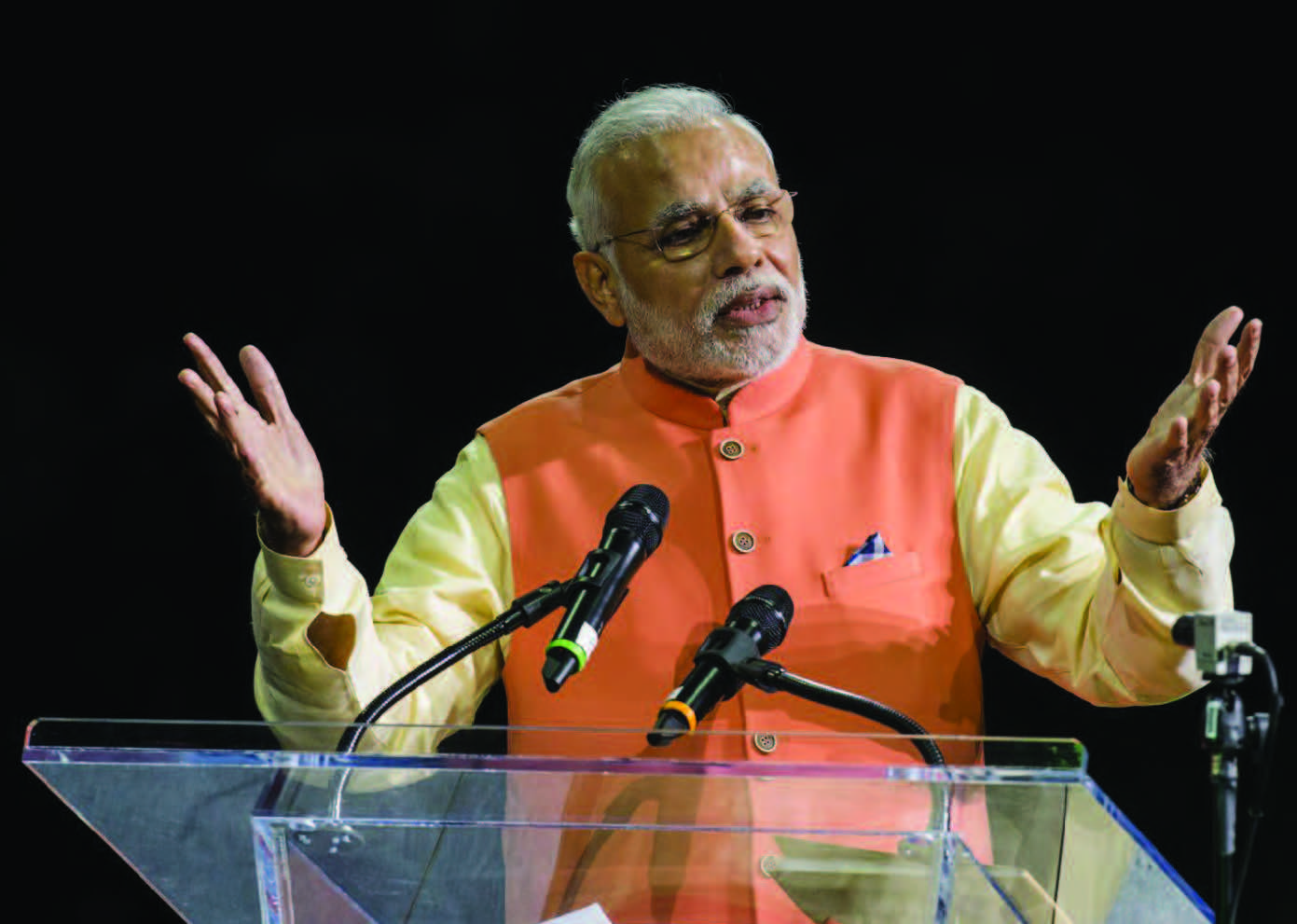
    NEW DELHI (TIP): Prime Minister Narendra Modi will leave on March 10 on a three-nation visit — Seychelles, Mauritius and Sri Lanka — the External Affairs Ministry announced today with no mention, however, of the Maldives, which was being considered earlier.

    On his first trip abroad in 2015, the prime minister will be visiting the three countries from March 10 to 14, the ministry said.

    On March 11, in Seychelles, Modi will hold bilateral discussions with President James Alexis Michel to strengthen bilateral maritime ties and enhance development cooperation.

    Modi will be in Mauritius on March 11 and 12 where he will have extensive meetings with his Mauritian counterpart, Sir Anerood Jugnauth, to further enhance the special and unique relations.

    The Indian Prime Minister will also be the Chief Guest at Mauritius’s National Day celebrations.

    The Sri Lanka leg of the trip will be spread over March 13 and 14. During his visit, Modi will hold meetings with Lankan President Maithripala Sirisena and other senior leaders across the political spectrum in the island nation.

    Modi’s visit will provide opportunities for building on the close contacts at the highest political level and enhance mutual cooperation and understanding on major issues of common interest, the ministry said.

    “The visit of the Prime Minister to our friendly maritime neighbours is reflective of India’s desire to further strengthen our ties in the Indian Ocean region,” the MEA added.

  • BUDGET 2015-16 GOES FOR GROWTH, INVESTMENT

    BUDGET 2015-16 GOES FOR GROWTH, INVESTMENT

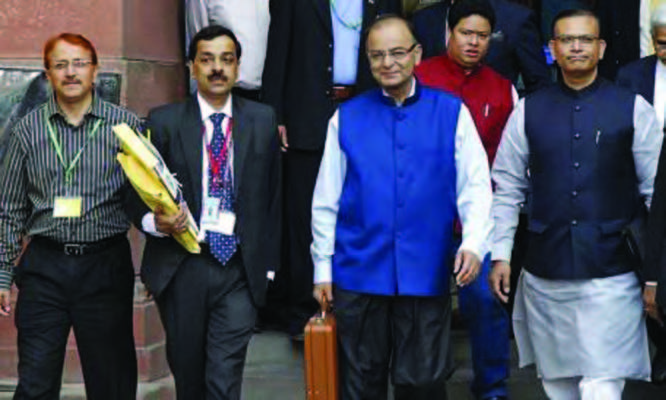
    NEW DELHI (TIP): Finance Minister Arun Jaitley on Feb 28 announced a budget that put boosting growth before painful reforms, slowing the pace of fiscal deficit cuts and seeking to put domestic and foreign capital to work.

    In his first full-year budget since Prime Minister Narendra Modi’s landslide election victory last May, Jaitley said India’s economy was about to take off. Modi tweeted that the budget would “further reignite our growth engine”.

    Billed as a test of the nationalist premier’s willingness to reform a $2 trillion economy with a bloated public sector and weak private investment, the budget was short on structural reforms and contained revenue targets some called unrealistic.

    It drew a mixed reception from economists, with some calling it a path to an investor-friendly India, but others seeing a missed opportunity to tackle deep-seated structural problems.

    “Definitely far from what some were hoping would be an event similar to the game-changing budget of 1991 which ushered in India’s economic liberalisation,” said Devika Mehndiratta, senior economist at ANZ research.

    Apparently anticipating such barbs, Jaitley, 62, said his government had acted “rapidly” to right the course of Asia’s third-largest economy.

    “People who urged us to undertake ‘big bang’ reforms also say the Indian economy is a super giant, which moves slowly but surely,” Jaitley told parliament as he wrapped up a 90-minute speech.

    Jaitley promised higher investment in India’s decrepit roads and railways, offered the carrot of tax cuts to global companies and the stick of tighter rules to get Indian tycoons to invest at home rather than stash wealth abroad. Tax evaders face jail sentences of up to 10 years, he warned.

    The tax changes and tougher enforcement would raise $2.5 billion next year, he said. Tax receipts overall would rise 15 percent and government asset sales would raise $11 billion -goals that past experience shows may be hard to meet.

    Although Jaitley forecast that growth would accelerate to 8-8.5 percent in the fiscal year starting in April, up from 7.4 percent this year, the budget contained little obvious support for Modi’s call to “Make in India”.

    “It assumes a questionable growth rate, relies too heavily on divestment to meet fiscal targets, does not address the revenue deficit issue head on and leaves the good things for the future,” said Arvind Sethi, CEO of Tata Asset Management.what will be cheaper 2015-16 Budget what will be expensive 2015-16 Budget

    Capitalizing on windfall savings stemming from cheaper oil imports, Jaitley was able to ramp up infrastructure investment without slashing spending on politically sensitive subsidies and welfare schemes.

    ROOM FOR RATE CUTS?

    Jaitley forecast inflation at 5 percent by the end of the fiscal year ending March 2016, undershooting the Reserve Bank of India’s 6 percent target and creating room to cut interest rates. Annual inflation was 5.1 percent in January.

    But he pushed back by a year, to 2017/18, a deadline for cutting the fiscal deficit to 3 percent of gross domestic product. In 2015/16, the deficit will be 3.9 percent of GDP, above the 3.6 percent target inherited from the last government.

    In volatile trading, the Nifty ended 0.7 percent higher after having briefly fallen into the red on his comment that the fiscal deficit would slip.

    Ratings agency Moody’s gave the budget a cool reception, saying it was neutral for India’s credit and left stabilising government finances at the mercy of economic growth. Moody’s rates India at the lowest notch of investment grade.

    “We were not expecting big bang reforms,” said Atsi Sheth, a Moody’s sovereign ratings analyst. “The big bang reforms are also not desirable because they have a higher chance of rollback. “

  • China says ‘Mausam’ can be linked to ‘One Belt One Road’

    NEW DELHI (TIP): As Prime Minister Narendra Modi braces to firm up New Delhi’s bid to countervail Chinese President Xi Jinping’s “One Belt One Road” initiative, Beijing has now suggested that India’s own efforts to deepen engagements in the Indian Ocean and Central Asia could rather be linked to that of China.

    “The One Belt One Road initiatives can also be linked with India’s ‘Spice Route’ and ‘Mausam’ projects, thus forming a new starting point and a new bright spot in China-India cooperation,” Le Yucheng, China’s Ambassador to India, said.

    He was addressing journalists and foreign and strategic affairs analysts on the occasion of the Lunar New Year of China recently. His remark came just a few days ahead of Modi’s proposed visit to four Indian Ocean nations –Mauritius, Seychelles, Sri Lanka and Maldives – later this month.

    The prime minister’s tour to the four nations is likely to give a give a fillip to “Project Mausam”, which is intended to boost New Delhi’s engagements with countries in the Indian Ocean, invoking India’s ancient maritime links with them. The initiative is ostensibly a bid to countervail China’s “21st Century Maritime Silk Road” project. New Delhi has also called for revival of the ancient “Spice Route”, which once linked southern India with Europe. Xi has been articulating the idea of a “21st century Maritime Silk Road” reviving economic connectivity between the Pacific and Indian Oceans and linking China’s coastline with south-east Asia, the Gulf and the eastern coast of Africa. He has also been proposing a “Silk Road Economic Belt” reviving the ancient link between China and the Mediterranean through Central Asia. Beijing’s new plan to spread its tentacles further in the Indian Ocean region and Central Asia caused unease in New Delhi, which is already wary of China’s strategic assets encircling India. Though Xi had elicited endorsements from Sri Lanka and Maldives to his “21st century Maritime Silk Road” plan just ahead of his last visit to India, Modi had remained non-committal on supporting the proposal.

  • RESET BOUNDARIES IN YOUR PERSONAL RELATIONSHIPS

    RESET BOUNDARIES IN YOUR PERSONAL RELATIONSHIPS

    Do you feel anxious, uncertain vis-a-vis certain relationships? Do you feel that you are saying ‘Yes’ too many times when deep within all you want to say is ‘No’? Learn to reset your personal boundaries in relationships

    Cheryl Richardson’s said correctly, “When your soul says no, say no. Say it gracefully. Say it lovingly. Say it with confidence. And don’t defend your position, over explain, or welcome debate.”

    Saying ‘No’ means setting clear personal boundaries. This is essential to have a mutually respectful, supportive and caring relationship. If you feel stressed/uncomfortable by others’ demands / expectations from you, then the time has come for outlining the boundaries. This will free you from any unwanted feeling of being used. Weak boundaries leave you vulnerable and likely to be taken for granted.

    Yes, the truth is that initially people around you (for whom you outline the boundary) will not take it kindly. This is solely for their own selfish purpose. They have been used to their own convenience with very little respect for your well-being. So, in simple terms, they are not your well-wishers. So, when you set your boundaries, you might lose some of your so-called friends. But let them go. They are not worth your time or energy.

    Say no, reset your boundaries

    Do you feel anxious, uncertain vis-a-vis certain relationships? Do you feel that you are saying ‘Yes’ too many times when deep within all you want to say is ‘No’? Set aside some time to write down the ways people around you make you feel. Be honest while writing it down in clear terms. And then decide what exactly you want to do to not face such unpleasant and unhealthy feelings.

    Remember this

    As they say, ‘No’ is a complete sentence. Be consistent with your new boundaries.

    Be very clear in your thought process. You want to say ‘No’ cause you feel so from deep within.

    Stay calm at all times. Be firm. Be rooted.

    Be responsible for your own emotional wellness.

    Don’t feel guilty in saying ‘No’.

    Remember there’s no point in carrying forward toxic relationships. By saying No, you are committing a crime.

    Invest your time and energy in doing things that matter to you.

    And remember less is more. So having two happy, positive, joyful friends is far better than having 10 toxic relationships.

    Once you have established strong, clear boundaries, people will give you more respect. You will reclaim your own self and you will feel less stressed. Emotional manipulators will be relegated to the background and you will embrace happy, loving relationships.

  • PM Modi pulls up absent MPs after humiliation in Rajya Sabha – Trending

    PM Modi pulls up absent MPs after humiliation in Rajya Sabha – Trending

    NEW DELHI (TIP): A day after the government faced embarrassment due to division of votes in Rajya Sabha over an amendment to the President’s address, an ‘unhappy’ Prime Minister Narendra Modi on Feb 4  sought explanation from members of his party (BJP) and NDA allies for being absent from the Upper House at the crucial moment of voting.

    As many as 10 out of 46 BJP members and 12 from allies were absent in the House when the CPM members Sitaram Yechury and P Rajeeve moved the amendment and pressed for division of votes. The amendment was passed with 118 votes in favour and 57 against it.

    “All these members including couple of ministers who were absent in the House during voting have been asked to explain the reasons of their absence”, said a source.

    Though their presence wouldn’t have made much difference as the NDA is in a minority in Rajya Sabha, the explanation should ensure that these members are present in full strength next time when such a situation arises.

    Since a number of bills are lined up for the Rajya Sabha in the ongoing budget session, such a situation cannot be ruled out.

    Besides 46 of BJP, the NDA has six members from TDP, three each from Shiv Sena and Shiromani Akali Dal (SAD), two from PDP and one each from other smaller parties.

    The NDA could, however, get 57 votes during the division despite the absentees as members from the friendly AIADMK and couple of Independents voted against the amendment.

    Though the Opposition was also not present in the House in full strength, it could easily manage to sail through as members of almost all opposition parties including Congress, SP, BSP, Trinamool Congress, DMK, BJD, JD(U) and CPI voted for the CPM’s amendment.

    [quote_box_center]‘LAND BILL NOT AGAINST FARMERS’[/quote_box_center]

    Even as the government is getting ready to push the contentious Land Acquisition Bill in the Lok Sabha on Monday after the Holi break, Prime Minister Narendra Modi on Thursday accused the Opposition of using its majority in the Upper House to stall the country’s progress.

    Virtually taking the impasse over the land bill to public, Modi said: “I appeal you to raise your voice against them.”

    He was speaking at inauguration of two units of 600 MW of Shri Singhaji Thermal Plant and laying foundation stone for two units of 660 MW each in Khandwa district of Madhya Pradesh.

    While accusing the previous government of passing a law that he termed as “anti-farmer and anti-development”, Modi said: “We are accused of being anti-farmers, but when I told them in the Rajya Sabha that I am ready to amend the legislation, they did not come up with one point.”

    In his old Gujarat election campaign style, he asked a series of questions to the gathering to drive home the point that land was essential for schools, roads, hospitals and factories because “they can’t be built in the sky.”

    “Do you want your sons to end up in slums in Delhi or Mumbai? Would you rather have your sons employed in nearby places,” he said, while accusing the UPA Government of not allocating land for schools, hospitals and factories.

    “I have no personal business or interests,” he said and called himself a chowkidar (watchman), a term he used frequently during campaigning for the general elections. Alleging corruption in the coal block allocation during the UPA rule and the subsequent cancellation by the Supreme Court, he said, “they sinned and created problems for us.”

    Referring to the recent auction of 19 coal blocks and the 1.10 lakh crore it generated, Modi said his government has proved the then CAG right. “We are transparent and don’t work behind curtains. Not one paisa will be swindled,” he said and added, “no one can estimate the amount that will be generated when the auction of the remaining coal mines is over.”

    “It’s your money,” he told the audience while referring to the 40,000 crore Madhya Pradesh will get from auction of four coal mines.

  • SUN’S HELIOSPHERE DOMINATED BY TWO SOLAR JETS: NASA

    SUN’S HELIOSPHERE DOMINATED BY TWO SOLAR JETS: NASA

    WASHINGTON (TIP): Contrary to earlier visualisations, the sun’s heliosphere is dominated by two giant jets of material shooting backwards over the north and south poles of the sun.

    The heliosphere is created by the solar wind, the changed particles emitted by the sun. The heliosphere extends far beyond the planets of the solar system. These two jets are confined by the interaction of the sun’s magnetic field with the interstellar magnetic field.

    “Everyone’s assumption has been that the shape of the heliosphere was molded by the flow of interstellar material passing around it,” said Merav Opher, astronomer at Boston University and lead author of the NASA-funded study.

    Scientists have for decades visualised the heliosphere in the shape of a comet, with a very long tail extending some 464 billion miles. The two jets are similar to other astrophysical jets seen in space, so studying them locally could open doors to understanding such jets throughout the universe.

    “Scientists thought the solar wind flowing down the tail could easily pull the magnetic fields in the heliosphere along as it flowed by, creating this long tail. But it turns out that the magnetic fields are strong enough to resist that pull – so instead they squeeze the solar wind and create these two jets,” said Opher.

    The team could determine the new shape when they adjusted simulations of the heliosphere based on observations collected from NASA’s Voyager 1 spacecraft.

    The spacecraft recently moved outside of the heliosphere into interstellar space. “If there were no interstellar flow, then the magnetic fields around the sun would shape the solar wind into two jets pointing straight north and south,” said Jim Drake at the University of Maryland in College park.

  • INVESTMENT PROPOSALS DON’T MEET PROMISES

    INVESTMENT PROPOSALS DON’T MEET PROMISES

    NEW DELHI (TIP): Investment proposals by corporates are generally associated with improving business sentiment and often linked with the possibility of job creation. The comparison of proposed investment with actual implementation and job creation in the past 23 years, however, shows that the actual delivery has fallen well short of the promise.

    Data from the department of industrial policy and promotion shows that between August 1991 and March 2014, the government received about 94,000 investment proposals. These proposals include Industrial Investment Intentions through Entrepreneurs Memorandum — IEMs (delicensed sector) and Direct Industrial Licences (licensable sector).

    Put together, these proposed the investment of more than Rs 102 lakh crore and were supposed to create 2.3 crore jobs. The data on actual implementation of these proposals shows that only Rs 5.1 lakh crore was actually invested and just 20.1 lakh jobs created. That’s less than 5% of the proposed investments and 8.9% of the promised jobs.

    A state-wise analysis of proposals shows that between August 1991 and March 2014 corporates proposed to invest Rs 15.4 lakh crore in Orissa —the highest in the country. It was followed by Gujarat and Chhattisgarh receiving over Rs 10 lakh crore of proposed investments and Maharashtra just a tad below that mark. Overall, there were 15 states, which were each supposed to get over Rs 1 lakh crore of investments in these 23 years.

    When one analyses actual investments, Haryana has been the most successful among these 15 states in converting proposals to reality as 18.9% of the proposed money actually reached the state. It is followed by Gujarat (12.6%) and Uttar Pradesh (11.4%). The states that fared the worst in this conversion are Bihar, Jharkhand, Chhattisgarh and Orissa, where less than 1% of the proposed money actually arrived.

    So, what is the investment to job creation ratio? Overall, the Rs 5 lakh crore actually invested created a little over 20 lakh jobs, which amounts to four jobs per crore of investment. There were 25 states which witnessed the actual investment of more Rs 1,000 crore. Among these states, Jammu and Kashmir witnessed the most labour intensive investments, while Gujarat had the most capital intensive ones. Every crore of rupee invested in Jammu and Kashmir created about 12 jobs, while in Gujarat a crore of investment yielded only two jobs.

    In the investment to job creation ratio, Jammu and Kashmir is followed by Goa, Uttarakhand, Kerala and Punjab, where ten or more jobs were created per crore of investment. The worst state/UTs in this list are Madhya Pradesh, Jharkhand, Daman & Diu, Uttar Pradesh and Gujarat.

  • Maruti told to pay Rs 1L each to 425 sacked workers

    Maruti told to pay Rs 1L each to 425 sacked workers

    GURGAON (TIP): A labour court in Gurgaon has directed automobile major Maruti Suzuki India Ltd to pay Rs 1 lakh each as compensation to 425 workers, who were sacked after violence in the company’s Manesar plant in July 2012.

    The order was given by the court of additional district and sessions judge Ajay Parashar on March 2 after more than 20 hearings after the sacked workers filed a petition in 2012. Maruti was asked to deposit Rs 4.25 crore with the court for making payments to workers. The court also observed that the sacked workers were harassed since July 18, 2012 when violence erupted at the Manesar plant.

    According to the order, each worker will receive Rs 85,000 as compensation while Rs 15,000 will go to the court for expenses incurred. Rajendar Pathak, counsel for the workers, said the company had taken action merely on suspicion. Maruti Suzuki Kamgar Union president Kuldeep Jhangu said.

    “The compensation is fine but the sacked employees need a job. Therefore, the company should reinstate them.” A spokesperson for Maruti Suzuki said, “We will consider further course of action based on our understanding of the court’s order.”

  • RBI eases norms for home loans for up to Rs 10 lakh

    RBI eases norms for home loans for up to Rs 10 lakh

    NEW DELHI: Giving a boost to affordable housing, the RBI eased the norms for home loans for up to Rs 10 lakh by allowing banks to include stamp duty and registration charges to the cost of a unit.

    These charges form around 15 per cent of the cost of the house and place a burden on borrowers.

    “With a view to encourage availability of affordable housing to such borrowers, it has been decided that in cases where the cost of the house does not exceed Rs 10 lakh, banks may add stamp duty, registration and other documentation charges to the cost of the unit for calculating LTV
    (loan to value) ratio,” RBI said in a notification.

    As per the current practice, banks do not include stamp duty, registration and other documentation charges in the cost of housing property.

    “It has been brought to our notice that these amounts form around 15 per cent of the cost of the house and place a burden on the borrowers from economically weaker sections (EWS) and low income groups (LIG),” RBI said while easing the norms.

  • China’s 7% growth target lowest in 20 yrs

    BEIJING (TIP): China has set a growth target of 7% for 2015, lowest in two decades. This lowered target reflects declining exports and foreign investments, besides the government’s fear of slipping into a “middle income trap” along with problems like industrial pollution.

    “Downward pressure on China’s economy has continued to mount, and we have faced an array of difficulties and challenges,” Chinese premier Li Keqiang said, while explaining why he chose a GDP target that was even lower than the achievement of 7.4% in 2014. China would end 2015 with the highest ever budget deficit of 2.3 % of GDP against last year’s 2.1 %, the premier said. The country has entered an era of low growth rates, which is the “new normal,” he added.