Year: 2015

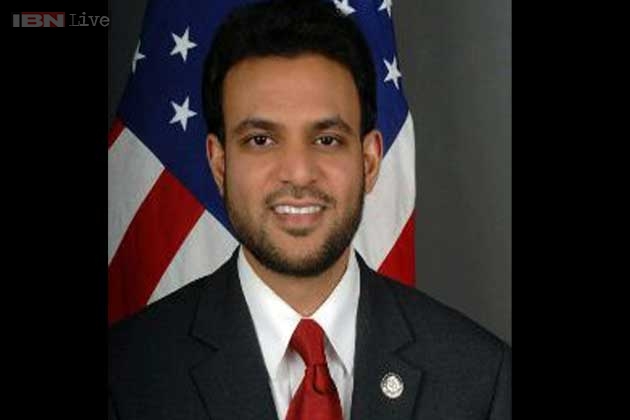
  • Indian-American Rashad Hussain appointed US Special Envoy and Coordinator

    Indian-American Rashad Hussain appointed US Special Envoy and Coordinator


    In 2009, Hussain worked with the NSC in developing and pursuing the New Beginning that Obama outlined in Egypt. Before joining the White House, he was a member of the legal staff for the Presidential Transition Team.

     
    Hussain received his Juris Doctor from Yale Law School, where he served as an editor of the Yale Law Journal. & He also earned his Master’s degrees in Public Administration (Kennedy School of Government) and Arabic and Islamic Studies from Harvard University. 
    Upon graduation, he served as a Law Clerk to Damon J Keith on the US Court of Appeals. He also served as a Trial Attorney at the US Department of Justice. Earlier in his career, he was a legislative assistant on the House Judiciary Committee, where he focused on national security-related issues.
     
  • Ahmedabad Teacher Makes the Final 10 for $1 Million Global Teacher Award

    Ahmedabad Teacher Makes the Final 10 for $1 Million Global Teacher Award

    New Delhi — A teacher in an Ahmedabad school has made it to the top ten finalists for the $1 million Global Teacher Prize to be given by the Varkey Foundation in Dubai next month.

    The foundation, which has former President Bill Clinton as its honorary chairman, said it will be the largest prize of its kind and will be given to one exceptional teacher who has made an outstanding contribution to the profession.

    Along with Kiran Bir Sethi, a teacher at the Riverside School in Ahmedabad, an Indian-origin teacher from Timor Leste, Madenjit Singh (Science of Life Studies), has also made it to the ten finalists, the foundation said in a statement.

    The top ten finalists were narrowed down from a list of 50 shortlisted candidates.

    Sethi, who set up the Riverside School, said she teaches because she loves learning and in her job “no two days are ever the same. So, every day I can become an explorer, or an artist, a magician or a storyteller.”

    Varkey Foundation founder Sunny Varkey said the award has received a huge global support.

    “We introduced the prize in order to return teachers to their rightful position — belonging to one of the most respected professions in society.” 

    The award ceremony will take place on March 15 at the Global Education and Skills Forum in Dubai, to be attended by education ministers, international education experts and business leaders from across the world.

    Varkey Foundation, the philanthropic arm of GEMS Education, said the winner will also be asked to serve as a global ambassador for the Varkey Foundation, attending public events and speaking in public forums about improving the prestige of the teaching profession.

  • US Lawmaker Tulsi Gabbard to Marry in Vedic Ceremony

    US Lawmaker Tulsi Gabbard to Marry in Vedic Ceremony

    Tulsi Gabbard, the first ever Hindu lawmaker in the US Congress, would marry cinematographer Abraham Williams in April in a vedic ceremony, a media report has said. The marriage will take place in Hawaii.

    The second term Democratic Congresswoman from Hawaii, Ms Gabbard, 33, had announced her engagement about a month ago.
     
    She disclosed the identity of her fiancee in an interview to the local Honolulu Star Advertiser published this week. “Both Abraham and I are generally kind of private people. He has nothing to do with politics. He’s a humble, great guy who doesn’t want to be in the limelight, so this is something new to the both of us,” Ms Gabbard told the daily newspaper in an interview.

     
    Mr Williams, 26, proposed Ms Gabbard with a 1.17-carat diamond ring when the Congresswoman was visiting Hawaii during Thanksgiving. This would be Ms Gabbard’s second marriage and the first one for Mr Williams.
     
    Ms Gabbard said she would keep her last name after the marriage, which she wants to keep it a low key affair. Invitation for the wedding are expected to go out this week, which among others include US President Barack Obama.
     
    Ms Williams is a freelance cinematographer who has made some short films and worked on commercial and political advertising campaigns, the daily reported.
     
    While Ms Gabbard’s first marriage took place before a justice of the peace with only a few family members in attendance, the daily said this time she is planning a vedic wedding ceremony in keeping with the couple’s Hindu faith.
     
    “For us it’s about having a shared sense of spiritual values and what we hold important. We try to live our lives in service to others and God in a way that has a positive impact on others around us. It was something I learned from a young age,” Ms Gabbard said.
  • UNRAVEL MYSTERY OF THE WORLD

    UNRAVEL MYSTERY OF THE WORLD

    In the Upanishads, we can study the graceful conflict of thought with thought, the emergence of more satisfactory thought and the rejection of inadequate ideas. Hypotheses were advanced and rejected on the touchstone of experience and not at the dictate of a creed. Thus thought forged ahead to unravel the mystery of the world in which we live.

    Chandogya Upanishad

    The Chandogya Upanishad is the Upanishad that belongs to the followers of the Sama Veda. It is actually the last eight chapters of the ten-chapter Chandogya Brahmana, and it emphasizes the importance of chanting the sacred Aum, and recommends a religious life, which constitutes sacrifice, austerity, charity, and the study of the Vedas, while living in the house of a guru. This Upanishad contains the doctrine of reincarnation as an ethical consequence of karma. It also lists and explains the value of human attributes like speech, will, thought, meditation, understanding, strength memory and hope.

    Kena Upanishad

    The Kena Upanishad derives its name from the word ‘Kena’, meaning ‘by whom’. It has four sections, the first two in verse and the other two in prose. The metrical portion deals with the Supreme Unqualified Brahman, the absolute principle underlying the world of phenomenon, and the prose part deals with the Supreme as God, ‘Isvara’. The Kena Upanishad concludes, as Sandersen Beck puts it, that austerity, restraint, and work are the foundation of the mystical doctrine; the Vedas are its limbs, and truth is its home. The one who knows it strikes off evil and becomes established in the most excellent, infinite, heavenly world.

    Aitareya Upanishad

    The Aitareya Upanishad belongs to the Rig Veda. It is the purpose of this Upanishad to lead the mind of the sacrificer away from the outer ceremonial to its inner meaning. It deals with the genesis of the universe and the creation of life, the senses, the organs and the organisms. It also tries to delve into the identity of the intelligence that allows us to see, speak, smell, hear and know.

    Kaushitaki Upanishad

    The Kaushitaki Upanishad explores the question whether there is an end to the cycle of reincarnation, and upholds the supremacy of the soul (‘atman’), which is ultimately responsible for everything it experiences.

    Katha Upanishad

    Katha Upanishad, which belongs to the Yajur Veda, consists of two chapters, each of which has three sections. It employs an ancient story from the Rig Veda about a father who gives his son to death (Yama), while bringing out some of the highest teachings of mystical spirituality. There are some passages common to the Gita and Katha Upanishad. Psychology is explained here by using the analogy of a chariot. The soul is the lord of the chariot, which is the body; the intuition is the chariot-driver, the mind the reins, the senses the horses, and the objects of the senses the paths. Those whose minds are undisciplined never reach their goal, and go on to reincarnate. The wise and the disciplined, it says, obtain their goal and are freed from the cycle of rebirth.

    Mundaka Upanishad

    The Mundaka Upanishad belongs to the Atharva Veda and has three chapters, each of which has two sections. The name is derived from the root ‘mund’ (to shave) as he that comprehends the teaching of the Upanishad is shaved or liberated from error and ignorance. The Upanishad clearly states the distinction between the higher knowledge of the Supreme Brahman and the lower knowledge of the empirical world — the six ‘Vedangas’ of phonetics, ritual, grammar, definition, metrics, and astrology. It is by this higher wisdom and not by sacrifices or worship, which are here considered ‘unsafe boats’, that one can reach the Brahman. Like the Katha, the Mundaka Upanishad warns against “the ignorance of thinking oneself learned and going around deluded like the blind leading the blind”. Only an ascetic (‘sanyasi’) who has given up everything can obtain the highest knowledge.

    Taittiriya Upanishad

    The Taittiriya Upanishad is also part of the Yajur Veda. It is divided into three sections: The first deals with the science of phonetics and pronunciation, the second and the third deal with the knowledge of the Supreme Self (‘Paramatmajnana’). Once again, here, Aum is emphasized as peace of the soul, and the prayers end with Aum and the chanting of peace (‘Shanti’) thrice, often preceded by the thought, “May we never hate.” There is a debate regarding the relative importance of seeking the truth, going through austerity and studying the Vedas. One teacher says truth is first, another austerity, and a third claims that study and teaching of the Veda is first, because it includes austerity and discipline. Finally, it says that the highest goal is to know the Brahman, for that is truth.

    The Brihadaranyaka Upanishad

    The Brihadaranyaka Upanishad, which is generally recognized to be the most important of the Upanishads, consists of three sections (‘Kandas’), the Madhu Kanda which expounds the teachings of the basic identity of the individual and the Universal Self, the Muni Kanda which provides the philosophical justification of the teaching and the Khila Kanda, which deals with certain modes of worship and meditation,(‘upasana’), hearing the ‘upadesha’ or the teaching (‘sravana’), logical reflection (‘manana’), and contemplative meditation (‘nididhyasana’).

    TS Eliot’s landmark work The Waste Land ends with the reiteration of the three cardinal virtues from this Upanishad: ‘Damyata’ (restraint), ‘Datta’ (charity) and ‘Dayadhvam’ (compassion) followed by the blessing ‘Shantih shantih shantih’, that Eliot himself translated as “the peace that passeth understanding.”

    Svetasvatara Upanishad

    The Svetasvatara Upanishad derives its name from the sage who taught it. It is theistic in character and identifies the Supreme Brahman with Rudra (Shiva) who is conceived as the author of the world, its protector and guide. The emphasis is not on Brahman the Absolute, whose complete perfection does not admit of any change or evolution, but on the personal ‘Isvara’, omniscient and omnipotent who is the manifested Brahma. This Upanishad teaches the unity of the souls and world in the one Supreme Reality. It is an attempt to reconcile the different philosophical and religious views, which prevailed at the time of its composition.

    Isavasya Upanishad

    The Isavasya Upanishad derives its name from the opening word of the text ‘Isavasya’ or ‘Isa’, meaning ‘Lord’ that encloses all that moves in the world. Greatly revered, this short Upanishad is often put at the beginning of the Upanishads, and marks the trend toward monotheism in the Upanishads. Its main purpose is to teach the essential unity of God and the world, being and becoming. It is interested not so much in the Absolute in itself (‘Parabrahman’) as in the Absolute in relation to the world (‘Paramesvara’). It says that renouncing the world and not coveting the possessions of others can bring joy. The Isha Upanishad concludes with a prayer to Surya (sun) and Agni (fire).

    Prasna Upanishad

    The Prashna Upanishad belongs to the Atharva Veda and has six sections dealing with six questions or ‘Prashna’ put to a sage by his disciples. The questions are: From where are all the creatures born? How many angels support and illumine a creature and which is supreme? What is the relationship between the life-breath and the soul? What are sleep, waking, and dreams? What is the result of meditating on the word Aum? What are the sixteen parts of the Spirit? This Upanishad answers all these six vital questions.

    Mandukya Upanishad

    The Mandukya Upanishad belongs to the Atharva Veda and is an exposition of the principle of Aum as consisting of three elements, a, u, m, which may be used to experience the soul itself. It contains twelve verses that delineate four levels of consciousness: waking, dreaming, deep sleep, and a fourth mystical state of being one with the soul. This Upanishad by itself, it is said, is enough to lead one to liberation.

    Maitri Upanishad

    The Maitri Upanishad is the last of what are known as the principal Upanishads. It recommends meditation upon the soul (‘atman’) and life (‘prana’). It says that the body is like a chariot without intelligence but it is driven by an intelligent being, who is pure, tranquil, breathless, selfless, undying, unborn, steadfast, independent and endless. The charioteer is the mind, the reins are the five organs of perception, the horses are the organs of action, and the soul is unmanifest, imperceptible, incomprehensible, selfless, steadfast, stainless and self-abiding. It also tells the story of a king, Brihadratha, who realized that his body is not eternal, and went into the forest to practice austerity, and sought liberation from reincarnating existence.

  • INDIA’S CONSUMER SPENDING LIKELY TO IMPROVE: REPORT

    INDIA’S CONSUMER SPENDING LIKELY TO IMPROVE: REPORT

    MUMBAI (TIP): With reinforcing sentiment on job security and income recovering, consumer spending in India is likely to improve in coming few months, a study said.

    According to ZyFin Research, a financial research and analytics company, Consumer Outlook Index data for January indicates that consumer confidence has improved from last year.

    The ZyFin Consumer Outlook Index was at 46.6 in January 2015, which is 10.6 percent higher than last year.

    The improvement in sentiment is primarily due to strengthening outlook towards job security and expectations regarding rising household income.

    Also, inflationary expectations among Indian consumers have declined significantly, it noted.

    “Close to 30 per cent of consumers surveyed, expected inflation to cool down over the next six months compared to 23 per cent who thought so in January 2014,” it said.

    Consumer Outlook Index reflects current and future spending plans, employment and inflation outlook of urban Indian consumers. It comprises three major components, measuring consumer sentiment on spending, inflation and employment.

    A score above 50 reflects optimism, while below 50 is an indication of pessimism.

    “Although Consumer Outlook Index continues to remain in the pessimistic sub 50 territory, the steep rate of recovery observed in the data over last few months suggests that Indian consumers are growing confident and within a span of another 2-3 months the data should breach 50 level and start reflecting optimism.

    Optimistic consumers are a key contributor to generate sustained growth in a domestic spending driven economy,” ZyFin Research chief economist, Debopam Chaudhuri, said.

    The study noted that the sentiment is recovering quicker in smaller Indian cities than in metros.

    “While the year-on-year growth in metro cities was 6 percent, it grew at 17 percent in smaller tier 1 and 2 cities, possibly due to prospects of an expanding manufacturing sector concentrated in these regions,” it said.

    “As high as 38 per cent respondents in January 2015 were planning to buy a home within the next 6-12 months. 41 percent said they have plans to buy home appliances over the next few months. The comparable numbers were 33 percent and 35 percent, respectively, in January 2014,” it said.

    Consumer Outlook Index is based on a monthly survey of 3,000 consumers in 11 cities across India.

  • MUNJALS TO SELL 3.5% IN HERO MOTOCORP

    MUNJALS TO SELL 3.5% IN HERO MOTOCORP

    NEW DELHI (TIP): The promoters of Hero MotoCorp, India’s largest twowheeler company, are set to raise about Rs 2,000 crore by selling 7 million equity shares, or 3.5% stake, in the flagship entity of their estimated $5 billion (about Rs 31,000 crore) Hero Group in a block deal on Wednesday, a move aimed at raising money for investments in defence and infrastructure.

    As per the term sheet of the offer, the Delhi-based Munjal family offered shares in an indicative price band of Rs 2,664 to Rs 2,720 a piece for the deal that was reportedly been arranged by Kotak Mahindra Capital.

    After selling seven million equity shares, the family led by Hero MotoCorpBSE 0.88 % chairman BML Munjal, still holds more than 36% controlling stake in the two-wheeler maker. “The group has been looking at the defence sector for quite some time now and has been exploring certain options. Infrastructure, particularly power and adjacent businesses, is another area which has been in the pipeline for some time. The money raised through this block deal will be utilised in these forays,” an industry veteran close to the promoter group said on the condition of anonymity.

    Another person close to the Munjals said, “The Hero Group and their flagship company Hero MotoCorp (formerly Hero Honda) have remained debt-free for well over a decade now due to strong management and leadership of the Munjal family.”  “The promoters want to maintain this debt-free status in future as well and, therefore, have deliberately avoided borrowing to fund diversification drive,” the person added.

    In a statement, Hero Group said, “The Prime Minister’s ‘Make in India’ platform has opened up new vistas, some in very high-growth areas, and the Hero Group -with its experience, scale of operations and brand equity – is uniquely placed to leverage these emerging opportunities…the group will use the sale proceeds to fund new growth avenues.” 

    At the same time, the group remains strongly committed to its core two-wheeler business, where it sees enormous potential, both in India and overseas.

  • Nestle net profit soars 45%despite slipping sales

    Nestle net profit soars 45%despite slipping sales

    VEVEY, SWITZERLAND (TIP): The world’s leading food industry group Nestle posted a soaring net profit for 2014, boosted by the sell-off of its stake in French cosmetics group L’Oreal, even as sales slipped.

    Last year, the maker of Nespresso capsules, baby food and many other products, saw its net profit jump 44.6 percent to 14.5 billion Swiss francs ($15.4 billion, 13.4 billion euros), the company said in an earnings statement.

    That was well above the expectations of analysts polled by the AWP financial news agency, who had anticipated a net profit of just 10.3 billion Swiss francs.

    Not counting income from the sale of its L’Oreal holdings last year and a reevaluation gain on its Galderma medical unit stake, however, Nestle said its net profit rose just 4.4 percent in constant currencies.

    The company’s sales slipped 0.6 percent last year to 91.6 billion francs, meanwhile, mainly due to negative impact of exchange rate shifts, which eroded sales figures by 5.5 percent.

    The company’s organic growth, considered a key indicator of its performance, expanded 4.5 percent last year, it noted.

    That number was based on 2.3 percent real internal growth, with the remaining 2.2 percent attributable to pricing, Nestle said.

    “These are strong results, building on the good growth of past years and delivered in a soft trading environment,” company chief Paul Bulcke said in the earnings statement.

    Nestle’s board will propose increasing the dividend paid to share holders to 2.20 Swiss francs per share, up from 2.15 last year, the company said.

    Looking forward, the Nestle said it expected this year to be similar to 2014, adding that it aimed to see its organic growth swell about five percent.

    Following the announcement, the company saw its share price inch up 0.42 percent to 71.40 Swiss francs a piece, as the Swiss stock exchange’s main SMI index grew 0.17 percent.

  • Amul to pump in Rs 5,000 crore in next 3 years

    Amul to pump in Rs 5,000 crore in next 3 years

    KOLKATA (TIP): Dairy major Amul will invest Rs 5,000 crore over the next three years to ramp up milk production and new processing capacities.

    “We will require Rs 5,000 crore over three years in adding new capacities, ramping up existing facilities and entering new markets,” managing director R S Sodhi said.

    The company, he said, would be setting up 10 new milk processing plants across the country and upgrade existing plants which would translate into enhanced processing capacity of 320 lakh litres from 230 lakh litres.

    “The new investments will help attaining Rs 50,000 crore turnover in 2-3 years from Rs 18,000 crore as on March 2014,” Sodhi said.

    Of the 10 new plants, 5 will be set up in Gujarat and the remaining five will be set up in Faridabad, Kanpur, Lucknow, Varanasi and Kolkata, he said.

    The Anand-based dairy cooperative currently operates 51 plants in the country, of these, 41 are in Gujarat.

    This financial (2014-15) the revenues of the company, owned by Gujarat Co-operative Milk Marketing Federation, should exceed Rs 21,500 crore, he said.

  • BONE MARROW ON A CHIP TO STUDY IMPACT OF RADIATION ON HUMANS

    BONE MARROW ON A CHIP TO STUDY IMPACT OF RADIATION ON HUMANS

    WASHINGTON (TIP): A Harvard researcher has developed a ‘bone marrow on a chip’ that can help study the harmful effects of radiation on humans.

    “It’s unethical to expose humans to the kind of radiation that you’d see in a disaster like Fukushima, but you need to be prepared,” said Donald Ingber, a bioengineer at Harvard University’s Wyss Institute in Boston, Massachusetts.

    With support from the US Food and Drug Administration, he is adapting his ‘bone marrow on a chip’ to study the effects of harmful radiation and experimental remedies.

    Other researchers working along similar lines have presented their work on model organs for biodefence applications recently at a meeting of the American Society for Microbiology (ASM) in Washington DC.

    The hope is that these complex three-dimensional systems will mimic human physiology better than cells grown in a dish, or even animals, ‘Nature.com’ reported.

    A common way to form a model organ is to seed cells into channels in a small plastic chip and then feed them with nutrient-rich fluid that flows through the system to mimic blood.

    The devices can be used individually or connected to other types of organs-on-chips to approximate a biological system, or perhaps an entire human body. At the ASM meeting, microbiologist Joshua Powell of the Pacific Northwest National Laboratory in Richland, Washington, presented experiments testing the ability of anthrax spores to infect a three-dimensional ‘lung’ grown from rabbit lung cells  Powell said that the US Department of Homeland Security is interested in using the system to answer questions such as how many anthrax spores are necessary to cause disease in the body.

    For some viruses in particular, Ingber said, researchers have no idea about the mechanism, and they need the mechanism to get new drug targets.

    Infecting model organs could allow researchers to watch how gene expression and metabolism change in real time.

    This sort of information could also be used to identify an unknown agent during a chemical, biological or radiological attack, by providing baseline data on known agents for comparison. Researchers have already developed dozens of individual model organs; the next challenge is to hook them together with the eventual goal of forming an entire human body on a chip, said Kristin Fabre, a programme manager at the National Center for Advancing Translational Sciences (NCATS) in Bethesda, Maryland.

    An NCATS-funded project has 11 research teams participating to hook together at least 4 chips.

    The US Department of Defense’s Defense Advanced Research Projects Agency (DARPA) is supporting the development of techniques to link ten organs, and its Defense Threat Reduction Agency aims to build two four-organ systems.

  • NOW, A CREAM FOR PAINLESS REMOVAL OF ‘PERMANENT’ INK

    TORONTO (TIP): A researcher in Canada has developed a skin cream that allows people to painlessly get rid of tattoos.

    Alec Falkenham, a PhD student in Dalhousie University’s pathology department, has come up with an approach that makes use of the natural healing process our skin activates after it is tattooed.

    When we get a tattoo, the pigment from the ink deposits into the skin where it is then consumed by white blood cells named “macrophages”.

    “Macrophages are known as the big eaters of the immune system. They eat foreign material, like tattoo pigment, to protect surrounding tissue,” said Falkenham. In the case of tattoos, two populations of macrophages react to the ink in different ways. One set of macrophages transports some of the pigment to the draining lymph nodes, removing it from the area.

    The other population that has “eaten” the pigment goes deeper into the skin, becomes inactive and forms the visible tattoo.Over time, the macrophages that formed the tattoo are replaced by new macrophages which causes the tattoo to blur and fade. Falkenham’s technology, Bisphosphonate Liposomal Tattoo Removal (BLTR), targets the macrophages that contain the pigment for removal.

    “BLTR is a cream that you put on your skin,” he said, adding that describing how BLTR it makes uses a lipid-vesicle, or liposome, that his team created.”When new macrophages come to remove the liposome from cells that once contained pigment, they also take the pigment with them to the lymph nodes, resulting in a fading tattoo,” said Falkenham. The technology is a safer alternative to current tattoo removal lasers. By acting as a “Trojan horse” in their drug delivery, liposomes target cells that can consume them, specifically those that contain pigment. This limits potential side effects to the small number of surrounding cells too that do not contain pigment.

  • Runaway star grazed solar system 70,000 years ago

    Runaway star grazed solar system 70,000 years ago

    NEW DELHI (TIP): About 70,000 years ago, a runaway star wandered into our solar system’s backyard, an international team of astronomers have found. The rogue star, nick-named “Scholz’s star” after its discoverer, penetrated into the Oort Cloud, a frozen graveyard in the very outer most reaches of the solar system from where many comets are likely to originate.

    The group of astronomers from the US, Europe, Chile and South Africa was led by Eric Mamajek from the University of Rochester. Their findings are published in the Astrophysical Journal Letters.

    The star’s trajectory suggests that 70,000 years ago it passed roughly 52,000 astronomical units away (or about 0.8 light years, which equals 8 trillion kilometers, or 5 trillion miles). This is astronomically close; our closest neighbor star Proxima Centauri is 4.2 light years distant. No other star is known to have ever approached our solar system this close.

    After grazing the solar system, Scholz’s star has continued traveling and it is now some 20 light years away in the constellation of Monoceros. at the closest point in its flyby of the solar system, Scholz’s star would have been a 10th magnitude star – about 50 times fainter than can normally be seen with the naked eye at night. It is magnetically active, however, which can cause stars to “flare” and briefly become thousands of times brighter. So it is possible that Scholz’s star may have been visible to the naked eye by our ancestors 70,000 years ago for minutes or hours at a time during rare flaring events.

    The scientists studied the star’s current direction and speed and then worked backwards to reach the conclusion that it must have passed through the Oort Cloud.

    The star is part of a binary star system: a low-mass red dwarf star (with mass about 8% that of the Sun) and a “brown dwarf” companion (with mass about 6% that of the Sun). Brown dwarfs are considered “failed stars;” their masses are too low to fuse hydrogen in their cores like a “star” but they are still much more massive than gas giant planets like Jupiter.

    The outer Oort Cloud is a region at the edge of the solar system filled with trillions of comets a mile or more across that are thought to give rise to long-term comets orbiting the Sun after their orbits are perturbed.

    Until now, the top candidate for the closest known flyby of a star to the solar system was the so-called “rogue star” HIP 85605, which was predicted to come close to our solar system in 240,000 to 470,000 years from now. However, Mamajek and his collaborators have also demonstrated that the original distance to HIP 85605 was likely underestimated by a factor of ten. At its more likely distance – about 200 light years – HIP 85605’s newly calculated trajectory would not bring it within the Oort Cloud.

    While the close flyby of Scholz’s star likely had little impact on the Oort Cloud, Mamajek points out that “other dynamically important Oort Cloud perturbers may be lurking among nearby stars.” The recently launched European Space Agency Gaia satellite is expected to map out the distances and measure the velocities of a billion stars. With the Gaia data, astronomers will be able to tell which other stars may have had a close encounter with us in the past or will in the distant future.

  • QUIT THAT SMOKE

    QUIT THAT SMOKE

    Smoking tobacco is both a physical as well as a psychological addiction. The nicotine from smoking tobacco provides a temporary and addictive high to the mind and body.

    Regular smokers when they quit experience physical withdrawal symptoms and cravings. Listed below are methods to help you quit the bud and recover.

    Distract yourself

    The activity doesn’t matter as long as it gets your mind off of smoking. Focus on your reasons for quitting, including the health benefits, improved appearance, money you’re saving, and enhanced self-esteem.

    Get out of a tempting situation

    Reinforce your victories over a craving and give yourself a reward to keep yourself motivated.

    Systematically decreasing the number of cigarettes you smoke. Reducing your intake of nicotine gradually over time will lessen the cravings.

    Using nicotine replacement therapy or non-nicotine medication also helps to reduce withdrawal symptoms.

    Join a nicotine support group that will keep you focused on quitting.

    Prepare a list of things to do when a craving hits.

    Switch to an alternative like a cup of tea or a chocolate whenever you have a craving.

  • AFTERNOON NAP IS BAD FOR YOUR TODDLER

    AFTERNOON NAP IS BAD FOR YOUR TODDLER

    An afternoon nap may affect your toddler’s overall sleep quality, suggests new research.

    Napping beyond the age of two lengthens the amount of time it takes for a child to fall asleep (sleep onset) and shortens the overall amount of night-time sleep he or she has, the findings showed.

    “The impact of night sleep on children’s development and health is increasingly documented, but to date there is not sufficient evidence to indicate the value of prolonging napping,” wrote the researchers led by Karen Thorpe from Queensland University of Technology in Australia.

    The researchers wanted to find out what impact napping has on young children’s night-time sleep quality, behaviour, cognition and physical health. They therefore reviewed the available published evidence for napping in children up to the age of 5 years, and found 26 relevant studies out of a total of 781. They pooled the data and synthesised the findings.

    They found consistent, if not particularly high quality, evidence indicating that napping affects night time sleep of kids beyond the age two.

    The links between napping and any detrimental impact on behaviour, development, and overall health, however, were less clear-cut, largely because of the differences in age and napping patterns of the children studied.

  • ADD NEEM TO YOUR DAILY ROUTINE

    ADD NEEM TO YOUR DAILY ROUTINE

    Replete with medicinal benefits, neem leaves have a special significance during Gudi Padwa when it is eaten with jaggery.

    The bittersweet mixture symbolises the acceptance of sorrow and happiness. Here are some reasons to include neem in your daily routine.

    Clears acne

    Using neem water as a skin toner regularly will help in clearing acne, scars, pigmentation and blackheads. Boil about 20 neem leaves in half a litre of water till the leaves are soft and discoloured, and the water turns green. Strain and store in a bottle. Dip a cotton-ball into it and wipe your face.

    Lightens skin blemishes

    Apply a paste of neem powder, tulsi and sandalwood powder mixed with rose water, on your face. Let it dry before you rinse it off with cold water.

    Treats dry skin: Did you know that neem has moisturising properties? Mix neem powder with water and a few drops of grapeseed oil, and apply it to your face as a moisturiser.

    Delays ageing of skin

    With its regenerative properties, neem helps the skin fight pathogens below its surface. As a result, your skin remains supple. Reduce the effects of ageing by applying neem oil on your face or adding neem powder to your face-pack.

    Treats dandruff

    Neem has medicibal properties. Boil neem leaves with water until the water turns greenish. Use it after shampooing. If you are suffering from dandruff, you could also apply a paste of neem powder and water on your scalp and wash off after an hour, followed by shampoo and conditioner.

    Cures dark circle problems

    Neem helps in reducing pigmentation and also acts as a moisturising agent. Mix water and neem powder to make a thick paste and apply it around the eyes. Wash it off after 15 minutes.

    Cures asthma

    According to experts, neem oil is extremely beneficial when it comes to curing breathing problems or asthma. Have a few drops of neem oil every day, increasing the intake gradually. It also helps in controlling phlegm, cough and fever.

    Heals ulcers

    According to various studies, neem bark extract has been found to cure stomach and intestinal ulcers. Researchers believe that consuming the bark extract twice daily for 10 weeks, practically heals ulcers. The bark also helps cure malaria and many skin diseases.

    Controls diabetes

    The plant contains chemicals that help reduce blood sugar levels. Neem acts as insulin after being digested by the body.

    Treats mouth and tooth problems

    Traditionally, people chewed neem twigs instead of using toothbrushes. The twig’s antifungal and antibacterial properties are said to help in treating mouth and tooth problems.

  • SCARLETT JOHANSSON TO STAR THE PSYCHOPATH TEST

    SCARLETT JOHANSSON TO STAR THE PSYCHOPATH TEST

    Scarlett Johansson is set to take the lead in the Kristin Gore -scripted film based on the Jon Ronson book ‘ The Psychopath Test.’ 

    The thriller, which will be directed by Jay Roach, will be produced by Brian Grazer along with Roach and his Everyman Pictures banner, and Finola Dwyer and Amanda Posey, Deadline.com reported.

    Ronson, who wrote ‘The Men Who Stare At Goats,’ here tackles how the medical community, who tries to diagnose and classify an elusive group: remorseless, deadly psychopaths, say one out of every hundred people is a psychopath, devoid of empathy, manipulative, deceitful, charming, seductive, and delusional. The book, which explores their world and the madness industry, is published by Picador and Riverhead Books and was a bestseller in the US and the UK.

  • Movie Review – Love, Rosie

    Movie Review – Love, Rosie

    STORY: Based on best-selling author Cecelia Ahern’s novel ‘Where Rainbows End’, Love, Rosie is the story of two childhood friends, Rosie (Lily Collins) and Alex (Sam Claflin), who ‘keep missing each other in love’. Long distance, failed marriages, even spats can’t wear away the connection between the two people who always have other’s back and turn to each other to seek solace. Do they end up living ‘happily ever after’? Well, it’s a rom-com

    REVIEW: In 1989, Harry Burns professed his love for Sally Albright in ‘When Harry Met Sally…’ because ‘he knew whom he wanted to spend the rest of his life with and he wanted the rest of his life to start as soon as possible’. Two-and-a-half decades later, with a new crop of actors, Love, Rosie attempts the same with formulaic candy-floss romance from Nora Ephron’s memorable film and is quite successful in warming the cockles of our hearts.

    Playing childhood BFFs, Collins and Claflin bring forth an enchanting chemistry. It is a pre-requisite for any romantic comedy to bring on screen the tangibility of their romance. The actors make Rosie and Alex’s bonding affable. Their familiarity forms the crux of their romance and their ability to take each other for granted has a relatable vein to it.

    Disaster strikes when Alex moves to Harvard to study medicine and Rosie’s unplanned pregnancy (not with Alex’s child) separates them. She decides to withhold the information and, suddenly, their lives take starkly disparate paths. The story establishes them as two flawed characters who visibly complete each other. Director Christian Ditter brings this out beautifully through tender scenes, like the one where Rosie discloses the truth about her baby to Alex and he asks if he could be the godfather.

    There are many hiccups in this drama. Using the track ‘Push It’ during a childbirth sequence is enraging, but the warm sunshine-filled lovable frames purge these flaws. The film’s ribald humour, like a condom mishap and another S&M disaster provide good laughs(sans sleaze).

    Love, Rosie is quaint comfort-cinema that makes for an amiable watch.

  • KEIRA KNIGHTLEY SAYS USED TO BE CALLED A ‘WHORE’ BY PAPARAZZI

    KEIRA KNIGHTLEY SAYS USED TO BE CALLED A ‘WHORE’ BY PAPARAZZI

    Keira Knightley has revealed that she used to get targeted by paparazzi and was called a whore when she was 18-year-old.

    During her appearance on ‘TimesTalks,’ the ‘Pirates of the Caribbean’ actress said that she used to feel weird that almost 20-30 men called her a whore just to get a reaction whenever she stepped out of the house, and click pictures under the skirt, E! Online reported.

    The 29-year-old actress added that thankfully now things were different and felt blessed to have a happy married life and expecting her first baby with husband James Righton.

  • SHRADDHA IN FORBES INDIA’S 30 MOST SUCCESSFUL YOUNG ACHIEVERS

    SHRADDHA IN FORBES INDIA’S 30 MOST SUCCESSFUL YOUNG ACHIEVERS

    Shraddha Kapoor, who had a wonderful 2014, continues to be on a run in 2015 too. After the superhit Ek Villain and the much-acclaimed Haider, the gorgeous actress has made it to the ‘Forbes India list of 30 under 30’, further consolidating her position in the industry with her talent and desire to succeed.

    Already known for her acting chops and melodious voice, that was evident in the song Galliyan in Ek Villian, Shraddha will soon be seen as the led performer of a dance troupe in her next release, director Remo D’Souza’s ABCD 2 with Varun Dhawan and Prabhudheva.

    The actress, who also manages to wow the audience with her stylish appearances, is amongst the few who achieve such success so early on in their career. Shraddha has cemented her position in the industry with her unique choice of films and continues to surprise her audience with her unconventional roles.

  • ANUSHKA SHARMA SAYS TALKING OF BOMBAY VELVET’S LIP-LOCK IS CHEAP

    ANUSHKA SHARMA SAYS TALKING OF BOMBAY VELVET’S LIP-LOCK IS CHEAP

    Actress Anushka Sharma is not happy with the stories surrounding her lip-lock sequence with Ranbir Kapoor in Anurag Kashyap’s Bombay Velvet. 

    Calling it a cheap shot, the actress added,”Such stories make the film sounds like something else, taking from the film’s aesthetic.

    A lot of untrue, negative things are being said about the film and it’s just preposterous. All of us associated with Bombay Velvet want to let the film do the talking instead of constantly clarifying the fabricated stories,” said Anushka.

  • KEJRIWAL TAKES OATH AS EIGHTH CM OF DELHI

    KEJRIWAL TAKES OATH AS EIGHTH CM OF DELHI

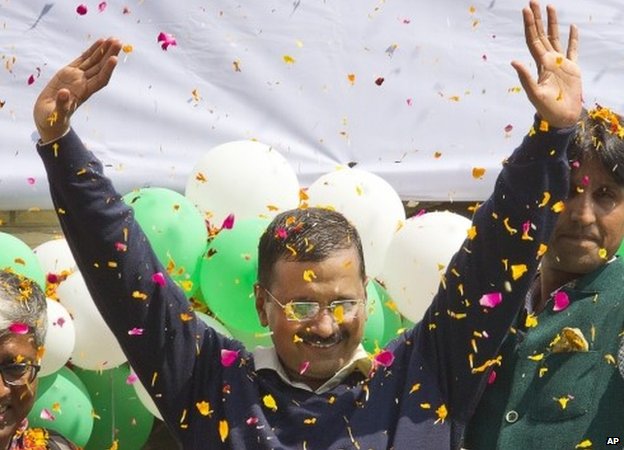
    NEW DELHI (TIP): Arvind Kejriwal took oath as Delhi’s youngest chief minister on February 14 with a speech that thanked the aam aadmi, reassured the minorities, reached out to the opposition and promised an end to corruption and VIP culture in five years.

    KEJRIWAL TAKES OATHAddressing a crowd of about 50,000 people at the Ramlila Maidan – a city landmark where the anti-corruption movement spearheaded by Anna Hazare first started – Kejriwal laid all speculations about his party’s national ambition to rest saying that AAP’s massive mandate was a “miracle” and also a “directive” for him to focus only on Delhi for the next five years.


    KEJRIWAL TAKES OATH 1 “Over the last few days I have heard some of our volunteers talk about fighting more state elections. This is wrong. We paid for our arrogance in the 2014 Lok Sabha polls. God punished us for it. I will stay here for the next five years and work for Delhi with full dedication,” he said. AAP, particularly Kejriwal, had received a lot of flak from the capital’s electorate for the impulsive exit from power and also the decision to contest on 440 Lok Sabha seats barely six months after its impressive debut in the capital in 2013.


    Kejriwal reaches outListing out his priorities for the next five years, the new CM assured that his government will pass the Janlokpal Bill and also revive the anti-corruption helpline that was started during his 49-day stint in power. “I’ll try to make Delhi the first corruption-free state of the country. I will repeat what I said on December 28 – if someone asks you for a bribe, don’t refuse. Pick up your mobile phones and record it. We will act upon it,” he said.

    At a time when the central government has been criticised for remaining mum on communal violence, Kejriwal, interestingly, spoke out on this issue. Referring to the recent incidents in the capital, he said he will work with the police to ensure people of all religious communities feel safe. He also hinted at the involvement of “political forces” in such unrest. “I would also appeal all those forces [indulging in communal violence] to stop resorting to such kind of politics,” he said.

    Often described as a “man in a hurry”, the AAP leader this time was careful in setting deadlines for himself and the government. He appealed to the media to not judge his work in a few hours as he has five years to prove himself. He also dropped enough hints that he had made peace with the legitimate perks of being in power.

    He then reached out to the opposition starting from prime minister Narendra Modi to Kiran Bedi and the voters who polled in favour of the BJP during the state elections. While he sought Modi’s “constructive cooperation” for implementing AAP’s promise of full statehood for Delhi, Kejriwal said that he would welcome Kiran Bedi’s and Ajay Maken’s guidance on governance.

    As for the people who did not vote for him, Kejriwal said, “The aam aadmi’s sarkar is everyone’s government whether you voted for us or not. I am everyone’s chief minister – even the three constituencies which voted for the BJP.”

  • MEET THE AAP MLAs SWORN IN AS CABINET MINISTERS

    MEET THE AAP MLAs SWORN IN AS CABINET MINISTERS

    NEW DELHI (TIP): Arvind Kejriwal who was sworn-in as eighth Delhi Chief Minister will have six Cabinet Ministers, including Deputy Chief Minister Manish Sisodia.

    In a first, Kejriwal will not keep any portfolio and will look after overall functioning of the government.

    meet aap ministersSisodia has been given key portfolios of Finance and Planning, Revenue, Services, Power, Education, Higher Education, Information Technology, Technical Education, Administrative Reforms.

    The Deputy Chief Minister has also been given responsibility of Urban Development, Land and Building, Vigilance department and all other departments not specifically allocated to any Minister.

    Kejriwal has allocated the departments of Employment, Development, Labour, Transport and General Administration Department to Gopal Rai.

    Satyendar Jain, who was Minister in the previous AAP government, was given portfolios of Power, Health, Industries, Gurudwara Management, Irrigation and Flood Control, Public Works Department.

    Jitender Singh Tomar will look after departments of Home, Law and Justice, Tourism, Art and Culture while Asim Ahmed Khan has been allocated the departments of Food and Supply, Environment and Forest and Election.

    Asim Ahmed Khan has been appointed as the new minister for Food and Civil Supply, Environment and Forest and Election departments in newly-formed AAP government.

    The departments of Women and Child Welfare, Social Welfare, Language and SC and ST have been allocated to Sandeep Kumar.

    [quote_box_left]Also Read – Meet AAP leaders[/quote_box_left]

  • Kejriwal reaches out to the aam aadmi, begins ‘Janta Darbar’

    Kejriwal reaches out to the aam aadmi, begins ‘Janta Darbar’

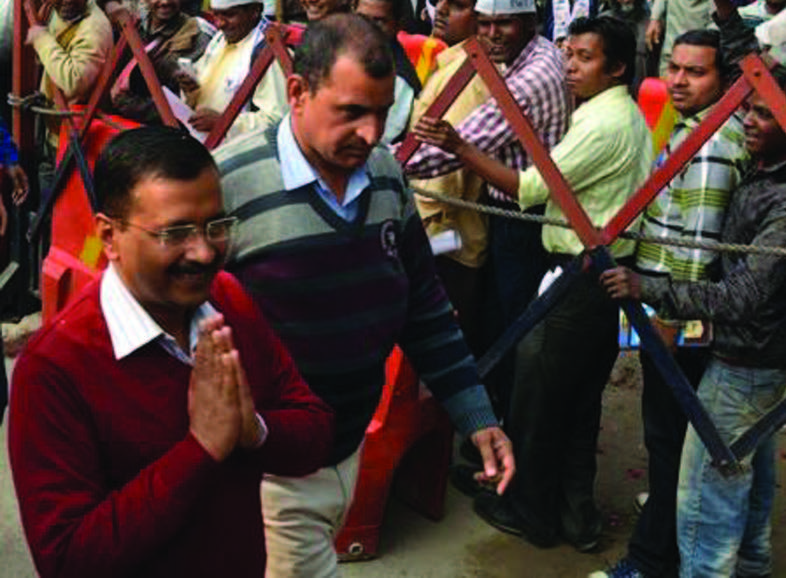
    NEW DELHI (TIP): In a first after becoming Delhi Chief Minister for the second time, Arvind Kejriwal on Feb 18 morning held a “Janta Darbar” at the Aam Aadmi Party office in Kaushambi, Ghaziabad.

    Kejriwal met visitors for around three hours and took note of their problems. Most of the people who came to meet the CM were contractual employees who wanted to be made permanent and others who had lost their jobs. Giving permanent status to contractual employees was one of the biggest poll promises that the AAP government had made in their poll manifesto.

    A contractual employee with the New Delhi Municipal Corporation, Lala Ram said: “I have been a contractual employee for a very long time now. The department does not give me and many others like me, a permanent job. I want to request  Kejriwal to make all the contractual employees in NDMC permanent.”

    A group of women from Home Guard who had lost their job in 2013, also came to meet the Chief Minister. “All of us lost our job in the year 2013. The department hired people from a batch junior to us after sacking us. They assured us that they would give our jobs back but nothing happened. We had come to meet the CM about this issue during his last Janta Darbar also but we could not meet him. This time, we hope to meet him and hope that something will happen.”

    Differently-abled Nahid from Shastri Park reached “Janta Darbar” complaining about his lost job. “I was working as a contract employee with Jag Pravesh Chand Hospital but three months ago, I was removed and now I do not have any job. I have come here hoping that Kejriwal listens to my problem and I get my job back,” Nahid said.

    Some people came with nursery admission problems, others came with some civic issues. While many others came just to wish good luck to the CM and share their ideas with him.

    The first “Janta Darbar”, however, was held minus the fan fare witnessed during the event held outside Delhi Secretariat that ended up in chaos during his previous stint as Delhi CM.

    The district administration of Ghaziabad has granted permission to AAP to hold public meetings thrice a week for an hour at Mr. Kejriwal’s residence. To handle crowd and provide security during the meeting, a team of police personnel under the supervision of a police inspector were present.

  • MAHA SHIVRATRI CELEBRATED AT SANKATMOCHAN TEMPLE

    MAHA SHIVRATRI CELEBRATED AT SANKATMOCHAN TEMPLE

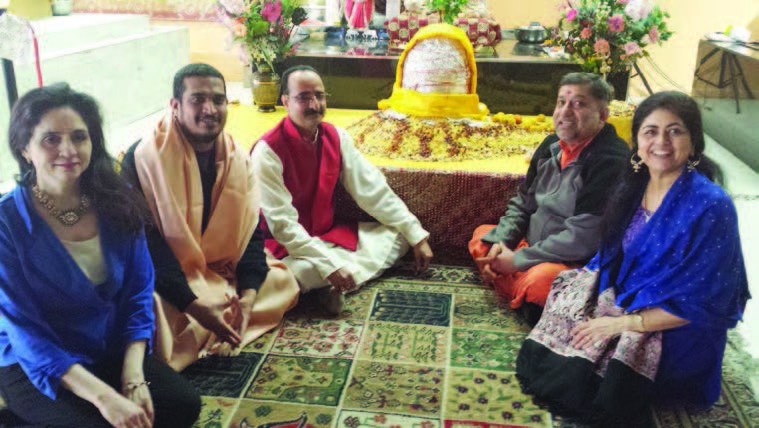
    NEW YORK (TIP): Sri Sankat Mochan Hanuman Mandir at 256-11 Hillside Avenue in Floral Park in Queens celebrated the auspicious Maha Shivratri festival which commenced on Tuesday, February 17 and concluded on Wednesday, February 18.

    MAHA SHIVRATRI CELEBRATEDThe festival of Char Pahar Ki Pooja started with the first Pahar at 6:00pm with Pundit Sanjeev Mishra, Pradeep Sharma and Krishna Shastri performing Maha Rudra Abhishek and Pooja Archana followed by the second Pahar at 9:00pm, the third Pahar at 12 midnight and the fourth Pahar at 3:00am. At every Pahar, the Main Shiv Lingam was given a special bath with milk, yogurt, honey, ghee, sugar, sandalwood paste and rose water. Moreover, the Shiv Lingam was adorned with the image of different Gods at each Pahar: Lord Ganesh at the first Pahar, Sri Hanuman at the second Pahar, Lord Mahakaal the third Pahar and the wedding of Lord Shiva and Goddess Parvati at the fourth Pahar was decorated with flowers and fruits. Each Pahar ended with the chanting of Har Har Mahadev and Om Namah Shiva Mantra which reverberated throughout the well-decorated temple.

    The temple was thronged by a stream of devotees to perform the traditional Shivling Pooja with sincerity and devotion and seek blessings from Lord Shiva. During Pooja, the devotees decorated their Shivlings with flowers and garlands and offer incense sticks and fruits. Many devotees stayed awake all night singing bhajans, hymns and verses in praise and devotion of Lord Shiva besides the non-stop chanting of Om Namah Shivay, the mantra which cleanses the soul and liberates from sins and impurities. Many devotees performed the Abhishek to Main Shivling on the altar in the background of Shivlings beautifully adorned on the wall.

    MahaShivRatri which occurs on the 14th night of the new moon during the dark half of the month of Phalguna is celebrated enthusiastically by Hindus every year in reverence of Lord Shiva. According to a legend, the Maha Shivratri celebrates the marriage of Lord Shiva and Goddess Parvati. Another legend states that on the ShivRatri day, the Lord Shiva danced the Tandav Nritya which signifies creation, preservation and destruction of the Cosmos.

    The holy pooja ended around 6:00am on Wednesday with Maha Mangal Arti and Maha Bhog. A langar prasad, tea and thandai were served to devotees throughout the festival.

    Indu Gajwani relentlessly volunteered her services by phoning devotees to attend the festival and organizing the Pooja ceremony thought the four Pahars. A countless number of devotees volunteered their services to make the festival a grand success.

  • Widespread condemnation of assault on visiting Indian Sureshbhai Patel

    Widespread condemnation of assault on visiting Indian Sureshbhai Patel

    NEW YORK (TIP): Cutting across color and political lines, political and community leaders have in one voice condemned the brutal assault  by a police officer on an old man on a visit from India . Sureshbhai Patel was  smashed to the ground on February 6 while he was taking a walk in the town of Madison.

    The assault damaged his spine, as a result of which Patel is partially paralyzed. Governor of Alabama Robert Bentley offered apologies for the police officer’s conduct and spoke with Patel’s son.

    US lawmakers condemn police assault on Indian grandfather


    WASHINGTON (TIP): Several US lawmakers condemned the police assault on an Indian grandfather who was slammed to the ground by a police officer in Alabama – while he was out for a walk in the neighborhood – leaving him partially paralyzed as donations poured in for the victim.

    The police officer Eric Parker, who assaulted Sureshbhai Patel, 57, Feb 6 while he was taking a walk in front of his son Chirag Patel’s house in a Madison, Alabama suburb was arrested Thursday and Police Chief Larry Muncey has recommended that he be fired.

    Parker was released on $1,000 bond from the Limestone County Jail. A court appearance has been set for him for March 12, according to WAFF-TV, a local news channel,

    Patel, who had come from India recently to look after his grandson who was born prematurely, filed a lawsuit Thursday saying his civil rights were violated. It seeks an unspecified amount of money. According to the lawsuit, Patel said he tried to tell the officers that he doesn’t speak English, saying “No English. Indian. Walking.”

    Both police videos show two officers eventually forcing Patel to the ground with his hands behind his back.

    One police video captured an officer asking Patel, “Did you bite your lip?” as he remained on the ground. The officers repeatedly attempted to get Patel to “stand up” so they could move him to a patrol car.

    According to the lawsuit, Patel was paralyzed in his arms and legs after officers forced him to the ground, his face bloodied.

    State Department spokesperson Jen Psaki when asked Friday whether the department was sending any officials to Alabama to meet the victim along with Indian officials told reporters that “I don’t believe there’s a role for the State Department here.”

    “We certainly wish Mr. Patel a full recovery from his injuries. Our thoughts are with his family,” she said declining further comment as “this case is under investigation.”

    The lone Indian Congressman Ami Bera, who is also co-chair of the Congressional Caucus on India and Indian Americans and a member of the House Foreign Affairs Committee, called the incident “horrible and tragic.”Noting that the FBI has opened an investigation, he said: “Moving forward, we must come together as a nation to tackle the very real issues our minority communities face, and to rebuild trust and understanding among law enforcement agencies and the diverse communities that they serve.”

    Several members of the Congressional Asian Pacific American Caucus (CAPAC) including chair Judy Chu, Michael Honda, Ted Lieu, Jan Schakowsky and Grace Meng also condemned the use of excessive police force against Sureshbhai Patel.

    “In no way should the color of someone’s skin or their limited English proficiency lead to the type of confusion and unreasonable use of force that left Mr. Patel partially paralyzed,” said Chu.

    “As we await the FBI’s findings, I will continue to work with my colleagues in Congress to ensure that this type of profiling and excessive force is no longer permitted by law enforcement,” she said.

    Meanwhile, according to the Washington Post donations have been pouring into GoFundMe account set by a member of the Indian community, who is not related to the family, to help with Patel’s medical bills and other expenses.

    That GoFundMe page has collected more than $50,000 in donations for the family as of late Friday morning. The fund is trying to raise $100,000 for Patel, who has no insurance. Patel’s lawyer Hank Sherrod told The Post Friday that Indian Americans from all over the country have contacted him directly about sending checks to the family to cover medical bills.

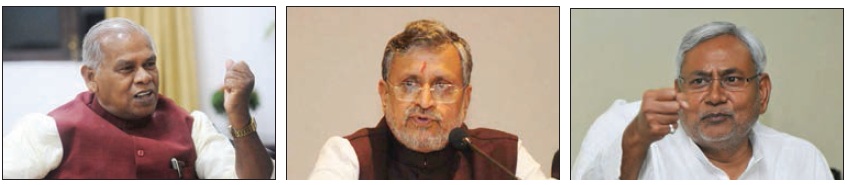
  • Bihar Chief Minister Jitan Ram Manjhi resigns Alleges death threats to his supporters from Nitish camp

    Bihar Chief Minister Jitan Ram Manjhi resigns Alleges death threats to his supporters from Nitish camp

    PATNA (TIP): Bihar Chief Minister Jitan Ram Manjhi tendered his resignation ahead of floor test in assembly Friday, February 20. In a good news for the embattled CM, BJP announced yesterday, February 19 that it will support the ‘Mahadalit’ CM during the floor test.

    “After a long meeting of the BJP legislators, the party has decided to support Manjhi during his confidence vote in the Assembly,” said BJP leader Sushil Kumar Modi.

    The BJP’s offer of support came on a day when Bihar Speaker Uday Narain Choudhary notified JD-U leader Vijay Kumar Chaudhary as the leader of opposition, replacing Nand Kishore Yadav of the BJP.

    The Speaker also accepted former Chief Minister Nitish Kumar’s demand that Janata Dal (United) (JD-U) be given the status of the main opposition party.

    Following the Speaker’s decision, BJP MLAs created a ruckus and protested in the Assembly complex.

    “How could the Speaker take away the opposition party tag from the BJP?” asked senior party leader Shahnawaz Hussain.

    “We protest against this move as well as the way the JD-U is treating Manjhi, who is a Mahadalit,” Hussain said at a press conference in New Delhi.

    He also said that the BJP has nothing to do with the charges of horse-trading being made by the Nitish Kumar’s camp.

    Manjhi, after being expelled from the JD-U on February 9, has been declared as an unattached member in the Assembly. He was expelled for allegedly “indulging in anti-party activities”. But he had refused to resign and was  to prove his majority in the house on Friday, February 20.

    Throwing all ethical standards to wind, Manjhi said on February 19 that he will offer Cabinet berths to legislators, who will support him during the confidence motion. “Aaiye mera samarthan kijiye, mantri pad lijiye (come to support me and become a minister),” he told reporters, attending a function here.

    Also yesterday, the Patna High Court ordered that eight rebel JD-U legislators, considered close to Manjhi, would not vote during the confidence motion in the Assembly.

    A bench of Justice Iqbal Ahmad barred the JD-U MLAs from voting after hearing their petition, seeking permission to vote during the floor test.

    Manjhi was picked by Nitish Kumar as his replacement when he quit last year after JDU’s rout in the Lok Sabha polls.

    In the 243-member Assembly, the JDU has 115 legislators — most of whom are with Nitish Kumar. The party has the support of 24 Rashtriya Janata Dal (RJD) legislators, five Congress MLAs, two Independents and a CPI MLA.

    The BJP has 88 legislators and is supported by three Independents.

    The ball now is in governor’s court. Coming days will be watched with interest by all parties involved in the power play in Bihar.