Year: 2015

  • Modi government asks Congress to vacate 24 Akbar Road headquarters

    Modi government asks Congress to vacate 24 Akbar Road headquarters

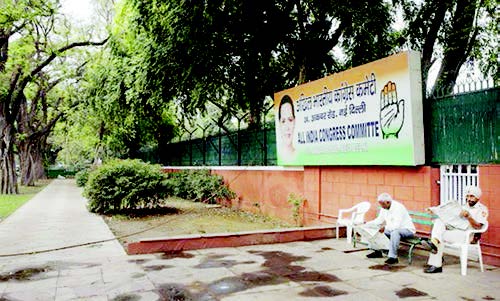
    NEW DELHI: The Congress party has been asked by the Central government to vacate four government bungalows in the heart of the Capital including a sprawling building at 24 Akbar Road which serves as its headquarters following cancellation of their allotment.

    AICC Treasurer Motilal Vora today said the party has received a notice from the Urban Development Ministry for vacating the four bungalows in its possession that also included 26 Akbar Road, 5, Raisina Road and C-II/109, Chanakya Puri.

    24, Akbar Road has been the party headquarters since 1978 while 26, Akbar Road is the office of the Congress frontal wing Seva Dal and 5, Raisina Road houses Youth Congress and NSUI(I) offices. The Chanakyapuri bungalow is being used as a residence.

    Vora said the party has replied to the notice. The Ministry of Urban Development directed the Congress that it pay penal fee till the bungalows are vacated.

    In a statement, it said that as per the policy on Allotment of Land to Political Parties for building their own party offices, Congress Party was required to vacate in June, 2013 the four bungalows that are in its possession.

    The Ministry said this is because Congress Party was handed over possession of land at 9-A, Rouse Avenue in June, 2010 and as per the policy it was required to vacate the four bungalows within three years i.e June, 2013, which was not done.

    The Ministry of Urban Development last month has informed the Congress Party that the said allocation has been cancelled with effect from June, 2013 and it will be charged “damage rate of license fee” from that month for the said bungalows till they are vacated, as per the policy.

    Subsequently, Congress Party made a request seeking further three years time to vacate these bungalows, it said.

    Urban Development Minister M Venkaiah Naidu has directed the concerned to examine the request of the Congress.

  • Vijay Jolly assures BJP support to Chirag Patel on phone

    Vijay Jolly assures BJP support to Chirag Patel on phone

    NEW DELHI (TIP): Former Global Convener BJP Overseas Affairs Vijay Jolly today condemned US police brutal assault on Sureshbhai Patel Gujarati Indian national on a short visit to US in the state of Alabama.

    BJP leader Mr. Jolly telephoned his son Mr. Chirag Patel in Alabama and reiterated BJP support to the aggrieved family in a long distance call.

    Mr. Jolly found the whole Gujarati family is in a state of shock over this ugly incident. The unarmed Mr. Sureshbhai was brutally assaulted by US police officials in Huntsville Town in Alabama, USA revealed Mr. Chirag to Mr. Jolly.

    Though no crime was committed yet the 57 years old resident of Nadiad district from state of Gujarat was subject to illegal assault resulting in his temporary state of paralysis, stated Mr. Jolly.

    BJP has expressed its outrage on this ugly incident.

    BJP leader Mr. Jolly has written a protest letter to the US Ambassador in India Mr. Richard Verma on the issue. State help, counseling of the aggrieved, free medical treatment, monetary compensation to the family along with severe punishment to the three US police officer involved in this gruesome assault case has been demanded by BJP leader Mr. Vijay Jolly from New Delhi.

  • Alabama’s governor apologizes to the Patels & Indian Government for Cop’s misconduct

    Alabama’s governor apologizes to the Patels & Indian Government for Cop’s misconduct

    MONTGOMERY (TIP): Alabama’s governor apologized to the government of India for the police officer who assaulted and injured an Indian grandfather on Feb. 6.

    Governor Robert Bentley has also ordered his state to investigate exactly what happened, alongside an FBI probe. The use of “excessive force” left Sureshbhai Patel, 57 years old, partially paralyzed. “I sincerely hope that Mr. Patel continues to improve and that he will regain full use of his legs,” Bentley said in a letter to India’s consulate in Atlanta.

    The attack on Patel has garnered sympathy and outrage from all corners of the world (and social media), to help the Patel family with medical bills, “Sureshbhai Patel’s Recovery Fund” was created on the crowd-funding platform GoFundMe.com. The campaign’s goal was to raise $100,000 but within six days, it has drawn donations worth nearly$190,000. The page was started by Aakash Patel, who is not related to the victim and should be given credit for mustering the support the case truly deserved.

  • New York Attorney Ravi Batra seeks from Kerry visa for Patel’s wife

    New York Attorney Ravi Batra seeks from Kerry visa for Patel’s wife

    [vc_row][vc_column][vc_column_text]NEW YORK (TIP): Meanwhile, New York based eminent attorney Ravi Batra  has written to US Secretary of State John Kerry to issue a Humanitarian Visa to Sureshbhai Patel’s  wife so that she could come and see her husband. Ravi has also written to Air India Regional Manager Rishikant Singh to bring Mrs. Patel here free of cost, and to assist her to meet all necessary protocols for international travel, once the Visa is issued. Here is the text of the two letters.  [/vc_column_text][/vc_column][/vc_row][vc_row][vc_column width=”1/2″][vc_column_text]

    Letter to  Sec. John Kerry:

    Hon. John Kerry
    U.S. Secretary of State Department of State Washington DC

    Re:  Request a Humanitarian Visa for Shakuntala Patel, wife of Suresh Bhai – now of Madison’s Infamy

     Dear and respected Secretary Kerry,

    First, let me acknowledge the grace and skill by which you have been addressing the monumental amount of multilateral and bilateral issues, such that you have done us all proud as you bring your enormous talents, patience and wisdom in advancing global peace and security, consistent with vital American interests with due regard to our celebrated separated powers regime. 

    While I could have written to you as chair of the National Advisory Council on South Asian Affairs, I felt this was more a bilateral issue, and hence, I write as an Indian-American, proud of my roots, and as a citizen who adores and cherishes what makes America special: our hallowed Constitution and Thomas Jefferson’s Declaration of Independence. Given the horrific events in Madison, Alabama, where a member of its Police Department flipped and slammed an actually innocent Sureshbhai Patel to the frozen ground and fractured his cervical vertebrae, causing instant quadriplegia. A firestorm has resulted, even as I have publically informed that President Obama’s DOJ’ initiation of a parallel federal civil rights investigation ab initio is a rare gift to Indian-Americans and India, even as it seeks to reconcile two abiding principles: Cops are, and must remain, role models in society and Citizens have civil rights. 

    As an American, and your fan, I write to request a humanitarian visa for Shakuntala Patel, wife of Sureshbhai, consistent with the highest standards of compassion America stands for, subject to all laws, rules and regulations. This will go a long way in being an ointment to many a hurt soul. I am also separately requesting Air India, India’s national carrier, to provide Mrs. Patel with respectful passage, addressing all necessary protocols. I support President Obama’s recent reaffirmation of 1st A. secularism.

    With warmest personal regards,

    Respectfully, Ravi Batra”

    [/vc_column_text][/vc_column][vc_column width=”1/2″][vc_column_text]

     Letter to Air India:

    “Rishikant Singh
    Regional Manager, Air India 570 Lexington Avenue, 14th fl New York, NY


    Dear Rishikant,

    I am aware of the great work Air India has always done to enhance bilateral relations between the United States and India. Indeed, one could state the same sentiment for each of the places Air India flies. 

    I have just penned a letter-request to our great Secretary of State John Kerry for the issuance of a humanitarian visa for Shakuntala Patel. I am aware of the limited resources of the Patel family, and Air India’s history as India’s national carrier to help Indian citizens in times of grave risk, such as evacuation from Libya. 

    I’m sure you know of the horrific events in Madison, Alabama, where a member of its Police Department flipped and slammed an actually innocent Sureshbhai Patel to the frozen ground and fractured his cervical vertebrae, causing instant quadriplegia. 

    As an Indian-American, proud of my “roots,” I request Air India to provide respectful passage, and every assistance for honoring all protocols of international travel, and to bring Shakuntala Patel to Madison Alabama, once such a visa is issued by America’s history-making Ambassador Richard
    “Rahul” Verma upon direction by Secretary John Kerry. Your making it happen, with India’s necessary approval, will be highly valued as it will help to remove an un-necessary and un-expected irritant in an otherwise enhanced bilateral relationship – given President Obama’s recent attendance of India’s Republic Day – a relationship that will define the 21st Century for all nations and people to have more peace, more security and more economic growth – a tryst with destiny that I have been waiting for since India’s independence.

    With warm personal regards, Sincerely,
    Ravi Batra

    [/vc_column_text][/vc_column][/vc_row]

  • FROM ALABAMA TO AMERICAN HINDUPHOBIA

    FROM ALABAMA TO AMERICAN HINDUPHOBIA

    This week, two terrible acts of violence took place in the US. First, three young Muslim-American students were killed in cold blood in North Carolina by a neighbor. The cause, it was said, was an argument about parking spaces. It was also noted that the killer was an atheist and broadly anti-religious and, therefore, it was suggested that perhaps the attack could not be described as a religious hate crime.

    That suggestion was instantly, perhaps naturally, met with a barrage of opposition. Al Jazeera published a learned summary of years of media research on Muslim stereotyping. Internet memes pointed out how the American media differentiated between white and Muslim criminals. The argument was made, effectively, for continuing concern about Islamophobia.

    The other terrible act of violence, of course, was the one that took place in Alabama.

    An elderly Indian grandfather travels to America to see his grandson for the first time, goes out for a walk, and gets smashed into the hard concrete footpath by policemen leaving him broken and paralyzed.

    There is outrage in the media, and rightly so. The Indian-American community and many American friends (though not the one who visited India recently and told us Gandhi would be shocked), have spoken out against the ignorance, prejudice and brutality that took place here. In the wake of recent atrocities like what happened in Ferguson, the idea of the dangers of “walking while brown” obviously did the rounds.

    But there was one notable difference in the reactions to North Carolina and Alabama.

    When a Muslim is harmed, it is Islamophobia. When a Hindu is brutally assaulted, there is not one word uttered about Hinduphobia.

    One might argue, not unlike the parking dispute angle in North Carolina, that there was no Hinduphobia in the atrocity that took place in Alabama. Maybe the cops did not know he was Hindu and brutalize him for that reason. Maybe it was just racism in the black and white sense. After all, we have been told for years now by concerned south Asian activists and commentators that the Indian-American community, by virtue of its elitism, fails to recognize racial solidarity. Once again, that trope surfaced about the Alabama attacks. We are getting attacked because of racism. True enough!

    But how can we be so sure that the racism that Indian-Americans sometimes face has nothing to do with prejudices about the major religion they are identified with? How can we be sure that one kind of racism is independent of another?

    We cannot. And yet, for several years, every single time we have talked about the brazen misrepresentation of Hinduism in American media, pop culture, and most all in academia, we have been shouted down by the same concerned south Asian activists and commentators. We could not even talk about Hinduphobia without being rudely told that no such thing exists, or that it is a figment of Hindu extremist paranoid fantasy. We could not even do the one thing every religious minority community in America did: get old colonial-era racist nonsense about them written out of their children’s history textbooks. We were shouted down by the same general group of concerned observers who want us to fight racism but just not this racism apparently. This racism is actually not racism in their view: the California textbooks according to them contain only the true facts about Hinduism, and questioning it is tantamount to saffronisation and fundamentalism.

    To this day, children in America get just one basic kind of message about Hinduism and Hindus in their school lessons: that we are the last irredeemable racist-casteists and sexists in the world. When some of them get to college or grad school, they will read even more about how we dumbly worship body organs, and how we were not just racist-casteists but actually the original Nazis, the forerunners of Hitlerian genocide no less (no exaggeration, just look at what is written on page 111 and page 144 of Doniger’s The Hindus: An Alternative History)!

    And all this is still only in the genteel, ‘educated’ side. What about the insanity that bubbles in less scholarly corners?What about the ravings of supposed men of God in their sermons who rant about our gods as nothing more than animal-headed devils and beasts? And what about Hollywood, and big media and popular culture, which, under the guise of being fair to Muslims or feeling guilty for Guantanamo, goes Slumdog on Hinduism?

    All this is around us. It is real. Whether it directly contributes to specific acts of brutality against people or not, it is there, a toxin in the culture. Just think of the attacks in Australia a few years ago on Indian students where the assailants reportedly used “slumdog” as an insult at their victims.

    Prejudice is not something that plays out in microscopic precision inside the heads of people about to do something nasty. It is a big ugly cloud of falsehood, envy, self-hatred, and spitefulness lurking around a society, just waiting to burst into real life. It did, this week, in Alabama. We cannot be sure what exactly squirmed about in the brains of the man who called the police on an elderly neighbor walking around the block, or in that of a policeman who had to prove himself to be tougher than a meek old man not being remotely aggressive to anyone. Was it color, envy, boredom, overzealousness, fear…? We cannot say for sure. But the fact is that the culture in which they grew up, the culture in which millions of people, Hindu, Muslim, brown, black, are all growing up, still has a thriving place in it for the ugliest and pettiest kind of falsehood and maliciousness.

    Who can say for sure that the men involved in brutalizing Sureshbhai Patel did not at some point in their lives, maybe in school, maybe elsewhere, pick up on anti-Hindu myths and prejudice?

    The truth is that if Hinduphobia is not named, shamed and eradicated from the halls of media and academia, its consequences might end up being even worse, and not just for Hindus. I hope the enlightened and concerned observers of south Asia who deny that Hinduphobia exists quickly come to realize that bigots are not usually well informed in their actions. After all, Islamophobes have attacked not only Muslims but also Sikhs in America. It would be appalling to keep pretending Hinduphobia doesn’t exist until one day some poor person, Hindu or not, finds himself or herself at the wrong end of a maniac believing he is stopping a casteist idol-worshipper from doing Satan’s work or some such.

    There used to be a popular poster on idealistic college campuses. It had these inspiring lines which Hinduphobia-deniers might want to look at again:

    They came for the Jews, and I didn’t speak for them;

    They came for the Communists, and they didn’t speak for them… 

    And then when they came for me, there was no one left to speak for me.

  • Indians in America: Progress, Opportunities, Issues and Challenges

    Indians in America: Progress, Opportunities, Issues and Challenges

    Among the vast global expanse of the Indian Diaspora, non-resident Indians (NRIs) and persons of Indian origin (PIOs) in the United States of America constitute the largest national community of NRIs and PIOs. The NRIs and PIOs in USA are a rapidly increasing population exceeding 4 million with unparalleled upward mobility and significant achievements in all segments of US society. Their average per capita far exceeds other recent immigrant groups as NRIs and PIOs have made enormous strides in economic progress, science and technology, businesses, hospitality, medical profession, media, academia and politics. In addition, the recent advances in strengthening of the relationship between India and USA further enhance the importance of NRIs and PIOs in the USA.

    Despite the remarkable advances and levels of assimilation in US society, from time to time NRIs and PIOs are victims of attacks and harassment perpetuated by other Americans as well as law enforcement. Some of these actions may be silent while others are physical in nature. These are harsh realities, to those who are victims and those who view these attacks in the larger perspective. These experiences are rude awakenings which can jolt the NRI/PIO community to take notice, to understand the motivations, be aware, be vigilant and take steps to alleviate and prevent such incidents. Many of the issues are institutional, ingrained in the US society from its inception, and it would be logical that solutions would have to be institutional in order to be effective – at all levels of society: political, civic, economic, academic, social, religious and media.

    Individually and collectively, NRIs and PIOs must be actively engaged as part of the fabric of American society, participating in multi-ethnic organizations and contributing to social programs benefiting all Americans  -and not be viewed as isolated groups. America is the “great melting pot” and NRIs and PIOs are part of that mix. The lessons of Uganda can be stark reminders of unexpected outcomes by those who view NRIs and PIOs as outsiders or isolated.

    The events of recent months clearly show how widespread disparities have evolved into a national problem of enormous proportions which beg for an urgent solution or a series of solutions, examining the underlying causes, confronting perceptions versus reality. The urgency is to examine and asses the disparities in educational opportunities, economic opportunities, law enforcement and risks, perceptions which dictate actions perpetuating misplaced beliefs and actions, and developing partnerships for social and social progress.

    It is important that the NRI/PIO community in USA be engaged on these issues on a national level. The Global Organization of People of Indian Origin (GOPIO) is embarking on this national agenda with all its chapters in USA in collaboration with other Indian-American organizations, other US (non-Indian) organizations and agencies, municipal, state and national agencies, elected officials, Indian consular officials and others. The objective is to bring about more awareness, education and information, understanding, expectations, cultural differences, Indian immigrant language as hurdles to overcome, immigrant customs, religion, traditions, laws and policies to prevent similar incidents in the future. It must be noted that misplaced perceptions and incorrect assumptions by others can contribute to brutal incidents such as immediately after 9-11 when several Sikhs were attacked when mistakenly grouped among the perpetrators of the 9-11 attacks.

    In the near term, GOPIO is coordinating a panel session on “Indian Migration to USA: Assimilation, Contributions, Opportunities & Challenges” as part of a Multidisciplinary Symposium “Looking Beyond the Fence: Politics, Power, and the Future of U.S. Immigration” to be held on March 27-29, 2015 at St John’s University in Queens, New York. In addition, GOPIO is organizing a conference on “Indian Diaspora: Assimilation and Co-Existence in Multi-Ethnic & Multi-Cultural Societies” scheduled for the day preceding GOPIO’s annual general meeting late May 2015 in New York, USA.

    GOPIO is also taking the lead role in developing a national agenda in engaging the NRI/PIO community in the USA to collaborate closely with India’s Ministry of Overseas Indian Affairs and Ministry of the External Affairs on a national agenda to engage the office of the Indian Ambassador in Washington DC and all Indian Consulates in USA, the US State Department, US Department of Justice, the National Association for the Advancement of Colored People (NAACP), the American Civil Liberties Union (ACLU), MLK Foundation and others. The NRI/PIO community has a responsibility to be proactive in this national dialogue and must inclusive of all segments: media, academia, politics, businesses, science and technology, hospitality, medical professionals, philanthropy, cultural and religious, youth, women, seniors and others.

    There is urgent need for a national dialogue among the NRI/PIO community in USA and respective elected officials, civic groups, institutions and agencies to bring about more awareness, education, expectations and understanding to avoid conflicts and misperceptions which can have unintended consequences. Any further delay on this national agenda would be lost opportunity.

    (The author is  president of the Global Organization of People of Indian Origin (GOPIO International) and very active in New York and US national deliberations on migration, assimilation, partnerships and inclusivity for good citizenship. He is founder and president of Ramex, an electronics manufacturing company based in New York where he resides with his family. Ramsaran is the recipient of India’s Pravasi Samman Award for his contributions to the Indian Diaspora.  He may be reached at : Ramsaran@aol.com)

  • A welcome climb down – After speaking up, Modi must act

    The Obama visit and the Delhi verdict seem to have had some pleasant side-effects. President Obama’s sermons on religious tolerance have not been dismissed as unwarranted or treated as interference by the Modi government. These have, in fact, been taken seriously. On Tuesday Prime Minister Modi chose to speak out at a Christian function on virtues of religious freedom, guaranteed under Article 25 of the Constitution to which President Obama referred with telling effect. This is quite a climb down for a man who had stubbornly refused to condemn the 2002 massacre that happened when he was the Chief Minister of Gujarat.

    Two days after the Delhi verdict, which seems to have left Modi a changed man, the Prime Minister picked up the phone to launch cricket diplomacy, resuming the Foreign Secretary-level talks with Pakistan. In another unusual step he summoned the Delhi Police Commissioner to order a crackdown on those attacking Christian institutions in Delhi. In the usual course the Prime Minister should have acted through the Home Minister or sought the Home Minister’s, or through him, the Delhi Police Commissioner’s explanation for police inaction on the repeated attacks on churches – six in three months in Delhi – unless these were unofficially sanctioned for possible electoral gains. By calling the Police Commissioner, Modi perhaps wanted to send the signal to his critics that he was no longer a quiet spectator to the ugly goings-on.

    One hopes the Delhi outcome has taught the BJP leadership the importance of plurality in the Indian society. A serious introspection may drive the party to keep in check the hate-mongers in the larger Sangh Parivar. Whether the BJP has learnt any lessons in religious tolerance will be tested during the coming Bihar and UP elections in which communal flare-ups and caste divisions are often used for political advantage. Modi’s word to protect the minorities, welcome as it is, will not be enough unless followed by action on the ground. Any one engaging in or inciting communal hatred, vandalism and violence – regardless of his position, religion and party – must be booked immediately and brought to justice.

  • SHARIF FOR ACTION AGAINST SEMINARIES SUPPORTING MILITANCY

    SHARIF FOR ACTION AGAINST SEMINARIES SUPPORTING MILITANCY

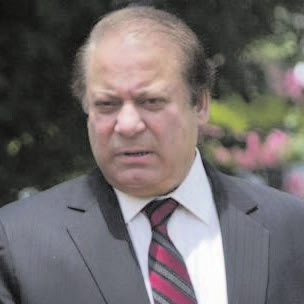
    ISLAMABAD (TIP): Pakistan Prime Minister Nawaz Sharif has ordered authorities to take stern action against madrasas involved in extremism and militancy in the country, in the wake of a series of deadly attacks on mosques.

    No terrorist or militant organisation should be spared, Sharif said February 19 while presiding over a meeting of the Balochistan Apex Committee, set up recently to deal with the menace of militancy in the southwestern province.

    These committees were formed in Pakistan’s other provinces as well after the horrific Peshawar School massacre that killed 150 people, mostly students.

    “No one will be allowed to wage insurgency and commit violence under the patronage of sectarian and other organisations,” Sharif was quoted as saying by the Dawn.

    Religious seminaries (madrasas) and organisations involved in terror activities should be identified and proceeded against, he said, adding that his government was committed to eradicate terrorism and extremism.

    Sharif asked the provincial governments to implement the National Action Plan (NAP) and take stern action against terrorist organisations, it said.

    “We will have to take tough decisions to achieve the objectives of the National Action Plan,” he said,

    He stressed that terrorism must be dealt with sternly and militant and terrorist groups which were not ready to hold peace talks with the government would have to face action.

    Pakistan faces the dilemma of how to deal with thousands of madrasas run by powerful mullahs in the country. It has been reported that several of them are linked to extremism and some of them were providing shelter to militants or sending jihadists.

    Sharif while supporting religious schools has indicated to take action against those involved in militancy but so far no action has been taken.

    At least three people were killed when a Taliban militant attacked a Shiite mosque in Rawalpindi yesterday, the latest incident of sectarian violence after over 60 people, including children, were killed in a similar suicide bombing during Friday prayers at a mosque in Pakistan’s Sindh province on January 30.

    Two weeks after the attack, Taliban suicide bombers stormed a crowded Shia mosque in Pakistan’s Peshawar province during Friday prayers, killing more than 20 people.

  • Bangladesh orders top Islamist to hang, fuelling unrest

    Bangladesh orders top Islamist to hang, fuelling unrest

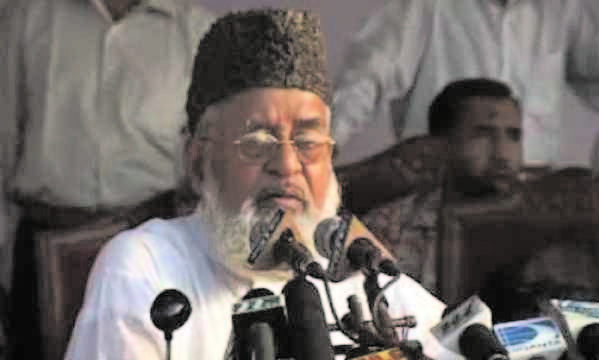
    DHAKA (TIP): Bangladesh’s war crimes tribunal ordered the execution of a senior Islamist leader Wednesday after convicting him of atrocities during the country’s 1971 independence war, triggering violence outside the court.

    Three Molotov cocktails thrown by suspected anti-government activists exploded outside the courthouse in central Dhaka as Abdus Subhan, a vice president of Bangladesh’s largest Islamist party, Jamaat-Islami, was found guilty of murder, genocide and torture.

    The verdict is expected to further inflame tensions in Bangladesh where an alliance of opposition parties, including Jamaat, is trying to topple the government of Prime Minister Sheikh Hasina.

    At least 87 people have died since early January when the leader of the main opposition Bangladesh Nationalist Party (BNP) called on supporters to blockade roads, railways and waterways to force Hasina to call new polls.

    Justice Obaidul Hassan, head of the International Crimes Tribunal (ICT), handed down the sentences, saying the 79-year-old leader would be “hanged by the neck until his death”.

    “He was found guilty of six out of nine charges. As a leader of Jamaat, he collaborated with Pakistan army and he carried out in the name of Islam,” prosecutor Sultan Mahmud told reporters.

    Subhan is the 17th person and the 12th and the last Islamist to be convicted by the court, which is a domestic tribunal set up by Hasina’s government without any international oversight.

    Prosecutors said Subhan was the head of Jamaat and a pro-Pakistani militia in the northwestern district town of Pabna and he actively took part in the murder of hundreds of innocent villagers and minority Hindus in the 1971 conflict when the then East Pakistan seceded from Islamabad.

    Defence lawyers said they would appeal the verdict as the charges against Subhan were “false and baseless”.

    The war crimes court has mostly focused on the trials of the Jamaat leaders who opposed the break-up of Pakistan and saw the liberation war by Bengalis as a conspiracy by majority-Hindu India.

    Previous death sentences handed down against Jamaat leaders, including its supreme and spiritual leaders, plunged Bangladesh into its deadliest unrest in 2013.

    Thousands of Islamists clashed with police in nationwide protests over the verdicts and other issues and some 500 people were killed.

    BNP leader Khaleda Zia and Jamaat say the trials are aimed at eliminating opposition leaders rather than rendering justice while rights groups have said they fall short of international standards.

    The government maintains they are needed to heal the wounds of the war, which it says left three million people dead. Independent researchers put the toll much lower.

  • AFGHAN TALIBAN TO MEET US OFFICIALS FOR PEACE TALKS IN QATAR: SOURCES

    KANDAHAR, AFGHANISTAN (TIP): Taliban representatives are to meet US officials in Qatar for possible peace talks on Afghanistan, sources from the militant group told AFP on february 19.

    There have been several fruitless attempts at dialogue in recent years between the Taliban and the United States, the Kabul government’s chief supporter, aimed at ending the 13-year conflict in Afghanistan.

  • STORM LIGHTING KILLS 3 IN NEPAL, SNOW STORM SWEEPS TREKKING ROUTE

    KATHMANDU (TIP): Police said lighting struck a mountain village in northeast Nepal killing at least three people while a snow storm on a popular trekking route struck a group of hikers.

    Police said february 19 that lighting struck Waku village Wednesday night, killing the three people. The village is just south of Mount Everest.

    Separately, a snow storm on a trekking route caught a group of five Chinese and one Canadian hikers, also on Wednesday. They were rescued by local villagers and suffered only minor injuries.

    They were on the popular Annapurna trekking route. It was early in the trekking season and not many trekkers were on the route.

  • Dozens of Myanmar troops killed fighting northern rebels

    YANGON (TIP): Heavy fighting between Myanmar’s army and rebels has killed 47 soldiers, state media said on February 20, sending a flood of people across the border with China and overshadowing hopes for a national ceasefire as a crucial election looms.

    Myanmar has informed Beijing about the clashes, which have raged since February 9, according to the Global New Light of Myanmar, marking a dramatic resurgence of conflict with largely ethnic Chinese rebels in the Kokang region in Shan State. The flaring of a conflict which had been largely dormant for six years, is an ominous sign for the government as it attempts to forge a comprehensive ceasefire deal with the country’s myriad ethnic armed groups — a deal it says is essential to embed reforms and drive development.

    Kokang fighters with “heavy weapons including anti-aircraft machine guns” attempted to capture the region’s capital Laukkai, just a few miles from the Chinese border, but were repelled by the army, state media said.

    “So far, the fighting has left government forces with 47 dead, 73 wounded and five vehicles destroyed,” said the English language report. It is unclear what provoked the latest round of violence, which was announced as the nation celebrated the 100th anniversary of the birth of independence hero Aung San — the father of opposition leader Aung San Suu Kyi — who is lauded for backing political autonomy for ethnic areas.

    Information Minister Ye Htut blamed local Kokang rebel leader Phone Kya Shin for the fighting and called on Beijing to reign in any local officials who might be helping the group on their side of the border. “I think the Chinese government should scrutinise the acts of regional authorities if they want to keep goodwill and friendship with Myanmar and stability in the border area,” he told mediaperson on February 19.

    The intensity of the fighting sent people fleeing from the remote, mountainous wedge of land across the frontier into China. “China has provided them with necessary humanitarian assistance. As soon at the situation subsides, they will return to Myanmar,” Chinese foreign ministry spokeswoman Hua Chunying said at a regular press briefing in Beijing on February 19, without estimating the number of those affected.

  • GERMANY REJECTS GREECE’S LOAN PLEA

    GERMANY REJECTS GREECE’S LOAN PLEA

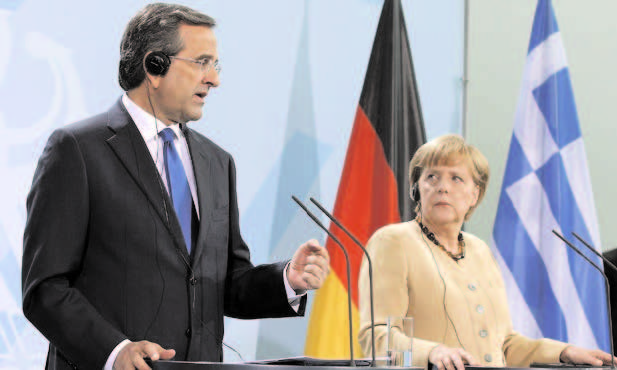
    ATHENS (TIP): Greece sent its European creditors a last-moment proposal on february 19  meant to unfreeze talks on its bailout program and end uncertainty over its future in the euro. But hopes of a deal at an emergency meeting of eurozone finance ministers on Friday were dampened by Germany, the main creditor.

    The Greek government offered to extend its rescue loan agreement by six months, as the 19-country eurozone had demanded in order to give all sides more time to hash out a more permanent deal.

    It held back, however, on offering to continue in full a series of budget cuts and reforms that the eurozone has required since 2010 in exchange for loans, but that Greece blames for devastating its economy.

    German finance ministry spokesman Martin Jaeger said in a statement it ”is not a substantial proposal for a solution.” 

    He said it amounts to a request ”for bridge financing without fulfilling the demands of the (bailout) program,” namely the budget measures. It does not, he added, correspond to what the eurozone countries had demanded of Greece before talks broke down on Monday.

    The European executive commission was somewhat more upbeat.

    Spokesman Margaritis Schinas said Commission President Jean-Claude Juncker ”sees in this letter a positive sign which, in his assessment, could pave the way for a reasonable compromise in the interest of financial stability in the euro area as a whole.” 

    He said Juncker held talks yesterday, overnight and this morning with Greek Prime Minister Alexis Tspiras and Dutch Finance Minister Jeroen Dijsselbloem, who heads meetings of eurozone finance ministers.

  • British teen convicted of terrorist plan to behead soldier

    British teen convicted of terrorist plan to behead soldier

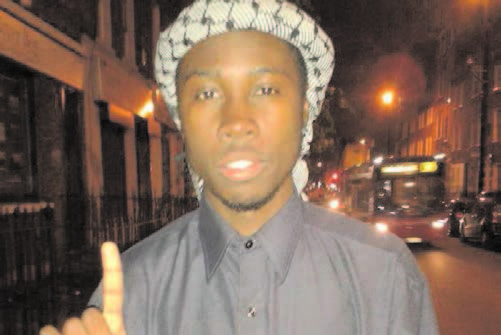
    LONDON (TIP): A British teenager who rapidly became radicalized after converting to Islam was convicted on Feb 20 of planning to behead a soldier.

    A jury at London’s Central Criminal Court found 19-year-old Brusthom Ziamani guilty of preparing an act of terrorism.

    The London-born teenager was raised by Jehovah’s Witness parents but converted to Islam early in 2014 and became influenced by the radical group al-Muhajiroun.

    Prosecutors said Ziamani was inspired by the two Islamic extremists who murdered soldier Lee Rigby in a London street in 2013.

    They said he researched the location of army cadet bases in London and told his girlfriend he planned to “kill soldiers” before he was arrested in August with a 12-inch (30-centimeter) knife and a hammer in his backpack.

    Ziamani said he had only made the remarks to fit in with his extremist friends. His lawyer, Naeem Mian, said the teenager should not be convicted for having “undoubtedly repulsive views.” 

    A jury deliberated for a day and a half before finding him guilty. Ziamani will be sentenced on March 20.

  • 2 STRONG CYCLONES HIT REMOTE PARTS OF NORTHERN AUSTRALIA

    2 STRONG CYCLONES HIT REMOTE PARTS OF NORTHERN AUSTRALIA

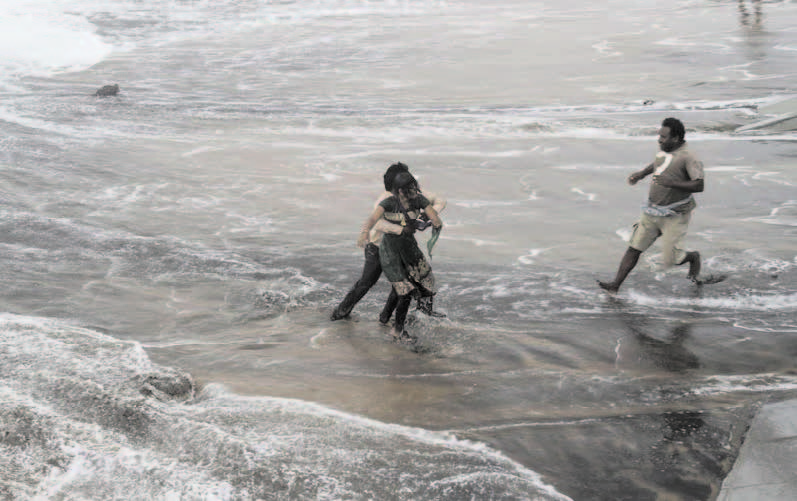
    SYDNEY (TIP): Two powerful cyclones smashed into northern Australia on February 20, with authorities ordering coastal residents to flee their homes amid warnings the storms’ violent winds and drenching rains could prove deadly.

    The twin storms, dubbed the ”cyclone sandwich” by locals, struck early Friday, about 2,500 kilometers (1,500 miles) apart. Cyclone Lam hit a sparsely populated stretch of the Northern Territory, while the more powerful and potentially dangerous Cyclone Marcia began crossing over small coastal towns along the eastern coast of Queensland state a few hours later, packing wind gusts up to 285 kilometers (180 miles) an hour.

    ”Over the next few hours, many thousands of Queenslanders are going to go through a harrowing and terrifying experience,” Queensland Premier Annastacia Palaszczuk said. ”This is a severe cyclone. I want everyone to take all the precautions that they possibly can take.” 

    About 30,000 people living in the Queensland town of Yeppoon and surrounding areas were expected to experience the worst of the storm.

    More than 100 schools were closed and nearly 900 residents in low-lying areas were told to evacuate their homes.

    No immediate damage had been reported, but officials pleaded with hardened Queensland residents _ no stranger to violent cyclones _ to take the storm seriously. A cyclone of similar strength, Yasi, hit the state in 2011, destroying scores of homes but causing no deaths.

    ”This is going to be a calamity, there’s absolutely no doubt about that,” Queensland Police Commissioner Ian Stewart said.

    The Bureau of Meteorology warned that Marcia had a ”very destructive core,” had intensified rapidly and was likely to cause flooding.

    In the Northern Territory, Cyclone Lam struck a remote stretch of coast, tearing up trees and downing power lines, but causing no major damage as it weakened and moved further inland. No injuries had been reported.

  • Pro-Islamic State militants seize Libyan university: Residents

    Pro-Islamic State militants seize Libyan university: Residents

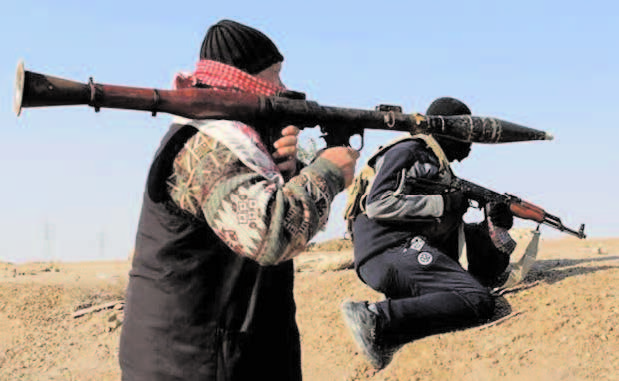
    CAIRO (TIP): Militants claiming loyalty to Islamic State have seized the university in the central Libyan city of Sirte, residents said on February 19, days after a video showed them staging a convoy parade.

    Islamist militants have made inroads into parts of the North African oil-producing country, exploiting a power vacuum created by a violent struggle for control between two competing governments.

    On Monday Egyptian planes struck suspected Islamic State targets in eastern Libya, after the group released a video showing the execution of 21 Egyptian Christians kidnapped in Sirte.

    On Wednesday Egypt and the official Libyan government asked the United Nations Security Council to lift an arms embargo and help build up the army to tackle the jihadists.

    “The group took control of the university yesterday,” a Sirte resident said, asking not to be named. A picture posted on social media showed an Islamic State flag at the university’s entrance.

    “Two days ago they had already seized the city’s administrative complex and expelled all employees.” 

    Sirte residents said the militants had also taken over a radio station and other government buildings. A video on social media showed a convoy of vehicles flying Islamic State flags apparently driving through the city.

    Sirte, birthplace of former Libyan leader Muammar Gaddafi, has been a stronghold of Ansar al-Sharia, an Islamist group blamed by the United States for a 2012 assault on the U.S. diplomatic compound in Benghazi which killed the ambassador.

    The unofficial government controlling Tripoli and parts of western Libya had sent troops to Sirte, a military source said. “Batallion No. 166 has been commissioned by the general chief of staff in Tripoli to start securing state institutions in Sirte,” the source said.

    Libya’s recognised government and elected parliament have been confined to the country’s east since a rival group called Libya Dawn seized the capital Tripoli in August, reinstating the previous assembly and installing a rival government.

    World powers have not recognised the Tripoli administration, which opponents say is backed by Islamists.

    Its head, Omar al-Hassi, said in a televised speech Gaddafi loyalists in Sirte were trying to use the name of Islamic State to undermine Libya’s reputation. He also accused Egyptian President Abdel Fattah al-Sisi of trying to seize eastern Libya to secure its oil and gas.

  • PUTIN COULD TARGET BALTICS NEXT: BRITISH DEFENCE SECRETARY

    LONDON (TIP): British defence secretary Michael Fallon on February 19 said the Baltic states of Latvia, Lithuania and Estonia could be Russian President Vladimir Putin’s next targets. He feared Russia would use covert tactics like those it used to annex Crimea and in the current Ukraine conflict.

    “I’m worried about Putin,” Fallon said. “I’m worried about his pressure on the Baltics, the way he’s testing Nato. You’ve tanks and armour rolling across the Ukrainian border and you’ve an Estonian border guard being captured and not yet still returned. When you’ve jets being flown up the English Channel, when you’ve submarines in the North Sea, it looks to me like it’s warming up.” 

    Warning “there is a real and present danger” of Russia trying to destabilise the Baltics, he asked Nato to be ready for aggression from Russia “in whatever form it takes”. Britain has decided to contribute up to 1,000 troops to a high-readiness force and deploy four RAF Typhoon jets for air policing in the Baltic States to boost Nato’s collective security.

    The comments came after Kiev called for UN peacekeepers to help implement a ceasefire between Ukrainian forces and pro-Russian rebels in the east of the country.

    Fallon confirmed the UK would be the lead nation for Nato’s Very High Readiness Joint Task Force (VJTF) in 2017 and then on rotation thereafter. The VJTF is a high-readiness, multinational force which will act as a
    ‘Spearhead force’, forming Nato’s first response in the face of aggression.

    Anders Fogh Rasmussen, the former secretary-general of Nato, said Putin had dangerous ambitions beyond Ukraine and aimed to test Western resolve in the Baltic states.

  • US EMBASSY: TURKEY, US SIGN DEAL TO TRAIN, ARM SYRIAN REBELS

    ISTANBUL (TIP): Turkey and the United States signed an agreement february 19 to train and arm Syrian rebels fighting the Islamic State group, said the US embassy in Ankara.

    The two countries have been in talks about such a pact for several months. The deal was signed Thursday evening by US ambassador John Bass and Turkish foreign ministry undersecretary Feridun Sinirlioglu, said embassy spokesman Joe Wierichs. He gave no further details.

    Sinirlioglu called the deal ”an important step” in the strategic partnership between Turkey and the United States, according to the state-run Anadolu Agency.

    The Turkish government has said the training by US and Turkish soldiers could begin as early as next month at a base in the central Anatolian city of Kirsehir, and involve hundreds of Syrian fighters in the first year. The US has said the goal is to go after the Islamic State group, but Turkish officials have suggested that the trained rebels could also target the Syrian government of President Bashar Assad.

    With its 750 mile border on Syria, Turkey is a key part of the US-led coalition against the Islamic State group. But negotiations with the US over what to do about the Islamic militants have been fraught with disagreement with Turkey insisting that the coalition needs to also target the Assad government.

    On Tuesday, Turkish foreign minister Mevlut Cavusoglu said in a press conference that Turkey expected that the trained rebels will also fight the Syrian regime.

    Turkey is already training Kurdish Peshmerga fighters in Northern Iraq, who have been battling Islamic State militants.

  • Amartya Sen refuses to lead Nalanda University, blames government

    Amartya Sen refuses to lead Nalanda University, blames government

    NEW DELHI (TIP): Nobel laureate Amartya Sen has withdrawn his candidature for a second term as Nalanda University Chancellor, saying the Narendra Modi government does not want him to continue in the chair.

    Sen, who has long been a critic of Modi, in a letter to the Governing Board of the University blamed the absence of government’s approval for delay in nod from the Visitor, President Pranab Mukherjee, to his name even though the recommendation was sent to him over a month back.

    “Non-action (by government) is a time-wasting way of reversing a board decision, when the government has, in principle, the power to act or not act…It is hard for me not to conclude that the government wants me to cease being the chancellor of Nalanda University after July, and technically, it has the power to do so.

    “This delay, as well as the uncertainty involved, is leading, in effect, to a decisional gap, which is not helpful to Nalanda University’s governance and its academic progress.

    “I have, therefore, decided that in the best interest of Nalanda University, I should exclude myself from being considered for continuing as chancellor beyond this July, despite the unanimous recommendation and urging of the governing board for me to continue,” he has written.

    It is clear that Mukherjee has been unable to provide his assent to the Board’s unanimous choice in the absence of government’s approval, he said.

    The Visitor has always taken a “deep personal interest” in the speedy progress of the work of Nalanda University, and given that, they have to assume that something makes it difficult — or impossible –for him to act with speed in this matter, he said.

    The Board had made the recommendation in its last meeting on January 13-14.

    The Bharat Ratna also rued that academic governance in India remains “so deeply vulnerable to the opinions of the ruling government”.

    “Even though the Nalanda University Act, passed by Parliament, did not, I believe, envisage political interference in academic matters, it is formally the case — given the legal provisions (some of them surviving from colonial days) — that the government can turn an academic issue into a matter of political dispensation if it feels unrestrained about interfering,” he said.

  • Reliance Group to foray into defense sector

    NEW DELHI (TIP): The Reliance Group is ready to set foot in the defense land scape, and in a big way, said chairman Anil Ambani. “My presence here today demonstrates our commitment to the development of India’s defence industry ,” he said at the Investors’ Summit and Global CEOs’ Conference at Aero India 2015.

    He was among the many honchos who came together to discuss the Prime Minister’s ambitious Make in India plan. Ambani said there’s a need for a sovereign defense fund on a PPP model, in which the government holds a 49% share while private sector players hold the rest.

    Stating that decision making in India’s defense sector is hamstrung by the fear of regulatory censure and the long shadow of the 3Cs -CBI, CVC and CAG -is leading to a lack of initiative. Defense minister Manohar Parrikar said transparency in policy making is the best way to curb corruption, and in turn, get rid of regulatory fears which hold back investors.

    Baba Kalyani, chairman and MD of Bharat Forge, said being a country with traditional manufacturing investments in automotive, capital goods and consumer products, which show limited growth, India needs to invest in untapped industries.

  • DAY AFTER DEEPAK PAREKH FIRE, JAITLEY DEFENDS GOVT

    DAY AFTER DEEPAK PAREKH FIRE, JAITLEY DEFENDS GOVT

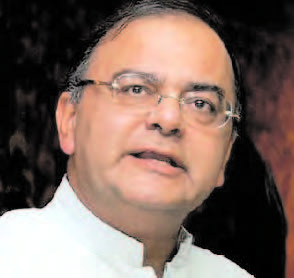
    NEW DELHI (TIP): Finance minister Arun Jaitley on Feb 19 countered the criticism over “growing impatience” in the corporate sector and instead said that the Narendra Modi government has been criticized for moving “too fast”.

    The minister’s statement came a day after HDFC chairman Deepak Parekh’s comments about changes not reflecting on the ground nine months after the Modi government got a decisive mandate in the Lok Sabha elections.

    Although he refused to answer questions related to Parekh’s comment, Jaitley said: “We have to actually see what are the various steps that we have taken and the community of investors both within and outside the country watch us. In the first instance, what is the credibility of this government? What is the decisiveness of our decision making process? What is the process by which government treats business? And it’s an irony that after having seen lethargic governments, you today have a government which is criticized for being too fast.” Without naming any political party, Jaitley also lashed out at the opposition that has attacked the government for taking ordinance route, particularly the one dealing with land acquisition. He justified the decision to promote businesses and to expedite infrastructure projects including affordable housing for the poor in urban areas.

    Referring to the views of the opposition the finance minister said, “Why you bring ordinances, you should wait till the cows come home and everybody can be settled and decisions can be taken. So in fact one great criticism which has come is you should have waited and not acted fast.” 

    He said that sections those who have an “ideal constituency” and vested interest to keep India “poor and keep poor as poor” won’t support such changes that would bring more investment from within and abroad. Jaitley said that the government is determined that the starting point of eradication of poverty will start with getting investment. Defending the crucial ordinance, the minister said that apart from promoting business and investment, acquisition of land is not for “industrial hubs” but “industrial corridors” that will bring huge economic benefits to the poor and locals. Jaitley said that in the past few years, too many self goals have been scored that has impacted investment flow to the country. Referring to the contradictory views of former environment minister Jayanthi Natrajan and Congress vice-president Rahul Gandhi on stalled green clearances for projects for “collateral reasons”, the minister said there were two versions. First one, the decision to hold back clearances was on account of “dishonest consideration” and the second view is that the party dictating not to give clearances for “political positioning”.

  • Lifting AFSPA from Valley not an option: Venkaiah Naidu

    Lifting AFSPA from Valley not an option: Venkaiah Naidu

    NEW DELHI (TIP): As negotiations between BJP and PDP continue on the contentious issues of Article 370 and Armed Forces Special Powers Act (AFSPA) before the two agree to form the government in Jammu and Kashmir, Union minister Venkaiah Naidu has hinted that while the former could be discussed, the latter was non-negotiable.

    The two parties are currently discussing a common minimum programme to formalize the alliance and form a government. Sources said the discussions were stuck on the issues of abrogation of Article 370 and removal of AFSPA from the Valley. While BJP has been pushing for the former, PDP has been batting for the latter.

    Parliamentary affairs minister Naidu on Feb 18 hinted that while the party could consider PDP’s demands on Article 370 given the electoral reality, it would not compromise on AFSPA as it was not just the Army which was a stakeholder in the issue but “the entire country”.

  • UN WOMEN AND UNFPA CONDEMN THE BRUTAL MURDER OF ÖZGECAN ASLAN

    NEW YORK (TIP): Violence against women and girls is a grave violation of human rights and it can only be put to an end by addressing its root causes -gender inequality and discrimination against women. UN Women and the United Nations Population Fund
    (UNFPA) promote zero tolerance towards violence against women and girls and call for the effective implementation of the Council of Europe Convention on preventing and combating violence against women and domestic violence, the Istanbul Convention – a ground-breaking international agreement that Turkey ratified in 2012.

    We, as UN Women’s and UNFPA’s Representatives to Turkey, condemn the horrendous murder of Özgecan Aslan and join in solidarity with the thousands of women and men who have taken to the streets across Turkey to say “No” to violence against women and girls. We recognize the considerable progress Turkey has made with regard to the legislation to combat violence against women and commend the Turkish Government for its leadership in promoting the Istanbul Convention, including by being the first government to sign it. The Istanbul Convention is in line with the global standards set out in the UN Convention on Elimination of All Forms of Discrimination against Women (CEDAW) and can be an effective tool in making the world a safer place for women and girls, if implemented.

    It is nonetheless concerning that notwithstanding the progress in Turkish legislation and institutional structuring, recent data on violence against women shows insignificant improvement since 2008 and violence against women is still pervasive with two out of every five women in Turkey exposed to sexual and physical violence. Violence against women has serious consequences for the victims but it also negatively affects families, the community and the country at large. Preventing violence against women can save lives and prevent human suffering. We therefore welcome the Prime Ministers condemning of the murder of Ozgecan Aslan and the announcement that a new National Action Plan to combat violence against women and girls will be developed.

    The Beijing Platform for Action, approved by 189 governments in Beijing 20 years ago, calls for effective prevention strategies that address the root causes of gender inequality so that women and men be equally valued in the society and can exercise equal rights. It calls for better services for women survivors of violence and for effective legislation that protects women from domestic violence and other forms of gender-based violence, including sexual harassment and rape, and for the effective persecution and punishment of the perpetrators.

    All members of society, in particular men and boys, can help to reach the goal of creating a society free from all forms of violence against women and domestic violence. Each and every one of us can help to challenge gender stereotypes, harmful traditional practices and discrimination against women. It is only by achieving absolute gender equality that violence against women can be prevented.

    Ingibjorg Gisladottir Zahidul Huque

    UN Women Representative to UNFPA Representative for Turkey and Turkey and Regional Director Country Director for Armenia, Azerbaijan and for Europe and Central Asia Georgia

    (Press Release )

  • Asian Indian Chamber of Commerce to hold Elections of 2015-17 Board

    Asian Indian Chamber of Commerce to hold Elections of 2015-17 Board

    ISELIN, NJ (TIP): Asian Indian Chamber of Commerce  is all set to have the Elections of its New Board for the term 2015 to 2017 on Wednesday, April 22nd 2015 at Clarion Inn, 999 Route 1 South, North Brunswick , NJ.

    In a statement issued to the media, AICC founder and director Anil Bansal said, “All Members who wish to participate in the Elections either by voting or by standing for the elections must become a Chamber Member immediately either by renewing their membership or by becoming a New Member. You can call the Chamber’s Office for assistance in renewing or becoming a new member.

    “I look forward to every Member’s participation in this election process by assisting us to elect a strong and qualified Board who are resourceful and come from diverse industry sectors.”

    Mr. Bansal stated, “The Chair of The Election Committee Mr. Bharat Ruparel (Life Member) will be assisted by 4 other committee members to assist the entire Election process 2015. The Nomination Committee will review the preliminary nominations sent by you and evaluate each candidate based on their experiences and how they could contribute to the Chamber and help it to grow. The Committee will then select a pool of 20 candidates from the nominations that are submitted to proceed to the General Elections.

    “Only those individuals who are Chamber Members in good standing with the Chamber will qualify to complete the attached Nomination Form which must be received by the Chamber Office no later than April 15th 2015. Any non-member or a member who is not in good standing will not be eligible to submit a Nomination form. So in order to nominate candidates please do renew your membership or become a member soon.

    “The Chamber Board will ultimately consist of 15 members.

    1. The member should be willing to attend at least 70% of all Board Meetings, which are to be held on every first Wednesday of each month at 7:00 pm at the Chamber Office (or as determined by the new board). If a member fails to attend three consecutive Board Meetings without a valid reason, the President along with the other Board members retains the right to remove the said member from the Board and nominate a New member in his/her place. The removal shall be done by majority vote of the Board, only with proper quorum being present.
    2. The member should be able and willing to attend at least 70% of all Network Nites to be held on every fourth Wednesday of each month at the Clarion Inn, 999 Route 1 South, North Brunswick, NJ.
    3. The member agrees to bring at least one sponsor for the Network Nite during his/her two year term or may choose to sponsor it himself/herself.
    4. The member must be willing and able to keep all Board Meetings confidential and must refrain from discussing Board Meetings with any third parties outside the Board.

    Please fill out the Nomination Form and make sure you sign it and mail it  to the Chamber office at 402 Main Street, Suite 214, Metuchen, NJ-08840, so as to ensure, the Chamber receives the same, no later than April 15th  2015. Each Nomination form, once received, will be forwarded to the Election Committee. They will review the Nominations to ensure that all members who have sent in their nomination forms and all the members who are being nominated are in good standing as indicated above. Any forms submitted by a member who is not in good standing or a Nomination form is forwarded without the signature of the member who is submitting the form will be disqualified. In addition, any person being nominated, who is not a member in good standing will be disqualified from consideration to serve on the board.

    “We are encouraging all Chamber Members and supporters to submit nominations with the best and most qualified nominees. However, after the nominations are received, Only Chamber Members will be allowed to participate in the Voting process on Election Day which will be held on Wednesday, April 22nd , 2015 at 7.30 PM at the Clarion Inn , North Brunswick, NJ (Same day of Chamber monthly Network Nite)

    “We look forward to a great future for the Chamber and I urge all of you to co-operate and support the Chamber. YOUR SUPPORT & COMMITMENT WILL ADD IMMENSE VALUE TO THE CHAMBER. PLEASE REMEMBER OUR STRENGTH IS WITH YOUR STRENGTH.

    “Should you have any questions or concerns please do not hesitate to contact the Chamber Office at 732 777 4666 or visiting our website at www.aicc.net.”


  • Comptroller’s initiative shines spotlight on M/WBE and Sub Contractor spending

    Comptroller’s initiative shines spotlight on M/WBE and Sub Contractor spending

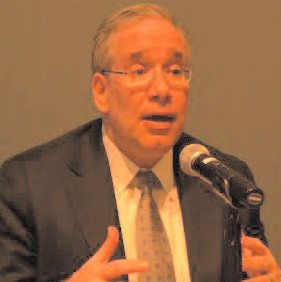
    NEW YORKCITY (TIP): New York City Comptroller Scott M. Stringer announced, February 17, a new transparency initiative that will provide the public with unparalleled  access to detailed information on City spending and contracts with M/WBEs (minority  and women-owned business enterprises) and subcontractors (businesses that perform work on City contracts held by other firms) for the first time ever in Checkbook NYC. “Open data is a powerful tool for economic empowerment and accountability,” Comptroller Stringer said. “The public can now see in real time where money is flowing  at all levels of contracting in one place. These new features will provide transparency  about M/WBE spending as never before and also give crucial insight into how contracts  are distributed once they are awarded.”

    Checkbook NYC, an online transparency tool that places the City’s day-to-day spending  in the public domain, now has “featured dashboards” –or dedicated screens – which  will help M/WBEs and other subcontractors pinpoint which vendors are awarded City contracts and monitor when agencies pay out money on specific projects. Checkbook  NYC users can use these dashboards to follow the life of a contract from master  agreements through modifications and payments, seeing how contracts change over time.

    Additionally, the public will now be able to see how vendors who have won contracts  disburse those awards to subcontractors in real time. This level of detail is of particular  importance considering recent instances of fraud uncovered by local, state, and federal  law enforcement agencies in the subcontracting process. This information is made  available in collaboration with the Mayor’s Office of Contract Services and the Financial Information Services Agency, an entity that is jointly run by the Comptroller and the Mayor. Additional subcontractor data will become available in the coming months.

    Since taking office, Comptroller Stringer has launched several initiatives to increase  transparency and improve access to City contracting by M/WBEs. Those include  his “Making the Grade” report which assessed each City agency’s actual spending with  M/WBEs compared to citywide procurement goals established by Local Law 1 of 2013, an online Vendor Roadmap, and the announcement of a Red Tape Commission of small  businesses owners and regulatory experts to identify roadblocks that frustrate business owners, discourage innovation and block efficiency.

    M/WBE data available on Checkbook NYC today reveals that:

    • The City has spent a total of $432 million – or about 4.4 percent of available dollars – with M/WBEs to date in FY 2015, which began on July 1, 2014.
    • The Department of Youth and Community Development has among the lowest spending rates with M/WBEs in FY15, with only 0.9% of available agency spending going to M/WBEs, while the Landmarks Preservation Commission has among the highest, with 23.7% of available agency spending going to
      M/WBEs. The School Construction Authority has the highest total spending in FY15, with over $162 million – or 11.3%of available agency spending – going to M/WBEs.
    • Women-owned firms have received payments of $145.1 million to date in FY15 (1.54% of available City spending), Hispanic American-owned firms have received payments of $46.2 million (0.5%of available City spending) and Black American-owned firms have received payments totaling only $25.5 million (0.3%) to date in FY15. “Increasing how much our City spends on M/WBEs is a crucial tool in expanding economic opportunity and increasing competition across all five boroughs. This new level of transparency will tell us whether agencies are reaching our City’s spending goals with these vendors,” Stringer said.