Year: 2015

  • ISIS EXPANDING ‘INTERNATIONAL FOOTPRINT’

    ISIS EXPANDING ‘INTERNATIONAL FOOTPRINT’

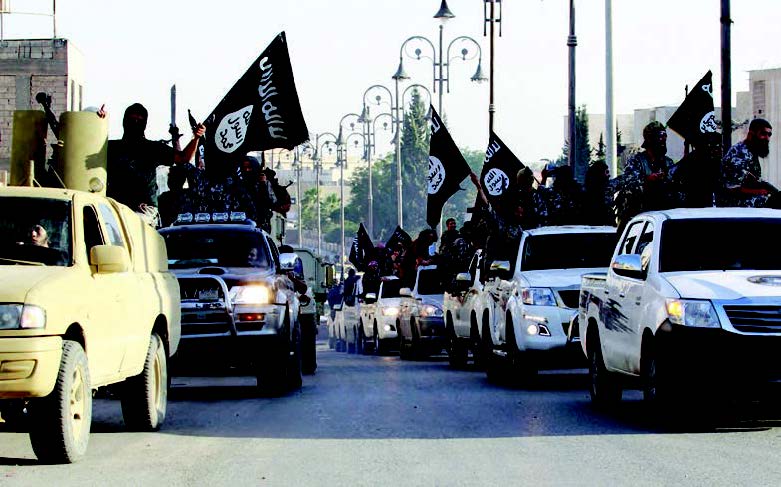
    The Islamic State, despite being driven by Kurdish fighters from its one-time Syrian stronghold in Kobani last week, nevertheless is extending its reach well beyond Iraq and Syria, military officials and analysts warn — represented, by some estimates, in nearly a dozen countries.

     ISIS History

    The Islamic State, despite being driven by Kurdish fighters from its one-time Syrian stronghold in Kobani last week, nevertheless is extending its reach well beyond Iraq and Syria, military officials and analysts warn — represented, by some estimates, in nearly a dozen countries.


    Lt. Gen. Vincent Stewart, director of the US Defense Intelligence Agency, delivered a grim assessment earlier this week in testimony to the House Armed Services Committee, as he described how the group was surfacing in North Africa.


    “With affiliates in Algeria, Egypt, Libya, the group is beginning to assemble a growing international footprint that includes ungoverned and under governed areas,” Stewart said.


    ISIS continues to hold a wide swath of territory, bigger than the state of Pennsylvania, in its home base spanning parts of Iraq and Syria, propped up by more than 20,000 foreign fighters from at least three dozen countries. But the terror network’s tentacles, as Stewart indicated, are creeping into other nations; largely those with fragile governments.


    “ISIS, like Al Qaeda, has thrived in the failed states where there is a vacuum of power,” said James Phillips, Middle East senior research fellow with the Heritage Foundation.


    A key worry is the group’s potential ambitions in Afghanistan, where the U.S. combat mission just ended and Afghan security forces are in control.


    Defense secretary nominee Ashton Carter, who had his confirmation hearing Wednesday, told Congress he is aware of reports that ISIS may try to expand into Afghanistan, and vowed to work with coalition partners to stop the group. He said he would consider changing plans for withdrawing the remaining 10,600 U.S. troops from Afghanistan by the end of 2016 if security conditions further deteriorate.


    The Islamic State’s ambitions do not stop at Afghanistan, the so-called Graveyard of Empires. Militant groups in Pakistan, the Philippines, Israel and the Gaza Strip, Lebanon, Indonesia and Jordan, among other areas, reportedly have pledged formal support for ISIS. New York Magazine, in a recent report, wrote, “Think of them as ISIS’s self-appointed foreign bases.”


    It’s impossible to know precisely how many members are involved in these groups, but analysts say the biggest groups generally are still affiliated with Al Qaeda, while others are starting to stand with ISIS – and execute attacks.


    An ISIS-tied group in Egypt, for instance, claimed responsibility for a series of coordinated attacks on Jan. 30 that killed at least two dozen security officers in restive Sinai.


    The Caliphate Soldiers Group in Algeria, which pledged loyalty to ISIS in September, kidnapped and beheaded a French tourist the same month. Terrorists posted a video of the beheading, saying it was in response to French airstrikes in Iraq. Algerian Special Forces killed the terror leader late last year, which analysts say dealt a morale blow to the small group.


    In Libya, the Islamic State’s Tripoli Province took credit for a hotel attack on Feb. 1 which killed nine people, including an American.


    Published reports tie other groups to ISIS including The Jundallah militant group and the Tehreek-e-Khilafat groups in Pakistan; the Philippines’ Abu Sayyaf group; Sinai Province in Egypt; Lebanon’s The Free Sunnis of Baalbek Brigade; Indonesia’s Jama’ah Ansharut Tauhid; and Sons of the Call for Tawhid and Jihad in Jordan.


    The Heritage Foundation’s Phillips said it’s not just groups like these that have declared loyalty. “There are an unknown number of self-radicalized militants in many different countries that may self-identify with ISIS and carry out ‘lone wolf ’ terrorist attacks in its name, without necessarily being members of the group,” he said. He cited the hostage crisis in Sydney, Australia, last December as an example.


    ISIS continues to get pounded by coalition airstrikes in Iraq and Syria, where Kurdish forces recently took back the vital city of Kobani. Those strikes are likely to increase following the brutal execution of a captured Jordanian pilot (though the coalition is down a member, with the United Arab Emirates having suspended airstrikes after the pilot’s capture in December.)


    Phillips said the purpose of the group’s grisly propaganda videos – including of the Jordanian pilot being burned alive in a cage — is to change the subject, from recent setbacks in Kobani as well as some areas in Iraq, through “jihadist pornography.” He said the point is to show the group as an
    “invincible army,” psychologically attractive to European teenagers who might join the fight.


    Raymond Stock, a Shillman-Ginsburg writing fellow at the Middle East Forum, argued the message carries more weight with Muslims worldwide than most realize. He told Fox News the propaganda videos are “so well-produced and so well-targeted –extremely effective. We have nothing counteracting that.”


    Stock, who spent 20 years living in Egypt, sees the group’s ambitions as limitless and argues it is a mistake to believe the Islamic State is an organization seeking to control limited territory.


    He also suggested Al Qaeda and ISIS are not necessarily direct competitors. He cited an Arabic proverb, which he translates as: “Me and my brother against my cousin; me and my cousin against the outsider.”


    In Senate Armed Services Committee confirmation hearing for defense secretary, Sen. John McCain, R-Ariz., pressed Carter on the need to have a strategy against ISIS.


    “I believe I understand our strategy at this time,” Carter explained. “I also have the intention, again if confirmed, to make it my first priority to go there, to talk to our military leaders there, to confer with you …I think a strategy connects ends and means, and our ends with respect to ISIL needs to be its lasting defeat.”


    McCain retorted: “Well, it doesn’t sound like a strategy to me, but maybe we can flesh out your goals.”


    (Source: AP)

  • GERMAN, FRENCH LEADERS TAKE UKRAINE PEACE PLAN TO MOSCOW

    GERMAN, FRENCH LEADERS TAKE UKRAINE PEACE PLAN TO MOSCOW

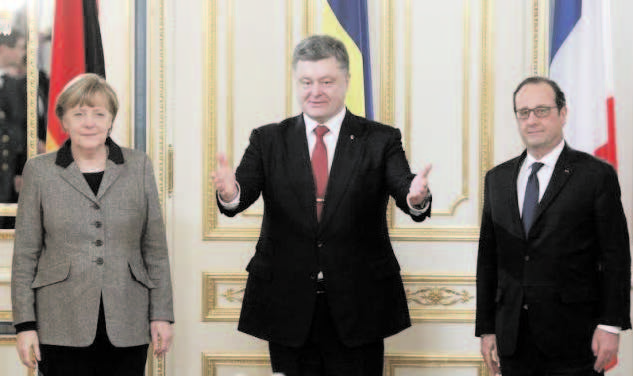
    KIEV (TIP): The leaders of Germany and France announced a new peace plan for Ukraine on February 5, flying to Kiev with a proposal they would then take on to Moscow.


    The coordinated trip by Chancellor Angela Merkel and President Francois Hollande comes as rebels advanced on a railway hub held by Ukrainian troops after launching an offensive that scuppered a five-month-old ceasefire.


    The importance of reaching a deal was demonstrated by a dramatic collapse in Ukraine’s hryvnia currency, which lost nearly a third of its value after the central bank halted daily auctions at which it sold hard currency to banks.


    With Washington moving towards a decision soon on arming Ukraine, US Secretary of State John Kerry also visited Kiev on Thursday. He had no plans to go to Moscow and was not involved in the Franco-German initiative, although he supported it.


    Moscow said it hoped talks with Merkel and Hollande would be “constructive”.


    German government sources said the key problem for resuming peace talks was that the current front line no longer tallies with what was agreed at talks in Minsk, Belarus, last year. One idea was that a new attempt at a ceasefire should take in the current front line, which reflects rebel gains.


    For talks to begin anew, Kiev would have to accept that the separatists now control several hundred square kilometers more than agreed in Minsk – – without Kiev having to give up its claim to these areas as part of the Ukrainian state.


    In the end, the goal of the peace process should be the restoration of Ukraine’s territorial integrity, the sources said.


    Ukrainian Prime Minister Arseny Yatseniuk said Kiev would not consider any peace plan that casts doubt on the nation’s territorial integrity, sovereignty or independence.


    The Franco-German plan looks like an eleventh-hour bid to halt the escalation of the conflict ahead of diplomatic deadlines likely to make east-west confrontation even worse.


    Peace talks collapsed on Saturday in Belarus and EU leaders are expected to consider new sanctions against Moscow next week.


    “Together with Angela Merkel we have decided to take a new initiative,” Hollande told a news conference. “We will make a new proposal to solve the conflict which will be based on Ukraine’s territorial integrity.” 


    He and Merkel met President Petro Poroshenko in Kiev on Thursday and were expected to go to Moscow to see Russia’s Vladimir Putin on Friday.


    Poroshenko said the talks “gave hope that there will be a result in a ceasefire”, his office said in a statement.


    Hollande said earlier: “For several days Angela Merkel and I have worked on a text … a text that can be acceptable to all.” 


    German Foreign Minister Frank-Walter Steinmeier played down the prospect of a breakthrough: “I don’t want to talk about the chances (of success). At this stage there is hope, rather than chances.” 


    NATO says Russia has sent weapons, funds and troops to assist the rebel advance, negating a ceasefire in eastern Ukraine where war has already killed more than 5,000.

  • CAMPAIGNING ENDS: ROADSHOWS, RALLIES MARK THE DAY AS CAPITAL BATTLE GOES DOWN TO THE WIRE

    CAMPAIGNING ENDS: ROADSHOWS, RALLIES MARK THE DAY AS CAPITAL BATTLE GOES DOWN TO THE WIRE

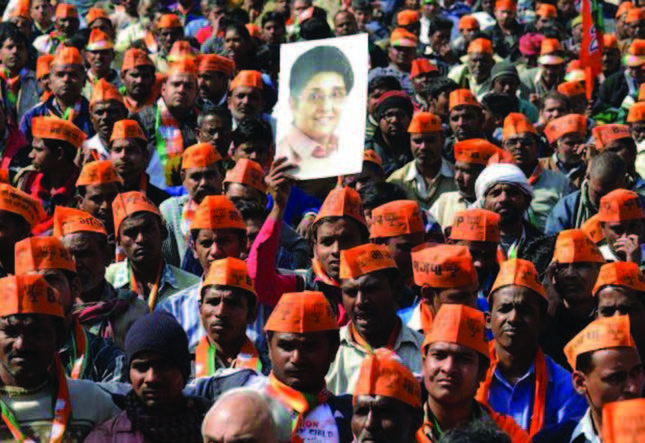
    NEW DELHI (TIP): The high-octane campaign for the Delhi Assembly came to a close on February 5, 48 hours ahead of the February 7 polls in which the BJP is seeking to gain majority in the face of strong challenge from the Aam Aadmi Party (AAP).


    February 5 saw some heavy duty and intense campaign by the principal contenders and the Congress, which still hopes to be up and counted having been rejected by the voters of Delhi towards the end of 2013.


    BJP president Amit Shah and its chief ministerial candidate Kiran Bedi held roadshows to demonstrate the strength of the party. The strength of its cadres was no less than the large number of supporters AAP who joined a similar roadshow by Arvind Kejriwal in his Gole Market constituency.


    Although the focus was not so much on the Congress, the party vice president Rahul Gandhi stepped out in Sultanpur Majra for a roadshow which seems to be the more preferred way of reaching out to the people in an informal way.


    The BJP asked its battery of leaders to spread out in each of the 70 constituencies while its RSS
    ‘karyakartas’ began reaching out door-to-door. Stepping up the attack on AAP, BJP chief charged that the AAP received donations in black cautioning that the party “goes back on what it promises”. Speaking in Hindi he said Kejriwal’s challenge to arrest him was made knowing that no probe was possible during elections.


    The BJP chief harped on development and welfare schemes of the Modi government as also rise in the prestige of the country since the BJP government came to power. AAP chief Arvind Kejriwal attacked the BJP saying it’s their ‘religion’ to attack others and like Duryodhana of Mahabharat the entire administrative apparatus was with it, while the nascent AAP had God on its side.


    Kejriwal started his campaign from Mandir Marg in New Delhi constituency today and said he was getting amazing response. “Just amazing response. Unbelievable. Kuch adbhut hi ho raha hai. Its all divine,” Kejriwal said in a tweet.


    The AAP chief exuded confidence, saying the party was “following the path of truth”.


    Adding strength to the support base, the Trinamool Congress and the Janata Dal (United) too endorsed AAP in the battle for the ballot in Delhi. BJP leaders Shah and Union Minister M Venkaiah Naidu have already said that the Delhi election was not a referendum on the Modi government’s performance.


    The Congress, which had been in the saddle for 15 years till December, 2013, has been lagging way behind AAP and BJP in pre-poll surveys.

  • Agni-V project director moved out

    Agni-V project director moved out

    NEW DELHI (TIP): The project director of the nuclear-capable Agni-V missile, RK Gupta, has been relieved of his charge at a time the Defence Research and Development Organisation (DRDO) is in the midst of a major shake-up. Gupta received the order on February 2, two days after the first successful canister launch of the 5,000-km range missile. While Gupta has alleged he is being victimised, government officials said it was a routine transfer. Former DRDO chief Avinash Chander had signed the order days before the government cut short his tenure on January 13 as it wanted someone younger to man the key post.

  • SUPPRESSION OF CRIMINAL RECORD CAN DISQUALIFY LAWMAKERS: SC

    SUPPRESSION OF CRIMINAL RECORD CAN DISQUALIFY LAWMAKERS: SC

    NEW DELHI (TIP): The Supreme Court ruled on February 5 that a lawmaker’s election could be cancelled if he or she suppressed information about a criminal record, in what experts see as a landmark judgement towards eradication of criminalisation of politics. The verdict comes barely two days before the Delhi assembly elections in which the BJP and Aam Aadmi Party are locked in a tight contest.


    “A voter is entitled to have an informed choice,” a bench headed by Justice Dipak Misra said. “No candidate is entitled to destroy the sacredness of election by indulging in undue influence.”


    The apex court that has passed a series of verdicts on electoral reforms since July 2013 held that such suppression of information would amount to corrupt practice under Section 100(1)(b) of the Representation of the People Act, 1951 – a ground for setting aside an election.


    Declaring “purity of election” as a “categorical imperative”, the bench noted that this was needed to end criminalisation of politics and corruption in public life.


    “A voter who is not satisfied with any of the candidates…can opt not to vote for any candidate,” the court said.


    The Supreme Court ruled in 2013 that elected lawmakers would stand disqualified if convicted by a court and sentenced to two years of imprisonment or more.


    AIADMK chief J Jayalalithaa stepped down as chief minister of Tamil Nadu in September last year in line with that order after she was found guilty in a corruption case. She also cannot contest elections for 10 years as part of the ruling.


    The verdict came on an appeal filed by one Krishnamoorthy who was elected president of a panchayat in Tamil Nadu’s Coimbatore district in October 2006.


    The poll tribunal declared his election null and void, holding that he could not have contested as his nomination papers deserved to be rejected. The Madras high court agreed with the tribunal’s verdict.


    Upholding the HC verdict, the Supreme Court said, “A voter has a fundamental right to know about the candidates contesting the elections as that is essential and a necessary concomitant for a free and fair election.”


    The candidate suppressed information about certain criminal cases, including those relating to embezzlement, were not disclosed by him at the time of filing of his nomination papers.


    “Concealment or suppression of this nature deprives the voters to make an informed and advised choice as a consequence of which it would come within the compartment of direct or indirect interference or attempt to interfere with the free exercise of the right to vote by the electorate, on the part of the candidate,” the bench said.


    “As the candidate has the special knowledge of the pending cases where cognizance has been taken or charges have been framed and there is a non-disclosure on his part, it would amount to undue influence and, therefore, the election is to be declared null and void by the Election Tribunal under Section 100(1)(b) of the 1951 Act.”


    The court said, “The requirement of a disclosure, especially the criminal antecedents, enables a voter  to have an informed and instructed choice. If a voter is denied of the acquaintance to the information and deprived of the condition to be apprised of the entire gamut of criminal antecedents relating to heinous or serious offences or offence of corruption or moral turpitude, the exercise of electoral right would not be an advised one. He will be exercising his franchisee with the misinformed mind. That apart, his fundamental right to know also gets nullified.”

  • Indo-Canadian Financial Planner Arvindbhai Bakorbhai Patel charged in Ponzi scheme

    Indo-Canadian Financial Planner Arvindbhai Bakorbhai Patel charged in Ponzi scheme

    Former B.C. Coast Capital Savings mutual fund salesman faces 32 Securities Act charges in$110M scheme


    TORONTO (TIP): An Indian-origin former financial planner has been charged with 32 counts of Securities Act violations in Canada for advising clients to invest


    in a $110-million fraudulent scheme operated by a former Vancouver notary, a media report said Thursday, February 5. Arvindbhai Bakorbhai Patel, who worked as a British Columbia Coast Capital Savings financial planner, convinced about 90 investors to place nearly $29 million with former notary public Rashida Samji, who is facing 28 criminal charges of fraud and theft, CBC News reported.”I feel betrayed by a friend, and also I feel morally responsible for introducing my daughter to this scheme and losing her money,” Victor Vishwanathan, who is among 15 alleged victims of Patel, was quoted as saying.Last month, the British Columbia Securities Commission fined Samji$33 million for running a ponzi scheme. The commission, said that investors believed they were providing financial backing for the expansion of foreign wineries built by the Mark Anthony Group.


    They were told the money would be used as collateral for loans, but it remained in Samji’s trust. The company had no idea its name and reputation were used in association with the scheme.The charges against Patel carry maximum penalties of $3 million and up to three years in prison.

  • UK postpones unveiling of Gandhi statue

    UK postpones unveiling of Gandhi statue

    LONDON (TIP): President Barack Obama’s recent visit to India scuttled Britain’s plan to unveil the statue of Mahatma Gandhi at the parliament square. Britain had announced it would install the statue at parliament square in London on January 30 — the 11th statue to be erected in the square. But plans had to be shelved after India announced that Obama would be the chief guest for the Republic Day celebration.


    Speaking to mediapersons, economist Lord Meghnad Desai who heads a trust that is raising money for the statue said that UK and India are working on finding another date for the ceremony.


    “It has to be by March, after which Britain goes into general election mode, which is scheduled for May 7,” Desai said. He confirmed that Philip Jackson, a leading British figurative sculptor, has completed making the statue. The memorial will stand alongside those to other international leaders such as Nelson Mandela and Abraham Lincoln.

  • Mexico rescues 129 workers ‘abused’ by S Korean firm

    Mexico rescues 129 workers ‘abused’ by S Korean firm

    MEXICO CITY (TIP): Mexican authorities have rescued 129 workers, including six children, who said they were physically and sexually abused at a garment firm run by South Koreans, officials said on February 5.


    Four South Korean nationals have been handed over to prosecutors in the western state of Jalisco after workers identified them as the owners or managers of the company named Yes International, the National Migration Institute (INM) said. Authorities raided the company in the town of Zapopan on Wednesday after receiving an anonymous tip, INM coordinator Ardelio Vargas Fosado told reporters, describing the South Koreans as a “gang of suspected human traffickers.” Officials rescued 121 women and eight men, including six minors who were 16 and 17 years old. The workers told prosecutors that they were “victims of physical and sexual abuse, as well as threats, psychological harm and grueling work days,” Vargas Fosado said.

  • Delhi polls: Survey predicts absolute majority for BJP

    Delhi polls: Survey predicts absolute majority for BJP

    The BJP is projected to get absolute majority in Delhi and win between 41-45 seats and AAP is likely to secure the second place, according to a survey by Research and Development Initiative (RDI). The survey states that AAP is likely to win between 21-25 seats in the 70-member Delhi Assembly.


    NEW DELHI (TIP): The BJP is projected to get absolute majority in Delhi and win between 41-45 seats and AAP is likely to secure the second place, according to a survey by Research and Development Initiative (RDI).


    The survey states that AAP is likely to win between 21-25 seats in the 70-member Delhi Assembly.


    The vote share projection has given BJP 41 per cent and AAP 36 per cent. Where as, Congress is likely to bag between 0-4 seats with a vote share of 12 per cent, according to the survey in the last week of January.


    In the 2013 election, BJP had won 31 seats with a vote share of 33 per cent, while ally SAD had got one seat. AAP had bagged 28 seats with a share of 25 per cent and Congress got 8 seats with a share of 25 per cent votes.


    According to the survey, BJP’s Kiran Bedi is the top choice as a chief ministerial candidate with 46 per cent of people favouring her.


    The survey projected AAP chief Arvind Kejriwal second in the run with 40 per cent voters supporting


    him. Congress’ Ajay Maken managed to secure the third position in the survey with 12 per cent voters in his favour.


    The survey was conducted with a sample size of 21,000 registered voters with a representative sample of 300 registered voters from 25 polling booths drawn in each constituency.


    Delhi will go to polls on February 7 and the results will be declared on February 10.


    What other surveys say?


    BJP seems to have gained in four pre-poll surveys with three of them projecting it may touch the majority mark in the 70-member Delhi Assembly.


    While the India TV-C-Voter survey gives BJP 37 seats, it projects 28 seats for AAP and 5 for Congress in the polls.


    The Week-IMBR survey gives BJP 36 seats and AAP 29 seats while only 4 seats to Congress.


    Another pre-poll survey by Data Mineria, telecast by IBN-7, has also given BJP 36 seats and AAP 27 seats, with 7 to Congress.


    A Zee-Taleem survey has projected 32 to 36 seats for BJP, 30 to 34 for AAP and 4 for Congress while News Nation channel has given BJP 30-35 seats, AAP 30-34 and Congress 3-5. An internal survey by AAP claimed a clear majority for it giving itself 51 seats followed by 15 to BJP and four seats for Congress.


    AAP leader Yogendra Yadav, himself a psephologist, said in the best case scenario AAP may get 57 seats and in the worst it will bag at least 44 seats.


    The India Today-Cicero pre-poll survey yesterday projected AAP will get 38-46 seats and BJP will secure 19-25 seats. Congress was placed way behind with only 3-7 seats.


    In the ‘Poll of Polls’ by Times Now TV channel based on the results of five polls, AAP gets 34 out of 70 seat while BJP 32 and Congress 4. Yadav termed the survey results of some TV channels as “serious underestimation of the ground reality”.


    In the 2013 Assembly election, BJP had won 31 seats, AAP 28 and Congress 8.

  • India asks Japan if it’s interested in Rs 50,000 crore submarine project

    India asks Japan if it’s interested in Rs 50,000 crore submarine project

    NEW DELHI (TIP): Russia, France, Germany and Spain, all better watch out. They may have to contend with Japan in the race to supply submarines to India. In keeping with their expanding strategic partnership, the Modi government has asked the Shinzo Abe administration whether it would be interested in the over Rs 50,000 crore project to build six stealth submarines in India.


    With Japan recently ending its decades old self-imposed arms export embargo, New Delhi has forwarded “a proposal” to Tokyo to “consider the possibility” of making its latest diesel-electric Soryu-class submarines in India, say sources.


    This “feeler” dovetails into PM Narendra Modi’s strategic outreach to Japan, as well as Australia and the US, since he took over last year. The possible sale of Japanese US-2i ShinMayva amphibious aircraft to the Indian Navy is already being discussed. Australia, too, is considering the Soryu submarines to replace its ageing Collins-class vessels.


    The US, on its part, has been pushing for greater defence cooperation among India, Japan and Australia to counter China’s assertiveness in the Asia-Pacific region. The recent Obama-Modi summit led to the “joint strategic vision for Asia-Pacific and Indian Ocean Region” with a direct reference to South China Sea, where China is locked in territorial disputes with its neighbours. Both Japan and Australia are also keen to participate in the annual Indo-US Malabar naval exercise on a regular basis, which has riled China in the past.


    But the 4,200-tonne Soryu submarines, manufactured by Mitsubishi Heavy Industries and Kawasaki Heavy Industries, may not meet Indian requirements. Japan will also be just one of the contenders for the mega programme, called Project- 75-India, if it agrees to throw its hat into the ring.


    Countries like France (ship-builder DCNS), Germany (HDW), Russia
    (Rosoboronexport) and Spain
    (Navantia) are already girding up, with the first three having the experience of building submarines for India.

  • Your smartphone may be harbouring bacteria

    Your smartphone may be harbouring bacteria

    Agroup of students from University of Surrey in Britain has revealed that the home button on your smartphone may be harbouring millions of bacteria – some even harmful.


    They found that it is not just your own germs that can be found on your phone. The devices also carry bacteria you have picked up from other people, news.com.au reported.


    For the study, the team dipped phones into Petri dishes and watched the growths of bacteria flourish. According to Simon Park, the lecturer behind the university’s annual study, phones store a record of our personal touch as well, especially on the home button.


    “It is unusual but very effective way of engaging our students with the often overlooked microbiology of everyday life,” Park was quoted as saying.


    Most of the bacteria is harmless but some disease-carrying bacteria such as the Staphylococcus aureus were also seen during the experiment.

  • Home remedies to treat high BP

    Home remedies to treat high BP

    High blood pressure or Hypertension is a common condition in which the force of the blood against your artery walls is high enough that it may eventually cause health problems such as heart disease.


    Blood pressure is determined by the amount of blood your heart pumps and the amount of resistance to blood flow in your arteries. The more blood your heart pumps and the narrower your arteries, the higher your blood pressure.


    High blood pressure, a silent killer can cause heart attacks, strokes, heart disease, organ failure, and death if not treated on time. Your doctor will give you medical prescriptions if you have high blood pressure, but did you know that there are several things in your kitchen cabinets that can be used to lower the same problem?


    Red Vs white


    Fish and chicken are helpful in lowering blood pressure. But red meat will spike your blood pressure and even make matters worse. Try clubbing chicken or fish with vegetables and you are sorted!


    Garlic


    Garlic is a key ingredient of the Indian diet and many cuisines around the world. Remember your grandma asking you to eat a piece of garlic every day? Well she was right! This natural medicine helps in lowering cholesterol and also keeps your blood pressure in check.


    Onion and honey


    A quick tip to lower your blood pressure is to take a tbsp of onion juice in a cup and add two tbsp of honey. Have this concoction every day.


    Curry leaves 


    This is one remedy that our south Indian friends mostly opt for. Curry leaves are a natural source that battles various illnesses. In a vessel add drinking water and 4-5 curry leaves, cool it and use it for daily drinking.


    Carrots


    Blend a carrot and spinach to get a tall glass of juice. Drink this twice a day to lower your blood pressure.


    Beet root


    This beautiful vegetable juice is a great way to lower your blood pressure. Drink it twice a day. Decrease the salt in your diet: 1,500 milligrams (mg) a day

  • INDIA CELEBRATES 66TH REPUBLIC DAY; BARACK OBAMA WITNESSES MILITARY MIGHT

    INDIA CELEBRATES 66TH REPUBLIC DAY; BARACK OBAMA WITNESSES MILITARY MIGHT

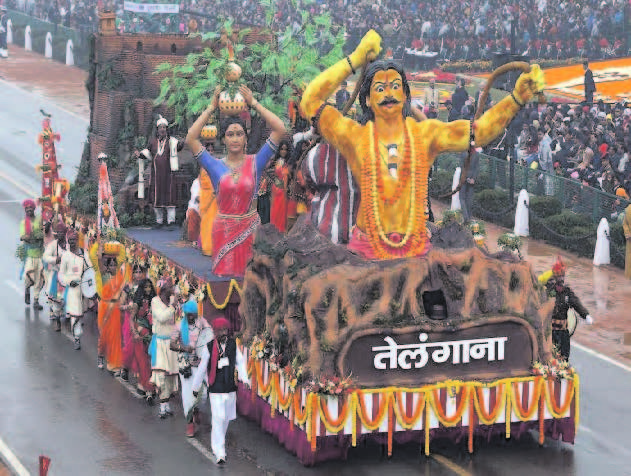
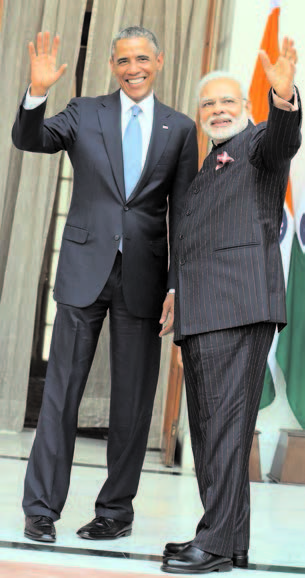
    India on January 26, 2015, celebrated its 66th Republic Day and showcased before the chief guest US President Barack Obama and the world its military might and cultural diversity with a splendid display of land and naval weaponry, fighter and reconnaissance aircraft. Obama was the first ever US President to attend the parade as Chief Guest on the second day of his three-day visit, as light rains and overcast skies failed to dampen the enthusiasm of thousands of spectators who gathered along the Rajpath to watch the pomp-filled spectacle. Dressed in a dark suit, Obama was seated next to Modi, donning a multicoloured ‘bandhej safa'(Rajasthani turban), as the two leaders chatted and soaked up the splendour that unfolded on the rain-soaked parade route. Obama was also seen holding his umbrella for a while. A smiling US President was seen nodding in appreciation on several occasions and gave a thumbs up to the BSF daredevils–famed for their formation of a human pyramid on moving bikes–during their display of daring motorcycle stunts that was a showstopper.

    U.S. President Barack Obama, second right, and first lady Michelle Obama, second left, are greeted by Indian Prime Minister Narendra Modi, right, as they arrive for Republic Day in New Delhi, India, Jan. 26, 2015.
    U.S. President Barack Obama, second right, and first lady Michelle Obama, second left, are greeted by Indian Prime Minister Narendra Modi, right, as they arrive for Republic Day in New Delhi, India, Jan. 26, 2015.

    Smartly attired all-female units from the Army, Navy and Air Force marched for the first time in this year’s parade, as the country’s military hardware with carnival-style floats featuring achievements in diverse fields as well as tribal dancers and traditional music rolled past in a show of ‘unity in diversity’.


    In a departure from tradition for the Chief Guest at the Republic Day parade, Obama arrived in his own highly-secured bomb-proof vehicle, ‘The Beast,’ at Rajpath. The crowd erupted in cheers as the Obamas emerged from the limousine.


    Obama and Michelle sat in a special glass enclosure along with President Pranab Mukherjee, Prime Minister Narendra Modi, Vice President M Hamid Ansari and his wife, and Defence Minister Manohar Parrikar among other dignitaries. Michelle also smiled broadly at dance performance by young children.


    A highlight of this year’s parade was the display for the first time of the recently acquired long-range maritime surveillance and anti-submarine P-8I aircraft and the long-range advanced MiG-29K fighter plane. Obama and Michelle sat in a special glass enclosure along with President Pranab Mukherjee, Prime Minister Narendra Modi, Vice President M Hamid Ansari and his wife, and Defence Minister Manohar Parrikar among other dignitaries. Michelle also smiled broadly at dance performance by young children.


    A highlight of this year’s parade was the display for the first time of the recently acquired long-range maritime surveillance and anti-submarine P-8I aircraft and the long-range advanced MiG-29K fighter plane.


    The amount of time – around two hours – spent by Obama on an outdoor viewing platform was unusual given the US Secret Service security concerns.


    A massive ground-to-air security apparatus was put in place in the national capital turning the city into virtually an impregnable fortress. Snipers of National Security Guard were deployed at all high-rises along the parade route.


    The arrangements were made to ensure an incident-free Republic Day celebrations and foolproof security to the American President, who arrived here on Januart 25.


    Prime Minister Modi’s “Make in India” campaign to boost the country’s manufacturing industry and create much-needed jobs was featured in one of the tableaus.


    The dignitaries watched in awe as a spectacular fly-past by the Indian Air Force that left a smoke-trail of the orange, white and green national flag signalled an end to the parade.

    Rday2 Rday3 Rday5

  • Communist officials in Tibet punished for helping Dalai Lama

    Communist officials in Tibet punished for helping Dalai Lama

    BEIJING (TIP): Investigators have found that 15 Communist Party officials in Tibet joined underground Tibetan independence organizations, provided intelligence to the Dalai Lama and his supporters or participated in activities deemed harmful to China’s security, a party agency said on January 28.


    The publicizing of party officials supporting Tibetan separatism was highly unusual and suggested continuing unrest in the Himalayan region, which has had a heavy security presence since a wave of riots and protests against Chinese rule in 2008. The involvement was uncovered last year during an investigation of a small group of party officials, according to a statement from the Communist Party Disciplinary Commission of Tibet posted on its website. Fifteen officials received unspecified punishment for violating party and political discipline, the commission said.


    It was not immediately clear why the cases were announced this week. The commission’s statement gave no details of the groups that the party members joined, the intelligence they provided or other activities that would have harmed national security. Calls to party representatives in Tibet were not answered, and the discipline commission’s phone number was not publicly available.


    Journalists’ access to Tibet is tightly restricted and all information from the region is extremely difficult to confirm. While details such as the name of the officials punished were not provided, it is likely they were ethnic Tibetans who traditionally practice a form of Tantric Buddhism of which the Dalai Lama is the spiritual leader.


    Ethnic minorities, including Tibetans and Muslim Uighurs from the neighboring Xinjiang region, make up about 6 percent of the Communist Party’s 86 million members. They are recruited to fill posts at various levels as a key component of the party’s united front policy, although the top party official in provinces and regions such as Tibet is always a member of China’s overwhelming majority Han ethnic group.

  • AF TALIBAN NOT A TERROR GROUP: WHITE HOUSE

    AF TALIBAN NOT A TERROR GROUP: WHITE HOUSE

    WASHINGTON (TIP): The US does not consider the Afghan Taliban as a terrorist outfit, describing it as “an armed insurgency”. It called the Islamic State as a “terrorist” group, drawing a controversial distinction between the two outfits.


    “The Taliban is an armed insurgency. ISIL (Islamic State of Iraq and Levant) is a terrorist group. So we don’t make concessions to terrorist groups,” White House deputy press secretary Eric Schultz told reporters on January 28.


    When asked for a second time whether the Taliban is a terrorist group, he replied, “I don’t think that the Taliban, —the Taliban is an armed insurgency.” 


    Asked whether the Jordanian government’s decision to swap prisoner with the ISIL was similar to the US trading five Taliban members for Army Sgt. Bowe Bergdahl, he said, “As you know, this was highly discussed at the time and prisoner swaps are a traditional end-of-conflict interaction that happens.” 


    “As the war in Afghanistan wound down, we felt like it was the appropriate thing to do. The president’s bedrock commitment as commander in chief is to leave no man or woman behind. That is the principle he was operating under,” the White House press secretary said.


    “This was the winding down of the war in Afghanistan and that’s why this arrangement was dealt,” Schultz added, referring to the prisoner swap deal with the Taliban brokered through Qatar.


    Though the US state department has not designated the Afghan Taliban as a foreign terrorist organization, it has designated its two allies — the Tehreek-e-Taliban Pakistan and the Haqqani Network.


    The US is offering up to US $10 million for information leading to the capture of Afghan Taliban leader Mullah Omar. ISIL or ISIS (or IS) is an al-Qaida splinter group and it has seized hundreds of square miles in Iraq and Syria, declaring an Islamic caliphate.

  • NEPAL STEPS UP SECURITY FEARING MORE TROUBLE IN PARLIAMENT

    NEPAL STEPS UP SECURITY FEARING MORE TROUBLE IN PARLIAMENT

    KATHMANDU, Nepal: Nepal has stepped up security in the capital and put police were on alert, anticipating trouble both inside parliament and on the streets because of planned protests by the opposition against governing coalition plans to push through a draft of a new constitution.


    Chief government administrator of Kathmandu Ek Narayan Aryal said Thursday that thousands of police in riot gear and armed with bamboo batons were guarding the area around the Constitution Assembly and areas of the capital Kathmandu.


    The opposition has vowed to block the governing parties from pushing through a draft of the constitution, saying it should be done only with a consensus of all the parties. An earlier attempt on Tuesday by the governing parties ended in violence in the assembly.

  • Obama did it for Modi

    Obama did it for Modi

    The Message in the town hall meeting delivered by Obama was to have been delivered by Modi. Politically, Modi had difficulty in telling his party and its affiliates to back off, a splintered India is not good for any one, jis may kisi ka sath nahin, us may kis ka vikas bhi nahin.


    I believe, Modi means good. He is figuring out a way to move away from “exclusively for Hindus at the cost of others” to inclusively for all Indians for the benefit of all. He is committed to do that. If he fails, we all fail, and if he succeeds, we all will benefit from it.


    The glory was written all over his face, he was looking for this moment. Obama’s dosti (friendship) meant everything for him, it is like recognition and Mukti for him. Modi was in the seventh heaven.


    After the humiliation he went through about the denial of visa, he was desperately looking to get out of it, his ego did not permit him to apologize or at least say sorry for what happened. One of the ways of doing praischit or repentance is repairing the damage without humility. This is Modi’s way of saying sorry.


    He is too interested in recording his name on the golden pages of Indian History and I applaud him for that. May he succeed in his endeavors and remove all the obstacles his own party members and its affiliates are placing in his path.


    I trust our democracy to keep him within the guard rails. President Obama’s speech is a reflection of my essay written a week before his address, “Republic Day’s pluralistic Message to Modi and Obama.”  The message is identical.


    I urge you to read the article “Republic Day Message to Modi and Obama” at www.TheGhousediary.com   

    And listen to Obama’s speech from 29th Minute onwards -https://www.youtube.com/watch?v=1sGFUPEtNAg


    Obama is inherently a Pluralistic individual who believes in respecting the otherness of others, and accepting the God given uniqueness of each one of us. Obama is one of the inclusive individuals in the likes of Pope Frances, Mahatma Gandhi, Mother Teresa, Martin Luther King, Nelson Mandela and a few other great men and women.


    Obama is as committed to building cohesive societies as I am, where no one has to live in apprehension or fear of the other. It was this thought that prompted him to remind his audience about those lofty ideals embedded in India’s constitution.


    A majority of Indians have experienced discrimination in one form or the other, and he was appealing to both the discriminated and discriminators.


    Invoking Article 25 was a reminder to the rabble rousers among the Sangh Parivar that India’s stability hinges on following the rule of law. You are a successful nation today because of that. Look at Pakistan where it is today because of not abiding their secular charter.


    His reference to his own experience being a minority was powerful!He gave hopes to the Dalits, Muslims, Christians, Sikhs and other minorities. “Look it is not easy, but education is the panacea, it increases your chances to be the change. I did not have it easy either.”


    His statement, “‘every person has the right to practice their religion and beliefs and not practice it if they choose so without any persecution.’ Was a direct reference to the harassment Muslims and Christians face with stupid statements like “your holy place is not in India” “you cheer for Pakistan Cricket Team” “forced conversions” “Ghar Wapsi” and other stupidities that do not contribute towards the well being of anyone.


    I wrote, “Mr. Modi, the Battle is not between Hindus and Muslims, it is between good and the bad, good is represented by those who mind their own faith as Quran advocates or Bhagvad Gita suggests – it’s your own Karma that will determine your outcomes; there is no compulsion in faith, whereas the evil is represented by hurting and discriminating others for differences in belief. Let every Indian be free to breathe, drink, eat, wear or believe whatever he or she wants to. I hope your party supports your stand.”


    Invariably, what I write comes out in his speeches a few days later. I am glad it happened that way. I guess if you are inclusive and don’t have a bias towards others, similar thoughts and actions flow out of you.


    Full article at: http://theghousediary.blogspot.com/2015/01/republic-day- message-to-modi-and-obama.html


    (The author  is a public speaker, thinker, writer and a commentator on Pluralism at work place, politics, religion, society, gender, race, culture, ethnicity, food and foreign policy. He can be reached at mikeghouse@aol.com)

  • MODI GOVERNMENT ENTERS PHASE II

    MODI GOVERNMENT ENTERS PHASE II

    We are now in the second phase of the Modi government. The first phase consisted of positioning the brickwork for a five-year term. Key states had to be won in elections to buttress the Modi image and to seek to augment the Bharatiya Janata Party’s (BJP’s) strength in the Rajya Sabha over time. And in a surprise sprung upon the country, Mr Narendra Modi showed an unsuspected sure touch in making foreign policy moves, including in getting President Barack Obama to witness the Republic Day parade.


    What then can the country expect now that the Prime Minister has his initial structure of government in place? The journey thus far has demonstrated the strengths and weaknesses of the Modi dispensation. The irony is that the baggage that is pulling him down was an essential element in catapulting him from Gujarat to the pinnacle of power in New Delhi. But apart from a sure-footed approach to foreign policy, he has also given many signals of his economic objectives the world is watching with anticipation.


    On the negative side, Mr Modi’s compact with the Rashtriya Swayamsevak Sangh (RSS) is proving an increasing liability for his party and government. Apart from the RSS’s own belief in Hindutva, which the organisation’s chief Mohan Bhagwat keeps stressing, the more embarrassing part, which is bringing great opprobrium and some disbelief, is a continuing army of BJP members of Parliament and other eminences declaiming the virtues of obscurantist ideas.


    For a time, the BJP received a pass by a helpful media describing them as fringe elements. But each day these venerable men and women are proving that they represent the mainstream, not the fringe of the party. What seems to have changed is that they are in a mood of triumphalism, relishing the first BJP victory with a majority at the national level in the country’s history.


    That the Prime Minister has chosen to offer his apology only in one instance in Parliament after constant needling reveals his Achilles’ heel. After all, the ludicrous propositions his members are expressing are very much part of the RSS diet on which Mr Modi himself was reared. The jury is still out on whether he himself subscribes to such sentiments (judging by his public remarks, he does believe in ancient Indians possessing knowledge of plastic surgery). But even if one assumes that he is willing to disguise his feelings at the altar of realpolitik, he is apparently in no position to penalise his supporters for such beliefs.


    It is for similar reasons that Mr Modi has had to give a carte blanche to the RSS in shaping the country’s future education policy, with the minister concerned, Ms Smriti Irani, having to carry the can. And in appointing a new censor board for film certification after the previous lot resigned in protest, the government has outdone itself in getting a chief censor who proclaims his worshipful attitude to Mr Modi. What kind of education the country’s young generation will receive in the years ahead is too dreadful to contemplate.


    There are, of course, many positives to take away from Modi’s innings at the Centre so far. After years of a lackadaisical government of the UPA-II vintage, the firm slap of decisive decision-making is welcome. Second, it is good for a new regime not merely to see the cobwebs, for instance, but do something about removing them. Clearly, the Manmohan Singh government had outlived its usefulness and it was good to have a successor question the logic of how things were done.


    In any case, changes in governments are an essential aspect of the democratic system. The Congress, which built up modern India, lost power only to regain it after the incompetence of successor regimes, bar a coalition spell led by the BJP, seemed to have fallen into a rut compounded by the dual-key arrangement. Mr Modi capitalised on his good fortune and took office in a wave of great optimism and every initial decision it took was welcomed almost because it demonstrated that New Delhi could take decisions.


    Inevitably, the euphoria has somewhat worn off and the second phase of the Modi government will be more testing, depending as it will be on concrete results and the harm the disruptive capacity of Mr Modi’s supporters can cause. There is a built-in dilemma here in the Prime Minister’s own mind and in that his mentor, the RSS. Some contradictions are part of life, but anomalies seem to be the rule, rather than the exception, in the BJP’s persona.


    For a man so taken up by modern technology and the power of digital wonders, Mr Modi coexists with a mixture of fact and fiction that is an essential element of the Sangh Parivar’s belief systems. It remains to be seen how he will resolve this dilemma and at what cost to his essential self and the tolerance levels of the RSS leadership.


    For a leader obsessed with controlling his public image, Mr Modi must be aware that the pearls of wisdom one sometimes hears from the Prime Minister himself and much too often from his supporters are objects of great derision for the outside world. Indeed, it is difficult to imagine that the same mind that can think big in terms of modern technology can be partial to theories of ancient Indians’ ability to fly aeroplanes, employ human cell transfer and other feats associated with the progress of science and technology in the last and present centuries.


    Possessing a sharp political mind, an ability to connect with people and dramatising objectives in people’s language, Mr Modi must be conscious of his handicap in taking the Indian development story ahead. The case of Turkish President Recep Tayyip Erdogan is an object lesson in what to avoid. His ruling Justice and Development Party (AKP) has already taken his country in an Islamic direction, compared to modern Turkey’s founder, Ataturk. Lately he has been dispensing such gems as Muslims having discovered America 200 years before Columbus and declaring that women are not the equal of men.


    (By S Nihal Singh The author is a senior journalist)

  • OBAMA’S straight talk

    OBAMA’S straight talk

    Take the message in the right spirit. It is not common for Indians to hear visiting dignitaries say anything more than platitudes. But then President Obama is not one of the usual guests who won’t say or do anything undiplomatic. Some may object to his having a chewing gum while watching the solemn Republic Day parade or lecturing Indians on the need for religious tolerance and empowering women. Some may see in his Siri Fort speech – the only one made without the Indian Prime Minister by his side — a calculated snub to Modi after breaking free from his host’s penchant for embraces and an attempt to politically protect himself from human rights critics back home.


    But Obama is no snob. Having lost control of Congress, he is just a lame duck President with two years left in office. If Obama referred to Modi as a tea vendor’s son, he described himself as a cook’s grandson. And he was giving an inspirational speech to some 2,000 students. “We know from experience that nations are more successful when their women are successful,” he observed. He talked of women’s safety, which has become a national issue after a series of sexual assaults invited persistent protests and media attention. Given the recent spate of conversions, attacks on churches and threats to minorities – the issues on which the Prime Minister has chosen to remain largely silent — it was a huge diplomatic risk for President Obama to take up the sensitive subject. Being a skillful orator, he said what needed to be said, regardless of the ruling party’s and Parivar’s political and religious agenda: “India will succeed so long as it is not splintered along the lines of religious faith”.


    Instead of faulting President Obama for saying what he said or accusing him of interfering in India’s internal affairs, the saner elements in the BJP and the government should discipline the lunatic fringe before it occupies the centre stage, scares away foreign investors and damages India’s secular credentials. If you invite a high-profile guest, take care to clean up the backyard of the house too.

    (The Tribune, Chandigarh)

  • BED NETS AND VACCINES TOGETHER MAY WORSEN MALARIA

    BED NETS AND VACCINES TOGETHER MAY WORSEN MALARIA

    Combining insecticide-treated bed nets with vaccines may not provide the best chance at eliminating malaria, finds a study. Currently, over 20 malaria vaccine candidates are in different stages of development but none are licensed for use. No one knows for sure what will happen when vaccines and bed nets are used together.


    A University of Michigan-led research team used a mathematical model of malaria transmission to find this out. The researchers examined potential interactions between the two control measures and found that – in some cases – the combination of bed nets and a vaccine actually makes the problem worse.


    “The joint use of bed nets and vaccines will not always lead to consistent increases in the efficacy of malaria control. In some cases, the use of vaccines and bed nets may actually make the situation worse,” said Mercedes Pascual, professor in the department of ecology and evolutionary biology.


    The study suggests that the combined use of some malaria vaccines with bed nets can lead to increased morbidity and mortality in older age classes. “Ironically, the vaccines that work best with bed nets are the ones that do not protect the vaccinated host but, instead, block transmission of malaria in mosquitoes that have found an opportunity to bite vaccinated hosts,” Artzy-Randrup said.


    The malaria vaccines under development fall into three categories, each focusing on a different stage of the malaria life cycle. That cycle involves human hosts and Anopheles mosquitoes infected with Plasmodium parasites. In 2013, there were an estimated 198 million malaria cases worldwide, including 584,000 deaths, according to the World Health Organisation (WHO).


    Most deaths occur among children living in Africa, where a child dies every minute from malaria, according to the WHO.

  • 27 killed in attacks in Egypt’s North Sinai, Suez

    27 killed in attacks in Egypt’s North Sinai, Suez

    CAIRO: Twenty-seven people were killed in four attacks in Egypt’s North Sinai and Suez, security and medical sources said, in some of the worst anti-state violence in months and after commemorations around the anniversary of the 2011 uprising turned deadly this week.


    Egypt’s government faces an Islamist insurgency based in Sinai and growing discontent with what critics perceive as heavy handed security tactics.


    Thursday’s first attack was a bombing of military buildings in the capital of North Sinai province, that killed 25 and wounded at least 58, including 9 civilians, security and medical sources said.


    The flagship government newspaper, al-Ahram, said its office in the town of Al-Arish, which is situated opposite a military hotel, headquarters and base that security sources said were the intended targets, had been “completely destroyed”.


    Later, suspected militants killed an army major and wounded six others at a checkpoint in Rafah, followed by a roadside bomb in Suez city that killed a police officer, and an assault on an army unit south of Al-Arish that wounded four soldiers, security sources said.


    Sinai-based militants have killed hundreds of security officers since president Mohamed Mursi of the Muslim Brotherhood was removed from power following mass protests against his rule.


    The military said in a statement on its Facebook page that the attacks were the result of a successful campaign to pressure the militants.


    Tensions have risen across Egypt this week with protests, some of them violent, marking four years since the uprising that ousted longtime autocrat Hosni Mubarak from power.


    Earlier on Thursday, a group of women protested in Cairo over the death of activist Shaimaa Sabbagh and around 25 others said to have been killed by security forces at rallies commemorating the 2011 uprising.


    Sabbagh, 32, died on Saturday as riot police were breaking up a small, peaceful demonstration. Friends said she had been shot, and images of her bleeding body rippled out across social media, sparking outrage and condemnation.


    “The Interior Ministry are thugs!” chanted around 100 women protesters at the site of Sabbagh’s death. Some held up signs with the word “Murderer” scrawled over the face of Interior Minister Mohamed Ibrahim.


    The protesters were defying a law that severely restricts protests. “People are here at incredible risk to themselves. But it’s a way of standing against the fear they have instilled,” said activist Yasmin el-Rifae.

  • ISRAEL BURIES SOLDIERS, SAYS HEZBOLLAH DOESN’T WANT CONFLICT

    ISRAEL BURIES SOLDIERS, SAYS HEZBOLLAH DOESN’T WANT CONFLICT

    JERUSALEM (TIP): Israel was burying January 29 two soldiers killed in a Hezbollah missile strike that triggered Israeli fire on southern Lebanon, raising tensions between the bitter enemies to their highest in years.


    But the Israeli-Lebanese border was calm, and Israeli officials played down the threat of a new war with the powerful Iran-backed Shiite group’s militia.


    In an unusual declaration, Israeli Defence Minister Moshe Yaalon said Hezbollah had passed on a message through the UN peacekeeping mission in southern Lebanon saying it did not want a further escalation.


    “We have received a message… that, from their point of view, the incident is over,” he told public radio.


    Analysts say neither side seems keen for a repeat of the devastating Israel-Hezbollah conflict in 2006 and that any response is likely to be limited.


    The two soldiers were killed when Hezbollah fired anti-tank missiles at a convoy in an Israeli-occupied area on the border with Lebanon.

  • NEW UK RAPE RULES: MEN MUST PROVE WOMEN SAID ‘YES’ TO SEX

    NEW UK RAPE RULES: MEN MUST PROVE WOMEN SAID ‘YES’ TO SEX

    LONDON (TIP): Radical changes to the way sex offences are investigated have been hailed as a “huge step forward” by campaigners.


    New guidance to be issued to all police forces and prosecutors will require rape suspects to convince the authorities that a woman consented to sex.


    Police and prosecutors must now put a greater burden of responsibility on rape suspects to demonstrate how the complainant had consented “with full capacity and freedom to do so”, according to the new guidance. Rape victims should no longer be “blamed” by society if they are too drunk to consent to sex, or if they simply freeze and say nothing, Alison Saunders, the director of public prosecutions, said. “For too long society has blamed rape victims for confusing the issue of consent – by drinking or dressing provocatively for example – but it is not they who are confused, it is society itself and we must challenge that,” Saunders told the the first national crown prosecution service/police conference on rape investigations and prosecutions in London.


    “Consent to sexual activity is not a grey area – in law it is clearly defined and must be given fully and freely.


    “It is not a crime to drink, but it is a crime to target someone who is no longer capable of consenting to sex,” Saunders said.

  • China plans army parade with Putin as chief guest

    China plans army parade with Putin as chief guest

    BEIJING (TIP): Close on the heels of India inviting US President Barack Obama for its Republic Day parade, China on January 28 announced plans to hold a major military parade and inviting Russian President Vladimir Putin.


    Departing from a practice of conducting such events once in a decade, China will hold the military parade this year in Beijing to celebrate the 70th anniversary of the victories of World War II, official media here reported. China will tighten security for the event, Fu Zhenghua, chief of the Beijing Public Security Bureau was quoted as saying by state run China-org.cn.


    The Chinese foreign ministry has confirmed that Russian state leaders will attend the war commemoration, making this the first time that foreign state leaders will attend a Chinese military parade. President Vladimir Putin 8%is likely to be present at the event.


    China usually holds a military parade every 10 years to celebrate the founding of the People’s Republic of China in 1949. The most recent parade was held in 2009

  • Italy lawmakers fail to elect new president in first round

    Italy lawmakers fail to elect new president in first round

    ROME (TIP): Lawmakers failed to elect a new Italian president on Jnauary 30 in balloting that tests Premier Matteo Renzi’s ability to rally his fractured party behind a candidate that is also acceptable to opposition leader Silvio Berlusconi, whose support he has courted for the government’s ambitious reform agenda.


    Even as the names on the hand-written ballots from the 1,009 electors were still being read aloud, it was clear that, as expected, no candidate had come remotely close to the two-thirds majority needed to elect a new head of state in the first three rounds.


    Electors will have another crack at it Friday. The biggest “vote-getter” was “blank ballot,” a sign that broad consensus for a figure who is supposed to be above the political fray was still elusive despite days of political maneuvering by Renzi to secure backing for his choice.


    Starting Saturday, the threshold for victory drops to a simple majority, enhancing the probability that sufficient agreement could be found among Italy’s myriad of political parties and alliances.


    The Italian president’s post is largely ceremonial, but his powers including dissolving Parliament in case of unresolvable gridlock.


    The president also seeks to build consensus for a new premier in case of government collapse a” not a rare event in Italy. The office is supposed to be above the political fray.


    First to cast ballots were senators-for-life, including Giorgio Napolitano, who reluctantly accepted an unprecedented second term as the nation’s president two years ago after squabbling lawmakers couldn’t agree on a new one. The 89-year-old resigned earlier this month, citing his age. Just before the vote, Renzi pitched his candidate –constitutional court justice Sergio Mattarella — to his Democratic Party, which includes factions bordering on open-rebellion. Renzi’s brash, almost imperious manner has alienated some in his own party.