Year: 2015

  • Dhanraj Pillay bats for Pakistanis’ participation in HIL

    Dhanraj Pillay bats for Pakistanis’ participation in HIL

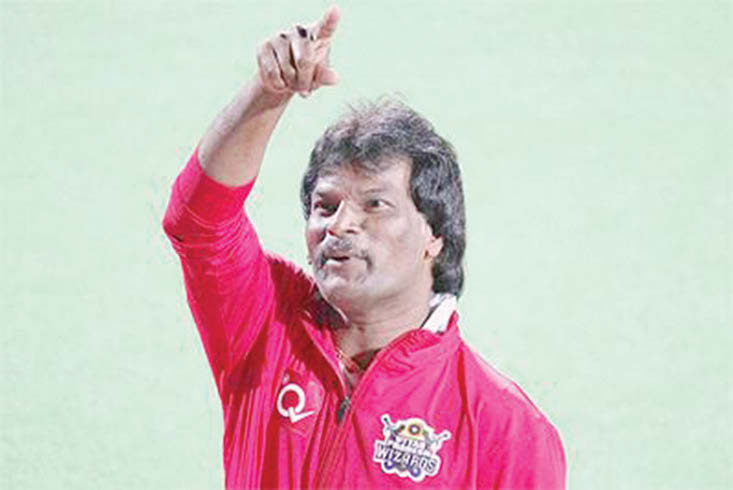
    BENGALURU: Former India captain Dhanraj Pillay on Oct 21 batted for the participation of Pakistani players in Hockey India League and suggested the league authorities to siphon off some money for setting up academies to develop and improve the quality of the sport in India.

    Pillay said Hockey India should have taken permission from the politicians to allow Pakistani players to participate in Hockey India League.

    “Hockey India should have taken permission from the politicians to allow Pakistani players to participate in the HIL. I don’t think they would have any issues with that,” he said. Pillay is in the city for the second edition of Bengaluru Cup which is being played at the Hockey Stadium here. Pillay is guiding Air India team.

    The crux of the matter is that Pakistanis refused to tender apology for their misconduct and hence they have banned them from playing in the HIL, Pillay said.

    “The problem is they have not apologized for their misconduct … that happens. However, things could have been sorted if the federations would have approached the politicians,” he said. The International Hockey Federation (FIH) on December 14 last year banned two Pakistani players for one match each in the aftermath of Pakistan’s victory over India in the Champions Trophy semifinal.

    After winning the game 4-3 in a thrilling battle, several Pakistani players had removed their shirts, danced in jubilation, and raised obscene gestures towards the crowd.

    Replying to a query on development of academies in the country to boost hockey, Pillay said Hockey India League authorities should siphon off some money for setting up of academies to breed young talented players. “The HIL authorities should give some money for setting up of academies to breed young talents and bring them onto the world stage,” he said.

    “We had appointed Roelant Oltmans as the High Performance Director, but did not give any grassroot programme for developing and improving the sport in India.

    “Oltman was aiming only at the established players whether they were playing for a junior, sub-junior, Under-21 or senior team.

  • Viswanathan Anand off-form in World Blitz too, finishes 22nd

    Viswanathan Anand off-form in World Blitz too, finishes 22nd

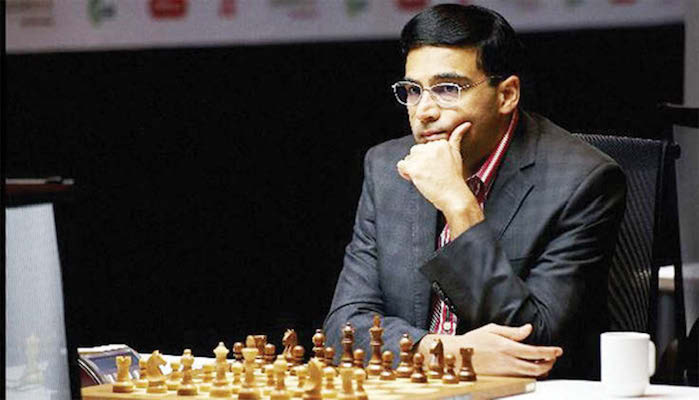
    BERLIN (GERMANY) (TIP): Former world champion Viswanathan Anand’s bad form continued as he could only finish 22nd in the World Blitz Chess championship, which concluded on Oct 22.

    Anand’s final day was marred by draws and the silver lining for the Indian was the fact that he did not lose a single game on the last day that had 10 games.

    After finishing day one on a disappointing note with just 6.5 points out of 11, Anand got the same points getting seven draws and three victories on the final day.

    The five times world champion will next take part in the Bilbao Final Masters as the defending champion later this month at Bilbao in Spain.

    Grandmaster P Harikrishna, who came here straight after winning the Poker Masters tournament in Isle of Man, ended as the second best scorer amongst Indians on 12 points, a half point ahead of Krishnan Sasikiran.

    Among other Indians in the fray, Surya Shekhar Ganguly and Vidit Santosh Gujrathi scored an identical 11 points, B Adhiban ended his campaign on 10.5 while S P Sethuraman scored 9.5 points in all.

    Grandmaster Alexander Grischuk of Russia emerged as the deserving winner finishing with a flourish that got him eight points out of last nine rounds. The Russian scored an impressive 15.5 points from his 21 rounds, losing three drawing five and winning the remaining 13 games.

    It was a two-way tie for the second spot and Frenchman Maxime Vachier-Lagrave finished second on his better tiebreak than Vladimir Kramnik of Russia who too came back strongly after a disappointing show in rapid chess.

    World champion in Classical and rapid, Magnus Carlsen of Norway could not keep the momentum ticking on the final day of the event and his 14 points were good for the 6th spot only.

  • Chinese media laud Xi’s Britain visit

    Chinese media laud Xi’s Britain visit

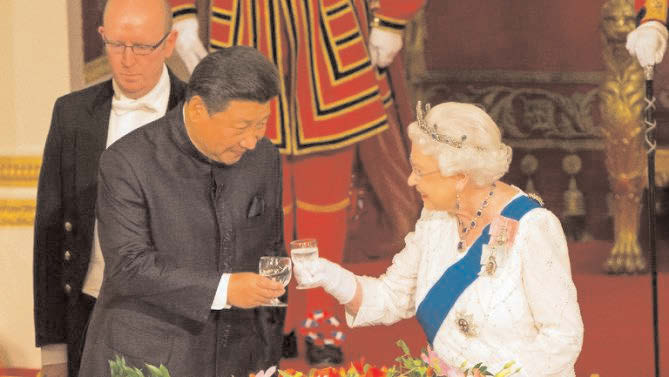
    BEIJING (TIP): Chinese media on Oct 22 trumpeted President Xi Jinping’s visit to Britain, running triumphant coverage of the trip at odds with Western accusations that London has sold out to the Asian giant. Editorial pages in the United States and Britain have lambasted Downing Street for abandoning human rights concerns in favour of improved trade relations with the world’s second largest economy, but Chinese state media praised British “pragmatism”.

    Front pages across the country featured glamorous pictures of President Xi Jinping and first lady Peng Liyuan with British politicians and royalty, opulently illustrating what the governments have described as a “new golden era” between the nations. The “ultra-state visit” put on for Xi featured the best of everything, according to a breathless commentary in the overseas edition of the People’s Daily, the Communist Party’s official mouthpiece, which portrayed the trip as the start of a beautiful friendship. Britain is seeking increased trade, investment and international influence from its relationship with China, it said, and “the two countries should eliminate all disturbances, and seize the moment to deepen the development of their bilateral relations”.

    It suggested that London may in the future even support Beijing on the UN Security Council.

    British business deals with China, including in such sensitive sectors as nuclear power, should set an example for other countries, according to an editorial in the Global Times, which is close to the ruling party.

    Meanwhile reports speculated on the benefits of merging the two “cultural great powers”, showing Chinese-made electric black cabs and arguing that improved relations might raise the level of Chinese footballers a pet project of Xi, who has called for the country to win a World Cup.

    The tone is dramatically different to Chinese media declarations when relations soured after Prime Minister David Cameron met the exiled Tibetan spiritual leader the Dalai Lama during a 2012 visit to London.

    That tete-a-tete “hurt the feelings of the Chinese people”, Beijing said, and the chairman of China’s legislature, Wu Bangguo, abruptly cancelled a trip to Britain. The high-level freeze lasted for over a year. When Prime Minister David Cameron travelled to China in 2013 hoping to patch up relations, an editorial in the Global Times mocked Britain for being “an old European country”, useful only for “travel and study”.

  • Indian students 3rd in generating London’s revenue

    Indian students 3rd in generating London’s revenue

    LONDON (TIP): Indian students in London were the third largest revenue generator for the city last year, contributing £130 million. London mayor Boris Johnson’s first-of-its-kind analysis has found that Indian students paid £56 million in fees and nearly £74 million in living costs, with the money creating and supporting 1,643 jobs.

    But the report also confirms a major fall in Indian students in the UK -from 10% of all international students in London in 2010 to around 4% in 2014. While Chinese student numbers have grown by 49% since 2009- 10, the Indian numbers have continued to decline, falling by 11% year on year.

    “Indian students coming to London and the rest of the UK have approximately halved over the last five years,” the report says.

  • CBI TO PROBE ATTACK ON DALIT FAMILY IN FARIDABAD, RAJPUTS FLEE VILLAGE

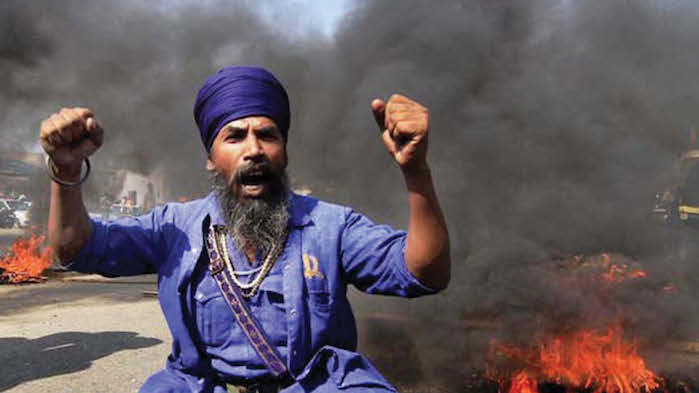
    BALLABHGARH (TIP): As scores of Dalits gathered in Sunpedh on Wednesday, a day after two Dalit children in the village were burnt alive in an attack by Rajputs on their family, the Haryana government said it would recommend a CBI probe into the incident.

    Villagers blocked the Delhi-Agra highway for most of the day in grief and anger, with the bodies of two infants who died on Tuesday placed on blocks of ice. They allowed the children to be buried only after meeting with the district administration.

    On Wednesday morning, the bodies of three-year-old Vaibhav and nine-month-old Divya, wrapped in white sheets, were brought to the village from AIIMS. A crowd first gathered in support of their father Jitender, and soon swelled after Dalits from other villages arrived and demanded stringent action against the guilty.

    After protesting at the bypass for a few hours, the demonstrators began to march from Jaat Chowk in Sunpedh till the Faridabad highway. The highway was blocked for over two hours before the Faridabad administration spoke to the family and asked them to form a committee of six people to put forth the demands.

    The crowd, however, had to be pushed away with force while at least 300 policemen from Faridabad and Gurgaon were deployed to maintain security. An additional five battalions of reserve forces were also called in.

    Around 6 pm, the family finally started the last rites of the two children who were buried in an empty plot near the village. Jitendra’s wife Rekha
    (23) is still battling for life in Delhi’s Safdarjung Hospital. Police on Tuesday arrested four named by Jitendra in the FIR.

    Also on Wednesday, politicians from across party lines made a beeline for the village, including Congress vice president Rahul Gandhi, Union Minister of State and Faridabad MP Krishan Pal Gujjar, CPI(M) leader Brinda Karat and AAP leader Ashutosh.

    Gandhi arrived with Haryana Congress chief Ashok Tanwar and Congress leader Shakeel Ahmed. Speaking to the family, Rahul said: “If you are weak you can be crushed. This is the attitude shared by the Prime Minister, Haryana Chief Minister, BJP and the RSS. They have been killed for no fault of theirs except that they were poor.”

    Gandhi also objected to a reporter’s query on allegations that his visit was a mere ‘photo opportunity’. “This is insulting when someone says it when someone comes here. It is not insulting to me. It is insulting to these people. What is a photo op. What you mean? People are dying. I will keep coming to such places,” Gandhi said. Source: The Indian Express

  • 5 turbaned Sikhs among 19 Indo-Canadians elected to Canadian Parliament

    5 turbaned Sikhs among 19 Indo-Canadians elected to Canadian Parliament

    TORONTO (TIP): The 1.25 million-strong Indo-Canadian community had much to cheer about on Tuesday, October 20, as it doubled its representation in the new Parliament with the election of a record number of 19 MPs.

    Though comprising only about 3% of the population of Canada, the community outperformed those numbers. The new number of Indo-Canadian lawmakers far outstripped the previous high of nine.

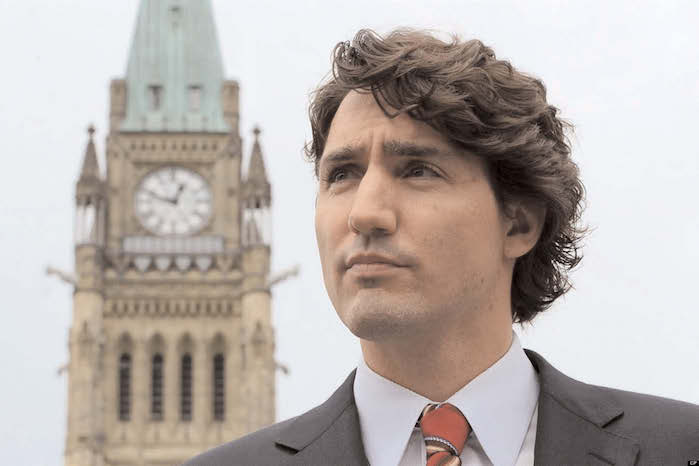
    In 2011, almost all the Indo-Canadians MPs were Conservatives, with no Liberals elected, reflecting the overall mandate. The triumph of Justin Trudeau catapulted at least 15 Indo-Canadian Liberals to the Parliament in Ottawa.

    Two Turbaned Sikh MPs Lt Col Harjit Singh Sajjan (left) and Randeep Singh Sarai
    Two Turbaned Sikh MPs Lt Col Harjit Singh Sajjan (left) and Randeep Singh Sarai

    There will also be an overhaul in the ranks of the community’s MPs, with only a couple of sitting members re-elected. Indo-Canadians won seats in four provinces – Ontario, Quebec, British Columbia and Alberta.

    Canadians voted out the Conservative Party by handing a landslide to the Liberal Party on Monday, October19.

    Winners Ruby Sahota
    Ruby Sahota

    If there were significant victors among these candidates, the biggest loser was minister of state for sports Bal Gosal, who lost by about 6,000 votes to Liberal Party candidate Ramesh Sangha in Brampton Centre constituency of Ontario, once held by Liberal Gurbax Singh Malhi.

    Among the prominent winners was Harjit Sajjan of the Liberal Party, a Canadian Armed Forces veteran who served three operational deployments in Afghanistan.

    The longest-serving Indo-Canadian MP, Deepak Obhrai, won for the seventh time from Calgary Forest Lawn, while four-time MP Nina Grewal lost the elections.

    Winners Deepak Obhrai
    Winners Deepak Obhrai

    Also a winner was Sukh Dhaliwal, another Liberal, who as an MP in 2010 had moved a resolution in the Canadian Parliament to have the 1984 riots in India declared a “genocide”. Dhaliwal lost in 2011 but he turned the tables on his opponent, sitting MP Jinny Sims of the New Democratic Party, this time.

    Some candidates emerged victorious in ridings (as constituencies are called in Canada) where the Indo-Canadian vote wasn’t a major factor. Among them was Liberal candidate Chandra Arya, a former executive and chair of the Indo-Canada Ottawa Business Chamber, who won from Nepean that falls within the boundary of Ottawa, Canada’s capital.

    His party colleague, Anju Dhillon, won from Dorval-Lachine-LaSalle, a constituency on Montreal island, becoming the first Indo-Canadian to win a seat in the French-speaking province of Quebec.

    Most Indo-Canadian victories came in Canada’s biggest province of Ontario as many seats in Brampton and Mississauga cities went to candidates from the community.

    Some Indo-Canadian MPs

    • Anju Dhillon: Liberal, won the Quebec constituency of Dorval-Lachine-LaSalle
    • Chandra Arya: Liberal, won from Nepean in Ontario
    • Ramesh Sangha: Liberal, won from Brampton Centre in Ontario, defeating minister of state Bal Gosal
    • Gagan Sikand: Liberal, won from Missauga-Streetsville in Ontario
    • Deepak Obhrai: Conservative, won from Calgary Forest Lawn in Alberta
    • Harjit Sajjan: Liberal, won from Vancouver South in British Columbia
    • Sukh Dhaliwal: Liberal, won from Surrey Newton in British Columbia
    • Raj Saini: Liberal, won from Kitchener Centre in Ontario
    • Bardish Chagger: Liberal, won from Waterloo in Ontario
    • Bob Saroya: Conservative, won from Markham-Unionville in Ontario
  • PM Modi lays foundation stone for Andhra’s new capital

    PM Modi lays foundation stone for Andhra’s new capital

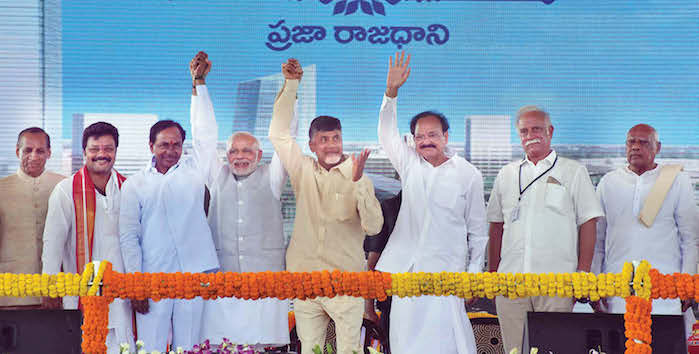
    AMARAVATI  (TIP): Amid fanfare, Prime Minister Narendra Modi on October 22 laid the foundation stone of Andhra Pradesh’s new capital Amaravati at Uddandarayunipalem village in Guntur district.

    Union Ministers M Venkaiah Naidu, Ashok Gajapathi Raju and Nirmala Sitaraman, AP and Telangana Governor E S L Narasimhan and Chief Ministers of AP and Telangana N Chandrababu Naidu and K Chandrasekhar Rao, respectively, were among those present on the occasion of ‘shila nyas’ in the village, about 40 kms from Vijayawada, the commercial hub of the state.

    Modi went around ‘Amaravati Pavilion’, a walk through showcasing evolution of Amaravati, a place of immense historical, mythological and cultural significance, its present and future.

    Amaravati was once the seat of power of Satavahana rulers. As per a call given by Chandrababu Naidu, soil and water from 16,000 villages in the state and prominent pilgrim centres in the country have been brought to the capital region to be used in the construction of the capital city.

    The idea is to promote a sense of belongingness among the people, officials said. Singapore government agencies have prepared the master plans for the three-layered capital –seed capital, capital city and capital region.

  • India needs to play a greater role in the Syrian Conflict

    India needs to play a greater role in the Syrian Conflict

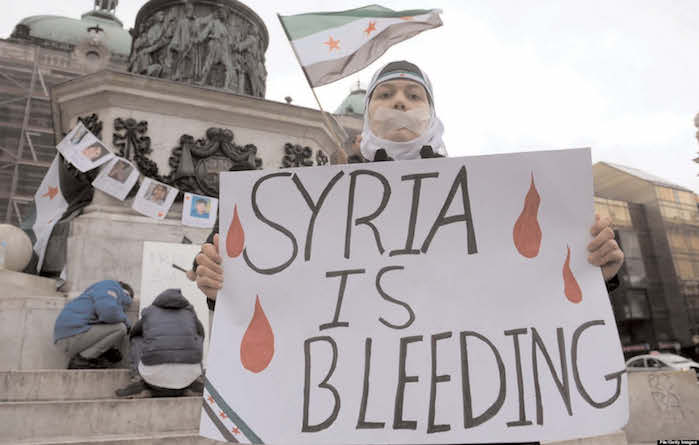
    Syrian Conflict has different meaning for different Nations; however, they stand united on one important issue – Counter-Terrorism.

    Syria recently asked India to play a greater role in resolving the conflict there. New Delhi has consistently maintained that dialogue is the only way to solve the crisis in Syria. However, it has backed Russia’s recent military intervention in the country.

    Syria’s civil war has now taken a dramatic turn with Russian & Iranian involvement in helping Bashar al-Assad’s depleted army and could change the dynamics in the Middle East for the next decade.

    India’s Role so far

    India’s responses to the Syrian civil war have thus far been on the side-lines of the UN, where it has often tilted in favor of the Assad regime.

    2011 saw India voting in favor of a UNSC draft resolution that would implement a peace plan proposed by the Arab League only after a call for Assad to step down was dropped. Then, in October that year, India abstained from a UNSC resolution condemning Assad’s crackdown on pro-democracy protests. The following August, in 2012, India abstained from an UNGA resolution that expressed “grave concern” for the escalation of violence. The reason India gave for this decision was that the resolution referred to Arab League calls for Assad to step down and for UN member states to severe ties with Syria.

    Another Indian show of support for the Assad regime took place during the Geneva II talks in 2013 that sought to end the crisis. Former external affairs minister Salman Khurshid was firmly against the idea of military intervention. At the time, Russia, China and Iran held the same view.

    However, the contours of the conflict have dramatically changed since the Geneva talks.

    Yet, India has not taken the lead and has kept its role restricted to diplomatic peace efforts.

    Now, there seems to be a need for a shift in India’s policy on the issue, and here are the reasons.


    1. India in United Nations Security Council as a permanent member: India has been trying to garner support for its bid to the United Nations Security Council as the emerging power from Asia for quite some time now. To be included in the UNSC means that India will have to take sides and clear its view point on global events where at-least multiple countries are involved.
    2. Isis’s influence poses an immediate challenge: India has been prone to terror attacks coming from foreign soil and it shouldn’t let another outfit join the list. So far, New Delhi has been successful in proactively monitoring cyber recruitments by terror outfits and keeping a real time check. However, given the terror policy adopted by its neighbors and the growing unrest in the country over sacrileges & religious intolerance towards minorities, it is not the best of time for freedom of religion.
    3. Pakistan’s continuous threat of first-use nuclear policy: In order to check Pakistan’s nuclear strike threat if it comes to war with India, New Delhi must send a clear message of its military prowess. Pakistan’s policy seems to be of misdirect, the objective being to unite militant groups engaged in armed conflict within Pakistani to unify & redirect their attacks against India.
    4. With the U.S. – Iran Nuclear standoff being settled, the geopolitical picture is changing with Iran coming closer to the Gulf Cooperation Council (GCC). Gulf has remained no man’s land when it comes to U.S. & Russia and U.S. involvement or argument has always been to prevent one single power from controlling the region’s resources – OIL. The nuclear agreement between Iran and the P5+1-China, France, Russia, the United Kingdom, and the United States plus Germany-raises the possibility, albeit a distant one, of creating a new security order in the Gulf, one that could improve relations between Iran and the Gulf Arab states and help reduce the American military commitment. This deal has opened up huge commercial and strategic opportunities for India and Iran after a decade of U.S. pressure to restrict ties.
    5. The Modi government’s emphasis on greater synergies both economic and strategic with the GCC and Israel.

    This changing environment makes the time ripe for India to chart its revised foreign policy.

    India’s goal to emerge as a major player in West Asia will remain unrealized until India decides to play a greater role in the Middle East.

  • Hillary emerges stronger from 11 hour marathon Congressional hearing on Benghazi

    Hillary emerges stronger from 11 hour marathon Congressional hearing on Benghazi

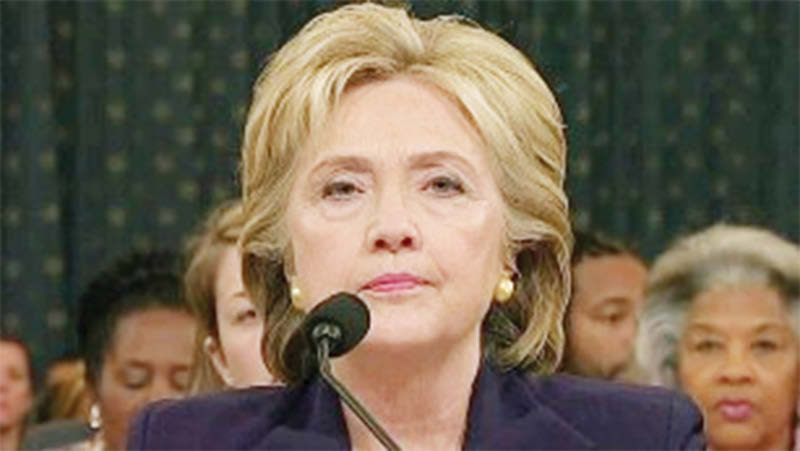
    WASHINGTON (TIP): At times, appearing impatient but never losing control of self, Hillary Clinton answered questions at a nearly 11-hour congressional hearing Thursday, October 22. The Congressional hearing was dominated by Republican criticism of her response to the Benghazi attacks. After a day-long grilling on the details of the attack and how Clinton handled it, the former secretary of state was forced to defend her use of a private email account while in office from a flurry of late evening attacks by GOP lawmakers.

    CNN reports that she also came under testy cross-examination over the extent to which she has taken responsibility for the deaths of the Americans in the September 11, 2012, attacks and her contact with U.S. Ambassador to Libya Chris Stevens, one of the victims, after sending him to the North African country.

    “I came here because I said I would. And I’ve done everything I know to do, as have the people with whom I worked, to try to answer your questions. I cannot do any more than that,” Clinton said towards the end of the grueling day — before later breaking into a coughing fit and taking a throat lozenge to ease her failing voice.

    One of the most dramatic moments of the hearing came when Clinton was asked about her contact with Stevens. She acknowledged that she couldn’t recall having talked to him after having sworn him in as ambassador, though she believed they had spoken.

    Despite the day’s intensity, Clinton appeared cool and in command for much of the hearing. But as the day wore on, she seemed to be increasingly impatient with the Republican line of questioning and with the constant interruptions from the GOP members on the panel.

    In her most emotive testimony, Clinton sought to defang the GOP attacks by arguing that she was agonized over the deaths of four Americans in Libya more than anyone else on the panel.

    “I would imagine I have thought more about what happened than all of you put together,” she said. “I have lost more sleep than all of you put together. I have been wracking my brain about what more could have been done or should have been done.”

    Clinton noted that an independent Accountability Review Board that she set up as secretary had pulled no punches, unveiling 29 recommendations for improving security for U.S. diplomats overseas. She also noted that previous attacks on Americans abroad, including in 1983 on a U.S. Marines barracks and the U.S. Embassy in Beirut, had produced changes to U.S. security procedures after nonpartisan investigations by Congress.

  • Indian-American  Sameer Lalwani Appointed in U.S. Think Tank

    Indian-American Sameer Lalwani Appointed in U.S. Think Tank

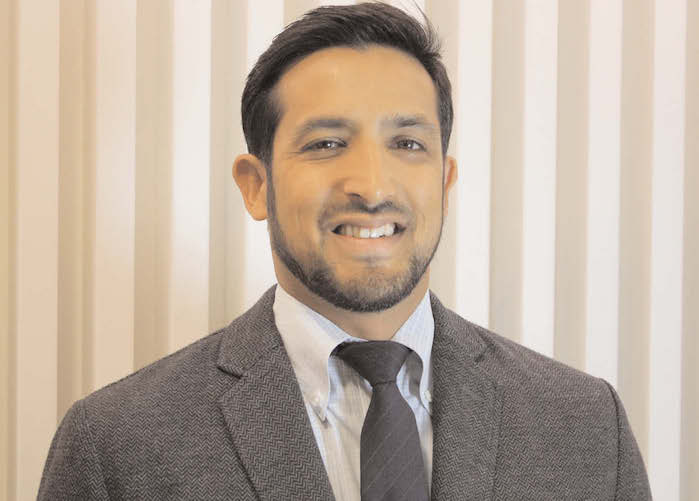
    WASHINGTON (TIP): The Stimson Centre announced the appointment of Sameer Lalwani as Deputy Director for its South Asia program.

    Mr Lalwani’s research will focus on crisis management, nuclear security, and national security decision making in South Asia, a press statement adding that he will help devise Stimson’s online open courses on nuclear-related issues.

    “I look forward to joining Michael and the Center’s extremely talented team,” Mr Lalwani said.

    Sameer Lalwani is Deputy Director for Stimson’s South Asia program. From 2014-15, Lalwani was a Stanton Nuclear Security Postdoctoral Fellow at the RAND Corporation. He completed his Ph.D. in political science at MIT and remains a Research Affiliate at MIT’s Center for International Studies. His research interests include grand strategy, counterinsurgency, civil-military relations, ethnic conflict, nuclear security, and the national security politics of South Asia and the Middle East. Sameer has conducted field research in Pakistan, India, Kashmir, Sri Lanka, and the British archives. His work has been published through RAND, Oxford University Press, the Journal of Strategic Studies, Foreign Affairs, Foreign Policy, The National Interest, CTC Sentinel, the Los Angeles Times, the New York Times, and a number of other outlets. Previously he was a fellow at George Washington University’s Institute for Security and Conflict Studies, a member of the CNAS Next Gen National Security Leaders Program, a participant in the CSIS Nuclear Scholars Initiative, and a policy analyst with the New America Foundation. He holds B.A. in political science from University of California, Berkeley.

    Founded in 1989, Stimson builds effective security solutions through pragmatic research and innovative analysis.

  • GURU GRANTH SAHIB DESECRATION – Centre seeks report from Punjab on ‘foreign hand’

    GURU GRANTH SAHIB DESECRATION – Centre seeks report from Punjab on ‘foreign hand’

    NEW DELHI (TIP): The centre has sought a report from the Punjab government on information about the alleged involvement of a foreign hand in recent incidents of the sacrilege of the holy book that sparked state-wide protests.

    The central government is seized of the matter and has sought a report from the Punjab government, a senior home ministry official said.

    The official said all necessary action will be taken against criminal elements be it within or outside the country.

    Punjab police on Tuesday said, it had arrested two brothers for alleged involvement in the desecration of the Guru Granth Sahib and claimed that they were getting instructions and funding from handlers in Australia and Dubai.

    Jaswinder Singh and Rupinder Singh were arrested for the case of sacrilege of the Sikh holy book at Bargari village in Faridkot district. The police said the brothers phone records had been traced to people in Australia and Dubai and a special investigation team would probe the matter.

    Aam Aadmi Party MP, Punjab, Bhagwant Mann met home minister Rajnath Singh on Thursday and urged him to ensure peace.

    During the 15-minute meeting, Mann told Rajnat Sing the situation in Punjab was ‘very disturbing’ in the wake of recent incidents.

    The sources said, the home minister gave him a patient hearing and told him that he had already spoken to Punjab chief minister Parkash Singh Badal. Chairman of International Sikh Council Mukhtiar Singh also met the home minister.

    Rajnath spoke to Badal on Monday and assured him ‘all possible help” from the centre to address the situation. Singh later apprised Prime Minister Narendra Modi of the situation in Punjab.

  • GOPIO-New York to Discuss NRI Property Issues and Protecting Assets in India

    NEW YORK (TIP): Increased international mobility of both capital and labor in recent years has forced advanced countries to examine their fiscal policies from international perspective. In this age of globalization, cross-border matters have become of great concern to individuals. Citizen of other countries, at times, move to the USA or own assets here, and U.S. Citizens often move or own assets outside the United States.

    “Indian Americans, as an immigrant community to the USA, are greatly affected with this spur in globalization as most still own vast assets, particularly real estate back home in India,” said Attorney Anand Ahuja.

    “As with owning assets outside USA, the Indian American community is at greater risks, therefore, any sale-purchase of real estate in India, estate, gift or tax planning should be considered from international perspective than just domestically,” Attorney Ahuja continued.

    GOPIO-New York and the Indian American Kerala Center will discuss these issues at an open interactive session on Sunday, October 21st starting at 2 p.m. at the Kerala Center (1824 Fairfaxt St., Elmont, NY). The speakers are Attorney Anand Ahuja and Pambayan Meyyan MBA, Sr. Vice President of Forest Hills Group. The session will be chaired by Dr. Thomas Abraham, Founder President of the Global Organization of People of Indian Origin (GOPIO) International.

    “This is a great opportunity to discuss these issues in a community forum and develop strategies for a community campaign and reach out to the Govt. of India and the state governments on NRI property issues back home,” said Dr. Abraham For registration, contact: The Kerala Center, Tel: 203-358-2000, kc@keralcenterny.com.

  • Indian Consulate in New York announces Outreach program at Philadelphia on October 25-26, 2015

    NEW YORK CITY (TIP): With an aim to strengthen ties with the local Indian community in Philadelphia, Consul General of India, New York, Ambassador Dnyaneshwar M. Mulay, would be leading a delegation of high-ranking diplomats, and officials from banking, tourism, and aviation sectors, to Philadelphia, Pennsylvania, on October 25-26, for an Outreach Program at Crowne Plaza Bucks County, 4700 Street Road, Feasterville-Trevose, PA 19053.

    The two-part event on October 25, 2015 will begin with a Camp for Consular Services from 9:00 am to 2pm; followed by the main Outreach Program and Networking event from 5:00 pm to 8:00 pm. The delegation is expected to meet various American dignitaries from Pennsylvania on October 26, 2015.

    Details for both events on October 25, 2015, are listed below:

    Part I: Camp for Consular Services

    Cox and Kings Global Services will organize a Camp for Consular Services, which includes collection of application forms for Visa, OCIs, Renunciation Certificates and other Consular Services. Applicants are requested to make online appointments here, and complete their online application forms. Please bring all necessary documents, including passport size photographs for each service. Information about required documents for each service can be found online on our website http://www.in.ckgs.us

    Venue: The Newton Ballroom, Crowne Plaza Bucks County, 4700 Street Road, Feasterville-Trevose, PA 19053.

    Time: 9:00 am to 2:00 pm.

    Part II: Outreach Program and Networking

    The second half of the day will begin with an interactive networking session, followed by presentations by the Consulate, Indian Banks, Air India, PSUs, and the Tourist Board. There will also be a Q&A session with the audience, followed by a cultural program, and dinner.

    Venue: The Yardley Ballroom, Crowne Plaza Bucks County, 4700 Street Road, Feasterville-Trevose, PA 19053.

    Time: 5:00 pm to 8:00 pm.
    For further information, please visit www.indiacgny.org

  • Jindal’s popularity dips below one percent – refuses to bow out

    Jindal’s popularity dips below one percent – refuses to bow out

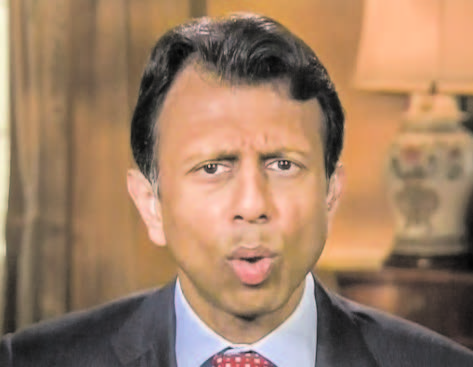
    WASHINGTON (TIP): The popularity of first Indian-american US Presidential hopeful Bobby Jindal has dipped below one per cent, according to latest opinion polls, indicating that all is not well with his campaign.

    In two leading national opinion polls – CNN/ORC and NBC/Wall Street Journal – Jindal’s popularity rating slipped to less than one per cent, following which many political pundits were quick to pronounce a dead end to his presidential ambition at least in the 2016 elections. Bobby Jindal is the first Indian American to be elected a state governor.

    However, the 44-year-old two time Louisiana governor said he is not giving up so early. In fact he threated to skip the next round of Republican debate as based on national poll results he has been pushed to the second tier debate. The Republican race is now led by Donald Trump and Ben Carson, according to the CNN/ORC poll. Trump leads the field with 27 per cent, followed by Carson at 22 per cent. But Jindal argued Trump is going to fade. “His numbers are already starting to fall in Iowa…,” Jindal argued.

    Louisiana Gov. Bobby Jindal lost ground in the latest Fox News poll of candidates seeking the 2016 Republican presidential nomination, slipping below 1 percent and into 15th place in the large field.

    Now, Gov. Bobby Jindal has not made the cut for yet another main Republican presidential debate, and has been invited the “undercard” debate held earlier in the evening instead.

    CNBC has invited 10 GOP candidates to the primetime debate held at 8 p.m on Oct. 28 in Boulder, Colo. The “undercard” debate would take place at 6 p.m. in the same place. Jindal could face former U.S. Sen. Rick Santorum, former Gov. George Pataki, and U.S. Sen. Lindsey Graham if he participates in the earlier event.

    Jindal and three other men were invited to the early slot because their average national poll numbers in the last five weeks aren’t high enough to qualify for the main event. The New York Times reports the “undercard” candidates polling numbers are all below 2.5 percent.

    During a meeting with The Des Moines Register editorial board this week, Jindal declined to say whether he will participate in the undercard event.


  • Suspension of ‘Panj Pyaras’: SGPC indecisive, leaves decision to Makkar

    AMRITSAR (TIP): The emergency meeting of the Shiromani Gurdwara Parbandhak Committee (SGPC) executive convened after October 21 suspension of the ‘Panj Pyaras’ for their unprecedented summoning the Akal Takht jathedar and four other Sikh head priests turned out to be a stormy affair and ended on an indecisive note here on October 22.

    In Mukstar, deputy chief minister Sukhbir Singh met SGPC members from five districts at Badal village to discuss the prevailing scenario in the state.

    At SGPC’s Chandigarh meeting, 14 of the 15 members of the executive authorised SGPC chief Avtar Singh Makkar to take a decision on the ‘Panj Pyaras’.

    It is learnt that a majority of the SGPC executive members were opposed to the suspension of the ‘Panj Pyaras’.

    When contacted after the meeting, Makkar was non-committal and said: “There is no immediate decision.”

    Earlier, Makkar arrived in a car driven by Dyal Singh Kolianwali, who is close to chief minister Parkash Singh Badal, at Kalgidhar Niwas, the meeting venue.

    SAD (Amritsar) activists staged a black flag protest outside the venue, demanding Makkar’s resignation.

    Nominated SGPC executive member from Amritsar Mangal Singh Sandhu did not attend the meeting. SGPC general secretary Sukhdev Singh Bhaur said, “The situation for Sikhs is a concern. They are being arrested, beaten and injured. This is bad.”

  • New accounting norms may add to banks’ bad loans

    MUMBAI (TIP): There is a new twist to the issue of rising bad loans in the banking sector. Under the new global accounting norms that banks have to adopt from April 1, 2018, the gross level of non-performing assets (NPAs) for banks and non-banking finance companies
    (NBFCs) could rise significantly. Companies have to migrate to the new norms from April 1,2016.

    The quantum of these bad loans would not only affect banks’ profits, but also eat into their capital, raising concerns among RBI and finance ministry officials, who are already grappling with the issue of injecting fresh capital into banks.

    According to people familiar with the matter, the RBI is trying to address the issue by asking banks and NBFCs to internally adopt the new system — Ind AS— early on so that everybody gets a head-start on the extent of the problem and tries to resolve it.

    “Evaluation and recording of credit losses under Ind AS is significantly different from that used under current accounting norms,” said Jamil Khatri, partner, KPMG. “This could likely lead to a rise in gross NPAs and an increase in the level of provisioning. Ind AS follows an expected loss model which is based on judgment and is significantly different from the norm-based provisioning model under the current system.”

    The RBI recently formed a panel to suggest measures to address challenges arising out of implementation of Ind AS by banks. The report, which was submitted to the RBI on Wednesday, suggests change in loan loss provisioning but is silent on the impact on capital adequacy. The central bank has sought comments on the report by November end.

    Prime Minister Narendra Modi recently said that the government plans to infuse Rs 70,000 crore into public sector banks to address the issue of bad loans.

  • RSS Chief plays down communal attacks

    RSS Chief plays down communal attacks

    Since Prime Minister Modi and his ministerial colleagues have chosen to report to the RSS and invite its inputs on policy issues, it is important to take note of RSS chief Mohan Bhagwat’s annual Vijayadashmi address, delivered at Nagpur on Thursday and telecast live by Doordarshan despite Opposition protests last year. While his emphasis on “unity in diversity” is welcome, Mohan Bhagwat has, without naming any of the recent incidents – killings of writers and rationalists, beef and ink attacks and the Dadri lynching – said that “small incidents” were being “blown up”.

    He chose to give an indirect message to hardliners in the Sangh Parivar and other outfits by saying that his organization believed in “cooperation and coordination” and “such small incidents do not affect Indian and Hindu culture.” While Mohan Bhagwat talks of inclusivity being “the core of our culture”, the Union Culture Minister is known to violate the basic values of Indian culture very time he opens his mouth. Prime Minister Modi, BJP chief Amit Shah and Finance Minister Jaitley too have reacted to these incidents but none has given the recalcitrant ministers, MPs and MLAs a message strong enough to silence them and others. The latest to display characteristic insensitivity is Union minister VK Singh, who, reacting to the burning to death of two Dalit children in Haryana, said: “If someone throws stones at a dog, the government is not responsible”. For the benefit of the BJP in Bihar, Bhagwat did not say anything damaging. He did not touch on the reservation issue. But there seems no one to control the likes of Gen VK Singh and Kiren Rijiju, who too has been encouraged to make irresponsible comments about north Indians.

    If so many loose cannons have sprung up creating social tension, it is because there is no fear of the law or disciplinary action. If Bhagwat considers the recent incidents, which have forced writers to return their awards, as “small”, then he is not expected to contain the elements threatening India’s culture of tolerance and liberalism. His silence on the Shiv Sena, which has launched a hate campaign against anything and anyone Pakistani, is understandable, but not desirable.

  • Virender Sehwag retires from all forms of international cricket & IPL

    Virender Sehwag retires from all forms of international cricket & IPL

    Virender Sehwag has retired from international cricket, officially. On his 37th birthday, Sehwag, who hinted at retirement during the Masters Champions League opening in Dubai on Monday, announced on Tuesday his retirement from all forms of international cricket & IPL. Sehwag won’t be playing in the upcoming edition of the IPL.


    sehwagSehwag’s decision comes barely a few days after Zaheer Khan decided to call time on his career.

    In a glorious international career from 1999, Sehwag played 104 Tests scoring 8586 runs at an impressive average of 49.34, hitting 23 centuries and 32 half-centuries. He is the only triple centurion in Tests for India having scored a career-best knock of 319 against Pakistan at Multan, which also is an Indian record. He is also one of those rare batsmen to have scored two triple tons with his next one (309) coming against South Africa.

    In 251 ODIs, he accumulated 8273 runs at an average of 35.05 and scored 15 hundreds apart from hitting 38 fifties.

    In 19 Twenty20 Internationals, he managed 394 runs with two half-centuries.

    He has been a part of two World Cup winning teams under Mahendra Singh Dhoni’s leadership — 2007 World T20 in South Africa and the ICC ODI World Cup in India.

    Sehwag, famous for his hand-eye co-ordination and giving the ball a solid whack, did not lose his sense of humour while announcing his retirement. He quoted Mark Twain and joked about the advance news of his retirement.

    Virender Sehwag’s full retirement statement

    To paraphrase Mark Twain, the report of my retirement yesterday was exaggerated! However, I have always done what I felt was right and not what conformists thought to be right. God has been kind and I have done what I wanted to do – on the field and in my life. And I had decided some time back that I will retire on my 37th birthday. So today, while I spend my day with my family, I hereby announce my retirement from all forms of International Cricket and from the Indian Premier League.


    Cricket has been my life and continues to be so. Playing for India was a memorable journey and I tried to make it more memorable for my team mates and the Indian cricket fans. I believe that I was reasonably successful in doing so. For that, I wish to thank all my team mates over the years – some of the greatest players of the game. I would like to thank all my captains who believed in me and backed me to the hilt. I also thank our greatest partner, the Indian cricket fan, for all the love, support and memories.
    I have also played against a lot of great players and it was an absolute pleasure and honour to do so. It was possibly the greatest motivation there was to play to the best of my ability. I have lived my dream and played at the finest of cricket grounds across the globe and I want to thank the groundsmen, clubs, associations and everyone who painstakingly prepare the arena for our performances.

    I miss my father today, he was there when the journey started and I wish he could have been there today as well but I know I made him proud and wherever he is today, he is watching me with pride. I want to thank my coach, Mr. A.N. Sharma sir, who was possibly the only coach who could have groomed me into the player that I became. I would probably have struggled to play for my school under any other coach. My mother, my wife Aarti and my children Aaryavir and Vedant are my biggest strength and their presence in my life keeps my mind without fear and head held high.

    I would like to thank the BCCI for all its support over the years. The work that the BCCI does at such a scale is phenomenal and it has had some fine administrators over the years who have led the Board in developing the game, appreciating the contribution of players and have brought a lot of benefit to the players.

    I would also like to thank the Delhi and District Cricket Association and particularly Mr. Arun Jaitley who always supported me and sought our feedback and implemented what the players wanted and his presence ensured that I always had someone to rely upon personally and for the furtherance of the game’s best interest in Delhi.

    I would like to thank everyone at the Haryana Cricket Association who have welcomed me with so much love and affection and it is really exciting to work with some really talented youngsters. I would especially like to thank Anirudh Chaudhary and Ranbir Singh Mahendra, who has always had words of motivation for me during the toughest of times and I have felt safe in the knowledge that I can always turn to him for well considered advice which I value immensely.

    I would also like to thank the Delhi Daredevils and the Kings XI Punjab, the franchisees that I represented, for believing in me and letting me be a part of them. I always gave my best for my team and consider myself fortunate to play with some brilliant players in the IPL.

    I would also like to thank the Oil and Natural Gas Commission (ONGC). Very little is known about the effort they put in to promote sportsmen and sportswomen across various disciplines. ONGC gave me the security to pursue my game and the organization will always have a special place in my heart.

    I must also add that I have enjoyed every Press conference and every interaction with the members of the media through out my international career and the presence of Indian media on foreign tours has left some very pleasant memories that I shall always cherish.

    I want to thank all my sponsors for believing in me and all the bat manufacturers that have been associated with me over the years for providing me the willow that I love.

    I want to tell everyone at the Sehwag International School, Jhajjar that I now hope to have a higher frequency of visits to the campus to be with you all.

    I also want to thank everyone for all the cricketing advice given to me over the years and I apologise for not accepting most of it! I had a reason for not following it; I did it my way!

  • China now has more billionaires than US

    China now has more billionaires than US

    BEIJING (TIP): Communist China has overtaken capitalist United States in the richie rich list with 596 billionaires to America’s 537. The stunning jump has taken place in the last one year — spurred by the rise of China’s riches in technology and manufacturing — despite a slowing economy, according to a survey released on Oct 18.

    If Hong Kong and Macau’s 119 billionaires were to be included, the number would swell to 717, according to wealth research firm Hurun Report. Though the World Bank recently reduced the forecast for China’s growth from 7.1% to 6.9% this year, its billionaires have risen by 32% or 242 in 2014-15.

    “Despite the slowdown in the economy, China’s richest have defied gravity, recording their best year ever, and creating more wealth than any coun try has ever done before in a year,” Hurun Report chairman Rupert Hoogewerf said.

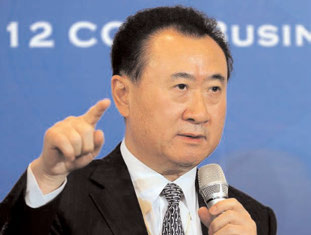
    The firm’s research has found total wealth of 1,877 super rich individuals hit $2.1 trillion, which is more than the GDP of several countries. It shows Jack Ma of e-commerce giant Alibaba has lost his position as the richest Chinese to real estate magnet, Wang Jianglin, who had held the position earlier. Wang’s fortune rose 52% to $34.4 billion after the value of his newly-listed cinema chain rose 10-fold in the stock market.

    The report reflected the success of online retailing, entertainment and other service businesses, while traditional industries such as steel and natural resources have declined.

    Following Wang and jack are Zeng Qinghou of the Wahaha soft drinks and mineral water empire with $21.2 billion. Ma Huateng of Tencent Ltd, operator of the popular WeChat social media service, is fourth; and, Jun Lei of smartphone maker Xiaomi is No 5.

    New entrants to the rich list include Frank Wang, founder of DJI, the world’s biggest maker of civilian drones, with a net worth of $3.7 billion, and Cheng Wei of taxi-hailing app Didi-Kuaidi, with $1 billion.

    Agencies said communist leaders are trying to steer the world’s second-largest economy to more self-sustaining growth driven by domestic consumption and service businesses to reduce reliance on trade, investment and heavy industry.

  • RBI chief Rajan wants IMF to check monetary easing policies

    RBI chief Rajan wants IMF to check monetary easing policies

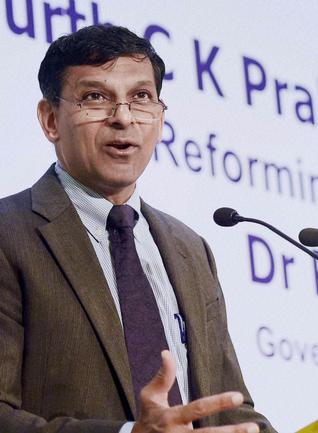
    Mumbai – The International Monetary Fund (IMF) should play an active role in questioning the easy monetary policies, or so called quantitative easing measures, adopted by the developed economies rather than sitting on the sidelines, Reserve Bank of India governor Raghuram Rajan said in a speech.


    TH19_BU_RAGHURAM_R_2590974e“The IMF has been sitting on the sidelines and applauding these kinds of policies right from when they have been initiated, and hasn’t really questioned the value of these kinds of policies,” he told a G20 consultation meeting in Mumbai.

    Dr. Rajan said developed countries were adopting monetary policies without consideration for the negative impact they have on the global economy, while emerging markets were engaging in currency intervention that sparked competitive devaluations. He did not single out any one country.

    Dr. Rajan, a former chief economist at the IMF, said that it was time for policymakers, led by the IMF, to address the “extreme” policies, otherwise “we have to worry where this ends”.

    A number of developed economies, most notably the United States, have engaged in significant monetary easing to boost their economies as global growth slows.

    But Rajan said some of the policies had been “extreme” and ultimately detrimental to emerging markets, which struggled to cope with large inflows of capital which then disappeared when the easing stopped.

    Rajan, the former IMF chief economist, said in his address that the policies initially encourage growth but the effect quickly wears off, leading to a “musical (chair-like) crisis”.

    “We are in dangerous territory,” he said in the speech, which comes ahead of the G20 summit in Turkey next month.

    India, whose economy is expanding at around seven percent, is presently the best performer of the group of emerging markets known as the BRICS, which is also composed of Brazil, Russia, China and South Africa.

    Last month, Rajan said Brazil’s current economic malaise stemmed from trying to grow too quickly by “overemphasising old and ineffective methods of stimulus”.

    India should address supply side constraints

    Dr. Rajan also said India needs to address supply side constraints in order to achieve the potential growth rate of 9 per cent.

    To a question on whether India can attain higher growth without inflation, he added: “The answer is no. We have to create underlying supply conditions that would allow us to sort of have much higher demand. In some sense, I see 9 per cent growth as a situation where we are investing tremendous amount and thus creating the supply which will then help the demand.”

    “It is a steady process rather than an overnight process. It will take some time.

  • In Sweden, doctors caught performing virginity tests on girls

    SWEDEN (TIP): An undercover investigation has revealed doctors in Sweden are performing virginity tests on teenage girls against their will. Footage shot by reporters for the Swedish current affairs program ‘Kalla Fakta’ (Cold Fact) showed doctors across the country agreeing to perform illegal tests for religious families to determine if their daughters had had sex.

    Reporters approached doctors in cities across Sweden and asked them whether they would be willing to carry out the examinations. Two undercover journalists posed as an aunt and her 17-year-old niece. The footage shows the aunt asking one doctor to perform the test and write out a “virginity certificate” despite the niece protesting she does not want one. Under Swedish law, doctors are to report a child to either social services or the police if they believe he or she is “in need of protection” by social welfare authorities. One of the doctors insists on the footage that she has done “hundreds” of virginity tests -including on children.

    Human rights groups have condemned the practice. Liesl Gerntholtz, of the Human Rights Watch told a British daily: “In a country that internationally has played a leading role in protecting women’s rights, it was almost unthinkable to me that this would be happening in a country like Sweden.” One of the victims, who was too scared to reveal her identity, spoke to the programme using an actress’ voice. “Sara” said she was forced to get engaged to her cousin when she was just 13 by her deeply Christian family and her parents made her undergo a virginity test at 15.

  • Naveeda Ikram: UK’s first female Muslim Lord Mayor suspended by Labour as police probe ‘financial irregularities’

    Naveeda Ikram: UK’s first female Muslim Lord Mayor suspended by Labour as police probe ‘financial irregularities’

    BRADFORD  (TIP): Naveeda Ikram, a councillor in Bradford, was suspended by the party after an allegation was made about her to West Yorkshire Police. Ikram served as Lord Mayor of Bradford in 2011-12. She missed out on becoming Labour’s candidate to stand against George Galloway in the Bradford West consituency in the general election.

    Labour is understood to be investigating a number of allegations. West Yorkshire Police said its enquiries were in their early stages.

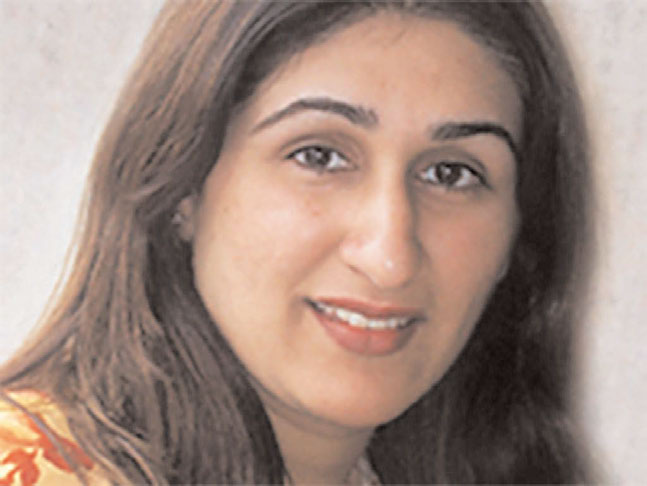
    Naveeda Ikram1Ikram told The Independent: “I have no idea what the police investigation is about. My suspension by the party is an administrative procedure at this stage. My background is squeaky clean and I am confident that I will be cleared.”

    Ikram was the first woman of Pakistani origin to become a councillor in Bradford after her election in 2004. She was involved in a row within the Labour Party earlier this year after going to police over claims that she was “smeared” on social media by a troll who suggested that she had racist and sectarian views.

    That argument came after she lost out in the selection process for the Bradford West parliamentary seat to Amina Ali, a Londoner who stepped down 72 hours later for family reasons.

    Ikram said at the time that comments on social media, where she appeared to insult Ali’s Somali background, were made on a fake profile and circulated “to bring me down”. Naz Shah, the chairwoman of a local mental health charity, was eventually selected as Labour’s candidate for the seat and went on to defeat Galloway, the Respect MP, in May’s election. Rumours emerged that Ikram was planning to defect to Galloway’s party, a claim which she denied.

    Ikram said: “It’s awful that this investigation has been made public -just crazy. I have not been provided with any information about the allegation. The police haven’t even spoken to me. I have no idea what their investigation is about. I have no financial dealings or business interests.

    “I’m not the first person to be suspended from the Labour Party and I will not be the last. I have never had any concerns or anything to do with another political party and I wouldn’t leave Labour for anything. “This is nothing to do with me having been the Lord Mayor. It isn’t right for anyone to bring that into it because it brings disrepute to the office. What I can say is that I am very confident that I will be exonerated from this.” A spokesman for West Yorkshire Police said yesterday: “We can confirm that we have received a report of alleged financial irregularities. Enquiries are at a very early stage and are ongoing.”

    Bradford Council said it was a matter for the Labour Party and Ms Ikram had not been suspended by the council. She will continue to carry out her council duties.

    A spokesman for Yorkshire and Humber Labour Party said: “Naveeda Ikram has been suspended by the Labour Party pending an investigation.”

  • UK schoolgirl guilty of terror offences spared jail

    UK schoolgirl guilty of terror offences spared jail

    LONDON (TIP): A British schoolgirl who admitted two terror offences of possessing “recipes for explosives” and a bomb-making guide was on Thursday spared a custodial sentence after she pleaded to a youth court to let her “prove that I am not a terrorist.”

    The 16-year-old, who cannot be named for legal reasons, was arrested by anti-terrorism police in April and Manchester Youth Court gave her a 12-month referral order with youth offending teams to address her radicalisation.

    The court heard she had intended to hack into the White House and became obsessed with suicide bombings after becoming radicalised online.

    Sitting in court, flanked by her mother and an aunt, she told the judge: “I deeply regret what I have done. I wish to make changes if I get the chance to prove I am not a terrorist.”

    Passing sentence, District Judge Khalid Qureshi said: “It must be every parent’s worst nightmare to discover their child has been accessing material they should not, of whatever type.”

    The girl had used her school’s IT system to search for information on the Islamic State terror group, its militant known as “Jihadi John”, and images of Michael Adebolajo, who killed British soldier Lee Rigby on a London street in 2013.

    Analysis of her mobile phone found instructions for producing a timed circuit, a document about DIY bomb-making and the Anarchist Cookbook 2000.

    The inquiry also led to the arrest of a boy, 14, who admitted involvement in a plot to attack police in Australia on Anzac Day, held on 25 April each year to commemorate the Australian and New Zealand Army Corps’ in the World War One battle of Gallipoli.

    The boy, now 15, was jailed for life earlier this month at London’s Old Bailey court after pleading guilty to inciting terrorism abroad.

    The girl had pleaded guilty at an earlier hearing to two offences under Section 58 of the Terrorism Act 2000, of possessing documents likely to be of use to anyone preparing or committing an act of terrorism.

    No evidence was found that she was aware of or played any part in the Anzac Day plot or any plan to harm others or incite terrorism in the UK or elsewhere, the court was told.