Year: 2015

  • Nepal passes long-delayed bill on quake rebuilding

    Nepal passes long-delayed bill on quake rebuilding

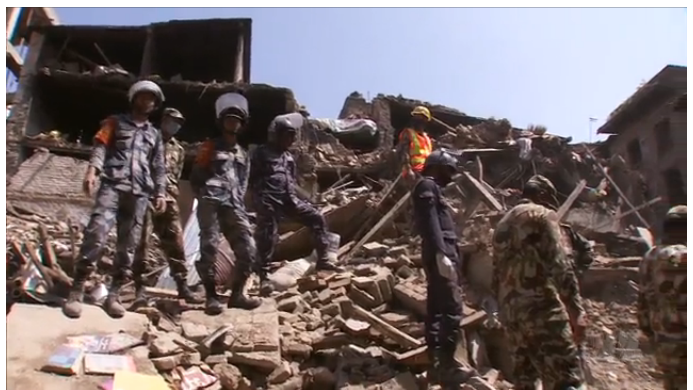
    KATHMANDU (TIP): Nepal’s parliament on Wednesday passed a long-delayed law to pave the way for rebuilding after April’s massive earthquake, ending months of bickering that paralysed reconstruction despite donor pledges of billions in aid.

    The 7.8-magnitude quake killed almost 8,900 people and destroyed more than half a million homes. Thousands of victims still live in tents eight months later due to the government’s failure to spend a $4.1 billion reconstruction fund.

    “I announce that the bill related to reconstruction of earthquake-affected infrastructure… has been passed unanimously,” Speaker Onsari Gharti Magar said in parliament.

    The government vowed in June to set up a National Reconstruction Authority (NRA) to oversee rebuilding and ensure that all aid went to victims, as part of its bid to attract funding from sceptical foreign donors.

    But political wrangling between the ruling CPN-UML party and the opposition Nepali Congress over the leadership of the new body prevented the bill conferring legal status on the NRA from being passed.

    The final vote paving the way for the NRA, which will process all aid funds, followed weeks of closed-door negotiations.

    A spokesman for the ruling party told AFP the government would work fast to set up the new state body to avoid further delays in rebuilding.

    “The bill has been passed through a political consensus… There were some disagreements among the parties, but things will now move forward quickly,” said CPN-UML spokesman Pradeep Gyawali.

    Quake victims have so far received just $150 in compensation per household, while the government has promised an additional $2,000 once the NRA is set up and able to disburse funds. (AFP)

  • Myanmar’s ex-dictator tips Suu Kyi as ‘future leader’

    Myanmar’s ex-dictator tips Suu Kyi as ‘future leader’

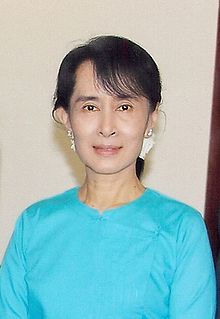
    YANGON (TIP): Myanmar’s feared former junta leader Than Shwe has endorsed his one-time nemesis Aung San Suu Kyi as a “future leader” of the country, according to his grandson.

    Than Shwe, a postal clerk turned general who ran the country with an iron fist for nearly two decades until 2010, met with democracy champion Suu Kyi on December 17.

    Her party is preparing for power after November’s massive election win. The talks mark a dramatic turnaround in fortune for Suu Kyi, who was kept under house arrest for years by the 82-year-old retired general for leading the democracy movement against his army.

  • B’desh ’71 trial prosecutor packs a punch

    DHAKA (TIP): She’s one of the most talked-about women in Bangladesh today and also one of the most admired and reviled. Tureen Afroz is the person responsible for sending the 1971 war criminals to the gallows and her feisty but well-crafted arguments as the chief prosecutor in the International Crimes Tribunal (ICT) of Bangladesh has won her legions of followers across the country.

    It also earned her a lot of death threats, abuse and even Molotov cocktails hurled at her bungalow in Dhaka’s chic Uttara Model Town.

    Afroz, in her mid-forties, in her small frame. She is unfazed by the death threats-—she moves around without any police escort—and the volley of verbal abuse infamously heaped on her inside the courtroom over the past four years by one of the recently executed (former BNP leader Salauddin Quader Chowdhury) did not detract her from her firm resolve to secure convictions for the accused. Afroz is also a robust defender of the ICT that has been criticized by the UN, many western governments, legal bodies and human rights organisations like Amnesty International for being opaque and unfair. “All the criticism. (PTI)

  • Spanish policeman killed in Kabul attack

    MADRID (TIP): A Spanish policeman was killed in an attack near the country’s embassy in Kabul on Friday, prime minister Mariano Rajoy said in a statement on his party’s Twitter account. Rajoy had said earlier the policeman had been wounded in the attack and had been transferred to a nearby hospital. The attack, which the Taliban said was targeted at a guest house attached to the embassy near a heavily protected area of the capital close to many foreign embassies and government buildings, wounded at least seven people. The car bomb was not directed against Spain and no other embassy staff were hurt, Rajoy said in the earlier statement to reporters. (Reuters)

  • National Herald case: Is there an oblique political objective of  the BJP?

    National Herald case: Is there an oblique political objective of the BJP?

    India is once again in the throes of another political storm of great magnitude that threatens not only to setback the current legislative agenda of the Parliament’s winter session but may also permanently fracture the trust needed for future consensus among political parties to conduct the nation’s business. The National Herald case has all the familiar hallmarks of a political mud fight rather than the true ingredients needed to prove any alleged impropriety and/or violation of laws.

    National Herald was started by Pandit Jawaharlal Nehru in 1937 along with other leaders of the independence movement. Undoubtedly, it was a symbol of this struggle and provided a voice to the freedom movement across the country. In addition to Pandit Nehru, freedom fighters like Purushottam Das Tandon, Acharaya Narendra Dev, and India’s first Communications Minister, Rafi Ahmad Kidwai were among the first subscribers and signatories to the memorandum of Association of the ‘Associated Journals Limited (AJL)’.The company that was published National Herald and later Quami Awaaz and Navjeevan.

    From its inception, the National Herald was in poor financial health. There were reports to the effect that Mahatma Gandhi originally even opposed the idea of the Congress party owning a newspaper but relented to the wishes of Pandit Nehru and others in the party. The determination of Nehru to carry on with the publication despite the heavy odds against it is quite evident in his statement; “I will not let the National Herald close down even if I have to sell Anand Bhavan.”

    The Congress party supported AJL until now because of its rich and vibrant legacy associated with the freedom struggle, as well as its inextricable link with the policies and principles of the Indian National Congress. Despite the editorial excellence of the paper, AJL continued to bleed financially and ran into losses year after year. The published records show that AJL received multiple loans adding up to 90 crores from the Congress Party.

    It has come to a point where no bank would sanction AJL a loan because of the 90 crore debt in its balance sheet, and its benefactor, the Congress Party, had no choice but to rethink its strategies. Towards that end, some of the most eminent experts were consulted, and their considered advice was to form a section 25 not-for-profit company called ‘Young India’. Further, in order to bail out AJL and free it from the burden of debt, the loan was reassigned to the not-for-profit company. In so doing, Congress party leaders truly believed that it could rescue and revive Nehruji’s paper while relieving AJL of its financial distress. In today’s world, conversion of debt into equity is a normal business practice to restore the financial health of companies that are over-burdened with debt.

    All shareholders of AJL, who were present and voting on 21st January 2011, approved the advice of the experts unanimously. Meanwhile AJL, now able to borrow money for the first time in years, renovated its Delhi building and rented them at the current market rates. It is believed that these new avenues of income would fund the re-launching of the National Herald in the foreseeable future.

    Undoubtedly, there are a number of misconceptions promoted by groups intending to tarnish the image of the Congress party. A few things are quite evident upon the examination of this case:

    1. The Assets and properties owned by AJL will continue to remain with AJL;
    2. No assets have been transferred from AJL to ‘Young Indian’;
    3. As  Directors or Shareholders of ‘Young Indian’, Smt. Sonia Gandhi or Shri. Rahul Gandhi is prohibited by law from drawing any financial benefits from the company;
    4. At the Extraordinary General meeting in 2011, shareholders were present and unanimously voted to approve the issuance of fresh equity to ‘Young Indian’, in order to extinguish the debt of AJL.

    It is also clear to independent observers that AJL was directed and sustained over the years by a successive leadership of the Congress Party, and this continues to remain the case today. The newly created ‘Young India’ also lists the major office holders of the party as its shareholders. In a nutshell, this whole exercise appears to be a major overhaul of an entity within an organization that has become financially burdensome because of its debt, and otherwise unresponsive to revival in the prevailing market conditions. Political Parties in India are under no restriction in giving loans or restructuring their various entities. A complaint along these lines by Subramanian Swamy was dismissed by the Election Commission in 2012.

    In light of all of these clarifications, why is there still all of this hubbub? BJP, at the outset, would want everyone to believe that it was a case brought up by Subramanian Swamy in 2012, and they (the BJP) have very little to do with it! However, this case was reopened by Enforcement Directorate after Rajan S. Katoch, the ED Director, was removed from service after his recommendation to close the case due to lack of evidence against two leaders. In addition, the BJP has already brought out a booklet called ‘Family Greed and National Blackmail’ in a deliberate attempt to sully the names of the Congress President and the Vice-President.

    Kapil Sibal, a senior Congress leader and lead attorney, in this case, said the following: ‘The BJP, in the last year or so, has been targeting the leaders of the Congress Party. Since they have no idea how to govern the country, they want to distract the attention of people from the promise of good governance. They have targeted the Congress Party president Smt. Sonia Gandhi, Rahul Gandhi and our leaders Virbhadra Singh, who was accosted during his daughter’s wedding, Shankarsinh Vaghela, Ashok Gehlot and Sachin Pilot. They have filed sedition charges against young people in Gujarat and targeting West Bengal, Madhya Pradesh and Bihar’.

    Since the ascension of BJP to power in 2014, there is a growing intolerance to dissent in a democratic framework. For some in their leadership, a responsible opposition is altogether an inconvenience to the unilateral BJP agenda. Senior BJP leaders who appear to have taken an oath for a ‘Congress-free Bharat’, might believe that the top leadership of the Congress party in the Court in an alleged case of cheating and criminal breach of trust makes for bad optics and will help them in their quest to discredit and destroy them politically. There is no doubt then why Sonia Gandhi and Rahul Gandhi became their prime targets.

    Subramanian Swamy is a known operative for the BJP, and his malevolence and hatred towards the Nehru family and anything Nehru touched including the venerable National Herald is well documented. He has long been discredited on these shores for his vitriolic statements against minorities in India, which got him booted out from the prestigious Harvard University in the immediate past. In one of his infamous quotes from 2011, he states ‘implement the uniform civil code, make learning Sanskrit and singing Vande Mataram mandatory, and declare India a Hindu Rashtra in which non-Hindus can vote only if they proudly acknowledge that their ancestors were Hindus. Rename India Hindustan as a nation of Hindus and those ancestors were Hindus”. In his view of the world, Smt. Sonia Gandhi or any other foreigners our sons or daughters may marry will be permanently relegated to second-class citizenship. Unfortunately, his demagoguery and bigotry come in handy for the BJP in its stealth campaign to undo the Nehruvian legacy.

    Filing the plea, Congress leaders insisted that Swamy is a political opponent, insisting that the present criminal proceedings have been initiated only with intent to secure an oblique political objective! Hopefully, the days ahead may prove just that!

    The author is a former Chief Technology Officer of the United Nations and Chairman of the Indian National Overseas Congress, USA

  • Mock Tale: Ministry to monitor Intolerance

    Mock Tale: Ministry to monitor Intolerance

    Good morning, good evening or good night! Based on the time, when you are reading this piece. Greeting you as per your time to prove my tolerance of your point of view. Considering the consideration with lots of intellectuals gave to the awards. The awards were just sitting at their homes and taking away precious space, they came up with a brilliant idea to get some space on the newspapers as well as get rid of these awards.

    “What lies in a name?” The great literary giant William Shakespeare raised this question in the 16th Century through one of his character Juliet, “What’s in a name? That which we call a rose by any other name would smell as sweet.” He was born in 1564 and lived on this earth till 1616 and to match his caliber; intellectuals of independent India came up with their original version in 2015. They went many steps further, Shakespeare was only writing and actors were enacting and that too on the stage. Indian intellectuals wrote a new and powerful phrase through their actions, ‘What lies in an award, award is not as sweet as it once was, if the political climate of the country has changed.”

    The saga of saintly creative beings of Bharat continued with full force, they came up with ideas. The looked at ideas, which was used by Mahatma Gandhi against British regime. Gandhiji lead a march to make salt. When the awards started loosing their sweetness, it was a natural progression that these salty awards should be returned. India respects traditions, once an intellectual always an intellectual, so these intelligent beings were assured of the fact that nobody can snatch their claim to sanity and their balanced way of understanding, appreciating, analyzing and letting the society know about the state of society.

    You know what, in one way, these doctors of society found the root of all evils in one word, ‘intolerance’, who is increasing it, the obvious answer, the government because democratic government is elected to measure and monitor intolerance.

    There is nothing more important than this study, so said, award returning group of intellectual beings.

    They chose not to work for reducing intolerance but to raise the voice against it. Some of them were busy in their own world. They didn’t have enough time to keep up with the everyday happenings of the nation. They were smart enough to go by the opinions expressed by their intellectual friends. This generous support for other intellectuals helped them in assuring themselves about their own intellectual acumen. Yes!Let us kill many birds by one stone. Their eyes told each other.

    One fine day, finally, they got a call from the prime minister himself. Some of them went with full display of their ego and statements that showed their concerns for the nation and their distrust with the Prime Minister.

    To their surprise, PM appeared calm and unruffled by their remarks. He participated with them in the brainstorming aimed at reducing intolerance. Ideas with top intellectuals over Gujarati delicacies lead to innovative thinking. He encouraged them to think out of the box. One senior intellectual came up with a brilliant idea, he thought about creating a new ministry. This would be known as ‘Ministry to monitor intolerance. This was like
    ‘aha’ moment for the whole group. Prime minister was also happy with this exercise. At last, a potential solution was in sight.

    Now the big question, who would head this ministry? This question was discussed and debated, most of the intellectuals felt, they were in a position to serve the nation as minister. Their love for the nation was so deep that they didn’t bother about becoming minister, yet they were ready to take this responsibility. The greatness of intellectuals lead to talk about the financial provisions for the ministry. Prime minister agreed to allocate big budget for this important ministry. Intellectuals could visualize how it would help in traveling, staying connected with the media, organizing seminars and obliging other intellectuals who would have stayed away from the government patronage without this ministry.

    Now the question was, what should be the criterion for choosing the minister?

    One thing was clear, he has to be from the minority and he should be the one, who was first to return his award, well, this caused problem. At least 3 people claimed to be the forerunner in adopting this creative means for raising their voice against growing intolerance. Here was another angle, whose statements got printed in the newspaper first?

    They wanted to reach a consensus, but it was not happening. In order to buy time, they said, a delegate would visit United Nations head quarter in New York and another delegate would go to China for coming up with a cost effective plan to implement various schemes about monitoring and reducing intolerance.

    All of them agreed, the efficient and cheap way of providing goods and services is really very important.

    This trip of intellectuals was seen as a victory of those, who want the nation to be tolerant. Media wrote about it, praised the sacrifice of intellectuals but soon media became restless. The masala of negative statements from intellectuals was missing from the headlines.

    The idea of forming new ministry was kept a secret but the plans to formulate a new ministry related to intolerance got leaked. The journalists felt cheated and betrayed by intellectuals. In their minds, the whole issue of this ministry emerged due to their hard work and constantly bombarded ‘intolerance weather report’ on people. Here is the thing, one journalist talked to her colleague in the press club. ” We need to do something?” Sure, her colleague called the potential minister and shared her grudge. The future minister himself joined them after 23 minutes.

    Some people overheard their conversation. ” As a minister, we will start a national award for people, who have worked hard for sharing the measurements of intolerance in the nation. You see, this shows their commitment for peace. We would call it ‘Intolerance monitoring national media award’ the award money would be huge. I guess, she would be the first awardee.

    In next few weeks, the ministry was formed, the reporter heaped praise after praise on the minister. She was talking to international media about how India is celebrating its own measures against intolerance by recognizing the whistle blowers. She also talked about honesty, integrity and love for the nation amongst all minority Indians.

    One day the minister got a call from PMO. Prime minister appreciated the efforts of the Intolerance monitoring ministry. He also said, there has been no negative news, there has been no ‘award return’ ceremony after the formation of this ministry.

    Minister thanked the officer for his compliments and expressed happiness at the reduced level of intolerance.

    Intellectuals were happy, they were getting awards and they could get awards, they were traveling abroad and they were designing new studies, they were meeting foreign dignitaries and there were plenty of opportunities to demonstrate their progressiveness by criticizing traditions and gradually the world around them started becoming familiar again. The ministry for monitoring intolerance in India is being considered for special noble
    (Nobel?) peace prize this year.

    The author is a Program director at ITV, New York. He can be reached at itvprogram@yahoo.com
  • Jaitley’s DDCA affairs

    Jaitley’s DDCA affairs

    The controversy over the CBI searching the office of Delhi Chief Minister Arvind Kejriwal perfectly illustrates why politicians must not get involved with sports administration, especially cricket, which is flush with money and vulnerable to corruption. The CBI said the target of the raid was Rajendra Kumar, Principal Secretary to the Chief Minister, in connection with an old corruption case. But Kejriwal claimed the real motive behind the raid on his office was to seize a file pertaining to an investigation into corruption in the Delhi and Districts Cricket Association (DDCA).

    It’s widely accepted that the DDCA is the most venal, mismanaged cricket association in the country. Earlier this month, the Test match between India and South Africa was allowed to be held there only under the supervision of a Supreme Court-appointed observer. Each state cricket association receives a funding of at least Rs 30 crore a year from the Indian cricket board (BCCI); most state associations have huge sums of money in the bank, but the DDCA is bankrupt. Its stadium was to be renovated at a cost of Rs 24 crore, but over Rs 110 crore was spent. There are allegations of corruption in the selection of the state teams, right from the junior-most level. Delhi’s Ranji Trophy players were not paid match fees for two years.

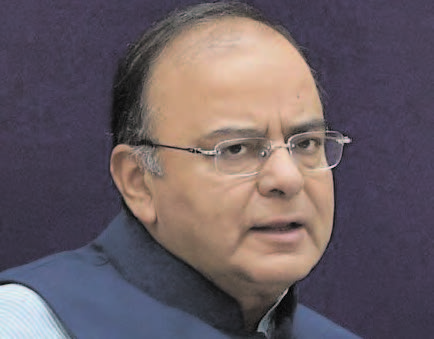
    Union Finance Minister Arun Jaitley was the DDCA’s president from 1999 to 2013; he continues to be the go-to man for cricket administrators needing help, and mentor to several powerful officials. Last month, the Delhi Government’s probe into the DDCA’s operations highlighted corruption and lack of transparency in its functioning. Kejriwal has insinuated that the CBI raid on his office was organised at the behest of Jaitley in order to seize files pertaining to the DDCA case. This allegation becomes credible only because Jaitley is deeply entrenched in the DDCA’s affairs, heading it for 14 years. This case demonstrates the perils of representing several interest groups – as Jaitley and other politicians who are involved in cricket do – at the same time.

  • ASIA’S BLEEDING HEART

    ASIA’S BLEEDING HEART

    The Heart of Asia Conference (HOAC) in Islamabad last week was bookended by two devastating attacks in Kandahar and Kabul. As Afghan President Ashraf Ghani was being honoured with a 21-gun salute in Islamabad, the Taliban were in the midst of a 20-hour-long assault on Kandahar airport that killed at least 54. And before the ink dried on the HOAC pledges, the Taliban penetrated the relatively secure diplomatic enclave in Kabul in a brazen attack on the Spanish embassy in which eight people died. The Afghan High Peace Council called it a slap in the face of the peace process. The Taliban is clearly sticking to the fight-talk-fight strategy even in winter. That the Taliban chose a key peace conference to shed blood is the jihadist group’s way of painting the Afghan government as weak and it’s the harbinger of yet another bloody spring and summer.

    The HOAC has been underway since 2011, but has not been able to evolve into a tangible mechanism to deliver peace. Ghani’s speech alluded to this shortcoming and called for verifiable mechanisms to counter the jihadist threat. He was careful in choosing his words in Islamabad, but not when giving interviews to the German and French media earlier, when he clearly said, “Pakistan was in a state of undeclared war against Afghanistan” and “a major trust deficit” exists between the two. Whether one conference can bridge that mistrust seems unlikely, Ghani’s optimism notwithstanding.

    Afghan officials attribute the HOAC’s “success” to several factors: One, Pakistani PM Nawaz Sharif acknowledging Afghanistan’s sovereignty, its central government and constitution; two, the US and China acting as guarantors for the peace negotiations with the “reconcilable” Taliban and opposing the irreconcilable ones; three, the commitment to a high-level meeting in early 2016 to draw a region-wide counter-terrorism and security strategy.

    To Afghan officials, the litmus test of Pakistan’s seriousness and sincerity would be whether it’s willing to restrain the Taliban from conducting largescale attacks. Kandahar and Kabul appear to have already betrayed the newfound Afghan trust in the capacity, if not the will, of the Pakistani security establishment. The chief of the Afghan National Security Directorate (NDS), General Rahmatullah Nabil, took to Facebook to post a scathing critique of not just Pakistan but also Ghani, chiding the latter for letting “the 5,000-year-old Afghan history kneel before a 60-year-old Pakistan”. Nabil followed this with a resignation. Needless to say, Ghani accepted it promptly. This led to the media asking if he was fired at Pakistan’s behest. A visibly upset Ghani formally denied the charge but the die has been cast.

    The Afghan media then reported Ghani conceded way too much in Islamabad. A leaked report was cited that Pakistan has apparently demanded that Ghani act against the Tehrik-e-Taliban Pakistan, restrain “anti-Pakistan rhetoric and individuals”, accept the Durand Line as the formal border, limit Indian influence, and deny support to Baloch separatists and Pashtun nationalists. This litany of Pakistani demands means we are back at square one in the bilateral relationship. Islamabad’s demands have put the onus of securing peace wholly on Kabul.

    That fits well with the pattern of Pakistan’s peace pledges to Afghanistan, which start before the first snow and melt away with the first thaw, making way for the Taliban’s attacks. Pakistan has never been keen on a political solution. The closest it came to a political partner was the fundamentalist warlord Gulbuddin Hekmatyar. What’s at stake isn’t just military gains but also the future of Ghani’s government. He is bound to face a backlash when Pakistan reneges on its pledges. The opposition is wary of Ghani putting all his eggs in Pakistan’s basket again. His attempt in May to have the NDS surreptitiously sign an MoU with the ISI had backfired badly.

    The difference now is that Ghani has almost no political capital to squander. The November protests in Kabul, after the Islamic State’s massacre of Hazaras, showed Ghani is on thin ice. This is not lost on Pakistan and the Pakistan-backed Taliban, who would love to plunge Kabul into political chaos at a time of their choosing. International guarantors can certainly play a major role. But they and the principles of non-interference were hallmarks of the May 1988 Pak-Afghan Geneva Accords. Yet, Afghanistan has been the bleeding heart of Asia since.

  • Arts Matter

    Arts Matter

    The power of dance, music, theater, and visual arts can impact our kids tremendously. As a teacher I saw this firsthand in the classroom when I incorporated the arts into my lessons – students beamed and were instantly engaged. Especially in New York City, one of the arts capitals of the world, our kids deserve a first-class arts education. When I became Chancellor, one of my goals was to ensure that every child in our City, regardless of their zip code, has the opportunity to learn about and pursue the arts in a meaningful way.

    Having access to quality arts education and a committed arts teacher is critical to our students’ success, which is why today I am excited to announce that we have the most licensed arts teachers in our schools in a decade.

    In particular, Middle and High School Arts Matter is a new initiative that has supported the hiring of new full-time arts teachers in 113 middle and high schools across the City. This exciting initiative stems from the administration’s additional $23 million annual investment in arts education. 74 of the Arts Matter schools had no arts teacher prior to the 2014-15 school year, and none of the Arts Matter schools had more than one arts teacher. 22,000 students are receiving arts instruction in new classes taught by Arts Matter teachers.

    A great education has to prepare students for life and providing them with real-world, critical-thinking skills – and this just can’t be done without the arts. High-quality arts education teaches our students important skills and aligns to what they are learning in other classrooms: for example, a theater class can be just what an English Language Learner needs to help him or her understand the complexities of language and communication. A great arts program can encourage students to stay in school, improve their confidence, or simply help students new to this country make friends.

    So, as most principals will tell you, the first thing I want to see when I visit a school is whether the arts are integrated into the DNA of the school. I want to see all students bursting with joy and curiosity. I want to see imaginations soar. I want to be greeted by the school’s chorus or band; see students discussing pop art, surrealism, and impressionism; and see evidence of painting, drawing, and creative writing exhibited on bulletin boards.

    The investments we are announcing today will provide hands-on learning that will teach our kids camaraderie, how to revise, edit, rehearse, and think critically- all skills that will help them thrive in school and in life.

  • Alia Bhatt Suffers Burns at Award Show

    Alia Bhatt Suffers Burns at Award Show

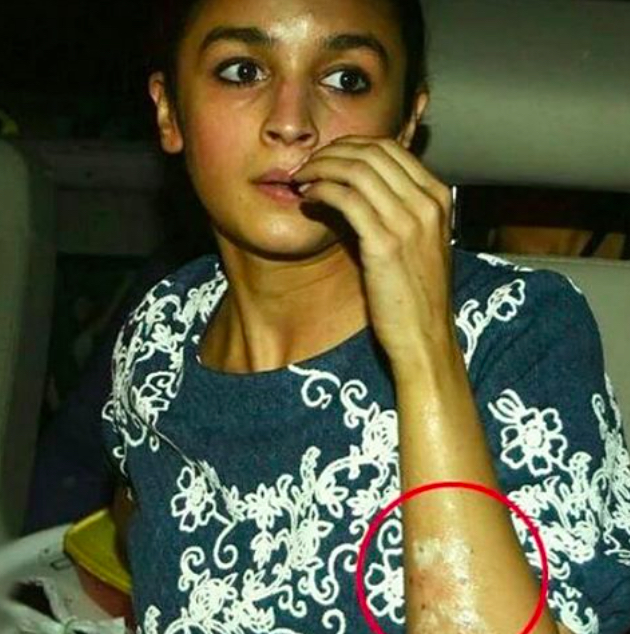
    New Delhi:   Actress Alia Bhatt sustained burns on her arms from a firecracker while performing at the Big Screen Awards in Mumbai on Sunday. The actress was reportedly given first-aid and rushed to a nearby hospital. (Also Read: Shah Rukh Khan, Alia Bhatt’s Film Begins Work in January, KJo ‘Excited’)

    alia bhatAlia thanked her fans for their concern in a Twitter post today and assured them of her well-being.

    The actress, however, did not divulge any details about the incident. The Times of India had earlier reported that the mishap occurred when Alia tried to shield her face from the firecracker ‘as it hurled itself in her direction’. “She sustained burns on her left elbow and also suffered bruises on the forearm. She was in a lot of pain but still managed to complete her recording,” the article stated.

    Pictures of the actress on her way to hospital found their way online and clearly show burns on her arm.

    Alia Bhatt, who was last seen in Shaandaar opposite Shahid Kapoor, is currently filming Kapoor and Sons and Udta Punjab. She also stars in director Gauri Shinde’s next film opposite Shah Rukh Khan.
  • Karina Kohli crowned Miss India USA 2015

    Karina Kohli crowned Miss India USA 2015

    Karina Kohli of New York was crowned Miss India USA 2015 during a glittering beauty pageant held on December 6th at the Royal Albert’s Palace, Fords, New Jersey. Karina, 18, is studying acting at New York University, was crowned by outgoing queen Pranathy Gangaraju. Karina will represent the USA in the 25th Annual Miss India Worldwide Pageant, to be held in New York, USA in September 2016.

    Aanchal Shah from Florida was crowned Miss Teen India USA and Neha Multani Verma of New York was also crowned Mrs. India USA. Organized by the New Yorkbased IFC, headed by Dharmatma Saran, Founder and the Chief Organizer of the Pageant, the 24th annual pageant had a record number of 55 contestants from across the nation competed to win the coveted title this year.

    Nandini Iyer, 27, of New Jersey and Visakha Sundar, 21, of Virginia, were respectively declared first and second runners up among 20 contestants from various parts of the country, in the gala event attended by over five hundred people. The other two five finalists were Karishma Malhotra from New York and Nicky Kandola from Virginia.

    Aanchal, 16, from Florida, would like to become an oncologist. She was crowned Miss Teen India USA among 17 other contestants. The first runner up among the Teens was Akila Narayanan, 17, from Massachusetts and the second runner up was Rhea Manjrekar 16, from New York. The other two finalists were Manjari Parikh from New York and Shirin Bakre from Massachusetts. The subcontest winners in Teen section were – Manjari Parikh – Miss Talented, Aanchal Shah – Miss Congeniality, Akila Narayanan – Miss Social Media and Simran Kota – Miss Photogenic.

    Neha Multani Verma, 29, is an executive with a large real estate corporation. The first runner up is Sheetal Kelkar, 36, from New Hampshire and the second runner up is Aradhana Thawani Padilla, 24, from Texas. The other two top five were Radhika Treon from Massachusetts and Protyusha DasNeogi from Washington State. The sub-contest winners in Mrs. Section were Chhavi Gupta – Mrs. Congeniality, Aradhana Thawani – Mrs. Photogenic and Pavana Gadde – Mrs. Social Media.

    The pageant started with a stunning performance by all the contestants led by the outgoing queens Miss India USA – Pranathy Gangaraju, Miss Teen India USA – Riya Kaur and Mrs. India USA Namita Dodwadkar choreographed by Shilpa Jhurani.

    All contestants presented their best in the Indian and the Evening Gown segment after which the top ten were selected. The top ten contestants from Miss section then amazed the audience with their talent which included Bollywood dances, Indian classical dances, contemporary dancing and singing. In the Miss section Nandini Iyer was awarded Miss Talented. Winners of the other various subcontests were: Miss Congeniality – Visakha Sundar, Miss Social Media – Nandini Iyer, Miss Photogenic – Akshaya Vijaykumar, Miss Bollywood Divya – Spoorthy Bharadwaj, Miss Catwalk – Ishpreet Gill, Miss Beautiful Hair – Aishwarya Balaji, Miss Beautiful Smile –Karishma Malhotra, Miss Popularity – Nandini Iyer, Miss Beautifu Eyes – Anita Ganesan, Miss Beautiful Skin – Piyali Nath. Trina Chakravarty, Roshi George, and Asma Molu were emcees and Nishi Bahl was the choreographer and was assisted by Shilpa Jhurani. The panel of judges included Raissa Nagapin – National Director of Miss India Guadelope, Chandra Mouli – Film Producer, Neetu Thomas – Fashion Designer, Subbu Sundaravelu – Director of SAP Managed Services at ProMorphics LLC and Ines Hernandez- Fashion Designer and Political Activist. Dharmangi Bhatia, CPA, was the official accountant.

    The pageant, known around the world is not just for the sake of beauty and talent alone. True to its traditions, charity and supporting noble causes has been its hallmark since its inception. Dharmatma Saran, Chairman & Founder, presented an appreciation plaque to H. R. Shah , Albert Jasani, Nishi Bahl and Shilpa Jhurani for their support in organizing this year pageant. “I am very thankful to the Indian community for its support through the years,” said Dharmatma Saran, “and especially thankful to H.R. Shah and Albert Jasani for supporting the pageant.”


  • Sheena Bora Murder – Rahul Mukerjea makes new revelation

    Sheena Bora Murder – Rahul Mukerjea makes new revelation

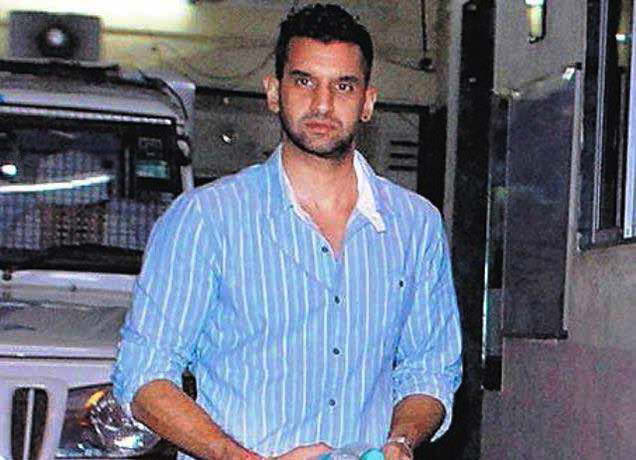
    Sheena Bora wanted to stop pretending as sister of the key accused and her mother, Indrani Mukerjea before her murder in 2012, her fiance Rahul Mukerjea has said in his statement before magistrate. Indrani had introduced Sheena, her daughter from an earlier marriage, in Mumbai social circles as her younger sister.

    In a statement recorded last month, Rahul, the son of former media baron and Sheena’s stepfather Peter Mukerjea who is also an accused in the case, said that Indrani constantly kept changing her story about Sheena’s “disappearance” after her murder.

    The copy of the statement was made available to defence advocates on Thursday. “Sheena said she felt that Vidhie (daughter of Indrani and her former husband Sanjeev Khanna) was being treated as her daughter, which she found very unfair,” Rahul said.

    Rahul, who used to stay with Sheena in a rented flat, also stated that in March 2009, just before Indrani and her colleague visited his flat at Khar in Mumbai, Peter had told him that Indrani was coming to his place and that she wanted to separate them. “Later Indrani came and took Sheena away,” he said.

    Two months later, Sheena contacted him and said that she was in Bangalore, he said. “Sheena communicated to me that she was in Bangalore and was not willing to stay with her former boyfriend Kaustubh Saikia, as he was trying to reestablish his relationship with her, to which she was not agreeing to,” Rahul said.

    “One day Kaustubh even hit a beer bottle on Sheena’s leg,” he said. According to Rahul, Sheena had told him that from the joint bank account (of Indrani and Sheena) Rs 15,000 had been withdrawn (which Sheena had not) and her mobile had also been disconnected.

    “In 2012, Sheena wanted to complete her further studies and was in need of funds and hence she resumed communications with Indrani,” he said. On April 24, 2012, (the day of her murder) Sheena had met Indrani, after he dropped her in suburban Bandra. However, when he tried to contact her again, Indrani sent text messages from Sheena’s mobile saying that she (Sheena) had met somebody else and also sought two months time to contact him (Rahul) again.

  • US Fed raises interest rates by 0.25% after 9 Years

    US Fed raises interest rates by 0.25% after 9 Years

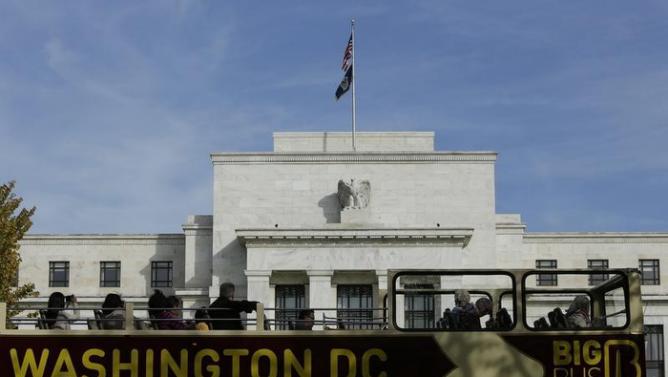
    WASHINGTON (TIP): The US Federal Reserve raised, December 17, interest rates by 0.25 percentage points – its first increase since 2006. For almost a decade money has been cheap – some would argue too cheap. But today’s rise in US interest rates could be the beginning of a new era, one in which the cost of borrowing rises – possibly for years.

    The move takes the range of rates banks offer to lend to each other overnight – the Federal Funds rate – to between 0.25% and 0.5%.

    The move is likely to cause ripples around the world, and could increase pressure on the UK to raise rates.

    It could also mean higher borrowing costs for developing economies, many of which are already seeing slow growth.

    Rates in the US have been at near-zero since 2008.
    Rates in the US have been at near-zero since 2008.


    There are concerns that a rise will compound that slowdown, as higher rates in the US could strengthen the dollar, the currency in which many countries and companies borrow.

    ‘Improvements’

    The US rate rise vote was unanimous.

    The US central bank also raised its projection for its economic growth next year slightly, from 2.3% to 2.4%.

    That suggests the bank does not think the rate increase will damage growth. US share markets jumped in response.

    The Dow Jones went from a 50-point rise to stand up 79 points, and later added to that to close up 224 points at 17,749 points, a 1.3% gain.

    Why it matters for the US economy

    A rate rise can be seen as a vote of confidence by the Federal Reserve in the US economy.

    US unemployment has fallen to 5% – the lowest level in seven and a half years and the annual growth rate is running at a robust 2.1%.

    But despite those healthy indicators, interest rates are at emergency levels. Between September 2007 and December 2008 the benchmark Federal Funds rates fell from 5.25% to between zero and 0.25% in an effort to stave off recession.

    Economists argue it is high time rates started to head higher, to prevent excessive consumer borrowing and prevent bubbles emerging in the housing market and other types of assets.

    Why it matters for US consumers

    The effect of the first rise in interest rates on US consumers is likely to be muted. There are a few reasons for this.

    A 0.25% rise is fairly modest and in the short term the cost of borrowing will not rise by much.

    Also American households are less in debt than before the financial crisis. According to the New York Federal Reserve overall household debt remains 5% below its peak in 2008.

    And US home owners are less sensitive to moves in interest rates as mortgage rates are usually fixed over 30 years.

    Why it matters for India

    The equity markets in India welcomed the rate hike. Fitch, the US rating agency, said that India will not be affected by the potential economic irregularities on account of interest rate hike by the US Federal Reserve. Instead, the favorable economic outlook of the country makes it an attractive investment destination for foreigners.

    “India is not immune to potential general emerging market jitters related to the Fed lift-off, but it is better placed than many of its peers for a number of reasons,” said Thomas Rookmaaker, Director, Sovereign Ratings, Fitch Ratings.

    P Rama Krishna Chief Representative & Assistant General Manager of Andhra Bank  in New York
    P Rama Krishna Chief Representative & Assistant General Manager of Andhra Bank  in New York

    The Indian Panorama sought the views of Chief Executives of Indian Banks in New York. P Rama Krishna,  Chief Representative & Assistant General Manager of Andhra Bank  in New York  sent in his comment which reads as follows.  

    “As expected Federal Reserve increased the interest rates by 0.25%. This has not come as a surprise as the whole world is predicting the increase. This would definitely impact all the nations more particularly third world countries and developing countries and India is no exception. Of late India is the  largest beneficiary of investments and capital from US in the form of FDI and FII.

    With the rise in interest rates in USA, it makes US more attractive for investment and adversely affects India. It will not only cut down the flow of FDI and FII to India , countries which have aggressively invested in India may think of diverting to US.

    Already we have seen correction in the value of rupee as against dollar since August 2015. Down the line this will impact India as their import bill may go up due to rise in crude oil prices.

    India is one of the world progressing economies, has already undergone correction process in the stock market  as well as  value of Rupee.

    With the development taking place in India, the amount of  foreign reserves, we have  people at the helm of affairs who  are capable of continuing the growth story of India  and making the economy investor friendly.”


  • Assad Can Stay, for Now | US changes stance for peace

    Assad Can Stay, for Now | US changes stance for peace

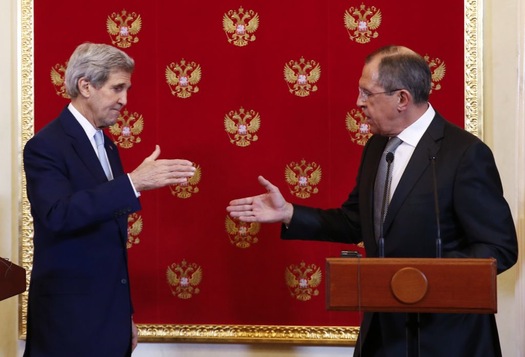
    WASHINGTON (TIP): U.S. Secretary of State John Kerry on Tuesday, December 15, accepted Russia’s long-standing demand that President Bashar Assad’s future be determined by his own people, as Washington and Moscow edged toward putting aside years of disagreement over how to end Syria’s civil war.

    Kerry announced this critical shift in Moscow where he met Russian President Vladimir Putin and Foreign Minister Sergey Lavrov to discuss the ongoing conflicts in Ukraine and Syria.

    “The United States and our partners are not seeking so-called regime change,” Kerry told reporters in the Russian capital after meeting President Vladimir Putin.

    This means Assad can stay in power for a bit longer if Russia and America cooperate together in overseeing the transition from Assad’s chaos to peace.

    A major international conference on Syria would take place later this week (Friday) in New York, Kerry announced.

    Assad is the very kind of “dictator” the US prides itself in fighting to remove. For the past four years, President Obama has called for Assad to step down. From Assad’s alleged use of chemical gas to barrel bombs to ISIS overtaking Syrian territory, Assad attracts a very diverse response from world leaders on how to achieve peace because the situation in Syria is so complex.

    But after a day of discussions with Assad’s key international backer, Kerry said the focus now is “not on our differences about what can or cannot be done immediately about Assad.” Rather, it is on facilitating a peace process in which “Syrians will be making decisions for the future of Syria.”

    Within the United States, where political debates are increasingly revolving around foreign policy — especially to do with Assad and ISIS — the presidential candidates (as well as politicians in general) find themselves equally divided on the Syrian solution. In fact, shifting positions on Assad seems to be the norm.

    The world is better off when Russia and the U.S. work together, Kerry added, calling Obama and Putin’s current cooperation a “sign of maturity.”

    “There is no policy of the United States, per se, to isolate Russia,” Kerry stressed.

    Below is a brief timeline of major American politicians on their stances regarding Assad and Syria, especially in relations to Putin and Russia.
    August 2011

    Secretary of State Hillary Clinton tells the press “it’s not going to be any news if the United States says, ‘Assad needs to go.’”

    A week later, US President Barack Obama announces for the first time — after weeks of political pressure — that Assad “must step down”.

    The American announcement happened in coordination with key allies’ announcements: Germany, France, and the UK, amongst others, also called for Assad’s departure from his presidency position around this time.

    February 2012

    Western powers reportedly ignore a Russian proposal to securely remove Assad from his position, as the US, French, and British leaders believe the Syrian president would not last much longer in power.

    September 2013

    President Obama addresses the nation, detailing the brutalities of the Assad regime and announces the US will strike Assad’s forces to deter the regime from the use of chemical weapons.
    The US and Russia then pushed for Syria to become party to the Chemical Weapons Convention, which banned the use of chemical and biological weaponry in warfare.

    November 2014

    President Obama states at the G20 press conference that “there’s no expectation that we are going to in some ways enter an alliance with Assad. He is not credible in that country.”

    The US president continues on to say that “we are looking for a political solution eventually within Syria that is inclusive of all the groups who live there — the Alawite, the Sunni, Christians. And at some point, the people of Syria and the various players involved, as well as the regional players — Turkey, Iran, Assad’s patrons like Russia — are going to have to engage in a political conversation.”

    August 2015

    Four years later, increased diplomacy between major powers — especially the US and Russia — start to cause US leaders to soften their “Assad must go” position.

    The New York Times quotes an unnamed senior American official as saying, “It’s encouraging, but we’re still a long ways off [on a solution for Assad].”

    September 2015

    Donald Trump tells Americans to let Russia take care of Assad and ISIS.

    “Let Syria and ISIS fight. Why do we care? Let ISIS and Syria fight. And let Russia, they’re in Syria already, let them fight ISIS. Look, I don’t want ISIS. ISIS is bad. They are evil. When they start doing with a head chopping … these are really bad dudes. … Let Russia take care of ISIS. How many places can we be? … Russia likes Assad seemingly a lot. Let them worry about ISIS. Let them fight it out.”

    October 2015

    Hillary Clinton, now a presidential candidate and no longer Secretary of State (since 2013), states removing Assad is America’s top priority, four years after she said it wouldn’t make US news.

    December 2015

    A month after the Paris attacks, a week after the San Bernardino attack, the day Los Angeles shut down its public schools due to a bomb threat, and the last Republican debate of the year before the holidays. Also the day Kerry meets Putin and Lavrov in Moscow.

    The Secretary of State officially reverses the position of the US on Assad, while Republican contenders for the 2016 election spar over what to do. The more memorable quotes are anti-Russian and anti-intervention.

    Donald Trump: “Spend the money [used in striking in the Middle East] in the US… It’s a tremendous disservice to humanity, and for what? [The Middle East is] a mess, [a] total and complete mess.”

    John Kasich: “In regard to Syria, understand that Assad is an ally of Iran who wants to extend that Shi’i radicalism all the way across the Middle East. He has to go. And for the Russians, frankly, it’s time to punch the Russians in the nose. They’ve gotten away with too much in this world, and we need to stand up against them, not just there, but also in Eastern Europe where they threaten some of our most precious allies.”

    Rand Paul: “We need to confront Russia from a position of strength.”

    Chris Christie: “Reckless was inviting Russia into Syria.”


    As of now, President Obama has yet to make an official statement confirming Kerry’s comments in Moscow. Kerry maintained that it is in the best interest for the world when Russia and the US cooperate, and that this cooperation is “a sign of maturity” between the two presidents.

    While it’s great for the US and Russia to be on slightly better terms again, time will only tell if this rekindling of relations will bring Assad to justice and peace to the Syrian people.

  • Kejriwal vs Modi: Vendetta, Politics & Overreaction

    Kejriwal vs Modi: Vendetta, Politics & Overreaction

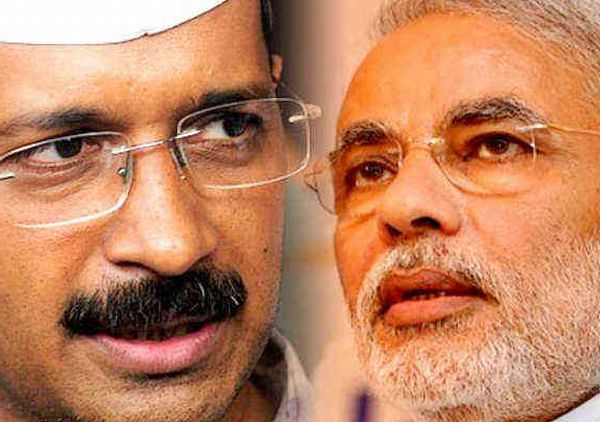
    NEW DELHI (TIP): The war which began after Arvind Kejriwal had tweeted that the CBI is raiding his office, quickly spilled over to name calling & #politicaljihad.

    Kejriwal continued with the tweets and then a press conference accusing the Centre of foul play. It was met with an equally aggressive response from the BJP.

    Arvind Kejriwal blamed Prime Minister Narendra Modi for the “raid”, calling him a “coward and a psychopath”.

    “When Modi couldn’t handle me politically, he resorts to this cowardice,” he added.

    By calling the prime minister of the country a “coward” and a “psychopath” for a CBI raid on his bureaucrat and labeling the finance minister a “liar”, politics in India has touched spectacularly new lows that may yet set a dubious “benchmark” for adversarial politics.

    Officials from the Central Bureau of Investigation (CBI) have denied the allegations.

    “It is not a raid on Arvind Kejriwal’s office, it was a raid on Rajender Kumar, principal secretary to the CM,” CBI spokesperson Devpreet Singh told BBC.

    However, Mr. Kejriwal has accused the CBI of “lying”.

    Meanwhile, the Central Bureau of Investigation clarified that it has not raided the office of Delhi Chief Minister Arvind Kejriwal. Raids were carried out in the office of CM’s Principal Secretary Rajender Kumar, top CBI sources told media.

    After preliminary investigation, CBI found prima facie evidence against Kumar. After which CBI conducted several raid at 14 other locations in Delhi and Uttar Pradesh related to Rajender Kumar. Papers of three immovable properties along with cash Rs 2.4 lakh have been recovered in raid conducted at his house. Another Rs 10.5 lakh was recovered from Rajendra’s close aide and co-accused in the case, GK Nanda, GM Telecommunications Consultants India Limited (TCIL).

    The reported raid came days after a top bureaucrat working for the Delhi government was arrested red-handed for taking bribe.

    AAP Counter Claim

    Kejriwal claimed that CBI came for DDCA files and was working on behest of Arun Jaitley, who was the chairman of DDCA at the time of corruption scandal.

    Referring to the October 9 sacking of Food Minister Asim Ahmed Khan, he said: “I am the only CM who dismissed, on my own, a minister and a senior officer on charges of corruption and handed their cases to the CBI”.

    “If they were looking for proof of corruption, they should be looking for the concerned files in those departments,” added Kejriwal while coming in support of his principal secretary Rajender Kumar.

    A government-appointed panel had recently recommended that the BCCI suspend DDCA over financial irregularities and corruption.

    Aftermath of the raid: The biggest war of words takes off

    The big guns from the AAP and BJP continue to trade fire amid a raging war of words between the two parties over alleged corruption in Delhi’s cricket association which, the city’s ruling party claims, deepened under finance minister Arun Jaitley’s watch.

    The Delhi unit BJP on Tuesday, December 15, came down heavily on chief minister Arvind Kejriwal over his remarks on Prime Minister Narendra Modi and threatened to launch a “pol khol” campaign to expose “corruption” of the AAP government.

    “The BJP workers will no longer tolerate the language used by Mr Kejriwal against the PM Narendra Modi. We will launch a pol khol (expose) campaign to show to the people how his party is involved in corruption and that Secretariat has become a den of corruption,” Delhi BJP president Satish Upadhyay said.

    Leader of the Opposition in Delhi Assembly Vijender Gupta accused Mr Kejriwal of “defending” a “corrupt” officer.

    “The CBI often register cases and conducts raids against corrupt in the country, but it is first time that a chief minister has come forward to save a corrupt officer.”

    Referring to rule of law, he alleged that some people were trying to be above the law while people of Delhi were feeling “betrayed” in this “queer situation”.

    The war of words over accusation against Finance Minister Arun Jaitley of his involvement in “glaring irregularities” in Delhi District Cricket Association (DDCA) intensified on Thursday, December 17, with the BJP coming all out in his defence, describing him as a man of “impeccable” political record.

    The party described the accusations by Delhi’s AAP government as “blasphemous and preposterous campaign bordering on political hysteria”.

    “The BJP resolutely stands behind Arun Jaitley and publicly condemns the malicious intent of the AAP to deflect public attention from a corrupt officer working with (Delhi Chief Minister) Arvind Kejriwal,” Union Minister for Human Resource Development Smriti Irani told reporters at a press conference.

    She also made a comparison between Jaitley and Kejriwal in terms of their contributions so far, saying the Finance Minister had written his name in “golden letters in history” with his “dedication and work”.

    She said a “blasphemous and preposterous” campaign bordering on political hysteria was being created by the AAP to divert the public attention from a “corrupt officer”. Kejriwal is failing the anti-corruption movement from which he had shot to limelight by making efforts to protect a “corrupt officer”, she added.

    Smriti Irani pointed out that the 2013 SFIO probe found no evidence against Jaitley while looking into alleged irregularities in Delhi’s cricket body that he headed for over a decade.

    In a Facebook post, the finance minister struck back at AAP leaders for making allegations of corruption in the Delhi and District Cricket Association following a CBI raid at the office of chief minister Kejriwal’s principal secretary, saying “does free speech include the right to speak only falsehood.”

    Jaitley also attacked the Delhi chief minister, saying it was a propaganda technique of Kejriwal to deflect attention when he himself was in the “dock”, as both the AAP and Congress intensified their demand for his resignation from the Union cabinet.

    “Delhi CM Kejriwal seems to believe in untruth and defamation, delivered in language that borders on hysteria. No personal allegation was ever made against me nor did I ever feel the need of contradicting it,” he wrote. “Finding himself acting as a shield to cover an officer under investigation, the Delhi Chief Minister has attempted to focus attention on me.”

    DDCA Responds
    Former cricketer Chetan Chauhan, who now heads the cricket body, rejected the AAP’s charges and issued a point-by-point rebuttal, saying they had nothing to hide.

    “We want complete transparency. All allegations are baseless. We have spent money like misers,” Chauhan told reporters. “No embezzlement took place during Jaitley’s tenure. You can check SFIO report. There were only procedural lapses and we have compounded (paid fine) for those lapses.”

    Congress & its allies join the Fun
    The political feuding over the CBI raid, became fiercer on Wednesday, December 16, with Congress leaping into the fray and demanding the resignation of finance minister Arun Jaitley for alleged irregularities at the Delhi and Districts Cricket Association (DDCA).

    Congress demanded a joint parliamentary committee (JPC) to probe the matter and Jaitley’s resignation, the principal opposition party did not raise the issue inside or outside Parliament.

    The party mounted a renewed attack on Jaitley in a series of tweets, echoing the AAP allegations that corporate boxes at Delhi’s Feroz Shah Kotla cricket ground were given out on lease to companies without following rules.

    Trinamool Congress, too, joined, saying it was the first to ask for a JPC on DDCA. “Now, media says that Congress and AAP have demanded the same. We welcome that,” the party said.

  • Mother Teresa to be elevated to Sainthood – Report

    Mother Teresa to be elevated to Sainthood – Report

    VATICAN (TIP): Pope Francis has paved the way for Mother Teresa, the Nobel Prize winning Catholic missionary, to become a saint, according to a news report.

    Pope Francis has recognized a second medical miracle attributed to late Mother Teresa, clearing the path for the beloved nun to be elevated to sainthood next year, Catholic newspaper Avvenire reported Thursday, December 17, 2015.

    Mother Teresa, celebrated for her work with the poor in the Indian city of Kolkata, is expected to be officially canonized in Rome on 4 September as part the pope’s Jubilee year of mercy, according to the newspaper’s Vatican expert Stefania Falasca.

    The move comes after a panel of experts, convened three days ago by the Congregation for the Causes of the Saints, attributed a miraculous healing of a Brazilian man with multiple brain tumors to Mother Teresa, Avvenire reported.

    Teresa, who was born to Albanian parents in what is now Skopje in Macedonia, was known across the world for her charity work. She died in 1997 at the age of 87.

    Nicknamed the “Saint of the Gutters”, she dedicated her life to the poor, the sick and the dying in the slums of Kolkata, one of India’s biggest cities. She won a Nobel Peace Prize in 1979.

    She was beatified by then pope John Paul II in a fast-tracked process in 2003, in a ceremony attended by some 300,000 pilgrims. Beatification is a first step towards sainthood.

    In 2002, the Vatican officially recognized a miracle she was said to have carried out after her death, namely the 1998 healing of a Bengali tribal woman, Monika Besra, who was suffering from an abdominal tumor.

    The traditional canonization procedure requires at least two miracles.

    Her canonization is again expected to draw large crowds to Rome for what will likely be one of the highlights of the special Jubilee year.

    The Vatican has not confirmed the miracle’s recognition and has no comment on the report. According to Catholic America magazine, the Church will likely announce the second miracle in the coming days.

  • India and Japan Sign Deals on Military, Train Sales, Nukes

    India and Japan Sign Deals on Military, Train Sales, Nukes

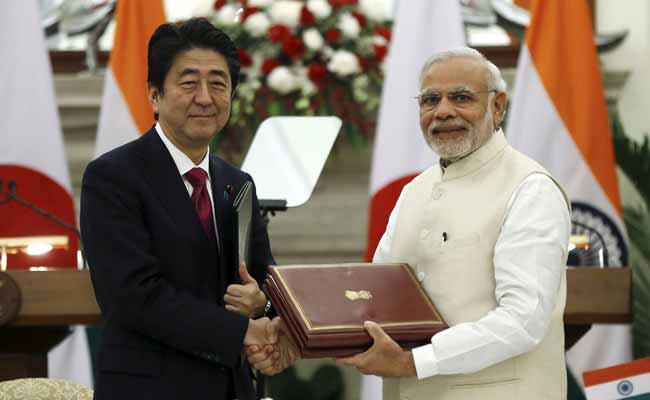
    NEW DELHI (TIP): India has agreed to buy a high-speed bullet train from Japan, in an attempt to transform its creaking rail system. Japan will build India’s first bullet train and provide a $12bn package of financing and a low-cost, long-term loan for the effort, the countries announced on Saturday, December 12.

    Prime Minister Shinzo Abe was welcomed in New Delhi by his Indian counterpart Narendra Modi who said Japan has played a “decisive role in India’s economic transformation”.

    Prime Minister Narendra Modi said the train would link Mumbai and Ahmedabad, cutting travel time on the route from eight hours to two.

    Last week Mr. Modi’s cabinet cleared the $14.7bn (£9.6bn) cost of building the bullet train system.

    The agreements with Japan came during a three-day visit to India by the Japanese Prime Minister, Shinzo Abe.

    The leaders of Asia’s second and third largest economies also announced other areas of co-operation, including, working on defense technology, and agreeing a memorandum of understanding on the peaceful use of nuclear energy.

    Abe referred to India’s stand that it would continue a moratorium on nuclear tests and advance its use of nuclear energy for peaceful purposes.

    India, which has 21 nuclear power plants, has ambitious plans to quadruple its current 5,000 megawatts of nuclear power to 20,000 megawatts by 2020 to fuel the energy demands of its booming economy.

    The two countries also signed a deal that would help India’s efforts to upgrade its military equipment. Japan’s possible sale of US-2 amphibious aircraft to India would be Tokyo’s first major military hardware transfer since lifting a postwar ban on the export of defense equipment in 2014.

    The latter agreement is expected to allow Japan to export nuclear plant technologies to India.

    Both countries are in territorial disputes with China, and their new accords may be seen by some as a reaction against China’s growing influence in the region.

    Japan has in the past shunned civil nuclear cooperation with India, which has not ratified the international Non-Proliferation Treaty, but appears to have softened its stance.

    The announcements came after Abe lavished praise on Modi’s 18-month-old premiership following a meeting with business leaders in the capital.

    “Prime Minister Modi’s economic policies are like Shinkansen – high speed, safe and reliable while carrying many people along,” he said.

    Both Modi and Abe are right-wing nationalists and economic reformers who have forged an unusually close relationship since the Indian leader came to power last year, partly to counter China’s growing influence.

    The leaders of Japan and India, Asia’s second and third-largest economies, promised to use their alliance to push areas of mutual interest, including reform of the UN Security Council, on which both are seeking permanent seats.

    Modi, who hopes to attract foreign investment under his key Make in India campaign, lauded the recent decision by Japanese-owned carmaker Maruti Suzuki to begin the first exports of Indian-made cars to Japan.

    India’s economic growth accelerated to 7.4 percent in the second quarter of the financial year, figures released in November showed, outperforming China.

  • Indian mother names baby born in taxi ‘Uber’

    Indian mother names baby born in taxi ‘Uber’

    DELHI (TIP): An Indian woman has named her baby “Uber” after giving birth in a car belonging to the taxi aggregation service.

    The woman, identified as Babli, told media she called Uber after emergency calls to hospitals went unanswered.

    The driver of the vehicle told the Times of India that he pulled over because Babli was in excruciating pain.

    He then helped deliver the baby with two other women before taking them to hospital.

    “He picked me up, put me on a stretcher and dragged it into the hospital,” the Times of India quoted Babli as saying.

    “I named him after Uber because the baby was born in an Uber cab,” she told the Reuters news agency.

  • Harendra Singh Jailed & His Bail Cancelled

    Harendra Singh Jailed & His Bail Cancelled

    CENTRAL ISLIP, NY (TIP): Long Island restaurateur Harendra Singh was, on Thursday, December 17, sent to jail until his trial. He was earlier re-arrested by FBI agents Wednesday, December 16, on a charge of violating the conditions of his release on $5 million bond by submitting a fraudulent loan application, according to a Newsday report.

    The Newsday report said that a federal magistrate Thursday ordered Long Island restaurateur Harendra Singh jailed until trial on bribery charges, agreeing with federal prosecutors that he had violated the conditions of his release on a $5 million bond by fraudulently attempting to get a $148,000 loan.

    Harendra Singh, 56, was originally arrested in September on 13 charges, including allegedly bribing a former Town of Oyster Bay official. The judge decided to revoke his bail and send him back to jail, calling him an “economic danger to the community.”

    U.S. Magistrate A. Kathleen Tomlinson in federal court in Central Islip said after the presentation by prosecutors, “I am extremely concerned at what has been demonstrated. . . . Mr. Singh’s actions . . . really have the indicia of fraud…

    “Mr. Singh . . . has really demonstrated he can’t be trusted,” the judge added, who had released Singh after his arrest in September on the condition he commit no crimes.

    Singh’s attorney, Anthony La Pinta, of Hauppauge, argued unsuccessfully that his client had no intention of committing a fraud, but was a victim of misunderstanding over his estimate of the financing he needed to obtain for renovations and equipment for one of his restaurants.

    After the hearing, La Pinta, said, “I thought that we really made good arguments and we are considering whether to appeal.”

    Eastern District federal prosecutors, Raymond Tierney and Catherine Mirabile declined to comment.

    In arguing for his client’s release, La Pinta said that an unnamed contractor who was cooperating with the government against Singh was from Ukraine and “speaks with a very heavy accent,” so that an FBI agent misunderstood him.

    The magistrate replied that the alleged fraud was simple enough “whether he spoke Ukrainian or English.”

    When La Pinta argued that his client knew he was being monitored and would not be foolish enough to engage in the alleged fraud, Tierney replied, “The defendant is presumed innocent, not smart or canny.”

    According to Tierney and Mirabile, the investigation began recently when an unnamed informant recently tipped the government that Singh had fraudulently applied for a $148,511 loan from a California company.

    The loan was supposedly needed to pay for the renovations and equipment for one of Singh’s restaurant’s, H.R. Singleton’s in Bethpage, and was supported by an invoice, a bill for goods and services, from the contractor.

    Prosecutors said when FBI agents questioned the contractor, he said he had done work for Singh, but was a handyman, and was not capable of doing all the work supposedly required.

    Prosecutors said that the contractor said he had spoken to Singh recently about doing work for Singh’s closed Coolfish restaurant, not H.R. Singleton’s.

    FBI agents then questioned Singh’s employees. One refused to participate in the scheme, the prosecutors said, but a second did so, using details from a document supplied by Singh to create the fraudulent documents.

    The prosecutors noted that a copy of the information used had been photographed on a kitchen counter in Singh’s home before it was sent to the second employee.

    Tierney and Mirabile also argued that the amount of money they said Singh was fraudulently attempting to obtain was around the $132,000 he owes the town of Oyster Bay for operating concessions. As a condition of his release, Singh was ordered to keep up with his payments to the town.

    Tierney said this was typical of Singh’s business dealings, asserting: “the defendant robs from Peter to pay Paul.”

    Attorney Jonathan Pickhardt, who represents the town of Oyster Bay said, “Sadly, the facts leading to the re arrest of Mr. Singh appear to confirm the town’s own concerns from some of their prior dealings with him.”

    Singh is charged with bribing a former Town of Oyster Bay employee with $50,000 in checks and a $36,000 luxury-car lease aimed at getting the official to have the town give an “indirect guarantee” of $32 million in loans for Singh’s businesses.
    (Source: Newsday)

  • Defence Ministry gets NHRC notice over security risk to Jabalpur

    BHOPAL (TIP): The NHRC has issued a notice to the Union Ministry of Defence over security risk to the city of Jabalpur in Madhya Pradesh.

    The notice was issued after taking suo motu cognizance of a media report that the spontaneous combustion of thousands of unexploded and rejected bombs, which are buried and awaiting disposal at the Ordinance Factory, Khamaria has posed risk to the city.

    The factory is located in a densely populated area. “Giving two weeks’ time to the Defence Secretary to respond with a factual report, Justice D Murugesan has observed that the contents of the press report, if true, raise a serious issue of violation of right to life and right to health of the workers and local residents,” National Human Rights Commission (NHRC) said in a press release.

    According to the media report, carried on the 14th December, 2015, Jabalpur city also happens to be quake prone and the danger can be huge given reports of sporadic explosions in the premises in the last few years. The latest was on the 11th December, 2015 when two employees were injured. Besides, explosives from 1999 Kargil War, a stockpile of unexploded and rejected bombs are also awaiting disposal at the Ordinance Factory, it said. While referring to the variety of mortars, shells and explosives stored, the report also mentions that the detonators have corroded to the point where it is dangerous to defuse them and there was a risk of spontaneous combustion due to rapid deterioration of the duds.

    The report also quotes a member of Joint Consultation Machinery at Khamaria, under the Union Ministry of Defence, that the issue was taken up with authorities several times, but nobody was willing to take the risk, it said.

  • Indian-Origin Official To Lead Multination Initiative

    Indian-Origin Official To Lead Multination Initiative

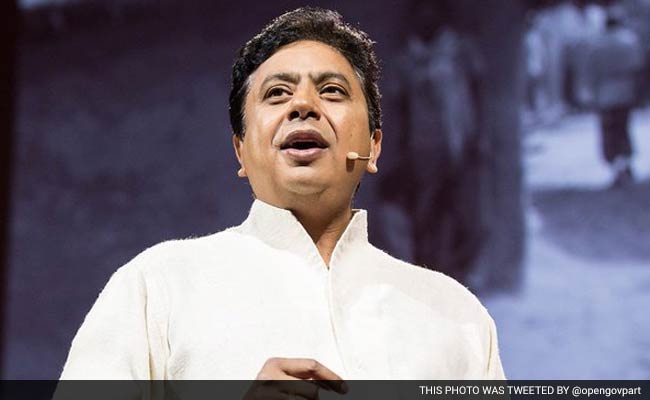
    WASHINGTON:  Sanjay Pradhan, an Indian-origin World Bank official, has been selected to lead a multination initiative focused on improving government transparency, accountability and responsiveness to citizens.

    Mr Pradhan will lead the Open Government Partnership Support Unit and report to an international Steering Committee of 11 governments and 11 civil society leaders, OFP said in a statement.

    Launched by eight heads of state at the UN General Assembly in 2011, OGP currently includes 69 countries, half a dozen multilateral organisations and hundreds of civil society groups, it said.

    “My long-standing passion for how open government can transform the lives of millions around the globe has led me directly to OGP,” said Mr Pradhan.

    Mr Pradhan has held three Vice President positions sin 1986 at the World Bank Group (WBG) where he led the development of its Governance and Anticorruption Strategy, helped launch Global Partnership for Social Accountability incubated ICT-mediated citizen feedback, launched Open Contracting with Partners, and rolled out a flagship Collaborative Leadership for Development program to help leaders in government and civil society undertake collaborative actions.

    Ayanda Dlodlo, Steering Committee Government co-chair and South Africa’s deputy minister for public service administration added: “I am confident that through Sanjay’s leadership, the OGP will advance its role as a vehicle for transforming the lives of millions around the world through open, parliamentary governance.”

  • Saline Water Cleans Wounds Better Than Soap: Indo-Canadian Researcher

    Saline Water Cleans Wounds Better Than Soap: Indo-Canadian Researcher

    NEW YORK:  Although using soap and water has remained the standard practice of wound cleaning before surgery, this method is actually less effective than just using saline water, say researchers, including one of Indian-origin.

    The findings could lead to significant cost savings, especially in developing countries where open fractures are particularly common.

    “There has been a lot of controversy about the best way to clean the dirt and debris from serious wounds with bone breaks,” said principal investigator Mohit Bhandari, professor at McMaster University in Canada.

    “All wounds need to be cleaned out — a process known as debridement — but evidence shows that cleaning wounds with soap was not better than just water, which was unexpected,” Mr Bhandari noted.

    As part of the study, 2,400 people with open arm or leg fractures had their wounds cleaned with either soap and water, or a saline water solution, and one of three different levels of water pressure.

    Patients were monitored to see who would need to have an additional operation within 12 months because of infection or problems with wound healing.

    The researchers found that very low water pressure was an acceptable, low-cost alternative for washing out open fractures, and that the reoperation rate was higher in the group that used soap.

    “These findings may have important implications for the care of patients with open fractures worldwide since developing countries deal with a disproportionate number of cases,” one of the study’s co-authors Edward Harvey from McGill University noted.

    “Most of the time we were using soap and water with a high pressure delivery system to clean the wound, but now we don’t, and that makes the best practice much cheaper.”

    The study involved patients across 41 sites in the US, Canada, Australia, Norway and India.

    The majority of patients were men in their 40s with a lower extremity fracture, and the most common reason for the injury was a motor vehicle accident.

    The findings were detailed in the New England Journal of Medicine.

  • Punjabi Singer Goes Missing In Canada: Police

    Punjabi Singer Goes Missing In Canada: Police

    TORONTO:  A 30-year-old Punjabi singer, who visited Canada for a music performance, has gone missing, prompting authorities to seek the public’s help in locating him.

    Lehmber Singh missed his return flight to India on November 5 at 6:30pm at the Person International Airport and his whereabouts since then are not known, Mississauga police said.

    Mr Singh has been described by the Peel Regional Police in a public notice – issued yesterday with his photograph – as a 5’5″ tall South Asian man with a beard and moustache, weighing 140 pounds and shoulder-length wavy black hair, slim built and brown eyes.

    He was last seen wearing blue jeans, full length black trench coat.

    Mr Singh only speaks Punjabi and his English is limited. He also may have a black carry-on bag in his possession. He also had some 100 dollars in his possession and an international cell phone.

    “On November 5, Singh was last seen by a family relative at approximately 10:30 am in the area of Derry Road East and Edwards Boulevard in the City of Mississauga,” police said.

    Local media said family members and police are concerned for Mr Singh’s well-being as he does not know the area and may be lost in Canada, which is home to a large number of people from India.

  • Scholarship Set Up To Honour Indian American

    Scholarship Set Up To Honour Indian American

    WASHINGTON:  The US town of Spotswood in New Jersey will set up a scholarship fund to honour the memory of an Indian-origin emergency medical technician, who died in the line of duty in July this year, a media report said.

    Hinal Patel, 22, was enroute with her partner to assist on a routine call in a neighbouring town when her ambulance was struck by a car. Ms Patel died in the crash while her partner and the woman who hit the ambulance survived, American news website, tapinto.net, reported on Sunday.

    It was Ms Patel’s last shift at the Spotswood Emergency Medical Services. She was leaving her position to continue her education at the Graduate School of Biomedical Science at Rutgers University.

    Ms Patel hoped to one day become a doctor.

    The scholarship will keep Ms Patel’s memory alive and it will be awarded annually to a deserving senior at Spotswood High School every spring on awards night.

    The organisers of the Kloos Family Lights, another yearly tradition that supports “a worthy cause”, has invited donations for Ms Patel’s scholarship fund.