Tag: 2016 US Presidential Campaign & Election

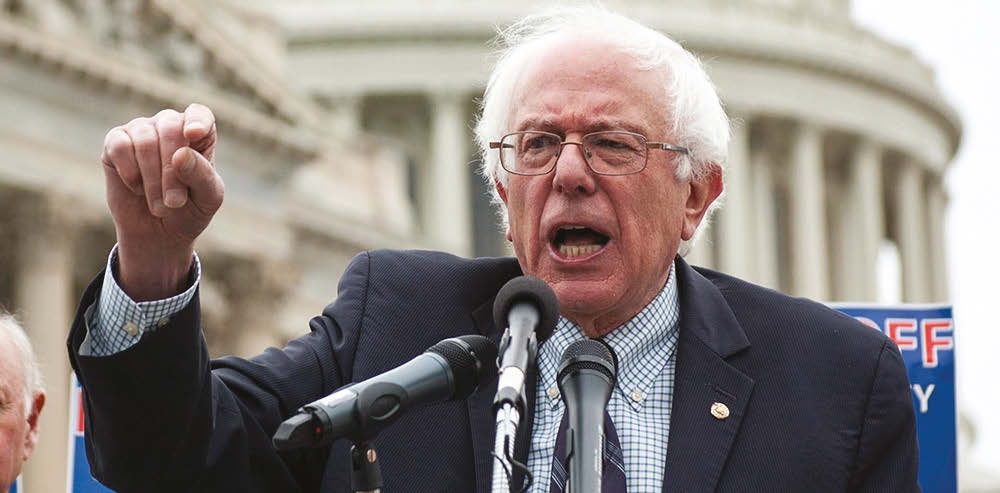
  • Sanders admits he’s unlikely to become Democratic nominee

    Sanders admits he’s unlikely to become Democratic nominee

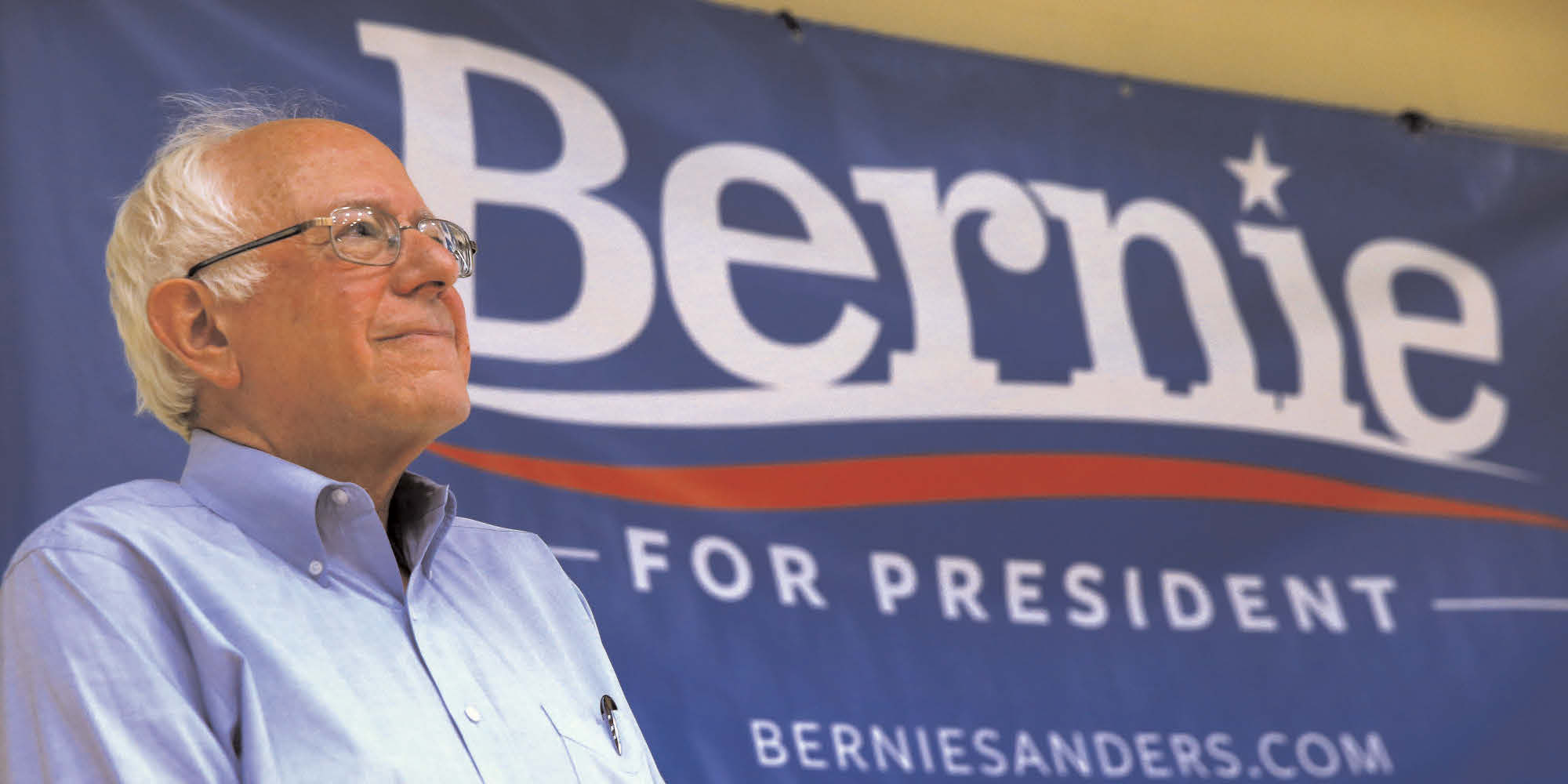
    WASHINGTON (TIP): Vermont Senator Bernie Sanders admitted that he will not be Democratic candidate for the White House as he indirectly recognised Hillary Clinton’s victory in the race for the party’s presidential nomination for the first time in public.

    “It doesn’t appear that I’m going to be the nominee, so I’m not going to determine the scope of the convention in July in which the party nominee will be officially named,” Sanders said on Wednesday during an interview with C-SPAN TV channel.

    The Vermont senator, 74, advises Clinton to choose “the most progressive candidate that she can find” for vice president, while several media published a short list of candidates for the position which excluded Sanders, EFE news reported.

    “It would be a terrible mistake for her to go to a candidate who has roots from Wall Street or has been backed by Wall Street,” underlined Sanders, a self-proclaimed democratic socialist, who campaigns against the excesses of large corporations.

    On June 14, the Democratic presidential hopeful met with Clinton at a hotel in Washington near the White House, but he still has not announced his endorsement of the former US Secretary of State.

    The Senator has not explicitly suspended his campaign, arguing that he wishes to continue until the party’s convention in Philadelphia slated for July 2 to voice his political agenda.

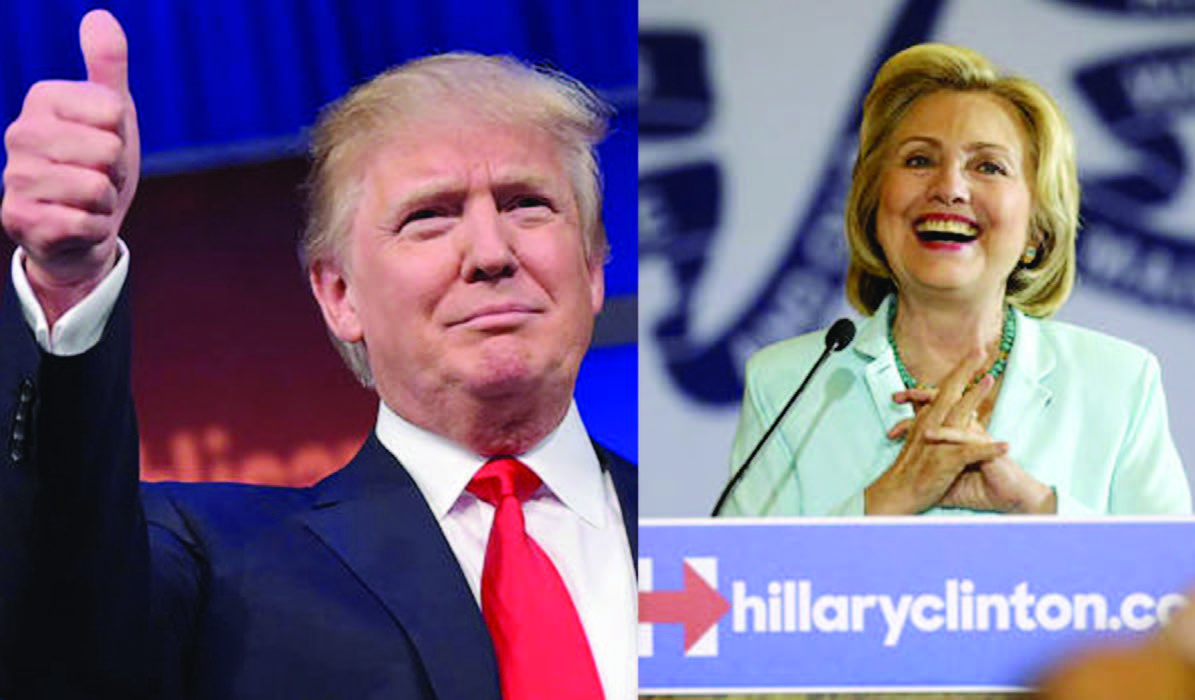
    Sanders has also offered to help defeat the unofficial Republican nominee, real-estate magnate Donald Trump, in the November elections.

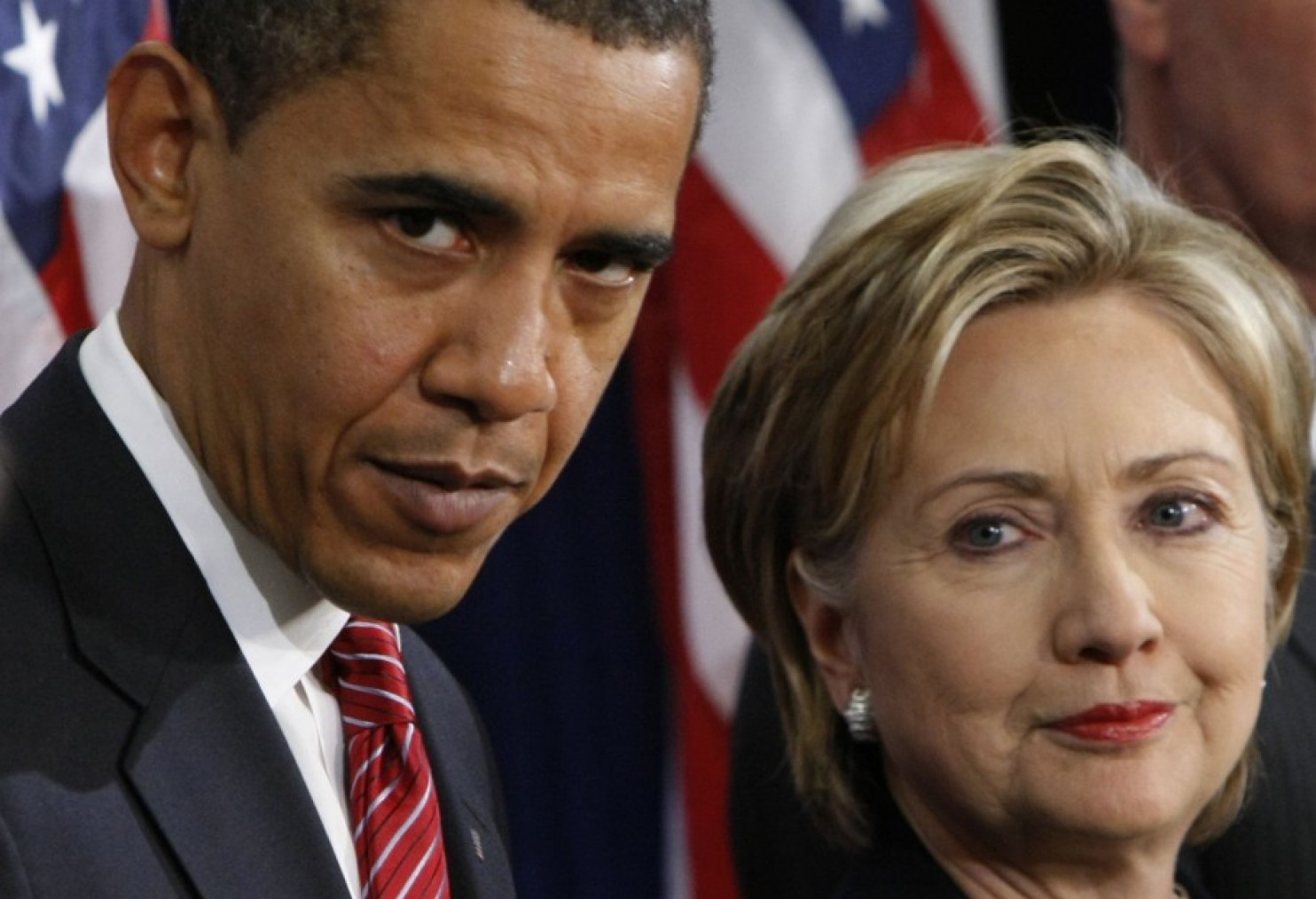
    Democratic leaders such as US president Barack Obama and Vice President Joe Biden have officially endorsed Clinton as the presumptive Democratic presidential nominee for the White House following her victory in the California and New Jersey primaries on June 7.

    Sanders praised the intelligence of the former First Lady but stressed that “there are areas where we have strong disagreements”.

  • STOLEN DNC TRUMP FILES LEAKED ONLINE: GAWKER

    STOLEN DNC TRUMP FILES LEAKED ONLINE: GAWKER

    WASHINGTON (TIP): About 200 pages of what looks to be opposition research on Donald Trump stolen from the Democratic National Committee’s files were dumped online Wednesday, June 15, according to Gawker, which published some of the files.

    The document, titled “Donald Trump Report,” includes an attack on the presumptive Republican presidential nominee’s character and record, and hundreds of pages describing instances of Trump changing his stance or saying something false or inflammatory, according to The Hill, which also embedded the entire report on its site.

    On Tuesday, June 14, Washington Post reported that the documents were stolen by Russian hackers.

    Trump’s marriages are also covered extensively in the document, according to Gawker.

    “A 200+ page document that appears to be a Democratic anti-Trump playbook compiled by the Democratic National Committee has leaked online following this week’s report that the DNC was breached by Russian hackers,” Gawker wrote. “In it, Trump is pilloried as a “bad businessman” and “misogynist in chief.”

    “The document – which according to embedded metadata was created by a Democratic strategist named Warren Flood -was created on December 19th, 2015, and forwarded to us by an individual calling himself ‘Guccifer 2.0,’ a reference to the notorious, now-imprisoned Romanian hacker who hacked various American political figures in 2013.”

    In a statement to Fox News released late Wednesday, June 15, Trump downplayed the documents.

    “This is all information that has been out there for many years. Much of it false and/or entirely inaccurate,” the statement said. “We believe it was the DNC that did the hacking as a way to distract from the many issues facing their deeply flawed candidate and failed party leader. Too bad the DNC doesn’t hack Crooked Hillary’s 33,000 missing emails.”

    The emailed package also contained donor registries and “other strategy files,” according to Gawker, which the emailer said were “just a few docs from many thousands I extracted when hacking into DNC’s network.”

    The person claimed to have about 100 gigabytes of data that include financial reports, donor lists, personal emails and more. On Tuesday, former CIA officer Fred Fleitz told Newsmax TV that the hack revealed a “stunning” lack of security on the part of the DNC.

    The supposed hacker said it was “very easy” to obtain the files, and disputed claims by the DNC that no financial, donor or personal information was breached.

    “DNC chairwoman Debbie Wasserman Schultz said no financial documents were compromised. Nonsense!” the hacker wrote. “Just look through the Democratic Party lists of donors! They say there were no secret docs! Lies again! Also I have some secret documents from Hillary’s PC she worked with as the Secretary of State.”

    The documents, embedded below, don’t reveal any real “dirt” on Trump, according to Gawker, but do list seven “Top Narratives” the DNC plans to use to attack him.

    They are:

    “Trump Has No Core.” “One thing is clear about Donald Trump, there is only one person he has ever looked out for and that’s himself. Whether it’s American workers, the Republican Party, or his wives, Trump’s only fidelity has been to himself and with that he has shown that he has no problem lying to the American people. Trump will say anything and do anything to get what he wants without regard for those he harms.”

    “Divisive and Offensive Campaign.” “There’s no nice way of saying it – Donald Trump is running a campaign built on fear-mongering, divisiveness, and racism. His major policy announcements have included banning all Muslims from entering the U.S., and calling Mexican immigrants ‘rapists’ and ‘drug dealers’ while proposing a U.S.-Mexico border wall. And Trump’s campaign rallies have become a reflection of the hateful tone of his campaign, with protestors being roughed up and audience members loudly calling for violence.”

    “Bad Businessman” “Despite Trump’s continual boasting about his business success, he has repeatedly run into serious financial crises in his career and his record raises serious questions about whether he is qualified to manage the fiscal challenges facing this country. Trump’s business resume includes a long list of troubling issues, including his company’s record of forcing people from their homes to make room for developments and outsourcing the manufacturing of his clothing line to take advantage of lower-wage countries like China and Mexico. His insight about the marketplace has proven wrong many times, including in the run-up to the Great Recession. And Trump’s record of irresponsible and reckless borrowing to build his empire – behavior that sent his companies into bankruptcy four times – is just one indication of how out-of-touch he is with the way regular Americans behave and make a living, and it casts doubt on whether he has the right mindset to tackle the country’s budget problems.”

    “Dangerous & Irresponsible Policies” “Trump’s policies – if you can call them that – are marked by the same extreme and irresponsible thinking that shape his campaign speeches. There is no question that Donald Trump’s rhetoric is dangerous – but his actual agenda could be a catastrophe.”

    “Misogynist in Chief” Through both his words and actions, Trump has made clear he thinks women’s primary role is to please men. Trump’s derogatory and degrading comments to and about women, as well as his tumultuous marriages, have been well publicized. And as a presidential candidate, Trump has adopted many of the backwards GOP policies that we’ve come to expect from his party.

    “Out of Touch” “Trump’s policies clearly reflect his life as a 1-percenter. His plans would slash taxes for the rich and corporations while shifting more of the burden to the shoulders of working families. He stands with Republicans in opposing Wall Street reform and opposing the minimum wage. Trump clearly has no conception of the everyday lives of middle class Americans. His description of the “small” $1 million loan that his father gave him to launch his career is proof enough that his worldview is not grounded in reality.”

    “Personal Life” “Not only does the current front-runner for the Republican presidential nomination have a history of controversial remarks about sexual assault, but as it turns out, his ex-wife Ivana Trump once used ‘rape’ to describe an incident between them in 1989. She later said she felt ‘violated’ by the experience.”

  • Hillary Clinton’s VP shortlist has leaked

    Hillary Clinton’s VP shortlist has leaked

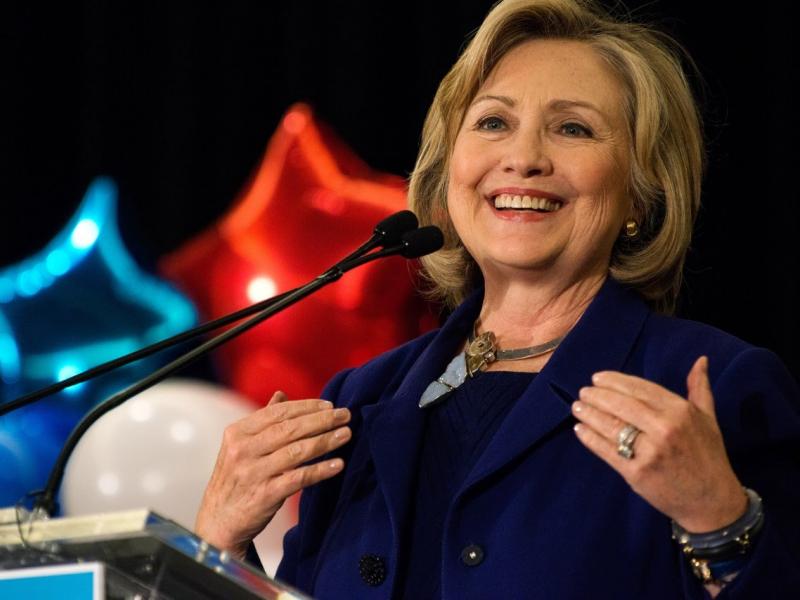
    NEW YORK (TIP): On Thursday, the Wall Street Journal’s Laura Meckler and Colleen McCain Nelson broke the news that Hillary Clinton is vetting Elizabeth Warren for the vice presidency – but not vetting Bernie Sanders. In the process, they provided a shortlist of candidates that Clinton is considering.

    Beyond the Massachusetts  senator, other prospective candidates include Labor Secretary Tom Perez, Housing and Urban Development Secretary Julián Castro; Sens. Tim Kaine of Virginia, Sherrod Brown of Ohio and Cory Booker of New Jersey; Los Angeles Mayor Eric Garcetti, and Reps. Xavier Becerra of California and Tim Ryan of Ohio, several Democrats said.

    Now, this isn’t necessarily an exhaustive list, and Meckler and Nelson note that the vetting is still in early stages, using publicly available information rather than asking candidates to submit tax returns and the like.

    Nonetheless, this list is the best information we’ve gotten about who Clinton is considering, and it includes some names that haven’t popped up in prior media speculation. All of these candidates have obvious strengths that have put them on this list, but of course, they each have their weaknesses as well.

  • Bernie Sanders Refuses to Concede Democratic Nomination to Hillary Clinton

    Bernie Sanders Refuses to Concede Democratic Nomination to Hillary Clinton

    WASHINGTON (TIP): Vermont Senator Bernie Sanders promised in a video address on June 15 night to continue his political revolution, declining to concede the Democratic nomination to Hillary Clinton despite losing a majority of votes to his rival.

    Still, he vowed in his video address to do whatever he could do to help Clinton defeat Donald Trump in a general election, promising to work with her to “transform the Democratic Party.” “Election days come and go. But political and social revolutions that attempt to transform our society never end. They continue every day, every week and every month in the fight to create a nation of social and economic justice,” Sanders said, speaking in his video address from Burlington, Vermont. “That’s what the political revolution is about and that’s why the political revolution must continue into the future.”

  • Eric Schneiderman on #OrlandoShooting

    Eric Schneiderman on #OrlandoShooting

    This weekend’s tragedy in Orlando – the worst mass shooting in our nation’s history – was not only an act of terrorism, but an unspeakable hate crime directed at our LGBTQ brothers and sisters. The nation’s outpouring of support for the grieving families has been inspirational. But as we mourn, we must also come together to confront the challenge of combating terrorism here at home. Together, we must demand that Congress finally pass common sense gun control measures that can prevent the loss of innocent lives to gun violence.

    Fortunately, Hillary Clinton is doing exactly that, and reminding us of every American’s unalienable right to feel safe and welcome in our country. Sadly, Donald Trump is doing the opposite and even trying to divide us. Just one day after the massacre, Trump called for a ban on all Muslims entering the United States.

    Vilifying the entire Muslim community based on the actions of one terrorist is profoundly un-American. It goes against everything we stand for as a country founded on religious freedom. And it will make us less safe.

    The response to hatred cannot be more hatred. Now is the time for us to come together and work towards the America we need and deserve.

  • Bracing for a #Trump Presidency

    Bracing for a #Trump Presidency

    Harish_khare_240x180
    Harish Khare | The author is editor-in-chief of The Tribune

    In 2008, the two presidential gladiators forced the Americans to think about what the United States was all about; the Obama victory only aggravated the American society and its political divisions. The 2016 contest, too, will invite the Americans to reaffirm certain basic principles and commitments which for more than 200 years have sustained the American experiment — and, for which the world has admired and respected the United States……In the 2016 presidential contest, the world will see America’s rather un-pretty face. The reason is simple. Donald Trump has forced his way to the very top of the Republican presidential pile entirely on his own terms.  And, these terms were cheap, shoddy, vicious and racist”, says the author.


    Two days ago, the American presidential line-up got firmed up. Hillary Clinton clinched the Democratic Party’s nomination and will take on Donald Trump of the Republican Party. Just as in 2008 the Americans found themselves having to choose between two very different, almost starkly opposite candidates —Barack Obama, a black man, and John McCain, a Vietnam war veteran and very much a white man — they will now be called upon to decide between a woman with a record of steady legislative and administrative service and a maverick billionaire, who has not held any public office. The presidency is the first public job Donald Trump is applying for.

    In 2008, the two presidential gladiators forced the Americans to think about what the United States was all about; the Obama victory only aggravated the American society and its political divisions. The 2016 contest, too, will invite the Americans to reaffirm certain basic principles and commitments which for more than 200 years have sustained the American experiment — and, for which the world has admired and respected the United States.

    And, as the United States remains the world’s largest economy and also the world’s strongest power, the American presidential choices are a matter of interest — and, concern — to the rest of the world. The American presidency is a powerful office. And, just as he does at home, the President of the United States also makes more than a difference in the world. The American presidential contest may be a matter to be sorted out by the Americans themselves, but the world will have to live with the consequences of their choice. Arguably, that proposition has been valid since the end of the Second World War, but today America is a different place. As a nation, the Americans are definitely in an angry mood. They feel frustrated and cheated. The American political system seems to offer no corrective solutions to the excesses of capitalism and the consequent economic inequalities. Jarringly enough, these inequalities are only getting entrenched. The “mainstream” leadership, both of the Democratic and Republican varieties, is hopelessly beholden to the “Wall Street”, and, offers no intellectual solutions or even political slogans to address the Americans’ economic grievances.

    America is also in an ugly mood. Much of this ugliness can be traced to the relentless rise of the religious right. The Republican Party is virtually a religious party. It is in thrall to what Kevin Phillips calls the “Armageddon hucksters.” Post ‘9/11’, the Christian right feels righteously confirmed in its prejudices and bigotry by the rise of Islamic groups and their demonstrated ability to wield violence. Some kind of religious madness has seeped into the American soul. The religious right has so deeply polarized the American domestic political theatre and its actors that the United States is no longer able to project a comforting and comfortable liberal visage to the rest of the world.

    And, what is worse, America is in a mood to blame the rest of the world for its manifest decline. Every conservative ideologue easily subscribes to the totemic chant, “our country is in decline.” And, that is where the new Republican presidential standard-bearer steps in to tap the Americans’ fears about a world Washington no longer seems able to control. And, most fearful among the Americans is the white middle class, which feels squeezed in not just economically but also culturally and politically.

    It is an America that has come to resent — and resent deeply, unapologetically and righteously — its own President, not just because he is a black but because he is cerebral, has the benefit of a Harvard education, and is not given to shabby populism, and professes to be a reasonable man. This resentfulness has been incessantly fed and nurtured by the American religious right; and, the liberal voices and opinion-makers have had no answer to this creeping fashionable bigotry. And, this closing of the American mind would invite unpredictable responses from forces outside.

    In the 2016 presidential contest, the world will see America’s rather un-pretty face. The reason is simple. Donald Trump has forced his way to the very top of the Republican presidential pile entirely on his own terms. And, these terms were cheap, shoddy, vicious and racist. He did not care for the so-called “Republican establishment” and its gentrified protocols. He made no secret that he gave a damn about the liberals’ notions of “political correctness”, and he deliberately, provocatively massaged the white Americans’ dormant racial fears of the “outsider”. Above all, he is openly contemptuous of the global institutional arrangements and their obligations on the United States. Trump has sent every establishment economist in a tizzy with his aggressive advocacy of “economic nationalism”. But he has stayed with his message of protectionism and unilateralism. And, that is where the world will watch with considerable trepidation how the Americans sort the two candidates out during the campaign. Admittedly, between now and the first week of November, both Clinton and Trump would have ample opportunities to finesse their presidential personas. The prolonged ritual of campaigning carries with itself opportunities and pitfalls. Hillary Clinton is a familiar face and a tested name. She promises to stay firmly in the center of political reasonableness and public policy choices. But this is the first time the Americans would be called upon to decide whether they want a woman as their commander-in-chief. These last eight years of a black President have, paradoxically, made America a mixed-up, pixilated society, troubled by overt political correctness and plainly uncomfortable with liberal notions. For all her proven record of public service, Clinton is unpalatable to very many Americans. Just as Senator Bernie Sanders was able to instigate doubts among the Democrats about her baggage, Trump can be expected to be vicious and unrelenting in rattling skeletons in the Clinton cupboard. She will definitely need to reinforce the Americans’ trust in her competence and probity. A Clinton meltdown cannot be entirely ruled out.

    And, the same will hold equally true for Trump. Untempered as he has been with any public responsibility, Trump’s persona is cast in stone. Whereas Clinton promises to carry out more of the Obamaesque steadfastness, Trump will cater to the American impulse to punch difficult customers in the face. Above all, the Trump political insurgency has already emboldened all those leaders and groups around the world who believe in politics of national resentments, identity antagonism, demagoguery, and — personality cult. A right-wing fever is already claiming new victims in Europe. A Trump presidency would simply subvert the established world order and its accepted value system. The collective wisdom of the American people may be too feeble to stop that dangerous man. Considerable turmoil is in store for the global community.

  • President Obama endorses Hillary Clinton for President

    President Obama endorses Hillary Clinton for President

    WASHINGTON (TIP): US President Barack Obama formally endorsed Hillary Clinton’s White House bid on Thursday, June 9, and called for the Democratic Party to unite behind her after a protracted battle with Bernie Sanders for the party nomination.

    Clinton, the presumptive Democratic nominee, said it “means the world” to her to have Obama’s support.

    “It is absolutely a joy and an honor that President Obama and I over the years have gone from fierce competitors to true friends,” Clinton told Reuters in an interview.

    Obama defeated Clinton in the 2008 Democratic primary and she went on to serve as secretary of state. Obama, who enjoys strong approval ratings after nearly eight years in office, will campaign with Clinton next week in Wisconsin, her campaign said.

    “I don’t think there’s ever been someone so qualified to hold this office,” Obama said of Clinton in a video. “I’m with her. I am fired up, and I cannot wait to get out there and campaign for Hillary,” Obama said. Sanders, who met with Obama at the White House earlier on Thursday, said afterward he would work with Clinton to defeat Trump.

    In his endorsement video, the president took time to say that Sanders had run “an incredible campaign,” and that he had shone “a spotlight on issues like economic inequality and the outsized influence of money in our politics.”

    In fact, Obama said, those are messages the Democrats should embrace for the general election. And while Clinton and Sanders may have been rivals during the primary season, “they’re both patriots who love this country and they share a vision for the America that we all believe in.”

    “This has been a hard-fought race,” Obama said. “I know some say these primaries have somehow left the Democratic Party more divided: Well, they said that eight years ago, as well.”

    And just as Democrats’ victory in that election paved the way for significant national initiatives, Obama said he expects his party “won’t just win in November, we’ll build on the progress that we’ve made and we will win a brighter future for this country that we love.”

    Although the declarations of Clinton’s presumptive victory were based on her delegate haul, Sanders is not technically eliminated from the race because he could theoretically sway the Democrats unbound “super” delegates to his side. Still, that would be a tough sell for the senator: Clinton won more primary contests, more of the popular vote and more regular pledged delegates.

    The endorsement increases pressure on Sanders, a US senator from Vermont, to concede the race so the party can focus on campaigning against Donald Trump, the Republican presumptive nominee for the Nov. 8 election.

  • Hillary Clinton secures Democratic Presidential Nomination

    Hillary Clinton secures Democratic Presidential Nomination

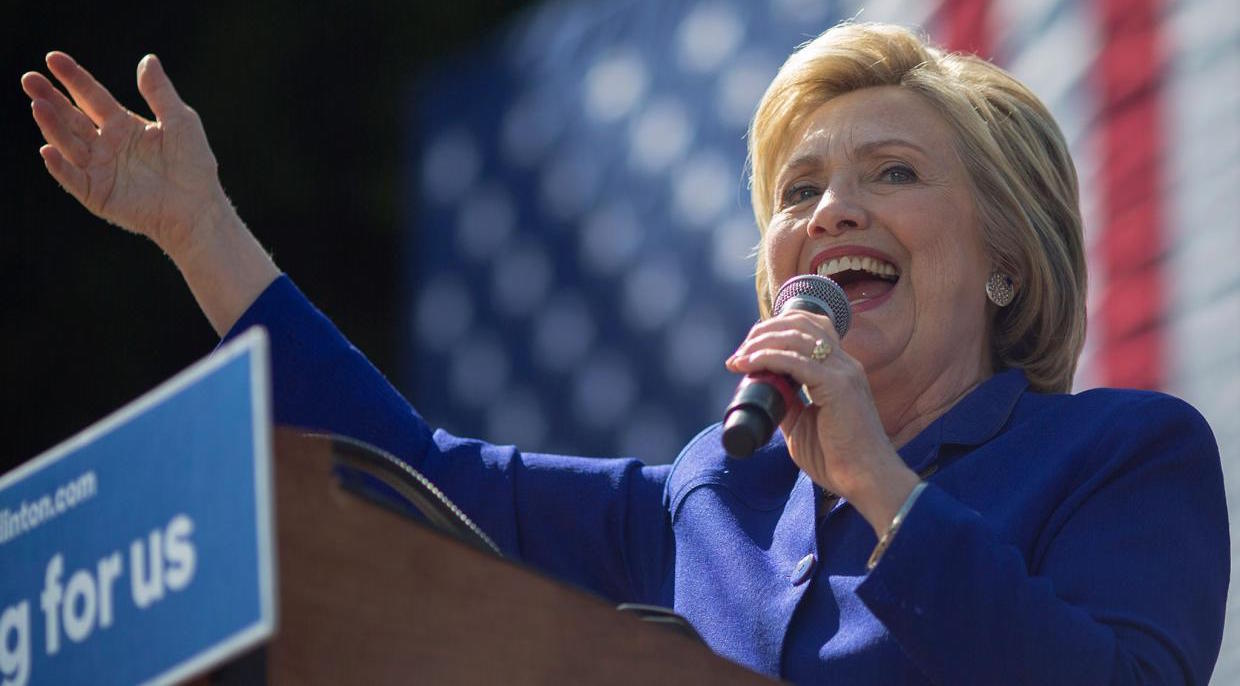
    Former US Secretary of State Hillary Clinton has secured the number of delegates necessary to be presumptive Democratic presidential nominee in the November elections, according to a count carried out by the NBC channel on Monday and as reported by the Associated Press.

    Becomes the first woman to top a major-party ticket in US

    After her victory over Vermont Senator Bernie Sanders in Puerto Rico on Sunday and with the new support from superdelegates in recent days, Clinton has surpassed the 2,383 delegates needed as is now the presumptive Democratic presidential nominee.

    It has been a long and bruising primary season for Hillary as she becomes the first woman to lead a major party in the race for the White House.

    The former first lady will almost certainly be proclaimed the Democratic party nominee at the July convention in Philadelphia, and will face the unofficial candidate for the Republican party Donald Trump in the elections.

    NBC’s count was released one day ahead of the last major primary elections in which Democrats in New Jersey, North Dakota, South Dakota, Montana, New Mexico and California, the most populous state in the country, will go to the polls on Tuesday.

    “According to the news, we are on the brink of a historic and unprecedented moment,” Clinton told her supporters.

    She said there were “primaries to win”, in reference to Tuesday’s primaries.

    Once named the party’s official candidate at the July convention, Clinton will become the first woman to enter the presidential race from one of the two major parties.

    NBC calculated that Clinton has 2,384 delegates, one above the minimum required, including 1,812 delegates won in the primaries and 572 superdelegates.

    Her rival, democratic socialist Bernie Sanders, has 1,566 delegates, 1,520 of them from the primaries and only 46 superdelegates, according to NBC.

  • House Speaker Paul Ryan Says He Will Vote for Donald Trump

    House Speaker Paul Ryan Says He Will Vote for Donald Trump

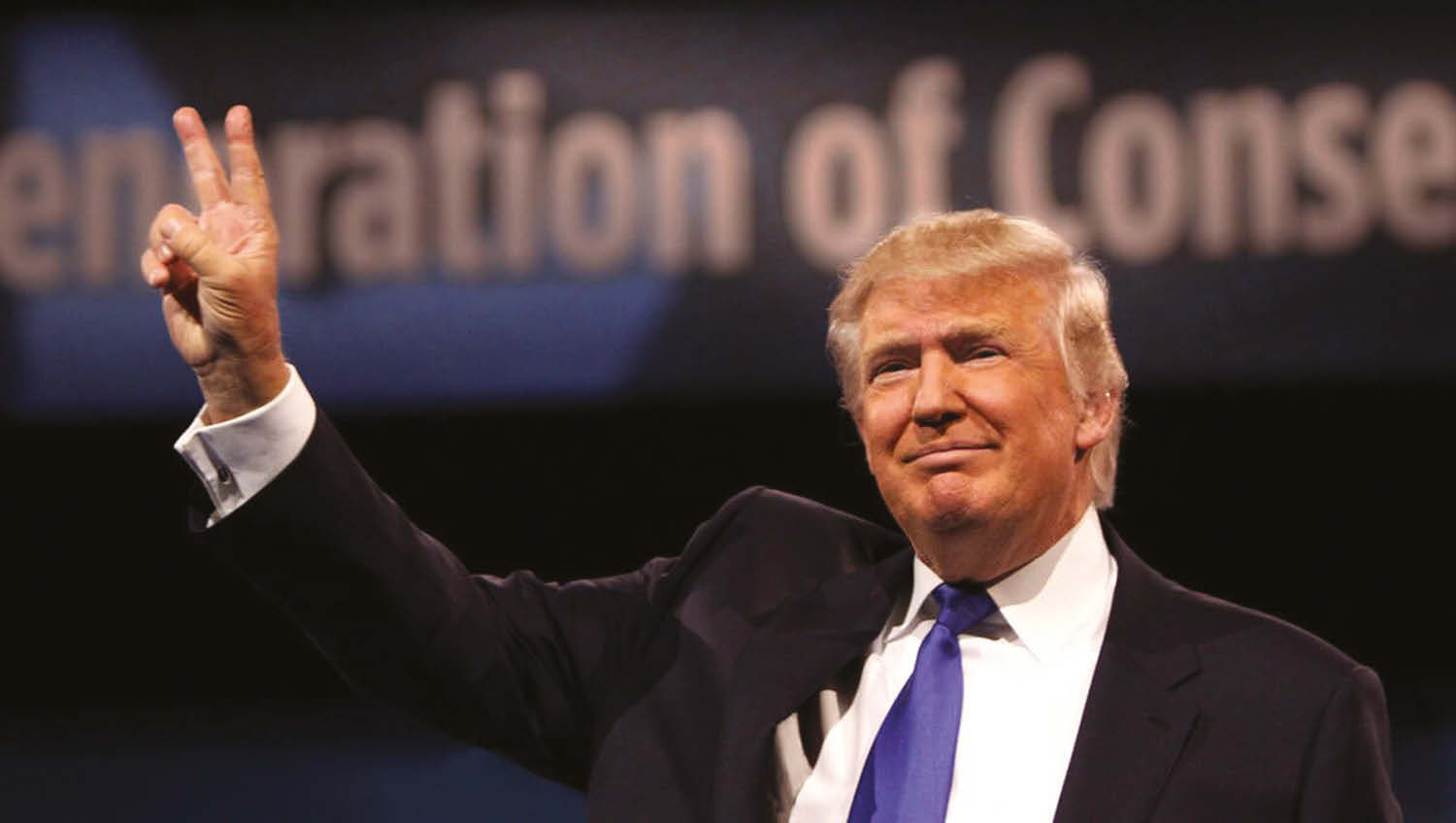
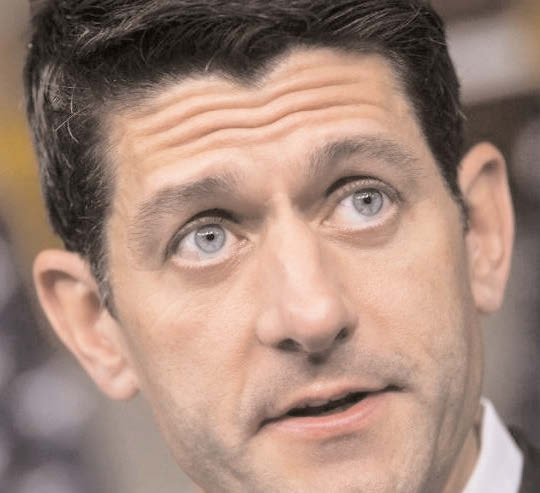
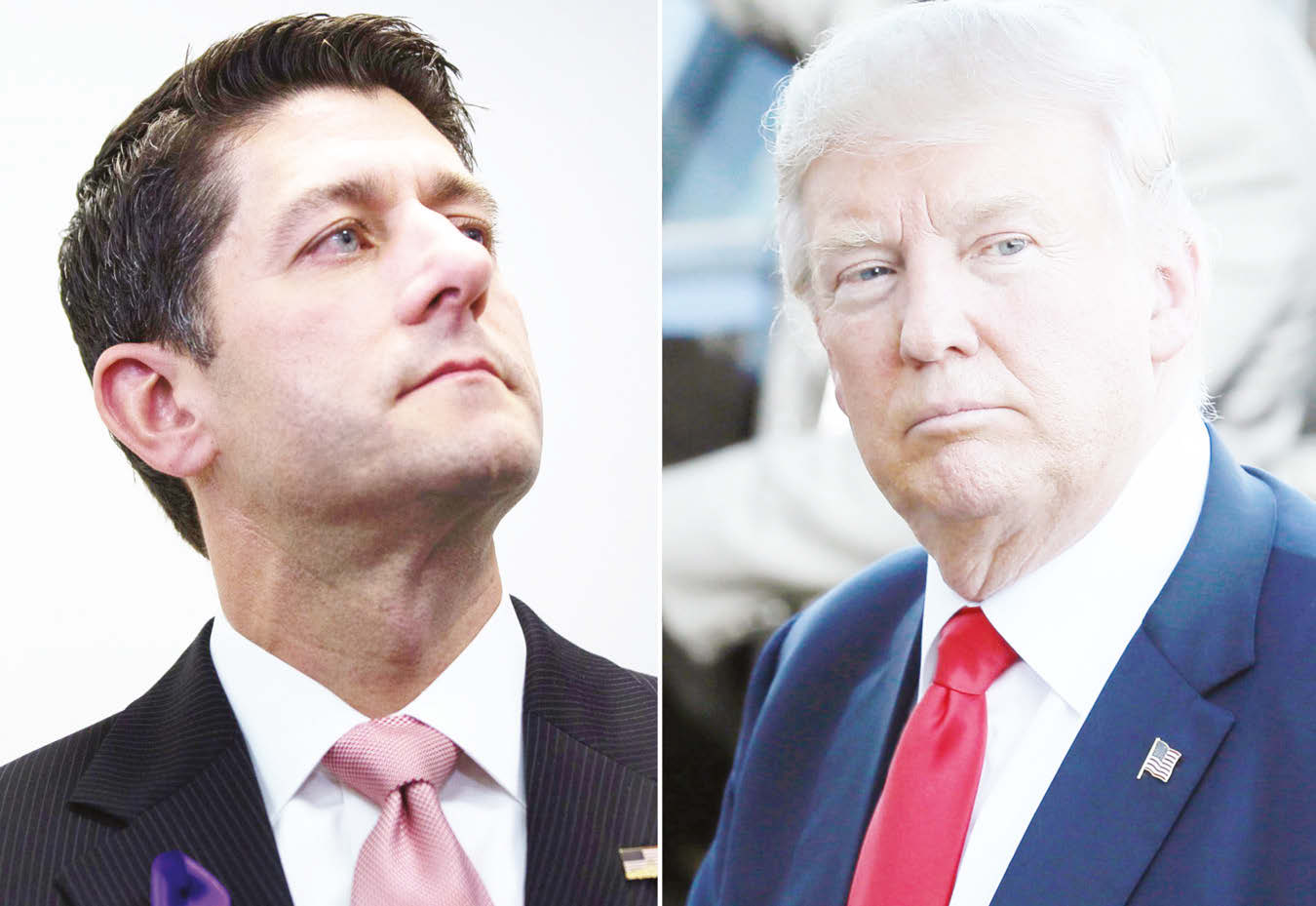
    WASHINGTON (TIP): Nearly a month after being named the presumptive nominee of the Republican Party, Donald Trump has finally earned the vote of House Speaker Paul Ryan.

    Far from a wholehearted embrace of his party’s 2016 standard-bearer’s policies and temperament, Ryan’s announcement on Thursday mainly emphasized that Trump would be a better ally to advance Ryan’s policy goals than likely Democratic nominee Hillary Clinton.

    The announcement, published in a column in his home town newspaper the GazetteXtra, failed to include the word “endorsement,” instead indicating only that the Wisconsin lawmaker will cast his vote for Trump at the ballot box. Ryan wrote that he came to his decision after several conversations with Trump.

    “I feel confident he would help us turn the ideas … into laws to help improve people’s lives,” he wrote.

    NBC News had proclaimed Trump the presumptive nominee 29 days ago on May 4, after Trump’s final GOP rivals exited the race. But Ryan withheld his support at the time, instead publicizing his concerns with the likely nominee.

    Ryan suggested then that it was up to Trump to unify the party after a primary that resulted in a nominee that many establishment Republicans did not prefer.

    “I think the bulk of the burden on unifying the party will have to come from our presumptive nominee,” Ryan said last month. “I’m not there right now. And I hope to though, and I want to. But I think what is required is that we unify this party.”

    In the column published Thursday, Ryan did not sugarcoat his continuing disagreements with Trump.

    “It’s no secret that he and I have our differences. I won’t pretend otherwise. And when I feel the need to, I’ll continue to speak my mind,” Ryan wrote. “To enact (Republican) ideas, we need a Republican president willing to sign them into law. That’s why, when he sealed the nomination, I could not offer my support for Donald Trump before discussing policies and basic principles.”

    While it’s hardly a glowing recommendation, Ryan’s willingness to support Trump presents yet another obstacle to the “Stop Trump” movement as establishment Republicans are slowly lining up behind their nominee, albeit reluctantly.

    Related: Donald Trump and Paul Ryan Could Not Be Further Apart

    A primary reason for that unification is Republicans’ common enemy in Hillary Clinton, a fact not lost on Ryan in his announcement Thursday.

    “One person who we know won’t support it is Hillary Clinton. A Clinton White House would mean four more years of liberal cronyism and a government more out for itself than the people it serves. Quite simply, she represents all that our agenda aims to fix,” Ryan wrote.

    Ryan was slow to the Trump train after expressing concerns over some of Trump’s comments and positions. The two met twice in May, after Trump was deemed the presumptive nominee, but an endorsement wasn’t immediate after the meetings.

    Trump said on NBC’s “Meet the Press” on May 8 that he was “blindsided” by Ryan’s lack of an endorsement.

    “But (I) have a nice relationship with him. And then all of a sudden, he gets on and he does this number. So I’m not exactly sure what he has in mind. But that’s okay,” Trump added.

    In Ryan’s column Thursday, he said Trump can “help us” move forward on their policy domestic and foreign policy priories.

    “As I said from the start, my goal has been to unite the party so we can win in the fall. And if we’re going to unite, it has to be over ideas,” Ryan said, seeming to get behind him for the sake of the party and not his satisfaction with the person.

  • Trump temperamentally unfit to hold President’s office: #HillaryClinton

    Trump temperamentally unfit to hold President’s office: #HillaryClinton

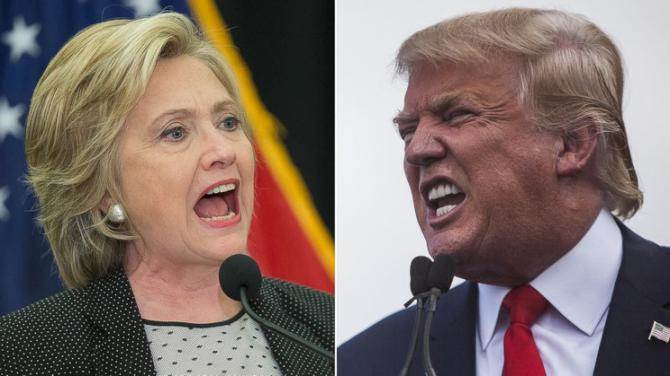
    SAN DIEGO, CA (TIP): In one of the most striking speeches of her political career, Hillary Clinton dispensed with the sober diplo-speak that has characterized her previous national security addresses and went straight for the jugular, unleashing a series of biting attacks on Trump.

    In the spirit of President Lyndon Johnson’s notorious “Daisy” nuclear blast ad targeting Barry Goldwater’s temperament in 1964, Clinton warned that Trump should not be let anywhere near the nuclear codes because he could start a war when somebody “got under his very thin skin.”

    “He’s not just unprepared — he’s temperamentally unfit to hold an office that requires knowledge, stability and immense responsibility,” Clinton said during the speech in San Diego, California, days before Tuesday’s primary in the Golden State effectively concludes the primary season and confirms her as the presumptive Democratic nominee over Vermont Sen. Bernie Sanders.

    Trump fired back while speaking at a rally in San Jose, California, Thursday night.

    “I watched Hillary today and it was pathetic. It was so sad to watch,” Trump said, calling it a “political speech” that had nothing to do with foreign policy.

    “It was a pretty pathetic deal,” he added.

    The speech marked a significant moment in Clinton’s campaign, as it was the first real signal of the tactics and attitude she will use to take on Trump and offered a preview of what are likely to be fierce clashes between the rivals at a trio of presidential debates later in the year. It demonstrated the kind of sardonic, unrestrained humor that she often shows in private interactions with friends and reporters but has refrained from displaying in public.

    It also appeared to be aimed at Democrats who are spooked by recent polls showing a tight race between Clinton and Trump, and who fear her often-criticized campaigning skills won’t keep up with Trump’s volatile and highly effective off-the-cuff style.

    And when she argued that Trump’s lack of knowledge on foreign policy and temperament would put at risk decades of Republican and Democratic foreign policy advances, she appeared to be making a pitch for disgruntled national security conservatives who feel unable to put their trust in the Republican nominee.

    Yet the strategy has its risks, as pretty much all of Trump’s GOP primary rivals who tried to take on Trump couldn’t survive his return fire. The question is whether Clinton will be more effective. She might be helped by not waiting until the last minute like the Republicans did — seeking to define Trump early in the minds of the general election audience.

    She attempted to convince voters that Trump’s ideas are a mix of “bizarre rants, personal feuds and outright lies.” She lambasted his “bragging” approach to foreign policy based on a string of “nasty tweets” and accused him of harboring a “bizarre” affinity for authoritarian leaders like Russian President Vladimir Putin, the Communist rulers of China and North Korean dictator Kim Jong-Un.

    “We cannot put the safety of our children and grandchildren in Donald Trump’s hands. We cannot let him roll the dice with America,” Clinton said.

    At one point, Clinton imagined Trump composing nasty tweets to respond to her speech. And the combative Republican standard-bearer did not disappoint.

    “Bad performance by Crooked Hillary Clinton! Reading poorly from the teleprompter! She doesn’t even look presidential!” the presumptive GOP nominee wrote as her address ended.

    In another tweet, Trump added: “Crooked Hillary no longer has credibility – too much failure in office. People will not allow another four years of incompetence!”

    But taking a page from Trump’s book, Clinton’s speech contained a string of zingers meant to ridicule the presumptive presidential GOP nominee and render him an unacceptable choice for president.

    “He says he has foreign policy experience because he ran the Miss Universe pageant in Russia,” Clinton said. “The stakes in global statecraft are infinitely higher and more complex than in the world of luxury hotels.”

    She added: “I will leave it to the psychiatrists to explain his attraction to tyrants” before taking aim at Trump’s claim that being a global business tycoon equips him with significant global knowledge.

    “You know, there’s no risk of people losing their lives if you blow up a golf-course deal,” she said. “But it doesn’t work like that in world affairs.”

    “He also says, ‘I know more about ISIS than the generals do, believe me.’ You know what? I don’t believe him,” Clinton said, drawing cheers from her partisan audience of around 250 people.

    Aides said that Clinton never intended the speech to be a formal foreign policy address but rather to deliver a stinging rebuke of Trump. After watching and reading Trump speeches carefully, Clinton gave an outline of what she wanted to say at the beginning of last week, and speechwriters Megan Rooney and Dan Schwerin worked with foreign policy advisers Jake Sullivan and Laura Rosenberger on the first draft, two campaign aides told CNN.

    For the last few days, they’ve been going back and forth with Clinton to streamline it. Originally, there was more of her own foreign policy, but it was sharpened over last week to include far more Trump.

    She spent her coast-to-coast plane ride Wednesday revising the speech with Rooney. Clinton kept working on the specific language right up right before the speech, and a story about Navy SEALs protecting civilians during the 2011 operation that killed Osama bin Laden was a final addition.

    In terms of policy, much of what she talked about — including her views on NATO, trade and Russia — has already been rolled out in previous, more conventional foreign policy speeches.

    But she did focus on the more controversial aspects of the foreign policy that he has laid out.

    “This is a man who said that more countries should have nuclear weapons, including Saudi Arabia. This is someone who has threatened to abandon our allies in NATO, the countries that work with us to root out terrorists abroad before they strike us at home,” Clinton said.

    “He believes we can treat the U.S. economy like one of his casinos and default on our debts to the rest of the world, which would cause an economic catastrophe far worse than anything we experienced in 2008,” she continued. “He has said that he would order our military to carry out torture.”

    Clinton’s speech laid out the parameters for what is likely to be a furious foreign policy debate in the general election. It is a feud that will allow her to take aim at Trump’s alleged inexperience and lack of knowledge but will also require her to defend what Republicans see as deep vulnerabilities in her own foreign policy record.

    Those liabilities include the aftermath of the NATO intervention in Libya, in which she played a dominant role and which left behind a dangerous failed state and a terror haven, as well as the Obama administration’s “reset” of relations with Russia, which critics say was naïve and ineffective.

    Clinton must also confront accusations that she negligently put American national security at risk by using a personal email server for her official business when she served as secretary of state.

    Trump has already made his own attempt to obliterate Clinton’s foreign policy credentials.

    “She doesn’t have the temperament to be president. She’s got bad judgment. She’s got horribly bad judgment,” Trump said last week. “If you look at the war in Iraq, if you look at what she did with Libya, which was a total catastrophe.”

    The likely Democratic nominee closed out her speech with a preview of how she will respond to such attacks — by turning the heat back on Trump and his perceived lack of qualifications to be president.

    “Imagine Donald Trump sitting in the Situation Room, making life-or-death decisions on behalf of the United States. Imagine him deciding whether to send your spouses or children into battle. Imagine if he had not just his Twitter account at his disposal when he’s angry, but America’s entire arsenal,” she said.

    “Do we want him making those calls — someone thin-skinned and quick to anger, who lashes out at the smallest criticism?” she asked rhetorically. “Do we want his finger anywhere near the button?”

    (Source: CNN)

  • Trump Fueling ISIS Recruitment Effort: Gen. Hayden

    Trump Fueling ISIS Recruitment Effort: Gen. Hayden

    NEW YORK (TIP): Donald Trump has damaged American security, says former CIA and NSA director Gen. Michael Hayden in an interview with The Guardian.

    “The jihadist narrative is that there is undying enmity between Islam and the modern world so when Trump says they all hate us, he’s using their narrative,” Hayden said. “He’s feeding their recruitment video.”

    Trump has proposed a temporary ban on all Muslim immigration amid fears Islamic State (ISIS) terrorists could be embedded in groups of Syrian refugees and has said he would quickly defeat the terrorist group if elected.

    The Somali terror group Al Shabab and ISIS both have released videos featuring Trump, Talking Points Memo reports.

    Trump’s proposal for “a total and complete shutdown of Muslims entering the United States” following San Bernardino shootings was featured in Al Shababs’ video, while ISIS included his comments that Brussels had become “a horror show.”

    Former Secretary of State Hillary Clinton said months ago that Trump’s words were being used in ISIS recruitment videos, but at the time only her husband and others were seen in such videos. Last week, she said she had been right all along.

    “I knew it was already going on, but it wasn’t public yet,” Real Clear Politics quoted Clinton as saying.

  • Trump has the numbers for GOP Nomination. What next?

    Trump has the numbers for GOP Nomination. What next?

    WASHINGTON (TIP): Donald Trump, on May 26, reached the number of delegates needed to clinch the Republican nomination for president, completing an unlikely rise that has upended the political landscape and sets the stage for a bitter fall campaign.

    Trump was put over the top in the Associated Press delegate count by a small number of the party’s unbound delegates who told the AP they would support him at the convention. Among them is Oklahoma GOP chairwoman Pam Pollard.

    “I think he has touched a part of our electorate that doesn’t like where our country is,” Pollard said. “I have no problem supporting Mr. Trump.”

    It takes 1,237 delegates to win the Republican nomination for president. Trump has reached 1,238. With 303 delegates at stake in five state primaries on June 7, Trump will easily pad his total, avoiding a contested convention in Cleveland in July.

    Trump, a political neophyte who for years delivered caustic commentary on the state of the nation from the sidelines but had never run for office, fought off 16 other Republican contenders in an often ugly primary race.

    Many on the right have been slow to warm to Trump, wary of his conservative bona fides. Others worry about Trump’s crass personality and the lewd comments he’s made about women.

    Trump’s path to the Republican presidential nomination began with an escalator ride.

    Trump and his wife, Melania, descended an escalator into the basement lobby of the Trump Tower on June 16, 2015, for an announcement many observers said would never come:

    The celebrity real estate developer, who had flirted with running for office in the past, would announce that he was launching his campaign for the GOP presidential nomination.

    That speech set the tone for the candidate’s ability to dominate the headlines with provocative statements, insults and hyperbole. He called Mexicans “rapists,” promised to build a wall between the U.S. and Mexico and ban Muslims from the U.S. for an indeterminate time.

    He put down women based on their looks. And he unleashed an uncanny marketing ability in which he deduced his critics’ weak points and distilled those to nicknames that stuck.

    “Little Marco” Rubio, “Weak” Jeb Bush and “Lyin’ Ted” Cruz, among others, all were forced into primarily reacting to Trump. They fell one-by-one — leaving Trump sole survivor of a riotous Republican primary.

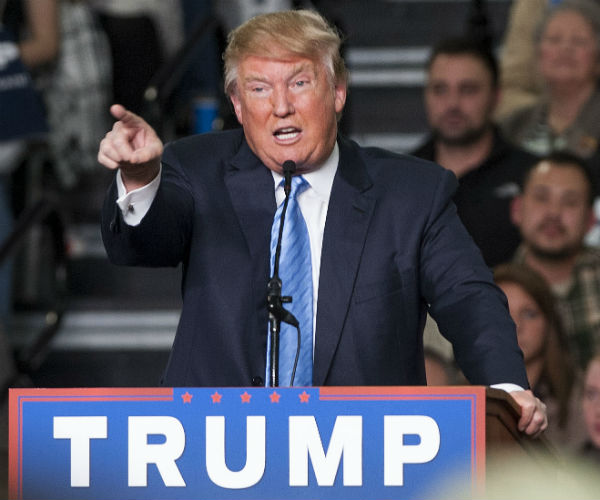
    His rallies became must-see events and magnets for free publicity. Onstage, he dispensed populism that drew thousands of supporters, many wearing his trademark “Make America Great Again” hat and chanting, “Build the wall!”

    The events drew protests too– with demonstrators sometimes being forcibly ejected from the proceedings.

    One rally in Chicago was cancelled after thousands of demonstrators surrounded the venue and the Secret Service could no longer vouch for the candidate’s safety.

    All the while, Republican leaders declared themselves appalled by Trump’s rise. Conservatives called the onetime Democrat a fraud. But they failed, ultimately, to block him. Republican leaders slowly, warily, began meeting with Trump and his staff. And he began winning endorsements from a few members of Congress.

    As with other aspects of his campaign, Trump upended the traditional role of money in the race.

    Trump, 69, the son of a New York City real estate magnate, had risen to fame in the 1980s and 1990s, overseeing major real estate deals, watching his financial fortunes rise, then fall, hosting “The Apprentice” TV show and authoring more than a dozen books.

  • It’s Official – Trump has the numbers for GOP Nomination 

    It’s Official – Trump has the numbers for GOP Nomination 

    Earlier today, May 26, Donald Trump  reached the number of delegates needed to clinch the Republican nomination for president, completing an unlikely rise that has upended the political landscape and sets the stage for a bitter fall campaign.

    Trump was put over the top in the Associated Press delegate count by a small number of the party’s unbound delegates who told the AP they would support him at the convention. Among them is Oklahoma GOP chairwoman Pam Pollard.
    “I think he has touched a part of our electorate that doesn’t like where our country is,” Pollard said. “I have no problem supporting Mr. Trump.”
    It takes 1,237 delegates to win the Republican nomination for president. Trump has reached 1,238. With 303 delegates at stake in five state primaries on June 7, Trump will easily pad his total, avoiding a contested convention in Cleveland in July.
    Trump, a political neophyte who for years delivered caustic commentary on the state of the nation from the sidelines but had never run for office, fought off 16 other Republican contenders in an often ugly primary race.
    Many on the right have been slow to warm to Trump, wary of his conservative bona fides. Others worry about Trump’s crass personality and the lewd comments he’s made about women.

    Trump’s path to the Republican presidential nomination began with an escalator ride.
    Trump and his wife, Melania, descended an escalator into the basement lobby of the Trump Tower on June 16, 2015, for an announcement many observers said would never come: The celebrity real estate developer, who had flirted with running for office in the past, would announce that he was launching his campaign for the GOP presidential nomination.
    That speech set the tone for the candidate’s ability to dominate the headlines with provocative statements, insults and hyperbole. He called Mexicans “rapists,” promised to build a wall between the U.S. and Mexico and ban Muslims from the U.S. for an indeterminate time.
    He put down women based on their looks. And he unleashed an uncanny marketing ability in which he deduced his critics’ weak points and distilled those to nicknames that stuck. “Little Marco” Rubio, “Weak” Jeb Bush and “Lyin’ Ted” Cruz, among others, all were forced into primarily reacting to Trump. They fell one-by-one — leaving Trump sole survivor of a riotous Republican primary.
    His rallies became must-see events and magnets for free publicity. Onstage, he dispensed populism that drew thousands of supporters, many wearing his trademark “Make America Great Again” hat and chanting, “Build the wall!”
    The events drew protests too– with demonstrators sometimes being forcibly ejected from the proceedings.
    One rally in Chicago was cancelled after thousands of demonstrators surrounded the venue and the Secret Service could no longer vouch for the candidate’s safety.

    All the while, Republican leaders declared themselves appalled by Trump’s rise. Conservatives called the onetime Democrat a fraud. But they failed, ultimately, to block him. Republican leaders slowly, warily, began meeting with Trump and his staff. And he began winning endorsements from a few members of Congress.
    As with other aspects of his campaign, Trump upended the traditional role of money in the race.
    Trump, 69, the son of a New York City real estate magnate, had risen to fame in the 1980s and 1990s, overseeing major real estate deals, watching his financial fortunes rise, then fall, hosting “The Apprentice” TV show and authoring more than a dozen books.
    Source – AP

  • Indian American Neera Tanden Appointed To Democratic Party’s Policy Panel

    Indian American Neera Tanden Appointed To Democratic Party’s Policy Panel

    Democratic National Committee Chairwoman Debbie Wasserman Schultz announced the appointment of the party Platform Drafting Committee’s 15 members who will draft its policy agenda for the November presidential election.

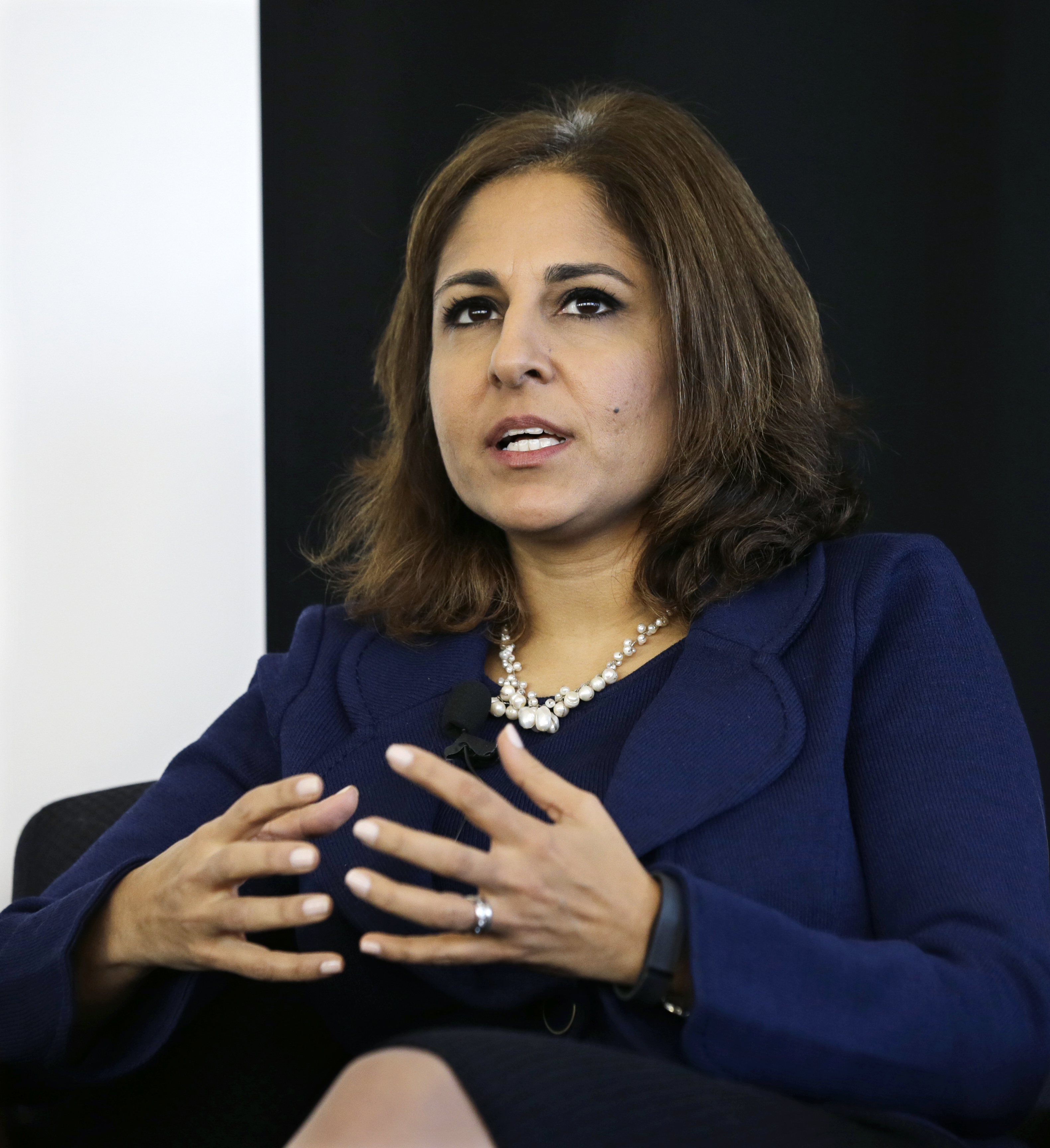
    Among the members is Indian American Neera Tanden, 45, who has been a long-time associate of Democratic presidential front-runner Hillary Clinton, is being touted as a potential cabinet member if Clinton is elected as the US president in the November general elections.

    The panel is responsible for developing and managing the process through which the platform is established which is similar to the election manifesto parties have in India.

    Tanden, the president of the Center for American Progress (a top US think-tank), has served as a Clinton surrogate and worked as policy director for Clinton’s presidential campaign in 2008. She was a key protagonist in developing President Barack Obama’s healthcare reform proposals – the Affordable Care Act – during her tenure in the Obama administration.

    U.S. Democratic Party
    U.S. Democratic Party

    “We are delighted to bring together this talented group of Democrats. These individuals represent some of the best progressive thinking from across the nation. I am confident that the members of this committee will engage Americans in a substantive dialogue of ideas and solutions that will inform our Party Platform,” Democratic National Committee Chairwoman Debbie Wasserman Schultzshe said.

    Congressman Elijah Cummings has been appointed as chair of the drafting committee.

    The committee’s members are Rep. Elijah Cummings, Howard Berman, Paul Booth, Carol Browner, Rep. Keith Ellison, Rep. Luis Gutierrez, Rep. Barbara Lee, Bill McKibben, Deborah Parker, State Rep. Alicia Reece, Bonnie Schaefer, Ambassador Wendy Sherman, Neera Tanden, Dr. Cornel West, and James Zogby.

    Sanders said he was satisfied with the way the committee’s seats were distributed.

    “We believe that we will have the representation on the platform drafting committee to create a Democratic platform that reflects the views of millions of our supporters who want the party to address the needs of working families in this country and not just Wall Street, the drug companies, the fossil fuel industry and other powerful special interests,” he said in a statement.

    Clinton campaign press secretary Brian Fallon also said their camp is happy with the fact that Sanders will have more input in the party platform.

    “We’re pleased that the upcoming Democratic Convention will ensure supporters of Senator Sanders are well represented in the drafting of the party’s platform,” Fallon said. “The Democratic Party historically has been a big tent, representing a diverse coalition, and Hillary Clinton is committed to continue welcoming different perspectives and ideas.”

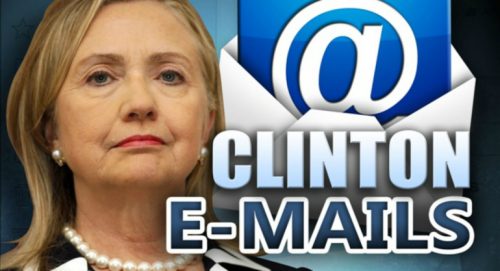
  • Hillary Clinton’s email nightmares are back and are likely to get much worse

    Hillary Clinton’s email nightmares are back and are likely to get much worse

    As the former Secretary of State, Hillary Clinton struggles to lock down the Democratic presidential nomination, her infamous email controversy is back.

    The State Department’s inspector general recently released its report on the email practices of Clinton and a number of other past secretaries of state.

    The report badly complicates Clinton’s past explanations about the server and whether she complied fully with the laws in place governing electronic communication. And it virtually ensures that Clinton’s email practices will be front and center in Donald Trump’s fusillade of attacks against her credibility and honesty between now and Nov. 8.

    The inspector general, in a long awaited review obtained Wednesday, May 25, by The Washington Post in advance of its publication, found that Clinton’s use of private email for public business was “not an appropriate method” of preserving documents and that her practices failed to comply with department policies meant to ensure that federal record laws are followed.

    The report says Clinton, who is the Democratic presidential front-runner, should have printed and saved her emails during her four years in office or surrendered her work-related correspondence immediately upon stepping down in February 2013. Instead, Clinton provided those records in December 2014, nearly two years after leaving office.

    For a candidate already struggling to overcome a perception that she is neither honest nor trustworthy, the IG report makes that task significantly harder. No one will come out of this news cycle — with the exception of the hardest of the hard-core Clinton people — believing she is a better bet for the presidency on May 25 than she was on May 23.

    Clinton remains blessed that Republicans are on the verge of nominating Donald Trump, a candidate whose numbers on honesty, trustworthiness and even readiness to lead are worse — and in some cases, far worse — than hers. But Trump’s task of casting her as “Crooked Hillary” just got easier.


    Here are the most critical parts of the State Department inspector general report on Clinton’s email use as reported by Washington Times:

    The State Department’s independent watchdog released an 83-page report Wednesday to lawmakers concluding that Hillary Clinton’s email practices did not comply with department policies.

    Below are some of the most revealing parts of the findings:

    1. The report concludes that Clinton’s use of a personal email account was “not an appropriate method.” This knocks down a key argument made in Clinton’s defense — that because she had emailed State Department officials on their government accounts, records of her communications were preserved.

    imrs.php.jpg

    2. In January 2011, there were two hacking attempts on the Clinton email system in one day. An adviser to President Bill Clinton tried to shut down the server each time.

    imrs.php.jpg

    3. There were warnings issued to senior State Department officials that hackers were targeting personal email accounts. Below, an excerpt from a March 11, 2011, memo written by the assistant secretary of diplomatic security.

    imrs.php.jpg

    4. The audit also covered Clinton’s aides, some of whom did not cooperate when asked to respond to a questionnaire about email use. Some of the aides used their personal email accounts extensively for official business.

    imrs.php.jpg

    5. The package of emails turned over by Clinton was “incomplete.”

    6. IT security officials were concerned about Clinton’s use of personal email and held meetings to discuss the need to preserve records and security. One staff member said the security director said the email system had been approved by state’s legal staff. The IG did not find evidence that the department’s legal adviser had reviewed or approved Clinton’s email system. 

    Another staff member who raised issues was told that their mission was “to support the Secretary, and instructed the staff never to speak of the Secretary’s personal email system again.”

    7. The report also criticizes Colin Powell’s handling of official emails during his tenure as secretary of state, saying it was also “not an appropriate method” for preserving emails that are part of the federal record. When asked to defend her email system, Clinton has said that her predecessors also used personal accounts.


    But the report also notes that by the time Clinton became secretary of state, the guidance on email use was much more detailed, suggesting that pointing to Powell is not an entirely fair comparison.

    imrs.php.jpg


  • Donald Trump beats Clinton in new poll

    Donald Trump beats Clinton in new poll

    WASHINGTON (TIP): Presumptive Republican presidential nominee Donald Trump has for the first time edged out his Democratic rival Hillary Clinton in a latest poll even as majority of respondents have an high unfavorable opinion of both the aspirants.

    This is for the first time in a poll that Trump is seen ahead of Clinton, albeit within a margin of error.

    Fox News, in its latest national polls, found that Trump has the support of 45 per cent of the potential general election votes, while Clinton has the support of 42 per cent.

    Trump emerged as the presumptive nominee of the Republican party after winning the Indian elections early this month.

    He is the only GOP candidate left in the race, which early this year was crowded with 16 more White House aspirants including well established Senators and Governors.

    Clinton, however, is yet to clinch the nomination as her sole rival Senator Bernie Sanders from Vermont is giving a tough fight by winning a number of States and preventing her from acquiring enough delegate to become the presumptive nominee.

    Sanders, according to the Fox News, is still ahead of Trump.

    In a hypothetical match up, Sanders has support of 46 per cent of the respondents as against 42 per cent for Trump, Fox News said.

    However, a key highlight of the latest poll is the high unfavorable view of both Trump (56 per cent) and Clinton (61 per cent).

    Earlier Clinton’s negative rating was 58 per cent and Trump’s was at 65 per cent. “The standard for unpopular presidential candidates has been Jimmy Carter and Ronald Reagan in 1980, but we have two new champions,” said Republican pollster Daron Shaw, who conducts the Fox News Poll with Democratic pollster Chris Anderson.

    “Clinton and Trump rate lower than disastrous candidates like Mondale or Dole,” he said. Trump leads Clinton by 55 to 31 per cent among whites.

    On the other hand Clinton has a commanding lead over Trump when it comes to black (90 to seven per cent) and Hispanics (62 to 23 per cent).

    Fox News had surveyed 1021 registered voters between May 14-17.(PTI)

  • Clinton Sanders split wins as they slug it out to bitter end

    Clinton Sanders split wins as they slug it out to bitter end

    WASHINGTON (TIP): Hillary Clinton and Bernie Sanders split primary wins in Kentucky and Oregon respectively on May 15 as they continued an internecine electoral slugfest that is driving Democratic Party grandees to despair.

    Party stalwarts fear the prolonged intra-party fracas, which is now getting bitter, is starting to cost the party campaign time, money, and votes, even as the Republican Party begins to rally around Trump after he worsted his rivals, and has pretty much wrapped up the nomination. Trump himself has started taunting Hillary Clinton for not being able to shake off Sanders.

    But the 72-year old self-professed socialist Senator from Vermont is just refusing to fade out despite trailing Clinton by a huge margin in the race towards the 2383 delegates needed to win the Democratic nomination. On Tuesday, he notched up another impressive in the liberal state of Oregon (54.5-45.5) while narrowly losing Kentucky by only a few thousand votes to Clinton (46.8-46.3).

    The win did little to change the delegate count because of the way the system is designed, with the party establishment awarding pledged delegates proportionally to votes secured, and the un-pledged delegates leaning heavily towards Clinton, leaving her 2291-1528 ahead.

    But Sanders has refused to back down. He has promised to take the fight all the way to California, among the last state to primary on June 7 (on the day Prime Minister Modi is scheduled to arrive in Washington DC), leaving the Democratic party with the enervating prospect of seeing another three weeks of bloodletting, even as Trump and the Republicans get their act together.

    In fact, the tension within the Democratic Party has increased even as Sanders’ chances of winning the nomination, despite the massive popular grassroots support he has, is decreasing.

    Over the weekend, Sanders’ supports erupted in anger when the Nevada Democratic Party began awarding delegates to Clinton, accusing party stalwarts of rigging the system.

    Chaos and vandalism followed at the meeting keynoted by Clinton surrogate Barbara Boxer, a retiring California Senator who is also related to her, with some Sanders’ supporters accused of issuing death threats to party veterans favoring Clinton.

    Sanders called the allegations “nonsense” even as he reveled in massive public adulation on the west coast where he will make his last stand.

    Some of his supporters concede that he has only a theoretical chance now of winning the nomination (he has to win 855 of the 946 delegates still in play, which means he has to beat Clinton by something like 85-15 in the remaining primaries), but they want him to remain in the fray if only to influence the Clinton platform (manifesto) with the outside chance she may draft him as her running mate (or cabinet colleague if she wins, as Obama did with Hillary).

    But current feud is driving party stalwarts crazy because it is distracting them from also recapturing the Senate, where the Republicans have a 54-46 advantage, but Democrats see many vulnerable GOP candidates in the 34 Senate races (one-third of the Senate also goes to polls on Nov.8)

    “If Clinton can’t put Sanders away, can she beat Trump?” was the headline of one oped, among the many that reflected on whether the lack of fervor and passion among her flock, unlike that exhibited by supporters of Sanders and Trump, would be her undoing. (PTI)

  • High Tea, not Muslim-Ban grudges, needed between London Mayor Sadiq Khan and Donald Trump

    High Tea, not Muslim-Ban grudges, needed between London Mayor Sadiq Khan and Donald Trump

    United States and Great Britain have a Special Relationship that transcends leaders, rhetoric and time.

    Donald Trump has announced an intention to bar Muslims from the United States, with some exceptions, including for the new mayor of London. Both prime minister David Cameron and mayor Khan have objected to the Muslim Ban. Donald Trump has taken umbrage from their opposition, and declared a desire to keep a grudge.

    I suggest instead of grudges, High Tea between Sadiq Kahn & Donald Trump will serve to restore decorum in the comity of nations and respect between the faiths.”

  • Anti-Trump Forces Build Shadow Third-Party Campaign

    Anti-Trump Forces Build Shadow Third-Party Campaign

    WASHINGTON (TIP): Anti-Donald Trump strategists are working behind the scenes to build the foundation for a third-party run even as the Republican Party takes steps toward unifying around the presumptive GOP candidate, says an ABC report.

    A small but dedicated group of Republicans say they’ve begun to cultivate donors in hopes of mounting a viable third-party challenge to a likely Hillary Clinton-Trump showdown that some strategists say has fed broad demand for an alternative option.

    “I think we’ll end up in a situation where we do see somebody who’s a conservative alternative to Trump and Mrs. Clinton come November,” Rick Wilson, a veteran Republican operative, said on ABC News’ “Powerhouse Politics” podcast.

    While Texas’ state ballot deadline passed this week and others are fast approaching, Wilson downplayed ballot access hurdles, citing legal precedent for rolling back early deadlines. The real challenge, he said, is fielding the appropriate candidate.

    “We recognize that finding that person who can pick up the mantle of the third party, who is also electable and compelling and has a great personal narrative, is a difficult lift,” he said. “It’s a lot harder than the ballot access question by an order of magnitude.”

    Another Republican at the heart of the effort, Weekly Standard editor and ABC News Contributor Bill Kristol, has tweeted about having discussed the possibility of a third party run with Mitt Romney, Nebraska Sen. Ben Sasse, and former Oklahoma Sen. Tom Coburn. Kristol, Wilson, as well as GOP strategist Joel Searby, are heading up the effort, but it also involves donors and about a dozen other strategists.

    Sasse said he is not interested in running, but has bemoaned the two likely candidates and called for a third option in an open letter, writing “WHY is that the only choice?” Similar efforts by this same group to recruit Gen. James Mattis, a retired Marine Corps General, also have not come to pass.

    A source close to third party discussions told ABC News that Trump’s position as presumptive nominee explains why the third-party effort has now sprung into force.

    “It’s very realistic,” the source said when asked if it was possible to mount this type of effort in May. “We already have a number of serious and capable donors ready to help and while it is very difficult to do this, it is not complicated. It’s a pretty straightforward process. There are a number of signatures needed and a legal process in each state. We are focused on the timeline and while it’s difficult, it’s not a problem that can’t be solved by hard work and resources.”

    The same source said they are working on recruiting a candidate: “There are a lot of people who would like to run for president, but only a few that are truly qualified and could mount a bid of this stature this late in the game. We are focused on a very small number of candidates who would fit that profile.”

    Matt Kibbe, a former head of the fiscal-conservative group FreedomWorks who led a super PAC supporting Rand Paul in the GOP presidential primary, suggested there’s broad demand for an alternative to a Clinton-Trump matchup.

    “I think Libertarians, a lot of [Tea Party members], a lot of constitutional conservatives, and probably less relevantly establishment Republicans, are looking for another option as well,” said Kibbe, who has traditionally voted Republican but plans to attend the GOP, Democratic, and Libertarian conventions in search of a candidate, and is open to likely Libertarian nominee former New Mexico Gov. Gary Johnson.

    Some conservative leaders have cast doubt about the chances of a realistic third-party option as more party members make peace with Trump as their nominee.

    Al Cardenas, the former president of the American Conservatives Union and currently a senior partner at the lobbying firm Squire Patton Boggs, said talk of a third option has waned.

    “It’s a combination of lacking a superstar willing to do so, and a sense that the party will fare better in general election, down ticket, if it’s not split at top of the ticket,” Cardenas said. Many conservatives are more focused on keeping GOP majorities in Congress, with Trump on the presidential ticket, Cardenas said.

    The anti-Trump forces’ uphill climb may have grown steeper today as House Speaker Paul Ryan narrowed the gap between himself and Trump, with the two issuing a joint statement saying their meetings in Washington, D.C., signaled a “positive step” toward unifying the Republican Party.

    Other conservative leaders have also warmed to Trump. Despite the GOP nominee’s inconsistencies on whether he supports raising tax rates on the wealthy, Grover Norquist, the top anti-tax activist in Washington, D.C., defended Trump in an interview with CNBC, saying he is “not at all concerned that any taxes are going up at all” with Trump as president.

    But anti-Trump activist Wilson said the third-party movement can emerge and beat Clinton.

    “A large number of Republicans — 55 percent of the people that have cast their vote in the Republican primary or caucus this year — have done so against Donald Trump,” he said. “Now some of those folks are going to go to him [and] settle for Trump. But that’s because right now they don’t have a conservative alternative before them who can provide them with answers on how you preserve the Republican and conservative movement without it being simply a Hillary operation.”

  • Donald Trump wins big in Indiana, becomes presumptive GOP nominee

    Donald Trump wins big in Indiana, becomes presumptive GOP nominee

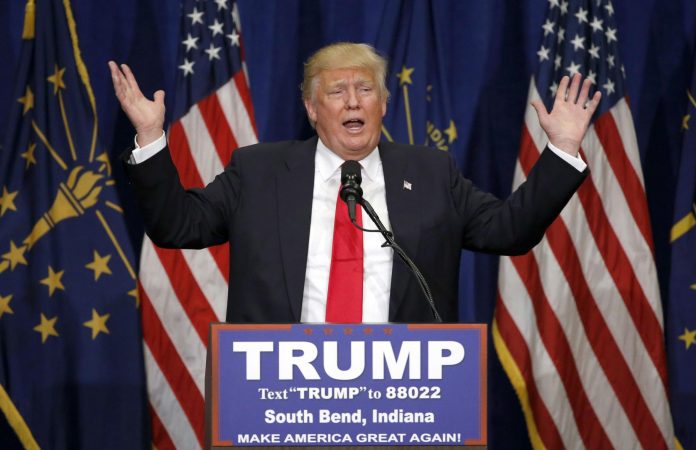
    WASHINGTON (TIP): Donald Trump won the Republican primary in Indiana on Tuesday, May 3, a resounding victory that sets him up to be the presumptive Republican nominee.

    Rival Ted Cruz announced later in the evening that he was dropping out of the race, removing Trump’s most formidable foe.

    Read also: Trump’s Win will have Consequences

    Speaking to supporters, Trump said he didn’t know whether Cruz liked him or not but called him “one tough competitor.” Just hours earlier, when Cruz was still in the race, they were trading insults.

    “This has been an amazing evening. I didn’t expect this,” Trump said, as he called for party unity.

    On the Democratic side, Bernie Sanders was the projected winner in Indiana over Hillary Clinton, a surprise as she had held a slight lead in recent polls.
    Trump is now the favorite to win the GOP nomination, a notion unthinkable to many in the GOP establishment a year ago when his potential presidential bid was regarded as a lark or publicity stunt. Republican National Committee chairman Reince Priebus said in a tweet that Trump was the “presumptive nominee” and that the party should unite behind him.

    Cruz could no longer amass a majority of the delegates by the time of the Republican National Convention in July, and Trump’s string of victories raised doubts that he could deny Trump a majority by that point.

    “Lyin’ Ted Cruz consistently said that he will, and must, win Indiana,” Trump tweeted shortly after the race was called. “If he doesn’t he should drop out of the race-stop wasting time & money.”

    The Hoosier State had once been considered a state favorable to Cruz, and even he had seen it as a firewall to Trump’s wins in the northeast. But an alliance that the Texas senator made with John Kasich unraveled, and Cruz’s announcement that Carly Fiorina would be his running mate hasn’t changed the dynamics of the race.

    Clinton has tried to turn her attention to the general election, but Sanders has been bolstered by a hefty fundraising network of small donors. Even though the amount that he raised fell in April, it was still almost $26 million, nearly the same amount that Clinton raised for the primary.

  • Trump’s Win will have Consequences

    Trump’s Win will have Consequences

    Trump’s opponent, Ted Cruz’s wife had said that her husband’s candidacy was showing America, “the face of God, whom they serve”. But in reality many Americans were reminded of Elmer Gantry, a sleazy 1920s sociopathic preacher from the film Elmer Gantry. Most Americans were not ready for Ted Cruz’s kind of ultra-conservatism. They are worried about jobs. So to paraphrase Bill Clinton, “it is jobs, stupid.”

    Trump had declared that his idea was to bring new blood in the party and change its base and outlook. He never spared an opportunity to provoke his rivals, party leadership and media personalities, who inevitably retaliated.

    The anti-Trump movement spent more than $75 million on broadcast TV alone. He also weathered nearly 64,000 television advertisements critical of him. Media was also campaigning against him and giving favorable coverage to his opponents. All this has come to a naught. Now Trump is going to be the Republican nominee. He achieved this victory on his own, in spite of opposition from the Republican Party bosses, who are then left with no option but to back him. The leadership did not realize that people are tired of all politicians and do not trust them. Their false promises do not impress anyone. The longer a politician is in office, the more disliked he is. People are fed up with politicians with the same rhetoric and talking points, refusing to accept and learn from the mistakes and make changes and focus on improving the job situation. In 2014, the Republicans secured the largest majority in the House since 1928, and by winning nine seats, regained the Senate majority for the first time in eight years. They also took pride in having control of 31 governorships.

    Nevertheless, the so-called establishment could not find any capable aspirant who could be a match for Trump, who had never held any public office. Trump has shown that the party leadership is out of touch.

    The recent campaign has brought out the anger of young people, as they are the victims of modernization, international trade deals and shrinking economy with consequent loss of jobs. The income level has gone down, widening the gap between the rich and the ordinary people.

    Germany, which had faced the same problem, woke up quite early and made provisions to train the affected workers in new technology. Hence, Germany was equipped to face the problems generated by the international trade agreements.

    Neither the Obama administration nor the Republican Congress nor the Senate did anything to address this issue. Therefore, the Republican Party as well as Hillary Clinton are finding it difficult to face the angry youth in their own parties. The Republican leadership as well as Hillary all these years have indulged in pep talk and made tall promises which have failed to revive the economy.

    So it is no wonder that while the Republican Party leadership has to eat humble pie, Hillary has also not secured the nomination yet because people do not really like her or trust her. She, of course, would get the required number of delegates in the remaining states, especially in California. But the victory will not be glorious.

    Trump says that his ability to make deals and fix problems is the key to his remarkable success in business. But the eventual final campaign would not be easy for either Trump or Hillary. All these days Trump has scrupulously avoided giving details of his economic policy or his international agenda.

    His “America First” slogan has roused nationalist fervor but it would result in a protectionist policy. It is true that all international trade agreements have some unpalatable clauses but they also boost trade and economy. It is curious that while multi-billionaire Trump’s “America-First” policy is another name for protectionism; the self-proclaimed socialist, Sanders, also wants to tread the same path. Some economists have pointed out that various welfare schemes put forward by Sanders would have to be backed up by heavy taxation, resulting in the increase in inflation and the cost of living.

    So far, democratic white youth nationwide have favored Sanders and brought Hillary’s favorability numbers significantly down. While Trump has won the nomination race, he does not mix with the African-Americans like Hillary does. He has alienated Hispanics and Muslims, which make a very large chunk of population. The language which Trump has used so far, is dangerous. In November, no matter who wins, Hillary or Trump, the problems facing either of them would be enormous and very intricate because of their history and the way in which they have conducted themselves so far.

    For instance, it is believed that Hillary is willing to compromise. But some, who know her, say that it is true but at times she is very adamant. When her husband was the President, he put forward a plan for healthcare, which would have been accepted by the Congress with some amendments. But Hillary was adamant, hence the plan failed to pass.

    The situation in the country demands a conciliatory tone as well as behavior. Obama generally kept aloof from the members of both parties and also leaders of other countries. Nevertheless, he did follow a conciliatory policy on crucial matters.

    Hillary or Trump would have to face a not-so-friendly Congress and the Senate. It is quite possible that Sanders and some other Senators would keep up pressure on the future Clinton administration. It would need a great deal of acumen not to be populist and disturb the balance.

    Hillary has been branded as someone, who is close to the financial circles. No President could afford to be an antagonist of these circles; but to keep a balance requires great deal of skill. While Hillary, first as the First Lady, then as the Senator, had relations with members of both houses of Congress., Trump would be totally new to the Congress and the administration. He, of course, has been the head of a big commercial conglomerate. But as the head of the state, he would have to run the administration, be answerable to the Congress as well as people, which is quite different from running a company. Thus, the new President would have to face a volatile situation and many challenges.

    (Govind Talwalkar - The author is a former Editor of ‘Maharashtra Times’)
  • Donald Trump aiming to secure 1,400 delegates: Report

    Donald Trump aiming to secure 1,400 delegates: Report

    WASHINGTON (TIP): Buoyed by his massive New York primary win, Republican presidential frontrunner Donald Trump is aiming to secure 1,400 delegates before the July convention and secure an outright nomination, according to a media report.

    Internal documents show that the Trump Campaign advisers are projecting the 69-year-old tycoon-turned-politician to have 1,400 delegates when he goes to the Cleveland Convention, Washington Post reported.

    This is more than the 1,237 delegates required to win the Republican presidential nomination.

    The projections were part of an internal memo sent by his campaign Tuesday night with talking points to his surrogates.

    “The RNC has a lot to answer for as do those who are part of the donor class and the party establishment. We will get most of the delegates and we will, in just another week, close the door on other candidates getting to 1,237 before the convention,” the memo said.

    “Speaking of delegates we are working every delegate elected just as hard as the other campaigns the Cruz spin machine produces more lies than anything else. Ourprojections call for us to accumulate over 1,400 delegates and thus a first ballot nomination win in Cleveland,” the internal memo was quoted as saying.

    However, his rival Senator Ted Cruz from Texas disagreed claiming that Trump would not be able to reach the 1,237 figure before the convention.

    “We are headed to a contested convention at this point. Nobody is getting to 1,237,” Cruz told Philadelphia radio.

  • WHY THE BJP MATTERS

    WHY THE BJP MATTERS

    The question I have been asked most often over the last two months is this: what do you think of Donald Trump?

    It is easy to answer: I do not think of Donald Trump. But the question I have been asked most often the last twenty years is far more difficult to evade: ‘What do you think of the BJP?’ Because I do think of the BJP (Bharatiya Janata Party) quite often, and I am afraid that what I think of the BJP is different from what both its Hindutva supporters and its Leftist opponents think of it.

    While most Hindutva supporters celebrate the BJP as the epitome of ‘Hindu’ -which they then equate with ‘national’ -values, staunch Leftists critique the BJP as a proto-fascist party, or at least a party with fascist tendencies. On the other hand, I see the BJP as a collocation of conservative, capitalist, neo-liberal, cultural nationalist, religious and reactionary groups and tendencies. Some of these can assume a proto-fascist expression, but then so could communism, under people like Stalin.

    The fact remains that the BJP has traditionally collected various groups, and what Leftists see as its ‘fascist’ face is still only an aspect of a vast collocation of political ideologies. True, all these ideologies are at least conservative and ‘Right-leaning’. But that cannot be used to dismiss the BJP because all modern democracies contain Left- and Right-leaning parties.

    [inlinetweet prefix=”WHY THE BJP MATTERS” tweeter=”” suffix=””]Space for an alternative[/inlinetweet]

    Actually, one can argue that, to an extent, the rise of a party like the BJP in postcolonial India was inevitable and necessary. That is so because Third World countries usually gained independence under a Leftist umbrella. This was partly historical: Leftist ideologies were ascendant in the period, c. 1940s to 1970s, when most of these Third World countries shook off the yoke of European colonization. This was also partly ideological: as the pre-Independence history of both ‘Hindu nationalist’ and ‘Islamic’ groups in India shows, Rightist parties were often complicit in colonial politics.

    Hence, when the postcolonial nation -India, Turkey or Egypt – is born, it is born under a sky that rains modern ‘Leftist’ rhetoric. The realities on the ground might not be socialist or even Leftist, but the rhetoric always tends to be. This is very different from the trajectory of modern nations in the First World: these have almost always grown from a monarchical position to that of conservatism and economic liberalism, followed by socialist and Leftist critiques. The BJP in India was inevitable because a large political space – conservative, economically liberal, religious, reactionary -which existed, for better and for worse, had little open representation in the Indian Parliament.

    Of course, the Congress was there and it was always a party of the middle – as Leftists and Rightists note, both in terms of accusation. Despite the Congress being a party of the middle, it retained a Leftist rhetoric. The BJP grew partly in response to this rhetoric, and partly because the rhetoric was often empty. But again, the matter is not as simple as my friends on the Left sometimes assume.

    For instance, from the time of Indira Gandhi onwards, the Congress stopped being a cadre-based party. It became a top-heavy party, and has remained so. Various communist parties were cadre-based, but they either had limited following or took a turn towards violent revolutionary politics -which made their cadres disappear as a democratic force. In this light, it is difficult to deny that the BJP is the most obviously cadre-based party in India today.

    The fact that the BJP has Narendra Modi as its face and the Congress has Rahul Gandhi is proof of this fact. It has become very difficult for party members to rise up the Congress hierarchy especially after Nehru, while this is relatively possible in the BJP. I recall Congress offices in small towns like Gaya even as late as the 1970s: they used to hum with activity and people. Today only BJP offices retain that atmosphere. In this sense again, it is problematic when the Left dismisses the only cadre-based national political party in India as ‘proto-fascist’.

    [inlinetweet prefix=”WHY THE BJP MATTERS” tweeter=”” suffix=””]The enemies within[/inlinetweet]

    And yet the dangers are there. The BJP is running the danger of suppressing its conservative, economically liberal and even culturally nationalist components in favor of a reactionary religious trend that can, and sometimes does, assume fascist dimensions. The current confrontations in certain national universities are an indication of this, as well as the tendency to resort to violence and threats against its opponents.

    I have always believed that there was the need for a party like the BJP in India, because there is always a need, at least in the current phase of human history, for parties that espouse conservative, economically liberal, cultural nationalist and even religious perspectives. That is one side of the political divide, and on the other side there is just as much of a need for parties that are called Leftist – socialist, Marxist, culturally liberal, Green, etc. This is a necessary argument that can never be terminated – except by violence on one side or the other.

    Today, some segments in the BJP are permitting this violence to take place, and hence they are targeting those essential hotbeds of free discussion, universities. This is a sad and dangerous trend. I can see why academics are worried: from Nazi Germany and Stalinist U.S.S.R. to Rightist Chile, Argentina, etc., the takeover of fascist groups from within otherwise legitimate ‘Leftist’ or ‘Rightist’ party positions always commenced with an attack on students, academics and universities.

    If I were a BJP voter, I would be worried about the soul of my party. The condition of India in the near future might come to depend on the ability of the BJP to negotiate its own complex nature.

    (Tabish Khair’s new novel, Jihadi Jane, will be published in India in June)

  • Trump and Clinton win New York primaries, solidify positions

    Trump and Clinton win New York primaries, solidify positions

    NEW YORK (TIP): Donald Trump and Hillary Clinton, the Republican and Democratic party frontrunners for US presidential nominations, have won their respective primaries in New York state.

    New York helped both front-runners to solidify their lead. Mr. Trump won a commanding victory with 60% of the votes and scooped up most of his home state’s 95 delegates. John Kasich, the governor of Ohio, came a distant second with 25% of the votes and Mr. Cruz scored a measly 15%. “Thank you New York! I love you!”, Mr. Trump tweeted shortly after polls closed. In his short victory speech at Trump tower, his gleaming palace in Manhattan, the real-estate mogul thanked his family and his team and then declared that “we don’t have much of a race anymore…Senator Cruz is just about mathematically eliminated”.

    Mrs. Clinton won an equally convincing 58%of the votes with the remaining 42% going to Mr. Sanders. There were 291 Democratic delegates at stake in New York; Mrs. Clinton bagged most of them. She had fought a surprisingly tough battle in the city, which she considers her home state, against Mr. Sanders, who hails from Brooklyn. In the two weeks since she lost in Wisconsin on April 5th, she campaigned tirelessly in the streets of the Big Apple. She danced the merengue in a Latino neighborhood in Washington Heights and devoured an ice-cream concoction called “Victory Mac Daddy” at an ice-cream parlor in the East Village. Meanwhile Mr. Sanders stuck to holding large rallies in Prospect Park and Washington Square Park, attracting tens of thousands of mostly young people.

    Have the two front-runners wrapped up their respective nominations? They haven’t, though Mrs. Clinton is now very nearly unbeatable. Shedding her usual caution, she declared in her victory speech that “the race for the Democratic nomination is in the home stretch and victory is in sight”. She also reached out to Sanders supporters, telling them that “there is much more that unites us than divides us”. Mr. Trump on the other hand needs to continue to win in five important contests on the east coast next week (Pennsylvania, Delaware, Rhode Island, Connecticut and Maryland), in Indiana and most crucially in California, where voters go to the polls on June 7th and 172 delegates are at stake. He knows that he still has only a narrow path to get the 1,237 pledged delegates needed to avoid a contested convention in Cleveland, which is why he keeps whining about the “rigged” delegate system. Speaking to reporters on Staten Island on the weekend, Mr. Trump said he hoped that the July convention would “not involve violence”. “And I don’t think it will,” he said. “But I will say this: It’s a rigged system. It’s a crooked system. It’s a hundred-percent crooked.”

    The New York vote was reportedly marred by voting irregularities, with numerous accounts of thousands being inexplicably stripped from voter rolls. This prompted the New York City comptroller to announce an audit to identify the problems in the primary vote. Mr. Sanders’ team probably rightly assumed that their candidate was especially affected by (often young) voters being barred from voting. “We are deeply disturbed by what we’re hearing from polling places across the state”, said a statement by the Sanders campaign. “From long lines and dramatic understaffing to longtime voters being forced to cast affidavit ballots and thousands of registered New Yorkers being dropped from the rolls, what’s happening today is a disgrace.”

    Mr. Kasich was not in New York any more after the polls closed on April 19th, moving on to Maryland. He had done his bit of campaigning and eating in New York-he prompted snarky comments when he attacked a slice of pizza with a fork though he did better with chicken soup with replace and apple strudel. He won the island of Manhattan, where Mr. Trump is widely disliked, but did far less well than Mr. Trump in rural areas in upstate New York, which has been hit hard by job losses in recent years. Mr. Cruz would dearly like Mr. Kasich to quit the campaign, but the plucky Ohio governor thinks he can win a contested convention. Others want him to stay in the race merely to keep a voice of reason in the Republican contest. Mr. Cruz had also moved on to the next state, spending the evening of April 19th in Pennsylvania. He had offended New Yorkers when he attacked Mr. Trump in Iowa because of his “New York values” and however much he tried to qualify his insult in subsequent months, New Yorkers paid him back with a poor result. By now Mr. Cruz, like Mr. Kasich, has no chance of winning the required 1,237 pledged candidates to win the nomination. And, like the governor, he is staying in because he thinks he has a chance to win a contested convention.

    Clinton seems to have locked up the Democratic race with a commanding win in the Empire State. She now leads Sanders by more than 250 pledged delegates leaving the superdelegates aside for the moment.

    Sanders’ hope to win the race is effectively over. He would have to win a far larger share of the remaining delegates than he already has. Even his loyalists beganacknowledging on the night of the primary that Sanders could no longer catch Clinton in delegates. However, there’s a good case for him to stay in the race right until the Democratic National Convention scheduled for July.

    For Donald Trump, a commanding win in New York-he won 90 of the 95 available delegates – delivering a massive blow to his critics since New York is considered to be the largest immigrant inhabited state-provides much-needed stability to a campaign that’s been in wild flux for weeks, roiled by losses, delegate troubles, and internal power struggles. The fact that Ted Cruz, his closest rival, was shut out entirely, makes the win sweeter for him and reinforces that he is the front-runner.

    Yet Trump dreams are far-fetched as he needs 1,237 delegates to clinch the Republican nomination. He’d have to win about 63 percent of the delegates still on the board. That’s a higher proportion than what he’s won so far, but the field is smaller now, and the map ahead is thought to favor him, including as it includes several northeastern states and California. Trump has excelled in states with higher numbers of moderates.

    Ted Cruz, meanwhile, is now mathematically eliminated from reaching 1,237, though he was practically denied that chance long ago. His hope is to keep Trump from getting there on the first ballot at the convention, and then snatch the nomination out from under him on subsequent ballots. That’s why Cruz has put so much effort into state conventions where delegates are selected, and he’s been very successful at placing his own loyalists in slots-much to Trump’s chagrin. As for John Kasich, the measly five delegates he won in New York doesn’t help him much. He’s still hoping for a miracle on the floor in Cleveland, as the party magically recognizes him as the strongest general-election candidate and crowns him the nominee. Good luck, governor.

    But what if Trump doesn’t actually need to get to 1,237?

    Vote now on www.theindianpanorama.news/poll

  • Donald Trump and ‘Official Racism’ era in politics

    Donald Trump and ‘Official Racism’ era in politics

    The Republican Party and the “conservative establishment” do not disagree with Trump’s racism, xenophobia, prejudice and bigotry toward Hispanic and Latino immigrants, non-whites, Muslims and women. They are just embarrassed and aghast that Donald Trump has dropped the mask of racist gentility and exposed the racist id of today’s Republican Party and movement conservatism for the world to see.

    Republican Party elites are nervous about Donald Trump because he has taken their “polite” “dog whistle” racism and replaced it with a loud speaker.


    Donald Trump

    As the world looks on askance at the freakishness of the US presidential election, it is worth bearing in mind that a large number of Americans feel much the same sense of unease.

    To outside eyes, the rise of Donald Trump especially looks like the ultimate “Only in America” story, but many of his compatriots wish it was a “Not in America” phenomenon.

    For all the billionaire’s dominance in the Republican race, for all the free airtime lavished upon him by the media, polls repeatedly suggest that he is the most unpopular presidential candidate in modern history.

    A recent survey conducted for the Washington Post and ABC News showed that 67% of voters have an unfavorable view of him.

    What’s also striking about the polling data is that the more exposure the billionaire gets, the higher his negatives soar, whether it is women angered by his misogyny, Latinos upset by his racial demagoguery, African-Americans who don’t take kindly to being called “the blacks” or fellow Republicans who believe he will lead their party off a cliff.

    Donald Trump is the preferred candidate of white supremacists. Online and in other spaces, they have anointed him their champion in the 2016 presidential race.

    [inlinetweet prefix=”” tweeter=”” suffix=””]

    Trump & KKK (David Duke) Connection, that he knows nothing about…


    [/inlinetweet]

    LIAR LIAR – “Just so you understand, I don’t know anything about David Duke, OK?” Trump said. Trump was pressed three times on whether he’d distance himself from the Ku Klux Klan — but never mentioned the group in his answers.

    “I don’t know anything about what you’re even talking about with white supremacy or white supremacists,” he said. “So I don’t know. I don’t know — did he endorse me, or what’s going on? Because I know nothing about David Duke; I know nothing about white supremacists…”

    Despite what he said, Trump apparently did know Duke in 2000 — citing him, as well as Pat Buchanan and Lenora Fulani — in a statement that year explaining why he had decided to end his brief flirtation with a Reform Party presidential campaign.

    “The Reform Party now includes a Klansman, Mr. Duke, a neo-Nazi, Mr. Buchanan, and a communist, Ms. Fulani. This is not the company I wish to keep,” Trump said in a statement reported then by The New York Times. …

    Politics is not about people but about parties and their ideology; political parties are a type of “brand name” that voters associate with a specific set of policies, ideas, personalities and moral values. Consequently, the types of voters who are attracted to a given political party also tells us a great deal about how it is perceived by the public. And in a democracy, the relationship between voters, elected officials and a given political party should ideally be reflected by the types of policies the latter advances in order to both win and stay in power.

    By these criteria, the post-civil rights era Republican Party is the United States’ largest white identity organization, one in which conservatism and racism are now one and the same thing.

    In the 2012 election, 89 percent of Republican voters were white. While the Republican Party routinely anoints a professional “best black friend” (Herman Cain in 2012; Ben Carson in 2016; Republican National Committee chairman Michael Steele in 2009) who serves in the role as human chaff to deflect charges of racism, non-whites are a minuscule part of the GOP’s electoral coalition and base. This is reflected by how Republican voters are much more likely to be racially resentful toward black Americans and also manifest what is known as “modern” or “symbolic racism.”

    Even more troubling, research by Brown University political scientist Michael Tesler demonstrates that “old-fashioned racism” has actually increased among Republican voters since the election of Barack Obama.

    New Tactics but same old agenda – Birth of The Southern Strategy

    The Southern Strategy, with its mix of coded and overt anti-black and brown racism, is a script that is closely adhered to by the broader right-wing news entertainment propaganda machine.

    The Southern Strategy was desperately deployed against the United States’ first black president, Barack Obama. From “birtherism” to claims that Obama is “traitor” who “hates Americans,” the rampant disrespect and obstructionism that Republicans have shown toward him, as well as the panoply of both overt and subtle racist attacks by conservatives against Obama’s person (and family) are all outgrowths of the Southern Strategy.

    The Age of Obama also gave rise to the Tea Party movement. As an extreme wing within an already extremist and revanchist Republican Party, Tea Party members and their sympathizers were/are extremely hostile to Barack Obama and the symbolic power of a black man leading “their” White America. The Tea Party demand that “they want their country back” is both a direct claim of white privilege and constitutes a worldview where whiteness is taken to be synonymous with being a “real American.”

    Not all Republicans are racists. But racists are more likely to be Republicans.

    Donald Trump knows this to be true. He has built a political campaign around that fact.

    Ultimately, Republican Party elites are nervous about Donald Trump because he has taken their “polite” “dog whistle” racism and replaced it with a loud speaker.

    The Republican Party and the “conservative establishment” do not disagree with Trump’s racism, xenophobia, prejudice and bigotry toward Hispanic and Latino immigrants, non-whites, Muslims and women. They are just embarrassed and aghast that Donald Trump has dropped the mask of racist gentility and exposed the racist id of today’s Republican Party and movement conservatism for the world to see.