Month: May 2017

  • IF TRIPLE TALAQ INVALID, SUGGEST WAY OUT: SC

    IF TRIPLE TALAQ INVALID, SUGGEST WAY OUT: SC

    IF TRIPLE TALAQ INVALID, SUGGEST WAY OUT: SC

    NEW DELHI (TIP): The Supreme Court on May 11 asked the Centre and Muslim women petitioners who have challenged the validity of triple talaq to suggest a possible way out if the court were to declare the practice unconstitutional.

    “Where does he (Muslim man) go for divorce? There is no judicial forum for him. There would be a vacuum. How does he seek divorce?” a five-judge Constitution Bench headed by Chief Justice of India JS Khehar asked.

    The Bench, also comprising Justices Kurian Joseph, RF Nariman, UU Lalit and S Abdul Nazeer, asked the Centre and the petitioners to ponder over the possible fallout in case it declared triple talaq invalid.

    Justice Joseph said until Parliament enacted a law to address the issue, it could be dealt with under the Dissolution of Muslim Marriages Act, 1939–under which Muslim women are entitled to seek divorce.

    Senior counsel Indira Jaising, who appeared on behalf of Bebak Collective, suggested that the expression “Muslim woman” under the 1939 Act could be replaced by “Muslim person” and it could be made gender-neutral.

    But most of the grounds for dissolution of a marriage prescribed under Section 2 of the Act were women specific, and not gender-neutral, the Bench pointed out.

    As Justice Nariman said insanity and cruelty were gender-neutral grounds, most of the lawyers burst into laughter. Additional Solicitor General Tushar Mehta said Attorney General Mukul Rohatgi would address the court on all the aspects of the issue on Monday. The arguments would continue on Friday.

    The court also clarified that the 1939 Act (which covered Shariat) being a statute was a law within the meaning of Article 13(3) of the Constitution and hence could be tested on the touchstone of fundamental rights.

    At the very outset, the Bench said it would not consider the issue of polygamy and concentrate on triple talaq alone. But Mehta insisted that the Centre wanted the court to consider all aspects relating to gender justice. “We are opposing all forms of triple talaq,” he said.

    Even Jaising said all forms of triple talaq were bad as they conferred unrestricted power on Muslim men to give divorce to women without assigning any reasons. She said unfortunately such unilateral triple talaq were binding and final, she added.

    “For a Muslim woman triple talaq means civil death. Its civil consequences are very harsh for them. There has to be some sort of judicial oversight,” she said, terming triple talaq as “extrajudicial divorce”.

    Jaising pointed out that while a Muslim man can unilaterally pronounce triple talaq, a Muslim woman has to go to courts to seek divorce. This is discriminatory and violated her right to equality, she argued.

    Earlier, appearing for Bharatiya Muslim Mahila Andolan, senior counsel Anand Grover requested the court to adopt a “minimalist approach” and consider if instantaneous triple talaq was permissible under the Islamic law or not. If the answer was in the negative, the court should declare it illegal without going into the constitutional aspects of the issue.

    Senior counsel Amit Chadha, who represented petitioner Shayara Bano, made a two-fold argument: whether instantaneous triple talaq was allowed under Islamic law and whether it violated Muslim women’s fundamental rights guaranteed under the Constitution. He said it was neither fundamental to Islam nor was it permissible under the Constitution. Chadha referred to the practices in the neighbouring Islamic countries such as Pakistan and Bangladesh to contend that triple talaq was un-Islamic.

    The court said it would first determine whether the practice was fundamental to Islam.

    Senior advocates Kapil Sibal and Raju Ramachandran are representing All India Muslim Personal Law Board in the matter. Former Union Minister and senior advocate Salman Khurshid, who is assisting the court in his personal capacity, termed triple talaq as a “nonissue” saying it is not considered complete without conciliation efforts between the husband and the wife.

    All India Muslim Personal Law Board (AIMPLB), which sought to defend these practices, claims the Supreme Court cannot consider the Constitutional validity of Muslim Personal Law. These were matters to be dealt with by the legislature, AIMPLB said in its affidavit. “Once three pronouncements of divorce are made, the marriage dissolves and the woman becomes unlawful or haram to the man who had pronounced divorce,” the Board said.

    Source: The Tribune


  • ‘Obama warned Trump against Flynn as national security adviser’

    ‘Obama warned Trump against Flynn as national security adviser’

    ‘Obama warned Trump against Flynn as national security adviser’


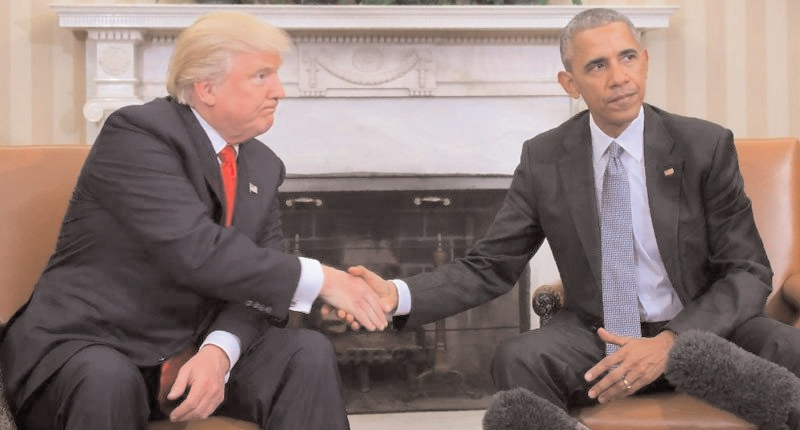
    WASHINGTON (TIP): Former U.S. President Barack Obama warned then- President-elect Donald Trump not to give the post of national security adviser in his administration to Michael Flynn who was eventually fired in a controversy about ties to Russia, a former Obama aide said. Obama gave the warning in an Oval Office meeting with Trump just days after the Republican’s surprise election win last Nov. 8. The warning, first reported by NBC News, came up during a discussion of White House personnel.

    White House spokesman Sean Spicer, responding to the reports, told a news briefing: “It’s true that the president, President Obama, made it known that he wasn’t exactly a fan of General Flynn’s” during a one-hour meeting on Nov. 10 with Trump.

    An Obama spokesman initially declined to comment.

    Flynn has emerged as a central figure in probes into allegations of Russian meddling in. the 2016 U.S. election and possible collusion between Trump’s campaign and Moscow.

    He had been pushed out by Obama in 2014 from his job as director of the Defense Intelligence Agency, or DIA, during the Democratic president’s term in office.

    A former U.S. deputy attorney general, Sally Yates, is expected to tell a Senate Judiciary subcommittee later Monday that she had warned the White House counsel after Trump took office that Flynn had not told the truth about conversations he had held with Russia’s ambassador to Washington.

    Trump fired Flynn, a retired general, in February for failing to disclose talks with Ambassador Sergei Kislyak about U.S. sanctions on Moscow and then misleading Vice President Mike Pence about the conversations.

    Congressional committees began investigating after U.S. intelligence agencies concluded that Russian President Vladimir Putin had ordered hacking of Democratic political groups to try to sway the election toward Trump. Moscow has denied any such meddling.

    Trump has also dismissed the allegations, suggesting instead that Obama might have wiretapped Trump Tower in New York or that China may have been behind the cyber attacks. He has provided no evidence and neither scenario has been supported by intelligence agencies.

    Hours before Monday’s Senate hearing, Trump insinuated that Yates, an Obama administration appointment, had leaked information on Flynn to the media. “Ask Sally Yates, under oath, if she knows how classified information got into the newspapers soon after she explained it to W.H. Council,” Trump wrote on Twitter, apparently mis-spelling the word counsel.

    In another Twitter post, Trump noted that Flynn had been granted top security clearance while working in the Obama administration. Flynn was fired from the DIA in 2014 for what officials familiar with the issue said was a disruptive management style that included instructing analysts to find intelligence substantiating improbable theories that some subordinates came to call “Flynn facts.” He also advocated an overhaul of the DIA that ignited resistance from veteran intelligence officials, the officials said.

    James Clapper, Obama’s former Director of National Intelligence, will also testify to the Senate panel on May 9. (TOI)


  • US TEACHER RIPS OFF 8-YEAR-OLD GIRL’S HIJAB, FIRED

    US TEACHER RIPS OFF 8-YEAR-OLD GIRL’S HIJAB, FIRED

    US TEACHER RIPS OFF 8-YEAR-OLD GIRL’S HIJAB, FIRED

    NEW YORK (TIP): A teacher at a US school has been fired after he allegedly ripped the hijab off an 8-year-old girl’s head for “misbehaving” in class.

    Oghenetega Edah, 31, demanded that the girl at the Bennington School, Bronx, take off her religious scarf, police said.

    The girl was misbehaving in class and sitting in the teacher’s chair without his permission. So the teacher tapped her on her arm to get her to move, The New York Post reported.

    When she did not comply, Edah, a subsitute, threatened to take the scarf. “I’m taking it off,” he said as he pulled the hijab off her head, causing an injury to her right eye, according to police.

    Doctors at Jacobi Hospital determined that the girl’s cornea was not damaged. “This alleged behaviour is completely unacceptable,” Michael Aciman, a Department of Education spokesman, said in a statement. “This individual was removed from the school immediately and his employment has been terminated,” he said.

    Edah became a per diem substitute teacher in January 2017, the report said. His termination was effective May 3. The incident that took place last week was under investigation, police said. The Department of Investigation was also looking into it.

    Parents at the school say the ill-tempered substitute only worked at Bennington for a short while. “It’s crazy…I just feel like teachers are supposed to control their anger a little bit more. That’s why they’re there. To teach and be calm. They’re supposed to be patient. That’s your job,” Yvarie Ortiz, a parent of a first grader at the school said. The incident comes amid growing incidents of hate and assaults on hijab-wearing girls and women across the US. (PTI)


  • Running for US President ‘a real possibility’, says Priyanka Chopra’s Baywatch co-star ‘The Rock’

    Running for US President ‘a real possibility’, says Priyanka Chopra’s Baywatch co-star ‘The Rock’

    Running for US President ‘a real possibility’, says Priyanka Chopra’s Baywatch co-star ‘The Rock’

    WASHINGTON (TIP): Indian actor Priyanka Chopra may one day be able to say she acted with a US Presidential candidate.

    That’s because her Baywatch co-star Dwayne ‘The Rock’ Johnson told GQ magazine’s latest issue that running for election to be US President is “a real possibility.”

    The magazine mentions that last year, The Washington Post published an op-ed suggesting the WWE wrestler-turnedactor could be a viable candidate for the post now occupied by Donald Trump, a former reality TV star himself. Since then, Johnson told GQ that he’s been really thinking about it.

    GQ then asks Johnson the operative question.

    Whether “he honestly might one day give up his life as the highest-paid movie star on earth-which is unquestionably easier, more fun, and more lucrative than being president of the United States-in order to run for office”?

    States-in order to run for office”? “I think that it’s a real possibility,” Johnson, 45, replied, GQ says,” solemnly”.

    “Im grateful how this idea has become very real to a lot of people. Years from now if I feel I can step up and become a strong, impactful and authentic leader for the people and our country – I will,” ‘The Rock’ said on Instagram last year after the Post’s article.

    On its part, the magazine believes “the idea doesn’t sound crazy.” It’s because the same qualities that made Johnson “the highest-paid movie star on earth”, as GQ puts it, are what could well propel him into office, or at least give him a fighting chance.

    Hollywood says ‘The Rock’ tests well in “all four quadrants”: old men, young men, old women, and young women. In plain English, that means everybody likes him.

    “[He] is as close to guaranteeing you butts in the seat as anybody can be,” NBCUniversal vice chairman Ron Meyer told GQ.

    There are two other reasons GQ cites to say Johnson running for US President “doesn’t sound crazy” – his “industrial strength patriotism” and “his tough-toplace ethnicity”.

    That patriotism is well known in the US, where Johnson “frequently takes to social media to thank members of the armed forces, specifically and in aggregate, for their service,” as GQ writes.

    Johnson’s ethnicity is black and Samoan. “This uncommon ethnic background means that, in the right light, he can read as Pacific Islander, Latino, Middle Eastern, Native American, Southeast Asian”, etc., etc., GQ writes. Johnson’s colouring therefore gives him “a hometown advantage everywhere on earth,” the magazine adds. (PTI)

  • Trump asked FBI director three times if he was target of investigations

    Trump asked FBI director three times if he was target of investigations

    Trump asked FBI director three times if he was target of investigations

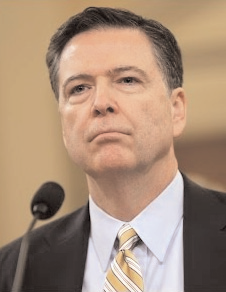
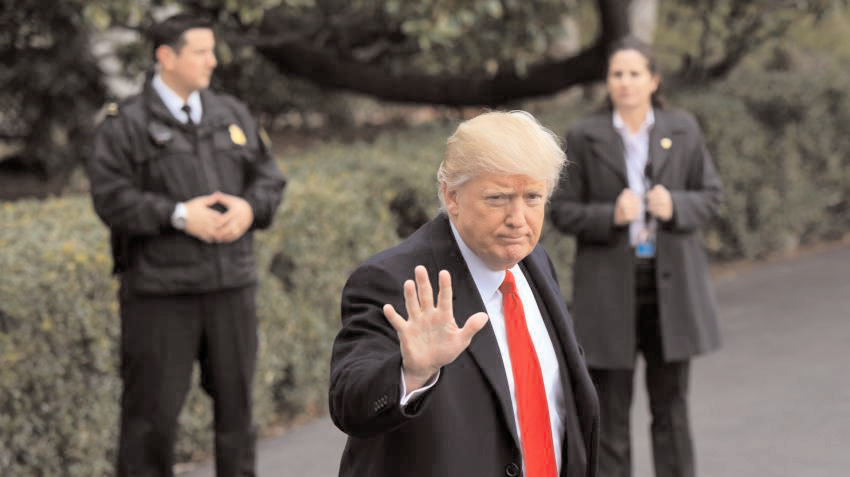
    WASHINGTON (TIP): Donald Trump said May 11 he asked his now-fired FBI director on three occasions whether he was the target of ongoing investigations, stoking allegations of presidential interference.

    The US president also acknowledged that Russia was on his mind when he made the decision to sack James Comey, who had been heading a probe into suspected Russian influence in the 2016 election.

    “When I decided to just do it, I said to myself, I said you know, this Russia thing with Trump and Russia is a made up story,” he said in an interview with NBC, appearing to link Comey’s firing with the investigation.

    Trump said he had asked Comey if he was the subject of counter-intelligence probes — twice in conversations over the phone and once over a White House dinner.

    “I actually asked him, yes. I said, ‘If it’s possible would you let me know, am I under investigation?’”

    “He said, ‘You are not under investigation,’” Trump recounted, repeating an assertion made when the White House announced Comey’s firing Tuesday.

    “All I can tell you is, well I know what, I know that I’m not under investigation. Me. Personally. I’m not talking about campaigns. I’m not talking about anything else. I’m not under investigation.”

    Trump’s comments to NBC raised questions about whether he had acted inappropriately and whether Comey had broken government guidelines. US presidents are normally at pains to avoid any suggestion of interference or even commenting on ongoing investigations. The FBI typically does not confirm their existence.

    Noted legal scholar Laurence Tribe told AFP that if Comey did indeed answer Trump’s question, it would violate Department of Justice rules and “would be unthinkably unethical and unprofessional in this situation.”

    Trump also said that at the dinner, he and Comey discussed whether the US top cop would stay in his role and continue his ten-year term.

    Asking such a question “would come close to bribery… or at least obstruction of justice, which Comey would’ve had to be an idiot to fall for by offering the assurance sought,” Tribe said.

    The White House rejected the suggestion the exchange was inappropriate. “I don’t see it as a conflict of interest,” White House spokeswoman Sarah Huckabee Sanders said.

    In the interview, Trump insisted that he always intended to fire Comey, undercutting the initial White House explanation that he acted on the recommendation of top justice officials who criticized the FBI chief’s handling of a probe into Hillary Clinton’s emails.

    I was going to fire him regardless of recommendations,” said the president. “He’s a showboat, he’s a grandstander.” Opponents have claimed that Comey’s shock sacking was a bid to stall an FBI investigation into alleged Russian meddling in the 2016 election, which is also looking into possible collusion between the Kremlin and Trump’s team. Trump’s interview was released on the same day the interim head of the FBI told the US Congress that Comey’s sacking would not derail the Russia investigation. “There has been no effort to impede our investigation to date,” acting director Andrew McCabe told the Senate Intelligence Committee, in a hearing that capped two days of high drama provoked by the dismissal.

    “You cannot stop the men and women of the FBI from doing the right thing,” he said. “All of the agents involved in the investigation are still in their positions.” Trump told NBC that had Russia interfered in the 2016 election, it would have been “horrible.” He repeated denials of links between his campaign and Moscow.

    “There’s no collusion between me, my campaign and the Russians,” he said. While Trump said the outgoing FBI director had left the agency in “turmoil,” McCabe rejected any suggestion that Comey had lost the support of the rank and file. “Director Comey enjoyed broad support within the FBI and still does today,” he told the committee. Echoing a widely-held view in opposition ranks, the senior Democrat on the Senate committee, John Warner, called the timing of Comey’s dismissal “especially troubling.” (PTI)


  • Donald Trump: Not against legal immigration

    Donald Trump: Not against legal immigration

    Donald Trump: Not against legal immigration

    WASHINGTON (TIP): President Donald Trump has said that he wants to stop illegal immigration into the US and called for a merit-based immigration system that could benefit high-tech professionals from countries like India.

    “I want to stop illegal immigration…I want people to come into the country legally. I want people to come in on merit. I want to go to a merit-based system,” Trump told a news magazine. He praised Australia and Canada for their merit-based immigration system.

    “I like those systems very much,  they’re very strong, they’re very good, I like them very much. We’re going to a much more merit-based system,” Trump said without giving an indication of the details of his new immigration policy to come.

    “I absolutely want talented people coming in, I want people that are going to love our country coming in, I want people that are going to contribute to our country coming in,” said the US President, who last month ordered a review of immigration policies in particular the H-1B work visas which is highly popular among Indian IT workers and companies.

    “We want a provision at the right time, we want people that are coming in and will commit to not getting not receiving any form of subsidy to live in our country for at least a five-year period,” Trump said in an apparent hint at the forthcoming policy.

    “We also want farm workers to be able to come in. You know, we’re going to have work visas for the farm workers. If you look, you know we have a lot of people coming through the border, they’re great people and they work on the farms and then they go back home. We like those people a lot and we want them to continue to come in,” he said in response to a question. (PTI)


  • US may ban laptops on all flights from Europe

    US may ban laptops on all flights from Europe

    US may ban laptops on all flights from Europe

    WASHINGTON (TIP): The Department of Homeland Security is considering banning laptops and other large electronic devices from carry-on bags on flights from Europe to the United States, a department spokesman said May 10. The action would extend a limited ban that was put in place in March+ . At that time, the United States and Britain barred passengers traveling through airports in 10 Muslim majority countries from carrying laptop computers, tablets and other devices larger than cellphones aboard direct inbound flights. The larger items were to be stowed with checked luggage.

    The ban was put in place after intelligence showed that the Islamic State was developing a bomb that could be hidden in portable electronic devices.

    David Lapan, a spokesman for the Department of Homeland Security, said the agency had not decided whether to extend the ban. “We’ll likely expand the restrictions,” he said.

    John F. Kelly, the Homeland Security secretary, is to brief senators on security topics Thursday, according to a Senate aide.

    Officials did not say when a new ban might be imposed. A senior official with a US airline said that carriers had been in talks with government officials for weeks about the possibility of an expanded ban, mainly over the logistics of carrying it out. The particular problem is passengers connecting in Europe from flights originating in the Middle East and Africa.

    An intelligence official, who, like the airline official, was not authorized to speak publicly about the potential ban, said it was being considered because of concerns that radicalized citizens of European Union nations+ or people with dual citizenship could target US-bound flights.

    US officials have tried in recent years to increase the vetting of those traveling into the country. Last year, the Obama administration revised a program that allowed citizens of about 38 countries, mostly in Europe, to visit the United States without a visa on trips of 90 days or less.

    The changes made it harder for travelers to enter the United States from Europe if they had dual citizenship in Iran, Iraq, Sudan or Syria, or had visited one of those countries in the previous five years. The rules were later extended to those who had visited Libya, Somalia and Yemen. Another government official, also speaking on the condition of anonymity, said the new ban was being considered because the US government considered immigration policies in Europe to be lax. (PTI)


  • Anti-immigrant rhetoric to hit US universities financially

    Anti-immigrant rhetoric to hit US universities financially

    WASHINGTON (TIP): Some of the popular US universities may be hit by “Trump effect” —the antiimmigrant rhetoric that is building in the country.

    According to DrEducation, a US-based research and consulting firm specialising in international student trends, just a 5% decline in the number of international students for the year 2017-18 could dent the revenue of the US universities by $249.30 million (on current education cost). And a decline of 10 % could cost them $498.60 million.

    Institutions that have benefited from the rising demand from key countries like China, India and Saudi Arabia will be the first to lose in the possible decline in international student enrollment for 2017-18. Based on its analysis, the consulting firm is apprehending serious implications on the financial sustainability of the universities even if the decline is just 5%. “The financial impact indicates that institutions must move towards more informed strategies rather than mere reacting to the external changes,” said Dr Rahul Choudaha, CEO, DrEducation.

    In an exclusive conversation with TOI recently, Phil Baty, editor of the Times Higher Education World University Rankings, said that with Brexit and the US President Donald Trump sending “negative messages” about two of the biggest destinations of international education, opportunities are ripe for students to explore equally good but less expensive options. “Canada is cheaperand is more liberal with visas. German universities are now doing very well. Dutch universities are really strong.

    French higher education establishments outside the main framework of the French university system are offering masters in English now. It will be Britain and America’s loss to see fewer Indian and international students, who are the life blood of a great university,” said Baty. (PTI)


  • Taliban likely to gain ground in Afghanistan this year

    Taliban likely to gain ground in Afghanistan this year: US intelligence official

    WASHINGTON (TIP): The Taliban is likely to gain ground in Afghanistan this year and the security situation will deteriorate in the country in 2018, a top US intelligence official has told US lawmakers.

    The Afghan National Security Forces would need sustained international support to prevent it from collapse, director of National Intelligence Dave Coats told members of the Senate Select Committee on Intelligence ruing over Kabul’s political dysfunction and ineffectiveness.

    “Although the Taliban was unsuccessful in seizing a provincial capital in 2016, it effectively navigated its second leadership transition in two years following the death of its former chief, Mullah Mansoor, and is likely to make gains in 2017,” Coats said in his testimony on worldwide threats.

    “The overall situation in Afghanistan will very likely continue to deteriorate, even if international support is sustained,” he said.

    According to Coats, the intelligence community assesses that the political and security situation in Afghanistan will almost certainly deteriorate through 2018 even with a modest increase in military assistance by the US and its partners.

    “This deterioration is undermined by its dire economic situation. Afghanistan will struggle to curb its dependence on external support until it contains the insurgency or reaches a peace agreement with the Taliban,” Coats said.

    “Endemic state weaknesses, the government’s political fragility, deficiencies of the Afghan National Security Forces (ANSF), Taliban persistence, and regional interference will remain key impediments to improvement,” he said.

    “Kabul’s political dysfunction and ineffectiveness will almost certainly be the greatest vulnerability to stability in 2017,” Coats said.

    ANSF performance will probably worsen due to a combination of Taliban operations, ANSF combat casualties, desertions, poor logistics support, and weak leadership, he added.

    The ANSF will almost certainly remain heavily dependent on foreign military and financial support to sustain themselves and preclude their collapse, he said.

    Coats said the fighting will also continue to threaten US personnel, allies, and partners, particularly in Kabul and urban population centres.

    Islamic State militant group’s Khorasan branch (ISIS-K) which constitutes ISIS’s most significant presence in South Asia–will probably remain a low-level developing threat to Afghan stability as well as to US and western interests in the region in 2017, Coats said. (PTI)


  • Nawaz Sharif briefs General Bajwa about Jindal visit

    Nawaz Sharif briefs General Bajwa about Jindal visit: Report

    ISLAMABAD (TIP): Pakistan’s civilian leadership informed the military top brass that the recent meeting between Prime Minister Nawaz Sharif and Indian steel magnate Sajjan Jindal was part of back-channel diplomacy, BBC’s Urdu service reported on Thursday.

    This was on a day leading Pakistan daily ‘The Nation’ quoted Sharif ‘s advisor on foreign affairs, Sartaj Aziz, as saying that he would not rule out a meeting between the Pakistan PM and his Indian counterpart, Narendra Modi, on the sidelines of Shanghai. Cooperation Organisation summit in June in Kazakhstan.

    “Pakistan could consider the meeting if interest was shown from the other side,” Aziz told the paper, with the report adding that the Indian businessman, Sajjan Jindal, had “conveyed a message of the Indian Premier to the Pakistani leader”.

    Meanwhile, the BBC report stated that during one of the recent meetings, Sharif had taken the Army chief, General Qamar Javed Bajwa, into confidence over his parleys with Jindal at the hill resort of Murree. General Bajwa subsequently took his officials into confidence over the matter. “The Army chief told his officers that the meeting was a part of back-channel diplomacy,” the report stated. Pakistan’s foreign office declined to comment on the meeting, saying it was of private nature. Maryam Nawaz, Sharif ‘s daughter, tweeted, “Mr Jindal is an old friend of the Prime Minister. There was nothing secret about the meeting and it should not be blown out of proportion. Thank you.”

    According to sources, Jindal visited Pakistan upon the insistence of important Indian officials, calling it an endeavour on India’s part to reduce friction between the two countries.

    Jindal’s visit came at a time when Sharif was under pressure from the Supreme Court over a probe into his offshore assets revealed in the Panama Papers leak. The meeting sparked speculation with several politicians and analysts suggesting it was aimed at a possible Sharif-Modi meeting in the near future.

    Others suggested that the unannounced visit was to talk about the release of Kulbhushan Jadhav, an alleged Indian spy sentenced to death by a Pakistani military court. Many of Sharif’s opponents had claimed that whenever his government comes under pressure, “the Modi government” comes to his rescue. (TOI)


  • Six killed as Bangladesh police raid militant hideout

    Six killed as Bangladesh police raid militant hideout

    DHAKA (TIP): Police in Bangladesh raided a militant hideout on Thursday sparking a clash in which five suspected militants and a fire fighter were killed in blasts that the militants set off, police said.

    Bangladeshi security forces have been hunting for militants, especially members of a group that has pledged allegiance to Islamic State, since an attack on a cafe in the capital, Dhaka, last July in which 22 people were killed, most of them foreigners. Police and army commandos have killed more than 70 suspected militants and arrested hundreds since then. In the latest incident, police raided the hideout, about 200 miles (120km) west of Dhaka, after a tip-off.

    The militants threw grenades, wounding two officers, the area’s police station chief, Hipjur Alam Munsi, told Reuters. The militants, suspected members of a faction of the Islamic-State-linked Jamaat-ul-Mujahideen Bangladesh group, set off explosives, killing themselves and the fire fighter, as police closed in, Munsi said.

    Al-Qaida and Islamic State have claimed responsibility for some of other attacks in Bangladesh over the past few years but the government has denied the presence of such groups in the Muslim-majority country of 160 million, blaming domestic militants instead. (PTI)

  • Sri Lanka refuses permission for Chinese submarine to dock at Colombo port: Sources

    Sri Lanka refuses permission for Chinese submarine to dock at Colombo port: Sources

    COLOMBO: Sri Lanka has rejected China’s request to dock one of its submarines in Colombo this month, two senior government officials said on Thursday as Prime Minister Narendra Modi landed in the island nation.

    Sri Lanka last allowed a Chinese submarine to dock+ in the capital of Colombo in October 2014, a move that triggered fierce opposition from India, which worries about growing Chinese activity in a country it has long viewed as part of its area of influence. Prime Minister Narendra Modi arrived in Sri Lanka on Thursday for a two-day official visit+ . A senior Sri Lankan government official said China’s request to dock one of its submarines in Colombo this month had been rejected. He said Sri Lanka was “unlikely” to agree to China’s request to dock the submarine at any time, given India’s concerns. The official asked not to be named because of the sensitivity of the matter.

    The second official, at the defence ministry, also said China’s request to dock this month had been rejected but that a decision on a further docking had been postponed.

    “It might happen later,” the second official said, adding that China had requested approval to use the port around May 16 “sometime back”. (Reuters)

  • BSF nabs 6 Pakistani fishermen from Sir Creek in Kutch

    BSF nabs 6 Pakistani fishermen from Sir Creek in Kutch

    BHUJ (TIP): Six Pakistani fishermen were on Thursday apprehended by the Border Security Force (BSF) personnel from the Indian side of the Nal Creek on the Indo-Pak border in Gujarat, a senior officer said.

    Creek in Kutch district, the BSF patrolling party spotted three boats doing fishing in Indian waters in Nal creek. Upon seeing the BSF boats, the fishermen on board two boats sailed off into Pakistani side whereas six fishermen on board third boat were nabbed by the BSF,” a senior BSF official said.

    He said the captured boat broke down on its way to a nearby location before sinking.

    “However, all the six fishermen from the neighbouring country were safely brought to the nearby BSF post,” the official said.

    Given the sensitive nature of the area, even Indian fishermen are barred from catching fish in the creek. However, Pakistani fishermen often venture into Indian waters to catch fish and then sail off to their side.

    In the past, the BSF had recovered abandoned Pakistani fishing boats from Creek area on several occasions as the fishermen swam to their side upon spotting the BSF patrol. Earlier in February, the BSF seized four abandoned Pakistani fishing boats from Sir Creek on the Indo-Pak border.

    In March this year, the Indian Coast Guard held nine Pakistani fishermen off Jakahu coast and seized their boat from the Indian waters. (PTI)

  • Trump’s Nixon moment?

    Trump’s Nixon moment?

    Trump’s Nixon moment?


    By Stanly Johny

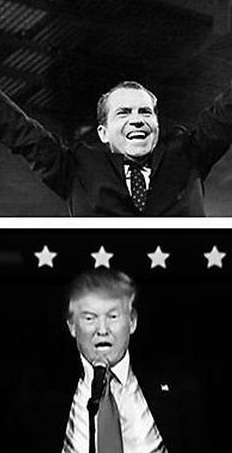
    U.S. President Donald Trump’s dramatic decision to sack Federal Bureau of Investigation (FBI) chief James Comey hardly escapes comparisons with the 1973 “Saturday Night Massacre”. On October 20 that year, Richard Nixon fired Archibald Cox, the special prosecutor investigating Watergate, after he subpoenaed the President for copies of White House tapes. The decision triggered immediate storm inside his own Cabinet as two top law enforcement officials – Attorney-General Elliot Richardson and his deputy William Ruckelshaus – quit the government instead of obeying their boss.

    Nixon may have thought then that he could save his presidency by removing a defiant prosecutor, but his action actually deepened the Watergate crisis which led to his eventual impeachment a year later. Since then, no American President has dismissed a top law enforcement official conducting an investigation which has a direct bearing on him, until Mr. Trump’s decision. Mr. Comey had been heading an investigation to find if there was collusion between Mr. Trump’s campaign team and the Russian government. Unlike Nixon, Mr. Trump appears to have the support of his Cabinet members. The Justice Department, headed by his close ally Jeff Sessions, stands firmly behind him. Further, unlike Cox, Mr. Comey is not a special prosecutor designated to probe any scandal involving the President. The White House says his dismissal was over Mr. Comey’s handling of the Clinton e-mail leaks, and has nothing to do with the Russia probe. Still, Mr. Trump’s decision could have far-reaching consequences both on the ongoing investigation and his presidency.

    LINKED TO ‘RUSSIAGATE’: The order comes at a time when ‘Russiagate’ is widening – just hours before Mr. Comey was fired, former Acting Attorney-General Sally Yates testified before a Senate Committee that she had warned Mr. Trump that the credentials of Michael Flynn, his initial pick for National Security Advisor, may have been compromised by his links with Russia. This only reinforces the theory that Mr. Trump is wary of the FBI probe, and it is not a secret that Mr. Comey is beyond his direct control. Further, in a short dismissal letter, Mr. Trump said: “…I greatly appreciate you informing me, on three separate occasions, that I am not under investigation…” The “investigation” Mr. Trump here refers to is the same ‘Russia connection’ his administration officials are trying to de-link from the dismissal decision, showing how entangled they are in ‘Russiagate’.

    Nixon and Trump. Trump’s
    firing of the FBI head is
    reminiscent of the 1973
    ‘Saturday Night Massacre”
    Photo courtesy Odyssey
    Online


    Also, Mr. Trump may have thought that his decision could get support from sections of the Democrats particularly upset with Mr. Comey’s handling of the Clinton e-mails, which they think cost her the presidency. However, the Democrats were the first to blast the “Nixonian” decision, and asked for setting up of a special prosecutor to probe the Russia link. If Mr. Trump doesn’t agree to that, suspicions about the real reason behind Mr. Comey’s ouster will only increase. If he does, ‘Russiagate’ will continue to haunt him. Either way, Mr. Trump has just made the crisis worse, like Nixon did by firing Cox.


  • Emmanuel Macron’s win, a triumph for French liberalism

    Emmanuel Macron’s win, a triumph for French liberalism

    Emmanuel Macron’s win, a triumph for French liberalism

    By Emile Chabal

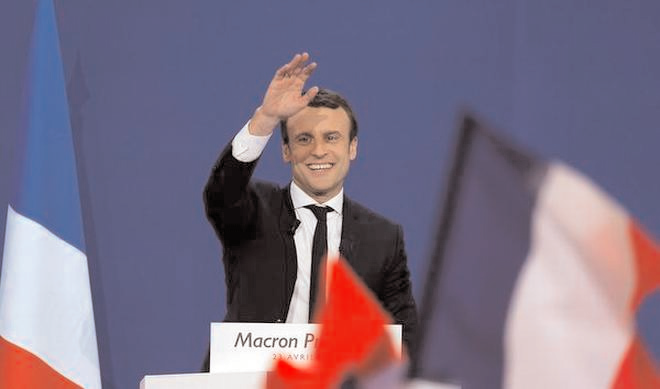
    “To say that this was a victory by default would be grossly unfair. In the space of a few years, Mr. Macron has gone from a rather bland minister to President of one of Europe’s most powerful nations. There is a fair chance that he will also have created a large political movement that will win a hundred or more seats in Parliament. Whatever one thinks of his politics, there is no doubting his achievement”, says the author.


    Emmanuel Macron represents the powerful, liberal electorate that has emerged since the 1990s

    It is tempting to see Emmanuel Macron’s victory in the French presidential run-off on Sunday as little more than a coronation. Yes, he won 66% of the vote but he did so with one of the highest rates of abstention in recent history and a record number of spoiled ballots. Even those who voted for him often did so by default in order to prevent the far-right candidate, Marine Le Pen, from winning.

    More importantly, say critics, this unusual presidential runoff had two important consequences. First, that Mr. Macron’s ideas were never really discussed in depth. Second, that the new President has no proper electorate. Instead, many believe that his supporters are little more than an uncomfortable coalition of ill-matched groups and individuals. They do not share a common vision and they certainly do not agree with each other. When the parliamentary election rolls around in June, they will disperse and Mr. Macron’s self-proclaimed “movement” will fall apart.

    It is quite possible that the new President will fail to gain a majority of seats in the French Parliament. But are all of these accusations about his campaign true? The evidence suggests otherwise. For a start, Mr. Macron won this election by a huge margin and achieved substantially better results than the polls predicted. Most commentators agreed that, in the circumstances, he would need more than 60% of the vote to appear legitimate. He got over this figure easily.

    His success was also geographically diverse. Mr. Macron carried all but two of France’s 101 départements (administrative regions) and he did so with remarkable consistency. His scores were strong from French Guiana in Latin America to small hamlets in central France. In the capital city, Paris, more than 90% of voters chose Mr. Macron. By contrast, Ms. Le Pen did well in rural parts of northern and eastern France but she lost in every major city and did worse than expected in traditionally strong Front National areas in the south and south-east.

    Finally, Mr. Macron can take pride in the fact that he came ahead of his opponent in every age, sex and socio-professional category, except industrial workers. Despite strong misgivings amongst the youngest voters and the unemployed, a large proportion of whom abstained, spoiled their ballots or voted for Ms. Le Pen, he still came out on top everywhere. For better or for worse, industrial workers are no longer a significant power base in French politics.

    In short, Mr. Macron’s political strategy worked. With his message of stability, pro-Europeanism and technocratic governance, he attracted a wide range of voters. Not to mention that he did so at a time when left-leaning centrism seemed to be a toxic brand after François Hollande’s unsuccessful presidency. He unexpectedly mobilised Mr. Hollande’s former electoral base, achieving some of his best scores in the outgoing President’s fiefdoms – and he benefited from massive vote transfers from far left, moderate left and right-wing voters.

    After all this, to say that this was a victory by default would be grossly unfair. In the space of a few years, Mr. Macron has gone from a rather bland minister to President of one of Europe’s most powerful nations. There is a fair chance that he will also have created a large political movement that will win a hundred or more seats in Parliament. Whatever one thinks of his politics, there is no doubting his achievement.

    As for Mr. Macron’s supporters, are they simply incoherent and opportunistic? There is certainly a strong element of political inexperience amongst his core campaign team, the vast majority of whom are under the age of 40. But this is not the same as saying that they have no ideas and no unified vision. In fact, Mr. Macron’s victory is entirely consistent with deeper transformations in French politics.

    Several years ago, I argued that French liberalism was a vital – and growing – part of contemporary French political culture. I suggested that Nicolas Sarkozy and François Hollande’s presidential victories in 2007 and 2012, respectively, drew on particular aspects of France’s liberal tradition. And I maintained that an ever-growing number of people identified with liberalism. At the time, this seemed like a rather tendentious claim. But not today.

    Historians of France have had much to say about its liberal tradition, which has included such brilliant political and intellectual figures as Benjamin Constant, Alexis de Tocqueville, Raymond Aron and Valéry Giscard d’Estaing. By and large, however, they have recognised that liberalism has not been nearly as successful in France as it has elsewhere in Europe since the 19th century. There has never been a liberal party and few French politicians openly claim to be ‘liberal’. But this has been changing since the 1970s. Over the past  four decades, more and more French people have identified with a specifically French brand of liberalism that emphasises reform of the state, a greater openness to non-French ideas, a recognition of the plural character of French society, and market-orientated economic reform. Elements of these liberal ideas were taken up by Mr. Sarkozy and Mr. Hollande, but Mr. Macron has them all.

    This means that France’s newest President – who, significantly, was born in 1977 – is a perfect embodiment of contemporary French liberalism. So too is his core electorate: young or middle-aged, multicultural, urban, European. Anyone who says that such a constituency is little more than a coalition of convenience has missed the emergence of a powerful, liberal electorate since the 1990s.

    It is no coincidence that one of the most important issues for Macron voters was the way France was perceived in the wider world. Macron supporters, unlike those of Ms. Le Pen, are the sort of outward-looking people who care about what is happening beyond the borders of France.

    Parts of the far left and much of the far right are correct to identify these people as the beneficiaries of globalisation, but the reality is that this group is now at least as influential as other, more traditional, French voting blocs like farmers, elderly conservatives, Catholics, and industrial workers.

    This does not, of course, mean that Mr. Macron’s presidency will be problem-free. Since the early 19th century, most French liberals have been elitist and highly suspicious of the masses. Whether terrified of revolution in the 1830s or fearful of Communism in the 1950s, they have usually preferred to make compromises with conservatives rather than complete their ambitious plans for administrative and economic reform. At key moments – such as the 1848 Revolution, the Paris Commune of 1871 or the Socialist landslide victory in 1981 – well-meaning liberals have been completely overtaken by events.

    Mr. Macron could find himself in the same bind. With the persistent threat of the far right and the real possibility of a left-wing social movement opposed to his economic ideas, he may well be consigned to the same fate as his liberal predecessors: a brilliant mind, with brilliant ideas, but too scared of the mob. Or he could buck the trend and become France’s answer to Barack Obama. One thing at least is clear: his failures, as much as his successes, will define a whole generation of French liberals.

    (The author is a Chancellor’s Fellow in History at the University of Edinburgh and the author of ‘A Divided Republic: Nation, State and Citizenship in Contemporary France’. E-mail: emile.chabal@ed.ac.uk. Source: The Hindu)


  • Why Did Trump Fire Comey?

    Why Did Trump Fire Comey?

    Why Did Trump Fire Comey?


    By Perry Bacon Jr.

    President Trump’s decision to fire FBI Director James Comey on Tuesday, May 10, raises one hugely important question: Did the president dump Comey for mishandling the investigation of Hillary Clinton’s email, as Trump and his team have said? Or was that simply a pretense to fire an independent-minded director who was investigating ties between Trump’s campaign and the Russians? On the one hand, there’s a strong case that Comey mishandled the Clinton email investigation. In July 2016, Comey publicly scolded the former secretary of state even as he said there were no grounds for criminal charges against her. He sent a letter to Congress on the eve of the presidential election announcing that the investigation had effectively been reopened against the. advice of Department of Justice officials, at a time when it may have affected the election results. And then last week, at a congressional hearing, Comey inaccurately described part of that email investigation. Democrats have been attacking Comey for months. Trump now says he disapproves of Comey for the same reasons Clinton has. But the case for skepticism about the Trump administration’s proffered motives for this move are strong, too. First, Comey’s alleged sins, according to the Trump administration, happened months ago, particularly holding the press conference in which he listed Clinton’s mistakes but did not charge her. If Trump disapproved of them so strongly, he could have dismissed theFBI director much sooner.

    Second, Comey and his department have been investigating ties between the Russian government and the Trump camp for months. The investigation seems serious. Trump has now fired a man who was a major potential threat to his presidency.

    So, the cynical view of Tuesday’s move is that the news of Comey’s latest blunder and Democrats’ constant attacks on the FBI director made it easy for Trump to both fire Comey and potentially blunt criticism of the move as politically motivated. How could Democrats criticize the firing of a man who they have been complaining about for months?

    Pretty easily, it turns out. The early reaction from Democrats suggests that whatever concerns they had about Comey are outweighed by worries about Trump. Bob Casey, the Democratic senator from Pennsylvania, called Trump’s move “Nixonian.” Senate Democratic Leader Charles Schumer said, “If we don’t get a special prosecutor, every American will rightfully suspect that the decision to fire #Comey was part of a cover-up,” in a Twitter message.


  • Trump dumps FBI chief

    Trump dumps FBI chief

    Trump dumps FBI chief: A shadow cast over US Presidency

    Just when the world was getting used to the idea that perhaps the weight and responsibility of the Oval Office had sobered up Donald Trump, the American President has defied common sense and political reasonableness and summarily fired the Director of the Federal Bureau of Investigation. The agency has presumably earned the presidential ire because the Director, James Comey, is reportedly pressing ahead with an investigation into the allegations of possible Russian involvement in the Trump campaign. Ironically it is the same Director who was accused only a few days ago by Mr Trump’s democratic opponent, Mrs Hillary Clinton, of costing her the election by insisting publicly that the agency had not stopped looking into her controversial emails. Director Comey has apparently paid the price for being a good, competent professional in these times of all consuming partisanship.

    Since the days of celebrated J Edgar Hoover, the FBI has had an iconic place in the popular American imagination. For the average American, the FBI remains a professional police organization dedicated to the cause of justice and fairness and which does not bend itself to the political preferences or personalities of the day. It zealously guards its autonomy and remains mindful of its professional reputation. There is every reason to believe that the White House consiglieri were not pleased that Director Comey remained so inattentive to President Trump’s political vulnerability. It is the most widely entertained hope in Washington that the FBI probe into the Russian role would lead all the way to members of the first family.

    President Trump has obviously shot himself in the foot. His decision to fire the FBI Director probably emanates from his authoritarian political persona, which remains unwilling to submit easily to the constraints of constitutional authority. The American President is a very powerful office but he is not a dictator. This single action will instigate hostility and opposition from all democratic voices, who do not condone the idea of an American President acting dictatorially. From now onward, Trump will preside over a barricaded White House, engaged in high-noon battles every afternoon.

    (The Tribune, India)

  • Indian American urologist shot dead in Detroit

    Indian American urologist shot dead in Detroit

    Indian American urologist shot dead in Detroit: the third Indian American to be killed over a 24-hour period

    Ramesh Kumar, a 32-year-old Indian American physician, was found shot dead in the passenger seat of his car on a highway near Detroit in Michigan on Thursday, May 4He was a research fellow at Henry Ford Hospital’s Vattikutti Urology Institute.

    DETROIT (TIP): Ramesh Kumar became the third Indian American to be killed in a little over a 24-hour period, beginning Wednesday, May 10 night. A tech executive and his wife were killed in San Jose on Wednesday night by the ex-boyfriend of their daughter at their home on Wednesday night.

    Police found Kumar’s body after his father reported that his son, who left for the hospital on Thursday morning, hadn’t reached work.

    He is the son of Dr. Narendra Kumar, a former President of American Association of Physicians of Indian Origin (AAPI). An autopsy has been conducted on Kumar’s body. Police are yet to reveal the motive behind the murder. Local Indian American news sites quoted Narendra Kumar as saying that the killing was racially motivated.

    A relative of the Kumars from Alappuzha, in Kerala, told the local Malayalam media that the family was informed of Kumar’s death on Friday morning.

    According to reports, a colleague at the urology department notified Narendra Kumar that his son had not showed up for work. The father tried to reach the son on phone and sent several text messages. After getting no response from his son, Narendra Kumar reportedly drove to his apartment, which was found empty.

    This prompted Narendra Kumar to lodge a complaint with the police. The police apparently asked him to wait as he was missing only for a few hours.

    Hours later, after he didn’t get any response from his son, Narendra Kumar once again approached the police, who conducted a search operation that found Kumar shot dead in the passenger seat of his car that was parked on the highway in Michigan. Kumar’s body was identified and the police informed the parents. Kumar’s family has confirmed that his funeral will be held on Monday. A prayer service will be held at the family’s residence in Freeland, MI, on Sunday.

    According to his father’s personal website, Ramesh Kumar graduated from Cranbrook-Kingswood High School in Bloomfield Hills, Michigan, and attended Boston University. He earned his medical degree from Amrita Institute of Medical Sciences in Kochi, India.


  • Indian-American children wrongfully retained by mother in Singapore, court rules

    Indian-American children wrongfully retained by mother in Singapore, court rules

    Indian-American children wrongfully retained by mother in Singapore, court rules

    NEW DELHI (TIP): The apex court has ruled that two Indian-American children were wrongfully retained in Singapore by their mother who had found work here, according to a report by Todayonline on May 10, 2017. The decision overturned a previous ruling by a district court. The two boys, aged five-and-a-half and nearly three, held US citizenship. They must be returned to their father in California within 30 days. This is in accordance with the Convention on the Civil Aspects of International Child Abduction, of which Singapore is a signatory.

    Chief Justice Sundaresh Menon, delivered the decision on behalf of the court on Tuesday May 9. He said the father had agreed to the family’s relocation to Singapore so his wife could pursue a career here in a bid to save their rocky marriage. But the terms of the consent changed when his wife indicated that she was going to file for a divorce last June. Therefore, by holding the children here, she was wrongfully retaining them.

    The parents were born in India and married there in 2003. They are naturalized US citizens. Their relationship was strained before the children were born, with frequent spats starting from about three years into the marriage. Between October and November 2015, the children came to Singapore as part of a family holiday. The plan was to return to the US on Jan 9 last year, but the mother landed a job with a private equity and advisory firm here on a one-year contract. The couple then decided on moving to Singapore temporarily.

    But on June 2, the wife said she wanted a divorce. This prompted the father to find out how to regain custody of their boys, including launching a legal bid  The court said the father never intended for the family to relocate to Singapore, and that intention was unilaterally the mother’s. The court also ruled that the “habitual residence” of a child cannot be determined unilaterally by one parent.


  • Indian American scientist Shyni Varghese develops biometric bone tissues

    Indian American scientist Shyni Varghese develops biometric bone tissues

    Shyni Varghese

    NEW YORK (TIP): A team of US scientists led by an Indian American scientist Shyni Varghese has developed biometric bone tissues that could provide new bone marrow for patients needing transplants as well as make the procedure much safer. Before a transplant, a patient is first given doses of radiation, sometimes in combination with drugs, to kill off any existing stem cells in the patient’s bone marrow. This pre-treatment is meant to improve the success of the transplant by clearing up space in the marrow, allowing donor cells to survive and grow without competition from the patient’s own cells.


  • President Donald J. Trump Announces Intent to Nominate Indian American Neil Chatterjee to FERC

    President Donald J. Trump Announces Intent to Nominate Indian American Neil Chatterjee to FERC

    President Donald J. Trump Announces Intent to Nominate Indian American Neil Chatterjee to FERC

    Indian American Neil Chatterjee is Trump’s. choice for FERC

    WASHINGTON (TIP): President Donald J. Trump announced, May 8, his intent to nominate Neil Chatterjee of Kentucky to be a Member of the Federal Energy Regulatory Commission for the term expiring June 30, 2021.

    Mr. Chatterjee is energy policy advisor to United States Senate Majority Leader Mitch McConnell of Kentucky. Over the years, he has played an integral role in the passage of major energy, highway, and farm legislation. Prior to serving Leader McConnell, he worked as a Principal in Government Relations for the National Rural Electric Cooperative Association and as an aide to House Republican Conference Chairwoman Deborah Pryce of Ohio. He began his career in Washington, DC, with the House Committee on Ways and Means. A Lexington, Kentucky native, he is a graduate of St. Lawrence University and the University of Cincinnati College of Law.

  • Indian-American attorney Neal Katyal argued the highest number of cases before Supreme Court in 2016

    Indian-American attorney Neal Katyal argued the highest number of cases before Supreme Court in 2016

    Indian-American attorney Neal Katyal argued the highest number of cases before Supreme Court in 2016

    According to a new study released May 8, Indian-American attorney Neal Katyal argued the most number of cases before the Supreme Court in 2016.This information was confirmed by Katyal’s law firm Hogan Lovells.
    (Photo courtesy Hogan Lovells)

    Neil Katyal, a partner at Hogan Lovells, is the former Acting U.S. Solicitor General during the Obama administration. He has argued a total of 34 cases before the Supreme Court, 32 of them in the last 8 years. In 2016-2017 alone, he argued 7 cases in 6 separate arguments before the nation’s highest court, according to Hogan Lovells.

    This, according to Empirical Scotus new study put out May 8, by the news site that monitors attorneys, 6 cases is higher than any other attorney in the country argued before the U.S. Supreme Court in 2016.

    At the age of 47, Katyal has argued more Supreme Court cases in U.S. history than has any attorney from a minority community, i.e. Indian- American, except for African American Supreme Court Justice Thurgood Marshall with whom he is currently tied.

    He has fought and won cases for and against the federal government. As Acting Solicitor General of the United States, Katyal successfully argued cases for the federal government. For instance, he defended the constitutionality of the Voting Rights Act of 1965; his victory in the case defending former Attorney General John Ashcroft for alleged abuses in the war on terror; he won a unanimous victory against 8 states who sued the nation’s leading power plants for contributing to global warming, among them.

    While in the Justice Department, he served as Counsel of Record hundreds of times in the U.S. Supreme Court, according to his biography on the Hogan Lovell’s website. He was also the only head of the Solicitor General’s office to argue a case in the U.S. Court of Appeals for the Federal Circuit, on whether certain aspects of the human genome were patentable.

    He has other firsts to his name. He has served for almost 2 decades as a professor at the Georgetown University Law Center, where he was one of the youngest professors to have received tenure and a chaired professorship in the university’s history.

    “Neal Katyal was far and away the most active attorney at arguments this year (Katyal led all other attorneys in arguments even when including federal government participation),” Empirical Scotus said. “Amazingly, Katyal’s six arguments accounted for over 9% of all arguments before the Court this term,” it added.

    A graduate of Yale Law School, Katyal also served in the Deputy Attorney General’s Office at the Justice Department as National Security Advisor and as Special Assistant to the Deputy Attorney General during 1998- 1999.

    He has dozens of published scholarly articles and awards, according to the Hogan Lovells website. His other awards include the 2011 Justice Department’s Edmund Randolph Award, the highest award given to a civilian by the department. Before that, in 2010, Katyal was named as One of the 40 Most Influential Lawyers of the Last Decade Nationwide by National Law Journal; One of the 90 Greatest Washington Lawyers Over the Last 30 Years by Legal Times (2008); Lawyer of the Year by Lawyers USA (2006); One of the Top 50 Litigators Nationwide 45 Years Old or Younger by American Lawyer (2007); and one of the top 500 lawyers in the country by LawDragon Magazine for each of the last nine years. He also won the National Law Journal’s pro bono award in 2004.

    (Based on a press release)


  • George Maragos, Democrat for County Executive Announces Plan to Root out Corruption with Contract, Term Limit and Election Reforms

    George Maragos, Democrat for County Executive Announces Plan to Root out Corruption with Contract, Term Limit and Election Reforms

    George Maragos, Democrat for County Executive Announces Plan to Root out Corruption with Contract, Term Limit and Election Reforms

    Nassau County Comptroller George Maragos
    has announced ambitious plans to root out
    corruption with contract, term limit and
    election reforms.

    MINEOLA, NY (TIP): George Maragos, Democratic candidate for County Executive at a press conference in front of the Theodore Roosevelt Executive & Legislative Building, presented an unambiguous and comprehensive plan to end the corruption at all levels of government in Nassau County. The plan simply takes the money out of politics, provides for independent contract procurement and performance oversight, ends career politicians and wrests power away from the Party Bosses who hand pick candidates and gives the power back to the people.

    George Maragos highlighted, “The root causes of corruption are always money, career politicians and the almost absolute control of the elections process by the Party Bosses through the Board of Elections. The band aids proposed by hand-picked candidates to the insidious problem of corruption are a diversion to appease voters and will never end the pay-to-play corruption culture. It is time to root out the corruption in Nassau County with a strong comprehensive plan.”

    In order to put a permanent end to corruption, and restore trust in Government, George listed a far reaching six-point plan:

    1. Contractually Ban ALL Vendor Political Contributions (Including from Officers,family members and Related LLCs)
    2. Nominate Independent Procurement Director as per Zarb Recommendation (Consolidate Procurement Compliance and Purchasing Director Positions)
    3. Nominate Independent Inspector General as per Zarb Recommendation (Replaces Commissioner of Investigations)
    4. Nominate Independent Board of Elections Commissioners (Eliminate Redundant BOE Political Patronage Positions, Saving the County Over $7 Million Annually)
    5. Enact Term Limits (County Executive 2 terms & Legislators 4 Terms)
    6. Enact Public Election Financing (Similar to New York City, to be Funded with the Savings from Board of Elections Reforms)George continued, “Banning ALL vendor campaign contributions of any amount to elected officials and political parties, through contractual terms, will instantly stop the payto- play culture which has been the root of corruption in Nassau County. Strong enforcement through an independent Procurement Director and an independent Inspector General will ensure objective contracting and guarantee the elimination of patronage waste. Any political contributions by County Vendors, their LLCs and family members will be a breach of contract. It’s obvious, simple and constitutional!”Furthermore, George emphasized that, “to truly reform politics in Nassau County and have a government of the people, we must enact term limits to put an end to career politicians, provide for public campaign finance to encourage more citizen participation and convert the Board of Elections (BOE) to civil service with independently appointed commissioners in order to guarantee impartial elections and eliminate the patronage.”The BOE is currently controlled by the Republican and Democratic Party Chairmen. All employees are patronage, handpicked by the Party Bosses and serve at their pleasure. There are two people for every position, one Republican and one Democrat. The BOE annual budget is approximately $20 million of which about $15 million are salaries. Converting the BOE to an independent civil service department will eliminate duplicate positions and immediately save over $7 million annually which could be used for public campaign financing.


  • Sri Balaji Temple Chicago celebrates the Millennium of Sri Ramanuja Acharya

    Sri Balaji Temple Chicago celebrates the Millennium of Sri Ramanuja Acharya

    Sri Balaji Temple Chicago celebrates the Millennium of Sri Ramanuja Acharya

    CHICAGO, IL (TIP): This year marks the millennium, 1,000th birth anniversary (Sahasrabdi) of the legendary Sri Ramanuja Acharya. Hindus around the globe celebrated this memorable event by paying tribute to the great Acharya who worked tirelessly, and selflessly for the betterment of humanity. Sri Venkateswara Swami (Balaji) temple of greater Chicago conducts Religious functions in an authentic style with a team of dedicated and well trained priests from Tirupati. The Temple management with profound dedication celebrated this auspicious occasion in a grand manner on April 29, and April 30. The Celebrations included Religious and Cultural activities with enthusiastic participation from youths as well as adults from the community. An estimated 1,000+ devotees from Chicagoland area and neighboring states as well as territories that are far like California participated in the two-day celebration to pay tribute to the spiritual master.

    Sri Ramanuja Acharya was born in 1017 AD in a small town called Sri Perembudur, near Chennai, and lived for 120 years. He was a spiritual leader with strong intellect who mastered the Vedas and other Hindu scriptures at a very young age. He was a visionary who systematically expounded philosophical truths and synthesized Jnana (knowledge) and Bhakti (devotion) into a philosophy called Visishtadvaita. He was a leader and a social reformer who broke barriers and worked for the betterment of everyone without regard to gender, creed or caste. He perceived God as the Super Divine that is all-pervasive, all-inclusive, all-potent, and all merciful. He had the vision that everyone should be able to reach God and attain moksha (salvation), through utmost love for God through Saranagati (selfsurrender), and Bhakti (devotion). Sri Ramanuja Acharya enlightened this path through his teachings and practices recorded in his nine-spiritual works in Sanskrit. He introduced several religious practices to complement the established Agama worship procedures in temples. These practices are followed even today at all Vaishnava temples including major temples like Tirupati.

    The Religious programs for the Millennium celebrations at Sri Venkateswara Swami (Balaji) temple was conducted by the team of Vaishnava priests with overflowing devotion and enthusiasm. The religious program highlights included abhishekam for Sri Balaji (Utsava Murthy) and Sri Ramanuja Acharya; Homam (Havan) for the Acharya; Utsavam (ceremonial procession) for Sri Balaji and Sri Ramanuja Acharya; Vedic Chants, Prabandha and Stothra Parayanams rendered by Parayana Gosti lead by the temple priests; Bhajans by a team of devoted Ladies. To commensurate the special Millennium celebrations, several devotees joined hands and made an offering of “Kireetam” (crown) for the great Acharya. The cultural programs featured youths and adults from the temple devotee community. The program highlights included a drama in English by youths depicting key events of the life of Sri Ramanuja; Music concert capturing devotional hymns; Bhajans and Quiz contest by temple youths; Villu Patu (bow song) and Kolattam (Musical play and dance with sticks) presented by youths.

    The celebrations concluded with the grand finale Drama in Tamil “Ettram Thantha Ethirajar” featuring selected milestones of the life of Sri Ramanuja Acharya. The twohour play was showcased by a cast of 44 people. The play was directed by Sri Sekar Chandrasekar and produced by Sri Narayan Thirumalai. This was followed by a dance program by Natya Dance Theater called “Ramanujar Kanda Pokkisham” choregraphed by Sri Hema Rajagopalan. The musical dance program captured the works and Bhakti of Alwars, the saints, as seen through the eyes of Sri Ramanuja Acharya. The program concluded with Dr. Prabhakar Gupta Garla, Chairman of the temple thanking all the Devotees, Temple staff, Priests and the Volunteers that poured their hearts to make the function a grand success. The Millennium celebrations of Sri Ramanuja Acharya at the temple was blissful with our Devotees immersed in devotion and excitement. The event was complemented with Annadanam, servings of scrumptious lunch and dinner for everyone for both days. The feelings of the participants can only be captured like this …” This is a remarkable event that we will remember forever”

    Let us cherish Sri Ramanuja Acharya’s teachings every day as his legacy lives on. Let us pay tribute to this Legend on this auspicious millennium 1,000th year birth celebrations and remember him for all the sacrifices he made for the enlightenment of humanity.

    (Text & Photo: Suresh Bodiwala)


  • Event highlights Ramanuja’s contribution; speakers praise acharya as great reformer

    Event highlights Ramanuja’s contribution; speakers praise acharya as great reformer

    NEW YORK (TIP): The 1,000th birth anniversary of Bhagavad Sri Ramanujacharya (Sahasrabdhi), the 11th century social reformer and great devotee of Lord Rama, was celebrated in the Flushing section of Queens. Organized by the community activist — who is a constant presence at different Queens temples — Madhavan Krishnamachari, the half-day event comprised a prayer, worship, bhajan and ‘sankalpam’, apart from discourses. Held last week at the Saraswati Hall of the Ganesh temple, it concluded with a sumptuous lunch.

    Dr.M.G. Prasad, a noted professor of religion who was bestowed with the honor ‘Vishwa Hindu Ratna,’ spoke on the life and message of Ramanuja. “Acharya (spiritual guru) is one who understands shastras (scriptures) and its practical importance,” the professor told an attentive audience who filled to the full capacity of the hall.

    The acharya was born in 1017 and lived for 120 years. It was the time that houses of worship and religious association were limited only to certain sections of society. The acharya was instrumental in propagation of the theory that the Almighty belongs to everybody.

    “Ramanuja brought God to the masses,” Prasad noted, adding that he wrote the Sri Bhashya (a commentary on Brahma Sutras), Gadya Trayam (three proses) and other works. Shiva Haran, president of the Shirdi Saibaba Temple which is situated close to the event venue, described Ramanuja as none other than the brother of Lord Rama. “Lakshmana, who is Adisesha, came to the earth in order to take the devotees to the Vaikunta,” Haran observed and added that he was a real guru (the remover of darkness).

    Characterizing Ramanuja as a “great social reformer,” Haran pointed out that the acharya was prepared to go to hell for the sake of the entire humanity. When his guru disclosed the divine secret of a mantra he set a condition. “Don’t reveal this mantra – Om Namo Narayanaya … — to anybody.

    If you do so, you’re bound to go to hell,” Haran said, citing the guru’s advice to the disciple Ramanuja. Despite the condition, Ramanuja told his guru that he was ready to dwell in the hell after he left the world if that mantra was to help bring salvation to the masses.

    The two main speakers said Ramanuja’s philosophy is a bridge between “dwaita and advaita.” The Radhakrishnan group performed the Namavalli Bhajan on Perumal (another name forLord Vishnu). Lunch/Prasad was prepared in accordance with Vaishnava (Srirangam) sampradaaya.

    One hundred and eight gold-plated copper coins with Ramanuja on them were kept during the puja. They were released on the occasion and distributed to all the families that attended the event. Similarly, 108 books titled “Srimad Ramanuja – An Acharya for All Ages” were also distributed. Several priests, including the noted one Shri Raghava Bhattar alongwith Shri Keshava Bhattar were present on the occasion performing puja and coordinating the event. Several people were honored.

    Ramji Sadagopachari was the event chairman while Saroja Krishnamachari, formerly an arts teacher, was the program director. The services of volunteers, headed by Harvinder, also drew praise. Devotees Hema and V. Subramanian described the event as “delightful” while yoga teacher Sanjay Attada termed it as “excellent.” Participants Vatsala and Sathyan noted the program was organized “wonderfully.” Similarly, other participants also appreciated the event and the work that went into its arrangements. Photo credit to Sudama.

    Special credit to Volunteers Sundar,Sumant and Venkatesh. A special thanks to all who sponsored and the Bhakthas who attended the function. If you need more information on the April 30 event, please contact Madhavan Krishnamachari at kmadhavan@hotmail.com OR 917-957-7079.