Month: June 2017

  • NIRJALA EKADASHI

    NIRJALA EKADASHI

    Nirjala Ekadashi is the most important and significant Ekadashis. As per Hindu calendar Ekadashi falls on the eleventh day of every lunar fortnight. So, there are 24 Ekadasis in a year. Ekadashi Vrat

    is considered highly pious and is assumed to be one of the ways to attain Moksha. Nirjala Ekadashi falls on the Shukla paksha in the month of Jyestha (On June 5 this year). It is also called “Jyeshtha Shukla Ekadashi” or “Bhimsaini Ekadashi”. It is considered as one of the most rewarding fast.

    Importance of Nirjala Ekadashi

    The greatness of Nirjala Ekadasi was explained by Sage Vyasa. ? It is equal to going on pilgrimage. ? It provides virtue of all 24 Ekadashi.? It washes away all sin. ? Grants happiness, prosperity, longevity and moksha (salvation).? This Ekadasi happens before monsoon season and therefore it is also helps in cleansing the body.

    How to Observe Nirjala Ekadashi Vrat

    Nirjala means without water. Hence, fast is observed without water and food. It is considered as the most strict and hence, most sacred of all Ekadashis. This fast is extremely difficult to follow as it falls in the hot Indian summer. The 24 hours long fast begins from sunrise on Nirjala Ekadashi to sunrise the next day. People fast and offer puja to Lord Vishnu on this day.

    The fast begins with Sandhyavandanam – a prayer. This prayer is performed in the evening before Nirjala Ekadashi, i.e. on 10th lunar day. After prayer devotee takes only one meal, without rice (as rice eating is prohibited). The strict fast continuous throughout Ekadashi. It gets over on next morning. Devotees offer prayer, tulsi, fruits, and sweets to Lord Vishnu and then finish their fast.

    Rituals and celebrations of Nirjala Ekadasi
    • ? Offer Puja to Lord Vishnu and seek his grace.
    • ? Bath the idol of Lord Vishnu with Panchamrit.
    • ? Wash with clean water and then dressed in new clothes.
    • ? Offer flowers, incense, water, lamps and a hand fan.
    • ? In evening, worship Vishnu with Durva grass.
    • ? Visit nearby Vishnu temple and observe Jagran at night.
    • ? Chant bhajans, Vishnu Sahasranama and other slokas dedicated to Lord Vishnu
    • ? Donate clothes, food grains, umbrellas, hand-fans, pitchers filled with water, gold etc.
    Story of Nirjala Ekadashi Vrat

    Bhimsen –the second Pandava brother and big eater wanted to keep Ekadashi Vrat. All his brothers, wife Draupadi and mother Kunti observed Vrat on 24 Ekadasis throughout the year and request him to do the same. But he was unable to perform the ritual due to unbearable hunger pangs. Bhima, was upset due to his weak determination. He was also sacred of dishonouring to Lord Vishnu. So, when Maharishi Vyasa visited them Bhima asked him to find a solution. Sage Vyasa advised him to observe single Nirjala Ekadasi fasting. This fast would compensate for not observing all Ekadashi fasting in a year.

    Bhima performed the fast with an ease but on the morning of very next day he became unconscious. Then he offered Ganga water with Tulsi to end up his day fast. Due to this legend Nirjala Ekadashi is also known as Bhimseni Ekadashi, Bhima Ekadashi or Pandava Ekadashi.

    Nirjala Ekadashi’s Significance

    As per Hindu mythology, Nirjala Ekadashi is a form of God Vishnu and helps in washing away all sins. Also, the devotees are blessed by Lord Vishnu and granted all the happiness, prosperity and a blissful life. It is also believed that by observing Nirjala Ekadashi fast one gains salvation (moksha) as the person at the time of death is not judged by Yama (God of Death). The one who observes fast is taken by the messengers of Vishnu to Vaikuntha, an abode of Vishnu after death.

    How To Observe Ekadashi Vrat

    Legends take one back to the mythological story of Mahabharata as the Nirjala Ekadashi vrat has been mentioned therein. Kunit, mother of the Pandavas, Draupadi, wife of the Pandavas, and all the four Pandava brothers – Yudhisthira, Arjun, Nakula and Sahadeva used to observe Ekadashi vrats without fail.

    However, the second Pandava brother, Bhima resisted from fasting as he was a voracious eater and wasn’t able to control his hunger. On one occasion, Bhima chose to observe the vrat but he also wanted to eat.

    Hence, he went out to Ved Vyasa, the grandfather of the Pandavas, to seek help in observing the fast. While eating and fasting were not possible simultaneously, sage Vyasa suggested that he observe the Nirjala Ekadashi vrat, which includes the benefits of observing 24 Ekadashi vrats.

    Nirjala Ekadashi is regarded as the strictest fast among all the Ekadashis in the Hindu religion as one cannot even drink water while observing it. The literal meaning of Nirjala is without water. Thus, all Vishnu devotees who take up this fast do not drink water nor eat any food during the entire day of fasting. Observing a Nirjala Ekadashi is highly beneficial as it is considered equivalent to going on a pilgrimage. The vrat begins at sunrise on the Ekadahsi and ends on the next day’s sunrise. The entire day of the Nirjala Ekadashi vrat is spent at Vishnu temples. Devotees also prefer spending the day at home by listening to stories from Bhagavad Purana or chanting bhajans dedicated to Lord Vishnu.

    People who are under medications, having a poor health condition or disease, pregnant women and those who have just delivered a baby are relieved from observing this vrat. Therefore, it is advised not to keep this fast as one should not torture their body in the act of following customs and religious traditions. Instead, they can compensate for the fast by donating food and clothes to the poor and needy.

  • Airtel-Telenor merger gets SEBI nod

    Airtel-Telenor merger gets SEBI nod

    NEW DELHI (TIP): Telecom operator Bharti Airtel today said it has received the approval of the SEBI, BSE and NSE for the proposed scheme of merger between Airtel and Telenor (India) Communications Private Limited.

    The Sunil Bharti Mittal-owned company in February had announced to acquire the business of Telenor India for an undisclosed sum in all seven circles where the latter holds spectrum.

    As part of the deal, Airtel would take over Telenor India’s spectrum, licences and operations, including its employees and customer base of 44 million. Airtel further said it will acquire Telenor India’s running operations in seven circles — Andhra Pradesh, Bihar, Maharashtra, Gujarat, UP (East), UP (West) and Assam.

    The company further said Telenor India and Airtel have today filed the joint company application before the New Delhi Bench of the National Company Law Tribunal for approval of the proposed scheme of merger. The merger is inter alia subject to other statutory approvals, including from the Competition Commission of India.

  • Adani strikes deal on royalties with Queensland government

    MELBOURNE (TIP): Indian conglomerate Adani Group today agreed to pay royalties on coal produced from its $16.5 billion Carmichael coal project in Australia after it struck an agreement with the Queensland government to help the controversy-hit project move forward.

    While Adani did not disclose the royalties it will pay, Australian media reported that the Group will pay a flat rate of $5 million in coal royalties a year for five years, with interest to be paid on any royalties deferred.

    The agreement with Queensland government “meets Adani’s expectations and requirements,” the company said in a statement, without providing details of the accord.

    With an agreement with state government in place, Adani said a final investment decision on the mine would be made at the company’s next Board meeting.

    It had last week deferred an investment decision on the project scheduled for May 29 after delays in reaching an agreement on royalty terms.

    In the statement, Adani chairman Gautam Adani described the move as a “benchmark decision” that showed the “strong commitment” of the Queensland government to the project.

    Source: PTI

  • Oil prices slide amid glut concerns, US withdrawal from climate deal

    SEOUL (TIP): Oil prices dropped on Friday amid worries that U.S. President Donald Trump’s decision to abandon a global climate pact could spark more crude drilling in the United States, stoking a persistent glut in global supply.

    Global benchmark Brent crude futures were down 23 cents, or 0.45 percent, at $50.4 a barrel by 0316 GMT. U.S. West Texas Intermediate crude futures dropped 26 cents, or 0.54 percent, to $48.1 per barrel.

    Commodity markets were absorbing news the United States would withdraw from the landmark 2015 global agreement to fight climate change, a move that fulfilled a major campaign pledge but drew condemnation from U.S. allies.

    “This could lead to a drilling free for all in the U.S. and also see other signatories waver in their commitments,” said Jeffrey Halley, a senior market analyst at OANDA.

    “This outcome could increase the supply-side equation from the United States and complicate OPEC’s forward projections. A scenario that would not be favourable to oil prices.” Surging U.S. production has put a strain on OPEC members’ efforts to curb production to drain a global crude supply overhang and to prop up prices.

    A week ago, the Organization of the Petroleum Exporting Countries (OPEC) and some non-OPEC members met in Vienna to roll over the output cut deal to reduce 1.8 million barrels per day (bpd) until the end of next March.

    Faced with lingering glut woes, the oil cartel also discussed last week reducing output by a further 1 to 1.5 percent, and could revisit the proposal should inventories remain high, according to sources. But oil markets were offered some support by official data that showed crude inventories in the United States, the world’s top oil consumer, fell sharply last week as refining and exports surged to record highs. Crude stockpiles were down to 6.4 million barrels in the week to May 26, beating analyst expectations for a decrease of 2.5 million barrels.

    However, U.S. crude production rose to 9.34 million bpd last week, up nearly 500,000 bpd from a year ago. “We may or may not see more huge draws. But crude production is slowly but surely going to neutralize the (OPECled) production cut,” said Sukrit Vijayakar, director of energy consultancy Trifecta.

    Source: Reuters

  • NOTE BAN ALONE NOT TO BLAME FOR GROWTH SLUMP, SAYS JAITLEY

    NOTE BAN ALONE NOT TO BLAME FOR GROWTH SLUMP, SAYS JAITLEY

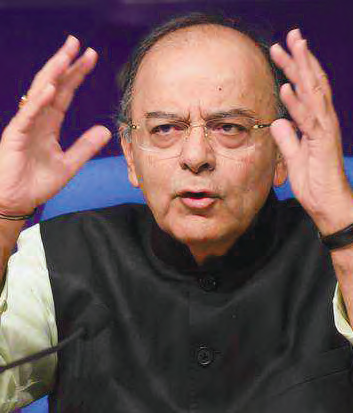
    NEW DELHI (TIP): Finance Minister Arun Jaitley has said demonetisation alone was not responsible for the fall in the GDP growth in the fourth quarter and said 7-8% growth in the current global context is “reasonable by Indian standards”.

    The Finance Minister blamed cumulative factors for the fall in growth, including the weak global economic scenario and slowdown in global economy even prior to the demonetisation. The fourth quarter number of 6.1% surprised economists who said the note ban has hurt growth and India lost the tag of the fastest-growing economy to China in the March quarter which pulled down the 2016-17 expansion to 7.1%.

    The Finance Minister said demonetisation has established a ‘new normal’. It has helped the government to promote digitisation of transactions, increased the base of taxpayers and sent a strong message that it is no longer safe to deal in cash.

    Jaitley said the slowdown in the fourth quarter was due to both domestic and global factors. “There are several factors which can contribute to GDP in a particular quarter. There was some slowdown visible given the global and domestic situation even prior to demonetisation last year,” Jaitley said while addressing a press conference on completion of three years of the Modi government.

    After the third quarter GDP numbers of 7% were announced, the government had maintained that claims of a slowdown due to demonetisation are exaggerated. With growth slipping to 6.1% after the government has made many structural reforms would be cause for worry in the third year of the government.

    “I do believe that in the current global situation a 7-8% growth, which is at the moment Indian normal, is fairly reasonable by Indian standards and good by global standards”. Sticking to the GST implementation deadline of July 1, the Finance Minister said there is a state of preparedness and GST itself will boost growth.

    However, several analysts say there will be a blip again in growth after GST is rolled out and while it would lead to creation of an integrated market, a major fallout will be the shift of trade and market share from the unorganised sector to the organised sector leading to job losses.

    On the proposed privatisation of Air India, the Finance Minister said the Niti Aayog has already given its recommendations to the Civil Aviation Ministry to explore various options. “It is for the Civil Aviation Ministry to explore various options,” he added. Oil companies’ merger issue is also being looked at by the ministry concerned, he added.

    Source: The Tribune

  • MFG SECTOR GROWTH SLIPS TO 3-MONTH LOW IN MAY

    MFG SECTOR GROWTH SLIPS TO 3-MONTH LOW IN MAY

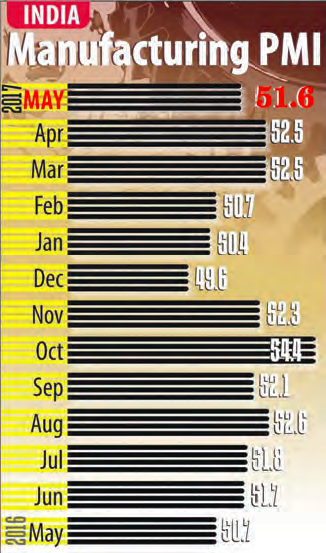
    NEW DELHI (TIP): Indian factory growth cooled in May as new orders expanded at a more modest pace, but manufacturers were able to raise prices slightly, according to a private survey.

    The Nikkei Manufacturing Purchasing Managers’ Index, compiled by IHS Markit, fell to 51.6 in May from April’s 52.5, marking its fifth month above the 50 level that separates growth from contraction. Output expanded at the softest pace since February but remained moderate.

    The new orders sub-index, which reflects both domestic and foreign demand, fell to 52.6 from 53.8 in April. Export orders contracted for the first time in four months, albeit marignally.

    “The upturn in the Indian manufacturing sector took a step back in May, with softer demand causing slower expansions in output and the amount of new work received by firms,” said Pollyanna de Lima, economist at IHS Markit. “Moreover, there was a renewed decline in new export orders.”

    While companies were able to raise selling prices, the increase was modest, reinforcing views that inflation may remain below the Reserve Bank of India’s medium-term target of 4%, giving it room to ease monetary policy. Indian inflation eased in April to 2.99% from 3.89% in March.

    Also helping the inflation outlook, monsoon rains have arrived earlier than anticipated, with the meteorological department predicting normal downpours this year.

    “With inflation under control and manufacturing growth below par, we may see the RBI changing neutral monetary policy stance to accommodative in coming months in order to support the economy,” de Lima said.

    While the central bank is expected to leave rates unchanged at 6.25% in its June meeting, the Monetary Policy Committee will adopt a less hawkish tone in its statement, according to a Reuters poll of 60 economists.

    Analysts think that a policy hold is still on the cards, despite a shock slowdown in economic growth reported on Wednesday. The economy expanded 6.1% in the January-March period, far slower than expectations for 7.1%, with capital investment showing no sign of reviving.

    However, consumer spending is likely to pick up before the government implements a multi-rate Goods and Services Tax from July 1, with some items expected to be taxed at 28% or higher.

  • NASA to launch world’s first mission to Sun in 2018

    WASHINGTON (TIP): NASA is set to launch the world’s first mission to the Sun next year, that will explore our star’s atmosphere and answer questions about solar physics that have puzzled scientists for over six decades.

    The Parker Solar Probe has been named in honour of pioneering astrophysicist Eugene Parker, who predicted the existence of the solar wind nearly 60 years ago, the US space agency announced on Wednesday.

    “This is the first time NASA has named a spacecraft for a living individual,” said Thomas Zurbuchen, associate administrator for NASA’s Science Mission Directorate.

    The spacecraft, about the size of a small car, is loaded with technological breakthroughs that will solve many of the largest mysteries about our star, including finding out why the Sun’s corona is so much hotter than its surface.

    Parker Solar Probe will travel through the Sun’s atmosphere, closer to the surface than any spacecraft before it, facing brutal heat and radiation conditions – and ultimately providing humanity with the closest-ever observations of a star, NASA said.

    To perform these unprecedented investigations, the spacecraft and instrument will be protected from the Sun’s heat by a 4.5-inchthick carbon-composite shield.

    The spacecraft is set to be launched during a 20-day window that opens on July 31, 2018, from NASA’s Kennedy Space Centre in Florida. “The solar probe is going to a region of space that has never been explored before,” said Parker, Professor at the University of Chicago in the US.

    “It is very exciting that we will finally get a look. One would like to have some more detailed measurements of what is going on in the solar wind. I am sure that there will be some surprises. There always are,” Parker said.

    Source: PTI

  • IPHONE 8 TO FEATURE NEW DISPLAY FORMAT

    IPHONE 8 TO FEATURE NEW DISPLAY FORMAT

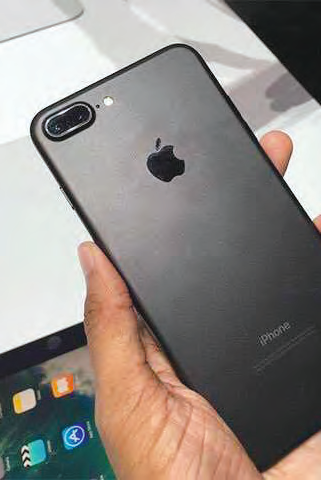
    SAN FRANCISCO (TIP): Apple’s next generation iPhone will not be similar in display like the previous devices and will sport a 18.5:9 aspect ratio like LG G6.

    “The new aspect ratio allows manufacturers to increase the size of a smartphone display while keeping it narrow enough to hold one handed and still use the keyboard c o m f o r t a b l y, ” F o r b e s . c o m reported on Monday. iPhone 8 is rumoured to sport a bold new design featuring an OLED display without a bezel and the company may also move the fingerprint reader to the back of the phone. Apple will also bring “True Color iPad Pro” screen technology to its smartphones for the first time that uses advanced four-channel ambient light sensors to automatically adapt the colour and intensity of the display to match the light in your environment. The full spectral sensing ambient light sensor will be added across the iPhone 7S, iPhone 7S Plus and iPhone 8.

    Source: IANS

  • Twitter ‘bots’ may help drive social movements: Study

    Twitter ‘bots’ may help drive social movements: Study

    WASHINGTON (TIP): Twitter “bots” may help drive social movements the world over, say scientists who suggest that automated tweets can be used to make an issue trend, grab public attention and trigger policy change.

    Bots–short for robots–are simple computer programmes designed to carry out automated tasks. In internet terms, bots are non-human actors that often try to go undetected.

    Although we have known about Twitter bots for years, the new research marks the first time that bots’ social clout was studied in the field of information systems and management. “When a topic trends on Twitter, chances are a lot of central or very well-connected accounts are tweeting about it and perhaps shaping how others react. We found that some of these central accounts are actually bots,” said Carolina Salge, a PhD student at University of Georgia’s Terry College of Business in the US.

    “Once enough accounts are tweeting about the same thing, that creates buzz, and organisations really respond to buzz,” said Salge. Due to the increasing prevalence and sophistication of bots, their invisible influence may be affecting news reports and social media research, said Elena Karahanna, professor at Terry College of Business.

    “Bots amplify the message. They amplify how many people the message reaches and how fast it reaches them,” said Karahanna. “They spread the word very, very quickly.

    That’s one reason they can become central actors in these networks,” she said. While bots often tried to pass as humans online, their purposes were not always nefarious, Salge said.

    Source: PTI

  • SCIENTISTS DETECT EINSTEIN GRAVITATIONAL WAVES FOR A THIRD TIME

    WASHINGTON (TIP): Scientists have for a third time detected ripples in space from black holes that crashed together billions of light years from Earth, a discovery that confirms a new technique for observing cataclysmic events in the universe, research published on Thursday shows.

    Such vibrations, known as gravitational waves, were predicted by Albert Einstein more than 100 years ago and were detected for the first time in September 2015. They are triggered by massive celestial objects that crash and merge, setting off ripples through space and across time.

    The latest detection occurred on January 4, 2017. Twin lasers in Louisiana and Washington picked up the faint vibrations of two black holes that were 20 and 30 times more massive than the sun, respectively, before they spiralled toward each other and merged into a larger black hole.

    The discovery marks a turning point in the nascent field of gravitational-wave astronomy, which scientists are developing to learn more about how the universe formed. The first detection of gravitational waves created a scientific sensation.

    “We’re really moving from novelty to a new observational science,” said Massachusetts Institute of Technology astrophysicist David Shoemaker. A team of more than 1,000 scientists published their findings in this week’s issue of Physical Review Letters.

    Like the previous two detections, the gravitational waves discovered in January slightly jiggled the L-shaped, 2.5 mile long (4 km) laser beams that comprise the heart of the Laser Interferometer Gravitational-Wave Observatory, or LIGO.

    By matching the shape of the waves with computer models, scientists confirmed the collision took place about 3 billion light years from Earth, twice as far as previous detections. Black holes are regions so dense with matter that not even photons of light can escape their gravitational pull.

    Source: Reuters

  • NASA ORBITER DISCOVERS FROST ON MOON

    NASA ORBITER DISCOVERS FROST ON MOON

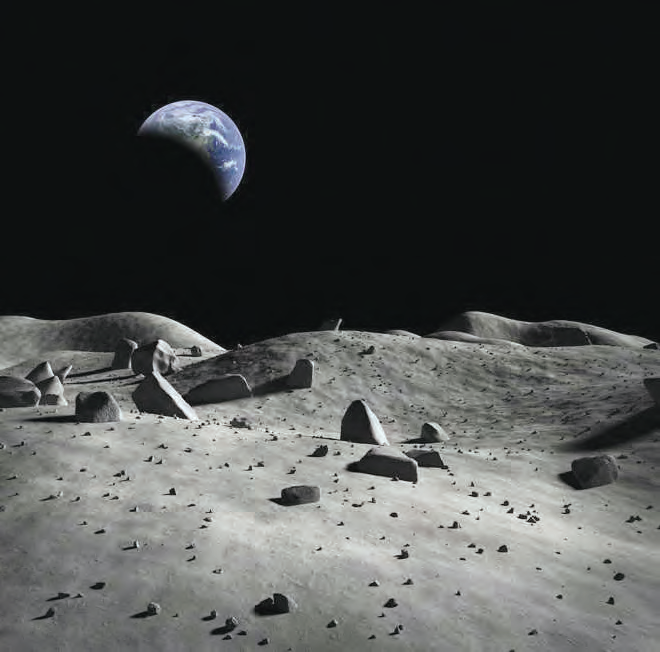
    WASHINGTON (TIP): Scientists using data from NASA’s lunar orbiter have identified bright areas in craters near the Moon’s south pole that are cold enough to have frost present on the surface. The new evidence comes from an analysis that combined surface temperatures with information about how much light is reflected off the Moon’s surface.

    “We found that the coldest places near the Moon’s south pole are also the brightest places — brighter than we would expect from soil alone — and that might indicate the presence of surface frost,” said Elizabeth Fisher, the lead author of the study published in the journal Icarus.

    The icy deposits appear to be patchy and thin, and it is possible that they are mixed in with the surface layer of soil, dust and small rocks called the regolith. The researchers said they are not seeing expanses of ice similar to a frozen pond or skating rink. Instead, they are seeing signs of surface frost.

    Cold traps are permanently dark areas — located either on the floor of a deep crater or along a section of crater wall that does not receive direct sunlight — where temperatures remain below minus 163 degrees Celsius. Under these conditions, water ice can persist for millions or billions of years.

    Understanding the nature of these deposits has been one of the driving goals of Lunar Reconnaissance Orbiter, or LRO, which has been orbiting the Moon since 2009.

     Fisher, who carried out the analysis while at the University of Hawai’i at Manoa, and her colleagues found evidence of lunar frost by comparing temperature readings from LRO’s Diviner instrument with brightness measurements from the spacecraft’s Lunar Orbiter Laser Altimeter, or LOLA. In these comparisons, the coldest areas near the south pole also were very bright, indicating the presence of ice or other highly reflective materials.

    The researchers looked at the peak surface temperatures, because water ice won’t last if the temperature creeps above the crucial threshold.

    The study strengthens the case that there is frost in cold traps near the Moon’s south pole. So far, however, researchers have not seen the same signs near the Moon’s north pole.

    “What has always been intriguing about the Moon is that we expect to find ice wherever the temperatures are cold enough for ice, but that’s not quite what we see,” said Matt Siegler, a researcher with the Planetary Science Institute in Dallas, and a co-author on the study.

    Source: PTI

  • SLEEPING LESS THAN 6 HOURS MAY DOUBLE DEATH RISK

    SLEEPING LESS THAN 6 HOURS MAY DOUBLE DEATH RISK

    Failing to sleep less than six hours may nearly double the risk of death in people with metabolic syndrome – a combination of diabetes, high blood pressure and obesity, researchers have warned.

    A study found that people with metabolic syndrome who slept for more than six hours were about 1.49 times more likely to die of stroke.

    Conversely, those who slept less than six hours were about 2.1 times more likely to die of heart disease or stroke. For those who got more sleep, the risk of death was more modest, the researchers said.

    The short sleepers with metabolic syndrome were also 1.99 times more likely to die from any cause compared to those without metabolic syndrome. “If you have several heart disease risk factors, taking care of your sleep and consulting with a clinician if you have insufficient sleep is important if you want to lower your risk of death from heart disease or stroke,” said lead author Julio Fernandez- Mendoza, Assistant Professor at the University of Pennsylvania.

    For the study, published in the Journal of the American Heart Association, the team selected 1,344 adults (average age 49 years, 42 per cent male) who agreed to spend one night in a sleep laboratory.

    The results showed that 39.2 per cent of the participants had at least three of the risk factors — body mass index (BMI) higher than 30 and elevated total cholesterol, blood pressure, fasting blood sugar and triglyceride levels. During an average follow-up of 16.6 years, 22 per cent of the participants died.

    “Future clinical trials are needed to determine whether lengthening sleep, in combination with lowering blood pressure and glucose, improves the prognosis of people with the metabolic syndrome,” Fernandez- Mendoza said.

    Source: IANS

  • WHY YOU SHOULD HAVE BANANA PEEL

    WHY YOU SHOULD HAVE BANANA PEEL

    Good for depression

    Banana peels are packed with serotonin, a chemical that helps in boosting your mood and makes you feel good. According to a study at the University of Taiwan, if you consume two banana peels for three days continuously, your serotonin level will increase by 15 per cent.

    Help you sleep better

    Banana peels are full of tryptophan, a chemical that is known for inducing more relaxed sleep.

    Lowers Cholesterol

    Banana peels are full of soluble and insoluble fibre. In fact, they have more fibre than banana itself. Fibre helps to lower your cholesterol and thus, helps prevent cardiovascular diseases and strokes. A study conducted on a group of people who had high LDL (bad cholesterol) levels proved this fact. When the participants consumed banana peels everyday, it was reported that their bad cholesterol levels were decreased noticeably.

    Weight loss

    Because banana peels are full of fibre, they help in losing weight.

  • TOBACCO CAUSES GENETIC CHANGES

    TOBACCO CAUSES GENETIC CHANGES

    It’s a known fact that tobacco causes cancer. But there are few researches across the globe to explain this link a gap that has been exploited by the industry lobby to argue against a ban on tobacco-related products.

    But in a big breakthrough, Indian scientists have established the genetic changes caused by tobacco consumption that lead to cancer. It is based on a gene study of 383 patients suffering from cancer of the head and neck and undergoing treatment at AIIMS and 383 healthy people.

    Doctors found 93% of the patients were tobacco users, and polymorphism of HLA-G – an immunomodulatory molecule with the ability to inhibit immune cell function -was much higher in them compared to healthy individuals. The team of researchers from AIIMS included Dr Vertica Agnihotri, Dr Sharmishta Dey and Dr Lalit Kumar, among others.

    The study stated that cancer of the head and neck was common among Indian men and it was caused mostly due to tobacco consumption. Dr Agnihotri said tobacco smoke contained more than 50 potent carcinogens, including tobacco-specific nicotine. “These chemicals can affect DNA damage processes by providing a strong free radical generating environment, which could lead to genetic alterations of DNA,” she added.

    On World No Tobacco Day on Wednesday, Union health minister J P Nadda and director general of health services Jagdish Prasad flagged off a ceremony for mass awareness about ill-effects of tobacco consumption.

    The World Health Organisation, on its part, is calling on countries to prioritise and accelerate tobacco control efforts as part of their responses to the 2030 Agenda for Sustainable Development.

    Source: TOI

  • CERVICAL CANCER – NEW TECHNOLOGY MAKES DETECTION EASIER THAN PAP SMEAR

    CERVICAL CANCER – NEW TECHNOLOGY MAKES DETECTION EASIER THAN PAP SMEAR

    A newly-developed handheld device for cervical cancer screening is promising to do away with uncomfortable speculums and high-cost colposcopes.

    Duke University researchers’ “pocket colposcope” is a slender wand that can connect to many devices, including laptops or cell phones.

    If widely adopted, women might even use the device to self-screen, transforming screening and cure rates in low-income countries and regions of the United States, where cervical cancer is most prevalent.

    While the Pap smear can be performed by a non-specialist, colposcopy requires visualization of the cervix, relying on highly trained professionals, and expensive equipment that is not easily accessible to underserved populations. These factors make cervical cancer more prevalent in women living in low socio-economic communities.

    “The mortality rate of cervical cancer should absolutely be zero percent because we have all the tools to see and treat it,” said researcher Nimmi Ramanujam. “But it isn’t. That is in part because women do not receive screening or do not follow up on a positive screening to have colposcopy performed at a referral clinic. We need to bring colposcopy to women so that we can reduce this complicated string of actions into a single touch point.”

    Current standard practices for cervical cancer screening require three things: a speculum, a colposcope and a trained professional to administer the test. The speculum is a metal device designed to spread the vaginal walls apart. The colposcope is a magnified telescopic device and camera designed to allow medical professionals to look through the speculum to see the cervix, which is located three to six inches inside the vagina. Colposcopes and people who know how to use them are difficult to find in many low-income regions, both domestically and internationally.

    Ramanujam believes she can replace at least two of these requirements. Her laboratory has developed an all-in-one device that resembles a pocket-sized tampon with lights and a camera at one end. Health providers or even women themselves are able to capture images of the cervix using the rounded tip of the device to manipulate its position if necessary. The device also includes a channel through which contrast agents used for the cervical cancer screening procedure can be applied.

    Source: ANI

  • F O O D C O R N E R – RABRI KHEER

    F O O D C O R N E R – RABRI KHEER

    INGREDIENTS

    250 gm readymade rabri, 1/2 cup sugar, 1 tablespoon raisins, 10

    cashews, water as required, 1/4 cup rice, 1/2 teaspoon green

    cardamom, 10 almonds, 1 litre milk

    Method

    Firstly, put cardamoms in a grinder and grind them to make a fine powder. On the other hand, rinse the rice and soak them in water for half an hour. After half an hour, drain out the extra water and then coarsely grind the rice using a grinder.

    Bring it to a boil and let it simmer for a 2-3 minutes. When the milk starts simmering, add coarsely grind rice and stir well. Now stir the milk at an interval of every 1-2 minutes and keep the flame to medium.

    Now, place cashews and almonds over a chopping board and finely chop them. When the rice are cooked, add milk into the pan and stir continuously to mix all the ingredients well. Then, add half quantity of chopped cashews, almonds into the mixture. Now, add raisins into the pan and stir well.

    When rice and dry fruits get tender and the kheer gets dense, turn off the flame. Now, mix sugar into the pan and add cardamom powder. Now cover the pan with a lid. Keep the pan aside for 2-3 minutes until sugar dissolves completely. Open the lid and stir the kheer well. Serve chilled.

  • F O O D C O R N E R – HONEY CHICKEN

    F O O D C O R N E R – HONEY CHICKEN

    INGREDIENTS

    600 gm chicken

    1/2 teaspoon salt

    2 tablespoon butter

    2 tablespoon virgin olive oil

    1 tablespoon lemon juice

    1/2 cup honey

    Method

    Firstly, wash the chicken under running water and place it over a chopping board. Cut the chicken into pieces. Now, place a frying pan over medium flame and pour virgin olive oil in it. Once the oil is sufficiently hot, add the chicken pieces and fry for 4-5 minutes and keep them aside in a roasting pan.

    Next, place a saucepan over medium flame and add butter and honey into it. Once the butter is melted, turn off the flame. Now add lemon juice and salt in the same pan and mix well.

    Now, put the roasting pan into the oven and baste the chicken with butter-honey mixture. Then, bake the chicken at 200-250 degree Celsius for 45 minutes. Baste the chicken thoroughly at separate intervals. Serve hot!

  • Braid styles for a younger look

    Braid styles for a younger look

    Crowning glory

    A crown braid looks great on those with a round face. To begin with, start by dividing your hair into two sections and braid the first section all the way down to the end. Repeat the same with the second section of hair. Now bring the braid over your head, covering your ear and secure it with bobby pins.

    Fishtail braid

    Whether you are wearing something casual, ethnic or formal, a fishtail braid looks great with almost all outfits. It looks elaborate and is a favourite with most women with long hair. Divide your hair into two large sections, parting it from middle. Pull a thin strand of hair from the outside of the left section and pull it over it and grasp it under the right side. Repeat this with the right side as well. Keep alternating the sides, weaving over and under until you reach the bottom. Tie it off in the end with a hair bobble.

    Braided updo

    This is one of the simplest styles to sport and looks almost great on every face shape. If you are having a bad hair day, this is a style you can try out. To do this, start braiding your hair from the crown until the end. Then wrap it around and secure it using bobby pins.

    Bun with a strip of braid

    If you are wearing something traditional, this is a look you can try out. Tie your hair up in a bun and keep a strand or two of hair from your crown hanging loose. Next, plait this strand of hair and wrap it over the bun and secure it with pins.

  • GET THICKER EYEBROWS

    GET THICKER EYEBROWS

    Over the last few years, big and bushy brows have become a rage. The latest brow trend has replaced skinny or pencil-thin brows, which was a big beauty trend in the 90’s. Eyebrows define your face and thicker brows add a youthful touch to your face. If you’re not blessed with a thicker pair of brows, you can always fill in the sparse areas or make them look thicker using brow gels. But if you’re looking for something natural and long-lasting, then we’ve got the right tips for you. Here are 4 ways to get thicker brows naturally:

    Don’t pluck

    First things first, don’t over pluck your eyebrows. Excessive plucking and even waxing will prevent the hair from growing back. Eyebrows grow in 2-3 months cycle, so not tweezing for a few months can actually show a lot of difference.

    Moisturise

    Your brow area needs to stay hydrated and nourished. Use some petroleum jelly to lock the moisture. You can apply this 2-3 times a day to promote hair growth.

    Oil massage

    The way oil works for your hair, it will do the same for your eyebrows. You can use castor, olive or coconut oil to promote hair growth. Dip a cotton swab in oil and gently massage before you sleep.

    Egg whites

    Egg contains protein, which helps to promote hair growth and nourishes hair follicles. Beat white egg and apply this solution for 20 minutes.

  • REASONS WHY YOU SHOULD GO ON A CHILD-FREE VACATION

    REASONS WHY YOU SHOULD GO ON A CHILD-FREE VACATION

    No changing diapers, no sending your kid off to school, and most importantly, waking up when you feel like, may seem like a distant dream for most parents. Even then, leaving your little one behind while going on a vacation can drown you in guilt. But trust us when we say taking a child-free vacation is the one favour that you must extend to your kid. Here’s why:

    IT KEEPS FRUSTRATION FROM BUILDING UP

    You yelling at children and they snapping back leads to exhaustion, which in turns leads to more yelling and more snapping back. Take a few days off your duties as a parent to prevent this frustration from building up.

    IT TAKES YOUR CONVERSATION BEYOND KIDS

    More often than not, being parents mean your interaction with your partner revolves around your child. Make up for the lost partner time by reliving those old carefree days by talking to, and just about, each other. It will make you love your child more: There’s a reason why they say happy couples make for happy parents. A relaxed, rejuvenated you will return reenergised to fulfil your responsibilities as a parent.

    MAKES KIDS BOND WITH OTHER FAMILY MEMBERS

    Asking your parents or siblings to babysit gives them and your child an opportunity to know each other and bond well. This is not only essential as a family, but it also gives your child their first lessons in social interaction.

    TEACHES KIDS RESPONSIBILITY

    Even though you will ensure a support system to take care of your kid, your absence makes them learn to do little things on their own — from putting themselves to bed, to packing their schoolbags, having food on their own, and so on.

    WAYS TO DISCIPLINE YOUR CHILD OFFER ALTERNATIVES:

    Most of the time, parents are telling children what they did wrong, instead of telling them how they could have done it right. Giving them alternatives in a situation models their behaviour. For example, when your child hits another child, instead of saying “You don’t hit a friend”, suggest “Do you want to say sorry to your friend because you hit him?”

    LET THERE BE NATURAL CONSEQUENCES:

    There’s no better teacher than consequences of one’s actions, and the same goes for children. Only instead of making some up—“no television for a week if I find you watching it when your homework is pending—let there be natural outcomes to their acts.

    ACKNOWLEDGE GOOD BEHAVIOUR:  Parents are usually too focused on what the child did wrong, instead of what they did right. Acknowledging their little acts, such as when they switch off lights or put their stuff in the right place, goes a long way in helping them adopt those and make them part of their daily routine.

    BE CONSISTENT: More often than not, children learn about behaviour that’s not acceptable when they are reprimanded for it. It’s better to lay out your expectations beforehand, so that they know what they are in for. And be consistent in it, whether it’s your expectations or the way you want to discipline the child.

  • US missile interceptor test a threat to China: Experts

    US missile interceptor test a threat to China: Experts

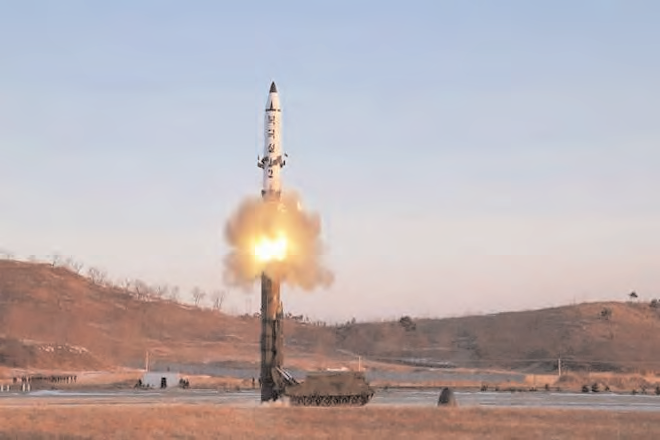
    BEIJING (TIP): The successful test of a US missile interceptor has sparked concerns in China as experts said it will break the strategic balance with other nuclear powers and signals preparations for military action against nuclear-armed North Korea The US has successfully tested a mock intercontinental ballistic missile (ICBM) using its own upgraded long-range interceptor warhead.

    “This test is similar to actual combat because it used X-band radar to track and lock on to the target – an ICBM – by itself. In the past, the US used a medium-range missile and the defence system had the data and information about the target before the test,” Yang Chengjun, a senior military strategist on missile studies from the PLA Rocket Force, told the Global Times.

    Officials said the US interceptor missile travelled at 27,040km per hour and hit its target over the Pacific Ocean. The test came a day after North Korea tested its ninth ballistic missile this year, which travelled 450 kms before splashing down in the Sea of Japan. Pentagon spokesperson Navy Captain Jeff Davis said the test had been planned for some time and was not timed specifically as a response to North Korea. “In a broad sense, North Korea is one of the reasons why we have this capability,” he said in a statement.

    Yang said the US test indicates it is preparing for military action as tensions in Northeast Asia increased. However, North Korea’s test only proves that it has mediumrange missiles, not ICBMs, so the US’ missile defence system is targeting nuclear powers like China and Russia, which could launch ICBMs to strike US territory, Yang said.

    The US interceptor has an uneven track record, having succeeded nine times out of 17 attempts against missiles in tests since 1999, although the most recent test in June 2014 was a success, state-run Xinhua news agency reported.

    The US has 26 interceptors based at Fort Greely in Alaska and four at Vandenberg Air Force Base. Last week, the Pentagon presented its 2018 budget to Congress, proposing spending $7.9 billion on missile defence, including $1.5 billion for the ground-based mid- course defence programme.

    “The balance between nuclear armed countries is based on ‘Mutual Assured Destruction’ (MAD), and the development of missile defence systems is for the US to seek absolute security. But it’s actually damaging the balance and it will surely bring about an arms race among nuclear armed countries,” Chu Yin, an associate professor at the University of International Relations said. “China also has its missile defence system, with technology very similar to the US’, but the system is not as comprehensive as the US system,” Yang noted.

    China has already exercised about the US deployment of THAAD (Terminal High Altitude Area Defence) interceptor missiles in South Korea to ward off to counter missile threats from North Korea as its radars provide a deep look into Chinese territory, specially its missile activities. (PTI)

  • Russian state has never been involved in hacking: Putin

    Russian state has never been involved in hacking: Putin

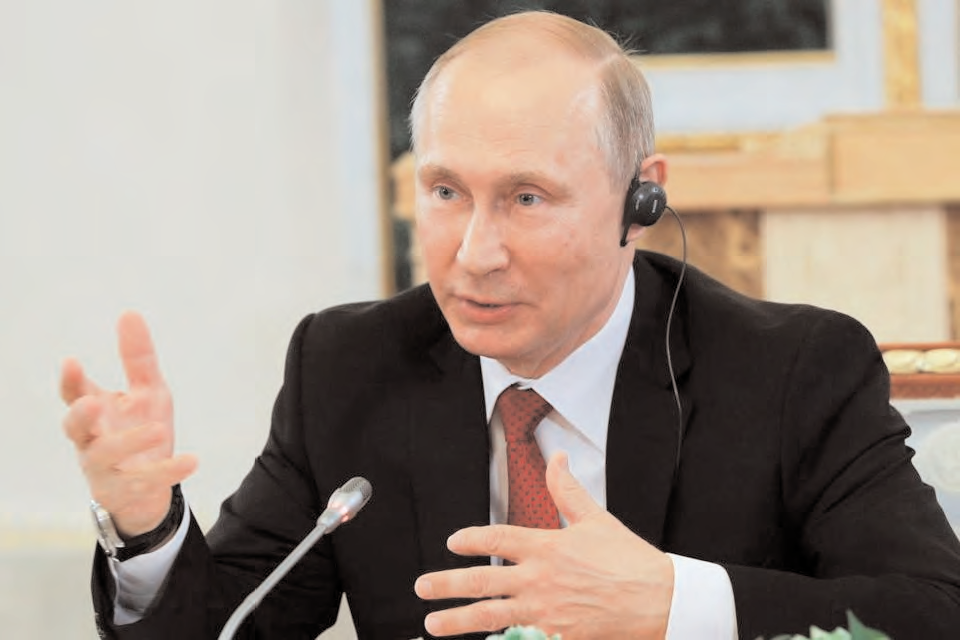
    ST PETERSBURG (TIP): President Vladimir Putin insisted June 1 that the Russian state has never engaged in hacking and scoffed at allegations that hackers could influence the outcome of elections in the United States or Europe.

    But the Russian leader admitted the possibility that some individual “patriotic” hackers could have mounted some attacks amid the current cold spell in Russia’s relations with the West.

    Speaking at a meeting with senior editors of leading international news agencies, Putin also alleged that some evidence pointing at Russian hackers’ participation in attacks could have been falsified in an attempt to smear Russia.

    “I can imagine that some do it deliberately, staging a chain of attacks in such a way as to cast Russia as the origin of such an attack,” Putin said. “Modern technologies allow that to be done quite easily.” US intelligence agencies have accused Russia of hacking into Democratic Party emails, helping President Donald Trump’s election victory, and the Congressional and FBI investigations into the Trump campaign’s ties with Russia have shattered Moscow’s hopes for a detente with Washington. Putin said the “Russo-phobic hysteria” makes it “somewhat inconvenient to work with one another or even to talk.”

    “It’s having an impact, and I’m afraid this is one of the goals of those who organize it are pursuing and they can fine-tune the public sentiments to their liking trying to establish an atmosphere that is going to prevent us from addressing common issues, say with regard to terrorism,” the Russian leader said. Putin predicted “this will end, sooner or later,” adding that “we are patient, we know how to wait and we will wait.”

    Asked if Russian hackers could try to shape the outcome of German parliamentary elections later this year, Putin said: “We never engaged in that on a state level, and have no intention of doing so.”

    He noted that Russia can work constructively with any German leader, adding that he had good ties with German Chancellor Angela Merkel despite some differences.

    Russian meddling was also a concern in France, with Putin publicly expressing his sympathy for President Emmanuel Macron’s rivals in the campaign. Macron’s aides claimed in February that Russian groups were interfering with his campaign, and a document leak hit Macron’s campaign in the final hours of the French race.

    Moscow has strongly denied all allegations of election meddling. Putin argued that hackers, wherever they come from, can’t sway election outcomes because the public mood cannot be manipulated that easily. “I’m deeply convinced that no hackers can radically influence another country’s election campaign,” he said.

    “No hackers can influence election campaigns in any country of Europe, Asia or America.” Putin added that while the Russian state has never been involved in hacking, Russia-West tensions could have prompted some individuals to launch cyberattacks.

    “If they have patriotic leanings, they may try to add their contribution to the fight against those who speak badly about Russia,” he said. “Theoretically it’s possible.”

    Russia’s relations with the West have been at post-Cold War lows over the Ukrainian crisis. The US and the EU have slapped Moscow with sanctions over its annexation of Ukraine’s Crimean Peninsula and support for pro- Russian insurgency in eastern Ukraine.

    Putin said Thursday that economic restrictions against Russia have had “zero effect.” He predicted that the current strain in relations will ease, because “it’s counterproductive and harmful.”

    Touching on tensions in the Pacific, Putin said Russia’s military deployments on a group of Pacific islands also claimed by Japan have been caused by concerns about the US military buildup in the region.

    The four islands, called the Northern Territories in Japan and the southern Kurils in Russia, were seized by the former Soviet Union at the end of the World War II, preventing the two countries from signing a peace treaty.

    Putin said the US will likely continue to build up its missile shield in the region even if North Korea agrees to curb its nuclear and missile programs, in the same way it has continued to develop missile defenses in Europe despite a deal with Iran that curbed its nuclear program in exchange for lifting international sanctions. (AP)

  • Israel disappointed at Trump’s decision not to move US embassy

    Israel disappointed at Trump’s decision not to move US embassy

    JERUSALEM (TIP): Israel on June 1 expressed disappointment at the decision of US President Donald Trump to sign a waiver to delay relocating the US Embassy in Israel to Jerusalem from Tel Aviv but said it hoped a move could take place later.

    “Though Israel is disappointed that the embassy will not move at this time, we appreciate today’s expression of President Trump’s friendship to Israel and his commitment to moving the embassy in the future,” part of a statement from Israeli Prime Minister Benjamin Netanyahu said.

    It added that: “Israel’s consistent position is that the American embassy, like the embassies of all countries with whom we have diplomatic relations, should be in Jerusalem, our eternal capital.” (AP)

  • EU leader urges Trump to stay in Paris climate deal

    EU leader urges Trump to stay in Paris climate deal

    BRUSSELS (TIP): European Council President Donald Tusk made a personal appeal June 1 to US President Donald Trump not to pull Washington out of the Paris climate agreement.

    Tusk warned Trump on Twitter against such a move as he prepared to host an EU-China summit Friday designed to fill the void on climate if the US withdraws from the landmark 2015 pact.

    “@realDonaldTrump please don’t change the (political) climate for the worse,” Tusk said after Trump tweeted he would make his final decision at 1900 GMT.

    Tusk will join Jean-Claude Juncker, president of the executive European Commission, in meeting Chinese Prime Minister Li Keqiang at the summit on Friday. Li pledged to “steadfastly” implement the Paris pact as he held talks with German Chancellor Angela Merkel before travelling later Thursday to Brussels for informal talks.

    The European Union and Chinese leaders will throw their full weight behind implementing all aspects of the Paris agreement, regardless of US participation, according to a draft statement expected to be published June 2. (PTI)

  • China, Europe take lead on climate as world waits on Trump

    China, Europe take lead on climate as world waits on Trump

    BERLIN (TIP): China and Europe took the lead on the Paris climate accord on June 1, as fears grew that US President Donald Trump would pull Washington out of the landmark deal.

    After a day of rumours about the Republican leader’s plans, with some aides reportedly saying a withdrawal was likely and others saying no decision had been taken, Trump said he was ready to make his stance known.

    “I will be announcing my decision on Paris Accord, Thursday at 3:00 P.M. The White House Rose Garden. MAKE AMERICA GREAT AGAIN!” the US leader said in a tweet, punctuating the post with his campaign slogan.

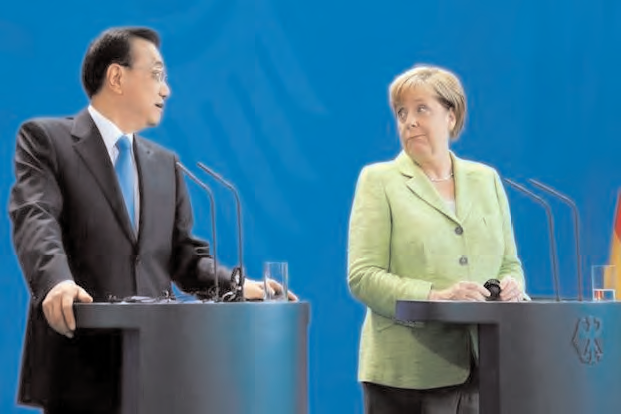
    Hours ahead of his 1900 GMT announcement, the world’s biggest carbon emitter China pledged to stay the course on implementing the 2015 accord. Premier Li Keqiang said it was in China’s own interest to do so, and urged other countries to do likewise. “China will continue to implement promises made in the Paris Agreement, to move towards the 2030 goal step by step steadfastly,” Li said in a Berlin joint press conference with German Chancellor Angela Merkel.

    “But of course, we also hope to do this in cooperation with others,” added Li, as Merkel hailed China’s pledge. China has been investing billions in clean energy infrastructure, as its leaders battle to clear up the notorious choking pollution enveloping its biggest cities, including Beijing.

    Li, who was due to travel to Brussels for a summit with the European Union later Thursday, was expected to stress the same message there. China and the US are responsible for some 40 percent of the world’s emissions and experts have warned that it is vital for both to remain in the Paris agreement if it is to have any chance of succeeding.

    The leader of Asia’s other behemoth, Indian Prime Minister Narendra Modi, had said Tuesday, also in Berlin, that failing to act on climate change would be “morally criminal”.

    Trump raised alarm bells when he refused to sign up to a pledge on the deal at last week’s G7 meeting in Italy. Merkel on Saturday labelled the result of the “six against one” discussion “very difficult, not to say very unsatisfactory”.

    With media reports swirling that Trump had decided to pull Washington out of the accord, America’s international allies and Trump’s domestic opponents have lashed out at the billionaire.

    The White House did not confirm those reports, and it was unclear whether Trump would fully scrap US participation, merely water down US emissions objectives — or surprise everyone with a decision to follow the status quo. (AFP)