Year: 2017

  • The Eye Foundation of America organizes Golf for Sight Tournament

    The Eye Foundation of America organizes Golf for Sight Tournament

    Funds raised to help prevent avoidable blindness among children

    MORGANTOWN, WV (TIP): The Eye Foundation of America organized for the third successive year their annual Golf For Sight tournament at the Lake View resort golf course here, July 21.  Lake View resorts have a fabulous 18-hole golf course. It is a favorite golf course with golfers who thronged the place during summers.

    The tournament attracted 4 teams and around 40 people.

    Dr. VK Raju, Founder and President of Eye Foundation of America described the response as very encouraging and better than the last year’s. He said: “Many new faces came for the reception. Participation was better than previous year”.

    Speaking about the forthcoming programs of Eye Foundation of America, he said the Foundation will host an event on Oct 27 in India. People from all walks of life across the globe will come together. Mr Ravi from Sri Lanka – President of Rotary International will be the Chief Guest. Shrinu – foster child of EFA will be the guest of honor.


  • DiNapoli Audit Recommends Better Protections for Child Performers

    DiNapoli Audit Recommends Better Protections for Child Performers

    ALBANY, NY (TIP): The state Department of Labor is falling short in enforcing New York’s laws to protect child performers, according to an audit released by New York State Comptroller Thomas P. DiNapoli. State auditors found shortfalls with how work permits were given to children and employers, inadequate monitoring of work conditions, and insufficient enforcement of requirements to set aside some of the children’s earnings in a trust.

    “New York needs to do more to protect child actors, dancers, musicians and models,” DiNapoli said. “We have laws on the books to make certain that children are working with permits, and employers and parents are following the rules to protect the safety, health and financial rights of child performers. The state Department of Labor should hold the entertainment and modeling industries accountable to protect these children.”

    In New York, the state Department of Labor (DOL) enforces the laws to protect child performers, including issuing work permits, observing working conditions and enforcing trust accounts. DOL issues one-year permits to performers under 18 years of age and certificates to employers every three years. From April 1, 2014 to October 31, 2016, DOL issued about 27,000 child performer permits including: about 8,000 temporary permits, 11,000 new annual permits, 4,500 annual permit renewals, and 3,500 permits not identified by type. For the same period, DOL issued 844 employer certificates.

    The law also requires 15 percent of a child’s earnings to be placed in a trust. In 2004, after laws were adopted to better protect child performers, the Comptroller’s office established accounts for performers’ earnings (deposits from employers) if parents or guardians failed to establish a trust account or to provide trust account information to the employer. Through October 2016, more than $640,000 had been deposited with the Comptroller for about 5,600 child performers.

    Auditors examined the period of April 2014 to March 2017 and found:

    • DOL issued both annual permits and employer certificates without receiving all the documentation required, such as proof of a child’s date of birth, evidence of the child’s academic performance, health forms and trust account information. Auditors tested permit records and found more than half of the annual permits sampled were issued without Social Security numbers, trust information or other required documentation.
    • At least 133 children were issued multiple temporary permits, which DOL failed to identify. Children are allowed only one temporary permit in a lifetime. One performer, who obtained a temporary permit which is only valid for 15 days, had 19 deposits into the trust held by the State Comptroller for multiple performances over a two-year period. Auditors found five performers without permits were paid over $10,000 for a single performance, and three performers without permits were paid over $20,000 each for a single performance.
    • DOL did not conduct any site visits or assess workplace conditions during the audit period. Nor had it taken measures to proactively verify permits, certifications, and education or safety provisions for child entertainers.
    • The numbers of annual deposits with the State Comptroller increased from 14 deposits in 2004 to 1,174 in 2016. Thirty-five percent of this money was deposited in just the last year. However, half of this money was deposited more than five years ago, and 29 percent over 10 years ago. In some cases, the funds have been held for so long that the performers are no longer children, having already attained the age of 18. Some accounts consist of multiple deposits over years, and some are for just one performance.
    • The highest number of trust account deposits for one performer was 27, and the highest single deposit was over $26,000. Accounts are as old as May 2004, with one having a balance over $25,000. However, the amount owed to most child performers is small, ranging from$1 to $100.

    The Comptroller’s office routinely attempts to reach out to parents or performers when money is turned over to it for the trust account. Where there are poor records or incomplete records, it is difficult to identify the rightful owners. Individuals who are interested in inquiring if the Comptroller is holding money for a child performer, can call 518-474-4017.

    DiNapoli’s auditors recommended DOL:

    • Design and implement a system of internal controls to ensure that the laws governing the welfare of child performers are followed and that parents/guardians and employers comply with the requirements of the law.
    • In conjunction with the Office of Information Technology Services, develop a system that can easily and readily store, access, and analyze required child performer and employer information and develop a process to identify and correct apparent System flaws.

    DOL disagreed with many of the audits findings. Auditors point out that DOL had numerous opportunities to comment on the audit’s findings and did not provide any preliminary feedback and incorrectly read its own data. DOL’s complete response is included in the audit.

    For a copyof the audit, go to http://www.osc.state.ny.us/audits/allaudits/093017/16s70.htm

    For access to state and local government spending, public authority financial data and information on 130,000 state contracts, visit Open Book New York. The easy-to-use website was created to promote transparency in government and provide taxpayers with better access to financial data.

  • Federal Brief Filed on Long Island Workplace Discrimination Case Comes Day After Trump Proposes Banning Transgender Military Service Members

    Federal Brief Filed on Long Island Workplace Discrimination Case Comes Day After Trump Proposes Banning Transgender Military Service Members

    LONG ISLAND, NY(TIP):  A day after President Trump tweeted remarks calling for a ban on transgender military personnel, calling them both a “burden” and “disruption,” the Department of Justice filed a brief in the U.S. Circuit Court of Appeals seeking to rollback workplace discrimination based on one’s sexual orientation.

    The case, which the federal brief was filed for, involves the firing of a skydiving instructor from a Long Island company after a customer complained about having to parachute with a gay man.

    David Kilmnick, President of the New York LGBT Network based on Long Island, issued the following statement:

    “The Trump Administration’s latest shameful assault on the LGBT community should give every American pause. It’s inexcusable for President Trump and his administration to continue assaulting the LGBT community for political gain.  The LGBT Network stands united with every American who has ever been the victim of discrimination and hate in the workplace. And it’s simply unconscionable that lawyers, paid for with public tax dollars, are being employed to parse language pertaining to who can and cannot be discriminated against. At the end of the day, discrimination is discrimination, regardless of who the victim is.”

  • Mangano Announces Stars and S’mores A Night of Astronomy Program at Tackapausha Museum

    Mangano Announces Stars and S’mores A Night of Astronomy Program at Tackapausha Museum

    SEAFORD, NY (TIP):  Nassau County Executive Edward P. Mangano announced, July 27, that Tackapausha Museum and Preserve will be hosting a family-friendly “Stars and S’mores: A Night of Astronomy” program on August 12, 2017 from 8:00 p.m. – 10:00 p.m.

    Reach for the stars with the Friends of Tackapausha! Enjoy a family friendly evening of stargazing and s’mores. Participants will be invited to play games, make a star clock, listen to stories about the stars, meet some nocturnal animals, cook s’mores over an open campfire, and observe the sky through telescopes. The program is $5 per person.

    Tackapausha Museum and Preserve

    The Tackapausha Museum and Preserve, the first tract of preserve land acquired by Nassau County, is one of the most popular preserves on the South Shore.  The Museum and Preserve provides residents with the opportunity to enjoy a physically and spiritually invigorating hike in a convenient and accessible location.  In addition, the preserve incorporates a 3,000-square-foot museum with displays about the ecology of Long Island, as well as animal exhibits and shows and interactive activities for children.

    The preserve consists of three sections with trails that meander through each part.  In the southern section, the preserve is host to the largest Atlantic White Cedar “stand,” or grouping of trees, in Nassau County, located in a swamp just north of Tackapausha Pond, near Merrick Road.  In the central section, a small, secluded pond draws waterfowl and amphibians. The northern section, between Clark and Jerusalem avenues, includes a small wetland.

    Tackapausha Museum and Preserve is located at: 2225 Washington Avenue, Seaford, NY 11783 and is open Thursday to Sunday from 11:00 a.m. until 4:00 p.m.  Regular admission is $3.00 for adults and $2.00 for children over 5 and senior citizens.  For further information please call: (516) 571-7443 or visit the Nassau County Department of Parks, Recreation and Museums at: www.nassaucountyny.gov/parks.

  • Nassau County Comptroller Maragos Announced The Nassau County Living Wage Rate Will Increase August 1 to $16.07 Per Hour

    Nassau County Comptroller Maragos Announced The Nassau County Living Wage Rate Will Increase August 1 to $16.07 Per Hour

    MINEOLA, NY (TIP):  Effective August 1, 2017, the current Living Wage rate for employees of vendors with Nassau County service contracts will increase to $16.07 per hour for employees without health benefits from $15.78, and to $13.98 per hour with health benefits from $13.73. The increases are adjusted annually based on the New York Metropolitan CPI-U Index, and will remain in effect until July 31, 2018.

    The Nassau County Living Wage Law was enacted by the Nassau County Legislature in 2006 to raise the minimum wage of the employees of vendors with County service contracts. The County Attorney is responsible for calculating the annual increases and the Comptroller’s Office is responsible for auditing the rate increase and in monitoring compliance with the Law.

    For a copy of the updated Living Wage Law Poster please connect with Nassau County Comptroller Maragos online: http://www.nassaucountyny.gov/agencies/Comptroller/index.html

  • Traversal Visa Opens Office in New Jersey to provide Visa and Passport Services

    Traversal Visa Opens Office in New Jersey to provide Visa and Passport Services

    FORDS, NJ (TIP): Traversal Visa launched, July 26 its New jersey operations. Speaking on the occasion, the company President Joe Johal said; “It’s our goal to be known as the most Customer centric Visa & Consular documentation facilitation company across the globe. We believe that the reason for our existence is our Customers and their needs must come first”.

    Introducing the company, Johal said that Traversal Visa was established with the aim of providing consistent, fast and reliable travel Visa & other Consular services (OCI, Passport renewal) to US residents. We are a team of second generation entrepreneurs who understand the nuances of the consular applications and the frustration an applicant has to go through to obtain one. The first thought which comes to an applicant while approaching a Visa/consular company is that they will be ripped off considering there is no sanity in the way many operators in the trade charge the travelers for a Visa/consular application. This is where Traversal Visa aims to be seen as a reliable, fair price, and to the point while dealing with you. Our vision is to build a Global Company in the Visa & Consular documentation facilitation services space, where all our customers view us as reliable and a trustworthy company.

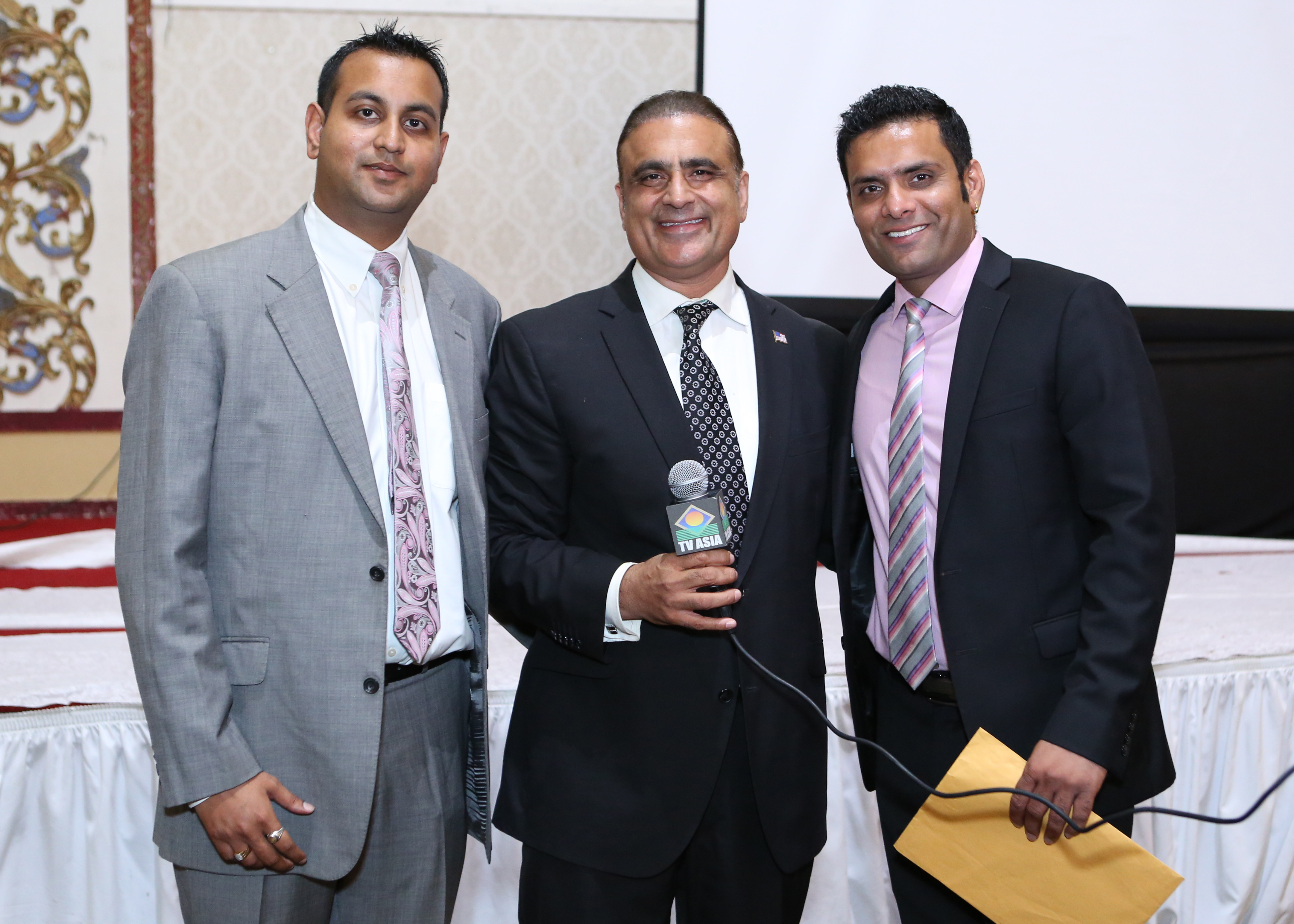
    Company officials with guests

    Speaking of the values the company holds dear, Joe said: “Quality of Service, Integrity & Happy employees are the values that drive us in meeting our clients’ expectations. We aim to provide best of working environment to our first-rate team of Managers and Consultants who deliver services every day to our customers”.

    Keshin Patel, a Director of the company also spoke on the occasion.

    Ranjeet Singh, a Director of the company who will be looking after the New Jersey Office was the master of ceremonies.

    The company has, as of now two locations in the US- San Francisco and New Jersey.

    HR Shah of TV Asia and Ramesh Patel, Chairman of FIA who spoke on the occasion welcomed the company and hoped it will provide good service to community.

    New Jersey office of the company is located at 7 Lincoln Highway (suite 208), Edison, NJ 08820. The helplines are: 1-848-200-7886 and 1-848-229-2721.

  • International Indian Film Academy Show was a huge disappointment

    International Indian Film Academy Show was a huge disappointment

    Impression of Patrons

    I.S. Saluja

    NEW YORK (TIP): “The biggest night of the year. A star-studded spectacle with the biggest Bollywood superstars! With extravagant productions and superbly choreographed performances, this magnificent evening honors the best talent in Indian Cinema. The evening will witness performances by Alia Bhatt, Katrina Kaif, Kriti Sanon, Salman Khan, Shahid Kapoor, Sushant Singh Rajput and more”, read an announcement on IIFA website.

     The Bollywood loving Indian Americans were thrilled. They had the intense desire to meet with their idols and also they had the means to buy the most expensive tickets and they lined up, expecting to meet with their favorite stars and have a swell time at the IIFA extravaganza. But then, it was not to be. At least, for many.

    The Indian Panorama received a couple of letters describing IIFA as a hopeless and flop show, to be mild, and as a show meant to cheat patrons, at the worst. Media colleagues have also spoken about the event as the most ill organized and unwelcoming to spectators.

    IIFA needs to know that its approval rating has surely gone down in this part of the world. A letter from a renowned and highly respected gentleman from medical profession says it all.

    Dear Media Friends,
    I am sure you have a very good insight on majority of what happened at and behind the IIFA show and that your coverage will narrate all that. From my perspective, I had a fair amount of doctor and other friends who flew in and bought expensive tickets 1500-5000 dollars and here is their feedback.
    1. The promotional package forwarded to them had Shahrukh Khan, Priyanka Chopra as attending the show along with several Hollywood celebrities including Matt Damon, Julia Roberts etc. It is hard to resist the temptation of seeing SRK and Salmaan on the same stage. But, the show had none of that. This was a very cleverly done false and fraudulent marketing. Many of these people are exploring possibility of legal recourses in getting their money back, given the false claims and fraudulent marketing.
    1. The VIP tickets 2500 and above had a pre -event cocktail listed as part of ticket price. But to their unpleasant surprise, they had to stand in line and buy an overpriced beer and chicken fingers etc…. So much for the VIP treatment
    1. The green carpet concept was essentially a fraud in its own way, where there was lot of green but hardly any carpet.There was no VIP treatment in that green carpet.
    1. The show only had one focus i.e. a TV show for the colors TV as was clear by the two hosts talking at length with a poorly written non entertaining script. Singers and Star line up was good, but even then Wizcraft managed to produce a boring show for the most part.
    1. One of the moms wrote on my Facebook page that she felt sorry for those 200 kids and their dedicated parents who paid more than $300 to participate in dance with Salman Khan.
    They spent 5 days and more than 15 hours a day in dance practice at MetLife stadium. All the kids sat in the brutal 100 degrees heat for the stars to come practice with them. Unfortunately, Salman never showed up for any of the practice until Thursday night at 8 pm.
    On the day of the event the kids were asked to be there at 1pm because Salman wanted to practice with them. Once again Salman never showed up for practice. These poor kids were sitting at the stadium from 1pm and got to perform at 3 am. On Thursday, there was also an incident happened which injured seven or more kids. One of which got severely injured and ended up in the hospital.
    Wizcraft had lot of issues in Tampa, but people took it as a first timer mistakes. However, this repeated and deliberate attempt of misleading people to get money and the mistreatment is not to be ignored and tolerated silently.
    The public sentiment is clear by the fact that when I initially posted it on face book, the video post has had > 38,000 views and has been shared by around 80 people in 36 hours.
    Knowing most of you, I am pretty sure and hope that your coverage will go beyond the spectacular stage decoration and glittery star pictures in portraying the feelings and frustration of people and kids.
    Some folks are approaching the Indian Ambassador, FICCI and the office of attorney general for the fraud and mistreatment reporting.
    If you have any other ideas, what should and can be done about this, please do let me know.
    My cell # is 8568736633 for any questions.
    Regards.
    Sanjay
    (Dr. Sanjay Gupta)

    The Indian Panorama has always believed and supported the readers to state their opinions, suggestions and reporting. Do write to us for any further comments.


  • The 2017 MoneyGram Cricket Bee Dallas winners announced

    The 2017 MoneyGram Cricket Bee Dallas winners announced

    METUCHEN, NJ (TIP): Three North Texas men are headed the Cricket Bee Finals in New Jersey next month after winning the Dallas regional Cricket Bee held on July 16. Vikram Shukla of Frisco, TX was declared second runner up, Vinay Bulusu of Irving, TX was first runner up and the Regional champion was Nadeem Aslam of Murphy, TX.  The competition allows cricket fans to compete for prizes while sharing their knowledge of the game to win a cash prize of $10,000.

    Open to those 18 and older, the MoneyGram Cricket Bee is continuing the search of the brightest Cricket fan with regional rounds in San Francisco, Dallas, Chicago, New Jersey and will conclude in Toronto, each testing participants’ general cricket knowledge. The regional contest will have two components, a written test and an oral test. In the written qualifier, contestants will be asked 35 questions. They must get at least 25 correct to advance to the oral round. In the oral round, the contest will be held on a miss and out basis; simply if a contestant misses the right answer, they are eliminated.

    Unlike quiz shows, the Cricket Bee will be conducted so that contestants are competing with themselves and the question posed to them as opposed to their peers.

    Cricket enthusiasts can still participate at the remaining centers in Chicago, New Jersey, and Toronto. Contestants can register to compete in the game of their choice at www.cricketbee.com. A sample set of questions and sources will be provided for the participants.

    “We are thrilled to sponsor the 2017 Cricket Bee and as always, we enjoy being a part of an initiative that our customers are passionate about,” says Wendi Schlarb, MoneyGram’s head of marketing for the Americas. “Cricket is a sport that brings friends and loved ones around the world closer together, much like MoneyGram’s services. It’s always exciting to be a part of activities that support our South Asian communities.”

    Kawan Foods serves as the powered by sponsor for the innovative event and has been deeply involved with the South Asian community through various initiatives and hopes to connect with the entire Cricketing community here in the US and Canada.

    “We want to congratulate the winners of the regional contest and wish them continued success in their endeavor to win $10,000,” said Tim Tan, MD Kawan Foods.

    “There was a lot of excitement and immense talent at the regional which goes to show how passionate people are about the game. Participants had an opportunity to network and interact with other cricket players and enthusiasts from various cities and I am very happy to have our first set of finalists.” said Rahul Walia, Founder of the Cricket Bee.

    TV Asia serves as the exclusive broadcaster for the event and has been a strong proponent of promoting Cricket in the country.

    “We are so proud to be a part of the MoneyGram Cricket Bee, it’s definitely a great platform for cricket enthusiasts across the country and we are excited to see them at the finals.” said HR Shah, chairman and CEO of TV Asia and an avid cricketer himself.

    The finals are slated for August 12th and are open for the public to watch. You can reserve seats by calling 848-248-4199.


  • STARTALK programs run by Hindi Sangam Foundation  attracts increasing number of students

    STARTALK programs run by Hindi Sangam Foundation attracts increasing number of students

    NEW YORK (TIP): For the second consecutive year Hindi Sangam Foundation conducted its summer Hindi program at Franklin High School in New Jersey. Known as SANGAM-FRANKLIN STARTALK HINDI PROGRAM 2017, this unique venture signifies the deep commitment of the United States for a multilingual and multicultural society where every child is proficient in at least one more language other than English. The program was held in collaboration with the Franklin Township Board of Education that boasts of a diverse community of students. About 42 percent of the township’s students come from various ethnic groups including Hispanic, African-American and Asians. The education leaders of the township including its president Ed Potosnak and Superintendent Dr. John Ravallly truly understand the importance of promoting foreign language education for all students. Our program was conducted smoothly for three weeks starting June 19 and ending July 8, when students used modern resources available at the school.

    From the very first day our students were engaged in learning varieties of traditional and modern stories of India including stories about successful people in different professions. All our material was related with cultural products and practices of India that students were very interested in learning and discussing with their classmates. With every passing day they did new activities that helped them improve their skills in speaking, reading and writing. The goal of this program has been empowering students to communicate in Hindi and learn about their culture and their heritage.

    Students at STARTALK Hindi program involved in doing topic based tasks at Franklin High School, Somerset, NJ.

    On the final day of the program students and teachers took charge of the auditorium of the school where they presented interested episodes of their learning. The event was open for parents who liked to see what their kids learned at the program. We invited a number of public officials to witness the outcome of our program. We are thankful to all our stakeholders who share our objective and believe in strengthening Hindi as a world language. Ambassador Riva Ganguly Das deputed one of her officers, Vice Consul Sandeep Grover to observe our program on July 8. A number of local officials including Franklin Councilman Rajiv Prasad, NJ Commissioner of Public Utilities Upendra Chivukula, and Former Edison Councilman Dr. Sudhanshu Prasad attended the event. Padma Bhushan Dr. Lakshmi Prasad Yarlagadda, former member of Rajya Sabha, attended the event as our Chief Guest.

    Students at STARTALK Hindi program involved in doing topic based tasks at Franklin High School, Somerset, NJ.

    STARTATLK Program was initiated by the White House. The US Congress approves the program budget every four years. Our efforts can’t be complete without the support of various stakeholders. US Congressman Frank Pallone, Jr. of Middlesex County sent his citation for Hindi Sangam Foundation, which was presented, to me by former NJ Assemblyman Upendera Chivukula at the event.

    Students at STARTALK Hindi program involved in doing topic based tasks at Franklin High School, Somerset, NJ.

    As the president of Hindi Sangam Foundation and director of SANGAM-FRANKLIN STARTALK HINDI PROGRAM 2017 I have make a promise to our community for promoting our language and culture in our adopted country and making progress day be day. I hope to see the day when all children of Indian origin will proudly converse with their American counterparts about the Indian culture in Hindi.

  • Pentagon blocks $350 million military aid to Pakistan

    Pentagon blocks $350 million military aid to Pakistan

    WASHINGTON DC (TIP): The US Department of Defense withheld military payments to Pakistan, after Secretary of Defense Jim Mattis told Congressional defense committees that he was unable to certify that Pakistan took sufficient action against the Haqqani network to permit full reimbursement of the fiscal year 2016 Coalition support funds (CSF). The Pakistan-based Haqqani network has been accused for carrying out many high-profile terror acts against US and Indian interests in Afghanistan, including the 2008 bombing of the Indian mission in Kabul that killed 58 people. This is the second year in a row that the Defense Secretary has refused to certify to Congress, as mandated under National Defense Authorization Act (NDAA), that Pakistan has taken satisfactory action against the Haqqani network.

    Pakistan had been allotted $900m in military aid to through the special fund. The country has already received $550m of that, but Mattis’ decision means $50m will be withheld. The remaining $300m was rescinded by Congress as part of a broader appropriations act, earlier this year. The Coalition Support Fund (CSF) authority reimburses key cooperating nations for logistical, military and other support provided to US combat operations. Pakistan is the largest recipient of CSF reimbursements, having received more than USD 14 billion since 2002.

    The US is in the process of reviewing its policy on Afghanistan and Pakistan. Last week, the State Department in a report to the Congress had listed Pakistan as one of the countries having terrorist safe havens. Sanjay Puri, Chairman, US India Political Action Committee, welcomed the announcement adding, “USINPAC has been advocating for years to reevaluate military aid to Pakistan. We cannot have US taxpayer money going towards terror attacks against US and Indian interests from groups in Pakistan.”


  • USCIS Resumes H-1B Premium Processing for Certain Cap-Exempt Petitions

    USCIS Resumes H-1B Premium Processing for Certain Cap-Exempt Petitions

    WASHINGTON (TIP): U.S. Citizenship and Immigration Services (USCIS) on July 24 announced that it will resume premium processing for certain cap-exempt H-1B petitions effective immediately. The H-1B visa has an annual cap of 65,000 visas each fiscal year. Additionally, there is an annual “master’s cap” of 20,000 petitions filed for beneficiaries with a U.S. master’s degree or higher.

    Premium processing will resume for petitions that may be exempt from the cap if the H-1B petitioner is:

    * An institution of higher education;

    * A nonprofit related to or affiliated with an institution of higher education; or

    * A nonprofit research or governmental research organization.

    Premium processing will also resume for petitions that may also be exempt if the beneficiary will be employed at a qualifying cap-exempt institution, organization or entity.

    Those cap-exempt petitioners who are eligible for premium processing can file Form I-907, Request for Premium Processing Service for Form I-129, Petition for a Nonimmigrant Worker. Form I-907 can be filed together with an H-1B petition or separately for a pending H-1B petition.

    USCIS previously announced that premium processing resumed on June 26 for H-1B petitions filed on behalf of physicians under the Conrad 30 waiver program as well as interested government agency waivers.

    USCIS plans to resume premium processing of other H-1B petitions as workloads permit. USCIS will make additional announcements with specific details related to when we will begin accepting premium processing for those petitions. Until then, premium processing remains temporarily suspended for all other H-1B petitions. USCIS will reject any Form I-907 filed for those petitions, and if the petitioner submitted one check combining the Form I-907 and Form I-129 fees, USCIS will have to reject both forms.

  • Missed the chance to act, Mr President

    Missed the chance to act, Mr President

    A seasoned parliamentarian, the now ex- President, Pranab Mukherjee, is known to weigh his words before uttering them and he must have taken extra caution about what to say in his parting speech. Yet the farewell message was a little odd for the occasion. The President was telling the government not to do something which he had not disapproved of when the occasion demanded. While Mr Mukherjee’s emphasis on “debate, discussion and dissent” and his observation that “disruptions hurt the Opposition more” were all well taken, it was his advice to the government to take the Ordinance route sparingly that has drawn maximum attention.

    As President, Mr Mukherjee gave unqualified assent to Ordinances — as many times and as often presented. Not even once did he return to the government for reconsideration any of the crucial recommendations — be it the frequent issue of Ordinances or the imposition of President’s rule. The land Ordinance was promulgated thrice. It had replaced the land Bill, which was widely dubbed “anti-farmer” and had remained stuck in the Rajya Sabha before its dilution. Again, the President happily sided with the government in approving the Ordinance that criminalized the holding of Rs 500 and Rs 1000 currency notes beyond December 31, 2016. Despite the nationwide dislocation, loss of jobs and farmer distress it caused without achieving any of the purported gains, the President did not try to satisfy himself, by asking the government or the RBI, whether sufficient arrangements were made for executing such an important policy measure.

    The unquestioned approval of President’s rule in the two Opposition-ruled states of Arunachal Pradesh and Uttarakhand also did not enhance his stature. It was finally left to the Supreme Court to right the wrong. His predecessor, K R Narayanan, had sent back Cabinet resolutions seeking President’s rule in UP and Bihar. Most of the time the President’s job is ceremonial. It is on such occasions that the worth of the Rashtrapati Bhavan occupant is judged. Pranab Mukherjee was found wanting at times. Only towards the end of his term did he talk of issues not to the government’s liking such as growing intolerance, Parliament turning dysfunctional and constitutional values. It did not add up, Mr Mukherjee.

    (Tribune, India)

  • Country without a Prime Minister

    Country without a Prime Minister

    By Ayesh Siddiqa

    The real conversation in the drawing rooms these days is whether it is just Mr. Sharif who will be disqualified or whether it would extend to his entire family — two sons and a daughter who are the ones actually named in the Panama leaks. With his eyes already on the 2018 elections, Mr. Sharif would hope that his daughter and political heir, Maryam Nawaz, survives this crisis. If the entire family is disqualified, it will certainly send a signal that things are up for grabs, says the author.

    The office of Pakistan’s Prime Minister is subject to pulls and pressures far in excess of those in other democracies. But even by these standards, Nawaz Sharif is under inordinate stress. He is facing a court case and a scathing media trial.

    A three-member Bench of the Supreme Court is yet to give a final verdict regarding his disqualification. The decision will be based on the report by a Joint Investigation Team (JIT) established by the orders of the court to investigate Mr. Sharif and his family’s assets after the leak of the Panama Papers related to holdings in offshore companies.

    The question now is whether the Chief Justice will give a verdict based on the decision of the three judges or call for a larger Bench. The judiciary might like to get the decision popularly accepted by calling for a larger Bench. It is not as if all onlookers are convinced about the judges or the JIT being bipartisan.

    Odds stacked against PM

    It is a fact that corruption investigations are not easy, especially when the country’s main anti-corruption institutions, the National Accountability Bureau (NAB) and the Federal Investigation Agency (FIA), lack forensic investigation expertise. Even in the case of some of the Sharifs’ assets, the JIT hired the services of a foreign company. Notwithstanding such lacunae, the highest court was willing to open up a Pandora’s box of investigating “a constant murmur nationally as well internationally about respondent No. 1 (Nawaz Sharif) indulging in corruption, corrupt practices and money laundering”. If proven guilty, Mr. Sharif cannot hold office as per Article 62 (1) (f) of the 1973 Constitution as he would be declared as not being sadiq (truthful) and ameen (honest). Even if the judges feel uncomfortable using the JIT report as the basis of their decision, the axe could still fall on Mr. Sharif on the basis of him officiating as a director in a company registered in the UAE while he was heading the government.

    There are today very few people betting on Mr. Sharif completing his term, which if he does, he’d be the first Prime Minister to do. But as far as the popular narrative in the country goes, Mr. Sharif is already gone. The working of the state bureaucracy has already slowed down in anticipation of some transition.

    There are even rumors of Mr. Sharif’s current Interior Minister, Chaudhry Nisar, being favored by both the Establishment and the rival Pakistan Tehreek-e-Insaf party as one of the candidates to replace him while the Pakistan Muslim League (Nawaz) government is allowed to complete the term.

    In any case, there will be no hurry to hold the next elections due to the need for a new delimitation of constituencies based on the recently held census — senior judges believe the delimitation should take place. Meanwhile, Mr. Sharif’s future role in politics will be determined by how far the court proceedings drag and how it turns out personally and politically for him in the months and years to come. What is certain is that Mr. Sharif is not inclined to resign, as was expected of him, but, if it comes to that, to go down as a political martyr — a man politically victimized by non-parliamentary institutions of the country.

    The media campaign aims to make him bleed politically and increase his losses the longer he stays. Interestingly, there are serving state officials in numerous WhatsApp groups who are gently directing conversations in a certain direction, or watching while their partners do the same. It is not that lack of accountability is not a huge problem in Pakistan but that accountability has always been used as a political tool to punish rivals. Hence, ordinary people forgave Dr. A.Q. Khan, the architect of Pakistan’s nuclear program, and accept him as a hero despite his confession on television regarding illegal sale of nuclear technology because in their eyes he did return something for all he took. Also, in the absence of the enactment of a strong law or principle of the rule of law, even courts are perceived by the man on the street as either corrupt or highly political. Moreover, when the law is meant to selectively conduct accountability (excluding the military and the judiciary), many raised eyebrows at an earlier judgment in the Panama Papers case that quoted Mario Puzo’s The Godfather but no law.

    Post-verdict scenarios

    Since the power rests with the judges, their verdict will influence the short- or longer-term future of the Sharif family. The real conversation in the drawing rooms these days is whether it is just Mr. Sharif who will be disqualified or whether it would extend to his entire family — two sons and a daughter who are the ones actually named in the Panama leaks. With his eyes already on the 2018 elections, Mr. Sharif would hope that his daughter and political heir, Maryam Nawaz, survives this crisis. If the entire family is disqualified, it will certainly send a signal that things are up for grabs.

    This means that even if the PML(N) remains, it would be mired in infighting and could be as easily manipulated as the Pakistan Muslim League (Quaid-e-Azam) was. While parts of central and north Punjab will remain aligned with Mr. Sharif, there will much greater activity in south and south-west Punjab where people will be influenced by, as per local political lingo, ‘whichever way the strong wind blows’. This is translated as a clear indication that the Establishment is not in a party’s favor.

    But the process of shifting gears will essentially start with electable candidates moving to another party or contesting elections as independent candidates. In urban centers, the anti-corruption slogan, compounded with the anti-incumbency factor, will play a role.

    The case against Mr. Sharif is indeed critical as the manner in which the court proceeds will determine not only his short- to medium-term political moves but also his long- to longer-term future. If the judges do not appear bipartisan and use the principle of law rather than their opinion — a fashion that dates back to Justice Iftikhar Chaudhry’s days — Mr. Sharif will be perceived as a victim rather than a culprit.

    Even his disqualification will then generate the myth that he was punished for something else rather than what the court and the JIT tried him for. This may not save Mr. Sharif now but will haunt the Establishment in a few years.

     (The author is a Pakistani military scientist, political commentator and an author who serves as a research associate at the SOAS South Asia Institute. She is the author of ‘Military Inc. — Inside Pakistan’s Military Economy’.)

  • Economics crucial for social justice believed Ambedkar

    Economics crucial for social justice believed Ambedkar

    BR Ambedkar was an original economic thinker who believed in advancing the interests of the Dalits by focusing on the economy. According to him, the economic conditions that affected the Dalits were – monetary circulation in the economy, size of land holdings and the pattern of public finance.

    By Pritam Singh

    In his writings on money, he directly challenged the dominant Keynesian view in the 1930s regarding the delinking of supply of money from gold reserves.  Keynes had argued that due to the development of the monetary- exchange mechanism in advanced capitalist economies such as the UK, there was no need to limit the supply of money by linking it with the gold reserves.  Ambedkar opposed this view not because he had any special fascination with gold but because he considered that delinking of money supply from gold reserves would open the possibilities of excessive supply of money. This, in turn, could lead to financial instability and inflation, says the author.

    Bhim Rao Ambedkar, the chief framer of the Indian Constitution, was also an original economic thinker. The originality of his economic thinking can be interpreted as eclecticism due to his non-adherence to any one particular economic ideology — Marxism, neo-classical economic thought, support for market economy or state regulation. However, behind his eclecticism lies a common running thread in his ideas on different economic issues. That unity was provided by his concern for the Dalit sections of Indian society.

    In adopting this approach, he can be compared with Karl Marx who was ruthless in his rigorous analysis of capitalism. That rigor was not merely an academic enterprise but closely linked with defending the interests of the working class. In both cases —Marx for the working class and Ambedkar for the Dalits — there was no compromise in the objective analysis of the economic conditions to suit any partisan considerations.

    On the contrary, both viewed a scientific examination of the economic conditions as a necessary condition for advancing the interests of the working class and the Dalits (for Ambedkar). In the Indian context, in particular,  and  South-Asian context in general, the social categories of class and caste overlap and interpenetrate each other despite the autonomous status. Three main issues on which Ambedkar focused his intellectual energies were: monetary circulation in the economy, size of land holdings as a part of the broader agriculture strategy and public finance especially the pattern of federal finance.

    In his writings on money, he directly challenged the dominant Keynesian view in the 1930s regarding the delinking of supply of money from gold reserves.  Keynes had argued that due to the development of the monetary- exchange mechanism in advanced capitalist economies such as the UK, there was no need to limit the supply of money by linking it with the gold reserves.  Ambedkar opposed this view not because he had any special fascination with gold but because he considered that delinking of money supply from gold reserves would open the possibilities of excessive supply of money. This, in turn, could lead to financial instability and inflation. From the viewpoint of the poor sections of society, Ambedkar thought that both inflation and financial instability would hit them adversely. The rich might benefit from financial instability by using a range of alternative investment options. The 2007-8 financial crisis of the global capitalist economy, triggered by unregulated financial markets and resulting in huge income and wealth inequalities, is a testimony to Ambedkar’s prophetic insights. For him, the seemingly technical question of money supply and gold reserves needed to be assessed for how these impacted the welfare of Dalits who constituted the bulk of the poorer segment.

    Ambedkar adopted the same method to assess the conditions in India’s rural economy. He argued that fragmentation of land holdings in India was leading to decreasing the average size of land holdings to an economically inefficient level. He advocated consolidation of landholdings in order to increase the average size of a farming unit. On the face of it, this may seem against the interests of small landholders.  However, from the viewpoint of economic efficiency, he did not consider the defense of uneconomic landholding size was in the interests of poor peasantry or landless workers. He, therefore, proposed cooperative agriculture which ensured pooling of smaller units into a bigger unit to avail of the economies of scale.  In his view, cooperative farming was desirable for small landholders and landless workers who were mostly Dalits. In looking at alternative modes of farming and suggesting cooperative farming as the most-desirable system, Ambedkar’s goal was the defense of the economic interest of the Dalits.

    The third major issue Ambedkar examined was the question of public finance, dealing with revenue and expenditure of different layers of governance. His basic premise was that each level of government needed to have appropriate sources of revenue to meet its expenditure obligations. He further argued that along with the quantitative dimensions of revenue and expenditure, it was necessary to examine the qualitative dimensions of the revenue-expenditure pattern. A government may be able to generate generous revenue but it might fritter away that revenue through unproductive expenditure such as luxury spending by ministers and government officials. In contrast, even a modest increase in revenue if spent on public goods such as health and education can have a multiplier effect on improving the quality of life. The provision of such public goods is especially important for the Dalits and other pooper sections of society.

    Ambedkar also examined the impact of centralization versus decentralization on the life conditions of Dalits. From one angle, he seemed to be supportive of centralization but he also considered excessive centralization as a threat. In arguments in support of centralization, he viewed that decentralization could empower the local upper-caste elites more against the Dalits. He viewed centralization as creating conditions for authoritarianism that can weaken democracy.

    In Ambedkar’s view, the weakening of democracy was not in the interests of the Dalits. Precisely for this reason, Ambedkar opposed and defeated a proposal from Jawaharlal Nehru that India’s Constitution could be amended by a simple majority in the Parliament. He viewed Nehru’s proposal as paving the way for increased centralization and succeeded in inserting that a government needed to have at least a two-third majority in the Parliament to make a constitutional amendment. In supporting or opposing centralization, his key concern was the defense of Dalits’ political and economic interests.

    All those who oppose caste and other forms of discrimination need to learn this Ambedkarite method of keeping the concerns of Dalits as the central determining criterion in assessing different policy options.  In the era of global climate change, a creative development of Ambedkar’s ideas is necessary to suggest sustainable and egalitarian modes of economic activities.

    (The author is a Professor of Accounting, Finance and Economics at the Oxford Brookes University, the UK)


  • Regenerative properties of Liver help tackle Hepatitis

    Regenerative properties of Liver help tackle Hepatitis

    Hepatitis causes inflammation of the liver; it can cause either acute and chronic infection or inflammation. Liver is one of the few organs in the body with regenerative properties. Hepatitis is a group of infectious disease known as Hepatitis A, B, C, D and E. As per World Health Organization (WHO), in India, 40 million people are infected with Hepatitis B and around 6 to 12 million people are infected with chronic Hepatitis C.

    Hepatitis is asymptomatic, it is estimated that only 5% of people with chronic hepatitis know of their infection, and less than 1% have access to treatment. Symptoms of Hepatitis are jaundice, dark colored urine, fatigue, nausea, vomiting and abdominal pain. Hepatitis B, C and D are commonly transmitted through blood, semen and other body fluids. Although Hepatitis A does not generally result in chronic infection, Hepatitis B and C can increase incidence of liver cirrhosis, liver failure or liver cancer.

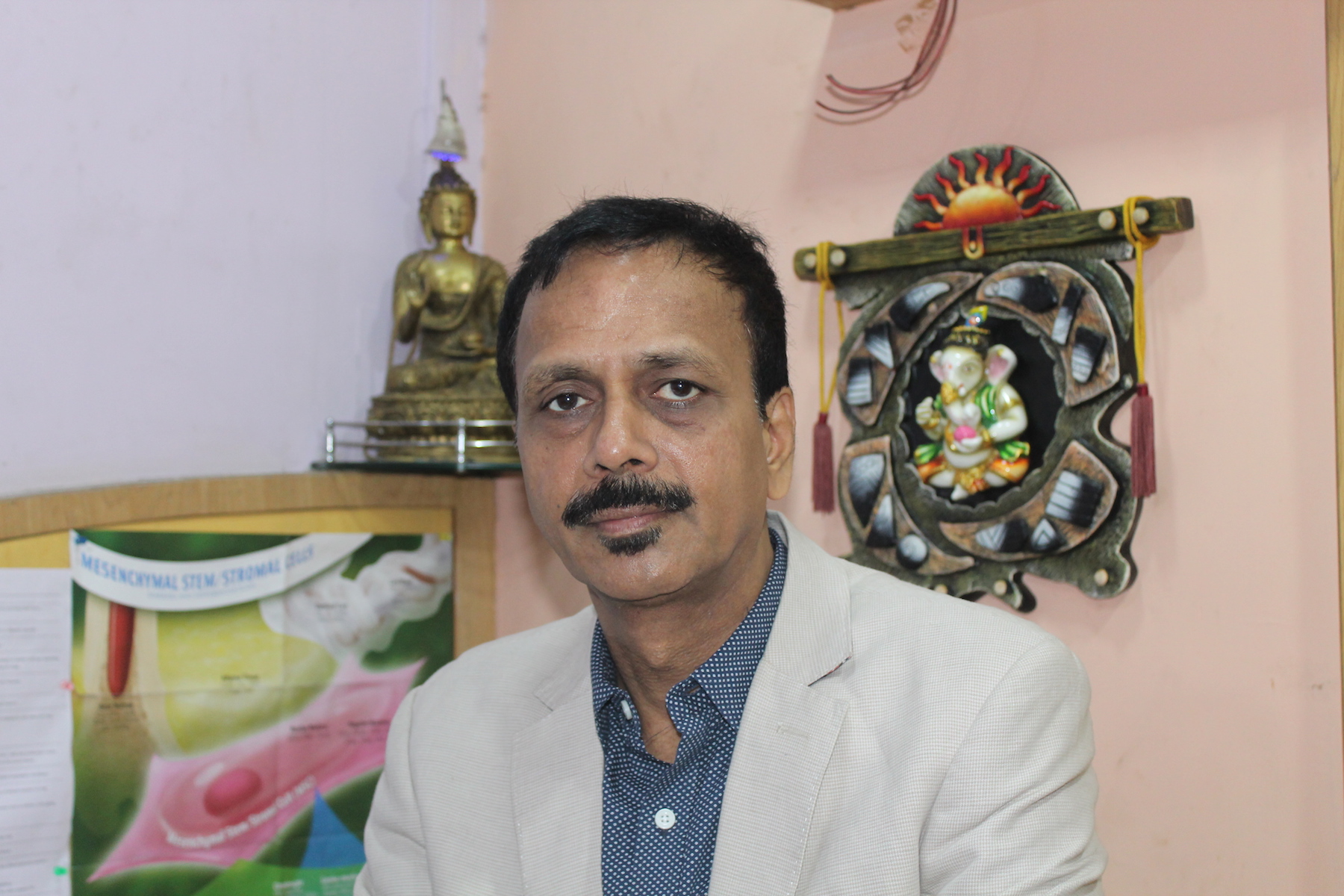
    Vaccinations are now available for hepatitis A, B and C but Hepatitis B and C are the most common cause of liver cirrhosis and cancer, according to WHO. Dr Pradeep Mahajan, Regenerative medicine researcher, says “Liver disease can progress to cirrhosis and liver failure. The majority of the liver (80 %) is made up of liver cells called hepatocytes. These cells have an average lifespan of 150 days, which means that the liver is constantly renewing itself under normal conditions. It is only organ that can regenerate. In many countries, autologous cells therapy is used for clinically treating liver disease. The major advantage with using these cells is that because they come from the patient, there is no risk of rejection when they are transplanted back.”

    “Mesenchymal stem cells (MSCs) are capable of promoting regeneration of liver tissue. Autoimmune hepatitis may benefit by the immune-modulatory potential of MSCs. Bone marrow MSCs have also been shown to reduce levels of liver enzymes and subsequently resolve inflammation. It is the Anti-fibrotic property of MSCs which aids in eliminating fibrotic or scar tissue that would otherwise impair vascular supply and delay regeneration”.

  • Indian American Businesswoman Pleads Guilty to Tech Worker Visa Fraud

    Indian American Businesswoman Pleads Guilty to Tech Worker Visa Fraud

    SAN JOSE (TIP): A San Jose businesswoman of Indian origin pleaded guilty in federal court last week to three counts of visa fraud. In pleading guilty, Sridevi Aiyaswamy, 50, of San Jose, admitted that between April 2010 and June 2013 she made numerous false statements, and submitted over 25 fraudulent documents, to the United States Citizenship and Immigration Services (USCIS) for the purpose of obtaining H-1B non-immigrant classifications for skilled foreign workers.

    Acting as a petitioner on behalf of foreign worker beneficiaries, Aiyaswamy falsely represented in I-129 petitions that the foreign worker beneficiaries would be working at Cisco, an information technology and networking company in San Jose, Calif.  Aiyaswamy further submitted counterfeit statements of work with forged signatures as back-up documentation to the I-129 petitions.  In fact, at the time she submitted these documents to USCIS, Aiyaswamy knew that the statements regarding offers of work from Cisco for these beneficiaries were false statements, and that Cisco had not made any offers of employment regarding these individuals.

    A federal grand jury indicted Aiyaswamy on December 3, 2015, charging her with 34 counts of visa fraud, in violation of 18 U.S.C. § 1546(a).  Pursuant to today’s pea agreement, Aiyaswamy pleaded guilty to three of the counts of visa fraud and the government agreed to request dismissal of the remaining counts.

    Aiyaswamy is currently free on bond.  Judge Koh scheduled her sentencing for November 15, 2017, at 9:15 a.m.  The maximum statutory penalty for visa fraud is 10 years in prison and a $250,000 fine.

    (Source: U.S. Attorney’s Office, Northern District of California)

  • Indian American doctor accused of health care fraud and money laundering

    Indian American doctor accused of health care fraud and money laundering

    MILFORD, CT (TIP): A federal grand jury in Bridgeport returned an indictment on July 26 charging Indian American physician Dr. Bharat Patel, 70, of Milford, and his ally Dr. Ramil Mansourov, 47, of Darien, both residents of Connecticut, with narcotics distribution, health care fraud and money laundering offenses.

    Patel was arrested on a federal criminal complaint on July 12 and is detained. Mansourov was apprehended by the Canada Border Services Agency on an immigration offense on July 13 and is currently detained in Canada.

    The five-count indictment charges Patel and Mansourov with one count of conspiracy to distribute oxycodone and hydrocodone, an offense that carries a maximum term of imprisonment of 20 years, and one count health care fraud, an offense that carries a maximum term of imprisonment of 10 years. The indictment also charges Mansourov with two counts and Patel with one count of money laundering, an offense that carries a maximum term of imprisonment of 20 years.

    The indictment also seeks the forfeiture of Patel’s Milford residence, Mansourov’s Darien residence, $16,521.25 seized from a safe deposit box rented by PATEL, and money judgments equal to the proceeds of Patel and Mansourov alleged criminal conduct.

  • Arundhati Roy’s Novel The Ministry of Utmost Happiness in Booker Longlist

    Arundhati Roy’s Novel The Ministry of Utmost Happiness in Booker Longlist

    LONDON (TIP): Indian novelist Arundhati Roy, who won the Man Booker prize in 1997 for “The God of Small Things,” is among the contenders for this year’s Man Booker Prize for fiction.

    On a longlist thronged with literary titans, whose combined trophy cabinet would include the Pulitzer, the Costa, the Baileys, the Folio, the Impac and the Goldsmiths prizes, Roy – the only author to have won the Booker before – is listed for her novel about an Indian transgender woman, which judges called a “rich and vital book”. Speaking about why it took her two decades to produce a second novel, Roy told the Guardian earlier this year that “fiction just takes its time. It’s no hurry. I can’t write it faster or slower than I have; it’s like you’re a sedimentary rock that’s just gathering all these layers, and swimming around.”

    On July 26, The Man Booker Prize unveiled the 13 titles longlisted for its annual £50,000 ($81,625) award.

    The complete longlist is comprised of:

    144 titles were submitted for consideration for the 2017 prize. The Man Booker Prize is open to any book-length work of fiction written in English that has been published in the U.K. This year’s award is being judged by Baroness Lola Young, literary critic Lila Zam Zangeneh, novelist Sarah Hall, artist Tom Phillips and writer Colin Thubron. The six finalists will be named Sept. 13, and the winner of the 50,000-pound ($65,000) prize will be announced on Oct. 17.

  • Indian American Attorney Running for Civil Court Judgeship

    Indian American Attorney Running for Civil Court Judgeship

    NEW YORK (TIP): Indian American Hemalee J. Patel, a lawyer and involved Brooklyn community member, is running for civil court judge in the 6th municipal district in Brooklyn, reports Kings County Politics. The district includes Northern Park Slope, Lefferts Gardens and a stretch between Coney Island Avenue and Ocean Avenue to Avenue M.

    Currently, Patel serves as a Court Attorney-Referee in Richmond County (Staten Island) Supreme Court, where she conducts trials and hearings on financial issues in matrimonial matters, including equitable distribution, child support and maintenance. And while she understands legislative government, she remains drawn to the judicial branch and helping immigrants and less moneyed people navigate the often daunting judicial system, and leaving with the feeling they had a fair and just day in court.

    “The quality of our lives is directly and deeply influenced by those who serve the public and I consider myself privileged to be a civil servant—and try always to be one in the truest sense. This means, to my mind, that I must not only do my best, but convey that intention by being at all times honest, fair and courteous to the parties and attorneys who appear before me,” said Patel.

    Patel came to the U.S. from India at the age of 5 with her mother, after her father had first come here.

    “As an immigrant South Asian woman I have a unique perspective that, along with my background, experience and proven ability in performing the duties and responsibilities of a Court Attorney-Referee, prepares me to undertake a career as a judge,” said Petal.

    She grew up in Queens, attended New York University in Manhattan, and attended Brooklyn Law School. She resides with her family in Bay Ridge.

  • Indian American MIT researcher develops smart sticker to prevent sexual abuse

    Indian American MIT researcher develops smart sticker to prevent sexual abuse

    BOSTON (TIP): An Indian American student from the Massachusetts Institute of Technology is getting the attention of the world for her invention of a smart device that can prevent women from sexual assault.

    Manisha Mohan, a Masters student at MIT has developed a device that she has named Intrepid, which investigates multiple methods that can detect initial signs of assault and develop methods for communication and prevention of assault.

    The device, which is a smart sticker, is connected to a smartphone via Bluetooth and it can be attached to any piece of clothing.

    In order for the device to start working, the user must first download and install an app that accompanies the device. The user can add their phone number and enter five other immediate contacts that will be either called or sent with a message in any case of emergency.

    The app developed by Mohan also has an additional option in which if there is no timely response from the wearer.

    Mohan’s device, if produced in large numbers, can be proposed as one of the solutions to combat Child Sexual Abuse (CSA), College Campus assault and abuse of elderly and disabled.

    The device works on two different mode – active mode and passive mode. In active mode distress message is sent when the victim is unconscious or cannot fight against the assaulter, for example in the case of infants, bed-ridden patients, elderly, disabled, intoxicated people. In passive mode, the victim can self-active the safety mechanism feature.

    The design of the clothing to which the smart sticker can be attached to is based on input from sexual assault survivors, 338 on-line participants, 67 volunteers and 20 users.

    According to the official MIT page of Intrepid, “Users evaluated the clothing appeal, functionality, cultural sensitivity and provided feedback on their general sense of security wearing the smart clothing.”

    “We demonstrate the practicality of our unobtrusive design with user studies that support our technological development and use of olfactory stimuli by showing the effect of smells on sexual arousal and partner selection. We believe our techno social approach can help improve user safety and prevent sexual assault,” the website added.

  • Sodexo’s Global Chief Diversity Officer Dr. Rohini Anand Appointed New Chair of the Catalyst Board of Advisors

    Sodexo’s Global Chief Diversity Officer Dr. Rohini Anand Appointed New Chair of the Catalyst Board of Advisors

    WASHINGTON (TIP): Indian American Dr. Rohini Anand, senior vice president corporate responsibility and Global Chief Diversity Officer for Sodexo, a leading provider of sustainable, integrated facilities management and food service operations, has been appointed as the new Chair of the Catalyst Board of Advisors, which features a variety of senior leaders across Fortune 500 companies, including Coca-Cola Companies, Deloitte, IBM Corporation and Walmart. In this new leadership role, Anand will attend and chair all three Board of Advisors meetings over the next three years, as well as advise Catalyst’s CEO Deborah Gillis on new board members, meeting agendas and other board-related issues.

    Founded in 1962, Catalyst is the leading nonprofit organization accelerating progress for women through workplace inclusion. With operations in the United States, Canada, Europe, India, Australia, and Japan, and more than 800 supporting organizations, Catalyst is the trusted resource for research, information, and advice about women at work. Catalyst annually honors exemplary organizational initiatives that promote women’s advancement with the Catalyst Award.

    “I am delighted to welcome Rohini Anand as the new chair of the Catalyst Board of Advisors. Rohini is a recognized advocate for gender diversity and inclusion in workplaces,” said Deborah Gillis, President and CEO, Catalyst. “She has been a member of the Catalyst Board of Advisors for many years, bringing a breadth of experience and helping to drive change. I look forward to working with her in this new leadership role that is sure to be incredibly valuable to both the board and Catalyst.”

    “I am excited to represent Catalyst and Sodexo in my new role as Chair of the Advisory Board,” said Dr. Anand. “It’s a great honor and I’m looking forward to continuing to advance Catalyst’s mission of accelerating progress for women through workplace inclusion.”

    Dr. Anand’s commitment to diversity and inclusion continues to generate success and position Sodexo as a global leader in the space. As Sodexo’s SVP Corporate Responsibility and Global Chief Diversity Officer, she has helped the company rank among the world’s best. Under Dr. Anand’s leadership, Sodexo received the prestigious 2012 Catalyst Award and has ranked in the top ten for nine consecutive years on the DiversityInc business index of Top Companies for Diversity and Inclusion. In addition, The Human Rights Campaign has given Sodexo a 100 percent rating on its Corporate Equality Index for nine years and Sodexo was named Global Sustainability Industry Leader in its sector for the 12th year in a row by the Dow Jones Sustainability Index (DJSI).

  • Indian American Sundar Pichai, Google’s CEO, joins Alphabet’s Board of Directors

    Indian American Sundar Pichai, Google’s CEO, joins Alphabet’s Board of Directors

    SAN JOSE (TIP): Google’s Indian American CEO Sundar Pichai is joining parent company Alphabet’s board, according to an announcement on July 24 from the company. 

    “Sundar has been doing a great job as Google’s CEO, driving strong growth, partnerships, and tremendous product innovation. I really enjoy working with him and I’m excited that he is joining the Alphabet board,” said Larry Page, CEO of Alphabet, in a statement.

    Formerly the Product Chief of Google, Pichai’s current role as CEO was announced on 10 August 2015, as part of the restructuring process that made Alphabet Inc. into Google’s parent company, and he assumed the position on 2 October 2015.

    Pichai worked in engineering and product management at Applied Materials and in management consulting at McKinsey & Company.

    Pichai joined Google in 2004, where he led the product management and innovation efforts for a suite of Google’s client software products, including Google Chrome and Chrome OS, as well as being largely responsible for Google Drive. He went on to oversee the development of different applications such as Gmail and Google Maps. On 19 November 2009,  Pichai gave a demonstration of Chrome OS and the Chromebook was released for trial and testing in 2011, and released to the public in 2012.  On 20 May 2010, he announced the open-sourcing of the new video codec VP8 by Google, and introduced the new video format, WebM.

    On 13 March 2013, Pichai added Android to the list of Google products that he oversees. Android was formerly managed by Andy Rubin. He was a director of Jive Software from April 2011 to 30 July 2013. Pichai was selected to become the next CEO of Google on 10 August 2015 after previously being appointed Product Chief by CEO, Larry Page. On 24 October 2015 he stepped into the new position at the completion of the formation of Alphabet Inc., the new holding company for the Google company family.

  • Indian American Anantha Chandrakasan takes over as MIT’s Dean of School of Engineering

    Indian American Anantha Chandrakasan takes over as MIT’s Dean of School of Engineering

    BOSTON (TIP): Indian American Anantha P. Chandrakasan, the Vannevar Bush Professor and head of the Department of Electrical Engineering and Computer Science (EECS), has been resumed charge as dean of MIT’s School of Engineering, from July 1.

    During his six-year tenure as head of MIT’s largest academic department, Chandrakasan spearheaded a number of initiatives that opened opportunities for students, postdocs, and faculty to conduct research, explore entrepreneurial projects, and engage with EECS.

    “Anantha balances his intellectual creativity and infectious energy with a remarkable ability to deeply listen to, learn from, and integrate other people’s views into a compelling vision,” MIT President L. Rafael Reif says. “In a time of significant challenges, from new pressures on federal funding to the rising global competition for top engineering talent, I am confident that Anantha will guide the School of Engineering to maintain and enhance its position of leadership. And I believe that in the process he will help make all of MIT stronger, too.”

    Since joining the MIT faculty in 1994, Chandrakasan has produced a significant body of research focused largely on making electronic circuits more energy efficient. His early work on low-power chips for portable computers helped make possible the development of today’s smartphones and other mobile devices. More recently, his research has addressed the challenge of powering even more energy-constrained technologies, such as the “internet of things” that would allow many everyday devices to send and receive data via networked servers while being powered from a tiny energy source.

    In an email today announcing the news to the MIT community, Provost Martin Schmidt described Chandrakasan as “a people-centered and innovative leader.” Schmidt continued, “Having observed Anantha’s collaborative approach to building a shared vision within EECS, I am excited for the opportunities that lie ahead for the School of Engineering.”

    While at the helm of EECS, Chandrakasan launched a number of initiatives on behalf of the department’s students. “That’s what excites me about an administrative job,” he says. “It’s how I can enhance the student and postdoc experience. I want to create exciting opportunities for them, whether that’s in entrepreneurship, research, or maker activities. One of the key things I plan to do as dean is to connect directly with students.”

    Many of these initiatives were themselves designed with student input, including the Advanced Undergraduate Research Opportunities Program, more commonly known as “SuperUROP.” This year-long independent research program, launched in EECS in 2012 and expanded to the whole School of Engineering in 2015, was shaped in response to feedback about why some EECS students were opting out of MIT’s traditional UROP program.

    Chandrakasan also initiated the Rising Stars program in EECS, an annual event that convenes graduate and postdoc women for the purpose of sharing advice about the early stages of an academic career. Another program for EECS postdocs created under his direction, Postdoc6, aims to foster a sense of community for postdocs and help them develop skills that will serve their careers. Chandrakasan also helped create StartMIT, an independent activities period (IAP) class that provides students and postdocs the opportunity to learn from and interact with industrial innovation leaders.

    “I tend to be a people person,” Chandrakasan says. “Of course, data is always important, but it’s not where I start. I’m like the quarterback who throws it up in the end zone. I try things, and some of them don’t work, which I’m totally fine with; other things we try and then refine. But I do a lot of homework, talking to students and faculty, getting feedback, and incorporating them to improve our efforts.”

    “I’m also very passionate about helping our faculty explore new research areas,” says Chandrakasan, who as department head has sought unrestricted grants and other funding to provide faculty with this flexibility. These efforts have enabled several Faculty Research Innovation Fellowships, for midcareer faculty who seek to branch out in new directions.

    Chandrakasan also has a long-standing interest in creating opportunities for innovation outside the lab. He is a board member and chair of the advisory committee dealing with MIT policies for The Engine, a new accelerator launched by MIT last fall to support startup companies working on scientific and technological innovation with the potential for transformative societal impact. In the latter role, he has overseen five working groups consisting of faculty, students, postdocs, and staff with specialized expertise, and created suggestions for how the MIT community can work with The Engine.

    “In building out the concept for The Engine, it was vitally important to make sure it would meet the needs of faculty, student, and alumni entrepreneurs,” says MIT Executive Vice-President and Treasurer Israel Ruiz, who helped spearhead The Engine’s development. “As the faculty lead, Anantha played an indispensable role in gathering feedback from a wide range of voices and transforming it into actionable ideas for how The Engine should work.”

    Online learning is another area of interest for Chandrakasan: “I’m very excited about the whole online arena and how we can use MITx for residential education,” he says. Last fall, EECS and the Office of Digital Learning piloted a full-credit online course for a small cohort of students on campus, who gave the experience strong marks for providing flexibility and reducing stress. “I’m looking forward to working with the other department heads to see how we can get a license to experiment with these new modes of education,” he says.

    Born in Chennai, India, Chandrakasan moved to the United States while in high school. His mother was a biochemist and Fulbright scholar, and he enjoyed spending time in her lab where she conducted research on collagen.

    “I always knew I wanted to be an engineer and a professor,” he says. “My mother really inspired me into an academic career. When I entered graduate school, I knew on day one that I wanted to be academic professor.”

    Chandrakasan earned his bachelor’s (1989), master’s (1990), and doctoral (1994) degrees in electrical engineering and computer science from the University of California at Berkeley — the latter two after being rejected from MIT’s graduate program, he notes with a laugh. After joining the MIT faculty, he was the director of the Microsystems Technology Laboratories (MTL) from 2006 until he became the head of EECS in 2011.

    Chandrakasan is a recipient of awards including the 2009 Semiconductor Industry Association (SIA) University Researcher Award, the 2013 IEEE Donald O. Pederson Award in Solid-State Circuits, an honorary doctorate from KU Leuven in 2016, and the UC Berkeley EE Distinguished Alumni Award. He was also recognized as the author with the highest number of publications in the 60-year history of the IEEE International Solid-State Circuits Conference (ISSCC), the foremost global forum for presentation of advances in solid-state circuits and systems-on-a-chip. Since 2010, he served as the ISSCC Conference Chair. A fellow of IEEE, in 2015 he was elected to the National Academy of Engineering.

  • Clashes between herdsmen farmers kill 33 in Nigeria

    Clashes between herdsmen farmers kill 33 in Nigeria


    KANO, NIGERIA (TIP): At least 33 people were killed in clashes between cattle herders and farmers in Nigeria’s northern Kaduna state, a police chief told AFP Thursday. KANO, Nigeria: At least 33 people were killed in clashes between cattle herders and farmers in Nigeria’s northern Kaduna state, a police chief told AFP on july 20.

  • 20 Yemeni civilians killed in air strike UN, witnesses

    20 Yemeni civilians killed in air strike UN, witnesses

    ADEN (TIP): An air strike on a group of displaced Yemenis has killed at least 20 civilians, mostly from the same family, a UN statement and witnesses said July 19. The attack on Tuesday afternoon hit a group of civilians in the Mawza district of the southwestern province of Taez, a statement by the UN refugee agency said. Residents said the attack was carried out by a warplane from the Saudi-led coalition fighting Shiite rebels in support of Yemen’s internationally recognised government.