‘Westinghouse, chemical weapons watchdog OPCW and FIFA were targeted’
WASHINGTON (TIP): The U.S. Justice Department on Thursday, October 4, indicted seven agents of Russia’s GRU military intelligence agency as part of a joint crackdown with allies Britain and the Netherlands on a series of major hacking plots attributed to Moscow.
The U.S. indictments were announced as Dutch security services said they had thwarted a Russian attack on the global chemical weapons watchdog, the OPCW, and after Britain blamed the GRU for plots that notably targeted the U.S. Democratic Party and world sport’s anti-doping authority
John Demers, U.S. Assistant Attorney General for National Security, confirmed that known attack targets included the OPCW, sports bodies including FIFA and the World Anti-doping Agency (WADA), as well as U.S. nuclear energy company Westinghouse.
“Nations like Russia and others that engage in malicious and norm-shattering cyber and influence activities should understand the continuing and steadfast resolve of the United States and its allies to prevent, disrupt and deter such unaccountable conduct,” Mr. Demers told a news conference.
“The defendants in this case should know that justice is very patient, its reach is long, and its memory is even longer,” he said.
The indictments include charges of money laundering, using virtual currencies like bitcoin, wire fraud and identify theft.
Mr. Demers said the operations “involved sophisticated, persistent and unauthorized access into the victims’ computer networks for the purpose of stealing private or otherwise sensitive information.”
While the latest case did not arise from Robert Mueller’s probe into Russian election meddling, it overlaps with it — including the identity of the individuals charged, Mr. Demers said.
In July, Mr. Mueller indicted 12 GRU officers, accusing them of interfering in the U.S. polls in 2016.
Canada confirmed on Thursday it believes itself to have been targeted by Russian cyber attacks, citing breaches at its center for ethics in sports and at the Montreal-based WADA.
Cyber aggressor
“The government of Canada assesses with high confidence that the Russian military’s intelligence arm, the GRU, was responsible” for these cyber attacks, the foreign ministry said in a statement.
Meanwhile, Britain’s National Cyber Security Centre (NCSC) termed Russia’s GRU a pernicious cyber aggressor.
GRU, Britain said, was almost certainly behind the BadRabbit and World Anti-Doping Agency attacks of 2017, the hack of the Democratic National Committee (DNC) in 2016 and the theft of emails from a U.K.-based TV station in 2015.
“The GRUs actions are reckless and indiscriminate: they try to undermine and interfere in elections in other countries,” said British Foreign Secretary Jeremy Hunt.
Though less well known than the Soviet Union’s once mighty KGB, Russia’s military intelligence service played a major role in some of the biggest events of the past century, from the Cuban missile crisis to the annexation of Crimea.
Though commonly known by the acronym GRU, which stands for the Main Intelligence Directorate, its name was formally changed in 2010 to the Main Directorate of the General Staff (or just GU). Its old acronym — GRU —is still more widely used.
New York, October 2, 2018 – New York based hip-hop recording artist Shiv and world renowned music maestro AR Rahman joined forces to create a breakout hit single, Hayati, for legendary director Mani Ratnam’s blockbuster multi-starrer Chekka Chivantha Vaanam.
The lyric video garnered 1 million YouTube views in 24 hours, and now stands at 3 million views in just 7 days (at print). With Shiv’s quick flow and original lyrics, Lebanese- American singer Mayssa Karaa’s fluid vocals, and AR Rahman’s unique Arabic trap music production, Hayati has also rapidly climbed up the charts into the iTunes Top 10 of various countries. As an artist, Shiv has been honing his craft for over 15 years and has independently released 4 albums (as the lyricist and artist) just in the past year and a half on all music platforms such as Apple Music, Spotify, SoundCloud, and more, all to positive reviews.
Known for melodic hooks, harmonies, and intricate lyrical content, Shiv delivers a variety of tones housed within a unique signature sound, tying together to create a unified message of good intentions & easy living; the artist’s philosophical MO. For more on Shiv’s upcoming productions, visit ThoughtsForNow on Instagram, www.beatjnkiemusic.com or e-mail info@beatjnkiemusic.com.
EDISON, NJ (TIP): J P Nadda, India’s Health and Welfare minister, was hosted at a community reception at the TV Asia auditorium in Edison, NJ, on Sept. 24, by the Overseas Friends of BJP (OFBJP), TV Asia and the India American community.
Nadda was welcomed at the community interaction by H R Shah, TV Asia chairman and CEO; Krishna Reddy Anugula, OFBJP president; Jayesh Patel, past-president of OFBJP and Dr Sanjay Gupta, president of American Pain Association.
Himachal-born Nadda, who was inducted as a minister in 2014 and is also a lawmaker from Rajya Sabha, is currently spearheading Narendra Modi government’s flagship Ayushman Bharat-National Health Protection Mission.
During the interaction with members of the community, Nadda spoke fluently in English and Hindi, peppering his speech with easy-to-understand statistics.
J P Nadda speaking at a community reception at the TV Asia auditorium in Edison, NJ. Others in the photo, from left, are, H R Shah, and Krishna Reddy Anugula
Nadda thanked the Indian American community for their diligent work in enhancing India’s image in the US. While the Modi government, he said, was specially committed to uplifting the marginalized in India, there had been a gradual transformation in the political culture in the country. “Since the Modi government took over, we have seen a shift from political paralysis to political transparency,” he said to a thunderous applause from the audience.
He said it was imperative that the world saw India as a country with the inherent strengths of “Democracy, Demographics and Demand.”
“The stock market does not always necessarily indicate the health and wealth of a country,” he noted. “The real indicators are how the poor live and what the government is doing to uplift them into prosperity.”
Nadda laid down his government’s achievements, including the many schemes that have been launched to expedite participation in the banking, social security, insurance and healthcare sectors in the country.
A section of the audience. Photos /Gunjesh Desai
Explaining the newly-launched “revolutionary” Ayushman Bharat-National Health Protection Mission by the Modi government, Nadda said the new scheme will bring a paradigm shift in the country’s health sector. Under the new scheme, health insurance up to Rs 500,000 for every poor family in the country will be totally cashless and no registration will be required. “The poor people will not have to pay money for hospitalization,” he said during his speech.
A “golden card” will ensure their cashless treatment, he noted. In case a person does not have a card, he or she will be treated in any one of the 13,000 hospitals, which are part of the Ayushman Bharat scheme, after taking the person’s thumb impression, Nadda said.
“In short, Ayushman Bharat will bring mega health reform in the country as it will cover 10.74 crore families across the country,” Nadda said, adding it was “a unique scheme which will eventually cover all poor people of the country.”
Asserting that the world was keenly watching the Ayushman Bharat scheme, Nadda said, “It is a historic moment as a big leap in the health sector.”
Ayushman Bharat rests on the twin pillars of Health and Wellness Centers for provision of comprehensive primary healthcare services and the Prime Minister’s National Health Protection Mission for secondary and tertiary care to 100 million families.
Nadda said India firmly believed in the objective of attainment of the highest possible level of health, a state of complete physical, mental, spiritual and social well-being and not merely the absence of disease or infirmity.
“Moving toward this objective, we have adopted the National Health Policy 2017 with the aim to provide affordable healthcare for all,” he asserted during his speech.
He said that under the BJP government, 98 new government medical colleges have been built just in the last four years. The central government pays Rs 250 crore to each medical college in the country.
Nada also pointed out that the Health Ministry had started a unique initiative called AMRIT Deendayal, an acronym for Affordable Medicines; Reliable Implants for Treatment – Centers that provide medicines for cancer; cardiovascular diseases and cardiac implants at significantly reduced prices.
The government had also opened Jan Aushadhi (peoples’ medicines) stores to make available quality affordable essential medicines to people in need, he said.
“India has always supported regional and global public health issues whether it be advocacy, technical collaboration, research and development, partnerships or improving the accessibility and affordability of health services and high quality essential medical products,” Nadda added.
While welcoming Nadda, TV Asia’s H R Shah said TV Asia was built on the premise of helping the community and it was always there to assist in way possible. He called on Indian Americans to help the motherland and ensure the Modi government was elected for another 5 years, “for 5 years were not enough for any government to fully implement or produce results.
OFBJP’s Krishna Reddy said it was imperative for every Indian American to work to re-elect the Modi government if India had any chance to become a global leader. He also mentioned that NRI voting may soon become a reality.
Dr Jayesh Patel of OFBJP thanked all 21 chapters of OFBJP in ensuring NRIs and other countries were plugged into India’s progress.
Toward the end of the event, a plaque commemorating Kumb Mela and the Pravasi Bharatiya Diwas, scheduled in Varanasi in January 2019, was presented by the guests to Minister Nadda.
More than 300 guests, including several prominent members of the Indian American community, attended the event.
After the event, Nadda was interviewed in a special segment to be aired subsequently on TV Asia across the US.
PERTH(TIP): A Punjabi-origin entrepreneur and educationist has won a major legal case in Australia that allows him to run his institution, Unique International College, besides making him eligible to receive a payment of 26 million Australian dollars (Rs 136.32 crore) which was withheld pending the court case.
He is also eligible to get legal costs of another AUD 4 million (Rs 20.97 crore) from the commonwealth of Australia.
The entrepreneur, Amarjit Khela, had won the case last week after a long battle in which he braved racism, defamation and several accusations, including that of unfair practices to attract students to his college. Khela has remained in news because of his phenomenal rise to become an educationist and an entrepreneur. He had gone to Australia as a student when he was 19.
He belongs to Sajawalpur village in Nawanshahr district. Ninder Ghugianvi, media and cultural coordinator, Punjab Kala Bhawan here, in a statement, hailed the court order as the victory of Punjabiyat. “Khela fought for the rights of Punjabis to grow in the foreign land. His book titled “I don’t lie” described his struggle in Australia,” he said.
He worked in restaurants and did menial jobs and later became the first Punjabi to own a college in Sydney. His college ran into controversy when the Australian Consumer Commission and a watchdog agency accused him of malpractices, including giving free laptops and other gifts to students.
“My victory is the victory of truth and against racism and certain individuals who were against the rise of Punjabis or Indians in Australia,” he told The Tribune over the phone.
As per the copy of the court orders, the Full Federal Court found that Unique International College did not engage in a system of unconscionable conduct in enrolling vulnerable students in diploma courses. Khela had lost the case in a lower court last year.
The case had hogged limelight as the Australian consumer watchdog claimed to recover $140 million paid to the college under the Commonwealth funding scheme.
1,350 medical packages, 23 specialties and an insurance cover of Rs 5 lakh will benefit 10.74 crore underprivileged families.
Is Ayushman Bharat-PMJAY the healthcare scheme that India has been waiting for?
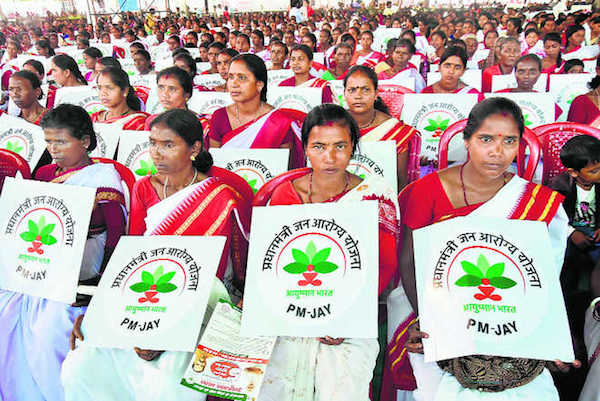
Much is at stake for the BJP-led NDA government as it keeps a close watch on the progress of Pradhan Mantri Jan Aarogya Yojna (PMJAY), the world’s largest health-protection scheme rolled out nationally last Sunday. Launched by Prime Minister Narendra Modi from Jharkhand’s Ranchi on the eve of 2019 Lok Sabha elections, the scheme aims to finance hospitalization of 10.74 crore underprivileged families (50 crore people) to the extent of Rs 5 lakh annually.
These families are the ones defined as “poor and vulnerable” in the Rural Development Ministry’s Socio-Economic Caste Census, published in 2011 and updated in 2015. To this extent, PMJAY is an entitlement-based plan that won’t invite enrolments and will have a pre-determined set of beneficiaries. The scale of the plan is massive as it seeks to cover 40 per cent of the national population promising them cashless, paperless and portable access to hospitalization through a network of empaneled government and private hospitals.
The hospitals are not allowed to charge patients for any procedure. The arrangement is simple — the Centre and states (in the ratio of 60:40) will reimburse hospitals the cost incurred on treating beneficiaries. Exactly 1,350 medical packages across 23 specialties (oncology, ophthalmology, urology, general surgery and orthopedics included) have been identified and their package rates fixed. Hospitals are bound by these rates and are allowed to raise claims based on the packages the government has decided in consultation with various stakeholders.
Execution and results
Within a week of its launch, PMJAY has started to deliver. As of September 28, 18,258 beneficiaries have sought hospitalization under the plan and healthcare providers have submitted 13,108 claims to state governments for reimbursement. The maximum claims came from Gujarat (5,777), followed by Tamil Nadu (3,837), Chhattisgarh (2,193) and West Bengal (1,198).
The Tribune has learnt that these claims involve procedures that cost hospitals Rs 25.22 crore with ophthalmology emerging the top sought specialty at 731 claims. As the scheme progresses, timely settlement of hospital claims will be its top challenge, lest hospitals quit for want of money. However, Dinesh Arora, Deputy CEO of Ayushman Bharat, the banner body for PMJAY, says the government has created systems for timely settlement of hospital claims.
State health societies have been mandated to clear claims within 15 days unless a fraud is suspected, in which case the deadline is one month. “If the claims are not settled within 15 days, the state will invite weekly penalty amounting to one per cent of the cost involved in the claim the hospital has submitted,” Arora says.
Out of 30 states that have signed MoUs with the Centre to run PMJAY, only seven have opted for insurance model, while the rest have decided to run the scheme through state health societies. The trust model is that of CGHS. Identification of beneficiaries and stabilization of IT platforms, developed to run the plan, pose equally pressing challenges to PMJAY managers. Every beneficiary must have, what the Centre calls, a “golden card” to avail of cashless services. In the first five days of the scheme rollout, the government has issued golden cards to 33,529 persons. PMJAY is meant only for hospitalizations. It does not cover the cost of OPD care.
Who is a golden card holder?
Ayushman Bharat CEO Indu Bhushan explains, “A golden card holder is the beneficiary whose data points — QR code and identification — have been matched with PMJAY’s IT systems and one who is ready to avail free services at the hospital. In the first stage of plan’s rollout, 10 crore beneficiary families under the SECC through village-level drives have been identified. Then, we sent each family a letter bearing their QR code. In the third stage, beneficiaries will get golden cards once they reach the hospital for care, approach the Aarogya Mitra stationed at each hospital, match their QR codes with identification cards to authenticate themselves with the name registered in the software. Once that is done, the beneficiary gets the golden card and is ready to avail of the service.”
But what if a patient’s access to treatment is delayed on account of the above-mentioned authentication procedures? Ayushman Bharat managers say that won’t happen. Emergency protocols under the PMJAY say the empaneled hospitals are dutybound to treat emergency patients without waiting for authentications.
Check for flaws
As many as 97 fraud alerts have been installed in the PMJAY software, including “indiscriminate procedures” or “unexplained patient visits to a certain facility”. Dinesh Arora explains, “We will have cause for suspicion if a patient visits a certain hospital repeatedly when there is another hospital close to his residence. In this case, middlemen might be herding patients to a given facility for some illegal benefits. It would also be unnatural for one hospital to submit a large number of claims.”
Hospitals perpetrating frauds will meet with severe penalties, including de-empanelment and blacklisting, besides financial fines that go up to 16 times the cost of procedures for which they submitted inflated or false claims. That said, the stabilization of PMJAY softwares remains a cause of concern for the Centre. The reason government launched a pilot in 22 states to test these softwares before the September 23 launch. It was to prevent the GST-type glitches.
The Centre is now training Aarogya Mitras to be stationed at every hospital empaneled under the PMJAY to help beneficiaries access care through IT systems. So far, 14,000 Aarogya Mitras have been trained in these softwares. More are under training.
So far, 27,000 hospitals have already applied for empanelment under the scheme and 13,273 have met the criteria. Of these, 7,097 are private and the rest are government hospitals. Medanta, Gurugram and Apollo, Tamil Nadu are among private facilities empaneled with the PMJAY.
The idea behind the ambitious plan is to prevent 70 million Indians from slipping below the poverty line annually due to catastrophic health expenses.
At stake is the health of an entire nation
Why PMJAY: The latest National Sample Survey Organization (NSSO) found 85.9 per cent rural households and 82 per cent of urban households had no access to healthcare insurance/assurance. Catastrophic healthcare-related expenditure pushed families into debt, with more than 24 per cent households in rural India and 18 per cent population in urban areas meeting healthcare expenses through some form of borrowing.
To know more: Visit the website mera.pmjay.gov.in or call 14555 or 1800111565
Package rate includes: Room, bed charges, nursing care, diagnostics, procedure cost and physician fee, consultation and diagnostics pre-hospitalization, two-week medicine, stitch removal, follow-up consultancy for two weeks post-discharge
The procedures covered: One beneficiary family (average size five members) can avail of cashless hospitalization up to Rs 5 lakh annually for any of the 1,350 medical packages covered under 23 specialties.
Breakup of packages — General surgery (253 packages covered), orthopedics (101), cardiology (38), cardiovascular surgery (21), ophthalmology (42), ENT (94), urology (161), obstetrics and gynecology (73), pediatric medicine (100), neonatal care 911), pediatric surgery (35), pediatric cancers 912), medical packages (69), neurosurgery (82), intervention neuro-radiology (12), oncology (112), mental health disorders (17) and emergency packages (4)
WHO endorses PMJAY
WHO Director-General Tedros Adhanom Ghebreyesus recently called PMJAY a “turning point” and a “bold, ambitious and courageous move”. He said, “As a nation, India has changed the way it plans things. India has decided to stretch itself to a breaking point to succeed in the health sector and that’s what I call a plan. I have always felt that the best way to plan is to target blanket coverage rather than piecemeal coverage. A plan that’s easy to achieve is not a plan.”
FORDS, NJ(TIP): Kim Kumari was crowned as Miss India New Jersey 2018, while Esha Kode was crowned as Miss Teen India New Jersey 2018 and Ruchita Modi Shah was crowned as Mrs. India New Jersey 2018, at the 2018 Miss India New Jersey beauty pageant held on Sunday, September 30 at Royal Albert’s Palace, in Fords, NJ.
The 37th Miss India NJ 2018 was officially powered by Albert Jasani from Royal Albert Palace, with State Director Shobhana Patel.
The celebrated beauty pageant is the premier platform to promote women empowerment and Indian culture, in New Jersey. Showcasing compassion and connection, the event celebrated Indian American women and their identity through talent rounds, ramp walks, question/answer segments, and more.
Kumari is a trained Bhangra dancer who has had the opportunity to dance with Bollywood choreographer Saroj Khan.
She is the co-president of the International Human Rights Club at JFK Memorial High School, where she is a senior and actively works to serve the local community.
Kode loves be onstage and has been trained in classical as well as Bollywood dancing. She has also performed at various Bollywood events and desires to pursue a career in the medical field.
Shah is an IT Professional who is currently working for the New York State Department. She is trained in Indian Classical music and loves cooking, Do-It-Yourself crafting, photography, digital arts and travelling.
Organizers with Dia Mirza. Seen L to R: Albert Jasani, Dia Mirza, Shobhana Patel
The evening consisted of 45 contestants with 12 in the Miss Category, 11 in the Miss Teen Category and 22 in the Mrs. Category, all of whom dazzled in their ethnic wear in the first round and kept it simple yet elegant in their evening gowns in the following round.
The third round featured the talent of the top seven contestants in the Miss & Miss Teen category, and top five contestants in the Mrs. Category.
The contestants then went on to Question-Answer round, where each was given a different kind of question to answer.
Talking about the essence of the pageant, Shobhana Patel stated that, “Miss India NJ provides a place to these young girls and women in which they can truly empower each other and see beyond beauty.”
Community pioneer Albert Jasani has supported this event whole heartedly every year saying that, “We want to bring more women to the forefront and have them succeed in whichever manner they look at success.”
Panel of Judges
The judges’ panel consisted of entrepreneur and State Director of Miss India Connecticut Sumathi Narayanan, physician & cosmetologist and wellness advisor Kavita Payyar, founder of the South Asian Spelling Bee and CEO of Touchdown Media Rahul Walia, actor Javed Pathan, Bollywood fashion designer Deepali Shah, entrepreneur and Mrs. India Worldwide 2017 Sarita Patnaik, classical dancer Bina Menon and promoter of Bollywood shows in the U.S. Kanu Chauhan.
At the beginning of the third round Bollywood star Dia Mirza walked the Miss India New Jersey ramp for the first time, to join the judges for the remainder of the show.
Mirza also crowned the winners of the Miss India New Jersey 2018 pageant.
SANTA CRUZ, CA (TIP): An Indian- origin Billionaire’s petition has been rejected he US Supreme Court for seeking to keep surfers and other beachgoers from crossing his land to get to a popular northern California beach.
Silicon Valley billionaire Vinod Khosla, a co-founder of Sun Microsystems, bought the 53-acre (21.4 hectare) property in the 2008 for $32.5 million dollars.
Since then he has waged an unrelenting legal battle with regulators intent on enforcing state law that guarantees public access to California’s 1,200-mile (2,000) kilometer Pacific coastline.
His property adjoins Martin’s Beach at Half Moon Bay, just south of San Francisco and long a haven for surfers and strollers.
Rebuffed several times by lower courts, Khosla finally turned to the Supreme Court, but on Monday, October 1, it declined to hear the case, closing off what is normally an avenue of last resort.
It was a victory for surfing associations and others who feared that a Supreme Court ruling in the case might favor rich landowners. Some landowners have gone so far as to put up gates, security guards and no trespassing signs to keep people from crossing their properties.
“The courts at every level, including now the US Supreme Court, has upheld the Coastal Act’s protection of the public’s rights to access the California coast,” said Lisa Haage, chief of enforcement of the California Coastal Commission.
“This case reaffirms that you cannot make a unilateral decision to shut down a beach that has provided generations of families with memories,” she said.
Khosla’s lawyers insist their case was not about public access to the coastline but protection of property rights.
“No owner of private business should be forced to obtain a permit from the government before deciding who it wants to invite onto its property,” Dori Yolb Kilmer, Khosla’s attorney said.
CAMBRIDGE, MA (TIP):Indian American Gita Gopinath has been named by The International Monetary Fund as its Economic Counselor and Director of Research Department.
“Gita is one of the world’s outstanding economists, with impeccable academic credentials, a proven track record of intellectual leadership, and extensive international experience,” IMF Managing Director Christine Lagarde said in a statement on Monday, October 1. “All this makes her exceptionally well-placed to lead our Research Department at this important juncture. I am delighted to name such a talented figure as our Chief Economist.”
Gopinath, the John Zwaanstra Professor of International Studies and of Economics at Harvard University, will succeed the retiring Maurice Obstfeld.
A specialist in international macroeconomics and finance, she becomes the second Indian American to hold the position. Raghuram Rajan, a former Chief Economic Adviser to India’s Finance Ministry and a professor at the University of Chicago Booth School, served as the IMF Economic Counselor and Director of Research from 2003 to 2006.
Gopinath, who grew up in Mysore, Karnataka, currently also serves as an adviser to the Chief Minister of the Indian state of Kerala.
She did her undergraduate degree in economics from Lady Shri Ram College, University of Delhi, and a master’s from the Delhi School of Economics. She came to the United States to enroll for a master’s at the University of Washington. In 2001, she earned her PhD in economics from Princeton University in the fields of international macroeconomics and trade. Her advisers included former Fed chief Ben Bernanke, Harvard economist Ken Rogoff, and Pierre-Olivier Gourinchas, now a professor at UC Berkeley.
After her PhD, Gopinath worked as an assistant professor at the University of Chicago for four years before joining Harvard in 2005 in the same position. Five years later, she would become a tenured professor. Currently, she is one of the only three women to have tenure at the economics department at Harvard. She is also the first India-born woman to get tenure at the department.
Gopinath, now a US citizen, is married to Iqbal Singh Dhaliwal, who heads the Abdul Latif Jameel Poverty Action Lab at the Massachusetts Institute of Technology. They have a 14-year-old son, Rohil.
NEW YORK(TIP): Indian- origin PepsiCo’s Indra Nooyi, who steps down as its chief executive officer, October 1, after 12 years at the helm of the global beverage giant, said a “lot of fuel” is still left in her “tank” and she looks forward to doing something different with her life.
Chennai-born Ms Nooyi was named Chief Executive Officer (CEO) of PepsiCo in 2006.
In her remarks during PepsiCo’s Third Quarter 2018 Earnings Conference Call, Ms Nooyi said, “You know 12 years is a long time as a CEO, and even though I have a lot of fuel still left in my tank, I wanted to do something different with my life. Spend more time with my family and give the next generation in PepsiCo a chance to lead this great company.”
Ms Nooyi, working with the global company since the last 24 years, said she was blessed to have had the opportunity to lead PepsiCo and “work with such incredible people including our outstanding board, executives and other associates, our customers and other partners, our shareholders and all our other stakeholders.”
Ms Nooyi, who will hand over the reins of the company to veteran Ramon Laguarta at a time when the beverage maker navigates a shrinking global soda market, will remain chairman of the board until early 2019 to ensure a smooth transition.
PepsiCo’s board of directors in August announced that they unanimously elected Mr Laguarta, 54, to succeed Indra Nooyi, 62, as CEO. Mr Laguarta was also elected to the company’s Board of Directors, effective from today.
One of the most powerful and influential business leaders in the world, Ms Nooyi was regularly featured on power lists compiled by Forbes and Fortune magazines. She was also among the few female executives to lead global corporate giants. Just under five per cent of Fortune 500 companies have a female CEO at present.
Ms Nooyi, a mother of two daughters, has been very vocal about the challenges women faced in trying to find a balance in managing their home and work. She once said at an Aspen Ideas Festival in Colorado in 2014 that women “cannot have it all.”
In a parting letter she wrote before stepping down as CEO, Ms Nooyi shared some reflections on what she has learnt during her tenure and the lessons that have guided her throughout my career.
“Think hard about time,” she said. “We have so little of it on this earth. Make the most of your days and make space for the loved ones who matter most. Take it from me. I’ve been blessed with an amazing career, but if I’m being honest, there have been moments I wish I’d spent more time with my children and family. So, I encourage you: be mindful of your choices on the road ahead,” she said.
Ms Nooyi further wrote that serving as PepsiCo’s CEO has been the honor of a lifetime.
“Now it’s on to the next adventure-for us all. Thinking about my life beyond PepsiCo, I’m reminded of the words of the great Sufi mystic Rumi: Goodbyes are only for those who love with their eyes. Because for those who love with heart and soul, there is no such thing as separation.”
Ms Nooyi said throughout her tenure, PepsiCo has strived to achieve a difficult balance between attending to short term pressures while managing for the long-term.
She noted that PepsiCo has made positive contributions to communities around the globe in which it operates through its support of access to clean drinking water, human rights, nutrition, agricultural programs and many more initiatives.
She said in the midst of managing the business for the long-term, PepsiCo also delivered a strong and consistent financial performance specifically during the period between 2006 and 2017.
Net revenue grew more than 80 per cent and the company added a new billion-dollar brand almost every other year. “We return $79 billion to shareholders through dividends and share repurchases. Our market capitalization increased by $68 billion. Dividends per share nearly tripled from $1.16 to $3.17, and we generated total shareholder return of 162 per cent,” she said.
The quarterly earnings report on Ms Nooyi’s final day on the job beat analyst estimates: revenue rose 1.5 per cent to $16.5 billion while earnings totaled $1.59 a share.
Ms Nooyi described her successor Mr Laguarta as a terrific executive with a long and proven track record of growing businesses. She said he has a “deep understanding of the changing preferences of consumers and other critical trends unfolding around the world, and he has demonstrated that he knows how to navigate them successfully.”
She also expressed confidence Mr Laguarta will lead PepsiCo to “new and greater heights in the years to come.”
SINGAPORE(TIP): Indian-origin man, who tried to extort half-a-million Singapore dollars from Standard Chartered Bank in Singapore, was charged in court. Nagarajan Balajee faces a jail term of between two and five years and caning under a charge of “attempting to commit extortion,” as reported by local media.
According to court documents, 35-year-old Balajee had allegedly threatened to publish a defamatory libel concerning Aalishaan Zaidi, 47, the global head of digital banking at Standard Chartered Bank, unless he paid SGD 500,000.
Mr. Zaidi was one of a few bank employees who received the threatening e-mails sent anonymously. He made the police report on the bank’s behalf.
Balajee was arrested on September 30 along Kovan Road in suburban Singapore. Several laptops and mobile phones were seized from him in connection with the case, the police said.
The bank had made a police report about how it had been threatened with a leakage of confidential information.
Balajee is believed to have used multiple fictitious e-mail accounts to deliver the threats to the bank anonymously, according to media reports.
Preliminary investigations by the police also found that he might have used overseas registered mobile lines and virtual private network (VPN) services to mask his identity, to evade detection. VPNs allow unauthorized content from overseas to be accessed by users.
Balajee is currently out on SGD 20,000 bail and will be back in court on October 30.
Democracy has taken a beating under President Trump. Will the midterms make a difference?
“Restoring democracy will require more from each of us than the casting of a single election ballot. It will demand a sustained commitment to renew American institutions, reinvigorate common citizenship, and expand national prosperity. The road to autocracy is long—which means that we still have time to halt and turn back. It also means that the longer we wait, the farther we must travel to return home.”
Twenty-one months into the Trump presidency, how far has the country rolled down the road to autocracy? It’s been such a distracting drive—so many crazy moments! —who can keep an eye on the odometer?
Yet measuring the distance traveled is vital. As Abraham Lincoln superbly said in his “house divided” speech: “If we could first know where we are, and whither we are tending, we could then better judge what to do, and how to do it.”
Let’s start with the good news: Against the Trump presidency, federal law enforcement has held firm. As of this writing, Special Counsel Robert Mueller’s inquiry is proceeding despite the president’s fulminations. The Department of Justice is ignoring the president’s Twitter demands to prosecute his opponents. As far as we know, the IRS and other federal agencies are not harassing Trump critics. In July, a police department in Ohio retaliated against a Trump adversary, the porn actress known as Stormy Daniels, by arresting her on now-dismissed charges that she touched undercover officers while performing at a strip club. But evidence indicates that this was entirely a local initiative.
Trump sometimes wins in court, as he did on his Muslim ban. He loses more often, as he did on separating immigrant children from their parents at the southern border. Politically charged cases are advancing through the legal system in traditionally recognizable ways.
More generally, Trump has been noticeably constrained by his unpopularity. He inherited a strong and growing economy. Casualties from America’s military actions have remained low. A more normal president, facing the same facts, might expect approval ratings like those of Bill Clinton during his second term: mid-50s or higher. Instead, Trump scrapes by in the low 40s.
In June, Gallup asked Americans to assess 13 aspects of Trump’s personality. Only 43 percent of respondents thought he cared about people like them. Only 37 percent found him honest and trustworthy. Only 35 percent said they admired him. Clearly, his erratic and offensive behavior, his overt racial hostility, and his maltreatment of women have taken a toll.
The bulk of this magazine issue is given over to questions about liberal democracy’s long-term viability. Around the world, democracy looks more fragile than it has since the Cold War. But if it survives for now in America, future historians may well conclude that it was saved by the president’s Twitter compulsion. Had he preserved a dignified silence for a few consecutive months, he might have bled less support and inflicted more damage on U.S. institutions. Then again, a Donald Trump with impulse control would not be Donald Trump.
Trump has built the worst-functioning White House in living memory, and its self-inflicted errors have slowed him down almost as much as his personality has. He traveled to Saudi Arabia, but never visited forward-deployed U.S. troops in the region. Potentially positive moments, like North Korea’s release of three detainees on May 10, 2018, are regularly squashed by stupidities, like the leak that day of a White House aide’s denigration of John McCain (“It doesn’t matter; he’s dying anyway”).
Yet even as Trump ties his own shoelaces together and lurches nose-first into the Rose Garden dirt, he has scored a dismaying sequence of successes in his war on U.S. institutions. In this, Trump is not acting alone. He is enabled by his party in Congress and its many supporters throughout the country. Republican leaders and donors have built a coping mechanism for the age of Trump, a mantra: “Ignore the weird stuff, focus on the policy.” But the policy is increasingly driven by the weird stuff: tariffs, trade wars, quarrels with allies, suspicions of secret deals with the Russians. The weird stuff is the policy—and it is transforming the president’s party in ways not easily or soon corrected. Maybe you don’t care about the president’s party. You should, because a liberal democracy cannot endure if only one of its two major parties remains committed to democratic values.
Here are the three areas of most imminent concern:
ETHICS
President Trump continues to defy long-standing ethical expectations of the American president. He has never released his tax returns, and he no longer even bothers to offer specious reasons, like a supposed audit. His aides shrug off the matter as something decided back in 2016.
Meanwhile, the president continues to collect payments from people with a vested interest in decisions made by his administration, from foreign governments looking to influence U.S. policy, and even from his own party. Those who seek the president’s attention know to patronize his hotels and golf courses. Authoritarian China has fast-tracked trademark protections for his family’s businesses. Trump’s disdain for ethical niceties has infected his Cabinet and his senior staff. It’s no longer much of a story when his commerce secretary is revealed to have filed false financial disclosures or when his top communications aide turns out to have worked to intimidate alleged sexual-harassment victims at Fox News. Or when his son-in-law is shown to have sought financing for business ventures from investors in Qatar and the United Arab Emirates at the same time that he was participating in the administration’s discussion about which of those countries to back in a military confrontation. If one gauge of authoritarianism is the merger of state power with familial economic interests, the needle is approaching the red zone.
SUBORDINATION OF STATE TO LEADER
At a July 20, 2018, ceremony, CEOs gathered in the White House to offer personal job-creation pledges to the president. Watch the video if you have not already; the scene recalls a rajah accepting accolades from his submissive feudatories.
Perhaps the most defining characteristic of modern autocrats such as Recep Tayyip Erdoğan, Viktor Orbán, and Vladimir Putin is the way they seek to subsume the normal operations of government into their cult of personality. In a democracy, the chief executive is understood to be a public employee. In an autocracy, he presents himself as a public benefactor, even as he uses public power for personal ends.
Apparently to punish the Washington Post owner and Amazon CEO Jeff Bezos for his paper’s reporting, Trump has pressed the Postal Service to raise Amazon’s rates—thus warning other business leaders to be careful what they say. He has conscripted NFL team owners into his war against black football players who kneel during the national anthem to protest racism and police brutality.
Trump’s tariffs personalize power too. They enable him to privilege some industries and hurt others. Some losers—farmers, say—may be compensated; others, such as aerospace manufacturers, will be disregarded. All economic sectors must absorb the new truth that executive action can send their profits soaring (in July, not long after Trump imposed new tariffs on steel and aluminum, America’s largest steelmaker reported its highest second-quarter profits ever) or tumbling (shares of Molson Coors, which relies on cheap aluminum to make its beer cans, dropped 14 percent this spring after Trump’s tariffs were announced).
When Trump refers to “my” generals or “my” intelligence agencies, he is teaching his supporters to rethink how the presidency should function. We are a long way from Ronald Reagan’s remark that he and his wife were but “the latest tenants in the People’s House.”
ALTERNATIVE FACTS
Trump is hardly the first president to lie, even about grave matters. Yet none of his predecessors did anything quite like what he did in July: Travel to a U.S. Steel facility and brag that, thanks to his leadership, the company would open seven wholly new facilities. In reality, the company was reopening two blast furnaces at a single facility. You’d think his audience would know better, but the assembled employees cheered anyway.
Trump may not be much of a manager or developer, but he is a great storyteller. He has substantially shaped his supporters’ worldview, while successfully isolating them from damaging news. The share of Republicans with a positive opinion of the FBI tumbled from 65 percent in early 2017 to 49 percent this past July. In the past three years, Vladimir Putin’s approval rating among Republicans has almost tripled, to 32 percent.
To protect the president—and themselves—from the truth about Russia’s intervention in his election, Republican members of the House Intelligence Committee have concocted (and the conservative media have disseminated) an elaborate fantasy about an FBI plot against Trump. The party’s senior leaders know that the fantasy is untrue. That’s why they squelch attempts to act on the fantasy by opening a special-counsel investigation into the bureau. But they cheerfully allow their supporters to believe the fantasy—or to believe it just enough, anyway, to get revved up for the midterm elections.
Many Americans want to believe that Democratic victories in November will reverse the country’s course. They should be wary of investing too much hope in that prospect. Should Democrats recover some measure of power in Congress, their gains could perversely accelerate current trends. As Republicans lose power in Washington, Trump will gain power within his party.
Today, Republicans queasy about Trump can look to House Speaker Paul Ryan or Senate Majority Leader Mitch McConnell as alternative sources of power or patronage in Washington. But if the party loses hold of Congress, congressional Republicans’ clout will dwindle. Power will be divided in Washington between Trump and the Democrats. If legislative success becomes a vanishing possibility, the White House may begin testing the limits of its authority more aggressively.
Trump will face more hearings, more investigations, and generally more trouble than he faces today. Partisan loyalties will be engaged as Republicans rally around their embattled leader. The conservative pundit M. Stanton Evans quipped, “I didn’t like Nixon until Watergate.” A joke then describes reality today. Among Trump supporters, “No collusion!” has already evolved into “Collusion is not a crime,” with “Collusion is patriotic” perhaps soon to follow. Trump supporters have no exit ramp. Party affiliation has hardened since the 1970s into a central aspect—in many ways the central aspect—of personal identity. If Trump is exposed and repudiated, his supporters will be discredited alongside him. If he is to survive, they must protect him.
In an ultra polarized post-November environment, the Republican Party may radicalize further as it shrivels, ceasing to compete for votes and looking to survive instead by further changing the voting system. Donald Trump is president for many reasons, but one is the astonishing drop in African American voter participation from 2012 to 2016. It’s not surprising that Hillary Clinton inspired lower black voter turnout than Barack Obama did in 2012. It is surprising that she inspired lower black turnout than John Kerry did in 2004. But in the intervening years, the rules were changed in ways that made voting much harder for non-Republican constituencies, particularly black people—and the rules continue to be changed in that direction.
You may know the story of American democracy as a series of suffrage extensions, culminating in the reforms of the 1960s and ’70s. But voting rights have just as often been rolled back at the state and local levels—the literacy tests and poll taxes of the Jim Crow South are the best-known examples. Since 2010, that history of state-pioneered ballot restrictions has repeated itself, and if Republican power holders feel themselves especially beset after 2018, the rollbacks may continue.
We cannot blame democracy’s troubles in the United States or overseas on any one charismatic demagogue. Many of today’s authoritarians are notably uncharismatic. They flourish because they command political or ethnic blocs that, more and more, prevail only as pluralities, not majorities. So it is with Trump.
Free societies depend on a broad agreement to respect the rules of the game. If a decisive minority rejects those rules, then that country is headed toward a convulsion. In 2016, Trump supporters openly brandished firearms near polling places. Since then, they’ve learned to rationalize clandestine election assistance from a hostile foreign government. The president pardoned former Sheriff Joe Arpaio, convicted of contempt of court for violating civil rights in Maricopa County, Arizona, and Dinesh D’Souza, convicted of violating election-finance laws—sending an unmistakable message of support for attacks on the legal order. Where President Trump has led, millions of people who regard themselves as loyal Americans, believers in the Constitution, have ominously followed.
Once violated, democratic norms are not easy to restore, as Rachel Kleinfeld of the Carnegie Endowment for International Peace has observed. In the wake of Silvio Berlusconi’s corrupt tenure as prime minister, Italy is now governed by a strange coalition of extremist parties. Nominally of the right and the left, they share a dislike of the European Union, affinity for Putin’s Russia, and distrust of vaccines. Fate struck down the demagogic Louisiana governor Huey Long, but his family bestrode the state’s politics for decades after his death. Argentina, emerging from neo-Peronism, has stumbled on its way back to legality.
Weakened institutions will be challenged from multiple directions: We are already hearing liberals speculating about 1930s-style court packing as a response to Trump’s cramming of the judiciary. The distrust of free speech on campus is being carried by recent graduates into their jobs and communities. We see in other countries, especially the United Kingdom, the rise of an activist left nearly as paranoid and anti-Semitic, as disdainful of liberal freedoms and democratic institutions, as the so-called alt-right in the U.S.
It could happen here. Restoring democracy will require more from each of us than the casting of a single election ballot. It will demand a sustained commitment to renew American institutions, reinvigorate common citizenship, and expand national prosperity. The road to autocracy is long—which means that we still have time to halt and turn back. It also means that the longer we wait, the farther we must travel to return home.
(The author is a staff writer at The Atlantic and the author of Trumpocracy: The Corruption of the American Republic. In 2001 and 2002, he was a speechwriter for President George W. Bush)
The crises in Indian democracy and in global politics send one immediately to consult Gandhi.
Truth, Satya, was the central axis of the Gandhian system of thought and practice. For Mohandas Karamchand Gandhi, everything turned on Truth — satyagraha, swaraj, ahimsa, ashram, brahmacharya, yajna, charkha, khadi, and finally, moksha itself. In a fine introduction to a new critical edition of the Mahatma’s An Autobiography or The Story of My Experiments with Truth, Tridip Suhrud, closest to Gandhi among all contemporary scholars, lays out the intricate web of ideas arranged around the axial principle of Truth: “Truth is not merely that which we are expected to speak and follow. It is that which alone is, it is that of which all things are made, it is that which subsists by its own power, which alone is eternal.”
In a recent interview, Mr. Suhrud points out that Indians today continue to have “the need that he should always be available to us. When there is a crisis in our collective life, we expect Gandhi to provide an answer.” Both of Mr. Suhrud’s insights — that Truth is the key to Gandhi’s philosophy, and that we rely on Gandhi even decades after his death and long after his supposed lapse into political irrelevance — are essentially correct. I started making a note of the crises in Indian democracy and in global politics that sent one immediately to consult Gandhi.
“For Mohandas Karamchand Gandhi, everything turned on Truth — satyagraha, swaraj, ahimsa, ashram, brahmacharya, yajna, charkha, khadi, and finally, moksha itself”.
Truth alone triumphs?
The ongoing controversy in the United States about the proposed appointment of Federal Judge Brett Kavanaugh to the U.S. Supreme Court as the nominee of the Republican Party, even as he stands accused of sexually assaulting Christine Blasey Ford, in 1982, when they were both teenagers, hinges exactly on the truth of her testimony versus his defense. Only one can be true. As became clear in the Senate hearings on September 27, the palpable veracity of Professor Ford’s account over Judge Kavanaugh’s denial would likely still not change the Republican Party’s nomination of him (the outcome of the proceedings, including an FBI investigation, is pending as this article goes to press).
Effectively, the U.S. appears on the verge of replacing Truth with perjury as an acceptable value, even in the apex court of the criminal-justice system, shaking the very bedrock of American constitutionalism. When Truth is rendered negotiable and dispensable, the balance of justice — in this case, between genders and between political parties — is disastrously upset. The scales tip wildly without any kind of mechanism to orient men and women or Democrats and Republicans back into an equitable relationship with one another within a shared political context that ought to be egalitarian and fair.
Like other democratic institutions in the Donald Trump presidency, the U.S. Supreme Court seems poised on the verge of destruction. Arguably Americans, too, could have recourse to Gandhi, though perhaps not in the way that we in India might. Mr. Suhrud describes how Gandhi strained to hear the “small, still voice” within himself, the voice belonging to one he called “antaryami”, “atma” or “God” — an inner prompt, the self as a guide and a compass – so that he could keep moving ever closer to Truth.
It was this voice that he followed, sometimes to the bafflement of others who could not hear it. This was the voice that made him undertake life-threatening fasts his health wouldn’t permit; withdraw from active politics at the most crucial junctures of India’s anti-colonial struggle; leave factual errors and narrative inconsistencies in texts he wrote after readers had pointed out obvious mistakes; and, most difficult to understand, embark on life-long ordeals of a sexual nature, involving not just his own celibacy and asceticism, but also that of his wife Kasturba, his fellow Ashramites, and his sons and their families.
Even close and loyal associates like Jawaharlal Nehru and Vallabhbhai Patel were often confounded by Gandhi’s actions and decisions; more skeptical and antagonistic peers like M.A. Jinnah and B.R. Ambedkar couldn’t make sense of his motivations at all. In his monumental new history, Gandhi: The Years that Changed the World, 1914-1948, Ramachandra Guha delves deep into these knotty episodes, where the voice of the Mahatma’s interior conscience and the compulsions of nationalist politics pull in opposite directions, and no power on earth is able to steer Gandhi away from his self-charted path towards Truth.
Mr. Guha calls Gandhi’s move to have his young grand-niece Manu sleep next to him, as he travelled through ravaged Hindu and Muslim settlements in Bihar and Bengal during the height of communal violence on the eve of Partition, “the strangest experiment”. No matter what the reactions of his colleagues, for Gandhi it was not strange, precisely because it was one of his ‘experiments with truth’ (in Gujarati, satya na prayogo).
Home and the world
Of late, many musicians in south India have faced vicious attacks from rightwing Hindutva groups for singing hymns and psalms, thereby allegedly hijacking “Hindu” Carnatic music for “Christian” evangelical aims. This despite the fact that the violin, central to the Carnatic system in modern times, is a European gift to Indian music, and both Christian and Muslim religious lyrics and poetry have been a constitutive part of the Carnatic repertoire throughout the 20th century, if not before.
Gandhi made great use of the Bible in his prayers, teachings, writings and Ashram liturgies. He was often accused of being a crypto-Christian. However, he flatly refused to give preference to the Vedas over the Bible. Mr. Suhrud quotes from Vol. 31 of the Collected Works: “He is no Sanatani Hindu who is narrow, bigoted and considers evil to be good if it has the sanction of antiquity and is to be found supported in any Sanskrit book.”
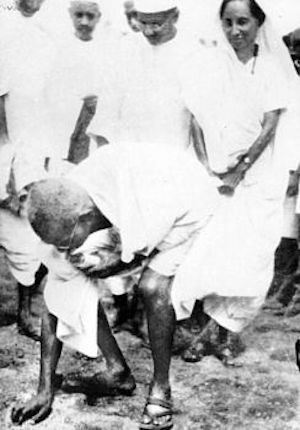
Outside India but not far from it, Indologist David Shulman has been reporting consistently on the brutal violence of hardline Zionist settlers as well as the Israeli army against unarmed Arab shepherds and villagers in the Jordan Valley. Mr. Guha delves into Gandhi’s difficult correspondence with philosopher Martin Buber and the intellectual J.L. Magnes in 1938-1939, just before the Kristallnacht. Gandhi advised European Jews to relocate to Palestine and make it their homeland only with the cooperation and goodwill of native Arabs, and not otherwise. This appalled even sympathetic Jews like Buber and Magnes, who had admired and supported Gandhi at the time of the Salt March in 1930, before the Nazi takeover of Germany.
How could Gandhi oppose the Zionist project, with Jews being sent to death camps in Hitler’s murderous regime? But now the tables are turned, and a rightwing Israeli state under Benjamin Netanyahu seems hell-bent on exterminating the Palestinians. Gandhi’s counter-intuitive Truth informs the civil disobedience, passive resistance and non-violent protest of both Arab and Jewish activists who oppose the continuing occupation and takeover of dwindling and defenseless Palestinian territories by bellicose Israeli forces.
The multilingual translator, editor and interpreter Suhrud (who works in all three of Gandhi’s languages, Gujarati, English and Hindustani, and has earlier produced a critical edition of Hind Swaraj), and the historian and biographer Guha (who has already written two other massive books in the past decade, about Gandhi in the first phase of his life, and about postcolonial India, “after Gandhi”), have together provided ample materials this year — leading up to the 150th anniversary of Gandhi’s birth in October 1869, and the 70th anniversary of his assassination in January 1948 — that we can continue to consult Gandhi on all manner of issues that may trouble our individual or collective conscience. It might have been “small” and “still” in his own perception, but even today, Gandhi’s is the voice that is great within us.
(The author is a Fellow at the Centre for the Study of Developing Societies, New Delhi).
After more than a year of intense negotiation, the U.S., Canada and Mexico managed to arrive at a revised trade agreement on Sunday to replace the quarter-century-old North American Free Trade Agreement (NAFTA). Even though the deal does not do anything new to promote the cause of free trade among the North American nations, it achieves the objective of averting any significant damage to the international trade system. Sadly, this is the best anyone could possibly hope for in the midst of the global trade war that began this year. When it comes to the finer details, the U.S.-Mexico-Canada Agreement (USMCA) makes several changes to NAFTA, which U.S. President Donald Trump had promised to scrap. The most prominent changes are the tweaks to production quotas applied to Canada’s dairy industry, which were intended to help protect it by restricting supply. Under the new deal, Canada will have to allow American dairy producers to compete against locals, a move that will favor Canadian consumers. The U.S. agreed to retain Chapter 19 and Chapter 20 dispute-settlement mechanisms as a compromise. This will help Canada and Mexico deal with protectionist duties imposed by the U.S., often under the influence of domestic business lobbies, against their exports.
Not all the amendments, however, are congenial to the prospects of free trade. Many are simply hard compromises that Canada and Mexico may have made just to defuse trade tensions with the U.S. And not unlike other free trade deals entered into by governments, the present one attempts to micromanage trade in a way that benefits specific interest groups at the cost of the overall economy. The new labor regulations and rules of origin will add to the cost of production of goods such as cars, thus making them uncompetitive in the global market. The USMCA mandates a minimum wage that is above the market wage on labor employed in Mexico, yet another move that will make North America a tough place to do business. Foreign investors may now have fewer protections from unfriendly local laws as the accord does away with resolutions through multilateral dispute panels for certain sectors. But it is its potential to end up as a double-edged sword for the U.S.’s major trading partners that Indian policymakers may find instructive. Announcing the USMCA, Mr. Trump signaled he would now extend his ‘all or nothing’ approach to resetting trade ties with the European Union, China, Japan and India. Terming India “the tariff king”, he said it had sought to start negotiations immediately, a move he reckoned as a bow to the power of tariffs that a protectionist U.S. could wield. In dealing with an emboldened Trump administration, India’s trade negotiators will now have their task cut out if they want to protect exporters’ access to one of the country’s largest markets for its services and merchandise.
FORTWORTH, TX(TIP): Fort Worth police arrested two shooting suspects after they ran and attempted to hide inside Hulen Mall.
The shooting happened behind a shopping center at Hulen Street and South Drive, but the two were captured inside of the mall midday Thursday, October 4, after witnesses saw them and called police.
The two men were found in the bathroom of a clothing store near the food court and were trying to disguise themselves by changing clothes, police said. The men didn’t resist and were arrested. One of them had a handgun.
Police say the person the suspects shot at died at the hospital. Witnesses saw him stumble and collapse near the intersection of Hulen and South.
People who tried to help him at the scene saw at least one gunshot wound on his neck.
“He had been shot in the neck and bleeding from his neck so bad it covered his whole abdomen,” said witness Chris Lawson. “Plain white t-shirt covered in blood, everybody ran over to help him.”
Police are investigating witness reports that the victim may have been shot twice.
Crime scene investigators could be seen Thursday afternoon looking over a car not far from where the victim was found. Detectives are examining how the car is connected to the shooting.
The names of the two people arrested have not been released.
FLORENCE, SC(TIP): A man shot seven police officers in South Carolina, killing one, in a standoff so dangerous that the police had to use a bullet-proof vehicle to rescue the wounded, authorities said.
The man also held children hostage for two hours in his Florence home on Wednesday afternoon, but they were released safely as the suspect was taken into custody, Florence County Sheriff Maj. Mike Nunn said.
The South Carolina man who is accused of shooting seven law enforcement officers, killing one of them, has been identified as 74-year-old Fred Hopkins, who was being held by authorities Thursday, October 4 evening but not charged.
Hopkins, who lived at the site of the shootings, was in custody and being hospitalized for a head injury, according to TV station WMBF. Florence County Deputy Chief Glenn Kirby said law enforcement officers have not spoken with Hopkins because of “multiple health issues,” the TV station reported.
According to South Carolina Judicial Department records, Hopkins is a lawyer who was disbarred, the Greenville News reported. He wrongfully collected $18,000 in “attorney’s fees” and was disbarred in 1984.
Court records show in 2014, Hopkins was charged with public disorderly conduct, according to the Associated Press. Records also show that he had criminal charges brought against him in 2015 for not paying a court-ordered fine. A jury found him guilty of not paying a fine in 2017, records also show. Divorce records show Fred Hopkins served in the Vietnam War. He was injured in his time overseas and received military disability, according to court filings.
Hopkins described himself on Facebook as “a competitive marksman,” reported the Associated Press, and he shared photos of himself with a M-14 rifle at a firing range “set up exactly like one I used in Vietnam in 69-70.”
Florence Police Officer Terrence Carraway was among the seven law enforcement officers shot. Carraway died from his injuries. He was a retired technical sergeant with the 315th Airlift Wing based in North Charleston.
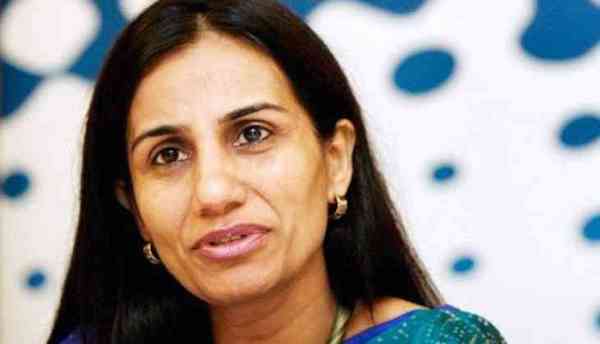
NEW DELHI (TIP): Facing inquiry over charges of nepotism and conflict of interest, ICICI Bank Managing Director and CEO Chanda Kochhar today, October 4, quit the bank, six months before her current tenure was to end.
Kochhar, 57, has also resigned from all subsidiaries of the bank, including ICICI Securities where she had sought reappointment as the chairperson.
The board elevated Chief Operating Officer (COO) Sandeep Bakhshi as the new MD and CEO for five years.
The bank said the external inquiry instituted by the board against Kochhar in May would continue and the benefits to her would be subject to its outcome.
Following the board’s decision to institute an inquiry by retired Supreme Court Judge BN Srikrishna, Kochhar had gone on leave in May. There are allegations of involvement of Kochhar and her family members in a loan provided to Videocon group on a quid pro quo basis. Kochhar’s current five-year tenure as CEO was to end on March 31, 2019. — PTI
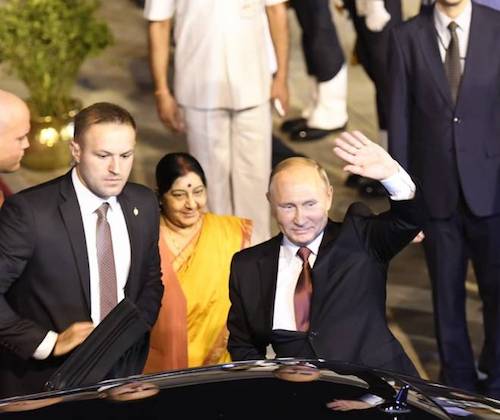
NEW DELHI(TIP): Russian President Vladimir Putin landed in Delhi on Thursday, October 4, for the annual India-Russia summit which could see the signing of military deals totaling close to $10 billion; a 24-hour visit that could have lasting implications for the India-U.S. relationship as well.
On Friday, India and Russia are expected to conclude three major military deals: for five S-400 missile systems estimated to cost about ₹39,000 crore (more than $5 billion), four stealth frigates and a deal for Ak-103 assault rifles to be manufactured in India. The U.S. has warned that the deals could attract sanctions under the Countering America’s Adversaries Through Sanctions Act (CAATSA) law that restricts defense purchases from Russia, Iran and North Korea.
India has been in negotiations with the U.S. administration for a “sanctions waiver”, but American officials have given no clear signal they will provide one. Last month, President Donald Trump’s administration-imposed sanctions on China as it started taking delivery of Su-35 fighter jets and S-400 systems.
The breadth of agreements, including the S-400 deal, during Mr. Putin’s visit is seen as a reiteration of India’s desire for “strategic autonomy” that was highlighted by Prime Minister Narendra Modi in a speech this year. It comes a month after the inaugural 2+2 dialogue with the U.S., in which India signed the third foundational agreement — Communications Compatibility and Security Agreement (COMCASA) — in addition to announcing several measures to operationalize the Major Defense Partner status, indicative of the difficult balance India hopes to maintain amid deepening U.S.-Russia tensions.
On Wednesday Air Chief Marshal B.S. Dhanoa said that once the Defence Ministry signs the contract, deliveries of the S-400 systems would begin in 24 months. In October 2016, the two countries concluded Inter-Governmental Agreements (IGA) for S-400 systems and four stealth frigates after which the negotiations began to conclude a commercial contract.
Mr. Putin and Mr. Modi will meet on Friday for a “working breakfast” followed by delegation-level talks. They are expected to witness the signing of at least 23 agreements, an official said, including Memoranda of Understanding for investment deals, a major agreement on space cooperation where Russia will assist India with its ‘Gaganyaan’ program to put a human in space, an MoU for Road Transport and the Road Industry, as well as one for cooperation on Micro, Small and Medium Enterprises.
Officials say that nuclear power cooperation, one of the cornerstones of India-Russia ties, will be discussed, but the announcement of new sites for the next phase of Kudankulam reactors is yet to be finalized due to “land acquisition issues.”
Both leaders will also meet with young Indian and Russian student “geniuses” who have excelled in studies, as part of an educational exchange program.
Officials said a discussion on the way forward in Afghanistan, including Moscow’s push for talks with the Taliban is likely to come up for discussions as well. Mr. Putin and Mr. Modi will address a business summit in the capital before the Russian President departs on Friday evening.
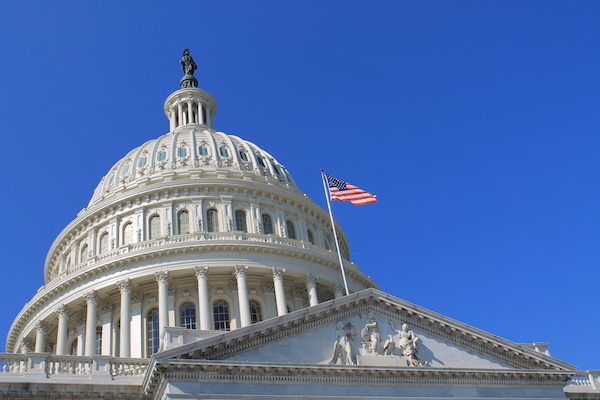
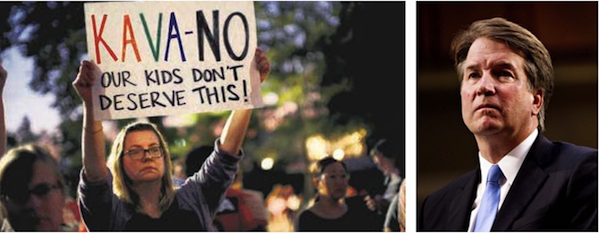
WASHINGTON(TIP): Democrats are angry over FBI “clean chit” to President Trump’s nominee for Supreme Court Brett Kavanaugh. Protests have erupted in Washington against Brett Kavanaugh whose confirmation vote is soon to be taken up by the Senate. Republican Senators appear confident that Kavanaugh will win confirmation.
The FBI report, sent by the White House to the Senate Judiciary Committee in the middle of the night, was denounced by Democrats as a whitewash that was too narrow in scope and ignored critical witnesses. But Republicans moved forward with plans for a key procedural vote on Friday and a final vote on Saturday on confirming the conservative federal appeals judge chosen by Trump for a lifetime job on the nation’s top court.
The FBI report represented the latest twist in a pitched political battle over Kavanaugh, and comments by two crucial Republican senators — Jeff Flake and Susan Collins — indicated it may have allayed concerns they had about the judge. Flake was instrumental in getting Trump to order the FBI investigation last Friday.
Republicans control the Senate by a razor-thin margin, meaning the votes of those two could be crucial in securing Kavanaugh’s confirmation. Collins said the investigation appeared to be thorough, while Flake said he saw no additional corroborating information against Kavanaugh, although he was “still reading” it.
Protesters in Washington on October 4. Screen shot /NBC News
A previously undecided Democratic Senator, Heidi Heitkamp, said she would vote against Kavanaugh, citing “concerns about his past conduct” and questions about his “temperament, honesty and impartiality” after his defiant testimony a week ago to the Senate Judiciary Committee. Heitkamp’s decision left Senator Joe Manchin as the only undecided Democrat. Most Democrats opposed Trump’s nomination of Kavanaugh from the outset.
Meanwhile, Kavanaugh, in a column for the Wall Street Journal Judge Brett Kavanaugh has admitted to saying some things he should not have during a Senate hearing last week, a tacit acknowledgement of the questions being raised about his conduct and emotions as he seeks confirmation to the Supreme Court.
“I was very emotional last Thursday, more so than I have ever been. I might have been too emotional at times,” Kavanaugh wrote. “I know that my tone was sharp, and I said a few things I should not have said.”
Kavanaugh also said in the column that he would be an independent and nonpartisan judge.
More than 2,400 law professors from across the political spectrum signed a letter this week arguing that the lack of “judicial temperament” that Kavanaugh displayed would be disqualifying for any court, let alone the highest in the land. A former Supreme Court justice, John Paul Stevens, has also weighed in, calling Kavanaugh’s hearing performance disqualifying during an event Thursday, according to the Palm Beach Post.
Thousands assembled today, October 4, to protest Supreme Court nominee Brett Kavanaugh by marching on the Senate Office Building where his confirmation vote will take place. Among the masses a few celebrities have been spotted speaking out against the judge, with Amy Schumer and Emily Ratajkowski ending up detained by law enforcement.