Year: 2018

  • Indian American Rockefeller Foundation president to visit India to help the government electrify villages across the country

    Indian American Rockefeller Foundation president to visit India to help the government electrify villages across the country

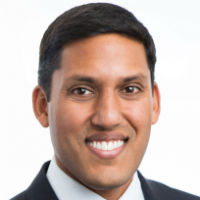
    Cambridge, US (TIP) : Rajiv J Shah, the Indian American president of the Rockefeller Foundation, will visit India on February 12th  as part of the US-based philanthropic organization’s efforts to help the government electrify villages across the country.

    The Rockefeller Foundation is one of America’s largest and most influential philanthropies which commits USD 200 million every year towards social and philanthropic causes globally, including India.

    “We have been working on what we think is the next big challenge to end poverty in India and that is bringing power and energy to rural communities that otherwise don’t have sufficient access to power,” Shah, 44, told PTI ahead of his maiden India visit in this capacity.

    Formerly the head of USAID under former US president Barack Obama, Shah is the first-ever Indian American to serve as the president of the foundation which played a key role in India’s green revolution in the 1960s.

    “We have an effort called Smart Power India that is helping to electrify villages across the country. That works with the government and private entrepreneurs who are bringing a solar mini grids and other new technologies to help families move themselves out of poverty by using electricity,” he said.

    For several years, the foundation and its non-profit subsidiary Smart Power India have worked with a network of partners and private energy service companies to build rural mini-grids that serve off-grid populations for both domestic and productive uses.

    As of now, more than 130 mini-grids are energizing more than 5,000 enterprises in India’s most energy-starved states, transforming the lives of over 45,000 Indians.

    It’s the largest cohort of mini-grids in India and by some counts the world.

    He said the purpose of his India visit from February 12 to 15 is to review progress in the foundation’s effort in this regard and advance partnerships with the government and other funders to “ensure that we can work to really fulfil Prime Minister (Narendra) Modi’s vision to end energy poverty” in India.

    “And to make sure every single Indian family has access to power and electricity and therefore the ability to connect to a modern global economy,” Shah said.

    He is also planning to meet and work with new philanthropists across the country who would like to partner with the foundation to extend the reach of their own philanthropic effort.

    While in India, Shah will focus on engaging with the government, multilateral, corporate and philanthropists.

    The overarching theme of his visit will be to underline the power of partnerships and collaboration in helping achieve India’s development goals across various areas – from health, to energy access, to ‘Digital India’.

    His India visit will focus on ‘Power of Partnerships’.

    The Rockefeller Foundation has had a tremendous history in India for many years working to improve the lives of vulnerable children and families, he said.

    “We were a big part in helping India achieve green revolution that helped to dramatically improve food production and save millions of people from hunger and starvation many decades ago,” Shah said.

    During his four-day visit, he would travel to New Delhi, Bengaluru and Mumbai, and meet key government and political leaders and other significant philanthropists to discuss areas of interest such as energy, health, urban resilience and co- investment.

    He is scheduled to deliver a keynote address at the India Energy Access Summit where he will be making a couple of financial announcements in the energy sector and renewing the foundation’s commitment to working with the government’s Power for All agenda.

    Shah said the first thing that India needs to do is to set a very high ambition which also requires a very significant investment and participation from the government as well as the private sectors.

    “So, we hope that the State and the federal government in India will expand their approach to public-private partnerships and accelerate a collaboration with us and others in order to reach more families and difficult to reach areas with power, electricity,” he said.

    Observing that India is making tremendous progress in bringing new power generation to the grid system, Shah said while the foundation’s work right now focuses on community that don’t have access to the grid, he hopes India will expand its grid and transmission system more aggressively into lower income communities.

    India has dramatically increased the contribution of wind power and solar power to its total power sourcing, he said.

    In India last spring, wholesale solar power prices reached a record low, dropping 40 per cent in a year to only 2.62 Rs per kilowatt hour.

    Electricity can now be so abundant, low-cost and reliable that every person on the Earth should be able to access and consume as much as they need, he said, adding that it has also increased the use of coal.

    “When you look at it, the cost of renewable power, in India, the tariff is now for some of the solar projects three cents per kilowatt hour or lower. That is very, very inexpensive, very efficient power.

    “The technology curve in renewable energy is so powerful that in a few years it’s going to be so incredibly cheap and consistent and environmentally healthy to bring power to everybody that we really do believe that is the long-term and medium-term solution,” Shah said.

    India has the chance to be on the technology frontier in renewable energy and they have suggested they want to be for the last many years, he said.

    Renewable generation capacity has doubled over the last five years, with solar power capacity alone increasing more than 12-fold in that time.

    A decade ago India had only 12 gigawatt of renewable capacity, and last year that number rose to over 60 gigawatt.

    Overall, new capacity built under the 12th ‘Five Year Plan’ exceeded the target for the first time in decades – adding over 100 gigawatt of generation capacity against a goal of 89 gigawatt.

    This helped reduce India’s energy supply deficit so much that in 2017 India enjoyed an energy surplus for the first time.

    Source PTI

  • Indian Origin Student Commits Suicide At University In UAE

    Indian Origin Student Commits Suicide At University In UAE

    The Dubai Police said that the victim had jumped from the fifth floor of the building at the Murdoch University campus.

    DUBAI (TIP):  A 19-year-old Indian Origin boy has committed suicide by allegedly jumping from a building at a university campus in the UAE, a media report said today.

    Officials found the student lying in a pool of blood and pronounced him dead, Khaleej Times reported.

    The Dubai Police said that he had jumped from the fifth floor of the building at the Murdoch University campus.

    The identity of the victim was not revealed by the police.

    According to a friend of the student, he had come to the university with his father to pay his fees and told his father that he wanted to use the washroom. It was after this that he jumped from the building.

    “He was absolutely normal when he spoke to me last night before the incident,” the friend said, adding that he did not notice any signs of depression.

    The police are currently carrying out an investigation to ascertain the cause of his extreme step and ruled out any criminal motive behind the incident.

    In a statement, Murdoch University, Dubai said: “We wish to express our sincere condolences to family members, friends and colleagues.

    “We are working closely with the relevant authorities.

    The University is also providing counselling services to all students and staff”.


  • Fortis promoters Malvinder, Shivinder Singh resign from company’s board

    Fortis promoters Malvinder, Shivinder Singh resign from company’s board

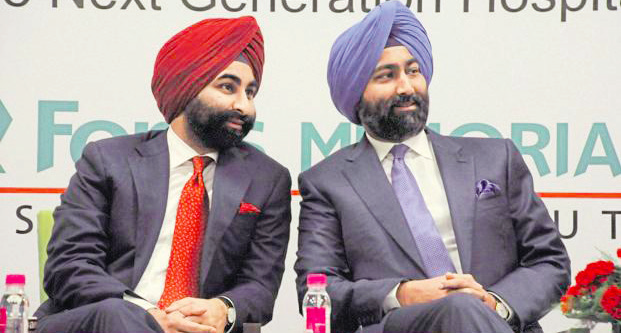
    NEW DELHI (TIP): Fortis Healthcare promoters Malvinder Mohan Singh and Shivinder Mohan Singh have resigned as directors from the company’s board following the Delhi high court order upholding the Rs 3,500 crore arbitral award in favour of Daiichi Sankyo.

    The Singh brothers have jointly tendered their resignation to the Board of Fortis Healthcare, which will discuss it in the meeting on February 13, the company said in a filing to the BSE.

    “Malvinder Mohan Singh, executive chairman and Shivinder Mohan Singh, non-executive vice-vhairman have tendered their resignation from the directorships of the company,” Fortis Healthcare said.

    The resignation is intended to free the organisation from any encumbrances that may be linked to the promoters, the letter said.

    “In light of the recent high court judgement upholding the plea of Daiichi Sankyo to enforce the arbitration award, we believe this is in the interest of propriety and good governance,” it said.

    The Delhi HC had on January 31 upheld an international arbitral award of Rs 3,500 crore passed in favour of Japanese pharma major Daiichi Sankyo, which has alleged that the former promoters of India’s Ranbaxy Laboratories had concealed information about proceedings against them by American food and drug department.

    A tribunal in Singapore had passed the verdict in favour of Daiichi, holding that the former Ranbaxy promoters and brothers, Malvinder Singh and Shivinder Singh, had concealed information that the Indian company was facing a probe by the US Food and Drug Administration and the Department of Justice, while selling its shares.

    With the resignation of the promoters, the board will be “better enabled and empowered to guide the future direction of the organisation without anyway being hampered by the Daiichi Sankyo judgement and our association at the Board,” the letter said.

    “The members of the board are also requested to look into all inter-group transactions and distance the promoter group from Fortis Healthcare Ltd in a manner that enables continuity of the operations of the organisation and deliver on its mission of enriching and saving lives,” the Singh brothers wrote in the letter.

    The high court order paved the way for enforcement of the 2016 arbitral award passed by the Singapore tribunal against the Singh brothers who had sold their shares in Ranbaxy to Daiichi in 2008 for Rs 9,576.1 crore. Sun Pharmaceuticals Ltd later acquired the company from Daiichi.

    Daiichi had approached the high court in 2016 to seek the enforcement of a Rs 2,562 crore Singapore arbitral award passed in April 2016, along with an additional claim of interest and lawyers’ fees incurred in connection with the proceedings.

    The tribunal’s award had come after the Japanese company invoked alleging that they concealed important information while selling Ranbaxy in 2008.

    Daiichi had entered into a settlement agreement with the US Department of Justice, agreeing to pay $500 million penalty to resolve potential, civil and criminal liability.

    The company had then sold its stake in Ranbaxy to Sun Pharmaceuticals for Rs 22,679 crore in 2015.

    Source: PTI

  • CCI slaps Rs 136-crore fine on Google

    CCI slaps Rs 136-crore fine on Google

    NEW DELHI (TIP): The Competition Commission on Thursday imposed a fine of Rs 136 crore on internet giant Google for unfair business practices in the Indian market for online search.

    After a detailed probe on the complaints filed in 2012, the regulator through a majority order said the penalty is being imposed on Google for “infringing anti-trust conduct”.

    On the CCI ruling, a Google spokesperson said the company is “reviewing the narrow concerns identified by the Commission and will assess our next steps”.

    Globally, this is one of the rare cases where Google has been penalised for unfair business ways, even as it has been under probe in several countries.

    It was alleged that Google is indulging in abuse of dominant position in the market for online search through practices leading to search bias and search manipulation, among others.

    For this case, the Competition Commission of India (CCI) considered markets in India for online general web search services and for online search advertising services as the relevant ones.

    The penalty amount of Rs 135.86 crore translates to 5 per cent of the company’s average total revenue generated from India operations from its different business segments for the financial years 2013, 2014 and 2015, according to the CCI order. The ruling has come on complaints filed by Matrimony.com and Consumer Unity & Trust Society (CUTS) — back in 2012 — against Google LLC, Google India Pvt Ltd and Google Ireland Ltd.

    Source: PTI

  • Bitcoin drops below $6,200 for first time in three months

    Bitcoin drops below $6,200 for first time in three months

    TOKYO (TIP): Bitcoin plunged 20 per cent to a three-month low, its latest sharp loss following a series of setbacks for the cryptocurrency that, with a collapse across global mainstream markets adding to the selling.

    The virtual currency fell to $6,190 for the first time since mid- November, according to Bloomberg News, and represents the latest hammering for a unit that saw a stratospheric 26-fold rise last year.

    Today’s collapse comes just six weeks after bitcoin hit a record high of $19,511, fuelled by a flood of speculators looking to make a quick buck, with warnings it could fall another 50 per cent. Since those heady days the cryptomarket — which includes dozens of other units — has been pounded by news of crackdowns by governments including in China, Russia and South Korea, one of the biggest markets for the sector. On Thursday, India said it would “take all measures to eliminate” cryptocurrencies’ use as part of a payment system and in funding illegitimate activities, while Japanese authorities raided a virtual currency exchange after it lost $530 million to hackers.

  • HARLEY-DAVIDSON RECALLS 1.75 LAKH BIKES IN US

    HARLEY-DAVIDSON RECALLS 1.75 LAKH BIKES IN US

    WASHINGTON (TIP): Harley-Davidson is recalling nearly 175,000 bikes in the US due to fears the brakes could fail, a government regulator said. If brake fluid is not replaced for a “prolonged period” beyond the recommended two-year schedule, deposits may form on internal components “reducing braking ability and increasing the risk of a crash,” the National Highway Traffic Safety Administration said.

    Source: AFP

  • SHARK SKIN INSPIRES DESIGN FOR BETTER DRONES, PLANES

    SHARK SKIN INSPIRES DESIGN FOR BETTER DRONES, PLANES

    BOSTON (TIP): Harvard scientists have developed a new structure inspired by shark skin that could improve the aerodynamic performance of planes, wind turbines, drones and cars.

    The study published in the Journal of the Royal Society Interface sheds light on a decades-old mystery about sharkskin.

    Sharks and airplanes are not actually all that different.

    Both are designed to efficiently move through fluid (water and air), using the shape of their bodies to generate lift and decrease drag, researchers said.

    The difference is that sharks have about a 400 million- year head start on the design process, they said.

    “The skin of sharks is covered by thousands and thousands of small scales, or denticles, which vary in shape and size around the body,” said George Lauder, professor at Harvard University in the US.

    “We know a lot about the structure of these denticles – which are very similar to human teeth – but the function has been debated,” said Lauder.

    Most research has focused on the drag reducing properties of denticles but Lauder and his team wondered if there was more to the story.

    “We asked, what if instead of mainly reducing drag, these particular shapes were actually better suited for increasing lift,” said Mehdi Saadat, a postdoctoral fellow at Harvard, who holds a joint appointment at the University of South Carolina.

    For inspiration, they turned to the shortfin mako, the fastest shark in the world. The mako’s denticles have three raised ridges, like a trident.

    Using micro-CT scanning, the team imaged and modelled the denticles in three dimensions. Next, they 3D printed the shapes on the surface of a wing with a curved aerodynamic cross-section, known as an airfoil.

    “Airfoils are a primary component of all aerial devices,” said August Domel, a PhD student at Harvard.

    “We wanted to test these structures on airfoils as a way of measuring their effect on lift and drag for applications in the design of various aerial devices such as drones, airplanes, and wind turbines,” said Domel.

    The researchers tested 20 different configurations of denticle sizes, rows and row positions on airfoils inside a water flow tank.

    They found that in addition to reducing drag, the denticle shaped structures significantly increased lift, acting as high powered, low-profile vortex generators.

    Cars and planes are equipped with these small, passive devices designed to alter the air flow over the surface of a moving object to make it more aerodynamic.

    Most vortex generators in the field today have a simple, blade-like design.

    Source: PTI

  • Microsoft enhances real-time translation for three Indian languages

    Microsoft enhances real-time translation for three Indian languages

    NEW DELHI (TIP): To make technology accessible and productive for all Indians, Microsoft on Feb 7 announced the integration of Artificial Intelligence (AI) and Deep Neural Networks (DNN) to improve real-time language translation for Hindi, Bengali and Tamil languages.

    This technology will help users in getting results that are more accurate and natural while surfing the Internet across any website on the Microsoft Edge browser, on Bing search, Bing Translator website, as well Microsoft Office 365 products like Word, Excel, PowerPoint, Outlook and Skype.

    “We are committed to empower every citizen and business in India by bringing the power of AI into their daily life and become a driving force for Digital India,” Sundar Srinivasan, General Manager-AI and Research at Microsoft India, said in a statement.

    “We have supported Indian languages in computing for over two decades and more recently have made significant strides on voice based access and machine translation across languages,” Srinivasan added.

    The translator is equipped with “TrueText”—a satellite DNN-based system that filters repetition, pauses, and indifferent words, enhancing the translation’s contextual appropriateness.

    DNN have the capability of encoding more granular concepts like gender (feminine, masculine, neutral), politeness level (slang, casual, written, formal) and type of word (verb, noun, adjective).

    The technology is also available for Android and iOS devices users through Microsoft Translator app which can recognise and translate languages from text, speech and even photos.

    For its partners and customers, Microsoft also provides APIs on Azure that they can use in their products.

    According to Microsoft, while facing complexities for translating Indian languages, especially of Dravidian and Aryan subdivisions and a dearth of digital content in Indian languages, DNN powered translation systems have shown at least a 20 per cent improvement in translation quality for all Indic languages which are currently supported.

    The company also supports text input in all 22 constitutionally recognised Indian languages across its products and Windows interface in 12 languages.

    Source: IANS

  • Prince Harry and Meghan Markle’s Pre-Valentine’s Day Plans Revealed

    Prince Harry and Meghan Markle’s Pre-Valentine’s Day Plans Revealed

    Valentine’s Day is just around the corner, and Prince Harry and Meghan Markle already have big plans for that week.

    Kensington Palace announced the couple will visit Edinburgh Feb. 13 for their first official joint visit to Scotland. It looks like the two already have a pretty packed itinerary.

    They will begin their day by visiting the Esplanade in front of the famous Edinburgh Castle. There, they will be greeted by the Royal Marines Scotland Band. Harry took over the role as Captain General of the Royal Marines from Prince Philip back in December. Then, the couple will watch the firing of the One O’clock Gun—a tradition that dates back to 1861.

    After witnessing the gun firing, the couple will head to Social Bite, a sandwich shop that donates its profits to social causes, such as homelessness. During their visit, Harry and Meghan will learn about the organization’s work, meet the staff and get a tour of the kitchen.

    At the end of their visit, the two lovebirds will attend a reception at the Palace of Holyroodhouse. There, they will celebrate the achievements of the country’s youth for Scotland’s Year of Young People 2018. The Year of Young People gives people 8 to 26 years old a platform to voice their opinions about social issues and showcase their talents.

    Kensington Palace did not reveal whether Harry and Meghan will stay in Scotland for Valentine’s Day. However, given his romantic proposal, we’re sure Harry has something special for his future bride. After all, Meghan is a big fan of the holiday. Even before her days as a future royal, the former Suits star celebrated the romantic occasion and encouraged others to do the same—even if it meant “being your own Valentine.”

    “I think you need to cook that beautiful dinner even when it’s just you, wear your favorite outfit, buy yourself some flowers, and celebrate the self love that often gets muddled when we focus on what we don’t have,” the actress wrote back in 2016 via her blog The Tig.

    This also won’t be the first time Meghan has traveled for the holiday. Back in 2016, the actress took a trip to New York to celebrate the occasion with her friends.

    “This Valentine’s Day I will be with friends, running amok through the streets of New York, likely imbibing some cocktail that’s oddly pink, and jumping over icy mounds in my new shoes through the salted snowy streets of the West Village,” she wrote via her blog.

  • NATALIE PORTMAN ON HOLLYWOOD SEXUAL ABUSE: ‘I HAVE 100 STORIES’

    NATALIE PORTMAN ON HOLLYWOOD SEXUAL ABUSE: ‘I HAVE 100 STORIES’

    Natalie Portman has revealed she has “100 stories” of sexual harassment in Hollywood – including receiving “rape fantasy fan mail” when she was just 13-yearsold.

    The Oscar-winning actress opened up about her experiences in an interview with Porter Magazine, explaining she had endured harassment and manipulation from studio executives throughout her career.

    And her problematic experiences began when she was a child star, with one so-called fan sending her a rape fantasy.

    At 18, a local radio station made a countdown for her birthday – “the date I would be legal to sleep with” – and endured movie reviewers commenting on her “budding breasts” in their articles. Because she didn’t want to do “kissing scenes” earlier in her career, Portman also explained she was perceived “prudish, conservative, nerdy, serious, in an attempt to feel like my body was safe and my voice would be listened to.”

    “I felt the need to cover my body and to inhibit my expression and my work in order to send my own message to the world that I’m someone worth of safety and respect,” she said.

    “The response to my expression, from small comments about my body to more threatening deliberate statements, served to control my behaviour through an environment of sexual terrorism.”

  • PARIS HILTON MAY HAVE THREE WEDDING DRESSES ON HER BIG DAY

    PARIS HILTON MAY HAVE THREE WEDDING DRESSES ON HER BIG DAY

    Just over a month after Paris Hilton announced she was engaged to Chris Zylka, fans want to know any and all details regarding her upcoming wedding day.

    As the businesswoman is finding out, planning a ceremony is easier said than done.

    “I’ve been traveling a lot since I got engaged so I’m going to have a meeting with my mom soon,” Paris revealed while celebrating the Rachel Zoe Fall 2018 Presentation with Belvedere Vodka. “We’ve been on the phone all the time just trying to figure out where we want to do it and the date. It’s a lot to plan.”

    She continued, “It’s so hard to plan something like this. My schedule is so crazy. I have friends and family all over the world and I really want it to be the perfect day. Hopefully somewhere close so that everyone can make it from my family.”

    One thing fashion lovers are curious to find out is which famous designer will have the honor of dressing Paris when she says “I Do.”

    According to the former Simple Life star, she hasn’t made a decision just yet. At the same time, one look likely won’t be enough.

    “I’m getting so many different calls from designers. Now I’m looking through all the designs and trying to pick which one but there are so many gorgeous choices. It’s hard to pick,”

  • EU doubts 2020 Brexit vision, sees longer goodbye

    EU doubts 2020 Brexit vision, sees longer goodbye

    BRUSSELS (TIP): Senior EU figures have told Reuters Britain will not be ready to make a full break from the European Union by the end of 2020 as Brexit transition plans foresee and the bloc is bracing for a much longer goodbye.

    The British government may be thinking on similar lines.

    Several diplomats and Brussels officials familiar with the discussions said a host of unresolved issues, including the Irish border, and British in-fighting over what kind of future trade relationship to ask for left many convinced the transition will end up being longer.

    Two senior EU officials said British negotiators appeared to be sounding out other governments’ attitudes to an extension to the 21- month transition currently on offer, although others said they believed British Prime Minister Theresa May still aims to have a free trade deal negotiated to start in January 2021.

    May has publicly denied looking for extra time. The EU says it is willing to be “flexible”, though France and other EU governments have been clear they oppose Britain staying in the half-way house for years, fearing the arrangement would become permanent and a basis for a messy, long-term compromise.

    As formal talks on the transition got under way in Brussels this week, EU diplomats said any extension would be agreed only after Britain formally leaves in March 2019, so that London would remain under pressure to conclude a trade deal or face its economy going off a “cliff edge” from 2021.

    ‘LEVERAGE’: “Nobody believes in transition until the end of 2020,” one person said. “But we don’t want to propose an extension straight away – that is a leverage we have over London in the talks.”

    They acknowledge May cannot say she might prolong a transition which, by binding London to EU rules and budgets without having a say on them, is deeply unpopular with Brexit supporters: “To ask for an extension now would be to upset the Brexiteers who want out swiftly and at any cost.” Michel Barnier, the EU chief negotiator who will brief the media on Friday on the outcome of this week’s talks, has said he believes Britain can negotiate a free trade deal in under three years. EU and British officials note that while an EU deal with, say, South Korea took seven years, Britain has regulations in line with the EU now, substantially cutting the need for change.

    Concluding a transition deal by March was supposed to be an easy part of Brexit negotiations after months spent last year cajoling London into committing to pay tens of billions of euros in outstanding commitments to Brussels and hammering out a deal to give lifetime rights to 3 million EU citizens in Britain. (Reuters)

  • No secret detention, torture camps in Lanka: President to Tamils

    No secret detention, torture camps in Lanka: President to Tamils

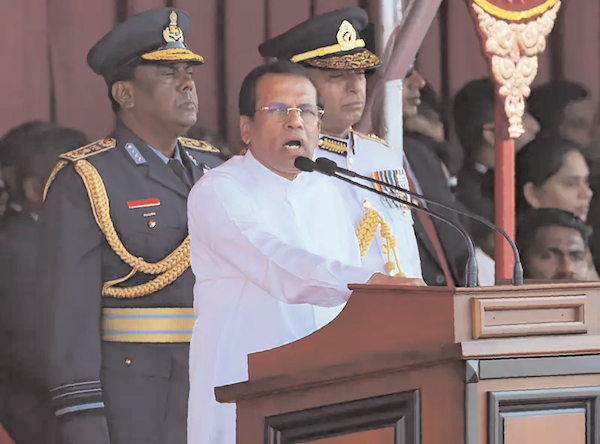
    COLOMBO (TIP): Sri Lankan President Maithripala Sirisena on Monday assured the minority Tamil community that his government was not running any secret detention and torture camps in the country.

    Sirisena said he was concerned about the people who are still missing years after the end of nearly three-decade-long brutal civil war.

    “I have several times met the relatives of the disappeared persons. I am concerned about the problem of their missing relatives,” Sirisena said while campaigning in the Tamil dominated Jaffna city for the February 10 local council election.

    “They have told me that the missing people are being held by the government in secret detention camps. I made inquiries and I tell them on behalf of the government that there are no such camps run by the government,” he said.

    Sirisena said his government had addressed the concerns of the Tamils by returning to them their land that had been held for military purposes since the mid 1980s.

    The Tamil and international rights groups had blamed the former Mahinda Rajapaksa government of running secret detention and torture camps.

    The relatives of the missing persons have regularly held public demonstrations, demanding urgent government attention to their concerns.

    The government has set up an Office of Missing Persons (OMP) which is yet to become operational.

    The OMP was one of the accountability mechanisms advocated in UN Human Rights Council resolutions on Sri Lanka since 2013.

    The UN panel called for the establishment of independent international court to probe alleged war crimes committed by both the Liberation Tigers of Tamil Eelam (LTTE) and the government troops during the last stages of the civil war which ended in 2009.

    According to the government estimates, around 20,000 people are still missing due to various conflicts including the 30-year-long separatist war with Lankan Tamils in the north and east which claimed the lives of at least 100,000 people.

    The LTTE, which led the separatist war for a separate Tamil homeland, was finally crushed by the Lankan military in 2009 with the death of its supremo Velupillai Prabhakaran.

    (PTI)

  • I was in a committed relationship, but for a year, I’ve been single: Priyanka

    I was in a committed relationship, but for a year, I’ve been single: Priyanka

    She has made a smooth transition from Bollywood to Hollywood, but it’s not just her work that’s keeping Priyanka Chopra in news these days. The Baywatch actor, who is all set to return to Hindi films, recently opened up on her relationship status.

    For the longest time, Priyanka has remained tight-lipped about her relationship status. Back in 2016, when she was asked about her marriage plans, she said in an interview, “When there is a ring on my finger, which is actually given to me, then Ill tell the world. Till then no one can claim me.”

    Cut to 2018, Priyanka in an interview to Filmfare admitted that she was in a very committed relationship until last year.

    “I’m a serial monogamist. I was in a very committed relationship. But since almost a year, I’ve been single. I’ve met a bunch of people. I’ve gone out with people. I let someone woo me but no. My mind hasn’t exploded, not yet!,” Priyanka told the magazine.

    The 35-year-old actor says that she is single after a long time and is getting a lot of attention. But she’s not in the right frame of find to get into a relation. “I’ve been single after a really really long time. I get a lot of attention. But I don’t know what to do with it. Of course, I like it. I’m a girl and I’m vain,” she added.

    On the work front, Priyanka has two Hollywood films in pipeline – A Kid Like Jake and Isn’t It Romantic?

  • I’M A HOARDER: KAREENA ON FASHION

    I’M A HOARDER: KAREENA ON FASHION

    Actor Kareena Kapoor said she would not want to make any changes to her wardrobe as she considers herself a “hoarder”.

    The actor, who returned to the ramp at the grand finale of the Lakme Fashion Week Summer/Resort 2018 yesterday, said it would not be possible for her to do away with the hobby of collecting things anytime soon.

    When asked if she would want to modify her personal collection, Kareena told the reporters, “I don’t think I’ll change anything in my wardrobe. I (still) hoard my jeans from the time, probably, when I was 20-21. I’m a hoarder. I like to collect things. So getting rid of something…

    That’s not happening any time soon.”

    The actor turned showstopper for Anamika Khanna’s “Nudes Reinvented” collection with Lakme Absolute. She added that with changing times actors have started paying more attention to how they dress.

    “Actors have become fashion conscious. I think it’s amazing. Well as long as you’re comfortable in what you wear. Once you’re comfortable with what you’re wearing, I think you’re automatically considered stylish and fashionable,” she said.

    Source: PTI

  • SALMAN CHOOSES WARINA HUSSAIN OVER ISABELLE KAIF FOR LOVERATRI

    SALMAN CHOOSES WARINA HUSSAIN OVER ISABELLE KAIF FOR LOVERATRI

    Salman Khan introduced Warina Hussain, as his brother-in-law Aayush Sharma’s leading lady in the film Loveratri, which is a Salman Khan production.

    According to a report in SpotBoyE, Salman wanted his rumoured ex-girlfriend, Katrina Kaif’s younger sister, Isabelle to play the lead.

    Isabelle has been trying to make her way into showbiz for a while now. She even moved to Mumbai, and Salman has been trying to make her feel settled.

    Back to Loveratri, Salman was keen on casting Isabelle opposite Aayush Sharma.

    Though Isabelle cleared the look test, she wasn’t able to give a satisfactory audition.

    According to the report, Isabelle was still not used to cameras, and she wasn’t comfortable in Hindi. A source said that the role required a strong fluency in Gujarati and Hindi.

    Meanwhile, Salman Khan and Katrina Kaif are riding high on the success of their film, Tiger Zinda Hai, which crossed Rs 300 crore in India. Salman is now working on Race 3, and Katrina is busy with Shah Rukh Khan’s Zero.

  • The Grounding of Air India

    The Grounding of Air India

    By Pulapre Balakrishnan

    “If Air India, nationalized in the 1950s, is now privatized, we would have come full circle. However, its case is more symbolic than substantive. Today there is no dearth of air-travel service providers in India, and the public airline reportedly has less than 15% market share. This is not the case in some other areas of the economy where public provision is fundamental. Take rail travel, which has no substitute. For it to serve its public purpose, the financial health of the Indian Railways is vital”.

    Having announced its decision to sell Air India, the government is making arrangements to do so. The move itself has come after multiple efforts by successive governments to resurrect the national airline. Though there has been news of it finally turning in an operating profit under a determined CEO, its debt, reportedly a staggering $8.5 billion, must weigh on the minds of a public drawn into a discussion of its future.

    The beginnings

    It is unfortunate that so iconic an entity, once feistily steered by J.R.D. Tata, has met this fate, but it is not uncommon in the history of India’s public sector. To understand this ending, we would have to start at the beginning, and that was with the transformation of the economy attempted in the 1950s. While there were monumental gaps in that attempt, there were also creative innovations, the most important being the public sector. By design, the public sector was to exist along with a private one resulting in what had been referred to as ‘the mixed economy’. To those hankering after institutional purity this was no more than a joke, an arrangement that had strengths of neither full-bodied American-style capitalism nor of out-and-out Soviet-era communism. Half a century later, the Soviet empire imploded and for a brief moment in 2008, the American one teetered on the brink, having been taken there by its vanguard, finance capital. We can now see that the mixed economy, combining the public and private sectors, is superior to one located at either extreme.

    So, if the public sector is a force for the good, why is it that we see Air India, and a section of the rest of the Indian public sector, in so unsound a financial condition? In its early days, the public sector had been quite healthy. This need hardly come as a surprise when we recognize the then Indian leadership’s motive for building one. Stripped of its somewhat ideological construction as straddling ‘the commanding heights’ of the economy, it was to have a central role in the quickening of the economy after 1947. Wrecked by two centuries of colonialism, India’s economy was moribund. The post-colonial Indian leadership had envisaged the public sector as the ship that would steer the economy out of the morass. And they were not wrong.

    Under Nehru, India’s economy rose spectacularly, and public investment was the principal engine of growth in that remarkable phase. Used as we are to Air India having to, at times, borrow even to finance its working capital, it may come as a surprise to know that it was still making profit into the second half of the 1960s. As for the public sector as a whole, during the Nehru era its savings had grown faster than that of the private corporate sector. Actually, to an extent India’s public sector had financed itself.

    Nehru’s speech at the inauguration of the second plant of the Hindustan Machine Tools (HMT) in Bangalore in 1962 is instructive in this regard. He congratulated the workers of HMT for having produced a second plant entirely out of the surplus of the first one. In one stroke, this conveys the rationale imagined for India’s public sector at the moment of its conception. It had been imagined as a source of investible funds for the public purpose. Underlying this was the belief that the private sector may not generate the necessary surplus, especially if the economy was not first quickened through public investment.

    It is noteworthy that in the heyday of the public sector, India’s private corporate sector had not done badly at all. Its investment rose at least much as that of the public, demonstrating that claims of its suppression due to the license-permit raj are exaggerated. It is true that some entities had been excluded by licensing. Licensing was necessary to ensure that resources were used in accordance with the plan for industrialization, but it was the case that private firms receiving licenses benefited greatly from the expansion of the market resulting from public investment. It is perhaps not known widely enough that in the Nehru era India grew faster than China.

    What went wrong?

     So, if the public sector had such a central role in lifting India out of a morass, why are we where we are today? Why is Air India awaiting the gavel? This has entirely to do with politics. Politics underwent a sea change in the second half of the 1960s and with this the de facto status of the public sector was to change. It became the handmaiden of Indira Gandhi’s attempt to gain absolute control. Performance no longer counted, and the public sector was now validated by its very existence. Intimation of the changed policy stance appears in the form of an entry in an ‘Economic Survey’ from the 1980s emphasizing that a large section of employees of the public sector were those absorbed from loss-making units. This was to be a point of no return as the public sector was no longer treated as the fulcrum of the economy but as a political instrument. It was not as if some successes, such as of Maruti Udyog, were not to come yet but the original sense of purpose was lost.

    If Air India, nationalized in the 1950s, is now privatized, we would have come full circle. However, its case is more symbolic than substantive. Today there is no dearth of air-travel service providers in India, and the public airline reportedly has less than 15% market share. This is not the case in some other areas of the economy where public provision is fundamental. Take rail travel, which has no substitute. For it to serve its public purpose, the financial health of the Indian Railways is vital.

    We have reason to believe that this is threatened. The present Minister for Railways has announced that the decay of the capital stock has contributed to reduced safety. In particular that the recent spate of derailments has to do with inadequate signaling equipment and damaged tracks. Scarcity of funds for proper maintenance of the capital stock is directly related to populism. The replacement in 2012 by his party supremo Mamata Banerjee of a Railways Minister who had raised passenger fares demonstrates the role of politics in running India’s public sector into the ground. Unlike the airlines, the railways are a life-line for a large number of Indians, and maintaining their good health is vital to their interest. It is naïve to imagine that the public sector can remain immune to inflation in the economy.

    Meanwhile, an effort to turn around the public sector has come from an unlikely section. The Communists of Kerala, prone to rationalizing inefficiency when it suits their politics, have now embarked upon a revival of the State’s public sector undertakings. This has met with success in a short time, with at least some loss-making units turning profitable. The parlous state of public finances may have forced this political party’s hand but the move itself shows maturity. Hopefully it will serve as a model for the rest of the country. The public sector would be a jewel when worn in the public interest. When it is not, as was the case with Air India, it turns into a millstone around our necks.

    (The author is Professor of Economics of Ashoka University and Senior Fellow of the IIM Kozhikode)


  • Building Strong Schools Through Community Engagement

    Building Strong Schools Through Community Engagement

    By Carmen Fariña

    “School buildings are neighborhood hubs and I encourage you to get involved, spend time at your local school and invest in the next generation of leaders”, says the author.

    With over 50 years of experience as an educator, I know that it truly takes a village to deliver for students. In each school community, that village is made up of teachers, administrators, support staff, outside partners and of course, families. While I often say it all comes down to what happens in the classroom, when it comes to building strong school communities, families are critical partners.

    That’s why, as Chancellor, I’ve made family engagement a priority for all of our schools, and there has been an unprecedented investment in families. Whether we’re bringing parents into the classroom to teach robotics, inviting parents to learn English alongside their children, or providing professional development to parent leaders, we’re constantly rolling out innovative programs that provide unique opportunities for parents to get involved in schools.

    My message to all parents, grandparents, family members or alumni reading this: school buildings are neighborhood hubs and I encourage you to get involved, spend time at your local school and invest in the next generation of leaders. From PA/PTA President to field trip chaperone to mentor, only when the village is engaged in school-based activities, events and decision-making, can we foster the development of a community deeply committed to the success of our students.

    And when we invest in families, they want to invest in us. That’s why we’ve increased our outreach to families. When I became Chancellor four years ago, requiring all schools to host at least one Parent-Teacher Conference at night and extending meeting time to accommodate working families were no-brainers. As a result of these efforts, the number of parents attending family conferences increased by 43 percent since 2013. We’ve also removed barriers for families that speak a language other than English at home by expanding our translation and interpretation services in over 200 languages.

    The opportunities in New York City are endless, and Career Day events, mentorship programs and beautification projects help us bring those opportunities into schools and classrooms, and expose our students to endless possibilities. For example, alumni from the Bronx spent a Saturday morning painting classrooms and planting a garden at the Longwood Preparatory Academy. This is one of many ways the millions of former New York City public school students are getting involved through P.S. Alumni.

    All across the world, our alumni are doing amazing things: starting businesses, investing in their communities and raising families. P.S. Alumni taps into the incredible network of mentors, volunteers and advocates ready to give back and help students find success.

    For alumni who are also parents of current public school students, it’s time to get involved. You know firsthand the important role that education plays throughout your life and why it’s so important to build a strong foundation. Whether you’re volunteering to do a read-aloud in your child’s class, or speaking at your alma mater for College Awareness Day, now is the time to share your experience and help shape the next class into the future leaders of this City and of the world.

    That work starts in your neighborhood and at your local school. The doors are always open.

    (The author is New York City Schools Chancellor)


  • Donald Trump Jr to visit India later this month

    Donald Trump Jr to visit India later this month

    NEW DELHI (TIP): Donald Trump Jr, Executive Vice President of the Trump Organization, is expected to visit India in late February to officially launch Trump Towers in Gurugram and Kolkata.

    Trump Jr is scheduled to visit four Indian cities to cover the sprawling Trump portfolio. He will also attend Global Business Summit in the national capital.

    Global realty brand Trump Towers is making its debut in North India through real estate firms M3M India and Tribeca Developers, which launched a luxury housing project last month in Gurugram entailing investments of Rs 1,200 crore.

    Commenting on his upcoming visit, Donald Trump Jr said: “India is such an incredible country and our brand has enjoyed tremendous success in the region for many years”.

    “This trip is a celebration of all we have achieved, including the launch of the Trump developments in Kolkata and Delhi which have been underway for many months. The teams in India have been working very hard to deliver residences that are truly second to none and I am looking forward to visiting these spectacular projects very soon,” Trump Jr said.

  • UNION MINISTER GIRIRAJ BOOKED FOR LAND GRAB

    UNION MINISTER GIRIRAJ BOOKED FOR LAND GRAB

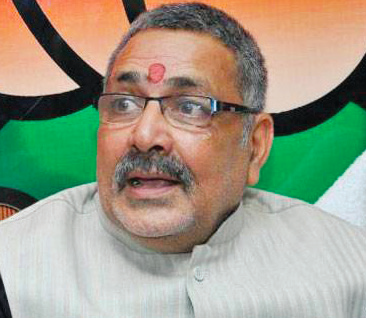
    ATNA (TIP): Union Minister Giriraj Singh has been booked for grabbing land belonging to a Dalit in his native Bihar, the police said today.

    The FIR against Singh and 32 others was lodged on February 2 on the orders of a special SC&ST court where the complainant had filed an application under Section 156(3) of the CrPC, seeking directions to the police for registering a case against the accused, SHO of Danapur police station in Patna district Sandeep Kumar Singh said.

    The BJP MP from Nawada is Union Minister of State (independent charge) for Micro, Small and Medium Enterprises. The complainant, Ram Narain Prasad, a resident of Asopur village, alleged that the accused grabbed 2.6 acres that he owned and abused him when he protested.

    Tejaswi Yadav, Leader of the Opposition in the Bihar Assembly, demanding the resignation of Chief Minister

    Nitish Kumar, whose party (JD-U) is a BJP ally, tweeted:

    “Nitish Kumar ji, don’t hesitate, speak up, awaken your inner voice and rush to the Governor’s house with your letter of resignation. Your dearest friend Giriraj Singh has grabbed three acres of land belonging to Dalits.” In another tweet, he took potshots at Bihar Deputy Chief Minister Sushil Kumar Modi.BJP spokesman Rajiv Ranjan said Giriraj Singh was a law-abiding citizen. “Attempts by some people to politicise the issue is deplorable.”

    Source: PTI

  • 4 arrested for firing in Srinagar hospital, helping Pak terrorist escape

    4 arrested for firing in Srinagar hospital, helping Pak terrorist escape

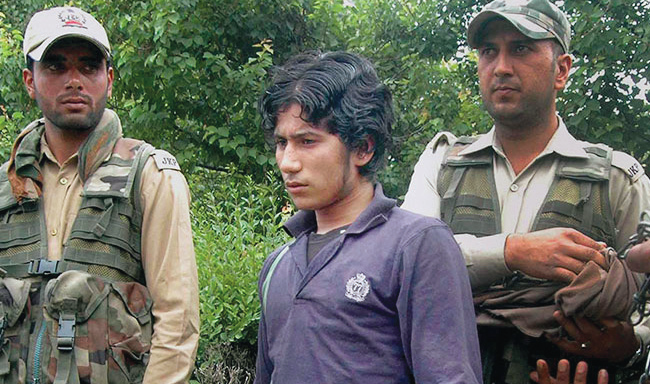
    SRINAGAR (TIP): Four men have been arrested for yesterday’s firing in a Srinagar hospital that enabled Pakistani terrorist Naveed Jutt to escape from police custody. The police said they have tracked down on the motorcycle and the vehicle they had used for the getaway.

    The escape of 22-year-old Jutt when he was taken to the hospital for a routine check-up with five other prisoners, has been put down to a detailed conspiracy.

    The superintendent of Rainawari Central Jail has been suspended, Jammu and Kashmir home secretary said.

    Gunshots rang out in the Shri Maharaja Hari Singh Hospital yesterday, when the prisoners were brought into the Out Patients’ Department. Two policemen accompanying the prisoners collapsed. One died on the spot, the other in the hospital. In the confusion, Jutt managed to escape with the pheran-clad men, who had come on a motorbike.

    Naveed Jutt, 22, has been at the jail since 2016, since his arrest two years before. Senior police officers said he managed to get a court order to stay in a Srinagar jail even though all Pakistani terrorists are lodged outside Kashmir.

    His escape, said state police chief SP Vaid, had been carefully planned with active collaboration from inside the jail.

    The police had prior information about Lashkar activities inside the jail.

    Naveed Jutt was known to be close to Abu Qasim, who headed Lashkar-e-Taiba in Kashmir and was killed by security forces in 2015. He is also close to Zaki ur Rehman Lakhvi, one of the masterminds of 26/11 terror attack in Mumbai.

    The police said Naveed Jutt was involved in several terror attacks in Kashmir, including one in which a teacher on election duty was killed. He is also believed to be behind the killing of at least seven policemen. Source: NDTV

  • 1984 riots: Delhi Sikh body releases Jagdish Tytler’s ‘confessional’ video

    1984 riots: Delhi Sikh body releases Jagdish Tytler’s ‘confessional’ video

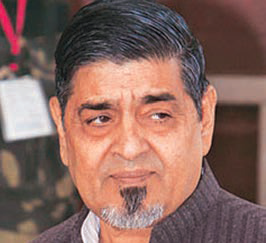
    NEW DELHI (TIP): The Delhi Sikh Gurdwara Management Committee (DSGMC) on Feb 5 released a video of a purported sting operation of former Congress MP Jagdish Tytler wherein he has allgedly admitted to killing 100 Sikhs during the 1984 anti-Sikh riots.

    While releasing a series of five video clips before the media in New Delhi, DSGMC president and Shiromani Akali Dal (SAD) national spokesperson Manjit Singh GK claimed that an unknown man on February 3 handed over an envelope to his security guards. The envelope had GK’s name written over it with the instruction “to be opened only by GK.” It contained a pen drive having the five video clips allegedly recorded in 2011 and some documents of transcripts thereof, he added.

    GK alleged that in clip 3, Tytler has admitted that he has killed 100 Sikhs and nothing happened to him except a sham inquiry.

    “This is Tytler’s confession to the crime he has committed during the 1984 anti-Sikh riots. He should be arrested,” he said.

    He added, “Tytler has audaciously confessed to his crimes like a proclaimed offender. In clip 1, Tytler has expressed remorse for not being able to recover Rs 150-crore cash from his friends. In clip 2, he has stated that his son is in a company which has accounts in Swiss bank and he also boasts about going to Rajya Sabha or being offered the chief ministership of Delhi.”

    GK further alleged, “Clip 3 is shocking wherein Tytler said he had lost faith in then PM Manmohan Singh. Clip 4 contains videos where Tytler boasts about being close to judiciary and how he got justice Pathak and his wife appointed to the court.”

    He warned that in case the investigation agencies fail to arrest Tytler within 24 hours, the DSGMC will launch protests against the police and other government agencies, besides raising the issue in Parliament.

    SUKHBIR SEEKS CASE AGAINST GANDHI FAMILY

    Meanwhile, SAD president Sukhbir Singh Badal demanded a case be registered against the Gandhi family for “engineering the massacre” of thousands of Sikhs in Delhi and in other parts of the country in the wake of the “evidence” on Tytler.

    Sukhbir alleged that the fact that Tytler was seen bragging that he was behind the murder of 100 Sikhs in Delhi in 1984 and boasting that he had been promised a Rajya Sabha seat or chief ministership of Delhi by the Congress high command proved the Gandhi family’s “direct involvement in the 1984 genocide”. He added, “Now it is incumbent that the courts of law to ask the Gandhi family to explain why it was offering such inducements to a criminal who had the blood of innocent Sikhs on his hands?”

    Tytler files police complaint against GK

    NEW DELHI (TIP): Senior Congress leader Jagdish Tytler has filed a complaint with the Delhi Police against Delhi Sikh Gurdwara Management Committee (DSGMC) president Manjit Singh GK and unknown persons, saying that they had released a doctored video which allegedly showed him admitting to killing hundreds of Sikhs in 1984.

    He asked the Delhi Police to register an FIR against Manjit Singh and remove the objectionable video from websites and social media.

    The complaint said: “Manjit Singh recently played several doctored video clips at a press conference claiming them to be of some sting operation. He falsely stated that I had confessed to having killed hundreds of Sikhs in the riots. The statement attributing the killing of Sikhs to me is false and outlandish and the video clips are doctored.”

    “GK could not convincingly state as to how he got the alleged video clips and/or who conducted the sting operation. His explanation was that an unidentified youth had left a sealed packet with a security guard at his residence is ridiculous,” the complaint reads.

  • Sonia Gandhi says Rahul is her boss too, wants to wo

    Sonia Gandhi says Rahul is her boss too, wants to wo

    HIGHLIGHTS

    ? She said she was convinced Congress’s defeat in 2014 was an aberration

    ? She urged the party to be ready for the national elections

    ? “Reality is different,” she said on PM Modi’s offensive against Congress

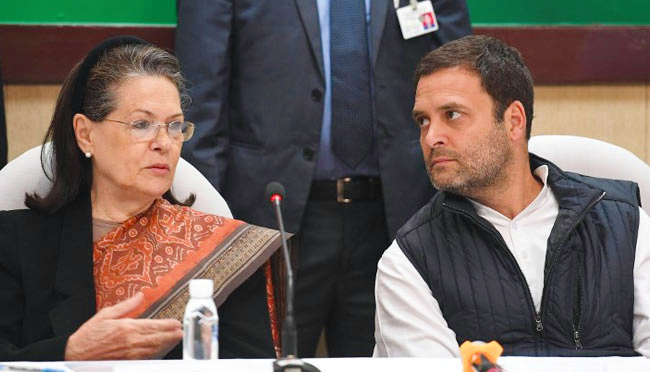
    NEW DELHI (TIP): Launching an all-out attack on the Bharatiya Janata Party (BJP) and the Narendra Modi government, former Congress president Sonia Gandhi on Feb 8 said she would work with “like-minded political parties” to ensure its defeat in the next general elections.

    Addressing the Congress Parliamentary Party, of which she is the chairperson, Sonia alleged that the government was orchestrating violence against minorities to polarise society for narrow political gains.

    She added that this would also be seen in Karnataka, which goes to the polls in a few months.

    Sonia told party MPs to work with dedication, loyalty and enthusiasm, asking them to work with new party president Rahul Gandhi to strengthen the party.

    She added that Rahul is also her boss. “We have elected a new Congress president and on your behalf and on my own, I wish him all the very best. He is now my boss too — let there be no doubt about that — and I know that all of you will work with him with the same dedication, loyalty and enthusiasm as you did with me,” she said.

    “I am confident that we will work cohesively under his leadership to revive our party’s fortunes. That process has begun,” she said.

    However, News18 reported that a section of the old guard in Congress was reluctant to deal with Rahul for political negotiations.

    Congress’ call for a metting of Opposition parties ahead of the Budget Session was also met with a lacklustre response from non-BJP parties, the report said.

    “It has been almost four years since this government came to power, this has been a period in which institutions which have come under systematic assault — Parliament itself, judiciary, media and civil society.

    Investigative agencies have been let loose against political opponents,” The Indian Express quoted Sonia as saying.

    “The minorities feel unsafe and are being subjected to barbarous attacks. Dalits have come under renewed and widespread atrocities, as have women. In many cases, this violence, especially against minorities and Dalits, is not sporadic or random, but orchestrated to polarise our society for narrow political gains. We saw this both in Uttar Pradesh and Gujarat. We will no doubt see it again in Karnataka. Such polarisation is criminal in a democracy, yet those in power look the other way,” NDTV further quoted her as saying.

  • Amazon to Roll Out Delivery at Whole Foods

    Amazon to Roll Out Delivery at Whole Foods

    DALLAS (TIP): The online retailing giant plans to roll out two-hour delivery at the organic grocer this year to those who pay for Amazon’s $99-a-year Prime membership, an Associated Press report says.

    The move is the latest by Amazon to put its stamp on its recent purchase of Whole Foods. Amazon has cut prices on bananas, yogurt and other items, and began selling Kindle e-readers in some of its 470 stores.

    Since Amazon bought Whole Foods last year, rival grocers have been working to increase delivery, worried about what Amazon might do. Target, for example, bought grocery-delivery company Shipt. Others have partnered with Instacart.

    Amazon said deliveries will start Thursday, February 8, in Austin, Texas; Cincinnati, Ohio; Dallas, Texas; and Virginia Beach, Virginia. The service will be nationwide this year, the company said.

    Shoppers will be able to order meat, seafood and other grocery items through Amazon’s Prime Now app and website.

    Amazon.com Inc., based in Seattle, said there’s no extra fee for two-hour deliveries above $35, but one-hour delivery will cost $8.

  • Lawmaker slams Republicans over security clearances amid Porter scandal

    Lawmaker slams Republicans over security clearances amid Porter scandal

    WASHINGTON DC (TIP): A Democratic lawmaker is taking aim at his Republican colleagues following reports that White House Staff Secretary Rob Porter was able to continue to work in the West Wing despite being denied a permanent security clearance due to domestic abuse allegations made against him.

    In a letter released on Thursday, February 8, Rep. Elijah Cummings of Maryland, the ranking Democrat on the House Oversight Committee, slammed Republicans for stonewalling his efforts to obtain information about the security clearance process at the White House.

    “If you had agreed to any of our previous requests for information on these matters, the White House would have been required to answer key questions about why Mr. Porter was denied a final security clearance, who at the White House was aware of this information, and how Mr. Porter was allowed to remain in his position,” Cummings wrote in his letter to House Oversight Committee Chairman Trey Gowdy, R-South Carolina.

    “In this and many, many other areas, it appears that the Oversight Committee has constructed a wall around the White House in order to prevent any credible oversight whatsoever,” he wrote.

    A spokesperson for Gowdy declined to comment on Cummings’ letter.

    Porter, who as White House Staff Secretary controlled access to the president and the flow of information into the Oval Office, resigned Wednesday after his two ex-wives went public with multiple allegations of domestic violence.

    According to reports, Porter served in the White House without a full security clearance. Sources tell ABC News that senior White House officials were aware of the allegations against Porter while he worked in the Oval Office.

    Cummings has repeatedly pressed Gowdy to subpoena the White House – and asked the White House directly – for information regarding the security clearances Lt. Gen. Michael Flynn, President Trump’s former national security adviser, and Jared Kushner, Trump’s son-in-law and senior adviser. He and other Democratic leaders have asked the administration to explain the status of Kushner’s clearance given reported omissions on his security clearance questionnaire.

    Cummings recently revealed that the Department of Defense approved 165 interim security clearances over a three-year period, giving access to the government’s sensitive and secret information to people who later failed background checks.

    Cummings is not alone in calling for a congressional inquiry into questions about Porter’s security clearance. Rep. Sean Patrick Maloney, D-New York, who served as President Bill Clinton’s White House staff secretary and as a deputy staff secretary, wrote to Gowdy on Wednesday asking for an investigation.

    “Mr. Porter’s history made him a primary target for blackmail while serving in the role,” he wrote. “Allowing him to handle sensitive national security documents without conducting a background check is cause for bipartisan concern.”

    (Source: ABC)