Year: 2022

  • American Association of Engineers of India Origin and Northwestern University hosted Engineering Student’s event

    American Association of Engineers of India Origin and Northwestern University hosted Engineering Student’s event

    Hon Amit Kumar, Consul General of India

    CHICAGO, IL (TIP): Northwestern University’s Master of Engineering Management Student Advisory Board (SAB) & American Association of Engineers of India Origin (AAEIO) organized a joint event on “How to Navigate your career in the post digital world”.

    Prof. Mark Werwath, Northwestern University, along with Mr. Azgar Ali, MEM Student Advisory Board (SAB) President welcomed all guests, AAEIO board members and distinguished panel. They talked about the need for increased collaboration between students, engineering communities and employers. Mr. Gladson Varghese, Founder AAEIO President, laid out why it is important for young engineers to work together and collaborate with other universities, startups and corporate and get experiential learning. He also asked students to join the mission of bringing all engineers under one umbrella and asked students to join the Engineering Student Chapter. This event was the first event that AAEIO did with a university.

    Mr. Amit Kumar, IFS, Consul General of India, Chicago, was the chief guest for the event. He interacted with the students speaking about the need for increased global collaboration and some of the recent innovations that are transforming the world. For example, in India, Aristech is leading a revolution on how food storage can be improved.

    Dr. Mohanbir Singh Sawhney, Associate Dean of Digital innovation, Kellogg School of Management was the keynote speaker for the event. Dr. Mohanbir is also an Advisory Board member of the AAEIO. His talk was on “Product Strategy” where he informed the students about the need for product management and its interaction with engineers and how one should think about Product Management, its different career prospects, and how a student can be successful in this field.

    Prof. Vinayak P. Dravid, Material Science and Engineering, talked about how research collaboration has made a difference. He also emphasized the need for more AAEIO kind of partnership.

    Mr. Nitin Maheshwari, Vice President, AAEIO, also a Northwestern graduate from Kellogg School of Management and an entrepreneur of Artificial Engineering (AI) based consulting, moderated a highly coveted and diverse panel of distinguished guests on the topic of “How to Navigate your career in post digital world”.

    Distinguished Panel Guests included Mr. Amit Kumar, IFS, Consul General of India, Chicago; Dr. Mohanbir Sawhney, Dean Digital, Kellogg School of Management, Prof. Vinayak P. Dravid, Northwestern University, Prof. Mark Werwath, Northwestern University, Mr. Gladson Varghese, AAEIO President, General Electric; Mr. Nag Jaiswal, AAEIO Chair of Membership, Principal Architect, Salesforce & Mr, Rajinder Mago, Ex-Navistar.

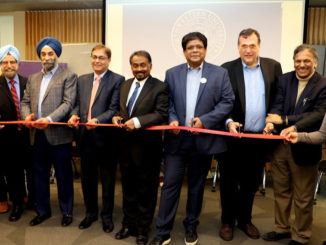
    Student received advice from the panel on how to navigate career, develop soft skills and develop leadership skills. It was also advised AAEIO is organizing Leadership Excellence Webinar: March 19th, 2022 at 2:00 PM: with Dr. Manu Vohra, Dr. Amit Kumar, Dr. Ajit Pant on developing leadership & soft skills. Mr. Amit Kumar, CG Chicago India, along with Northwestern professors, AAEIO board members & Students helped cut a ribbon to announce an increased partnership between AAEIO and Northwestern and work together on some of the common objectives.

    Mr. Nag Jaiswal, AAEIO Chair of Membership, requested students to become members and be part of AAEIO to drive innovation. To become amember, please write to membership@aaeiousa.org or visit our website www.aaeiousa.org. AAEIO Treasurer, Mr. Abhishek Jain, Director M&A, Schneider gave the vote of thanks especially to all distinguished guests and Prof. Mark Werwath and Mr. Asgar Ali for their warm welcome. He also thanked several volunteers: Ms. Aparajita Mishra, Ms. Neha Maheshwari, Mr. Vishal Parikh,  Mr.Bhanu Swargam and Mr. Anay Maheshwari who lead the event logistics. AAEIO and Northwestern have laid a very strong foundation and look forward to working together. Let the wildcat spirit continue.

    (Photographs and Press release /Asian Media USA)

    Dr. Mohanbir Sawhney
    Gladson Varghese President
  • Consul General of India  and Norwalk Mayor Rilling  exchange  Views

    Consul General of India and Norwalk Mayor Rilling exchange Views

    NORWALK CITY, CT (TIP):  Consul General of India at New York, Randhir Kumar Jaiswal and Deputy Consul General Dr. Varun Jeph had  a meeting with Norwalk City Mayor Harry Rilling. They were joined by officials of the Global Organization of People of Indian Origin-Connecticut Chapter (GOPIO-CT).

    Indian Americans have been settling in the lower Fairfield County which includes Norwalk for the last 3 decades and the flow is still continuing. Most of the community members moving in are in IT industry or healthcare. Mayor Rilling told Consul General Jaiswal about the City and its friendly environment for business including availability of office space to attract new businesses from India. Indian companies, especially in the IT sector, have been starting outfits in the USA and hoping that some of them could consider Norwalk as a destination. Consul General Jaiswal also suggested that companies from Norwalk could also consider India as a destination.

    Norwalk Mayor Harry Rilling with Indian Consul General Randhir Kumar Jaiswal and GOPIO-CT Delegation at Norwalk City Hall. From l. to r.: Viresh Sharma, Mahesh Jhangiani, Jayashri Chintalapudi, Ashok Nichani, Dr. Thomas Abraham, Mayor Rilling, Consul General Jaiswal, Deputy Consul General Dr. Varun Jeph, Srinivas Akarapu, Prasad Chintalapudi, Dr. Sudhir D’Souza and Prachi Narayan

    The delegation from GOPIO-CT consisted of GOPIO Intl. Chairman Dr. Thomas Abraham, GOPIO-CT President and serial investor Ashok Nichani, GOPIO-CT Exec. VP Prasad Chintalapudi who is also Vice President of IT Company Panzer Solutions, Laser Systems President Viresh Sharma, GOPIO-CT Secretary Prachi Narayan, GOPIO-CT Treasurer and IT Consultant Srinivas Akarapu, IT Consultant Mahesh Jhangiani along with his wife Yashasvi Jhangiani and Fr. Sudhir D’Souza who us the pastor of St. Philip Catholic Church in Norwalk.

    The delegation also emphasized the need for having a Cricket  ground for the new immigrant groups from South Asian nations, Caribbean, South Africa, Australia, England, Australia, New Zealand and East African countries. Such an initiative will make the city a more welcoming place for immigrant professionals from those countries.

    GOPIO-CT has assigned a four-member committee to brainstorm the idea of reaching out Indian companies with the Norwalk City officials and India’s commercial attaché in New York. Those assigned with this task are Norwalk residents Srinivas Akarapu, Mahesh Jhangiani, Prachi Narayan and Fr. Sudhir D’Souza. There was also a suggestion that the Norwalk Community College should be connected to an Indian institution with similar programs. This will be explored further.

    Over the last 16 years, GOPIO-CT, a chapter of GOPIO International has become an active and dynamic organization hosting interactive sessions with policy makers and academicians, community events, youth mentoring and networking workshops, and working with other area organizations to help create a better future. GOPIO-CT – Global Organization of People of Indian Origin – serves as a non-partisan, secular, civic and community service organization – promoting awareness of Indian culture, customs and contributions of the Indian Diaspora through community programs, forums, events and youth activities. It seeks to strengthen partnerships and create an ongoing dialogue with local communities.

    (Based on a press release)

  • Uma Sengupta passes away

    Uma Sengupta passes away

    NEW YORK (TIP): Long time educationist and committed Democrat Uma Sengupta  has passed away. Malini Shah, a longtime friend of Uma informed The Indian Panorama on March 9. Uma  migrated to the U.S. from India about 35 years ago. Having been a teacher in her native land, she decided to continue in the same profession in her adopted country too. After making a success of her kindergarten school, she turned to community service. Uma was elected Queens Democratic District leader in 2004. She worked hard to strengthen the party at the grassroots level. Her death has caused a vacuum in the local  Democratic party. On various occasions, asked to introduce herself, she described herself as a mother and grandmother who wanted to work to ensure a good life, quality education and housing for all children.

  • IRS hiring more than 5,000 positions in Austin, Kansas City, Ogden

    IRS hiring more than 5,000 positions in Austin, Kansas City, Ogden

    WASHINGTON, D.C. (TIP): To help serve taxpayers during this challenging tax season, the Internal Revenue Service, on March 10,  announced  that it is hiring more than 5,000 positions in its service processing centers located in Austin, Texas; Kansas City, Missouri; and Ogden, Utah. These positions fall under a special hiring condition called direct-hire authority. New hires may expect to begin work within 30-45 days of their job offer. “It’s an exciting time to work for the Internal Revenue Service,” said IRS Taxpayer Experience Officer and Wage and Investment Commissioner Ken Corbin. “Those who wish to work with customer service as their focus are encouraged to apply. This is gratifying work – as these newly hired individuals will process tax returns and deliver refunds to the nation’s taxpayers.”

    Available positions include temporary, term and permanent jobs. Many are entry-level clerk and tax examiner positions in the Wage and Investment Division. No prior tax experience is required.

    “The IRS has opportunities for almost every profession, starting with these entry level positions. Starting here today can guide you to your future career, like it has done for me starting in high school,” said Corbin.

    The IRS offers competitive pay and benefits, on-the-job training, and opportunities for advancement. The pay range for these positions is from GS-02 to GS-09.

    Virtual hiring events

    The agency is hosting virtual direct hiring events on March 16, 23 and 30, where the IRS will review resumes and extend job offers to eligible applicants on the spot. 

    In-person events:

    These events are open to the public. Interested job seekers are encouraged to bring their resumé and two forms of identification (i.e., state driver’s license and/or state Identification card, birth certificate, U.S. Passport, Military ID card or Social Security card). Qualified applicants may receive job offers at the in-person events.

    IPE

    Preregistration and social-distancing are required to attend the in-person job fairs. Per Centers for Disease Control and Prevention (CDC) guidelines, mask wear is optional for these job fair sites. For complete details on the virtual events and to register to attend one of the in-person events, visit: jobs.irs.gov/events.

    The IRS is an equal opportunity employer. All employees must be U.S. citizens, pass an FBI fingerprint check and tax compliance verification, and meet the mandatory education, training and experience qualification requirements.

  • Home run for BJP in UP

    Home run for BJP in UP

    By Radhika Ramaseshan

    “In the end, it is apparent that the credit for the victory will largely belong in UP’s case to Adityanath. His cheerleaders propagated the view of Yogi’s hard-bitten image as a man who will not tolerate law and order challenges and dissent on the ground — evident in the manner in which he put down the protests against the Citizenship Act amendments — and is incorruptible. It also puts Yogi in the reckoning as a future leader.”

    As the BJP rewrote a serial and spectacular comeback for itself in Uttar Pradesh in the assembly elections, it was evident that the party’s electioneering went according to a script that coalesced multiple strategies and responses to the drawbacks its government in Lucknow ran into in the past five years. It was as though the BJP anticipated the electorate’s positive and negative feedback on the Yogi Adityanath government and switched on its feed-forward correction capabilities to the best possible extent. It takes a level-head to assess a party’s internal weaknesses and accept them as real before rectifying. That’s what the Delhi leadership did, sometimes in consultation with Chief Minister Yogi Adityanath and at times unilaterally. Given its experience with the maverick chief minister, the BJP brass recognized that while it was impossible to dump him like its two incumbents in Uttarakhand and Gujarat, it was not feasible to give him the long rope he desired. The mix-and-match formula the BJP adopted was fraught with uncertainty but the gamble paid off.

    The Samajwadi Party (SP), in tandem with the Rashtriya Lok Dal (RLD) and other parties, positioned itself as the BJP’s principal challenger and converted the contest into a bipolar joust, hoping that the votes that went to the Bahujan Samaj Party (BSP) and the Congress — the other significant players — would pool into its kitty. The SP’s calculation was that this tactic alone would help enhance its depleted vote share to a level of parity with the BJP and make the contest fairly even. It didn’t happen.

    Statistics speak for themselves. The SP, which was the incumbent in 2017, dropped from a high of 224 seats in the 403-member legislature to 47 in the election that year, its vote share plummeting to 21.82 per cent in the 311 seats it contested with the Congress as an ally. UP was awash with the Narendra Modi wave that swamped every party. The BSP picked up just 19 seats with a vote share of 22.23 per cent. The BJP was on top, winning 312 of the 384 seats it fought and posting a vote share of nearly 40 per cent. Its team-mates, the Apna Dal (Soneylal) and Suheldev Bharatiya Samaj Party (SBSP), benefitted immensely from the partnership. The SBSP left the BJP shortly thereafter while the Apna Dal stayed with it. Therefore, the SP had a vast swathe of ground to cover before it hoped to catch up with the BJP.

    The SP’s role in the Opposition was not inspiring. For instance, during the horrific pandemic strikes when the Adityanath government seemed apathetic to people’s plight, the SP was nowhere on the ground to help people. Its defense was that the situation was not conducive for its workers to be mobile. The state government tactically unrolled the Centre’s scheme to hand over rations to the less well-off in the villages and stave off hunger, particularly among the migrants returning home. A realistic assessment would have it that the sops would not have recompensed the loss of lives suffered in this phase. But months later, people thought less of the sufferings inflicted by Covid-19 and remembered the “ration-paani” delivered to their doorstep.

    The BJP had several problems in the prelude to the elections. Unlike the CMs “anointed” by the “high command”, Adityanath was not one to be subservient to Delhi’s diktat. From Day 1, the custodian of Gorakhpeeth, North India’s wealthiest monastery, fancied himself as a potentate and potentially a PM candidate. Delhi’s efforts to have a former Gujarat bureaucrat, Arvind Sharma, a Modi favorite, inducted in the UP cabinet after Sharma was elected a member of the UP legislative council, failed. Adityanath refused to have him. A perception that the CM in saffron was just as cattiest as any UP politician and pandered excessively and overtly to his Rajput community angered the Brahmins, core BJP voters since 1989, and alienated the backward castes and Dalits. The agrarian distress, caused by the state government’s obduracy to enhance the state advisory price for sugarcane farmers, and the scaled-up costs of agricultural inputs was too real to be brushed aside.

    The Centre stepped into the breach, at times distanced the CM from the damage-control moves and addressed these issues. The repeal of the contentious farm laws that provoked protests in western UP among the Jat farmers went some way to assuage their anger.

    A defeat is invariably followed by the unpleasant aftermath of apportioning blame; a victory means it is time to savor the fruits of hard work. The BJP organization worked as one army on the ground under the stewardship of Amit Shah, the Home Minister, who went on door-to-door visits in seats that seemed tricky. Prime Minister Modi camped for days in Varanasi, his Lok Sabha constituency, after reports of a couple of shaky constituencies came in and campaigned tirelessly.

    However, in the end it is apparent that the credit for the victory will largely belong in UP’s case to Adityanath. His cheerleaders propagated the view that the Yogi’s hard-bitten image as a man who will not tolerate law and order challenges and dissent on the ground-evident in the manner in which he put down the protests against the Citizenship Act amendments-and is “incorruptible”. Like Modi, Adityanath is a singleton and, therefore, thought to be a politician who will not lust after wealth and favors for the family. The fact that he didn’t attend his father’s cremation in Uttarakhand because of his “preoccupation” with managing the pandemic added to the profile of a “singularly committed” leader. The “attribute” was accentuated in the BJP’s campaign as a counterpoint against the “dynasts”, represented by the SP and RLD leaders, Akhilesh Yadav and Chaudhary Jayant Singh. What does Adityanath’s ascendancy portend for the BJP? It marks the return of UP’s pre-eminence in the BJP’s political scheme after the Vajpayee years. Although Modi adopted Varanasi as his constituency, he is primarily identified with Gujarat, his home state. It puts Adityanath high in the reckoning as a future leader.

    (The author is a senior journalist)

  • Kejriwal as contender

    Kejriwal as contender

    Punjab’s tidal wave of anti-incumbency is against the entire privileged political class

    By Rajesh Ramachandran

    “The most shocking aspect of these results is how the mighty bit the dust, a lesson taught by angry voters to the feudal, tainted and rent-seeking leadership of Punjab. Among the banyan trees of political privilege that fell are four-time former CM and Punjab’s political patriarch Parkash Singh Badal, the “Maharaja” of Patiala, former CM Capt Amarinder Singh, ex-CM Rajinder Kaur Bhattal, sitting CM Charanjit Singh Channi, celebrity Punjab Congress president Navjot Singh Sidhu, Shiromani Akali Dal president and former deputy CM Sukhbir Badal, his controversial brother-in-law fighting drug cases, Bikram Singh Majithia, and his cousin and Congress’ finance minister Manpreet Badal. Most importantly, these weighty “lords” have been knocked out of the ring with a huge thud by first-timers — mobile phone repairmen, volunteers and other nobodies.”

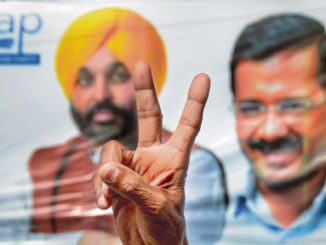
    It is always heartening to talk of hope. The angry, resilient, yet ebullient people of Punjab believe that things can and will change; this, in short, explains the political deluge that has drowned a sitting Chief Minister, three former Chief Ministers, the heads of two parties and the state’s most controversial politician. This tsunami of change has to be credited entirely to Delhi Chief Minister Arvind Kejriwal’s meticulous planning, patience and people-connect. Bhagwant Mann was declared the CM candidate only a few weeks ahead of the polls — till then, there was just Kejriwal representing the Delhi model of governance, seeking a vote for change. The first sign of this campaign’s effectiveness was Union Territory of Chandigarh’s local body polls in December, which resulted in the AAP emerging as the single largest party, dislodging the BJP. Kejriwal offers a national alternative as voters can break away from identity silos to get their lives improved.

    The most shocking aspect of these results is how the mighty bit the dust, a lesson taught by angry voters to the feudal, tainted and rent-seeking leadership of Punjab. Among the banyan trees of political privilege that fell are four-time former CM and Punjab’s political patriarch Parkash Singh Badal, the “Maharaja” of Patiala, former CM Capt Amarinder Singh, ex-CM Rajinder Kaur Bhattal, sitting CM Charanjit Singh Channi, celebrity Punjab Congress president Navjot Singh Sidhu, Shiromani Akali Dal president and former deputy CM Sukhbir Badal, his controversial brother-in-law fighting drug cases, Bikram Singh Majithia, and his cousin and Congress’ finance minister Manpreet Badal. Most importantly, these weighty “lords” have been knocked out of the ring with a huge thud by first-timers — mobile phone repairmen, volunteers and other nobodies.

    But mere free-floating anger would not have consolidated in favor of one party to cause this landslide of an election result. And this anger was not confined or focused against just the incumbent government. It was a sort of a tidal wave of anti-incumbency against the entire privileged political class. The rushing river of anger that was dammed in 2017 appears to have burst forth in 2022 to submerge the political landscape. Another factor that worked in favor of the AAP was that it became the sole beneficiary of the collective angst against the new farm laws. So, while Bharatiya Kisan Union leader Balbir Singh Rajewal lost his credibility and the polls, the anti-establishment vote that coalesced as a result of farm unions’ mobilization went into the AAP’s kitty.

    The results prove that rural Sikh farmers voted for the AAP in huge numbers, a fact further established by the decimation of the Akalis. From 15, the party’s strength has been reduced to three. Similar is the BJP’s drubbing. Despite all its dirty tricks — including Kumar Vishwas’ last-minute stab in the back — the Hindus of Punjab voted overwhelmingly for the AAP, helping the party sweep the urban seats. So, if in 2017 it was a backlash of the Hindus over unfounded fears of a Khalistani connection that defeated the AAP and made the Congress victorious on 77 seats, Kejriwal worked hard early in the campaign to allay those old apprehensions by launching the Tiranga Yatra to burnish his nationalist credentials. And it worked: the committed Hindu voter turned against the Congress and the BJP to emphatically support the AAP. Or rather, Hindus rose above sectarian interests and minority insecurities and voted along with other communities for hope and change.

    That leaves the famed Dalit voters of Punjab — 32 per cent of the population. The replacement of a lazy Maharaja with an enthusiastic Dalit as CM was thought to be a masterstroke by the Congress leadership. But angry Dalit voters treated the high command’s trump card as if it was the joker in the pack. And like Sikhs and Hindus, Dalits voted against the political establishment, proving yet again that anger overrides identity in Indian politics — for there was an attempt to split the Dalit votes in favor of the BJP and the Akalis through the discredited Dera Sacha Sauda. Neither Channi’s candidature nor Ram Rahim’s furlough seemed to have made any difference to the determined Dalit voter seeking revenge against corrupt tokens taken out of the cupboard at the last minute. The Enforcement Department raid seizing crores in cash from Channi’s nephew robbed him of all his “poor Dalit” sheen and Sidhu’s daily barbs against the government left Congress with nothing worth defending.

    If these elections have thrown up Kejriwal as a national contender for the top post, offering a credible alternative beyond Delhi, it is because voters are breaking away from their identity silos and coalescing to get their lives improved. The same logic applies to Yogi Adityanath’s victory, however unseemly his saffron robes may appear to the liberals. The Muslim-Yadav formula, with some non-Yadav OBCs thrown in, did read like a winning combination, but popular sentiment had forgiven Yogi and the BJP for the Delta deaths, floating graves on the Ganga, the farm laws and even the Lakhimpur Kheri killings. The law-and-order situation, free ration, direct benefit transfers and various targeted schemes improving the people’s lot seem to have caught the voter’s imagination. Yet, the Samajwadi Party’s performance only shows that there is simmering anger against the incumbent, which has not yet reached the boiling point. Its leader Akhilesh Yadav may also have to get out of the caste costume to look at the new realities of a changing India, in which the political capital of identity politics may just not be enough to win elections.

    The Congress’s failure as an alternative to the BJP is writ large over the results in Uttarakhand, Goa and Manipur. The party is steadily sliding into inconsequence, with its leadership refusing to re-engineer itself. In this context of a crisis of Opposition leadership steps in Kejriwal, with the amalgamation of two contemporaneously disparate political slogans of ‘Bharat Mata Ki Jai’ and ‘Inquilab Zindabad’. The 2024 contest just got hotter with Kejriwal’s promise of ‘inquilab’.

  • A cry for clean governance

    With jhadu clean-sweeping Punjab, AAP’s test begins

    The jhadu has made a clean sweep in Punjab, with the voters impressively consigning even the bigwigs of AAP’s rival parties to the bin. A whopping 92 of the 117 Assembly seats going to the AAP, the 2022 Punjab Assembly elections will be remembered for a number of historic firsts. Upsetting the traditional bipolar applecart between the Congress and the Akalis, the surge of the AAP in the run-up to the polls indicated a strong multi-polar fight. But few could gauge the strength of the wind that had begun blowing in the 2017 election when the fledgling AAP was catapulted to the main Opposition rank on its debut as well as the December 2021 MC poll in the state’s capital, Chandigarh, when it emerged as the single largest party. The 2022 decisive verdict establishes that the AAP was fully buoyant to consolidate its twin gains.

    No doubt, the landslide mandate is as much a vote for the AAP’s manifesto of governance practices as it is a thumbs down to the sitting Congress government, which had romped to power with 77 seats the last time, and a further erosion of the trust in the regional satrap, the SAD. The people have shown their disgust at the party-hopping, scam-ridden and corruption-tainted leaders of both parties and their blatant bids to protect each other when in power. The internal bickering in the Congress and the high command’s handling of the leadership tussle did it in. Riddled with the transport and cable TV scams, the SAD too miserably failed to win back the people’s faith.

    This mandate, thus, puts an onerous responsibility on the AAP. It is a clear message to and hope from the Arvind Kejriwal-Bhagwant Mann-Raghav Chadha trio of putting Punjab back on the track of prosperity. The vote is a loud cry for clean governance. The AAP is obligated to taking honest steps towards tackling the burning issues of drugs and unemployment and strive for bettering the state of education, healthcare and industry. Only then can it hope to play the national-level game it is now eyeing.

    (Tribune, India)

  • Time to celebrate Indian democracy

    Elections to five assemblies in Indiain 2022 have been remarkable in terms of their enormity. Participation ofmillions of voters andthousands  of candidates, and an  imposing machineryto ensure that elections are fairand beyond any question with regard to their  integrity made the elections challenging. Coming to  the political parties in the  fray, one can easily see that the biggest gainer in these elections is the Aam Aadmi Partywhich has swept the elections in Punjab in a mighty sweep of their broom, the party symbol. The party  which made its presence in the state of Punjab in the last elections with about 20 seats, on the way, was reduced to half its number becauseits elected  members  switched loyalty and joined Congress, the ruling party. Now the party has won an astounding  92seats in this state assembly, which has 117 seats. Obviously, itis  a  record of sorts.  I don’t recall any single party in Punjab having won that number ever. Another party  which has done very well and that has been doing so well for the last 8 years now, ever since 2014,  is the BJP.

    BJP came to power in UP in 2017 with a thumping majority. It floored one-time strong parties like the BSP and the Samajwadi Party. People were  expecting a change because of anti-incumbencyfactors but it did not work in the State of Uttar Pradesh  where Yogi Adityanath has created a record by becoming a chief Minister for a second term in succession.No Chief Minister in UP has ever been elected twice in succession except GobindBallabh Pant a  long time ago.

    However, BJP did lose a couple of seats  andsettled for  274 seats in a house of 403 seats. The BJP’s loss was the gain of the Samajwadi Party which managed to double its strength from 2017  by  registering  124 wins.

    The exit polls have been indicating that BJP and Congress will be close contestants  in the States of Uttarakhand and Goa, but  they were proved wrong because BJP made clean  sweep in both the states.

    Coming to the losers, one can clearly  seethat the Congress  has been the biggest loser. Its  streak of losing elections has been continuing and the greatest loss has been the state of Punjab where Congress was the  ruling party with 70 odd seats and has been mauled badly, wining just 18 seats. Also, the SAD Badal suffered humiliating defeats when both Parkash Singh Badal and his son Sukhbir Badal who have been Chief Ministers lost election, besides the party folding up with just 4 seats. Yet, another party that suffered heavily and has  probably almost lost its  base  is the BSP in Uttar Pradesh. A party which ruled the state on two occasions got just 1 seat.

    With the elections over and the results out, there are celebrations in the BJP and AAP quarters while those that got the drubbing are huddling together to take stock of the reasons for their failure. Come 2024, and we will be watching  a much bigger fight when General Elections are due. It will be interesting to see the course which India adopts post 2024 elections. Only time will tell whether  Indiawill stay a multi-cultural and multi-religious nation or move towards a theocratic state which is the dream of the BJP and the Sangh Parivar. The recent electoral wins must have come as a shot in the arm of the BJP

    For now, let us celebrate Indian democracy.

  • An unnecessary war and its grave portents

    An unnecessary war and its grave portents

    By M.K. Narayanan

    As of now, Ukraine has become a pawn between Russia and the West. The war over Ukraine is, furthermore, a reflection of the prevailing myopia of current leaders who seem doomed to repeat past follies.

    Russia’s attack on Ukraine, which began from the third week of February, shows no sign of ending. It has, in the meantime, led to a humanitarian crisis of gigantic proportions. The number of refugees streaming into countries adjoining Ukraine has revived memories and images of the vast numbers who sought refuge in Europe following the wars in Syria, Iraq and North Africa at the turn of the century. No one would have anticipated that a similar situation would arise just a few years later in Europe. The number of refugees has already approached, and possibly even crossed, the two million mark; and this is apart from the several thousands who have been killed inside Ukraine. It is a vivid demonstration of the callousness of human nature, more so considering the underlying cause of the conflict. It is most surprising that nothing concrete is being done by powerful nations in Europe and across the world to try and end the conflict through a process of reconciliation and negotiation. What the conflict, though, has exposed is the irrelevance of the United Nations in dealing with situations of this kind — becoming in many ways a modern day variant of the ill-fated League of Nations created at the end of the First World War.

    The primary concern of European nations and the United States appears to be the economic impact of the conflict — rather than the human costs involved – consequent on the ongoing war in Ukraine. The International Monetary Fund has already issued a warning of the serious global impact of the war, which includes a surge in energy and commodity prices, and being taken seriously by the U.S., almost all European nations and many countries across the globe. Leading western economists have been pontificating on the economic consequences of the war, and the ways and the means to reduce its impact. Similar concerns about the human costs of this unnecessary war are nowhere to be found. Least of all to be found are suggestions on how best to end the conflict, or at least bring about a truce to reduce the human toll that keeps steadily rising.

    It may appear tendentious to think that there are leading elements in the West who believe that by waging a prolonged ‘sanctions war’ against Russia of the kind currently being pursued — rather than seeking a compromise by which to end the genocide in Ukraine — an option had become available to checkmate Russia, which under Russian President Vladimir Putin was posing a threat to the West. Russia deserves to be rightfully condemned for being in violation of the United Nations Charter and invading Ukraine.

    There are, however, far more efficacious means to checkmate Russian moves than persisting with a prolonged period of ever widening economic sanctions aimed at crippling Russia’s economy. This may be an ideal way to achieve a ‘regime change’ in Moscow, getting citizens to rise against the regime due to the shortages and other restrictions imposed by a ‘sanctions’ regimen. It is, however, not the best way to end a conflict in the shortest possible time, and avert a greater human tragedy that a prolonged conflict entails. Sanctions, no doubt, do and will affect Russia and its economy, but it has had little impact on Russia’s war effort. Meanwhile, Ukraine, or more particularly the citizens and the residents of Ukraine, are innocent victims of the tussle between the West and Russia.

    For the present, each new sanction only strengthens Russia’s determination to compel Ukraine to cut its links with the West. No country within the North Atlantic Treaty Organization (NATO), or even those outside it, is at present willing to send forces in support of Ukraine. Waiting for the eventual collapse of the Russian state while leaving Ukraine and its citizens to the not-so-tender mercies of the Russian juggernaut is tantamount to becoming an accessory to genocide. While concerns that the conflict in Ukraine may lead to a nuclear conflict do appear exaggerated, what is taking place is a tragedy of a kind that should not befall any nation.

    There are, no doubt, certain special circumstances that make the problem inherently difficult and complicated. Ukraine, for instance, is not just another country as far as Russia is concerned. It was part of the erstwhile Soviet Union till 1991, and even at the time there were inherent tensions in the relationship. Ukraine in turn has long struggled with ethno-linguistic tensions encompassing western and central Ukraine and the Russian-speaking Eastern Ukraine. Western Ukraine is also largely Catholic while the east is largely Russian Orthodox. Even after its split from Russia in 1991, Ukraine has had problems in maintaining a semblance of neutrality between Russia and the West.

    Aggravating the situation is the fact that Ukraine was, in a sense, a child of a series of ‘Color Revolutions’ that shook parts of the Russian Empire in 1991 — when Russian influence was at its lowest ebb after the Second World War. Matters got further aggravated when a pro-Russian President of Ukraine — who was elected in a relatively fair election — was ousted and had to flee the country. Following this, Russia intervened and annexed Crimea and took aggressive measures to reinforce Russian influence in Donetsk and Luhansk, regions of eastern Ukraine which have large Russian populations.

    The ties between Russia and Ukraine are thus in a sense both historical and political. The declared ambition of NATO is to deter Soviet expansionism and, hence, any nation becoming a part of NATO is deemed by Russia to be anti-Russia. Russia has, from time to time, made it apparent that under no circumstances would it countenance NATO membership for Ukraine, and that this would be perceived as a hostile act towards Russia.

    As of now, Ukraine has become a pawn between Russia and the West. The war over Ukraine is, furthermore, a reflection of the prevailing myopia of current leaders who seem doomed to repeat past follies. An extension of NATO by the inclusion of Ukraine at this time — a country with a complex history and polyglot composition — was hardly a compelling necessity at this juncture, but badly misreading the situation (for even as far back as 2007 at the Munich Security Conference where I was the Indian delegate, Mr. Putin had made it amply clear that ‘NATO extension… represents a serious provocation that reduces the level of mutual trust’). Since then, Mr. Putin has given no indication whatsoever of any change in his attitude on this issue.

    This misreading of Mr. Putin’s personality has been a cardinal error, and Ukraine is paying a very heavy price. Ukraine’s President Volodymyr Zelensky, who openly flaunts his pro-West inclination, is hardly a match for President Putin in terms of strategy and tactics.

    While Mr. Zelensky employs grandstanding as a strategy, Mr. Putin is a born fighter. Anyone who has had an opportunity to interact closely with Mr. Putin would never have attempted to challenge him in the manner that Mr. Zelensky has been doing these past few weeks. Currently, an unlikely hero to his fellow countrymen, he could well go down in history as someone who has caused the ruin of Ukraine. Had he had played his cards properly, he could have prevented the situation from reaching the present impasse and still maintained Ukraine’s independence. To say the least, this is extremely unfortunate for Ukraine, and much of the world as well. A change of tack is clearly called for. At this time, the cardinal objective should be to save human lives and the existence of Ukraine. Ukraine’s ambitions to join NATO, which are in any case a distant dream, need to be put on the back burner. For the present, any extension of NATO further to the east should be given up, and, instead, an effort made to rebuild some of the bridges that existed between Russia and the rest of Europe at the beginning of this century. Alongside this, the West should hit the ‘pause button’ on initiating ‘Color Revolutions’ which have led to more conflicts than peace in Europe or elsewhere. More than anything else, leaders of nations and countries need to understand and assimilate the lessons of history, to avoid the kind of critical mistakes that have been evident during the current Russia-Ukraine crisis and war.

    (M.K. Narayanan is a former Director, Intelligence Bureau, a former National Security Adviser and a former Governor of West Bengal)

  • International Women’s Day celebrated at the Indian Consulate in New York

    International Women’s Day celebrated at the Indian Consulate in New York

    Dr. Abha Jaiswal congratulated the honorees and spoke about the changing attitude to women (Photo / Jay Mandal -on assignment)
    Honorees with the chief guest Consul General of India Mr. Jaiswal and Dr. Abha Jaiswal (Photo / Jay Mandal -on assignment)
    Organizers and honorees with Mr. Jaiswal and Dr. Abha Jaiswal. (Photo : Jay Mandal -on assignment)

    NEW YORK CITY (TIP): The Consulate General of India and the FIA organized International Women’s Day on March 8 at the Indian Consulate. On the occasion, six eminent women were honored. They included Ms Sejal Lakhani Bhatt, Hon Deepti Vaid Dedhia, JMC, Ms Seema Kumar, Ms Chaya Pamula, Ms Allison Hauser, and Ms. Priyanka Brahmbhatt.

    Consul General of India in his remarks spoke about the progress India has been making in various areas. He said the gender equality was an issue which the government of India considered very important. He congratulated the FIA ladies for organizing the event.

    Others who addressed the gathering included Dr. Abha Jaiswal, FIA officials and the honorees.

    Deputy Consul General Dr. Varun Jeph congratulated the honorees and thanked the organizers and the guests.

    Earlier, Consul for Culture Mr. Vipul Dev welcomed the gathering.

  • MAYOR ADAMS, CHANCELLOR BANKS, NO KID HUNGRY RECOGNIZE THIS YEAR’S “NYC HUNGER HEROES”

    MAYOR ADAMS, CHANCELLOR BANKS, NO KID HUNGRY RECOGNIZE THIS YEAR’S “NYC HUNGER HEROES”

    Cooks, Food Service Workers, and Aides Go Above and Beyond to Provide Healthy, Nutritious Meals to 800,000 Students Every Day

    NEW YORK, NY (TIP): New York City Mayor Eric Adams and New York City Department of Education (DOE) Chancellor David C. Banks were, on March 9, joined by No Kid Hungry New York to recognize 32 “Hunger Heroes” across every one of the city’s school districts. Each Hunger Hero has gone above and beyond in the last year to help provide more kids access to healthy meals, especially during the disruption caused by the COVID-19 pandemic. The Hunger Heroes include cooks, aides, and food service workers — those on the front lines of fighting hunger in schools.

    With one in four children in New York City facing hunger this year, the people who prepare, serve and plan school meals are some of the most important people confronting this crisis. New York City’s food services staff serve more than 800,000 meals every day.

    “The real heroes don’t wear capes — they wear aprons and gloves,” said Mayor Adams. “The school workers who have gone above and beyond to ensure our children don’t go hungry have delivered for our children, day after day, because when our children eat right, we can help them live up to their potential, inside and outside the classroom. These Hunger Heroes deserve our respect and gratitude, but we still have a long way to go. That’s why we are joining the Mayors’ Alliance to End Child Hunger and taking action to provide all of New York’s children with healthy food options.”

    “Our food service employees are all true heroes — they are continuing to show up, even throughout the pandemic, to make sure that our young people are well-fed and taken care of each day. Congratulations on this well-deserved honor,” said DOE Chancellor Banks. “I know I speak on behalf of all our New York City families and school communities when I say thank you for all you do every day to be heroes for our young people.”

    “I am grateful every day for the commitment of the school food workers serving healthy meals to our city’s children,” said Kate MacKenzie, executive director, Mayor’s Office of Food Policy. “These ‘Hunger Heroes’ — like Mohammed Uddin of District 20, where my two kids attend school — are to be celebrated for the work they do, and I am thrilled to join the mayor and the chancellor in recognizing them today.”

    “Our Hunger Heroes are too often unsung heroes, but they are some of the most vital professionals in our school communities,” said Rachel Sabella, director, No Kid Hungry New York. “No matter what challenges children may face at home, they can count on our Hunger Heroes to go above and beyond to provide good, healthy meals every school day. We are so thankful for their work, and for all the dedicated people working in our schools to keep kids strong and healthy.”

    “With all the waste that occurs each and every day, no one should go hungry. Food is not a privilege, it’s a right, and starving for food is inhumane. I believe the Office of Food & Nutrition Services — the second largest of food distribution besides the Armed Forces — can take the lead,” said Shaun D. Francois, president, District Council 37 & Local 372. “It’s extremely important for our kids’ education because food feeds the mind. School food workers work hard each and every day to provide 800,000 nutritional meals a day to 1.1 million children — now that’s heroism to say the least.”

    This year’s Hunger Heroes include people like Treza Ayoub, the cook in charge at Jackson Heights’ P.S. 149 since 1998. When a nearby apartment building suffered a fire last April, displacing several students and causing them to miss school, Treza made sure every student still got their breakfast and lunch.

    This year’s Hunger Heroes are:

    Manhattan

    District 1: Pedro Rivas, Senior School Lunch Helper (P.S. 140 Nathan Straus)

    District 2: Aretha Garner, Cook (International High School at Union Square)

    District 3: Brittany Saffold, School Food Service Manager (P.S. 009 Sarah Anderson, West End Secondary School, The Urban Assembly School for Green Careers, P.S. 452)

    District 4: Sofia Rodriguez, School Lunch Aid/Cook (Central Park East High School)

    District 5: Snezhana Belja, School Food Service Manager (P.S. 046 Arthur Tappan, P.S. 194 Countee Cullen, Frederick Douglass Academy, Thurgood Marshall Academy Lower School)

    District 6: Consuelo Caballero, School Lunch Assistant/Cook-in-Charge (P.S. 189)

    Bronx

    District 7: Ana Blanco, Cook (Academy of Applied Mathematics and Technology)

    District 8: Gisell Ramirez, Senior School Lunch Aide/Head Cook (Archimedes Academy for Math, Science and Technology Applications)

    District 9: Patricia Lightfoot, School Lunch Helper (I.S. 339)

    District 10: Marixa Lopez, School Lunch Helper/Office Manager (Field Office 10 @ M.S 391)

    District 11: James Baker, Senior School Lunch Helper (P.S. 108 Philip J. Abinanti)

    District 12: Marjorie Coates, Senior School Lunch Aide/Cook (P.S. 211)

    Brooklyn

    District 13: Glenys Gonzalez, Sr. SLH (P.S. 008 Robert Fulton)

    District 14: Allison Anderson, Senior School Lunch/Cook (P.S. 297 Abraham Stockton)

    District 15: Maria Rivera, Sr. SLH (The Maurice Sendak Community School, Brooklyn School of the Arts)

    District 16: Cherise Neal, School Food Service Manager (P.S. 005 Dr. Ronald McNair, Boys & Girls H.S., Research and Service High School, Nelson Mandela High School)

    District 17: Tyrone Joseph, Heavy Duty Person (Pathways in Technology Early College High School)

    District 18: Lezlie Johnston, School Lunch Aide (P.S. 115 Daniel Mucatel School)

    District 19: Albert Robinson, School Lunch Aide (W. H. Maxwell Career and Technical Education High School)

    District 20: Mohammed Uddin, Sr. School Lunch Helper (P.S. 264 Bay Ridge Elementary School for the Arts)

    District 21: Terencia Hankins, School Lunch Aide (P.S. 288 Shirley Tanyhill)

    District 22: Sophia Davis, School Lunch Aide/Cook-in-Charge (P.S. 193 Gil Hodges)

    District 23: Yonnette Welcome, Senior School Lunch Aide (Brooklyn Collegiate: A College Board School)

    District 32: Luis Mendoza Jr, Cook (P.S. 376)

    Queens

    District 24: Ruth Quizhpe, School Lunch Assistant/Cook (I.S. 061 Leonardo Da Vinci)

    District 25: Jessica Floratos, School Lunch Aide (P.S. 079 Francis Lewis)

    District 26: Lisa Fusco, School Food Service Manager (P.S. 041 Crocheron, M.S. 158 Marie Curie, P.S. 376, P.S. 213 The Carl Ullman School)

    District 27: Bella Tufano, Sr. School Lunch Aide/Cook-in-Charge (P.S. 100 Glen Morris)

    District 28: Ophelia Rango, School Lunch Assistant/Cook (Hillcrest High School)

    District 29: Joel Baptiste, School Lunch Aide (Eagle Academy for Young Men III)

    District 30: Treza Ayoub, Senior School Lunch Aide/Cook-in-Charge (P.S. 149 Christa Mcauliffe)

    Staten Island

    District 31: Saffa Aboelenin, Senior School Lunch Aide (I.S. 007 Elias Bernstein)

  • Bomb Cyclone Threatens Snow, High Winds this Weekend

    NEW YORK CITY (TIP): A looming winter weather system could lob a “bomb cyclone” of heavy rain, possible snow and high winds at New York City, forecasters warn. Low pressure conditions whipped up by cold air will blow across the East Coast in what Weather Channel meteorologists have dubbed “Winter Storm Quinlan.” The storm’s track will bring it to New York City by early Saturday. A more-conservative — for now — forecast by the National Weather Service calls for rain and blustery conditions. “Winds could gust as high as 33 mph,” the forecast states. “Chance of precipitation is 100%. New precipitation amounts between three quarters and one inch possible.” The storm could develop into what’s essentially a weather bomb, according to a Weather Channel report. This weekend storm could undergo bombogenesis, the meteorological term for when a low-pressure system drops at least 24 millibars within 24 hours. Such a drop could bring sudden waves of high winds and snow, meteorologists warn.

  • MAYOR ADAMS ANNOUNCES SIGNIFICANT QUALITY-OF-LIFE IMPROVEMENTS, NEW AFFORDABLE HOMEOWNERSHIP OPPORTUNITIES IN SOUTHEAST QUEENS

    MAYOR ADAMS ANNOUNCES SIGNIFICANT QUALITY-OF-LIFE IMPROVEMENTS, NEW AFFORDABLE HOMEOWNERSHIP OPPORTUNITIES IN SOUTHEAST QUEENS

    Mayor Adams and Speaker Adams Return to Area Where They Grew up, Highlighting Major Investments in Infrastructure and Affordable Housing

    City Has Completed $50 Million Water Infrastructure Project Under Budget to Address Regular Flooding of Homes and Streets

    Mayor Kicks off “Habitat Net Zero” Project, Creating 16 Green Homes for Affordable Homeownership Through Innovative Community Land Trust Model

    SOUTH JAMAICA, NY ­– New York City Mayor Eric Adams today announced milestones in two major projects that will improve infrastructure and quality of life, while tackling the affordable housing crisis in Southeast Queens. Mayor Adams and New York City Council Speaker Adrienne Adams — both of whom grew up in the area — celebrated the completion of a $50 million project delivering more than six miles of new sewers and water mains to alleviate flooding of homes and streets in Rochdale under budget. They also kicked off construction of “Habitat Net Zero,” a project that will turn 13 dilapidated homes previously owned by the New York City Housing Authority (NYCHA) into 16 green homes for affordable homeownership.

    “This community represented the promise of a better life for my family, and I am going to keep that promise for generations of New Yorkers,” said Mayor Adams. “Government has ignored this community for too long, denying them their fair share of investments and services — that ends in my administration. These projects will make life better for the residents of Southeast Queens today and those who will be able to move here in the future, and I’m proud to say that this is just the beginning.”

    “For too long, Southeast Queens has endured systemic disinvestment and neglect, resulting in widening disparities that persist today,” said Council Speaker Adams. “With the completion of the $49.3 million water infrastructure project in Rochdale and the start of construction for Habitat Net Zero — a project to deliver new affordable homeownership opportunities — our communities are seeing the investments and improvements that we have always deserved. I thank Mayor Adams, Habitat NYC, Interboro CLT, and all of the city agencies involved in making these projects possible.”

    “Ever since the residential development of Southeast Queens more than 50 years ago, neighbors have worried about any threat of rain in the forecast, because there were no catch basins or sewers built to drain the roadways, resulting in chronic flooding and property damage,” said Deputy Mayor for Operations Meera Joshi. “With a commitment of $2.5 billion for a comprehensive drainage system, we are now correcting that past failure block by block, and I thank our teams at DEP, DDC, and DOT for completing this particular project under-budget.”

    “Today, we are strengthening our promise to provide families not just homes they can afford but homes they can be proud of,” said Chief Housing Officer Jessica Katz. “By using every tool available and leaning on great partners – including Habitat for Humanity, which will change the lives of 16 families through their work here — once again, Queens and New York City will be a place where you can raise your family, regardless of income.”

    SEWER AND WATER INFRASTRUCTURE

    The New York City Department of Environmental Protection (DEP), New York City Department of Transportation (DOT), and New York City Department of Design and Construction (DDC) have reached substantial completion on a $49.3 million project, bringing more than six miles of new sewers and water mains to Rochdale — improving street conditions, alleviating flooding, and upgrading infrastructure, while staying $5.7 million under budget. Work began in March 2018 and took place on 78 individual blocks.

    More than one mile (5,535 feet) of new storm sewers was added to the neighborhood, and an additional 2,265 feet of existing storm sewers were replaced. To better capture stormwater and direct it to the new storm sewers, 55 new catch basins were installed, and 53 old ones were replaced. The holding capacity of the local sewers was increased with the installation of three new underground chambers and replacement of an old one. During construction, 9,235 feet of sanitary sewers were replaced, and 595 feet of new sewers was installed. More than three miles (16,160 feet) of water mains were replaced to improve water infrastructure reliability.

    As part of the final street restoration, 490,240 square feet of asphalt were laid down over a new concrete base. Throughout the project area, 65,840 square feet of sidewalk and 19,370 feet of curbs were reconstructed, and 890 square feet of new sidewalk and 995 feet of new curbs were added. The new curbs and sidewalks were graded to help guide stormwater to the area’s new catch basins and ensure adequate street drainage during storms. Fire protection was enhanced with the installation of six new fire hydrants and the replacement of 33 existing ones. Compliance with the Americans with Disabilities Act was improved with the installation of four new pedestrian ramps and the replacement of 158 existing ones.

    The project is part of the ongoing $2.5 billion Southeast Queens Initiative, in which the city will build a comprehensive drainage system, improve street conditions, and alleviate flooding in neighborhoods throughout Southeast Queens. The program — the largest of its kind — consists of 44 projects overall, including 18 substantially completed, 14 in design, and three in active construction.

    AFFORDABLE HOUSING

    The New York City Department of Housing Preservation (HPD), NYCHA, and Habitat for Humanity New York City and Westchester County have closed and started construction on “Habitat Net Zero,” bringing long-term affordable homeownership opportunities to Southeast Queens. Through HPD’s Open Door program, this project will see the demolition or rehabilitation of 13 vacant, dilapidated, previously NYCHA-owned houses to create 16 new and rehabilitated homes built to Passive House standards for affordable homeownership. This project represents the first new construction of affordable homes where the land will be transferred to the Interboro Community Land Trust (CLT) to ensure long-term affordability. Developed by Habitat, the homes will be equipped with rooftop solar panels and highly efficient heat-pump technology for heating and cooling, reducing costs, and keeping homes at or near net zero energy use. Thirteen of the new homes will be new construction and built using modular construction; three will be gut rehabilitations of the existing structures.

    Agreements with HPD, Interboro CLT, and the homeowners are structured to ensure that the homeowners have the support they need to maintain their homes and that the homes remain affordable in the long term. Initial sale prices and resale prices will be affordable to low- and moderate-income households. HPD will enter a 40-year regulatory agreement with Interboro CLT, and the CLT will enter into 99-year, renewable ground leases with each homeowner.

    These sites were awarded to Habitat through a 2018 request for proposals from NYCHA. In addition to funding from HPD’s Open Door program — which funds the new construction of homeownership opportunities for low-, moderate-, and middle-income households — funding for this project will be financed by the New York State Affordable Housing Corporation and with Reso A funds provided by Queens Borough President Donovan Richards, City Council Speaker Adams, and former New York City Councilmember I. Daneek Miller. HPD also facilitated an Article XI tax exemption, which will help keep ongoing housing costs affordable for lower-income households. The Local Initiatives Support Corporation (LISC) and Nonprofit Finance Fund are also providing construction financing.

    “We have committed $2.5 billion for building a comprehensive drainage system to ensure public safety and protect the homes and property of the residents and businesses of Southeast Queens,” said DEP Commissioner Rit Aggarwala. “We also hope this massive financial investment will improve the quality of life for residents who worked hard to buy a home and maybe raise a family in these neighborhoods. These residents deserve the same infrastructure as the rest of the city, and we’re making tangible progress on that promise.” “The city’s investment in Southeast Queens infrastructure is growing and making a tangible difference in the lives of the half a million people who live in these historically underserved areas,” said DDC Commissioner Thomas Foley. “Street conditions are greatly improved, curbs and sidewalks have been installed in some areas where there were none, and miles of new storm sewers now keep stormwater off the streets and out of people’s homes. We are delighted to share that this project was delivered $5.7 million under budget, and we look forward to working with DEP and DOT to complete this program of more than 40 individual projects.”

    “Everyone in New York City deserves the assurance that their streets or homes will not be inundated every time it rains, but for thousands of Southeast Queens residents, flooding has been a frustrating perennial issue,” said DOT Commissioner Ydanis Rodriguez. “DOT has been proud to work with our partners at DEP and DDC on investments that are transforming the streets and sidewalks of these neighborhoods — improving quality-of-life while at the same time providing better access for pedestrians and the disability community.”

    “Soon, these old, vacant homes will become high-quality, energy-efficient, new affordable homeownership opportunities — a testament to our team at HPD, who looks at every opportunity to expand the supply and quality of affordable housing,” said HPD Commissioner Adolfo Carrión, Jr. “And by transferring land ownership to the Interboro CLT, we are advancing equity in ownership, long-term affordability, and wealth building for families and communities alike. Thank you to our local partners at Interboro Community Land Trust, Habitat NYC and Westchester, and NYCHA for making this exciting project possible.”

    “NYCHA, in partnership with HPD and local non-profit organizations like Habitat for Humanity New York City and Westchester, has made great progress in connecting low- and moderate-income residents to housing opportunities across New York City,” said NYCHA Chair and CEO Greg Russ. “By leveraging underutilized assets in our portfolio, we can facilitate the construction of homes that enrich our local neighborhoods, while making the dream of homeownership possible for a new generation of New Yorkers.”

    “This community has long suffered from flooding issues and deteriorating infrastructure, so we heartily welcome the new sewer system and repairs that the city is implementing,” said New York State Senator James Sanders Jr. “We have waited for a long time, and we are looking forward to an improved quality of life.”

    “Through HCR’s Affordable Housing Corporation, New York State makes safe and affordable homeownership a reality for thousands of New Yorkers each year,” said New York State Homes and Community Renewal Commissioner RuthAnne Visnauskas. “Our $560,000 award to support ‘Habitat Net Zero’ in Southeast Queens will expand economic opportunity and access to generational wealth building for low- and moderate-income households. Under Governor Hochul’s sweeping plan to make housing more equitable and climate-friendly, we will continue to work alongside our city and nonprofit partners to create and protect the healthy, secure, and affordable homes that New Yorkers deserve.”

    “‘Habitat Net Zero’ creates more opportunities for more families in Southeast Queens to build equity and stability through homeownership,” said Karen Haycox, CEO, Habitat for Humanity New York City and Westchester County. “The positive impact of these healthy, energy-efficient, and affordable homes will benefit hard-working families now and for generations to come. Our city and our state are stronger when we make room for more of us to own a piece of our communities.” “The ownership of the land by the community land trust, coupled with the net-zero features of the homes and the Article XI property tax exemption, constitute a potent trifecta that not only strengthens the permanent affordability of the homes but also reinforces the opportunity for homeowners to build personal as well as generational wealth,” said John Edward Dallas, coordinator, Interboro Community Land Trust. “Interboro thanks Habitat, HPD, NYCHA, LISC, and everyone else who made this trailblazing and much-needed permanently affordable homeownership project possible.”

    “New Yorkers need more options to affordably stay in their neighborhoods, despite increasing land speculation and threats of displacement,” said Olivia Pipitone, financing director, Nonprofit Finance Fund. “As a community land trust, this project will give Queens homeowners greater control over assets in their neighborhoods — control that is needed to help close racial health and wealth gaps.”

    “We’re thrilled to support this exceptional public-private partnership that will transform dilapidated and vacant buildings into new, highly-efficient, and affordable homes in Southeast Queens,” said Valerie White, executive director, LISC NYC. “This project is centered around equity and opportunity, providing safe, secure, and affordable housing for New Yorkers who need it most, while creating pathways for first-time homebuyers to help jumpstart the process of building generational wealth. We’re proud to partner with Interboro Community Land Trust, Habitat for Humanity New York City and Westchester, HPD, and NYCHA to advance this innovative and equitable project.”

  • March 11 New York & Dallas E – Edition

    [vc_row][vc_column][vc_column_text]

    [/vc_column_text][/vc_column][/vc_row][vc_row][vc_column width=”2/3″][vc_custom_heading text=”Dual Edition” font_container=”tag:h2|text_align:center” google_fonts=”font_family:Istok%20Web%3Aregular%2Citalic%2C700%2C700italic|font_style:700%20bold%20regular%3A700%3Anormal” link=”url:https%3A%2F%2Fwww.theindianpanorama.news%2Fwp-content%2Fuploads%2F2022%2F03%2FTIP-March-11-Dual-Edition.pdf”][vc_single_image image=”121293″ img_size=”full” add_caption=”yes” alignment=”center” onclick=”custom_link” link=”https://www.theindianpanorama.news/wp-content/uploads/2022/03/TIP-March-11-Dual-Edition.pdf”][/vc_column][vc_column width=”1/3″][vc_single_image image=”82828″ img_size=”medium” alignment=”center” onclick=”custom_link” link=”https://www.theindianpanorama.news/advertising-media-kit-portal-indian-panorama/”][vc_single_image image=”82829″ img_size=”medium” alignment=”center” onclick=”custom_link” link=”https://www.theindianpanorama.news/advertising-media-kit-portal-indian-panorama/”][/vc_column][/vc_row][vc_row][vc_column][vc_custom_heading text=”Lead Stories This Week” font_container=”tag:h2|text_align:center” google_fonts=”font_family:Istok%20Web%3Aregular%2Citalic%2C700%2C700italic|font_style:700%20bold%20regular%3A700%3Anormal” link=”url:https%3A%2F%2Fwww.theindianpanorama.news%2F%20″][vc_wp_posts number=”8″ show_date=”1″][/vc_column][/vc_row]

  • Congress Clears $1.5 Trillion Spending Bill, including 13.6 billion in emergency aid for Ukraine

    Congress Clears $1.5 Trillion Spending Bill, including 13.6 billion in emergency aid for Ukraine

    WASHINGTON, D.C. (TIP): Congress cleared the first major federal spending legislation of President Biden’s administration on Thursday, March 10, approving a $1.5 trillion measure with substantial increases for domestic and national security programs, along with $13.6 billion in emergency aid for Ukraine as it battles Russia’s invasion. The Senate approved the 2,700-page measure by a vote of 68 to 31 less than two days after it was finalized and pushed through the House, a rapid timetable that reflected strong bipartisan support for assisting Ukraine and a sense of urgency to avert a government shutdown within days. The bill, which funds the government through September, includes generous spending on domestic programs long prioritized by Democrats and military investments championed by Republicans. Mr. Biden was expected to quickly sign the measure, which marked the first time since he took office and Democrats won unified control of Congress that they have been able to enact a spending bill that reflects their priorities, including investing in climate resilience, public assistance programs and unlocking aid for projects contained in the $1 trillion bipartisan infrastructure law. In remarks on the Senate floor, Senator Chuck Schumer of New York, the majority leader, called it “the strongest, boldest and most significant government funding package we’ve seen in a very long time.” But to clear the way for passage, Democrats had to drop some priorities, most notably a White House request for more pandemic aid. Republicans objected to spending any new federal money on the coronavirus response, prompting Democrats first to whittle down the size of that package, and then to claw back funding from existing aid programs, including money for state governments, to pay for it. But that strategy infuriated rank-and-file Democrats and governors in both parties, who balked at yanking promised state assistance, and leaders were forced to strip the aid from the package. They vowed to try again to pass it in the coming days, but Republican support was unclear, leaving in doubt the fate of the administration’s new pandemic plan.

    Republicans claimed credit for prodding Democrats to accept a $42 billion increase in military spending, bringing the total this year to $782 billion. The negotiations, said Senator Mitch McConnell of Kentucky, the minority leader, “put us Republicans in the surreal position of having to push a commander in chief’s party into giving his own commanders the funding they need.” “But over many Democrats’ objections, Republicans made sure this deal gets the job done for our armed forces,” he said. Democrats hailed the $46 billion increase they secured for domestic programs, calling the $730 billion total the largest investment in four years.

    “This bill invests in future  prosperity, in our health, and reduces everyday costs for millions of Americans, such as childcare, a college education, and heating and cooling costs,” said Senator Patrick J. Leahy, the Vermont Democrat who leads the Appropriations Committee.The last-minute scuffles reflected the arduous negotiations over the package, which dragged out more than five months past the Oct. 1 start of the fiscal year that it is supposed to fund. To secure Republican support, Democrats agreed to go above the administration’s request for Pentagon spending and maintain a series of longstanding restrictions on federal money that they had hoped to remove, including the Hyde Amendment, which bans federal funding for most abortions.

    The package provides $145 billion to invest in new aircraft, ships and other vehicles, including 13 new Navy vessels, a dozen F/A-18 Super Hornets and 85 F-35 Joint Strike Fighters. It also provides a 2.7 percent pay raise for all 2.1 million uniformed service members as well as the approximately 750,000 civilian employees in the Defense Department.

    Even without the emergency aid package, Democrats secured additional funds for pandemic preparedness. That includes $745 million, an increase of $148 million, for the Biomedical Advanced Research and Development Authority, and $845 million, an increase of $140 million, for the Strategic National Stockpile, an emergency medical reserve intended to guard against infectious disease and bioterrorism threats. Democrats also won increases for maternal and child health programs, tribal programs, public education and programs addressing mental health crises. And Congress agreed to direct millions of dollars toward its own employees and support of the Capitol complex. The U.S. Capitol Police will receive $602.5 million, an increase of $87 million, to help expand its ranks after the Jan. 6 riot, while House congressional offices will see their budgets expand 21 percent, the largest increase since 1996, to try to stem the drain of institutional knowledge and prevent staff from seeking better pay off Capitol Hill.

    Because the package is one of the few must-pass bills remaining in the legislative session, lawmakers seized on the opportunity to attach an array of additional priorities. Most notably, the bill includes a reauthorization of the Violence Against Women Act, a law aimed at preventing domestic violence, stalking and sexual assault that lapsed in 2019. Mr. Biden helped craft the law as a senator in 1994, and a bipartisan group of senators had recently unveiled a deal on an expanded version. The legislation also includes $1 billion in funding for Israel’s Iron Dome missile defense system, which had been held up in the Senate because of objections from Senator Rand Paul, Republican of Kentucky. And it would close a loophole to ensure that makers of flavored e-cigarettes can no longer sidestep the Food and Drug Administration’s ability to regulate products derived from tobacco.

    To push the package through the Senate, lawmakers had to navigate a series of objections from conservative Republicans, who complained that they had little time to examine the legislation and pushed to prioritize the emergency aid to Ukraine. “It’s hard to express my anger and frustration,” said Senator Rick Scott, Republican of Florida, as Democrats blocked his effort to pass the emergency aid for Ukraine without the $1.5 trillion to fund the government. “What in the hell are we doing here?”

    Like other budget hawks, Mr. Scott also derided the return of earmarks, which allowed lawmakers in both parties to direct money toward projects in their states or districts. But lawmakers rejected an amendment, offered by Senator Mike Braun, Republican of Indiana, that would have stripped those projects, now rebranded with stricter guardrails, from the package.

    “That’s what this is about — politics,” said Senator Jon Tester, Democrat of Montana, defending the package. He warned that Mr. Scott was risking a shutdown by seeking to change the spending measure.

    “You can be unhappy with the” legislation, he added, “but the fact of the matter is, it has been negotiated over the last year by Democrats and Republicans.” Before passing the sprawling measure, lawmakers also voted down additional Republican amendments, including a measure to prevent funding from going toward coronavirus vaccine mandates and an amendment providing disaster relief for Louisiana for recovery for hurricane damage.

    Senator Brian Schatz, Democrat of Hawaii, instead called for a separate disaster aid bill to be passed in the future. Any changes to the spending package would have forced another House vote and risked a government shutdown.

    (With inputs from agencies)

  • US VP Harris in Poland calls for probe into war crimes

    US VP Harris in Poland calls for probe into war crimes

    WARSAW (TIP): There should be an investigation into Russia’s conduct in the war in Ukraine, US Vice President Kamala Harris said on Thursday, March 10,  during a visit to the Polish capital Warsaw, as she condemned what she said were “atrocities of unimaginable proportions”, says an AP report. There should be an investigation and we should all be watching. The eyes of the world are on this war and what Russia has done in terms of aggression and atrocities. Kamala Harris, US Vice President said. Speaking alongside Polish President Andrzej Duda at a press conference in Warsaw, where she is demonstrating US support for NATO’s eastern flank allies, Harris expressed outrage over the bombing Wednesday, March 9,  of the maternity hospital and scenes of bloodied pregnant women being evacuated, as well as other attacks on civilians. She stopped short of directly accusing Russia of having committed war crimes. “Absolutely there should be an investigation and we should all be watching, and I have no question that the eyes of the world are on this war and what Russia has done in terms of this aggression and these atrocities,” she told a news conference. Russia calls its actions in Ukraine a special military operation to disarm its neighbor.

    (With input from agencies)

  • BJP retains power in 4 States; AAP Tsunami decimates stalwarts in Punjab

    BJP retains power in 4 States; AAP Tsunami decimates stalwarts in Punjab

    Uttarakhand votes for BJP, but CM Dhami loses; BJP to form govt in Goa with Independents, MGP; Adityanath back with higher vote share but  fewer seats; AAP wins 92 of 117 seats in Punjab, In Manipur, BJP wins 32 seats in 60-member House

    NEW DELHI / NEW YORK (TIP): The BJP retained power in all the four States that it was governing  while the Congress lost Punjab to the Aam Aadmi Party (AAP). The AAP said it has emerged as the “natural, national” alternative to the BJP, even as the Congress declined to a new low of just 18 seats in Punjab, 2 in UP, 18 in Uttarakhand, 12 in Goa , and 5 in Manipur.

    The BJP held on to power in Uttar Pradesh, where it won two-thirds of the seats (274), compared to three-fourths in 2017. The Samajwadi Party succeeded in improving upon its 2017 performance by bagging 124 seats. The BJP’s vote share though increased in U.P., Goa and Manipur. The party conclusively won Uttarakhand, and won enough seats to retain power in Manipur and Goa — three States where its main rival was the Congress. “This is a seal of approval by the people for the BJP’s pro-poor, proactive governance,” Prime Minister Narendra Modi said at the party headquarters on Thursday, March 10  evening. “We will learn from this,” Congress leader Rahul Gandhi posted on Twitter. In U.P., the Samajwadi Party doubled its 2017 tally but fell far short of a majority, in the second consecutive Assembly election defeat under the leadership of Akhilesh Yadav, who did not comment on the results. His call for a coalition of Ambedkarites and Samajwadis — a euphemism for Dalits and Other Backward Classes — had takers as the increase in SP’s vote share shows, but nowhere enough to dislodge the BJP. Bolstered by Hindutva, welfarism, and expansive accommodation of OBCs and Dalits, the BJP stayed ahead of the SP across all regions of the State.

    Swami Prasad Maurya, an OBC leader who switched from the BJP to the SP on the eve of the elections lost his own seat; in west U.P., the SP’s alliance with the Rashtriya Lok Dal dented the BJP but only marginally. “This is a victory of nationalism and good governance,” Chief Minister Yogi Adityanath told an ecstatic crowd at the party office in Lucknow, concluding his speech with calls of “Jai Shriram”.

    In Punjab, the AAP harnessed the resentment against the Congress and the Akali Dal that have been alternating in power, to build a decisive momentum that won it 92 of the 117 seats in the State. The Congress won 18 and the BJP two, which is as many as what the Congress won in U.P.

    AAP with 92 seats has created history as never before has a  single party in Punjab   won as many seats. The highest number of 93 seats was once won by the coalition of SAD and BJP.

    “This is a revolution,” AAP founder and Delhi Chief Minister Arvind Kejriwal said. “First this revolution happened in Delhi, then in Punjab and it will now happen all over country,” he said.

    Party leader Raghav Chadha said Mr. Kejriwal would become the Prime Minister of the country one day. The AAP will have two Chief Ministers now- one in Delhi and another in Punjab which is as many as what the Congress has.

    The Congress’s last minute efforts to rescue its fortunes in Punjab, which elected one-fifths of its Lok Sabha members, through a leadershipchange that brought Charanjit Singh Channi at the helm did not bear fruit. The party’s halfhearted attempt to profit from his Dalit identity appears to have alienated dominant social groups such as Jatt Sikhs. Mr. Channi lost both seats that he contested.

    The father-son duo that helms the SAD — Sukhbir Singh Badal and Prakash Singh Badal — both former CMs, lost their seats, even as the party finished with just four seats in its second consecutive rout. Mr. Modi said the voters have punished dynastic parties, referring to the setbacks to the SP, RLD, SAD and the Congress, all controlled by particular families for generations.

    (With inputs from agencies)

  • India-US partnership will be an important pillar in realizing a greener and sustainable future for the world: Ambassador Sandhu

    India-US partnership will be an important pillar in realizing a greener and sustainable future for the world: Ambassador Sandhu

    WASHINGTON, D.C. (TIP): “India’s partnership with the United States will be an important pillar in realizing a greener and sustainable future for the world,” India’s Ambassador to the US, Taranjit Singh Sandhu, wrote in an op-ed published by the Newsweek magazine on Monday, March 7. India is expected to witness the largest increase in energy demand of any country by 2040. To meet growth in electricity demand over the next 20 years, India will need to add a power system the size of the European Union to what it has now.

    “In their national and international efforts to advance climate action, India and the US have been working closely at the bilateral, plurilateral and global levels,” Sandhu wrote. “In April 2021, India and the US launched the Climate and Clean Energy Agenda 2030 Partnership, with two main tracks-the Strategic Clean Energy Partnership and the Climate Action and Finance Mobilization Dialogue,” he said. Through these measures, the two countries seek to mobilize finance and accelerate clean energy deployment, demonstrate and scale innovative clean technologies and build capacities, he added.

    As India transitions to gas-based fuels, it is now the fifth largest market for US LNG, he said, adding that through the India-US Low Emissions Gas Task Force, industries of both countries have forged commercial partnerships.

    “India and the US are exploring collaboration in advanced high-efficiency coal technologies with low-to-zero emissions through carbon capture, utilization and storage. Research and development cooperation for solar cell manufacturing and storage is in progress,” he said. Sandhu wrote that the US financial institutions have announced credit guarantees for India’s small and medium enterprise (SME) sector to deploy rooftop solar capacity. “The two countries have also launched the India-US Hydrogen Task Force looking at issues ranging from sustainable production of hydrogen to its safe deployment. Use of artificial intelligence models in integrating renewable energy and stabilizing power grids offers yet another avenue for cooperation,” he wrote.

    Over the past few years, green growth and combating climate change has emerged as one of the core pillars of the India-US relationship.

    India has set for itself ambitious clean and renewable energy goals. In terms of installed capacity, India is the 4th largest in renewable energy; 4th largest in wind power; and 5th largest in solar power. It has taken lead at international level in the crusade against climate change through its contribution in setting up the International Solar Alliance and Coalition for Disaster Resilient Infrastructure. During his tenure here, Sandhu has made it one of the five pillars of India US engagement. Among the top few he has held meetings on this issue, including CEOs of First Solar, Vinmar international and ExxonMobil India. He has held separate meetings with top officials of the Biden administration including Under Secretary of Energy Geraldine Richmond; Under Secretary of State for Energy Jose Fernandez; and Deputy Secretary of Energy David Turk, Some Congress members with whom clean energy was a key point of discussion during his meeting include Scott Peters, Ted Deutch, Pramila Jayapal, Ted Lieu, Andy Kim, and Grace Meng.

    (Source: PTI)

  • Birthday Horoscope-March 7 to 13,  2022

    Birthday Horoscope-March 7 to 13,  2022

    By Astro Friend Chirag – Son of Astrologer Bejan Daruwalla

    March 7- Ganesha says your day will be full of joy and laughter. You’ll spend today jumping and skipping as a lot of physical activity will be done by you today, which is a great thing. Your mental health and your financial stability are both at peace today. You and your partner need to make your own mark at your work, and you are absolutely fine with your partner working all day and night. In fact, one of you rise and makes the other benefit and rise as well. it will all work out well. Hence be each other’s biggest fans and cheerleaders.

    March 8- Ganesha says today will be amazing for your personal life, provided you stay focused and do not get lost daydreaming. You need to be ready for a whole day of fun as you have a lot of plans. Try to be as present as you can be. Your love life is doing great. Work on being more expressive and honest. Express your feelings more, it will yield positive results for you as Venus is on your side today. A lot of love and appreciation from your family members will make you extremely happy today. You will experience a positive shift in everyone’s behavior towards you today be it your partner, family or friends, which will make you feel like the happiest person in the world today.

    March 9- Ganesha says you will experience a positive shift in your life today, which will keep you excited throughout the day. Today you’re doing great in your life. Consider that the stars are in your favor today. Your wealth and your love life will make people very jealous of the life that you’re living right now. You will learn that whenever you talk about your happiness and your success even the closest of your friends might not reflect with the same amount of joy hence showing that they’re not really happy for you. Work on being social and presenting yourself like you own the place you walk into. Do not let second thoughts hinder your confidence today. Today is a fun filled day for you as you spend your time working and exploring nature.

    March 10- Ganesha says you will come across some really positive people in your life today and this will make you happy as well as inspire you to be the best version of yourself. An exhilarating and amazing day has been planned out by your cousins for you. Your business will work out great for you today. Your loved ones will please you with praises and appreciation for all that you have done to get to this point today. Everyone is happy about how good your relationship is going which is the positive highlight of the day for you today.

    March 11- Ganesha says you will obtain success in anything you set your sight on today. If you are awaiting a promotion you are likely to get the good news today itself hence all in all a good day for you today. Gains from speculative activities are indicated. Your good reputation will grow and spread far and wide. your day will be good. Your hard work may attract success and also make your boss happy. You may organize your budget by today so that you know where to spend and where to save. You will take extra care in managing your money today. You may get a great property deal as your stars shine bright on the financial front for you today.

    March 12- Ganesha says today, you may strive to implement new ideas that are likely to benefit you in the long run. A courageous attitude may take you places. You are likely to do what your heart desires. You and your partner may spend quality time with each other today. You may plan a road trip today as well. If you are single you may get married soon. Your day will be extraordinarily good. You may meet your old friend which may bring back your happy memories.

    March 13- Ganesha says your health is doing so much better than in the last few days. You will feel like a new person today as you go through the day full of energy and enthusiasm. You and your partner may enjoy your day together. You and your partner may share a lot of emotions today, which may bring you together and which may help you to understand each other. You are likely to take one step at a time at work, which may help you maintain focus on the task at hand. Your attention may help you to enjoy the perks of your profession. Today your confidence level will be at its peak.

  • Horoscope for March 2022

    Horoscope for March 2022

    We know March month as a new beginning month because of some traditional purposeful days and weeks. Also, there are some astrological changes this month like there will be a full moon in some signs. Ganesha says, this month there will be cherished changes you will face in your zodiac sign. We will list all the good and bad things that you can expect in this third month of 2022. For the month of March, its structure and days are very helpful compared to other months. And also, this month holds something really special in it, money and familywise. We will give you complete knowledge about this new month based on your zodiac sign. Each sign has its changes and transit in the planets and stars systems. There will be some new changes we will see this month, and how it will affect your zodiac sign and life. If it is good, then fine but there are some bad times then how to overcome them. All this will be answered by Ganesha.

    Aries: Ganesha says that Aries natives have the perfect time to bond in a family and friends relationship. Whether it is personal life or professional life, make a team to help you grow in work. You will have a great time this month and you will be learning many new things this month. There will be many new things which will be interesting in life. It is advised that you learn about this new idea in life. There is a chance it will bring great benefits to your life. After that, there will be a reduction in your stress in life for the rest of the year. And you will enjoy the most gala time of your life.

    Taurus: Ganesha Says to Taurus natives that this month is the creative month for you. The month will give you good opportunities to explore new things in life and direction which you always wanted to try. But there will also be some major obstacles and issues you will face in this journey for your personal reasons. Work hard on your issues and you will definitely reach the goal without any worries this month. After that, for the rest of the year, there will be less stress and issues in your life. And everything will fall into place as you always wanted it.

    Gemini: Ganesha says that Gemini natives will have reflective views on their personal and professional life this month. If you own things this month then you will successfully do it but you will get some major feedback on it. This month will be fully beneficial and the complete growth in your life. Everything will fall in place as you always wanted it in your personal life. March is the month of profit for you. So, grab this opportunity and work hard on it. To make the rest of the year easy-going and peaceful.

    Cancer: Ganesha says the Cancer natives will pass through some good times this month. The month will be favourable and stable for you. There will be good times in getting the long-time issues solved related to family, friends, or other things. March is the month for you when you will get the things you wanted in life. And try your best to make everything fall in place easily with care and love. You will truly find happiness and peace this month.

    Leo: Ganesha indicates that Leo natives will have a good time related to family and friends. You have to be courageous and hard working for every goal you want to achieve. There will be great support from family and friends in your life. This will keep you going happily in life without any worries. There will be just good times in this month after some time and effort given by you will give you complete results. After the hard work, the results will be completely amazing and worthwhile in your life.

    Virgo: Ganesha says that Virgo natives need to be careful of the changes they will see this month. Most importantly you don’t need to go out of the way if you don’t feel the same way. In this case, it will hurt you in life. It is advised to choose your directions wisely and trust yourself carefully with the decisions you make this month. Otherwise, if you are planning something big this month will not fall in place and you will have a hard time in life. Make sure to deal with this carefully this month. Then you will be relaxed for the rest of the year and face good times in a year with lesser worries.

    Libra: Ganesha says that this upcoming March Month is the most beneficial month for Libra. Where you will have good money and a constant wealth support source. With that, there will be a supportive family and business. Things will be good in your professional life and full of joy in your life. Just be careful not to get carried away in this way of life. Other than that, this will be one of the happiest months for Libra natives. If you successfully deal with this month and prepare yourself for the rest of the year,then you will have well times entire year with lesser worries and problems.

    Scorpio: Ganesha says that the role and responsibility and decisions making this month. Whether it is in personal life or professional life you will see a rise in yourself by making important decisions. There will be good times you will have this month but it will come with certain responsibilities which you need to fulfil completely by choosing a perfect direction. If you did that successfully then nothing can stop you in your personal and professional life. And for the rest of the year, there will be many things to be sorted out for you. And it will be just a happy and peaceful year laid ahead of you in 2022.

    Sagittarius: Ganesha says that Sagittarius natives can face some issues in their personal life. You might have a hard time in your personal life. Where there will be tension, conflict, or not getting a proper way of communication. But apart from all of these, there will be great good times in career and money flow. This will keep you going this month. And help you to overcome personal life problems in minimum time. After that, you will be less worried about every aspect of life for the rest of the year.

    Capricorn: Ganesha says that for the Capricorn natives this month will be passionate in both personal and professional life. You will have many things planned in your life and have a certain idea to execute in your career and family. This month is perfect for you to work on it because it will give you direct openness in this month. Alongside that, you will have support from family and your spouse which will help you greatly in every aspect of life taking new steps. And there will also be a good income source. This month is perfect for you to work passionately on your desired things in life with fewer issues.

    Aquarius: Ganesha says this month is one of the most worrying months of this year for the natives. There will be new openings, guidance, path, and direction in your life which will confuse you a lot. In your professional life, new doors can be opened but make sure to choose the directions wisely. So, choose the door wisely, and for your personal life also.You will be intrigued and fall in love with your partner but it is not sure they will reciprocate the same for you. Make this month of March a worthy month for you by overcoming all the problems with peace and calmness.

    Pisces: Ganesha says this month for the Pisces natives is an amazing month. Where you will work hard on new things and make them worthy. And take some major decisions in career life. By doing this you will overcome all the problems in life, and this is really beneficial for the long-term life. Apart from that, your personal life will be happy, stable, and peaceful for you. This will work as a great support system for you in life with no worries and issues. And you will have a good time after some tough decisions and times in life.

    To Sum Up: Every month there is a new type of change astrologically by transits. And this affects every zodiac sign. For the month of March, there will be some transit and the Moon enters zodiac signs. But most importantly how it will affect your sign and how you can overcome a hard time in life and enjoy a good time in this month is all needed as guidance and solutions.

  • History This week-March 4 to March 10

    “History, despite its wrenching pain, cannot be unlived; but if faced with courage, need not be lived again.” – Maya Angelou.

    March 4

    March 4, 1681 – King Charles II of England granted a huge tract of land in the New World to William Penn to settle an outstanding debt. The area later became Pennsylvania.

    March 4, 1789 – The first meeting of the new Congress under the new U.S. Constitution took place in New York City.

    March 4, 1830 – Former President John Quincy Adams returned to Congress as a representative from Massachusetts. He was the first ex-president ever to return to the House and served eight consecutive terms.

    President Franklin D. Roosevelt

    March 4, 1933 – Newly elected President Franklin D. Roosevelt took office and delivered his first inaugural address attempting to restore public confidence during the Great Depression, stating, “Let me assert my firm belief that the only thing we have to fear is fear itself…” His cabinet appointments included the first woman to a Cabinet post, Secretary of Labor, Frances Perkins.

    Casimir Pulaski

    Birthday – Revolutionary war hero Casimir Pulaski (1747-1779) was born in Poland. Before aiding in the American Revolution, he was a military leader in Poland’s struggle against Imperial Russia. He joined the Americans in 1777 and fought alongside General Washington at Brandywine, then served at Germantown and Valley Forge. He was mortally wounded during a heroic charge in the Siege of Savannah, Georgia.

    Knute Rockne

    Birthday – American football legend Knute Rockne (1888-1931) was born in Voss, Norway. He coached the Notre Dame Football team for 13 seasons, amassing an overall record of 105 wins, 12 losses and 5 ties. He became famous for his locker room pep talks and the saying, “Win one for the Gipper.” He was killed in an airplane crash on March 31, 1931, in Kansas.

    March 5

    March 5, 1770 – The Boston Massacre occurred as a group of rowdy Americans harassed British soldiers who then opened fire, killing five and injuring six. The first man killed was Crispus Attucks, an African American. British Captain Thomas Preston and eight of his men were arrested and charged with murder. Their trial took place in October, with colonial lawyer John Adams defending the British. Captain Preston and six of his men were acquitted. Two others were found guilty of manslaughter, branded, then released.

    March 5, 1868 – The U.S. Senate convened as a court to hear charges against President Andrew Johnson during impeachment proceedings. The House of Representatives had already voted to impeach the President. The vote followed bitter opposition by the Radical Republicans in Congress to Johnson’s reconstruction policies in the South. However, the effort to remove him failed in the Senate by just one vote and he remained in office.

    March 5, 1933 – Amid a steadily worsening economic situation, newly elected President Franklin D. Roosevelt proclaimed a four-day “Bank Holiday” to stop panic withdrawals by the public and the possible collapse of the American banking system.

    Winston Churchill

    March 5, 1946 – The “Iron Curtain” speech was delivered by Winston Churchill at Westminster College in Fulton, Missouri. Churchill used the term to describe the boundary in Europe between free countries of the West and nations of Eastern Europe under Soviet Russia’s control.

    March 6

    March 6, 1836 – Fort Alamo fell to Mexican troops led by General Santa Anna. The Mexicans had begun the siege of the Texas fort on February 23rd, ending it with the killing of the last defender. “Remember the Alamo” became a rallying cry for Texans who went on to defeat Santa Anna in the Battle of San Jacinto in April.

    Michelangelo

    Birthday – Renaissance genius Michelangelo (1475-1564) was born in Caprese, Italy. He was a painter, sculptor, architect, poet and visionary best known for his fresco on the ceiling of the Sistine Chapel and his sculptures David and The Pieta.

    March 7

    Stephen Hopkins

    Birthday – Stephen Hopkins (1707-1785) was born in Providence, Rhode Island. He was the state’s colonial governor and was a signer of the Declaration of Independence.

    March 8

    March 8, 1863 – During the American Civil War, Confederate Colonel John Mosby, leader of Mosby’s Rangers, captured Union General E.H. Stoughton at his headquarters in Fairfax County Courthouse, Virginia.

    March 9

    Ulysses S. Grant

    March 9, 1864 – Ulysses S. Grant was commissioned as a Lieutenant General and became commander of the Union armies.

    Birthday – Italian explorer Amerigo Vespucci (1451-1512) was born in Florence, Italy. He explored South America and the Amazon River, believing he had discovered a new continent. In 1507, a German mapmaker first referred to the lands discovered in the New World as America.

    Yuri Gagarin

    Birthday – Russian cosmonaut Yuri Gagarin (1934-1968) was born in Gzhatsk, Russia. On April 12, 1961, he became the first human in space, orbiting in a capsule 187 miles above the Earth’s surface in a flight lasting 108 minutes. His space flight caused a worldwide sensation and marked the beginning of the space race as the U.S. worked to catch up to the Russians and launch an American into space. President John F. Kennedy later asserted the U.S. would land a man on the moon before the end of the 1960’s.

    March 10

    March 10, 1862 – The first issue of U.S. government paper money occurred as $5, $10 and $20 bills began circulation.

    March 10, 1880 – The Salvation Army was founded in the United States. The social service organization was first founded in England by William Booth and operates today in 90 countries.

    Claire Boothe Luce

    Birthday – Politician and playwright Claire Boothe Luce (1903-1987) was born in New York City. She served in the House of Representatives from 1943 to 1947 and then became the first woman appointed as U.S. ambassador to a major country (Italy)

  • Skincare tips to look younger

    Skincare tips to look younger

    Skip heavy foundation: A thick layer of foundation will end up into the cracks, revealing the fine lines you are trying to cover. Begin with a moisturiser followed by a primer and then a light liquid foundation or BB cream. You can also use skin plumping serum after the moisturiser for a youthful glow.

    Moisturise the eyelids: While doing your moisturising regimen, include the eyelids. Dry eyelids will show fine lines and will crease your eyeshadow, making the signs of ageing more prominent. Priming your eyelids before applying eye makeup is another way to conceal signs of ageing.

    Groom the brows: A good set of eyebrows can make you look young in a jiffy, so take care of them. Find the right brow shape that suits your face. If the eyebrows have become thin or grey, groom them with an eyebrow pencil.

    Exfoliate and moisturise the lips: Well moisturised and soft lips not only look youthful, but also make your lipstick perform better. Ensure to exfoliate your lips every two weeks to get rid of loose skin and keep your lipstick from bleeding. Keep your lips moisturised at all times to avoid cracks showing on the lips.

    Plum up those lips: Succulent, plum lips are associated with youthfulness. Before applying a lipstick, apply foundation lightly on the lips. Line and fill the lips with a lip liner. Now apply a lip-plumping lipstick or apply a layer of gloss over your regular lipstick for that plumping effect.

  • Research finds ultrasound scans can diagnose prostate cancer

    The one thing that rings a bell in everyone’s minds and makes them scared is when they’re asked to take an MRI, the procedure that is used to detect cancer. But, new research has found that the good old ultrasound scan can also be used to detect cancer. The research found that ultrasound tests can be used to detect cases of prostate cancer.

    The results of the study have been published in ‘Lancet Oncology’.

    Researchers at Imperial College London, University College London and Imperial College Healthcare NHS Trust have found that a new type of ultrasound scan can diagnose most prostate cancer cases with good accuracy in a clinical trial involving 370 men.

    The ultrasound scans missed only 4.3 per cent more clinically important prostate cancer cases – cancer that should be treated rather than monitored – compared to magnetic resonance imaging (MRI) scans currently used to detect prostate cancer.

    MRI scans are expensive and time-consuming. The team believed that an ultrasound scan should be used as a first test in a community healthcare setting and in low and middle-income countries which do not have easy access to high-quality MRI scans.

    They said, it could be used in combination with current MRI scans to maximize cancer detection. Professor Hashim Ahmed, the lead author of the study and Chair of Urology at Imperial College London, said, “Prostate cancer is the most commonly diagnosed cancer in the UK. One in six men will be diagnosed with the disease in their lifetimes and that figure is expected to rise.”

    “MRI scans are one of the tests we use to diagnose prostate cancer. Although effective these scans are expensive, take up to 40 minutes to perform and are not easily available to all. Also, there are some patients who are unable to have MRI scans such as those with hip replacements or claustrophobia fears. As cancer waiting lists build as a result of the COVID-19 pandemic, there is a real need to find more efficient and cheaper tests to diagnose prostate cancer,” he added. “Our study is the first to show that a special type of ultrasound scan can be used as a potential test to detect clinically significant cases of prostate cancer. They can detect most cases of prostate cancer with good accuracy, although MRI scans are slightly better,” he said.     Source: ANI

  • Extreme climatic events may cause anxiety, depression: IPCC report

    Extreme climatic events may cause anxiety, depression: IPCC report

    Extreme climate conditions can cause mental health issues like anxiety, depression, acute traumatic stress and sleep problems ranging from mild to severe which may even require hospitalisation, said the latest IPCC report on climate change. The Intergovernmental Panel on Climate Change (IPCC) Working Group II’s report titled ‘Climate Change 2022: Impacts, Adaptation and Vulnerability’, released on Monday, warned that a wide range of climatic events and conditions will have detrimental impacts on mental health. “The pathways through which climatic events affect mental health are varied, complex and interconnected with other non-climatic influences that create vulnerability.

    “The climatic exposure may be direct, such as experiencing an extreme weather event or prolonged high temperatures, or indirect, such as mental health consequences of undernutrition or displacement,” said the report. The IPCC report has cautioned that not eliminating emissions will cause serious harm to the world, especially South Asia with increased unbearable heat waves, food and water scarcity and sea level rise. The report also mentioned non-climatic moderating influences which range from an individual’s personality and pre-existing conditions, to social support, to structural inequities. “Depending on these background and contextual factors, similar climatic events may result in a range of potential mental health outcomes, including anxiety, depression, acute traumatic stress, post-traumatic stress disorder, suicide, substance abuse, and sleep problems, with conditions ranging from being mild in nature to those that require hospitalization,” the report, approved by nearly 200 countries said. Referring to a study, the report said that in Canada, an association was found between mean heat exposure of 28 degree Celsius within four days of exposure and greater hospital admissions for mood and behavioural disorders, including schizophrenia, mood, and neurotic disorders.   Source: PTI

  • Never thought I would play 100th Test, says Virat Kohli

    Never thought I would play 100th Test, says Virat Kohli

    Mohali (TIP)-Star batter Virat Kohli, who become the 12th Indian to achieve the milestone of playing 100 Tests, says he “never thought” he would come this far and make this landmark appearance. Having scored only 4 and 15 in his debut Test against the West Indies in 2011, Kohli has come a long way in a decade-long journey in which he has amassed 7962 runs at a stellar average of 50.39 in the longest format.

    “I honestly never thought I would play 100 Test matches. It has been a long journey. We played a lot of cricket over the course of playing those 100 Test matches,” Kohli said in a video posted by the BCCI.

    “A lot of International cricket. I am just grateful that I’ve been able to make it to 100.”

    Kohli will join an elite list of Sunil Gavaskar, Dilip Vengsarkar, Kapil Dev, Sachin Tendulkar, Anil Kumble, Rahul Dravid, Sourav Ganguly, VVS Laxman, Virender Sehwag, Harbhajan Singh and Ishant Sharma to play 100 Tests.

    “God has been kind. I have worked really hard for my fitness. It’s a big moment for me, for my family, for my coach, who is also very happy and very proud of this Test match as long as I am concerned,” Kohli said.

    In times of 3 formats, I played 100 Tests; next generation can take that from my career: Kohli

    Basking in the glory of becoming only the 12th Indian cricketer to play 100 Tests, Virat Kohli on Friday said he wants the “next generation” to take inspiration from the fact he could achieve the milestone despite playing in all three formats through a gruelling international schedule. Indian cricket’s reigning superstar was felicitated by the BCCI on Friday commemorating his landmark 100th Test match – the first game against Sri Lanka here.

    “In present-day cricket, with the amount we play with three formats and an IPL, the one takeaway the next generation can take from me is that I played 100 games in the purest format,” Kohli said after being felicitated by Rahul Dravid.

    Due to bio-bubble restrictions, it was Dravid, who presented Kohli with a commemorative cap and also a glittering memento.

    Kohli had his actor wife Anushka Sharma for company and brother Vikas Kohli was in the stands.

    From the BCCI, president Sourav Ganguly, secretary Jay Shah, treasurer Arun Dhumal and vice-president Rajiv Shukla were in attendance.

    Coach Dravid gave a warm speech, waxing eloquent about his longevity and asked him to “double it up”.

    “It is a special moment for me. My wife is here and so is my brother. Everyone is very proud. It is indeed a team game and it couldn’t have been possible without you. “Thanks to the BCCI as well,” Kohli said. Kohli joined an illustrious list comprising Sunil Gavaskar, Dilip Vengsarkar, Kapil Dev, Sachin Tendulkar, Anil Kumble, Rahul Dravid, Sourav Ganguly, VVS Laxman, Virender Sehwag, Harbhajan Singh and Ishant Sharma, who played 100 Tests for the country.

              Source: PTI