Tag: America

  • June 29 New York & Dallas Print Editions

    June 29 New York & Dallas Print Editions

    [vc_row][vc_column][vc_column_text]

    Print Replica ~ Digitally

    E-Editions

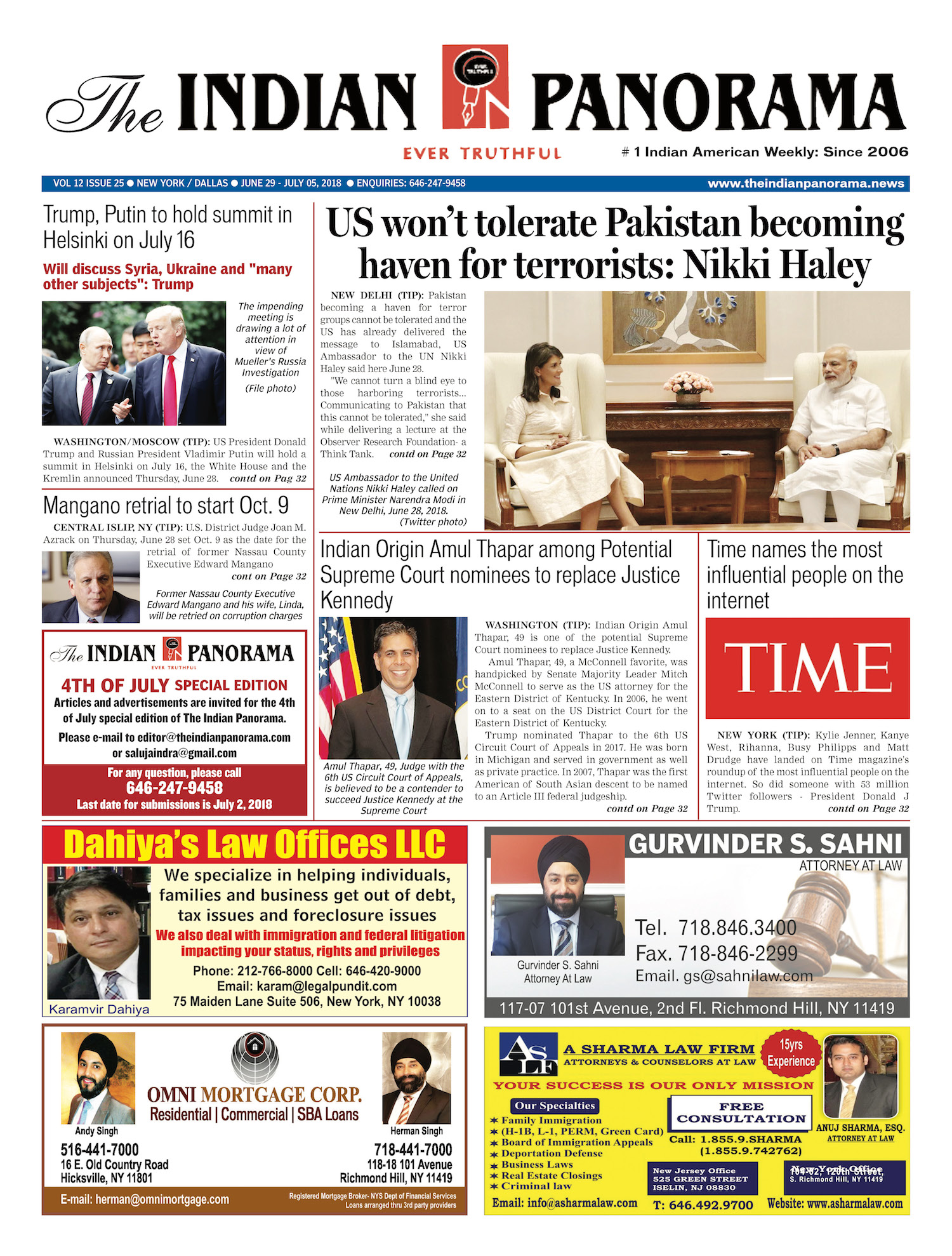
    [/vc_column_text][/vc_column][/vc_row][vc_row][vc_column width=”1/3″][vc_custom_heading text=”New York Edition” font_container=”tag:h2|text_align:center” google_fonts=”font_family:Istok%20Web%3Aregular%2Citalic%2C700%2C700italic|font_style:700%20bold%20regular%3A700%3Anormal” link=”url:https%3A%2F%2Fwww.theindianpanorama.news%2Fwp-content%2Fuploads%2F2018%2F06%2FTIP-June-29-NYC.pdf|||”][vc_single_image image=”93443″ img_size=”full” add_caption=”yes” alignment=”center” onclick=”custom_link” link=”https://www.theindianpanorama.news/wp-content/uploads/2018/06/TIP-June-29-NYC.pdf”][/vc_column][vc_column width=”1/3″][vc_custom_heading text=”Dallas, Texas Edition” font_container=”tag:h2|text_align:center” google_fonts=”font_family:Istok%20Web%3Aregular%2Citalic%2C700%2C700italic|font_style:700%20bold%20regular%3A700%3Anormal” link=”url:https%3A%2F%2Fwww.theindianpanorama.news%2Fwp-content%2Fuploads%2F2018%2F06%2FTIP-June-29-Dallas-TX.pdf|||”][vc_single_image image=”93442″ img_size=”full” add_caption=”yes” alignment=”center” onclick=”custom_link” link=”https://www.theindianpanorama.news/wp-content/uploads/2018/06/TIP-June-29-Dallas-TX.pdf”][/vc_column][vc_column width=”1/3″][vc_single_image image=”82828″ img_size=”medium” alignment=”center” onclick=”custom_link” link=”https://www.theindianpanorama.news/advertising-media-kit-portal-indian-panorama/”][vc_single_image image=”82829″ img_size=”medium” alignment=”center” onclick=”custom_link” link=”https://www.theindianpanorama.news/advertising-media-kit-portal-indian-panorama/”][/vc_column][/vc_row][vc_row][vc_column][td_block_ad_box spot_id=”custom_ad_3″ tdc_css=””][/vc_column][/vc_row][vc_row][vc_column width=”2/3″][vc_custom_heading text=”Lead Stories This Week” font_container=”tag:h2|text_align:center” google_fonts=”font_family:Istok%20Web%3Aregular%2Citalic%2C700%2C700italic|font_style:700%20bold%20regular%3A700%3Anormal” link=”url:https%3A%2F%2Fwww.theindianpanorama.news%2F|||”][td_block_5 separator=”” limit=”8″ tdc_css=””][/vc_column][vc_column width=”1/3″][vc_widget_sidebar sidebar_id=”td-default”][/vc_column][/vc_row]

  • June 22 New York & Dallas Print Editions

    June 22 New York & Dallas Print Editions

    [vc_row][vc_column][vc_column_text]

    Print Replica ~ Digitally

    E-Editions

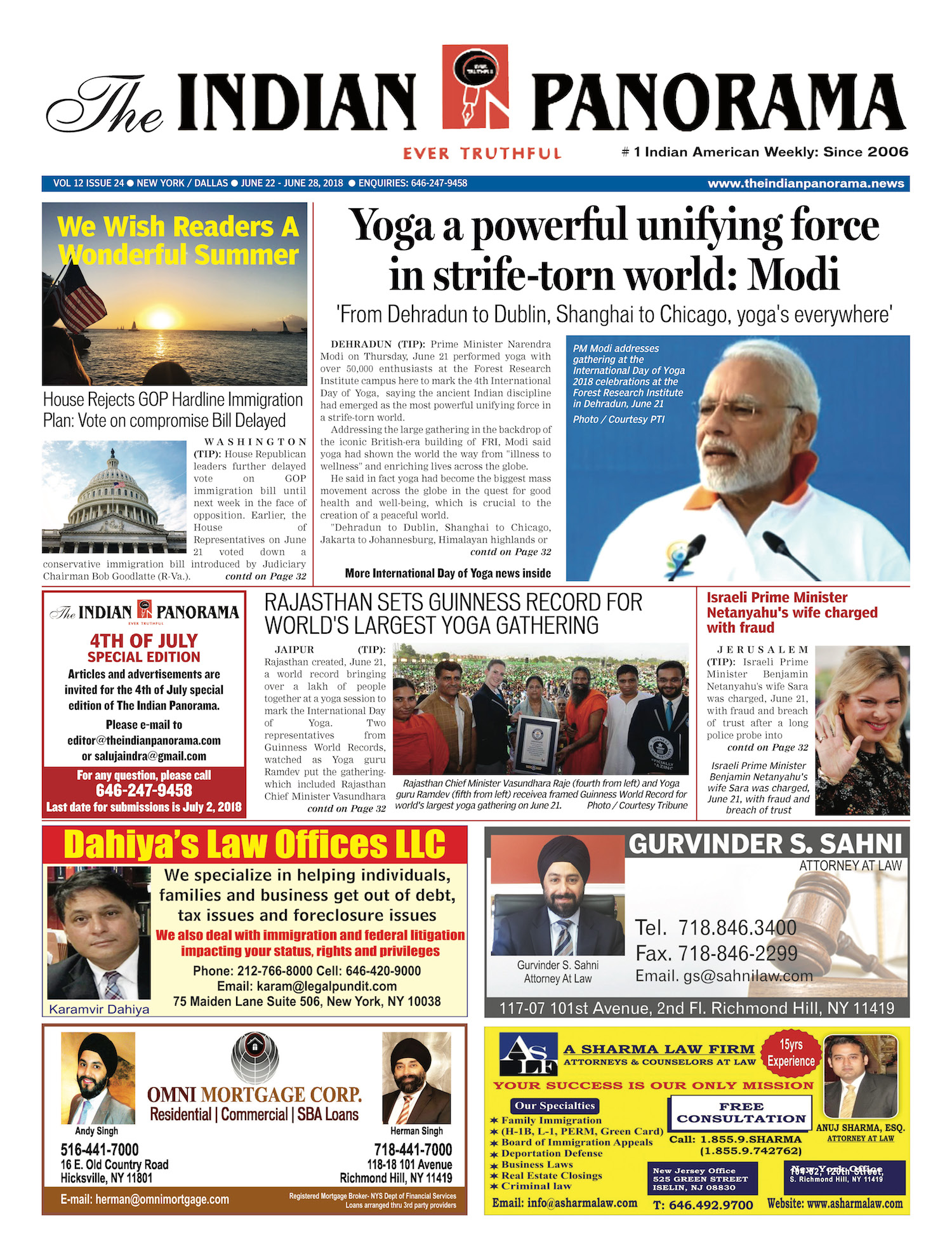
    [/vc_column_text][/vc_column][/vc_row][vc_row][vc_column width=”1/3″][vc_custom_heading text=”New York Edition” font_container=”tag:h2|text_align:center” google_fonts=”font_family:Istok%20Web%3Aregular%2Citalic%2C700%2C700italic|font_style:700%20bold%20regular%3A700%3Anormal” link=”url:%20https%3A%2F%2Fwww.theindianpanorama.news%2Fwp-content%2Fuploads%2F2018%2F06%2FTIP-June-22-NYC.pdf|||”][vc_single_image image=”93326″ img_size=”full” add_caption=”yes” alignment=”center” onclick=”custom_link” link=” https://www.theindianpanorama.news/wp-content/uploads/2018/06/TIP-June-22-NYC.pdf”][/vc_column][vc_column width=”1/3″][vc_custom_heading text=”Dallas, Texas Edition” font_container=”tag:h2|text_align:center” google_fonts=”font_family:Istok%20Web%3Aregular%2Citalic%2C700%2C700italic|font_style:700%20bold%20regular%3A700%3Anormal” link=”url:%20https%3A%2F%2Fwww.theindianpanorama.news%2Fwp-content%2Fuploads%2F2018%2F06%2FTIP-June-22-Dallas-TX.pdf|||”][vc_single_image image=”93327″ img_size=”full” add_caption=”yes” alignment=”center” onclick=”custom_link” link=” https://www.theindianpanorama.news/wp-content/uploads/2018/06/TIP-June-22-Dallas-TX.pdf”][/vc_column][vc_column width=”1/3″][vc_single_image image=”82828″ img_size=”medium” alignment=”center” onclick=”custom_link” link=”https://www.theindianpanorama.news/advertising-media-kit-portal-indian-panorama/”][vc_single_image image=”82829″ img_size=”medium” alignment=”center” onclick=”custom_link” link=”https://www.theindianpanorama.news/advertising-media-kit-portal-indian-panorama/”][/vc_column][/vc_row][vc_row][vc_column][td_block_ad_box spot_id=”custom_ad_3″ tdc_css=””][/vc_column][/vc_row][vc_row][vc_column width=”2/3″][vc_custom_heading text=”Lead Stories This Week” font_container=”tag:h2|text_align:center” google_fonts=”font_family:Istok%20Web%3Aregular%2Citalic%2C700%2C700italic|font_style:700%20bold%20regular%3A700%3Anormal” link=”url:https%3A%2F%2Fwww.theindianpanorama.news%2F|||”][td_block_5 separator=”” limit=”8″ tdc_css=””][/vc_column][vc_column width=”1/3″][vc_widget_sidebar sidebar_id=”td-default”][/vc_column][/vc_row]

  • A bang and a whimper- Trump scraps Kim summit, citing NK’s ‘open hostility’

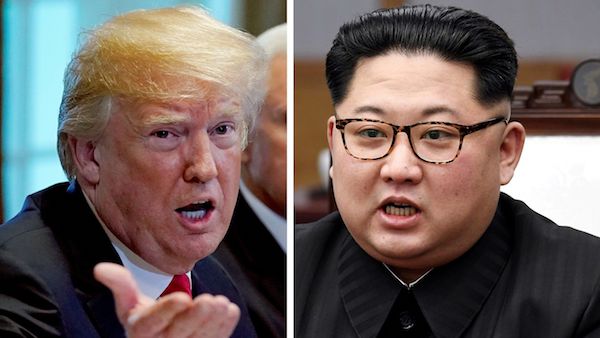
    A bang and a whimper- Trump scraps Kim summit, citing NK’s ‘open hostility’

    Trump’s announcement came hours after North Korea carried out what it said is the demolition of its nuclear test site.

    WASHINGTON(TIP): US President Donald Trump on Thursday, May 24, called off a historic summit with North Korean leader Kim Jong Un scheduled for next month, even after North Korea followed through on a pledge to blow up tunnels at its nuclear test site.

    Trump announced his abrupt withdrawal from what would have been a first-ever meeting between a serving US President and a North Korean leader in Singapore on June 12 in a letter to Kim.

    A White House official said a North Korean official’s condemnation of US Vice-President Mike Pence as a “political dummy” was “the last straw” that led to cancelling the summit.

    “Sadly, based on the tremendous anger and open hostility displayed in your most recent statement, I feel it would be inappropriate, at this time, to have this long-planned meeting,” Trump wrote to Kim.

    “Please let this letter serve to represent that the Singapore summit, for the good of both parties, but to the detriment of the world, will not take place.” Trump called it “a missed opportunity” and said he still hoped to meet Kim someday. However, the chances for a quick rescheduling appear remote and cancellation of the summit will renew fears of a return to conflict on the Korean peninsula.

    Earlier on Thursday, North Korea had repeated a threat to pull out of the summit with Trump next month and warned it was prepared for a nuclear showdown with Washington if necessary.

    South Korea’s presidential Blue House appeared taken off guard by Trump’s letter and an official said it was “trying to figure out what President Trump exactly meant.” South Korean President Moon Jae-in had met with Trump at the White House on Tuesday, May 22, to urge him to follow through on the summit and not let a rare opportunity with reclusive North Korea slip away.

    A few hours before Trump announced the cancellation, a small group of international media selected by North Korea witnessed the demolition of tunnels at the Punggye-ri site on Thursday, May 24, which Pyongyang said was proof of its commitment to end nuclear testing.

    Meanwhile, alarm bells began to ring at the world body. Antonio Guterres, UN Secretary-General said, “I am deeply concerned by the cancellation of the planned meeting in Singapore between the President of the United States and the leader of the Democratic People’s Republic of Korea. Both the parties must continue their dialogue so as to find a path to the peaceful and verifiable denuclearization of the Korean peninsula”.

  • Trump scraps the Iran nuclear deal, calling it ’embarrassment’

    Trump scraps the Iran nuclear deal, calling it ’embarrassment’

    Iran will remain in N-deal, says Rouhani

    European leaders call on Washington to let them carry on with pact

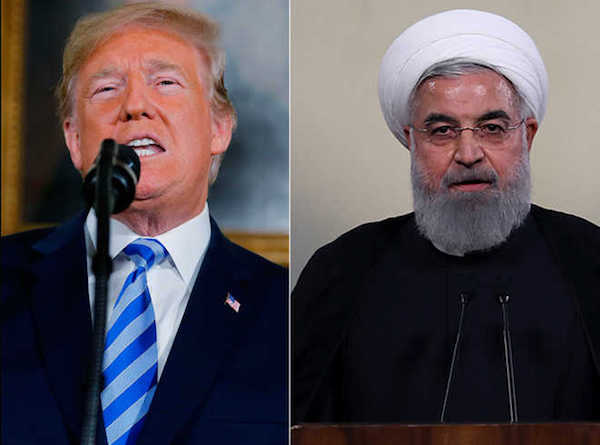
    WASHINGTON(TIP): US President Donald Trump on Tuesday, May 8, pulled out of the landmark nuclear deal with Iran, an Obama-era accord which he has repeatedly criticized.

    “It is clear to me that we cannot prevent Iran’s nuclear bomb. The Iran deal is defective at its core. Therefore, I am announcing today that the United States would withdraw from the Iran nuclear deal,” Trump said.

    Moments later he signed a fresh set of sanctions against Iran and warned countries against any cooperation with Iran on its nuclear weapons program.

    Ever since his election campaign, Trump has frequently criticized the Obama-era Iran nuclear deal, also known as the Joint Comprehensive Plan of Action or JCPOA.

    France, Germany, and the UK regret the U.S. decision to leave the JCPOA. The nuclear non-proliferation regime is at stake.

        — Emmanuel Macron (@EmmanuelMacron) May 8, 2018

    He had described the agreement, which was negotiated by then US secretary of state John Kerry, as a bad deal.

    I am deeply concerned by today’s announcement that the US will be withdrawing from the JCPOA & will begin reinstating US sanctions, says @antonioguterres. Full text here: https://t.co/LqC2WFJfAC

        — UN Spokesperson (@UN_Spokesperson) May 8, 2018

    The Iran nuclear deal was reached in Vienna in July 2015 between Iran and the P5 (the five permanent members of the UN Security Council) plus Germany and the European Union.

    Trump’s decision would have global ramifications, straining Iranian economy and heightening tensions in the Middle East.

    Iran will remain in N-deal, says Rouhani

    Meanwhile, Iranian President Hassan Rouhani said on Tuesday, May 8, that Iran would remain committed to a multinational nuclear deal despite US President Donald Trump’s decision to withdraw from the 2015 agreement designed to deny Tehran the ability to build nuclear weapons.

    “If we achieve the deal’s goals in cooperation with other members of the deal, it will remain in place… By exiting the deal, America has officially undermined its commitment to an international treaty,” Rouhani said in a televised speech.

    “I have ordered the foreign ministry to negotiate with the European countries, China and Russia in coming weeks. If at the end of this short period we conclude that we can fully benefit from the JCPOA with the cooperation of all countries, the deal would remain,” he added.

    The Joint Comprehensive Plan of Action (JCPOA) is the full name for the nuclear deal, struck in 2015 between Iran, the five permanent members of the U.N. Security Council — the United States, Russia, China, Britain and France — and Germany.

    Rouhani added that Iran was ready to resume its nuclear activities after consultations with the other world powers which are part of the agreement.

    Trump’s announcement was hailed by Washington’s principal allies in the Middle East, Israel and Saudi Arabia, both sworn foes of Iran.

    Under the deal, Iran curbed its nuclear activities in return for the lifting of most sanctions imposed on the country.

    Trump said he would reimpose economic sanctions on Tehran immediately. His decision puts pressure on his European allies, who are key backers of the deal and reluctant to join the United States in reimposing sanctions on Iran.

    Banking turmoil

    Some Iranians had been cashing in their savings even before Trump’s announcement he would pull out from the international deal with Iran, straining a banking system weighed down by bad loans and years of isolation.

    An official with Iran’s biggest state-owned Melli Bank told Reuters savings had declined by an unspecified amount, although he said this was a temporary phenomenon and that they would recover once the uncertainty over Trump’s decision passed.

    “When there is political uncertainty, its psychological impact on people causes a drop in savings. But it will pass after Trump’s deadline,” the official said before the announcement, declining to be named. A senior Iranian central bank official said conditions within the banking system had deteriorated in the past year, and “we have still not passed the danger zone” but added that the central bank had “all the measures ready to prevent any crisis”.

    EU will stand by Iran

    Europe will stand by the international nuclear accord with Iran, EU Foreign Policy chief Federica Mogherini said in a live press statement in Rome on Tuesday. “The EU is determined to preserve it,” she said. “We expect the rest of the international community to continue to preserve it, for the sake of collective security.” “The nuclear accord belongs to the whole of the international community,” Mogherini added. “To the Iranian people I say: do not let anyone dismantle this deal, one of the greatest achievements of the international community.”  “I am particularly worried about tonight’s announcement of further sanctions,” she said, adding that the deal with Iran “is the culmination of 12 years of diplomacy.”

    Most Americans reject move

    Less than one in three Americans agrees with President Donald Trump’s decision to pull the US out of an agreement to limit Iran’s nuclear program, according to a Reuters/Ipsos national opinion poll released on Tuesday, May 8.

    The poll, conducted on May 4-8, ahead of the President’s announcement to end the deal, found that 29 per cent of adults wanted to end the deal with Iran and five other world powers to ease sanctions and limit Iran’s nuclear program. Another 42 per cent said the US should remain in the deal, and the remaining 28 per cent said they “don’t know”. Even among those who are registered as Republicans, less than half — 44 per cent — advocated ending the US involvement in the deal. Another 28 per cent wanted to remain, and the remaining 28 percent said they did not know. — Agencies

    ‘US undermined commitment to treaty’

    If we achieve the deal’s goals in cooperation with other members of the deal, it will remain in place… By exiting the deal, America has officially undermined its commitment to an international treaty. Hassan Rouhani, Iranian President

    ‘Will work collectively’

    We will work collectively on a broader framework, covering (Iran’s) nuclear activity, the post-2025 period, ballistic activity, and stability in the Middle-East, notably Syria, Yemen, and Iraq. Emmanuel Macron, French President

    ‘It’s a historic move’

    Israel thinks that Trump made a historic move, and this is why Israel thanks him for his commitment to confront the terrorist regime in Tehran, and his commitment to ensure that Iran never gets nuclear weapons. Benjamin Netanyahu, Israeli Prime Minister

    ‘Decision misguided’

    Donald Trump’s decision to withdraw from the deal is misguided. I believe that the decision to put the JCPOA at risk without any Iranian violation of the deal is a serious mistake. Barack Obama, former US President.

    (Source: PTI and agencies)


  • USCIS says administration plans to propose regulatory changes to end H-4 work permit program

    USCIS says administration plans to propose regulatory changes to end H-4 work permit program

    The Trump administration is moving forward with its plan to end an Obama-era program that allowed spouses of H-1B visa holders to work in the United States.

    WASHINGTON(TIP): In a letter sent to Sen. Chuck Grassley, a critic of the H-1B program, Lee Francis Cissna, the director of the US Citizenship and Immigration Services, signaled that the agency is going ahead with its plan to end the practice of providing Employment Authorization Documents (EAD) to H4 visa holders and an announcement will come later this summer.

    Whenever that happens, tens of thousands of H-4 spouses — a vast majority of them Indian nationals — will be jobless again. The Obama-era rule allowed spouses of H-1B visa holders that are awaiting Green Card approval to apply for employment authorization.

    According to USCIS data, there are currently 100,000 H-4 spouses who are benefiting from the rule.

    “With regards to regulations, our plans include proposing regulatory changes to remove H-4 dependent spouses from the class of aliens eligible for employment authorization, thereby reversing the 2015 final rule that granted such eligibility,” Cissna wrote in the letter, dated April 4, addressed to Grassley, chairman of the Senate Judiciary Committee.

    “We announced this intention earlier this year in the semiannual regulatory agenda of the department of homeland security (DHS),” Cissna added.

    The letter stated that the withdrawal of work authorization falls in line with “the Buy American Hire American Executive” order issued by President Trump, which had directed federal agencies including USCIS to come up with drastic changes to fix what it termed as a flawed immigration system.

    As with other revisions to regulations, the public will have an opportunity to provide feedback during a notice and comment period, Cissna said.

    Indian nationals on H4 visas have the most to lose by the move. Some 90 percent of H4 EAD program beneficiaries have been Indian nationals.

  • April 13 New York & Dallas Print Edition

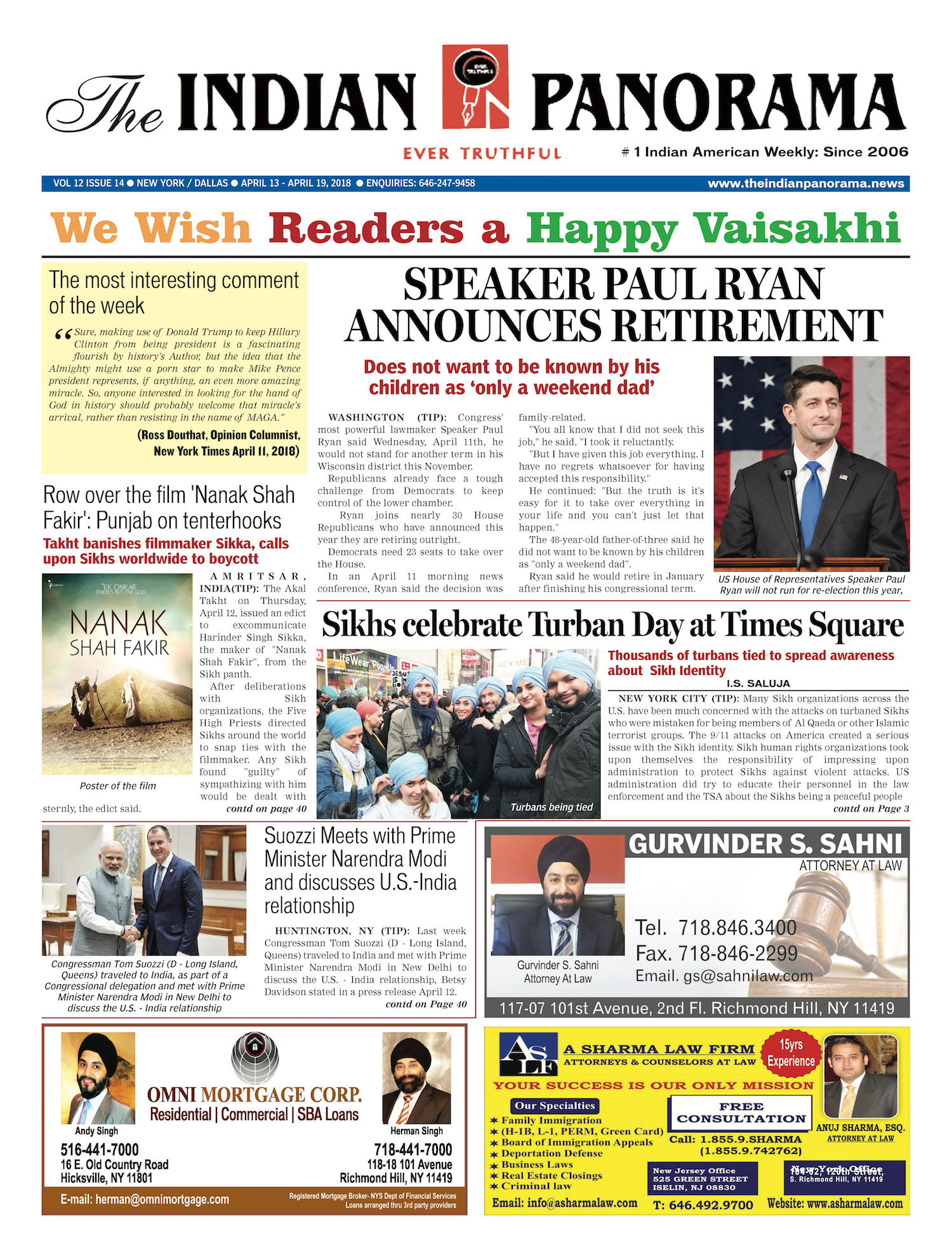
    April 13 New York & Dallas Print Edition

    [vc_row][vc_column][vc_column_text]

    Print Replica ~ Digitally

    E-Edition

    [/vc_column_text][/vc_column][/vc_row][vc_row][vc_column width=”2/3″][vc_custom_heading text=”New York & Dallas Edition” font_container=”tag:h2|text_align:center” google_fonts=”font_family:Istok%20Web%3Aregular%2Citalic%2C700%2C700italic|font_style:700%20bold%20regular%3A700%3Anormal” link=”url:https%3A%2F%2Fwww.theindianpanorama.news%2Fwp-content%2Fuploads%2F2018%2F04%2FTIP-APRIL-13-NY-DALLAS-.pdf|||”][vc_single_image image=”92308″ img_size=”full” add_caption=”yes” alignment=”center” onclick=”custom_link” link=”https://www.theindianpanorama.news/wp-content/uploads/2018/04/TIP-APRIL-13-NY-DALLAS-.pdf”][/vc_column][vc_column width=”1/3″][vc_single_image image=”82828″ img_size=”medium” alignment=”center” onclick=”custom_link” link=”https://www.theindianpanorama.news/advertising-media-kit-portal-indian-panorama/”][vc_single_image image=”82829″ img_size=”medium” alignment=”center” onclick=”custom_link” link=”https://www.theindianpanorama.news/advertising-media-kit-portal-indian-panorama/”][/vc_column][/vc_row][vc_row][vc_column][td_block_ad_box spot_id=”custom_ad_3″ tdc_css=””][/vc_column][/vc_row][vc_row][vc_column width=”2/3″][vc_custom_heading text=”Lead Stories This Week” font_container=”tag:h2|text_align:center” google_fonts=”font_family:Istok%20Web%3Aregular%2Citalic%2C700%2C700italic|font_style:700%20bold%20regular%3A700%3Anormal” link=”url:https%3A%2F%2Fwww.theindianpanorama.news%2F|||”][td_block_5 separator=”” limit=”8″ tdc_css=””][/vc_column][vc_column width=”1/3″][vc_widget_sidebar sidebar_id=”td-default”][/vc_column][/vc_row]

  • America’s Taking on China is Good for the World

    America’s Taking on China is Good for the World

    By A.D. Amar
    His (Trump’s) taking on China for its flagrant violation of the trade and intellectual property rights has given courage to Europe and Japan to chime in the American challenge on China’s practices. The challenge will spread as Trump succeeds further in controlling China’s behavior, and that will benefit the whole world, says the author.     

    The implementation of China’s 75-year long project known as the “Great Trilogy of 21stCentury”that aims to erase the humiliating defeat China suffered at the hands of the British during the Anglo-Chinese trade wars or the Opium Wars of the 19thCentury and bring back its glorious past by taking the sole control of the world leadership. It started in 1978 and is to be completed by 2052. The strategy to achieve this populous goal involves benefiting from the laissez-faire policy of the free-market economies, particularly the USA and the countries in the Western Europe. Consequently, China decided to sell in these countries all types of products and services by applying predatory pricing policy with the goal to turn these countries into china’s captive markets.

    China devised policy to conduct its foreign trade as means to provide cash to fund its ambitious goal to displace the USA as the global leader. It has continued to build its cash reserves by selling but not buying or buying very little. To subvert the nations’ ability to export to China, it wrote or rewrote its laws and regulations more than 10,000 times a year, more that the rest of the world combined. The purpose has been to keep out competitive imports of any kind to preserve its huge cash reserves built by trade surpluses. While it worked to indigenize all products, services, processes, and technologies, it also worked to bring Chinese culture back to its past. This included displacing Buddha with Confucius by using the “Da Tong” that teaches achieving deals in the world with harmony.

    Since America is the world’s largest, freest market, China had larger designs to take over the US markets. It used its United Nations Security Council (UNSC) veto power as a strategy to achieve this goal. It used the veto power to negotiate the opening up of American import of goods from China whether it were apparels, consumer electronics, or whatever else. When so ever America got in conflict at any place in the world and went to the UNSC for its nod, China agreed to abstain from exercising its veto power against America for easing of Chinese imports into the USA. Also, this is how it made America have it become a member of the World Trade Organization and lift limits on import of apparel and other consumer goods that were supplied by many other smaller countries. In due course, it routed out other countries that competed against it in American market and turned America into China’s monopolistic market. Everything selling in the USA carried the China label.

    To maintain hefty cash reserves for its Great Trilogy of 21stCentury goal, globally, China imported one-dollar worth of goods for each five dollars of exports it made. This behavior became apparent in 2009 when it tremendously cut back on its imports to preserve its foreign cash reserves when its exports to some countries went down after the 2008-09 recession.

    In 2012, when the world was still going through an extended period of what was dubbed as “the greatest recession since the great depression”, China entered the global markets in a big strategic way with the cash it had preserved through the lopsided foreign trade. It started taking control of land and strategic natural resources and assets from mismanaged countries in Africa and Asia, and even in Europe by straightforward acquisition where possible or long-term leases. It started to build passageways to control its flow through the globe, building ports and strategic bases for monitoring and controlling global activities through international waters and to enhance the speed of its own movements along all continents. It started to claim its rights and, in some cases, forcibly take possession of lands based on its centuries, or in some cases millennia old dubious records.

    American presidents from the early seventies, starting with President Richard Nixon slowly but steadily, for one reason or another, gave in to China. This went on unchecked until President Bill Clinton. President George W. Bush, who had a strategy to reduce America’s dependence on China and get closer to India and other democratic countries, gave up on it after 9/11 as he decided to fight the Islamic terrorism for which he needed China’s support in the United Nations. President Barack Obama, as a candidate, had huge plans to confront China on its trade practices, the stealing of America’s intellectual property and constantly hacking into American business and government installations. After his election, in November 2009, during his first visit to China, he brought along plans to ask China to address its huge trade surplus with America and to open its markets to the USA to plug it. Instead, he was harangued by the Chinese President Hu Jintao on free trade. The meeting was so embarrassing for Obama that he did not have the courage to check on China for its trade imbalance, the stealing of intellectual property or the cyber hacking during any of his meetings with the Chinese for all of his eight years in the White House. He was afraid that China would carry forward its threat to withdraw its deposits at the US Treasury and cause a monetary havoc. Obama with the desire not to unravel the economy, kept low and China became bolder.

    No American president dared challenge China until President Donald Trump came in the White House. It is not just that Trump is bold to handle simultaneously problems along several fronts in the world but is smart and efficient to negotiate to get what is good for America. His taking on China for its flagrant violation of the trade and intellectual property rights has given courage to Europe and Japan to chime in the American challenge on China’s practices. The challenge will spread as Trump succeeds further in controlling China’s behavior, and that will benefit the whole world.

    (The author is Business Professor at Seton Hall University.  He can be reached at AD.Amar@shu.edu)


  • Dromm, Asian American Service Providers and Advocates Host 8th Annual Lunar New Year Celebration in Elmhurst, Queens

    Dromm, Asian American Service Providers and Advocates Host 8th Annual Lunar New Year Celebration in Elmhurst, Queens

    ELMHURST NY (TIP): NYC Council Member Daniel Dromm and co-sponsors EmblemHealth, MetroPlus and the Coalition for Chinese Children and Families (CACF) ushered in the Year of the Dog at the 8th Annual Lunar New Year celebration at St. James’s Episcopal Church, Elmhurst. The event featured a Chinese calligraphy demonstration, traditional Korean drumming, traditional Chinese dance, traditional Vietnamese music, music and dance numbers by PS 7, PS 13 and IS 5 students, free face paintings, a dog puppet workshop for children, and lion dancing.  It also included a resource fair with representation from nearly 30 local civic groups, social service providers, and city agencies.

    “Now in its 8th year, my annual Lunar New Year celebration is becoming a time-honored tradition in Elmhurst,” said NYC Council Member Daniel Dromm (D-Elmhurst, Jackson Heights).  “For Chinese, Korean and Vietnamese people around the world, Lunar New Year is a time for friends, family and celebration.  As a Council Member representing one of the largest and most diverse Asian American communities in the city, I am pleased to have founded this event that allows us to usher in the new year together as one neighborhood.”

    Dromm first established the event in 2011 to create an opportunity for the Asian American communities of Elmhurst to increase their visibility and celebrate their cultural pride while sowing the seeds for future organizing.  The Elmhurst celebration has steadily grown over the years and is now among the neighborhood’s most cherished events.

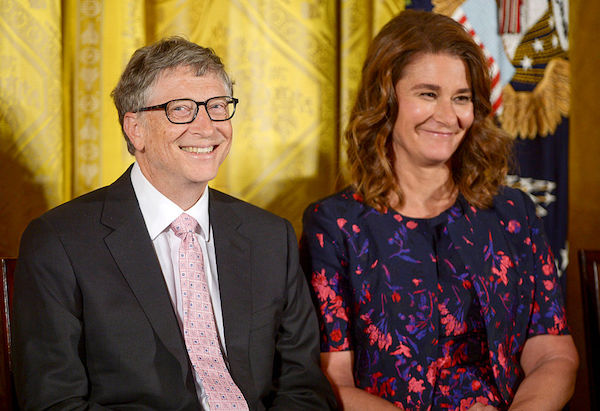
  • Bill & Melinda Gates Foundation announces $170 Million for women’s empowerment

    Bill & Melinda Gates Foundation announces $170 Million for women’s empowerment

    WASHINGTON (TIP): On the eve of International Women’s Day, the Bill and Melinda Gates Foundation has announced a USD 170 million project aimed at advancing women’s economic empowerment in four countries, including in India.

    Announced on Tuesday, March 6, the investments focused in India, Kenya, Tanzania and Uganda will target four key priorities — advancing gender equality, spreading digital financial inclusion, increasing job opportunities, and supporting the agricultural sector and women’s support groups.

    “One of the most profound ways a woman can make life better for herself and her family is to take control of her economic future,” said Melinda Gates, co-chair of the Bill & Melinda Gates Foundation.

    “When women have money in their hands and the authority to choose how to spend it, they grow in confidence and power. They change the unwritten rules that say women are lesser than men,” she said in a statement.

    The investments will build on the foundation’s previous financial commitments to advance progress on gender equality, including USD 80 million for gender data, advocacy and accountability, of which USD 20 million was dedicated to supporting women’s movements, a statement said.

    According to the foundation, the data show that when a woman has the option of working outside the home and access to financial services to participate in the formal economy, families break the cycle of poverty and national GDPs rise.

    When women have access to financial resources such as cash or mobile money, the ability to control those resources and the ability to make decisions that affect her, and her family’s future, women are empowered in ways beyond economics, it said.

    The investments will not only help better understand what works to ensure women are able to fully participate in economies, but also dismantle the barriers that have held women back for far too long, said Sarah Hendriks, director, gender equality at the Bill & Melinda Gates Foundation.

    “Our strategy is aimed at giving more women and girls the economic opportunities they need to engage as equals in society,” Hendriks said.

    International Women’s Day is celebrated on March 8 every year. It commemorates the movement for women’s rights.

    (Source: PTI)

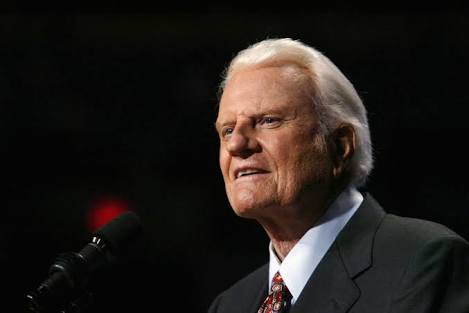
  • Evangelist Reverend Billy Graham dies at 99 on February 21st

    Evangelist Reverend Billy Graham dies at 99 on February 21st

    NORTH CAROLINA (TIP): The Rev. Billy Graham, counselor to presidents and the most widely heard Christian evangelist in history, has died at age 99.

    Graham died on February 21st morning at his home in Montreat, North Carolina.

    He had been treated in recent years for cancer, pneumonia and other ailments. His wife, Ruth, died in 2007. Graham reached more than 200 million through his appearances and millions more through his pioneering use of television and radio.

    Unlike many traditional evangelists, he abandoned narrow fundamentalism to engage broader society. His message and service to U.S. presidents from Dwight Eisenhower to George W. Bush earned him the nickname “America’s Pastor.” In 1995 his Evangelistic Association designated his son William Franklin Graham III as the ministry’s leader.


  • A ‘good guy’ with a gun against a ‘bad guy’ with a gun formula does not work, Mr. President

    A ‘good guy’ with a gun against a ‘bad guy’ with a gun formula does not work, Mr. President

    By Prof I.S.Saluja

    US needs to come out of its primitive view on guns

    Another carnage, followed by a spate of condolences and condemnations. President of USA tweets he was sorry for the “terrible” shooting.  ‘My prayers and condolences to the families of the victims of the terrible Florida shooting. …. No child, teacher or anyone else should ever feel unsafe in an American school.’  Easier said, Mr. President.

    But, Mr. President, it is precisely what is happening. Have a look at the sheer number of shootings -18 school shootings in 45 days.  Florida massacre is one of the many tragedies in 2018. Wednesday’s attack in Broward County which killed 17 and wounded 14 was the deadliest school shooting since the 2012 rampage that killed 26 people at Sandy Hook Elementary in Newtown, Connecticut.

    Obviously, Americans are worried. They want safety of their children, not the condolences of POTUS or other lawmakers. They are rightly accusing their President of being soft on gun control. They see their President on the side of NRA, not on the side of the helpless people. And they understand well why a lawmaker will be on the side of NRA.

    People want sensible gun laws in line with the 2nd Amendment. They do not want to see anybody and everybody carrying a gun which they believe and, rightly so, will be a weapon of offense, at any given point of time. They wonder why congress is not even talking about stepping up to prevent attacks like this.

    More than the border wall and the security from illegally entering aliens, Americans need security from their own people who can easily lay their hands-on guns because the law permits them to have them, which they may use to mow down innocent people.

    How long will the lawmakers remain silent spectators to the butchery by gun wielding madmen? They were elected to protect, not to be instruments of torture and death. Wake up friends in the Congress and know what for you are there at the Capitol.


  • The Philadelphia Eagles defy odds at Super Bowl LII

    The Philadelphia Eagles defy odds at Super Bowl LII

    By Marvi Sajid

    NEW YORK (TIP): The Philadelphia Eagles rallied for a comeback against the New England Patriots with a 41-33 win for their epic championship victory. Coming into Super Bowl LII Tom Brady and his patriots were the clear favorite, but that wasn’t enough to close the door on the real Cinderella story Nick Foles.

    The 29-year-old back up quarter-back may have just become one of the most legendary stories in Philadelphia sports history. Nick Foles, started his NFL season uncertain about what was to come. In fact, the QB almost quit his NFL career 18 months ago but decided to give it one last shot. He signed with the Philadelphia Eagles as a backup quarterback to Carson Wentz. Little did we know that moment would change his entire career.

    Carson Wentz injured his right knee mid-December as the NFL regular season was coming to a close. That ensured Nick Foles the opportunity of a life time as the fairytale came against five time champion and three time MVP Tom Brady. But the story only gets better, as Nick Foles stamped his mark in history as the first player in a Super Bowl to make a pass and catch one. Overall Foles, converted on 28 of his 43 passes tallying 373 yards and 3 touchdowns.

    The Super Bowl champ spoke about his take on the game, and what lead him to one of the greatest Sports stories of all time:

    “The big thing that helped me was knowing that I didn’t have to be Superman,” he said. “I have amazing teammates, amazing coaches around me, and all I have to do is go play as hard as I could and play for one another, play for those guys and not look at the scoreboard, not look at the time. Just go out there and play. Don’t worry about it and we came away with a victory. It doesn’t get any bigger than this.”

    And for those of us who have not gotten enough of the Eagles QB, rumor has it this is far from the last time we see this Philadelphia Hero.


  • America, Inspiring

    America, Inspiring

    NJSO Celebrates Immigrant Composers at Winter Festival 2018

    “This season, it (NJSO) celebrates the inspiration that is America, showcasing musical works by immigrants and foreign visitors…” Gabriel Van Aalst, President & CEO, NJSO
    “These composers speak to me because their story is my own.  While I had a wonderful musical education at the Conservatory in Beijing, I needed to come to the United States to follow my dream of becoming a conductor”. Xian Zhang, NJSO Music Conductor
    “(Xian Zhang’s) conducting gestures reveal a passion, a precise knowledge of the score and a constant attention to detail.  Her relationship with the musicians is producing great music and the orchestra members respond beautifully” …..The Asbury Park Press

    By Mabel Pais

    At the NJSO, January is always a busy month with the Winter Festival.  “This season, it (NJSO) celebrates the inspiration that is America, showcasing musical works by immigrants and foreign visitors who drew their stimulation from America’s wide-ranging impacts” said Gabriel Van Aalst, President and CEO of the NJSO, who opened the Winter Festival on January 11.

    The 2018 Winter Festival highlights the myriad ways America has inspired not only those who call it home but also those who have visited its welcoming shores. Leveraging the power of art to transcend differences, a series of NJSO Accents and special events further explore the immigrant experience and how foreign artists have illustrated American inspiration in their work.

    Spanning three weekends, January 11–28, the Winter Festival includes orchestral performances at the New Jersey Performing Arts Center in Newark, State Theatre New Jersey in New Brunswick, Count Basie Theatre in Red Bank, Richardson Auditorium in Princeton, Mayo Performing Arts Center in Morristown and Bergen PAC in Englewood.

    The NJSO Chamber Players perform a special chamber music concert at St. George’s-by-the-River Episcopal Church in Rumson and Calvary Episcopal Church in Summit.

    Week I: America, Inspiring: Respighi & Prokofiev
    Xian Zhang_Music-Conductor
    Photo credit Benjamin Ealovega
    Xian Zhang-conducts-the-NJSO
    Photo credit Fred Stucker
    Xian Zhang-at-NJPAC
    Photo credit Fred Stucker
    Xian Zhang at NJPAC
    Photo credit Fred Stucker

    Music Director Xian Zhang conducted NJSO premiere of Che Yi’s Ge Xu and Respighi’s Fountains of Rome. George Li performed Prokofiev’s Third Piano Concerto.  Zhang, the orchestra’s 14th music director, is the first woman to hold the position.

    In a nod to Zhang’s own journey to America and New Jersey, she led Respighi’s Pines of Rome—a work she conducted in her first-ever performances with the NJSO in 2010. Chinese pianist George Li, the 22-year-old silver medalist of the XV International Tchaikovsky Competition, performed Prokofiev’s Third Piano Concerto.

    Performances took place on Thursday, January 11 at Bergen PAC in Englewood; Saturday, January 13 at the New Jersey Performing Arts Center in Newark; and Sunday, January 14, at State Theatre New Jersey in New Brunswick.

    WEEK II: America, Inspiring: Ravel & Rachmaninoff
    George Li, Pianist
    Photo credit Simon Fowler
    Terrence Wilson, Pianist

    Andrew Constantine, conductor

    Terrence Wilson, piano

    MARTINŮ Thunderbolt P-47 (NJSO Premiere)

    RAVEL Piano Concerto in G Major

    RACHMANINOFF Symphonic Dances

    Fri, Jan 19, at 8 pm | Richardson Auditorium in Princeton

    Sat, Jan 20, at 8 pm | State Theatre New Jersey in New Brunswick

    Sun, Jan 21, at 3 pm | NJPAC in Newark

    NJSO ACCENTS:

    Panel Discussion—Fri, Jan 19, at 6:45 pm and Sun, Jan 21, at 1:45 pm

    Host Naomi Lewin and a panel of experts discuss the political climate in Europe that drove so many of the Winter Festival’s composers to come to America.

    Wine Tasting—Sat, Jan 20, before the concert

    Join wine and music expert Ron Merlino in an exclusive tasting of wines made of old-world grapes in new-world soil. For reservation and tickets, visit www.njsymphony.org/grapes

    Performance & Painting—Sun, Jan 21, after the concert

    Watch creative inspiration in action as artist Ken Ahlering (www.ken-ahlering.com) paints in response to a performance by the NJSO Chamber Players.

    Full concert information is available at www.njsymphony.org/events/detail/america-inspiring-ravel-rachmaninoff.

    America, Inspiring: Special Chamber Music Concert
    Violinist Eric Wyrick, Concertmaster of NJSO
    Photo credit Tristan Cook
    Violinist Chloe Hanslip, international artist of distinction

     Tue, Jan 23, at 3 pm | St. George’s-by-the-River Episcopal Church in Rumson

    Thu, Jan 25, at 7:30 pm | Calvary Episcopal Church in Summit

    NJSO CHAMBER PLAYERS

    Eric Wyrick, violin

    Brennan Sweet, violin

    David Blinn, viola

    Na-Young Baek, cello

    TAN DUN Eight Colors for String Quartet

    BARTÓK String Quartet No. 2

    DVOŘÁK String Quartet No. 12 in F Major, Op. 96, “American”

    A free pre-concert reception begins at 2 pm on Jan 23.

    Full concert information is available at www.njsymphony.org/events/detail/america-inspiring-special-chamber-music-concert.

    WEEK III: America, Inspiring: Dvořák’s “New World” Symphony

    Fri, Jan 26, at 8 pm                           NJPAC in Newark

    Sat, Jan 27, at 8 pm                          Count Basie Theatre in Red Bank

    Sun, Jan 28, at 3 pm                         Mayo PAC in Morristown

    Xian Zhang, conductor

    Chloë Hanslip, violin

    New Jersey Symphony Orchestra

    BRITTEN Simple Symphony

    KORNGOLD Violin Concerto

    DVOŘÁK Symphony No. 9, “From the New World”

    NJSO ACCENTS:

    Prelude Performance—Fri, Jan 26, before the concert

    Come early and hear the Anne Lieberson Ensemble from the NJSO’s Youth Orchestras perform a selection inspired by the Winter Festival.

    Poetry Reading—Sun, Jan 28, after the concert

    Poets Maria Gillan and Patrick Rosal reflect on their own immigrant experiences in the closing event of the Winter Festival.

    Full concert information is available at www.njsymphony.org/events/detail/america-inspiring-dvoraks-new-world-symphony.

    (Mabel Pais is a freelance writer.  She writes on The Arts and Entertainment, Social Issues, Health and Wellness, and Spirituality)

  • US will carry on with Pak military training

    US will carry on with Pak military training

    ISLAMABAD (TIP): The US has conveyed to Pakistan that the military training component of the aid will continue despite suspension of the security assistance package, media reports said on Thursday, January 18.

    Foreign Secretary Tehmina Janjua informed the Senate’s foreign affairs committee on Wednesday that the US will continue funding the aid components that support their national interest, including the International Military Education and Training (IMET) part, Dawn reported.

    The IMET program, which focuses on military education, is meant to establish a rapport between the US military and the recipient country’s military for building alliances for the future.

    Under this program, Pakistan Army officers have been trained in the US at a cost of $52 million over the past 15 years and an allocation of another $4 million has been made for the current year.

    While the IMET would continue, the US has frozen the aid provided under the programs that are more important to Pakistan, particularly the Foreign Military Financing (FMF).

    The recipients of FMF can use the funds under this program for procurement of defense hardware produced by the US.

    Foreign Minister Khawaja Asif, while briefing the lawmakers on the current state of Pak-US relations, said the relationship was not going “very smooth” and problems were persisting. “We have to stand up to those who accuse us of harboring terrorists,” Asif remarked.

    Early this month, Trump accused Pakistan of giving nothing to the US but “lies and deceit” in return for USD 33 billion aid and said Islamabad has provided “safe haven” to terrorists.

    Lies and deceit

    Pakistan army officers have been trained in the US at a cost of $52 million over the past 15 years

    An allocation of another $4 million has been made to train Pakistan military officers for the current year

    The US will continue funding the aid components that support their national interest, including the International Military Education and Training (IMET) part.

    (With inputs from IANS)


  • Pluralism is the Panacea to Trump’s Profanity

    Pluralism is the Panacea to Trump’s Profanity

    By Mike Ghouse
    As a society, it is our responsibility to keep law and order and faithfully guard the safety of every citizen. Hate is one of the many sources of disrupting the peace in a society and it is our duty to track down the source of such hate and work on mitigating it. Pluralism is a development of an attitude of respecting the otherness of others and accepting the God-given uniqueness of each one of us. You are who you are, and I am who I am; let’s figure it out how to make life easy for both of us, says the author.

    President Trump does not care about anyone but himself; he is reckless and insensitive with his words which cause unwanted social hostility between people and nations. He will be gone when his term ends, but we the people will have to live with the consequences of his words and actions.

    I stumbled across an article in Times of Israel with the actual title, “When Jews came from ‘shithole’ countries.” What caught my attention was the following sentence, “Sarna and Diner both said that similar fears animated the nativism of the 1920’s and today. In both cases, they said, these derogatory comments were based on a few of the other from a foreign culture, who will disrupt white American society.”

    Teresa May, the Prime Minister of United Kingdom expressed the same fear in her speech in Philadelphia to Republicans upon her visit a year ago. She said, “I believe it is in our national interest to do so. Because the world is increasingly marked by instability and threats that threaten to undermine our way of life and the very things that we hold dear.”

    Times of Israel wrote, “While congressmen in the 1920s may not have used Trump’s language, they were also opposed to letting in people from so-called undesirable countries — like Italians, Slavs and Jews from Eastern Europe. Chinese immigrants were banned altogether. Senator David Reed, for whom the 1924 law was named, also wanted to let in more immigrants from “Nordic” countries.”

    “This prejudice had been around for decades before the 1924 law. A report from 1891 prepared by Senator Henry Cabot Lodge lumped Jews, Italians, Poles, and others into “races most alien to the body of the American people.” Times of Israel.

    Recognizing this inherent phobia of a group of people from among the majority of the population, any population for that matter, we wrote at the Center for Pluralism, “The Center is committed to reassuring each other, including the disconnected ones among the White Americans, that together as Americans, we are committed to safeguarding the American way of life. No American needs to worry about losing his or her way of life. As Americans, we uphold, protect, defend and celebrate the values enshrined in our Constitution.

    Although no minorities have made any attempt to change the way of life of the majorities, they need to make extra efforts to reassure the concerned group within the majority that they live their lives, and have not, and will not make any attempt to change the Majoritarian lives. Together let’s preserve America’s greatness that we all cherish.

    The following speech was written for Hillary Clinton hoping she would deliver it; the full speech is at Huffington Post dated November 6, 2016, two days before the elections.

    My priority is to reach out to my fellow Americans who had it good until the disaster from wars brought misery to them; the white Americans. We are going to find ways and means for them to recover from the difficult times they have endured while other Americans have prospered.

    You have two stark choices in front of you; one makes the decisions from the seat of his pants. He does not listen to anyone, does not have the support of a single former President nor does he have the advisement of the sane voices. He can bankrupt the nation and walk away with no consequences, but you may be the one who gets stiffed. Your job and your life is an experiment to him, and the safety of our nation will be subjected to his whims.

    Believe me, the Black Americans, Jewish Americans, Muslim Americans, immigrant Americans, and all other Americans want each one of us to prosper, particularly the disaffected White Americans. Our prosperity hinges on the prosperity of people around us and prosperity of nations around us. None of us will succeed if some of us are left behind.

    I am committed to restoring justice to my fellow Americans who lost their jobs in manufacturing, Americans who live on farms, Americans who do not have an education or technical skills, men and women who are plumbers, electricians, repairmen, drivers, janitors and small business owners, and taking care of them is a priority of my administration. We will restore our glory days, and in the end, no American will be left out.

    Pluralism is the panacea

    As a society, it is our responsibility to keep law and order and faithfully guard the safety of every citizen. Hate is one of the many sources of disrupting the peace in a society and it is our duty to track down the source of such hate and work on mitigating it. Pluralism is a development of an attitude of respecting the otherness of others and accepting the God-given uniqueness of each one of us. You are who you are, and I am who I am; let’s figure it out how to make life easy for both of us.

    The Center for Pluralism will become the energy to give a solid cohesive social structure to our nation. By the year 2025, there will not be an office, school, playground, college, restaurant, theater, train, bus or a workplace where people of different faiths, races, ethnicities, and national origins do not work, interact, play, live and marry together. This is bound to create conflicts in airports, public spaces, boardrooms, and in bedrooms as well as places of worship, workplaces, politics, eateries, and schools.

    We have a responsibility to shape the future of our society, and we will continue to focus our energies on ensuring a safe America, where no one including your kids, grandkids or yourselves has to worry about his/her faith, ethnicity, race, gender or other God-given uniqueness and live his or her life without apprehensions.

    The Center for Pluralism will be an antidote to Anti-Semitism, Islamophobia, Racism, Homophobia, Hindu phobia, Xenophobia, Misogyny and other phobias. Through research and activism, we are establishing a respectful space for the ideals of pluralism with the policymakers, interfaith groups, Republicans and Democrats and of course the media and you!

    (The Washington based author is an Indian American, committed to building cohesive work places, societies and communities and offers pluralistic solutions. He is the founder and president of the Center for Pluralism. He can be reached at mikeghouse@gmail.com)


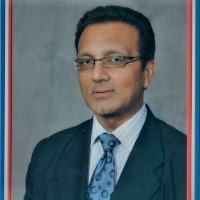
  • Indian American Neeraj Bhatia honored with Hind Rattan award 2018

    Indian American Neeraj Bhatia honored with Hind Rattan award 2018

    SAN FRANCISCO (TIP): A certified public accountant and a leading Indian American tax consultant, Neeraj Bhatia has been honored with the prestigious Hind Rattan Award 2018, which is one of the highest Indian diaspora awards granted annually to non-resident persons of Indian-origin by the NRI Welfare Society of India.

    Bhatia is a sought-after tax professional who has offered extensive commentary on US and India tax issues over the years.

    An accomplished accounting professional with over 30 years of practice in international and domestic tax planning and compliance for start-ups and multinational entities, Bhatia runs a successful tax and accountancy firm in the heart of Silicon Valley with offices in New Delhi as well.

    “With India-US trade, corporate and economic relations booming, companies on both sides of the world are always looking for professionals who have expertise in tax and corporate laws of America and India,” Bhatia said.

    “My firm has the advantage of having accounting professionals who have decades of experience navigating tax laws in the two countries,” he said.

    He has helped around 1,000 startups get off the ground during the past two decades of practice in Silicon Valley. It was his insights into the IT sector that led him to be associated closely with Software Technology Parks of India (STPI) – an Indian government undertaking – in the San Francisco Bay Area. Bhatia has also kept his focus on helping several Indian-American organizations representing half a dozen Indian states engaged in charitable causes. He assists them in maintaining their charitable status through strict regulatory compliance.

    Bhatia has a degree in chartered accountancy from India and holds an LLM in international taxation from the US. He is vice president and director of Indo American Chamber of Commerce and is also on the Board of the University of Silicon Andhra, a newly-formed university imparting post-graduate degree programs in Indian languages, literature and arts.

    He was awarded a gold medal and monthly scholarship for three years by India’s Central Board of Secondary Education for securing the first rank in India in the Board exam. He was also awarded a gold medal by Institute of Cost & Works (Management) Accountants of India for securing the first rank in north India. He is vice president and director of Indo American Chamber of Commerce and is also on the Board of the University of Silicon Andhra, a newly-formed university imparting post-graduate degree programs in Indian languages, literature and arts.

    The Hind Rattan, which means ‘Jewel of India’ in English, is one of the highest Indian diaspora awards. The award is granted at the Society’s annual Congress on the eve of India’s Republic Day, in conjunction with national Pravasi Bharatiya Divas celebrations.

    The award ceremony is attended by senior members of the Government of India and of the Supreme Court of India. The number of awardees varies each year, but is generally about 25 to 30. Criteria for award selection are not published by the Society; award selections are made among the Society leadership and awardees are invited to attend the conference in New Delhi to accept their awards.

    The NRI Welfare Society has been operating over the past 37 years, connecting people of Indian origin with their motherland.

    (Source: Connected to India)


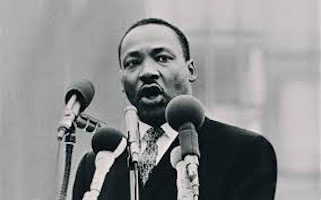
  • Why is Martin Luther King, Jr. Relevant Today?

    Why is Martin Luther King, Jr. Relevant Today?

    By Ashok Ojha, Hindi Sangam Foundation

    Almost half a century ago Martin Luther King, Jr. shook the conscious of the United States of America by launching his movement to empower the poor, the discriminated and marginalized people. The nation was deeply divided between races and classes. King, a priest, challenged the administration of this country and vowed to establish the valued ingrained in the country’s constitution.

    People of all colors and shades identified with the values set by King and took part in his protest movements to demand equality and justice. We celebrate King’s birthday on January 15 and find that his deeds continue to inspire us. As we celebrate the birthday of this great civil rights warrior we realize that his values and goals continue to be relevant and meaningful guiding force. In order to compel the nation change its path of progress King followed the strategies that Gandhi in India had implemented with success. Gandhi led his people to the road to freedom from the British rule. King led a movement very similar to what Gandhi had achieved three decades ago.

    King’s strategy of resistance through non-violence proved very effective. The positive results of Gandhi’s strategy of non-violence sound logical to King. He was certain that violence was not the right path to achieve equality in USA. In order to convince the government in Washington D. C. King made inspiring speeches and led marches. He designed his movement against white supremacists same as Gandhi had asked his people to follow the path of civil disobedience against the British.

    The two leaders were not afraid of sufferings that they invited through their campaigns. They were ready to face violent consequences of their actions. In the end they were certain to compel their opponents change their hearts and minds. Their goal was to establish the power of non-violence which was greater than the power of the gun.

    Gandhi always combined faith in his principle of nonviolence. He was firm in his believe in seeking truth. ‘Truth is God’ was his mantra. King was a godly person, a Baptist minister of black Church who preached for God. He linked the power of God with the power of oppressed people and believed that freedom and equality belonged to them. Like Gandhi King was also a seeker of Truth.

    Inspired by the civil disobedience technic formulated by Gandhi, King asked his followers to boycott the use of segregated buses in Montgomery, Alabama. This was his experiment with truth. He was using the method of noncooperation with the system. His method was so much like that of Gandhi that people called him, ‘The American Gandhi’. However, Gandhi was fighting against the rulers who were outsiders. On the contrary King was bent upon forcing the federal government to do more for people. He knew that the federal government was able to find solutions for many problems that caused poverty and unemployment.

    Neither Gandhi nor King was willing to compromise on their goals. Gandhi didn’t accept anything less than ‘total freedom’. King’s fight for racial equality was aimed at equal rights for Black people. King’s efforts were well rewarded with Nobel Peace Prize in 1964. He focused his fight against poverty and Vietnam War. He targeted his fight on a broader scale to include elimination of poverty and social justice. He aimed at appealing to a broader audience of both Black and White masses.

    In 1964, King received a Nobel Peace Prize for his nonviolent fight against racial inequality.

    In the final years of his life, King’s focus changed to include a resistance to widespread poverty and the Vietnam War. The latter alienated many of his liberal allies.

    Today, civil disobedience continues to be a tool in a democratic society. Oppression of the poor has not stopped. Equality remains noble words in the constitution. King’s philosophy and his path of democratic resistance guides those who believe in struggle for freedom. Gandhi and King experimented with truth and achieved it. But for the oppressed and the poor truth continues to be elusive. The principles of Gandhi and King are strong guiding force for the seekers of change. King was assassinated in Memphis, Tennessee. His death ignited riots in many US cities. His mission is yet to be fulfilled.

    (The author is a journalist and Hindiphile)


  • The Arts are Here to Stay

    The Arts are Here to Stay

    By Carmen Fariña

    When I accepted the job of Chancellor, I knew right away that the arts would be a focal point of my tenure. The arts are not an add-on or simply an extra-curricular activity – a rich arts curriculum strengthens school communities and teaches students skills and passion, cultivates hobbies and can instill confidence and creativity that students will keep with them for the rest of their lives.

    This is evident at PS 111 in Queens. When I visited in September to celebrate the opening of a new cafeteria, I was stopped in my tracks by the sound of students belting at the top of their lungs. I instantly turned around to see where the noise was coming from. As I walked down the hallway, the singing became louder until finally I found the classroom – a group of 25 fourth grade students practicing scales. I interrupted and asked the teacher what they were working on. It was still only the third week of school, but they were already rehearsing for their holiday concert in December. “We have a lot of work to do,” the teacher said with a smile.

    She was right, they had a long way to go. But that didn’t matter, because every student in that classroom was beaming with joy. This was the music teacher’s first year at the school and her class represented the culmination of hard work by the principal, Ms. Jaggon, to revamp the school’s arts instruction.

    Just two years ago, PS 111 was on the State’s list of persistently dangerous schools. The school was also struggling to engage parents and morale was low. Needless to say, a drastic change was needed and the arts have played a critical part in that effort. The school now has a dance teacher and a new dance studio, a visual arts teacher, a music teacher and a theater teacher. Parents are excited to be in the building where student artwork hangs on every wall and a performance or concert happens with great frequency. Most importantly, students have become more confident, motivated and curious to try new things.

    These are the types of investments that we’re seeing schools make in every borough. In fact, over the past two years, school-level spending in the arts has increased by over $45 million. And this year, we have a record high-number of certified arts teachers in our schools – the highest in more than a decade, with nearly 3,000 citywide.

    Schools like PS 111 are the reason this administration invests in the arts each year. Because we know that the arts help strengthen school communities, foster creativity and critical thinking skills and help create an inclusive environment for all students.

    At PS 111, for example, one in five students is an English Language Learners and nearly 40 percent of students have special needs. The arts have played an even more important role in the lives of students like these and their families. This year, we’ve expanded arts programming for ELL students and students with disabilities to nearly 350 schools across the City, more than double the number of schools in 2014-15. These programs also help students learn English and become more confident and expressive.

    When I look at schools like PS 111, I know that our investments in arts go beyond just teaching music, dance, visual arts or theater. Our investments have built stronger ties between families and schools and have opened up new and exciting doors for students, helping them discover passions they never knew they had.

     As we continue to make these investments in the arts, and cultivate partnerships with cultural institutions, I’m also proud that thousands of 7th graders have benefitted from “Teen Thursdays” where they enjoy the incredible museum offerings across our City.  And for the first time, we’re also providing some high schools with additional funding and support so that they can enhance their arts programs and attract more students through competitive auditions. As more schools spend their own resources on the arts programming, it is clear that the arts have become a pillar of instruction in our schools.

    Now, after 52 years of working in New York City schools, I will be retiring in the coming months. It gives me great pride and satisfaction to see this reinvigorated passion for the arts from our youngest learners through high school. The arts are not a frill, and they are here to stay.

    (The author is New York City Schools Chancellor)

  • As I See It : Assertive Sovereignty or International Cooperation?

    As I See It : Assertive Sovereignty or International Cooperation?

    Of course, the principle of “sovereign equality” is one of the fundamental pillars of the United Nations system. However, the growing trend among four of the five permanent members of the United Nations Security Council (the United States, China, Russia and the United Kingdom) to assert the primacy of sovereignty over the objectives of international cooperation can potentially alter contemporary global governance structures adversely.
    India has a key role, as well as core national interests, in implementing Agenda 2030 and the Paris Agreement on Climate Change. These interests are an integral part of the major initiative announced by Prime Minister Modi under the “sabka saath, sabka vikas” policy. Perhaps the best illustration of India’s ground-based approach is in clean and renewable energy, which is an essential requirement for development.
    By Asoke Mukerji

    The year that has just ended was marked by the vigorous reassertion of the principle of sovereignty in international relations. Implicitly, this has challenged the concept of international cooperation, enshrined in the UN Charter 70 years ago. Founding members of the UN, including India, which had suffered the ravages of war and conflict, focused on international cooperation to prevent another world war, while sustaining peace through equitable socio-economic development.

    Of course, the principle of “sovereign equality” is one of the fundamental pillars of the United Nations system. However, the growing trend among four of the five permanent members of the United Nations Security Council (the United States, China, Russia and the United Kingdom) to assert the primacy of sovereignty over the objectives of international cooperation can potentially alter contemporary global governance structures adversely.

    President Donald Trump, in his maiden address to the UN General Assembly in September 2017, advocated a coalition of “strong and independent nations that embrace their sovereignty”. This was endorsed by Russia. At the 19th Chinese Communist Party Congress in November 2017, President Xi Jinping of China asserted his country’s commitment to weiquan or protection of rights, foremost of which was the right to sovereignty. Outside the United Nations, the United Kingdom, following its referendum in June 2016, been moving inexorably towards asserting its sovereignty in relationship to the European Union through the Brexit negotiations.

    While the bigger powers look to give substance to their focus on assertive sovereignty through building up their militaries (and the economic sectors that sustain these militaries), the majority of the 193 countries that are represented in the UN General Assembly have been engaged in maximizing international cooperation to eradicate poverty and sustain their socio-economic development. Just two years before President Trump’s speech, in September 2015, the UN General Assembly had adopted an ambitious road-map to achieve these objectives through the 17 specific Sustainable Development Goals (SDGs) at the heart of Agenda 2030.

    The overarching goal, SDG 1, is eradication of poverty. In 2013, about 10 per cent of the global population, or 767 million people, lived below the World Bank’s poverty line of US$1.90 a day. Of these, the majority were in sub-Saharan Africa (389 million) and South Asia (256 million). It is clear from this that eradication of poverty as a priority requires international cooperation, which allows the flow of investments, trade and people in a supportive atmosphere of peace and security. The fact that the most active United Nations peacekeeping operations today are in sub-Saharan Africa, where ironically the bulk of the peace-keeping troops are from South Asia, is an illustration of the challenges ahead.

    Agenda 2030 was accompanied by two other important global decisions on international cooperation on sustainable development. One was a commitment to facilitate the use of appropriate cyber technologies for development and empowerment, especially to bridge the digital divides, as part of the High-Level Review of the Tunis Agenda of the UN. The second was the prioritization on replacing fossil-fuels with renewable energy for sustaining development, which was endorsed by the Paris Climate Change Conference. Both these decisions were reached in December 2015.

    India has a key role, as well as core national interests, in implementing Agenda 2030 and the Paris Agreement on Climate Change. These interests are an integral part of the major initiative announced by Prime Minister Modi under the “sabka saath, sabka vikas” policy. Perhaps the best illustration of India’s ground-based approach is in clean and renewable energy, which is an essential requirement for development.

    While the Agenda 2030 negotiations on clean energy (SDG 7) were underway at the United Nations, India had announced its national goal of generating 175 GW of renewable energy by 2022. This was followed up by India’s bold initiative (endorsed by France) of proposing an International Solar Alliance (ISA) of 121 countries to accelerate investments, the transfer of appropriate technologies, and sharing of developmental experiences in using renewable energy for sustainable development. The ISA came into being on 6 December 2017, following the ratification of the treaty establishing the ISA as an inter-governmental organization by 15 countries. It is the only such international organization headquartered in India.

    Developing economies like India are today at the center of effective international cooperation. They not only offer the markets for investments, but through the application of technology by skilled professionals successfully showcase an inter-connected (and inter-dependent) world.

    The call to assertive sovereignty by raising new protectionist barriers to the flow of people, data, investments and technologies poses a direct challenge to effective and equitable international cooperation. The issue of sovereignty therefore needs to be placed in the context of the 21st century. As Germany aptly stated at the UN General Assembly in September 2017, “in international cooperation, no one loses sovereignty. Rather we all gain new sovereignty which we could no longer have as nation-states on our own in today’s world.”

    (The author, a career diplomat, was India’s Permanent Representative to the United Nations from April 2013 to December 2015. He can be reached at  1955pram@gmail.com)


  • Trump Tax Bill Is Pro-Growth & Pro-People

    Trump Tax Bill Is Pro-Growth & Pro-People

    By Dave Makkar

    After more than three decades, Congress under President Trump, finally passed much-needed and long-overdue tax relief for millions of individuals, families and businesses. While the new tax bill is still not perfect, but it will go a long way in helping individuals, families, small to medium businesses as well as big corporations practically in every sector to be more competitive domestically as well as internationally. Consumers will receive much-needed tax relief and therefore, increase discretionary income. This Tax Bill will create still not too perfect but some what a fairer tax code that will trigger reinvestment in practically every state of America to create more jobs and better wages. This will boost the spending power of consumers and take America on the path of more prosperity, says the author.

    Personally, I have failed to understand the logics of Democrats that the Trump Tax Bill is anti-growth and anti-common person. The fact is this bill is pro-growth and pro-people. There is no doubt that the residents like me of high property and state tax states like New Jersey, New York, California etc.  will be affected to a certain extent because of the $10,000 cap on property tax and state tax deduction but not a whole lot because of the doubling up of standard deduction.

    As an resident of New Jersey since 1996, I can simply say if the property taxes are exorbitantly high; it is the residents that are to be blamed for allowing unionized politicians posing as Republicans & Democrats to govern 8.5 mil people in 8,000 sq. miles with 588 governments with over 10,000 elected/appointed politicians and 660,000 employees with no or little work. Unless the residents revolt to cut down the number of governments, elected/appointed politicians as well as the employees; they will see every year their property and state taxes going up to financially feed the monstrous size 588 governments of New Jersey.

    Democrats are ignoring the fact that about 70 percent of Americans take the standard deduction. Trump Tax Bill has doubled that deduction to $12,000 for individuals, 18,000 for heads of household, and $24,000 for joint filers combined with some more generous 7 tax brackets and rates. It would mean less tax taken from most individuals’ and families’ paychecks. Child tax credit has been increased from $1,000 to $2,000 per child. A portion $1,400 would be refundable. That is, taxpayers could get up to $1,400 back from the government, even if they owed no tax. The Bill also raises the income limit for child credit, so families with higher incomes can qualify. Families also could claim a new, $500 “family” tax credit for non-child dependents. That credit is non-refundable. The Bill would increase the amount that could be contributed to tax-favored ABLE savings accounts, designed to save for the needs of disabled adults and children. Contributions could also make the beneficiary of an ABLE account eligible for the saver’s credit, intended to supplement savings for lower-income people. This Bill also provides a temporary break to low-earning people, applying the lowest, 10% rate to more of their taxable income (individuals would get an additional $200 in income taxed at 10 percent; joint filers would get an additional $400 taxed at that rate). For Tax payers subject to the alternative minimum tax, for individuals the exemption from current first $54.300 has been raised to $70,300. For married couples filing jointly the limit from $54,500 has been raised to first $109,400 of income. Under the new Tax Bill by one estimate, a family of four with an income of roughly $73,000 would save $1,500 each year in taxes. In nut shell under this Tax Bill, it would mean less tax taken from most individual’s and families’ paychecks.

     Lower Property & state taxes deduction: A maximum $10,000 deduction for state and local taxes could be split between property taxes, and either state income or sales taxes. That’s compared with an unlimited deduction in the current tax code is certainly a setback for residents of high property & local tax states. This $10,000 cap applies to both singles and married couples filing jointly, though married people filing separately could deduct a maximum of only $5,000 each. People who run home businesses could still deduct the portion of state and local taxes, including property tax, that applies to that business. Interest on up to $750,000 in mortgage debt on a newly purchased primary home could be deducted; that’s a drop from the $1 million allowed now. The interest on home-equity loans and line of credit would no longer be deductible, regardless of what it’s used for.

    Upper-Middle Class Tax payers/investors with passive income.  Will get a significant tax break on a portion of qualifying income. According to a  research paper authored by 13 tax experts notes, certain wealthy individuals might be able to incorporate themselves and pay tax on interest income at the corporate rate of 21 percent, not the top 37 percent they’d pay as individuals.

    Coming to the rich, the heirs of wealthy people’s surviving spouses would continue to pay no estate tax. The estate tax exemption would double; currently non-spousal heirs would avoid a 40 percent tax on the first $5.49 million inherited from one individual and $10.98 million inherited from two.

    The main villain for the Tax Bill critics “The Corporations”: Their tax rate would drop to 21 percent from a top 35 percent rate; decline of a whopping 40 percent! Also allows fully allowable deductions for capital expenses and lower levies on repatriating overseas profits.

     Real Estate Businesses: can claim a new tax break that’s planned for partnerships, limited liability companies and other so-called “pass-through” entities.

    Technology: U.S. Tech companies are sitting on $3.1 trillion in overseas earnings, according to an estimate from Goldman Sachs. The largest stockpile belongs to Apple at $252 billion – 94% of its total cash. Microsoft, Cisco Systems, Google parent Alphabet Inc. and Oracle round out the top five, data compiled by Bloomberg show. One caveat is that the repatriation provision could generate a large tax bill. In Apple’s case, a 14.5 percent rate would equate to $36.6 billion in taxes, or about $7 a share, according to Bloomberg Intelligence.

    Banks: The earnings of big U.S. banks will be boosted by an average of 13 percent, according to Goldman Sachs. Leading the way will be Wells Fargo (17%) and PNC Financial Services Group Inc. (15%).

    Autos: The industry’s biggest companies, including General Motors and Ford, will benefit from the rate cut and the reduction on levies for repatriating overseas profits, according to UBS.

    Consumer products/retail: Retailers are big winners from the rate cut because many generate all, or at least an overwhelming majority, of their income in the U.S. and pay the highest tax rates of any industry. Most tax breaks and loopholes are not applicable to retail. Total sales from the nearly 3.8 million retail establishments in the United States reached about $2.6 trillion in 2016. Retailers employ almost 29 million, and support more than 42 million jobs in the U.S. That increases the prospect for better wages for existing employees in this sector and more jobs.

    Full and immediate deductions on capital expenditures could allow at least one retailer to not owe any federal taxes the next two years. Aaron’s Inc., which leases televisions and refrigerators to consumers at more than 1,700 stores, will be able to use deductions on buying inventory, which are considered capital investments, to wipe out its tax bill in 2018 and 2019, according to Stifel Nicolaus & Co.

    Chains and consumer brands also expect the tax bill to boost demand for their goods and services. Many of those companies rely on middle- and low-income shoppers for the bulk of their sales, and changes to individual taxes — such as doubling the standard deduction — will increase discretionary income.

    Industrials: In machinery, trucking is likely to see the biggest impact, according to Jefferies. The corporate rate cut would give U.S. transportation companies of all sizes more money to upgrade their fleets with fuel-efficient vehicles. The bill’s increased deductions for capital spending would add another incentive to buy new 18-wheelers, a potential boon for truck makers like Paccar Inc. and Navistar International Corp.

    Energy: oil-and-gas companies will be big winners because they pay the second-highest effective tax rate of any sector, at 37 percent, according to Bloomberg Intelligence. But a number of oil explorers and equipment providers won’t benefit because their operations are unprofitable.

    Hospitals and insurers: The bill is estimated to boost insurance companies’ profits by as much as 15 percent because they pay high rates, according Ana Gupte, an analyst at Leerink Partners.

     Pharmaceuticals: U.S. drug makers will be one of the biggest beneficiaries of the repatriation portion of the bill. They’ve been sitting on billions of dollars in overseas earnings and can now bring home that cash at a reduced rate. Biotech and pharma companies will get a smaller tax credit for developing drugs for rare diseases. Under current law, they can deduct 50 percent of the cost of testing drugs for rare or orphan diseases that affect only small numbers of patients. The revised bill cuts that amount to 25 percent, raising government revenue by $32.5 billion over a decade.

    Chris Martin in his article “Hidden Benefit to U.S. Corporate Tax Cuts: Lower Utility Bills” in Bloomberg wrote that there’s one place where every American may benefit from lower corporate income-tax rates: utility bills. Regulated utilities may pass tax savings on to ratepayers, consumers may get share of estimated 15% cut to utility tax. An average consumer could see a reduction of about 5 percent off their monthly bill, according to Rhame.

    After more than three decades, Congress under President Trump, finally passed much-needed and long-overdue tax relief for millions of individuals, families and businesses. While the new tax bill is still not perfect but it will go a long way in helping individuals, families, small to medium businesses as well as big corporations practically in every sector to be more competitive domestically as well as internationally. Consumers will receive much-needed tax relief and therefore, increase discretionary income. This Tax Bill will create still not too perfect but some what a fairer tax code that will trigger reinvestment in practically every state of America to create more jobs and better wages. This will boosts the spending power of consumers and take America on the path of more prosperity.

    If we want sustained and continuous economic growth and prosperity for all with low levels of poverty, the corporations must come up with a solution for equitable distribution of nation’s economic prosperity by voluntarily defining what should be the maximum or reasonable pay, perks and retirement packages for its executives. Corporations must stop creating high levels of economic inequalities by fraudulently defining the minimum wages for its workers that have if not equal; at least equitable contributions in creating the wealth for corporations and the nation. An Economy of exclusions, gross economic injustice with very high inequalities cannot continue forever because it can bring down the country with a massive class war   between the “Haves” and the “Have Nots”.

    (Data Compiled from various sources)

    (The author is a social activist and is a regular contributor to The Indian Panorama. He can be reached at davemakkar@yahoo.com)


  • UN General Assembly rejects Trump’s decision to recognize Jerusalem as Israel’s capital

    UN General Assembly rejects Trump’s decision to recognize Jerusalem as Israel’s capital

    India votes to challenge US decision

    Israel calls preposterous vote against Jerusalem at UN General Assembly

    UNITED NATIONS (TIP) India joined 127 other countries, on December 20 to vote in the UN General Assembly in favor of a resolution opposing the recent decision of US President Donald Trump to recognize Jerusalem as Israel’s capital. Nine countries voted against the resolution, while 35 countries abstained.

    India’s decision to vote against American recognition of Jerusalem as the Israeli capital comes a day after Trump warned countries against opposing the US position. India did not speak on the floor of the Assembly in New York, but after Trump recognized the holy city of Jerusalem as the capital of Israel, it had said that its Palestine position was independent and consistent.

    The countries that joined the US in voting against the resolution were Honduras, Israel, Marshall Islands, Micronesia, Nauru, Palau and Togo. Among major nations who abstained voting were Australia, Bhutan, Canada, Columbia, Hungry, Mexico, Panama, the Philippines, Poland and Uganda.

    Israel rejected as “preposterous” the vote by 127 countries, including India, at the UNGA that opposed Donald Trump’s recognition of Jerusalem as Israeli capital.

  • Tete-a-tete with Trump: Modi’s upcoming US visit will make clear India’s place on priority list

    Tete-a-tete with Trump: Modi’s upcoming US visit will make clear India’s place on priority list

      By KC Singh

    As I See It What India is seeking needs to be prioritised taking into account Trump’s predilections. Issues flowing from his electoral promises are least negotiable. For instance, the H-1 B visas are best left alone except to explain how their tweaking can benefit both nations. Perhaps a promise can be extracted for examination by experts, says the author.

    Public attention this week rivets on the offices of the Presidents of the US and India — the most powerful and the most populous democracies, respectively. The oath of office of both shares a phrase: “will to the best of my ability, preserve, protect and defend the Constitution….” Despite the Indian President’s role modelled on the British sovereign, the borrowing from the US is deliberate, something the Prime Minister’s oath lacks.

    The next President of India’s election assumes importance as not since Rajiv Gandhi’s prime ministership ended in 1989, has India had a single-party government under an assertive leader ideologically attuned to the RSS. In the last three years, the positioning of individuals with a similar ideological slant in educational, cultural and even scientific institutions indicates a concerted attempt to foist on India a Hindutva model. Who becomes the next President is thus of more than academic interest. It can hasten or check the trajectory towards majoritarianism.

    Having finessed the Indian presidential election, PM Modi heads to the US on June 25-26 to handle the mercurial US President. It is not a simple resumption of bilateral engagement from where Trump’s two previous predecessors left it. The new President has signaled retreat from the Asia-Pacific, cavalierly withdrawing from the US initiative for linking 10 select economies via the Trans-Pacific Partnership. His flip-flops on the relevance of NATO, blatant interference in the domestic politics of European allies by his snide remarks about their refugee policy or lauding Britain’s Brexit vote, and finally, his rejection of the Paris climate accord are part of his erratic policy making.

    Trump has careened around the world, leaving in his wake controversy, or even turbulence. The first development of concern to India flows from his Riyadh visit on May 25-26 for a summit with principal “Sunni” Arab nations. Saudis marketed it as an alliance to counter Iran and the ISIS. Pakistan PM Nawaz Sharif attended the summit. While Trump had been debunking the P5+1 nuclear deal with Iran incessantly during his campaign, in Riyadh, he clearly aligned with the Sunni Arabs against it.

    On June 5, a fortnight after the Riyadh summit, Saudi Arabia and the UAE led Bahrain, Egypt and Yemen to sever relations with Qatar, alleging terror abetment. Trump instantly lauded action against “funding of radical ideology”. A MSNBC report claimed that Trump was unaware at that stage that Qatar hosts the largest US air base in the region at Al-Udeid with 11,000 servicemen and 100 aircraft. The region split along Shia-Sunni and Arab-non Arab lines as Iran and Sunni Turkey aligned with Qatar. The result is an uneasy stalemate, but US back-pedaled, sending ships for a joint exercise with the Qatari navy and signing a $12 billion arms sale. Saudi King Salman has now replaced the Crown Prince by his own son. This follows the overturning of the earlier succession plan ordained by the late King Abdullah. The widened fissures in the Saudi ruling family augur ill for the region.

    The second development is President Trump delegating power to his generals to decide on additional troops for Afghanistan. Currently, 6,700 US troops are training and advising, besides 2,100 are engaged in counter-terror operations. NATO has 6,500 troops for training. The US may now induct another 3,000-5,000 troops. Critics argue that US Presidents must not leave such decisions to generals, but Trump probably chose that methodology as troop enhancement counters his election rhetoric. The more substantive critique is that induction cannot precede clarity about Trump’s Afghan strategy.

    Modi sets forth for the US against this unsettled regional background, besides tension with China and Pakistan. Modi’s visit, the media is told, is to establish an equation with Trump. While this is standard desire at summits, but Trump is a transactional being, constantly bargain-hunting. The Chinese managed to neutralize his venom by interposing his family between them and flinging diverse investment offers. Trump veers away from the big strategic picture whenever distracted by the “deal”. The question then is:  what does Modi have in his bag to offer?

    What India is seeking needs to be prioritised taking into account Trump’s predilections. Issues flowing from his electoral promises are least negotiable. For instance, the H-1 B visas are best left alone except to explain how their tweaking can benefit both nations. Perhaps a promise can be extracted for examination by experts.

    Trade imbalance is not as severe as the Sino-US one, but Trump will seek more access to Indian market, particularly the financial and insurance sectors, as indeed concessions on intellectual property. Modi’s “Make in India” and Trump’s “America First” are on the surface paradoxical. The government must have done homework on how to bridge that divide. Linked is the transfer of technology issue, on which two decades of Indian diplomacy was expended to deconstruct US’ technology denial regime created after India’s 1974 nuclear test. The Tata group has reportedly signed a co-production agreement for F-16 aircraft in India. India will have to ascertain whether Trump is even willing to let older generation military hardware be manufactured abroad in exchange for market access.

    Trump can also be expected to pay less heed to India seeking NSG membership or reform of the UN Security Council. He may, on the contrary, ask Modi how India can share the security burden of the US. India may be required to clarify its stand on Iran as indeed, in turn, the US must adumbrate its Afghanistan policy. Significantly, the US has dropped the phrase Af-Pak, signifying the de-hyphenation of India from the issue, employing now “South Asia policy”. The danger is, as sounded by the US PR to UN, Nikki Haley, that Trump may argue that Kashmir issue settlement is a condition precedent to an Afghan-Pakistan settlement.

    Thus, Modi’s US visit, followed by another trek through a distracted Europe, on the vacuous pretext of lobbying for NSG membership, and eventually the G-20 meeting, where host Germany is preparing to confront Trump with free trade rhetoric, are testing times for Indian diplomacy. That this time there is no Madison Square Garden-level hoopla shows the reality of the xenophobic and anti-globalization US catching up with Modi, the strutting showman. Modi may find the US President less easy to ensnare than Indian presidency.

    (The author is a former Secretary, Ministry of External Affairs, Government of India)

  • Prior to upcoming visit by PM Modi, USINPAC does outreach with the Trump Administration

    Prior to upcoming visit by PM Modi, USINPAC does outreach with the Trump Administration

    WASHINGTON (TIP): As part of its ongoing strategic dialogue at Capitol Hill, The US India Political Action Committee (USINPAC) held a meeting with members of the Trump-Pence administration. Key participants at the dialogue were Raju Chinthala, USINPAC Indiana Chair, who met with Micheal Cutrone, the Special Advisor to the Vice President for South and Central Asia and Mr. Paul Teller, the Special Assistant to the President for Legislative Affairs. In light of the upcoming visit of Indian Prime Minister Narendra Modi to the nation and his meeting with President Trump, USINPAC was keen to provide valuable insight on matters pertaining to Indian Americans.

     This will be Prime Minister Modi’s first to Washington under the Trump administration. Unlike his past meetings this current visit will be singularly focused on bilateral relations. The Modi-Trump meet also comes at a time when the H1-B visa program is under intense scrutiny and President Trump has announced to withdraw from the Paris Climate Accords last week. President Trump had then called out India and China for being some of the world’s biggest polluters and had alleged that under the Climate accord the US would have to pay India ‘billions and billions of dollars.’ The Indian government is looking forward to smoothening out any wrinkles with the new administration, regarding immigration reform and reaffirm the US-India partnership in the spheres of international diplomacy and Defense & Security in the region.

     Press Secretary Sean Spicer, in a press briefing announced: “President Trump looks forward to discussing the ways to strengthen our ties between the United States and India and advancing our common priorities fighting terrorism, promoting economic growth and reforms and expanding security cooperation in the Indo-Pacific region.”

     Raju Chinthala remarked, “We had a very cordial and productive meeting with the Trump-Pence administration on various domestic and international issues. USINPAC will continue to develop dialogue between the US and India to strengthen our alliance and take it to the next level.”


  • Consulate General of India, Chicago, in Association with 100 Community Organizations, will Host 3rd Edition of International Yoga Day

    Consulate General of India, Chicago, in Association with 100 Community Organizations, will Host 3rd Edition of International Yoga Day

    NAPERVILLE, CHICAGO (TIP): Consulate General of India in Chicago, in collaboration with the City of Naperville, is all set to host 3rd edition of International Yoga Day on 24th June 2017 (Saturday) at Naperville Yard, 1603 Legacy Circle, Naperville, IL 60563.

    City of Naperville issued a Proclamation and declared June 24th, 2017 as International Yoga Day in the City of Naperville. Mr. Steve Chirico, Naperville Mayor will be Chief Guest at the International Yoga Day, which will be attended by dignitaries, elected officials, and community leaders from different walks of life.

    Ms. Neeta Bhushan, Consul General of India in Chicago said that the program will commence at 10:00 am and end at 1200 noon, followed by a community festival and an array of cultural activities till 05:00 pm. Apart from the demonstration of common asanas (postures) under Common Yoga Protocol, breathing techniques, Meditation Workshop, etc., the Program will include a number of activities relating to yoga.

    The event is free for all. However, as the space is limited, those interested in attending the event and knowing more about it are cordially requested to visit Facebook.com/IndiaInChicago. Participants are requested to bring their own yoga mats.

    Ms. Bhushan said that about 2,500 guests, 100 community organizations, yoga and spiritual centers, business establishments, etc. will grace the occasion. She called upon Indian-Americans and all the nationalities to attend the event in large numbers in order to make it a resounding success.

    (Photograph and Press release by: Asian Media USA)

  • Embassy of India celebrates Baisakhi

    Embassy of India celebrates Baisakhi

    WASHINGTON (TIP): Embassy of India, Washington DC celebrated Baisakhi on June 3 in the 350th Birth Anniversary year of Guru Gobind Singh ji. The event was attended by around 250 Indian American community members from various parts of United States.

    The celebration was marked by an auspicious beginning with Shabad Kirtan, welcome remarks by Ambassador Navtej Sarna and a cultural performance consisting of Punjabi traditional music and dance (Bhangra and Giddha).

    Sikh scholar Dr. Harbhajan Singh Ajrawat spoke on the teachings of Sikhism and highlighted the significance of Baisakhi.

    The fun and festivity was enjoyed by all the guests.