Tag: Arun Jaitley

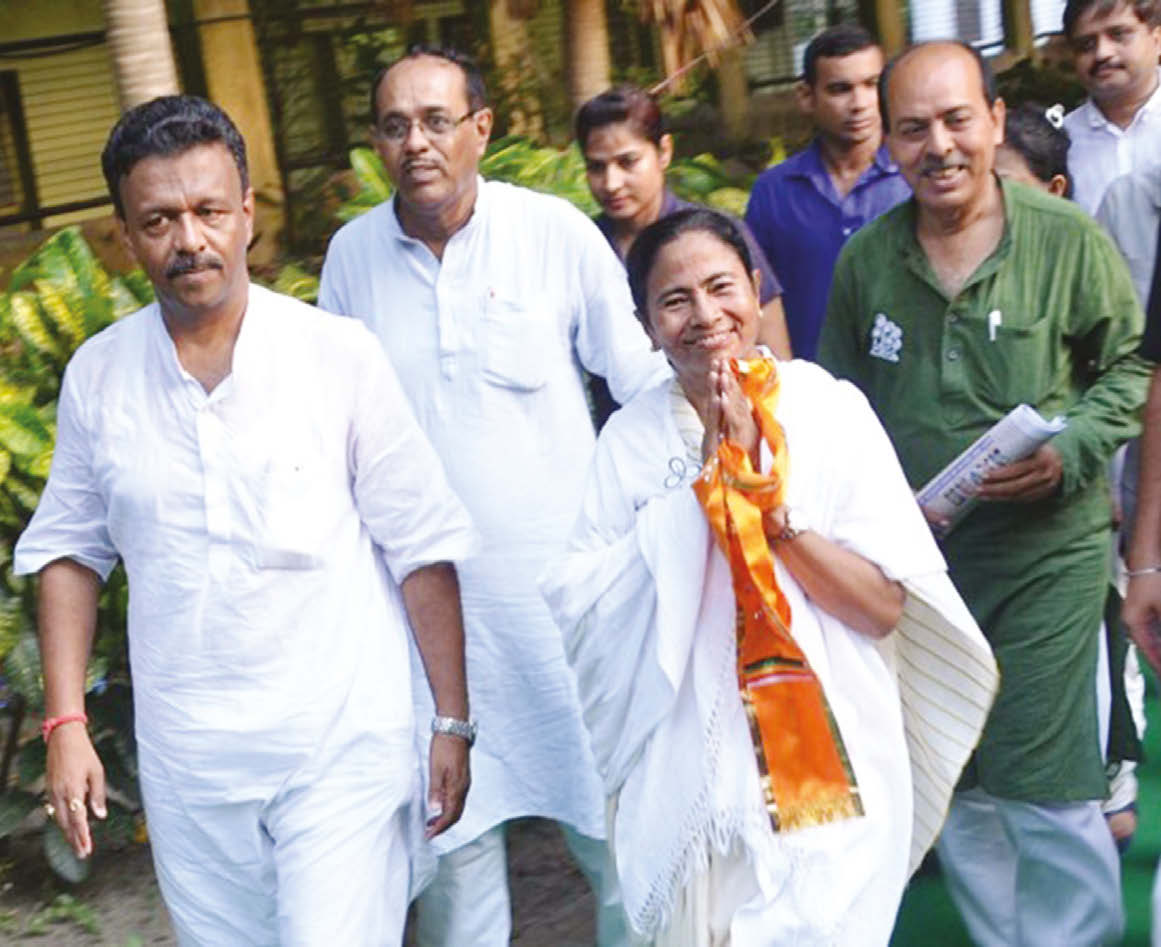
  • Second Innings for Mamata Banerjee as WB Chief Minister

    Second Innings for Mamata Banerjee as WB Chief Minister

    KOLKATA (TIP): The Trinamool Congress chief Mamata Banerjee was sworn in as the Chief Minister of West Bengal on Friday, May 27, thus beginning her second stint in the once-Left dominated State.

    She had already submitted her recommendations on council of Ministers to Governor Keshari Nath Tripathi. Forty-one ministers, including 17 new faces, were sworn in along with her in batches at a function at Red Road in Central Kolkata.

    Her council of ministers include five Minister of States (Independent Charge) and 8 Ministers of State (MOS). “There will be representation from all districts, except Malda. In Malda we don’t have any representation,” Ms. Banerjee had said. Darjeeling and Malda are the two districts where the Trinamool failed to open its account.

    Union Finance Minister Arun Jaitley and Minister of State for Urban Development Babul Supriyo attended Friday’s swearing- in ceremony.

    On Thursday, her Tamil Nadu counterpart Jayalalithaa extended her good wishes to Ms. Banerjee.

    Over 30,000 guests attended the event. Most of roads reaching central areas of the city were diverted resulting in traffic chaos as the cabinet is took oath in the main arterial road connecting south to central Kolkata.

  • ED seeks Interpol notice against Mallya

    ED seeks Interpol notice against Mallya

    NEW DELHI (TIP): After the setback over Vijay Mallya’s deportation from the UK, Indian investigative agencies have now renewed their efforts to get the liquor baron back through Interpol.

    The CBI has forwarded the request by Enforcement Directorate (ED) to the Interpol Headquarters for issuance of the notice, official sources said.

    The ED had sought an Interpol arrest warrant against Mallya to ensure that he appear before the agency for questioning in connection with a money laundering probe that arouse out of a CBI probe into his Rs 9,431 crore loan default.

    The agency wrote to the CBI, which acts as the nodal office of Interpol, to obtain a Red Notice against Mallya from the global agency.

    The Red Notice is issued “to seek the location and arrest of wanted persons with a view to extradite or similar lawful action”. After the notice is issued, the Interpol seeks arrest of the person concerned in any part of the world and notifies that country to take his or her custody for further action at their end.

    The ED had issued summons to Mallya thrice in March and April but he refused to join the questioning in connection with the probe into the Rs 900 crore IDBI loan fraud case. After the summons were ignored, the ED got a Mumbai court to issue non-bailable warrant against him based on which it made the requests for the revocation of his passport.

    After revocation of his passport, the deportation request was sent to Britain, but it was declined and the UK?asked India to seek his extradition instead. The British government said it acknowledges “the seriousness of allegations” against Mallya and was “keen to assist” the Indian government in this case. Trying to put Mallya on the mat, the ED is also contemplating attaching domestic assets and shares worth about Rs 9,000 crore. Finance Minister Arun Jaitley said New Delhi will initiate extradition process after a charge sheet is filed to bring back Mallya.

  • Jaitley’s flawed logic | Judiciary’s ‘overreach’ a necessary balance

    Jaitley’s flawed logic | Judiciary’s ‘overreach’ a necessary balance

    Finance Minister Arun Jaitley has every right to believe and tell the Opposition that the job of dispute resolution provided in the GST Bill need not be handed over to the judiciary even though judges enjoy greater credibility and acceptance than, say, politicians and bureaucrats in settling tax and other disputes. Jaitley is also justified in questioning the need for having another drought fund when two such funds already exist. But instead of arranging relief for the drought-hit, the core issue on which the Supreme Court has pulled up the Centre, he offers excuses like lack of Parliament-sanctioned money.

    Being too clever by half, the lawyer in Jaitley knows how to twist arguments. And this he does to cover up recent political, constitutional and administrative lapses. The GST failure is all too apparent. How does having judges to hear tax cases tantamount to a “surrender of legislative jurisdiction to the courts”? This is how he argues: “With the manner in which encroachment of legislative and executive authority by India’s judiciary is taking place, probably financial power and budget making is the last power that you have left. Taxation is the only power which states have.” Then he makes the final assault: “Step by step, brick by brick the edifice of India’s legislature is being destroyed.”

    Presumed judicial overreach is an issue the executive is unhappy about. But it is not as serious a threat to democracy as was the executive’s attempt, backed by the Opposition, to undermine the judiciary’s independence through the NJAC, which was rightly struck down by a Constitution Bench. Jaitley had called it “tyranny of the unelected”. On Wednesday he sought NJAC-type Opposition cooperation on GST. The Supreme Court’s Uttarakhand snub a day before perhaps still rankled him and provoked the fresh tirade. There is no judiciary vs legislature issue at work. If judges at times cross the Lakshman Rekha drawn by the Constitution, usually an executive failure or political mischief provokes it. A sturdy judiciary may at times seem like an irritant but judicial vigilance over possible executive waywardness is an imperative.

  • India’s Finance Minister Arun Jaitley meets with Business leaders in New York City

    India’s Finance Minister Arun Jaitley meets with Business leaders in New York City

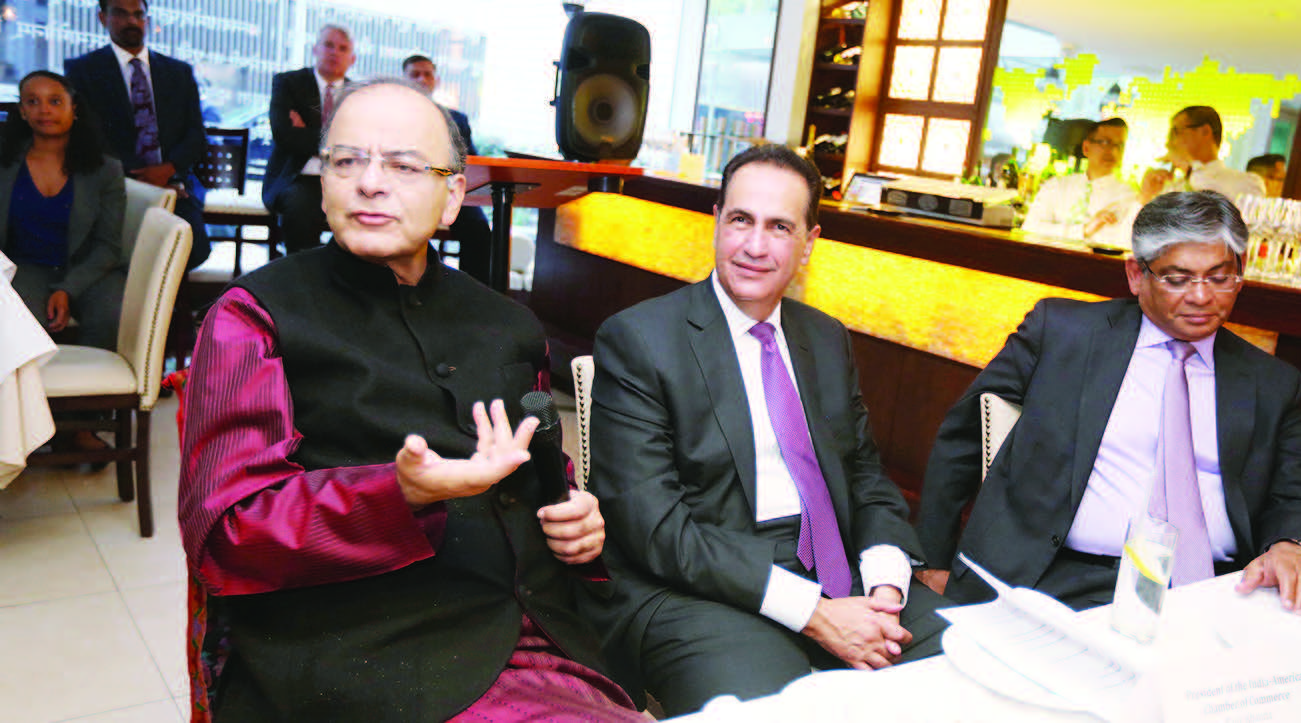
    NEW YORK CITY (TIP): India-America Chamber of Commerce (IACC) hosted, April 19, an evening reception for, Arun Jaitley, Finance Minister of India, during his visit to United States for thebilateral annual yearly financial and partnership meeting with the secretary of treasury in WashingtonDC. The meeting was held at the finest Indian restaurant, Tulsi, for the members of the chamber,prominent business leaders, press and government officials.

    “India has emerged as a major growth engine of the world, “said Rajiv Khanna, President of IACC andPartner of BakerHostetler in his opening remarks. Rajiv highlighted the finance minister’s achievementsand records over the last two years:

    • Reduction in fiscal deficit;
    • Controlling Inflation;
    • Foreign direct investment has gone up by over 40%;
    • GDP growth rate has gone up by more than 2%; and
    • Progressive opening of the Indian economy to foreign direct investment and liberalization of thecontrols that were choking its growth.

    “According to the CFA Institute, the global economy is expected to grow at growth rate of 2.6% in 2016.

    The United States is expected to contribute 42% of this global growth, China is expected to contribute28% of this growth, India is expected to contribute 25% of this growth, Germany is expected tocontribute 3% of this growth and the rest of the world is expected to contribute 2% of this growth. Inother words, while most of the world is struggling with negative growth rates, India has emerged as amajor growth engine of the world, “said Rajiv. “We are very fortunate to have with us today the FinanceMinister of this major global growth engine, the Honorable Arun Jaitley.”

    Rajiv further highlighted the successes of Finance Minister:

    • “Two years ago, when Arun was sworn in as the Finance Minister of India, the fiscal deficit of India was about 4.5%. Today, it is 3.99%. This reduction in the fiscal deficit has taken place in spite of significant and continuous reduction in tax rates in India.
    • When Arun became the Finance Minister, India was plagued with high inflation as a result of which India’s inflation hawk federal reserve would not even think of cutting down interest rates, thereby plaguing the industry with high interest rates at a time when it needed a financial breather. Today, the inflation in India is under control. In the last 16 months, the wholesale index has been mostly negative and the consumer index has been in the range of 4-5%, which has persuaded India’s tough federal reserve to bring down the interest rates, which in turn will spur further growth in India.
    • In the last two years, the foreign direct investment in India has grown by over 40%.
    • In the last two years, India’s GDP rate has grown by at least 2% and is expected to keep moving upwards.
    • In each of the budgets presented by Arun, he has progressively opened the Indian economy to foreign direct investment and liberalized the controls that stifled the growth of the economy.

    We are honored today to welcome Honorable Arun Jaitley, Finance Minister of India.”

    “I have had the privilege of knowing Rajiv for a very long time, in fact more than three and one-halfdecades. Even after moving to US he has kept in touch,” said Honorable Arun Jaitley to the audience. “Iam extremely grateful that Rajiv has put together this gathering.

    The whole world is facing serious challenges and so is India. Today, no one can ignore the fact that wehave a large population and significant part of that population still suffers from poverty. However, thegrowth does not necessarily mean affluence for some, growth in India is necessary because the benefitsof that growth have to first move towards poverty eradication, growth generates wealth and that in turngets used for all segments of the society. Particularly, the Indian model has been not only aboutpercolating down to weaker sections but states with enriched revenues that have to formulate povertyeradication programs to further help the weaker sections of the society.So, without growth, we will only have empty slogans, the kind we had in 1970s where we had veryprogressive slogans but were growing only by about 2.5%. And the world use to ridicule our growth by calling it the Hindu rate of growth. Though in the last two decades the situation has substantially changed, India has huge potential for pushing up growth on the strength of economic activity.”

    He stated further, “we should bear in mind when Rajiv was giving figures of what various countries inthe world contribute to global growth – China for almost three decades grew at an average of 9.5% andfor 30 years to grow at that pace, it did shoulder about 50% of the global growth and that is somethingthat cannot be indefinitely expected. The Chinese model, which has been a state driven growth model,rather than an entrepreneur driven model of growth, is of course facing its own challenges of excesscapacity. It was export based and with the slowdown of global economy obviously the export world hasshrunk, trade has shrunk and China therefore is going through a transformation and in thattransformation they now believe that they may switch over to a domestic consumption economy ratherthan only export. But this transformation will obviously take time and therefore the Chinese did believelast year that the new Chinese normal was 7.5% growth. It has come down to 7% but now the current data indications are that it will be below 7%. In the first quarter, they claim to be grown by 6.7%. India ismuch smaller economy compared to China and certainly the US and will therefore grow much faster.”

    The Minister further stated, “If we drew a line through the geography of India passing through thecenter of the country the bulk of the economic activity is to the west of that line, if you go to east of thatline, whether it’s Utter Pradesh, Bihar, Bengal, north-east parts of Orissa, significant growth is yet totouch these areas. Therefore, geographically we have a region which has a huge potential. It can growin agriculture, it can grow in services, it is also a mineral rich area, and when you exploit these potential,these areas have tremendous opportunities.

    Women in India have been mostly home makers and therefore their potential contribution to the GDP interms of an evolving work force is very significant and you can see social, gender and geographicalinstruments available to us to grow. Expect services, we haven’t realized our full potential and that iswhy I think one of the key areas of emphasis we have now is one that you must concentrate on,agriculture – 15% of country’s income come from agriculture, about 55% people are involved in it. Overthe next 20- 30 years, we have to take large chunks of people out of this sector, we have to add to ruralinfrastructure, we have to add to irrigation, electrification and otherwise empower this sector.”

    He further discussed with the audience the Mudra scheme which was another driver of growth – “Banksmust start giving micro finance at modest interest rates without security, and about 70% of these loanshave been taken by women.

    As far is the world is concerned – I have said the situation is still very grim. At all the internationalforums and at the global economic forums that we have been attending, everyone seems to be aware ofthese challenges. And there is a lack of clarity as to how quickly the world will get out of this, whengrowth will return to the world. The whole economic picture of the world is changing. Countries are stillstruggling with new regime of low commodity prices, low oil prices, which in fact becomes a transfer ofresources, transfer of wealth from the producing nations to consuming nations.”

    Mr. Jaitley concluded his speech by saying “for a society like India where domestic consumption isvery large, we have to use economic instruments available within the country. For example:

    • Emphasis on increased public spending;
    • Large government expenditure in infrastructure and irrigation;
    • This year 233 highways are under construction;
    • 400 railways have been reconverted and rebuilt by private sectors;
    • 700,000 roads being linked to highways and stronger roads;
    • New ports and airport activations; and
    • Affordable housing in slum and rural areas.
    • Thank you Rajiv for your initiative and hospitality.” The Hon Minister then took questions from thepress and chamber members.

    About India-America Chamber of Commerce

    The India-America Chamber of Commerce works to promotes business-to-business dialog between thebusiness and policy leaders of India and the U.S. – the two largest democracies in the free world. TheChamber serves as a platform for open and spirited interaction among U.S. and Indian business leadersfrom the private and public sectors. The Chambers’ monthly meetings include keynote presentations byvisiting cabinet ministers, ambassadors and other prominent business leaders from the U.S. as well asIndia.

    India-America Chamber of Commerce was formed in 1932 and has since then, tirelessly worked topromote trade and investment between India and the United States. The Chamber is now accepting newmembers and forming a new board of influential members.

    For additional information check: www.indiaamericaChamber.com

    For additional Information and membership forms please contact: Rajiv Khanna – rkhanna@bakerlaw.com Poonam Jain – nypoonam@gmail.com


  • Rs 8,000 cr for free LPG set-up for poor women

    Rs 8,000 cr for free LPG set-up for poor women

    NEW DELHI (TIP): The government on Thursday approved a Rs 8,000-crore scheme to provide free cooking gas connections in the name of women members from poor households, reinforcing the idea of LPG emerging as the new vehicle for political outreach ahead of state polls.

    Finance minister Arun Jaitley had announced the scheme in the budget, allocating Rs 2,000 crore for providing 1.5 crore connections in 2016-17. “The scheme will be continued for at least two more years to cover a total of 5 crore BPL (below poverty line) households. This will ensure universal coverage of cooking gas in the country,” Jaitley had said in his budget speech. T he Cabinet’s approval indicates the government’s resolve to see the scheme through the next three years as a whole and to start rolling out connections on a war footing immediately.

    Referring to a WHO study, oil minister Dharmendra Pradhan said five lakh women from poor households die from inhaling smoke from unhealthy fuels used in their kitchens. “The LPG scheme has health as well as environmental dividend,” he said. Referring to the plight of poor, Jaitley had said, “Women of India have faced the curse of smoke during cooking. The time has come to remedy this situation.” Source: TOI

  • Modi Steps in | Amid Sharp Criticism, Jaitley asked To Rollback Tax On EPF Withdrawal

    Modi Steps in | Amid Sharp Criticism, Jaitley asked To Rollback Tax On EPF Withdrawal

    Following widespread concern over the proposed tax on withdrawal from the Employees’ Provident Fund (EPF) contributions, the government is contemplating to give relief to people but without a complete rollback, said informed sources.

    According to sources, a meeting between the officials of Prime Minister’s Office (PMO), the finance ministry and the labour ministry took place on late Thursday and discussed the EPF tax issue.

    The RSS-affiliated Bharatiya Mazdoor Sangh (BMS), which has also opposed the proposal and demanded a complete rollback, also said that government is considering their demand.

    “We are talking to government representatives and they are considering our concern. We are in regular touch with them. We hope some announcement in a day or two,” BMS general secretary Vijesh Upadhyay told IANS.

    The BMS leaders have met Labour Minister Bandaru Dattatreya, Power Minister Piyush Goyal and some other government representatives in this regard.

    Finance Minister Arun Jaitley is likely to make the announcement when he replies to the debate on the Budget in parliament.

    In his budget speech on February 29, Jaitley said that 60 percent of withdrawals from the provident fund accounts will be taxed on contributions to be made after April 1. The aim is to make India a more insured and pensioned society, he said.

  • BUDGET SPECIAL UNION BUDGET 2016-17 | JAITLEY FOCUSES ON RURAL INDIA, SOCIAL WELFARE

    BUDGET SPECIAL UNION BUDGET 2016-17 | JAITLEY FOCUSES ON RURAL INDIA, SOCIAL WELFARE

    RURAL INDIANEW DELHI (TIP): Finance minister Arun Jaitley unveiled what appeared to be a pro-poor budget on February 29, announcing higher spending in the rural economy to fire demand.

    But the minister also promised to pursue economic reforms, including winning approval for a goods and services tax and a new bankruptcy law, to keep India expanding as the world’s fastest growing major economy in his second full budget.

    He announced record investments in a rural job generating scheme as well as higher spending to boost irrigation as part of efforts to facedown looming crisis in the rural economy.

    Jaitley announced two schemes to promote organic farming and said 28.5 lakh hectares will be brought under an irrigation scheme under the Pradhan Mantri Krishi Sichai Yojana.

    Jaitley said a dedicated long-term irrigation fund will be created in NABARD with a corpus of Rs 20,000 crore.

    “The total allocation for agriculture and farmers’ welfare is Rs. 35,984 crore,” Jaitley said, and added: “The government will allocate Rs 5,500 crore for a crop insurance scheme.”

    “The government will reorient its intervention in farm and non-farm sectors to double the income of farmers by 2022,” Jaitley said, echoing Prime Minister Narendra Modi’s pledge to focus on the wellbeing of the agrarian community.

    The ruling NDA dispensation has been criticised by opposition parties, especially the Congress, for allegedly being ‘pro-industrialist’ and ‘anti-poor’.

    Shares of rural and agriculture companies were trading sharply up on measures suggested in the Budget speech. Jaitley also said a unified agriculture market e-platform will be dedicated to nation on birthday of Dr. BR Ambedkar. “We had to work in an unsupportive global environment and obstructive political atmosphere,” Jaitley said, in an apparent dig at the Opposition.

    The finance minister has the job to make India regain its spot as an investors’ darling as well as signal long-term economic reforms without hurting the country’s vast consuming class.

    “We must strengthen firewalls against risks through structural reforms, rely on domestic market so that growth does not slow down,” Jaitley said.

    The government will undertake nine-point reforms, including steps to ensure ease of business in governance, fiscal discipline to ensure benefits for people, the minister said.

    In his budget speech, Jaitley announced a new initiative to provide subsidised cooking gas to BPL families.

    “I am presenting this budget when the global economy is in serious crisis… We converted difficulties and challenges to an opportunity.

    “Indian economy has held its ground firmly,” Jaitley said as he began his speech.

  • Budget Special | Here is list of what becomes expensive and cheaper

    Budget Special | Here is list of what becomes expensive and cheaper

    NEW DELHI (TIP): Finance Minister Arun Jaitley announced a host of changes in the tax structure in the Budget for 2016- 17 that made cars, cigarettes and air travel expensive, while footwear, solar lamps and routers are slated to be cheaper.

    Jaitley on Monday imposed up to 15 per cent excise duty on all tobacco products.

    Additional levy of Krishi Kalyan cess on all services, activities including eating out and payment of bills will also become more expensive. We take a look at things that became expensive and chepaer post-budget announcements:

    What become expensive

    0.5 per cent Krishi Kalyan Cess on all taxable services with effect from 1st June, 2016 which will increase all services bills like – telephone, restaurant, school fees etc

    Increase in price for luxury cars – The budget has imposed a tax collected at source of 1 % on purchase of luxury cars exceeding value of INR 10 lakhs. Further, an Infrastructure cess has been levied as below –

    1 per cent: Petrol/LPG/CNG driven motor vehicles of length not exceeding 4m and engine capacity not exceeding 1200cc

    2.5 per cent: Diesel driven motor vehicles of length not exceeding 4m and engine capacity not exceeding 1500cc

    4 per cent: Other higher engine capacity motor vehicles and SUVs and bigger sedans

    Tobacco and Tobacco Products

    Branded readymade garments and made up articles of textiles of retail sale price of Rs 1000 or more

    Waters, including mineral waters and aerated waters, containing added sugar or other sweetening matter or flavored

    Precious metals & Jewellery

    Aluminum foil

    Air Travel

    Plastic bags and sacks

    Ropeway, cable car rides

    Imported imitation jewellery

    Industrial solar water heater

    Legal services

    Lottery tickets

    Traveling by hiring stage carriage

    Hiring of packers & movers

    E-reading devices

    Instruments for VoIP (Voice over Internet Protocol)

    Imported Golf Cars

    Gold bars

    What becomes cheaper

    Footwear

    Solar lamp

    Router, broadband modems and set top boxes, Digital video recorder and CCTV cameras

    Hybrid electric vehicles

    Sterilised dialyser

    Low cost houses with less than 60 sq mt carpet area

    Hiring of folk artists for performance

    Refrigerated containers

    Pension plans

    Microwave ovens

    Sanitary pads

    Braille paper

    “I am presenting the budget when the global economy is in crisis,” Jaitley said in his opening remarks, adding that India, however, remained the bright spot in this gloom, turning difficulties into opportunities.


  • Cheap agriculture loans to cushion impact of weather shocks, droughts

    Cheap agriculture loans to cushion impact of weather shocks, droughts

    NEW DELHI (TIP): Farmers can continue to get cheap farm loans with finance minister Arun Jaitley raising the target for loan disbursal to them to Rs 9 lakh crore.

    Special focus has been given to ensure adequate and timely flow of credit to farmers, Jaitley said, adding, “Against the target of Rs 8.5 lakh crore in 2015-16, the target of agricultural credit in 2016-17 will be an all-time high of Rs 9 lakh crore.”

    An aggressive farm credit policy is aimed at putting cash into stressed farmhands and cushioning the impact of weather shocks and crippling droughts.

    In fact, the target for farm loan disbursal has been raised consistently. For example, in 2010-11, the loan target was raised by more than 15% at Rs 3.75 lakh crore, as against Rs 3.25 lakh crore in 2009-10.

    To reduce the burden of loan repayment on farmers, the finance minister said a provision of Rs 15,000 crore has been made in the budgetary estimate of 2016-17 towards interest subvention.

    Jaitley said the government has provided a path-breaking crop insurance scheme — Prime Minister Fasal Bima Yojana — for which Rs 5,500 crore has been allocated for effective implementation in 2016-17.

    The new farm insurance scheme does away with clumsy procedures of existing plans that are so complex that they have only served to chase farmers away. Only about 5% farmers take insurance in areas where it is available, a low penetration that shrivels farm incomes during droughts, hailstorms and unseasonal rains.

    The new scheme fixes farmers’ share of premium at 1.5% for winter-sown crops and 2% for summer-sown crops. For cash crops and horticulture crops, it is 5%. The rest will be borne by the government. This is cheaper than current rates.

    Source: HT

  • USIBC endorses Indian Budget as Attractive

    USIBC endorses Indian Budget as Attractive

    WASHINGTON (TIP): American companies, either those with a foothold or who are planning to set foot in India, are bullish on the latest budget presented by the Modi government, business advocacy group U.S.-India Business Council has said.

    “We talked to some of our members on the feedback, and they have been bullish about the budget itself. I feel that its investment in infrastructure, in trying to provide ease of doing business and providing certain tax certainties is good for U.S. investors,” Mukesh Aghi, USIBC president, told PTI in an interview Feb. 29.

    Aghi said the annual budget presented by Union Finance Minister Arun Jaitley maintains the fiscal deficit at 3.5 percent from 3.9 percent and gives international investors an assurance that India can provide discipline among emerging markets.

    Referring to the fact that foreign direct investment in India is up by 40 percent, Aghi, who was recently in India for the Make in India summit in Mumbai, said the move sent a positive signal to the global market.

    “The sentiment (on India among U.S. companies) is on the positive side,” Aghi said in response to a question, hoping that this would bring much greater American investment to India.

    U.S. companies have made $15 billion worth of FDI in India in the last 18 months and are expected to invest another $27 billion this fiscal year, he said, adding that with the latest budget, this figure is expected to go up.

    The infrastructure sector and food retail industry provide a lot of opportunities for investment, he said. Allowing 100 percent FDI in the marketing of food produced in India will likely bring in new investors who will provide the needed manufacturing and retail jobs, he said.

    “This will help farmers increase sales, spur investment in cold chain and storage infrastructure to make sure food is better preserved, and bring new and diverse food products to a larger percentage of the Indian population than ever before,” Aghi said.

    The USIBC president also lauded the Union Finance Minister for creating an investment-friendly climate even as he said U.S. firms are expecting to roll out of the Goods and Services Tax, which can be a “game changer” for the country’s economy.

    “Tax reforms presented in this budget are unprecedented and lay the road map to creating an attractive environment for foreign investors. U.S. companies are still eager for the implementation of GST that has the potential to be a game changer for the economy. This is also an inclusive budget -one that creates opportunities for increasing domestic demand,” Aghi said.

    “The message is that U.S. companies are very bullish on India,” Aghi said, adding that the large section of U.S. FDI in India is going into the IT sector and manufacturing environment.

    Responding to a question, he said USIBC members feel India could move a bit faster on the corporate tax reduction. The American corporate sector, he noted, is looking forward to the intellectual property policy coming out. “I would say a big chunk of the issues were addressed (in the budget),” he said.

    “Yes, we have made progress. But the issue is we should benchmark every state with let’s say Singapore or Hong Kong. We should not measure states within India with each other. We need to raise the bar,” he said.

  • DDCA probe panel chief alleges pressure, wants to meet Rajnath Singh seeking transfer to Centre

    DDCA probe panel chief alleges pressure, wants to meet Rajnath Singh seeking transfer to Centre

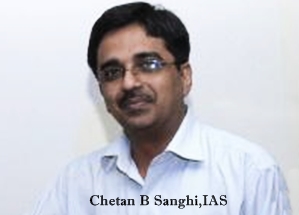
    Chetan Sanghi, a senior IAS officer serving in the Delhi government, who had claimed that he was under “pressure” for naming a “certain VIP” in the DDCA probe panel report, has sought an appointment of Home Minister Rajnath Singh.

    Sanghi has sought the appointment of the home minister but no decision has been taken yet to oblige him, sources said.

    The home ministry is the cadre controlling authority of the Union Territory cadre IAS officers and home minister is guardian of all of them. But no one will be allowed to break service rules and regulations, sources said.

    Sanghi, the Delhi government-appointed DDCA probe panel chief had recently written to Union home secretary Rajiv Mehrishi that he was under “pressure” from various “stakeholders” for naming some individuals, including a “certain VIP”, in his report on the affairs of the cricket body.

    Sanghi has requested for deputation at Centre, but his demand is unlikely to be addressed, sources said because the Centre wants the officer to first devote himself in his present assignment in the AAP government within the rules and regulations.

    Accepting the requests of Sanghi will only encourage “politicking” by bureaucrats and further confrontation with the Arvind Kejriwal-led Delhi government, sources said.

    Leader of opposition in the Delhi Assembly Vijender Gupta had recently alleged that lawyer Rahul Mehra, a member of the probe panel, had put pressure on Sanghi to name Union Finance Minister Arun Jaitley, who has been accused by AAP of allowing “wrongdoings” to happen under his watch as DDCA chief from 1999-2013. Mehra had denied the charges.

    Sanghi had submitted the report to the AAP government in November last year.

    Based on recommendations of the Sanghi panel, the AAP government had last month set up an inquiry commission to investigate the alleged irregularities in DDCA, including the period from 1999-2013 when Jaitley headed it.

    “There was considerable emphasis on naming who were at fault and in particular a certain VIP. There was a lot of pressure from various stakeholders since the subject was very controversial,” Sanghi wrote to the home secretary.

    Since the “formal mandate was not to do so”, a very tightrope walk was taken and the short time frame of three days also did not particularly help matters, he added.

    Sanghi, who headed the three-member probe committee, said there was a “lot of pressure from various stakeholders” since the subject was very controversial and there were a lot of yesteryear cricket luminaries who were very vocal about the alleged mismanagement in DDCA.

    In his letter, Sanghi has also requested for closing cases initiated against him by the Anti-Corruption Branch.

  • Cabinet clears Stand Up India scheme for women and SC/ST

    Cabinet clears Stand Up India scheme for women and SC/ST

    The Union Cabinet chaired by Prime Minister Narendra Modi on January 5 gave its nod for the Stand Up India scheme that is aimed at promoting entrepreneurship among women and scheduled castes and tribes.

    Loans under the scheme would be given for greenfield projects in the non-farm sector.

    The scheme will be a refinance window through Small Industries Development Bank of India (SIDBI) with an initial amount of Rs 10,000 crore.

    “The scheme is intended to facilitate at least two such projects per branch — on an average one for each category of entrepreneur. It is expected to benefit at least 250,000 borrowers,” an official statement said.

    A credit guarantee mechanism would also be set up through the National Credit Guarantee Trustee Company (NCGTC) to support the scheme. Loans under the Stand Up India scheme will range between Rs 1 lakh and Rs 1 crore.

    The ‘Start up India Stand up India’ initiative was announced by the Prime Minister Narendra Modi on August 15, 2015. The Start up India will be launched by Modi on January 16.

    “The Stand Up India campaign is different from the Start Up India campaign…Start Up India is for new entrepreneurs but Stand Up India is a proposal restricted only to scheduled caste, scheduled tribe and women entrepreneurs,” finance minister Arun Jaitley told reporters after the Cabinet meeting. The Cabinet has also given its nod for the conversion of the Mudra Ltd (Micro Units Development and Refinance Agency), an NBFC, into Mudra Bank. The Mudra SIDBI Bank will be a wholly owned subsidiary of SIDBI. A separate Credit Guarantee Fund corpus of `3,000 crore, to support loans disbursed under the Mudra Yojana will also be set up.

    Jaitley said 17.3 million people have so far benefited under the Mudra Yojana.

    While Mudra Yojana is also aimed at financing small businesses, its focus is on refinancing micro lenders who focus on non-corporate small business such as shopkeeper and small manufacturers. It has loan size range of Rs 50,000-Rs 10 lakh.

  • Shatrughan provokes BJP to take action

    Shatrughan provokes BJP to take action

    New Delhi (TIP): Outspoken MP Shatrughan Sinha, in his just launched biography, virtually provoked the BJP leadership to take action against him despite accepting his “open dissidence” after he was sidelined during Bihar Assembly polls.

    In “Anything But Khamosh” launched on Wednesday, Sinha dubbed the BJP leadership “helpless” for it could not take disciplinary action against him for publicly speaking against the party and boasting that he could win elections even as an independent candidate given his equation with senior leaders from other parties.

    “One heard that they’d be taking action against Shatrughan Sinha after the Bihar elections. I said, I didn’t know my people were so helpless that they had to wait for an election to take action. That too against a man who had won with vote share percentage of more than 55 per cent which even our prime minister and Arvind Kejriwal didn’t reach; a man who could stand as an Independent and had the support of many, right from Nitish Kumar and Lalu Prasad to Rahul Gandhi,” Sinha wrote in the 7th chapter: “The Rough and Tumble Of a Life in Politics”. The party grudgingly overlooked repeated defiance from Sinha much before it decided to crack whip on Dharbhanga MP Kirti Azad, suspending him for taking on Union Finance Minister Arun Jaitley in the DDCA case. In a direct challenge, Sinha reiterated his earlier offensive comment in the biography:

    “That’s why I had made the statement, those who want to take action against me must remember Newton’s third law. Every action has an equal and opposite reaction”.

    He said that unlike his veteran seniors L K Advani and M M Joshi, who did not open  their mouths despite sitting outside, “SS was not one to exercise the RSS-style discipline or restraint”.

  • DDCA row: AAP, Kirti Azad intensify attack on Jaitley

    DDCA row: AAP, Kirti Azad intensify attack on Jaitley

    NEW DELHI (TIP): Finance Minister Arun Jaitley, December 30, came under fresh attack over DDCA affairs with AAP accusing him of pressuring the then Police Commissioner to
    “close” investigation involving a cricket club of a bank in 2011 while suspended BJP MP Kirti Azad claimed the SFIO probe report had recommended his “prosecution”.

    In a related development, the DDCA said it has decided to file defamation case against Delhi Chief Minister Arvind Kejriwal and Azad besides other top AAP functionaries for making “wild and baseless” allegations of corruption against the cricket body.

    Continuing its offensive against him, AAP released two letters, purportedly written by Jaitley, to then Delhi Police Commissioner BK Gupta and then Special Commissioner Ranjit Narayan, requesting them to “fairly” deal with the matter and “close” the case since “DDCA has done no wrong”.

    The party also renewed its demand for Jaitley’s resignation in the wake of the “fresh disclosures”. The letter to Gupta is dated October 27, 2011 while the one written to Narayan is dated May 5, 2012.

    Senior AAP leader Ashutosh claimed that the letters “punctured” the Finance Minister’s repeated assertions that he was in no way connected with any wrongdoing in the Delhi and District Cricket Association, which he headed for 13 years till 2013.

    BJP dismisses allegations

    Reacting to the allegations, BJP spokesperson GVL Narsimha Rao asked as to what was wrong in Jaitley writing a letter to the police commissioner. “He was not even in power so the charge does not stick.”

    In the letter to Narayan, Jaitley is quoted as writing that “some persons have been repeatedly approaching Delhi Police with complaints in relation to the identity of the Syndicate Bank Cricket Club.

    “The complaints are completely unsubstantiated and do not disclose any offence. Certain office-bearers of the DDCA are feeling harassed by repeated questioning in this regard. I would request you to look into this matter so that it can be fairly dealt with and closed since the DDCA has done no wrong.”

    When contacted, DDCA said the club is under them and that it currently falls in the “institutional” category.

    “There are two types of clubs – institutional and private. While a private club receives a subsidy, an institutional does not and that is the broad difference between the two,” a DDCA official said.

    Azad, suspended by BJP for anti-party activities, claimed the Serious Fraud Investigation Office (SFIO) probe report had recommended “prosecution” of Jaitley in the DDCA affairs even as he targeted more politicians, including party MP and BCCI secretary Anurag Thakur.

    Azad also appeared to support Kejriwal’s allegation that a DDCA official had sought sexual favors from a woman if she wanted her son to be part of its cricket team, saying it was not a new thing and he had raised a similar issue in 2007.

    DDCA row-arunSFIO recommended ‘prosecution’ of Jaitley, claims Azad  

    At a press conference here, Azad quoted from the report of SFIO, which had gone into the Delhi cricket body affairs, to claim that it had recommended “prosecution” of Jaitley among others but it has not been done in the last three years.

    “Under the Companies Act, 1956, all the directors were to be assigned particular roles and if they are not, then the term (for action against them) is compounding. As many as 27 executive members, including Jaitley, were not assigned any role. Twenty-four of them, including Jaitley, did not compound.

    “So SFIO recommended that under Section 5 G of the Companies Act, the Registrar of Companies should prosecute them for not compounding. It shows the BCCI is above law. It has been three years since the recommendation but they have not been prosecuted,” he said.

    Hitting back at Jaitley who had called him a “Trojan horse”, Azad said, “these were the Trojan horses who did not let it come. Trojan horses in and outside the Cabinet. I hope it does come”.

    Asked to identify the politicians, he named Jaitley, Thakur, Rajeev Shukla, Jyotiraditya Scindia, Farooq Abdullah and Praful Patel. All of them were then, and most still are, involved in cricket administration except Patel, who is All India Football Federation president.

    Referring to Thakur, the three-time MP from Darbhagna said, “You cannot wear two caps. This is a conflict of interest. Either you are in Parliament or you are associated with a sports association.”

    Refuting the fresh allegations by Azad and AAP leaders, DDCA said it will sue them having “defamed” the organization.

    Addressing a press conference where all top DDCA officials were present, acting president Chetan Chauhan said that a lot of “false” charges have been leveled against the state cricket body and it was forced to take legal recourse against those spreading such disinformation.

    Treasurer Ravinder Manchanda said DDCA will file a defamation case against Kejriwal, Azad and others who made the allegations of corruption and financial embezzlement in the DDCA.

    Chauhan said three agencies were already probing the cases against the DDCA and there was no need for a fresh probe to be initiated by the AAP government which has appointed a one-member Commission of Inquiry for the purpose. (Source: PTI)


  • Jaitley’s DDCA affairs

    Jaitley’s DDCA affairs

    The controversy over the CBI searching the office of Delhi Chief Minister Arvind Kejriwal perfectly illustrates why politicians must not get involved with sports administration, especially cricket, which is flush with money and vulnerable to corruption. The CBI said the target of the raid was Rajendra Kumar, Principal Secretary to the Chief Minister, in connection with an old corruption case. But Kejriwal claimed the real motive behind the raid on his office was to seize a file pertaining to an investigation into corruption in the Delhi and Districts Cricket Association (DDCA).

    It’s widely accepted that the DDCA is the most venal, mismanaged cricket association in the country. Earlier this month, the Test match between India and South Africa was allowed to be held there only under the supervision of a Supreme Court-appointed observer. Each state cricket association receives a funding of at least Rs 30 crore a year from the Indian cricket board (BCCI); most state associations have huge sums of money in the bank, but the DDCA is bankrupt. Its stadium was to be renovated at a cost of Rs 24 crore, but over Rs 110 crore was spent. There are allegations of corruption in the selection of the state teams, right from the junior-most level. Delhi’s Ranji Trophy players were not paid match fees for two years.

    Union Finance Minister Arun Jaitley was the DDCA’s president from 1999 to 2013; he continues to be the go-to man for cricket administrators needing help, and mentor to several powerful officials. Last month, the Delhi Government’s probe into the DDCA’s operations highlighted corruption and lack of transparency in its functioning. Kejriwal has insinuated that the CBI raid on his office was organised at the behest of Jaitley in order to seize files pertaining to the DDCA case. This allegation becomes credible only because Jaitley is deeply entrenched in the DDCA’s affairs, heading it for 14 years. This case demonstrates the perils of representing several interest groups – as Jaitley and other politicians who are involved in cricket do – at the same time.

  • SEVENTH PAY COMMISSION FOR 23.5% SALARY HIKE

    SEVENTH PAY COMMISSION FOR 23.5% SALARY HIKE

    NEW DELHI (TIP): In its report submitted to the Union Finance Minister Arun Jaitley on November 19, the Seventh Central Pay Commission has recommended an overall increase of 23.55 per cent in pay, allowances, and pension for government employees. Within this, the Commission’s report recommends a 16 per cent increase in basic pay, a 63 per cent increase in allowances and a 24 per cent hike in pension. The recommendations are to come into force on January 1, 2016.

    “This will impact 47 lakh employees and 52 lakh pensioners. The total monetary impact on the central government would be Rs 1.02 lakh crore. Around Rs 74,000 crore would be the impact on the Union Budget and Rs 28,000 crore on the Railway Budget,” Mr Jaitley said at his residence after he received the report from Justice A.K. Mathur, Chairperson of the Commission. Mr Jaitley said the impact of the recommendations amounts to 0.6 per cent of GDP, adding that while the government would review the report soon, the State governments would take their own view on it.

    The report also recommends an annual increment of 3 per cent in basic pay.

    Significantly, the report has recommended a one-rank one-scheme for all government employees, including military personnel. “The Commission recommends a revised pension formulation for civil employees including CAPF personnel as well as for Defence personnel, who have retired before January 1, 2016. This formulation will bring about parity between past pensioners and current retirees for the same length of service in the pay scale at the time of retirement,” Justice Mathur explained.

    Past pensioners will first be placed in the proposed pay matrix on the basis of where they stood in the existing pay band and pay grade structure when they retired. This amount is to be raised to arrive at the notional pay of retirees, taking into account the number of increments they earned in that level while in service at the rate of 3 per cent. Defence forces personnel will also receive Military Service Pay as admissible.

    Fifty per cent of the total amount arrived at in this manner will be the new pension, the report said.

    Grade pay abolished

    “Considering the issues raised regarding the Grade Pay structure and with a view to bring in greater transparency, the present system of pay bands and grade pay has been dispensed with and a new pay matrix has been designed. Grade Pay has been subsumed in the pay matrix. The status of the employee, hitherto determined by grade pay, will now be determined by the level in the pay matrix,” the report says.

    Towards this end, the report recommends that a fitment factor of 2.57 to be applied uniformly for all employees. That is, employees will see their pay increase by 2.57 times in a one-time increase to bring uniformity to the new pay matrix, Justice A. K. Mathur, Chairman of the Commission said.

    “Based on the Aykroyd formula, the minimum pay in government is recommended to be set at Rs. 18,000 per month and Rs. 2,25,000 per month for Apex Scale and Rs. 2,50,000 per month for Cabinet Secretary and others presently at the same pay level,” the report said.

    The report has abolished 52 allowances altogether and another 36 allowances have been subsumed either in an existing allowance or in newly proposed allowances.

    There were some controversial issues that the Commission could not reach a consensus on. The most significant has to do with the perceived financial ‘edge’ granted to IAS and IFS officers at three promotion stages. Justice Mathur recommended that this be extended to the Indian Police Service and the Indian Forest Service as well.

    While one member of the Commission recommended that status quo be maintained, another was of the view that the financial edge accorded to the IAS and IFS be removed.

  • NOW, 50 TOP HISTORIANS PROTEST ‘INTOLERANCE’, DEMAND SECURITY FOR ALL

    NOW, 50 TOP HISTORIANS PROTEST ‘INTOLERANCE’, DEMAND SECURITY FOR ALL

    NEW DELHI (TIP): More than 50 historians from across India, including eminent names like Romila Thapar, Irfan Habib, B D Chattopadhyaya, Upinder Singh, M G S Narayanan and D N Jha, have issued a statement expressing concern about the “highly vitiated atmosphere prevailing in the country, characterized by various forms of intolerance”.

    They have urged the State to “ensure an atmosphere that is conducive to free and fearless expression, security for all sections of society and safeguarding of the values and traditions of plurality that India had always cherished in the past”.

    “Differences of opinion are being sought to be settled by using physical violence. Arguments are met not with counter arguments but with bullets. When a poor man is suspected to have kept a food item that certain sections do not approve of, his fate is nothing short of death by lynching,” the historians said.

    The statement follows others released by well-known scientists and several instances of writers returning their awards to the Sahitya Akademi and lately film personalities announcing that they will turn in their national awards.

    The historians pointed to the attack on Sudheendra Kulkarni and said, “At the launch of a book whose author happens to be from a country disapproved of by certain groups, the organizer is disfigured with ink thrown on his face. And when it is hoped that the head of government will make a statement about improving the prevailing conditions, he chooses to speak only about general poverty; and it takes the head of the state to make the required reassuring statement, not once but twice.”

    The statement also talked about writers returning awards and the government’s silence. “No comment is made about the conditions that caused the protest, instead the ministers call it a paper revolution and advise the writers to stop writing. This is as good as saying that intellectuals will be silenced if they protest,” they said.

    The historians said the trend was worrying as many of them had “already experienced attempts to ban our books and expunge statements of history despite the fact that they are supported by sources and the interpretation is transparent”. They said the present government wants “a kind of legislated history, a manufactured image of the past, glorifying certain aspects of it and denigrating others, without any regard for chronology, sources or methods of enquiry that are the building blocks of the edifice of history”.

    Signatories included Y Subbarayalu, K M Shrimali, A R Venkatachalapathy, Rajan Gurukkal, Nayanjot Lahiri, Mridula Mukherjee and others.

    Responding to finance minister Arun Jaitley’s attack on him, eminent scientist and founder of the Centre for Cellular and Molecular Biology P M Bhargava told TOI that since the situation had “completely gone out of control today” and
    “limits had been crossed”. Asked if he expected the Prime Minister to take note of the protests, he said, “It’s up to him to react, though it is unlikely that he will.”


  • Supreme Court Vs Legislature | Who will Guard  the Guards is the Question

    Supreme Court Vs Legislature | Who will Guard the Guards is the Question

    The Supreme Court sent shockwaves down the spine of the elected executive by declaring the 99th constitutional amendment to set up the National Judicial Appointments Commission (NJAC) as unconstitutional and void as it “violates the basic structure of the constitution”. This comes from the Constitution Bench with a majority – 4:1 in favor of the rejection of NJAC.

    I agree that with only judges-appointing-judges part it does not leave room for something to be added. As the lone dissenting judge Justice J Chelameswar writes: “There is no accountability in this regard. The records are absolutely beyond the reach of any person including the judges of this Court who are not lucky enough to become the Chief Justice of India. Such a state of affairs does not either enhance the credibility of the institution or is good for the people of this country.” The Supreme Court judges are the guardians of our Constitution. What happens if a Collegium turns rogue? As the Roman poet Juvenal wrote: “Quis custodiet ipsos custodes?” (“Who will guard the guards?”)

    Now what the basic structure states in layman language. Judges are to be appointed by the President of India after consultation with the Chief Justice of India and what it has become is that the Chief Justice of India will appoint the Judges and the President of India signs the file. It is worth mentioning here that 90% of the Presidents of India come from the Legislature.

    The five-judge Supreme Court’s verdict did raise some questions on the judiciary. The NJAC law was passed with overwhelming majorities in both houses of parliament and by 20 state assemblies clearly showing the will of the elected, though it may not be the will of the people.

    Is the constitution a subject matter of Individual interpretation or is it a rule book in Black penned by the founding leaders of our Country? 

    What triggered curiosity was the passage by Justice Kehar in the Judgment where he wrote, “It is difficult to hold that the wisdom of appointment of judges can be shared with the political executive. In India, the organic development of civil society has not as yet sufficiently evolved. The expectation from the judiciary, to safeguard the rights of the citizens of this country, can only be ensured, by keeping it absolutely insulated and independent, from the other organs of governance.”

    Does this mean we are a backward civil society or that we simply lack wisdom? I agree with the statement and here is why we need to understand how our society votes when it comes to the elected. 70% of the voters base their decision on caste, party or religious views instead of the right candidate. Yes, we get easily fooled and now the elections seem to be about who not to vote for rather than who to vote for and yes, we can vote an anarchist to absolute majority.

    Arun Jaitley states “democracy can’t be the tyranny of the unelected”. In a Facebook post titled “The NJAC Judgement – An Alternative View”  Mr. Jaitley said the opinion of the Supreme Court is final, but not infallible. Let us ask ourselves, the government can make any rule, any law and the statement only shows legislatures’ unfulfilled ambitions. Mr. Jaitley, Democracy cannot be the tyranny of the elected.

    Citing another important reason for striking down the NJAC law was the Emergency of 1975-77, imposed by the then Congress government. The Constitution Bench opined that it is important that the government does not  have any role in the appointment of judges. It was the imposition of Emergency that gave birth to the collegium system.

    Those opposing the Collegium system say that this kind of a system is  unheard of in most parts of the world in which  judges appoint  judges through a selection process.

    Another comment on collegium system by Jailey creates bias. He tried to elegantly create confusion about the appointment of judges in one sentence: “Collegium is like a Gymkhana club in which existing members appoint new members”.

    What was the 99th amendment (NJAC)?The NJAC will have six members: The Chief Justice of India (CJI), two senior most poise judges of the Supreme Court, the Law Minister and two “eminent persons” selected by a panel comprising the CJI, the PM and the Leader of the largest opposition party (LOP). But then came the crunch. Any two of these six members could veto an appointment.

    The judgment made it clear that it was opposed to the Law Minister being a member of the panel, as his very presence would impinge on the principle of the independence of the judiciary and be contrary to the separation of powers. And the presence of the Prime Minister and the leader of the opposition in the panel to select the judges was also viewed negatively.

    Then, there is another reason which cannot be ignored. The government is the largest litigant in the country and has the dubious distinction of losing 80% of the cases in the Supreme Court. Government presence and interference could pull strings on judiciary.

    What’s Next?  On November 3, a five-judge Constitution Bench will consider suggestions on improving the Collegium system, and has invited submissions from the government and other stakeholders. The Constitution Bench chose to take this route as it quashed the NJAC and ordered revival of the Collegium system.

    Ruling that the primacy of the judiciary in judges’ appointments was embedded in the basic structure of the Constitution, it said these appointments will continue to be made by the Collegium system in which the CJI will have “the last word”.

    read-more

  • PM’s remark dilutes his credibility: Congress

    PM’s remark dilutes his credibility: Congress

    NEW DELHI: Congress on Thursday said the Prime Minister’s credibility had taken a beating after his statement on Dadri lynching and banning of Ghulam Ali concert even as it dubbed as “perverse and cynical” the finance minister’s reaction that writers were manufacturing a protest.

    A day after Narendra Modi dubbed as “unfortunate and undesirable” the lynching of a Muslim in Dadri, AICC spokesman Anand Sharma said, “It is not adequate to reassure the country and the world… the PM was complicit by his silence for long and it was because of national pressure and mounting international criticism that he has spoken just two words.”

    About Modi dubbing it a law and order issue under state’s purview, Sharma said, “It is not merely a law and order issue, it is a well orchestrated, planned campaign to polarize in furtherance of a diabolical agenda of the so-called Hindutva forces to create an environment of fear and to suppress dissent.”

    Congress also criticized finance minister Arun Jaitley for attacking writers who are returning awards by calling their action a “manufactured paper rebellion” and “politics by other means”.

    “Jaitley’s statement is perverse and cynical. He is targeting those who have made notable contribution for which they are celebrated nationally and globally. There cannot be a greater insult,” Sharma said.

    He argued that the writers are not aligned politically but believe in free of expression. “It is expected of the government to listen to what they are saying but this government is bent upon encouraging the forces which we can call as divisive with an agenda which will undermine the very idea of India,” the spokesperson said.

  • Black money: Government collects Rs 3,770 crore

    Black money: Government collects Rs 3,770 crore

    New Delhi (TIP): The disclosure of a meagre Rs 3,770 crore in black money held abroad by 638 declarants has raised serious doubts about the efficacy of government’s compliance scheme.

    The Finance Ministry today said 638 declarations received under the one-time compliance window, which opened on July 1 and ended on September 31, had brought out undisclosed foreign assets amounting to Rs 3,770 crore under the Black Money (Undisclosed Foreign Income and Assets) and Imposition of Tax Act. These figures were subject to final reconciliation.

    Tax at the rate of 30 per cent and penalty at the rate of 30 per cent will have to be paid by December 31 on these declarations.

    The Congress attacked the government and Prime Minister Narendra Modi for making false claims on the quantum of black money and bringing it back to the country. Party chief spokesperson Randeep Surjewala said Modi had claimed more than Rs 80 lakh crore in black money was stashed abroad and that he would bring it back within 100 days of coming to power and deposit Rs 15 lakh in everyone’s bank account.

    Tax consultants say the response to government’s scheme has been much below expectations. Girish Vanvari, National Head of Tax, KPMG in India said: “Seeing the quantum of declarations made, one can question as to whether the black money law has been successful. Expectations were of a much higher number. The low response can be attributed to uncertainty of the process and lack of clarity.”

    While comparisons may be not be strictly applicable, the service tax amnesty scheme launched by the UPA government in 2013 yielded around Rs 7,700 crore to the exchequer. The Voluntary Compliance Encouragement Scheme (VCES) was launched in May 2013 to enable service tax defaulters to pay dues without penalty or late payment charges.

    While various estimates of black money have been floating around, the government has said in Parliament there is no official estimate regarding the amount of black money generated in the country.

    Finance Minister Arun Jaitley had said in Parliament varying estimations of the amount of black money had been reported by different persons and institutions.

    He had said such estimations were based on different sets of facts, data, methods, assumptions leading to varying inferences.

    The question remains that given the low level of disclosures under the black money compliance window, either the humongous figures have been faulty or the black money abroad has been routed in a way that it has become legitimate through financial structures. The Supreme Court-appointed special investigation team (SIT) on black money headed by Justice MB Shah in its recent report had raised doubts if participatory notes (P-notes) being used by foreign portfolio investors are being used to funnel unaccounted wealth into India.

    “How can Cayman Islands with a population of less than 55,000 invest Rs 86,000 crore in a single country like India?” the SIT had stated in its report. It had expressed the suspicion that P-notes being used by foreign investors in the stock markets could be unaccounted wealth in the guise of FII money.

    Registered foreign institutional investors issue P-notes to overseas investors who wish to invest in the Indian stock markets without registering themselves with market regulator Securities and Exchange Board of India.

    The SIT report had raised concerns that some of the money coming into the market via P-notes could be the unaccounted wealth camouflaged under the guise of FII investment. The SIT had suggested that obtaining information on “beneficial ownership” of P-notes was of crucial importance to prevent their misuse.

    Industry had voiced concerns that the black money law was creating fear and panic. Industry chamber Assocham had said the compliance window in the black money law had created more confusion and fear in the minds of industry leaders, professionals, and trading entrepreneurs.

  • Jaitley releases ‘Vision Document’ for Bihar poll

    Jaitley releases ‘Vision Document’ for Bihar poll

    PATNA (TIP): Taking a potshot at the ‘Grand Alliance’ of the RJD, JD(U) and Congress in Bihar, BJP leader Arun Jaitley today said they were running a “three-legged race” that cannot be won even as he warned voters of “anarchy” and “jungle raj” if the rival coalition came to power.

    Releasing his party’s ‘Vision Document’ for the upcoming Bihar Assembly poll, Jaitley also promised that the BJP-led National Democratic Alliance (NDA) would help bring the state out of its backwardness and put it on the path of progress and development as had happened in Madhya Pradesh under the BJP rule.

    Charging that the grand alliance was a contradictory coalition, he said, “Participants of the grand alliance are opportunists. Political consistency is not their virtue. There can be no other result but to push Bihar into anarchy in case they win.”

    Jaitley, the Union Finance Minister, said that while one could never comprehend an alliance between the BJP and Congress, it was even more difficult to imagine the followers of Ram Manohar Lohia joining hands with the Congress given their differing thoughts and ideologies.

    “We see such political inconsistency and such a contradictory alliance. A three-legged race cannot be run and even if it is run, it cannot be won,” he said.

    Jaitley also attacked Bihar Chief Minister Nitish Kumar, saying that he had allied himself with the creators of ‘jungle raj’.

    Despite Kumar having won the last three polls in Bihar on the promise of freeing the state from ‘jungle raj’, Jaitley claimed that nothing would change under a coalition of which Lalu Prasad was a part.

    He also slammed Lalu Prasad for his attack on the BJP over the reservation issue in the wake of RSS chief Mohan Bhagwat’s call for a review of the quota policy.

    “The RJD knows it cannot win on the issue of development and that is why it is trying to divide society over other issues,” alleged Jaitley.

    Talking about the ‘Vision Document’ for Bihar, he said it was for ushering in development in the state through the creation of roads and infrastructure, agro-based industry and employment opportunities. He also talked about Bihar’s rich human resources and agriculture to propel such progress.

    “The Centre will always stand behind Bihar to help it. If a BJP-led government is formed in Bihar, which we hope will happen, Bihar will rewrite its history,” he said.

  • Sony joins the ‘Make In India’ bandwagon

    Sony joins the ‘Make In India’ bandwagon

    Japanese electronics giant Sony Corp has hitched itself on to the Make in India bandwagon. The company is getting back to manufacturing in India, after nearly a decade with plans firmed up for two models of the Bravia brand of television sets to be made at Foxconn’s Sriperumbudur plant.

    ‘As a part of the first phase of local manufacturing we have already started local manufacturing of two models of the Bravia line of televisions in India, the second phase will begin soon,’ said Satish Padmanabhan, head of sales at Sony India. Manufacturing began last month and as part of the next phase the consumer electronics major is likely to locally add three to four more models of the same Bravia line to the manufacturing list.

    Padmanabhan said that the models that would be made in India in the next phase are yet to be finalised. According to him, the second phase could start in this calendar year though he refused to confirm a time period.

    The India arm of the company started manufacturing in India last month with two 43-inch models of its Bravia line televisions. The manufacturing is being done by Taiwanese company Foxconn at the company’s Sriperumbudur plant. At the same campus, Foxconn is also assembling products for Chinese smart phone manufacturer Xiaomi.

    ‘We wanted to be as close as possible to Indian consumers as this is an important market for us, so we took the decision of manufacturing in the country, going forward we will definitely like to increase that initiative,’ Padmanabhan said. With the central government offering sops to incentivise local manufacturing various foreign electronics major have started to manufacture in India or are mulling to do so. Electronics majors like Panasonic, Haier and Videocon are expected to increase the quantity of their local manufacturing.

    Finance Minister Arun Jaitley had made provisions in the Union Budget this year to incentivise local manufacturing in line with the government’s ‘Make in India’ initiative. To encourage manufacturing, the central government had announced extension of the Modified Special Incentive Package Scheme (M-SIPS) for five years, streamlining the process and covering more product categories. First introduced in 2012 as part of a National Policy on Electronics, it provides for 20-25 per cent subsidy on capital expenditure for manufacturers of electronics and consumer durables.

  • A Sarsanghchalak’s very own Sarkaar

    A Sarsanghchalak’s very own Sarkaar

    15 years ago, this month, a prime minister of India had traveled to the United States for the annual United Nations General Assembly mela. During that visit, he found time to attend a Vishwa Hindu Parishad event in Staten Island where he declared himself a swayamsevak – yes, as in the Rashtriya Swayamsevak Sangh. This was music to the ears of the Nagpur Gharana. A prime minister who all along was pretending to have little to do with this Hindu outfit suddenly got into a confessional mood.

    Back in New Delhi, Atal Behari Vajpayee’s exuberance did not last long. The conflict between the demands the RSS would make on a prime minister and his constitutional oath was too palpable to permit any kind of meaningful jugalbandi. Though Vajpayee continued to mark his token attendance at the annual guru dakshina rites, he was not afraid to antagonize the Nagpur crowd. After the 2002 anti-Muslim riots in Gujarat, it was simply not possible for Vajpayee to maintain any civilized conversation with these comrades among the swayamsevaks. The gurus never forgave Vajpayee for wanting to draw outside the lines.

    And, again, 10 years ago, July 2005 to be precise, three designated gurus of the Nagpur Gharana traveled to Delhi to tell the then BJP president, LK Advani, to put in his papers. Advani had committed the solecism of saying something vaguely in praise of Muhammad Ali Jinnah. All the top leaders of the BJP held their collective peace as the “unknown, unelected, unaccountable” Nagpur-empowered busybodies roughed up Advani as if he was just a taluka-level politician. Advani was rendered hors de combat. By the end of the year, he was gone as the party president. The Nagpur bosses wanted to reaffirm the first principle: No BJP leader would be allowed any deviation. They had had enough of Vajpayee and his liberal tantrums.

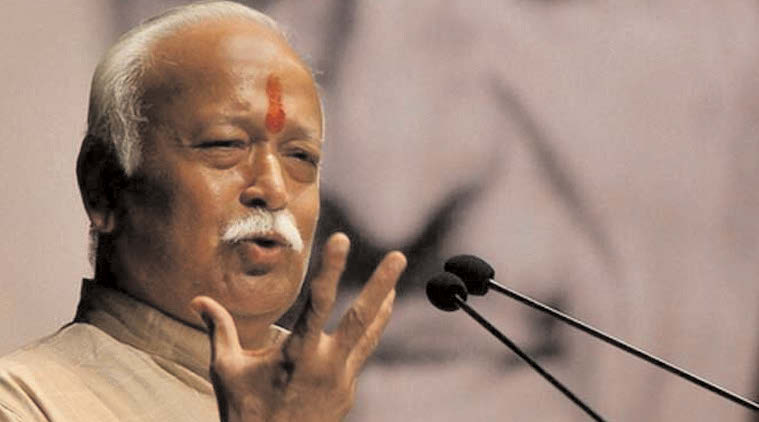
    And, last week, it was this very first principle that was re-asserted when the Sarsanghchalak summoned Prime Minister Modi and his ministers. Well, if you are a swayamsevak, you do respond to summons from the superior in the hierarchy. Period. That is the code of the saffron brotherhood. Admitted, Sushma Swaraj is not an RSS bhakt. Nor is Arun Jaitley. Unless, he has managed to keep this fact away from his “moderate and decent” friends in Delhi. But neither of them had any choice.

    Why are the liberal souls losing their shirt just because the Prime Minister and his ministerial colleagues had all chosen to put in an appearance before the RSS chief and his advisers? After all, the Modi-RSS connection is not new.

    It was no secret that it was the RSS’s unequivocal endorsement of Modi that proved decisive in the BJP making him its prime ministerial mascot. Nor was the RSS’s involvement on behalf of Narendra Modi in the 2014 electoral process a secret affair. It was open and fairly well documented.

    From his Gujarat days, Modi has written the blue book on how to look after the RSS and its functionaries. Modi is smarter – which is not the same thing as being wiser – than Vajpayee. He has shrewdly sized up the small men and their small needs.

    To be fair, Modi never kept anyone in the dark about his RSS links. Yet, if the best and the brightest among the New Delhi-based intellectuals and others ‘thought leaders’ chose to be taken in by the ‘vikas’ mantra, it is their problem – not Modi’s.

    Instead of having the buyer’s regret, every moderate voice should welcome this national-level seduction of the RSS. There is no dark side to it.

    Look at what has already happened: The RSS, which has arrogated to itself the role of the sole arbiter of moral values, is now wasting its breath on explaining the excesses and aberrations of the BJP chief ministers – Shivraj Singh Chouhan in Madhya Pradesh and Vasundhara Raje in Rajasthan. It would be instructive to find out how that fly-by-night entrepreneur, Lalit Modi, is described in the morning shakha meetings in Jaipur. Just as it would be revealing to know what explanation the swayamsevaks in Bhopal offered regarding the horror of a scandal called Vyapam.

    Indeed, none seems to have noticed that the RSS has reduced itself to being a BJP spokesperson.

    Its two other chief ministers – in Haryana and Maharashtra – both proud products of the Sangh brain-washing factory system – have turned out to be such poor advertisements for good governance or for the RSS brand. Apart from exhibiting a new willingness to provoke -Manohar Lal Khattar’s absurd infatuation with Baba Ramdev and Devendra Fadnavis’ with petty preoccupations with bans – these two have hardly enhanced the reputation of the RSS.

    More interestingly, the BJP apologists have cockily explained Modi and his ministers’ attendance at the Sangh Shivir as not very dissimilar to some Congress ministers and Prime Minister Manmohan Singh’s response to the Sonia Gandhi-led National Advisory Council.

    Never mind that the NAC was a government-constituted, gazetted body; it has now been easily done away with. Never mind that Sonia Gandhi is the head of a legally recognized political party, which enters the electoral fray with its own symbol. Yet any suggestion of a moral equivalence between Sonia Gandhi and Mohan Bhagwat should not be resented.

    Perhaps, it should even be a matter of some satisfaction that the RSS has come out of its bogus pretence of being just a cultural organization. The democratic forces should welcome it and demand that it should be brought within the ambit of the Right-to-Information regime.

    Nonetheless, a matter of grave concern is the new attempt aimed at an intellectual hegemony. For instance, the culture minister in the Modi government.

    Mahesh Sharma, a black-belt saffronite, has argued that by voting for Modi and the BJP, the voters have given a mandate for “saffronisation” of education, culture and other institutions. With just 31 per cent of the votes, the Modi sarkaar would like to believe that it has been given a license to operationalize the RSS agenda?

    This is an anti-democratic argument and is laced with morally unpleasant smells. Whatever obedience the Prime Minister and his ministers may choose to render to the Sarsanghchalak, they need to be reminded that they are still governed and bound by something called the Constitution of India. India is still a constitutional democracy and its rulers, irrespective of the number of seats in the Lok Sabha, are still answerable to a robust Parliament and an independent judiciary.

  • Govt to spend Rs 19,000 cr more on social schemes

    Govt to spend Rs 19,000 cr more on social schemes

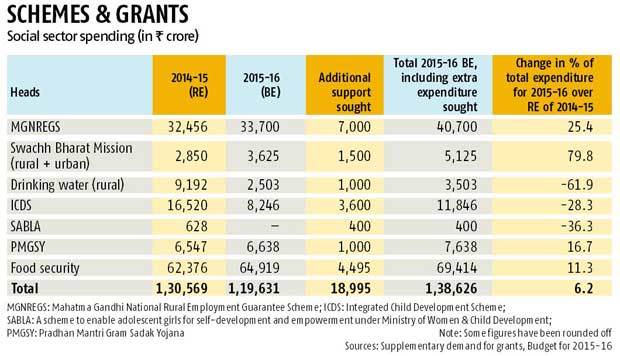
    New Delhi: The government has sought parliamentary approval for an extra Rs 18,995 crore social sectors during 2015-16, almost half of the total extra spending asked for over the Budget Estimates (BE).

    In a supplementary demand for grants, tabled in Parliament last week, the government placed additional expenditure for the Mahatma Gandhi National Rural Employment Guarantee Scheme (MGNREGS), National Food Security Act (NFSA), Swachh Bharat Abhiyan, drinking water scheme, Pradhan Mantri Gram Sadak Yojana (PMGSY), Integrated Child Development Scheme (ICDS) and SABLA.

    The sum asked for these schemes constituted 46.5 per cent of the Rs 40,822 crore that the government wanted for extra expenditure over the BE. The government’s expenditure would swell by only Rs 25,495 crore, as the remaining sum would be met by technical transfers and savings.

    The demand placed in Parliament sought its nod for Rs 7,000 crore increase in spending for MGNREGS , which, if approved, would take the total Budget for the scheme much higher than the 2014-15 Revised Estimate (RE).

    The increase would raise the allocation under the scheme to Rs 40,700 crore, an increase of 25.40 per cent over Rs 32,456 crore allocated in the 2014-15 (RE). The BE of 2015-16 had only a marginally higher sum allocated to the scheme at Rs 33,700 crore compared to RE of 2014-15.

    The increase in spending for MGNREGS could also be on account of the fact that the Centre expects higher demand for work from rural areas because of drought in some parts and pending demands from states. Rural distress is already taking a toll on revival of industrial growth. Industrial production in volume terms rose only 3.3 per cent in April and 2.7 per cent in May. Cumulatively, it rose three per cent in the first two months of the current financial year against 4.6 per cent in the corresponding period of last year. Buttressing the point of the impact of rural distress on the Index of Industrial Production (IIP), official data showed the decline in sales of tractors pulled down IIP by 0.17 per cent in May.

    Similarly, allocation for ICDS was sought to be raised by Rs 3,600 crore that would increasing the outlay to Rs 11,845.6 crore. However, the sum would still be less by almost 28 per cent than the Rs 16,520 crore given in RE of 2014-15. This is so because the finance ministry wanted states to bear the extra burden on Centrally Sponsored Schemes (CSS), as the latter got higher allocation of 42 per cent of divisible tax pool of the Centre – following the recommendation of the 14th Finance Commission (FFC) against 32 per cent earlier.

    Nonetheless, the rise in proposed expenditure for MNREGS and ICDS was higher than promised by finance minister Arun Jaitley in his Budget speech for the current financial year. “I hope to garner some additional resources during the year from tax buoyancy. If I am successful, then over and above the budgetary allocation, I will endeavour to enhance allocations to MGNREGS by Rs 5,000 crore, ICDS by Rs 1,500 crore….”

    Not only MNREGS and ICDS, but the government also sought additional sum for the NFSA to the tune of Rs 4,495 crore. This would take the total provision for the scheme to almost Rs 70,000 crore in 2015-16, which is 11.28 per cent more than the RE for 2014-15. The BE was just Rs 64,919 crore for 2015-16.

    NFSA seeks to provide legal entitlement for subsidised grains to almost 67 per cent of the population. Till date the 11 states have implemented the Act, while another 5-10 are expected to implement the state by the end of this financial year.

    For PMGSY, the additional funding of Rs 1,000 crore, if approved by Parliament, will increase the total budgetary allocation to Rs 7,637.50 crore, around 17 per cent more than the RE.

    For the Prime Minister’s pet Swachh Bharat Mission, the allocation sought would increase the allocation by almost 80 per cent to Rs 5,125 crore in 2015-16, compared to Rs 2,850 crore in the RE of 2014-15.

    A scheme for drinking water and SABLA, a scheme for adolescent girls for self-development and empowerment, would however continue to see less allocation in 2015-16, compared to the previous year’s RE (see chart). In fact, there was no allocation made for SABLA, but Rs 400 crore was sought last week, which would still be less than Rs 600 crore allocated last year.

    In total, the government sought to increase the expenditure on these schemes in 2015-16 over the RE of 2014-15, which was pegged lower in BE for the current financial year. The BE for 2015-16 had 8.4 per cent less allocation compared to the RE of the previous year but the additional expenditure sought would raise it by 6.2 per cent over the same comparable period.

    Tax collections indeed showed increase in the first quarter of 2015-16, even though most of it came from excise duty on petroleum.

    Gross tax revenues rose 17.53 per cent at Rs 2.15 lakh crore in the first quarter of 2015-16 against Rs 1.83 lakh crore in the corresponding period of the previous financial year.

    However, due to higher devolution of tax receipts (42 per cent) recommended by the FFC for 2015-16 to 2019-20 compared to 32 per cent in the previous five years, the Centre’s net tax receipts rose just over two per cent at Rs 1.01 lakh crore compared to Rs 99,087 crore during this period.

    In fact, it was the main argument of the finance ministry for not increasing much and in some cases reducing the expenditure in these CSS. It had said the states would get much higher untied funds that enabling them to spend in these schemes in the manner they wanted.

    Reetika Khera, associate professor, humanities and social sciences at IIT, Delhi, said, “Any increase in central allocation for social schemes is good as state Budgets for 2015-16 was framed assuming there wouldn’t be any change in the funding pattern. But, suddenly the cuts were made after the FFC report was accepted, which states failed to supplement leading to reduction in the entitlements under programmes like ICDS for children.”

    Ideally, she said the central allocation to social sector schemes should be more than last year’s, but even if it is maintained at last year’s then too it is good.

  • Embarrassed Cong disowns Digvijaya, Tharoor remarks on Yakub hanging

    Embarrassed Cong disowns Digvijaya, Tharoor remarks on Yakub hanging

    DigvijayaTharoorNEW DELHI (TIP): Congress on July 30  scrambled to disown the controversial remarks of its party leaders Digvijaya Singh and Shashi Tharoor over the hanging of Yakub Memon.

    With finance minister Arun Jaitley pouncing on what he called “irresponsible” remark of Singh where he seemed to contrast the “urgency” shown in Yakub Memon’s case with the the soft-peddaling of other terror accused, a harried Congress distanced itself from the remarks of the party general secretary as well as those of Tharoor.

    In a series of tweets, Tharoor also questioned the death sentence. “Saddened by news that our government has hanged a human being. State-sponsored killing diminishes us all by reducing us to murderers too”, said Tharoor, while terming hanging
    “unworthy of a government” and questioning its effectiveness as a deterrent against terrorism.

    The twin comments triggered a row, especially Singh’s sentiment being seen as a bid to compare the Yakub hanging with other terror accused including those involving Hindu terrorists. “No individual, howsoever big, can change the stand of a political party,” AICC spokesman Randeep Surjewala said as the party tried to douse the controversy.

    Congress said the comments of individuals were their personal opinion, citing senior BJP leader and MPs Shatrughan Sinha and Ram Jethmalani who signed the petition in favour of mercy for Yakub, owning the argument that he was innocent in Mumbai blasts. “What Sinha and Jethmalani say do not become the BJP stand,” Surjewala said.

    Congress questioned BJP’s track record on terror while arguing that it had lost two prime ministers among other leaders to the menace while the saffron party had only released terrorists when it has been in power.

    Surjewala said, “Jaitley and BJP leaders should not lecture Congress and the country on terror. From Punjab to North-East, we faced terror and also ended it. Congress lost Indira Gandhi and Rajiv Gandhi, a chief minister in Punjab, to terrorists and top leaders in Chhattisgarh to naxals.”

    He said BJP’s track record on terror was questionable as it released top terror merchants led by Masood Azhar to Afghanistan in the Vajpayee government while in the coalition government led by VP Singh, terrorists were released in exchange of Rabaiyya Sayeed. Also, when PM Vajpayee went to Pakistan on a bus, Pakistan captured the Kargil heights and hundreds of soldiers had to sacrifice their lives to win back the territory.

    After Tharoor’s remarks were slammed by BJP and a section of netizens, the Congress leader noted in an article on a website that he had joined the public debate by expressing his sadness that the government has hanged a human being, whatever his crimes may have been. “I stressed that I was not commenting on the merits of this or any specific case: that’s for the Supreme Court to decide. My problem is with the principle and practice of the death penalty in our country,” he said in a blog.