Tag: Canada

  • Turning the diplomatic prism

    Turning the diplomatic prism

    Dealing with Pakistan; renewing ties with Canada

    By KC Singh
    Pakistan, Trudeau and Khalistanis need to be engaged not pilloried, while detoxifying the nation of bigotry and falsehood”, says the author.
     The one issue that still rankles bilateral relations is the activities of “Khalistani” elements in Canada and their links, if any, with Pakistan’s ISI. It played last year into the visit of Canadian defense minister, Lt Col Harjit Sajjan, when Capt Amarinder Singh literally boycotted him, piqued over the Canadian government denying him a visa before the Punjab election last year.”

    India-Pakistan relations under the Modi government are in a cryogenic state. A muscular response, advocated by PM Narendra Modi, has become not a means, but an end in itself. Despite “surgical strikes” and periodic cease-fire violations, the Pakistan army remains defiant. With elections around the corner in Pakistan and rumors Modi may advance the Lok Sabha elections, the scope for any meaningful dialogue appears bleak.

    India draws much solace from President Donald Trump’s periodic verbal assaults on the duplicity of Pakistani state and military. The US withholding military aid, amounting to $2 billion, including $900 million in coalition support funds to compensate Pakistan for its counter-terrorism operations along the Durand Line (Pak-Afghan border), is a first step to ratchet up pressure on Pakistan. US government sources are telling the media that there is an escalation plan if Pakistan does not heed the warnings. The action that the US seeks is Pakistan severing links with the Taliban and the deadly Haqqani network. The same source told Washington Post that there was “immense” frustration over Pakistan continuing to deny that there were any Pakistani safe havens for these groups.

    Senior US officials touring India recently displayed guarded optimism over change in Pakistani attitude. They take the cue from Pakistan not threatening to disrupt US supply routes via Pakistan. But recent terror attacks in Kabul, where an ambulance bomb caused severe casualties, negate that finding. Earlier a hotel was attacked, frequented by Afghan government officials and foreigners, in which among others, a senior police commander and a member of the High Peace Council were killed. The hotel attack on the topmost floor indicated that the attackers were well briefed as that floor normally is reserved for officials holding sensitive positions.

    Meanwhile, Pakistan blocked access to Hafiz Saeed when a team deputed by the UN Security Council sanctions committee arrived to assess Pakistan’s handling of a listed terror mastermind. Reports keep resurfacing that Pakistan was in the process of allowing the India-specific terror syndicates to enter the political field. This could be a double-edged sword to both legitimize the groups and undercut the Sharif brothers, who control the Pakistan Muslim League (N), in the forthcoming parliament election. China has been more forthrightly defending Pakistani credentials as a nation fighting terror and not abetting it.

    Against this background, two events invite attention. First, the Economist carried a story earlier this month on the reform of Pakistan’s school education. This has gone unnoticed in India as the dominant narrative is that Pakistan is a collapsing state which will soon end up in a big Islamic heap. The story holds a lesson for our Punjab. Under the direct leadership of chief minister Shahbaz Sharif, a private-public partnership (PPP) has successfully developed to rectify the skewed school completion data. The richest Pakistanis have 60 per cent completing nine years of schooling. For the poor, the number is 5 per cent and for the middle income group, a mere 25 per cent. A donation-based citizens’ foundation today has over 2 lakh students in its schools. Similarly, the Punjab Education Foundation, a quasi-independent body, is doing the same work even on a larger scale.

    The PPP works with the Shahbaz government handing over public schools to private partners and then closely monitoring their work while providing some subsidy. A Harvard University study shows that village schools saw 30 per cent higher enrolment after private parties were brought in. It has also been discovered by other studies that teachers on contract, who are paid less, produce as good or better results. A similar revamp of the primary and secondary school education in our Punjab is long overdue. CM Shahbaz takes a three-monthly meeting of all stakeholders to monitor the progress of this reform. Can the Punjab CM, Capt Amarinder Singh, do likewise?

    The other event is the expected arrival of Canadian Prime Minister Justin Trudeau on a five-day visit on February 17. Among other cities he would be visiting Amritsar. The one issue that still rankles bilateral relations is the activities of “Khalistani” elements in Canada and their links, if any, with Pakistan’s ISI. It played last year into the visit of Canadian defense minister, Lt Col Harjit Sajjan, when Capt Amarinder Singh literally boycotted him, piqued over the Canadian government denying him a visa before the Punjab election last year.

    Trudeau’s visit provides a good opportunity for Capt Amarinder to bury the past. Sikhs constitute almost 40 per cent of the total population of Indian diaspora in Canada which numbers over a million. That huge number needs to be engaged and their energies channelized to contribute to Punjab’s development. The population profile of the Canadian Sikh diaspora is different from that in the US. The Canadian Sikhs are more closely linked to peasantry in Punjab. A number of episodes have riled Delhi as the Canadian government is seen as handling mischief-makers with kid gloves. When I dealt with them in 2006-07, the Canadian explanation was that they monitor the goings-on but would only step in if violence or terrorism was imminent. Slogans in favor of Khalistan are really solitary cries for attention. The Canadian Sikh fringe needs to be politically dealt with. Banning their entry into India will only exacerbate the situation.

    If Punjab was the laboratory of the Green Revolution, it now needs to reinvent itself. A revamped education system, a shift away from the rice-wheat agrarian model, laying of food-chain supply network and conservation of water aquifers and adoption of sustainable development goals. It is not a surprise that a recent study showed that South Indian states, which have the advantage of coastlines for connectivity, have cornered the export businesses of India. A new Punjab model could become the 21st century template for the land-locked and largely agrarian economy states of the North.

    The Modi government, having largely ignored rural distress, has awakened post-Gujarat election. Udayan Mukherjee wrote in another newspaper that the Modi government’s strategy was: “more wealth for the rich, Hindutva for the poor”. Religion may be, as Karl Marx quipped, the opiate of the masses. But when used to polarize for electoral gains it can be catastrophic. Thus Pakistan, Trudeau and Khalistanis need to be engaged not pilloried, while detoxifying the nation of bigotry and falsehood.

     (The author is a former Secretary, Ministry of External Affairs)

  • India’s PM Modi Urges Canadian PM Trudeau to Curb Khalistanis

    India’s PM Modi Urges Canadian PM Trudeau to Curb Khalistanis

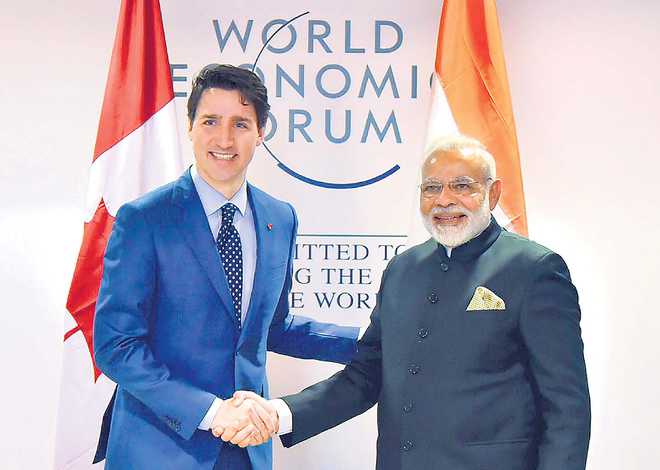
    DAVOS, SWITZERLAND (TIP): In his bilateral meeting with Canadian Prime Minister Justin Trudeau on the sidelines of the World Economic Forum meeting in Davos, Prime Minister of India Narendra Modi raised the issue of Khalistan and pro-Khalistani groups that are known to be active in Canada, a Hindi daily Navbharat Times has reported.

    Support for Khalistan has been on the rise with extremists organizing multiple events across Canada to rally support for the movement in the past few years. Numerous pro-Khalistan groups in Canada are planning to hold what they call the ‘Punjab Independence Referendum’ in the year 2020.

    In July 2016, India had raised the issue with Canada after Trudeau appeared in a Nagar Kirtan event in Toronto that featured Khalistani flags and posters of extremist leader Jarnail Singh Bhinderanwale.

    On 30 April, Trudeau had addressed a parade for ‘Khalsa Day’, which included events glorifying Sikh militant leaders. Trudeau’s Liberal party has a number of influential figures belonging to separatist Sikh organizations as elected leaders.

    Harinder Kaur Malhi, a legislator from Trudeau’s party, who had moved a resolution against India, to recognize the anti-Sikh riots of November 1984 as a genocide, was also felicitated during the parade. The resolution was passed by the Ontario Assembly on 6 April last year.

    India had condemned the move, calling it a “misguided motion based on a limited understanding of India, its constitution, society, ethos, rule of law and its judicial process”. The issue was also raised with Canada’s Defence Minister Harjit Sajjan during his visit to India the same month.

    The issue could be raised again during Trudeau’s visit to India next month.


  • Woman Threatened to “Rip” Off Sikh Man’s Turban in Canada Club

    Woman Threatened to “Rip” Off Sikh Man’s Turban in Canada Club

    OTTAWA (TIP):  A Sikh man was asked to remove his turban in a club in Canada by a woman, who also threatened to “rip” off the headgear and heckled him with racist remarks, according to a media report.

    Jaswinder Singh Dhaliwal was playing pool with friends at the Royal Canadian Legion, a Canadian ex-service organization that includes people who have served in military, when the management approached the group and asked him to remove his patka as it was its policy to remove any headgear out of respect for the veterans, CBC News reported.

    However, religious garments are exempted from the legion’s policy banning head coverings. The incident took place on January 17th at Tignish town in Canada’s Prince Edward Island.

    A video of the incident shows a woman threatening to “rip” off the head covering in response to being filmed and a patron at the bar making an obscene gesture while saying the garment must be removed because “it is the law”.

    Legion president Stephen Gallant later said that he plans to apologize to those involved as religious garments are exempted from their policy, the report said.

    Mr Gallant said there was some confusion over whether the headdress was a religious garment, and the membership has met to clarify the branch’s policy regarding head coverings.


  • Canada Lawmaker behind 1984 Genocide Motion is Ontario’s First Sikh Woman Minister

    Canada Lawmaker behind 1984 Genocide Motion is Ontario’s First Sikh Woman Minister

    The 38-year-old daughter of Canada’s first turbaned MP Gurbax Singh Malhi was sworn in as Minister of the Status of Women on Thursday, January 18.

    TORONTO (TIP):   Harinder Malhi, the Indo-Canadian member of the Ontario provincial parliament and the mover of the 1984 genocide motion in the House last April, has been given a cabinet berth in the Ontario cabinet, making her the first-ever Sikh cabinet minister in the Canadian province.

    The 38-year-old daughter of Canada’s first turbaned MP Gurbax Singh Malhi was sworn in as Minister of the Status of Women on Thursday, January 18.

    The decision by Premier Kathleen Wynne to elevate Malhi seems to have been taken with an eye to Sikh votes as Ontario goes to the polls in June.

    Ms Malhi represents the Punjabi-dominated ‘riding’ (or constituency) of Brampton-Springdale in the Ontario assembly, whose members are called MPPs or members of provincial parliament.

    She joins another Indo-Canadian woman minister Dipika Damerla in the Ontario cabinet.

    Interestingly, her elevation to the cabinet comes when two senior Sikh MPPs Amrit Mangat and Vic Dhillon have been ignored.

    It is being speculated that because of her 1984 genocide motion, Ms Malhi can help her Liberal Party retain Sikhs votes which may drift to the New Democratic Party (NDP) which has just elected Jagmeet Singh as its national leader. After her genocide resolution, many in the Sikh community view her as the champion of the cause in the community.

    Her party may also benefit from her father and former MP’s huge hold over Sikh voters.

    Interestingly, as a member of the Ontario assembly, Jagmeet Singh too had introduced a similar motion on the anti-Sikh riots, but his motion failed. He was also denied a visa to India in 2013.

    Brampton, on the outskirts of Toronto, has the second largest concentration of the Sikh community in Canada after Surrey in British Columbia.

    Ms Malhi’s genocide motion in the Ontario assembly in April 2017 read: “That, in the opinion of this House… should reaffirm our commitment to the values we cherish — justice, human rights and fairness — and condemn all forms of communal violence, hatred, hostility, prejudice, racism and intolerance in India and anywhere else in the world, including the 1984 genocide perpetrated against the Sikhs throughout India, and call on all sides to embrace truth, justice and reconciliation.”

    The motion was passed 34-5 votes in a House of 107 members.

    Reacting strongly to it, India rejected it calling it a “misguided motion which is based on a limited understanding of India, its constitution, society, ethos, rule of law and the judicial process”.

    (Source: IANS)

  • Upset Hindus urge Australia fightwear firm to withdraw battling Hindu gods rashguards

    Upset Hindus urge Australia fightwear firm to withdraw battling Hindu gods rashguards

    MELBOURNE (TIP): Upset Hindus are urging Gosford (New South Wales, Australia) based fightwear firm “Raven Fightwear” for immediate withdrawal of “Battle of the Gods – Hanoman v Ganesha” rashguards displaying images of Hindu deities Lord Ganesha and Lord Hanuman in a battle mode.

    Hindu statesman Rajan Zed, in a statement in Nevada said that it was trivialization of Lord Ganesha and Lord Hanuman, who were highly revered in Hinduism, as there was no scriptural evidence that any Hanuman versus Ganesha battle took place. Inappropriate usage of Hindu deities or concepts for commercial or other agenda was not okay as it hurt the devotees.

    Zed, who is President of Universal Society of Hinduism, also urged Raven Fightwear and its CEO to offer a formal apology, besides withdrawing “Battle of the Gods – Hanoman v Ganesha” rashguards from its website and stockists.

    Zed further said that such trivialization of Hindu deities was disturbing to the Hindus world over. Hindus were for free artistic expression and speech as much as anybody else if not more. But faith was something sacred and attempts at trivializing it hurt the followers, Zed added.

    “Battle of the Gods – Hanoman v Ganesha” men’s/women’s long sleeve rashguards were priced at $64.95 each on the website of Raven Fightwear, which specializes in Mixed Martial Arts apparel and claims to be “one of Australia’s fastest growing fight wear brands”. It has stockists in Australia, United Kingdom, USA, Canada, Czech Republic, Singapore, Russia; and its products include shorts, rashguards, gloves t-shirts, hoodies. “Our designs center around Norse mythology”, it states.

    In Hinduism, Lord Ganesha is worshipped as god of wisdom and remover of obstacles and is invoked before the beginning of any major undertaking. Lord Hanuman is known for incredible strength and was a perfect grammarian.

  • Canada needs immigrants as much as immigrants need Canada

    Canada needs immigrants as much as immigrants need Canada

    Two to three decades back, people emigrating from India was a rare occurrence. A decade back, it was a little more popular, but still only around 15-20% of the Indian population had some relative outside the country. Now, almost 40-50% of the Indians have some or the other relative residing outside the country. These days, hearing about someone’s spouse, aunt, uncle, parents, children, nieces or nephews living out of India is very common.

    Whether to earn a better pay for their hard-work or to have a better way of living or to simply enjoy the work and life culture of a distant land – there are varied reasons for people opting to emigrate from India. However, what could be the reasons for the countries who are allowing so many immigrants?

    Reasons for countries to allow immigrants

    There may be various reasons for a country to allow – and even encourage to some extent – immigration. However, there are three main reasons for this, which are:

    Shortage of skilled professionals: In an ideal world, every country has qualified personnel for each and every field in their country. However, in reality this is not so. Every country faces labor shortage in some or the other sector and, at times, there are professions that a select group of people can perform better than others. This is one of the core reasons for any country to accept immigrants.

    Cost effective: Usually, the countries opting for immigrant workers are the First World countries. Hiring skilled workers or professionals from outside, especially from the Third World countries, is much more cost effective for these countries than employing the local residents. Most of the large companies and industries prefer transferring their employees from other branches in India, China, etc. A lot of money used for hiring and training new employees is saved this way.

    Growth in economy: As immigration is a two-way beneficial set-up for both the applicant and the nation, every country opts for immigrants that belong to the skill-area they are facing a shortage in – mostly skilled professionals. These professionals in turn help not just the company they are working for but also contribute very well towards the growth of their adopted country’s economy.

    However, there is another fact that is fast emerging as the main reason for countries to take up immigrants, and that is the ‘aging population’.

    If we take up the example of Canada, according to a recent data released by Statistics Canada:

    * With the front-end of the baby boom generation having reached 65 in 2011, the population of Canada is aging;

    * Canadian society is urbanizing as more people are living in mid-sized and large cities;

    * One-person households are more, reflecting high divorce rates and longer life spans; and

    * As Immigration continues to shape Canada’s demographic profile, the population and workforce are becoming increasingly multi-ethnic.

    The survey states that all of the above national-level trends are evident in B.C (British Columbia). The median age of British Columbians was 41.9 years by 2011. The median age has been steadily climbing for four decades. Twenty years ago, it was 34.7 and back in 1971, the typical B.C. resident was a youthful 28. Almost 700,000 were aged 65 and over out of the province’s 4.4 million people in 2011.

    An important demographic development that needs to be mentioned is immigration and the role it plays in re-shaping the population. Measured relative to the size of the existing population, Canada stands near the top in the number of immigrants admitted globally. Canada welcomes 240,000 to 260,000 permanent newcomers in an average year, not counting the inflows of student and foreign temporary workers. According to the 2011 census, immigrants comprise 26% of British Columbia’s population; the proportion is much higher in the Lower Mainland — 41%.

    The aforementioned statistics clearly display that with the average Canadian fast reaching the age of retirement, immigrants are the main driving force for Canada’s economic growth. This is the factor that is fast-emerging as one of the main reasons for Canada or any other country opting for skilled professional immigrants.

  • 7,620 Indian nationals lodged in foreign jails, highest in Saudi Arabia

    7,620 Indian nationals lodged in foreign jails, highest in Saudi Arabia

    Lodged in 86 jails abroad, at least 50 are women

    NEW DELHI (TIP):  As many as 7,620 Indian nationals are lodged in foreign jails, with the highest number in Saudi Arabia. Of them, at least 50 are women

    In response to a question raised in the Lok Sabha on Wednesday, August 9, minister of state for external affairs M J Akbar said due to strong privacy laws prevailing in many countries, local authorities do not share information on prisoners unless the person concerned consents to the disclosure of such information.

    Of the 7,620 prisoners lodged in 86 jails, at least 50 are women, shows data available with the government. Most of these women are in prisons in south-east Asia, neighboring Sri Lanka, China and Nepal, the Gulf countries, the US and UK.

    The Gulf countries account for 56% of all Indian nationals in foreign jails. The prisons in Saudi Arabia have the highest number of Indian nationals, with 2,084 of them confined on charges of financial fraud, burglary and bribery.

    A number of them have also been arrested for drinking and selling alcohol in the country. It is illegal to produce, import or consume alcohol in Saudi Arabia.

    In countries in south-east Asia – Thailand, Malaysia, Singapore and Indonesia – most of the 500 immured Indian nationals were charged with offences related to drug and human trafficking and immigration and visa violation.

    In Pakistan, according to a list handed over by the government to the India envoy in Islamabad, at least 546 Indian nationals, including nearly 500 fishermen, are in Pakistani jails.

    Fishermen in the southern parts of India have also entered troubled waters and landed in jails in alien soil, especially in Sri Lankan jails. Tamil Nadu prisoners were tracked in Bangladesh, Bhutan, Brunei and Ethiopia too.

    In Australia and Canada, countries that see high migration from India, 115 prisoners are Indian nationals. Most of their offences relate to murder, sexual assault, money laundering and road accidents.

    Most European countries like Germany, Italy, Greece and France did not furnish details of Indian nationals in their prisons.

    The minister said since the enactment of the repatriation of Prisoners Act, 2003, 170 applications for repatriation had been received and 61 Indian prisoners had been repatriated from foreign prisons.

    So far, India has signed treaties with 30 countries, under which Indian prisoners have been brought back. Besides this, India has also ratified the Inter American Convention by which India can receive and send requests to member countries for release of prisoners.

  • PARINEETI CHOPRA DYING TO START NAMASTEY CANADA

    PARINEETI CHOPRA DYING TO START NAMASTEY CANADA

    Actress Parineeti Chopra said she is “dying” to start working on the film ‘Namastey Canada’. “A desi film with a videsi heart! my kind of film! Dying to start ‘Namastey Canada’,” Parineeti tweeted on Tuesday.

    The film is directed by Vipul Amrutlal Shah and also stars Arjun Kapoor with Parineeti. This will be the second time the two will be seen sharing screen space after ‘Ishaqzaade’.

    ‘Namastey Canada’ is not a sequel to the Akshay Kumar and Sonakshi Sinha starrer ‘Namastey London’.

  • Indian Americans among top investors in residential property in US

    Indian Americans among top investors in residential property in US

    MUMBAI (TIP): A Times of India report published July 21 says that the pall of gloom owing to protectionist policies has not kept Indians residing in the US from investing in real estate. By purchasing residential property worth $7.8 billion during the 12-month period ending March 2017, Indians emerged as the fifth largest investors in real estate in the US. Backed by mortgage finance, these properties were largely acquired for use as primary residence or for use by a child studying in the US.

    Chinese nationals were the biggest buyers, purchasing residential property worth $31.7 billion in the same period. They were followed by the Canadians, British, Mexicans and, lastly, Indians.

    Between April 2015 and March 2016, Indians had invested $6.1 billion and occupied third place on the list of biggest buyers. However, a surge of investments from other nationalities resulted in Indians slipping to fifth position in 2016-17.

    The bulk of buyers from China, India, and Mexico were working and residing in the US, while most buyers from Canada and the UK were non-resident buyers, adds the report, “2017- Profile of international activity in US residential real estate” released recently by the National Association of Realtors (NAR).

    More than a third of the Chinese buyers purchased residential property in California. Compared to the other major foreign buyers, Indians were not as concentrated in any state in the US and the location of their jobs largely determined their purchase. While California, New Jersey, Texas, Massachusetts, and Kentucky were top destinations, more than two in five Indian buyers purchased in another state.

    In aggregate, foreign buyers purchased $153 billion of residential property in US between April 2016 and March 2017, which is a 49% jump from the figure of the corresponding previous period of $102.6 billion. In terms of number of units, foreign buyers purchased 2.84 lakh residential properties in US in April 2016-March 2017, up 32% from the previous period’s figure of 2.14 lakh properties.

    On an average, foreign buyers paid $536,852 for their properties, 12% more than the average price during the previous 12-month period. The average purchase price of properties bought by Indians was $522,440.

    “The political and economic uncertainty both here and abroad did not deter foreigners from exponentially ramping up their purchases of US property over the past year,” said Lawrence Yun, NAR’s chief economist. “While the strengthening of the US dollar in relation to other currencies and steadfast home-price growth made buying a home more expensive in many areas, foreigners increasingly acted on their beliefs that the US is a safe and secure place to live, work and invest,” he added.

    While a stronger dollar makes it more expensive to purchase US property, fears of a further weakening of a local currency against the dollar prompts some foreign buyers to accelerate their purchase.

    Referring to the value of the Indian rupee, the report says it depreciated modestly (by 2%) relative to the dollar over the entire survey period. However, post-demonetization in November 2016, which caused a severe liquidity squeeze, the rupee reversed course and began to appreciate.

    From November 2016 to March 2017 (the end of the survey period), the rupee had appreciated nearly 3% against the dollar. Data from June 2017 shows that the rupee had strengthened nearly 5% against the dollar from November 2016, suggesting that terms could improve for Indian buyers of US real estate next year.

    (Source: TOI)

  • SECURITY AGENCIES’ ALERT CALL ON 100% FDI IN DOMESTIC AIRLINES

    SECURITY AGENCIES’ ALERT CALL ON 100% FDI IN DOMESTIC AIRLINES

    NEW DELHI (TIP): The security agencies, including the Intelligence Bureau (IB), have raised concerns over the Centre’s decision to allow 100% foreign direct investment (FDI) in domestic airlines’ operations.

    Recently, Union Home Secretary Rajiv Mehrishi chaired a meeting to discuss the matter, where sources said, the IB and other agencies expressed concerns over the government’s decision on allowing 100% FDI for running domestic airlines.

    Sources said, the meeting, which was attended by senior officials from the Civil Aviation Ministry and the Ministry of Home Affairs (MHA), including the IB, was called to discuss issues related to proposed amendments to the Aircraft Rules, 1937.

    It is learnt that the amendments are required to operationalise the framework for allowing foreign non airline players to own up to 100% stake in domestic carriers. “As the government had decided to put in place liberal FDI policy last year only, this can become reality only once the relevant rules are put in place,” a senior MHA official said.

    Noting that aviation is a “highly sensitive sector”, the IB, during the meeting, suggested that it would be prudent to allow 100% FDI in the sector. To justify its claim, the IB also contended that even developed countries such as the US and Canada have permitted foreign entities to have only up to 25% stake in their respective domestic carriers.

    Source: The Tribune

  • Video of Canadian defense minister Harjit Sajjan littering goes viral on social media

    Video of Canadian defense minister Harjit Sajjan littering goes viral on social media

    The shopkeeper snubs the minister for showing lack of manners

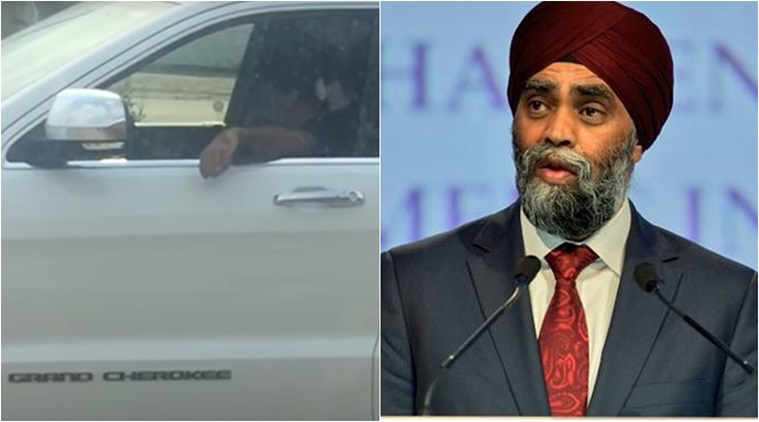
    NEW YORK (TIP): Video of Canadian defense minister Harjit Singh Sajjan caught littering by a Punjabi shop owner in Osoyoos, Canada, has gone viral on social media.

    The video which was uploaded by XLRadio Vancouver on Monday captured Sajjan reacting sheepishly on being questioned about his actions. It shows Sajjan eating cherries and throwing their seeds outside a shop while sitting in the driver’s seat of his vehicle.

    The car bears a registration number EE7 99D with inscription “Beautiful British Columbia”.

    In the video, Sajjan is seen trying to conceal his identity but the shop owner of East Indian Meat Shop seems to be aware of his VIP status.

    The shopkeeper snubs the minister for showing lack of manners.

    Embarrassed Sajjan can be seen apologizing to the man in the video and fumbles to justify the purpose of his presence on the spot while being repeatedly quizzed.

  • Indian Origin Sikh woman to be first turbaned judge in Supreme Court of BC Canada

    Indian Origin Sikh woman to be first turbaned judge in Supreme Court of BC Canada

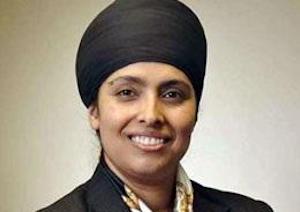
    VICTORIA, CANADA (TIP): Indian-origin Sikh human rights advocate Palbinder Kaur Shergill has been appointed a judge at the Supreme Court of British Columbia in New Westminster. Ms Shergill is the first turbaned Sikh to be appointed to the judiciary in Canada.

    Jody Wilson-Raybould, Minister of Justice and Attorney General of Canada, announced the appointment on Friday, June 22 under the new judicial application process announced on October 20 last year.

    Welcoming the decision, World Sikh Organization President Mukhbir Singh said: “The appointment of Justice Shergill is another milestone for the Sikh community in Canada. It is a matter of great pride that today we have the first turbaned Sikh appointed to the judiciary in Canada.”

    The appointment was made with immediate effect as Justice Shergill replaces Justice EA Arnold-Bailey, who retired on May 31, a report by news portal Voice Online said.

    Regarded as a leading human rights advocate, she has been instrumental in helping shape human rights and religious accommodation law in Canada through her work as general legal counsel for the WSO since 1991.

    Prior to her appointment to the bench, Ms Shergill practiced as a lawyer and mediator with her law firm, Shergill & Company.

    She has extensive trial and appellate experience and has appeared before courts and tribunals across the country, including the Supreme Court of Canada.

    Shergill was appointed Queen’s Counsel in 2012 and is a recipient of the Queen’s Golden Jubilee Medal for Community Service. She lives in Surrey with her husband, daughter and twin sons.

    She was born in Punjab and immigrated to Canada with her family at the age of four. She grew up in Williams Lake, British Columbia, and received her law degree from the University of Saskatchewan.

    Called to the British Columbia Bar in 1991, she has held leadership positions both within and outside the legal community. She has been involved with the Cabinet of Canadians, the Trial Lawyers Association of British Columbia, and the Canadian Bar Association.


  • Indian American to embark on solo flight around the world

    Indian American to embark on solo flight around the world

    NEW YORK (TIP): On July 4, Ravinder K. Bansal, a retired entrepreneur of Indian origin, will embark on a solo flight around the world in a single-engine Cessna 400 to raise money for a hospital in Haryana. He hopes to raise $750,000 to purchase an MRI machine for a hospital in his hometown Ambala.

    The 100-bed hospital Rotary Ambala Cancer and General Hospital has been built with donations from philanthropists both in the US and India. The contribution is also a tribute to his elder brother Subhash Bansal’s wife, Sneh Bansal, who died of cancer in India, in 2005.

    “I am excited to start my round the world trip from Buffalo Niagara International Airport on July the 4th. This mission for me is very personal as it not only is an adventure that I have been dreaming about for a while, but will also get the hospital a needed piece of MRI equipment now and help bring awareness about cancer in rural community around Ambala. Above all, it will generate publicity for the hospital that will hopefully continue to bring donations/support from the local and international community and Rotarians to keep the hospital operating and growing in future”, Bansal wrote in his blog.

    Ravi Bansal, a resident of Buffalo, New York, is the pilot/owner of Cessna 400. The Cessna 400 is the fastest FAA-certified fixed-gear, single-engine piston aircraft in production today, reaching a speed of 235 knots (435 km/h) true air speed at 25,000 feet (7,600 m).  The 19,878-mile trip will have several stops in different countries including England, France, Italy, Greece, Jordan, UAE, Oman, and India while going; and while returning Bansal would come via Thailand, Malaysia, Philippines, Japan, Russia, and Canada.

  • International Day of Yoga: Celebrating union of body and Consciousness

    International Day of Yoga: Celebrating union of body and Consciousness

    International Yoga day

    Yoga is an ancient physical, mental and spiritual practice that originated in India. The word ‘yoga’ derives from Sanskrit and means to join or to unite, symbolizing the union of body and consciousness. Today it is practiced in various forms around the world and continues to grow in popularity.

    Recognizing its universal appeal, on 11 December 2014, the United Nations proclaimed 21 June as the International Day of Yoga by resolution 69/131. The International Day of Yoga aims to raise awareness worldwide of the many benefits of practicing yoga.

    Yoga is more than just burning your calories and toning your muscles. It is a mind body workout where you have strengthening and stretching poses along with deep breathing techniques to relax your mind and body There are more than 100 different forms of yoga. Some are fast paced and intense. Others are gentle and relaxing. Yoga is an invaluable gift of ancient Indian tradition. It embodies unity of mind and body; thought and action; restraint and fulfilment; harmony between man and nature and a holistic approach to health and well-being. The word yoga literally means union. Through yoga you can explore profoundly the very mechanics of life.

    International Day of Yoga at Times Square, New York

    The fact is that yoga is a way of life. While all the other exercises take care of your physical conditions, yoga helps you to control your mind and body. There are various yoga postures or asanas that help you to keep your body fit and healthy. Pranayama or breathing exercise helps you to rejuvenate your mind and soul. It is said you should begin your day with pranayama and it helps you to think better and stay calm and peaceful. Sedentary lifestyles, unhealthy diet and stress – all these lead to various diseases. Yoga teaches you to control all these through exercises.

    Launching a particular date for practicing yoga all across the world and celebrating as yoga day was initiated by the Indian Prime Minister, Mr. Narendra Modi. In a yoga day essay for students, it is important to mention that international day of yoga which is also called as the world yoga day is celebrated on the 21st of June. The declaration was done after the call by the Indian Prime Minister to the United Nations General Assembly on 27th of September in 2014 during his address to the UN General Assembly.

    International Day of Yoga at the Queens Museum in 2016.

    The celebration of the event  international day of yoga is supported by various global leaders. More than 170 countries including USA, China, Canada took part in this event which was celebrated for the first time on the 21st of Jan 2015. It was celebrated on international level by organizing the activities like yoga training campus, yoga competitions and so many activities to enhance your awareness about the innumerable benefits that you can derive by practicing yoga on a daily basis. This event is celebrated to create the awareness of the wholesome effects of yoga among the public all over the world.

    Thus it can be concluded as; meditation or ‘dhyana’ teaches you how to discipline your mind. Through a systematic practice of yoga, you can overcome your negative thinking which in turn gives you confidence and enhances your mental power. This increases self-awareness and helps you to increase your attention and concentration; hence yoga is suitable for children also.

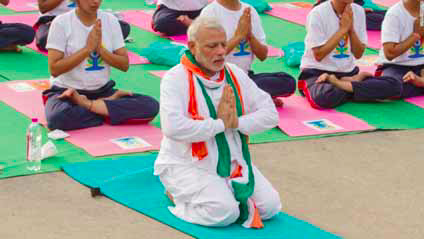
    The first International Day of Yoga was observed world over on 21 June 2015. … 35,985 people, including Narendra Modi and a large number of dignitaries from 84 nations, performed 21 yoga asanas (postures) for 35 minutes at Rajpath in New Delhi.

    The declaration of international day of yoga is a great moment for India. It took less than three months to be declared as the world yoga day by the United Nations general assembly. Indian Prime Minister, Narendra Modi had called for it on 27th of September in 2014 which was finally declared on 11th of December in 2014. It was first ever in the history that the initiative of any country has been proposed and implemented in the UN body within 90 days. This resolution has been adopted under the global health and foreign policy by the general assembly in order to provide a holistic approach to you for your health and well-being.

    International Day of Yoga at the United Nations in 2016

    Official name of this day is UN International Yoga Day and also called as Yoga Day. It is a worldwide event celebrated by all countries through practicing yoga, meditation, debates, meetings, discussions, variety of cultural performances, etc.

    Indian Prime Minister, Mr. Narendra Modi has put his views for adopting a day especially for yoga while addressing to the United Nations General Assembly. He asked the world leaders for adopting international yoga day to deal with the declining health because of negative climate changes. Especially, he suggested 21st of June for adopting the international day of yoga as this day is the longest day in northern hemisphere regions as well as of great significance in many parts of the world.

    Yoga is a Hindu spiritual and ascetic discipline, a part of which, including breath control, simple meditation, and the adoption of specific bodily postures, is widely practiced for health and relaxation.

    The Myriad Benefits of Yoga are:

    Yoga is very necessary and beneficial for you if it is practiced on a daily basis in the morning. It is a combined workout of the mind and body which enhances your brain functions, reduces stress and rejuvenates your body and soul.

    Yoga is beneficial for the mental, physical and emotional development of children. In this world of fierce competition, yoga helps to reduce stress and tension.

    It helps you to gain flexibility, manage stress, improves posture, memory and concentration.

    Apart from these benefits, yoga also helps in flexibility of spine, induces relaxation and strengthens lower back.

    Thus on a final note, yoga helps you to achieve the perfect harmony between your mind, body and soul. It drives away all negativity from your system and promotes in the achievement of a healthy and a happy life.

  • Three Indian writers among Twenty O. Henry Prize winners

    Three Indian writers among Twenty O. Henry Prize winners

    NEW YORK (TIP): The O. Henry Prize, fist awarded in 1918, accolades American and Canadian short stories of exceptional merit. The 99th O. Henry Prize winners were announced on May 26, and a group of twenty writers have been credited for their outstanding literary oeuvre.

    Shruti Swamy

    Amit Majumdar

    Jai Chakrabarti

    The O. Henry Prize winners this year include three writers of Indian origin Shruti Swamy, Indian-American nuclear radiologist Amit Majumdar, and Jai Chakrabarti, who is A Public Space Emerging Writer’s Fellow. While Shruti Swamy lives and writes in San Francisco, and has her stories published in Black Warrior Review, New American Writing, The Kartika Review, Amit Majumdar is Ohio’s fist poet laureate, an author of two novels and several poetry collections. Jai Chakrabarti hails from Calcutta who currently lives in Brooklyn and writes poetry, fiction, and mathematical algorithms. Celebrated Bangladeshi author Tahmima Anam is also one of the winners. Tahmima Anam writes from London and has been the recipient of the 2008 Commonwealth Writers’ Prize along with other acclamations.

    Edited by writer Laura Furman, and judged by authors Elizabeth McCracken, Brad Watson, and David Bradley, the 2017 O. Henry Prize Stories anthology will be published by Anchor Books in September this year and according to its website, it will include, “essays by the three eminent guest jurors on their favorite stories, observations from the winning writers on what inspired them, and a comprehensive resource list of the many magazines and journals, both large and small, that publish short fiction.”

    Here is a list of the winning stories and their writers:

    • “Too Good To Be True” by Michelle Huneven (Harper’s)
    • “Something for a Young Woman” by Genevieve Plunkett (New England Review)
    • “The Buddhist” by Alan Rossi (Granta)
    • “Garments” by Tahmima Anam (Freeman’s)
    • “Protection” by Paola Peroni (The Common)
    • “Night Garden” by Shruti Swamy (Prairie Schooner)
    • “A Cruelty” by Kevin Barry (Five Points)
    • “Floating Garden” by Mary La Chapelle (Salamander)
    • “The Trusted Traveler” by Joseph O’Neill (Harper’s)
    • “Blue Dot” by Keith Eisner (Salamander)
    • “Lion” by Wil Weitzel (Prairie Schooner)
    • “Paddle to Canada” by Heather Monley (Zyzzyva)
    • “A Small Sacrifice for an Enormous Happiness” by Jai Chakrabarti (A Public Space)
    • “The Bride and the Street Party” by Kate Cayley (Prism)
    • “Secret Lives of the Detainees” by Amit Majmudar (Kenyon Review)
    • “Glory” by Lesley Nneka Arimah (Harper’s)
    • “Mercedes Benz” by Martha Cooley (A Public Space)
    • “The Reason Is Because” by Manuel Munoz (American Short Fiction)
    • “The Family Whistle” by Gerard Woodward (Zoetrope)
    • “Buttony” by Fiona McFarlane (The New Yorker)
  • His Holiness Mahant Swami Maharaj of BAPS to arrive in North America

    His Holiness Mahant Swami Maharaj of BAPS to arrive in North America

    NEW YORK (TIP): The spiritual legacy of His Holiness Pramukh Swami Maharaj continues in North America with the pending arrival of His Holiness Mahant Swami Maharaj in Atlanta, GA on June 22, 2017. Over the next three months, he will visit mandirs and inspire thousands of devotees in Atlanta, Chicago, Houston, Dallas, Los Angeles, San Jose, New Jersey (Edison and Robbinsville), and Toronto, Canada. His visit will be filled with traditional celebrations, spiritual discourses, various seminars, and special events open to the community.

    Mahant Swami Maharaj imparting wisdom in Satsang Seminar

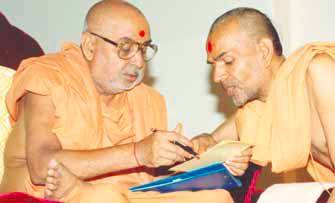
    Since the earthly departure of Pramukh Swami Maharaj, Mahant Swami Maharaj now continues the lifework and legacy of Pramukh Swami Maharaj as the sixth and current spiritual successor of Bhagwan Swaminarayan. He was born in 1933 in Madhya Pradesh, India. In 1961, at the age of 28, he was ordained as a swami and given the name of Sadhu Keshavjivandas by His Holiness Yogiji Maharaj, then guru and spiritual leader of BAPS.

    Yogiji Maharaj recognized his leadership abilities and bestowed upon him numerous responsibilities including appointing him as the mahant, or chief priest, of the BAPS Mandir in Mumbai, India. Thus, the name ‘Mahant Swami Maharaj.’

    After Yogiji Maharaj’s earthly departure, Mahant Swami Maharaj dedicated himself totally to Pramukh Swami Maharaj, the fifth Guru of BAPS. Under his guidance, Mahant Swami Maharaj relentlessly traveled to remote areas in India and abroad to inspire moral values and enlighten countless devotees. He was also called upon to be in the forefront during major celebrations and as a trusted advisor regarding critical decisions related to the organization.

    Pramukh Swami Maharaj was thoroughly pleased with Mahant Swami Maharaj’s virtues and devotion to Bhagwan Swaminarayan and his gurus as well as his affection to the devotees and care for their well-being. On July 20, 2012, in Ahmedabad, India in the presence of senior swamis of BAPS, Pramukh Swami Maharaj officially appointed Mahant Swami Maharaj as his successor.

    As the current Guru of the BAPS Swaminarayan Sanstha, Mahant Swami Maharaj has led by exemplifying devotion, humility, and selflessness. He visits with devotees around the world to nurture faith in all individuals, promote family values and unity, and strengthen communities small and large. Pramukh Swami Maharaj’s vision continues to be his driving force behind guiding spiritual activities and organizational efforts as well as pursuing development projects to advance youth programs.

    In the past year, he has continued his vicharan, or spiritual travels, throughout the world, and has thus far visited almost every major BAPS mandir in India and Africa. During his visit to the United States and Canada, he will attend numerous special celebrations including the ten-year anniversaries of the BAPS Shri Swaminarayan Mandirs in Atlanta,Toronto, and San Jose as well as a Murti Pratishta, a ritual to sanctify the murtis, for abhishekh in Robbinsville, NJ. After his three-month journey, he will continue onwards to the United Kingdom and the Far East regions.

    For more details regarding His Holiness Mahant Swami Maharaj’s North America visit, please visit www.baps.org/msm17na or follow #MahantSwami on social media.

    (Photographs and Press release by: BAPS North American Headquarters)

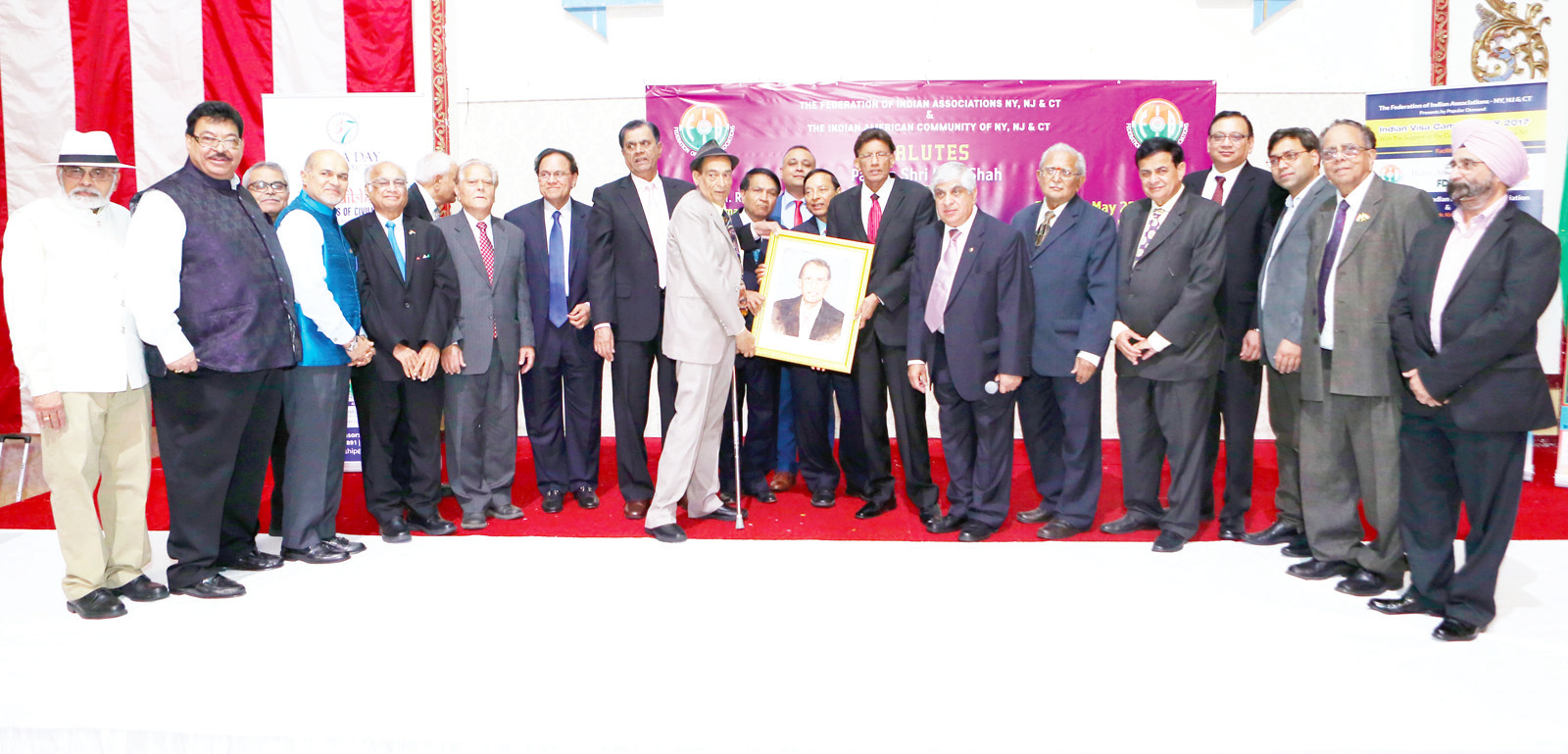
  • FIA Honors Padma Shri HR Shah

    FIA Honors Padma Shri HR Shah

    ASHOK OJHA, FORDS, NJ (TIP)
    Ambassador Riva Ganguly Das appreciated the contribution of HR Shah

    Dozens of speakers including Ambassador Riva Ganguly Das, Consul-General of India in New York, paid glowing tribute to HR Shah, Chairman and CEO of TV ASIA, who recently received the PadmaShri award from the President of India in New Delhi.

    The event was organized by the Federation of Indian Association at Royal Albert’s Palace in Fords, New Jersey.

    Shah has been associated with numerous social and cultural organizations in USA including being the founder member of Global Organizations  of

    People of Indian Origin and a past president and trustee of the Federation of Indian Associations (FIA). Congratulating Shah for being the recipient of the Padma Award, Consul-General Das said, “Shah is a deserving person whose contributions are well recognized in USA and in India. The Government of India recognized his services for the community and for the people of Indian origin. He made remarkable contribution towards strengthening the Indo- US ties”.

    “The Government of India has recognized Shah as a leading personality who helped uplift the status of literature, journalism, and entertainment world.”, said Dr. Sudhir Parikh, Chairman of Parikh Worldwide Media. Parikh, himself a recipient of PadmaShri. Parikh commented that Shah’s generous attitude towards the Indian-American community has been well recognized by the Government of India.

    Dr. Navin Mehta, a fellow trustee of Bharatiya Vidya Bhavan (USA), complimented Shah for his hard work as an entrepreneur and philanthropist. Mehta was the only speaker who delivered his speech in Hindi at the event. He pointed out that Shah, with his nature, was a busy person always contemplating new ideas. He is a true role model for the community”.

    Shah is the Chairman and Trustee of Bharatiya Vidya Bhavan (USA), which dedicated an auditorium, “Romanti Auditorium”, in memory of H.R. Shah’s late daughter.

    Andy Bhatia, president of FIA, said that Shah made untiring efforts to strengthen various activities for improving the image of India in USA. “One such activity is the India Day Parade in New York City, launched many decades ago with the active support of H. R. Shah.”

    In an emotionally charged speech, HR Shah thanked the community for their love

    Shah, who made an emotional speech at the event, said that his life has been a difficult journey that taught him many lessons. “I faced financial losses in my previous enterprises, but was able to turn around the business at TV Asia with hard work”, he pointed out. “I am dedicated to my people and my community. I have great interest in literature and journalism which propelled me to the current level of recognition.”

    Shah has received numerous awards and honors in the past including the prestigious Ellis Island Medal of Honor, the highest award conferred to honor the immigrant communities. The medal is presented to prominent persons who display significant contributions to their own communities and to the United States at large.

    Shah is the first NRI to run a 24/7 TV Channel, TV Asia, coast-to-coast throughout North America since 1993, reflecting his diverse interests. The channel was founded by Bollywood super star Amitabh Bachchan. TV ASIA has been a pioneer, produced in America, with local coverage (English, Hindi, Gujarati) in all major cities of the United States, Canada and the Caribbean. TV Asia is viewed on Echo Star (Dish Network) as well as various cable platforms. Shah has also launched a 24/7 free broadcast ethnic Radio Station called “Radio Chai,” all over USA.

    Shah was nominated the first Chairman of the Board of Trustees for the Asian American Retailers Association, that represented more than 50,000 retailers in the United States.

    Others who spoke on the occasion included Albert Jassani, Ramesh Patel and trustees of the FIA.

  • Donald Trump: Not against legal immigration

    Donald Trump: Not against legal immigration

    Donald Trump: Not against legal immigration

    WASHINGTON (TIP): President Donald Trump has said that he wants to stop illegal immigration into the US and called for a merit-based immigration system that could benefit high-tech professionals from countries like India.

    “I want to stop illegal immigration…I want people to come into the country legally. I want people to come in on merit. I want to go to a merit-based system,” Trump told a news magazine. He praised Australia and Canada for their merit-based immigration system.

    “I like those systems very much,  they’re very strong, they’re very good, I like them very much. We’re going to a much more merit-based system,” Trump said without giving an indication of the details of his new immigration policy to come.

    “I absolutely want talented people coming in, I want people that are going to love our country coming in, I want people that are going to contribute to our country coming in,” said the US President, who last month ordered a review of immigration policies in particular the H-1B work visas which is highly popular among Indian IT workers and companies.

    “We want a provision at the right time, we want people that are coming in and will commit to not getting not receiving any form of subsidy to live in our country for at least a five-year period,” Trump said in an apparent hint at the forthcoming policy.

    “We also want farm workers to be able to come in. You know, we’re going to have work visas for the farm workers. If you look, you know we have a lot of people coming through the border, they’re great people and they work on the farms and then they go back home. We like those people a lot and we want them to continue to come in,” he said in response to a question. (PTI)


  • Anti-immigrant rhetoric to hit US universities financially

    Anti-immigrant rhetoric to hit US universities financially

    WASHINGTON (TIP): Some of the popular US universities may be hit by “Trump effect” —the antiimmigrant rhetoric that is building in the country.

    According to DrEducation, a US-based research and consulting firm specialising in international student trends, just a 5% decline in the number of international students for the year 2017-18 could dent the revenue of the US universities by $249.30 million (on current education cost). And a decline of 10 % could cost them $498.60 million.

    Institutions that have benefited from the rising demand from key countries like China, India and Saudi Arabia will be the first to lose in the possible decline in international student enrollment for 2017-18. Based on its analysis, the consulting firm is apprehending serious implications on the financial sustainability of the universities even if the decline is just 5%. “The financial impact indicates that institutions must move towards more informed strategies rather than mere reacting to the external changes,” said Dr Rahul Choudaha, CEO, DrEducation.

    In an exclusive conversation with TOI recently, Phil Baty, editor of the Times Higher Education World University Rankings, said that with Brexit and the US President Donald Trump sending “negative messages” about two of the biggest destinations of international education, opportunities are ripe for students to explore equally good but less expensive options. “Canada is cheaperand is more liberal with visas. German universities are now doing very well. Dutch universities are really strong.

    French higher education establishments outside the main framework of the French university system are offering masters in English now. It will be Britain and America’s loss to see fewer Indian and international students, who are the life blood of a great university,” said Baty. (PTI)


  • SCIR Welcomes 2018 Toronto Parliament of World’s Religions, Forms Sikh Task Force

    SCIR Welcomes 2018 Toronto Parliament of World’s Religions, Forms Sikh Task Force

    TORONTO (TIP): The announcement of the 2018 Parliament was made in Toronto on Tuesday, May 2, 2017 and was attended by Dr. Satpal Singh (Trustee of SCIR), Ajit Singh Sahota (World Sikh Organization -Canada), Manjit Singh Parmar (Ontario Sikhs and Gurdwara Council), and Dr. Tarunjit Singh Butalia (Trustee of the Parliament of the World’s Religions and of SCIR).

    Toronto Mayor John Tory with Dr. Satpal Singh, Convener of 2018 Parliament Sikh Task Force of SCIR
    Toronto Mayor John Tory with Dr. Satpal Singh, Convener of 2018 Parliament Sikh Task Force of SCIR

    Toronto Mayor John Tory addressed the gathering at City Hall and highlighted the Khalsa Day parade held 2 days earlier at the same location with Canadian Prime Minister Justin Trudeau joining over 80,000 Sikhs for Vaisakhi celebrations. Mayor Tory shared that any and all are welcome to share a meal at langars held at Sikh Gurdwaras across Toronto.

    SCIR coordinated the Sikh participation and presentations at the 2015 Salt Lake City Parliament of the World’s Religions. In view of the upcoming Parliament, SCIR has established a 2018 Parliament Sikh Task Force. The charge of the Parliament Sikh Task Force is to coordinate and implement the active participation of the worldwide Sikh community at the upcoming parliament through:

    • significant international Sikh presence and engagement,
    • presentations at plenary and parallel sessions focused on interfaith and intrafaith issues, and
    • Guru ka Langar, if possible, at the parliament to be led by the local Sikh community.

    The task force members include Sikh representatives from Canada, US, and across the world. Dr. Satpal Singh, Trustee of SCIR, serves as Convener of the Task Force. Suggestions and queries about Sikh participation in the upcoming parliament can be emailed to satpalub@gmail.com.

    More than 10,000 people are expected to participate in the 2018 Parliament and in the coming 18 months the Parliament Sikh Task Force will work with the Parliament to share our perspective and priorities.

    The Parliament of the World’s Religions was created to cultivate harmony among the world’s religious and spiritual communities and foster their engagement with the world and its guiding institutions in order to achieve a just, peaceful and sustainable world. More information about the 2018 Parliament of the World’s Religions along with online registration is  at available https://parliamentofreligions.org/parliament/2018-toronto/toronto-2018.

  • CANADIAN PM’S PRESENCE AT EVENT WITH KHALISTANI FLAGS UPSETS INDIA

    CANADIAN PM’S PRESENCE AT EVENT WITH KHALISTANI FLAGS UPSETS INDIA

    NEW DELHI/ TORONTO (TIP): While vitriolic attacks on Punjab chief minister Captain Amarinder Singh at the annual nagar kirtan in Vancouver riled the Indian government, there is consternation over Canadian Prime Minister Justin Trudeau’s presence at a Toronto event that featured Khalistani flags and posters of Jarnail Singh Bhindranwale.

    The Toronto nagar kirtan on Sunday also celebrated the carrying of a motion in the Ontario assembly last month that described the 1984 anti-Sikh riots as “genocide”.

    A senior Indian official described Trudeau’s presence at the Khalsa Day event as “surely a matter of concern”.

    Trudeau was the first Canadian prime minister to attend the event since Paul Martin in 2005. Trudeau’s predecessor Stephen Harper had stayed away in previous years.

    Bhindranwale, an extremist leader who was at the forefront of the Khalistan movement in the 1980s, was killed when the Indian Army carried out Operation Blue Star in June 1984 to remove extremists who were holed up in the Golden Temple in Amritsar.

    Though defence minister Arun Jaitley had expressed India’s concerns about the Ontario assembly motion to his Canadian counterpart Harjit Sajjan last month, the organisers of the nagar kirtan in Toronto honoured Harinder Malhi, Liberal member of the provincial parliament or MPP (equivalent to an MLA), who moved the motion, during the event.

    The organisers, Ontario Sikhs and Gurdwara Council, also felicitated New Democratic Party MPP Jagmeet Singh, who had moved a similar motion in 2016 that was defeated.

    These developments have boosted the morale of pro-Khalistan groups in Canada. For instance, Sukhminder Singh Hansra, president of the Shiromani Akali Dal (A) Canada, said in response to an emailed query: “I am glad that the organisers who represent a larger segment of the Sikh community have reminded the world of the peaceful struggle for Khalistan.”

    Hansra further said: “In Toronto, all floats are prepared by the organisers, at least two floats were dedicated to the events of 1984, including flags and banners of Khalistan. I along with many others walked with these floats with Khalistani flags.”

    He described the honouring of the two lawmakers as “the highlight of the nagar kirtan” in Toronto.

    The Toronto celebration came in the wake of the event in Vancouver on April 22 where the Amarinder Singh was attacked in a speech.

    While the Indian government has notified Ottawa of its concern, Canada has consistently maintained that such a protest, as long as it remains peaceful, is part of freedom of expression.

    Source: HT

  • Not Terminating NAFTA, for Now:  President Trump

    Not Terminating NAFTA, for Now: President Trump

    WASHINGTON (TIP): In an apparent reversal of his stated position on NAFTA, U.S. President Donald Trump told the leaders of Canada and Mexico on Wednesday, April 26, that he will not terminate the NAFTA treaty at this stage, but will move quickly to begin renegotiating it with them, the White House said.

    President Donald Trump said he has told the leaders of Mexico and Canada that he will not pull out of the North American Free Trade Agreement at this time, but could still withdraw if he concludes a renegotiated pact is not “a fair deal for all.”

    Trump tweeted early Thursday, April 27, that he has agreed to remain a partner in the much-discussed trade agreement in calls he received from Mexican President Enrique Pena Nieto and Canadian Prime Minister Justin Trudeau. The White House released a statement late Wednesday saying only that Trump had assured the two leaders in phone conversations that the U.S. would not withdraw from NAFTA at this time.

    In his Twitter post, Trump called America’s relationships with the two hemispheric neighbors “very good” and said the prospects of a renegotiated deal are “very possible.” But he also said that his consent to remaining in NAFTA for now is “subject to the fact that if we do not reach a fair deal for all, we will then terminate NAFTA.”

    Speaking to reporters Thursday, April 27, before a White House meeting with Argentine President Mauricio Macri, Trump that he’d been planning to “terminate NAFTA as of two or three days from now,” but had been persuaded to reconsider, which he acknowledged “would be a pretty big, you know, shock to the system.”

    Trump added, “Now, if I’m unable to make a fair deal, if I’m unable to make a fair deal for the United States, meaning a fair deal for our workers and our companies, I will terminate NAFTA. But we’re going to give renegotiation a good, strong shot.”

    He later said renegotiation was “starting today.”

    The statement came hours after administration officials said Trump was considering a draft executive order to withdraw the U.S. from the deal – though administration officials cautioned it was just one of a number of options being discussed by the president and his staff.

    Some saw the threat as posturing by Trump to gain leverage over Mexico and Canada as he tries to negotiate changes to the deal. Trump railed against the decades-old trade deal during his campaign, describing it as a “disaster.”

    Senior White House officials had spent recent days discussing steps that could be taken to start the process of renegotiating or withdrawing from NAFTA before the end of Trump’s first 100 days in office, according to a person familiar with the president’s thinking. But the person, along with an administration official, said a number of options remained on the table, and stressed discussions are ongoing about the best way to proceed.

    Trump could withdraw from NAFTA – but he would have to give six months’ notice. And it is unclear what would happen next. The law Congress passed to enact the trade pact might remain in place, forcing Trump to wrangle with lawmakers and raising questions about the president’s authority to raise tariffs on Mexican and Canadian imports.

    The moves came days after the administration announced it would slap hefty tariffs on softwood lumber being imported from Canada. Trump has also been railing against changes in Canadian milk product pricing that he says are hurting the American dairy industry.

    Trump told The Associated Press in an interview last week that he planned to either renegotiate or terminate NAFTA, which he and other critics blame for wiping out U.S. manufacturing jobs because it allowed companies to move factories to Mexico to take advantage of low-wage labor.

    “I am very upset with NAFTA. I think NAFTA has been a catastrophic trade deal for the United States, trading agreement for the United States. It hurts us with Canada, and it hurts us with Mexico,” he said.

  • Canada to work with India for justice for victims of 1984 riots: Sajjan

    Canada to work with India for justice for victims of 1984 riots: Sajjan

    AMRITSAR/TORONTO (TIP): As the visit to India by Canada’s defence minister, Harjit Sajjan, has been marred by Punjab chief minister Capt Amarinder Singh accusing him of having Khalistani sympathies, the minister now says that he was “disappointed” by those comments but they did “not bother” him.

    Responding to a question during a conference call with Canada-based media on Wednesday, Sajjan said, “I was disappointed with the chief minister of Punjab’s comments.”

    Sajjan went on to add in that context: “It does not bother me in the least. I’m focused on building my relationship with India, being able to discuss important issues including the issue of 1984 as well.”

    He was referring to anti-Sikh violence following the assassination of then prime minister Indira Gandhi in 1984, a sensitive issue in India-Canada relations after the Ontario Assembly recently passed a motion that described the event as “genocide”.

    As the carrying of the motion in the Ontario Assembly preceded his visit, the issue figured in Sajjan’s meetings with Indian officials and ministers. But he did not use the word genocide, as he said, “Our government looks at working with Prime Minister (Narendra) Modi’s government in dealing with and getting justice for the victims of the organised massacres in 1984.”

    He added, “I appreciated their efforts on this and look forward to them actually moving forward even further.”

    Sajjan also said he explained to Indian officials that the vote in the Ontario Assembly was caused by a private member’s motion and there was a difference between the ruling Liberal Party of the province and that of Prime Minister Justin Trudeau at the federal level.

    But Sajjan also said that Canadians had a right to express their viewpoint in “a peaceful way”.

    The Punjab chief minister’s allegations have made headlines in the Canadian media. Sajjan said, as was routine, a meeting with Amarinder Singh was sought as a “courtesy”.

    “But I will not be meeting with him now because he had originally refused,” Sajjan said, as he arrived in Amritsar from New Delhi. Similar requests were also made to the chief ministers of Maharashtra and Haryana.

    Referring to Amarinder Singh’s remarks, Sajjan said, “I don’t know what the motivations were around that.”

    On the issue of Khalistani separatism, he asserted, “There is no movement within Canada.” Sajjan pointed out that “if there was any evidence, any type of intelligence, our security forces would be looking at this immediately”.

    As he travels in India, Sajjan said, “in some ways it’s very emotional” for him. He was last in India in 2002, when his family gathered in their native village in Hoshiapur for a reunion of sorts.

    “For me to come back, it’s a very proud moment for me personally. Even though people look at me coming back as a minister, I look at it coming back as somebody who’s from here. So I’m kind of playing a dual role here. While representing Canada and our government, at the same time, trying to take in as much as I can.”

    As controversies swirled around his visit, Sajjan addressed government-to-government interaction: “We’re looking forward to furthering this conversation and the relationship that we’re still developing.”

    Canada and India are looking at a potential defence MoU, though not committing to a timeframe in that regard. “That will possibly lead to further discussions, towards possibly a defence cooperation agreement but we’re not there yet,” Sajjan said.

    Despite the setbacks dogging the trip, Sajjan said his focus was on how to “discuss the way forward”. Source: HT

  • Vancouver Vaisakhi parade brings together communities

    Vancouver Vaisakhi parade brings together communities

    The Vancouver Vaisakhi celebration brought tens of thousands of British Columbians to the same temple Saturday —including B.C.’s Liberal and NDP leaders, who first crossed paths after kicking off their campaigns earlier this week.

    B.C. Liberal Leader Christy Clark and B.C. NDP Leader John Horgan both attended the celebration and parade in South Vancouver, flanked by local candidates and supporters from the Sikh community.

    With their branded tour buses parked across the street, both leaders and staff kept their distance from each other, but supporters wearing Liberal or NDP buttons mingled at the event.

    Vaisakhi, which fell on Friday this year, marks the birth of the Khalsa – the Sikh brotherhood – and pays tribute to the start of the Punjabi harvest.

    Malkiat Dhami, president of the Khalsa Diwan Society, said the event has grown beyond a celebration for B.C.’s Indo-Canadian community and said organizers are noticing more non-Indo-Canadian people revelling in its festival atmosphere and tasty food.

    Christy Clark joins the tens of thousands of Vaisakhi revellers. Photo Courtesy:JASON PAYNE / PNG
    Christy Clark joins the tens of thousands of Vaisakhi revellers. Photo Courtesy:JASON PAYNE / PNG

    Dhami couldn’t confirm attendance by Saturday afternoon, but said it felt like the crowd was even bigger than the approximately 125,000-150,000 people who showed up last year. He praised the hard work of volunteers and organizers who helped the event thrive in its 39th year.

    Asked whether the presence of Clark and Horgan changed the nature of this year’s celebration, Dhami said politicians always like to come, no matter what party or level of government.“Sometimes people are mistaken— they say, ‘Maybe it’s an election year,’” Dhami said.“It gives them the platform to say whatever they want to say to the congregation. They’re seeking help from the people. It’s good for them, it’s good for us.”

  • Capt says many Sikh Canadian ministers, MPs Khalistani sympathisers; Canada terms it disappointing, inaccurate

    Capt says many Sikh Canadian ministers, MPs Khalistani sympathisers; Canada terms it disappointing, inaccurate

    CHANDIGARH (TIP): Punjab chief minister Captain Amarinder Singh’s statement against Canadian defence minister Harjit Singh Sajjan terming him a “Khalistani sympathiser” has triggered a diplomatic row with the Canadian high commission on April 13 terming it “disappointing and inaccurate”.

    Reacting to the remarks, the Canadian high commission here said Canada greatly values its relationship with the people and the government of Punjab, and look forward to further advancing it. “We regret that the CM of Punjab is unavailable to meet with Canada’s minister of defence. The CM is welcome to visit Canada,” the high commission added.

    However, Amarinder rejected Canada’s defence and said he stood by his principled stand of not associating himself with any “Khalistani sympathiser”. Amarinder reiterated that the Canadian defence minister and several other top leaders in Canada were sympathising with those indulging in anti-India activities, notwithstanding Canada’s claims to the contrary, said a press note issued by his office.

    He named other Canadian political leaders, including Navdeep Bains, Amarjit Sohi, Sukh Dhaliwal, Darshan Kang, Raj Grewal, Harinder Malhi, Roby Sahota, Jagmeet Singh and Randeep Sari, as “well known for their leanings towards the Khalistani movement”.

    Amarinder had on April 12 alleged that Sajjan, like his father, is a “Khalistani sympathiser” and he would not meet him during his scheduled visit to India from April 17 as he (Sajjan) and four other Sikh ministers in the Justin Trudeau cabinet scuttled his visit to Canada before Punjab assembly polls.

    Canadian Defense minister Harjit Singh Sajjan
    Canadian Defense minister Harjit Singh Sajjan

    The CM said while Sajjan was welcome to attend conferences and meets, and even to visit the Golden Temple in Amritsar, he would personally not entertain the Canadian minister. The state government would provide full security to the minister and also ensure that he gets due treatment as per protocol, said Amarinder.

    Amarinder also lashed out at the Aam Aadmi Party (AAP) and the Dal Khalsa for their criticism of his refusal to meet Sajjan.

    In Canadian federal elections of 2015, Jutin Trudeau and his liberal party faced criticism from a section of Punjabi diaspora in Vancouver over World Sikh organisation (WSO), said to be a radical organisation, supporting Punjabi-Sikh candidates in the polls, including Sajjan.