Tag: Perspective Opinion EDITORIAL

  • A tribute to PS Badal

    A tribute to PS Badal

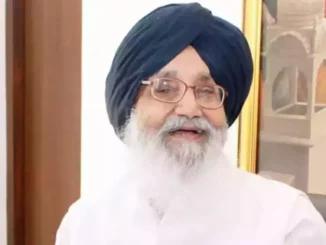
    He pioneered coalition politics in India

    By Prabhjot Singh

    If politics was his passion, contesting elections was his pastime. From panchayat to gurdwara elections, state legislature to parliament, he figured prominently in almost every election that took place in Punjab at least since the reorganization of the State in 1966. His slogan “raaj nahin sewa” met with the same overwhelming popularity as were his “atta-daal” and “free water for farmers” schemes.

    He was a master appeaser. He knew people’s pulse. Staying in power was his biggest ambition that he successfully achieved by serving this border State as Chief Minister for five times, besides leader of Opposition thrice and Member of Parliament and Union Agriculture Minister in Morarji Desai’s government.

    His demise at the age of 95 will make a huge difference not just to Punjab or Akali politics but also to national polity and coalition politics. He scripted the success of coalition politics in the country, first with the Jana Sangh, then during JP’s movement Janata Party and later with the Bharatiya Janata Party. Though subjects like center-state relations were dear to his heart, he died seeing Centre becoming more powerful than what it was at the early stages of his political career. The decision to walk out of the SAD-BJP coalition was not by choice but by compulsion. And the defeat in the 2022 assembly elections to an unknown political entity of Aam Aadmi Party (AAP) marked an end to a glorious political career that shaped the destiny of present Punjab.

    He was no different than most of other Akali stalwarts or “Taksali” leaders. He, too, started his political career as a Congressman. He, however, quickly moved to the Shiromani Akali Dal fairly early, but always remained a “moderate” without allowing himself to be swayed by the demand for a separate Sikh State or Khalistan. Though the Shiromani Akali Dal came out with the Anandpur Sahib resolution in 1973 for more rights to States, he was one leader who refused to give in to separatists. If the Shiromani Akali Dal, the oldest regional party in the country, witnessed divisions and partitions as the State of its influence, Punjab, did, he always stood for cordial center-state relations.

    Various initiatives of the Centre , including Indira Gandhi award, Shah Commission report and even the Rajeev-Longowal accord saw the moderates confronted both in Punjab and SGPC politics, he remained steadfast and was the last to get into politics of confrontations. It is why lots of criticism was heaped on him for not getting any of the long-standing demands of the State conceded by the center.

    He always believed that the Akali Dal was the political face of one of the most affluent, patriotic and hardworking minority communities that made more than 80 percent of total sacrifices in the freedom struggle and was not only left without a capital but also lost some of its prestigious projects it built after independence.

    As a staunch supporter of peaceful negotiations for resolving the long-standing demands, he was successful in carrying not only the Sikh community but also the Hindu community in the State as well. With the center dilly dallying on conceding any of the demands, he had the difficult job of representing the interests of a minority community that had at times the growing influence of hardcore elements demanding separate Sikh state without being in opposition to the majority community, or seeking to mobilize its own support in hostility to the majority community. This was a herculean task that not many Akali Dal leaders, including only other Akali Chief Minister in last more than four decades, Surjit Singh Barnala, tried to handle with tact while performing this balancing act.

    The demand for a separate Sikh state, Khalistan, even after more than 75 years of independence , has refused to die down. Governments of the time may have tried to dismiss it as an extremist slogan but none has ever tried to resolve it amicably. Sikh leaders, especially those representing the Shiromani Akali Dal, have never lent any support to the demand but also did nothing to get the other long-standing demands of the State, including transfer of Chandigarh and water works to Punjab.

    Parkash Singh Badal always played safe and subscribed to the philosophy of peaceful coexistence maintaining universal brotherhood, tranquility and peace after more than two decades of bloodshed that ravaged the State. Intriguingly, his name remained associated with some of the major controversies, including the start of Sikh-Nirankari clashes on Baisakhi day that ultimately pushed the State into militancy as the demand for the acceptance of Sri Anandpur Sahib resolution grew louder and clearer.

    He always believed that peace and progress would put behind the demand for Khalistan. He needed the center’s support that came at times but conditionally. Punjab is the only state in the country that has witnessed two partitions in the last 75 years. First of these came with the Independence, and second followed Sikhs’ continuous demand for a separate Punjabi speaking or lingual State.

    The Akalis, who in coalition with Congress were generally ruling the State between the first and the second partition in 1966, had their political aspirations upped and parted ways with Congress before an interim government was stalled in the State. As a sequel to that clarion call, many Sikh leaders came out of the Congress government and Parkash Singh Badal was one of them. After non-Congress governments took over from where Congress left before the 1966 reorganization, Akali’s started gaining political ground. After initial reluctance, the Centre too was forced to reorganize some states on a linguistic basis. The Centre, however, played a game by drawing a long list of concurrent subjects, in which the Centre and the states both have the right to legislate, and the automatic right of the Centre to prevail over a state in any concurrent legislation.

    Some of the demands Punjab subsequently raised were at the core of the 1973 Anandpur Sahib resolution. There was a lot of hue and cry after the resolution hit the public domain. It had several additional points that sought to placate more extreme elements which wanted to combine regional autonomy with religious exclusivity. In 1978, fresh resolutions that proclaimed themselves to be based on the Anandpur Sahib resolution were passed, but they eschewed ambiguous language that could lend itself to separatist interpretations. The Akalis became champions of states’ rights, and it was during this time that the baton passed into the hands of Badal.

    Events elsewhere in the country set in motion a debate over center-state relations. A few non-Congress governments supported the federal structure before various Opposition-led states came together to demand restructuring of Centre-state relations. This led to the appointment of the Sarkaria Commission. The recommendations were just shelved in the cold store. The only positive, though theoretical, was the creation of the Inter-State Council. Badal had been a votary of implementation of the Sarkaria Commission recommendations, especially with regard to the consultative appointment of a state’s Governor. But then his efforts bore no success and he continued to enjoy power.

    Badal’s alliance, first with the Jan Sangh, and later with its successor party, the BJP, stood at odds with his championing of states’ rights. Still, until last year, continued to stand by his alliance partners.

    Badal as a man had a multi-faceted personality. Reading newspapers was his very priority every morning. Clips of news reports were regularly filed and maintained at his instance.

    I used to interact with him regularly. He was not averse to criticism but at times insisted on getting his version played prominently. Sukhbir Singh Badal, after a brief stint in central politics wanted to make a flashy arrival in State politics. Those days, lots of stories were planted and played prominently about his imminent elevation as Chief Minister. He started calling meetings of bureaucrats and even Ministers and legislators. The old man stood cool and calm and made certain decisions that made it obvious who was the boss. Besides, it also cleared all speculations of his making room for his son. I did a special story saying that Badal remains firmly saddled. To my pleasant surprise I got a couple of calls early in the morning from CM’s house. Since I used to go for my morning game, and there were still no cell phones, I got a message that he wants to talk to me.

    I called and he quickly came on line to acknowledge my story saying that factual position has been highlighted.

    Otherwise, there were only a couple of other occasions when I got calls from him. One such occasion was when I was doing my story on how politicians were holding the public transport system to ransom. He called to say that he would love his version to go as prominently as parts of my serialized stories were going. Afterwards, the government went with full page ads in support of its transport policy rather than seeking a rejoinder to my series. Our relationship, as always, remained truly professional and criticism, if any, was taken sportingly.

    One of his programs, Sangat Darshan, though popular with the masses, provided a lever to opposition parties to criticize him for diverting public funds to serve the political constituencies of his party members. Since, some parties, including Congress, also held him responsible for accepting money for the controversial SYL canal, he tried to silence his critics by notifying the acquired land and returning it to original owners. It, however, did not end the ongoing dispute between Punjab and Haryana. Staunch supporter of ideology and commitment to public services, he always denounced vendetta politics. Whatever his critics may have to say, he was not one of but the tallest of all politicians the State has produced in the post-independence era. It is one reason he commanded respect from leaders of all opposition parties for his secular and national outlook. Tailpiece: He always held he was doing “sewa” and not “raaj”. Interestingly, this “sewa” mostly came when he was in “satta” (raaj).

    (The author is a senior journalist)


  • Not by ‘Vande Bharat’ alone

    Not by ‘Vande Bharat’ alone

    The nation can ill-afford to let the performance of its prime transporter and its largest public undertaking to be judged merely on the basis of the number of Vande Bharat trains introduced, the glitz and opulence of its remodeled stations or the record-breaking length of its railway station platforms.

    By K Balakesari

    There is a touch of wry irony in the fact that today most of the news about the Indian Railways concerns Vande Bharat trains, and more particularly the fact that every new Vande Bharat train is being personally flagged off by the Prime Minister. For, a little over four years ago, the launch of Train 18, the precursor to the Vande Bharat train, was heralded by the initiation of vigilance investigations against some of the top architects of the project on wholly specious grounds.

    The Train 18 project was one that was wholly conceived, planned and executed with élan in record time, by a team of inspired, talented and committed Railway professionals of the Integral Coach Factory, Perambur, Chennai, with minimum official support. Thankfully, the witch hunt came to naught. Today it seems it is raining Vande Bharat trains all over the country, a unique example of the success of a purely local initiative driving policy at the highest level.

    Amid the publicity blitz and euphoria surrounding the successive introduction of Vande Bharat trains, almost on a weekly basis in various parts of the country, it is easy to lose sight of the larger picture and the serious issues confronting the Indian Railways.

    With the elimination of a separate Railway Budget and its merger with the General Budget from 2017 onwards, there has been a welcome shift towards ramping up investments in the Indian Railways, both through increased budgetary support from the General Exchequer and through institutional borrowings, aimed at creating additional rail transport capacity ahead of demand.

    Needed, more relevant metrics
    Accordingly, the Annual Plan outlay of the Indian Railways which was ₹1,09,935 crore in 2016-17 in the last separate Railway Budget has ballooned to ₹2,60,200 crore in the Budget for 2023-24, an increase of 137% While unprecedented levels of investment to build rail infrastructure are a welcome development, unless these investments translate into concrete progress towards capacity building, highlighting only the inputs without looking at the outcomes serves no purpose. Therefore, the performance of the Indian Railways needs to be evaluated using more relevant metrics.

    This article will look at two areas (one each on the freight and the passenger fronts). The National Rail Plan 2030 (NRP) envisages raising the rail share in freight traffic vis-à-vis roadways from 27% to 45% by 2050 and the raising of the average speed of goods trains to 50 kilometers per hour from the present 25 kmph and concurrent reduction in tariff rates for freight by up to 30%. It may be mentioned that the rail share of freight carried reduced from 51.5.% in 2008-09 to 32.4% in 2018-19 for leads over 300 km.

    Further, almost the entire increase in volume of traffic carried by rail over the decade 2008-09 to 2018-19 has been in short lead traffic (leads up to 300 km) and 55% of the increase was through the transport of just one commodity, viz. coal. As yet, there is no evidence of higher levels of traffic being achieved concurrently with diversification of commodities carried or an increase in rail share vis-à-vis road transport. In other words, in the race towards achieving the targets set in NRP 2030, the Indian Railways is at or near the starting block.

    The subject of punctuality, other core issues
    On the passenger front, perhaps the single most important operational index is punctuality. Here, a radical shift in emphasis is called for. If stations in the Indian Railways network can be remodeled to ‘international standards’, perhaps it is time to aim for international standards in punctuality of trains as well. Japanese Railways reckon the punctuality of their high-speed trains in seconds. The Indian Railways should aim to be at least within five minutes (without any adjustment) of the scheduled time. While published statistics of punctuality usually are above 90%, these figures are arrived at with a dose of adjustment and only the destination arrival time is considered irrespective of the fact that a train might have been off schedule en route at all the important intermediate stations.

    More than a decade ago, when an exercise was undertaken to plot the status of all passenger trains on the move in the Indian Railways network on real time basis, the punctuality of all passenger-carrying trains at any given time hovered around 60%.

    It is high time to move away from the traditional concept of destination punctuality and evolve an index of punctuality that will also reflect the punctuality at select intermediate stations, at least for all mail/express trains. With developments in IT and data analytics, this should be possible. Real time punctuality of 90% should be a challenging target to aim for. The focus should be to improve overall passenger experience, not merely statistics.

    These are only two examples. There is a vast range of issues such as financial performance, physical performance, safety, organizational/human resource issues, project execution, customer relations, effect of the dedicated freight corridors on the Indian Railways system capacity and so on that need to be critically analyzed/ reviewed and the necessary course corrections effected.

    Have an annual report
    Seven years ago, in the wake of the elimination of a separate Rail Budget, an article by this writer (Railway Budget — a vanishing trick, September 22, 2016) had suggested that the government should consider tabling an annual report on the performance of the Railways in Parliament — on the lines of the annual Economic Survey prepared by the Finance Ministry ahead of the General Budget. This report, unlike a publicity pamphlet like the Indian Railways Yearbook, should be an internal performance audit that should serve as a valuable resource for policymakers, serious students and also researchers in the field of rail transport.

    No government or organization would willingly submit itself to such a self-analysis in the public domain. But with the huge sums already invested and proposed to be invested in the future in the rail sector, the nation can ill-afford to let the performance of its prime transporter and its largest public undertaking to be judged merely on the basis of the number of Vande Bharat trains introduced, the glitz and opulence of its remodeled stations or the record-breaking length of its railway station platforms.

    (The author, belonging to the Indian Railway Service of Mechanical Engineers, was Member Staff, Railway Board)

  • Monthly Horoscope- May 2023

    Aries

    Ganesha says that there will be mental disturbance this month. For some reason, the mind will remain restless. Due to the rudeness of your nature, the situation of confusion will increase. In the beginning, there may be temporary differences with the life partner due to the seduction of a family member. Loss is possible from an important contract. Miscalculations can lead to loss. Commenting on everyone in the family can have a negative effect on the family environment. Interest will be seen in the spiritual and philosophical literature. Don’t run away from problems, face them. Don’t get into arguments. There are signs of estrangement between the opposite sexes. Avoid unnecessary speech. Do not take any big steps without checking. There can be ideological differences between the spouses. Parents may suffer due to running away. External contacts will be beneficial. Avoid hurting someone’s self-respect.

    Taurus

    Ganesha says that your financial condition may become a little normal this month. There will be a slight decrease in income, but the economic condition will be fine. Many new opportunities can be found. Someone’s jealousy can force your problem. There can be tension between colleagues and partners. There will be unhappiness due to the non-discharge of duties of employees and co-workers. Don’t invest for the short term. The sweet speech will work. There may be pain in the nerves and muscles. Avoid discord in the family. There will be a feeling of happiness when there are signs of speed in the works that have been stalled for a few months. Be careful about your image, otherwise, someone may try to spoil it.

    Gemini

    Ganesha says that at the beginning of the month, there are chances of a long journey. There will be an increase in dominance in career and in the number of supporters. There are signs of an increase in intellectual power. Eyes will become moist due to the action of an opponent. Your confidence will remain strong even in adverse circumstances. Efficiency in work will increase. Business relations will improve. Economic power will expand. There is a sum of expenditure on happiness and prosperity. Will get the support of family members. Busyness in your career is being reflected. Any work will go on getting worse. There will be happiness and peace in the family. With the cooperation of the government or any big person, the background of some big profit will be formed. Brother will get new opportunities. The trend toward music and literature will increase. In the middle of the month, due to someone’s stupidity, the lines on the forehead will shrink.

    Cancer

    Ganesha says you may get the support of senior officials. Relatives will be useful. A wrong decision will cause loss. There are possibilities of getting auspicious results in the third week of the month. Ego will spoil things. Any small thing will become a canker and will give mental tension. Prudent behaviour will be beneficial. Weight will increase. The mind will be distressed by the pain of an old friend. The sharpness of thoughts will be appreciated. Do not take financial risk, otherwise, there may be loss. You will get someone’s support. Speak with courage. New people will pave the way for profit. There will be family happiness. Inner happiness will increase. Religious interest will be visible.

    Leo

    Ganesha says there will be new opportunities in business. You will get the grace of a Guru or a Guru-like person. Fame will spread through new ideas. Your spirits will be high. Awareness will increase among people. You will get help from someone. Legal complications may arise. Positive results will be received in the third week of the month. A profitable deal will come. Maintain humility in nature. Do not dispute with seniors. Take special care of valuables. Help but don’t lend. There will be benefits from cleverness. An overseas contract will do wonders in trading. Love relations will be intense. control your emotions. Take care of your health. Credibility will increase. Will get the support of the life partner. Women may have the problem of irregular menstruation. Pets have the sum of suffering.

    Virgo

    Ganesha says that this month is good in terms of career. There will be family happiness. Desired work can happen. Old aspirations are likely to be fulfilled. There will be panic among the opponents. Philosophical interest will appear. There will be mental pain from rivals. Loss can increase due to sudden loss. The experience of an experienced person will come in handy. There will be happiness in the middle of the month. Father may be in trouble. Investments will get positive results at the end of the month. Will be interested in astrology. One’s soft health can cause stress.

    Libra

    Ganesha says that the attraction toward the opposite sex will increase. You will get success in your career. Will get special support from friends. There will be the happiness of accomplishment. Your health will be fine. Efficiency will further improve and profit will come. The economic condition will be fine. Your spoiled relationship with your sister will improve. The irregular routine will affect health. Some disorders can bother you. Avoid harsh words and criticism. The child will be restless. Victory will come through love and forgiveness, not deceit. The body and mind will get rest. Interest in music and literature will increase. Salary cuts can be frustrating. There will be trouble due to the dramatic nature of the spouse.

    Scorpio

    Ganesha says that harshness of speech can cause harm this month. There will be new opportunities in business. There will be fear of theft or the loss of a loved one. Will get the support of the life partner. Wisdom discretion will benefit. Pain in the legs and muscles is possible. You will be saddened by bad news related to an acquaintance. In the absence of complete information, do not get the faulty equipment repaired, otherwise, there will be trouble. New ideas of income will emerge. In the middle of the month, you will have mental stress due to unnecessary disturbance. Sister’s obstinate behaviour and hot temper will cause trouble. There will be chances of profit from the opposite sex. Be careful in financial transactions. Avoid trying to make quick money. There can be some deception.

    Sagittarius

    Ganesha says that there are indications of physical and sensual pleasures. Mental happiness will increase. Time is better than one medium for a career. Wishes will get wings. There can be financial loss in the second week. Domestic tension is possible. There can be a mole in a small dispute. There will be a decrease in confidence. Experienced people will be contacted. Marital happiness will be moderate to best. There will be uneasiness due to the negative behaviour of the father’s family members. This month the attraction towards the opposite sex will increase. The third week will be as complicated as a jalebi. A positive situation will be created. Problems will arise due to the mistakes of colleagues. Sudden profit is possible at the end of the month.

    Capricorn

    Ganesha says You will get the fruits of your hard work in your career. In the first half of the month, any failure can bother you. There will be trouble due to false accusations. There will be mental tension. Caution is necessary for following the advice of others. There are indications of economic benefits from short-term business, both income and expenses will increase. There can be tension in financial transactions. A business deal will go bad. There can be tension with partners or team members. There will be sorrow due to the anger of the spouse. Keep your emotions under control. An old, complicated matter will be resolved. be careful about your health. Be careful with valuables and essentials. There can be trouble due to thoughts different from yours. Mental capacity will increase. Don’t let yourself lose faith. Don’t get into a dispute with anyone without any reason.

    Aquarius

    Ganesha says that the economic condition will be moderate, yet the mind will remain restless regarding money. Vigilance is necessary at the end of the month. An old, spoiled relationship can get spoiled. Always stay away from the worry and criticism of your spouse. The child will go on a long journey and due to laziness, the mind will be restless due to studies. The harsh words of a friend can pierce the heart. The family environment will be moderate. Obstacles will come this month, but they will go away. Any news related to someone close can increase your restlessness. There will be an increase in ideological power in the third week. Due to the non-availability of essential items, the atmosphere of the house may become disturbed. Government people will be benefited. There will be intimacy with high officials, and you will get the benefit of this. Inner qualities will come to the fore. Ignorance can cause damage. There will be an increase in prestige at the end of the month.

    Pisces

    Ganesha says that today your speech and intelligence will develop. Old lovers can come in contact again. With intelligence and tact, you will get many wonderful results. Lack of new income can cause stress. Someone’s advice can do wonders. A correct prediction will give miraculous results in your career. Disappointment will increase due to interruption in work in the middle of the month. Uneasiness can increase due to the sorrow of the spouse. Supernatural inner strength will appear in the third week. There will be momentary tension in relations with loved ones. Be careful about reputation. Someone’s love will be passionate. The way to get the stalled money will be made. Be careful in big decisions, otherwise, a small mistake can cost you dearly. Expert opinion is necessary before starting a new job. There will be happiness for sons and daughters. The praise of the boss will increase enthusiasm. An opponent will praise. Spoiled relationships will gradually improve. Don’t doubt unnecessarily, otherwise, there can be long-term damage to the relationship.

  • Rest in peace , dear departed Badal Sahib

    The legendary politician Parkash Singh Badal has died at 95. In his death, Shiromani Akali Dal has lost its guiding Star; Punjab has lost a Statesman; the Sikh community has lost a powerful leader; and India has lost a sagacious politician.
    It is a personal loss to me, too, as I had known him since the 70’s and have had the opportunity to discuss Punjab and national issues with him. I recall him as a man who always talked straight without beating about the bush. Clear in his thoughts, he was extremely communicative. It was always a pleasure speaking with him. It is sad he is gone at a time when India needed him to forcefully pilot his view on the need for communal harmony, brotherhood and peace.
    In the pages that follow, we have carried tribute by Prime Minister Narendra Modi and Prabhjot Singh, a senior journalist who had been close to the late patriarch of the Shiromani Akali Dal. We pray for eternal peace to the departed soul.

  • Second innings hopes: On Biden announcement and repeat U.S. presidential candidates

    Biden needs to do more than present himself as an alternative to Trump

    U.S. President Joe Biden, 80, has announced that he will be seeking re-election in the 2024 presidential polls, a goal which, if he succeeds, will ensure that the Democrat breaks his own 2020 record of being the oldest ever U.S. President. With Vice-President Kamala Harris, of joint Indian-African heritage, throwing her hat in the ring again as Mr. Biden’s running mate, and with former President, Republican Donald Trump, 76, already in the fray as the frontrunner conservative candidate, it is likely that the contest may revert to a scenario similar to the one seen in 2020. While that would not be an unprecedented outcome in U.S. political history — it happened before with Benjamin Harrison and Grover Cleveland in 1888 and 1892; William Bryan and William McKinley in 1896 and 1900; and with Adlai Stevenson and Dwight Eisenhower in 1952 and 1956 — this would only be the fourth such instance of repeat presidential candidates in the post-Civil War period. Such an eventuality would also raise the question of why, within the Democratic and Republican Parties, there appears to be a paucity of charismatic and capable leaders who could offer a fresh take on the myriad of policy issues that beset the country and have bitterly polarized the electorate.

    It is significant that Mr. Biden’s campaign announcement video began with visuals of the January 6, 2021 Capitol attack, indicating that the incumbent sees his second bid for the Oval Office as a projection of the alternative to Mr. Trump’s MAGA vision and would seek to emphasize the very threat to democracy that the idea of the “stolen election” of 2020 poses. In truth — and this may be a lesson to the Biden campaign that becomes apparent as the coming 18 months before the next election roll by — Mr. Biden may have to do far more than simply be an alternative. Not only would he have to “finish the job” on matters such as levying higher tax on the wealthiest Americans, stabilizing the social security system, tackling inflationary threats, keeping up the momentum on job creation and providing humane yet practical immigration policy solutions, but he would also have to reckon with the fact that the worst of the pandemic effects have passed and the Russian invasion of Ukraine has moved beyond the one-year mark. In this new reality, for whichever among the 46th and 45th Presidents prevails in 2024, there will be a pressing need for blue-sky thinking on profound questions regarding public health and biosecurity; on NATO’s role in Europe and the challenges of coordinating between European powers to eventually end the war in Ukraine; and the eternal question of how to keep America at the forefront of technological innovation and jobs.
    (The Hindu)

  • Amritpal in the dock : Vital to expose agencies using him as a pawn

    A five-week-long drama came to an end with the surrender and arrest of pro-Khalistan activist Amritpal Singh. He had been on the run ever since the Punjab Police finally launched a crackdown against him and his supporters. Days after he fled, the Punjab and Haryana High Court had rapped the Punjab Government for its failure to nab Amritpal despite having a 80,000-strong police force. Even as questions are still being asked about how he managed to evade the cops for so long, the spotlight is now on his interrogation, which will be aimed at building a watertight case under the stringent National Security Act.
    Amritpal faces several criminal charges, including attempt to murder, abduction and extortion. Two months ago, his loyalists had stormed Ajnala police station to secure his aide’s release, even as Amritpal had threatened Home Minister Amit Shah with a fate similar to that of former Prime Minister Indira Gandhi. Despite such brazen disregard for the law, the Punjab Police got going only after being prodded by the Centre.
    From the outset, it was apparent that Amritpal had been foisted upon Punjab, which continues to have no takers for Khalistan. Having dressed up like Jarnail Singh Bhindranwale, he seems to be pursuing the agenda of anti-national forces out to foment trouble in the border state all over again. The attacks on the Indian High Commission in London and the Indian Consulate in San Francisco in the wake of the police crackdown in Punjab laid bare the nefarious role of West-based religious radicals. The challenge for Central agencies is to establish Amritpal’s links with secessionist groups and Pakistan’s ISI. There is no doubt that the people of Punjab have firm faith in the democratic system. This was amply demonstrated by the huge mandate given to the Aam Aadmi Party in last year’s Assembly elections. The state witnessed so much bloodshed in the 1980s and 1990s that it no longer has any appetite for more violence. The onus is on the state and Central governments to ensure that the famed land of farmers and soldiers is not held to ransom by Amritpal-like pseudo-preachers with a penchant for religious fancy dress.

    (Tribune, India)

  • How Good is Punjab Police?

    How Good is Punjab Police?

    Money, equipment and bulging numbers do not modernize or improve efficiency of a police force. Training and motivation are the key elements that distinguish between an efficient force in uniform and huge squads of lathi wielding shabbily dressed men with big pot bellies.

    By Prabhjot Singh

    Society gets the police it deserves, is an adage that appears to be fast losing its relevance. Times have changed. So have societies. They say change is the only thing that is permanent. Police have changed but not to the expectations of the population at large. People still view men in uniform as aggressors and not law enforcers. It is one reason that even politicians at times would demand investigations of cases hawking media headlines by central agencies, including CBI, and not by their own “efficient and modernized State police forces.” Why? Why State police forces in general and Punjab Police in particular, have been targets of criticism. Are the police forces acting at the behest of their political bosses rather than abiding by the mandate given to them by the law of the land? Or something else is ailing the police?

    Reasons may be many.

    Growing awareness about human rights in general and the right to live a decent life in particular have put law enforcement agencies on the backfoot. There is growing criticism for inept handling of cases that hawk media headlines. Of late, Punjab police have been at the receiving end. Its unending battle against growing drug menace, gangsterism, extremism, religious sensitives and mafias controlling licensed supplies has greatly impacted its credibility. Of late, the Amritpal Singh case has not only put it in a tight spot but also raised serious doubts about its capabilities of apprehending offenders of law, leave aside gangsters, ultras and fugitives.

    What is wrong with Punjab Police? Top heavy law enforcement agency with an active strength of 80,000 plus appears to be fighting a battle for credibility as Amritpal Singh and his accomplice escaped its planned dragnet on March 18. Since then, it has come out with various theories, amusing stories and corroboratory CCTV footages. Its investigations are leading nowhere. Also failed is the intelligence network. Equally intriguing is the role of central police forces and intelligence agencies, who too, have been on the trail of Amritpal Singh and other members of his infamous Waris Punjab De group.

    There was a time when the police complained of antiquated weaponry, worn out vehicles, dilapidated buildings housing police stations, poor communication networks and lack of training in handling the changing face of crime.

    But that is history. Punjab Police has been one of the major beneficiaries of modernization of police force initiative of the Union Government. The State was flushed with money, vehicles, gadgets as new buildings were built for police stations, new training centers, including those of anti-terror and cybercrime, were set up. New commando squads were raised, and the States were also financially assisted in raising the State Armed Reserve Battalions. Double barrel guns were replaced by self-loading rifles and assault weapons. Latest telecommunication was added to the police network to enhance its detection capabilities. Money, equipment and bulging numbers do not modernize or improve efficiency of a police force.

    Training and motivation are the key elements that distinguish between an efficient force in uniform and huge squads of lathi wielding shabbily dressed men with big pot bellies. Training of police has always remained a highly debatable subject.

    (The author is a senior journalist)
    To be concluded

  • Congress should be concerned about the increasing defections from its ranks

    Congress should be concerned about the increasing defections from its ranks

    Congress Party could ill afford to dismiss the increasing defections of leaders from its ranks, and it is time long overdue for an introspection as to what exactly is causing these people to walk away from the grand old party.

    By George Abraham

    Congress Party could ill afford to dismiss the increasing defections of leaders from its ranks, and it is time long overdue for an introspection as to what exactly is causing these people to walk away from the grand old party. While we are disappointed with Anil Antony’s defection to the BJP and his subsequent statements, examining the factors that drive them out of the party is prudent. Anil’s defection pains me more as I have personally known him since his Stanford University days in the U.S., where my son was a schoolmate, and both enrolled in Management of Science and Engineering in graduate studies. Let us not dismiss that it is one more defection of a learned person whose scholarly articles on Technology and their impact on society were a regular feature in India’s major newspapers.
    The attacks on Anil came from various quarters: some who were envious of his entry into politics, others who despised his father for various reasons, and a group who had the same level of intolerance as the governing party to a dissenting point of view. Whether he has made an impact with his assignment with the AICC or not, there is no doubt that he represents a generation of young people who are increasingly estranged from the Congress party, and that should be a serious concern for the future as the party is gearing up for the 2024 elections. However, although as an adult he has the right to make his own choice, Anil’s sudden foray into the BJP politics is a colossal mistake, which has severely embarrassed and pained his own father, A.K. Antony, a stalwart of the Congress party for decades, more than anyone else.”
    Some of the BJP leaders in Kerala seem to be gloating that the Christian community will follow suit with Anil’s defection. That is much farther from the truth. Christians in Kerala understand the BJP ideology and their practices very well. They are educated and knowledgeable voters who will not fall for BJP’s political gimmicks. They foresee the prospect of a Hindu Rashtra in their future and listen to a constant stream of news coming out from BJP-ruled states where attacks on Churches, Priests, and Pastors occur with increasing frequency. They haven’t forgotten the renaming of ‘Good Friday’ into ‘Good Governance Day’ or the shutting down of Christian Charitable/educational entities across India while putting a chokehold on their Institutions using the power of FCRA to stop the flow of funds from abroad. Therefore, the BJP’s hopes of a sudden influx of Christians to their party rest on false premises, and Keralites will continue to uphold the values of democracy, secularism, and equal rights in the future.
    Shashi Tharoor for working President:
    Moreover, the Congress party needs more internal democracy and freedom of expression without the fear of retribution. Shashi Tharoor was welcomed to contest for the Presidency by the party hierarchy; however, he was penalized with exclusion from the steering committee for daring to challenge the status quo. Right now, rumors are that forces are at play to drive him out of the party altogether. Instead of utilizing his incredible talents and skillset, pressure had to be applied by some sane souls even to allow him to speak at the Raipur conference. Congress Party will be making a huge error if they let Tharoor walk, and the Congress in Kerala might even pay a heavier price. Instead, I would recommend to Kharge ji, the AICC President, to appoint Shashi Tharoor as the working President and designate him to use his diplomatic skills to negotiate a broader opposition front. Congress stands its best chance at a comeback in 2024 by combining the capabilities of Rahul Gandhi and Shashi Tharoor and enabling them to work together. If each of them was empowered to exercise their areas of expertise and strength, the Congress Party would create a formidable duo that could make a huge impact nationwide. This is a simple measure, which, if undertaken, will reap many benefits and secure a better position for Congress in the minds of the Indian voters. Albert Einstein once said that the definition of insanity is to do the same thing over and over again, expecting different results. It is time to think outside the box and reenergize the party and the nation. Time is short. Congress must act quickly and decisively.
    Let the party also seek out and find candidates for Assembly and Lok Sabha elections from the grassroots who are dedicated to the ideology of Congress and who will be reliable and steady in a storm of temptations and adversity. It would be prudent to select those candidates months in advance so they have ample time to convey the message to their constituents. There is no time to waste. I urge Kharge Ji to work with speed and clarity to stem any further bleeding from the party. If Congress continues in this mode of implosion, both Congress and India will be doomed.
    (The author is a former Chief Technology Officer of the United Nations and Vice-Chairman of the Indian Overseas Congress, USA.)

  • Many faces of Jallianwala Bagh

    Many faces of Jallianwala Bagh

    The massacre was a catalyst for fusion of multiple strands of anti-imperialist politics

    The tragic moment also became a transformative moment. The transformation manifested itself at four levels — local, regional, national and even global.

    “The April 13 massacre also contributed to a global perspective on all forms of violence and injustice. Gandhi imparted an extremely profound defining label to the massacre. He called it an act of violence not just against a community, region or even a country, but against all humanity. He termed it a ‘crime against humanity’. This was almost three decades before it became a standard catch-phrase by the human rights movements all over. The Jallianwala Bagh carnage was an act in which Punjabis or Indians were not the only victims and the British not the only perpetrators. It was an act of global shame for which all humanity ought to hang its head. Just as all injustice is global in character, so should the resistance against it be.”

    By Salil Misra

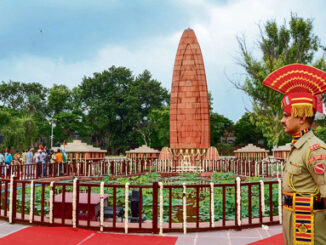
    The massacre at Jallianwala Bagh on April 13, 1919, may not have lasted more than 10 minutes. This time was enough for Brigadier General Dyer to get his troops to fire 1,650 rounds on the crowd that had gathered there on the auspicious occasion of Baisakhi. Dyer’s intention was not to disperse the crowd but to terrorize it. Close to 20,000 people had assembled there. In official records, 379 people were killed and many times more wounded. Contemporary estimates of the dead varied between 1,000 and 1,800. Some historical accounts, produced many decades after the massacre, estimated the number of the dead to be 500-700. The Jallianwala Bagh Memorial recognized close to 2,000 martyrs. It was clear that many of the wounded would not have survived. The sheer anonymity of the crowd made it difficult to get the accurate figure of the dead. The general consensus that developed subsequently was that anywhere between 500 and 1,800 people would have been killed during the shooting.

    The tragic moment also became a transformative moment. The transformation manifested itself at four levels — local, regional, national and even global.

    There is thus no clarity on the death toll. But equally, there is no clarity on why Jallianwala happened in the first place. The gathering was not entirely political. Many people had come from nearby areas and may not have known that the city of Amritsar had been placed under curfew. The city administration had been handed over to the army and thus came under the direct control of General Dyer. Amritsar had witnessed violence on April 10 when a demonstration against the Rowlatt Act had turned violent; five Englishmen had been killed by a mob. Nothing else had happened which would warrant genocidal violence on this scale. So why did it happen?

    Was it because, as some writers suggested, General Dyer was mentally sick and suffering from arteriosclerosis and experienced a sudden rush of blood? Or, more plausibly, was it because the British were haunted by the ghost of 1857? Any act of violence by Indians reminded them of 1857. They saw a great conspiracy in the events of April 10. They feared that some help would come from outside, possibly Afghanistan. They panicked. They anticipated violence from Indians and inflicted greater violence on them to prevent it.

    The story of Jallianwala Bagh, however, did not end here. It was a moment of great tragedy. Not since the days of 1857 had the country experienced such barbarity. But the tragic moment also became a transformative moment. The transformation manifested itself at four levels — local, regional, national and even global. From being a religious center, Amritsar turned into a mascot of the anti-imperialist struggle. The massacre also changed the face of Punjab. From being a colonial heartland and a garrison state at the service of British colonialism, Punjab emerged as the headquarters of the nationalist struggle. It may have been a great psychological blow to the British to discover that Punjab was no longer a part of their support system but a major actor in the struggle against them.

    Jallianwala Bagh also changed the contours of nationalist politics at the all-India level. Before the massacre, there were two shades of anti-imperialist politics. There was the mild and moderate opposition by the middle classes, which took the form of petitions and appeals to the goodwill of the rulers. Their opposition was non-violent and within the confines of the law. As against this, there were the spontaneous and often violent struggles of peasants, workers and artisans. The two forms of opposition ran parallel to each other and maintained their separate existence distant from each other. Jallianwala Bagh changed all that. Its reverberations shook the conscience of all strands of the population, cutting across class lines. Gandhi brought the two together into a composite anti-imperialist politics that was non-constitutional and non-violent at the same time and involved both the middle and the lower classes in a seamless, multi-class grid of nationalist politics. Jallianwala Bagh became the catalyst for the fusion of multiple strands of anti-imperialist politics.

    The April 13 massacre also contributed to a global perspective on all forms of violence and injustice. Gandhi imparted an extremely profound defining label to the massacre. He called it an act of violence not just against a community, region or even a country, but against all humanity. He termed it a ‘crime against humanity’. This was almost three decades before it became a standard catch-phrase by the human rights movements all over. The Jallianwala Bagh carnage was an act in which Punjabis or Indians were not the only victims and the British not the only perpetrators. It was an act of global shame for which all humanity ought to hang its head. Just as all injustice is global in character, so should the resistance against it be.

    Quite apart from the transformative character of the moment, it also created a continuous stream of literary and historical writings which shaped the ways in which Jallianwala Bagh was preserved and stored in popular memory. In historical writings, Jallianwala Bagh was projected as a trigger for subsequent anti-imperialist politics. It became a pivot for Indian nationalism, and a starting point of a process that eventually culminated in Independence in 1947. But a different dimension was imparted to it by literary writings. A large number of stories, poems and novels, written in Hindi, Punjabi, Urdu and other languages, unearthed for us the world of emotions and subjectivities around Jallianwala Bagh. They focused on the human dimension, the individual experiences, loss and sorrow, feelings and emotions, trauma and anger, often buried deep in multiple layers of the subconscious.

    Thus, it was that a brief episode became a transformative moment. Many scholarly and creative responses have illuminated for us the world of Jallianwala Bagh. We may still not know how to make sense of this world. But we know how to remember it and preserve it in our collective memory.
    (The author is Professor of History, Ambedkar University Delhi)

  • The Trump indictment, a polarized America

    The Trump indictment, a polarized America

    The United States confronts surging levels of hatred between social and political groups and apparent support for Trumpism as a movement

    Between the surging levels of hatred between social and political groups, and apparent support for Trumpism as a movement, it is likely that even if the cases against Mr. Trump work their way through the courts and lead to convictions, the U.S. is still far from truly reckoning with the promise of its founding fathers to achieve the dream of E pluribus unum, or ‘Out of many, one’.

    By Narayan Lakshman

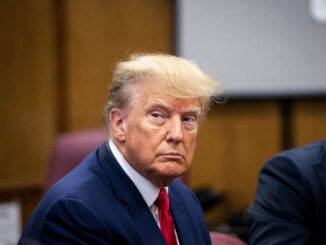
    The Manhattan District attorney’s unprecedented action of indicting former United States President Donald Trump through a grand jury, on 34 felony charges relating to falsifying business records with the intention to commit another crime, has set the tenor for the coming campaign cycle which will culminate in the 2024 U.S. presidential election. On the one hand there is little doubt that the 45th President flirted with the boundaries of legality through his presidency (2016-20), whether it was his attempts at election interference in Fulton County, Georgia, his role in inciting the January 6, 2021, insurrection, or his possession of classified information after leaving the White House. Indeed, criminal investigations are underway for each of these potential cases for prosecution.

    Plethora of cases
    First, in Georgia, Fulton County District Attorney/prosecutor Fani Willis is examining the actions of Mr. Trump and his associates in the aftermath of the 2020 presidential election, particularly their attempts to exert pressure upon state officials to undo Mr. Trump’s loss of the state in the election — including the now-infamous call to Georgia State Secretary Brad Raffensperger on January 2, 2021, during which Mr. Trump demanded that the Secretary “find 11,780 votes”. The inquiry has also delved into plans to send fake electors to the Electoral College who would claim that Mr. Trump won, and the Trump team’s calls to Georgia Governor Brian Kemp and others to press them on contesting the election results. While the investigation’s work was completed in January, its report remains under wraps for the moment.

    Second, as far as the House of Representatives panel investigating the role of Mr. Trump in the January 2021 insurrection is concerned, the committee in question shut down earlier this year after an 18-month inquiry, culminating in an 814-page report to the Justice Department that recommended prosecuting Mr. Trump. While the committee’s referral has no legal weight to compel an indictment by the Justice Department, the enormous trove of evidentiary documents, statements of facts, and testimonies is likely to be of considerable value to the Department as it embarks on an investigation of its own.

    Third, Attorney General of the of the United States Merrick Garland last year appointed Special Counsel Jack Smith to lead multiple probes into Mr. Trump’s handling of classified documents post the end of his term in office. While Mr. Trump’s attorney’s certified in June 2022 that a “diligent search” for classified documents conducted at Mr. Trump’s Mar-a-Lago resort in Florida yielded all classified documents on the site and they were then handed over to federal authorities, a short while later a Federal Bureau of Investigation raid discovered more than 100 further undisclosed documents.

    Along with probes into the actions of the Trump Organization’s business dealings, each of these lines of inquiry has led to a sprawling mega-investigation of Mr. Trump and his associates. This implies that the first indictment against him, in the hush-money case, is only the beginning.

    Agenda of hate
    Stepping back from the cases against Mr. Trump, it is pertinent to ask what the impact of these investigations might be on his base of supporters across the U.S., particularly in light of him characterizing the inquiries as a “witch hunt” and “political persecution”. On the one hand it is no surprise that the American electorate remains as bitterly polarized as ever. A Pew Research Center poll last year found that the proportion of Republicans and Democrats who viewed not just the opposing party but also its members as close-minded, dishonest, immoral, unintelligent and lazy has increased significantly from 2016 to 2022. For example, it was striking that in 2016, 47% of Republicans and 35% of Democrats said that those in the other party were a lot or somewhat more immoral than other Americans; yet by August 2022, 72% of Republicans regarded Democrats as more immoral, and 63% of Democrats said the same of Republicans.

    This means that through the administrations of Mr. Trump and current U.S. President Joe Biden, Americans are now talking past each other and the sense of the two sides having entirely different worldviews with almost no common ground whatsoever has deepened — for example with regard to reproductive rights in the wake of the U.S. Supreme Court removing the constitutional right to abortion.

    However, in its ‘purest’ form, Trumpism, as a political movement, has less to do with conservative social values that appeal to the core of the Republican Party faithful than it does with transactional nativism. Indeed, some have even characterized Mr. Trump as a socially moderate, not extremist, conservative. The forces that catapulted the Trump administration to power and the policy chaos that his White House unleashed were, however, a function of populism that revolved around economic policies that purportedly protected the disenfranchised, white, blue-collar worker in middle America. Mr. Trump’s political rhetoric and executive actions also prioritized institutional disengagement on global treaties — whether in regard to his administration driving the U.S.’s exit from the Paris climate accord and UN Human Rights Council, or its broadside attacks on the World Trade Organization and the North Atlantic Treaty Organization.

    These forces are still alive and well. At the domestic level, through the ongoing impact of the COVID-19 pandemic, there has been visceral opposition to vaccine mandates and restrictions on movements and gatherings. The anti-science conspiracy theorists have regularly used disinformation to attack public health professionals — including former Chief Medical Adviser to the U.S. President, Dr. Anthony Fauci — in a bid to spread hate and blunt the impact of policies designed to curb the spread of the virus.

    Mr. Trump was at the heart of this propagandistic messaging in many instances, including, early on in the pandemic, when he variously questioned the efficacy of masks, and talked up unproven and unscientific treatments. He also crippled the potential of the federal government to slow the proliferation of the coronavirus in 2020, when his administration failed to quickly roll out an effective COVID-19 testing plan, to put together a comprehensive national strategy for distributing protective equipment to medical professionals, and to rapidly ramp up contact tracing. On the global front, America’s retreat from its own unipolar status has proceeded apace. Having exited a variety of international treaties, the focus of Trumpist rhetoric has now shifted back to domestic economic concerns. On the one hand, the efforts of the Biden administration to enact a $1.9 trillion stimulus package and bring down the jobless rate to 3.6% in February this year from a peak of 14.7% in April 2020 — with the economy adding over 10 million jobs during that time — has failed to garner political traction for Democrats owing to a toxic combination of soaring inflation and supply chain disruptions. The latter phenomena have stemmed from both the pandemic-related slowing of business activity and from Russia’s invasion of Ukraine.

    In parallel, persistent attacks on minorities, especially immigrant workers, for “stealing” American jobs have been a convenient diversion to shift the debate back to the sensitive issues of race and migration. Should Mr. Trump, or even another Republican, enter the Oval Office, Indian high-skilled migrant labor could be impacted under this paradigm too, for example through tightening conditions for the grant of H-1B visas.

    Between the surging levels of hatred between social and political groups, and apparent support for Trumpism as a movement, it is likely that even if the cases against Mr. Trump work their way through the courts and lead to convictions, the U.S. is still far from truly reckoning with the promise of its founding fathers to achieve the dream of E pluribus unum, or ‘Out of many, one’.
    (The author is the US Foreign Correspondent of The Hindu .He can be reached at narayan@thehindu.co.in)

  • HAPPY VAISAKHI AND A HAPPY BIRTHDAY TO KHALSA

    We congratulate our readers on the happy occasion of  Vaisakhi, the harvest festival of Punjab. We congratulate the Sikh community on the joyous, momentous and historic occasion of their birth.

    The Sikhs probably are the only religious community in the world to know their day of birth. Way back in 1699, on the day of Vaisakhi, the creator of the Khalsa, the Tenth Master of the Sikhs, Guru Gobind Singh, had put to a severe test the loyalty and faith of his followers and admirers, who had converged on Shri Anandpur Sahib from far and near at the invitation of the Guru.

    Guru Gobind Singh on that historic day created the Khalsa, the purified ones who would fight against injustice and tyranny and protect the poor and the oppressed. He gave to His followers a distinct identity and a moral code which distinguished them from other followers of the Guru.

    These followers of the Guru were to wage a struggle and march into the battlefield with the firm rock like faith and belief in their Guru, and in their resolve to win.

    Guru Gobind Singh is probably the only person in history to have sacrificed his whole family to protect others from tyranny- social, economic, political and human.

    Guru Gobind Singh’s father , Guru Tegh Bahadur martyred himself to save the Hindus from persecution at the hands of the Mughal ruler Aurangzeb. Guru Gobind Singh sacrificed all his four sons for protecting dharma. His mother couldn’t bear to see her grandsons being bricked alive in Sirhind and bade goodbye to the mundane world.

    Guru Gobind Singh himself spent all his life fighting against the tyranny of the Mughals, and treachery, machinations, and intrigues of the neighboring Hill princes , who were jealous and apprehensive of the Guru’s growing popularity and power.

    Guru Gobind Singh brought to culmination the movement initiated by Guru Nanak, the First Master of the Sikhs, to encourage the oppressed to stand up against the perpetrators of oppression.

    “Bliss it was in that dawn to be alive”, famous English poet William Wordsworth said of the French Revolution.

    We are fortunate as was Wordsworth to have witnessed the French Revolution, to be watching the march of Guru ki Fauj- the Khalsa. It is time to recall the teachings of the Great Master. It is time to recall to mind the ideals he stood for. It is time to recall the cause he fought for, and remember with both pride and humility, the supreme sacrifices he made.

    Let his followers rededicate themselves to their Great Guru and resolve to follow the path shown by Him- a life of righteousness, relentless fight for human rights against tyranny, oppression, and injustice. Let them imbibe and respect the democratic ideals of equality, liberty, and fraternity of mankind. Let them remember that their Guru had enjoined upon them to be purified ones- the Khalsa.

    The Guru prays:
    “ Grant me this boon, O God,
    May I never refrain from righteous acts;

    May I fight without fear
    All foes in life’s battle,
    With confident courage
    Claiming the victory;

    May my highest ambition be
    To sing thy praises ,
    And may Thy Glory be
    Grained in my mind!

    When this mortal life
    Reaches its limits,
    May I die fighting
    With limitless courage.

    Happy birthday to Khalsa. Happy Vaisakhi to all our readers.

  • Unity in diversity: On the Opposition attempt to have an alliance for 2024

    Opposition parties must recognize their differences while coming together

    Parties opposed to the Bharatiya Janata Party (BJP) are often at loggerheads with one another, and any coordinated action among them is never easy. Contradictions are many, at the ideological and personal levels; and they represent conflicting interest groups in most cases. Some tend to be guarded in their approach to the BJP, and when they turn strident against it, it is most often to safeguard their home turfs. The meetings between Bihar Chief Minister Nitish Kumar and other party leaders such as the Congress’s Mallikarjun Kharge and Rahul Gandhi, the CPI(M)’s Sitaram Yechury and the Aam Aadmi Party’s Arvind Kejriwal, in New Delhi were exploratory rather than decisive. What is clear, however, is an increasing realization among non-BJP parties that mutual animosities might turn them into easy prey for the BJP, whose hunger for power is infinite. The fact that most of these non-BJP parties were born out of antagonism to the Congress — and the BJP’s national rival — makes finding common ground even more evasive. The BJP is the hegemon in the Hindi heartland, while it faces resistance from regional parties in several States. An alliance between the regional parties does not lead to any transfer of votes as they exist in different regions. Some of these parties are rivals at the State level, as in the case of the Left and the Congress in Kerala. Therefore, pre-poll alliances are of limited consequence, generally speaking.

    But there are certain States where parties could come together to aggregate anti-BJP votes, most importantly in Uttar Pradesh and Bihar, where several parties are in the fray. A lot will depend on how well the Congress manages to galvanize support in States where it is the BJP’s primary opponent, as in Rajasthan, Madhya Pradesh, Chhattisgarh and Karnataka. Social justice parties such as the Janata Dal (U) and the Rashtriya Janata Dal in Bihar, and the Samajwadi Party and Bahujan Samaj Party in Uttar Pradesh can coordinate their actions with the Congress. Mr. Nitish Kumar’s role is important from this point of view, but social justice politics itself is facing a crisis of legitimacy in the face of Hindutva. Alliances are important, but a shared programme and vision, amplified by sustained outreach to the public, are more important. The significant differences of opinion among key Opposition leaders over the Adani controversy, and V.D. Savarkar are cases in point. Any Opposition front will have to concede the wide variety of opinions and interests that exist among its key actors. The challenge for them is to discover common ground where they can converge. A puritan idealistic pursuit is an untimely luxury at the moment; in any case, that will not be a match to the ideological cohesiveness of the BJP.
    (The Hindu)

  • Open justice: On the Supreme Court verdict in the MediaOne case

    The Supreme Court verdict setting aside the denial of broadcasting permission to Malayalam channel MediaOne is one that protects the media against arbitrary action and bars the use of undisclosed national security considerations as a pretext to shut down an outlet. The Court has struck a blow for media freedom by ruling that the government could not term critical coverage or airing of critical opinions as “anti-establishment”, and so initiate action. It said: “The use of such a terminology… represents an expectation that the press must support the establishment.” The denial of security clearance to a media channel on the basis of views it was entitled to hold “produces a chilling effect on free speech and particularly on press freedom”. The Bench also cited substantive grounds to allow MediaOne’s petitions: that security clearance cannot be denied based on its alleged anti-establishment stance or a bald claim that its shareholders have links with the Jamaat-e-Islami. The Court has rightly found fault with the approach of the Kerala High Court, which had accepted material in a sealed cover on why the Home Ministry denied security clearance to the channel. It expressed surprise that the High Court did not explain how it felt the denial of security clearance was justified even after noting that the gravity of the issue was not discernible from the files.

    A significant aspect of the judgment is that it seeks to end the casual resort to ‘sealed cover procedure’ by courts by suggesting an alternative approach to state claims of immunity from publication in public interest. Drawing upon both Indian and foreign jurisprudence, the Bench has said it is now an established principle of natural justice that relevant material must be disclosed to the affected party, ensuring that the right to appeal can be effectively exercised. It acknowledges that confidentiality and national security could be “legitimate aims for the purpose of limiting procedural guarantees”. However, a blanket immunity from disclosure of all reports could not be granted and that the validity of the involvement of such considerations must be assessed by the use of relevant tests. It could be ascertained if there is proof that non-disclosure is in the interest of national security and whether a reasonable person would come to the same inference from it. In a bid to balance the public interest in non-disclosure with the one in ensuring a fair hearing, the Court has mooted alternatives such as redacting sensitive portions and providing a gist of the material given to the affected party. The Court could also appoint an amicus curiae, who could be given access to the material whenever the state claims immunity from disclosure.
    (The Hindu)

  • Winds of change: Haryana khap vows to promote girls’ education

    In a welcome softening of the khaps’ rigidly conservative and patriarchal posturing, the Sarv Jatiya Kandela khap of Haryana’s Jind area has taken the lead in doing away with the practice of issuing diktats for the social boycott of persons, families or even political leaders and parties over local issues they deal with. Acting as a pseudo-judicial body holding sway over a collective of 20-30 surrounding villages, a khap has been traditionally resolving disputes by announcing verdicts, which, at times, are at odds with the law. Khap leaders are notorious for inciting honor killings in cases of same-gotra marriages. It has often led to run-ins with law enforcement authorities and drawn reprimands from the judiciary and civil society activists.

    But the khaps’ regressive mindset and rules are widely accepted and have hobbled Haryana’s march towards an equitable society. This is evident from the state’s skewed sex ratio and literacy rate. With the latest overall literacy rate being 75 per cent, that of males is 84 per cent and females 66 per cent. Underlining the preference for boys by even educated families and the menace of female feticide are the births of 917 females per 1,000 males recorded in 2022 despite the government’s ‘Beti Bachao, Beti Padhao’ programme, which is being implemented since 2015.

    In this light, the Kandela khap’s decision to promote girls’ education and hold nukkad meetings against the social evil of female feticide is commendable. Importantly, this initiative of the village elders will also address the hugely unfair gap in the quality of education received by urban and rural students. Coupled with its resolve to curb extravagance at wedding functions — the practice that pauperises many a girl’s parents — Jind is on the path of progress. Other khaps, too, must embrace these norms and shed archaic and outdated customs. When a crusade arises from the grassroots, it has the power to transform society. These winds of change have been blowing for some time now. While progressive campaigns have suffered some setbacks, these should not deter khaps from achieving their new goals.
    (Tribune, India)

  • Landmark Act: Himachal women get landholding right like men

    In a commendable act, the Sukhvinder Singh Sukhu-led Congress government on April 4 set right a decades-old wrong through an amendment to an outdated landholding law that discriminates against women. Till now, in grave violation of the right to equality provided by the Constitution, the daughters of the state had been suffering gender bias. The Himachal Pradesh Ceiling on Land Holdings Act of 1972 allowed only an adult son to hold an additional 150 bighas (30 acres), taking the total permissible limit of land that a family could retain to 300 bighas. This right had been denied to his adult sister. Notably, religious outfits, tea estates, cooperative farming societies and land owned by state and Central governments are exempted from this Act.

    The Himachal Pradesh Ceiling on Land Holdings (Amendment) Act 2023 is a landmark legislation that rectifies the error by treating the daughter on a par with the son. Thus now, prospectively, the adult daughter of a family is entitled to retain up to 150 bighas as a separate unit. The new Act will benefit families that have only daughters.

    That it should have taken over half a century for the 1972 Act to be amended to bring the women on a parity with men underscores boldly the dominance of the patriarchal mindset. All these years, women have faced harassment and been forced to knock at the doors of courts to fight against glaring gender disparity. The unfair legislation of 1972 has been a big hurdle in them getting what should have rightfully been theirs all the while. Consequently, many families without sons have had to give up 150 bighas. Worse, this bigoted stipulation has had a regressive repercussion on the social attitude and outlook. In order to retain their properties, people have tended to have a preference for boys. The latest amendment also holds the promise of society shedding its traditional bias against girls. While being a case of better late than never, it does put the state on track to progress.
    (Tribune, India)

  • USA is a Nation of Laws: Trump Indicted

    USA is a Nation of Laws: Trump Indicted

    D.A. Alvin Bragg Unseals 34 Felony Counts

    “The task for politicians is to give politics a rest, as our nation is undergoing a stress-test the likes of which even Richard Nixon was exempted from. Our Republic need not have gotten to this day, as we ought not have had January 6th. It is time to be American first, and party-politician second. America is made up of all Americans, and we need political E Pluribus Unum more than ever to remain the United States of America, and not become, as Senator Joe Manchin recently said: divided States of America.”

    By Ravi Batra

    In our nearly 250 year history, since our exceptional birth and Constitution, we have proudly said: we are a nation of laws, not men. Today, on that secular alter of justice, Manhattan District Attorney Alvin Bragg held up former President Donald John Trump, duly indicted with 34 felony counts, as “Exhibit A” proving that truly “no one is above the law.” The Manhattan DA’s office has been occupied by Giants, each of whom made history: Tom Dewey, Frank Hogan, Robert M. Morgenthau (my dear friend and mentor), Cyrus Roberts Vance, Jr., and now Alvin Leonard Bragg, Jr.

    Leaving politics aside, there ought be no joy in the heart of any American that a former American President stands criminally charged – no matter whether you love Trump or hate him. Indeed, it’s painful, perhaps, even more than January 6th, that a former President violated his personal oath to honor the rule of law. That Justice will prevail, and Mr. Trump will be afforded every Constitutional right that every American gets, including, presumptive-innocence and the all-powerful right to confront the witnesses against him is something we, as Americans, are uniquely proud of. After all, these legal and constitutional rights protect citizens from preventing anyone in Government – who may seek to violate Lincoln’s promise that our government is “of, by and for” the people – run roughshod over any one of us.

    These 34 Felony Counts Are All about “Mens Rea” and the “Upgrade”

    The 34 counts are business record-based, which is to say that the “bad act” part of each crime is nearly incontrovertible, leaving open for advocacy only the “bad mind,” or “mens rea,” to prove the crime was committed beyond a reasonable doubt. Normally, the Prosecutor has to prove both the “bad act” and the “bad mind” beyond a reasonable doubt to a fair and impartial jury of twelve.

    The additional legal challenge for DA Bragg here is to prove the “upgrading” of normal misdemeanor business record-charges into felony charges due to: “with intent to defraud and intent to commit another crime and aid and conceal the commission thereof.” And, for that, DA Bragg, in his press conference post-plea, said the “other crime” was New York State election law violation as well as a violation of federal campaign contribution limits. He need not prove both; just proving one of the two will be enough to “upgrade” the misdemeanor into a “felony,” and unlike flying on a plane when the upgrade gets you more seat and leg-room for greater comfort, here, the upgrade provides the Sentencing Judge with the authority to order the then-convicted-defendant more pain and a longer sentence commensurate with the crimes convicted, while considering all mitigating factors, including, age and health, for a lesser sentence, including, no jail time. The political irony here is that New York State has been blasted by Republicans on being “soft” on defendants charged with crimes. Well, now, that very objected-to New York “softness” helps former President Trump, including, our state laws that insist upon expansive discovery production by prosecutors to help all defendants better prepare for trial.

    The legal battle, then, when it truly gets past the initial flurry of activity, will be hand-to-hand combat with the defense trying to raise doubt about Mr. Trump’s “intent” for each Count and the “upgrade” state or federal predicate.

    Justice Merchan Takes Charge

    Today, President Trump pled “Not Guilty,” and was warned by Justice Juan Merchan to “refrain” from social media posts with the potential to incite violence. This warning was not idle, and presents additional legal jeopardy for Mr. Trump – just like Justice Oliver Wendell Holmes, Jr. did by holding: you cannot yell “fire’ in a crowded theater, without being held liable for those who get trampled in the ensuing melee.

    While President Trump has enjoyed being a political or economic pugilist to-date, suddenly, there are legal risks now imposed by Justice Merchan, as the law is not a trifle, and the integrity of the profession must be maintained. As America’s greatest mayor Rudy Giuliani has learned, a title he earned by keeping all New Yorkers together after 9/11, when his law license was suspended by the NYS Supreme Court’s Appellate Division First Department for his over-zealous advocacy, which the Court held violated the core obligation imposed-by-law on every lawyer by the Rules of Professional Conduct: to maintain the integrity of the profession, and safeguard Judicial Independence. Lying by a lawyer is not allowed, and is surely not risk-free.

    Procedures and Timelines

    New York allows interlocutory appeals of Orders the aggrieved party wishes to appeal, and by doing so, there is delay of the trial. Federal cases, generally, do not have as-of-right appeal of every Order issued, and hence are quicker to try the case. Here, President Trump has more legal jeopardy as there is US DOJ Special Counsel Jack Smith (Confidential Documents etc.) and Georgia state DA looking into the “11,780 votes” Mr. Trump was desperately looking to find. And then, there are civil cases. Mr. Trump is going to be quite busy consulting with his lawyers or being in Court. The national convention will occur next summer, with a presidential election in November 2024. It’s quite likely that one or more trials may not have occurred before November 2024. Mr. Trump may well find that he needs to pay real close attention to exercising all of his legal rights, if he is to avoid, or at least, minimize, legal liability.

    E Pluribus Unum, Not Republicans or Democrats

    The task for politicians is to give politics a rest, as our nation is undergoing a stress-test the likes of which even Richard Nixon was exempted from. Our Republic need not have gotten to this day, as we ought not have had January 6th. It is time to be American first, and party-politician second. America is made up of all Americans, and we need political E Pluribus Unum more than ever to remain the United States of America, and not become, as Senator Joe Manchin recently said: divided States of America.

    America: Reveille!

    To close, I urge all Americans to recall the special wish of the Lion of the Senate, Pat Leahy: let America always have “Reveille”!

    (The author is the publisher of The America Times Company Ltd., and since January 2022, is the Editor-in-Chief. He is a member of the National Press Club, in Washington D.C., and a member of its “Freedom of the Press” and “International Correspondents” Teams/Committees. An eminent, he is a member of the bar since 1981. )

    (Originally published in America Times. Republished with abridgements, with publisher’s permission)

  • A very different conception of ‘Ram Rajya’

    A very different conception of ‘Ram Rajya’

    Mahatma Gandhi’s idea of Ram Rajya — the very idea of Gandhi, one might say — is in danger of being swept aside by prevailing ideological currents, ironically in favor of a very different conception of Rama. These days, when the standing of his historic detractors is at an all-time high, Gandhiji has been criticized for weakness, for having bent over too far to accommodate Muslim interests, and for his pacifism, which is seen by the jingoistic Hindutva movement as unmanly.

    By Shashi Tharoor

    It was the longest-serving Rashtriya Swayamsevak Sangh (RSS) sarsangchalak, M.S. Golwalkar, who famously spurned Gandhian ahimsa by observing tartly, “all Hindu gods are depicted carrying weapons”. Some of his acolytes this year have decided to emulate their gods on Ram Navami, as Hindu marchers, in what were ostensibly religious processions, turned up brandishing swords, maces, even knives and revolvers to advertise their strength. This weaponization of faith was a reminder of the derisive rejection of Gandhian ‘universalism’ and ‘non-violence’ by Hindutva’s original proponent, V.D. Savarkar, who considered them delusionary opiates. Instead of Mahatma Gandhi’s moral lessons in favor of peace, Savarkar advocated the “political virility” of Hindutva, an idea which seems to have found full flower in today’s foot-soldiers of that doctrine.

    Mahatma Gandhi’s idea of Ram Rajya — the very idea of Gandhi, one might say — is in danger of being swept aside by prevailing ideological currents, ironically in favor of a very different conception of Rama. These days, when the standing of his historic detractors is at an all-time high, Gandhiji has been criticized for weakness, for having bent over too far to accommodate Muslim interests, and for his pacifism, which is seen by the jingoistic Hindutva movement as unmanly. The Mahatma was killed, with the name of Rama on his lips, for being too pro-Muslim. Indeed, he had just come out of a fast he had conducted to coerce his own followers, the ministers of the new Indian government, to transfer a larger share than they had intended of the assets of undivided India to the new state of Pakistan. Gandhiji’s idea of Ram Rajya was arguably utopian — a vision of perfect social harmony, economic justice and political freedom. The Hindutva idea is one of unbridled Hindutva dominance, in which those who do not conform are firmly put in their place.

    Truth and the Mahatma
    The Mahatma was more than just the extraordinary leader of the world’s first successful non-violent movement for independence from colonial rule. He was also a philosopher who was constantly seeking to live out his own ideas, whether they applied to individual self-improvement or social change: his autobiography was typically subtitled The Story of My Experiments with Truth.

    No dictionary imbues ‘truth’ with the depth of meaning Gandhiji gave it. His truth emerged from his convictions: it meant not only what was accurate, but what was just and, therefore, right. Truth could not be obtained by ‘untruthful’ or unjust means, which included inflicting violence upon one’s opponent. To describe his method, Gandhiji coined the expression satyagraha — literally, ‘holding on to truth’ or, as he variously described it, truth-force, love-force or soul-force. He disliked the English term ‘passive resistance, because satyagraha required activism, not passivity. If you believed in the truth and cared enough to obtain it, Gandhiji felt, you could not afford to be passive: you had to be prepared actively to suffer for the truth.

    So non-violence, like many later concepts labelled with a negation, from non-cooperation to non-alignment, meant much more than the denial of an opposite; it did not merely imply the absence of violence. Non-violence was the way to vindicate the truth not by the infliction of suffering on the opponent, but on oneself. It was essential to willingly accept punishment in order to demonstrate the strength of one’s convictions.

    An ambivalence
    The attitude of the Hindutva-inspired government of Prime Minister Narendra Modi towards Gandhiji is deeply ambivalent. Many RSS pracharaks and other members of the Sangh Parivar were schooled in an intense dislike of the Mahatma, whose message of tolerance and pluralism was emphatically rejected as minority appeasement by the Sangh Parivar, and whose credo of non-violence, or ahimsa, was seen as an admission of weakness unworthy of manly Hindus. Hindutva ideologue Savarkar, whom Mr. Modi has described as one of his heroes, had expressed contempt for Gandhiji’s ‘perverse doctrine of non-violence and truth’ and claimed it ‘was bound to destroy the power of the country’. But the Prime Minister, for all his Hindutva mindset, his admiration of Savarkar and his lifetime affiliation to the Sangh Parivar, has embraced Gandhiji, hailing the Mahatma and even using his glasses as a symbol of the Swachh Bharat campaign, linking it to a call to revive Gandhiji’s idea of seva through the ‘Swachchta Hi Seva’ Campaign.

    The ambivalence speaks volumes: when many members of Mr. Modi’s Bharatiya Janata Party (BJP) call for replacing Gandhiji’s statues across the country with those of his assassin, Nathuram Godse, the Prime Minister seeks to lay claim to the mantle of his fellow Gujarati for his own political benefit. At the same time, there is also a dissonance between the official governmental embrace of Gandhiji and the unofficial ideological distaste for him privately expressed by members and supporters of the ruling party, some of whom have not hidden their view that his assassination was, in their eyes, a patriotic act. Even the Mahatma’s declared intention, shortly before his assassination, to spend his remaining days in Pakistan, sits uncomfortably with a party whose leaders’ favorite imprecation for its critics is ‘Go to Pakistan!’

    The difference
    It is well understood that the vision of Gandhiji, an openly practicing Hindu, differed greatly from that of his fellow Hindus Savarkar and Golwalkar, the principal ideologues of the Hindu Mahasabha and the RSS respectively (the forerunners of the BJP). His Hinduism, open, eclectic and accepting of difference, could have lent itself to a different form of ‘Hindu nationalism’, a liberal nationalism imbued with his Hindu values, and so well suited to managing the diversity of India. But Gandhiji was far too inclusive to have qualified his nationalism with a communal adjective. Savarkar, who had little use for Hindu religious beliefs and practices except as a label for identity formation, never thought much of Gandhi’s faith or the principle of non-violence that emerged from it. To the Hindutvavadi, nationalism cannot be non-violent because in order to succeed, it needs to be coercive and destructive of enemies, and when it succeeds it is expressed through the apparatus of the state, which has a monopoly over violence. Despite being a far more deeply rooted Hindu than Savarkar, Mahatma Gandhi has little place in the Hindutva imagination.

    Hinduism and Hindutva, as I have argued in my books, Why I Am a Hindu and The Battle of Belonging, represent two very distinct and contrasting ideas, with vitally different implications for nationalism and the role of the Hindu faith. The principles Gandhiji stood for and the way in which he asserted them are easier to admire than to follow. But their conception of Ram Rajya represented an ideal that is betrayed every day by those who distort Hinduism to promote a narrow, exclusionary bigotry.

    (Shashi Tharoor is Member of Parliament (Congress), Lok Sabha, for Thiruvananthapuram, Chairman of the Parliamentary Standing Committee on Information Technology, and Chairman, All-India Professionals’ Congress)

  • The age of toxic politics

    The age of toxic politics

    Death of critical thinking is what all authoritarian masters cherish

    “No meaningful teaching/learning is possible if the psychology of fear robs us of our voice. In fact, the toxic politics we see around has created an environment in which one can be censored, disciplined and punished for any critical voice that seeks to interrogate the logic of the Establishment, say, the reduction of the supreme leader of the ruling party into a non-questionable messiah; the legitimization of his every act, speech or policy through the logic of popularity and electoral statistics; and the simple equation that divides us into two categories or binaries — deshbhakts or nationalists and anti-national conspirators.”

    By Avijit Pathak

    The politics of critical pedagogy probes the discourse of power, interrogates all sorts of authoritarianism, promotes the ethos of dialogue and art of listening, sees education beyond the acquisition of mere market-friendly technical skills, and strives for enlightened/democratic citizenship. However, these days amid the all-pervading toxic politics, and cultural/psychic pollution all around, a sense of despair or pessimism seems to be preventing many of us from celebrating or practicing the art of critical pedagogy.

    It is vital to spread the ethos of critical pedagogy — the pedagogy of love, resistance and social transformation.

    To begin with, let us acknowledge a simple fact: no meaningful teaching/learning is possible if the psychology of fear robs us of our voice. In fact, the toxic politics we see around has created an environment in which one can be censored, disciplined and punished for any critical voice that seeks to interrogate the logic of the Establishment, say, the reduction of the supreme leader of the ruling party into a non-questionable messiah; the legitimization of his every act, speech or policy through the logic of popularity and electoral statistics; and the simple equation that divides us into two categories or binaries — deshbhakts or nationalists and anti-national conspirators.

    As this psychology of fear invades our campuses and classrooms through politically appointed academic bureaucrats, it destroys the soul of critical pedagogy. It becomes difficult to learn and unlearn through questions, conversations and dialogue. Imagine the intensity of the danger. A student or a teacher can be suspended or expelled if he/she dares to watch the much talked about BBC documentary on the 2002 Gujarat riots. Or, for that matter, a series of FIRs can haunt you if you print a poster revealing your unhappiness with the present regime. And you can be jailed if your critical reflections ‘hurt’ the sentiments of hyper-nationalists playing with the fire of religious fundamentalism.

    How is it then possible to create a culture of learning that promotes dialogue and art of listening, and encourages us to ask uncomfortable questions? The fact is that the cult of authoritarianism, and even electoral authoritarianism, needs either non-reflexive conformists or indulgent consumers as market fundamentalism and religious fundamentalism often go together. This is like annihilating the spirit of critical pedagogy.

    Likewise, critical pedagogy requires the cultivation of some mental/intellectual faculties, say, the quality of endurance and patience needed to examine an issue relating to politics, culture, religion or economy with alertness, facts and conceptual clarity; and the courage to amend and even alter one’s position through nuanced debates and conversations. However, the characteristic feature of toxic politics is that it is loud, noisy and abusive. And it has further been accelerated by the propaganda machinery and the instantaneity of social media. If your educator is primarily the noisy television news anchor who turns everything into its opposite, or if you continually see political spokespersons of different colors or even ministers spreading lies and false information without the slightest shame and guilt, or if anything beyond irresponsible and destructive messages disseminated through social media look ‘boring’, how is it possible to verify facts, think clearly and critically, and evolve an informed opinion?

    To take an illustration, let us ask a question: In his Cambridge speech, did Rahul Gandhi really plead for foreign intervention in India to save Indian democracy, as the spokespersons for the ruling party want us to believe? Or, is it that while emphasizing this ‘internal’ problem — the growing danger to our democracy — he only urged his audience to be aware of it as Indian democracy is a ‘public good’? You can verify facts and respond with moral responsibility only if you bother to see beyond ‘viral’ videos, aggressive press conferences, catchy Twitter messages, and listen to Rahul’s long speech carefully.

    Likewise, it is only through deep listening and alert thinking can you understand that if you are critical of Lalit Modi or Nirav Modi, you are not conveying a message that all those who bear the surname ‘Modi’ or belong to a particular caste are like these two corrupt persons. It is as simple as understanding that every Gandhi is not necessarily like Mahatma Gandhi, or, for that matter, every Savarkar is not necessarily a proponent of militant Hindutva. Imagine the damage that this intoxication with toxic politics and associated fake news has done to our collective psyche. Indeed, the death of critical thinking is what authoritarian/narcissistic masters all over the world cherish.

    And finally, critically pedagogy is related to the pedagogy of hope. However, this hope seems to be eroding fast as the toxic political culture is transforming even children, adolescents and youth into cynics, or dreamless ‘pragmatists’. Imagine what it means to live in a world where our political bosses, ministers and demagogues do not have the slightest hesitation in vomiting filthy words and nasty slogans to castigate their opponents. Are we normalizing hate speech, like ‘Yeh Congress ki kaunsi vidhwa thi, jiske khaate mein rupaya jaata tha?’, ‘Goli maaro saalon ko’, or ‘Apne kabhi dekha hai 50 crore ka girlfriend?’ Such vulgar language has entered every locality; and ironically, decency in public life is seen as ‘effeminate’ as we normalise authoritarianism, religious fundamentalism and hyper-masculine aggression as the order of the day. Can we recover the lost language — the language of sanity, or the language of ethically responsible and intellectually nuanced conversations?

    Yes, these are terribly difficult times. But then, those who believe in the efficacy of a truly transformative education ought to unite, raise their voice, interact with students and teachers, and spread the ethos of critical pedagogy — the pedagogy of love, resistance and social transformation.
    (The author is a sociologist)

  • Misuse of probe agencies

    Opposition parties’ plea in SC raises significant issues

    A plea by 14 Opposition parties alleging arbitrary arrests and misuse of Central probe agencies against political opponents has been listed for hearing by the Supreme Court on April 5. In asking for framing of pre-arrest and post-arrest bail guidelines, the petition claims that there is a clear pattern of investigative agencies being used to target political rivals and dissenting citizens. It is alleged that cases are registered in quick succession to ensure that the accused stays in custody for a prolonged period. Instances have also been cited of slowing down of probe proceedings or a clean chit being given to politicians who have crossed over to the ruling party at the Centre.

    The plea contends that 95 per cent of the cases filed by probe agencies such as the Central Bureau of Investigation and the Enforcement Directorate in the recent past were against leaders of Opposition parties. This cannot be a coincidence. It amplifies the allegation that the fight against corruption is increasingly being used as an instrument of vendetta politics. The BJP’s counter of zero tolerance for graft is well taken, but the party does not emerge as too different from those it had lambasted when it was in the Opposition for eroding the autonomy of investigative agencies.

    The rare convergence of non-BJP parties has some similarity to their coming together in 2019 to demand the random verification of at least 50 per cent electronic voting machines (EVMs) using the voter verifiable paper audit trail (VVPAT) in every Assembly segment of a parliamentary constituency. The Supreme Court had then directed the Election Commission to raise the VVPAT-EVM verification from one EVM to five in each Assembly segment. With several states going to the polls later this year, followed by the 2024 General Election, the outcome of the current case can have a bearing on the Opposition’s fortunes.

    (Tribune, India)

  • Action against Rahul

    Undue haste lays bare agenda to pin him down

    Lok Sabha officials have acted with undue haste while in first disqualifying convicted Congress MP Rahul Gandhi and then serving a notice on him to vacate his government bungalow by April 22. The fast-tracking of action against Rahul reeks of a political agenda to go for the jugular. Putting on a brave face, the former Congress president has promised that he would abide by the deadline. Considering that it’s usually a long-drawn-out process to make MPs give up government premises in Lutyens’ Bungalow Zone, the Lok Sabha Secretariat needs to explain its overzealousness as well as sense of urgency.

    Prioritizing Rahul’s eviction is a lame ploy to divert attention from the key issue: his controversial ouster from the Lower House. The move has come under political attack and judicial scrutiny. A petition has been filed in the Supreme Court, challenging the ‘automatic disqualification’ of lawmakers who are convicted and sentenced to a jail term of two years or more, according to provisions of Section 8(3) of the Representation of the People Act. The fact that the trial court in Surat suspended Rahul’s sentence for 30 days to allow him to approach higher courts has cast a cloud on the legality of his disqualification. After all, why was he debarred right away when the two-year sentence was supposed to have come into operation a month hence?

    The twists and turns of the trial have been no less questionable. BJP MLA Purnesh Modi, the complainant in the defamation case against Rahul, approached the High Court last month seeking resumption of the trial — almost a year after he had himself sought a stay on the proceedings. His curious U-turn set into motion a frantic process that culminated in Rahul’s conviction and sentencing. With the Congress leader set to challenge the trial court’s verdict, the ruling party and the Lok Sabha top brass are well advised not to jump the gun or twist the knife. They should desist from stooping to a new low in vendetta politics. Petty attempts to humiliate a prominent Opposition leader don’t behove the rulers who proudly call India the ‘mother of democracy’.
    (Tribune, India)

  • Dutch farmers’ poll win has lessons for India

    Dutch farmers’ poll win has lessons for India

    The Dutch farmers’ victory, emerging from continued dissatisfaction with the government polices to cut down nitrate pollution on the farm, comes almost a year after an attempt by farmers in Punjab to contest the state elections drew a blank.

    By Devinder Sharma

    The Farmer-Citizen Movement (BoerBurgerBeweging or BBB) has caused political tremors in the Netherlands. Riding the wave of farmers’ protest against the environment policies of Prime Minister Mark Rutte’s coalition government, the four-year-old party romped home in a provincial election. And expectedly so, after the results were announced on March 16, the Prime Minister said: “This is not the victory we had hoped for.”

    The Dutch farmers’ victory, emerging from continued dissatisfaction with the government polices to cut down nitrate pollution on the farm, comes almost a year after an attempt by farmers in Punjab to contest the state elections drew a blank.As the Dutch newspapers, a day after the election results, talked of the ‘historic lesson’ for the four-party ruling coalition that governs the country, there are important lessons to be drawn from the Dutch victory for a coalition of farmer unions that unsuccessfully contested the Punjab elections.

    After all, why did the farmer unions fail to tap into popular sentiments that enabled the iconic farmers’ protest at the gates of New Delhi to last for over a year, is a question that will continue to haunt not only the farm leadership but also political analysts and sociologists. But let us first look at why the Dutch farmers’ growing disenchantment with environment policies got such a big electoral backing.

    In Holland, which is smaller in size than Punjab, the farmers’ party got 19 per cent of the total votes. It polled 15 lakh votes in a country where roughly 11,200 arable farms exist. On the other hand, there are an estimated 1.09 lakh farming households in Punjab. And yet, the farmers’ political front, the Sanyukt Samaj Morcha, drew a blank.

    Although the Netherlands has been hounded by a rise in nitrogen pollution for several years now, last year the government announced plans to cut down nitrogen emissions from the farms by 50 per cent by 2030. Using the climate change argument, it promised to take 3,000 farms out of cultivation and also reduce the dairy cattle number by a third. Offering 100 per cent the value of land to farmers who give up their land voluntarily, the government also made it clear that it had provisioned 24 billion euros for the purpose.

    The agitated farmers took to the streets for months. As their anger spilled over, even going to the extent of dumping animal excreta on the streets, hoisting the Dutch flag upside down in villages became an expression of the widespread resentment. Driving tractors to the cities, farmers said agriculture was being used as a soft target, an alibi to reduce greenhouse gas emissions. Accusing the government of not acting against the industry, construction and transport sectors with equal determination, farmers said they were being unfairly targeted.

    Backed by the citizens’ support, the growing disenchantment with the government policies finally hit the ballot box. “Our worries are not yet over, but, at least, we can fly the flag the right side up again,” Eric Stegink, the party chairman, tweeted after the victory.

    Following an intensive farming model for several decades, the Netherlands is the world’s second-biggest agricultural exporter. Using 277.8 kg of fertilizer per hectare, its fertilizer consumption is also among the highest in the world. Engaging with the latest technologies, the Dutch innovations in farming have been widely acclaimed. These impressive gains are reflected through the export statistics. But with four times, by weight, the number of cattle on the farms, it is also the world’s biggest exporter of manure and the biggest exporter of meat in Europe. However, continuous leaching of harmful chemicals into the groundwater had been a political issue in the tiny country. Some people had even lost elections. Desperate to get over the problem, some years ago, Holland had even tried to export cow dung and piggery droppings to India.

    When I disclosed that the Netherlands was trying to export cow dung to India, and it was in 1994 at the time of the release of my book GATT and India: The Politics of Agriculture, it became a hot-button issue that was debated in Parliament. With questions being raised about how cow manure could be imported by a country that has the largest population of cattle, some civil society groups had even offloaded cartloads of manure in front of Krishi Bhawan. According to the plan, the aim was to export 5 million tons of manure to India, which would be offloaded in the Kutch region, dried in the sun and mixed with additional nutrients and then marketed by a private company in India. Since the cow dung in western countries is in a semi-liquid form, Holland was to collect it through a network of pipes converging at a port, make biogas which would be supplied to a private company there, and the slurry exported to India. Subsidized by the European Commission, the exports were to be doubled in five years’ time.

    Not until Parliament was informed that the import of cow dung had been brought under the negative list (meaning approval from the government required before the import) did the Opposition relent.

    The stakes are, therefore, high. Nearly 45 per cent of the nitrogen emissions in Holland come from agriculture. But the answer does not lie in forcing farmers off the land. To be fair, farmers need to be given some more time to bring about the environmental changes required. This will also require a change in research paradigm for agricultural research and development, moving towards environmentally-safe farming practices.

    This also has lessons for India. Blindly borrowing the high-tech production techniques and using more chemical inputs will necessitate drastically cutting down on increasing emissions from Indian agriculture in the years to come, which means forcing farmers off the land.

    Let us, therefore, not repeat this mistake but, instead, focus on our own inherent strengths. Bring in economic viability on the farm and promote the agro-ecological farming system.
    (The author is Food & Agriculture Specialist)

  • The Moscow declaration

    The Moscow declaration

    China and Russia agree to stand together on issues involving security interests

    “The declaration is a clear signal from Russia and China that they are prepared to stand together on issues involving each other’s security interests. While India finds mention on some issues of regional cooperation, there is nothing in the declaration to which it could take objection to. What now emerges is that Russia and China have much in common in dealing with the US and its allies. China prefers to keep out any mention of India. This should not surprise anyone with even a cursory understanding of China’s growing hubris, as it moves to attain global recognition of its economic clout and military potential. Moreover, there is considerable focus by China on Sino-Russian cooperation to build a security framework in the oil-rich Gulf region. China and Russia appear more than pleased that thanks to clumsy diplomacy by the Biden administration, they have been able to commence a rapprochement process between Iran and Saudi Arabia. Similar efforts are underway to forge normal ties between Syria and Saudi Arabia. These developments have resulted in a stronger Russian and Chinese presence in the region.”

    By G Parthasarathy

    The US and its Western allies were hoping that the Putin-Xi Jinping summit would turn out to be a damp squib. The recent Moscow summit has, however, produced a comprehensive plan by China and Russia to jointly meet the challenges they face from the US-led global order. The US and its allies have been repeatedly calling for sanctions against Russia, following its conflict with Ukraine. Some hope was also unrealistically expressed that China could follow through on its Ukraine plan by joining them in persuading Russia to pull out of Ukraine on Western terms. That hope now lies shattered. The joint declaration ends any illusion that Western powers may have had about China backing them on how the Ukraine conflict should be ended.

    The joint declaration states that the US and its allies would have to respect the legitimate security concerns of all countries, while adding that confrontation must be avoided. Russia and China have emphasized that ‘responsible dialogue’ is the best way to resolve problems and the international community should support constructive efforts. The declaration, in fact, calls on all parties to stop actions that promote tension to prevent the crisis from further aggravating, and even getting out of control. It concludes that China and Russia are opposed to unilateral sanctions not authorized by the UN Security Council.

    The US has, rather unconvincingly, been denying allegations made by one of its best-known investigative journalists, Seymour Hersh, that Washington had a hand in, and indeed organized, the bomb attack that destroyed the undersea Beixi gas pipeline (known also as Nordstream) carrying gas from Russia to Germany. Russia and China have bluntly noted, ‘The banner of extremism and the use of terrorist and extremist organizations to interfere in the internal affairs of other countries and achieve geopolitical goals.’ They have also demanded ‘an objective, impartial and professional investigation should be conducted on the Beixi pipeline explosion.’ It is going to be difficult for the US, and even Germany, which is reputed for observing high standards of respect for international law, to claim that they do not know who was responsible for blowing up the pipeline.

    Expectations in the international community that Russia may be persuaded by China to be more flexible on the withdrawal from Ukraine have been dashed. Russia and China announced that the ‘legitimate security concerns of all countries must be respected’, and that confrontation between camps, ‘adding fuel to the flames’, must be avoided. China firmly backs Russia’s position on the Ukraine crisis, averring that ‘responsible dialogue is the best way to solve problems steadily’. Most importantly, Russia has been assured of Chinese backing in the UN Security Council to ensure that ‘parties to the conflict stop all actions that promote tension and delay the end of war.’ Putin could not have asked for anything more from his Chinese guest. What remains to be seen is whether China will provide the military supplies that Moscow needs. The countries that would be most concerned by these developments are the US and its NATO allies. The declaration ends any illusion that Western powers, who speak for the so-called international community, have about China backing them on how the Ukraine conflict should be ended. China and Russia have also signaled that they have no regard for sanctions being imposed by Western powers. President Zelenskyy and the US would also have to think afresh on Russia’s concerns about the safety and security of Russians living in south-eastern Ukraine, while facing the reality that Russia intends to stay in Crimea, where it has exercised sovereignty for three centuries now.

    The declaration is a clear signal from Russia and China that they are prepared to stand together on issues involving each other’s security interests. While India finds mention on some issues of regional cooperation, there is nothing in the declaration to which it could take objection to. What now emerges is that Russia and China have much in common in dealing with the US and its allies. China prefers to keep out any mention of India. This should not surprise anyone with even a cursory understanding of China’s growing hubris, as it moves to attain global recognition of its economic clout and military potential. Moreover, there is considerable focus by China on Sino-Russian cooperation to build a security framework in the oil-rich Gulf region. China and Russia appear more than pleased that thanks to clumsy diplomacy by the Biden administration, they have been able to commence a rapprochement process between Iran and Saudi Arabia. Similar efforts are underway to forge normal ties between Syria and Saudi Arabia. These developments have resulted in a stronger Russian and Chinese presence in the region. There have sometimes been concerns about the impact of the growing Sino-Russia cooperation on Russia’s relations with India. Russia has for long been India’s largest supplier of modern weapons systems and has been helpful in India’s production of nuclear submarines. India is also manufacturing Russian-designed BrahMos missiles, which it has provided to friendly countries, with prospects of more buyers. Moreover, purchases of petroleum products at very reasonable prices from Russia have been helpful in managing India’s balance of payments. Russia, in turn, evidently understands that India’s defense cooperation with the US, together with its security links in groupings like Quad and I2U2 across the Indo-Pacific, are set to grow. While Russia is furious with Pakistan for supplying weapons to Ukraine, China would make every effort to get Moscow to assist Pakistan. Strategic autonomy, meanwhile, has been, and should remain, the hallmark of India’s defense and foreign policies.
    (The author is Chancellor, Jammu Central University & former High Commissioner to Pakistan)