Tag: Perspective Opinion EDITORIAL

  • Do not Lose Hope in Trump, America’s Expectations Can Still Come True

    Do not Lose Hope in Trump, America’s Expectations Can Still Come True

    By A.D. Amar

    Since in office, Trump has given a very favorable treatment to many Indian Americans by appointing them in key Federal positions in his administration. He has also given India whatever it asked for. Additionally, Trump started to band with India in Asia-Pacific and other parts of the world against India’s archenemies. Indian Americans definitely appreciate that, says the author.

    In 2008, when I was contesting for the US Congress from the New Jersey’s District 7, I met with many seasoned and intelligent politicians from both parties. They all agreed on one thing that America’s problems were too big. They also agreed that they knew of no politician who had the capabilities to solve them.

    When I focused on these problems, I found out that there were just two big sources of most of America’s problems. They both had to do with the poor boarder control. One due to the lack of control of human inflow into the country and the second due to the lack of control of goods flowing in from all over the world. In other words, it is due to the illegal immigration and unchecked importation of goods. This is how America from being the world’s biggest and best-quality producer became the biggest importer and became a laughing stock of those countries that imported to America and even of those living in America, for its poor quality.

    In the process, from being the richest country in the world, it needed to borrow money from almost all countries around the world, with our biggest creditors being those who sold their goods to us, such as China, Japan, Germany, Mexico, Canada, Korea, etc. Because of the large inflow of the low skill workers from poor countries, American wages fell. Americans lost their jobs and riches to those who had forced themselves in through the borders, mostly along the South. The unemployment costs increased on the states and, because most of the illegal immigrant businesses run underground, the tax base decreased. Furthermore, the increased school, healthcare and other costs made the states and the Federal government operating in deficit.

    I believed that if we fixed these two problems, we could revive our economy and, with that, our financial problems will disappear. Furthermore, as money comes back in the system, slowly but surely everything will come back. America’s problems will disappear.

    In 2015, when I decided to support Donald J. Trump for the US President and, on December 25, 2015, with a friend, decided to form a committee to promote Trump, I knew that Trump would be able to deliver what America needed to fix its problems. Therefore, with my friend and another colleague, in January 2016, I registered a PAC called Indian Americans for Trump 2016. I did so because I had faith in Trump’s ability and temperament to be able to take on America’s problems. I expected Trump’s temperament as his big strength since the approaches of all other so called “normal” presidents had not succeeded in solving our problems, economic as well as foreign policy.

    During the primary campaign period, according to the records of the Trump for President, I was one of the three academics to had endorsed Trump for President. The political action committee we formed and I led was the first Indian American group formed specifically to openly favor Trump for President. The PAC worked very hard, reached out to Indian Americans and others in many states to campaign for Trump. President Trump, after his victory, agreed that Indian Americans played a critical role in his victory.

    Since in office, Trump has given a very favorable treatment to many Indian Americans by appointing them in key Federal positions in his administration. He has also given India whatever it asked for. Additionally, Trump started to band with India in Asia-Pacific and other parts of the world against India’s archenemies. Indian Americans definitely appreciate that.

    Another issue is that the countries who are “our friends” believe in keep taking money from us whether we have it or not. The story is the same whether these were countries who would keep selling to us their products without buying anything form us, or these were the countries who were living on aid from America; they all disdained America if America tried to cut their stream of cash coming from the USA. Both these groups of countries believed that they had a right to those streams, whether it was Japan, Germany, South Korea, Canada, France, and many others in this class. On the other hand, these are the countries that had been living on the aid coming from the USA. They include Pakistan, Egypt, Iraq, Israel, Palestine, Jordan, etc. They also believed that it was their right to receive these monies without any obligation. Trump already had bitter arguments on this with the leaders of these countries such as Angela Markel of Germany and Khwaja Asif of Pakistan.

    Another big problem that muddies up things in the USA is the political lobbies. They engage in pay-to-play. Politicians get contributions, and, in return, they do what the lobbyists want them to do. Many question why when Presidents were candidates, contesting for election, talked about these problems, but accepted them on their election. Others said that these have been happening for so long that they have become the “American Way”, America’s tradition. Among other American Presidents, Obama criticized the practice and promised never to do that and promised to change them, but did not dare go against the lobbyists. In fact, he let them run the White House, such as David Axelrod and Rahm Immanuel. The presidents, who changed, as Obama did, did not want to take the “risk”. They wanted to have their 8 years and retire, shifting the responsibility on the next President.

    Trump has been in office less than a year. All voters are watching. So far, he has been doing all right. If election were held today, he will win. However, if illegal immigrants continue to stay in the country and others, somehow, are allowed to sneak in, and the unchecked importation of foreign goods is allowed to continue, America’s problems will not go away. The stock market rise will be temporary and will make some rich, nevertheless, the problems will continue.

    However, Trump’s performance for the 2020 reelection will depend on his ability to handle the sources of America’s biggest problems listed above. If he cannot handle the trade imbalances, the illegal immigrant problems, and the power of the lobbyists, it will be difficult for him to get votes of those who made him win in 2016, Indian Americans or not.

    (The author is Professor of Management, Stillman School of Business, Seton Hall University. He can be reached at  Ad.amar@shu.edu / Tel: (973) 761 9684.)


  • As I See It : Assertive Sovereignty or International Cooperation?

    As I See It : Assertive Sovereignty or International Cooperation?

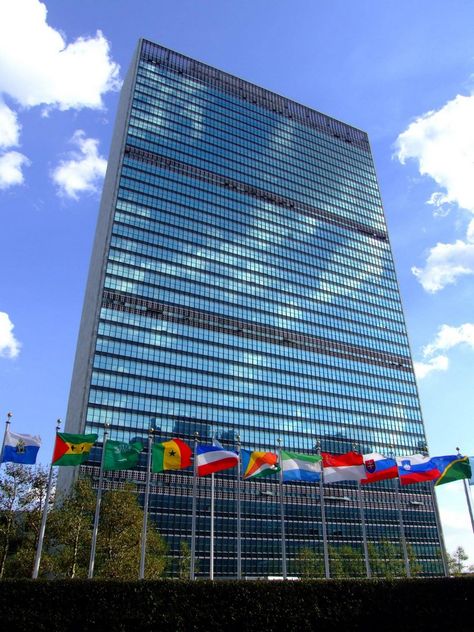
    Of course, the principle of “sovereign equality” is one of the fundamental pillars of the United Nations system. However, the growing trend among four of the five permanent members of the United Nations Security Council (the United States, China, Russia and the United Kingdom) to assert the primacy of sovereignty over the objectives of international cooperation can potentially alter contemporary global governance structures adversely.
    India has a key role, as well as core national interests, in implementing Agenda 2030 and the Paris Agreement on Climate Change. These interests are an integral part of the major initiative announced by Prime Minister Modi under the “sabka saath, sabka vikas” policy. Perhaps the best illustration of India’s ground-based approach is in clean and renewable energy, which is an essential requirement for development.
    By Asoke Mukerji

    The year that has just ended was marked by the vigorous reassertion of the principle of sovereignty in international relations. Implicitly, this has challenged the concept of international cooperation, enshrined in the UN Charter 70 years ago. Founding members of the UN, including India, which had suffered the ravages of war and conflict, focused on international cooperation to prevent another world war, while sustaining peace through equitable socio-economic development.

    Of course, the principle of “sovereign equality” is one of the fundamental pillars of the United Nations system. However, the growing trend among four of the five permanent members of the United Nations Security Council (the United States, China, Russia and the United Kingdom) to assert the primacy of sovereignty over the objectives of international cooperation can potentially alter contemporary global governance structures adversely.

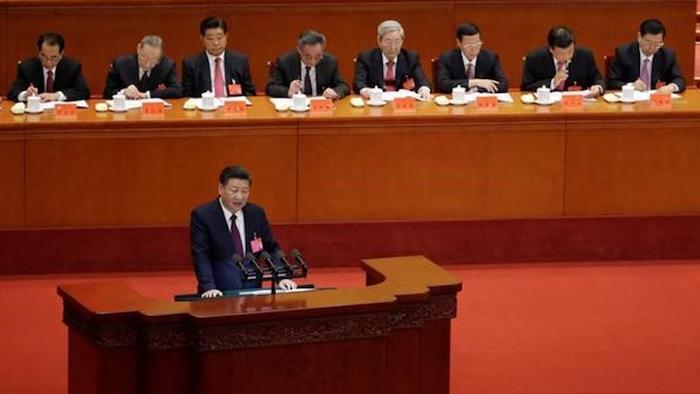
    President Donald Trump, in his maiden address to the UN General Assembly in September 2017, advocated a coalition of “strong and independent nations that embrace their sovereignty”. This was endorsed by Russia. At the 19th Chinese Communist Party Congress in November 2017, President Xi Jinping of China asserted his country’s commitment to weiquan or protection of rights, foremost of which was the right to sovereignty. Outside the United Nations, the United Kingdom, following its referendum in June 2016, been moving inexorably towards asserting its sovereignty in relationship to the European Union through the Brexit negotiations.

    While the bigger powers look to give substance to their focus on assertive sovereignty through building up their militaries (and the economic sectors that sustain these militaries), the majority of the 193 countries that are represented in the UN General Assembly have been engaged in maximizing international cooperation to eradicate poverty and sustain their socio-economic development. Just two years before President Trump’s speech, in September 2015, the UN General Assembly had adopted an ambitious road-map to achieve these objectives through the 17 specific Sustainable Development Goals (SDGs) at the heart of Agenda 2030.

    The overarching goal, SDG 1, is eradication of poverty. In 2013, about 10 per cent of the global population, or 767 million people, lived below the World Bank’s poverty line of US$1.90 a day. Of these, the majority were in sub-Saharan Africa (389 million) and South Asia (256 million). It is clear from this that eradication of poverty as a priority requires international cooperation, which allows the flow of investments, trade and people in a supportive atmosphere of peace and security. The fact that the most active United Nations peacekeeping operations today are in sub-Saharan Africa, where ironically the bulk of the peace-keeping troops are from South Asia, is an illustration of the challenges ahead.

    Agenda 2030 was accompanied by two other important global decisions on international cooperation on sustainable development. One was a commitment to facilitate the use of appropriate cyber technologies for development and empowerment, especially to bridge the digital divides, as part of the High-Level Review of the Tunis Agenda of the UN. The second was the prioritization on replacing fossil-fuels with renewable energy for sustaining development, which was endorsed by the Paris Climate Change Conference. Both these decisions were reached in December 2015.

    India has a key role, as well as core national interests, in implementing Agenda 2030 and the Paris Agreement on Climate Change. These interests are an integral part of the major initiative announced by Prime Minister Modi under the “sabka saath, sabka vikas” policy. Perhaps the best illustration of India’s ground-based approach is in clean and renewable energy, which is an essential requirement for development.

    While the Agenda 2030 negotiations on clean energy (SDG 7) were underway at the United Nations, India had announced its national goal of generating 175 GW of renewable energy by 2022. This was followed up by India’s bold initiative (endorsed by France) of proposing an International Solar Alliance (ISA) of 121 countries to accelerate investments, the transfer of appropriate technologies, and sharing of developmental experiences in using renewable energy for sustainable development. The ISA came into being on 6 December 2017, following the ratification of the treaty establishing the ISA as an inter-governmental organization by 15 countries. It is the only such international organization headquartered in India.

    Developing economies like India are today at the center of effective international cooperation. They not only offer the markets for investments, but through the application of technology by skilled professionals successfully showcase an inter-connected (and inter-dependent) world.

    The call to assertive sovereignty by raising new protectionist barriers to the flow of people, data, investments and technologies poses a direct challenge to effective and equitable international cooperation. The issue of sovereignty therefore needs to be placed in the context of the 21st century. As Germany aptly stated at the UN General Assembly in September 2017, “in international cooperation, no one loses sovereignty. Rather we all gain new sovereignty which we could no longer have as nation-states on our own in today’s world.”

    (The author, a career diplomat, was India’s Permanent Representative to the United Nations from April 2013 to December 2015. He can be reached at  1955pram@gmail.com)


  • Eye Foundation of America: Dedicated to elimination of avoidable blindness in children worldwide

    Eye Foundation of America: Dedicated to elimination of avoidable blindness in children worldwide

    By Prof. Indrajit S Saluja

    Eye Foundation of America is dedicated to the elimination of avoidable blindness in children worldwide, and, in India. Dr. VK Raju, an internationally reputed ophthalmologist, is founder and president of the Eye Foundation of America.

    EFA began its work in 1979 in Morgantown, West Virginia, USA. EFA grew out of his earlier work providing services and treatment near his birthplace in Rajahmundry, a town in Southeast India’s Andhra Pradesh. Raju organized teams to go to remote areas and deliver eye care in areas where there otherwise were none. These traveling clinics were known as “eye camps.” (Eye camps remain a standard part of the Foundation’s services today.)


    Dr. VK Raju, an internationally reputed ophthalmologist, is founder and president of the Eye Foundation of America

    Raju dedicated virtually all the spare time he had outside his busy ophthalmological practice in West Virginia and used his own funds to cover many of the expenses. Eventually it became apparent that the lack of accessible, affordable eye care was very large and shared by an enormous number of people worldwide. In order to battle avoidable blindness on a global scale and to gain strength by partnering with other organizations, Raju created the 501 © 3 nonprofit organization that we know today as the Eye Foundation of America.

    Today, Foundation has grown far beyond its original size and scope but never outgrew the vision of its founder, who continues to look ahead. EFA has built modern eye hospitals and trained ophthalmic assistants and other personnel to carry on our work.  We provide workshops and fellowships for physicians and medical students throughout the world. We also conduct research to find better ways of preventing blindness, to learn how to distribute Vitamin A efficiently

    His team has done wonders, considering the tremendous work done by them.

          * 2 million+ outpatients

          * 300 thousand+ eye surgeries

          * 25 thousand+ on children

    This is completed by the Eye Foundation of America team since 1977 in India and 21 other developing countries.  Additionally, the Eye Foundation of America lays great emphasis on teaching and training of health professionals who receive the Foundation’s support at every level.

    According to the World Health Organization (WHO), there are as many as 1.4 million blind children worldwide who are affected. WHO reports that eighty percent of the world’s 45 million blind people live in developing countries. The Eye Foundation of America’s (EFA) mission is to go where the need is greatest — often rural and remote areas of developing countries where there is no medical care or where the cost of the care is prohibitive.

    EFA provides medical eye care and treatment that is both affordable and accessible to all on equal terms, with the goal of eliminating avoidable blindness, especially in children. They take extra steps to ensure that our treatment is of the highest quality–comparable to that provided by the best hospitals in the world. EFA also delivers that care in ways that maintain each patient’s self-respect and dignity.

    EFA has treated Native Americans, wounded refugees in war-torn Afghanistan and Iraq, and have built eye hospitals in India–one with a wing devoted exclusively to children. They work in more than 14 countries and plan to extend that reach in the years ahead.

    Although the Eye Foundation of America serves people of all ages, they have a special place in their heart for children because it is they who have the most to lose. Visually impaired or blind children grow up without the same advantages as sighted children. Unable to read and write, they often cannot support themselves as adults and become a burden on their families and communities.

    The Eye Foundation of America’s Goutami Eye Institute in Rajahmundry, Andhra Pradesh sponsors a free 6-month certificate program that trains local young men and women to become ophthalmic assistants. They pay them a living stipend during training and often hire graduates to staff hospitals. The career training helps them support themselves in places where jobs are difficult to find.  Eighty percent of the graduates come from poor families.

    The Goutami Eye Institute conducts workshops and other programs to teach its staff about new medical techniques and equipment. This program has been expanded to include physicians and medical practitioners from all over the world. Some workshops provide Continuing Medical Education (CME) credits. Fellowships available through Goutami Institute allow postgraduate physicians from India to further their education.

    The commitment of Goutami towards training and education in eye care is spread across medical and non-medical spheres. Long-term fellowships for young post-graduates and Short-term fellowships and observer ship for practicing ophthalmologists and periodic Continuing Medical Education programs with eminent national and international faculty are available for medical fraternity.

    Training of Key Informants, like teachers, medical practitioners, primary health care workers, etc., in identifying and referring people, especially of children, with eye problems is done periodically.

    Education of community on avoidable causes of blindness and visual impairment is undertaken in the form of patient information series on different eye aliments and through health talks.

    It is to achieve this end that Dr. Raju, in collaboration with his daughter, Dr. Leela Raju, authored a book “Musings on Medicine, Myth, and History – India’s Legacy”. It is a masterpiece to be read by everyone who would like to know hoe medicine and surgery came out of India.

    For his monumental work, Dr. VK Raju has been profusely recognized, honored and awarded. The latest recognition came his way early this year when he was admitted to Toledo University Global Medical Missions Hall of Fame for his efforts to eradicate blindness.

    Dr. Raju has traveled round the world, attending conferences and meetings; speaking at various national and international meets; interacting with great minds to find solutions to the problems of health, particularly blindness among children. Most of his time is spent in traveling.

    He is a keen student of history and admires the great historian Padma Bhushan Dr. Romila Thapar who he recently visited in Delhi and interacted with her on many issues of mutual interest.

    At the speed and the zeal, with which Dr. Raju is working to fulfil his mission of life to eradicate preventable blindness among children, it can be expected that he will set up more medical facilities, apart from the Goutami Hospital he is running at Rajahmundry in Andhra Pradesh, India. Of course, he alone cannot do it. He will need cooperation of government of India and people. Government of India could play a contributory role by providing certain facilities to set up such medical centers. And, people can contribute their bit by donating liberally to a humanitarian effort of great significance. I learn, Dr. Raju is already working on a plan to have a series of medical facilities in various States of India. It will be worthy of all lovers of humanity to chip in to support a historic mission of The Eye Foundation of America.

    (The author is chief editor of the weekly English newspaper ‘The Indian Panorama’)

  • Trump Tax Bill Is Pro-Growth & Pro-People

    Trump Tax Bill Is Pro-Growth & Pro-People

    By Dave Makkar

    After more than three decades, Congress under President Trump, finally passed much-needed and long-overdue tax relief for millions of individuals, families and businesses. While the new tax bill is still not perfect, but it will go a long way in helping individuals, families, small to medium businesses as well as big corporations practically in every sector to be more competitive domestically as well as internationally. Consumers will receive much-needed tax relief and therefore, increase discretionary income. This Tax Bill will create still not too perfect but some what a fairer tax code that will trigger reinvestment in practically every state of America to create more jobs and better wages. This will boost the spending power of consumers and take America on the path of more prosperity, says the author.

    Personally, I have failed to understand the logics of Democrats that the Trump Tax Bill is anti-growth and anti-common person. The fact is this bill is pro-growth and pro-people. There is no doubt that the residents like me of high property and state tax states like New Jersey, New York, California etc.  will be affected to a certain extent because of the $10,000 cap on property tax and state tax deduction but not a whole lot because of the doubling up of standard deduction.

    As an resident of New Jersey since 1996, I can simply say if the property taxes are exorbitantly high; it is the residents that are to be blamed for allowing unionized politicians posing as Republicans & Democrats to govern 8.5 mil people in 8,000 sq. miles with 588 governments with over 10,000 elected/appointed politicians and 660,000 employees with no or little work. Unless the residents revolt to cut down the number of governments, elected/appointed politicians as well as the employees; they will see every year their property and state taxes going up to financially feed the monstrous size 588 governments of New Jersey.

    Democrats are ignoring the fact that about 70 percent of Americans take the standard deduction. Trump Tax Bill has doubled that deduction to $12,000 for individuals, 18,000 for heads of household, and $24,000 for joint filers combined with some more generous 7 tax brackets and rates. It would mean less tax taken from most individuals’ and families’ paychecks. Child tax credit has been increased from $1,000 to $2,000 per child. A portion $1,400 would be refundable. That is, taxpayers could get up to $1,400 back from the government, even if they owed no tax. The Bill also raises the income limit for child credit, so families with higher incomes can qualify. Families also could claim a new, $500 “family” tax credit for non-child dependents. That credit is non-refundable. The Bill would increase the amount that could be contributed to tax-favored ABLE savings accounts, designed to save for the needs of disabled adults and children. Contributions could also make the beneficiary of an ABLE account eligible for the saver’s credit, intended to supplement savings for lower-income people. This Bill also provides a temporary break to low-earning people, applying the lowest, 10% rate to more of their taxable income (individuals would get an additional $200 in income taxed at 10 percent; joint filers would get an additional $400 taxed at that rate). For Tax payers subject to the alternative minimum tax, for individuals the exemption from current first $54.300 has been raised to $70,300. For married couples filing jointly the limit from $54,500 has been raised to first $109,400 of income. Under the new Tax Bill by one estimate, a family of four with an income of roughly $73,000 would save $1,500 each year in taxes. In nut shell under this Tax Bill, it would mean less tax taken from most individual’s and families’ paychecks.

     Lower Property & state taxes deduction: A maximum $10,000 deduction for state and local taxes could be split between property taxes, and either state income or sales taxes. That’s compared with an unlimited deduction in the current tax code is certainly a setback for residents of high property & local tax states. This $10,000 cap applies to both singles and married couples filing jointly, though married people filing separately could deduct a maximum of only $5,000 each. People who run home businesses could still deduct the portion of state and local taxes, including property tax, that applies to that business. Interest on up to $750,000 in mortgage debt on a newly purchased primary home could be deducted; that’s a drop from the $1 million allowed now. The interest on home-equity loans and line of credit would no longer be deductible, regardless of what it’s used for.

    Upper-Middle Class Tax payers/investors with passive income.  Will get a significant tax break on a portion of qualifying income. According to a  research paper authored by 13 tax experts notes, certain wealthy individuals might be able to incorporate themselves and pay tax on interest income at the corporate rate of 21 percent, not the top 37 percent they’d pay as individuals.

    Coming to the rich, the heirs of wealthy people’s surviving spouses would continue to pay no estate tax. The estate tax exemption would double; currently non-spousal heirs would avoid a 40 percent tax on the first $5.49 million inherited from one individual and $10.98 million inherited from two.

    The main villain for the Tax Bill critics “The Corporations”: Their tax rate would drop to 21 percent from a top 35 percent rate; decline of a whopping 40 percent! Also allows fully allowable deductions for capital expenses and lower levies on repatriating overseas profits.

     Real Estate Businesses: can claim a new tax break that’s planned for partnerships, limited liability companies and other so-called “pass-through” entities.

    Technology: U.S. Tech companies are sitting on $3.1 trillion in overseas earnings, according to an estimate from Goldman Sachs. The largest stockpile belongs to Apple at $252 billion – 94% of its total cash. Microsoft, Cisco Systems, Google parent Alphabet Inc. and Oracle round out the top five, data compiled by Bloomberg show. One caveat is that the repatriation provision could generate a large tax bill. In Apple’s case, a 14.5 percent rate would equate to $36.6 billion in taxes, or about $7 a share, according to Bloomberg Intelligence.

    Banks: The earnings of big U.S. banks will be boosted by an average of 13 percent, according to Goldman Sachs. Leading the way will be Wells Fargo (17%) and PNC Financial Services Group Inc. (15%).

    Autos: The industry’s biggest companies, including General Motors and Ford, will benefit from the rate cut and the reduction on levies for repatriating overseas profits, according to UBS.

    Consumer products/retail: Retailers are big winners from the rate cut because many generate all, or at least an overwhelming majority, of their income in the U.S. and pay the highest tax rates of any industry. Most tax breaks and loopholes are not applicable to retail. Total sales from the nearly 3.8 million retail establishments in the United States reached about $2.6 trillion in 2016. Retailers employ almost 29 million, and support more than 42 million jobs in the U.S. That increases the prospect for better wages for existing employees in this sector and more jobs.

    Full and immediate deductions on capital expenditures could allow at least one retailer to not owe any federal taxes the next two years. Aaron’s Inc., which leases televisions and refrigerators to consumers at more than 1,700 stores, will be able to use deductions on buying inventory, which are considered capital investments, to wipe out its tax bill in 2018 and 2019, according to Stifel Nicolaus & Co.

    Chains and consumer brands also expect the tax bill to boost demand for their goods and services. Many of those companies rely on middle- and low-income shoppers for the bulk of their sales, and changes to individual taxes — such as doubling the standard deduction — will increase discretionary income.

    Industrials: In machinery, trucking is likely to see the biggest impact, according to Jefferies. The corporate rate cut would give U.S. transportation companies of all sizes more money to upgrade their fleets with fuel-efficient vehicles. The bill’s increased deductions for capital spending would add another incentive to buy new 18-wheelers, a potential boon for truck makers like Paccar Inc. and Navistar International Corp.

    Energy: oil-and-gas companies will be big winners because they pay the second-highest effective tax rate of any sector, at 37 percent, according to Bloomberg Intelligence. But a number of oil explorers and equipment providers won’t benefit because their operations are unprofitable.

    Hospitals and insurers: The bill is estimated to boost insurance companies’ profits by as much as 15 percent because they pay high rates, according Ana Gupte, an analyst at Leerink Partners.

     Pharmaceuticals: U.S. drug makers will be one of the biggest beneficiaries of the repatriation portion of the bill. They’ve been sitting on billions of dollars in overseas earnings and can now bring home that cash at a reduced rate. Biotech and pharma companies will get a smaller tax credit for developing drugs for rare diseases. Under current law, they can deduct 50 percent of the cost of testing drugs for rare or orphan diseases that affect only small numbers of patients. The revised bill cuts that amount to 25 percent, raising government revenue by $32.5 billion over a decade.

    Chris Martin in his article “Hidden Benefit to U.S. Corporate Tax Cuts: Lower Utility Bills” in Bloomberg wrote that there’s one place where every American may benefit from lower corporate income-tax rates: utility bills. Regulated utilities may pass tax savings on to ratepayers, consumers may get share of estimated 15% cut to utility tax. An average consumer could see a reduction of about 5 percent off their monthly bill, according to Rhame.

    After more than three decades, Congress under President Trump, finally passed much-needed and long-overdue tax relief for millions of individuals, families and businesses. While the new tax bill is still not perfect but it will go a long way in helping individuals, families, small to medium businesses as well as big corporations practically in every sector to be more competitive domestically as well as internationally. Consumers will receive much-needed tax relief and therefore, increase discretionary income. This Tax Bill will create still not too perfect but some what a fairer tax code that will trigger reinvestment in practically every state of America to create more jobs and better wages. This will boosts the spending power of consumers and take America on the path of more prosperity.

    If we want sustained and continuous economic growth and prosperity for all with low levels of poverty, the corporations must come up with a solution for equitable distribution of nation’s economic prosperity by voluntarily defining what should be the maximum or reasonable pay, perks and retirement packages for its executives. Corporations must stop creating high levels of economic inequalities by fraudulently defining the minimum wages for its workers that have if not equal; at least equitable contributions in creating the wealth for corporations and the nation. An Economy of exclusions, gross economic injustice with very high inequalities cannot continue forever because it can bring down the country with a massive class war   between the “Haves” and the “Have Nots”.

    (Data Compiled from various sources)

    (The author is a social activist and is a regular contributor to The Indian Panorama. He can be reached at davemakkar@yahoo.com)


  • Tired Titan: Who, after Modi?

    Tired Titan: Who, after Modi?

    By Virendra Pandit

    Within three years, however, the BJP is huffing and puffing, tired of its own baggage of successes, whereas the much pilloried and humbled Congress is seen as rejuvenating like a fallen Arnold ‘Terminator’ Schwarzenegger being revived by his emergency batteries. If in the early 1960s, India faced the huge question mark, ‘Who, after Nehru?’, and in the 1970s, ‘Who, after Indira Gandhi? the year 2018 has arrived with ‘Who, after Modi?’

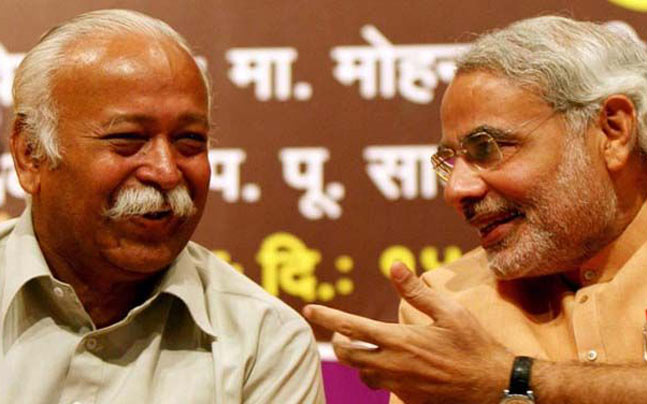
    Bhagwat, who succeeded K S Sudarshan as the RSS chief in March 2009, has been junior to Modi in the Sangh Pariwar hierarchy and seen as the one unable to tame the man who now helms India from 7, Race Course Road in New Delhi. On the contrary, Bhagwat is seen as a Modi-acolyte and many of the RSS subsidiaries—the Vishwa Hindu Parishad (VHP), the Bharatiya Mazdoor Sangh (BMS), Swadeshi Jagaran Manch (SJM) etc.—have, from time to time, raised the standard of rebellion ostensibly against the Government’s failures to deliver on the promises and also, indirectly, against the Modi-Bhagwat stranglehold that may pull down the entire edifice built since the founding of the RSS in 1925. RSS is the “socio-cultural-spiritual” parent of the BJP, its political front, which is part of dozens of organizations having Hindutva ideological affinities with the Grand Master across India.

    In 2014, when Narendra Modi, 64, became India’s 16th Prime Minister, he, and many, believed and boasted that he would continue to helm the affairs at least until 2024, what with the decimated main Opposition party, the Indian National Congress, touching the nadir of its entire political existence since 1885. Managing to win a measly 44 seats, out of 543, in the Lok Sabha (Lower House of Parliament), the corruption-accused, Jurassic Era’s Grand Old Party (GOP) had become laughing stock of the nation. Modi was the flavor of the season, the Knight-in-Shining-Armor, the Messiah…the very God Who Could Do No Wrong…

    The ‘belief’ that the right-wing Bharatiya Janata Party (BJP), led by a ‘youthful’ and energetic Modi as the fulcrum of National Democratic Alliance (NDA), had finally arrived as an effective alternative to the Congress was further buttressed with the BJP winning a series of State Assembly elections across India, replacing the Congress everywhere. Indeed, a gloating Modi himself has been talking about how to make India celebrate the Diamond Jubilee of her Independence in 2022 and, hinting, how he will continue to helm India until 2024!

    Within three years, however, the BJP is huffing and puffing, tired of its own baggage of successes, whereas the much pilloried and humbled Congress is seen as rejuvenating like a fallen Arnold ‘Terminator’ Schwarzenegger being revived by his emergency batteries. If in the early 1960s, India faced the huge question mark, ‘Who, after Nehru?’, and in the 1970s, ‘Who, after Indira Gandhi? the year 2018 has arrived with ‘Who, after Modi?’.

    For, all these three towering leaders, suffering with narcissism, would leave no second line of leaders who could replace or succeed them—but Mother India has been fecund enough to nurture a successor silently, even if via transitional leaders until the NextGen was crowned. So, Lal Bahadur Shastri succeeded Nehru while Indira was by her son Rajiv Gandhi. The Mother could, therefore, be trusted to be silently nurturing a successor to Modi as well! Next year, 2019, he will face the Lok Sabha election with a heavy baggage from the past; and his possible successor, if he loses the elections, is not visible yet!

    But why has this huge question mark emerged in the last few weeks? Has the Modi rhetoric run its course? Has his mystic and charisma seen a steep and sudden decline? Since 2014, he strode like a Colossus across not only India’s political firmament but also globally. He scripted many foreign policy firsts and successes, as millions of Indians looked with amazement at this fashion-designed Prime Minister making India proud both on national and global fronts. What has changed now, and so spectacularly?

    In November 2014, RSS chief Mohan Bhagwat compared Modi with the Mahabharata’s Abhimanyu, Arjuna’s valiant son who knew how to enter a Chakravyuha (the enemy’s phalanx in concentric circles with openings only at opposite sides) but not how to come out of it, and was, therefore, slain by seven Kaurava warriors. Modi, buffeted as he is now encircled by seven enemies, may have stepped into Abhimanyu’s shoes!

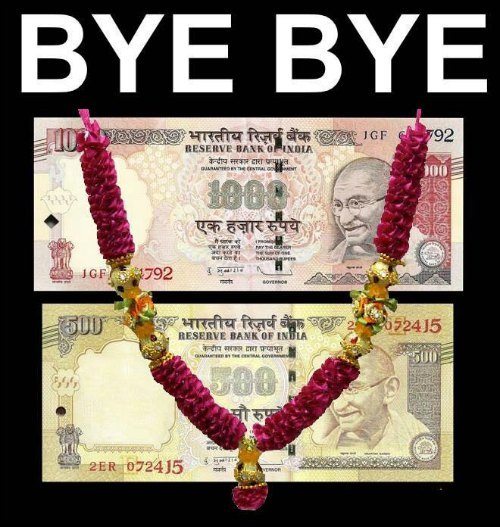
    His first enemy is, of course, the Indian economy. Only on January 5, the Central Statistical Organization (CSO) said the country’s growth in economy in 2017-18 slowed down to a four-year low of 6.5%, dragged down by sluggish manufacturing and farm sectors and the impact of the rollout of demonetization and Goods and Services Tax (GST) in the last one year. Clearly, an overall job-loss, farm distress shown by farmers’ suicides, youth unrest and the like have dragged down the people’s confidence in the government’s ability to deliver on its promises. Few, if any, are interested in what Moody’s says about Modi.

    A year on, the double whammy of demonetization and GST have begun to impact politics. In Modi’s home state of Gujarat, the recent Assembly elections left the BJP with, at best, a pyrrhic victory with the saffron party winning only 99 of the 182 seats, lowest since 1995. This steep decline in Modi’s image emboldened the BJP’s own leaders to virtually blackmail the party leadership and extract their pound of flesh! Clearly, the Modi charisma began to fade, first of all, in his own state. Successful event managements, circus-like extravaganzas, and sound-and-light razzmatazz, all at the expense of the exchequer, cannot replace good politics!

    His second enemy is India’s upwardly mobile and irreverent youth, nearly 100 million of them unemployed due to a variety of reasons. While battling for Prime Ministership in 2013-2014, Modi never tired of talking about this ‘demographic dividend’, what with 65% of the voters being in the 18-35-year age-group. He also drafted a series of plans for the youth, gave them dreams to live for and support him. But they remained pipedreams, and turned into nightmares for many. Empty promises disillusioned them, triggered youth rebellion, giving rise to the emergence of a formidable trio of Young Turks—Hardik Patel, Alpesh Thakore and Jignesh Mewani—in Modi’s own Gujarat. Together, they left the BJP with its bloodiest nose in 22 years and produced green-shoots in a Congress that lay comatose for a long time.

    With these three youths, the caste-centric politics of the 1990s has returned to India. This return to India’s basic, chaotic politics is the third enemy of Modi, who seemed to have replaced the Mandal-Kamandal era of the BJP with his own brand of vikas-centric politics that sought to stress on socio-economic development. Due to lack of resources to fund development, his boastful brand of politics collapsed, first of all, in his home state of Gujarat in the December 2017 Assembly elections. The assertive-aspirational politics of the caste-conscious youth, soon, found expression in neighboring BJP-ruled Maharashtra where the Dalits (Suppressed Castes) raised a banner of rebellion against the Upper Castes, they saw as represented by the BJP’s Chief Minister Devendra Fadanavis.

    Modi’s fourth enemy is the coming Assembly elections in eight states in 2018. Three of them are large states—Rajasthan, Madhya Pradesh and Chhattisgarh—and are BJP-ruled for years where the saffron party is expected to face a strong anti-incumbency and reverses. This is due to the BJP evolving itself as an ‘alternative’ to the Congress, i.e. as corrupt! The fourth state, Karnataka, hub of India’s IT revolution, also has little chances of going the BJP way. A caste-based social-re-engineering is now at work across the states and the “vote-banks” of yore are disintegrating everywhere, in the great socio-economic churning current in the cauldron called Modern India. Even the Muslims no longer remain a solid ‘vote-bank” as Muslim women saw in the ‘enemy’ BJP their emancipators, thanks to its support to them on the divorce issue, as evidenced in Gujarat by their large vote for the saffron party!

    With these new emerging trends reshaping Indian politics, Modi’s fifth enemy is the likely revival of the erstwhile United Progressive Alliance (UPA), led by a revivified Congress under a combative Rahul Gandhi. If the BJP fails to win back the major states this year, and with one state slipping after another from the saffron fold, the NDA itself may come apart. Some of its current regional partners may even join the UPA bandwagon. Only a few months ago, the UPA seemed to be disintegrating what with Bihar’s Nitish Kumar joining the NDA; no longer. India’s politics has entered its most mercurial state and equations change quickly.

    His sixth enemy is the overall disillusionment among the people with the political class as a whole. Modi came to power promising Achche Din (Better Days Ahead) and punishment to the corrupt UPA leaders but each one of them have been acquitted by the courts, and they are back hounding and howling at him. The general apathy of the voters for politicians of all hues, including Modi, was demonstrated by over 500,000 people who voted for the “None-Of-The-Above” (NOTA) option in Gujarat. This option, introduced by the Election Commission for the first time in an Assembly election, impacted the outcome in nearly 30 Assembly seats, out of 182, in Gujarat. It harmed both the BJP and the Congress as the number of NOTA votes were, in those 30 constituencies, more than the winning or losing margins.

    And his seventh enemy is from within: the disgruntled Sangh Pariwar (Saffron Brotherhood) and its many constituents. In 2014, the entire Pariwar, with over 25 million workers, had helped Modi climb the steps of Raisina Hills in New Delhi and take oath as the Prime Minister of an aspirational India. Three years down the line, with few results to show on the ground, his promises galore remain hollow, his bravado seems melting away, his 56-inch chest losing muscle. His recent election speeches in Gujarat showed him as a tired titan. Promising a better future, he emerged from Bharat but surrendered to India.

    But it is not Modi, the Abhimanyu, who alone may lose out. His “Krishna”, Mohan Bhagwat, having travelled with Modi so far and shielded him unconditionally, may also face heat from within the RSS rank-and-file for putting all the Hindutva eggs in Modi’s Nehru jacket.

    Their relationship, to say the list, is interesting. Bhagwat, who succeeded K S Sudarshan as the RSS chief in March 2009, has been junior to Modi in the Sangh Pariwar hierarchy and seen as the one unable to tame the man who now helms India from 7, Race Course Road in New Delhi. On the contrary, Bhagwat is seen as a Modi-acolyte and many of the RSS subsidiaries—the Vishwa Hindu Parishad (VHP), the Bharatiya Mazdoor Sangh (BMS), Swadeshi Jagaran Manch (SJM) etc—have, from time to time, raised the standard of rebellion ostensibly against the Government’s failures to deliver on the promises and also, indirectly, against the Modi-Bhagwat stranglehold that may pull down the entire edifice built since the founding of the RSS in 1925. RSS is the “socio-cultural-spiritual” parent of the BJP, its political front, which is part of dozens of organizations having Hindutva ideological affinities with the Grand Master across India.

    In a way, Modi himself may have undermined Bhagwat’s authority. In TV interviews, Modi had boasted in 2014 about his relations with Mohan’s father, Madhukar Rao, thus indirectly hinting that he (Modi) was senior to the Bhagwat Junior in the RSS hierarchy!

    It is this internal dynamics of the RSS that helped bring Modi to power in 2014. And it is this internal dynamics of the RSS that may also defeat him at the hustings in 2019, what with most of the RSS workers remaining aloof from elections, as in Gujarat recently.

    In 2014, the RSS had Modi to support. Who will it support in 2019?

     (The author is a journalist since 1983 and has worked with newspapers, news agencies and magazines in English and Hindi languages. He has contributed articles on diverse subjects. Currently, he is working as Consulting Editor with Business Line, the business daily of The Hindu Group of Publications in India. He is based in Ahmedabad in Gujarat, India. He can be reached at virendra.pandit@gmail.com)

  • Perspective : SHAME, YET AGAIN, ON THE U.S. JUSTICE SYSTEM

    Perspective : SHAME, YET AGAIN, ON THE U.S. JUSTICE SYSTEM

    Guyanese American’s 30-year unlawful imprisonment a systemic evil

    By Albert Baldeo

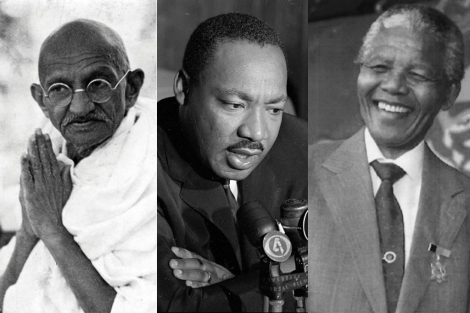
    “An unjust law is no law at all…Injustice anywhere is a threat to justice everywhere.”- Martin Luther King Jr.

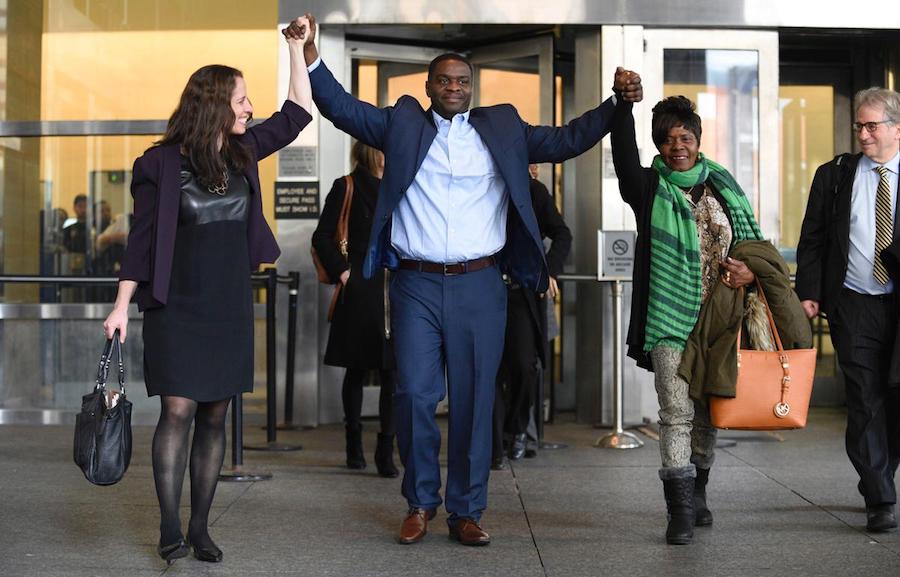
    The evil and injustice that plague our judicial system have been painfully confirmed-yet again. Mark Denny, a 47 year old Guyanese national who came to achieve the American dream, was dealt an excruciating blow by the perverse inequities inherent in the USA’s justice system. He was freed from a U.S. prison where he spent nearly 30 years for a crime he never committed, and now faces the legal challenge of fighting to remain in the United States where he has lived since the age of five.

    He spent the past three decades behind bars for a brutal rape and robbery he didn’t commit, yet he waxed magnanimously after his release, stating that he was “overwhelmed thinking of what I’ll do next to get my life back on track.”

    Denny continued that, he has “no ill feelings towards the victim. Going to prison was a traumatic experience mentally. There’s a lot of people in my position. I appreciate everyone for all they have done for me.”

    He is the 24th person to have his conviction vacated by the Conviction Review Unit of Brooklyn District Attorney, Eric Gonzalez, who said his review team examined evidence and interviewed witnesses as well as Denny’s co-defendants in the case, a legacy of his predecessor, the legendary Ken Thompson.

    “The rights of every man are diminished when the rights of one man are threatened.”- John F. Kennedy

    As if that injustice was not enough, the Daily News reported that Denny has new legal hurdles. He came to the US as a child from Guyana as a lawful permanent resident, and was ordered to be deported due to his conviction. Indeed, the collateral consequences of a conviction are devastating, and perpetuate a vicious cycle.

    Trust me, I suffered American injustice first hand. Many legal experts are still at a loss to fathom how I could have logically obstructed a bogus federal crime, when my campaign contributions did not contravene the NY City Campaign Finance Act. Others reason that my attempts to buck the system and run for public office was the real crime, noting that more connected politicians have done worse than what was alleged against me, yet suffered no consequences-from Presidents to Governors to Mayors.

    Others condemn how our laws can be manipulated by vile prosecutors to convict a candidate for federal obstruction while merely trying to comply with a mandated Campaign Finance Board Audit-a civil, administrative matter. This abomination exemplifies how the government can indiscriminately expand legal boundaries, invent a federal crime, and then selectively charge you over thousands of candidates for “committing, conspiring and/or obstructing” it. The jury acquitted me of all predicate mail and wire fraud charges, yet were coerced to convict me for obstructing a non-existent crime by the use of an overreaching Allen charge, despite their deadlock! See, e.g., http://www.nydailynews.com/opinion/errol-louis-nyc-campaign-finance-tangle-article-1.2403316.

    Inhumane and barbaric injustice is all too common in America. Indeed, you, a law-abiding citizen, could be made the next “criminal” of the USA. We are the prison capital of the world. Thousands of laws exist that most people are not aware of, and which penalize conduct that few would even imagine was criminal.  Daily, ordinary Americans are prosecuted and even jailed for routine activities that somehow contravene the multitude of statutes and regulations that can be used by governments to trap the unwary. Surveillance cameras, immigration raids, drug-sniffing dogs, SWAT team raids, roadside strip searches, blood draws at DUI checkpoints, mosquito drones, Tasers, privatized prisons, GPS tracking devices, zero tolerance policies, over criminalization, free speech zones—these are all symptomatic of our police state in America.

    “I was made, by the law, a criminal, not because of what I had done, but because of what I stood for, because of what I thought, because of my conscience.” (Statement during trial, 1962)- Nelson Mandela

    In their revealing book, One Nation Under Arrest: How Crazy Laws, Rogue Prosecutors, and Activist Judges Threaten Your Liberty, Paul Rosenzwieg and Brian W. Walsh highlight the over criminalization- the skyrocketing trend at both the state and federal levels of criminalizing conduct that could be regulated through civil law or administrative action, or should not even be regulated at all. Many other treatises expose our emerging, chilling, Orwellian police state. In Three Felonies a Day, Harvey A. Silverglate reveals how federal criminal laws have become dangerously disconnected and how prosecutors can overreach and pin dubious federal crimes on any one of us, for even the most seemingly innocuous behavior. Government employment in criminal justice has grown by 1 million employees since 1980, as noted by Michelle Alexander in The New Jim Crow.

    Our so called “Department of Justice” is accountable for the outrageous reality that the USA has the highest per capita incarceration in the world. Although we have only 5% of the world’s population, we top the world’s prison population with 25% of that total! Worse yet, the US incarcerates a disproportionate ratio of minorities-1 in every 15 African American men and 1 in every 36 Hispanic men are incarcerated in comparison to 1 in every 106 white men. The Bureau of Justice Statistics reveals that 1 in every 3 black men go to prison in their lifetime, making our justice system one big cesspool of brazen injustices, unashamed bullyism and transparent contradictions.

    In 2008, two judges, President Judge Mark Ciavarella and Senior Judge Michael Conahan, were convicted of accepting money from Robert Mericle, the builder of two private, for-profit youth centers for the detention of juveniles, in return for contracting with the facilities and imposing harsh adjudications on juveniles brought before their courts to increase the number of residents in the centers. Appropriately, it was dubbed the “kids for cash” scandal for the judicial kickbacks. Unfortunately, the Constitution has been sadly transformed to, “One Nation under Arrest, With Liberty and Justice for Some!”

    “Therefore, send not to know…For whom the bell tolls…It tolls for thee. -John Donne

    This catastrophic reality is further exacerbated by the fact that America, the land of the free and the home of the brave, has led the world in making incarceration a leading industry by itself. Our multimillion-dollar prison complex is one of the fastest-growing public private industries, with Wall Street investors, having its own trade exhibitions, conventions, websites, and mail-order and internet catalogs. 95% of people charged with crimes plead guilty in the US, an inexhaustible supply source, and a tragic reality of how justice is dispensed in America.

    Prosecutors and law enforcement budgets are rewarded for convictions, but they are never asked to account for their perverse contribution to the prison budget, increases in welfare and Medicaid dependence on the nation, and the destruction of innocent lives wantonly wrought with immunity and impunity, on their way to higher offices.

    Most Americans have suffered the brunt of injustice, discrimination and oppression at every level, from top to bottom. Immigration raids on homes and businesses, livelihoods disrupted, and families torn apart, the DACA rescission, undocumented children taken out of schools, state and federal agencies harassing residents, the attack on Obamacare and the FBI overreaching minor infractions to major crimes, have all put us under siege.

    America is losing its soul through over criminalization, making and enforcing far too many stereotypes and criminal laws that are making criminals out of those who are respectable, law-abiding citizens. The abuse of the criminal law and practice over the past few decades by the government have raised troubling questions about the fairness of our criminal justice system as it affects all of us. We must fight back and realize the dream of making democracy, equal justice and the rule of law a priority for all!

    Remember what Edward R. Murrow cautioned, “A nation of sheep will beget a government of wolves.” Don’t be a sheep! Enough is enough!

    (The author is a civil rights activist and community advocate, and his political battles placed previously ignored minority communities like Richmond Hill and Ozone Park firmly on the political and economic map. As the President of the Baldeo Foundation and Queens Justice Center, he has continued to fight for equal rights, dignity and inclusion in the decision- making process. He can be contacted at the Baldeo Foundation: (718) 529-2300).

  • As I see It : On the Road to Bankruptcy

    As I see It : On the Road to Bankruptcy

    Countries ‘benefiting’ from China’s ‘largesse’ will end in a debt burden

    By G Parthasarathy

    Unable to repay its debts to China, Sri Lanka has been forced to convert Chinese investments into equity in Hambantota, giving the Chinese partial ownership of the port. Following discreet Indian expressions of concern, Sri Lanka has retained operational control of the port, ensuring that Chinese submarines and warships do not freely berth there. Some pre-emptive action has also been taken to ensure that the eastern port of Trincomalee does not become the next port of interest for Chinese strategic ambitions, says the author.

    China’s much-touted “Silk Roads” and “Maritime Silk Routes” trace their origin historically to its trade across Central Asia and the Indian Ocean. Interestingly, silk constituted a relatively small portion of Chinese trade, though it gave an exotic content to what was primarily commercial activity, in which China was the principal beneficiary. The Maritime Silk Route across the Indian Ocean was first set during the course of seven expeditions between 1404 and 1433 by a Chinese naval fleet headed by Admiral Zheng He, a Mongolian Muslim eunuch, appointed by Ming emperor Yongle. During the course of these expeditions to Indonesia, Malaysia, Sri Lanka and Calicut, Zheng brought back kings and princes to “kowtow” (genuflect) before the Ming emperor.

    Indonesia has ensured that it responds cautiously to Chinese inducements and avoids getting closely drawn into a Chinese embrace. Beijing, however, seems to have drawn Sri Lanka into its spiders’ web, taking advantage of the island’s economic vulnerabilities. One has to recall what Admiral Zheng did to the hapless island-nation after a visit to Calicut in 1406, to “get the Buddha’s tooth relic”. He returned to Sri Lanka in 1411 with a large army to take revenge for an earlier perceived insult. Parts of the island were plundered and the Sri Lankan king, Vira Alakeswara, taken back to Nanjing to kowtow before the emperor, together with the holy relic. The king was replaced by a “malleable” ruler. While the humiliated king was returned to his people a few years later, the relic was returned six centuries later in 1960, by PM Chou en Lai, as a gesture of “goodwill”, Chinese style. Chinese trade was historically as exploitative as trade by the British East India Company!

    Colombo is, nowadays, full of hoardings of China’s “magnanimity”, manifested in its “assistance” in infrastructure, industrial and construction projects. Beyond the Galle Main Road in Colombo is the $1.4 billion Port City Project to be filled with Chinese built, owned, or managed, luxury apartments, golf course, theme park, hotels and office buildings. All these projects will soon become part of Sri Lanka’s mounting official debt burdens and accentuate the already unbearable debt burden Colombo has accumulated, from earlier Chinese “aid”. The main instruments of this aid and plunder of natural resources are the China Communications Construction Company and its subsidiary, the China Harbour Engineering Company. World Bank has blacklisted both these companies across the world because of their corrupt practices, including bribery. The only well executed and profitable Chinese-built project in Sri Lanka is the Container Terminal in Colombo.

    Apart from the crushing debt burden of the Colombo Port City Project, Chinese projects located in President Rajapakse’s own constituency, Hambantota, have imposed an unsustainable debt burden on Sri Lanka. Given Western aversion for his regime and Indian doubts about the project’s viability, President Rajapakse welcomed Chinese “assistance” to develop his constituency. He sought and obtained Chinese “support” to heavily finance projects ranging from the Hambantota Port to a power plant, an airport, an industrial park, a cricket stadium and a sports complex. All these investments have proved uneconomical. Hardly any ships visit Hambantota Port, barely one aircraft lands at the airport daily and the sports facilities remain unutilized, even as local opinion was outraged by the proposed construction of an industrial park. Sri Lanka has been spending 90 per cent of government revenues to service debts.

    Unable to repay its debts to China, Sri Lanka has been forced to convert Chinese investments into equity in Hambantota, giving the Chinese partial ownership of the port. Following discreet Indian expressions of concern, Sri Lanka has retained operational control of the port, ensuring that Chinese submarines and warships do not freely berth there. Some pre-emptive action has also been taken to ensure that the eastern port of Trincomalee does not become the next port of interest for Chinese strategic ambitions, thanks to a timely initiative of Petroleum Minister Dharmendra Pradhan. The Indian Oil Corporation has established a business presence in Sri Lanka for progressive involvement in the use of Trincomalee for import and processing of petroleum products. It is imperative to build on this by constructing a modern petroleum refinery on equitable terms in Trincomalee.

    China’s Belt and Road Initiative in Myanmar is primarily concentrated on developing the Bay of Bengal port of Kyaukpyu and connecting it to its neighboring Yunnan province by oil and gas pipelines and road and rail networks. But, Myanmar is wary of overdependence on China, among other reasons, because of Beijing’s insatiable quest for environmentally damaging energy projects and its yearning for access to precious metals and stones. Myanmar may, however, find it difficult to resist Chinese pressures on such projects unless India, Japan, South Korea, the US, the EU and neighboring ASEAN countries make a coordinated effort to strengthen economic relations with it. A similar approach would be needed to China’s approach to construction projects in Nepal and Bangladesh.

    China’s “all-weather friend” Pakistan is also facing problems in implementing the much-touted CPEC. Despite high-level meetings, important projects like the Diamer-Bhasha Dam located in Gilgit-Baltistan, in POK, are stalled because of disagreements on financial terms set by the Chinese. There are also differences on implementing the railway projects based out of Peshawar and Karachi, apart from a series of road projects. Moreover, there is very little transfer of technology and knowhow, and minimal local participation in Chinese construction projects. Beijing has, after all, to utilize its vast surplus labor force and construction machinery and materials, abroad as its unprecedented domestic construction projects at home are completed.

    Questions are now being raised in Pakistan about where resources will come from to repay the over $50 billion debt that will accrue from CPEC projects, where local participation is minimal. Moreover, Pakistan will soon be unable to credibly claim that it exercises its sovereignty in places like the Gwadar Port, which is all set to become a Chinese-run military base, close to the strategic Straits of Hormuz. Writing in the respected Dawn newspaper, columnist Khurram Hussein perceptively observes: “In reality, the China-Pakistan Economic Corridor is about allowing Chinese enterprises to assume dominant positions in all dynamic sectors of Pakistan’s economy, as well as a ‘strategic’ direction that is often hinted at, but never fleshed out.”

    (The author is an Indian  career diplomat)


  • As I see It  : The ‘do-more’ chorus by US for Pak

    As I see It : The ‘do-more’ chorus by US for Pak

                                     By Lt-Gen Bhopinder Singh (retd)

    Given the insipidities and banalities of diplomatic-speak, ‘do more’ is as direct an expression of dissatisfaction that the US can convey to Pakistan, given the American compulsions.

    The slyest foreign policy warrior, Henry Kissinger, propounded the term ‘constructive ambiguity’ to describe the language of diplomacy that seeks to disguise, retain and still suggest the actual intent in a construct-of-words that are generally palatable (allowing some concessions), yet, allude to future necessity of actions towards a certain goal. The art of diplomatic wordsmithing has been tested to its limits in the Indian subcontinent, given the irascible tempers and the evolving narrative that besets the tempestuous fundamentals in the trilogy of the US-Pakistan-India equations.

    In 1971, as National Security Adviser, Henry Kissinger had underlined the US position and bias in the Indo-Pak war by stating, “We’re in the position where a Soviet stooge, supported with Soviet arms, is overrunning a country that is an ally of the United States.” The cold war binaries had cemented the Pakistani status as a ‘major non-NATO ally’, and then the annexation of Afghanistan by the USSR in 1979 had led to the largest covert joint operation in history, ‘Operation Cyclone’, — the US and the murky General Zia-led Pakistani establishment funded, trained and supplied manpower and weaponry to mujahideen.

    Later, the end of cold war and the disintegration of the USSR ensured the selfish and thoughtless withdrawal of interest and bankrolling in the region by the US. However, the kettle of intrigues and virulent religiosity was kept boiling by the shadowy Pakistani-ISI to fertilize the environment into a breeding ground for terrorists, who today haunt the subcontinent, and beyond.

    Like in Afghanistan, the US, after achieving its limited objectives in the Gulf wars, left a festering trail of destruction and chaos for the germination of the uber-intolerant and militant pan-Islamism that manifested in the unprecedented tragedy of 9/11, which recalibrated the global equations, thereafter. The decades-old cold war wiring in the US-Pakistan-India underwent a sudden relook and the inter-nation expectations, conversations and transactions underwent a complete re-haul.

    The Pakistanis, under General Musharraf, were embarrassingly coerced into joining the global ‘war on terror’ as George W Bush threatened Pakistan with bombing, ‘into the stone age’, should it fail to cooperate. Expected reluctance emanated from the sudden retraction from the consistent Pakistani position, e.g. treating terror organizations as ‘state assets’ and the principle of ‘strategic depth’ in Afghanistan — the half-hearted Pakistani commitment soon exposed its machinations as a double-dealing ‘ally’. The ‘taking out’ of Osama bin Laden from Abbottabad, continuing drone attacks on to Pakistani territories and the parallel warming of the Indo-Afghan ties further vitiated the US-Pakistani equation. It led the Secretary of State, Hillary Clinton, to specifically ask the Pakistanis to ‘do more’ and ‘squeeze’ out terror networks by famously stating, “You can’t keep snakes in your backyard and expect them only to bite your neighbors. Eventually, those snakes are going to turn on whoever has them in the backyard.” The subtext of subsequent US-Pakistan conversations, have remained fixated on the expression of ‘do more’, much to the irritation of Pakistanis.

    In the 2016 presidential campaign, Trump had maintained his line of fire, saying, “Pakistan is a very very vital problem and really vital country for us because they have nuclear weapons and they have to get a hold of the situation.” Nearly one year into his presidency, Trump’s insistence on Pakistan to change its tracks has found expression in a persistent and forceful ‘do more’.

    Perforce, the US has to maintain a functional working relationship with Pakistan to sustain its operations, manpower and assets in Afghanistan and within the Pakistani narrative. The expansive import of ‘do more’ within the context of diplomatic language suggests both a perfunctory acknowledgement of efforts by the Pakistanis (critical to retain engagement), and yet clearly points to insufficiency of efforts on account of doing the needful. Often, Trump’s bluster results in a brazen statement, like: “We are paying Pakistan billions and billions of dollars; at the same time, they are housing the very terrorists that we are fighting. But that will have to change.”

    This leads to an equally jarring counter-narrative from the Pakistanis who decry the American hypocrisy and selective amnesia to remind the US of its historical support for jihadism in the 80s. However, the fact that the playing field, cards and the essential game of the 21st century have evolved but the Pakistanis remain fixated to the dynamics of the earlier times, that is haunting the Pakistanis the most.

    ‘Do more’ is also contextualized to future aid as the promised $250 million in military aid to Pakistan is withheld, subject to further evidence of Pakistani actions. The chorus for ‘do more’ was echoed by US Secretary of State Rex Tillerson in October when he reiterated that Pakistan must do more to eradicate militants in its country.

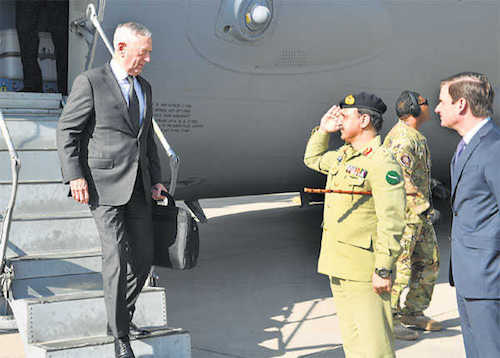
    In November, the commander of the NATO-led coalition in Afghanistan, Gen John Nicholson continued to lament, “Haven’t seen any change yet in their behavior”, and earlier this month, Defense Secretary Jim Mattis goaded the Pakistanis to “redouble” efforts and urged for the “need to move forward with issues at hand.” Given the banalities of diplomatic-speak, ‘do more’ is as direct an expression of dissatisfaction that the US can convey to Pakistan. With the ongoing specter of a free-run for the internationally designated terrorists, seminaries spewing hatred, state supporting extremist ideologues and the still selective action against terror organizations, the pressure from the Americans to ‘do more’ will remain relentless and cryptic. India needs to reassure and satisfy itself with the American pressure of ‘do more’ as its implied context is deeply suggestive, perceptive and conducive to the change required in the situation in Pakistan.


  • Guest Comment : India in US global strategy: Limits to friendship with Uncle Sam

    Guest Comment : India in US global strategy: Limits to friendship with Uncle Sam

    A new US national security strategy under Donald Trump was bound to induce great interest, especially about India’s place in how the global system should be ordered. The 68-page document is confined to a macro view of the world’s complex and interconnected problems. However, India clearly emerges as a useful cog in US attempts to prevent a shift in the balance of power in the Asian heartland. More than West Asia, the US has chalked out a more prominent role for India in the maritime domain in line with its strategy to prevent a free hand to hobble China’s bid to expand its regional influence.

    What are the payouts? Trump explicitly asks India to loosen its purse strings in Central and South Asia, perhaps as compensation for declining to put Indian boots on Afghan soil.  The price for partnering the US in the Indo-Pacific is both tangible — more orders for US military companies at a time when the US budget is facing constraints — and intangible — greater Indian visibility in the near neighborhood. Just as the US is single-mindedly devoted to advancing American influence, India will have to cut its cloth according to its own national interests. It cannot view Russia and China from the American lens of unremitting hostility: its only two make-in-India defense projects are of Russian origin and there is already word that a Sino-India trade-off on NSG and One-Belt One-Road may be in the offing. India can ill afford to shrink the room for dialogue with both Russia and China.

    A reality check is also in order: the US mentions India as only one of the eight potential allies in the Asia Pacific. If India is described as a “leading world power”, there is approbation for the others: Japan is a “critical ally”, Australia “a key partner”, and friendship with South Korea “forged by trials of history”. In West Asia too, India has a marginal role as the US has several irons in the fire. Whether it was Obama earlier or Trump now, proximity with the US has its limits as well as advantages.

    (Tribune, India)

  • Perspective : Christmas Musings…..

    Perspective : Christmas Musings…..

    I was merely happy to be invited to the ‘Holiday Party’ organized by the South Asian Community in Queens. However, I have learned that the main purpose of the gathering was to honor the newly appointed Consul General Sandeep Chakraborty of India and introduce him to various elected officials from Queens, New York. The program ran in typical Indian style, with as many of the community leaders jockeying for VIP seats and later on putting up a brave struggle to position themselves for a celebrity photo for their next Facebook post.

    These politicos in New York City appear to show very little respect for the South Asian Community. To them, we are an ATM they could push a button and get their so-called campaign contributions. They seem to be quite confident as well that we are ‘simple-minded’ and would go away happily after an embrace and a Selfie shoot for the next edition of one of those Indian weekly newspapers.

    I wonder why the South Asian Community, probably the largest concentration anywhere in the U.S. has so far failed to get a footing in the mainstream politics in New York City! Indians who live even in the old Confederacy seem to have more success than their peers who live in the most liberal city in the U.S.

    I had long wanted to vent this long and boiling frustration within me to somebody when Professor Saluja, the emcee for the evening, informed me that I would have an opportunity to say few words at the function felicitating the Chief Guest before all those public officials from the Queens. However, it never came to pass, and they simply had too many speakers who paid the bill, they said!

    However, I had an opportunity to speak to Ms. Letitia James, the Public Advocate for the New York City Council. I tried to make my case and requested her to help appropriate one city council seat, probably District 23, for an Asian Indian if not a South Asian. She tried to convince me that we have to come together and fight the election. I responded to her stating that we are quite observant of the dynamics and unless Democratic Party officially put their weight behind a South Asian, the effort will be futile! We have indeed learned how the single-party system in New York is lately reduced into machine politics and unless you are in it, ‘you ain’t going anywhere’!

    As I sat there listening to speaker after speaker greeting the audience, not a single one uttered the word “Merry Christmas”. A number of them were eager to say “Happy Hannukah’, that was mostly addressed to the visiting Jewish public officials. Anyway, we could confirm by now that ‘Merry Christmas’ has become a toxic greeting phrase in New York.  As a Christian who is sitting there, probably one of the few in the audience, my mind wandered back to the younger days of growing up in Kerala, India where we all greeted each other with ‘Merry Christmas’ for the simple reason for the season.

    Upon my return that evening home, Gujarat poll results started coming in. Congress has indeed outperformed all the expectations and appeared to have thoroughly thrashed the much-heralded exit poll results. However, people of Gujarat still handed BJP another term despite becoming miserable and more impoverished through their demonetization policies as well as the messy GST implementation. The verdict sends a clear message to the world that hate and bigotry trumps over economic troubles and personal misery!

    Opening up the Internet browser the following day, I am once again reminded that this is not a season of peace and goodwill toward men as right-wing fringe groups have threatened to disrupt Christmas and New Year celebrations in some Uttar Pradesh towns. A series of warnings have come from these groups just days after an alleged attack on priests in a Madhya Pradesh town. In Aligarh, a group called the Hindu Jagran Manch has warned schools against celebrating Christmas, saying they could do so “at their own risk”.

    In 2014, Prime Minister Narendra Modi had declared that December 25, Christmas Day, would be observed as Good Governance day. India has a history of 2000 years of Christianity that was long before even England embraced that religion. Why then this alienation of a religious group in India that has contributed much to the educational and social development of the poor and the downtrodden! However, it is quite impressive to note that as the first generation Indians to the US, we are already lobbying to make Diwali a holiday in New York City!

    By this time you may have heard about the decimation of ISIS and its Caliphate in Syria and Iraq. Recently, Iraqi forces with overwhelming support from U.S. Airforce have retaken the city of Mosul. ISIS has pushed Iraq’s religious minorities to the edge of extinction. However, the sad story of one Christian family brings the ugly face of religious discrimination home to us all.

    The story is told as follows:  A family of four lived in a small village about sixteen miles outside of Mosul. Shortly after the Islamic State took over, the father, a construction worker, took his wife of twenty-eight years to Mosul to continue her breast cancer treatments. But at the hospital, a guard refused to allow the man’s wife to enter because they were Christians. He told her that to continue receiving medical care, she would have to convert to Islam. She refused and the couple was forced to return to their village. Ten days later she died with her husband and sons at her bedside.

    As we are on the threshold of a new year, the human effort to bring peace and security appear to be is as elusive as ever! Will the year 2018 bring us a ray of hope?

    (The author is chairman, INOC USA).

  • Perspective : How Gujarat was won

    Perspective : How Gujarat was won

                                By Shreyas Sardesai/ Sanjay Kumar

    The Bharatiya Janata Party (BJP) has managed only a modest victory in Gujarat, confirming some earlier psephological predictions and ground reports of a close electoral contest. Two polls conducted by us at Lokniti, Centre for the Study of Developing Societies (CSDS), one in end-October and another in end-November, had found the electoral race between the BJP and the Congress to have tightened considerably. In fact, the November survey had found the race to be neck-and-neck in terms of vote share. That trend, however, did not hold entirely till Voting Day. It now seems that a last-minute swing by some voters towards the final stages of the campaign ended up giving the edge to the BJP.

    We say this based on evidence gathered from a post-poll, a survey of voters at their residences after they voted, conducted by Lokniti. The poll reveals that over two in every five voters (43%) took a final call on who they would vote for in the last two weeks of campaigning — and more than half of them (53%) said they voted for the BJP while only about 38% went with the Congress. In fact, a majority of these late deciders are those who decided at the last minute, either on the day of voting or a day or two before it. In 2012 the share of late deciders had been much lower, at 31%, and back then they had split their vote evenly between the BJP and the Congress.

    The question then is, what really happened, between the last week of November when our final pre-poll took place and the second week of December when actual voting took place, that made some disaffected voters planning to vote for the Congress change their minds? The answer to this question is not so difficult to find.

    The late shift

    We believe that it is quite obviously Prime Minister Narendra Modi’s campaigning, which was for the most part controversial and divisive, that played a role in turning a section of voters towards the BJP, thus saving it from a possible defeat. This is the period when the Prime Minister, who is hugely liked in Gujarat (by 72% of those surveyed, post-poll), campaigned extensively in the State. Starting from November 27 right up till December 11, he addressed more than 30 election rallies across the State. Most of his speeches, especially the ones made at rallies post-December 5, focused on divisive themes. Mandir-Masjid, Mughals, Pakistan, Ahmed Patel, Salman Nizami, etc., he practiced classic dog-whistle politics by using coded language that might have stoked passions among some sections of the electorate.

    In our final pre-poll done in end-November, we had found only about 45% of Hindu voters to be voting for the BJP. In the post-poll, we noticed that eventually nearly 52% of them ended up voting for the incumbent party. This is also three points higher than the Hindu support that the BJP received in 2012. While our post-poll also suggests an increase in Muslim votes for the BJP compared to last time, at the same time it also points to a consolidation of Hindu votes behind the party in Assembly seats where the Muslim population is much higher than average. In constituencies where Muslims in the population are less than 10%, the BJP’s lead over the Congress among Hindu voters is only 4 percentage points. In seats where Muslims constitute 10-20% of the population, the gap is six times higher at 25 points. And in areas where Muslims are over 20% of the population, the BJP leads the Congress by 42 points among Hindu voters. In our pre-poll, these gaps had been minus-3, 16 and 11 points, respectively.

    The Hindu card

    Among the major worries of the BJP all throughout the campaign had been the Patidar disaffection with the party as well as the Congress’s attempts to build a rainbow coalition of different castes by roping in young Patel, Dalit and OBC (Other Backward Classes) leaders on its side. By giving communal overtones to the campaign, the Prime Minister seems to have ensured a subsuming of some of these caste identities within the Hindu fold, thus helping the BJP hold on to its bastion. We notice a shift away from the Congress among all Hindu communities, be it Patidars, Kshatriyas, Dalits, and Adivasis, between the pre-poll and the post-poll. To be fair, it wasn’t just the BJP that played the Hindu card; the Congress tried doing it too, albeit covertly. All throughout the campaign, Rahul Gandhi, who led the party campaign, steered clear of raising issues concerning Muslim voters and instead chose to appeal to majoritarian sentiments by visiting temples across the State.

    However, eventually it seems that in this competition to woo the Gujarati Hindus, most Hindu voters, particularly urban ones, were more convinced by Mr. Modi’s insinuations than by Mr. Gandhi’s attempts at asserting his Hindu-ness. The Congress’s strategic abandonment of its pluralistic legacy for electoral gains is to our mind as worrying as the communal rhetoric in Mr. Modi’s campaign.

    Also, the fact that a seemingly neck-and-neck election can be turned around in such a short span by appealing to the majoritarian impulses of voters raises troubling questions about the health of our electoral democracy.

    A section of the Gujarati press may have also played a role, perhaps inadvertently, in effecting the late swing of some voters. A day after Mr. Modi raised a hue and cry at one of his rallies about Congress leader Mani Shankar Aiyar’s remark calling him a “neech kisam ka aadmi (a low type of man)”, the hugely popular Gujarati newspaper, Gujarat Samachar, which has otherwise been quite critical of Mr. Modi over the years, ran a headline on its front page: “Modi neech jaatino maanas chhe: Mani Shankar Aiyar (Modi is a man from a lower caste says Mani Shankar Aiyar)”. While Mr. Aiyar had described Mr. Modi as “neech”, the newspaper chose to give the remark its own spin, or rather Mr. Modi’s spin, by adding the word “jaati” to it. Such misreporting of Mr. Aiyar’s comment in sections of the press just a day before voting was to take place in Saurashtra-Kutchh and South Gujarat may well have affected the mood of a significant proportion of voters. Our series of surveys in Gujarat suggest that on an average about one-third of voters in Gujarat are daily readers of newspapers. Among such voters, the BJP’s lead over the Congress widened from 8 points in the pre-poll to 14 points in the post-poll.

    Uncomfortable questions

     Winning the trust and confidence of a majority of voters election after election is no mean achievement, and there’s no doubt the BJP should be commended for this. But at the same time the uncomfortable question we must be asking is this — was this trust of voters won by the BJP fairly and squarely on the performance plank alone or whether a large part of it was also won through divisive innuendos, falsehoods and fear mongering?

    (Shreyas Sardesai is Research Associate at Lokniti, CSDS. Sanjay Kumar is a Professor and currently the Director of CSDS, Delhi)

  • Perspective : Looking for balance in power

    Perspective : Looking for balance in power

    By Harsh V Pant

    An arrangement that had started with an attempt to manage American unipolarity is now being affected fundamentally by Chinese resurgence. Both Russia and India are having to deal with the externalities being generated by China’s rise. While Russia is getting closer to China, India is trying to leverage its partnership with other like-minded states in the wider Indo-Pacific region. As a multipolar world order takes shape, India will have to engage with multiple partners so as to limit bilateral divergences, says the author.

    A month after India was part of the ‘Quad’ discussion on the sidelines of the East Asia Summit in Manila involving Japan, Australia and the U.S., New Delhi hosted foreign ministers of Russia and China this week. The Russia-India-China trilateral held its 15th meeting in what can be construed as New Delhi’s attempt to get a semblance of balance in its ties with Moscow and Beijing.

    Scope of talks

    The broader discussions, according to a joint communique of the 15th meeting, “took place in the backdrop of the political scenario in West Asia and North Africa, numerous challenges in putting the world economy back on the growth track, concerns relating to terrorism, transnational organized crime, illicit drug trafficking, food security, and climate change.”

    But what was perhaps interesting was Russia and China’s continued attempts to frame global and regional politics through a similar lens, and the growing divergences between India and them. Russian Foreign Minister Sergei Lavrov made it clear that he believes that India can benefit by joining China’s Belt and Road Initiative. “I know India has problems, we discussed it today, with the concept of One Belt, One Road, but the specific problem in this regard should not make everything else conditional to resolving political issues,” Mr. Lavrov said. Targeting India’s participation in the ‘Quad’, he also underlined that a sustainable security architecture cannot be achieved in the Asia-Pacific region with “closed bloc arrangements.” Chinese foreign minister Wang Yi also cautioned against “spheres of influence” and “cliques” by arguing that China opposed “hegemony and power politics and disagree with the sphere of influence and cliques and promote the democratization of international relations.”

    China, meanwhile, continued to take an aggressive posture on Doklam and its aftermath. Mr. Wang said in a speech before his Delhi visit: “We have handled the issue of cross-border incursions by the Indian border troops into China’s Donglang (Doklam) area through diplomatic measures.” Though he suggested that “China and India have far greater shared strategic interests than differences, and far greater needs for cooperation than partial friction,” he maintained that “through diplomatic means, the Indian side withdrew its equipment and personnel which reflected the value and importance of China-India relations and demonstrated sincerity and responsibility of maintaining regional peace and stability.”

    Tension in the air

     The tensions in the trilateral framework are inevitable given the changes in the global geopolitical environment. The original conception of this framework was a response to a very different global environment. The proposal for a Moscow-Beijing-Delhi ‘strategic triangle’ had originally come from former Russian Prime Minister Yevgeny Primakov during his visit to India in 1998, when he argued that such an arrangement would represent a force for greater regional and international stability. This did not elicit as enthusiastic a response from China and India as Russia had perhaps hoped for. Thereafter, the three countries continued to focus on improving the nature of their bilateral relationships, maintaining a safe distance from the Primakov proposal. But, this idea of a ‘strategic triangle’ took a tangible form when former Foreign Ministers of Russia, China, and India — Igor Ivanov, Tang Jiaxuan and Yashwant Sinha — met on the margins of the UN General Assembly in New York in September 2002. Despite the fact that nothing concrete emerged out of that meeting, it represented the first major attempt by the three nations to deliberate on world affairs, and since then has become a regular feature of interactions among the three states.

    The three nations had very different expectations from this trilateral. Russia’s role was key as its loss of power and influence on the world scene was a major cause of concern for its leadership. There was a growing and pervasive feeling in Russia that it surrendered its once-powerful position on the world stage for a position of little international influence and respect. It is against this backdrop that Russia tried to establish itself as the hub of two bilateral security partnerships that could be used to counteract U.S. power and influence in areas of mutual concern. While Russia witnessed a downward slide in its status as a superpower since the end of the Cold War, China emerged as a rising power that saw the U.S. as the greatest obstacle, if it was to achieve a pre-eminent position in the global political hierarchy. As a consequence, China recognized the importance of cooperating with Russia to check U.S. expansionism in the world, even if only for the short term. In fact, American policies towards Russia and China moved the two states closer to each other, leading to the formation of a new balance of power against the U.S.

    India’s stance

     India, on the other hand, had different considerations, as it was still far from becoming a global power of any reckoning. India saw in the trilateral a mechanism to bring greater balance in the global order as it believed that a unipolar U.S.-dominated world was not in the best interests of weaker states like itself, even as strategic convergence deepened between Washington and Delhi. Moreover, all three countries realized the enormous potential in the economic, political, military and cultural realms if bilateral relationships among them were adequately strengthened.

    As a consequence, the trilateral did not lead to consequences of any great import. It merely resulted in declarations which were often critical of the West, and of the U.S. Yet this was also a period which saw significant shifts in Indo-U.S. ties as bilateral relations expanded while Russian and Chinese links with the U.S. have witnessed a downward shift.

    The joint declaration of the recent trilateral meeting said: “Those committing, organizing, inciting or supporting terrorist acts” must be held accountable and brought to justice under international law, including the principle of “extradite or prosecute.” It stopped short of naming Pakistan-based terror groups such as Lashkar-e-Taiba and Jaish-e-Mohammed, something that India would have liked in line with the most recent BRICS declaration.

    An arrangement that had started with an attempt to manage American unipolarity is now being affected fundamentally by Chinese resurgence. Both Russia and India are having to deal with the externalities being generated by China’s rise. While Russia is getting closer to China, India is trying to leverage its partnership with other like-minded states in the wider Indo-Pacific region. As a multipolar world order takes shape, India will have to engage with multiple partners so as to limit bilateral divergences.

    The Russia-India-China template comes with its own set of challenges. China’s Global Times, commenting on the recent trilateral, suggested that “the leaders of the three only meet with each other on international occasions,” adding, “this indicates it does not have high status in diplomacy and cannot bear more functions.” While this may be true, New Delhi’s continued engagement with the duo suggests that India is today confident of setting its own agenda in various platforms. Just as China engages with the U.S. on the one hand and with Russia on the other, a rising India is quite capable of managing its ties with Washington, Beijing and Moscow simultaneously. It will not always be easy, but in an age when the certitudes of the past are fast vanishing, diplomacy will have to tread a complex path.

    (The author is Professor at King’s College, London and Head of Strategic Studies at the Observer Research Foundation, New Delhi)


  • Theater : The Nutcracker at NJPAC

    Theater : The Nutcracker at NJPAC

    By Mabel Pais

    The Nutcracker is the perennial favorite of generations of children and “children at heart,” Igor Levin

    “[NJPAC] has a great stage. It really is a beautiful theater. Shows always come out looking nice in that space,” Igor Levin

    The State Ballet Theater of Russia’s crystalline clarity is hard to match.  The dancing is vivacious, secure and diamond sharp,” San Diego Union Tribune.

    [The State Ballet Theater of Russia’s] The Nutcracker is sure to make some magical memories this holiday season!

    The Nutcracker, the 3rd and last ballet of Russian composer Pyotr Tchaikovsky, was completed a year before his death in 1893.

    The ballet ingeniously combines the straightforward open-hearted joy of a child with the deep philosophical reflection of the composer on life and death, beauty of the jest in the name of love and happiness.  The libretto or book for The Nutcracker comes from Marius Petipa based on the literary material of the fairy tale by the German romanticist Hoffman.

    A Scene from The Nutcracker.
    Photo / courtesy Hollywood Stars International Management, Inc.

    Tchaikovsky created a symphonic poem about a young innocent girl, Masha, standing at the threshold of the great world out there, dreaming about happiness and defeating evil.  The music paints a vivid picture of the children’s world, their joyful games, Masha’s magical dreams, which are sometimes quite uneasy and sometimes full of happiness.

    The treasured holiday adventure follows Masha’s journey through a fantasy world of fairies, princes, toy soldiers, and an army of mice.  A thrill to the same authentic Russian choreography that is performed in Moscow by the famous Bolshoi Ballet and set to Tchaikovsky’s beloved music, including “Waltz of the Flowers”, “Dance of the Sugar Plum Fairy”, and “Waltz of the Snowflakes,” the entire family will love this magical experience filled with spectacular sets and beautiful costumes.

    The incomparable State Ballet Theater of Russia presents the beloved classic, The Nutcracker, featuring traditional choreography and sparkling imagery. Internationally renowned, The State Ballet Theater of Russia brings The Nutcracker to life through graceful costumes, enchanting sets and astonishingly beautiful dances set to Tchaikovsky’s musical score.

    A Scene from The Nutcracker.
    Photo / courtesy Hollywood Stars International Management, Inc.

    The company is dedicated to maintaining a solid tradition of superior Russian classical dance. With a company over 55 superb dancers, they have drawn critical acclaim in performances throughout Europe, as well as the United States.

    In this production, the captivating story involves the family-feud of the Montagues and Capulets brought to life thanks to the talent of the acclaimed Bolshoi Theatre Ballet Choreographer Mikhail Lavrovsky who is also the show’s producer.

    The State Ballet Theatre of Russia was founded by Maya Plisetskaya, a legendary dancer and former principal dancer of The Bolshoi Theatre Ballet.

    For 17 years, Levin, President and CEO of Hollywood Stars International Management, Inc., has been coordinating and organizing Russian ballet tours in the States to great success.

    Levin spends almost half the year preparing all aspects necessary to bring to the United States a full production ballet company.

    A Scene from The Nutcracker.
    Photo / courtesy Hollywood Stars International Management, Inc.

    “When the company finishes a tour in February, I start on a new one right away – around mid-February,” he said, adding that the lengthy process includes choosing amongst a number of ballet companies, organizing the costumes and sets, bringing all necessary items over to the states, scheduling, booking travel and hotel arrangements, as well as obtaining visas for all the dancers and workers associated with the ballet company.

    One of the frequent venues Levin likes to set up as part of the tours he organizes is NJPAC – mostly due to the welcoming nature of all who work there.

    “They are great,” Levin said. “They are willing to work with those from another country and are very accommodating and very friendly. I always enjoy working with them.”

    Not only are the people a main factor as to why Levin chooses NJPAC as a stop to the ballet tours, but the venue is also a selling point.

    “[NJPAC] has a great stage,” he said. “It really is a beautiful theater. Shows always come out looking nice in that space.”

    “There is family history, but this production is much more modern,” Levin said alluding to the choreography. “It is modern, but it is rooted in the basics of traditional ballet.”

    The State Ballet Theater of Russia’s The Nutcracker is sure to make some magical memories this holiday season!

    The Nutcracker will be performed at NJPAC on Saturday, December 16 at 3 p.m.

    For additional information on The Nutcracker and NJPAC, please visit www.njpac.org.

    (Mabel Pais is a freelance writer.  She writes on The Arts and Entertainment, Social Issues, Health and Wellness, and Spirituality)

  • Perspective : What Motivated Beant Singh to assassinate Indira Gandhi?

    Perspective : What Motivated Beant Singh to assassinate Indira Gandhi?

    Profile of an assassin

    By Prabhjot Singh

    It was on October 31, 1984 that the then Prime Minister of India, Indira Gandhi was killed by her security guards. What motivated them to commit the crime has been a subject of discussion ever since. In this piece written in the wake of Indira Gandhi’s assassination, senior journalist Prabhjot Singh tried to peep in to the life of assassin Beant Singh to find an answer to the question. – Editor

    Beant Singh was a husband, a father and a police officer with clean records. He and his wife, Bimal Khalsa, a staff nurse at Lady Harding Hospital, had been earning enough to look after their three children and themselves. Besides, Beant Singh had been living at 6, Ashoka Police Lines, a government house.

    Born on My 4, 1950, at Maloya village in the house of Sucha Singh, a weaver and a Ramdasia Sikh, Beant Singh had his education at Government schools in Maloya, Teera, Hamirpur and Khalsa School, Kharar, before joining the Sector 23 Government Higher Secondary School in Chandigarh in 1967. In 1968 he passed the Higher Secondary examination of Panjab University in second division.

    COURSE IN RUSSIAN

    In 1969-70, he did a diploma in Russian from Panjab University, securing 186 marks out of a maximum of 300. In April 1971, he absented himself from the B.A. (final year) examinations of Panjab University as a student of the Sector 11 Government College for Boys. In September the same year, he cleared the examinations, missing the second division by just two marks.

    After graduation, Beant went to Delhi, and in 1972 got into Delhi police as a Sub-Inspector against the reserve quota.

    Though his uncle, Mr Bahadur Singh, had got all the children baptized in early 60s, Beant Singh turned a “patit amritdhari” on entering the college in 1968.

    MALOYA’S HISTORY

    Malyoa a big village on the outskirts of Chandigarh was primarily village of Rajputs. In 1905, a Sikh preacher came to the village. The Harijans of the village, who were until that time called “ad dharmis” embraced Sikhism. It enraged Jhalam Singh, a Rajput, who attacked the Sikh preacher with a burning wooden log. The preacher left the village, but Sikhism stayed. It was during this period that the grandfather of Beant Singh embraced Sikhism. Since then, a majority of the Harijans of the village has been going to a gurdwara, which was built just in front of Beant Singh’s house.

    During his childhood, Beant used to play with Sukhwant Kaur, one of the three daughters of Mr Randhir Singh, also a Harijan Sikh and a distant nephew of Such Singh.

    Sukhwant Kaur is now married to Harinder Singh, an Indian diplomat in Norway who resigned from the Indian Foreign Service in June 1984. In protest against the Army action in Golden Temple. Harinder Singh’s elder brother, Butshikan Singh, is also in the I.F.S. and now posted in Bahrain.

    WELCOME

    During his maiden trip abroad with Indira Gandhi. Beant had met Harinder Singh in Oslo in October last year. Initially Sukhwant was reluctant to recognize him. It was a lukewarm reception from Harinder Singh’s family, Beant had told his brothers and father on return.

    In fact, Beant’s father and four brothers were annoyed with him when he had gone to attend the marriage of the youngest daughter of Randhir Singh to Sarabjit Singh, an IPS officer allocated to the Karnataka cadre but now posted in Delhi. The marriage took place in 1980. The parents of Beant Singh did have good relations with the family of Randhir Singh, who, in 1955, was appointed to the Punjab Civil Service. Mr Randhir Singh has settled at Ludhiana after retirement. He had left Maloya in early 60s.

    LOVE MARRIAGE

    Beant’s eldest brother, Shamsher Singh, was also in Punjab Civil Service (Judicial Branch) before he resigned and started his own practice at Kharar, Kurali, Ropar and Chandigarh. He is Marxist and Beant was under his influence.

    Gurdarshan Singh, who is younger to Shamsher Singh and older than Beant Singh, is a junior engineer in Delhi Telephones. He is married to Mohinder Kaur, a daughter of S. Darshan Singh, a former head granthi of Gurdwara Bangla Sahib. It was an inter-caste marriage as Darshan Singh was a Jat Sikh.

    Before shifting to Ashoka Police Lines, Beant Singh lived at Vishnu Nagar. On his way to Ragbhir Singh bus stand. He used to pass by the house of Bimla Devi, the eldest of the three daughters of a carpenter, Gurbachan Singh. Beant fell for Bimla, who after her matriculation examination was doing a course in nursing at Lady Harding Hospital. It was sub-inspector Hardev Singh, a college of Beant, who proposed marriage between Bimla and Beant in 1976. The marriage was performed according to Sikh traditions in 1976 and Beant changed the name of the Bimla Devi to Bimal Khalsa.

    Beant and Bimal named their eldest child a daughter. Amrit Khalsa, Bimal was allergic to the drinking habit of her husband. Beant, on the other hand, a carefree man, used to invite his friends home for drinks.

    TRANSFORMATION

    There was a sudden transformation in the thinking of Beant Singh after the Army action. He started accompanying his uncle, Kehar Singh, an assistant in the office of the Director-General, Supplies and Disposal, to Gurdwara Moti Bagh. In July, a noted ragi from Punjab performed “virag katha” at the gurdwara. Beant Singh was moved and reportedly started crying. It was at this stage that Kehar Singh told him not to cry but to take “revenge”.

    RELIABLE PARTNER

    The idea appealed to Beant Singh. He reportedly discussed it with his friend, sub-inspector Amarjit Singh Sagi, a clean-shaven Harijan. They conspired to “liquidate” Mrs. Gandhi before August 15.

    Beant later told Kehar Singh that Amarjit had let him down. He, however, reiterated his determination to “kill Mrs. Gandhi”, saying he had found a reliable partner in constable Satwant Singh. Satwant then started frequenting his house.

    With the passage of time, Beant was turning more religious. On October 10, Beant told Bimal that he would soon become a “martyr”. Bimal could not understand what he was talking about.

    A BROTHER’S VIEW

    On October 14, Beant left his house in a kurta pyjama and a flowing beard. He went to Kehar Singh’s house, from where he went to Gurdwara Moti Bagh and then to Sector 6 Gurdwara in R.K. Puram for taking “amrit”. He was punished for not maintaining himself as an “amritdhari Sikh” after baptism in childhood. He was asked to sweep the floor of the gurdwara and recite Sukhmani Sahib. Beant Singh promised that he would get his wife, Bimal, baptized within a week. On October 17, Beant took Bimal to Gurdwara Sis Ganj and got her baptized there.

    On October 20, Beant, Bimal and their three children reached the house of Kehar Singh in Sector 12, R.K. Puram, early in the morning. Beant Singh had four railways tickets for Delhi-Amritsar sector with him. Kehar Singh and his wife, Jagir Kaur distant aunt of Beant Singh from Maloya village, agreed to accompany Beant’s family to Amritsar by the superfast train a few hours later.

    In Amritsar, Beant Singh took a vow at Akal Takht on October 21 to “assassinate Mrs. Gandhi”. An “ardas” was performed and Beant was given five flowers of marigold. Though Beant wanted to meet Satwant Singh at the Golden Temple, the latter failed to turn up. A final meeting was held at the house of Beant Singh and was attended also by Kehar Singh and Satwant Singh.

    Whether Beant Singh came in contact with Harinder Singh, again through Sarabjit Singh, is yet to be established. Who other than Kehar Singh provoked him to take the decision to assassinate Mrs. Gandhi has also be found out.

    Shamsher Singh, however, maintains that his brother killed Mrs. Gandhi not for money but for religious reasons. Beant, he says, was left with no spirit of nationalism after his return to the fold of amritdhari Sikhs.

    “NOT THAT TYPE”

    When the police questioned Sucha Singh and his four sons (Shamsher Singh, Gurdarshan Singh, Kirpal Singh and Bhagat Singh), they asked them about the “foreign money” Beant might have received.

    Sucha Singh, at 76, works from 6 am to 8 pm on his handloom to earn Rs 15 to Rs 30 to make ends meet. His wife, Kartar Kaur, had been staying with him until September, when Beant came to the village for the last time and persuaded her to go to Delhi to look after his children as he and his wife, Bimal, had to attend to their duties from morning to evening.

    Beant had come to the village in June again to attend the marriage of his youngest brother, Bhagat Singh. That time Bimal and his children had accompanied him.

    Everyone in the village was surprised to learn about the role Beant played in the assassination of Mrs. Gandhi.

    “He was not that type Barring Shamsher Singh, our family had been a Congress (I) supporter. It was because of the reservation policy pursued by the Congress (I) government that Beant got into Delhi police as a “Sub-Inspector” says Kirpal Singh.

    NO DIWALI GIFT

    “Beant would have been in Punjab Civil Service in 1974 if he had been given the benefit of reservation. I even spoke to Mr Bansal, the then Chairman of the Punjab Public Service Commission, but he expressed his inability to help him as no one from Chandigarh could be considered under the reserved quota”, adds Shamsher Singh.

    Beant had refused to draw the Rs 100 as Divali gift given to each member of the Prime Minister’s Security staff.

    The plot of “assassinate Mrs. Gandhi” was an open secret among several members of security staff. The Crime Branch of the Delhi Police questioned Sub-Inspectors Balbir Singh, Amarjit Singh, Ajaib Singh and Gurdev Singh and Constable Jagtar Singh, besides others.

    POSITIVE RESPONSE

    Beant had sounded sub-inspector Balbir Singh, a Ramgarhia, about his intention to kill Mrs. Gandhi and sought his help. Balbir had given a positive response but Beant reportedly did not pursue the matter further.

    Meanwhile, Balbir had come in contact with another group of conspirators who wanted Mrs. Gandhi to be “liquidated”. Balbir had reportedly demanded Rs 6 lakh and a dynamite to accomplish the target. One of the conspirators, an industrialist, offered Rs 20,000 in cash. Besides promising another Rs 50,000. The conspiracy, however, fell through.

    PUNISHMENT

    It is strange that intelligence agencies were unaware of who was conspiring against the Prime Minister. The turning of Beant and Satwant Singh into amritdhari Sikhs and the refusal of Beant to take his Divali gift should have aroused suspicion.

    According to reliable sources the posting at Prime Minister’s house for security is considered a “punishment” for the policemen. No one willingly goes there.

    Most of the policemen deployed at 1, Safdarjung Road, had been in police stations before the change in the top brass of the Delhi police in 1981.

    The police also questioned Bimal’s father, Gurbachan Singh and her brother, Narinder Singh. All relations of Beant, Satwant and Bimal have been released.


  • As I See It : Dr. Martin Luther King, Mahatma Gandhi and Nelson Mandela Light the Path to Service and Civic Duty

    As I See It : Dr. Martin Luther King, Mahatma Gandhi and Nelson Mandela Light the Path to Service and Civic Duty

    “Lives of great men all remind us, we can make our lives sublime, and, departing, leave behind us, footprints on the sands of time.” -Henry Wadsworth Longfellow
    By Albert Baldeo

    The efforts of these three giants changed the course of history in their countries, and indeed, the world. We must nurture inspiration today to understand what it means to be part of a much more diverse and challenging America, where our challenges will grow daily to preserve the hard-fought victories won against those would want to preserve the status quo. Just as how communities across America are inspired, daily, by King’s, Mandela’s and Gandhi’s approach to inclusion, brotherhood, peace and nonviolence, we must likewise take counsel, says the author.

    Being unjustly plucked from family and society and being tossed in jail for bogus crimes designed to silence them were but mere stepping stones to their individual journeys to greatness for these divine titans. When others would have been broken, they became more resolved to fight oppression and injustice, and inspired the world, making it a better place. We must forever cherish their examples of courage and purpose.

    As we celebrate the holidays, and the good things of life, we must pause, and pay tribute to the true people and real icons who made happiness and progress possible in America. The most revered in America is Dr. Martin Luther King Jr. His life and legacy remind us of the universality of the message of love, peace, brotherhood and the principles of truth and justice. In a letter from Birmingham City Jail, April 1963, Dr. King taught us, “Injustice anywhere is a threat to justice everywhere. We are caught in an inescapable network of mutuality, tied in a single garment of destiny. Whatever affects one directly affects all indirectly.”

    Dr. King was strongly influenced by Mahatma Gandhi’s doctrine on nonviolence. Globalization of thought has existed from time immemorial. In March 1936, Mahatma Gandhi shared, “I have nothing new to teach the world. Truth and nonviolence are as old as the hills. All I have done is to try experiments in both on as vast a scale as I could.” Yet, he defined the soul of human existence.

    Similarly, Nelson Mandela was a South African anti-apartheid icon and revolutionary leader who broke the shackles of the color barrier to become President of South Africa from 1994 to 1999. He was also inspired by Gandhi’s and King’s common philosophy. After serving 27 years in prison by his oppressors, he became the country’s first black head of state and the first elected in a fully representative democratic election. His government focused on dismantling the legacy of apartheid by tackling institutionalized racism and fostering racial reconciliation. He conquered the evil system of apartheid by his monumental sacrifices.

    Mandela’s teachings will also live on long after his death. He taught us that, “It always seems impossible until it’s done… Never, never and never again shall it be that this beautiful land will again experience the oppression of one by another… The greatest glory in living lies not in never falling, but in rising every time we fall… Difficulties break some men but make others, No axe is sharp enough to cut the soul of a sinner who keeps on trying, one armed with the hope that he will rise even in the end…. And as we let our own light shine, we unconsciously give other people permission to do the same… I am not a saint, unless you think of a saint as a sinner who keeps on trying.”

    So how does this relate to you? New York is a microcosm of America. Our portals are graced by the entry of many different people, whose blood, sweat and tears, oftentimes unrequited, provide the foundations for growth. Its strength is its diversity, in excelsis. The hero who opened that door widest in America is Dr. Martin Luther King Jr. Be grateful for that.

    Yes, it was Dr. King who not only brought together people of color, but also welcomed people from around the world, from all races and walks of life, to follow his dream and work for equality and justice. The celebration of his life is a timely reminder of the ideals for which he stood. Not for a day, but for the rest of our lives, if we are to truly and collectively live the American dream!

    To live the dreams and hopes of Dr. Martin Luther King, Mahatma Gandhi and Nelson Mandela, communities must unite for a common cause, and unite and participate in meaningful pursuits.

    One of the pillars of Mahatma Gandhi’s teachings was to attain freedom and build unity by integrating the principles of Truth and using peaceful methods to advocate self-reliance and self-sufficiency. Our efforts to gain political inclusion have initiated the integration effort, and will continue the process of assisting our fellow human beings, our brothers and sisters.

    We must demystify archaic traditions of caste, class and consciousness, and help our neighbors to see us as just another person passing this way but once, and if we stop to help a brother or sister, it must be seen as just that-humanity. If we work together, we will realize our transformative collective potential.

    When we build bridges of understanding with our neighbors, we need to address the issues that suppress and divide us. We must applaud and promote service to our brothers and sisters, not detract from them. Service costs money, sacrifice and time. We need to develop our civic consciousness, overcome our petty prejudices and narrow mindedness, and make a difference in the fabric of America. Colloquially, you must rid yourselves of the crab mentality, stop pulling each other down, and criticizing each other. Uplift and progress, not stagnate and destroy.

    The efforts of these three giants changed the course of history in their countries, and indeed, the world. We must nurture inspiration today to understand what it means to be part of a much more diverse and challenging America, where our challenges will grow daily to preserve the hard-fought victories won against those would want to preserve the status quo. Just as how communities across America are inspired, daily, by King’s, Mandela’s and Gandhi’s approach to inclusion, brotherhood, peace and nonviolence, we must likewise take counsel.

    My fervent hope is that we will understand the issues and get involved to strengthen and empower ourselves, our neighborhoods, our families and communities before it is too late. Walk a few steps in the imprints they left us…just follow the path…it’s already marked out for you!

    (The author is a civil rights activist and community advocate. As President of the Baldeo Foundation and Liberty Justice Center, he has continued to fight for equal rights, dignity and inclusion in the decision-making process. He can be contacted at the Baldeo Foundation: (718) 529-2300)


  • A Closer Look Inside New York City Schools

    A Closer Look Inside New York City Schools

    By Carmen Fariña

    “There’s a lot of work our teachers and principals are doing every day to put us on the path to Equity and Excellence for All, and put our children on the path to success. I look forward to all the work we have ahead of us, and continuing to update you on these reforms and the progress we are making”, says the author.

    As an educator for 52 years, I know that all of our schools’ most important work happens in the classroom.

    In my first four years as New York City Schools Chancellor, we’ve invested in our classrooms through our Equity and Excellence for All agenda – our belief that every child, no matter what zip code they live in or where their parents were born, deserves a great education.

    By any measure, our schools are the strongest they’ve been, with record-high graduation rates, record-high numbers of students going on to college, record-low dropout rates, and improving test scores. We’re building on this progress with 3-K for All, Computer Science for All, and Community Schools. Many of our investments in classrooms across the City – particularly in training teachers and improving classroom instruction – are less splashy and often overlooked, but are just as critical to our vision of Equity and Excellence for All.

    Here are a few of those “under the radar” investments that are making an impact in our classrooms:

    80 minutes of teacher training. Nearly four years ago, one of the first things I did was set aside 80 minutes at every school every week for teacher training. This is a game-changer for schools and the children and families we serve.

    During the 80 minutes, teachers learn how to use new cutting-edge resources; plan for upcoming lessons; and look closely at students’ performance on tests and essays to figure out what they’re teaching well and what they need to do better.

    Passport to Social Studies. Since I was a child and my father read Spanish books with me about the history of Spain (his native country), Social Studies has always been my favorite subject. Unfortunately, it was not seen as a priority in schools, but it has to be. We must prepare students to be thoughtful, productive citizens, and they absolutely have to understand history, civics and current events.

    Last school year, we released a brand-new Social Studies curriculum, the Passport to Social Studies. I’m happy to say it’s now in over 70 percent of our elementary and middle schools, and I’m excited to see that number grow as more schools focus on Social Studies.

    Investments in middle school. If we get middle school right, students can find hobbies and passions, and start carving their path to college and careers. We need to make the investments to reach them and get them ready for high school, college, and beyond.

    We now provide an after-school seat for ever middle-school student, and also started a program called “Teen Thursdays,” where 7th-grade students can visit many local cultural institutions. It’s not a given that kids and families feel welcome at their local museums and cultural centers; programs like this connect our students and parents with their City in a new way. We’re also homing in on middle school math through our Algebra for All initiative – making sure students get the math instruction they need in 5th grade and middle school so they’re ready to take on advanced math courses in high school.

    Collaboration over competition. I’ve always been a believer in collaboration over competition. It is shameful when a school has great things that are helping kids and doesn’t share those resources. Last school year, we tapped into that collaborative spirit and brought the “co-located campus initiative” to 20 campuses across all five boroughs.

    Participating schools are on a single bell schedule so all students on the campus can share AP and enrichment courses, increasing access to more rigorous coursework. Teachers come together for shared professional development, there are family welcome centers to encourage all parents to get involved, and there have even been campus-wide proms. By coming together, schools that would have been siloed are sharing best practices and strengthening campus culture – and students are benefiting.

    Family engagement. None of our instructional work can achieve its potential without a strong partnership between families and schools, and increasing family engagement is a central priority.

    We’ve increased the number of evening parent-teacher conferences to make them more convenient for families – resulting in a 40 percent increase in conference attendance – and provided additional training to parent coordinators on engaging parents in their school communities. We’re looking at creative new ways to get more families involved in their children’s education, like FaceLab, a robotics and technology course taught by parent volunteers, and the Family English Initiative, an English proficiency course that parents and students take together.

    These “under the radar” efforts – and many like them – are making a real impact for children and families across the City. There’s a lot of work our teachers and principals are doing every day to put us on the path to Equity and Excellence for All, and put our children on the path to success. I look forward to all the work we have ahead of us, and continuing to update you on these reforms and the progress we are making.

    (The author is the New York City Schools Chancellor)

  • Perspective : Appeal to Community Leaders to Demand an Apology for Racial Slurs called for Indo-Americans

    Perspective : Appeal to Community Leaders to Demand an Apology for Racial Slurs called for Indo-Americans

    By Dave Makkar
    Edison Mayor Mr. Lankey must understand if Keith Hahn running against him for the post of mayor in the recently concluded elections can agree to a formal apology to the Indo-American community for the racial slurs called in the Municipal Complex of Edison; what is stopping Lankey’s administration to do the same?, asks the author who has been vociferously exhorting the community to protect their self -respect as Indo-Americans and demand an unconditional apology for the racial slurs from Lankey.

    It is very unfortunate that for more than a decade our community leaders controlling various political, cultural, business and religious organizations and individuals elected to various public offices in New Jersey with community support and money has been evading the issue of “Apology” for the Racial slurs called for the Indo-American community in the Municipal Complex of Edison; “Indians are cockroaches, animals, illegal & go home”. Till today these are the worst ever called Racial Slurs for any community in over 200 years history of America.

    The Edison Councilman Ajay Patil in an exchange of numerous e-mails since Oct 31, 2017 to Nov. 22, 2017 with him and Mayor Lankey on this issue says that he is not the part of the Edison administration, so he cannot call for an apology! And more over there is no need for Mayor Lankey to tender an Apology. He is joined by Mayor Lankey’s financial supporter; Nilesh Dasondi an ex-convict with dubious dealings and business interest in Edison. Dasondi had actively/aggressively written on social media that Mr. Lankey was not the Mayor at that time so why his administration should give any apology for the Racial Slurs! As usual owners of Edison based IBA that parade themselves on the streets of Edison in the name of India day parade; are least concerned about this issue.  Unfortunately, Mayor Lankey also has not responded at all because some individuals from our own community do not want an apology for the Racial Slurs.

    Edison Mayor Mr. Lankey must understand if Keith Hahn running against him for the post of mayor in the recently concluded elections can agree to a formal apology to the Indo-American community for the racial slurs called in the Municipal Complex of Edison; what is stopping Lankey’s administration to do the same? This is immaterial whether he was the Mayor or not when this unfortunate incident happened. He should not listen to his Councilman Ajay Patil who may have under cover business interest with his financial supporter Nilesh Dasondi because they do not reflect the views of the majority Indo-American community living in various parts of New Jersey and USA. The community has been hurt emotionally and mentally because of these racial slurs. Especially those like my family members and other community members that was present at the Edison Municipal Complex on that fateful day, those racial slurs still haunt us and frighten us that it can happen again because the Edison administration has not come forward with even a formal apology. That sends a racially biased message that they do not care about human dignity and rights of Indo-American community living in Edison and other parts of New Jersey and USA.

    For Mayor Lankey and his supporters it may be an old issue that does not mean that the issue was settled. Look at the history in the case of Japanese comfort girls patronized by US Army, Chinese Rail road workers in USA, the communists in USA- all got formal Apologies for the wrongs done to them from the head of the state, years after the actual incidents. In the case of Jewish Holocaust; Germany gave an apology & still paying pension to the survivors in Germany & Europe. The Jews on their own even after almost 70 years of WW2 are still hunting Nazi’s; putting them on trial and confiscating their assets.

    Mayor Lankey must understand that most recently, even  Canadian PM Justin Trudeau on May 18, 2016 gave a formal “full apology” for the Komagata Maru incident in the House of Commons to the Indian Community. The Komagata Maru incident happened in 1914 when 376 passengers from Punjab, British India were denied entry in to Canada. This was one of several incidents in the early 20th century in which exclusion laws in Canada and the United States were used to exclude immigrants of Asian origin.

    Our community leaders especially those elected to various public offices must understand the gravity of the “Racial Slurs” issue. By demanding an apology for the worst ever called Racial Slurs; they are demanding racial equality to uphold the human dignity of the Indo-American community living in USA. They can learn from similar incidents like when Jack Cafferty former CNN commentator made a comment, “Chinese are goons & Thugs”. American-Chinese lead by their community leaders seized the CNN HQ in Atlanta and CNN had to make an apology and gave undisclosed amount to settle the case.

    In yet another incident when Don Imus called the Rutgers American African women Foot Ball Team “Nappy Headed Hose”, the African-American community lead by their leaders forced Imus to resign from CBS & for more than 2 years could not find a job despite making huge donations to African-American organizations. This was the same Don Imus who was counted among 25 most influential people in America in 2007.

    With this letter on behalf of Indo-American community living in various parts of New Jersey and USA; I appeal to our community leaders, elected individuals and various organizations to do the right thing to uphold their own, honesty, ethics, morality and credibility by demanding a formal apology from Edison administration for the racial slurs called for Indo-American community. They must rise above their self-interest and must respect “Community First”.

    (The author is a New Jersey based community activist. He can be reached at davemakkar@yahoo.com)


  • As I See It – Unbought and Unbossed: Honoring Shirley Chisholm, a West Indian/ American Icon

    As I See It – Unbought and Unbossed: Honoring Shirley Chisholm, a West Indian/ American Icon

    By Al Baldeo

    On December 1, 1955 Park Rosa was arrested for refusing to move to the back of a bus and give her seat to a white passenger in Montgomery, Alabama which triggered a wave of protests December 5, 1955 that reverberated throughout the United States. (Editor)

    “Injustice anywhere is a threat to justice everywhere.”-Martin Luther King Jr.

    Guyanese, and all West Indians, can proudly lay claim to a great American-Shirley Chisholm. Born in Brooklyn, New York, on November 30, 1924, Chisholm was the oldest of four daughters to immigrant parents Charles St. Hill, a factory worker from Guyana, and Ruby Seale St. Hill, a seamstress from Barbados. She was one of America’s greatest catalysts of change, decades ahead of her time.

    “You must be the change you want to see in the world.” – Mahatma Gandhi.

    There is a little bit of Shirley in all of us, some more than others. In 2006, I got more involved in the struggle to change the system, include the voices of the oppressed and exploited, confronting treachery and evil in America, and striking at the root of evil-with my blood, sweat and tears! Serphin Maltese, a 30-year entrenched incumbent who was the powerful Chairman of his Party and cronies introduced a bill to legalize racial profiling in NY State to make minorities official second class citizens. He got the required support from hypocritical Democrats for the perverse idea to become law-even beholden minority Assembly members who were also so-called political brokers in Queens.

    These opportunists put their narrow, selfish interests above disenfranchised minorities to protect and advance their own self-interests at their constituents’ expense and peril. This bill was going to put us back to the Jim Crow era in NY State, and eviscerate the civil rights and liberties previous generations fought so hard to forge.

    “The rights of every man are diminished when the rights of one man are threatened.”- John F. Kennedy.

    I realized that although I was a lawyer, I could not make the necessary changes. I would be bound to follow the law, like all others in both law enforcement and the judicial system. Our hands would be tied, and generations would be trapped by a racist, bigoted law that was going to put social, economic and political development hundreds of years back to the pre-civil rights era. Inspired by the doctrine of the great martyrs and leaders, I had to launch a campaign to defeat institutional injustice, raise awareness about the putrid issues they stood for, and ensure that, win or lose, our children were not going to be officially relegated to and stereotyped as official second class citizens. Only political courage and change could bring about a solution.

    “I was made, by the law, a criminal, not because of what I had done, but because of what I stood for, because of what I thought, because of my conscience.” (Statement during trial, 1962)-Nelson Mandela

    Consequently, I embarked on a political pilgrimage. Although I was the only Democratic candidate, I sought, but did not get the backing of the Queens Democratic Organization. In fact, other Democratic officials hypocritically crossed party lines to support Maltese. I was treated like a pariah, and shunned from institutional politicians, but embraced by regular folks. I always put people above politics, and progress over dysfunction. I championed bread and butter issues like better education, health care, housing, public safety, jobs, wages, government services, civil rights and became a loud voice for change. Thankfully, that law was never passed.

    My inspiration came from Shirley Chisholm.

    This phenomenal leader broke barriers by becoming the first Black woman elected to the U.S. Congress. In her seven terms as Representative from New York, she fought for education and social justice, was a founding member of the Congressional Black Caucus and the first major-party Black candidate to run for U.S. President.

    As a trailblazer, Shirley Chisholm paved the way for so many of us today, whether we are running for office or advocating at the grassroots level. She once famously said, “I don’t measure America by its achievement but by its potential.”

    Unbossed and Unbought, the title of her autobiography, exemplified her outspoken advocacy for women and minorities during her seven terms in the U.S. House of Representatives, overcoming what she aptly termed the “double handicap” for being both black and female. Her ideas were uplifting, her efforts were iconic, and she dared to buck and change the system for others. America has become a much better place because of the blood, sweat and tears of people like her.

     “The probability that we may fail in the struggle ought not to deter us from the support of a cause we believe to be just.”- Abraham Lincoln

    In 1964, Chisholm became the second African American in the New York State Legislature. In 1968, after court-ordered redistricting created a new, heavily Democratic district in her neighborhood, Chisholm won a seat in Congress, where she introduced more than 50 pieces of legislation and championed racial and gender equality, the plight of the poor, and ending the Vietnam War. She was a co-founder of the National Women’s Political Caucus in 1971, and in 1977 became the first black woman and second woman ever to serve on the powerful House Rules Committee.

    Inevitably, discrimination hampered Chisholm’s quest for the 1972 Democratic Party presidential nomination. She was blocked from participating in televised primary debates, and after taking legal action, was permitted to make just one speech. Still, her impact was substantial. She entered 12 primaries and garnered 152 of the delegates’ votes (10% of the total), despite an under-financed campaign and contentiousness from the predominantly male Congressional Black Caucus.

    When she left Washington in 1983, she said she did not want to go down in history as “the nation’s first black congresswoman” or, as she put it, “the first black woman congressman…I’d like them to say that Shirley Chisholm had guts,” she said. “That’s how I’d like to be remembered.”

    Those of us who have fought the system to make changes to uplift our fellow beings and bring progress for generations to come, can take counsel from and relate to this extraordinary and courageous woman.

    (The author is a civil rights activist and community advocate. As President of the Baldeo Foundation and Liberty Justice Center, he has continued to fight for equal rights, dignity and inclusion in the decision-making process. He can be contacted at the Baldeo Foundation: (718) 529-2300)

  • HAITIANS AND OTHER REFUGEES DESERVE AMERICA’S HELP

    HAITIANS AND OTHER REFUGEES DESERVE AMERICA’S HELP

    BY Albert Baldeo

    “Our country has been the leading provider of humanitarian aid for refugees” -Elizabeth Esty

    “I believe in the promise of America. Being a Cuban refugee, having come here when I was eight, I know that this is a shining city on the hill” -Ileana Ros-Lehtinen

    “I have been a foreigner all my life, first as a daughter of diplomats, then as a political refugee and now as an immigrant in the U.S. I have had to leave everything behind and start anew several times, and I have lost most of my extended family”-Isabel Allende

    The recent attack on immigrants and minorities by the Trump administration to end temporary protected status and send 60,000 Haitians back to suffering and pain in their country-the poorest country in the Western Hemisphere, is the latest in an alarming trend. Haiti cannot provide for them, and this decision is inhumane and unconscionable. This status was extended to Haitians, as America has done in the past with several other countries, after a destructive earthquake hit the island nation in 2010. With its poor economy, infrastructure and resources, Haiti is incapable of repatriating tens of thousands of people.

    Conscious of, and humbled by, its people’s suffering, the Haitian government had asked the Trump administration to extend the protected status. After all, America has a conscience. Haitians are the second-largest group of foreigners with temporary status. The protection is extended to people already in the United States who have come from countries severely affected by natural disasters or armed conflict that prevents their citizens from returning or prevents their country from adequately receiving them.

    Roughly 40,000 people who lost their homes in the earthquake still live in camps for the displaced, and a cholera epidemic killed thousands of people in the aftermath of the earthquake. Struggling to recover from the earthquake, they relied heavily on the money expatriates send to them back home to survive, but that lifeline will now be cut from them. Moreover, the decision to end the program will uproot the lives of Haitians who have been in the United States for years, most of whom live in Florida, home to roughly two-thirds of Haitian TPS enrollees. Haitians sent home will face dire conditions, including lack of housing, inadequate health services and unemployment. It will precipitate double hardship.

    Indeed, a permanent legislative solution must be found within the 18-month grace period. The move means that the Haitians given temporary protected status, or TPS, may remain until July 22, 2019, but could face deportation after that date. This is unconscionable, and a more humane solution must be found.

    El Salvador has the largest group of Temporary Protected Status beneficiaries in the United States, nearly 200,000 people.  The Department of Homeland Security is scheduled to announce next month whether it will rescind or renew protection for that country, which is plagued with gang violence and high unemployment. The protection applies to Salvadorans who were in the United States without permission on February 13, 2001, and was granted after deadly earthquakes destroyed their home country. Protections for Nicaraguans ended last month, and similar protections for Hondurans loom large. These countries’ citizens living in here need help and humanitarian consideration also.

    Others who now benefit include people from Nepal, Somalia, Sudan, South Sudan, Syria and Yemen, and the Trump administration must not continue to err on the side of cruelty and hostility to these nationals. That’s not the America we want, nor is that the America we have been!

    (Albert Baldeo is a civil rights activist and community advocate. As President of the Baldeo Foundation and Liberty Justice Center, he has continued to fight for equal rights, dignity and inclusion in the decision-making process. He can be contacted at the Baldeo Foundation: (718) 529-2300)


  • AS I SEE IT :Time for action is now: Climate change is here

    AS I SEE IT :Time for action is now: Climate change is here

    By K C Singh

    The smog that choked millions did not stop at the India-Pak or India-Nepal borders. Nor at the borders of Indian states. What matters for India is not merely electoral victories for PM Modi, but what he does with the power he wields. Instead of tilting at windmills, why does he not start with “swacch” air? To do that he needs an integrated plan that is greener and yet equitable for the farmer, the worker, the urbanite and the entrepreneur, says the author.

    Toxic smog lingered over North India in the first half of November, dissipating after showers and strong winds. The air quality in New Delhi and the NCR remains poor as Particulate Matter (PM 2.5) hovers above safe limits. First to be blamed were farmers of Punjab and Haryana, although stalk burning after paddy harvesting is done across many states, and in Pakistan. Climate experts later argued that the crisis was exacerbated by a sandstorm in Arabia, well to India’s west.

    The political drama that followed reflects lack of accountability among Indian leaders. The chief ministers of Delhi, Haryana and Punjab commenced a blame-thy-neighbor game. Arvind Kejriwal sought meetings with the other two hoping to escape being pilloried, normal for any mishap in Delhi even though both the Lieutenant-Governor and the Union government plead before the Supreme Court that he has no powers. Punjab CM Capt Amarinder Singh only wanted the PM to convene a meeting as he needed thousands of crores to coax his farmers to not burn stubble. The CM of Haryana, ML Khattar met Kejriwal after some dithering. But PM Modi was not seen or heard. What “baat”, if any, was in his “mann” could only be deciphered from his intervention at the East Asia Summit in the Philippines on November 14, or at election rallies in Gujarat. There was naturally no mention of the crisis across North India.

    But the issue is broader than a tri-state squabble. The pollution levels in PM Modi’s own constituency, Varanasi, at the far end of UP were equally hazardous. Senator Sherry Rehman, senior leader of Pakistan People’s Party and friend of the late Benazir Bhutto, bemoaned in The Express Tribune that “half of Pakistan is enveloped in a nasty toxic smog”. She argued that these weather vagaries were attributable to climate change which was costing Pakistan 6 per cent of GDP. Quoting a UNDP report, she warned that Pakistan, already water stressed, would be dry by 2025 if it did not stop diverting 90 per cent of its waters to crops. She sensibly linked water, climate, energy and agriculture.

    The Union government announced that the National Thermal Power Corporation is to now buy stubble from farmers for power generation. The question arises why this was not done after a similar crisis last year, when besides the odd-even scheme and the shutting of schools, no long-term solution was put in place. As usual, the National Green Tribunal rushed in where angels feared to tread, assuming the role of executive, and in effect, even stalling whatever little the Delhi Government was planning to do.

    Coincidently, nearly 200 nations converged on Bonn for the review of action on “nationally determined contributions” (NDCs) under the 2015 Paris Agreement on climate change. Ironically, India and China having come on board at Paris on President Barack Obama’s urging by giving up their standard developing country chant that “polluters pay”, now found themselves left holding the baby as President Trump walked out of the accord. Fortuitously, US withdrawal is not implementable before November 4, 2020 — a day after the next US presidential election. The leadership of climate change action thus falls on Europe and the big emitters, India and China. Germany, the biggest European economy and host at Bonn, conceded that it would be unable to meet its commitment to reduce greenhouse-gas emissions to 40 per cent below the 1990 level, by 2020. That is due to its reliance on coal for power production due to its decision to abandon nuclear power generation after the Fukushima nuclear disaster as well as its strong growth and low oil prices.

    UN climate chief Patricia Espinosa lamented that “we need more action, more ambition and we need it now”. That is, indeed, necessary if the world has to ensure that global temperatures do not exceed 2 degree Celsius above the mean pre-industrial age temperature. The pledges at Paris were, unfortunately, voluntary and the current trajectory of global warming can lead to the melting of ice-sheets by the end of this century and their disappearance from Greenland and Antarctica. The consequent rise in sea levels and climate change leads paleo-climatologist Lee Kump to conclude that the rate at which we are discharging carbon dioxide is 10 times the level when mass extinction occurred during the pre-dinosaur stage which killed 90 per cent of life in the ocean and 75 per cent on land.

    India and China succeeded, along with 137 nations of the G-77 plus China, to make developed countries concede that acceptance by developing nations of voluntary commitment at Paris was contingent on the developed nations cutting emissions and providing finance for adaptation and mitigation by the developing world. At Paris, developed nations promised $100 billion by 2020 to help dispense green technologies. Canada and the UK formed this time at Bonn a 19-nation alliance to phase out coal power by 2030.

    Nuclear power, once considered the answer to clean energy, is being abandoned by the developed world. Two new reactors — Westinghouse’s AP1000 and Areva’s EPR — are about to be commissioned in China and Finland, respectively. They are considered proofed against natural disasters, terror attacks or even missile hits. India will have to choose a middle path between reducing dependence on thermal power and choosing renewables plus nuclear power. The obvious conclusion is that India needs to reassess its relations with China and Pakistan as climate change is a shared threat and a cause for collaboration that rises above narrow nationalistic divisions.

    Senator Sherry Rehman has framed the issue well. The smog that choked millions did not stop at the India-Pak or India-Nepal borders. Nor at the borders of Indian states. What matters for India is not merely electoral victories for PM Modi, but what he does with the power he wields. Instead of tilting at windmills, why does he not start with “swacch” air? To do that he needs an integrated plan that is greener and yet equitable for the farmer, the worker, the urbanite and the entrepreneur. His Gujarat model, as is now being argued, is skewed in favor of the last.

    (The author is a former Secretary, Ministry of External Affairs)


  • Guest Comment : Stifling Padmavati:  IFFI row also undermines artistic liberty

    Guest Comment : Stifling Padmavati: IFFI row also undermines artistic liberty

    An unseemly row has erupted over Padmavati. No film can, and no film maker is obliged to appease the sentiments of a billion plus population. Instead, of providing safe passage to the release of Padmavati, several BJP-ruled states have joined hands with obscure outfits and self-appointed custodians of culture and history. The UP CM’s demand to postpone Padmavati’s release because it will disturb the law and order situation is self-defeating. He is giving undue credit to a Bollywood film. The UP CM has a responsibility to maintain law and order rather than give in to hooligans from fringe elements. ‘Film will hurt religious sentiments’ is an alibi the politicians have misused for too long. This is a smokescreen to hide bigoted attitudes.

    As if the Padmavati row was not bad enough, the government has placed itself on the wrong side of the film fraternity. Even before the Goa film festival could kick start, the government has pressed the delete button by dropping two films, duly selected by the eminent members of the jury who were handpicked by the Information and Broadcasting Ministry. Besides, Nude, which was to be the opening film of the Indian Panorama section, S Durga has also been axed. The unwarranted and undemocratic decision has forced three members of the jury, including well-known filmmaker and the jury head Sujoy Ghosh to resign.

    Even if it is conceded that these films contain some provocative content, how could I&B ministry overlook the fact that festival films are for evolved audiences who are intelligent enough to put things in proper perspective and context. Even otherwise, the right to reject a film, once cleared by the CBFC, must rest with the viewers. Much to the chagrin of those who champion artistic liberty, scuttling filmmakers’ right of expression has almost become a habit with the Centre. Creative freedom has been virtually under siege. Be it the IFFI row or the never-ending fracas over Padmavati, the government stance remains cussed; inexplicable and inexcusable. Cine enthusiasts who will be flocking to Goa seek a widening of horizons not myopic interpretation of cinematic values.

    (Tribune India)

  • As I See It: An Itinerary in Search of a Strategy: on Trump’s East Asia Tour

    As I See It: An Itinerary in Search of a Strategy: on Trump’s East Asia Tour

    Donald Trump’s transactional diplomacy during his East Asia tour has only created confusion

    By Varghese K. George

    “Mr. Trump’s “Indo-Pacific dream” may not appear to be much of a dream for most countries in the region. In 2006, Mr. Trump had said he was waiting for a housing market crash, and boasted about his ability to profit from a falling market. Conflicts in Asia, in the west and the east, could appear to be good opportunities for profit from the realtor’s perspective”, says the author.

    Parsing Donald Trump’s statements and Twitter posts through his 12-day, five-nation tour of Asia — the longest for a U.S. President in 25 years — to decipher a new American strategy towards the region can be taxing unless the idea is to cherry-pick and substantiate pre-existing notions.

    ‘Terrific’ China

    One can read resistance to China’s expansive ambitions in euphemisms such as ‘freedom of navigation’ and condemnation of ‘predatory’ economic practices, used along with America’s commitment to democracy, human rights, and free trade. When you read them alongside the U.S.-Philippines commitment to “share best practices” to prevent illegal drug use, which is a “problem afflicting both countries”, and Mr. Trump’s desire to be friends with the “short and fat” ruler of North Korea, the emerging picture could appear confusing, if not outlandish.

    In his interactions with reporters as he travelled back, Mr. Trump gave an overview of the “terrific” tour and the new friendships that he has developed, how he enjoyed the unprecedented reception in Beijing, conversations with the “terrific” President Xi Jinping and the special honor he received at the Forbidden City. What topped the list of achievements for him were the business deals — he put the figure at $300 billion and hoped that it would exceed $1 trillion in the coming months, though the actual numbers remain unclear. He said security partnerships with these Asian partners have also been enhanced.

    Ahead of his travel, the White House had said his speech at the Asia-Pacific Economic Cooperation (APEC) CEO summit in Vietnam would elucidate his vision for the Indo-Pacific region, a term that the Trump administration has started using in a clear acknowledgment of India’s prominence. Administration officials had been emphatic that his speech would demonstrate the U.S.’s continuing commitment to the region. His speech did not live up to the build-up, and may have actually added to the nervousness among traditional U.S. partners. Recalling the U.S.’s historical ties to the region, Mr. Trump said it is time the terms of engagement between these countries and the U.S. changed. In his reckoning, the U.S. has been taken advantage of by all countries and global institutions, particularly the World Trade Organization (WTO). But he would not blame other countries or their leaders for this situation; it was all the fault of the U.S. administrations that preceded him.

    “Those days are over,” he declared. He was there “to offer a renewed partnership with America,” the basis of which would be “bilateral trade agreements with any Indo-Pacific nation that wants to be our partner and that will abide by the principles of fair and reciprocal trade… I call it the Indo-Pacific dream.”

    What does he mean?

    The U.S. has trade deficits with all the five countries that Mr. Trump visited, and he told four of them that the U.S. would not tolerate this — putting China, Japan, South Korea and Vietnam in the same basket on this count. In the case of the Philippines, which has a small surplus with the U.S., the relationship is less about trade, he said, but more for “military purposes… it’s called the most prime piece of real estate from a military standpoint.”

    What are the implications of Mr. Trump’s statement that “those days are over?” First, America offers these countries technology, capital and access to its market. Second, America offers a security guarantee and a predictable world order based on multilateral trade and security pacts. China has also been a beneficiary of this system, and the rise of China has added additional buoyancy for neighboring countries. The friction between China and its neighbors heightened as Beijing’s ambitions grew after the 2008 financial crisis. Vietnam, Philippines, Japan, and South Korea started to gravitate more towards the U.S., which was itself alarmed by the assertiveness of China. The Obama administration announced the Pivot to Asia strategy in response. Kurt Campbell, an Obama official who is credited with drafting the policy, described it as “a multifaceted approach that will involve a strong security component, working with allies, working constructively with China, a commercial dynamic that is about not shipping U.S. [jobs], but U.S. exports and services to Asia; a commitment to building institutions to multilateralism; bringing other partners into Asia, like Europe, working closely with Europe.”

    Like Mr. Trump, Barack Obama also wanted to open the Asian markets for American companies, but there was a broader blue print at play. Mr. Trump has knocked it down to a one-point agenda: buy our goods and services. His statement that countries in the “region [should] be strong, independent, and prosperous, in control of their own destinies, and satellites to no one,” is a call for ending multilateralism. More than a newfound respect for the autonomy of these countries, it reflects American disinterest.

    Mr. Trump also told his Asian hosts that they were free to pursue their interests solo, as he would pursue his. He hinted that America is washing its hands of any leadership role, making it clear that it could cut a deal with China on its own, regardless of its potential impact on other countries. China is the biggest trading partner of South Korea, Japan and Vietnam. Speaking after Mr. Trump at APEC, Mr. Xi presented a case for multilateralism and open trade. China is also willing to offer technology, capital and market access, on its terms under the Belt and Road Initiative.

    Security concerns

    Now, what is America offering for the security of these Asian partners? Mr. Trump asked them all to join hands with the U.S. in stopping North Korea’s nuclear adventurism. But that apart, he told Japan, Vietnam and South Korea to buy “our weapons”.

    “We make the best,” he told them and cited how Saudi Arabia was using them effectively. In one Twitter post during the tour, he also gave a carte blanche to the Saudi Arabian regime to chart regional politics.

    Mr. Trump’s “Indo-Pacific dream” may not appear to be much of a dream for most countries in the region. In 2006, Mr. Trump had said he was waiting for a housing market crash, and boasted about his ability to profit from a falling market. Conflicts in Asia, in the west and the east, could appear to be good opportunities for profit from the realtor’s perspective.

    We may be looking for a strategy that does not exist, perhaps. American economist Lawrence Summers, now a Harvard professor, and a key player in the American-led globalization over the last three decades, described the challenge before America: “…(we) confuse a strategy with a wish list. Our strategy is that it is very important that they open their markets, that it is very important that they cooperate with us on this security issue… Well, that is a good wish list… And I do not think we yet have a strategy for thinking about the management of the global economic system that is appropriately respectful of the scale and achievements of the Chinese economy.”

    (Author is a senior journalist with The Hindu. He can be reached at varghese.g@thehindu.co.in)


  • Perspective : A Chinese View of the New Global Order

    Perspective : A Chinese View of the New Global Order

     By Luo Zhaohui
    As a saying goes, if you want to create an opponent, you will have an opponent. The cold war mentality must give way to closer Indo-Pacific ties

    The Xi Jinping Thought on major country diplomacy with Chinese characteristics is highly innovative and consistent. One of the important concepts is to forge a new form of international relations featuring mutual respect, fairness, justice, and win-win cooperation. The other one is to build a community with a shared future for mankind, to build an open, inclusive, clean, and beautiful world that enjoys lasting peace, universal security, and common prosperity. In line with the world trend, President Xi’s thought on diplomacy follows the tide of the times and will further strengthen China’s interaction with the rest of the world, the author says.

    The 19th National Congress of the Communist Party of China (CPC) has successfully concluded in Beijing, but the heated discussion and interpretation of it continue both in China and abroad. People show strong interests in its far-reaching influence on China and the world, as well as China-India relations.

    I believe that the influence is positive, and I would like to highlight my optimism in the following three aspects.

    First, I am optimistic about China’s development and its future. One important political judgment in the 19th CPC National Congress is that Socialism with Chinese Characteristics has crossed the threshold into a new era. China is the second largest economy in the world. Over the past five years, China has made historical progress and deepened its reform and opening-up. With an average annual economic growth of 7.2 per cent, China’s average contribution to the global economic growth exceeds 30 percent annually. More than 60 million people have been lifted out of poverty. People are talking about high-speed train, Alipay, bicycle-sharing and online shopping with great interest. In the early stage of China’s reform and opening-up, we formulated a “three-step” roadmap of development. The first step is to address the subsistence problem, followed by preliminarily building a moderately prosperous society as the second step. These two goals have been successfully accomplished in advance. At present, we are in the decisive stage of the third step for building a moderately prosperous society in all respects by 2020 when the CPC celebrates its centenary anniversary.

    In the meantime, the principal contradiction in Chinese society has changed. This is another important political judgment made in the 19th CPC National Congress. It has evolved from the contradiction between the ever-growing material and cultural needs of the people and the backwardness of social production, to the one between unbalanced and inadequate development and the people’s ever-growing needs for a better life. It indicates that we need to focus on addressing development’s imbalances and inadequacies, and shift the economy from high speed growth to improvement in quality and effect of development. With this, we will be better placed to focus on green development and environmental protection, and to promote well-rounded human development and all-round social progress.

    The great practice of China’s reform and opening-up and the great era we are in call for the great theories and ideas emerged in the Congress. The 19th CPC National Congress has endorsed the Xi Jinping Thought on Socialism with Chinese Characteristics for a New Era as the guiding ideology that the CPC adheres to on a long-term basis.

    The Thought will guide China to realize its blueprint. The Party Congress has drawn up a two-step approach to develop China into a great modern socialist country by 2050 when China celebrates its centenary anniversary, building on the foundation created by the moderately prosperous society in all respects by 2020. At the first stage from 2020 to 2035, socialist modernization will be basically realized. At the second stage from 2035 to 2050, we will build China a great modern socialist country that is prosperous, strong, democratic, culturally advanced, harmonious, and beautiful.

    “China attaches great importance to “China-India relations. There will be a series of institutional dialogues between the two countries. We need to set long-term goals for our relations such as Free Trade Agreement, the Treaty of Good Neighborliness and Friendly Cooperation between China and India, “early harvest” on the boundary issue and alignment of the Belt and Road Initiative with India’s development strategies. I firmly believe that China and India can move at the same pace towards the same direction. We need to enhance mutual trust and focus on cooperation, while properly managing differences, in a bid to promote China-India relations to a new level.”

    Second, I am optimistic about China’s interaction with the rest of the world. China has been deeply integrated into the world and long adhered to the fundamental national policy of opening up. President Xi Jinping attaches great importance to and directly participates in China’s external exchanges. Over the past five years, President Xi has made 28 foreign trips to 56 countries. China has hosted APEC, G20, BRICS Summit and the Belt and Road Forum for International Cooperation. Earlier this year, President Xi’s speech on globalization and free trade at the World Economic Forum in Davos was very inspiring. He is the super diplomat of China and the great contributor to world peace and development.

    The Xi Jinping Thought on major country diplomacy with Chinese characteristics is highly innovative and consistent. One of the important concepts is to forge a new form of international relations featuring mutual respect, fairness, justice, and win-win cooperation. The other one is to build a community with a shared future for mankind, to build an open, inclusive, clean, and beautiful world that enjoys lasting peace, universal security, and common prosperity. In line with the world trend, President Xi’s thought on diplomacy follows the tide of the times and will further strengthen China’s interaction with the rest of the world.

    A prosperous and stable China in itself is a contribution to world peace and development and will provide more opportunities for world prosperity, progress, and mutually beneficial cooperation. In the coming 15 years, China’s market will further expand. It is projected that China will import $24 trillion worth of goods and attract $2 trillion of foreign direct investment. China’s total outbound investment will reach $2 trillion. Next November, Shanghai will host the first China International Import Expo.

    To realize the blueprint and achieve greater progress, China needs a stable international and regional environment and order. In this context, China must stay committed to its independent foreign policy of peace, upholding the Five Principles of Peaceful Co-existence, and promoting good neighborliness and friendship. China is opposed to zero-sum game and never seeks hegemony.

    After the 19th CPC National Congress, China’s diplomacy has already taken on a new look. Russian and the US leaders visited China successively. President Xi Jinping and Premier Li Keqiang will attend several multilateral meetings respectively and visit some neighboring countries. China-ROK and China-Japan relations have also made progress.

    Third, I am optimistic about the prospect of China-India relations. The new thought and blueprint have emerged in the 19th National Congress. President Xi and Prime Minister Modi reached important consensus during their meeting in September in Xiamen. Against the aforesaid backdrop, I am optimistic about China-India relations. Both China and India are developing countries and face common tasks of developing economy and improving people’s well-being. At a critical stage of deepening reform and advancing modernization, both countries need to foster a favorable external environment. China and India are neighbors that cannot be moved away. We live under the same sky. As important members of BRICS and the SCO, China and India are committed to advancing globalization and multi-polarity, and upholding democracy in international relations. We believe that the New India initiative proposed by Prime Minister Modi and the Chinese Dream are closely connected and can be synergized as well.

    In recent days, some media have been covering the concept of “Indo-Pacific Strategy” and speculating that the emerging multilateral cooperation is against China. I have a different opinion. As a saying goes, if you want to create an opponent, you will have an opponent. We should get rid of the cold war mentality. In fact, it is in the interests of all parties and in the trend of globalization to enhance closer Indo-Pacific ties from a geographical and economic perspective. Above all, China cannot be contained. We are fully confident about it.

    China attaches great importance to China-India relations. There will be a series of institutional dialogues between the two countries. We need to set long-term goals for our relations such as Free Trade Agreement, the Treaty of Good Neighborliness and Friendly Cooperation between China and India, “early harvest” on the boundary issue and alignment of the Belt and Road Initiative with India’s development strategies. I firmly believe that China and India can move at the same pace towards the same direction. We need to enhance mutual trust and focus on cooperation, while properly managing differences, in a bid to promote China-India relations to a new level.

    (Author is Chinese Ambassador to India)

  • Guest Comment : A failed experiment: Anniversary of an unnecessary disaster

    Guest Comment : A failed experiment: Anniversary of an unnecessary disaster

    Even after a year of painful demonetization, the government is struggling to smoke out black money. Contrary to its expectation, almost the entire black money stash found demonetization an easy way to blend in the banking system and thereby earn interest. Even the attempt to curb counterfeit notes through the move failed. The other two principal promises — choking terror funding and ushering in the era of digital economy — did not exactly take-off. FM Jaitley’s assertion that demonetization has reduced stone pelting in J&K is, at best, an oversimplification of a complex issue. Admittedly, the removal of old currencies from the system did accelerate digital payment transactions. The tempo, however, quickly went down soon after re-monetization. Later, the GST encouraged small businessmen to dump digitation and resort to cash to escape the tax net.

    Demonetization, however, did nudge people towards greater compliance. But, this would be more out of the coercive pressure of the tax inspector, which is not an easy sentiment. This fear has already robbed “household savings” of millions of families by forcing women to disclose their small reserves, and thereby, killed the Indian culture of micro-savings. Thus, demonetization destroyed the informal financial cushion that often came in handy at times of a family crisis. Lifetime savings of Gurkha regiment retirees in Nepal became worthless. Similarly, Indian currencies kept as valued forex by millions of citizens in neighboring Bhutan, Bangladesh, Sri Lanka and Myanmar became worthless paper, thereby eroding trust in the Indian rupee. Imagine, if the US were to do the same with the dollar.

    Undoubtedly, PM Modi’s stated intent behind demonetization had initially been well-received by the people, who patiently endured it for more than 50 days. Its socio-economic costs, however, have been enormous. Most of those who lost jobs or shut their small business units due to the currency squeeze were from extremely vulnerable background. Many people also lost their lives due to this futile experiment. Whatever be the government’s self-congratulatory sales pitch, for many Indians it has been a jolt from which they will take a long time to recover.

    (Tribune India)

  • As I See It :Two Summits & an Agenda: Scene set for a Global Tug and Pull

    As I See It :Two Summits & an Agenda: Scene set for a Global Tug and Pull

    By KC Singh

    China seeking “great power relationship” is nothing but a desire for the US to accept them as the only “other” in a bipolar engagement. Trump has frequently praised Xi in the past, even calling him “King of China”, perhaps in line with his penchant for authoritarian rulers, assuming he can flatter them for a shortcut to strategic compromise. Trump would seek China to compel DPRK to accept nuclear restraint, if not disarmament; balance bilateral trade; and end Chinese predatory trading practices and poaching of intellectual property. Xi will tactically yield some ground but is unlikely to kowtow fully, says the author.

    This week focus returns to Asia as two major summits — Asia Pacific Economic Cooperation (APEC) and East Asia Summit (EAS) — are held in Vietnam and the Philippines, respectively. India is not a member of the first, though desirous of joining it. PM Narendra Modi shall interrupt relentless campaigning in Gujarat to attend the latter on November 12. US President Donald Trump, combining bilateral visits to Japan, the Republic of Korea (ROK), China, Vietnam and the Philippines with attending both summits, heightens interest, particularly as earlier he was skipping the EAS. Chinese President Xi Jinping, newly endorsed for a second five-year term by the 19th Party Congress, attending the APEC Summit completes the Asian drama.

    The US State Department announced that Trump’s focus would be on neutralizing nuclear threat from the Democratic Republic of Korea (DPRK), promoting a free and open Indo-Pacific (euphemism for contesting Chinese corralling of two- thirds of South China Sea, via artificial island building) and reciprocal trade, i.e., balancing the huge US trade imbalances with China, Japan and ROK. Trump is also expected to reassure allies and partners concerned over perceived US retreat from the region. Essentially, the summits this year are a power play between the US and China and a contest between two alternative visions of growth and governance. The Western liberal, democratic and free trade model is posited against the Chinese model, fine-tuned by President Xi, of economic success through centralized and authoritarian management underpinned by nationalism minus civil liberties and elective government.

    The 19th Chinese Party Congress has allowed Xi to consolidate power and perhaps become the most powerful leader since Mao Zedong, with allies and followers controlling important institutions. Significantly, no clear successor is visible, thus breaching injunction by Deng Xiaoping, father of the Chinese economic miracle that his successors would only hold two five-year terms. Among the seven-member standing committee of the politburo, the de facto Chinese cabinet, is Wang Huning — professor, ideologue and adviser to all post-Deng presidents. He devised the “Three Represents” of President Jiang Zemin, recommending party reach out to private business and professionals and is now behind “Xi Jinping Thought” embedded in the constitution. He has, over decades, provided intellectual ballast to Chinese rulers’ view that social and economic change can only be accomplished by centralized and authoritarian rule, while freezing political evolution. The Tiananmen Square uprising by students in 1989 was taken by them as confirming its validity. Xi has added an anti-graft edge, thus enhancing his own “legitimacy”, which in Chinese tradition is called the “Mandate of Heaven”. Ensuing public support has enabled him to purge potential rivals or dissenters.

    At the 19th Congress, President Xi reiterated his “China Dream” to make the nation a “basically modernized nation” by 2035 and a “rich and powerful socialist nation” by 2050. The 21st century continental and maritime Silk Route, called the Belt and Road Initiative (BRI), is the next step to achieve this. It is imagined as a Sino-centric network for trade and investments to rival, if not supplant, existing post-World War II architecture created by the West under US leadership.

    The Xi-Trump summit thus assumes importance. China seeking “great power relationship” is nothing but a desire for the US to accept them as the only “other” in a bipolar engagement. Trump has frequently praised Xi in the past, even calling him “King of China”, perhaps in line with his penchant for authoritarian rulers, assuming he can flatter them for a shortcut to strategic compromise. Trump would seek China to compel DPRK to accept nuclear restraint, if not disarmament; balance bilateral trade; and end Chinese predatory trading practices and poaching of intellectual property. Xi will tactically yield some ground but is unlikely to kowtow fully.

    Asian neighbors of China, concerned over Trump’s erratic and vacillating policy making, must devise alternative strategies, assuming Trump will, at best, henceforth, be an off-shore balancer. In a Pew Research Centre poll, only 24 per cent Japanese trust Trump compared to 78 per cent giving thumbs up to former President Barack Obama. PM Shinzo Abe is hewing a path by not allowing the Trans-Pacific Partnership (TPP) to collapse, inviting 11 members, minus the US which quit, to a meeting before Trump’s visit. He has also resurrected and elevated to political level the 2007 meeting of Australia, India, Japan and the US, dubbed the Quad — a gathering of major regional democracies, expandable to include others later. As a swing power, India must use these emerging China-containing mechanisms as, indeed, alternative groupings, where China and India share space, for instance BRICS, etc.

    Meanwhile, authoritarianism is spreading globally like a pandemic. Polls in India indicate a vast majority preferring a “strong” ruler. The play book is almost identical, despite differences in political and historical contexts. Crown Prince Mohammad bin Salman in Saudi Arabia or President Xi in China or PM Modi in India use anti-corruption crusades to purge rivals, isolate opponents and bolster public image. Trump himself operates beyond the confines of own party and the Congress, sustained by social media. Nationalism becomes the handmaiden to suppress dissent and demoralize, or even silence media. Differences of power use or abuse are obliterated between authoritarian rulers straddling different political systems.

    An Atlantic Council study predicts Indo-Pacific as globally the most economically dynamic region by 2050. With a fundamental power shift underway, the study concludes a “Trans-Pacific century” has already begun. China’s BRI, advances in Artificial Intelligence, Asian Infrastructure and Investment Bank, renewal energy advances and rededication to futuristic industries is its path to growth and rapid power accrual. The BJP-led Modi government, meanwhile, expends energy on eliminating opposition and constant electioneering, implementing ambitious, but poorly conceived schemes like demonetization and now GST, corralling media, exulting in selective positive economic news and soaring stock market.

    The bubble may be more than in share prices and reality has been known to prick it inopportunely. PM Modi has a narrowing window to close ranks domestically and realize his challenge is without, not within. Unless he self-corrects soon, like Rajiv Gandhi in 1984 when China under Deng Xiaoping had only a four-year head-start over India, his would be a wasted mandate.

    (The author is a former Secretary, Ministry of External Affairs)