Tag: Perspective Opinion EDITORIAL

  • Perspective: Straws in the Gujarat breeze

    Perspective: Straws in the Gujarat breeze

    By Zoya Hasan

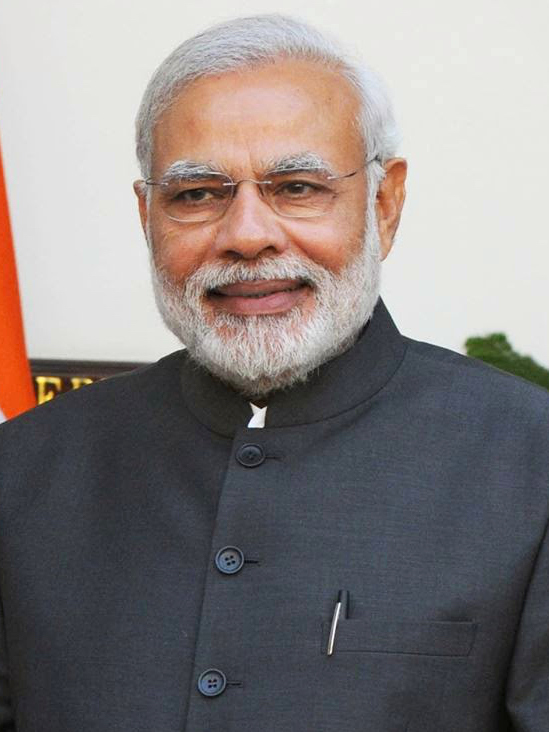
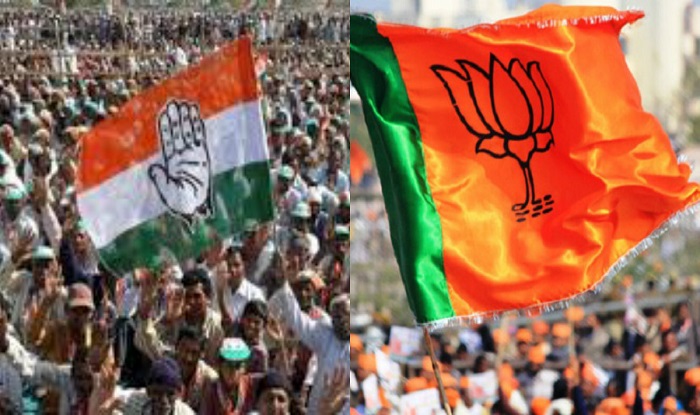
    For the past several years, the BJP has constantly harped on the Gujarat model of development claiming that it was a perfect formula for growth, and it could be extended to the rest of the country. But in the meantime, Rahul Gandhi and his party upped their game in Gujarat, seeking to puncture the mythology built around the Gujarat model with pointed attacks on the government’s economic policies and the inadequate development in the Prime Minister’s home State, says the author.

    More than three years after the Bhartiya Janata Party (BJP) stormed to power at the Centre with an unprecedented victory, it finds itself on the defensive, especially on the economic front. This defensiveness extends to the political front as well, evident in the Gujarat election campaign where after 19 years of unbroken rule, the party is facing a serious challenge.

    Tell-tale signs

    Three developments signal that political equations in the country may well be in a state of flux. First, the rejection of the Akhil Bharatiya Vidyarthi Parishad (ABVP) in recent university elections indicates a strong sense of discomfort with the BJP’s politics among the youth who gave the party solid support in the 2014 Lok Sabha election. Second, the Election Commission’s decision to de-hyphenate the Himachal Pradesh and Gujarat Assembly election notification which allowed the Central and State governments more time to frantically announce sops, including slashing rates of the goods and services tax (GST) on select items, loan waivers for farmers, and benefits for government employees. Third, Prime Minister Narendra Modi’s attempt to pass the blame for the disruptive introduction of the GST and its shambolic implementation on the Congress implies that something is really changing on the ground.

    For the first time, he argued in favor of collective ownership of the GST after taking sole credit for its introduction in a midnight session of Parliament, saying that all State governments, including of the Congress, are responsible for the GST.

    This has created opportune conditions for the Congress Party to come out of its self-imposed hibernation since 2014. It suddenly appears to be eager, even aggressive, in taking on the BJP on its home turf. This coincides with a rising discontent across the country over the economic slowdown and growing job losses. The double blunder of demonetization and GST seems to have infused new life into Congress vice-president Rahul Gandhi’s floundering political career just weeks before his likely elevation as the party president.

    The Gujarat election, which was expected to be an easy win for the BJP, has unexpectedly developed into a possibly close and certainly engrossing contest.

    For the past several years, the BJP has constantly harped on the Gujarat model of development claiming that it was a perfect formula for growth, and it could be extended to the rest of the country. But in the meantime, Rahul Gandhi and his party upped their game in Gujarat, seeking to puncture the mythology built around the Gujarat model with pointed attacks on the government’s economic policies and the inadequate development in the Prime Minister’s home State.

    Against this backdrop, the Congress put the BJP on the back foot with its Gujarat campaign highlighting joblessness, decelerating economic growth and poor social infrastructure through the hashtag “Vikas Gando Thayo Chhe” (development has gone crazy).

    Where is Vikas?

    It has gone all out since then to broadcast and publicize the social media campaign captured by the image of an upturned state transport bus with its wheels off. While the Gujarat model proved extremely persuasive in 2014, three years later people seem to have a more skeptical take on it and what lies beneath it. Despite three decades of high growth rates, Gujarat’s performance on social indicators has not improved significantly; this has damaged its credibility.

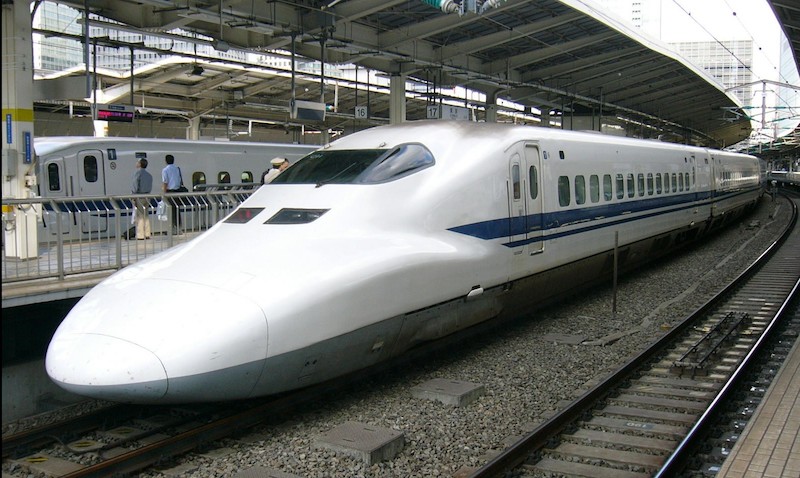
    For the first time in more than two decades, people are freely criticizing the ruling dispensation, mocking the Gujarat model through jokes, caricatures, and parody. One witty message posted on Twitter sums up the popular take on the model: “In a conversation, on seeing the railway tracks submerged in water, a person asks why Vikas is not visible. He gets the reply that as Vikas is sitting in the bullet train, he is invisible.”

    The growing number of humorists poking fun at official policies has struck a chord among people. It forced BJP president Amit Shah to urge the State’s youth not to fall prey to the Congress’s anti-BJP propaganda on social media. Thanks to this campaign, the ruling party is facing its toughest fight in State, in sharp contrast to the 2012 Assembly elections, for instance, when Mr. Modi had made powerful use of social media in his campaign against the Congress.

    Aside from the advantages of political humor, the Gujarat campaign underlines the effectiveness of a State-specific approach. Ensuring that the Gujarat election remains a State battle, the Congress has fashioned its campaign around governance, law and order and failed promises of the Gujarat model, and questioning the leadership of incumbent Chief Minister Vijay Rupani and his predecessor Anandiben Patel while targeting specific social constituencies. Finding itself on the defensive on issues like nationalism, terrorism and corruption, the Congress has shifted the discourse to development failures to preempt Hindu consolidation; it is cornering the government on the economic front and at the same time shunning cultural and emotional issues. The Congress is keen to shed its pro-minority image and deflect attention from Hindu-Muslim tension in order to prevent the BJP from diverting the simmering discontent towards the familiar territory of minority appeasement and the projection of Congress as a Muslim-centric party.

    However, while drawing attention to the government’s economic failures, the Congress has not offered any alternative model of growth. In his speech at the University of California, Berkeley in September, Mr. Gandhi said the Congress can steer a new development model in the future and that “creating jobs in a democratic environment” is vital for inclusive growth. But what this new model is has not been spelt out so far. A critique of economic failures is not enough; a party must shape it with a social and economic agenda of its own. Also, the weakness in the Congress’s organization remains glaring: it has no strong State leader and no organization. The party has been rendered organizationally quite weak in Gujarat over the past two decades; it needs a dedicated cadre of grassroots workers and an organization to fight the formidable RSS/BJP election machine, which it does not have, leave alone the capacity to micro-manage elections as this political machine can.

    Map of disaffection

    To harvest the collective discontent in the State, the Congress has reached out to disaffected groups, including the Patidars, by attempting to build a social coalition with like-minded civil society leaders in Gujarat against the BJP.

    The new coalition is pivoted on socio-economic issues, and not identity politics. That’s the new strategic dimension of the campaign. Hampered by the lack of a strong local face, it revolves around bolstering the anti-BJP sentiment whipped up by the troika of young leaders: Alpesh Thakor, Jignesh Mewani and Hardik Patel. In theory, the support of OBCs, Dalits and Patels, represented by these three leaders, along with that of Adivasis, can give the Congress an edge over the BJP; in any event, their support has helped to create a public mood against the BJP.

    It is too early to say what electoral dividends this fascinating campaign will pay, but one thing is clear. It has unsettled and disrupted the official narrative about the much-hyped Gujarat model of development that paid rich dividends for Narendra Modi in the 2014 elections.

    (The author is Professor Emerita, Centre for Political Studies, Jawaharlal Nehru University)

  • Feature : Prayer for Peace – The Power of One Voice Concert

    Feature : Prayer for Peace – The Power of One Voice Concert

    By Mabel Pais

    “This will be our reply to violence: to make music more intensely, more beautifully, more devotedly than ever before,” Leonard Bernstein

    “The significance of this concert is that people of all religions – Christianity, Judaism, Islam, Hinduism and Buddhism – will be here together and will listen.  Pieces of music like Beethoven’s Ninth unite people, giving them a message that we are in this world together and we have to work for peace. That’s the only way we can have some understanding,” Luna Kaufman

    “Most remarkable is Maestro Jason Tramm as the University’s director of choral activities and an assistant professor. He has opened Seton Hall’s doors to new musical experiences since his arrival in September 2011 and this is another gift he has given to all of us.” Laurie Pine, Director, Media Relations, Seton Hall University.

    Choir singing prayer for peace

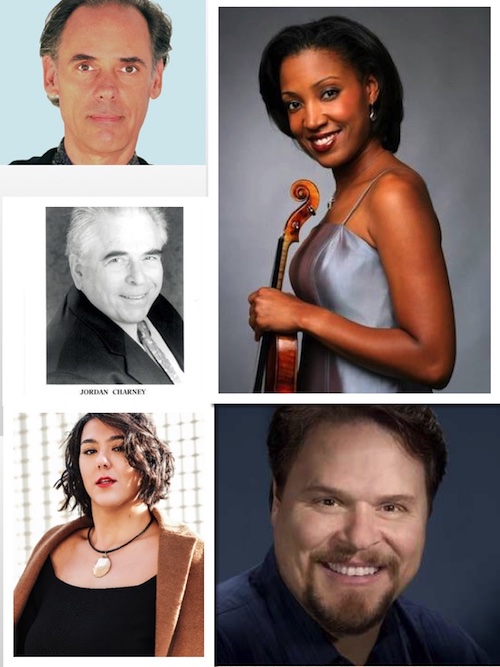
    Prayer for Peace: The Power of One Voice reunited members of the Seton Hall University Chorus and the greater Seton Hall community with the Mid-Atlantic Opera Orchestra, under the baton of noted conductor and Assistant Professor Jason Tramm. Renowned international guest soloists soprano Allison Charney founder and host of NYC classical concert series “PREformances with Allison Charney at Merkin Concert Hall at Kaufman Music Center,” baritone Mark Delavan, tenor Adam Klein and mezzo soprano Karolina Pilou of the Metropolitan Opera, and acclaimed violinist Kelly Hall-Tompkins from Broadway’s Fiddler on the Roof performed. Concert narration featured veteran actor Jordan Charney, star of stage, screen and television.

    Inspired by Leonard Bernstein’s statement, “This will be our reply to violence: to make music more intensely, more beautifully, more devotedly than ever before,” the concert seeks to celebrate peace messengers worldwide.

    In keeping with this spirit, the concert honored lifetime messenger of peace, Luna Kaufman, and raised scholarship funds for refugees, said Laurie Pine, Director of Media Relations, Seton Hall University at South Orange, NJ.

    Seton Hall University’s School of Diplomacy and International Relations and College of Communication and the Arts premiered the second cycle of their “Prayer for Peace” Concert Series at NJPAC in Newark, New Jersey on Friday, October 27.  Inspired by Leonard Bernstein’s artistic mandate, the classical music concert is dedicated to music’s role as an instrument of peace, and took place at NJPAC’s Prudential Hall.

    Luna Kaufman wants this event to build bridges of peace among all peoples

    Central to the concert was a unique performance of A Survivor from Warsaw by Arnold Schönberg to honor Luna Kaufman, Holocaust survivor, educator, activist, author and lecturer. A trustee and chairperson emerita of the Sister Rose Thering Fund for Jewish-Christian Studies, Kaufman is the recipient of an honorary doctorate from Seton Hall University in 2009 as well as the Knight’s Cross of the Order of Merit, given to her by the president of Poland in 2011.

    Kaufman’s life illustrates the theme of the Power of One Voice. Luna and her mother were the only two family members to survive the death camps out of 70 family members. Luna served as the New Jersey Opera Board President and was responsible for bringing Hans Krasa’s Brunidbar to North American audiences in 1988 and played a crucial organizational role in the creation of the Liberation Monument in New Jersey’s Liberty Park.

    Today she is a tireless champion of Jewish-Christian understanding, having been inspired by the late Sister Rose Thering, the Catholic nun and Seton Hall professor who led the fight to eliminate anti-Semitism from school textbooks. Kaufman is acknowledged for teaching the truest and most profound meaning of forgiveness and reconciliation despite experiencing circumstances unimaginable to most people.

    “When I first came to Seton Hall, they asked me to discuss my experiences. I was so bewildered. What do they want to know? To me, at that point, I didn’t talk about the Holocaust because who would talk about it? I was invited to come and talk for a Holocaust Observance in the Chapel. I had my prison uniform. When we left Poland, I was allowed to take only seven dresses, and among them I took this. They counted this as a dress. You know, a piece of fabric to buy and make myself a dress I can always do, but I wanted to have this as my memento. Why? I would never know. And I brought it and it traveled with me to Israel, and from Israel to here. They had it on the altar in the Chapel. I said, ‘Now we have arrived someplace. And now we’re joining hands and working together.’ Shortly after, I met Sister Rose and we became joined together. I was so impressed by what she was doing and the Sister Rose Thering Fund and the University in continuing this work.”

    Kaufman shared why Schönberg’s A Survivor from Auschwitz holds a special significance for her. She was incarcerated in a concentration camp very close to Warsaw and saw the flames of the uprising, hoping to be liberated. In the last minute, owners of the factory, who had purchased her and the others for a few dollars each as slave laborers, sent them to Germany. There, she spent another two years in the camps.

    “I returned to Poland on a trip with Governor Kean. We went to Auschwitz and Israel. The reporters asked me whether I feel some remorse or feeling like that.  I said no.”

    She said, “I felt like a victor. I said this is my victory because I survived through, though I lost my father. I lost my sister. We are not going to (lie) down. I said, ‘You know you have to go forward. You have to remember the Holocaust, but this is not enough. You have to do something about it. And you need to look at the other. When we were doing this concert this year I said make sure you include other genocides and other problems. This is a human issue, and we are part of humanity. To me this is a very important message that needs to be delivered.”

    Kaufman wants this event to build bridges of peace among all peoples.

    “The significance of this concert is that people of all religions – Christianity, Judaism, Islam, Hinduism and Buddhism – will be here together and will listen. Pieces of music like Beethoven’s Ninth unite people, giving them a message that we are in this world together and we have to work for peace. That’s the only way we can have some understanding,” she explained.

    Laurie Pine, Director of Media Relations, Seton Hall University with a sense of fulfillment, comments, “What an incredible tribute this is to messengers of peace both here and around the world! To witness more than a thousand people gathered together at the Prayer for Peace concert, expressing our humanity and embracing each other at such an important time in our shared history. It was a remarkable testament to what we all can achieve together. I was especially proud of our Seton Hall University students, who worked so hard to be able to achieve such a powerful message along with our friends from the MidAtlantic Opera Orchestra and such fabulous soloists, coming together as a community, making music, making art and inspiring us all to be messengers of peace. Most remarkable is Maestro Jason Tramm who infuses his love of music and teaching with a passion and purpose that continues to enrich the repertoire of Seton Hall. As the University’s director of choral activities and an assistant professor, Jason has opened Seton Hall’s doors to new musical experiences since his arrival in September 2011 and this is another gift he has given to all of us.”

    (Mabel Pais is a freelance writer.  She writes on The Arts and Entertainment, Social Issues, Health and Wellness, and Spirituality)


  • As I See It : Trapped in the nuclear web – The challenges India faces

    As I See It : Trapped in the nuclear web – The challenges India faces

    By G Parthasarathy
    Though Pakistan has not enunciated a formal nuclear doctrine, its then head of strategic planning division of its nuclear command authority, Lt-Gen Khalid Kidwai, had averred that Pakistan’s nuclear weapons were “aimed solely at India”. Kidwai added that Pakistan would use nuclear weapons if India conquers a large part of Pakistani territory, or destroys a large part of its land and air forces. Kidwai also held out the possibility of using nuclear weapons if India tries to “economically strangulate” Pakistan, or pushes it to political destabilization, says the author.

    Led by the US and Soviet Union, the five Permanent Members of the UN Security Council tried to ensure, some five decades ago, that they alone had the divine right to possess nuclear weapons in perpetuity, with the signing of the nuclear Non-Proliferation Treaty (NPT). Their nuclear arsenals steadily increased and pleas for nuclear disarmament arrogantly disregarded. The world nuclear scenario today is now different to what the five envisaged. Nuclear stockpiles have steadily grown. In the past few decades, Israel, Pakistan, India and North Korea have joined the “nuclear club”. Others like Japan and Iran are capable of doing so when needed. There are an estimated 14,900 nuclear warheads in nine countries, with 93 per cent of these in the possession of the US and Russia.

    While China tested and acquired nuclear weapons in the 1960s, the next country to acquire nuclear weapons was Pakistan, which commenced its quest for nuclear weapons after the 1971 Bangladesh conflict. India crossed the nuclear threshold only after it received a veiled nuclear threat from Pakistan during tensions over military exercises named “Operation Brasstacks” in January 1987. Instructions were issued in 1988 to nuclear scientist PK Iyengar and scientific adviser VS Arunachalam to assemble a nuclear arsenal. India’s distinguished strategic thinker, K Subrahmanyam, provided the strategic rationale for the nuclear weapons program. India decisively demonstrated its nuclear weapons capabilities 10 years later, with the Pokhran tests. Pakistan predictably followed suit, barely a fortnight later.

    India is today confronted with a situation where China has not only provided Pakistan with designs and equipment for manufacturing nuclear weapons, but has also given Pakistan the knowhow and materials for manufacturing missiles capable of carrying nuclear weapons to every part of India, including the Andaman Islands. While these facts are known to those involved inside and outside the government in monitoring nuclear developments, it is astonishing that public knowledge on this crucial issue is limited. Sadly, it has never been debated seriously in Parliament. Surely, the public and Parliament need to know more on these issues, to promote awareness of the challenges the nation faces from two hostile neighbors working together dangerously. American nuclear analyst Gary Milhollin has perceptively noted: “If you subtract China’s help from Pakistan’s nuclear program, there is no Pakistani nuclear weapons program.”

    While Zulfikar Ali Bhutto moved to establish a nuclear weapons capability within weeks of the Bangladesh conflict, his prison memoirs suggest that he was guaranteed of Chinese assistance after his meeting with Chairman Mao in 1976. China, with antiquated uranium enrichment facilities, benefited from designs stolen by AQ Khan from European (URENCO) enrichment facilities. By the early 1980s, China was providing Pakistan designs for nuclear weapons. China currently has approximately 280 nuclear warheads for delivery by 150 land-based and 48 sea-based missiles and fighter aircraft. While India is estimated to possess 110-120 nuclear warheads. Pakistan has 130-140 nuclear warheads, designed for delivery by ballistic and cruise missiles and aircraft. Experts estimate that Pakistan’s stockpile could potentially grow to 220-250 warheads by 2025, making it the world’s fifth-largest nuclear weapons state. Pakistan’s missiles, with ranges up to 2,750 km, are all of Chinese design and produced at the National Defence Complex facilities in the Kala Chitta Dhar mountain range to the west of Islamabad. The development, production and test launching of missiles is done at locations south of Attock, using road mobile Chinese-designed missile launchers, produced in Fatehjang.

    According to former US Air Force Secretary Thomas Reed, himself a designer of nuclear weapons at America’s Los Alamos Laboratories: “The Chinese did a massive training of Pakistani (nuclear) scientists, brought them to China for lectures, even gave the design of the CHIC-4 device, which was a weapon that was easy to build as a model for export. There is evidence that AQ Khan used Chinese designs for his nuclear designs. Notes from those lectures later turned up in Libya. And the Chinese did similar things for the Saudis, North Koreans and Algerians.” The great champions of nuclear non-proliferation in the US, who lectured India for decades on non-proliferation, covered up and did nothing to curb these Chinese activities. Pakistan is also known to have received liquid-fueled ballistic missiles from North Korea in exchange for information on uranium enrichment, in a deal evidently undertaken with Chinese blessings.

    Though Pakistan has not enunciated a formal nuclear doctrine, its then head of strategic planning division of its nuclear command authority, Lt-Gen Khalid Kidwai, had averred that Pakistan’s nuclear weapons were “aimed solely at India”. Kidwai added that Pakistan would use nuclear weapons if India conquers a large part of Pakistani territory, or destroys a large part of its land and air forces. Kidwai also held out the possibility of using nuclear weapons if India tries to “economically strangulate” Pakistan, or pushes it to political destabilization. India has declared that it will not be the first to use nuclear weapons and will use nuclear weapons only if its territory or armed forces face an attack anywhere, in which nuclear, chemical or biological weapons are used. Since India has no desire to conquer large parts of Pakistani territories or destroy its armed forces, there is no possibility of India provoking a nuclear conflict. But, given Kidwai’s utterances about a “full spectrum” deterrent, involving the use of tactical nuclear weapons, issued after he retired, New Delhi has to carefully review nuclear strategy imaginatively, bearing in mind that our “no first use” doctrine has served us well internationally.

    It is obvious, especially after Xi Jinping’s recent enunciation of Chinese global ambitions at the Party Congress, that missile and nuclear proliferation by China to Pakistan will continue in its efforts to “contain” India. Pakistan has already tested a sea-based missile and China is set to strengthen Pakistan’s navy with substantial supply of submarines and frigates. China appears determined to use Pakistan as its stalking horse for its maritime ambitions to promote its OBOR projects in the Indian Ocean. The most crucial challenge we now face is how to deal with a jingoistic China, for which “containing” India has been a continuing strategic effort for over four decades now. Balancing Chinese power necessarily involves developing partnerships with others across the Indo-Pacific region. China’s policies are multi-faceted, and Beijing will likely avoid open hostility, even as it continues to keep up pressures along its borders with India and uses proxies across India’s immediate neighborhood to keep India tied up in South Asia. These issues will, hopefully, be reviewed and discussed in Parliament.

    (The author is a career diplomat)

  • Perspective : Sardar Patel, a shared inheritance

    Perspective : Sardar Patel, a shared inheritance

    By Gopalkrishna Gandhi

    The Congress’s de-option of Patel was an error, Hindutva’s co-option of Patel is an execration, says the author.

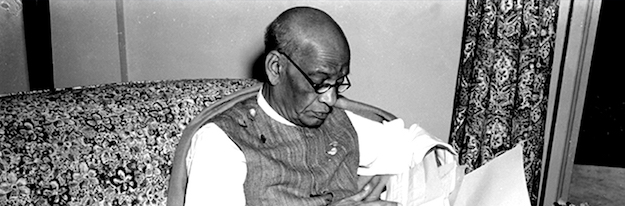
    Vallabhbhai Patel (1875-1950), whose birth anniversary was observed on 31st October, is sorely missed. He has been, ever since he died at the none-too-great an age of 75, in 1950. He was the keel that the boat of the freedom struggle needed so as never to tip over, the ballast that the ship of state required to stay steady, move safe.

    This is because he was, first and last, a patriot. A Congress patriot. And then, a man who knew India. The India which the Congress was seeking to define for itself, for India.

    What was that India? Let us have Gandhi answer the question. In 1931, the year that Patel, for the first time, became Congress president, Gandhi went as the Congress’s sole representative to the second Round Table Conference in London. He defined at that Conference, the nature of the party, and explained to that gathering how the Congress represented the entire country. He explained, in fact, their inextricable oneness.

    Under a big tent

    In Gandhi’s words: “In as much… as I represent the Indian National Congress, I must clearly set forth its position. In spite of appearances to the contrary, especially in England, the Congress claims to represent the whole nation and most decidedly the dumb millions among whom are included the numberless untouchables who are more suppressed than depressed, as also in a way the more unfortunate neglected classes known as backward races…”

    And again, at the Conference’s Minorities Committee: “…if you were to examine the register of the Congress, if you were to examine the records of the prisons of India, you would find that the Congress represented and represents on its register a very large number of Mohammedans. Several thousand Mohammedans went to jail last year under the banner of the Congress… The Congress has Indian Christians also on its register. I do not know that there is a single community which is not represented on the Congress on its register…even landlords and even mill-owners and millionaires are represented there…”

    Serving the nation through that party representing ‘the whole nation’ and its various communities, strengthening that party at its plural grassroots, shaping the resolutions and decisions of its Working Committee and helping it form ministries in eight of the 11 provinces in the elections of 1936-37, Patel then guided it as it took over the reins of the Government of India in 1947. Working for and through the Congress was the Alpha and Omega of Patel’s political career.

    That made him what he was, the ‘indomitable’ iron man of India. That also made the Congress, in very great part, what it was — an all-India organisation.

    Congress was Patel’s life

    No Patel, no national Congress. No Congress, no Sardar Patel. Congress patriotism was his patriotism; Congress politics was his politics.

    No one, howsoever anxious to wrench his legacy off from that of the Congress, can dispute and much less deny that basic and incontrovertible fact. No one, howsoever desperate to annex his legacy to that of another body, cultural or political, like the Hindu Mahasabha or the Rashtriya Swayamsevak Sangh or the Bharatiya Janata Party, can succeed in staging so ridiculous a trapeze show.

    Sardar Patel was the Congress’s spine. The Congress was Sardar Patel’s life.

    Does that mean that the Sardar’s membership, leadership and stewardship of the Congress was free of tensions? Of course not, because he was human, and his party was led and peopled by other humans, each with tempers and temperaments that were distinct. Despite Gandhi’s pre-eminent position in it and in the hearts of the people of India, the Congress was not a hegemonic party and its most charismatic leader, Jawaharlal Nehru, was, by instinct, self-training and practice, its most natural democrat. Nehru’s was a lunar luminosity in Gandhi’s Congress. Nehru’s glow could brighten and lessen, and on a moonless light plunge the party in inky gloom. Patel, with his seven great skills — resoluteness, clarity, direction, focus, loyalty, grounded-ness and guts — was the party’s saptarshi, its Ursa Major.

    The Congress not only accommodated personality and political variations, it regarded itself as their natural home. It was a place to which people belonged, not a place in which people assembled for a drill. Its sifat, to use a Persian word that stands for essence or ethos, was its diversity. And its Working Committee embodied that sifat. It had, Gandhi apart, Nehru the socialist and agnostic, Patel the conservative, C. Rajagopalachari the liberal, Rajendra Prasad the traditionalist, Abul Kalam Azad the scholar, J.B. Kripalani the scoffer. At different times it had Subhas Chandra Bose the nationalist, Sarojini Naidu the poet. Each Congressman and Congresswoman was himself or herself first, and then a soldier of the party. Each person was ‘rare’. Which is why, describing Acharya Narendra Deva in his obituary speech in Parliament, Nehru spoke of him being “…a man of rare distinction — distinction in many fields — rare in spirit, rare in mind and intellect, rare in integrity of mind and otherwise.” The Congress’s ranking leaders, as indeed its countless ‘file’, differed, debated, wrangled and even warred, but stayed true to the party’s sifat, because the party gave them that ‘play’, not as a policy but as an inherent personality trait, India’s trait.

    The mutual differences between Nehru and Patel are no secret. The Congress did not believe in secrecy. Their mutual trust was no secret. The Congress believed in trust.

    Their differences are not to be exaggerated. They are not to be minimized. They are to be contextualized. In the democratic spirit of that plural party.

    Sardar Patel led a party as its Ursa Major that was anything but a homogenizing factory. It was as plural as it was because it saw itself in the words Gandhi used to describe its eclectic rolls in London in 1931.

    ‘India first’

    Gandhi, who knew the meaning and action of political variegation, encouraged and succeeded in getting Nehru and Patel to work with coordination and cooperation if not coalescence. And for this, the realism of both leaders has to be thanked. Their realism, and their sense of ‘India first’.

    India first was part of their idea of India. And ‘India first’ was integral to their sense of patriotism, their Congress patriotism.

    Four days after Gandhi’s assassination, in a letter to his senior in politics, in the party and in age, Nehru wrote: “With Bapu’s death everything is changed… I have been greatly distressed by the persistence of whispers and rumors about you and me, magnifying out of all proportion any difference we may have.”

    Patel replied on May 5, 1948: “I am deeply touched…We both have been lifelong comrades in a common cause. The paramount interests of our country and our mutual love and regard, transcending such differences of outlook and temperament as existed, have held us together.”

    The very previous day, addressing the Congress Party in the Constituent Assembly, Patel described Nehru as “my leader” and said: “I am one with the Prime Minister on all national issues. For over a quarter of a century, both of us sat at the feet of our master and struggled together for the freedom of India. It is unthinkable today, when the Mahatma is no more, that we should quarrel.”

    The Congress’s rank and file should ponder these observations of Nehru and Patel and rectify years of neglect, post-Nehru, of the Sardar’s legacy at the false altar of political cronyism. That neglect has lubricated the crassly opportunistic co-option of Patel by the Hindu Right which has no right, logical, political or moral, to that legacy. What the Congress squandered, Hindutva is shoveling in.

    The Congress’s unwitting de-option of Patel was an error, Hindutva’s calculated co-option of Patel is an execration.

    ‘India first’ believers should be aware of both.

    (The author is a former administrator, diplomat and Governor)


  • Readers Write :“Vedic Yagnas were pure Satvik deeds”

    Readers Write :“Vedic Yagnas were pure Satvik deeds”

    Dear Sir,

    In reference the mischief-laden comment by the author Audrey Truschke, Beef Eating and Horse sacrifice in Vedas is a deliberate abuse of Vedic religion.

    The fact however, is the Vedic Yagnas were pure satvik deeds. The Sanskrit word yagna(यज्ञ) itself means the pious worship. There was perfect vegetarianism in Vedas and Vedic Yagnas.

    See the following references in Rig Veda-
    1. Don’t kill any beings (Rig Veda 10/87/16)
    2. In the Vedic Yagna, killing of an animal or eating meat is totally prohibited. (Mimansa 912/2/2)
    3. Just like cows are given as charity in the yahya, horses are also offered in charity. (Mimansa 10/3/65)
    4. Horses and cows are used only for giving in charity, but never eating their meat. (Mimansa 10/7/15)

    It is common knowledge that satvik food includes- grains, cereals, vegetables, dairy products, and herbs etc., but never meat.

    It is therefore, seen from above, not only meat eating, even offering the meat is avoided in the definition of Satvik food since Vedic times.

    Similar references are included in the holy books of Hindus- Bhagvatam and Mahabharata. So  much so, non-violence as one of the five Yamas means avoiding hurt by thoughts, words and deeds.

    The evil minded hypocrites such as Audrey Truschke have started telling that Vedic principles in yagnas involved intoxicants and meat eating; it is not in the Vedas.

    Prof. Ravi Rustagi

    7 Efstis Court, West Orange, NJ 07052

  • Guest Comment :Terror strikes NY, again; City mourns while politicians posture

    Guest Comment :Terror strikes NY, again; City mourns while politicians posture

    The worst terrorist attack in New York after the 9/11 tragedy came on Tuesday. Eight persons were killed and 12 injured when a rented pickup truck ran them down in a bicycle lane, in Lower Manhattan. The driver, Sayfullo Saipov, was shot at and arrested shortly afterwards. He is an immigrant from Uzbekistan, and the killing is believed to have been inspired by the ISIS, even though not explicitly claimed by the terrorist organization.

    As the story of the immigrant-turned-terrorist unfurls, we see an alienated, frustrated, rootless man who was unable to adjust to life in the US. Yet, he managed to earn and provide for a family that he raised there. There is also the disturbing picture of how his frustrations took a violent hue and how he turned radical over a period of time. He was, allegedly, on the radar of the authorities and his conduct had raised concerns even among the preachers at one of the mosques he used to frequent.

    Trump lost little time in blaming the Diversity Visa Lottery program under which Saipov had migrated to the US. Trump also said that he would consider sending Saipov to the military prison at Guantanamo Bay, Cuba. The President was unnecessarily critical of the federal justice system, which has delivered hundreds of convictions of terrorists since 9/11. Even as the law enforcement agencies and the justice system work in sync to bring the terror suspect to justice, New Yorkers, and Americans in general, have shown the will to weather this unfortunate “new normal” in the life in America. As for the right-wing “nativists”, the message to them would be the same as was affirmed by the White House Press Secretary after the killings in Las Vegas by a US-born white terrorist: “There’s a time and place for political debate, but now is a time to unite as a country.”

    (Tribune India)

  • As I see It : Is the PM having an attack of nerves?

    As I see It : Is the PM having an attack of nerves?

    The resources at the Centre’s disposal are generated by the people. Modi is not a monarch to distribute largesse at his sweet will.

    By Apoorvanand
    One has also to remember that unlike China, India is a multiparty democracy. Its people can experiment with different ideas of development. Thus, Tamil Nadu under the AIADMK brought something new to development and Kerala under the CPI(M) offered a different idea of development. Similarly, Maharashtra did things differently. Despite disagreeing with the politics or ideology of Jayalalithaa, her social welfare schemes were admired across political parties and parties sought to emulate them in the states they were ruling. That is how we have a Kerala model or a Tamil Nadu model or even a Gujarat model. Each of them offers something new or different, says the author.

     In 2015, a party like the BJP should have objected to the Delhi electorate being asked to give an absolute majority so that it would work effectively under Narendra Modi’s fear. The BJP has existed prior to him and hopefully sees itself as outlasting him. But to expect a soul in the BJP to raise a voice against this extraordinary arrogance was too much.

    However, the people of Delhi did take exception to this bullying and showed him his place. The BJP had to pay the price for his haughtiness.  A party holding all seven parliamentary seats had to console itself with only three seats in the Assembly.

    Modi tried to repeat this act in Bihar. Again in 2015.We still remember his swagger when he went on to ask people to guess the amount he had in mind for the people of Bihar, “Should it be Rs 50,000 crore or more; Rs 60,000 crore or more; Rs 70,000 cr…,’’ he intoned theatrically. Then after a dramatic pause, he announced the final figure: Rs 1.25 lakh crore.”

    “I have announced a Rs 1.25 lakh crore package to change the fate of Bihar, to make a ‘naya’ Bihar. I assure you that I will change the face of Bihar,” Modi declared asking the electorate to choose him.

    The people of Bihar noted the repeated deployment of capital “I’’ in the speech. The distaste for this bullish approach was reflected in the election results. The BJP under Modi got a sound drubbing.

    The bully reappears

    The bully has reappeared now; this time in Gujarat and again in an election season. The people there were subjected to the same imperial approach when Narendra Modi threatened that the Central government under him would not give a single penny to anti-development governments in the states. This was a direct message to the people of Gujarat that if they elected a non-BJP government, they would be deprived of Central funds.

    Which government is pro development and which is anti-government? By the definition of the emperor, only a government patronized by him can be said to be pro-development. All other governments are bound be anti-development. The Bihar Government before Nitish Kumar’s capitulation to Modi was anti-development but from the day the JD(U) decided to lift his shoes, it automatically turned pro-development.

    Modi forgets that he is only a prime minister and not the lord of the land. The resources at the disposal of the Central government are generated by the people of India. He is not a monarch who distributes largesse to people at his sweet will. It is not for him to bestow or deny central fund to any state.

    This hubris was in full play at the heights of Kedarnath where he said that it was for him, the son of Shiva, to reconstruct the Hindu shrine. His claim took one back to 2013 when he had landed in the flood-ravaged Uttarkhand and assertions were made on his behalf that with 85 SUVs and many helicopters, he had evacuated 15,000 Gujaratis in a day. Nitish Kumar was taunted for not having done anything for the stranded Biharis. It is quite a different matter that the claims were disproved by the experts and a section of the media.

    Not to be ignored

    This time what Modi said in Gujarat should not be ignored. It should not be allowed to pass as a rhetorical statement which is permissible in electioneering. For he arrived in Gujarat not as a campaigner for the BJP but as PM. He was there thanks to a pliable Election Commission which gave him an extraordinary window to visit the state and announce schemes on the eve of the elections.

    All opposition parties and state governments they lead need to remind him that India is still a federal country. All states have relative autonomy to decide what is best for them. There are areas in which the Centre cannot interfere. States have legislative powers which cannot be appropriated by the Centre. Even while deciding about the distribution of Central funds it has to keep the suggestions made by individual states in mind.

    One has also to remember that unlike China, India is a multiparty democracy. Its people can experiment with different ideas of development. Thus, Tamil Nadu under the AIADMK brought something new to development and Kerala under the CPI(M) offered a different idea of development. Similarly, Maharashtra did things differently. Despite disagreeing with the politics or ideology of Jayalalithaa, her social welfare schemes were admired across political parties and parties sought to emulate them in the states they were ruling. That is how we have a Kerala model or a Tamil Nadu model or even a Gujarat model. Each of them offers something new or different.

    Modi wants to treat state governments as its Mansabs or as its subsidiaries. His government’s tendency to centralize is too manifest to be missed. The central agencies feel it appropriate to ask schools in the states to observe programs which propagate the BJP’s ideology. It does not shy away from using central agencies like the UGC or the CBSE or the MHRD to push it down the throat of unenthusiastic state universities and schools. They follow its diktat for the fear of losing central assistance.

    In the fourth year of his stint, development has got reduced to endorsement of demonetization and GST. We see that nearly all institutions which help a government take rational decisions have been disempowered. The EC’s withholding of election dates for the Gujarat assembly is too glaring.

    Not convincing enough?

    The way Modi is showering Central gifts on Gujarat seems to suggest that the record of his and his successor’s governments is not seen as convincing enough to win back the confidence of the people. Hence this Central largesse. It also suggests arbitrariness in the style of his governance. If it is the sweet will of the monarch which would decide the flow of resources, then we need to worry about the future of democracy in our country.

    The Prime Minister’s thunder, however, also shows that the ground under him is shifting. If he has started sounding like the blackmailer of 2015, then to expect a repeat of Delhi and Bihar in Gujarat is also not a mere fantasy.

    (The author is a Professor of Hindi in Delhi University)


  • Guest Comment  : Taj and bigotry

    Guest Comment : Taj and bigotry

    Hinduism can reasonably be seen as a long religious tradition that stretched back 3,500 years to the Vedic period and has encompassed many ways of life over the centuries. But much about ancient Hindu traditions, to say nothing of ancient Indian traditions more broadly, is anathema to Hindu nationalists. For example, the people who composed and recited the Rig Veda for centuries were a beef-eating, horse-sacrificing lot. Medieval Hindu rulers desecrated one another’s temples and idols (a practice which inspired similar behavior among Muslim rulers after they arrived in India). I hesitate to even mention Tantric practices, an important part of pre-modern Hindu traditions that few Hindu nationalists would easily embrace today.

    Hindu nationalists are often in denial about their ideology being rather modern and, frankly, rather Western in its formulation. This is odd from a historian’s perspective since, after all, Hindu nationalists fall within the broad umbrella of nationalism, a doctrine that only makes sense in the context of the relatively recently-formulated world of nation states. Moreover, early Hindutva ideologues openly modelled their ideology on European fascist movements in terms of methods and objectives.

    The Indian subcontinent has a long, rich history, but the Indian nation state has had a quite brief existence to date. When people conflate the two, they lose the bulk of Indian history and end up making nonsensical statements, such as that Shah Jahan, the Mughal king who sponsored the construction of the Taj Mahal, was a traitor. One might ask: A traitor to whom or what exactly? To the modern Indian nation state that was not founded until nearly 300 years after Shah Jahan’s death?

    Indian history does not belong to the modern nation state of India. Often in the West we speak of South Asian history, in part, to make precisely this distinction between the region’s past and nationalist claims upon it. Nonetheless, the Indian state is the de facto custodian of the historical sites contained within the nation’s borders, including Mughal monuments. Recent politically-charged statements and actions designed to erode the crucial role of the Mughals in India history raise the question of how much longer the Indian state will serve as a responsible caretaker for monuments that are much beloved across the world.

    (Audrey Truschke, Assistant professor of South Asian History, Rutgers University and the author of ‘Aurangzeb: The Man and the Myth’)

  • Perspective :  I am Not a Non-Reliable Indian

    Perspective : I am Not a Non-Reliable Indian

    Vivek Gumaste
    Even faraway from our land our efforts and fortunes were inextricably linked to our country and our identity as Indians.Our minds thought for our country and our heart beats for our motherland. We eagerly waited for any way in which we could help, not with arrogance or a condescending patronization but with genuine desire to be an equal shareholder in the progress of our nation. I will not belittle our efforts or my nation by enumerating those instances here. We did it because it was our duty and we loved our country. We did not see it as a favor, says the author.

    While paying tribute to Tom Alter, the American who made India his home (Tom Alter, a Man Who Batted Straight. HT. Oct 7, 2017) Ramachandra Guha in an aside makes some uncalled for and uncharitable comments about Non-Resident Indians.

    These acerbic comments are in poor taste, insensitive and reflect an ignorant superficiality that lacks depth; a microcosm of the subliminal prejudice that some Indians wrongly harbor about their expatriate fellow Indians. As an NRI I am compelled to set the record right with a straight bat!

    Ramachandra Guha condescendingly avers: “The term NRI stands for Non- Resident Indian. Since these NRIs turned their back on the land that nurtured them, and since so many of them grumble so much about the condition of the country they left behind, they have sometimes been referred to as Non- Reliable Indians. The wealthiest as well as the most unreliable of these NRIs are, of course, those who live in the United States of America. To those kind of expatriates, I would like to juxtapose their exact opposite; Americans who made the reverse journey and settled in this country. These are the ARIs, or Americans Resident in India.”

    Let me counter point by point the medley of charges that Guha levels against NRIs to lay bare the vacuity of this libel.

    The charge that ‘NRIs turned their back on the land that nurtured them’ is the unkindest cut of all; a stab in the back that is excruciatingly painful and a sweeping generalization that is too simplistic to be taken seriously. The early 60s to the 80s was a difficult time for India and Indians; the country was experiencing the growing pains of a nascent nation that was still mired in extremes of poverty and perpetual need; money was hard to come by and professional careers limited.

    Somewhere in our hearts we constantly feel a pinch of guilt for having left our country but you make it appear that we did it willingly, deliberately and gleefully.

    I can assure you that we did not leave our land with a sense of euphoria. We left our nation prompted by a variety of reasons, circumstances that were professionally, economically or personally unfeasible. Yes, I will not deny that we sought greener pastures for ourselves abroad.

     And the path was not easy. We stood huddled in the cold outside JFK with barely 5 dollars in our pockets (that was all the foreign exchange that was allowed in those days) waiting expectantly, not knowing whether the acquaintance who had promised to pick us up would come or not. Doctors from back home worked as waiters on hourly wages, engineers pumped gasoline late into the night and we did not hesitate to do the most menial of jobs.

    We bowed our heads yesterday so that young Indians could walk with their heads held high today.

    But in the end, we succeeded. Our doctors are considered one of the best in world, our engineers rule the roost in America’s Silicon Valley and the best American Universities are flush with Indian-Americans. We even count Nobel Laureates amongst our midst.

    It is too simplistic and telescopic to deem this as a purely personal venture in isolation. It cannot be dismissed as personal travails and triumphs irrelevant to the broader narrative of India.

    When we made a name for ourselves we also made a name for our country as well. And whatever money we earned we shared it unstintingly with our family and friends back home

    Even faraway from our land our efforts and fortunes were inextricably linked to our country and our identity as Indians.  Our minds thought for our country and our heart beats for our motherland. We eagerly waited for any way in which we could help, not with arrogance or a condescending patronization but with genuine desire to be an equal shareholder in the progress of our nation. I will not belittle our efforts or my nation by enumerating those instances here. We did it because it was our duty and we loved our country. We did not see it as a favor.

    True, physically we left our country but we did not turn our backs on our country.  No Mr. Guha, we did not abandon our motherland.

    Yes, we do grumble at times about the country we left behind. But it is not to denigrate India; neither is it a reflection of a new- found superiority complex. It is because of a genuine desire to see our country do as well as other countries, to be able to see it as a progressive, modern and respectable nation of the world.

    To single out NRIs from America is crass, petty and unfair.

    Yes, there is no denying that there are a few amongst us whose demeanor is less than complimentary but to paint all of us black with one broad brush is just unacceptable

    We have distinguished ourselves as Indian-Americans but that word Indian of that hyphenated phrase holds a lot of significance for us; it is a part without which we are not a whole. Even the worst amongst us (I am not denying that there are few) who constantly bad mouth India hold steadfastly on to a dream of returning home till their last breath knowing fully well the futility of such a hope -an enduring testimony to our love for our country. So please do not trivialize our feelings.

    Maybe a piece of paper does give you some additional privileges but morally and emotionally the country that gave birth to us is as much ours as yours. Nothing that you do or say is going to take away from that.

    NRI Indians and resident Indians are like two sons/daughters of one mother. Just because I chose to move away it does not diminish my love for my mother or my right to her affections.

    Finally, with a sense of pique, I must say this: My bond with my country is direct, unconditional and uncompromised by distance and requires no intermediary. Neither does it crave the approval of resident Indians like you and or warrants any official sanction. Nothing that you do or say can ever or even diminish by an iota the love and respect I have for my country. I will always be there for Mother India. And I know that with her expansive heart she will always be there for every one of her children in whichever part of the world they are.

    (The author is an Academic and Political Commentator. He can be reached at gumastev@yahoo.com)

  • ONE NATION, OVERDOSED!

    ONE NATION, OVERDOSED!

    By Al Baldeo

    America’s Opioid Crisis

    “Our greatest glory is not in never failing, but in rising up every time we fail.” – Ralph Waldo Emerson

    “I hated every minute of training, but I said, ‘Don’t quit. Suffer now and live the rest of your life as a champion.’” – Muhammad Ali

    Statistics from the Centers for Disease Control and Prevention (CDC), show that 64,070 people died from drug overdoses in 2016. This represents a staggering 21 percent increase from the year before, and confirm that more Americans died from drug overdoses in 2016 than the number of American lives lost in the entirety to the Vietnam War-which totaled 58,200! Often unnoticed as a silent epidemic on account of the headline grabbing nature of its sensational rivals, drug related calamities cannot be swept under the rug any longer.

    The opioid epidemic ravaging the United States is taking a grim and growing toll. Its horrible effects spare no family in America, rich or poor, black or white, and are not restricted by any boundaries. All of us are in this, together. Indeed, last year’s 64,070 drug fatalities far outnumbered:

    -The 35,092 motor vehicle deaths in 2015.

    -AIDS-related deaths in the worst year of the AIDS crisis, when 50,628 people died in 1995.

    -The peak year for homicides in the U.S., when 24,703 people were murdered in 1991.

    -Suicides, which have been rising in the U.S. for nearly 30 years and totaled 44,193 in 2015.

    Approximately 75% of all drug overdose deaths are now caused by opioids, a class of drugs that includes prescription painkillers as well as heroin and potent synthetic versions, like fentanyl. Data also show that overdoses of synthetic drugs, such as fentanyl, which is 50 to 100 times stronger than the painkiller morphine, are driving the sharp increases in opioid overdose deaths.

    A new report from the Police Executive Research Forum (PERF), an independent research organization that focuses on “critical issues in policing,” puts those numbers into context.  Statistics point to the fact that the opioid crisis is fueled by the drug industry and Congress’s failure to do enough, as the epidemic continues to spiral out of control. The CDC identified 15,466 deaths from heroin overdoses in 2016, while 20,145 deaths were caused by fentanyl or other synthetic opioids.

    Additionally, a survey conducted by PERF of its member police chiefs earlier this year found half of the respondents reported an increase in fatal heroin overdoses in their jurisdiction in 2016 compared to 2015, and 45 percent reported an increase in drug overdose deaths attributed to fentanyl during that time. Twenty-three percent reported an increase in fatal overdoses due to prescription opioid medications.

    This is consistent with research suggesting that many people who become addicted to prescription painkillers often become victims to heroin or synthetic opioids when it becomes too difficult to obtain or too expensive to keep obtaining prescription pills.

    “60 Minutes” and the Washington Post recently highlighted how an act of Congress helped fuel the epidemic of addiction in a joint investigation recently. Whistleblowers revealed how the Ensuring Patient Access and Effective Drug Enforcement Act of 2016, which was unanimously approved, derailed DEA efforts to crack down on suspect pharmacies that are distributing millions of pills in ravaged communities.

    It is mandatory that law enforcement and other criminal justice agencies, public health departments, drug treatment and social service providers, elected officials, and others, step up and coordinate their efforts to prevent new cases of opioid addiction, while providing addicted persons with medical and social services through the long and difficult process of getting free of the drug scourge.

    This is a national crisis which must be addressed immediately!

    (The author is a civil rights activist and community advocate. As President of the Baldeo Foundation and Queens Justice Center, he has continued the fight for justice, equal rights, dignity and inclusion in the decision making process. He can be contacted at the Baldeo Foundation: (718) 529-2300)


  • As I See It : No second coming for Anna: A bogus morality is dangerous

    As I See It : No second coming for Anna: A bogus morality is dangerous

    By Harish Khare
    Granted, his movement attracted honest, idealistic souls to his corner at the Ram Lila ground, those who thought that a ‘change’ was possible. Well, a kind of ‘change’ did take place. Simply put, Anna Hazare ended up preparing the ground for a new regime to come to power. This Anna has to be a very, very simple man to believe that he can once again recapture public imagination and that he can summon agitated souls to rally around his banner, says the author.

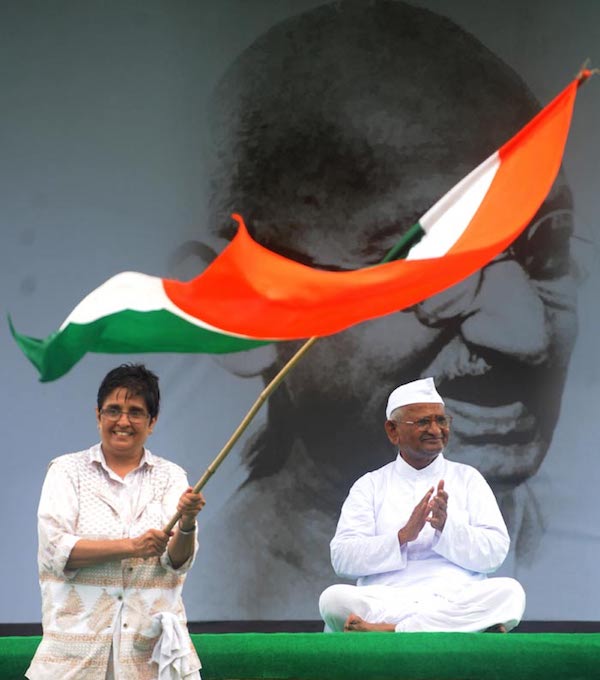
    That tired but persistent theoretician of a moral society, has again been heard from. On Gandhi Jayanti, he popped up for a photo-op at Raj Ghat and expressed himself to be thoroughly unhappy at the way things have worked out these last three years; in particular, he appears to be annoyed that there is no sign of a Lok Pal, the presumably magical piece of legislation that the India Against Corruption cabal had waved so earnestly before a credulous nation. It is a measure of how the times have changed that, with a minor exception here or there, most newspapers relegated the Old Gandhian to the inside pages.

    When he threatens to resurrect his anti-corruption movement, it becomes difficult to decide whether Anna Hazare is an incorrigible fool or a very, very shrewd old man. It is quite possible that he has cunningly sensed that the Modi sarkar has become wobbly and that it has rendered itself vulnerable to public anger after having so brazenly abused and misused people’s confidence to indulge in its whims and fancies. Any regime that enters this zone of doubtful respectability invites poaching from moral archers of the Anna Hazare type.

    Or, is he too simple a man who continues to believe genuinely that he led a genuine ‘anti-corruption’ movement in 2011? Granted, his movement attracted honest, idealistic souls to his corner at the Ram Lila ground, those who thought that a ‘change’ was possible. Well, a kind of ‘change’ did take place. Simply put, Anna Hazare ended up preparing the ground for a new regime to come to power. This Anna has to be a very, very simple man to believe that he can once again recapture public imagination and that he can summon agitated souls to rally around his banner.

    Gandhians make poor insurgents —unless there is a shrewd Mohandas in charge of both tactics and strategy. Anna is no Gandhi. He was just an earnest man, who wore a Gandhi cap (which the Mahatma never needed). He is entitled to feel that he has been betrayed by his spear carriers — the Kiran Bedis, the Arvind Kejriwals — but he remains curiously innocent about the very nature of the movement that was put together in his name.

    The India Against Corruption was a perfect platform to bring together assorted babas, NGOs, media moguls; there was corporate funding, and retired intelligence hands were there to lend a hand with planning and disinformation. If Anna Hazare cares to look around, he will find that since 2014, his “moral army” has been the principal supplier for raj niwas’, Parliament and assemblies, councils of ministers, etc.

    That is not enough. The babas have become entrepreneurs, presiding over multi-billion-rupee empires; prospering with government patronage and protection; and, behind-the-scenes strategists now man national security portals. The political capital the Anna Hazare movement generated has been encashed to the last rupee. And, above all, all that flag-waving at Ram Lila ground was rather cleverly choreographed, preparing the ground for the carnival of a resentful nationalism.

    Some may find it charming that he refuses to see that he had already been once taken for a ride; but he should not be encouraged to think that he can replicate his “movement” again. No society will allow itself to be hoodwinked a second time. We feel morally cheated. Those who proffered themselves as our saviors and social cleansers have turned out to be very ordinary political operatives, if not worse.

    Nor will he be allowed to pitch his tent. In hindsight, it can be suggested that in 2011, Anna faced a rather benign adversary. The Manmohan Singh regime was a decent arrangement. Anna will discover that he has underestimated the official ruthlessness the New India is capable of unleashing on all those who decide to annoy it.

    More pointedly, the global context has disappeared; the Arab Spring has turned out to be a State Department sleight of hand; none of the countries subjected to a presumably moral renewal has experienced peace, harmony or political stability. The Indian middle classes get easily frightened at the slightest hint of disorder and they are ready to run to the safety offered by this or that strong man. The moral economy of Arab Spring disintegrated long ago. The Anna movement was part of this global subversive project; but, now, there is a businessman and a deal-maker in the White House.

    Nor will corporate India dare to offer any kind of comfort to a second Anna movement. The corporates today make a deeply tamed crowd, barely managing to survive the inspired governmental incompetence in handling the economy.

    Media was a powerful ally in the anti-corruption movement. This time round, Anna will discover that the media has found it profitable to sup with the big boss; it no longer thinks of itself as an ally of the underdog in his fight against the daily ritual injustice and indifference; it has enrolled itself in the nationalistic cause. Even if Anna was to find another bunch of innocent souls to help him try to re-enact the Jantar Mantar tableau of righteousness and disapproval, he will find the media laughing him out of town.

    Above all, we are an emotionally exhausted society. The creative power of our passions is degraded every night. A slow intellectual hemorrhage is inflicted on our collective sanity. Our righteousness has been so subtly, so shabbily — and, so toxically — directed against Pakistan. Our anger has been channeled — and wasted — against the Left, minorities and other assorted deshdrohis.

    The Prime Minister has abused our trust; he asked us to trust him because he came from a poor family and then made millions of poor, honest and hard-working people stand in line to get their own hard-earned money while the fat cats were able to work out deals with the Ashoka Road managers. Not only that, he told them to feel good, feel empowered in their misery. Every week, if not every evening, he tries to frog-march us emotionally back to his depleted leadership corner. We are not persuaded to feel good, we are even made to feel small when a Yashwant Sinha is mocked and jeered as a job applicant.

    Today, we are an emotionally exhausted nation. Perhaps, even morally tired. We are in a dangerous zone. There is a certain kind of moral coercion in the Anna Hazare variety of earnestness. This is an avoidable trap because it ends up in authoritarian cul de sac.

    (The author is editor-in-chief of Tribune group of newspapers)

  • Perspective : Standing Up against Sexual Harassment

    Perspective : Standing Up against Sexual Harassment

    By Mike Ghouse

    The men and women ought to be ashamed of themselves who blame the woman for the wrong doing. Stupid comments like, “She should not have been there,” “She should not have been dressed up like that” are evil in nature.  She has a right to be wherever she wants to be, men just need to be men and not animals”, says the author.

    The hallmark of a civilized society is where each one of us feels safe, secure and free. It is the responsibility of the majority or the ones in power to ensure that every vulnerable one is protected. A society where no one lives in apprehension brings prosperity, peace and joy to everyone. It would be a kingdom of heaven on earth!

    Women and children are the most vulnerable beings in our society; they are living in constant fear of abuse and harassment, and one in three women is deeply affected by it. It is not easy to erase it from the memories, and the abuse keeps them tense for a life time.

    As a man, shame on me if I remain silent when abusive men take advantage of women against their will, and I urge every man to speak up and stop the bad guys.

    God has blessed women with built in antennas to sense the predator and they do everything right to avert it, but the abuser does not stop at it. We need to bring in severe punishments for the abusers if we want to be a civilized society.

    Free will is the God given inalienable right of every human and violating other’s free will must be considered the greatest sin on the earth.  Here is a video about free will.  https://www.youtube.com/watch?v=9vQs1IcSdYA

    Societies, political systems and religions have come into being to give safety to every human, and protect everyone from the predators. The men who wear religion on their sleeves and call themselves Christians, Jews, Muslims, Hindus, Buddhist, Sikhs, Bahá’í, Atheists or whatever have an additional responsibility to prevent abusive men from such behavior.

    You are familiar with these words, “I did try and fuck her.  She was married. I moved on her like a bitch, but I couldn’t get there. And she was married. Then all of a sudden, I see her, she’s now got the big phony tits and everything. She’s totally changed her look. I’ve gotta use some Tic Tacs, just in case I start kissing her. You know I’m automatically attracted to beautiful – I just start kissing them. It’s like a magnet. Just kiss. I don’t even wait. And when you’re a star they let you do it. You can do anything…. Grab them by the pussy. You can do anything.”

    Shame on all the Men who voted for the Chief Predator, and greater shame on creeps like Pastor Robert Jeffress of Dallas who brings fake approval from God for such behavior and shame on his congregation to keep him there.

    The men and women ought to be ashamed of themselves who blame the woman for the wrong doing. Stupid comments like, “She should not have been there,” “She should not have been dressed up like that” are evil in nature.  She has a right to be wherever she wants to be, men just need to be men and not animals.

    A civilized society is where a woman can walk freely without fear of anyone. Every woman should have the freedom to be who she is, what she eats, drinks, believes or wears.

    A poem written by my friend from Dallas;

    About that “Me Too”: Almost forgot 80s admin temp jobs, once getting pinned against the wall by a creep with a booby fixation. This poem was written years later in retrospect, directed at the “boys in the board room.” Not to make light of it, but humor has always been my way of coping:

    “Deflecting Sexual Harassment with the Courage of our Conniptions:

    A Defense Against ‘Perky Breast Syndrome’”

    It has been years since I considered any of my parts to be “perky”

    and a while since I cared whether they perk as long as they work

    I suppose you thought you were paying me a compliment –Wrong!

    and if you do it again I will sue the pants from you

    So please remember:

    When this company offered you a job with “perks”
    they were not referring to me

    and just be glad you have a job with perks;

    I have a job with jerks!

    — Linda Abramson Evans

    I applaud all the women who withstood harassment and the beating they took to get the women’s suffrage movement achieves its goals.  Thanks to Anita Hill for being one of the first few high-profile women to bring the sexual harassment out in the public. Thanks to all the actresses who have ventured to reveal the harassment and humiliation they have endured from Harvey Weinstein and are speaking up.  Thanks to Gloria Steinem and countless other women who stood for the rights that women have reclaimed now.

    Gone are those days, when a woman would not report sexual harassment to any one, it was an embarrassment and humiliating experience and the uncouth men and women blamed her, thus victimizing the victim further.

    Here are a few suggestions to bring about the change:

    A mother is more influential in a child’s life than anyone else. If she can raise her kids with values of gender pluralism, translated as, “No work at home is yours, your father’s, your brother’s, sisters’ or mine, it is our work, and all of us will contribute our time and effort towards getting it done.”  Thus, the newer generation can be raised as the kind of men and women we prefer to have in the society.   The family should inculcate such values.  We need another Gloria or Oprah among us to take this on.

    Men need to give a full supporting hand in changing the narrative for our and generation and one immediately following us.  I was in India last month and took my two nieces to a politician’s home, the man calls on his wife to take the girls in, I insisted that they sit with us, as it is their future as well and they need to be participants.  The men had their heads screwed backwards, generally they discount and ignore the opinions of females but they were surprised to hear girl’s opinions, I did not let them discount the girls and asked them to listen to the two girls. We’ve to take a stand at first, and then it should become natural.

    Prophet Muhammad had a vision of a civilized society; he said he would like to see a day when a single woman can go from the City of Medina to Damascus and be back harmless, fearless and peaceful. I am sure, all the great religious masters have said that, in one form or the other.  I wish we look forward to such a society.

    At Center for pluralism we are committed to build cohesive societies where no American has to live in tension, apprehension or fear of the other. We have systems in place to achieve such results over a period of time.

    (The author is the President and Executive Director of Center for Pluralism.  His twitter handle is #MikeGhouse and facebook is #MikeGhouse)


  • PERSPECTIVE:  A NEW DAWN FOR THE CONGRESS PARTY IN PUNJAB

    PERSPECTIVE: A NEW DAWN FOR THE CONGRESS PARTY IN PUNJAB

    By Harjap Singh Aujla

    “For a change this time, there was complete unity in the ranks of the Congress, which was surprisingly missing throughout in the past ten years. This is a pick-up for the Congress party and a net loss for the BJP. In 2014 they contested three seats in Punjab, out of which they were victorious in two, a decent score-card. But now they are down to one only. For PM Narendra Modi, all said and done, it is a setback”, says the author.

    Congress victory in Gurdaspur Parliamentary bye election on October 15, 2017 infused a new vigor into the life of the Congress party in India in general and Punjab in particular.  Although there were eleven candidates in the fray, the scope of the main contest was narrowed down to just two- the BJP and the Congress. Due to the ugly happenings within the AAP last year, leading to the expulsion of the then AAP Convener Sucha Singh Chhottepur, the AAP challenge did not take off at all, leaving the party of Kejriwal to lick the dust once again.

    The BJP did put up a decent fight in their strongholds in and around the garrison town of Pathankot. Surprisingly the SAD challenge collapsed more tamely than expected. Whereas the BJP candidate Swaran Singh Salaria lost by 10000 votes in Pathankot, 8000 votes in Sujanpur and 7000 votes in its earmarked three constituencies, the SAD citadel collapsed like a pack of cards in all the other electoral segments. Their losses were stunning; in Dera Baba Nanak by 44000 votes, Fatehgarh Churian by 32000 votes, Gurdaspur by 29000 votes, Batala by 26000 votes, Qadian by 26000 votes etc. It appeared that the people still have unabated revulsion against the rampant corruption indulged in by the top brass of the SAD during the past decade.

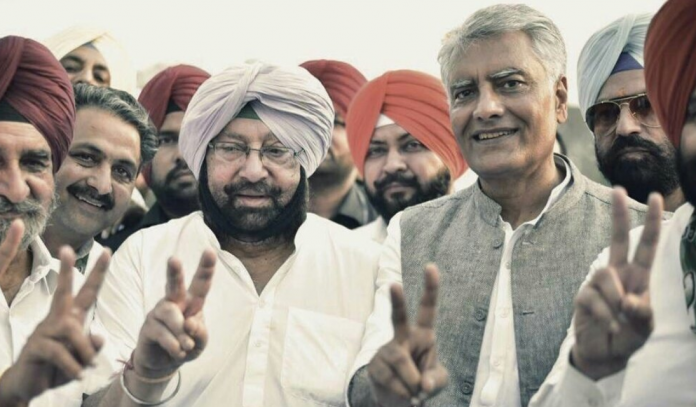
    Overall the Congress candidate Sunil Jakhar romped home victorious by over 193000 votes, a decisive victory, to say the least. The credit goes to Captain Amarinder Singh, who planned the campaign at the macro level. Micro management was left to the local players like cabinet minister Navjot Singh Sidhu and all the local MLAs from Gurdaspur and Pathankot districts. For a change this time, there was complete unity in the ranks of the Congress, which was surprisingly missing throughout in the past ten years. This is a pick-up for the Congress party and a net loss for the BJP. In 2014 they contested three seats in Punjab, out of which they were victorious in two, a decent score-card. But now they are down to one only. For PM Narendra Modi, all said and done, it is a setback.

    During an impromptu press conference on the evening of October 15th at the Punjab Bhawan Chandigarh, the Captain, flanked by all the hard-working MLAs, was beaming with confidence. So was the victor Sunil Jakhar, President of the Punjab Pradesh Congress Committee. The Captain described it as a resentment against demonetization and the ruthless implementation of GST. The Captain described it as the harbinger of the nation-wide resurgence of the Congress. A similar resurgence occurred in Chikmagaloor Parliamentary election in Karnataka during the 1977-79 Janata Party rule, when Mrs. Indira Gandhi stunned everybody, by registering an upset victory in a parliamentary by-election. Captain Amarinder Singh and Sunil Jakhar referred to that victory as a watershed event en route to the rise of the Congress on its path to a sensational nationwide victory in 1980.

    (The author can be reached at harjapaujla@gmail.com)         

  • Diwali stood for Hindu-Muslim solidarity in the Mughal era

    Diwali stood for Hindu-Muslim solidarity in the Mughal era

    By Mike Ghouse
     India has been a great nation for ages and will continue to be one. It is one of the few nations on earth where “respecting the otherness of others” evolved, which is also known as Pluralism. The current government needs to learn from our history, how India together is better off than a divisive India where fellow Indians who differ are treated disrespectfully. The majority of the Hindus have a responsibility to become the voice of Hinduism that believes in respecting fellow humans, and not let a few among them represent Hinduism.

    Once upon a time, Dilli as Delhi was called was the most sought after city in the world and attracted the best talent. It was always considered the “dil” or heart of Hindustan. It is still the capital of India but has obviously changed. The political, social and cultural structures have transformed considerably.

    When Shah Jahan built the city of Shahjahanabad, Dilli became famous all over the world and attracted many European travelers whose accounts (in English or translated into it) tell us the story of those days. However, we hardly have books in English or Hindi, by those who lived in the city or fort, which describe the life inside the walled city. In 1857, when the British prevailed upon the “rebel sepoys” and captured Delhi after a siege of four months, they put the Mughal emperor on trial and after finding him guilty of sedition exiled him to Burma. Since then we have forgotten about the syncretic society, which flourished prior to 1857, and the interaction of the Mughal emperor with his subjects.

    CF Andrews was a Church of England priest, educator, missionary who came to India in 1904 and became great friends with Munshi Zakaullah, an alumnus of Delhi College, a mathematician and social historian. Munshi Zakaullah had seen life inside the Lal Quila and had described it to Andrews.

    Andrews in his book, Zakaullah of Delhi, describes the Mughal court and life in Shahjahanabad. He writes, “The intimate residence together side by side in the same city of Musalmans and Hindus had brought about a noticeable amalgamation of customs and usages among the common people…

    These older residents, whom I approached, whether Hindus or Musalmans, spoke about this fact with enthusiasm, and contrasted it with the bitterness of modern times.

    It was quite common, for instance, in those days, for the two communities to join together in different religious festivals. Hindus would go to a Muslim festival, and Musalmans would go to a Hindu festival. This had become a natural local custom.”

    I am putting down translated extracts from two Urdu books that describe that Delhi.

    Bazm-e-Aakhir was first published in 1885 and was a commissioned book. Munshi Agha Mirza, manager of Muttaba Armaghan e-Dehli and Akhbar-un Nisa realized that those who had first-hand knowledge of life in the Quila-e-Mualla or Red Fort were either dead or ageing and he should get it recorded. He handed over the task to Munshi Faizuddin, who as a Mughal courtier and attendant of Mirza Ilahi Bakhsh, had spent most of his adult life inside the fort. Munshi Faizuddin describes it thus:

    Diwali

    Lo! It’s time for the first diya. (literally it means lamp but symbolically it specifies day. Even today we have choti and badi Diwali).

    Now, no one will enter or leave the royal apartments. The washerwomen, female gardeners and porters and other female servants will not be allowed to step outside the palace (seraglio). No vegetable will enter the palace. If some lady asks for brinjal, radish, pumpkin or carrot, it has to be brought in peeled for fear that someone may do black magic on the ladies inside.

    It’s the third diya (badi or main Diwali) and today the badshah shall be weighed in gold and silver and a huge weighing scale is put up. The Badshah sits on one side and the other is filled with gold and silver equal to his weight. This is distributed among the poor.

    One black buffalo, black blanket, mustard oil, satnaja (mixed grains), gold and silver are taken out as the badshah’s sadqa (sacrifice to avoid misfortune) and distributed among the poor people.

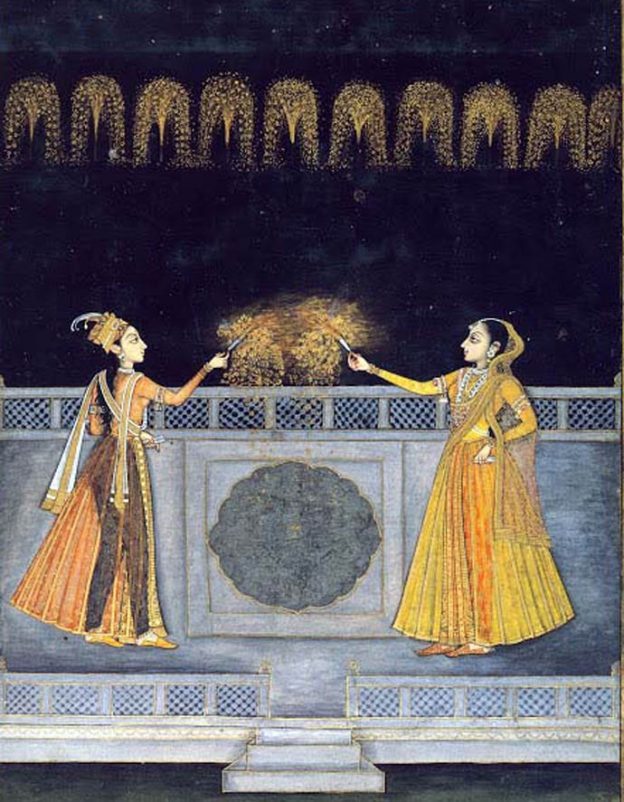
    Orders are given for the fort to be illuminated. Kheele’n (puffed rice), batashe (candy), candy and mitti ke khilone (sugar toys), sugar cane, lemon and mud houses are distributed from house to house by jasoliniyan (female guards) and female servants.

    At night, the mud houses made by the prince and princesses are filled with kheelei’n and batashe and diyas are lit in front of it. The raushan chowki, an ensemble of musical instruments, which included shehnai and drums is played in procession and the naubat (drum) starts playing in the Royal Naubat Khana.

    In all four corners of the fort, a sugar cane is fixed and lemons are strung on it.

    In the morning, these are distributed among the maidservants.

    The rath baan (carriage driver) decorates the bulls with henna on their hooves, gilding on their horns, bells around their necks and gold and silver embroidered and tasseled cloth and parades them before the badshah and is rewarded.

    Dilli ka Aakhiri Deedar was written by Syed Wazir Hasan Dehlvi and published in 1934. Syed Dehlvi was the grandson of the famous novelist Deputy Nazir Ahmed and gives an account of the Delhi about which he heard from his elders or read in books. In his own words, as recounted by his grandson Syed Zameer Hasan Dehlvi, in the preface:

    These sweet tales of bygone days were sometimes found in books and sometimes heard from the lips of the older generation. My mind became a treasure house of such knowledge and I was able to pen them down.

    Now that people are willing to listen to these tales I want to hear these stories in their voice.

    So that all the pearls that are lying scattered all over in various books can be threaded into a necklace and made available for readers who are interested in the era which has gone by. So, I am collecting eyewitness accounts.

    None of us are immortal at least these stories can live.

    Just as the good days didn’t last one day the memory of these days will also be erased.

    He has shown Delhi’s Ganga Jamuni tehzeeb, its communal amity, colorful festivals and the cordial relations between the inhabitants of the fort and the general public.

    Dussehra and Diwali

    Dussehra is here and a neelkanth (Indian roller) is let off in front of the badshah. The darogha (superintendent) of the baazkhana (falcon house) brings a falcon and hawk to the darbar and the badshah puts it on his wrist.

    In the afternoon, the Hindu nobles offer nazar and after that the badshah comes and sits in the jharokha (balcony of the fort overlooking the Yamuna river) to watch the show put up on the sandy bank.

    The people of the walled city also gather to watch the show and disperse after it ends.

    The darogha of the royal stables comes with the special horses that have been decorated with gold and silver finery and colorful cloths under the jharokha. The badshah inspects them. Rewards are given to the ones with the best decoration.

    The Ramleela is celebrated for nine days and on the tenth there is a Bharat Milap in which every year two brothers – Hindu and Muslim – would embrace each other with love.

    Diwali has come and the sounds of drums, musical instruments and raushan chowki are echoing. Stalls with heaps of kheele, batashe, khand (loaf-sugar), mitti ke khilone and pieces sugarcane are set up.

    Eunuchs are roaming the streets singing Challa de de More Tain (Give me a ring O kind sir) and begging at the shops.

    Halwais have made all kinds of sweets and their shops are attractively decorated enticing the passersby.

    The light from the first diya to the last gives the impression that it’s daylight in the city.

    On the third diya (day), the badshah was weighed in gold and silver. One buffalo, a black blanket, mustard oil, satnaja and gold and silver were taken out as the badshah’s sadqa.

    The Quila was brightly lit and the Hindus sent trays of food for everyone. All friends set out to wish each other: They roam the city and enjoy the illumination.

    The rathban and ghosi (cattlemen) colored the hooves of their cattle (bulls, buffaloes and cows) with henna.

    They were painted in bright colors and their horns were either painted silver or covered with silver foil. In their necks and hooves bells were put. On their backs were beautifully decorated cloths.

    They were tinkling as they were taken out and made to dance to the sounds of drums. Everyone rewarded them.

    In Dilli ka Akhiri Deedar, there is also a description of what happened after the fall of the Mughal Empire.

    The book contains an eyewitness account by Aghai Begum, who was a Mughalani (probably as an attendant to a princess), who had spent her life describes how the festivals were celebrated in the Lal Quila. She speaks to the author of the book in the latter part of the 19th century when the British are in full control of Delhi and indeed India. When asked about celebration of festivals, she is nostalgic about the past and scathing about the present:

    Some fair and spectacles still remain but the hearts of the people are not the same. The rich look down on the poor, and I don’t from where communal feelings have entered people’s hearts and there’s a communal divide. The Hindus and Muslims don’t visit each other anymore and at the drop of a hat are ready to fight with and kill each other. Every other day there is a street brawl and if there is a fair or a festival then it is as if the wrath of God has descended on the populace. Everyone is out of control, ready to take offence at the slightest thing and in minutes, stones are thrown, sticks are used for beating each other and in seconds there are scores of bleeding heads. Now the machine guns are out and there is a curfew in the city and jailhouses are filled up. Some are even sentenced to kala paani, some are executed; children are orphaned, women are widowed and families bereft. Instead of festivities, the house is of full of mourning.

    (The article is based on the one originally written by Rana Safvi who is the author of ‘Where Stones Speak’ and other books. He can be reached at RANA SAFVI @iamrana)

  • Guest Comment : The Gujarat Battle – BJP has to defend its claims

    Guest Comment : The Gujarat Battle – BJP has to defend its claims

    On Monday, October 16, Prime Minister Narendra Modi was at his vitriolic best in Gandhinagar. It was a revealing performance. For a man who for more than three years has been the Prime Minister of India and is, ipso facto, credited with a pan-Indian thought process, Modi revealed himself to be an unreconstructed Gujarati sub-nationalist. As Chief Minister, from 2001 to 2014, he positioned himself as the vigilant guardian of Gujarat’s interests; this mobilisation of Gujarati sub-nationalism helped him defy his own party’s national leadership then and manufacture the “Congress-is-anti-Gujarat” narrative. But for the Prime Minister to now dip into that pool of lingering resentment is an affront to the office he holds and the obligation he has to work for the welfare of the entire nation.

    The amount of attention that Modi and other senior BJP leaders are paying to Rahul Gandhi, as mascot of what the Prime Minister called vanshvaad (as juxtaposed to the BJP’s vikasvaad), betrays a strange obsession and, perhaps, a bit of nervousness. The Congress campaign in Gujarat has, in fact, zeroed in on Modi’s model of development. If Gujarat has the reputation of a prosperous state, it is primarily because of all the industrialisation, cooperative movements and farming innovations that took place during Congress rule, much before the BJP could storm the Gandhinagar secretariat on the politics of communal mobilisation; indeed, “development” has always been part of Gujarat’s political culture. The Prime Minister is injecting a false dichotomy.

    Be that as it may, it is the tone that the Prime Minister has sought to set on Monday that should be a matter of concern. The BJP has now been in power for nearly two decades in Gujarat. Inevitably, its stewardship has produced its own share of grievances and aberrations; the so-called Gujarat model is more a hype than reality; political emotions can easily be manipulated in a Hindu-Muslim binary. It is natural for the BJP to have accumulated an “anti-incumbency” baggage and it is quite natural for the anti-BJP forces to create an alternative narrative. The Modi crowd may feel it is entitled to a walkover in Gujarat, but the Opposition cannot be faulted if it demurs.

    (Tribune, India)

  • Celebration of Diwali in America

    Celebration of Diwali in America

    By Inder Singh

    Diwali, the festival of lights, is the best known of Hindu festivals in the United States. The legends connected to the festival are different for different religions. According to Ramayana, one of the most important epics of the Hindu religion, Diwali commemorates the return of Lord Rama with his wife Sita and brother Lakshman, from his 14-year exile after killing the demon king Ravana. Thus, it symbolizes the victory of good over evil and is celebrated with great fervor by one and all. The celebration includes visiting temples, performing Lakshmi puja, exchanging greetings, sharing sweets with loved ones, attending cultural and talent shows, musical concerts and social parties, besides lighting candles, earthen lamps and firecrackers where permissible. The annual observance demonstrates the rich history and traditions of the Hindu faith and provides an occasion for the followers to remember their many blessings and celebrate their hope for a brighter future.  

    Diwali Celebration by Sikhs and Jains

    Shri Harmandir Sahib (Golden Temple), Amritsar is lit on Diwali. Sikhs celebrate Diwali to welcome the return of their Sixth Master, Shri Hargobind to Amritsar after securing freedom from Gwalior prison of 52 Princes of Hill States

    Sikhs celebrate Diwali as it marks the return of the sixth Guru, Hargobind Rai to Amritsar after he was freed from the fort of Gwalior by Emperor Jahangir in October 1619, where he was imprisoned along with 52 Hindu Kings who were incarcerated as political prisoners. When the emperor decided to release the Guru, the latter managed to get all the Hindu kings freed at the same time. Guru Hargobind became known as the “Bandi Chhor” (Deliverer from prison) and the event is celebrated as the Bandi Chhor Divas. The Guru arrived at Amritsar on the Diwali day and the Harmandir (Golden Temple) was lit with hundreds of lamps to celebrate his return. Every year, the Golden Temple is illuminated in a spectacular display and fireworks are displayed to commemorate the memory of Guru’s return. Sikh temples across America hold religious gatherings to remember the legacy of their Guru who fought for social justice and got freedom for people who belonged to a different faith.

    In Jainism, Diwali is the occasion to celebrate the attainment of Nirvana by Lord Mahavir

    In Jainism, the occasion celebrates the attainment of Nirvana by Lord Mahavir, the last of the Jain Tirthankaras, on this day at Pavapuri on Oct. 15, 527 BC, on Chaturdashi of Kartika.

    According to a Swetambara legend Mahavira took his seat on a diamond throne in the center of a magnificent hall on the seventh day of his stay. The seat was specially built for him on the borders of a lake. There were many devotees who came to hear him. According to their rank they arranged themselves into twelve grades. The devotees belonged to different sect, class and order. They ranged from king to beggar. On the dark night of the seventh day of his stay the hall was illumined by the supernatural glow of the Gods who came to listen to him. That day the Lord preached the whole night. He was aware by his sukladhyayana that his end was drawing near. He thus sat with his hands clasped knees crossed. At dawn he attained nirvana on the day of Kartika Krishna. Mahavira is said to have delivered the fifty-five lectures explaining the results of Karma and also recited the thirty-six unasked questions at the night of his nirvana.

    In cities with significant Indian American population, Diwali Melas have become very popular and attract large gatherings of young and old. The organizers arrange for many fun-filled activities such as magic and puppet shows, henna painting on palms, stalls of Indian sweets and other eatables, handicrafts and other trinkets besides showcasing the best of Indian culture. If legally allowed, the effigies of Ravana, etc. are burnt to give historical perspective to the event and customary fireworks are displayed to add splendor to the festivities and increase public participation.

    Diwali Celebration in New York and Dallas

    Music and Masti at AIA South Street Seaport Diwali in New York on October 1, 2017

    New York chapter of Association of Indians in America (AIA) organizes probably the largest Diwali Mela outside India with an estimated attendance of over 100,000 people during the daylong event at the South Street Sea Port, Manhattan.  The association also arranges extravagant display of live fireworks illuminating the east river and New York city skyline.

    Diwali at Times Square, October 7, 2017 drew huge crowds and earned great applause

    Times Square, New York is a popular tourist destination.  In 2013, Diwali was celebrated there for the first time. Indian Americans from the tri-state area flocked in thousands to see the day-long extravaganza, showcasing Indian culture, cuisine, music and fashion.  Last year (2016), for about 8 hours, live performances, fashion shows, dance & music competitions, photography exhibition and other creative programs like rangoli painting provided huge attraction. At night, the skyline dazzled with fireworks. Nita Bhasin, president of ASB Communications, who has been organizing the event, also provided entertainment with live Indian dances and music.  

    Dallas Indian Cultural Society, in 2007, organized Diwali Mela celebration of epic proportion at Dallas Cowboys Stadium in Texas.  The founder, Satish Gupta, prefers to call the celebration, “spirit of India” which attracts 40,000 to 50,000 people who get glimpses of the rich Indian culture at play, including the traditional staging of Ram Lila and burning of Ravana’s effigy. It was a mammoth event, unique with no parallel to it in the United States. The society has been organizing the Mela annually sometimes excelling their prior year performance by attracting more people and adding more attractions.

    Dallas Fort Worth Diwali draws around 50, 000 visitors and is the largest Diwali celebration, outside India

    Diwali Celebration in American Universities

    There are about 100,000 Indian students from India in various universities in America. A large number of Indian American students are also enrolled in American universities. Diwali celebration in Duke, Princeton, Howard, Rutgers, Carnegie Mellon and several other university campuses brings Indian student groups together and helps them stay connected with their culture and tradition.

    Diwali at the White House

    Michelle and Barack Obama celebrating Diwali at the White House

    In 2003, the President George W. Bush agreed to the long-standing demand of the Indian community and celebrated Diwali at the White House in the presence of several invited Indian community leaders. Although the president never participated in the Diwali festivities, yet it became an annual tradition at the White House. The celebration of Diwali at the White House also shows the growing clout of the Indian American community in the United States. In 2009, Barack Obama became the first US president to light a “diya” oil lamp, in the presence of a Hindu priest, in a White House ceremony for the festival of lights. In communicating his warm greetings at the occasion, he remarked that Diwali marked the return of the Lord Ram from exile when small lamps lit his way home.  In 2010, the Vice President led the commemoration. In 2011, President Obama again lit the White House Diya while a Hindu priest chanted Slokas, or prayers. In 2016, lighting diya in the Oval Office of the White House, President Obama said, “On behalf of the entire Obama family, I wish you and your loved ones peace and happiness on this Diwali.”

    Diwali Celebration by US Congress

    US Congresswoman Tulsi Gabbard lights the lamp at the first Diwali on Capitol Hill.
    Photo courtesy Rediff.com

    The US Senate and the House of Representatives in October 2007 unanimously passed Resolutions 299 and 747 respectively, recognizing the “religious and historical significance of the festival of Diwali.” The passage of the resolutions may be symbolic, but it is a testament to the increased awareness of the Indian community in America. The U.S. Congress celebrated Diwali, for the first time, on October 29, 2013, amidst chanting of Vedic mantras by a Hindu priest. Over two dozen influential lawmakers along with eminent Indian-Americans gathered at the Capitol Hill to lit the traditional “diyas”. The event was organized by the two Co-Chairs of the Congressional Caucus on India and Indian Americans, Congressmen Joe Crowley and Peter Roskam in recognition of increasing presence of the Indian-American community.

    US Postal Service Issues Diwali Postage Stamp

    Diwali Stamp is unveiled at the UN. Seen from left to right: Ravi Batra, Ambassador Syed Akbaruddin, Diwali Stamp Project Chair Ranju Batra, Acting President of UN General Assembly Mwaba Patricia Kasese-Bota, and Ambassador Andrei Dapkiunas of Belarus
    Photo/ Mohammed Jaffer-SnapsIndia

    On October 5, 2016, the US Postal Service fulfilled the long standing demand of Indian Americans, and released Diwali Postage stamp commemorating the festival of Diwali. The dedication ceremony took place at the Consulate General of India, New York, in the presence of Consul General Ambassador Riva Ganguly Das, Representative Carolyn Maloney, Diwali Stamp Project Chair Ranju Batra, US Postal Service Vice President for Mail Entry and Payment Technology Pritha Mehra, India’s former Permanent Representative to the United Nations Ambassador Hardeep Singh Puri, now a minister in Modi cabinet and many members of the local Indian American community.

    (The author regularly writes on Indian Diaspora. He is the author of The Gadar Heroics – life sketches of over 50 Gadar heroes. He is Executive Trustee of Global Organization of People of Indian Origin (GOPIO) Foundation. He was chairman of GOPIO from 2009-2016, president from 2004-2009, president of National Federation of Indian American Associations (NFIA) from 1988-92 and chairman from 1992-96. He was founding president of Federation of Indian Associations in Southern California. He can be reached at indersingh-usa@hotmail.com)


  • Perspective : Why is Modi silent on the Jay Shah case?

    Perspective : Why is Modi silent on the Jay Shah case?

    By Karan Thapar

    If the PM raised a finger at Vadra’s wealth having increased due to the suspicion that his mother-in-law is Congress President, shouldn’t he question if Jay Shah’s sudden rise in fortune is connected to his father’s position as BJP President?, says the author.

    One of the themes in the Prime Minister’s campaign speeches and rallies during his early years in office that struck an immediate chord with the country was his comments on how the relatives of powerful politicians grow rich after their parents reach high office. This was, of course, something the Indian people knew to be a fact, but Mr Modi was the first senior politician to speak about it, freely, frankly and frequently.

    As far back as August 2013, in Bhuj, Mr Modi said: “Bhai-Bhateejavad purane dino ke dharavahikon mien bharastachar ke mool mein hua karta tha. Samay ke saath isme badlav aaya hai. Bharastachar mein ek naya dharavahik mama-bhanja aaya aur ab yeh saas, bahu aur damad ki aur badh gaya hai.”

    Twenty five months later, speaking in San Jose in September 2015, he was more explicit: “Hamare desh mein rajnetaon par kuch hi samay mein aarop lag jate hain. Usne 50 crore banaya, usne 100 crore banaya. Bete ne 250 crore banaya. Beti ne 500 crore banaya. Damad ne 1000 crore banaya. Chachere bhai ne contract le liya…ye sunne ko milta hai ki nahi milta hai? Mere deshvasiyon, main aaj aapke beech mein khada hoon, hai koi aarop mujh pe?”

    At the time the case that seemed to best illustrate Mr Modi’s rhetoric was that of Robert Vadra. The Hindu and the Business Standard, in a series of reports, alleged his companies’ fortunes had jumped from Rs 50 lakh to over Rs 300 crore in just six years. The issue most referred to was the purchase of 3.5 acres by Vadra’s Skylight Hospitality in Manesar in February in 2007. Reports said that 24 hours after Vadra bought the land, it was mutated in his name. Six weeks later, the Haryana government gave permission for commercial use, thus dramatically increasing its value. Sixty-five days later, the land Vadra bought for Rs 7.5 crore was sold to DLF for Rs 50 crore, a profit of 770 per cent.

    Yet at the time Skylight Hospitality bought the land, its total assets were Rs 1 lakh and the payment for the land was shown as a book overdraft. The newspapers suspected that the money was advanced by DLF because they knew Vadra would be able to get the land use changed and then they could buy it from him, with both parties benefiting. In other words, it was a sweetheart deal. This impression was apparently corroborated by the fact that when Ashok Khemka, the Inspector-General of Registration, started an inquiry into Vadra’s land dealings, he was immediately transferred, even though it was 11 at night.

    Many people believe that recent reports by NDTV and TheWire.in about Amit Shah’s son Jay Shah’s companies bear an uncanny resemblance to the Vadra saga. The points made by the two media organizations are claimed to be factually correct and haven’t been disputed though, like the Vadra case, the inferences or conclusions are said to be defamatory.

    TheWire.in reports that the turnover of one of Jay Shah’s companies “increased 16,000 times over in the year following the election of Narendra Modi as Prime Minister”. NDTV adds that in the same year loans to 2 of Jay Shah’s companies “rose to 53.4 crore, a jump of 4,000 per cent” compared to a total of 1.3 crore up to 2013-14. Going into further detail, the two media houses say one of the companies, Temple Enterprises, received an unsecured loan of 15.76 crore even though it had a 10 year “unimpressive track record”. A second company, Kusum Finserve, incorporated in 2012 and with meagre profits of 1.73 crore after a first year loss, received a line of credit of 25 crore. NDTV even questions if it was entitled to this credit. TheWire adds Kusum Finserve, despite no experience in the energy or infrastructure sectors, received a 10.35 crore loan from a public sector enterprise IREDA to set up “a 2.1 MW wind energy plant”.

    All of this leads NDTV to comment: “Whether he (Jay Shah) was deserving, or benefited from a famous surname, can only be established by an inquiry”. Separately, TheWire has reported that Tushar Mehta, Additional Solicitor-General, secured permission to represent Jay Shah in court, even though government law officers can only represent private parties in exceptional circumstances. The website also claims this was granted on the 6th though its story on Shah, which was the first to appear, was only published on the 8th.

    Several questions are now likely to come to the mind of the voter. If the Shah story is reminiscent of the Vadra episode, don’t the PM’s comments in 2013 and 2015 apply as much to the former as they do to the latter? If one was an example of Bhai-Bhateejavad isn’t that also true of the other? If Vadra’s good fortune creates suspicion because his mother-in-law is Congress President, are we not entitled to ask whether Shah’s luck is connected to his father’s position as BJP President? In Vadra’s case, nothing criminal has so far been found — and that’s also true of Jay Shah — but that didn’t stop the Opposition and media raising doubts, so now if the Opposition and media are doing the same to Shah, is it unprecedentedly awful and unwarranted? Indeed, isn’t it the duty of the two to raise questions in the interest of democracy even if, occasionally or more often, they turn out to be misplaced?

    Both as a candidate and in office, the PM had a lot to say about Robert Vadra. It was, of course, mainly based on suspicion, but the people applauded him for it. Today, he’s silent. So, don’t we have the right to ask why a man who loves to speak suddenly has nothing to say?

    (The author is a senior journalist and TV commentator)

  • As I See It – Closing up the Gulf: India can be the new market the Arabs are looking for

    As I See It – Closing up the Gulf: India can be the new market the Arabs are looking for

    By KC Singh

    The Saudis and Emiratis are finally seriously looking to invest in India. The Abu Dhabi Investment Authority is the third-biggest sovereign fund in the world, behind the trillion-dollar Norwegian and $900-billion Chinese funds. It has been wooed for long, but India so far presented investment challenges for sovereign funds, says the author.

    Analyzing the Indian foreign policy from the nation’s Capital has the virtue of local input, but in the end, it has an echo-chamber effect. A three-day visit to the UAE, at the invitation of the Dubai Department of Civil Aviation to deliver a keynote speech at the AVSEC — a biannual aviation security gathering of global actors — gave one a chance to reassess the Gulf, the West Asian region and India’s place in it.

    Firstly, the Sunni-Shia divide is now layered with a Sunni-Sunni split, with Turkey aligning with Qatar against Saudi Arabia and the UAE. While Qatari economy is bleeding, the slowing down of the UAE economy is palpable. Property prices have fallen in Dubai after recovery from the 2008 downturn. In Abu Dhabi, despite deeper oil revenue-laden pockets, the excess supply of property is compelling the government to quietly bar display the of ‘to-let’ signs. Yemeni intervention alongside Saudi Arabia is taking its toll on finances and people. Arabic newspaper Al Khaleej, on October 11, had extensive visual coverage of pictures of children of ‘martyrs’ being consoled by the Abu Dhabi Crown Prince, Sheikh Mohammad bin Zayed. UAE military planes apparently have been ferrying the injured Yemeni civilians for treatment to Indian hospitals. An Indian Abu Dhabi-based tycoon has combined sycophancy with profit by directing them to his son-in-law’s recently acquired chain of Delhi hospitals.

    Secondly, the newly elevated Saudi Crown Prince, Mohammed bin Salman, is tightly aligned with and advised by his namesake, the Crown Prince of Abu Dhabi. This is a far cry from the old narrative of Sheikh Zayed, the creator of modern UAE, having resisted the Saudi annexation of Al Ain. The bonhomie between the two heirs to thrones is a product of shared concerns about Arab Spring uprooting their autocratic regimes. It was enhanced by resentment over President Obama unshackling Iran, by a nuclear deal with it, to facilitate the fight against the IS in Syria-Iraq. Their collective lobbying with the Trump team, even before Trump assumed office, helped draw him to the Riyadh summit, where he reversed Obama’s Iran doctrine, treating it as a selective partner rather than a permanent antagonist. The consequences of this flip-flop are still playing out negatively.

    Thirdly, the UAE has taken badly Pakistani reluctance to send troops to Yemen as it thought Nawaz Sharif owed it a debt for having intervened with President Musharraf in 1999, in combination with Saudi Arabia, to organize his exile rather than incarceration. The Indian Government and PM Modi are using this disenchantment to cement relations with the Saudis and Emiratis. Incidentally, Musharraf divides his time between a fancy house in the elite Dubai neighborhood of Emirates Hills, and London. There are whispers that Modi is headed to the UAE again early next year, to further isolate Pakistan from its erstwhile allies and please Malyalis in Kerala where the BJP is desperately seeking a political toehold.

    The Saudis and Emiratis are finally seriously looking to invest in India. The Abu Dhabi Investment Authority is the third-biggest sovereign fund in the world, behind the trillion-dollar Norwegian and $900-billion Chinese funds. It has been wooed for long, but India so far presented investment challenges for sovereign funds. When the UAE did make a significant investment via its telecom giant Etisalat in an Indian partner, the 2G spectrum scam hit the deal. Special purpose vehicles were attempted to channelize incoming funds, but to little avail. Now, it seems an arrangement to the satisfaction of both sides is in the works. Even defense cooperation is possible as India has allowed the private sector to tap technologies, including from the West, narrowing thus the gap between Gulf countries’ desire for cutting-edge defense equipment and India marketing largely antiquated stuff.

    Saudi Aramco CEO indicated the new approach, saying that they were looking at ‘mega investments’ as India was now a ‘market of investment priority and not a choice anymore’. India, on its part, is diversifying its procurement base with the arrival of the first cargo of US crude. The Gulf oil industry, seeing the US now as a competitor rather than a hungry consumer, is turning to India and China. Saudi Aramco has just opened an India office. Saudi King Salman has visited Russia. The Saudis are trying to have Russia agree to an extension of an earlier deal on production cuts to help oil price recovery. But the split with Qatar and Iran remains at the heart of any OPEC strategy as, indeed, US shale gas and oil production.

    Sheikh Zayed once told a visiting Indian dignitary the story of an Arab shepherd losing a sheep every week to wolves. He was advised to keep dogs. He did, but then discovered he had to slaughter a sheep any way to feed them. The wolf in this case is the US, merrily selling new weapons systems to both sides, while merely rattling its sabre at Iran. India has to realize that excessive bonhomie with the UAE and Saudi Arabia will complicate its ability to engage Iran and Qatar. Euphoria over the allotment of temple land during Modi’s last trip to the UAE is mere theatre as Sheikh Zayed had quietly earmarked a huge site for a cremation ground in 2002, which would have had a temple. Sheikh Mohammad is merely continuing his father’s tolerant and inclusive policies and not making a special gesture for PM Modi, or India.

    The Saudi-Emirati alliance will get tested first in how the Yemen war turns out. Using Trump to bait Iran will only exacerbate matters. The succession in Saudi Arabia may yet be contested, despite UAE support for Prince Mohammed bin Salman. The Dubai ruler, Sheikh Mohammad bin Rashid, is quietly watching the impact on his city’s connectivity to the entire region curtailed. He has the maturity and guile of the founders of the UAE — his own father and Sheikh Zayed. The younger power wielders i.e. the two Mohammads in Abu Dhabi and Riyadh have overplayed their hand and the region awaits resolution. The wolf, meanwhile, continues to howl, unconcerned about the uncertainty he causes. PM Modi must study the maze before recommencing his ‘huggy-feely’ journey through it.

    (The author is a former Secretary, Ministry of External Affairs)

  • Comment : Let us Share the Festive Spirit

    Comment : Let us Share the Festive Spirit

    By Prof I.S.Saluja

    India is a country of festivals and festivities. Our forefathers made sure that we have occasions to come together and celebrate. I do not think any other country in the world can match India’s number and variety of occasions to celebrate. Go to any part of India and you find a fair sprinkling of these occasions across the whole year.

    Deepavali is a festival that is celebrated in some form or the other in almost every part of the country. The nomenclature may differ but the festive spirit remains the same. The food made may be different but the excitement of cooking and sharing it remains the same.

    The two communities-the Hindus and the Sikhs both celebrate Deepavali with much gusto. However, they celebrate this occasion for different reasons. While the Hindus celebrate the occasion of Rama’s returning to Ayodhya, after a long period of exile of 14 years during which he experienced terrible struggle and ultimately vanquished evil, the Sikhs celebrate the return to Amritsar of their sixth Master, Guru Hargobind. It is said that Guru Hargobind insisted on Moghul ruler to free the 52 princes of small hill states in Himachal or else he would also stay put with them in the prison at Gwalior. The Moghul emperor who had great regard for the Guru agreed to free them. Thus, Guru Hargobind, too, vanquished evil and came home victorious. See the parallel moral of the two stories.

    Here in the US, we see Diwali being celebrated with great enthusiasm in almost every big city. Dallas can boast of the largest Diwali mela where normally 50,000 visitors gather to witness the festivities which include episodes from Ramayana and an entertainment program with the participation of famous singers from India, besides the fireworks.

    New York, similarly, has a number of organizations which celebrate Diwali in a big way. We recently witnessed at least two such big events. Both drew large crowds and won applause of visitors. One was the AIA organized Diwali at South Street Seaport. And, the other was Diwali at Times Square organized by Neeta Bhasin of ASB Communications.

    The strength of the Indian American community made it possible for a Ranju Batra to have a Diwali Stamp issued by the US postal department. So, let us celebrate our unity and strength.

    I would like to congratulate all our readers on this festive occasion and wish the festive spirit is shared. It is by sharing joys that we multiply them. The two words-sharing and caring are magic mantras for happiness, steps ahead of joyousness. These festive occasions provide us an opportunity to show how caring we are. By sharing, we show our care. And in caring for others lies all true happiness. Let us celebrate Deepavali together in a shared manner and enjoy the festive mood that the occasion brings.

    Let festive spirit prevail. Happy Diwali.  

  • AS I SEE IT :  Put three heads together: India, Bangladesh and Myanmar must find a way out of the Rohingya crisis

    AS I SEE IT : Put three heads together: India, Bangladesh and Myanmar must find a way out of the Rohingya crisis

    By G Parthasarathy

    In a larger perspective, it would only be natural if diplomatic efforts to stabilize our Northeastern borders with Myanmar and Bangladesh were undertaken with cooperation with powers which share our interests. Most importantly, India, Myanmar and Bangladesh share a common interest in combating radical Islamic groups, whose primary aim is to destabilize all three neighbors, says the author.

    As Myanmar, Bangladesh and India face the Rohingya challenge. ‘Rohingya’ has become a household word in India, more so after Minister of State for Home Affairs Kiren Rijiju proclaimed on September 5 that the Rohingya were “illegal” immigrants in India “who stand to be deported”. The outrage that accompanied the plight of the Rohingya was not only in sections of people in India, but also across the Western and Islamic world.

    India has stood its ground, maintaining that recent events were triggered by cross-border attacks across the Bangladesh-Myanmar border by radical Islamic groups. But a number of questions remain on how we are going to deal with an estimated 45,000 Rohingya refugees from Myanmar who have entered India since 2012. Moreover, the massacre of Hindu Rohingya by Islamic Rohingya terrorists has further outraged and polarized Indian public opinion.

    The Rohingya maintain they are an indigenous community of western Myanmar, bordering Bangladesh. They largely immigrated from what is now Bangladesh, during British rule. They are predominantly Muslim, with an estimated population of 1.2-1.3 million in the north of Myanmar’s Rakhine province, bordering Bangladesh. The southern part of Rakhine, bordering Mizoram, is predominantly Buddhist, with a Hindu minority. Ever since independence, and more so after U Ne Win dictatorship, the Rohingya are not considered as Myanmar citizens. They have been subject to discrimination on issues of health, education and employment. The animosity of the army, which dominates national life in Myanmar, toward the Rohingya has increased ever since sections of Rohingya formed armed groups to wage an ill-advised armed struggle after indoctrination in Pakistan. The Myanmar army has continuously battled 22 ethnic insurgencies in the country on its borders with China and Thailand. But seldom, if ever, has the army undertaken the sort of scorched earth policy it has adopted against the Rohingya. And never has the Buddhist clergy reacted so strongly, as in what has transpired in Rakhine, after recent coordinated cross-border attacks on police posts and the army by the Rohingya Solidarity Army. Myanmar has legitimate concerns about the radicalization of its Muslim population in Rakhine.

    The army action has resulted in over 4 lakh Rohingya — men, women and children — fleeing to Bangladesh. India now houses an estimated 45,000 Rohingya refugees. While India initially focused largely on Rohingya terrorist attacks in Myanmar, it has now realized the extent of burdens, damage and difficulties imposed on the friendly government of Sheikh Hasina by the huge inflow of refugees. While New Delhi has commenced airlifting relief supplies to Bangladesh, India should join Bangladesh and Myanmar bilaterally, and even through tripartite meetings, to seek a coordinated effort to obtain international financial and diplomatic support, which would facilitate an early and time-bound process of repatriation of the refugees, with their safety and security guaranteed, on their return to their homes.

    India-Myanmar relations have been looking upwards in recent years, even though much improvement is needed in the implementation of Indian-aided projects there, if we are to make any impression of our relevance, in the face of some aggressive Chinese involvement. Myanmar has a crucial role in supplementing our efforts to deal with insurgencies backed by Pakistan and China in our landlocked Northeastern states, notably Manipur and Nagaland. India is currently building the Kaladan corridor, linking Northeastern states across the Rakhine state with the Bay of Bengal, through the deep-water Sittwe Port in Myanmar. New Delhi has just completed the construction of the port. India has also pledged resources for the development of Rakhine, in an effort that will be helpful in addressing Rohingya grievances. These are crucial projects strategically as they are located alongside a massive Chinese transportation/energy corridor, linking China’s Yunnan province with Myanmar’s Bay of Bengal Port of Kyaukpyu.

    As global television networks and UN relief organizations focused on the miseries of the Rohingya in Bangladesh, the issue became center-stage. The UN Secretary-General bluntly labelled Myanmar government actions as “ethnic cleansing”. India has made it clear that Islamic terror groups triggered the violence. China, while expressing support for Myanmar’s moves, was more nuanced in the UN Security Council. While backing Myanmar’s moves to protect its security in Rakhine, China also backed a Security Council resolution expressing concern at reports of Myanmar resorting to excessive violence and calling on Myanmar to take corrective action. Russia, while welcoming some steps taken by Myanmar, also took note of reports of violence. Not surprisingly, it was Myanmar’s former colonial rulers, the British, who took the lead in condemning Suu Kyi. Whitehall was quite obviously taken aback by Suu Kyi placing her country’s interests first, and not behaving, as it expected, like a pet poodle. American policy as enunciated by Secretary of State Tillerson was mercifully more balanced and rational.

    In these circumstances, New Delhi should develop a more comprehensive approach, which would enable the safe return of Rohingya, from both Bangladesh and India. External Affairs Minister Sushma Swaraj assured Bangladesh PM Sheikh Hasina of India’s support, even as Myanmar military actions have led to a continuing influx of refugees. At the same time, it is essential that India, Myanmar and Bangladesh join hands to see that radical Islamic groups are prevented from infiltrating through Bangladesh to Rakhine. It would also be useful if India joined hands with donors like Japan, Germany and the US to ensure coordinated flow of economic assistance to ensure that the Rohingya receive better education, health and other facilities on their return. In a larger perspective, it would only be natural if diplomatic efforts to stabilize our Northeastern borders with Myanmar and Bangladesh were undertaken with cooperation with powers which share our interests. Most importantly, India, Myanmar and Bangladesh share a common interest in combating radical Islamic groups, whose primary aim is to destabilize all three neighbors.

    One of the success stories of Indian diplomacy has been that regionally we have been able to isolate an obdurate and obstructive Pakistan by imaginative regional initiatives across our eastern land and maritime frontiers through organizations like BIMSTEC. Addressing the Rohingya crisis imaginatively and successfully will give a boost to our “Act East” policy. Even as SAARC languishes, BIMSTEC should remain the focus of India’s efforts for regional economic integration.

    (The author is a career diplomat)

  • Perspective : Is Trump a Game-Changer?

    Perspective : Is Trump a Game-Changer?

    By Virendra Pandit

    Mr Trump’s attempts to clean up the Augean Stables of Washington DC, as in his tax reforms, and the Pentagon have just begun. His clear warning to Pakistan, in particular, and the Islamic world, in general, may fall in the same category. ……………. The world is still threatened by ISIS; but we should also know that the Statue of Liberty, built in 1886, was actually inspired by the Queen of Heaven, the pre-Islamic Egyptian-Syrian goddess, also named Isis!”, says the author.

    “If Jesus Christ were to come today, people would not even crucify him. They would ask him to dinner, and hear what he has to say, and make fun of it,” said Thomas Carlyle in the 19th century. So, making fun of any leader and his efforts has turned into an industry; it provides jobs to idlers, ‘visions’ to ‘visionaries’ and messiahnic dreams to the media!

    President Donald Trump is no exception. We must not forget that he has been democratically elected by the Americans and could lose his current job in 2021 if they found him wanting. Simple. But to create an-obstacle-for-the-day and deny him the opportunity to focus on work or fire those he sees as non-performers is not what his critics’ mission should be. Being a journalist myself for 35 years—and watching my tribespersons doing much the same everyday in India—I can only say: our job is to educate the people and let them decide what to do and when. We are part of the society, not above it; it is not the media’s job to don the role of the accuser-prosecutor-defender-judge and even the judgment—all rolled into one.

    The problem is that the media, in most democratic nations, is rather comfortable with glib-talking ‘liberal’ leaders who quench their daily thirst for headlines in fluent, flowery language. Reporters always look for proof-readers who can correct their grammatical mistakes! In the US, for instance, the Clintons and Barak Obama were such sweet-talking, headline-making and politically-correct lawyers-turned-leaders. Once the media won over by such leaders, their political misconduct would often be glossed over: for instance, few noticed the contradiction in Obama’s war efforts and his getting the Nobel Peace Prize! The media is not the Masters of the Democratic Universe. If we lose our most valued asset, objectivity, and allow our personal likes and dislikes and brainwaves to guide us, we turn partisans. But this is exactly what is happening in many democracies where journalists have turned into cynics and activists. No wonder, many leaders now shun the conventional media they suspect as ‘anti-social’ and connect directly with their supporters via social media.

    From the very beginning, Mr Trump has been projected and pilloried as a coarse, unconventional, media-unfriendly leader. Ironically, these are exactly the qualities of a game-changer! A game-changer is one carrying no baggage from the past and is rather impervious to criticism; s/he not only takes her/his supporters along, but also creates and leads the circumstances that force the reluctant opponents to follow or disappear. From Moses to Gandhi to Mao, we have had such game-changing leaders in many nations. Despite advice to the contrary, Gandhi once agreed to be interviewed by a known critic British journalist; after publication, when the interviewee sought his reaction, the Mahatma simply said the interview appeared to be a sanitary inspector’s report! ‘If you look for dirt, you end up digging it’. We must remember that even the media has feet of clay and skeletons to hide as do other pillars of democracy, which is imperfect but the only option we have so far.

    So, let us not waste any more space on Trump’s unending media trial and, probably, wait for the same media to turn into embedded one as it did during the Gulf War! Let us focus on the larger issues, wider horizons, macro-politics and restructuring of the world order.

    Is Trump, then, a game-changer America was waiting for long? He may turn out to be the best thing to have happened to the USA after Ronald Reagan. During the Reagan Presidency (1981-89), the world saw the then dysfunctional Soviet Union turn into a fossilized basket case—the stagnant behemoth called the USSR finally crumbled in 1991—and the subsequent emergence of some rudimentary democratic nations in Central Asia. In other words, Reagan’s strong-arm policies, that came as catalysts and stimuli, actually forced a reluctant Moscow to conceive democracies! An end to the bipolar world power game made the world safer for democracy and dismantled, to some extent, war machines.

    Mr Trump’s attempts to clean up the Augean Stables of Washington DC, as in his tax reforms, and the Pentagon have just begun. His clear warning to Pakistan, in particular, and the Islamic world, in general, may fall in the same category: the Islamic world currently has some 1,500 militant groups, all anti-democratic, and their dismantling could pave way for democracies across the Muslim world, beginning with terror nursery of Islamabad. While the two Bush Presidencies ‘softened’ the Middle East for democracy—the Arab Spring of 2011 was its trial balloon—the Trump era could well see the democratic aspirations of the Muslim world evolve into a Renaissance. Already, the Kurds are crying for democracy and independence denied to them since the seventh century BC. If Mr Trump supports them, Kurdistan could emerge as a democratic island in the Middle East and inspire other nations nearby. The world is still threatened by ISIS; but we should also know that the Statue of Liberty, built in 1886, was actually inspired by the Queen of Heaven, the pre-Islamic Egyptian-Syrian goddess, also named Isis!

    The second game Mr Trump could change is in respect of the United Nations. The UN has gradually fossilized over the last seven decades and has virtually turned into the political version of World Wrestling Federation (WWF). Lacking in fresh ideas and innovations, the UN needs to be overhauled and revivified. Mr Trump could force the UN to adopt a ‘doctrine of coercive course correction’, envisaging forcible delivery of democracy in an unwilling nation that tries to push the baby back into the womb. And these unwilling nations include ‘rogue’ ones, too, irrespective of their religious, ideological or other affiliations. In other words, Mr Trump should promote democracy as the New Religion across the world.

    The third game the 45th US President could change in the 21st century is in respect of creating level-playing fields for emerging economies like the BRICS nations by democratic dissemination of technology, itself a great game-changer, leveler and enabler. This could free the nations of their irrelevant past and make them ready for the irreverent future.

    We are now well into not only a post-ideology era but also entering a post-Christian, post-Islam and post-Hinduism world. The media has, for long, been parroting half-truths; condemning Mr Trump’s universe as a post-truth world won’t cut any ice. The media should not try to be an emperor, or it could lose its clothes.

    Mr Trump could actually turn out as a trump card for the New World. This could be his lasting legacy to a better world.

    (The author is a senior journalist)


  • Time to Review Gun Policy

    Time to Review Gun Policy

    Prof I.S.Saluja

    We are in to the sixth day since Sunday’s shooting at a country music festival in Las Vegas, and still at a loss to know why Paddock took to massacre of people who had come to celebrate the harvest festival and life’s goodness. Whatever, the motive of the shooter, one cannot escape the stark reality that it was a horrific human tragedy and, probably the worst shooting in the history of modern America which snuffed out 59 lives, injured more than 520, some quite seriously and shattered a whole lot of people. The Las Vegas shooting has shattered the nerves of Americans everywhere, not just who were present on the fateful day at the scene; not only the people in Las Vegas but the entire populace of America. The gory incident surpasses all dozens of the worst shootings and killings in the last few decades.

    The question is how recurrence of such shootings can be stopped. Mass deaths caused by guns have long been a part of American history. But describing those events and recent ones accurately is more complicated than simply drawing a chronological line between them. There have been times when the shootings and killings were related to the economic status -the haves and the have nots. Racially motivated shootings also have been a part of history of violence in America.

    But the present shooting does not qualify for either description. It is a mass shooting of mostly whites by a white. Indubitably, there are no racial overtones to this shooting. And, it will not be proper to dismiss the incident as the vile, vicious, heinous act of “pure evil” and forget about it, as we have forgotten dozens of such tragedies in yesteryears.

    A little soul searching is necessary. Americans have a love of guns, in particular, a particular class. As long as these are used for hunting and as status symbols, there is hardly anything wrong. But when these guns fall in to hands of hot headed and wicked people we can expect gory shootings like the one we witnessed last Sunday in Las Vegas.

    It is time the administration seriously revised gun policy and prevented deadly weapons from being acquired by anybody. Some kind of a check will surely help in preventing the recurrence of loss of life at the hands of people in possession of deadly guns. Let lawmakers value human lives more than their brand of politics.

    God Bless America!  

  • As I See It –  Why we need bullet trains

    As I See It – Why we need bullet trains

    By R. Srinivasan

    Mega projects, like mega mountains, shape the environment around them.

    You need vision to think up mega projects, and indomitable will to drive them through. Dubai’s sheikhs have it. They are pumping in north of $82 billion to build the Al Maktoum International Airport, which, when completed next year, will be the world’s largest by a comfortable margin. Could one have imagined that this tiny desert emirate would become a global air travel hub? No. But will it help bring in technologies and services, create tens of thousands of jobs, and probably make Dubai a serious player in the airport-building business (they have already achieved this in seaports)? Yes, says the author.

    So far, the proposed Ahmedabad-Mumbai bullet train project is just a piece of stone that has been laid by Prime Ministers Narendra Modi and Shinzo Abe, but it has already been written off as a white elephant by most analysts and commentators. They are probably right. The project, of course, is alarmingly expensive. And a 0.1% interest on the loan from Japan, despite what the Prime Minister says, is not “practically free of cost”; in fact, it may well be above real interest rates in Japan if you factor in rupee depreciation. Both the fares and the number of passengers have to be unrealistically high if the project is to even come close to breaking even. In fact, with 12 stations on the route, to reach out and touch as many potential voters as possible, it might not even be able to maintain bullet train-levels of average speeds, given the number of starts and stops.

    A leap into the unknown

    But I am all for bullet trains. Not because I have an economic model which makes the high-speed train project suddenly viable — frankly, it is difficult to counter the logic of the above-mentioned experts — but because there is a dimension to an ambitiously audacious project like this which is being totally missed in the heat and dust kicked up by the whole bullet train debate. It is the transformative impact that such mega projects can have on the entire ecosystem.

    Every mega project that we have seen — from China’s Great Wall to the Angkor Wat, from the Taj Mahal to the U.S. Interstate Highway System — has represented a leap into the unknown when it first started. Almost every case has faced the same criticism that the bullet train project is facing now — that it was too unrealistic, too expensive, too fanciful, or just plain megalomaniacal.

    But these projects also represent the crowning glories of human achievement. A Taj Mahal is not just one man’s dream; the secret of its enduring appeal is that it is a representation in physical reality of man’s capacity to dream. They also created technologies, processes, and execution capabilities which not only had not existed till then, but had not even been thought of. And in the process, they ended up shaping the world around them forever.

    Some of the largest mega projects under way around the world are epitomes of this ability of humans to surpass the possible. Take the International Space Station. It has so far cost nearly $200 billion, but is also our world’s first and only permanent outpost outside it — in space, the jumping-off point for mankind’s eventual spread to the planets and stars beyond. It is also a magnificent example of international collaboration, and a technology generator of mammoth proportions, sparking innovations which are now part of everyday technology.

    Vision and will

    You need vision to think up mega projects, and indomitable will to drive them through. Dubai’s sheikhs have it. They are pumping in north of $82 billion to build the Al Maktoum International Airport, which, when completed next year, will be the world’s largest by a comfortable margin. Could one have imagined that this tiny desert emirate would become a global air travel hub? No. But will it help bring in technologies and services, create tens of thousands of jobs, and probably make Dubai a serious player in the airport-building business (they have already achieved this in seaports)? Yes.

    China’s party leaders have this ability and will as well. The South-North Water Transfer Project is the world’s largest hydro-engineering project, involving, among other things, two mega 1,000-km canals. It costs thrice as much as the mammoth Three Gorges Dam project did, but will solve the water problems of 50% of China’s population in one stroke.

    An ability to dream big

    We had it too, at one time. In fact, one mega project from the past was, ironically, temporally linked with the bullet train. The Narmada Dam, 56 years after it was started, was dedicated to the nation around the same time the bullet train was announced. Forget all the (again, mostly valid) criticism of the project, the abandonment of dam oustees, and so on, and just look at the project in isolation. Half a century ago, this country had no problems visualizing impossible dreams — damming mighty rivers, building steel plants in the middle of jungles, and so on. We lost that capacity to dream big somewhere along the way, as well as the capacity to execute. Bhakra Nangal got built, but Narmada took half a century. Bhilai and Rourkela got built, but a satisfactory version of the Arjun Main Battle Tank is yet to be inducted, despite having been sanctioned in 1974.

    That is why we need more bullet trains. It is not just the one project. Just the technology, engineering and quality levels it brings will alone transform the future of our early industrial age railway system. One showcase team will fire the aspirations of a billion people, just like one Delhi Metro made every city in India try to build one. If we don’t dream big, we will never achieve big.

  • The activist and the intellectual

    The activist and the intellectual

    When the moral temperature of a society falls, as it has globally in recent times, activists will arise.

    By Sundar Sarukkai

    Activists working with a variety of marginalized groups often believe that scholarship and ‘theory’ is of little use to them. Intellectuals, on their part, seem to have got cocooned inside their academic spaces or other elite spaces with very little engagement with the people and the situations that they write about. This has led to a rejection of intellectuals by many activists, and a benign neglect of activists by the intellectuals, says the author.

    It is ironical that those who have always been an essential catalyst for a just society have also been those who have been kept at its margins. Activists have become increasingly unpopular and have become the targets of an upwardly mobile middle class. It is difficult to understand this phenomenon: why would those who have a comfortable life get so angry and upset at those who sacrifice their personal well-being for the good of others? The public and government reaction against NGOs, the killing of social activists, the cynicism towards those who decide not to follow the mainstream are all part of this larger trend, a symptom of the silent corporatization of society itself.

    In the line of attack

    Intellectuals, including artists and academics, also bear the brunt of this hatred. As many have pointed out, it has never been as difficult as it is now to disagree about something without being called names. These are symptoms of what our society is becoming. As a society, we lack a culture of protest, whether in the public or in institutions. Disagreeing with a policy is always misinterpreted as if it is an attack on individuals associated with that policy.

    It is not easy being an activist, although it is somewhat easier being an intellectual. The activist is in the middle of conflicts while the intellectual is in the midst of the world of ideas and scholarship. Historically, this tension is powerfully manifested in the apparent opposition between ‘thinking’ and ‘doing’. The stereotype is that activists ‘do’ while intellectuals ‘think’.

    Like almost everything else, this is not an Either-Or situation. There are good arguments for supporting the view that some intellectual activity, especially that which develops new vocabulary and arguments for social change, helps activism. Similarly, major agents of social change have often contributed to the creation of new perspectives on society which academics have not been able to.

    Nevertheless, this tension persists. Activists working with a variety of marginalized groups often believe that scholarship and ‘theory’ is of little use to them. Intellectuals, on their part, seem to have got cocooned inside their academic spaces or other elite spaces with very little engagement with the people and the situations that they write about. This has led to a rejection of intellectuals by many activists, and a benign neglect of activists by the intellectuals.

    However, there is an important difference between both these acts. There is something special to the domain of activism which a knowledge-based intellectual activity does not have.

    Being an activist

    Becoming an intellectual is a long process and is often dependent on access to education as well as resources of various kinds. A school student will not be considered an intellectual but she can be an activist. She can join marches, shout slogans and write blogs. The opportunity to be an activist is more easily available. There is something more democratic and egalitarian about activism as compared to intellectualism, a feature which has often led to cynicism about intellectuals.

    The idea of an organic intellectual, drawing from Gramsci’s original use of this term, can be understood as a mediation between these extremes. The history of activism in India has shown us that some of the greatest activists have also been organic intellectuals. Nevertheless, this invocation of the organic intellectual is itself a response to the specific privilege of being an intellectual.

    I believe that there is one significant difference between the activist and the intellectual. An activist may or may not be a scholar. But what she does is far more important than the scholar because her action is most fundamentally a moral action. On the other hand, an intellectual’s action is most often an epistemic action, an action that is concerned with information and knowledge.

    An activist acts on behalf of, and with, others. In most cases, activists work with the dispossessed and the marginalized. They can imagine a better world for those the larger society forgets about and, in doing this, they sacrifice something. Their actions are not geared towards personal benefit but for the benefit of communities and individuals with whom they can stand in solidarity. For an intellectual’s action to become moral, it needs the intervention of activists.

    All activism involves a sense of giving and giving-up something. While ‘normal’ individuals in a society act in order to benefit themselves or their family, activists often act against their own interests. Often the actions of the activist improves the well-being of others (who are not just family and friends) more than that of the activist herself. And this is the real strength of an activist. Her actions are not rationally utilitarian but morally robust, as powerfully exemplified by countless activists who have worked with labor, women, the marginalized and the dispossessed.

    This is the important skill that differentiates an activist and the intellectual. When a student goes on a protest, she is picking up an important skill — that of developing a moral sense of the social, a sense of concern and respect for others who may or may not be in a situation like hers. Her actions have the benefit of others as her good. And this sense, akin to the truth or soul force as Gandhi would call it, is the most important quality of being an activist.

    The intellectual does not possess this necessarily, although some intellectuals have a deep sense of the moral. The history of intellectual labor has consistently removed the moral from the accumulation of knowledge. This is best exemplified by science and the creation of scientific knowledge decoupled from moral considerations. Academic intellectualism is clever, deep in knowledge and understanding but less so in its moral force. Organic intellectualism be an attempt to put back the moral within this pursuit of knowledge.

    So, when the larger society fails in its moral sense or when its intellectuals ignore moral action, activists will arise to counter them. When the moral temperature of a society falls, as it has globally in recent times, activists will arise. If this does not happen, the moral force of a society gets depleted. It is only the activists who can make sure that the moral skills of a society do not vanish. It is activists, who give up their personal, material comforts for the larger values of dignity, respect and equality of individuals in a society, who can function as the moral compass for others. Activists and intellectuals are essential to protecting the society from two of the greatest dangers — power and profit. Getting rid of such people is to compromise our present as well as the future of our society.

    (The author is Professor of Philosophy at the National Institute of Advanced Studies, Bengaluru)


  • Annihilating North Korea: Trump in a China shop

    Annihilating North Korea: Trump in a China shop

    US President Donald Trump lived up to his reputation as America’s most volatile and impulsive President ever during his maiden address to the UN General Assembly. Even the most clairvoyant analyst would not have predicted that he would not just threaten to totally destroy North Korea and mock its President but also disparage the efforts of those trying to get Kim Jong-un see reason. Trump has shown his disregard for institutions and their processes right from his inauguration by sacking nearly four dozen ambassadors. The result: India does not have a US envoy while the tiny Sri Lanka has one. Having already sent the normal channels of conducting diplomacy in a tailspin, his single sentence damning North Korea, besides Russia and China, may be the biggest blow to US diplomacy yet.

    The offensive tone of President Trump’s speech is unlikely to persuade China and Russia to support more sanctions on North Korea and may even persuade them to lend back-handed support to Pyongyang. None of his allies are also going to be on board for a nuclear weapon-led military action that will impose horrendous casualties in the Korean Peninsula as also on Trump’s fellow citizens and the Japanese if Kim opts for preemptory strikes. If Kim was guilty of dangerous overreach by sending missiles over Japan, Trump has joined him in the dunce’s corner.

    By making the ultimate threat of use of nuclear weapons, Trump has also inadvertently strengthened Kim domestically. Trump has gifted the North Korean enough domestic political capital to ride over the hardships of the fresh round of sanctions. And if Trump also tries to go back on the Iran nuclear deal, both China and Russia would have enough reasons to suspect that the neo-Con vision of a unipolar world is once again in play. Instead of continuing to assist the US, they would be more inclined to let Trump stew in the embarrassment of the world’s most powerful nation not being able to carry out a threat broadcast no less from the global high table against the world’s economic and political basket case.

    (Tribune India)