Tag: Facebook

  • Education important pillar of India-US ties: Ambassador Sandhu

    Education important pillar of India-US ties: Ambassador Sandhu

    WASHINGTON (TIP): Education is an important pillar of India-US partnership, India’s top diplomat in the United States said after a virtual meeting with the Chancellor of the University of California, Davis. Good discussion this afternoon with Chancellor Gary May and his team on the big potential for knowledge and research partnership in agriculture, health, digital and climate change, said Taranjit Singh Sandhu, India’s Ambassador to the US.

    “Education is an important pillar of India-United States partnership,” Sandhu said in a tweet after the meeting with Chancellor May.

    Chancellor May is known as a highly engaged educational leader with a passion for helping others succeed.

    In 2015, the then President Barack Obama honored him with the Presidential Award for Excellence in Mentoring students in science, technology, engineering and maths. In 2021, he received the prestigious Lifetime Mentor Award from the American Association for the Advancement of Science for demonstrating extraordinary leadership to increase the participation of underrepresented groups in the fields of science and engineering.

    The university is located in the heart of the region which has historical ties with the US Sikh community, which includes many immigrants from Punjab.

    Today, half of the Sikh population in the US resides in California.

    To preserve the stories and history of the immigrants from Punjab and share their contributions to the state of California, the university has created an archive of videos, photos and other documents. The ambassador’s interaction with Chancellor May is part of his continuing outreach to US universities.

    (Source: PTI)

  • Indian American Steven Olikara announces his US Senate Exploratory Committee for 2022

    Indian American Steven Olikara announces his US Senate Exploratory Committee for 2022

    WISCONSIN (TIP): Steven Olikara, the son of Indian immigrants living in Wisconsin, has just announced his US Senate Exploratory Committee for 2022 Wisconsin Senate election.

    If he gets elected, Olikara, a Brookfield, Wisconsin native, entrepreneur and nonprofit leader, will be the only person of Indian origin in the US Senate.

    “While the politicians have the food fight at the top, the people at the bottom are stuck,” Olikara said in a press release. “That’s why I’m calling on all Wisconsinites to join us in a movement to elevate a more inclusive, compassionate and honest form of politics.” Olikara is traveling across Wisconsin for a “Dignity Tour” that convenes Wisconsinites from all walks of life: groups of farmers, small business owners, factory workers, veterans, Indigenous communities, and people with disabilities. The tour will guide an agenda for a more inclusive and compassionate form of politics that rejects the current system that pits people against each other, the release said.

    “Olikara has devoted his life and career to bringing together people from opposite sides of the political divide,” it said.

    A graduate of Brookfield East High School and the University of Wisconsin-Madison, Olikara launched the Millennial Action Project in 2013.

    The multi-million-dollar national nonprofit trains elected officials to build coalitions that pass innovative laws to promote greater economic mobility, a cleaner environment and a healthier democracy.

    For two years, Olikara hosted “Red & Blue Dialogues” across Wisconsin with political leaders and constituents from across the ideological spectrum, conversations that focused on issues including the future of work, higher education, and the environment.

    The Milwaukee Journal Sentinel named it one of “10 big ideas to help fix Wisconsin’s problems.”

    “We have to model the leadership we want to see,” Olikara said. “Our democracy needs us. If we have the courage to stand up, organize and wake up from this dark moment in our politics, we will change the future of our state and our country.”

  • NRI tycoon Yusuffali pays nearly $1.5 million blood money to save Indian national in the UAE

    NRI tycoon Yusuffali pays nearly $1.5 million blood money to save Indian national in the UAE

    ABU DHABI (TIP): A 45-year-old Indian, who was on death row in the United Arab Emirates for killing a young Sudanese boy in a road accident in 2012, can’t believe that he will be a free man and can return to the country to be with his family.


    Becks Krishnan was saved by prominent NRI businessman and philanthropist M A Yusuffali who helped to pay his “blood money” amounting to nearly $1.5 million.


    Krishnan, who hails from Kerala, was sentenced to death by the UAE Supreme Court after he was found guilty of killing a young Sudanese boy when he recklessly drove and rammed his car into a group of children in September 2012.


    Ever since, his family and friends have been trying hard for Krishnan’s release without any success, especially as the victim’s family had already gone back and settled in Sudan, putting an end to any discussion or pardon.


    The Krishnan family then approached Yusuffali, Chairman of Lulu Group, who went about getting the details of the case and got in touch with all stakeholders.


    Ultimately, in January 2021, the victim’s family in Sudan agreed to pardon Krishnan. Subsequently, Yusuffali paid 500,000 Dirhams (Rs one crore approximately) as compensation in the court to secure the man’s release, the Lulu group said here in a statement.


    Talking to the Indian embassy officials yesterday in Al Watba Jail in Abu Dhabi, a highly emotional Krishnan could not believe the turn of events.


    “It’s a re-birth for me, as I had lost all hope of seeing the outside world, let alone a free life. My only wish now is to see Yusuffali once before flying to my family,” Krishnan was quoted as saying in the statement.


    When asked for his comments, Yusuffali simply thanked the almighty for the release of Krishnan and the benevolence of visionary rulers of the UAE for the release of Krishnan and wished him a happy and peaceful life ahead.


    All legal procedures related to Krishnan’s release have been completed on Thursday, and he is expected to travel back to his hometown in Kerala soon, putting an end to nine years of agony for him and his family, a senior official of the Lulu Group told PTI over the phone.


    Abu Dhabi-based Lulu Group, that owns Lulu Hypermarkets and shopping malls, is one of the top retailers in the Middle East and North African region (MENA). — (Source: PTI)


  • US V-P Harris speaks with PM Modi, assures Covid vaccines to India

    US V-P Harris speaks with PM Modi, assures Covid vaccines to India

    Some of 6 million doses for ‘surge’ nations to be shipped to India

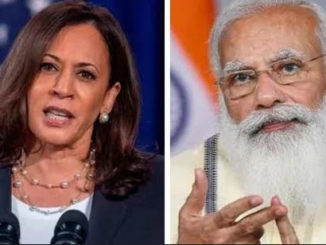
    WASHINGTON (TIP): US Vice President Kamala Harris on Thursday, June 3, spokewith India’s Prime Minister Narendra Modi and three other world leaders and informed them that the US will begin sharing the first 25 million doses of COVID-19 vaccines to their respective countries.

    Harris and PM Modi further discussed strengthening efforts to fight the COVID-19 pandemic. The call was initiated by the American side, top government sources said. During the call, Harris stressed the Joe Biden administration’s efforts to ‘achieve broad global coverage, responding to surges and other urgent situations ad public health needs and helping as many countries as possible who requested vaccines’, according to Senior White House Advisor and Chief Spokesperson Symone Sanders.

    Thanking Harris, PM Modi tweeted, “I deeply appreciate the assurance of vaccine supplies to India as part of the US Strategy for Global Vaccine Sharing. I also thanked her for the all the support and solidarity from the US government, businesses and Indian diaspora.” Modi and Harris also discussed ongoing efforts to further strengthen India-US vaccine cooperation, “and the potential of our partnership to contribute to post-Covid global health and economic recovery”, added the prime minister in his tweet.

    The prime minister also expressed the hope to welcome Harris in India ‘soon after the normalization of the global health situation’. Also Read – Uyghur exiles describe forced abortions, torture in Xinjiang Apart from Modi, Harris also dialed President Andres Manuel López Obrador of Mexico, President Alejandro Giammattei of Guatemala, and Prime Minister Keith Rowley, Chairman of the Caribbean Community (CARICOM). “The Vice President notified each of the leaders that the Biden-Harris Administration will begin sharing the rest 25 million doses of COVID vaccines to their respective countries and others, as part of the Biden-Harris Administration’s framework for sharing at least 80 million vaccines globally by the end of June,” the White House said in a statement.

    US President Joe Biden on Thursday, June 3, announced his plans to allocate 75 per cent – nearly 19 million of the first tranche of 25 million doses – of unused COVID-19 vaccines through the UN-backed COVAX global vaccine sharing programme to countries in South and Southeast Asia as well as Africa. In a statement, President Biden provided details on how the US will allocate the first 25 million of the vaccines to lay the ground for increased global coverage and to address real and potential surges, high burdens of disease, and the needs of the most vulnerable countries. “At least 75 percent of these doses – nearly 19 million- will be shared through COVAX, including approximately 6 million doses for Latin America and the Caribbean, approximately 7 million for South and Southeast Asia, and approximately 5 million for Africa,” Biden said. “The remaining doses, just over 6 million, will be shared directly with countries experiencing surges, those in crisis, and other partners and neighbors, including Canada, Mexico, India, and the Republic of Korea, he said.

    The Biden administration had been under pressure to send the excess COVID-19 vaccines with the US to nations like India, which are facing severe vaccine shortages. “We are sharing these doses not to secure favors or extract concessions. We are sharing these vaccines to save lives and to lead the world in bringing an end to the pandemic… And we will continue to follow the science and to work in close cooperation with our democratic partners to coordinate a multilateral effort, including through the G7, Biden added. COVID-19 Vaccines Global Access, abbreviated as COVAX, is a worldwide initiative aimed at equitable access to COVID-19 vaccines directed by Gavi, the Vaccine Alliance, the Coalition for Epidemic Preparedness Innovations, and the World Health Organisation.

    President Biden on May 17 had said the US will share 20 million more COVID-19 vaccine doses with other countries, taking the total number of such shots to 80 million. Ten million is equal to one crore. The additional 20 million doses will be of the Pfizer Inc/BioNTech, Moderna Inc and Johnson & Johnson vaccines, on top of 60 million AstraZeneca Plc doses he had already planned to give to other countries. Biden said the United States “also recognize that ending this pandemic means ending it everywhere. As long as this pandemic is raging anywhere in the world, the American people will still be vulnerable. And the United States is committed to bringing the same urgency to international vaccination efforts that we have demonstrated at home.

    (Agencies)

  • Eager to involve Indian investigators and sites in global clinical trials: Anthony Fauci

    Eager to involve Indian investigators and sites in global clinical trials: Anthony Fauci

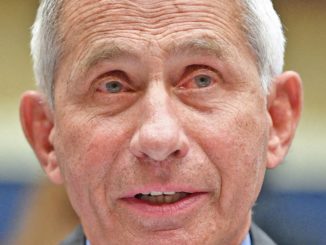
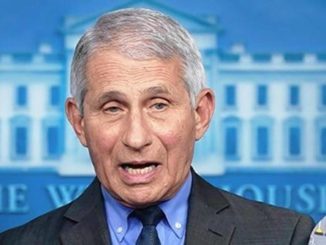
    WASHINGTON (TIP): Dr. Anthony Fauci, who is the head of the U.S. National Institute of Allergy and Infectious Diseases, said that India and the U.S. must continue to collaborate on research related to SARS-CoV-2 as well as vaccines and adjutants.


    “We also are eager to involve Indian investigators and sites in global clinical trials to evaluate the safety and efficacy of various COVID-19 therapeutics,” he added, referring to the need to step up joint research into the treatment of COVID-19 patients.


    Speaking about lessons learned by the United States from the pandemic, Dr. Fauci said that it was necessary to implement “well designed and validated scientific approaches to guide effective public health and clinical practice”. The U.S. has seen the highest number of COVID-19 cases (more than 34 million) in the world and the highest number of deaths (611,000), India ranks second on cases (more than 28 million) and third on deaths (338,000), globally.


    “International cooperation and collaboration are essential to advance scientific discovery, and to manage global health threats,” said Dr. Fauci. “We must address inequities in our health systems, so that future epidemics are not a burden primarily borne by disadvantaged populations. Finally, we all need to make sure that the public receive accurate, evidence-based guidance from health officials, and political leadership,” he added.

  • US Congress tables Bill to remove per-country cap on green card

    US Congress tables Bill to remove per-country cap on green card

    WASHINGTON (TIP): A bipartisan legislation has been introduced in the US House of Representatives to eliminate the per country cap on employment-based green card.

    The legislation was introduced by Congresswoman Zoe Lofgren and Congressman John Curtis, and it is likely to benefit Indian IT professionals anguishing over decades of green card wait.

    The Bill phases out the 7 per cent per-country limit on employment-based immigrant visa and raises the 7 per cent per-country limit on family-sponsored visa to 15 per cent.

    The Equal Access to Green cards for Legal Employment (EAGLE) Act, 2021, needs to be passed by the Senate before it can be sent to the White House for the President to sign it into a law.

    Its predecessor, the Fairness for High Skilled Immigrants Act, was passed in the House in the 116th Congress with a resounding bipartisan vote of 365 to 65. “We all know that our immigration system is severely broken, and it has been broken for decades,” said Lofgren, Chair of the House Subcommittee on Immigration and Citizenship.

    The basic framework for allocating the immigrant visa dates back to the middle of the 20th century and was last seriously updated in 1990, when the Congress established the worldwide numerical limits on visa and the seven per cent per-country cap that still exists today, she said.

    Over time, these limitations have led to backlogs that were unimaginable in 1990. The effect has been that countries with relatively small populations are allocated the same number of visas as a relatively large population country.

    “The result? A person from a large-population country with extraordinary qualifications who could contribute greatly to our economy and create jobs waits behind a person with lesser qualifications from a smaller country,” she added.

    (Source: PTI)

  • Despairing India needs a JP for this century

    Despairing India needs a JP for this century

    By Yogendra Yadav

    We have lived for far too long in the 21st century with the carcasses of ideologies of the 19th century. They were already outdated by the second half of the 20th century; they make no sense in the 21st. These ideologies received from the past force square pegs of a new reality into prefabricated round holes. They fail to incorporate new ideas, issues and energies. 

    “It’s the eighth year of a charismatic Prime Minister. The economy is in a shambles, with low growth, high unemployment and rising inflation. Doubts are giving way to disillusionment, disappointment to anger. The imperious political dispensation treats popular protests with disdain.

    It’s the eighth year of a charismatic Prime Minister. The economy is in a shambles, with low growth, high unemployment and rising inflation. Doubts are giving way to disillusionment, disappointment to anger. The imperious political dispensation treats popular protests with disdain.


    No, I am not depicting Narendra Modi’s India. This fragment, nearly half a century old, is from Indira Gandhi’s India. The date June 5, 1974 was a turning point in the history of the Bihar movement. Jayaprakash Narayan or JP gave a call for ‘Sampoorna Kranti’ or total revolution at a massive rally in Patna that day. Sampoorna Kranti became the rallying cry of the Bihar movement. Slogans like “Sampoorna kranti ab naara hai, bhavi itihaas hamara hai” reverberated during that famous challenge to Indira that led to the Emergency and, finally, the ballot revolution of 1977. Does that lapsed ideological lingo of a bygone era hold some relevance for us today? I think it does. That is why the Samyukt Kisan Morcha’s decision to observe June 5 this year as Sampoorna Kranti Diwas holds a deep historic significance.

    In my previous birth as a student of public opinion, attitude and behavior, one thing never ceased to surprise me: the optimism of the Indian public. No matter how horrid the reality on the ground, a question about expectations of the future always got an overwhelming positive response. The analyst in me found this intriguing. The political animal in me found this frustrating.

    Looking back, I think this naïve optimism may have been the oxygen that kept democracy alive despite all odds.

    That optimism is under threat today. Take three recent examples. Mahesh Vyas of the Centre for Monitoring Indian Economy reports that the share of households that expected a rise in their income over the next one year had come down to just five per cent in April this year, compared to 30 per cent in 2019, when the economy was already in a bad shape. On the same day, FICCI’s Business Confidence Survey — no good indicator of popular mood — reported a nosedive in its index of business confidence. More to the point, Yashwant Deshmukh — no critic of Modi government — writes that the CVoter poll found 80 per cent Indians in a state of despondency, saying they do not think anything is on the right path. Hope is the most scarce commodity in today’s India. Loss of hope is an indicator of the loss of faith in the Modi government. But this is also a challenge to the Opposition and democratic system. India desperately needs hope.


    This is not a challenge of crafting a positive political communication. This is not about coining a smart political slogan, or a new ‘jumla’. Indians have been through that. They believed in “achhe din” and have seen the reality. They still yearn for hope, but one that is believable, that maps on to the ground, that shows a path and offers a vehicle.


    This is what ideologies do. An ideology provides a frame to understand the present, diagnose what is wrong with it and identify seeds of change. It offers a utopia, an imaginary future destination that we must strive for. And it traces a path from the present to that imagined future with the help of agents of change and their strategies.


    It is not fashionable to use this word in the 21st century, after the collapse of political systems that foregrounded their ideologies. But let us not delude ourselves: those who call themselves non-ideological are also purveyors of an ideology, the ideology of status quo. We don’t need that. India needs a forward-looking ideology that provides a frame for instituting hope.


    This cannot be done by any of the existing ideologies. We have lived for far too long in the 21st century with the carcasses of ideologies of the 19th century. They were already outdated by the second half of the 20th century; they make no sense in the 21st. This applies as much to the ideologies of the Right as it does to the Left. These ideologies received from the past force square pegs of a new reality into prefabricated round holes. They fail to incorporate new ideas, new issues, new energies.


    Instead of integrating various ideas, we turn to patchwork ideologies like Gandhian Socialism or hyphenation like Ambedkarite-Feminism or absurd labels like Left-Liberal. No wonder these ideologies or their combination do not generate the kind of hope that India needs today.


    This is where JP’s call for a total revolution comes in. By the time he gave this call in 1974, he had been through the entire spectrum of ideologies of his time. Beginning as a naïve nationalist in his childhood, he converted to Marxism-Leninism in his youth and was an ardent champion of the USSR. Disillusionment with communism in his 40s led him first towards democratic socialism and then towards Gandhi and Vinoba Bhave. Through the 60s, he advocated a communitarian ideology. His call for a total revolution was not one more stage in his intellectual journey; it was the summation of the entire journey and an attempt to integrate all the ideologies of the 20th century for our purpose.


    JP was ahead of his times. Thus, the idea remained necessarily sketchy. He did not go beyond saying that total revolution entails a radical refiguring both of the system as well as the human being, that it meant a revolution in the political, economic, social, cultural as well as spiritual spheres. He insisted that a revolutionary transformation must be non-violent and cannot happen overnight.


    Standing on his shoulders, we can do much better. We can incorporate ideologies that JP’s wide spectrum did not encompass: Phule-Ambedkarite legacy, feminism, environmentalism. We can attend to issues that he did not quite grasp: caste, gender, ecology, information order.


    We can discard many of the superstitions of the ideologies of the 19th century: the idea of a vanguard of history, and universal models of revolutionary transformation and one-stroke revolution.


    Instead of deducing the picture of a good society from a universal utopia, we can anchor a new ideology in the values of the Indian Constitution. We can revolutionize the idea of revolution.


    Creating such an ideology is one of the biggest challenges of our times. This is not just a challenge for political leaders and workers; this is a challenge for all social activists, intellectuals, academics and artists. Let this June 5 be the starting point of this difficult but necessary journey.

    (The author is National President, Swaraj India)

  • Sedition law must go

    British-era clause can’t be used to fix activists, journalists

    After over seven decades of Independence, India is struggling to get rid of the sedition law – widely misused against activists and journalists. In view of its ‘chilling effect’, the Supreme Court has decided to examine the archaic Section 124A of the Indian Penal Code (IPC) in the context of media freedom after the filing of sedition cases against journalists in Andhra Pradesh. According to Section 124A, a person commits sedition if he/she brings or attempts to bring in hatred or contempt or excites or attempts to excite disaffection towards the government established by law in India. It attracts life imprisonment.

    After Independence, sedition was proposed in the Constituent Assembly as one of the grounds to restrict freedom of speech and expression. But KM Munshi opposed it, saying that if sedition were allowed to stay, ‘an erroneous impression would be created that we want to perpetuate 124A of the IPC or its meaning which was considered good law in earlier days.’ After the Constitution came into force, the Punjab High Court in Tara Singh Gopi Chand v. the State (1951) declared Section 124A unconstitutional. Once described as ‘highly objectionable and obnoxious’ by Nehru, Section 124A continues to be on the statute book, thanks to the First Amendment piloted by him that added ‘public order’ to Article 19(2) as a ground to restrict free speech.

    It was on the basis of public order in Article 19(2) that the SC, in Kedarnath Singh’s case (1962), upheld the validity of Section 124A. However, the court restricted its scope to some extent. In Balwant Singh’s case (1995), it let off two men accused of raising anti-India slogans, hours after Indira Gandhi’s assassination in 1984, saying that raising of slogans a couple of times – which neither evoked any response nor any reaction from the public – couldn’t attract sedition. The court’s comment about possible filing of sedition cases against news channels for showing a body being thrown into a river indicates that the problem runs much deeper. Many countries, including the UK and Australia, have abolished the sedition law. It’s time for India to follow suit.

    (Tribune, India)

  • Get out and Vote

    Election Day is Tuesday, June 22, 2021. Polls are open from 6am to 9pm.

    Early Voting Period is June 12, 2021 – June 20, 2021.

    New York City Primary Election is just two weeks away. Is the Indian American community fully prepared to exhibit its strength? Well, some believe, its isn’t. Some others claim it is better prepared now than before. They cite the number of Indian origin candidates who have thrown their hats in the electoral ring. But does the number of Indian American candidates in the electoral fray indicate the enthusiasm of voters? Well, again, many say” No”.

    The Indian American community has never been enthusiastic about voting in the elections. But for the committed voters in both the parties, very few have ever bothered to know the candidates, or support them, and much less go to polling station to cast their “valuable” vote. The question is why the community would give political donations, and yet not vote? It may be, partly because the community does not find any of the several candidates in the electoral battle strong enough to win. They prefer not to “waste” their time in campaigning or casting their vote. This despondency has been explained repeatedly by many in the Indian American community. They have to understand that it is not always a candidate from your own community who should be considered good enough to represent you, but it could be anyone. If the community backs a candidate, the candidate will feel obliged to take care of the community. It is a question of owning your candidate. The Indian American community must realize that they are a force to reckon with, being the highest earning, on an average, and one of the highly educated in the US, with ideas to influence the outcome of any election, at least at the local level. But it is also subject to one and the only condition- provided they exercise their right to vote. A right they must exercise as responsible citizens. So, folks, you have choices. Go in for early vote which opens on June 12. Or, wait till you get to the polling station on June 22. And, yes, be careful about the new Ranked Choice voting system which allows you to list your preferences. It will help to get hold of a person who is conversant with information on the system. Whatever, let your voice be heard. Do vote.


  • Supreme Court of India throws out sedition case against Journalist Vinod Dua:  upholds right to criticize government

    Supreme Court of India throws out sedition case against Journalist Vinod Dua:  upholds right to criticize government

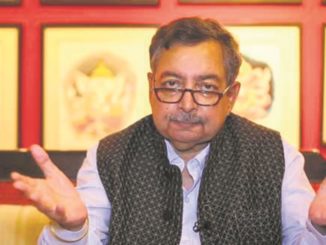
    NEW DELHI (TIP): The Supreme Court of India, on Thursday, June 3, quashed an FIR registered by the Himachal Pradesh Police against senior journalist Vinod Dua last year for his comments critical of the government’s handling of Covid-19 lockdown on YouTube.

    “We are of the firm view that the prosecution of the petitioner for the offences punishable under Sections 124A and 505 (1) (b) of the IPC would be unjust. Those offences, going by the allegations in the FIR and other attending circumstances, are not made out at all and any prosecution in respect thereof would be violative of the rights of the petitioner guaranteed under Article 19(1)(a) of the Constitution,” a Bench headed by Justice UU Lalit said.


    Mar 30, 2020: Dua’s YouTube video slams government over nationwide lockdown in 2020

    May 6: FIR against Dua in HP by local BJP leader, alleging sedition

    June 4: Another FIR against Dua in Delhi by a BJP spokesperson

    June 10: Delhi HC stays probe into FIR lodged in Capital

    June 12: HP Police summon Dua

    June 13: Dua moves SC

    June 14: SC restrains HP Police from arresting Dua, but doesn’t stay probe

    Sep 16: Centre tells SC Dua’s show incited people to migrate during pandemic

    June 3, 2021: SC quashes sedition case against Dua

    The Bench, which had reserved its verdict on October 6 last year, said: “We have quashed the proceedings and the FIR. Every journalist will be entitled to protection under the Kedar Nath Singh judgment (on sedition).” While upholding the validity of Section 124A of the IPC (sedition), a Constitution Bench of the Supreme Court had in Kedar Nath Singh case (1962) restricted the scope of the law by saying that its application should be limited to “acts involving intention or tendency to create disorder, or disturbance of law and order; or incitement to violence”.

    The Bench, however, rejected Dua’s prayer for setting up of a high-level committee in each state for prior vetting of sedition charges against journalists of 10-year standing, saying that “it will be directly encroaching upon the legislative domain”.

    The Shimla FIR was registered at the instance of a BJP leader, who filed a criminal complaint against Dua, accusing him of instigating violence against the government by allegedly spreading fake news.

    Quoting from its verdict in the Kedar Nath Singh case, the top court said, “A citizen has a right to say or write whatever he likes about the government, or its measures, by way of criticism or comment, so long as he does not incite people to violence against the government established by law or with the intention of creating public disorder.”

    It said, “It’s only when the words or expressions have pernicious tendency or intention of creating public disorder or disturbance of law and order that Sections 124A…of the IPC must step in.”

    Referring to Dua’s alleged seditious statements, the Bench said they could “at best be termed as expression of disapprobation of actions of the government and its functionaries so that the prevailing situation could be addressed quickly.”

    “They were certainly not made with the intent to incite people or showed a tendency to create disorder or disturbance of public peace. The petitioner was within the permissible limits laid down in the decision of this court in the Kedar Nath Singh case,” it said while quashing the First Information Report (FIR).

    (Source: PTI)

  • Facebook suspends Trump for 2 years in response to Oversight Board ruling

    The change is part of a series of responses to the Facebook Oversight Board’s ruling on former president Trump.

    WASHINGTON (TIP): Facebook said Friday, June 4, that it plans to suspend Trump for two years following his comments in the wake of the Capitol insurrection on January 6th and will only reinstate him” if the risk to public safety has receded. “


    Facebook plans to announce that it will no longer automatically give politicians a pass when they break the company’s hate speech rules, a major reversal after years of criticism that it was too deferential to powerful figures during the Trump presidency.


    Since the 2016 election, the company has applied a test to political speech that weighs the newsworthiness of the content against its propensity to cause harm. Now the company will throw out the first part of the test and will no longer consider newsworthiness as a factor, according to a person familiar with the company’s thinking who spoke on the condition of anonymity because that person was not authorized to speak publicly. But Facebook doesn’t plan to end the newsworthiness exception entirely. In the cases where an exception is made, the company will now disclose it publicly, the person said — after years of such decisions being closely held. And it will also become more transparent about its strikes system for people who violate its rules.


    The moves, first reported by the Verge, are part of a set of responses to the Facebook Oversight Board’s recommendations. The largely independent Facebook-funded body recently ruled on whether the social network should reinstate former president Donald Trump’s account on its service. The company’s responses are the first major test of how a nongovernment watchdog might act as a check on the powerful social network, which is used by 3.45 billion people globally on a monthly basis.

  • 37th anniversary of Operation Blue star: The game is for power not for Punjab

    37th anniversary of Operation Blue star: The game is for power not for Punjab

    Prabhjot Singh

    It was on June 1 in 1984 that the Indian armed forces launched a military action on the Golden Temple complex, allegedly to neutralize the Sikh militants led by Sant Jarnail Singh Bhindranwale. The operation lasted 10 days, resulting in the death of hundreds of innocent pilgrims inside the complex, besides extensive damage to thehighest seat of the Sikh temporal power Shri Akal Takht Sahib and the historic Ramgarhia Bungas. Indian military claimed it had lost 700 soldiers besides a few hundred wounded. -EDITOR

    The Sikhs, a global community, have every reason to nurse a grouse both against the Congress – for engineering attack on their sancta sanctorum besides depriving the State of its rightful territorial and rivers water rights – and the Bharatiya Janata Party (BJP) for not assuaging their hurt psyche without taking any action to mitigate it.


    Thirty-seven years after the traumatic Operation Blue Star, Punjabis in general and Sikhs in particular, continue to ponder what makes all ruling parties at the Centre to betray them.


    All agitations in this border State have ended in trading of power without anything being said about its long-standing demands, be it territorial rights, dams and water works, prime institutions and its people.


    Sikhs have been in the habit of hawking newspaper headlines for reasons that extend beyond the geographic boundaries of their motherland for whose independence they made nearly 80 per cent of the total sacrifices.


    Of late some of the world leaders while eulogizing the contributions this minute minority community has made in the Corona pandemic went to the extent of saying that there should be a gurdwara – Sikh temple – everywhere to look after the suffering humanity.


    It is that institution of gurdwara that has been making the Sikh community seek answers from the Central Government in India in general and the national political parties in particular.


    Questions about the attack on their sancta sanctorum have either been ignored or they remained mired in controversies.


    The Sikhs, a global community, have every reason to nurse a grouse both against the Congress – for engineering attack on their sancta sanctorum besides depriving the State of its rightful territorial and rivers water rights – and the Bharatiya Janata Party (BJP) for not assuaging their hurt psyche without taking any action to mitigate it.


    Wreaked by two politics-engineered partitions, this once affluent State continues to struggle to get its long-standing demands, including territorial sovereignty and rightful claim over its river waters, met. While the first partition in 1947 played havoc with the life and property of this border province, the second partition took away whatever little progress or gains it had made since independence. All major projects, including its capital, dams and water works and institutions, were taken away and brought under control of the Centre.


    It is all the more agonizing for the Sikhs when they look back at the history. Before the 1947 partition, says historian Research Professor Rajmohan Gandhi, the then British rulers tried to appease all major communities of northern India – the majority Hindu community and the minorities Muslims and the Sikhs.  Though he did not say in many words that while the Hindus got India and the Muslims Pakistan, the Sikhs had to swallow false promises.


    After partition, their agitation for a Sikh Homeland ended in a truncated State they got which was without a capital, most of its dams and water works and many Punjabi speaking areas.


    While they were still trying to come out of the trauma of the two partitions, came the Operation Blue star. Whatever are the causes or reasons behind the “Dharam Yudh” morcha that made the Sikhs launch a struggle to get autonomy for States after adopting the Sri Anandpur Sahib resolution of August 1977.

    Indian Military inside the Golden Temple.

    Agreed violence has no place in any civilized society in general and liberal democracies in particular, Punjab has never been at peace with itself for a continuous period of 30 or more years. To be precise, Sikhs have always been at war, if not with the powers at the Center, then among themselves.  And even in their struggle, political, religious or social, they have always pioneered a number of initiatives, both in and outside India. It is here where the role of journalists, as members of the fourth estate, becomes crucial in highlighting injustices done to the State or its people,


    Journalists are eyes and ears of a society as they play a critical role in preserving democracy. They are mandated to act as watchdogs in liberal democracies as while weaving their stories, they not only understand the importance or significance of Rule of Law but also keep the public good above everything else. While judging a journalist or his or her work, especially in the context of Punjab, it is important to understand the trying circumstances in which they worked.


    The State had the longest spell of President’s rule besides promulgation of draconian laws to contain militancy. A State that was once acknowledged as the sword arm or sports arm of the country besides serving as the food bowl of the country is now tottering at brink.


    Some experienced journalists, both from within and outside the country, would invariably use objectivity and verification combined with storytelling skills to make a subject both credible and newsworthy. But journalists from Punjab remain a suspect in the eyes f the Centre. Punjab has had more spells of curfew than any other State in the country. It is not to suggest that what a journalist writes has general acceptance. Objectivity itself is subjective. Like everything else, criticism of journalistic works often has political dividends. Increasing attacks by politicians on the credibility of a journalist or a media house have often been part of a conscious strategy to weaken both the accountability and credibility of journalism in general and a journalist in particular.


    Of late, we all have been a witness to a collapse of the notion that politically relevant facts can be discerned by news professionals, reiterating the general belief that journalists are no more apolitical leaving their readers uncertain about ingesting the messages communicated to them as credible. These changing perceptions and thoughts apart, there are old timers who are continuing to discharge their role as torchbearers. They religiously follow professional ethics and discharge their duties as ears and eyes of the society they represent.  Recently I reviewed a book by one of my friends, Jagtar Singh, for The Tribune, an institution with which I remained associated for 37 years.


    As a veteran journalist and columnist, Jagtar Singh, remained an eyewitness from the very beginning of the fight for Sikh Homeland, to the present.


    His latest book “The Khalistan Struggle: Rivers on Fire” is the story of militant struggle in the border state of Punjab. It tells students of history as to what sparked this struggle, which were the people in the beginning and how this discourse shaped up as a fight for a separate Sikh state.

    The Akal Takht Sahib bore the brunt of the military action.

    Not only this, several other books about the Sikh religio-political discourse in synergy of both the peaceful and militant struggle from the earlier days, have taken up only selective militant actions, as these were the incidents as these shaped the discourse at crucial moments.


    For Sikhs, it is not only their emotive bondage with the institution of gurdwara in general and the sanctum sanctorum in particular but has acted as a catalyst to prove to the world that the Sikh gurdwara which the Indian defence forces attacked with mortar, grenades and guns in 1984, are the shelter homes for those in distress. And these spiritual centers-cum-shelter homes do not discriminate with beneficiaries on the grounds of their ethnicity, colour, creed, religion or language. No Sikh would ever take or accept any attack 0n its place of worship.


    Most of those who have done work or written essays on developments in Punjab since 1947 have documented their works well.However, a few important revelations made in the book, including one about the assassination of the then Prime Minister Indira Gandhi, need corroboration. The author says that the names of all those who gunned down Indira Gandhi and those who were part of the design to kill her were in public domain. At least three more people besides all those known names were part of the plan to avenge Operation Bluster.


    This revelation has not been substantiated as he mentions that one of the three names – Manbir Singh Chaheru – purchased a plot in Mohali for Bimal Kaur Khalsa, wife of Delhi Police Sub Inspector Beant Singh, one of the two assassins who killed Indira Gandhi. It appears to be a post-action (assassination) association that brought Bimal Khalsa in contact with Manbir Chaheru and Damdami Taksal. All said and done, it was the religious hurt that made Beant and Satwant kill Indira Gandhi. The revelation cannot be dismissed, as corroboratory evidence may have remained unexplored.

    A picture of destruction

    Incidentally I covered most of the militant actions, including assassinations of Indira Gandhi and Beant Singh, besides Operation Bluestar, Kapuri Morcha and the Dharam Yudh morcha.

    Coming to the emotive issue of rivers’ waters, it has been proved that the State Assembly ever ratified none of these awards. The assembly took up the issue twice, first during the Akali Government of Surjit Singh Barnala that annulled the 1981 award, and the second by the Congress Government of Capt Amarinder Singh that set aside all water agreements. It may sound strange that none of these Legislative pronouncements could become effective. The issue has been once again thrown open by the Apex Court necessitating the Centre to get back to the rigmarole of holding meetings with the Chief Ministers of Punjab and Haryana.


    When the Barnala government annulled the 1981 award (Indira-Darbara award), the State Assembly simultaneously endorsed the Rajiv-Longowal accord that mandated for setting up of a Tribunal to resolve the waters’ sharing problem. And the Tribunal so set up – Eradi Tribunal – after submitting its interim report in 1987, failed to give its final report even after 24 years costing the state exchequer several crores.


    When we talk of Punjab Rivers’ waters issue, reference to Riparian principle or law becomes imminent. Going by Encyclopedia Britannica, “In property right doctrine pertaining to properties adjacent to a waterway that (a) governs the use of surface water and (b) gives all owners of land contiguous to streams, lakes, and ponds equal rights to the water, whether the right is exercised or not. The riparian right is un-sufructuary, meaning that the landowner does not own the water itself but instead enjoys a right to use the water and its surface.”


    Going by the basic philosophy of the Riparian Law or principle, the actual rights rest with the people who live adjacent to waterways. Intriguingly, in case of Punjab, the actual beneficiaries were uprooted and the State or the center claimed ownership rights over the waters. And select powerful people, holding high positions both in the state and the center, forget about the water awards without ever getting to the beneficiaries, the people, for their endorsement.


    Now coming back to the Operation Blue star, after 37 years, there is no credible or authentic version of the whole unfortunate episode that reveals actual drills of the operation, exact total casualties, the fate of the archives, artifacts, books and documents that were there in the SGPC museum damaged during the attack on Operation Blue star.


    Complicity of other powers, including the British government, in the events leading to the Operation Blue star, is still to be told.


    (Prabhjot Singh is a former Chief of Bureau of The Tribune. He can be reached at prabhjot416@gmail.com)


  • “Operation Blue Star – Counterbalancing Terror –  results in boomeranging horrible pain”

    By Ravi Batra

    The 1984 Operation Blue Star was the biggest internal security mission ever undertaken by the Indian Army. Operation Blue Star was Indira Gandhi’s solution to the haywire going law and order situation in Punjab.

    Operation Blue Star was carried out between June 1 and June 10, 1984, in Amritsar.-EDITOR

    Leadership requires making choices – picking between not “good” and “bad,” but “bad” and “worse.” This Op-Ed is aimed at policymakers – to abandon counterbalance as a pillar of statecraft, and it’s noisy and genie-out-of-the-bottle progeny: state-sponsored Terrorism. It doesn’t work, and is very painful at the bitter end. Being “right,” and winning by “right means” permits an end – as a civil “trial by jury” does daily in our courts even for losers. Nations, however, continue to exercise “might is right,” when it really never was – given its lingering “tail”.

    My takeaway: don’t use counterbalance; it’s sexy upfront, and painful as a nightmare divorce in the end. Recently, Kurds in Syria bear witness – as some of them became Terrorists against Turkey.

    The Akal Takht- the symbol of the supreme temporal power of the Sikhs, was destroyed in the Operation Bluestar. (Photo : CourtesyCentralSikhMuseum.com)

    The enemy of my enemy is my friend; or so goes the saying, lovingly followed by policymakers seeking a shortcut to victory for several millennia. Indeed, counterbalancing continues as a steady pillar of statecraft the world over. It matters not that ultimately it doesn’t work, and backfires with a painful boomerang.

    Recall President Ronald Reagan’s “Freedom Fighters” in Afghanistan who we trained and equipped to fight the then-USSR’s excursion in Afghanistan to an unhappy exit. Then, after 9/11, when we were in hot pursuit of its mastermind OBL and ended up in Afghanistan – our Freedom Fighters became the Taliban we were fighting against. 40 years and lots of blood and treasure we have spent, only to make a recent Jello gelatin flexible peace-deal with the Taliban, and then cause the local government’s twin executives to sign on after the fact to make it operational, all so we may extricate ourselves from a war we cannot lose, nor win by civilized standards in a place where our values are alien to the local ecosystem. My takeaway: don’t use counterbalance; it’s sexy upfront, and painful as a nightmare divorce in the end. Recently, Kurds in Syria bear witness – as some of them became Terrorists against Turkey.

    Well, let’s go back to 1971 – when the Blood Telegram sent from Dhaka was ignored in China-loving Richard Nixon’s Washington DC – and Indira Gandhi, Prime Minister of India, moved to save the remaining Hindus in now-Bangladesh from genocidal demise. India secured a striking victory in short order that exceeded expectations and was decisive to boot. Pakistan was unhappy, to state the obvious. Nations have found that sponsoring Terror is attractive – because it is what I call – war on the cheap. Pakistan enjoyed such sponsorship as a rejoinder. India’s Punjab and Kashmir border Pakistan, and cross-border Terror-support in Sikh-rich Punjab was easier, as Sikhism’s founder, Guru Nanak’s immortal roots remain in Pakistan – a matter of great importance even now while celebrating His 550th Birthday in Nankana Sahib, Lahore Pakistan via opening the visa-free Kartarpur Corridor – thanks to P. M. Imran Khan and P. M  Narendra Modi – which nations and people of goodwill celebrate.

    So after 1971, Pakistan’s cross-border sponsorship was for Khalistan to be born – perhaps, as a nation for a nation – with three Sikh leaders Shabeg Singh, Balbir Singh, and Amrik Singh turned separatists, who were allegedly taught tactics more familiar to Terror in Pakistan. As a result, India suffered a porous border and a porous state in Punjab and Kashmir, such that India’s sovereignty would be an afterthought if not stopped.  Mrs. Gandhi decided to fight fire with fire, and allegedly “sponsored” a genuine Sikh leader Jarnail Singh Bhindranwale. Ultimately, he and his armed supporters came under threat of arrest, being un-controllable by Delhi, and took refuge in the Golden Temple – the holiest Harmandir Sahib – and Operation Blue Star was born in June 1984 to turn back the hands of time and Statecraft’s expediently sexy counterbalance pillar. When first trying to peacefully end the stalemate and get the innocent pilgrims released failed over two days, as the separatists were armed with even Chinese-made grenade-launchers, on June 5th military force was initiated to forcibly evict Terrorists from the house of worship. That goal would be tough enough without religion being implicated; but attacking the holiest Sikh Gurdwara – a sanctuary – with 10,000 booted soldiers was successful in a military sense, but a failure by all other metrics. Harmandir Sahib was severely damaged, ancient scripts and artifacts forever lost in the “firefighting fire.” Thereafter, while the Indian Government rebuilt it, the Sikh community tore it down and rebuilt it afresh – perhaps, as we recently tore down our newly built embassy in Moscow and rebuilt it anew.

    The historic Ramgarhia Bunga damaged in the Operation Bluestar
    (Photo : Courtesy Central Sikh Museum.com)

    The price of counterbalancing Pakistan’s punishment – trying to create Khalistan for loss of her East Pakistan – was that Mrs. Gandhi was assassinated on October 31, 1984 by her favorite bodyguard, Beant Singh, and Satwant, both Sikhs – whom she insisted upon keeping. What followed was nothing short of a bloodbath – known as the Anti-Sikh Riots or worse – where even innocent Sikhs were hurt, injured and even killed and some members of the Indian Congress party were allegedly directing the Sikh-killings in an opportunistic manner – a stain that India has dealt with (and still has to remedy) as we did for interning loyal Japanese-Americans after Pearl Harbor some 40 years later.

    Recall in 1988, President Reagan signed the Civil Liberties Act to compensate more than 100,000 Japanese-Americans who were incarcerated in internment camps during World War II. The Law offered a formal apology and paid $20,000 in compensation to each surviving victim.

    Leadership requires making choices – picking between not “good” and “bad,” but “bad” and “worse.” This Op-Ed is aimed at policymakers – to abandon counterbalance as a pillar of statecraft, and it’s noisy and genie-out-of-the-bottle progeny: state-sponsored Terrorism. It doesn’t work, and is very painful at the bitter end. Being “right,” and winning by “right means” permits an end – as a civil “trial by jury” does daily in our courts even for losers. Nations, however, continue to exercise “might is right,” when it really never was – given its lingering “tail.” A lesson China will learn from its current collective and sequential miscalculations: Tibet, Uighurs, OBOR with AIIB, exporting Wuhan Virus (lab-engineered as it has the Spike Glycoprotein (S) spliced off the 2003 SARS Bat viruses and transplanted onto the surface of the AIDS virus in 2019 – see, my April 14, 2020 “Open Letter to POTUS et al” in public domain – recently re-confirmed by former head of MI6) as a global Pearl Harbor, with it’s cover-up, followed not by an apology and compensation, but added belligerence in South China Sea and Hong King, and inter alia, converting diplomacy, a channel most useful during disputes and war, and instead burning it by making diplomats act as a “Wolf Warrior” commando doing battle. That our Hollywood celebrates Chinese-Americans and China is starkly in contrast to the steady anti-American diet fed by Chinese Communist Party leadership to her people. That is both strategic, as it is tactical – something President Trump, Secretary Esper, Speaker Pelosi and Leader McConnell ought digest, as we too have our nation to defend in present time from folks we saw as friends, since Nixon, but who played us.

    Disclosure: I legally represented Indian National Congress and Mrs. Sonia Gandhi, merely a loving wife, mother and daughter-in-law in 1984, when they were sued by a so-called entity, Sikhs for Justice, under the Alien Tort Claims Act in United States Federal Courts in New York – SDNY and EDNY. I successfully argued that India, where all events occurred and all actors reside, was ineligible for US courts to exercise extra-territoriality and it was for India to remedy this stain. The lofty U. S. Second Circuit Court of Appeals issued two orders in 2014 and 2015, respectively, agreeing to dismiss the cases pursuant to US law. Thereafter, Rahul Gandhi, adopting my legal filings, gave an interview to Arnab Goswami confirming for the first time that “some” Congressmen were complicit in misconduct. SFJ’s subsequent cases against then-PM Manmohan Singh and PM Narendra Modi were dismissed, based upon the precedents I secured, along with application of the Foreign Sovereign Immunities Act, as Prime Ministers, as head of government, are so entitled – which neither INC or INC President Sonia Gandhi was so entitled.  Now, SFJ is out of the media-rich harassing litigation, but, allegedly, based upon reports, may be subject to Foreign Agent Registration Act given its foreign supporters.”

    (The author is a senior attorney and Chair, National Advisory Council South Asian Affairs. He can be reached at ravi@ravibatralaw.com)


  • TFF@20 LINEUP

    20TH ANNIVERSARY FESTIVAL CELEBRATES

    RETURN OF LIVE EVENTS

    CULMINATING IN SPECIAL JUNETEENTH PROGRAMMING


    “After a year of closed cinemas, canceled gatherings, and virtual everything, it is with joy and hope that we finally invite New Yorkers out of their homes and back to the movies. Immersed in the city itself, Tribeca 2021 will bring once-in-a-lifetime big-screen experiences to filmmakers and audiences alike as we reconnect, re-imagine, and reopen through the shared experience of film.” – Cara Cusumano, Festival Director & VP of Festival Programming.

    The Tribeca Film Festival’s 20th anniversary edition (TFF20) is a celebration of audiences reuniting with comedic, music-centered, and socially conscious films from diverse storytellers using art to illuminate and entertain. The Festival runs June 9-20, 2021, with live in-person events at outdoor venues across all New York City boroughs.

    The features program includes 66 films from 81 filmmakers from across 23 countries. The line-up includes 56 world premieres, 1 international premiere, 4 North American premieres, 1 U.S. premiere, and 4 New York premieres.This year’s program includes 15 directors returning to Tribeca with their latest projects, and over 60% of the feature films are directed by female, BIPOC, and LGBTQ+ filmmakers. This year’s Festival received a record high of 11,222 total submissions across all categories.

    Special curated Juneteenth programming highlighted throughout different verticals of the Festival will celebrate voices from the African Diaspora, with special emphasis on African-American artists, performers, filmmakers, and interdisciplinary creators.

    The feature categories include 6 U.S. Narratives, 6 International Narratives, and 8 Documentary competition features. Additionally, the feature line-up includes 8 Spotlight Narratives, 11 Spotlight Documentaries, 13 Viewpoints, 3 Midnight, 7 Movies Plus selections, 3 Tribeca Critics’ Week.

    Many of the films will also be available for U.S. audiences to view online the day after they premiere in person through the Tribeca at Home virtual hub.

    As previously stated, the 2021 Tribeca Festival Opening Night film will be “In the Heights,” the screen adaptation of Lin-Manuel Miranda’s Tony Award-winning musical, directed by Jon M. Chu.

    For updates and more, Follow @Tribeca on Twitter, Instagram, Facebook, YouTube, LinkedIn and visit at tribecafilm.com/festival #Tribeca202

    2021 FEATURE FILM Selection:

    U.S. NARRATIVE COMPETITION

    Tribeca’s U.S. Narrative Competition showcases extraordinary work from breakout independent voices and distinguished filmmaking talent. These world premieres will vie for the Founders Award for Best Narrative Feature, Best Screenplay, Best Cinematography, Best Actor, and Best Actress.

    The films vying for the competition are “Catch The Fair One,” “God’s Waiting Room,” “Mark, Mary & Some Other People,” “The Novice,” “Poser,” and “Queen Of Glory.”

    DOCUMENTARY COMPETITION

    Over Tribeca’s 20-year history, the non-fiction film selections have exhibited work from emerging and renowned filmmakers, including future Academy Award® winners. This year’s films will compete for Best Documentary Feature, Best Cinematography, and Best Editing.

    The films in the documentary competition are “All These Sons,” “Ascension (登楼),” “Blind Ambition,” “Fathom,” “The Kids,” “Like a Rolling Stone: The Life & Times of Ben Fong-Torres,” “On the Divide,” and “The Scars of Ali Boulala.”

     INTERNATIONAL NARRATIVE COMPETITION

    The New-York based Festival breaks its geographical boundaries with the International Narrative Competition, welcoming filmmakers from abroad to join a global platform for contemporary world cinema. These films will compete for Best Narrative Feature, Best Screenplay, Best Cinematography, Best Actor, and Best Actress.

    The films in the international narrative competition category include “All My Friends Hate Me,” “Do Not Hesitate,” “Roaring 20’s (Années 20),” “Souad,” and “Wild Men (Vildmænd).”

    SPOTLIGHT NARRATIVE

    Anticipated premieres from acclaimed filmmakers and performers are the focus of the Spotlight Narrative section which continues to be a launching pad for the most buzzworthy new films. This year’s Spotlight section will open with the world premiere of Pan Nalin’s The Last Film Show.

    India Sweets & Spices (Photo / TFF2021)

    In the spotlight narrative category, the films are “False Positive,” “How It Ends,” “India Sweets and Spices,” “Italian Studies,” “The Last Film Show,” “No Man Of God,” “Twelve Mighty Orphans,” and “Werewolves Within.”

     SPOTLIGHT DOCUMENTARY

    Documentaries consistently make waves at Tribeca as notable filmmakers and major stories are represented in this section through high-profile premieres.

    In this category, the films are “A-ha the Movie,” “Bernstein’s Wall,” “BITCHIN’: The Sound and Fury of Rick James,” (*Part of the Juneteenth programming), “A Choice of Weapons: Inspired by Gordon Parks” (*Part of the Juneteenth programming), “Lady Boss: The Jackie Collins Story,” “LFG,” “The Lost Leonardo,” “The Price Of Freedom,” “Roadrunner: A Film About Anthony Bourdain,” “Stockholm Syndrome, and “Wolfgang.”

    VIEWPOINTS 

    Viewpoints, which includes narratives and documentaries, recognizes distinct voices in independent filmmaking by creating a home for bold directorial visions and embracing distinct characters or points of view.

    7 Days
    Photo / TFF2021

    Entering the viewpoints category are “7 Days,” “Accepted,” “as of yet” (*Part of the Juneteenth programming), “The Beta Test,” “Building A Bridge,” “The Conductor,” “The Death Of My Two Fathers” (*Part of the Juneteenth programming), “The Justice Of Bunny King,” “The Legend of the Underground” (*Part of the Juneteenth programming), “North By Current,” “Perfume de Gardenias,” “Sisters On Track,” and “Wu hai.”

    MIDNIGHT

    Always surprising and boundary-pushing, Tribeca Midnight is the destination for the best in horror and genre discoveries: “Shapeless,” “Ultrasound,” and “We Need To Do Something.”

    MOVIES PLUS

    Tribeca’s unique Movies Plus events bring the film experience off the screen with live conversations and performances after each screening – “The Father of the Cyborgs,” “The Neutral Ground” (*Part of the Juneteenth programming), “No Straight Lines: The Rise of Queer Comics,” “The One and Only Dick Gregory” (*Part of the Juneteenth programming), “Paper & Glue, a JR Project,” and “With/In.” Each film is followed by a Q&A. “Reflection: a walk with water” is followed by a special performance.

    TRIBECA CRITICS’ WEEK

    Tribeca Critics’ Week is a section of the Festival that presents a curated slate of feature films from film critics including Eric Kohn (IndieWire), Hunter Harris and Tre’vell Anderson: “Ailey” (*Part of the Juneteenth programming); “The Ballad of a White Cow (The Ghasideyeh Gave Sefid)”; and “Rita Moreno: Just a Girl Who Decided to Go For It.”

    2020 FESTIVAL SELECTIONS

    After having their planned Tribeca 2020 premieres canceled, the feature films of the 2020 Festival have been invited back for long awaited in-person premieres in 2021.

    Participating titles include “499,” “All the Streets Are Silent,” “The Art of Political Murder,” “Asia,” “Banksy Most Wanted,” “Brian Wilson: Long Promised Road,” “Clean,” “Contactado,” “Cowboys,” “Dear Mr. Brody,” “Enemies of the State,” “Fries! The Movie,” “Fully Realized Humans,” “The God Committee,” “Happily,” “Harley,” “Honeydew,” “I Carry You With Me,” “I Promise,” “Ice Cold,” “Jacinta,” “Kiss The Ground,” “Kubrick by Kubrick,” “La Madrina: The [Savage] Life of Lorine Padilla,” “Landfall,” “Larry Flynt for President,” “The Last Out,” “Lorelei,” “Love Spreads,” “Marvelous and the Black Hole,” “Materna,” “Miracle Fishing: Kidnapped Abroad,” “My Heart Can’t Beat Unless You Tell It To,” “No Future,” “Not Going Quietly,” “The Outside Story,” “P.S. Burn This Letter Please,” “Pray Away,” “Ricky Powell: The Individualist,” “She Paradise,” “Simple As Water,” “The Sit-In: Harry Belafonte Hosts The Tonight Show,” “Socks on Fire,” “The State of Texas vs. Melissa,” “Stateless (Apátrida),” “Sweet Thing,” “Television Event,” “This Is Paris,” “Through the Night,” “Wake Up on Mars (Réveil sur Mars),” “Women In Blue,” “Yusuf Hawkins: Storm Over Brooklyn,”

    —————————

    2021 SHORTS PROGRAM

    The 2021 Tribeca Festival™ Shorts Program lineup includes 46 short films striking hopeful and optimistic tones from 20 countries worldwide. World Premieres account for 70% of the competition slate, which is the highest percentage in Tribeca history. The short films will be presented in eight programs: two documentaries, two narratives, two hybrids (including both narrative and documentary), one animation, and one New York shorts program. Additionally, the Festival will feature a special curated out-of-competition Juneteenth program and a live performance by Blondie, following the screening of “Blondie: Vivir En La Habana.”

    “As we curated these in-person programs, we thought a great deal about the challenges of the past year and what our audience has been missing; travel, music, dance, and fun,” said Sharon Badal, Vice President of Filmmaker Relations and Shorts Programming. “Our programs are lighter, brighter and inspiring. They introduce unique new voices to our audience.”

    International storytelling continues to be celebrated in this year’s Tribeca’s Short Film Program, with 41 percent of its selections originating from 20 countries including Australia, Brazil, Canada, China, Denmark, Finland, France, Ireland, Italy, Japan, Norway, Netherlands, New Zealand, Poland, Qatar, Sweden, Sudan, United Kingdom, the United States and Wales.

    The 2021 Tribeca Festival Shorts Program is:

    Acting Out

    True stories about rebellion and reflection.

    All World Premiere Program

    “Virtual Voice,” “Radical Love,” “Coded” and “Miss Panama.

    Animated Shorts Curated by Whoopi G

    Imaginative storytelling and captivating craft.

    “Try to Fly,” “Navozande, the musician (Navozande, le musicien),” “Ashes (Popioty),” “Dirty Little Secret,” “Death and the Lady,” “Leaf Boat (Cwch Deilen),” “There are Bunnies on Fire in the Forest” and “Blush.” 

    Art and Soul

    Music and dance shorts that will soothe your soul.

    “Unspoken,” “RESIST: The Resistance Revival Chorus,” “Silence,” “19 Seventy Free: Part 1,” “Thirsty” and “Blondie: Vivir En La Habana.”

    Go Big

    Sports shorts with risk, reward and resilience.

    Kata,” “The Queen of Basketball,” “Nando,” “Joe Buffalo” and

    “Learning To Drown.”

    Let’s Fly Away

    Miss traveling? Wander the world in these international shorts.

    “How To Fall in Love in a Pandemic,” “Peninsula,” “The Kicksled Choir (Sparkekoret),” “Beautiful They” and “Grottaroli.”

    New York, New York 2021

    So nice we did it twice!

    All World Premiere Program.

    “Liza Anonymous,” “Cracked,” “Leylak,” “Esther In Wonderland” and “No Longer Suitable For Use.”

     Straight Up With a Twist

    “Take a shot” on these wildly creative shorts.

    “The Cocktail Party,” “The Last Marriage,” “Two Jacked,” “Molly Robber,” “The Bouncer (Poke),” and “Girl With a Thermal Gun.”

    Pursuing Happiness

    These shorts navigate life’s ups and downs.

    “GraceLand,” “Six Nights,” “Magnolia Bloom,” “Enjoy,” “We Do This Once” and “The Angler.”

    Shining Stars

    Enjoy these shorts celebrating Juneteenth.

    “Waves,” “Cherry Lemonade,” “Magnolia Bloom,” “Silence,” “Enough” and “19 Seventy Free: Part 1.”

    Special Screenings

    Blondie: Vivir En La Habana (After the Movie:  A live performance by Blondie) and “Takeover.”

    Widen The Screen Program

    Tribeca Studios and its partners give a platform to Black creators and filmmakers. This includes four documentaries from the Queen Collective, which returns for the third year, and four 8:46 films, a program that is new to the festival for 2021.

    The Queen Collective Shorts:

    The debut of four Queen Collective documentaries, created by four diverse young women, aimed at accelerating gender and racial equality behind the camera.

    Change The Name (Photo : TFF2021)

    “Black Birth,”” Change the Name,” “Game Changer” and “A Song of Grace.”

    8:46 Films: SATURDAY MORNING

    A collective of Black creative executives to produce four short films influenced by the length of time it took for George Floyd’s life to change the world, reclaiming the story to build a legacy of hope.

    “Cupids,” “Pearl and Henry,” “She Dreams at Sunrise” and “Slow Pulse.”

    Recipients of the Tribeca Festival awards for Best Narrative Short, Best Documentary Short, and Best Animated Short will qualify for consideration in the Academy Awards’ Short Films category, provided the film complies with Academy rules. Tribeca also gives out a Student Visionary Award.

    The 2020 Shorts Programs will be screened at the 2021 Festival and will include 64 short films in ten programs.

    The 2020 Shorts Program is as follows:

    Animated Shorts Curated by Whoopi G

    Imaginative storytelling and captivating craft. Suggested for those 14 and older.

    “Grandad Was A Romantic,” “Umbrella,” “The Tiger Who Came to Tea,” “Beyond Noh,” “Kapaemahu,” “Bathwell in Clerkentime,” “Friends,” “To Gerard.”

    Choose Your Battles

    Docs about politics, perseverance and purses.

    The Undocumented Lawyer (Photo : TFF2021)

    “Sixth of June,” “USA V SCOTT,” “The Undocumented Lawyer,” “Shikaakwa,” “Vote Neil,” “Making The Case.”

    Don’t Look Back

    Some decisions are irrevocable.

    “The Last Ferry from Grass Island (島嶼故事),” “No More Wings,” “Burros,” “The Cypher,” “The Catch,” and “Saria.”

    Live and Learn

    Doc life lessons past, present and future.

    Mr. Somebody,” “Solitary,” “Float,” “Betrayal,” “Crescendo!,” and “Unnúr.”

    LOL

    Comedies that go off the rails.

    One Last Heist,” “A Piece of Cake,” “Query,” “I Can Change,” “Egg,” and “John Bronco.”

    New York

    All world premiere stories from the city we call home.

    Prelude,” “Black Ghost Son,” “Look At Me,” “Gets Good Light,” “Sloan Hearts Neckface,” and “Tapes.”

    No Surrender

    Docs concerning courage and conviction.

    On Falling,” “Tall Tales with True Queens,” “Akashinga,” “Echoes in the Arctic,” “Tā Moko – Behind the Tattooed Face,” and “My Brother’s Keeper.”

    Rhythm of Life

    Music infused docs with heart and soul.

     The Difference,” “My Father The Mover,” “Welcome to a Bright White Limbo,” “When I Write It,” and “Motorcycle Drive By.”

    Update Required

    Out of this world Sci-Fi shorts.

    Carmentis,” “The Light Side,” “Abducted,” “System Error,” “A Better You,” “TOTO,” and “Jack and Jo Don’t Want To Die.”

    Without Borders

    Compelling dramas from here and abroad.

    Grey Zone (תחום אפור),” “Cru-Raw (Cru),” “Liliu,” “Soup (Cyn),” “Blood and Glory,” “The Black Veil,” and “Vera.”

     The Queen Collective, Tribeca Studios and partners

    This year’s docs feature authentic and positive portrayals of diverse women in front of the camera and celebrate multicultural women storytellers and directors behind the camera.

    Tangled Roots,” and “Gloves Off.”

     Stephan Jenkins of Third Eye Blind will perform after the screening of the 2020 Shorts Program Rhythm of Life at Brookfield Place New York.

    Many of the films will also be available for U.S. audiences to view online the day after they premiere in person through the Tribeca at Home virtual hub.

     PASSES AND TICKETS

    Festival passes and tickets are available at tribecafilm.com/festival/tickets. For updates and more information on the Festival, visit tribecafilm.com/festival

    (Mabel Pais writes on The Arts and Entertainment, Social Issues, Spirituality, and Health & Wellness)


  • China keeps diplomats out of espionage trial of Australian blogger Yang Hengjun

    Beijing (TIP): Australia’s ambassador to China was denied entry to a heavily guarded Beijing court on Thursday that is hearing an espionage case against Australian blogger Yang Hengjun, at a time of worsening ties between the two nations. Graham Fletcher, Australia’s ambassador to China, attempted to enter the Beijing No. 2 Intermediate People’s Court in line with a two-way consular pact. “Unfortunately we have just been denied entry to the court. The reason given was because of the pandemic situation but the foreign ministry has also told us it is because it is a national security case therefore we are not permitted to attend it,” Fletcher told reporters outside the court. Reuters

  • Germany recognizes colonial killings in Namibia as genocide

    Germany recognizes colonial killings in Namibia as genocide

    Berlin (TIP): Germany has reached an agreement with Namibia that will see it officially recognise as genocide the colonial-era killings of tens of thousands of people and commit to spending a total of 1.1 billion euros (USD 1.3 billion), largely on development projects.

    The accord announced Friday is the result of more than five years of talks with Namibia on the events of 1904-1908, when Germany was the southern African country’s colonial ruler.

    Historians say German Gen. Lothar von Trotha, who was sent to what was then German South West Africa to put down an uprising by the Herero people in 1904, instructed his troops to wipe out the entire tribe. They say that about 65,000 Herero were killed and at least 10,000 Nama.

    “In the light of Germany’s historical and moral responsibility, we will ask Namibia and the descendants of the victims for forgiveness,” German Foreign Minister Heiko Maas said in a statement.

    “Our aim was and is to find a joint path to genuine reconciliation in remembrance of the victims,” he said.

    “That includes our naming the events of the German colonial era in today’s Namibia, and particularly the atrocities between 1904 and 1908, unsparingly and without euphemisms.”

    “We will now officially call these events what they were from today’s perspective: a genocide.”

    Talks between Germany and Namibia opened in 2015, more than a decade after a 2004 visit to Namibia in which then-Development Minister Heidemarie Wieczorek-Zeul offered Germany’s first apology for the killings, which she said were “what today would be labeled as genocide.” Maas said that, “as a gesture of recognition of the incalculable suffering,” Germany plans to support Namibia and the descendants of the victims with a 1.1 billion-euro “rebuilding and development” program in whose design and implementation “the communities affected by the genocide will take a decisive role.” At the same time, he said that “legal claims to compensation cannot be derived from this.” That reflects Germany’s position that the Genocide Convention of 1948 can’t be applied retroactively, and that its liability is political and moral rather than legal.

    The projects Germany will now fund are expected to stretch over a 30-year period and will cover areas such as land reform, including land purchases, agriculture, rural infrastructure, water supply and vocational training. They will be separate from continuing development aid to Namibia.

    Germany says that representatives of the Herero and Nama were involved in the negotiations, though Berlin’s direct dealings have been with the Namibian government. Germany gained control of the desert country in the 1880s and surrendered the territory to South Africa in 1915. Namibia gained independence in 1990. (AP)

  • Maradona death probe: Judge issues travel ban for seven suspects

    Maradona death probe: Judge issues travel ban for seven suspects

    Buenos Aires (TIP): An Argentine judge on Thursday imposed an international travel ban on seven health professionals who cared for Diego Maradona in the days before his death.

    Judge Orlando Diaz issued the order after prosecutors deemed the defendants posed a flight risk, Argentina’s state-run Telam news service reported.

    Neurosurgeon Leopoldo Luque, psychiatrist Agustina Cosachov, psychologists Carlos Diaz, Dahiana Madrid, and Ricardo Almiron, doctor Nancy Forlini and nurse coordinator Mariano Perroni were last week charged with involuntary manslaughter.

    They have been summoned to provide testimony to prosecutors next week and face up to 25 years in prison if found guilty. “The public prosecutor’s office considers these restrictive measures to be sufficient and adequate in order to neutralize any … threat to the natural course of the investigation,” the news agency quoted Diaz as saying.

    Maradona died of a heart attack aged 60 last November, less than a month after undergoing surgery to remove a blood clot on his brain. Investigators have said they are trying to determine whether there was negligence on the part of doctors and medical staff.

    An initial autopsy found that Maradona had died from “acute pulmonary edema secondary to exacerbated chronic heart failure with dilated cardiomyopathy”.

    Results of a second autopsy, published in late December by the San Isidro public prosecutor, revealed Maradona was suffering from problems related to his kidneys, heart, and lungs. Following his brain surgery on November 3, the former attacking playmaker received treatment for “abstinence”, Luque told reporters at the time. He did not provide details of the condition, but Maradona previously admitted to battling drug and alcohol addiction.

    Luque and Cosachov both had their homes and workplaces raided by police in the initial days of the investigation. A panel of doctors appointed by prosecutors to probe the circumstances of Maradona’s death described his medical team as “deficient”, “reckless” and “indifferent”, according to Telam. Maradona, widely regarded as one of the greatest footballers of all time, shared the award for FIFA’s Best Player of the 20th Century with Brazilian legend Pele. The Argentine’s passing prompted mourning worldwide, particularly in his homeland, where he was revered for orchestrating the national team’s 1986 World Cup triumph in Mexico. (ANI/Xinhua)

  • EU challenges TikTok over consumer rights breaches claim

    Brussels (TIP): The European Commission said on Friday it has given one month to the Chinese-owned video app TikTok to answer complaints from an European consumers group over its commercial practices.

    The EU’s executive arm said it has started discussions involving the platform and the national consumer authorities following an alert launched earlier this year by the European Consumer Organisation (BEUC) about alleged breaches of consumers’ rights.

    The Commission said some contractual terms in TikTok’s policies could be considered misleading and confusing for consumers, adding that concerns relating to issues including hidden marketing and advertising strategies targeting children were raised.

    In February, the BEUC filed a complaint with the European Commission and the network of consumer protection authorities against TikTok. It argued that several terms in TikTok’s Terms of Service’ are unfair and said the platform, which is particularly popular with youngsters, failed to protect children and teenagers from hidden advertising and potentially harmful content.

    “The current pandemic has further accelerated digitalisation,” said Didier Reynders, the Commissioner for Justice.

    “This has brought new opportunities but it has also created new risks, in particular for vulnerable consumers. In the European Union, it is prohibited to target children and minors with disguised advertising such as banners in videos. The dialogue we are launching today should support TikTok in complying with EU rules to protect consumers.” — AP

  • Plague of ravenous, destructive mice tormenting Australians

    Plague of ravenous, destructive mice tormenting Australians

    Bogan Gate (Australia) (TIP) : At night, the floors of sheds vanish beneath carpets of scampering mice. Ceilings come alive with the sounds of scratching. One family blamed mice chewing electrical wires for their house burning down. Vast tracts of land in Australia’s New South Wales state are being threatened by a mouse plague that the state government describes as “absolutely unprecedented.” Just how many millions of rodents have infested the agricultural plains across the state is guesswork.

    “We’re at a critical point now where if we don’t significantly reduce the number of mice that are in plague proportions by spring, we are facing an absolute economic and social crisis in rural and regional New South Wales,” Agriculture Minister Adam Marshall said this month.

    Bruce Barnes said he is taking a gamble by planting crops on his family farm near the central New South Wales town of Bogan Gate.

    “We just sow and hope,” he said. The risk is that the mice will maintain their numbers through the Southern Hemisphere winter and devour the wheat, barley and canola before it can be harvested.

    NSW Farmers, the state’s top agricultural association, predicts the plague will wipe more than 1 billion Australian dollars (USD 775 million) from the value of the winter crop. The state government has ordered 5,000 liters (1,320 gallons) of the banned poison Bromadiolone from India.

    The federal government regulator has yet to approve emergency applications to use the poison on the perimeters of crops. Critics fear the poison will kill not only mice but also animals that feed on them. including wedge-tail eagles and family pets. “We’re having to go down this path because we need something that is super strength, the equivalent of napalm to just blast these mice into oblivion,” Marshall said. The plague is a cruel blow to farmers in Australia’s most populous state who have been battered by fires, floods and pandemic disruptions in recent years, only to face the new scourge of the introduced house mouse, or Mus musculus. The same government-commissioned advisers who have helped farmers cope with the drought, fire and floods are returning to help people deal with the stresses of mice.

    The worst comes after dark, when millions of mice that had been hiding and dormant during the day become active. By day, the crisis is less apparent. Patches of road are dotted with squashed mice from the previous night, but birds soon take the carcasses away. Haystacks are disintegrating due to ravenous rodents that have burrowed deep inside. Upending a sheet of scrap metal lying in a paddock will send a dozen mice scurrying. AP

  • Shoot-out after policewoman stabbed in attack in western France

    Shoot-out after policewoman stabbed in attack in western France

    Chapelle-Sur-Erdre (France) (TIP): A man stabbed and badly wounded a policewoman in the town of La Chapelle-sur-Erdre in western France on Friday before he was arrested in a shoot-out, the national gendarmerie force.

    The assailant had been caught after a manhunt that involved two police helicopters and more than 200 officers.

    There was a shoot-out during the arrest and two officers were shot and wounded. The stabbed policewoman was in a critical state, BFM TV reported.

    “The police have neutralised the suspect behind the knife attack against a municipal policewoman in Chapelle-sur-Erdre. Thank you and my thoughts for those officers wounded making the arrest,” Interior Minister Gerald Darmanin tweeted. Darmanin said he would be travelling to the scene of the attack. The assailant’s motive was not immediately clear. The office of France’s anti-terrorism prosecutor said it was monitoring the situation but was for now not leading the investigation.

    The incident comes a month after a female police administrative worker was knifed to death near Paris by a Tunisian national who had watched religious videos glorifying acts of jihad just before launching his attack.

    The man, who police said stole his victim’s weapon, initially fled in a car before a crash forced him to continue on foot.

    Schools in the area were under police protection while police conducted a manhunt in an area to the north of the city of Nantes.

    The suspect was tracked down and surrounded in a forest near Chapelle-sur-Erdre, the regional newspaper Ouest France reported. He opened fire on officers, a police source said.

    Tackling domestic security is likely to be at the centre of the campaign ahead of next year’s presidential election.

    Marine Le Pen, leader of the far-right and the strongest challenger to Emmanuel Macron’s expected re-election bid, paints the president was weak on security and says the police need more protection. Reuters

  • Pakistan marks 23rd anniversary of 1998 nuclear tests; says credible minimum deterrence established

    Islamabad (TIP) : The Pakistan Army on Friday said that the country restored balance of power in the region on this day more than two decades ago by carrying out nuclear tests in response to India’s Pokhran tests and establishing a “credible minimum nuclear deterrence”. Both the Army and Foreign Office issued statements to mark the 23rd anniversary of the May 28, 1998 nuclear tests by Pakistan, codenamed ‘Yaum-e-Takbeer’ (The day of greatness).

    Pakistan carried out the tests after India conducted a series of five nuclear bomb test explosions at the Pokhran in May, 1998.

    “Twenty-three years ago on this day, Pakistan restored balance of power in the region by successfully establishing credible minimum nuclear deterrence,” the Army spokesperson said.

    He said the Armed Forces and the nation pay tribute to all those involved in making this dream come true.

    “On the occasion of Yaum-e-Takbeer, the nation reaffirms its resolve to safeguard its sovereignty, territorial integrity and independence against any form of aggression,” the Foreign Office said. It also added that Pakistan was committed to continue working towards the promotion of an environment of peace and stability at the regional and global levels.

    “Pakistan has been actively contributing to international efforts for strengthening global norms on arms control, non-proliferation and disarmament and follows latest international standards on export controls, nuclear safety and security at the national level,” it said. The FO said that this year, Yaum-e-Takbeer has been marked by the inauguration of 1100 MW Nuclear Power Plant in Karachi which adds much valuable, cleaner, reliable and affordable electricity to the national energy mix. The nuclear power plant is being built with assistance from China, Pakistan’s all-weather ally.

    This underscores the role of nuclear science and technology in the socio-economic development of the country and the welfare of its people.

    Besides nuclear power generation, Pakistan has harnessed nuclear technology for public service in diverse areas including cancer diagnosis and treatment, public health, agriculture, environment protection and industry, it said. PTI

  • Nepal PM Oli calls upon political parties to form all-party govt and hold elections

    Nepal PM Oli calls upon political parties to form all-party govt and hold elections

    Kathmandu (TIP): Embattled Nepal Prime Minister K P Sharma Oli on Friday urged all political parties to form an all-party government and hold fresh elections, as he tried to justify the controversial dissolution of the House of Representatives twice by the President, saying a “functionless” Parliament turned out to be the main source of instability in the country.

    “Going for an election can never be a regressive act,” Oli said in a televised address to the nation, a week after the House was dissolved by President Bidya Devi Bhandari.

    The president dissolved the 275-member House of Representatives on Saturday for the second time in five months and announced snap elections on November 12 and November 19 on the advice of Prime Minister Oli, who is heading a minority government.

    Oli, 69, called upon the political parties to form an all-party government and hold elections, My Republica.com portal quoted him as saying.

    Addressing the nation as the chief executive of the country, Oli took most of his time to criticise the moves taken by the Opposition parties and his fellow party leaders.

    He blamed the Opposition parties and dissident faction of the ruling CPN-UML for the dissolution of Parliament.

    He blamed his party’s rival group for blocking his attempts to consolidate democracy and to take the nation to the path of socio-economic transformation.

    Oli said Parliament could not ensure stability in the country even after it was restored on February 23 through judicial intervention.

    “Though it was reinstated through the Supreme Court’s verdict, it turned out to be functionless and the main source of instability in the country,” said Oli.

    He claimed that he tried to prevent the lower house of Parliament from being dissolved.

    “I made my last ditch effort to form an alternative government as per Article 76 (5) after being assured of support from the Janata Samajbadi Party (JSP). However, Opposition parties, who played a dirty game of politics, forced the president to dismiss their claim for a new government,” he said.

    “Due to their erroneous claim, I was the victim and Parliament was dissolved as per the constitutional provisions,”  he said.

    Hinting at the support extended to Nepali Congress President Sher Bahadur Deuba by more than two dozen lawmakers of UML and  a dozen others belonging to the JSP, he warned of not accepting partyless character in the multiparty system adopted by Nepal.

    President Bhandari dissolved the House and rejected the bids of both Prime Minister Oli and the Opposition alliance’s claims to form a government, saying the “claims were insufficient.” Nepal’s Opposition alliance on Monday filed a writ petition in the Supreme Court demanding restoration of the House of Representatives and appointment of Deuba as the Prime Minister. Others had also filed petitions against the dissolution of the House of Representatives. The next hearing in the case will be held on Sunday, the government-run Rising Nepal newspaper reported.

    Earlier on December 20, the President had dissolved the Parliament and called snap polls on April 30 and May 10. However, two months later, the Rana-led Constitutional Bench on February 23 overturned the decision and reinstated the House.

    Constitutional experts have criticised Oli and Bhandari for their complicity in trampling upon the Constitution. PTI

  • Pakistan Hindu lawmaker submits bill seeking religious minorities to be referred to as ‘non-Muslims’

    Pakistan Hindu lawmaker submits bill seeking religious minorities to be referred to as ‘non-Muslims’

    Islamabad (TIP): A Hindu lawmaker in Pakistan has submitted a bill in the lower house of Parliament seeking that religious minorities in the country be constitutionally referred to as ‘non-Muslims’ to end the discrimination and establish equality and justice for every citizen.

    Keeso Mal Kheeal Das, a member of the National Assembly from the Opposition Pakistan Muslim League-Nawaz (PML-N) party, approached the National Assembly with a private member bill under rule 118 of the Rules of Procedure and Conduct of Business in the National Assembly, 2007. Called as the Constitution Amendment Act, 2021, the bill aims to end discrimination against Pakistani non-Muslims who have been also referred in the constitution as minorities. He suggested that the bill should be adopted and brought into effect immediately.

    The government has not opposed the bill so far and the matter has been referred to the relevant standing committee. After it is vetted by a bipartisan committee of the house, it will be presented for voting.

    Das is of the view that the inaccurate reference as minorities gives the impression of being second-class citizens.

    “It is against the spirit of the Constitution, 1973, to discriminate against a large number of population by declaring them a minority, when the sacrifices of that population are remarkable in every sphere of life for the prosperity, growth and bright future of the country,” Das said in the bill.

    “The word ‘Minority’ is used four times (in the constitution) while the word ‘non-Muslims’ is used 15 times, which reflects the intent of the makers of the Constitution. Therefore, the anomaly shall be omitted by substituting the word minority with the word non-Muslims,” he said. He said that the constitutional amendment will be a constructive effort to establish equality and justice for every citizen to build Pakistan as a home for everyone.

    Pakistan is a predominantly a Muslim country but non-Muslims make more than 3.5 per cent of its about 220 million population.

    Hindus form the biggest minority community in Pakistan.

    According to official estimates, 75 lakh Hindus live in Pakistan. However, according to the community, over 90 lakh Hindus are living in the country.

    The majority of Pakistan’s Hindu population is settled in Sindh province where they share culture, traditions and language with Muslim residents. They often complain of harassment by the extremists.Other minority communities include Christians, Ahmadis, Baha’is, Sikhs, Parsis and Buddhists. — PTI

  • Amazon buys MGM for $8.45 bn

    Amazon buys MGM for $8.45 bn

    Amazon is going Hollywood. The online shopping giant is buying MGM, the movie and TV studio behind James Bond, ‘Legally Blonde’ and ‘Shark Tank’, with the hopes of filling its video streaming service with more stuff to watch.

    Amazon is paying $8.45 billion for MGM, making it the company’s second-largest acquisition after it bought grocer Whole Foods for nearly $14 billion in 2017. The deal is the latest in the media industry that’s aimed at boosting streaming services to compete against Netflix and Disney+. AT&T and Discovery announced on May 17 that they would combine media companies, creating a powerhouse that includes HGTV, CNN, Food Network and HBO.

  • Jeff Bezos to step down as Amazon CEO on July 5

    Amazon founder Jeff Bezos has picked a date to step down as CEO. Bezos, who grew Amazon from an internet bookstore to an online shopping behemoth, said Wednesday that Amazon executive Andy Jassy will take over the CEO role on July 5.

    We chose that date because its sentimental for me,” Bezos said during an Amazon shareholder meeting Wednesday. He explained that it was exactly 27 years ago on that date in 1994 that Amazon was incorporated.

    Seattle-based Amazon.com Inc. announced that Bezos was stepping down as CEO in February, but didn’t provide a specific date. Jassy, his replacement, currently runs the company’s cloud-computing business.

    Bezos, 57 and with a personal fortune of $167 billion, won’t be going far. He will become executive chair at Amazon and focus on new products and initiatives.