It has been 20 years since Venus Williams won her home tournament, and her stay at the 2021 Miami Open was brief. Williams was eliminated on the first day of play Tuesday, March 23, by 89th-ranked Zarina Diyas of Kazakhstan, 6-2, 7-6 (10).
The 40-year-old Williams, ranked 79th, was making her 21st appearance in the tournament, now held 75 minutes from her residence in Palm Beach Gardens, Florida.
Williams’ most recent title in the event came in 2001, when she beat Jennifer Capriati in the final. She also won the 1998 and 1999 titles.
Crowds were small for the first day of play, and will continue to be. Because of the pandemic, only 750 fans will be allowed on the grounds per session, and the 5,000-seat grandstand will be used for showcase matches.
Seeded players have first-round byes, including No. 1 Ash Barty, who can use the extra time to adjust her body clock. She arrived in Miami after a 45-hour trip from her native Australia.
France own goal in 1-1 draw with Ukraine
Holders France got their World Cup qualifying campaign off to a disappointing start with a 1-1 draw at home to Ukraine while Turkey pulled off an impressive 4-2 win over the Netherlands, powered by a Burak Yilmaz hat-trick. Croatia slumped to a shock 0-1 defeat away to Slovenia, while Belgium continued their remarkable run in qualifiers by coming from behind to beat Wales 3-1. Ireland scored twice away to Serbia but still got beaten 3-2, while Czech Republic routed Estonia 6-2 and Portugal scraped past Azerbaijan 1-0.
Kidambi Srikanth marches to quarters
Ace India shuttler Kidambi Srikanth on Thursday, March 25, advanced to the quarter-finals of the ongoing Orleans Masters. Srikanth defeated Malaysia’s Cheam June Wei in straight games in the third-round that lasted for 46 minutes. Despite facing a tough fight in both the games, Srikanth got better of his opponent and won the encounter 21-17, 22-20.
Indian men’s doubles pair of Arjun MR and Dhruv Kapila also reached the quarter-finals after defeating England’s Rory Easton and Zach Russ 21-11, 21-12 in just 29 minutes. Another men’s doubles pair of Krishna Prashad Garaga and Vishnu Vardhan Goud Panjala stormed into the quarter-finals after overcoming the Danish pair of Kristian Kraemer and Marcus Rindshoj 21-7, 21-13 in just 28 minutes.
Former champions Germany, England and Italy got off to winning starts in their World Cup qualifying campaigns on Thursday but Spain were held to a 1-1 home draw by Greece. Four-times winners Germany enjoyed a 3-0 win over Group J rivals Iceland in Duisburg thanks to goals from Leon Goretzka, Kai Havertz and Ilkay Gundogan.
The German team followed the example of Norway on Wednesday in making a protest before the start of the game, lining up in Tee-shirts spelling out “Human Rights”. The 2022 World Cup finals will be held in Qatar, who have been criticised by human rights groups.
“We want to make it clear to society that we are not ignoring this but say clearly what the conditions are,” Goretzka told RTL television.
After the Norway protest, FIFA said it would not be sanctioning the team, saying it supported free speech.
The Germans took the lead after a delightful move as Joshua Kimmich found Serge Gnabry with a perfectly weighted pass and he touched it back for Goretzka to volley home in the third minute. Havertz made it 2-0 after another defence-splitting pass from Kimmich released Leroy Sane who squared it back for the Chelsea forward to curl in a low shot. Dominic Calvert-Lewin scored twice and Ollie Watkins marked his debut with a goal as England crushed San Marino 5-0 at Wembley.
San Marino, who have never won a competitive game, held out for 13 minutes before James Ward-Prowse opened his England account with a smart finish and Calvert-Lewin made it 2-0 with a header. Raheem Sterling made it 3-0 just after the half-hour mark at which point it seemed England might run riot.
But San Marino’s mostly part-time players dug deep with Calvert-Lewin’s second goal the only addition to the score until substitute Watkins slotted in late on as England moved top of Group I.
In Parma, Roberto Mancini’s Italy had a tougher task but also made a positive start with a 2-0 win over Northern Ireland in Group C. Two goals inside the first 39 minutes from Domenico Berardi and Ciro Immobile settled Italy’s nerves as they look to banish the disappointment of failing to qualify for the 2018 World Cup. Northern Ireland rallied in the second half, forcing Italy goalkeeper Gianluigi Donnarumma into several saves.
FRUSTRATING NIGHT
A frustrating night for Spain in Granada began promisingly when Alvaro Morata opened the scoring for the hosts after 32 minutes, moments after Dani Olmo had rattled the crossbar. However, shortly before the hour mark, substitute Inigo Martinez – on for captain Sergio Ramos – was penalised for a rash tackle on Greek midfielder Giorgos Masouras. Source: Reuters
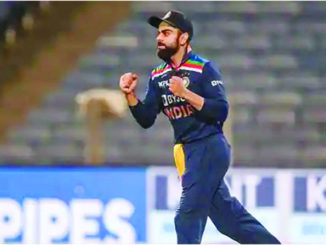
Mumbai (TIP): An image of Virat Kohli and Rohit Sharma, arms around their shoulders, trended on social media on Wednesday as Team India made the most of a rare leisure day in their bio-bubble in Pune. But come Friday, they will be back to business as the hosts look to overpower England in the second ODI and seal the three-game series.
Keeping England’s aggression in check may not be easy for India and the visitors’ belligerence seldom dips. After putting up a 318-run target in the first ODI, the Kohli-led Indian team had to weather an England batting storm that saw them notch 131/0 in just 14 overs, although the chase faltered in the latter stages with Shardul Thakur striking crucial blows. Credit should go to debutant pacer Prasidh Krishna (4/54), Thakur (3/37) and the experienced Bhuvneshwar Kumar (2/30) for stopping England’s onslaught. The Indian spinners Kuldeep Yadav and Krunal Pandya – who combined went for 127/1 in 19 overs – were unimpressive. If Hardik Pandya is going to be used sparingly in bowling, then getting the spin combination right becomes even more vital.
Krunal, after conceding 36 in his first three overs, managed to pull things back but Yadav looked listless in his nine overs. The Chinaman bowler, who has been regularly overlooked for a place in the XI in the last few months, couldn’t do any good to his future prospects. His numbers show a worrying trend. Yadav, picked as a mystery spinner after the 2017 Champions Trophy, took 93 wickets at an average of 23 and economy rate of 4.95 till the 2019 World Cup. After that, he has averaged 51.41 for his 12 wickets, conceding 6.1 runs per over.
In Yuzvendra Chahal, India has an able replacement but bringing in the leg-spinner could be a risk against a batting line-up comprising attacking left-handers like Ben Stokes, Moeen Ali and Sam Curran. Besides, Krunal, whose place in the team looks assured thanks to his 31-ball 58* on debut in the first ODI, also brings the ball into the left hander. Washington Sundar is the other spinner in the squad but India may not be confident of using him as a lead spinner in the ODIs. Source: HT
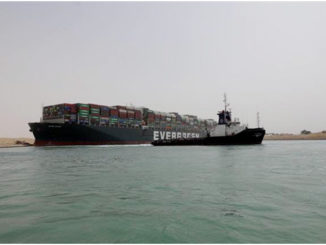
Egypt (TIP): A container ship blocking the Suez Canal like a “beached whale” created a new setback for global trade on Thursday as officials stopped all ships entering the channel and the salvage company said it may take weeks to free. The 400 m (430 yards) Ever Given, almost as long as the Empire State Building is high, is blocking transit in both directions through one of the world’s busiest shipping channels for oil and grain and other trade linking Asia and Europe. The Suez Canal Authority (SCA) said eight tugs were working to move the vessel, which got stuck diagonally across the single-lane southern stretch of the canal on Tuesday morning amid high winds and a dust storm.
“We can’t exclude it might take weeks, depending on the situation,” Peter Berdowski, CEO of Dutch company Boskalis which is trying to free the ship, told the Dutch television programme “Nieuwsuur”.
A total of 156 large container ships, tankers carrying oil and gas, and bulk vessels hauling grain have backed up at either end of the canal, Egypt’s Leith Agencies said, creating one of the worst shipping jams seen for years.
The blockage comes on top of the disruption to world trade already caused in the past year by COVID-19, with trade volumes hit by high rates of ship cancellations, shortages of containers and slower handling speeds at ports.
The SCA, which had allowed some vessels to enter the canal in the hope the blockage could be cleared, said it had temporarily suspended all traffic on Thursday. Shipping giant Maersk said in a customer advisory it had seven vessels affected. Berdowski said the ship’s bow and stern had been lifted up against either side of the canal.
“It is like an enormous beached whale. It’s an enormous weight on the sand. We might have to work with a combination of reducing the weight by removing containers, oil and water from the ship, tug boats and dredging of sand.” Roughly 30% of the world’s shipping container volume transits through the 193 km (120 miles) Suez Canal daily, and about 12% of total global trade of all goods.
Shipping experts say that if the blockage is not cleared in the coming days, some shipping may re-route around Africa, which would add roughly a week to the journey.
“Every port in Western Europe is going to feel this,” Leon Willems, a spokesman for Rotterdam Port, Europe’s largest, said. “We hope for both companies and consumers that it will be resolved soon. When these ships do arrive in Europe, there will inevitably be longer waiting times.”Consultancy Wood Mackenzie said the biggest impact was on container shipping, but there were also a total of 16 laden crude and product oil tankers due to sail through the canal and now delayed. The tankers were carrying 870,000 tonnes of crude and 670,000 tonnes of clean oil products such as gasoline, naphtha and diesel, it said. According to oil analytics firm Vortexa, Russia and Saudi Arabia are the top two exporters of oil through the canal, while India and China are the main importers. Joanna Konings, senior economist, International Trade Analysis at Dutch bank ING, said the impact on the world economy would be limited if it did not drag on since the container shipping industry was used to days of delays. Reuters
Wellington (TIP): New Zealand’s parliament has passed legislation giving mothers and their partners the right to paid leave following a miscarriage or still birth, becoming only the second country in the world to do so. The bereavement allowance, passed unanimously in parliament late on Wednesday, gives employees three days leave when a pregnancy ends with a stillbirth without having to tap into sick leave. “The passing of this bill shows that once again New Zealand is leading the way for progressive and compassionate legislation, becoming only the second country in the world to provide leave for miscarriage and stillbirth,” said Labour Party MP Ginny Andersen, who initiated the bill.
“The bill will give women and their partners time to come to terms with their loss without having to tap into sick leave.“Because their grief is not a sickness, it is a loss. And loss takes time.”
The leave provisions apply to mothers, their partners as well as parents planning to have a child through adoption or surrogacy, she said.One in four New Zealand women have had a miscarriage, Andersen said in her statement.
India is the only other country with similar legislation, media said. New Zealand was the first country in the world to give voting rights to women and has been an pioneer on issues around woman’s rights.
The ruling centre-left Labour government is led by Prime Minister Jacinda Ardern, who is seen as a global champion for women. Her government last year passed a historic law to decriminalise abortion. Reuters
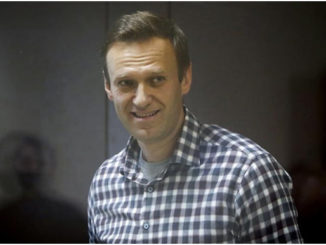
Moscow (TIP): Russian opposition leader Alexei Navalny has suffered back pains and leg problems in prison, his lawyer said Thursday. The lawyer, Olga Volkova, said Navalny’s condition has notably deteriorated in recent days.
“He’s suffering strong pains in his back and his right leg. He’s feeling numbness in his right lower leg,” Volkova said outside the prison in remarks carried by independent Dozhd TV. “His right leg is in terrible shape.”
The 44-year-old Navalny, who is President Vladimir Putin’s most outspoken opponent, was arrested on January 17 upon his return from Germany, where he spent five months recovering from a nerve-agent poisoning that he blames on the Kremlin. Russian authorities have rejected the accusation.
Volkova said Navalny was taken to a hospital outside prison on Wednesday for magnetic resonance tomography but wasn’t given the results. She said Navalny has received pills and ointment for his pain, but prison authorities refused to accept medicines that lawyers brought to him.
Volkova said Navalny had experienced back pain for four weeks, but prison officials also would not permit a visit by his doctor. The lawyer argued that authorities should transfer Navalny to Moscow so he could get better treatment.
Earlier this month, Navalny was moved to a prison colony in Pokrov in the Vladimir region, 85 kilometers (53 miles) east of Moscow. The facility stands out among Russian penitentiaries for its particularly strict regime that includes routines like standing at attention for hours. Russia’s Federal Penitentiary Service said earlier Thursday that Navalny had undergone medical check-ups the previous day, describing his condition as “stable and satisfactory.” Last month, Navalny was sentenced to 2½ years in prison for violating the terms of his probation while convalescing in Germany. The sentence stems from a 2014 embezzlement conviction that Navalny has rejected as fabricated — and which the European Court of Human Rights has ruled to be unlawful. Russian officials have rejected demands from the United States and the European Union to free Navalny and stop the crackdown on his supporters. AP
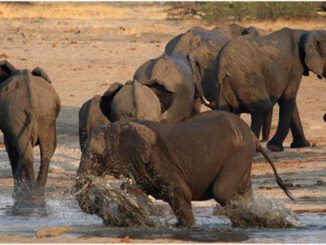
Geneva (TIP): African elephants living in forests and savannas are increasingly threatened with extinction, the Red List of species in trouble showed on Thursday, as conservationists called for an urgent end to poaching.
The new assessments by the International Union for Conservation of Nature underscore the persistent pressures faced by the two species of elephants in Africa due to poaching for ivory and human encroachment.
“We must urgently put an end to poaching and ensure that sufficient suitable habitat for both forest and savannah elephants is conserved,” said Bruno Oberle, IUCN Director General.
The Swiss-based body’s latest survey said the savanna elephant was “endangered” and the much smaller, lighter forest elephant was “critically endangered”—its highest category before extinction in the wild.
Previously IUCN had treated both elephants together which it considered as “vulnerable” but opted to separate them following genetic evidence that they are different species.
The IUCN cited data showing that the populations of Africa’s savanna elephants found in a variety of habitats had decreased by at least 60% over the last 50 years while the number of forest elephants found mostly in Central Africa had fallen by 86% over 31 years.
Combined, around 415,000 remain, it said.
Despite the overall decline, some populations of forest elephants were rebounding due to successful conservation measures such as those taken by Gabon and Republic of Congo. In Southern Africa’s Kavango–Zambezi Transfrontier Conservation Area, savanna elephant numbers were also stable or growing, IUCN said.
IUCN’s latest assessment—the first of three annual updates—assessed 134,425 species of plants, fungi and animals of which more than a quarter are threatened with extinction. Reuters
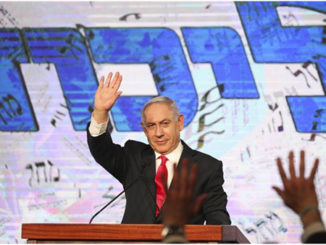
Jerusalem (TIP): Mansour Abbas, an Arab leader in Israel seems to have emerged as the unusual “kingmaker” whose possible support has split open differences not only in the ruling Likud party, but also in its right-wing coalition, making the road to the government formation even more bumpy for Prime Minister Benjamin Netanyahu.
Netanyahu’s Likud party has emerged as the largest party, with all votes counted in Israel’s unprecedented fourth election in less than two years. However, it still does not have a clear path to a 61-seat majority needed to form a coalition in the 120 member Knesset (Israeli Parliament). The anti-Netanyahu bloc, comprising left, right and centrist factions which is boosted by some “friends turned foes” determined to oust Israel’s longest-serving premier, is also short of a majority in a highly-divided Israeli political spectrum.
Most of the analysts predicted a Netanyahu-led coalition, based on the exit polls on Tuesday, with the support of Yamina party led by former defence minister Naftali Bennett, who has not declared his support for anyone but his political inclination is more likely to draw him towards the Prime Minister led right-wing bloc.
Bennett and Netanyahu had bitterly attacked each other during the election campaign but the former did not rule out sitting in the government with the latter.
However, in a surprising twist to the tale, the Islamist United Arab List party (UAL), headed by Abbas, managed to cross the threshold belying all predictions and secured four Knesset seats, spoiling the turf for the Netanyahu camp which finds itself at 59 seats, in the best-case scenario including Bennett’s Yamina party, making Abbas’ support indispensable if the Prime Minister does not manage to split other parties opposed to him and draw the required support to form the government. The UAL and Yamina have not yet declared their support for either bloc. Abbas on Wednesday continued to be evasive over potential alliances, telling Channel 12 that “UAL’s approach is to not rule out anyone who does not rule us out. If a ruling party makes contact, Ra’am will hold the process appropriately and respectfully, our partners would be a ruling party and a candidate for Prime Minister, not their satellite candidate”.
He said that he has not yet been contacted by Netanyahu.
The UAL could potentially put either side over the 61-seat mark for a majority, but right-wing politicians, both in the pro-Netanyahu bloc and the anti-Netanyahu camp, have ruled out basing a coalition on the party’s support, due to what they say is an anti-Zionist stance.
Netanyahu himself has in the past ruled out sitting with the UAL in a coalition.
However, the Prime Minister is concerned that Abbas could support a possible legislation being considered by his opponents that would prevent him from forming a coalition, Kan Radio reported on Thursday.
Netanyahu’s opponents are also considering the possibility of replacing Likud lawmaker Yariv Levin as Knesset speaker, shifting control over Parliament’s agenda to a lawmaker opposed to the Prime Minister.
With the speakership, lawmakers from the anti-Netanyahu bloc could pass legislation barring a candidate under criminal indictment from forming a government. Doing so would prevent Netanyahu, who is on trial in three graft cases, from being tasked with assembling a coalition. PTI
Kathmandu (TIP): The Nepal government has kicked off preparations for the 12th National Population Census, a government official said. Pushparaj Kadel, vice-chairman of the National Planning Commission told Xinhua news agency that this Census is crucial since it is the first one under the 2015 Constitution and new federal system.
The Central Bureau of Statistics (CBS) conducts National Population Census Programme every 10 years and the first one took place in 1911. The programme compiles population statistics at the national and local levels.
It also contains data on a variety of social, demographic, and economic indicators relevant to the monitoring and assessment of National Periodic Development Goals and Sustainable Development Goals.
In order to ensure the success of the national census, the CBS has been conducting a sample census programme.
According to information made public on the CBS website, the sample census programme will be conducted in 55 wards across 14 districts until April 12.
The CBS department says that it has arranged a variety of trainings to ensure the census effective.
From February 14 to February 20, the department held a National Facilitator Training.
From March 22 to March 28, state-level trainers will be receiving instruction, according to officials.
Similarly, the department has stated that it will provide training to local census officers from April 1 to April 7.
According to the 2001 Census, Nepal’s total population was 23,151,423 people. In the 2011 Census, it rose to 26,620,809.
According to CBS officials, the full details of the Census will be made public in around five years.
The CBS office predicts that the Census would cost more than $35 million. — IANS
Islamabad (TIP) : At least five members of a family were killed by an avalanche that hit their home in Pakistan-occupied Kashmir on Thursday. The snow slip swept away the house far away from where it initially stood in Sargan village of Neelum Valley, Radio Pakistan reported.
The victims—a woman and her four children—were shifted to a nearby hospital where they were pronounced dead.
Heavy snowfall snapped the communication lines, resulting in delayed alert to the district authorities. PTI
Colombo (TIP): Faced with pressure from its electoral allies in Tamil Nadu and the need to maintain long-term ties with Colombo, India today abstained from a UN Human Right Council resolution on Sri Lanka.
The resolution was passed with 22 countries for and 11 against, while 14 abstained from voting.
India’s abstention was in contrast to the stand taken by other neighbours of Sri Lanka such as Bangladesh, China, Russia, Pakistan and the Philippines were among those which voted no while Nepal, like India, abstained from the vote.
Votes largely came from European countries, Uruguay and Brazil. Japan, which recently lost a container terminal deal in Sri Lanka, abstained from the vote.
The resolution against Sri Lanka is for war crimes against Tamils and is among the series of such resolutions the UNHRC has been bringing for a decade. India abstained from voting in 2014 and had voted in favour of a similar resolution in 2012.
The preset draft resolution is based on a report submitted by the Office of the High Commissioner for human rights in January. The report warned that Sri Lanka is “on an alarming path towards recurrence of grave human rights violations” and that “failure to deal with the past continues to have devastating effects on tens of thousands of family members from all communities who persist in seeking justice, reparations and the truth about the fate of their loved ones”.
The resolution was tabled by the UNHRC’s Core Group, which includes the UK, Germany and Canada and wants sanctions to be imposed on Sri Lanka besides listing certain action points for its government.
Ten days before the vote, Sri Lankan President Gotabaya Rajapaksa had called up PM Narendra Modi, who had reiterated the importance of Sri Lanka to India’s Neighbourhood First policy.
Tamil parties had called on PM Modi to vote in favour of the resolution but that would have jeopardised the prospects of India building major infrastructure projects as well as provided a breach to China to step in.
Twin pressure from Tamil allies, Colombo
The resolution titled ‘Promotion of Reconciliation Accountability and Human Rights in Sri Lanka’ was adopted by the UNHRC after 22 members out of 47-member Council voted in favour of it.
Eleven members voted against the resolution tabled by the Core Group on Sri Lanka consisting of countries like the United Kingdom, Canada and Germany. Tamil parties had called on PM Modi to vote in favour of the resolution but that would have jeopardised the prospects of India. TNS
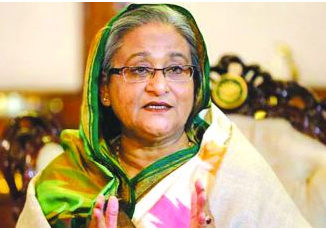
Dhaka (TIP): Hasina has in the past survived several assassination attempts with the first in 1975 when a military coup killed her Father and Bangladesh’s founder Bangabandhu Sheikh Mujibur Rahman along with most of his family members. The PM and her younger sister Sheikh Rehana survived the carnage as they were on a visit to Germany. Hasina miraculously survived a grenade attack when she was addressing an anti-terrorism rally in 2004. The attack claimed 24 lives and injured some 500 others.
Fourteen Islamist militants were on Tuesday given death sentence by a Bangladeshi court here for attempting to kill Prime Minister Sheikh Hasina in 2000. Judge Abu Zafar Md Kamruzzaman of Dhaka’s Speedy Trial tribunal-1 pronounced the verdict as nine of them were brought to the court from jail to face the trial in person. The remaining five convicts are on the run. They were tried in absentia and defended by state-appointed lawyers.
“The verdict will be executed by a firing squad to set an example, unless the law barred it,” the judge said. Otherwise, the convicts could be hanged in line with the prevailing practice, following mandatory review of the death sentences by the High Court Division of the Supreme Court under the Bangladesh law, the judge said.
Under the Bangladesh law, the death sentences would require to be endorsed by the High Court following an automatic death reference hearing. The convicts are allowed to file an appeal as well.
For the five convicts who are at large, the judge ordered the verdict to be executed after their arrest or surrender. All convicts are operatives of outlawed Harkatul Jihad Bangladesh (HuJI-B).
HuJI-B’s chief Mufti Abdul Hannan, who was found to be the mastermind of the plot, too was indicted in the case but his name was dropped from the trial as he was executed in 2017 in another case involving attempted assassination of the then Bangladeshi-origin British High Commissioner. The convicts had hatched the plot to kill Hasina by planting a high-powered 76 kilogram bomb near a ground in her constituency in Kotalipara area in southwestern Gopalganj district where she was supposed to address an election rally in July 2000.
However, security agencies detected the device ahead of the rally at the spot where the premier’s helicopter was set to land. Days later, another device weighing 40 kilograms was detected from a nearby spot. In 2017, 10 militants were sentenced to death and nine others jailed for 20 years each by a court in the case. PTI
LONDON (TIP): The UK capital is by far the most attractive destination of choice for Indian students coming to study at British universities, rising from third place in 2018-19 to become the second-largest international student market for London in 2019-20. According to new data released by the Higher Education Statistics Agency (HESA), 13,435 Indian students are enrolled at London universities, up a massive 87 per cent on the previous year’s 7,185 students.
The latest data has been dubbed “an impressive period of growth” for India, after falling to fourth place in 2017-18 before rising to third place the following year. “These new figures are a resounding confirmation of the status of London’s world-leading universities,” said Lalage Clay, Director of Education and Talent at London & Partners (L&P) – the Mayor of London’s international trade, investment and promotion agency. “The astonishing growth of Indian students choosing London demonstrates the great opportunity that studying in the UK’s capital unlocks, alongside the option to remain in the UK for two-years post study,” she said. “Whether it’s fashion or financial economics, accountancy or art history, prospective international students know when they choose London, they are choosing a first-class education and a cultural experience like no other,” she added. China maintained its first place in the ranking with 29,940 students, while the US dropped to third with 7,245. For India, the 2019-20 figures demonstrate an “unprecedented” 152 per cent increase on 2017-18 levels. “Applications by Indian students may have been encouraged by the reintroduction of the two-year post-study visa for international students by the UK government, allowing overseas graduates a longer period of time to look for employment after their studies,” the L&P notes. Overall, the data shows 55,465 Indian students enrolled across higher education institutions across the United Kingdom, with England being the dominant region for these students followed by Scotland and then Wales and Northern Ireland. The statistics from HESA, the designated higher education data body for England, show that the total number of international students at London’s universities has risen to 135,490, up 8.4 per cent on last academic year to the highest level on record. This also marks uplift in overseas students in London for the seventh consecutive year, which L&P says reflects the UK capital’s growing appeal for prospective international students.
WASHINGTON (TIP): An Indian – origin has been sentenced by a US court in California to two years in prison, who after being fired by his company accessed its server and deleted over 1,200 Microsoft user accounts, according to a statement. Deepanshu Kher was arrested when he flew from India to the United States on January 11, 2021, unaware of the outstanding warrant for his arrest.
“This act of sabotage was destructive for this company,” said Acting US Attorney Randy Grossman on Tuesday.
In pronouncing the sentence, US District Court Judge Marilyn Huff noted that Kher perpetrated a significant and sophisticated attack on the company, an attack which was planned and clearly intended as revenge.
In addition to the two years in custody, Judge Huff sentenced Kher to three years’ supervised release and restitution to the Company of USD 567,084, the amount that the Company paid to fix the problems, which Kher caused.
According to court documents, Kher was employed by an information technology-consulting firm from 2017 through May 2018. In 2017, the consulting firm was hired by the Carlsbad Company to assist with its migration to a Microsoft Office 365 (MS O365) environment. In response, the consulting firm sent its employee, Kher, to the company’s Carlsbad headquarters to assist with the migration. The company was dissatisfied with Kher’s work and relayed their dissatisfaction to the consulting firm soon after Kher’s arrival. In January 2018, the consulting firm pulled Kher from the company’s headquarters. A few months later, on May 4, 2018, the firm fired Kher, and a month after that, in June 2018, Kher returned to Delhi, India. On August 8, 2018, two months after his return to India, Kher hacked into the Carlsbad Company’s server and deleted over 1,200 of its 1,500 MS O365 user accounts. Federal prosecutors alleged that the attack affected the bulk of the company’s employees and completely shut down the company for two days. As the company’s Vice President of Information Technology explained, the impact was felt inside and outside the company. Employees’ accounts were deleted – they could not access their email, their contacts lists, their meeting calendars, their documents, corporate directories, video and audio conferences, and Virtual Teams environment necessary for them to perform their jobs, prosecutors said.
LONDON (TIP): The University of Oxford on Tuesday, March 23, said a probe is underway and that it “investigates thoroughly” every complaint related to harassment or equality, following allegations of cyber bullying surrounding Rashmi Samant, the first Indian woman to be elected President of the Oxford Student Union (SU) who was forced to resign amidst controversy over some of her past social media posts. Some British Hindu groups have also raised concerns around comments made online by a university staffer from the history faculty with the local Thames Valley Police, urging an investigation into a possible hate crime.
The police force confirmed that it has “received a report of an alleged hate incident”. The comments under scrutiny, posted with an image of Samant’s family on Instagram by Dr Abhijit Sarkar, made references to their Hindu faith and also categorized their home state of Karnataka as a “bastion of Islamophobic forces”.
“An investigation into these online comments is ongoing and we must allow time for this formal process to be followed. In cases such as these, student support is provided through their college and department,” an Oxford University spokesperson said.
“The university is fully committed to creating an environment where people of all backgrounds, including our Hindu students and staff, can feel welcome, valued and respected,” the university said, adding that it has strong policies in place to protect staff and students against “all forms of harassment, including online harassment”.
Samant has been working on completing her MSc course in Energy Systems at the university remotely from her hometown in Udupi, after she flew back to India in the wake of her resignation.
She said the continued “cyber bullying” makes it difficult for her to consider returning to the university at this stage.
“I’m just very glad that the university and the police have launched an investigation into my complaint, and I look forward to resolving it in the best manner possible,” said Samant, in a statement from India.
“I think it’s a long road for me to feel safe about the prospect of coming back and getting respite from the cyber bullying,” she said, adding that the Indian community in the UK had been “super supportive” through the course of the incident since last month. The issue even found its way to the Indian Parliament last week, when BJP MP Ashwini Vaishnav raised it as a question of “racial discrimination” in the Rajya Sabha.
External Affairs Minister S Jaishankar had responded to say that India would “never ever turn our eyes away from racism wherever it is” and that these developments will be monitored “very, very closely”.
This resulted in a joint statement from the Oxford India Society, Oxford University Hindu Society and Oxford South Asian Society against what they branded a “misleading narrative” being played out in India.
“We reiterate that these calls [Samant’s resignation] did not have anything to do with the fact that she is Indian or Hindu or a woman,” the statement reads.
However, the groups agreed that the faculty member at the center of the controversial online comments must apologize for his social media posts.
“We further strongly disapprove of the actions of Dr Abhijit Sarkar, Postdoctoral History Researcher at New College. Dr Sarkar’s social media posts about Ms Samant’s parents and their religious beliefs had no place in a conversation about Ms Samant’s reprehensible actions… It is imperative that Dr Sarkar take responsibility for his words and apologize to Ms Samant,” the statement adds.
Earlier this month, the online remarks of the staffer were raised by a former Oxford University alumnus and British Indian entrepreneur Alpesh Patel, who had issued a formal complaint to the Vice-Chancellor’s office.
“This matter deserves a police investigation into the bullies on incitement to racial hatred,” said Alpesh Patel, Chair of the City Hindus Network (CHN).
Satish K Sharma, Senior Managing Director of the Global Hindu Federation, has taken up the matter of following up on the police complaint and accused the faculty member of “unlawful conduct and inexcusable bigotry”.
“Rest assured that the British Hindu community will persist until a just conclusion has been reached,” he said.
“It may be pointed out that Lloyd Austin is the Secretary of Defense, and within the US set up, matters such as human rights and democracy overseas do not come under his domain. However, while responding to a question during a media briefing, Austin said that he had raised issues of human rights of the country’s minorities with members of the Indian cabinet as “partners need to be able to have those kinds of discussions”. Asked specifically if he had raised the violation of human rights of India’s minorities as the first member of the Biden administration to meet Prime Minister Narendra Modi, Austin replied that he “did not have an opportunity to talk with him about that issue during their meeting,” adding: “Having said that, I did have a conversation with other members of the cabinet on this issue. I think we have to remember that India is our partner and a partner whose partnership we value, and I think partners need to be able to have those kinds of discussions. And certainly, we feel comfortable in doing that, and you can have those discussions in a very meaningful way and still make progress,” Austin said.”
In diplomacy, timing matters a lot, and the timing of the visit was very significant. It came on the heels of the US-China acrimonious talks in Alaska which have been described by the BBC as’ an unusually undiplomatic sparring match’. Moreover, it was just a week after the Quad summit had been convened by President Biden, and which PM Modi had attended.
US Secretary of Defense Lloyd J Austin inspects the Tri-Services’ Guard of Honor at the Vigyan Bhawan lawns, in New Delhi (Photo : Courtesy ANI)
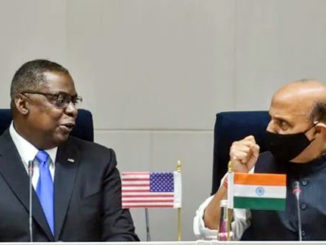
Gen. (Retd) Llyod Austin, the US Secretary of Defense, visited India from March 19-21. As would be expected, the Indian Government rolled out the red carpet and gave the visit a very high degree of importance. He met Prime Minister Modi, Defense Minister Raj Nath Singh, National Security Adviser AjitDoval and External Affairs Minister S. Jaishankar. What are the key takeaways from this visit? What are the markers and signposts which can help understand where the relationship is headed?
In diplomacy, timing matters a lot, and the timing of the visit was very significant. It came on the heels of the US-China acrimonious talks in Alaska which have been described by the BBC as’ an unusually undiplomatic sparring match’. Moreover, it was just a week after the Quad summit had been convened by President Biden, and which PM Modi had attended.
It was also the first overseas visit by a senior member of the Biden Administration, and it came right after his own visits to Japan and Korea–both key allies of the US. Clearly, the visit was aimed at strengthening the strategic partnership between India and the US.
US Defense Secretary Austin had stated unequivocally during his Senate confirmation hearing on January 19 that “If confirmed, my overarching objective for our defense relationship with India would be to continue elevating the partnership”. The fact that India figured in the list of countries during his first visit abroad shows that he is keen to translate his commitment into action. Working closely with India has become an important aspect of US foreign policy, and US policy planners envision that it is in their country’s interest to augment the bilateral proximity in the present global scenario.
The importance attached by President Biden to working with India was emphasized by his Administration from the very start. Just two days after the Presidential inauguration, Jen Psaki, the White House Press Secretary said at a news briefing that “President Biden, of course has visited India many times, respects and values the long, bipartisan, successful relationship between leaders in India and the United States. He looks forward to a continuation of that.” Again, on March 9, Psaki said that Biden has made the Quad summit on Friday March 12 one of his earliest multilateral engagements, and that it shows the importance which the US is giving to closer cooperation with its allies in the Indo-Pacific region.” Thus, the White House had sent clear signals that it would seek to strengthen Indo-US relations.
Of course, China’s territorial and economic expansionism is serving as a catalyst in this regard. Early on, there were signs that the Biden administration saw the US-China relationship in less hostile terms as compared to the Trump Administration. However, as the days rolled by, there was a perceptible hardening of the Biden Administration’s attitude towards China. Slowly, it became more upfront in being publicly critical of Beijing. When he delivered a virtual address at the Munich Security Conference on 19th February, Biden said “We have to push back against the Chinese government’s abuses and coercion that undercut the foundations of the international economic system”. In his blunt opening statement at the Alaska meeting on 18th March, Secretary of State Antony Blinken said the US side would “discuss our deep concerns about actions by China, including in Xinjiang, Hong Kong, Taiwan, cyber-attacks on the United States, economic coercion of our allies”, adding “each of these actions threatens the rules-based order that maintains global stability.”
The US approach was also spelt out recently by Blinken and Austin in their joint op-ed in the Washington Post on 15th March–just three days before the Alaska meeting and Austin’s visit to India. They wrote:” The United States is now making a big push to revitalize our ties with friends and partners — both in one-to-one relationships and in multilateral institutions — and to recommit to our shared goals, values and responsibilities.” They also wrote: “The Indo-Pacific region is increasingly the center of global geopolitics. It is home to billions of the world’s people, several established and rising powers, and five of America’s treaty allies. Plus, a great deal of the world’s trade travels through its sea lanes It is strongly in our interests for the Indo-Pacific region to be free and open, anchored by respect for human rights, democracy and the rule of law.”
About the threat from China, they wrote:” Not all countries share this vision. Some seek to challenge the international order — that is, the rules, values and institutions that reduce conflict and make cooperation possible among nations. As countries in the region and beyond know, China in particular is all too willing to use coercion to get its way. Here again, we see how working with our allies is critical. Our combined power makes us stronger when we must push back against China’s aggression and threats. Together, we will hold China accountable when it abuses human rights in Xinjiang and Tibet, systematically erodes autonomy in Hong Kong, undercuts democracy in Taiwan or asserts maritime claims in the South China Sea that violate international law. If we don’t act decisively and lead, Beijing will.” Underscoring the importance of working with like-minded nations, they wrote that “it’s the most effective way to meet the challenges we face today, few of which can be solved by us acting alone.”
In this context, working closely with India makes good sense to US policy makers. After Austin’s meetings with PM Modi and NSA Doval, the US Embassy said ““Both sides exchanged perspectives on shared challenges confronting the region and committed to further strengthen their broad ranging and robust defense cooperation.” On its part, India reciprocated the sentiment. PM Modi tweeted after the meeting ““India and the U.S. are committed to our strategic partnership that is a force for global good.” The Ministry of External Affairs also said in a statement ““The Prime Minister welcomed the warm and close relationship between the two countries, which is rooted in shared values of democracy, pluralism and commitment to a rules-based order.” In this context, working closely with India becomes more intrinsic to US policy formulation.
At the same time, another aspect of Defense Secretary Austin’s visit should not be overlooked. The Pentagon sees India as a potential purchaser of advanced weapons systems and this makes it even more necessary for Biden to seek a closer relationship with the Indian political establishment. The on-going India-China standoff at the LAC continues to be seen by the US as a great opportunity to sell weapons and other defense-related items which India needs to acquire at such a difficult time.
Both countries have increased their defense partnership in recent years and signed four key foundational defense pacts. The General Security of Military Information Agreement (GSOMIA) was signed by the government of Atal Bihari Vajpayee back in 2002. It aims to protect the military information shared by the US. The Logistics Exchange Memorandum of Agreement (LEMOA) was signed a full 14 years later in 2016, and it aims to provide mutual logistics support around the world. The Communication Compatibility and Security Agreement (COMCASA) was signed in 2018, and it aims to facilitate communication between the weapons platforms of the two armed forces. Finally, the Basic Exchange and Cooperation Agreement was signed at the Indo-US 2+2 meeting in October 2020 and it largely pertains to geospatial intelligence, sharing information on maps and satellite images for defense. BECA will provide Indian military systems with a high-quality GPS to navigate and missiles with real-time intelligence to precisely target the adversary. It will also give access to topographical and aeronautical data and products that will aid navigation and targeting.
In this context, it may be noted that India has substantially increased its acquisition of US defense equipment. Indian forces are operating US-sourced platforms such as P-8s, C-130Js, C-17s, AH-64s, CH-47s, Precision Guided-Excalibur Munitions, and M777 howitzers. In February, India agreed to acquire Apache and MH-60R multi-mission helicopters worth $3.1 billion, and is considering other US systems. A deal for 30 armed drones, 10 each for the army, air force, and navy, estimated at $3 billion, is close to being approved by the Indian defense ministry. In November 2020, the Indian Navy acquired two Sea Guardian unarmed drones from the U.S. on a one-year lease. India has plans also to buy six additional P-8I long range maritime patrol aircraft in addition to the 12 already contracted. During the Trump Administration, amidst all the din about the US standing alongside India to ward off the Chinese threat, there was an unmistakable sales pitch that was clear as daylight. US media reports made no secret of the fact that during the 2+2 dialogue in October 2020, Mike Pompeo and Mark Esper had tried to push India to purchase MQ-9 Reaper drones. From the beginning, Trump had made arms sales a central component of his foreign policy.
It cannot be doubted that the Biden Administration will also push for arms-sales to India, and Defense Secretary Austin undoubtedly saw this as a priority item on his agenda during his visit.
However, some irritants in the Indo-US bilateral relationship cannot be overlooked. Prior to his visit to India, US Senate Foreign Relations Committee chair Bob Menendez had written a letter to him asking him to raise concerns about India “trending away” from shared democratic values, including the Indian government’s handling of the farmers’ protest and a crackdown on journalists and critics. “In meetings with Indian counterparts during your upcoming visit, I strongly encourage you to make clear that in all areas, including security cooperation, the US-India partnership must rest on adherence to democratic values,” Menendez said in his letter.
In his capacity as Chairman of the Senate Foreign Relations Committee, Menendez plays a key role in influencing the country’s foreign policy and national security. Among his predecessors include President Joe Biden, who occupied this position during former president George Bush’s administration and former secretary of state John Kerry. It may be pointed out that Lloyd Austin is the Secretary of Defense, and within the US set up, matters such as human rights and democracy overseas do not come under his domain. However, while responding to a question during a media briefing, Austin said that he had raised issues of human rights of the country’s minorities with members of the Indian cabinet as “partners need to be able to have those kinds of discussions”. Asked specifically if he had raised the violation of human rights of India’s minorities as the first member of the Biden administration to meet Prime Minister Narendra Modi, Austin replied that he “did not have an opportunity to talk with him about that issue during their meeting,” adding: “Having said that, I did have a conversation with other members of the cabinet on this issue. I think we have to remember that India is our partner and a partner whose partnership we value, and I think partners need to be able to have those kinds of discussions. And certainly, we feel comfortable in doing that, and you can have those discussions in a very meaningful way and still make progress,” Austin said.
In this regard, the thinking of some key players in the Biden Administration is no secret. In 2019, soon after the Centre stripped Jammu and Kashmir of special status under Article 370 and split it into two Union Territories, Kamala Harris did not mince words. “We have to remind Kashmiris they are not alone in the world,” she said. “We are keeping a track on the situation. There is a need to intervene if the situation demands.” Again, in the Biden campaign’s agenda for Muslim Americans, India’s National Register of Citizens and Kashmir featured in the list of threats to Muslim populations across the world. “In Kashmir, the Indian government should take all necessary steps to restore rights for all the people of Kashmir,” said the campaign agenda. “Restrictions on dissent, such as preventing peaceful protests or shutting or slowing down the Internet, weaken democracy.”
Freedom House, a US-based, US-funded Non-Governmental Organization said in its recent report ‘Democracy under Siege’ that Civil liberties in India have been in decline since PM Narendra Modi came to power in 2014. The report downgraded India’s rating to ‘partly free’. Trump had maintained a tactical silence in regard to India’s Citizenship Amendment Act and the human rights situation in Jammu and Kashmir. While the Biden Administration may also find it necessary to maintain a similar tactical silence on these internal matters of India, during closed-door meetings with the Indian side, such reports are likely to be cited as instances of ‘independent’ studies calling on India to undertake a course-correction. Something of this nature appears to have been done by Austin. On their part, senior Indian officials have said that human rights and values were discussed as shared strengths of the two countries. However, this irritant is likely to keep raising its head from time to time.
There is another and perhaps more serious danger to the US-India relationship lurking on the scene and it relates to CAATSA (Combating America’s Adversaries Through Sanctions Act). On India’s reported plan to purchase the Russian S-400 missile defense system, Senator Menendez said in his letter to Defense Secretary Austin that if India chooses to go forward with its purchase, that act will clearly constitute a sanctionable transaction with the Russian defense sector under provisions of CAATSA. “I recognize that India is not a US treaty ally and has historical ties with the Soviet and Russian militaries. However, if India chooses to go forward with its purchase of the S-400, that act will clearly constitute a significant and therefore sanctionable, transaction with the Russian defense sector under Section 231 of CAATSA,” Menendez wrote. “It will also limit India’s ability to work with the US on the development and procurement of sensitive military technology. I expect you to make all of these challenges clear in conversations with your Indian counterparts,” he said.
Defense Secretary Lloyd Austin did raise the issue of India’s planned acquisition of the S-400 air defense system from Russia and stressed that allies and partners should avoid “any kind of acquisitions that will trigger sanctions”.
It may be recalled that In October 2018, India had signed a USD 5 billion deal with Russia to buy five units of the S-400 air defense missile systems, despite a warning from the then Trump administration that going ahead with the contract may invite US sanctions. In 2019, India made the first tranche of payment of around USD 800 million to Russia for the missile systems which are expected to be delivered later this year.
The United States had in January 2021 imposed sanctions on Turkey, a NATO ally for purchasing S-400 surface-to-air missile systems from Russia. However, it had done so only after Turkey took the delivery of the first shipment. Briefing the media, Austin said that the question of CAATSA or sanctions against India is not on the table as India has not taken delivery of the system. He, however, did not elaborate on what will happen when India will take delivery of the system later this year. Summing up, one cannot ignore these potential roadblocks for the Indo-US relationship. They cannot be wished away because they are very much real. There is a great deal of affinity being shown by US policy makers towards India, but it may lessen considerably if they can sort out their difficulties on trade-related issues with China. The signposts and markers in the unfolding scenario will have to be watched closely to understand where the relationship is heading.
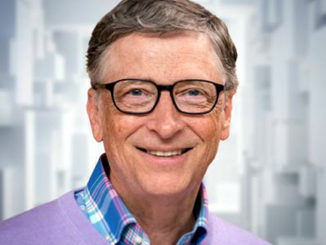
WARSAW (TIP): The world should be back to normal by the end of 2022 thanks to COVID-19 vaccines, Bill Gates said in an interview for Polish newspaper Gazeta Wyborcza and television broadcaster TVN24, says a Reuters report. “This is an incredible tragedy,” the Microsoft co-founder said on the pandemic, adding that the only good news was the access to vaccines. “By the end of 2022 we should be basically completely back to normal,” Gates said. Gates, a billionaire who stepped down as chairman of Microsoft Corp in 2014, has through his philanthropic Bill and Melinda Gates Foundation committed at least $1.75 billion to the global response to the COVID-19 pandemic. That includes support for some makers of vaccines, diagnostics and potential treatments. The COVAX facility, backed by the World Health Organization (WHO) and the Global Alliance for Vaccines and Immunization (GAVI), aims to secure 2 billion vaccine doses for lower income countries by the end of 2021.
Bicameral immigration Bill, if signed into law by President Biden, would also benefit hundreds and thousands of Indian IT professionals and their families
WASHINGTON (TIP): President Joe Biden is keen that the US Congress should quickly fix America’s “broken” immigration system, for which he has already sent in a legislation, the White House has said. In February, the Biden administration introduced an ambitious immigration bill in Congress which among other things proposes to eliminate the per-country cap for employment-based green cards. The US Citizenship Act of 2021 proposes a pathway to citizenship to 11 million undocumented workers, elimination of per country quota for employment-based green cards and work authorization for dependents of H-1B foreign workers. “The president…believes that there should be faster processing, that our immigration system is broken at many levels and of the system and that he is eager for Congress to move forward with action there,” White House Press Secretary Jen Psaki told reporters on Wednesday at her daily news conference. She was responding to a question on the recent protest by Indian-American doctors who are seeking the elimination of the existing per country quota for Green Card, as a result of which the backlog for Indians now runs into several decades. A Green Card, known officially as a Permanent Resident Card, is a document issued to immigrants to the US as evidence that the bearer has been granted the privilege of residing permanently. The bicameral immigration bill, if passed by both the chambers of the Congress House of Representatives and the Senate and signed into law by President Joe Biden, would bring citizenship to millions of foreign nationals, including undocumented workers and those who came to the country legally. The legislation would also benefit hundreds and thousands of Indian IT professionals and their families.
Responding to another question on the inordinate delay in the issuance of employment authorization card to H4 and L2 visa holders, a significant number of whom are Indian women, Psaki said that part of the reason the administration went to push for action on immigration on the Hill is to move forward with expediting the processing and doing that on several levels, including a number of the visas.
“So, that’s part of the reason why we think that’s such an important piece to move forward,” Psaki said.
An H-4 visa is issued by the US Citizenship and Immigration Services (USCIS) to immediate family members (spouse and children under 21 years of age) of the H-1B visa holders, most of whom are Indian IT professionals.
The Biden administration has taken several steps to address the problems related to legal immigrants.
The citizenship bill sent by the White House to Congress includes providing new funding to the state and local governments, private organizations, educational institutions, community-based organizations, and not-for-profit organizations to expand programs to promote integration and inclusion, increase English-language instruction, and provide assistance to individuals seeking to become citizens. This bill clears employment-based visa backlogs, recaptures unused visas, reduces lengthy wait times, and eliminates per-country visa caps. The bill makes it easier for graduates of US universities with advanced STEM degrees to stay in the US; improves access to green cards for workers in lower-wage sectors; and eliminates other unnecessary hurdles for employment-based green cards. The bill provides dependents of H-1B visa holders work authorization, and children are prevented from “aging out” of the system. The bill sent by the White House also creates a pilot programme to stimulate regional economic development, gives the Department of Homeland Security (DHS) the authority to adjust green cards based on macroeconomic conditions, and incentivizes higher wages for non-immigrant, high-skilled visas to prevent unfair competition with American workers. It also requires that the DHS and the Department of Labor establish a commission involving labor, employer, and civil rights organizations to make recommendations for improving the employment verification process. Workers who suffer serious labor violations and cooperate with worker protection agencies will be granted greater access to U visa relief. The bill protects workers who are victims of workplace retaliation from deportation in order to allow labor agencies to interview these workers. It also protects migrant and seasonal workers and increases penalties for employers who violate labor laws.
The nation-wide bandh call urged that shops, malls, markets and institutions remain closed
BENGALURU (TIP): Protesting farm unions under the banner of the Samyukt Kisan Morcha have called for a day long Bharat Bandh on Friday, March 26 to mark the four-month anniversary of their agitation on the borders of Delhi, and to reiterate their demand to repeal three contentious farm laws. The strike is in effect from 6 a.m. to 6 p.m. The nation-wide bandh call urged that shops, malls, markets and institutions remain closed. Protestors intend to block road and rail transport and suspend services, except for ambulances and other emergency services.
Here are the live updates:
9.40 AM
Traffic movement suspended on Ghazipur border
The Delhi Police has closed both carriageways of National Highway-24 passing through the Ghazipur border in view of the ‘Bharat Bandh’. In a tweet, the Delhi Traffic Police said, “Traffic movement is closed on Ghazipur Border NH-24 (Both carriageways).” The one side of the carriageway was earlier opened on March 15 for traffic. However, the other side from Ghaziabad towards Delhi is closed since the farmers’ protest started. – PTI
9.30 AM
‘Satyagraha’ ends atrocities, arrogance: Rahul Gandhi on Bharat Bandh
India’s history shows that ‘satyagraha’ ends atrocities, injustice and arrogance, Congress leader Rahul Gandhi said, expressing support for the ‘Bharat Bandh’.
In a tweet in Hindi, Mr. Gandhi said India’s history shows that ‘satyagraha’ ends atrocities, injustice and arrogance. The movement should be in national interest and peaceful, the former Congress chief added. – PTI
9.20 AM
Vehicular movement hit in Punjab, Haryana, Delhi
In Punjab and Haryana, groups of farmers started sit-in protests, or dharnas, on key roads, including national and State highways, as well as besides railway tracks at a few locations.
Vehicular movement was disrupted in parts of the two States, which have been at the forefront of the protests. Public transport, including buses and taxis, stayed off the roads. SKM members will hold dharnas at 120 places in Punjab alone, said Jagmohan Singh, general secretary, Bhartiya Kisan Union-Ekta (Dakonda).
At least five agitation points have also been identified within Delhi city, with protests to begin by 11 a.m. This will also be the first major agitation within the capital since the Republic Day tractor parade.
8.40 AM
Farmers occupy key roads in Punjab, Haryana
Several groups of farmers on Friday went on dharna on key roads, including national and State highways, besides railway tracks at a few places, in Punjab and Haryana amid the call for ‘Bharat bandh’.
Vehicular movement was disrupted in parts of Punjab and Haryana. Public transport, including buses and taxis, stayed off the roads.
“A complete shutdown has been called from 6 a.m. to 6 p.m,” said Jagmohan Singh, general secretary, Bhartiya Kisan Union-Ekta (Dakonda).
DELHI
Adequate security arrangements in place, says Delhi Police
The Delhi Police said adequate security arrangements have been put in place in view of the ‘Bharat Bandh’.
Delhi Police PRO Chinmoy Biswal said there will be intense patrolling to maintain peace in the national capital.
“There will be adequate security arrangements in all police districts during the ‘Bharat Bandh’,” he said.
“The patrolling staff will roam in their area throughout the day and their focus will be to maintain peace in busy marketplaces,” Mr. Biswal said.
ODISHA
Odisha declares closure of educational institutes
The Odisha government declared the closure of all educational institutions across the state on March 26 in view of the nationwide Bharat Bandh call.
The Congress and Left parties have announced their support to the 12-hour bandh to be observed from 6 a.m.
The State’s BJD government has asked its employees to reach offices by 9.30 a.m. on Friday in view of the bandh.
The front gates of state secretariat Lok Seva Bhawan will be closed at 10.15 a.m. and all the passage will be regulated through rear gates. Security check of identity cards and passes of the employees and visitors will be intensified, the home department said.
In a notification, the government said that schools, colleges, universities and technical institutions will be closed on Friday in view of the bandh.
Councilors argue against getting involved in events 8,000 miles away
CHICAGO (TIP): Some spirited footwork by Indian-American businessmen and diplomats from the Indian consulate in Chicago stemmed the tide of resolutions criticizing the Modi Government’s policies being passed by city councils in America. A proposed resolution expressing the Chicago City Council’s solidarity with its South Asian community “regardless of religion and caste” failed on Wednesday, March 24. The proposal fell by a 26-18 vote with several abstentions, which US analysts said was a tight call for a nonbinding resolution.
Several American cities, including Riverdale (Illinois), San Francisco, Seattle, Albany (New York), and St Paul (Minnesota), passed resolutions last year condemning the state violence in India. The resolution, introduced by Maria Hadden, led to both sides of the Indian-American community getting involved in vigorous lobbying and reports said there was active assistance from Indian diplomats posted in the US. The US Ambassador to India Taranjit Sandhu is an old American hand having served there for over a decade in several postings. Haddin hinted at the involvement of Indian diplomats. “There were some concerns, hinted at by the Consul General, that maybe this would damage some relationships with the city. I’m uncertain if this has happened before but it’s not typical,’’ she said.
The resolution meant to condemn violence against certain castes and religious minorities in India.
But some Chicago council members, including George Cardenas, did not want to get involved in matters 8,000 miles away. “If we take this on, why not take on the Chinese ethnic cleansing debate? We are a global city; I consider us a global city. But we have many pressing issues here at home that need our attention,” asked Cardenas.
Earlier, the Seattle City Council had passed a unanimous resolution criticizing the CAA and NRC. Introduced by Kshama Sawant, an Indian-American member of the City Council, it had called upon Parliament to uphold the Constitution by repealing the CAA. It has also urged India to press the stop button on the NRC and come to the aid of refugees by taking the United Nations route and ratifying the relevant treaties.
In both instances the opponents had said such resolutions needlessly sow division within Chicago’s Indian-American community. The supporters argued that the latest resolution was a symbol of solidarity “with Chicago’s South Asian community regardless of religion and caste”.
MINEOLA, NY (TIP): During her State of the County address, County Executive Laura Curran lauded the Nassau Legislature’s recent passage of a police reform plan. “For the first time in history, Nassau County police officers will wear body cameras — a proven tool for accountability, safety, and improved officer performance,” she said. Nassau County was named the safest in the nation by U.S. News and World Report with record low crime rates, according to Curran. She says her administration won’t get complacent, promising greater transparency and oversight of county police. The county executive also touted the soon-to-be opened Nassau County Training and Intelligence Center, the new Long Island Railroad station in Elmont and the Islanders’ new home at the UBS Arena. She thanked the residents of Nassau County for their resiliency during the pandemic and called the way many stepped up to be “heroic.” Her voice broke toward the end of her remarks when reflecting on the challenges of the past year. “Let’s not return to normal…let’s think bigger and bolder,” she said. John R. Ferretti, Jr., of the 15th Legislative District, delivered the Republican response to her address.
NEW YORK (TIP): Those who hold Overseas Citizen of India or Person of Indian Origin cards will now be considered “foreign nationals” in India, according to the Narendra Modi government’s new rules governing the rights and privileges of diaspora Indians. India’s Ministry of Home Affairs issued a notification on March 4, which includes new and sweeping restrictions on what OCI or PIO card holders can — and cannot — do in India. The notification says: “…the OCI cardholder shall be required to obtain a special permission or a Special Permit, as the case may be, from the competent authority or the Foreigners Regional Registration Officer or the Indian Mission concerned, namely: –
(i) to undertake research.
(ii) to undertake any Missionary or Tabligh or Mountaineering or Journalistic activities.
(iii) to undertake internship in any foreign Diplomatic Missions or foreign Government organizations in India or to take up employment in any foreign Diplomatic Missions in India.
(iv) to visit any place which falls within the Protected or Restricted or prohibited areas as notified by the Central Government or competent authority.”
The new rules have come as a shock for many in the Indian-American community that is, according to at least one study and ample anecdotal evidence, largely in favor of Indian Prime Minister Narendra Modi. Thomas Abraham, chairman of GOPIO International, a major Indian diaspora organization in the US, told indica News: “This is a very drastic move by the government. Once a person is treated as foreign national, major OCI benefits are gone.”
Some of the new clauses will hurt OCI cardholders doing business India, he said.
“So far, they were treated on par with resident Indians. Once they are termed as foreign nationals, they have to take permission for many things including conducting research in a company owned by an OCI cardholder.”
Abraham said he had been receiving calls from OCI cardholders doing business in India.
“Businesspeople are very much concerned about this new rule,” he underlined.
“GOPIO is studying these new clauses and getting feedback from our members. GOPIO will send a response letter to the government of India soon,” he said. One of the Indian Americans who have seen their business hit directly by the new rules is Dr Muhammed Majeed, founder of Sabinsa Corporation in New Jersey. Sabinsa, founded in 1988, is a manufacturer and supplier of herbal extracts, cosmeceuticals, minerals and specialty fine chemicals. In 1991, Majeed started Sami Sabinsa Labs in Bangalore.
He has over 1,150 employees including scientists who do research work for him in Ayurveda-related products.
Majeed, who said he was one of the sponsors of the event of Indian Prime Minister Modi at Madison Square Garden in New York, sounded bitter about the new rules.
“Indians come back to India, I will give you a dream of India [is what Modi said]. But my dream is not to be treated as second class citizen in my own country,” Majeed said.
He said that this new policy was making him think of moving his business out of India.
He said he offers “value added products and cultivated products that were exempted from government permit, and now they say none of them are exempted.
“If you are touching any biodiversity products you pay,” he said.
“This rule is for only foreign nationals. And they found one loophole in my case that I have OCI card and I am a foreign citizen,” Majeed told indica News.
The biological diversity act is not new. Majeed said: “Yes, but there were other sections and in that value-added products were exempted. “We offer Value added products,” he explained. “And we do research on natural products— the curcumin for example you buy, and many Ayurveda products and natural products. It comes under natural and it was exempted.”
“Now the National Biodiversity Authority is saying we will tell you what research you do. The moment you apply to biodiversity board to do research, I fear that information could be shared with everybody. And also it takes months to get the permit. And they want money for each permit from foreign nationals,” he said.
“It seems in 2014-15 they framed the rules and last year they started implementing and made it official on March 4. I learned about it after receiving a court notice last September,” Masjeed said.
“This will shut down my entire business and have to move to other country,” he said.
“No one in the world says you need a permission to do a research! Only India is asking to take permission to do research and we (India) are nowhere in research if compared with advanced countries. On top of that you are asking to take permission for research on each product!”
He alleged the government says there is single-window clearance and no hassle and permit to run a business in no time, but it is not true.
“We have 29 states in India and each state has a biodiversity board and it’s not uniform. If you are an Indian company you don’t need permission but foreign nationals need a permit and it would be biggest hurdle for us,” he said.
“My company is 25 years old in India. I was the lone player when I started,” he rued. “Now, to come to India to do business as an OCI is a sin for which they will punish you.”
An Indian-American community leader, Prem Bhandari, told indica News: “It’s too early to understand [the new rules] and people in the US are not aware of the change. We have to understand why they [the Indian government] did that.”
GOPIO has been receiving a large number of complaints from the Indian Diaspora community around the world. We have also received a letter from a OCI card holder businessman who had gone back to India and established a highly successful business in health supplements and Ayurvedic products. There are several millions of OCIs/PIOs who are concerned about this new ruling. I have compiled responses I had received in the last three days, i.e., from Sunday to Tuesday. It was too much time consuming. So, I didn’t compile many more which came earlier. They are all similar. Most comments are concerning about their properties in India. Govt. of India did not make any statement after the ruling from Deccan herald story about foreign nationals can’t buy or sell properties in India. So suddenly, all those who invested their earning for a retirement home or bought it for their children or have family properties find themselves in a fix. If everyone starts selling their properties in India, it may affect the whole Real Estate market in India. Already, after demonetization and now with covid, it was still the Diaspora who kept buying properties in India.
So, this could become a major issue if govt. does not reverse the ruling. My concluding statement, “Indian origin person who moved out from India for employment or business, whether they took foreign citizenship or whether they have OCI card or not, they should be allowed to buy and sell properties in India, since they are all sons and daughters of Mother India”
SPECIAL on 50th anniversary of Bangladesh’s Independence.
India must also recall the political and diplomatic successes of 1971 under Indira
By Vivek Katju
PM Modi will participate in the 50th anniversary of Bangladesh’s independence on March 26 in Dhaka as the guest of honor. This is only fitting because of the role played by India under the leadership of PM Indira Gandhi in assisting Bangladesh in its war of independence in 1971 to end West Pakistani colonialism. The focus in Dhaka will be on the courage and resilience of the Bangladeshi people who overcame the genocidal onslaught of the Pakistani army against its then co-nationals. It will also be on Sheikh Mujibur Rehman whose birth centenary Bangladesh is currently celebrating. He embodied the aspirations of the then East Pakistani people for equality within Pakistan, and as that prospect became remote, for throwing off the West Pakistani yoke.
Amidst all the celebrations, will Indira Gandhi’s leadership be recalled, and if so, to what extent and in what terms? Also, later in the year, as India marks the golden jubilee of its victory in the 1971 War, how will it honor the leader who led the country with skill and iron determination to victory against very great odds? Her later mistakes cannot take away her 1971 achievement.
Whenever people look back to the events of 1971, their attention is claimed by the success of the Indian Army or shifts to the controversies generated by the Simla Agreement of July 1972. Consequently, the political and diplomatic successes of 1971, which provided the foundation for military achievements, have fallen into the crevices of public memory. However, Indian diplomacy leading to the Simla Agreement and Indira Gandhi’s specific role in its conclusion is evaluated—and certainly criticism can be levelled on many aspects of the agreement and the assumptions that led to it— should be segregated from the political and diplomatic management of 1971. But first, how should the events of 1971 be evaluated in strategic terms, both on account of their challenges and opportunities? After the trauma of the Partition with its attendant dislocation, the next strategic challenge the country faced was in 1965 when Pakistan sought to wrest J&K. Did the extended 1971 drama pose a greater threat to the nation’s interests as compared to the 1965 Pakistani aggression? Since 1971, has the country been confronted by an overall threat that can compare to that difficult year? Howsoever strategic experts view these different situations, there is little doubt that 1971 was a supremely difficult year which required flawless coordination of all aspects of national power. These included military and diplomatic and also political to ensure unity and social cohesion as the country navigated the enormous obstacles that came its way.
Indira Gandhi’s government achieved the integration of all these diverse elements to convert challenges into opportunities. Indian actions led to basic changes in the map of the Indian subcontinent. The independence of Bangladesh also eroded the view that religion by itself can be a lasting glue for nationalism, thereby destroying the two-nation theory.
The December 1970 Pakistani election shocked the Pakistan army and West Pakistan political elite because Sheikh Mujib’s party, the Awami League, secured 167 of the 169 seats of East Pakistan and had sufficient numbers to form the federal government. The army led by the then dictator and President Gen Yahya Khan and the West Pakistan political leaders were determined to prevent this from happening, for they feared that Mujib would end their domination by insisting on provincial autonomy and the end of exploitation of the country’s eastern wing. When negotiations failed, the army began an unrestrained massacre of the Bangladeshi people on the night of March 25, 1971. It especially targeted the Hindu population. Refugees started to pour into India, and by the time armed hostilities began in December, around one crore had come into India. It was an intolerable strain.
India had gone through political turmoil with a split in the Congress in 1969 and elections called by Indira Gandhi were held in March, which she swept. She was sworn in as PM for a fresh term, only around 10 days before the Pakistan army’s crackdown in Bangladesh. As the refugees began to cross over, people demanded military intervention to stop the slaughter. The military made it clear that it would take months to prepare and would prefer to wait till November, when the weather would permit quick and decisive action to liberate Bangladesh. Diplomatic work was also necessary to prepare the ground for the intervention, especially as it became clear that the US was against the break-up of Pakistan.
India’s diplomatic efforts were directed at cultivating western liberal opinion, which, when facts were brought to its attention, was appalled at the Pakistani action. But western governments and Islamic countries remained unmoved, for they wanted the preservation of Pakistan’s territorial integrity. President Richard Nixon and his NSA, Henry Kissinger, remained hostile to India. China, too, made threatening noises. The top leaderships of both countries were personally grateful to Yahya Khan for his role in enabling their initial contacts in secrecy.
In this international situation, India took the precaution of securing Soviet support through a friendship treaty which implicitly ensured its support against aggression. Indira Gandhi did not let India’s commitment to non-alignment to inhibit the demands of realism. She also gave full support and shelter to Bangladeshi leaders who set up a government in exile, and also the Mukti Bahini that launched a resistance campaign.
Indira Gandhi’s speech in Parliament, announcing the surrender of Pakistani forces and declaring ‘Dhaka is the free capital of a free country’, is one of the shining moments of the Republic’s history, as is the iconic photograph of Pakistan General, AAK Niazi, signing the instrument of surrender.
(The author is a former secretary, Ministry of External Affairs, Government of India)
MARYLAND (TIP): Suromurchhana’s mega Annual Music Festival 2021 conducted online over a six-week period from 6th February to 13th March, concluded with a grand success. The event was envisioned by Shri Sanjoy Banerjee, founder of Suromurchhana – an academy dedicated to promoting Indian classical music. This organization, which was envisioned by Vidushi Malabika Kanan, started in 2007 in Kolkata and currently operates in several locations in USA in New York, New Jersey and Maryland.
Shri Sanjoy Banerjee, a scholar of Sangeet Research Academy and a worthy disciple of Late Pt. A. Kanan and Late Vidushi Malabika Kanan, has been carrying their tradition by teaching nuances of Indian classical music to his students in India and USA at his own institution and at Chhandayan Center for Indian Music in New York. Suromurchhana, is one of the premier Indian classical music institutions in USA that has been involved in promoting this art form in a variety of means through offering classes to students both in person and online, conducting workshops and masterclasses with invited guest musicians, moderating panel discussions, and holding concerts featuring world class musicians.
The organization also provides a platform for upcoming artists and has featured several students in concert performances and participated in community events in New York City. Suromurchhana feels honored and privileged to follow the footsteps of its revered gurus Pt. A. Kanan & Vidushi Malabika Kanan.
The Annual Music festival consisted of twelve full featured concerts presenting star studded musicians, from different gharanas, vocal and different instruments, upcoming and master musicians including the likes of tabla virtuoso Pt. Nayan Ghosh and his son Shri Ishaan Ghosh; Pt. Uday Bhawalkar- the foremost Dhrupad vocalist; Vidushi Manjiri Asanare-Kelkar -a torch bearer of Jaipur-Atraulia Gharana; Vidhushi Manjusha Patil of Gwalior Gharana; Pt. Pravin Godkhindi and his son Shri Shadaj Godkhindi on bansuri; Vidushi Anupama Bhagwat, sitarist, of Imdadkhani gharana; Ustad Rafique Khan, sitarist from Dharwad gharana; and Shri Suman Laha on guitar in Dhrupad style. The roster read like a “who’s who” of Indian Classical Music today and featured musicians who have performed at the most prestigious festivals and conferences around the world.
The festival also presented young maestros like, Shri Yadnesh Raikar on violin, Smt. Namami Karmakar, vocalist and senior most disciple of Shri Sanjoy Banerjee and Kumari Sumoulika Sarkar, also a student of Shri Sanjoy Banerjee. They ably presented the depth, beauty and complexity of the art form. Last but not least, through his mesmerizing renditions of khayals Shri Sanjoy Banerjee paid his homage to his gurus. All these featured concerts were enhanced by their accompanying musicians including Pt. Abhijit Banerjee, Shri Subrata Bhattacharya, Shri Nitin Ware, Shri Indranil Bhaduri, Shri Kiran Godkhindi, Shri Ishaan Ghosh, Shri Trilochan Kampli, Shri Prashant Pandav, Shri Rupak Mitra, and Shri Rahul Pophali on tabla; Shri Pratap Awad on pakhawaj; and Shri Suyog Kundalkar, Shri Anirban Chakrabarty, and Shri Dnyaneshwar Sonawane; and Shri Pratik Singh on harmonium.
This online music festival was one of the biggest online Indian classical concerts, organized in USA, that was broadcast in different time zones. Even though the audience spanned the world and were separated by geography, they watched and participated in the online festival with rapt attention and to great admiration of the melodious music that unfolded before them. The performances enthralled the audiences displaying the rich tradition, the vast range of Indian classical music and showcased several ragas set in different styles. It was a musical treat to both the student and the connoisseur.
Suromurchhana continues its mission with classes, workshops and concerts featuring promising students and artists from India and USA, and master musicians, and hopes to bring its live concerts to the audience soon. For more information visit www.suromurchhana.org.
Signup to our Newsletter!
Don’t miss out on all the happenings around the world