Tag: FDI

  • OUTGOING RBI GOVERNOR SUBBARAO BLAMES GOVT FOR SINKING RUPEE

    OUTGOING RBI GOVERNOR SUBBARAO BLAMES GOVT FOR SINKING RUPEE

    MUMBAI (TIP): On a day when the Reserve Bank of India engineered a 223-paise pullback of the rupee to 66.60, outgoing governor D Subbarao squarely blamed the government for the domestic currency’s travails which he attributed to domestic structural factors. He also said the loose fiscal policy adopted by the government between 2009-2012 had constrained the RBI’s monetary policy. Subbarao chose his address under the 10th Nani Palkhivala memorial lecture — his last public address — to tear into the government for misreading the economy. He lambasted the finance ministry’s attempts to impinge on the RBI’s autonomy through the Financial Stability and Development Council.

    The governor came down strongly on the attempt by certain sectors to attribute volatility to ‘misbehaving markets’ and which he compared with God. Subbarao said that if the RBI had erred at all, it was in not adopting a hawkish stance earlier. “I must admit in all honesty that the economy would have been better served if our monetary tightening had started sooner and had been faster and stronger,” said Subbarao. But even here he indicated that the RBI was hamstrung by the absence of reliable data. “Just as an aside this episode highlights the importance of faster and more reliable economic data for effective monetary policy calibration,” he added. Another regret expressed by the governor was that he chose ‘baby steps’ to hike rates in 2009. “I will probably be remembered as baby-steps Subbarao, but if the RBI had acted more decisively, inflation could have been brought under control much sooner.” Subbarao attacked proponents of the theory that the RBI had no role to play in inflation caused by supply side shocks.

    “In a $1500 per capita economy—where food is a large fraction of the expenditure basket— food inflation quickly spills into wage inflation and therefore into core inflation. In rural areas where MGNREGA wages are indexed to inflation such transmission is institutionalized,” he said, adding that MGNREGA had pushed up rural incomes without commensurate increase in productivity. “In 2008 there was enormous pressure on the RBI to emulate central banks in America and the UK, which resorted to quantitative easing to loosen monetary conditions, raise inflation expectations and lower real interest rates. We realize that the strategy was effective in the short term, but the excess liquidity has raised inflation pressures,” said Subbarao. On the attempt to clip the RBI’s wings by restricting its mandate to only monetary policy, he said, “We must ask repeatedly if reducing the mandate of central banks, when everywhere else their mandate is being expanded, is the right way to go.” The governor also said that the government cannot use financial stability as an excuse to override the authority of financial regulators. “The governor must normally leave the responsibility to the regulators, assuming an activist role only in time of crisis.”

    FALLING RUPEE POSES CHALLENGES, OPPORTUNITIES FOR INDIA: IMF
    The unprecedented slide of rupees poses both challenges and opportunities for India, the International Monetary Fund (IMF) has said. “The current situation presents a challenge, obviously, to the government of India, but also an opportunity for the government to continue in its policy efforts on a variety of fronts,” IMF spokesman Gerry Rice said. “I wouldn’t want to speculate on any support or program needs,” he said when asked on the speculation about India coming to the IMF, possibly selling its gold reserves to the IMF to prop up its currency. “But maybe just stepping back on the situation in India, the combination of large fiscal and current account deficits, high and persistent inflation, sizable unhedged corporate foreign borrowing and reliance on portfolio inflows are longstanding vulnerabilities that have now been elevated as global liquidity conditions tighten, and this clearly has affected market confidence,” Rice said in response to a question.

    The US India Business Council (USIBC) president Ron Somers emphasised on taking steps to restore investors’ confidence. “Bold leadership that continues to open India’s economy and which advances reforms will help staunch the rupees’ slide,” Somers said. Lifting FDI caps in Insurance should be the highest priority, while resisting protectionist measures – such as forced manufacturing and backsliding on Intellectual Property protection – is crucial. Demonstrating such leadership will go a long way towards restoring investor sentiment,” Somers said

  • US-India ties hit a Plateau

    US-India ties hit a Plateau

    It has now been confirmed that before going to New York to participate in the UN General Assembly deliberations in New York, Prime Minister Manmohan Singh will be visiting Washington in September for his second bilateral engagement with US President Barack Obama. Though New Delhi was very keen on the visit and the US President had extended an invitation to Manmohan Singh earlier this year, it’s not entirely clear what a lame-duck Prime Minister is likely to achieve during this visit.

    That US-India ties have hit a plateau has been evident from the lackluster engagements between the two sides in recent months. It was the turn of US Vice President Joseph – a month after Secretary of State John Kerry’s visit — to India to reassure New Delhi how Washington remains keen on a robust partnership with India. Biden’s four-day visit to India last month, first for a US Vice President in three decades, was aimed at laying the groundwork for the Indian Prime Minister’s visit to the US in September. Though it was clear from the very beginning that Biden’s trip will not result in any ‘deliverables’, it also remains a mystery as to what an Indian Prime Minister at the fag-end of his term and with hardly any political capital left will be able to do to galvanize this very important relationship with a perfunctory visit to the US.

    These are difficult times for the USIndia bilateral relationship which has been flagging for quite some time now and there is little likelihood of it gaining momentum anytime soon. The growing differences between the two today are not limited to one or two areas but are spread across most areas of bilateral concern. These include market access issues, the problems in implementing the US-India civil nuclear accord, the US immigration changes, changing US posture towards Afghanistan, defense cooperation and trade. Biden’s visit was specifically focused on trying to give a push to economic ties, enhancing cooperation on defense issues, pushing India for a greater role in the Asia-Pacific and addressing climate change. That the US is clearly concerned about Indian economic slowdown was reflected in Biden’s comments.

    He exhorted New Delhi to try to take bilateral trade with the US to $500 billion by removing trade barriers and inconsistencies in the tax regime. He recommended more measures like recent relaxation in the FDI rules by underlining “caps in FDI, inconsistent tax system, barriers to market access, civil nuclear cooperation, bilateral investment treaty and policies protecting investment.” Investor confidence in the Indian economy, Asia’s third largest, is at an all-time low with growth slowing down to its lowest level in a decade. Foreign direct investment slid about 21 per cent to $36.9 billion last fiscal year compared with 2011-12. The US is keen to see India remove investment caps in sectors like finance, retail and insurance. The US corporate sector has been up in arms in recent months about India’s trade policies, complaining that American firms are being discriminated against and the US intellectual property rights are being undermined by India.

    Sporadic outbursts of reform measures from New Delhi have not been enough to restore investor confidence in India even as Indian policymakers are now busy trying to secure their votes for the next elections. Policy-making in India remains paralyzed and haphazard with Washington getting increasingly frustrated with the Indian government’s lackadaisical public policy. For his part, Biden went out of his way to assuage the concerns of the Indian corporate sector by suggesting that Washington plans to increase the number of temporary visas and green cards to highly skilled workers from India. The concerns, however, continue to persist because the US Senate has already cleared the much talked-about immigration Bill that will significantly restrict Indian IT companies in the US. If the House of Representatives ends up endorsing it, then the Obama Administration will have to do some heavy lifting to mollify India. Meanwhile, the civil nuclear deal is floundering as the US companies remain wary of Indian laws on compensation claims in the event of a nuclear accident. India’s nuclear liability law is aimed at ensuring that foreign companies operating in Indian nuclear sector assume nearly unlimited liability for accidents, a condition that all but precludes the participation of US firms. After all the political and diplomatic investment that Washington made in making the nuclear deal happen, there is a pervading sense in the US that the returns have not been at all impressive.

    On climate change where the Obama Administration is focusing significantly, Biden pushed India to work with the US to reduce the flow of hydroflurocarbons and provide opportunities to the scientific establishment to work on green technology options. The US is already working with China on a joint effort to curb greenhouse gases. Biden also tried to ease Indian concerns on Afghanistan by underlining that the Taliban would have to give up ties with Al Qaeda and accept the Afghan constitution as part of the reconciliation process. New Delhi remains concerned about the impact of US withdrawal from Afghanistan for Indian security. The recent bombing outside the Indian consulate in Jalalabad merely highlights the challenges India faces in Afghanistan. According to Biden, “there are no obvious places where Indian interests and American interests diverge worldwide, regionally or domestically.” That may well be true but in the absence of a big idea to push the relationship forward strategically, the tactical issues where there are significant differences between Washington and New Delhi continue to shape the trajectory of the US-India bilateral ties. The relationship stands at a serious inflection point.

    The two sides need to start thinking seriously about bringing it back on track. New Delhi, in particular, needs to acknowledge the importance of what Biden suggested when he said that “there is no contradiction between strategic autonomy and strategic partnership.” In the name of ‘strategic autonomy’ New Delhi has become quite adept at scuttling its own rise. At this moment of significant geostrategic flux in the Indo-Pacific, India and the US need each other like no other time in the past. Biden’s visit has underlined India’s importance in US strategic calculus. It is now for India to decide what role it sees for the US in its foreign policy matrix and as a corollary what role it sees for itself in the rapidly changing global order.

  • AGRICULTURE AND RURAL DEVELOPMENT IN INDIA SINCE 1947

    AGRICULTURE AND RURAL DEVELOPMENT IN INDIA SINCE 1947

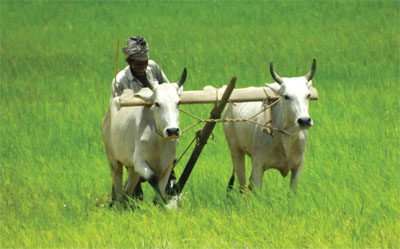
    Agriculture is the dominant sector of Indian economy, which determines the growth and sustainability. About 65 per cent of the population still relies on agriculture for employment and livelihood. India is the first in the world in the production of milk, pulses, jute and jute-like fibres; second in rice, wheat, sugarcane, groundnut, vegetables, fruits and cotton production; and is a leading producer of spices and plantation crops as well as livestock, fisheries and poultry.

    In the past few years, Indian agriculture has done remarkably well in terms of output growth. The 11th Five Year Plan (2007-12) witnessed an average annual growth of 3.6 per cent in the gross domestic product (GDP) from agriculture and allied sector. The growth target for agriculture in the 12th Five Year Plan is estimated to be 4 per cent. Indian agriculture is benefitting huge from rising external demand and the sector’s wider participation in the global economy.

    In order to boost investments in the sector, the Government of India has allowed 100 per cent foreign direct investment (FDI) under automatic route in storage and warehousing including cold storages. The government has also allowed 100 per cent FDI under the automatic route for the development of seeds. Department of Agriculture and Cooperation under the Ministry of Agriculture is the nodal organisation responsible for development of the agriculture sector in India.

    The organisation is responsible for formulation and implementation of national policies and programmes aimed at achieving rapid agricultural growth through optimum utilisation of land, water, soil and plant resources of the country. arket Dynamics Backed by policy impetus by the Government of India, the country ranks 10th in global agricultural and food exports, as per Economic Survey 2012-13. Agriculture accounts for about 10 per cent of the total export earnings and provides raw material to a large number of industries.

    “Exports of agricultural products are expected to cross US$ 22 billion mark by 2014 and account for 5 per cent of the world’s agriculture exports,” according to the Agricultural and Processed Food Products Export Development Authority (APEDA). Total exports of Indian agri and processed food products from April 2012 to February 2013 stood at Rs 11,254,275.51 lakh (US$ 20.74 billion) as compared to Rs 7,186,784.33 lakh (US$ 13.24 billion) during the same period last year, according to the data provided by APEDA.

    As of March 1, 2013, India has wheat stocks of around 27.1 million tonnes (MT), as against a requirement of mere 7 MT, while total food grains stocks in the central pool (including rice) is estimated to be almost 63 MT, as against a requirement of 21.2 MT. Wheat exports from India are expected to grow by 23 per cent to 8 MT in the financial year 2013-14, on the back of strong global prices and surplus domestic supply. Exports of rice are also expected to cross 10 MT from 7.3 MT during previous year due to robust demand from West Asia, Africa and South-East Asian countries.

    Major Developments and Investments The total planned expenditure for the Ministry of Agriculture has increased considerably to Rs 27,049 crore (US$ 4.98 billion) in the Union Budget 2013-14. The outlay is 22 per cent over the revised estimates of the year 2012-13. Further, the amount of Rs 1,000 crore (US$ 184.32 million) has been allocated to continue support to the new green revolution in Eastern States like Assam, Bihar, Chhattisgarh and West Bengal to increase the rice production.

    An outlay of Rs 500 crore (US$ 92.17 million) is also proposed for starting a programme of crop diversification that would promote technological innovation and encourage farmers to choose crop alternatives in the original green revolution States. Under the Rashtriya Krishi Vikas Yojana, an outlay of Rs 9954 crore (US$ 1.83 billion) and Rs 2250 crore (US$ 414.64 million) have been proposed for mobilizing higher investment in agriculture and the National Food Security Mission respectively.

    A memorandum of understanding (MoU) has been signed between Indian Council of Agricultural Research (ICAR) and Ramakrishna Mission Vivekananda University (RKMVU) for establishment of 632nd Krishi Vigyan Kendra (KVK) in South 24 Parganas district,West Bengal. The ICAR and the World Bank have been implementing a joint National Agricultural Innovation Project (NAIP) in the country to accelerate the collaborative development and application of agricultural innovations.

    Till date, an amount of Rs 727.93 crore (US$ 134.13 million) has been released by the World Bank for the project. The Chennai based Indian Overseas Bank (IOB) keeping its thrust on agricultural lending under priority sector area has proposed to open 15 special agricultural credit branches in Karnataka and Maharashtra. The bank intends to lend about Rs 500 crore (US$ 92.17 million) through these branches.

    Government Initiatives Some of the major initiatives taken by the Government of India are: The Union cabinet has approved the proposal of the department of agricultural research and education under the Ministry of Agriculture for the establishment of the National Institute of Biotic Stress Management (NIBSM) at Raipur, Chhattisgarh during the 12th Five Year Plan at an estimated cost of Rs 121.10 crore (US$ 22.31 million).

    The institute will address the impact of biotic stress and harness potentials of emerging tools of biotechnology in agriculture To provide relief to small and marginal farmers especially in drought prone and ecologically-stressed regions, the allocation for the Integrated Watershed Programme has been increased to Rs 5387 crore (US$ 992.79 million) from Rs 3050 crore (US$ 562.12 million) The National Livestock Mission will be launched in 2013-14 to attract investment and to enhance productivity of livestock, taking into account local agro-climatic conditions.

    Rs 307 crore (US$ 56.58 million) have been provided for the Mission In addition, Government has substantially improved the availability of farm credit and increased minimum Support Price to improve investment in the farm sector. The annual agriculture credit target for the financial year 2013-14 has been fixed at Rs 7,00,000 crore (US$ 128.98 billion) against the target of Rs 5,75,000 crore (US$ 105.95 billion) in 2012-13 The Government of India plans to set up a Regional Rural Bank (RRB) Credit Refinance Fund with a capital of US$ 2.1 billion to disburse short term crop loans to small and marginal farmers Road Ahead The Indian agriculture sector is now moving towards another green revolution.

    The transformations in the sector are being induced by factors like newfound interest of the organised sector, new and improved technologies, mechanised farming, rapid growth of contract farming, easy credit facilities, etc. The Ministry of Agriculture is promoting a new strategy for farm mechanization through its various schemes and programmes.

    A dedicated Sub-Mission on Agricultural Mechanization has been proposed for the 12th Plan which includes custom-hiring facilities for agricultural machinery as one of its major components. In the 12th Five Year Plan, the Government intends to increase the share of expenditure on agricultural research and development (R&D). The Government will focus on strengthening the Agricultural Technology Management Agencies (ATMA) concept through improved integration with Krishi Vikas Kendras (KVKs).

  • OFBJP Organizes Public Reception For BJP President Rajnath Singh

    OFBJP Organizes Public Reception For BJP President Rajnath Singh

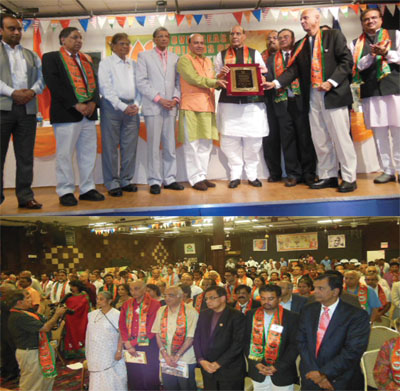
    EDISON, NJ (TIP): Indian American community of tri-state area (New Jersey, New York, and Connecticut) gave a rousing welcome to Rajnath Singh, President of Bharatiya Janata Party (BJP) and his BJP delegation Ananth Kumar, General Secretary; Sudhanshu Trivedi, National Spokesperson; and Vijay Jolly, Convener of Overseas Affairs and Overseas Friends of BJP (OFBJP) in TV Asia Studio Auditorium at Edison, NJ on Sunday July 21, 2013. The program was organized by OFBJP-USA as part of its community global outreach program.

    The program was broadcasted live on TV Asia across US reaching out to 1.5 million viewers. The program was also relayed live in India, Canada, UK, Europe and Middle East thru various channels. Addressing the jam-packed auditorium, Rajnath Singh said that he was elated by the warm welcome that had been accorded to him by the Indian Americans here in US. He said that trust and credibility have become a big problem in India and BJP is the only option. No party in India has grown bigger than Congress except the BJP.

    BJP is the only party that has not suffered a vertical split. Communists have lost relevance and Congress has no policy on any of the issues nor has any ideology. Since its inception in 1951 as Bharatiya Jan Sangh and later on as BJP, the party has been pursuing a policy of Nation first. He continued that Atal Behari Vajpayee led a 24 party coalition for 6 years and the NDA rule was far better than 55 years of Congress rule in every aspect.

    Corruption, Inflation and price rise are the signature of congress rule whereas NDA government controlled the inflation and price rise in spite of the prevailing severe drought and economic sanctions imposed by the entire West after Pokhran nuclear tests. NDA inherited a GDP growth of 4.8% and 10% inflation whereas BJP handed UPA a GDP of 8.4% and inflation 3.5% in 2004. Amidst applause from the audience he said that Pokhran test was a big step wherein the BJP led govt made India a nuclear power even though we knew economic sanctions were staring at us.

    Countries that are much smaller have become developed countries but India is still a backward country and not sure why 55 years of Congress rule did not change much. Congress has to answer as to how much time they need to make India better, to remove poverty. BJP invited FDI in telecom sector but encouraged Indian investors whereas Congress has opened up the telecom sector 100%, increased in the LIC sector from 26% to 49%. Foreign investors have pulled out $7.5 billion from India and no one is ready to invest.

    Even after 60 years of Independence we still have 67% of people who don’t get food and we need a food security bill. We need leaders with firm conviction and leaders with vision and when we come in power we will make India a super economic power in 10-15 years. National Highway development has seen tremendous growth during NDA rule. 50% of the highways that were built during 1980-2012 happened during 6 years of NDA rule and the other 50% were built during 26 years of non-BJP rule.

    Gujarat development has become a role model across the world. Madhya Pradesh agricultural growth (19%) is the highest in the world and very soon will be providing 24hrs of power supply. Chhattisgarh PDS system serves 90% of the population without any corruption and is a model for other states to emulate. Goa is the only state in India where Petrol is cheaper than Diesel. India has a GDP growth of 4.8% whereas BJP ruled states have 10% GDP growth. UPA government has no plan to tackle Naxalism or terrorism.

    Appeasement has become the state policy whereas BJP never links terrorism to any religion, caste or region. After Mumbai terror attack, Prime Minister made a statement that he will not talk to Pakistan until it gives an assurance that they will control terror activities and not support any groups that work against India but changed all that in a matter of few months. Our foreign policy is at its worst with no friendly neighbors around us. During NDA rule we maintained good relations with Russia and development excellent relations with US.

    We made US our strategic partner. He appealed to the US govt to lift the ban on visa to Narendra Modi, he said on one side US agencies rate Gujarat as the best state and Modiji as an excellent administrator and on the other hand they deny visa to him. It will be better if US takes a decision soon as they will be forced to take a decision anyway later. When BJP comes to power we will make India a power of Rishi and Krishi (knowledge and Prosperity), he said. Indian culture influenced the world for thousands of years.

    We never planned to dominate the world and even Swami Vivekananda came to Chicago on his own and had great influence on the world by his teachings. Citing the example of Newsweek columnist Lisa Miller who stated that by imbibing Yoga, Pranayam, Ayurveda and Organic farming people in the West are becoming Hindus whereas it is a crime in India if you say you are a Hindu.Talking on the recent controversy related to Narendra Modi statement that he is a Hindu and Nationalist, media created and pseudo secularists made a big fuss.

    Professing your Hindu culture became a communal word in India. He said that as per the Supreme Court, Hindutva is a way of a life. Hindutva teaches love not only for human beings but even for animals, plants, rivers, mountains etc. It is Hindutva that teaches us to serve milk to a snake and take care of animals like ants and birds. He called on the Indian American Community to support BJP to build a strong India.

    Shri Rajnath Singh was accorded standing ovation. Shri Rajnath Singh was honored by the OFBJP executive committee with a plaque for his contributions to the party and the country. Earlier, Ram Rakshpal Sood (Sr.Advisor, OFBJP) acting as the Emcee welcomed the audience, chief guests and the sponsors of the event. After the traditional lamp lighting ceremony amidst the chanting of Vedic mantras by Pandit Pravin Shastri and Chandrakant Trivedi and blowing of conch shell by Pravin Shashtri. Mrs. Vidya Labroo led the rendition of Vandemataram.

    Jayesh Patel (President, OFBJP) welcomed the distinguished guests and said that entire India is chanting Narendra Modi (NaMo) mantra and expressed hope that BJP will be able to get majority on its own merit in the next election. Ram Kamath (General Secretary, OFBJP) introduced Dr. Mahesh Mehta, National Coordinator of OFBJP-USA. Speaking on the occasion, Dr. Mehta said that mission 2014 is about transforming India into a global leader and Global Indians should contribute to be the part of this great movement that will eventually contribute to the development of India.

    Dr. Adapa Prasad (Immediate Past President) introduced Vijay Jolly, Convener of BJP Overseas Affairs and OFBJP, as a dynamic leader and former MLA who took on Delhi Chief Minister during the last election.

    In his electrifying speech, Vijay Jolly urged the audience to applaud for Rajnath Singh for honoring the feelings of the people by making NaMo as the chairman of the campaign committee. Stressing the fact the OFBJP is on a mission to develop leaders by inducting youth into the organization to dethrone the corrupt Congress regime in India. Stating that NRI’s have always made India proud, he said that OFBJP has setup its chapters in UK, Norway, Nepal, Kenya and other countries to work for the welfare of Indian diaspora.

    He got the past Presidents of OFBJP-USA honored by Rajnath Singh Introducing SudhanshuTrivedi, BJP National Spokesperson, Dr. Dinesh Agrawal (Former- President, OFBJP) said that as the national spokesperson, he is very active effective on TV channels spreading the message and its ideology of BJP. SudhanshuTrivedi reminded that July 21st the day of the program is a historical day when US astronauts landed on the moon. Edison town, the venue of the program, is also a historical town, named after the inventor of light bulb.

    Hence, he said that word Bharat stands for light and inspires us to take India to the pinnacle of glory. Stating that BJP is all set to form the next government is not based on hope but on facts. He concluded reciting a poem by A.B. Vajpayee. R.P. Singh (Org. Secretary, OFBJP) introduced Ananth Kumar, BJP general Secretary. Amidst thunderous applaud from the audience, Shri Ananth Kumar introduced himself as the Hanuman of South as Kishkinda, the birth place of Lord Hanuman is in Karnataka whereas Rajnath Singh is from U.P, the land of Ram. For Ram’s team to win we need Hanuman and he is there to lend services for the party and the country.

    India, he said is going through turbulent times and like A.B. Vajpayee model, we have Gujarat model of development under NaMo leadership and we will soon have NaMo model of governance. He said that BJP is already in battle mode, under NaMo and Rajnath Singh’s leadership we are all set to take on the corrupt congress government. Once in power, BJP will make India a global player not only in spirituality but in culture, strategic matters and will be a decisive player in the world. He urged the NRI’s to connect with their districts back home and work for BJP’s victory in 2014.

    Chandrakanth Patel introduced Rajnath Singh as a man of impeccable image in spite of being in political life for 40+ years. Born in a farmer’s family in Varanasi, he rose to be the president of BJYM. He was part of the J.P movement and became the Agricultural minister in A.B. Vajpayee’s government. He was the President of BJP between 2007-2009 and again became the President in January, 2013.

    Currently, he is a Member of Parliament from Ghaziabad, U.P. Earlier, the President of TV Asia and a well known community leader, Shri H.R.Shah addressed the gathering and said that TV Asia always supported India causes and he has been an admirer of Mahatma Gnadhi and Sardar Patel. He said he felt close to BJP principles and supported BJP. He wished that Narendra Modi would be elected as the Prime Minister. Krishna Reddy (Treasurer, OFBJP) presented the vote of Thanks.

  • India’s Economic Growth: Once a Shining Economy, India is in Danger of Running out of Gas

    India’s Economic Growth: Once a Shining Economy, India is in Danger of Running out of Gas

    “India Shining” has been the unofficial slogan for India since the turn of the 21st century. India averaged 8% annual GDP growth in the three years before the recent global financial crisis. Armed with population strength of more than a billion people, India is now the 11th largest economy in the world. According to data, from India’s Planning Commission, rapid economic growth has contributed to a decline in the poverty rate with 37.2% in 2005 to 29.8% in 2010, a drop of 40 million people in the absolute number of the country’s poor.

    Per capita income doubled during those five years. Internationally, India has also become an important actor. Forming the ‘I’ in the BRICS group of nations, India plays a very important role in the leadership of the emerging markets and developing nations. India boasts a culture of entrepreneurship and innovation, pioneering the global IT services industry, and has a global Diaspora that are leaders in various fields.

    On paper, India’s potential is immense, with approximately 500 million people between the ages of 18-25; its best years seem to be ahead. Polls have revealed that the Indian youth and business people are bullishly confident of a bright future in India. This potential is reason why India is tipped to become the largest economy by 2050. However, potential does not always translate to growth, and India has been learning this the hard way.

    An economy that once was shining is now rapidly losing that shine. India is at a serious risk of plunging itself into a crisis, one that might soon be too large to be defeated by policy.

    The Twist
    1991 is often used as the central year for economists and other experts when discussing the Indian economic growth story.In June 1991, then finance minister Manmohan Singh, passed widespread reforms that liberalized and opened India’s economy to the world. However, 1991 is also the year the last time India has passed economic reforms of such significance. Over the past 12 months, the optimistic mood within India’s economy has taken a sharp dip. GDP growth slowed to 6.3% in 2011-12; the worst it has been in 9 years, and the first quarter of 2012 India grew a measly 5.3%, according to some estimates.

    While a slowdown in GDP growth has been relatively recent, India has been battling with a rising inflation for the past two years, which included food inflation at between 15-25%. The Rupee has been in a sharp decline, decreasing by 25% in value of the past six months to become one of the worst performing currencies in the international market.

    Although a weakening external demand, due to the Eurozone crises and U.S. economic slowdown has contributed to the slowdown, India’s economy is very much based on internal demand, which has slowed recently partly because of private consumption dropping from 5.5% in 2011/12 from 8.1% the previous year. India’s economy is showing signs of overheating with a growing demand and inability to match it with supply.

    Leading domestic business people have exerted frustration at the economic situation. Since business confidence is at a low, the IMF, OECD and financial rating agency S&P are all issuing warnings to the Indian government. They all unanimously call for….

    Reform, Reform, Reform
    In its current form, the Indian economy is like a car sputtering forward and now slowly running out of fuel. India is in desperate need of reform of its tax laws. For over two years it has delayed passing laws on the goods & services tax which will allow the central government to regulate taxing on services and certain goods, rather than the current system of state regulations. In the current system, it is extremely difficult for business to run operations across the 28 state lines. Foreign investors have raised concerns on two Indian provisions seeking to tax indirect investments and combat tax evasion.

    The first gives India power to retroactively tax the indirect transfer of assets. The second targets tax evaders via the General Anti-Avoidance Rule (GAAR), putting the responsibility on investors registered in countries with special tax exemptions with India to prove they do not intend to explicitly avoid tax. Investors are fretting and such policies are threatening to drive away private investment rather than encourage it.

    Major hedge funds such as Macquarie’s Asia hedge fund which manages over $50 billion in emerging markets, have begun pulling out. A situation unthinkable a couple of years ago, India is feeling significant strains on its fiscal budget. When India was growing at 8% a few years ago, no one questioned the government’s spending. The Indian government spent freely on a variety of populist subsidies programs, racking up a fiscal deficit that it allowed itself due to GDP growth. India considered this deficit sustainable.

    The deficit currently stands close to 7% and the government must reign in on its spending, and it must discontinue these subsidies programs and allocate money to other sectors. For over a year, the central government has attempted but failed to institute such reforms.

    Bottlenecks
    India is in urgent need of reform on Foreign Direct investment (FDI) rules, particularly in its retail sector. Outdated technology, and lack of organization and inefficiency, has seen the Indian retail industry slowly and steadily pull down India’s economy. The Indian retail industry’s has an annual revenue of $500 billion as of 2011 and employs the second-most number of people after agriculture, a sector that is intrinsically linked to the retail sector. Yet, the Indian retail industry is also one of the most unorganized sectors in the country. 90% of the retail industry is controlled by smallscale, family-run operations with big chains making up just 10% of the market.

    Thus far, Indian suppliers have not been able to deliver to the consumer. Indian Commerce Minister Anand Sharma asserted that 30% of agricultural produce does not reach the market, and of the remaining 70%, more than 50% is lost due to poor transportation and storage technology. This is a gross waste in any country; especially in a developing country where there are still hundreds of millions bellow the poverty line.

    This lack of organization has led to much inefficiency, which is the root of many of India’s problems, especially inflation. Over the past two years, basic foods have been suffering an inflation of 15-20% and they have been directly linked to the inefficient supply chain. Increasing the cap on FDI in the retail sector will allow foreign firms to enter the country and make major investments that will significantly modernize the sector and will set the country on a path towards further modernization, and help it to increase consumer spending and address the food inflation.

    When the shoe doesn’t fit anymore
    India’s biggest challenge is its infrastructure deficit. If you have traveled to India, you have experienced tremendous traffic on poor roads burdened with bottle necks. India’s infrastructure deficit problem is nothing new, and the government has been trying to catch up for years. However, India’s economy has grown to a size that e will make it very difficult for both new businesses to enter the market and existing business to expand.

    According to the consulting firm Mckinsey, India is suffering a shortfall of $190 billion in the infrastructure sector and is in urgent need of capital. India’s roads are often unsuitable for large vehicles and they even literally form blockades for progress. The railways and roads dominate the country’s transport landscape.Within these two modes, 2% of road length carries 40 percent of all road traffic of the country, and one-sixth of the rail network.

    With the fragmented character of the industry, road transport services in India are generally poor and logistics costs high. Clocking the world’s lowest average speeds, trucks in India are used for 60,000-100,000 km annually – less than a quarter of the average in developed countries. A quick comparison with an immediate neighbor to the northeast gives you an idea. The time to travel by rail or road between India’s political capital New Delhi and Financial hub Mumbai is over 12 hours to cover 1180 km.

    In China, between Beijing and Shanghai, a train covers the 1071 km in approximately 5 hours. India needs to boost growth in this sector, and fast. Indian Urban Development Minister Kamal Nath stated, “With growth preceding infrastructure, we are not building for the future, but for the past.” There is a sense of saturation within the economy that is proving to be a damper for business. The government has steadily increased spending, but some wounds are self-inflicted.

    Private business have been desperately calling for reform in land acquisition, and in its current state, the lack of reform means companies are facing problems making large capital investment.Without such reform or encouragement for further private investment through allowing foreign funds and mutual insurance funds, India will continue to be building for the past. The root of India’s economic woes, in all the areas mentioned above, all find themselves leading to one common problem: The central government.India is in a crisis of politics and the center of the Indian government is stuck in a paralysis.

    In Office But not in Power
    India’s center of governance lies in the parliament in the capital city of New Delhi. However, power seems to lie everywhere, but in the center. The way India’s parliamentary system works is the ruling party holds together a coalition of smaller parties who come together to form a majority in the parliament. The current ruling coalition since 2009, called the UPA, is weak and fragmented, while the incumbent Prime Minister has shown himself to be to inept.

    The parliament has no significant majority and the center is loosing power to regional parties who consistently threaten to pull support from the coalition over major reform issues, forcing the leadership to back down. The opposition party, BJP, has shown itself more committed and content to reveal the weaknesses of the congress than to work towards a solution.

    The word ‘political paralysis’ has now become synonymous when discussing the Indian economy. Bills on subsidy reduction, tax reform, land acquisition reform, and FDI reform all exist, but a divided parliament is unable to pass such bills, and continues to be laborious and indecisive. The government has attempted to answer the calls for an end to the fiscally straining fuel and fertilizer subsidies that totally amount to 2.5% of GDP. However, these subsidies are extremely popular measures and the government has consistently faced opposition from regional parties.

    During the last 12 months, each time the central government has attempted to repeal the subsidies, regional parties carried out “All-India Bandhs,” enforcing the closure of all business for a day, using force if necessary. Acts such as this have only crippled the country further, diminishing the central government’s power and preventing reform. However, perhaps the biggest symbol of the political paralysis has been the attempt to raise the cap for FDI in the retail industry.

    In December 2011, PM Manmohan Singh announced that he was set to approve the bill on raising the cap from 21% to 49% FDI in domestic retail. There was a sense of relief for this would have a revolutionary impact on the retail industry. However, relief was short lived as Mamata Banerjee, Chief Minister of West Bengal, and an important UPA ally, threatened to pull support if this bill was passed, forcing the PM to once again pull back. There is a popular saying in India that all “economic growth in the country has been in spite the government, rather than because of the government,” and this tells a tale of frustration among Indian and foreign business people.

    Corruption has “paralyzed the government,” reckons the chief executive of one of India’s most prestigious firms. Further asserting, “We know what the problems are and we have done nothing … somebody’s neck has got to be on the line,” says the leader of a bank. What Indians always knew, is now beginning to reveal itself internationally. Business confidence in India is taking a big hit. Bureaucracy and red tape continue to scare foreign investors away.

    For example, regulatory and other obstacles recently delayed a proposed $12 billion steel investment deal from Korean company POSCO, who joined the list of other countries who have faced similar restrictions. Standard & Poor recently announced, in a special report, that India is in serious risk of being downgraded from its current BBB+ to BBB-. This downgrade is mainly connected to India’s slowing economic growth and weakening fiscal profile. S&P cited poor governance and political paralysis as the key root to India’s economic woes.

    What lies ahead?
    The most encouraging sign, although equally frustrating, is that the answers lie in its own hands. Reform bills, if passed, will take effect in a very short time, speeding business up while also inspiring confidence, which will encourage investors currently too afraid or unable to open their check book to begin investing again. The government recently announced the controversial bill on retroactive bill will be changed, which is a boost for foreign investors and is also a sign that the government is still capable of making decisions.

    Although still affected by the European debt crises and the global slowdown, India is still not as dependent on the international economy and is mostly inward looking. The service sector is continuing to grow and perform well. India’s monetary policy has proved extremely resilient, and helped carry India through from the financial crises until now. Masking inaction under conservatism or simply suffering from a gridlocked parliament will not help India’s cause.When times are tough a country needs its leaders to stand up and be counted.

    The unfortunate truth is PM Singh is not capable or powerless to do so, as he answers to Congress head Sonia Gandhi, and holds no true power base of his own. The last two years have seen a diffusion of power from the center to regional parties and this is alarming for the country. Regional parties are playing to popular vote policies, with short term rather than long term in interest.

    The situation is not as bad as it was in 1991, but it seems like it would take a crises of that magnitude to bring about the change. So far, high economic growth has legitimized the UPA’s inaction; however, that growth is no more. Ultimately, India is a democracy, and the government is responsible to the people. If reform does not come, the “Indian shining” story will be no more.

  • Joe Biden Bats For More Skilled Visas

    Joe Biden Bats For More Skilled Visas

    MUMBAI (TIP): US is considering increasing the number of temporary visas and availability of Green Cards to highly skilled Indians, Joe Biden, the first US vice-president to visit India in three decades, said in his address to India Inc in the financial capital on Jukly 24. Biden, who sought a greater cooperation between the two countries to boost trade and investments five-fold, acknowledged the contribution of Indian expatriates to America’s growth story.

    “The US has benefited due to Indian human capital,” said Biden. He pointed out that Indians received more skilledworker visas to the United States than any other country in the world. “And the legislation our Congress is considering increases the number of temporary visas and Green Cards availability for highly skilled Indians to come work in the United States,” the 47th vice-president of US said while addressing the industry gathering at theBombay Stock Exchange.

    In a 40-minute speech which was interspersed with lighter moments, Biden said, “Our bilateral trade has increased five-fold to touch $100 billion in the last 13 years. We see tremendous opportunity and there is no reason that if our countries make the right choices, trade cannot grow five-fold or more,” he said. Making a strong case for India to further open up its economy in a serious bid to attract more foreign investment, Biden, said, “A young Indian woman graduating from IIT-Bombay who wants to start the next Tata Motors should be able to buy the best technology and parts, wherever in the world they come from — as her competitors around the world are able to do.”

    However, Biden said, a lot more is needed to remove trade barriers. “We still have a lot of work to do on a wide range of issues, including limit in FDI, inconsistent tax system, barriers to market access, civil nuclear cooperation, bilateral investment treaty and policies protecting innovations,” said Biden.

    Biden later addressed India Inc at the Taj Mahal hotel too in south Mumbai. While assuring US support for India’s candidacy for a permanent seat at the United Nations Security Council (UNSC), Biden said, “That’s why yesterday, on behalf of the President Obama, I invited Prime Minister Singh to make a visit to Washington at the end of September.” India has been vying for a permanent seat in UNSC along with Japan, Brazil and Germany.

    On India’s military needs, Biden pointed out how cargo aircraft C-130s that US had sold to India were now saving the lives of flood victims in Uttarakhand. Biden also called by a greater cooperation between India, China and US. “We are three big nations — China, India and the United States — with our own perspectives. We have significant common interests. All three of us and the entire region would benefit if we coordinated more closely,” said Biden.

  • India’s Minister Of Commerce, Industry & Trade In The US

    India’s Minister Of Commerce, Industry & Trade In The US

    NEW YORK (TIP): India’s Commerce, Industry and Trade Minister Anand Sharma visited New York from 9-10 July, 2013. The Minister was accompanied by S.R. Rao, Commerce Secretary, Rajeev Kher, Additional Secretary, Rajeev Arora, Joint Secretary and Atul Chaturvedi, Joint Secretary. A business delegation led by Confederation of Indian Industries (CII) also accompanied the Minister.

    On 10th July, the Minister met UN Secretary General Mr. Ban Ki Moon. He also met with the corporate senior leadership of several companies and encouraged them to invest in broad based manufacturing in India. The companies expressed keen interest in expanding their business presence in India and agreed to stay engaged with Indian market through trade and investment.

    Anand Sharma gave a key note address to the members of US India Business Council and CII where he highlighted the fact that India and the US shared a strategic partnership, which ranged across sectors such as, aerospace, nuclear and clean energy, defense, agriculture, IT, communications, science & technology, etc. Both countries had also invested in each other, and the relationship was bound to become stronger as India bounces back to its high growth trajectory.

    The Minister highlighted India’s focus on high-end led manufacturing growth, and its plans to create self regulated autonomous industrial cities called the National Industrial Manufacturing Zones (NIMZ), thus putting in place infrastructure as well as an environment where speedy approvals and permits can be obtained within these cities itself. He invited US manufacturers to utilize the opportunity provided by NIMZ.

    He also reiterated the fact that India remained the third most favored nation for Foreign Direct Investment (FDI), and invited the US to invest in sectors liberalized by the new FDI Policy such as Multi Brand retail, Civil Aviation and Information and Broadcasting.

    He also said that barriers for movement of skilled professional should not be created and rather removed for the benefit of both countries. Amongst other issues, the Minister also briefed the audience on the India-EU Free Trade Agreement. He also met senior correspondents from International media.

  • Cong-JMM Exploring Govt Formation In Jharkhand

    Cong-JMM Exploring Govt Formation In Jharkhand

    NEW DELHI (TIP): The Congress and JMM appear to be inching closer towards forming an alternative government in Jharkhand which has been under President’s Rule — imposed after the fall of the Arjun Munda government on January 8. Newly-appointed Congress general secretary in-charge of the state BK Hariprasad will hold talks in this regard with state leaders of the Congress and JMM tomorrow in Ranchi.

    Shibu Soren’s party, which is supporting UPA-II from outside, has been keen on forming an alternative government in the state in alliance with the Congress ever since it broke up with the BJP leading to the imposition of President’s Rule there on January 18. While a large number of Congress leaders in the state are in favour of forming a government with JMM’s support as 18 months are still left for the current state Assembly’s term to get over, the top brass of the party was initially reluctant towards any such move.

    The JMM and Congress, which have 18 and 13 MLAs, need the support of 11 more legislators to form a government in the 81-member state Assembly. The Congress had supported an Independent Madhu Koda-led government in the state and had to face criticism later as Koda got embroiled in serious corruption cases. Besides, there are cases pending against some JMM leaders even now.

    Hence, the party leadership was wary of any such tie-up in the state. There, however, appears to have been a re-think over the issue of alliances now. JVM(P), which had forged an alliance with the Congress for the 2009 Assembly elections, parted ways with it in April last year over the FDI issue. The Congress now appears to be veering around to the view that it has to tie up with some party for the next Lok Sabha elections there.

    Out of the 14 Lok Sabha seats in Jharkhand, the Congress has one MP Subodh Kant Sahay, while JMM has two members. They had fought the last General Election separately. In 2004 Lok Sabha elections, when both parties had fought in alliance, the Congress had won six and JMM four seats respectively bringing 10 seats in the UPA kitty. There are indications that the formation of government with JMM will depend on an amicable seat-sharing agreement between the two parties for the next General Election.

    Another talk in political circles is that Assembly elections in Jharkhand could be held along with those in Rajasthan, Chhattisgarh, Madhya Pradesh and Delhi if the JMM and Congress fail to reach an agreement on the issue. Central rule in Jharkhand will expire on July 18 and a decision has to be taken before that. JMM MLAs Vishnu Prasad Bhaiya and Paulus Surin had a few days back issued threats of resigning from the House membership if the Congress failed to take a decision on government formation before June 16.

    Announcing his intent to lend unconditional support to the JMM and Congress if they joined hands for government formation, senior RJD leader and MLA Janardhan Paswan had earlier said that the Congress must come forward to give a new alternative to the people who have given a mandate for five years. The BJP, Jharkhand Vikas Morcha (Prajatantric) and AJSU Party have been demanding dissolution of the House to seek a new mandate. Congress president Sonia Gandhi had on June 10 held consultations with senior party leaders, including AK Antony, Sushilkumar Shinde, Jairam Ramesh and vice-president Rahul Gandhi, on the way forward in Jharkhand.

  • Economic Issues Likely To Dominate Kerry’s Visit To India

    Economic Issues Likely To Dominate Kerry’s Visit To India

    WASHINGTON (TIP): Economic issues like intellectual property protection, local content restrictions and a continued cap on FDI are likely to be on top of his agenda when US Secretary of State John Kerry travels to India next week for the strategic dialogue between two countries. “First and the foremost from our perspective will be economic piece of this (dialogue). There has been lot of concern on part of American business community about what they see as growing obstacles to trade and investment,” Assistant Secretary of State for South and Central Asia, Robert Blake, told an audience here.

    Both Kerry and President Barack Obama have been receiving letters from the US business community, advocacy groups, Senators and Congressmen on the trade policies of India, which they claim is harming American businesses. “Intellectual property protection, local content restrictions, continued restrictions on FDI in different sectors. This is certainly going to be our focus,” Blake said, adding that one of the goals is to reinvigorate the bilateral investment treaty talks and conclude them as soon as possible.

    Likewise, the US wants to reinvigorate the trade policy forum, and will also push for continued progress on the civil nuclear side, he added. Responding to questions, Blake said the US is not looking at any deliverables during the strategic dialogue, except to making sure that they understand each other on these issues. “India has its own concerns on comprehensive immigration reform. Obviously we need to hear from that.

    The purpose of the dialogue is to hear each other out in a very open and friendly manner and then figure out who is going to take charge of fixing these,” he said. As a result of the three rounds of strategic dialogue so far, Blake said there has been significantly quite convergence of strategic growth between the United States and India. Referring to the various bilateral and trilateral dialogues between the two countries, Blake said: “All of these collectively really enabled us to have an extremely good dialogue on issues that were previously very difficult.”

    “Things like Afghanistan, Iran, Burma and Middle East were areas of quite sharp differences. Now we have a remarkable degree of convergence, which has been a very welcome to see. Non-proliferation, food security, scientific and academic co-operation, climate change, defence trade, and regional issues like Afghanistan and Pakistan will also figure prominently during Kerry’s visit, Blake noted. Responding to questions, Blake said India is one of the highest strategic priorities for the US.

  • Emaar MGF Receives Rs 8.6k Crore Fine Notice

    Emaar MGF Receives Rs 8.6k Crore Fine Notice

    NEW DELHI (TIP): Realty giant and Commonwealth Games Village builder Emaar MGF was on Tuesday slapped with a show-cause notice of Rs 8,600 crore by the Enforcement Directorate for violating Foreign Exchange Management Act (FEMA). The company is alleged to have diverted FDI money to buy thousands of acres of agricultural land in violation of FEMA and FDI rules and could face a penalty in excess of Rs 25,000 crore.

    Significantly, the development comes on a day the Union Cabinet approved the Real Estate Regulators Bill. Sources said the company had used a modus operandi similar to as alleged in the case of Walmart, under investigation by the ED for diverting FDI money to retail sector through various subsidiaries. Emaar MGF allegedly used a maze of subsidiaries through which it diverted FDI money — brought in for investment in construction projects — to buy agricultural land. ED first raided 13 premises of the company here and elsewhere in 2009 in connection with the case and had seized several documents and large amounts of cash.

    Investigations then found that almost 70% of the company’s land bank was agricultural land. Out of over 12,000 acres of land bank with the company, close to 8,500 acres were found to be agricultural, most of which is alleged to have been bought by FDI money. The firm is also alleged to have floated over 300 companies as subsidiaries in India and abroad with several of its lowgrade employees listed as directors. Some of these companies were allegedly used to divert FDI into agricultural land bought around Delhi, Haryana , Punjab and Uttar Pradesh.

  • UPA report card paints rosy picture of govt’s performance

    UPA report card paints rosy picture of govt’s performance

    NEW DELHI: The third year report card of UPA-II projects a rosy picture of the Indian economy claiming steady economic growth, increase in per capita income and growth in foreign direct investment (FDI) in the country. The report card presented here today by the Prime Minister, Mr Manmohan Singh, shows a steep increase of about 55 per cent in FDI from 2010-11 to 2012.

    It claimed that the growth is because the government has liberalised and rationalised FDI policy over the years to make it more investor friendly. FDI is now permitted in limited liability partnerships and up to 100% in single-brand retail trading. During April2011 to February 2012, FDI equity inflows were US $28.40 billion, an increase of 55% over the corresponding period a year ago, the report stated.

    It said Central public sector enterprises (CPSEs) are major drivers of economic growth. In order to accelerate investment, 17 CPSEs have committed to a projected investment of more than Rs 1,30,000 crore in 2012- 2013, the UPA report card claims. On per capita income, the report card said it has increased from Rs 53,331 in 2010-11 toRs 60,972 for 2011-12.

    Regarding country’s economic growth, the average annual growth rate of the economy during 2004-05 to 2011-12 was projected at 8.2 per cent per cent despite the global economic and financial crisis in 2007-09 followed by a slowdown in global economy in 2011-12. It, however, admitted that the expected growth of Indian economy was 6.9 5 per cent during 2011-12 in terms of GDP at factor cost at constant 2004-05 prices. It said the lower growth in this fiscal could be attributed to a slowdown in the global economy and tight monetary policy.

    The report card on the government’s performance, however, could not hide inflation figure which stood at around 9 per cent during 2011. “Headline Wholesale Price Index (WPI) stood at around 9 per cent during 2011. It, however, moderated to 6.9 per cent by March 2012. CPI (Consumer Price index) inflation for major indices fell below 7 per cent in December 2011 and fell further in January-February 2012,” the report card stated.

    It claimed that the high inflation is because of increasing global commodity prices mainly because of persistently high crude petroleum prices. Primary food article inflation has been a cause of serious concern. However, this year average food inflation declined significantly to 7.28 per cent from average levels above 15 per cent in earlier years.

  • Renowned Indian American health expert Mukesh Hariawala to address India Leadership Conclave 2013

    Renowned Indian American health expert Mukesh Hariawala to address India Leadership Conclave 2013

    WASHINGTON (TIP): Renowned Indian American health expert Mukesh Hariawala will address the fourth edition of the India Leadership Conclave 2013 in Mumbai in June, 2013. Harvard trained and internationally acclaimed Indian American healthcare economist and cardiac surgeon Dr Mukesh Hariawala will deliver the keynote address with the theme ” President Barack Obama 2nd Term – Business Implications on Indian Healthcare “.

    This highly anticipated lecture is expected to attract an elite audience and will dispel negative myths that surround the hotly debated “Obamacare” – President Barack Obama’s Affordable Care Act (ACA), its implementation milestones, changing ecosystems in the US, but importantly its positive impact on the Indian healthcare industry. Dr.Hariawala spoke of the 100-billion dollar medical tourism revenue opportunity, increased IT contracts, generic drug company revenues and overseas insurance company investments in Indian healthcare sector facilitated by soft FDI policies of incumbent Prime Minister Manmohan Singh. The cumulative effect would accelerate the GDP trajectory from a limping five percent close to the earlier projected eight percent rate.

    This undoubtedly will help multiple industry augmented employment and improvement in living standards for a good portion of the Indian population with an overall tangential impact on the national BPL. Expectantly, this will be refreshing news for the Planning Commission of India and a boost in its implementation of the ambitious 12th – 5 year plan. Dr.Hariawala further added that ” Obamacare ” will also necessitate revamping of all the computing systems handling U.S. healthcare which would open a wide door of business opportunity for Indian IT companies. Purely for financial reasons, this will in all likelihood compel the U.S. Government to continue large outsourcing of software contracts. The key economic driver of “Obamacare” is to reduce the debt ridden trillion dollar healthcare burden on the U.S. exchequer.

    Global experts have suggested that Dr Hariawala’s lecture will shed new light and open up a wider debate, considering his deep-rooted intellectual insight of Indo-American business cultures. Over 300 iconic leaders, including Reliance Industries owner Mukesh Ambani and Tata Group ex-chairman Ratan Tata, will take part in the event, which has been organized by the Network 7 Media Group and the Ministry of Corporate Affairs.

    Top politicians, bureaucrats, other business tycoons, social reformers, media barons, diplomats and global dignitaries will attend one of Asia’s largest events to be held in Mumbai on June 21 at the Majestic Hall in the Lalit Intercontinental Hotel. The theme will be “New India – Agenda for Change”. Dr.Hariawala is widely regarded as an influential policy thinker, and is expected to elaborate on his popular concepts of ” Universal Patient Care ” and ” Womb to Tomb ” economical insurance models for all Indians across the entire spectrum of socio – economic classes.

  • Karnataka State Election: A Key Test

    Karnataka State Election: A Key Test

    The 224-member Karnataka assembly will go to polls on May 5 and counting of votes will take place on May 8. Undoubtedly, this will set the tone for the 2014 general elections and will have significant impact on the political parties as to how they would conduct themselves in the realignment process. It is well known that the state of Karnataka has been beset with corruption, nepotism, ineptitude, public squabbling and internal rivalries and to simply put it, very bad governance. The BJP regime has also become known for its religious intolerance of the minorities and moral policing.

    In nutshell, BJP in their years as a ruling party saw Karnataka take a beating in terms of development as well as suffering a setback to the progressive image of such a vibrant state. I do believe the Kannada people deserve better governance. It was a state that created a Silicone Valley for India through its dynamism and energy under various Congress Governments. Non-Resident Indians working with entrepreneurs in India played a vital role in transforming the Karnataka State especially the city of Bangalore into a world class metropolis. US president Barack Obama has mentioned Bangalore in many of his speeches including once when he exhorted American students ‘to toil harder at school, saying their success would determine the country’s leadership in a world where children in Bangalore and Beijing were raring to race ahead’.

    Successive Congress Governments in Karnataka played key roles in making this a reality. It was the Congress governments under Veerappa Moily and S.M. Krishna who have ushered Karnataka into the modern age recognizing the potential of the Information Technology and Biomedical research and laid the foundation for their growth. In addition, the land reform act, major irrigation projects, establishments of several Universities including the University for Medical Studies and the prestigious Law School of India University were all part of those notable achievements. Moreover, four lakh houses were constructed during the last Congress Karnataka Government under “Rajiv Gandhi rural housing program.

    Since 1980 Karnataka leads the nation in GDP and per capita GDP as compared to other states in India and it should also be noted that with the initiatives undertaken during the Congress Government, Karnataka became home of largest biotechnology with 50% of large firms in Bangalore.” Sonia Gandhi in a major address pepping up the Congress cadres in Karnataka said “we all know corruption is a disease, a cancer. Who does it affect the most, it is the poor. No other party has done what UPA has done to fight corruption. We brought RTA (Right to Information Act) because we genuinely want to fight corruption”. She went on to say that the UPA government wanted to pass the Lokpal bill but BJP has indeed obstructed the initiative. There is no doubt that corruption is endemic and it is a national problem that transcends all boundaries. However, it is clear to those keen political observers who take an objective look at the issue that UPA Government has done a whole lot more to fight corruption than any one other party.

    Anyone who is directly accused of corruption has either resigned from the Government, or sent to jail or under active investigation and facing possible trial. The RTI itself has become the catalyst in unearthing numerous cases of corruption and has become a very effective tool in the hands of the civil society. In addition, the UPA Government has introduced a number of bills in the Parliament to combat corruption in public places that include The Public Procurement Bill, 2012, Grievances Redresser Bill, Foreign Bribery Bill, Judicial Accountability Bill as well as the Whistle Blowers Protection Bill. What happened to Karnataka under the stewardship of Yeddyurappa is out there for the record. He is accused of massive corruption, with 15 cases including him and his family members and was subsequently jailed. This is the first Chief Minister who has been jailed because of corruption.

    It has been reported in the media that “All restraint appears to have been thrown to the winds during the reign of Chief Minister B S Yeddyurappa when the Reddy brothers, ministers in his Bharatiya Janata Party government who had allegedly bankrolled the party’s campaign, were given free rein and the illegal mining spilled into adjoining Andhra Pradesh” A former BJP leader and a junior central minister Mr. V. Dhananjaya Kumar has even alleged that one of the national leaders of BJP was on the take from the Yeddyurappa Government in this web of corruption and the misguided governance. BJP also tried to turn Karnataka into a mini Gujarat with fanning of the flame of communalism across the state.

    There were cases of people getting killed, worship places of minorities attacked and their leaders jailed for exercising their right to religious freedom under the Constitution. Once again the objective of the BJP Government was to divide the people along caste and religious lines. Sonia Gandhi while visiting the Mangalore city said, “We have to see the forces of communalism are defeated… We must stand up and fight these forces. We must fight communalism regardless of where it originates from”. The UPA Government under the capable leadership of Dr. Manmohan Singh has shown the way for economic growth and prosperity for all its citizens by leading India as an important player in the global arena while keeping the integrity of the nation and providing inclusive growth opportunity to everyone. The Mahatma Gandhi Rural Employment Act alone has given much needed relief for the so many unskilled laborers across the country.

    The reforms in the economic arena including granting of FDI to multinationals are not only to benefit the consumer but are also expected to bring technology and jobs along with. Undoubtedly, the NRIs in United States especially from the proud state of Karnataka with a long history and tradition would like to see their State continue to be a beacon of hope for freedom, liberty and Justice for all. The cosmopolitan city of Bangalore that has become a magnet for those with a vision, dynamism and energy has to be sustained and to be protected.

    The NRIs indeed have a stake in the outcome of this very important election. Therefore, the time is ripe for the people of Karnataka to speak out on the Election Day with their ballots. They can reclaim their state by electing clean candidates who are committed to good governance. I am certain that people of Karnataka will deliver their answer on May 5th. (The author is the President of the Indian National Overseas Congress (I) which is the recognized entity in USA by the All India Congress Committee and has various chapters that include a Karnataka Chapter headed by Dr. Dayan Naik)

  • USIBC brings CEOs of Fortune 100 to meet with P. Chidambaram

    USIBC brings CEOs of Fortune 100 to meet with P. Chidambaram

    Blankfein, Nooyi, Kravis, McGraw, Kaye, Fishman, and Banga reconfirm U.S. industry’s commitment to India’s growth

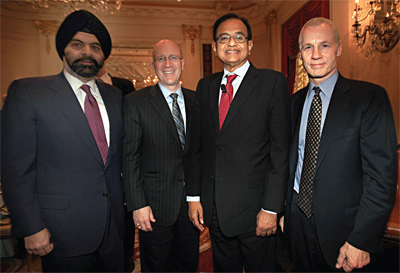
    NEW YORK (TIP): India’s Finance Minister, P. Chidambaram, met with investors, April 17, at a private interaction hosted by the U.S.-India Business Council (USIBC) as part of the Minister’s week-long North America investor “road show,” aimed at attracting foreign direct investment (FDI) at a time when the country needs it most. India currently holds a record high current account deficit and FDI could be the key to closing that gap. The off-the-record lunch meeting convened top
    global industry leaders to discuss with the Finance Minister the opportunities that exist in India and candidly addressed some of the challenges companies face in the market which affects investor sentiment. Topics of conversation included infrastructure, retail, agriculture, life sciences, financial services, legal services, and real estate. “Global industry wants India to succeed. India will succeed. I know this past year has caused a lot of concern, but this year is over and by elections we will achieve our ambitious economic agenda,” said Finance Minister Chidambaram. “We commend Minister Chidambaram for his leadership during these complex times.

    The American business community continues to look to India as a partner in the global economy ripe with investment opportunities. My colleagues and I remain committed to working collaboratively with Government of India and Indian industry to identify innovative solutions to India’s challenges,” said USIBC Chairman Ajay Banga, President & CEO, MasterCard. The intimate gathering reflected combined assets of more than $2 trillion.

    Participants included former USIBC Board Chairpersons: Indra Nooyi, CEO, PepsiCo Inc; Frank Wisner, Foreign Affairs Advisor, Patton Boggs, and former U.S. Ambassador to India; Chip Kaye, Co- President, Warburg Pincus; and Harold McGraw III, Chairman, President, and CEO, The McGraw Hill Companies. Also in attendance were Lloyd Blankfein, CEO, Goldman Sachs; Jay Fishman, CEO, The Travelers Companies; Doug DeVos, President, Amway; Olivier Brandicourt, President of Emerging Markets, Pfizer; John Hele, CFO, MetLife; Jacques Tapiero, President of Emerging Markets, Eli Lily; Peter Kellogg, CFO, Merck; and Henri Courpron, CEO, ILFC, among others.

    The U.S.-India Business Council was formed in 1975 at the request of the United States and Indian governments to advance two-way trade and deepen commercial ties. Today, USIBC is the premier business advocacy association comprised of nearly 400 of America’s and India’s top companies dedicated to enhancing the U.S.-India commercial relationship.

  • India Wastes 21 Million Tonnes Of Wheat Every Year: Report

    India Wastes 21 Million Tonnes Of Wheat Every Year: Report

    NEW DELHI (TIP): India stands out for its glaring lack of infrastructure and food storage facilities, in a new study that says 21 million tonnes of wheat — equivalent to the entire production of Australia — goes waste in the country. The report by the Institution of Mechanical Engineers (IME) on global food wastage found that as much as 50 per cent of all food produced around the world never reaches a human mouth. “Considerably greater levels of tonnage loss exist in larger developing nations, such as India for example, where about 21 million tones of wheat annually perishes due to inadequate storage and distribution, equivalent to the entire production of Australia,” said the ‘Global Food Waste Not Want Not’ report, released here on Thursday.

    “In neighboring Pakistan, losses amount to about 16 per cent of production, or 3.2 million tones annually, where inadequate storage infrastructure leads to widespread rodent infestation problems,” it said. Overall, wastage rates in vegetables and fruit are even higher than for grains. At least 40 per cent of all fruit and vegetable is lost in India between the grower and consumer due to lack of refrigerated transport, poor roads, inclement weather and corruption. According to the latest survey, wastage tends to move up the distribution chain as the standard of development improves and regional and national transport, storage and distribution facilities fail to match the improvements made at the farm level.

    This is a particular issue in India, which requires massive investments in the food logistics chain. “Controlling and reducing the level of wastage is frequently beyond the capability of the individual farmer, distributor or consumer, since it depends on market philosophies, security of power supply, quality of roads and the presence or absence of transport hubs. “These are all related more to societal, political and economic norms, as well as engineered infrastructure, rather than to agriculture,” the authors of the report said, calling on governments in the developing world to introduce better technology and food storage facilities. The Indian government has maintained that the recent reforms in the retail sector approved by Parliament, allowing 51 per cent foreign direct investment (FDI) in multi-brand retail and 100 per cent FDI in the single-brand segment, will lead to increased investments in infrastructure and improve the logistics chain.

  • 2012-The Year That Was

    2012-The Year That Was

    THE RISE OF ARVIND KEJRIWAL
    Activist-turned-politician Arvind Kejriwal launchedhis party ‘Aam Aadmi Party’ this December. AAP’sdeclared manifesto to provide – for the first time in 65years of independence – a totally graft-free government.Crucially, none of the party’s agenda spells out howreforms, essential to a middle class seeking jobs andgrowth, can be harnessed for the best possible socioeconomicdevelopment.

    ANNA HAZARE-ARVIND KEJRIWAL PARTWAYS; AAP LAUNCHED
    While Gandhian Anna Hazare captured theimagination of the nation in 2011 by taking on thegovernment over the Jan Lokpal Bill issue bill,Team Anna hogged the limelight in 2012 due to itsbreakup. Anna and his key members, ArvindKejriwal, Kiran Bedi, Prashant Bhushan and otherscame back one last time in August this year toprotest at Jantar Mantar. However, the responseboth by the general public and the government wastepid.Subsequently, Team Anna promised to provide a’political alternative’ to the nation but soon after thisthe veteran social activist announced that his teamwas being disbanded. Whereas Anna was of theopinion that they should remain outside the systemto fight the system, ex-IRS officer Kejriwal felt that tochange the system one had to embark on the politicalcourse. With diametrically opposite views, a split wasinevitable.Finally on November 26, Arvind Kejriwal and his teamformed the Aam Aadmi Party (AAP) in the presence ofthousands of supporters. Kejriwal was appointed thenational convener, Pankaj Gupta the national secretaryand Krishna Kanth the national treasurer.

    CABINET RESHUFFLE
    Prime Minister Manmohan Singh’s “last reshuffle” ofhis ministerial team on October 28, before the 2014general elections, carried the first unmistakable stamp ofRahul Gandhi’s ascendancy in the Congress party. Thechanges appeared to mark the beginning of anothergenerational shift in the 127-year-old party. The reshuffleis also an effort to put the party in battle mode for the2014 polls.

    COALGATE
    At Rs 1.86 lakh crore, the coal mining scam is beingbilled as the ‘mother of all scams’. The scandalconcerning the government’s allocation of the nation’scoal deposits to public sector entities (PSEs) and privatecompanies led to repeated disruptions in Parliament withthe opposition even gunning for Prime MinisterManmohan Singh’s resignation. Meanwhile, the UPA’smanagers have hit out at the CAG and rebutted hischarges.

    PRANAB MUKHERJEE DONSPRESIDENT’S HAT
    The ‘Chanakya’ of Indian politics, Pranab Mukherjee,took over as the 13th President of India on July 25, 2012.Mukherjee wasn’t in the race initially to succeed PratibhaPatil at Raisina Hill. However, on June 15 this year his namewas announced as UPA’s Presidential candidate. VicePresident Hamid Ansari was among the other candidatesthe Congress mulled. However, the coming together of thetwo ‘M’s Mulayam Singh Yadav and Mamata Banerjee andtheir decision to name Prime Minister Manmohan Singh,former president APJ Abdul Kalam and former Lok Sabhaspeaker Somnath Chhatterjee as their Presidential choicesupset Congress’ plan. Mulayam Singh later broke ranks withMamata Banerjee and decided to go with the UPA candidateamid voices growing in favour of Pranab Mukherjee. TheBSP and several other parties also lent their support toPranabda, including JD(U) and Shiv Sena of the oppositionNational Democratic Alliance. Later, Mamata swallowed hersense of humiliation and decided to back the UPA candidatelater. Later in the year, the Supreme Court dismissed thepetition of PA Sangma, the Presidential candidate of theNDA, who had challenged Pranab’s election as presidentclaiming the former finance minister held an office of profit(chairman of the Indian statistical institute) on the day hefiled the nomination papers for the Presidential Elections.Mukherjee had rejected the allegations.

    BHARTIYA JANATA PARTY’S CUP OFWOES
    While the Congress-led UPA government at the Centrewas bogged down by issues of price rise, inflation andcoalgate, the main Opposition, the BJP had its owntroubles to deal with. The party saw its nationalpresident Nitin Gadkari embroiled in a major scandalwhich has almost rendered his second term as the party’schief untenable. After dubious funding was suspected inGadkari’s Purti Power and Sugar Ltd, the governmentdecided to probe the allegations.Gadkari faced more trouble after its Rajya Sabha MPRam Jethmalani took everyone by surprise by demandinghis resignation over the slew of allegations of corruptionagainst him. This after the maverick lawyer had openlypitched for Narendra Modi as BJP’s prime ministerialcandidate. BJP’s parliamentary board subsequentlysuspended Jethmalani from party’s primary membershipbut not before the damage was done.The BJP found its southern bastion breached afterformer chief minister BS Yeddyurappa launched theKarnataka Janata Party (KJP).

    TROUBLESOME YEAR FOR UPAGOVERNMENT
    The year 2012 would be remembered as one of the mostdifficult years for the Congress-led UPA government (in fact,the entire tenure of the UPA-2 has been mired incontroversies over corruption scams, policy paralysis etc).After keeping it in cold storage for long, the UPAgovernment re-launched a bid to bring in 51% foreign directinvestment (FDI) in multi-brand retail, amid accusations ofpolicy paralysis in the government. Though the governmentthis time modified the policy and allowed the states to taketheir decision on allowing FDI in multi-brand retail,Mamata Banerjee quit anyway. She has been one of the mostvocal voices against FDI in retail, saying the decision willhurt farmers and small retailers. The decision also led tomajor uproar in Parliament’s Winter Session and had to beput to vote. The UPA triumphed in both the Houses, thanksto direct and indirect support from the BSP and SP.However, the two allies who support the UPA from outsidegot involved in a fierce battle in the Rajya Sabha over theQuota in Promotions Bill. While BSP chief Mayawati forcedthe government to table the Bill in the Upper House, the SPwarned it would not let the House function if the Bill wastabled.During the year, the tussle between the Comptroller andAuditor General (CAG) of India and the UPA governmentcontinued, mainly over the report on the coal blocksallocation. After pegging the 2G scam presumptive loss at amassive Rs 1.76 lakh crore, the coal blocks allocation scam,which came to be popularly known as Coalgate, waspresumed to have caused a loss of Rs 1.86 lakh crore by theCAG. Since the coal blocks were mainly allotted during theperiod when PM Manmohan Singh held the coal portfolio,he too came under the direct attack of the Opposition. Whilethe government denied any scam and refuted the loss figure,an inter-ministerial panel which reviewed the allocationsdid recommend scrapping of several allotments both toprivate players and PSUs, over various reasons includingfavouritism and delay in execution of projects. PMManmohan Singh also came under attack from theinternational media, after the prestigious TIME magazinedubbed him as an underachiever over the policy paralysisthat was bogging his government. The major pro-economicreforms that the UPA government initiated in the later partof the year were seen as a move to rebut those allegations.In the middle of the year, the northeastern state of Assam,mainly Kokrajhar, witnessed fierce clashes between theethnic Bodos and the immigrant Bengali-speaking Muslims.The clashes started on the issue of land encroachment andled to nearly 100 deaths. Nearly five lakh people weredisplaced in the violence that raged during July-Septemberperiod.While the clashes were quelled following deploymentof the Army and Central paramilitary forces, Novemberalso reported fresh violence and deaths.

  • Sc Blow To Govt In High-Profile Cases, Death To Ajmal Kasab

    Sc Blow To Govt In High-Profile Cases, Death To Ajmal Kasab

    NEW DELHI (TIP): Judgements giving a body blow to the government in the highprofile Vodafone tax case and scrapping of 2G spectrum licences hogged the limelight in the Supreme Court which in 2012 also brought the curtains down on the 26/11 case by sending the lone surviving Pakistani terrorist Ajmal Kasab to the gallows.

    The 25-year-old Kasab’s nearly four-yearlong legal battle for life ended on August 29 and 84 days after the verdict he was hanged on November 21 for the crime of “unprecedented enormity” planned in Pakistan. While the day-to-day hearing in Kasab’s case was being watched, the then Army Chief V K Singh in an unprecedented move dragged the government to the top court where he lost his battle on the age row, forcing him to withdraw his petition.

    The apex court told Gen Singh that he cannot resile on his commitment that he would abide by the government decision to treat his date of birth as May 10, 1950 and rejected the contention of “prejudice” and “perversity”. However, before the age row, the year began on a bad note for the government which lost its tax case of Rs 11,000 crore against telecom major Vodafone and the apex court scrapping the 2G spectrum licences allocated during the tenure of A Raja as telecom minister. The government’s woes did not end here as its pleas for review of the Vodafone and 2G verdict fell flat.

    After failing to get any relief in the spectrum case, the Centre came out with Presidential Reference to overcome the direction in the 2G verdict that all natural resources have to be allotted through the route of “auction”. There was some solace for the government when on September 29, a fivejudge Constitution Bench came out with the opinion that auction is not the only method for allocating natural resources to private companies and made it clear that its 2G verdict was confined to spectrum and not to other resources.

    The 2G spectrum case also gave some anxious moments to Union Minister P Chidambaram after Janata Party chief Subramanian Swamy dragged him for his alleged involvement in the multi-crore rupee scam. Chidambaram finally got a clean chit from the apex court which also rejected the review petition against its verdict. The scam in the coal block allocation and government’s decision allowing FDI in retail were also dragged to the apex court which, though refused to interfere with the policy matter, put some searching questions to government on FDI and asked it to take corrective steps to remove legal hassles. However, the petitions alleging large scale irregularities in coal block allocation are pending in the apex court. Amid these developments, the UPA-II government survived a scare when the Supreme Court by a majority verdict of 3 to 2 dismissed the petition filed by former Lok Sabha Speaker P A Sangma challenging the election of senior Congress leader Pranab Mukherjee as the President.

    However, there was another reason for the Rashtrapati Bhavan to worry as President’s Secretary Omita Paul, who was advisor to Mukherjee when he was the Finance Minister, was impleaded as respondent in the petition seeking CBI probe into the appointment of U K Sinha as the chairman of SEBI. Market regulator SEBI was making news throughout the year by acting tough against the Sahara Group of companies which received a major setback when the Supreme Court directed two of its companies to refund around Rs 24,000 crore to their investors in three months with 15 per cent annual interest. However, desperate efforts brought some relief to the companies — Sahara India Real Estate Corporation (SIREC) and Sahara Housing Investment Corporation (SHIC) — as a Bench headed by Chief Justice Altamas Kabir modified the directions of another Bench by allowing them to comply with the August 31 order by first week of February. While the hearing was on in the SEBISahara matter, an unprecedented turn of event took place when the apex court decided to lay down guidelines for media for reporting the sub-judice matter following the alleged leakage of documents relating to the case.

    The then Chief Justice of India S H Kapadia’s decision was opposed by media houses which argued that such exercise would lead to infringement of fundamental right to freedom of expression and tantamount to encroaching the legislative domain. After a marathon hearing, a five-judge Constitution Bench refrained itself from laying down broad guidelines and evolved a principle of postponement for reporting the sub-judice matter which could be considered if any of the aggrieved parties sought such direction. The infringement of fundamental right to expression was well manifested when the apex court severely criticised Mumbai Police for booking two young girls under the controversial provision of cyber law for their posts on Facebook against the bandh after the death of Shiv Sena chief Bal Thackeray. Among the political heavy weights who hogged the limelight in the apex court in the year gone by were two former chief ministers of Uttar Pradesh.

    While BSP chief Mayawati got a relief in the assets case, her rival and Samajwadi Party supremo Mulayam Singh Yadav was not so lucky as in the fag end of the year, the court gave a body blow to him and his Chief Minister son Akhilesh Yadav by asking the CBI to continue with its probe against them in the wealth case. So was the case of former Karnataka chief minister B S Yeddyuruppa, who has been subjected to CBI probe along with his some former colleague in the illegal mining cases in Bellary, Tumkur and Chitradurga districts of the state. Some of the big business houses like companies associated with the Jindal Group and Adani’s are also under the CBI scanner.

    In Andhra Pradesh, rebel Congress leader Jagan Mohan Reddy, facing CBI probe in several cases including the disproportionate assets case failed to get relief from the Supreme Court which rejected his bail plea. However, as Gujarat went to the polls, CBI and NGO headed by social activist Teesta Setalvad left no stone unturned to vigorously pursue some of the cases arising out of the 2002 riots and encounter killings in the state involving Chief Minister Narendra Modi’s close aide and former minister Amit Shah. While there was no direct case against Modi in the apex court, the probe into the Tulsiram Prajapati murder case, an offshoot of the Sohrabuddin Sheikh fake encounter case involving Shah, was handed over to the CBI and trial shifted outside the state but with a relief to Modi’s aide, who was allowed to enter the state after two years to campaign and contest the polls which he eventually won.

    Congress general secretary Rahul Gandhi also had to battle in the Supreme Court which provided him relief by throwing out a petition by a former Samajwadi Party MLA from Madhya Pradesh, who had dragged him in a false rape case. Among the terror cases, while the apex court concluded the marathon hearing on the Mumbai blasts case of 1993 involving Bollywood actor Sanjay Dutt, it also granted bail to Syed Mohammed Kazmi, the lone arrested accused for the terror attack on Israeli diplomat here in February.

    Besides Kasab and Israeli diplomat terror case, other matter which had the international ramification was the acquittal of Pakistani microbiologist Mohammed Khalil Chishti of the murder charge in a 20-year-old criminal case with a direction to the authorities to complete all the “formalities” for his “smooth return” to his country.

    The case relating to the murder of fishermen in Kerala by Italian marines also reached the Supreme Court which reserved its verdict to quash the case against them. An inter-state legal battle which kept the apex court busy was the Cauvery water dispute between Karnataka and Tamil Nadu in which only interim orders were passed from time-to-time and the matter is still pending.

    Other matters which hogged the limelight in the apex court was its direction to the government to lift the subsidy in a phased manner granted for Haj pilgrimage and restrict the number of VIPs in it. The dwindling tiger population also drew the attention of the top court which after totally banning tourism in the core sector of tiger sanctuaries modified its order by allowing it in 20 per cent area in accordance with the guidelines prepared by the National Tiger Conservation Authority.

  • MARKET/BULLION ROUND UP

    MARKET/BULLION ROUND UP

    The Sensex has surged 24.90% in calendar 2012 so far (till 17 December 2012). From a 52-week low of 15,135.86 on 20 December 2011, the Sensex has risen 27.61%. The S&P CNX Nifty has also gained around 29 percent in calendar 2012 so far. From a 52 week low of 4,531.15 the Nifty has risen 26.19 percent to 5,965.15. This winning situation in the market seems to be the outcome of blast of liquidity from western central banks, coupled with government`s renewed interest for reforms since September.As per experts, stock market sentiment turned bullish after the reforms were announced, which followed Europe unlimited bond-buying plan and launch of QE3 in the United States. Decisions to open up FDI in multi-brand retail and civil aviation, as also hike in fuel prices, were among the major policy initiatives that helped the markets. Besides, Union Cabinet also recommended a hike in FDI in insurance sector to 49 percent and proposed FDI in pension.

    The undercurrent in the Indian market is expected to be upbeat next year as well, buoyed by improving economic fundamentals, possibility of further reforms and positive FII flows. Sensex: 52 week range: 15,135.86-19,612.18 Return: Year to date: 24.90% 1-year: 24.61% Nifty 52 week range: 4,531.15-5,965.15 Return: Year to date: 26.93% 1-year: 26.19% Bullion Gold prices this year set a fresh all-time high of Rs 32,950 per 10 grams in domestic market on persisting demand from stockists and jewellers amid continuing weakness in rupee. Gold that showed strong co-relation with international prices, continued its record setting feat and registered a huge rise of Rs 3,440 or 12.65 percent till December 22, 2012, driven by all-round buying support. In the year 2011, it had spurted by Rs 6,605 or 32.09 percent. The bullish sentiment was largely fanned by weaker dollar in global market and fears of inflation after Federal Reserve pledged to hold US interest rates near zero until the end of 2014. Although, gold in the international market could not surpass its all-time record registered in September last year, the yellow metal in domestic market logged its all-time peak in the current year. This was due to, among other things, fall in rupee value which was trading nearly 3.7 percent lower against the US dollar on December 21, 2012.

  • Over 15 US Firms Spent Millions In 2012 To Lobby In India

    Over 15 US Firms Spent Millions In 2012 To Lobby In India

    WASHINGTON (TIP): Large US firms have spent millions of dollars in 2012 itself to lobby for their Indian business interests along with other issues. Global retail giant WalMart, whose lobbying with US lawmakers for access to India has generated much political heat in New Delhi, has got company of at least 15 other large American companies and entities that have spent millions of dollars in 2012 itself to lobby for their Indian business interests along with other issues. These include pharma giant Pfizer, computer makers Dell and HP, telecom players like Qualcomm and Alcatel- Lucent, financial services majors like Morgan Stanley and Prudential Financial, as also Alliance of Automobile Manufactures and the Aerospace Industries Association of America, as per the Congressional records of lobbying disclosure reports.

    There are also lobby groups like Financial Executives International, Business Roundtable, Business Software Alliance and Financial Services Forum as well as consumer goods makers like Cargill Inc and Colgate Palmolive that have indulged in lobbying with US lawmakers so far in 2012. Giants like Boeing, AT&T, Starbucks, Lockheed Martin, Eli Lilly and GE have also lobbied earlier with US lawmakers on “specific lobbying issues” related to India, which include discussions on market opening initiatives and support for their sales and business opportunities in the country. As per the quarterly lobbying disclosure reports filed with the US Senate and the House of Representatives, at least three organizations – Financial Services Forum, Business Roundtable and Financial Executives International – have lobbied on issues related to taxation and other proposals of the Finance Bill presented in the Parliament early this year.

    Besides, Qualcomm has lobbied on issues related to spectrum licenses, Alcatel-Lucent on preferential market access regulations and Pfizer on “issues related to a Supreme Court decision on generic medicine pricing” and certain patent cancellation matter in India. One of the most active entities with India-related lobbying issues this year has been the Alliance of Automobile Manufacturers with its opposition to the regulation of carbon dioxide emissions in the US until India along with China and Russia implement similar reductions. Besides, insurance major Prudential Financial has been lobbying for “Indian financial market access and equity ownership issues”. Like the government decision to open FDI in retail, a proposal to increase FDI cap in insurance sector is also being vehemently opposed by various political parties.

    So far in 2012, Prudential Financial has spent more than $6 million on various lobbying issues in the US, including those related to India, while the lobbying bill for Morgan Stanley has crossed $ two million. Among others, Business Roundtable has spent $6.6 million, Alliance of Automobile Manufacturers about $8 million, Dell close to $2 million, HP about $1.5 million, Cargill $1 million and Aerospace Industries Association of America about $2 million. The disclosure about Wal-Mart having spent $25 million on its lobbying activities in the US since 2008 on various issues including those related to opening of retail FDI in India generated a high-decibel political debate last week and the government finally agreed for an enquiry into the matter. Lobbying is a legal activity in the US, but the lobby firms hired by the corporate entities need to make quarterly disclosures about their activities and payments. However, there are no specific regulations about lobbying in India.

  • DA Case : SC Denies Mulayam, Sons Any Reprieve

    DA Case : SC Denies Mulayam, Sons Any Reprieve

    NEW DELHI (TIP): The Supreme Court on December 13 turned down Mulayam Singh Yadav’s plea to end CBI’s long and meandering probe into his family’s alleged disproportionate assets, although it handed the Samajwadi patriarch a consolation by dropping the probe against his daughter-in-law, Dimple. The order, which came after an agonizing wait of nearly two long years while the court kept it “reserved”, should disappoint Mulayam and his two sons — UP chief minister Akhilesh Yadav and Prateek.

    The SP chief had cited the Supreme Court’s refusal to order a CBI probe into alleged disproportionate assets of another Yadav chieftain, Lalu Prasad, to make the plea that the apex court should get the central investigating agency off his family’s back. The court heard the matter for nearly four years before “reserving” its verdict on February 17 last year. A bench of Chief Justice Altamas Kabir and Justice H L Dattu said the apex court’s order passed five years ago directing the CBI to inquire into the PIL petitioner’s allegations was “neither irregular nor out of jurisdiction”.

    The CBI probe has been seen by many as the chief reason why Mulayam, despite his political hostility towards Congress, has been constrained to come to UPA’s assistance; for instance over the nuclear deal with the US, the election of Pranab Mukherjee as president and, most recently, the parliamentary vote over FDI in retail. The perception has been strengthened by CBI’s flip-flops in the case, with the agency appearing to have strengthened or diluted its stand to synchronize it with Mulayam’s political posture towards the Centre. Pronouncing the verdict on behalf of the bench, the CJI said that the March 1, 2007 order empowering the Centre to determine the course of CBI’s probe was an error. In its 2007 order, the court had directed the agency to submit the investigation report to the Centre.

    On December 13, the bench said, “The CBI functioning under the Delhi Police Special Establishment Act has no obligation to submit its investigation report to the Union government.” The two judges further said that neither the DPSE Act, which governs the CBI, nor the agency’s manual required it to submit its investigation report to the Centre. However, this can provide little comfort to Mulayam who has protested the 2007 order alleging that the PIL accusing him of having illegal assets was filed by a Congressman, Vishwanath Chaturvedi.

    It declined to grant any relief to the Samajwadi Party chief and his family, except Akhilesh’s wife and MP Dimple Yadav, who had sought reconsideration of the Supreme Court’s March 1, 2007 order directing CBI probe into the alleged disproportionate assets of the Yadav family listed in a PIL by Chaturvedi. The CBI’s flip-flop had not escaped the court’s notice during the hearings on the review petitions by Mulayam, filed through advocate Gaurav Bhatia, and it had once remarked, “We do not want the CBI to become an instrument of the Centre.” This remark had come on an application filed by the CBI seeking to withdraw its earlier application, in which it had taken a high moral stand that it was an independent agency wanting to prosecute Mulayam and his kin in accordance with law and without any governmental interference.

    The direction from the bench of Justices Kabir and Dattu to the CBI not to take any direction from the Union government on the issue of investigation into the disproportionate assets of the Yadavs had found echo earlier. It had said, “The CBI should not be fettered in any way and it should not be asked to submit its probe report to the Centre for further action.” These comments had come during the hearing on the review petitions on January 6, 2009. On that day, when it was pointed out that the earlier judgment given by a bench headed by Justice A R Lakshamanan, who retired soon after pronouncing the judgment and went on to head the Law Commission of India, had directed the CBI to submit its report to the Union government, the court had no hesitation to concede that it had made a mistake by giving that order.

    The CBI had moved the SC with an application on October 26, 2007, saying “in the matter of registration of a case, the CBI does not make a reference either to the central government or the state government”. By expressing its desire to place the status report of the probe before the SC rather than the Centre, the CBI attempted to drive home a point that it did not take orders from political masters in matters of investigation.

  • More Steps in Next Few Weeks to Turnaround Economy: Govt

    More Steps in Next Few Weeks to Turnaround Economy: Govt

    NEW DELHI (TIP): Finance minister P Chidambaram on December 14 said the government will take some more steps in the next few weeks to revive the economy and boost investment sentiments. “I am confident that the steps we have taken, and some more steps that we will take in the next few weeks, will help turn the Indian economy around,” he said addressing the ‘Delhi Economics Conclave’ here.

    In the recent past, government has taken a number of measures, including opening up of FDI in multibrand retail and hiking foreign investment cap in the aviation sector, to boost economic growth and restore investor confidence. Besides on December 13, the Union Cabinet cleared setting up of Cabinet Committee of Investment to fast-track large project entailing investment of over Rs. 1,000 crore. “It is too early to say whether the measures have begun to bear fruit, although it is our expectation that they will do so,” Chidambaram said.

    Concerned over sticky retail inflation, the minister said: “There is no reason at all to become complacent”. While headline inflation has moderated to 7.45% in October, the retail inflation remains high at 9.90%. The economic growth in the first half of the fiscal fell to 5.4%, against 7.3% in the corresponding period a year ago. The growth in 2011-12 fell to a nine-year low of 6.5%. In the current fiscal RBI expects it to be around 5.8%.

    Stressing that the present challenge is different from the one faced in 2008, Chidambaram said: “The present challenge calls for bold and innovative measures”. While in 2008-09 imports had reduced considerably due to fall in international crude oil prices, the situation at present is different as, while exports are declining, imports continue to remain high mainly on account of crude and gold. He said with rapid globalisation of economy, external sector is becoming more vulnerable. The finance minister also asked Asian G20 member nations and Russia to increase resource base of Asian Development Bank for development of the region.

  • Hedging Bets: Washington’s Pivot to India

    Hedging Bets: Washington’s Pivot to India

    In November 2010, President Obama visited India for three days. In addition to meeting with top Indian business leaders and announcing deals between the two countries worth more than $10 billion, the president declared on several occasions that the US and India’s would be the “defining partnership of the twenty-first century.” Afterward, Obama flew straight to Jakarta without any plans to visit Pakistan, officially the US’s major non-NATO ally in the region.

    No president, except Jimmy Carter, had done such a thing before. The US has traditionally seen its India and Pakistan policies as being deeply linked, and except for Richard Nixon’s brief “tilt” in 1971, the US has been cautious of elevating one neighbor over the other. Despite India’s non-aligned status and pro-Soviet posture during the Cold War, Washington has tried to ensure that its relationship with Pakistan would not disadvantage India.

    Obama’s visit, however, illustrated that this era of evenhandedness was now over. With India’s economic rise, fears of Chinese hegemony, and the unraveling relationship with Pakistan, the US is now pursuing what previously would have been regarded as an asymmetrical foreign policy agenda in South Asia. As part of its new Asia-Pacific strategy, the US is committed to strengthening India in all major sectors of national development, with the hope of making it a global power and a bulwark against Chinese influence in Asia. Meanwhile, Washington is looking for a minimalist relationship with Pakistan, focused almost exclusively on security concerns.

    The US and India are natural allies, but Obama has let China and Pakistan get in the way of New Delhi’s importance. Early signals of this gradual tilt toward India can be found in the final years of the Clinton administration. During his 1999 visit to South Asia, President Clinton spent five days in India, praising the nation’s accomplishments, and mingling with everyday Indians. During his speech to the Indian Parliament, Clinton referred to the US and India as “natural allies” and offered a program for a close partnership in the twenty-first century. In sharp contrast, his stop in Pakistan lasted only five hours and was blemished with security concerns, a refusal to be photographed shaking hands with the country’s military dictator, General Pervez Musharraf (who would become the country’s president in two years), and a blunt warning that Pakistan was increasingly becoming an international pariah.

    The Bush administration took office wanting to take this policy even further by actually de-linking the US’s India and Pakistan policies, and enhancing its relationship with India. As former Deputy Secretary of State Richard Armitage explained to me, “The Bush administration came in with our stated desire to obviously improve relations with India, but also to remove the hyphen from ‘India-Pakistan.’” And the administration did just that. While relations with Pakistan improved dramatically in the aftermath of the 9/11 attacks, they were based almost exclusively on combating terrorism. On the other hand, relations with India, which deepened more slowly but also more surely, were focused on broad economic, security, and energy sectors. The most significant achievement in this regard was the US-India civilnuclear deal that was announced during President Bush’s 2006 visit to New Delhi. The fact that this agreement was extremely controversial because India, like Pakistan, has not signed on to the Nuclear Non- Proliferation Treaty, was evidence of the US’s commitment to transforming relations with India and facilitating its rise as a global power.

    This redefinition of regional priorities has continued during the current administration. While the strategic partnership with India continued to be strengthened, Pakistan was declared the source of America’s Afghanistan troubles in the first few months of the Obama presidency. Since then, as mutual mistrust has grown because of policies such as US drone strikes in Pakistan’s tribal areas and Pakistan’s eight-month blockade of NATO supply lines, the US-Pakistan engagement has reached one of its all-time lows. The difference between Washington’s relationship with India and its relationship with Pakistan is best illustrated by the actual words used by members of the administration. While Secretary of State Hillary Clinton describes US-India ties as “an affair of the heart,” Secretary of Defense Leon Panetta characterized relations with Pakistan as “complicated, but necessary.”

    This affair of the heart is hardheaded and unemotional. The defining feature of evolving US-India relations is that, unlike the US and Pakistan, the two countries actually share a number of common interests, and have also managed to create a broad-based partnership centered along deepening trade ties and energy and security cooperation. Bilateral trade and investment are the most significant components of the two countries’ engagement. The US-India trade relationship has become increasingly strong over the past decade-especially after the lifting of US sanctions in 2001-with the result that today the US is India’s thirdlargest trading partner (see Figure 1). India’s industrial and service sectors have now become increasingly linked to the American market. In the first half of 2012 alone, the US imported almost $20 billion worth of goods and $16 billion worth of services from India, while in 2011 US-India bilateral trade in goods and services peaked at almost $86.3 billion. Standing at $18.9 billion in 2001, bilateral trade in goods and services has doubled twice within a decade. This steady rise has made the US one of the largest investors in the Indian economy. According to the Office of the US Trade Representative, US foreign direct investment in India was $27.1 billion in 2010 (latest available data), a thirty-percent increase from 2009. Even Indian FDI in the US increased by forty percent between 2009 and 2010, reaching $3.3 billion.

    It was, of course, cooperation over energy that symbolized the coming-of-age of Indo-American relations. The landmark civil-nuclear deal signed in 2008 was intended to help India meet its growing energy demand through the use of nuclear technology. The US agreed to supply nuclear fuel to India and convince members of the Nuclear Suppliers Group to follow suit. In addition to this, the US has also been helping India access oil from suppliers other than Iran, with the aim of reducing Indo-Iranian cooperation.

    Along with deepening economic and energy ties, the two countries’ defense cooperation has also strengthened over the past decade. In addition to closely cooperating with India over counterterrorism and conducting joint military exercises with it since 2007, the US has included India in the “Quad” forum, along with Japan, Australia, and Singapore, thereby making it an integral part of its emerging Asian security architecture. Moreover, during his visit President Obama also announced more than $5 billion worth of military sales to India, adding to the $8 billion of military hardware India had already purchased from US companies between 2007 and 2011. As reported by the Times of India, India will spend almost $100 billion over the next decade to acquire weapons systems and platforms. This push for sales comes partly from the US Defense Department’s strong desire to equip India with modern weaponry, to collaborate with it on high-end defense technology such as unmanned aerial vehicles (“drones”), and to become India’s largest weapons supplier.

    Beyond defense technology, the US and India have also cooperated successfully in space. The joint venture between NASA and the Indian Space Research Organization during India’s Chandrayaan-1 lunar mission, which detected water on the lunar surface for the first time, is a significant example. Moreover, members of the US and Indian public and private sectors have also promoted the idea of cooperation to harness space-based solar power. Finally, the US has offered New Delhi increasingly strong political support as exemplified in Obama’s unequivocal backing of India’s bid to become a permanent member of the UN Security Council. Furthermore, despite Pakistan’s request for American assistance in negotiating the Kashmir dispute, the US has yielded to Indian demands that it not get involved. When Richard Holbrooke was appointed the US special envoy to Afghanistan and Pakistan in 2009, India and Kashmir, as revealed by US officials to the Washington Post, were covered within Holbrooke’s mandate under “related matters.” The Indian government, however, lobbied the Obama administration swiftly and strongly with the result that Kashmir was eliminated from Holbrooke’s portfolio altogether.

    Although the evolving Indo-American partnership is rooted in multiple areas of common interest, from Washington’s perspective one priority looms larger than others in its partnership with India, and that is China. Simply put, India has become a central component in America’s grand strategy to balance Chinese power in Asia. China’s strengthening military capabilities and several moves in Asia, such as its claim of territorial sovereignty in the South China Sea, assertiveness in the Pacific Ocean, and growing naval and commercial presence in the Indian Ocean, have increasingly worried the US. For example, China’s aggressive posture and territorial claims inundated Secretary Clinton’s agenda when she visited the region in September. Further, according to one report, in 2007 a senior Chinese naval officer even suggested to the former US Pacific Fleet commander, Admiral Timothy Keating, a plan to limit US naval influence at Hawaii. Moreover, through its “string of pearls” policy China has acquired rights to base or resupply its navy at several ports from Africa though the Middle East and South Asia to the South China Sea.

    Over the last decade Washington has considered several strategies to check Chinese power, with India essential to all of them. The National Security Strategy 2002 made it clear that India could aid the US in creating a “strategically stable Asia.” George Bush’s secretary of state, Condoleezza Rice, had also voiced this view in a Foreign Affairs article written during the 2000 presidential campaign. Moreover, a 2011 report by the Council on Foreign Relations and Aspen Institute India argued that “a militarily strong India is a uniquely stabilizing factor in a dynamic twenty-firstcentury Asia.” India’s role in balancing China was most vividly described later on in the Obama administration. The 2012 Defense Strategic Review recognized that China’s rise would affect the US economy and security, and declared that the US “will of necessity rebalance [its military] toward the Asia- Pacific region.” Secretary of State Clinton had previously outlined this policy in greater detail in an article titled “America’s Pacific Century,” explaining that to sustain its global leadership the US would invest militarily, diplomatically, and economically in the Asia-Pacific region. The US security agenda, she highlighted,

    would include countering North Korea’s proliferation efforts, defending “freedom of navigation through the South China Sea,” and ensuring “transparency in the military activities of the region’s key players.” Two of the three objectives, in other words, were targeted directly at China. While in the past the US had projected power into the Asia-Pacific through colonization and occupation-notable examples being Guam and the Philippines in 1898 and Japan after 1945-its new presence is based on creating strong bilateral economic and military alliances with regional countries, and efforts to organize the region into multilateral economic and security institutions to balance China’s economic and military influence. Thus, in addition to strongly supporting the Association of Southeast Asian Nations (ASEAN) and the Asia- Pacific Economic Cooperation (APEC), America also backs other organizations like the Trans- Pacific Partnership and Pacific Islands Forum, and formal security dialogue groups such as the “Quad” and the US-India-Japan trilateral forum.

    Not only is the US looking to enhance India’s Pacific presence by integrating it into these organizations, but, as described in the Defense Strategic Review, through its long-term goal of helping it become an “economic anchor and provider of security in the broader Indian Ocean region.” The grand strategies are in play, but will the US and India be able to manage a strong alliance whose chief objective is enabling the US to effectively accomplish its goals vis-à-vis China? To put the question more simply, will India play the balancing game? And will India also support the US on other foreign policy objectives in Asia?

    The strategic goals of at least a section of the Indian foreign policy elite can be gauged from the report Nonalignment 2.0, published in 2012 by the Center for Policy Research (CPR), an influential Indian think tank. The report’s study group included prominent retired officials such as Ambassador Shyam Saran, who helped negotiate the US-India civil nuclear deal, and Lieutenant General Prakash Menon. The deliberations were also attended by the sitting national security adviser, Shivshanker Menon, and his deputies, thus signaling some level of official endorsement. The report argued that “strategic autonomy” in the international sphere has and should continue to define Indian foreign policy so that India can benefit from a variety of partnerships and economic opportunities to spur internal development, which in turn will propel its rise to great-power status.

    Even if India were to abandon strategic autonomy, as some of the report’s critics advocate, it is essential to note that the Sino-Indian relationship is a little too complex for the sort of balancing game the US played with the USSR during the Cold War. As highlighted by Mohan Malik, the relationship faces several tensions, including territorial disputes, China’s aggressive patrolling of borders, maritime competition, and the race for alliances with littoral states in the Indian and Pacific Oceans. But China also happens to be India’s second-largest trading partner. Sino- Indian bilateral trade in 2011 peaked at almost $74 billion. In short, the relationship is adversarial in certain areas, but symbiotic in others.

    India is also engaged with China in international forums that are often perceived as emerging balancers against US power, such as the India-Russia-China forum and the Brazil-Russia-India-China- South Africa (BRICS) group, which has not only criticized US policies, but also called for replacing the US dollar as the international currency. Furthermore, the Indo-US relationship has troubles of its own, especially in dealing with Iran and Afghanistan, which signal the limits of Indian support for US policies in Asia. Because Iran is a key resource for energy supplies, India has not participated in efforts to pressure Iran economically to curtail its nuclear program. When US sanctions against Iran were heightened in early 2012, Iran and India proposed a plan to barter oil for wheat and other exports. India is also perturbed by the US’s planned departure from Afghanistan in 2014, which it fears may lead to chaos there. Moreover, it is wary of US-Taliban negotiations, afraid that the Taliban’s return to power will put Indian investments in Afghanistan at risk and also offer strategic space to anti-Indian militant groups.

    For these and other reasons, while the US and India share a range of common interests now and have been cooperating in a variety of areas, they still have a long way to go before establishing a truly close partnership. While the growing strength of this relationship is obvious, so are its limitations, and the ultimate nature of this relationship is as yet an open question. India’s global rise and the position it can acquire within US grand strategy is also dependent on things beyond America’s control-its continued economic growth and ability to tackle domestic challenges such as poverty and underdevelopment, infrastructural weaknesses, and multiple insurgent conflicts. It also fundamentally depends on the US’s continued ability to financially and politically afford a strong military and diplomatic presence in Asia. The current strategic commitments of American and Indian policymakers have also placed limits on the relationship. In Washington’s game plan, India is only one country in a larger web of alliancesstretching from India to Japan and Mongolia to Australia-that the US is developing. For its part, New Delhi is not looking to commit to an exclusive alliance with the US, but rather enter into a series of partnerships with a number of countries to gain what it can in terms of resources, trade, and security cooperation.

    Nevertheless, while this affair of the heart may remain unconsummated, both parties are growing more serious about each other and implementing policies to strengthen the strategic partnership. As for the US and Pakistan, they should limit their relationship to cooperation over issues that are truly of common interest. Moreover, though Islamabad will remain uneasy with increasing US-India coziness, this partnership does not necessarily forebode trouble for it. Such an outcome is especially avoidable with continued normalization of diplomatic relations and increased trade relations between India and Pakistan. That the Pakistani military and civilian leaderships are becoming committed to reducing tensions is a welcome sign.

  • US-India Strategic Partnership Set to Grow in Second Obama Administration

    US-India Strategic Partnership Set to Grow in Second Obama Administration

    The re-election of President Barack Obama is likely to be more promising and fruitful for the growing strategic partnership between India and the United States. During the second Obama administration, his India policies are expected to be upgraded further and there would possibly be more tangible outcomes from policy pronouncements made in the last four years.

    This strategic partnership is based on a foundation of shared values and interests. But due to the different state of their domestic constituencies and regional strategic environments, there could be differences in their understanding and responses on a few issues. That is why it is essential for leaders and policymakers in New Delhi and Washington to develop a deeper understanding of existing ground realities for negotiations on various issues.

    It is evident that India and the United States have been making a move forward. There have been issues in recent times such as defense procurements in India, the Libyan crisis, nuclear liability, outsourcing, allowing FDI in retail sector in India, Iranian nuclear program, Syrian crisis, etc.where India and the U.S. appear to have realized the other’s positions well. This has helped them successfully reduce friction and develop a mutual understanding – which is expected to improve further during Obama’s second term.

    The strategic partnership saw an upward trajectory during the first Obama administration with deepening cooperation in all sectors. It may be suggested here that after Obama’s reelection, there is a need to expedite the implementation process of policy pronouncements made by both New Delhi and Washington in the last four years. This will lead to more concrete outcomes. During the final phase of its first term, the Obama administration announced the re-balancing of its policy towards the Asia-Pacific, recognizing it as “the most rapidly growing and dynamic region in the world”. It appears that the U.S. has realized the need for enhancing its presence in the region so that it can secure its interests and influence.

    As China enhances its economic and military capabilities and becomes more assertive vis-à-vis its neighbors, it is likely that the second Obama administration would be seeking more cooperation with its allies and partners to successfully implement its rebalancing strategy. Also, with this rebalancing, it appears to be assuring its allies and partners in the Asia- Pacific region that it will be working with them to ensure peace and stability. India needs to deeply consider this evolving U.S. policy in the region and should prepare its response to successfully deal with emerging scenarios.

    This rebalancing is also about internal balancing. It is likely that the second Obama administration will be working more closely on domestic issues in the United States so that it can enhance its economic growth as well as national capabilities in sectors such as education, health and energy. This is imperative for the U.S. to deal with any future challenges such as the rise of China.

    India also needs to resolve its internal challenges and strengthen its national capabilities. It is essential to expedite these nation-building processes so that the growth momentum can be upgraded which will lead to a secure and prosperous future for India. During the second Obama administration, India and the United States – the world’s two largest democracies – should also collaborate more closely in their national capability building processes.

  • Eye on Winter Season, PM to Host Dinner for UPA Leaders Today

    Eye on Winter Season, PM to Host Dinner for UPA Leaders Today

    NEW DELHI (TIP): Prime Minister Manmohan Singh will host a dinner for United Progressive Alliance (UPA) leaders on Friday in an attempt to consolidate his government’s strategy ahead of the Winter Session of Parliament.

    Dr. Singh’s dinner with UPA leaders comes close on the heels of his similar interactions with leaders of crucial outside supporters Samajwadi Party and Bahujan Samaj Party (BSP). He hosted a dinner for SP chief Mulayam Singh Yadav and his son Akhilesh last week and followed it with lunch for BSP chief Mayawati on Sunday. The government is facing the prospect of dealing with a opposition-sponsored motion entailing voting on FDI and even a possible threat of a no-confidence motion.

    BJP chief spokesperson Ravi Shankar Prasad had earlier said that his party would strongly oppose the government decision on FDI in multi-brand retail in the forthcoming Winter Session of Parliament. Asserting that the decision to approve FDI in multi-brand retail is not in the interest of the country, Prasad announced that that ‘the BJP will discuss its strategy with other NDA partners and also get in touch with political parties which have reservations on the issue’. Allies of the BJP-led NDA are likely to hold a meeting on November 21 a day before the Winter Session of Parliament.

    The Dravida Munnetra Kazhagam (DMK), a crucial ally of the Congress-led UPA Government at the Centre, continued the suspense over its stand on any resolution, which may be introduced in Parliament concerning the FDI in multi-brand retail. “Small and medium retail traders in Tamil Nadu are apprehensive that FDI would greatly affect them. We would discuss and take a decision on this (FDI) keeping their interest in mind,” DMK chief M. Karunanidhi told mediapersons in Chennai.

    “Let the DMK’s stand remain a suspense. Only a movie with suspense does well,” he added, when asked about the DMK maintaining suspense on its stand over the FDI issue and whether it would support a no-confidence motion against the UPA Government. The support of DMK, which is the second largest ally with 18 Lok Sabha MPs, is very crucial for the UPA after the exit of Mamata Banerjee-led Trinamool Congress (TMC). The Winter Session of Parliament will begin on November 22.

  • BJP Sends Gadkari on ‘Exile’

    BJP Sends Gadkari on ‘Exile’

    NEW DELHI: BJP chief Nitin Gadkari has invariably, well almost, addressed a rally in the Capital whenever the party has planned a nationwide campaign during his tenure. However, he will be in Itanagar in Arunachal Pradesh when the party takes to the streets against the government on November 21 over corruption and FDI in retail, a departure which is seen as significant in view of the troubles facing him.

    During the campaign for Himachal Pradesh polls too, Gadkari had chosen to campaign in a remote corner of the state in what was seen as a move to project a business-as-usual impression. However, that was before S Gurumurthy, a Hindutva proponent who is a chartered accountant by training, gave him an “all clear” on the charges against Purti’s funding. As per the duty roster released by the BJP, almost all bigwigs have been assigned the party’s known strongholds. Thus, two of Gadkari’s predecessors — Rajnath Singh and Murli Manohar Joshi — will participate in rallies in New Delhi while Arun Jaitley will lead the protests in Mumbai.

    Ananth Kumar has been assigned Lucknow while Gopinath Munde and Venkaiah Naidu have decided to focus on their home turfs of Maharashtra and Hyderabad. Many in the party feel Gadkari would have led the charge in the capital had it not been for the allegations about Purti’s funding. Party vice-president Mukhtar Abbas Naqvi advised against reading significance into the allocation of protest sites.

    On Gadkari’s choice of Itanagar, he said, “Polls are due in Meghalaya, Nagaland and Tripura and since Itanagar is close to these states, Gadkari is going there.” However, party leaders feel that the Purti episode has undercut Gadkari’s stature to be the bearer of the party’s anti-corruption standard.