Tag: Goa

  • Poll schedule for 5 states announced, UP to vote in 7 phases; counting on March 11

    Poll schedule for 5 states announced, UP to vote in 7 phases; counting on March 11

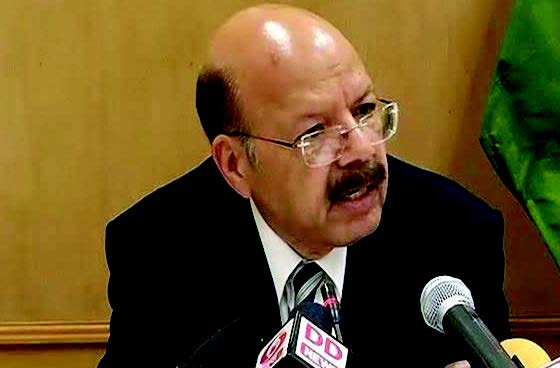
    NEW DELHI (TIP): The Election Commission on January 4 (Wednesday) announced the poll dates for Uttar Pradesh, Uttarakhand, Punjab, Manipur and Goa. Chief Election Commissioner Nasim Zaidi said that the state of Manipur will have a two-phase election and Uttar Pradesh will have a seven-phase election. Counting for all states will be held on 11 March.

    A total of 690 assembly constituencies will go to polls in these elections. Twenty three of these have been reserved from Scheduled Tribes candidates. Over 160 million voters – that’s the size of the electorate in these assembly elections. There will be 1,85,000 polling stations across five states.

    Seven-phase elections in Uttar Pradesh from February 11 to March 8; Punjab and Goa will vote on February 4 while Uttarakhand on Feb 15; results on March 11

    NEW DELHI (TIP): Assembly elections in UP, Punjab, Uttarakhand, Goa and Manipur will be held between February 4 and March 8, the results of which — to be announced on March 11 — are likely to be seen as a referendum on the demonetisation move by PM Narendra Modi.

    The terms of the legislative assembly of Goa, Manipur and Punjab are due to expire on March 18 while that of Uttarakhand expires on March 26. The legislative term of Uttar Pradesh ends on May 27. Goa has 40 assembly seats, Manipur has 60, Punjab has 117, Uttarakhand has 70 while Uttar Pradesh has 403.

    Election Commission made the much-anticipated announcement of dates on January 4 (Wednesday), setting in motion a process that will impact Indian polity in the coming months. The UP polls are already being dubbed as a “semi-final” to the 2019 general elections. These polls are significant for BJP as a good electoral harvest will boost its strength in the Rajya Sabha in the near future. The outcome will also have a bearing on the Presidential elections later this year.

    UP will have a seven phase election, with polling on February 11, 15, 19, 23, 27, March 4 and 8.

    Manipur, which continues to be under a blockade and is facing law and order problems, will have a twophase election with polling on March 4 and 8.

    Seven-phase elections in Uttar Pradesh from February 11 to March 8; Punjab and Goa will vote on February 4 while Uttarakhand on Feb 15; results on March 11Punjab and Goa will vote on February 4 while Uttarakhand on Feb 15. While the Code of Conduct has come into force with the announcement, the state-wise notification process will begin with Punjab and Goa on January 11.

    Demonetisation is likely to be a big issue in these elections, though the polling pattern will be guided by local factors, caste equations and identity politics. With the Centre propagating a less-cash economy, the extent to which money power is at play in these polls will be keenly watched. One of the new rules of these elections allows parties to use cash for campaign payments only up to Rs 20,000.

    Candidates will also have to take oath this time that they have no pending public utility bills. The SC order last week barring political parties and candidates from seeking votes in the name of religion or caste has also added to the worries of the contestants. While SP is seeking to retain power in UP and is facing a challenge from BJP and BSP, Congress is trying to beat anti-incumbency in Uttarakhand and Manipur. BJP is a part of the ruling coalition in Punjab and rules Goa. The caste-ridden politics of UP now has an added dimension with the feud in the first family of SP. CM Akhilesh Yadav is fighting over the symbol, bicycle, with his father and party patriarch Mulayam.

    SAD-BJP combine, which has ruled Punjab for two consecutive terms, has not lost hope, especially if AAP makes it a triangular contest at the expense of Congress. AAP is also making things difficult for BJP and Congress in Goa.

    BJP is still confident of retaining power. BJP is hopeful of defeating Congress in Uttarakhand while CM Harish Rawat is playing the victim card, citing the saffron party’s attempt to topple his government a few months ago. BJP is hopeful of defeating Congress in Manipur currently under Congress rule. Manipur has been facing an economic blockade on its two highways since November 1 over creation of seven new districts.

  • Poll schedule in 5 states of India after security inputs: CEC

    Poll schedule in 5 states of India after security inputs: CEC

    NEW DELHI (TIP): The Election Commission will take a call on the dates of Assembly elections in Uttar Pradesh, Punjab, Goa, Manipur and Uttarakhand, due early next year, based on the inputs provided by security forces and state law and order machinery, Chief Election Commissioner Nasim Zaidi said here, October 19.

    Zaidi said the schedule will be finalized keeping in mind the weather and examination schedule. “We are trying to assess the requirement of security forces, climate and exam schedule – all these inputs are being taken into consideration. Only then will we be able to say whether they will be staggered or multi-phase,” the CEC told mediapersons on the sidelines of an event.

    “As far as the schedule is concerned, the commission has not given a thought as yet.” On if the EC should get powers to prevent parties from making statements in states where elections have not yet been announced, Zaidi said once the model code came into force, the EC would ensure its compliance. Assembly elections are due early next year in Punjab, Uttarakhand, Uttar Pradesh, Goa and Manipur. The terms of Punjab, Goa, Manipur and Uttarakhand Assemblies end in March, while that of UP ends in May.

  • MUMBAI-GOA HIGHWAY BRIDGE COLLAPSE: 2 DEAD, 44 MISSING

    MUMBAI-GOA HIGHWAY BRIDGE COLLAPSE: 2 DEAD, 44 MISSING

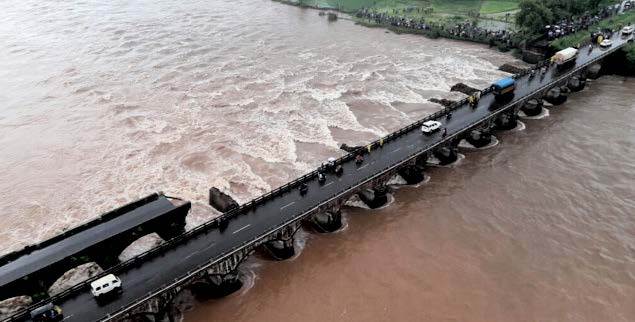
    MUMBAI (TIP): A British era bridge on the Mumbai-Goa National Highway collapsed in the wee hours of August3 due to excessive rains in the Konkan region in Maharashtra.

    Maharashtra CM Devendra Fadnavis also arrived at the bridge collapse site to review the relief and rescue work.

    The rescuers have recovered two dead bodies from the overflowing Savitri river and a massive search is on for others who are missing, Raigad Collector Sheetal Ugale had confirmed.

    At least 44 people, two buses and several other vehicles went missing near Mahad city after the bridge, more than seven decades old and a critical link to the Mumbai-Goa National Highway, crashed around 1 am due to the flood waters rushing into the river.

    Two state transport buses with 11 passengers each are also missing and there was no contact with either their drivers or the passengers, Raigad Collector Sheetal Ugale said.

    Since the Maharashtra State Road Transport Corporation buses, which started from Mumbai, did not arrive at their scheduled Mahad depot, Ugale appealed people to get in touch with the concerned authorities about their missing relatives. Locals said that around five to six private vehicles were also missing and they were feared to be washed away in the floods.

    The ICG has meanwhile pressed Chetak Helicopters into search operations for tracing missing vehicles. Sea king 42C all weather aircraft with diving team has also been pressed into service by the Indian Navy. A massive search operation have been initiated, Ugale confirmed

    “The bridge was built during the British era. After discussion with the National Highways Authority, we have shifted traffic to the new parallel bridge nearby. We are trying to confirm reports of other missing vehicles,” Ugale said.

    Source: Zee News

  • SpiceJet fined Rs 10L for offloading rights activist with cerebral palsy

    SpiceJet fined Rs 10L for offloading rights activist with cerebral palsy

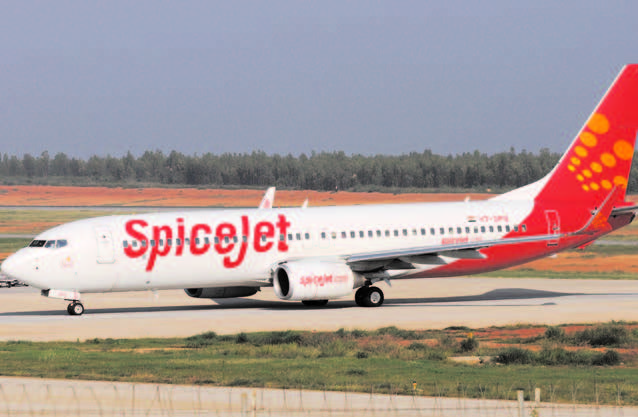
    NEW DELHI (TIP): The Supreme Court ordered low-cost SpiceJet airline on Thursday to pay a Rs10-lakh compensation to rights activist Jeeja Ghosh, a cerebral palsy patient, for offloading her from a flight. A bench headed by justice AK Sikri found the airline guilty of not fulfilling its social responsibility and regretted that society continued to discriminate people with disabilities. The court fixed a two-month period for the company to pay the compensation.

    In 2012, SpiceJet’s cabin crew asked Ghosh to de-board after the pilot purportedly said he was not comfortable with the disabled rights activist around. The 40-year-old had boarded the plane in Kolkata and was to visit Goa for a conference. SpiceJet refunded the ticket money after deducting the flight cancellation charges. “It is the common experience of several persons with disabilities that they are unable to lead a full life due to societal barriers and discrimination faced by them in employment, access to public spaces, transportation etc.,” the bench said.

    The SpiceJet crew’s action violated Ghosh’s fundamental right to live with dignity, the court said.

  • THE WILD SIDE OF GOA

    THE WILD SIDE OF GOA

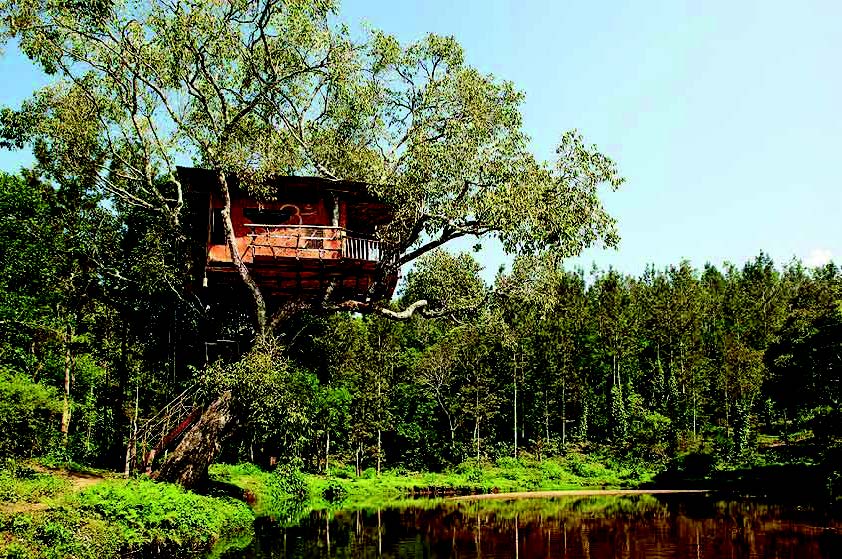
    Before you start getting ideas from the heading, let me clarify that we will be discussing a totally different form of wild. Goa is more than just pristine beaches, feni, floating casinos and a happening nightlife. Being a place of immense natural beauty, the state is endowed with breathtaking wilderness and there are more places to visit in Goa, which are perfect for someone who wants to get out of a mundane week and get into something peaceful.

    [inlinetweet prefix=“Travel” tweeter=”” suffix=””]MHADEI WILDLIFE SANCTUARY[/inlinetweet]

    Mhadei Wildlife Sanctuary is located in the eastern part of Goa. Spread in around 208 sq km, this sanctuary supports a wide variety of wildlife and is famous as a bird watcher’s paradise. It is considered as an International Bird Area, and is home to 255 bird species, including Nilgiri wood-pigeon and crimson-backed sunbird. Visitors can also see over 257-recorded species of butterflies flutter around. Owing to the presence of resident Bengal tigers, the sanctuary has been proposed as a tiger reserve. Along with the diverse fauna, it is also popular for its variety of flora that includes sacred grooves, creepers, evergreen species of Ashoka and colourful flowers, among others. Besides its unique biodiversity, Mhadei Wildlife Sanctuary is also popular for its cascades, especially Vazra Sakla waterfalls and Virdi Falls.

    [inlinetweet prefix=”” tweeter=”” suffix=””]SALIM ALI BIRD SANCTUARY[/inlinetweet]

    Salim Ali Bird Sanctuary, named after the famous ornithologist, is located on the island of Chorao along the Mandovi River. Spread in an area of 440 acres, the sanctuary is covered with a thick mangrove forest, which is usually a natural nesting ground of birds. Different varieties of swallows, bulbuls, kingfishers, swans, woodpeckers, hornbills, etc. are found in plenty at this place.

    The sanctuary has 1km-long pathway on which one can walk as close as possible to see the natural habitat of birds, without disturbing them. One can also choose to hire a boat and go around the place.

    [inlinetweet prefix=”” tweeter=”” suffix=””]COTIGAO WILDLIFE SANCTUARY[/inlinetweet]

    Located 60 km south of Panaji, Cotigao Wildlife Sanctuary is the second largest in Goa. This sanctuary is notable for its dense forest cover with trees as high as 30m and is a haven for tree lovers. The Talpona River flows through the area and the major watering holes are located on its back. There are fewer big animals in this sanctuary than Mollem, however one can still expect to see bears, wild boars, deer and monkeys. Birds are plentiful in general and some species of eagles, which are not easily spotted elsewhere, can be seen here. Several tribal communities live inside these forests and one can get an insight into their fast fading lifestyle.

    [inlinetweet prefix=”” tweeter=”” suffix=””]DUDHSAGAR FALLS[/inlinetweet]

    One of the important destinations within Bhagwan Mahaveer Sanctuary is the Dudhsagar Falls. Of the numerous waterfalls in the Western Ghats, this is one of the most impressive and is the second highest in India after the Jog Falls. The trip involves a short hike on the road and requires a minimum of fitness. The best season to see the falls is in the monsoons, soon after the rains.

    [inlinetweet prefix=“Travel” tweeter=”” suffix=””]BHAGWAN MAHAVEER SANCTUARY[/inlinetweet]

    With an area of more than 240 sq km, this park happens to be the largest wildlife sanctuary in Goa. It was earlier called Mollem Game Sanctuary and was renamed to the current one in 1969. However, the core area is still called Mollem National Park. Nestled in the Western Ghats, the sanctuary is home to pristine evergreen, semi evergreen and deciduous forests at different altitudes. The fauna includes the rare black panther, varieties of deer, bison, several members of the primate family, porcupines and a number of species of resident and migratory birds. It is also home to a great variety of butterflies.

    The sanctuary contains several natural and historical attractions that make this the largest protected area. Some of them are Dudhsagar Falls, Tambdi Falls, Devil’s Canyon and ancient Kadamba Temples.

    Bhagwan Mahaveer Sanctuary is 63 km from Panaji and can be reached by road or train from the capital or Margao. To go around, vehicles are provided by the Forest Department at economical rates. One can get more idea from Goa tourism.

  • Willful Defaulter Vijay Mallya flees

    Willful Defaulter Vijay Mallya flees

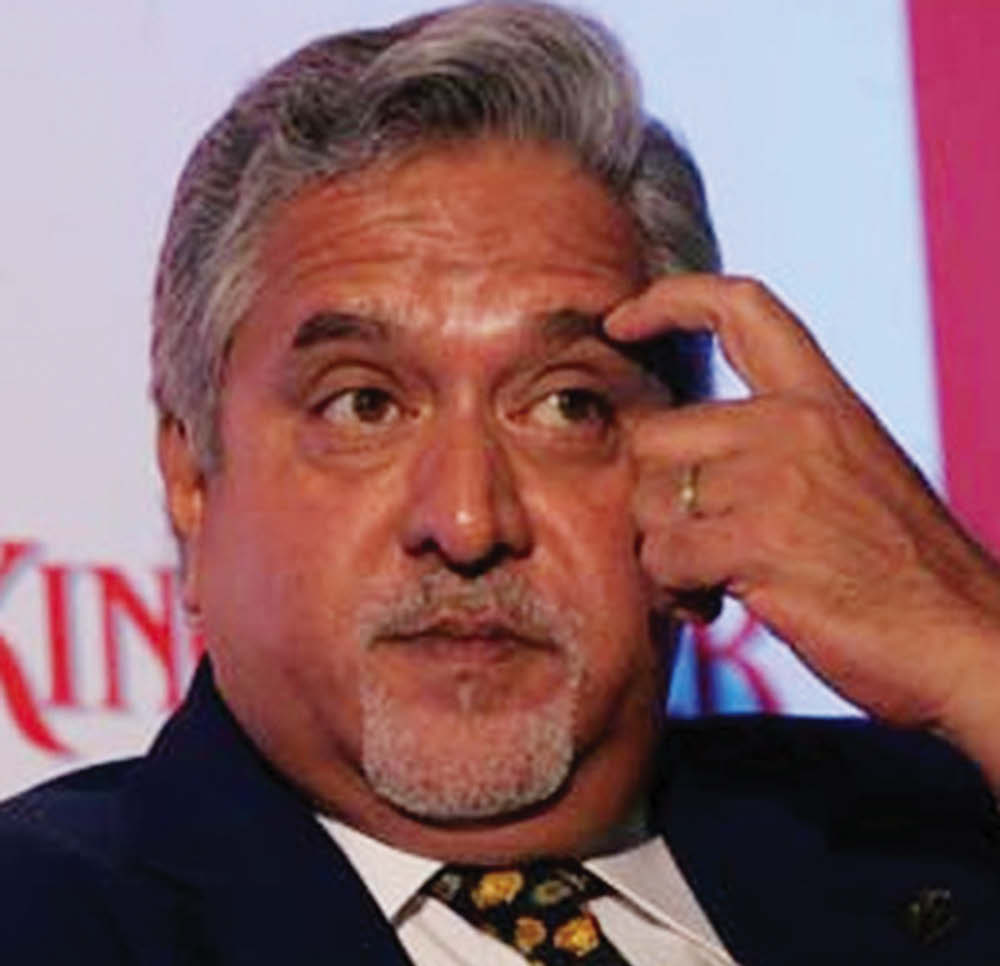
    NEW DELHI (TIP): Liquor baron Vijay Mallya, who is facing legal proceedings for allegedly defaulting loans of over Rs 9,000 crores from various banks, had left the country a week back, government informed the Supreme Court, March 9. “I spoke to the CBI a little while ago and it told me that on March 2 he (Mallya) left the country,”

    Attorney General (AG) Mukul Rohatgi told the bench comprising Justices Kurian Joseph and R F Nariman. The bench issued notice to Mallya and sought his response within two weeks on pleas filed by a consortium of banks seeking direction for freezing his passport and his presence before the apex court.

    Since the court was informed that Mallya has already left the country, probably to UK, the bench allowed the plea of AG that the notice to him can be served through his official Rajya Sabha Email ID, Indian High Commission at London and also through counsel representing him before various high courts, Debt Recovery Tribunal and also through his Company.

    Vijay Mallya was hit by a double whammy on Monday, March 7 as a Debt Recovery Tribunal (DRT) restrained him from accessing the ?515 crore that he received from the sale of the spirits business to Diageo Plc while the Enforcement Directorate (ED) filed a money laundering case.

    The $75 million deal with Diageo was struck last month to get Mallya to relinquish the chairmanship of United Spirits Ltd (USL), which the British spirits maker now owns. However, Mallya will not be able to get hold of the cash, at least for the time being, with the DRT responding to a petition by SBI and other banks.

    If this was not enough, the ED also registered a case against Mallya, and the former chief financial officer of Kingfisher Airlines for fraudulently obtaining a ?900 crore loan from IDBI Bank and laundering the money.

    The ‘King of bad times’ : From a flamboyant billionaire to a man who watched his empire go bust, this is how Vijay Mallya lost his ‘monies’:

    Here’s what Mallya owes banks: SBI: 1,600 cr PNB: 800 crIDBI: 800 cr Bank of India: 650 cr, Bank of Baroda: 550 cr, United Bank of India: 430 cr, Central Bank of India: 410 cr, UCO Bank: 320 cr, Corporation Bank: 310 cr, State Bank of Mysore: 150 cr, Indian Overseas Bank: 140 cr, Federal Bank: 90 cr, Punjab & Sind Bank: 60 cr, Axis Bank: 50 cr

    Assets listed in India: 33% in United Breweries, which is worth Rs 7,000 crore. But more than half of the stake is pledged. 22%interest in Mangalore Chemicals &Fertilizers, which is worth Rs 140 crore. One-third of the shares are pledged. 52%of UB Holdings, a shell company, which has some real estate in Bangalore and other places, but the rentals have already been pledged. Under 1% stake in Bayer Corp Science, but Mallya remains its chairman.

    The rise:

    1983 | After his father’s death, Mallya becomes UB group chairman at 28.

    1999 | Launches Kingfisher Strong, which changes beer consumption nationally, is still the largest selling brand.

    2002 | Nominated to Rajya Sabha.

    The buying spree:

    2005 | Launches Kingfisher Airlines (KFA). Buys Shaw Wallace, gaining whisky brands such as Royal Challenge

    2006 | Buys Herbertsons, makers of Bagpiper whisky and Romanov vodka.

    2007 | Buys F1 team Spyker, renames it Force India. Acquires Air Deccan. Buys British whisky maker Whyte and Mackay for £595m.

    2008 | Buys IPL team Royal Challengers Bangalore for $111.6m. UB City comes up in Bangalore.

    The road to ruin:

    2012 | KFA staff strike work for nonpayment of salaries, income-tax dept freezes KFA accounts, airline grounds flights. In Oct, government suspends KFA license. British alcoholic beverages firm Diageo agrees to buy majority stake in United Spirits

    2013 | Diageo acquires 27% stake in USL for Rs 6,500 crore, but KFA lenders do not get any funds.

    2014 | United Bank identifies United Breweries Holdings as wilful defaulter.

    2015 | Diageo asks Mallya to step down as chairman of the Indian liquor firm but he refuses.

    2016 | Banks move debt recovery tribunal, which restrains Mallya from accessing Rs 515 crore he was to receive from Diageo as settlement after agreeing to quit.

    The misery Kingfisher inflicted: Over 1,500 staffers, still on the firm’s payrolls after it stopped operation, not paid? On March 5, employees write an open letter to Mallya, saying his ‘heart is impure’ and he has blood on his hands. They seek PM Narendra Modi’s help to get their dues.

    His pearls of wisdom: “The only regret is Kingfisher Airlines is not flying today when the oil price is so low.” “The past few days have witnessed a near hysterical campaign in the media directed against me. All I can say is I hope some sobriety and sense will prevail and truth will not be held hostage to TRPs.”

    The treasure trove: Homes in Trump Towers, New York City, and in San Francisco. Game resort in South Africa. A beachfront villa in Goa. Fleet of over 200 luxury vintage cars, a 95m ‘mega yacht’ with a helipad, a Gulfstream private jet.

  • PADMA AWARDS 2016

    PADMA AWARDS 2016

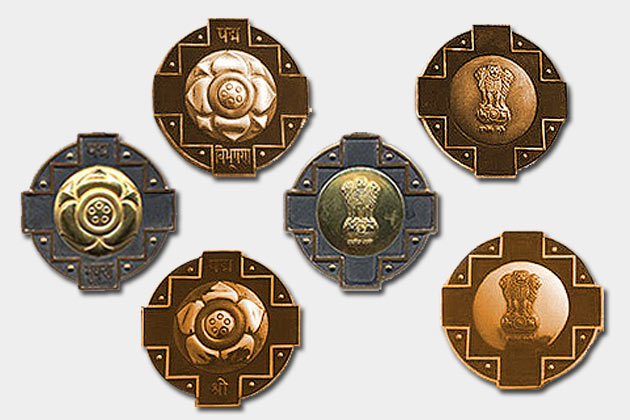
    NEW DELHI (TIP): Former Comptroller and Auditor General of India Vinod Rai, actor Rajinikanth, spiritual guru Sri Sri Ravishankar and tennis player Sania Mirza are on the list of 112 Padma awardees whose names were announced on Monday by the government.

    The awards will be given across three categories: the Padma Vibhushan, Padma Bhushan and Padma Shri. These awards are given on Republic Day, for the over six decades now, to people who the government recognises have excelled in their fields.

    Padma Vibhushan

    1. Shri Rajinikanth    Art-Cinema    Tamil Nadu
    2. Ms. Yamini Krishnamurthi Art- Classical dance Delhi
    3. Smt. Girija Devi    Art-Classical Vocal    West Bengal
    4. Shri Ramoji Rao    Literature & Education-Journalism   Andhra Pradesh
    5. Dr. Viswanathan Shanta    Medicine- Oncology    Tamil Nadu
    6. Shri Shri Ravi Shankar    Others-Spiritualism    Karnataka
    7. Shri Jagmohan    Public Affairs    Delhi
    8. Dr.Vasudev Kalkunte Aatre    Science & Engineering    Karnataka
    9. Shri Avinash Dixit (Foreigner)    Literature & Education
    10. Late Shri Dhiru Bhai Ambani (Posthumous)    Trade & Industry    Maharashtra

    Padma Bhushan

    11. Shri Anupam Kher Art-Cinema Maharashtra
    12. Shri Udit Narayan Jha Art-Playback Singing Maharashtra
    13. Shri Ram V. Sutar Art-Sculpture Uttar Pradesh
    14. Shri Heisnam Kanhailal Art-Theatre Manipur
    15. Shri Vinod Rai Civil Service Kerala
    16. Dr. Yarlagadda Lakshmi Prasad Literature & Education Andhra Pradesh
    17. Prof. N. S. Ramanuja Tatacharya Literature & Education Maharashtra
    18. Dr. Barjinder Singh Hamdard Literature & Education – Journalism Punjab
    19. Prof. D. Nageshwar Reddy Medicine-Gastroenterology Telangana
    20. Swami Tejomayananda Other-Spiritualism Maharashtra
    21. Shri Hafeez Contractor Others-Architecture Maharashtra
    22. Shri Ravindra Chandra Bhargava Public Affairs Uttar Pradesh
    23. Dr.Venkata Rama Rao Alla Science & Engineering Andhra Pradesh
    24. Ms. Saina Nehwal Sports-Badminton Telangana
    25. Ms. Sania Mirza Sports-Tennis Telangana
    26. Ms. Indu Jain Trade & Industry Delhi
    27. Late Swami Dayanand Sarawasati (Posthumous) Others- Spiritualism Uttarakhand
    28. Shri Robert Blackwill (Foreigner) Public Affairs USA
    29. Shri Pallonji Shapoorji Mistry (NRI/PIO) Trade & Industry Ireland

    Padma Shri

    30. Smt. Prathibha Prahlad Art- Classical Dance Delhi
    31. Shri Bhikhudan Gadhvi Art- Folk Music Gujarat
    32. Shri Sribhas Chandra Supakar Art- Textile Designing Uttar Pradesh
    33. Shri Ajay Devgn Art-Cinema Maharashtra
    34. Ms. Priyanka Chopra Art-Cinema Maharashtra
    35. Pt. Tulsidas Borkar Art-Classical Music Goa
    36. Dr. Soma Ghosh Art-Classical Vocal Uttar Pradesh
    37. Shri Nila Madhab Panda Art-Film Direction and Production Delhi
    38. Shri S.S. Rajamouli Art-Film Direction and Production Karnataka
    39. Shri Madhur Bhandarkar Art-Film Direction and Production Maharashtra
    40. Prof. M. Venkatesh Kumar Art-Folk Artist Karnataka
    41. Ms. Gulabi Sapera Art-Folk Dance Rajasthan
    42. Smt. Mamta Chandrakar Art-Folk Music Chhattisgarh
    43. Ms. Malini Awasthi Art-Folk Music Uttar Pradesh
    44. Shri Jai Prakash Lekhiwal Art-Miniature Painting Delhi
    45. Shri K. Laxma Goud Art-Painting Telangana
    46. Shri Bhalchandra Dattatray Mondhe Art-Photography Madhya Pradesh
    47. Shri Naresh Chander Lal Art-Theatre & Cinema Andaman & Nicobar
    48. Shri Dhirendra Nath Bezbaruah Literature & Education Assam
    49. Shri Prahlad Chandra Tasa Literature & Education Assam
    50. Dr.Ravindra Nagar Literature & Education Delhi
    51. Shri Dahyabhai Shastri Literature & Education Gujarat
    52. Dr.Santeshivara Bhyrappa Literature & Education Karnataka
    53. Shri Haldar Nag Literature & Education Odisha
    54. Shri Kameshwaram Brahma Literature & Education – Journalism Assam
    55. Prof. Pushpesh Pant Literature & Education-Journalism Delhi
    56. Shri Jawaharlal Kaul Literature & Education-Journalism Jammu & Kashmir
    57. Shri Ashok Malik Literature &Education Delhi
    58. Dr.Mannam Gopi Chand Medicine-Cardio Thoracic Surgery Telangana
    59. Prof. Ravi Kant Medicine-Surgery Uttar Pradesh
    60. Prof. Ram Harsh Singh Medicine- Ayurveda Uttar Pradesh
    61. Prof. Shiv Narain Kureel Medicine- Paediatric Surgery Uttar Pradesh
    62. Dr.Sabya Sachi Sarkar Medicine -Radiology Uttar Pradesh
    63. Dr. Alla Gopala Krishna Gokhale Medicine-Cardiac Surgery Andhra Pradesh
    64. Prof. T.K. Lahiri Medicine-Cardio Thoracic Surgery Uttar Pradesh
    65. Dr. Praveen Chandra Medicine-Cardiology Delhi
    66. Prof. (Dr) Daljeet Singh Gambhir Medicine-Cardiology Uttar Pradesh
    67. Dr.Chandrasekar Shesadri Thoguluva Medicine- Gastroenterology Tamil Nadu
    68. Dr. (Mrs.) Anil Kumari Malhotra Medicine-Homeopathy Delhi
    69. Prof. M.V. Padma Srivastava Medicine-Neurology Delhi
    70. Dr. Sudhir V. Shah Medicine-Neurology Gujarat
    71. Dr. M. M. Joshi Medicine-Ophthalmology Karnataka
    72. Prof. (Dr) John Ebnezar Medicine-Orthopaedic Surgery Karnataka
    73. Dr. Nayudamma Yarlagadda Medicine-Paediatric Surgery Andhra Pradesh
    74. Shri Simon Oraon Other -Environment Conservation Jharkhand
    75. Shri Imitiaz Qureshi Other-Culinary Delhi
    76. Shri Piyush Pandey Others-Advertising & Communication Maharashtra
    77. Shri Subhash Palekar Others-Farming Maharashtra
    78. Shri Ravinder Kumar Sinha Others-Wildlife Conservation Bihar
    79. Dr. H.R. Nagendra Others-Yoga Karnataka
    80. Shri M. C. Mehta Public Affairs Delhi
    81. Shri M. N. Krishna Mani Public Affairs Delhi
    82. Shri Ujjwal Nikam Public Affairs Maharashtra
    83. Shri Tokheho Sema Public Affairs Nagaland
    84. Dr. Satish Kumar Science & Engineering Delhi
    85. Dr.Mylswamy Annadurai Science & Engineering Karnataka
    86. Prof. Dipankar Chatterji Science & Engineering Karnataka
    87. Prof.(Dr.) Ganapati Dadasaheb Yadav Science & Engineering Maharashtra
    88. Smt. (Prof.) Veena Tandon Science & Engineering Meghalaya
    89. Shri Onkar Nath Srivastava Science and Engineering Uttar Pradesh
    90. Ms. Sunita Krishnan Social Work Andhra Pradesh
    91. Shri Ajoy Kumar Dutta Social Work Assam
    92. Shri M. Pandit Dasa Social Work Karnataka
    93. Shri P. P. Gopinathan Nair Social Work Kerala
    94. Smt. Madeleine Herman de Blic Social Work Puducherry
    95. Shri Srinivasan Damal Kandalai Social work Tamil Nadu
    96. Shri Sudhakar Olwe Social Work Maharashtra
    97. Dr. T.V. Narayana Social Work Telangana
    98. Shri Arunachalam Murugantham Social Work Tamil Nadu
    99. Ms. Deepika Kumari Sports-Archery Jharkhand
    100. Shri Sushil Doshi Sports-commentary Madhya Pradesh
    101. Shri Mahesh Sharma Trade & Industry Delhi
    102. Shri Saurabh Srivastava Trade & Industry Delhi
    103. Sh Dilip Sanghvi Trade & Industry Maharashtra
    104. Dr. Keki Hormusji Gharda Trade & Industry Maharashtra
    105. Late Shri Prakash Chand Surana (Posthumous) Art – Classical Music Rajasthan
    106. Late Shri Saeed Jaffrey (NRI/PIO/Posthumous) Art- Cinema UK
    107. Shri Michael Postel (Foreigner) Art-Archaeology France
    108. Shri Salman Amin Sal Khan (NRI/PIO) Literature & Education USA
    109. Smt. Hui Lan Zhang (Foreigner) Others-Yoga China
    110. Shri Predrag K. Nikic (Foreigner) Others-Yoga Serbia
    111. Dr.Sundar Aditya Menon (NRI/PIO) Social Work UAE
    112. Shri Ajaypal Singh Banga (NRI/PIO) Trade & Industry USA

  • RAJASTHAN VILLAGE TENSE AS DALIT BRIDE WANTS GROOM TO RIDE A MARE

    RAJASTHAN VILLAGE TENSE AS DALIT BRIDE WANTS GROOM TO RIDE A MARE

    Barmer (TIP): When she became the first girl from her family to become a graduate, 25-year-old Neetu Meghwal wished that her groom came riding a mare, something that no Dalit in her village had dared to do.

    Now a constable with the Central Industrial Security Force (CISF) and posted at Bangalore airport, she shared the dream with a cousin who wrote to the chief minister’s office about Neetu’s wish.

    Soon, her wish reached the National Commission for the Schedules Castes (NCSC) that asked district authorities to take necessary steps.

    Cousin Laxman Sariyala said he alerted authorities because he knew upper castes villagers would not allow a Dalit to ride a mare during a wedding procession.

    Rajasthan has witnessed violent incidents in the past, especially in Bhilwara and some parts of Alwar and Jaipur where Dalit grooms were assaulted for riding a mare during weddings.

    “She studied with us in Pali and has been the only girl among five siblings to get educated and a government job. Her four brothers are daily wage labourers in Goa and a younger sister is illiterate. She had the will to break caste stereotypes but it looks very difficult.” His fears came true. Neetu’s wish has triggered tension in her native village, Khimda, near Somesar railway station, 350km from Jaipur.

    Khimda has around 400 households; 30% of them belonging to the scheduled caste. Most Dalits work as farmhands in fields of rich farmers.

    A day before her wedding, police took a written undertaking from the family that it doesn’t want Neetu’s groom to ride a mare — considered a traditional prerogative of the village’s upper caste inhabitants whose grooms come on horseback to the wedding venue, mostly the bride’s home. A mare is preferred because it is considered auspicious.

    Elder brother Champa Lal said the family didn’t want the groom to ride a mare during bindoli, a ritual where he takes a round of the village. “We want to follow the old tradition where groom comes with the marriage procession, not riding a mare,” he said.

    Neetu’s phone was switched off on Thursday. Mahavir Mevada, a resident, said the bride told him she was scared but keen that her groom rode a mare.Police dismissed allegations of pressure from upper caste villagers. Sanderao police station SHO Amarlal Meena said the family didn’t feel any threat and was assured protection if the groom came riding a horse.

  • US tourist chased, beaten in Goa, dies

    US tourist chased, beaten in Goa, dies

    An American tourist died in Goa after allegedly being chased down and beaten up by the locals and police.

    At about 1.30pm on Tuesday, he dumped his bag in a house at Deulwada in North Goa district. He then started misbehaving with the locals.

    Sources said that he tried to grab the keys of some of the scooters in the locality. Later, he rushed to the main junction in the village and continued behaving abnormally which scared the women in the locality.

    “He was totally out of control and was running helter-skelter, he went to one house asking for tea, he also stopped the two wheelers and tried to grab the key,” a eyewitness told TOI.

    Eyewitness said that locals wanted the man to be under control. Some thought he was a thief as many of thefts have taken place in the area in the recent past.

  • 1971 Indo-Pak War hero Lt Gen Jacob dies

    1971 Indo-Pak War hero Lt Gen Jacob dies

    Lt Gen (Retd) J F R Jacob, who played a key role in the 1971 war which liberated Bangladesh from Pakistan, died here today at the age of 92 due to “old age complications”.

    Jacob, who was also Governor of Punjab and Goa, breathed his last at the Army Hospital here at around 8 am.

    He was admitted to the Army’s Research and Referral Hospital since January 1 after suffering from pneumonia. Prime Minister Narendra Modi condoled his demise and said India will always remain grateful to Jacob for his impeccable service to the nation. He also recalled his association with him.

    “RIP Lt Gen JFR Jacob. India will always remain grateful to him for his impeccable service to the nation at the most crucial moments.

    “Lt Gen JFR Jacob and I interacted often. Had a memorable interaction when he presented his autobiography to me,” he tweeted.

    Defence Minister Manohar Parrikar and BJP chief Amit Shah have also condoled his demise.

    Army chief Gen Dalbir Singh Suhag expressed his deepest condolences towards this great loss, a statement by the Army said.

    He said that Jacob was a pillar of military leadership and personified the best qualities of a soldier and a statesman who will always be remembered as one of the most prominent Leaders in the annals of Indian military history.

    Jacob had negotiated the surrender of Pakistani troops in Dhaka after the 1971 Bangladesh liberation war when, as Major General, he served as the Chief of Staff of Indian Army’s Eastern Command.

    Born in 1923 in Bengal Presidency under British India, Jacob joined the army at the age of 19 in 1942 and also fought in World War II and the Indo-Pakistan War of 1965 before he retired in 1978.

    Post retirement, he joined BJP and headed its ex-servicemen wing. He was appointed Governor of Goa during Vajpayee government and then Governor of Punjab. He was also the Administrator of Union Territory of Chandigarh.

    During his stint as Punjab Governor and UT Administrator, he would often conduct check in government offices unannounced.

    He authored two books – ‘Surrender at Dacca: Birth of a Nation’ and ‘An Odyssey in War and Peace: An Autobiography Lt Gen J F R Jacob’.

  • Finding a Niche in the Emerging World Order

    Finding a Niche in the Emerging World Order

    Prime Minister Narendra Modi’s apparently impromptu visit to Lahore on Christmas day is readily explained by the need to contain the Taliban and ensure regional stability and connectivity in the ‘Heart of Asia’ after the US-led International Security Assistance Force withdraws next year. The visit follows growing realization in capitals across the region that mutual security interests must supersede Cold War alliances or ideological mindsets to avoid the fate of nations like Iraq and Syria. The Taliban and/or its mutants cannot be permitted to spread in the Afghan neighborhood, which includes Central Asia, Iran, Pakistan and India, an effort that calls for convergence between Kabul, Islamabad and New Delhi. One can discern the benign presence of Moscow and Beijing as both have huge stakes in a revitalized Asian economic boom independent of Western hegemony.

    Besides China’s Silk Road project, several multi-nation projects centre on Afghanistan, viz, the Turkmen railways, transmission lines, highways, oil pipelines and gas pipelines including the Turkmenistan-Afghanistan-Pakistan-India pipeline. India wants to join the Afghanistan-Pakistan trade and transit agreement so that Afghan products can directly enter India and its products reach Afghan and Central Asian markets.

    These mega-development prospects doubtless prompted Mr. Modi to engage with Pakistani Prime Minister Nawaz Sharif on the sidelines of the Paris climate conference in late November. Thereafter the National Security Advisors met in Bangkok and smoothened the way for External Affairs Minister Sushma Swaraj’s visit to Islamabad for the Heart of Asia-Istanbul Process conference on Afghanistan. India has huge stakes in the integration of Central Asia, East Asia and West Asia.Though not opposed, India does not expect a lasting peace to emerge from talks between the Afghan Government and Afghan Taliban groups. A better option is state-level engagement which Kabul too prefers. Hence, it is inconceivable that as he went through his Kabul engagements – inaugurating the India-built $90 million Parliament House, gifting three Mi-25 attack helicopters and 500 new scholarships for children of martyrs of Afghan security forces -Mr. Modi would not have discussed the Lahore stopover with President Ashraf Ghani and CEO Abdullah Abdullah. It seems equally likely he mentioned it to Russian President Vladimir Putin before departing from Moscow. It may be relevant to note that since Russia began bombing IS positions in Syria, Pakistan does not favor regime change in Damascus.

    Pakistan Tehreek-e-Insaaf party leader Imran Khan’s presence in India (possibly to deliver the Sharif family wedding invitation) and the mature welcome to Mr. Modi’s stopover by Pakistan political parties (as opposed to the Congress’s petty squabbling) suggests that the Pakistani polity may have achieved some degree of cohesion in tackling terrorism. The Peshawar school attack last year is a grim warning of the danger from non-state actors.

    Mr. Modi’s first state visit to Russia, as part of the 16th Annual Bilateral Summit, has revitalized India’s most tried and trusted friendship and sent a signal to the international community that President Putin cannot be downsized by Western machinations. Mr. Modi secured Mr. Putin’s backing for India’s permanent membership of the UN Security Council and reiterated the commitment of both nations to a multipolar world order. Both nations already cooperate in forums like Brics and the Shanghai Cooperation Organisation (where Russia helped in India’s full membership), the G20 and the East Asia Summit.

    Syria, Afghanistan and the common threat posed by terrorism figured in the talks, but the summit’s main takeaway was Russia’s big bang return to India’s defense and nuclear energy sectors. Mr. Modi’s Make in India project in the defense sector got a major boost with the deal to jointly manufacture 200 Kamov-226T light military helicopters.

    The real triumph is the acquisition of five S- 400 Triumf surface-to-air missile systems (and 6,000 missiles). Literally the ‘crown jewels’ of Russia’s defense capability, the S-400 can destroy aircraft that use stealth technology, other fighter aircraft, cruise missiles and tactical missiles from up to 400 kilometers away, as effectively demonstrated earlier this month when Russia deployed the system to protect its Hmeimim airbase in Syria after Turkey downed a Russian jet.

    This will give India the ability to engage multiple targets at long range and restore the strategic balance with China and Pakistan. With Prime Minister Modi reportedly budgeting $150 billion to upgrade India’s military, with the Navy planning to order three Russian frigate warships and a possible joint development of a fifth generation fighter aircraft, New Delhi could be Moscow’s salvation as the latter faces a second year of recession amid Western sanctions.

    With the Paris climate conference failing to yield a comprehensive deal, the burden of combating global warming with clean energy expectedly fell upon individual nations. Mr. Modi having previously identified nuclear energy as pollution-free, the two nations are moving ahead with plans to build at least 12 nuclear power plants in India with the highest safety standards in the world, over the next 20 years. Two plants are slated to come up in Andhra Pradesh under the Make in India program. A vibrant partnership, however, calls for deeper economic integration. The Indian Prime Minister hopes to take advantage of the US-led Western sanctions against Russia to meet the latter’s demand for dairy products, seafood, and other goods and to attract Russian cash-rich billionaires to invest in India’s infrastructure fund, since they are no longer welcome in the old European financial havens due to Mr. Putin’s resistance to Western geo-political agendas to dismember West Asian and African countries on the lines of the old Yugoslavia.

    Access to Russian capital for his Make in India campaign would empower Mr. Modi’s drive to build a strong indigenous manufacturing base to generate employment and export revenues. Given the sharp downturn in Russo-Turkey relations, Mr. Modi hopes that Russian tourists will flock to India (not just in Goa) and tasked the tiny Indian community in Russia to motivate Russian families to discover India.

    Another gain is Russia’s commitment to ship 10 million ton of oil annually to energy-starved India in the next 10 years. Both countries plan to intensity collaboration in developing space exploration, rocket manufacture and engine manufacture, nano-technology, metallurgy, optics and software sectors. In substance, the visit announced that the Asian quest to forge a rational world order has moved to a new level. Mr. Modi’s short and informal visits to Afghanistan and Pakistan may be read as an invitation to take a seat of honor at the evolving new world concert.

    (The author is a social development consultant and a columnist with The Pioneer, a leading newspaper of Delhi).

  • 2nd South Asian film fest kicks off in Dallas (DFW)

    2nd South Asian film fest kicks off in Dallas (DFW)

    DALLAS, TX (TIP): The 2nd annual DFW South Asian Film Festival kicks off its programming
    from February 19th to 21st, 2016, at locations in downtown Dallas and Plano. The opening night film, Miss India America, will screen on Friday, Feb. 19th at the Hoglund Foundation Theater of the Perot Museum of Nature and Science, followed by a red carpet and cocktail reception at the T. Boone Pickens Life Then and Now Hall (4th floor of the Perot Museum). The rest of the specially-curated line-up will be showcased at the Angelika Film Center in Plano (Shops at Legacy) on Feb. 20th and 21st, followed by panel discussions with attending filmmakers, after-parties and networking events, all taking place in Plano.

    JINGO Media, a Dallas and NYC-based, public relations and events management boutique firm, produces the annual festival of South Asian independent cinema in North Texas. The second iteration of the festival boasts more than a dozen curated shorts, documentaries and feature films that focus on issues affecting the South Asian (India, Pakistan, Nepal, Bangladesh and Sri Lanka) sub-continent, as well as explore the lives and stories of the South Asian Diaspora in the United States.

    “In our second year, we are stepping up our game,” said JINGO Media Principal/CEO Jitin Hingorani. “Our team of curators has spent the year traveling to other South Asian film festivals around the world, including Toronto, New York, Chicago, Los Angeles and Goa, India, to secure the most meaningful and relevant programming for North Texas audiences. We are certain that our community will leave these films entertained, elated and educated.”

    The festival’s opening night film is the Texas premiere of wife/husband creative team Meera Simhan (actor/co-writer) and Ravi Kapoor’s (director/co-writer) award-winning, cross-cultural comedy Miss India America. Set against the backdrop of the Indian beauty pageant world in Los Angeles, the film stars Texas native Tiya Sircar and Hannah Simone (of television series New Girl fame), along with a supporting cast of talented South Asian actors. Produced by Megha Kadakia and Saurabh Kikani, the film “establishes an authentic tone that pays respect to Indian cultural norms, while poking gentle fun at these traditions,” raves The Hollywood Reporter.

    In addition to the opening night, centerpiece and closing night films, the festival will also showcase thought-provoking, edgy shorts and docs, along with women’s programming, men’s programming, LGBT programming and family programming. “All-access” festival passes, which provide admission to all of the films, networking events and after parties, are currently available on www.dfwsaff.com for the early-bird price of $125 before January 15th, after which the price increases to $150. Individual screenings are $15 per person, but limited tickets will be available at the theater. Every week starting in December, ONE film from the line-up will be revealed on the festival’s Facebook page and the entire festival lineup will be available by mid-January on the festival’s web site.

  • India’s leading Ayurveda destinations

    India’s leading Ayurveda destinations

    From being the ‘science of life’, Ayurveda has become the ‘slice of life’ for many with the advent and positive growth of rejuvenation centres and Ayurvedic resorts in the country.
    People are willing to experience a ‘healthier’ side to an otherwise indulgent holiday by touring healing resorts as an escape from the mundane, hectic everyday existence. These resorts located at the outskirts of the cityscape over sprawling and pristine forests lure tourists into its peaceful and quiet edifices.

    Let’s discover and learn about some of the best Ayurveda resorts our country has:

    Somatheeram Ayurveda Resort, Kerala: Nestled on a hillock a few kilometres south of the Kovalam beach is the world’s first Ayurvedic resort Somatheeram. Spread across a wide expanse of greenery, Kerala prides in Somatheeram as a getaway destination for those in search of an Ayurvedic haven away from the cacophony of city life. Established in 1985, Somatheeram has emerged as one of the frontrunners in encouraging a culture of Ayurvedic holidays and meditation tours among travel enthusiasts. The serenity of the resort by the sea, goodness of traditional Ayurvedic therapies and a healthy diet routine help people unwind here.

    Acute health conditions of paralysis, fluctuating levels of blood pressure, arthritis, high cholesterol and breathing problems are first examined by a team of yoga experts and doctors after which a series of corresponding healing exercises and diet regime ensue.

    Massage therapies: The massages here at Somatheeram serve more than a short-term purpose; the sessions are extensive and extend till days. ‘Pizhichil’ for instance is a special massage that uses a variety of herbal oils (lukewarm) and has been effective in curing diseases like paralysis and nervous disorders. Every session lasts 60-90 minutes over a span of 7-21 days. People with diabetes and obesity can go for the Ayurvedic ‘Abhyangam’ treatment which is again a type of oil massage for 45 minutes a day. ‘Nasyam’, ‘Snehapanam’ and ‘Kizhi’ are among the many treatments that have been proven medically capable of battling severe skin diseases, leukemia and sports injuries.

    Yoga classes and boat tours in the backwaters too are included in Ayurveda packages at Somatheeram.

    Where: Somatheeram Ayurveda Resort, South of Kovalam, Thiruvananthapuram. About 21 kms from International Airport at Thiruvananthapuram and about 9 kms south of the famous Kovalam beach.

    1)Ananda in the Himalayas, Uttarakhand: As the name suggests, the experience too replicates a blissful journey amid the towering and guarding Himalayas. Ananda focuses on an interesting and fruitful blend of Ayurveda and Aromatherapy with contemporary spa technology for complete wellness of the human body. Located 260 kms north of New Delhi, Ananda stands tall around Maharaja’s palace estate with the views of the Ganges on one side and the mountain peaks on the other pleasing the tourist’s eyes, mind and spirit upon waking up every morning. Yoga pavilions, landscaped gardens, terraces facing a clear sky, spas equipped with hydrotherapy services, a golf course on its Himalayan axle and Rejuvenation Cuisine are some of the many distinguishing features of the resort you can indulge in.
    Ayurveda, yoga & meditation:

    European and Thai treatments are employed in the spa boutiques here at Ananda. The Viceregal Hall is the quaint hillside garden that doubles as a refuge post an exhaustive yoga session. Marvel at the breathtaking panorama as you sip on the Himalayan tea. For couples, the Kama Suite with steam shower and exclusive massage facilities can surely add a sensual flavour to the Ayurveda tour. The Ayurvedic treatments are fashioned according to the Himalayan conditions. Use of less oil, slow and synchronised massages and regulation of a nutritious diet go into the making of customised treatments for guests under the supervision of physicians and therapists. An aftercare programme is planned for the benefit of the client at the last leg of the Ayurveda trip.

    Where: The Palace Estate, Narendra Nagar, Dist. Tehri-Garhwal, Uttarakhand

    Air: A 45-minute flight from New Delhi to Dehradun Jolly Grant airport followed by a one-hour drive.

    Train: A four-hour journey from New Delhi to Haridwar railway station followed by a one-hour drive.

    Road: The driving time between New Delhi and Narendra Nagar is approximately five and a half hours.

    1)Devaaya, The Ayurveda and Nature Cure Centre, Goa: If beaches and nightlife are the first things that come to mind upon hearing Goa, then probably it’s time to widen your horizon. As much as it is a ‘party’ destination, Goa as a city has carved an identity that appreciates art, culture and holistic living. And speaking of holistic living, the city has emerged as one of the potential tourist spots on the map of Ayurveda tourism in India. Coconut palms swinging to the rhythm of the breeze and the Mandovi River flowing alongside one of the islands in Goa complete the scenery at Devaaya Ayurveda Centre in Goa. Naturopathy becomes a way of life at this Ayurvedic paradise that brings together the essential elements of ‘Panchakarma’ treatments with yoga, meditation, music, lifestyle correction, diet planning and medicines for tourists. The centre has been designed on the science of ‘Vaastu Shastra’ that adds to the harmony of the overall rejuvenation process.

    Where: Devaaya – Ayurveda & Nature Cure Centre, Divar Island, Goa

    1)Kairali Ayurvedic Health Village, Kerala: The captivating beauty of the Western Ghats and the rich flora define the picturesque town of Palakkad in Kerala which is home to the Kairali Ayurvedic Health Resort. Ram Mohan, Vice President of the Resort is proud to declare how the Ayurveda village has travelled miles over the recent years, “Today, we have over 20 centres abroad apart from the 25 centres across India.” Ask him about the future of Ayurveda tourism in India and he has his reservations, “The Indian mindset is still not ready to embrace the culture of Ayurveda in a manner that the European market has possibly built an industry around. Patience is a virtue we have still not mastered the art of. It is believed that Ayurveda is an expensive affair but so is allopathy. If we are willing to shed a fortune on a bypass surgery then why not spend half the money on a recreational therapy that will guarantee the elimination of the ailment from its root?”, asks Ram. The system of Ayurveda he asserts is “not superficial but comes with permanent and effective results.”

    Agrees Niika Quistgard, Founder and Director Rasa Ayurveda Traditional Healing Centre for Women, Kerala and says, “People are often dissatisfied with allopathic medicines and are wary of the side-effects of drugs; natural alternatives and organic methods of healing are the preferred options. At Rasa Ayurveda we offer free consultation and treatment to women. All remedies are derived from herbal plants, a tradition that dates back to the era of our grandmothers,” adds Niika.

    The Leela, Udaipur:

    The city of lakes and palaces, The Leela’s ESPA Spa is yet another hot spot for Ayurvedic retreat. The ‘haveli’ style architecture of spas, tents done up in shades of royalty and opulence and the welcoming gardens contribute to the development of a relaxed mind and soul of the human body. Tricia Bannister, Group Spa Manager, says, “Our clientele has grown from in-house guests to both in-house and local guests requesting for a wellness experience set amidst the cultural heritage of Rajasthan.” From hot stone massages, facials, yoga and meditation, The Leela also features private yoga studio for visitors. On being asked if Ayurveda treatment is a rich man’s pastime Bannister replies, “There is a range of Ayurvedic resorts available for spa travellers, from more relaxed, to 5-star properties. Ayurveda tourism is growing dramatically in India; both for pure Ayurvedic treatments as well as Ayurvedic-inspired experiences. Travellers from all income-levels are curious to experience new wellness treatments,” adds Tricia.

    Where: The Leela Palace, Lake Pichola, Udaipur

  • Kohli, Shastri join IPTL bandwagon

    Kohli, Shastri join IPTL bandwagon

    NEW DELHI (TIP): Test captain Virat Kohli is becoming quite the entrepreneur when it comes to sports leagues. After his maiden venture in partnering with the Indian Soccer League (ISL) franchise FC Goa last year, Kohli has now taken a dip in the tennis pool, becoming a co-owner of the UAE Royals team in the International Premier Tennis League (IPTL).

    The skipper joins two other owners – Neelesh Bhatnagar and Sachin Gadoya – in ownership of the Royals. The team will feature 17-time Grand Slam champion Roger Federer this season along with 2001 Wimbledon champion Goran Ivanisevic, Ana Ivanovic, Daniel Nestor, Kristina Mladenovic and Tomas Berdych.

    “Kohli is a big tennis fan, especially of Federer. He’s made some investments in sporting ventures like the ISL franchise FC Goa. The owners of UAE Royals got in touch with him and he was excited to come on board,” IPTL founder and managing director Mahesh Bhupathi told TOI from Dubai on Thursday.

    Kohli has followed Federer for some time now, flying down to London earlier this year to see the Swiss Ace in action at Wimbledon. “I am a huge fan of Federer and with him joining the Royals, my decision to be on board with the team was firm. The Royals feature some of tennis’ greatest players and I am confident about the prospects of the team in the IPTL,” Kohli said.

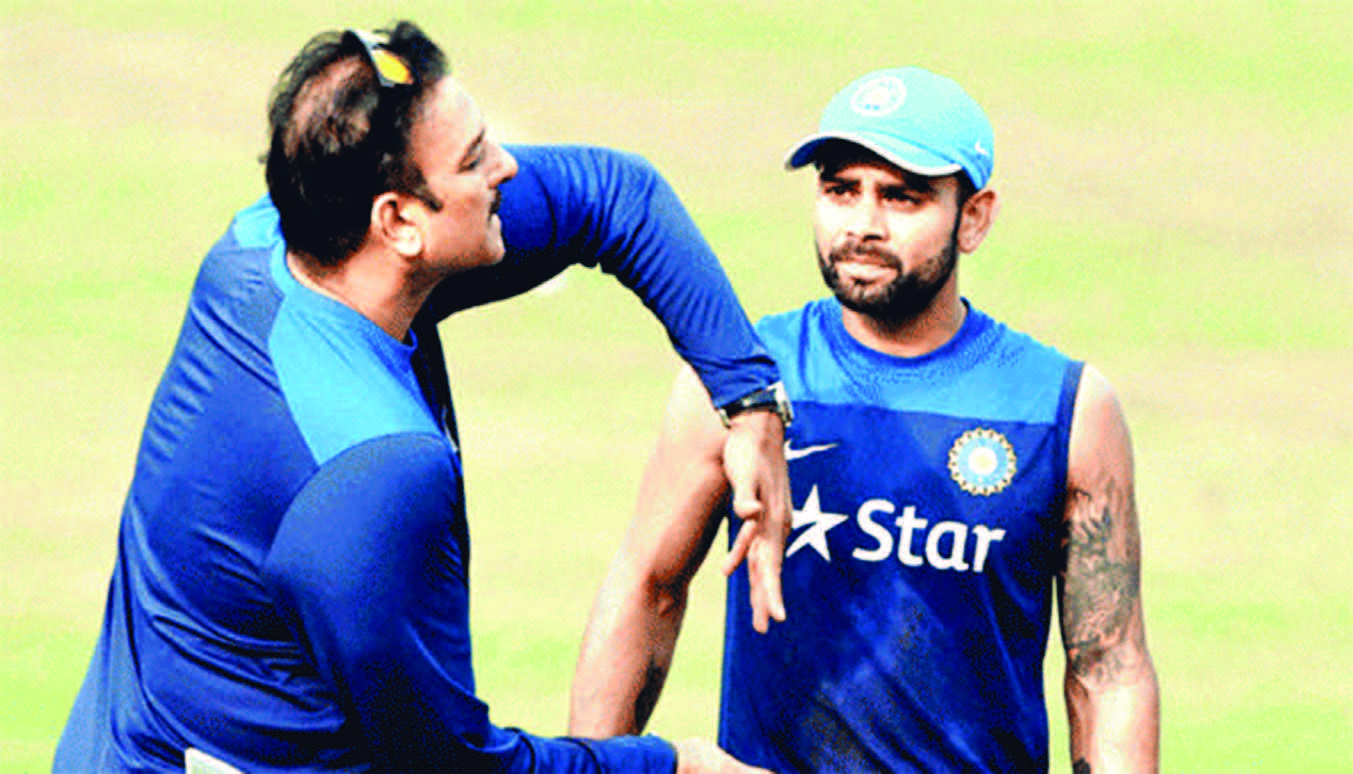
    Joining Kohli in the franchise will be cricket team director Ravi Shastri. “The owners have also brought on Shastri as a mentor-cum-advisor. He is close to Kohli and has been working with the youngsters in the Indian team,” Bhupathi said.

    The UAE leg of the league will be held from December 14- 16 at the Dubai Duty Free Tennis Stadium. Asked how many rounds that the duo will attend, Bhupathi said: “It’s still not clear how many rounds they’ll be able to attend. They will be here in Dubai for the Royals’ matches for sure. Kohli has expressed the desire to hit a few balls with Federer as well, so that will be something to look forward to.”

    The Royals team features Ivanisevic but his ward and defending US Open champion Marin Cilic is missing from the roster this season. Bhupathi, however, said negotiations are still on with some of the players. “Cilic was part of the Royals but we haven’t been able to finalise him as yet. Talks are still on with Cilic as well as a few other players. We’ll have more clarity once some of the contracts are finalized,” the IPTL managing director said.

    Meanwhile, the New Delhi leg will be held between December 10 and 12 and ticket sales are already promising.

  • FALL IN LOVE WITH BEST WATERFALLS IN INDIA

    FALL IN LOVE WITH BEST WATERFALLS IN INDIA

    The revival of the – monsoon will see people head to hill stations in the hope of making the most of the rains. These travel escapades are especially -popular at this time of the year for multiple waterfalls that sprout at every other corner.

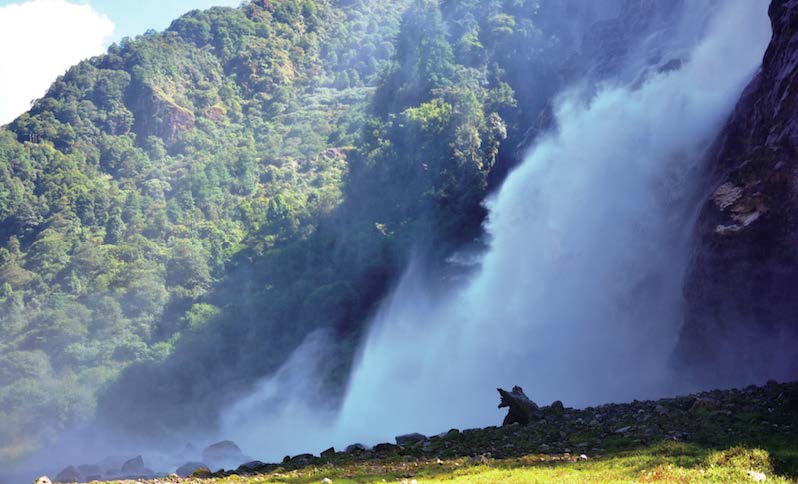
    Nuranang Falls : Where: Near Jang, Arunachal Pradesh

    Should you plan a trip to Tawang, a town close to the India-China border, then there is no escaping a tryst with this waterfall. You may ask about the significance of the place or the name, but the guides here will only be interested in -showing you the exact spot where some scenes of the Shah Rukh, Madhuri Dixit-starrer Koyla (1997) were shot.

    Nohkalikai Falls : Where: Near Cherrapunji, Meghalaya

    Legend has it that this was the spot where a young mother (named Likai) threw herself over the precipice after finding out that her husband killed her daughter. Her act gave the falls its name. It literally means ‘Leap of Ka Likai’, which the locals will tell you with a sad shake of the head.

    Jog Falls : Where: Near Shimoga, Karnataka

    The onset of the monsoon sees the four distinct streams of the Sharavathi river -locally known as Raja, Roarer, Rani and Rocket – go from being trickles to the world-famous Jog Falls. Joga, incidentally, ranks among the highest waterfalls in the country.

    Dudhsagar Falls : Where: Goa-Karnataka border

    The name literally means ‘Sea of Milk’, and the tiered waterfall makes for such a picturesque frame, with a railway line – running in front of it. The film Chennai Express (2013) was shot here. Incidentally, the makers of the 23rd Bond film, Skyfall (2012), too, were interested in filming an action sequence here, but that plan did not work out.

    Nohsngithiang Falls : Where: Near Mawsmai, Meghalaya 

    Also referred to as the Mawsmai Falls or the Seven Sisters, these waterfalls are a sight to behold in the rainy season. Considered one of the most photogenic spots in the country, it is best captured during sunset.

    Ethipothala Falls : Where: Near Hyderabad 

    A two-hour drive from Hyderabad, this waterfall is -powered by the waters of the Krishna River and flows with maximum force in the monsoon. There is a crocodile breeding -centre in the area, since the waters are infested with the -reptiles. Once daylight fades, the falls are illuminated with lights placed at strategic areas which makes for a breathtaking sight.

    Chitrakoot Falls : Where: Near Jagdalpur, Chattisgarh

    One of the broader falls in the country, local touts are happy to sell the place as the ‘Niagara Falls of India’. Tourists frequent it during the rains when the Indravati River shows off its raw power.

    Dhuandhar Falls : Where: Near Jabalpur, Madhya Pradesh

    Although just 10m high, these falls pack a mighty punch and can be heard from miles away. A little ahead lies the famous Marble Rocks. Incidentally, the word ‘dhuandhar’ comes from two Hindi words, ‘dhuan’ -meaning smoke and ‘dhar’ -meaning to own. The fall gets its name from the smoky cascade seen around it.

  • MONSOON DESTINATIONS THAT YOU SHOULDN’T MISS

    MONSOON DESTINATIONS THAT YOU SHOULDN’T MISS

    The sun is tired of spewing fire and it’s pouring in many parts of the country. If you haven’t yet, this is your chance to escape to one of these hand-picked destinations to unwind like never before, and enjoy the rains without all the irritants that monsoons come along with in the cities.

    MONSOON DESTINATIONS 1Peora

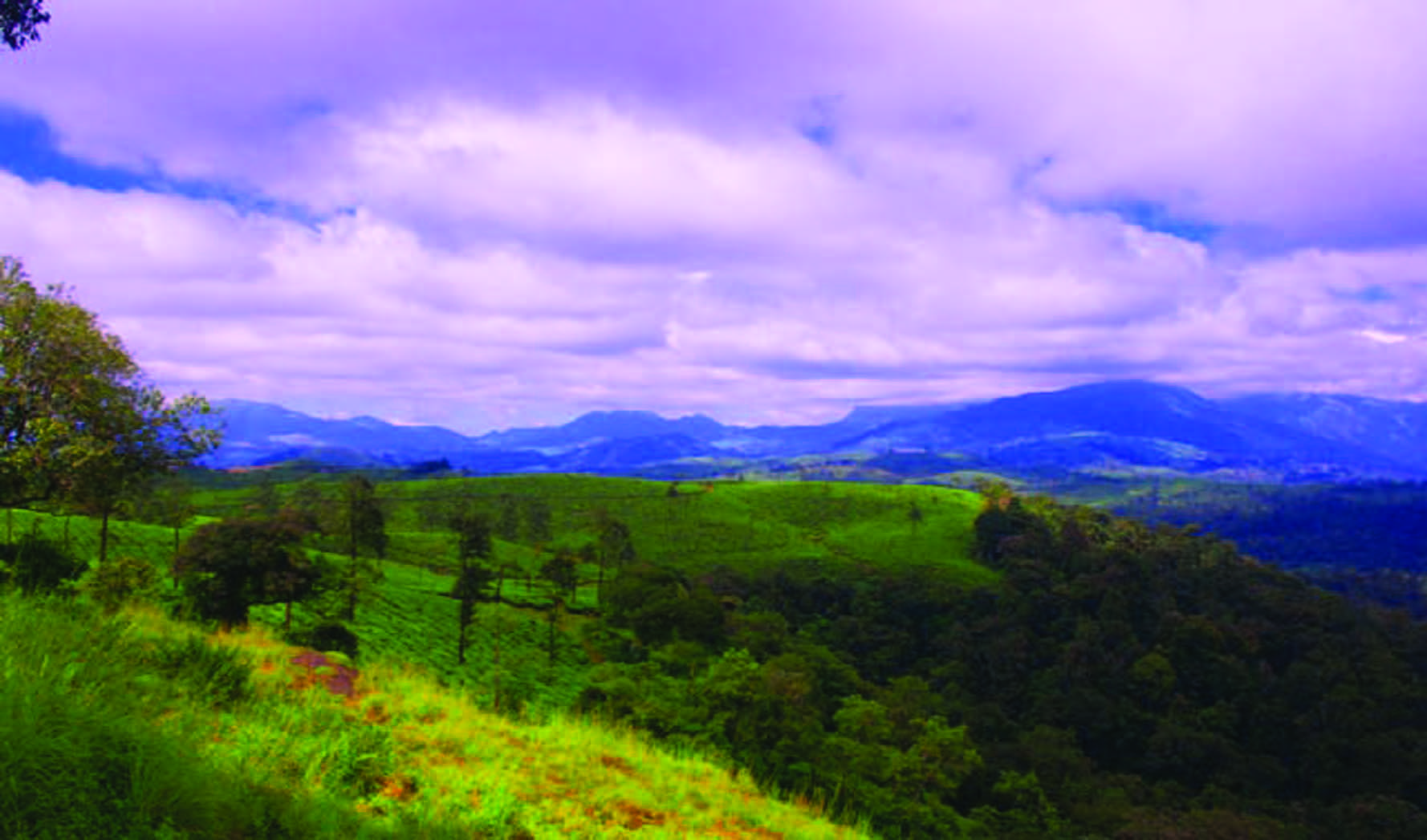
    A small tea-cultivating town on the Anamalai hills in Coimbatore, Valparai looks much like Ruskin Bond’s Dehra. The meadows, the pasture, the tea gardens and the streams make Valparai an ideal monsoon getaway.

    Don’t be surprised if you spot wild animals strolling about a tea estate. Valparai shares its boundaries with the Anamalai Wildlife Sanctuary. The place is abundant with waterfalls, within a 50km radius. The reservoirs around offer magnificent views of cloud covered hills.

    For boarding and lodging, you can choose between homestays, hotels and the more expensive tea-estate resorts.

    Access: Valparai is a three hour drive from Coimbatore, which is 105km away. Pollachi and Coimbatore railway stations are the nearest. Pollachi is located 65km from Valparai.

    Attractions: Here are some of the waterfalls and reservoirs around –Athirapally (30km), Charpa (33km), Vazhachal (35km), Peringakuthu
    (40km).

    Mawsynram

    Dubbed the wettest place on earth, this town perched on the Khasi hills in Meghalaya (in the East Khasi Hills district), offers breathtaking views of waterfalls streaming through the valleys. Walk alongside clouds, and while you are at it, sport a knup, a turle shell-like traditional Khasi umbrella made of bamboo and banana leaf.

    One of the valleys in Mawsynram is home to the best-maintained living bridges and tree roots curled up as ladders . One of nature’s most exquisite artistry, stalagmites, are tucked inside the Mawjymbuin Caves.

    The town lies 15km to the east of Cherrapunji. You can choose between resorts and hotels in Cherrapunji but we suggest you try the homestays there.

    Access: Mawsynram lies 15km to the east of Cherrapunji and is about a 2-hour-drive from Shillong.

    Attractions: Nohkalikai and Mawsmai waterfalls, Mawsmai caves, Cherrapunjee.

    Mawlynnong Village

    Mawlynnong is another of the marvels of the Khasi Hills in Meghalaya. Thatched huts line clean pathways criss-crossing through green gardens.

    This picturesque village was dubbed the cleanest village in Asia in 2003. The inhabitants have imbibed a culture of cleanliness and this can be seen from the streets, the houses and the bamboo leaf dustbins lining the streets. This village is also known for its beautiful gardens.

    Feel closer to nature. Stay in a thatched roof hut or a tree house, walk down a living root bridge. And since Mawlynnong is about a two-hour drive from Cherrapunji, a long weekend spent in Mawlynnong, Mawsynram and Cherrapunji is worth it.

    Access: Mawlynnong is about 90km from Shillong and 92km from Cherrapunji. Nearest airport is in Shillong. From Guwahati it is a slightly longer drive (about 175km)

    Attractions: Thatched huts, tree houses, gardens, living root bridges, Nohkalikai and Mawsmai waterfalls, Mawsmai caves, Cherrapunjee.

    Ganpatipule

    Can anything be better than walking on cloud-kissing hills overlooking the sea? The Konkan coast is in full glory during monsoon. While Goa and Tarkarli are the most popular destinations of Konkan, this small hamlet in the Ratnagiri district of Maharashtra, though less trodden, is quiet and serene. If you are looking for a tranquil location to unwind over a weekend, this is the place for you.

    Ganpatipule derives its name from an ancient Ganpati temple tucked away on the shores of the Arabian Sea. Walk along the pristine white sand beach. Enjoy the lipsmacking Konkani cuisine (especially the fish preparations) and down a few glasses of Kokum sherbat.

    The ideal place to stay is the Maharashtra Toursim Development Corporation’s guest house which is the only resort located on the beach. All the others are inland and you may have to walk a few minutes to reach the sea. Visit the Jaigad fort, perched on a cliff, and marvel at the brillient view.

    Access: A seven-hour-drive from Mumbai, nearest railway station Ratnagiri from where autorickshaws are available.

    Attractions: While all the places in and around Ganpatipule are picturesque, there are other tourist attractions like the Arevare seaface, Marleshwar temple and waterfall and the Jaigad fort.

    Ramakkalmedu

    In God’s own country, is a tiny hamlet very close to Munnar. Canvassed in greenery, the hill-top hamlet in Idukki district of Kerala, is also famous for the wind effect. Ramakkalmedu receives gusts of wind at 25km/hr and hence has many wind farms.

    The Kuruvan and Kuruthy statue atop the Ramakkalmedu hills honours the aborigines of the hamlet. Standing there, you can have a spectacular view of the plains of Tamil Nadu.

    Access: Distance from Munnar is about 56 kilometers. The nearest railway station is Changanacherry, which is about 93 km away. Madurai in Tamil Nadu is the nearest airport, about 140 km.

    Attractions: Kuruvan and Kuruthy statue, Thekkady, Munnar, Vagamon, Vineyards of Kambum, spice garden tour, wind farms.

  • Congress files complaint against Parrikar for lying on FIR in affidavit

    Congress files complaint against Parrikar for lying on FIR in affidavit

    NEW DELHI/PANAJI (TIP): Congress on June 25 accused defence minister Manohar Parrikar of concealing an FIR in his election nomination papers, urging the central election commission to initiate action against him.

    An FIR was filed against Parrikar in Goa in 2006 for alleged financial misappropriation while creating infrastructural facilities for the international film festival of India (iffi) in 2004 when Goa for the first time hosted the mega film festival. The complaint was filed against Parrikar who was chief minister in 2004 by Congress MLA Mauvin Godinho based on the observations in a Comptroller and Auditor General (CAG) of India report.The Congress stuck to its stand saying “This is a serious issue and has to be taken to its logical conclusion. It is a case of concealment of fact. Voters should have known this fact about Parrikar since the FIR is under the Prevention of Corruption Act,” Congress legal cell chief KC Mittal said, adding that AICC would pursue the case with the EC. Asked for his comment, Goa Pradesh Congress Committee president Luizinho Faleiro told TOI that the complaint has been filed by AICC legal cell before the Election commission of India.

    Sources close to Parrikar dubbed the Congress move as infructuous. They said candidates have to file details of a case only if they have been chargesheeted, which was not the case in the said FIR.

    After the FIR was filed in 2006 by the Congress government led by then chief minister Pratap Singh Rane, the case was transferred to the CBI in December 2006. In August 2011, the CBI closed the case on the grounds that the allegations made in the FIR couldn’t be substantiated.

    As then chief minister, Parrikar held the finance portfolio in addition to being the chairman of Goa state infrastructural development corporation (GSIDC) – the special purpose vehicle appointed agency appointed as the nodal agency for iffi projects. He also headed the core committee set up by the government for taking policy decisions for iffi.

    The works executed then included construction of a multiplex (now Inox theatre complex), upgradation and restoration of facilities at Kala Academy (which was the main festival theatre) and improvement of roads and other related projects including beautification works. Besides, the third Patto bridge was constructed along the River Mandovi – all costing around Rs 150 crore.

    GAG in its report of 2004-05 had pointed out that the “tendering process suffered due to lack of transparency and that tender evaluation procedure was faulty.” In its analysis, it also said that “there were cases of excess payments/wasteful expenditure and over dependence on consultants on all the major works.”During the investigation, Parrikar, then opposition leader, was quizzed in 2009. In 2011, the CBI filed a closure report in the court saying the allegations made in the FIR couldn’t be substantiated. Congress was ruling then both in the state and the centre. The complaint was filed months after BJP lost power in 2005.

  • US FOOD AND DRUG ADMINISTRATION BLOCKED MAGGI IMPORT IN JANUARY

    NEW DELHI (TIP): Nestle may have secured a clean chit for Maggi from the Singapore food regulator, but the US Food and Drug Administration (FDA), considered the world’s strictest regulator, had refused import of the noodles earlier this year.

    The US FDA’s website shows that in January this year, six import refusal reports were issued to Nestle India by it. The regulator rejected Nestle India’s instant noodles and chowmein, manufactured at the company’s factories in Goa (Bicholim), Uttarakhand (Pantnagar) and Punjab (Moga).

    In the report, the US FDA said,”The article appears to be misbranded in that the label or labeling fails to bear the required nutrition information.”

    This is significant because even in India regulators have raised questions about Nestle’s labeling and packaging of Maggi, while ordering a countrywide withdrawal and recall of all nine variants of the popular snack. Regulatory tests in India have found Maggi containing added monosodium glutamate (MSG). However, the company does not declare so on the pack. Similarly, Maggi samples were allegedly found containing lead in excess of the prescribed limit.

    Interestingly, after the latest recall of Maggi instant noodles in India, the US FDA has also sent samples of the product for testing.

    Apart from Nestle’s products, imports of several other India-made packaged food products including bakery items, snacks, noodles and macaroni from leading players like Haldiram, Britannia and Indo Nissin Foods, were also blocked by the US FDA in the first five months of 2015.

    In fact, data from the American regulator shows, India leads the list of rejected food products in various categories, with more than half of such items coming out of Indian facilities. Countries like Mexico and China are much bigger exporters to the US.

    However, in terms of number of snacks and bakery products rejected, India, the eighth largest supplier of food to the US, is much ahead. For instance, the US FDA rejected a total of 217 bakery products between January and May, of which 116 were from India and 17 from China.

    Most of the Indian snacks and bakery products rejected by the American regulator so far this year are from Haldiram. Some of the reasons cited include contamination, pesticide adulteration, decomposed substances, inadequate processing and insanitary conditions etc.

    In some of the orders, the regulator said the products can be “rendered injurious to health”. Several phone calls made to Haldiram to seek their response remained unanswered.

    Experts say like medicines, food safety regulation is also going to be strengthened in upcoming years. “The Indian food market is evolving and companies need to behave in a more responsible manner,” a former FSSAI official said.

  • OFF THE BEATEN TRACK – ROMANTIC GETAWAYS FOR COUPLES

    OFF THE BEATEN TRACK – ROMANTIC GETAWAYS FOR COUPLES

    Goa, Shimla, Lonavala – trying to plan a trip with your partner, but stuck with these names in your head? Go beyond the usual, and explore some beautiful locations across the country that can serve as great options for your romantic escape. From the riverside view of Majuli in Assam to the snow-capped mountains of Tawang in Arunachal Pradesh, let your wanderlust take you places.

    [quote_center]Lachen, Sikkim[/quote_center]

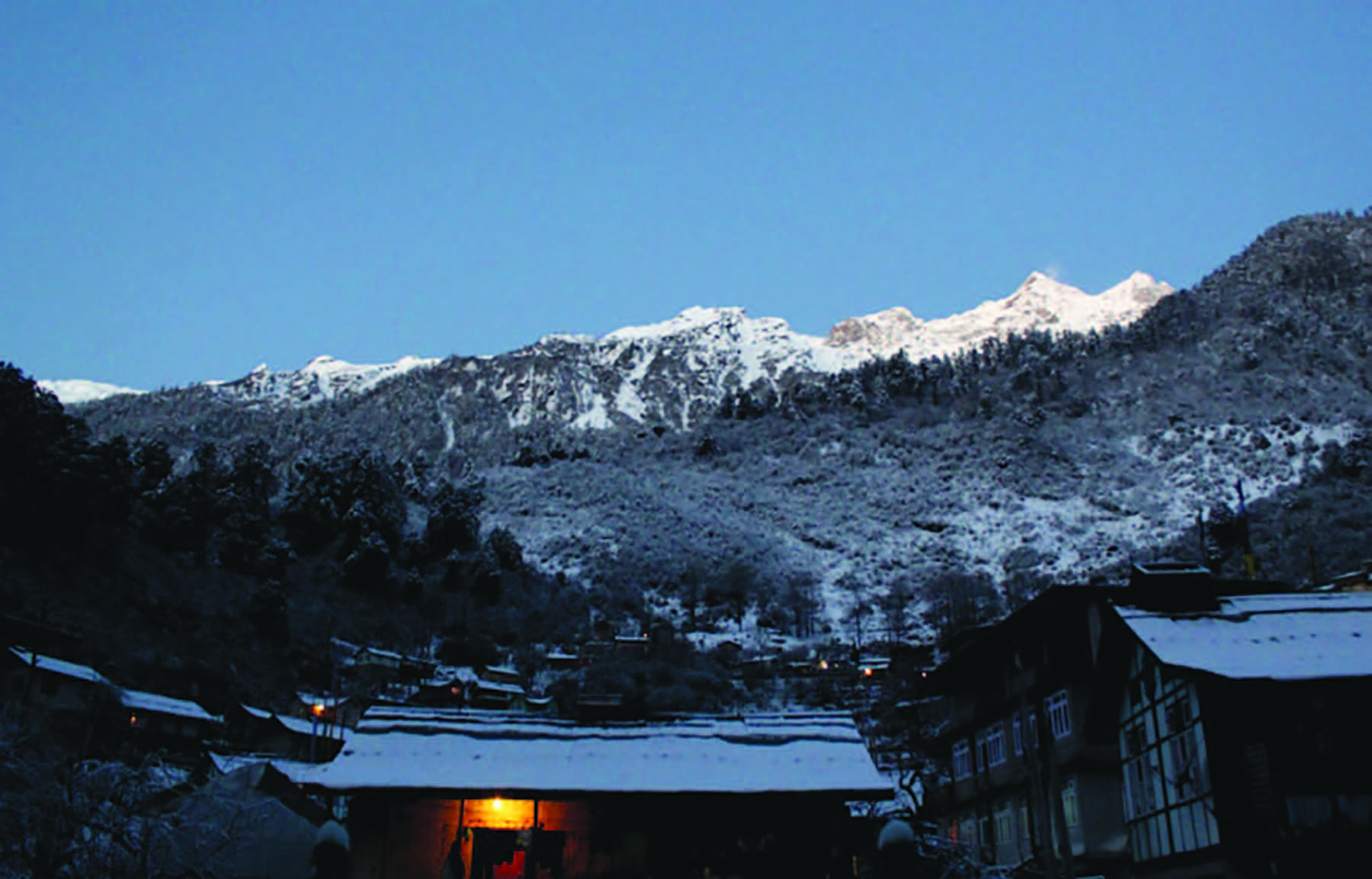
    Located 9,600 feet above sea level, at the confluence of Lachen and Lachung rivers, this picturesque town commands a panoramic view of the Himalayan range. The best time to visit the place is from November to June.

    On your itinerary

    • Thangu, a small village, not very far from Lachen, makes for a spectacular view.
    • Mountain treks.
    • Yumthang Valley is popularly known as the Valley of Flowers.
    • Gurudongmar Lake – one of the highest lakes in the world.

    [quote_center]Auli, Uttarakhand[/quote_center]

    Located in the Chamoli district, Auli has a generous population of coniferous and oak forests, and also offers a panoramic view of the Himalayas. With its moderate temperature during the summer months, it serves as a great vacation spot in the hot season.

    On your itinerary

    • Day hike to Gorson Meadows that provides scenic views.
    • A ride on one of the longest cable cars (Gondola) in Asia.
    • Chattrakund, a man-made lake close to Auli.

    [quote_center]Tawang, Arunachal Pradesh[/quote_center]

    This hill station is situated in the north-west part of Arunachal Pradesh. It shares its border with the Sela range in the east, Tibet in the north and Bhutan in the south-west. Away from the maddening buzz of a big city, Tawang serves as a quiet vacation spot.

    On your itinerary

    • Tawang Monastery is the largest monastery in India.
    • Jang Waterfalls are famous for its beauty.
    • Sela Pass remains covered with snow for most part of the year.
    • Tawang Handicrafts Centre promotes small-scale industries for local handicraft.

    [quote_center]Dhankar Gompa, Himachal [/quote_center]

    Dhankar Gompa is a village and also a Gompa (meditation room in urban Buddhist centres) in the district of Lahaul and Spiti in Himachal Pradesh. Gurgling rivers and crystal clear lakes dot the highlands of Lahaul, while an ancient civilisation has survived for nearly a thousand years, and has preserved its culture against the onslaught of modernity in Spiti.

    On your itinerary

    • Dhankar Monastery.
    • Dhankar Lake, which is a 1.5 km trek up from the monastery.
    • Nearby villages of Kaza, Key, Kibber and Tabo.

    [quote_center]Kovalam, Kerala[/quote_center]

    This small town in Kerala consists of three separated parts of three beaches – Hawah, Samudra and Light House. The largest among these is the Light House beach, which is a must-visit. It is close to Thiruvananthapuram.

    On your itinerary

    • Boating in the Karamana river provides spectacular views of the backwaters
    • Sunset at Edakkal.
    • Vizhinjam Rock Cut Cave temple has ancient sculptures on display.
    • Valiyathura Pier offers an amazing view of the coastline of Kovalam.

    [quote_center]Khajjiar, Himachal Pradesh[/quote_center]

    Often referred to as the ‘Mini Switzerland of India’, Khajjiar is a beautiful hill station in the Chamba district of Himachal Pradesh. It has thick deodar forests covering the slopes, and a breathtaking snow-line that rests above these woods.

    On your itinerary

    • Exciting hikes through the deodar thickets of the Dhauladhar Mountains.
    • 12th century temple dedicated to Khajji Nag that houses life-size wooden images of the Pandav brothers.
    • Several equestrian sports, paragliding and horse riding.

    [quote_center]Majuli, Assam[/quote_center]

    This is a large river island, nestled amidst the Brahmaputra in the upper region of Assam. Majuli is considered as one of Assam’s most well-kept and unexplored secrets, which leaves visitors awestruck with its natural beauty. To explore the island, travellers can either book a motorised private boat or travel like the locals in a ferry. The cultural exhibitions, exotic Assamese cuisine and the friendly local population make Majuli a picture-perfect destination to spend time with your loved ones.

    On your itinerary

    • Several Satras or monasteries like Daksinpath, Garamur and Auniati.
    • Mask-making workshops.
    • Raja Maidam, which has a vault of King Purandar Sinha. The monument was built as a tribute to the king.

    ROMANTIC GETAWAYS2[quote_center]Wayanad, Kerala[/quote_center]

    This district-town was formed by extracting areas from the Kozhikode and Kannur districts. The rugged terrain of the Western Ghats is its main attraction. It is situated at the tip of the Deccan Plateau, and shares borders with Karnataka and Tamil Nadu.

    On your itinerary

    • Neelimala, a great trekking destination, located in the southeastern part of the region.
    • Meenmutty Falls, the largest waterfall in the district.
    • Caves in Pakshipathalam.
  • Indian, American Scientists Chosen for Environmental Prize

    Indian, American Scientists Chosen for Environmental Prize

    LOS ANGELES (TIP): This year’s Tyler Prize for Environmental Achievement is being awarded to two scientists who have worked for conservation on the land and in the ocean.

    Madhav Gadgil of India and Jane Lubchenco of the United States are being honored for working with communities to preserve the environment while protecting people’s livelihoods.

    Bamboo crops in the Western Ghats, a mountain range in western India, have been depleted by the paper industry. Gadgil said that has hurt local villagers who rely on the plants to make baskets and other products.

    Earlier, the crops “were exploited through the state machinery and largely they were auctioned off to traders, to industries,” said Gadgil, a visiting professor at India’s Goa University who works with villagers to keep the ecosystem balanced and let the bamboo groves flourish. “Now the communities have rights to manage these.”

    He said that for generations, villagers have preserved parts of the forest as sacred, something that also happens in other parts of Asia.

    Gadgil said he serves as a bridge between local people and government, which wants to promote modern management techniques. He has focused on documenting the sacred forests and the kind of biodiversity resources that have been conserved, and finding out “what is now in the current context possible.”

    Gadgil traveled to Los Angeles to receive the Tyler Prize and to meet this year’s other winner, Lubchenco. A marine ecologist, she teaches at Oregon State University and served four years as the head of the U.S. National Oceanic and Atmospheric Administration. Last year, President Barack Obama named her U.S. science envoy for the ocean.

    Lubchenco has worked with American fishermen to restore depleted fisheries through “catch shares,” strategies that grant fishing rights to fishermen but put limits on their catch in affected areas.

    “Our basic idea of oceans is that they are so immense, so bountiful that we can take anything out and put anything in and it would not make much of a difference. And we have discovered that is simply not the case,” she said.

    The system of catch shares gives fishermen a share of the ocean harvest, and those rights can be bought, sold and traded. The system has its critics, but Lubchenco and other supporters point to its success in restoring depleted stocks.

    She said that limiting fishing on the high seas is difficult. “There are a lot of efforts under way to rein in overfishing, but it remains a huge challenge and it has global ramifications,” she said.

    Lubchenco said governments must lead, and local communities must be part of the solution.

    Gadgil said the same is true of the Indian villagers with whom he works.

    “Of course they have a substantial amount of understanding, local understanding, of that resource base and what is impacting it, what might be good sustainable-use practices,” he said.

    The prize winners said the balance of life in the ocean and on land is essential for a healthy planet and healthy communities.

  • ‘Suicide will soon become India’s number 1 killer’: Vikram Patel

    LONDON (TIP): India’s foremost mental health expert who spends most of his time between Goa and London has now been named as among TIME magazine’s 100 most influential people in the world.

    Professor Vikram Patel, who has done seminal research on suicides in India hopes that his presence in the list makes the Indian government wake up to the serious shortage of programmes and experts meant specially to deal with mental health problems.

    Speaking to TOI from Montreal, professor Patel who teaches at the London School of Hygiene and Tropical Medicine in UK and heads an organisation called Sangath in Goa said “the vast majority of people with mental disorders do not receive care which can greatly improve the quality of their lives. The treatment gap exceeds 90% for community based psychosocial interventions”.

    He added ” hope very much that this recognition will increase the attention that the world’s governments and donors afford to mental health, not just in India where issues like suicide, alcohol abuse, depression, autism and schizophrenia are almost entirely ignored by public health systems leading to enormous unmet needs and human rights abuses”.

    On being asked whether he thought the government of India was doing enough for mental health problems in India, Patel told TOI “Nowhere near the need, witness the complete absence of public health approach to suicide for example”.

    An earlier research by professor Patel on suicides in India had thrown up shocking findings. Four of India’s southern states — Tamil Nadu, Andhra Pradesh, Karnakata and Kerala — that together constitute 22% of the country’s population were found to have recorded 42% of suicide deaths in men and 40% of self-inflicted fatalities in women in 2010. Nadu, Andhra Pradesh, Karnakata and Kerala — that together constitute 22% of the country’s population were found to have recorded 42% of suicide deaths in men and 40% of self-inflicted fatalities in women in 2010.

    Maharashtra and West Bengal together accounted for an additional 15% of suicide deaths. Delhi recorded the lowest suicide rate in the country. In absolute numbers, the most suicide deaths in individuals, aged 15 years or older, were found to be in AP (28,000), Tamil Nadu (24,000) and Maharashtra (19,000).

    This was the first national study of deaths in India which was published in the British Medical journal The Lancet.

    Patel said suicide has become the second-leading cause of death among the young in India. Of the total deaths by suicide in individuals aged 15 years or older, about 40% suicide deaths in men and about 56% in women occurred in individuals aged 15-29 years. Suicide deaths occurred at younger ages in women (average age 25 years) than in men (average age 34 years). Educated persons were at greater risk of completing a suicide. The risk of completing a suicide was 43% higher in men, who finished secondary or higher education, in comparison to those who had not completed primary education. Among women, the risk increased to 90%.

    So what is professor Patel who is also from the Centre for Chronic Conditions and Injuries, Public Health Foundation of India, working on now? 

    He told media “I am working in five major areas – developing psychological treatments which can be delivered by community health workers, working in rural communities to increase awareness about and strengthen community responses to mental health problems, working with colleagues in cardiology and diabetes to develop integrated approaches for the care of chronic conditions, working with neuroscientists and computer engineers to develop novel diagnostic tools for brain disorders and working with government departments of health to scale up evidence based interventions for mental disorders through the district mental health programme”.

    The TIME 100 list describes Prof Patel as a “well-being warrior” and includes a tribute from Dr Barbara Van Dahlen, a psychologist and the founder of Give an Hour, a network of volunteer mental-health professionals, as well as the Campaign to Change Direction. She writes “It is hard to imagine a more difficult challenge than addressing the unmet needs of those from resource-poor countries who live with and suffer from mental-health disorders. And yet Vikram Patel has spent his career doing just that. He is a gifted psychiatrist, a dedicated researcher, a successful author of books and academic papers, and he is an effective communicator. In fact, he seems to have an unending supply of these critical skills. And as a co-founder of the NGO Sangath and the Centre for Global Mental Health at the London School of Hygiene & Tropical Medicine, he helps spread the simple yet profound idea of mental health for all. He provides hope that mental illness and trauma make us neither weak nor unworthy of love and respect”.

  • Mumbai airport’s new luxury lounge

    Mumbai airport’s new luxury lounge

    Since it opened earlier this year, Terminal 2 at Mumbai’s Chhatrapati Shivaji International Airport has been getting a lot of love-it was chosen by travelers as their second most Favorite International Airport in the world. Now, it just got better with the opening of the GVK Lounge, the world’s first luxury airport lounge common to passengers of all airlines.

    [quote_box_center]Why you should check out Mumbai airport’s new luxury lounge [/quote_box_center]

    The look

    Spread across 30,000sqft over levels 3 and 4, the lounge can accommodate up to 440 passengers. Designed by celebrated fashion designer Sandeep Khosla and acclaimed architect Alfaz Miller, the lounge sports an Indian theme, accentuated through jali screens, contemporary chandeliers, a strategic lighting display and the signature glass peacock installation. While level 3 has silver theme, level 4 has been given a gold theme.

    What you get

    The lounge is divided into three categories: First, Business and Premium Class. Located on level 4, the First Class section offers personalized services, as well as amenities such as à la carte dining and individual spa treatments. The Premium Class section, also on level 4, comes with an opulent buffet area (connected to a live tandoori kitchen), a juice bar and a whiskey lounge, plus additional services such as foot massages. The maximum privacy is, however, assured to Business Class guests on level 3, who can also partake of a range of multi-cuisine dishes and barista offerings.

    Key facilities include:

    • Concierge services
    • A smoking zone
    • Food and beverages
    • Bar
    • A luxurious spa
    • Shower facilities
    • A relaxation area
    • Library
    • A business centre

    Who can use the lounge

    The lounge is available for First and Business Class passengers. Access is at the airline’s discretion.

    CREDIT CARD ACCESS PROGRAMMES

    (Please check if the credit card/s you hold permits use of the Mumbai lounge)

    Globally, credit card providers offer their premium customers access to lounges. Both MasterCard (for its World, Platinum and World Elite cardholders) and Visa (for its Signature and Infinite cardholders) provide lounge-access programs at major airports in cities such as New Delhi, Mumbai, Bengaluru, Chennai and Kolkata. But depending on the provider and the bank issuing the card, the number of visits may vary. For example, Visa limits free lounge access to two visits per quarter, while MasterCard (depending on the type of card) offers unlimited access. Check out premium cards from Axis Bank, Citibank, HDFC, HSBC, ICICI, IndusInd, Kotak Mahindra, SBI and Standard Chartered, which all give desirable privileges. Unlike most others, Citibank’s Premier Miles World MasterCard allows ‘add-on cardholders’ complimentary lounge access. American Express operates its own branded lounges at Mumbai (Domestic, T1C) and New Delhi (Domestic, T3) airports, and gives free access to Platinum cardholders.

    PAY-IN LOUNGES

    These are independently run lounges that a traveller can access for a fee.

    Priority Pass

    With more than 600 airport lounges in 100 cities, including London, Paris, Jeddah, Phuket and Goa, Priority Pass is one of the world’s largest pay-in lounge operators. To take advantage of it, you have to be a member. Standard Membership costs US$99 (Rs6,100) per year and comes with an additional per-visit fee of US$27 (Rs1,660), which can be redeemed against unlimited food and beverages as well as use of the wi-fi, conference rooms and, at some airports, showers. Priority Pass also has Standard Plus Membership for US$249 (Rs15,300) per year, which grants 10 complimentary visits, after which, he or she pays US$27 (Rs1,660) per visit. If you would rather make a one-time annual payment, opt for its Prestige Membership at US$399 (Rs22,500). Many credit cards (such as ICICI, HSBC and HDFC) offer free Standard Membership to Priority Pass on their premium-category cards.

    (www.prioritypass.com) 

    Plaza Premium Lounge

    Plaza has one of the largest pay-in lounge networks in Asia, with a strong presence in China (Beijing, Shanghai, Macau and Hong Kong), Malaysia, Singapore and the Middle East (Saudi Arabia, UAE and Oman). It’s ideal for infrequent travelers, as it does not require an annual membership; however, you will be charged per visit. Two hours in its New Delhi lounge in Terminal 1D costs Rs1,000-Rs1,500, while the Hong Kong lounge offers two-hour packages for HK$400 (Rs3,170). You gain access to food, drinks and showers. The Plaza network also offers VIP Meet and Greet services, as well as transit beds, concierge, baggage handling and delivery and limousine services.
    (www.plaza-network.com)

    AIRLINE LOUNGES

    If you’re spending a lot of time flying within or through America, consider buying an annual membership to a specific airline’s lounge. Or, if you’re using different airlines, opt for day passes. The Alaska Airlines Board Room, American Airlines’ Admirals Club, United’s Red Carpet Club, Delta’s Sky Club and the US Airways Club can be accessed with a day pass, (US$45-US$55 or Rs2,800-Rs3,400) per day, or about US$500 (Rs31,530) annually. Save money by buying a day pass in advance: US Airways almost halves its fee if you buy one along with your ticket. Remember that most of these airlines’ passes are limited to their US domestic lounges.

  • BJP’s Goa CM opposes beef ban

    NEW DELHI (TIP): BJP-ruled Goa would not ban beef as it is an essential part of the cuisine of minority communities in the state, chief minister Laxmikant Parsekar told ET, adding that it had taken several years for his party to earn the trust of the state’s Christians and Muslims.

    “Regardless of what the Centre does -in Goa minorities are 3940% -if it is part of their food habits, why and how can we ban it? For people -especially minorities -eating beef is part of their food,” said Parsekar. The Goan CM’s comments assume significance as it comes days after Maharashtra and Haryana imposed blanket bans on beef. The move had also triggered speculation that the BJP-led Central government could be considering a nation-wide plan to ban beef distribution and consumption.

    Parsekar, a former state-level functionary of RSS, said that he is also conscious about the sentiments of a section of Hindus concerning slaughter of cows.

    “Sentiments are hurt with regards to killing cows, not in the case of oxen or bulls. We don’t permit killing of cows, and even oxen are not killed there (in Goa) now. It (beef) is brought from Karnataka and sold here, which we allow since it is a part of cuisine of Catholics and Muslims, and I feel it should not be banned,” he said.

    The Goa CM also felt that there was a concerted effort from some quarters, including media, to paint BJP as antiminority by blaming the recent attacks on churches on the party. Such incidents are happening even in states where BJP is not in power, but the party is being blamed, he said.

    Parsekar said the BJP managed to grow “gradually” and achieve a full majority government for the first time in the state because of it having “build confidence” among the minority community.

    “In fact, we favour the minorities,” he said, adding, “In Goa, we are always one step ahead (in reassuring the minority community). We favour the minorities -whether it is for (setting up their) institutions or any other help. For your information, exposition of the holy relics of Saint Xavier’s was organised this year. We spent a lot of money for raising infrastructure for that event. It went on for 45 days and 46 lakh people arrived from the world over. We had put up a secretariat comprising top officers for monitoring the event and spent more than Rs 50 crore at the campus.”


  • HONEYMOON DESTINATIONS

    HONEYMOON DESTINATIONS

    From picturesque beaches to tranquil mountain hideaways—India has an abundance of post-wedding getaways.

    Here are some of the most popular honeymoon destinations that you and your significant other can reminisce about in the years to come.

    Lakshadweep

    Exotic and sun-kissed beaches, verdant landscapes and turquoise-hued waters—what more could you ask of a tropical honeymoon?The real attraction of the Lakshadweep islands, however, rests underwater: the pristine lagoons, unspoiled coral reefs and warm waters are a magnet for honeymooners.

    Goa

    GOA
    GOA

    Goa has always been a natural choice amongst honeymooners—home to miles and miles of scenic beaches, swaying coconut palms, old colonial Portuguese buildings, delicious cuisine and an easy-going, laid back atmosphere. In Goa, there’s a sense of revelry, merriment and abandon in the air that is totally contagious.

    The Andamans

    Jet-setting couples favour Andaman and Nicobar Islands for the near-deserted beaches, incredible corals and marine life, and an intriguing colonial past. Newlyweds can enjoy everything from scuba diving and snorkelling to spending time soaking in spectacular views of deep forests and magnificent hills. Plus, the resorts here know only one standard of luxury—extravagant.

    Coorg (Kodagu)

    Spread out across the Western Ghats, the misty valley of Coorg makes for the perfect honeymoon destination. Fondly referred to as the ‘Scotland of India’ due to its verdant beauty and pleasant climes, Coorg has a special place among all hill stations in India. Elite resorts nestled into the landscape offer couples an unparalleled window into the Coorg’s lush flora and fauna

    Udaipur

    Fantastical palaces, temples, havelis and countless narrow, crooked streets add to the charm of this Rajasthan destination. Even if you are just wandering around the city taking in the majestic sights or cruising the calm lakes on multiple boat rides—the city is bound to sweep you off your feet.

    Nainital

    Nainital
    Nainital

    An erstwhile summer retreat of the British, Nainital is a small town settled amidst Uttrakhand’s Kumaon range. The cool waters of the the Naini Lake, the busy town bazaar and a web of walking tracks around the forested hillsides make for the perfect honeymoon backdrop.

    Kerala

    The rich vegetation, biological diversity and gentle pace of village life in the backwaters beckon all kinds of honeymooners to Kerala. Spend an evening lounging on a serene beach or a day exploring the splendid backwaters, and you have your perfect getaway.

  • INVESTMENT PROPOSALS DON’T MEET PROMISES

    INVESTMENT PROPOSALS DON’T MEET PROMISES

    NEW DELHI (TIP): Investment proposals by corporates are generally associated with improving business sentiment and often linked with the possibility of job creation. The comparison of proposed investment with actual implementation and job creation in the past 23 years, however, shows that the actual delivery has fallen well short of the promise.

    Data from the department of industrial policy and promotion shows that between August 1991 and March 2014, the government received about 94,000 investment proposals. These proposals include Industrial Investment Intentions through Entrepreneurs Memorandum — IEMs (delicensed sector) and Direct Industrial Licences (licensable sector).

    Put together, these proposed the investment of more than Rs 102 lakh crore and were supposed to create 2.3 crore jobs. The data on actual implementation of these proposals shows that only Rs 5.1 lakh crore was actually invested and just 20.1 lakh jobs created. That’s less than 5% of the proposed investments and 8.9% of the promised jobs.

    A state-wise analysis of proposals shows that between August 1991 and March 2014 corporates proposed to invest Rs 15.4 lakh crore in Orissa —the highest in the country. It was followed by Gujarat and Chhattisgarh receiving over Rs 10 lakh crore of proposed investments and Maharashtra just a tad below that mark. Overall, there were 15 states, which were each supposed to get over Rs 1 lakh crore of investments in these 23 years.

    When one analyses actual investments, Haryana has been the most successful among these 15 states in converting proposals to reality as 18.9% of the proposed money actually reached the state. It is followed by Gujarat (12.6%) and Uttar Pradesh (11.4%). The states that fared the worst in this conversion are Bihar, Jharkhand, Chhattisgarh and Orissa, where less than 1% of the proposed money actually arrived.

    So, what is the investment to job creation ratio? Overall, the Rs 5 lakh crore actually invested created a little over 20 lakh jobs, which amounts to four jobs per crore of investment. There were 25 states which witnessed the actual investment of more Rs 1,000 crore. Among these states, Jammu and Kashmir witnessed the most labour intensive investments, while Gujarat had the most capital intensive ones. Every crore of rupee invested in Jammu and Kashmir created about 12 jobs, while in Gujarat a crore of investment yielded only two jobs.

    In the investment to job creation ratio, Jammu and Kashmir is followed by Goa, Uttarakhand, Kerala and Punjab, where ten or more jobs were created per crore of investment. The worst state/UTs in this list are Madhya Pradesh, Jharkhand, Daman & Diu, Uttar Pradesh and Gujarat.