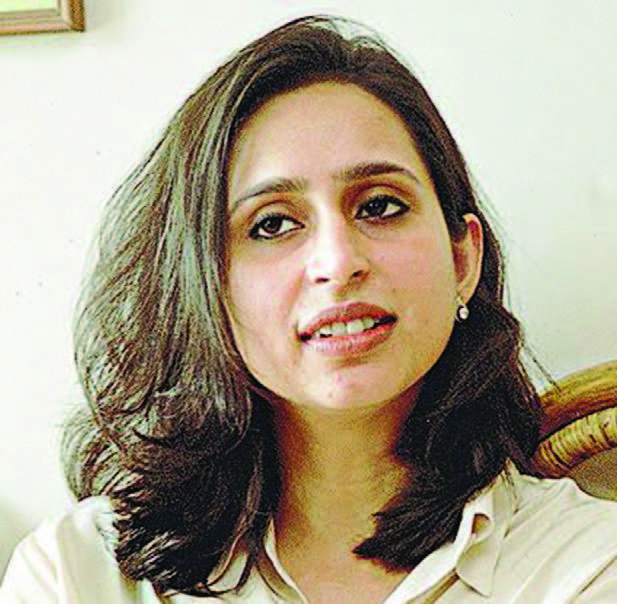
High profile editor Tarun Tejpal is in the eye of the storm after a young woman colleague alleged that she had been sexually assaulted by him at an event in Goa. On Nov 20, Tehelka magazine informed its staff that Tejpal was stepping down as editor for six months.The case has received intense public attention and media scrutiny especially because Tejpal and his magazine had previously been involved in highlighting the issue of sexual violence in India.
Tag: Goa
-

Promoting Goa Tourism in NYC
Goa’s Tourism officials make a stop in NYC to promote the beach community’s charm, hospitality and relaxing lifestyle to Americans
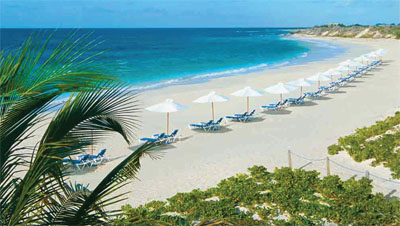
NEW YORK (TIP): After showcasing the amenities and characteristics of India’s most visited vacation destination all over Europe, Goa’s Department of Tourism made its first stop in North America , in New York City. The goal of the Goa Tourism Road show 2013 was to expose Americans to the magic of this quaint, beach community.Whether tourists want to explore ancient churches or build sand castles on Goa’s 20+ beaches, there is never a lack of indoor or outdoor activities to relax the mind and stimulate the soul.

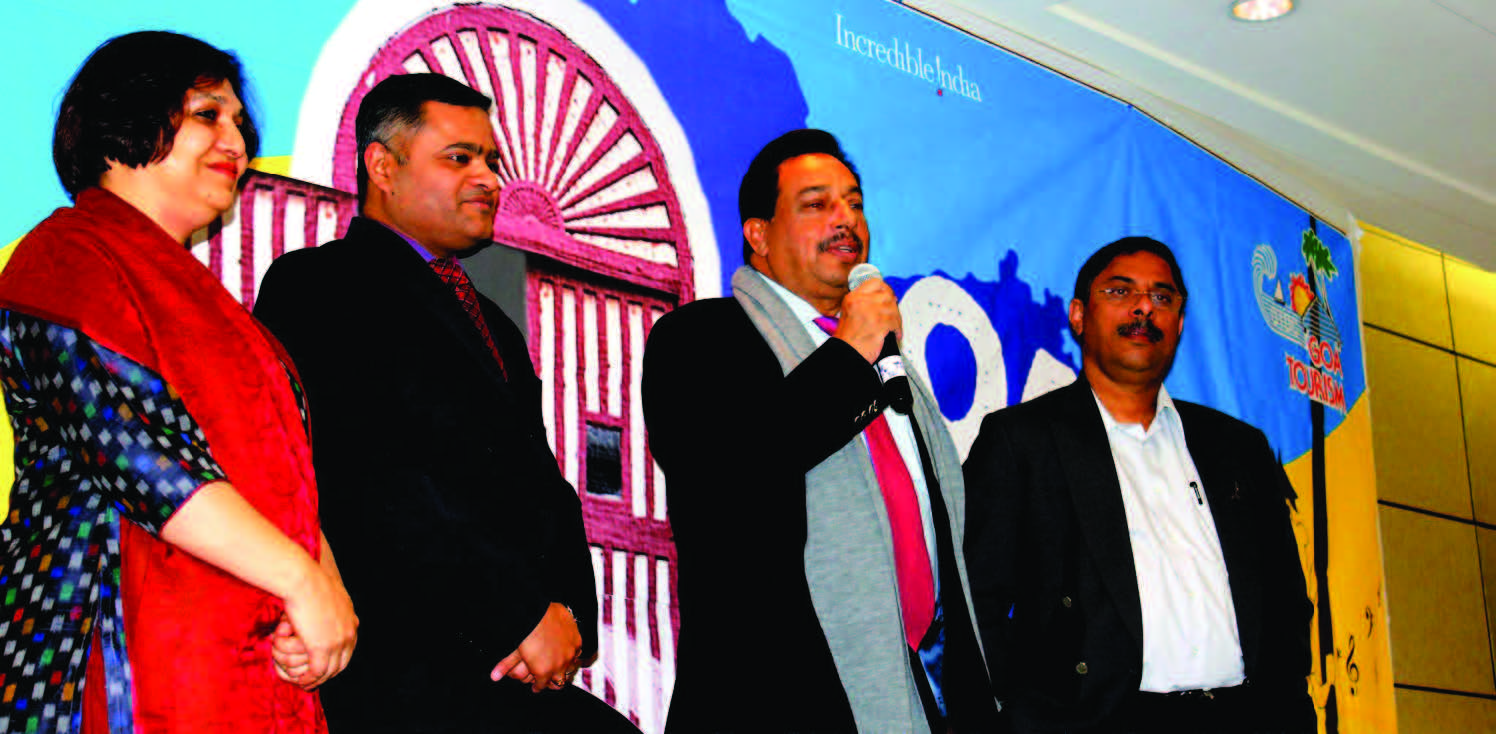
Visiting Deputy Chief Minister of Goa Francis D’souza, Tourism Minister Dilip Parulekar and Nikhil Desai, Managing Director, Goa Tourism Development Corporation addressed a press conference. Seen in the picture are media representatives. Also seen is The Indian Panorama reporter Kajol Bishnoi ( Front row, third from right)
Goa’s top officials Francis D’souza, Deputy Chief Minister of Goa, Dilip Parulekar, Tourism Minister of Goa, Nikhil Desai, Managing Director, Goa Tourism Development Corporation and Mrs. Sujata Thakur, Regional Director for India Tourism, shared stories about their beloved state. Speaking on the occasion, Mrs. Sujata Thakur said, “Goa is a unique destination, with the magnificence of all elements- Mountains, sea, beaches, and rivers. It has a majestic old world charm, a rich cuisine and, above all, a relaxing atmosphere where tourists can unwind themselves.
The culturally rich people of Goa are friendly and hospitable and always ready to welcome tourists and help them in every way. While in Goa, one finds all day to day worries disappear. The gala event started with a press conference where Goa officials interacted with US Media. When asked what Goa government was doing to deal with the menace of drug use in Goa which had become a second Mexico or Columbia, Nikhil said the government had steps to control the situation so that tourists could enjoy their stay in Goa to the fullest.

Nrityalina Centre for Performing Arts presents a Goan folk dance
The visiting delegation emphasized that Goa Tourism was keen on tapping the huge base of international tourists by promoting the state during the non-peak months from April to October. The department is currently focusing on North American cities with multiple road shows planned in New York, Los-Angeles and Houston. The cultural dance presentation after the press conference was an impressive part of the road show. Goan cuisine served on the occasion evoked appreciative comments.
-

NO FAN, MORE MEDICAL TESTS FOR TARUN TEJPAL
PANAJI (TIP): A Goa court on December 4 rejected Tehelka foundereditor Tarun Tejpal’s request for a fan in the police lock-up where he has been lodged since Saturday night. Judicial magistrate Kashama Joshi passed the order on the plea filed two days ago after hearing arguments from the two sides. Tejpal was arrested late Saturday night for alleged sexual assault of a woman journalist at the ThinkFest held at a starred hotel in Bambolim early last month. The crime branch sleuths, probing the case, took Tejpal for a second round of tests at the Goa Medical College (GMC) and Hospital, Bambolim, at about 8.15am on Wednesday.
Tejpal underwent an ultrasound test before he was taken to the crime branch office for interrogation which ended at 8.30pm, sources said. The crime branch has been extremely cautious with Tejpal and even ensured that his cell at the Panaji police lock-up was cleaned before he was lodged there after his arrest. He was subjected to various tests including forensic and psychiatric tests during the first round of medical examination on December 2. “We don’t want to take any chances,” a police officer said.
Tejpal has been permitted food from home. The family member, who delivers his food, is made to taste it before it is passed on to Tejpal. “We allow at least ten minutes to lapse after food is tasted by the person who gets it,” an officer said.
-

TEHELKA: CCTV FOOTAGE SHOWS VICTIM RUNNING OUT OF LIFT
NEW DELHI (TIP): Spelling more trouble for Tehelka former editor-in-chief Tarun Tejpal, who is accused of sexually assaulting a junior colleague, the Goa police said that CCTV footage sourced from the hotel validated the statement narrated by the victim. The police said: ‘It is clear in the CCTV footage, dated November 7, outside the lift in Block 7 of the hotel that something went wrong in the lift.’ The footage initially shows Tejpal along with the journalist accompanying actor Robert De Nero to his room. The officer said that around 9:00 pm Tejpal was seen entering the lift with his hand around the journalist’s shoulder.
He also said that one and a half hour later, Tejpal was seen pulling the victim inside the lift and the woman was seen coming out of the elevator adjusting her clothes and running down the steps with Tejpal following her. Meanwhile, Tehelka managing editor Shoma Chaudhury resigned early Thursday. Her statement on the news magazine’s website said, “I do not want questions raised about my integrity to tarnish the image of Tehelka.” Chaudhary’s resignation came 10 days after a woman journalist with the news magazine first wrote to her and accused founder-editor Tarun Tejpal of sexual assault, and amid allegations that she had failed to support the woman journalist.
Full text of Shoma Chaudhury’s Resignation Letter
From: Shoma Chaudhury Sent: Thursday, November 28, 2013 05:52 AM To: Editors; Bureau; Neena Tejpal; Prawal Srivastava; Webeditors; Sanjay Dubey Subject: Resignation from Tehelka Dear All, This has been a damaging time for all associated with Tehelka. Since the devastating allegation was first brought to my notice on 18th November, I have taken a series of actions in response to this complaint. To my mind, I acted on instant outrage and solidarity for our colleague as a woman and co-worker.
After the first steps to immediately address her expressed needs, the process of setting up the anti-sexual harassment committee was begun. There were only two days to act on the complaint before the story broke in the press. Post this, things have been misconstrued and have snowballed exponentially in the media, based on halffacts and selective leaks. In the next stage, once the committee was formed, the law would have taken its course according to the findings and recommendations. Over the past week, I have been accused of an attempt to “cover-up” and for not standing by my feminist positions. While I accept that I could have done many things differently and in a more measured way, I reject the allegations of a cover-up because in no way could the first actions that were taken be deemed suppression of any kind.
As for my feminist positions, I believe I acted in consonance with them by giving my colleague’s account precedence over everything else. However, despite this, as a result of what’s transpired over the past few days my integrity has repeatedly been questioned by people from our fraternity and, in fact, by the public at large. I would like to take cognizance of this. I have worked hard for Tehelka for many years and what we have stood for is very dear to me and I hold it in high esteem. I do not want questions raised about my integrity to tarnish the image of Tehelka, which it has done in the past week. Therefore, I resign as Managing Editor with immediate effect. There are many readers and colleagues who have believed in me and expressed their faith through this very difficult time.
I am deeply grateful to them. I will come in to office to close the issue and do the necessary handovers. I cannot express how painful this is for me. It has never been a part of me to give up midway through a challenge. I would have liked to continue at Tehelka to see us through this dark time, but I am no longer sure whether my presence is harming or helping Tehelka. I deeply regret any inadequacies or lack of clarity I may have displayed in my leadership. Shoma 28 November 2013.
-

Tejpal’s fate hangs in balance
NEW DELHI (TIP): A few hours after Tehelka magazine’s founder-editor Tarun Tejpal’s residence was raided in Delhi, his lawyers moved the district sessions court in Panaji for anticipatory bail on November 29 morning. The sessions court gave interim protection from arrest till 2.30pm on November 29 on personal bond of Rs 20,000. Tejpal had withdrawn on November 28 the anticipatory bail which he had filed in Delhi high court. Raunaq Rao, counsel for Tejpal, has said that they have moved anticipatory bail before the sessions court in Panaji. “The police want to apprehend Tejpal despite our wish to cooperate in the matter. There is no need to take Tejpal in custody. What is the use of putting him in the cell?” Rao said. Early on Friday morning, Goa Police raided Tehelka magazine’s founder-editor Tarun Tejpal’s house in New Delhi in a bid to arrest him but returned empty handed after finding that he was not there.
Armed with a non-bailable warrant, the team reached the residence of Tejpal, who has been accused of sexually assaulting a woman colleague, in Jungpura area of South Delhi a little after 6am and spent over 90 minutes. One of the officials later said they did not find Tejpal in the house. Crime branch personnel from Delhi Police also accompanied the Goa Police team. Tejpal’s wife Geetan Batra refused to divulge to the police any detail of his whereabouts, police said. The police action came after they rejected Tejpal’s request for time till Saturday to to appear before them for the investigation into his involvement in the case of sexual assault that had allegedly taken place at a hotel in Goa earlier this month.
After the rejection of his request, Tejpal’s lawyer said he would appear before the police on Friday in Panaji and extend “complete and full cooperation” in the investigation. Goa police, however, on Thursday moved a court and secured a non-bailable warrant against 50-year-old Tejpal. On Wednesday, Goa Police had directed Tejpal to appear before it by 3pm. The direction had come after the victim, who has alleged that she was sexually assaulted by him in a lift in a five-star hotel in Goa, recorded her statement under Section 164 of CrPC before a magistrate in Panaji. The controversy also saw resignation of Shoma Chaudhury as managing editor of Tehelka, who is being accused of attempting to cover up the matter. Chaudhury sent her resignation on Thursday as there was speculation that she may also be named in the FIR for certain alleged acts of commission and omission after the scandal became public.
-

NCW NOTICE TO GUJARAT FOR SNOOPING AS CONG, BJP SPAR
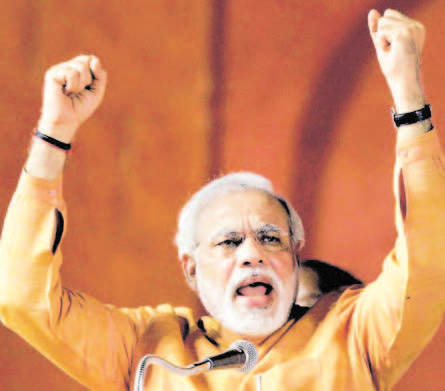
AHMEDABAD (TIP): The Congress on November 20 said Gujarat chief minister Narendra Modi had awarded government contracts without bidding to the woman who was later allegedly put under police surveillance at his behest. Gujarat Congress leader Shaktisinh Gohil told a press briefing that Modi must come clean on what “benefits have been given to the woman’s company and her family” and if he fails to do so the Congress will reveal the “evidence to expose the government’s dirty deeds”.
“The chief minister, who talks about everything, makes comments about somebody’s wife, makes derogatory remarks about national leaders’ illness, must come clean on this,” Gohil said. “How many works in Gandhinagar grid solar project and other government projects have been given to the woman and her family?” he asked. The Gujarat Congress leader’s remarks came hours after the BJP warned the Congress it “will have nowhere to hide if the skeletons in its cupboards are brought in the open”. BJP spokesperson Prakash Javadekar told reporters in New Delhi the Congress should let the matter rest following the letter written by the woman’s father to the National Commission for Women, which states the Modi government had made security arrangements for his daughter with the family’s consent.
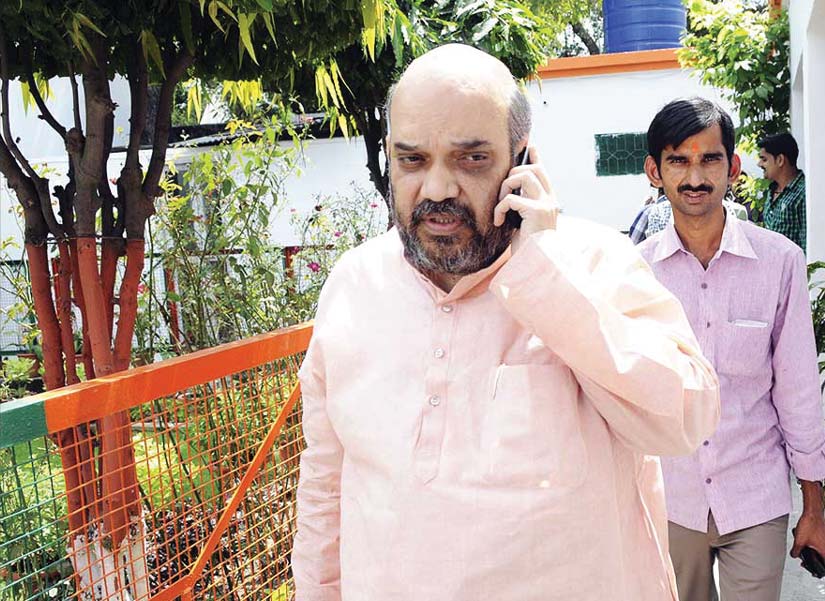
“If personal attacks begin, Congress has many skeletons in its cupboards and it will have nowhere to hide,” Javadekar said, accusing Congress of attacking the privacy of a family to target Modi. Union minister Manish Tewari countered the BJP’s onslaught saying the main concern for Indian voters was whether they should be voting for a person who backs unauthorised state surveillance on “mothers, sisters and daughters”. “There is a difference between surveillance and security. They are trying to fool people about it,” he said. Two news portals recently claimed Modi aide Amit Shah had asked a senior IPS officer to put the woman under surveillance in 2009. Tewari told reporters in Goa his party will not demand Modi’s resignation as “we should ask resignation from that person who has got some morality, shame and etiquette”.
“If he had to submit his resignation he would have given it after the 2002 (Godhra) massacre,” Tewari said. It appears the issue will simmer for some time, especially after home minister Sushilkumar Shinde said security agencies were collecting information on the whole issue and a probe could be ordered if needed. The NCW meanwhile asked the Gujarat government to probe the snooping charges, while asking the woman’s father to come the forefront and clarify the matter.
The NCW wants the Gujarat government to explain whether due process was followed before orders were given to put the woman under 24×7 state surveillance; it has requested Shinde to institute a probe into the surveillance; while it wants the woman’s father to confirm the authenticity of the letter believed to have been sent by him to the NCW on Tuesday.
In the letter, the woman’s father says that his request to Modi to keep an eye on his daughter was done with her knowledge while requesting no further pursuance of the matter. “We have sent notice to the Gujarat home minister, chief secretary and Amit Shah who was home minister in 2009 when the snooping took place to probe under what circumstances orders were passed, if it violated constitutional rights of privacy and whether state machinery was misused for the purpose,” Nirmala Samant Prabhavalkar said.
-

The India of 2013 is not the India of 1991
With simple ideas that do not require big bang reforms, India can weather the storm caused by global and domestic economic factors, believes the author.
There are ways of looking at India’s present economic woes marked by a rapid fall in the value of the rupee caused by persistent inflation of the past few years and the high current account deficit (CAD) of about $85 billion (4.5 per cent of GDP) which needs to be funded through uncertain capital inflows year after year. The description of the present crisis by various economic and political analysts by itself tends to carry shades of ideological bias.
Some well known economists on the far right prefer to describe the external sector situation as worse than the 1991 economic crisis India had faced. This narrative suggests the 1991 crisis was marked by a severe, external sector crunch and it acted as a trigger for the big bang reforms of the early 1990s. This section believes that the present crisis may be worse than that of 1991 but the government this time round is much more complacent, and less inclined to implement drastic reforms to revive growth.
Then and now
Of course, not everyone agrees with the narrative that the India of 2013 is worse than it was in 1991. Actually it is not. And more of the same kind of reforms is perhaps not the answer either. The world was very different in 1991 when western economies were still strong and looking outward, trying to deepen the process of economic globalization.
Today, major OECD economies are looking much more inward than before, trying to fix their own domestic economy and polity. Emerging economies like India,which managed to avoid until 2011 the negative impact of the global financial crisis, began to dramatically slowdown after 2011. Most of the BRICS economies have lost over four per cent off their peak GDP growth rates experienced until 2010.
After 2010, excess global liquidity flowing from the West, the consequent high international oil and commodity prices fed seamlessly into India’s domestic mismanagement of the supply of key resources such as land, coal, iron ore and critical food items to create a potent cocktail of high inflation and low growth, and a bulging CAD. The key difference between 1991 and 2013 is the availability of global financial flows.
In 1991,western finance capital had not significantly penetrated India. Now, a substantial part of western capital is tied to India and other emerging economies where OECD companies have developed a long-term stake. The broader logic of the global capital movement is that it will seamlessly move to every nook and corner of the world where unexploited factors of production exist and there is scope to homogenize the modes of production and consumption in a global template. This relentless process may indeed gather steam after the United States shows further signs of recovery.
Indeed, some experienced watchers of the global economic scene have said that a recovery in the U.S. will eventually be beneficial for the emerging economies. This basic logic will sink into the financial markets in due course. At present, the prospect of the U.S. Federal Reserve withdrawing some of the liquidity it had poured into the global marketplace is causing emerging market currencies to sharply depreciate. In a sense, the depreciation of 15 to 20 per cent this year of the currencies in Brazil, South Africa, Turkey, Indonesia and India can be seen partially as a kneejerk reaction to the smart recovery of the housing market in the U.S. and the consequent prospect of the Federal Reserve gradually unwinding its ongoing $40 billion a month support to mortgage bonds over the next year or so.
But eventually, a fuller recovery in the U.S. will mean better economic health globally. Besides, some tapering of liquidity by the U.S. Federal Reserve is inevitable as such an unconventional monetary policy cannot last forever. The U.S. Federal Reserve balance sheet was roughly $890 billion in 2007. It has ballooned to a little over $3 trillion today simply by printing more dollars. Such massive liquidity injection by printing dollars in such a short period is probably unprecedented in American history.
This is also unsustainable because sooner rather than later, such excess liquidity could send both inflation and interest rates shooting up in the U.S. – which again may not be good for the rest of the financially connected world. So what should India learn from the current situation? One, it needs to understand that cheap, finance capital flowing in from the West is a doubleedged weapon. If not used judiciously to enhance productivity in the domestic economy, such finance will tend to become an external debt trap.
This lesson is as important for the government as it is for the Indian capitalist class which has shown a tendency to use cheap finance and scarce resources such as spectrum, coal, land and iron ore to play stock market games in collusion with the political class. Of course, this is a systemic issue and needs to be addressed at the level of electoral funding reform. Indeed, this is more important than “fresh economic reforms” that blinkered economists advocate.
Using natural resources
India still has time to work towards insulating itself from the vagaries of global finance causing much weakness in the currency and the current account. To begin with, the government can easily generate $20 billion or one per cent of GDP by allowing higher coal and iron ore production from its large reserves. Our annual coal imports have gone up from roughly $7 billion five years ago to about $18 billion now. The increased dollar outflow was largely avoidable because India has among the largest coal reserves in Asia.
India could have saved $10 billion simply by producing more domestic coal. The government must, under a specially regulated dispensation, maybe under the Supreme Court’s watch, revive the export of iron ore from Karnataka and Goa where much of the mining has stopped following judicial intervention. Prime Minister Manmohan Singh spoke about making a special plea to the Supreme Court to restart mining and exports from here.
This could add another $7 to $8 billion to the foreign exchange reserves. These are simple ideas which do not require “big bang reforms,” as some overzealous economists might suggest. If some of these resources are produced optimally and gold imports are brought down by about $20 billion, to the levels that existed before 2011, the CAD should be back to the comfort zone of less than three per cent of GDP. The moment CAD comes below three per cent of GDP, the overall sentiment would definitely change for the better.
-

Law bans foreign firms from making political donations
NEW DELHI (TIP): The law forbids a “foreign company” to make any donation to political parties even if it has an Indian subsidiary. Yet, the home ministry and the two leading parties, Congress and BJP, have all filed affidavits claiming that a political donation is allowed if the majority shareholding in the foreign company registered abroad is of an Indian.
The affidavits were filed in August before the Delhi high court in response to a PIL filed by Association for Democratic Reforms (ADR) and retired civil servant EAS Sarma. The PIL alleged that Congress and BJP have for years been receiving donations to the tune of tens of crores from foreign companies through their Indian subsidiaries.
The one example cited against the government and the two parties is of UK-registered Vedanta Resources, in which Indian citizen Anil Agarwal holds at least 50% of the paid-up capital. Referring to the donations admittedly made by Vedanta through three of its Indian subsidiaries, Sterlite, Sesa Goa and MALCO, the petitioners alleged that the government had not taken any action against Congress and BJP because, among other reasons, finance minister P Chidambaram had been on the board of directors of the parent company.
The PIL has asked for a court-monitored investigation as foreign funding of political parties is prohibited by at least two laws. In a bid to prevent “utilization of foreign contribution for any activities detrimental to the national interest”, Section 29B of the Representation of the People Act stipulates that no political party be allowed to accept any donation from “any foreign source”. Accordingly, Section 3(1)(e) of the Foreign Contribution Regulation Act (FCRA) prohibits any financial contribution from any foreign company to a political party. Section 2(1)(g)(ii) of FCRA clarifies that a foreign company includes its Indian subsidiaries.
In their separate but similarly argued affidavits, the government and the two named political parties contended however that contributions from the subsidiaries of a foreign company such as Vedanta were allowed by FCRA. Their justification is that one of definitions of a foreign company, spelt out in Section 2(1)(g)(i) of FCRA, is an entity “within the meaning of Section 591 of the Companies Act”. The implication of this reference, in their interpretation, is that a donation made by any foreign company through its Indian subsidiary will not be regarded as a foreign contribution so long as an Indian holds a majority stake in the parent company.
-

PROGRESS BLOW TO GUJARAT
Human indicators put state that brags about growth behind Tripura and Sikkim
NEW DELHI (TIP): A new development index has identified Gujarat as a less developed state, while ranking Odisha and Bihar along with eight others as “least developed” and Goa and Kerala among the seven “relatively developed” states. A panel headed by Raghuram Rajan, now the RBI governor, which submitted its report to finance minister P Chidambaram, also recommended a fresh approach to devolution of funds to states and moved away from the special category classification to devise three categories – least developed, less developed and relatively developed. According to the index, there are 10 least developed states, 11 less developed and seven relatively developed states in the country. The slotting of Gujarat, which has attracted attention due to its development model, in the “less developed” category is likely to escalate the already bitter political debate on the ‘Gujarat model of development’.
The other states in this category are Manipur, West Bengal, Nagaland, Andhra Pradesh, Jammu and Kashmir, Mizoram, Tripura, Karnataka, Sikkim and Himachal Pradesh. The least developed states include, apart from Odisha and Bihar, Madhya Pradesh, Chhattisgarh, Jharkhand, Arunachal Pradesh, Assam, Meghalaya, Uttar Pradesh and Rajasthan. The relatively developed states according to the index are Haryana, Uttarakhand, Maharashtra, Punjab, Tamil Nadu, Kerala and Goa. The panel has developed a multidimensional index of backwardness based on monthly per capita consumption expenditure, education, health, household amenities, poverty rate, female literacy, percent of SC-ST population, urbanisation rate, financial inclusion and connectivity.
The panel said less developed states rank higher on the index and would get larger allocations based on the need criteria. “The committee has proposed a general method for allocating funds from the Centre to the states based on both a state’s development needs as well as its development performance,” Chidambaram told reporters. “The committee has recommended that each state may get a fixed basic allocation of 0.3% of overall funds, to which will be added its share stemming from need and performance to get its overall share,” Chidambaram said. The panel was set up after persistent demand from Bihar CM Nitish Kumar who insisted a the special category status to help access more funds for its development. This sparked off a demand from several other states such Odisha for the special category state status. While the new index will ensure more funds for Bihar from the central kitty, it has stopped short of conferring the “special category” tag on the state, Shaibal Gupta, seen as Nitish’s nominee on the panel to submit a 10-page dissent note.
However on Thursday, Nitish concealed his disappointment, if any, to celebrate the recommendation as a triumph even as BJP taunted him for failing to have his way despite cozying up to Congress. “It is a very decent report. For example under this index Odisha is at the bottom of the list and then Bihar. Therefore it recognizes that Odisha, Bihar, Madhya Pradesh are among the most backward states of India. That is I think the demand,” Chidambaram said. “The demand of these states is please recognize the fact that for a variety of reasons we are the most backward states. I think this index captures the degree of backwardness and acknowledges that Bihar is among the most backward states of India. Special category is the present categorisation. Now they are moving away from that,” finance minister said while detailing the recommendations of the panel.
“This is not an answer to all the demands of the states. This is meant only to be a way forward on how to devolve funds to the more backwards states and areas of India. He said the index better captures the stage of development in a state, how backward it is or how relatively less backward it is and is a good measure for planning and devolution of funds. “Because some states are small very limited resources it is necessary to have a threshold below which the devolution of funds does not fall. So the committee has recommended that each one of the states will get a basic allocation of 0.3%,” Chidambaram said. The finance minister said that the report will be examined by various stakeholders before being implemented. “It will not be in the current year. It has to go through the examination process and will be implemented in an appropriate time in the next financial year.
To which funds this should be applied a decision will be taken,” Chidambaram said. The report said that the National Development Council had accorded the status of special category state to eleven out of 28 states. They were based on a number of characteristics such as hilly and difficult terrain, low population density and or sizeable share of tribal population, strategic location along the borders with neighbouring countries, economic and infrastructural backwardness and non-viable nature of state finances. State under this category have a low resource base and are not in a position to mobilise resources for their developmental needs even though the per capita income of some of these states is relatively high, the report said.
-

Chatwal Dream in Dubai
Hampshire Hotels & Sheffield Holding LTD. ink deal
NEW YORK (TIP): On the heels of the wildly successful launch of its New York flagship property, Dream Downtown, and its sunny cousin Dream South Beach, the brand has announced its next international offering Dream Dubai in the Emirate city’s hip waterfront Marina District. Dream brand officials disclosed today that the hotel group has completed a deal that will make Dream Dubai the world’s tallest hotel development, taking occupancy in the project known as Marina 101.
Dream Dubai Marina will house 300 guest rooms and 420 branded serviced apartments which will be managed by Sant Singh Chatwal’s Hampshire Hotels Management, LLC in association with Wyndham Hotel Group who are global expansion partners for the Dream brand by way of a joint venture deal the two entities struck in early 2011 In addition to the 720 rooms and service residences, Dream Dubai Marina will feature 6 restaurants and lounges, multiple retail entities and a nightclub that will occupy the 101st floor.

The Marina 101 development is one of the largest super towers in the district and will stand as the tallest hotel tower in the world.
Other recreational features will include two pools and two spas, one for each the hotel and the residences as well as men’s and ladies’ gymnasiums with squash courts. “It is through the Chairman, Sheffield Holdings LTD, Mr. Abu Ali Malik Shroff’s unique insight and vision of creating an iconic project in the heart of Dubai that this Dream will become a reality”, said Hampshire Hotels Chairman Sant Singh Chatwal, “He had the vision to create it and the fortitude to weather the storm of 2009 and 2010. I am very excited to call him a partner.” What will truly differentiate the upcoming Dream opening in Dubai from the other players in the market is the progressive nature of the brand and its forward-thinking eye for design and programming. The launch of Dream in Dubai will signify the first true lifestyle hotel opening for the Emirates and will be accompanied by other openings in the Dream pipeline including projects in Los Angeles, Dallas and West Palm Beach in the US as well as South Goa and Mumbai in India. Dubai’s Marina district is a dynamic, east-meets-west style megadevelopment on the man-made marina at the waterfront of the Arabian Gulf. The Marina 101 development is one of the largest super towers in the district and will stand as the tallest hotel tower in the world. The hotel is slated to open fourth quarter 2014.
About the Dream Brand:
Dream, the brainchild of hotelier Vikram Chatwal, is informed by a design philosophy that is contemporary, daring, at times surreal and always chic. Properties are highlighted by whimsical public spaces that mimic dream sequences and serene accommodations lit to lull the guest to sleep. Cosmopolitan yet comfortable, luxurious without being fussy, Dream hotels are remarkable for their genuine connection to the distinctive character of each locale, from New York’s thriving theater district to the colorful soil of Bangkok. The brand recently entered into an agreement with Wyndham Hotel Group, the world’s largest hotel company as measured by nearly 7,210 hotels, in which Wyndham gained exclusive rights to franchise the Dream brand globally. Dream hotels will be able to leverage Wyndham’s reservations system, Wyndham Rewards loyalty program and extended reach of sales, marketing and development professionals designed to further expand the brand.About Sheffield Holdings LTD
Sheffield Holdings LTD is one of the leading Dubai-based private developers and has projects across Dubai, spanning the International City, Jumeirah Lake Towers, Dubai Waterfront and Mizin, where the realty company is constructing a unique retail mall. Sheffield Chairman Abu Ali Malik Shroff said the diversification of the portfolio has been done so that Sheffield is present in all potential growth sectors of the economy of Dubai. -

BOB Chairman & MD visiting New York
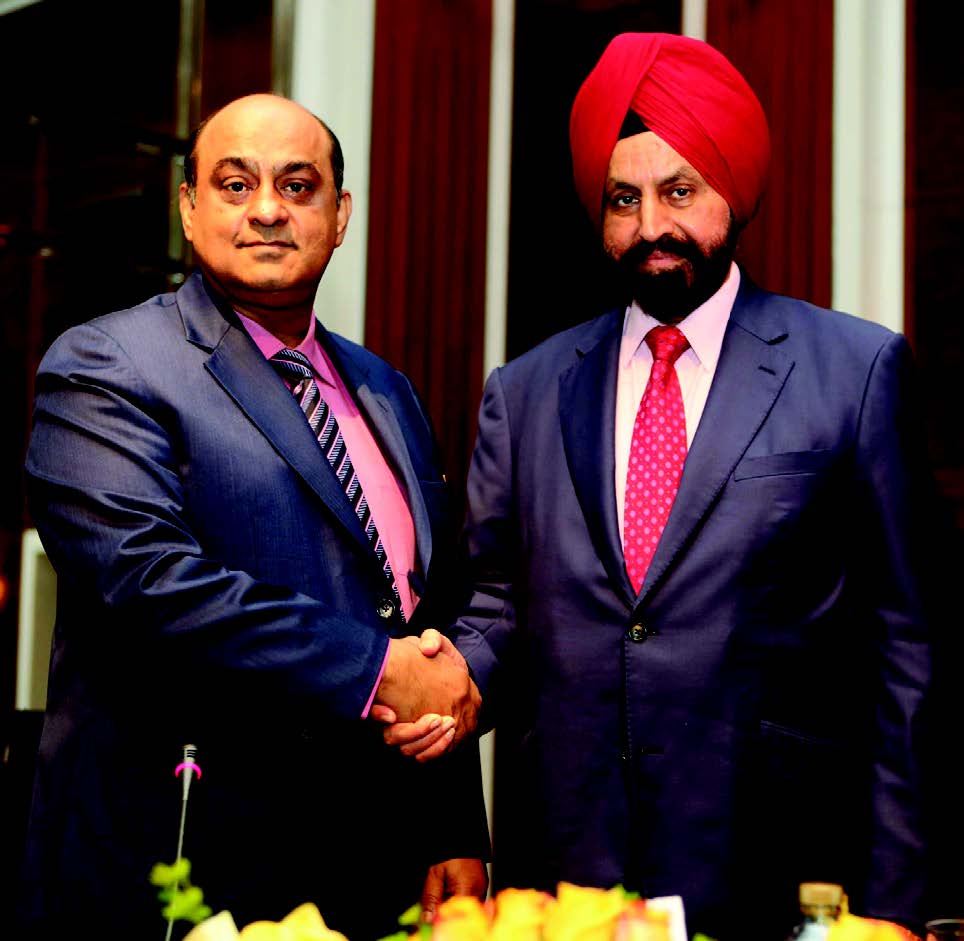
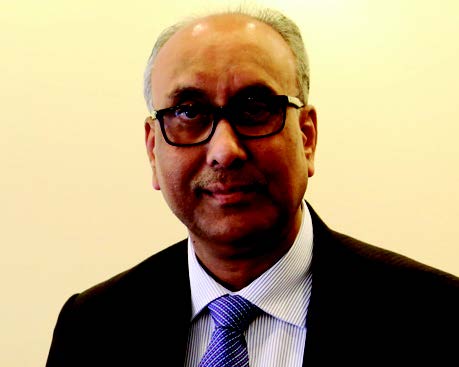
NEW YORK, NY (TIP): Bank of Baroda Chairman and Managing Director, Mr. S.S. Mundra will be visiting New York from September 16th to 18th. It is the first visit of Mr. Mundra to New York after he took over as Chairman and Managing Director of one of the largest public sector banks of India. Bank of Baroda Chief Executive for Americas, Mr. Dhimant Pradyumna Trivedi informed TheIndian Panorama that during his visit to New York Mr. Mundra would be meeting customers and the Indian American community besides launching internet banking. Mr. Trivedi said that a reception to Mr. Mundra is being hosted by the Indian Consulate on Monday, September 16th where he will be meeting the Consul General Dnyaneshwar Mulay and a cross section of Indian American community.
He will also address the gathering and, while talk about banking in general, he is likely to speak about the synergy that can be developed through Bank of Baroda. Read below a brief biography of Mr. Mundra. Mr. S. S. Mundra was born on 18th July, 1954. After completing his Masters in Commerce, he joined Bank of Baroda as a Probationary Officer on 21st March, 1977. In his first stint in Bank of Baroda, he rose to the level of General Manager in 2007. During his illustrious career in Bank of Baroda, he held several challenging assignments which included stint as Head of Bank’s Maharashtra & Goa Zone and Global Treasury Operations for over -5- years. During his overseas assignments, he served with Bank of Baroda (Uganda) Ltd. and was also Territorial Head of Bank’s European Operations, headquartered at London during the period 2008 – 2010.
Mr. Mundra was elevated as Executive Director in Union Bank of India in September, 2010. During his tenure at Union Bank of India, he handled many important portfolios including Treasury, International, Large Corporate and Alternate Channels. On his elevation as Chairman and Managing Director on 21st January, 2013, he joined Bank of Baroda a premier Public Sector Bank (PSB) in India having a branch network of over 4000 branches including Bank’s overseas operations spread over 24 countries with a global business of over INR 8 trillion (USD 131 bn). Bank of Baroda is second largest Public Sector Bank of India only after State Bank of India in terms of Balance Sheet size.
It has 100 branches/ offices outside India. He is on the Board of many national and international organizations which include EXIM Bank, National Institute of Bank Management (NIBM), Bank of Baroda (Uganda) Ltd., India International Bank Malaysia Bhd, Bank of Baroda (New Zealand) Ltd., BOBCARDS Ltd., India First Life Insurance, Baroda Pioneer Mutual Fund etc. He has remained Director on the Board of The Clearing Corporation of India Ltd. (CCIL), Central Depository Services (India) Ltd. (CDSL), MITCONConsulting and Engineering Services Ltd., BOB Asset Management Company, India Infrastructure Finance Corporation (UK) Ltd. (IIFCL), Star Union Dai-Ichi Life Insurance Company Ltd., National Payments Corporation of India Ltd (NPCI) and Bank of Baroda (Kenya) Ltd. He has also served on many Committees of RBI, IBA, NIBM, CII etc. He has also attended many training programs, seminar/ conferences both in India and abroad, in the area of Banking and Finance. He has widely traveled abroad.
The countries he visited include UK, Belgium, France, USA, Japan, China, Hong Kong, Singapore, various African countries etc. With the blend of wide overseas and domestic banking exposure at top management level, he has immensely contributed to the improvement of policy framework of the banking industry. As recognition of his contributions in the field of banking, finance, industry and commerce, he has won many Awards and accolades, latest being his inclusion in the list of India’s top 100 CEOs in CD-ET (Corporate Dossier – Economic Times) Survey after a stringent process of selection while Bank of Baroda is also ranked as 20th Best Indian Brand by Brand Equity – Economic Times
-

OFBJP Organizes Public Reception For BJP President Rajnath Singh
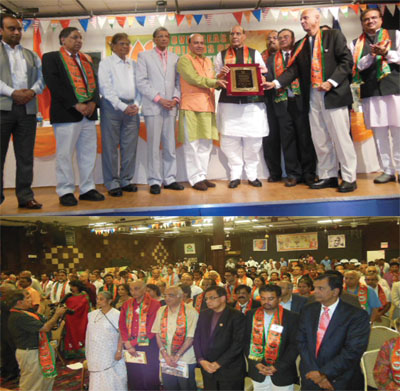
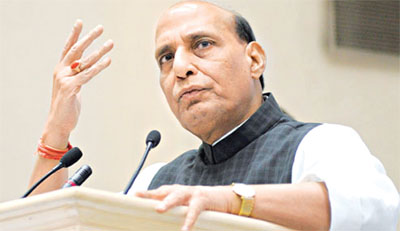
EDISON, NJ (TIP): Indian American community of tri-state area (New Jersey, New York, and Connecticut) gave a rousing welcome to Rajnath Singh, President of Bharatiya Janata Party (BJP) and his BJP delegation Ananth Kumar, General Secretary; Sudhanshu Trivedi, National Spokesperson; and Vijay Jolly, Convener of Overseas Affairs and Overseas Friends of BJP (OFBJP) in TV Asia Studio Auditorium at Edison, NJ on Sunday July 21, 2013. The program was organized by OFBJP-USA as part of its community global outreach program.
The program was broadcasted live on TV Asia across US reaching out to 1.5 million viewers. The program was also relayed live in India, Canada, UK, Europe and Middle East thru various channels. Addressing the jam-packed auditorium, Rajnath Singh said that he was elated by the warm welcome that had been accorded to him by the Indian Americans here in US. He said that trust and credibility have become a big problem in India and BJP is the only option. No party in India has grown bigger than Congress except the BJP.
BJP is the only party that has not suffered a vertical split. Communists have lost relevance and Congress has no policy on any of the issues nor has any ideology. Since its inception in 1951 as Bharatiya Jan Sangh and later on as BJP, the party has been pursuing a policy of Nation first. He continued that Atal Behari Vajpayee led a 24 party coalition for 6 years and the NDA rule was far better than 55 years of Congress rule in every aspect.
Corruption, Inflation and price rise are the signature of congress rule whereas NDA government controlled the inflation and price rise in spite of the prevailing severe drought and economic sanctions imposed by the entire West after Pokhran nuclear tests. NDA inherited a GDP growth of 4.8% and 10% inflation whereas BJP handed UPA a GDP of 8.4% and inflation 3.5% in 2004. Amidst applause from the audience he said that Pokhran test was a big step wherein the BJP led govt made India a nuclear power even though we knew economic sanctions were staring at us.
Countries that are much smaller have become developed countries but India is still a backward country and not sure why 55 years of Congress rule did not change much. Congress has to answer as to how much time they need to make India better, to remove poverty. BJP invited FDI in telecom sector but encouraged Indian investors whereas Congress has opened up the telecom sector 100%, increased in the LIC sector from 26% to 49%. Foreign investors have pulled out $7.5 billion from India and no one is ready to invest.
Even after 60 years of Independence we still have 67% of people who don’t get food and we need a food security bill. We need leaders with firm conviction and leaders with vision and when we come in power we will make India a super economic power in 10-15 years. National Highway development has seen tremendous growth during NDA rule. 50% of the highways that were built during 1980-2012 happened during 6 years of NDA rule and the other 50% were built during 26 years of non-BJP rule.
Gujarat development has become a role model across the world. Madhya Pradesh agricultural growth (19%) is the highest in the world and very soon will be providing 24hrs of power supply. Chhattisgarh PDS system serves 90% of the population without any corruption and is a model for other states to emulate. Goa is the only state in India where Petrol is cheaper than Diesel. India has a GDP growth of 4.8% whereas BJP ruled states have 10% GDP growth. UPA government has no plan to tackle Naxalism or terrorism.
Appeasement has become the state policy whereas BJP never links terrorism to any religion, caste or region. After Mumbai terror attack, Prime Minister made a statement that he will not talk to Pakistan until it gives an assurance that they will control terror activities and not support any groups that work against India but changed all that in a matter of few months. Our foreign policy is at its worst with no friendly neighbors around us. During NDA rule we maintained good relations with Russia and development excellent relations with US.
We made US our strategic partner. He appealed to the US govt to lift the ban on visa to Narendra Modi, he said on one side US agencies rate Gujarat as the best state and Modiji as an excellent administrator and on the other hand they deny visa to him. It will be better if US takes a decision soon as they will be forced to take a decision anyway later. When BJP comes to power we will make India a power of Rishi and Krishi (knowledge and Prosperity), he said. Indian culture influenced the world for thousands of years.
We never planned to dominate the world and even Swami Vivekananda came to Chicago on his own and had great influence on the world by his teachings. Citing the example of Newsweek columnist Lisa Miller who stated that by imbibing Yoga, Pranayam, Ayurveda and Organic farming people in the West are becoming Hindus whereas it is a crime in India if you say you are a Hindu.Talking on the recent controversy related to Narendra Modi statement that he is a Hindu and Nationalist, media created and pseudo secularists made a big fuss.
Professing your Hindu culture became a communal word in India. He said that as per the Supreme Court, Hindutva is a way of a life. Hindutva teaches love not only for human beings but even for animals, plants, rivers, mountains etc. It is Hindutva that teaches us to serve milk to a snake and take care of animals like ants and birds. He called on the Indian American Community to support BJP to build a strong India.
Shri Rajnath Singh was accorded standing ovation. Shri Rajnath Singh was honored by the OFBJP executive committee with a plaque for his contributions to the party and the country. Earlier, Ram Rakshpal Sood (Sr.Advisor, OFBJP) acting as the Emcee welcomed the audience, chief guests and the sponsors of the event. After the traditional lamp lighting ceremony amidst the chanting of Vedic mantras by Pandit Pravin Shastri and Chandrakant Trivedi and blowing of conch shell by Pravin Shashtri. Mrs. Vidya Labroo led the rendition of Vandemataram.
Jayesh Patel (President, OFBJP) welcomed the distinguished guests and said that entire India is chanting Narendra Modi (NaMo) mantra and expressed hope that BJP will be able to get majority on its own merit in the next election. Ram Kamath (General Secretary, OFBJP) introduced Dr. Mahesh Mehta, National Coordinator of OFBJP-USA. Speaking on the occasion, Dr. Mehta said that mission 2014 is about transforming India into a global leader and Global Indians should contribute to be the part of this great movement that will eventually contribute to the development of India.
Dr. Adapa Prasad (Immediate Past President) introduced Vijay Jolly, Convener of BJP Overseas Affairs and OFBJP, as a dynamic leader and former MLA who took on Delhi Chief Minister during the last election.
In his electrifying speech, Vijay Jolly urged the audience to applaud for Rajnath Singh for honoring the feelings of the people by making NaMo as the chairman of the campaign committee. Stressing the fact the OFBJP is on a mission to develop leaders by inducting youth into the organization to dethrone the corrupt Congress regime in India. Stating that NRI’s have always made India proud, he said that OFBJP has setup its chapters in UK, Norway, Nepal, Kenya and other countries to work for the welfare of Indian diaspora.
He got the past Presidents of OFBJP-USA honored by Rajnath Singh Introducing SudhanshuTrivedi, BJP National Spokesperson, Dr. Dinesh Agrawal (Former- President, OFBJP) said that as the national spokesperson, he is very active effective on TV channels spreading the message and its ideology of BJP. SudhanshuTrivedi reminded that July 21st the day of the program is a historical day when US astronauts landed on the moon. Edison town, the venue of the program, is also a historical town, named after the inventor of light bulb.
Hence, he said that word Bharat stands for light and inspires us to take India to the pinnacle of glory. Stating that BJP is all set to form the next government is not based on hope but on facts. He concluded reciting a poem by A.B. Vajpayee. R.P. Singh (Org. Secretary, OFBJP) introduced Ananth Kumar, BJP general Secretary. Amidst thunderous applaud from the audience, Shri Ananth Kumar introduced himself as the Hanuman of South as Kishkinda, the birth place of Lord Hanuman is in Karnataka whereas Rajnath Singh is from U.P, the land of Ram. For Ram’s team to win we need Hanuman and he is there to lend services for the party and the country.
India, he said is going through turbulent times and like A.B. Vajpayee model, we have Gujarat model of development under NaMo leadership and we will soon have NaMo model of governance. He said that BJP is already in battle mode, under NaMo and Rajnath Singh’s leadership we are all set to take on the corrupt congress government. Once in power, BJP will make India a global player not only in spirituality but in culture, strategic matters and will be a decisive player in the world. He urged the NRI’s to connect with their districts back home and work for BJP’s victory in 2014.
Chandrakanth Patel introduced Rajnath Singh as a man of impeccable image in spite of being in political life for 40+ years. Born in a farmer’s family in Varanasi, he rose to be the president of BJYM. He was part of the J.P movement and became the Agricultural minister in A.B. Vajpayee’s government. He was the President of BJP between 2007-2009 and again became the President in January, 2013.
Currently, he is a Member of Parliament from Ghaziabad, U.P. Earlier, the President of TV Asia and a well known community leader, Shri H.R.Shah addressed the gathering and said that TV Asia always supported India causes and he has been an admirer of Mahatma Gnadhi and Sardar Patel. He said he felt close to BJP principles and supported BJP. He wished that Narendra Modi would be elected as the Prime Minister. Krishna Reddy (Treasurer, OFBJP) presented the vote of Thanks.
-

BJP Has Sound Plans To Jumpstart The Stalled Indian Economy- Rajnath Singh
NEW YORK, NY (TIP): “The BJP-led NDA government created 67 million jobs in less than five years whereas the Congress led UPA created less than 2.7 million jobs between 2004 and 2009. These figures are from the data collected by the federal government controlled agencies and not a figment of imagination”, Rajnath Singh said.
He was speaking on what BJP will do to jumpstart the stalled Indian economy at a function organized by India-America Chamber of Commerce, July 25. Rajnath Singh who was in Washington for three days said he had discussions with the Congressmen and administration officials on the issue of difficulties faced by candidates in H1B and L1 visa to work legally in the US. The GDP cost burden will go up by 0.3 to 0.4 percent due to increase in fees.
“We had lodged our protest against the comprehensive immigration reforms bill and they had raised the issue of patents and compulsory drug license issues. There was only one case under these CDL whereas Indonesia had six cases and Canada four cases,” he added. The US would do well to share its latest technology on green energy with nations such as India so that it can benefit the humanity. Once these inventions are ashared, they would help us more in a very rapid manner, he said.
The BJP government will strengthen the village economy as over 70 percent of the people live in rural areas. We will do our best to stop urbanization and create more jobs in the rural areas as was done in the previous NDA government under the PURA scheme. More than 55 percent of the jobs for youth are in rural areas and there is a need to strengthen this sector. Turning to climate change, the BJP leader said while US that has been preaching, has a carbon emission rate of 20 ton per capita per annum, India has only 1.5 per ton per capita per annum.
The global average is only 4.5 ton per capita per annum. You now decide who is on the right side and who is not. Addressing the members of the India- America Chamber of Commerce in Manhattan, he said India is now facing a serious financial crisis of grave magnitude despite the fact that no one in the global economy can ignore India. The economy of India is not something that makes us feel comfortable or feel proud of.
But India was regarded as third largest economy of the world, he said. When the NDA government led by Atal Behari Vajpayee stepped down in 2004, the fiscal deficit was 2.5 percent and current account deficit was surplus. The revenue deficit was less than one percent. The economy witnessed a boom period during 1999 to 2004 when the country was ruled by the NDA and the slide started in 2004. “The boom that we created lasted till 2008 and then we are now witnessing is one of the worse economic downturns,” Singh said.
“When I mentioned to the Speaker of the House yesterday at Washington that we had a surplus current account when we left power, he was surprised. There was a revenue deficit that went up from 4.5 percent to 6 percent in 2008. The current account of deficit shot to 6 percent. We passed the fiscal responsibility bill in the parliament and hence were able to bring some fiscal discipline.
Inflation is now hovering around 7.7 percent,” he said. The rupee value has depreciated drastically to the US dollar from Rs 37 a dollar in 2008 to Rs 60 in 2013 almost doubling in five years. We thought this would be offset by increase in exports and that also did not happen; it went up by just one percent. It’s very unfortunate that savings that have been the biggest strength of India as it provided capital is now falling at a very rapid rate.
The small businesses tend to grow with the increase in savings and in the absence they take a major hit. Savings drop and growth rates drop and what else to drop. The success of Indian story is over. The success story of India is waiting for the BJP to return to power. The UPA has ruined the economic structure of the country. How will the BJP restore investors’ confidence and fix the broken economy once it comes to power? We will do what we did from 1999 to 2004 and we had a unique development model which is not only a model for India to feel proud of but came as a surprise to the world.
When we handed over the reins of the government to the Congress-led UPA, India’s growth rate was 8 to 9 percent and rate of inflation was around three percent. More than 50 percent of the highways were built during the Vajpayee government and the present Congress dispensation had admitted this in the court. Where had all the developments gone now? The BJP created a success story only to be mauled by the Congress, he added.
We have proved in the BJP-ruled states how we prioritize economic reforms and Gujarat is a shining example of India. The whole world is now talking about Gujarat and foreign governments are keen to study the success story. Take the case of Madhya Pradesh that was considered a sick state with no economic development before the BJP Government took over. Agricultural growth rate has gone up to 19.1 percent in the state as against 4 percent of the federal government.
Madhya Pradesh has replaced as country’s largest supplier of food grains to the central pool. In Chhattisgarh, more than 90 percent of the population is covered under the Public Distribution System and people enjoy social security compared to mass suicide by farmers in the Congress-ruled states. Goa is the only state in India where petrol is cheaper than diesel similar to what we see in the US.
Do we have to prove anything more to assure the people that our first priority will be to fix the problems and take India on a different plane?, he asked. The average GDP of BJP-ruled governments is about 10 percent whereas the nation is only experiencing a growth rate of less than five percent. There are only two models – BJP model for growth and Congress model for destruction, he added. Earlier, Rajiv Khanna, President, India-America Chamber of Commerce welcomed Rajnath Singh and introduced the subject of talk.
He pointed out that Indian economy has been weakening and this had caused considerable doubts in the minds of investors and wanted Singh to speak on how his party, if it came to power would jumpstart the stalled Indian economy. The talk by Rajnath Singh was followed by an interesting Q & AA session. Singh candidly answered the few questions put to him.
-

Govt’s new target: Rs 1.15 lakh crore infra projects
NEW DELHI (TIP)In a fresh attempt to provide a push to the infrastructure sector, Prime Minister Manmohan Singh Friday set a target to roll out projects worth Rs 1.15 lakh crore in public-private-partnership mode by the end of this calendar year, including setting up 60 airports and upgrading Bhubaneswar and Imphal to international status at a cost of Rs 20,000 crore.
The other major projects include monitoring the construction of Mumbai’s Rs 30,000 crore elevated rail corridor and power and transmission projects worth Rs 40,000 crore. The targets were set at a meeting called by Singh to finalise infrastructure projects for 2013-14. It was attended by Finance Minister P Chidambaram, Planning Commission deputy chairman Montek Singh Ahluwalia and ministers of power, coal, railways, roads, shipping and civil aviation.
However, for the second straight year, the Prime Minister’s infrastructure review did not set a target for the road sector, which failed to reach its goal of 9,500 km for 2012- 13. “The Prime Minister has highlighted the need to ramp up investment in infrastructure to revive investor sentiment. For this purpose, a target of rolling out PPP projects of at least Rs 1 lakh crore in the next six months was set. A steering group is being formed to monitor the award and implementation of projects from among the following on priority,” a government statement said.
The list, however, shows that many projects flagged last year have not moved much. For instance, the list of eight greenfield airport projects to be awarded this year include three announced last year Navi Mumbai, Goa and Kannur.
The new ones are in Pune, Sriperumbudur, Bellary, Juhu (Mumbai) and Raigarh. Of the Rs 1.15 lakh crore announced Friday, railway projects account for Rs 45,000 crore followed by power at Rs 40,000 crore. The statement quoted the Prime Minister as saying that a lot of work still needs to be done and there should be no slackening of the pace of work to award projects or to complete them.
The target set by the Prime Minister did not enthuse industry leaders. “Setting targets is a little old fashioned as we all know that these are not usually met. The main focus must be to go behind these targets and see why projects are stalled. If the meeting had focused on the stalled projects with the Cabinet Committee on Investment, it would have been more productive,” said Vinayak Chatterjee, chairman and managing director, Feedback Infrastructure.
-

RSS Chief Offers No Assurances To Advani
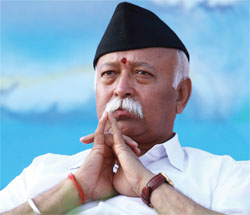
NEW DELHI (TIP): BJP stalwart L K Advani on June 20 failed to extract a firm commitment from RSS chief Mohan Bhagwat that his concerns about the functioning and direction of the party would be heeded. While Advani raised with Bhagwat the issues he had cited when he resigned in the wake of Gujarat CM Narendra Modi’s appointment as chairman of BJP’s national campaign committee, the RSS chief offered little except the assurance to hold more discussions and an advice to the veteran saffronite to stay engaged.
In fact, Bhagwat, who had persuaded Advani to withdraw his resignation on June 11, also said that other stakeholders needed to be heard before he took a view: a rather candid assertion that Advani’s views on party’s affairs were not the final word. The hour-long “detailed and candid interaction” at the RSS headquarters in the Capital ended without Bhagwat committing himself to any timeline for addressing the issues Advani raised with him before withdrawing his resignation.
In his resignation letter to party president Rajnath Singh, Advani had said, “For some time, I have been finding it difficult to reconcile either with the current functioning of the party or the direction in which it is going.” He also said that most party leaders had deviated from the ideals of the founding fathers, and were pursuing their selfish agendas.
Sangh Parivar circles had interpreted Advani’s lament about the “functioning” and “direction” of the party as shorthand for the resentment of his supporters about the functioning of RSS’s joint secretary general Suresh Soni and Modi’s ascendancy. Soni, RSS’s liaison person who is respected by many in saffron circles for his ideological clarity and tough resolve, has earned a reputation for not allowing himself to be intimidated by seniority.
A statement issued by the RSS on the meeting suggests that no decision on Soni, especially on whether he should continue on Sangh’s BJP desk, will be taken without hearing him and others. As for Modi’s elevation, it is irreversible, and Rajnath had made it clear even before Advani withdrew his resignation. The RSS statement made it plain that Advani got no concession from Bhagwat. “Shri Advaniji conveyed his views on various developments in the country and the role of the party and the broad nationalist movement led by Sangh.
It was opined that several issues need further discussion and exchange of notes at various levels. Same will take place at appropriate time. Shri Bhagwatji suggested that such useful exchange of views should continue in future also,” the statement said. The meeting between the two leading Sangh Parivar figures was agreed upon after Advani took back his papers following a brief telephonic conversation with Bhagwat.
The resignation, which was widely interpreted as a protest against Modi’s elevation and surprised many, ended equally dramatically the following day with Rajnath Singh emphasizing that Advani had retraced his step following talks with Bhagwat, while assuring that all his “concerns” would be “properly addressed”. Many who considered the assurance to be vague and meant more for soothing the veteran’s hurt rather than an expression of an intention to change decisions of the party, especially Modi’s appointment in Goa, claimed validation after seeing RSS’s version of the interaction between Advani and Bhagwat.
-

BJP meeting: Party plays down LK Advani’s absence in Goa on Day 1
PANAJI (TIP): BJP senior leader Venkaiah Naidu said that the party’s senior leader LK Advani will arrive in Goa on Saturday to attend the national executive meeting and the media should not read too much about the delay in his arrival.
Speculation has been rife after it became apparent that Advani will not arrive in Goa on Friday. Speaking to reporters outside the venue of national executive meeting, Naidu said Advani is not able to come to Goa on Friday because of ‘health reasons’ . There was speculation in the media about Advani’s delayed arrival. “There is no need to read too many things in everything,” Naidu said.
Replying to queries from the media about a few other BJP senior leaders skipping the national executive meeting, Naidu said they are not able to attend the meeting due to prior engagements and that there is nothing new in that.
BJP national spokesman Prakash Javdekar said that Advani is not angry about speculation that Modi will be projected as chief of election campaign for the Lok Sabha elections.
-

BJP Meeting: Party Plays Down LK Advani’s Absence In Goa On Day
PANAJI (TIP): BJP senior leader Venkaiah Naidu said that the party’s senior leader LK Advani will arrive in Goa on Saturday to attend the national executive meeting and the media should not read too much about the delay in his arrival. Speculation has been rife after it became apparent that Advani will not arrive in Goa on Friday. Speaking to reporters outside the venue of national executive meeting, Naidu said Advani is not able to come to Goa on Friday because of ‘health reasons’ .
There was speculation in the media about Advani’s delayed arrival. “There is no need to read too many things in everything,” Naidu said. Replying to queries from the media about a few other BJP senior leaders skipping the national executive meeting, Naidu said they are not able to attend the meeting due to prior engagements and that there is nothing new in that. BJP national spokesman Prakash Javdekar said that Advani is not angry about speculation that Modi will be projected as chief of election campaign for the Lok Sabha elections.
-

Maryland honors Bollywood director at Shortcut Romeo promo event
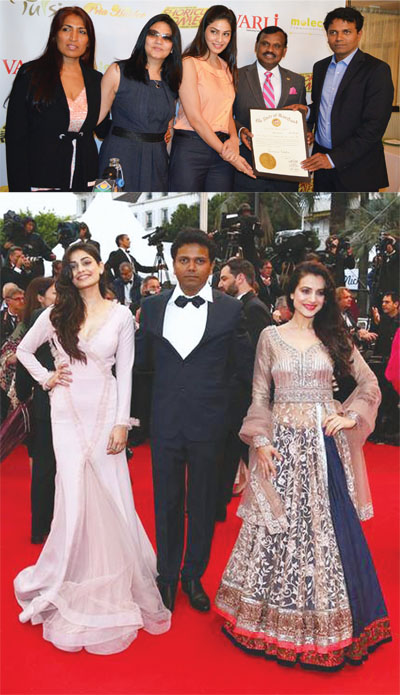
NEW YORK (TIP): State of Maryland has honored Bollywood film director Susi Ganeshan with a citation for his contribution to Indian cinema. Recalling his 15 years of service and hard work to promote Indian movies, especially Tamil and now Hindi, Maryland Governor Martin O’Malley said in his citation that the State of Maryland is proud to bestow the honor for his contribution to the entertainment industry.
Dr. Rajan Natarajan, Deputy Secretary of State of Maryland and one of the highranking Indian-American political appointees, presented the citation signed by Governor Martin O’Malley and the replica of great seal of the State of Maryland to Ganeshan at an event in New York attended also by Bollywood actress Puja Gupta, the heroine of his soon-to-be released movie Shortcut Romeo. Dr. Natarajan said Maryland is keen to support Bollywood and would provide all facilities to filmmakers keen to shoot movies in his picturesque state.
The Governor led a delegation to India recently and is keen on doing business with India. Recently, during his trip to Chennai Dr. Natarajan met with Superstar Rajnikanth and bestowed on him special honor by Maryland Governor. Ganeshan and his team were in New York to promote their latest Bollywood movie Shortcut Romeo after screening the movie and doing red carpet at Cannes Film Festival along with Ameesha Patel and Puja Gupta. Addressing a press conference in Tulsi restaurant last week organized by Varli Media, Molecule Communications and Pria Haider, actress Puja Gupta said as an actress she doesn’t have any limitations.
“I don’t have any limitations as an actor. As an actor you shouldn’t limit yourself. An actor should have the liberty to do whatever they want to and the director is the one who will decide.” The model-turned-actress has featured in two films F.A.L.T.U. and Go Goa Gone so far and said: “I love that I have become an actress. I never thought I will be an actress. I will try to do the best with the roles given to me…I will do bold roles if I am comfortable with it.
“The 24-year-old describes Ameesha Patel, with whom she will share the screen space in Shortcut Romeo, as a “wonderful costar”. “She is so gorgeous. She is senior to me and has spent a decade in the industry. There is lot to learn from her.” This is Susi Ganeshan’s first Hindi movie and the remake of Tamil Nadu Government award winning Tamil movie Thiruttu Payale.
Ganeshan addressed several differences between the two versions, starting with, Why a remake in the first place? Noting a current trend for remakes in Indian cinema, Ganeshan pointed to the vast Bollywood marketplace-and audience for Bolly films–compared with that of Tamil language films. He then related the challenges faced by a director who decides to remake one of his own films.
To distinguish Shortcut Romeo from Thiruttu Payale, Ganeshan chose a different location, setting it in Kenya instead of India and Australia. He said Kenya provided a location unexposed to Indian film goers, who have now journeyed just about everywhere else in the world on screen. “I filmed in Melbourne for the previous film and don’t want to go to a place I previously used,” he explained.
“As a creator, I get bored if I copy my own stuff.” When shooting the Hindi version he faced a dilemma in differentiating the camera shots from the Tamil original. “There must be a small change at least,” he said. On an even more fundamental plane, he noted that it was “tough learning Hindi,” as his “mother tongue” is Tamil. Hence, it was also tough “finding an exact match” in Hindi for the original Tamil title, with Shortcut Romeo serving to evoke the search among the generation represented by the film’s characters for shortcuts to money, fame and success.
“The only barrier” he said, “is achieving the right performance, and feel. “Feel” was especially important when it came to the music for Shortcut Romeo, which was composed by hit Bollywood composer Himesh Reshammiya. “He’s a more popular music director than anyone in [Tamilspeaking] South India, and I needed the right music director for the different musical structure of Bollywood,” said Ganeshan. “I explained to him, ‘This is what I want,’ and he gave me a number of options to choose from.
We came up with the correct mix of melody songs-which I always loveand fast-paced, peppy dance numbers.” He singled out the soundtrack’s “Khali Salam Dua,” a melodic romantic ballad sung by Mohit Chauhan, as did Bollywood newcomer Pooja Gupta, the 2007 Miss India Universe, who has a key role in Shortcut Romeo. “It’s very meaningful music, subtle and mellow, with the beat of the soul,” said Gupta.
“It touches your heart.” Shortcut Romeo is an Indian romantic crime thriller film directed and produced by Susi Ganeshan under the banner of Susi Ganesh Productions. It is the Hindi remake of the director’s own Tamil film Thiuttu Payale (2006), starring Neil Nithin Mukesh in the title role with Puja Gupta as his love interest and Ameesha Patel in a negative character. The film was screened at Marche du Film at Cannes Film Festival.
It is releasing on June 21 all over the world. Himesh Reshmmiya has scored the music and N K Ekambaram is the Director of Photography. Dilip Deo and Hardik Singh Reen have taken care or editing. Susi Ganeshan has directed some award winning movies in Tamil such as Virumbukiren, Five Star, Thiruttu Payale and Kanthaswamy.