Tag: Google

  • Indian American Physician Monica Gandhi honored by HIV Medicine Association

    Indian American Physician Monica Gandhi honored by HIV Medicine Association

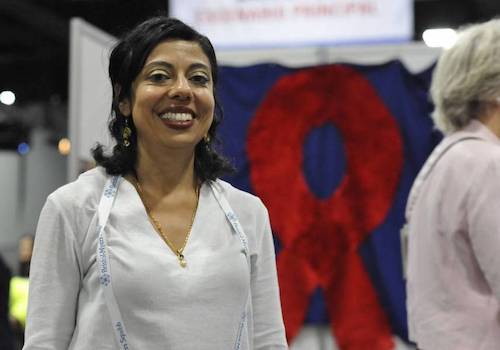
    SAN FRANCISCO, CA (TIP): Indian American Physician Monica Gandhi, MD, MPH, of the University of California, San Francisco (UCSF) was honored by the HIV Medicine Association (HIVMA) with 2017 association award, presented at IDWeek 2017 which took place Oct 4-8 in San Diego.

    Raphael J. Landovitz, MD, MSc, of the University of California, Los Angeles (UCLA) was also honored.

    “These leaders are making significant and lasting contributions to HIV medicine,” said Wendy Armstrong, MD, HIVMA chair. “The HIV Medicine Association is proud to recognize Drs. Gandhi and Landovitz.”

    Dr. Gandhi received the 2017 HIVMA Clinical Educator Award, which recognizes those who have demonstrated significant achievement in the area of clinical care and provider education. Dr. Gandhi is an internationally recognized clinician and educator who has woven teaching and mentoring into all aspects of her work.

    As medical director of the Ward 86 HIV Clinic at UCSF, a safety-net clinic and hospital, Dr. Gandhi oversees care for more than 2,800 HIV-infected and at-risk patients including urban poor, homeless, women, racial and ethnic minorities and immigrants – people who often are difficult to engage and retain but who greatly need high-quality medical care.

    Her teaching is tightly linked to these settings and these populations, combining the scientific aspects of medical knowledge with the real-world practicality she’s gained from working with challenging populations in challenging settings. Truly excited to see students and trainees learn, whether during a “chalk talk” or a bedside discussion, Dr. Gandhi consistently receives outstanding teaching reviews, and many students and residents return for HIV electives or clinical rotations based on their previous work with her. Formerly the division education director, Dr. Gandhi is now associate division chief and assistant director of UCSF’s ID fellowship program, where she has developed a robust formal curriculum and led the longitudinal outpatient clinic training of ID and HIV fellows in the Ward 86 clinic.

    Supported by an National Institutes of Health (NIH) grant, Dr. Gandhi has developed a mentoring program for early career investigators of diversity and a “Mentoring the Mentors” national workshop series for midcareer and senior HIV investigators, where they learn specialized techniques and tools of effective mentoring. She has led trainings in the United States, Peru, Kenya, India and South Africa supported by funding from the Fogarty International Center.

    Gandhi has received many awards for her compassionate clinical work, including the UCSF Meg Newman Teaching Award, the Sarlo Award for Teaching Excellence from UCSF’s AIDS Research Institute, and the Defender of Humanity Award and Clinical Teaching Award from ID fellows.


  • Indian-American Attorney Ajay Raju Recognized with Philanthropy Award

    Indian-American Attorney Ajay Raju Recognized with Philanthropy Award

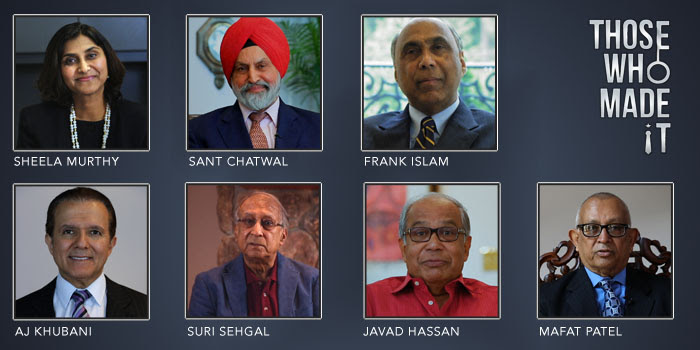
    Previous recipients of the award include, Indian-American philanthropist Frank Islam and Suri Sehgal, founder of the SM Sehgal Foundation.

    WASHINGTON (TIP):  Noted Indian-American attorney Ajay Raju has been honored with the third American Bazaar Philanthropy award in recognition of his philanthropic activities in the US.

    “Raju was honored for his commitment to revive Philadelphia through the Germination Project,” said Asif Ismail, publisher of The American Bazaar, an online ethnic news publication about Indian-Americans.

    “The Germination project is a signature initiative of the Pamela and Ajay Raju Foundation that recruits talented teenagers and prepare them to be tomorrow’s leaders,” Mr. Ismail said in a statement.

    Previous recipients of the award include, Indian-American philanthropist Frank Islam and Suri Sehgal, founder of the SM Sehgal Foundation.

    In his remarks on the occasion, Mr. Islam underscored the need of philanthropy. Mr. Raju, he said, has done a fabulous job in regenerating the city of brotherly love.

    “We are living in an increasingly dangerous world and times. World peace is essential for the future of this planet. There is much deadly conflict now and threats of it around the globe which must be controlled,” he said.

    Recognizing this, he has supported both the US Institute for Peace and the Woodrow Wilson Center, which bring scholars and practitioners to develop programs to try to find peaceful means for conflict resolution, Mr. Islam said.

    Navneet S Chugh, a California-based attorney, said the US has a rich tradition of charity and giving.

    India and Indian-Americans still have a long way to go, as he citied some of the recent figures with regard to non-profits.

    Last year Americans gave USD 500 billion in donations to charities. As many as 70 percent of this was given by individuals and only five per cent came from corporate sector.

    One third of the donations went for religious purposes, 20 per cent went to education and 10 per cent to social services.


  • US lawmaker expresses concern over situation of Muhajirs in Pak

    US lawmaker expresses concern over situation of Muhajirs in Pak

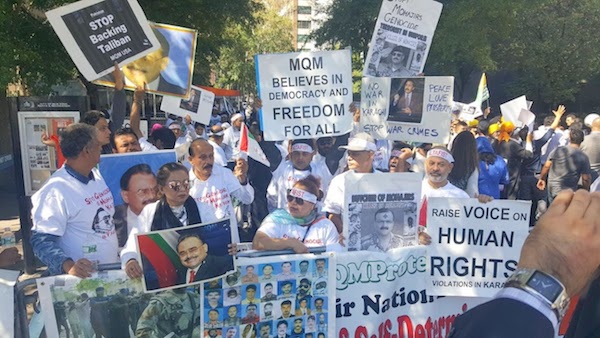
    WASHINGTON (TIP): A US lawmaker has expressed concern over the human rights violation against the Muhajir (migrant) community in Pakistan, saying he will ask the state department to raise the issue with the Pakistani government.

    The term ‘Muhajir’ is used to describe the Urdu-speaking immigrants who left India in 1947 and came to Pakistan. A large chunk of them settled in the Sindh province.

    Expressing concern over human rights violation against the Muhajir community in Karachi, Congressman Rob Wittman said that he will ask Secretary of State Rex Tillerson to ensure that the US questions the Pakistani government over the persecution of Muhajirs.

    The Muhajir community shared its concerns about human rights abuses in Karachi, with Wittman who is also the chairman of the House Armed Services Subcommittee on Seapower and Projection Forces.

    Among the concerns highlighted by Muhajirs were threats to them by armed paramilitary forces, unexplained disappearance of Muhajir party political workers, extra- judicial killings of Muhajirs by the Pakistani Army and the retaliation against families in Pakistan of Muhajir supporters in the US and overseas who speak out on social media.

    Wittman made the comments in a townhall with members of the World Muhajir Congress (WMC) held in a Virginia suburb of Washington.

    (Source: PTI)


  • Federation of Indian Associations (FIA) Grand Diwali Mela draws Thousands in Chicagoland Area

    Federation of Indian Associations (FIA) Grand Diwali Mela draws Thousands in Chicagoland Area

    CHICAGO, IL (TIP): The Federation of Indian Association Chicago (FIA) organized the biggest all day “Diwali Mela” celebration On October 1, 2017 from 11 am to 9 pm. This was an impressive Diwali Mela held for the First Time in Chicago, with multitude of activities including Live Bollywood concert with famed singer Richa Sharma, at Renaissance Convention Center, located at 1551 Thoreau Drive North, Schaumburg, IL 60173.

    Program included Live concert with Richa Sharma, Lakshmi Puja, Diwali Shopping, Non- Stop Entertainment, Kids Fun Activities, Fashion Show and Food Stalls, all for just $10 per person with free parking! Over 3000 people visited the celebration from Chicagoland area and the Midwest region of USA. Diwali is synonymous with shopping for new clothes, jewelry, handicrafts, and household items to name a few. Vendors showcased a variety of these items at FIA Diwali Mela from various parts of US and India for display and sale. The organizers pride themselves with showcasing a unique and artful number of items from vendors that are mostly home-based and do not have regular shops; so, the only way to buy these exclusive handpicked items are at Mela.

    Performances by Bollywood celebrity Richa Sharma and local talent were the highlight of the celebration. Full day entertainment included Indian classical and folk-dance performances, ranging from Bollywood, fusion and classical performances, Bollywood karaoke singing, Garba-Raas, and DJ Music. Dances were performed by Soorya Dance School, students of Gauri Jog, Shingari School of Rhythm, Rhythms and Grace, students of Toral Chaudhary, Alokita Dhar of Jhankar Dance Group, Natraj Dance Academy and 10 Dance Performances by IAGC members.

    Pratibha Jairath, Ankit Mahajan and Swapnil Shah did an excellent job as Master of Ceremony.  Program started with Geetanjali Maru and Pratibha Jairath’s Bollywood song performance.

    The Sufi Queen Richa Sharma is one of the best known “playback” singers in India today, “Music is in my genes,” she says. “I am singing now for 26 years. Her voice was popularized in number of films until the big hit came by in the form of Taal where she sang for A.R. Rahman. I sang my first song in a movie in 1995. Richa has sung in more than 150 movies and counting. I certainly thank the organization and fabulous crowd for their response and gratification. Crowd thoroughly enjoyed a vibrant and colorful event in Chicago. Melodious music extravaganza by The Sufi Queen, Richa Sharma and her orchestra was well appreciated by the audience. She kept the audience mesmerized by her soulful rendition. She was accompanied by a talented orchestra, who complemented her perfectly. Many of her peppy numbers inspired the audience to dance and enjoy the beats. Crowd thoroughly enjoyed authentic vibrant and colorful traditional event in USA. Melodious music extravaganza by The Sufi Queen Richa Sharma and orchestra concluded the evening.

    (Photograph and Press release by: Asian Media USA)


  • Telugu Association of Greater Chicago organized Volleyball and throw ball tournament

    Telugu Association of Greater Chicago organized Volleyball and throw ball tournament

    CHICAGO, IL (TIP) Telugu Association of Greater Chicago (TAGC – First Telugu Association) organized Volleyball and throw ball tournament on October 8th, 2017 at Pelican Harbor Indoor Aquatic Park, 200 S Lindsey Ln, Bolingbrook, IL 60440 This sports event was sponsored by Indsoft Inc. & Hyderabad House, Schaumburg location. TAGC President proposed and the Board approved unanimously that tournament to be called as TAGC and Bobbili Madhava Reddy Memorial Volleyball and Throw ball tournament. Late Sri Madhava Reddy garu was past president and founding member of TAGC. The main objective of conducting this event is to motivate and encourage TAGC members and Telugu community to stay fit and to offer refreshment from routine lives as well as making new friends.

    TAGC Board and sports team’s dedication and hard work made this event a Grand Success with record number of teams registered in TAGC history. The event was publicized well by utilizing all means of social media and communication. TAGC has conducted volleyball tournament for men in 3 categories and Throw ball for Women. Volleyball categories are Beginners, Intermediate and Advanced. We had about 24 Volleyball teams, 4 groups, 4 courts, 9 hours, 90 plus games and 280 participants with 200 guests.  Each team played minimum 3 games in group level that includes quarter finals, semifinals and finals. Thanks for being with us through the end with all your sportive nature and smiles. It was like a festival of Volleyball with Spikes all over. The games were very tight and were feast to everybody who was watching the games.

    Kudos to our volunteers who took care of monitoring the games, tracking the wins and losses, updating scores, making sure teams and referees for the next matches are available on time and what not!! This event was planned together and executed flawless with help of our  BODs Praveen Vemulapalli, Sapthagiri Sangem, Avinash Lattupalli, Vijay Bheeram, Anji kandimalla, Ramu Billakanti, Mamatha Lankala, Pradeep Kandimalla, Jyothi Chinatalapani and volunteers  Sashi, Ramana Kalva, Rohit Akula, Santhosh Konduri and others volunteers

    TAGC President Ramachandra R Ade along with entire sports committee team and sponsor Mr. Vinoz Chanumolu presented the trophies to following winners:

    Throw Ball for Women:

    Winners: Westmont Furious six

    Runner: Rudra team

    Advanced Volleyball for Men:

    Winners: Volleyball Audicts​

    Runner: Spartans

    Intermediate Volleyball for Men:

    Winners: Desi Boys -1

    Runner: ​Chicago Bulls​

    Beginners Volleyball for Men:

    Winners: ​X-Men-2​

    Runner: Desi Boys -2

    TAGC president Ramachandra R, Ade thanked sponsor Mr. Vinoz Chanumolu, Vasu Vallabhaneni and Management of Indsoft Inc. & Hyderabad House Schaumburg location, for their support in sponsoring and conducting 2017 Indoor Throw ball and Volleyball Tournament and facility management for their extended support during the games and all the volunteers, Referees, Line men, TAGC Board, Sports committee & team captains as well as all the team members.

    (Photographs and Press release by: Asian Media USA)

  • Garba Queen Prapti Mehta Rocks Chicago

    Garba Queen Prapti Mehta Rocks Chicago

    CHICAGO, IL (TIP): The Raas Garba Dancers, Clapped hands and Performed 6 steps around a centrally lit lamp or a picture or statue of the Goddess Shakti.  The sponsors of this event organized the event to show appreciation for their clientele and the Community. There were over 2,000 people who enjoyed the evening. Prapti Mehta and her troupe did an excellent job of holding the energy in the room. The food was exemplary. The greatest compliment that we received was that clients insisted that we have this event again next year – Prapti Mehta & Rocking Group.

    Northlake, IL: Hemant Shah, Prajesh Patel, Parthiv Patel, Dr. Manish Pandya, Dr. Ashish Patel, & Kashyap V. Trivedi. Organized ‘Incredible Raas Garba Ramzat’ on evening of Navratri Celebration in Excellent Elegance with International Artist Prapti Mehta, Along with very Talented Chirag Bhatt, accompanied by Stunning Band emceed by Santosh Gor & Jayesh Patel on Saturday, October 7, 2017, 6:30 pm at Concord Plaza Banquets, 401 Lake St, Northlake IL, 60164. The sponsors of this event organized the event to show appreciation for their clientele and the Community. Every Individual that participated with passion & enthusiasm, the Team work was reflects and Felt by the Audience. The Venue was a Full House with over 2000 people! From the keyboard artist to the Garba Dancers including the Entire Team, full Enjoyment, Passion, and Enthusiasm was echoed.

    “Gujarati’s, who are core participants of this festivity, have Garba & Dandia in their heart”.

    There were   incredible   participants   of   all   ages of men and women   of   about   2000+   people, enjoying and celebrating the memorable evening. Many in the audience, especially ladies of all ages   wore   very   Colorful   and   Stunning   Traditional   Dresses   for   this   special   occasion   with appropriately matching ornaments and extravagant hairstyles. Navaratri Garba is very special as it honors Shakti in very rhythmic ways.  “We all love the whole atmosphere of colors, the clothes and of course, the music and then there is always the fun of dressing traditionally”. Western dresses are replaced by Lehnga-Choli, matching jewelry and foot wear. The sponsors of this event organized the event to show appreciation for their clientele and the Community.

    Prapti Mehta and the Team began the evening by offering a prayer. The start of the Raas was with very famous Tran Tali Garba by Prapti Mehta and Chirag Bhatt. The evening was followed by mesmerizing rhythmic conventional Garba music with equally passionate and high energetic performance by the audience of traditional swirling dance around Mataji’s heavenly symbolic presence turned in to shrine adorn with flowers and decorations. The event concluded in wee hours of morning highlighted by devotional Arti of Mataji.

    (Photographs and Press release by: Asian Media USA)


  • Australian Senate rejects proposed visa, citizenship curbs

    Australian Senate rejects proposed visa, citizenship curbs

    Visa applications would now be considered under previous rules

    SYDNEY (TIP): Australia’s lawmakers have rejected legislation that would tighten citizenship and foreign worker visa rules, a blow to Prime Minister Malcolm Turnbull who had sought to stop a loss of his support base to far-right political parties.

    In April, Turnbull said Australia would abolish a temporary work visa popular with foreigners and replace it with a new program requiring better English-language and job skills.

    Turnbull had also announced plans to raise the bar for citizenship by lengthening the waiting period and adding a new “Australian values” test.

    But Australia’s Senate, where Turnbull’s center-right government does not enjoy a majority, rejected the proposal in a late vote on Wednesday, with Opposition lawmakers insisting the rules were counter to Australian multicultural values.

    The Senate rejection may further drag on support for Turnbull, which, according to the widely watched Newspoll poll on Monday, languishes at its lowest level in more than two years.

    The next election is not due until 2019, but continued poor polling could undermine Turnbull’s leadership.

    Mathias Cormann, Australia’s special minister of state, said on Wednesday the government will seek to move the legislation through the senate again as soon as they have secured the necessary support.

    “We will keep working with all non-government senators to secure the necessary support,” Cormann told Australian Broadcasting Corporation radio.

    A spokeswoman for Australian Immigration Minister Peter Dutton said visa applications would now be considered under the previous rules.

  • Congressional Delegation Visits India to Strengthen Bilateral Cooperation

    Congressional Delegation Visits India to Strengthen Bilateral Cooperation

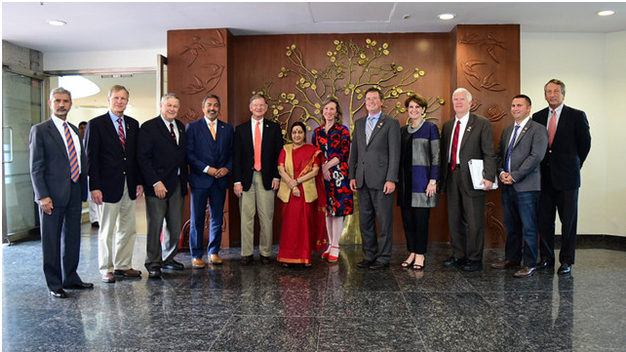
    WASHINGTON (TIP): A 9-member Congressional delegation led by Chairman of the House Committee on Science, Space and Technology Congressman Lamar Smith and comprising Congressman Mo Brooks, Congressman Thomas Massie, Congresswoman Barbara Comstock, Congressman Darren Soto, Congressman Ami Bera, Congressman Brian Babin, Congressman Dana Rohrabacher and Congressman Mark Sanford visited India from 15-18 October 2017.

    During the visit, the Congressional delegation met with External Affairs Minister Smt. Sushma Swaraj, Minister of Commerce & Industry Shri Suresh Prabhu, Minister of Science & Technology Shri Harsh Vardhan and National Cyber Security Coordinator Shri Gulshan Rai. The delegation also visited Bengaluru where they held discussions with ISRO Chairman Shri A.S. Kiran Kumar. The visit focused on the strengthening of India-U.S. cooperation in the areas of science, technology, space and cyber-security.


  • Crowley, Chabot Call for Strong, Ongoing Response to Refugee Crisis in Burma

    Crowley, Chabot Call for Strong, Ongoing Response to Refugee Crisis in Burma

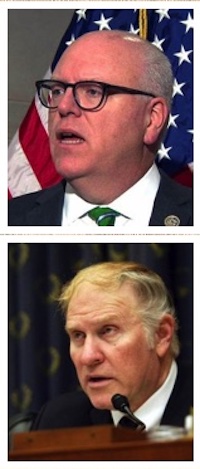
    WASHINGTON DC (TIP):  House Democratic Caucus Chairman Joe Crowley (D-NY) and Representative Steve Chabot (R-Ohio), along with 41 bipartisan Members of Congress, have sent a letter to Secretary of State Rex Tillerson calling on the United States to take significant actions to stop the ethnic cleansing of the Rohingya people occurring in Burma.

    “In light of the ongoing crisis we urge you to build on your initial commitment,” wrote the lawmakers. “We urge you to do everything possible to ensure protection and security for those trapped inside Burma or willing to return, as well as oppose forcible returns from neighboring countries.”

    Specifically, the Members are urging Secretary Tillerson to support Bangladeshi efforts to ensure that the basic needs of the 500,000 displaced Rohingya and others are met, and that these individuals are provided an opportunity to return to Burma if they wish. Additionally, the lawmakers asked that the United States take further diplomatic steps to bring the persecution of the Rohingya people to an end by declining to grant any visas to members of Burma’s security services until humanitarian access is granted to those displaced in Burma, utilizing existing sanctions laws with respect to those engaged in human rights abuses, and encouraging countries to suspend arms sales to Burma. The letter also urges the Trump administration to support the recommendations of the Advisory Commission on Rakhine State that carried out a year-long study into conflict in the area.

    The letter was signed by Reps. Edward R. Royce (R-Calif.), Eliot L. Engel (D-NY), Ted S. Yoho (R-Fla.), David E. Price (D-N.C.), Marcy Kaptur (D-Ohio), Donald S. Beyer, Jr. (D-Va.), Suzanne Bonamici (D-Ore.), Joaquín Castro (D-Texas), James P. McGovern (D-Mass.), Michael T. McCaul  (R-Texas), William R. Keating (D-Mass.), Daniel M. Donovan, Jr. (R-NY), Alan S. Lowenthal (D-Calif.), Keith Ellison (D-Minn.), David Loebsack (D-Iowa), Jan Schakowsky (D-Ill.), Carolyn B. Maloney (D-NY), Betty McCollum (D-Minn.), David N. Cicilline (D-R.I.), Brian K. Fitzpatrick (R-Pa.), Barbara Lee (D-Calif.), Barbara Comstock (R-Va.), Ann Wagner (R-Mo.), Christopher H. Smith (R-N.J.), Luis V. Gutiérrez (D-Ill.), Thomas A. Garrett, Jr. (R-Va.), Ted Lieu (D-Calif.), Jackie Speier (D-Calif.) Gwen Moore (D-Wis.), Mark DeSaulnier (D-Calif.), Jamie Raskin (D-Md.), Eleanor Holmes Norton (D-D.C.), Jim Cooper (D-Tenn.), Matt Cartwright (D-Pa.), Gerald E. Connolly (D-Va.), Mark Pocan (D-Wis.), Randy Hultgren (R-Ill.), Louise McIntosh Slaughter (D-N.Y.), Ileana Ros-Lehtinen (R-Fla.), Lloyd Doggett (D-Texas), and Ted E. Deutch (D-Fla.).

    This letter follows two hearings by the House Committee on Foreign Affairs full committee and its Asia and the Pacific Subcommittee on the Burma crisis, a letter Crowley and Chabot sent to Secretary Tillerson on September 19, 2017 urging “strong, meaningful” action on the crisis, and a joint statement that Crowley and Chabot released regarding the crisis in Burma.

    October 18, 2017

    The Honorable Rex W. Tillerson
Secretary of State
U.S. Department of State
2201 C Street NW
Washington, DC 20520

    Dear Secretary Tillerson,

    Recently many of us wrote to urge you to take concrete actions in response to the unfolding humanitarian crisis in Rakhine State, Burma. We appreciate the steps that have already been taken, including your statement that attacks must end, provision of humanitarian aid in Bangladesh, and statements by the United States at the United Nations Security Council condemning the atrocities against the Rohingya.

    Unfortunately, the crisis is far from over. The situation in Rakhine State has been horrific and many innocent people are suffering. As you know, credible human rights organizations have documented atrocities carried out against Rohingya and other civilians. Due to these actions, over 500,000 people have fled Burma for Bangladesh, including at least 250,000 children. The vast majority of these are Rohingya. Tens of thousands more are internally displaced. Reports of mistreatment continue.

    This happens against a backdrop of major displacement elsewhere in the country including in the Kachin State where the military has carried out attacks leading to displacement of well over 100,000 persons.

    Disturbingly, Burma’s authorities appear to be in denial of what has happened: a completely disproportionate response by Burmese security forces to attacks on some of its outposts. In fact, the response has been so extreme that the United Nations High Commissioner for Human Rights says it is an effort to cleanse Burma of the Rohingya people.

    In light of the ongoing crisis we urge you to build on your initial commitment. Initially, we hope that you continue assistance to Burmese refugees in Bangladesh. Furthermore, we urge you to do everything possible to ensure protection and security for those trapped inside Burma or willing to return, as well as oppose forcible returns from neighboring countries.

    At the same time, we ask that you take meaningful steps with respect to the Burmese military and other entities engaged in abuses. At a minimum, we trust that you will suspend all waivers of visa ineligibilities pursuant to the Block Burmese Jade Act until the military allows unfettered humanitarian access to internally displaced persons in northern Rakhine State. We also invite you to work with us to employ existing legal mechanisms such as those under the Block Burmese Jade Act and the Global Magnitsky Act, amongst other laws, that allow for targeted action against those responsible for abuses. Additionally, we urge you to encourage other nations to suspend arms sales to Burma.

    Finally, the United States should support the implementation of the recommendations of the Rakhine Commission which are the result of a year-long effort to examine the root causes of conflict in the area. The commission found that in Rakhine State, communities “harbour deep-rooted historical grievances, shaped by the experience of violence, injustice and neglect.” The Commission also noted that “a highly militarized response is unlikely to bring peace to the area.” But a highly militarized response is exactly what has happened, and on a stunning scale. A strong response needs to be sent to make it clear that there is no excuse for a cruel, extensive, and grossly disproportionate crackdown on civilians. 

  • As I See It : No second coming for Anna: A bogus morality is dangerous

    As I See It : No second coming for Anna: A bogus morality is dangerous

    By Harish Khare
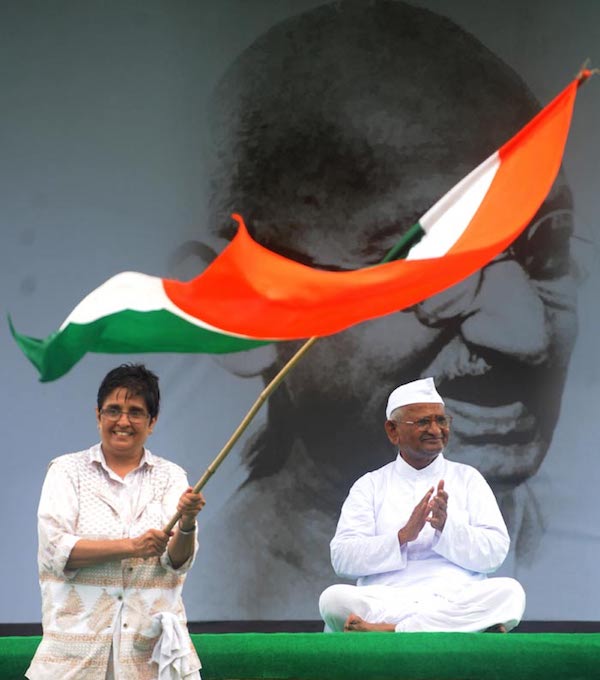
    Granted, his movement attracted honest, idealistic souls to his corner at the Ram Lila ground, those who thought that a ‘change’ was possible. Well, a kind of ‘change’ did take place. Simply put, Anna Hazare ended up preparing the ground for a new regime to come to power. This Anna has to be a very, very simple man to believe that he can once again recapture public imagination and that he can summon agitated souls to rally around his banner, says the author.

    That tired but persistent theoretician of a moral society, has again been heard from. On Gandhi Jayanti, he popped up for a photo-op at Raj Ghat and expressed himself to be thoroughly unhappy at the way things have worked out these last three years; in particular, he appears to be annoyed that there is no sign of a Lok Pal, the presumably magical piece of legislation that the India Against Corruption cabal had waved so earnestly before a credulous nation. It is a measure of how the times have changed that, with a minor exception here or there, most newspapers relegated the Old Gandhian to the inside pages.

    When he threatens to resurrect his anti-corruption movement, it becomes difficult to decide whether Anna Hazare is an incorrigible fool or a very, very shrewd old man. It is quite possible that he has cunningly sensed that the Modi sarkar has become wobbly and that it has rendered itself vulnerable to public anger after having so brazenly abused and misused people’s confidence to indulge in its whims and fancies. Any regime that enters this zone of doubtful respectability invites poaching from moral archers of the Anna Hazare type.

    Or, is he too simple a man who continues to believe genuinely that he led a genuine ‘anti-corruption’ movement in 2011? Granted, his movement attracted honest, idealistic souls to his corner at the Ram Lila ground, those who thought that a ‘change’ was possible. Well, a kind of ‘change’ did take place. Simply put, Anna Hazare ended up preparing the ground for a new regime to come to power. This Anna has to be a very, very simple man to believe that he can once again recapture public imagination and that he can summon agitated souls to rally around his banner.

    Gandhians make poor insurgents —unless there is a shrewd Mohandas in charge of both tactics and strategy. Anna is no Gandhi. He was just an earnest man, who wore a Gandhi cap (which the Mahatma never needed). He is entitled to feel that he has been betrayed by his spear carriers — the Kiran Bedis, the Arvind Kejriwals — but he remains curiously innocent about the very nature of the movement that was put together in his name.

    The India Against Corruption was a perfect platform to bring together assorted babas, NGOs, media moguls; there was corporate funding, and retired intelligence hands were there to lend a hand with planning and disinformation. If Anna Hazare cares to look around, he will find that since 2014, his “moral army” has been the principal supplier for raj niwas’, Parliament and assemblies, councils of ministers, etc.

    That is not enough. The babas have become entrepreneurs, presiding over multi-billion-rupee empires; prospering with government patronage and protection; and, behind-the-scenes strategists now man national security portals. The political capital the Anna Hazare movement generated has been encashed to the last rupee. And, above all, all that flag-waving at Ram Lila ground was rather cleverly choreographed, preparing the ground for the carnival of a resentful nationalism.

    Some may find it charming that he refuses to see that he had already been once taken for a ride; but he should not be encouraged to think that he can replicate his “movement” again. No society will allow itself to be hoodwinked a second time. We feel morally cheated. Those who proffered themselves as our saviors and social cleansers have turned out to be very ordinary political operatives, if not worse.

    Nor will he be allowed to pitch his tent. In hindsight, it can be suggested that in 2011, Anna faced a rather benign adversary. The Manmohan Singh regime was a decent arrangement. Anna will discover that he has underestimated the official ruthlessness the New India is capable of unleashing on all those who decide to annoy it.

    More pointedly, the global context has disappeared; the Arab Spring has turned out to be a State Department sleight of hand; none of the countries subjected to a presumably moral renewal has experienced peace, harmony or political stability. The Indian middle classes get easily frightened at the slightest hint of disorder and they are ready to run to the safety offered by this or that strong man. The moral economy of Arab Spring disintegrated long ago. The Anna movement was part of this global subversive project; but, now, there is a businessman and a deal-maker in the White House.

    Nor will corporate India dare to offer any kind of comfort to a second Anna movement. The corporates today make a deeply tamed crowd, barely managing to survive the inspired governmental incompetence in handling the economy.

    Media was a powerful ally in the anti-corruption movement. This time round, Anna will discover that the media has found it profitable to sup with the big boss; it no longer thinks of itself as an ally of the underdog in his fight against the daily ritual injustice and indifference; it has enrolled itself in the nationalistic cause. Even if Anna was to find another bunch of innocent souls to help him try to re-enact the Jantar Mantar tableau of righteousness and disapproval, he will find the media laughing him out of town.

    Above all, we are an emotionally exhausted society. The creative power of our passions is degraded every night. A slow intellectual hemorrhage is inflicted on our collective sanity. Our righteousness has been so subtly, so shabbily — and, so toxically — directed against Pakistan. Our anger has been channeled — and wasted — against the Left, minorities and other assorted deshdrohis.

    The Prime Minister has abused our trust; he asked us to trust him because he came from a poor family and then made millions of poor, honest and hard-working people stand in line to get their own hard-earned money while the fat cats were able to work out deals with the Ashoka Road managers. Not only that, he told them to feel good, feel empowered in their misery. Every week, if not every evening, he tries to frog-march us emotionally back to his depleted leadership corner. We are not persuaded to feel good, we are even made to feel small when a Yashwant Sinha is mocked and jeered as a job applicant.

    Today, we are an emotionally exhausted nation. Perhaps, even morally tired. We are in a dangerous zone. There is a certain kind of moral coercion in the Anna Hazare variety of earnestness. This is an avoidable trap because it ends up in authoritarian cul de sac.

    (The author is editor-in-chief of Tribune group of newspapers)

  • Perspective : Standing Up against Sexual Harassment

    Perspective : Standing Up against Sexual Harassment

    By Mike Ghouse

    The men and women ought to be ashamed of themselves who blame the woman for the wrong doing. Stupid comments like, “She should not have been there,” “She should not have been dressed up like that” are evil in nature.  She has a right to be wherever she wants to be, men just need to be men and not animals”, says the author.

    The hallmark of a civilized society is where each one of us feels safe, secure and free. It is the responsibility of the majority or the ones in power to ensure that every vulnerable one is protected. A society where no one lives in apprehension brings prosperity, peace and joy to everyone. It would be a kingdom of heaven on earth!

    Women and children are the most vulnerable beings in our society; they are living in constant fear of abuse and harassment, and one in three women is deeply affected by it. It is not easy to erase it from the memories, and the abuse keeps them tense for a life time.

    As a man, shame on me if I remain silent when abusive men take advantage of women against their will, and I urge every man to speak up and stop the bad guys.

    God has blessed women with built in antennas to sense the predator and they do everything right to avert it, but the abuser does not stop at it. We need to bring in severe punishments for the abusers if we want to be a civilized society.

    Free will is the God given inalienable right of every human and violating other’s free will must be considered the greatest sin on the earth.  Here is a video about free will.  https://www.youtube.com/watch?v=9vQs1IcSdYA

    Societies, political systems and religions have come into being to give safety to every human, and protect everyone from the predators. The men who wear religion on their sleeves and call themselves Christians, Jews, Muslims, Hindus, Buddhist, Sikhs, Bahá’í, Atheists or whatever have an additional responsibility to prevent abusive men from such behavior.

    You are familiar with these words, “I did try and fuck her.  She was married. I moved on her like a bitch, but I couldn’t get there. And she was married. Then all of a sudden, I see her, she’s now got the big phony tits and everything. She’s totally changed her look. I’ve gotta use some Tic Tacs, just in case I start kissing her. You know I’m automatically attracted to beautiful – I just start kissing them. It’s like a magnet. Just kiss. I don’t even wait. And when you’re a star they let you do it. You can do anything…. Grab them by the pussy. You can do anything.”

    Shame on all the Men who voted for the Chief Predator, and greater shame on creeps like Pastor Robert Jeffress of Dallas who brings fake approval from God for such behavior and shame on his congregation to keep him there.

    The men and women ought to be ashamed of themselves who blame the woman for the wrong doing. Stupid comments like, “She should not have been there,” “She should not have been dressed up like that” are evil in nature.  She has a right to be wherever she wants to be, men just need to be men and not animals.

    A civilized society is where a woman can walk freely without fear of anyone. Every woman should have the freedom to be who she is, what she eats, drinks, believes or wears.

    A poem written by my friend from Dallas;

    About that “Me Too”: Almost forgot 80s admin temp jobs, once getting pinned against the wall by a creep with a booby fixation. This poem was written years later in retrospect, directed at the “boys in the board room.” Not to make light of it, but humor has always been my way of coping:

    “Deflecting Sexual Harassment with the Courage of our Conniptions:

    A Defense Against ‘Perky Breast Syndrome’”

    It has been years since I considered any of my parts to be “perky”

    and a while since I cared whether they perk as long as they work

    I suppose you thought you were paying me a compliment –Wrong!

    and if you do it again I will sue the pants from you

    So please remember:

    When this company offered you a job with “perks”
    they were not referring to me

    and just be glad you have a job with perks;

    I have a job with jerks!

    — Linda Abramson Evans

    I applaud all the women who withstood harassment and the beating they took to get the women’s suffrage movement achieves its goals.  Thanks to Anita Hill for being one of the first few high-profile women to bring the sexual harassment out in the public. Thanks to all the actresses who have ventured to reveal the harassment and humiliation they have endured from Harvey Weinstein and are speaking up.  Thanks to Gloria Steinem and countless other women who stood for the rights that women have reclaimed now.

    Gone are those days, when a woman would not report sexual harassment to any one, it was an embarrassment and humiliating experience and the uncouth men and women blamed her, thus victimizing the victim further.

    Here are a few suggestions to bring about the change:

    A mother is more influential in a child’s life than anyone else. If she can raise her kids with values of gender pluralism, translated as, “No work at home is yours, your father’s, your brother’s, sisters’ or mine, it is our work, and all of us will contribute our time and effort towards getting it done.”  Thus, the newer generation can be raised as the kind of men and women we prefer to have in the society.   The family should inculcate such values.  We need another Gloria or Oprah among us to take this on.

    Men need to give a full supporting hand in changing the narrative for our and generation and one immediately following us.  I was in India last month and took my two nieces to a politician’s home, the man calls on his wife to take the girls in, I insisted that they sit with us, as it is their future as well and they need to be participants.  The men had their heads screwed backwards, generally they discount and ignore the opinions of females but they were surprised to hear girl’s opinions, I did not let them discount the girls and asked them to listen to the two girls. We’ve to take a stand at first, and then it should become natural.

    Prophet Muhammad had a vision of a civilized society; he said he would like to see a day when a single woman can go from the City of Medina to Damascus and be back harmless, fearless and peaceful. I am sure, all the great religious masters have said that, in one form or the other.  I wish we look forward to such a society.

    At Center for pluralism we are committed to build cohesive societies where no American has to live in tension, apprehension or fear of the other. We have systems in place to achieve such results over a period of time.

    (The author is the President and Executive Director of Center for Pluralism.  His twitter handle is #MikeGhouse and facebook is #MikeGhouse)


  • PERSPECTIVE:  A NEW DAWN FOR THE CONGRESS PARTY IN PUNJAB

    PERSPECTIVE: A NEW DAWN FOR THE CONGRESS PARTY IN PUNJAB

    By Harjap Singh Aujla

    “For a change this time, there was complete unity in the ranks of the Congress, which was surprisingly missing throughout in the past ten years. This is a pick-up for the Congress party and a net loss for the BJP. In 2014 they contested three seats in Punjab, out of which they were victorious in two, a decent score-card. But now they are down to one only. For PM Narendra Modi, all said and done, it is a setback”, says the author.

    Congress victory in Gurdaspur Parliamentary bye election on October 15, 2017 infused a new vigor into the life of the Congress party in India in general and Punjab in particular.  Although there were eleven candidates in the fray, the scope of the main contest was narrowed down to just two- the BJP and the Congress. Due to the ugly happenings within the AAP last year, leading to the expulsion of the then AAP Convener Sucha Singh Chhottepur, the AAP challenge did not take off at all, leaving the party of Kejriwal to lick the dust once again.

    The BJP did put up a decent fight in their strongholds in and around the garrison town of Pathankot. Surprisingly the SAD challenge collapsed more tamely than expected. Whereas the BJP candidate Swaran Singh Salaria lost by 10000 votes in Pathankot, 8000 votes in Sujanpur and 7000 votes in its earmarked three constituencies, the SAD citadel collapsed like a pack of cards in all the other electoral segments. Their losses were stunning; in Dera Baba Nanak by 44000 votes, Fatehgarh Churian by 32000 votes, Gurdaspur by 29000 votes, Batala by 26000 votes, Qadian by 26000 votes etc. It appeared that the people still have unabated revulsion against the rampant corruption indulged in by the top brass of the SAD during the past decade.

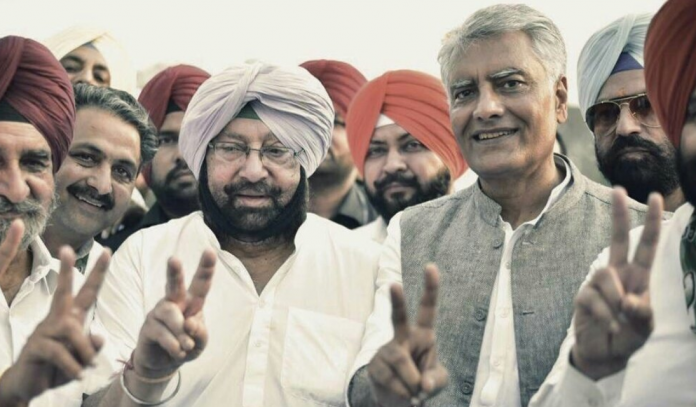
    Overall the Congress candidate Sunil Jakhar romped home victorious by over 193000 votes, a decisive victory, to say the least. The credit goes to Captain Amarinder Singh, who planned the campaign at the macro level. Micro management was left to the local players like cabinet minister Navjot Singh Sidhu and all the local MLAs from Gurdaspur and Pathankot districts. For a change this time, there was complete unity in the ranks of the Congress, which was surprisingly missing throughout in the past ten years. This is a pick-up for the Congress party and a net loss for the BJP. In 2014 they contested three seats in Punjab, out of which they were victorious in two, a decent score-card. But now they are down to one only. For PM Narendra Modi, all said and done, it is a setback.

    During an impromptu press conference on the evening of October 15th at the Punjab Bhawan Chandigarh, the Captain, flanked by all the hard-working MLAs, was beaming with confidence. So was the victor Sunil Jakhar, President of the Punjab Pradesh Congress Committee. The Captain described it as a resentment against demonetization and the ruthless implementation of GST. The Captain described it as the harbinger of the nation-wide resurgence of the Congress. A similar resurgence occurred in Chikmagaloor Parliamentary election in Karnataka during the 1977-79 Janata Party rule, when Mrs. Indira Gandhi stunned everybody, by registering an upset victory in a parliamentary by-election. Captain Amarinder Singh and Sunil Jakhar referred to that victory as a watershed event en route to the rise of the Congress on its path to a sensational nationwide victory in 1980.

    (The author can be reached at harjapaujla@gmail.com)         

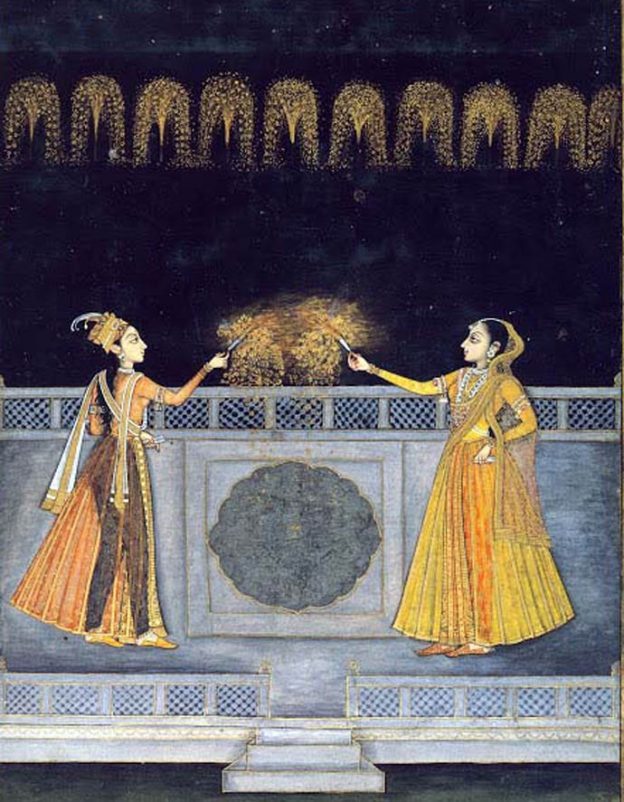
  • Diwali stood for Hindu-Muslim solidarity in the Mughal era

    Diwali stood for Hindu-Muslim solidarity in the Mughal era

    By Mike Ghouse
     India has been a great nation for ages and will continue to be one. It is one of the few nations on earth where “respecting the otherness of others” evolved, which is also known as Pluralism. The current government needs to learn from our history, how India together is better off than a divisive India where fellow Indians who differ are treated disrespectfully. The majority of the Hindus have a responsibility to become the voice of Hinduism that believes in respecting fellow humans, and not let a few among them represent Hinduism.

    Once upon a time, Dilli as Delhi was called was the most sought after city in the world and attracted the best talent. It was always considered the “dil” or heart of Hindustan. It is still the capital of India but has obviously changed. The political, social and cultural structures have transformed considerably.

    When Shah Jahan built the city of Shahjahanabad, Dilli became famous all over the world and attracted many European travelers whose accounts (in English or translated into it) tell us the story of those days. However, we hardly have books in English or Hindi, by those who lived in the city or fort, which describe the life inside the walled city. In 1857, when the British prevailed upon the “rebel sepoys” and captured Delhi after a siege of four months, they put the Mughal emperor on trial and after finding him guilty of sedition exiled him to Burma. Since then we have forgotten about the syncretic society, which flourished prior to 1857, and the interaction of the Mughal emperor with his subjects.

    CF Andrews was a Church of England priest, educator, missionary who came to India in 1904 and became great friends with Munshi Zakaullah, an alumnus of Delhi College, a mathematician and social historian. Munshi Zakaullah had seen life inside the Lal Quila and had described it to Andrews.

    Andrews in his book, Zakaullah of Delhi, describes the Mughal court and life in Shahjahanabad. He writes, “The intimate residence together side by side in the same city of Musalmans and Hindus had brought about a noticeable amalgamation of customs and usages among the common people…

    These older residents, whom I approached, whether Hindus or Musalmans, spoke about this fact with enthusiasm, and contrasted it with the bitterness of modern times.

    It was quite common, for instance, in those days, for the two communities to join together in different religious festivals. Hindus would go to a Muslim festival, and Musalmans would go to a Hindu festival. This had become a natural local custom.”

    I am putting down translated extracts from two Urdu books that describe that Delhi.

    Bazm-e-Aakhir was first published in 1885 and was a commissioned book. Munshi Agha Mirza, manager of Muttaba Armaghan e-Dehli and Akhbar-un Nisa realized that those who had first-hand knowledge of life in the Quila-e-Mualla or Red Fort were either dead or ageing and he should get it recorded. He handed over the task to Munshi Faizuddin, who as a Mughal courtier and attendant of Mirza Ilahi Bakhsh, had spent most of his adult life inside the fort. Munshi Faizuddin describes it thus:

    Diwali

    Lo! It’s time for the first diya. (literally it means lamp but symbolically it specifies day. Even today we have choti and badi Diwali).

    Now, no one will enter or leave the royal apartments. The washerwomen, female gardeners and porters and other female servants will not be allowed to step outside the palace (seraglio). No vegetable will enter the palace. If some lady asks for brinjal, radish, pumpkin or carrot, it has to be brought in peeled for fear that someone may do black magic on the ladies inside.

    It’s the third diya (badi or main Diwali) and today the badshah shall be weighed in gold and silver and a huge weighing scale is put up. The Badshah sits on one side and the other is filled with gold and silver equal to his weight. This is distributed among the poor.

    One black buffalo, black blanket, mustard oil, satnaja (mixed grains), gold and silver are taken out as the badshah’s sadqa (sacrifice to avoid misfortune) and distributed among the poor people.

    Orders are given for the fort to be illuminated. Kheele’n (puffed rice), batashe (candy), candy and mitti ke khilone (sugar toys), sugar cane, lemon and mud houses are distributed from house to house by jasoliniyan (female guards) and female servants.

    At night, the mud houses made by the prince and princesses are filled with kheelei’n and batashe and diyas are lit in front of it. The raushan chowki, an ensemble of musical instruments, which included shehnai and drums is played in procession and the naubat (drum) starts playing in the Royal Naubat Khana.

    In all four corners of the fort, a sugar cane is fixed and lemons are strung on it.

    In the morning, these are distributed among the maidservants.

    The rath baan (carriage driver) decorates the bulls with henna on their hooves, gilding on their horns, bells around their necks and gold and silver embroidered and tasseled cloth and parades them before the badshah and is rewarded.

    Dilli ka Aakhiri Deedar was written by Syed Wazir Hasan Dehlvi and published in 1934. Syed Dehlvi was the grandson of the famous novelist Deputy Nazir Ahmed and gives an account of the Delhi about which he heard from his elders or read in books. In his own words, as recounted by his grandson Syed Zameer Hasan Dehlvi, in the preface:

    These sweet tales of bygone days were sometimes found in books and sometimes heard from the lips of the older generation. My mind became a treasure house of such knowledge and I was able to pen them down.

    Now that people are willing to listen to these tales I want to hear these stories in their voice.

    So that all the pearls that are lying scattered all over in various books can be threaded into a necklace and made available for readers who are interested in the era which has gone by. So, I am collecting eyewitness accounts.

    None of us are immortal at least these stories can live.

    Just as the good days didn’t last one day the memory of these days will also be erased.

    He has shown Delhi’s Ganga Jamuni tehzeeb, its communal amity, colorful festivals and the cordial relations between the inhabitants of the fort and the general public.

    Dussehra and Diwali

    Dussehra is here and a neelkanth (Indian roller) is let off in front of the badshah. The darogha (superintendent) of the baazkhana (falcon house) brings a falcon and hawk to the darbar and the badshah puts it on his wrist.

    In the afternoon, the Hindu nobles offer nazar and after that the badshah comes and sits in the jharokha (balcony of the fort overlooking the Yamuna river) to watch the show put up on the sandy bank.

    The people of the walled city also gather to watch the show and disperse after it ends.

    The darogha of the royal stables comes with the special horses that have been decorated with gold and silver finery and colorful cloths under the jharokha. The badshah inspects them. Rewards are given to the ones with the best decoration.

    The Ramleela is celebrated for nine days and on the tenth there is a Bharat Milap in which every year two brothers – Hindu and Muslim – would embrace each other with love.

    Diwali has come and the sounds of drums, musical instruments and raushan chowki are echoing. Stalls with heaps of kheele, batashe, khand (loaf-sugar), mitti ke khilone and pieces sugarcane are set up.

    Eunuchs are roaming the streets singing Challa de de More Tain (Give me a ring O kind sir) and begging at the shops.

    Halwais have made all kinds of sweets and their shops are attractively decorated enticing the passersby.

    The light from the first diya to the last gives the impression that it’s daylight in the city.

    On the third diya (day), the badshah was weighed in gold and silver. One buffalo, a black blanket, mustard oil, satnaja and gold and silver were taken out as the badshah’s sadqa.

    The Quila was brightly lit and the Hindus sent trays of food for everyone. All friends set out to wish each other: They roam the city and enjoy the illumination.

    The rathban and ghosi (cattlemen) colored the hooves of their cattle (bulls, buffaloes and cows) with henna.

    They were painted in bright colors and their horns were either painted silver or covered with silver foil. In their necks and hooves bells were put. On their backs were beautifully decorated cloths.

    They were tinkling as they were taken out and made to dance to the sounds of drums. Everyone rewarded them.

    In Dilli ka Akhiri Deedar, there is also a description of what happened after the fall of the Mughal Empire.

    The book contains an eyewitness account by Aghai Begum, who was a Mughalani (probably as an attendant to a princess), who had spent her life describes how the festivals were celebrated in the Lal Quila. She speaks to the author of the book in the latter part of the 19th century when the British are in full control of Delhi and indeed India. When asked about celebration of festivals, she is nostalgic about the past and scathing about the present:

    Some fair and spectacles still remain but the hearts of the people are not the same. The rich look down on the poor, and I don’t from where communal feelings have entered people’s hearts and there’s a communal divide. The Hindus and Muslims don’t visit each other anymore and at the drop of a hat are ready to fight with and kill each other. Every other day there is a street brawl and if there is a fair or a festival then it is as if the wrath of God has descended on the populace. Everyone is out of control, ready to take offence at the slightest thing and in minutes, stones are thrown, sticks are used for beating each other and in seconds there are scores of bleeding heads. Now the machine guns are out and there is a curfew in the city and jailhouses are filled up. Some are even sentenced to kala paani, some are executed; children are orphaned, women are widowed and families bereft. Instead of festivities, the house is of full of mourning.

    (The article is based on the one originally written by Rana Safvi who is the author of ‘Where Stones Speak’ and other books. He can be reached at RANA SAFVI @iamrana)

  • Guest Comment : The Gujarat Battle – BJP has to defend its claims

    Guest Comment : The Gujarat Battle – BJP has to defend its claims

    On Monday, October 16, Prime Minister Narendra Modi was at his vitriolic best in Gandhinagar. It was a revealing performance. For a man who for more than three years has been the Prime Minister of India and is, ipso facto, credited with a pan-Indian thought process, Modi revealed himself to be an unreconstructed Gujarati sub-nationalist. As Chief Minister, from 2001 to 2014, he positioned himself as the vigilant guardian of Gujarat’s interests; this mobilisation of Gujarati sub-nationalism helped him defy his own party’s national leadership then and manufacture the “Congress-is-anti-Gujarat” narrative. But for the Prime Minister to now dip into that pool of lingering resentment is an affront to the office he holds and the obligation he has to work for the welfare of the entire nation.

    The amount of attention that Modi and other senior BJP leaders are paying to Rahul Gandhi, as mascot of what the Prime Minister called vanshvaad (as juxtaposed to the BJP’s vikasvaad), betrays a strange obsession and, perhaps, a bit of nervousness. The Congress campaign in Gujarat has, in fact, zeroed in on Modi’s model of development. If Gujarat has the reputation of a prosperous state, it is primarily because of all the industrialisation, cooperative movements and farming innovations that took place during Congress rule, much before the BJP could storm the Gandhinagar secretariat on the politics of communal mobilisation; indeed, “development” has always been part of Gujarat’s political culture. The Prime Minister is injecting a false dichotomy.

    Be that as it may, it is the tone that the Prime Minister has sought to set on Monday that should be a matter of concern. The BJP has now been in power for nearly two decades in Gujarat. Inevitably, its stewardship has produced its own share of grievances and aberrations; the so-called Gujarat model is more a hype than reality; political emotions can easily be manipulated in a Hindu-Muslim binary. It is natural for the BJP to have accumulated an “anti-incumbency” baggage and it is quite natural for the anti-BJP forces to create an alternative narrative. The Modi crowd may feel it is entitled to a walkover in Gujarat, but the Opposition cannot be faulted if it demurs.

    (Tribune, India)

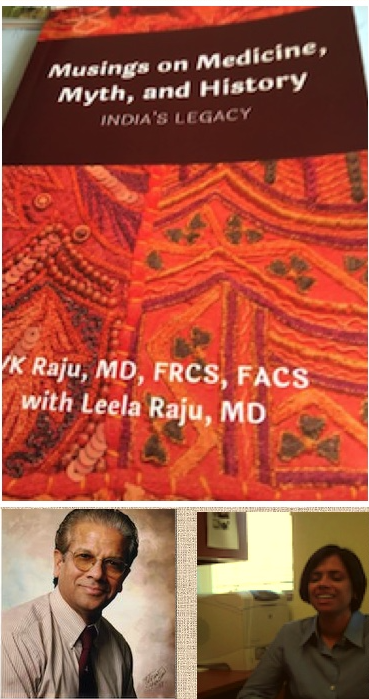
  • Book Review: Musings on Medicine, Myth and History- India’s Legacy By VK. Raju, M.D with Leela Raju, M.D.

    Book Review: Musings on Medicine, Myth and History- India’s Legacy By VK. Raju, M.D with Leela Raju, M.D.

    Reviewed by Gopala Rao, retired Head of Medical Physics Group and a Research Professor of Physics, Johns Hopkins University

    This book of twelve small essays by a highly recognized Ophthalmologist also known for his free services to underprivileged children with eye problems across the world gives a wonderful overview of the cultural heritage of India from ancient times with particular reference to Medicine.

    If you are an M.D or some other Medical Professional, you will be especially thrilled that you discovered it. The Co-author Leela Raju. M.D is his own daughter.

    Starting with a brief reference to the ancient Vedas and the Upanishads, the author begins with the publication of Susruta Samhita by an ancient surgeon known as Susruta who lived sometime during the period 800 to 600 BCE. Then comes the publication of Charaka Samhita by the ancient physician Charaka who is believed to have lived sometime during the period 300 BCE to 100 CE. We can relate to this part of India’s Legacy in Medicine in terms of modern Allopathy by remembering the contributions of the Surgeon William Halstead and the Physician William Osler both of whom made their contributions in the middle part of the 19th Century.

    Then around 400 BCE, Sage Patanjali publishes his Yoga Sutras laying the foundations for a stage by stage of eight stages procedure for transcendence beyond our minds leading to our Soul’s union with God. Of these, today what we are emphasizing are only the Asana (Postures), Pranayama (Regulated Breathing Routine) and a little bit of meditation at the end. Still, the benefits of Yoga are as powerful as or even more powerful than Physical Therapy or Chiropractic manipulations.

    Last but not the least is the evolution of Ayurveda with its foundations based on the discovery that a proper balance of three personality traits Vata, Pita and Kapha is essential for the proper functioning our bodies and minds. Imbalances among them came to be recognized as causes for disease and all treatments are based on correcting these imbalances. We can make sense in this concept in terms of Modern Medicine by equating it with the notion of Homeostasis when we try to restore vital parameters such as temperature, blood pressure, sugar levels etc. to normal values.

    Once you browse through it for the first time, you won’t put the book down till you read it from page to page. Thereafter, you will treasure it as a valuable addition to your home library. That is because of the highly researched end notes and references to the author’s other publications that it contains.


  • BREAKING NEWS: Senate backs GOP budget in step forward for tax revamp

    BREAKING NEWS: Senate backs GOP budget in step forward for tax revamp

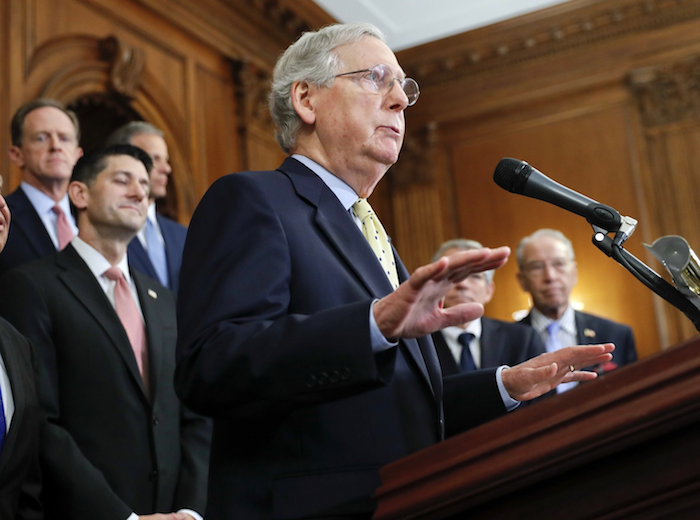
    WASHINGTON (TIP): Republicans on Thursday, October 18, muscled a $4 trillion budget through the Senate in a major step forward for President Donald Trump’s ambitious promise of “massive tax cuts and reform”, AP has reported.

    The 51-49 vote sets the stage for debate later this year to dramatically overhaul the U.S. tax code for the first time in three decades, cutting rates for individuals and corporations while eliminating trillions of dollars of deductions and special interest tax breaks.

    The tax cuts would add up to $1.5 trillion to the deficit over the coming decade, however, as Republicans have shelved fears about the growing budget deficit in favor of a once-in-a-generation opportunity to rewrite tax laws. “These are reforms that change incentives and drive growth, and we’ve never done that before,” said Sen. Pat Toomey, R-Pa.

    Divisions within the GOP indicate the process won’t be easy despite the political imperative.

    The upcoming tax measure, always a top item on the GOP agenda, has taken on even greater urgency with the failure of the party to carry out its longstanding promise to dismantle former President Barack Obama’s signature health care law. Republicans have said failure on taxes would be politically devastating in next year’s midterm elections, when control of the House and Senate are at stake.

    When reconciled with the House budget plan, the nonbinding measure would set up special procedures to pass follow-up tax legislation without the threat of a filibuster by Senate Democrats. Pressure is mounting, however, on the House to simply adopt the Senate budget plan rather than risk lengthy negotiations that could delay the tax measure. The House measure calls for a tax plan that wouldn’t add to the deficit, as well as $200 billion worth of cuts to benefit programs that the Senate has rejected.

    Democrats blasted the GOP budget, warning voters that the upcoming tax measure will shower benefits on top-bracket earners, corporations, business partnerships and people inheriting multimillion-dollar estates.

    Trump promises that the tax plan — still under development — is aimed at the middle class, but previous versions have seen upper-income individuals benefiting the most. “Unfortunately, there’s a big gap between the administration’s rhetoric on these issues and the reality of what is on paper,” said Oregon Sen. Ron Wyden, the top Democrat on the tax-writing Finance Committee, who warned that Trump’s plan is “slanted overwhelmingly toward the very top.”

    “The more people learn about this tax bill, the less they will like it,” said Senate Minority Leader Chuck Schumer, D-N.Y. “That’s what led to the demise of health care, ultimately, is that it was unpopular with the American people.”

    Only one Republican, Rand Paul of Kentucky, voted against the budget. He said the measure permits too much spending and abandons the GOP drive to repeal the Obama health law. An amendment by Paul to revive the “Obamacare” repeal failed by a 2-to-1 margin.

    Under Capitol Hill’s byzantine budget rules, the nonbinding budget resolution is supposed to lay out a long-term fiscal framework for the government. This year’s measure calls for $473 billion in cuts from Medicare over 10 years and more than $1 trillion from Medicaid. All told, Senate Republicans would cut spending by more than $5 trillion over a decade, though they don’t attempt to spell out where the cuts would come from. Even so, the measure doesn’t promise to balance the budget, projecting deficits that would never drop below $400 billion.

    Republicans have no plans to carry out the measure’s politically toxic proposals to cut Medicare, food and farm programs, housing subsidies and transportation. Instead, work is under way to add tens of billions of dollars for both the Pentagon and domestic agency operations. And the Senate is poised to send Trump a $36.5 billion hurricane relief bill Monday.

    The budget measure also would revive long-moribund efforts to permit exploration for oil in Alaska’s Arctic National Wildlife Refuge, permitting legislation opening up ANWR to drilling to catch a ride on the popular tax measure. Otherwise, it would be vulnerable to a filibuster by Democrats.


  • India and US have a “Natural, Instinctive Relationship”, says Ambassador Chakravorty

    India and US have a “Natural, Instinctive Relationship”, says Ambassador Chakravorty

    Bidisha Roy

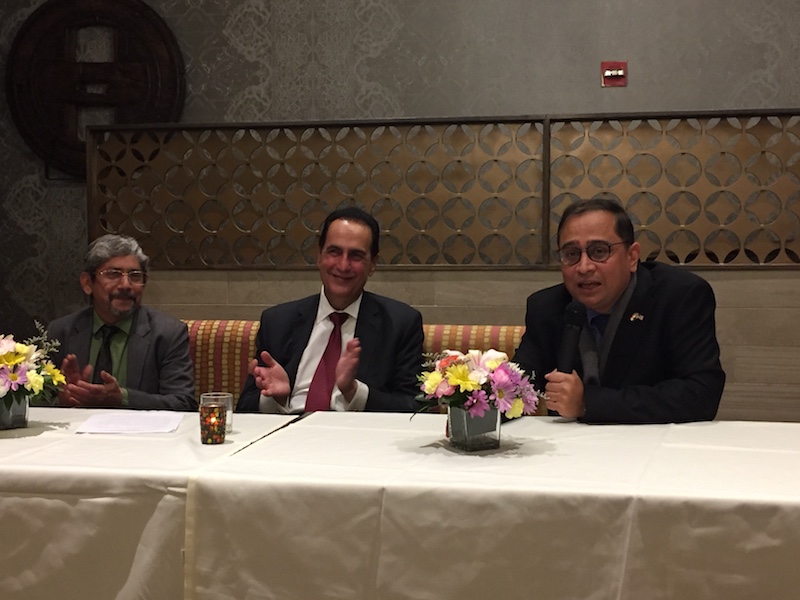
    NEW YORK CITY (TIP): The India-America Chamber of Commerce (IACC) hosted a reception on October 17, 2017 to welcome Ambassador Sandeep Chakravorty, India’s Consul General in New York.

    In his welcome address IACC President Rajiv Khanna pointed out that India’s relations with the United States are at a critical juncture and Ambassador Chakravorty would be a key person to strengthen the bilateral relationship.

    “The Trump administration views India as a close ally in its war against terror, particularly in Afghanistan. India was the US’s 9th largest trading partner last year. The two-way trade between US and India was 67.7 billion dollar last year. It is expected to reach 500 billion dollar in the near future. At the same time, there is a stress in the relations between the two countries on outsourcing issues.  At this critical juncture, New Delhi has sent one of its brightest diplomats to strengthen the economic and commercial ties between the world’s largest democracy and world’s greatest democracy”, said Rajiv of the growing ties between the two countries.

    Highlighting India’s game plan to take the economic and commercial ties between the United States and India to their highest level ever, Ambassador Chakravorty described the relationship between India and US as a ‘Natural instinctive relationship.’ “It’s a unique and defining relationship between the two countries – relationship of the future. There is hardly any area of disagreement and there is no conflict. It’s important to see how they (US and India) matter to each other. It’s an all encompassing, happening, and natural instinctive relationship”, he said.

    Ambassador Chakravorty also spoke about the various initiatives taken by the Indian Consulate, New York, like ‘Consulate at your Doorstep.’  Khanna requested the Indian American community to invest in India and Ambassador Chakravorty asserted that they would get all possible assistance from the consulate.

    India’s new Deputy Consul General, Ms. Paramita Tripathi could not attend the reception. About forty dignitaries including Consul L Krishnamurthy graced the event.

    The event was followed by a Q&A session.

  • US for stronger economic, defense ties with India, says Tillerson

    US for stronger economic, defense ties with India, says Tillerson

    WASHINGTON (TIP): US Secretary of State Rex Tillerson made it abundantly clear that US valued ties with India. He said, October 18, before a visit to India next week that the Trump administration wanted to “dramatically deepen” cooperation with New Delhi.

    “India and the United States should be in the business of equipping other countries to defend their sovereignty, build greater connectivity, and have a louder voice in a regional architecture that promotes their interests and develops their economies,” Tillerson added.

    The US decision to expand relations with India almost certainly will upset India’s rival, Pakistan, where Tillerson also will stop next week, said a senior State Department official, speaking on condition of anonymity.

    Pakistan was the main US ally in South Asia for decades, but US officials are frustrated with what they charge has been Pakistan’s failure to cut support for the Taliban insurgency in Afghanistan, where the administration wants India to play a bigger role in economic development.

    As part of a South Asia strategy unveiled by Trump in August, Tillerson is expected to press Islamabad, which denies aiding the Taliban, to take stronger steps against extremists and allied groups and intensify efforts to pressure them to agree to peace talks with Kabul.

    “We expect Pakistan to take decisive action against terrorist groups based there that threaten its own people and the broader region,” Tillerson said.

    Trump has threatened further cuts in US aid to Pakistan if it fails to cooperate.

    Speaking less than a month before President Donald Trump is due to make his first state visit to China, Tillerson said the United States had begun to discuss creating alternatives to Chinese infrastructure financing in Asia.

    In another comment likely to upset Beijing, he said Washington saw room to invite others, including Australia, to join US-India-Japan security cooperation, something Beijing has opposed as an attempt by democracies to gang up on it.

    The remarks coincide with the start of a week-long Chinese Communist Party congress at which President Xi Jinping is seeking to further consolidate his power.

    “The United States seeks constructive relations with China, but we will not shrink from China’s challenges to the rules-based order and where China subverts the sovereignty of neighboring countries and disadvantages the US and our friends,” Tillerson told the Center for Strategic and International Studies think tank.

    China, a strategic rival to the United States and India, is also vital to Trump’s efforts to roll back North Korea’s efforts to create nuclear-armed missiles capable of reaching the United States, an issue expected to top the agenda in Trump’s Nov. 8-10 Beijing visit.

    A senior State Department official defended the timing of the speech, saying Tillerson also said he wanted a constructive relationship with China.

    “For many decades the United States has supported China’s rise,” said the official. “We’ve also supported India’s rise.

    But those two countries have risen very differently.” The Chinese Embassy in Washington said in a statement that Beijing “contributes to and defends the rules-based world order” and seeks to enhance international cooperation.

    “We will never seek hegemony or engage in expansion, never pursue development at the expenses of others’ interests,” it said.

    Tillerson did not say what he meant by creating an alternative to Chinese infrastructure financing, but said the Trump administration had begun a “quiet conversation” with some emerging East Asian democracies at a summit in August.

    He said Chinese financing was saddling countries with “enormous” debts and failing to create jobs.

    “We think it’s important that we begin to develop some means of countering that with alternative financing measures.” “We will not be able to compete with the kind of terms that China offers, but countries have to decide what are they willing to pay to secure their sovereignty and their future control of their economies and we’ve had those discussions with them as well,” he said.

  • President Trump Celebrates Diwali at White House; Praises India, Indian Americans

    President Trump Celebrates Diwali at White House; Praises India, Indian Americans

    WASHINGTON (TIP): Following in the footsteps of his predecessor Barak Obama, President Trump himself led from the front by hosting a Diwali celebration in the White House on October 17.

    In his first Diwali celebration in the Oval Office of the White House, Trump was accompanied by senior Indian-American members of the administration, including US Ambassador to the UN Nikki Haley, Seema Verma, administrator of Centers for Medicare and Medicaid Services, Ajit Pai, Chairman of the US Federal Communications Commission and Raj Shah, Principle Deputy Press Secretary. Many community leaders and President’s daughter Ivanka Trump also joined the celebration.

    “Today, I was deeply honored to be joined by so many administration officials and leaders of the Indian-American community – to celebrate Diwali — the Hindu Festival of Lights,” Trump said. “Today, we proudly celebrate this holiday in THE PEOPLE’S HOUSE. In so doing, we reaffirm that Indian-Americans and Hindu-Americans are truly cherished, treasured and beloved members of our great American family.”

    “As we do so, we especially remember the People of India, the home of the Hindu faith, who have built the world’s largest democracy. I greatly value my very strong relationship with Prime Minister Modi,” he further added.

    Trump also lit diyas on the occasion and hailed the Indian American community’s contribution in different fields.

    “Our Indian-American neighbors and friends have made incredible contributions to our country – and to the world. You have made extraordinary contributions to art, science, medicine, business and education. America is especially thankful for its many Indian-American citizens who serve bravely in our armed forces and as first responders in communities throughout our great land,” he said.

    Diwali, he said, is one of the most important celebrations in the Hindu religion.

    “A time of peace and prosperity for the New Year, it is a tradition that is held dear by more than 1 billion Hindus worldwide and more than 2 million Hindus in the United States. It is also celebrated by millions of Buddhists, Sikhs, and Jains in America, India and around the world,” he said.

    The tradition of Diwali celebration at the White House was first initiated by President George Bush.


  • October 20 New York Print Edition

    October 20 New York Print Edition

    [vc_row][vc_column][vc_column_text]

    Print Replica ~ Digitally

    E-Edition

    [/vc_column_text][/vc_column][/vc_row][vc_row][vc_column width=”2/3″][vc_custom_heading text=”New York Edition” font_container=”tag:h2|text_align:center” google_fonts=”font_family:Istok%20Web%3Aregular%2Citalic%2C700%2C700italic|font_style:700%20bold%20regular%3A700%3Anormal” link=”url:https%3A%2F%2Fwww.theindianpanorama.news%2Fwp-content%2Fuploads%2F2017%2F10%2FTIP-October-20-NYC.pdf|||”][vc_single_image image=”88537″ img_size=”full” add_caption=”yes” alignment=”center” onclick=”custom_link” link=”https://www.theindianpanorama.news/wp-content/uploads/2017/10/TIP-October-20-NYC.pdf”][/vc_column][vc_column width=”1/3″][vc_single_image image=”82828″ img_size=”medium” alignment=”center” onclick=”custom_link” link=”https://www.theindianpanorama.news/advertising-media-kit-portal-indian-panorama/”][vc_single_image image=”82829″ img_size=”medium” alignment=”center” onclick=”custom_link” link=”https://www.theindianpanorama.news/advertising-media-kit-portal-indian-panorama/”][/vc_column][/vc_row][vc_row][vc_column][td_block_ad_box spot_id=”custom_ad_3″ tdc_css=””][/vc_column][/vc_row][vc_row][vc_column width=”2/3″][vc_custom_heading text=”Lead Stories This Week” font_container=”tag:h2|text_align:center” google_fonts=”font_family:Istok%20Web%3Aregular%2Citalic%2C700%2C700italic|font_style:700%20bold%20regular%3A700%3Anormal” link=”url:https%3A%2F%2Fwww.theindianpanorama.news%2F%20_blank|||”][td_block_5 separator=”” limit=”8″ tdc_css=””][/vc_column][vc_column width=”1/3″][vc_widget_sidebar sidebar_id=”td-default”][/vc_column][/vc_row]

  • First Turkish military convoy enters Syria’s Idlib

    First Turkish military convoy enters Syria’s Idlib

    BEIRUT (TIP): A first convoy of the military operation that Turkey is carrying out in Syria’s Idlib province crossed into the area late on Thursday, two rebels and a witness said.

    The convoy included about 30 military vehicles, said Abu Khairo, a commander in a Free Syrian Army (FSA) rebel group based in the area, and it entered Syria near the Bab al-Hawa border crossing, according to a civilian witness.

    It was heading to Sheikh Barakat, a hilltop that overlooks large areas of rebel-held northwestern Syria, but also the Afrin area held by the Kurdish YPG militia.

    The convoy was escorted by fighters from Tahrir al-Sham, an alliance of jihadist groups including the former al Qaeda affiliate previously known as the Nusra Front, Abu Khairo said.

    “The Turkish army convoy is entering under the protection of Tahrir al-Sham to take positions on the front line with the YPG,” another FSA official in the area said.

    Turkey said on Saturday it was carrying out a military operation in Idlib and surrounding areas as part of a deal it reached with Russia and Iran last month to enforce a “de-escalation” zone in northwest Syria.

    The zone is one of several set up around Syria to reduce warfare between rebels, including groups backed by Turkey, and the government, which is supported by both Russia and Iran.

    Tahrir al-Sham opposes the deescalation deal with the government, but its role in escorting the Turkish reconnaissance team on Sunday indicated there might not be any direct military confrontation between its fighters and Turkey.

    The Turkish military operation in Idlib will also include Syrian rebel groups involved in the Euphrates Shield operation that Ankara launched in Syria last year further to the east, Turkish President Tayyip Erdogan said on Saturday. (Reuters)

  • China rejects US criticism of OBOR passing through PoK

    China rejects US criticism of OBOR passing through PoK

    BEIJING (TIP): Claiming UN support for its controversial One Belt One Road (OBOR) initiative, China on Friday rejected US criticism saying the project has not changed its stand that the Kashmir issue should be resolved by India and Pakistan bilaterally.

    “We have repeatedly reiterated that the China-Pakistan Economic Corridor (CPEC) is an economic cooperation initiative that is not directed against third parties and has nothing to do with territorial sovereignty disputes and does not affect China’s principled stance on the Kashmir issue,” the Chinese foreign ministry told PTI here.

    The ministry was responding to comments by US defence secretary Jim Mattis that the Belt and Road Initiative “also goes through disputed territory, and I think, that in itself shows the vulnerability of trying to establish that sort of a dictate”.

    In a globalised world, there are many belts and many roads, and no one nation should put itself into a position of dictating ‘One Belt, One Road’, Mattis told a Senate Armed Services Committee during a Congressional hearing on October 4.

    Mattis’ comments were widely interpreted as the US backing India’s stand on OBOR especially related to the $50 billion CPEC which is being built through Pakistan-occupied Kashmir (PoK). India has protested to China in this regard.

    Rejecting criticism that it is dictating to the world through OBOR, the ministry said it is an “important international public product”.

    It is an important platform for China to cooperate with relevant countries. It is an open and inclusive development platform and more than 100 countries and international organisations actively supported and participated in it since it was proposed four years ago, it said.

    More than 70 countries and international organisations which have signed cooperation agreements with China on OBOR, including the UN General Assembly and the UN Security Council, have incorporated it in their important resolutions, it said.

    Over 130 countries and more than 70 international organisations sent representatives to attend the international cooperation summit – ‘Belt and Road Forum’, organised by China here in May and spoke highly of the initiative, the ministry said.

    “This fully explains that the OBOR initiative is in line with the trend of the times and conforms to the rules of development and is in line with the interests of the people of all countries and has a broad and bright prospects for development,” the ministry said.

    India skipped the Belt and Road Forum due to its sovereignty concerns over the CPEC, a flagship project of China’s prestigious Silk Road project, officially called OBOR.

    The 3,000-km CPEC is aimed at connecting China and Pakistan with rail, road, pipelines and optical fibre cable networks.It will connect Xinjiang province with Gwadar port, providing China with access to the Arabian Sea.

    The project, when completed, would enable China to route its oil supplies from the Middle East through pipelines to Xinjiang, cutting considerable distance for Chinese ships to travel to China. (PTI)

  • Spanish PM demands clarity from Catalonia on independence

    Spanish PM demands clarity from Catalonia on independence

    MADRID (TIP): Spanish Prime Minister Mariano Rajoy demanded on Wednesday that the Catalan leader clarify whether he has declared independence, issuing a veiled threat that the central government could limit or rescind the province’s autonomy if he has.

    He said the Catalan government’s response would be crucial in deciding “events over the coming days.”

    It is the first time that Rajoy has openly said that Article 155 of the Spanish constitution will be the next step taken by the government if Catalan authorities don’t backtrack. He said the government “wants to offer certainty to citizens” and that it is “necessary to return tranquility and calm.”

    Rajoy issued the demand following a special Cabinet meeting to respond to an announcement from the head of the wealthy Catalonia region, Carles Puigdemont, that he was proceeding with a declaration of independence but was suspending it for several weeks to facilitate negotiations.

    In a highly anticipated speech Tuesday night, Puigdemont said the landslide victory in a disputed October 1 referendum gave his government in the regional capital, Barcelona, the grounds to implement its long-held desire to break century-old ties with Spain.

    But he proposed that the regional parliament suspend the effects of the declaration to commence a dialogue and help reduce tension, in what is Spain’s worst political crisis in decades. The central government in Madrid has given little indication it is willing to talk, saying it did not accept the declaration and did not consider the referendum or its results to be valid.

    Spanish Deputy Prime Minister Soraya Saenz de Santamaria said the Catalan leader “doesn’t know where he is, where he is going and with whom he wants to go.”

    She said Puigdemont had put Catalonia “in the greatest level of uncertainty seen yet.”

    Article 155 of the Constitution allows the central government to take some or total control of any of its 17 regions if they don’t comply with their legal obligations. This would begin with a Cabinet meeting and a warning to the regional government to fall into line. Then, the Senate could be called to approve the measure.

    Some 2.3 million Catalans — or 43 per cent of the electorate in the northeastern region — voted in the referendum. Regional authorities say 90 per cent were in favour and declared the results valid. Those who opposed the referendum had said they would boycott the vote.

    Rajoy’s government had repeatedly refused to grant Catalonia permission to hold a referendum on the grounds that it was unconstitutional, since it would only poll a portion of Spain’s 46 million residents. (AP)

  • EU says little progress made in Brexit talks with Britain

    EU says little progress made in Brexit talks with Britain

    BRUSSELS (TIP): Brexit talks have made little progress, the European Union’s negotiator said on Thursday, meaning he cannot yet recommend broadening the negotiations beyond the focus on the terms of Britain’s exit to include key issues such as future trade relations.

    Michel Barnier said that despite the “constructive spirit” shown in this week’s fifth round of talks, “we haven’t made any great steps forward.” On the question of how much Britain has to pay to settle its financial commitments, he said: “We have reached a state of deadlock, which is disturbing.”

    Barnier said he would not be able to recommend to EU leaders meeting next week that “sufficient progress” has been made to broaden the talks to future EUBritish relations, including trade.

    The leaders meet in Brussels on Oct. 19-20, and with time short to seal a deal it had been hoped they would agree to widen the talks.

    The EU says this can only happen when there has been progress on the issues of the financial settlement, the rights of citizens affected by Brexit and the status of the Northern Ireland- Ireland border.

    But Britain says these issues are closely intertwined with their future relations like trade and must be discussed together.

    “I hope the member states will see the progress we have made and take a step forward” next week, British Brexit envoy David Davis told reporters.

    “We would like them to give Michel the means to broaden the negotiations. It’s up to them whether they do it. Clearly I think it’s in the interests of the United Kingdom and the European Union that they do,” Davis said. Barnier said the two sides would work to achieve “sufficient progress” in time for a subsequent meeting of EU leaders in December.

    Britain must leave the EU on March 29, 2019, but the negotiations must be completed within about a year to leave time for EU states’ national parliaments to ratify the Brexit agreement.

    Many businesses are worried that Britain could leave the EU without a trade deal in place, which would mean tariffs on U.K. goods entering, reams of red tape and chaos at ports. The pound fell Thursday on news of the slow progress, trading 0.6 percent lower at $1.3145.

    European estimates on the size of the divorce bill have varied from around 60 billion euros to 100 billion euros ($70-120 billion), but Prime Minister Theresa May’s government has rejected such numbers without clearly explaining how the amount should be calculated.

    “The UK repeated that it was still not ready to spell out these commitments,” Barnier said. “There have therefore been no negotiations on this subject.”

    With the clock ticking, Barnier reaffirmed that parting with “no deal will be a very bad deal.”

    “To be clear, on our side, we will be ready to face any eventualities, and all the eventualities,” he said.

    The British government is under pressure from euroskeptic lawmakers to increase planning for a “no deal” Brexit, in which the U.K. leaves the bloc without a trade agreement.

    Pro-Brexit lawmakers are urging May’s government to set aside money for new customs posts and other infrastructure that would be needed in the event of no deal. Some even say Britain should walk away from the negotiations if the EU does not agree to start the next phase by the end of the year. (AP)

  • GAUTAM BAMBAWALE INDIA’S NEXT AMBASSADOR TO CHINA

    GAUTAM BAMBAWALE INDIA’S NEXT AMBASSADOR TO CHINA

    NEW DELHI (TIP): Seasoned diplomat Gautam Bambawale, India’s high commissioner to Pakistan, was on Thursday appointed as the country’s next envoy to China.

    This was announced tonight by the external affairs ministry. A 1984 India Foreign Service (IFS) officer,

    Bambawale is expected to take up the assignment shortly, the ministry said. He will replace Vijay Gokhale.

    A deft hand in Sino-India relations, Bambawale opted to learn Mandarin Chinese as his foreign language and served in Hong Kong and Beijing between 1985 and 1991.

    He was first the desk officer for China in the Ministry of External Affairs and served as director in the Americas Division of the ministry, responsible for relations with the US and Canada (1993-94).

    Source: PTI