Tag: Google

  • Transnationals | Tax Havens | Terrorism

    Transnationals | Tax Havens | Terrorism

    “Westphalian sovereignty is the principle of international law that each nation state has sovereignty over its territory and domestic affairs, to the exclusion of all external powers. The principle of non-interference in another country’s domestic affairs, and that each state (no matter how large or small) is equal in international law is recognized. This doctrine is named after the Peace of Westphalia, signed in 1648, which ended the Thirty Years’ War.” 

    “It is ironical that Terror organizations on one side and Tax havens on the other have completely undermined Westphalia consensus. In that context countries like India have every right to exercise its freedom to pursue terrorists who are undermining its existence whether sponsored by foreign countries or home grown. The concept of territorial jurisdictions and sovereignty are no more valid in the context of terror organizations since they damage both India and its own host countries over period of time. India must protect its national interests and institutions by challenging inimical forces wherever they are located without worrying about Westphalia consensus”.


    In the context of the strikes made against terror camps on the border of Manipur/Nagaland by the Indian Army; there has been number of discussions about national sovereignty and the role of individual States. Actually in the last few decades the activities of transnational corporations aided by tax havens on one side and terrorists on the other side have destroyed the concept of nation state and its sovereignty evolved after the 30 years’ war in 1648 in Westphalia. Westphalian sovereignty is the principle of international law that each nation state has sovereignty over its territory and domestic affairs, to the exclusion of all external powers. The principle of non-interference in another country’s domestic affairs, and that each state (no matter how large or small) is equal in international law is recognized. This doctrine is named after the Peace of Westphalia, signed in 1648, which ended the Thirty Years’ War .After that war major continental European states – the Holy Roman Empire, Spain, France, Sweden and the Dutch Republic – agreed to respect one another’s territorial integrity. As European influence spread across the globe, the Westphalian principles, especially the concept of sovereign states, became central to international law and to the prevailing world order.

    Scholars of international relations have identified the modern, Western-originated, international system of states, multinational corporations, and organizations, as having begun at the Peace of Westphalia. Henry Kissinger in his important book on “world Order” says:

    “No truly global “world order’ has ever existed. What passes for order in our time was devised in Western Europe nearly four centuries ago, at a peace conference in the German region of Westphalia, conducted without the involvement or even the awareness of most other continents or civilizations. A century of sectarian conflict and political upheaval across Central Europe had culminated in the Thirty Years’ war of 1618-48- a conflagration in which political and religious disputes commingled, combatants resorted to “total war” against population centers, and nearly a quarter of the population of Central Europe died from combat, disease, or starvation. The exhausted participants met to define a set of arrangements that world stanch the bloodletting. Religious unity had fractured with the survival and spread of Protestantism; Political diversity was inherent in the number of autonomous political units that had fought to a draw. So it was that in Europe the conditions of the contemporary world were approximated: a multiplicity of political units, none powerful enough to defeat all others, many adhering to contradictory philosophies and internal practices, in search of neutral rules to regulate their conduct and mitigate conflict.

    “The Westphalian peace reflected a practical accommodation to reality, not a unique moral insight. It relied on a system of independent states refraining from interference in each other’s domestic affairs and checking each other’s ambitions through a general equilibrium of power. No single claim to truth or universal rule had prevailed in Europe’s contests. Instead, each state was assigned the attribute of sovereign power over its territory. Each would acknowledge the domestic structures and religious vocations of its fellow states as realities and refrain from challenging their existence. With a balance of power now perceived as natural and desirable, the ambitions of rules would be set in counterpoise against each other, at least in theory curtailing the scope of conflicts. Division and multiplicity, an accident of Europe’s history, became the hallmarks of a new system of international order with its own distinct philosophical outlook. In this sense the European effort to end its conflagration shaped and prefigured the modern sensibility: it reserved judgment on the absolute in favor of the practical and ecumenical; it sought to distill order from multiplicity and restraint.

    “The seventeenth-century negotiators who crafted the peace of Westphalia did not think they were laying the foundation for a globally applicable system. They made no attempt to include neighboring Russia, which was then reconsolidating its own order after the nightmarish “Time of Troubles” by enshrining principles distinctly at odds with Westphalian balance; a single absolute ruler, a unified religious orthodoxy, and a program of territorial expansion in all directions. Nor did the other major power centers regard the Westphalian settlement (to the extent they learned of it at all) as relevant to their own regions.1

    The three core principles on which the consensus rested are:

    1. The principle of the sovereignty of states and the fundamental right of political self determination
    2. The principle of legal equality between states
    3. The principle of non-intervention of one state in the internal affairs of another state

    Interestingly, all three are questioned by contemporary leaders of West and radical Islam.

    Tony Blair the then Prime Minister of UK in his famous Chicago Address -1999-suggests

    “The most pressing foreign policy problem we face is to identify the circumstances in which we should get actively involved in other people’s conflicts. Non -interference has long been considered an important principle of international order….

    “But the principle of non-interference must be qualified in important respects. Acts of genocide can never be a purely internal matter. When oppression produces massive flows of refugees which unsettle neighboring countries then they can properly be described as “threats to international peace and security”.2

    The NATO intervention in Kosovo and Afghanistan as well as US intervention in Iraq provide recent examples of breakdown of idea of Westphalia. Similar is the humanitarian crisis faced by India regarding refugees from East Pakistan.

    Interestingly Radical Islam also considered that the world order based on Westphalian consensus will collapse. “In the aftermath of the 11 March 2004 Madrid attacks, Lewis ‘Atiyyatullah, who claims to represent the terrorist network al-Qaeda, declared that “the international system built up by the West since the Treaty of Westphalia will collapse; and a new international system will rise under the leadership of a mighty Islamic state.”3

    The spread of ISIS across countries and activities of Boko Haram based in Nigeria in Kenya and Chad re-emphasis this point. Radical Islam do not accept territorial boundaries since it works for a global regime for global Ummah.

    The recruitment by these terror organizations is also across continents and countries which does not respect territorial sovereignty. The talk about Caliphate indicates that they are trans-border organizations.

    On the other side we find global corporations transcending sovereignty in search of global profits. For this they use tax havens as a tool.

    Tax havens–numbering more than 70 jurisdictions–facilitate bank facilities with zero taxes and no-disclosure of the names and in many cases anonymous trusts holding accounts on behalf of beneficiary. Basically lawyers and Chartered accountants will deal with mattes. Sometimes a post box alone will be operative system. In the case of Bahamas one building seems to have had tens of thousands of companies registered there.

    Luxemburg (population half a million!) registered companies of various countries have evaded taxes significantly from their legal jurisdiction. The key findings of the activities of transnational companies cutting across territorial jurisdiction is given below.

    • Pepsi, IKEA, AIG, Coach, Deutsche Bank, Abbott Laboratories and nearly 340 other companies have secured secret deals from Luxembourg that allowed many of them to slash their global tax bills.
    • PricewaterhouseCoopers has helped multinational companies obtain at least 548 tax rulings in Luxembourg from 2002 to 2010. These legal secret deals feature complex financial structures designed to create drastic tax reductions. The rulings provide written assurance that companies’ tax-saving plans will be viewed favorably by Luxembourg authorities.
    • Companies have channeled hundreds of billions of dollars through Luxembourg and saved billions of dollars in taxes. Some firms have enjoyed effective tax rates of less than 1 percent on the profits they’ve shuffled into Luxembourg.
    • Many of the tax deals exploited international tax mismatches that allowed companies to avoid taxes both in Luxembourg and elsewhere through the use of so-called hybrid loans.
    • In many cases Luxembourg subsidiaries handling hundreds of millions of dollars in business maintain little presence and conduct little economic activity in Luxembourg. One popular address – 5, rue Guillaume Kroll – is home to more than 1,600 companies.
    • A separate set of documents reported on by ICIJ on Dec. 9 expanded the list of companies seeking tax rulings from Luxembourg to include American entertainment icon The Walt Disney Co., politically controversial Koch industries and 33 other firms. The new files revealed that alongside PwC tax rulings were also brokered by Ernst & Young, Deloitte and KPMG, among other accounting firms.4

    The big four accounting firms namely KPMG/E&Y/Deloitte and PwC have facilitated the movement of funds of clients across borders and territories to make tax “planning” easier for these companies. USA is literally waging war with major Giants like Amazon/Google/Microsoft etc. for not paying adequate taxes in USA in spite of being US based companies. Most of these companies have moved their profits to other Tax Havens.

    Global firms such as Starbucks, Google and Amazon have come under fire for avoiding paying tax on their British sales. There seems to be a growing culture of naming and shaming companies. But what impact does it have?5

    Royal Commission into tax loopholes a must—says a report in Australia.6

    There is an increasing clamor in USA about Congress Should Pass the Stop Tax Haven Abuse Act to Combat International Tax Avoidance. This has been highlighted by both TAX justice network as well as Global Financial Integrity.

    A simple method of trade mis-invoicing by global companies using tax-havens have impacted developing countries nearly 730Billion USD in 2012 says Global Financial integrity. Another interesting finding by GFI is about terror financing using Tax haven route.

    Because of the increasing wariness of MNCs using Tax havens for avoidance of taxes and the opaque ways of functioning of these off-shore structures, demands are growing about their activities and even closing down of these tax havens by European parliament etc.

    Due to relentless pressure from OECD as well as G20 many of these secretive jurisdictions are becoming more transparent.

    But the fact of the matter is these Trans National Companies and Tax Havens together have significantly undermined the concept of sovereignty and territorial jurisdictions.

    It is ironical that Terror organizations on one side and Tax havens on the other have completely undermined Westphalia consensus. In that context countries like India have every right to exercise its freedom to pursue terrorists who are undermining its existence whether sponsored by foreign countries or home grown. The concept of territorial jurisdictions and sovereignty are no more valid in the context of terror organizations since they damage both India and its own host countries over period of time. India must protect its national interests and institutions by challenging inimical forces wherever they are located without worrying about Westphalia consensus.

    (The author is Professor of Finance at IIM-Bangalore)

  • InMobi takes on Google, Facebook in ads

    InMobi takes on Google, Facebook in ads

    SAN FRANCISCO (TIP): In 1999, Infosys brought global attention to Indian IT when it listed on the Nasdaq. It was then software services. Sixteen years later, an Indian software product company, InMobi, has created a similar moment. The Bengaluru-based advertising technology company literally took its battle to its biggest competitors, Facebook and Google. In a prime San Francisco venue overlooking the magnificent Golden Gate bridge and with over 500 people in attendance, including high-profile Silicon Valley investors, entrepreneurs and academicians, InMobi launched a major new product that carries the potential to disrupt mobile advertising as we know it today.

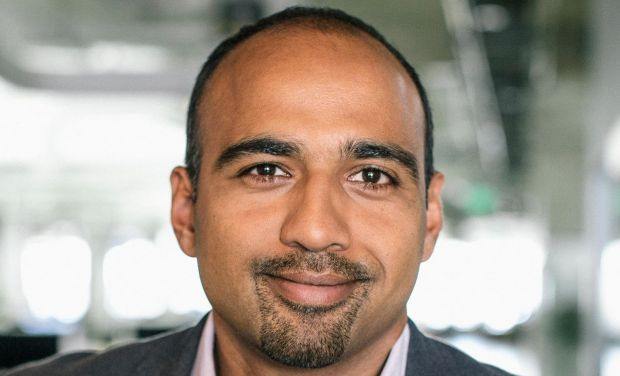
    InMobi co-founder Naveen Tewari described the new platform, called Miip, as revolutionary. Only time will tell how accurate the description is. But the basic premise of the platform lies in one that is increasingly acknowledged as true: Consumers dislike ads, mainly because ads are pushed on them, with no concern about relevance. It becomes worse in mobile phones -the device that’s fast becoming the primary content viewing format -because the ads become particularly intrusive on the small screen.

  • Indian Americans Preet Bharara & Rakesh Khurana honored with Carnegie’s ‘Great Immigrant’ award

    Indian Americans Preet Bharara & Rakesh Khurana honored with Carnegie’s ‘Great Immigrant’ award

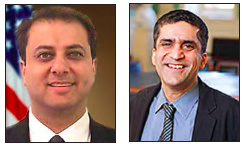
    NEW YORK (TIP): The Carnegie Corporation has announced the 2015 “Great Immigrant”: The Pride of America” awardees. These are the individuals who have helped advance and enlighten our society, culture, and economy. Preet Bharara, U.S. Attorney, Southern District of New York is among 38 eminent personalities selected as 2015 ‘Great Immigrant’ honorees, on the eve of the nation’s birthday on July 4th by Carnegie Corporation.

    The other Indian American awardee, Rakesh Khurana is the Marvin Bower Professor of Leadership Development at Harvard Business School (HBS), professor of sociology in the Faculty of Arts and Sciences (FAS), and co-master of Cabot House and dean of Harvard College.

    “Our founder, Andrew Carnegie, came to this country as the son of impoverished immigrants and grew up to become one of the greatest contributors to American industry and philanthropy,” said Vartan Gregorian, President of the Corporation. “His devotion to U.S. democracy stemmed from his conviction that the new infusion of talent that immigrants bring to our country keeps American society vibrant.”

    The 38 Great Immigrants honored this year come from more than 30 countries around the world and represent leadership in a wide range of professions.

    They include:

    • Preet Bharara S. Attorney, Southern District of New York (India)
    • Geraldine Brooks Pulitzer Prize-winning Author, Journalist (Australia)
    • Thomas Campbell Director and CEO, The Metropolitan Museum of Art (England)
    • Rabia Chaudry Attorney, Civil Rights Activist (Pakistan)
    • Mica Ertegun Interior Designer (Romania)
    • Stanley Fischer Economist; Vice Chair, Board of Governors, Federal Reserve System (Israel)
    • Jonathan Hunt Fox News, Chief Correspondent (Canada)
    • Malek Jandali Composer, Pianist (Syria)
    • Rakesh Khurana Professor, Dean, Harvard College (India)
    • Marie-Josée Kravis Economist, Philanthropist (Canada)
    • Nastia Liukin Olympic Medal-winning Gymnast (Russia)
    • Bette Bao Lord Author, Human Rights Advocate, Philanthropist (China)
    • Ali Malekzadeh President, Roosevelt University, Chicago (Iran)
    • Silvio Micali Turing Award-winning Professor of Computer Engineering (Italy)
    • Lorne Michaels Peabody Award-winning TV Producer (Canada)
    • Franziska Michor Vilcek Prize-winning Professor, Computational Biology (Austria)
    • Anchee Min Author (China)
    • Sharmin Mossavar-Rahmani Philanthropist; Chief Investment Officer, Private Wealth Management Group, Goldman Sachs (Iran)
    • Firouz Naderi Director, Solar System Exploration, NASA Jet Propulsion Laboratory (Iran)
    • Azar Nafisi Author, Scholar (Iran)
    • Craig Nevill-Manning Engineering Director, Google (New Zealand)
    • Maria Otero U.S. Under Secretary of State for Civilian Security, Democracy, and Human Rights (Bolivia)
    • Eddie Pérez Bullpen Coach, Atlanta Braves (Venezuela)
    • Ilana Rovner Judge, U.S. Court of Appeals, Seventh Circuit (Latvia)
    • Arturo Sandoval Grammy Award-winning Jazz Trumpeter (Cuba)
    • Madhulika Sikka Vice President, Executive Editor, .Mic (India)
    • Thomas C. Südhof Nobel Prize-winning Neuroscientist (Germany)
    • Antonio M. TagubaS. Army Major General, Retired (Philippines)
    • Ann Telnaes Pulitzer Prize-winning Political Cartoonist (Sweden)
    • Thalía Singer, Actress (Mexico)
    • Tuyen Tran Vilcek Prize-winning Fashion Designer (Vietnam)
    • Abraham Verghese Physician, Professor, Author (Ethiopia)
    • Eugene Volokh Professor, Legal Scholar, Blogger (Ukraine)
    • Arieh Warshel Nobel Prize-winning Biochemist (Israel)
    • Raffi Yessayan Judge, Massachusetts Superior Court (Lebanon)
  • Twitter’s Indian American M&A chief Rishi Garg quits

    Twitter’s Indian American M&A chief Rishi Garg quits

    Rishi Garg, Twitter’s top M&A Chief Indian-origin executive at the micro-blogging site has resigned, the latest in a recent string of departures from the company including that of CEO Dick Costolo. Rishi Garg, the Vice President for Corporate Development and Strategy at Twitter, a role that put him in charge of the Mergers & Acquisition strategy, has announced his departure after tenure of 13 months.

    Garg has resigned from the company to pursue other projects, technology blog Re/code reported, citing a tweet from Garg.

    This is the third resignation at Twitter’s and the second in the mergers and acquisition team. Jessica Verilli resigned last month as the director of corporate development and strategy, to take a role at Google Ventures, the technology blog said.

    “After an amazing ride as Twitter’s VP Corporate Development and Strategy, I’m saying farewell today,” he tweeted on June 27. “Our team has built a stronger Twitter with a dozen acquisitions in the last year. Hats off to @dickc for admirable leadership, humour, energy, and trust,” Garg said, using Costolo’s Twitter handle to thank him.
    “I can’t wait to witness the company’s next chapter. I’m off to pursue some exciting new projects; more soon! #staytuned,” the tweets read. Twitter did not immediately announce a replacement for Garg, whose departure comes just two week after Costolo announced he was stepping down as the company’s CEO.
  • ‘The Challenge of Journalism is to Survive in the Pressure Cooker of Plutocracy’

    ‘The Challenge of Journalism is to Survive in the Pressure Cooker of Plutocracy’

    Thank you for allowing me to share this evening with you. I’m delighted to meet these exceptional journalists whose achievements you honor with the Helen Bernstein Book Award.

    What happens to a society fed a diet of rushed, re-purposed, thinly reported “content?” Or “branded content” that is really merchandising — propaganda — posing as journalism? But I gulped when [New York Public Library President] Tony Marx asked me to talk about the challenges facing journalism today and gave me 10 to 15 minutes to do so. I seriously thought of taking a powder. Those challenges to journalism are so well identified, so mournfully lamented, and so passionately debated that I wonder if the subject isn’t exhausted. Or if we aren’t exhausted from hearing about it. I wouldn’t presume to speak for journalism or for other journalists or for any journalist except myself. Ted Gup, who teaches journalism at Emerson and Boston College, once bemoaned the tendency to lump all of us under the term “media.” As if everyone with a pen, a microphone, a camera (today, a laptop or smartphone) – or just a loud voice – were all one and the same. I consider myself a journalist. But so does James O’Keefe. Matt Drudge is not E.J. Dionne. The National Review is not The Guardian, or Reuters The Huffington Post. Ann Coulter doesn’t speak for Katrina Vanden Heuvel, or Rush Limbaugh for Ira Glass. Yet we are all “media” and as Ted Gup says, “the media” speaks for us all.

    So I was just about to email Tony to say, “Sorry, you don’t want someone from the Jurassic era to talk about what’s happening to journalism in the digital era,” when I remembered one of my favorite stories about the late humorist Robert Benchley. He arrived for his final exam in international law at Harvard to find that the test consisted of one instruction: “Discuss the international fisheries problem in respect to hatcheries protocol and dragnet and procedure as it affects (a) the point of view of the United States and (b) the point of view of Great Britain.” Benchley was desperate but he was also honest, and he wrote: “I know nothing about the point of view of Great Britain in the arbitration of the international fisheries problem, and nothing about the point of view of the United States. I shall therefore discuss the question from the point of view of the fish.”

    So shall I, briefly. One small fish in the vast ocean of media.

    I look at your honorees this evening and realize they have already won one of the biggest prizes in journalism — support from venerable institutions: The New Yorker, The New York Times, NPR, The Wall Street Journal and The Christian Science Monitor. These esteemed news organizations paid — yes, you heard me, paid — them to report and to report painstakingly, intrepidly, often at great risk. Your honorees then took time — money buys time, perhaps its most valuable purchase — to craft the exquisite writing that transports us, their readers, to distant places – China, Afghanistan, the Great Barrier Reef, even that murky hotbed of conspiracy and secession known as Texas.

    And after we read these stories, when we put down our Kindles and iPads, or — what’s that other device called? Oh yes – when we put down our books – we emerge with a different take on a slice of reality, a more precise insight into some of the forces changing our world.

    Although they were indeed paid for their work, I’m sure that’s not what drove them to spend months based in Beijing, Kabul and Dallas. Their passion was to go find the story, dig up the facts and follow the trail around every bend in the road until they had the evidence. But to do this — to find what’s been overlooked, or forgotten, or hidden; to put their skill and talent and curiosity to work on behalf of their readers — us — they needed funding. It’s an old story: When our oldest son turned 16 he asked for a raise in his allowance, I said: “Don’t you know there are some things more important than money?” And he answered: “Sure, Dad, but it takes money to date them.” Democracy needs journalists, but it takes money to support them. Yet if present trends continue, Elizabeth Kolbert may well have to update her book with a new chapter on how the dinosaurs of journalism went extinct in the Great Age of Disruption.

    You may have read that two Pulitzer Prize winners this year had already left the profession by the time the prize was announced. One had investigated corruption in a tiny, cash-strapped school district for The Daily Breeze of Torrance, California. His story led to changes in California state law. He left journalism for a public relations job that would make it easier to pay his rent. The other helped document domestic violence in South Carolina, which forced the issue onto the state legislative agenda. She left the Charleston Post and Courier for PR, too.

    These are but two of thousands. And we are left to wonder what will happen when the old business models no longer support reporters at local news outlets? There’s an ecosystem out there and if the smaller fish die out, eventually the bigger fish will be malnourished, too.

    A few examples: The New York Times reporter who rattled the city this month with her report on the awful conditions for nail salon workers was given a month just to see whether it was a story, and a year to conduct her investigation. Money bought time. She began, with the help of six translators, by reading several years of back issues of the foreign language press in this country… and began to understand the scope of the problem. She took up her reporting from there. Big fish, like The New York Times, can amplify the work of the foreign language press and wake the rest of us up.

    A free press, you see, doesn’t operate for free at all. Fearless journalism requires a steady stream of independent income. It was the publisher of the Bergen Record, a family-owned paper in New Jersey who got a call from an acquaintance about an unusual traffic jam on the George Washington Bridge. The editor assigned their traffic reporter to investigate. (Can you believe? They had a traffic reporter!) The reporter who covered the Port Authority for the Record joined in and discovered a staggering abuse of power by Governor Chris Christie’s minions. WNYC Radio picked up the story and doggedly stuck to it, helped give it a larger audience and broadened its scope to a pattern of political malfeasance that resulted in high-profile resignations and criminal investigations into the Port Authority. Quite a one-two punch: WNYC won a Peabody Award, the Record won a Polk.

    A Boston Phoenix reporter broke the story about sexual abuse within the city’s Catholic Church nine months before the Boston Globe picked up the thread. The Globe intensified the reporting and gave the story national and international reach. The Boston Phoenix, alas, died from financial malnutrition in 2013 after 47 years in business.

  • Windows 10 will be the last version of Windows: OS as WaaS

    Windows 10 will be the last version of Windows: OS as WaaS

    Microsoft executive Jerry Nixon confirmed at the company’s Ignite conference held on May 9th, that the upcoming Windows 10 update will be the company’s last version of Windows.

    Windows is not going away, in fact; Microsoft plans to update the OS in a more incremental manner going forward, and that could mean a much more dynamic platform.

    “Right now we’re releasing Windows 10, and because Windows 10 is the last version of Windows, we’re all still working on Windows 10,” Nixon told a room of developers last week at his firm’s ongoing Ignite conference  May 9-13, 2016.

    That’s different, said Nixon. Before, Microsoft would talk about the newest edition but would keep quiet about the next, which it had already started.

    “I can say things like ‘Yeah, we’re working on interactive tiles and it’s coming to Windows 10 in one of its future updates,’ Nixon said. “We are now not always just thinking about what’s not here today. Now we can talk about things in a new way, and much more open way than we have before.”

    His point was that Windows 10 will be updated regularly — and far more frequently than its predecessors — to become, like Google’s Chrome or Apple’s OS X, a constantly-churning product. Microsoft has described this model as “Windows as a service” to note its always-fresh trait, like a cloud-based service, even though the OS resides — as it always has — locally on the device.

    Without a new name every three years or so — Windows XP begat Vista which begat Windows 7 which begat Windows 8 — the OS will be pegged as Windows 10 for the foreseeable future.

    Each edition will be “Windows 10”


    Certainly, Microsoft expects that most consumers will stick to the tick-tock of updates, and so will always be on the latest, ameliorating the nameless Windows. Yet not everyone updates. And businesses may stifle the fast cadence for their workers’ devices and their networks’ machines, making it prudent for Microsoft to tag monikers at intervals.


  • Denmark set to turn cash-free

    DENMARK (TIP): Denmark has moved one step closer to becoming the world’s first cashless society, as the government proposes scrapping the obligation for retailers to accept cash as payment.

    The Danish government has said that as of next year, business such as clothing retailers, restaurants and petrol stations should no longer be legally bound to accept cash payments. The proposal is part of a package of economic growth measures, which are being released ahead of this year’s Danish election. It aims to reduce costs and increase productivity for Danish businesses.

    Finansradet, a Danish finance industry lobbying group, says the change would free retailers from the cost of security, and the burden of managing change and notes.

    Although it seems like a drastic step, the Danes are already moving away from paper and metal money. Almost a third of the population uses an official Danske Bank app called MobilePay — it links your mobile to other users’ phones or to a sensor at the till, allowing you to confirm payments with a swipe on your smartphone’s screen.

    Similar technologies like Paym are available in the UK, which allows users to transfer money to others by entering their mobile number. Google Wallet turns your phone into a contactless card, allowing you to tap your device against readers to transfer money – however, it is currently only available in the USA. But both of these technologies are still yet to see the level of adoption that MobilePay has in Denmark.

    There are fears that moving to totally cashless payments could increase the risk of fraud — in Sweden, a nation with one of the highest numbers of bank transactions per person in the European Union, cases of card fraud have doubled in the last decade.

    However, Danske Bank has taken steps to fight fraud, by linking individuals’ MobilePay accounts to their national insurance numbers. The change would need to be approved in a vote at the Folketing, the Danish parliament, but the timing of the vote has not yet been set.

    However, in a country where cashless payments are so common, it looks unlikely that the proposal will face much opposition. The Nordic countries of Denmark, Sweden, Norway, Finland and Iceland lead the world in cashless payments — cash payments for even the smallest items, such as a packet of chewing gum, are commonplace. In 2013, a Swedish bank robber left empty-handed, after he found out that the Stockholm bank he held up did not carry any cash.

  • Indian tech start-ups woo talent back from America – Offer massive perks

    Indian tech start-ups woo talent back from America – Offer massive perks

    India’s IT industry has long been seen as a back-office backwater, even by its own engineers who started moving abroad in their droves in the 1970s. After losing top engineering talent for years to America’s tech heartland of Silicon Valley, India is luring them back as an e-commerce boom sparks a thriving start-up culture, unprecedented pay, and perks including free healthcare for in-laws.

    The e-commerce sector, led by companies such as Flipkart and Snapdeal, attracted more than $5 billion of investment last year, Morgan Stanley says, compared with less than $2 billion in 2013.

    That growth is fuelling the hunt for talent to drive the next stage of expansion – for many, an initial public offering or a push into overseas markets.

    “The appetite for finding engineering talent … is great,” said George Kaszacs of Silicon Valley-based headhunters Riviera Partners, who helps Indian startups scout for potential hires.

    India’s biggest e-commerce company, Flipkart (IPO-FLPK.N), recently hired two senior executives from Google Inc (GOOGL.O) in California, both engineers of Indian origin, for its headquarters in Bengaluru in southern India.

    Flipkart did not disclose their pay, but headhunters say remuneration packages can reach $1 million over 3-4 years.

    Headhunter Kaszacs said several factors are drawing Indians back home, including the chance to join a fast-growing start-up. Joining bonuses, stock options and other perks were also helping.

  • Google accused of abusing Internet search dominance: EU

    Google accused of abusing Internet search dominance: EU

    The European Union’s competition regulator on Wednesday accused Google of illegally abusing its dominance of the Internet search market in Europe by favoring its own comparison-shopping product when consumers shop online.

    The case could cost the tech firm billions in fines or even force Google to make significant changes to its business in Europe. It also revives memories of Microsoft’s decade-long antitrust fight with the EU. That case ended in 2009 with Microsoft paying over $2 billion in fines to the EU’s competition commission.

    EU Competition Commissioner Margrethe Vestager said Wednesday in a statement unveiling an investigation that she is “concerned that the company has given an unfair advantage to its own comparison shopping service, in breach of EU antitrust rules. Google now has the opportunity to convince the commission to the contrary.”

    Vestager also is probing Google’s Android mobile operating systems, apps and services. Vestager said that she wants to “make sure the markets in this area can flourish without anti-competitive constraints.”

    Google accounts for 90% of all Internet searches in Europe and the commission alleges the Internet giant broke antitrust regulations by siphoning traffic from its competitors to its own services.

    The commission said Google “may be artificially divert(ing) traffic from rival comparison shopping services (to its Google Shopping) and hinder their ability to compete.”

    This is the first time a regulator has filed formal antitrust charges against Google.

    In a blog post, Amit Singhal, senior vice president of Google search, said: “We respectfully but strongly disagree with the need to issue a Statement of Objections and look forward to making our case over the weeks ahead.”

    In a memo to employees that was leaked to the re/code technology website on Tuesday, Google said it had a “very strong case” against the charges.

    Part of its defense: that Google offers consumers a quicker, more direct service.

    “While Google may be the most used search engine, people can now find and access information in numerous different ways — and allegations of harm, for consumers and competitors, have proved to be wide of the mark,” Singhal wrote in the blog post published Wednesday.

    Google also defended its Android platform in a separate blog post, claiming its open-source operating system benefits consumers.

    “The European Commission has asked questions about our partner agreements,” says Hiroshi Lockheimer, vice president of engineering for the Android division. “It’s important to remember that these are voluntary — again, you can use Android without Google — but provide real benefits to Android users, developers and the broader ecosystem.”

    Longtime Google critic Thomas Vinje, legal counsel and spokesman for FairSearch Europe, applauded the decision.

    “The Commission’s actions are signifcant steps toward ending Google’s anti-competitive practices, which have harmed innovation and consumer choice,” he said in a statement. “More than 30 companies and consumer organizations fled complaints concerning Google’s abuse of its dominance in search. Google’s abuses have devastated rivals, from mapping to video search to product price comparison.”

    He added: “While the Commission’s action concerning the search practices of Google is very significant, it has previously identified other problematic areas that are not covered, and we look forward to those being addressed in due course.”

    The EU has been investigating Google for five years. Google nearly settled the case without any charges last year but the deal fell apart over objections from ministers in France and Germany and powerful tech groups.

    Over a period of 10 years, Microsoft was fined by the European Commission for monopolistic business practices related to the software giant’s operating system.

    Then-EU Competition Commissioner Neelie Kroes argued that consumers in Europe would benefit from having a choice of Internet browsers bundled with the firm’s Windows software. Microsoft was fined as late as 2013 for failing to comply with a settlement that mandated it offer easier access to the products of its rivals.

    Vestager did not say how long the commission intends to spend conducting its investigations or how long Google has been given to reply to the allegations.

    “To us the most important risks associated with an eventual long term antitrust proceeding would be related to the risk that it could consume valuable management bandwidth, and impose limitations on Google’s ability to innovate in search in Europe for years to come,” Sanford C. Bernstein analyst Carlos Kirjner wrote in a research note.

    RBC Capital Markets analyst Mark Mahaney says the prospect of a lengthy antitrust battle has been an “overhang” on Google shares for a few years.

    “That said, the EU Antitrust Charges Overhang (EUACO) is now ‘official,’” he wrote in a research note. “And we believe this has negative implications for Google shares.”

    Google shares are trading down about 1% to $523.90.

  • Mike Ghouse of World Muslim Congress to speak at Aligarh Muslim University

    Mike Ghouse of World Muslim Congress to speak at Aligarh Muslim University

    WASHINGTON DC (TIP): Aligarh Muslim University has organized a two day International conference with the theme -“Intellectual Crises of the Muslim Ummah: Rethinking Traditional Solutions”

    The speakers from around the world will speak on a variety of subjects focused on the theme and Mike Ghouse with the World Muslim Congress, a think tank will be presenting a paper on “Does Islam need a Reform or we just need new interpreters?  He will be participating in a few other panels, including “Can Muslims lead a conglomeration of faith communities?And is United Islam Possible?

    Mike Ghouse added, “I am pleased to see the efforts of Muslims in India, United States and elsewhere to hold these conferences and advance the idea of an inclusive world, where all of God’s creation is respected as members of one family. We all came from a single couple Adam and Eve, and were made into many communities and nations, as the Abrahimic religions put it, and the Dharmic traditions have its equivalent wisdom in Vasudhaiva Kutumbukum” meaning the whole world is one family.”

    Ghouse defines pluralism in action as “if we can learn to respect the otherness of others and accept the God given uniqueness of each one of us, then conflicts fade and solutions emerge to create a cohesive world, where no human has to live in apprehension or fear of the other.”  Mike plans to release soon on YouTube a 45 Minutes video on Pluralism and Islam.

    Mike has written over 2500 articles on Pluralism in religion, politics, society, work place and Islam. Readers can Google search “Pluralism speaker”, “Interfaith speaker” or “Muslim Speaker” for his articles. Dallas Morning News has published over 225 articles and Huffington post over 125 pieces with publication in myriad of other news and media outlets, including The Indian Panorama.


  • USAID Woos Indian American Investors for Diaspora Investment Initiative

    USAID Woos Indian American Investors for Diaspora Investment Initiative

    SAN FRANCISCO (TIP): The India Diaspora Investment Initiative, a unique program President Barack Obama unveiled during his visit to India for the Republic Day celebrations, is seeking investment from Indian American and other investors to support sustainable development in India.

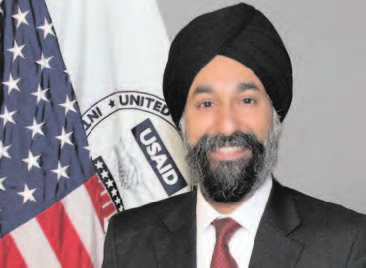
    In an interview to the media here Manpreet Singh Anand, deputy assistant administrator in the Asia bureau of the U.S. Agency for International Development, said that it is the first time an initiative earmarked for a specific diaspora community in the U.S. has been launched by USAID.

    If it is successful, he added, it could be a model for the agency in other countries.

    “It is a new model for development,” Anand said. “It is a more efficient use of resources to leverage innovation through the private sector.” USAID staff has been working on the initiative for about a year, he added.

    India was not a random choice for the initiative.

    USAID said in a fact sheet that there are three factors why India was selected: “An increased desire on the part of Indian Americans to make a development impact in their home country; a strengthened diaspora connection to India after the election of Prime Minister Narendra Modi; and a strong demand from Indian social businesses seeking debt capital to scale up their programs targeting ‘Base of the Pyramid’ populations.”

    USAID, working with a partner – Bethesda, Md.-based Calvert Foundation, a nonprofit with experience in offering “Community Investment Notes” for sustainable development – plans to mobilize at least $50 million in debt financing from private sector financial sector institutions in India and abroad over the next 18 months.

    USAID will provide “up to a 50% credit guarantee” to three non-bank finance companies (Caspian Impact Advisors, Intellegrow and Gramen Impact India) and two Indian banks (YES Bank and Ratanakar Bank), who make the loans to small- and medium-sized enterprises in India.

    Anand pointed out that without USAID’s credit guarantee, the barriers for Indian SMEs to get the loans “would be almost impossible to overcome.” “We want the Indian diaspora to become engaged and stay engaged,” he added.

    It works like this: Investors – Indian Americans or those wanting to support sustainable development in India – purchase a Calvert Foundation Investment Note. Investors can receive fixed interest payments every six months and select investment tenors from one, three, five, seven and even 10 years.

    The notes will be available later this year, Anand said. USAID is negotiating on terms of the loan credit guarantees with all five partners.

    Calvert will make the loans to the Indian NBFCs and banks, which invest in social projects in healthcare, small businesses, education, agriculture, renewable energy, and other priority areas for India. USAID provides its 50% loan guarantee.

    “Our new Indian Diaspora Investment Initiative will allow folks back home to generate a new stream of financing for Indian businesses that are investing in non-traditional, and too often overlooked, markets – from providing healthcare to rural communities, to improving water and sanitation, to opening up those new bank accounts,” Obama told the U.S.-India Business Summit in New Delhi Jan. 26.

    USAID Administrator Rajiv Shah, who in February left the agency, said in India in January, “We’ll match the diaspora community’s immense passion and resources to the small businesses that form the backbone of India’s economy.”

    “By creating a transparent investment vehicle, any investor can contribute to sustainable, social businesses that create jobs and train a new generation of local entrepreneurs.”

    USAID’s annual funding to India -negotiated between the Obama administration and Congress – is currently “just short of $100 million a year,” Anand sadi.

    It is the Indian American’s second stint at the agency. Previously, he was a presidential management fellow in the Office of the Global Development Alliance.

    He also worked as a senior policy advisor on geopolitical and socioeconomic issues at Chevron Corp., was a senior policy advisor for South and Central Asia issues on the U.S. House Committee on Foreign Affairs, and served in the Office of the U.S. Trade Representative.

    Married to a physician, Anand has an MBA and an M.A. in international studies from U.C.-Berkeley and a B.S. in electrical engineering from the University of Texas at Austin.

    Another significant program announced by USAID during Obama’s visit was support of Modi’s Jan Dhan initiative to prioritize financial inclusion for all Indian citizens.

    USAID is partnering with over 20 U.S., Indian and international private sector organizations and the World Economic Forum to extend the ability for Indian consumers and businesses to participate in the formal economy.

    “More than 110 million people have signed up in India (under Jan Dhan) for bank accounts in the last few months,” said Anand, who accompanied Shah and Obama on the India trip in January. “It will really empower consumers in India when they can use cards instead of cash.”

    USAID said that currently only six percent of retail enterprises in India can accept digital payments.

    One particular area of focus for USAID in India is reducing child mortality rates. “India constitutes 24 percent of the preventable under-five deaths in the world,” Anand said. “There’s a lot we can and are doing (to reduce child mortality rates) in India.”

    Last year USAID formed the U.S. Global Development Lab within the agency to leverage science and technology advancements for public-private partnerships around the world, Anand said.

    Experts from Google and other technology companies are forming a think-tank within the agency to work with NGOs to solve some of the most pressing social problems around the world.

    For more information on the Diaspora Investment Note, visit:
    http://www.calvertfoundation.org/india.

  • BIG YANG THEORY: Chinese year of the sheep or the goat?

    BIG YANG THEORY: Chinese year of the sheep or the goat?

    BEIJING (TIP): Sheep or goat? China’s coming lunar new year has stirred a debate over which zodiac creature is the correct one— but Chinese folklorists dismiss the fixation on animals as missing the point.

    Traditional astrology in China attaches different animal signs to each lunar year in a cycle of 12 years.

    The symbol for the new year starting on February 19 is the “yang”, which can refer to any member of the caprinae subfamily — or even beyond — depending on what additional Chinese character it is paired up with.

    For example, a goat is a “mountain yang”, a sheep is a “soft yang” and a Mongolian gazelle is a “yellow yang”.

    Both goats and sheep appear in Chinese new year paintings, paper-cuts and other festival decorations.

    Folklorists say it does not matter which one is used since the zodiac sign was chosen for the Chinese character’s auspicious connotation rather than the specific animal— at least in the beginning.

    “This ‘yang’ is fictional. It does not refer to any specific kind (of sheep or goat),” Zhao Shu, a researcher with the Beijing Research Institute of Culture and History, told AFP.

    “Yang” is a component of the written Chinese character “xiang”, which means auspiciousness, and the two were interchangeable in ancient Chinese, experts say.

    It is also a part of the character “shan”, which counts kindness and benevolence as among its meanings.

    “Therefore ‘yang’ is a symbol of… blessing and fortune and represents good things,” said Yin Hubin, an ethnology researcher with the China Academy of Social Sciences, a government think-tank.

    “It is connected to the original implication of the Chinese character as an ideogram and reflects the world view of the Chinese people in primitive times,” he said.

    That said, the zodiac sign is being shunned by some Chinese parents-to-be, with expectant mothers scheduling Caesarean sections to give birth before the current year of the horse ends, according to media reports.

    The rush apparently stems from a Chinese superstition held by some that nine out of 10 sheep will be unhappy in life — a belief Yin dismissed as “ridiculous”.

    More often, the animal plays a positive role in Chinese folklore, experts say.

    A fable that can be traced back to more than 1,500 years ago depicts five goats carrying crops in their mouth to save people suffering from years of drought in Guangzhou.

    The southern boom town, today the capital of Guangdong province and dubbed the City of Goats, has enjoyed timely wind and rain ever since, according to the story.

    While the loose concept of “yang” comes naturally to Chinese people, in the West the term can often be a source of frustration for those seeking an equivalent in their own language.

    A Google search suggests that in English, “year of the sheep” is the most common phrasing.

    In French, however, the reverse is true, with convention and an overwhelming Google ratio in favour of “chevre”, or goat.

    Zhao thinks the translation is “open to interpretation”. “Sheep, goat, Mongolian gazelle — whatever is fine. This is the fun of Chinese characters,” he said.

    But some scholars argue goat is a better option for the traditional Han Chinese holiday, as it is a more commonly kept farm animal for the dominant ethnic group in China, according to the official Xinhua news agency.

    Many Chinese people appear to be unfazed by the debate. “The year of the yang, 2015, is neither a sheep nor a goat. It is a beautiful and elegant milk yang! Abundant milk, clothes and food. It will be a halcyon year,” wrote one user on Sina Weibo, a Chinese equivalent of Twitter.

    Eschewing the lexical debate, some users have simply opted for the animal that they see as possessing their own favoured qualities. “In the year of the yang, I want to be a strong-willed and energetic goat, not a weak sheep,” another Sina Weibo user wrote.

  • CITING JIHADI THREAT, GOVT JUSTIFIES CURBS ON WEBSITES

    NEW DELHI (TIP): Websites containing jehadi propaganda and other offensive material needed to be blocked in public interest and for protecting the sovereignty and integrity of the country, the Centre told the Supreme Court on Feb 26.

    The Centre’s response came as it contested the arguments of internet service providers which had said that such by the government violated their rights.

    The Centre said section 69A of the Information Technology Act, which empowers it to block such sites, was required as there were many websites which resorted to “blackmail” tactics by posting offensive material and refused to remove them.

    “Facebook, google, twitter are responsible intermediaries but there are many lesser known intermediaries which are resorting to blackmail tactics by posting offensive articles and photos. People visit their sites out of curiosity and they get many hits which bring revenue to them. They are also reluctant to remove them as it would hit their business,” Additional Solicitor General Tushar Mehta told the court.

    Appearing before a bench of Justices J Chelameswar and Rohinton Fali Nariman, the ASG said the law could not exempt the intermediaries from liability of removing the offensive material and they had to put in place a mechanism to prevent them from going public.

    Mehta said the government recently blocked 32 websites on the order of a Mumbai court as they contained jehadi propaganda. He said the social media was surreptitiously used for mentoring Indian youths to join jehadi activities.

    He, however, said there were established procedures and safeguards to prevent any misuse of this power. He said the secretary, department of information technology, had to approve blocking of sites. He said the government “sparingly and cautiously” used this power and only 2455 sites were blocked in 2014 and 1349 sites in 2013.

    He said the figure is minuscule in view of 80 million posts from India only on YouTube and Facebook in 2014.

    “Thus in view of the above statistics, it cannot be said that the provisions of section 69A have been abused or excessively used to the detriment of freedom of speech and expression of the citizens,” he said. “The said right cannot be urged to declare the scheme of blocking guidelines as ultra vires given the background that such power is exercised when there are compelling reasons available with the competent authority that it is necessary and expedient to block a particular URL in the interest of sovereignty and integrity of India, defence of India, security of the state, friendly relations with foreign states or public order or preventing incitement to commission of any cognizable offence,” the ASG said.

    The association of intermediaries had earlier told the court that the government should not take any punitive action against them as they only provided neutral platform to the people to post and action should be taken against persons who posted offensive material.

  • FCC plans strong hand to regulate the internet

    FCC plans strong hand to regulate the internet

    WASHINGTON: Declaring the internet critical for the nation, a top US regulator on february 4 proposed an unprecedented expansion of federal power to ensure providers don’t block or slow web traffic for America’s countless users.


    The proposal by Federal Communications Commission chairman Tom Wheeler was a victory for advocates of “net neutrality,” the idea that internet providers must allow data to move across their networks without interference. The idea has been the subject of heavy lobbying and millions of dollars in advertising in the past year.


    “Net neutrality” means that whether you’re trying to buy a necklace on Etsy, stream the season premiere of Netflix’s ‘House of Cards’ or watch a music video on Google’s YouTube, your internet service provider would have to load all of those websites equally quickly. Major internet providers insist they have no plans to create such fast or slow lanes, but they strongly oppose the regulation, arguing that it could stifle innovation and investment.


    Wheeler’s proposal attempts to erase any legal uncertainty by reclassifying the internet as a telecommunications service and regulating it under the 1934 Communications Act. The plan would apply to both wired service provided by companies like Comcast and wireless service by companies like T-Mobile.


    That would put all internet service in the same regulatory camp as telephones and any other public utility, which Republicans and industry officials say would discourage investment and increase taxes.


    The FCC will vote on February 26 on the proposal, and approval is considered likely. President Barack Obama has called for regulation under the Communications Act, and Democratic appointees hold a commission majority.


    “It is counterproductive because heavy regulation of the internet will create uncertainty and chill investment among the many players —not just internet service providers —that now will need to consider FCC rules before launching new services,” said Michael Glover, Verizon senior vice president. But Wheeler and consumer groups say the move is necessary to prevent providers from creating slow or fast lanes on net in which content companies like Netflix can pay to jump to the head of the queue.

  • Internet will ‘disappear’, says Google boss Eric Schmidt

    Internet will ‘disappear’, says Google boss Eric Schmidt

    DAVOS, Switzerland (TIP): Google boss Eric Schmidt predicted on Thursday that the internet will soon be so pervasive in every facet of our lives that it will effectively “disappear” into the background.

    “It will be part of your presence all the time. Imagine you walk into a room and… you are interacting with all the things going on in that room.”

    “A highly personalized, highly interactive and very interesting world emerges.”

    On the sort of high-level panel only found among the ski slopes of Davos, a panel bringing together the heads of Google, Facebook and Microsoft and Vodafone sought to allay fears that the rapid pace of technological advance was killing jobs.

    “Everyone’s worried about jobs,” admitted Sheryl Sandberg, chief operating officer of Facebook.

    With so many changes in the technology world, “the transformation is happening faster than ever before,” she acknowledged.

    “But tech creates jobs not only in the tech space but outside,” she insisted.

    Schmidt quoted statistics he said showed that every tech job created between five and seven jobs in a different area of the economy.

    “If there were a single digital market in Europe, 400 million new and important new jobs would be created in Europe,” which is suffering from stubbornly high levels of unemployment.

    The debate about whether technology is destroying jobs “has been around for hundreds of years,” said the Google boss. What is different is the speed of change.

    “It’s the same that happened to the people who lost their farming jobs when the tractor came… but ultimately a globalize solution means more equality for everyone.”

    With one of the main topics at this year’s World Economic Forum being how to share out the fruits of global growth, the tech barons stressed that the greater connectivity offered by their companies ultimately helps reduce inequalities.

    “Are the spoils of tech being evenly spread? That is an issue that we have to tackle head on,” said Satya Nadella, chief executive of Microsoft.

    “I’m optimistic, there’s no question. If you are in the tech business, you have to be optimistic. Ultimately to me, it’s about human capital. Tech empowers humans to do great things.”

    Facebook boss Sandberg said the internet in its early forms was “all about anonymity” but now and everyone was visible.

    “Now everyone has a voice… now everyone can post, everyone can share and that gives a voice to people who have historically not had it,” she said.

    Schmidt, who said he had recently come back from the reclusive state of North Korea, said he believed that technology forced potentially despotic and hermetic governments to open up as their citizens acquired more knowledge about the outside world.

    “It is no longer possible for a country to step out of basic assumptions in banking, communications, morals and the way people communicate,” the Google boss said.

    “You cannot isolate yourself any more. It simply doesn’t work.” Nevertheless, Sandberg told the assembled elites that even the current pace of change was only the tip of the iceberg.

    “Today, only 40% of people have internet access,” she said, adding: “If we can do all this with 40%, imagine what we can do with 50, 60, 70%.”

    Even two decades into the global spread of the internet, the potential for opening up and growth was tremendous, she stressed.

    “Sixty percent of the internet is in English. If that doesn’t tell you how uninclusive the internet is, then nothing will,” said the tycoon. The World Economic Forum brings together some 2,500 of the top movers and shakers in the worlds of politics, business and finance for a four-day meeting that ends on Saturday.

  • BENGALURU STANDS TALL WITH $2.6-BILLION VENTURE CAPITAL

    BENGALURU STANDS TALL WITH $2.6-BILLION VENTURE CAPITAL

    BENGALURU (TIP): India’s IT hub, Bengaluru, came in fifth in a list of cities globally that received the most venture capital in 2014, an indication of the growing vibrancy of its startup ecosystem.

    San Francisco led the list with $13 billion of VC investments, followed by Beijing ($6.4 billion), New York ($5.7 billion), Palo Alto ($3.2 billion) and Bengaluru ($2.6 billion). The list has been put together by Crunchbase, a global startup ecosystem database.

    Among countries, India received the third highest VC funding ($4.6 billion) after the US ($58.9 billion) and China ($8.9 billion).

    Ravi Gururaj, chairman of the Nasscom Product Council, says India enjoyed record VC investments in the second half of 2014, and the wave shows no sign of slowing down. “This was kicked off by the historic election results which boosted investor confidence tremendously. Additionally, private equity investors worldwide, particularly those that missed out on the meteoric rise in Chinese startup valuations, flocked to high performing Indian consumer startups determined not to miss out on a fast ride on the India Startup Express.”

    Sanjeev Aggarwal, co-founder of Helion Venture Partners, says Bengaluru’s lead position is because of its ability to attract tech talent. “The cycle kicked in with Infosys and Wipro, followed by global companies coming in large numbers. Engineers employed with companies like Google and Yahoo wanted to experiment with new ideas, and that has spawned a startup culture. Mobile apps and cloud have reduced entry barriers to build companies,” he told TOI.

    CrunchBase does not give a breakup of the investments in each city. In Bengaluru’s case, a significant portion of the $2.6 billion would likely be on account of Flipkart’s two rounds of funding that happened last year. The e-commerce company received an estimated $1.7 billion.

    Parag Dhol, MD of Inventus Advisors India, believes Bengaluru’s startup ecosystem is beginning to have a multiplier effect. “You have an ecosystem where companies have gone public, there are good product startups, and new-age entrepreneurs are turning into angels. In that sense, success begets success. Venture capitalists are looking at India with a fresh set of eyes,” he adds.

    Aggarwal notes that capital is going particularly to the leaders who are building companies in large under-served markets, and to companies like Flipkart, Snapdeal and Ola. “Investors are paying a leadership premium,” he says.

    Japanese internet giant Softbank invested $627 million in Snapdeal and $210 million in Ola Cabs last year.

  • FBI director warns new phone encryption could thwart probes

    FBI director warns new phone encryption could thwart probes

    WASHINGTON (TIP): US FBI director James Comey on October 16 made his strongest comments yet about encryption features built into new cell phones by Google Inc and Apple Inc, warning they could hurt law enforcement efforts to crack homicide and child exploitation cases. Speaking before an audience at the Brookings Institution think tank, Comey said the new phones, which limit the ability for the companies themselves to access data stored on the units, have “the potential to create a black hole for law enforcement.” FBI agents are generally able to access information stored on cell phones with a court order related to a specific investigation that forces the company to retrieve the information.

    But handset makers have marketed more secure cell phones amid concerns of broad government surveillance programs revealed by Edward Snowden, and of hackers who might be able to exploit any vulnerabilities in the security of the phones. In a statement, a Google spokeswoman said the company wanted to provide additional security for its users to protect personal documents but would still work with law enforcement when appropriate. An Apple representative did not immediately respond to a request for comment.

    Comey said FBI agents have come across a growing number of cases for which they believe evidence was in a phone or a laptop that they were unable to crack, though he did not provide specific examples. “If this becomes the norm, I suggest to you that homicide cases could be stalled, suspects walk free, child exploitation not discovered and prosecuted,” he said.

    Comey also urged Congress to update the law that governs law enforcement’s ability to intercept communications, which was enacted two decades ago and does not address some newer technologies. In his speech, he gave examples of cases that agents were able to piece together from evidence contained on cell phones, including against a Louisiana man who was convicted of murdering a 12-year-old boy and a drug trafficking ring in Kansas City.

    The American Civil Liberties Union on Thursday criticized Comey’s remarks, arguing that the law did not force telecommunications companies to build an avenue for decryption into their products. In an interview, ACLU legislative counsel Neema Singh Guliani said it was not clear if FBI agents will be hindered in their investigations through the new encryption since they already have access to other types of information. “A couple of anecdotes from the FBI isn’t enough,” Singh said.

  • Yahoo compelled to release data

    Yahoo compelled to release data

    WASHINGTON (TIP): The Washington Post carried a story by Craig Timberg in its September 11 edition which disclosed the U.S. government threatened to fine Yahoo $250,000 a day in 2008 if it failed to comply with a broad demand to hand over user data that the company believed was unconstitutional, according to court documents unsealed Thursday, September 11, that illuminate how federal officials forced American tech companies to participate in the NSA’s controversial PRISM program.

    The documents, roughly 1,500 pages worth, outline a secret and ultimately unsuccessful legal battle by Yahoo to resist the government’s demands. The company’s loss required Yahoo to become one of the first companies to begin providing information to PRISM, a program that gave the National Security Agency extensive access to records of online communications by users of Yahoo and other U.S.-based technology firms.

    “The released documents underscore how we had to fight every step of the way to challenge the U.S. Government’s surveillance efforts,” said company General Counsel Ron Bell in a Tumblr post published Thursday afternoon. The program, which was discontinued in 2011, was first revealed by former NSA contractor Edward Snowden last year, prompting intense backlash and a wrenching national debate over allegations of overreach in government surveillance.

    Federal Judge William C. Bryson, presiding judge of the Foreign Intelligence Surveillance Court of Review, ordered the documents from the legal battle unsealed on Thursday as part of a broad effort by the court system to declassify the arguments that formed the legal foundation for PRISM. The original order to Yahoo came in 2007 and set off alarms at the company because of the sweep of its requests and its side-stepping of the traditional requirement that each target be subject to court review before surveillance could begin.

    The order, Yahoo officials said, required only that the target be outside of the United States at the time, even if the person was a U.S. citizen. The company challenged the order on constitutional grounds but lost repeatedly, both at the Foreign Intelligence Surveillance Court and an appeals court, the Foreign Intelligence Court of Review. The government requested and obtained permission to share the ruling with other companies as it gradually pressured most of the major players in the American tech industry – including Google, Apple and Facebook – to comply with the data demands.

    The requests concerned not the content of emails but what it called “metadata,” which detailed who users exchange e-mails with and when. It is not known if e-mail collection continues in some other form. The ACLU, which had supported Yahoo’s legal fight in 2008, applauded Thursday’s move to release the documents but said it was long overdue. “The public can’t understand what a law means if it doesn’t know how the courts are interpreting that law,” said Patrick Toomey, a staff attorney with the ACLU’s national Security Project.

  • PROSTITUTE LEFT GOOGLE EXECUTIVE TO DIE ON BOAT: POLICE

    PROSTITUTE LEFT GOOGLE EXECUTIVE TO DIE ON BOAT: POLICE

    SANTA CRUZ, CALIFORNIA (TIP): As a Google executive lay dying on his yacht, an upscale prostitute casually walks over him, picks up her clothes and heroin and swallows the last of a glass of wine before lowering the boat’s blinds and walking back on the dock to shore, police say surveillance footage shows. Authorities charged Alix Tichelman, 26, with manslaughter on Wednesday for her role in the death of Forrest Hayes, who was found dead by the captain of his 50-foot (15-meter) yacht last November.

    Police said the surveillance video from the yacht shows everything that happened from the time Tichelman came aboard to when she left. Santa Cruz Deputy Police Chief Steve Clark told the Associated Press on Wednesday that Hayes, 51, had hired Tichelman before, and that their November 23 encounter “was a mutually consensual encounter including the introduction of the heroin.” Clark said it appears this might not have been the first time she left someone in trouble without calling police or trying to help. Without elaborating, he said his agency is cooperating with police in a different state on a similar case.

    “There’s a pattern of behavior here where she doesn’t seek help when someone is in trouble,” he said. News vans gathered outside Hayes hilltop estate overlooking the glittering Monterey Bay, where the five-bedroom home is on the market for $4.2 million. Hayes’ widow has not spoken publicly and a blog created in his memory was deleted. On the website, friends and coworkers were seemingly unaware of how he died. They fondly described their time together, Christmas parties on his boat, engineering teams at Sun Microsystems, traveling to China for Apple and most recently at Google, where they said he was involved in the Glass eyewear projects.

    Clark said it’s not clear if Hayes was a frequent drug user, and that in the video, it appears he needed Tichelman to help him shoot up. Clark described Tichelman as a high-end prostitute, who charged $1,000 and lived three hours away in the Sacramento suburb of Folsom. He said she had other clients from Silicon Valley, home to about 50 billionaires and tens of thousands of millionaires. “There’s no question that Silicon Valley feels different than it felt 28 years ago when I moved here,” said Russell Hancock, president of Joint Venture Silicon Valley, an organization focused on the local economy and quality of life.

    “Something has happened. We used to be a Valley full of techies living middle class lives, and now we’re a Valley of the uber-rich carrying toy poodles around with them.” Tichelman was arrested on July 4 after police said a detective lured her back to the Santa Cruz area by posing as a potential client at an upscale resort. Clark said they didn’t just arrest her because they didn’t know exactly where she lived, and they were concerned she would flee. Police said Tichelman boasted she had more than 200 clients and met them through a website that purports to connect wealthy men and women with attractive companions.

    Her clients included other Silicon Valley executives, Clark said. Tichelman’s father has ties to the tech industry. Folsom software firm SynapSense announced hiring her father, Bart Tichelman in 2012. Neither the firm nor her father responded to immediate requests for comment. She is being held on $1.5 million bail after appearing in court Wednesday wearing red jail scrubs. Santa Cruz Superior Court Judge Timothy Volkmann approved a request from Tichelman’s court appointed attorney, Diana August, to continue the arraignment until July 16. August did not immediately return a call seeking comment.

    Assistant District Attorney Rafael Vazquez said authorities are still investigating and may file more serious charges. Santa Clara University Finance professor Robert Hendershott said financial windfalls like those seen in the Silicon Valley often bring problems as people have trouble managing their newfound wealth. But he said there’s no obvious hedonistic culture in the Silicon Valley. “There’s no Great Gatsby type of parties famous in the Silicon Valley,” he said.

  • Flipkart, ‘India’s Amazon,’ launches low-cost phones before Mozilla and Google

    Flipkart, ‘India’s Amazon,’ launches low-cost phones before Mozilla and Google

    BANGALORE (TIP): Amazon announced its first smartphone June end and not to be outdone, online retailer Flipkart, “India’s Amazon,” is now launching a smartphone line of its own. Unlike Amazon’s higherend Fire, which sports multiple cameras for a 3D effect and a bevy of other features, Flipkart’s is aimed at the Indian market and is a budget smartphone, Tech In Asia reports. While Mozilla and Google have also announced low-end smartphone plans, Flipkart seems to be beating them to the market. Flipkart’s phones will start at about $45, will sport dual SIM and will support Android Jelly Bean and KitKat as operating systems. Interestingly, both Flipkart and Google have partnered with smartphone manufacturer Karbonn for their India-focused phones.

    Google is also working with other manufacturers such as Micromax and Spice, which, like Karbonn, have significant market share. In early June, Mozilla announced that it’s gearing up to launch low-cost smartphones in India and Indonesia in the second half of 2014. They will likely be priced under $60, as Mozilla chief operating officer Gong Li said at the time that phones over that price “are still too expensive for most consumers in India and other Southeast Asian countries.”

    Flipkart unveiled a new tablet, the Flipkart Digiflip Pro XT712, which it seems to have designed with online shopping in mind – shopping through its online store, that is. The purchase of the tablet comes with special offers, such as Flipkart shopping credits, if used through the tablet’s Flipkart app. Amazon’s Fire phone is also meant to help users purchase more on Amazon, thanks to its product identification feature, Firefly.

  • Tech template: FB staffers too mostly white & male

    Tech template: FB staffers too mostly white & male

    WASHINGTON (TIP): When it comes to the gender and ethnic diversity of its work force, Facebook’s record is on par with the rest of Silicon Valley. It’s overwhelmingly male, white and Asian. And white men dominate the management ranks. The social networking company, which has about 1.28 billion users globally and turned 10 years old this year, disclosed on Wednesday that 31% of its 6,500 workers worldwide were women. The ratio is even more imbalanced among Facebook’s tech workforce, which is 85% male.

    In its US operations — where the bulk of Facebook’s employees work — about 57% of the workers are white, 34% Asian, 4% Hispanic, 2% black and 3% of another race or two or more races. As with other Silicon Valley companies, Facebook’s management is more white and male than its workforce at large. Globally, 77% of senior level employees are men. And in the US, 74% of the company’s managers are white, 19% Asian, 4% Hispanic, 2% black, and 2% of another ethnicity or two or more races.

    “As these numbers show, we have more work to do — a lot more,” Facebook’s global head of diversity, Maxine Williams, wrote in the blog post announcing the data. “Diversity is something that we’re treating as everyone’s responsibility at Facebook, and the challenge of finding qualified but underrepresented candidates is one that we’re addressing as part of a strategic effort across Facebook. Since our strategic diversity team launched last year, we’re already seeing improved new hire figures and lower attrition rates for underrepresented groups.” Facebook’s disclosure follows similar reports recently released by other major Internet companies, including Google, Yahoo and LinkedIn. Older Silicon Valley companies, such as Intel, Cisco Systems and Hewlett-Packard, have also released their employment diversity data.

    Unlike many of its fellow tech companies, Facebook declined to release its EEO-1 report, which provides a more detailed breakdown of its American workforce and must be filed annually with the US government. The Rev Jesse Jackson Sr, the president of the Rainbow PUSH Coalition, had urged Facebook and other major tech companies, including Google and eBay, to release their EEO-1 reports in personal pleadings this spring at their annual shareholder meetings.

  • Google will try again to launch Android TV, flop notwithstanding

    Google will try again to launch Android TV, flop notwithstanding

    NEW YORK (TIP): Nearly four years after struggling to achieve its vision and watching it flop, Google, June 24, declared that it will try again. At the Google I/O conference for application developers, the company demonstrated a system that purports to tie various devices together to deliver quick access to movies, television shows, video games and Web videos on smartphones, tablets and TVs.

    Google’s new run at television validates the importance of owning a piece of the living room, said Colin Dixon of the tech consulting firm nScreenMedia. The Android operating system simplified work for mobile device manufacturers and now powers about 70% of smartphones worldwide, according to IHS. Forecast by MarketsandMarkets to be worth $265 billion by 2016, the smart-TV market could be far more lucrative for Google.

  • IN PRIMARIES, TWO PIOS MAKE THE CUT IN CALIFORNIA

    IN PRIMARIES, TWO PIOS MAKE THE CUT IN CALIFORNIA

    WASHINGTON (TIP): Two Indian- American political rookies in California chalked up modest victories in nationwide primary elections on Tuesday for a long-shot challenge at established veterans in mid-term polls slated for November. In one of the most watched races nationally, Democrat Ro Khanna came a distant second to fellow Democrat Mike Honda in California’s 17th district, polling only about 25% votes to Honda’s 50%.

    But the top two candidates, regardless of party affiliation, qualify for the November poll, so there will be another face-off for the House of Representatives seat that Honda has won some half dozen times. Another Indian- American, Republican Vanila Singh, a professor at Stanford Medical Center, came third with 16.2% votes. In another race that has attracted nationwide interest, Indian-American Neel Kashkari, a former Treasury official and a moderate Republican, defeated a Tea Party favorite Tim Donelly in the primaries for the governorship of California to earn the right to challenge the incumbent three-term governor Jerry Brown in the general election in November.

    Brown, a Democrat seeking a fourth term, took 55% of the votes to run out an easy winner, with Kashkari a distant second with 18 per cent votes, and Donelly polling 15%. Both Kashkari and Khanna are long shots to displace the incumbents. The Japanese- American Honda, 72, is a political veteran endorsed by the party old guard, including President Barack Obama, House minority leader Nancy Pelosi, and the state’s two Senators Dianne Feinstein and Barbara Boxer. Khanna, 37, has strong support from the tech community in a Congressional district that includes the heart of the Silicon Valley, including endorsements from Yahoo CEO Marissa Mayer, Facebook Chief Operating Officer Sheryl Sandberg, and Google Chairman Eric Schmidt.

    Which is how Khanna has outraised and outspent Honda in one of the costliest Congressional primaries in the country, but he would still need to bridge the nearly 25% gap if he is to oust the labor union-backed incumbent. Kashkari has an even slimmer chance against Jerry Brown, who was one of California’s youngest governors when he was elected for the first time in 1975, and also the oldest governor when he re-elected in 2010 with a 28-year gap between his second and third terms.

    His father Pat Brown was also a two-term California governor in the 1960s. Although Kashkari is a moderate Republican, registered Republicans account for only 28.5% of California’s voters, compared with the Democrats’ 43.5%. Both races were marked by snide, raciallytinged attacks. Tea Party’s Donelly accused Kashkari of ties to Islamic fundamentalism all because he once participated in a Treasury department conference about Islamic Finance.

    Khanna, in a thinly disguised reference to his Indian origin, was attacked in campaign mailers over the possibility that he would outsource jobs if he won. Another Indian-American candidate, sitting Democratic Congressman Ami Bera of California’s 7th district, has a more realistic chance of winning a second term after a comfortable victory in the primaries. Some other Indian-American candidates, including Upendra Chivukula in New Jersey and Swati Dandekar in Iowa, failed to make the cut.

  • MOTOROLA MAY RIDE LENOVO’S NETWORK FOR SALES PUSH

    MOTOROLA MAY RIDE LENOVO’S NETWORK FOR SALES PUSH

    NEW DELHI (TIP):Will Motorola ride the on-ground network of new parent Lenovo for a deeper push into the Indian smartphone market? Soon to be part of Lenovo’s business after the Chinese company bagged it from tech giant Google, Motorola does not plan to enter the mainline retail market on its own for the moment, rather relying on its exclusive partnership with Indian e-retail giant Flipkart for sale of its devices.

    Flipkart has been the exclusive partner for selling Motorola’s phones — the Moto G and Moto X — and the company plans to continue with the arrangement in future. “We are happy with the current set-up and will continue to maintain the exclusive relationship with Flipkart,” Marcus Frost, senior marketing director for Motorola Mobility’s Europe, the Middle East and Africa (EMEA) as well as Asia-Pacific (APAC) regions, said.

    He said Motorola Mobility does not intend to move out of the e-retail format. “We have no plans for that,” Frost said when asked whether Motorola plans to sell its phones through the numerous multi-brand handset retail shops spread across the length and breadth of the country. Asked whether the company can ride on the retail channel of Lenovo (that is already selling phones and tablets in India through a variety of multi-brand shops) as part of striking synergies between the two brands, he said, “It is still to be decided… We look at all the possibilities all the time.”

    Pressed further on the possibility of a tie-up, Frost said, “Anything can happen.” Hints of a wider synergistic play between the two companies were given by none other than Yang Yuanqing, chairman and CEO of Lenovo immediately after he announced the deal with Google. “Motorola and Lenovo are competitive in different areas.

  • FOR AAP AND COUNTRY: NRIS WORK TO ROOT OUT ILLS FROM INDIAN POLITICS

    FOR AAP AND COUNTRY: NRIS WORK TO ROOT OUT ILLS FROM INDIAN POLITICS

    CHANDIGARH (TIP): Harsharanjit Singh flew to India last December for a month-long vacation after having launched a software company in Belgium. But within days, he was campaigning for the Aam Aadmi Party. The software consultant went back to Belgium after holidaying with his doctor wife and seven-year-old daughter, but for just four days, just to complete the visa extension formalities so as to return to India and resume campaigning.

    Singh is among several non-resident Indians who have found time from their busy professional lives to help the fledgling party led by Arvind Kejriwal. AAP, which raised the issue of corruption and stunned its rivals by finishing second in its first electoral outing in the Delhi assembly polls last December, marks the beginning of a new kind of politics in the country, says Singh. But he is not the only one in his family to pay the price for his decision.

    While Singh has not returned to Belgium to look after his company, which he has left to his associates, his wife has not attended her clinic in Delhi since December and their daughter missed her final examinations for second standard. Such is their determination that Singh and his wife Kanwaljit Kaur leave behind Harkirat, their daughter, in a creche while they are out campaigning. Harkirat seems to share their enthusiasm as she insists on tagging along to distribute caps and pamphlets of the party. Like Singh, many other NRIs are supporting and contributing to AAP.

    From formulating strategies, gathering donations and making phone calls to Indians from abroad to arranging fundraising events, these NRIs are working unstintingly to create what they believe is a “political revolution” to root out corruption and other ills that plague Indian politics. Several NRIs have left behind their lucrative jobs or businesses in foreign shores, undeterred by the financial losses. Some of them have been living alone in India for the past six months, having left their families abroad. From engineers to doctors and even students, NRIs from different walks of life and age groups are actively participating and supporting AAP. Munish Raizada, 45, a Chicagobased doctor was taken in by social activist Anna Hazare’s movement, with which Kejriwal was closely associated before he launched AAP. Raizada quit his job and returned to India last July, leaving his wife and two sons behind.

    Since then, Raizada has been busy in fundraising , building a database to come up with poll strategies and gathering NRIs for support of AAP. In May last year, he was a key member of the convention held in Chicago which was addressed by Kejriwal via Google. After remaining actively associated with Kejriwal in Delhi, Raizada moved to Chandigarh. Though he was a contender for ticket from Chandigarh, he did not protest when Gul Panag was fielded by the party from the city beautiful. “I may be suffering on the financial front but I have no regrets on my decision. For, nation comes first. We cannot keep sitting on the fence and blame the system. It is only AAP which has the potential of providing an honest and transparent government,” he told ET from Chicago, where he has gone for two weeks.

    He plans to return next week to join Kejriwal in his campaign in Varanasi. Shamsheer, a 25-year-old final year student of Aeronautical Sciences in Florida says he was peeved with the “bureaucratic and corrupt” set-up in the country. While on a vacation in India, he had a transformative experience when he went to an office in Chandigarh to apply for a driving licence. “I was introduced to touts by a cop. I returned home disgusted ,” he says, adding that the experience led him to pick up the broom (AAP symbol) to cleanse the system. Now that he is busy with AAP, his final year examinations will have to wait until the end of Lok Sabha polls. Singh, who was associated with AAP since its launch, says while he was in Belgium he called 40,000 Indians to request them to vote for the party.