Tag: Judiciary

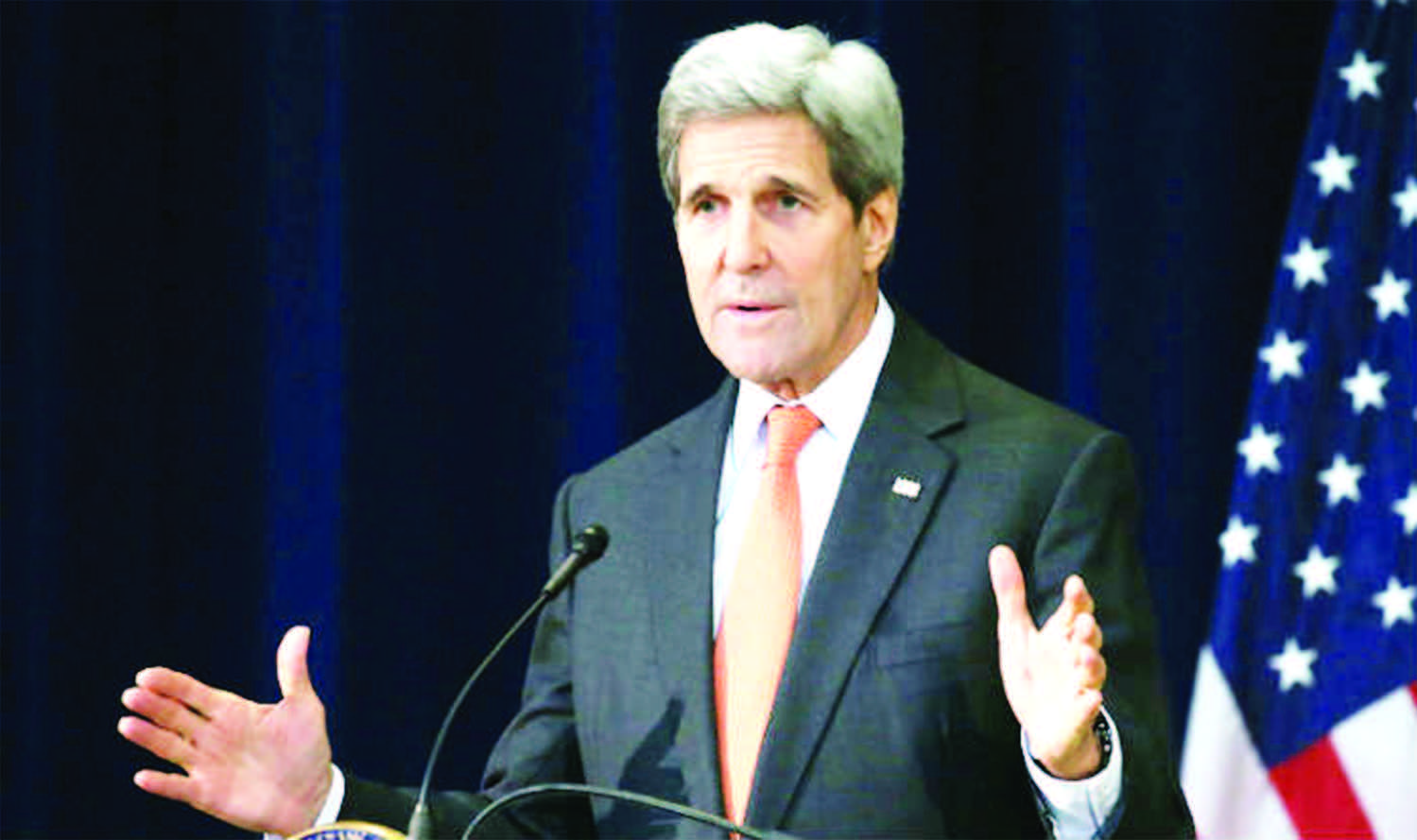
  • John Kerry to visit Turkey on August 21

    John Kerry to visit Turkey on August 21

    ISTANBUL (TIP): Turkish President Recep Tayyip Erdogan said that US State Secretary John Kerry intends to visit this month, in what would be the first trip by a top Western dignitary since a failed putsch.

    Kerry’s visit, if confirmed, comes at a time of heightened tensions between Washington and Ankara in the wake of the attempted military takeover on July 15.

    Turkey has been furiously demanding the extradition of Pennsylvania-based Islamic preacher Fethullah Gulen, whom it accuses of masterminding the coup.

    The government has launched a crackdown in its wake that has seen over 60,000 people within the military, judiciary, civil service and education sector dismissed, detained or put under investigation.

    “I think their secretary of state is coming on the 21th (August),” Erdogan said yesterday in a live interview with state-run TRT television.

    Within the next two weeks, a delegation led by Turkey’s foreign and justice ministers would also travel to the US to explain Gulen’s alleged involvement in the coup bid, he added.

    US State Department spokesman Mark Toner declined to comment. An Istanbul court yesterday issued an arrest warrant for Gulen, accusing him of ordering the coup aimed at ousting Erdogan.

    Ankara has frequently called on the United States to extradite the Muslim cleric, sending two sets of documents to Washington as evidence of his involvement in the putsch attempt.

    Gulen strongly denies masterminding the coup and the movement he leads insists it is a charitable network promoting tolerant Islam. Kerry said on July 18 that Turkey must present “genuine evidence” and “not allegations” against Erdogan’s former ally for his extradition.

    The crisis in Turkey has erupted at a time when the Ankara-Washington relationship is as important as ever, with the United States needing Turkish help in the battle against Islamic State militants in Syria.

    US fighter jets have been using Turkey’s southern base of Incirlik as a crucial launch point for lethal raids against IS targets in neighbouring Syria. (PTI)

  • Jaitley’s flawed logic | Judiciary’s ‘overreach’ a necessary balance

    Jaitley’s flawed logic | Judiciary’s ‘overreach’ a necessary balance

    Finance Minister Arun Jaitley has every right to believe and tell the Opposition that the job of dispute resolution provided in the GST Bill need not be handed over to the judiciary even though judges enjoy greater credibility and acceptance than, say, politicians and bureaucrats in settling tax and other disputes. Jaitley is also justified in questioning the need for having another drought fund when two such funds already exist. But instead of arranging relief for the drought-hit, the core issue on which the Supreme Court has pulled up the Centre, he offers excuses like lack of Parliament-sanctioned money.

    Being too clever by half, the lawyer in Jaitley knows how to twist arguments. And this he does to cover up recent political, constitutional and administrative lapses. The GST failure is all too apparent. How does having judges to hear tax cases tantamount to a “surrender of legislative jurisdiction to the courts”? This is how he argues: “With the manner in which encroachment of legislative and executive authority by India’s judiciary is taking place, probably financial power and budget making is the last power that you have left. Taxation is the only power which states have.” Then he makes the final assault: “Step by step, brick by brick the edifice of India’s legislature is being destroyed.”

    Presumed judicial overreach is an issue the executive is unhappy about. But it is not as serious a threat to democracy as was the executive’s attempt, backed by the Opposition, to undermine the judiciary’s independence through the NJAC, which was rightly struck down by a Constitution Bench. Jaitley had called it “tyranny of the unelected”. On Wednesday he sought NJAC-type Opposition cooperation on GST. The Supreme Court’s Uttarakhand snub a day before perhaps still rankled him and provoked the fresh tirade. There is no judiciary vs legislature issue at work. If judges at times cross the Lakshman Rekha drawn by the Constitution, usually an executive failure or political mischief provokes it. A sturdy judiciary may at times seem like an irritant but judicial vigilance over possible executive waywardness is an imperative.

  • Sri Srinivasan’s US SC nomination complicated by politics

    Sri Srinivasan’s US SC nomination complicated by politics

    WASHINGTON (TIP): The widely-expected promotion of Indian American judge Sri Srinivasan to the US supreme court has been complicated by the politics of the day. The Obama administration is proposing another judge for the job in an effort to overcome Republican opposition to filling the vacancy in the president’s final months in office.

    The White House is said to be vetting Jane Kelly, a federal appellate judge in Iowa, for the supreme court bench, in order to checkmate Senator Charles Grassley, who as chairman of the Senate Judiciary Committee in a Republican-controlled Senate has the power —which he has he will exercise —to block any nomination by the president. Grassley and many Senate Republicans argue that Obama should not make such a pivotal appointment in the final months of his presidency, mainly on account of the profound ideological shift it could engender.

    The US supreme court is currently split 4-4 on ideological lines (with four liberal judges and four conservative judges), and the vacancy caused by the death last month of Justice Antonin Scalia, a conservative, gives the Democratic Party an opening to swing the court’s ideological orientation its way. But the Republicans control the Senate and the House, and top guns of the party, including Grassley, have vowed to prevent this.

    Senator Grassley is up for re-election to the Senate in polls to 34 senate seats (onethird of the chamber) that will be held concurrently with the presidential elections in November this year. Obama’s strategists believe that because he is vulnerable, he will not risk blocking the nomination of a fellow Iowan judge who he has praised and supported in the past when she was nominated to the appellate court.

    But Grassley has said Judge Kelly, 51, is being used as a political pawn and has indicated that he will not budge even for a fellow Iowan. The political maneuvering leaves Srinivasan, who was considering the #1 choice for the post, in limbo. Of course, it is entirely possible that if the nomination process is not completed in the life of the current administration, he could be appointed by the next Democratic president.

    But the process will still have to contend with a 100-member Senate where Republicans currently hold 54 seats. With 24 Republican and 10 Democrats seats up for grabs in November, Democrats could still wrest back control of the Senate.

    The ascension of Srinivasan to the US supreme court and the election of Kamala Harris to the US Senate are considered two milestones in 2016 for the IndianAmerican community.

    (AFP)

  • What’s at stake in Iranian elections

    What’s at stake in Iranian elections

    Q: What’s at stake?

    A: Iranians will elect a Parliament that passes laws and a clerical council, the Assembly of Experts, that is technically in charge of naming a successor to the supreme leader when he dies. But analysts say that the choice of a successor to the supreme leader, Ayatollah Ali Khamenei, 76, will in all likelihood be deemed too important to be left to the assembly — it will instead confirm preselected candidates. The assembly also monitors the supreme leader, but that function has minimal effect.

    Q: Is Iran a democracy?

    A: It’s a hybrid country with religious and civil institutions. It has an elected president and Parliament, with limited powers. It also has a supreme leader who wields civil and religious authority and a Guardian Council, which comprises six religious experts and six legal experts to interpret the constitution.

    Q: Doesn’t the supreme leader control everything?

    A: Yes, and no. The supreme leader has final say on all matters of religion and state. But he also needs to balance the demands and interests of competing power centers like the Revolutionary Guards and the judiciary. Khamenei, according to the constitution, cannot annul Friday’s vote. Parliament and the Assembly of Experts are officially independent powers, but parliaments —particularly the departing one — take their cues from him.

    Q: How do the parliamentary elections work?

    A: Parliamentary elections are held every four years. There are no parties, just individual candidates — 6,000 of them vying for 290 seats. Anyone can apply to be a candidate (men and women, clerics and laypeople), but in both elections, the Parliament and the assembly, they are then vetted by the Guardian Council to ensure they are “good Muslims” and support the Islamic republic.

    Q: What happened to Iran’s reformists?

    A: The reformists were a force during the presidential contest of 2009, but the movement was decapitated after its political leaders voiced support for the millions of people who took to the streets to challenge the fairness of the vote. Despite the election of the moderate President Hassan Rouhani in 2013 and the nuclear deal with the West, internally, virtually nothing has changed. This year, the Guardian Council disqualified almost half of the more than 12,000 candidates who signed up to participate in these elections, many — if not most — of them reformists.

    Q: The candidates have been handpicked by conservatives, and the supreme leader has the final say in all matters. Do Iranians then care about the elections?

    A: You would think not, especially after the disappointment of 2009, when the government crushed demonstrations over perceived vote-rigging. But many Iranians look upon the elections as an opportunity to cast a “revenge vote,” the only occasion they have to come back at the hard-liners many of them intensely despise. On social media, people are sharing clips of hard-liners in Parliament speaking out against the nuclear deal that Iran sealed with the Western powers this year, saying, “Let’s get rid of these guys.” They have done it before. Iran’s vast middle class feels it achieved a victory in 2013 in electing Rouhani as president over the hard-line candidates.

    Q: Speaking of the president, how critical are the elections for him going forward?

    A: Rouhani came to power promising two things: a nuclear deal and subsequent relief from crushing economic sanctions; and some increases in personal liberties, with more freedom on the Internet and other areas. He hoped to capitalize on the momentum from the nuclear deal to win the support in Parliament to carry through on the second part of his promise.

    But the best he can hope for now is a strong minority of reformists and moderates in the new Parliament — and that is if Iran’s more liberal-leaning urbanites turn out in force.

    Q: What does this mean for Iran’s relations with the West?

    A: Iran’s foreign policy, firmly controlled by the supreme leader, is unlikely to change. Khamenei has been adamant that the nuclear deal was not the first step in a broad reconciliation with the West. He was equally clear this week that he expected the new Parliament to have an anti-Western cast. A hard-line victory would not endanger the nuclear deal, since Khamenei signed off on it. But a huge turnout for the moderate and reformist factions might allow Rouhani to at least continue establishing relations with Europe with less pressure and obstacles raised by the hard-liners.

    Q: When will we know the outcome?

    A: That is hard to say. Because of the list voting system, the individual winners will be identified slowly, perhaps beginning late Saturday and into Sunday, and maybe as late as Monday. Even then, because there are no parties as such, it will still be hard to discern which faction did best.

  • Indian community showers accolades on outgoing Consul General Mulay

    Indian community showers accolades on outgoing Consul General Mulay

    NEW YORK CITY (TIP): The Indian community in New York, headed by GOPIO in collaboration with the Consulate of India organized a get together to bid farewell to the Consul General, Ambassador Dnyaneshwar M. Mulay on February 14, 2016.

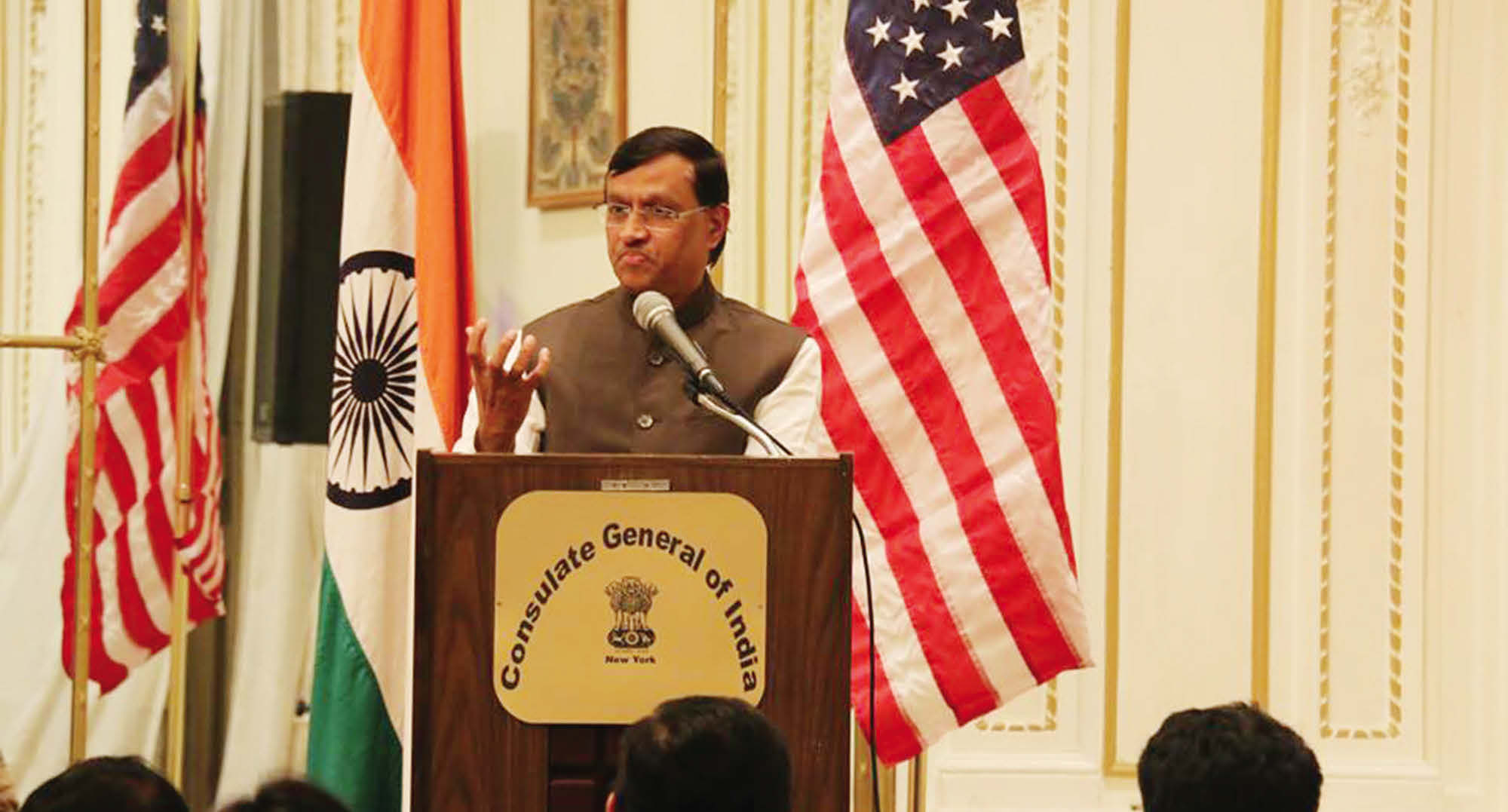
    Mr. Mulay addresses the gathering at Royal Albert's Palace on February 16
    Mr. Mulay addresses the gathering at Royal Albert’s Palace on February 16

    Ambassador Dnyaneshwar M. Mulay, who served as the Consul General of Indian in New York for two years and ten months, received accolades from business owners and professionals alike at the farewell event which was attended by a large number of people from all walks of life.

    Mr. Mulay’s rare achievements, to mention a few, include founding of monthly Media-India lectures, PM’s first visit with special reference to his public meeting with Indian community at Madison Square Garden and his interaction with the local public at Central Park, making the Consulate a model for cleaning drive by the Ministry, strengthening connection with Indian community by starting well-appreciated out-reach programs called ‘India at Your Doorstep’, besides several others.

    Mr. Mulay has been appointed to head the newly formed ‘India Diaspora Division’ in the Ministry of External Affairs incorporating the Ministry hitherto known as Ministry of Overseas India Affairs. His many great contributions covering all aspect of services -personal and official were recalled and appreciated by the speakers who included India’s Permanent Representative to the United Nations Ambassador Syed Akbaruddin, H.R. Shah, Dr. Sudhir Parikh, Dr. Navin Mehta, Prof. Indrajit S Saluja, Attorney Ravi Batra, and Ashok Vyas. Deepak Dave conducted the program.

    India's Permanent Representative to the United Nations Syed Akbaruddin as a skillful diplomat who can handle any situation deftly
    India’s Permanent Representative to the United Nations Syed Akbaruddin as a skillful diplomat who can handle any situation deftly

    Ambassador Syed Akbaruddin, Permanent Representative of India at UN and a contemporary of Mulay in the Indian Foreign Services, recalled his early days when Mulay was known as a poet among his batch mates. “A literary person at heart Mulay emerged as a fine diplomat fulfilling his duties, which are like writing hard prose not poetries.”

    Ambassador Akbaruddin recalled that Mulay had skillfully handled delicate issues during the political turmoil in Maldives where he was serving as the High Commissioner of India before coming to New York. His diplomatic skills were put to test in New York when India-US relations reached new lows in the event of the arrest of Devyani Khobragade, the then Deputy Consul General.

    Dr. Navin Mehta, a former Chairman of Bharatiya Vidya Bhavan said, "We are going to miss his down-to-earth approach in con-necting with all sections of Indian Americans."
    Dr. Navin Mehta, a former Chairman of Bharatiya Vidya Bhavan said, “We are going to miss his down-to-earth approach in con-necting with all sections of Indian Americans.”

    Speaking on the occasion, Dr. Navin Mehta, a former Chairman of Bharatiya Vidya Bhavan who has known Mr. Mulay well for some years now said, “Mulay successfully implemented a policy of ‘bringing the consular services to our doorsteps’” said community leader Dr. Navin Mehta, “We are going to miss his down-to-earth approach in connecting with all sections of Indian Americans.”

    Prof. Indrajit S Saluja described Mr. Mulay as a man endowed with the best of qualities of head and heart
    Prof. Indrajit S Saluja described Mr. Mulay as a man endowed with the best of qualities of head and heart

    Prof. Indrajit Saluja, Chief Editor of The Indian Panorama wondered how one man could have so many diverse qualities of head and heart and commented that God must have created Mr. Mulay with some special stuff. Turning to Mr. Mulay, he said, “you are leaving a rich legacy behind. You will always be remembered for the great work you have done here as Consul General and also for being a perfect gentleman”.

    A plaque was presented to Mr. Mulay by Attorney Anand Ahuja on behalf of GOPIO.

    Two days later, on February 16, the Indian American community organizeda farewellevent at Royal Albert’s Palace in Fords, New Jersey. Known for his literary talents the community recognized him as an officer who transformed the way passports and visa applications were handled under his watch.

    Ambassador Mulay with hosts and community leaders at Royal Albert's Palace
    Ambassador Mulay with hosts and community leaders at Royal Albert’s Palace

    Those who acknowledged Mulay’s contribution as a ‘man of action’, included Ramesh Patel, Chairman, Federation of Indian Association, H. R. Shah, Chairman, TV Asia, Dr. Navin Mehta, Trustee, Bharatiya Vidya Bhavan and Dr. Sudhir Parikh, Chairman, Parikh Worldwide Media, all of who said that the consulate staff was more efficient than ever. Mulay on his part disclosed his style of functioning as that of a leader who cared for his subordinates. He pointed out that his staff needed a new vision in order to become more productive. “On the first day of my work, I called a few of my staff and asked them to give their opinion about a painting hanging on the wall. All of them said there was nothing wrong with the painting. Then I turned the painting upside down and asked them what they thought of it. All of them pointed out that the painting looked much better than before.”

    Mulay narrated the above incident to bring home the point that it was possible to improve things without making a worker feel guilty. “I applauded my staff and showed them a different way to be more productive. A marked improvement in the functioning of the consulate was visible soon”, he said.

    Issuing timely visas and processing applications for new passports are the most important responsibilities carried out by consulates. Any pitfall in discharging such duties is bound to bring bad reputation for the office of the Consul General. Mulay realized this fact and quickly implemented an ambitious plan to expedite applications for visa, OCI and OPI. He was promptly assisted by Dr. Manoj Kumar Mahaptra, whose youthful attitude sparked new energy among the consular staff.

    Manoj Vyas, a well-known painter presenting to Mr. Mulay the latter's portrait he made as a farewell gift
    Manoj Vyas, a well-known painter presenting to Mr. Mulay the latter’s portrait he made as a farewell gift

    “We are proud to say that we process all applications within a day or two”, said Mulay in his speech at the farewell function. His vision was to project the New India House, the consulate premises, into a center for cultural and intellectual activities. “We held more than 200 events in a year”, he said adding that his office aimed at encouraging all sections of the community within its resources.

    The monthly lecture series launched by Mulay on various current topics in art, literature, journalism and judiciary were well appreciated in the cultural circle of New York. The consulate hosted high-ranking officials

    from the State Department such as Nisha Desai Biswal,Assistant Secretary, Bureau of South and Central Asian Affairs and high profile New Yorker such as Salman Rushdie.

    Mulay is returning to New Delhi, where he will be responsible for the Affairs of Overseas Indians. “I hope to continue working with you”; he proclaimed demonstrating his deep interest in contributing for the progress of India with the help of Indian Americans. For the past year he initiated outreach initiatives to connect with people of Indian origin in various states of USA, which fall under his jurisdiction. He established good working relations with a number of officials including the Governor of Massachusetts Charlie Baker who sent a proclamation for Mulay.

    The farewell event was hosted by a host of community organizations including FIA, GOPIO, AAPI, Bharatiya Vidya Bhavan, and others. A plaque was presented to Mulay on behalf of FIA. Andy Bhatia, a former Air India official conducted the event.

    A view of the gathering at the Indian Consulate on February 14
    A view of the gathering at the Indian Consulate on February 14
  • Indian Republic’s Progress in 66 Years

    Indian Republic’s Progress in 66 Years

    As India celebrates its 67th Republic Day, it is important to look at some of the country’s achievements and areas for improvement. Such an endeavor would lead to an assessment of the country’s progress till date and course correction in the days ahead.

    There are several areas where considerable progress has been made. These include strategic affairs and security, politico-legal democratic governance as well as society and economy. In no way does it mean that the progress has attained the ideal but the fact remains that India has improved significantly and performed rather well overall since it attained independence.

    In the strategic affairs and security domain, India has moved ahead but has had limited success. India has been able to emerge as a regional power in Asia backed by its economic, military and nuclear capabilities. On the internal security front, approximately one in every six districts is Maoist-dominated that causes a massive internal security challenge. The challenges include communication breakdown between the government and the governed.

    67TH REPUBLIC DAY1In the sphere of politico-legal and democratic governance, significant achievements have been made. From 54 political parties in the 1951 general election, India had moved up to 464 in the 2014 general election. It shows a deepening of the democratic process. There have been periods of darkness threatening India’s democratic institutions at certain moments in post independent India. These for an example include the imposition of emergency and curtailment of press freedom in the period 1975-77. But India’s institutions like the free press and an independent judiciary have ensured that India remains a society based on rule of law. India’s democratic institutions and framework have ensured stability even in periods of political chaos. Another achievement that barely gets mentioned is that India has been able to keep out the military from the democratic process. It also shows prudence on the part of military generals and defence personnel. Challenges now and for the future include ensuring greater transparency, accountability and independence in the broad framework of checks and balances on which India’s democratic framework rests. Also, resolving administrative issues and attitudinal issues like pendency in courts and apathy of the governing class remain a challenge threatening the rule of law and democratic governance.

    On the socio-economic front, the country started out with a ‘command and control’ economy. It meant centralized planning and a very big public sector but soon there were inefficiencies and labour issues. That resulted in a move towards a more open liberalized market driven model of the economy starting in the 1980s and culminating in the 1991 reforms. Post this, the economy has seen greater private and foreign participation and seen the emergence of a new middle class. The transformation in the physical, digital and banking sectors has been nothing short of revolutionary.

    India’s Gross National Income (GNI) at constant prices has increased more than 35
    times from Rs.2.92 lakh crore in 1950-51 to Rs.105.28 lakh crore 2014-15. Similarly, the per capita income at current prices has risen from a paltry Rs.274 In 1950-51 to a decent Rs.88,533 in 2014-15. Foodgrain production grew from 50.8 million tonnes in 1950-51 to an estimated 264.77 million tonnes in 2014-15 that indicates more than a five-fold increase and the fact that India is food secure for the time being. It was made possible with rapid advances in agricultural technology. The green revolution and white revolution are well known, and recently a solar powered ‘saffron’ revolution is now being envisaged on similar lines for energy security. Advances in healthcare and education levels have also been observed. The life expectancy at birth has almost doubled from 36 years in 1951 to 66 years in 2011 due to the availability of better medicines, access to improved healthcare facilities and improved overall well-being. Similarly, diseases like smallpox and polio have been eradicated. In education, the number of universities and colleges has gone up from a minuscule 27 universities and 578 colleges in 1950-51 to an estimated 712 universities and 36,671 colleges in 2014. Similarly, literacy rates have almost quadrupled from 18.3 percent of the population in 1951 to 73 percent in 2011.


  • Constitution of India  ‘Of the people, for the people and by the people’

    Constitution of India
    ‘Of the people, for the people and by the people’

    The Indian Constitution, the longest of any sovereign nation in the world, provides a comprehensive framework to guide and govern the country, keeping in view her social, cultural and religious diversity.

    A distinctive document with many extraordinary features, the Constitution of India is the longest written constitution of any sovereign nation in the world. The original text of the Constitution contained 395 articles in 22 parts and eight schedules. It came into effect on January 26, 1950, the day that India celebrates each year as the Republic Day. The number of articles has since increased to 448 due to 100 amendments.

    The Constitution was framed by the Constituent Assembly of India, established by the members of the provincial assemblies elected by the people of India. Dr Sachidanand Sinha was the first president of the Constituent Assembly. Later, Dr Rajendra Prasad was elected its president. Dr BR Ambedkar, the chairman of its Drafting Committee, is considered the chief architect of the Indian Constitution which provides a comprehensive and dynamic framework to guide and govern the country, keeping in view her unique social, cultural and religious diversity. It establishes the main organs – executive, legislature and judiciary, defining their powers, demarcating their responsibilities and regulating the inter-se relationship. It inter alia lays down the basic structure of governance and the relationship between the government and the people. The rights and duties of citizens are also spelt out. The Constitution applies to the state of Jammu and Kashmir with certain exceptions and modifications as provided in Article 370 and the Constitution (application to Jammu and Kashmir) Order, 1954. It is the mother of all other laws of the country. Every law enacted by the Government has to be in conformity with the Constitution.

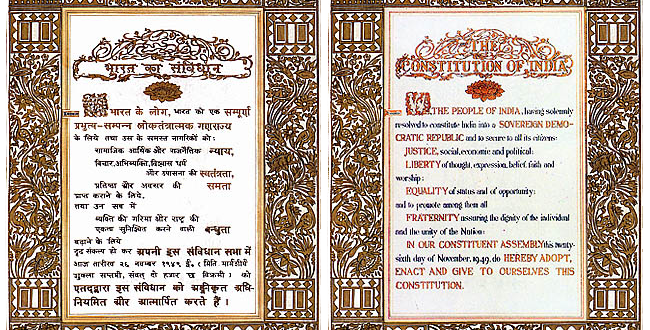
    The preamble to the Constitution declares India to be a Sovereign Socialist Secular Democratic Republic and a welfare state committed to secure justice, liberty and equality for the people and for promoting fraternity, dignity of the individual and unity and integrity of the nation. The objectives specified in the preamble constitute the basic structure of the Indian Constitution which cannot be amended. The opening and last sentences of the preamble: “We, the people… adopt, enact and give to ourselves this Constitution” signifies the power is ultimately vested in the hands of the people.

    The Preamble to the Constitution

    Although Article 1 of the Constitution says India shall be a Union of States, the Constitution provides for a federal structure with clear division of powers between the Centre and the states, each empowered by the Constitution to enact and legislate within their sphere of activity. The seventh schedule contains three legislative lists which enumerate subjects of administration viz union, state and concurrent legislative lists. The Central Government enjoys exclusive power to legislate on the subjects mentioned in the Union list. The state governments have full authority to legislate on the subjects of the state list. And both the Centre and the state can legislate on the subjects mentioned in the concurrent list with the residuary powers vested in the Central Government. It can be said that India has cooperative federalism. The Constitution provides for the Parliamentary form of Government with a bicameral legislature at the Centre consisting of Lok Sabha (Lower House of Parliament) and Rajya Sabha (Upper House of Parliament).While the Lok Sabha consists of the elected representatives of people, the Rajya Sabha consists of representatives elected by the state legislative assemblies. The President is the nominal head of the state and the Parliament. In actual practice, the Prime Minister, aided by the Council of Ministers, heads the executive and is responsible for governance.

    An impartial judiciary, independent of the legislature and the executive, is one of the main features of the Constitution. The Supreme Court of India is the highest court of the country and acts as guardian of the Constitution and serves as the final court of appeal. Each state has a High Court as its highest court. Under powers of judicial review, the Supreme Court and High Court can declare a law as unconstitutional or ultra vires if it contravenes any provisions of the Constitution. This power of judicial review constitutes a middle path between the American judicial supremacy on one hand and British Parliamentary supremacy on the other. In order to ensure the impartiality of the judiciary, the judges are appointed by a process free of influence of the executive. The judges can only be removed by a rigorous process of impeachment to be approved by both the houses of the Parliament.

    The Constitution vests many fundamental rights in citizens. These are (i) Right to Equality, (ii) Right to Freedom, (iii) Right against Exploitation, (iv) Right to Freedom of Religion, v) Cultural and Educational Rights and vi) Right to Constitutional Remedies. These rights are justiciable and an individual can move the Supreme Court or the High Courts if there is an encroachment on any of these rights. However, Fundamental Rights in India are not absolute. Reasonable restrictions can be imposed. By 42nd Amendment in 1976, fundaments duties were added in the Constitution to remind people that while enjoying their right as citizens, they should perform their duties for rights and duties are correlative.

    Another novel feature of the Constitution is that it contains a chapter on the directive principles of state policy, that are in the nature of directives to the Government to implement them for establishing social and economic democracy in the country. Though not justiciable, these principles are considered fundamental in the governance of the country.

    There are many autonomous institutions set up under the Constitution which perform a key role, such as, Election Commission (responsible for holding free and fair elections), Public Service Commission (responsible for selection to main government services) and an Auditor General (for independent audit of accounts of the government and its agencies).

    One of the strengths of the Constitution is that it is a dynamic instrument that can evolve with time either by its interpretation or amendment. On paper, an amendment to the Constitution is a difficult affair, and normally needs, at least, two-thirds of the Lok Sabha and Rajya Sabha to pass it. However, the Constitution of India is one of the most frequently amended constitutions in the world so as not to stand in the way of the growth and development of the nation and her people.

    The success of the Indian Constitution, for a country as diverse and complex as India, continues to intrigue, impress and inspire experts around the world.

     By Sumant Batra - The author is a corporate and policy lawyer
  • New bill proposes H1B & L1 visa reforms

    New bill proposes H1B & L1 visa reforms

    BENGALURU: The US is set to pass a bill on immigration with major implications for the Indian IT sector and its employees. The bill seeks to prohibit companies from hiring H-1B employees if they employ more than 50 people in the US and more than 50% of those employees are H-1B and L-1 visa holders.

    49799498.cmsThe Bipartisan legislation, if passed, all U.S. companies looking to hire workers with H-1Bs would be required to first search for a U.S. citizen to fill the position. Companies of more than 50 people in which over half of the workforce in made up of H-1B and L-1 visa holders would be banned from hiring any new workers with H-1Bs. (L-1 visas allow for the relocation of specialized workers to U.S.-based departments of international companies). This move will place severe restrictions on larger Indian IT companies that are the largest users of H-1B visas. Though companies do not disclose the data, it is believed that the large Indian IT companies have more than 50% of their employees on H-1Bs and L-1s.

    The bill was introduced by Republican Iowa senator Chuck Grassley, who is also chairman of the Senate Judiciary Committee, and Democratic Illinois senator Dick Durbin.

    The Wall Street Journal reports that India’s outsourcing firms, and subsequently the country’s economy, have already been facing challenges because of cloud computing. This bill would add to their troubles.

    The Bill also gives the labour department enhanced authority to review, investigate, and audit employer compliance with programme requirements, as well as to penalize fraudulent or abusive conduct. It requires the production of extensive statistical data about the H-1B and L-1 programmes, including wage data, worker education levels, place of employment and gender. “If this Bill is enacted, US companies would be prohibited from hiring foreign workers under the H-1B and L-1 visa categories if at least 50% of their employees have already been employed on such visas. The Bill also gives wide powers to the law enforcement authorities to investigate and penalize for non-compliances,” Shroff said.

  • Now, YOU’VE GOT A SAY IN JUDGES’ APPOINTMENT

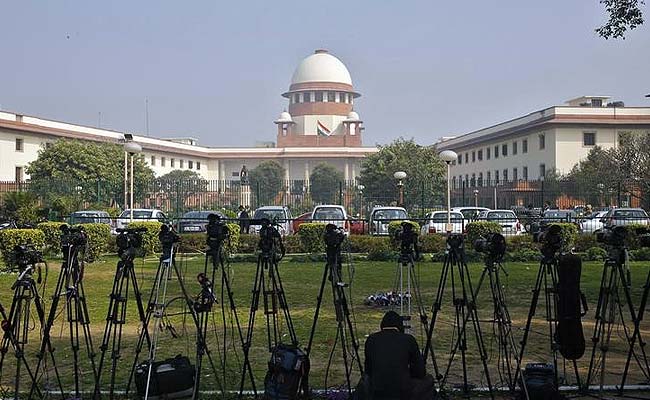
    NEW DELHI (TIP): The Supreme Court of India on November 5 decided to seek the views of the general public, academicians and lawyers across the country on how to reform the ‘opaque’ judges-selecting-judges collegium system, which it had revived after quashing the National Judicial Appointments Commission (NJAC).

    Fathoming strong undercurrents in the court room with unsung advocates stealing a march over the luminaries who till now held centrestage in arguing against the NJAC, a five-judge bench headed by Justice J S Khehar said it would be better to seek suggestions from all concerned citizens.

    “The issue is so seminally important to the judiciary that we cannot limit the suggestions only to lawyers of this court,” the bench, also comprising Justices J Chelameswar, Madan B Lokur, Kurian Joseph and Adarsh K Goel, said.

    The apex court had wrested the constitutional power to select judges from the executive through two judgments in 1993 and 1998. In its 1998 judgment, the SC had evolved the collegium system without inviting views from the public. This will be the first occasion when the SC is involving the general public in its affairs, especially in a critically important issue like selection of judges.

    Bar Council of India chairman Manan Kumar Mishra turned the tide in favour of adjourning the case to get response from as many lawyers as possible and from all high courts. Many advocates said the real stakeholders of judiciary were the public and not a coterie of senior lawyers, who alone were being heard by the court.

    The bench, which had earlier wanted to complete the hearing on Thursday itself on the ground that the collegium’s work had been stalled awaiting reforms, decided to go public to receive suggestions.

    “Bar Council of India is a very important stakeholder. It has office-bearers in all high court bar associations and it wants to consult as many lawyers as possible before making suggestions to the court. It will be a good idea to allow them to do the consultation process and formulate suggestions. It is a very important matter,” the bench said.

    It appreciated attorney general Mukul Rohatgi volunteering to upload the broad parameters of reforms – transparency, eligibility criteria for persons to be considered for appointment as a judge, mechanism to handle complaints against persons in the zone of consideration and a permanent secretariat for the collegium – on the website of the ministry of law and justice.

  • Supreme Court Vs Legislature | Who will Guard  the Guards is the Question

    Supreme Court Vs Legislature | Who will Guard the Guards is the Question

    The Supreme Court sent shockwaves down the spine of the elected executive by declaring the 99th constitutional amendment to set up the National Judicial Appointments Commission (NJAC) as unconstitutional and void as it “violates the basic structure of the constitution”. This comes from the Constitution Bench with a majority – 4:1 in favor of the rejection of NJAC.

    I agree that with only judges-appointing-judges part it does not leave room for something to be added. As the lone dissenting judge Justice J Chelameswar writes: “There is no accountability in this regard. The records are absolutely beyond the reach of any person including the judges of this Court who are not lucky enough to become the Chief Justice of India. Such a state of affairs does not either enhance the credibility of the institution or is good for the people of this country.” The Supreme Court judges are the guardians of our Constitution. What happens if a Collegium turns rogue? As the Roman poet Juvenal wrote: “Quis custodiet ipsos custodes?” (“Who will guard the guards?”)

    Now what the basic structure states in layman language. Judges are to be appointed by the President of India after consultation with the Chief Justice of India and what it has become is that the Chief Justice of India will appoint the Judges and the President of India signs the file. It is worth mentioning here that 90% of the Presidents of India come from the Legislature.

    The five-judge Supreme Court’s verdict did raise some questions on the judiciary. The NJAC law was passed with overwhelming majorities in both houses of parliament and by 20 state assemblies clearly showing the will of the elected, though it may not be the will of the people.

    Is the constitution a subject matter of Individual interpretation or is it a rule book in Black penned by the founding leaders of our Country? 

    What triggered curiosity was the passage by Justice Kehar in the Judgment where he wrote, “It is difficult to hold that the wisdom of appointment of judges can be shared with the political executive. In India, the organic development of civil society has not as yet sufficiently evolved. The expectation from the judiciary, to safeguard the rights of the citizens of this country, can only be ensured, by keeping it absolutely insulated and independent, from the other organs of governance.”

    Does this mean we are a backward civil society or that we simply lack wisdom? I agree with the statement and here is why we need to understand how our society votes when it comes to the elected. 70% of the voters base their decision on caste, party or religious views instead of the right candidate. Yes, we get easily fooled and now the elections seem to be about who not to vote for rather than who to vote for and yes, we can vote an anarchist to absolute majority.

    Arun Jaitley states “democracy can’t be the tyranny of the unelected”. In a Facebook post titled “The NJAC Judgement – An Alternative View”  Mr. Jaitley said the opinion of the Supreme Court is final, but not infallible. Let us ask ourselves, the government can make any rule, any law and the statement only shows legislatures’ unfulfilled ambitions. Mr. Jaitley, Democracy cannot be the tyranny of the elected.

    Citing another important reason for striking down the NJAC law was the Emergency of 1975-77, imposed by the then Congress government. The Constitution Bench opined that it is important that the government does not  have any role in the appointment of judges. It was the imposition of Emergency that gave birth to the collegium system.

    Those opposing the Collegium system say that this kind of a system is  unheard of in most parts of the world in which  judges appoint  judges through a selection process.

    Another comment on collegium system by Jailey creates bias. He tried to elegantly create confusion about the appointment of judges in one sentence: “Collegium is like a Gymkhana club in which existing members appoint new members”.

    What was the 99th amendment (NJAC)?The NJAC will have six members: The Chief Justice of India (CJI), two senior most poise judges of the Supreme Court, the Law Minister and two “eminent persons” selected by a panel comprising the CJI, the PM and the Leader of the largest opposition party (LOP). But then came the crunch. Any two of these six members could veto an appointment.

    The judgment made it clear that it was opposed to the Law Minister being a member of the panel, as his very presence would impinge on the principle of the independence of the judiciary and be contrary to the separation of powers. And the presence of the Prime Minister and the leader of the opposition in the panel to select the judges was also viewed negatively.

    Then, there is another reason which cannot be ignored. The government is the largest litigant in the country and has the dubious distinction of losing 80% of the cases in the Supreme Court. Government presence and interference could pull strings on judiciary.

    What’s Next?  On November 3, a five-judge Constitution Bench will consider suggestions on improving the Collegium system, and has invited submissions from the government and other stakeholders. The Constitution Bench chose to take this route as it quashed the NJAC and ordered revival of the Collegium system.

    Ruling that the primacy of the judiciary in judges’ appointments was embedded in the basic structure of the Constitution, it said these appointments will continue to be made by the Collegium system in which the CJI will have “the last word”.

    read-more

  • BJP breathes easy as RSS chief backs reservations

    BJP breathes easy as RSS chief backs reservations

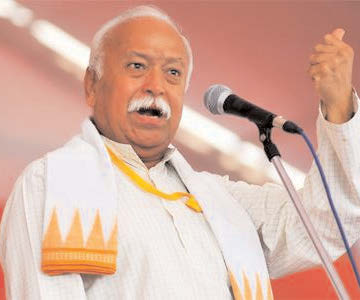
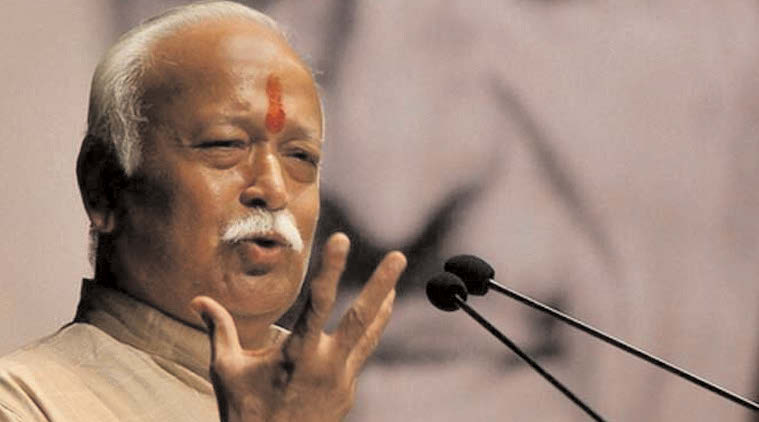
    NAGPUR (TIP): RSS chief Mohan Bhagwat on October 22 expressed support for reservations provided for under the Constitution, in a big relief to BJP which is having to fend off accusations of being “anti-quota” during the crucial Bihar polls.

    The RSS chief began his annual Dussehra speech by praising Ambedkar. “He made a life-long struggle against the injustice of social inequality and made provisions in the Constitution thereby eradicating those discriminations from political and economic spheres of our national life,” Bhagwat said in what read like an endorsement of the reservations provided for under the Constitution for the socio-economically underprivileged- in other words, SCs/STs and the OBCs.

    The speech was marked by praise for Modi government, absence of any reference to the recent flare-up in communal tensions in certain parts, criticism of judiciary for meddling with the rituals of Jains and an appeal for framing a policy for population control by disregarding ‘vote bank’ politics.

    Significantly, Bhagwat stressed the importance for dialogue for bringing about a change in customary religious practices and cultural tradition. “We should not be guided by cheap popularity or political incentives. What is truthful and just should be our guiding principle. By adopting a compassionate approach towards every section of society, we can change their approach through a friendly and respectable dialogue,” he said. Although he made the remark in the context of a court verdict banning Santhara – the custom of Jain elders fasting themselves to death — it was at odds with the usual right-wing pitch of early enactment of the Common Civil Code.

    For BJP, the remarks on reservation could not have been more timely. Its chief opponents in Bihar, RJD boss Lalu Prasad and chief minister Nitish Kumar, have cited Bhagwat’s advocacy for a review of the working of quotas to accuse BJP of being anti-quota and seek to mobilize Dalits and OBCs against the party. BJP chief Amit Shah has dismissed the charge by declaring party’s “unequivocal support” to quotas and even RSS, uncharacteristically, came out with a statement to say the same. However, opponents have refused to let go of the matter.

    In fact, in his speech Bhagwat stressed that the year happens to mark the 125th birth anniversary of Ambedkar, and even quoted his powerful predecessor, M S Golwalkar, to describe the framer of the Constitution as “confluence of Acharya Shankar’s sharp intellect and Tathagat Buddha’s unbounded compassion”.

    Bhagwat’s speech, 90th by a chief of the parent Hindutva outfit, came just before the Bihar battle enters the terrain BJP considers to be more friendly.

    Bhagwat also gave a big thumbs up to the Narendra Modi government endorsing that it was moving in the right direction and should deliver results soon. “When we ponder over the present situation in the country, we get a very optimistic and soothing view. The atmosphere of disappointment and lost faith, which existed couple of years back, has evaporated.

    An atmosphere of expectations has come to the fore, generating a sense of optimism that such expectations shall be fulfilled,” said the RSS chief, the remark contrasting so starkly with the perception about rise in communal tension in certain parts.

  • SC DECLARES NATIONAL JUDICIAL APPOINTMENTS COMMISSION UNCONSTITUTIONAL

    SC DECLARES NATIONAL JUDICIAL APPOINTMENTS COMMISSION UNCONSTITUTIONAL

    NEW DELHI (TIP): In a landmark judgment, the Supreme Court declared the National Judicial Appointments Commission, set up by the NDA government, unconstitutional. The collegium system, where semior judges appoint judges,will continue, the court said.

    “I’m really surprised by this verdict, Union Law Minister VS Gowda, said.

    The top court struck down the the 99th Constitutional amendment brought by the NDA government. The bench revived the collegium system of appointment of judges, commonly referred to as judges-selecting-judges.

    A five-judge constitution bench headed by Justice J S Khehar , by a 4:1 majorit, termed both the amendment and the NJAC Act unconstitutional, because it interfered with the independence of the judiciary.

    One of the contentious provisions of the new law was the inclusion of two eminent persons to the Commission which included the Chief Justice of India, two “senior most” judges of the apex court and the Union law minister. The two persons were to be nominated by a committee of the Chief Justice, the Prime Minister and the leader of opposition in the Lok Sabha. TheNarendra Modi government said the Commission would bring transparency in the appointment of judges to the high courts and Supreme Court.

    The apex court has scheduled November 3 for further hearings on the issue of improving the collegium system of appointment of judges.

    The petitions challenging the new legislation were filed by the group, the Supreme Court Advocates on Record Association, and others, who contended that the new law would hurt the independence of the judiciary.

    The Centre had defended the introduction of the new law saying that the two-decade-old collegium system was not free from defects. It added that the Supreme Court Bar Association supported the new Commission. The creation of the Commission was also supported by 20 state governments that ratified the NJAC Act and the amendment.

    The collegium system — by which the body of senior SC judges headed by the Chief Justice of India selected persons and recommended their names for appointment as judges –was created by two judgments of the SC in the 1990s.

  • ERODING CIVIL RIGHTS!  Is India’s Democracy in Danger?

    ERODING CIVIL RIGHTS! Is India’s Democracy in Danger?

    Our country is facing the destruction of the very idea of India as a great, multi-religious, multi-cultural civilization. We are facing the gravest danger we have faced since independence. Our freedom is not merely under threat, it is being ‘openly attacked’, says Nayantara Sahgal, niece of India’s first Prime Minister Jawaharlal Nehru, whose latest work, “Nehru’s India: Essays on the Maker of a Nation”, has just been released.

    What is happening to the body politic of India in the short time since Shri Narendra Modi assumed power?  Are the institutions of democratic strength and stability for six decades, which were built under the stewardship of eminent statesmen like Jawaharlal Nehru and B.R. Ambedkar proving to be weak and vulnerable?

    If we listen to various pundits, there is a serious cause for concern to India’s vast democracy. Although the BJP government has come to power with only 31 per cent of the vote share, the Sangh Parivar with its misguided agenda and regressive policies has determined to transform India into its own liking. With civil society under threats and intimidation, the media’s eagerness to establish approval, and the survival mode of the opposition parties, the saffron brigade is not wasting any time.

    On the eve of Shri Modi’s second visit to the United States, there is certainly a shift in the mood within the Diaspora as regards the intent and purposes of the BJP government. A letter signed by 124 members of faculty  from leading Universities in USA questions the Prime Minister on well-publicized episodes of censorship and harassment in his critical policies; bans and restrictions on NGOs; ongoing violations of religious freedom; and a steady impingement on the independence of the judiciary.

    The letter also talked about foreign scholars who have been denied entry in to India to attend International conferences, and the ongoing interference with the governance of top Indian Universities and academic institutions. It mentioned under-qualified or incompetent key appointments made to Indian Council of Historical research, the Film and Television Institute of India and the National Book Trust. In conclusion, the statement expressed serious concern for the political future of the country if these trends are allowed to continue.

    In an interview with Times of India, Nobel Laureate  Amartya Sen said, ” Government must understand that winning a Lok Sabha election does not give you permission to undermine the autonomy of academic institutions, or for that matter, the courts or the upper house of Parliament. Academic freedom is based on the government understanding the limits of its formal power as opposed to its actual power and what they are expected to do: they are expected to listen to the voice of the professoriate and the voice of the people in the University”.

    Whether it is banning the documentary ‘India’s Daughter”; offloading Ms. Priya Pillai, a Green Peace activist from her flight to London, while she was on her way to address British Parliamentarians; banning the processing, selling or eating of the red meat in Maharashtra and in 4 other BJP-ruled states; the Rashtriya Swayamsevak Sangh (RSS) is stamping history with their regressive policies and divisive agenda.

    The BJP Government so far has banned 69 Non-Governmental Organizations from receiving foreign funding, branding them as anti-national and accusing them of working at the behest of foreign governments. It includes organizations like Ford Foundation and Caritas International that provided much-needed help to communities in rural India in an effort to end poverty promote justice and restore dignity to a neglected segment of the population.

    Ms. Teesta Setavald, a long-time critic of Mr. Modi on his handling of the 2002 Gujarat riots that killed more than 1000 people in Gujarat is currently being investigated by CBI. According to a New York Times report, the prosecutor branded her ‘a threat to India’s national security, so dangerous that she should be locked up while Modi’s Government investigates whether it was legal for her to accept funding from Ford Foundation’.

    For the first time since it took charge, the NDA government has issued show-cause notices to ABP news, NDTV and Aaj Talk alleging that these three private channels showed disrespect to the judiciary in their coverage of the hanging of Mumbai blast convict Yakub Memon, asking them to explain within 15 days why action should not be taken against them for broadcasting such content.

    These should not be regarded as isolated incidents but rather as a  part of a grand strategy to intimidate civil society, and silence the media in order to advance the saffron agenda. All these incidents point to a growing intolerance to dissent, and the very concept of freedom that may ultimately prove fatal to the democratic and pluralistic framework that was created out of the visionary leadership of the founding fathers of modern India.

    Asked to explain what prompted him to be a signatory on the faculty statement against Narendra Modi’s “Digital India Campaign”, Richard A. Falk, Professor Emeritus of Law at Princeton University said the following: “I and others on the list have questions about Narendra Modi’s record on religious tolerance, freedom of religion, and freedom of expression. Some of those who signed the letter have also been subject to a campaign of harassment from Hindu nationalist followers, which raises particular worries about academic freedom. “Digital India” as an initiative has enormous potential to affect positive social change, but it simultaneously poses dangers for abuse under the Modi administration that can make use of digitization to target members of minority communities or those who are critical of its policies. It is my impression that the Modi government has been particularly sensitive to criticism and unfriendly to critics, making our concern more credible”.

    Mr. Falk’s statement sounds prophetic, as at the time of writing this article Mr. John Dayal, a member of the National Integration Council and Secretary General of All India Catholic Union and a foremost Human Rights defender was being hounded with abusive and threatening tweets along with his personal details. The abuses are also directed at the Catholic-Christian minority and are aimed at disturbing communal harmony. The country has just witnessed the murders of three well-known rationalists -Narendra Dabholkar, Govind Pansare and M.M. Kalburgi allegedly by religious extremists. These elements appear to be serious in their nefarious undertaking.

    As the Indian entrepreneurs in the Silicon Valley are gearing up to give a grand reception to the Prime Minister, I hope they would also be cognizant of the fact that the freedom they enjoy here in the United States should empower them to enhance freedom elsewhere. As Mahatma Gandhi once said “Commerce (Business) without morality (ethics) and science without humanity could prove to be detrimental to everyone’s long term interests!”

    (The author is a former Chief Technology Officer of the United Nations)

  • A Sarsanghchalak’s very own Sarkaar

    A Sarsanghchalak’s very own Sarkaar

    15 years ago, this month, a prime minister of India had traveled to the United States for the annual United Nations General Assembly mela. During that visit, he found time to attend a Vishwa Hindu Parishad event in Staten Island where he declared himself a swayamsevak – yes, as in the Rashtriya Swayamsevak Sangh. This was music to the ears of the Nagpur Gharana. A prime minister who all along was pretending to have little to do with this Hindu outfit suddenly got into a confessional mood.

    Back in New Delhi, Atal Behari Vajpayee’s exuberance did not last long. The conflict between the demands the RSS would make on a prime minister and his constitutional oath was too palpable to permit any kind of meaningful jugalbandi. Though Vajpayee continued to mark his token attendance at the annual guru dakshina rites, he was not afraid to antagonize the Nagpur crowd. After the 2002 anti-Muslim riots in Gujarat, it was simply not possible for Vajpayee to maintain any civilized conversation with these comrades among the swayamsevaks. The gurus never forgave Vajpayee for wanting to draw outside the lines.

    And, again, 10 years ago, July 2005 to be precise, three designated gurus of the Nagpur Gharana traveled to Delhi to tell the then BJP president, LK Advani, to put in his papers. Advani had committed the solecism of saying something vaguely in praise of Muhammad Ali Jinnah. All the top leaders of the BJP held their collective peace as the “unknown, unelected, unaccountable” Nagpur-empowered busybodies roughed up Advani as if he was just a taluka-level politician. Advani was rendered hors de combat. By the end of the year, he was gone as the party president. The Nagpur bosses wanted to reaffirm the first principle: No BJP leader would be allowed any deviation. They had had enough of Vajpayee and his liberal tantrums.

    And, last week, it was this very first principle that was re-asserted when the Sarsanghchalak summoned Prime Minister Modi and his ministers. Well, if you are a swayamsevak, you do respond to summons from the superior in the hierarchy. Period. That is the code of the saffron brotherhood. Admitted, Sushma Swaraj is not an RSS bhakt. Nor is Arun Jaitley. Unless, he has managed to keep this fact away from his “moderate and decent” friends in Delhi. But neither of them had any choice.

    Why are the liberal souls losing their shirt just because the Prime Minister and his ministerial colleagues had all chosen to put in an appearance before the RSS chief and his advisers? After all, the Modi-RSS connection is not new.

    It was no secret that it was the RSS’s unequivocal endorsement of Modi that proved decisive in the BJP making him its prime ministerial mascot. Nor was the RSS’s involvement on behalf of Narendra Modi in the 2014 electoral process a secret affair. It was open and fairly well documented.

    From his Gujarat days, Modi has written the blue book on how to look after the RSS and its functionaries. Modi is smarter – which is not the same thing as being wiser – than Vajpayee. He has shrewdly sized up the small men and their small needs.

    To be fair, Modi never kept anyone in the dark about his RSS links. Yet, if the best and the brightest among the New Delhi-based intellectuals and others ‘thought leaders’ chose to be taken in by the ‘vikas’ mantra, it is their problem – not Modi’s.

    Instead of having the buyer’s regret, every moderate voice should welcome this national-level seduction of the RSS. There is no dark side to it.

    Look at what has already happened: The RSS, which has arrogated to itself the role of the sole arbiter of moral values, is now wasting its breath on explaining the excesses and aberrations of the BJP chief ministers – Shivraj Singh Chouhan in Madhya Pradesh and Vasundhara Raje in Rajasthan. It would be instructive to find out how that fly-by-night entrepreneur, Lalit Modi, is described in the morning shakha meetings in Jaipur. Just as it would be revealing to know what explanation the swayamsevaks in Bhopal offered regarding the horror of a scandal called Vyapam.

    Indeed, none seems to have noticed that the RSS has reduced itself to being a BJP spokesperson.

    Its two other chief ministers – in Haryana and Maharashtra – both proud products of the Sangh brain-washing factory system – have turned out to be such poor advertisements for good governance or for the RSS brand. Apart from exhibiting a new willingness to provoke -Manohar Lal Khattar’s absurd infatuation with Baba Ramdev and Devendra Fadnavis’ with petty preoccupations with bans – these two have hardly enhanced the reputation of the RSS.

    More interestingly, the BJP apologists have cockily explained Modi and his ministers’ attendance at the Sangh Shivir as not very dissimilar to some Congress ministers and Prime Minister Manmohan Singh’s response to the Sonia Gandhi-led National Advisory Council.

    Never mind that the NAC was a government-constituted, gazetted body; it has now been easily done away with. Never mind that Sonia Gandhi is the head of a legally recognized political party, which enters the electoral fray with its own symbol. Yet any suggestion of a moral equivalence between Sonia Gandhi and Mohan Bhagwat should not be resented.

    Perhaps, it should even be a matter of some satisfaction that the RSS has come out of its bogus pretence of being just a cultural organization. The democratic forces should welcome it and demand that it should be brought within the ambit of the Right-to-Information regime.

    Nonetheless, a matter of grave concern is the new attempt aimed at an intellectual hegemony. For instance, the culture minister in the Modi government.

    Mahesh Sharma, a black-belt saffronite, has argued that by voting for Modi and the BJP, the voters have given a mandate for “saffronisation” of education, culture and other institutions. With just 31 per cent of the votes, the Modi sarkaar would like to believe that it has been given a license to operationalize the RSS agenda?

    This is an anti-democratic argument and is laced with morally unpleasant smells. Whatever obedience the Prime Minister and his ministers may choose to render to the Sarsanghchalak, they need to be reminded that they are still governed and bound by something called the Constitution of India. India is still a constitutional democracy and its rulers, irrespective of the number of seats in the Lok Sabha, are still answerable to a robust Parliament and an independent judiciary.

  • Yakub hanging timeline & The Midnight Drama

    Yakub hanging timeline & The Midnight Drama

    NEW DELHI (TIP)

    In what was an unprecedented turn of events, the Supreme Court of India opened the doors of Court Room Number 4 at 3 am on Thursday to hear a fresh mercy plea by a battery of lawyers representing a convicted terrorist in the 1993 Mumbai serial blast case, Yakub Abdul Razak Memon. Two hours later his fate was sealed.
    The story goes back to Tuesday. In the light of a disagreement between a two judge bench hearing the case to stay Yakub Memon’s execution on July 30, Supreme Court Chief Justice HL Dattu constituted a larger bench of Justice Dipak Misra, Prafulla C Pant and Amitava Roy to discuss Memon’s plea again.

    The next day, one day before his slated hanging of Yakub Memon filed a fresh mercy plea with the President of India at 11 am. The same day at 4.30 pm, a three member bench of the Supreme Court dismissed his petition and at 5.30 pm, the mercy petition filed with the President is sent to the Union Home Ministry as per the usual procedure. Yet another mercy petition filed by him before the Maharashtra Governor is also rejected.

    At 9 pm, union Home Minister Rajnath Singh personally takes the file and goes to meet President Pranab Mukherjee to discuss the mercy plea. This meeting is also attended by Home Secretary L C Goyal and Solicitor General Ranjit Kumar.

    At 11 pm, President Pranab Mukherjee rejects the mercy plea. This paved the way for Yakub Memon to hang at 7 am at the Nagpur Jail.

    The Midnight Drama

    The drama, however, didn’t end there. In a dramatic turn of events, Yakub Memon moves the Supreme Court again, his lawyers urging the President to not take a decision overnight.

    Several lawyers including Prashant Bhushan, Anand Grover, Vrinda Grover, Nitya Ramakrishnan and Yug Choudhary representing Yakub Memon reached the  residence of CJI Dattu seeking a stay on the execution. Citing a Supreme Court judgement in the Shatrughan Chouhan VS Union of India case, a fresh petition was filed with the CJI seeking at least a 14 day clear gap between the rejection of mercy petition of the convict and the hanging. The registrar of the Supreme Court also reached the CJI’s residence and in an unprecedented and remarkable move, the CJI agreed to hear the plea that very night.

    He constituted a three member bench which had earlier in the day rejected the plea. Perhaps for the first time ever a court room in the Supreme Court was opened at 3 am to hear the plea.

    At 3 am, Attorney General Mukul Rohatgi entered court room no.4 and the hearing began. Yakub Memon’s lawyers argued that the earlier mercy plea was filed by his brother, today’s plea was his own. Since the plea has been rejected today, the mandated 14 day period before the hanging must begin today. The Attorney General stressed that multiple mercy petitions were an abuse of the system.

    The bench finally dismissed the petition around 5 am and Yakub Menon was hanged les than an hour and a half later at Nagpur this closing a sad chapter in the history of the country.

    While the eleventh hour opportunity given by the Supreme Court is seen as an example of the judiciary in the country opening its doors even for a last minute plea, the decisive stand taken by the Narendra Modi government on the rejection of Yakub Memon’s mercy petition has sent out a clear message that the government would come down with a heavy hand in dealing with terrorists.

    What may have pushed the government to act swiftly is the absolute lack of repentance expressed by Yakub and his family members for the Mumbai terror attacked which snuffed out so many innocent lives and maimed hundreds of others who continue to suffer since then.

    Although the date of hanging, which  coincided with Yakub’s birthday, may not be preplanned but the timing of the hanging just a couple of days after the terror attack near Gurdaspur and a couple of weeks before the Independence Day has sent out a strong message that the Modi government meant business.

    The hanging has, however, kicked up a controversy whether his hanging was justified particularly in view of reports that he had himself turned himself over to the authorities and that there was some kind of “deal” that was agreed upon before he came to India. His lawyers claimed there was an understanding while a former RAW officer too wrote that it was a surrender with conditions that he would not be awarded the capital punishment.

    The government and several other officers who had dealt with his case have denied there was a deal. They said he was detained when he was about to board a flight back to Dubai after consulting his lawyers. They say there can be no understanding with terrorists and their supporters. The fact that he was himself not directly involved with the bombings has also been rubbished by the government on the ground that he was aware of the conspiracy and had actively helped the perpetrators of the crime.

    Another debate that is raging in the light of Yakub’s hanging is whether the death penalty should be abolished as it leaves no remedy if any new evidence surfaces. Most commentators, however, say that this was not the right time to discuss the issue.

    Incidentally the courts in India have awarde death penalty in over 1000 cases since the independence but very few have  been sent to the gallows. Among the prominent who were hanged were the assassin of Mahatma Gandhi, the killers of Indira Gandhi and two rapists and killers Billa and Ranga.

    Those pleading for mercy for Yakub had also pointed out that though the incidents relating to the assassination of Rajiv Gandhi and the Sikh massacre had taken place much earlier, no accused has been hanged for the crimes. They also pointed out that all the three hanged in the last decade – Yakub, Afzal Guru and Afzal Kasab -belonged to a particular community.

    But there is a counter argument too – only five per cent of those awarded the death sentence since the Independence belonged to that community.

  • F1 visa Students maybe able to work in USA for upto 6 years under OPT

    F1 visa Students maybe able to work in USA for upto 6 years under OPT

    Update : F1 Visa | OPT STEM |Court Says USCIS Rule Allowing 17-Month STEM Extension Is Revoked — Read more – Stay has been put in place until February 12, 2016


    Earlier Update:

    [vc_row full_width=”” parallax=”” parallax_image=””][vc_column width=”1/1″][td_block_trending_now style=”style2″ tag_slug=”immigration” sort=”popular” limit=”5″][/vc_column][/vc_row]

    Department of Homeland Security (DHS) is considering revising regulations that would allow Foreign Students on F1 visas to work in the United States for upto SIX YEARS Jobs/Employment under the Optimal Practical Training Program.

    In the United States, the F visas are a type of non-immigrant student visa that allows foreigners to pursue education (academic studies and/or language training programs) in the United States. F-1 students must maintain a full course of study.

    Optional Practical Training and Curricular Practical Training are two employment options available to students on an F1 student visa.

    OPT is a 12-month period after graduation in which students may work in a field related to their study,and find an H-1B sponsor. Science, technology, engineering and mathematics students are eligible for an additional 17-month extension.

    CPT allows students to work up to 20 hours a week in a field related to their studies while still attending school.

    Currently, the Optional Practical Training (OPT) program allows Foreign Students to work in the U.S. in their field of study for 12 months after graduation.

    Foreign Graduates from Science, Technology, Engineering and Math (STEM) programs can request an additional work authorization for between 17 and 29 months.

    ICE officials briefed Senate Judiciary Committee staff in late May about proposed regulation affecting foreign students.

    The regulation would:

    • Allow foreign students with degrees in STEM fields to receive up to two 24-month extensions beyond the original 12-month period provided under OPT regulations; and
    • Authorize foreign graduates of non-STEM U.S. degree programs to receive the 24-month extension of the OPT period, even if the STEM degree upon which the extension is based is an earlier degree and not for the program from which the student is currently.

    DHS proposes to give same level benefit to F1 visa students that are given to H1-B visa holders.

    [crp]

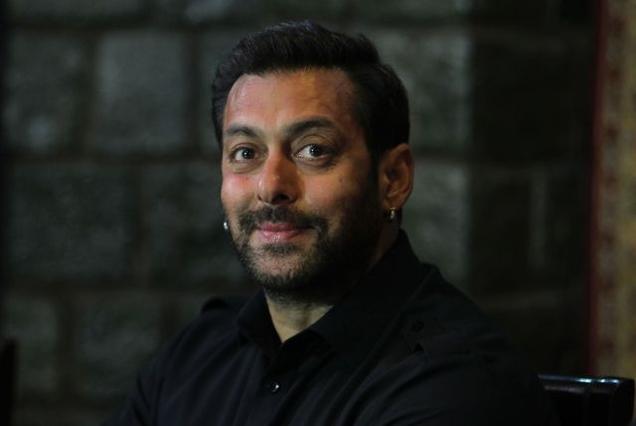
  • Salman’s hit-and-run case |Govt. lost files in fire, RTI query reveals

    Salman’s hit-and-run case |Govt. lost files in fire, RTI query reveals

    An RTI query has revealed that the Maharashtra government does not have any papers on actor Salman Khan’s 2002 hit-and-run case as the files pertaining to it were gutted in a fire at Mantralaya.

    The RTI activist had sought to know from the State Law and Judiciary department the names and the total number of counsels, solicitors, advocates and legal advisors, public prosecutors appointed by the State government for this case.

    The RTI reply informed that the files pertaining to the case were burnt on June 21, 2012, when a fire engulfed the State Secretariat and therefore, they cannot be made available.

    To a query on total expenses incurred by the State government in the case from 2002 to May 6, 2015 , when the judgment was pronounced in the case, the activist was told that “the only thing that the government knows is about the appointment of Special public Prosecutor Pradeep Gharat who was appointed at a fee of Rs. 6,000 per hearing.”

    On May 6, a Sessions Court had convicted Salman Khan for culpable homicide not amounting to murder in the 2002 hit-and-run case and sentenced him to five years imprisonment.

    The Bombay High Court had on May 8 granted the actor bail and suspended his sentence pending hearing and final disposal of his appeal against conviction.

  • Unborn Children and their Constitutional Rights

    Unborn Children and their Constitutional Rights

    A 33-year-old Indian-American woman Purvi Patel has recently been sentenced to 30 years in prison in Indiana for feticide and child maltreatment. The verdict makes Patel the first woman in the U.S. to be charged, convicted and sentenced for “feticide” for ending her own pregnancy, according to the group National Advocates for Pregnant Women (“NAPW”). (The Washington Post April 1, 2015). Writing for The Guardian, columnist Jessica Valenti states, “We may never know what really happened in Patel’s case. She has repeatedly said that she had a miscarriage which, if true, means that the state is sending a woman to jail for not having a healthy pregnancy outcome. But even if Patel did procure and take drugs to end her pregnancy, are we really prepared to send women to jail for decades if they have abortions? Even illegal ones?” (The Hindustan Times April 4, 2015).

    On April 18, 2014, Alabama Supreme Court reaffirmed in Sarah Janie Hicks v. State of Alabama that the word “child” includes “unborn child”. In 2009, Sarah Hicks was charged with using cocaine while pregnant. As per court documents, her child tested positive for cocaine “at the time of his birth”. “Children in the womb should have the same legal standing as other children”, the Supreme Court of Alabama ruled. According to Justice Tom Parker, who wrote the majority decision, “It is impossible for an unborn child to be a separate and distinct person at a particular point in time in one respect and not to be a separate and distinct person at the same point in time but in another respect. Because an unborn child has an inalienable right to life from its earliest stages of development, it is entitled not only to a life free from the harmful effects of chemicals at all stages of development but also to life itself at all stages of development…….”

    These cases (such as Purvi’s and Hick’s) reopen the question of Pro-Choice (Woman’s Right to Choose) v. Pro Life (i.e.; whether unborn children have constitutional rights in the USA) that has been debated in the political arena of this country for long. In Roe v. Wade, (93 S.Ct. 705 (1973) Justice Blackmun, writing for majority concluded, “That the word ‘person,’ as used in the Fourteenth Amendment, does not include the unborn.” However, U.S. legal encyclopedia, states:

    “Biologically speaking, the life of a human being begins at the moment of conception in the mother’s womb, and as a general rule of construction in the law, a legal personality is imputed to an unborn child for all purposes which would be beneficial to the infant after its birth.” (42 Am. Jur. 2d, “Infants,” sec. 2.) In 2004, Congress enacted, and President Bush signed, the Unborn Victims of Violence Act, which recognizes the “child in utero” as a legal victim if he or she is injured or killed during the commission of any of existing federal crimes of violence. One of the provisions in the pending (before House-Judiciary Committee) H.R. 36 – Pain-Capable Unborn Child Protection Act, states, “By 8 weeks after fertilization, the unborn child reacts to touch. After 20 weeks, the unborn child reacts to stimuli” In Planned Parenthood v. Casey, (505 U.S. 833 (1992) Chief Justice William Rehnquist in his dissenting note stated, “Roe continues to exist, but only in the way a storefront on a western movie set exists: a mere façade to give the illusion of reality.” The courts agree that the unborn child in the path of an automobile is as much a person in the street as its mother, and should be equally protected under the law. Most courts have allowed recovery, even though the injury occurred during the early weeks of pregnancy, when the child was neither viable nor quick. “Viability, of course, does not affect the question of the legal existence of the unborn, and therefore of the defendant’s duty and it is a most unsatisfactory criterion, since it is a relative matter, depending on the health of the mother and child and many other matters in addition to the state of development”. (Prosser and Keaton on Torts, 2nd ed., sec. 36 (1955).

    Many jurisdictions, including U.S., actively warn against the consumption of alcoholic beverages by pregnant women due to its association with Fetal Alcohol Syndrome. In Whitner v. State, 328 S.C. 1, 492 S.E.2d 777 (1997), Cornelia Whitner was charged and sentenced to a charge of criminal child neglect, by Supreme Court of South Carolina, after she was discovered to have used cocaine while pregnant. In 2004, Melissa Ann Rowland of Salt Lake City, Utah was charged with murder in 2004 after her refusal to undergo a caesarean section resulted in one of the two in her twin pregnancy being stillborn. (Sage, Alexandria, April 29, 2004, “Utah C-Section Mom Gets Probation.” CBS News). Medical science recognizes that an unborn child is in existence from the moment of conception. The work of Edwards with test-tube babies has repeatedly proved that human life begins when, after the ovum is fertilized, the new combined cell mass begins to divide. (Jasper Williams, M.D.) According to A. W. Liley, M.D., “Biologically, at no stage can we subscribe to the view that the foetus is a mere appendage of the mother. Genetically, mother and baby are separate individuals from conception.” And according to Micheline Mathews-Roth, M.D., “It is scientifically correct to say that an individual human life begins at conception, when the egg and sperm join to form the zygote, and that this developing human always is a member of our species in all stages of its life.” (Constitutional Personhood of the Unborn Child by Robert C. Cetrulo) United Nations has also recognized pre-natal rights. “The child, by reason of his physical and mental immaturity, needs special safeguards and care, including appropriate legal protection, before as well as after birth.”(United Nations Declaration of the Rights of the Child” as quoted by Robert C. Cetrulo in ‘Constitutional Personhood of the Unborn Child’)

    Jeremiah 1:5 quotes God saying, “Before I formed you in the womb I knew you.”  In Sarah Janie Hicks v. State of Alabama, Chief Justice Moore argued that natural rights come from God, not from the government. A child unborn at the time of the death of its parent has also been considered a “child” of the decedent in determining beneficiaries of an award in a wrongful death action or other tort cases in the U.S. The Declaration of Independence affirms that all men are created equal, that they are endowed by their Creator with certain unalienable Rights that among these are Life & Liberty…” As the U.S. Constitution does not provide limitations upon the “right to life”, therefore, an unborn child enjoys same constitutional right as any other person in this country, the right that is enunciated so strongly in the Declaration of Independence. Even in the state of New York that is considered as one of the most progressive states in the country, known as ‘The Abortion Capital of America’, there are consequences of illegal abortion. (New York Penal Code §125.05, §125.20, §125.40-60; and Pub. Health §4164).

  • Ban this, ban that – Intolerance growing in BJP-RSS regime

    Ban this, ban that – Intolerance growing in BJP-RSS regime

    Days after Prime Minister Modi warned the judiciary of dangers posed by five-star activists, the Union Home Ministry cut off foreign funding to Greenpeace for “campaigning against government policies” and “obstructing India’s energy plans”. Among the reasons cited for the ban is Greenpeace activists “holding talks” with the Aam Aadmi Party. Foreign money is welcome for pollution-causing industries but not for raising a voice to protect the forests, the environment or human rights. Swift green clearances for projects are seen as an achievement by the minister who is tasked with safeguarding the country’s environment and natural resources.

    Take Maharashtra. Union Minister of State for Agriculture Mohanbhai Kundaria told the Rajya Sabha recently that 135 farmers killed themselves in the first 58 days of this year in the state’s Aurangabad division.  That is not what worries the BJP government. It is devoting its time and resources to enforcing a ban on beef and promoting Marathi films. Most Indians do not approve of cow slaughter and will like the government to provide for adequate cow sheds. Cows become a financial liability once they stop yielding milk. What should farmers, barely making two ends meet, do? And those who survive on beef business? The state high court rightly asked the government how it could extend the ban to other states by stopping people from eating beef produced there. The Devendra Fadnavis government not only wants to decide what people should eat but also what films they should watch. Multiplexes have been forced to show Marathi films at prime time. When writer Shobhaa De protested against such “dadagiri”, cultural extremists ganged up to gag her.

    As if the censor board was not giving enough trouble to filmmakers, the SGPC has started demanding bans on films it disapproves of. Fanatics want to decide what people should wear, watch, read and even which religion they should follow, threatening in the process the very foundations of a secular, liberal India. Intolerance is growing in Modi raj and targets are clear. Anyone who opposes what the government is doing or the religious/cultural agenda it is patronising puts himself at risk.

  • Collegium system of appointing judges is illegal: Govt

    NEW DELHI (TIP): While speaking in favour of the proposed National Judicial Appointments Commission (NJAC), the Centre said before the Supreme Court on Wednesday that the collegium system of appointing judges was illegal.

    The government said that the collegium system that was put in place in 1993, wherein a panel of judges appointed other judges, was not mandated under the Constitution.

    Attorney General Mukul Rohatgi submitted before a three-judge bench, presided over by Justice A R Dave, that the new system as mandated under the NJAC is broad-based, which could be put to the test of Constitutional validity only after it comes into force. “The government is of the view that collegium system is illegal but I would not like to go into it for now. Nowhere is such a system prevalent where judges appointed judges. Can the elected representatives of Parliament not have their say,” he asked. He said that according to the Constitution, only President appoints judges.

    Defending the proposed six-member panel to appoint judges, which includes executive members, Rohatgi submitted that several other constitutional posts—like the Comptroller and Auditor General or heads of 25 tribunals that replace high courts—are selected through a system where the executive also plays a role. Rohatgi described a batch of petitions challenging the legality of the NJAC Act as “academic based on surmises and conjectures” since the notification for the proposed law was yet to be passed. Speaking further on the pleas challenging the NJAC, Rohatgi said: “It is not somebody’s fundamental right to be appointed as judge. The petitioners cannot claim any injury caused to them through the proposed law.”

    Senior advocate Dushyant Dave, appearing for the Supreme Court Bar Association, contended that the matter could not be heard at present as no act had come in force. He submitted that the case relating to challenge the NJAC Act was also not to be referred to a five-judge bench. Dave claimed that it was a fallacy to claim that the new law would strike the basic structure of the Constitution, that is the independence of judiciary, since its impact and effect were yet to be seen.

  • Indian-American Rashad Hussain appointed US Special Envoy and Coordinator

    Indian-American Rashad Hussain appointed US Special Envoy and Coordinator


    In 2009, Hussain worked with the NSC in developing and pursuing the New Beginning that Obama outlined in Egypt. Before joining the White House, he was a member of the legal staff for the Presidential Transition Team.

     
    Hussain received his Juris Doctor from Yale Law School, where he served as an editor of the Yale Law Journal. & He also earned his Master’s degrees in Public Administration (Kennedy School of Government) and Arabic and Islamic Studies from Harvard University. 
    Upon graduation, he served as a Law Clerk to Damon J Keith on the US Court of Appeals. He also served as a Trial Attorney at the US Department of Justice. Earlier in his career, he was a legislative assistant on the House Judiciary Committee, where he focused on national security-related issues.
     
  • Was BJP’s Loss In Delhi Intelligently Planned?

    Was BJP’s Loss In Delhi Intelligently Planned?

    There were enough signs to indicate what you see in Delhi may not be true at all. 

    BJP is a very well organized outfit with sympathizers in every layer of government, judiciary, media, commerce and industry. It is unlikely all this is happening due to poor management. Then is all this ‘bad management’ part of a deliberate plan to lose Delhi? A lot actually.

    Here are some reasons why:

    1: BJP inducted three rejects of India Against Corruption movement and Aam Aadmi Party (AAP) into its fold — Kiran Bedi projected as BJP’s chief ministerial candidate, Shazia Ilmi and Vinod Kumar Binni. As per plans Bedi is BJP’s scapegoat to save Modi’s image.

    2: Kejriwal’s Delhi WIN will be projected as a victory of a mass movement, media will eulogize Kejriwal, hail him as a hero and will dissect AAP’s campaign for days. Also this will divert attention of the people who are getting restless from Modi’s inability to deliver on his election promises. 

    3: Kejriwal will have no honeymoon period, both media and voters will demand immediate results, at least on corruption, power tariffs, VAT (value added tax), health hotline and WiFi. A hostile government at the Centre will not help him either. This spotlight on Kejriwal will come as a huge relief for Modi.

    4: Sangh Parivar machinery can now unleash its foot soldiers to polarize voters with low-intensity disturbances ahead of the two big battles — Uttar Pradesh (UP) and Bihar.

    5: BJP’s top brass is aware that if the party plans to win Delhi, the state will remain a headache — partly due to Kejriwal in opposition and partly because of impatient voters who expect immediate results and good governance, something the BJP is unsure of delivering. Proving that losing Delhi isn’t such a bad idea! 

    6: Now BJP can deploy numerous tactics to not let Kejriwal do what he want’s thus proving him a failure in Delhi. BJP team knows that many of the promises by kejriwal are impractical and cannot be fulfilled and this will snatch his ‘Nayak'(Hero) image. 

    7: This undeliverable performance of Kejriwal will surely break his image through out the country making him unpopular in other states limiting his scope in next Lok Sabha Elections.

    8: Now the One-Man-Army AAP will not be able to spread itself in other states nationwide because the face(Kejriwal) of party will be busy managing Delhi for next 5 years. And there is no other mob-attractor face in AAP.

    9: BJP knows that if they win Delhi, Kejriwal in Opposition will make their life hell and will criticize their every action if its not the best one. 

    10: Now the media houses have 2 faces Modi and Kejriwal to criticize. BJP knows this will surely save Modi from being the only target of media & mass criticism.

    source: story alert

    Disclaimer: The opinions expressed are personal opinions of the author

  • Love’s labour lost between Taj and US first couple

    Love’s labour lost between Taj and US first couple

    WASHINGTON/NEW DELHI (TIP): They were scheduled to commiserate Mumtaz Mahal’s death and celebrate Shah Jehan’s love for her. But Michelle and Barack Obama will instead be condoling the death of Saudi monarch King Abdullah and possibly cursing India’s rule-bound judiciary.


    Whether our Supreme Court was upholding the majesty of law and regulations even for the powerful, or cussedly undermining the Indian ethos of “atithi devo bhava” (guest is God) may be debated for long years, but the immediate upshot is the US first couple’s plans for a brief romantic interlude at the Taj has been scuppered.


    The White House confirmed shortly before the Obamas emplaned for India that the Agra leg of the visit was off and the President regretted not being able to visit the Taj. It made no reference to the Supreme Court’s directive that led to the Taj sortie being spiked, but offered a tortured explanation for how the president would instead leave Delhi on Tuesday morning soon after a speaking engagement to be in Riyadh, Saudi Arabia, to “meet with King Salman and other Saudi officials and offer his condolences on behalf of the American people,” a job that was initially entrusted to vice-president Joe Biden.


    “The vice-president was originally to have led a delegation to Saudi Arabia on the president’s behalf. As the president’s and vice-president’s travel schedules baecame clearer, we determined that the window when the vice-president would be on the ground in Riyadh coincided with the president’s departure from India,” read a labored statement from the White House.


    “Accordingly, we adjusted the schedule in coordination with the Indian Government so that the president would be able to depart India following his speech on Tuesday to stop in Riyadh during the return trip,” it added in a statement, without any reference to the reported security kerfuffle and Supreme Court intervention that led to scrapping of the Agra visit.


    On a lighter note, one positive outcome of this episode is that Agra got a tune-up without the burden of a suffocating, security-laden visit by the American president and his spouse. The snafu also means the Obamas may well return to India for a third visit, even if it is post-presidency, particularly since their daughters Sasha and Malia could not accompany them because of school.

  • Post-Nirbhaya crisis centres get PMO boot

    Post-Nirbhaya crisis centres get PMO boot

    NEW DELHI (TIP): The much touted “one stop crisis centre” — conceived in the aftermath of the Nirbhaya case and the Justice Verma report — has been scrapped by the NDA government. The project worth about Rs 200 crore was expected to provide medical, legal, police and emergency services to women in distress. The women and child development (WCD) ministry, which was helming the project, had planned to set up the centres in every district of the country.

    According to sources, the plan has been shot down by the Prime Minister’s Office (PMO) on the argument that the scheme was unnecessary and services could be provided through the existing infrastructure like hospitals and women police stations. WCD ministry sources however pointed out that there were many scenarios when women who were stalked, molested, raped or experienced violence and could not or were not willing to go to a police station.

    “They require only shelter or counseling. The centre promises anonymity to the victim. It would have acted as an overnight shelter while making all the services of a hospital, police station, legal aid cell under one roof,” sources said. The cost of a centre was pitched at Rs 36 lakh. A collateral damage of the decision is the scrapping of the women’s helpline. “It will be difficult to run a helpline. Where will we send the women who require help if the centre does not exist?” the source said. The ministry had in fact already announced the centres and enlisted support from states including 90 members of Parliament who have allocated land for the purpose in their constituency.

    WCD minister Maneka Gandhi had assured that the centres would be open by December. Despite several attempts Gandhi could not be reached for comment. The centres were a significant recommendation of the Justice Verma committee set up to suggest far-reaching reforms in police, judiciary and executive. The Verma committee had felt that there was absence of a single-point redressal system for heinous crimes against women. It felt, the victims faced a harrowing time in getting their complaints registered and did not mange to get medical and legal aid on time.

  • US internal review cites secret service failures in White House intrusion

    US internal review cites secret service failures in White House intrusion

    WASHINGTON (TIP): An intruder was able to scale the White House fence and enter the executive mansion in September because of major secret service failures including an agent who was distracted by a personal cellphone call, according to an internal review released on Thursday. Iraq war veteran Omar Gonzalez, 42, is accused of breaking into the heavily guarded complex on Sept 19 armed with a knife in one of the most significant security breaches since President Barack Obama took office in 2009.

    The suspect was not stopped until he entered the main floor of the White House. In addition to the knife he was carrying, officers found more weapons in his car. The incident helped spur the resignation of Secret Service Director Julia Pierson. According to the review by the US department of homeland security, the suspect climbed over the 7-foot (2- metre) fence where a “trident,” or ornamental spike was missing. Several uniformed secret service agents were stationed in the area but were unable to see the intruder because of a construction project along the fence line, the report said, which also cited breakdowns in radio communications.

    A canine officer stationed on the White House driveway with a guard dog was on his personal cellphone at the time of the intrusion and was not wearing his earpiece, the review said. After spotting the intruder, the officer moved toward him and gave the dog the command to apprehend the suspect. But the canine “did not have enough time to lock onto” the intruder and “may not have seen him at all,” according to the report’s executive summary.

    “This report indicates that the Secret Service’s response at the White House was significantly hampered on September 19th because of critical and major failures in communications, confusion about operational protocols and gaps in staffing and training,” the review said. “While some of these problems can be attributed to a lack of resources, others are systemic and indicative of secret service culture.” Michael McCaul, who chairs the US House of Representatives homeland security committee, introduced legislation on Thursday to form a panel “to conduct a top-to-bottom review” of the Secret Service. House judiciary committee chairman Bob Goodlatte said the review “reads as a comedy of errors by the U.S. Secret Service and confirms that fundamental reform is needed to improve both the security of the White House grounds and staff training.”