Tag: Judiciary

  • So-Called Spring; Su-Shi Strife and The South-West Asia

    So-Called Spring; Su-Shi Strife and The South-West Asia

    “The author foresees tremendous tectonic changes in the wake of Arab Spring et al. He says, “There will be following major discernible evolutionary geo-political trends underlying the so-called Arab spring. The despotic regimes headed by dictators, monarchs, military strongmen, presidents-for-life and supreme leaders-for-life would eventually be overthrown by the popular revolt. The middle-east is surely due for a major cartographic make-over in the next few decades. The fault-lines would be sectarian, ethnic and linguistic. The glue of Political Islam supported by embedded Jihadi elements would be torn asunder while facing the sectarian, ethnic and linguistic divide.”

    Arab Spring, Arab Winter, Arab Summer, Arab Renaissance, Arab Awakening, Islamic Awakening and Islamic Rise are just few of the epithets used to describe the complex and multidimensional geopolitical changes in the middle-east region that comprises of West Asia and Northern Africa. Depending upon one’s perspective, each of these adjectives is inadequate to describe the complex geopolitical phenomena that have engulfed the region. It is important to recapitulate that barring three nations, viz. Iran, Turkey an Israel all other countries in this region are Arab. Despite Francis Fukuyama’s puerile musings about the “end of history”, we are now witnessing tectonic changes of historic proportions.

    However, it will be a very slow and bloody change that would be unstoppable despite numerous western interventions. The genie of historic change had been unleashed much earlier in 2003 when the Baathist regime was toppled in Iraq ostensibly to chase the now non-existent “weapons of mass destruction”. The ten year anniversary of the US invasion of Iraq and “the ensuing mother of all battles” does not witness peace and tranquility in that nation, divided de facto, on sectarian and ethnic fault-lines. The Iraqi Kurdistan, nominally under the central government of Iraq is on a rapid trajectory to peace, prosperity and development while Baghdad continues to witness sectarian violence and bomb attacks. The Prime Minister Nouri al- Maliki is grabbing executive powers and has inadvertently encouraged sectarian divide and Shia identity politics. Besides the Iraqi Kurds, the real beneficiary of the US invasion worth $ 870 billion has been the Islamic Republic of Iran.

    If one chooses to be historically correct, the Islamic revolution of 1979 in Iran is the real harbinger of the so-called Arab spring. A US supported dictator was overthrown by popular revolt in Iran. The popular revolution was usurped and captured by Islamist Ayatollah Khomeini leading to a lot of blood-shed and massacre of democratic and liberal sections of the Iranian society in a targeted manner. A mini-version of this so-called (“Persian”) spring was again manifest in Iran, a non-Arab Shia theocracy in 2009 under the name of “green revolution”. However, the US administration led by Barak Hussain Obama “rightly” failed to capitalize on the situation leading to brutal suppression of young Iranians by the theocratic regime and its revolutionary guards. For the first time the US and its cronies missed an opportunity for externally driven regime change in Iran. Starting with Tunisia, the Arab Spring phenomena later on engulfed Egypt and Yemen. In Yemen, an extended “managed” political change was indeed brought in grudgingly under the patronage of Western imperialistic powers. Both Tunisia and Egypt saw subsequent takeover by Islamists in democratic elections. After over-throwing of Ben-Ali, the fundamentalist An-Nahda Islamists were the victors of the Tunisian democratic elections in October 2011.

    The Jihadists and the Salafists are now working in tandem with the conservative An-Nahda Islamists to infiltrate the previously secular Tunisian state from within. The story in Egypt is not very much different where the popular revolution against Hosni Mubarak and the Armed Forces has already been annexed by the Muslim Brotherhood (MB) and Mohammad Morsey. The Egyptian judiciary, especially the Supreme Court has resisted the Muslim Brotherhood and its attempts to foist an Islamist constitution. Furthermore, the Egyptian Supreme court has postponed yet again the parliamentary elections denying the MB an opportunity to control the entire state. Parts of the civil police force have already stopped obeying orders of the Islamist government to fight against fellow citizens forcing the MB to spare its cadre for law enforcement duties. Using the fig-leaf of so-called Arab Spring, the opportunistic Western powers militarily intervened in Libya, another socialist Baathist party ruled Arab dictatorship and brought out a regime change they had craved for long.

    The subsequent Islamist take-over of Libya, the barbaric treatment (victor’s justice) given to the quixotic dictator Col Mommar Gadaffi and killings of the US ambassador and other personnel by Al Qaeda in Ben Ghazi is illustrative of the nature of the beast. Interestingly, the Shah of Iran, Saddam Hussain and Col Mommar Gadaffi, all three had indeed served with great distinction as the “useful idiots” of the Western imperialism. The ideological hollowness of the West and the cheer-leaders of the socalled Arab Spring was noted again in Bahrain where popular and public demands for political change were exterminated brutally by foreign military intervention undertaken by the Kingdom of Saudi Arabia (KSA) and Pakistan in order to prevent take-over of the Sunni ruled nation by a Shia majority population. Syrian example shows the true colors of the cheer-leaders of the so-called Arab spring.

    Another socialist and secular Arab country ruled by the Baath party is being systematically destabilized from outsideintervention for the last two years and sacrificed at the altar of Sunni-Salafi- Jihadi-Wahabi (SSJW) geopolitical interests. Foreign Sunni fighters are leading the war against the Assad regime, fully supported by the regional Sunni monarchies. What we see now is essentially a Sunni-Shia (SU-SHI) sectarian power struggle in the Islamic nations of the West Asian region with Western imperialistic intervention in a systematic manner to defeat the secular and socialist Baath party regimes and of course to safeguard the interests of the Sunni-Salafi-Jihadi-Wahabi (SSJW) alliance. This bloody sectarian conflict will not be resolved in next few months or years.

    As the geopolitical events unfold, we will witness a quasi-permanent fratricidal intra-Islamic sectarian war for decades in the west Asian region culminating in major cartographic changes. There will be multiple incarnations of Arab & Islamist “Tianamen Squares” during which the despotic rulers will brutally suppress the revolting citizens. The US strategic retreat from the middle- east and pivot to Asia will finally allow the history to emerge in the middle-east uncontaminated by the hegemonic order imposed by the US hyper-power. Right now all the Arab monarchies have tried to buy out the demands for freedom and socio-political change by bribing their respective populations with yet more goodies financed by petro-dollars. This monetary intervention would at best delay the clamor for freedom and political change only by a few years in the oil-rich nations. There will be Islamist take-over of one-kind or other in all these countries. But political Islam would not be able to provide stability and strategic security to these nations.

    Just like in the communist countries as they vied with one another for title of the adherents of the true nature of communism practiced in the former communist countries, one would witness competitive claims of “true or genuine Islamism” by various ruling dispensations in this region. Fundamentalist competitive “political Islam” in alliance with Jihadis would hijack liberal and democratic popular uprisings. Indeed, there will be immense loss of human life and Jihadi terrorism will rule the roost. Transfer of power and change of regimes will be an inherently bloody process. There will be serious human rights violations and genocide by all the sides in the name of “true Islam”. Western apologists and backers for these despotic countries under severe financial crunch would no longer be interested in maintaining the geo-political status quo ante. geopolitical tectonic changes are likely to result in emergence of new nation states. Syria might be balkanized into multiple small entities or state-lets analogous to the former Republic of Yugoslavia.

    One would not be surprised if an Independent Kurdistan finally emerges as the 4th non- Arab country in the middle-east. Iraq, Iran, Syria and Turkey may lose their respective Kurdish populations to a newly independent and democratic Kurdistan. Since the fall of the Ottoman empire, the Western imperialistic powers while arbitrarily carving out state-lets to safeguard their own economic and hydrocarbon interests, chose to sacrifice the Kurdish national interests and denied them right to a state. West Asia has app 35 million Kurdish (non-Arab) people with app half (18 million) in Turkey, 8 million in Iran, 7 million in Iraq and 2 million in Syria. Unraveling of Syria will serve as a catalyst for Turkish Kurds to revolt against the increasingly Islamist Sunni dispensation of Turkish Prime Minister Recep Tayyip Erdogan in Ankara that has systematically deviated from the secular ideology of Kemal Ata-Turk, the founding father of modern Turkey.

    Both the PKK (Kurdistan Workers Party) and its imprisoned leader Abdullah Ocalan have successfully orchestrated staggered, coordinated hunger strikes for more than two months by thousands of Kurdish prisoners in Turkish jails. Turkey is going through a schizophrenic struggle between its European aspirations and Islamic moorings. However, political Islam will not be able to hold the Turks and the Kurds together. With increasing Sunniazation of the Turkish polity, this large ethnic and linguistic Kurdish minority will eventually assert itself in this chaotic geopolitical transition. Islamic glue will not be able to hold together Turkish and Kurdish ethnic identities and a volcanic eruption of nationalist fervor will unravel Turkey as we know it. If Turkish and Syrian Kurds turn more nationalistic and declare an independent Kurdistan, Iraqi and Iranian Kurds will be forced to follow suit. As a result of this, a truncated Iraq would eventually come out as a Shia-Arab theocracy with a Sunni minority supported by the neighboring Shia-Persian theocracy, Iran. Iran would not be insulated from demands of political freedom and change if there is no external intervention.

    Young, educated and emancipated Iranians will eventually overthrow the conservative Ayatollah-cracy leading to a more democratic and liberal regime change. A non-theocratic and more democratic and liberal Iran will re-emerge as a major regional power with friendly Shia majority governments in Iraq, Azerbaijan, Bahrain and elsewhere including in Lebanon. Iran will be a longterm winner in the despite losing some territory to Kurdistan and Baluchistan. A loose federation of Shia states may become a power grouping in the region. In such a geopolitical scenario, the territorial integrity and sovereignty of the Kingdom of Saudi Arabia (KSA) would no longer be safeguarded by a strategically retreating USA. By 2017, the USA will surpass the Saudis as the largest petroleum producing nation that will become a net exporter of hydro-carbons in 2020. Future US administrations will be forced by domestic isolationists to give up the stability mantra leaving the middle-east region to its own devices.

    The ultrageriatric conservative clan of Saudi princelings with all their extremities in the grave will not be able to hold the country together especially in the face of increasingly restive and un-employed young men. Increasing modernization and “secularization” of this tribal society will be resisted violently by the ruling political establishment. There have already been small demonstrations by Sunni Muslims calling for the release of people held on security charges. Saudi women will demand equal rights and driving privileges. The Saudi women would like to emulate their more emancipated Iranian counter-parts in public discourse. If Al Qaeda or its various mutants take-over the Saudi Arabia, the House of Saud will be brutally slaughtered in the name of “liberating Islam”. The internal strife in Saudi Arabia will manifest openly in an explosive manner when the oilfields dry up in few decades. The only unrest to hit Saudi Arabia during the so-called Arab Spring wave of popular uprisings was among its Shi’ite Muslim minority. The Shia populations in the Eastern region of Saudi Arabia will eventually revolt against a Sunni-Salafi- Jihadi-Wahabi (SSJW) complex leading to emergence of another Shia state-let.

    Bahraini Shia population is likely to overthrow the ruling Sunni dynasty, leading to emergence of another Shia nation. A Palestinian state-let may eventually be established as a joint protectorate of Egypt and Jordan. Egypt and Turkey will have much diminished geo-political influence. Egypt will have to deal with the issue of human rights of an increasingly vocal Coptic Christian minority. Some countries might eventually disappear by 2030. The most putative candidates are Lebanon, Kuwait and the Palestine. The impact of these geo-political changes will without doubt creep eastwards towards the Af-Pak region of the South-Asia leading to cartographic changes in national boundaries. Pakistanoccupied Baluch principalities, exploited by the Punjabi-dominated Pakistani army will successfully revolt for an independent Baluchistan as the Chinese footprint increases in the Gwadar port. After taking over the Gwadar port, China will seriously attempt to exploit the mineral and hydrocarbon wealth of Pakistan-occupied Baluch areas, thereby, increasing the sense of alienation and marginalization amongst the Baluch tribes.

    The separatist Baluchistan Liberation Army will target Chinese companies and personnel in the ensuing war of independence. The Sistan- Baluchistan province of Iran will take its own time joining an Independent Baluchistan. The consequent undoing of the artificial geographic boundaries arbitrarily determined by the British colonialists will lead to emergence of newer states carved out of the Af-Pak region. Another fall-out of these changes would be emergence of an independent and greater Pakhtoonistan comprising of the Khyber-Pakhtoonwah province of Pakistan and the Pakhtoon areas of the Afghanistan across the now defunct Durand line. The result would a truncated but more stable Afghanistan controlled by the northern alliance comprising of the Tajeks, Hazaras and Uzbeks. A truncated Pakistan will continue to remain as a rent-seeking failed state. It may implode eventually, leading to its fragmentation followed by multi-lateral external intervention under supervision of the UN and the IAEA to secure the nuclear weapons and the fissile materials.

    Further to north-east, a restive Uighurs’ population will force the emergence of Eastern Turkistan while throwing away the 300 years’ old occupation by the Han Chinese and subsequent annexation by the Communist China led by Comrade Mao. Will this tectonic change engulf the central Asian states or the “stans” is not clear at this time as the geopolitical dynamics are entirely different in the Central Asia in comparison to the South and West Asia. There will be following major discernible evolutionary geo-political trends underlying the so-called Arab spring. The despotic regimes headed by dictators, monarchs, military strongmen, presidents-for-life and supreme leaders-for-life would eventually be overthrown by the popular revolt. The middle-east is surely due for a major cartographic make-over in the next few decades. The fault-lines would be sectarian, ethnic and linguistic. The glue of Political Islam supported by embedded Jihadi elements would be torn asunder while facing the sectarian, ethnic and linguistic divide.

    Whether some kind of democracy will eventually prevail in this region in near future is doubtful, at best. Political Islam with its Jihadi mutant will be on the ascendance temporarily as an essential bloody interim phase in the long-term development of liberal democracy in the West Asia, North Africa and Af-Pak regions of South Asia. Increasing modernization, secularization and intellectual emancipation of the common masses will eventually defeat the Islamist counterreaction in each of these countries. Iran which is way ahead in the trajectory of civilizational change and democratic evolution will emerge as the most influential regional player while Egypt, Turkey and the KSA will eclipse relatively.

  • Queens has Highest City Conviction Rate

    Queens has Highest City Conviction Rate

    NEW YORK (TIP): Queens DA Richard A. Brown recently announced that, according to the City’s Summer 2013 Criminal Justice Indicator Report released by Mayor Michael Bloomberg and New York City Criminal Justice Coordinator John Feinblatt, Queens County continues to be a leader in many of the critical areas that are the focus of the report. “The report’s statistical evidence offers substantial proof that Queens County is, and continues to be, a city-wide leader in many categories,” Brown said. “The bottom line is that we are providing a safer environment in which to live for the 2.3 million residents of Queens County.” The City’s Summer 2013 Criminal Justice Indicator Report provides insight into the functioning of the City’s criminal justice system and the ways in which it is changing.

    Statistics in the report are based on data from the judiciary, the City’s five elected District Attorneys and the Office of the New York City Special State Narcotics Prosecutor and other New York City criminal justice agencies. Among the Indicator Report’s key findings were: o Queens County’s conviction rate for violent felony arrests in 2012 was the highest among the City prosecutors – 60 percent. The citywide average was 52 percent. o Queens County continues to have the best arrest-to-arraignment time in the City for the first six months of 2013. The citywide average arrest-to-arraignment time is 21.71 hours, while Queens County arraigns defendants in 20.27 hours. o Queens County maintains the lowest re-arrest rate in the City with just 26 percent of people being re-arrested for a crime within the year and 10 percent being re-arrested for a felony within the year. Citywide, 33 percent of people arraigned in 2009 (the last year for which there is available data) were rearrested for another crime within a year and 13 percent were re-arrested for a felony crime within a year.

  • RAJYA SABHA PASSES BILL TO APPOINT JUDGES UNDER NEW SYSTEM

    RAJYA SABHA PASSES BILL TO APPOINT JUDGES UNDER NEW SYSTEM

    NEW DELHI: Government and opposition in Rajya Sabha on September 5 presented a joint front in cornering judiciary on all fronts – ranging from corruption, favouritism and nepotism to compromises due to lust of post-retirement jobs\benefits – while discussing a bill which seeks to scrap the collegium system of appointing judges. The bill, giving executive a crucial role in judges’ appointment, was, however, finally passed without BJP members’ presence as they walked out protesting the government’s refusal to send the proposed legislation to a parliamentary standing committee for wider consultations. As the Upper House took up the bill to amend the Constitution to set up a Judicial Appointments Commission (JAC) replacing the collegium system, law minister Kapil Sibal, leader of opposition Arun Jaitley and several other members were of the view that the present system of appointing judges to Supreme Court and high courts lacked transparency and accountability.

    BJP members said though their party was fully in support of the bill, it wanted a wider consultations before passing of the bill. Jaitley said, “We don’t like the present system. So, we are agreed to change it. We are making a monumental change. Monumental changes are never brought with a knee-jerk reaction”. The bill, which was passed without BJP members participating in voting, seeks to set up a JAC to recommend appointment and transfer of Supreme Court and high court judges. It states that the JAC will make the participants in the selection accountable and introduce “transparency” in the selection process. With the creation of the proposed body, the executive seeks to have a say in appointment of members to the higher judiciary. The bill seeks to set up a panel headed by the Chief Justice of India (CJI) to appoint and transfer senior judges. The other members of the proposed commission would be two senior-most judges of the Supreme Court, the law minister, two eminent persons as members and secretary (justice) in the law ministry as Convener.

    Moving the bill, Sibal earlier said the Supreme Court in 1993 had sought to change the procedure of appointment of judges in higher judiciary by bringing in a collegium system. The judiciary has taken over executive power by rewriting Article 124 (of the Constitution). That balance must be restored. Executive must have a say in appointment.” Sibal said, “It has disturbed the delicate balance of separation of powers. There is very clear division of powers among the executive, legislature and judiciary in our Constitution. Judiciary cannot take over the function of the executive”. Sibal also chose the occasion to flag his concerns over “nepotism” in the judiciary. “We are really worried over the manner in which relatives of judges are practising in high courts. It is very disturbing. It is a matter of sadness that somebody’s maternal uncle, uncle and others practice in court. How long this nepotism will continue,” he asked. Jaitley echoed Sibal’s views as he pressed for reestablishment of the “separation of powers”. He said when other establishments of the democracy do not infringe upon functioning of the judiciary, then why would it ask the government to do this or do that and direct even on the economic policy of the government. “Courts cannot review a policy and say that my policy is better that your policy.

    It cannot say how to be tough on the Naxalites,” he said. Citing the ban on iron ore exports, Jaitley sought to link judicial orders partially to the present state of Current Account Deficit and depreciation of rupee as a result of that. Attacking judiciary, he said no government, irrespective of its complexions, has ever said that since court has three crore cases pending, somebody else would do it for courts. Stating that the present system of appointing judges lacks transparency, Jaitley said the three-member collegium often left out the best of the lot for a promotion and go ahead with their choices. “A collegium is as good as the members of the collegium,” he said as he observed, “Judges appoint themselves and judges are accountable to judges.” Stating that in the existing collegium mechanism the members of the panel of judges go by their own preferences, he said when the collegium meets for appointment of judges, they “have to accommodate the preferences of each other, and those who don’t come in their list of preferences lose out”. Jaitley also spoke against the trend of higher judiciary members seeking post-retirement jobs.

    He said, “I think this whole temptation of continuing to occupy a Lutyens Bungalow (government accommodation in heart of the Capital) is a very serious temptation….The desire of a postretirement job influences pre-retirement judgments. It is a threat to the independence of the judiciary. Once it influences pre-retirement judgments, it adversely impacts the functioning of our jud iciary itself”. The leader of opposition proposed that a judicial commission should not only have powers for appointment of judges but also ensure their accountability. He said in cases of judicial misconduct, falling short of acts that call for impeachment, the judges were accountable only to judges and “this needs to be changed”. Sibal, while moving the bill, said the proposal to set up JAC was also the part of BJP’s national agenda of governance in 1998. “I compliment the leader of opposition who then as the minister introduced the bill to set up the Judicial Commission in 2003.

    All we have done is that we have increased the number of eminent members from one to two who will be appointed in the National Judicial Commission which will appoint the Judges. We are grateful to the leader of opposition that we are only adopting what he had suggested,” he said. Sibal said the Law Commission had said in 2008 that the Supreme Court interpretation of Article 124 (2) is contrary to the letter and spirit of the very article. He recalled that Justice M N Venkatachaliah and Justice J S Verma, who had favoured the collegium system, had later said they regretted their decision and that the system was not working. The minister also recalled that as a counsel, he had in past supported the idea of the judiciary appointing judges. “I also regret…Wise men are always proved right. When we were young, we wanted to change the system and sorry we disregarded your wisdom,” Sibal said as nominated member and former Attorney General of India K Parasaran reminded him that Sibal was opposed to any outside role in judicial appointments. “I am not saying that you should go back to 1993.

    There should be a judicial commission so that a collaborative exercise is there for their appointments. We do not want to impose our decisions in judicial appointments. “That is why we have made provisions for inclusion of two eminent persons in the judicial commission whose names will be decided by the Prime Minister, leader of opposition in the Lok Sabha and Chief Justice of India

  • President Pranab Mukherjee Addresses The Nation

    President Pranab Mukherjee Addresses The Nation

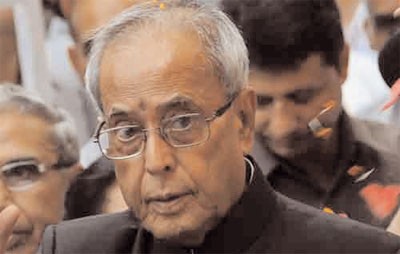
    In his address to the nation on the eve of 67th Independence Day, President Pranab Mukherjee expressed serious concern over the way Parliament and legislatures function and said corruption has become a major challenge. Noting the “widespread cynicism and disillusionment” with governance and functioning of institutions, the President said elections next year is an opportunity to elect a stable government that will ensure security and economic development.

    Following is the text of the President of India, Shri Pranab Mukherjee’s address to the Nation on the eve of the 67th Independence Day: “Fellow citizens: On the eve of the 66th anniversary of our Independence, I extend warm greetings to you and to all Indians around the world. My thoughts turn first towards the Father of our Nation, Mahatma Gandhi, who shaped our liberation struggle and the martyrs who made supreme sacrifice for the freedom of our country and great patriots whose relentless struggle liberated our motherland from the colonial rule of nearly two hundred years.

    Gandhiji sought freedom from both foreign rule as well as the indigenous social chains that had imprisoned our society for long. He launched every Indian on a path of selfbelief and hope for a better future. Gandhiji promised Swaraj- self-rule based on tolerance and self-restraint. He promised freedom from want and deprivation. For nearly seven decades now we have been masters of our destiny.

    This is then the moment to ask: are we heading in the right direction? Gandhiji’s vision cannot be turned into reality if we spurn the very values that were compulsory to his cause: sincerity of effort, honesty of purpose and sacrifice for the larger good. Our founding fathers created the first oasis in the desert of a colonized world nourished by democracy.

    Democracy is much more than the right to vote every five years; its essence is the aspirations of the masses; its spirit must influence the responsibilities of the leaders and duties of the citizens every day. Democracy breathes through a vibrant Parliament, an independent judiciary, a responsible media, a vigilant civil society, and a bureaucracy committed to integrity and hard work. It survives through accountability, not profligacy. And yet we have allowed unbridled personal enrichment, selfindulgence, intolerance, discourtesy in behavior and disrespect for authority to erode our work culture.

    The biggest impact of the decay in the moral fiber of our society is on the hopes and aspirations of the young and the poor. Mahatma Gandhi had advised us to avoid, and I quote, “politics without principles, wealth without work, pleasure without conscience, knowledge without character, commerce without morality, science without humanity, and worship without sacrifice”, (unquote). We have to pay heed to his advice as we work towards building a modern democracy.

    The ideals of patriotism, compassion, tolerance, selfrestraint, honesty, discipline and respect for women have to be converted into a living force. Fellow citizens: Institutions are a mirror of national character. Today we see widespread cynicism and disillusionment with the governance and functioning of institutions in our country. Our legislatures look more like combat arenas, rather than fora that legislate. Corruption has become a major challenge.

    The precious resources of the nation are being wasted through indolence and indifference. It is sapping the dynamism of our society. We need to correct this regression. Our Constitution provides a delicate balance of power between various institutions of the State. This balance has to be maintained. We need a Parliament that debates, discusses and decides. We need a judiciary that gives justice without delays. We need leadership that is committed to the nation and those values that made us a great civilization.

    We need a state that inspires confidence among people in its ability to surmount challenges before us. We need a media and citizens who, even as they claim their rights, are equally committed to their responsibilities. Fellow citizens: A re-ordering of the society can be brought about through the educational system. We cannot aspire to be a world class power without a single world class university. History records that we were the cynosure of the world once.

    Takshashila, Nalanda, Vikramashila, Valabhi, Somapura and Odantapuri comprised the ancient university system that dominated the world for eighteen hundred years beginning Sixth Century BC. They were a magnet for the finest minds and scholars in the world. We must seek to regain that space. A university is the banyan tree whose roots lie in basic education, in a vast network of schools that build the intellectual prowess of our communities; we have to invest in every part of this knowledge tree, from seed, root and branch to the highest leaf.

    Fellow Citizens: There is a direct relationship between a successful democracy and a successful economy, for we are a people-driven nation. People serve their interests best when they participate in decision- making at the level of panchayat and other forms of local government. We have to rapidly empower the local bodies with functions, functionaries and finances to improve their performance. Faster growth has given us the resources, but larger outlays have not translated into better outcomes. Without inclusive governance, we cannot achieve inclusive growth.

    For a developing country of more than 1.2 billion people, the debate between growth and redistribution is vital. While growth builds the scope for redistribution, redistribution sustains growth over time. Both are equally important. A disproportionate emphasis on any one, at the expense of the other, can have adverse consequences for the nation. Fellow citizens: At the dawn of our Independence, we lit the glowing lamp of modernity and equitable economic growth.

    To keep this lamp aflame, our highest priority has to be the elimination of poverty. Though a declining trend in the poverty rate is clearly visible, our fight against this scourge is far from over. India has the talent, ability and the resources to overcome this challenge. Reforms that have enabled us to come this far have to be pursued at all levels of governance. Favorable demographic changes over the next two decades can pay us handsome dividends.

    It requires industrial transformation and rapid creation of employment opportunities. It also requires an orderly urbanization process. Several initiatives taken by the Government in the recent past including the New Manufacturing Policy, the renewal of urban infrastructure and the ambitious skill training programme will need close monitoring in the coming years. We have given our citizens entitlements backed by legal guarantees in terms of right to employment, education, food and information.

    We now have to ensure that these entitlements lead to real empowerment for the people. We need robust delivery mechanisms to make these legislations work. New benchmarks of efficient public service delivery and accountability have to be established. The Direct Benefits Transfer Scheme, launched earlier this year, will bring in greater transparency, enhance efficiency and eliminate wastage of precious resources. Fellow citizens: 13. In our race for development, we must be careful not to disturb the balance between man and nature. The consequences of such imbalance can be disastrous.

    My heartfelt condolences to the many who lost their lives, and the innumerable who suffered in Uttarakhand; and my salutations to those brave personnel of our security and armed forces, government and NGOs who did so much to alleviate suffering. This tragedy owes as much to the avarice of human nature as to the rage of Mother Nature. This was nature’s wake-up call. And it is time to wake up. Fellow citizens: We have seen in the recent past grave challenges to our security, internal as well as external. The barbaric face of Maoist violence in Chhattisgarh led to a loss of many innocent lives.

    Despite India’s consistent efforts to build friendly relations with neighbours, there have been tensions on the border and repeated violations of the Ceasefire on the Line of Control, leading to tragic loss of lives. Our commitment to peace is unfailing but even our patience has limits. All steps necessary to ensure internal security and protect the territorial integrity of the nation will be taken. I applaud the courage and heroism of our security and armed forces who maintain eternal vigilance and pay homage to those who have made the supreme sacrifice of the most precious gift of life in the service of the motherland.

    There will be a general election in our country before I have the privilege of addressing you again on the eve of our next independence day. This great festival of democracy, is an opportunity for us to elect a stable government which will ensure security and economic development. Every election must become a crucial milestone in our nation’s journey towards greater social harmony, peace and prosperity.

    Let me conclude by quoting from the great classic Bhagvad Gita where the Teacher propounds his views and then says, and I quote, “ÿatha icchasi tatha kuru” “even as you choose, so you do. I do not wish to impose my views on you. I have presented to you what I think is right. Now it is for your conscience, for your judgment, for your mind to decide what is right.” (unquote) On your decisions rests the future of our democracy.

  • Pakistan and the killings across the LoC: Tactical Offensive or a Strategic Defensive?

    Pakistan and the killings across the LoC: Tactical Offensive or a Strategic Defensive?

    “The fragile peace between India and Pakistan is once again under threat, but this time, the unease and tension may not be between India and Pakistan but between Pakistan and Pakistani Military establishment”, says the author.

    The recent killing of five soldiers in Poonch has reverberated the calculated and tested strategy of the Pakistan Army once again. Pakistan’s dubious track record of such events since the killing of Captain Saurabh Kalia and five other soldiers in May 15 1999 to the killing five of our brave men on Aug O5, 2013, inside our LoC are indicative of a revival of such dehumanization. The emotions and concerns raised by the nation each time may well be justified, but undue intensity in responses and reactions may often go to consolidate success of the perpetrators.

    In a contextual perspective, recurring events of this nature fall in line with the processes of authorization, routinization, and dehumanization, used by Kelman and Hamilton in studying My Lai and related events, to explain the dimension of Pakistan’s Military psychology. Pakistan military can learn from its record of atrocities in Bangladesh with larger ramifications of isolation in international relations, a possibility that Nawaz Sharif Government cannot allow.

    At a tactical level, Pakistan’s military psychology may be seen focused on a sense of achievement vis a vis India within the vacuum created by enormous disparities of conventional combat power or as a moral ascendancy/supremacy in the prevailing imbalance. While the dare exhibited in this raid may certainly be a shot of Adrenaline for the Pakistani military, but this may not be without a risk of escalation. India therefore, cannot and need not be cowed down by the hyped responses and talks of nuclear retaliation built up by Pakistani military establishment, to any action taken by the Indian Military and reiterated by every single Pakistani participant during television debates or panel discussions .

    Perhaps Our responses need to be fearless, timely and appropriate at the tactical level, and beyond glare of the media. While objectives of such or similar actions identified by India’s Security and Defence Experts during recent debates and discussions are extremely relevant, the outcome intended this time may well be more subtle and strategic. It is pertinent to bring here the internal security dynamic and declining influence of the Pakistani Military in the post elections scenario. The divergence in the civil military relationship between the Army, the PML-N and PTI on several security issues has been increasing .

    India’s role in Afghanistan, and cooperation between India and Pakistan towards peace and tranquility may well be the most serious differences that may threaten peace. In its first steps towards its strategic objectives of return to constitutional hierarchy, the Government’s focus is on the place of the Military denying it its traditional space of decision making on national issues.

    The federal government’s recent decision to initiate a high treason case against former military dictator Pervez Musharraf for subverting the constitution of Pakistan twice, which led to exile of Nawaz Sharif, and landing the shame/ humiliation of Kargil upon Pakistan are significant . Commencement of investigations , fully supported by the PTI and PPP’ have added to concerns of the Military , as any such prosecution would threaten many to similar fate. Silence of the Army chief, General Kayani during the entire process of campaigning and elections, and of keeping the Taliban at bay while propagating opportunities of their conditional return to main stream, while a step in the good and orderly direction, was viewed with serious reservations from many quarters within the Army.

    The implicit intent of the civil government may well be the nemesis of the Pakistan Army from a place of pre eminence and control, to a place of irrelevance or relative insignificance. The only field left where the Military can draw or perhaps redraw its significance is the LoC and issues of terrorism that may turn focus from civilian engagement to military incidents that tend to rally nations and people against each other reversing the entire process of restoring peace.

    Katharine Houreld from Reuters on 20 May this year, quoted Lieutenant Talat Masood who viewed the past five years significant in this context , in that, while the military remained the most powerful force behind the scenes, it no longer wanted to take direct power, Musharraf, the last military dictator, was in detention, Generals had been hauled up before Pakistan’s feisty courts and accused of voterigging, corruption and extrajudicial killings. The army does not have the monopoly of the power it once did.

    With a judiciary supportive of the Prime Minister s and a pro government media, an Army with a reformed, pro-democracy mindset, will complement the underpinnings for change in the overall environment in both Rawalpindi and Islamabad. Towards this, Nawaz Sharif will have to address the singular and greatest obsession of the Pakistan Military leadership and the rank and file, from its perceptions of India being the entire reason de etre of its existence to one of relevance in the national interests and internal contingencies. The fragile peace between India and Pakistan is once again under threat, but this time, the unease and tension may not be between India and Pakistan but between Pakistan and Pakistani Military establishment. For the latter, it may be a last strategic defensive for the Military’s relevance than a tactical victory vis a vis India.

  • BJP President Criticized For Violating The Spirit Of India’s Constitution

    BJP President Criticized For Violating The Spirit Of India’s Constitution

    NEW YORK (TIP): Juned Qazi, president of Madhya Pradesh unit of Indian National Overseas Congress (I), who is vigorously campaigning for a Congress (I) ticket from Aligarh Lok Sabha constituency, strongly criticized Rajnath Singh, BJP president, for violating the secular spirit of India’s constitution in speeches made in New Jersey, USA, July 21.

    Qazi, who recently returned from a whirlwind BHARAT NIRMAN SANDESH tour of Aligarh, UP, criticized Singh for advocating ‘Hindu nationalism and Hindutva’ as a political strategy at a public reception hosted by ‘Overseas Friends of BJP’ in Edison, NJ on July 21, 2013. In a strongly worded press release Qazi pointed out that people of India can’t allow religion-based politics any more.

    “Such politics clearly violates the fundamental values of our nation upon which our constitution is based”, he said. “India is a secular country which clearly states the establishment of a secular, socialist and democratic nation”, Qazi said. “With its religion based politics, BJP is tempering with the secular nature of our constitution.” Qazi said that India is fortunate to have a very progressive and modern constitution, which is capable of taking the nation to new heights in 21st century.

    “We are a nation of young people who have no interest in promoting the bogey of religion for serving the political needs of outdated politicians. India’s constitution was created under the leadership of visionaries such as Dr. Baba Saheb Ambedkar who wanted to build India as a strong nation based secular and democratic values”, he pointed out. “BJP is a narrow-minded party whose leaders foolishly mislead the people of India by dragging religion in politics”, Qazi commented adding that BJP president Rajnath Singh spoke in USA as if he was speaking to people ignorant of outside world.

    BJP president Rajnath Singh urges Overseas friends of BJP to lobby US lawmakers and US Department of State to issue a US visa to tainted BJP leader Narendra Modi. Mr. Juned Qazi would like to ask the BJP president, why it is that BJP is unable to come to terms with the fact that Narendra Modi is in-fact responsible for the heinous systematic massacre(s) in Gujarat. With technical legal maneuvers, political arm twisting, witness/evidence tampering the BJP ruling apparatus was able to temporarily fool the Indian judiciary and procured a clean chit for the tainted leader.

    Why is it that the state department revoked Mr. Modi’s tourist/business visa and refused to let Modi into the United states on a diplomatic visa? As clearly cited in the official state department communiqué and various un-biased reports published by human rights groups, Modi and his government were directly responsible for systematic violation of human rights in the state of Gujarat.

  • President Nominates Indian-American To Key Judiciary Post In California

    President Nominates Indian-American To Key Judiciary Post In California

    WASHINGTON (TIP): Indian-American legal luminary Vince Girdhari Chhabria has been nominated by US President Barack Obama to a key judiciary post in California. Chhabria, nominated to be US district judge for the Northern District of California, is currently deputy city attorney for government litigation and the co-chief of appellate litigation at the San Francisco city attorney’s office, where he has worked since 2005.

    Obama announced his nomination along with five other judicial posts, all of which requires Senate confirmation. “These men and women have had distinguished legal careers and I am honoured to ask them to continue their work as judges on the federal bench,” Obama said, adding that they will serve the American people with integrity and an unwavering commitment to justice.

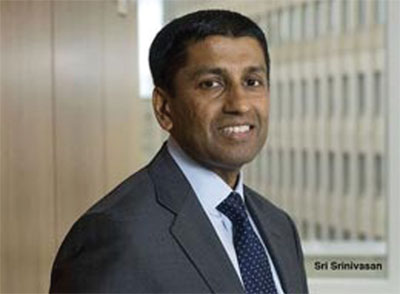
    “This is a proud moment for NASABA as another deserving South Asian has been nominated to the judiciary,” president of North American South Asian Bar Association Nadeem Bezar said. Once confirmed, Chhabria would be the first South Asian Article III judge in California, and the fourth South Asian Article III judge in the nation following Amul Thapar at the US district court for the Eastern District of Kentucky, Cathy Bissoon at the US district court for the Western District of Pennsylvania, and Sri Srinivasan at the US court of appeals for the DC Circuit.

    Chhabria began his legal career by clerking for Judge Charles R Breyer of the US district court for the Northern District of California from 1998 to 1999. He also worked as an associate at the law firm Covington & Burling LLP from 2002 to 2004. From 2001 to 2002, he clerked for Justice Stephen G Breyer on the US Supreme Court. In 2001, Chhabria worked at the law firm of Keker & Van Nest, LLP, after completing a one-year clerkship for Judge James R Browning of the United States court of appeals for the Ninth Circuit.

    A member of the South Asian Bar Association of Northern California and NASABA, he was a speaker at the 2011 NASABA Convention in Los Angeles. Chhabria received his JD in 1998 from Boalt Hall School of Law at the University of California, Berkeley and his BA in 1991 from the University of California, Santa Cruz.

  • Obama, Bush Leap Into US Immigration Fight

    Obama, Bush Leap Into US Immigration Fight

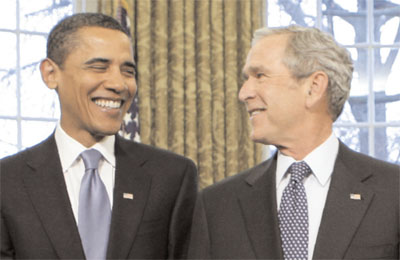
    WASHINGTON (TIP): President Barack Obama and former President George W Bush are leaping into the immigration debate, but their attempts to add momentum to the search for a possible path to citizenship for millions face strong opposition in the Republican-controlled House of Representatives.

    As Bush delivered a rare political speech on Wednesday in favor of immigration reform and Obama prepared for a bipartisan meeting with prominent senators at the White House, Republicans who control the House bluntly challenged Obama and appeared unimpressed by Bush’s advice to carry a “benevolent spirit” into the debate. Emerging from a closed-door meeting, Republican leaders affirmed a step-by-step approach to immigration but offered neither specifics nor a timetable — nor any mention of possible citizenship for an estimated 11 million immigrants living in the US unlawfully.

    Lawmakers streaming out of the twohour meeting said Bush’s long-distance advice had not come up in a discussion that focused instead on the importance of securing the US borders and a general distrust of Obama. The meeting in the Capitol was the House Republicans’ first such gathering since the Senate approved sweeping legislation last month on a bipartisan vote of 68-32.

    Obama is to meet on Thursday with two authors of the Senate measure, Republican John McCain and Democrat Chuck Schumer, in the president’s Oval Office. The legislation faces a steep challenge in the House, and the former president’s ability to sway a new generation of conservatives was a matter of considerable doubt, especially because many of the conservative tea party movement-backed lawmakers have risen to power since he left the White House and are strongly on record in opposition to any citizenship provision.

    “We care what people back home say, not what some former president says,” declared Rep. Tim Huelskamp, a second-term Republican who has clashed with the party leadership in the House. Still, the timing and substance of Bush’s remarks were reminders of the imperative that many national party leaders feel that Republicans must broaden their appeal among Hispanic voters to compete successfully in future presidential elections.

    Obama took more than 70 percent of their votes in winning a second term last year. “America can be a lawful society and a welcoming society at the same time,” Bush said at a naturalization ceremony at his presidential library in Dallas. For their part, Democrats quickly embraced the former president’s message, challenging House Speaker John Boehner to proceed in the same spirit.

    In a written statement noting that the White House recently delayed a key part of Obama’s health care reform law, Boehner and other leaders said that action raised concerns that the administration “cannot be trusted to deliver on its promises to secure the border and enforce laws as part of a single, massive bill like the one passed by the Senate.” Lawmakers said after the session there was strong support for a bill to create a path to citizenship for immigrants who were brought to the country as children illegally by family members, an idea advanced by Majority Leader Eric Cantor.

    Republican Rep. Robert Goodlatte, chairman of the House Judiciary Committee, said his panel would soon begin work on legislation covering that group. Several members of the rank and file said Republican Paul Ryan had made a particularly strong appeal for a comprehensive approach, which includes possible citizenship for the 11 million. But others emphasized there was virtually no support for the Senate’s approach of one sweeping measure that dealt with immigration in all its forms.

  • MORSI OUSTED, under house arrest

    MORSI OUSTED, under house arrest

    CAIRO (TIP): Mohammed Morsi, in office only a year as the first democratically elected leader of Egypt, was rousted from power by the military July 3 as a euphoric crowd in Tahrir Square cheered his exit. The former leader was placed under house arrest at the Republican Guard Club, a senior adviser to the Freedom and Justice Party and spokesman for the Muslim Brotherhood said. Most members of the presidential team have also been placed under house arrest. Egyptian security forces also arrested the head of the Muslim Brotherhood’s Freedom and Justice Party and another of the movement’s top leaders.

    The commanding general of the armed forces, Gen. Abdel Fattah al-Sisi, said on Egyptian television that the military was suspending the constitution, which Morsi pushed through and which many Egyptians saw as slanted toward Islamists. “The armed forces couldn’t plug its ears or close its eyes as the movement and demands of the masses calling for them to play a national role, not a political role as the armed forces themselves will be the first to proclaim that they will stay away from politics,” al-Sisi said.

    He added that the head of the constitutional court, Adli Mansour, would be the acting president, with new elections to be held later. The general said that the military did not have designs on controlling the country’s politics but would “never turn a blind eye to the aspirations of the Egyptian people.” He spoke alongside a leading Sunni Muslim cleric and the head of Egypt’s Coptic Christians, as well as a prominent political opponent of Morsi — Mohamed ElBaradei, the former head of the U.N. nuclear weapons agency. Armored vehicles, tanks and troops deployed throughout the Egyptian capital, including near the presidential palace. The army seized the headquarters of the state television and the state-run newspaper, which reported that Morsi had been told he was no longer president.

    A statement on Morsi’s Facebook page described the army’s move as a “military coup.” Mansour will be sworn in as interim head of state on July 4. The United States will continue to monitor the “very fluid situation” in Egypt, President Barack Obama said in a statement Wednesday night. “We are deeply concerned by the decision of the Egyptian Armed Forces to remove President Morsy and suspend the Egyptian constitution,” the statement read. “I now call on the Egyptian military to move quickly and responsibly to return full authority back to a democratically elected civilian government as soon as possible through an inclusive and transparent process, and to avoid any arbitrary arrests of President Morsy and hisU.N. Secretary-General Ban Ki-moon called for calm and restraint, as well as the preservation of rights such as freedom of expression and assembly. “Many Egyptians in their protests have voiced deep frustrations and legitimate concerns,” he said in a statement that did not condemn the Egyptian armed forces’ ouster of Morsi.

    “At the same time, military interference in the affairs of any state is of concern,” he added. “Therefore, it will be crucial to quickly reinforce civilian rule in accordance with principles of democracy.” Security forces, meanwhile, raided the Cairo offices of Al Jazeera’s Egyptian television channel and detained at least five staff members. Four were later released, the channel said. Karim El-Assiuti, a journalist at the station, told Reuters his colleagues at the Al Jazeera Mubasher Misr channel were arrested while working in the studio. The station was prevented from broadcasting from a pro-Morsi rally and its crew there was also detained, he said. Authorities also shut down three Islamistrun TV stations, including one operated by the Muslim Brotherhood. The State Department warned U.S. citizens to defer travel to Egypt and told Americans already living in Egypt to depart “because of the continuing political and social unrest.” Morsi was elected a year ago after Egyptians ousted Hosni Mubarak, the autocrat who had ruled for almost three decades. Egyptians hoped he would build a more pluralistic and tolerant country.

    Instead, Egyptians have been frustrated by a struggling economy and poor services and infuriated by what they see as power grabs by Morsi — stifling the judiciary and forcing through a constitution that favored Islamists and ignored minorities. “Now we want a president who would really be the president of all Egyptians and will work for the country,” Said Shahin, a 19- year-old protester in Tahrir Square, told The Associated Press. The ouster will remake the politics of the Middle East at a volatile time. Egypt is the most populous country in the region, has a peace treaty with Israel and is a partner of the United States. On july 2, Morsi gave a loud, passionate, 45- minute speech to the country, blaming loyalists of Mubarak for fighting against democracy and refusing to step down.

    He vowed to die for his cause. “I am prepared to sacrifice my blood for the sake of the security and stability of this homeland,” he said. On July 3, as the military appeared to be taking control of parts of Cairo, advisers to Morsi said the generals were staging a coup and subverting the will of the people. In Tahrir Square, however, the military announcement hours later was greeted with jubilation reminiscent of the first days of the Arab Spring two years ago. Tens of thousands of people shot fireworks, sang, danced, chanted and waved Egyptian flags. Before they deposed Morsi, Egyptian military officials assured the U.S. that the military would not assume long-term control of the government, and ensured the safety of the U.S. Embassy, personnel and all Americans in Egypt, U.S. officials told NBC News.

  • Right Step Towards Title Guarantee

    Right Step Towards Title Guarantee

    Real estate prices crucial for economy
    “As land prices are generally a significant component of house prices, reforms in this sector help in safety and stability of the financial system. After all, housing accounted for nearly 8 per cent of total banking credit or about 4 per cent of the GDP as of March 2012. And real estate prices are crucial for the economy as illustrated by the experience of the US”, say the authors.

    Recently two important bills relating to real estate were cleared by the Union Cabinet. While the Real Estate Regulatory Bill, 2012, garnered much attention, the amendments to the Registration Act, 1908, (RA) have been barely mentioned. In fact, RA has important implications for the monetary policy, through improved price discovery for asset prices, and through higher collection of stamp duty and capital gains.

    The objective of this amendment is to have better, more transparent, and highly digitized land market records which, according to earlier estimates by McKinsey (2001), could lead to an increase in India’s GDP by about 1.3 per cent. First, the present status, under which all transactions in immovable property in India have to be registered with the Department of Stamps and Registrations, and the registration deed is the only document indicating ownership rights.

    The Registrar, on the sale of property, collects requisite stamp duty, but does not assess or certify whether the sellers were genuinely the owners. The current registration system is, therefore, not a registration of title, but a registration of deed, primarily for the purpose of revenue collection. In the present arrangements, even the state cannot be held liable for incorrect registration records. The onus of due diligence to ascertain title rests on the buyer.

    Therefore, title is inferred from lack of contention rather than through a positive, documented identification of ownership. The current system of recordkeeping on immovable property is outof- date and unreliable, resulting in an opaque system prone to easy manipulation and festering corruption. In some cases, sale happens through the execution of power of attorney (POA) documents. Frauds abound, and a single property could be sold to multiple buyers in the absence of proper records.

    To avoid high stamp duty, often as high as 5 to 9 per cent of property value, mortgages/leases are not always registered; sometimes documents are registered to reflect lower transaction values. Also, when property changes hands multiple times before final purchase, counter-parties enter into unregistered sale agreements rather than registering sale deeds, to save on stamp duty. As is well-known, land records are incomplete, and land surveys are outdated: in some states last land surveys were undertaken in the pre-Independence period.

    The National Land Record Modernization program, 2008, has been rolled out to digitize all paperbased land records, but without any attempt to verify or update them. Land being a state subject, existing paper-based records follow a different pattern of maintenance and are in different languages which need to be standardized across the country. All these issues in registration make it impossible to ascertain the ownership of a property.

    The lack of ownership data is acute in the urban areas and, therefore, urban planning and governance are directly impacted. A number of infrastructure projects are delayed because of disputes in land titling. Inadequate management of land records results in protracted litigation putting pressure on the judiciary, and over 70 per cent of the land-related litigation relates to ownership titles, according to some estimates. In the private sector, many industrial projects are held up due to litigation over titles and inability to ascertain the correct market value of land.

    This implies both a loss of jobs and tax revenues. The government is mulling over the Land Titling Bill, 2011 (LTB), where titles to property will be guaranteed conclusively by the state, based on the Torren’s system. In the LTB land title guarantee would rest on the land register reflecting the complete rights and interest in a parcel of land, with an assured compensation by the government if errors are made by the Registrar of Titles.

    A robust registration process is, therefore, a prerequisite for a complete, up-to-date ownership records which can then be used to guarantee title. To enable this, record-keeping on immovable properties needs to be technologyenabled, updated real-time, with online search retrieval facilities, and digitally stored with backups. The recent amendments to the Registration Act (RA), 1908, propose to do just that.

    The current amendment to the RA allows for electronic registration of land sale deeds, making record-maintenance easier and increasing the transparency of land markets in the long term. The amendment has also expanded the categories of instruments for which registration is mandatory. States are also expected to frame rules for electronic presentation and registration of deeds. However, in some states, like Maharashtra, reforms on similar lines had been initiated earlier.

    These changes to the RA are expected to provide a single-window view to all types of encumbrances pertaining to land records, be it sale, lease or mortgages. This takes us a step forward towards the objectives of the Act, where “all manner of agreements relating to land or property need to be registered if they are to be considered as evidence in a court of law”. But there are challenges to implementing the amendment and achieving the desired results.

    Maintaining comprehensive land information is key and integrating land survey records with registration data using cadastral level mapping with unique property ID numbers would need to be considered. Reducing stamp duty at the same time as guaranteeing title will go a long way in encouraging the registration of land transactions. To stem the misuse of power of attorney (PoA) in transactions related to immovable property, a time limit on the currency of PoA agreements may have to be explored.

    Further, there may be a need to amend laws related to transfer of property and implementation of contract. As land prices are generally a significant component of house prices, reforms in this sector help in safety and stability of the financial system. After all, housing accounted for nearly 8 per cent of total banking credit or about 4 per cent of the GDP as of March 2012. And real estate prices are crucial for the economy as illustrated by the experience of the US.

  • Twitter Lawyer Nicole Wong Appointed To Senior White House Technology Role

    Twitter Lawyer Nicole Wong Appointed To Senior White House Technology Role

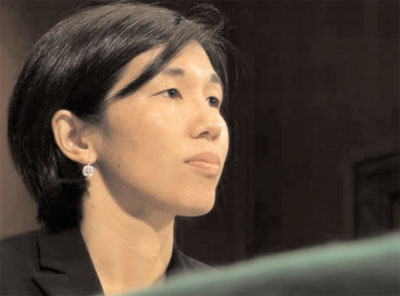
    WASHINGTON (TIP): The Obama administration has appointed Twitter lawyer Nicole Wong to a new senior advisory position to focus on internet and privacy policy, a White House official said on June 20. Wong will work with federal chief technology officer Todd Park, and will join the White House as Obama focuses more attention and resources on fighting hackers.

    Her appointment comes as the Obama administration grapples with issues that arose from the US government’s surveillance of internet and phone communications in its antiterrorism effort. Rick Weiss, a spokesman for the White House Office of Science and Technology, said Wong is joining as deputy US chief technology officer and will work with Park on internet, privacy and technology issues. “She has tremendous expertise in these domains and an unrivaled reputation for fairness, and we look forward to having her on our team,” Weiss said.

    Congress and the White House have been arguing about how best to address cybersecurity for more than a year. Last month, the House of Representatives passed a new cybersecurity bill which will next be considered by the Senate. It is designed to help companies and the government share information on cyber threats, though concerns linger about the amount of protection it offers for private information. Wong, who was legal director at Twitter, has testified before Congress about her concerns about internet censorship in countries around the world.

    In 2010, when she was Google’s vicepresident and deputy general counsel, Wong told a Senate Judiciary Committee hearing that the US government should make internet freedom a key part of foreign policy. At Google, Wong was nicknamed “the Decider,” author and law professor Jeffrey Rosen has written, because part of her job was deciding whether to remove content from YouTube and links from Google that governments objected to.

  • Obama To Nominate Jim Comey As Next FBI Chief On Friday

    Obama To Nominate Jim Comey As Next FBI Chief On Friday

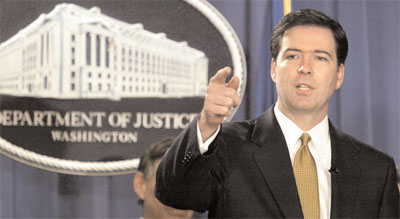
    WASHINGTON (TIP): President Barack Obama will nominate Jim Comey to be the next FBI director on Friday, picking a former Justice Department official who has deep experience in the US battle against terrorism, a White House official said on June 20. If confirmed by the Senate, Comey, a Republican, would replace FBI director Robert Mueller, who has led the agency since just before the September 11, 2001, attacks. Mueller is expected to step down this fall.

    A White House official said Obama would make the announcement about Comey on Friday afternoon. “In more than two decades as a prosecutor and national security professional, Jim has demonstrated unwavering toughness, integrity, and principle in defending both our security and our values,” the official said. Comey, 52, served as deputy US attorney general for President George W Bush. He had previously been the US attorney for the Southern District of New York.

    As assistant US attorney for the Eastern District of Virginia, Comey had handled the Khobar Towers bombing case that arose out of an attack on a US military facility in Saudi Arabia in 1996. Seventeen US military members died in the attack. Comey gained notoriety for refusing in 2004 to certify the legal aspects of National Security Agency domestic surveillance during a stint as acting attorney general while John Ashcroft was hospitalized with pancreatitis.

    That refusal prompted two senior White House officials – counsel Alberto Gonzales and chief of staff Andrew Card – to try to persuade Ashcroft to sign the certification. Comey, who was in the room, said Ashcroft refused. Comey later told the Senate Judiciary Committee at a 2007 hearing that the situation was “probably the most difficult night of my professional life.” His actions endeared him to many Democrats opposed to Bush’s domestic surveillance program.

    The surveillance program resurfaced as a major bone of contention this month when it was revealed that the US government maintained an expansive surveillance program targeting internet and phone communications. Obama has staunchly defended the program. Comey, after leaving the Justice Department in 2005, became general counsel to aerospace giant Lockheed Martin Corp until 2010.

    He most recently joined Columbia University’s law school as a senior research scholar after working for Bridgewater Associates, an investment fund, from 2010 to 2013. The Washington, DC-based Federal Bureau of Investigation serves as both a federal criminal investigative agency and a domestic intelligence body.

  • US House Passes Bill Banning Abortion After 20 Weeks

    US House Passes Bill Banning Abortion After 20 Weeks

    WASHINGTON (TIP): The US House of Representatives passed a far-reaching anti-abortion bill that conservatives saw as a milestone in their 40-year campaign against legalized abortion and Democrats characterized as another example of what they see as Republicans’ war on women. The legislation, sparked by the murder conviction of a Philadelphia late-term abortion provider, would restrict almost all abortions to the first 20 weeks after conception, defying laws in most states that allow abortions up to when the fetus becomes viable, usually considered to be around 24 weeks.

    The legislation lays further groundwork for the ongoing legal battle that abortion foes hope will eventually result in forcing the Supreme Court to reconsider its landmark 1973 decision, Roe v Wade, that made abortion legal. In the short term, though, the bill will go nowhere. The Democratic-controlled Senate will ignore it, and the White House says the president would veto it if it ever reached his desk.

    The White House said the measure was “an assault on a woman’s right to choose.” But it was a banner day for social conservatives. Penny Nance, president of Concerned Women for America, called it “the most important pro-life bill to be considered by the US Congress in the last 10 years.” Democratic leader Nancy Pelosi called the legislation “yet another Republican attempt to endanger women.” Democrats repeatedly pointed out that all 23 Republicans on the chamber’s Judiciary Committee that approved the measure last week are men.

    The Republican leadership moved ahead on the abortion bill after the case of Kermit Gosnell, the Philadelphia abortion doctor who was recently sentenced to life in prison for what prosecutors said was the murder of three babies delivered alive. Abortion foes said it exemplified the inhumanity of late-term abortions. Some 10 states have passed laws similar to the House bill, and several are facing court challenges. Last month a federal court struck down as unconstitutional Arizona’s law.

  • US House Of Representatives Votes To Resume Deporting Immigrants

    US House Of Representatives Votes To Resume Deporting Immigrants

    WASHINGTON (TIP): The Republican-controlled House of Representatives voted on Thursday to resume the deportation of hundreds of thousands of immigrants brought illegally to the United States as children, the first immigration-related vote in either chamber of Congress this year and a measure of the daunting challenge facing supporters of a sweeping overhaul of existing law on the subject.

    The party-line vote of 224-201 was aimed at blocking implementation of President Barack Obama’s 2012 electionyear order called the DREAM Act to stop deportations of many individuals who could benefit from it. Democrats on the House floor reacted with boos when the provision was added to a routine spending bill for the Department of Homeland Security. The vote was largely symbolic, since the administration has threatened to veto the overall legislation on budgetary grounds.

    It nevertheless stood as a stark warning from conservatives who dominate the ranks of the Republican House majority about attempts in the Senate to grant a chance at citizenship to an estimated 11 million immigrants residing in the country illegally. And the White House reacted sharply, saying the House-passed measure would affect “Dreamers” who are “productive members of society who were brought here as young children, grew up in our communities, and became American in every way but on paper.”

    Rep. Steve King, a Republican, said in a statement that the vote prohibits the administration “from implementing executive amnesty” without congressional action. “Bipartisan support for my amendment is the first test of the 113th Congress in the House of Representatives on immigration. My amendment blocks many of the provisions that are mirrored in the Senate’s `Gang of Eight’ bill. If this position holds, no amnesty will reach the President’s desk,” he said.

    The vote took place as Senate leaders set Friday for the opening of debate on White House-backed legislation that would create a chance at citizenship for those in the country unlawfully, at the same time it takes steps to assure the borders are secure against future illegal immigration. The measure was drafted by a bipartisan group of eight senators, then approved by the Senate Judiciary Committee last month on a vote of 13-8.

    It also creates a new low-skilled guestworker program, expands the number of visas available for high-tech industry workers and reorders the system for legal immigration that has been in place for decades. Debate is expected to consume weeks on the Senate floor as lawmakers of differing views try to change it more to their liking. Notably, Sen. Marco Rubio, a Florida Republican who was part of the group that drafted the legislation and is a potential presidential candidate in 2016, is saying he wants changes before he will support it on final passage.

    His office did not respond to a request for reaction to the House vote. In the House, 221 Republicans and three Democrats voted for King’s proposal, while 195 Democrats and six Republicans opposed it. “I can’t believe they just did that,” said Sen. Dick Durbin, a Democrat and a leading supporter of the DREAM Act. Ana Avendano of the AFL-CIO labor federation, said in a statement that King and his allies are playing to “a dwindling base of anti-immigrant Republican primary voters.

  • GOPIO Organizes Community Interactive Session with Minister of Overseas Indian Affairs

    GOPIO Organizes Community Interactive Session with Minister of Overseas Indian Affairs

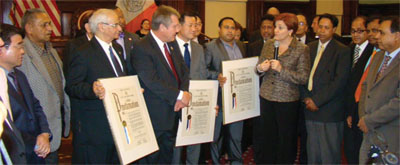
    NEW YORK (TIP): The Global Organization of People of Indian Origin (GOPIO), in collaboration with several community organizations and groups in the New York/New Jersey/Connecticut tri-state area, hosted a luncheon and interactive session on issues of interest to NRIs/PIOs with Vayalar Ravi, Minister of Overseas Indian Affairs (MOIA). The event held here on May 27 was well attended and the issues raised and questions posed to Minister Ravi concerned the Indian communities regionally and nationally.

    Preceding a formal welcome, GOPIO International president Ashook Ramsaran requested everyone to observe “a moment of silence on this Memorial Day to remember and pay homage to all who served and sacrificed for their country as well as for the victims of Chattisgargh and other tragedies”. Ramsaran then welcomed Minister Ravi and Ambassador D. Mulay, India’s Consul General in New York, as well as all attendees.

    GOPIO’s secretary J. Nami Kaur and Director of Diaspora Development Mridul Pathak presented to Minister Ravi GOPIO’s memorandum of community issues and matters of interest which were developed from various inputs, suggestions and recommendations received from chapters, membership and other organizations among the Indian American community in the United States.

    “Development of this memorandum is also based on GOPIO’s extensive knowledge, experience and interaction within GOPIO as well as with other individuals and groups in the Indian community regionally, nationally and globally”, said Ramsaran.

    The issues in the GOPIO memorandum included: OCI Card uniformity for all; Alternate documentation for PIO Card; OIC scheme; Changes in IDF procedures; alternate sites (US) for MBBS exams; NRI Tax beyond 60-day stay; uniformity of information, policies and practices; Reciprocity from India regarding US Immigration Bill for spousal employment; NRI Property Rights and Fast Track Judiciary; Research Visa, OCI/PIO Card holders; Indian Indenture Arrival Commemoration Plaques in PIO Countries; GOPIO’s support and collaboration on community outreach and feedback.

    There were other memoranda presented to Minister Ravi: one by Federation of Kerala Association (FOKANA) and another by Malayalee Organizations of New York. These memoranda focused primarily on OCI cards and associated issues. Following remarks by Ambassador Mulay and H. R. Shah, and introduction by GOPIO’s founding president Dr Thomas Abraham, Minister Ravi responded to all the issues and concerns raised in a very active and participatory session with attendees and the press.

    He was receptive to the questions posed and expressed appreciation to the NRI/PIO populations and their concerns for improving the procedures. “I will do all I can in my ministry (MOIA) to get you answers to your questions and help in any way I can”, said Ravi. The general consensus is that NRIs and PIOs look to MOIA to be the advocacy ministry in the Government of India to address Indian Diaspora issues of interest and concern with respective ministries within the Government of India as well as foreign governments – to seek remedy and redress to resolve current, critical issues affecting people in the Indian Diaspora.

    The issues raised have been hanging fire for a long time. In each interactive session with the minister the same issues have been raised and the minister has more often than not, been evasive and, at best has come up with what he said at this session: “I will do all I can in my ministry (MOIA) to get you answers to your questions and help in any way I can”.

  • USCIS union says it opposes Senate immigration bill

    USCIS union says it opposes Senate immigration bill

    WASHINGTON (TIP): The leader of a union representing 12,000 federal immigration officers said Monday his group is joining a growing list of similar organizations opposed to the sweeping immigration bill crafted by the Gang of Eight lawmakers and under consideration in Congress. Kenneth Palinkas, president of the National Citizenship and Immigration Services Council, said his group was never consulted by the group of bipartisan lawmakers writing the bill, which he claims was written with special interests in mind and fails to address “some of the most serious concerns the USCIS Council has about the current system.”

    Palinkas says the bill doesn’t address the risky pressure put on adjudication officers to rubber stamp applications instead of conducting diligent case reviews, fails to fix the “insurmountable bureaucracy” which often prevents USCIS officers from contacting and coordinating with ICE agents in cases that should have their involvement and doesn’t do enough to address the problem of student visa overstays.

    “We are the very backbone of our nation’s immigration system and will be at the center of implementing any immigration reform,” Palinkas said in a statement obtained by FoxNews.com. Earlier this month, the National ICE Council, which represents more than 7,000 agents, sent a letter to Congress sharply criticizing the legislation and says it will not support it.

    There are three major unions that represent the country’s immigration officers and agents. Members of the Senate’s Gang of Eight spent last week marking up the bill in the Judiciary Committee. On Tuesday, Florida Sen. Marco Rubio seemed to show signs of strain within the group after senators rejected a Republican proposal to require a biometric entry and exit system at ports of entry in the U.S. President Obama has been cautiously optimistic about the Senate’s strategy of a bipartisan approach.

    Things seem to be faring better on the House side. On Thursday, negotiators told reporters that they had reached a tentative agreement but did not disclose details.

  • 21 lawmakers back Chandigarh-born Srikanth ‘Sri’ Srinivasan as top US judge

    21 lawmakers back Chandigarh-born Srikanth ‘Sri’ Srinivasan as top US judge

    WASHINGTON (TIP): A many as 21 lawmakers have lent their support to the Chandigarh-born Indian-American legal luminary Srikanth ‘Sri’ Srinivasan to a top US court, ahead of an expected Senate vote on the nomination. Srinivasan, 46, currently principal deputy solicitor general of the US last week won unanimous approval from the Senate Judiciary Committee for his nomination as a judge on the US Court of Appeals for the American capital.

    “Sri Srinivasan would be an outstanding judge for the Court of Appeals,” wrote the lawmakers, including Ami Bera, the lone Indian-American House member, in a letter to Senate Majority Leader Harry Reid. If confirmed by the full Senate, which appears all but certain given unanimous support for him in the judicial panel, Srinivasan, who last August succeeded another Indian American, Neal Kumar Katyal, in his current job would be the first South Asian judge on the powerful appeals court, often called the nation’s second-highest court.

    “He has worked in the US Solicitor General’s office three times – for both Republican and Democratic administrations – and argued 24 cases before the Supreme Court,” the lawmakers wrote. “As members of Congress, we value the importance of having diversity on the court. Representation of Indian Americans within our judicial system is overdue,” they added. Srinivasan was born in Chandigarh and grew up in Lawrence, Kansas.

    He received his BA with honors and distinction in 1989 from Stanford University and his JD with distinction in 1995 from Stanford Law School, where he was elected to Order of the Coif and served as an editor of the Stanford Law Review.

    He also holds an MBA from the Stanford Graduate School of Business, which he received along with his JD in 1995. He received the Attorney General’s Award for Excellence in Furthering US National Security in 2003 and the Office of the Secretary of Defense Award for Excellence in 2005.

  • Senate Judiciary Committee approves immigration bill with bipartisan vote

    Senate Judiciary Committee approves immigration bill with bipartisan vote

    WASHINGTON (TIP): In what could be described as a further development in the right direction, the Senate Judiciary Committee has approved far-reaching immigration legislation that gives a chance at citizenship to more than 11 million undocumented workers already living in the country. The 13-5 vote clears the bill for a Senate debate expected to begin in early June.

    Committee approval came after the panel’s chairman sidestepped a showdown on the rights of gay spouses, heeding appeals from the White House and others who feared such a vote could lead to the bill’s demise in the Senate. On a final day of drafting, the panel also agreed to a lastminute compromise covering an increase in the visa program for high-tech workers. The landmark legislation creates new provisions to bring workers here legally and enforce against illegal immigration, as well as creating a path to citizenship for 11 million here illegally.

    The Senate Judiciary Committee approval was greeted with cheers by the supporters of the immigration overhaul. Earlier, on May 16, a bipartisan group in the House working on an overhaul of the nation’s immigration laws reached a deal in principle. The group plans to introduce its bill in the House in June.

    It is believed the House legislation will include a path to legalization for more than 11 million undocumented workers already living in the country as well as increased border security measures. With the Senate Judiciary Committee clearing the legislation and the bipartisan House group planning to introduce immigration overhaul bill, the immigration overhaul seems to be heading in the right direction.

  • Democracy wins, federation loses

    Democracy wins, federation loses

    While Nawaz Sharif has won the election decisively, he faces the challenge of reaching out beyond his main base in Punjab to the rest of Pakistan
    Pakistan achieved a historic landmark with the completion of its five-year term by the civilian coalition government led by the Pakistan Peoples Party (PPP) and the successful completion of elections resulting in the clear victory for Nawaz Sharif’s Pakistan Muslim League (PML-N). The election results, surprising for many, point to the challenges ahead for the country. Although the PML won enough seats to be able to form the government without having to bargain too much with too many factions, its success comes entirely through the support of one ethnic group – the Punjabis. Every Pakistani province appears to have chosen a different party to represent it. The overall high turnout nationwide masks the harsh reality that very few people voted in Balochistan, where alienation from the centre has been growing.

    Ethnicity
    There is no doubt that people voted out the incumbents amid questions about their performance. But the virtual wiping out of the PPP in Punjab means that each Pakistani political party now reflects the dominant sentiment of a particular ethnic group. The PPP was the only party that had representation from all four provinces of Pakistan in the outgoing Parliament. The election result may be a step forward for Pakistani democracy. It is a step backward for the Pakistani federation. Given the history of complaints about Punjabi domination, Nawaz Sharif will have to reach out to the leaders of other provinces. Authoritarian rule has undermined national unity in the past because of Punjab’s overwhelming supremacy in the armed forces, judiciary and civil services.

    Democracy should not breed similar resentment among smaller ethnic groups through virtual exclusion from power at the centre. In addition to bringing the provinces other than Punjab on board, Sharif’s other major headache would be to evolve a functioning relationship with Pakistan’s military establishment. Although he rose to prominence as General Zia-ul Haq’s protégé, Sharif clashed with General Pervez Musharraf over civilian control of the military. He might be tempted to settle that issue once and for all, partly because of the sentiment generated by his overthrow and imprisonment by Musharraf. Changing the civil-military balance in favor of the civilians would be a good thing. But if it is done without forethought and caution, it could end up risking the democratic gains of the last several years. The PML-N’s view of Pakistani national identity being rooted in Islam and the two-nation theory does not differ much from that of the Pakistani establishment. His real difference with the establishment is over his belief that he, as the elected leader, and not the military must run the country.

    Foreign policy
    Sharif has publicly stated his intention to pick up the threads of the peace process he initiated with Atal Behari Vajpayee in 1999. That process was undermined by the Kargil war, which Sharif now says was initiated by Musharraf without his authority. There can be no assurance that the establishment will let Sharif move forward over changing Pakistan’s posture towards Afghanistan and India, something it did not allow the PPP-led coalition to pursue. Moreover, having been elected with the support of hardline conservative Punjabis, how far can Sharif go against the wishes of his base? During the election campaign, Sharif said little about Afghanistan. In his previous two terms he maintained close ties with the United States but did nothing against the jihadi groups.

    It was under Sharif’s rule that Pakistan officially recognized the Taliban regime and established diplomatic relations. This time, he has spoken of good relations with the West but his voters are overwhelmingly anti-American. The best he might be able to do on foreign policy would be to say the right things publicly without making tough policy decisions. The Punjab electorate, in particular, and some parts of Khyber-Pukhtunkhwa were clearly swayed by a hypernationalist tide, with tinges of Islamist grandiloquence.

    Sharif’s PML-N and Imran Khan’s PTI used similar hypernationalist, anti-American language about Pakistan no longer asking the West for aid. Both parties courted Islamist extremists to bolster their respective vote banks. It might be difficult for them to get off that tiger any time soon. The National Assembly seat break-up is skewed in favor of one province, the largest province of Punjab. Punjab sends 148 general and 35 women’s seats or a total of 183 out of 342 seats which is more than half the seats in the lower house of Parliament.With deep ethnic, linguistic and economic diversity among the provinces, with trust between the provinces being at an all-time low and with the challenge of terrorism facing the country, there is a need for Mr. Sharif to show statesmanship and to appeal beyond his urban Punjabi base.

    Other players
    Sharif is not the only one facing challenges. The PPP has suffered a national setback but has held onto its base in Sindh. It is now time for the party to look inwards and understand that the country has changed. It is growing more urban and Sindh is also doing so. The party is down but not out. It will have to reinvigorate itself by asserting its liberal, social democratic roots. Like the Congress in India, it can continue to seek unity in leadership from the family of Zulfikar Ali Bhutto and Benazir Bhutto. But it has to be a party that is not dismissed as a family enterprise. As for Imran Khan, he achieved a breakthrough by mobilizing disenchanted, apolitical youth. But if he seeks to remain relevant he must realize that there is more to politics than slogans and catch-all phrases. Railing against corrupt and patronage-based politicians is one thing, offering a viable democratic alternative is quite another.

  • Indian-American poised to join U.S. Appeals Court

    Indian-American poised to join U.S. Appeals Court

    WASHINGTON (TIP): Chandigarh-born Indian- American legal luminary Srikanth ‘Sri’ Srinivasan has moved a step closer to making history as the first South Asian judge on the U.S. Court of Appeals for the American capital. Mr. Srinivasan (46) who in August last year was named Principal Deputy Solicitor- General – succeeding another Indian-American, Neal Kumar Katyal – won unanimous approval from the Senate Judiciary Committee on Thursday, May 16 . If confirmed by the full Senate, which appears all but certain with all the Republicans on the Democratcontrolled panel joining in the 18-0 vote, Mr. Srinivasan would also become the first new judge on the powerful Appeals Court, often called the nation’s second-highest court, since 2006.

    Some court-watchers are already touting him as the next likely Supreme Court nominee as the Appeals Court has served as a stepping-stone for four justices on the top court. The White House, which has fought hard for his confirmation, soliciting letters of support from former Solicitors-General and Supreme Court law clerks from both parties, applauded the vote for Mr. Srinivasan. Srinivasan was born in Chandigarh and grew up in Lawrence, Kansas. He received his BA with honors and distinction in 1989 from Stanford University and his JD with distinction in 1995 from Stanford Law School, where he was elected to Order of the Coif and served as an editor of the Stanford Law Review.

  • Immigration Deal moves forward

    Immigration Deal moves forward

    NEW YORK (TIP): According to a report published in New York Times, a bipartisan group in the House working on an overhaul of the nation’s immigration laws reached a deal in principle Thursday, May 16 evening, aides said. The group plans to introduce its bill in June. Details of the compromise were not released, but, much like a bill introduced in the Senate, the House legislation will include a path to legalization for the 11 million undocumented workers already in the country, as well as increased border security measures.

    The House version, though, is expected to be more conservative in its approach to granting illegal immigrants a path to citizenship, among a number of central issues. It will most likely include a 15-year path to citizenship, rather than the 13-year path offered in the Senate proposal, as well as requiring illegal immigrants to sign an admission that they had violated United States immigration laws, aides said. The House group had been meeting and working on a nearly parallel track with a similar bipartisan group in the Senate, which has already introduced legislation that is now before the Senate Judiciary Committee.

    But until Thursday, the House group had yet to reach an agreement, and earlier this week the Republican members had threatened to walk away and introduce legislation of their own if a compromise could not be reached. The two-hour meeting Thursday evening, a last-ditch effort to save the legislation, finally produced the agreement in principle. Speaker John A. Boehner had talked to the Republican members of the group last week and urged them to produce a bill. “I am concerned that the bipartisan group has been unable to wrap up their work,” he said at a news conference Thursday. “And I know that there are some very difficult issues that have come up. But I continue to believe that the House needs to deal with this and the House needs to work its will.” One final issue that was resolved Thursday night, aides said, was how immigrants, who are not initially eligible for federal benefits, would pay for their health insurance costs – something Democrats and Republicans agreed would be a requirement for legal status.

    Exactly how the compromise resolved this issue was unclear. “The politics of health care had gotten into the bipartisanship of immigration,” said an aide who spoke on condition of anonymity. Republicans had wanted an electronic employment verification system fully operational and mandatory within five years as a condition for unauthorized immigrants continuing to move toward legal status.

    If the verification system wasn’t up and running by the end of five years, the legalization program would end, throwing into question the status of many of the immigrants. Democrats in the group had argued that such a trigger could harm immigrants through no fault of their own. But they ultimately agreed to the Republican plan after gaining concessions that reassured them the five-year deadline would be achievable.

    The bipartisan group’s talks had also stalled over the question of a guest worker program, known as a W-Visa program, for low-skilled, year-round temporary workers. Democrats had expected to use the agreement reached by the nation’s leading business and labor organizations – the same deal that the Senate bill adopted. But Republicans in the group felt the Senate deal was too favorable to labor and tried to raise the number of available W-Visas for temporary workers, which is capped at 200,000 a year in the current Senate version. On Thursday night, the group agreed to disagree. They will leave room in their legislation for a guest worker program, but Democrats and Republicans will introduce their own, competing versions. However, some aides and lawmakers said they remained optimistic that they might reach a bipartisan solution, though they didn’t want to delay the entire agreement. Mr. Boehner and members of the House group were especially eager to produce legislation.

    But as the negotiations dragged on, some Senate Democrats and immigration advocates began to press the Democratic House members privately to slow down their efforts, arguing that introducing something more conservative than the Senate bill would simply drag the final legislation to the right. However, by early this week, the Senate Democrats and the pro-immigration groups had largely reconciled themselves to the fact that, unless talks totally deteriorated in the House, the bipartisan group would most likely introduce a proposal of its own before the Senate had completed its work. Some advocates even said they welcomed any progress on the House side as good news. “If the takeaway is that you’ve got a bipartisan process in the House of Representatives that legalizes 11 million people, that’s a huge momentum-giver,” said Angela Kelley, the vice president of immigration policy at the Center for American Progress. “It adds more than it takes away. That’s what people will remember.”

  • Riot victims still nurse their wounds

    Riot victims still nurse their wounds

    The manner in which the cases relating to the 1984 anti-Sikh riots in Delhi have been dealt with and people’s reaction to that has, yet again, shown that justice delayed is justice denied. The killings were a blot on the nation. A minority community was singled out and attacked in a series of planned attacks. A large number of innocent citizens were murdered in the Capital and in other cities, lawlessness prevailed in the days that followed the assassination of the then Prime Minister Indira Gandhi.

    Even as people tried to rebuild their shattered lives, they had to contend with the fact that various attempts to bring the perpetrators of violence to book were thwarted by powerful vested interests and only a few cases were registered against those who had inflicted the violence and murdered people. Only recently, three persons have been convicted for their role in the killing of five members of a family -Kehar Singh, Gurpreet Singh, Raghuvender Singh, Narender Pal Singh and Kuldeep Singh -in the Raj Nagar area of Delhi Cantonment 29 years ago.

    They have been awarded a life sentence by a Delhi court. The main accused, Congress leader Sajjan Kumar, was acquitted by the same court which gave him the benefit of the doubt. The verdict had sparked off protests in various parts of Delhi, as has the sentencing. A sense of hurt still evidently persists in the people who had to suffer the violence, especially those who lost their family members. The country pays a terrible price every time there is a riot.

    Lack of swift judicial recourse leads to festering resentment among the victims and prevents wounds from healing. It is simply unacceptable that mass violence should be allowed to happen in the largest democracy in the world, one that has a record of people of diverse backgrounds living together. The feeling of impunity that people who commit such ghastly crimes can often be traced to political machinations. Only if the police and the judiciary act to deliver justice can such blots on the nation be prevented in the future.

  • The End of Road for Musharraf

    The End of Road for Musharraf

    Whichever way the Hitchcockian drama in Islamabad plays out there is at least one certainty in the grand confusion: that Pervez Musharraf, arguably the most delusional of the four military dictators that have ruled Pakistan for nearly half its existence, has reached the end of the road. His pipedream of landing in his country after five years of exile, like a triumphant Caesar – in the hope of being welcomed by people still nostalgic about what he had done for them in the past and anxious to give him another chance to lead them – has turned out to be a nightmare.

    He can now rue over his folly during his house arrest in his sprawling farmhouse at the edge of the Pakistani capital. As a matter of fact, Islamabad-based foreign correspondents who had gone to Karachi to cover Musharraf’s “momentous arrival” have reported that it should have been clear from that moment that the former president had no future. His candidature in the four constituencies has already been rejected and most of the political leaders he expected to be with him have already joined other mainstream parties.

    He has no role in the ongoing elections or any influence on their outcome. Incidentally, the most delightful and appropriate comment on his present plight has come from Xinhua, the official news agency of China, Pakistan’s “all-weather” friend where at one time Musharraf used to be welcome. There was, says Xinhua, “poetic justice” in Pakistan when the Islamabad Supreme Court issued an arrest warrant against the former president – something he had done “against dozens of judges when he arrested them in 2007”. On the fate that awaits him, opinions differ widely.

    Some hope, rather than think, that the judiciary that he humiliated so disgracefully in 2007 would not be content without hanging him, especially because the three main charges against him are heinous and include the assassination of Benazir Bhutto and the murder in cold blood of the eminent Baloch leader, Sardar Mohammed Akbar Bugti. Some others believe that if the law and the judicial process don’t get Musharraf, the lawless Taliban would. In my view, this possibility should also be ruled out in view of the enormous commando security the Pakistan Army has provided this former commando general. As of now, the most plausible scenario seems to be that Musharraf’s judicial custody up to May 4 will be extended beyond the date of elections that is May 11. Thereafter his trial can begin, if the judiciary and the new government insist on it. But then it can go on and on for years, if only because in this and many other basic practices the underlying unity of the subcontinent endures. However, overall it is a safe bet that Pakistan’s power structure cannot afford to hurt the sentiments of the all-powerful Army by executing or even imprisoning a former army chief.

    According to available information, General Ashfaque Pervez Kayani, though a one-time protégé of Musharraf, did not want him to come home, leave alone take part in the elections. It is said that messages to this effect were sent to him several times. However, when the megalomaniac former military ruler having hallucinations about his popularity with the Pakistani masses did arrive, the Army considered it its bounden duty to see to it that no harm came to his person and that his, and more importantly, the Army’s izzat (an expression dear to both the Indian and Pakistani armies) was not besmirched in any way. This situation will prevail regardless of the dispensation resulting from the May 11 poll. It would be no surprise if some kind of an understanding already exists among the major stakeholders in Pakistan on this subject.

    Come to think of it, even under a caretaker government, whose only duty is to hold free and fair elections, all concerned have treated Musharraf with kid gloves. Remarkably, Xinhua has taken note of “the speculations” that despite the apex court’s clear order to arrest him, “some bigwigs” in the government told the police to “go slow on Musharraf”.

    It would, indeed, be instructive to look back on the events in 1999 when, after his successful coup, Musharraf wanted to “fix well and proper” his bete noir and then Prime Minister, Nawaz Sharif. But then Saudi Arabia intervened and the military dictator agreed to let Sharif go in exile to Saudi Arabia for 10 years. Today, the Saudi stakes in the stability of Pakistan are even higher than before.

    There are two other points that call for comment. The first is the rather intriguing fact that the United States is refusing to comment on Musharraf”s house arrest one way or the other. Does this lend any credence to his calculation while planning his strategy to take part in elections that, given the configuration of forces in the post-poll Pakistan, the Americans would prefer a government led by him?

    After all it was he who, on the morrow of 9/11, had reversed Pakistan’s policy on Afghanistan and lined up his country with the US in the “war on terror”. Moreover, as revealed only recently, in 2003Musharraf unhesitatingly allowed the Americans to use drones to kill as they wished in North Waziristan as long as they left the Lashkar-e-Toiba (LeT), Jaish-e- Mohammmed and other Pakistani terrorist outfits operating against India well alone?

    Today, the US desperately needs Pakistani cooperation for its plan to withdraw its combat troops from Afghanistan by the end of 2014.

    Secondly, the speculation in some quarters in both India and Pakistan that should the civilian government resist the Army’s demand to let Musharraf go, Kayani and the Army would stage a coup should be dismissed.

    Firstly, over the years Gen Kayani has demonstrated repeatedly that he sees no point in directly taking over when the Army can get its way anyhow. Furthermore, gone are the days of the Cold War when the US had a vested interest in embracing and coddling military dictators in Pakistan. Samuel P. Huntington had then written a book to press home the point that in newly independent countries the armed forces were the best instrument for stability.

    Those days are gone. Today, America is the super-salesman of democracy across the world. It can ill-afford a military takeover in Pakistan, never mind the adverse reaction of the world community in general.

  • Dragon’s Feet In Land Of Cold Blooded Murders

    Dragon’s Feet In Land Of Cold Blooded Murders

    When the chilling new photographs of LTTE supremo Velupillai Pirapaharan’s 12-year-old son Balachandran captured and held in a sandbag bunker of the Sri Lankan Army and executed in cold blood and photographed again were published in the media recently, the international community was shocked but official India was unmoved. Unlike his older brother Charles Antony and sister Dwarka, Balachandran never joined the LTTE, never bore arms against the Sri Lankan armed forces or anyone else.

    He was executed in cold blood because of his ethnicity and parentage. It was an extremely barbaric act. The photographic evidence is part of the third documentary by Britain’s Channel 4 titled “No War Zone: The Killing Fields of Sri Lanka,” which will be screened in Geneva in March ahead of a second resolution sponsored by the USA against the island nation at the UN Human Rights Council.

    While most civilized world rallied behind a similar resolution last year to fix accountability of Sri Lanka’s war crimes and to take reparative steps, India made sure the text of the resolution was watered down to make it virtually ineffective. As the 22nd session of the UNHRC began in Geneva this week, it is important to keep in mind that Sri Lanka government has ignored last year’s resolution and that it is not at all committed to implementing the recommendations prescribed in its own presidentially appointed Lessons Learnt and Reconciliation Commission. The Human Rights Watch has called for the UNHRC to authorize an independent, international investigation into war crimes committed during the final months of Sri Lanka’s armed conflict. It was of the opinion the Commonwealth community of nations may have some leverage because Sri Lanka is scheduled to host Commonwealth Heads of Government Meeting in November, a prestigious event for a small country.

    A UN report compiled by its former spokesman in Colombo, Gordon Weiss, had said that about 40,000 people had been killed in the closing days of the civil war in May 2009. The Sri Lanka government, backed by a handful of nations with dubious human rights record, has been defiant even after the UNHRC resolution and has done precious little to implement it. In fact, it has become more brazen in muzzling free speech and civil liberties, and stripping down its constitutional institutions, including the judiciary.

    The UN High Commissioner for Human Rights, Navy Pillay, said recently the Sri Lanka government was indulging in triumphalism in the Northern Province. She said that no mechanism had been established to trace people who went missing in the aftermath of the civil war and that investigations of disappearances had not led to any arrest or prosecution.

    Civilians in the north have been prevented from commemorating victims of the war and more than 20,000 Tamil graves have been razed in the Vanni area where war museums and war memorials hailing Sinhala soldiers have been erected, Navi Pillay said. She warned the triumphalist images will create a strong sense of alienation among the Tamil population. The Sri Lanka government has launched a systematic campaign to destroy Tamil culture and identity in the island nation. Names of 89 Tamil villages and towns have been changed and given Sinhala names. Three hundred and sixty-seven Hindu temples have been demolished to make room for army camps.

    In the small district of Mullaitivu alone, there are 148 small and 13 large army camps. Although the war has ended four years ago and the LTTE decapitated, the defence (offence?) budget for 2013 has been raised to Rs. 290 billion from Rs. 230 billion in 2012, representing 11.5 per cent of the budget. The budget allocation for education is only 1.86 per cent of the GDP, which is the lowest in South Asia and one of the lowest in the world. The crisis in the education sector is compounded by closure of rural schools, particularly in Tamil areas, and militarization of the education space.

    When Mahinda Rajapaksa was elected President of Sri Lanka for the first time in 2005, he wanted to go down in history as the man who resolved the festering ethnic crisis which had already taken a heavy toll. He was also fully aware that without the active support and co-operation of India he could not accomplish his mission. From the early days of his presidentship, he was sending emissaries holding the olive branch to New Delhi to build bridges only to be rebuffed contemptuously.

    He was keen on India constructing the Hambantota all-weather port in southern Sri Lanka. Nirupama Menon Rao, who was then India’s High Commissioner in Colombo, would not even forward the proposal to New Delhi. Where India failed, China moved in with alacrity. Not willing to give up, Rajapaksa chose the back channel to find a solution. As it was beginning to show result, the Prime Minister’s Office in New Delhi intervened and blocked the channel and promised all assistance – moral, material and physical – to annihilate the LTTE.

    Rajapaksa found the offer tempting. The turnaround in India’s Sri Lanka policy was brought about by four civilian officers whose primary objective was to promote the sphere of influence of China in the Indian Ocean rim States and keep the USA out. The PMO played along with this group. The leader of this group is Shivshanker Menon who cut his teeth in the Indian Foreign Service as a junior officer in Beijing when he was bowled over by the Thoughts of Mao.

    He had two more postings in Beijing which helped the Chinese strengthen their ties with the Indian official. Vijay Nambiar, a 1967 batch IFS officer, is fluent in Chinese language and has worked in India’s diplomatic missions in Hong Kong and Beijing among other palaces and developed close affinity with China. Nirupama Rao also had a stint as India’s ambassador to China before becoming external affairs secretary.

    The three, with former National Security Adviser MK Narayanan played a crucial role in reversing India’s time-tested Sri Lanka policy enunciated by Nehru and carried forward by Indira Gandhi. The foundation of that policy was rested on the belief the Tamils in Sri Lanka are the natural ally of India while the Sinhalese are fair weather allies. This was proved time and again, most notably during the Bangladesh war. Shortly before that, Sri Lanka faced its worst ever internal threat by the JVP insurrection.

    Unhesitatingly India pressed into service its Air Force and Navy to save the government of the day. When the Bangladesh war broke out soon after, Pakistan found itself handicapped to rush troops and arms to its eastern wing as India refused right of its skies.

    Sri Lanka offered Pakistan use of its territory for transshipment of men and material and thereby delayed the liberation of Bangladesh by a few days. The foreign office trio and Narayanan, in the name of fighting ‘international terrorism’ helped train and equip Sri Lankan armed forces to wipe out the LTTE and along with it the Tamil movement for autonomy. For the final push, Rajapaksa sought the help of Lt.-Gen. Satish Nambiar, a retired Indian Army officer.

    Vijay Nambiar, as adviser to the UN Secretary-General, had ensured the closing stages of the war was conducted without witnesses. India has much to answer for the atrocities Sri Lanka had committed. The Northern and the Eastern Provinces, traditional homeland of the Tamils, have come under the virtual suzerainty of China. While Sri Lanka has not yet revoked the Indo- Sri Lanka Agreement of 1987, which promises autonomy to the provinces, Rajapaksa declared on the occasion of the Sri Lanka Independence Day recently that it was not practical for his country to grant autonomy to any province or ethnic group. “Equal rights to all communities” is his new mantra under which the Sinhala community is more equal than the rest.

  • Chief justice takes oath as Nepal PM, to oversee polls

    Chief justice takes oath as Nepal PM, to oversee polls

    KATHMANDU (TIP): Following weeks of negotiations, Nepal’s chief justice Khil Raj Regmi was Thursday sworn in as the new head of government, the msain task of which will be to hold general elections by June 21.

    The main political parties reached an agreement late on Wednesday on the 63- year-old Regmi to be the chairman of the council of ministers, since he was seen as a neutral candidate to hold elections. He will hold a small cabinet of 11 members. The parties have agreed to have former bureaucrats as ministers.

    According to the amendment of the constitution, Regmi will not be performing his duties as the chief justice while he is the chairman of the council of ministers but will go back to the judiciary after elections. There has been widespread opposition to the appointment the chief justice as head of government from smaller political parties and the civil society. While President Ram Baran Yadav was swearing in Regmi, there were protest rallies outside.

    Opposing parties contend that making the chief justice as the head of government is against the principle of the separation of the judiciary and the executive. The country has been facing political uncertainty since May after the parliament was dissolved.