Tag: Lifestyle

  • IS YOUR HOUSE ROMANCE READY?

    IS YOUR HOUSE ROMANCE READY?

    ecreate intimate moments in your home and celebrate romance every day! Celebrating the smaller things in life is what adds to your love for each other. So, make each day special by recreating some romantic moments – spending your day together at home.

    MONOGRAMMED MUGS & WINE GLASSES

    Have a little celebration with coffee cups or wine glasses, which have your and your partner’s monogrammed initials. Says Tanya Mehta, interior expert, “Monogrammed gifts and household items work very well on Valentine’s Day, as they add a personal touch.”

    WRITE A PICTURE POEM OR LOVE LETTER

    Love letters are rare things that don’t cost a thing. If you want to be more creative, how about a picture poem? Get a picture from a postcard and then write a love poem based on the picture. Shares Nisha Khanna, family therapist,”Expressing your feelings for each other creates an atmosphere of well-being for the couple and also boosts your love.”

    LOVE PILLOW

    Add the word ‘love’ with paint on your pillow, or just invest in a few heart-shaped pillows. Says Michael, “You can also colour co-ordinate the linen of your bedroom. Play up the sensuality with a red linen bedcover.”

    CHARM WITH CANDLES

    Candles have always been the quintessential ROMANTIC ACCESSORY. They bring warmth to your room. Red candles are for passion, pink for romance and white for comfort. Take your pick and add some magic to your day.

    CREATE A MEMORY BOARD

    How about putting your favourite romantic memories on a memory board?Create a paper decoration with messages for your loved one on a board. Says Gitanjali Sharma, therapist, “You can also frame your favourite ‘love quote’ and put it on the table for your partner to read.”

    EVERLASTING LOVE PAPER BOUQUET

    This bouquet never dies. You can create a flower bouquet with crepe paper in the colours of love like, red and pink.

    Here’s how: Cut a 20-inch strip of crepe paper into rounded petals. Leave about oneinch at the bottom so the strip won’t tear. Roll the crepe paper strip around the stem or wire, fluffing and shaping the petals as you go. Or you could even create a sweet floral arrangement. Simply fill a clear vase with heart candies.

    GIFT A BOOK OF LOVE

    Spend the day together with a love book, solving quizzes or simply cooking something together from a recipe book. Not only will you spend time together but also discover something new about one another. Says Khanna, “This is positive intimacy. Trivia, poems and recipes – sharing these will add to the celebration in a different way.”

    BREAKFAST IN BED

    Get a woven breakfast tray and start your day in style. Dish up a yummy and simple breakfast that the two of you can enjoy in bed. Interior designer and sexologist Dawn Michael says, “It’s these wonderful little things that add a touch of intimacy to your relationship.” How about serving some heartshaped egg fry rings? A perfect way to warm up to your man’s heart through his stomach!

  • SALTY SNACKS REDUCE THIRST, INCREASE HUNGER: STUDY

    SALTY SNACKS REDUCE THIRST, INCREASE HUNGER: STUDY

    Ever wondered, why you love those French fries with sprinkled salt and cannot keep your hands off ?

    In first of its kind, a study finds that salty food diminishes thirst and increases hunger, due to a higher need for energy.

    The results, published in the journal of Clinical Investigation, showed something different: salt stayed in the urine, while water moved back into the kidney and body.

    “It’s not solely a waste product, as has been assumed,” said one of the researcher Friedrich C Luft from Delbrück Center for Molecular Medicine in Germany.

    “Instead, it turns out to be a very important osmolyte — a compound that binds to water and helps transport it. Its function is to keep water in when our bodies get rid of salt. Nature has apparently found a way to conserve water that would otherwise be carried away into the urine by salt,” Luft added.

    The team carried out a simulated mission to Mars and an international group of scientists found exactly the opposite to be true, where Cosmonauts who ate more salt retained more water, weren’t as thirsty, and needed more energy.

    They divided participants in two groups of 10 male volunteers sealed into a mock spaceship for two simulated flights to Mars and were examined for 105 days.

    The second group was sent for over 205 days.

    Both the groups had identical diets and later they were given three different levels of salt in their food.

    The results confirmed that eating more salt led to a higher salt content in urine — no surprise there. Nor was there any surprise in a correlation between amounts of salt and overall quantity of urine.

    The findings suggest that the increase was not due to more drinking — in fact, a salty diet caused the participants to drink less. Salt was triggering a mechanism to conserve water in the kidneys.

    Cut down on trans fats in daily diet to reduce heart attack risk

    Hospitalisation for heart attacks and strokes is less common among people living in areas that restrict trans fats in foods compared to residents in areas without restrictions, new research has found.

    “Our study highlights the power of public policy to impact the cardiovascular health of a population,” said lead author Eric Brandt from Yale School of Medicine in New Haven, Connecticut, US.

    Trans fatty acids, or trans fats, are commonly found in fried foods, chips, crackers and baked goods. Eating even minimal amounts is linked to a greater risk of cardiovascular disease, the leading cause of death worldwide. Some communities in the US — most notably New York City — have eliminated the use of trans fats in restaurants and eateries in recent years.

    To study the impact of restricting trans fats, researchers compared outcomes for people living in New York counties with and without the restrictions.

    Using data from the state department of health and census estimates between 2002 and 2013, the researchers focused on hospital admissions for heart attack and stroke.

    They found that three or more years after the restrictions were implemented, people living in areas with the bans had significantly fewer hospitalisations for heart attack and stroke when compared to similar urban areas where no limits existed.

  • UNSPOILED HILL STATIONS OF INDIA

    UNSPOILED HILL STATIONS OF INDIA

    With over 20 mountain ranges in India, there is no dearth of hill stations to visit in the country. But a number of these swarm with crowds, and you might want to stay away from it and be a little with yourself and relax. Though it is sounds impossible to come up with a list that has still not come under the clutches of tourism, we have tried our best to cover some of the less crowded hill stations in India that’d satiate your travel thirst without making you go insane with all the touristy action around.

    Ziro, Arunachal Pradesh

    Ziro, arguably one of the most bewitching landscapes of India, is nestled at the highest point of Arunachal Pradesh in the Lower Subansiri district. The destination is home to theancient Apatani tribe, which is known for its unique cultural values, agricultural system and social forestry system. The facial tattoos and nose plugs that the elderly locals sport gives this census town a mystical feel, delineating the rich cultural heritage that it has been carrying till now. In fact, UNESCO has also made a proposal to include this place in the World Heritage Sites. Peppered with beautiful rice fields, this place has a laidback vibe that turns musical and hippy during the month of September when Ziro Music Festival is organised, an event that is attended by thousands of music lovers from around the world.

    Mashobra, Himachal Pradesh

    Mashobra is a quaint little town in Himachal Pradesh, connected to Shimla via Hindustan-Tibet Road, the historic road built by Lord Dalhousie way back in 1850. Not frequented by tourists often, this place is apt for a relaxing holiday. Thickly wooded with oak, rhododendron, Himalayan deodar and cedar trees, Mashobra is ideal for a creative break for artists.

    Munsiyari, Uttarakhand

    Extremely popular among adventure enthusiasts, Munsiyari is a beautiful hill station nestled at an elevation of 2298 m. Deeply forested with rhododendron, cedar and deodar trees, this place offers beautiful views of snow-capped Himalayan ranges. It’s a starting point of many treks, of which, the trek to Namik Glacier Trek is quite popular.

    Araku Valley, Andhra Pradesh

    This beautiful valley in the Eastern Ghats is one of the best kept secrets of Andhra Pradesh. Also, known as the ‘Food bowl of South India’, it is noted for coffee plantations, caves and waterfalls. The serpentine hill roads making their way through the mist is a sight to behold as you head to visit nearby attractions like Sangda Waterfalls, Dumbriguda Fall, Katiki Falls, and Borra Caves to mention a few. This place is in full bloom during the months from September to October, and March to May.

    Dharamkot, Himachal Pradesh

    This quaint little hill station rests on the top of the hill above Mcleodganj, neatly away from the hustle and bustle of Dharamshala. Peppered with tiny guesthouses and village homes, this place is widely known for its meditation centres—Vipassana, Tushita and Dhamma Sikhara—and slow-footed life. It is also a jumping-off site for Triund, a popular trek, which has been attracting adventure enthusiasts from far and near. Do visit the cafes here, apparently every café in Dharamkot has aced in pancakes, lasagnas, pastas and hummus. Fruit wines and apple cedar are widely available in grocery shops here; don’t forget to try them.

    Kaza, Himachal Pradesh

    This high-altitude cold desert rests at an altitude of 3650 m above sea level with a similar terrain as that of Tibet or Ladakh. Buddhist culture prevails in the region and the town is accessible from Kinnaur as well as Lahaul Valley. Less frequented by tourists due to rough terrain, this place mainly attracts mountaineers, adventure junkies and trekking enthusiasts. Tangyud Monastery, Kibber Village and Key Gompa are some of the most prominent attractions near Kaza. The town rests on the banks of the Spiti river, with a street market where utilities are available. The market also has a few shops, selling adventure sports equipments, and bakeries that sell amazing lemon tarts.

    Aru Valley, Kashmir

    If you enjoyed the village-like setting of Pahalgam, the sounds of gushing Lidder river and galloping horses, pitching a tent in Aru Valley will certainly amplify your pleasure. Wake up amidst misty mountains every morning and stroll across the valley, click pictures and go for horse riding. Opt for trekking if you wish to, as Aru is the starting point of expeditions to Kolahoi Glacier and Sonamarg. Nearby attractions include Betaab Valley, Baisaran and Chandanwari.

    Kibber, Himachal Pradesh

    Resting at an altitude of 4205 m, Kibber is, supposedly, the highest village in the world, has a difficult terrain and thus witnesses less tourist footfall. The allure of barren and the majestic mountains besides the overwhelming silence of monasteries adds to the charm of this place. It is about 18 km away from Kaza and lies in proximity to villages like Komic, Langshu and Hikkim, which are base camps for many treks. There is a wildlife sanctuary too, home to Himalayan wolf, Tibetan wild ass, snow leopard, Tibetan woolly hare and blue sheep among others.

    Tawang- Arunachal Pradesh

    Tawang, located in the state of Arunachal Pradesh, is one of the least populated cities of the country. Resting at an altitude of 3048 m, this place is historically and naturally blessed, and is one of the least frequented hill stations of the country. You are required to get a government-issued special Inner Line Permit to enter the district, available in Tezpur, New Delhi, Kolkata and Guwahati.

  • Here’s how you can survive a break-up

    Here’s how you can survive a break-up

    You might know it is the right decision for both of you, but still, breaking up is never easy. A calm well-intended conversation can turn into an argument as emotions run high or someone can feel hurt, or rejected.

    Often people who have made peace with their decision still do not know the best way to break off the relationship and wish for some kind of blueprint in how to approach such a difficult situation. The Independent spoke to relationship therapist Gurpreet Singh about the best way to handle a potentially difficult decision.

    Sometimes the difficulties start before the breaking up when someone thinks they have made the right decision but can find themselves nervous or doubting their choice. “Breaking up really is hard to do,” Singh says. “There are no hard and fast rules about when a relationship is over – it’s usually a feeling that builds over time that things just aren’t right, that you and your partner aren’t making each other happy anymore, that the bad times are outweighing the good. That ‘it doesn’t feel like it used to.

    “The beginning of a relationship can be intoxicating and it’s easy to get swept away in a bubble of happiness. But with time and life changes, the intoxication might wear off. It’s also possible that you or your partner might change in different directions. The reasons for the drift in the relationship or the distance that develops between you is not always clear. “As things deteriorate, both partners could experience a range of emotions like upset, anger, sadness, shock, let down and perhaps even a bit of relief as the reality of the inevitable break-up sets in.”

    Singh says the most important factor when breaking up with someone is honesty. It is important to be honest with your partner and yourself – explaining all the reasons you have for ending the relationship and listening to them. It is important not to leave any stones unturned, even if you feel it is nicer to hide certain parts of the truth. He adds (“of course, if a relationship is in any way unsafe then removing yourself is the absolute priority”).


  • MahaVastu tips for an auspicious griha pravesh

    MahaVastu tips for an auspicious griha pravesh

    Mahavastu is an upgraded, tested and bug-free understanding of vastu shastra that I have distilled from more than 12,000 case studies in the last 25 years. A rational understating helps to maintain equilibrium with nature; with simple yet powerful remedies without demolishing buildings. MahaVastu propagates that five elements are present in directions in our living spaces and the imbalance in these elements leads to the sickness of mind and body. It basically balances all these 5 elements for harmony in life.

    Before buying a home or an office one must check the location of entrance, e.g., an east or a north – east entrance is very auspicious, it brings in money, profits and success. On the contrary, an east entrance of a house leads to fire, accidents and unexpected losses for the inhabitants. According to MahaVastu, south or south – east entrance brings immense prosperity whereas entrance from south creates negative effects on the kids specially the boys of the family.

    In general, houses and buildings facing north-east, south and the west are considered good for the residence.

    Toilet

    Toilets in the north-east direction should be avoided completely.

    Kitchen

    The fire place / kitchen should ideally be located in south east zone of the house. An underground Water tank should ideally be placed towards the north, north – east, east and west zones of the house.

    Bedroom

    Bedroom should ideally be located in the south zone; however, for a newly wedded couple the north or north – west is the ideal direction.

    Kid’s room should ideally be in the east, north – east, west or south – west directions.

    Office

    An ideal location of entrance(s) is north, north – east or north -west zones. This would bring good luck and positive energy. The main door of the entrance should be facing the north or the east. The reception should always be in the east or the north – east.

    Location of toilets should ideally be in the south or south -west vastu zone of disposal. The toilet seats should ideally be placed in either south to north or west to east direction.

    Location of Pantry ideally should be in the southeast corner or zone of the building

    If a house is not built according to vastu , what should they do?

    Simple remedies can help you to correct vastu flaws. Mahavastu has some very simple yet effective remedies like changing the colour of the main entrance, painting a particular portion in a colour to balance the five elements, e.g., the elemental strip technique proves instrumental when it comes to removing the bad effects of entrance locations and toilets. Hanging green sceneries towards north attracts growth and new opportunities. Mahavastu believes in giving you proven vastu formulae for instant results without any demolitions and reconstruction.

  • DETOXIFY YOUR SKIN WITH ESSENTIAL OILS

    DETOXIFY YOUR SKIN WITH ESSENTIAL OILS

    Essential oils can help boost a springtime detox, pampering and enhancing skin, and purifying the body by helping flush out toxins. Here are five essential oils to help stimulate blood circulation, detoxify the liver and firm up tissue.

    Whether for massages or baths, these highly concentrated plant-based essences penetrate the skin easily and reach the bloodstream quickly. This makes them highly effective. Sometimes one or two drops applied to the sole of the foot can lead to a taste in the mouth.

    The right quantity

    As a result, it’s important to be careful with the quantities you use. One teaspoon is equivalent to 5ml, or 100 drops. For a detoxifying massage, essential oils must always be diluted in a plant-based carrier oil, like sweet almond oil, macadamia nut oil, hazelnut oil or apricot kernel oil.

    As a general rule, up to six drops of essential oil can be mixed with 5ml of carrier oil. For baths, this quantity can be diluted directly in a bathwater that’s not too hot.

    The best kinds

    One star essential oil for detox and weight loss is juniper, which has diuretic and purifying virtues, acting on water retention and cellulite. Mix up to 90 drops of essential oil in 50ml of macadamia nut oil for and massage firmly into affected areas.

    Geranium essential oil (Egyptian or Bourbon) is another great weight-loss partner. With its delicate fragrance and anti-inflammatory properties, it also helps beat sugar cravings and reduces appetite while promoting the absorption of different sugars and starches.

    Detox champion, lemon, reveals its full potential in essential oil form. Used for detoxifying massages, this essence stimulates lymphatic circulation and flushes out toxins built up in the liver and the bladder, while also strengthening the immune system.

    Although less well known, atlas cedar wood essential oil is a great ally for boosting circulation. With its woody aroma, this oil is used for its detoxifying, circulatory and decongestant properties and is rubbed into skin mixed with a carrier oil.

    Another invigorating essence for blood circulation is helichrysum italicum essential oil. Like arnica, this Mediterranean plant oil firms tissue and fights edema, with anti-inflammatory properties.

    Note that essential oils are not recommended for use by pregnant women, children under the age of seven or during sun exposure.

  • WOMEN’S SENSE OF SMELL MAY INFLUENCE THEIR SOCIAL LIFE

    WOMEN’S SENSE OF SMELL MAY INFLUENCE THEIR SOCIAL LIFE

    Ladies, take note! Your social life may be linked to how well your sense of smell functions, say scientists who found that older women who perform poorly in odour identification test tend to have fewer friends.

    Researchers from Monell Chemical Senses Centre, a non-profit research institute in the US, analysed data collected from about 3,005 adults between the ages of 57 and 85, the data included odour identification test scores as well as information about participants’ social lives.

    They then compared each participant’s odour identification score, an established measure of olfactory function, with an aggregated “overall social life” score, which included measures such as participants’ number of friends and close relatives, and how often they socialised.

    The data was adjusted to control for possible confounding variables, including education level, tobacco use, as well as physical and mental health status.

    The findings showed a clear link between an older woman’s olfactory ability and her overall social life score.

    Women with good olfactory ability tended to have more active social lives while those with diminished olfactory function were associated with a poorer social life score, researchers said.

    “We know that social interactions are closely linked to health status, so older women who have a poor sense of smell may want to focus on maintaining a vital social life to help improve their overall mental and physical health,” said Sanne Boesveldt, from Monell Chemical Senses Centre.

    The researchers did not find the same association between olfactory function and social life in older men.

    “This intriguing sex difference could suggest that smell training, which has been shown to improve a reduced sense of smell in both men and women, may have an additional beneficial function in older women by helping to restore both the sense of smell and by extension, social well-being,” said Johan Lundstrom of Monell Chemical Senses Centre.

  • MUNNAR’S FASCINATING ATTRACTIONS

    MUNNAR’S FASCINATING ATTRACTIONS

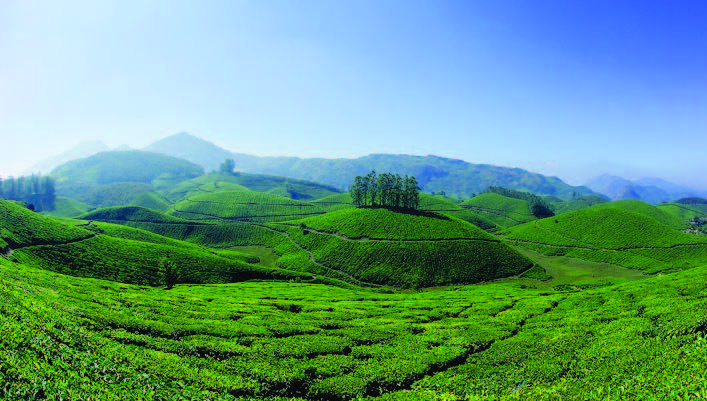
    There are plenty of interesting places to visit in and around Munnar. While nature lovers must visit places like Echo Point, Eravikulam National Park and Kundala Lake, there is a lot for culture buffs as well. The dolmens and rock paintings at Marayur near Munnar, and the Tea Museum that is one of the biggest tea estates in town, are great for some cultural and historical insight. Other than these, the lush green tea estates that line the roadside in Munnar are a no less attraction for those who can marvel at picture perfect scenic beauty.

    MARAYUR DOLMENS

    Marayur Dolmens (burial chambers) are one of the secret places to visit around Munnar. These lie at some 42 km from Munnar on SH 17 and date back to Stone Age, somewhere around 10,000 BC. There are dozens of dolmens peppered around Thenkasinathan Temple near River Pambar. Some of the dolmens, supposedly, date back to Iron Age as well. Other than these intricate burial chambers, the ancient rock paintings in the region are worth a dekko as well. Some of the most interesting paintings can be seen at Kovilkadavu that lies at a distance of around 5 km from Marayur. It is one of the most important sites famous for rock art in Kerala.

    ERAVIKULAM NATIONAL PARK

    The Eravikulam National Park is located along the crest of western ghats in Idukki. It extends along 97 sq.kms of land and has the largest population of endangered (IUCN) Nilgiri Tahr (Hemitragus hylocrius). The Eravikulam National Park has an elevated plateau which is 2000 metres above sea level. The highest peak of the region, Anamudi (2690 m) is situated in the Eravikulam National Park.

    The Eravikulam National Park is covered with grassland, shrubs and forest. Twenty six species of mammals have been recorded in this national park with an estimated population of 750 Nilgiri Tahr. Gaur, Indian Muntjac, Sambar Deer, Nilgiri langur, Indian Porcupine, Nilgiri Marten, small clawed otter and elephants are among other species spotted here. Eravikulam National Park has a tropical montane climate and the peaks experience heavy rainfall from June to August. The only road within the tourism zone of Eravikulam National Park passes through the southern extent towards Rajamallay tea estate. The national park is governed by the Department of Forest and Wildlife Government of Kerala.

    KUNDALA LAKE

    Kundala Lake lies, at some 20 km from town centre, on the road to Top Station. A scenic place that looks more like a picture postcard, Kundala Lake is a major attraction. You can go boating at the lake in one of the many colourful shikaras available here. The lakeside is quite famous for the neelakurinji flowers that bloom in the region every 12 years. With some luck, you can even see hordes of wild elephants loitering on the banks here. A perfect place for nature and photography lovers, Kundala Lake is a great option for a quick family picnic.

    TEA MUSEUM

    Other than its world famous tea estates, Munnar also has a tea museum to its name. This interesting museum is set inside the Nallathanni Estate and is a must-visit for tea aficionados. It houses Rotorvane, a 1905 tea roller, a second century burial urn that was found in one of the tea estates around and fascinating information and photographs that date back to the colonial era in India. The museum traces the history and growth of Munnar’s tea estates, taking you back to the time when Munnar was a simple hill town and pioneers of tea industry started the revolution that placed it on every tea lover’s bucket list.

    ECHO POINT

    Echo Point, at a distance of around 13 km from town centre, is one of the most famous attractions of Munnar. It is a lakeside famous for its natural echo phenomenon, where whatever you speak loudly comes ringing back at you! The lush green lakeside is a sight to behold and sees a steady trickle of tourists.

  • Is Economic Despair What’s Killing Middle-Aged White Americans?

    Is Economic Despair What’s Killing Middle-Aged White Americans?

    By Alana Semuels
    By Alana Semuels

    Two Princeton economists elaborate on their work exploring rising mortality rates among certain demographics

    Two years ago, the Princeton economists Anne Case and Angus Deaton published an alarming revelation: Middle-aged white Americans without a college degree were dying in greater numbers, even as people in other developed countries were living longer. The husband-and-wife team argued, in a study in the Proceedings of the National Academy of Sciences, that these white Americans are facing “deaths of despair”-suicide, overdoses from alcohol and drug, and alcohol-related liver disease.

    The paper caused a stir in academic circles and in the media, and has remained in the public discourse following Donald Trump’s win partly on the strength of his support from these same middle-aged white Americans (the alive ones, to be clear). The paper, however, couldn’t answer the question everyone had: Why was this demographic in particular struggling? It couldn’t be purely the economic pain they faced in the wake of globalization; after all, European countries are also affected by globalization, and their residents are getting healthier and living longer. And non-whites in the U.S. are living longer than they used to as well, and they are subject to the same economic forces as middle-age whites and are struggling, at least in economic terms, even more.

    As I wrote yesterday, the poor health of middle-aged white Americans is having an impact on the labor force. Men aren’t working or looking for jobs because they’re sick, on pain pills, or abusing alcohol or drugs, research suggests. Just why they’re so sick was not something that Case and Deaton elaborated on in their 2015 paper.

    Now, in a new paper, the economists explore why this demographic is so unhealthy. They conclude it has something to do with a lifetime of eroding economic opportunities. This may seem like a circular argument, when put together with previous work: Middle-aged Americans aren’t working because they’re sick, and middle-aged Americans are sick because they’re not working. But Case and Deaton argue that it’s not just poor job opportunities that are affecting this demographic, but rather, that these economic misfortunes build up and bleed into other segments of people’s lives, like marriage and mental health. This drives them to alcoholism, drug abuse, and even suicide, they say, in a new paper released Thursday in advance of a conference, the Brookings Panel on Economic Activity.

    “As the labor market turns against them, and the kinds of jobs they find get worse and worse for people without a college degree, that affects them in other ways too,” Deaton told me.

    What differentiates Case and Deaton’s paper is this idea that as people get older and their fates deviate more and more from those of their parents, they struggle to keep their lives together. The very act of doing worse than their parents’ generation-what Case and Deaton call “cumulative disadvantage”-is killing them.

    As my colleague Olga Khazan has written, there are other convincing theories about why this demographic may not be doing well health-wise. A study from the Commonwealth Fund released last year suggested that while suicide and substance abuse contributed to deaths of middle-aged white people, factors such as heart disease, diabetes, and respiratory disease also played a big role. These factors may themselves have causes, such as diet and lifestyle, that are independent of macro-economic changes.

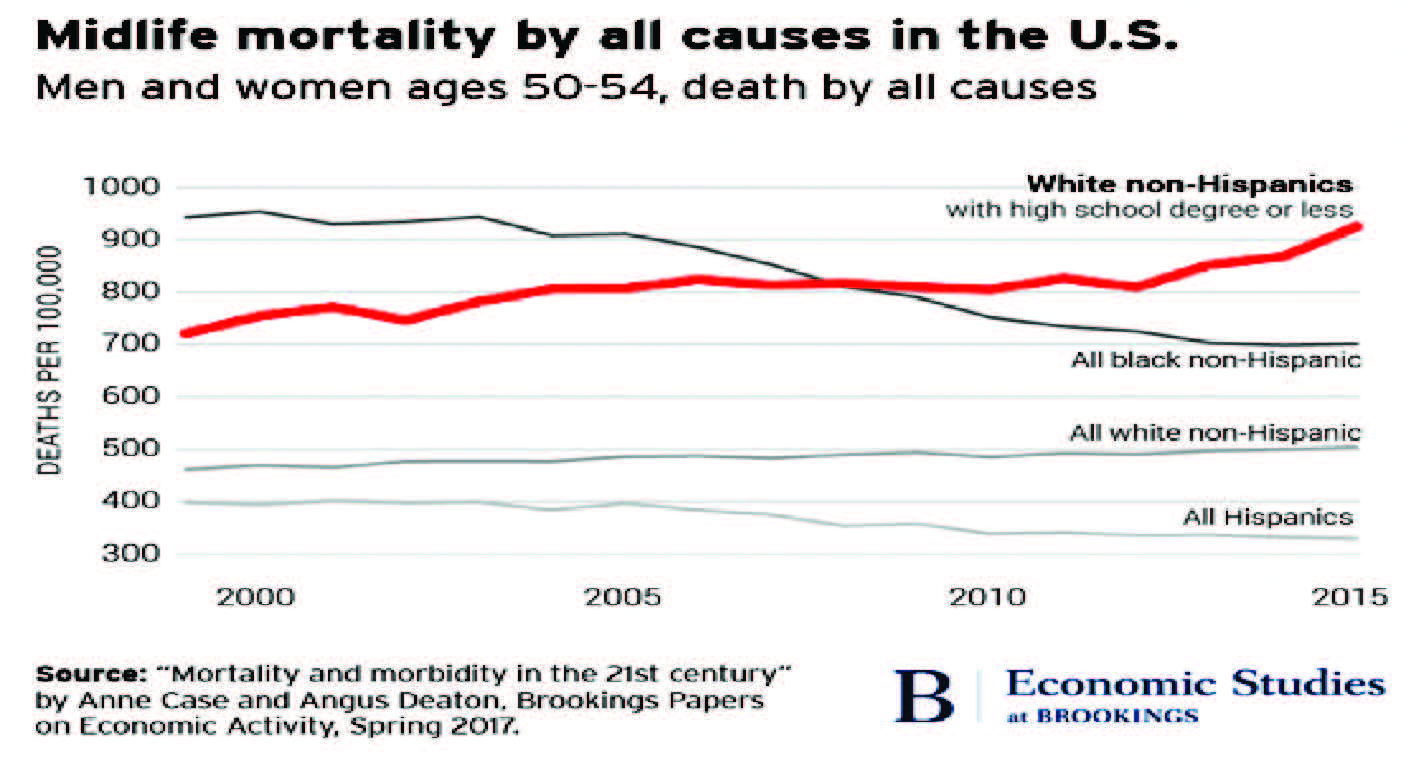
    Case and Deaton agree that deaths from those factors are important, but emphasize that they see a large uptick in deaths from suicides, poisonings, and alcoholic liver disease among whites with lowest levels of educational attainment. This is in contrast to Europe, where people of all educational backgrounds are living longer, which suggests that there’s something unique among middle-aged Americans without a college education that’s making them sicker. It’s also in contrast to other Americans. For instance, whites aged 50-54 with a high-school degree or less had been dying at a rate 30 percent lower than that of that of all blacks in the same age group in 1999, but by 2015, their mortality rate was 30 percent higher than that of all blacks in that age group. Between 1998 and 2013, death rates for Hispanics fell as well.

    What makes this group unique? It’s not just that they don’t have the guarantee of good jobs that they once did, Deaton said. Life doesn’t turn out as this age group hopes it would, creating a sense of hopelessness, and as a result, they turn to risky behaviors such as overeating, alcohol abuse, or drug use, the economists say. They divorce or have trouble finding a marriage partner because of their poor economic prospects. They no longer turn to social organizations like churches, which can provide important social support, the economists write. They don’t have structure in their lives, which in some cases makes them turn to suicide, the authors say.

    “We are trying to say that low income and low job opportunities, after a long period of time, tears at the social fabric,” Deaton told me. “It’s the social fabric that keeps you from killing yourself.”

    There is other evidence that people who might have been on the brink of an unhealthy lifestyle are becoming less healthy. There has been an increase of emergency-room visits for alcohol consumption, between 2006 and 2010, suggesting that people who are binge drinking are going to greater extremes than they once did, according to Aaron White, senior scientific advisor to the director at the National Institute on Alcohol Abuse and Alcoholism. Per capita consumption of alcohol has increased about 10 percent since 2000.

    Over-prescription of opioids “pours fuel on the flames,” Deaton said, leading to more people addicted to drugs and more people dying because of lethal combinations of drugs and alcohol.

    Case and Deaton theorize that this trend is not happening in Europe because of the social safety net there. While middle-aged whites in the United States are left adrift once economic opportunities go away, those in Europe are provided with financial support and health care that make it easier to be satisfied with life, Deaton believes. What’s more, Europeans enter into more stable cohabiting relationships than Americans do, providing a stronger support network than Americans have. This may also be linked to the safety net: Single parents in Britain don’t need to seek additional partners for financial stability because they receive child allowances, for example.

    This is a “very pessimistic” paper, Deaton told me, in part because there are few policy prescriptions that could help slow the rising death rate of middle-aged white Americans. A European-style welfare state could help stabilize some people, but it’s an unlikely occurrence in the U.S.-indeed, the trend in the GOP-controlled Congress seems to be currently to roll back the welfare state. Reducing over-prescription of opioids could be helpful, but would just address a small part of the problem.

    Donald Trump promised, on the campaign trail, a return to the heady days of manufacturing, in which middle-aged whites without a college education could make a good living, and this return to the past would seem to be one solution. It is, after all, the divergence between the past and today that is causing people such anguish. But it’s going to be difficult to bring back good manufacturing jobs, especially in the face of widespread automation. Few other solutions have been put forward, as I’ve written before. This new paper emphasizes a growing problem: For middle-aged whites without a college degree, the future continues to look bleak.

    (Source: Alana Semuels in The Atlantic. The author is a journalist for The Atlantic in New York)

  • PLACES IN MADHYA PRADESH THAT TAKE YOU BACK IN TIME

    PLACES IN MADHYA PRADESH THAT TAKE YOU BACK IN TIME

    With three UNESCO World Heritage Sites under its belt, this central Indian state already has a prominent place on the tourist map of the country. With its rugged hilltop forts, beautiful palaces, intricately-carved temples, historic mosques and other monuments, Madhya Pradesh is the perfect place for time-travelling.

    KHAJURAHO

    Famous for its sensual sculptures, this UNESCO World Heritage Site contains one of the best examples of temple architecture in India. Khajuraho’s temples were built by the Chandela dynasty, who ruled over central India between 950-1050 AD. Out of the 85 original temples, only 20 survive today. Most of them have soaring vertical spires or shikharas, which are believed to represent the Himalayas.

    Khajuraho contains both Hindu and Jain temples, which are divided into the Western, Eastern and Southern complexes. It’s best to begin from the Western complex, either by taking an audio guide from the ASI ticket booth or hiring a guide. There is also a light-and-sound-show held every evening in Hindi and English, which narrates the history of the temples.

    The largest and best-decorated monuments are found in the Western complex. The Kandariya Mahadev is a Shiva temple with an exquisite entrance, and a large number of carvings of Hindu gods as well as lovers. The Chitragupta temple has an impressive seven foot image of the sun god Surya drawing a chariot pulled by seven horses. The unique Chausath Yogini temple originally consisted of 64 small shrines dedicated to ‘yoginis’ or female spiritual leaders, of which only 35 survive now.

    The Eastern complex includes both Hindu and Jain temples. The largest Jain temple now houses an image of Parshvanath, but was originally dedicated to the first ‘tirthankara’, Adinath. The Southern complex has two temples, dedicated to Vishnu and Hindu. The Chaturbhuj temple has a large idol of Vishnu, while the Duladeva temple is an ode to Shiva.

    SANCHI

    This UNESCO World Heritage Site contains some of the finest examples of ancient Buddhist architecture in India. Located at a distance of 40 kilometres from Bhopal, Sanchi is most famous for its Great Stupa (a dome-like monument housing Buddhist relics), which was built by the Mauryan emperor Ashoka. The stupa has four monumental gateways or ‘toranas’ covered with exquisite carvings. These depict scenes from Buddha’s life, Jataka stories and Buddhist history. Sanchi was a major Buddhist centre from the 3rd century BCE until the 12th century AD, and also contains the ruins of several other stupas, temples, pillars, monasteries.

    BHIMBETKA

    Located 46 kilometres from Bhopal, the Bhimbetka Hill contains a cluster of 14 rock shelters which house some of the best prehistoric rock art in the world. Now a UNESCO World Heritage Site, they are situated inside the Ratapani sanctuary. This densely-forested area also has several stunning naturally-sculpted rock formations. The cave paintings date back to the Mesolithic period, and explore themes such as hunting, dancing, music and animals. They also depict animals such as bisons, tigers, lions, wild boars, antelopes, and elephants, as well as religious and ritualistic symbols. They have been made primarily with red and white colours, with the occasional use of green and yellow. These colours were prepared using natural dyes, minerals, coal, and animal fat.

    MAHESHWAR

    A short drive away from Mandu and Indore, this small town is a popular pilgrimage centre with a rich architectural heritage. While Maheshwar has a long history, it was revived in the 18th century by the Holkar queen Ahilyabai. Ahilyabai shifted the capital from Indore to Maheshwar, consolidated the Maheshwar fort and constructed the city’s famous ghats and temples.

    The imposing Maheshwar Fort is located on a hilltop overlooking the Narmada river. Its walls enclose the Rajwada or Ahilyabai’s royal palace; Devpuja, the shrine used by her; and the ‘rajgaddi’, her throne, on which a life-sized statue of the queen has been installed. It also contains various heirlooms of the Holkar dynasty.

    Most of the activity is centred around its ghats, where pilgrims take a dip in the river Narmada. Maheshwar also has beautiful temples such as Kaleshwar, Rajarajeshwara and Ahileshwar, which have tall spires and carved balconies and doorways. To truly immerse yourself in the city’s history, stay at the Ahilya Fort, a beautiful and sprawling heritage hotel located on the banks of the Narmada river.

    ORCHHA

    The former capital of the Bundela Rajputs, Orchha was founded in the 16th century on the banks of the Betwa River. Dotted with palaces, temples and cenotaphs, this heritage site is still not on the mainstream tourist roadmap and makes for an enriching and quiet getaway from Khajuraho.

    The main centre of attraction is the fort complex. A medieval bridge leads to the three palaces inside its walls. The Raja Mahal is the oldest palace in the city. It was built in the 16th century by Orchha’s founder Rudra Pratap and his successor Bharat Chand. It contains royal quarters and the Diwan-i-Khas (a hall for private audience), both with beautiful wall and ceiling murals. The second palace, known as Jahangir Mahal, was built in the 17th century by Raja Bir Singh Deo, to mark the visit of the Mughal emperor Jahangir. The three-storey structure is an impressive example of Indo-Islamic architecture, with domes, balconies and delicate trellis work. Finally, the Rai Parveen Mahal was built for Bir Singh’s paramour Rai Parveen, a musician and poetess. The simple, two-storey building still contains her portrait.

    Orchha also has an unusual Rama Raja Temple, which is unique because Rama is worshipped as a king rather than a god. The temple is also actually a palace, where the idol, brought from Varanasi, had originally been installed while its temple was being constructed. Eventually however, the palace was converted into a temple.

    Finally, for a last whiff of royal history, check out the 14 beautiful chhatris or cenotaphs. These are located on the banks of the Betwa river, and were built as memorials to the Bundela rulers.

    MANDU

    Located in the Vindhya mountains in the Malwa region of Madhya Pradesh, this medieval hill fort is at its most picturesque during the monsoon. Mandu rose to prominence in the 15th and 16th centuries, under the Afghan ruler Dilawar Khan, his successors, Hoshang Shah and Baz Bahadur, and later, the Mughals.

    The city’s major monuments are divided into three broad clusters. The Royal Enclave contains several palaces, Mandu’s first mosque, and water bodies such as a ‘hammam’ or Turkish bath, a ‘baoli’ or step well, and lakes. The two-storey Jahaz Mahal or the ‘ship palace’ is located between two artificial lakes, Munj Talao and Kapur Tao. It was probably built by Sultan Ghiyasuddin Khilji for his large harem. It has open pavilions, balconies overlooking the lakes, and an open terrace.

    History-lovers should also check out the 15th-century Jami Masjid, whose grand architecture was inspired by the great mosque of Damascus. Located next to the mosque, Hoshang Shah’s tomb is considered to be the first marble building in India, and preceded the magnificent marble edifices built by the Mughals in Agra.


  • DIY FACE PACKS TO GET GLOWING SKIN NATURALLY

    DIY FACE PACKS TO GET GLOWING SKIN NATURALLY

    In case you head to a salon for facial, clean-up or any other treatment whenever your skin feels dull, here’s something that will save your money and time. Your kitchen is loaded with ingredients that can be put together to make an amazing face mask, and give you a glowing in just 10-15 minutes. Plus, they are free from harsh chemicals, and are suitable for all skin types. Here, take a look…

    1. Honey and Egg Mask

    This two ingredient face mask is super easy and effective. All you need to do is to mix a tablespoon of honey with egg white, and keep it for 10-12 minutes. Honey moisturises your skin, and makes it supple. Egg white is rich in protein that helps to tighten your skin, and provide it the much needed nutrition.

    1. Lemon and Yogurt Pack

    Start by mixing two tablespoons of plain yogurt with one tablespoon of lemon juice. Apply this mixture on your face for 10 minutes, and wash it off with lukewarm water. Lemon helps to reduce pigmentation and dark spots. Yogurt moisturises the skin and helps to smoothen it.

    1. Gram Flour Mask

    Mix four tablespoons of gram flour with one tablespoon of sandalwood powder, and a pinch of turmeric. Add two-three tablespoons of milk to make it a paste and apply it on your face. Keep it for 10-12 minutes and wash it off with cool water. Gram flour will help to exfoliate your skin, and turmeric will help to tackle pimples and blemishes. Sandalwood also acts as a natural antiseptic, and this mask also effective for those with acne.

    1. Apple Cider Vinegar and Honey

    Start with mixing two tablespoons of honey with one tablespoon of apple cider vinegar. Apply this mask for 15 minutes, and wash it off with lukewarm water, followed by cold water. Apple cider vinegar helps to maintain the pH balance of the skin and also helps to repair the damaged skin. On the other hand, honey moisturises and smoothens the skin.

    1. Olive Oil Mask

    This mask is again pretty simple to make. All you need to do is to mix one tablespoon of olive oil with half tablespoon of lemon juice. Olive oil contains Vitamin C, D and E, along with anti-oxidants that helps to moisturise as well as repair the damaged skin. Lemon juice is a natural bleaching agents and works on your blemishes.

    Source: TOI

  • WANT MORE SEX? THEN STOP GOING TO THE GYM!

    WANT MORE SEX? THEN STOP GOING TO THE GYM!

    Well, if you’ve been hitting the gym regularly, only to seem more attractive to girls, then here’s a bad news! Chances are you are missing on some good sex because of your beloved gym.

    According to a research carried out by researchers by University of North Carolina in Chapel Hill, US, men who go to the gym have less active sex life.

    As per the study, men who workout rigorously strenuously have a lower libido than those who do low intensity exercise.

    Each of the respondants were then categorised according to the duration of their workouts – light, moderate, or intense. Also, their sexual appetite was categorised into high, moderate or low libido.m It was also concluded that people who exercised for a shorter amount of time wanted more sex as well.

    Apparently, the problem lies in the fact that gym going men reach a point when they become too tired to have sex or lose interest in it.

    Lead researcher Anthony Hackney, a professor of exercise physiology and nutrition concluded that those who had a less intense workout had a higher libido.

    The study which has been published in the journal Medicine & Science in Sports & Exercise, read, “Exposure to higher levels of chronic intense and greater durations of endurance training on a regular basis are significantly associated with a decreased libido scores in men.”

  • LOWERING SYSTOLIC BP BELOW 120 MAY PREVENT EARLY DEATH

    LOWERING SYSTOLIC BP BELOW 120 MAY PREVENT EARLY DEATH

    Intensive treatment to lower systolic (top number) blood pressure to below 120 mm Hg can prevent 107,500 early deaths every year, according to a new study.

    Systolic blood pressure refers to the pressure in the arteries when the heart beats. The bottom number, diastolic, refers to the pressure between beats.

    Current guidelines recommend keeping systolic blood pressure below 140 mm Hg (millimeters of mercury).

    However, the results also revealed that there was a 27 per cent reduction in mortality from all causes when systolic blood pressure was lowered to below 120, compared to the standard treatment of lowering blood pressure to below 140 mm Hg.

    “If fully implemented, intensive lowering of systolic blood pressure could prevent about 107,500 deaths per year,” said researchers at Loyola University in Chicago.

    For the study, published in the journal Circulation, the team enrolled more than 9,350 adults aged 50 and older who had high blood pressure and were at high risk for cardiovascular disease.

    High blood pressure, or hypertension, is a leading risk factor for heart disease, stroke, kidney failure and other health problems.

    While saving lives, an intensive blood pressure regimen also would cause serious side effects, the researchers said.

    The study estimated that approximately 56,100 more episodes of low blood pressure, 34,400 more episodes of fainting and 43,400 additional electrolyte disorders would occur annually with implementation of intensive systolic blood pressure lowering in US adults.

    But most of these effects do not have lasting consequences and are reversible by lowering blood pressure medications, the researchers noted. Source: IANS

  • Walnuts make men more fertile: Scientists claim

    Walnuts make men more fertile: Scientists claim

    Eating a walnut-enriched diet with 75 grams of walnuts every day may improve sperm vitality (movement) and morphology (form) — markers of semen quality, which is a predictor of male fertility — in men who added walnuts to their diet compared to men who did not, a study has found.

    The findings showed that mice that consumed a diet containing 19.6% of calories from walnuts (equivalent to about 2.5 ounces per day in humans) had significant improvements in sperm quality by reducing lipid peroxidation — a process that can damage sperm cells.

    “The study found that eating walnuts can actually help improve sperm quality, likely by reducing peroxidative damage in sperm cells,” said lead researcher Patricia A. Martin-DeLeon from the University of Delaware in Newark, US.

    Cell damage harms sperm membranes, which are primarily made up of polyunsaturated fatty acids (PUFAs).

    However, eating walnuts, the only tree nut that are predominantly comprised of PUFAs, may help reduce that damage as one ounce of walnuts contain 13 grams of PUFAs out of 18 grams of total fat, the researchers said.

    “The findings suggest that walnuts may be beneficial for sperm health,” Martin-DeLeon added. For the study, the team took healthy male mice as well as mice that were genetically predetermined to be infertile (Pmca4-/- gene deletion) were randomly assigned to a walnut-enriched diet or a control diet without walnuts that was followed for 9-11 weeks.

    Among the mice that consumed walnuts, fertile mice experienced a significant improvement in sperm motility and morphology and the infertile mice had a significant improvement in sperm morphology.

  • A WEIGHT-LOSS DRUG CAN HELP PREVENT RISK OF TYPE 2 DIABETES

    A WEIGHT-LOSS DRUG CAN HELP PREVENT RISK OF TYPE 2 DIABETES

    Researchers in the UK have found that a weight-loss drug also reduces the risk of type 2 diabetes by 80% compared to a placebo.

    The drug, which increases the amount of appetite-supressing hormones produced by the gut, was tested on overweight people with ‘prediabetes’. This is also known as ‘borderline diabetes’, and is characterised by slightly increased blood sugar levels. The condition often leads to type 2 diabetes when untreated.

    Prediabetes affects one in ten people in the UK, and progresses into diabetes in 5-10% of patients within ten years.

    Prediabetes is curable with exercise and a healthier diet, but once it progresses into diabetes, it is significantly harder to treat. Both conditions are strongly linked to early death and poor health outcomes like nerve damage, blindness and amputation.

    Now, obesity expert professor Carel le Roux from Imperial College London and colleagues have found that a drug already used for obesity and diabetes can help to prevent progression into diabetes when combined with diet and exercise, and could even cure patients of prediabetes altogether.

    The study was published in The Lancet and was funded by Novo Nordisk.

    The researchers recruited 2,254 obese adults with prediabetes at 191 research sites in 27 countries worldwide. After splitting participants into two groups, they studied whether adding daily self- administered injections of liraglutide to diet and exercise helped to prevent progression into diabetes, compared to diet and exercise alone.

    After three years, the researchers found that the patients given liraglutide were 80% less likely to develop diabetes than those in the placebo group. In 60% of those patients, prediabetes was reversed and patients returned to healthy blood sugar levels. Of the patients who did go on to develop diabetes, those who were given liraglutide took nearly three times longer to develop the disease than those in the placebo group. In addition, liraglutide was linked to greater sustained weight loss after three years compared to placebo, with those on liraglutide losing 7% body weight compared to 2% body weight in the placebo group.

    Co-author professor le Roux, from Imperial’s Department of Medicine, said: “These groundbreaking results could pave the way for a widely used, effective, and safe drug to reverse prediabetes and prevent diabetes in 80% of at-risk people.

    This could improve the health of the population and save millions on healthcare spending.”

    Professor le Roux added that the drug seems to work by mimicking the action of naturally-produced hormone that supresses appetite, called GLP-1. This compound is released in response to food, and interacts with the brain’s hypothalamus to suppress appetite.

    However previous studies have found that many obese people produce less of this hormone, which may lead to them over-eating. Liraglutide mimics the effects of GLP-1, essentially doing the hormone’s job to regulate appetite.

    Professor le Roux said: “Liraglutide promotes weight loss by activating brain areas that control appetite and eating, so that people feel fuller sooner after meals and their food intake is reduced. Although liraglutide’s role in weight loss is well known, this is the first time it has been shown to essentially reverse prediabetes and prevent diabetes, albeit with the help of diet and exercise.”

    Liraglutide is already being used to manage weight and diabetes, but it is expensive and not yet widely available in the UK. However, future studies could help develop a test for GLP-1 deficiency, to ensure the drug is given only to those who would benefit.

    Alternatively, patients could undergo a 12-week trial where the drug is stopped if there is no improvement within that time.

  • A FASTING DIET MAY HELP REVERSE DIABETES

    A FASTING DIET MAY HELP REVERSE DIABETES

    A type of fasting diet may reprogramme pancreas cells, promote the growth of new insulin-producing pancreatic cells and reduce symptoms of Type 1 and Type 2 diabetes, a study has showed.

    In the study, led by researchers from the University of Southern California, mice were placed on fasting mimicking diet (FMD) for four days each week which showed remarkable reversal of diabetes.

    The mice regained healthy insulin production, reduced insulin resistance and demonstrated more stable levels of blood glucose — even in the later stages of the disease, the researchers said in the paper published in the journal Cell.

    The genes normally active in the developing pancreas of embryonic/foetal mice are reactivated in diabetic adult mice when cycling FMD with normal diets.

    This increases production of the protein neurogenin-3 (Ngn3) and, as a result, promotes the creation of new, healthy insulin-producing beta cells.

    Researchers also examined pancreatic cell cultures from human donors and found that, in cells from Type 1 diabetes patients, nutrients mimicking fasting also increased expression of the Ngn3 protein and insulin production.

    “These findings warrant a larger FDA trial on the use of the Fasting Mimicking Diet to treat diabetes patients,” said Valter Longo from the University of Southern California.

    “People with diabetes could one day be treated with an FDA-approved Fasting Mimicking Diet for a few days each month, eat a normal diet for the rest of the month, and see positive results in their ability to control their blood sugar by producing normal levels of insulin and improving insulin function,” Longo added.

  • EAT LESS TO LIVE MORE, FINDS STUDY

    EAT LESS TO LIVE MORE, FINDS STUDY

    Finally, an answer to the question ‘How to live a long life?’ has been found. At least, that’s what it seems from a recent research.

    There’s a multi-billion-dollar industry devoted to products that fight signs of ageing, but moisturizers only go skin deep. Ageing occurs deeper, at a cellular level, and scientists have found that eating less can slow this cellular process.

    Recent research published in Molecular and Cellular Proteomics offers a glimpse into how cutting calories impacts ageing inside a cell. The researchers found that when ribosomes, the cell’s protein makers, slow down, the ageing process slows too. The decreased speed lowers production but gives ribosomes extra time to repair themselves.

    “The ribosome is a very complex machine, sort of like your car, and it periodically needs maintenance to replace the parts that wear out the fastest,” said Brigham Young University biochemistry professor and senior author John Price. “When tyres wear out, you don’t throw the whole car away and buy new ones. It’s cheaper to replace the tyres.”

    So what causes ribosome production to slow down in the first place? At least for mice: reduced calorie consumption.

    Price and his fellow researchers observed two groups of mice. One group had unlimited access to food while the other was restricted to consume 35 percent fewer calories, though still receiving all the necessary nutrients for survival.

    “When you restrict calorie consumption, there’s almost a linear increase in lifespan,” Price said. “We inferred that the restriction caused real biochemical changes that slowed down the rate of ageing.”

    Price’s team isn’t the first to make the connection between cut calories and lifespan, but they were the first to show that general protein synthesis slows down and to recognize the ribosome’s role in facilitating those youth-extending biochemical changes.

    Read More

  • SODA, PIZZA AND SALTY FOOD UP LIVER DISEASE IN KIDS: STUDY

    SODA, PIZZA AND SALTY FOOD UP LIVER DISEASE IN KIDS: STUDY

    Children who regularly intake fructose present in soda, sweetened beverages, pizza and salty food, biscuits, yogurt may be be prone to liver disease, researchers warn.

    According to a study, led by researchers from Bambino Gesu Hospital in Italy, dietary fructose increases serum uric acid concentrations.

    Both uric acid concentration and fructose consumption may be high in individuals with non-alcoholic fatty liver disease (NAFLD) — a condition where extra fat is accumulated in liver cells in people who drink little or no alcohol.

    It is estimated to affect up to 30 per cent of the general population in Western countries and up to 9.6 per cent of all children and 38 per cent of obese children across a spectrum of liver disease, including NASH (defined as steatosis, hepatocyte ballooning and inflammation).

    Although NASH is a less aggressive form of NAFLD, it can progress to severe fibrosis and cirrhosis, with development of hepatocellular carcinoma in adults.

    The findings suggested that fructose consumption was independently associated with high uric acid, which occurred more frequently in patients with NASH than in not-NASH patients.

    “It is plausible that dietary fructose intake and uric acid concentrations are potential risk factors for liver disease progression in NAFLD,” said Valerio Nobili from Bambino Gesu Hospital in Italy.


  • EXERCISE IN PREGNANCY MAY HELP OBESE WOMEN AVOID COMPLICATIONS

    EXERCISE IN PREGNANCY MAY HELP OBESE WOMEN AVOID COMPLICATIONS

    Exercise may be an efficient way for obese pregnant women to lower their risk of diabetes, dangerously high blood pressure and other complications, research suggests.

    “The study suggests that a prenatal exercise-based intervention leads to both decreased costs and improved outcomes in obese women,” said Leah Savitsky, a medical student at Oregon Health and Science University in Portland who led the study.

    As reported at the 37th annual meeting of the Society for Maternal-Fetal Medicine in San Diego, California, Savitsky and her team analyzed previously published research on the effect of exercise on pregnant women with a body mass index (BMI) of at least 30.

    The normal range for BMI – a ratio of weight to height – is 18.5 to 24.9; a BMI of 30 or more indicates obesity. (A BMI calculator is here, on the website of the U.S. Centers for Disease Control and Prevention. Based on their analyses of those earlier studies, the researchers estimated the benefit of exercise for women who are obese at the start of their pregnancy.

    They calculated that for every one million such women, there would be 38,176 cases of a dangerous pregnancy-related blood pressure problem known as preeclampsia among those who exercised, compared to 113,000 cases among those who didn’t exercise.

    Exercise would also be linked to a decrease in so-called gestational diabetes, with a rate of 195,520 per million among exercisers compared to 305,500 among non- exercisers, according to their calculations.

    Likewise, they estimated, for every million obese pregnant women the preterm birth rate would drop from 105,059 to 90,923 with exercise, the maternal death rate would fall from 90 to 70 and the neonatal death rate would drop from 1,932 to 1,795.

    Based on a cost-effectiveness threshold of$100,000 per quality-adjusted life year, an exercise intervention could save money as long as expenses are held to just under$3,000. The effects of exercise may be even more beneficial than the study suggests, Savitsky said. “This study did not consider additional downstream benefits on control of weight beyond pregnancy as well as the downstream potential benefits on hypertension and diabetes,” she told Reuters Health by email.

    Women who are not obese may benefit as well. The researchers applied their model to women with a normal BMI of 18.5 – 24.9 and found similar improvements in outcomes among those who exercise, although the cost-effectiveness thresholds were lower.

    “With the obesity epidemic looming in our society, perhaps we should be turning our attention to prevention of disease. It does not seem to be too late even for obese pregnant women to engage in lifestyle change that may substantially reduce health care costs,” Mottola told Reuters Health by email.

    The current study was not designed to develop specific exercise guidelines for obese pregnant women; these women should consult their obstetricians for guidance. In the meantime, the American College of Obstetricians and Gynecologists advises obese pregnant women to “start with low-intensity, short periods of exercise and gradually increase as able.”

  • Brain unable to form new memories when you’re sleep deprived

    Brain unable to form new memories when you’re sleep deprived

    Alert! Your memories are in danger of being lost if you are sleep derived, suggests a study. Studying mice, scientists at Johns Hopkins have fortified evidence that a key purpose of sleep is to recalibrate the brain cells responsible for learning and memory so the animals can “solidify” lessons learned and use them when they awaken — in the case of nocturnal mice, the next evening.

    A summary of their study appears online in the journal Science.

    The researchers, all of the Johns Hopkins University School of Medicine, also report they have discovered several important molecules that govern the recalibration process, as well as evidence that sleep deprivation, sleep disorders and sleeping pills can interfere with the process. “Our findings solidly advance the idea that the mouse and presumably the human brain can only store so much information before it needs to recalibrate,” says Graham Diering, Ph.D., the postdoctoral fellow who led the study. “Without sleep and the recalibration that goes on during sleep, memories are in danger of being lost.”

    Diering explains that current scientific understanding of learning suggests that information is “contained” in synapses, the connections among neurons through which they communicate.

    On the “sending side” of a synapse, signaling molecules called neurotransmitters are released by a brain cell as it “fires”; on the “receiving side,” those molecules are captured by receptor proteins, which pass the “message” along. If a cell receives enough input through its synapses, it fires off its own neurotransmitters. More specifically, experiments in animals have shown that the synapses on the receiving neuron can be toggled by adding or removing receptor proteins, thereby strengthening or weakening them and allowing the receiving neuron to receive more or less input from nearby signaling neurons.

    Scientists believe memories are encoded through these synaptic changes. But there’s a hitch in this thinking, Diering says, because while mice and other mammals are awake, the synapses throughout its brain tend to be strengthened, not weakened, pushing the system toward its maximum load. When neurons are “maxed out” and constantly firing, they lose their capacity to convey information, stymying learning and memory. One possible reason that neurons don’t usually max out in a process that has been well-studied in lab-grown neurons but not in living animals, asleep or awake. Known as homeostatic scaling down, it is a process that uniformly weakens synapses in a neural network by a small percentage, leaving their relative strengths intact and allowing learning and memory formation to continue.

  • Making an Environmental Impact through Fashion: Premal Badiani showcases clothes made from wood pulp

    Making an Environmental Impact through Fashion: Premal Badiani showcases clothes made from wood pulp

    She strongly believes that every individual has a social responsibility and they can make an impact in the society in any field they belong to. And India-born US-based designer Premal Badiani is trying to make global awareness on the human impact on environment through fashion.

    On February 15Premal Badiani’s “Root Cause” collection – clothes made from wood pulp – was showcased at the Indian Consulate in New York City. Indiaspopup.com, a premier online destination for luxury designer wear which promotes talented Indian designers by showcasing their work on an international level organized the event.

    “We are very proud of the craftsmanship and creativity of our Indian Designers and hope to make a major dent in the global fashion market,” said Dr. Shweta Reddy, Founder of Indiaspopup.com.

    Premal in her speech explained why she named her collection ‘Root Cause.’ “It has two reasons. First, I am proud of my Indian heritage. So, it ties me back to my roots. Second, it’s part of green initiative. The inspiration behind this collection is to bring awareness of the human impact on the environment and to promote social responsibility by adopting sustainable fashion as a lifestyle choice. Being eco-friendly is a lifetime choice. I want to promote 360 degree sustainability through fashion globally. It’s a small initiative but I am trying to make a difference in the industry I belong to.”

    Premal Badiani’s “Root Cause” collection –
    clothes made from wood pulp – was
    showcased at the Indian Consulate in New
    York City Photos/ Jay Mandal on assignment

    Badiani said that by using eco-friendly fabric, extracted from the outer bark of a special palm tree in South India without harming the tree, she is eyeing to promote plantation of more trees. She has also joined hands with NGO Hearts@Work foundation led by the successful entrepreneur Viral S. Desai who has been persistently making tremendous efforts with his various initiatives in the field of environmental awareness to bring in the 360-degree sustainability in the society. The brand is also associated itself with the ‘Clean India, Green India’ initiative.

    Consul General Ambassador Riva Ganguly Das in her welcome address stressed on the need of Indian Branding. “Indian designers are doing extremely well. But we need to do a little more to promote our(Indian) fabric. There is an issue with the branding. With every brand, association with India is needed”, she said.

    The event was held at the consulate as part of the New York Fashion week and helped open an avenue for an entire community of Indian Textile makers.

  • Mac Duggal makes an emphatic statement with his designs at New York Fashion Week

    Mac Duggal makes an emphatic statement with his designs at New York Fashion Week

    NEW YORK (TIP): Starting with designer Mac Duggal, sought after for his pageant and prom dress line, it was his first showing at #NYFW Feb. 11, featuring glamorous, gorgeous gowns with bling and an eye-popping wow factor, noted PRNewswire.

    In addition to the expected gowns with lots of shimmer and bejeweled adornments, there was the unexpected. This collection from Mac Duggal featured floor-length capes, unconventional slacks, shorts and even body suits.

    An Indian American designer who resides in Chicago, Mac Duggal’s enthusiasm for women’s couture fashion began with the merging of the vibrant designs of his homeland’s royal history and opulent traditions with a sophisticated and contemporary design aesthetic.

    Arriving in the United States in 1983 at the age of 23, Duggal began his road to success with his first collection, “Creative Creations,” a line of dazzling gowns blending Indian beauty and elegance with Western styling.

    The Mac Duggal brand further elevated itself with the introduction of designer couture gowns and pageant wear. It was his high fashion prom dresses that put him at the forefront of the emerging designer prom dress market, and won him such awards as the 1998 Diva Fashion Award for Designer of the Year in the Prom/Pageant category.

    Expanding his collection to 12 distinct social occasion lines, the Mac Duggal brand has transformed into a highly sought after label courted by A list celebrities including Shakira, Carrie Underwood, Gwenyth Paltrow, Khloe Kardashian, Eva Longoria, Paris Hilton and many more.

  • International Fashion Designer Mac Duggal all set to dazzle NY this weekend with his exquisite Winter/Fall 2017 collection

    International Fashion Designer Mac Duggal all set to dazzle NY this weekend with his exquisite Winter/Fall 2017 collection

    Attendees will get a first-hand look at the Fall/Winter 2017 collections. Mac Duggal’s designs have been previously covered by prestigious publications including WWD, Elle, and Seventeen, coveted by A-list celebrities such as Eva Longoria, Khloe Kardashian, Carrie Underwood, Kelly Clarkson, Mary J. Blige and Carrie Ann Inaba and is the most represented designer on the world pageant stage.

    Among the distinguished designs that Mac will be showing is the celebrated Fabulouss! line. Mac’s vision for Fabulouss was to create a prom collection for plus-sized teens, who often go unrepresented in the fashion industry. Since its beginning the Fabulouss line has become the gold standard in plus size clothing for those seeking a full-figured option. Fabulouss designs, unlike other plus size dress alternatives, are created to not only fit but compliment a full-figured silhouette.

    Scheduled to attend:

    Dove Cameron Actress appearing on Disney’s Liv and Maddie

    Patina Miller Actress appearing on CBS Madame Secretary

    Lauren Blumenfeld Actress appearing on CBS Doubt

    Raquel Pelissier Miss Haiti Universe 1st runner up Miss Universe

    Clara Lee Korean Pop singer and actress

    Lyndie Greenwood Actress appearing on FOX Sleepy Hollow

    About Mac Duggal:Mac Duggal’s enthusiasm for women’s fashion began with the merging of the colorfully rich designs of India’s royal history and opulent traditions. His early creations, mixing a classic silhouette and design aesthetic with a contemporary sophistication, have made Mac Duggal the leader in the Prom industry.

    Mac Duggal

    Mac continued his success story by expanding his collection to 12 distinct social occasion lines. Mac’s success is highlighted by the many awards throughout his celebrated career. Most recently was his induction into the Smithsonian museum, Family of Voices exhibit, focusing on successful entrepreneurs in the United States. The Mac Duggal brand has transformed into a highly sought after label culminated by their participation in New York Fashion Week.

    Mac Duggal is about making something effortless, something timeless, something exceptional. Exceptional designs mean impeccable construction using the finest fabrics to achieve the perfect fit. Today, Mac presents a collection of classic designs curated with a youthful sophistication that both marks the moment and redefines tomorrow.


    Contact: Renee Mehrra:  reneemehrra@gmail.com  (Cell: 917 288 8080)

  • REASONS YOUR ABS ARE NOT CHANGING

    REASONS YOUR ABS ARE NOT CHANGING

    You are working out in the gym for six days a week and also watching your diet, yet your abs are not shaping the way they should. Why do you think is that happening? These slipups are holding back your desired results.

    You are focusing too much on crunches

    Many people get this wrong. They feel that to get washboard abs, they need to crunch, crunch and crunch. But that’s not how it works. In fact many fitness experts feel that crunches are overrated. They are not as beneficial as they are touted to be.

    Doing isolation moves

    Heard of the transverse abdominus (TVA) muscle? If you are ignoring this muscle, it could be the reason for you to not see the desired results. TVA is a deep seated muscle group in your abdomen, which gets activated only if you do compound moves. For the uninitiated, compound moves work on two muscle groups simultaneously just like abdominal bicycle and dumbbell squats. Pelvic twists are also effective but caught in the rut of regular exercises, we often miss out on the goodness of exercises like pelvic twists.

    You are ignoring your back

    You cannot build flawless abdominal muscles if you are ignoring your back muscles. Ab exercises put a lot of pressure on your back muscles and if you are not engaging your back muscles, you are making yourself prone to injuries.

    You are not eating right

    “Perfect abs are made in kitchen!” If your diet is not supplementing your workout, the abs will not show any signs of improvement. High protein, ample fiber, lots of water, light and early dinner and low-carb diet are some of the components of a flat tummy diet. “Having detox water throughout the day is also an effective way to lose tummy fat,” recommends nutritionist Mansi Chatrath. Take these seriously and you are sure to see results.

    Same exercise routine day after day

    Celebrity fitness expert, Deepesh Bhatt explains, “When you follow the same workout routine day after day, your body eventually gets used to it and stops responding. So the trick to get faster and better results is to continue changing your workout. It could be some change in workout timing or introduction of new moves and techniques. You basically have to shock your body to get maximum output.”

    Never tried HIIT?

    Ab-specific exercises are a great way to go about building your muscles but one cannot ignore the importance of a full body workout. Skip the treadmill and try High Intensity Interval Training (HIIT). HIIT cardio workout involves high- intensity moves that help burn calories faster, thereby helping you achieve the perfectly chiseled abs.

    Not getting enough sleep

    Sleep and your weight are interlinked. If your body is not well rested, it doesn’t matter how hard you gruel yourself in the gym, it won’t respond the way it should. Less sleep also affects your hunger hormones and impacts the amount of calories you burn in a day. Sleep well and your abs will definitely thank you!

  • FRIENDS YOU DON’T WANT YOUR PARTNER TO MEET

    FRIENDS YOU DON’T WANT YOUR PARTNER TO MEET

    Let’s admit this. We all have some friends that we never want our boyfriend to meet. “There are some friends that stir up a sense of insecurity within us and creates a feeling of discomfort,” says relationship expert Madhu Kotiya to TOI.

    Here is a list of the variety of friends we need to be more careful of :

    1. The jealous lover friend
    We all have that one friend, don’t we? That friend who secretly likes us. The friend we deliberately don’t mention in front of our boyfriend. And if we don’t even mention him, making him meet the man would only cause problems, which we do not want, right?

    2. Your ex who’s NOW a friend
    You would never want to do that, would you? Making your ex-turned-friend meet your current boyfriend?Think again, ladies! It does NOT seem to be a good idea. After all, the ego game could be too strong to handle!

    3. The Third-wheel
    Yes, we all have planned dates with our best friend in tow sometimes, but all the time? Not a bright idea! We want our time alone with our man and would really not want a third wheelie tagging along, always!

    4. That super hot friend
    Sounds too familiar? There is always that one friend who is too hot to handle and somewhere inside us, we’re jealous. The last person we would want our man to meet is this friend. What if he finds her better?What if that perfect figure lures him into changing his mind about you?

    5. The unnecessary flirt
    There’s that friend, the one who will flirt with anything from the opposite sex moving. This kind should be strictly off-the-list. Do not even consider this option.

    6. The ‘Frenemy’
    She may be at a better job or better looking. And she doesn’t leave a chance to prove that to you. This is the breed which can turn out to be dangerous if introduced to your one true love. Why? Because all your insecurities will be standing right in front of you and staring.

    7. The ‘always correct’ friend
    Aren’t you already used to being the ‘always correct’ diva? Familiarizing this category will make you look like Ms Lost-erson. Avoid this kind, as much as you can.