Tag: NASA

  • ‘Ice And Fire’: NASA shares fascinating photo of ‘cosmic reef’ taken by hubble telescope

    ‘Ice And Fire’: NASA shares fascinating photo of ‘cosmic reef’ taken by hubble telescope

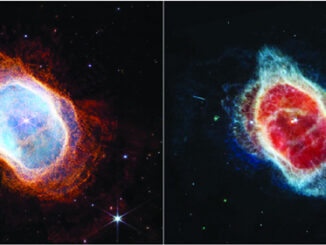
    Space agency NASA routinely captures stunning images of our universe, leaving space lovers mesmerized. The Instagram handle of NASA is a treasure trove for those who love to watch educational videos and fascinating images showcasing Earth and space. On Monday, NASA shared two images captured by its Hubble telescope showing a ”cosmic reef’ 163,000 light-years from Earth in the constellation Dorado. NASA called it the ”cosmic reef” for its resemblance to a coral reef in Earth’s oceans.
    Notably, the telescope captured two neighbouring clouds of cosmic dust and gas, the giant red nebula NGC 2014 and a smaller blue nebula nearby called NGC 2020. These nebulae are part of a vast star-forming region, the Large Magellanic Cloud, a satellite galaxy of the Milky Way full of massive stars.?
    As per NASA, the stars near the center of the image are around 10 to 20 times the size of our Sun, and their intense radiation heats surrounding dense gases like oxygen seen in light blue to 20,000°F (11,000°C). The nebula in the lower left was created from a star 200,000 times brighter than our Sun, which ejected gas in a series of eruptive events.?
    Describing the image, NASA wrote, ”An image is split in two. In the bottom left of the first image, a bright blue ring appears, slightly fading in all directions, with a small blue dot in the middle. Red and orange waves of gas ripple, arcing from top left to top right. A light blue center appears out of the sea of red, and several bright white dots shine through. In the top right, dark blue gas emanates from the blackness of space.?”
    As per Space.com, the image was taken by Hubble’s Wide Field Camera 3 to mark the telescope’s 30 years in space.
    Reacting to the image, one user wrote, ”Awesome capture. Colors are beautiful.” Another commented, ”That’s beautiful!!!” A third wrote, ”Ice & Fire.”
    NASA’s Hubble Space Telescope, which was launched on April 24, 1990, has made more than 1.4 million observations of nearly 47,000 celestial objects. It was named after American astronomer Edwin P Hubble, who confirmed that our universe was constantly expanding. In its 30-year lifetime, the telescope has racked up more than 175,000 trips around our planet, totaling about 4.4 billion miles. Source: NDTV

  • Sample from asteroid Bennu rich in carbon and water: NASA

    Sample from asteroid Bennu rich in carbon and water: NASA

    An initial study of the samples of asteroid Bennu brought back to Earth has revealed evidence of high carbon content and water. This indicates that the building blocks of life on our planet can also be found on the 4.5-billion-year-old asteroid. The National Aeronautics and Space Administration (NASA) made the announcement from its Johnson Space Center in Houston. Scientists and leaders from the space agency showed off the asteroid material for the first time since the OSIRIS-REx mission dropped it to Earth.
    “The OSIRIS-REx sample is the biggest carbon-rich asteroid sample ever delivered to Earth and will help scientists investigate the origins of life on our own planet for generations to come. Almost everything we do at NASA seeks to answer questions about who we are and where we come from. NASA missions like OSIRIS-REx will improve our understanding of asteroids that could threaten Earth while giving us a glimpse into what lies beyond. The sample has made it back to Earth, but there is still so much science to come – science like we’ve never seen before,” said NASA Administrator Bill Nelson in a press statement.
    The objective of the OSIRIS-REx mission was to collect 60 grams of asteroid material from Bennu and bring it back to Earth for analysis. NASA experts have spent more than ten days carefully disassembling the hardware used to return the sample. When the lid of the sample canister was first opened, scientists discovered “bonus” material covering the outside of the collector head, lid and base. There was so much material that it slowed the collection process, according to the space agency.
    Scientists began with a “quick-look” analysis of the initial material, where they collected images from a scanning electron microscope along with infrared measurements, X-ray diffraction and chemical element analysis. They also used X-ray computed tomography to produce a 3D computer model of one of the particles. This early “quick-look” gave evidence for the abundant presence of carbon and water in the sample.

  • Indian American NASA scientist Aroh Barjatya to lead rocket mission into 2023 solar eclipse

    Indian American NASA scientist Aroh Barjatya to lead rocket mission into 2023 solar eclipse

    WASHINGTON, D.C. (TIP):  An Indian-origin scientist at NASA is helming a mission that aims to launch three rockets during the 2023 annular eclipse on October 14. The mission, known as Atmospheric Perturbations around the Eclipse Path or APEP, is led by Aroh Barjatya, will study how the sudden drop in sunlight affects our upper atmosphere, the space agency has said.

    On October 14, people viewing the annular solar eclipse will experience the sun dimming to 10 per cent its normal brightness, leaving only a bright “ring of fire” of sunlight as the moon eclipses the sun.

    Some 50 miles up and beyond, the air itself becomes electric. Scientists call this atmospheric layer the ionosphere because it is where the UV component of sunlight can pry electrons away from atoms to form a sea of high-flying ions and electrons.

    The sun’s constant energy keeps these mutually attracted particles separated throughout the day. But as the sun dips below the horizon, many recombine into neutral atoms for the night, only to part ways again at sunrise.

    During a solar eclipse, the sunlight vanishes and reappears over a small part of the landscape almost at once. In a flash, ionospheric temperature and density drop, then rise again, sending waves rippling through the ionosphere.

    “If you think of the ionosphere as a pond with some gentle ripples on it, the eclipse is like a motorboat that suddenly rips through the water,” said Barjatya, a professor of engineering physics at Embry-Riddle Aeronautical University in Florida.

    “It creates a wake immediately underneath and behind it, and then the water level momentarily goes up as it rushes back in.”

    The APEP team plans to launch three rockets in succession — one about 35 minutes before local peak eclipse, one during peak eclipse, and one 35 minutes after. They will fly just outside the path of annularity, where the moon passes directly in front of the sun.

    Each rocket will deploy four small scientific instruments that will measure changes in electric and magnetic fields, density, and temperature. If they are successful, these will be the first simultaneous measurements taken from multiple locations in the ionosphere during a solar eclipse. Barjatya chose sounding rockets to answer the team’s science questions because they can pinpoint and measure specific regions of space with high fidelity. They can also measure changes that happen at different altitudes as the suborbital rocket ascends and falls back to Earth. The APEP rockets will take measurements between 70 to 325 kilometers) above the ground along their trajectory.

    In addition, a ground-based observation will collect ionospheric density and neutral wind measurements. A team from the Massachusetts Institute of Technology’s Haystack Observatory in Westford, will run their radar to measure ionospheric perturbations farther away from the eclipse path.

    Finally, a team of students from Embry-Riddle will deploy high-altitude balloons (reaching 100,000 feet) every 20 minutes to measure weather changes as the eclipse passes by.

    The APEP rockets launched in New Mexico will be recovered and then relaunched from NASA’s Wallops Flight Facility in Virginia, on April 8, 2024, when a total solar eclipse will cross the US from Texas to Maine.

    (Source: IANS)


  • NASA astronaut Frank Rubio breaks US record for longest spaceflight

    NASA astronaut Frank Rubio now holds the record for the longest US spaceflight. Rubio surpassed the US space endurance record of 355 days at the International Space Station. He arrived at the outpost last September with two Russians for a routine six months. But their stay was doubled after their Soyuz capsule developed a coolant leak while parked at the space station. The trio will return to Earth on Sept. 27 in a replacement capsule that was sent up empty for the ride home.
    By then, Rubio will have spent 371 days in space, more than two weeks longer than Mark Vande Hei, the previous US record holder for a single spaceflight, Russia holds the world record of 437 days, set in the mid-1990s. “Your dedication is truly out of this world, Frank!” NASA chief Bill Nelson said via X, formerly known as Twitter. A replacement crew of two Russians and an American is set to launch to the station from Kazakhstan.

  • NASA’s perseverance rover diverse set of organic molecules on mars

    NASA’s perseverance rover diverse set of organic molecules on mars

    Nasa’s Perseverance rover has discovered diverse organic matter in the planet’s Jezero Crater. Organic molecules are the key building blocks of life on Earth that are made primarily of carbon and hydrogen and often other elements like oxygen, nitrogen, phosphorus, and sulphur. The discovery, which was published in the journal Nature, has implications in the search for potential signs of life on the Red Planet, researchers said.
    ”The presence and distribution of preserved organic matter on the surface of Mars can provide key information about the Martian carbon cycle and the potential of the planet to host life throughout its history,” the authors wrote.
    Several different types of organic molecule have already been found in Martian meteorites on Earth as well as the Gale crater on the surface of the Red Planet. However, researchers are unable to rule out that the materials have a “biotic” origin or are the result of life on the planet. They also suggested a number of different explanations for the origins of organic matter on the red planet.
    The molecules might have been formed by the interactions between water and dust or having been dropped onto the planet by dust or meteors.
    “These potential organic molecules are largely found within minerals linked to aqueous processes, indicating that these processes may have had a key role in organic synthesis, transport, or preservation,” they wrote.
    Dr. Sunanda Sharma from NASA’s Jet Propulsion Laboratory said that there are multiple origin hypotheses for the presence of organic matter on Mars from meteorite and mission studies.
    Perseverance detected evidence of diverse types of organic compounds in the huge Jezero crater, which the rover has been exploring since it landed on Mars in February 2021.
    Signals of organic molecules were detected on all 10 targets that Sherloc observed in the Jezero crater floor. Notably, The Scanning Habitable Environments with Raman and Luminescence for Organics and Chemicals (Sherloc) instrument on the rover is the first tool to enable fine-scale mapping and analysis of organic molecules and minerals on Mars.

  • James Webb detects carbon molecule in space

    James Webb detects carbon molecule in space

    NASA’s James Webb Space Telescope has discovered a key life-building block carbon molecule in space for the first time. The team of researchers found this compound in the Orion Nebula about 1,350 light-years away. According to a news release from NASA, these carbon compounds are known as methyl cation (pronounced cat-eye-on) (CH3+), the molecule is important because it aids the formation of more complex carbon-based molecules. Methyl cation was detected in a young star system, with a protoplanetary disk, known as d203-506- located about 1,350 light-years away in the Orion Nebula.
    Now astronomers are on a quest to find signals of carbon compounds in the greater universe.
    Carbon compounds form the foundations of all known life, and as such are particularly interesting to scientists working to understand both how life developed on Earth, and how it could potentially develop elsewhere in our universe. The study of interstellar organic (carbon-containing) chemistry, which Webb is opening in new ways, is an area of keen fascination to many astronomers.
    The team of researchers says that Webb’s unique capabilities made it an ideal observatory to search for this crucial molecule. Webb’s exquisite spatial and spectral resolution, as well as its sensitivity, all contributed to the team’s success. In particular, Webb’s detection of a series of key emission lines from CH3+ cemented the discovery.
    “This detection not only validates the incredible sensitivity of Webb but also confirms the postulated central importance of CH3+ in interstellar chemistry,” said Marie-Aline Martin-Drumel of the University of Paris-Saclay in France, a member of the science team. While the star in d203-506 is a small red dwarf, the system is bombarded by strong ultraviolet (UV) light from nearby hot, young, massive stars. Scientists believe that most planet-forming disks go through a period of such intense UV radiation since stars tend to form in groups that often include massive, UV-producing stars. Typically, UV radiation is expected to destroy complex organic molecules, in which case the discovery of CH3+ might seem to be a surprise. However, the team predicts that UV radiation might actually provide the necessary source of energy for CH3+ to form in the first place. Once formed, it then promotes additional chemical reactions to build more complex carbon molecules. Broadly, the team notes that the molecules they see in d203-506 are quite different from typical protoplanetary disks. In particular, they could not detect any signs of water.

  • PM Modi in US- A major leap forward for India-US ties?

    PM Modi in US- A major leap forward for India-US ties?

    By Suhasini Haidar

    This week we are looking at Prime Minister Narendra Modi’s visit to Washington, which saw US President Joseph Biden roll out the red carpet for him. PM Modi’s visit included a private dinner at the White House, a ceremonial welcome, a state banquet, an address to the US Congress joint session and lunch at the State Department.

    PM Modi is the third international leader, after French President Macron and South Korean President Yoon Suk Yeol to be invited as a State guest to the Biden White House. He is also the third Indian leader to be invited as a State visitor to Washington. In 2009,  Prime Minister Manmohan Singh was invited by President Barack Obama,  and  in 1963,  President Sarvepalli Radhakrishnan was invited by President John F Kennedy.

    “Decades from now — decades from now, people will look back and say the Quad bent the arc of history toward “global good,” as the Prime Minister describes it. Together, India and the United States are working closely on everything from ending poverty and expanding access to healthcare to addressing climate change to tackling food and energy insecurity stoked by Russia’s unprovoked war on Ukraine,” U.S President Joe Biden said.

    “We were strangers in defense cooperation at the turn of the century. Now, the United States has become one of our most important defense partners. Today India and the US are working together, in space and in the seas, in science and in semi-conductors, in start-ups and sustainability, in tech and in trade, in farming and finance, in art and artificial intelligence, in energy and education, in healthcare and humanitarian efforts, PM Narendra Modi said.

     High-Tech partnership

    1. The big deal announced during this visit was the MoU for a co-production deal between GE and HAL to manufacture GE-F414 jet engines in India for Tejas Light Combat Aircraft
    1. Semiconductor supply chains: Micron Technology will invest $800 million toward a new $2.75 billion semiconductor assembly and test facility in Gujarat- the Indian Semiconductor mission will fund the rest of the project
    1. Under the newly launched Initiative on Critical and Emerging Technology (iCET), a number of innovation partnerships, also on India and the United States have established a Joint Indo-U.S. Quantum Coordination Mechanism to facilitate joint research looking at Quantum, Advanced Computing, and Artificial Intelligence
    1. India to join the 11-nation minerals security partnership (msp) meant to reduce dependence on China for critical minerals

    Defense cooperation

    1. India will buy 16 Drones- armed MQ-9B SeaGuardian UAVs.
    1. The US Navy has concluded a Master Ship Repair Agreement (MSRA) with Larsen and Toubro Shipyard in Kattupalli (Chennai) and is finalizing agreements with Mazagon Dock Limited (Mumbai) and Goa Shipyard (Goa).
    2. Placing Indian liaison officers at 3 US commands
    3. Launch of India-U.S. Defense Acceleration Ecosystem (INDUS-X)— between private defense industries in US and India

    Space cooperation:

    1. India signed the Artemis Accords, joining 26 other countries working on exploration of the Moon, Mars, and beyond.
    1. NASA will provide advanced training to Indian Space Research Organization (ISRO) astronauts with the goal of launching a joint effort to the International Space Station in 2024.
    1. NASA and the ISRO are developing a strategic framework for human spaceflight cooperation by the end of 2023

    Trade and Consular issues

    1. Resolution of six of seven outstanding WTO disputes between the two countries through mutually agreed solutions, market access
    2. India to set up consulate in Seattle, 2 other US cities. US to set up new consulates in Ahmedabad and Bengaluru
    3. Relaxation in H1B visa norms for in country renewal and more availability of visas

    The broad geopolitical takeaways of the Modi visit

    1. Reaffirmation of India-US strategic ties, also within Quad and the Indo-Pacific, although no specific messaging on China.
    1. High technology partnerships will drive the next phase of the relationship, just as the nuclear deal, or the defense agreements, or the search for an FTA once did. In particular, the Jet engine deal if it goes through could pave the way for more technology transfer that has thus far eluded the relationship
    1. Leadership level summits and meetings continue to ensure India-US ties grow year on year as they have over the past two decades. Biden will visit India for the G20 summit in September, and there’s speculation PM Modi will be invited to California for the APEC summit in November, where leaders of 21 countries including US and China will meet.

    Reading the fine print- the left-outs

    1. The big-ticket item on this visit- for the GE F414 jet engines to be co-produced in India still has a long regulatory road ahead- a manufacturing license agreement has now been submitted for Congressional Notification. US Congress will need to clear the deal on two counts of Export Administration Regulations (EAR) and International Traffic in Arms Regulations (ITAR). Questions are still open on just how much technology will actually be transferred- and whether India will accept conditions attached to that….some of the reasons previous attempts on jet engine tech transfer, as the two countries attempted from 2010-2019 under DTTI, failed.
    1. Indian regulations have similarly held up the Indo US nuclear deal between Nuclear Power Corporation of India Limited (NPCIL) and Westinghouse Electric Company (WEC) for the construction of six nuclear reactors in Kovvada, Andhra Pradesh. 8 years after Modi-Obama announced the nuclear deal is done, and worked a way around the CLNDA, there’s still no techno-commercial offer. ‘
    1. The Biden administration has made it clear it has no interest in continuing the Trump-era FTA talks, and the Modi government has made it clear it still expects the Biden administration to restore India’s GSP status for exports. But no movement during this visit
    1. The big ticket deal from 2019 on an Indian investment in a US LNG plant- specifically the $2.5 bn planned by Petronet in Tellurian’s Driftwood LNG project- has not been revived, nor was any announcement made on GAIL India’s plans to invest in US LNG plants.
    1. India and US agreed to disagree, but differences over the Russian war in Ukraine remained- while Biden referred to what he called Russia’s brutal war on two occasions, PM Modi didn’t, nor did the Joint statement reflect it.
    1. Human Rights-this remains as prickly an issue as it was in 2014, when PM Modi visited India for the first time after his visa was revoked in 2005. Ahead of this visit as many as 75 members of the US Congress wrote to President Biden demanding that he raise concerns over human rights and democracy in India publicly, which he did not.

    And former President Obama said this in an interview that released the same day as the State visit:

    “I think it is true that if the President meets with Prime Minister Modi, then the protection of the Muslim minority in a majority Hindu India, that’s something worth mentioning. Because, and by the way, if I had a conversation with Prime Minister Modi, who I know Well, part of my argument would be that if you do not protect the rights of ethnic minorities in India, then there is a strong possibility, and at some point, starts pulling apart. And we’ve seen what happens when you start getting those kinds of large internal conflicts”

    When asked at a rare press event with – where he answered a few questions from the media, here’s what PM Modi said

    “We have proven that democracy can deliver, and there is no discrimination in India on the issues of cast, creed, religion”

    World View Take

    Quite aside from the moment at hand, the underlying logic for India-US relations, especially between its people has always been strong- and is the reason relations remained close despite cold war tensions. PM Modi’s state visit to Washington is one more step in ties that have grown year on year over 2 decades and are poised to take the next leap on technology transfer. When it comes to questions over Indian democracy, that are internal to India, PM Modi made a rare exception in taking questions in the US, but it is the answers he gives to Indians in India on democratic freedoms that will actually count.

  • From rooms to red sand, NASA unveils ‘Mars’ habitat on Earth

    From rooms to red sand, NASA unveils ‘Mars’ habitat on Earth

    Four small rooms, a gym and a lot of red sand – NASA unveiled on Tuesday its new Mars-simulation habitat, in which volunteers will live for a year at a time to test what life will be like on future missions to Earth’s neighbor.
    The facility, created for three planned experiments called the Crew Health and Performance Exploration Analog (CHAPEA), is located at the US space agency’s massive research base in Houston, Texas. Four volunteers will begin the first trial this summer, during which NASA plans to monitor their physical and mental health to better understand humans’ fortitude for such a long isolation. With that data, NASA will better understand astronauts’ “resource use” on Mars, said Grace Douglas, lead researcher on the CHAPEA experiments.
    “We can really start to understand how we’re supporting them with what we’re providing them, and that’s going to be really important information to making those critical resource decisions,” she said on a press tour of the habitat.
    Such a distant mission comes with “very strict mass limitations,” she added.
    The volunteers will live inside a 1,700 square-foot (160 square-meter) home, dubbed “Mars Dune Alpha,” which includes two bathrooms, a vertical farm to grow salad, a room dedicated to medical care, an area for relaxing and several workstations.
    An airlock leads to an “outdoor” reconstruction of the Martian environment — though still located inside the hangar.
    Several pieces of equipment astronauts would likely use are scattered around the red sand-covered floor, including a weather station, a brick-making machine and a small greenhouse.
    There is also a treadmill on which the make-believe astronauts will walk suspended from straps to simulate the red planet’s lesser gravity.
    “We really can’t have them just walking around in circles for six hours,” joked Suzanne Bell, head of NASA’s Behavioral Health and Performance Laboratory.
    Four volunteers will use the treadmill to simulate long trips outside to collect samples, gathering data or building infrastructure, she said. The members of the first experiment team have yet to be named, but the agency stated that selection “will follow standard NASA criteria for astronaut candidate applicants,” with a heavy emphasis on backgrounds in science, technology, engineering and math. Researchers will regularly test the crew’s response to stressful situations, such as restricting water availability or equipment failures.
    The habitat has another special feature: it was 3D-printed.
    “That is one of the technologies that NASA is looking at as a potential to build habitat on other planetary or lunar surfaces,” Douglas said.
    NASA is in the early stages of preparation for a mission to Mars, though most of the agency’s focus is on upcoming Artemis missions, which aim to return humans to the Moon for the first time in half a century. Source: AFP

  • NASA telescope captures never-before-seen details of remnant of star that exploded 340 years ago

    NASA telescope captures never-before-seen details of remnant of star that exploded 340 years ago

    NASA’s James Webb Space Telescope recently captured “never-before-seen” detail of Cassiopeia A (Cas A), a remnant of a massive star that exploded some 340 years ago. Taking Instagram, the US space agency shared a stunning image of the exploding supernova.
    “As the youngest known remnant from an exploded, massive star in our galaxy, Cas A offers unique clues into a star’s death. By studying Cas A, Webb astronomers may also learn more about the origins and production of cosmic dust – which forms the elements we’re made of,” the caption of the post read.
    According to NASA’s press release, Cas A is the youngest remnant of a massive star in our galaxy known to mankind. It offers a peek into the supernovae phenomenon and its complexities.
    “Cas A represents our best opportunity to look at the debris field of an exploded star and run a kind of stellar autopsy to understand what type of star was there beforehand and how that star exploded,” said Danny Milisavljevic of Purdue University who led the investigation of the Webb program that was responsible for the mid-infrared image. “Compared to previous infrared images, we see incredible detail that we haven’t been able to access before,” added Tea Temim of Princeton University in Princeton, New Jersey, a co-investigator on the program.
    As per the space agency, Cas A belongs to the prototypical type of supernova remnant and has been extensively studied by a number of ground-based and space-based observatories, including NASA’s Chandra X-ray Observatory. The remnant spans about 10 light-years and is located 11,000 light-years away in the constellation Cassiopeia.

  • Indian American engineer to head NASA’s newly established Moon to Mars Program

    Indian American engineer to head NASA’s newly established Moon to Mars Program

    WASHINGTON, D.C. (TIP): Amit Kshatriya, a decorated Indian American software and robotics engineer was appointed as the first head of NASA’s newly established Moon to Mars Program that will help the agency ensure a long-term lunar presence needed to prepare for humanity’s next giant leap to the Red Planet.
    Kshatriya will serve as NASA’s first head of the office, with immediate effect, the agency announced on Thursday, March 30. The new office aims to carry out the agency’s human exploration activities on the Moon and Mars for the benefit of humanity, a NASA press release said.
    “The golden age of exploration is happening right now, and this new office will help ensure that NASA successfully establishes a long-term lunar presence needed to prepare for humanity’s next giant leap to the Red Planet,” said NASA Administrator Bill Nelson.
    “The Moon to Mars Program Office will help prepare NASA to carry out our bold missions to the Moon and land the first humans on Mars,” Nelson explained.
    The new office resides within the Exploration Systems Development Mission Directorate, reporting to its Associate Administrator Jim Free, it said.
    As directed by the 2022 NASA Authorization Act, the Moon to Mars Program Office focuses on hardware development, mission integration and risk management functions for programs critical to the agency’s exploration approach that uses Artemis missions at the Moon to open a new era of scientific discovery and prepare for human missions to Mars, according to the press release.
    This includes the Space Launch System rocket, Orion spacecraft, supporting ground systems, human landing systems, spacesuits, Gateway, and more related to deep space exploration. The new office will also lead planning and analysis for long-lead developments to support human Mars missions, it said.In his new role, Kshatriya will be responsible for program planning and implementation for human missions to the Moon and Mars.
    Kshatriya directed and provided leadership and integration for the Space Launch System, Orion, and Exploration Ground Systems programs, as well as associated Artemis Campaign Development Division initiatives linking the agency’s Moon to Mars objectives, it said.
    Previously, Kshatriya served as the acting deputy associate administrator for the Common Exploration Systems Development Division.
    Kshatriya began his career in the space program in 2003, working as a software engineer, robotics engineer, and spacecraft operator primarily focused on the robotic assembly of the International Space Station.
    From 2014 to 2017, he served as a space station flight director, where he led global teams in the operations and execution of the space station during all phases of flight.
    In 2021, he was assigned to NASA Headquarters in the Exploration Systems Development Mission Directorate as an assistant deputy associate administrator, where he was an integral part of the team that returned a spacecraft designed to carry humans to the Moon during the Artemis I mission.
    Son of first-generation Indian immigrants to the US, Kshatriya holds a Bachelor of Science in Mathematics from the California Institute of Technology in Pasadena, California, and a Master of Arts in Mathematics from The University of Texas at Austin. Kshatriya was born in Brookfield, Wisconsin, but considers Katy, Texas, to be his hometown. He was decorated with the NASA Outstanding Leadership Medal for actions as the lead flight director for the 50th expedition to the space station, as well as the Silver Snoopy — an award that astronauts bestow for outstanding performance contributing to flight safety — for his actions as lead robotics officer for the Commercial Orbital Transportation Services Dragon demonstration mission to the orbiting laboratory, the release added.

  • Two of Uranus’ Moons may have active oceans, says NASA

    Two of Uranus’ Moons may have active oceans, says NASA

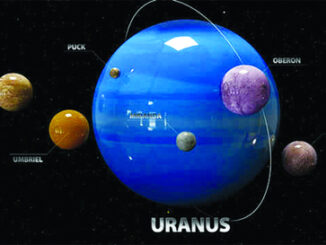
    One or two of Uranus’ 27 moons — Ariel and/or Miranda — likely have oceans beneath their icy surfaces and are actively spewing material into the space environment, according to a study by NASA. Previously, Jupiter, Saturn and Neptune were found as hosts to at least one icy moon that’s pumping particles into its planetary system.
    In the study led by the Johns Hopkins Applied Physics Laboratory (APL) in Maryland, US, researchers reanalysed nearly 40-year-old energetic particle and magnetic field data taken by NASA’s Voyager 2 spacecraft — the only spacecraft so far to have gone to Uranus.
    They found a trapped population of energetic particles the spacecraft had observed while departing Uranus — the turquoise, tilted oddball of the solar system.
    “What was interesting was that these particles were so extremely confined near Uranus’ magnetic equator,” said lead author Ian Cohen, a space scientist at APL.
    Magnetic waves within the system would normally cause them to spread out in latitude, he explained, but these particles were all cramped near the equator between the moons Ariel and Miranda.
    Scientists originally attributed these features to Voyager 2’s possibly having flown through a chance stream of plasma being “injected” from the distant tail of the planet’s magnetosphere. But that explanation doesn’t hold, Cohen said. “An injection would normally have a much broader spread of particles than what was observed.” The team suspects the particles arise from Ariel and/or Miranda through either a vapour plume similar to that seen on Enceladus or through sputtering — a process where high-energy particles hit a surface, ejecting other particles into space.
    Yet scientists have already suspected Uranus’ five largest moons — Ariel and Miranda included — may have subsurface oceans. Voyager 2 images of both moons show physical signs of geologic resurfacing, including possible eruptions of water that froze on the surface.
    Source: IANS

  • Indian-American flight test engineer Ravi Chaudhary is confirmed by the US Senate  as Assistant Secretary of Air Force

    Indian-American flight test engineer Ravi Chaudhary is confirmed by the US Senate as Assistant Secretary of Air Force

    WASHINGTON, D.C. (TIP): The US Senate has confirmed Indian-American flight test engineer Ravi Chaudhary as the Assistant Secretary of Defense for the US Air Force, one of the top civilian leadership positions in the Pentagon.

    The Senate on Wednesday, March 15,  voted 65-29 to confirm the former Air Force officer’s nomination with more than a dozen votes being cast by the opposition Republican Party. Chaudhary previously served as a Senior Executive at the US Department of Transportation where he was Director of Advanced Programs and Innovation, Office of Commercial Space at the Federal Aviation Administration (FAA). He was responsible for the execution of advanced development and research programs in support of the FAA’s commercial space transportation mission. While at the transportation department, he also served as the executive director of the regions and center operations, where he looked over the integration and support of aviation operations in nine regions.

    During his service in the US Air Force from 1993 to 2015, Chaudhary completed a variety of operational, engineering, and senior staff assignments. As a C-17 pilot, he conducted global flight operations, including numerous combat missions in Afghanistan and Iraq, as well as ground deployment as the director of the personnel recovery center at multi-national corps in Iraq.

    As a flight test engineer, he was responsible for flight certification of military avionics and hardware for the force’s modernization programs supporting flight safety. Earlier in his career, he supported space launch operations for the global positioning system (GPS) and led third-stage and flight safety activities to ensure the full operational capability of the first GPS constellation. As a systems engineer, Chaudhary supported NASA’s International Space Station protection activities to ensure the safety of NASA astronauts. He also served as a member of the President’s Advisory Commission on Asian Americans and Pacific Islanders during the Obama administration. In this role, he advised the president on executive branch efforts to improve veterans’ support for the AAPI community.

    Chaudhary holds a Doctorate specializing in executive leadership and Innovation from the Georgetown University D.L.S. Program, an M.S. in Industrial Engineering from St. Mary’s University as a NASA graduate fellow, an M.A. in Operational Arts and Military Science from Air University, and a B.S. in Aeronautical Engineering from the US Air Force Academy.

    He is a graduate of the Federal Executive Institute and holds Department of Defense acquisition certifications in programme management, test and evaluation, and systems engineering.

  • There could be alien life on Mars, but will our rovers be able to find it?

    There could be alien life on Mars, but will our rovers be able to find it?

    Robotic rovers are currently exploring the surface of Mars. Part of a rover’s mission is to survey the planet for signs of life. There might be nothing to find – but what if there is, and the rovers just can’t “see” it? New research published today in Nature Communications suggests the rovers’ current equipment might not actually be up to the task of finding evidence of life. As an extreme environment microbiologist, the challenges of searching for life where it seems near-impossible are familiar to me. In astrobiology, we study the diversity of life in sites on Earth with environmental or physical features that resemble regions already described on Mars. We call these terrestrial environments “Mars analogue” sites.

    Limits of detection

    The new research, led by Armando Azua-Bustos at the Center for Astrobiology in Madrid, tested the sophisticated instruments currently in use by NASA’s Curiosity and Perseverance rovers – as well as some newer lab equipment planned for future analysis – in the Mars analogue of the Atacama Desert.

    Azua-Bustos and colleagues found the rovers’ testbed equipment – tools for analysing samples in the field – had limited ability to detect the traces of life we might expect to find on the red planet. They were able to detect the mineral components of the samples, but were not always able to detect organic molecules. In my team’s case, our Mars analogue sites are the cold and hyper-arid deserts of the Dry Valleys and Windmill Islands in Antarctica.

    In both of these sites, life exists despite extreme pressures. Finding evidence of life is challenging, given the harsh conditions and the scarcity of microbial life present.First, we must define the biological and physical boundaries of life existing (and being detected) in analogue “extreme” environments. Then we need to develop tools to identify the “biosignatures” for life. These include organic molecules like lipids, nucleic acids and proteins. Finally, we determine how sensitive tools need to be to detect those biosignatures, on Earth and also Mars. This tells us the limits of our detection.

  • Perseverance rover boasts its first construction on Mars

    Perseverance rover boasts its first construction on Mars

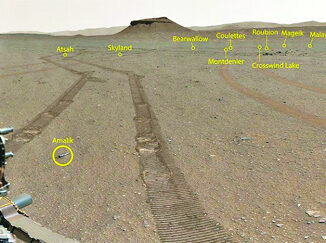
    Nearly two years after it was launched to the Red Planet, the Perseverance rover has done more than just science. It has now constructed a sample depot on the planet that will be used by future missions to return samples to Earth. The rover has beamed back a portrait of the 10 backup sample tubes. The rover has sent a panoramic view of the recently completed sample depot, which is a big milestone for the mission and humanity’s first collection of samples on another planet. The image has been made from 368 images that were sent to Earth.
    Nasa said that eight of those tubes are filled with rock and regolith from Mars, while one is an atmospheric sample and one is a “witness” tube. The rover used its Mastcam-Z camera on the top of its head to capture the images that were then stitched together to form the panoramic view.
    Nasa said that the depot represents a backup collection of samples that could be recovered in the future by the Mars Sample Return campaign, a joint effort between Nasa and ESA (European Space Agency) that aims to bring Mars samples to Earth for closer study.
    Perseverance built the depot at “Three Forks,” a location within Jezero Crater. Billions of years ago, a river flowed into the crater, carrying sediment that formed a steep, fan-shaped delta that the rover will drive up in the months ahead. Astrobiologists suspect that while the Martian surface is now cold, dry, and generally inhospitable to life, ancient Mars was likely similar to Earth – and could have supported microbial life if any ever formed on the Red Planet. The work to build a depot on another world was not easy and the first critical requirement was finding a level, rock-free stretch of terrain which has room for each tube to be deposited. The next target was to figure out exactly where and how to deploy the tubes within that location.
    While Perseverance has dropped these sample tubes, work is underway on Earth to ready for the retrieving mission that will launch to Mars, pick up these samples and return home.

    Source: India Today

  • NASA mission spots 2nd Earth-size world within ‘habitable zone’

    NASA mission has discovered a second Earth-sized, rocky planet within the habitable zone of its star—the range of distances where liquid water could occur on a planet’s surface.

    Using data from NASA’s Transiting Exoplanet Survey Satellite (TESS), the astronomers found “TOI 700 e” which is one of only a few systems with multiple, small, habitable-zone planets that we know of.

    Astronomers previously discovered three planets in this system, called TOI 700 b, c, and d.

    Planet d also orbits in the habitable zone, but the scientists needed an additional year of TESS observations to discover TOI 700 e. “That makes the TOI 700 system an exciting prospect for additional follow-up. Planet e is about 10 per cent smaller than planet d, so the system also shows how additional TESS observations help us find smaller and smaller worlds,” said Emily Gilbert, a postdoctoral fellow at NASA’s Jet Propulsion Laboratory in Southern California who led the work.

    TOI 700 is a small, cool M dwarf star located around 100 light-years away in the southern constellation Dorado.

    In 2020, Gilbert and others announced the discovery of the Earth-size, habitable-zone planet d, which is on a 37-day orbit, along with two other worlds. The innermost planet, TOI 700 b, is about 90 per cent Earth’s size and orbits the star every 10 days. TOI 700 c is over 2.5 times bigger than Earth and completes an orbit every 16 days.

    “The planets are probably tidally locked, which means they spin only once per orbit such that one side always faces the star, just as one side of the Moon is always turned toward Earth,” the US space agency said in a statement late on January 10.

    Source: IANS

  • Indian American space expert AC Charania named NASA’s new chief technologist

    Indian American space expert AC Charania named NASA’s new chief technologist

    WASHINGTON, D.C. (TIP): An Indian American aerospace industry expert has been appointed as NASA’s new chief technologist to serve as principal advisor to Administrator Bill Nelson on technology policy and programs at the space agency’s headquarters here.

    In his position, AC Charania will align NASA’s agencywide technology investments with mission needs across six mission directorates and oversee technology collaboration with other federal agencies, the private sector, and external stakeholders, NASA said in a statement on Monday.

    The position works within NASA’s Office for Technology, Policy, and Strategy.

    “Technology plays a vital role in every NASA mission. Making sure that we’re pursuing the best policy objectives allows this agency to continue to serve as a global leader in innovation,” Bhavya Lal, NASA associate administrator for technology, policy, and strategy, was quoted as saying in the statement.

    “Charania is an experienced leader in managing large, rapidly shifting technology portfolios. I am eager for him to apply his knowledge and enthusiasm at NASA,” Lal said. Lal served as acting chief technologist prior to the appointment of Charania, whose first day working at NASA Headquarters was January 3.

    “The rate of advancement we seek in the 21st century is dependent upon selecting and maturing a portfolio of technologies into systems to execute our missions,” Charania said in the statement.

    “With this in mind, there are incredible opportunities in partnerships within and outside of NASA. I now look forward to the opportunity to work with the entire community to increase the rate of space and aviation progress,” he added. Prior to joining NASA, he served as vice president of product strategy at Reliable Robotics, a firm that works to bring certified autonomous vehicles to commercial aviation.

    His previous experience also includes working at Blue Origin to mature its lunar permanence strategy, Blue Moon lunar lander program, and multiple technology initiatives with NASA.

    Charania has also worked in strategy and business development for the Virgin Galactic (now Virgin Orbit) LauncherOne small satellite launch vehicle program. Charania led the formation of the Fast Forward industry group focused on high-speed point-to-point transportation, was a NASA Innovative Advanced Concepts fellow, and served on the Lunar Exploration Analysis Group Commercial Advisory Board, according to the release. He received a bachelor’s and a master’s degree in aerospace engineering from the Georgia Institute of Technology, and a bachelor’s in economics from Emory University.

  • Time to say goodbye to NASA’s InSight Mars lander

    After nearly four years spent on the Martian surface, NASA’s InSight lander is coming to the end of its life as the spacecraft’s power generation continues to decline because of dust blown on the lander’s solar panels. The InSight team is now taking steps to make sure the lander continues working as long as possible with what power remains. One of the most important final steps of the InSight mission is to make sure that the treasure of data with the lander is stored properly and made accessible to researchers around the world. The InSight lander has gathered data about the interior layers of Mars, its liquid core, the remnants beneath the surface of its nearly-extinct magnetic field, Martian weather, and on marsquakes. “Finally, we can see Mars as a planet with layers, with different thicknesses, compositions. We’re starting to really tease out the details.

    Now it’s not just this enigma; it’s actually a living, breathing planet,” said Bruce Banerdt of NASA’s Jet Propulsion Laboratory in a press statement. Banerdt is the principal investigator of the mission.

    Earlier this year, the lander’s power reserves were so low that NASA turned off all the science instruments on board so that they can keep the seismometer running.

  • NASA’s Webb telescope captures first images, spectra of Mars

    NASA’s Webb telescope captures first images, spectra of Mars

    The U.S. National Aeronautics and Space Administration’s (NASA) James Webb Space Telescope has captured its first images and spectra of Mars, NASA said. Webb’s infrared-sensitivity and location gives unique insight into short-term phenomena on Mars, like dust storms, weather and seasonal changes, said NASA, adding that Webb’s first images of Mars, captured by the Near-Infrared Camera, showed a region of the planet’s eastern hemisphere at two different wavelengths. Astronomers will analyze the features of the first near-infrared spectrum of Mars to gather additional information about the surface and atmosphere of the planet, according to NASA.

    Webb is an international program led by NASA with the European Space Agency and the Canadian Space Agency. Webb will find the first galaxies that formed in the early universe and peer through dusty clouds to see stars forming planetary systems, said the U.S. space agency.

  • Take 2: NASA aims for Saturday launch of new moon rocket

    Take 2: NASA aims for Saturday launch of new moon rocket

    NASA will try again on Saturday to launch its new moon rocket on a test flight, after engine trouble halted the first countdown this week. Managers said on Tuesday they are changing fueling procedures to deal with the issue. A bad sensor also could be to blame for Monday’s scrapped launch, they noted.

    The 322-foot rocket — the most powerful ever built by NASA — remains on its pad at Kennedy Space Center with an empty crew capsule on top. The Space Launch System rocket will attempt to send the capsule around the moon and back. No one will be aboard, just three test dummies. If successful, it will be the first capsule to fly to the moon since NASA’s Apollo programme 50 years ago. Proceeding toward a Saturday launch will provide additional insight, even if the problem reappears and the countdown is halted again, said NASA’s rocket program manager, John Honeycutt. That’s better “than us sitting around scratching our heads, was it good enough or not.” “Based on what I’ve heard from the technical team today, what we need to do is continue to pore over the data and polish up our plan on putting the flight rationale together,” he said. During Monday’s launch attempt, readings showed that one of the four main engines in the rocket’s core stage could not be chilled sufficiently prior to the planned ignition at liftoff. It appeared to be as much as 40 degrees Fahrenheit (5 degrees Celsius) warmer than the desired minus-420 degrees Fahrenheit (minus-250 degrees Celsius), the temperature of the hydrogen fuel, according to Honeycutt. The three other engines came up just a little short.

                    Source: AP

  • NASA’s James telescope reveals stunning images of Jupiter, its moon

    NASA’s James telescope reveals stunning images of Jupiter, its moon

    After releasing stunning coloured images of thousands of galaxies in our universe, NASA has now unveiled outstanding images of Jupiter and spectra of several asteroids taken by the James Webb Space Telescope. The data demonstrates Webb’s ability to track solar system targets and produce images and spectra with unprecedented detail, the US space agency said in a statement. New images show distinct bands that encircle Jupiter as well as the Great Red Spot, a storm big enough to swallow the Earth. “Combined with the deep field images released the other day, these images of Jupiter demonstrate the full grasp of what Webb can observe, from the faintest, most distant observable galaxies to planets in our own cosmic backyard that you can see with the naked eye from your actual backyard,” said Bryan Holler, a scientist at the Space Telescope Science Institute in Baltimore. In one of the images, Jupiter’s moon Europa with a probable ocean below its thick icy crust is seen which is the target of NASA’s forthcoming Europa Clipper mission.

    “What’s more, Europa’s shadow can be seen to the left of the Great Red Spot. Other visible moons in these images include Thebe and Metis,” the space agency said.

    Scientists were especially eager to see these images because they are proof that Webb can observe the satellites and rings near bright solar system objects such as Jupiter, Saturn, and Mars.

    Scientists will use Webb to explore the question of whether we can see plumes of material spewing out of moons like Europa and Saturn’s moon Enceladus.

    Additionally, Webb easily captured some of Jupiter’s rings. That the rings showed up in one of Webb’s first solar system images is “absolutely astonishing and amazing”. Webb was designed with the requirement to track objects that move as fast as Mars, which has a maximum speed of 30 milliarcseconds per second.

                    Source: IANS

  • NASA’s new telescope shows star death, dancing galaxies

    NASA’s new telescope shows star death, dancing galaxies

    A sparkling landscape of baby stars. A foamy blue and orange view of a dying star. Five galaxies in a cosmic dance. The splendors of the universe glowed in a new batch of images released on Tuesday, July 12,  from NASA’s powerful new telescope. The unveiling from the $10 billion James Webb Space Telescope began Monday at the White House with a sneak peek of the first shot — a jumble of distant galaxies that went deeper into the cosmos than humanity has ever seen.

    Tuesday’s releases showed parts of the universe seen by other telescopes. But Webb’s sheer power, distant location from Earth and use of the infrared light spectrum showed them in a new light that scientists said was almost as much art as science.

    “It’s the beauty but also the story,” NASA senior Webb scientist John Mather, a Nobel laureate, said after the reveal. “It’s the story of where did we come from.”

    And, he said, the more he looked at the images, the more he became convinced that life exists elsewhere in those thousands of stars and hundreds of galaxies.

    With Webb, scientist hope to glimpse light from the first stars and galaxies that formed 13.7 billion years ago, just 100 million years from the universe-creating Big Bang. The telescope also will scan the atmospheres of alien worlds for possible signs of life. “Every image is a new discovery and each will give humanity a view of the humanity that we’ve never seen before,’’ NASA Administrator Bill Nelson said Tuesday, rhapsodizing over images showing “the formation of stars, devouring black holes.” Webb’s use of the infrared light spectrum allows the telescope to see through the cosmic dust and see faraway light from the corners of the universe, scientists said.

    “We’ve really changed the understanding of our universe,” said European Space Agency director general Josef Aschbacher.

    The European and Canadian space agencies joined NASA in building the telescope, which was launched in December after years of delays and cost overruns. Webb is considered the successor to the highly successful, but aging Hubble Space Telescope.

    Some of Hubble’s most stunning images have been shots of the Carina nebula, one of the bright stellar nurseries in the sky, about 7,600 light-years away. Webb project scientist Klaus Pontoppidan decided to focus one of Webb’s early gazes on that location because he knew it would be the frameable beauty shot. The result was an image of a colorful landscape of bubbles and cavities where stars were being born. “This is art,” Pontoppidan said. “I really wanted to have that landscape. It has that contrast. We have the blue. We have golden. There’s dark. There’s bright. There’s just a sharp image.” On tap for release Thursday: A close-up of Jupiter that shows one of its faint rings and a few of its moons, he said.

    Source: AP

  • NASA is developing swimming robots to look for alien life

    NASA is developing swimming robots to look for alien life

    Some day in the future, a swarm of cellphone-size robots could swim through the water beneath the kilometres-thick icy shell of Jupiter’s moon Europa or Saturn’s moon Enceladus, looking for alien life. These robots could be packed within narrow ice-melting probes that would tunnel through the frozen crust to release the tiny robots underwater, which can then swim far and deep to learn about the new worlds. Or at least, that is the vision of Ethan Schaler, a robotics mechanical engineer at NASA’s Jet Propulsion Laboratory (JPL) in Southern California. Schaler’s Sensing With Independent Micro-Swimmers (SWIM) concept was recently awarded $600,000 in Phase II funding from the NASA Innovative Advanced Concepts (NIAC) program. Schaler and his team will use the funding to make and test 3D-printed prototypes over the next two years. SWIM’s early-stage concept envisions wedge-shaped robots, each about 12 centimetres long and 60 to 75 cubic centimetres in volume. They are designed so that about four dozen of them could fit in a cryobot (ice-penetrating probe) 25 centimetres in diameter, taking up just 15 per cent of the science payload volume. This would leave more room for more powerful but less mobile science instruments that could gather data through stationary measurements of the ocean. Each robot would have its own propulsion system, onboard computer, and ultrasound communications system, along with sensors for temperature, salinity, acidity and pressure. Phase II of the study will also add chemical sensors to monitor for biomarkers. NASA’s Europa Clipper mission, planned for a 2024 launch, will do multiple flybys of Jupiter’s moon to gather detailed data with a large suite of instruments when it arrives there in 2030. Cryobot concepts to investigate such ocean worlds are being developed through NASA’s Scientific Exploration Subsurface Access Mechanism for Europa (SESAME) program, as well as through other NASA technology development programs.

    The cryobot that deploys the swimming robots would be connected to the surface-based lander through a communication tether. The surface-based lander, in turn, would be the point of contact with mission controllers on Earth. This tethered approach means that the cryobot would probably be unable to venture much beyond the point where ice meets the ocean. “What if, after all those years it took to get into an ocean, you come through the ice shell in the wrong place? What if there’s signs of life over there but not where you entered the ocean?By bringing these swarms of robots with us, we’d be able to look ‘over there’ to explore much more of our environment than a single cryobot would allow,” said SWIM team scientist Samuel Howell of JPL, in a press statement.Howell compares the swimming robots to NASA’s Ingenuity Mars Helicopter, the Perseverance rover’s airborne companion on Mars. The helicopter extends the reach of the rover and sends images back, helping the rover understand how to explore its environment. In this case, the multiple swimming robots can be thought of as multiple helicopters exploring areas around the cryobot to send back data.   Source: The Indian Express

  • NASA to launch 3 rockets from pvt Oz space port

    Sydney (TIP): US space agency NASA is set to launch three rockets into space from a private space port in Australia for scientific research. The rockets will be launched between June 26 and July 12 from the Arnhem Space Centre, which is owned and run by Equatorial Launch Australia. This is going to be the first time that NASA is launching rockets from a commercial facility outside the US, and the first NASA rockets launched from Australia since 1995. IANS

  • Did NASA find a mysterious doorway on Mars?

    Did NASA find a mysterious doorway on Mars?

    For the past 10 years, NASA’s Curiosity rover has been trundling around the surface of Mars, taking photos in its quest to understand the history and geology of the red planet and perhaps even find signs of life. Last week, it took a photo, which appeared to show a doorway carved into the rock. It’s the sort of thing that on Earth might indicate an underground bunker, such as an air-raid shelter.

    Seeing is not always believing

    At first sight, the picture is totally convincing. At second sight, maybe not. The passage seems to go in only a short way before the steeply descending roof meets the floor.

    And then those killjoys at NASA tell us its only about 45 cm high. Still, who said Martians had to be the same height as us? But then geologists point out several straight-line fractures can be seen in this site, and the “doorway” is where they happen to intersect. Such a pity. It would have been so exciting if it had been a real doorway. Instead it joins the face on Mars, the spoon on Mars, the cube on the Moon, and all the other things seen in photos from space that turn out not to be as exciting as we thought.

    Faces in the clouds

    Worse, the “doorway” joins the even longer list of wacky images like the cornflake that looks like Australia, the cats that look like Hitler, and so on. And who hasn’t seen a face in the clouds?

    The sad fact is that when presented with an unclear or unfamiliar image, humans try to turn it into a familiar-looking object. Scientists call our tendency to do this “pareidolia”.

    It’s easy to understand why it happens. We likely evolved this tendency because spotting important things like predators or faces, even when the light is poor or they are partly obscured, gave us an advantage. And getting false positives – seeing a predator where there is none – is better than not seeing a predator who then eats you.

    No signs of life

    Reasonable explanations won’t deter the conspiracy theorists who say the doorway really is evidence of life on Mars, and maintain that scientists are engaged in some sort of cover-up. If I were trying to do a cover-up, I wouldn’t be releasing the photos! So a conspiracy doesn’t seem very likely.

    But there’s also a lesson here for serious searchers for alien life. As astronomer Carl Sagan said, extraordinary claims require extraordinary evidence.

              Source: PTI

  • Scientists grow plant in lunar soil, raise hopes of growing plants on Moon

    That’s one small pot of soil, one giant leap for man’s knowledge of space agriculture: scientists have for the first time grown plants in lunar soil brought back by astronauts in the Apollo program. The ground-breaking experiment, detailed in the journal Communications Biology on Thursday, has given researchers hope that it may be possible to one day grow plants directly on the Moon. That would save future space missions much hassle and expense, facilitating longer and farther trips. However, according to the study’s University of Florida authors, much remains to be studied on the topic, and they intend to leave no stone unturned.

    “This research is critical to NASA’s long-term human exploration goals,” said Bill Nelson, the head of the US space agency. “We’ll need to use resources found on the Moon and Mars to develop food sources for future astronauts living and operating in deep space.”

    For their experiment, the researchers used just 12 grams (a few teaspoons) of lunar soil collected from various spots on the Moon during the Apollo 11, 12, and 17 missions.

    In tiny thimble-sized pots, they placed about a gram of soil (called “regolith”) and added water, then the seeds. They also fed the plants a nutrient solution every day. The researchers chose to plant arabidopsis thaliana, a relative of mustard greens, because it grows easily and, most importantly, has been studied extensively. Its genetic code and responses to hostile environments — even in space — are well known. As a control group, seeds were also planted in soil from Earth as well as samples imitating lunar and Martian soil. The result: after two days, everything sprouted, including the lunar samples. “Every plant — whether in a lunar sample or in a control — looked the same up until about day six,” Anna-Lisa Paul, lead author of the paper, said in a statement.           Source: AFP