Tag: NASA

  • In a first, NASA’s Perseverance rover makes oxygen on Mars

    In a first, NASA’s Perseverance rover makes oxygen on Mars

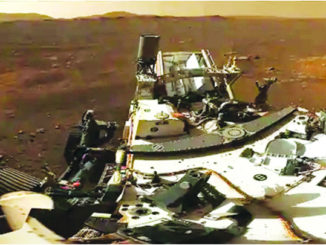
    NASA’s Perseverance rover keeps making history. The six-wheeled robot has converted some carbon dioxide from the Martian atmosphere into oxygen, the first time this has happened on another planet, the space agency said Wednesday, April 21.

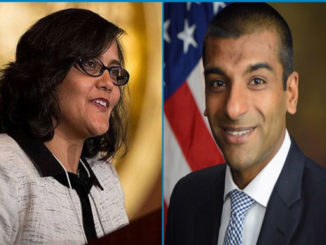
    “This is a critical first step at converting carbon dioxide to oxygen on Mars,” said Jim Reuter, associate administrator for NASA’s space technology mission directorate.

    The technology demonstration took place on April 20, and it’s hoped future versions of the experimental instrument that was used could pave the way for future human exploration.

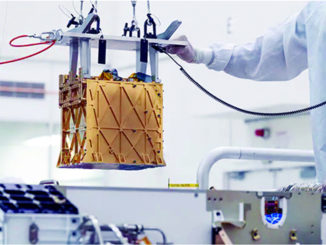
    Not only can the process produce oxygen for future astronauts to breathe, but it could make hauling vast amounts of oxygen over from Earth to use as rocket propellant for the return journey unnecessary. The Mars Oxygen In-Situ Resource Utilization Experiment — or MOXIE — is a golden box the size of a car battery, and is located inside the front right side of the rover.

    Dubbed a “mechanical tree,” it uses electricity and chemistry to split carbon dioxide molecules, which are made up of one carbon atom and two oxygen atoms.

    It also produces carbon monoxide as a byproduct.

    In its first run, MOXIE produced 5 grams of oxygen, equivalent to about 10 minutes of breathable oxygen for an astronaut carrying out normal activity.

    MOXIE’s engineers will now run more tests and try to step up its output. It is designed to be able to generate up to 10 grams of oxygen per hour.

    Designed at the Massachusetts Institute of Technology, MOXIE was built with heat-resistant materials like nickel alloy and designed to tolerate the searing temperatures of 1,470 degrees Fahrenheit (800 Celsius) required for it to run.

    A thin gold coating ensures it doesn’t radiate its heat and harm the rover.

    MIT engineer Michael Hecht said a one ton version of MOXIE could produce the approximately 55,000 pounds (25 tons) of oxygen needed for a rocket to blast off from Mars.

    Producing oxygen from Mars’ 96 percent carbon dioxide atmosphere might be a more feasible option than extracting ice from under its surface then electrolyzing it to make oxygen. Perseverance landed on the Red Planet on February 18 on a mission to search for signs for microbial life. Its mini helicopter Ingenuity made history this week by achieving the first powered flight on another planet. The rover itself has also directly recorded the sounds of Mars for the first time.

  • Indian American engineer behind NASA’s Ingenuity’s historic Mars flight

    Indian American engineer behind NASA’s Ingenuity’s historic Mars flight

    HOUSTON (TIP): An Indian Institute of Technology (IIT), Madras trained Indian American robotics technologist Bob Balaram is the man behind Monday, April 19 history making flight of NASA’s Ingenuity Mars Helicopter on the Red Planet. The 19.3-inch-tall, 4-pound Ingenuity with no science instruments inside its tissue-box-size, fuselage became the first aircraft in history to make a powered, controlled flight on another planet on April 19. The solar-powered helicopter first became airborne at 3:34 a.m. EDT – 12:33 Local Mean Solar Time (Mars time) – climbing to its prescribed maximum altitude of 10 feet and maintained a stable hover for 30 seconds.

    It then descended, touching back down on the surface of Mars after logging a total of 39.1 seconds of flight, according to the Ingenuity team at the agency’s Jet Propulsion Laboratory in Pasadena, California. The US space agency hailed the achievement as “our Wright brothers moment.” Balaram, Ingenuity’s chief engineer, said the helicopter was in fine fettle following the maiden run.” ” She’s even healthier than she was before this flight — she shook off some of her dust that had been covering the solar panels and is in fact producing even more solar energy than before,” he said. The success of Mars helicopter “basically opens up a whole new dimension of exploring Mars,” Balaram said in February.

    In March, Balaram revealed for the first time that Ingenuity is carrying a small piece of cloth that covered one of the wings of the Wright brothers’ first aircraft that achieved the first powered flight on Earth at Kitty Hawk in 1903, to pay tribute to the milestone. For Balaram, who joined NASA in 1986 after getting a bachelor’s degree in mechanical engineering from the IIT, Madras and a master’s and PhD in computer and systems engineering from Rensselaer Polytechnic Institute, it was the culmination of a 35-year career as a robotics technologist.

    Balaram had his early education at Rishi Valley School founded by the philosopher Jiddu Krishnamurti. He is the second prominent engineer of Indian-origin to feature in Nasa’s Mars Mission after Swati Mohan, who is the lead operations engineer of the Mars Rover Perseverance.

    Recounting the saga of how it all began, Balaram told a NASA interviewer last year that “Everyone. All the time” told him that the rotorcraft that rode to the Red Planet aboard NASA’s Perseverance was a “crazy idea.”

    Although Balaram probably didn’t know it at the time, the seed for an idea like this sprouted for him in the 1960s Apollo era, during his childhood in south India.

    His uncle wrote to the US Consulate, asking for information about NASA and space exploration. The bulging envelope they sent back, stuffed with glossy booklets, entranced young Bob.

    His interest in space was piqued further by listening to the Moon landing on the radio. “I gobbled it up,” he says. “Long before the internet, the US had good outreach. You had my eyeballs.”

    In the 1990s, Balaram had proposed using a miniature airborne vehicle for Earth applications on Mars. The idea “sat on a shelf” for 15 years before he was asked to revive it by Charles Elachi, then director of JPL.

    Balaram and his team had eight weeks to submit a proposal. Working day and night, they met the deadline with two weeks to spare. Although it was not selected as an instrument, NASA decided to fund the helicopter for flight as a technology demonstration.

    Balaram describes the task of build a helicopter to fly on Mars as a perfectly blank canvas, but with restrictions.

    His physics background helped him envision flying on Mars, a planet with an atmosphere that is only 1% as dense as Earth’s.

    He compares it to flying on Earth at a 100,000-foot altitude – about seven times higher than a typical terrestrial helicopter can fly.

    Another challenge was that the copter could carry only a few kilograms, including the weight of batteries and a radio for communications.

    “You can’t just throw mass at it, because it needed to fly,” he says. It dawned on Balaram that it was like building a new kind of aircraft that just happens to be a spacecraft.

    And because it is a “passenger” on a flagship mission, he says, “we have to guarantee 100% that it will be safe.”

    Once it was built, Balaram says, the question was, “How do you test this beast? There’s no book saying how.” Because there is no easily accessible place on Earth with a thin atmosphere like the one on Mars, they ran tests in a vacuum chamber and the 25-foot Space Simulation Chamber at JPL. “Bob is the inventor of our Mars Helicopter. He innovated the design and followed up on that vision to its fruition as chief engineer through all phases of design, development and test,” says project manager MiMi Aung.

    “Whenever we encountered a technical roadblock – and we encountered many roadblocks – we always turned to Bob, who always carries an inexhaustible set of potential solutions to be considered. Come to think of it, I don’t think I have ever seen Bob feeling stuck at any point!”

    Balaram points out that in addition to the usual “seven minutes of terror” experienced by the team on Earth during a Mars landing, once the helicopter is on Mars and attempting to fly, “This is the seven seconds of terror every time we take off or land.”

    Does Balaram worry about all this, even a little? “There’s been a crisis every single week of the last six years,” he says. “I’m used to it.”

    Balaram sheds any stress that may crop up through backpacking, hiking and massage, according to the NASA article about him.

    There’s also his very supportive wife, Sandy, who bears a title within the team and her own acronym: CMO, or Chief Morale Officer.

    She has regularly baked cakes, pies and other goodies for Balaram to share with his colleagues for sustenance during the long process.

  • Mars did not dry up all at once, says study

    Mars did not dry up all at once, says study

    Mars had drier and wetter eras before drying up completely about three billion years ago, says a new study which suggests that the Red Planet did not dry up all at once.

    The findings are based on data from NASA’s Curiosity Mars rover which continues to explore the base of Mount Sharp on the Red Planet.

    “A primary goal of the Curiosity mission was to study the transition between the habitable environment of the past, to the dry and cold climate that Mars has now,” said Roger Wiens, a coauthor on the paper and scientist at Los Alamos National Laboratory, where he is on the ChemCam team. “These rock layers recorded that change in great detail,” Wiens said.

    ChemCam is the rock-vaporising laser that sits on the mast of the Curiosity rover and analyses the chemical composition of Martian rocks.

    William Rapin, a researcher with the French National Centre for Scientific Research (CNRS), led the study published in the journal Geology. Using the long-range camera on ChemCam to make detailed observations of the steep terrain of Mount Sharp, a team including Wiens and other researchers at Los Alamos discovered that the Martian climate alternated between dry and wetter periods before it went completely dry.

    Spacecraft in orbit around Mars had previously provided clues about the mineral composition of the slopes of Mount Sharp.

    Now, ChemCam has successfully made detailed observations of the sedimentary beds from the planet’s surface, revealing the conditions under which they formed.

    Moving up through the terrain, Curiosity observed that the types of bed change drastically.

  • NASA exchanges data of its Mars mission with India, China

    The US space agency NASA has exchanged data of its current Mars mission with its counterparts in China, India, the UAE and the European Space Agency to lower the risk of a collision as their spacecraft were also currently hovering the red planet, a media report said on Wednesday.

    The purpose of exchanges was to lower the risk of a collision, as their spacecraft are orbiting the red planet, Hong Kong-based South China Morning Post reported, quoting a NASA (National Aeronautics and Space Administration) statement as saying.

    “To assure the safety of our respective missions, NASA is coordinating with the UAE, European Space Agency, Indian Space Research Organisation and the China National Space Administration, all of which have spacecraft in orbit around Mars, to exchange information on our respective Mars missions to ensure the safety of our respective spacecraft,” NASA’s statement said.

    “This limited exchange of information is consistent with customary good practices used to ensure effective communication among satellite operators and spacecraft safety in orbit,” the report said.

  • Mars may be hiding most of its ‘missing’ water underground: NASA-funded study

    Mars may be hiding most of its ‘missing’ water underground: NASA-funded study

    Vast amounts of ancient water may have been trapped beneath the surface of Mars, according to a NASA-funded study which challenges the current theory that the Red Planet’s water escaped into space.

    Evidence found on the surface of Mars suggests that abundant water flowed across Mars billions of years ago, forming pools, lakes, and deep oceans, and where did all that water go has been a matter of investigation.

    The new study, published in the journal Science, shows that a significant portion of Mars’s water—between 30 and 99 percent—is trapped within minerals in the planet’s crust.

    The researchers from California Institute of Technology and NASA’s Jet Propulsion Laboratory (JPL) found that around four billion years ago, Mars was home to enough water to have covered the whole planet in an ocean about 100 to 1,500 metres deep.

    However, a billion years later the planet was as dry as it is today.

    Previously, scientists seeking to explain what happened to the flowing water on Mars had suggested that it escaped into space due to Mars’s low gravity.

    Though some water did indeed leave Mars this way, it now appears that such an escape cannot account for most of the water loss, the researchers said.

    “Atmospheric escape doesn’t fully explain the data that we have for how much water actually once existed on Mars,” said Caltech PhD candidate Eva Scheller, lead author of a paper on the research.

    The team studied the quantity of water on Mars over time in all its forms—vapour, liquid and ice—and the chemical composition of the planet’s current atmosphere and crust.

    They did so through the analysis of meteorites as well as using data provided by Mars rovers and orbiters, looking in particular at the ratio of deuterium to hydrogen.

    Water is made up of hydrogen and oxygen: H2O. Not all hydrogen atoms are created equal, however. There are two stable isotopes of hydrogen—deuterium to hydrogen. The lighter-weight hydrogen has an easier time escaping the planet’s gravity into space than its heavier counterpart, according to the researchers. Because of this, the escape of a planet’s water via the upper atmosphere would leave a telltale signature on the ratio of deuterium to hydrogen in the planet’s atmosphere, and there would be an outsized portion of deuterium left behind, they said.

  • Empowered Women Empower Women: CII Hosts Women Leaders in the US-India Corridor to Reflect on International Women’s Day 2021

    Empowered Women Empower Women: CII Hosts Women Leaders in the US-India Corridor to Reflect on International Women’s Day 2021

    NEW DELHI / NEW YORK (TIP): To commemorate International Women’s Day, the Confederation of Indian Industry (CII) brought together leaders within the US – India partnership to discuss innovative and empowering solutions to daily challenges women face in the workplace. Countries around the world have rallied for international gender parity with International Women’s Day celebrations for over 100 years, highlighting the social, economic, cultural and political achievements of women. CII’s own first female president, Ms Shobana Kamineni, Executive Vice-Chairperson of Apollo Hospitals Enterprise Limited, moderated Monday’s panel that reflected the vast diversity of women’s experiences from government to the corporate boardroom and even outer space.

    CII’s “Women Leaders in the US – India Corridor” panel featured remarks from Ms Diane Farrell, Acting Undersecretary of Commerce for International Trade, US Department of Commerce;n Dr Swati Moha, Lead, Guidance and Operations – Mars 2020 Perseverance Mission, JPL, NASA; Ms Bhavani Parameswar, Executive Director and President, Indivate Inc (ITC Group); and Dr Sofia Mumtaz, past Chair, CII – India Business Forum USA and President, Lupin Ltd, who graciously joined together to share their experiences and insights, as well as a few words of advice for women navigating the post-COVID workforce.

    Acting Undersecretary Farrell, reflecting on her years of service within the US Government, attributed much of her success to remaining flexible in her career path, staying open to opportunities, and taking risks. She stressed perseverance and working through emotions to free oneself to try new things and solutions to professional struggles. Dr Mohan spoke to studying, working, and building a family within a STEM field known for its gender disparity, and how she strives for the elusive “work/life balance.”  She called for diversity and particularly increasing the representation of women and minorities in every career field and at every level, as all the panelists concurred that women proliferate throughout educational institutions and entry-level positions, but are still largely missing from upper-level, management roles.

    From the corporate sector, Ms. Parameswar noted her organization’s dedication to mentoring and supporting women throughout their careers, and remarked that in addition to gender constructs, she faced cultural barriers as well when she began working in the US from India. Besides learning about American football to build relationships with her predominately male US colleagues, Ms Parameswar also worked within her company to eliminate the “motherhood penalty” and prevent women who chose to have children from suffering lost wages, equity, and leadership opportunities.

    Dr Mumtaz was also quick to point out that gender discrimination is both a US and India issue, citing that for women to succeed in the workplace, they must overcome society’s expectations as well as their male peers’ prejudices, as being called pejorative names like “aggressive” to family pressures to quit after marriage are prolific in both countries. Empowerment, she declared, begins in the home, and young girls have to be taught to see themselves as equal to persist in a world that tells them otherwise.

    While all the panelists agreed that things are not as they should be, the general consensus of CII’s 2021 Women’s Day Panel is that the world is certainly improving in terms of women’s access and empowerment within the US – India Corridor.  Dr Mohan cited that she was selected to work at NASA by a woman leader whose supervisor was also a woman, and reiterated the imperativeness of supporting and mentoring women particularly within male-dominated career fields. She also noted that her daughters have access to a plethora of resources like STEM camps, classes, etc. that did not exist when she was younger. Dr Mumtaz concurred, praising the positive impact of increasing levels of female education, as well as companies like Lupin that directly focus on encouraging women in the workforce. Ms Parameswar stressed the advantages for companies and countries’ overall GDP to increase and retain women workers, noting specifically that continued success depends upon examining policies and how they either effect or enable women to excel in their fields. To conclude, Acting Undersecretary Farrell engendered another cause for hope by suggesting to the panel that the new Biden – Harris Administration in the US is expected to focus more on gender equity for women all around the world.

  • Indian Americans appointed to Biden’s Domestic Policy Council

    Indian Americans appointed to Biden’s Domestic Policy Council

    WASHINGTON (TIP): A day after joking that Indian Americans were taking over the US, President Joe Biden appointed, on March 5, two more to his Domestic Policy Council (DPC) to advise him on Criminal Justice and Labor and Workers. While Chiraag Bains would serve as Special Assistant to the President for Criminal Justice, Pronita Gupta would do so for Labor and Workers, according to a White House announcement Friday by Biden and Vice President Kamala Harris. Both had served in the administration of former President Barack Obama when Biden was the Vice President. Bains and Gupta join over three – dozen Indian-Americans appointed to key posts in the Biden-Harris administration. As members of the President’s staff, they don’t not require Senate confirmation.

    “These qualified, impressive, and dedicated individuals reflect the diversity and strength of America and will play critical roles advancing the Biden-Harris Administration’s commitment to tackling the crises we face and building back our country better,” the White House said announcing 21 new appointments. Bains was recently the Director of Legal Strategies at Demos, a national public policy organization where he led voting rights litigation and advocacy across the country. Before that, he was a senior fellow at Harvard Law School and at the Open Society Foundations.

    From 2010 to 2017, Bains served in the Justice Department’s Civil Rights Division, first as a prosecutor of civil rights crimes and then as senior counsel to the Assistant Attorney General. He was a member of the team that investigated and sued Ferguson, Missouri, for constitutional violations. Bains clerked for Karen Nelson Moore on the Sixth Circuit Court of Appeals and Judge Nancy Gertner in the District of Massachusetts.

    He graduated from Yale College, the University of Cambridge, and Harvard Law School.

    Gupta, who served as deputy director of the Labor Department’s Women’s Bureau in the Obama administration, was till recently the director of job quality for the Center for Law and Social Policy (CLASP).

    Prior to joining CLASP, she served as the deputy director of the Women’s Bureau in the US Department of Labor under President Obama. She also previously served as senior director of programs for the Women Donors Network (WDN) as well as research director for Asian Americans/Pacific Islanders in Philanthropy.

    Gupta also served as research director for SCOPE/AGENDA in Los Angeles, and for the Living Wage Campaign at the LA Alliance for a New Economy (LAANE).

    Early in her career she served as executive director of Institute for Southern Studies and legislative director for the US Student Association.

    Raised in Rochester, New York, Gupta holds an MPA from Columbia University and a BA in Government from Clark University.

    “It’s amazing.  Indian — of descent — Americans are taking over the country: you; my Vice President; my speechwriter, Vinay (Reddy),” Biden quipped to NASA engineer Swati Mohan, Thursday.

    “And I tell you what.  But thank you.  You guys are incredible,” he added during a congratulatory call to the NASA Jet Propulsion Laboratory (JPL) team that landed the Perseverance rover on Mars on Feb. 18.


  • “Indian Americans are taking over the country… you guys are incredible,” says Biden at NASA interaction

    “Indian Americans are taking over the country… you guys are incredible,” says Biden at NASA interaction

    Biden has appointed at least 55 Indian-Americans to key leadership positions in his administration ranging from his speechwriter to the NASA, to almost every wing of the government.

     WASHINGTON (TIP): Indian Americans are “taking over the country”, US President Joe Biden said on Thursday, March 4, referring to the large number of “incredible” professionals from the community holding key positions in his administration. In less than 50 days of his presidency, Biden has appointed at least 55 Indian-Americans to key leadership positions in his administration ranging from his speechwriter to the NASA, to almost every wing of the government. “Indian — of descent — Americans are taking over the country: you Dr. Swati Mohan); my Vice President (Kamala Harris); my speech writer, Vinay (Reddy). I tell you what. But thank you. You guys are incredible,” President Biden said during a virtual interaction with scientists at NASA who were involved in the historic landing of Perseverance rover on Mars on February 18. Indian American scientist Swati Mohan leads the guidance, navigation, and control operations of NASA’s Mars 2020 mission. Biden, who was sworn in as the 46th president of the United States on January 20, has created history by appointing at least 55 Indian-Americans to key positions in his administration. This does not include Vice President Harris, which is an elected position, and Neera Tanden, who a day earlier withdrew her nomination from the position of Director of White House Office of Management and Budget. Nearly half of them are women and a sizable number of them are working in the White House. So far, the Obama-Biden administration (2009-2017) has the distinction of appointing the largest number of Indian Americans in any administration. The previous Donald Trump administration was not lagging far behind as it appointed the first ever Indian-American with a cabinet rank and inside the National Security Council.

    The Biden administration has for the first time appointed such a large number of Indian Americans in the first 50 days of his administration. This past week, Dr. Vivek Murthy testified before a Senate Committee for US Surgeon General and Vanita Gupta is all set to appear for her confirmation hearing for Associate Attorney General Department of Justice.

    “It is impressive to see how many Indian Americans were ready to go into public service. There have been so many additions since we launched our Government Leaders list last month on Presidents’ Day. I am so proud to see our community is going from strength to strength,” eminent Indian American philanthropist and Indiaspora founder M Rangaswami told media.

    While the community is disappointed that Tanden had to withdraw her nomination because of stiff opposition from the Republicans, Indian-American women have reached a new height in the Biden administration. Biden sought to speak with Swati Mohan, Guidance and Controls Operations Lead, Mars 2020. She is not a political appointee though.

    Indian American women appointed by Biden include Uzra Zeya, Under Secretary of State for Civilian Security, Democracy, and Human Rights, State Department; Mala Adiga: Policy Director to Dr Jill Biden; Aisha Shah: Partnership Manager, White House Office of Digital Strategy; Sameera Fazili, Deputy Director, US National Economic Council (NEC); Sumona Guha: Senior Director for South Asia at the National Security Council, White House; and Sabrina Singh: Deputy Press Secretary, Vice President White House.

    Shanthi Kalathil has been appointed as Coordinator for Democracy and Human Rights, National Security Council, White House; Garima Verma has been named as Digital Director of the Office of the First Lady; Sonia Aggarwal as Senior Advisor for Climate Policy and Innovation; Office of Domestic Climate Policy, White House; Neha Gupta: Associate Counsel, Office of White House Counsel; and Reema Shah as Deputy Associate Counsel, Office of White House Counsel.

    Tanya Das has been appointed as Chief of Staff, Office of Science, Department of Energy; Shuchi Talati: Chief of Staff, Office of Fossil Energy, Department of Energy; Mini Timmaraju: Senior adviser to the director, Office of Personnel Management; Sohini Chatterjee: Senior Policy Advisor US Mission to the United Nations, Aditi Gorur: Policy Advisor, US Mission to the United Nations; and Bhavya Lal is the Acting Chief of Staff, NASA.

    Dimple Chaudhary has been appointed as Deputy General Counsel for Nationwide Resource Protection Programs, Environmental Protection Agency; Sharmistha Das is the Deputy General Counsel, Department of Homeland Security; Ruchi Jain is the Deputy Solicitor for General Law, Department of Interior; Meera Joshi is the Acting Administrator, Federal Motor Carrier Administration, Department of Transportation; Aruna Kalyanam is the Deputy Assistant Secretary for Tax and Budget, Department of the Treasury.

    “We are thrilled that this administration reflects the diversity of America by including an unprecedented number of South Asians. The Biden-Harris administration’s inclusion of South Asians in key senior staff roles will undoubtedly inspire countless South Asians to aspire to public service and run for public office. This is a proud moment for our community,” Neha Dewan from South Asians for Biden told PTI.

    Gautam Raghavan, Deputy Director in Office of Presidential Personnel; Bharat Ramamurti, Deputy Director of National Economic Council; Tarun Chhabra, Senior Director for Technology and National Security at National Security Council White House; Vedant Patel, Assistant Press Secretary President at the White House are among several other Indian-Americans who got key posts in the Biden administration.


  • Indian American engineer Vishnu Sridhar playing key role in NASA’s Mars rover mission

    Indian American engineer Vishnu Sridhar playing key role in NASA’s Mars rover mission

    NEW YORK (TIP):Vishnu Sridhar, an Indian American engineer, who is playing a key role in NASA’s mission to Mars, says rover Perseverance’s SuperCam will now analyze the Red Planet’s terrain the rover cannot reach.

    Landing safely on Mars on Feb. 18 after traversing nearly 300 million miles, the rover is now set to perform its most exciting work in the next few weeks, says Sridhar, 27, the lead systems engineer for the SuperCam.

    The SuperCam is an instrument designed to scan rocks and minerals—from up to 20 feet away—to determine their chemical makeup.

    “NASA missions are obviously trying to explore and answer the fundamental questions,” Queens native Sridhar told ABC7 News channel in a conversation with meteorologist Lee Goldberg.

    “Perseverance is also trying to seek that, and eventually answer the question, was there life on Mars, was their life outside, Earth,” he said.

    “We’re going to be taking more images of Mars, we’re going to be shooting lasers with the SuperCam instrument, we’re going to be recording audio with our microphone. And eventually, soon in near future, we are going to deploy our helicopter, and do the first powered flight on Mars,” Sridhar said.

    It’s important that the mission is happening despite the Covid pandemic, he said. “It was definitely a tough period for us during Covid and for everyone else around the globe.”

    “And that’s why I love the name of Perseverance because we persevered through the pandemic and there was a paradigm shift, we learned a lot how to do engineering remotely,” he said.


    “And we went through all that we learned and now we are successful on Mars and it’s a great achievement for humankind.”


    While growing in Rego Park, Queens, Sridhar was awed at the airplanes that would take off from nearby LaGuardia airport, according to New York Media.


    As a high-school student, he sent a weather balloon up 100,000 feet and got a taste of the vastness of space — so much left unexplored, unseen by human eyes.

    His grandfather, a civil engineer who built trains and dams in India, also inspired him.


    “Growing up, I was always fascinated by airplanes living close to two giant airports like LaGuardia and JFK, and I just naturally liked science fiction and technology growing up. And I also loved and enjoyed building things,” he told media

    “One of the key events that sparked my interest in space and exploration was watching National Geographic. The Carl Sagan TV show Cosmos, too—that really sparked my interest in human exploration and exploring our solar system.”

    “I was also attracted to engineering and the STEM field because of my grandfather. He was a civil engineer in India. He built the second largest dam in India, and he has built trains that are still operational.”

    “Unlike him, I didn’t want to work on stuff that’s beneath our atmosphere. I kind of wanted to be different, so I started pursuing aerospace engineering,” Sridhar told media.


    Asked if there was a particular turning point, Sridhar said, “One of our high school projects involved sending a weather balloon up to about 100,000 feet.”


    “I put in a couple instruments — an altitude pressure sensor, and a camera. It was so high that you could see the curvature of the Earth and the darkness of space.”

    “That really opened my eyes and connecting the dots with the science TV shows from my youth made me interested in pursuing and following NASA missions.”


    Asked about his own role in the mission, Sridhar said, “SuperCam has a microscopic-level camera that can take minute, high-resolution images of rocks that the geologists on Earth can analyze and study.


    “But it also has built in lasers and spectrometers [for chemical analysis]. When it fires its laser, it can basically detect the chemical composition and the mineral makeup of the different rocks,” he told Media.


    “And it’s scanning the rocks in fine detail—each point is as small as the tip of a pencil. It can look at samples that are 20 feet away.”


    “There was a lot of testing involved and development over the last three years,” Sridhar said. “Summer 2019 was when instruments came in from France and Los Alamos and when we physically integrated SuperCam with the Perseverance rover.”


    “That’s something I will cherish for the rest of my life…to have touched and worked on a piece of hardware that’s on its way to Mars,” he further told the media.


  • NASA releases panorama taken by mars rover

    NASA releases panorama taken by mars rover

    The US space agency NASA released a spectacular panoramic view on Wednesday, February 23, of the landing site of the Perseverance rover on Mars.

    The panorama shows the rim of the Jezero Crater where the rover touched down last week and the cliff face of an ancient river delta in the distance.

    It was taken by rotating the rover’s mast 360 degrees. The mast is equipped with dual, zoomable cameras which can take high-definition video and images.

    The panorama is composed of 142 individual images stitched together on Earth, NASA said.

    “We’re nestled right in a sweet spot, where you can see different features similar in many ways to features found by Spirit, Opportunity, and Curiosity at their landing sites,” said Jim Bell of Arizona State University’s School of Earth and Space Exploration. Spirit, Opportunity and Curiosity were previous missions to Mars. NASA said the rover’s cameras will help scientists assess the geologic history and atmospheric conditions of Jezero Crater and identify rocks and sediment worthy of a closer examination and collection for eventual return to Earth. On Monday, the US space agency released the first audio from Mars, a faint crackling recording of a gust of wind captured by the rover’s microphone. NASA also released video of the landing of the rover, which is on a mission to search for signs of past life on the Red Planet.

    Mars rover’s giant parachute carried secret message

    The huge parachute used by NASA’s Perseverance rover to land on Mars contained a secret message, thanks to a puzzle lover on the spacecraft team. Systems engineer Ian Clark used a binary code to spell out “Dare Mighty Things” in the orange and white strips of the 70-foot (21-metre) parachute. He also included the GPS coordinates for the mission’s headquarters at the Jet Propulsion Laboratory in Pasadena, California. Clark, a crossword hobbyist, came up with the idea two years ago. Engineers wanted an unusual pattern in the nylon fabric to know how the parachute was oriented during descent. Turning it into a secret message was “super fun”, he said Tuesday. Only about six people knew about the encoded message before Thursday’s landing, according to Clark. They waited until the parachute images came back before putting out a teaser during a televised news conference on Monday.

    It took just a few hours for space fans to figure it out, Clark said. Next time, he noted, “I’ll have to be a little bit more creative.” “Dare Mighty Things” — a line from President Theodore Roosevelt — is a mantra at JPL and adorns many of the centre’s walls. The trick was “trying to come up with a way of encoding it but not making it too obvious,” Clark said.

    As for the GPS coordinates, the spot is 10 feet (3 metres) from the entrance to JPL’s visitor centre.

    Another added touch not widely known until touchdown: Perseverance bears a plaque depicting all five of NASA’s Mars rovers in increasing size over the years — similar to the family car decals seen on Earth.

  • Indian American scientist Swati Mohan led flight control of Perseverance Rover to Mars

    Indian American scientist Swati Mohan led flight control of Perseverance Rover to Mars

    WASHINGTON (TIP): As Perseverance, the NASA rover, landed on the Martian surface Friday, millions of miles away in the US space agency’s control room, a woman’s voice rang out: “Touchdown confirmed!” The announcement was from Indian American scientist Swati Mohan who leads the guidance, navigation, and control operations of NASA’s Mars 2020 mission. In her role as flight controller, Mohan played a pivotal role in the landing of the historic craft. Mohan was the first to confirm that the rover had successfully touched down on the Martian surface after surviving a particularly tricky plunge through the atmosphere of the Red Planet. “Touchdown confirmed! Perseverance safely on the surface of Mars, ready to begin seeking signs of past life,” Mohan announced, prompting her colleagues at NASA to fist-bump and break into celebrations. Mohan, who emigrated from India to the US when she was only a year old, said the Guidance, Navigation, and Controls Operations (GN&C) are the “eyes and ears” of the spacecraft. Commenting on her team’s role in the current mission, Mohan said their job during the cruise phase heading towards Mars was to figure out how the spacecraft is oriented, and make sure it is pointed correctly in space— “solar arrays to sun, antenna to Earth, and maneuver the spacecraft to get it where we want to go”, she is quoted as saying in her bio page on the NASA website. There were “seven minutes of terror” leading to the entry, descent, and landing on Mars, she said. GN&C determines the position of the spacecraft and commands the maneuvers to help it land safely. “As the team’s operations lead, I am the primary point of communication between the GN&C subsystem and the rest of the project. “I am responsible for the training of the GN&C team, scheduling the mission control staffing for GN&C, as well as the policies/procedures the GN&C uses in the mission control room,” Mohan noted.

    Raised in the Northern Virginia-Washington DC metro area, she completed her bachelor’s degree from Cornell University in Mechanical & Aerospace Engineering, and her M.S. and Ph. D from Massachusetts Institute of Technology (MIT) in Aeronautics/Astronautics. It’s not clear how old she is. Over the course of her career with NASA, Mohan has worked on the Cassini mission to Saturn and GRAIL, a pair of formation flown spacecraft to the Moon, and has been a mainstay with the Mars 2020 mission since its beginning in 2013.

    Mohan said she got interested in space after watching the popular TV show “Star Trek” when she was nine.

    “Seeing the beautiful depictions of the new regions of the universe that they were exploring. I remember thinking ‘I want to do that. I want to find new and beautiful places in the universe.’ The vastness of space holds so much knowledge that we have only begun to learn,” she had told NASA.

    Mohan said her passion for space increased further when she took her first physics class at the age of 16.

    “I was lucky enough to have a great teacher, and everything was so understandable and easy. That was when I really considered engineering, as a way to pursue space,” she added.

  • NASA’s Moment of Joy: Perseverance Rover Lands on Mars

    NASA’s Moment of Joy: Perseverance Rover Lands on Mars

    The Rover is only the fifth ever to set its wheels down on Mars.

    WASHINGTON (TIP):  “Touchdown confirmed,” said operations lead Swati Mohanat around 3:55 pm Eastern Time (2055 GMT),and mission control at NASA’s Jet Propulsion Laboratory headquarters erupted in cheers. It was NASA’s moment of joy and pride. After seven months in space, NASA’s Perseverance rover survived a nail-biting landing phase to touch down gently on the surface of Mars on Thursday, ready to embark on its mission to search for the signs of ancient microbial life. The autonomously guided procedure was completed more than 11 minutes earlier, which is how long it takes for radio signals to return to Earth.

    “WOW!!” tweeted NASA Associate Administrator Thomas Zurbuchen as he posted Perseverance’s first black and white image from the Jezero Crater in Mars’ northern hemisphere.

    US President Joe Biden hailed Perseverance’s “historic” landing.

    “Today proved once again that with the power of science and American ingenuity, nothing is beyond the realm of possibility,” he tweeted.

    Congratulations to NASA and everyone whose hard work made Perseverance’s historic landing possible. Today proved once again that with the power of science and American ingenuity, nothing is beyond the realm of possibility. pic.twitter.com/NzSxW6nw4k

    — President Biden (@POTUS) February 18, 2021

    Over the course of several years, Perseverance will attempt to collect 30 rock and soil samples in sealed tubes, to be eventually sent back to Earth sometime in the 2030s for lab analysis.

    About the size of an SUV, it weighs a ton, is equipped with a seven foot (two meter) long robotic arm, has 19 cameras, two microphones, and a suite of cutting-edge instruments to assist in its scientific goals.

    Before it could embark on its lofty quest, it first had to overcome the dreaded “seven minutes of terror” — the risky landing procedure that has scuppered nearly 50 percent of all missions to the planet.

    Shortly after 3:30 pm Eastern Time (2030 GMT), the Mars 2020 spacecraft careened into the Martian atmosphere at 12,500 miles (20,000 kilometers) per hour, protected by its heat shield.

    It then deployed a supersonic parachute the size of a Little League field, before firing up an eight-engined jetpack to slow its descent even further, and then eventually lower the rover carefully to the ground on a set of cables.

    Its target site was “absolutely treacherous for landing,” Allen Chen, lead engineer for the landing stage said Thursday. But the vessel had new landing technologies up its sleeve to help it navigate during descent, including the “Terrain Relative Navigation” that uses a special camera to identify surface features and compare them to an onboard map.

    Scientists believe that around 3.5 billion years ago the crater was home to a river that flowed into a lake, depositing sediment in a fan-shaped delta.

    “The question of whether there’s life beyond Earth is one of the most fundamental and essential questions we can ask,” said NASA geologist Katie Stack Morgan.

    “Our ability to ask this question and develop the scientific investigations and technology to answer it is one of the things that make us as a species so unique.”

    It will begin drilling its first samples in summer, and its engineers have planned for it to traverse first the delta, then the ancient lake shore, and finally the edges of the crater.

    Perseverance’s top speed of 0.1 miles per hour is sluggish by Earth standards but faster than any of its predecessors, and along the way it will deploy new instruments to scan for organic matter, map chemical composition, and zap rocks with a laser to study the vapor.

    “We astrobiologists have been dreaming about this mission for decades,” said Mary Voytek, head of NASA’s astrobiology program.

    Despite the rover’s state-of-the-art technology, bringing samples back to Earth remains crucial because of anticipated ambiguities in the specimens it documents.

    For example, fossils that arose from ancient microbes may look suspiciously similar to patterns caused by precipitation.

    Before getting to the main mission, NASA wants to run several eye-catching experiments.

    Tucked under Perseverance’s belly is a small helicopter drone that will attempt the first powered flight on another planet.The helicopter, dubbed Ingenuity, will have to achieve lift in an atmosphere that’s one percent the density of Earth’s, in a demonstration of concept that could revolutionize the way we explore other planets.

    Another experiment involves an instrument that can convert oxygen from Mars’ primarily carbon dioxide atmosphere, much like a plant, using the process of electrolysis to produce 10 grams of oxygen an hour.

    The idea is that humans eventually won’t need to carry their own oxygen, which is crucial for rocket fuel as well as for breathing.

    Perseverance’s two microphones will meanwhile attempt to record the Martian soundscape for the very first time, after past efforts failed.

    The rover is only the fifth ever to set its wheels down on Mars. The feat was first accomplished in 1997 and all of them have been American.

    That will probably soon change: China’s Tianwen-1 spacecraft entered Martian orbit last week and is expected to touch down with a stationary lander and a rover in May.

    (Agencies)

  • Nuclear-powered rockets could take crewed mission to Mars in 3 months

    Nuclear-powered rockets could take crewed mission to Mars in 3 months

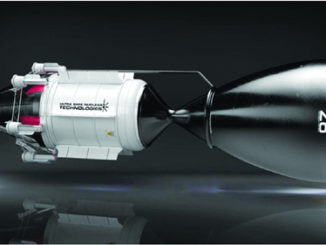
    A nuclear-powered rocket could get a crewed mission to Mars in just under three months, according to a report on CNN. NASA’s plan is to get human to Mars by the year 2035, but there are several challenges to the trip. The biggest being the time it would take to get to the red planet. A prolonged trip would also mean increased exposure to space radiation, which can seriously impact the health of astronauts on the mission. Now, Ultra Safe Nuclear Technologies (USNC-Tech), a Seattle-based company, has come up with a design of a spacecraft that will use nuclear-powered rockets to shorten the trip. Currently, NASA’s goal for a one-way trip to Mars is around five to nine months.

    But switching to a nuclear thermal propulsion (NTP) engine does come with its own risks, though USNC-Tech claims to have made it safe for the crew. According to Michael Eades, the director of engineering USNC-Tech, the rocket has been designed in such a way that it will store liquid propellants between the “engine and the crew area” and block out the radioactive particles to ensure the crew does not get exposed to radiation during the flight.

    Jeff Sheehy, chief engineer of NASA’s Space Technology Mission Directorate told CNN that NTP rockets will “double the miles per gallon” meaning a round trip would be possible in less than two years.

    But there are challenges. One is finding uranium fuel that can withstand high temperatures inside a nuclear thermal engine, according to the report. However, the company claims to solve the problem by developing a fuel that will be able to work in temperatures as high as over 2,400 degree celsius. The fuel comprises of a material known as silicon carbide which is frequently used in tank armour. It is capable of preventing radioactive products from leaking from the reactor by forming a gas-tight barrier.

    Further, the report adds that the nuclear rockets will not lift off from Earth like other thermal-engine powered rockets. They will be taken to space by a regular rocket that would take it into Earth’s orbit and that’s when the nuclear-powered spacecraft will lift off. And in case something goes wrong and the rocket explodes, USNC-Tech said the pieces of the nuclear reactor would not land on Earth or any other planet as they cannot move in vacuum.

  • Indian American Bhavya Lal Appointed Acting Chief of Staff of NASA

    Indian American Bhavya Lal Appointed Acting Chief of Staff of NASA

    WASHINGTON (TIP): Indian American Bhavya Lal was appointed by NASA as the Acting Chief of Staff of the US space agency on Monday.

    Ms. Lal served as a member of the Biden Presidential Transition Agency Review Team for the agency and oversaw the agency’s transition under the administration of President Joe Biden.

    In a statement, NASA said Ms. Lal brings extensive experience in engineering and space technology, serving as a member of the research staff at the Institute for Defense Analyses Science and Technology Policy Institute (STPI) from 2005 to 2020.

    There, she led analysis of space technology, strategy, and policy for the White House Office of Science and Technology Policy and National Space Council, as well as federal space-oriented organizations, including NASA, the Department of Defense, and the intelligence community.

    Ms. Lal is an active member of the space technology and policy community, having chaired, co-chaired, or served on five high-impact National Academy of Science committees.

    She served two consecutive terms on the National Oceanic and Atmospheric Administration Federal Advisory Committee on Commercial Remote Sensing and was an External Council member of NASA’s Innovative Advanced Concepts Program and the Technology, Innovation and Engineering Advisory Committee of the NASA Advisory Council.

    Before joining STPI, Ms. Lal was president of C-STPS LLC, a science and technology policy research and consulting firm. Prior to that, she was the director of the Center for Science and Technology Policy Studies at Abt Associates, a global policy research consultancy based in Cambridge, Massachusetts.

    She co-founded and is co-chair of the policy track of the American Nuclear Society’s annual conference on Nuclear and Emerging Technologies in Space (NETS) and co-organizes a seminar series on space history and policy with the Smithsonian National Air and Space Museum.

    For her many contributions to the space sector, she was nominated and selected to be a Corresponding Member of the International Academy of Astronautics, the statement said.

    Ms. Lal earned Bachelor of Science and Master of Science degrees in nuclear engineering, as well as a Master of Science degree in technology and policy, from the Massachusetts Institute of Technology, and holds a doctorate in public policy and public administration from George Washington University. She is a member of both the nuclear engineering and public policy honor societies.


  • Nassau County hosts Diwali Celebration : Event held via Zoom

    Nassau County hosts Diwali Celebration : Event held via Zoom

    MINEOLA, NY (TIP): Nassau County Office of Asian Americans organized a Diwali celebration vis Zoom on November 18. Nassau County Executive Laura Curran and Farrah Mozawalla, Executive Director Asian American Affairs, and Chair Indian American Forum , Indu Jaiswal, were among those who participated. On the occasion, a few Indian Americans were recognized for their contribution to community. They included Dr Kusum Sinha,  Dr Sandeep Jauhar, Shefali Karkare, Mr Babu Kudaravalli, Mrs. Sonia Anand, and Mrs. Neelema Srivastava.

  • Indian Americans named to Biden’s Agency Review Teams 

    Indian Americans named to Biden’s Agency Review Teams 

    WASHINGTON (TIP): US President-elect Joe Biden has named more than 20 Indian Americans as members, including three as team leads, to his agency review teams (ARTs) that are responsible for evaluating the operations of the key federal agencies in the current administration to ensure smooth transfer of power. Biden’s transition team said this is one of the most diverse agency review teams in presidential transition history.

    Days after he named former surgeon general Vivek Murthy to co-chair a task force to address the critical  coronavirus pandemic issue, Biden rolled out several agency review teams (ARTs) with at least three Indian Americans as leads. Arun Majumdar of Stanford University heads the Department of Energy transition team; Rahul Gupta of March of Dimes heads the Office of National Drug Policy team; Kiran Ahuja of Philanthropy Northwest heads Office of Personnel Management team. There are at least 20 other Indian Americans in ARTs relating to the Departments of State, Commerce, Education, Energy, Health and Human Services, Justice, Labor, and the Federal Reserve. The Biden transition team said the ARTs have been rolled out “to ensure a smooth transfer of power, and preparing for President-elect Biden and Vice President-elect Harris and their cabinet to hit the ground running on Day One.”

    These teams, it said, have been crafted to ensure they not only reflect the values and priorities of the incoming administration, “but reflect the diversity of perspectives crucial for addressing America’s most urgent and complex challenges.”

    Other Indian Americans on the ARTs include Puneet Talwar for State Department, Pav Singh for National Security Council and Office of Science and Technology and Arun Venkatraman for Department of Commerce and USTR.

    Pravina Raghavan and Atman Trivedi have been named for Department of Commerce; Shital Shah for Department of Education; R. Ramesh and Rama Zakaria for the Department of Energy; Subhasri Ramanathan for the Department of Homeland Security; Raj De for Department of Justice; and Seema Nanda and Raj Nayak for Department of Labor.

    Reena Aggarwal, and Satyam Khanna have been named for Federal Reserve, Banking and Securities Regulators; Bhavya Lal for NASA; Dilpreet Sidhu for National Security Council, Divya Kumaraiah for Office of Management and Budget; Kumar Chandran for Department of Agriculture; and Aneesh Chopra for US Postal Service. Almost all of them are volunteers.

    The transition team also disclosed that during calls from several foreign leaders including French President Emmanuel Macron, German Chancellor Angela Merkel and British  Prime Minister Boris Johnson, Biden told them that “America is going to be back. We’re going to be back in the game.”

    Biden’s transition team said this is one of the most diverse agency review teams in presidential transition history.

    More than half of the review team members are women, and approximately 40 per cent represent communities historically underrepresented in the federal government, including people of color, people who identify as LGBTQ+, and people with disabilities.

    These teams are composed of highly experienced and talented professionals with deep backgrounds in crucial policy areas across the federal government.

    “Our nation is grappling with a pandemic, an economic crisis, urgent calls for racial justice, and the existential threat of climate change,” said Senator Ted Kaufman, Co-Chair, Biden-Harris Transition.

    “We must be prepared for a seamless transfer of knowledge to the incoming administration to protect our interests at home and abroad. The agency review process will help lay the foundation for meeting these challenges on Day One,” he said. “The work of the agency review teams is critical for protecting national security, addressing the ongoing public health crisis, and demonstrating that America remains the beacon of democracy for the world,” Kaufman said. Biden announced the ARTs even as President Donald Trump has declined to concede the election and the General Services Administration has so far denied access to the President-elect’s transition team.

    Once the GSA Administrator ascertains the results of the election, the review teams will meet with former agency officials and experts who closely follow federal agencies, and with officials from think tanks, labor groups, trade associations, and other nonprofits.

    Many of the ART members have had long careers in the federal agencies they will now help prepare for the incoming Biden-Harris administration, the transition said.

  • Eight Indian-American women honored

    Eight Indian-American women honored

    WASHINGTON(TIP): Eight Indian-American women have been honored in recognition of their achievements in diverse fields ranging from politics and business to civil rights activism and astrophysics.

    Immigration lawyer Sheela Murthy, vice chairwoman of the Asian American Hotel Owners Association (AAHOA) Jagruti Panwala and NASA astrophysicist Madhulika Guhathakurta were among the awardees.

    Other honorees were Maryland Delegate Aruna Miller, Manisha Gaekwad from Florida; Ann Ramakumaran, founder and CEO of a tech company Ampcus, Inc; and Suman Raghunathan, executive director of the racial justice and civil rights group South Asian Americans Leading Together (SAALT).

    They were honored at the inaugural American Bazaar Women Entrepreneurs and Leaders Gala.

    Tak, a trailblazer for Indian-American women in many fields, was honored for her contributions in the areas of politics, art and culture. One of the first Indian American women to serve in the United States military, she is also among the first Indian-American women fundraisers to make a mark nationally.

    Astrophysicist Guhathakurta, who was born in Kolkata, is one of the most prominent Indian-Americans in NASA (the National Aeronautics and Space Administration).

    Dozens of prominent women entrepreneurs from across the country, executives of Fortune 500 companies, political and thought leaders, and leaders from the nonprofit world attended the Women Entrepreneurs Forum and Leaders Gala.

    (Source:  PTI)

  • NASA to launch world’s first mission to Sun in 2018

    WASHINGTON (TIP): NASA is set to launch the world’s first mission to the Sun next year, that will explore our star’s atmosphere and answer questions about solar physics that have puzzled scientists for over six decades.

    The Parker Solar Probe has been named in honour of pioneering astrophysicist Eugene Parker, who predicted the existence of the solar wind nearly 60 years ago, the US space agency announced on Wednesday.

    “This is the first time NASA has named a spacecraft for a living individual,” said Thomas Zurbuchen, associate administrator for NASA’s Science Mission Directorate.

    The spacecraft, about the size of a small car, is loaded with technological breakthroughs that will solve many of the largest mysteries about our star, including finding out why the Sun’s corona is so much hotter than its surface.

    Parker Solar Probe will travel through the Sun’s atmosphere, closer to the surface than any spacecraft before it, facing brutal heat and radiation conditions – and ultimately providing humanity with the closest-ever observations of a star, NASA said.

    To perform these unprecedented investigations, the spacecraft and instrument will be protected from the Sun’s heat by a 4.5-inchthick carbon-composite shield.

    The spacecraft is set to be launched during a 20-day window that opens on July 31, 2018, from NASA’s Kennedy Space Centre in Florida. “The solar probe is going to a region of space that has never been explored before,” said Parker, Professor at the University of Chicago in the US.

    “It is very exciting that we will finally get a look. One would like to have some more detailed measurements of what is going on in the solar wind. I am sure that there will be some surprises. There always are,” Parker said.

    Source: PTI

  • NASA ORBITER DISCOVERS FROST ON MOON

    NASA ORBITER DISCOVERS FROST ON MOON

    WASHINGTON (TIP): Scientists using data from NASA’s lunar orbiter have identified bright areas in craters near the Moon’s south pole that are cold enough to have frost present on the surface. The new evidence comes from an analysis that combined surface temperatures with information about how much light is reflected off the Moon’s surface.

    “We found that the coldest places near the Moon’s south pole are also the brightest places — brighter than we would expect from soil alone — and that might indicate the presence of surface frost,” said Elizabeth Fisher, the lead author of the study published in the journal Icarus.

    The icy deposits appear to be patchy and thin, and it is possible that they are mixed in with the surface layer of soil, dust and small rocks called the regolith. The researchers said they are not seeing expanses of ice similar to a frozen pond or skating rink. Instead, they are seeing signs of surface frost.

    Cold traps are permanently dark areas — located either on the floor of a deep crater or along a section of crater wall that does not receive direct sunlight — where temperatures remain below minus 163 degrees Celsius. Under these conditions, water ice can persist for millions or billions of years.

    Understanding the nature of these deposits has been one of the driving goals of Lunar Reconnaissance Orbiter, or LRO, which has been orbiting the Moon since 2009.

     Fisher, who carried out the analysis while at the University of Hawai’i at Manoa, and her colleagues found evidence of lunar frost by comparing temperature readings from LRO’s Diviner instrument with brightness measurements from the spacecraft’s Lunar Orbiter Laser Altimeter, or LOLA. In these comparisons, the coldest areas near the south pole also were very bright, indicating the presence of ice or other highly reflective materials.

    The researchers looked at the peak surface temperatures, because water ice won’t last if the temperature creeps above the crucial threshold.

    The study strengthens the case that there is frost in cold traps near the Moon’s south pole. So far, however, researchers have not seen the same signs near the Moon’s north pole.

    “What has always been intriguing about the Moon is that we expect to find ice wherever the temperatures are cold enough for ice, but that’s not quite what we see,” said Matt Siegler, a researcher with the Planetary Science Institute in Dallas, and a co-author on the study.

    Source: PTI

  • NASA SET TO CONDUCT EMERGENCY SPACEWALK

    NASA SET TO CONDUCT EMERGENCY SPACEWALK

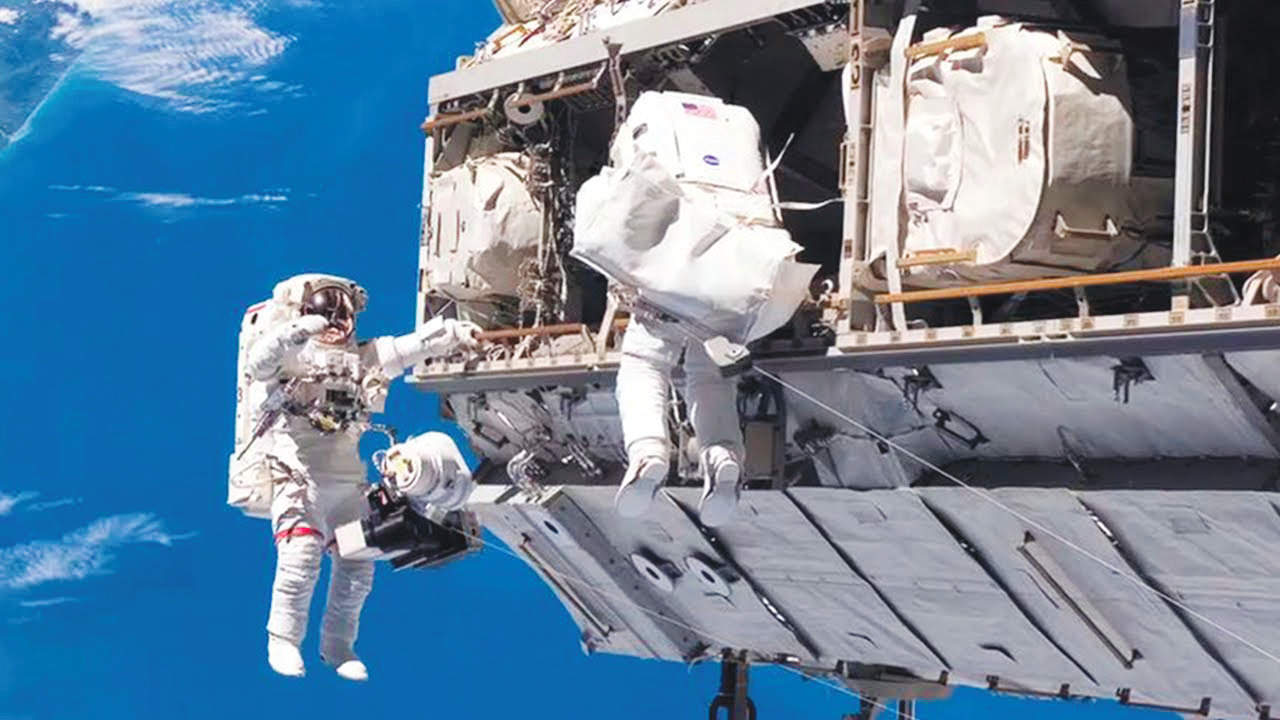
    WASHINGTON (TIP): Two NASA astronauts aboard the International Space Station (ISS) are set to conduct an emergency spacewalk tomorrow to replace a failed data relay box that controls some of the key hardware on the orbital outpost.

    Expedition 51 Commander Peggy Whitson and Flight Engineer Jack Fischer will change out a multiplexer demultiplexer (MDM) data relay box on the S0 truss that failed last week. The cause of the MDM failure is not known.

    ISS programme managers decided to press ahead with the spacewalk after a review of preparations and crew readiness on Sunday.

    The data relay box is one of two systems housed in the truss that control the functionality of radiators, solar arrays, cooling loops and other station hardware. The other MDM in the truss is functioning perfectly, providing uninterrupted telemetry routing to the station’s systems.

    The crew has never been in any danger, and the MDM failure, believed to be internal to the box itself, has had no impact on station activities, NASA said.

    Whitson has prepared a spare data relay box and tested components installed in the replacement. She has reported that the spare MDM was ready to be brought outside to replace the failed unit.

    Whitson and Expedition 50 commander Shane Kimbrough had conducted a spacewalk to install the same MDM with upgraded software on March 30.

    A similar MDM replacement spacewalk was conducted in April 2014 by Expedition 39 crewmembers Steve Swanson and Rick Mastracchio. Tomorrow’s spacewalk is expected to begin around 8 am EDT (5:30 pm IST) will last about two hours in duration to replace the failed box.

    Fischer will also install a pair of wireless communications antennas on the Destiny Lab while Whitson replaces the failed data relay box. The antenna installation task was originally planned for the last spacewalk on May 12.

    The contingency spacewalk will be the 201st in support of space station assembly and maintenance and the sixth conducted from the Quest airlock this year. This will be the 10th spacewalk in Whitson’s career and the second for Fischer.

    Source: PTI

  • Celebration of the book launch on Zerbanoo Gifford, UK based human rights Campaigner

    Celebration of the book launch on Zerbanoo Gifford, UK based human rights Campaigner

    NEW YORK CITY (TIP): It’s not very often that a biographer and the subject of the biography come live, together at a historic home that has had former presidents and history’s iconic powerhouses converge at the beautiful venue.

    Some of the city’s greatest minds and movers and shakers came together on May 23 at the stately home of humanitarian and social innovator Meera Gandhi’s historic home which once belonged to the longest serving first lady of the United States, Eleanor Roosevelt. New York city’s high powered and the philanthropic were there to welcome Zerbanoo Gifford, UK based human rights campaigner, women’s champion, former politician, author and founder of the path-breaking ASHA Centre in the Forest of Dean in England.

    Zerbanoo Gifford signing the book

     Accompanying Zerbanoo was New Zealand based accomplished journalist and editor Farida Master who has authored the biography `Zerbanoo Gifford-An Uncensored Life’, published by HarperCollins.

    The biography which was launched with great fanfare in at the Times Litfest in India and later in New Zealand and Singapore has been celebrated all over the US from the West to the East coast in the last 21 days.

    In an interesting social experiment, Zerbanoo and Farida reached out to diverse audiences as they shared anecdotes from the pages of Zerbanoo’s life that found an interconnectedness with different cross-sections of society in Los Angeles, Houston, Chicago, Washington DC, Philadelphia and New York.

    Zerbanoo Gifford speaking at the event Photos/ Mohammed Jaffer-SnapsIndia

    The idea behind it is to exchange stories that empowers people, builds communities and hope. From brilliant minds at NASA, Goddard Space Centre in DC to academics at George Washington University, Turkish women in Houston, the Zoroastrian communities in LA, Chicago and New Jersey, high profile social entrepreneurs in Philadelphia and the literary circle in New York, everyone was captivated as the central character of the book in her indomitable way came alive to redefine success and pushed people to stand up and make a difference even when the going gets really tough.

    There was no better way to end the whirlwind book tour than to celebrate it with a clink of champagne glasses at the home of the lady behind the Giving Back Foundation, Meera Gandhi whose testimonial along with Bishop Desmond Tutu, Nobel Peace Laureate, on the paperback reads as: “A compelling biography of a renowned human rights campaigner at the heart of the women’s movement. Zerbanoo has helped to empower women to take their rightful place in the international arena. Her story reads as a modern tale of shakti -power.”

  • MASSIVE LAVA WAVES SPOTTED ON JUPITER’S MOON IO

    MASSIVE LAVA WAVES SPOTTED ON JUPITER’S MOON IO

    MASSIVE LAVA WAVES SPOTTED ON JUPITER’S MOON IO

    LOS ANGELES (TIP): Scientists have detected two massive waves sweeping across the largest lava lake on Jupiter’s moon Io — the most volcanically active body in our solar system.

    Taking advantage of a rare orbitalalignment between two of Jupiter’s moons, Io and Europa, researchers at University of California (UC) Berkeley have obtained an exceptionally detailed map of the largest lava lake on Io.

    On March 8 in 2015, Europa passed in front of Io, gradually blocking out light from the volcanic moon.

    Since Europa’s surface is coated in water ice, it reflects very little sunlight at infrared wavelengths, allowing researchers to accurately isolate the heat emanating from volcanoes on Io’s surface.

    The infrared data showed that the surface temperature of Io’s massive molten lake steadily increased from one end to the other, suggesting that the lava had overturned in two waves that each swept from west to east at about a kilometre per day.

    Overturning lava is a popular explanation for the periodic brightening and dimming of the hot spot, called Loki Patera after the Norse god.

    The most active volcanic site on Io, Loki Patera is about 200 km across. The hot region of the patera has a surface area of 21,500 square kilometres.

    “If Loki Patera is a sea of lava, it encompasses an area more than a million times that of a typical lava lake on Earth,” said Katherine de Kleer, a graduate student at UC Berkeley.

    “In this scenario, portions of cool crust sink, exposing the incandescent magma underneath and causing a brightening in the infrared,” said de Kleer.

    “This is the first useful map of the entire patera. It shows not one but two resurfacing waves sweeping around the patera. This is much more complex than what was previously thought,” said Ashley Davies, of the NASA’s Jet Propulsion Laboratory in the US.

    “This is a step forward in trying to understand volcanism on Io, which we have been observing for more than 15 years, and in particular the volcanic activity at Loki Patera,” said Imke de Pater, a UC Berkeley professor of astronomy.

    The images were obtained by the twin 8.4-metre mirrors of the Large Binocular Telescope Observatory in the mountains Arizona, linked together as an interferometer using advanced adaptive optics to remove atmospheric blurring.

    Source: PTI


  • Hubble captures massive galaxy cluster in stunning detail

    Hubble captures massive galaxy cluster in stunning detail

    Hubble captures massive galaxy cluster in stunning detail

    WASHINGTON (TIP): The Hubble Telescope has beamed back a stunning image of a massive galaxy cluster located six billion light years away, which shows extremely faint features that have never been seen before.

    Abell 370, located in the constellation Cetus (the Sea Monster), is made up of hundreds of galaxies. In the mid-1980s high-resolution images of the cluster showed that the giant luminous arc in the lower left of the image was not a curious structure within the cluster, but rather an astrophysical phenomenon — the gravitationally lensed image of a galaxy twice as far away as the cluster itself. The Hubble telescope, jointly operated by NASA and European Space Agency (ESA), helped show that this arc is composed of two distorted images of an ordinary spiral galaxy that just happens to lie behind the cluster.

    Abell 370’s enormous gravitational influence warps the shape of spacetime around it, causing the light of background galaxies to spread out along multiple paths and appear both distorted and magnified. The effect can be seen as a series of streaks and arcs curving around the centre of the image.

    Massive galaxy clusters can therefore act like natural telescopes, giving astronomers a close-up view of the very distant galaxies behind the cluster – a glimpse of the universe in its infancy, only a few hundred million years after the Big Bang. The new image of Abell 370 was captured as part of the Frontier Fields programme, which used a whopping 630 hours of Hubble observing time, over 560 orbits of the Earth.

  • Astronaut breaks US space record, gets call from Donald Trump

    Astronaut breaks US space record, gets call from Donald Trump

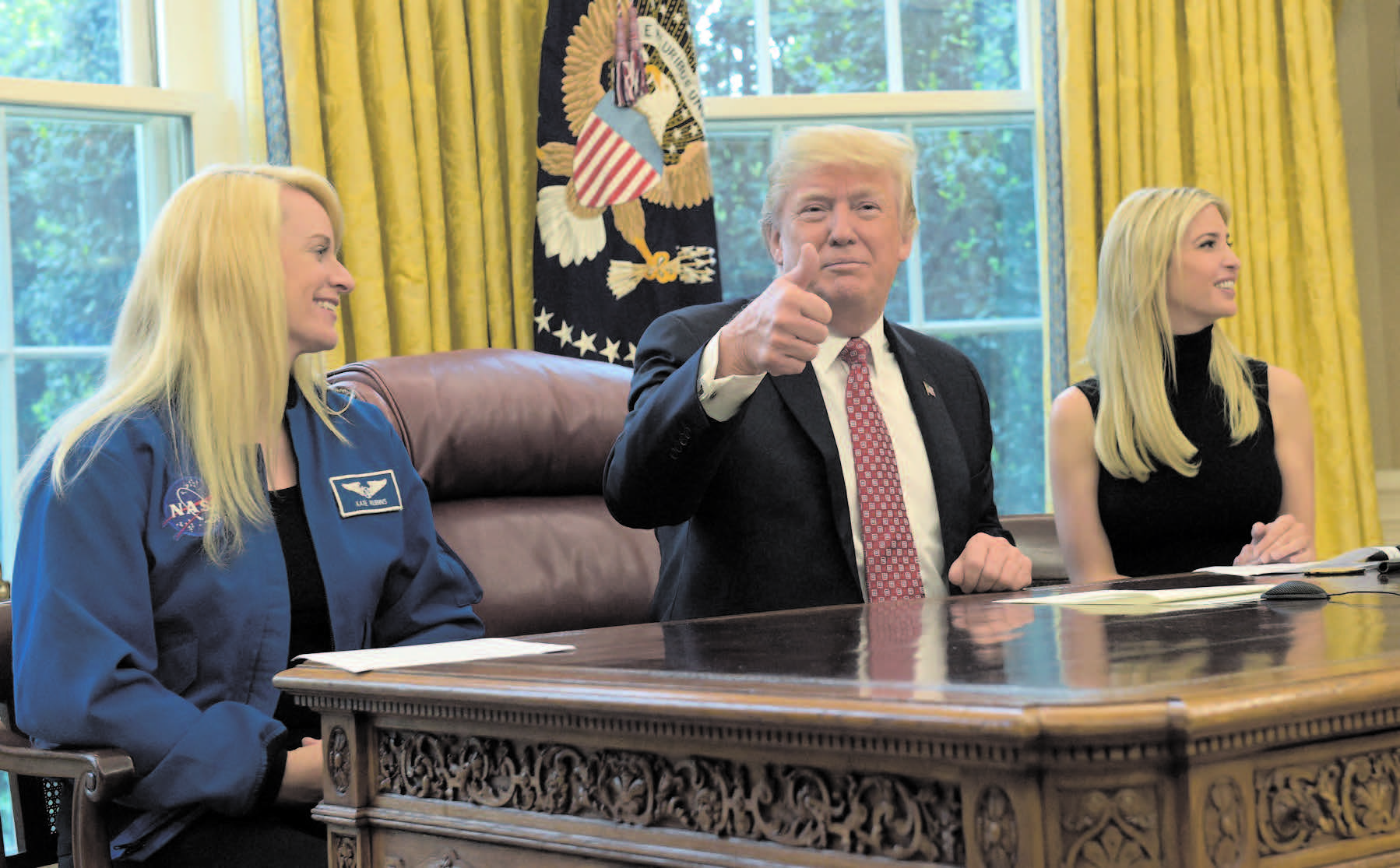
    CAPE CANAVERAL (TIP): Astronaut Peggy Whitson broke the US record on April 24 for most time in space and talked up Mars during a congratulatory call from President Donald Trump.

    The International Space Station’s commander surpassed the record of 534 days, two hours and 48 minutes for most accumulated time in space by an American.

    “This is a very special day in the glorious history of American spaceflight,” Trump said.

    His daughter Ivanka also offered congratulations to Whitson from the Oval Office. Whitson said it’s “a huge honor” to break such a record.

    “It’s an exciting time” as NASA prepares for human expeditions to Mars in the 2030s, included in new legislation signed by Trump last month. She called the space station “a key bridge” between living on Earth and traveling into deep space, and she singled out the station’s recycling system that transforms astronauts’ urine into drinking water.

    “It’s really not as bad as it sounds,” she assured the president.

    “Well, that’s good, I’m glad to hear that,” he replied. “Better you than me.”

    Whitson already was the world’s most experienced spacewoman and female spacewalker and, at 57, the oldest woman in space. By the time she returns to Earth in September, she’ll have logged 666 days in orbit over three flights.

    The world record, 879 days, is held by Russian Gennady Padalka. Whitson broke the NASA cumulative record set last year by astronaut Jeffrey Williams; Scott Kelly holds the U.S. record for consecutive days in space , 340. Whitson is also the first woman to command the space station twice and the only woman to have led NASA’s astronaut corps. Behind her was a banner that read: “Congrats Peggy!! (TNN)

  • SpaceX studying landing spots on Mars with NASA

    SpaceX studying landing spots on Mars with NASA

    Elon Musk’s US-based aerospace company SpaceX is working with NASA to identify landing spots on Mars for its spacecraft.

    “We are working with scientists at NASA’s Jet Propulsion Laboratory and elsewhere, have identified several potential landing sites, including one that looks particularly promising,” SpaceNews quoted SpaceX’s Paul Wooster as saying.

    Wooster oversees Dragon spacecraft guidance, navigation and control systems and also works on the company’s higher-level Mars plans.

    According to Wooster, the site selection is based on several criteria like access to large quantities of ice near the surface that could, ultimately, support human settlements.

    “Another is to be close to the Equator and at a low elevation for solar power and better thermal conditions. It’s probably hard to find that along with ice. So, the focus has been on four locations at latitudes no more than about 40 degrees from the Equator,” Wooster noted. The study has identified four regions in the northern hemisphere of Mars for landing. The Red Dragon spacecraft is capable of carrying about one ton of payload to Mars.

    “SpaceX is a transportation company. We transport cargo to the space station, we deliver payloads to orbit, so we’re very happy to deliver payloads to Mars,” Wooster said.