Tag: NASA

  • NASA PROBE SPOTS HINTS OF GAMMA-RAY CYCLE IN ‘ACTIVE’ GALAXY

    NASA PROBE SPOTS HINTS OF GAMMA-RAY CYCLE IN ‘ACTIVE’ GALAXY

    WASHINGTON (TIP): Astronomers using data from Nasa’s Fermi Gamma-ray Space Telescope have detected hints of periodic changes in the brightness of a so-called “active” galaxy, whose emissions are powered by a supersized black hole.

    If confirmed, the discovery would mark the first years-long cyclic gamma-ray emission ever detected from any galaxy, providing new insights into physical processes near the black hole.

    “Looking at many years of data from Fermi’s Large Area Telescope (LAT), we picked up indications of a roughly two-year-long variation of gamma rays from a galaxy known as PG 1553+113,” said Stefano Ciprini, who coordinates the Fermi team at the Italian Space Agency’s Science Data Center (ASDC) in Rome.

    “This signal is subtle and has been seen over less than four cycles, so while this is tantalising we need more observations,” he added.

    Supermassive black holes lie at the hearts of most large galaxies, including our own Milky Way.

    In about one percent of these galaxies, the monster black hole radiates billions of times as much energy as the sun, emission that can vary unpredictably on timescales ranging from minutes to years.

    Astronomers refer to these as “active” galaxies.

    More than half of the gamma-ray sources seen by Fermi’s LAT are active galaxies called blazars.

    If the gamma-ray cycle of PG 1553+113 is in fact real, the scientists predict it will peak again in 2017 and 2019, well within Fermi’s expected operational lifetime.

    PG 1553+113 lies in the direction of the constellation Serpens, and its light takes about five billion years to reach Earth. Nasa’s Fermi Gamma-ray Space Telescope was launched in June 2008.

  • Nasa’s ‘chemical laptop’ to search for alien life

    WASHINGTON (TIP): In a bid to find concrete evidence of life outside Earth, Nasa is developing a ‘chemical laptop’ -the first portable, miniaturised laboratory built to detect both amino and fatty acids on other worlds. The battery-powered device analyses samples for materials associated with life.

    “If this instrument was to be sent to space, it would be the most sensitive device of its kind to lea ve Earth,” said Jessica Creamer, a Nasa postdoctoral fellow.

    Like a tricorder from Star Trek, the chemical laptop is roughly the size of a regular laptop, but much thicker to make room for chemical analysis components. But unlike a tricorder, it has to ingest a sample to analyse it, Nasa said.

    “It is a chemical analyser that can be reprogrammed like a laptop to perform different functions. As on a regular laptop, we have different apps for different analyses like amino acids and fatty acids,” said Fernanda Mora, a technologist.

    Amino acids are building blocks of proteins, while fatty acids are key components of cell membranes. Both are essential to life, but can also be found in non-life sources. Amino acids come in two types: Left-handed and right-handed.Like the left and right hands of a person, these amino acids are mirror images of each other but contain same components.

    Some scientists hypothesise that life on Earth evolved to use just left-handed amino acids because that standard was adopted early in life’s history. It is possible that life on other worlds might use the right-handed kind. “If a test found a 50-50 mixture of lefthanded and right-handed amino acids, we could conclude that the sample was probably not of biological origin,” Creamer said. “But if we were to find an excess of either left or right, that would be the best evidence so far that life exists on other planets,” she said.

  • NASA SEEKS ASTRONAUTS FOR DEEPER SPACE MISSIONS

    WASHINGTON (TIP): In preparation for a manned mission to Mars and returning the human spaceflight launches to the US soil, the space agency will soon begin accepting applications for the next class of future astronauts.

    Nasa will accept applications from December 14 through mid-February and expects to announce candidates selected in mid-2017, it announced on Nov 4.

    The next class of astronauts may fly on any of four different US vessels during their careers: the International Space Station (ISS), two commercial crew spacecraft currently in development by the US companies, and Nasa’s Orion deep-space exploration vehicle.

    From pilots and engineers to scientists and medical doctors, Nasa selects qualified astronaut candidates from a diverse pool of US citizens with a wide variety of backgrounds.

    “This next group of American space explorers will inspire the Mars generation to reach for new heights, and help us realize the goal of putting boot prints on the Red Planet,” said Nasa administrator Charles Bolden.

    “Those selected for this service will fly on US made spacecraft from American soil, advance critical science and research aboard the International Space Station, and help push the boundaries of technology in the proving ground of deep space,” he added in the statement.

    The space agency is guiding an unprecedented transition to commercial spacecraft for crew and cargo transport to the space station.

    Flights in Boeing’s CST-100 Starliner and SpaceX Crew Dragon will facilitate adding a seventh crew member to each station mission, effectively doubling the amount of time astronauts will be able to devote to research in space. Future station crew members will continue the vital work advanced during the last 15 years of continuous human habitation aboard the orbiting laboratory, expanding scientific knowledge and demonstrating new technologies.

    In addition, Nasa’s Space Launch System rocket and Orion spacecraft, now in development, will launch astronauts on missions to the proving ground of lunar orbit. “This is an exciting time to be a part of America’s human space flight program,” added Brian Kelly, director of flight operations at Nasa’s Johnson Space Center in Houston.

    To date, Nasa has selected more than 300 astronauts to fly on its increasingly challenging missions to explore space and benefit life on Earth.

    There are 47 astronauts in the active astronaut corps and more will be needed to crew future missions to the space station and destinations in deep space.

    Astronaut candidates must have earned a bachelor’s degree from an accredited institution in engineering, biological science, physical science or mathematics.

    Candidates also must have at least three years of related, progressively responsible professional experience, or at least 1,000 hours of pilot-in-command time in jet aircraft.

  • Six Indian American Malayalees to be honored by Kerala Center, NY

    Six Indian American Malayalees to be honored by Kerala Center, NY

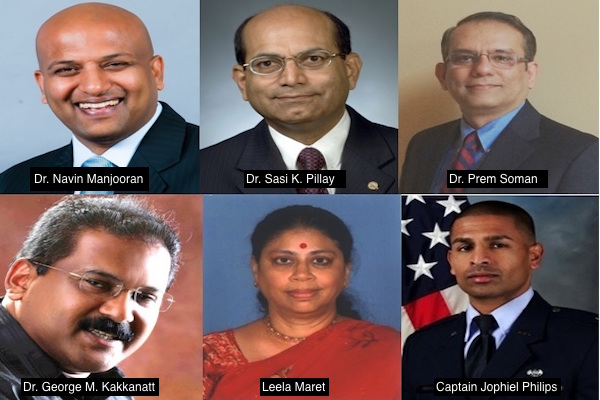
    The Indian American Kerala Cultural and Civic Center will honor six Indian Americans for outstanding achievement in their field of specialization or for their service to the society.

    The awardees were selected by a committee consisting of four members headed by Kerala Center Board Member and Trustee Dr. Thomas Abraham, according to a press release.

    “Every year we invite nominations and the committee has to make a unanimous choice for a candidate in a category to be selected to receive the award and this year is no different from previous years in terms of their achievements,” said Dr. Abraham, in a statement.

    “For the last 23 years, the Kerala Center has recognized the most outstanding achievers among the Indian American Kerala Community and they are role models for our community,” said Kerala Center President Thambi Thalappillil.

    Kerala-Center-press-releaseThe awardees will be honored at the Kerala Center’s 23rd Annual Awards Banquet on Saturday, November 7th starting at 6.30 p.m. at World’s Fair Marina in Flushing (Queens, New York City, address: 1 World’s Fair Marina, Flushing).  The chief guest is Ambassador Dnyaneshwar Mulay, Consul General of India in New York and the keynote speaker is Mr. K. Mohandas, former Secretary of the Ministry of Overseas Indian affairs and Shipping, Govt. of India.

    This year’s honorees are: 
    Recognition for Outstanding Contribution in Engineering – Dr. Navin Manjooran 

    Dr. Navin Manjooran ​is ​the Global Director (Energy) for Siemens AG ​ and ​​is responsible for the​  entire Siemens energy portfolio. He also serves as an engineering professor at Virginia Tech. Navin graduated with a BE degree from NIT (Warangal), a MS from University of Florida (Gainesville, USA), Ph.D. from Virginia Tech (Blacksburg, USA), all with the highest honors and later on completed MBA from University of Chicago. Navin has 11 patents/ disclosures, 9 books, 37 publications and 51 presentations at national/international conferences. He has received several awards including TMS Young Leader, ASM International Leadership Award ​and ​Siemens Performance Award. ​Navin is a Member of the US Technology Advisory Board and ​Virginia Tech Univ. Board  and the Board of Trustees of Univ. of Chicago.

    Recognition for Outstanding Contribution in Information Technology – Dr. Sasi K. Pillay

    Dr. Sasi K, Pillay serves as the CIO of the University of Wisconsin System comprising 26 campuses where he has started several initiatives such as the Innovation Program and Business Intelligence,  while managing a portfolio of shared services totaling $45million.  In his prior roles at NASA, Dr. Pillay oversaw the IT innovation program consisting of global crowd sourcing and the launch of the innovation program which have won several national awards.  He is the recipient of the NASA Outstanding Leadership Medal, NASA Exceptional Service Medal and the U.S. President’s Rank Award as a Meritorious Executive.

    Recognition for Outstanding Contribution in Medicine – Dr. Prem Soman

    Dr. Prem Soman MD, PhD, FRCP (UK), FACC is Director of Nuclear Cardiology, and Associate Professor of Medicine, and Clinical and Translation Science at the University of Pittsburgh Medical Center. He is internationally recognized for his research contributions to the field of nuclear cardiology, with more than 100 publications  and text book chapters. He has coauthored national guidelines on imaging and Appropriate Use Criteria. Dr. Soman is the current chair of the Imaging Council of the American College of Cardiology, Vice-President elect of the American Society of Nuclear Cardiology, and Immediate Past President of the Cardiovascular Council of the Society of Nuclear Medicine and Molecular Imaging.

    Recognition in Journalism and for Community Service – Dr. George M. Kakkanatt

    Dr. George Kakkanatt, a former US Air Force Captain is a professional psychotherapist. George is one of the founding members and former Global General Secretary of the World Malayalee Council (WMC), Green Kerala Foundation, and ALTIUS youth program. He is the President of the South Indian US Chamber of Commerce and also the President of the Houston Chapter of India Press Club of NA.  George is the Managing Director and Editor in Chief of Azchavattom Malayalam News weekly published from Houston. George received several awards for his creative commitment to serve the global community.

    Recognition for Community Service  Leela Maret


    Leela Maret has been doing superb job as a volunteer in many community organization for the last three decades. Working as a scientist for last 29 years at New York City’s Environmental Protection, Leela is also adjunct lecturer in Bronx Community College. Leela serves as Recording Secretary of Local Employees Union 375 for the city, delegate for Central Labor Council, FOKANA National Women’s Forum Chair, Vice President of South Asians for Labor and Vice President of INOC. She had served as the President of Kerala Samajam and in other capacities of several other organizations including FOKANA. She has helped to organize Asian Heritage, Diwali function at New York City Hall, Kerala Piravi and other events in Indian Consulate, actively participated in Voter Registration, taught Malayalam at St. John’s University, and took part in the testimony of redistricting of Richmond Hill to unite South Asians. She is the recipient of various Community awards such as NYC Comptroller’s Community Service award, and two Pravasi awards.

    Recognition for Service to the Nation – Captain Jophiel Philips – Service to the Nation

    Capt. Jophiel Philips was born in Queens, New York, were he developed a passion for football leading him to earn a football scholarship at St. Francis Prep High School.  He went on to play four years of college football, where he started at Wide Receiver.  After coaching football at the University level, Capt Philips went to law school where he won numerous academic awards and was chosen to give the commencement speech.  Capt Philips is a Judge Advocate General in the U.S. Air Force.  During his recent deployment, he was awarded the Purple Heart, as well as the Bronze Star, for his actions in protecting service members from harm, after an insurgent attack- where eight of his comrades died.

  • First nano-satellite functional: NASA

    WASHINGTON (TIP): A miniature satellite sent in the space aboard an Atlas V rocket from the Vandenberg Air Force Base in California on October 8 is working fine, Nasa has announced.

    The Optical Communications and Sensor Demonstration (OCSD) CubeSat spacecraft is in orbit and operational, said Nasa and The Aerospace Corporation of El Segundo, California.

    CubeSats are going to play a key role in exploration, technology demonstration, scientific research and educational investigations.

    They provide a low-cost platform for Nasa missions, including planetary space exploration, Earth observations, fundamental Earth and space science.

    “Technology demonstration missions like OCSD are driving exploration,” said Steve Jurczyk, associate administrator for the Space Technology Mission Directorate (STMD) at NASA headquarters in Washington, DC.

    “By improving the communication capability of small spacecraft to support data-intensive science missions, OCSD will advance the potential to become a more viable option for mission planners,” he said in a statement.

    CubeSats also allow an inexpensive means to engage students in all phases of satellite development, operation and exploitation through real-world, hands-on research and development experience.

  • Nasa captures Pluto’s moon Charon in stunning detail

    Nasa captures Pluto’s moon Charon in stunning detail

    Nasa’s New Horizons spacecraft has returned the best colour and the highest resolution images yet of Pluto’s largest moon, Charon, which show a surprisingly complex and violent history.

    The image combines blue, red and infrared images taken by the spacecraft’s Ralph/Multispectral Visual Imaging Camera (MVIC); the colours are processed to best highlight the variation of surface properties across Charon.

    Charon’s colour palette is not as diverse as Pluto’s; most striking is the reddish north polar region, informally named Mordor Macula, Nasa said.

    Charon is 1,214 kilometres across. The image resolves details as small as 2.9 kilometers.

    At half the diameter of Pluto, Charon is the largest satellite relative to its planet in the solar system.

    Charon’s cratered uplands at the top are broken by series of canyons, and replaced on the bottom by the rolling plains of the informally named Vulcan Planum.

    The scene covers Charon’s width of 1,214 kilometres and resolves details as small as 0.8 kilometres.

    Another image shows the details of a belt of fractures and canyons just north of the moon’s equator.

    This great canyon system stretches more than 1,600 kilometres across the entire face of Charon and likely around onto Charon’s far side.

  • NASA TESTS HEAT SHIELD FOR FUTURE MARS MISSIONS

    NASA TESTS HEAT SHIELD FOR FUTURE MARS MISSIONS

    WASHINGTON (TIP): Researchers at Nasa have successfully tested an umbrella-like heat shield made of carbon fabric that could protect future Mars exploration vehicles from extreme heat when entering the red planet’s atmosphere.

    As Nasa missions to Mars progress with science and complex human exploration missions, spacecrafts will require larger heat shields to protect against the extreme heat of entering a planet’s atmosphere and decelerating at a safe altitude in the thin Martian atmosphere, the US space agency said.

    Today’s rockets have limited space to accommodate spacecraft and their heat shields.

    However, engineers at Nasa’s Ames Research Centre may have a solution —Adaptive Deployable Entry and Placement Technology (ADEPT).

    ADEPT is a mechanically-deployable heat shield concept using carbon fabric— a flexible heat shield that expands to “open” like an umbrella.

    Ames’ engineers have successfully completed heating simulation testing of an ADEPT model under conditions akin to entering the Martian atmosphere.

    The test used a blast of hot air from a 21 inches diameter nozzle to simulate a bow shock wave in front of a 2 m wide ADEPT shield, which was attached to a water—cooled support arm.

    During the tests, temperatures on the shield reached 1,700 degrees Celsius while bluish streaks streamed away as a special resin—infused protective coating ablated from the stitching.

    Extensive instrumentation and imaging products from the test will be used to validate how materials respond to the testing conditions, and thermo—structural design codes.

    The testing approach demonstrated with this test will enable future, more extensive testing of the ADEPT configuration — towards possible future use of the system on missions bigger than anything NASA’s ever flown.

    The ADEPT project is led by Nasa’s Ames Research Centre, with contributions from multiple other Nasa centres.

  • Two Indian-Americans reach top ten in NASA’s 3-D Space Contest

    Two Indian-Americans reach top ten in NASA’s 3-D Space Contest

    Two Indian-American teenagers —  Rajan Vivek from Arizona and Prasanna Krishnamoorthy from Delaware featured in the prestigious 3-D Space Container Challenge held by NASA (National Aeronautics and Space Administration). The challenge asked young minds to make an innovative container that will make life of astronauts easier while they are in space. NASA has received number of innovative and revolutionary designs which will be used in upcoming Mars exploration project scheduled for 2017 and 2020.

    However, both Rajan Vivek from Arizona and Prasanna Krishnamoorthy from Delaware figured among 10 finalists of NASA’s national 3-D Space Container Challenge, however, failed to win the prestigious competition which went to Ryan Beam of California.

    Mr Beam’s ClipCatch design will allow astronauts on the space station to clip their fingernails without worrying about the clippings floating away and potentially becoming harmful debris.

    Mr Rajan’s Hydroponic Plant Box container tackles the challenge of containing water in a microgravity environment while still allowing plants to grow roots in it.

    Hydroponics, growing plants without soil, would be very effective in spacecrafts because it requires less space and plants grow faster and stronger, NASA said.

    Mr Prasanna on the other hand developed a Collapsible Container.

    In order to use the limited space on international Space Station, the Collapsible Container can expand and compress to perfectly fit its contents. When empty, it can compress fully for easy storage, NASA said.

    “The simplest tasks on Earth can be quite challenging, and even dangerous, in space,” said Niki Werkheiser, NASA’s In-Space Manufacturing project manager.

    “Being able to 3-D print technical parts, as well as the lifestyle items that we use every day will not only help enable deep space travel, but can make the trip more pleasant for astronauts,” he said.

    NASA, in partnership with the American Society of Mechanical Engineers Foundation, which managed the competition, announced the winners of the Future Engineers 3-D Space Container Challenge yesterday.

    The winning designs focused on making life in space a little more comfortable for astronauts, NASA said. The 3-D Space Container Challenge asked students to design models of containers that could be used in space.

    They could range from simple containers that could be used to hold collected rocks on Mars or an astronaut’s food, to advanced containers for experiments that study fruit flies.

    Students across the US spent part of their summer using 3-D modelling software to design containers that could be 3-D printed, with the ultimate goal of advancing human space exploration on the International Space Station, Mars and beyond.

  • NASA TECHNOLOGY TO HELP AIRLINES SAVE FUEL

    NASA TECHNOLOGY TO HELP AIRLINES SAVE FUEL

    WASHINGTON (TIP): Two US airlines will soon begin testing a new NASA-developed software that is designed to help air carriers save time, cut fuel consumption and carbon emissions.

    During the next three years, Virgin America and Alaska Airlines will use the Traffic Aware Planner (TAP) application to make “traffic aware strategic aircrew requests” (TASAR), the US space agency said in a statement.

    TAP connects directly to the aircraft avionics information hub on the aircraft.

    “It reads the current position and altitude of the aircraft, its flight route and other real-time information that defines the plane’s current situation and active flight plan,” explained David Wing, TASAR project lead at NASA’s Langley Research Center in Hampton, Virginia.

    Then, it automatically looks for a variety of route and/or altitude changes that could save fuel or flight time and displays those solutions directly to the flight crew.

    TAP also scans the signals of nearby air traffic to avoid potential conflicts in any proposed flight path changes, making it easier for air traffic controllers to approve a pilot’s route change request. For airlines with internet connectivity in the cockpit, TAP also can access information –such as real-time weather conditions, wind forecast updates and restricted airspace status — to further increase flight efficiency.

    The software is loaded onto a tablet computer, which many airline pilots already use for charts and flight calculations. Even four minutes of flight time shaved off of each leg of a trip made by an airline could result in massive fuel and time savings, according to researchers.

    The software provided similar results in flight tests. A second round of flight tests was recently completed to ensure readiness for operational use by partner airlines.

    “We are excited to partner with NASA to test this new technology that has the potential to help reduce fuel consumption and carbon emissions and save our guests time in the air,” commented Steve Forte, Virgin America’s chief operating officer in Burlingame, California.

  • Global Harmony, Yoga, Social Issues discussed at Dharma Conference

    Global Harmony, Yoga, Social Issues discussed at Dharma Conference

    EDISON, NJ (TIP): Attendees representing 13 countries now have greater insight into the philosophy of “Dharma” for a conflict free and pluralistic world as well as ancient spiritual roots of yoga and the social issues faced by Hindus globally. The largest Hindu students’ organization in North America brought more than 40 saints, scientists, yogis and experts to New Jersey on the “Never Forget” September 11th anniversaries for Dharma and world harmony.

    Organized by the Hindu Students Council and supported by over 35 organizations, the conference featured luminaries such as Sri Sri Ravi Shankar, the founder of Art of Living, Swami Paripoornananda, the head of Sreepeetham in India, Dr. HR Nagendra, Chairman of the Indian Government’s Experts Committee for the International Day of Yoga, Fields Medalist Dr. Manjul Bhargava and many others. Sri Sri Ravi Shankar provided insights on how the principles of Dharma can help develop a conflict free society, while Dr. Nagendra discussed Indian Government’s efforts in making yoga available to millions of Indian people in order to appreciate its roots and medical benefits.

    The Council also recognized Indian Prime Minister Narendra Modi, who will be visiting the US this month, along with Sri Sri Ravi Shankar, Swami Dayananda Saraswati and Dr. HR Nagendra, with the “Light of Yoga Award” for their pioneering contributions in making the International Day of Yoga a major success.

    “The fact that some of the most renowned saints, a former NASA scientist, a Fields Medalist and 40 others came together on HSC’s platform is testament to the organization’s 25 year history and brand value,” added HSC Chairman and Conference Chair Nikunj Trivedi. “This conference is therefore a celebration of HSC’s legacy and an opportunity to map out the course for decades to come.”

    The conference opened with HSC students chanting the sacred symbol “Om”, which was followed by a moment of silence for the victims of the September 11th terrorist attacks.

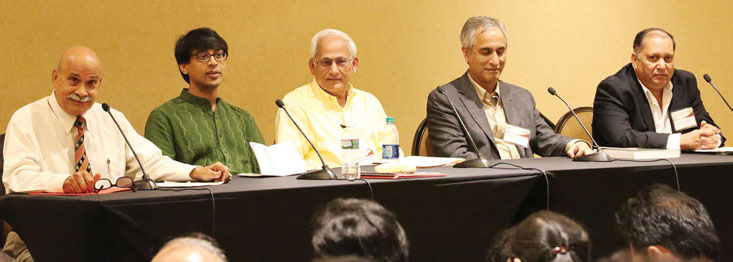
    Dr. Bhargava, along with physicist Dr. GNR Tripathi, computer scientist Dr. Subhash Kak and Professor Alok Kumar, discussed the need to recognize the significant contributions of ancient Hindus in the field of science and mathematics. For example, Dr. Bhargava argued that the number system used today should be called “the Hindu Number System” rather than Arabic Number System and the Fibonacci Sequence (of integers) outlined in the 12th century, should be renamed “Hemchandra Numbers” after Jain scholar Acharya Hemchandra who developed them 900 years earlier.

    In his keynote speech at the opening plenary session, Dr. David Frawley
    (Vamadeva Shastri), founder of the American Institute of Vedic Studies and the winner of the prestigious Padma Bhushan award by the Government of India, said that yoga was a gift of the ancient Hindu sages and should be not cut-off from its roots and holistic benefits.

    On a panel on women’s empowerment, female monk Swamini Svatmavidyananda, female yogi Shambhavi Chopra, and Dr. Indrani Rampersad challenged western feminism, which often does not take into account transnational and spiritual concerns, and proposed ways in which females can find strength in understandings of gender found within the Indic traditions. Another panel on Human Rights featured noted human rights activist Tapan Ghosh of Hindu Samhati and Dr. Ali Alyami, Executive Director and founder of the Center for Democracy and Human Rights in Saudi Arabia. Both spoke passionately about the persecution of Hindus around the world and implored the global community to take action to protect the rights of Hindus where they are minorities and are denied religious freedom.

    An inter-faith panel, moderated by noted public intellectual and writer Rajiv Malhotra, discussed a framework for a pluralistic world order. It featured Rabbi Justus N. Baird, Dean of Auburn Theological Seminary in New York, Pastor David Davis of the Nassau Presbyterian Church in Princeton, Buddhist Monk Venerable Bhante Kondanna, Jain Monk Venerable Amrinder Muni, noted Sikh speaker Ratanjit Sondhe and Hindu leader Dr. Mahesh Mehta.

    “What you see here is youth taking charge of Dharma and moving it forward in a bold and holistic way”, remarked Ravindra Jaishankar, HSC President and Conference Program Chair. “The conference, while epic in its scale, also marks a new beginning for the American Hindu youth and their engagement with the community and the greater society.”

    Along with a weekend of intellectual and spiritual rejuvenation, the conference included an international concert emceed by former Miss America Nina Davuluri. It featured thrilling classical Indian dances, a dramatic Balinese theatrical act based on the Hindu epic Ramayana as well as a mesmerizing musical performance by renowned Flautist Rakesh Chaurasia, Mandolin player U Rajesh, Ghatam (Indian clay pot) player Giridhar Udupa and Percussionist Rajeev Mahavir.

    Allegra Lovejoy, a recent graduate of Princeton University, noted: “I was deeply inspired to see so many people – both presenters and attendees – who exhibited a humble and dedicated seva [selfless service] attitude. Many traditions and backgrounds were represented, and I learned something from each person I interacted with. Participating in this conference has motivated me to learn and practice dharmic spirituality much more seriously than before.”

    As the conference came to a close, attendees appreciated the multiple applications of Dharma beyond religion as well as the need to preserve the holistic nature of yoga beyond exercises. The Council hopes that future conferences produce an even greater impact regarding Dharma’s potential to guide and support sustainable society throughout the world.

    About HSC:

    Hindu Students Council (HSC) is an international forum providing opportunities to learn about Hindu heritage and culture. It is the largest Hindu youth organization in North America, with over 50 chapters across university campuses. Over 130,000 students and youth have participated in HSC activities since its inception in 1990. For more information, please visit www.hindustudentscouncil.org or email us at info@hindustudentscouncil.org.

  • NASA PROBE REVEALS DWARF PLANET CERES IN INTRIGUING DETAILS

    NASA PROBE REVEALS DWARF PLANET CERES IN INTRIGUING DETAILS

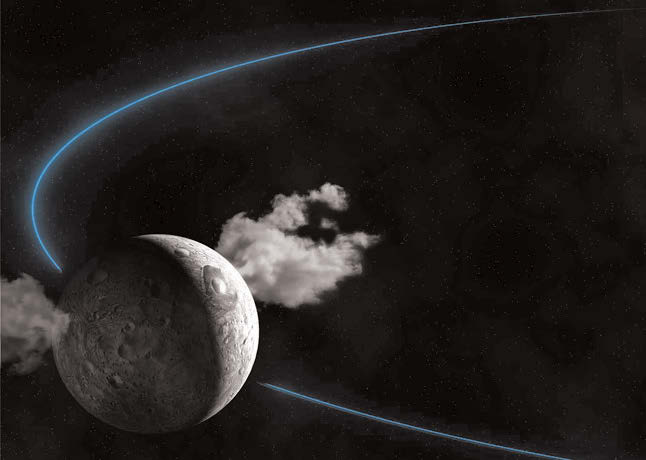
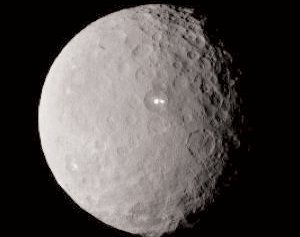
    WASHINGTON (TIP): NASA’s Dawn spacecraft has shown the brightest spots on the dwarf planet Ceres that are gleaming with mystery.

    The closest-yet view of Occator crater, with a resolution of 450 feet per pixel, on its surface gives scientists a deeper perspective on these very unusual features.

    The new up-close view reveals better-defined shapes of the brightest, central spot and features on the crater floor.

    “Dawn has transformed what was so recently a few bright dots into a complex and beautiful, gleaming landscape,” said Marc Rayman, Dawn’s chief engineer and mission director from NASA’s Jet Propulsion Laboratory in California.

    Dawn is the first mission to visit a dwarf planet, and the first to orbit two distinct solar system targets.

    “Soon, the scientific analysis will reveal the geological and chemical nature of this mysterious and mesmerising extraterrestrial scenery,” he said in a statement.

    Because these spots are so much brighter than the rest of Ceres’ surface, the Dawn team combined two different images into a single composite view — one properly exposed for the bright spots, and one for the surrounding surface.

    Scientists also have produced animations that provide a virtual fly-around of the crater, including a colourful topographic map.

    Dawn scientists note the rim of Occator crater is almost vertical in some places, where it rises steeply for nearly two km. The spacecraft has already completed two 11-day cycles of mapping the surface of Ceres from its current altitude.

    Dawn will map all of Ceres six times over the next two months.

  • NASA probe sends stunning images of dwarf planet

    NASA probe sends stunning images of dwarf planet

    WASHINGTON (TIP): NASA’s Dawn spacecraft has delivered the closest-yet views of the dwarf planet called Ceres that show the small world’s features in unprecedented detail.

    The new images show Ceres’ tall, conical mountain, crater formation features and narrow, braided fractures.

    “Dawn’s view is now three times as sharp as in its previous mapping orbit, revealing exciting new details of this intriguing dwarf planet,” said Marc Rayman, Dawn’s chief engineer and mission director at NASA’s Jet Propulsion Laboratory in California.

    Engineers and scientists will now refine their measurements of Ceres’ gravity field which will help mission planners in designing Dawn’s next orbit — its lowest — as well as the journey to get there.

    In late October, Dawn will begin spiraling toward this final orbit, which will be at an altitude of 375 km.

    At its current orbital altitude of 1,470 km, Dawn takes 11 days to capture and return images of Ceres’ whole surface.

    Each 11-day cycle consists of 14 orbits.

    Over the next two months, the spacecraft will map the entirety of Ceres six times.

    The spacecraft is using its framing camera to extensively map the surface, enabling 3-D modeling.

    Every image from this orbit has a resolution of 450 feet per pixel, and covers less than one percent of the surface of Ceres.

    At the same time, Dawn’s visible and infrared mapping spectrometer is collecting data that will give scientists a better understanding of the minerals found on Ceres’ surface.

    Dawn is the first mission to visit a dwarf planet, and the first to orbit two distinct solar system targets.

    It orbited protoplanet Vesta for 14 months in 2011 and 2012 and arrived at Ceres on March 6, 2015.

  • NASA ORBITER READY FOR MARS LANDER’S ARRIVAL IN 2016

    NASA ORBITER READY FOR MARS LANDER’S ARRIVAL IN 2016

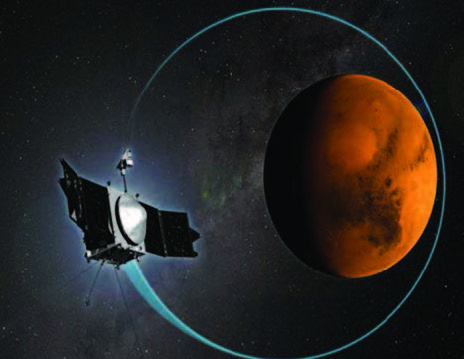
    WASHINGTON (TIP): With its biggest orbit manoeuvre since 2006, NASA’s Mars Reconnaissance Orbiter (MRO) is preparing for the arrival of NASA’s next Mars lander called InSight next year.

    The Mars orbiter will be engaged in a 77-second firing of six intermediate-size thrusters that will adjust the orbit timing of the veteran spacecraft.

    The move will put the orbiter in position to receive radio transmissions from InSight as the newcomer descends through the Martian atmosphere and touches down on September 28 next year, the US space agency said in a statement.

    These six rocket engines, which were used for trajectory corrections during the spacecraft’s flight from Earth to Mars, can each produce about five pounds of thrust.

    “Without making this orbit change manoeuvre, Mars Reconnaissance Orbiter would be unable to hear from InSight during the landing, but this will put us in the right place at the right time,” said MRO project manager Dan Johnston of NASA’s Jet Propulsion Laboratory, Pasadena, California.

    The orbiter will record InSight’s transmissions for later playback to Earth as a record of each event during the critical minutes of InSight’s arrival at Mars.

    This is the same exercise that MRO did for the landings of NASA’s Curiosity Mars rover three years ago and NASA’s Phoenix Mars lander in 2008.

    InSight will examine the deep interior of Mars for clues about the formation and early evolution of all rocky planets, including Earth.

    After the InSight landing, the scientists will prepare MRO to perform a pair of even larger manoeuvres in October 2016 and April 2017 — each using the six intermediate-size thrusters longer than three minutes.

  • The Indian Panorama’s Tribute to India’s Missile Man Bharat Ratna APJ Addul Kalam

    The Indian Panorama’s Tribute to India’s Missile Man Bharat Ratna APJ Addul Kalam

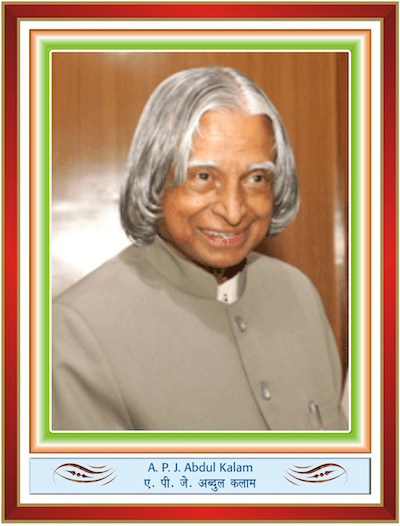
    Shakespeare may as well had APJ Abdul Kalam, an outstanding human being, teacher, scientist, thinker and much more, in mind, when he penned these words in Julius Caesar in which Antony pays tribute to the slain Caesar.

    The spontaneous outpouring of public grief at the passing away of Bharat Ratna Abdul Kalam was unprecedented. Be it the long queues of people ranging from VIPs to slum dwellers wanting to pay personal homage to the great man, top trending of tributes to him on the social media, focus of all main stream media channels and newspapers, the sentiment was simply overwhelming. Rather than the usual and clichéd messages of condolences from nation’s leaders, there was a genuine feeling of a huge loss and several international leaders joined in to pay their respects.

    Prime Minister Narendra Modi, instead of issuing a formal note of condolence, wrote an entire column on the country’s Missile man saying that `Bharat has lost a Ratna, but the light from this jewel will guide us towards Kalam’s dream destination : India as a knowledge superpower, in the first rank of nations”.

    Abdul-KalamModi wrote that Abdul Kalam, who was genuinely loved and admired by the masses, “never measured success by material possessions. For him, the counterpoint to poverty was the wealth of knowledge, in both its scientific and spiritual manifestations”. He concluded by saying that he was father to every Indian child and “the good that he did, will not be interred with his bones, because his children will preserve his memory through their lives and work, and gift it to their children”.

    US President Barack Obama, in his condolence message spoke of Dr. Kalam’s great contribution in promotion of US – India space cooperation and forging stronger ties between the two countries. “A scientist and statesman, Dr. Kalam rose from humble beginnings to become one of India’s most accomplished leaders, earning esteem at home and abroad. An advocate for stronger US-India relations, Dr. Kalam worked to deepen our space cooperation, forging links with NASA during a 1962 visit to the United States. His tenure as India’s 11th President witnessed unprecedented growth in US-India ties. Suitably named “the People’s President”, Dr. Kalam’s humility and dedication to public service served as an inspiration to millions of Indians and admirers around the world.”

    APJ2 APJ1In his event-filled 83 year long life, Abdul Kalam had evidently touched millions of lives and his life was in itself a message and inspiration. All those who were fortunate to interact with him, and he never let go an opportunity, he left a lasting impression which remained with that person for an entire life time. Be it the scientific community, the educators, the students, world leaders and even the media, everyone who met him left mesmerized by the man’s simplicity and humility. At the same time, all that weighed on his mind, all the time, was the development and growth of India and the improvement in the quality of life of its citizens, particularly those belonging to the rural areas. His pet and passionate project remained PURA (Providing Urban Facilities in Rural Areas) and he looked for opportunities to spread his vision.

    Such was the respect he commanded among all sections of the society, including the political parties, that he emerged as one of the rare consensus candidate for the post of president in 2002 yet he kept himself aloof from politics and never got into any discussion on the subject. Even when the then Pakistan President Parvez Musharraf visited India in 2005, he gave him a complete lesson on his vision on improving the living standards of the poor and the downtrodden. He advised Musharraf to initiate a program in his country on the lines of PURA and assured him all help in the area.

    He was not just a role model for millions of Indians and even those in other countries, he led by personal example. He led a simple life and immersed himself into studying. He was childlike in his approach towards learning. An example of never-say-die attitude was his desire to ride in a Sukhoi-30 fighter jet cockpit at the age of 74. It is not easy to ride the small jet and most youngsters one-third that age would fall sick of the speed and maneuvers of the fighter plane. Yet Kalam insisted and flew the jet for about 40 minutes. His pilot, Air Commodore Ajay Rathore, who sat next to him later said he behaved as excited as an eight year old boy and was in great spirits throughout.

    Born in a boatman’s family at Rameshwaram on October 15, 1931, Avul Pakir Jainulabdeen Abdul Kalam faced a tough childhood. He graduated in Physics in 1954 from St Joseph’s College, Tiruchirapalli and studied Aeronautical Engineering at the Madras Institute of Technology. He later joined Indian Scientific Research Organisation (ISRO) and made significant contribution as project director to develop the country’s first indigenous Satellite Launch Vehicle (SLV-III) which injected the Rohini Satellite in the earth’s orbit in 1980 thus making India a member of the exclusive international space club. After working at ISRO for two decades he was given the responsibility of developing guided missiles as chief executive of the Integrated Guided Missile Development Programme at the Defence Reseach and Development Organisation (DRDO) in 1982.

    He was responsible later for the development and operationalization of AGNI and PRITHVI missiles. He played a vital role in building indigenous capability in critical technologies. He was subsequently made the Scientific Adviser to Defence Minister and Secretary, DRDO from July 1992 to December 1999.

    He was the main force behind the weaponization of the strategic missile systems and the Pokhran-II Nuclear blasts in collaboration with the department of Atomic Energy which made India a Nuclear power state.

    He was awarded the Padma Bhushan in 1981, Padma Vibhushan in 1990 and was conferred the highest civilian award, the Bharat Ratna, in 1997 and served as the country’s 11th president from 2002 to 2007.

    Even as the President, he redefined the Indian presidency. Till he was elected with an overwhelming 9,22,884 votes (the only invalid vote had a note saying he would look much better with a hair cut !), the office of the president of India was considered that of a titular head. In fact his advent to the post came shortly after the 2002 riots in Gujarat when communal situation in the country was on a boil. The then Prime Minister Atal Behari Vajpayee, in a political masterstroke, proposed Kalam’s name as the president and the opposition Congress readily agreed to support him. He made it a point to visit riot ravaged Gujarat despite objections from the government of the day. Throughout his tenure he remained active and earned the epithet of People’s President.

    APJ3A devout Muslim, a player of Veena and a profound lover of Carnatic classical music, as comfortable with Quran as the Bhagwat Geeta, first unmarried Indian President, spiritual thinker and much more, he was a multi-faceted personality.

    Abdul Kalam often spoke at length about his childhood in Rameswaram as a boatman’s son. However, it was never about tragic struggles or of events that should be remembered with either pity or outrage. There was no anger or bitterness; it was always about hard work and hope. He believed in dignity of labor and was as comfortable with primary students as with scientists and thinkers, and world leaders.

    However, he was most passionate as a teacher. He once said : “If the people remember me as a good teacher that will be the biggest honour for me” .

    That’s what he was doing when the end came. In fact his last day on Mother Earth itself is a reflection of what a great man he was. Even at his age, he preferred to travel by the circuitous road from Guwahati to Shillong – to deliver a lecture and interact with students. While on his way to Shillong, he noticed that a pilot vehicle ahead of his convoy had a man (a security personnel) standing in a vehicle even as the convoy meandered its way up the 100-kilometer route to Shillong. He asked those sitting next to him to ask the man to sit down but was told that he was merely doing his duty.

    Not convinced by the explanation but helpless in view of the security drill, Abdul Kalam reached Shillong and the very first demand he made was to call that man over. He profusely thanked him even as the bewildered security man didn’t expect such a gesture from a former president of the country. The man somehow gathered his wits and responded that he respected Kalam so much that he could have stood for even six hours or more. The gesture reflected the humbleness and kind hearted nature of Kalam.

    He then went to the stage to deliver the lecture which was to be followed by an interaction with the students. However, merely five minutes into the lecture he slumped down and was rushed to the hospital where he was declared dead. The man who had passion for teaching and spreading the light of knowledge all his life, died in consummation of exactly the same love. What a glorious end to an illustrious life!

    Indeed, “This was a Man”.

  • NASA discovers ‘Earth’s bigger, older cousin’

    NASA discovers ‘Earth’s bigger, older cousin’

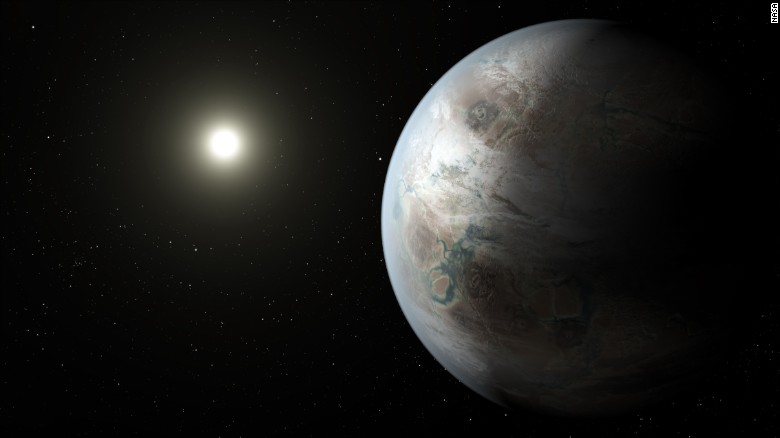
    HOUSTON (TIP): NASA said Thursday, July 23, that its Kepler spacecraft has spotted “Earth’s bigger, older cousin”: the first nearly Earth-size planet to be found in the habitable zone of a star similar to our own.

    Though NASA can’t say for sure whether the planet is rocky like ours or has water and air, it’s the closest match yet found.

    “Today, Earth is a little less lonely,” Kepler researcher Jon Jenkins said.

    The planet, Kepler-452b, is about 1,400 light-years from Earth in the constellation Cygnus. It’s about 60% bigger than Earth, NASA says, and is located in its star’s habitable zone — the region where life-sustaining liquid water is possible on the surface of a planet.

    A visitor there would experience gravity about twice that of Earth’s, and planetary scientists say the odds of it having a rocky surface are “better than even.”

    While it’s a bit farther from its star than Earth is from the sun, its star is brighter, so the planet gets about the same amount of energy from its star as Earth does from the sun. And that sunlight would be very similar to Earth’s, Jenkins said.

    The planet “almost certainly has an atmosphere,” Jenkins said, although scientists can’t say what it’s made of. But if the assumptions of planetary geologists are correct, he said, Kepler-452b’s atmosphere would probably be thicker than Earth’s, and it would have active volcanoes.

    It takes 385 days for the planet to orbit its star, very similar to Earth’s 365-day year, NASA said. And because it’s spent so long orbiting in this zone — 6 billion years — it’s had plenty of time to brew life, Jenkins said.

    “That’s substantial opportunity for life to arise, should all the necessary ingredients and conditions for life exist on this planet,” he said in a statement.

    Before the discovery of this planet, one called Kepler-186f was considered the most Earthlike, according to NASA. That planet, no more than a 10th bigger than Earth, is about 500 light-years away from us. But it gets only about a third of the energy from its star as Earth does from the sun, and noon there would look similar to the evening sky here, NASA says.


    The $600 million Kepler mission launched in 2009 with a goal to survey a portion of the Milky Way for habitable planets.

    From a vantage point 64 million miles from Earth, it scans the light from distant stars, looking for almost imperceptible drops in a star’s brightness, suggesting a planet has passed in front of it.

    It has discovered more than 1,000 planets. Twelve of those, including Kepler-425b, have been less than twice the size of Earth and in the habitable zones of the stars they orbit.

    Missions are being readied to move scientists closer to the goal of finding yet more planets and cataloging their atmospheres and other characteristics.

    In 2017, NASA plans to launch a planet-hunting satellite called TESS that will be able to provide scientists with more detail on the size, mass and atmospheres of planets circling distant stars.

    The next year, the James Webb Space Telescope will go up. That platform, NASA says, will provide astonishing insights into other worlds, including their color, seasonal differences, weather and even the potential presence of vegetation.


  • Indian American Astronaut Sunita Williams in NASA’s First Commercial Crew

    Indian American Astronaut Sunita Williams in NASA’s First Commercial Crew

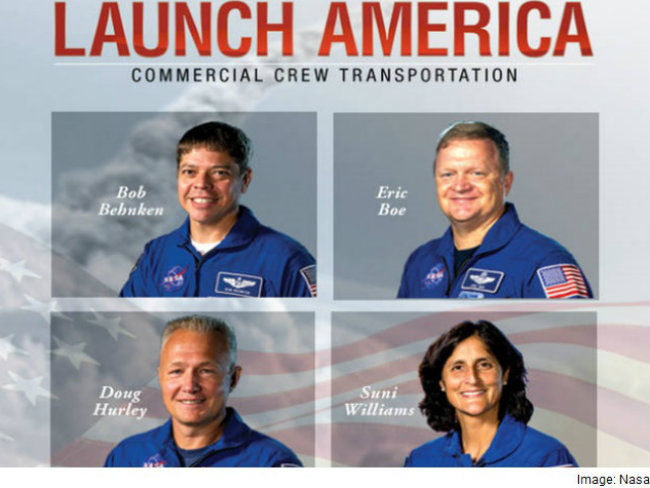
    Indian American astronaut Sunita Williams is among four astronauts who have been selected by NASA for commercial flights to the International Space Station (ISS) from US soil.

    They will work closely with company-led teams to understand their designs and operations as they finalise their Boeing CST-100 and SpaceX Crew Dragon spacecraft and operational strategies.

    Sunita Williams, Robert Behnken, Eric Boe and Douglas Hurley will be trained for commercial spaceflights that will return American launches to US soil and further open up low-Earth orbit transportation to the private sector, the US space agency said.

    “These distinguished, veteran astronauts are blazing a new trail — that will one day land them in the history books and Americans on the surface of Mars,” said NASA administrator Charles Bolden.

    Williams, a US Navy captain, received her commission in the Navy in May 1987 and became a helicopter pilot, logging more than 3,000 flight hours in more than 30 different aircraft.

    NASA chose Williams for the astronaut programme in 1998. She spent a total of 322 days in space and currently holds the record for total cumulative spacewalk time by a female astronaut (50 hours and 40 minutes).

    She now ranks sixth on the all-time US endurance list and second all-time for a female astronaut.

    “Their selection allows NASA to move forward with the training necessary to deliver on President Barack Obama’s ambitious plan for returning the launch of the US astronauts to US soil,” said John Holdren, assistant to the President for science and technology.

    “This is a new and exciting era in the history of US human spaceflight,” said Brian Kelly, director of flight operations at NASA’s Johnson Space Center in Houston.

    The Commercial Crew Transportation Capability (CCtCap) contracts with Boeing and SpaceX each require at least one crewed flight test with at least one NASA astronaut on board.

    To meet this requirement, the companies must also provide the necessary training for the crew to operate their respective vehicles. NASA is extensively involved with the companies and reviews their training plans.

    “Congratulations to Bob, Eric, Doug and Sunita and welcome to the Commercial Crew team,” noted John Elbon, Boeing vice president.

    “We look forward to working with such a highly-skilled and experienced group of NASA astronauts as we carve a path forward to launch in 2017.”

    The selections are the latest major milestone in the Obama administration’s plan to partner with the US industry to transport astronauts to space, create good-paying American jobs and end the nation’s sole reliance on Russia for space travel.

  • NASA PROBE DETECTS METHANE ON PLUTO SURFACE

    MUMBAI (TIP): The Pluto-bound New Horizons spacecraft has confirmed the presence of methane on Pluto, Nasa stated on July 1.

    “The infrared spectrometer on Nasa’s spacecraft has detected frozen methane on Pluto’s surface,” the statement said.

    Earth-based astronomers first observed the chemical compound on Pluto in 1976, “but, these are our first detections,” said Will Grundy , the New Horizons surface composition team leader with the Lowell Observatory in Flagstaff, Arizona.

    With 13 days left for the historic Pluto encounter by New Horizons, designed and operated by the John Hopkins University Applied Physics Laboratory , at about 5.15 pm (IST) on July 14, after covering a distance of nearly three billion miles and flying for nine years, Nasa on Wednesday released images showing the view from the spacecraft. While zooming towards Pluto the spacecraft tapped its accelerator on Tuesday night and tweaked its path towards the system. It is now moving at 32,500 miles per hour and is about 10 million miles from the Pluto system.

    Henry Throop, a member of the spacecraft team, had said that he believed the mission will be successful in what is being held as humanity’s first exploration to Pluto.

  • Indian Americans Preet Bharara & Rakesh Khurana honored with Carnegie’s ‘Great Immigrant’ award

    Indian Americans Preet Bharara & Rakesh Khurana honored with Carnegie’s ‘Great Immigrant’ award

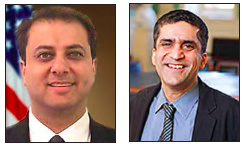
    NEW YORK (TIP): The Carnegie Corporation has announced the 2015 “Great Immigrant”: The Pride of America” awardees. These are the individuals who have helped advance and enlighten our society, culture, and economy. Preet Bharara, U.S. Attorney, Southern District of New York is among 38 eminent personalities selected as 2015 ‘Great Immigrant’ honorees, on the eve of the nation’s birthday on July 4th by Carnegie Corporation.

    The other Indian American awardee, Rakesh Khurana is the Marvin Bower Professor of Leadership Development at Harvard Business School (HBS), professor of sociology in the Faculty of Arts and Sciences (FAS), and co-master of Cabot House and dean of Harvard College.

    “Our founder, Andrew Carnegie, came to this country as the son of impoverished immigrants and grew up to become one of the greatest contributors to American industry and philanthropy,” said Vartan Gregorian, President of the Corporation. “His devotion to U.S. democracy stemmed from his conviction that the new infusion of talent that immigrants bring to our country keeps American society vibrant.”

    The 38 Great Immigrants honored this year come from more than 30 countries around the world and represent leadership in a wide range of professions.

    They include:

    • Preet Bharara S. Attorney, Southern District of New York (India)
    • Geraldine Brooks Pulitzer Prize-winning Author, Journalist (Australia)
    • Thomas Campbell Director and CEO, The Metropolitan Museum of Art (England)
    • Rabia Chaudry Attorney, Civil Rights Activist (Pakistan)
    • Mica Ertegun Interior Designer (Romania)
    • Stanley Fischer Economist; Vice Chair, Board of Governors, Federal Reserve System (Israel)
    • Jonathan Hunt Fox News, Chief Correspondent (Canada)
    • Malek Jandali Composer, Pianist (Syria)
    • Rakesh Khurana Professor, Dean, Harvard College (India)
    • Marie-Josée Kravis Economist, Philanthropist (Canada)
    • Nastia Liukin Olympic Medal-winning Gymnast (Russia)
    • Bette Bao Lord Author, Human Rights Advocate, Philanthropist (China)
    • Ali Malekzadeh President, Roosevelt University, Chicago (Iran)
    • Silvio Micali Turing Award-winning Professor of Computer Engineering (Italy)
    • Lorne Michaels Peabody Award-winning TV Producer (Canada)
    • Franziska Michor Vilcek Prize-winning Professor, Computational Biology (Austria)
    • Anchee Min Author (China)
    • Sharmin Mossavar-Rahmani Philanthropist; Chief Investment Officer, Private Wealth Management Group, Goldman Sachs (Iran)
    • Firouz Naderi Director, Solar System Exploration, NASA Jet Propulsion Laboratory (Iran)
    • Azar Nafisi Author, Scholar (Iran)
    • Craig Nevill-Manning Engineering Director, Google (New Zealand)
    • Maria Otero U.S. Under Secretary of State for Civilian Security, Democracy, and Human Rights (Bolivia)
    • Eddie Pérez Bullpen Coach, Atlanta Braves (Venezuela)
    • Ilana Rovner Judge, U.S. Court of Appeals, Seventh Circuit (Latvia)
    • Arturo Sandoval Grammy Award-winning Jazz Trumpeter (Cuba)
    • Madhulika Sikka Vice President, Executive Editor, .Mic (India)
    • Thomas C. Südhof Nobel Prize-winning Neuroscientist (Germany)
    • Antonio M. TagubaS. Army Major General, Retired (Philippines)
    • Ann Telnaes Pulitzer Prize-winning Political Cartoonist (Sweden)
    • Thalía Singer, Actress (Mexico)
    • Tuyen Tran Vilcek Prize-winning Fashion Designer (Vietnam)
    • Abraham Verghese Physician, Professor, Author (Ethiopia)
    • Eugene Volokh Professor, Legal Scholar, Blogger (Ukraine)
    • Arieh Warshel Nobel Prize-winning Biochemist (Israel)
    • Raffi Yessayan Judge, Massachusetts Superior Court (Lebanon)
  • Indian American Professor R Paul SIngh named World Agriculture Prize laureate

    Indian American Professor R Paul SIngh named World Agriculture Prize laureate

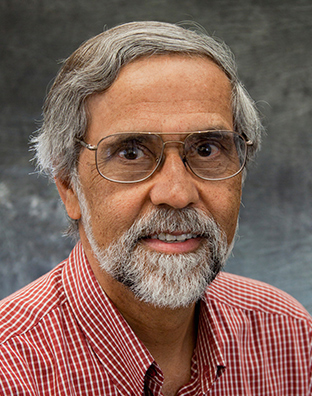
    Indian American Professor Emeritus R. Paul Singh who has held dual appointments in the departments of Biological and Agricultural Engineering and of Food Science and Technology at the University of California, Davis, has been named as the 2015 Global Confederation for Higher Education Associations for Agriculture and Life Sciences World Agriculture Prize laureate.

    The award was announced at the annual GCHERA conference, held June 24-26 at the Holy Spirit University of Kaslik, Jounieh, Lebanon. Formal presentation of the award will take place Sept. 20, during a ceremony at Nanjing Agricultural University, Jiangsu Province, China.

    “I’m deeply humbled and honored, upon receiving news of this award,” Singh said. “I’m proud of my students, postdoctoral fellows and visiting scientists for their numerous contributions to our research program. I’m also indebted to my UC Davis colleagues for their consistent support, which has allowed me to pursue my research and teaching activities in food engineering.”

    Singh earned a bachelor’s degree in agricultural engineering at India’s Punjab Agricultural University, then a master’s degree and Ph.D. at the University of Wisconsin-Madison and Michigan State University, respectively. He joined the UC Davis faculty one year later, in 1975.

    “For over four decades, Professor Singh’s work as a pioneer in food engineering has been improving lives the world over,” said UC Davis Chancellor Linda P.B. Katehi. “This prestigious, and well-deserved, honor is a testament to the importance of his research, and UC Davis is tremendously honored to call him a member of our faculty.”

    Singh became recognized for a body of research in areas such as energy conservation, freezing preservation, postharvest technology and mass transfer in food processing. His research on airflow in complex systems helped design innovative systems for the rapid cooling of strawberries, and his studies on food freezing led to the development of computer software that is used to improve the energy efficiency of industrial freezers. Under a NASA contract, his research group created food-processing equipment for a manned mission to Mars.

    He has helped establish and evaluate food-engineering programs at institutions throughout the world, including in Brazil, India, Peru, Portugal and Thailand. As of June 2015, his 115 video tutorials have been viewed more than 150,000 times by individuals from 193 countries.

    In recent years, his research focused on the physical mechanisms responsible for the digestion of foods in the human stomach, with an eye toward developing the next generation of foods for health.

  • NASA SPOTS MORE MYSTERIOUS BRIGHT SPOTS ON CERES

    NASA SPOTS MORE MYSTERIOUS BRIGHT SPOTS ON CERES

    WASHINGTON (TIP): New images of Ceres from Nasa’s Dawn spacecraft has provided more visible images of mysterious bright spots and also revealed a pyramid-shaped peak towering over a relatively flat landscape.

    Dawn has been studying the dwarf planet Ceres, the largest object in the main asteroid belt between Mars and Jupiter, in detail from its second mapping orbit, which is 4,400 km above Ceres.

    A new view of its intriguing bright spots, located in a crater 90 km across, shows even more small spots in the crater than were previously visible, the US space agency said.

    At least eight spots can be seen next to the largest bright area, which scientists think is approximately 9km wide.

    Although ice and salt are leading candidates that could explain these spots, scientists are considering other options, too.

    “The surface of Ceres has revealed many interesting and unique features. For example, icy moons in the outer solar system have craters with central pits but on Ceres central pits in large craters are much more common,” said Carol Raymond, deputy principal examiner for the Dawn mission, based at Nasa’s Jet Propulsion Laboratory in Pasadena, California.

    “These and other features will allow us to understand the inner structure of Ceres that we cannot sense directly.”

    Dawn’s visible and infrared mapping spectrometer allows scientists to identify specific minerals present on Ceres by looking at how light is reflected.

    Each mineral reflects the range of visible and infrared-light wavelengths in a unique way and this signature helps scientists determine the components of Ceres.

    So, as the spacecraft continues to send back more images and data, scientists will learn more about the mystery bright spots, Nasa said.

    In addition to the bright spots, the latest images also show a mountain with steep slopes protruding from a relatively smooth area of the dwarf planet’s surface.

    The structure rises about five km above the surface.

    Dawn is the first mission to visit a dwarf planet and the first to orbit two distinct targets in our solar system.

    It arrived at Ceres on March 6, 2015 and will remain in its current altitude until June 30.

  • PLUTO’S MOONS TUMBLING IN ABSOLUTE CHAOS: NASA

    PLUTO’S MOONS TUMBLING IN ABSOLUTE CHAOS: NASA

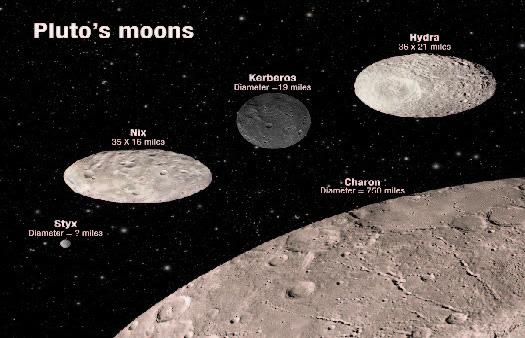
    WASHINGTON (TIP): NASA’s Hubble space telescope has provided the first glimpse of Pluto’s moons that wobble unpredictably, tumbling in absolute chaos.

    It means if you lived on one of Pluto’s moons, you might have a hard time determining when, or from which direction, the Sun will rise each day.

    “Hubble has provided a new view of Pluto and its moons revealing a cosmic dance with a chaotic rhythm,” said John Grunsfeld, associate administrator of NASA’s Science Mission Directorate in Washington, DC.

    When the New Horizons spacecraft flies through the Pluto system in July, we will get a chance to see what these moons look like up close and personal, he added in a NASA statement.

    Comprehensive analysis of the data shows that two of Pluto’s moons, Nix and Hydra, wobble unpredictably.

    The moons wobble because they are embedded in a gravitational field that shifts constantly.

    This shift is created by the double planet system of Pluto and Charon as they whirl about each other.

    Pluto and Charon are called a double planet because they share a common centre of gravity located in the space between the bodies.

    Their variable gravitational field sends the smaller moons tumbling erratically.

    The effect is strengthened by the football-like, rather than spherical, shape of the moons.

    Scientists believe it is likely that Pluto’s other two moons, Kerberos and Styx, are in a similar situation.

    The astonishing results were found by Mark Showalter of the SETI Institute in Mountain View, California and Doug Hamilton of the University of Maryland at College Park.

    They also found three of Pluto’s moons are presently locked together in resonance, meaning there is a precise ratio for their orbital periods.

    “We are learning chaos may be a common trait of binary systems,” Hamilton said. “It might even have consequences for life on planets if found in such systems.”

    “Pluto will continue to surprise us when New Horizons flies past it in July,” Showalter said.

    The New Horizons spacecraft may help settle the oddities uncovered by Hubble. The new findings will also provide important new constraints on the sequence of events that led to the formation of the system.

  • NASA TESTING MARS LANDER FOR 2016 MISSION

    WASHINGTON (TIP): NASA is testing a stationary car-sized Mars lander scheduled to launch in March 2016, that will be the first mission devoted to understanding the interior structure of the Red planet.

    Examining the planet’s deep interior could reveal clues about how all rocky planets, including Earth, formed and evolved, NASA said.

    The lander is called InSight or Interior Exploration using Seismic Investigations, Geodesy and Heat Transport.

    It is about the size of a car and will be the first mission devoted to understanding the interior structure of the Red planet.

    The current testing will help ensure InSight can operate in and survive deep space travel and the harsh conditions of the Martian surface.

    The spacecraft will lift off from Vandenberg Air Force Base in California, and land on Mars about six months later.

    The technical capabilities and knowledge gained from Insight, and other Mars missions, are crucial to NASA’s journey to Mars, which includes sending astronauts to the Red Planet in the 2030s, the US space agency said.

    “Today, our robotic scientific explorers are paving the way, making great progress on the journey to Mars,” said Jim Green, director of NASA’s Planetary Science Division at the agency’s headquarters here.

    “Together, humans and robotics will pioneer Mars and the solar system,” said Green.

    During the environmental testing phase at Lockheed Martin’s Space Systems facility near Denver, the lander will be exposed to extreme temperatures, vacuum conditions of nearly zero air pressure simulating interplanetary space, and a battery of other tests over the next seven months.

    The first will be a thermal vacuum test in the spacecraft’s “cruise” configuration, which will be used during its seven-month journey to Mars.

    In the cruise configuration, the lander is stowed inside an aeroshell capsule and the spacecraft’s cruise stage – for power, communications, course corrections and other functions on the way to Mars – is fastened to the capsule.

    “The assembly of InSight went very well and now it’s time to see how it performs,” said Stu Spath, InSight programme manager at Lockheed Martin Space Systems, Denver.

    “The environmental testing regimen is designed to wring out any issues with the spacecraft so we can resolve them while it’s here on Earth. This phase takes nearly as long as assembly, but we want to make sure we deliver a vehicle to NASA that will perform as expected in extreme environments,” said Spath.

    Other tests include vibrations simulating launch and checking for electronic interference between different parts of the spacecraft.

    The testing phase concludes with a second thermal vacuum test in which the spacecraft is exposed to the temperatures and atmospheric pressures it will experience as it operates on the Martian surface.

  • MYSTERY DARK MATERIAL ON JUPITER’S MOON IS SEA SALT: NASA

    MYSTERY DARK MATERIAL ON JUPITER’S MOON IS SEA SALT: NASA

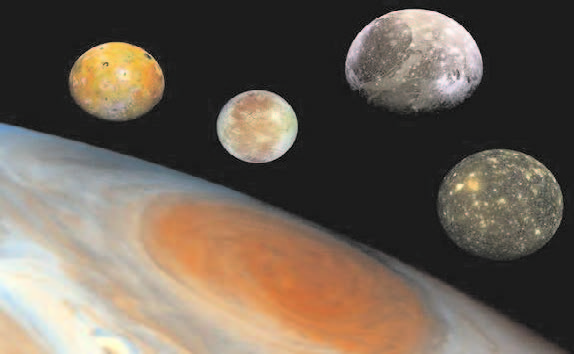
    WASHINGTON (TIP): The mysterious dark material coating some geological features of Jupiter’s moon Europa is likely sea salt from a subsurface ocean, discoloured by exposure to radiation, NASA scientists have found.

    Presence of sea salt on Europa’s surface suggests the ocean is interacting with its rocky seafloor – an important consideration in determining whether the icy moon could support life.

    “We have many questions about Europa, the most important and most difficult to answer being is there life?Research like this is important because it focuses on questions we can definitively answer, like whether or not Europa is inhabitable,” said Curt Niebur, Outer Planets Programme scientist at NASA Headquarters here.

    “Once we have those answers, we can tackle the bigger question about life in the ocean beneath Europa’s ice shell,” said Niebur.

    For more than a decade, scientists have wondered about the nature of the dark material that coats long, linear fractures and other relatively young geological features on Europa’s surface.

    Its association with young terrains suggests the material has erupted from within Europa, but with limited data available, the material’s chemical composition has remained elusive.

    “If it’s just salt from the ocean below, that would be a simple and elegant solution for what the dark, mysterious material is,” said research lead Kevin Hand, a planetary scientist at NASA’s Jet Propulsion Laboratory in California.

    One certainty is that Europa is bathed in radiation created by Jupiter’s powerful magnetic field. Electrons and ions slam into the moon’s surface with the intensity of a particle accelerator.

    Theories proposed to explain the nature of the dark material include this radiation as a likely part of the process that creates it.

    Previous studies using data from NASA’s Galileo spacecraft, and various telescopes, attributed the discolourations on Europa’s surface to compounds containing sulphur and magnesium.

    While radiation-processed sulphur accounts for some of the colours on Europa, the new experiments reveal that irradiated salts could explain the colour within the youngest regions of the moon’s surface.

    To identify the dark material, Hand and his co-author Robert Carlson, also at JPL, created a simulated patch of Europa’s surface in a laboratory test apparatus for testing possible candidate substances.

  • Nasa’s Messenger spacecraft makes crashing finale into Mercury

    Nasa’s Messenger spacecraft makes crashing finale into Mercury

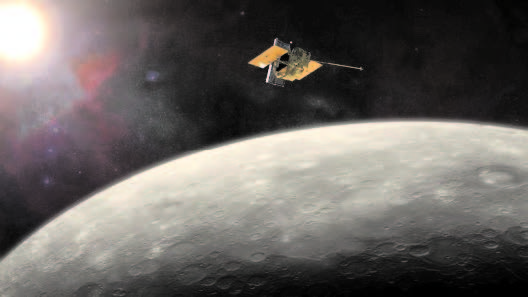
    CAPE CANAVERAL, Florida (TIP): Nasa’s pioneering Messenger spacecraft ended its four-year study of the planet Mercury on Thursday by crashing into the planet’s surface, scientists said.

    Flight controllers at the Johns Hopkins University Applied Physics Laboratory in Maryland earlier estimated that Messenger, traveling at more than 8,700mph (14,000kph), would hit the ground near Mercury’s north pole at 3.26pm EDT (1926 GMT).

    Messenger, with no more fuel to maneuver, fought the downward push of the sun’s gravity until it impacted the planet’s surface. It likely gouged a 52-foot-wide (16 meter) crater into Mercury’s scarred face.

    During its final weeks in orbit, Messenger relayed more details about the innermost planet of the solar system, which turns out to have patches of ice inside some of its craters, despite its sizzling location more than twice as close to the sun as Earth.

    “We’ve been concentrating on getting as much of the data down on the ground,” lead researcher Sean Solomon, with Columbia University in New York, wrote in an email. “We will have years to think about the meaning of the measurements.”

    Messenger (Mercury Surface, Space ENvironment, GEochemistry, and Ranging craft) made the first close-up studies of Mercury since Nasa’s Mariner 10 spacecraft flew by the planet three times in the mid-1970s. It arrived at Mercury in 2011 after a circuitous six-year journey.

    During its 4,104 orbits of Mercury, Messenger made surprising detections of potassium, sulfur and other volatiles on the planet’s surface that presumably should have evaporated due to the planet’s high temperature. Mercury’s average surface temperature is 332 degrees Fahrenheit (167 degrees Celsius), with daytime highs of 801 degrees Fahrenheit (427 degrees Celsius.)

    Messenger also confirmed the existence of ices and other materials, possibly even carbon-based organics, on the floors of craters where sunlight never shines. During its final days, Messenger attempted to peer directly down into targeted craters, Solomon said.It also found evidence of past volcanic activity and signs the dense and shrinking planet has a liquid-iron core.

  • Nasa scientists join search for extraterrestrial life

    Nasa scientists join search for extraterrestrial life

    WASHINGTON (TIP): Nasa scientists have joined the hunt for extraterrestrial life and will adapt a global climate model to simulate conditions on potentially habitable exoplanets.

    The effort by Nasa Goddard Institute for Space Studies (GISS) is part of a broader push to identify Earth-like worlds. Nasa’s space-based Kepler telescope has pinpointed more than 1,000 alien planets by observing the brief interruption of starlight that signals a planet passing in front of its parent star.

    At least five of these planets are similar in size to Earth and located in the ‘habitable zone’, where liquid water could persist.

    “We have to start thinking about these things as more than planetary objects,” said Anthony Del Genio, a climate modeller who is leading the GISS effort. “All of a sudden, this has become a topic not just for astronomers, but for planetary scientists and now climate scientists,” Del Genio said.

    Del Genio’s group is one of around 16 – ranging from Earth and planetary scientists to solar physicists and astrophysicists – that are participating in Nasa’s new Nexus for Exoplanet System Science (NExSS) programme, ‘Nature.com’ reported.

    “We are bringing together a bunch of different disciplines, and they all look at the formation and functioning of planets in different ways,” said Mary Voytek, who directs Nasa’s astrobiology programme and organised NExSS.

    NExSS will expand the network of researchers collaborating on exoplanets, she said.

    That should help scientists to make sense of existing data and observations from the James Webb Space Telescope and the Transiting Exoplanet Survey Satellite, which are both scheduled for launch in 2018. It could also help Nasa develop missions to hunt for exoplanets in the 2020s and beyond.

    At GISS, Del Genio’s team has started repurposing the institution’s workhorse Earth-system climate model.

    The researchers are trying to locate simple parameters that are fixed for Earth, such as 24-hour days and 365-day orbits, in order to create an exoplanet model that can be adjusted for different planetary systems.

    Initial simulations will focus on the Earth’s ancient past and the evolution of Venus and Mars. Although neither can support life today, each may have had liquid surface water at some time.

    The team’s ultimate goal is to explore the concept of a habitable zone by mixing and matching some of the key factors that determine whether a planet can support life.

    By feeding these parameters into the exoplanet model, the group will create a database of ‘hypothetical atmospheres’ with spectra that could be visible to astronomers.