Tag: Nawaz Sharif

  • US expects Pakistan will take action against Pathankot attackers

    US expects Pakistan will take action against Pathankot attackers

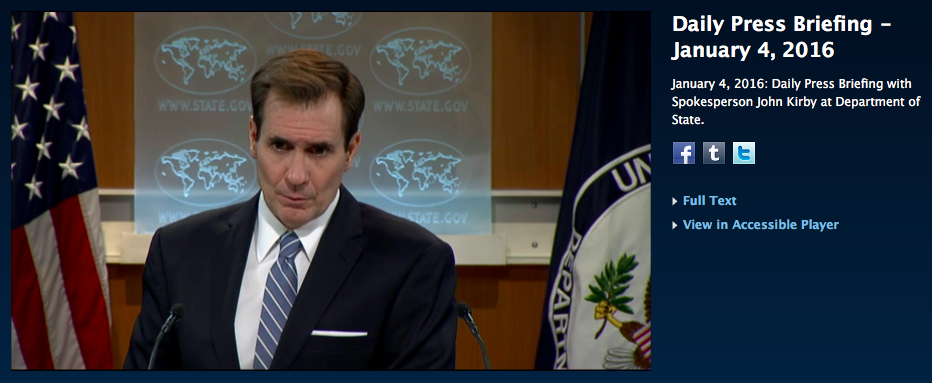
    The US expects Pakistan will take actions against the perpetrators of the terror attack on IAF base in Pathankot, a top American official said, hours after Islamabad said it is working on the “leads” provided by India.

    “The government of Pakistan has spoken very powerfully to this and it’s certainly our expectation that they’ll treat this exactly the way they’ve said they would,” state department Spokesman John Kirby said on Monday.

    Pakistan has said it is working on the “leads” provided by India on this attack.

    Describing terrorism as a “shared challenge” in South Asia, the US also asked all countries in the region to work together to disrupt and dismantle terrorist networks and bring justice to the perpetrators of the Pathankot terrorist attack.

    “We urge all the countries in the region to work together to disrupt and dismantle terrorist networks and to bring justice to the perpetrators of this particular attack. I would note that the government of Pakistan, also publicly and privately condemned this recent attack on the Indian air base.

    “We have been clear with the highest levels of the government of Pakistan that it must continue to target all militant groups,” Kirby said.

    The government of Pakistan has said publicly and privately that it’s not going to discriminate among terrorist groups as part of its counter-terrorism operation, he said.

    “So this is a shared challenge that we all face in the region and we in the United States want everybody to treat it as a shared challenge,” Kirby said, adding that the US has strongly condemned the terrorist attack on the Indian Air Force (IAF) base in Punjab’s Pathankot.

    “We extend our condolences to all the victims and their families,” he said.

    He said the US has for a long time talked about the continued safe haven issues there in between Afghanistan and Pakistan and certainly between India and Pakistan.

    “We’re mindful that there remain some safe havens that we obviously want to see cleared out. And we continue to engage with the government of Pakistan to that end. And again, I would point you back to what the government of Pakistan itself has said and acknowledged that it’s not going to discriminate among terrorist groups and it will continue to take the fight,” Kirby said.

    The Pakistani government, the Pakistani people very much understand the threat here, Kirby said.

    “What we want and what we continue to say we want and will continue to work for is increased cooperation, communication, coordination, increased information-sharing and increased efforts against what we all believe is a shared challenge in the region.

    “We want to see the government of Pakistan continue to press the fight against terrorists, all terrorists, and to meet their own expectations that they’re not going to discriminate among groups. They’ve said themselves and our expectation is that they’ll live up to that pledge,” he said.

    “We recognise there’s more everybody can do, not just Pakistan but every nation can do because it is a shared challenge and it’s a challenge, as you well know, that doesn’t necessarily observe borders and boundaries. So it’s something that everybody can attack more,” Kirby said.

    Kirby said the US is encouraged by the government of Pakistan condemning this attack, and the statement that they’ve made about not discriminating among groups.

    “As we’ve said before, this is an issue that, as are so many issues between India and Pakistan and we want to see them work out bilaterally,” Kirby said, adding that normalisation of relations between India and Pakistan remains vital to the security and economic prosperity of the entire region.

    “We strongly encourage the governments of both India and Pakistan to remain steadfast in their commitment to a more secure and prosperous future for both our countries and for their region,” Kirby added.

    Pakistan on Monday said it is working on the “leads” provided by India on the terror attack on the IAF base in Pathankot, according to the Foreign Office.

    Extending Pakistan’s deepest condolences to the government and people of India on the “unfortunate terrorist incident” in Pathankot, a statement by the spokesperson of the ministry of foreign affairs said, “In line with Pakistan’s commitment to effectively counter and eradicate terrorism, the Government is in touch with the Indian government and is working on the leads provided by it.”

    The statement, however, did not give details of the “leads” provided by India.

    BELOW IS THE TRANSCRIPT OF THE PRESS BRIEFING

    QUESTION: Two questions. Yes, sir. One, it was then prime minister Atal Bihari Vajpayee who went to Pakistan with a message of peace, and it was also Prime Minister Nawaz Sharif then. And he took the bus from India to Pakistan. It was a big step at that time. And when he came back in the bus, India was faced with the Kargil War.

    MR KIRBY: Faced with a what?

    QUESTION: Kargil War. War.

    QUESTION: Kargil War.

    MR KIRBY: Kargil War.

    QUESTION: That means Pakistan’s General Musharraf attacked India. That was a gift for the Atal Bihari prime minister for the peace message. Now, on Christmas Day, Prime Minister Narendra Modi took another peace step and went to Pakistan, meet and greet Prime Minister Nawaz Sharif. When he came back – and again, the message was same from the people of India to the people of Pakistan: message of peace. When he came back, India was faced with the terrorism, terrorists on the border in airbase. So what would – and upcoming meeting January 16 is also now at stake whether India should continue or not. So what do we make this, before my second question?

    MR KIRBY: Well, there is an awful lot there. I mean, you saw my statement over the weekend. We strongly condemn the terrorist attack on the airbase in the Indian state of Punjab; and as before, we extend our condolences to all the victims and their families. We remain committed to a strong partnership with the Indian Government to combat terrorism. You and I have talked about that many, many times. We urge all the countries in the region to work together to disrupt and dismantle terrorist networks and to bring justice to the perpetrators of this particular attack.

    I would note that the Government of Pakistan also publicly and privately condemned this recent attack on the Indian airbase. And we’ve been clear with the highest levels of the Government of Pakistan that it must continue to target all militant groups, and the Government of Pakistan has said publicly and privately that it’s not going to discriminate among terrorist groups as part of its counterterrorism operations.

    So I think as I’ve said before, this is a shared challenge that we all face in the region. And we in the United States want everybody to treat it as a shared challenge. And the Government of Pakistan has spoken to this, has spoken very powerfully to this, and it’s certainly our expectation that they’ll do exactly what – they’ll treat this exactly the way they’ve said they will.

    QUESTION: Second, the people of Pakistan and the people of India both wants these terrorists – that training centers in Pakistan should be closed down, but the Pakistan Government is not taking any steps. And finally, what – the Indian media has been showing all these terrorism activities line by line and live from Pakistan and into India, this latest attack. And at the same time, Pakistani media has been told by the ISI and the military they will be punished if they show, but they must condemn that India media is just overstating all these attacks. What I’m saying: What is the future? Why U.S. is not taking action or asking Pakistan to stop and close down all these training centers, which they are threatening U.S. and India?

    MR KIRBY: Well, we have for a long time talked about the continued safe haven issues there in between Afghanistan and Pakistan and certainly between India and Pakistan. We’re mindful that there are – remain some safe havens that we obviously want to see cleared out. And we continue to engage with the Government of Pakistan to that end. And again, I would point you back to what the Government of Pakistan itself has said and acknowledged, that it’s not going to discriminate among terrorist groups and it will continue to take the fight.

    And Pakistan too has suffered from terrorism. Thousands and thousands of Pakistani soldiers have been killed. Thousands of Pakistani citizens – innocent Pakistani citizens – have been killed or injured by terrorist attacks. The Pakistani Government, the Pakistani people very much understand the threat here. And what we want and what we continue to say we want and will continue to work for is increased cooperation, communication, coordination; increased information sharing and increased efforts against what we all believe is a shared challenge in the region.

    QUESTION: Thank you, sir.

    MR KIRBY: Yeah.

    QUESTION: Can I follow it up?

    MR KIRBY: Yeah.

    QUESTION: Can I follow it up?

    QUESTION: South China Sea.

    QUESTION: Follow-up.

    MR KIRBY: I’ll go to you, then I’ll come to you. Go ahead.

    QUESTION: Do you think Pakistan is taking enough steps against terrorist networks which are targeting India, like Lashkar-e-Tayyiba, Jaish-e-Mohammad?

    MR KIRBY: Well, what I would tell you is we all recognize this is a fluid threat. It’s one that you could probably never do enough to get at. So we want to see the Government of Pakistan continue to press the fight against terrorists, all terrorists, and to – as I said, to meet their own expectations that they’re not going to discriminate among groups. They’ve said that themselves, and our expectation is that they’ll live up to that pledge. But we recognize there’s more everybody can do – not just Pakistan, but every nation in the region can do – because it is a shared challenge. And it’s a challenge, as you well know, that doesn’t necessarily observe borders and boundaries. So it’s something that everybody can attack more.

    QUESTION: You said more every nations to do. What should India do?

    MR KIRBY: I’m not going to —

    QUESTION: What —

    MR KIRBY: Look, I —

    QUESTION: In this fight against terrorism, what do you want – expect India to do?

    MR KIRBY: I’m not prepared with an agenda list for every nation in the region and what they can do. I think you should speak to Indian authorities about the challenges that they’re facing and their plans to address it. Our role has been and will continue to be one of encouraging regional cooperation and communication to get at what is actually a regional – trans-regional, frankly – threat.

    QUESTION: And finally, the kind of statements that have come from India and Pakistan after this Pathankot attack – does this give you comfort, some kind of comfort, that there is not much – enough tension between the two countries after this attack?

    MR KIRBY: Well, I mean, certainly we – we’re encouraged by the Government of Pakistan condemning this attack, and again, the statements that they’ve made about not discriminating among groups. But this is – as we’ve said before, this is an issue that – as are so many issues between India, Pakistan – India and Pakistan – we want to see them work out bilaterally.

    Okay? Yes.

    QUESTION: Can I have a follow-up on that —

    MR KIRBY: Okay.

    QUESTION: Yeah. Over the weekend, have you been in touch with either India or Pakistan to ensure that talks are on tracks and it – they’re not derailed?

    MR KIRBY: Talks are —

    QUESTION: Talks between India and Pakistan which have been started afresh last week.

    MR KIRBY: I don’t have any discussions to read out to you, but I can tell you the normalization of relations between India and Pakistan remains vital to the security and economic prosperity of the entire region. We strongly encourage the governments of both India and Pakistan to remain steadfast in their commitment to a more secure and prosperous future for both their countries and for the region. So I don’t have any specific discussions to read out to you.

    You’ve been patient. Go ahead.

  • Finding a Niche in the Emerging World Order

    Finding a Niche in the Emerging World Order

    Prime Minister Narendra Modi’s apparently impromptu visit to Lahore on Christmas day is readily explained by the need to contain the Taliban and ensure regional stability and connectivity in the ‘Heart of Asia’ after the US-led International Security Assistance Force withdraws next year. The visit follows growing realization in capitals across the region that mutual security interests must supersede Cold War alliances or ideological mindsets to avoid the fate of nations like Iraq and Syria. The Taliban and/or its mutants cannot be permitted to spread in the Afghan neighborhood, which includes Central Asia, Iran, Pakistan and India, an effort that calls for convergence between Kabul, Islamabad and New Delhi. One can discern the benign presence of Moscow and Beijing as both have huge stakes in a revitalized Asian economic boom independent of Western hegemony.

    Besides China’s Silk Road project, several multi-nation projects centre on Afghanistan, viz, the Turkmen railways, transmission lines, highways, oil pipelines and gas pipelines including the Turkmenistan-Afghanistan-Pakistan-India pipeline. India wants to join the Afghanistan-Pakistan trade and transit agreement so that Afghan products can directly enter India and its products reach Afghan and Central Asian markets.

    These mega-development prospects doubtless prompted Mr. Modi to engage with Pakistani Prime Minister Nawaz Sharif on the sidelines of the Paris climate conference in late November. Thereafter the National Security Advisors met in Bangkok and smoothened the way for External Affairs Minister Sushma Swaraj’s visit to Islamabad for the Heart of Asia-Istanbul Process conference on Afghanistan. India has huge stakes in the integration of Central Asia, East Asia and West Asia.Though not opposed, India does not expect a lasting peace to emerge from talks between the Afghan Government and Afghan Taliban groups. A better option is state-level engagement which Kabul too prefers. Hence, it is inconceivable that as he went through his Kabul engagements – inaugurating the India-built $90 million Parliament House, gifting three Mi-25 attack helicopters and 500 new scholarships for children of martyrs of Afghan security forces -Mr. Modi would not have discussed the Lahore stopover with President Ashraf Ghani and CEO Abdullah Abdullah. It seems equally likely he mentioned it to Russian President Vladimir Putin before departing from Moscow. It may be relevant to note that since Russia began bombing IS positions in Syria, Pakistan does not favor regime change in Damascus.

    Pakistan Tehreek-e-Insaaf party leader Imran Khan’s presence in India (possibly to deliver the Sharif family wedding invitation) and the mature welcome to Mr. Modi’s stopover by Pakistan political parties (as opposed to the Congress’s petty squabbling) suggests that the Pakistani polity may have achieved some degree of cohesion in tackling terrorism. The Peshawar school attack last year is a grim warning of the danger from non-state actors.

    Mr. Modi’s first state visit to Russia, as part of the 16th Annual Bilateral Summit, has revitalized India’s most tried and trusted friendship and sent a signal to the international community that President Putin cannot be downsized by Western machinations. Mr. Modi secured Mr. Putin’s backing for India’s permanent membership of the UN Security Council and reiterated the commitment of both nations to a multipolar world order. Both nations already cooperate in forums like Brics and the Shanghai Cooperation Organisation (where Russia helped in India’s full membership), the G20 and the East Asia Summit.

    Syria, Afghanistan and the common threat posed by terrorism figured in the talks, but the summit’s main takeaway was Russia’s big bang return to India’s defense and nuclear energy sectors. Mr. Modi’s Make in India project in the defense sector got a major boost with the deal to jointly manufacture 200 Kamov-226T light military helicopters.

    The real triumph is the acquisition of five S- 400 Triumf surface-to-air missile systems (and 6,000 missiles). Literally the ‘crown jewels’ of Russia’s defense capability, the S-400 can destroy aircraft that use stealth technology, other fighter aircraft, cruise missiles and tactical missiles from up to 400 kilometers away, as effectively demonstrated earlier this month when Russia deployed the system to protect its Hmeimim airbase in Syria after Turkey downed a Russian jet.

    This will give India the ability to engage multiple targets at long range and restore the strategic balance with China and Pakistan. With Prime Minister Modi reportedly budgeting $150 billion to upgrade India’s military, with the Navy planning to order three Russian frigate warships and a possible joint development of a fifth generation fighter aircraft, New Delhi could be Moscow’s salvation as the latter faces a second year of recession amid Western sanctions.

    With the Paris climate conference failing to yield a comprehensive deal, the burden of combating global warming with clean energy expectedly fell upon individual nations. Mr. Modi having previously identified nuclear energy as pollution-free, the two nations are moving ahead with plans to build at least 12 nuclear power plants in India with the highest safety standards in the world, over the next 20 years. Two plants are slated to come up in Andhra Pradesh under the Make in India program. A vibrant partnership, however, calls for deeper economic integration. The Indian Prime Minister hopes to take advantage of the US-led Western sanctions against Russia to meet the latter’s demand for dairy products, seafood, and other goods and to attract Russian cash-rich billionaires to invest in India’s infrastructure fund, since they are no longer welcome in the old European financial havens due to Mr. Putin’s resistance to Western geo-political agendas to dismember West Asian and African countries on the lines of the old Yugoslavia.

    Access to Russian capital for his Make in India campaign would empower Mr. Modi’s drive to build a strong indigenous manufacturing base to generate employment and export revenues. Given the sharp downturn in Russo-Turkey relations, Mr. Modi hopes that Russian tourists will flock to India (not just in Goa) and tasked the tiny Indian community in Russia to motivate Russian families to discover India.

    Another gain is Russia’s commitment to ship 10 million ton of oil annually to energy-starved India in the next 10 years. Both countries plan to intensity collaboration in developing space exploration, rocket manufacture and engine manufacture, nano-technology, metallurgy, optics and software sectors. In substance, the visit announced that the Asian quest to forge a rational world order has moved to a new level. Mr. Modi’s short and informal visits to Afghanistan and Pakistan may be read as an invitation to take a seat of honor at the evolving new world concert.

    (The author is a social development consultant and a columnist with The Pioneer, a leading newspaper of Delhi).

  • Pakistan vows revenge one year after Taliban school massacre

    Pakistan vows revenge one year after Taliban school massacre

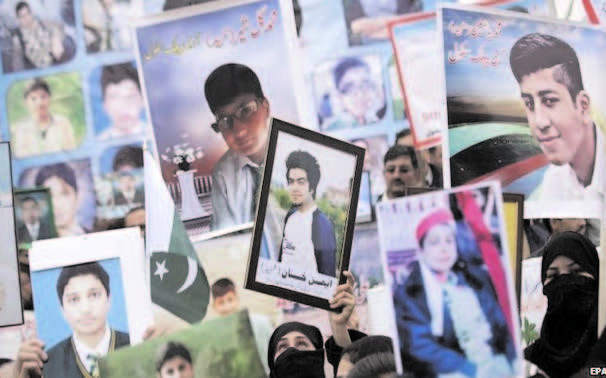
    PESHAWAR (TIP): Pakistan’s leader, speaking beneath portraits of children killed by Taliban bullets, called Dec 16 for vengeance as the country marked the first anniversary of a school massacre that killed 151 people in its worst-ever extremist attack.

    Families of the victims along with military and political leaders attended an emotional ceremony at the army-run school in the northwestern city of Peshawar to mark the assault, which mostly claimed the lives of schoolchildren and has been termed a “mini-9/11” for the country.

    Relatives were accompanied by students bearing images of their loved ones as they spoke one by one of children with bright smiles who worried about their hair and handwriting but had dreams of being artists and engineers.

    Many of the parents broke down on seeing students in the Army Public School uniforms, an AFP reporter said.

    “My children, today I make this promise to you, that I will take revenge for every drop of your blood,” Prime Minister Nawaz Sharif said, addressing the victims directly.

    But angry and distraught parents told AFP nothing could bring back their children, with many reiterating calls for a judicial inquiry into the security failings that led to the attack.

    “They can’t stop the tears of my wife,” said Jamal Abdul Nasir, breaking down into tears himself as he remembered his son Awais. “We want nothing, only justice.”

    At least a dozen families boycotted Wednesday’s ceremony in protest.

    Powerful military chief Raheel Sharif and opposition leader Imran Khan also attended the ceremony. A military official told AFP there were some 2,500 guests including celebrities and sports stars.

    “We think a lot about the students who lost their lives,” Abu Bakar, a teacher who was shot three times as he threw himself in front of fleeing children during the siege, told AFP, saying the loss was “something that cannot be described”.

    “This should not have happened to them. They were innocent students,” he said.

    Groups in other major cities organised their own vigils, while on social media, many Pakistanis changed their profile pictures to an image depicting an APS uniform with a bloody bullet hole and a caption reading: “Some stains don’t wash out”.

    The Taliban have said they carried out the attack, in which all nine gunmen died, in retaliation for an army offensive on extremists in the tribal areas.

    But the attack hardened public opinion against extremism and prompted a military-led crackdown that has improved security. This year is on course for the fewest deaths linked to extremist violence since 2007, the year the Pakistani Taliban were formed.

    Sharif said he hoped the day was “not very far when these terrorists will be eliminated forever and every corner of Pakistan will be a place of peace and prosperity”.

    (AFP)

  • ASIA’S BLEEDING HEART

    ASIA’S BLEEDING HEART

    The Heart of Asia Conference (HOAC) in Islamabad last week was bookended by two devastating attacks in Kandahar and Kabul. As Afghan President Ashraf Ghani was being honoured with a 21-gun salute in Islamabad, the Taliban were in the midst of a 20-hour-long assault on Kandahar airport that killed at least 54. And before the ink dried on the HOAC pledges, the Taliban penetrated the relatively secure diplomatic enclave in Kabul in a brazen attack on the Spanish embassy in which eight people died. The Afghan High Peace Council called it a slap in the face of the peace process. The Taliban is clearly sticking to the fight-talk-fight strategy even in winter. That the Taliban chose a key peace conference to shed blood is the jihadist group’s way of painting the Afghan government as weak and it’s the harbinger of yet another bloody spring and summer.

    The HOAC has been underway since 2011, but has not been able to evolve into a tangible mechanism to deliver peace. Ghani’s speech alluded to this shortcoming and called for verifiable mechanisms to counter the jihadist threat. He was careful in choosing his words in Islamabad, but not when giving interviews to the German and French media earlier, when he clearly said, “Pakistan was in a state of undeclared war against Afghanistan” and “a major trust deficit” exists between the two. Whether one conference can bridge that mistrust seems unlikely, Ghani’s optimism notwithstanding.

    Afghan officials attribute the HOAC’s “success” to several factors: One, Pakistani PM Nawaz Sharif acknowledging Afghanistan’s sovereignty, its central government and constitution; two, the US and China acting as guarantors for the peace negotiations with the “reconcilable” Taliban and opposing the irreconcilable ones; three, the commitment to a high-level meeting in early 2016 to draw a region-wide counter-terrorism and security strategy.

    To Afghan officials, the litmus test of Pakistan’s seriousness and sincerity would be whether it’s willing to restrain the Taliban from conducting largescale attacks. Kandahar and Kabul appear to have already betrayed the newfound Afghan trust in the capacity, if not the will, of the Pakistani security establishment. The chief of the Afghan National Security Directorate (NDS), General Rahmatullah Nabil, took to Facebook to post a scathing critique of not just Pakistan but also Ghani, chiding the latter for letting “the 5,000-year-old Afghan history kneel before a 60-year-old Pakistan”. Nabil followed this with a resignation. Needless to say, Ghani accepted it promptly. This led to the media asking if he was fired at Pakistan’s behest. A visibly upset Ghani formally denied the charge but the die has been cast.

    The Afghan media then reported Ghani conceded way too much in Islamabad. A leaked report was cited that Pakistan has apparently demanded that Ghani act against the Tehrik-e-Taliban Pakistan, restrain “anti-Pakistan rhetoric and individuals”, accept the Durand Line as the formal border, limit Indian influence, and deny support to Baloch separatists and Pashtun nationalists. This litany of Pakistani demands means we are back at square one in the bilateral relationship. Islamabad’s demands have put the onus of securing peace wholly on Kabul.

    That fits well with the pattern of Pakistan’s peace pledges to Afghanistan, which start before the first snow and melt away with the first thaw, making way for the Taliban’s attacks. Pakistan has never been keen on a political solution. The closest it came to a political partner was the fundamentalist warlord Gulbuddin Hekmatyar. What’s at stake isn’t just military gains but also the future of Ghani’s government. He is bound to face a backlash when Pakistan reneges on its pledges. The opposition is wary of Ghani putting all his eggs in Pakistan’s basket again. His attempt in May to have the NDS surreptitiously sign an MoU with the ISI had backfired badly.

    The difference now is that Ghani has almost no political capital to squander. The November protests in Kabul, after the Islamic State’s massacre of Hazaras, showed Ghani is on thin ice. This is not lost on Pakistan and the Pakistan-backed Taliban, who would love to plunge Kabul into political chaos at a time of their choosing. International guarantors can certainly play a major role. But they and the principles of non-interference were hallmarks of the May 1988 Pak-Afghan Geneva Accords. Yet, Afghanistan has been the bleeding heart of Asia since.

  • Are Attempts being made to derail the talks between India & Pakistan?

    Are Attempts being made to derail the talks between India & Pakistan?

    As the governments of India and Pakistan work towards normalizing ties between the two countries, anti-humanity groups (JuD) start with their rants in hopes of destabilizing future talks.

    Hafiz Saeed questions India on 26/11, says no concrete proof in 26/11 attacks even after 7 years

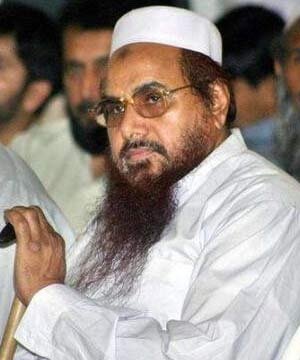
    Jamaat-ud-Dawah (JuD) chief and 26/11 plotter Hafiz Saeed has dared India over the Mumbai attacks probe days after Sushma Swaraj’s visit to Islamabad.

    This rant comes after a joint declaration where India and Pakistan agreed to a composite dialogue as well as to expedite the trial of 26/11; In a speech, the JuD chief Saeed says, “Our government remained silent, but let me respond to Sushma. It’s been seven years but they could not prove who was behind the Mumbai attacks and Insha Allah (if Allah wills it) they will never be able to prove it until eternity.”

    He also mocked New Delhi for failing to establish any concrete proof in the seven years after 26/11 and claiming that India would never be able to establish his complicity in the attack.

    Earlier JuD chief had slammed Pakistan Prime Minister Nawaz Sharif for holding a meeting with Narendra Modi during the Paris climate change conference.

    “Nawaz Sharif should not have met with Narendra Modi and exchanged smiles with him in Paris. It has hurt the sentiments of the Kashmiri Muslims,” Saeed said at a seminar titled ‘Kashmir Issue and Rise of Hindu Extremism in India’ at the Lahore High Court on December 2 organised by the Pakistan Justice Party.

    He said Sharif should sever relations with India till resolution of the Kashmir issue.

    “Nawaz Sharif should announce that there will be no talks with India till it ends atrocities against Kashmiri and Indian Muslims,” he said adding that till the resolution of the Kashmir dispute there should be no trade, no cricket and no talks with India.

    Saeed said “When they are not in power they talk about the oppressed Kashmiri people as if they are the champion of the Kashmir cause. But when they are in power they forget them”.

    Saeed founded the LeT whose operatives carried out the 2008 Mumbai attack that killed 166 people.

    Also read: Congress Questions Centre Over Hafiz Saeed's Rant
  • INDIA-PAKISTAN TALKS BACK ON TRACK

    INDIA-PAKISTAN TALKS BACK ON TRACK

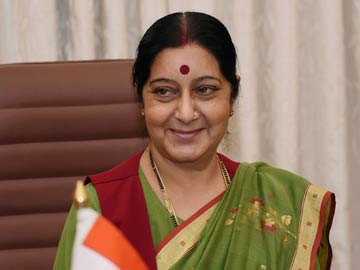
    ISLAMABAD (TIP): As External Affairs Minister Sushma Swaraj walked past the Pakistani media waiting in the Foreign Office corridor on Dec 9 evening, she was asked, “Ma’am, koi breakthrough hai.” Standing behind a lectern, she didn’t disappoint. “I was being asked whether there is a breakthrough or big news,” she began in chaste Hindi, adding “Hum dono deshon ne samagra vaarta prarambh karney ka faisla le liya hai.” When her audience, mostly from Pakistan, couldn’t follow her Hindi and protested mildly, she said, “Let me finish. What was being done as composite dialogue, and was later called the resumed dialogue, will now be called the comprehensive bilateral dialogue.”

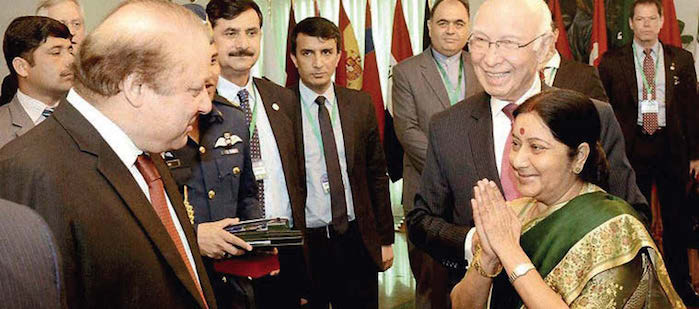
    Sushma Swaraj with Nawaz Sharif and Sartaj Aziz in Islamabad on December 9.
    Sushma Swaraj with Nawaz Sharif and Sartaj Aziz in Islamabad on December 9.

    Sartaj Aziz, the Pakistan Prime Minister’s adviser on foreign affairs, also standing behind a lectern, did not add anything and let the joint statement do the talking. Qazi M Khalilullah, spokesperson of the Pakistan Ministry of Foreign Affairs, fished out the one-page document for the cameras. Almost three years after the “resumed dialogue” was stalled following the killing of Indian soldiers, including one who was beheaded, India and Pakistan agreed to restart the dialogue process under the new rubric of “Comprehensive Bilateral Dialogue”. The composite dialogue was stopped after the Mumbai terror attacks in 2008. The comprehensive bilateral dialogue will have all the “pillars” of Indo-Pak relationship and will include confidence building measures (CBMs), Siachen, Sir Creek, Wullar barrage/Tulbul navigation project, economic and commercial cooperation, counter-terrorism, narcotics control, people-to-people exchanges. Two new pillars have been added— humanitarian issues and religious tourism.

    Sources said the idea was not to “disown the past” but make it more contemporary: “After the Geeta and Salman cases have come to light, humanitarian issues have been made another pillar of the relationship.” Swaraj said foreign secretaries of the two countries will meet to decide modalities and schedule of the dialogue. Buoyed by the “success” of the Bangkok meeting, the National Security Advisors will continue to keep talking on “terrorism” — on a parallel track. “We will figure out how it doesn’t duplicate,” a source told The Indian Express, since home secretaries handled counter-terrorism in previous dialogues. From India’s perspective, the Pakistan government’s realisation and acceptance of terrorism as the major challenge was the reason for resumption of the dialogue process. The three-para joint statement gave primacy to terrorism. The second paragraph underlined: “The EAM and the Adviser condemned terrorism and resolved to cooperate to eliminate it. They noted the successful talks on terrorism and security-related issues in Bangkok by the two NSAs and decided that the NSAs will continue to address all issues connected to terrorism. The Indian side was assured of the steps being taken to expedite the early conclusion of the Mumbai trial.”

    Hours before she announced the breakthrough, Swaraj had a “warm” meeting with Prime Minister Nawaz Sharif. Receiving the Indian delegation at his residence, Sharif was at his humorous best. As he introduced Foreign Secretary Aizaz Ahsan Chaudhary, he said, “Yeh hamaare Foreign Secretary hain joh dheeme se muskura rahe hain (this is our Foreign Secretary, he has a faint smile).” Swaraj and Sharif, sources said, chatted a lot in Punjabi. And she met four generations of Sharifs — his mother, daughter Maryam, and his granddaughters. A source privy to the conversation said Sharif gave an “assurance” to Swaraj on speedy conclusion of the Mumbai attack trial. Sources said during the meeting it became clear that Pakistan accepted terrorism as a reality that needs to be confronted and addressed. Sharif told Swaraj that he and Prime Minister Narendra Modi — they met briefly in Paris last month— are “very determined” to take the process forward. Swaraj, in turn, replied that the Bangkok meeting between the two NSAs showed that the two sides can engage on “difficult issues” in a “constructive” and “non-accusatory” manner. Sources said Swaraj discussed the Mumbai attack trial with both Sharif and Aziz, and they both dwelt on the issue for a while. “After all, terrorism colours public perception of Pakistan. So, it appears that they have accepted it as a challenge and are ready to accept it, and address. This was not the case before,” an Indian source, familiar with the bilateral conversations, said. The source also said India was not here to win the war of words against Pakistan. “We are here to bring the relationship back on track,” the source said. But the source was cautious and did not declare that Modi will visit Pakistan next year for the SAARC summit, although Swaraj confirmed it earlier in the day. “Thoda bahut change aaya hai… We don’t say it is permanent. So, we will not predict the future. PM has accepted the invitation in Ufa. There’s still some time.” Earlier in the day, Swaraj said it was time for India and Pakistan to display “maturity and self-confidence to do business with each other”. “Let me take this opportunity to extend our hand to Pakistan as well. It is time that we display the maturity and self-confidence to do business with each other and strengthen regional trade and cooperation.

  • Reviving Indo-Pak talks

    Reviving Indo-Pak talks

    The lessons learnt from the Indo-Pak joint statement at Ufa finally produced a breakthrough in Islamabad. The clincher was the hush-hush meeting in Bangkok. It produced a joint statement clearly spelling out all issues both sides plan to discuss. As in Bangkok, the Ufa statement had all the ingredients to move the dialogue process forward. But it failed to clearly spell out that “all outstanding issues” also meant Kashmir. The Indian media, present in strength in Ufa, immediately hailed – with a gentle nudge from South Block – the statement as a victory for India. This foray into a kind of triumphalism triggered an opposite reaction in Pakistan. And that terminated the Ufa breakthrough. Two other opportunities went abegging because India drew red lines that Pakistan could not have honoured.

    This time the dialogue platter has more subjects than the comprehensive dialogue process that began in 1997. It endured despite being buffeted by the Kargil conflict in 1999, the Parliament House attack in 2001 and a change in government in 2004. But the Mumbai attacks finally killed the spirit behind it just when a breakthrough was imminent. This time, statements by leaders from both countries seem to indicate they intend staying the course. Foreign Minister Sushma Swaraj promised to move at a pace Pakistan is comfortable with and Pakistani Prime Minister Nawaz Sharif maintained that working for the achievement of a peaceful neighborhood is a “cardinal principle” of Pakistan’s foreign policy.

    On a wider geo-political plane, the gesture has travelled far and wide. At hand in Islamabad were high-ranking delegations from 18 countries, assembled to bring closure to the Afghan conflict. Thus the filling of the Indo-Pak breach raises India’s stock for responding to Pakistan’s overtures despite no movement to accelerate the trial of its citizens accused of masterminding the Mumbai attacks. If carried forward with perseverance, it will not just outflank the spoilers in India and Pakistan, but Afghanistan as well. The NSAs of both countries now need to put the rowdier elements under strict vigilance to maintain a conducive environment.

  • Sushma Swaraj may visit Pak for Talks

    Sushma Swaraj may visit Pak for Talks

    External Affairs Minister Sushma Swaraj may travel to Islamabad next week to attend a multilateral conclave on Afghanistan.

    Though the government has not yet officially announced Swaraj’s visit to Islamabad, sources said she herself might travel to the capital of the neighbouring country for a day or two to attend the “Heart of Asia” meet on Afghanistan, instead of asking Minister of State for External Affairs V K Singh to represent her and lead the delegation from India.

    Sources said that New Delhi would factor in Prime Minister Narendra Modi’s “brief but good discussions” with his Pakistani counterpart Nawaz Sharif on the sidelines of the UN climate change summit COP 21 in Paris on Monday to arrive at a decision on the External Affairs Minister’s visit to Islamabad.

  • Bomb attack on minister kills two in Pakistan

    Bomb attack on minister kills two in Pakistan

    ISLAMABAD (TIP): At least two people were killed and three injured in a bomb attack on a convoy of a federal minister in northwest Pakistan on Thursday evening, local media reported.

    The incident took place when a roadside bomb hit the convoy of Pakistan’s Federal Minister for Housing Akram Khan Durrani in the northwestern district of Bannu, Xinhua reported.

    The police said that around seven kilograms of explosives was used in the bomb planted on the roadside and it was detonated with a remote-controlled device.

    No group has claimed responsibility for the attack yet.

    Pakistani President Mamnoon Hussain and Prime Minister Nawaz Sharif strongly condemned the attack and expressed condolence to the families of victims. They directed the authorities to bring the culprits to justice expeditiously.

  • Pakistan military expands its power, and is thanked for doing so

    Pakistan military expands its power, and is thanked for doing so

    ISLAMABAD (TIP): The most popular man in public office in Pakistan does not give speeches on television, rarely appears in public and rejects news interviews.

    He is Gen. Raheel Sharif, the Pakistani army chief, who has presided over the country’s armed forces at a time when they are riding high after curbing domestic terrorism and rampant political crime.

    Aided by a new-media publicity campaign, the military command’s popularity has helped it quietly but firmly grasp control of the governmental functions it cares about most: security and foreign affairs, along with de facto regulatory power over the news media, according to interviews with Pakistani officials and analysts.

    In a country with a long history of military coups, the current command has gotten what it wants, edging aside the civilian government of Prime Minister Nawaz Sharif, who is not related to Raheel Sharif, without the messiness or the international criticism a complete takeover would bring. And it is being thanked for doing it.

    “I wouldn’t describe it as a soft coup, but I would definitely say the civilian leadership has yielded space to the military — for their own survival and because there were major failures on their part,” said Talat Masood, a retired lieutenant general and military analyst.

    Raheel Sharif, known as Gen. Raheel here, took over the military command late in 2013. He was appointed to the post a few months after the new civilian government was inaugurated, and the country was in trouble. There were suicide bombings, political party killings, rampant crime and violence in its big cities, and assassinations of political leaders. Some politicians were calling for negotiations with the Pakistani Taliban as military efforts to set the militants back appeared to have stalled.

    Then the Pakistani Taliban carried out a cruel attack on a school for army families in Peshawar last December, killing 145 people — including 132 schoolchildren methodically gunned down in their classrooms. Supported by a huge public backlash against terrorism, the army ramped up its crackdown on some of the militant groups sheltering in the country’s northwestern tribal areas, especially in North Waziristan.

    Capital punishment was restored, and the military was handed new power, starting its own counterterrorism court system alongside the badly backlogged and compromised civilian justice system.

    This year, the Pakistani Taliban have managed to carry out only a single major suicide bombing. The army’s success against the Taliban emboldened it to take on violent political parties and criminal gangs in the country’s biggest city, Karachi, through a paramilitary group known as the Sindh Rangers. Despite complaints of human rights abuses in Karachi, and millions of internally displaced people from the tribal areas, most Pakistanis were simply relieved to see the violence hugely reduced.

    Through it all, Sharif’s public appearances have been less ostentatious than those of some of his predecessors. But at the same time, his face has become ubiquitous on social media, after giving a free hand to the officer commanding the Inter-Services Public Relations office, the military’s media arm, to modernize that service.

    The office, known as ISPR, had long been headed by lower-ranking officers, and it remained decidedly lodged in the analog era. But by this year, the leader of the office, Asim Saleem Bajwa, had been promoted to lieutenant general — a three-star rank normally reserved for corps commanders — and his agency had become an impressively slick machine.

    Bajwa’s Twitter account has more than 1.5 million followers, and the agency’s Facebook account has more than 2.8 million likes. A film division is pumping out offerings for television, as it had long done, but it has added short videos tailored to YouTube-style platforms.

    The social media accounts show in daily detail the commander’s movements— visiting the front lines in Waziristan or reviewing troops. Video links showed army units in combat, sometimes the same day it occurred, and troops helping earthquake victims. Professionally produced martyr-style videos show, for instance, a mother mourning a son killed in the field, who returns from the dead to present her with his beret.

    The ISPR declined to comment for this article unless a draft of it were submitted to the office for advance review, according to a spokesman for the agency.

  • Hafiz Saeed’s security enhanced by Pakistan Govt

    Hafiz Saeed’s security enhanced by Pakistan Govt

    LAHORE: Pakistan’s Punjab province government has enhanced the security of Mumbai attack mastermind Hafiz Saeed following a home department alert that a “foreign intelligence agency” may make an attempt on JuD chief’s life.

    “We have enhanced the security of Hafiz Saeed in accordance with the directive of the home department,” an official of the Punjab government told PTI on Tuesday.

    He said more policemen have been deployed at his residence in Jauhar Town and JuD headquarters Chauburji, Lahore, in the wake of the threat.

    Senior superintendent of police Athar Ismail said the police had “sensitized” the people who are engaged in the personal security of Saeed.

    According to the letter issued by the Punjab home department, a “foreign intelligence agency” has made plans to attack “high-value targets” like Prime Minister Nawaz Sharif and JuD chief Saeed to create chaos on a wide-scale.
    Saeed, who orchestrated the November, 2008, Mumbai terror attack in which 166 people were killed, roams around freely in Pakistan despite being a designated terrorist and has made many anti-India remarks and speeches.

    Pakistan has said that there is no case against Saeed and that he is free to move in the country as a Pakistani national.

  • The Pakistani Shadow on Indo-US Relations

    The Pakistani Shadow on Indo-US Relations

    We should be treating the visits of Pakistani leaders abroad as part of normal diplomacy that all countries engage in. By paying too much attention to them we boost Pakistan’s political importance and diminish our own stature. Unfortunately, we cannot easily ignore the visits of top Pakistani leaders to the US, not because of concerns about what Pakistan may seek but what the US may dispense.

    US policies towards Pakistan have always been a source of serious strategic concern to us. Even with the visible improvement of India-US ties, now elevated to a strategic partnership, we have to be watchful of US dealings with Pakistan and their impact on our security interests. Pakistan has always been, and remains, a US blindspot in its relationship with India.

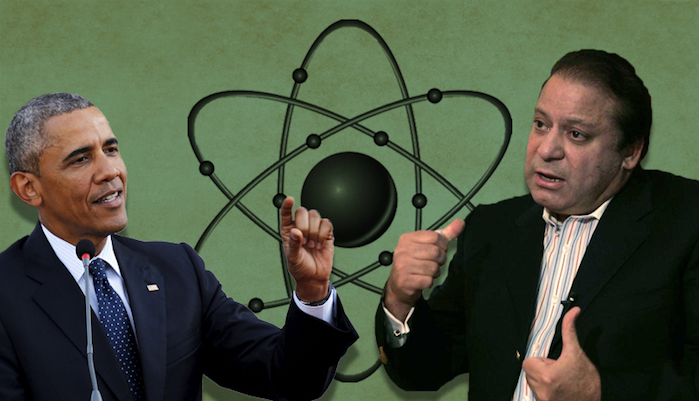
    This has been proved again with Nawaz Sharif’s just concluded visit to the US. Prior to the visit, US sources leaked to the media that Washington was contemplating some sort of a nuclear deal with Pakistan that would legitimise its nuclear status despite its known proliferation activities, the rapid expansion of its nuclear arsenal, its development of tactical nuclear weapons and open threats to use them against India. While Sharif’s visit did not produce such a deal, the US ignored all these Pakistani nuclear provocations and transgressions and preferred to focus self-servingly on the success of the Nuclear Security Summit to be hosted by Obama next year and “welcomed Pakistan’s constructive engagement with the Nuclear Security Summit process and its cooperation with the International Atomic Energy Agency and other international forums”. Obama also noted “Pakistan’s efforts to improve its strategic trade controls and enhance its engagement with multilateral export control regimes”. All these were approving chits of Pakistan’s nuclear policies, unfortunately at the cost of India’s security, given that a day prior to Nawaz Sharif’s Washington visit, the Pakistani Foreign Secretary publicly brandished the tactical nuclear threat to India, spoke of full spectrum deterrence and dismissed any talk of Pakistan accepting any restraint on its nuclear arsenal. The un-named US official’s categorical declaration that the US was not contemplating any 123 type agreement with Pakistan or an NSG exemption has come after Sharif’s visit and in the wake of Pakistani defiance.

    The recognition by Obama and Sharif in their joint statement of their “shared interest in strategic stability in South Asia” is seriously objectionable from our point of view, even if similar language figured in the Obama-Sharif joint statement in 2013. Such a stance is inconsistent with the import of the India-US nuclear deal which was intended to free India from some strategic constraints while also bringing large parts of its nuclear program, present and future, under IAEA safeguards in a bid to restrict its scope. There are no such constraints on China’s nuclear program, or on China’s nuclear cooperation with Pakistan in both civilian and military areas. There can therefore be no strategic stability in South Asia unless China and its cooperation with Pakistan is brought into the equation and India’s strategic needs vis a vis China are recognised. Until the India-US nuclear deal, the US has viewed the nuclear equation in the sub-continent as a purely India-Pakistan affair. Even before India and Pakistan became overtly nuclear the US pressed for “strategic stability” with a view to curbing India’s nuclear program, in the belief that this would deprive Pakistan of the argument that it must match India’s nuclear capabilities to ensure its security.

    The tenacity of such US thinking surfaced during discussions on the “Next Steps in the Strategic Partnership” when the US tried to introduce the concept of strategic stability to offset Pakistani concerns about US tilting in favor of India on strategic matters. Why after the nuclear compromise inherent in the India-US nuclear deal the US continues to stress strategic stability in South Asia and wants all sides to “continuously act with maximum restraint and work jointly toward strengthening strategic stability in South Asia”, is difficult to understand. So is the reference to “the importance of regional balance and stability in South Asia” which unreasonably equates India with Pakistan, including in the sphere of their security interests.

    Even if we ignored the reference to strategic stability in 2013, we have less reason to ignore it today. India and the US have in 2015 greatly widened the scope of their geopolitical engagement by releasing a US-India Joint Strategic Vision for the Asia-Pacific and Indian Ocean Region and upgrading the trilateral India-US-Japan relationship relationship in a certain strategic perspective. In this context it makes little sense for the US to still talk of strategic balancing India and Pakistan. This merely sends confusing signals about the depth of India’s strategic commitment to India.

    Likewise, in January 2015, on the occasion of Obama’s January 2015 visit, the US-India Delhi Declaration of Friendship was issued, which proclaimed a higher level of trust and coordination between the two countries. Furthermore, in the joint statement issued then, Obama and Modi “committed to undertake efforts to make the U.S.-India partnership a defining counterterrorism relationship for the 21st Century by deepening collaboration to combat the full spectrum of terrorist threats”. It “called for eliminating terrorist safe havens and infrastructure, disrupting terrorist networks and their financing, and stopping cross-border movement of terrorists”, besides asking “Pakistan to bring the perpetrators of the November 2008 terrorist attack in Mumbai to justice”. In September 2015, as part of the inaugural India-US Strategic and Economic Dialogue, a U.S.-India Joint Declaration on Combating Terrorism was issued with expansive provisions.

    read-more

  • Snub week for Nawaz Sharif

    Snub week for Nawaz Sharif

    The Pakistan Army and the Government must be in a state of shock by the way their country’s Prime Minister Nawaz Sharif was snubbed by the US.

    Successive heads of state of Pakistan loved to rake-up the issue of Kashmir with the US and declare to the world the “backing” of the US. However, this time, Washington has cold-shouldered every move of Mr Sharif.

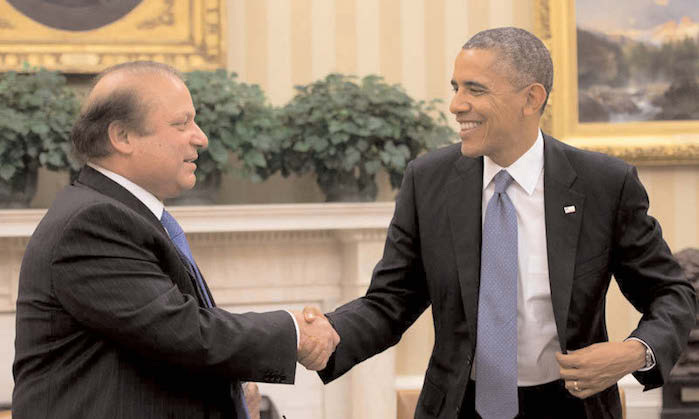
    Kashmir and violence along the LoC on Thursday (October 22) figured in a joint statement issued by US President Barack Obama and Pakistani Prime Minister Nawaz Sharif, both of whom called for a “sustained and resilient” Indo-Pak dialogue process to resolve all outstanding issues.

    Obama and Sharif underlined that improvement in Pakistan-India bilateral relations would “greatly enhance” prospects for lasting peace, stability, and prosperity in the region, according to the statement.

    The two leaders also expressed concern over violence along the Line of Control, and pledged their support for confidence-building measures and “effective mechanisms” that are acceptable to both parties, it said.

    “The leaders emphasised the importance of a sustained and resilient dialogue process between the two neighbours aimed at resolving all outstanding territorial and other disputes, including Kashmir, through peaceful means and working together to address mutual concerns of India and Pakistan regarding terrorism,” the statement said.

    Sharif apprised Obama about Pakistan’s resolve to take “effective action” against United Nations-designated terrorist individuals and entities, including Lashkar-e-Taiba (LeT) and its affiliates, as per its international commitments and obligations under UN Security Council resolutions.

    The statement was released soon after Sharif and Obama held their bilateral talks at the White Office’s Oval Office.


    Pakistani Prime Minister Nawaz Sharif was on Friday (October 23) heckled by a protester who demanded to free the restive Balochistan province where activists say army is engaged in abductions, torture and killings.

    free-bluchistan-protest-against-pak-sharif-nawaz_ae400550-79a6-11e5-9d61-41ab8e878eddAs Sharif began delivering his address at the US Institute of Peace, a prominent independent think-tank here, a protester raised slogans including “Free Balochistan” besides calling him a “friend of (Osama) Bin Laden”.

    The man was also holding a poster that read “Free Baluchistan”. He was taken out of the auditorium by the security forces following the incident that forced the visiting premier, Sharif, to pause briefly and then resume his address.

    The army has fought separatist Baloch militants on several occasions during much of Pakistan’s existence. The latest wave of insurgency was triggered after the Pakistan Army, under the direction of the then President General Parvez Musharraf, bombed and killed elderly Baloch tribal chief Nawab Akbar Bugti in 2006.


  • Pakistan PM fails to win US support against India

    Pakistan PM fails to win US support against India

    WASHINGTON (TIP): Pakistan Prime Minister must be a disappointed man. His bilateral with US President Barack Obama is being viewed as a diplomatic failure. India has watched the Sharif-Obama summit in Washington keenly, and while it is clear that Prime Minister Nawaz Sharif returns to Islamabad without any big announcement to show for the bilateral, and no progress on US-Pakistan civil nuclear negotiations, there are many parts to the 2015 joint statement issued by the two that could  be worrisome for India.

    Here are the key statements in the US-Pakistan joint statement which may cause concern to India.

    1.  Hydroelectric projects in PoK/Gilgit-Baltistan 

    President Obama expressed support for Pakistan’s efforts to secure funding for the Diamer Bhasha and Dasu dams to help meet Pakistan’s energy and water needs.

    India has opposed the construction of hydro-electric projects in the disputed region of Kashmir that includes PoK and Gilgit-Baltistan. Most recently, External Affairs Minister Sushma Swaraj had called the China-Pakistan Economic Corridor (CPEC) unacceptable because it includes these projects, while India had told the UNGA that “India’s reservations about the proposed China-Pakistan Economic Corridor stem from the fact that it passes through Indian territory illegally occupied by Pakistan for many years.”

    In recent years, the 4,500 m W Diamer Bhasha dam (DBD) project, that the Pakistan government says will halve its electricity shortfall when constructed, had come to a standstill over funding. In 2013, prospective investors – the ADB, China and Russia – had asked Pakistan to obtain an NOC (No objection certificate) from India before they could proceed on loans. Even after the announcement of the China-Pakistan Economic Corridor by President Xi Jinping for projects including dams in PoK in April 2015, China has shown a preference for the $1.6 billion Karot project, rather than DBD, which would now cost an estimated $14 billion. It is significant that the US wants to play ‘White Knight’ on these two dams, and for India, the construction of major projects like these endorsed by the US would be a blow to its claim on PoK. Earlier this month, reports suggested India had protested over a USAID event aimed raising funding for DBD, where US firm Mott McDonald has been contracted to perform a technical engineering review.

    2.  Talks with the Taliban
    President Obama commended Pakistan for hosting and facilitating the first public talks between the Afghan government and the Taliban in July 2015 and highlighted the opportunity presented by Pakistan’s willingness to facilitate a reconciliation process that would help end insurgent violence in Afghanistan.

    India has felt cut out of the Taliban peace process, and relations with President Ghani’s government underwent a strain when New Delhi learned that Pakistan would be allowed to host the talks in Murree. “This is an open acknowledgement that Pakistan controls the Taliban,” a senior official had told The Hindu at the time, “And rather than castigate Pakistan for not curbing the Taliban’s violence, these talks will legitimize its actions.”

    When the talks collapsed over the announcement of Mullah Omar’s death, it was felt Pakistan’s claim of being a ‘peacemaker’ rather than a sponsor of Taliban-terror would end. However, despite a surge in violence by the Taliban, including the brutal siege of Kunduz that was overthrown by Afghan and US special forces last month, the Joint statement seems to indicate the US is prepared to let Pakistan host the talks again.

    3.  Resume India-Pakistan talks
    President Obama and Prime Minister Sharif stressed that improvement in Pakistan-India bilateral relations would greatly enhance prospects for lasting peace, stability, and prosperity in the region. The two leaders expressed concern over violence along the Line of Control, and noted their support for confidence-building measures and effective mechanisms that are acceptable to both parties. The leaders emphasized the importance of a sustained and resilient dialogue process between the two neighbors aimed at resolving all outstanding territorial and other disputes, including Kashmir, through peaceful means and working together to address mutual concerns of India and Pakistan regarding terrorism.

    For over a decade, the US has stayed away from openly pushing India towards talks with Pakistan. In the period between 2003-2008, this was because India and Pakistan were engaging each other, and both the composite dialogue and back-channel diplomacy yielded many important confidence building measures between them. After the Mumbai 26/11 attacks, the US recognized India’s legitimate anger over the attacks being planned and funded in Pakistan, and abstained from making any comments on the resumption of India-Pakistan dialogue, restricting itself only to “welcoming” talks between their leaders in Thimphu, Delhi, New York and Ufa. The US-Pakistan joint statement doesn’t just put the importance of “sustained and resilient dialogue process” (codeword for comprehensive dialogue) back in focus, it makes a new mention of “violence along the LoC” which India squarely blames Pakistan for initiating. India believes ceasefire violations are aimed at “infiltrating terrorists”, a charge the government repeated when the NSA talks were cancelled. Of particular worry for India will be the US-Pakistan joint statement’s reference to “mutual concerns of terrorism”, as it comes in the wake of Pakistan’s latest claims of Indian support to terrorism inside Pakistan. Pakistan NSA Sartaj Aziz had told the press that Indian agency “involvement” in Balochistan and FATA would be taken up during the summit.

    4.  Action on LeT?
    In this context, the Prime Minister apprised the President about Pakistan’s resolve to take effective action against United Nations-designated terrorist individuals and entities, including Lashkar-e-Tayyiba and its affiliates, as per its international commitments and obligations under UN Security Council resolutions and the Financial Action Task Force.

    Action against the LeT has been India’s most sustained demand from Pakistan, especially after the 26/11 attacks, when the LeT’s top leadership was charged with planning and executing the carnage in Mumbai. Yet years later, chief Hafiz Saeed is free, LeT operations chief Zaki Ur Rahman Lakhvi is out on bail, and there seems little evidence that Pakistani forces have conducted any sort of crackdown on the Lashkar e Toiba, especially when compared to action against other groups after the Peshawar school attack of December 2014. While the US-Pakistan joint statement doesn’t note President Obama’s acceptance of Pakistan’s claims of keeping its “international commitments and obligations”, it is significant that the US has not raised the obvious violation of the UNSC and FATF requirements earlier this year during the bail process of Lakhvi. Despite Indian representations to the US and UN, there has been little pressure on Pakistan how Lakhvi raised the funds when according to the UNSC 1267 Committee rules, a designated terrorist cannot be allowed recourse to finances.

    5.  Nuclear talks
    The leaders noted Pakistan’s efforts to improve its strategic trade controls and enhance its engagement with multilateral export control regimes. Recognizing the importance of bilateral engagement in the Security, Strategic Stability and Non-Proliferation Working Group, the two leaders noted that both sides will continue to stay engaged to further build on the ongoing discussions in the working group.

    Both, the US and Pakistan, have denied a report in the Washington Post that they had planned what it called a “diplomatic blockbuster”: negotiations over a civil nuclear deal on the lines the US and India signed in 2005. Pakistan’s foreign secretary reacted to the report with a detailed account of Pakistan’s “low-yield tactical nuclear weapons” aimed at India, to calm fears in Pakistan that the government was giving up its weapons program. Even so the details in the Post have left lingering doubts over what the US intends, including pushing for a possible NSG waiver for Pakistan in exchange for limiting Pakistan’s missile capability. The report goaded the MEA into counseling the US on taking a closer look at Pakistan’s past on supplying nuclear weapons to North Korea and Iran, “Whosoever is examining that particular dossier should be well aware of Pakistan’s track record in proliferation. And when India got this particular deal, it was on the basis of our own impeccable non-proliferation track record,” the MEA spokesperson said on October 9, given that India will watch this space closely, particularly the phrase on “engagement with multilateral export regimes” mentioned in the US-Pakistan joint statement.

  • PAK-US NUCLEAR DEAL INDIA THREATENED

    PAK-US NUCLEAR DEAL INDIA THREATENED

    NEW DELHI / KARACHI(TIP): Pakistan’s refusal to rule out use of nuclear weapons in a conventional conflict with India and the military’s belief that a nuclear deterrent allows it to pursue terrorism against India sharply reduces the possibility of a civil nuclear deal with the US that imposes constraints on Islamabad’s atomic arsenal.

    Pakistan’s ambiguous nuclear doctrine that does not make it clear just when the nuclear option could come into operation is rooted in a belief system that the weapons are the only means of countering India’s larger armed forces.

    The threat to use “tactical” or battlefield nukes is supported by elaborate arguments based on conveniently edited history, a dire interpretation of Indian intent and far fetched comparisons with Nato strategies during the cold war.

    Given the military’s belief, shared by elite opinion including strategic affairs experts, that nuclear weapons are part of a triad comprising regular military and anti-India jihadi groups, there is hardly any likelihood of Pakistan agreeing to reduce or contain its armoury to a size that answers to a strategic deterrent.

    Pakistan’s reference to jargon like “full spectrum” deterrence amounts to a determination to use its nuclear weapons as a means to prevent India from using military options in response to terrorist attacks.

    This interpretation of deterrence – of using nuclear weapons to prevent retaliation for terrorist attacks – is uniquely Pakistan’s and has nothing in common with cold war doctrines that the military frequently quotes.

    India’s argument that any attempt to buy off Pakistan’s nuclear weapons is not only not likely to work but may be counter-productive is bolstered by the Nawaz Sharif government’s inability to chart a policy on its own.

    Having buckled to the military’s insistence that Pakistan pitch Kashmir to the top of its engagement with India in order to take the focus away from terrorism, the Sharif regime has even less elbow room on any nuclear deal.

    Though the Pakistan army has been, on the whole, spectacularly unsuccessful in achieving any of its objectives with regard to Jammu and Kashmir, the dispute remains a key rational for maintaining nuclear arms.

    The Kashmir dispute serves to block any real progress with India even if it is quite evident that the most intractable aspect of bilateral ties isn’t the best starting point and that cooperation on terrorism might actually make the region safer.

  • A US-Pak nuclear deal would be a threat to India’s security

    A US-Pak nuclear deal would be a threat to India’s security

    If a report in a US newspaper is to be believed, a US-Pakistan nuclear deal might be on the cards. The report says that such a deal is being considered around Prime Minister Nawaz Sharif’s visit to Washington this month.

    The report would not have appeared credible but for the evasive comment of the State Department on the subject and the official reaction of the spokesperson of our Ministry of External Affairs cautioning the US authorities against any such decision.

    Ever since the India-US nuclear deal was signed, the Pakistanis, obsessed with the idea of parity with India, have been seeking a similar deal.

    Besides calling the India-US nuclear deal discriminatory, Pakistan has condemned it as threat to its security and warned that it would take all necessary steps to safeguard its interests. Pakistan’s Foreign Affairs Adviser Sartaj Aziz aggressively reiterated this on the occasion of President Barack Obama’s visit to India in January this year.

    By remaining silent, the US has only encouraged this absurd posturing by Pakistan.

    US soft on Pakistan

    Some western nonproliferation specialists have been advocating for some time a nuclear deal with Pakistan in order to remove its sense of grievance. They feel it would give Pakistan an incentive to limit the expansion of its nuclear arsenal and stabilize the nuclear situation in the sub-continent.

    Such advocacy is largely prompted by negative attitudes towards India which, with its historical opposition to the NPT, is seen as the one responsible for nuclearizing South Asia. In their eyes, this is one way of denying India any one-sided advantage in nuclear status.

    Until now, the US Administration has been differentiating India’s case from that of Pakistan and disclaiming any move to offer the latter a similar deal, thought the tenor of its statements has not been sufficiently convincing.

    In fact, both the US and China, to different degrees, have aided Pakistan in achieving its nuclear and missile ambitions.

    A US-Pak nuclear deal will erode the strategic importance of the Indo-US nuclear deal

    In the past, knowing the China-Pakistan nuclear and missile nexus, the US has waived the application of its laws for larger geopolitical reasons linked to the combat against the Soviets in Afghanistan. The Afghanistan factor has, unfortunately, continued to condition US thinking on Pakistan’s nuclear and other errant behavior.

    The US was remarkably soft with Pakistan on the AQ Khan case. It has tolerated Pakistan’s tactics to obstruct discussions on the FMCT at Geneva at a time when fissile material control was still on the US agenda.

    It has overlooked supplies of additional Chinese nuclear reactors to Pakistan in violation of China’s NSG commitments.

    One could speculate that having settled the nuclear question with India, this was one way for the US to allow Pakistan to be a beneficiary of external cooperation in its nuclear sector, as part of the traditional policy of “hyphenation”.

    US agencies and think tanks have been propagating information about the frenetic pace at which Pakistan has been expanding its nuclear arsenal, without any visible reaction from the US government.

    At one time, worried about the rise of radicalism in the country, the US was expressing concern about the security of Pakistan’s nuclear arsenal. But such fears are no longer being expressed.

    US conduct over the years suggests that it has favored the idea of a Pakistani nuclear capability to balance India’s. Remarkably, its complaisance towards the Pakistani nuclear program has continued long after the end of the Cold War.

    Adding to all this, US treatment of Iran’s nuclear ambitions contrasts strikingly with its handling of Pakistan’s nuclear transgressions. While draconian sanctions have been applied on Iran, in Pakistan’s case the US has argued that sanctions might hasten its slide towards failure as a state and increase the risk of its nuclear assets falling into the hands of religious extremists.

    This is specious logic as the US has not taken any precautionary step to curb the development of Pakistan’s nuclear assets, including its decision to introduce tactical nuclear weapons in the subcontinent. An expanded Pakistani nuclear arsenal is even more likely to fall into the wrong hands.

    US reaction to Pakistan’s loose talk about using nuclear weapons against India has been, moreover, notably mild. It could and should have been much stronger.

    The hesitation to impose sanctions on Pakistan contrasts also with the willingness to impose sanctions even on a powerful country like Russia, including its most senior leaders and functionaries.

    What inhibits the US to strong arm Pakistan despite its provocations remains unclear.

    The argument that for dealing with the situation in Afghanistan the US needs Pakistan’s assistance is not convincing. The US needs Russia even more for dealing with yet more complex and fraught problems as Iran and West Asia in general, including the rise of the Islamic State, not to mention the fall-out of mounting tensions in Russia-West relations.

    China-Pakistan axis

    It is mystifying why the US should want to politically legitimize Pakistan’s nuclear conduct through an India-like nuclear deal.

    In India’s case, the US wanted to make a geopolitical shift with the rise of China in mind. It saw India as a counterweight to China in Asia, but for this the nonproliferation issue which inhibited India’s international role had to be resolved.

    Pakistan is in fact China’s closest ally. The geopolitical purpose of a nuclear deal with Pakistan will only legitimize the China-Pakistan nuclear and security relationships and undermine India’s strategic interests vis-a-vis both these adversaries.

    The US has wanted to build a strategic relationship with India largely around shared interests in the Indian Ocean and Asia-Pacific regions in view of mounting signs of Chinese political and military assertiveness and its ambitious naval expansion program.

    Through the China-Pakistan Economic Corridor and the development of Gwadar, Pakistan is facilitating an increased Chinese strategic presence in the Indian Ocean, which contradicts this US strategy.

    Shocking rationale

    According to reports, the underlying reasoning offered by the US, if correctly reported, is almost shocking. In return for an NSG waiver, Pakistan will be asked to restrict its nuclear program to weapons and delivery systems that are appropriate to its actual defense needs against India’s nuclear threat, and not to deploy missiles beyond a certain range.

    This implies that the US accepts that India’s nuclear program is Pakistan-centric and that it poses a threat to Pakistan.

    The Chinese threat to India is being overlooked and the fact that India faces a double Pakistan-China nuclear threat – in view of the close nuclear collaboration between the two countries- is being ignored.

    The US, it appears, would be comfortable if only India would be exposed to the Pakistani nuclear threat, not others.

    US has been consistently soft on Pakistan’s errant behavior in matters like nuclear weapons

    But then, Pakistan’s nuclear arsenal, according to its own leaders, is India-centric. Pakistan is not threatening China, Iran or Saudi Arabia with its nuclear weapons. Which are the countries that the US wants to protect against the use of nuclear weapons by Pakistan?

    Pakistan is developing delivery systems to reach any point in India. The US would apparently be comfortable with that, but not if it developed missiles of longer range. But whose security is US worried about if Pakistan did that? US itself, Japan, Australia, Singapore, China, Iran, Saudi Arabia, Israel?

    China, we know, opposes India’s NSG entry without Pakistan. It would seem the US would be willing to accommodate both China and Pakistan if the latter limited its nuclear threat to India.

    By implication then, the US has no stakes in India’s security from an unstable and adventurous Pakistan, despite our so-called strategic partnership.

    A reward for Pakistan’s military

    The timing of a nuclear deal would be odd too. It is now universally recognized that it is General Raheel Sharif and not Nawaz Sharif who really hold the reins of power in the country. A nuclear deal will be a reward for the Pakistan military and not the civilian power, as Pakistan’s nuclear program is under military control.

    Does the US want to reward the Pakistan military for its operations in North Waziristan against the Pakistani Taliban and is this considered meritorious contribution to the fight against Al Qaeda and terrorism?

    One would have thought far more important for the US and the West is the rise of the Islamic State and its ideology. Compared to which North Waziristan is a side-show. In any case, the Pakistani military is not fighting the Haqqani group.

    Worse, while Pakistani is being accepted as an honest mediator in the Afghan reconciliation process, the Taliban showed its mounting force by occupying Kunduz.

    One hopes that the US report does not accurately reflect President Obama’s thinking.

    If it does, it will show how hollow is the strategic relationship between India and the US, and why it would not be wise to trust the US.

    The India-US nuclear deal will be eroded of much of its strategic importance bilaterally, as result. The US would have, in addition, administered a big political blow to Prime Minister Narendra Modi who has gone out of his way to improve strategic understanding with the US.

    But then, news reports are news reports, and they could merely be political kite-flying. In which case, the India-US relationship will not receive a big jolt for all the reasons mentioned in this article.

    (The author is a former foreign secretary of India. He has also served as India’s ambassador to Turkey, Egypt, France and Russia. He can be reached at sibalk@gmail.com)

  • INDIA VOICES CONCERN OVER REPORTS OF US-PAK NUCLEAR DEAL

    INDIA VOICES CONCERN OVER REPORTS OF US-PAK NUCLEAR DEAL

    NEW DELHI (TIP): India on October 8 voiced concern over reports of the US mulling a nuclear deal with Pakistan on the lines of Indo-US pact and cited Pakistan’s nuclear proliferation record to oppose it.

    “We have seen these reports and it is not for the first time this issue has surfaced. Whosoever is examining that particular dossier should be well aware of Pakistan’s track record in the area of proliferation. And when India got this particular deal it was on the basis of our own impeccable non-proliferation track record. That is the reason US gave us 123 agreement in 2005 and that is why we got a NSG waiver in 2008. Pakistan’s track record is completely different so we hope that will taken into account in making any such decision,” spokesperson in the external affairs ministry Vikas Swarup said, in an apparent reference to Pakistan and North Korea’s nuclear arms program.

    According to reports, North Korea obtained “many of the designs for gas centrifuges and much of the machinery” required to make highly enriched uranium for nuclear weapons from Pakistan, which in return got ballistic-missile parts from North Korea. Ahead of Prime Minister Nawaz Sharif ’s visit to the US this month, a report in The Washington Post said the US is negotiating a pact on new limits on Pakistan’s nuclear weapons and delivery systems, a deal that might lead to an agreement similar to the Indo-US civil nuclear deal. “Pakistan has been asked to consider what are described as ‘brackets’,” the report quoted a source familiar with the talks between the two countries as saying. To a separate query on whether Pakistan had asked India for a meeting between the two foreign ministers along with the meeting of their NSAs as was proposed by India on the sidelines of the UN General Assembly, the spokesperson said, “Yes. There was an issue of sequencing… We are committed to the Ufa understandings.

    “The understandings are very clear and that is two (Indo-Pak) National Security Advisors are to meet to discuss all issues connected to terrorism. The DG BSF and the Pak Rangers and the DGMOs are to meet to sort out the issues on the border. The firings and disturbance on the border… “And we have told that we are ready for the NSA-level dialogue. Last time Pakistan walked out of it… but we are committed to this understanding,” he said, adding where was a meeting between the foreign ministers as part of the agenda and understanding.

  • US in talks with Pakistan over capping its nuke range

    US in talks with Pakistan over capping its nuke range

    WASHINGTON (TIP): The Obama administration is exploring a possible civilian nuclear deal with Pakistan ahead of Prime Minister Nawaz Sharif’s visit to Washington later this month, a Washington Post columnist has reported, citing a sole source “familiar with the talks” who said Islamabad has been asked to consider “brackets” relating to the deal.

    Brackets, in diplomatic parlance, are numerous alternative formulations that are negotiated towards an eventual agreement. According to the report, the deal centers around a civilian nuclear agreement similar to the one the United States arrived at with India, in exchange for a Pakistani commitment that would “restrict its nuclear program to weapons and delivery systems that are appropriate to its actual defense needs against India’s nuclear threat.”

    Pakistan might, for example, agree not to deploy missiles capable of reaching beyond a certain range, the report said, citing the source, who indicated that the US might support an eventual waiver for Pakistan by the 48-nation Nuclear Suppliers Group (NSG), the same way it has done for India.

    The Obama administration said it was in “regular contact” with the Government of Pakistan on “a range of issues” as it prepared for the visit on October 22 of Prime Minister Sharif, but declined comment on the specifics of the discussions.

    “The United States urges all nuclear-capable states, including Pakistan, to exercise restraint regarding nuclear weapons and missile capabilities. We encourage efforts to strengthen safety and security measures and continue to hold regular discussions with Pakistan on a range of global issues, including nuclear security, counterterrorism, and international norms,” an administration spokesperson said in a tacit acknowledgement that some sort of dialogue is taking place on the nuclear issue.

    Successive US administrations both under Presidents Bush and President Obama, have knocked down the idea of a deal for Pakistan like the one Washington arrived at with India, saying the background and circumstances surrounding the US-India civilian nuclear agreement was entirely different, and pointing to Pakistan’s record of nuclear proliferation.

    However, President Obama’s recent track record vis-a-vis Iran and Cuba, both regarded for a long time as outlaw nations, suggests there may be some substance to a nuclear outreach towards Pakistan. There is also less pathology about Pakistan in Washington’s official circles, where many veterans have a romanticized recall of Islamabad’s role in the Cold War when it offered its services to Washington, for a price. The strategy helped Pakistan circumvent nuclear non-proliferation roadblocks that the US all too readily winked at.

    In recent months, Pakistan has tried to project itself as a responsible nuclear power, although some of its politicians and generals reflexively brandish the country’s nuclear weapons to assure themselves and their constituents about security against India. “We are a nuclear-armed country and we know how to defend ourselves,” Pakistan’s National Security Advisor Sartaj Aziz boasted recently in a suo motu assertion although no one had talked of a nuclear war.

    While a few regional experts have floated the idea of a nuclear deal for Pakistan in the past, most analysts are aghast at the prospect. It will be “sheer madness wrapped in folly,” said Sumit Ganguly, a South Asia scholar at Indiana University, among several experts who have critiqued Washington frequent free passes to a country that has a reckless history of nuclear proliferation and home-grown terrorism.

    The WaPo report however conceded that inasmuch as Pakistan prizes its nuclear program, “negotiations would be slow and difficult, and it’s not clear that Islamabad would be willing to accept the limitations that would be required.” But, it said, the issue is being discussed quietly in the run-up to Prime Minister Nawaz Sharif’s visit to Washington on October 22.

  • US-Pakistan Nuclear Deal | India is the check to Pakistan, Donald Trump declares

    US-Pakistan Nuclear Deal | India is the check to Pakistan, Donald Trump declares

    WASHINGTON: The Obama administration is exploring a possible civilian nuclear deal with Pakistan ahead of Prime Minister Nawaz Sharif’s visit to Washington later this month, if media reports are to be believed.

    One of Washington’s well-briefed columnists, David Ignatius, has revealed this week the outlines of a nuclear agreement that the US is said to be negotiating with Pakistan. These talks could be at the top of US President Barack Obama’s agenda with Pakistan.

    In a Washington Post column on Wednesday, Ignatius says the US is ready to lift international restrictions against civilian nuclear commerce with Pakistan in return for significant voluntary restraints on its nuclear weapons programme.

    According to the report, the deal centers around a civilian nuclear agreement similar to the one the United States arrived at with India, in exchange for a Pakistani commitment that would “restrict its nuclear program to weapons and delivery systems that are appropriate to its actual defense needs against India’s nuclear threat.”

    Pakistan might, for example, agree not to deploy missiles capable of reaching beyond a certain range, the report said, citing the source, who indicated that the US might support an eventual waiver for Pakistan by the 48-nation Nuclear Suppliers Group (NSG), the same way it has done for India.

    The Obama administration said it was in “regular contact” with the Government of Pakistan on “a range of issues” as it prepared for the visit on October 22 of Prime Minister Sharif, but declined comment on the specifics of the discussions.

    “The United States urges all nuclear-capable states, including Pakistan, to exercise restraint regarding nuclear weapons and missile capabilities. We encourage efforts to strengthen safety and security measures and continue to hold regular discussions with Pakistan on a range of global issues, including nuclear security, counterterrorism, and international norms,” an administration spokesperson said in a tacit acknowledgement that some sort of dialogue is taking place on the nuclear issue.

    Successive US administrations both under Presidents Bush and President Obama, have knocked down the idea of a deal for Pakistan like the one Washington arrived at with India, saying the background and circumstances surrounding the US-India civilian nuclear agreement was entirely different, and pointing to Pakistan’s record of nuclear proliferation.

    In 10 years, Pakistan will have largest N-stockpile after US and Russia, report suggests

    However, President Obama’s recent track record vis-a-vis Iran and Cuba, both regarded for a long time as outlaw nations, suggests there may be some substance to a nuclear outreach towards Pakistan. There is also less pathology about Pakistan in Washington’s official circles, where many veterans have a romanticized recall of Islamabad’s role in the Cold War when it offered its services to Washington, for a price. The strategy helped Pakistan circumvent nuclear non-proliferation roadblocks that the US all too readily winked at.

    In recent months, Pakistan has tried to project itself as a responsible nuclear power, although some of its politicians and generals reflexively brandish the country’s nuclear weapons to assure themselves and their constituents about security against India. “We are a nuclear-armed country and we know how to defend ourselves,” Pakistan’s National Security Advisor Sartaj Aziz boasted recently in a suo motu assertion although no one had talked of a nuclear war.

    While a few regional experts have floated the idea of a nuclear deal for Pakistan in the past, most analysts are aghast at the prospect. It will be “sheer madness wrapped in folly,” said Sumit Ganguly, a South Asia scholar at Indiana University, among several experts who have critiqued Washington frequent free passes to a country that has a reckless history of nuclear proliferation and home-grown terrorism.

    The WaPo report however conceded that inasmuch as Pakistan prizes its nuclear program, “negotiations would be slow and difficult, and it’s not clear that Islamabad would be willing to accept the limitations that would be required.” But, it said, the issue is being discussed quietly in the run-up to Prime Minister Nawaz Sharif’s visit to Washington on October 22.


    On an American radio show, Republican presidential hopeful Donald Trump called Pakistan “probably the most dangerous” country in the world today, adding that the only country that can “check” Pakistan is India.

    Pakistan is “a serious problem” because they have nuclear weapons that work and “a lot of them”, just like North Korea and its “mad man”, Trump explained.

    It wasn’t enough that he clubbed Pakistan with North Korea. “India is the check to Pakistan,” continued Trump, adding insult to Pakistan’s injury. “You have to get India involved … They have their own nukes and have a very powerful army. They seem to be the real check … I think we have to deal very closely with India to deal with it (Pakistan),” said Trump, about his foreign policy goals.

  • India Responds in UN | Sushma to Pakistan: Give up terrorism and then let’s talk

    India Responds in UN | Sushma to Pakistan: Give up terrorism and then let’s talk

    WASHINGTON (TIP): India on October 1 countered Pakistan Prime Minister Nawaz Sharif ’s four-point peace initiative with a one-point offer. “We don’t need four points, just one — give up terrorism and let’s sit down and talk,” external affairs minister Sushma Swaraj said in an address to the UN general assembly.

    In his UN speech on Wednesday, Sharif had proposed a four-point initiative: demilitarization of Kashmir, ceasefire along the Line of Control, affirmation to not use force and withdrawal from Siachen.

    Reaction from India was sharp and swift. It rubbished elements of the initiative and attempts by Sharif to portray Pakistan as a victim of terrorism, and blame India for its troubles.

    Swaraj rejected his initiative in toto, saying there was just one issue that needed to be taken care of. “Talks and terror cannot go together,” she said, adding that this was what was discussed and decided by Prime Minister Narendra Modi and Sharif in Ufa, Russia, in July.

    The national security advisers of the two countries can meet and discuss all issues connected to terrorism and the directors general of military operations can meet to tackle the border situation, she said.

    “If the response is serious and credible,” the minister said, “India is prepared to address all outstanding issues (which includes Kashmir in diplomacy-speak) through a bilateral dialogue.”

    “None of us can accept that terrorism is a legitimate instrument of statecraft,” she said, drawing attention to India’s frustration with continued cross-border terrorism despite assurances.

    She said these attacks are “meant to destabilize India and legitimize Pakistan’s illegal occupation of parts of the Indian state of Jammu and Kashmir”.

    The mastermind of the Mumbai 2008 attacks walks free, she said, calling it an “affront to the entire international community”.

    In an earlier response to Sharif ’s offer, foreign ministry spokesperson Vikas Swarup tweeted, “To demilitarize Kashmir is not the answer, to de-terrorize Pakistan is.”

    On Sharif ’s claim that Pakistan was a victim of terrorism, India said in a right-to-reply statement in the UN, “In truth, it is actually a victim of its own policies of breeding and sponsoring terrorists.”

    “Pak PM gets foreign occupation right, occupier wrong,” Swarup said about Sharif ’s charge of “foreign occupation” in Kashmir. “We urge early vacation of Pak-occupied Kashmir”.

    Relations between the neighbours have plummeted in recent days and weeks amid tension and firing along the border and cancellation of high-level talks. Both have withdrawn into their respective corners, saying it’s for the other side to make the next move; a long way from the optimism following talks in Ufa. Also, the August 24 NSA-level talks between Sartaj Aziz and his Indian counterpart Ajit Doval were cancelled after Pakistani high commissioner Abdul Basit invited Kashmiri separatists to a tea reception.

    In his speech, Sharif had sought to portray Pakistan, and himself, as more keen on peace than India. He had said after taking office in June 2013 that normalization of ties was one of his first priorities.

    He had reached out to the Indian leadership, he said, yet “today ceasefire violations along the LoC and working boundary are intensifying, causing civilian deaths”.

    “Wisdom dictates our immediate neighbour refrain from fomenting instability in Pakistan,” he said, concluding his attempt to take the moral high ground.

    India’s response was sharp and unsparing. “Pakistan’s instability arises from its breeding of terrorists. Blaming neighbours is not a solution,” Swarup said.

    Harping on Prime Minister Narendra Modi’s demand for the expansion of the UN security council, Swaraj said “if security, development and international peace is to be maintained, then security council needs to be reformed”.

    “We have to include more developing nations in the decision making structures of the security council,” Swaraj said.

  • Nawaz Sharif raises Kashmir issue in his United Nations General Assembly Speech

    Nawaz Sharif raises Kashmir issue in his United Nations General Assembly Speech

    Pakistan Prime Minister Nawaz Sharif on Wednesday, Sep 30, raked up the Kashmir issue in his UN general assembly speech.

    In a bid to show to the world that Pakistan is willing to take peace moves with India, Sharif proposed a new 4-point peace initiative including demilitarisation of Kashmir and Siachen and formalization of border ceasefire.

    On the expansion of the United Nations Security Council, Sharif said “Pakistan supports a comprehensive reform of the United Nations, and UN Security Council”. “We need SC that is more democratic, accountable, and transparent. Not a council that is an expanded club of the powerful and privileged.”

    Sharif called for the demilitarization of the divided Himalayan region of Kashmir, and for both countries to respect a 2003 cease-fire on the de facto frontier where there has been an increase in cross-border firing.

    Sharif also called for an unconditional withdrawal of forces from the Siachen Glacier, often dubbed the world’s highest battlefield, where the two militaries have been arrayed against each other for years.

    Prior to the address Nawaz Sharif attended global leaders meeting on gender equality and women empowerment organized by China and UN women.

  • No Sharif meeting set; but Indo-Pak leaders see each other at multilateral summit

    No Sharif meeting set; but Indo-Pak leaders see each other at multilateral summit

    NEW YORK (TIP): Officials accompanying Prime Minister Narendra Modi have ruled out the possibility of Prime Minister Narendra Modi meeting with his Pakistani counterpart Nawaz Sharif though both leaders are staying in the same hotel here.

    “As of now there is nothing, no bilateral meeting on the schedule,” Foreign Ministry spokesperson Vikas Swarup told a news  briefing , September 24 night, arranged in connection with the prime minister’s ongoing US visit.

    The famous Waldorf-Astoria hotel, which is now owned by a Chinese company, plays host to Modi and Sharif who are in the city to attend the current 70th UN General Assembly session.

    Swarup also ruled out the possibility of a “deliberate attempt” to ensure that the paths of the two do not cross. “If a hand shake happens, you will get to see it. If a pull-aside happens you will get to see it,” he noted.

    Modi arrived yesterday afternoon and Sharif is to reach here this evening.

    The prime minister will address the Sustainable Development Summit organized by UN Secretary General Ban Ki-moontomorrow, September 25, when the ambitious post-2015 development agenda is scheduled to be adopted.

    The Pakistani leader is also set to deliver his address to the high-level meeting. Since Sharif will also be attending the summit, the multilateral gathering will provide a forum for the leaders of India and Pakistan to come face to face.

  • Breaking the India-Pak Logjam

    Breaking the India-Pak Logjam

    On both sides of the India-Pakistan border, columns were written after the aborted National Security Advisers’ meeting. Most retired Indian diplomats and analysts argued that flip-flops on Pakistan betrayed the absence of coherence and strategy. Journalist-apologists of the government dismissed these as laments of those without post-retirement sinecures – a familiar approach, commonly used by twitter “trolls”, to attack the person rather than his argument.

    In Pakistan, retired diplomats reflected known proclivities ranging from India-baiting by Munir Akram to balanced analysis by former high commissioner to India, Ashraf J Qazi, or rare brutal self-examination by Husain Haqqani, victimized by the Pakistan military when posted as the Pakistan ambassador to the US. Haqqani reminded Pakistan that the last resolution by the UN Security Council on Kashmir was in 1957 and that today it would be impossible to get any support for a fresh resolution for plebiscite in Kashmir. His sage advice is that Pakistan should stop living in the past, trapped in a Kashmir-is-ours narrative, while India too must not rub Pakistan’s “nose in the ground”.

    The Modi government has undertaken two cycles of PM-level India-Pakistan engagement culminating in bickering and last-minute cancellation of scheduled meetings, i.e. Foreign Secretary-level meeting in August last year and now those of the NSAs a year later. The government’s defenders aver that this is actually calculated relaying of new red-lines. This claim needs examination.

    The first red-line is strict bilateralism, implying Pakistan would not provocatively consult Hurriyat before high-level talks. The second one is that India-Pakistan parleys will first focus on terror. Once India is satisfied of Pakistani cooperation, the old composite dialogue, or any new variant, may be revived. Pakistan’s de facto foreign minister Sartaj Aziz told Indian television that as a politician, if he met Indian Prime Minister on the sidelines of his talks with NSA Ajit Doval, he could not be constrained to only discuss terror without enquiring about “modalities” to resume dispute resolution.

    Sartaj Aziz’s argument carries weight as such specificity can be prescribed if the meeting was of Additional Secretaries heading the Anti-Terror Mechanism, as the writer did in 2006-07. It could also be if the Home Secretaries of the two countries met. Once talks are ramped up to the political level, the discussions perforce will be wider. In the Ufa statement, the words that “all issues connected to terrorism” will be discussed left a loophole for Pakistan to introduce Kashmir, as according to them it is the root cause of terror.

    The two other operative parts of the Ufa joint statement relate to confidence-building measures for maintaining peace at the Line of Control/International Border and the release of fishermen. Regarding the first, progress depends on Pakistan army’s cooperation, which uses ceasefire violations to convey unhappiness over its own government’s India policy or to facilitate infiltration or simply defy perceived Indian dominance. The recurring fishermen issue is a factor of unresolved maritime boundary due to the non-settlement of the Sir Creek issue.

    The tripod on which the Pakistan polity rests is the army, political parties and radical Islamic groupings – political or jehadi. A decade of Pakistan playing the US counter-terrorism game in the Af-Pak area has complicated relationships amongst the three. Some former jehadi protégés have turned enemies of the Pakistan state while others have diversified their own lateral links to Afghan/Al-Qaeda groups. The Death of Taliban leader Mullah Omar will exacerbate the jostling for space amongst the entire jehadi fraternity, further complicated by the ISIS seeking adherents.

    What then should be the Indian strategy to deal with this complex and evolving situation?BJP/RSS spokesmen on television hint at a Doval doctrine of retribution. One even claimed that the Indian NSA has warned Pakistan that it would lose Baluchistan if there is another 26/11. Such rash statements are providing Pakistan ammunition to prove Indian meddling, which globally none has so far taken seriously. It also neutralizes Indian moral advantage built over decades, alleging Pakistan’s complicity in abetting terror in India.

    Contrariwise following can be the contours of India’s Pakistan policy. Firstly, India must not push Pakistan’s elected government, however ineffective in controlling their army, into the army-jehadi corner. It is in India’s long-term interest to have any elected government be less and not more dependent on that combine.

    Secondly, Pakistan’s Punjab is losing mental space to the trans-Indus jehadi/Wahhabi hybrid of Islam which is alien to centuries of diverse and inclusive Islamic precept and practice. De-radicalization in Pakistan would need the Punjabi heartland to rediscover its historic roots, which it shares with Indian Punjab. Bangladesh, under PM Sheikh Hasina, is combating radicalization by rooting itself in the composite Bengali culture and not by espousing an anti-India Islamic construct. For this, it is necessary to revive incrementally cultural, travel and youth links between the two Punjabs -through which ran ancient arteries linking Central and South Asia.

    Maharaja Ranjit Singh – first indigenous ruler since Rajput rule (647-1192) to govern Punjab (1799-1839) – wove a Muslim majority area with a significant Hindu and Sikh population into a Punjabi citadel of composite culture against Pashtun interference from trans-Indus regions. Sikh troops hunted down Syed Ahmad, self-proclaimed Amir ul-Momineen, a title that Taliban leader Mullah Omar assumed, in 1831 at the Battle of Balakot.

    Thirdly, the Composite Dialogue, conceived in 1997 in Male by Prime Ministers Nawaz Sharif and IK Gujral, is flawed as confidence-building measures (CBMs) and disputes are tackled simultaneously. Pakistan holds back progress on CBMs to force progress on Kashmir, Siachen, etc. This is absurd as CBMs are meant to create the environment for dispute resolution and must precede the latter. Special representatives must be appointed to deal with disputes, out of public view, via a back channel. Meanwhile, the Foreign Secretaries/Ministers can quickly finalize CBMs that are mature for delivery. Terror issues can be handed over to the intelligence chiefs of the two nations.

    September-end, the two PMs will be in New York. They have an opportunity to break the logjam. PM Nawaz Sharif must refrain from playing to the international gallery. PM Modi needs to retrieve his Pakistan policy from the intelligence-security lobby for a safer South Asia.

    (The author, a career diplomat is a former Secretary, Ministry of External Affairs, Government of India)

  • Pakistan ready for short or long war: Khawaja Asif

    Pakistan ready for short or long war: Khawaja Asif

    Islamabad: Pakistan is ready for a short or long conflict and will inflict heavy losses on India in case “war hysteria” overcomes Indian leadership, Defence Minister Khawaja Asif has said.

    His remarks came in reaction to the statement by Army Chief Gen Dalbir Singh that India is prepared for “swift and short” wars in the future. Participating in a Radio Pakistan programme, Asif said Pakistan believes in peace but knows how to respond to any aggression. “We want peace but will inflict heavy losses on India if war hysteria overcame its leadership,” he said. Commenting on Indian Army Chief’s remarks, he said, “Pakistan is fully prepared to give a befitting response if India imposed short or prolonged war.”

    Talking about previous wars, he said Pakistan armed forces “foiled designs” of Indian forces in 1965. Our forces crushed the Indian dreams of occupying Lahore back in 1965 and will do the same in future,” he said. The Defence Minister also said Pakistan Army was now more experienced and professional than 50 years ago. “Our forces are engaged in the war against terror for several years and they know how to respond to any challenge,” he said. Asif, however, said Prime Minister Nawaz Sharif believes in peace. The remarks come against the backdrop of heightened tensions and cross-border firing between Indian and Pakistani troops along the LoC recently.

  • India-Pakistan talks under a cloud

    India-Pakistan talks under a cloud

    The proposed talks between the National Security Advisors of India and Pakistan this Sunday, which were decided at a meeting between Prime Minister Narendra Modi and his Pakistan counterpart Nawaz Sharif in Ufa, have come under a cloud due to a variety of reasons.

    Both India and Pakistan have been exchanging skirmishes along the Line of Control and these increased sharply on the Independence Day of India. Both sides have been reporting several civilian casualties and there is yet no indication of a slow down in the exchange of fire. Also there had been terrorist attacks that have emanated from Pakistan in Gurdaspur and Udhampur. A Pakistani national was also caught alive near Udhampur and his parents have owned him despite the fact that Pakistan had denied that he was its citizen.

    But besides the escalating violence along the LoC and the terrorist attacks, what may put the talks in to jeopardy is the insistence of Pakistanis to invite Hurriyat leaders for a reception being held by the Pakistan High Commissioner in honor of the visiting NSA Sartaj Aziz on August 23. Last year the government had called off talks between the foreign secretaries of the two countries for precisely the reason that Pakistan High Commission had invited Hurriyat leaders for talks prior to the meeting scheduled to take place in Islamabad on August 25.

    Though there is no official word from the External Affairs ministry, sources say that the government was closely “monitoring” the situation and that the talks may be called off if Pakistan insists on hosting the Hurriyat leaders before the two NSAs meet. India sees the invitation to the Hurriyat leaders as the defiant attitude of Pakistan and a provocation to call off the talks.

    Pakistan High Commission has, however, defended the invitation and has said that there was nothing “unusual” in calling the Hurriyat leaders for a meeting with the Pakistan NSA. “it is part of our consultation with the relevant stakeholders as we discuss the resolution of the Kashmir issue”, a spokesman of the High Commission said.

    It may be remembered that the Pakistan Prime Minister had received a hostile reaction to his joint statement with the Indian Prime Minister because of the absence of the ‘K’ word in the statement.

    On its part Pakistan plans to bring to the table its grievances against India including the issue of bail granted to the main accused in the Samjhauta blast case and India’s alleged interference and encouragement to militants in FATA and Balochistan.

    Pakistan army chief General Raheel Sharif and Director General of ISI Lt Gen Rizwan Akhtar met Prime Minister Nawaz Sharif earlier this week to discuss the issues to be taken up at the NSA level meeting. It was decided at the meeting that Indian Intelligence Agency RAW’s alleged interference in Pakistan would be among the top agenda items during the talks besides the ceasefire violations along the LoC. A Pakistani newspaper reported that Pakistan will stress on laying out a counter terrorism mechanism during the talks.

    Hurriyat leaders Syed Ali Shah Geelani and Mirwaiz Umar Farooq have confirmed that they had received the invitation from the Pakistan High Commission and stressed that they would go for the meeting. They insisted that it was not a formal dialogue but only a consultation process and said they would tell the Pakistan NSA about the current situation in Kashmir. Geelani said they would urge Pakistan to maintain continuity and stability on its Kashmir policy. “We willl also tell him that Pakistan should use its diplomatic channels to project the Kashmir issue more forcefully and effectively”.

    The two countries hardened their stand on Thursday, August 20, with Pakistan canceling Commonwealth Speakers’ conference because India insisted that the Speaker of JK Assembly should be invited otherwise it shall boycott the conference. On the other hand India placed Hurriyat leader Geelani under House arrest. Some other leaders were also taken in custody but within two hours of their detention, they were let off.

    Anything can happen between now when we are going in to publication and the next few hours.