Tag: Philippines

  • EXODUS: EUROPE, ASIA, AND BEYOND

    EXODUS: EUROPE, ASIA, AND BEYOND

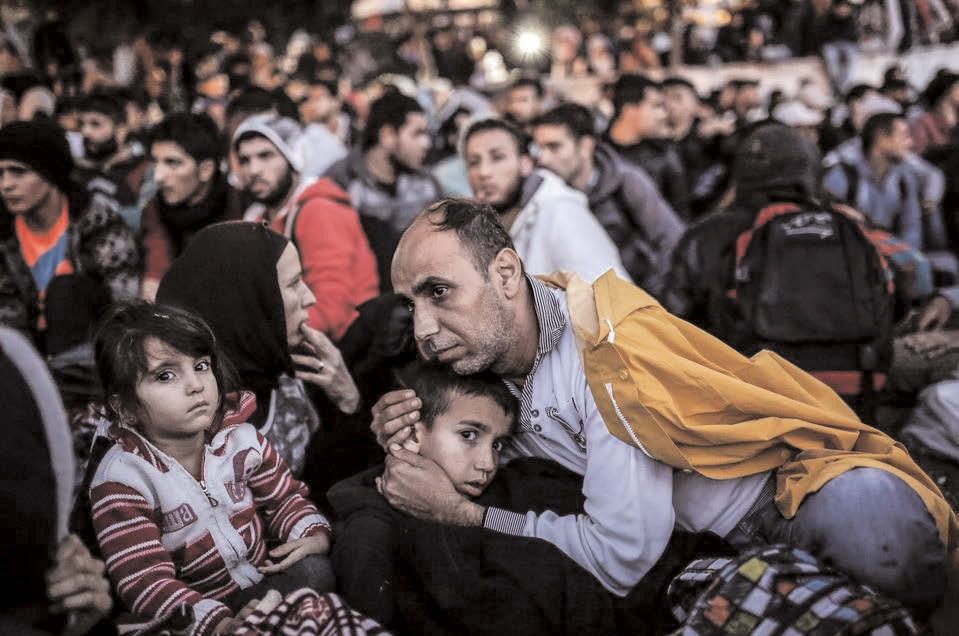
    As the battles raged in Syria and Iraq, millions of innocent civilians have sought refuge elsewhere to escape the dire straits in their home countries. Their prime destination: Europe. They came via planes, trains, ships, boats, cars, and for many, on foot: hundreds of thousands of displaced people fleeing a war no one asked for, leaving behind everything – their careers, property, families, their lives.

    Most of the world, at first, did not seem to notice the crisis. Not until the photo of a boy in a red shirt, lying lifeless, face down on the sands of a Turkish beach, came up in newspapers, websites, and social media.

    Three-year-old Syrian refugee Aylan Kurdi’s death shocked the world into consciousness, and spurred western governments to act on the worsening humanitarian crisis.

    By the end of 2015, more than one million migrants and refugees reached the continent, nearly 970,000 of which made the journey crossing the waters of the Mediterranean. It wasn’t only Syrians and Iraqis fleeing the mess in their home countries; there were also thousands escaping poverty and persecution, mainly from other Mideast and African states.

    Europe and other western countries scrambled to address the exodus, as the crisis became another test for the EU. Following a slew of emergency summits this year, EU leaders have acknowledged they were too slow to carry out a joint strategy to tackle Europe’s worst refugee crisis since World War II. Other countries have also stepped up, like Canada, which has already welcomed its first batch of Syrian refugees.

    Asia, in particular Southeast Asia, also had its own refugee crisis. Impoverished, persecuted, and with nowhere to go, Rohingya took to rickety boats in their bid to escape the quagmire they were in. The crisis came to a head around May, when thousands of these refugees, mainly from Myanmar’s Rakhine state, were left abandoned at sea, setting off a regional crisis. Horror stories of kidnap, coercion, and hunger emerged from the hundreds who staggered ashore or were eventually rescued by Thai, Indonesian, and Malaysian authorities after weeks at sea.

    Refugee exodus is seen as logical outcome of Syrian president's survival strategy.
    Refugee exodus is seen as logical outcome of Syrian president’s survival strategy.

    The crisis has ebbed somehow in the past few months, thanks to some action of regional governments involved, as well as due to the monsoon season. But with the monsoon ending, the crisis might again surge forward into the headlines – and a solution still seems far away.

    Tensions defused? The Iran nuclear deal

    The odds were stacked against it, but on July 14, weary foreign ministers from the US, Britain, France, China, Russia, Germany, the EU, and Iran announced to the world that a deal to curb Iran’s nuclear ambitions had been forged. It was a diplomatic victory for the parties involved, especially for Iran, which has been trying to shake off its long-time image as a pariah state.

    The ministers of foreign affairs of France, Germany, the European Union, Iran, the United Kingdom and the United States as well as Chinese and Russian diplomats announcing the framework for a Comprehensive agreement on the Iranian nuclear programme (Lausanne, 2 April 2015).
    The ministers of foreign affairs of France, Germany, the European Union, Iran, the United Kingdom and the United States as well as Chinese and Russian diplomats announcing the framework for a Comprehensive agreement on the Iranian nuclear programme (Lausanne, 2 April 2015).

    Under the deal, Iran pledged to slash the number of centrifuges – which enrich uranium – from around 19,000 to 6,104, of which 5,060 will still enrich. It also has to change the design of a new nuclear reactor being built and shrink its stock of low-enriched uranium, shipping it to Russia. In return, outside powers will end some of the international sanctions that have severely squeezed the Iranian economy.

    The road to the deal, however, wasn’t an easy one. For years, Iran has maintained that its nuclear program was for peaceful, civilian purposes, but a weary West always eyed it with suspicion. In the past few years, the two sides have see-sawed between coming close to a deal and coming close to conflict. The relative success of the deal was a result of months of non-stop negotiations, as well as the presence of a more moderate government in Tehran, led by President Hassan Rouhani.

    The question now: Will both sides honor the deal?

    Greek tragedyA country teetering on the brink of bankruptcy due to years of financial mismanagement. A hardline, leftist government. An economic bloc avoiding a region-wide collapse. These were the elements of a Greek tragedy that unfolded throughout the better part of 2015, as Greece and the European Union negotiated to save the Balkan nation from crashing out of the eurozone.

    Greek Meltdown Fed up with the hated “troika” – the European Commission, European Central Bank, and the International Monetary Fund -Greeks in January voted into power their first leftist government, led by Alexis Tsipras’ SYRIZA party. Tsipras came into power with the promise to lead the country out of the debt crisis. However, after months of intense, pressure-filled negotiations and despite voters saying “no” to a new deal, Greece caved in to its creditors’ demands and signed its latest bailout deal. The deal, worth 86 billion euros ($93 billion) to be spread out over a 3-year period, ultimately saved the country from crashing out of the eurozone, but it came with strict conditions.

    The fallout: Tsipras resigned August 20 after accepting the deal, reneging on a promise to stand its ground against the country’s creditors. A snap poll in September, however, saw Tsipras and his SYRIZA party hold on to power. Adding to Greece’s economic woes is the refugee crisis, with the country acting as migrants’ main gateway to the EU, straining the already burdened nation.

    Russia and China: Show of force

    From ISIS to Iran, Russia – long overshadowed by richer and more influential countries in the West – continued to assert itself as it seeks to revive its power and influence. From Ukraine to Syria, it has made its presence felt, mostly through its military. It has been steadily fortifying its army, building and expanding bases in the Arctic, growing its defense budget, and taunting its neighbors with its planes, submarines, and ships with clandestine – and in one case, deadly – side trips outside its territory.

    China: Show of force.
    China: Show of force.

    Russia has also been making inroads on the political front, participating in some of the year’s major diplomatic issues, such as the Iran nuclear deal. But the centerpiece in the past 12 months has been Syria, as President Vladimir Putin’s government seeks to keep and gain more influence in the Middle East.

    Meanwhile, China has also made aggressive moves economically, diplomatically, and militarily. As other world powers became stuck in other issues, bogged down by economic and political matters, the Middle Kingdom continued to expand its reach, primarily through billions of dollars in economic aid and infrastructure projects.

    Despite winning a lot of new friends, China has one major thorn on its side: its long-simmering maritime and territorial disputes with its Asian neighbors. The East and South China Seas have become sensitive spots in the region – particularly the Spratlys, where Beijing has been building artificial islands in its attempt to bolster its claims in the area. The waters are now being tested by militaries from other countries, including the US and Australia, with an increasing number of confrontations near the disputed “islands.” China also lost in round one of an arbitration case lodged by the Philippines at the global maritime tribunal.

  • I think I’ll be there in IPTL next year too: Rafael Nadal

    I think I’ll be there in IPTL next year too: Rafael Nadal

    NEW DELHI (TIP): Refusing to call the International Premier Tennis League (IPTL) an exhibition event, Spanish superstar Rafael Nadal says he would be back to compete in it next year too but conceded that tournaments like these don’t have a place in the ATP World Tour calendar.

    Making his first appearance in the IPTL, which is in its second season, Nadal is turning up for the Micromax Indian Aces, which also has on its roster Indian tennis aces Sania Mirza and Rohan Bopanna among others.

    “IPTL has been great so far and hopefully I will be back. I have liked the format, the team spirit is good, I think I am going to be back,” Nadal told reporters in a press conference after his team’s dominating win over Philippines Mavericks.

    “I don’t think these are exhibition matches, these games are very competitive. The intensity of competition is good. I feel the rules are perfect in the IPTL and it’s a great idea. But obviously, in the (ATP) World Tour, it doesn’t have a place,” asserted the 29-year-old.

    In fact, Nadal went on to say that the IPTL is turning out to be perfect preparation for him ahead of the next season. The ‘King of Clay’ has struggled with his form this season, failing to win a single Major for the first time in 10 years. “It is an unbelievable event. I have had a very good time so far and it’s a preparation for the next season. The format is quick and anything can happen. The matches can also become very close quickly,” he said.

    The affable Spaniard said he is glad to be back in India after a gap of two years and is looking forward to the much-awaited showdown with his Swiss rival Roger Federer, who would be turning up for the UAE Royals tomorrow.

    “He likes to play quick and this format suits him. Anything can happen but I am very excited to play that match tomorrow. I am looking forward to it,” he said.

    “I am very glad to be back in India after a gap of two years, fans here have always been great and I enjoy being in a place where my foundation is also there,” he said. (PTI)

  • Gurudwara robbed in Philippines

    Gurudwara robbed in Philippines

    MANILA:  A gang of seven people took off with one million peso (about $21,000) worth of donations from the Philippines’ Khalsa Diwan Indian Sikh Temple located in Manila in Paco district, a media report said today.

    A closed-circuit television (CCTV) camera captured the armed men entering the Manila gurdwara on December 1, at around 3 am, ABS-CBN News reported.

    They were seen overpowering the security guards, shackling them and taking away their guns, according to the report. The robbers took the donation box to a waiting car before fleeing.

    Authorities later found the getaway vehicle was rented by the robbers. Police have arrested a suspect, identified as a former security guard of the gurdwara.

  • World’s richest 10 percent responsible for half of CO2, report says

    World’s richest 10 percent responsible for half of CO2, report says

    WASHINGTON (TIP): The world’s richest 10 percent of people are responsible for producing about half of all carbon emissions, and the average carbon footprint of the richest 1 percent is about 175 times that of the poorest 10 percent, according to a latest report.

    The paper, “Extreme Carbon Inequality,” released by the global charity Oxfam, comes as world leaders are gathered in Paris for COP21 – a United Nations conference aimed at agreeing a new global climate treaty to mitigate the worst effects of climate change.

    “While the COP21 in Paris will see a deal negotiated between governments on the basis of the total emissions produced in their territories, the real winners and losers will be their citizens,” the report reads. “The litmus test of the deal will be whether it delivers something for the poorest people who are both the least responsible for and the most vulnerable to climate change, wherever they live.”

    The 3.5 billion people that make up the poorest half of the globe produced just 10 percent of emissions – yet they live in places that are particularly vulnerable to the effects of global warming, including from catastrophic storms, severe droughts, and rising seas and flooding, the report said. Their governments are also less likely to have the resources to adapt to and mitigate those effects, the report added.

    The reported cited a recent study by the World Bank that found the poorest people in any country are most exposed to disasters including heat waves, flooding, and droughts -especially in countries in Africa and South East Asia.

    For example, when Typhoon Haiyan devastated the Philippines in 2013, killing over 7,000 people, it left the country with a humanitarian crisis so extensive it had to borrow money from other countries to rebuild – leaving the country with at least $1 billion to pay back.

    The same inequalities can also be seen in wealthy countries, including the United States, where its poorest residents in Louisiana, Mississippi and Alabama are disproportionately threatened by rising seas and coastal flooding, the report said. When Superstorm Sandy hit New York City in 2012, over a third of the people in the storm surge area lived in government-assisted housing, and half of the city’s public housing residents were displaced, it added.

    “Climate change and economic inequality are inextricably linked and together pose one of the greatest challenges of the 21st century,” Tim Gore, Oxfam’s head of food and climate policy and author of the report, said.

    The report shows that the richest 10 percent of the U.S., about 30 million people, produces three times as many emissions as the 600 million people that constitute China’s poorest half; while the poorest half of the U.S. produces five times the amount of emissions as the poorest half of India.

    By the end of COP21, each country is expected to submit final plans for cutting emissions and transitioning to green economies. Those actions will aim to help keep the global temperature increase since preindustrial times below 2 degrees Celsius (3.6 Fahrenheit). At the current pace of carbon emissions, the world is on track for a nearly 3 C rise by 2100, the U.N. has said. The earth has already passed the 1 C hotter mark, according to U.K. researchers who released new data last month.

    “Paris must be the start of building a more human economy for all – not just for the ‘haves,’ the richest and highest emitters, but also the ‘have-nots,’ the poorest people who are the least responsible for and most vulnerable to climate change,” Gore said in the release.

  • India, APEC and the US

    India, APEC and the US

    The major focus during the Asia Pacific Economic Cooperation (APEC) meeting in Manila, Philippines on November 18th and 19th would be on the Paris terror attacks though it is a trade promotion group that does not delve into security issues. The regional tensions in the South China Sea would be coming to some sort of attention indirectly despite Chinese efforts to block any discussion.  The issue of enlarging the membership and India’s pending membership application will most probably again be relegated to the background. Both China and the US will raise their pitch to sell their version of free trade blocks. China will try to sell its proposal for the Free Trade Area for Asia-Pacific (FTAAP) which excludes India and the US will do the same for the Trans-Pacific Partnership (TPP) which currently excludes China. Prime Minister Narendra Modi had raised the issue of Indian membership in the APEC with President Barack Obama in January 2015, when Obama visited India as the guest of honor for India’s Republic Day parade. President Obama expressed verbal support for India’s membership in the APEC at that time.


    The APEC was initially floated in 1989 by an Australian initiative and had 12 founding member economies: Australia, Brunei Darussalam, Canada, Indonesia, Japan, Korea, Malaysia, New Zealand, the Philippines, Singapore, Thailand and the United States. In 1991, China, Hong Kong, China and the Chinese Taipei (Taiwan) joined the APEC as a regional package. Mexico and Papua New Guinea followed in 1993. Chile was allowed to join the APEC in 1994.  Peru, Russia and Viet Nam joined the APEC in 1998, taking its full membership to 21 economies. The group acts with consensus in making decisions. APEC is more a trade promotion group and its recommendations are not binding on the member economies.


    The APEC’s mission statement reads: “Our primary goal is to support sustainable economic growth and prosperity in the Asia-Pacific region. We are united in our drive to build a dynamic and harmonious Asia-Pacific community by championing free and open trade and investment, promoting and accelerating regional economic integration, encouraging economic and technical cooperation, enhancing human security, and facilitating a favorable and sustainable business environment. Our initiatives turn policy goals into concrete results and agreements into tangible benefits.”


    The APEC put a moratorium on new memberships in 1997 for a period of 10 years though India’s membership application was pending. The moratorium was extended for another three years in 2007. However, for inexplicable reasons the APEC economies have not bothered to deal with the issue of further enlargement.  Especially India’s application for the membership has been pending with the APEC for last 20 years without approval. Every year since 2010, India has been looking expectantly for the APEC to consider India’s application for membership but nothing concrete has materialized owing to passive obstruction and stonewalling.


    Mainly, two arguments are used against India’s membership that India is not part of Asia-Pacific region and that India has proved to be an obstacle during negotiations in various international trade reforms/regimes. India had bargained tough during the Doha round and the Bali round of the WTO negotiations. Both these arguments are fallacious and self-serving. One fails to understand where countries like Thailand and Brunei have either land or sea borders with the Pacific Ocean? Or being a member of the ASEAN qualifies these two countries for the APEC membership! One also needs to ask a rhetoric question if India is an Asian country or not?  India is not located on the moon! Since the concept of Asia-Pacific has already been substituted by a larger strategic concept of the Indo-Pacific, there is no reason to continue to withhold India’s membership of the APEC on geographical grounds alone. Without India’s participation, there is no Indo-Pacific economy and hence no Asia-Pacific economy!


    India introduced market reforms initially in 1991 when China was allowed to join as a member. India has gradually introduced more market reforms & liberalization and that is the reason India applied for the membership of the APEC. It is true that Indian economy was largely socialistic prior to 1991 but so were China’s, Russia’s and Vietnam’s. Indian membership of the APEC would provide an incentive to continue further deeper economic liberalization. India has been a founding member of the WTO as well as of its previous incarnation of the GATT (General Agreement on Trade and Tariffs) since its inception. Interestingly, Russia is a part of the APEC since 1998 though it still does not qualify for the WTO membership as a market economy. China was allowed to join the WTO only in year 2000 despite being a member of the APEC since 1991. There seems to be some sort of unstated cooperation between both the US and China to continue to go slow on India’s membership of the APEC.

    A number of US based analysts have exhorted the US to champion India’s cause in the APEC for membership as a step toward eventual inclusion in the TPP.  Kevin Rudd, the former Australian PM and head of the CII-Asia Society Task Force  opined that the APEC misses much by not having India on board. Clarifying that APEC is not a free-trade body, Rudd said, “APEC is not a platform for market access negotiations, or a trade negotiating forum, but voluntary association of economies”. We, in India, can understand China’s reflexive and habitual pattern of opposition to India’s membership for any international arrangement with strategic implications because China is an adversary and a strategic threat. India does not perceive the US as an adversary in the post-cold war scenario. In fact, Pew Research on public opinion has consistently shown Indian public considering the US as one of the most  friendly nations.


    The US Deputy Assistant Secretary of State and Senior Official for the APEC Matt Matthews on November 2nd 2015 dampened cold water on India’s membership by categorically stating that it is not on the agenda of the APEC meeting in Manila in Philippines, on November 18 and 19. He further stated: “I do not believe there is any active consideration within APEC for expanded membership in the current time”. When reminded that President Obama had “supported” India’s desire for membership of the APEC during his 2015 visit to India on Republic Day, Matthews said the US had so far only welcomed “India’s interest” in joining the APEC. “It is important to be careful and accurate about describing President’s comment. President welcomed India’s interest in the APEC. That speaks for itself. We welcome India’s examination of APEC. We have not entered [into any] discussion about it. I do not believe India is formally pressing for actual membership now in APEC,” he said.


    India needs to hold the US to its words. The US must stop playing word games like China. The US expects too many unilateral concessions from India without delivering anything in return. The US, after signing the civil nuclear deal in 2005 and after ratifying the same in 2008, has not been able to shepherd India’s membership of the NSG, the MTCR, The Australia Group and the Wassenaar arrangement. The US has also made verbal promises to support India’s permanent membership of the UNSC. However, there is no concrete effort or will to make it implemented into reality despite a lot of rhetoric from the US. The proof of the US goodwill should reflect in active and actual support for India’s membership for the most benign of these international arrangements. Being an active member of the APEC will help India transform its domestic economy into full-fledged market economy. It will also prepare India for additional economic reforms so to obtain eventual membership of the RCEP or the TPP or the FTAAP.


    India and the US have had a legacy of trade disputes within the WTO. US trade representatives have invoked the Special 301 Priority Foreign Country designation for India. If the US continues to show a pattern of passive indifference and obstruction to India’s membership of the APEC while using the flowery rhetoric akin to China, India may have to utilize more aggressive marketing and trading strategies. Let it be known to everyone including the US that trade wars and denial of market access is as a detrimental as a hot war in the modern context. If you don’t support us, you are against us in our pursuit of market access. Since India and the US have now formalized an annual Strategic and Commercial dialogue, perhaps, the US performance in its active support to India’s membership of the APEC needs to be carefully monitored annually. Preferential trade access to Indian market for the US must be made contingent upon US behaviors towards India’s membership in the APEC and other free trade groups.

    To paraphrase and plagiarize Carla Anderson Hills, the former US trade representative: We (India) will be ready to open the APEC and other trade-blocks with a crowbar if necessary, but with a Namaste if possible!


    (The author is President, The Council for Strategic Affairs, New Delhi, India, an independent and privately funded Indian think-tank. He can be contacted at adityancsa@gmail.com)

  • US-China Confrontation in South China Seas

    US-China Confrontation in South China Seas

    China Reacts to US Ships in South China Seas

    The USS Fort Worth conducts patrols in international waters of the South China Sea
    The USS Fort Worth conducts patrols in international waters of the South China Sea

    Tuesday Oct 27: China reacted more harshly than expected to the passage last week of the warship USS Lassen that skirted within 12 miles of one of Beijing’s newly-created and increasingly militarized South China Sea islands.

    Chinese foreign ministry summoned US ambassador over the incident and lodged a strong protest.

    Addressing journalists in Beijing on Tuesday, Oct 27, afternoon, Lu Kang, a foreign ministry spokesman, said China was strongly dissatisfied with America’s actions, which he described as a threat to China’s sovereignty.

    But he refused to be drawn on whether China would consider a military response. “I will not answer hypothetical questions,” Lu said. “We hope that the US side will not take actions that will backfire.”

    Lu warned that further “provocative actions” might lead to accelerated Chinese construction in the South China Sea: “It would be a pity for us to realise that we have to strengthen and speed up relevant construction activities.”

    The Chinese embassy in Washington said the concept of “freedom of navigation” should not be used as an excuse for muscle-flexing and the US should “refrain from saying or doing anything provocative and act responsibly in maintaining regional peace and stability”.

    China claims most of the South China Sea on the basis of a segmented line that first appeared on Chinese maps in the 1940s. More than $5 trillion of world trade transits every year through the South China Seas. Vietnam, Malaysia, Brunei, the Philippines and Taiwan all have rival claims.

    US Counters by planning more patrols

    The US military will continue to operate "wherever" international law allows, US admiral Harry Harris said, a week after America infuriated China by sailing close to artificial islands it is building in the South China Sea
    The US military will continue to operate “wherever” international law allows, US admiral Harry Harris said, a week after America infuriated China by sailing close to artificial islands it is building in the South China Sea

    BEIJING Nov 03: “International seas and airspace belong to everyone and are not the dominion of any single nation,” admiral Harry Harris said, according to prepared remarks for a speech at the Stanford Center at Peking University while dismissing China’s claim as “ambiguous” and based on “the so-called 9-dash line”.

    “Our military will continue to fly, sail, and operate whenever and wherever international law allows. The South China Sea is not — and will not — be an exception,” he added.

    Harris is the commander of the US Pacific Command and his public declaration in the Chinese capital is a mark of US resolve over the strategically vital waterway, where Beijing has built up rocks and reefs into artificial islands with facilities for military use.

    The US Navy plans to conduct patrols within 12 nautical miles of artificial islands in the South China Sea about twice a quarter to remind China and other countries about US rights under international law, a US defence official said on Monday.

    The US military will continue to operate “wherever” international law allows, a top US admiral said in Beijing on Tuesday, a week after America infuriated China by sailing close to artificial islands it is building in the South China Sea.

    US Vice Admiral John Aquilino, deputy chief of naval operations for operations, plans and strategies, declined to comment about when the next patrols would take place.

    “We do operations like that all the time around the world. That will continue for us,” he told Reuters after his remarks at the same conference. “We’ll just keep going.”

    US Defense Secretary Ash Carter takes a swipe at China

    Defense Secretary Ash Carter listens to a question during a news conference after the Association of Southeast Asian Nations (ASEAN) Defense Ministers' Meeting Plus in Kuala Lumpur, Malaysia, Wednesday, Nov. 4, 2015.
    Defense Secretary Ash Carter listens to a question during a news conference after the Association of Southeast Asian Nations (ASEAN) Defense Ministers’ Meeting Plus in Kuala Lumpur, Malaysia, Wednesday, Nov. 4, 2015.

    ABOARD THE USS THEODORE ROOSEVELT (AP) — In a symbolic swipe at China’s muscular moves in the South China Sea, U.S. Defense Secretary Ash Carter visited an American aircraft carrier in the disputed waterway.

    Carter, who was in Malaysia for two days of talks with Asian defense ministers, used the visit to the USS Theodore Roosevelt to amplify the U.S. view that China is making excessive claims that nearly all of the South China Sea as its territory.

    Carter also signaled that the U.S. will keep a strong naval presence in the region in support of nations seeking to preserve stability. He flew aboard the carrier in a V-22 Osprey from a base in the east Malaysian state of Sabah, which is situated on the northern portion of Borneo.

    In announcing his visit Wednesday, Carter called it a “symbol of our commitment” to focusing more on U.S. interests in the Asia-Pacific following more than a decade of wars in the Middle East.

    Malaysian Defense Minister Hishammuddin Hussein accompanied Carter to the carrier, highlighting U.S. efforts to strengthen defense partnerships in the Asia-Pacific. Malaysia is among several countries that claim a portion of the South China Sea and disagree with China’s building of artificial islands.

    The Pentagon also is interested in making arrangements with Malaysia for more regular access to the naval base at Sabah for U.S. aircraft carriers.

  • Pakistan loses UN Human Rights Council election

    Pakistan loses UN Human Rights Council election

    ISLAMABAD / UNITED NATIONS (TIP): Pakistan failed to win a re-election to the top UN human rights body, garnering just 105 votes in the 193-member General Assembly.

    The General Assembly on Oct 27 elected 18 members of the UN Human Rights Council through a secret ballot.

    Pakistan’s current term at the council is set to expire on December 31 and it was seeking re-election to the 47-member Human Rights Council.

    Sources said the loss came as a setback to the Pakistani delegation that had appeared confident of winning the seat.

    The sources attributed the loss to the way the Pakistani delegation fought the election, adding that it could not lobby effectively for the vote.

    The new members, who will start their three-year terms beginning January 1 next year, are Belgium, Burundi, Cote d’Ivoire, Ecuador, Ethiopia, Georgia, Germany, Kenya, Panama, Kyrgyzstan, Mongolia, Philippines, Republic of Korea, Togo, Slovenia, Switzerland, United Arab Emirates and Venezuela.

    Pakistan lost the seat in the Asia-Pacific category in which five seats were vacant.

    India is also a member of the council and its term will end in 2017.

    Members of the council are elected directly and individually by secret ballot by the majority of the members of the General Assembly.

    Geneva-based non-governmental human rights group UN Watch welcomed the defeat of Pakistan, terming it as a “major surprise.”

    Days before the vote, several human rights bodies had opposed the re-election of Venezuela, Pakistan and UAE to the UN Human Rights Council due to widespread criticism of these governments for egregious human rights violations.

    According to a report by UN Watch, Human Rights Foundations, and the Lantos Foundation, Pakistan, UAE, Burundi and Ecuador were cited by human rights groups for having committed serious violations of numerous articles of the Universal Declaration of Human Rights, including curbs on the freedoms of speech, press, religion, and assembly, along with disregard for fundamental due process.

    The candidate countries were also found to have voted against UN resolutions taking action for victims of human rights abuses in various hotspots, UN watch said.

    Sources in the Indian mission to the UN here welcomed the election of Mongolia and Kyrgyzstan against the backdrop of historical visits undertaken by Prime Minister Narendra Modi to these nations earlier this year.

  • China’s Ocean Hegemony and Implications for India

    China’s Ocean Hegemony and Implications for India

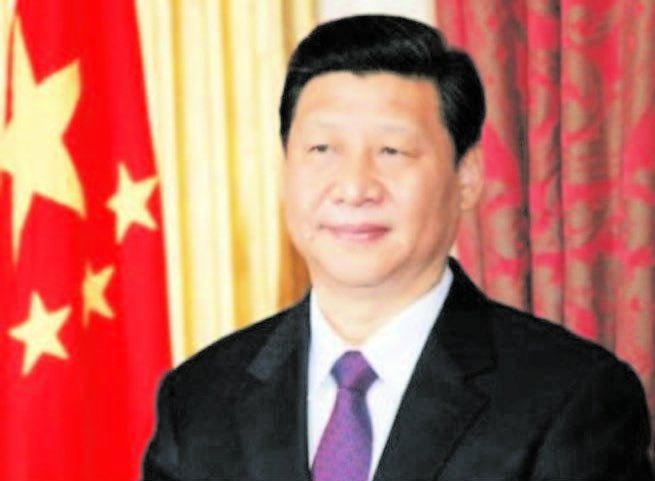
    The fifth generation of CCP leadership under Xi Jinping has de facto abandoned the Deng doctrine of keeping low profile internationally. China has become more ambitious of becoming a superpower and has been extending its sovereignty claims on the land and the sea. As a rising hegemon, China has started to challenge the existing international strategic order. China has been in the news recently for building artificial islands with air-landing strips in the South China Sea. It has demanded 12 nautical miles exclusive economic zone around these artificial, man-made reefs. China is a signatory to the law of the Seas (UNCLOS). Chinese attempts to claim the bulk of the South China Sea goes against both the letter and the spirit of the law of the sea. Beijing will invoke its EEZ for its own economic benefits while denying the same rights to other claimants. Brushing aside the ASEAN Code of Conduct in the SCS, China claims sovereignty over all of the SCS which is disputed by Vietnam, the Philippines, Malaysia, Brunei and Taiwan.

    For the last several years, Chinese official media has been harping on safeguarding China’s “Ocean Sovereignty”. The PLA navy’s goal is to have a “Thousand Ships Navy”. This stated “TSN” Goal is to further Chinese supremacy in the Indo-Pacific region and exploit the mineral & hydrocarbon wealth in the international sea-beds. PLAN has been entrusted to fight future wars for China’s security as per the former President Hu Jintao. On December 6th 2011, while addressing the PLA Navy, Hu Jintao pronounced that PLAN should make “extended preparations for warfare in order to make greater contributions to safeguard national security”. China unilaterally declared an air-defense identification zone in the East China Sea in November 2013. Recently, a Chinese admiral declared similar intentions of setting up an air defense identification zone in the future above the disputed areas of the South China Sea if Beijing thought it was facing a strategic threat.

    China has created not only facts on the ground but also facts on the Ocean in a very predictable manner of claiming sovereignty with the “Chinese Characteristics”. China always makes maximalist claims against other countries, disputes sovereignty, and alters the facts on the grounds of medieval history or economic reasons, bullies the smaller adversaries into submission, demands mutual concessions while later on sending its armed forces. China has constructed a couple of lighthouses in the South China Sea to provide a fig-leaf for its naked hegemony and sea-resources grabbing activities. China has successfully converted the South China Sea into a virtual private lake affecting the freedom of navigation for the entire world. India has vital maritime interests in the South China Sea. 55% of Indian maritime trade passes through the South China Sea. China has objected vehemently to ONGC’s oil drilling in collaboration with Vietnam in the South China Sea and PLAN ships have started to harass the Indian drilling rigs.

    Once the heat of the South China Sea is gone and Beijing has de facto acquired the marine resources of the South China Sea, the dragon will spread its strategic tentacles into the Indian Ocean. Warning bells are already ringing in the Indian Ocean. PLAN started its naval forays in Indian Ocean up to the Gulf of Aden in 2010 under the garb of anti-piracy operations to control Somali pirates. China’s string of pearl initiative got absorbed in the 21st Century Maritime Silk Road. China did acquire significant naval facilities in Hambantota, Chittagong, Maldives, and listening & communication facilities in the Coco Islands in Myanmar besides building the naval port in Gwadar. Incidentally, India has gifted the Coco islands to Myanmar in Nehru’s realm. Gwadar port was offered to India by Oman but Nehru declined and Pakistan became the owner and the beneficiary. China also acquired naval facilities for recuperation and re-fueling in Seychelles in December 2011. China has already signed an agreement with the UN backed International Seabed Authority to gain exclusive rights to explore poly-metallic sulfide ore deposits in 10,000 square-kilometers of international seabed in Indian Ocean for 15 years. China has been sending nuclear powered submarines to Sri Lanka and Pakistan. Pakistan will receive eight Chinese nuclear powered submarines effectively neutralizing the Indian second strike capabilities in case of a nuclear attack on India. China plans to buy an island from the Maldives for $ 1 billion under the current Maldivian Government of President Abdulla Yameen.

    China’s response to Malabar naval exercises in 2007 when trilateral format included Japan was very negative leading to non-invitation to Japan later on after 2007. India plans to invite Japan in the upcoming Malabar exercises and Chinese reaction would be worth watching. China remains very paranoid about the US “Pivot to Asia” doctrine. Chinese paranoia about the Asian Quadrilateral led to Australia pulling out of that mechanism for maritime cooperation in the Indo-Pacific.

    China had sent trial balloons to US for a G2 condominium by which US will take over the Atlantic Ocean whereas China will have rights over the Pacific Ocean. Unlike Tibet, Indo-Pacific is too important to be given to China on a platter. As a trading nation with vital economic and maritime interests, India will have to safeguard the sea-lanes of communication, ensure freedom of navigation and take the strategic ownership of her maritime interests.

    China’s foreign exchange reserves were at the peak of almost $4 trillion in June 2014. Despite a recent decline in Chinese economy, China’s foreign exchange reserves totaled $3.514 trillion at the end of September 2015. China still has the largest foreign exchange reserves in the world. China will continue to extend its strategic footprints under the much enlarged One Belt, One Road (OBOR) project because it has plenty of spare cash. China also proposes to use the Beijing sponsored AIIB as the financing arm for the OBOR which will ultimately require $ 1.4 trillion in investments. China has already sanctioned$46 billion on China-Pakistan Economic corridor as part of the OBOR connectivity without taking India’s sensitivities about CPEC passing through the POK. While India has cooperated with China in the BCIM (Bangladesh, China, India, and Myanmar) Corridor project, the GOI has been deliberately silent about any synergistic cooperation with the 21st Century Maritime Silk Road project.

    read-more

  • Nations say Philippine peace effort shouldn’t break down

    Nations say Philippine peace effort shouldn’t break down

    MANILA (PHILIPPINES) (TIP): A group of Western and Asian countries said Thursday that recent setbacks should not derail efforts that have brought a Muslim rebellion in the southern Philippines to the brink of a settlement, adding that safeguards should remain in place to prevent a return to fighting.

    Diplomats representing the countries, including the United States and European Union, expressed support in a joint statement for continuing peace efforts, saying “it is vital that there is no return to violence.”

    Yearslong peace negotiations between the Philippine government and the Moro Islamic Liberation Front, the largest Muslim rebel group in the south, led to the signing of a new Muslim autonomy deal last year.

    A police anti-terror assault in January, however, spun out of control and led to the killings of 44 police commandos in clashes that entangled some of the Moro rebels. That sparked public outrage and prompted lawmakers to scrutinize and water down the autonomy bill, delaying its passage and sparking fears of renewed hostilities.

    The insurrection in the south, homeland of minority Muslims in the largely Roman Catholic country, has left more than 120,000 combatants and civilians dead and held back progress in the resource-rich but poverty-stricken area.

    “The long and difficult history of this troubled region can and should move to a more positive future agenda,” said the statement, which was signed by at least 21 ambassadors and senior diplomats in Manila.

    “For the country as a whole, it is essential that setbacks are overcome and people of vision and faith come together to ensure that the momentum for peace continues,” the diplomats said. “We call on all concerned to remain engaged in the peace process.”

    The rebels have said that changes that dilute the proposed autonomy law are unacceptable. They appealed to lawmakers to pass legislation that would help end the decades-old rebellion.

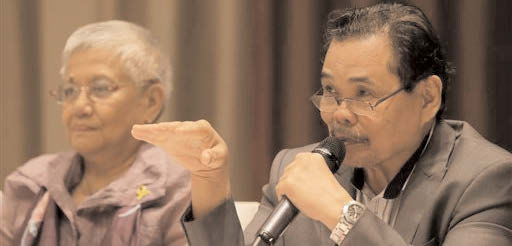
    Rebel chief negotiator Mohagher Iqbal Front has said delays in the passage of the autonomy bill have made the insurgents anxious, but he played down fears that new violence would erupt.

    Under the Malaysian-brokered peace agreement, the rebels dropped their separatist bid in exchange for a more powerful and better-funded Muslim autonomous region to be called Bangsamoro. It is to be created with a bill drafted by a rebel-government commission and submitted to Congress.

  • China appears to be working on third airstrip on disputed South China Sea islets: Expert

    WASHINGTON (TIP): China appears to be carrying out preparatory work for a third airstrip in contested territory in the South China Sea, a US expert said on September 12, citing satellite photographs taken last week.

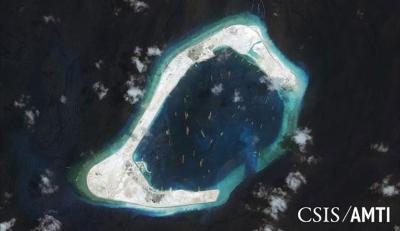
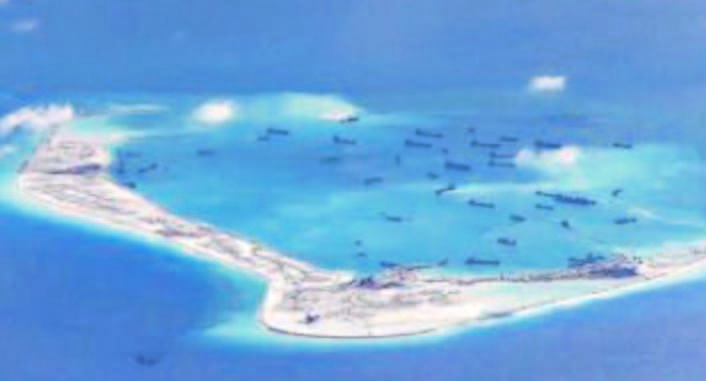
    The photographs taken for Washington’s Center for Strategic and International Studies (CSIS) think tank on Sept. 8 show construction on Mischief Reef, one of seven artificial islands China has created in the Spratly archipelago.

    The images show a retaining wall around an area 3,000 meters (3,280 yards) long, matching similar work by China on two other reefs in the Spratlys, Subi and Fiery Cross, said Greg Poling, director of CSIS’s Asia Maritime Transparency Initiative (AMTI).

    Poling said the work “more likely than not indicates preparations for a runway” on the reef.

    Satellite photographs from late June showed China had almost finished a 3,000-meter airstrip on Fiery Cross.

    Poling said other satellite photos from last week showed work was advancing at Subi Reef, where “clearly, what we have seen is going to be a 3,000-meter airstrip and we have seen some more work on what is clearly going to be some port facilities for ships.”

    Asked about Mischief Reef on Monday, China’s Foreign Ministry spokesman Hong Lei repeated China’s claim to “indisputable sovereignty” over the Spratly islands and its right to establish military facilities there.

    Security experts say 3,000-meter airstrips would be long enough to accommodate most Chinese military aircraft, giving Beijing greater reach into the heart of maritime Southeast Asia, where it has competing claims with several countries.

    News of the advancing work comes ahead of a visit to Washington next week by Chinese President Xi Jinping. US worries about China’s increasingly assertive territorial claims are expected to be high on the agenda.

    A spokesman for the US Defense Department, Commander Bill Urban, declined to comment specifically on Poling’s assessment, but repeated US calls for a halt to land reclamation, construction and militarization of South China Sea outposts to “ease tensions and create space for diplomatic solutions.”

    “China’s stated intentions with its program, and continued construction, will not reduce tensions or lead to a meaningful diplomatic solution,” he added.

    A new airstrip at Mischief Reef would be particularly worrying for the Philippines, a rival claimant in the South China Sea. It would allow China to mount “more or less constant” patrols over Reed Bank, where the Philippines has long explored for oil and gas, Poling said.

    Three airstrips, once completed, would allow China to threaten all air traffic over the features it has reclaimed in the South China Sea, he said, adding that it would be especially worrying if China were to install advanced air defenses. The Philippine government had no immediate comment.

    China stepped up creation of artificial islands in the South China Sea last year, drawing strong criticism from Washington

  • Chanda Kochhar & 2 Indian Americans Selected For Asia Game Changer Awards

    Chanda Kochhar & 2 Indian Americans Selected For Asia Game Changer Awards

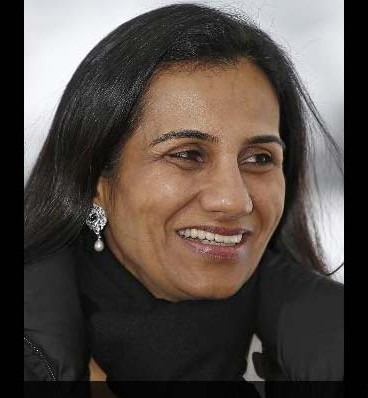
    NEW YORK:  ICICI bank CEO Chanda Kochhar is among three Indians selected for this year’s Asia Game Changer awards given by Asia Society to honour “true leaders making a positive contribution to the future of Asia.”

    Indian-American actor Aasif Mandvi, 49, and designer Kiran Bir Sethi, 49, also made it to the list besides Kochhar, 53.

    Champion Boxer and Philanthropist from the Philippines Manny Pacquiao is the 2015 Asia Game Changer of the Year “for using his sport and his star power as forces for good,” Asia Soceity, the leading global cultural organisation, announced.

    The honorees will be bestowed the honour at the Asia Game Changer Awards dinner and celebration at the UN in October.

    The New York-based organisation said Ms Kochhar “not only made history” by becoming the first woman to head an Indian bank but she also transformed the entire Indian retail banking industry.

    “Under Kochhar’s leadership, ICICI Bank has achieved great milestones year-after-year by expanding its businesses, leveraging technology to bring value to its urban and rural customers and partnering with the public and private sectors to create new opportunities,” it said.

    By shattering the proverbial “glass ceiling,” Ms Kochhar has been an inspiration to many young women and has racked up numerous awards and accolades, it added.

    Mr Mandvi has become a powerful spokesperson for Muslims and Asian-Americans. Mumbai-born Mandvi has “challenged stereotypes” and provided a voice for Muslim-Americans, changing the game in terms of how Asians are viewed on TV.

    In 2015, he co-wrote, produced and acted in the web series ‘Halal in the Family’ for the popular comedy site Funny or Die, using the sitcom format to tackle Islamophobia.

    “Mandvi aspires not only to provide positive representation for Muslim America – he also hopes to challenge non-Muslim audiences,” Asia Society said.

    Interior designer Ms Sethi founded The Riverside School in Ahmedabad in 2001, aiming to provide an alternative model which focuses on “quality of learning,” “student well-being,” and “empathy in education,” a game-changing move in India.

    In 2009, Ms Sethi expanded on the principles practiced at Riverside to found the ‘Design for Change’ movement with the goal of getting children to drive change in their communities by unleashing what she calls their “I can superpower.”

    The award addresses the lack of recognition for Asians who are transforming ideas into action and improving lives, said Asia Society President Josette Sheeran.

    The honorees are selected through a global survey of more than 1,000 thought leaders. The other seven honorees include 2014 Nobel Laureates in Physics and inventors of a new energy-efficient light source – the blue LED Isamu Akasaki, Hiroshi Amano and Shuji Nakamura “for lighting our world in a groundbreaking and sustainable way.”

  • Ramon Magsaysay Award for two Indians with ideas and action

    Ramon Magsaysay Award for two Indians with ideas and action

    Exposing the development bluff, heavily dependent on the huge grants of money that makes little difference to the lives of the poor, Anshu Gupta, the CEO of Goonj, has creatively transformed the currency for development by using donated materials, instead of money. Goonj set an example for governments that harp on lack of resources for social development by acting differently and finding solutions within the available resources. For the non-profit sector, at the receiving end of the present government’s scrutiny and distrust, the Ramon Magsayasay Award, Asia’s equivalent to the Nobel Prize, for Goonj has come at an opportune time. Almost unrecognised hitherto, the NGO has successfully transformed the culture of giving by maintaining dignity of the beneficiaries, who barter labour for the materials received.

    Whistleblower bureaucrat Sanjiv Chaturvedi is another Indian who shares the Magsaysay Award for 2015 with three other recipients from Laos, the Philippines and Myanmar for his sustained crusade against corruption that exposes the hollowness of the Prime Minister’s slogan “Na khaunga, na khane doonga” (will neither indulge in corruption nor let anyone). As the Chief Vigilance Officer, AIIMS, Chaturvedi initiated action against the supply of dubious medicines, irregular appointments of consultants and tenders awarded on fake documents. As a reward for his expose, he was suspended, kept out of work, and harassed. Such examples deter others, especially in the bureaucracy, from speaking out their mind against the prevalence of corrupt practices in the system.

    These contributors to social development need recognition and encouragement. In 2014, the Nobel Peace Prize awarded to Kailash Satyarthi was a grim reminder of the scourge of child labour that persists in the 21st century India. Goonj has distributed three million sanitary napkins processed from discarded clothes to poor women. These campaigners for social change remind us from time to time the vast gulf that persists between word and action. They need to be heeded.

  • Philippines warns China flouting UN maritime laws

    Philippines warns China flouting UN maritime laws

    THE HAGUE (TIP): The Philippines has appealed to an international tribunal to declare China’s claims to most of the South China Sea illegal, warning the integrity of United Nations’ maritime laws is at stake.

    In opening comments to the tribunal in the Hague on yesterday, foreign secretary Albert del Rosario said the Philippines had sought judicial intervention because China’s behaviour had become increasingly “aggressive” and negotiations had proved futile.

    Del Rosario said the UN’s Convention on the Law of the Sea, which the Philippines and China have both ratified, should be used to resolve their bitter territorial dispute.

    “The case before you is of the utmost importance to the Philippines, to the region, and to the world,” del Rosario told the tribunal.

    “In our view, it is also of utmost significance to the integrity of the convention, and to the very fabric of the legal order of the seas and oceans.”

    China insists it has sovereign rights to nearly all of the South China Sea, a strategically vital waterway with shipping lanes through which about a third of all the world’s traded oil passes.

    Its claim, based on ancient Chinese maps, reaches close to the coasts of its southern neighbours. The Philippines, Vietnam, Malaysia, Brunei and Taiwan also have claims to parts of the sea, which have for decades made it a potential military flashpoint.

    Tensions have risen sharply in recent years as a rising China has sought to stake its claims more assertively.

    Following a stand-off between Chinese ships and the weak Filipino Navy in 2012, China took control of a rich fishing ground called Scarborough Shoal that is within the Philippines’ exclusive economic zone.

    China has also undertaken giant reclamation activities that have raised fears it will use artificial islands to build new military outposts close to the Philippines and other claimants.

    China has rejected all criticism over its actions, insisting it has undisputed sovereign rights to the sea. However del Rosario told the tribunal in the Hague that China’s argument of claiming the sea based on “historic rights” was without foundation.

    “The so-called nine dash line (based on an old map used by China) has no basis whatsoever under international law,” he said.

  • Sabotage suspected as Pakistan troop train plunges into canal

    Sabotage suspected as Pakistan troop train plunges into canal

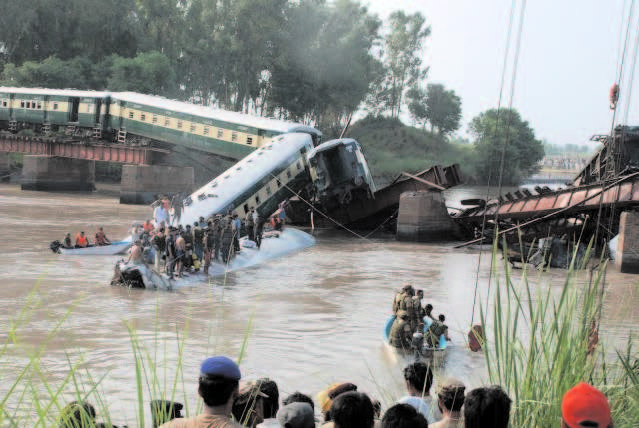
    LAHORE (TIP): A train carrying hundreds of Pakistan soldiers and their families plunged several feet into a canal on July 2 when a bridge collapsed in the country’s east in what the army suspects was sabotage, officials said.

    At least six people were missing, but officials at the ministry of railways and the military had not confirmed any deaths. An army spokesman confirmed that four carriages plunged into the canal.

    The military is fighting a Taliban insurgency in several regions of the country’s tribal areas bordering Afghanistan in the northwest.

    The crash in Pakistan’s Gujranwala district, in the northeast, happened as an army unit was being transported from southern Sindh province to northern Pakistan.

    “There were around 300 passengers on board,” Minister for Railways Khawaja Saad Rafiq told Reuters. “It is too early to say about the reason for the mishap. Rescue work is under way.”

    More than 50 people were rescued, a military official said.
    Television images of the scene showed several carriages partly submerged in the canal.

    Rafiq told local Geo TV that six people were missing and the cause of the crash was unknown. But a senior military official said the army suspected sabotage.

    “We suspect that this was an act of sabotage and the planks on the rail were tampered with,” the official said, requesting anonymity as he was not authorised to speak to the media.

    The collapse also raises concerns about the safety of infrastructure. Several TV channels reported that the bridge had been marked as “extremely dangerous”.

    In May, a Pakistan military helicopter carrying diplomats to inspect a tourist project crashed, killing seven people, including the ambassadors of Norway and the Philippines.

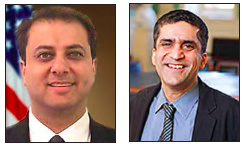
  • Indian Americans Preet Bharara & Rakesh Khurana honored with Carnegie’s ‘Great Immigrant’ award

    Indian Americans Preet Bharara & Rakesh Khurana honored with Carnegie’s ‘Great Immigrant’ award

    NEW YORK (TIP): The Carnegie Corporation has announced the 2015 “Great Immigrant”: The Pride of America” awardees. These are the individuals who have helped advance and enlighten our society, culture, and economy. Preet Bharara, U.S. Attorney, Southern District of New York is among 38 eminent personalities selected as 2015 ‘Great Immigrant’ honorees, on the eve of the nation’s birthday on July 4th by Carnegie Corporation.

    The other Indian American awardee, Rakesh Khurana is the Marvin Bower Professor of Leadership Development at Harvard Business School (HBS), professor of sociology in the Faculty of Arts and Sciences (FAS), and co-master of Cabot House and dean of Harvard College.

    “Our founder, Andrew Carnegie, came to this country as the son of impoverished immigrants and grew up to become one of the greatest contributors to American industry and philanthropy,” said Vartan Gregorian, President of the Corporation. “His devotion to U.S. democracy stemmed from his conviction that the new infusion of talent that immigrants bring to our country keeps American society vibrant.”

    The 38 Great Immigrants honored this year come from more than 30 countries around the world and represent leadership in a wide range of professions.

    They include:

    • Preet Bharara S. Attorney, Southern District of New York (India)
    • Geraldine Brooks Pulitzer Prize-winning Author, Journalist (Australia)
    • Thomas Campbell Director and CEO, The Metropolitan Museum of Art (England)
    • Rabia Chaudry Attorney, Civil Rights Activist (Pakistan)
    • Mica Ertegun Interior Designer (Romania)
    • Stanley Fischer Economist; Vice Chair, Board of Governors, Federal Reserve System (Israel)
    • Jonathan Hunt Fox News, Chief Correspondent (Canada)
    • Malek Jandali Composer, Pianist (Syria)
    • Rakesh Khurana Professor, Dean, Harvard College (India)
    • Marie-Josée Kravis Economist, Philanthropist (Canada)
    • Nastia Liukin Olympic Medal-winning Gymnast (Russia)
    • Bette Bao Lord Author, Human Rights Advocate, Philanthropist (China)
    • Ali Malekzadeh President, Roosevelt University, Chicago (Iran)
    • Silvio Micali Turing Award-winning Professor of Computer Engineering (Italy)
    • Lorne Michaels Peabody Award-winning TV Producer (Canada)
    • Franziska Michor Vilcek Prize-winning Professor, Computational Biology (Austria)
    • Anchee Min Author (China)
    • Sharmin Mossavar-Rahmani Philanthropist; Chief Investment Officer, Private Wealth Management Group, Goldman Sachs (Iran)
    • Firouz Naderi Director, Solar System Exploration, NASA Jet Propulsion Laboratory (Iran)
    • Azar Nafisi Author, Scholar (Iran)
    • Craig Nevill-Manning Engineering Director, Google (New Zealand)
    • Maria Otero U.S. Under Secretary of State for Civilian Security, Democracy, and Human Rights (Bolivia)
    • Eddie Pérez Bullpen Coach, Atlanta Braves (Venezuela)
    • Ilana Rovner Judge, U.S. Court of Appeals, Seventh Circuit (Latvia)
    • Arturo Sandoval Grammy Award-winning Jazz Trumpeter (Cuba)
    • Madhulika Sikka Vice President, Executive Editor, .Mic (India)
    • Thomas C. Südhof Nobel Prize-winning Neuroscientist (Germany)
    • Antonio M. TagubaS. Army Major General, Retired (Philippines)
    • Ann Telnaes Pulitzer Prize-winning Political Cartoonist (Sweden)
    • Thalía Singer, Actress (Mexico)
    • Tuyen Tran Vilcek Prize-winning Fashion Designer (Vietnam)
    • Abraham Verghese Physician, Professor, Author (Ethiopia)
    • Eugene Volokh Professor, Legal Scholar, Blogger (Ukraine)
    • Arieh Warshel Nobel Prize-winning Biochemist (Israel)
    • Raffi Yessayan Judge, Massachusetts Superior Court (Lebanon)
  • China and India Immigrants Becoming US Citizens at High Rate

    China and India Immigrants Becoming US Citizens at High Rate

    For the first time in decades, the number of immigrants coming to the United States from China and India outnumbers those coming from Mexico. It’s a historic shift that has caught the attention of service providers across the country working to help immigrants become U.S. citizens.

    “We’ve seen a huge change in recent immigration,” Jeanne Batalova, senior policy researcher at Migration Policy Institute, told reporters on a national press call Wednesday. The call was hosted by the New Americans Campaign, in collaboration with New America Media and the National Immigration Forum.

    Of 1.2 million recent immigrants who came to the United States in 2013, 147,000 immigrants came from China, the leading country of origin, followed by 129,000 immigrants from India, and then 125,000 immigrants from Mexico.

    Asian Americans also have among the highest naturalization rates in the United States: Less than half of all immigrants in the United States (47 percent) are naturalized U.S. citizens, while the percentage for Asian immigrants is significantly higher, at 59 percent. The proportion of naturalized U.S. citizens is highest for Vietnamese (76 percent) and Taiwanese (74 percent), followed by Filipinos (68 percent), Koreans (59 percent), Chinese (51 percent) and Indians (47 percent).

    These numbers are high despite the fact that some countries, like China, still do not offer dual citizenship. Others, like the Philippines (in 2003) and South Korea (in 2010), have made changes to their dual citizenship requirements.

    Yet even for those who do not have access to dual citizenship, the benefits of U.S. citizenship can be very attractive — including security and protection from deportation, the ability to travel freely, the right to vote and run for political office, and the ability to sponsor a wider range of family members for immigration to the United States.

    Citizenship also brings economic benefits, said Batalova. Studies show that naturalized citizens earn more than non-citizen counterparts, are less likely to be unemployed and are better represented in high-skilled jobs.

    Still, many immigrants face barriers that can prevent them from becoming citizens, such as limited English proficiency or limited income, said Jannette Diep, executive director of Boat People SOS-Houston. Boat People SOS is part of the New Americans Campaign, a national coalition of over 100 organizations that helps immigrants overcome these barriers to make citizenship more accessible. For example, the campaign offers free workshops to help people apply for citizenship, provides English language and civics classes, and helps people apply for fee waivers if they can’t afford the $680 application fee.

    Citizenship is “a very important step for the Asian American community because it allows them to become more integrated in America,” said Diep. “This integration allows the AAPI community to become more visible in U.S. cities, increasingly getting elected to public office.”

    According to a report released last year by the UCLA Asian American Studies Center, the number of Asian American public officials has reached historic levels, with more than 4,000 Asian Americans holding public office in 39 states and the federal government.

    For Zen Santos, who came to Los Angeles from the Philippines in 2008, becoming an American citizen allowed her to have a say in the future of her new country.

    “I felt that I lacked something – to be involved, and that is to vote,” Santos told reporters on Wednesday.

    But when Santos lost her job, she found that she couldn’t afford the application fee. That’s when Santos sought help from the Filipino American Service Group, Inc., (FASGI) in Los Angeles, which is part of the New Americans Campaign. The group helped Santos get a fee waiver, and she became a citizen in 2013.

    “I am American now, and I can vote now,” Santos said. “I have to get involved in deciding for this country where I live now.”

    For more information about the New Americans Campaign, go to: newamericanscampaign.org

  • UN lauds India’s improved disaster risk management

    UN lauds India’s improved disaster risk management

    UNITED NATIONS (TIP): Lauding India’s improved disaster risk management and accuracy of its meteorological department, the UN has said timely warnings on cyclones have helped “dramatically” reduce mortality during natural calamities.

    The global assessment report on disaster risk reduction released by the United Nations said that the accuracy of forecasts made by the Indian Meteorological Department has greatly improved over the years.

    It cited the 2013 cyclone Phailin that hit Odisha, saying “in a significant improvement” from previous years, warnings were disseminated four days before the cyclone made landfall.

    “The cyclone made landfall in a pre-electoral period, meaning that both the national and state governments deployed all available resources to ensure that the disaster was well managed and its impacts minimised,” the report said.

    Comparing the casualty figure of 9,843 in the 1999 super-cyclone that had hit Odisha, the report said no more than 47 people died during Phailin.

    “This dramatic reduction in disaster mortality has been attributed to improvements in disaster risk management effected by the Odisha State Government,” it said.

    The report further said that the case of Odisha is indicative of a trend in which improving development conditions and strengthened disaster management lead to dramatically reduced mortality, at least in those events for which warning is possible.

    The report said that success stories from countries like Bangladesh, Chile, India, the Philippines in their disaster preparedness “show that timely and effective warning and communication coupled with risk information and a prepared population significantly reduces mortality.” 

    According to the report, an annual global investment of six billion dollars in disaster risk management strategies would generate total benefits in terms of risk reduction of 360 billion dollars.

    “For many countries, that small additional investment could make a crucial difference in achieving the national and international goals of ending poverty, improving health and education and ensuring sustainable and equitable growth,” the report says.

    While countries are devoting resources to disaster management, the report stresses that more needs to be done to foster a culture of prevention and incorporate disaster risk reduction into the post-2015 development agenda.

    The report also noted that the cost of disasters worldwide has reached an average of USD 250 billion to USD 300 billion every year, urging countries to increase their commitments to strengthen their population’s resilience.

    The report, produced by the UN Office for Disaster Risk Reduction, stresses that the economic losses caused by disasters are also hindering countries’ paths to achieve sustainable development, making risk reduction central to social, economic and environmental progress.

    “If we do not address risk reduction, future losses from disaster will increase and this will impact countries’ capacity to invest money in other areas such as health and education. If we do not take the necessary measures now, it will be difficult to achieve development, let alone sustainable development,” said UN secretary general’s special representative on disaster risk reduction Margareta Wahlstrom.

    “The report is a wake-up call for countries to increase their commitment to invest in smart solutions to strengthen resilience to disasters,” Wahlstrom said, adding that they will have an opportunity to do so at the third conference on disaster risk reduction taking place in less than two weeks in Sendai, Japan.

    At the conference, countries will adopt a framework to success the hyogo framework for action.

    Born in 2005 out of the world conference on disaster reduction, the framework is a 10-year plan, the first to detail the work that is required from all different sectors and actors to reduce disaster losses.

    The report added that in many countries, climate change is magnifying risks and increasing the cost of disasters.

  • China plans to build three more aircraft carriers: Report

    China plans to build three more aircraft carriers: Report

    BEIJING (TIP): China is planning to build three more aircraft carriers for deployment in the disputed South China Sea amid the escalating maritime stand-offs with its neighbours and the US’ big push into Asia-Pacific.


    While there is no official confirmation to the plans of additional aircraft carriers, Chinese defence expert Cao Weidong said that China pursues a defensive national defence policy and four aircraft carriers are appropriate for its present need especially for the deployment in South China Sea where China is entangled in maritime disputes with Vietnam, the Philippines, Malaysia and Brunei.


    “If China has four aircraft carriers, with two in the South China Sea and two in northern China, they can better accomplish their missions,” he was quoted as saying in the official People’s Daily online.


    Aircraft carriers are typically required for training, maintenance and duty.


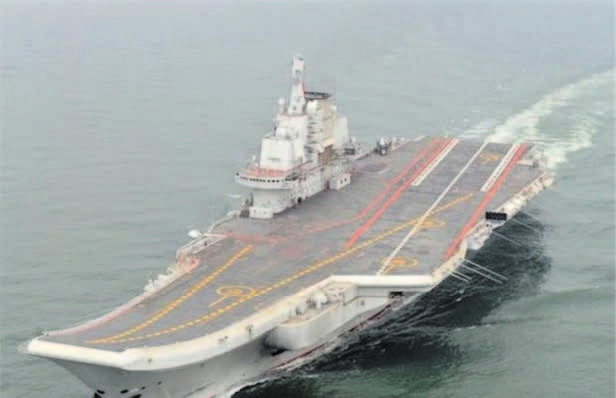
    So far, China only has Liaoning, as its sole aircraft carrier. Launched in September 2012, the Liaoning, which was refurbished after its hull was bought from Ukraine is in operation since 2013.


    On the size of the aircraft carrier, he said 60,000-80,000 tonnes carriers are appropriate for China’s needs at present and there is no need to build 100,000 tonners or larger carriers like the United States.


    A 60,000 tonne ship can carry from 30 to 40 fighters, while a 100,000 ton vessel can carry between 70 and 80 fighters.


    The displacement of an aircraft carrier will greatly affect its combat capability, the daily said.


    In addition to refurbishing the ship, China also had to build an aircraft suitable to operate from its deck. In May 2013, China’s first carrier-based air force was established and completed its first joint training.


    Last year, Liaoning returned to Dalian for a four-month overhaul.


    Liaoning was mostly regarded as trial aircraft carrier. Some reports said China is currently building two more.


    China claims most of the South China Sea, a vital sea lane and fishing ground that is believed to hold vast mineral resources. But the Philippines, Vietnam, Brunei and Taiwan also have overlapping claims over the waters.


    Beijing is also having a raging dispute with Japan over uninhabited islands in the East China Sea which has caused major upheaval in the relations between the two countries.


    China is also seriously concerned over the US’ Asia Pivot push siding with Japan and Asean countries to press for resolution of the maritime disputes.

  • ISIS EXPANDING ‘INTERNATIONAL FOOTPRINT’

    ISIS EXPANDING ‘INTERNATIONAL FOOTPRINT’

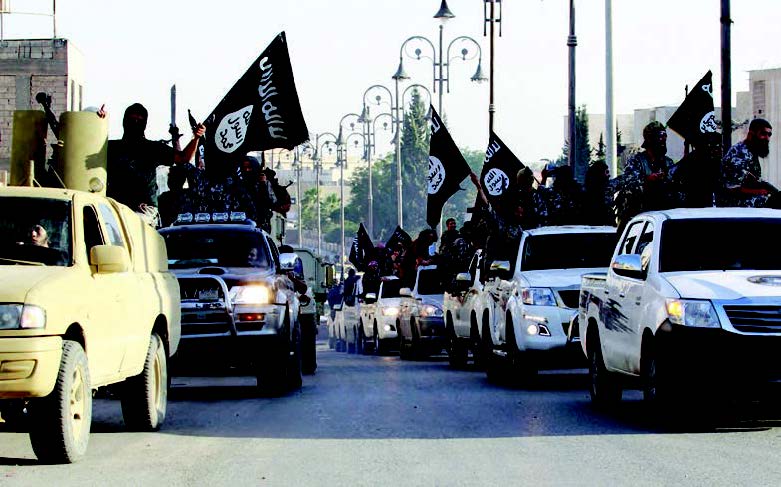
    The Islamic State, despite being driven by Kurdish fighters from its one-time Syrian stronghold in Kobani last week, nevertheless is extending its reach well beyond Iraq and Syria, military officials and analysts warn — represented, by some estimates, in nearly a dozen countries.

     ISIS History

    The Islamic State, despite being driven by Kurdish fighters from its one-time Syrian stronghold in Kobani last week, nevertheless is extending its reach well beyond Iraq and Syria, military officials and analysts warn — represented, by some estimates, in nearly a dozen countries.


    Lt. Gen. Vincent Stewart, director of the US Defense Intelligence Agency, delivered a grim assessment earlier this week in testimony to the House Armed Services Committee, as he described how the group was surfacing in North Africa.


    “With affiliates in Algeria, Egypt, Libya, the group is beginning to assemble a growing international footprint that includes ungoverned and under governed areas,” Stewart said.


    ISIS continues to hold a wide swath of territory, bigger than the state of Pennsylvania, in its home base spanning parts of Iraq and Syria, propped up by more than 20,000 foreign fighters from at least three dozen countries. But the terror network’s tentacles, as Stewart indicated, are creeping into other nations; largely those with fragile governments.


    “ISIS, like Al Qaeda, has thrived in the failed states where there is a vacuum of power,” said James Phillips, Middle East senior research fellow with the Heritage Foundation.


    A key worry is the group’s potential ambitions in Afghanistan, where the U.S. combat mission just ended and Afghan security forces are in control.


    Defense secretary nominee Ashton Carter, who had his confirmation hearing Wednesday, told Congress he is aware of reports that ISIS may try to expand into Afghanistan, and vowed to work with coalition partners to stop the group. He said he would consider changing plans for withdrawing the remaining 10,600 U.S. troops from Afghanistan by the end of 2016 if security conditions further deteriorate.


    The Islamic State’s ambitions do not stop at Afghanistan, the so-called Graveyard of Empires. Militant groups in Pakistan, the Philippines, Israel and the Gaza Strip, Lebanon, Indonesia and Jordan, among other areas, reportedly have pledged formal support for ISIS. New York Magazine, in a recent report, wrote, “Think of them as ISIS’s self-appointed foreign bases.”


    It’s impossible to know precisely how many members are involved in these groups, but analysts say the biggest groups generally are still affiliated with Al Qaeda, while others are starting to stand with ISIS – and execute attacks.


    An ISIS-tied group in Egypt, for instance, claimed responsibility for a series of coordinated attacks on Jan. 30 that killed at least two dozen security officers in restive Sinai.


    The Caliphate Soldiers Group in Algeria, which pledged loyalty to ISIS in September, kidnapped and beheaded a French tourist the same month. Terrorists posted a video of the beheading, saying it was in response to French airstrikes in Iraq. Algerian Special Forces killed the terror leader late last year, which analysts say dealt a morale blow to the small group.


    In Libya, the Islamic State’s Tripoli Province took credit for a hotel attack on Feb. 1 which killed nine people, including an American.


    Published reports tie other groups to ISIS including The Jundallah militant group and the Tehreek-e-Khilafat groups in Pakistan; the Philippines’ Abu Sayyaf group; Sinai Province in Egypt; Lebanon’s The Free Sunnis of Baalbek Brigade; Indonesia’s Jama’ah Ansharut Tauhid; and Sons of the Call for Tawhid and Jihad in Jordan.


    The Heritage Foundation’s Phillips said it’s not just groups like these that have declared loyalty. “There are an unknown number of self-radicalized militants in many different countries that may self-identify with ISIS and carry out ‘lone wolf ’ terrorist attacks in its name, without necessarily being members of the group,” he said. He cited the hostage crisis in Sydney, Australia, last December as an example.


    ISIS continues to get pounded by coalition airstrikes in Iraq and Syria, where Kurdish forces recently took back the vital city of Kobani. Those strikes are likely to increase following the brutal execution of a captured Jordanian pilot (though the coalition is down a member, with the United Arab Emirates having suspended airstrikes after the pilot’s capture in December.)


    Phillips said the purpose of the group’s grisly propaganda videos – including of the Jordanian pilot being burned alive in a cage — is to change the subject, from recent setbacks in Kobani as well as some areas in Iraq, through “jihadist pornography.” He said the point is to show the group as an
    “invincible army,” psychologically attractive to European teenagers who might join the fight.


    Raymond Stock, a Shillman-Ginsburg writing fellow at the Middle East Forum, argued the message carries more weight with Muslims worldwide than most realize. He told Fox News the propaganda videos are “so well-produced and so well-targeted –extremely effective. We have nothing counteracting that.”


    Stock, who spent 20 years living in Egypt, sees the group’s ambitions as limitless and argues it is a mistake to believe the Islamic State is an organization seeking to control limited territory.


    He also suggested Al Qaeda and ISIS are not necessarily direct competitors. He cited an Arabic proverb, which he translates as: “Me and my brother against my cousin; me and my cousin against the outsider.”


    In Senate Armed Services Committee confirmation hearing for defense secretary, Sen. John McCain, R-Ariz., pressed Carter on the need to have a strategy against ISIS.


    “I believe I understand our strategy at this time,” Carter explained. “I also have the intention, again if confirmed, to make it my first priority to go there, to talk to our military leaders there, to confer with you …I think a strategy connects ends and means, and our ends with respect to ISIL needs to be its lasting defeat.”


    McCain retorted: “Well, it doesn’t sound like a strategy to me, but maybe we can flesh out your goals.”


    (Source: AP)

  • DEFENSE CONTRACTOR PLEADS GUILTY IN MASSIVE BRIBERY CASE

    DEFENSE CONTRACTOR PLEADS GUILTY IN MASSIVE BRIBERY CASE

    WASHINGTON (TIP): A Malaysian defense contractor pleaded guilty Thursday, January 15, in a corruption scandal of epic proportions, admitting that he bribed “scores” of U.S. Navy officials with $500,000 in cash, six figures’ worth of sex from prostitutes, lavish hotel stays, spa treatments, Cuban cigars, Kobe beef, Spanish suckling pigs and an array of other luxury goods.

    Leonard Glenn Francis, a businessman who charmed a generation of Navy officers while resupplying their ships in Asia, admitted in federal court in San Diego to presiding over a decade-long corruption scheme involving his Singapore-based firm, Glenn Defense Marine Asia. The investigation has steadily escalated into the biggest corruption case in the Navy’s history, with Francis admitting that he bilked the service out of tens of millions of dollars by overcharging for food, fuel and basic services. Five current and former Navy officials have pleaded guilty so far, and prosecutors have made it clear they are targeting others. The Navy has also stripped security clearances from two admirals, including the chief of naval intelligence, for their alleged involvement with Francis, although they have not been charged with a crime. Known in Navy circles as “Fat Leonard” for his girth, Francis, 50, agreed to forfeit $35 million in ill-gotten proceeds and could face up to 25 years in prison. But the most severe impact may turn out to be the blow to the Navy’s reputation, given the array of evidence that so many officers were corrupted so easily by a foreign defense contractor.

    “It is astounding that Leonard Francis was able to purchase the integrity of Navy officials by offering them meaningless material possessions and the satisfaction of selfish indulgences,” said Laura Duffy, the U.S. attorney for the Southern District of California, whose office has led the investigation. “In sacrificing their honor,these officers helped Francis defraud their country out of tens of millions of dollars. Now they will be held to account.” The criminal investigation has spanned eight states and eight Asian countries, with more than 100 law enforcement agents involved, court records show. In his plea agreement, Francis admitted that he and his firm defrauded the Navy by overcharging for hundreds of Asian port visits by U.S. ships and submarines. To ensure he didn’t get caught, he plied Navy officials with an array of temptations, including lavish meals, “top-shelf” alcohol, designer handbags, fountain pens, ornamental swords, computers, furniture and handmade ship models.

    Federal prosecutors disclosed Thursday that Francis has provided evidence against two more Navy officials who have yet to be charged: a lieutenant commander and a contract specialist whose names have not been made public. The unnamed contract specialist, a female civilian official based in Singapore for 20 years, was given a bottomless travel expense account, which she used to visit Bali, Bangkok, Dubai, Turkey and Greece, according to Francis’s plea agreement. In exchange, she worked as a mole for Glenn Defense Marine, handing over proprietary contracting information and advocating on the firm’s behalf. The scandal erupted into public view in September 2013, when federal agents lured Francis to a San Diego hotel and arrested him in a sting operation. The Navy says that it began scrutinizing Francis in May 2010 but that he was repeatedly able to thwart criminal investigators by bribing a senior agent with the Naval Criminal Investigative Service, who fed him sensitive files and helped to cover his tracks.

    Although Francis initially fought the charges against him, he agreed to cooperate with prosecutors in recent weeks.”Today Mr. Leonard Francis has taken accountability for his actions. He looks forward to a brighter future,” said Ethan M. Posner, one of his attorneys. Navy leaders have condemned the unethical behavior of officers involved in the case and have acknowledged that the scandal could grow even worse. Navy Secretary Ray Mabus has pledged to set up a special disciplinary process, led by a four-star admiral, to review allegations against Navy personnel who avoid federal criminal charges but may have run afoul of ethical regulations. “The Navy holds its personnel to the highest standards and those who fall short are held accountable,” Rear Adm. Dawn Cutler, a Navy spokeswoman, said in a statement. “NCIS uncovered the criminal activity associated with this case and continues to cooperate with the Justice Department.”

    Hours before Francis pleaded guilty Thursday, federal prosecutors won another conviction when a Navy captain, Daniel Dusek, admitted to disclosing military secrets to Francis and his firm in exchange for prostitutes, cash, and visits to luxury hotels in Hawaii, Hong Kong and the Philippines. According to a copy of his plea agreement, Dusek provided classified information about Navy ship schedules dozens of times to Glenn Defense Marine, which held contracts worth more than $200 million to supply Navy vessels throughout Asia. Dusek’s attorney, Douglas L. Applegate, did not respond to a phone call seeking comment. The Navy announced in October 2013 that it had relieved Dusek of command of the Bonhomme Richard for his alleged involvement in the scandal, but his appearance in court Thursday was the first sign that he had been under criminal investigation. According to court records, in October 2010, Dusek persuaded the Navy to send an aircraft carrier, the USS Abraham Lincoln, and its strike group to visit a port in Malaysia that was largely controlled by Glenn Defense Marine. As a result, the company was able to easily inflate invoices and overcharge the Navy for a variety of services. Dusek, then working as deputy director of operations for the 7th Fleet, provided the contractor with classified information about ship movements on dozens of occasions, further aiding the company in its scheme to gouge the Navy during port visits, the records show. Francis prized the arrangement so much that he called Dusek “a golden asset” in an email to another company executive, noting that he could “drive the big decks” – or aircraft carriers – “into our fat revenue” ports,” according to the records

    (Source: The Washington Post)

  • GOPIO Cosponsors First Successful Health Fair

    GOPIO Cosponsors First Successful Health Fair

    WASHINGTON (TIP): Healthcare is a big issue for new immigrants, especially elderly people. While Medicare is available to virtually all citizens, starting at age 65, immigrants legally present in the U.S. for less than five years are not eligible and private insurance companies generally do not offer health insurance plans for those over 65. Although there are health insurance options, but these are usually catastrophic traveler’s insurance.


    48
    Organizers. From L to R: Sam Mukherjee, Mayur Modi, Zafar Iqbal, Dr. Surinder Singh Gill


    They usually have a very high deductible and they are very expensive. In view of these harsh realities facing elderly community members from the Subcontinent, the Masjid Gulzar E Madina of Islamic Center Millford Mill Road, Pikesville, Maryland took a bold initiative to organize a first health fair on Sunday 23rd November2014. A number of area community organizations, such as the Global Organization of People of Indian Origin (GOPIO) – Metropolitan Washington, Philippines Nurses Association, Chinese Culture and Community Center, Muslim Community Clinic Inc., Silver Spring, Capital Region Telugu Society, Kerala Cultural Organization and Hindu Seva, co-sponsored this event.

    A large number of physicians, nurses, and healthcare workers volunteered their resources and worked tirelessly to provide their services for a large number of attendees covering a wide range of ages. An easy access to physicians of diverse specialties under one roof provided convenient consultation for wide range of medical issues. In addition to primary care, the medical specialties available for free consultations in a privacy setting included primary care, endocrinology, gastroenterology, hematology-oncology, otolaryngology, orthopedics, rheumatology, and medical ID cards for the community.

    Colgate-sponsored dental van provided dental consultation for children ages 1 to 12. Maryland Physicians Care Van made nutritional healthy food, Amerigroup sponsored Moon Bounce for children, and Columbia Lite House Van did eye sight screenings. The health fair also provided massage therapy and yoga enthusiasts displayed their skills and love for healthy living. Besides yoga sessions on site, there were diabetes and cancer prevention education vendors, healthy living demos and advice booths.

    Mental and behavioral health information, often a taboo topic, was sensitively offered by Counselors Helping South Asians/Indians (Chai). The Samar Group obtained bone marrow sign ups and the Washington Regional Transplant enrolled organ donor. Volunteers from a local Farm Market gave a wide range of fresh vegetables to all attendees. “The outstanding accomplishments of the day were made possible by the cohesive and dedicated collaboration of the Health Fair planning team, physicians, allied medical personnel, county and state health agencies, voluntary charitable organizations countless volunteers, Masjid management, and the Health Fair Advertising team as well as the support of the local organizations,” said Dr. Zafar Iqbal, President GOPIO DC Chapter.

    This successful event was coordinated by Mayur Mody and the management of Islamic Center thanked him for providing excellent leadership with efficient and indefatigable energy. The logistics for medical team was coordinated by Dr. Surinder Singh Gill and Dr. Alif Manijwala, and Dr. Sukhpal headed the team of volunteers. The health fair was open to people of all different ethnic, religious and socioeconomic backgrounds and over 400 people were able to get medical consultation.

  • New Balance of Power in Asia? India is challenging China’s assertiveness

    New Balance of Power in Asia? India is challenging China’s assertiveness

    “India must increase investments in education and infrastructure, achieve more equitable economic development if it is to emerge as a major driver of the global economy. Only then will it be able to make a significant contribution to Asian and international security and contribute to a new peace-promoting balance of power in Asia”, says the author.

    By Anita Inder Singh

    India’s decision to help Vietnam boost its defense modernization – against China’s wishes – raises yet again the question whether a new balance of power is emerging in Asia. India, Vietnam and Japan will try to coordinate security and economic policies. That suggests India is challenging China’s assertiveness in the Asia-Pacific region and staking a claim to explore the energy-rich resources of the South China Sea. Economic and strategic diplomacy were intertwined when Prime Minister Modi visited Japan and the US – and when Chinese President Xi Jinping visited India in mid-September.

    India needs investment to improve its rickety infrastructure and Japan, China and the US have come forward with offers to help India renew it. Companies in all three countries seek new investment destinations and potentially India is one of the biggest. Mutual economic interests are not enough for India to increase its contribution to Asian and global security. The simultaneous interest of Japan and the US in India’s development and its greater role in Asian security only highlight India’s economic weakness and the blunt fact that its ability to enhance its regional role will hinge on its economic performance improving quickly and steadily.

    India has much to gain – and learn – from closer ties with Japan, which is Asia’s oldest democracy. Neither history, nor political/territorial disputes divide India and Japan. As Asia’s post-1945 economic wunderkind Japan had surpassed India, China and many west European countries by the early 1960s. India and Japan are already collaborating on maritime security, counter-terrorism, and energy security. At their summit talks, Modi and Prime Minister Shinzo Abe decided to strengthen defense ties and forge a special strategic global partnership, emphasizing that a developed India and a prosperous Japan were important for Asia and for global peace and security.

    Economics and strategy mixed again when Modi met Japanese business leaders. The 21st century, Modi asserted, would belong to Asia – exactly how would depend on “how deep and progressive” the Indo-Japanese relationship is. This is the immediate context in which he deplored the “expansionist” tendencies among countries, caught in an 18th-century time-warp, to “engage in encroachment” and “intrude” into the seas of others. Evidently Modi was not letting trading interests blur the real political differences with such countries. These comments, made before President Xi Li Ping visited India, were widely interpreted as anti-China. The state-steered Chinese Global Times has downplayed any idea that China counted less than Japan with India.

    “China’s GDP is five times that of India’s. Mutual trust between Beijing and New Delhi, facing strategic pressure from the north, is difficult to build as there is also an unresolved border conflict between the two,” its editorial said. That appeared more of a threat than an olive branch to India. Modi carefully avoided running China down. Before leaving for the US he stated that the world should trust China to observe international law. But Xi’s visit did not enhance trust between New Delhi and Beijing. Even as Xi assured Modi of $20 billion in investment in Gujarat Chinese troops made one of their frequent forays into north-eastern Indian territory, which Beijing claims belongs to China.

    Those forays followed a pattern. China unilaterally invokes “history” (its version) when referring to territorial conflicts with India – and other neighbors. China’s attitude to India echoes that with its Asian neighbors, including Japan, Vietnam and the Philippines. By claiming a territory in the name of history it creates a dispute, dispatches its ships or aircraft – (or in India’s case, troops) – to back up that claim. That is how it unilaterally outlined last November an “air-defense identification zone” over an area of the East China Sea covering Senkaku islands that are also claimed by Japan (and Taiwan). Strong trading ties have not stopped China from using history to make claims on neighboring territories.

    In fact Japan is the largest foreign investor in China. And China is ASEAN’s largest trading partner. In New Delhi Xi’s reference to historical ties between ancient civilizations was marred by the assertion that the Sino-Indian border dispute had historical roots. Such statements imply that the border disputes will remain unsettled; more importantly, that Beijing will continue to lay claim to the Arunachal Pradesh and Ladakh regions. In that case India – like Japan and Vietnam – may find itself simultaneously taking up the politicalstrategic gauntlet and engaging in much-needed trade with China.

    China does nothing to dispel the fears of its neighbors and insists on bilateral solutions. Its claims to un-demarcated maritime waters, including the East and South China Seas (Beijing defines the latter as a ‘core’ interest) are contested by its neighbors, who want the disputes those claims give rise to be settled through international arbitration. That explains why, without naming China, the Obama-Modi communiqué, called on all parties to avoid the use, or threat of use, of force in advancing their claims. It also urged a resolution of their territorial and maritime disputes through all peaceful means, in accordance with the international law, including the UN Convention on the Law of the Sea. At another level, China has taken advantage of America’s planned withdrawal from Afghanistan and is increasing investments there. It is also securing its energy supplies in the oil and gas fields of Central Asia. Moreover, it is India’s main competitor for influence in the Indian Ocean area, which is bounded by Asia on the north, on the west by Africa, on the east by Australia, and on the south by the Southern (Antartic) Ocean.

    There is nothing improper about these activities. But they alarm China’s neighbors and the US, none of whom wants China to gain primacy in Asia. Unsurprisingly, Obama and Modi stressed the need to accelerate infrastructure connectivity and economic development corridors for regional economic integration linking South, Southeast, and Central Asia. The US and India want to promote the India- Pacific Economic Corridor, which will link India to its neighbors and the wider Asia-Pacific region, with a view to facilitating the flow of commerce and energy. That will not be lost on China. Meanwhile uncertainty hovers over the nature of America’s rebalance or pivot to Asia since it has been announced at a time when Washington is cutting defense expenditure. India must increase investments in education and infrastructure, achieve more equitable economic development if it is to emerge as a major driver of the global economy. Only then will it be able to make a significant contribution to Asian and international security and contribute to a new peace-promoting balance of power in Asia.

    (The author is a visiting professor at the Centre for Peace and Conflict Resolution, New Delhi)

  • China, Japan take steps to bury hatchet after 3 years of dispute

    China, Japan take steps to bury hatchet after 3 years of dispute

    BEIJING (TIP): China and Japan have reached an agreement on maintaining peace in the disputed chain of islands in the East China Sea after three years of war mongering. The agreement was reached in Beijing between China’s State Councilor Yang Jiechi and the visiting National Security Advisor of Japan, Shotaro Yachi. The new move may also pave the way for the first ever meeting between Chinese president Xi Jinping and Japanese prime minister Shinzo Abe on the sidelines of the Asia Pacific Cooperation summit next week.

    India and other Asian countries are watching the new move closely because it might have an impact on their territorial disputes with China, sources said. They include Philippines, Indonesia and Malaysia, which are sending their heads of state to the APEC summit. In Tokyo, Japan’s Abe said, “Both Japan and China are coming to the view that it would benefit not just the two countries but regional stability if a summit is held”.

    But China has not yet confirmed that president Xi would meet him. Under the agreement, the two sides said they would prevent the situation around the disputed Diaoyu Islands, which is called Senkaku in Japan, from aggravating with the use of dialogue and consultation. They will establish crisis management mechanisms to avoid contingencies. Japan controls the strategically located islands but China claims ownership of it. They “agreed to gradually resume political, diplomatic and security dialogue through various multilateral and bilateral channels and to make efforts to build political mutual trust”.

    Beijing has managed Tokyo to accept that it would abide by the spirit of “facing history squarely and looking forward to the future”. This is a catch phrase of Chinese officials when they demand that Japan should admit the torture of Chinese people by Japanese soldiers during World War II, and tender an apology. The two countries have acknowledged that each has a different positions on the disputed islands and some parts of the East China Sea. Commerce ministers of the two countries agreed to meet during the APEC summit next week indicating a slight improvement in the relationship.

  • Pakistan second-worst country in gender equality

    Pakistan second-worst country in gender equality

    ISLAMABAD (TIP): Pakistan has emerged as the world’s second-worst country in terms of gender equality, according to the annual Global Gender Gap Report published by the World Economic Forum. The report, published on Tuesday, measures the size of gender inequality in 142 countries in areas of economic participation and opportunity (salaries, participation and highly-skilled employment), educational attainment (access to basic and higher levels of education), political empowerment (representation in decision-making structures), health and survival (life expectancy and sex ratio).

    In terms of equal economic participation and opportunity for women, Pakistan is ranked 141, followed by Yemen, 132 in empowerment terms of education attainment, 119 for health and survival and 85 for political empowerment. Since 2006, when the WEF first began issuing its annual Global Gender Gap Reports, women in Pakistan have seen their access to economic participation and opportunity gone down to 141 from 112. It maintains the position of second to last ranking for the third year. India’s ranking fell from 101 out of 136 countries last year to 114 out of 142 countries this year.

    According to the report, Iceland tops the list with the most equitable sharing of resources among men and women, followed by Finland, Norway, Sweden and Denmark in the top five spots. The other countries in the top 10 are Nicaragua, Rwanda, Ireland, the Philippines and Belgium.The United States climbed three spots from last year to 20th, after narrowing its wage gap and hiking the number of women in parliamentary and ministerial level positions.WEF said that the worldwide gender gap in the workplace had barely narrowed in the past nine years. While women are rapidly closing the gender gap with men in areas like health and education, inequality at work is not expected to be erased until 2095, the report added.

    “Based on this trajectory, with all else remaining equal, it will take 81 years for the world to close this gap completely,” the WEF said in a statement.

  • Pope Francis may declare Sri Lanka’s first Roman Catholic saint

    Pope Francis may declare Sri Lanka’s first Roman Catholic saint

    COLOMBO (TIP): Pope Francis may make a 17th century priest Sri Lanka’s first Roman Catholic saint during his trip next year, making good on his promise to give Asia more saints as models for the faithful, Sri Lankan and Vatican officials said on October 23. Francis plans to visit the island nation from January 13- 15 and then travel onto the Philippines to meet with survivors of Typhoon Haiyan. The archbishop of Colombo, Cardinal Malcolm Ranjith, said he hoped that the Vatican would give final approval to the sainthood case of India-born Reverend Joseph Vaz so that Francis himself could celebrate the canonisation Mass at Colombo’s Galle Face Green. “We are hopeful,” Ranjith said. Vaz was born in Goa, India, in 1651 but chose to work in Sri Lanka amid persecution of Catholics by Dutch colonial rulers, who were Calvinists. Vaz is credited with having revived the Catholic faith in the country, using disguises and learning the local Sinhala and Tamil languages to meet secretly with underground Catholics. He died in 1711.