Tag: Science & Technology

  • BONE MARROW ON A CHIP TO STUDY IMPACT OF RADIATION ON HUMANS

    BONE MARROW ON A CHIP TO STUDY IMPACT OF RADIATION ON HUMANS

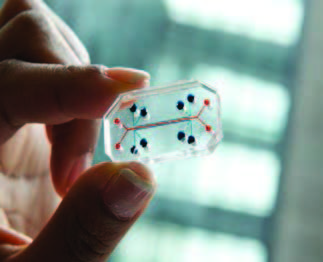
    WASHINGTON (TIP): A Harvard researcher has developed a ‘bone marrow on a chip’ that can help study the harmful effects of radiation on humans.

    “It’s unethical to expose humans to the kind of radiation that you’d see in a disaster like Fukushima, but you need to be prepared,” said Donald Ingber, a bioengineer at Harvard University’s Wyss Institute in Boston, Massachusetts.

    With support from the US Food and Drug Administration, he is adapting his ‘bone marrow on a chip’ to study the effects of harmful radiation and experimental remedies.

    Other researchers working along similar lines have presented their work on model organs for biodefence applications recently at a meeting of the American Society for Microbiology (ASM) in Washington DC.

    The hope is that these complex three-dimensional systems will mimic human physiology better than cells grown in a dish, or even animals, ‘Nature.com’ reported.

    A common way to form a model organ is to seed cells into channels in a small plastic chip and then feed them with nutrient-rich fluid that flows through the system to mimic blood.

    The devices can be used individually or connected to other types of organs-on-chips to approximate a biological system, or perhaps an entire human body. At the ASM meeting, microbiologist Joshua Powell of the Pacific Northwest National Laboratory in Richland, Washington, presented experiments testing the ability of anthrax spores to infect a three-dimensional ‘lung’ grown from rabbit lung cells  Powell said that the US Department of Homeland Security is interested in using the system to answer questions such as how many anthrax spores are necessary to cause disease in the body.

    For some viruses in particular, Ingber said, researchers have no idea about the mechanism, and they need the mechanism to get new drug targets.

    Infecting model organs could allow researchers to watch how gene expression and metabolism change in real time.

    This sort of information could also be used to identify an unknown agent during a chemical, biological or radiological attack, by providing baseline data on known agents for comparison. Researchers have already developed dozens of individual model organs; the next challenge is to hook them together with the eventual goal of forming an entire human body on a chip, said Kristin Fabre, a programme manager at the National Center for Advancing Translational Sciences (NCATS) in Bethesda, Maryland.

    An NCATS-funded project has 11 research teams participating to hook together at least 4 chips.

    The US Department of Defense’s Defense Advanced Research Projects Agency (DARPA) is supporting the development of techniques to link ten organs, and its Defense Threat Reduction Agency aims to build two four-organ systems.

  • NOW, A CREAM FOR PAINLESS REMOVAL OF ‘PERMANENT’ INK

    TORONTO (TIP): A researcher in Canada has developed a skin cream that allows people to painlessly get rid of tattoos.

    Alec Falkenham, a PhD student in Dalhousie University’s pathology department, has come up with an approach that makes use of the natural healing process our skin activates after it is tattooed.

    When we get a tattoo, the pigment from the ink deposits into the skin where it is then consumed by white blood cells named “macrophages”.

    “Macrophages are known as the big eaters of the immune system. They eat foreign material, like tattoo pigment, to protect surrounding tissue,” said Falkenham. In the case of tattoos, two populations of macrophages react to the ink in different ways. One set of macrophages transports some of the pigment to the draining lymph nodes, removing it from the area.

    The other population that has “eaten” the pigment goes deeper into the skin, becomes inactive and forms the visible tattoo.Over time, the macrophages that formed the tattoo are replaced by new macrophages which causes the tattoo to blur and fade. Falkenham’s technology, Bisphosphonate Liposomal Tattoo Removal (BLTR), targets the macrophages that contain the pigment for removal.

    “BLTR is a cream that you put on your skin,” he said, adding that describing how BLTR it makes uses a lipid-vesicle, or liposome, that his team created.”When new macrophages come to remove the liposome from cells that once contained pigment, they also take the pigment with them to the lymph nodes, resulting in a fading tattoo,” said Falkenham. The technology is a safer alternative to current tattoo removal lasers. By acting as a “Trojan horse” in their drug delivery, liposomes target cells that can consume them, specifically those that contain pigment. This limits potential side effects to the small number of surrounding cells too that do not contain pigment.

  • Runaway star grazed solar system 70,000 years ago

    Runaway star grazed solar system 70,000 years ago

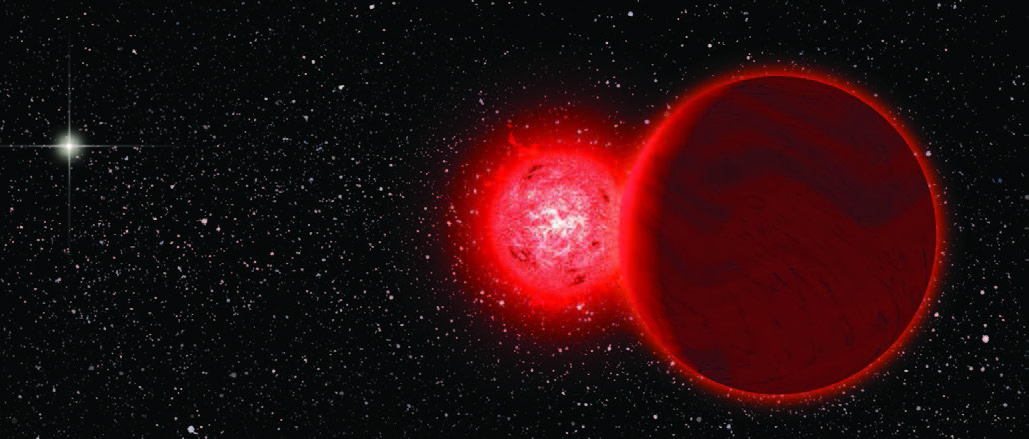
    NEW DELHI (TIP): About 70,000 years ago, a runaway star wandered into our solar system’s backyard, an international team of astronomers have found. The rogue star, nick-named “Scholz’s star” after its discoverer, penetrated into the Oort Cloud, a frozen graveyard in the very outer most reaches of the solar system from where many comets are likely to originate.

    The group of astronomers from the US, Europe, Chile and South Africa was led by Eric Mamajek from the University of Rochester. Their findings are published in the Astrophysical Journal Letters.

    The star’s trajectory suggests that 70,000 years ago it passed roughly 52,000 astronomical units away (or about 0.8 light years, which equals 8 trillion kilometers, or 5 trillion miles). This is astronomically close; our closest neighbor star Proxima Centauri is 4.2 light years distant. No other star is known to have ever approached our solar system this close.

    After grazing the solar system, Scholz’s star has continued traveling and it is now some 20 light years away in the constellation of Monoceros. at the closest point in its flyby of the solar system, Scholz’s star would have been a 10th magnitude star – about 50 times fainter than can normally be seen with the naked eye at night. It is magnetically active, however, which can cause stars to “flare” and briefly become thousands of times brighter. So it is possible that Scholz’s star may have been visible to the naked eye by our ancestors 70,000 years ago for minutes or hours at a time during rare flaring events.

    The scientists studied the star’s current direction and speed and then worked backwards to reach the conclusion that it must have passed through the Oort Cloud.

    The star is part of a binary star system: a low-mass red dwarf star (with mass about 8% that of the Sun) and a “brown dwarf” companion (with mass about 6% that of the Sun). Brown dwarfs are considered “failed stars;” their masses are too low to fuse hydrogen in their cores like a “star” but they are still much more massive than gas giant planets like Jupiter.

    The outer Oort Cloud is a region at the edge of the solar system filled with trillions of comets a mile or more across that are thought to give rise to long-term comets orbiting the Sun after their orbits are perturbed.

    Until now, the top candidate for the closest known flyby of a star to the solar system was the so-called “rogue star” HIP 85605, which was predicted to come close to our solar system in 240,000 to 470,000 years from now. However, Mamajek and his collaborators have also demonstrated that the original distance to HIP 85605 was likely underestimated by a factor of ten. At its more likely distance – about 200 light years – HIP 85605’s newly calculated trajectory would not bring it within the Oort Cloud.

    While the close flyby of Scholz’s star likely had little impact on the Oort Cloud, Mamajek points out that “other dynamically important Oort Cloud perturbers may be lurking among nearby stars.” The recently launched European Space Agency Gaia satellite is expected to map out the distances and measure the velocities of a billion stars. With the Gaia data, astronomers will be able to tell which other stars may have had a close encounter with us in the past or will in the distant future.

  • Is Apple iCar or iMobile in the cards – Apple is reportedly developing an electric Car

    The media and blogs were rife with speculation this weekend over the possible development of a new minivan-style electric car by Apple, taking on other industry majors like Tesla and Google in the process.

    Citing unnamed sources familiar to the matter, US business daily The Wall Street Journal (WSJ) on Friday said that several hundred Apple employees were secretly developing an electric vehicle resembling a minivan – the project code-named “Titan.”

    But a self-driving car was not part of Apple’s current plan, one of the sources told the WSJ.

    Furthermore, British business daily The Financial Times (FT) reported on Saturday that Apple was recruiting automative technology and vehicle design experts to work in a top-secret research lab located a few miles from Apple’s corporate headquarters in Cupertino, California.

    Apple’s tech rival, Google GOOG 1.12% , has also taken steps to enter the auto industry, though the online search company is working to develop a driverless car. Google is also currently rumored to be working on developing a ride-hailing service that could rival Uber.

  • DOCTORS PERFORM FIRST ORGAN TRANSPLANT FROM NEW BORN IN UK

    DOCTORS PERFORM FIRST ORGAN TRANSPLANT FROM NEW BORN IN UK

    LONDON (TIP): Doctors in Britain have performed the first organ transplants from a new born in the UK.

    In what is being called a milestone in neonatal care, a six-day-old baby girl’s kidneys and liver cells were given to two separate recipients after her heart stopped beating.

    The baby girl suffered severe oxygen starvation and massive brain damage in the womb that left her completely unresponsive and unable to move when she was delivered at term by emergency caesarean.

    A significant proportion of new-borns who die in neonatal units could be potential organ donors, and could therefore save the lives of other sick patients, but current guidelines make it very difficult for donors to be identified.

    New guidelines from the Royal College of Paediatrics and Child Health are expected shortly, and these should help to standardise an approach to organ donation among new-borns, the doctors said.

    They go on to hope that the guidance will kick start a new way of thinking about neonatal organ donation.

    “We hope that neonatal units across the UK will actively start thinking about this noble cause, which makes the grieving family’s journey easier, and has the potential to transform another life,” they conclude.

    The donation involved the kidneys, which were transplanted into a patient with renal failure, and liver cells
    (hepatocytes), which were transfused into a further recipient.

    The donor was a girl born at term after an emergency caesarean section in the neonatal unit of Hammersmith Hospital, London.

    She weighed just over three kg, but was very sick, and it became clear that her brain had been starved of oxygen for a period during the pregnancy.

    Treatment made no difference, and repeated examinations showed that she was unable to make any spontaneous movement, did not respond to any stimuli, and had fixed and dilated pupils.

    The parents and clinicians involved in her care discussed the possibility of organ donation, when it became clear that she would not survive.

    The parents then gave their consent for their daughter’s kidneys and liver cells to be used for the benefit of other sick patients.

    Six days after she was born, and with death confirmed, these tissues were retrieved with the help of an experienced surgeon from the National Organ Retrieval Service.

    “It is due to the extreme generosity of the parents and wonderful professional collaboration between the neonatal team and the organ donation team that this process was successful,” write the authors.

    “This case has set a milestone in the care of new-borns in the UK,” they add.

    Medics said the surgery was incredibly difficult and intricate. The kidneys at this stage of life are around 5 cm long.

  • A PAPER CLIP SIZED IMPLANT TO LOWER BLOOD PRESSURE

    A PAPER CLIP SIZED IMPLANT TO LOWER BLOOD PRESSURE

    LONDON (TIP): A revolutionary device – a paper clip sized implant which is inserted between the artery and vein in the upper thigh have been found to tremendously lower blood pressure among patients with uncontrolled high blood pressure. Queen Mary University of London has developed a device called Coupler which has been found to be more beneficial compared to those treated with usual drug measures.


    The procedure of putting the implant lasts around 40 minutes under local anaesthetic.


    Researchers led a randomised, blinded endpoint clinical trial with patients from multiple European Centres of Hypertension Excellence – including the Barts Blood Pressure Clinic at Barts Health NHS Trust in east London -all of whom had resistant high blood pressure and had not responded to at least three types of drug treatment.


    The team compared the effects of the Coupler versus usual medical treatment in 83 patients of whom 44 received the ROX Coupler therapy.


    Patients who received the Coupler experienced a significant and durable reduction in blood pressure.


    There was also a reduced number of hypertensive complications and hospital admissions for high blood pressure crises. Dr Melvin Lobo, lead author sad “This is an entirely new and highly promising concept in high blood pressure treatment. Existing drugs focus on hormonal or neurological regulation of blood pressure, and newer treatments such as renal denervation are uniquely centred on the renal nervous system. The Coupler effectively targets the mechanical aspects of how blood circulation works – so it’s a totally new approach to controlling blood pressure. The Coupler also highlights the importance of arterial stiffness as a major cause of resistant high blood pressure and it targets this issue both safely and successfully.

  • HIV Mutates again, aggressive strain of HIV in Cuba

    HIV Mutates again, aggressive strain of HIV in Cuba

    February 16th, 2014 (VOA) An aggressive form of HIV has been discovered in Cuba. It develops into full-blown AIDS within just three years. Researchers said the progression happens so fast that treatment with antiretroviral drugs may come too late.

    Professor Anne-Mieke Vandamme said Cuban health officials first alerted her about the aggressive form of AIDS. They asked for help in finding out what was happening.

    “We have a collaborative project with Cuba and the Cuban clinicians had noticed that they recently had more and more patients who were progressing much faster to AIDS than they were used to [seeing]. In this case, most of these patients had AIDS even at diagnosis already,” she said.

    Vandamme is a full medical professor at the University of Leuvan in Belgium. She and her team studied more than 70 patients and divided them into various groups. One group was made up of those who developed AIDS quickly.

    “So this group of patients that progressed very fast, they were all recently infected. And we know that because they had been HIV negative tested one or a maximum two years before,” she said.

    She said that on average, without treatment, HIV infection takes 5 to 10 years to become full-blown AIDS. That’s determined by the scarcity of CD-4 immune cells and the number of opportunistic infections a patient has.

    Usually, she said, a fast progression of HIV to AIDS is more a result of the patient’s weak immune system rather than the particular subtype of HIV involved. What’s happening in Cuba is different.

    “Here we had a variant of HIV that we found only in the group that was progressing fast. Not in the other two groups. We focused in on this variant [and] tried to find out what was different. And we saw it was a recombinant of three different subtypes,” she said.

    This new form of HIV is a combination of sub-types A, D and G. It’s been named CRF19.

    Vandamme said, “Another thing was that they had much more virus in their blood than the other patients. So, what we call the viral load was higher in these patients. “

    The patients with the aggressive form of HIV also had higher levels of a molecule called RANTES. It’s released as part of the immune response and raises the alarm about infection.

    Researchers have determined why this form of HIV progresses to AIDS so quickly. Vandamme said for infection to take place, HIV has to attach itself to a cell at – what she calls – anchor points. In medical terms they’re called co-receptors.

    Vandamme said, “There are two types of co-receptors that HIV can use: CCR5 or CXCR4. And in the normal progression of the HIV to AIDS it often happens that the virus switches co-receptor. It almost always starts with using CCR5 and then it switches to CXCR4 after many years. And once it switches the progression to AIDS goes very fast.”

    But instead of taking many years to switch co-receptors, the new form of HIV in Cuba does it less than three years.

    Vandamme says the inclusion of HIV subtype D in the new variant may be key. It contains an enzyme that enables HIV to reproduce in greater numbers – and it takes proteins from other subtypes and uses them in new virus particles.

    The good news is that the aggressive form of HIV responds to most antiretroviral drugs. The bad news is people may not realize they have full-blown AIDS until it’s too late for therapy to do any good.

    Vandamme said the variant has been seen before in Africa, but there were very few such patients and it does not appear to be spreading there. However, it is in wide circulation now in Cuba and now can be easily studied. So, there may be an African link, but further study is needed.

    She said it’s vital for people having unprotected sex with multiple partners to be tested for HIV early and often.

  • Newly Discovered Rare Planet With Extreme Seasons Called A ‘Real Maverick’

    Newly Discovered Rare Planet With Extreme Seasons Called A ‘Real Maverick’

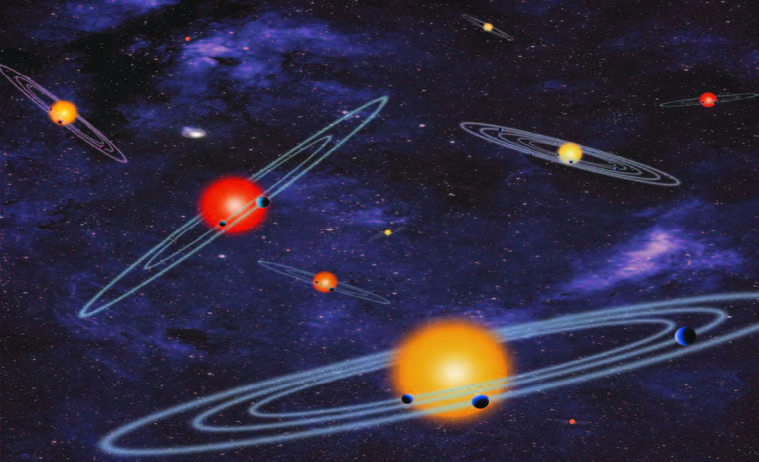
    Two groups of astronomers working independently in Germany have discovered a massive new exoplanet that’s quite strange–for a few reasons.

    The newfound exoplanet, dubbed Kepler-432b, was monitored by NASA’s Kepler space telescope from 2009 to 2013 and identified as a planetary candidate in 2011. Using the 2.2-meter telescope at Calar Alto Observatory in Andalucía, Spain and the Nordic Optical Telescope on La Palma in the Canary Islands, the researchers are now confirming that, indeed, it’s a planet.

    The teams, one led by Mauricio Ortiz of the Centre for Astronomy of Heidelberg University (ZAH) and the other by Simona Ciceri of the Max Planck Institute for Astronomy (MPIA) in Heidelberg, report that the planet has six times the mass of Jupiter, but about the same size.

    The shape and the size of its orbit are also unusual for the planet named Kepler-432b that is revolving around a giant star.

    Analyzing the data from both telescopes, the researchers discovered Kepler-432b is incredibly dense; though it’s around the same size as Jupiter, its mass is six times that of the gas giant. Its orbit around its host star, a red giant with a radius that’s four times that of our Sun, is also unusual.

    “The majority of known planets moving around giant stars have large and circular orbits,” Dr. Davide Gandolfi, an astronomer at Heidelberg University’s Center for Astronomy in Germany and a researcher involved in the discovery, said in a written statement. “With its small and highly elongated orbit, Kepler-432b is a real ‘maverick’ among planets of this type.”

    “During the winter season, the temperature on Kepler-432b is roughly 500 degrees Celsius. In the short summer season, it can increase to nearly 1,000 degrees Celsius,” said astronomer Dr. Sabine Reffert from the state observatory Konigstuhl.

    Kepler-432b was previously identified as a transiting planet candidate by the NASA Kepler satellite mission. From the vantage point of Earth, a transiting planet passes in front of its host star, periodically dimming the received stellar light.

    The orbit brings Kepler-432b incredibly close to its host star at some times and much farther away at others, thus creating enormous temperature differences over the course of the planet’s year, which corresponds to 52 Earth days.

    Both groups of researchers used the 2.2-metre telescope at Calar Alto Observatory in Andalucia, Spain to collect data.

    The group from the state observatory also observed Kepler-432b with the Nordic Optical Telescope on La Palma.

    The research was published in the journal Astronomy and Astrophysics.

    And the planet is only one of five observed orbiting a red giant host star at such a close distance. Red giants are stars in their last stage of life. They can grow to become anywhere from 10 to 100 times their original size, and as they grow, any planets nearby are at risk of being devoured.


  • Hoping Google’s Lab Is a Rainmaker

    Hoping Google’s Lab Is a Rainmaker

    SAN FRANCISCO — Google’s research arm, Google X, is called the company’s Moonshot Factory. One reason the company picked the word “Moonshot” was to remind people to tackle big problems that may well blow up in their faces.

    Last month, after years of promotion, Google ended a test trial of its Internet-connected glasses, called Glass. While the device seemed to have promising commercial applications in hospitals or on factory floors, its first pass at the consumer world was unsuccessful.

    The very public failure of Glass points to a bigger question. After patiently abiding a steep increase in research and development spending on efforts that range from biology to space exploration, Wall Street is starting to wonder when — and if — Google’s science projects will pay off.


    “We want companies to continue to push the envelope, but there has to be some financial responsibility around that,” said Ben Schachter, an analyst at Macquarie Securities. “We have no real insight into what’s going on.”


    So investors are left to guess. Two years ago, analysts estimated that Glass sales would be $3 billion to $11 billion by 2018. Google’s self-driving car project, which faces huge technological and regulatory hurdles, has been called a $200 billion opportunity by Gene Munster, an analyst at Piper Jaffray.

    “These are guesses at best,” he said. “Our price target is based on things that are tangible, but we say on top of that there are wild cards.”

    The wisdom of financing wild cards would not be under question if Google’s core advertising business — which accounts for about 90 percent of its revenue — were roaring. But its growth, while still up about 20 percent from a year ago, has slowed, and the company’s dominance in desktop search engines has been eroded as consumers spend more time on mobile phones whose tiny screens are a less lucrative ad space.


    Now, instead of pie-in-the-sky estimates for products that may never become reality, the focus is on more mundane issues like costs and profit margins. Research and development costs grew to about 12 percent of gross revenue last year, the highest share since the company went public in 2004. That includes the vast majority of engineers and technical expenses at the company.

    The most unusual projects are at Google X, in a brick building about a half-mile from the main company campus in Mountain View, Calif. Google X focuses on technologies that are likely to be five to 10 years away from being commercialized. Its leader, Astro Teller, whose business card reads “Captain of Moonshots,” is a polymathic computer scientist who moonlights as a novelist and used to manage a hedge fund.

    In an interview, Mr. Teller said that his division’s responsibility was to produce financial results on par with what a venture capitalist might expect when putting money into a new company. “Because risk abounds, we owe a very strong return,” he said.


    Google X’s best-known projects are Glass and the self-driving car, but inside there is much more, like an effort to make wind power with kites, or a project to deliver packages withdrone aircraft. And all across the Southern Hemisphere, the company has stratospheric balloons that aim to connect people to the Internet. Add this to the list of things Google X has tinkered with — jet packs, hovering skateboards — and it is easy to see why investors are getting antsy.


    As out there as the projects sound, Google is going down a familiar road. Today, Google is so dominant in search advertising that it has almost no choice but to spend lavishly in search of future businesses.

    “If you think historically, go back 30 or 35 years, the organizations with big R.&D. divisions were AT&T, IBM and Xerox,” said Ed Lazowska, a computer science professor at the University of Washington. “Notice that each of those companies had a de facto monopoly.”


    Google still dedicates a lot of time and money to deep computer science research that is woven into its core business. Two years ago, for instance, the company introduced a feature on its Google Plus social network that allows people to search their photos for subjects like “dogs” or “jewelry.” Behind that initiative was years of math and tinkering intended to make computers better at recognizing images.

    “We judge ourselves by ‘Does the research end up being used in products?’ ” said John Giannandrea, who oversees several research projects at Google.

    And, on occasion, Google X will send projects back to the core company so they can have a more immediate benefit. That is what happened to Google’s neural network project (formerly called “Google Brain”) a so-called machine learning effort in which researchers use algorithms to teach computers to do things like read text or understand spoken language.


    “It would be fair to say Google Brain is producing in value for Google something that would be comparable to the total costs in Google X — just that one thing we’ve spun out,” Mr. Teller said.

    For Google, as for any company, innovation is no guarantee of success. Even when companies do invent revolutionary products, someone else may commercialize them. The integrated circuit was independently developed by two companies, Fairchild Semiconductor and Texas Instruments, but Intel took the market from both of them. The graphical computer interface and mouse were invented and refined by companies like Xerox, then popularized with Apple’s first Macintosh computer. But Microsoft won the personal computer market.

    “It’s fair to say that there is a lot more we don’t know than we do know,” said Josh Lerner, an economics professor at Harvard who studies innovation and entrepreneurship. There is no easy answer to the Xerox problem of coming up with a great idea that someone else turns into a successful product, he said.

    Companies have tried to deal with this by moving away from the sort of fundamental research for which people win Nobel Prizes, and instead focusing on problems whose underlying technologies have largely been figured out. They also tend to sprinkle researchers throughout an organization, or, as in the case of IBM, throw them into the real world to see what problems need solving.

    “We have put IBMers side by side with our clients to work with them on their problems,” said Zach Lemnios, the vice president for research strategy. “These are Ph.D.s — people who might not have matching socks.”

    But for shareholders, whose patience is not usually as long as that of researchers, nothing is quite as reassuring as a shiny new product whose profits they can measure with each passing quarter. And if they cannot have that now, they would at least like to know when to expect it.

    In a recent conference call with investors, Patrick Pichette, Google’s chief financial officer, was asked about the company’s many big investments.

    “I just want to kind of reaffirm to you that we do it in a smart way and a disciplined manner,” he said. “We’re driving forward to make sure we don’t waste our shareholders’ money.”

  • Prof. Gurpreet Singh Receives $500,000 NSF CAREER award for nanotechnology research

    Prof. Gurpreet Singh Receives $500,000 NSF CAREER award for nanotechnology research

    MANHATTAN — A prestigious award will support a Kansas State University engineer’s research on nanosheets and will help organize educational activities for high school students and teachers.

    Gurpreet Singh, assistant professor of mechanical and nuclear engineering, has received a $500,000 National Science Foundation CAREER award, “Scalable liquid exfoliation processing of ultrathin two-dimensional metal dichalcogenides nanosheets for energy storage devices.”

    Singh will use the award to develop ultrathin metal sheets that can help produce better rechargeable batteries, supercapacitors and catalysts for photoelectrochemical hydrogen production.

    The award will help with more than research — Singh also will organize hands-on educational activities. He is planning nanotechnology-oriented summer workshops for high school science teachers and female high school students.

    “I want to create excitement about the opportunities in nanotechnology and also make others aware of the challenges related to scalable manufacture and high-cost that is currently hindering introduction in practical applications,” Singh said.

    The National Science Foundation’s Faculty Early Career Development Program is one of the foundation’s most prestigious awards for supporting early career faculty who effectively integrate research and education within the context of their institution’s mission. Faculty recognition and awards are an important part of Kansas State University’s plan to become a Top 50 public research university by 2025.

    With his CAREER award, Singh will study large-scale production of ultrathin sheets — a few atoms thick and several micrometers wide — of transition metal dichalcogenides, or TMDs. Nearly 40 types of TMDs have been identified, including naturally occurring molybdenite.

    Little is known about the structure of TMDs and their mechanical, electrical and electrochemical properties, Singh said.

    Some of TMDs’ physical and chemical properties can address energy-related concerns. For these TMDs to improve technology, they must be produced in ultrathin sheets, Singh said. Bulk quantities of nanosheets are necessary for energy applications, including rechargeable batteries, supercapacitors and catalysts for photoelectrochemical hydrogen production.

    No current method is available to cost-effectively produce atomically thin TMDs in large quantifies, Singh said. His research aims to make that possible.

    “For long-term sustainability it is important to look at alternative energy production routes as well as methods for efficient energy storage and distribution,” Singh said. “This requires exploration into new materials and designs that can offer superior performance with improved efficiency and at a fraction of the cost.”

  • EUROPEAN MINI SPACEPLANE ALL SET FOR A LAUNCH

    EUROPEAN MINI SPACEPLANE ALL SET FOR A LAUNCH

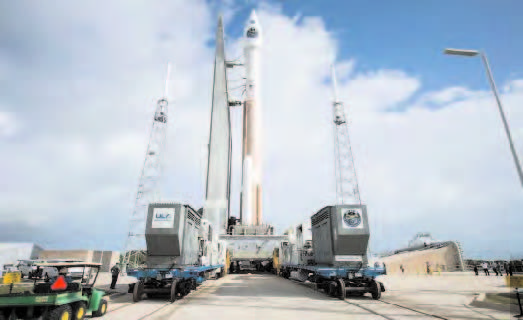
    LONDON (TIP): A European mini spaceplane that will fly around the globe before splashing down in the Pacific Ocean is all set for launch later today.

    The unmanned Intermediate eXperimental Vehicle (IXV) will launch atop a Vega rocket from South America fly east around the globe and is designed to gather information on how space objects fall back to Earth.

    Engineers could use the data to inform a range of future technologies from re-usable rockets to Mars landers.

    European Space Agency’s IXV mission will test cutting-edge system and technology aspects to provide Europe with an independent re-entry capability and a building block for reusable space transportation systems.

    It will validate designs for lifting-bodies, incorporating both the simplicity of capsules and the performance of winged vehicles, with high controllability and manoeuvrability for precision landing.

    After separating from Vega 320 km above Earth, the five-metre-long, two-tonne vehicle will climb to a height of around 450 km and then descend for re-entry, recording a vast amount of data from a large number of conventional and advanced sensors.

    After manoeuvring to decelerate from hypersonic to supersonic speeds, IXV will deploy a multistage parachute to slow the descent further.

    Flotation balloons will keep it afloat after splashdown in the Pacific Ocean, where it will be recovered by a ship for detailed analysis. The entire flight will last about 100 minutes.

    ESA has developed the capabilities to deliver spacecraft into orbit, dock automatically with cooperative or non-cooperative targets, and even land on celestial objects far away in our solar system. Mastering autonomous return from orbit and soft landing will open a new chapter for ESA. Such a capability is a cornerstone for reusable launcher stages, sample return from other planets and crew return from space, as well as future Earth observation, microgravity research, satellite servicing and disposal missions.

    The initial results from the flight are expected to be released around six weeks later.

    The results will feed the Programme for Reusable In-Orbit Demonstrator for Europe, or Pride, which is being studied under funding decided at ESA’s last two ministerial councils.

  • Comets are like deep-fried ice cream: NASA

    Comets are like deep-fried ice cream: NASA

    NEW DELHI (TIP): Nasa researchers may have discovered why comets are encased in a hard, outer crust – like ice cream that has been deep fried. Using an icebox-like instrument nicknamed Himalaya, they showed that fluffy ice on the surface of a comet would crystalize and harden as the comet heads toward the sun and warms up.

    “A comet is like deep fried ice cream,” said Murthy Gudipati of Nasa’s Jet Propulsion Laboratory, corresponding author of a recent study appearing in The Journal of Physical Chemistry.
    “The crust is made of crystalline ice, while the interior is colder and more porous. The organics are like a final layer of chocolate on top.”


    The lead author of the study is Antti Lignell, a postdoctoral scholar at the California Institute of Technology in Pasadena, who formerly worked with Gudipati at JPL.

    Researchers already knew that comets have soft interiors and seemingly hard crusts. Last November, Rosetta’s Philae probe bounced to a landing on the surface of 67P/Churyumov-Gerasimenko, confirming that comets have a hard surface. But the exact composition of comet crust, and how it forms, was unclear.

    In the new study, researchers turned to labs on Earth to put together a model of crystallizing comet crust. The experiments began with amorphous, or porous, ice — the proposed composition of the chilliest of comets and icy moons. At these extremely cold temperatures of around minus 243 degrees Celsius (minus 405 degrees Fahrenheit) water vapor molecules are flash-frozen and haphazardly mixed with other molecules, such as the organics. Amorphous ice is like cotton candy, explains Gudipati: light and fluffy and filled with pockets of space.

    Gudipati and Lignell used their Himalaya cryostat instrument to slowly warm their amorphous ice mixtures to minus 123 degrees Celsius (minus 190 degrees Fahrenheit), mimicking conditions a comet would experience as it journeys toward the sun. The ice had been infused with a type of organics, called polycyclic aromatic hydrocarbons, or PAHs, which are seen everywhere in deep space.

    The results came as a surprise. The PAHs were kicked out of the ice mixtures giving water molecules room to link up and form the more tightly packed structures of crystalline ice.

    “What we saw in the lab — a crystalline comet crust with organics on top –matches what has been suggested from observations in space,” said Gudipati. Deep fried ice cream is really the perfect analogy, because the interior of the comets should still be very cold and contain the more porous, amorphous ice.” The composition of comets is important to understanding how they might have delivered water and organics to our nascent, bubbling-hot Earth. New results from the Rosetta mission show that asteroids may have been the primary carriers of life’s ingredients; however, the debate is ongoing and comets may have played a role. For Gudipati, comets are capsules containing clues not only to our planet’s history but to the birth of our entire solar system.

  • STUDY ILLUSTRATES THE GENETIC FOUNDATION OF EVOLUTION

    LONDON (TIP): The most extensive genetic study ever conducted of Charles Darwin’s finches from the Galapagos Islands, has revealed a messy family tree with a surprising level of interbreeding between species. It also suggests that changes in one particular gene triggered the wide variation seen in their beak shapes.

    Scientists in Sweden and the US used genome sequences of 120 individual birds from 17 different species to perform their analysis. Researchers from Princeton University and Uppsala University in Sweden have identified a gene in the Galapagos finches studied by English naturalist Charles Darwin that influences beak shape and that played a role in the birds’ evolution from a common ancestor more than 1 million years ago.

    The study illustrates the genetic foundation of evolution, including how genes can flow from one species to another, and how different versions of a gene within a species can contribute to the formation of entirely new species.

    The study was published on February 11, one day before birthday of Darwin, who studied the finches during the 1835 voyage that would lead him to publish the seminal work on evolution, “On the Origin of Species,” in 1859.

    “We now know more about the genetic basis for our evolutionary studies, and this is a highly satisfactory, very exciting discovery after all these years,” said Peter Grant, Princeton’s professor of zoology.

    Grant has studied the finches for 40 years on the arid, rocky islands of Daphne Major and Genovesa in the Galapagos archipelago. The latest study reveals how evolution occurs in halting and disordered steps, with many opportunities for genes to spread in different species and create new lineages. Given the right conditions, such as isolation from the original population and an accumulation of genetic differences, these lineages can eventually evolve into entirely new species.

    Working with DNA samples collected by the Grants, researchers at Uppsala identified the gene that influences beak shape by comparing the genomes of 120 birds, all members of the 15 species known as “Darwin’s finches.” They spotted a stretch of DNA that looked different in species with blunt beaks, such as the large ground finch versus species with pointed beaks, such as the large cactus finch.

    Within that stretch of DNA, the researchers found a gene known as ALX1, which has previously been identified in humans and mice as being associated with the formation of facial features. Mutations that inactivate this gene cause severe birth defects in humans.

    “This is an interesting example where mild mutations in a gene that is critical for normal development leads to phenotypic (observable) evolution,” said lead researcher Leif Andersson, a professor of functional genomics at Uppsala University.

    But the most exciting and interesting finding of the study, Andersson said, was that the gene also varied among individuals from the same species. For example, the medium ground finch species includes some birds with blunt beaks and others with pointed ones. This finding is significant because it shows how evolution can happen, Peter Grant said. Within a species, when some individuals have a trait that aids their survival — such as a blunt beak that allows them to crack open tough seed coverings — they will pass on the genes for that trait to their offspring, whereas individuals with pointed beaks will have died.

    “This is the genetic variation upon which natural selection can work,” he said.

    The shape and size of the beak are crucial for finch survival on the islands, which periodically experience extreme droughts, El Nino-driven rains and volcanic activity. The birds use their beaks as tools to crack open the hard and woody outer coverings of seeds, pry insects from twigs, and sip nectar from cactus flowers. In times of drought, a bird that can extract food from multiple sources will survive whereas other birds will not.

  • HAVING TROUBLED SLEEP? BLAME IT ON YOUR GADGETS

    HAVING TROUBLED SLEEP? BLAME IT ON YOUR GADGETS

    LONDON (TIP): Excessive use of smartphones and computers throughout the day can worsen quality of sleep in teenagers, a study has found.


    Researchers surveyed almost 10,000 teenagers aged 16-19 in Norway and concluded that recommendations on use of gadgets should be updated, and extended to tablets and smartphones.


    Total screen-use time of over four hours was linked to a 49% higher chance of the teens taking longer than 60 minutes to fall asleep. A total of more than 2 hours of screen time after school was linked to both longer sleep onset latency and shorter sleep duration.


    On an average, teenagers need 8-9 hours of sleep each day . But those who spent more than 2 hours emailing or chatting were more than 3 times as likely to sleep for less than 5 hours.


    While those who spent more than 4 hours in front of any screen were more than 3.5 times as likely to sleep for less than 5 hours. Use of a computer, smartphone, or Mp3 player in the hour before bedtime was associated with taking longer to fall asleep. The effect was more pronounced in multitaskers. Teens who used 4 or more devices were 26% more likely to take 60 or more minutes to fall asleep than those who used one. Teens who used 2-3 devices were 50% more likely to sleep for less than 5 hours than those who used just one; those who used 4 or more devices were 75% more likely to do so. Screen use may simply replace sleep time or interfere with sleep by stimulating the nervous system, said the researchers.

  • GOOGLE TO SHUT DOWN GTALK ON FEBRUARY 16

    GOOGLE TO SHUT DOWN GTALK ON FEBRUARY 16

    In two weeks from now, you’ll have to make the switch from Google’s Gtalk messenger platform to its Hangout (whether they like it or not). Millions of users have been using the Gtalk for long time and they’ve become so comfortable with it that moving away has never been considered. So, Google has decided to force users by shutting down Gtalk once and for all.


    Hangout is the future for Google (so they seem to think) and hence taking down Gtalk is the most logical thing that the search-engine giant can do now. Signs of Gtalk going down became obvious when Google decided to cut support (security and version) for the desktop application bringing its end closer to reality. As highlighted by Google the ‘IM service will be wholly replaced by the Hangouts app, which can used only via its Chrome web browser.

  • MEET ROBO-SCIENTIST EVE WHO CAN MAKE DRUG DISCOVERY FAST

    MEET ROBO-SCIENTIST EVE WHO CAN MAKE DRUG DISCOVERY FAST

    LONDON (TIP): An artificially-intelligent ‘robot scientist’ has discovered that a compound shown to have anti-cancer properties can also be used in the fight against malaria, UK researchers say. The robot scientist, named Eve, could make drug discovery faster and much cheaper.


    Robot scientists can automatically develop and test hypotheses to explain observations, run experiments using laboratory robotics, interpret the results to amend their hypotheses and then repeat the cycle.


    In 2009, Adam, a robot scientist developed by researchers at the Universities of Aberystwyth and Cambridge, became the first machine to independently discover new scientific knowledge. The same team has now developed Eve, based at the University of Manchester, whose purpose is to speed up the drug discovery process and make it more economical.


    “Eve exploits its artificial intelligence to learn from early successes in her screens and select compounds that have a high probability of being active against the chosen drug target,” said Professor Steve Oliver from the Cambridge Systems Biology Centre and the Department of Biochemistry at the Univer-sity of Cambridge. “A smart screening system, based on genetically engineered yeast, is used. This allows Eve to exclude compounds that are toxic to cells and select those that block the action of the parasite protein while leaving any equivalent human protein unscathed.” 

  • Soon, smartphones that will sniff out life-threatening disorders

    Soon, smartphones that will sniff out life-threatening disorders

    JERUSALEM (TIP): Experts are developing a new technology that would enable smartphones to screen their users’ breath for life-threatening diseases.


    A research consortium headed by professor Hossam Haick of the Technion-Israel Institute of Technology is developing a product that, when coupled with a smartphone, will be able to screen the user’s breath. The SNIFFPHONE project will link Haick’s breathalyzer screening technology to the smartphone to provide non-invasive, fast and cheap disease detection.


    It will work by using microand nano-sensors that read exhaled breath and then transfer the information through the attached mobile phone to an information-processing system for interpretation.”Early diagnosis can save lives, particularly in life-threatening diseases like cancer,” said Haick.

  • APPLE TO LAUNCH STREAMING TV SERVICE: REPORT

    APPLE TO LAUNCH STREAMING TV SERVICE: REPORT

    SAN FRANCISCO (TIP): The California-based maker of iPhones, iPads, iPods, Macintosh computers and Apple TV boxes is exploring the potential for deals that would let it sell bundles of programming directly to viewers.


    Apple could model a service after recent moves by Dish and Sony to work with programmers to deliver live TV shows along with the kind of on-demand video just cable companies sell.


    Apple has made several attempts at finding a key to the television market, including marketing an Apple TV box for routing content from the internet to home screens.

  • INVISIBILITY CLOAKS ONE STEP CLOSER TO REALITY

    INVISIBILITY CLOAKS ONE STEP CLOSER TO REALITY

    WASHINGTON (TIP): New metamaterials may take engineers one step closer to building invisibility cloaks or even shields that can conceal military airplanes, scientists say. Metamaterials are artificial materials engineered to bend electromagnetic, acoustic and other types of waves in ways not possible in nature.


    Hao Xin, a professor of electrical and computer engineering at the University of Arizona, has made a discovery with these synthetic materials that may pave the way for microscopes with superlenses that see molecular-level details, or shields that conceal military airplanes and even people.


    In the UA’s Millimeter Wave Circuits and Antennas Laboratory, Xin uses a 3D printer to make metamaterials from metals, plastics and other substances. Resembling porous plastic bowling balls and tiny copper wire circuit boards, these are configured in precise geometrical patterns to bend waves of energy in unnatural ways.

  • US okays world’s 1st device to fight obesity

    US okays world’s 1st device to fight obesity

    WASHINGTON (TIP): A first-of-its-kind implant to treat obesity that curbs appetite by electrically stimulating stomach ne8rves has been approved in the US.

    The Maestro Rechargeable System is approved to treat patients aged 18 and above who have not been able to lose weight with a weight loss programme, and who have a body mass index of 35 to 45 with at least one other obesity-linked condition, like type-2 diabetes.

    The US Food and Drug Administration (FDA) approved the implant for certain obese adults, the first weight loss treatment device that targets the nerve pathway between the brain and the stomach that controls feelings of hunger and fullness. BMI, which measures body fat based on an individual’s weight and height, is used to define obesity categories. According to the Centres for Disease Control and Prevention, more than one-third of all US adults are obese, and people with obesity are at increased risk of heart disease, stroke, type-2 diabetes and certain kinds of cancer. “Medical devices can help physicians and patients develop comprehensive obesity treatment plans,” said William Maisel, deputy director for science and chief scientist at FDA’s Centre for Devices and Radiological Health. The system consists of a rechargeable electrical pulse generator, wire leads and electrodes implanted surgically into the abdomen.

    It works by sending intermittent electrical pulses to the trunks in the abdominal va8gus nerve, which is involved in regulating stomach emptying and signalling to the brain that the stomach feels empty or full. Although it is known that the electric stimulation blocks nerve activity between the brain and the stomach, the specific mechanisms for we8ight loss due to use of the %device are unknown.

  • SCIENTISTS PREVENT TYPE I DIABETES IN MOUSE MODEL

    SCIENTISTS PREVENT TYPE I DIABETES IN MOUSE MODEL

    WASHINGTON (TIP): Scientists have found a way to prevent type I diabetes in a mouse model, an advance that may lead to treatments that slow progression of the disease in humans or even eliminate the need for insulin therapy.

    Type I diabetes is a chronic autoimmune disease that occurs when the body’s immune system destroys insulin producing pancreatic beta cells, resulting in insulin deficiency and hyperglycemia.

    Current treatments for type I diabetes focus on controlling blood sugar with insulin therapy and must continue throughout a person’s life.

    Thomas Burris, chair of pharmacological and physiological science at Saint Louis University, and his research team focused on blocking the autoimmune process that destroys beta cells and leads to diabetes, with the aim of developing therapies that can prevent the illness from developing rather than treating its symptoms.

    “None of the animals on the treatment developed diabetes even when we started treatment after significant beta cell damage had already occurred,” said Burris.

    “We believe this type of treatment would slow the progression of type I diabetes in people or potentially even eliminate the need for insulin therapy,” he said.

    Scientists already knew that at least two types of immune “T-cells” contribute to the development of type I diabetes. However, the role of a third type, TH17, remained unclear.

    In this study, researchers found that two nuclear receptors play critical roles in the development of TH17 cells, and that by targeting these receptors, they were able to stop autoimmunity from developing in several mouse models, sparing beta cells.

    The team blocked the receptors (ROR alpha and gamma t) with SR1001 (a selective ROR alpha and gamma t inverse agonist developed by Burris), significantly reducing diabetes in mice that were treated with it.

    These results confirmed that TH17 cells likely play a key role in the development of type I diabetes and suggest that the use of drugs that target this cell type may offer a new treatment for the illness.

  • New instrument can reveal age of meteorites

    New instrument can reveal age of meteorites

    WASHINGTON (TIP): Scientists have developed a novel instrument that can reveal the age of meteorites that fall on Earth, offering insight into the geologic history of the solar system.

    The instrument can be miniaturized for spaceflight to reveal the age of planetary materials.

    The key to understanding the geologic history of the solar system is knowing the ages of planetary rocks.

    Researchers validated the instrument – a laser ablation resonance ionisation mass spectrometer – by dating a rock from Mars: the meteorite Zagami, which formed about 180 million years ago, and fell to Earth in 1962.

    “The beauty of the technique is that it requires little sample preparation, and the instrument is small and fast, making it appropriate for use by NASA and in field environments here on Earth,” said lead author Dr F Scott Anderson from the Southwest Research Institute, Boulder, US.

    “Furthermore, in addition to obtaining dates, the instrument can simultaneously provide geochemistry measurements and provide high-sensitivity detection of organics,” Anderson said.

  • NOW, ‘SMART MIRRORS’ THAT LETS YOU VIRTUALLY TRY ON CLOTHES

    NOW, ‘SMART MIRRORS’ THAT LETS YOU VIRTUALLY TRY ON CLOTHES

    WELLINGTON (TIP): New “smart mirrors” have recently been developed that allows people to virtually try on clothes, it has been reported.

    Created by MemoMi, the mirrors allows people to virtually try on clothes, digitally change the colours of the garments and share their choices with friends via email and social media, Stuff.co.nz reported.

    People can even record 7-second videos of themselves and compare them side-by-side so they can see which pair of jeans made their butt look bigger.

    The mirrors are equipped with computer processors and shoppers can use them to set up personal shopping accounts. This way, they can access their purchase history and try-on videos from any personal device remotely.

    Neiman Marcus has entered the future of shopping, installing smart mirrors in three of their departments stores in the US.

  • NANOWIRE COATED CLOTHING CAN KEEP YOU WARM AND COSY

    NANOWIRE COATED CLOTHING CAN KEEP YOU WARM AND COSY

    Imagine garments that preserve most of our body heat – there will be no need of heating up our homes. In Northern India, this would be used in winters but in temperate countries in Europe or North America, it would mean huge savings on home heating costs. Researchers from Stanford University have come up with clothes that have a thin coating of silver nanowires, according to Phys.org. Such garments preserve almost 90 percent of the body’s heat radiation by not allowing it to escape through the pores of the cloth. In comparison, plain cotton garments allow 80 percent of body heat radiation to escape. The research was led by Professor Yi Cui and others at Stanford University. The findings have been published in a recent issue of Nano Letters. In order to keep ourselves warm in cold temperatures, home interiors need to be heated up. This involves heating up empty spaces and objects in homes. This amounts to 42 percent of global energy consumption every year. Any saving in this would be huge in terms of both economic as well as environmental costs. The researchers thought that instread of heating up the whole residential space and all objects inside it, why not just keep humans warm. They call this “personal thermal management”.

    Nanowires to combat cell damage, ageing in humans Nanowires made of vanadia can reduce cell damage in the human body, researchers from Indian Institute of Science (IISc), Bangalore have found. This breakthrough can help develop drugs that prevent ageing, cardiac disorders, and several neurological problems like Parkinson’s and Alzheimer’s disease. Vanadium oxide or vanadia is a form of vanadium, an element found close to titanium on the periodic table. Reactive oxygen species (ROS) are produced during normal cellular metabolism. When the level of ROS is elevated, normal redox state of cells is disturbed, leading to damage of cellular components, including proteins, lipids, and DNA.

    Nanowires to combat cell damage

    Their research showed that clothing dipped in a solution of metallic nanowires, such as silver nano-wires (AgNWs) can provide effective insulation and also generate heat if connected to an external power source. But won’t these silver coated garments be expensive, uncomfortable to wear and difficult to wash? No say the scientists. The nanowire structure is breathable because space between the wires is 300 nanometers whereas water molecules are just 0.2 nm, according to Phys.org. On the other hand, human body radiation has a wavelength of 9000 nm so it won’t be able to pass through the material. Only about 0.1 gram of silver nanowires will be needed to cover 1 square meter of cloth. The silver content would be less than that. So it won’t be expensive and it could be treated like any garment. The best property of this silver garment is that if plugged into a power source of as little as 0.9 volts, it can be heated to 38 degrees Celsius, one degree more than normal body temperature.

  • DNA ‘SMART GLUE’ MAY HELP BUILD TISSUES, ORGANS

    DNA ‘SMART GLUE’ MAY HELP BUILD TISSUES, ORGANS

    WASHINGTON (TIP): DNA strands can act as a glue to hold together 3-D-printed materials that could someday be used to grow tissues and organs in the lab, a new study has found. Researchers from the University of Texas at Austin said that although scientists have used nucleic acids such as DNA to assemble objects, most of these are nano-sized — so tiny that humans can’t see them with the naked eye. Making them into larger, visible objects is costprohibitive. Current methods also do not allow for much control or flexibility in the types of materials that are created, researchers said. Overcoming these challenges could potentially have a big payoff — the ability to make tissues to repair injuries or even to create organs for the thousands of patients in need of organ transplants. Researchers set out to create a larger, more affordable material held together with DNA. They developed DNA-coated nanoparticles made of either polystyrene or polyacrylamide. DNA binding adhered these inexpensive nanoparticles to each other, forming gel-like materials that they could extrude from a 3-D printer. The materials were easy to see and could be manipulated without a microscope. The DNA adhesive also allowed the researchers to control how these gels came together. The study showed that human cells could grow in the gels, which is the first step toward the ultimate goal of using the materials as scaffolds for growing tissues.