Tag: Texas

  • Indian-American Manju Goel to run for US Congress

    Indian-American Manju Goel to run for US Congress

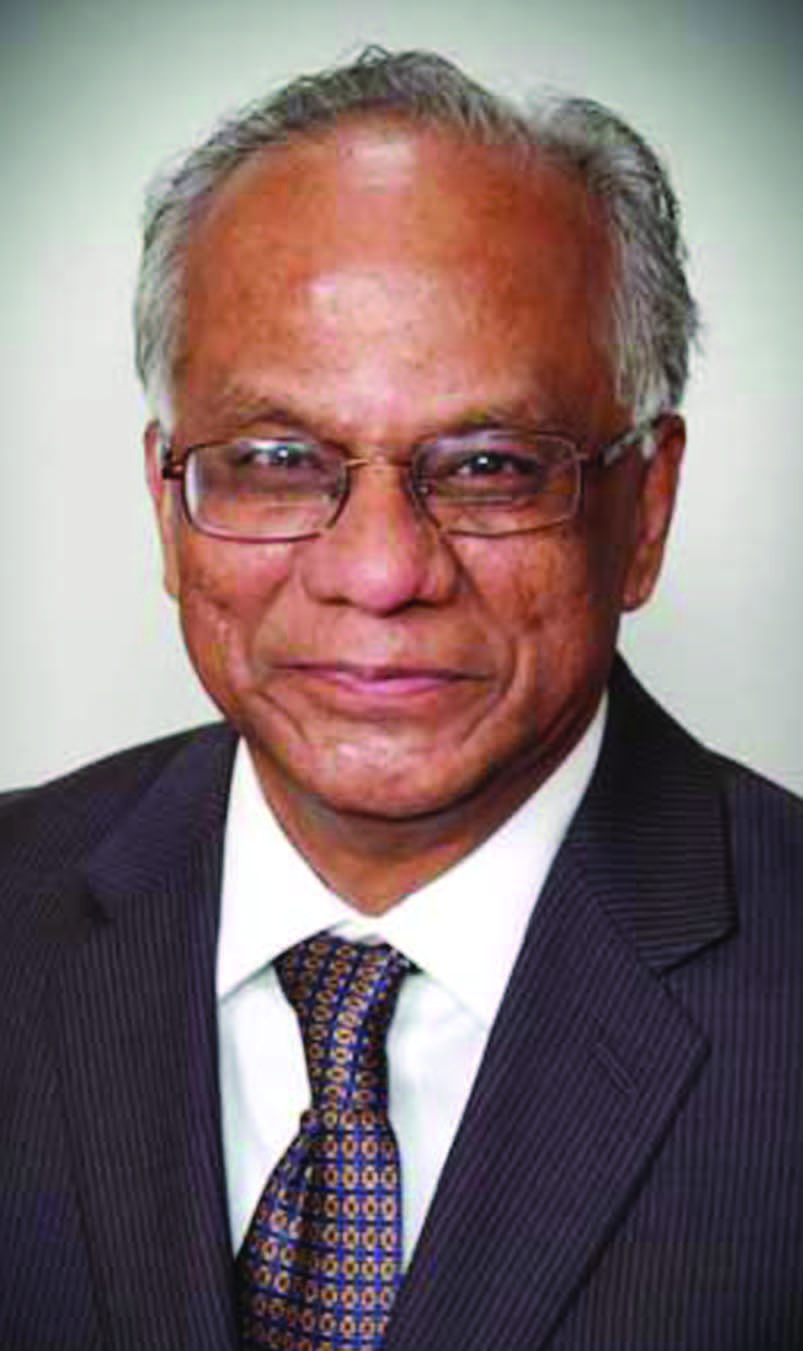
    CHICAGO (TIP): Taking aim at “Obamacare” and national debt, India-born Manju Goel is seeking Republican nomination for a Congressional run to challenge incumbent Democrat Tammy Duckworth. Goel, an Aurora resident and conservative is backed by a national group of Republicans, including Texas congressman Pete Sessions, in her run for 8th Congressional District of Illinois state, according to Chicago Daily Herald. In her campaign literature, Goel said she grew up in a middle-class family in northern India and came to the United States at the age of 21. She has degrees in applied computer science and health care management and served as a process improvement specialist for Advocate Healthcare. Today, she works as a self-employed consultant specializing in process control improvemen.

  • US faces charge of becoming Qaida’s ‘airforce’

    US faces charge of becoming Qaida’s ‘airforce’

    WASHINGTON (TIP): US president Obama and his administration will have to go against the weight of American public skepticism and legislative resistance to meet their professed goal of punishing Syria for allegedly using chemical weapons in contravention of global rules. Although the US Senate Foreign Relations Committee on Wednesday approved conditional strikes against Syria by a 10-7 margin, opposition to military involvement is high among members of the House of Representatives, considered closer to ground sentiment. Polls show Americans are massively opposed to getting into what is increasingly seen as a Shia-Sunni spat that has little bearing on American interests, aside from asserting broader principles of international accountability vis-a-vis chemical weapons.

    In a reminder of the possible folly of getting into the middleeast snake-pit, one US lawmaker went so far as to say American strikes in Syria would turn the US military into “al-Qaida’s air force”— a reference to the Sunni-dominated rebels who would benefit from the US attack. “We certainly don’t have a dog in the fight,” said Ted Cruz, a Republican senator from Texas. “We should be focused on defending the United States of America. That’s why young men and women sign up to join the military, not to, as you know, serve as al-Qaida’s air force.” The comment drew a sharp rejoinder from the hawks itching for air strikes, but already, there is deep skepticism about the veracity of the administration’s accounts that the Assad regime used chemical weapons. Those opposed to involvement are mocking the administration for depending on dubious youtube videos and plants by opponents of the Syrian regime.? On septembr 5, sections of the US media also began focusing on Syrian rebel fighters, some of who were shown in a New York Times story as brutal extremists who executed government soldiers. Other reports have suggested that the rebels are being funded by a Saudi regime in order to extend Sunni influence to make up for the loss of sway in Iraq.

  • Sam Kannappan elected to NCEES

    Sam Kannappan elected to NCEES

    HOUSTON (TIP): The 92nd Annual Meeting of National Council of Examiners for Engineering and Surveying (NCEES) held in San Antonio, Texas recently has elected Sam Kannappan, a noted Indian-American community activist of Houston, Texas as its zonal Secretary/ treasurer, a press release said. Sockalingam Sam Kannappan, Chairman of Enforcement Committee, of Texas P.E. Board was elected Secretary and Treasurer of Southern Zone (SZ). South Zone has 18 boards under its control. NCEES is the American National Professional Engineers (PE) Board coordinating 50 national P.E. Boards, Puerto Rico and Virgin Islands. Engineering organizations from Canada, Mexico, Japan and other countries work with NCEES. Members of each state PE Board are appointed by their respective state governors. The requirements to receive a license to practice engineering such as education, examination and experience are decided by the Board.

    NCEES conducts examination for fundamental (FE) and Professional Examination (PE) through four zones. Kannapan was also recently made a board member of Texas Onsite Wastewater Treatment Research Council by Texas Governor Rick Perry. Kannappan is a registered Professional Engineer in Texas with 25 years of experience in design, analysis, and software development for the petrochemical, refinery, and pipeline industries. He graduated with Masters Degree in Mechanical Engineering from the University of Texas at Austin. He is a leading consultant in pipe design especially in designing piping under very high temperatures and pressures. He specializes in Finite Element Analysis and Fracture Mechanics methods to determine remaining life of a pressure component. He is author of text book “Introduction to Pipe Stress Analysis”. Kannappan, a native of Nattarasankottai in Sivaganga district of Tamil Nadu is the founder of Sri Meenakshi temple in Houston, Texas.

  • Nikki Haley wants Indian companies to open shops in S Carolina

    Nikki Haley wants Indian companies to open shops in S Carolina

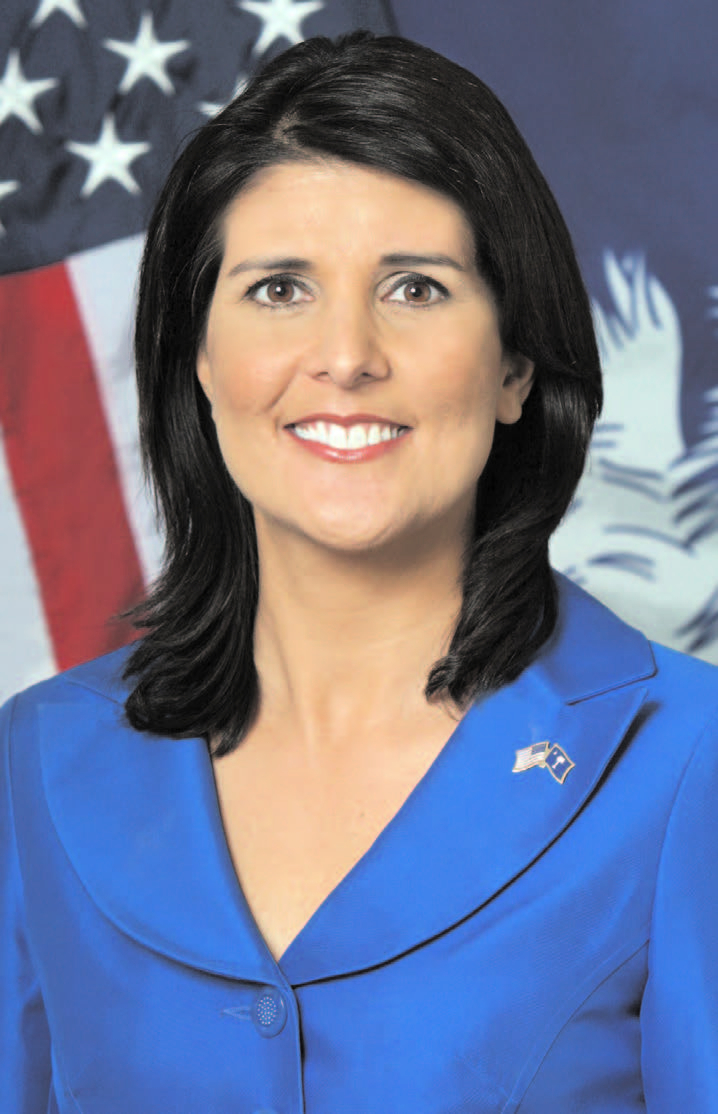
    CHARLOTTE (TIP): South Carolina Governor Nikki Haley said she is keen on working with Indian private sector to help set up manufacturing facilities in her home state. She said India has made great strides in manufacturing and technology and would welcome Indian industrialists to set up facilities that would help create more jobs. “I am in touch with Indian Ambassador to the US Nirupama Rao in this connection and hopefully very soon something would turn out,” she said. Haley encouraged fellow Indian- Americans to run for elected office in large numbers to make a better America and give it back to the nation that helped shaped their destiny. She is seeking another term as governor and has announced that she is contesting again.

    The contribution of Indian-Americans in the field of medicine, law, academics, science and technology was phenomenal and now its time for them to serve the nation entering politics, she added. “We have to see how much our parents have sacrificed in this country and how much our parents went through in the formative years. Its only our generation could push beyond what they did and make our voices heard as well in the right corridors of power.” Answering questions on the large number of Indian-Americans in fray in different states at different levels including three Indian-Americans running for office in Nassau County near New York City, Haley said the contribution of Indian- Americans She was born Nimrata Nikki Randhawa in Bamberg, South Carolina on Jan 20, 1972, to an Indian Sikh family – Dr. Ajit Singh Randhawa and Raj Kaur Randhawa who immigrated from Amritsar district in Punjab.

    Haley is the first woman to serve as Governor of South Carolina. At the age of 41, Haley is the youngest current governor in the United States. She is one of two sitting Indian- American governors in the US, the other being fellow Republican Bobby Jindal of Louisiana. She is also the third person of color elected as governor of a Southern state, after Viriginia’s L. Douglas Wilder and Louisiana’s Jindal She was later joined on Monday by Wisconsin Governor Scott Walker, Louisiana Governor Bobby Jindal and Texas Gov. Rick Perry in her re-election campaign at Greenville, South Carolina. Nikki Haley rose from obscurity after winning a crowded Republican primary in 2010. She won by less than 5 percent of the vote in the Nov 2010 general election Political experts expect her to face the same Democrat she defeated in 2010. She is also one of the national Republican Party’s most promising rising stars. She is smart and serious about policy and a charismatic campaigner who dresses stylishly and can deliver barbed attacks with a smile.

  • Indians now the third largest immigrant group in the US

    Indians now the third largest immigrant group in the US

    NEW YORK (TIP): Mexicans and Chinese alone are ahead of India when it comes to considering the presence of immigrant groups in the US. Indians have emerged as the third largest immigrant group in the United States with their numbers touching 1.9 million as of 2011. The Indian-born population in America has grown by over 150 times in size since 1960, says a new study from the Washington-based Migration Policy Institute. Back in 1960, America had just about 12,000 Indianborn immigrants, accounting for less than 0.5 per cent of the total immigrant population of 9.7 million immigrants at that time.

    Now, the US immigrant population stands at 40.4 million, with Indians representing almost 5 per cent of the total. “As a group, immigrants from India are better educated, more likely to have strong English language skills and arrive on employment-based visas, and are less likely to live below the federal poverty line than the overall foreign-born population,” says the study. In 2011, India was the second most common country of origin for international students at US institutions of higher learning, after China. Although the Indian immigrants are scattered all over America, more than one-quarter of them live in just three metropolitan areas: Greater New York, Chicago and San Jose in California’s Silicon Valley. Nearly one-third of the community resides in just two states: California and New Jersey.

    California alone accounts for 21 per cent of the Indian population, followed by New Jersey (11 per cent), Texas (9 per cent); New York (8 per cent), and Illinois (7 per cent). According to the figures cited by the study, more than 29 per cent of employed Indian-born men worked in information technology occupations, while 19 per cent of employed Indian-born women worked in management, business and finance. In 2012, more than 66,000 Indian-born immigrants were granted US legal permanent residency or green cards, the study says, noting that compared to other immigrant groups, Indians have made it largely through the employment-based channel. About 43,000 Indian immigrants became naturalized US citizens in 2012. The share of Indian immigrants who have naturalized (47 per cent) is said to be slightly greater than that of the overall foreign-born population (45 per cent).

  • Ghadar Centennial Celebrated In Washington

    Ghadar Centennial Celebrated In Washington

    WASHINGTON (TIP): “The Ghadar Movement was like a spark of fire, which lit up the whole forest,” said Ambassador of India Nirupama Rao addressing the audience of over 200 at the centennial celebration of Ghadar Party Movement for India’s independence. “It is the spirit of sacrifice, the spirit of courage that was exemplified by ghadarites who were inspired by the call of freedom,” Rao added.

    She said that this ghadarites movement was similar to the Irish independence movement, who also gained their freedom from the British after a long and turbulent struggle and many sacrifices. She enumerated the steps being taken by the Indian government, including release of a postage stamp by the Prime Minister early this year, to recognize the significant contribution of the movement in India’s freedom struggle.

    She mentioned that the Indian government has taken upon the project to convert the Ghadar Memorial Hall in San Francisco into a museum and a functional library. The ambassador said that the Indian Diaspora, who lit the torch for the freedom movement hundred years ago, are now making significant contributions in many fields in USA. The ambassador also recognized services of octogenarian Ghulam Yazdani Siddiqui, who was imprisoned in India by the British government, for his participation in freedom movement during his student days.

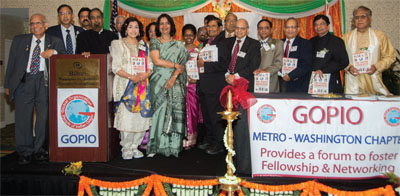
    The day-long program was arranged by the Metropolitan Washington Global Organization of People of Indian Origin (GOPIO) in cooperation with national GOPIO and Indian community organizations of Metro Washington on Sunday, 28th July at Rockville Hilton in Maryland.

    It consisted of seminars, banquet and entertainment. Seminar speakers talked about the formation of Ghadar Party and its initial members that included Lala Hardayal, Maulvi Barkatullah, Kartar Singh Bhakna, Sohan Singh Bhakna, and others. Inder Singh, chairman of the international GOPIO said that the current generation of Indian-Americans knows very little about the history of Indians in US. “To pass on to the next generation the legacy of the pioneers rests solely on us and particularly on our community leaders,” he said.

    Surender Pal Singh, 76, grandson of Bhagwan Singh-one of the eminent Ghadarites-said there is a need to recognize the contributions of the Ghadar Movement and its leaders in the freedom struggle. Singh, who had come from Atlanta for the occasion added that time has come to make Ghadar Party Movement a part of history text books.

    Professor Harbans Lal who came from Dallas, Texas said that the movement, which started in the West Coast of northern America with a small group of people from diverse religious groups, impacted India thousands of miles away with full force. Dr. Joy Cherian and Dr. Sambhu Banik talked about life and contribution of heroes of Ghadarite Movement. Sandip Mallick of South-Asian American Digital Archive (SAADA) gave a power point presentation of archival material.

    SAADA is helping preserve Ghadarite movement history. Ambassador Subhas Mungra of Republic of Surinam, Ambassador Islam Siddiqui, Chief Agricultural Negotiator US, Deputy Secretary of Maryland State Dr. Rajan Natarajan, Maryland State Attorney- General Mr. Douglas Gansler, Montgomery County Executive Ike Leggett, and Maryland State Delegate Aruna Miller also expressed their appreciation for the event celebrating 100 years of the Ghadarite independence movement.

    Welcoming the guests and audience, Washington GOPIO president Dr. Zafar Iqbal mentioned that the program for the year-long celebration of the centennial was launched at the Embassy of India on 3rd November 2012 by Ambassador Rao. He elaborated that tonight’s event was organized to honor the ultimate sacrifices of Ghadar Party Movement heroes, who preached and practiced the motto, Sar Kata Sakte Hain; Sar Juka Sakte Nahin (We can have our heads cut off, we cannot bow our heads to anyone).

    Event chairperson Dr. Renuka Misra highlighted the significance of the movement that had cooperation of major communities that included Sikhs, Muslims, and Hindus. She elaborated that tonight’s function also had participation of diverse ethnic and cultural organizations. Misra also performed the task of master of ceremony. Sumptuous dinner was followed by a variety of entertainment program that included lively Bhangra dance. Dr. Satish Misra and Nitin Gupta thanked the guests, supporters, and participants in making the event a success.

  • Ahmed Shakir Honored AT Liu’s Eid Party

    Ahmed Shakir Honored AT Liu’s Eid Party

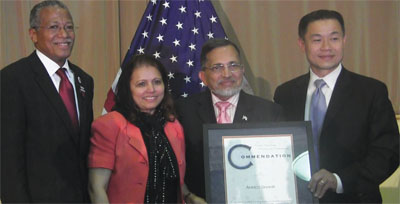
    NEW YORK (TIP): Ahmed Shakir, P.E. who is the Local 375 Secretary, arrived in the United Sates of America in 1969. He received his B.S. and M.S. in structural engineering from the University of Texas. As a student he was active in international, Indian and Muslim student associations because of his deep interest in social, community, and political activities. This initial commitment stemmed from his belief that everyone should dedicate some of their time to improving and serving their community.

    Over the past twenty years, Ahmed has been extensively involved in the union and labor activities. He has a number of accomplishments to his credit. He is the first South Asian elected as Secretary of Local 375 for four consecutive terms, since 1998. He is the first South Asian to serve as Vice President on the Board of Directors of the Asian Pacific American Labor Alliance of U.S.A. He is on the Board of Directors of the Eastern Queens Democratic Party and an officer for the union and their political office.

    He is a founding Vice President of the American Engineering Alliance which was established in 1996. As a Treasurer of FIA since 2009, Ahmed is bringing new sponsors for FIA and helps FIA to connect with Senators, Congressmen and Political leaders at City and State levels. Among his peers and colleagues, Ahmed has come to be seen as a man who promotes the idea and practice of tolerance in every facet of life.

    He believes that people should work together regardless of nationality, religion, or race, because peace and prosperity can only be achieved through non-violence, patience and service to the needy. Ahmed’s message to Indian community in USA is to come together and take a leadership role in the adopted country. “This country gave us all the opportunity to make our dream come true.We should make every effort to be worthy of this country”, says Sakir

  • Municipal Bankruptcy-Detroit Files For Largest Municipal Bankruptcy In US History

    Municipal Bankruptcy-Detroit Files For Largest Municipal Bankruptcy In US History

    DETROIT (TIP): The city of Detroit filed for Chapter 9 bankruptcy protection in federal court Thursday, July 18, laying the groundwork for a historic effort to bail out a city that is sinking under billions of dollars in debt and decades of mismanagement, population flight and loss of tax revenue. The bankruptcy filing makes Detroit the largest city in U.S. history to do so.

    The filing by a state-appointed emergency manager means that if the bankruptcy filing is approved, city assets could be liquidated to satisfy demands for payment. Kevin Orr, a bankruptcy expert, was hired by the state in March to lead Detroit out of a fiscal free-fall, and made the filing Thursday in federal bankruptcy court. “Only one feasible path offers a way out,” Gov. Rick Snyder said in a letter to Orr and state Treasurer Andy Dillon approving the bankruptcy. The letter was attached to the bankruptcy filing.

    “The citizens of Detroit need and deserve a clear road out of the cycle of ever-decreasing services,” Snyder wrote. “The city’s creditors, as well as its many dedicated public servants, deserve to know what promises the city can and will keep. The only way to do those things is to radically restructure the city and allow it to reinvent itself without the burden of impossible obligations.”

    Snyder had determined earlier this year that Detroit was in a financial emergency and without a plan to improve things. Snyder hired Orr in March, and he released a plan to restructure the city’s debt and obligations that would leave many creditors with much less than they are owed. Orr was unable to convince a host of creditors, including the city’s union and pension boards, to take pennies on the dollar to help facilitate the city’s massive financial restructuring.

    Some creditors were asked to take about 10 cents on the dollar of what the city owed them. Under funded pension claims would have received less than 10 cents on the dollar under that plan. A team of financial experts put together by Orr said that proposal was Detroit’s one shot to permanently fix its fiscal problems.

    The filing leads to a 30 to 90 day period that will determine whether or not the city of Detroit is eligible for Chapter 9 protection, and define the number of claimants who may compete for Detroit’s limited settlement resources. The petition seeks protection from unions and creditors who are renegotiating $18.5 billion in debt and liabilities, according to the Detroit Free Press.

    “The President and members of the President’s senior team continue to closely monitor the situation in Detroit,” White House spokeswoman Amy Brundage said in a statement Thursday. “While leaders on the ground in Michigan and the city’s creditors understand that they must find a solution to Detroit’s serious financial challenge, we remain committed to continuing our strong partnership with Detroit as it works to recover and revitalize and maintain its status as one of America’s great cities,” the statement read. Sen.

    Carl Levin, D-Mich., remained positive about Detroit’s outlook in spite of the major blow that bankruptcy delivered: “I know firsthand, because I live in Detroit, that our city is on the rebound in some key ways, and I know deep in my heart that the people of Detroit will face this latest challenge with the same determination that we have always shown,” the Senator said in a statement released Thursday.

    A number of factors — most notably steep population and tax base falls — have been blamed on Detroit’s descent toward insolvency. Detroit was once synonymous with U.S. manufacturing prowess. Its automotive giants switched production to planes, tanks and munitions during World War II, earning the city the nickname “Arsenal of Democracy.” Detroit lost a quarter-million residents between 2000 and 2010.

    A population that in the 1950s reached 1.8 million is struggling to stay above 700,000. Much of the middle-class and scores of businesses also have fled Detroit, taking their tax dollars with them. Detroit’s budget deficit is believed to be more than $380 million. Orr has said long-term debt was more than $14 billion and could be between $17 billion and $20 billion.

    For decades, sizeable bankruptcies have been rare in the $3.7 trillion municipal bond market, but experts say there might be an uptick as counties, cities and towns wrestle with economic recession and stubbornly rising costs. Until Detroit filed its landmark case on Thursday, there had been four Chapter 9 municipal bankruptcy filings so far this year, compared with 12 in all of 2012 and 13 during 2011, according to James Spiotto, partner at Chapman and Cutler LLP. The four this year were special-purpose districts in Oklahoma and Arkansas.

    The great bulk of Chapter 9 filings involve utilities and special districts, Spiotto said. Many cases are blocked by judges. Since 1954, cities, villages and counties accounted for only 61 Chapter 9 filings. The highest number of bankruptcy filings occurred in Nebraska, followed by California and Texas.

    What will happen next
    A bankruptcy judge will be appointed to oversee the city’s case. Hearings could take place in Detroit, Kentucky, Ohio or Tennessee. Chapter 9 bankruptcy is poorly understood, in part because it happens so infrequently. Detroit’s case is the largest in U.S. history. Here’s what happens next:

    o The city filed a Chapter 9 bankruptcy petition Thursday in the U.S. Eastern District Court of Michigan.The filing includes additional information on the city’s financial outlook and could include details about the city’s plan to cut costs, such as potential layoffs and department consolidation, said Ken Schneider, a bankruptcy attorney with Detroit-based Schneider Miller PC.

    o Alice Batchelder, chief judge of the U.S. 6th Circuit Court of Appeals, will appoint a bankruptcy judge to oversee the city’s case. o The bankruptcy judge will determine where to hold hearings, which could take place in Detroit, Kentucky, Ohio or Tennessee. o An automatic stay will be issued on most of Detroit’s bills, including unsecured debts, Schneider said today. The city will continue to pay secured creditors, including water and sewer bondholders, who have the right to seize city assets if Detroit fails to pay.

    o An automatic stay also will be issued on lawsuits against the city, including outside challenges by pension officials and union members. This means hearings in those lawsuits will be indefinitely delayed. The plaintiffs can recast their arguments inside of bankruptcy court, said Jay Welford, a bankruptcy attorney and partner at Southfield-based Jaffe Raitt Heuer & Weiss.

    o The city doesn’t need approval to continue services. For example, the police, fire, water, sewer and public works are completely unaffected by the bankruptcy filing for now and will operate as usual. However, cuts are possible in the future. “You have the ability to use your cash,” Welford said. “You don’t need court approval.”

    o Creditors can challenge the city’s right to file for bankruptcy by issuing motions to dismiss the case. o In this case, bondholders and pension officials could accuse the city of failing to negotiate “in good faith,” one of the key criteria allowing the city to file for bankruptcy. The judge would hear arguments on this issue. A ruling could take days, weeks or months – perhaps even a year.

    o The city also will have to prove it is insolvent, another stipulation required to file for Chapter 9 bankruptcy. According to the federal bankruptcy code, this requires the city to prove that it is not paying its bills. Emergency manager Kevyn Orr recently authorized the city to stop making payments on some debts. Bankruptcy experts believe that action was enough to satisfy the insolvency requirement, but creditors may still find wiggle room to argue the city is not insolvent.

    o If the judge authorizes the city to move forward with a Chapter 9 bankruptcy case, Orr would propose a plan of reorganization. This could take weeks, months or years. Bankruptcy court allows the city to restructure its operations and its balance sheet. This could involve budget cuts, layoffs, consolidation, the sale of assets, slashing union contracts, selling assets and dramatically reducing city debts, including outstanding bonds.

    o The city will attempt to win support for the reorganization plan from creditors, including secured bondholders, general obligation bondholders, unions and pension boards. If the city wins enough support, the plan would be put to a vote – and with enough support, the city could emerge from bankruptcy.

    Without enough support, the judge could tell the city it must continue to negotiate with creditors. Orr may eventually pursue a “cram down” procedure, which would require winning support of a minority of creditors and convincing a judge that dissenting creditors are not being reasonable. “We’ll probably get to that because I don’t see how creditors are going to accept what he’s talking about paying them,” Schneider said.

    o The length of the case is widely debated. Some experts believe it could be as short as several months. Others say it could take years. Most complex Chapter 9 cases have taken several years.

    Recent and significant Chapter 9 cases include:
    SAN BERNARDINO, CALIFORNIA

    San Bernardino filed for bankruptcy status last August 1, becoming the third city in America’s most populous state during 2012 to use Chapter 9 in a fiscal crisis. The city of about 210,000 residents located 65 miles east of Los Angeles said it had more than $1 billion in debts and had tapped out its financial reserves. A federal bankruptcy judge has scheduled a hearing for August 28 to determine if the city is eligible for Chapter 9 shelter.

    STOCKTON, CALIFORNIA
    Stockton, a city of 300,000 located east of San Francisco, filed for bankruptcy in June 2012 and was until Detroit’s declaration the biggest U.S. city ever to seek Chapter 9 protection. After years of fiscal mismanagement and a housing market crash, Stockton was unable to pay workers, pensioners and bondholders. In April this year, a judge turned aside objections from bondholders trying to scuttle the case and cleared the way for Stockton to move ahead on a debt-adjustment plan, which local officials hope to file in September.

    JEFFERSON COUNTY, ALABAMA
    At $4.2 billion, Jefferson County set the previous record for the biggest U.S. municipal bankruptcy filing in November 2011. The county has since negotiated a tentative settlement with most creditors that still must be approved by a federal judge. The county, home to Birmingham, Alabama’s largest city, is weighed down by massive sewer-system debt. After the loss in 2011 of a local jobs tax that severely reduced revenues, the county cut 1,300 staff jobs, pulled back on government services and stopped payments on general obligation debt.

    ORANGE COUNTY, CALIFORNIA
    The county, California’s thirdmost populous, filed for bankruptcy in December 1994 after rising interest rates savaged investment bets by its treasurer, leaving the county with a loss of $1.7 billion in an investment pool. That put Orange County at risk of a $1 billion default the next year. Orange County emerged from bankruptcy after 18 months.

    HARRISBURG, PENNSYLVANIA
    Harrisburg, the state capital of Pennsylvania saddled with incinerator debts, lost a bid for Chapter 9 bankruptcy in 2011 and is now under state receivership. With a population of 50,000, Harrisburg is plagued by $320 million of debt incurred by cost overruns from an upgrade of its incinerator. In a bid to ease debts, the city is selling off thousands of Western and other historical artifacts accumulated by a former mayor to stock local museums that were never built.

    VALLEJO, CALIFORNIA
    Vallejo, a former U.S. Navy town near San Francisco, filed for bankruptcy on May 23, 2008, after failing to address steep city personnel costs and sliding revenue from a housing slump. In July 2011, the city won court approval for its financial plan to exit bankruptcy protection.

    CENTRAL FALLS, RHODE ISLAND
    The smallest city in the smallest U.S. state filed for bankruptcy on August 1, 2011, after failing to win concessions from public-sector retirees and others to address an $80 million unfunded pension and retiree health benefit liability, which was nearly quadruple its annual budget of $17 million. Central Falls last September won court approval of a reorganization plan that cut retiree pensions, raised taxes and left bondholders without losses.

  • A Harassed Indian Student’s Tale of Woe

    A Harassed Indian Student’s Tale of Woe

    The Open Doors report, which is published annually by the Institute of International Education (IIE) with support from the U.S. Department of State’s Bureau of Educational and Cultural Affairs, says that the number of international students at colleges and universities in the United States increased to an all-time high of 6,71,616 in the 2008-09 academic year and has been steadily growing.

    The report says India that has been at the top in enrolment in 2008, is now the second leading place of origin of students after China that has gained only a marginal edge over India. The report is based on a comprehensive survey of approximately 3,000 accredited U.S higher education institutions of all types and sizes, regarding international students at all levels of study. On many occasions we have heard stories of sufferings and misery of Indian students in the U.S. Most relate to bias and discrimination.

    Many a time the embassy of India and the Indian consulates have been accused of complete indifference to the students’ plight. The present story of a young student at University of Texas, Brownsville is no different. Harassed by the university authorities the young man turned to the Consulate at Houston but failed to move the authorities there.

    I do not wish to pass any judgment on the Indian Consulate in Houston but our readers will agree that this unhelpful attitude of the Consulate authorities in protecting the interests of an Indian student is not compatible with their charter of duties. Please do not forget young Indians come to this country with big dreams, as many of us came with, and we need to help them realize their dreams, for themselves and for India.

    Indian students are the second highest foreign student contingent in USA. They come here to study, to make a career and to experience a different culture. They do not come here to get assaulted, hazed upon, or to have sexually profane acts get carried out in their house. Lastly they do not expect their college to take a biased decision against them. However such is exactly the list of inexperiences that an Indian student, who requests not to be identified, had to suffer at University of Texas, Brownsville between January and December 2011, as a graduate student.

    During his stay, he was hazed upon by a PhD student from Sri Lanka by the name of Shihan Weeratunga, who asked repeatedly for over 3 months to be included in a start-up already registered in the Indian student’s and his American business partner’s name. No one can ask to divulge company secrets (tantamount to asking one to commit a crime) or insist overtly to be included in a start-up at the expense of an existing co-founder. Mr.Weeratunga also behaved in many unacceptable ways in the Indian student’s house, including but not limited to groping of a common friend.

    There were also plenty of sexual allusions and at least one promiscuous act with a fellow student, in the Indian student’s house, after tactfully getting the latter inebriated, the details of which are not being divulged for now upon request. This reporter feels that this act alone is enough to get someone thrown out of a college and possibly incarcerated.

    Finally on the night of 25th August, Mr.Weeratunga cornered the Indian student on the staircase outside his house, and with much name calling, finger pointing and shouting, physically assaulted (coming chest to chest, shove/push, hit) him. The University’s code of conduct can be found here – http://www.utb.edu/ba/hoop/Polic y/6-4-1.pdf Mr.Weeratunga was clearly in violation of multiple items.

    The Indian student lodged a complaint to the college coordinator of judicial affairs, first submitting a brief report on the 19th September 2011 and then a full complaint on the 2nd October 2011. The adjudicator, upon receiving the first of the complaints, replied with the following, even though he had been asked to sit in judgment – “Because your allegation of harassment of you by Mr. Weeratunga is so serious, I am compelled to respond in some form.

    I need to do this because if your allegations are found to be true, then they represent a violation of our policy on harassment. The University is intolerant of behaviors that would be deemed as harassment and that create a hostile environment for any individual on our campus.” The official complaint was only against Mr.Weeratunga, and did not directly implicate anyone else.

    However the adjudicator then made a volte face and shut the case up in one day, conducting only a shoddy evaluation, once another Hispanic female student of the college (who carried out her share of distasteful acts in his house) came into the picture. The Indian student was denied a fair and full investigation, which is mandated by US law for all employees (student worker) of American institutions, and was instead threatened verbally with suspension and told by the adjudicator not to mention these incidents ever again.

    The about turn (and shoddiness and haste with which the investigation was carried out) made by a Hispanic adjudicator of a principally Hispanic institution after a Hispanic woman came into the picture, reeks of prejudice and borders on racial partiality to say the least.We suspect the adjudicator had already decided to exonerate Mr. Weeratunga and intimidate the Indian student to keep things secret even before receiving the full (2nd) report, for the sake of the female student.

    The Indian student had to lapse into medical trauma (noted by the college medical counselor Miss. Liebscher) since the day of the assault and more so since this misjudgment. U.T. Brownsville is part of the University of Texas system of colleges and cannot act in violation of their central set of rules.

    We demand that U.T. Brownsville please explain the anomaly, and explain why Mr.Weeratunga was allowed to get away with assault and many other violations of University policy and why another student was made to suffer in this way – is it for the reason we suspect – to protect the reputation of the woman? Mr.Weeratunga is part of the Physics PhD program of U.T. Brownsville, which is a degree conferred by the University of Texas, San Antonio – we believe that U.T.S.A. would also consider distancing themselves from him once the full extent of Mr. Weeratunga’s misdoings emerges.

    The Indian student after suffering this way, produced a dismal grade, and was ousted by U.T. Brownsville. He has since returned to another college in Texas and is doing many times better there. He went back to Brownsville this April and filed a case for assault against Mr. Weeratunga, and made the Indian Consulate in Houston aware of these developments (including supplying the police report). The Consulate promised to take up the matter with the college but has not done so as yet.

    He also contacted many Indian organizations and Indian media agencies (including NDTV) and the U.S.I.E.F. in India, but with little or very modest success. Indian Panorama is the first to feature this story. The student has recently made the U.T. Brownsville Physics department aware of the full extent of Mr. Weeratunga’s misdemeanors and now intends to sue the college for damages on grounds of partiality and deliberate negligence but does not have the resources to engage another law firm (he already engaged the law offices of Sherin Thawer, to file for an U visa), except on a percentage basis.

    He is now toying with the idea of writing a reveal-all book in future and contacting watch-dog bodies that monitor acts of hazing, violence, sexual misdemeanor and racial partiality in American Universities.

  • Could Taliban Talks Lead To Partition Of Afghanistan?

    Could Taliban Talks Lead To Partition Of Afghanistan?

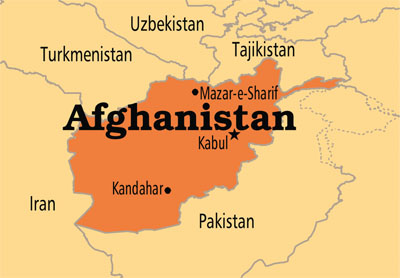
    The big question for the Afghans is: what happens in the long term? What will Kabul require to maintain the Afghan form of security and peace after the US/NATO troops leave, or will Afghanistan willy-nilly pitch itself right into yet another bloodletting civil war – like what followed the Soviet troop withdrawal in 1989? “, says the author.
    The much-expected talks between the Taliban and the United States in Doha have not yet begun, and there is no clear indication when the two parties, busy settling their list of pre-negotiation do’s and don’ts, will finally sit down to discuss the features of post-2014 Afghanistan and determine role of various parties in the future. Meanwhile, some within Afghanistan have expressed concern that if indeed talks progress between the Taliban and the Americans, it may lead to the partition of Afghanistan.

    As of now it seems that one important party, the Government of Afghanistan led by President Hamid Karzai, has suspicions that the Americans are working toward allowing the Taliban to carve out some territory of its own as part of the so-called solution to the Afghan imbroglio, and has remained unwilling to participate in these talks. President Karzai demands Afghan-to- Afghan talks unfettered by the presence of foreigners – particularly those who invaded, fought the Taliban unsuccessfully for more than a decade, and are now looking for a conditional getaway.

    President Karzai’s hard stance may change. After all, he also knows that he will have to depend on these foreigners’ money to keep Kabul secure after the 100,000-plus foreign troops leave Afghanistan by mid-2014. What happens next? However, these are short-term logistical problems. What is certain at this point is that the vast majority of foreign troops will leave Afghanistan according to the timetable set by US President Barack Obama.

    The big question for the Afghans is: what happens in the long term? What will Kabul require to maintain the Afghan form of security and peace after the US/NATO troops leave, or will Afghanistan willy-nilly pitch itself right into yet another bloodletting civil war – like what followed the Soviet troop withdrawal in 1989? At that time, the Afghan strongman Najibullah, a friend of the Soviets and a gritty Pushtun, had held on to power for almost five years fighting various Mujahideen groups.

    Most of those groups were propped up by the West, the Saudis and Pakistan in the 1980s using “Islamic Jihad” as the battle cry to fight the Soviet military. After the Soviets left, some of these groups continued to receive active Pakistani help to topple Najibullah, then the Afghan symbol of the godless Soviets. The question is: Will the withdrawal in 2014 usher in the same players that we saw in 1989, killing at random to get control of Kabul? Who knows? The current tiff between Kabul and Washington that is receiving attention in the mainstream media is part of a power play in progress between President Karzai and the United States.

    This, too, will pass. But what is not certain is what the talks will in fact bring in. Will they bear the fruit that the Obama administration is hoping for? Max Fisher of the New York Times noted that the so-called peace talks are already on shaky ground for three reasons. First, on the same day Washington announced the opening of “peace talks,” the Taliban claimed responsibility for an attack that killed four Americans.

    Second, Afghan President Hamid Karzai announced he was no longer planning to participate in either the talks or a separate troop-level negotiation with the United States. And, third, the Taliban’s new office in Doha flew a banner labeled “Islamic Emirate of Afghanistan” and a flag from its days of ruling the country. “All three are individually bad signs that represent much larger challenges for peace in Afghanistan,” said Fisher.

    “In some ways, though, it’s the flag that’s most serious” (“The ultimate symbol of why Afghan peace talks will be so difficult,” Max Fisher, New York Times, June 19, 2013). Maybe Fischer is overstating here. This little summer thunderstorm may pass in no time. But, the problem is that even if the talks turn out to be “successful,” will that be any good for the Afghans? There is no reason to believe that President Obama is losing sleep over that.

    As far as he is concerned, a peaceful withdrawal from Afghanistan – unlike the kind of withdrawal from Vietnam that resembled so starkly the fearful retreat of a defeated military – is all that he cares about, even if that means supping with the devil. All the rest of the verbiage that comes out of Washington is rhetoric.

    Appeasing the Taliban? That, however, also means that Washington needs to keep the Taliban in good humor, and that means allowing the group to have some sort of authority in Kabul when the foreigners are gone – or, most of them. There is a distinct possibility that the upcoming talks will include this as an important item. Some in Washington have long claimed that the Taliban is not really that bad.

    In a December 2011 interview with Newsweek/Daily Beast, US Vice President Joseph Biden said as much. “We are in a position where if Afghanistan ceased and desisted from being a haven for people who do damage and have as a target the United States of America and their allies, that’s good enough. That’s good enough. We’re not there yet,” said Biden. “Look, the Taliban per se is not our enemy. That’s critical,” he insisted.

    “There is not a single statement that the president has ever made in any of our policy assertions that the Taliban is our enemy because it threatens US interests…” What Biden says is clear. The United States has zero problem with the Taliban. But it has loads of problems with the al- Qaeda. In Afghanistan, however, those problems have been mostly resolved.

    In fact, Washington claims that it has virtually decimated al-Qaeda – the real bad guys – and the upcoming deal with the Taliban will include the condition that the Taliban cannot allow al-Qaeda to set up shop in Afghanistan once again. If all these negotiating points work out, the Taliban could have a legitimate presence in Kabul.

    Some in Afghanistan claim that long before that becomes a reality, talks with the Taliban – who have a put up a plaque in Doha claiming themselves to be the representatives of the “Islamic Emirate of Afghanistan,” as opposed to the citizens of the Islamic Republic of Afghanistan, the actual name of the Afghan Government – will pave the way for partition of Afghanistan.

    Afghanistan’s Weesa Daily, in its June 19 editorial referring to these developments, said attention should be paid to several major points: First, the opening of the office is an understanding between the Taliban and the United States, and the Taliban now think that US forces in Afghanistan have been defeated and are escaping while the US considers how to leave the ongoing war to Afghans so that it can merely watch.

    If there is no crisis following President Karzai’s term and if peace talks advance as planned, the Taliban, according to their recent statement, will hold talks with all involved sides. But, notes Weesa Daily, “these talks of the Taliban with all involved sides would resume based on the plans suggested by US Senator Dana Rohrabacher and US Vice- President Joe Biden, who have suggested Afghanistan’s division – which may result in civil war.”

    Partition of Afghanistan? Well, US Vice President Biden has talked about the “soft partition” of Iraq, but never about the partition of Afghanistan; while Congressman (not Senator) Rohrabacher has participated in deliberations where partition/decentralization of Afghanistan was addressed as an issue. But before Rohrabacher got into the act, former US Ambassador to India and US National Security Council Deputy for Iraq (2003-2004) Robert Blackwill, a neo-con, had identified the partition of Afghanistan as Plan B.

    In a July 2010 article in Politico, Blackwill was highly critical of the Karzai administration (“Afghan President Hamid Karzai’s deeply corrupt government – as unpopular as the Taliban – shows no sign of improvement”) and implied that the “corrupt governance” of Kabul was the prime reason behind US/NATO’s failure to “win” the war in Afghanistan. He called for a ‘de facto partition’ of Afghanistan and urged the Obama administration to “accept that the Taliban will inevitably control most of its historic stronghold in the Pashtun south.”

    But, Blackwill added, “Washington could ensure that north and west Afghanistan do not succumb to jihadi extremism, using US air power and special forces along with the Afghan army and likeminded nations.” Blackwill also stated: “Given the number of US combat forces now fighting, the Taliban cannot be sufficiently weakened in Pashtun Afghanistan to drive it to the negotiating table on any reasonable timeline. True, the Afghan Pashtun are not a unified group. But they do agree on opposing foreign occupation and wanting Pashtun supremacy.”

    In January 2012, Chairman of the Europe, Eurasia, and Emerging Threats Subcommittee of the US House Foreign Affairs Committee Dana Rohrabacher (RCalifornia) went to Berlin at the head of a bipartisan congressional group represented by Reps. Louie Gohmert (R-Texas), Steve King (R-Iowa) and Loretta Sanchez (DCalifornia).

    In Berlin, the delegation met with well-known National Front leaders such as Ahmed Zia Massoud, chairman of the National Front [Jebha-e-Melli]; General Abdul Rashid Dostum, leader of the National Islamic Movement of Afghanistan [Jumbesh-e-Milli]; Haji Mohammad Mohaqiq, leader of the People’s Unity Party of Afghanistan [Hezb-e Wahdat-e Mardom]; and Amrullah Saleh, former director of the Afghan National Security Directorate.

    Together, they had signed a document advocating major changes in the Afghan constitution, designed to create a federal system which would devolve power from the centre to the provinces. Of the existing governmental arrangements in Afghanistan they had the following to say: “The current system has fatally concentrated decision-making to whoever is president of the country. The Afghan president appoints the governors of each province and district, the mayor of every town, every provincial chief of police, one third of the entire Senate, and even every judge in Afghanistan.”

    “This centralized power has led to massive corruption, disenfranchisement of a large segment of the Afghan people, obstacles to economic development, massive abuses of power, increasing political instability, poor governance, and a vast undermining of law and order.” Almost instantly Kabul reacted sharply to the statement. In April 2012, Rep. Rohrabacher was stopped in Dubai as he was leading a delegation to Kabul.

    Officials say that while the other members of the delegation had visas for Afghanistan, Rohrabacher was denied a visa. Afghan officials had told the BBC that in addition to his criticisms of the president, Rohrabacher was being shunned because of meetings he had held in Berlin with Afghan politicians about the creation of a decentralized form of government.

    According to the BBC, Afghan officials viewed that as tantamount to interference in the country’s internal affairs. “Anyone who speaks against the good of Afghanistan and tries to interfere in our internal affairs is ineligible for an Afghan visa,” one official told the BBC. Though strong, President Karzai’s reaction was not impulsive. At the time of the Berlin meetings – in fact, two meetings took place over three days (Jan. 9-11) – he had made known his discontent.

    Given the lack of clarity in the US strategy on Afghanistan, Karzai had every reason to suspect that the Berlin outcome could become the official strategy one day, particularly since Blackwill had already called for a ‘de-facto partition’ of Afghanistan a few months before. According to available reports, there was also another reason why President Karzai reacted so sharply.

    Accompanying Rohrabacher and the three other representatives was an American confidant of Gen. Dostum, Charles Santos. Santos, who had been advocating the concept of federalism and the powerful role of democratically elected local and regional governments in Afghanistan through various articles, was not listed among the participants in Berlin.

    President Karzai might have wondered: what was that all about? Reports indicate that an angry President Karzai personally called the German Foreign Office, though the meeting was already over, and leaned on then US Ambassador Ryan Crocker to de-legitimize the Berlin proceedings. On Jan 10, Ambassador Crocker issued a short statement, titled “The United States Supports Afghan Unity.”

    The statement said: “In response to recent press [sic] reports, the US Embassy reaffirms the longstanding support of the United States for a unified Afghanistan based on the Afghan Constitution. Any assertions to the contrary are entirely without foundation. Reconciliation and the political process in Afghanistan are led by the elected government and the Afghan people.

    Any statement to the contrary is inaccurate.” Subsequently, at a Jan. 21 press conference in Kabul, then-US Af-Pak envoy Marc Grossman made efforts to cool down the Afghan president by reiterating that a peace deal could only be negotiated by Afghans and would not be hijacked by US officials, despite current appearances to the contrary. It is evident from many reactions within Afghanistan that the Afghans do not want partition of their country, and some news editorials express fear that the Taliban-US talks could lead to just that.

    Afghan analysts point out that the country suffered the pains of partition when the British Raj drew a border (known as the Durand Line) between Afghanistan and then British- India in 1893. The aim of that partition was to divide and weaken the Afghan tribes. More than a century later, the Durand Line remains one of the most disputed borders in the world. Further, Afghans rightly note that during the past three decades, Afghanistan has had no functioning government, yet nonetheless remained united against foreign invasions.

    Except for two or three of the country’s 33 provinces, each province has a distinct ethnic mix; and, perhaps because of this phenomenon, separatism has never raised its ugly head in Afghanistan. During Afghanistan’s civil war in the early 1990s, when a fierce internal competition for control of Kabul was raging, no ethnic group and no warlord ever called for partition. The anti-Soviet resistance in the north remained always as strong as in the south.

    “And let’s not forget that there are millions of Pushtun in the north as well,” as one analyst pointed out. In other words, should Washington try to partition Afghanistan to provide the Taliban a permanent home and hope that will prevent an all-out civil war, it might ensure US troops a peaceful retreat; but it could also lead to huge opposition within Afghanistan, triggering a civil war.

  • 6 Indian-American kids’ culinary skills feted at White House

    6 Indian-American kids’ culinary skills feted at White House

    WASHINGTON (TIP): Six Indian-American kid chefs have been honored for their fabulous culinary skills by US First Lady Michelle Obama at the White House’s “Kids State Dinner” as part of her initiative to tackle obesity and promote healthy eating among American children.

    Anisha Patel from Ohio, Ganesh Selvakumar from Pennsylvania; Devanshi H Udeshi from Texas; Emma Scielzo from Maryland, Vijay I Dey from North Carolina and Shefali Singh from Massachusetts were among 54 children invited by the First Lady for the event at the White House yesterday where they also had a chance encounter with President Barack Obama. “Now, first of all, usually at a state dinner, I get invited.

    So I don’t know what happened on this one — somehow the invitation slipped through somewhere. But it looks like you guys are having fun,” the President said amid laughter. Selected from over 13,000 contestants nationwide, the six Indian Americans probably constituted the largest number of kids from any ethnic group. So far, Indian Americans have been known for winning various science and math competitions and those like Spelling Bee and Geography Bee.

    “And we’re really proud of you winning this challenge — because, frankly, I’m not a great cook and — I’m not bad, but I don’t do it that much. Its hard to find the time,” the President said. “But when I do cook, I’m following a recipe.

    And to think that all of you have invented all this fabulous food just shows how creative you are and it shows that food that tastes good can be healthy, too,” Obama said. 10-year old Emma Scielzo, a third generation Indian American who attributes her winning recipe of “Chicken Masala Wrap” to her Indian grandparents who immigrated to the US several decades ago from Punjab, was one of three children who were selected to shoot short cooking videos.

  • 6 Indian-American kids’ culinary skills feted at White House

    6 Indian-American kids’ culinary skills feted at White House

    WASHINGTON (TIP): Six Indian-American kid chefs have been honored for their fabulous culinary skills by US First Lady Michelle Obama at the White House’s “Kids State Dinner” as part of her initiative to tackle obesity and promote healthy eating among American children. Anisha Patel from Ohio, Ganesh Selvakumar from Pennsylvania; Devanshi H Udeshi from Texas; Emma Scielzo from Maryland, Vijay I Dey from North Carolina and Shefali Singh from Massachusetts were among 54 children invited by the First Lady for the event at the White House yesterday where they also had a chance encounter with President Barack Obama.

    “Now, first of all, usually at a state dinner, I get invited. So I don’t know what happened on this one — somehow the invitation slipped through somewhere. But it looks like you guys are having fun,” the President said amid laughter. Selected from over 13,000 contestants nationwide, the six Indian Americans probably constituted the largest number of kids from any ethnic group.

    So far, Indian Americans have been known for winning various science and math competitions and those like Spelling Bee and Geography Bee. “And we’re really proud of you winning this challenge — because, frankly, I’m not a great cook and — I’m not bad, but I don’t do it that much. Its hard to find the time,” the President said. “But when I do cook, I’m following a recipe.

    And to think that all of you have invented all this fabulous food just shows how creative you are and it shows that food that tastes good can be healthy, too,” Obama said. 10-year old Emma Scielzo, a third generation Indian American who attributes her winning recipe of “Chicken Masala Wrap” to her Indian grandparents who immigrated to the US several decades ago from Punjab, was one of three children who were selected to shoot short cooking videos.

  • The American Flag

    The American Flag

    5 Myths About the American Flag
    We the people love and honor the Stars and Stripes but haven’t mastered its whole truth Americans love our flag. We display it at concerts and stadiums to celebrate, and at times of national tragedy to show our resolve. We have our schoolchildren pledge allegiance to it; we have consecrated it in our national anthem; we have a holiday, Flag Day, to honor it every June 14, as well as have it on prominent display for the Fourth of July. Yet the iconography and history of the American flag, especially its early history, are infused with myth and misrepresentation. Here are five of the most prevalent myths.

    Myth #1: Betsy Ross made the first American flag.
    The Betsy Ross story is the most tenacious piece of fiction involving the flag. There simply is no credible historical evidence – letters, diaries, newspaper accounts, bills of sale – that Ross (then known as Elizabeth Claypoole) either made or had a hand in designing the American flag before it made its debut in 1777. The story cropped up in 1870, almost 100 years after the first flag was supposedly sewn, when William Canby, Ross’ grandson, told the Historical Society of Pennsylvania in Philadelphia that his grandmother made the flag at George Washington’s behest. Canby’s sole evidence: affidavits from family members.

    The iconic 1893 painting of Ross sitting in her Philadelphia parlor with the sun beaming down on the flag in her lap is a scene invented by Charles H. Weisgerber, the artist and entrepreneur who profited from the Betsy Ross legend. While Ross did make flags in Philadelphia in the late 1770s, it is all but certain that the story about her creating the American flag is a myth. As President Woodrow Wilson, who presided over the first official national Flag Day on June 14, 1916, is said to have replied when asked his thoughts on the story: “Would that it were true.”

    Myth #2. The red, white and blue colors symbolize American sacrifice.
    No federal law, resolution or executive order exists providing an official reason for the flag’s colors – or their meaning. The closest thing to an explanation are the words of Charles Thomson, the secretary of the Continental Congress, who was instrumental in the design of the Great Seal of the United States. Thomson’s report to Congress on June 20, 1782, the day the seal was approved, contained a description of the colors, the same as those in the flag: “White signifies purity and innocence.

    Red hardiness and valor and Blue … signifies vigilance, perseverance and justice.” Various official documents and proclamations – including one by President Ronald Reagan marking 1986 as the “Year of the Flag” – have echoed that reasoning. But the colors do not have, nor have they ever had, any official imprimatur. Historians believe that the use of red, white and blue in the Stars and Stripes has to do with the simple fact that they were the colors of the first flag of the American colonies, the Continental Colors. And there is little doubt where the red, white and blue of the Continental Colors came from: the Union Jack of the United Kingdom.

    Myth #3: The Pledge of Allegiance has long been recited in Congress and other governmental bodies.
    The pledge was written by magazine editor Francis Bellamy in 1892 for a nationwide public school celebration of the 400th anniversary of Christopher Columbus’s landing. In 1898, during the Spanish-American War, New York became the first state to mandate that public school students recite the Pledge of Allegiance at the beginning of each school day. Many states followed suit, and the pledge remained a staple of the daily routine in many schools until 1988, when it became an issue in the presidential campaign.

    Vice President George H.W. Bush criticized his opponent, Democrat Michael Dukakis, for vetoing a bill as governor of Massachusetts that would have required the pledge to be recited in public schools. Dukakis said he did so after being advised that the law was unconstitutional. At the height of the campaign, on Sept. 13, 1988, the pledge was recited on the floor of the House of Representatives for the first time.

    Republican members of the House, who were in the minority, offered a resolution to that effect, and it was accepted by Speaker Jim Wright, a Democrat. Wright ruled that from then on, the pledge would be recited at the start of business each day that the House was in session. The Senate did not begin daily recital of the pledge until June 24, 1999. Since then, the pledge has become part of the opening rituals of nearly all state and local governmental bodies.

    Myth #4: It is illegal to burn the American flag.
    It was illegal until 1989, when the Supreme Court ruled 5 to 4 in Texas v. Johnson that burning the flag is a form of symbolic speech protected by the First Amendment. The case involved Gregory Lee Johnson, a member of the Revolutionary Communist Youth Brigade, who had burned the flag during a protest at the 1984 Republican National Convention. He was convicted of violating Texas’s flagdesecration law, fined $2,000 and sentenced to a year in jail.

    The Texas Court of Criminal Appeals overturned the conviction, ruling that Johnson was exercising his First Amendment right to freedom of speech. The Supreme Court’s decision invalidated a 1968 national flagdesecration law, as well as similar laws in 48 states (all except Wyoming and Alaska). In response, Congress passed the Flag Protection Act, but that law was also challenged and wound up in the Supreme Court. The court in 1990 essentially affirmed its earlier ruling, stating that any law banning flag burning violated free speech. Those decisions led to a national movement to amend the Constitution to make flag desecration illegal. The leading voice in that effort has been the Citizens Flag Alliance, which was founded in 1994 by the American Legion. Proposed amendments have come up regularly in the House and Senate since then but have yet to receive sufficient support.

    Myth #5: It’s OK to wear a Stars-and- Stripes T-shirt.
    The U.S. Flag Code frowns on the use of the flag “for advertising purposes.” It goes on to warn against the sale or display of any “article of merchandise … upon which shall have been printed, painted, attached, or otherwise placed a representation of” the flag to “advertise, call attention to, decorate, mark, or distinguish the article or substance on which so placed.” In other words, when you wear a flag T-shirt or hat while reclining on an American flag beach towel near your American flag camping chair, you are violating the Flag Code. The code, which was drawn up at the first National Flag Conference in Washington in 1923, is part of the law of the land. But it is not enforced, nor is it enforceable. It is merely a set of guidelines, letting Americans know what to do – and what not to do – with our red, white and blue national emblem. There is no Flag Police. You will not be arrested for wearing a flag-embossed T-shirt on Independence Day – or any other day of the year.

  • Embassy Of India In USA Appoints New Service Provider From July 1

    Embassy Of India In USA Appoints New Service Provider From July 1

    WASHINGTON (TIP): The Embassy of India in the USA has awarded the new contract to the BLS International Services Limited for providing Visa/OCI/PIO/Renunciation of Indian Citizenship Certificate application support services, to be operational from July 1, 2013. The current Service Provider, Travisa Outsourcing, will be closing its services on June 28 at all Embassy and Consulate locations. Applications in person will be accepted by Travisa Outsourcing only up to June 27.

    Only Emergency Visas will be entertained by Travisa Outsourcing on June 28. All applications sent through mail will be accepted by the Travisa Outsourcing up to June 21. Applicants, who propose to send their applications by mail thereafter, may send them, so as to reach offices of the BLS International Services Limited at jurisdictional locations on July 1 or thereafter. It may also be noted that Banker’s checks accompanying these applications are drawn in favor of the BLS International Services Limited. Applicants, who have already submitted their applications to Travisa, may check status of their applications from Travisa till June 28.

    Pending cases, thereafter, will be transferred to the BLS and can be tracked from their website for status and delivery.

    The Central Call Center details of the BLS International Services Limited are as follows:
    Toll Free Nos. Jurisdictional BLS Offices 8886837830 – BLS- Washington/ New York/ Atlanta 8886837831 – BLSChicago/ Houston 8886837832 – BLS- San Francisco The Website of BLS International Services Limited is: http://www.visa.blsindia-usa.com It will be operational on June 25.

    The addresses of the BLS offices at different locations are as follows:
    Washington, DC : 220 Eye Street NE, Washington, DC 20002 New York : 13 East, 37th Street, Between 5th and Madison, NY 10001 Chicago: 55 West, Van Buren, Chicago, IL 60607 Houston: Suite 515, Level 5, 1235, North Loop West, Houston, Texas 77060 San Francisco : 4239 Geary Street , SFO CA – 94118 Atlanta : 5775, Glenridge Drive, Building B, Suite 380, Atlanta, Ga 30328 Due to some technical reasons, Visa services at Atlanta Consulate jurisdiction would begin from July 18.

    Visa applicants from the states under the Atlanta jurisdiction may continue to submit applications as per the current Visa jurisdictions until July 17. However, OCI/PIO/Renunciation services would begin at Atlanta Consulate jurisdiction location from July 1.

  • 15 Indian-American students qualify for Spelling Bee semis

    15 Indian-American students qualify for Spelling Bee semis

    WASHINGTON (TIP): 42 have made it to the national Spelling Bee semifinals. Of them 15 are Indian-American students. Six of them are girls. The Indian American students account for almost one-third of the total 42 candidates who have qualified. The girls who succeeded include Himanvi Kopuri from Colorado, Nikitha Chandran from Florida, Vanya Shivashankar from Kansas, Neha Seshadri from Michigan, Shobha Dasari from Texas and Vismaya Kharkar from Utah.

    Vanya is already making her third appearance in the Scripps National Spelling Bee. Her sister Kavya was a fourtime participant and the 2009 national champion. Vanya competed in the 2010 national finals, and tied for tenth place at last year’s Bee.

    The boys who made it to the semifinals after the day-long competitions are Pranav Shivakumar from Illinois, Kuvam Shahane from Michigan, Gokul Venkatachalam from Misouri, Ryan Devanandan, Sriram Hathwar and Arvind Mahankali from New York, Ashwin Veeramani from Ohio, Aditya Rao from New Jersey, and Chetan Reddy from Texas. However, Tara Singh, 8, the youngest in the competition, could not make it to the semi-finals.

    In all there were nearly 50 Indian Americans who came to Washington to take part in this prestigious national-level competition. Indian-origin people remain unchallenged in the Scripps National Spelling Bee since 2008, with Sameer Mishra winning it in 2008, Laodicean Kavya Shivashankar (2009), Anamika Veeramani (2010), Sukanya Roy (2011) and Snigdha Nandipati (2012).

    For the first time in the 86-year history of the National Spelling Bee, the evaluation of vocabulary knowledge will be formally incorporated as an element of the competition, the organizers said. “This is a significant change in the Scripps National Spelling Bee, but also a natural one,” said Paige Kimble, director of the Scripps National Spelling Bee. “It represents a deepening of the Bee’s commitment to its purpose: to help students improve their spelling, increase their vocabularies, learn concepts and develop correct English usage that will help them all their lives.”

    Earlier this month, 12-year-old Indian- American Sathwik Karnik won the National Geographic Bee contest in the US. In 2008, Akshay Rajagopal from the community won the geographic bee contest while the 2012 edition was won by Rahul Nagvekar

  • US Boy Scouts to allow gay youths, not leaders

    US Boy Scouts to allow gay youths, not leaders

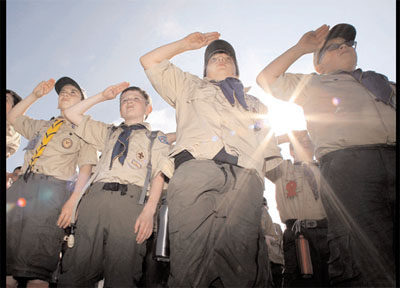
    GRAPEVINE, TEXAS (TIP): The Boy Scouts of America threw open its ranks on Thursday to gay Scouts but not gay Scout leaders – a fiercely contested compromise that some warned could fracture the organization and lead to mass defections of members and donors. Of the roughly 1,400 voting members of the BSA’s National Council who cast ballots, 61 percent supported the proposal drafted by the governing Executive Committee.

    The policy change takes effect on January 1. “This has been a challenging chapter in our history,” the BSA chief executive, Wayne Brock, said after the vote. “While people have differing opinions on this policy, kids are better off when they’re in Scouting.” However, the outcome will not end the bitter debate over the Scouts’ membership policy. Liberal Scout leaders – while supporting the proposal to accept gay youth – have made clear they want the ban on gay adults lifted as well.

    In contrast, conservatives with the Scouts – including some churches that sponsor Scout units – wanted to continue excluding gay youths, in some cases threatening to defect if the ban were lifted. “We are deeply saddened,” said Frank Page, president of the Southern Baptist Convention’s executive committee after learning of the result. “Homosexual behavior is incompatible with the principles enshrined in the Scout oath and Scout law.”

    The Assemblies of God, another conservative denomination, said the policy change “will lead to a mass exodus from the Boy Scout program.” It also warned that the change would make the BSA vulnerable to lawsuits seeking to end the ban on gay adults. Texas Gov. Rick Perry also expressed dismay. “While I will always cherish my time as a Scout and the life lessons I learned, I am greatly disappointed with this decision,” he said.

    The result was welcomed by many liberal members of the Scouting community and by gay-rights activists, though most of the praise was coupled with calls for ending the ban on gay adults. “I’m so proud of how far we’ve come, but until there’s a place for everyone in Scouting, my work will continue,” said Jennifer Tyrrell, whose ouster as a Cub Scout den leader in Ohio because she is lesbian launched a national protest movement. Pascal Tessier, a 16-year-old Boy Scout from Maryland, was elated by the outcome.

    Tessier, who is openly gay, is on track to earn his Eagle Scout award and was concerned that his goal would be thwarted if the proposed change had been rejected. “I was thinking that today could be my last day as a Boy Scout,” Tessier said. “Obviously, for gay Scouts like me, this vote is life-changing.” The vote followed what the BSA described as “the most comprehensive listening exercise in Scouting’s history” to gauge opinions. Back in January, the BSA executive committee had suggested a plan to give sponsors of local Scout units the option of admitting gays as both youth members and adult leaders or continuing to exclude them.

    However, the plan won little praise, and the BSA changed course after assessing responses to surveys sent out starting in February to members of the Scouting community. Of the more than 200,000 leaders, parents and youth members who responded, 61 percent supported the current policy of excluding gays, while 34 percent opposed it. Most parents of young Scouts, as well as youth members themselves, opposed the ban.

    The proposal approved Thursday was seen as a compromise, and the Scouts stressed that they would not condone sexual conduct by any Scout – gay or straight. “The Boy Scouts of America will not sacrifice its mission, or the youth served by the movement, by allowing the organization to be consumed by a single, divisive and unresolved societal issue,” the BSA said in a statement.

    Since the executive committee just completed a lengthy review process, there were “no plans for further review on this matter,” the group added, indicating it would not be revisiting the ban on gay adults anytime soon. Among those voting for the proposal to accept openly gay youth was Thomas Roberts, of Dawsonville, Ga., who serves on the board of a Scout council in northeast Georgia.

    “It was a very hard decision for this organization,” he said. “I think ultimately it will be viewed as the right thing.” The BSA’s overall “traditional youth membership” – Cub Scouts, Boy Scouts and Venturers – is now about 2.6 million, compared with more than 4 million in peak years of the past. It also has about 1 million adult leaders and volunteers. aThose include liberal churches opposed to any ban on gays, but some of the largest sponsors are relatively conservative denominations that have previously supported the broad ban – notably the Roman Catholic Church, the Church of Jesus Christ of Latter-day Saints and Southern Baptist churches.

    While the Southern Baptists were clearly upset by the vote to accept openly gay youth, the Mormon church reacted positively. “We trust that BSA will implement and administer the approved policy in an appropriate and effective manner,” an official LDS statement said. The National Catholic Committee on Scouting responded cautiously, saying it would assess the possible impact of the change on Catholicsponsored Scout units.

    The BSA, which celebrated its 100th anniversary in 2010, has long excluded both gays and atheists. Protests over the no-gays policy gained momentum in 2000, when the US Supreme Court upheld the BSA’s right to exclude gays. Scout units lost sponsorships by public schools and other entities that adhered to nondiscrimination policies, and several local Scout councils made public their displeasure with the policy.

  • Dfw Sikhs Joined The Vigil For Victims Of Boston Bombings And The West, Texas, Explosion

    Dfw Sikhs Joined The Vigil For Victims Of Boston Bombings And The West, Texas, Explosion

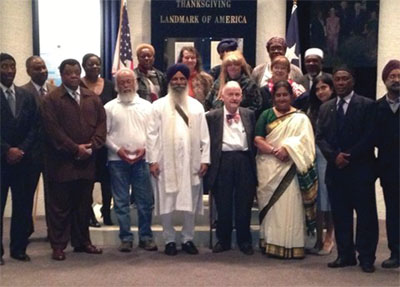
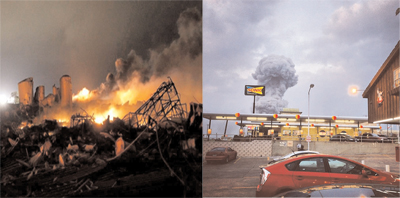
    Gurdwara Nishkam Seva’s sangat members Bhai Surat Singh, Shankar Moghe, Jean Tayler and Harbhajan Singh Virdee participated in this vigil which was held on May 2, 2013 at the Thanks Giving Square in downtown Dallas.

  • Obama, ex-presidents honor George Bush at new museum

    Obama, ex-presidents honor George Bush at new museum

    DALLAS (TIP): President Barack Obama praised his predecessor at the dedication of his library for showing strength and resolve in the days after the September 11 attacks and said if Congress passes immigration reform “it will be in large part thanks to the hard work of President George W Bush.” Obama spoke along with all four living former presidents in a rare reunion honoring one of their own at the opening of the George W Bush Presidential Center. “To know President George W Bush is to like him,” Obama said. The presidents — Bush, Barack Obama, Bill Clinton, George HW Bush and Jimmy Carter — were cheered by a crowd of former White House officials and world leaders as they took the stage together to open the dedication.

    They were joined on stage by their wives — the nation’s current and former first ladies — for the outdoor ceremony on a sun-splashed Texas morning. It was a day for recollections and reveries, and no recriminations or remorse. The five men have been described as members of the world’s most exclusive club, but Obama said they are “more like a support group.” “Being president above all is a humbling job,” Obama said. He there were moments that they make mistakes and wish they could turn back the clock, but “we love this country and we do our best.” He said Bush started an important conversation by speaking to the American people about the United States as a nation of laws and a nation of immigrants and he hopes Congress will act this year to pass reform, which Bush wasn’t able to achieve. The leaders put aside the profound ideological differences that have divided them for years for a day of pomp and pleasantries. For Bush, 66, the ceremony also marked his unofficial return to the public eye four years after the end of his deeply polarizing presidency. “Oh happy day,” Bush said as he took the stage. President George HW Bush, who has been hospitalized recently for bronchitis, spoke haltingly for just about 30 seconds while seated in his wheelchair, thanking guests for coming out to support his son.

    A standing ovation lasted nearly as long as his comments, and his son and wife helped him to his feet to recognize the applause. Clinton, too, was warmly received by the heavily Republican crowd, who applauded and laughed along with Clinton’s joke-peppered speech. He concluded on a serious note about the importance of the leaders coming together. “Debate and difference is an important part of every free society,” Clinton said. President Jimmy Carter praised Bush for his role in helping secure peace between North and South Sudan in 2005 and his approval of expanded aid to the nations of Africa. “Mr. President let me say that I am filled with admiration for you and deep gratitude for you about the great contributions you’ve made to the most needy people on earth,” Carter said.

    Former first lady Laura Bush said the library isn’t just about her husband, but reflects the world during his time as the first president as the 21st century. “Here we remember the heartbreak and heroism of Sept. 11 and the bravery of those who answered the call to defend our country,” she said. In a reminder of his duties as the current Oval Office inhabitant, Obama planned to travel to Waco in the afternoon for a memorial for victims of last week’s deadly fertilizer plant explosion.

    Presidential politics also hung over the event. Ahead of the ceremony, former first lady Barbara Bush made waves by brushing aside talk of her son, former Florida Gov. Jeb Bush, running for the White House in 2016. “We’ve had enough Bushes,” said Mrs Bush, the wife of George HW Bush and mother of George W Bush.

    She spoke in an interview with NBC’s “Today” show. Yet George W Bush talked up the presidential prospects of his brother in an interview that aired Wednesday on ABC.”He doesn’t need my counsel, because he knows what it is, which is, ‘Run,”‘ Bush said.

    Key moments and themes from George W Bush’s presidency — the harrowing, the controversial and the inspiring — would not be far removed from the minds of the presidents and guests assembled to dedicate the center, where interactive exhibits invite scrutiny of Bush’s major choices as president, such as the financial bailout, the Iraq War and the international focus on HIV and AIDS. On display is the bullhorn that Bush, near the start of his presidency, used to punctuate the chaos at ground zero three days after 9/11.

    Addressing a crowd of rescue workers amid the ruins of the World Trade Center, Bush said: “I can hear you. The rest of the world hears you. And the people who knocked these buildings down will hear all of us soon.” “Memories are fading rapidly, and the profound impact of that attack is becoming dim with time,” Bush told The Associated Press earlier this month. “We want to make sure people remember not only the lives lost and the courage shown, but the lesson that the human condition overseas matters to the national security of our country.”

  • 17 Indian American Students Named 2013 Goldwater Scholars

    17 Indian American Students Named 2013 Goldwater Scholars

    NEW YORK (TIP): Seventeen Indian American students from around the country who hope to become America’s next crop of researchers were recently named as Goldwater Scholars for 2013.

    The Barry Goldwater Scholarship and Excellence in Education Program was established by Congress in 1986 to honor Senator Barry M. Goldwater, who served his country for 56 years as a soldier and statesman, including 30 years of service in the U.S. Senate.

    The purpose of the Foundation is to provide a continuing source of highly qualified scientists,mathematicians, and engineers by awarding scholarships to college students who intend to pursue careers in these fields. Ameen Barghi, of the University of Alabama at Birmingham, who seeks a Ph.D. in Behavioral Neuroscience and wants to conduct research in rehabilitation medicine and teach at the university/graduate level. Ritankar Das, the University of California-Berkeley, seeking a Ph.D. in Computational Science and Engineering, wants to perform bio-molecular simulation research to find new energy sources at a national research lab, received the 2012 Pearson Prize for Higher Education.

    Ria Chandra Domier, University of Alabama, seeks a Ph.D. in Chemical and Biological Engineering, wants to conduct research in regenerative medicine and teach at the university level.

    Neeraj Sapra, University of California-San Diego, seeks a Ph.D. in Computational Physics, wants to conduct research in biophysics and teach at the university level. Ragini Phansalkar, University of Connecticut, seeks a Ph.D. in Computational Biology, wants to develop technologies to aid in the diagnosis and treatment of cancers.

    Gautam Goel, Georgia Institute of Technology, seeks a Ph.D. in Applied and Computational Mathematics, wants to develop the next generation of bioinformatics algorithms and teach at a university. Nikhil Bommakanti, University of Illinois at Chicago, seeks a M.D./Ph.D. in Biomedical Engineering, wants to conduct research in biomedical science and teach at the university. level. Manan Raval, University of Illinois-Urbana-Champaign, seeks a Ph.D. in Electrical Engineering, wants to conduct research in photonics and laser technology. Suraj Kannan, University of Louisville, seeks a M.D./Ph.D. in Regenerative Medicine, wants to conduct research in the mechanisms of stem cells and develop therapies for a variety of clinical pathologies. Nilay Kumar, Columbia University, seeks a Ph.D. in Fundamental Physics,wants to conduct research in fundamental (particle) physics and teach at the university level.

    Aparna Sajja, George Washington University, seeks a M.D./Ph.D. in Cardiology/Neuroscience, wants to conduct NIH funded neurovascular translational research and teach at the university level. Sandya Subramanian, Johns Hopkins University, seeks a Ph.D. in Biomedical Engineering, wants to conduct research in biomedical science and engineering and work in industry. Kamal Shah, Rice University, seeks a Ph.D. in Biomedical Engineering, wants to conduct research in low-cost, molecular bioengineering techniques and teach at the university level. Sheena Patel, Harvey Mudd College, seeks a Ph.D. in Physics, wants to conduct research in experimental physics. Ravi Uday Sheth, Rice University, seeks a Ph.D. in Bioengineering, wants to conduct research in Synthetic Biology and teach at the university level, research at a national lab or in industry.

    Sai Prashanth Gourisankar, University of Texas at Austin, seeks a Ph.D. in Materials Science, wants to conduct research in nanomaterials and catalysis, and teach at the university level. Kushal Seetharam, Duke University, seeks a Ph.D. in Applied Physics, wants to conduct research in electromagnetics and photonics using computational methods and teach at the university level.

  • Vaisakhi Celebrated at the Sikh Shrine of North Texas, Garland

    Vaisakhi Celebrated at the Sikh Shrine of North Texas, Garland

    GARLAND, TX (TIP): The Sikh shrine of North Texas at Garland celebrated the birth of Khalsa and Vaisakhi with great zeal and fervor on April 13. The celebrations attracted a large number of men, women and children who enjoyed being in the Gurdwara on a special day, with special prayers being offered and a special langar being served. It was a sheer delight to see young children dressed in the traditional Sikh attire.

    The ceremony got underway with the Five Beloveds (Panj Piare) entering the Prayer Hall. They were Bhai Chuhar Singh, Bhai Sohan Singh Jammu, Bhai Mehtab Singh, Bhai Balkar Singh, and Bhai Yuvraj Singh. Five children- Apkirat Singh, Tejpal Singh , Gurshant Singh, Jagmeet Singh and Jaitej Singh- were also dressed up in the traditional Sikh attire of the Five Beloveds.

    The congregation enjoyed the Kirtan and Katha in side the prayer hall. A little away, in the kitchen, men and women were busy cooking food which in a little while was to be made available. An attraction for all was the hoisting of the new flag (Nishan Sahib). The ceremony was marked by devotion and a commitment to live by the Sikh principles. One family received appreciation for the charity work they were doing.


    img47

    The Sandhu family has been collecting donations for Pingalwara in Amritsar which runs shelters and clinics for the less privileged and the underprivileged poor people. Tarlok Singh Sandhu started with the charitable mission in 1986. Now the third generation of the sandhus is also involved in the charitable mission. In 2012, the Sandhus collected from the sangat $4730 for the Pingalwara. One would wish there were more such people to make this world a better and a happier place to live in.

  • Joyous Inauguration of Gurdwara Nishkam Seva, Irving

    Joyous Inauguration of Gurdwara Nishkam Seva, Irving

    DALLAS, TX (TIP):With tremendous joy and celebration Sikhs inaugurated a new Gurdwara in Irving, Texas, April 13, their collective birthday. Though the Sikh philosophy dates back to Guru Nanak Dev Ji, the First Master of the Sikhs who was born on April 15, 1469, the present form of the Sikhs was bestowed by the Tenth Master Guru Gobind Singh on April 13, 1699. The day of Vaisakhi is celebrated as the day of creation of Khalsa all over the world by nearly 27 million Sikhs. Sikhism is the fifth largest religion of the world.

    Over 400 people attended the historic event which included hoisting of a new flag (Nishan Sahib Seva), Shabad Kirtan (religious hymn singing), Nagar Kirtan (the 16th annual DFW Khalsa Parade), and outdoor community kitchen (free food) on a beautiful sunny day. The inauguration coincided with the Khalsa Day celebrations and hence the spirit and colors of the Khalsa were evident and added to the great significance of the occasion.

    The event was attended by leaders of all faith traditions who offered blessings and prayers in their own religious traditions. Represented were the Catholic, Baptist, Methodist, Orthodox Christian, Islamic, Hindu, Buddhist, Baha’i,Wicca, and Jewish leaders.


    img45

    The Governor of Texas, Rick Perry officially recognized the Inauguration with a proclamation. The Mayor of Irving, Honorable Beth Van Duyne, also issued a proclamation declaring April 13 as “Khalsa Day” in the city. The Irving Police Chief Larry Boyd and Irving mayor Pro Tem Gerald Farris spoke at the event. “It was our desire that our brothers and sisters from all faiths will join us in prayers at the inauguration of this Gurdwara and, by Wageguru’s grace, this desire has been full-filled today” said Harbhajan Singh Virdee, one of the organizers of the event.

  • Meet an artist, par excellence Noor Amrohvi the light of literary congregations

    Meet an artist, par excellence Noor Amrohvi the light of literary congregations

    “You need just a few sincere friends to make life pleasurable”, says Noor.
    In every city, in every era and in every country a high bright star becomes the center of attention of everybody. Yet very few people know this fact that in order to reach that glitter and height, one has to pass through hardships besides waging practical struggle. One of such gifted people equipped with practical and professional traits is Noor Amrohvi, who is a young poet, one of the best Mushairas compere and an excellent speaker. He was born in 1973 in Amroha, (the land known for literary figures) in a literary, religious and business family. Side by side religious education (learning Quran by heart and recitation) he also got worldly education. He has the honor of being a student in Aligarh Muslim University. He secured first division in class XII and attained distinctive position in Adeeb-e- Fazil examination. Besides, from Bombay University he did his Masters in Economics and Urdu along with obtaining the garment designing diploma as part of the professional education. Since his upbringing was done in a literary and educated family, he had a natural liking for Urdu literature. Since his childhood he has been composing and reciting Urdu verses but because of his educational responsibilities, he did not encourage himself in this regard.When he was a grown up person then he headed towards Bombay to discharge his domestic responsibilities. After getting into new world besides fulfilling his professional responsibilities, he decided to quench his thirst for his poetic and literary taste. When he was able to shoulder further responsibilities then his dream to spent his days and nights of youth in Bombay was left half way and he had to travel to Dubai where a very bright future was waiting for him and where an opportunity to serve Urdu were also available. It is said that when he was in Dubai, besides his professional responsibilities he would take part in literary and poetic activities with great zeal. Despite his appointment in an American garment factory on the post of a supervisor, his interest for education and studies continued unabated. But finding him unfit in this frame he became a teacher in a famous English school in Bombay. Noor Amrohvi has seen such difficult times and harrowing hardships in life that most of the people get discouraged and lose their heart in the way. But out of these sufferings and hardships, he gained enormous experience and vision and came out like gold. Amazingly despite all these difficult circumstances he could not disassociate himself from literary activities and social work. He is such a poet of high talent that distinguished personalities like Professor Pirzada Qasim, Professor Nisar Farooqi and John Elia appreciated and praised his unmatched skills and his brilliant achievements. In Dubai he left his foot print wherever he presented his “kalam” , yet in America wherever he went he left his endearing remembrance. Who would have known that this young man who came to Bombay in search of a bright future and them move on to Dubai, would finally land in United States of America and become the glittering tower for literary activities and Urdu culture. In North American city of Dallas in the state of Texas where Noor Amrohvi came to stay, he has to face very strong opposition from various circles. After making arrangement for his living, he started displaying his poetry, the oratorical talent, writing ability and administrative potential. He became the target of criticism from unknown jealous quarters. But due to true passion hard work, diligence, honesty he befriended the opponent currents and his critics started walking along with him. The literary organization and personalities opine that Noor Amrohvi’s compeering is unique and full of logic. As far as his poetry is concerned, it is just like showing lamp to the sun and his humanity and gentleness is superb. He is soft spoken, articulate, embodiment of sincerity and love, humility, and is a model of politeness. Being a businessman and with a poetic temperament, simplicity and mercurial disposition, his friends and partners took advantage and sidelined him. In Radio programs he opts for novelty, innovation and the psychology of the listeners in writing and presenting radio scripts. He presented new and unique programs and therefore a large circle of the desi community is still his admirer.

    He is distinguished for starting the tradition of Na’atia Mushairas in Dallas city, being regularly conducted for the last eight years. In these Mushairas besides poets from North America many eminent poets from Indo Pak have already participated. Also under the aegis of the International Noor Academy, he has been organizing for eight years, international Urdu Mushairas and Kavi sammelen” Every celebrated poet from Indo- Pak has participated in theses Mushairas. Now a situation has arrived that the people aspire that Noor Amrohvi should invite them to their Mushairas. His sincere and close friends also help him In organizing the Na’atia international Mushairas which Noor Amrohvi conducts every year,.

    Because of his excellent organizational faculties even his opponents started acknowledging his abilities. For his services he is now counted among the outstanding organizers of the best Mushairas in North America. In view of his literary and educational services he received several awards in India, Pakistan, United States and the Gulf countries. But I have observed that when he comes to India he usually avoid gatherings and parties. He comes here quietly and returns quietly.

    It usually happens that whenever anyone even a fake person comes from America or other foreign countries, he wants that somebody should conduct a reception for him and that his name should be published in the newspapers. Contrary to that Noor Amrohvi runs away from selfprojection by avoiding the literary meetings and believes that projection is not the accomplishment but to demonstrate excellence of vision and conduct is the real achievement. Despite this, the circle of his friends is so wide that news of his arrival in India spreads like wildfire and then a stream of functions are held in his honor sometime in Bombay, some time in Delhi or a lecture in some educational institutions. It means that a pomegranate is divided into hundred patients.

    Amroha is very proud that Noor Amrohvi from his early age has proven his God given capabilities in various domains of life and that his personage has become a model for others. This fact is noteworthy that Noor Amrohvi loves Amroha intensely. Its living example is the suffix of “Amrohvi” with the name. While in America after receiving citizenship, everyone is allowed to change the name; his legal name is still Amrohvi, a fact not known to so many people. In America if the word Amrohvi is attached with anybody’s name he is no one else but Noor Amrohvi. More than that, pleasantly, he has two children aged 6 & 7 and both have their names tagged with Amrohvi and that is also written on their birth certificates. Finally join me in discussing Noor Amrohvi’s poetry.

    Noor Amrohvi has a unique and an inimitable style of composing verse which is certainly a difficult task. These verses indicate that the intellectual maturity of Noor Amrohvi and his multidimensional personality has given more depth and broadness to ghazal. In this age of chaos there are only a few voices like Noor Amrohvi who because of their loud clarion call have established their qualities besides remaining strongly wedded to humanity, gentleness and civility. Noor Amrohvi and poets from Amroha have perfumed and brightened the whole world. Wherever there is Urdu and Indian civilization their name is taken with great respect. It is our prayer that this lamp light should keep glowing

  • Survivors Sought In Texas Fertilizer Plant Blast

    Survivors Sought In Texas Fertilizer Plant Blast

    WEST, TEXAS (TIP): Rescuers worked in cold rain on April 18 to find survivors amid the rubble of houses destroyed in a fiery explosion at a Texas fertilizer plant filled with hazardous chemical tanks. The death toll in West, Texas ranged from five to 15 people and was likely to change as rescuers went from house to house along the burned-out streets after the West Fertilizer Co. blew up on Wednesday night, said Sgt. William Patrick Swanton of the police department in nearby Waco. The cause of the fire and explosion, which occurred just before 8 p.m. and injured more than 160 people, was not known. Officials said no evidence of foul play had been found. The US Chemical Safety Board, a federal agency charged with investigating industrial chemical accidents, was on the scene, as was the Bureau of Alcohol, Tobacco, Firearms and Explosives.

    Firefighters had been battling a fire at the plant on Wednesday night for about 20 minutes before the blast rocked the town of 2,700 people about 20 miles north of Waco. Three to four volunteer firefighters were still missing, Swanton said. “They were actively fighting the fire at the time the explosion occurred,” he said at a news conference held in a cattle auction house, where cows lowed behind him. Swanton said the plant was storing huge tanks of anhydrous ammonia. Anhydrous ammonia is used by farmers as fertilizer to boost nitrogen levels in soil and increase crop production.

    According to the Centers for Disease Control, anhydrous ammonia and water produces a poisonous cloud. When ammonia mixes with air, it forms an explosive mixture, and containers may explode when heated, according to the CDC. The West plant is one of thousands of sites across rural America that store and sell hazardous materials such as chemicals and fertilizer for agricultural use, many within close range of residences and schools. Privately owned by 83-year-old Donald Adair, the company has fewer than 10 employees. The plant had not been inspected by state officials since 2006, when a complaint of an ammonia smell was resolved, said Zak Covar, executive director of the Texas Commission on Environmental Quality. State inspections are done only when there is a complaint, Covar said. The federal Environmental Protection Agency fined the firm $2,300 in 2006 for failing to implement a risk management plan. The plant’s owner could not be reached for comment.

    Fire, evacuations before blast
    The firefighters had been evacuating several blocks around the fire before the blast out of concern for dangerous fumes, Swanton said. That threat had abated, he said. In West, the middle school, which was badly damaged, was one fifth of a mile from the plant and the high school was one-third of a mile away.

    The blast destroyed 60 to 80 houses, reduced a 50-unit apartment complex to what one local official called “a skeleton standing up” and left a horrific landscape of burnedout buildings and blackened rubble. “Last night was truly a nightmare scenario,” said Texas Governor Rick Perry. “This tragedy has most likely hit every family.” Perry declared McLennan County a disaster area and said he would request federal disaster aid from President Barack Obama. Texas is no stranger to industrial disasters. In 1947, 3,200 tons of ammonium nitrate fertilizer detonated aboard a ship in a Texas City port, killing almost 600 people. It is believed to be the deadliest industrial accident in US history. More recently, a 2005 explosion at a BP refinery in Texas City killed 15 people and injured more than 170 others when hydrocarbon vapors exploded in a processing plant.

    The operation in West remained a search and rescue mission, Swanton said. “They have not gotten to the point of no return where they don’t think that there’s anybody still alive,” he said. He said rain and cooler temperatures were a concern. At early afternoon, the temperature was just 50 degrees Fahrenheit, or 10 degrees Centigrade. The average temperature for the area in April is closer to 67 degrees F. “With the temperature getting a little cooler, with the weather raining here – pretty significant rains came through – we certainly want to find folks,” he said. Bodies had been taken to a nearby ball field and then a community center, he said. Officials said they had moved 133 people out of a nearby nursing home.

    If it was an industrial accident, investigators would look at whether firefighters ignited the blast by pouring water on a volatile substance. Nim Kidd, chief of the Texas Division of Emergency Management, said it was too early to speculate. “A lot of firefighters will use their No. 1 tool, which is water, in a hazardous materials chemical situation to cool the surrounding environment,” he told a briefing in Austin. Obama, who flew to Boston for a memorial service for victims of the Boston Marathon bombing, offered support and prayers to the victims in Texas. Three hospitals in Waco and Dallas reported treating more than 160 injuries from the blast. Ground motion from the blast registered as a magnitude 2.1 seismic tremor and created a jolt felt 80 miles away in Dallas, the US Geological Survey reported.

  • 2 dead, 41 injured in casino bus crash near Dallas

    2 dead, 41 injured in casino bus crash near Dallas

    IRVING, TX (TIP): At least two people were killed and more than 40 hospitalized Thursday, April 11 when a charter bus swerved off the northbound lanes of President George Bush Turnpike near Dallas, hit a concrete barrier and flipped, according to the Texas Department of Public Safety. The Cardinal Coach Line bus was carrying mostly senior citizens to the Choctaw Casino Resort in Durant, Okla., on a one-day gambling outing. Police and others used ladders to get to emergency exits on top of the bus to get to scores of passengers.

    The fire department in Irving, Texas, said 45 people were on the passenger list, NBC5 reported. The Fort Worth Star-Telegram reported that the passengers were believed to have boarded the bus in Hurst, Texas. Many of the passengers were trapped beneath the bus, according to rescue teams and witnesses.

  • The Sikh Temple of North Texas,Garland Organizes Sports Mela

    The Sikh Temple of North Texas,Garland Organizes Sports Mela

    DALLAS (TIP): Despite bad weather conditions, the Sports Mela organized by the Sikh Temple of North Texas, Garland, March 30th, attracted a large number of sportspersons and sports lovers. It was the 13th annual sports event organized by the Temple management with the tremendous support of the 400 families strong congregation. The organizers had expected some 400 participants in about a dozen events. But weather played foul and held back some of them. However, hundreds of men, women and children participated in the events.

    Hundreds cheered the participants. Women seemed to be more enthusiastic and were seen constantly cheering up the participants, particularly, if the participants were members of their family. The sports included races, basket ball, skipping, volleyball, soccer, tug-o-war etc.

    The organizers had very thoughtfully created age groups for participants. It was sheer joy to see the participants vying for honors in the true spirit of sportsmanship. Among the more interesting sports were the three legged race and spoon in mouth carrying a ball. Kids really enjoyed the fun a lot. The prize winners were surely on the ninth cloud but their relations and friends were no less delighted. They were seen rushing to congratulate and hug the prize winners. Prizes were given away by senior citizens. Gurjit Kaur, a senior citizen, has been coming every year in the last 13 years to watch the sports.

    Her daughter Rashpal Kaur and her grand daughter Raman Kaur who is 8 were with her. They said they enjoyed the event immensely. Jarnail Singh, 40, had his three kids participating. His 15 year old daughter Charanpreet Kaur who participated in a race won 2nd position. Navjot Johl, 11 years old, won 2nd position in Jumps. His third daughter, 9 year old Pritpal Johal got a 3rd position. Jarnail Singh was very pleased and said to this reporter that it was worth the while to bring the kids for sports events. However, he had some suggestions for the organizers. First, he said, the organizers should have a time schedule for each sporting event. Second, there should be some entertainment also.

    It should be in the form of dances, like Bhangra and songs. A community event, it had full community support, according to Manjit Singh Sahota, President of Garland Sikh Temple. He gave credit for the success of the sports mela to the community and his colleagues on the managing committee. He had special word of appreciation and gratitude for the sponsors. He mentioned to me that almost every food item and medals for prize winners were sponsored. Nat Family sponsored medals in the memory of Jasjeet Singh Nat. Langar was sponsored by Noni Toor, Sodhi Toor and Toor family. Water and soft drinks were sponsored by Davinder Singh Toor.

    The much liked Kulfi was sponsored by S. Haripritam Singh of Karinas Kulfi and the delectable Jalebi by Lalli Sandhu. Others recognized included donors and senior citizens who were kind enough to come and give away the prizes. Mr. Sahota also recognized Vijay Handa for his services.

    The most appreciation was reserved for the sports committee that organized the sports mela. It included Noni Singh Toor, Avtaar Singh Parvagga,Mandhir Singh Bal, Balkar Singh, Rakesh Saini, Harjit Singh Randhawa, Shera Punjab Singh Randhawa, Jeeta Randhawa,Sodhi Singh Toor, Gurshant Singh,Paramjit Sodhi, and Manjinder Kaur Banipal. The managing committee members who call themselves sevadars, are Manjit Singh Sahota, Balbir Singh Dhillon, Manmohan Singh, Amrik Singh Grewal , Dyal Singh Saini, Mukhtar Singh, Gobind Dhiman, Rupinder Singh, Langar Sevadar Santokh Singh Nijjar, Ranbir Singh Bunti, Bahadhar Singh Sahota, Parpal Singh Malhi and Tajinder Singh Teji. Gurjeet Kaur (first from right), Rashpal Kaur (first from left) and Raman