Tag: US President Donald Trump

  • Trump sacks AG, ‘takes over’ Russia meddling probe

    Trump sacks AG, ‘takes over’ Russia meddling probe

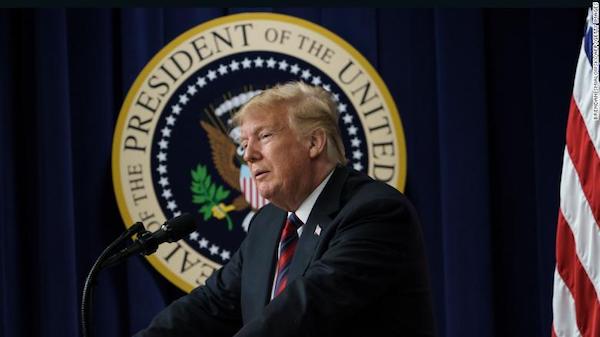
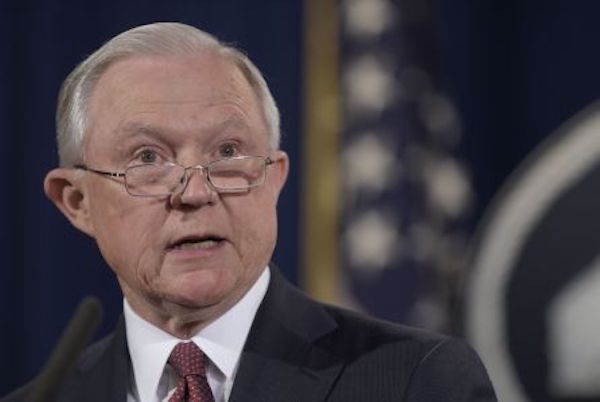
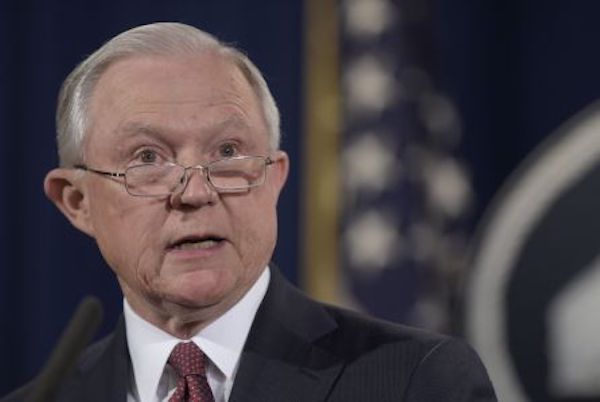
    WASHINGTON(TIP): President Donald Trump on Wednesday, November 7,  sacked US Attorney General Jeff Sessions, virtually taking operational control of a sensitive probe into foreign interference in the 2016 election and the possibility of collusion between the Trump campaign and Russia.

    For months, Trump publicly attacked Sessions for recusing himself from overseeing the probe in 2017 and blamed his decision for allowing Deputy Attorney General Rod Rosenstein to appoint a special counsel.

    Trump said Sessions will be temporarily replaced by his chief of staff, Matthew Whitaker, who is a Republican loyalist. Now, with Whitaker at the helm, Trump has someone leading the Justice Department who has already suggested that Mueller’s probe should be reined in.

    CBS News reported that Deputy Attorney General Rosenstein is no longer leading the Mueller inquiry, and that Whitaker will now assume control.

    In a tweet on Wednesday Trump said: “We are pleased to announce that Matthew G Whitaker, Chief of Staff to Attorney General Jeff Sessions at the Department of Justice, will become our new Acting Attorney General of the US. He will serve our country well (sic).”

    “We thank Attorney General Jeff Sessions for his service and wish him well! A permanent replacement will be nominated at a later date,” he tweeted.

    Observers opine that Trump’s move will have potential implication on Special Counsel Robert Mueller’s probe as Whitaker has been overtly critical of the Mueller’s team to investigate beyond allegations Trump’s campaign colluded with Russia in 2016 and other ties between the President, his family and aides, and Kremlin.

    Questions are also being raised about the validity of appointment of Whitaker as Acting Attorney General.

    Meanwhile, thousands, on November 8, took to streets asking Whitaker to recuse himself from Mueller investigation.

    The coming days are likely to witness an interesting tug of war between Republicans and Democrats on the issue of Mueller Investigation.

    New York Attorney Ravi Batra described Jeff Sessions as a man of honor.

    “Attorney General Jeff Sessions is a man of honor – he honored his oath to the Constitution, and then he honored the president of the United States in faithfully discharging the laws of the United States. The uncomfortable tension between the attorney general and the president speaks to American exceptionalism. Indeed, it is dissent itself that serves to ‘check and balance’, so that we may form a more perfect nation.”


  • Heather Nauert is Trump’s top choice to succeed Nikki Haley as  UN ambassador

    Heather Nauert is Trump’s top choice to succeed Nikki Haley as UN ambassador

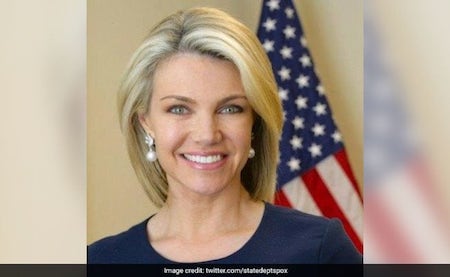
    WASHINGTON(TIP): President Donald Trump has told advisers that Heather Nauert, the State Department spokeswoman, is his leading choice to become US ambassador to the United Nations and he could offer the post as soon as this week, according to a CNN report

    If named Nauert, who met with Trump Monday, October 29,  would leave her role at the State Department to take over from Nikki Haley, who surprised White House officials last month when she announced her decision to step down at the end of the year.

    People close to the President cautioned that his pick is not final until it is formally announced. The White House declined to comment on the matter. Nauert has been keeping a low profile this week after meeting with Trump on Monday. Two of her daily briefings have been conducted by her deputy.

    Speaking at the White House on Thursday, November 1, Trump confirmed that Nauert is “under very serious consideration” to become the next US ambassador to the UN.

    “She’s excellent. She’s been with us a long time. She’s been a supporter for a long time. And she’s really excellent,” Trump said.

    “We’ll probably make a decision next week,” Trump said in his remarks. “We have a lot of people that want the job and they’re a lot of really great people.”

    Trump has eyed several people to replace Haley, including Ric Grennell, the US ambassador to Germany; Jamie McCourt, the US envoy in Paris; and Kelly Craft, the ambassador in Canada. One person initially considered a leading contender, former deputy national security adviser Dina Powell, withdrew from consideration early in the process. Trump has repeatedly told aides he wanted a woman to fill the role.

    Nauert, who came to government from Fox News, served as State Department spokesman for both Rex Tillerson and Mike Pompeo but has enjoyed a closer relationship with Trump’s second secretary of state than she did Tillerson, who was privately skeptical of her close ties with the West Wing.

    Her elevation to a top diplomatic role underscores the importance Trump has placed on having his top aides also serve as television surrogates. Nauert has briefed regularly from the State Department podium and had a long career in television news before that.

    Still, as a diplomat she lacks experience. Previous holders of the UN ambassador position — including current national security adviser John Bolton — came to the role with years of foreign policy experience. Nauert served briefly as Undersecretary for Public Diplomacy from March until October.

    Nauert would face what could be a contentious confirmation hearing, with Democrats quizzing her on her qualifications for the post.

    Instead, Nauert comes with something perhaps more valuable in the Trump administration: loyalty and a willingness to defend the President. That loyalty has at moments caused friction at the State Department. As Tillerson’s relationship with Trump began to deteriorate in his final months, he privately told allies he thought she was more loyal to the West Wing than the State Department. Chief of staff John Kelly informed Tillerson his time in the top diplomatic post was expected to end while on a multi-country sweep through Africa. Trump later announced his firing on Twitter.

    The UN ambassador role is viewed by some as a launching point for higher-profile positions. Both Bolton and Susan Rice, who served in the post under President Barack Obama, eventually became White House national security advisers.

    The position is based in New York, so is also viewed as having less direct oversight than a high-level post in Washington.

    Nauert’s move to the United Nations would take her out of the running for other roles in the West Wing, which has struggled at times to fill key positions and went without a communications director for months. Nauert was widely seen as the front-runner to replace Sarah Sanders as White House press secretary when she leaves which she is expected to do in the coming months after more than a year in the role, according to multiple officials.

  • Four days before US midterm polls, Trump admits Republicans could lose the House

    Four days before US midterm polls, Trump admits Republicans could lose the House

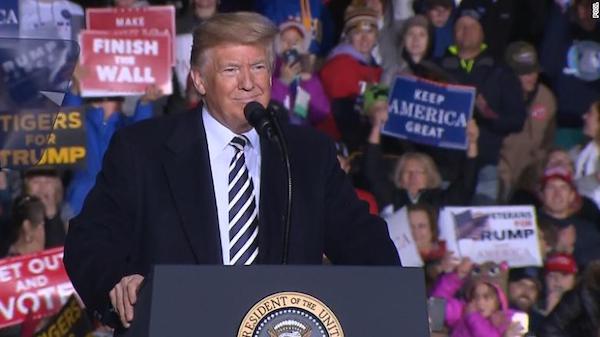
    WASHINGTON (TIP): At a “Make America Great Again” political rally in Iowa  President Trump said: “It could happen. Could happen. And you know what you do.  My whole life, you know what I say? ‘Don’t worry about it, I’ll just figure it out.’ Does that make sense? I’ll figure it out.”

    It was an uncharacteristic lack of confidence from the usually bombastic leader, but experts have predicted Democrats could win the 24 seats it needs to gain control of the lower house of Congress for the first time since 2010.

    The polling data shows, however, the Senate will still likely be controlled by conservatives.

    This year’s election will break all manner of records in terms of spending as well. According to the Centre for Responsive Politics, approximately $5.2bn will be spent in this year’s midterms.

    In one race alone $93m has been spent to get the Senate seat from Texas. Democrat and current US House Democrat Beto O’Rourke and Republican incumbent Ted Cruz have been trading barbs as poll numbers show a tight race.

    In Georgia, Democratic governor candidate Stacey Abrams looks to make history as the first female African-American governor in the country’s history. Controversy abounds as opponent Republican Brian Kemp is also the Georgia secretary of state who would be in charge of a possible runoff election should neither candidate receives 50 per cent of the vote.

    Barack Obama and Oprah have joined Ms Abrams on the campaign trail and former president Jimmy Carter has even asked Mr Kemp to resign from his current position in light of hiscandidacy.

    In Florida, Andrew Gillum, the current Democratic Mayor of Tallahassee, squares off with Republican Ron DeSantis in an important race for the president as he begins campaigning for his 2020 re-election bid.

    Amid the debates on healthcare policy and taxes, a migrant caravan of approximately 7,000 people still 1,000 miles away from the US-Mexico border has been in the headlines on the campaign trail.

  • Killing Khashoggi: Saudi Arabia and its `Mr. Everything’ face the heat

    Killing Khashoggi: Saudi Arabia and its `Mr. Everything’ face the heat

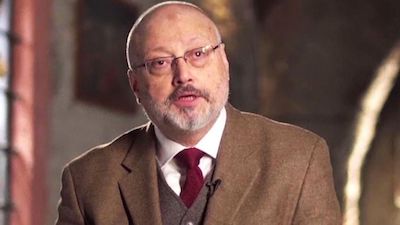
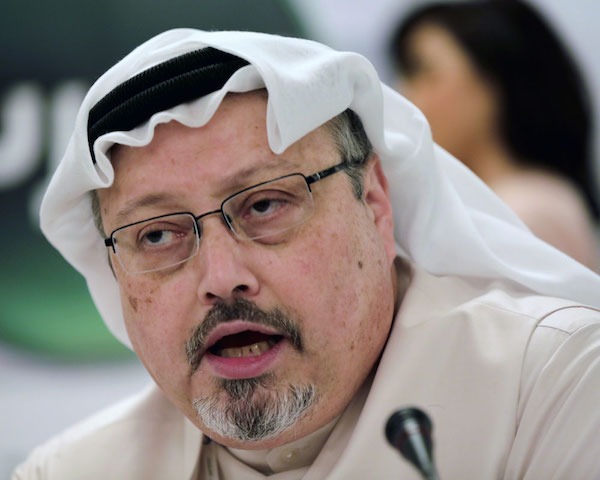
    The killing of dissident writer Jamal Khashoggi at the Saudi Arabian consulate in Istanbul is a tale of trans-national crime, intrigue and murder. The botched up cover-up has shaken the world. Even as Crown Prince Mohammed bin Salman of Saudi Arabia tries to stem the flow of accusations from enveloping him, his inner circle, including his top aide Saud al-Qahtani, stands indicted. The brutal nature of the killing, as highlighted by a series of leaks topped by Turkish President Recep Tayyip Erdogan’s statement accusing the Saudi Government of “savage murder” and mutilation of Khashoggi, has triggered revulsion that has so far not allowed the matter to be swept under the carpet. Not because of lack of effort, but simply because of the horror of crime.

    Western governments, including the US, have a long history of treating the House of Saud with kid gloves, given their geopolitical realities. The human rights record of the Arabian kingdom has been abysmal, with executions, whipping and other medieval punishments still being carried out. However, world powers, keenly looking at the bottom line, have ignored all this. Indeed, the Prince was billed as a reformer, but his intolerance to dissent was displayed in the crackdown on the women’s rights movement and the arrest of many activists, including popular ones like Samar Badawi and Nassima al-Sadah. This triggered off the kingdom’s spat with Canadian Foreign Affairs Minister Chrystia Freeland, who criticized the arrests in August.

    US President Donald Trump has vacillated in his response to the killing of a permanent resident of his country and columnist for Washington Post, but he seems to be hardening his stance. While some other nations have condemned the killing, many have maintained a diplomatic silence. The Saudi version of the killing, coming after a complete denial, has given credibility gap a new meaning. The death of the journalist can only have a meaning if it leads to reforms within the kingdom. This is a tall order, given the opaque nature of governance there.

    (The Tribune, India)

  • Bombs reach top U.S. porches: Trump calls for more civility in politics

    Bombs reach top U.S. porches: Trump calls for more civility in politics

    WASHINGTON(TIP): US President Donald Trump has called on people to be more civil in politics, after a series of suspected explosives were sent to high-profile U.S. figures just days ahead of the mid-term polls.

    None of the packages exploded. The Federal Bureau of Investigation has launched a hunt for their sender, the BBC reported.

    Mr. Trump was speaking after parcels were sent to top Democrats, including former President Barack Obama and Hillary Clinton, besides New York Governor Andrew Cuomo, and media offices of CNN and the San Diego Union — Tribune, who are all prominent targets of right-wing criticism.

    “Those engaged in political arena must stop treating political opponents as being morally defective,” he said. “No one should carelessly compare political opponents to historic villains, which is done often,” he added.

    Speaking at a Wednesday night rally in Wisconsin, Mr. Trump vowed to catch the perpetrator and called on the media to “stop endless hostility”. Critics called his latest remarks hypocritical, as he often uses vicious language against his opponents and the press.

    However, he made no specific reference to the intended recipients of the packages, the BBC reported

    Earlier CNN worldwide President Jeff Zucker criticized Mr. Trump and the White House Press Secretary Sarah Sanders for not understanding that “words matter”. “There is a total and complete lack of understanding at the White House about the seriousness of their continued attacks on the media,” Mr. Zucker said.

    Suspected bombs were sent to locations in New York, the Washington DC area and Florida, authorities said on Wednesday. All the apparent targets were regularly criticized by conservatives —— especially by President Trump.

    U.S. authorities are investigating this as a connected series, officials said.

    Sources told CNN that a suspicious package intended for California Democratic Maxine Waters was intercepted at a congressional mail screening facility in Maryland; New York Governor Mr. Andrew Cuomo received what he said was a device at his Manhattan office; and the San Diego Union—Tribune evacuated its building after “suspicious looking packages” were spotted outside.

    CNN’s New York bureau in the Time Warner Center was evacuated after a package containing a bomb, addressed to former CIA Director John Brennan, was discovered, city and local law enforcement officials said.

    Later Wednesday night, two law enforcement sources told CNN that law enforcement officials were trying to track down a package addressed to former Vice President Joe Biden considered suspicious because of similarities to other packages.

    The package was misaddressed and returned to sender.

    The developments, which unfolded rapidly and continued steadily into the afternoon, touched off fear and confusion and immediately invited questions about the motives of those responsible.

    Some Democrats have accused the president of inciting violence with his past rhetoric, while some of his supporters have said they believe the packages are part of a Democratic plot to win votes in the mid-term elections.

    There is no evidence for this and the police have not released any information about any suspects. The attempted attacks come just under two weeks before the mid—terms, with U.S. politics highly polarized.

    (Source: IANS)

  • Pakistan’s Nuclear Arsenal more worrisome than North Korea’s

    Pakistan’s Nuclear Arsenal more worrisome than North Korea’s

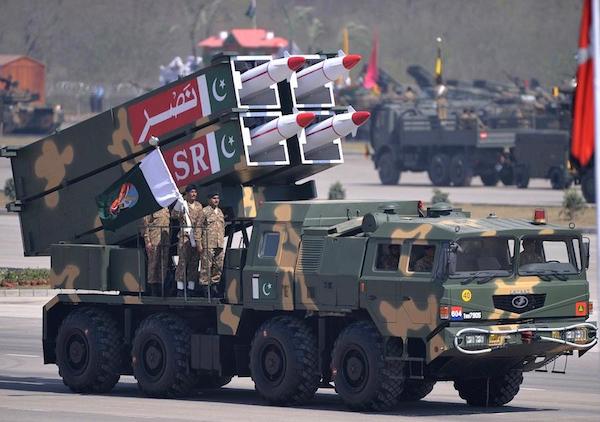
    Pakistan is more dangerous than North Korea as it does not have a centralized control on its nuclear weapons, making them vulnerable to theft and sale.

    By Ven Parmeswaran

    9/11 happened because Pakistan supported the Taliban and the Al Qaeda.  We discovered that Pakistan was the epicenter of global terrorism.  Almost all terrorists emanated from Pakistan and committed terrorism in the U.S.A. and Europe.  President George W Bush sent his Secretary of State, Gen. Collin Powell to Pakistan, with whom the USA had a Mutual Security Pact from 1954.  Powell met Gen. Musharraf of Pakistan and made a deal. Pakistan agreed to cooperate fully with the USA and provide all help in finding Osama bin Laden and other leaders of Al Qaeda.    

    President Obama had intelligence that Pakistan was hiding and protecting Osama Bin Laden in one of military cantonments.  In 2011, that is 10 years after 9/11, the U.S. secretly got rid of Osama Bin Laden. The Pakistani doctor who confirmed the identity of Osama Bin Laden has been held in jail by Pakistan.  Thus, Pakistan betrayed its ally, the U.S.A.  For ten years, Pakistan was trying to use Osama bin Laden’s leadership to stage terrorism in India.  The mutual trust between the USA and Pakistan was broken.  However, President Obama chose not to punish Pakistan.

    WAKE UP CALL BY PRESIDENT TRUMP

    President Trump is the first U.S. President to challenge Pakistan.  He wrote in his tweet: “The U.S. has foolishly given Pakistan more than 33 billion dollars in aid over the last 15 years, and they have given us nothing but lies, deceit, thinking of our leaders as fools.”   President Trump withdrew military aid and gave an ultimatum to Pakistan to stop supporting the Taliban in Afghanistan and to dismantle all terror organizations and terrorist sanctuaries in Pakistan.

    PAKISTAN’S ECONOMY IN SHAMBLES WITH NO FOREIGN EXCHANGE

    Mr. Imran Khan, the new Prime Minister of Pakistan has been elected with the tacit support and help of Pakistan’s military.  For his survival his first loyalty is to the military.   Pakistan is negotiating with the I.M.F. for a $12 billion loan.  The U.S. has leverage in the IMF being the largest investor.  The IMF cannot approve the loan without consent from the USA.    Pakistan has been devoting its scarce resources to keep on producing nuclear bombs.

    PAKISTAN’S NUCLEAR WEAPONS ARE VULNERABLE TO THEFT AND SALE

    Pakistan is more dangerous than North Korea as it does not have a centralized control on its nuclear weapons, making them vulnerable to theft and sale, former Senator Larry Pressler warned, describing both the nations as rogue states.    He feared that Pakistan’s nuclear weapons might be used against the US, warning of the possibility of someone buying these nuclear weapons from generals.    “The weapons could be transported to the US fairly simply.  Just as 9/11 was a very simple operation run by 20 or 30 people,” he said.  “The Pakistani nuclear bombs are not controlled.  They are subject to sale or stealing and they could be easily gotten out of Pakistan to just about anywhere in the world,” he said speaking at an event sponsored by The Hudson Institute, a top American think-tank.    The former top American Senator, however, said he does not think that Pakistan’s nuclear weapons are going to be used against India. I do not agree.   The Senator said “I think what North Korea needs is just a lot of attention and hand-holding.  Pakistan Is a different thing because you don’t really have one person in-charge.  I think Pakistan is more dangerous to the US,” he reiterated in response to a question.

    “We should declare Pakistan a terrorist state.  We should put certain sanctions on Pakistan,” he said.

    PAKISTAN’S GROWING ARSENAL WITHOUT CENTRAL CIVILIAN CONTROL IS THREAT TO GLOBAL SECURITY

    Why does Pakistan need to keep on increasing the number of bombs?  There are thousands of nuclear weapons in the world today.  According to the latest count from the Federation of American Scientists, the 5 original nuclear powers have a combined 15,465 nuclear weapons between them, most of which are divided amongst the US and Russia. Yet, the fastest growing arsenal in the world is not included in this number.  While Pakistan has a range of 100-120 nuclear weapons in its possession—a figure that pales in comparison to the US or Russia—Islamabad has devoted a tremendous amount of its military budget to growing its arsenal and producing the associated delivery systems that are needed to launch them.

    More alarming than Pakistan’s current stockpile is the projected growth of its arsenal over the next decade.  In a wide ranging report for the Council on Foreign Relations, professor Gregory D Koblentz of George Mason University assessed that Pakistan had enough highly enriched uranium to increase its stockpile to 200 nuclear weapons by 2020 if fully utilized.  Percentage wise, this would mean that Pakistan could have as many nuclear weapons as the U.K. by 2020.  Moreover, Pakistan falls outside the purview of the Nuclear Nonproliferation Treaty.

    To guarantee the ability to rapidly expand their stockpile, the Pakistani military is investing in reprocessing plutonium in addition to enriching uranium.  In January 2015, the Institute for Science and International Security reported that the Pakistanis opened up their fourth plutonium facility at Khushab, which provides Islamabad with an additional channel to construct nuclear bomb material in a relatively short period of time.  “Its expansion appears to be part of an effort to increase the production of weapons-grade plutonium,” the ISIS report (Pakistan’s intelligence agency) reads:  “Allowing Pakistan to build a larger number of miniaturized plutonium-based nuclear weapons that can complement its existing highly enriched uranium nuclear weapons.”

    PAKISTANI NUKES A MAJOR U.S. INTELLIGENCE PRIORITY

    To say that the U.S. Intelligence community is closely monitoring the development of Pakistan’s nuclear weapons program would be an understatement.  The U.S. government is doing more than just monitoring:  they are actively preparing for a terrible catastrophe and engaging Pakistani officials in the hopes that they will stop pouring resources into the expansion of their program.  The last thing Washington wants or needs is a nuclear crisis flashpoint in a dangerous and unpredictable region filled with an alphabet soup of Islamist terrorist groups.  The US government under both George W Bush and Barack Obama has been trying to prevent such a crisis scenario from occurring.

    THE BOTTOM LINE

    Despite all the attempts from the nuclear nonproliferation community, Pakistan will continue to develop and strengthen its nuclear deterrent as long as the high brass in the Pakistani military continues to have an India-centric mindset in its defense policy. India and Pakistan have fought three wars since independence in 1947, and in each case, the Pakistanis were either the losers or forced into a stalemate before acceding to a ceasefire (1971 breakaway of East Pakistan was an especially embarrassing defeat for the Pakistanis).  Islamabad has not forgotten these cases ever since.  And for the Pakistanis, the lessons of these past conflicts are all the same: we cannot repeat history.

    PRESIDENT TRUMP’S NEW WORLD ORDER: INDIA AND THE USA HAVE SIGNED A DEAL THAT MAKES THEM CLOSEST ALLIES ON A PAR WITH THE NATO MEMBERS

    The US and the IMF have told Pakistan that it cannot use IMF loan to repay China or divert the resources to increasing its nuclear arsenal.  President Trump, unlike George W Bush or Obama, is challenging Pakistan to behave.  In effect, Trump is saying that he will not tolerate Pakistan to betray again.  Trump is also anxious to withdraw from Afghanistan and he knows Pakistan is the bottleneck.  Based on his tough negotiations and policies towards his close allies, be it Canada or Western Europe, Trump means business.  Therefore, it is to be hoped that the U.S. will not allow Pakistan to mess up with international security.   I think President Trump is giving clear messages to Pakistan’s new Prime Minister and its military/ISIS leaders.

    (Scarsdale, New York based Ven Parameswaran is Chairman, Asian American Republican Committee founded in 1988)

  • Trump administration to propose major changes in H-1B visas by January 2019

    Trump administration to propose major changes in H-1B visas by January 2019

    WASHINGTON(TIP): The Trump administration has said it is coming out with new proposals to not only revise the definition of specialty occupations under H-1B visas, but also the definition of employment under this foreign work visa category which is popular among Indian companies.

    Such a move, which is part of the Unified Fall Agenda of the Trump administration will have a detrimental impact on the functioning of Indian IT companies in the US and also small and medium-sized contractual companies in the IT sector, which are mostly owned by Indian Americans.

    On Wednesday, October 17, the Department of Homeland Security (DHS) said the US Citizenship and Immigration Services (USCIS) plans to come out with its new proposal by January 2019.

    It will “propose to revise the definition of specialty occupation” to increase focus on obtaining the best and the brightest foreign nationals via the H-1B program.

    It will also “revise the definition” of employment and employer-employee relationship to “better protect” US workers and wages, DHS said. In addition, DHS will propose additional requirements designed to ensure employers pay appropriate wages to H-1B visa holders, the administration said.

    The DHS reiterated that it is proposing to remove from its regulations certain H-4 spouses of H-1B non-immigrants as a class of aliens eligible for employment authorization.

    The DHS said it is also finalizing its interim regulation governing petitions filed on behalf of alien workers subject to the annual numerical limitations applicable to the H-1B non-immigrant classification.

    This rule precludes an individual from filing duplicate petitions on behalf of the same alien temporary worker. This rule also makes accommodations for petitioners to create a more efficient filing process for H-1B petitions subject to the annual numerical limitation.

    Observing that the demand for H-1B visas has often exceeded the numerical limitation, DHS said it is proposing to establish an electronic registration program for such applications. This will allow USCIS to more efficiently manage the intake and lottery process for these H-1B petitions, it said.

    (Source: The Pioneer)

  • Journalist Jamal Khashoggi most likely dead: Trump

    Journalist Jamal Khashoggi most likely dead: Trump

    Khashoggi disappeared , October 2, under mysterious circumstances in Saudi Consulate in Istanbul

    Saudi Crown Prince Mohammed bin Salman behind journalist’s disappearance?

    WASHINGTON(TIP): President Donald Trump on Thursday, October 18, told reporters that it “certainly looks” as if the Saudi journalist Jamal Khashoggi is dead, based on ‘intelligence coming from every side’.

    “Unless the miracle of all miracles happens, I would acknowledge that he’s dead,” Trump said to The Times. “That’s based on everything — intelligence coming from every side.”

    The president also said consequences would have to be “very severe” if it turns out Saudi Arabia is responsible for Khashoggi’s death.

    Additionally, Trump said he would not make a statement on the case until several investigations into Khashoggi’s disappearance have concluded.

    “I think we’ll be making a statement, a very strong statement,” Trump said. “But we’re waiting for the results of about — there are three different investigations, and we should be able to get to the bottom fairly soon.”

    Khashoggi, who most recently wrote for The Washington Post, was often critical of the Saudi government in his reporting. He disappeared after entering the Saudi Consulate in Istanbul on October 2, and Turkish officials have accused the Saudis of brutally killing Khashoggi there.

    The Saudis have so far denied any involvement in Khashoggi’s disappearance. But more than two weeks later, the Saudi government has still not provided any evidence that the journalist safely departed the consulate.

    Trump has largely stood by the Saudis over the past week as they’ve issued a series of denials.

    The president at one point suggested that “rogue killers” could be responsible but provided no evidence to back up that assertion.

    Trump also said on Tuesday that the criticism against the Saudi Kingdom amid the Khashoggi investigation was another instance of “guilty until proven innocent.”

    Meanwhile, Trump has touted the strategic alliance between the US and Saudi Arabia, boasting about billions of dollars in planned arms sales to the Saudis. He said last week that it would be a “tough pill to swallow” to cease the sales over Khashoggi, contending that such a move would hurt the US economy.

    Two weeks after he disappeared, The Washington Post has published what it said appears to be Jamal Khashoggi’s final column, in which the missing Saudi journalist writes of the importance of a free press in the Arab world.

    Such a forum is currently lacking, says Khashoggi, a Post contributor and US resident who disappeared entering Saudi Arabia’s consulate in Istanbul on October 2.

    “The Arab world is facing its own version of an Iron Curtain, imposed not by external actors but through domestic forces vying for power,” he writes.

    “The Arab world needs a modern version of the old transnational media so citizens can be informed about global events. More important, we need to provide a platform for Arab voices,” Khashoggi writes.

    “Through the creation of an independent international forum, isolated from the influence of nationalist governments spreading hate through propaganda, ordinary people in the Arab world would be able to address the structural problems their societies face.”

    The ultimate fate of Khashoggi — whose writings have been critical of powerful Saudi Crown Prince Mohammed bin Salman – is still unknown, but leaks by anonymous Turkish officials have painted a picture of him allegedly meeting a grisly demise in the consulate at the hands of Saudi agents. In the introduction to Khashoggi’s column — the Post’s Global Opinions editor Karen Attiah said the newspaper held off on publishing it in the hopes that he would return. — AFP

    A man who previously travelled with Saudi Crown Prince Mohammed bin Salman’s entourage to the US entered the Saudi Consulate in Istanbul just before  Jamal Khashoggi vanished there

    Images published on Thursday by a pro-govt Turkish newspaper shows the man also later outside the Saudi consul general’s home, checking out of a Turkish hotel with a large suitcase

    Britain, France, the US and the Netherlands have decided not to attend an investment summit in Riyadh as international pressure on Saudi Arabia over the disappearance of journalist Jamal Khashoggi grows

    Terming the issue “very serious”, these countries said “the full truth of this affair be known and those responsible for the journalist’s disappearance must be held to account”

    A Turkish daily reported on Thursday, October 18, that one of the suspects involved in the case was killed in a “suspicious car accident” in Riyadh even as investigators in Ankara expanded their probe to two wooded areas outside Istanbul

    Mashal Saad al-Bostani, 31, a lieutenant of the Saudi Royal Air Force, was among the 15 suspects who left Turkey on October 2 after going to Saudi Arabia’s Istanbul consulate.

  • US Calls for “Transparent” Saudi Probe into Journalist’s Disappearance

    US Calls for “Transparent” Saudi Probe into Journalist’s Disappearance

    US Secretary of State Mike Pompeo on Monday, October 8, called for a thorough and open probe by Washington’s ally Saudi Arabia into the disappearance of journalist and Riyadh critic Jamal Khashoggi.

    “We call on the government of Saudi Arabia to support a thorough investigation of Mr Khashoggi’s disappearance and to be transparent about the results of that investigation,” Pompeo said in a statement, after President Donald Trump voiced concern for Khashoggi, who vanished after entering the Saudi consulate in Istanbul last week.

    Turkish officials have alleged Khashoggi was murdered inside the consulate, but Riyadh denies those claims and says he left the compound on his own.

    “We have seen conflicting reports on the safety and whereabouts of prominent Saudi journalist and Washington Post contributor Jamal Khashoggi,” Pompeo said.

    State Department senior officials have spoken with Saudi Arabia through diplomatic channels about the matter, the top US diplomat added.

    Khashoggi, a US resident for about the past year, has written articles critical of Saudi Crown Prince Mohammed bin Salman.

    On the eve of his planned marriage to a Turkish woman, he entered the consulate Tuesday and has not been seen since.

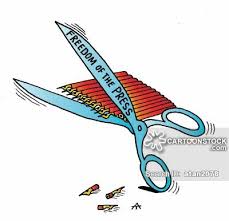
  • Time to stand up for a free press:  We’re not the enemy

    Time to stand up for a free press: We’re not the enemy

    By Layne Bruce

    Enough already.

    The last couple of years have been an unending barrage against the freedom of the press and the practitioners of this noble trade.

    From being called “liars,” “fake,” and “sick” by irate politicians to enduring capricious and punitive tariffs that are an existential threat to newspapers, the landscape for journalists today may be as inhospitable as it has ever been in the 242-year history of this great union of ours.

    All this while the public at large seems unable to break free of the social media echo chamber. We retreat there to endlessly bicker with those who don’t agree, or to bolster the confidence of our own positions by seeking solace from those who do.

    We’ve devolved into a nation of people who simply don’t want to hear it.

    And that’s incredibly dangerous.

    The bipartisan testimony of 20 members of Congress last month before the International Trade Commission in opposition to tariffs on Canadian imported newsprint is a good indicator a lot of talk about journalists being “enemies of the people” is utter hogwash. These men and women know the importance of community newspapers and their imperiled status in modern culture where too many marketers prefer digital analytics and too many readers prefer daily affirmation.

    They know the men and women who work at the local paper are most definitely not the enemy — nor the problem.

    But in a society where talk of the wicked media is hurled relentlessly on Twitter or cable “news” channels, all of us who take part in the honorable, constitutionally protected trade of reporting news and ferreting truth get amalgamated into a cynical act of political theater that’s threatening to the very fabric of democracy.

    And that’s what this Is really about.

    We’re arguing over political philosophies and cultural divides — not about whether news is biased. I bet you a week’s pay and a dozen doughnuts the people who use the argument that news is “fake” don’t any more believe that than they think the Space Force is coming soon to a quadrant near us.

    But the damage is being done. We as a nation are beginning to give a collective shoulder shrug the fundamental freedoms in the Bill of Rights.

    And we’ve got to snap out of it.

    We’ve got to accept that not all news is happy or affirming. We’re not always

    going to get what we want. I vaguely remember being taught that as a preschooler.

    Aaron Blake, a correspondent for The Washington Post, asked in a recent column if the media should go to war with the President.

    “Trump seems to want a war with his ‘enemy,”‘ Blake wrote. “But should the mediaoblige him? And if it doesn’t, isn’t it unilaterally disarming?”

    No, we should not go to war with the President. But It’s long past time to end the navel gazing and stand up for what we do. It’s our job to provide the best obtainable version of the truth and to champion the freedoms of the First Amendment.

    Thomas Jefferson — who had a notably tempestuous relationship with the press — was a president who still often rose to defend it.

    He once wrote while serving in Paris as Minister to France: “The people are the only censors of their governors, and even their errors will tend to keep them true to the principles of their Institution…

    “Were it left to me to decide whether we should have a government without newspapers or newspapers without a government, I should not hesitate a moment to prefer the latter. But I should mean that every man should receive those papers and be capable of reading them.”

    If we’re unwilling to accept news that upsets us, or if we’re indifferent to differing views simply because we don’t want to deal with them, we’re essentially giving up on the notion we can ever truly be “one Nation under God, indivisible, with liberty and justice for all.”

    I know it’s ironic, but l don’t believe we’ve given up because I don’t want to believe it.

    (The author is executive director of the Mississippi Press Association)

  • Ambassador Nikki Haley Capitalizes on her Resignation and Builds Political Capital

    Ambassador Nikki Haley Capitalizes on her Resignation and Builds Political Capital

    By Ven Parameswaran

    Kathleen Parker, a columnist for The Washington Post wrote: “In decades of writing about politics, I have run across few with Haley’s innate talents.  She is a natural with people, whether crouching with children on the ground in Africa—reminiscent of Princess Diana on similar travels—speaking to leaders in the tense theater of the United Nations.

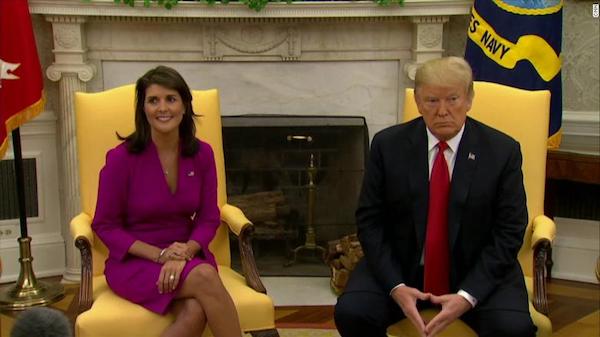
    Ambassador Nikki Haley sitting by President Trump in the White House oval office announced her resignation.   The event was followed by a press conference.  The story was a stunt and received the widest media coverage for a couple of days.  First, I must congratulate Nikki Haley for her modus operandi and political skills in getting President Trump and the public to listen to her story from the oval office.  Never before, a resignation of a cabinet official has received such importance.   The exchange Nikki Haley had with Trump proved that they have the best rapport and cordial and professional relationship.  Perhaps, having refined her diplomatic skills at the United Nations, she emulated them at the White House.

    Nikki Haley, 46 started her political career 14 years ago as State Senator in South Carolina.  At the end of her third term, Nikki Haley ran as a Primary candidate for the Governor of South Carolina.  This was a tough fight and she won.  She won the Governor’s race with a wide margin.  Her performance as Governor enabled her to win her second term in 2014.   President Trump appointed her as Ambassador to the U.N. in 2017.   Thus, Nikki Haley became a durable political timber and unchallenged national leader.

    PERFORMANCE AT THE U.N.

    P stands for Performance and R stands for Reporting in Public Relations. Nikki Haley’s performance as Ambassador was extraordinary and outstanding.  When she took up the job, everyone underestimated her and she prove them wrong.  Nikki Haley developed the  best diplomatic relations with China and Russia.  This helped her to get their consent when the U.S. imposed severe sanctions against these countries and also Iran and North Korea.  She represented the USA and President Trump admirably and commanded the highest respect at the United Nations.

    She came to the UN post without previous foreign policy experience.  The position often thrust her into the spotlight and enabled her to win favor among conservatives for her staunch defense of Israel and sharp criticism of Iran and Russia.

    For a time at the UN, diplomats saw her as the face of U.S. foreign policy, noting differences between Trump and then Secretary of State Rex Tillerson. She made a point at the UN to project the impression that she was close to Trump and that she “had his ears,” one diplomat said.

    WHY DID NIKKI HALEY RESIGN?  IS SHE SHOOTING FOR THE PRESIDENCY AFTER TRUMP?

    In 14 years, Nikki Haley has accumulated substantial political experience by representing South Carolina as a State Senator and Governor, and as Ambassador to the U.N.  She has proven legislative and executive  experience.  Everyone is speculating about her future potential, that is unlimited.  Nikki Haley is very popular.  Quinnipiac Poll gave her 75% approval rating by Republicans and 55% by Democrats.  President Trump sent her to Sudan and other African countries and India.  Ambassador Haley was well respected and received by one and all.  When Secretary of State Rex Tillerson’s resignation was imminent there was speculation that Trump was considering her for the Secretary of State.    When the reporters asked Haley whether she would be running for President in 2020, she said she would not be running but would be supporting Trump.    As a conservative Republican woman with seasoned experience one can say she has the necessary credentials to run for President in 2024.   There is speculation that Trump may fire Attorney General Sessions after the Mid Term elections and was considering Senator Graham of S.C. If so, there is a possibility that Nikki Haley could be tapped to finish the term of Senator Graham till 2020, and get reelected.  Senator Graham may also be interested in the U.N. Ambassador’s job.  There is also speculation that Trump may want a woman as his running mate in 2020 and could offer the V.P. slot to Nikki Haley.

    There is also a report that Nikki Haley may be interested in private industry.  Her personal finances are not that strong and she could very well serve as C E O of a Fortune 500 corporation.  Such an assignment could give her multimillion dollar salary.    Thus, she is in demand.

    Kathleen Parker, a columnist for The Washington Post wrote: “In decades of writing about politics, I have run across few with Haley’s innate talents.  She is a natural with people, whether crouching with children on the ground in Africa—reminiscent of Princess Diana on similar travels—speaking to leaders in the tense theater of the United Nations.  As Governor, she led the legislature to remove the Confederate battle flag from the statehouse grounds, while also guiding South Carolina through the shock and grief of the 2015 church massacre in Charleston.    It won’t  serve her presidential aspirations well to stay out of politics for long, as Haley surely knows.  Thus, the burning question—what is next?—has only one certain answer:  WHATEVER SHE WANTS?”

    The New York Times editorial wrote: “Ms. Haley, who is expected to pursue the presidency one day, may eventually find herself having to defend facilitating some of President Trump’s worst policies and instincts.  But she will also be able to point to more constructive roles she played. Indeed a replacement in her mold may be the best to hope for from Mr.Trump.”

    (The author based in Scarsdale, N.Y is Chairman, Asian American Republican Committee (founded in 1988). He can be reached at  vpwaren@gmail.com)


  • Automaker Ford plans layoffs blames Trump tariffs for $1 billion loss: report

    Automaker Ford plans layoffs blames Trump tariffs for $1 billion loss: report

    NEW YORK(TIP): Ford’s reorganization could include upwards of 24,000 job cuts, NBC News reported Monday, Oct 8. The automaker has not provided hard figures on the number of employees it will let go, but its leaders have said President Donald Trump’s tariff war with China could impact the company’s overhaul.

    The NBC report cited a Morgan Stanley analysis that estimates a 12 percent reduction in Ford’s global workforce, resulting in the loss of roughly 24,000 workers. Bob Shanks, Ford’s chief financial officer, described the cutbacks as a “redesign” that would include its 70,000 white-collar employees.

    With sales lagging well behind its domestic competitor General Motors, Ford has launched a $25.5 billion reorganization plan. It began in earnest in May 2017 when then-CEO Mark Fields was removed.

    The company has previously announced it would drop production of its sedan, wagon and coupe models — save for the popular Mustang — and concentrate on SUVs and trucks.

    Meanwhile, Ford has found itself regularly at odds with the president. As a candidate, Trump threatened Ford with tariffs when it proposed building a plant in Mexico. The company backed out of those plans and opted to expand in China instead.

    The main blow from the Trump tariffs have delivered to automakers has been in the cost they have added to many of the parts they import from China.

    (Source: NOLA.com)

  • Trump says he prefers to keep Deputy A-G Rosenstein: Thursday Meeting postponed: White House

    Trump says he prefers to keep Deputy A-G Rosenstein: Thursday Meeting postponed: White House

    WASHINGTON(TIP): President Donald Trump has postponed his planned meeting with Deputy Attorney General Rod Rosenstein until next week, the White House announced on Thursday, September 27.

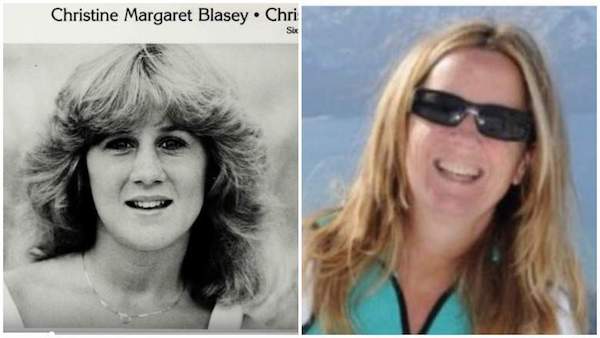
    White House press secretary Sarah Sanders said Trump spoke briefly with Rosenstein on Thursday and the two men agreed to meet next week to avoid interfering with the focus on the Senate Judiciary Committee’s hearings with Supreme Court nominee Judge Brett Kavanaugh and Christine Blasey Ford, who has accused Kavanaugh of sexually assaulting her when they were teenagers.

    “They do not want to do anything to interfere with the hearing,” Sanders said in a statement.

    Trump and Rosenstein were set to meet Thursday in person to discuss Rosenstein’s future in the administration after The New York Times reported last week that Rosenstein suggested secretly recording the President and attempting to remove him from office via the 25th Amendment.

    Trump signaled during a news conference on Wednesday that he might delay his meeting with Rosenstein, saying he might “ask for a little bit of a delay to the meeting, because I don’t want to do anything that gets in the way of this very important Supreme Court pick.”

    “I don’t want it competing and hurting the decision, one way or the other,” Trump said.

    Trump declined to say whether he had made up his mind on Rosenstein’s future in his administration but said he “would much prefer keeping Rod Rosenstein.”

    “We’ve had a good talk. He said he never said it, he said he doesn’t believe it. He said he has a lot of respect for me, and he was very nice and we’ll see,” Trump said. “We have caught people doing things that are terrible. I would much prefer keeping Rod Rosenstein, much prefer.”


  • Why did Christine Blasey Ford wait so long? I’ll tell you …

    Why did Christine Blasey Ford wait so long? I’ll tell you …

    By Leslie Marshall

    “Remaining silent doesn’t mean forgetting. It just means suffering in silence”, says the author.

    Christine Blasey Ford has publicly accused Donald Trump’s Supreme Court nominee Brett Kavanaugh of sexual assault decades ago. A look at what she is saying and how top lawmakers are responding.

    The nomination of Judge Brett Kavanaugh seemed all but certain a few days ago, until a woman named Christine Blasey Ford came forward accusing him of sexual assault when they were in high school. The alleged crime having taken place decades ago has prompted many to ask: Why did she wait so long?

    I can tell you why.

    In a word … Fear

    In my freshman year of college, I was the victim of something quite similar, on my 18th birthday. I understand why Dr. Ford remained silent. She was afraid. Afraid that no one would believe her – after all, she had been drinking. Fear if it went to court, her sex life would be revealed. Fear she would be judged. Fear her name would be dragged through the mud. And she’s not alone.

    Rape and sexual assault are the most underreported crimes in our nation. Worldwide, one in three women experience some sexual violence in their lifetime, according to the World Health Organization. Yet it is fear that keeps them from coming forward.

    Remaining silent doesn’t mean forgetting. It just means suffering in silence.

    We judge victims of sexual violence harshly in our society. Juries have at times acquitted the accused simply based on the way a woman was dressed.

    The issue of how much time has lapsed has even been the subject of a landmark legal case: 1994’s People v. Brown.

    But remaining silent doesn’t mean forgetting. It just means suffering in silence. Dr. Ford spoke of the psychological trauma. If you Google “psychological factors that inhibit reporting of sexual violence” you’ll find there are numerous articles and studies on this very issue. But the question still remains: Does the length of time that has lapsed after the alleged incident lessen the significance of a victim’s claim?

    It shouldn’t, but it does.

    And should she or any other victim be believed? Well the National Sexual Violence Resource Center states that 2 to 10 percent of victims’ claims are false. Meaning at least 90 percent are telling the truth.

    So, if fear prevented her from reporting this, why come forward now?  Well for any woman who has been abused by a man and sees that individual gain influence and power years later, it hits you in the face like a bucket of cold water. It’s shocking, startling, unjust. And it’s a reminder. A reminder of the incident, a reminder of the pain and a reminder that you remained silent.  Even in light of the #MeToo movement, only a handful will come forward like Dr. Ford. For the rest, the silence continues.

    I am guilty of that silence. Just last year, someone from college re-connected with me on Facebook. We talked about what some of our classmates are doing now, including the one from my 18th birthday.  When I found out he is a successful professional in chosen career, it sickened me. I wanted to tell someone. But I didn’t. Fear prevented me from picking up the phone.

    In coming forward, Dr. Ford is overcoming her fear. And that, I would imagine, will truly help her to heal.

    I only wish I could be as brave.

    (The author joined Fox News Channel as a contributor in 2009; providing analysis on both political and social issues from a liberal point of view. A nationally syndicated talk host, whose program, “The Leslie Marshall Show” can be heard on radio, stream, “Tune In,” “The Progressive Voices Radio Network,” and “The Armed Forces Radio Network.”)

    (Source: Facebook)

  • US Attorney General Jeff Sessions hits back at Trump criticism

    US Attorney General Jeff Sessions hits back at Trump criticism

    WASHINGTON(TIP): Stung by US President Donald Trump’s criticism of him as being unable to take control of the Justice Department, attorney general Jeff Sessions came out with a strong rebuttal.

    Sessions, in a rare rebuttal to Trump, issued a statement defending the integrity of his department.

    “I took control of the Department of Justice the day I was sworn in,” he said. “While I am attorney general, the actions of the Department of Justice will not be improperly influenced by political considerations.”

    Sessions, a longtime US senator and early supporter of Trump’s presidential bid, drew Trump’s ire when he recused himself in March 2017 from issues involving the 2016 White House race.

    That removed him from oversight of the federal special counsel’s investigation of Russia’s role in the election and whether Trump’s campaign worked with Moscow to influence the vote. Trump has repeatedly called the investigation a witch-hunt and maintained there was no collusion.

    Trump told Fox that Sessions should not have recused himself from Russia-related matters.

    “He took the job and then he said, ‘I’m going to recuse myself,’” Trump said. “I said, ‘What kind of a man is this?’”

    However, Trump told “Fox & Friends” he would “stay uninvolved” in department matters.

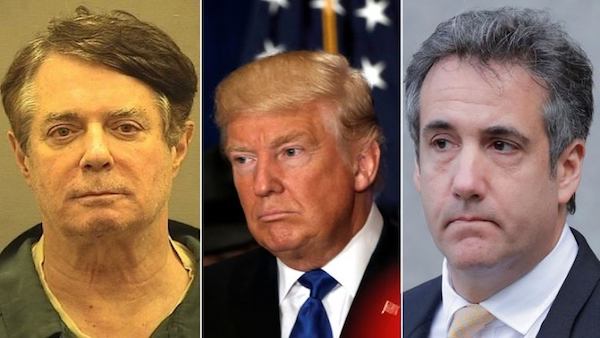
    Trump intensified his criticism of the Justice Department in a Fox News interview broadcast on Thursday, August 23, as the White House grappled to respond to the conviction of former Paul Manafort, Trump’s former campaign chairman, on multiple fraud counts and a plea deal struck by Michael Cohen, Trump’s former personal lawyer, that implicated the president.

    Trump reprised a litany of complaints about the Justice Department and the FBI, attacking both without providing evidence they had treated him and his supporters unfairly.


  • President Trump in soup as 2 ex-aides face jail

    President Trump in soup as 2 ex-aides face jail

    Former campaign chairman convicted of financial crimes; Ex- lawyer pleads guilty of campaign finance violations and other crimes

    NEW YORK(TIP): United States President Donald Trump was hit by a double whammy on Tuesday, August 21, as his former lawyer implicated him in a case of campaign finance violation and his former campaign chief was convicted of financial wrongdoing.

    Paul Manafort, who led the Trump campaign during the Republican National Convention in 2016, was found guilty of bank and tax frauds and one charge of failing to disclose foreign bank accounts, by a jury in Virginia, in the suburbs of the U.S. capital. All offences took place before he joined the Trump campaign, and none relates to links with Russia, but the conviction has given a fillip to Mr. Mueller’s ongoing investigation.

    Michael Cohen, long-time lawyer and self-declared ‘fixer’ for Mr. Trump, pleaded guilty to tax and bank fraud and violation of campaign finance rules, allegedly at the behest of the President. The investigation against Mr. Cohen by U.S. Attorney’s office for the Southern District of New York was also triggered by the Special Counsel’s findings.

    Mr. Cohen said he organized hush money for two porn stars, who allegedly had sexual relations with Mr. Trump, who directed him to pay them off. The 22-page plea deal admits this as a violation of campaign finance, as these expenses were not declared as such.

    Mr. Cohen told a court on Tuesday, August 21, that he made the payments “in coordination and at the direction of a candidate for federal office,” but the plea deal documents do not implicate Mr. Trump in the transaction.

    Lanny Davis, Mr. Cohen’s attorney, said on Twitter: “Today he stood up and testified under oath that Donald Trump directed him to commit a crime by making payments to two women for the principal purpose of influencing an election. If those payments were a crime for Michael Cohen, then why wouldn’t they be a crime for Donald Trump?”

    Mr. Davis told CNN that Mr. Cohen has information that would be useful for Mr. Mueller’s investigation.

    Sitting Presidents are not indicted, but Mr. Trump could be charged once he leaves office, according to several legal scholars.

    Meanwhile, Michael Avenatti, lawyer for one of the porn actors who was paid hush money, said he would press for the President’s appearance in the court. The porn star is suing Mr. Trump and Mr. Cohen for ending the contract that forced her to remain silent on her sexual ties with the President.

    President is in a lot of trouble, says the lawyer.

    “The President’s in a lot of trouble,” he told CNN. “…and we’re coming for him. I’m telling you flat out we’re going to come for him. We’re going to get this deposition.”

    The President responded to the Manafort verdict but had no word on the Cohen guilty plea until Wednesday morning. “Paul Manafort is a good man. … It doesn’t involve me, but I still feel – you know, it’s a very sad thing that happened,” Mr. Trump told reporters ahead of a political rally in West Virginia on Tuesday night. “This has nothing to do with Russian collusion.”

    Speaking at the rally, he trained his guns on the media and the investigation. “Fake news and the Russian witch hunt…Where is the collusion? You know they’re still looking for collusion. Where is the collusion? Find us some collusion. We want to find the collusion.”

    The White House said Mr. Trump’s outside legal team would respond to Mr. Cohen’s guilty plea.

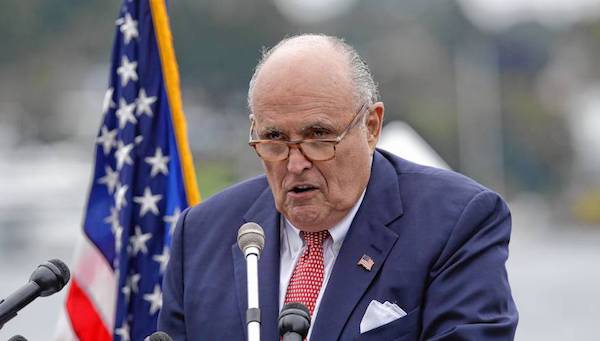
    Rudy Giuliani, Mr. Trump’s attorney, said in a statement: “There is no allegation of any wrongdoing against the President in the government’s charges against Mr. Cohen. It is clear that, as the prosecutor noted, Mr. Cohen’s actions reflect a pattern of lies and dishonesty over a significant period of time.”


  • Trump is targeting illegal immigrant children — US citizen kids could be next

    Trump is targeting illegal immigrant children — US citizen kids could be next

    By Cori Alonso-Yoder

    After holding Dreamers and immigrant families hostage, Trump now seems determined to escalate the strategy. Documents from within the administration indicate that he now has his sights on U.S. citizen children living in poverty. In leaked drafts, the administration proposes increasing the penalties on immigrant families whose U.S. citizen children receive means-tested public benefits such as Women Infants and Children (WIC), Medicaid, and Supplemental Nutritional (SNAP).

    This summer, the country has focused its attention on the forced separation of immigrant families at the U.S. southern border. Initially touted by the Trump administration as a policy to deter illegal immigration, the decision drew rare bipartisan condemnation.

    Under intense pressure, President Trump eventually signed an executive order in June to reverse the practice of family separation. By that point the damage had been done. Now, weeks later, hundreds of families are still not reunited, and doubts are growing that they ever will be.

    This hasty “zero tolerance” policy is the administration’s latest in a series that use children to advance a regressive immigration agenda. These policies demonstrate the White House’s dwindling hesitation to increase penalties on the most vulnerable in order to advance its nativist objectives. All signs indicate that U.S. citizen children are its next targets.

    Surrounding the president’s campaign against immigrants, policymakers will recognize a familiar theory to explain migration: “push” and “pull” factors. Push factors are circumstances in the country of origin that force migrants away, while pull factors are those that attract them to a destination country. The push factors driving the current surge of refugees from Central America include gang and societal violence, poverty, and a culture of impunity.

    Attorney General Jeff Sessions recently suggested, with little evidence, that the U.S. asylum system is also a pull factor because it is ripe for fraud and abuse. But the administration has not yet articulated the pull factor animating its cynical stance on family separation — the desire of parents to provide safety and protection for their children.

    For the majority of Central Americans I have represented, faith in American rule of law and commitment to human rights are the major draws to the U.S. Trumpian policies pervert these pull factors and use them to punish immigrant parents and children seeking protection.

    Trump’s willingness to bargain with the welfare of children and families began last year, with his attempt to terminate of the Deferred Action for Childhood Arrivals (DACA) program. DACA offered protection to undocumented immigrants brought to the U.S. as children by their parents. Ensuing debates about the status of DACA recipients failed to yield a legislative fix — in part, because of the President’s shifting stance on DACA legislation.

    Trump opportunistically used the uncertain future of DACA to call for construction of his pet border wall project. He also blamed DACA for encouraging crossings into the U.S., despite the fact that new arrivals would not qualify for the program’s protections. This view of DACA as a “magnet” for migration falls into line with his administration’s efforts to subvert family integrity as a factor attracting immigrants to the U.S.

    The Trump administration is not the first to try to neutralize pull factors to deter migration. In the 1980s, policymakers created penalties for employers who knowingly hire undocumented laborers, relying on the theory that job opportunities in the U.S. were the primary pull. Ten years later, the Illegal Immigration and Immigrant Responsibility Act of 1996 theorized that the availability of government welfare attracted newcomers. That law penalized immigrants — documented and undocumented — by conditioning their immigration status (or the opportunity for future status) on the avoidance of welfare benefits.

    Neither one of those laws succeeded in meaningfully reducing irregular border crossings (in fact, unauthorized immigration surged in their wake). Nevertheless, the Trump administration is preparing to dust off this old theory — this time, with an unconscionable new variation on the theme. While the desire to secure a better future for one’s family has pulled several generations to the U.S., never before now has the U.S. government sought to cut off that magnet by brazenly targeting children for punishment.

    After holding Dreamers and immigrant families hostage, Trump now seems determined to escalate the strategy. Documents from within the administration indicate that he now has his sights on U.S. citizen children living in poverty. In leaked drafts, the administration proposes increasing the penalties on immigrant families whose U.S. citizen children receive means-tested public benefits such as Women Infants and Children (WIC), Medicaid, and Supplemental Nutritional (SNAP).

    The administration is calling for immigrants whose families use these benefits to face denial of immigration status and deportation. According to a recent report by the Migration Policy Institute, these changes could affect an estimated 9.2 million U.S. citizen children’s access to vital services to which they are legally entitled.

    These leaked policies demonstrate the administration’s continued commitment to policies that most deeply punish those with no choice in creation of their circumstances — the children of immigrants. Any justification about the deterrent effect of these policies is wholly illogical in view of the steep toll paid by children.

    Even if these policies could effectively deter desperate families, we as a country must still reject them outright. The pull to opportunity, protection, and family unity are at the core of what we have come to understand as the American dream. While the need for immigration reform is real, any changes in law and policy must reflect these ideals.

    Despite the administration’s contrary view, enforcing the law also includes upholding the current system’s emphasis on family unity and humanitarian protection. Instead, these new policies exploit desperate families in order to punish, scapegoat, and traumatize — all under the banner of law and order.

    (The authorteaches law at American University Washington College of Law where she supervises an immigrant rights clinic)

  • Trump Lawyers Submit a Counteroffer to Mueller’s Terms for Interview with the President

    Trump Lawyers Submit a Counteroffer to Mueller’s Terms for Interview with the President

    WASHINGTON(TIP): President Trump’s lawyers on Wednesday, August 8, submitted a counteroffer to Special Counsel Robert Mueller’s proposal for the terms of a possible interview with the president, the latest turn in the protracted negotiations over a sit-down stretching back to January, according to a report published in Wall Street Journal.

    The counteroffer largely sticks to the terms the president’s legal team outlined last month, a person familiar with the matter said: The president’s lawyers would be open to questions about collusion with Russia but wished to limit inquires related to obstruction of justice.

    Rudy Giuliani, one of the president’s lawyers, said in an interview that the team’s proposal was “a little bit different than what we recommended before, but not terribly.”

    He said the legal team had “left open” the possibility to investigators that the president would answer a question on obstruction of justice “if they can show us an obstruction question that they need an answer to, where they haven’t gotten an answer.”

    Mr. Giuliani said that in the special counsel’s last offer, Mr. Mueller agreed to decrease the number of questions posed to the president but hasn’t agreed to the Trump team’s request to curb obstruction of justice inquiries.

    A spokesman for Mr. Mueller, who has not publicly commented on the negotiations, didn’t immediately respond to a request for comment.

    Mr. Mueller is investigating whether Trump associates colluded with Russia’s efforts to interfere in the 2016 U.S. election, and whether Mr. Trump sought to obstruct justice by firing Federal Bureau of Investigation Director James Comey in May 2017, while the FBI’s Russia probe was under way. Mr. Trump has repeatedly denied collusion and obstruction, and Moscow has denied election interference.

    The special counsel’s team of investigators and prosecutors has netted guilty pleas from several Trump campaign associates and indictments of a dozen Russian intelligence officials on hacking charges, among other prosecutions. Mr. Trump’s one-time campaign chairman Paul Manafort is currently being tried in Virginia on bank and tax fraud charges.

    The special counsel this year outlined for the president’s legal team more than 40 questions he planned to ask in a possible interview with Mr. Trump. The questions focused largely on the president’s decision to fire Mr. Comey and his public criticisms of Attorney General Jeff Sessions and other top law-enforcement officials.

    Mr. Giuliani has said the reasons Mr. Trump has given in public for firing the former FBI director are “more than sufficient” and that as president, he had the power to fire any member of his administration.

    The president’s legal team has been negotiating the terms of a possible interview with Mr. Mueller for more than eight months. Mr. Trump has said he is eager to sit down with Mr. Mueller. It is unclear how long the two sides will allow the negotiations to continue.

    Mr. Giuliani said Wednesday that the legal team wants to see the Mueller investigation “over with” by Sept. 1, ahead of the November midterm elections. He said Mr. Trump’s lawyers would make a final decision in the coming weeks whether or not the president would sit for an interview. The president’s lawyers have previously offered timelines in which they would decide on an interview, only to see those end dates pass by.

    “It really depends on how badly they want it,” Mr. Giuliani said of an interview. “This is about the last couple of days that you can really putz around.”

  • Indian American Professor nominated to Privacy and Civil Liberties Agency

    Indian American Professor nominated to Privacy and Civil Liberties Agency

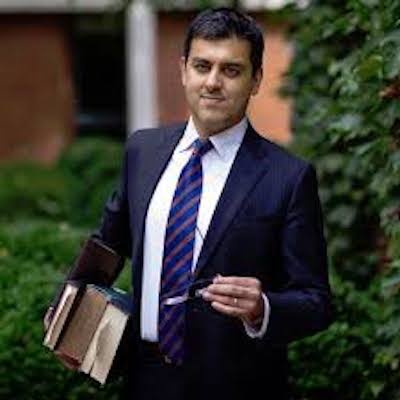
    WASHINGTON(TIP): An Indian American law professor and legal expert has been nominated by US President Donald Trump to an agency on privacy and civil liberties.

    Aditya Bamzai, a professor at University of Virginia’s School of Law, has been nominated by Donald Trump to be a member of the Privacy and Civil Liberties Oversight Board for the remainder of a six-year term expiring January 29, 2020.

    The agency works to ensure that efforts by the executive branch of the government to protect the nation from terrorism are balanced with the need to protect privacy and civil liberties.

    According to Mr Bamzai’s profile on the university website, he teaches and writes about civil procedure, administrative law, federal courts, national security law and computer crime.

    He joined the University of Virginia School of Law’s faculty as an associate professor in June 2016.

    Mr Bamzai has argued cases relating to the separation of powers and national security in the US Supreme Court, Foreign Intelligence Surveillance Court of Review, DC Circuit and other federal courts of appeals.

    He is a graduate of Yale University and of the University of Chicago Law School, where he was the editor-in-chief of the law review

    Before entering the academy, Mr Bamzai served as an attorney-adviser in the Office of Legal Counsel of the US Department of Justice and as an appellate attorney in both private practice and for the National Security Division of the Department of Justice.

    Earlier in his career, he was a law clerk to Justice Antonin Scalia of the US Supreme Court and to Judge Jeffrey Sutton of the US Court of Appeals for the Sixth Circuit.


  • Trump’s performance could help Republicans win the mid-term election

    Trump’s performance could help Republicans win the mid-term election

    By Ven Parameswaran
    “If the U.S. economy grew @ 4%, this will make a big headline not only in the USA but the entire world.  U.S. economy is the engine that drives the global economy. President Trump, of course, will take full credit.  He would argue that his economic policies have started finally working for the benefit of America and the world.  Trump’s massive historic tax cuts, deregulations, America first and better terms of trade, and running a lean government are having the positive impact on the economy.

    The government will release the 2nd quarter GDP on Friday, July 27th.  According to the Conference Board, Federal Reserve and the IMF, the GDP growth for the second quarter will be between 4 and 5 per cent. For my analysis, let me take the lowest and the most conservative figure of 4%.  If the U.S. economy grew @ 4%, this will make a big headline not only in the USA but the entire world.  U.S. economy is the engine that drives the global economy.

    President Trump, of course, will take full credit for the robust economy.  He would argue that his economic policies have started finally working for the benefit of America and the world.  Trump’s massive historic tax cuts, deregulations, America first and better terms of trade, and running a lean government are having the positive impact on the economy.

    It is true that the unemployment hit 3.8% in June.  Unemployment amongst the Blacks, Latinos and Women is also the lowest recorded.  Wages have been rising.  The frustrated unemployed who stopped looking for jobs are back now, and the unemployment went up to 4% in July.  Corporate earnings are going up substantially, thanks to the tax cut. Profits accumulated abroad have started coming back because of the tax incentives.  The DOW Jone’s average is up 38% since Trump’s election.

    TRUMP’S NEW WORLD ORDER

    Trump has challenged foreign countries without discrimination.  He has been tough on our closest allies – Canada, U.K., France, South Korea, and Germany.  He has questioned the effectiveness of NATO without strong defense.  He has admonished our allies and members of the NATO for not paying their share of 2% of their GDP.  He was even critical of Germany depending on Russia for importing $600 billion of gas yearly.  He said that Germany as our ally should be buying gas from us.   I must point out that ever since NATO was created in 1949, it has not been able to defend one inch of European territory encroached by the Soviet Union or Russia.  If the Europe had invested in strong defense, the NATO could have been a real tiger, not a paper tiger as now.

    SYRIA:  Trump used the military force twice to punish Syria, whereas Obama failed.   Trump can take credit for defeating the ISIS.  We do not see any more horrible pictures of Americans being killed and hung publicly.

    ISRAEL: Israel was created in 1948.  Trump is the first President to make Jerusalem its capital.  The majority of the UN General Assembly voted against and the fake media warned of crisis.  Trump’s courageous action stands, and Israel is more secure.

    NORTH KOREA:  Trump is the first President to have a summit meeting with the North Korean leader in Singapore.  Trump claims that the denuclearization process has started and could end within a year.  What a change?

    RUSSIA: Trump claims that his summit with Putin has contributed to better relations.  The relationship was almost frozen during Obama’s time.

    PAKISTAN: Trump is the first President to punish Pakistan for encouraging terrorism in Afghanistan.  Pakistan has behaved and for the first time, there is relative peace in Afghanistan.  Trump has also demanded that Pakistan to rid of all terrorists from Pakistan.  Trump is the first President to withdraw military aid to Pakistan.

    INTERNATIONAL TRADE:  Trump has started a revolution in international trade.  He campaigned against all trade pacts including NAFTA, LAFTA, and others.  He believes in America First.  He has been a tough negotiator and if the economy is the mirror, once could say his policy is working.  Today, the visiting Head of the European Union and Trump agreed to the goal of zero tariff.

    MIDTERM ELECTIONS: WHO WILL WIN?

    Trump is the most unpredictable in the world.  All the so-called pundits, mass media, pollsters, politicians all have failed so far. I hate to predict.  But, I can predict they will continue to predict and they will be again proven wrong.  This, however, does not disallow me from making some calculated speculations.  The elites and the coastal States are not going to decide the elections.  Once again, the Middle America and the South will decide.

    Senator Sanders of Vermont, who was stopped by Hillary Clinton, is now emerging as the leader of the Democrats and also attracting Independents.  The party has been going from the left to the left.  The defeat of the old horse, Congressman Crowley in NY, who was in line to become the Speaker, by a newcomer, a Socialist has given a wakeup call to the establishment.  This means, Nancy Pelosi and her old leadership, aging over 70 are dead horses.  Senators Elizabeth Warren, Kamala Harris, and Corker of NJ cannot compete with Sanders and Socialism.  The transformation in the Democratic party has weakened the establishment and it has no place.   We saw the Democrats got elected in Pennsylvania supporting Trump policies. The Independents are looking for the best choice.  THERE IS AN OLD SAYING, THE POCKET BOOK WILL DECIDE THE ELECTION.  If so, the pocket book is the common denominator of winning ticket.  Trump wins.

    Targeting Trump for 24/7 by the mass media and the anti Trumpsters will not help them.  Everybody knew Trump was a playboy and it is not news. Hillary Clinton tried the dirty politics, but Trump blasted her in the debates.  Therefore, no tapes or videos are going to kill the ROBUST ECONOMY. Trump’s popularity, even before the release of 2nd quarter GDP is 48%, higher than that of Obama’s or Bush’s at the same period.  When Trump was elected it was 37%.    But for the fake media, his popularity could have been 65%.  In addition to the Robust Economy and the New World Order, Trump will be credited for nominating two judges to the Supreme Court.  I am confident that Trump’s second nominee for the Court will be approved before the midterm election.  90% of the Republicans approve Trump as of now.  The GOP is most likely to add a couple of more senators and the House will be 50:50, meaning the GOP could end with a narrow lead of one!

    Mueller investigation is a hoax as there is absolutely no evidence of Russian collusion with the Trump campaign.  Professor Allan Dershowitz reputed legal scholar and attorney has written a book on AGAINST IMPEACHING TRUMP and has concluded that Mueller may have no choice but to write a narrative report.

    QUESTIONS DIFFICULT TO ANSWER:

    1. How did Trump give leadership to the U.S. economy?
    2. How Trump, despite challenging all leaders of the world, came out victorious in creating a NEW WORLD ORDER.
    3. What is Trump’s mantra or magic?


    (The author, Chairman, Asian American Republican Committee founded in 1988 came to the USA 64 years ago and lives in Scarsdale, New York. He can be reached at vpwaren@gmail.com)


  • Indian American Sabrina Singh is key player to offensive communication strategy of the Democratic party

    Indian American Sabrina Singh is key player to offensive communication strategy of the Democratic party

    WASHINGTON(TIP): Sabrina Singh joined the Democratic National Committee (DNC) last year as its spokeswoman and deputy communications director. She alleged that the ruling Republican party has “created a toxic environment” and is struggling with telling the truth thus being a key player in the offensive communication strategy of the Democratic party against the alleged divisive policies of the Donald Trump administration.

    The Democratic leader said she is inspired by the works of her grandfather Sardar JJ Singh to fight the divisive policies of the Trump administration.

    As head of the India League of America, JJ Singh was a key figure among Indians in America fighting for the right to US citizenship.

    Some 18 months after Donald Trump entered the White House, Ms Singh said, the Democrats have gone on the offensive. “Democrats certainly have the wind at their backs right now. We’re holding the administration accountable and we’re not gonna let up until November and onwards till 2020. We just have to keep harnessing the momentum to keep charging forward,” she said.

    “What one sees every day is the Trump administration lobbying new attacks at different groups whether it’s Latino’s or Asian American and Pacific Islander (AAPI). The Trump administration has not done their job of their promise of ‘draining the swamp’. I think, if anything, it has gotten swampier,” Ms Singh said.

    In 1940s, JJ Singh along with a group of fellow Indians mounted a nationwide campaign against racially discriminatory policies of the US which led the then president Harry Truman to sign the Luce-Celler Act on July 2, 1946. The Act allowed a quota of 100 Indians to immigrate to the United States per year.

    The Act also permitted Indian nationals already residing in the US (of whom there were approximately 2,500-3,000 at the time) to become naturalized American citizens.

    Prior to the Luce-Celler Act, Indians were barred from becoming US citizens and they were allowed to enter the country only as visitors and tourists. “It’s a really important time to be working at the DNC. It’s a really important time to be a woman of color working in Washington,” Ms Singh said.

    “While the environment can be tough to wake up to see a tweet from Donald Trump saying ‘fake news, this is rigged and that is rigged and everyone’s out to get me’, I think we’re seeing a lot of incredible activism,” she said referring to various popular protests against the Trump Administration.

    Ahead of the November mid-term, Ms Singh said the focus of the DNC under its chair Tom Perez is to get as many seats as possible from the Congress to elected posts at local level.

    “People are excited about the mid-terms. People are ready for change. People are seeing that Trump is not delivering on some of the things that he campaigned on,” she claimed.

    Responding to the criticism that the Democratic party has now become a party of protests and marches, Ms Singh said, “We are holding the administration accountable. And one way to do that is to rally and to protest and to speak out. I don’t think there’s anything wrong with people going to the border to protest the administration’s policies that are separating families.”

    “We are not just anti-Trump. We are organizing and making sure that we are electing leaders at all levels…We are going to fight to make sure that women have the right to make the choices about their own reproductive health,” she added.

    Ms Singh alleged that the White House strategy is not to tell the truth to the press or the public. “You see Sarah Sanders or Raj Shah get in front of the podium every day and essentially lie to the American people,” she alleged.

    At the same time, Ms Singh noted that Mr Trump uses Twitter “very effectively” and is able to reach his base.

    “Many of his supporters like that he is very honest and truthful, but I think it’s also a bit scary for many people in this country to see Trump attacking our allies over twitter, or name calling sitting senators, and members of Congress, whether it’s racial slurs or derogatory names,” she said.


  • Decoding Trump’s attack on Europe

    Decoding Trump’s attack on Europe

    His incendiary tour of the continent seeks to reverse the gains Europe has achieved over the last 70 years.

    By Ravi Arvind Palat
    Mr. Trump’s blistering attack on European states for not meeting their military spending obligations is misplaced. Not only does he fail to recognize that their military spending has risen since 2014 when they agreed to raise their military spending to 2% of their GDP by 2024 but also that European states are not positioned to be global powers. Unlike the U.S. which is bordered by the Atlantic and Pacific Oceans, Europe has no need for navies to patrol distant oceans and match the U.S. in defense spending. Moreover, rather than spending massively on defense as the U.S. has opted to do, European states provide their citizens with health care, education, and other welfare benefits.
    Far from Russia posing a threat to the Western alliance, the major source of destabilization to the EU comes from the flow of migrants from Africa. In this context, it is not higher military spending by member states that is crucial but the provision of aid. Members of the Organisation for Economic Co-operation and Development had pledged to contribute 0.7% of their GDP as aid to the poorest countries. Germany and the U.K. spend 0.66% and 0.7%, respectively, of their GDP in aid while the U.S. spends a mere 0.18%; Mr. Trump is threatening to slash even that by a third. Spending on aid, especially to African countries, will help stem the tide of refugees coming to Europe far more effectively than policing the Mediterranean.

    U.S. President Donald Trump’s incendiary tour of Europe has justly generated extensive coverage for his disregard for diplomatic niceties and attacks on his allies, especially on German Chancellor Angela Merkel and British Prime Minister Theresa May, both of whom are facing stiff domestic opposition. Yet, mainstream commentaries on Mr. Trump’s attacks on the European Union and the North Atlantic Treaty Organization (NATO) do not place the trans-Atlantic relationship in the broader historical context.

    In the first instance, in the aftermath of the Second World War, the U.S. promoted economic integration among its European allies as an essential condition for the post-war revival of world trade. At war’s end, wealth had become concentrated in the new superpower — it accounted for 48% of world industrial capacity and 70% of gold reserves. With the demobilization of some 10 million soldiers in the U.S., the shift to a peacetime economy needed allies to open their markets to U.S. products and investments. Its European allies were too poor to provide a market and the notorious ‘meat-axe’ 80th Congress unwilling to undertake a program for European reconstruction.

    In this context, the U.K. government’s admission in February 1947 that it could no longer intervene in the Greek Civil War provided an opportune moment for U.S. President Harry Truman to follow Senator Arthur Vandenberg’s advice to “scare the hell out of the American people” by manufacturing the Cold War. A Congress that was not willing to aid Clement Attlee’s “socialist welfare state” was eager to rebuild Western Europe and Japan as levees to defend the ‘free world’ against ‘godless communism’.

    Along with NATO founded in 1949 was the Marshall Plan instituted in 1948. It was innovative not because of its size — $17 billion over four years was not substantially more than the $9 billion the U.S. had channeled to its European allies in the previous two years — but because it pressured West European states to reduce tariffs between themselves and to standardize regulations to facilitate the creation of a market viable enough to reap the economies of scale and for U.S. corporations to invest in the continent. This trans-Atlantic U.S. corporate expansion was welcomed by European governments and trade unions as these were the only entities with the funds to create employment.

    Post-war reconstruction

    A trans-Atlantic military alliance and European economic integration were thus the twin projects of a successful post-war reconstruction. Economic integration proceeded rapidly over the last 40 odd years, with the European Union (EU) becoming the largest economy on the planet and thereby threatening the U.S.

    At the same time, the rationale for the NATO military alliance — to protect Western Europe from Soviet expansion and to tie Germany to its neighbors — has largely evaporated with the breakup of the USSR and the dissolution of the Warsaw Pact.

    The Russian angle

    In the context of the current outcry among NATO member states about the Russian annexation of Crimea from the Ukraine, it is important to recall that U.S. President George H.W. Bush and other leaders had assured Russia in 1991 that the trans-Atlantic alliance would not extend beyond East Germany’s borders. Then when Russia was immensely weakened in the 1990s, U.S. President Bill Clinton led the charge to invite states in Central and Eastern Europe into the alliance. It was this expansion that led to a new confrontation with Russia once it had stabilized itself under President Vladimir Putin.

    Nevertheless, there is clearly no Russian threat to Europe. Even in the case of the Ukraine, as Steven Cohen, emeritus professor of Russian studies at New York University, has argued, the crisis was precipitated in 2014 when the EU pressured the Ukrainian government to sign an agreement that would have disadvantaged Russia. When then Ukrainian President Viktor Yanukovych hesitated, he was overthrown by EU- and U.S.-supported demonstrators even though he had signed an agreement brokered by three EU foreign ministers the previous day to form a coalition government. It was this march of NATO to the frontiers of Russia that provoked Mr. Putin to intervene in the Ukraine.

    Recasting security

    Far from Russia posing a threat to the Western alliance, the major source of destabilization to the EU comes from the flow of migrants from Africa. In this context, it is not higher military spending by member states that is crucial but the provision of aid. Members of the Organisation for Economic Co-operation and Development had pledged to contribute 0.7% of their GDP as aid to the poorest countries. Germany and the U.K. spend 0.66% and 0.7%, respectively, of their GDP in aid while the U.S. spends a mere 0.18%; Mr. Trump is threatening to slash even that by a third. Spending on aid, especially to African countries, will help stem the tide of refugees coming to Europe far more effectively than policing the Mediterranean.

    In this context, Mr. Trump’s blistering attack on European states for not meeting their military spending obligations is misplaced. Not only does he fail to recognize that their military spending has risen since 2014 when they agreed to raise their military spending to 2% of their GDP by 2024 but also that European states are not positioned to be global powers. Unlike the U.S. which is bordered by the Atlantic and Pacific Oceans, Europe has no need for navies to patrol distant oceans and match the U.S. in defense spending. Moreover, rather than spending massively on defense as the U.S. has opted to do, European states provide their citizens with health care, education, and other welfare benefits.

    Mr. Trump’s support for Brexit and his humiliating undermining of Ms. May, his outrageous comments on Germany being beholden to Russia and on Ms. Merkel in particular, and his alleged offer of a trade deal to French President Emmanuel Macron if France leaves the EU are all designed to break up the organization so that he can deal from a position of strength with small states. As Britain’s difficulties in exiting the union indicates, supply chains are so integrated across the continent that breaking up the EU would have disastrous consequences for production for all its member states and may even risk a global economic downturn.

    In short, what Mr. Trump is seeking to do is to reverse the gains Europe has achieved over the last 70 years and make it beholden once again to the U.S.

    (The author is a professor of sociology at the State University of New York at Binghamton, U.S.)

    (Source: The Hindu)


  • Trump – Putin Rocky Summit

    Trump – Putin Rocky Summit

    Donald Trump did enough, and more, to mess up his meeting with Vladimir Putin

    A summit between the leaders of the world’s strongest nuclear powers, which fought the Cold War for decades, is an opportunity to discuss areas of shared interest, find ways to dial down mutual tensions and work together to address global issues. But well before Donald Trump and Vladimir Putin sat down for their first formal summit meeting, in Helsinki, there were concerns that it would be overshadowed by allegations of Russian interference in the 2016 U.S. presidential election. The uproar in Washington over Mr. Trump’s remarks on the Russian meddling scandal — with even accusations of treason — and his subsequent U-turn suggest that such concerns were valid. Mr. Trump could have certainly managed the summit better by addressing genuine concerns in the U.S. over allegations of Russia’s election meddling. Days earlier, the U.S. Justice Department indicted 12 Russian intelligence officials for hacking and leaking emails of top Democrats. It therefore seemed surreal when the President accepted the Russian version over that of his own intelligence agencies and the Justice Department. Away from the controversy, the closed-door meeting between the leaders can be evaluated only on the progress made on a number of contentious issues before both.

    The new Strategic Arms Reduction Treaty (START) is set to expire in 2021 and Russia has shown interest in extending it. For a consensus, high-level talks between the U.S. and Russia are needed. From the crisis in Ukraine to the civil war in Syria, Russia-U.S. cooperation is vital to finding lasting solutions. The Iran nuclear deal, for which Mr. Putin and Barack Obama worked together despite differences, is in a shambles. Most of these issues, including the threat posed by nuclear weapons and intercontinental ballistic missiles, were discussed at the summit. But it’s not clear whether the talks will lead to any significant change in policies. Since the Ukraine crisis, the West has tried different methods, including sanctions and pressure tactics, to isolate Russia and change its behavior. But those methods have proved largely unsuccessful as Russia is now a far more ambitious foreign policy power with an enhanced presence in Eastern Europe and West Asia — even if its sanctions-hit economy is struggling. Instead of continuing a policy that has failed and ratcheted up global tensions, the Western alliance should junk its Cold War mentality and engage with Russia; Russia, in turn, will have to shed its rogue attitude and be more open and stable in its dealings. The stakes are high, and the bitterness of the past should not hinder U.S.-Russia relations. That should have been the message from Helsinki.

    (The Hindu)

  • Trump takes U-turn, now blames Putin for 2016 US poll meddling

    Trump takes U-turn, now blames Putin for 2016 US poll meddling

    WASHINGTON(TIP): US President Donald Trump said, July 19, he holds his Russian counterpart Vladimir Putin personally responsible for the alleged meddling into the 2016 presidential elections, as he went into damage-control mode to douse a flurry of criticism over his recent comments about Russia.

    Trump has been on the defensive for the past two days after failing to defend the American intelligence community during a much-talked about press conference with Putin in Helsinki on Monday, July 16, after their first summit.

    The US President seemed to lend credence to his Russian counterpart’s insistence that his government was not involved in the effort to influence the 2016 election campaign. Trump, a Republican, defeated his Democratic party rival Hillary Clinton in the election. Trump’s comments sparked a barrage of criticism from the media and lawmakers across the political spectrum, with many calling on him to correct himself.

    Speaking to CBS News, Trump said he would consider Putin culpable because he was Russia’s leader. “I would because he’s in charge of the country just like I consider myself to be responsible for things that happen in this country,” Trump said.

    “So, certainly as the leader of the country you would have to hold him responsible,” he said. Facing huge criticism, Trump quickly took a U-turn and attributed his comments at the joint press conference with Putin to a simple mistake.

     Looking forward to 2nd meeting with Putin

    US President Donald Trump said on Thursday, July 19, he looked forward to his second meeting with Russian President Vladimir Putin, insisting that the first meeting was a success despite howls of criticism at home and abroad

    “The Summit with Russia was a great success, except with the real enemy of the people, the Fake News Media. I look forward to our second meeting so that we can start implementing some of the many things discussed,” he wrote on Twitter

    Forces in US trying to derail Peace: Putin

    President Vladimir Putin on Thursday, July 19, accused forces in the United States of trying to undermine the success of his first summit with US President Donald Trump, and said the two leaders had managed to begin to improve US-Russia ties anyway

    Putin, speaking to Russian diplomats from around the world assembled in Moscow, said on Thursday that the summit had been a success overall, but complained about what he described as “powerful” US efforts to sabotage it.

    (With inputs from PTI)

  • Trump claims he subdued NATO allies with his  ‘go it alone’ ultimatum

    Trump claims he subdued NATO allies with his ‘go it alone’ ultimatum

    Tells European allies to increase spending or lose US support

    BRUSSELS(TIP): Donald Trump claimed a personal victory at a NATO summit on Thursday, July 12 after telling European allies to increase spending or lose Washington’s support, an ultimatum that forced leaders to huddle in a crisis session with the US President. Trump emerged declaring his continued commitment to a Western alliance built on US military might that has stood up to Moscow since World War Two.

     People present said he had earlier warned he would “go it alone” if allies, notably Germany, did not make vast increases in their defense budgets for next year.

    “I let them know that I was extremely unhappy,” he said, but added that the talks ended on the best of terms: “It all came together at the end. It was a little tough for a little while.”

    German Chancellor Angela Merkel, who called the summit “very intense”, and other leaders including French President Emmanuel Macron, played down the extent to which they had pledged to accelerate spending plans as fast as Trump wanted.

     Macron and others said they did not interpret Trump’s words as a direct threat to quit the alliance Washington founded in 1949 to contain Soviet expansion. Trump, asked if he thought he could withdraw from NATO without backing from Congress, said he believed he could but it was “unnecessary”. Others say Congressional approval would be required—and would be unlikely to be forthcoming.

     Trump hailed a personal victory for his own strategy in complaining loudly that NATO budgets were unfair to US taxpayers, and the emergence of what he said was a warm consensus around him.

     Several diplomats, however, said his undiplomatic intervention, including pointing at other leaders and addressing Merkel as “you, Angela”, had irritated many.

    Spending targets

    • NATO members have committed to spending at least 2% of their national income on defense by 2024, though the terms allow for stretching that in some cases to 2030
    • The United States, far the biggest economy, spent 3.6% last year, while Germany, the second biggest, paid out just 1.2% and only a handful of countries met the 2% target.
    • Trump said he wanted them all to hit that target by January, prompting consternation. Many have already settled their 2019 budgets and the sums involved are immense.