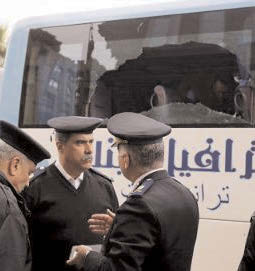
CAIRO (TIP): Motorcycle-borne masked gunmen opened fire on a tourist bus of Arab-Israeli citizens and a hotel close to the Giza pyramids in Egypt during a rally of Muslim Brotherhood supporters today, but the tourists escaped unhurt.
The attackers, apparantely part of a group of around 15 Brotherhood supporters, used birdshot and targeted the tourists while they entered the hotel on Al-Haram Street, the official said.
No casualties have been reported, however. But the attack caused some damages to the bus and the hotel gate and facade.
A suspect was arrested and police were searching for the rest of the group, the Interior Ministry said in a statement.
The passengers on the bus were Arab-Israeli citizens, Al-ahram reported, citing a statement by Israeli government.
The attack on the tourists came on a day when Egypt’s Coptic Orthodox Christians were celebrating Christmas in the predominantly Muslim country.
Egypt’s security forces have been battling insurgency in North Sinai, which has witnessed many violent attacks by militants since the January 2011 revolution that toppled president Hosni Mubarak.
The attacks targeting police and military increased after the ouster of Islamist president Mohamed Morsi in 2013 by military following massive protests against his rule. More than 600 security personnel have been reported killed since then.
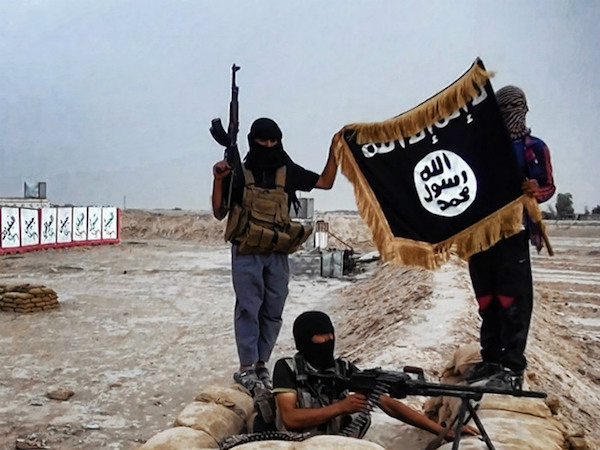
Some extremists in the restive Sinai peninsula have pledged allegiance to the Islamic State terrorist group. They have also claimed the downing of a Russian jet that killed 224 people there last year.
Al-Haram Street in Giza, close to the Pyramids, regularly witnesses pro-Morsi rallies and protests.
NAIROBI: At least 140 people have been killed in Ethiopia over the past two months in a crackdown on anti-government protests sparked by plans to expand the capital into farmland, Human Rights Watch said.
“Security forces have killed at least 140 protesters and injured many more, according to activists, in what may be the biggest crisis to hit Ethiopia since the 2005 election violence,” HRW’s Felix Horne said.
The number reported by HRW is almost double the previous toll of 75 the group gave last month.
There was no immediate response from the Ethiopian government, which has previously put the death toll at five.
The protests began in November when students opposed government proposals to take over territory in several towns in the Oromia region, sparking fears that Addis Ababa was looking to grab land traditionally occupied by the Oromo people, the country’s largest ethnic group.
“Over the past eight weeks, Ethiopia’s largest region, Oromia, has been hit by a wave of mass protests over the expansion of the municipal boundary of the capital, Addis Ababa,” Horne said.
“The generally peaceful protests were sparked by fears the expansion will displace ethnic Oromo farmers from their land, the latest in a long list of Oromo grievances against the government.”
On December 23, police arrested Bekele Gerba, 54, deputy chairman of the Oromo Federalist Congress (OFC), Oromia’s largest legally registered political party. Bekele was previously convicted in 2011 of being a member of the banned Oromo Liberation Front (OLF), spending four years in jail.
“By treating both opposition politicians and peaceful protesters with an iron fist, the government is closing off ways for Ethiopians to nonviolently express legitimate grievances,” Horne said.
“This is a dangerous trajectory that could put Ethiopia’s long-term stability at risk,” he warned.
With at least 27 million people, Oromia is the most populous of the country’s federal states and has its own language, Oromo, distinct from Ethiopia’s official Amharic language.
HRW has said the protests — and bloody crackdown — echoed protests in April and May 2014 when police were accused of opening fire and killing “dozens” of protestors. The government said eight people died in the 2014 unrest.
DUBAI (TIP): Iran’s state-run news agency IRNA says a Saudi-led air strike last night hit the Iranian embassy in Yemen.
No Associated Press journalist in Yemen could immediately reach the embassy in the war-torn capital Sanaa on Thursday after the IRNA report. Saudi officials could not be immediately reached for comment.
The Yemeni capital is held by Shia rebels known as Houthis. They are targeted by an ongoing Saudi-led military campaign on behalf of Yemen’s internationally recognized government. Iran has offered support to the Houthis, but denies actively supporting their war effort.
Saudi Arabia severed ties with Iran on Sunday after crowds of protesters attacked two of its diplomatic posts in Iran. Those attacks came after Saudi Arabia executed a prominent opposition Shia cleric Nimr al-Nimr over the weekend.
Iran has banned the import of goods from Saudi Arabia after the kingdom cut diplomatic ties over attacks on the Saudi embassy following the execution of al-Nimr. Iranian state television made the announcement on Thursday. It said the decision came during an emergency meeting of the cabinet of President Hassan Rouhani. (AP)
BEIJNG (TIP): Chinese expert has blamed the India-US nuclear deal for weakening the non-proliferation treaty and making it difficult to enforce non-proliferation regime on North Korea. “China is very keen to ensure non-proliferation in North Korea. But the US has made this difficult by signing a nuclear deal with India after it tested the bomb,” Peking University associate professor Wang Dong told state broadcaster CCTV while referring to North Korea’s testing of hydrogen bomb.
China is the biggest supplier of goods to North Korea, but is reluctant to impose sanctions on the country despite several western countries being interested in such a move.
“Chinese authorities feel the US might get an upper hand in the region if economic sanctions are imposed, and it leads to the fall of North Korea’s ruling family,” said CCTV journalist Yang Rui.
ISTANBUL (TIP): Islamic State (IS) jihadis hijacked the Facebook account of a captured female activist in Raqqa in a bid to lure other opponents into a trap, according to a member of Syria’s most prominent anti-IS resistance group.
It has emerged that Ruqia Hassan Mohammed, a vocal IS opponent with a dry sense of humour, was killed by the jihadis three months ago in punishment for her outspoken social media posts. But they continued to operate her social media accounts until very recently.
She is thought to have been detained in Raqqa, IS’s de facto capital, in July and killed some time in September. A citizen journalist from the group Raqqa is Being Silently Slaughtered, which works to document and publicise life under IS, said that, since then, IS has accessed her social media profile and used it in an attempt to flush out other critics.
“Her Facebook account remained open in order to entrap friends who communicated with her,” said the activist, who uses the pseudonym Tim Ramadan to hide his real identity.
He said that, about a week ago, IS was still using her account to send messages to other users claiming that she was alive. The claim was echoed by the Arabic language site al-Aan. (AP)
NEW YORK (TIP): North Korea’s nuclear program has been a source of great concern for the international community for more than 20 years.
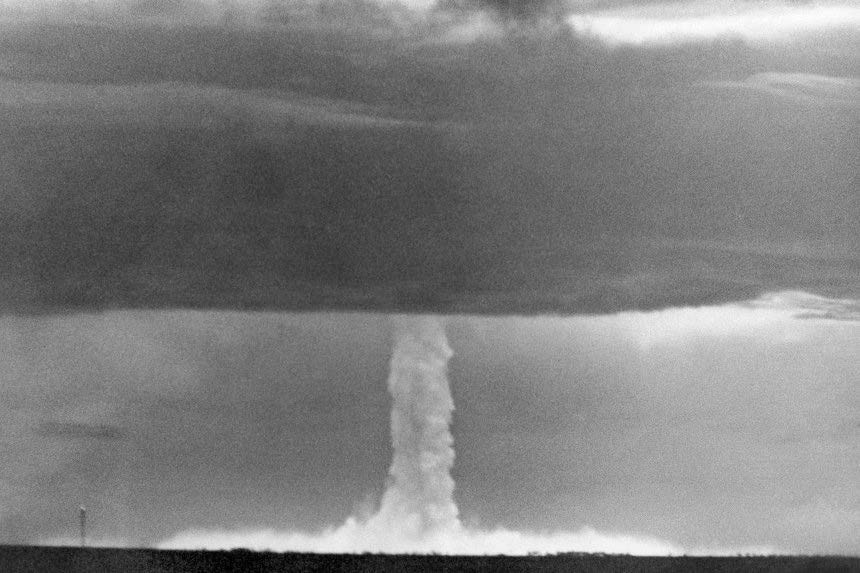
The latest test, announced on 6 January 2016, was described by North Korean media as a miniaturized hydrogen bomb test. There has been no independent confirmation of this, but it is the first claim of a hydrogen bomb, known to be immensely powerful.
The previous test was conducted in February 2013 and came with the state’s first claim to have miniaturized a device, although an atomic device in that instance.
All of the tests appear to have originated at a test site called Punggye-ri, also known as P’unggye-yok, in a remote area in the east of the country, near the town of Kilju.
Multiple rounds of international negotiations amid a strict sanctions regime – a process, which has been described as a game of cat and mouse – appear to have done little to curb North Korea’s nuclear ambitions.
Little data has been collected so far from this test, but the experts are skeptical about this claim.
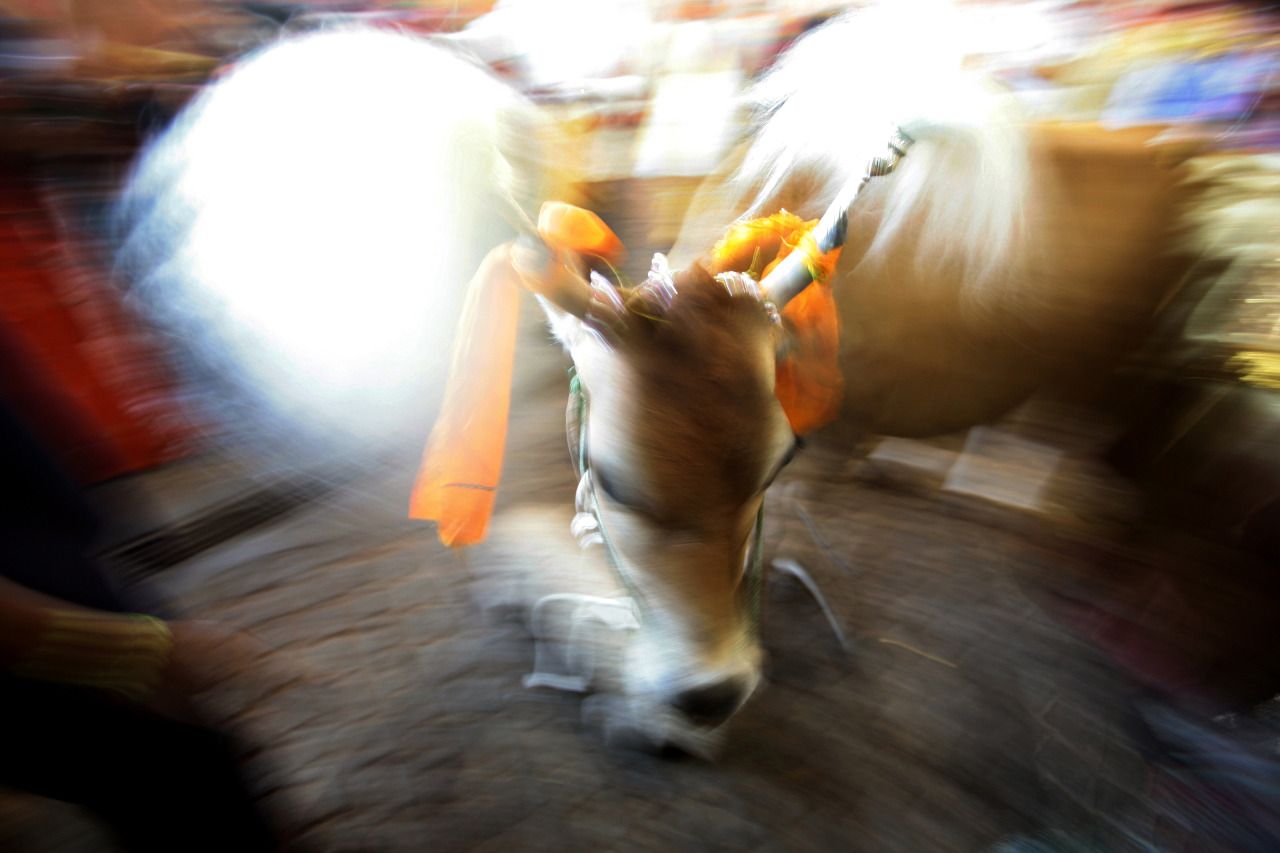
Yahoo recently said that ‘cow’ pipped all other contenders in 2015 to emerge as the personality of the year in India.
“In an unexpected twist, the humble ‘cow’ emerged as ‘Personality of the Year’, trumping other high-profile contenders for the top spot,” Yahoo said in a statement on its “Year in Review” for India which captures the year’s top trends, happenings and events.
“It started with the Maharashtra government announcing a ban on sale of beef in the state — a move which led to massive debates online and offline, spiraling into the ‘beef controversy’,” it said.
The Dadri mob lynching, award wapsi –eminent writers returning national awards –and numerous discussions centered on ‘intolerance’ further propelled the bovine to claim the overall top spot, the statement said.
When the idea of crowning the cow as the ‘Personality of the Year’ was first proposed, it met with equal parts scorn and mockery, condescension and astonishment, excitement and amusement.
After all, traditional wisdom mandates that lofty-sounding appellations be the exclusive preserve of humankind and not be conferred upon bovine stock.
Yet, prudence demands that the title belong to the one ‘being’ that had the most significant impact on a variety of matters, dominated national debate, pervaded general consciousness, evoked passion, initiated protests, stalled work, and set the social media afire, among other things.
The list of the prime contenders for the title had political bigwigs, matinee idols, sports icons…
Some of the distinguished names that were considered included Prime Minister Narendra Modi, Delhi Chief Minister Arvind Kejriwal, Bihar Chief Minister Nitish Kumar, actors Deepika Padukone, Salman Khan, Aamir Khan and Shah Rukh Khan, cricketers M S Dhoni and Virat Kohli, social workers, human-, women- and child-rights activists, litterateurs….
But, finally pragmatism beat custom and the docile cow pipped big guns to the post.
Had the dove not been recognized as the universal symbol of peace, the cow would most certainly have donned that mantle. Yet, this gentlest of creatures was at the center of a violent, political, social and legal firestorm throughout 2015.
The humble herbivore was wrenched away from its pastoral idyll and then savagely flung it into a bloody battlefield. This brought legislation to a standstill, impeded the growth of pace of a nation desperately in need of sustained and uninterrupted development, polarized the society and the social media into two distinctly combative factions, dominated television debates and newspaper columns, sparked off violent acts of crime across the country, united a disruptive opposition, exposed an unyielding government, and disturbed the nation’s peace as the minority community expressed fear and concern over what was termed as rising intolerance.
It all started with a ban on beef. The anti-cow slaughter movement had begun to intensify and spiral out of control. While cow-slaughter is banned in most parts of India, some states insisted on strict implementation of the ban and also imposed 10-year jail for those who are found guilty of slaughtering a cow, a bull or an ox, or caught eating or carrying beef.
Many Hindus have considered the humble cow a sacred animal. The cow enjoys an exalted status in society: it is worshipped, is seen as a mother who provides for the family it resides with, is thought to be divine. All this, ostensibly, for economic and social reasons. Its protection thus is a matter of ‘honor’ for many Hindus.
Beef ban gave rise to vigilantism and pro-beef protests that began to spread across the nation. Soon cow protection groups sprang up – many of them allegedly spreading rumors against those who partake of beef -to save ‘mother cow’. This met with an equally potent and, at times, violent response.
There are doubts if the nation’s beef with beef is more an economic, cultural, legal and social argument or purely a religious dispute. Is it the way for the majority to assert itself over the beef-eating minorities? Or is it just a matter of respecting or insulting the sentiments of a large section of society?
The cow can barely answer that. From a simple bovine it has been metamorphosed into a hardcore political symbol, a polarizing beast: a sort of a representation of the might of the majority leading to political slugfests, legal wrangles, social unrest, economic intimidation and ‘intolerance’ perceived by both sides of the divide.
As was wont to happen, soon, in a horrific incident, a 50-year-old man in Dadri in Uttar Pradesh was lynched by a mob over rumors that he and his family were eating and storing beef at home. He was murdered and his son beaten to within an inch of his life over lies spread by goons.
This sparked off national outrage, uniting the opposition parties against the ruling central government and igniting passionate debates, many of which were understandably political in nature.
Close on the heels of Dadri, right wing activists roughed up an independent legislator in Kashmir for hosting a beef party. In Delhi, a posse of cops raided Kerala House over the allegation that beef was being served there. It later transpired that the canteen there only offered buffalo meat and not beef. In India, the buffalo does not enjoy the illustrious standing that the cow revels in.
In Himachal Pradesh, a young many was killed under the suspicion of smuggling cows for slaughter. Yet another man was butchered in Karnataka for opposing illegal abattoirs.
With political opponents baying for his blood, the prime minister decided to take the bull by the horns and broke his silence over the issue. But that did not yield desired results.
By this time, the problem had snowballed into an unmanageable controversy. Dozens of literary figures jumped in to the fray and began to return their prestigious awards, protesting against intolerance. Scientists and other intellectuals followed suit.
Film personalities too joined the bandwagon, creating an unprecedented schism in Bollywood and adding to the shrillness of the arguments.
While decibel levels of television debates acquired unbearable proportions and political name-calling became de rigueur, social media platforms exploded into an all-out war with pro- and anti-beef groups trading nauseating invectives and shocking threats.
Opinion was sharply divided: those against the protests asserted that the demonstrations were all related to the then impending Bihar elections; those protesting feared that the secular fabric of India was being ripped apart.
A defensive government had offered opposition parties an issue to disrupt parliamentary proceedings with incessantly bringing all legislation, reform and progress to a halt. Not a single day’s of business was allowed inside Parliament as lawmakers continued to pillory a beleaguered government.
Meanwhile, all through the raging storm the ruminating cow continued to stand by with the stoicism that is a bovine hallmark.
Whether it is the last we have heard on this is moot and can be debated till the cows come home, but that the quadruped had a huge, perhaps the biggest, impact on India in 2015 cannot be denied.
There were the six children, their mother and her boyfriend in Houston, Texas. The nine worshippers in a church in Charleston, South Carolina. The 53-year-old father who tried to stop three men ransacking a metalworker’s minivan in Brooklyn. The 28-year-old mother of two in Indianapolis whose new husband shot her in the face 13 times. The two young reporters shot to death during a live news broadcast in Moneta, Virginia. And the thousands just like them whose deaths did not make the front page.
While many victims’ names may quickly disappear from the public eye, their stories live on in the statistics that help us to understand the scale of gun violence in the United States. Below is a compilation of numbers that added up to a significant year in gun debate in 2015.
According to the Gun Violence Archive (GVA), a nonprofit website that scours more than 1,200 sources to track gun deaths and injuries in the United States, there have been more than 50,000 incidents of gun violence in 2015.
The numbers include everything from homicides and multiple-victim gang assaults to incidents of self-defense and accidental shootings. The organization’s records show that more than 12,000 people have been killed with guns this year, but what its numbers do not record – due to government reporting practices – is a massive hole in the data: the nearly 20,000 Americans who end their lives with a gun each year. Nor does its already high injury tally capture the full extent of the victims who continue life with debilitating wounds and crushing medical bills. When the federal statistics for 2015 are released two years from now, the government’s models will show tens of thousands more gun-related injuries.
Major Incidents / Shootings (order by severity)
San Bernardino
Roseburg, Oregon
Charleston, South Carolina
Chattanooga, Tennessee.
Colorado Springs, Colorado
Garland, Texas
Gun Violence in America: By the Numbers
MORE THAN 4 MILLION: Number of American victims of assaults, robberies, and other crimes involving a gun in the last decade
MORE THAN 30,000: Number of gun deaths in America each year
MORE THAN 20,000: Number of children under 18 killed by firearms over the last decade
MORE THAN 20,000: Number of Americans who commit suicide with a firearm each year
466: Number of law enforcement officers shot and killed by felons over the last decade
As of December 23, a total of 12,942 people had been killed in the United States in 2015 in a gun homicide, unintentional shooting, or murder / suicide.
Terrorism dominates headlines and budget lines while a more lethal scourge persists at home.
In his remarks following the mass shooting at Umpqua Community College on October 1, President Obama said he knew his outrage over the country’s unrelenting gun violence would be interpreted by critics as “politicizing” the issue. Fine, he said, and asked news organizations to check the facts: “Tally up the number of Americans who’ve been killed through terrorist attacks over the last decade and the number of Americans who’ve been killed by gun violence, and post those side-by-side.” Several did, and Obama’s point was made: Amid the government’s massive, justifiable effort to squelch terror threats, comparatively little has been done to address a problem that has claimed exponentially more U.S. lives. According to an October poll, 40 percent of Americans say they know someone who was fatally shot or committed suicide with a gun.
Mass shootings – as measured by four or more people shot, regardless of total fatalities – have taken place in nearly 100 metro areas over the past 12 months.
According to the Mass Shooting Tracker, a crowdsourced database of shootings in which four or more people are injured or killed, all but one major American city has had a mass shooting since 2013, with Austin, Texas as the lone exception. This year alone, nearly 100 metro areas have experienced mass shootings. The Tracker counts domestic homicides in its tally, as well as sprays of gunfire that wound several people at once – but often aren’t counted among the San Bernardinos or Umpquas because the victims survived. Two such incidents year-old Adam Lanza fatally shot 20 children and 6 adult staff members occurred on Father’s Day this year, when 10 people were shot at a block party in West Philadelphia, Pennsylvania, and 12 people were shot at a child’s birthday party in Detroit, Michigan.
“This is not the time to be fearful,” said Detroit Police Chief James Craig. “These are urban terrorists who do nothing positive for our neighborhoods.”
School kids who fell victim to shootings at Sandy HookElementary School in Newton, Connecticut on December 14, 2012 when 20-children & 6 adults were shot
The vast majority of the nation’s gun violence does not look like Umpqua or Charleston or San Bernardino.
Though mass shootings demand nonstop coverage, it’s the shootings taking place in parking lots, bars, schools, bedrooms, and street corners across America that are responsible for most gun injuries and deaths.
Black men are disproportionately affected by gun violence.
A November ProPublica article noted that half of American gun death victims are men of color in “poor, segregated neighborhoods that have little political clout.” Timothy Heaphy, a former U.S. attorney in Virginia, says this is precisely why they don’t capture the public’s attention. “I don’t think we care about African-American lives as much as we care about white lives,” he said.
At a rate of more than twice a day, someone under 18 has been shot and killed.
A remarkable 75 percent of children killed with guns this year have been under the age of 12. Since the mass shooting at Sandy Hook Elementary in Newtown, Connecticut, three years ago, an American child under 12 has died by intentional and accidental gunfire every other day, according to analysis by NBC News. And those children are far more likely to die from guns held by family members and acquaintances than strangers, according to an NBC News analysis of FBI data.
On August 18, 9-year-old Jamyla Bolden was killed by a bullet fired into her Ferguson, Missouri, home as she did her homework on her bed. “Usually when we hear the gunshots, she’s the first one who yells ‘Mom, they’re shooting!’” her mother told KMOV.com, a local news station. “I noticed Jamyla wasn’t saying anything. That’s the main thing I remember: her not moving.”
Unsecured guns have turned dozens of toddlers into killers – and many more into victims.
Kids younger than three have gotten ahold of guns and shot someone at least 59 times this year, a disturbing trend first reported by Christopher Ingraham at the Washington Post in October. Most often, these toddlers injure or kill themselves, but more than a dozen have shot other people, sometimes fatally. Gun violence prevention advocates say that gun storage requirements and the adoption of smart guns that only fire for their owners could reduce these deaths, but the gun lobby vehemently opposes such mandates. In November, after the Post’s report, 20 Democrats in the U.S. Senate asked the Government Accountability Office to issue a report on the safe storage of guns in American homes.
Guns are now ending as many American lives as cars.
The comparative mortality rates – also first flagged by the Post’s Christopher Ingraham – come from CDC figures released earlier this month. They reflect a larger story: While motor vehicles have been getting progressively safer, guns have killed people at a consistent clip over the past 15 years. Unpacking the numbers further reveals that firearm fatalities are holding steady while suicides by firearm have climbed along with the number of guns in circulation. Some theorize that medical advances are saving shooting victims who formerly would have died of their injuries.
A gun in a troubled home continues to raise the risk of death
This enduring statistic from a decade-old California Attorney General report emphasizes just how dangerous it is to introduce firearms into a turbulent relationship. In no state is that more pronounced than in South Carolina, which ranks first in the rate of women killed by men – a rate that is more than twice the national average. After several frustrated starts, South Carolina finally passed legislation this year limiting firearms access for domestic abusers -along with Alabama, Delaware, Maine, Oregon, and Vermont. But 17 states still do not have their own equivalent of a federal law banning criminal domestic misdemeanants from possessing guns, according to the Law Center to Prevent Gun Violence.
In one of those states, Georgia, Vanessa Soyer was gunned down in front of her 13-year-old son in their Lawrenceville apartment on November 16. A mother of four, the Harlem-bred Soyer, 47, authored a book about domestic violence. Her husband of 15 years, from whom she was in the process of separating, was arrested for the murder. “Nobody would’ve ever thought that the words from the pages of her books would become her reality,” her GoFundMe page reads.
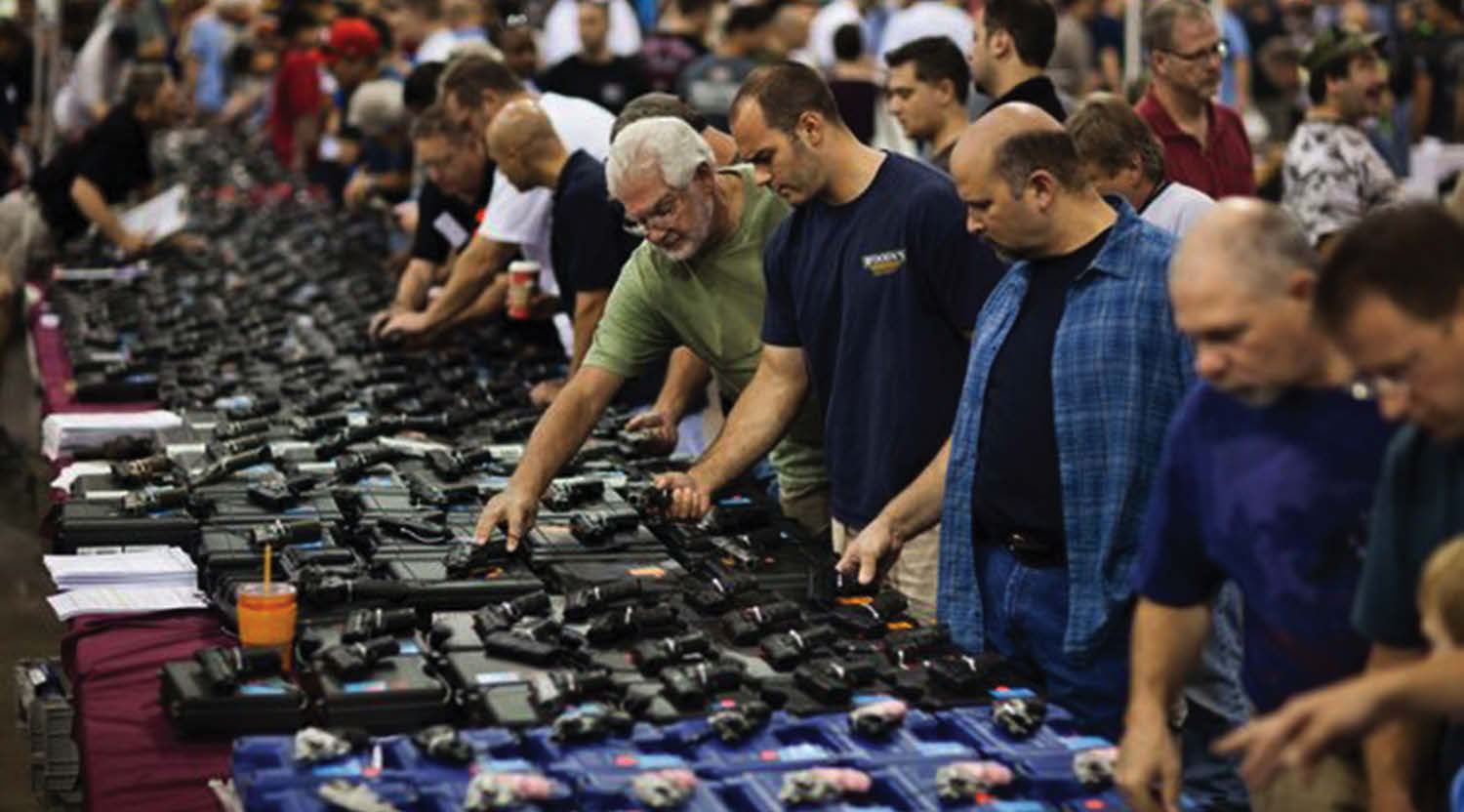
Gun sales in 2015 continued at a blistering pace.
The same day Robert Lewis Dear opened fire at a Planned Parenthood in Colorado Springs, Colorado, killing three and wounding nine, the FBI reported five percent more NICS checks than Black Friday last year, setting an all-time single-day record. If each of those checks resulted in a gun sale, it would means Americans bought enough new firearms to arm every active duty Marine.
8 % of gun owners own a stockpile of 10 or more weapons.
In an online survey of 3,000 people, Harvard’s Injury Control Research Center found that 22 percent of Americans professed to own guns – and 25 percent of those gun owners own five or more guns. The Center’s director, Dr. David Hemenway, told The Trace in October that guns in fewer hands might actually lower rates of gun suicide and accidental shootings. But the fact that these gun owners feel they must compile an arsenal raises another set of questions. “Who are these people and why do they have so, so many guns?” Hemenway asked. “And are they really responsible?”
Tens of thousands more stolen guns entered the illegal market – many a result of theft.
The advisories echoed from sheriffs in Jacksonville, Florida; St. Louis, Missouri; and Lafayette, Louisiana: Lock up your guns. More than 400 firearms were stolen from cars in Duval County, Florida, this year – and 60 percent of those were from unlocked cars. In St. Louis, reports of gun theft were up 70 percent in August, and cars and trucks were targeted far more than homes. A gun stolen out of a car in Lafayette was used to wound a police officer last year, and in Pinellas County, Florida, a gun stolen from an unlocked car was used to kill another officer. Stolen guns, which are increasingly showing up at crime scenes, were called “the engine of violence in Chicago” by police spokesman Anthony Guglielmi in August.
The increase in such thefts has sparked a debate about personal responsibility and gun ownership. The town of Orange, Connecticut, went so far as to charge a resident with misdemeanor reckless endangerment after he reported his loaded .38-caliber revolver stolen from his unlocked truck. Pro-gun advocates argue that stadiums and schools should be removed from gun-free zone designations, so people can carry their guns with them instead of leaving them in their cars. The bottom line, Jacksonville Sheriff Mike Williams said in November, is “be a responsible gun owner, take care of your weapon, lock it up.”
American cities continue to seize illegal guns at an astounding rate.
The Chicago Police Department announced earlier this month that it confiscated 6,521 illegal guns in 2015, which it said works out to one gun every 90 minutes. But Newsweek analyzed the department’s own figures and concluded that it’s been more successful than advertised. “With 335 days so far this year and 6,521 guns removed, that is about 19 guns a day, or about one every 74 minutes,” Polly Mosendz wrote. (In July, Adam Sege conducted a similar audit for The Trace, and determined Chicago Police were removing a gun off the streets every 75 minutes.)
Officers in Little Rock, Arkansas, took 118 guns off the street as of November 2015. Baltimore, Maryland, police estimate that they’ve seized nearly 3,500 illegal guns in the last 12 months.
Tyshawn Lee was the second 9-year-old boy murdered in Chicago in the last 15 months.
The gunshot wounds to his temples had to be sealed with wax. He wore a white tuxedo, red bow tie, white gloves, and red, size 5 gator-skin shoes, and his 25-year-old mother wore a white dress and a red hat to match. Tyshawn Lee was the second 9-year-old boy to be targeted and killed by gangs within the last 15 months in Chicago, and he was lured from a swing set in the Auburn Gresham neighborhood and murdered in an alley because his father allegedly belonged to a gang that may have been involved in the murder of the brother of one of the suspects. Peter Nickeas, the overnight crime reporter at the Chicago Tribune, detailed the days after the boy’s death – during which a battle-hardened city found it still had the capacity for shock.
The 114th Congress is still hesitant to engage with the gun issue.
At a hearing on the third anniversary of the Sandy Hook shooting, California Representative Mike Thompson, chairman of the House Gun Violence Prevention Task Force, noted that Congress has held more than two dozen moments of silence since the massacre – but has not approved any gun safety bills. In March, Thompson, a Democrat, and Representative Peter King of New York, a Republican, introduced a bipartisan bill that would implement background checks on private gun sales. Since then it’s been bouncing from one House subcommittee to another.
This was also the year that saw a backlash against politicians who offer “thought and prayers” after mass shootings but no legislative action. Left-leaning reporters noticed that the same lawmakers who only offered empty platitudes were highly rated by the NRA. On the evening of the San Bernardino shooting, Igor Volsky, a contributing editor at ThinkProgress, began Twitter-shaming them. One by one, he replied to three dozen Republican legislators’ “thoughts and prayers” tweets with the amount they’d been given by the NRA – a total of $12.5 million.
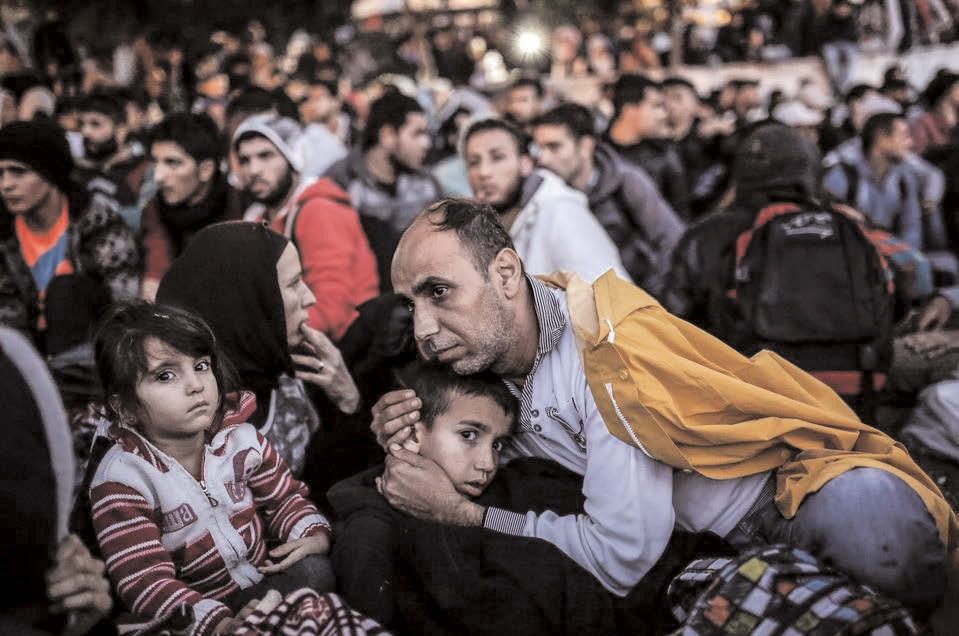
As the battles raged in Syria and Iraq, millions of innocent civilians have sought refuge elsewhere to escape the dire straits in their home countries. Their prime destination: Europe. They came via planes, trains, ships, boats, cars, and for many, on foot: hundreds of thousands of displaced people fleeing a war no one asked for, leaving behind everything – their careers, property, families, their lives.
Most of the world, at first, did not seem to notice the crisis. Not until the photo of a boy in a red shirt, lying lifeless, face down on the sands of a Turkish beach, came up in newspapers, websites, and social media.
Three-year-old Syrian refugee Aylan Kurdi’s death shocked the world into consciousness, and spurred western governments to act on the worsening humanitarian crisis.
By the end of 2015, more than one million migrants and refugees reached the continent, nearly 970,000 of which made the journey crossing the waters of the Mediterranean. It wasn’t only Syrians and Iraqis fleeing the mess in their home countries; there were also thousands escaping poverty and persecution, mainly from other Mideast and African states.
Europe and other western countries scrambled to address the exodus, as the crisis became another test for the EU. Following a slew of emergency summits this year, EU leaders have acknowledged they were too slow to carry out a joint strategy to tackle Europe’s worst refugee crisis since World War II. Other countries have also stepped up, like Canada, which has already welcomed its first batch of Syrian refugees.
Asia, in particular Southeast Asia, also had its own refugee crisis. Impoverished, persecuted, and with nowhere to go, Rohingya took to rickety boats in their bid to escape the quagmire they were in. The crisis came to a head around May, when thousands of these refugees, mainly from Myanmar’s Rakhine state, were left abandoned at sea, setting off a regional crisis. Horror stories of kidnap, coercion, and hunger emerged from the hundreds who staggered ashore or were eventually rescued by Thai, Indonesian, and Malaysian authorities after weeks at sea.
Refugee exodus is seen as logical outcome of Syrian president’s survival strategy.
The crisis has ebbed somehow in the past few months, thanks to some action of regional governments involved, as well as due to the monsoon season. But with the monsoon ending, the crisis might again surge forward into the headlines – and a solution still seems far away.
Tensions defused? The Iran nuclear deal
The odds were stacked against it, but on July 14, weary foreign ministers from the US, Britain, France, China, Russia, Germany, the EU, and Iran announced to the world that a deal to curb Iran’s nuclear ambitions had been forged. It was a diplomatic victory for the parties involved, especially for Iran, which has been trying to shake off its long-time image as a pariah state.
The ministers of foreign affairs of France, Germany, the European Union, Iran, the United Kingdom and the United States as well as Chinese and Russian diplomats announcing the framework for a Comprehensive agreement on the Iranian nuclear programme (Lausanne, 2 April 2015).
Under the deal, Iran pledged to slash the number of centrifuges – which enrich uranium – from around 19,000 to 6,104, of which 5,060 will still enrich. It also has to change the design of a new nuclear reactor being built and shrink its stock of low-enriched uranium, shipping it to Russia. In return, outside powers will end some of the international sanctions that have severely squeezed the Iranian economy.
The road to the deal, however, wasn’t an easy one. For years, Iran has maintained that its nuclear program was for peaceful, civilian purposes, but a weary West always eyed it with suspicion. In the past few years, the two sides have see-sawed between coming close to a deal and coming close to conflict. The relative success of the deal was a result of months of non-stop negotiations, as well as the presence of a more moderate government in Tehran, led by President Hassan Rouhani.
The question now: Will both sides honor the deal?
Greek tragedyA country teetering on the brink of bankruptcy due to years of financial mismanagement. A hardline, leftist government. An economic bloc avoiding a region-wide collapse. These were the elements of a Greek tragedy that unfolded throughout the better part of 2015, as Greece and the European Union negotiated to save the Balkan nation from crashing out of the eurozone.
Fed up with the hated “troika” – the European Commission, European Central Bank, and the International Monetary Fund -Greeks in January voted into power their first leftist government, led by Alexis Tsipras’ SYRIZA party. Tsipras came into power with the promise to lead the country out of the debt crisis. However, after months of intense, pressure-filled negotiations and despite voters saying “no” to a new deal, Greece caved in to its creditors’ demands and signed its latest bailout deal. The deal, worth 86 billion euros ($93 billion) to be spread out over a 3-year period, ultimately saved the country from crashing out of the eurozone, but it came with strict conditions.
The fallout: Tsipras resigned August 20 after accepting the deal, reneging on a promise to stand its ground against the country’s creditors. A snap poll in September, however, saw Tsipras and his SYRIZA party hold on to power. Adding to Greece’s economic woes is the refugee crisis, with the country acting as migrants’ main gateway to the EU, straining the already burdened nation.
Russia and China: Show of force
From ISIS to Iran, Russia – long overshadowed by richer and more influential countries in the West – continued to assert itself as it seeks to revive its power and influence. From Ukraine to Syria, it has made its presence felt, mostly through its military. It has been steadily fortifying its army, building and expanding bases in the Arctic, growing its defense budget, and taunting its neighbors with its planes, submarines, and ships with clandestine – and in one case, deadly – side trips outside its territory.
China: Show of force.
Russia has also been making inroads on the political front, participating in some of the year’s major diplomatic issues, such as the Iran nuclear deal. But the centerpiece in the past 12 months has been Syria, as President Vladimir Putin’s government seeks to keep and gain more influence in the Middle East.
Meanwhile, China has also made aggressive moves economically, diplomatically, and militarily. As other world powers became stuck in other issues, bogged down by economic and political matters, the Middle Kingdom continued to expand its reach, primarily through billions of dollars in economic aid and infrastructure projects.
Despite winning a lot of new friends, China has one major thorn on its side: its long-simmering maritime and territorial disputes with its Asian neighbors. The East and South China Seas have become sensitive spots in the region – particularly the Spratlys, where Beijing has been building artificial islands in its attempt to bolster its claims in the area. The waters are now being tested by militaries from other countries, including the US and Australia, with an increasing number of confrontations near the disputed “islands.” China also lost in round one of an arbitration case lodged by the Philippines at the global maritime tribunal.
This is not a post for the weak hearted and Adarsh Liberals so do not go any further if you are out of your comfort zone. It really pains a soldier’s heart if the blood of his brethren is not adequate to galvanize a nation.
This nation is so ungrateful, the intelligentsia so spineless and intellectual class so bigoted that they will get mobilized by tragedies of Peshawar, Gaza or France. However, they are immune to our own suffering. Why? I will tell you why, because it is fashionable to get associated with a global cause, it makes you look cool, it is easier to talk about it sipping single malt in a comfortable South Delhi mansion.
I do not condone any of the terror attacks happened anywhere in the world, not even in Pakistan. However, I shall be candid : a terror attack in Peshawar wherein brethren of one enemy is killed by another has very limited relevance for me. I am aware I would be lynched for this statement but I would hold my ground.
Ask anyone who has lifted the coffin of his brother, his comrade, how heavy is the load?It has the dreams of a young wife, it has the future of his children and hopes of his parents. My dear countrymen, it is far heavier than any coffin.
Few of you will also chide me by saying that soldiers are paid to die. No sir, you are entirely incorrect. Soldiers are paid to protect the integrity of the nation. If you want canon fodder, hire mercenaries. This soldier is even denied a decent last journey, his bullet riddled remains are kept in a dilapidated parking yard in Delhi Airport as the ‘designated place’ does not have the security clearance! The same place is opened every Thursday for devotees as there is a Peer Baba located there. Thank the Lord for small mercies that his comrades in OG, will go out of their way to give him a befitting final journey.
His kids and wife are then part of an archaic system where pay stops the next day and pension starts in minimum 4-5 months albeit with arrears. Somebody ask these intellectuals do they even bother to think about a household where there will be no salary for five months but the stomach won’t stop growling, the school fee won’t stop and the electricity bill is still required to be paid.
The average youth of the nation also disappoints here, he is more bothered about mounting losses on Nestle and the two minute gruel. No candlelight march for his soldier, no white cap for his protector. Somehow, misery of Gaza always outshines misery of his own country.
Coming to polity and bureaucracy, the less said the better. If initial reports are to be believed, they are contemplating de-induction of armed forces from the areas where the encounter took place. As a result, the brothers of the slain will be denied even a chance to seek retribution.
Last but certainly not the least, the most disappointing facet, the harbinger of moral compass, the fourth estate, the Media. Death of a soldier doesn’t sell, period. So why even bother.
A soldier is aware of the dangers involved in the life he has chosen. He also understands that every other profession is as important and everybody can not fight.
Just give him dignity when he is alive and mourn for him when he fades away. That’s it, nothing more, nothing less.
I would end this note with an anecdote : Late Lieut Saurabh Kalia who was one of the earliest casualties of the Kargil War did not die of a gun shot wound. When his body was returned by Pakistan, his eyes had been gouged out, his ears and nose had been chopped, his entire body had cigarette and electric current burn marks, and his private parts had been cut and stuffed in his mouth and his mouth was sewn up. He was alive during the entire ordeal.
Try selling the idea of ‘Aman ki Asha’ to his parents who were not allowed to see their son for one last time, try selling it to his comrades who indeed saw the body.
Reconciliation comes easy in a comfortable home, not in an unforgiving bunker.”
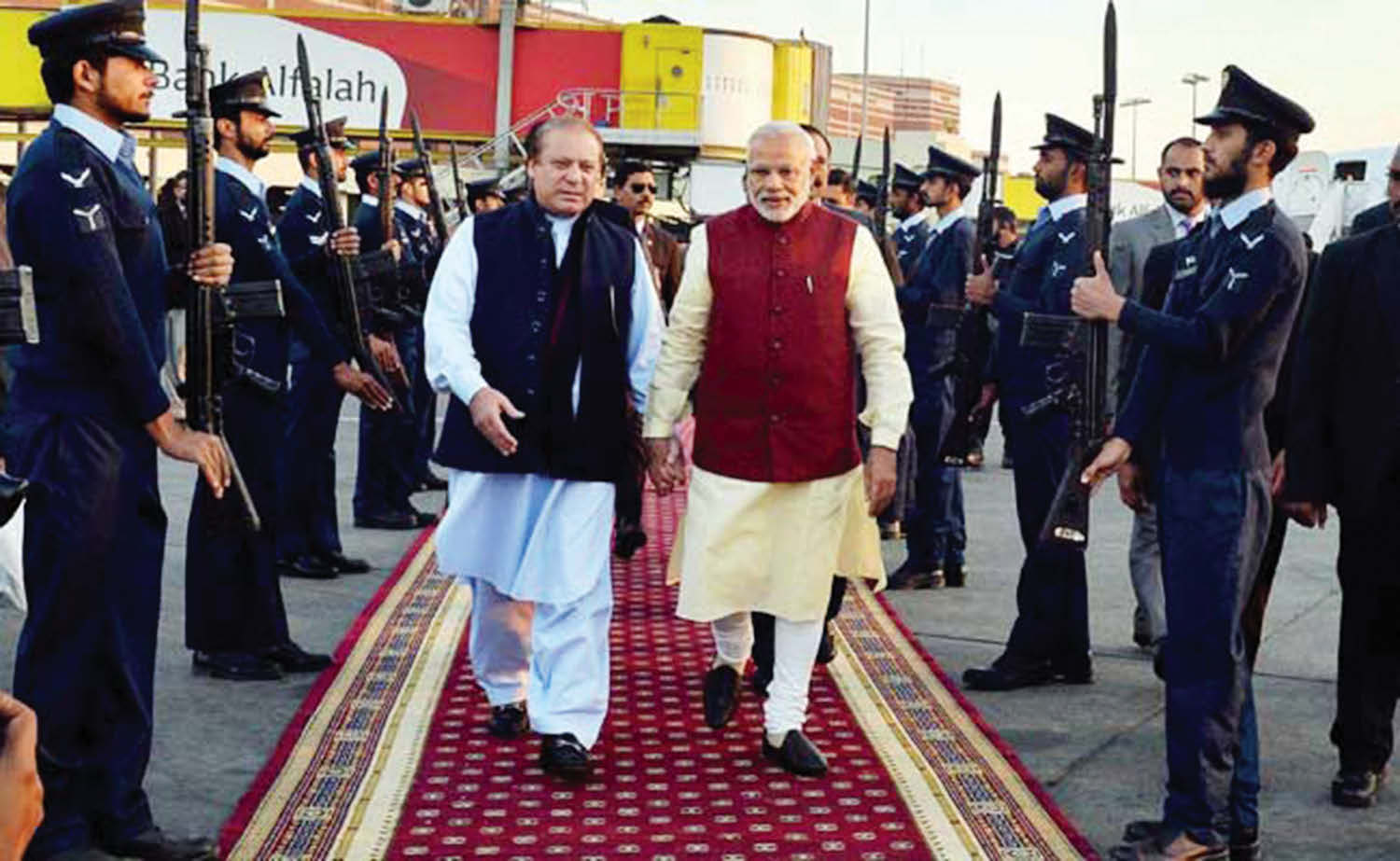
The carefully prepared “surprise visit” of Prime Minister Modi on Christmas day 2015 to Lahore created a media-managed near sense of euphoria in the strategic community in Delhi, and also perhaps in Islamabad. The PM was given high marks, and deservedly so, for his out-of-the-box thinking and courage in undertaking the visit since he knew that not all even in his own party would have welcomed it. He did what Dr Manmohan Singh would have wished to do. He gave to Pakistan even more than what they desired -comprehensive dialogue which suggests a wider scope than composite dialogue.
Foreign Secretary-level talks were announced for January 15, to be held in Islamabad and not in Delhi, thus cleverly avoiding the delicate and difficult question of meeting Hurriyat members. In the wake of the attack on the Pathankot air base, the question is whether to talk or not to talk with Pakistan. The answer is simple. We have no option but to talk for the following reasons.
It has become a part of the accepted and unquestioned narrative at least in India that after every forward movement in India-Pakistan relations, those opposed to such improvement will invariably indulge in a terrorist act to sabotage it. As has been said, this attack was written into the script after Lahore. A little reflection would suggest that the two events are not necessarily linked. An operation like the one in Pathankot could not have been staged at three to four days notice. All experts are agreed that it would have entailed detailed preparations, requiring a much longer time. It would have been impossible for any group to mount such a complex operation in such a quick time after December 25.
The accepted narrative also suggests that if PM had not gone to Lahore, the attack would not have taken place. This is very difficult to swallow. The thorough planning that obviously went into preparing the attack would not have been allowed to go waste simply because the Prime Minister had gone to Lahore.
Furthermore, why would the jihadis worry about a resumption of dialogue?Hundreds of rounds of dialogue have taken place over the decades and the problems have remained. Even the CBMs have not been implemented in full or with sincerity on both sides. And if the intention of those who planned the attack had only one motivation, namely to sabotage the Foreign Secretary-level talks, they would have carried it out just a day or two before January 15. It would have been impossible for Mr. Jaishankar to proceed to Islamabad in the middle of the carnage. By staging the attack nearly two weeks before the scheduled talks, the planners in fact have given ample time to the wise men in India to counsel the PM not to cancel the talks, thus frustrating the very purpose for which the attack is supposed to have been carried out.
Thus, the theory that the Pathankot attack was carried out to sabotage the 15 January talks is not very convincing. Various experts have given various reasons why the Foreign Secretary-level talks should go ahead as agreed. The most widely accepted reason is that cancellation of the talks would give the terrorists the satisfaction of having achieved their objective. Another explanation is that the talks will give an opportunity to us to present the evidence that we would have collected to indicate Pakistan’s involvement in the attack. The government has wisely refrained from naming Pakistan in this context though the media have already identified the group responsible and the official Pakistan agency behind it. We have in the past handed over many dossiers to Pakistan about the 26/11 attack and they have not produced the desired response so far. Nevertheless, there is merit in this argument. After all, we would certainly like to share such evidence with important members of the international community; we cannot do that if we do not share it with Pakistan. The most logical reason for not canceling the talks is that we do not have any feasible alternative. There is a strong sentiment in our country that Pakistan must pay a price for such attacks, that we must inflict “retribution” on them. A cool-headed reflection suggests that we do not have any practical option. We obviously cannot go to war.
Pathankot is not an across-LoC infiltration such that we can consider attacking the “camps”. In any case, we have not been able to “take out” the camps in all these years. Is there some measure that will cause economic discomfort to them? The river waters is one possibility but only theoretically. We cannot afford to stop the flow of waters to Pakistan, even if we may be legally entitled to do so. It will create a storm internationally. Pakistan is not dependent on India for anything that we may deny to them and which will cause hardship to them.
Canceling the next round of talks will give some psychological satisfaction of having done something, but only of a temporary nature. Pakistan will not have to pay a price. It is true that talking with Pakistan gives the civilian regime there something to show to their people, gives them some legitimacy if you like, though they will vigorously deny, and rightly so, the need for any legitimacy from India. It is also true that Pakistan wants to have talks with us, but they do not pay any price by our refusing to talk to them. On the contrary, it is India that will pay a price on the diplomatic front. It will give a propaganda advantage to them, domestically as well as internationally. The pressure will be on us to resume talks. On balance, the better and in fact the only option for us is to proceed with the talks. The date could be postponed by a few days, if it is essential to do so to gather more evidence to present a credible case to them. Modi is not the one to get taken in by professions of sincerity. Illusions have no place in diplomacy.
Another year is gone. And here we have a new one. We human beings tend to calculate time too much.
Time is money. We keep thinking in America in terms of hourly wage. No time has to be lost. Wordsworth would definitely have shed tears to see everyone in a rush. No time to stand and stare. No time to look at the passing beauty of Nature.
I have seen many rushing out with a beverage in hand, forcing themselves in to rattling ahead. They are in a hurry. They probably have to catch a train or a bus. They can’t afford to be late. It is a question of money.
I keep thinking if time were not linked with money, will my friends then also be in such a rush. I believe they will not be. It is in fact the dollars that make them dance.
But then again, a question stares me in face. We all need money to get going. For some, it may be a luxury. But for many, it is a necessity. Money ruins time. Money ruins life. One way or the other. If you do not have it you are miserable. And if you have plenty of it, it keeps bothering you with multiple worries. Either way, money ruins life.
Let us, in the New Year, try to save ourselves from ruination at the hands of money. Let us have time that is not necessarily money. Let us have some peace. Remember, money may be lost. It is not a sure companion. But Time is. It is never lost. Time past is present in Time future and Time future is contained in Time past, is what the famous poet T.S. Eliot said.
Live in the company of a constant and dependable companion.
As we have reported previously, The U.S. Department of Homeland Security (DHS) published the proposed rule Oct. 19, 2015. The proposed rule allows eligible foreign students to extend their F-1 Optional Practical Training (OPT) for 24 months beyond the usual 12-month OPT period, provided certain requirements are met. This is a change from a 2008 rule that had permitted a 17-month extension.
The original rule allowing the extension of F-1 OPT by 17 months for certain STEM students was introduced and implemented in April 2008, with no notice and comment period.
In August 2015, the U.S. District Court for the District of Columbia determined that the Department of Homeland Security (DHS) improperly promulgated the regulation allowing the 17-month STEM extension for optional practical training (OPT) because the regulation was not subject to notice and comment rulemaking, which requires DHS to consider public comments before making the regulation final. However, the judge did rule to keep the STEM OPT regulation in place through Feb. 12, 2016, during which time DHS was to submit the regulation for notice and comment by the public and interested stakeholders.
The regulation was kept in place so that the students utilizing a STEM extension would not be forced to leave the country or left without work authorization.
On Oct. 19, 2015, DHS issued the long-awaited notice of proposed rulemaking (NPRM) to amend the F-1 OPT regulation to allow for an additional 24 months of optional practical training if the student has earned a degree in science, technology, engineering or mathematics (STEM).
As a result of the Oct. 19, 2015, NPRM, DHS received over 50,500 comments from interested stakeholders.
Last week, DHS filed a motion with the District Court to seek relief from the judgment, hoping to get a further delay on the vacatur of the regulation. This is a Hail Mary on the part of DHS; and a big gamble with the over 50000 students who will be affected and forced to go home before any formal training; which they should be entitled to and was an important factor they considered before enrolling themselves in US Colleges.
The agency has asked the U.S. District Court to prolong the stay through May 10, 2016, to keep the STEM regulation in place to allow additional time for it to review the overwhelming amount of comments received. DHS also stated that it needs additional time to train officers on the new STEM OPT requirements.
If the District Court vacates the original 2008 OPT extension rule allowing for the STEM extension before DHS publishes the final regulation, F-1 students seeking a STEM extension will be prevented from doing so during any gap between Feb. 12, 2016, and the time the new rule is published.
The Indian Panorama will continue to monitor the progress of the NPRM and provide updates as they become available.
For more information or to seek help; Kindly email opt-help@theindianpanorama.news and your request will be forwarded to our panel of Nonprofit organizations.
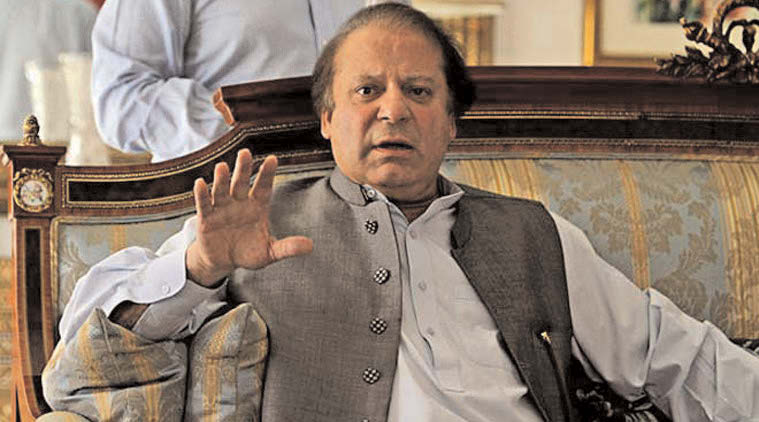
ISLAMABAD (TIP): Pakistan Prime Minister Nawaz Sharif on January 7 chaired a high-level meeting and discussed the Pathankot terror attack as he directed officials to speed up work on the leads given by India, sources said.
“Issues pertaining to national and regional security were discussed during the meeting,” the prime minister’s Office here said in a brief statement.
The meeting was attended by Ishaq Dar, minister for finance; Nisar Ali Khan, minister for interior; Sartaj Aziz, adviser on foreign affairs; Lt Gen (Retd) Nasser Khan Janjua, National Security Adviser; Aizaz Ahmad Chaudhry, foreign secretary; Aftab Sultan, chief of Intelligence Bureau and other officials.
A source privy to the details said that the meeting discussed the Pathankot attack and the information shared so far by India.
“The meeting decided to speed up work on the leads given by India,” he said on anonymity.
Another official said that the information provided by India was not enough as it was just limited to telephone numbers and Pakistan might ask for additional information.
“We would like to have solid information to build a case for action otherwise courts intervene and the suspects are bailed out,” he said.
He added the meeting agreed that strong action would be taken after probe against anyone found guilty of involvement in the attack.
The meeting came as India said it is waiting for “prompt and decisive action” as promised by Sharif to Prime Minister Narendra Modi during a telephone call on Tuesday.
India has provided “specific and actionable information in this regard” to Pakistan.
Yesterday, Pakistan’s army chief Gen Raheel Sharif reaffirmed zero tolerance for terrorist organisations and took a detailed review of overall internal and external security situation in the country. He made the remarks while presiding over the Corps Commander Conference held at General Headquarters, a statement issued by the Inter Services Public Relations (ISPR) said. In a pre-dawn attack on January 2, a group of heavily-armed Pakistani terrorists, suspected to be belonging to Jaish-e-Mohammed outfit, struck at the Air Force base in Punjab. (PTI)
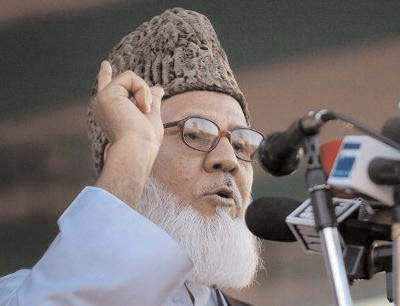
DHAKA (TIP): Bangladesh’s top court on Wednesday upheld the death sentence on the leader of the largest Islamist party for crimes during the country’s 1971 independence struggle, paving the way for his execution within months.
The country’s supreme court dismissed an appeal by Motiur Rahman Nizami, head of the Jamaat-e-Islami party, who was convicted of murder, rape and orchestrating the killing of top intellectuals when he was a militia leader during the conflict. “The court upheld the death sentence in three out of four charges. We’re very happy,” prosecutor Tureen Afroz told reporters. “Most importantly, the death penalty was upheld for the killings of the intellectuals.”
Nizami, 72, Jamaat’s leader since 2000 and a minister in a former Islamist-allied government of 2001- 2006, faces the gallows within months unless his case is reviewed by the same court or he is granted clemency by the president. Three senior Jamaat officials and a key leader of the main opposition party have been executed since December 2013 for war crimes, despite global criticism of their trials by a controversial war crimes tribunal. The court swiftly dismissed previous reviews of those four opposition leaders on death row, leading to their execution — the latest last November.
Hundreds of people who had campaigned for the Islamist leaders to be tried for their roles in the 1971 war burst into impromptu celebrations at a square in central Dhaka.
“This verdict brings an end to the long and painful wait for justice for the families of the victims,” said Imran Sarker, head of a secular group, showing a V-sign to reporters. “We now want his quick execution.”
Bangladesh came into being after the region called East Pakistan broke away from the rest of Pakistan in 1971.
Prosecutors said Nizami was the leader of a student wing of Jamaat during the war and turned it into the Al Badr pro-Pakistani militia which killed top professors, writers, doctors and journalists in the most gruesome chapter of the conflict.
Their bodies were found blindfolded with their hands tied and dumped in a marsh on the outskirts of the capital. The killing was carried out based on a hit list Nizami ordered and the aim was to “intellectually cripple” the fledgling nation, prosecutors said. Security was tight across the country. Previous convictions of the Jamaat officials triggered the country’s deadliest violence since independence with some 500 people killed, mainly in clashes between Islamists and police.
“We’ve stepped up security. It is sufficient to prevent any violence,” deputy police commissioner Maruf Hossain Sorder told AFP ahead of the verdict. However, Jamaat supporters clashed with police as they staged impromptu protests and marches in several towns and cities, police and local media said. Police fired rubber bullets to disperse the protesters in the northwestern city of Rajshahi, local police chief Golam Saqlaen told AFP.
“We have detained two people from the scene,” he said.
The Islamist party also called for a nationwide strike on Thursday, saying the charges against Nizami were “false, baseless and imaginary”.
“The government wants to steer the country towards terrible conflict in a planned way by killing Motiur Rahman Nizami in cold blood through its own fixed blueprint,” the party said in a statement on its website, calling him an “internationally acclaimed Islamic scholar”.
Jamaat said Nizami would now seek a review of the judgement. Defence lawyer Khandker Mahbub Hossain told reporters they would decide their course of action after consulting him. Since it was established by Prime Minister Sheikh Hasina’s government in 2010, the International Crimes Tribunal has sentenced more than a dozen opposition leaders for war crimes. (AFP)
KATHMANDU (TIP): Nepal’s agitating Madhesi Front and the three major parties on Janyary 5 formed a task force to find a common ground and narrow their differences over the new Constitution in a bid to end the political crisis and the shortage of essential goods due to prolonged protests.
Hridayesh Tripathi of Terai Madhes Democratic Party, Rajendra Shrestha of Federal Democratic Forum Nepal and Ram Naresh Raya, senior leader of Terai Madhes Sadhbhawana Party, are the members of the task force.
However, Rajendra Mahato-led Sadbhawana Party, one of the constituents of the four-party United Democratic Madhesi Front (UDMF), has not been included in the panel.
Mahato was injured in a baton charge by police in Biratnagar last week; his party has announced fresh protest programmes, demanding apology for the attack on its chairman.
The major political parties — Nepali Congress, CPN-UML and UCPN (Maoist) — had on Sunday proposed to the UDMF a task force to find a common ground on demands put forth by the Madhesi leaders.
Madhesis, who share strong cultural and family bonds with Indians, demand a re-demarcation of provinces, fixing of electoral constituencies on the basis of population and proportional representation.
The major parties have appointed Mahesh Acharya of the Nepali Congress (NC), Bhim Rawal of the CPN-UML and Krishna Bahadur Mahara of the UCPN (Maoist) to the panel.
ISLAMABAD (TIP): The Afghan Taliban have launched an unprecedented winter surge that points to a desire for an upper hand in peace talks, analysts say, while some suggest rogue Pakistani elements may be bolstering the effort to derail overtures by Islamabad to India.
Taliban fighting normally quiets down in winter months with the insurgents resting ahead of an annual spring offensive, but this year has seen a series of fierce attacks –many focused on Kabul in recent weeks, including three in the capital since January 7.
Some say the ongoing fighting is a bid by Taliban leader Mullah Akhtar Mansour to consolidate his position ahead of four-way talks between Afghanistan, Pakistan, the US and China slated for next week, a precursor to a revived peace dialogue between Kabul and the insurgents.
Ahmed Rashid, a leading expert on the Afghan Taliban, said Mansour was tightening his grip on power through the high-profile attacks, after a shootout between rival insurgent commanders in Pakistan in December left him wounded. (AFP)
DHAKA (TIP): In a tit-for-tat, Pakistan has expelled a Bangladeshi woman diplomat and asked her to leave the country by Thursday, days after a Pakistani woman diplomat was sent packing over accusations of having links with the banned Jamayetul Mujahideen Bangladesh militant group.
Pakistan’s foreign office has issued an order for the expulsion of Bangladeshi diplomat Moushumi Rahman, a counsellor and head of chancery in Islamabad, Pakistan’s Samaa TV reported.
Islamabad’s move came apparently in a retaliation to the expulsion of its diplomat from Dhaka in December.
A Bangladeshi foreign ministry official preferring anonymity said in Dhaka that Pakistan had on Tuesday summoned Bangladesh’s high commissioner in Islamabad Sohrab Hossain.
“Moushumi Rahman accompanied our high commissioner to Pakistan’s foreign ministry where a senior officer of theirs verbally asked (Hossain) to send Moushumi back to Dhaka by Thursday, citing no reason,” the official said.
Bangladesh on Wednesday deplored the Pakistani counter-action. “This appears to be a face-saving move in the part of Pakistan as it was forced to recall a diplomat of theirs…” state minister for foreign affairs Shahriar Alam said. However, Samaa TV reported that the Bangladeshi diplomat was expelled for “violation of diplomatic norms”. (PTI)
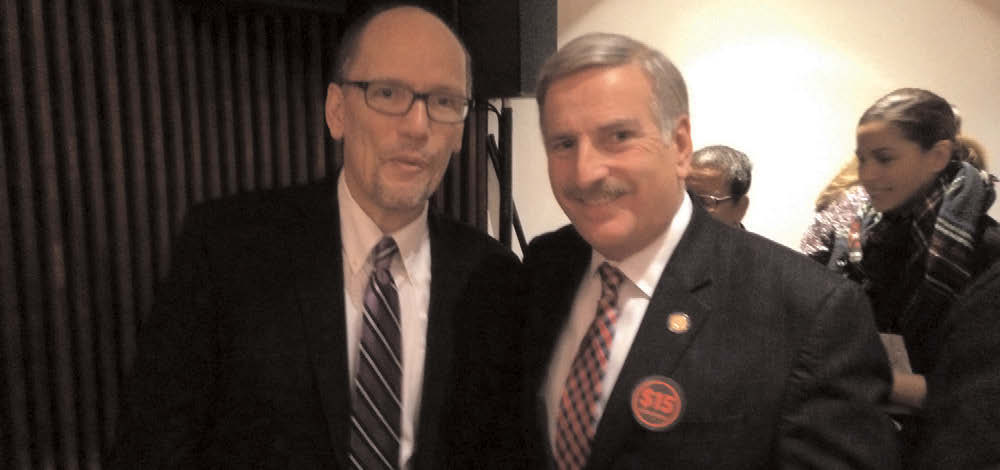
NEW YORK (TIP): Assemblyman David Weprin (D – Richmond Hill) joined Governor Andrew Cuomo, U.S. Secretary of Labor Tom Perez, Attorney General Eric Schneiderman, Congressman Gregory Meeks & other elected officials at the 1199SEIU United Healthcare Headquarters in Manhattan, Monday, January 4t, to rally in support of Governor Andrew Cuomo’s campaign for a statewide $15 minimum wage.
The ‘Mario Cuomo Campaign for Economic Justice’ is a broad effort by Governor Cuomo to increase the statewide minimum wage to an hourly rate of $15 and follows the Governors’ actions to increase the minimum wage for fast food workers and SUNY employees to $15/hour.
Assemblyman David Weprin strongly supports the ‘Mario Cuomo Campaign for Economic Justice’ and was proud to join a diverse group of advocates, including 1199SEIU President George Gresham, union representatives from 1199SEIU United Healthcare Workers East & 32BJ SEIU, and Actor Steve Buscemi.
“Today’s minimum wage still leaves far too many people behind –unacceptably condemning them to a life of poverty even while they work full-time,” Cuomo said.
Senator Jose Peralta (left), Assemblyman David Weprin (center), New York City Councilman Andy King (left)
Speaking after the event, Assemblyman Weprin said “All hard-working New Yorkers deserve a living wage. Currently, there are far too many Queens residents that are working two,
or sometimes even three, jobs to make ends meet. I applaud Governor Cuomo for organizing this rally and I am proud to support the Governor’s office in this fight for a statewide minimum wage of $15 an hour”
NEW YORK (TIP): U.S. Rep. Grace Meng, (D-NY), a member of the House Foreign Affairs Committee and its Subcommittee on Asia, Jan 5 issued the following statement condemning the terrorist attacks against India.
“I condemn the terrorist attacks on the Pathankot Air Force base in India as well as on the Indian consulate in the Afghan city of Mazar-e-Sharif.
Although those who took part in these assaults were reportedly killed, I hope that others who may be involved in these cowardly acts are caught and swiftly brought to justice. Such attacks undermine efforts to bring peace and stability to the region and should also be denounced by the world community.
I send my condolences to the families of the Indian soldiers who were killed and extend my support to the Indian people during this difficult time. The United States stands shoulder-to-shoulder with our friend and ally India, and I call on U.S. officials to provide India with whatever assistance it may require.”
In addition to the Foreign Affairs panels, Meng is a member of the Congressional Caucus on India and Indian Americans.
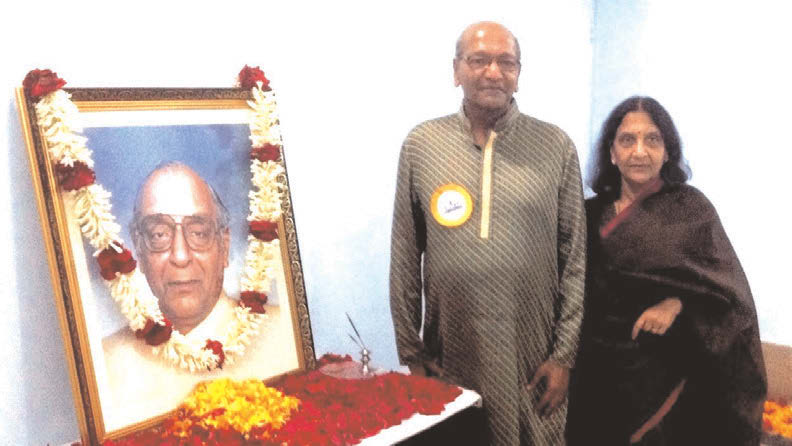
NEW YORK (TIP): “Ekal Vidyalaya Foundation – USA” (known as ‘Ekal-USA’) had record setting fund-raising in 2015. It raised over $6 million in USA aloneand it has satellite Organizations in 10 different countries. Moreover, Ekal has just received a generous donation of $500,000 from Mrs. Prabha Jhunjhunwala, daughter of Shri Madanlal Agarwala, who started Ekal Movement in late 1988 in India.
Considering the way it has kick started this New Year, and it is poised to establish a new record for 2016. “My father is my inspiration. He was a very compassionate soul and strongly believed that the Ekal movement would transform India. Were he alive, he surely would have been delighted to see strong Global support reaching into 53,000 villages,” says Prabhaji.
“When Prabha decided to make a donation in the name of her father, I couldn’t be happier” says Vinod Jhunjhunwala, her husband and President of Ekal-USA. He further elaborated that,” the seed-money will help us build an endowment that will ensure strong financial footing for Ekal USA”.
Ekal raises funds through series of concerts all over USA and through direct appeals to generous philanthropists. Braham Aggarwal, Avadesh Agarwal, Himanshu Shah, Mohan Wancho have been some of the most generous and valuable benefactors of Ekal. According to Dilip Kothekar, Chairman of Ekal’s Event Committee,two famous musical groups from ‘Bollywood’ would be performing in series of 60-65 concerts all across USA, starting from February 26′ 2016. For past 27 years, ‘Ekal Vidyalaya Foundation (EVF)’, has been rigorously involved in total transformation of villages, giving sustainability to its people and empowering them. For basic donation of just $365, Ekal has been providing functional literacy and health care training for the whole year to an ‘Ekal-school’, consisting of 35-40 children. For one-time generous donation of $5,000, onecan sponsor a whole village for its perpetual development. To make women-folks self-reliant in villages, multiple cottage-industries have been introduced by training them in tailoring, food-processing, weaving etc. “EVF” is a duly registered as tax-exempt, charitable organization, not only in USA, but also, in several other countries, making it globally the largest grassroots village-development movement undertaken by Indians and NRIs. As of this moment, it is operating all over India, including in Jammu & Kashmir region benefiting over 1.50 million children (half of whom are girls). “Health Foundation for Rural India (HFRI)”, under the leadership of Dr. Veena Gandhi is committed to eradicate Anemia also in Ekal villages. New water conservation techniques, and use of solar-power for domestic use etc. have been adopted in several villages. In addition, an innovative ‘Ekal-on-Wheels’ digital pilot-project has been launched in some states to make villages computer-literate..
According to Bajrang Bagra, CEO of Ekal-India, this year, Ekal took a giant leap forward in 2015 by establishing 10 village development centers, each catering to the needs of 100 villages, thereby directly impacting at least one million people, and exposing 10 million villagers to innovative techniques. Villagers are trained in multiple cropping, Vermicomposting, based on local conditions. Pradeep Goyal, Chairman of Ekal-India recently confirmed that retraining villagers for agro-farm based products has given them income ranging from Rs.50,000 to Rs.8 Lakhs. Because of Ekal’s extensive rural network, many Organizations that were engaged on their own in divine rural projects have now forged alliance with Ekal. Dr. Subhash Chandra, CEO of ZEE-TV Network, has recently joined as the ‘Chairman of Ekal-Global’ and plans to take this ‘Literacy’ movement’ to the upper zenith of worldwide conscientious global organizations. According to Subhash Gupta, recent Chairman of Board of Advisers, Ekal derives its strength from its 300,000 global volunteers. As PM Modi said, “When you invest in village, you are investing in India’s future; let’s develop one village, one school at-a-time. For more information please visit <www.ekal.org>.
FLUSHING, NY( TIP) Council Member Peter Koo stated, January 7, in a statement to The Indian Panorama that he thanked Mayor Bill de Blasio for his order to provide six weeks of paid parental leave to non-unionized city employees.
“I want to thank the Mayor for taking a brave stance and swift action on paid parental leave. The first weeks following birth are critical to establishing the parent/child bond, and no parent should be forced to choose between taking care of their newborn baby and returning to work. I strongly encourage our city’s unions to match this noble effort, and make New York City the compassionate model for paid parental leave throughout the nation.”
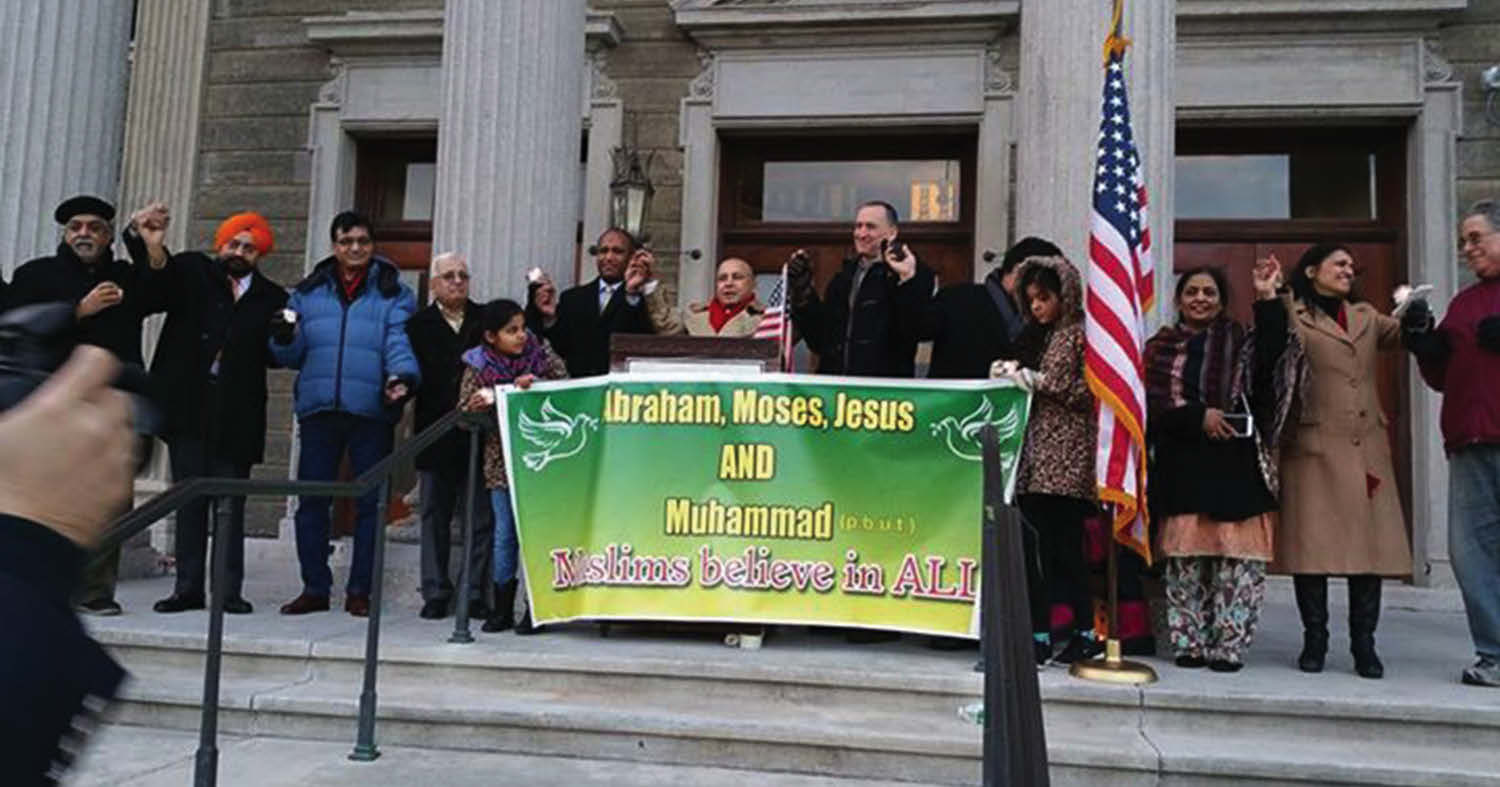
MINEOLA, NY (TIP): An Interfaith Candle Light Vigil was organized January 1 at the steps of Nassau County Executive building.
A number of people belonging to Jewish, Christian, Muslim, Hindu, Sikh, faiths and of diverse ethnicities and colors registered their protest against terrorism, extremism, bigotry and divisiveness .
Those participating in the vigil included Mohsin Zaheer, Sony Dastgir, Satnam Singh Parhar and 14 others .
Photo courtesy Mirza Strategies and Public Relations, Inc.
WASHINGTON (TIP): US President Barack Obama has promised his final State of the Union address next week will focus on issues “beyond the next election” and skip the traditional list of the year’s legislative goals.
Facing an ultra-hostile Republican-controlled Congress with its attention fixed on the 2016 election, Obama released a video message Wednesday, January 6 promising the address will break with tradition.
Sitting on his Oval Office desk, with his jacket off and shirt sleeves rolled up, Obama said the annual Washington prime-time showpiece will focus on
“what we all need to do together in the years to come — the big things that will guarantee an even stronger, better, more prosperous America for our kids.”
White House chief of staff Denis McDonough indicated Obama will draw a contrast between now and his first State of the Union, when the country was mired in the Great Recession.
“We still have work to do, but there’s no question: Together, we’ve brought America back,” McDonough said in an email message.
“But what we have left to do is bigger than any one policy initiative or new bill in Congress. This is about who we are, where we’re headed, and what kind of country we want to be.”
WASHINGTON (TIP): Eight years after aggressively defending his wife during her first presidential campaign, Bill Clinton was unusually understated and subdued Monday during his first solo swing back in New Hampshire for Hillary Clinton, restraining himself even in the face of taunts from Donald Trump.
Sticking mostly to descriptions of Hillary Clinton’s policy positions and biography, the former president made only glancing references to her opponents, saying that some were “kind of scary” but not naming names. He also suggested that he would not thrive politically today because he was not “mad at anybody,” an implicit jab at Trump’s harsh attacks on Muslims and others — and a signal that Trump had not gotten under Bill Clinton’s skin.
With Trump campaigning Monday night just across the state line in Lowell, Massachusetts, Clinton did not bring up his onetime friend’s recent attacks on Clinton’s history of extramarital affairs. But after the first of his two campaign events, Clinton did respond to a reporter’s question about whether his own past was “fair game” to talk about in the race.
“The Republicans have to decide who they want to nominate,” Clinton replied. “I think there’s always attempts to take the election away from people, so I’m just going to give it to them.”
At a rally in Lowell, Massachusetts, just a few miles from New Hampshire, Trump, calling himself “a messenger in a sense,” harshly criticized Hillary Clinton but did not mention Bill Clinton. In an interview, Trump said he brought up Bill Clinton’s past simply as a response to provocation. “I would be inclined to just let it go” if the Clintons never again accused him of sexism, Trump said.
If Bill Clinton was champing at the bit to attack Trump, he gave no sign of it Monday.
Famed as the Big Dog of American politics, Bill Clinton seemed to be on a tight leash during his appearances in Nashua and Exeter, delivering performances far different from the ones he gave in 2008, when some Democrats criticized him for overshadowing Hillary Clinton with his attacks on then-Sen. Barack Obama.
(NYT News Service)
Signup to our Newsletter!
Don’t miss out on all the happenings around the world