Month: June 2017

  • Prior to upcoming visit by PM Modi, USINPAC does outreach with the Trump Administration

    Prior to upcoming visit by PM Modi, USINPAC does outreach with the Trump Administration

    WASHINGTON (TIP): As part of its ongoing strategic dialogue at Capitol Hill, The US India Political Action Committee (USINPAC) held a meeting with members of the Trump-Pence administration. Key participants at the dialogue were Raju Chinthala, USINPAC Indiana Chair, who met with Micheal Cutrone, the Special Advisor to the Vice President for South and Central Asia and Mr. Paul Teller, the Special Assistant to the President for Legislative Affairs. In light of the upcoming visit of Indian Prime Minister Narendra Modi to the nation and his meeting with President Trump, USINPAC was keen to provide valuable insight on matters pertaining to Indian Americans.

     This will be Prime Minister Modi’s first to Washington under the Trump administration. Unlike his past meetings this current visit will be singularly focused on bilateral relations. The Modi-Trump meet also comes at a time when the H1-B visa program is under intense scrutiny and President Trump has announced to withdraw from the Paris Climate Accords last week. President Trump had then called out India and China for being some of the world’s biggest polluters and had alleged that under the Climate accord the US would have to pay India ‘billions and billions of dollars.’ The Indian government is looking forward to smoothening out any wrinkles with the new administration, regarding immigration reform and reaffirm the US-India partnership in the spheres of international diplomacy and Defense & Security in the region.

     Press Secretary Sean Spicer, in a press briefing announced: “President Trump looks forward to discussing the ways to strengthen our ties between the United States and India and advancing our common priorities fighting terrorism, promoting economic growth and reforms and expanding security cooperation in the Indo-Pacific region.”

     Raju Chinthala remarked, “We had a very cordial and productive meeting with the Trump-Pence administration on various domestic and international issues. USINPAC will continue to develop dialogue between the US and India to strengthen our alliance and take it to the next level.”


  • Consulate General of India, Chicago, in Association with 100 Community Organizations, will Host 3rd Edition of International Yoga Day

    Consulate General of India, Chicago, in Association with 100 Community Organizations, will Host 3rd Edition of International Yoga Day

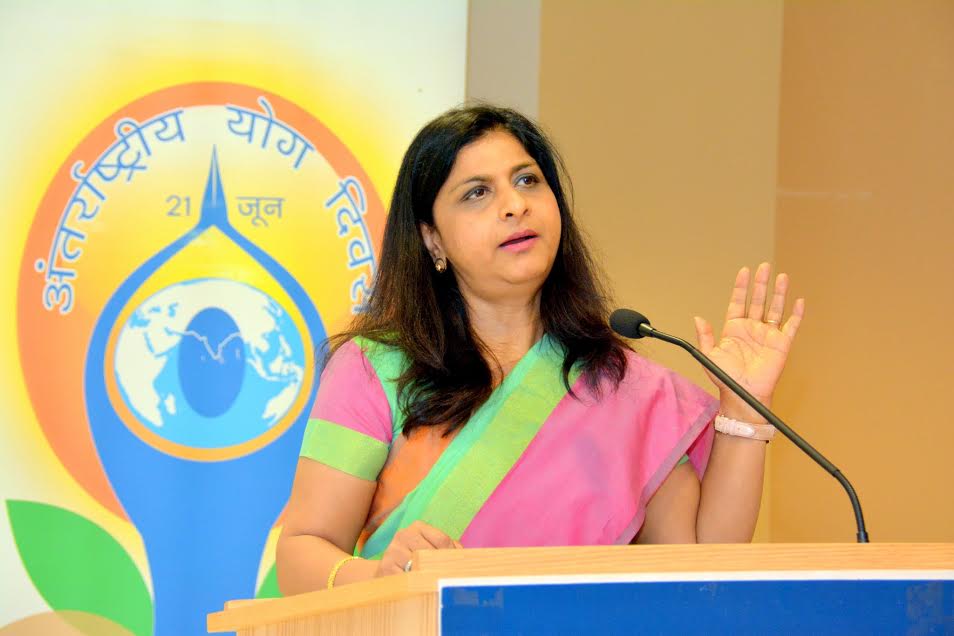
    NAPERVILLE, CHICAGO (TIP): Consulate General of India in Chicago, in collaboration with the City of Naperville, is all set to host 3rd edition of International Yoga Day on 24th June 2017 (Saturday) at Naperville Yard, 1603 Legacy Circle, Naperville, IL 60563.

    City of Naperville issued a Proclamation and declared June 24th, 2017 as International Yoga Day in the City of Naperville. Mr. Steve Chirico, Naperville Mayor will be Chief Guest at the International Yoga Day, which will be attended by dignitaries, elected officials, and community leaders from different walks of life.

    Ms. Neeta Bhushan, Consul General of India in Chicago said that the program will commence at 10:00 am and end at 1200 noon, followed by a community festival and an array of cultural activities till 05:00 pm. Apart from the demonstration of common asanas (postures) under Common Yoga Protocol, breathing techniques, Meditation Workshop, etc., the Program will include a number of activities relating to yoga.

    The event is free for all. However, as the space is limited, those interested in attending the event and knowing more about it are cordially requested to visit Facebook.com/IndiaInChicago. Participants are requested to bring their own yoga mats.

    Ms. Bhushan said that about 2,500 guests, 100 community organizations, yoga and spiritual centers, business establishments, etc. will grace the occasion. She called upon Indian-Americans and all the nationalities to attend the event in large numbers in order to make it a resounding success.

    (Photograph and Press release by: Asian Media USA)

  • Embassy of India celebrates Baisakhi

    Embassy of India celebrates Baisakhi

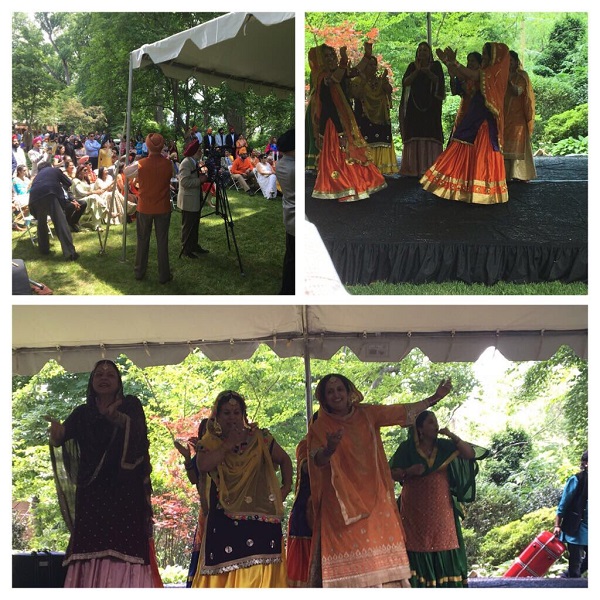
    WASHINGTON (TIP): Embassy of India, Washington DC celebrated Baisakhi on June 3 in the 350th Birth Anniversary year of Guru Gobind Singh ji. The event was attended by around 250 Indian American community members from various parts of United States.

    The celebration was marked by an auspicious beginning with Shabad Kirtan, welcome remarks by Ambassador Navtej Sarna and a cultural performance consisting of Punjabi traditional music and dance (Bhangra and Giddha).

    Sikh scholar Dr. Harbhajan Singh Ajrawat spoke on the teachings of Sikhism and highlighted the significance of Baisakhi.

    The fun and festivity was enjoyed by all the guests.

  • Indian man arrested in Pittsburgh after row over onions

    Indian man arrested in Pittsburgh after row over onions

    OAKLAND, PITTSBURGH (TIP): Yuba Raj Sharma, an Indian-origin man has been arrested in Oakland, Pittsburgh after he went on a violent, naked rampage, threatening to shoot staffers at an Indian eatery. According to the complaint, he got into an argument with staff because they put onions in his food.

    According to the complaint, Sharma told the owner that “he was going to shoot him,” and after 911 was called, Sharma pulled down his pants exposing himself while verbally taunting the owner and another staff member.

    According to media reports, the 43-year-old man was arrested after the confrontation at the All India restaurant. Police charged him with terroristic threats, indecent exposure, resisting arrest and public drunkenness.

  • Indian American former CEO faces SEC suit in California

    Indian American former CEO faces SEC suit in California

    SACRAMENTO, CA (TIP): An Indian American former CEO of Systems America Inc., has been charged for violating federal security rules by allegedly misrepresenting facts about his company and engaging in manipulative penny stock trades to boost its share price.

    The 49-year-old Adesh Kumar Tyagi issued exaggerated press releases and made misleading disclosures about his company, Law360 reported quoting a complaint filed on Wednesday by the US Securities and Exchange Commission in California federal court.

    “His game plan was to grow the company through acquisitions. Lacking cash, however, he engaged in a fraudulent scheme to artificially inflate the per-share price of the company’s securities so that he could use Systems America stock to acquire other companies,” the legal news service reported.

    Systems America, which was later renamed Cloudeeva was founded by Tyagi as a privately held company in 1994. In the mid-2000s the company started falling into neglect, but, in 2010, Tyagi wanted to revive the company.

    The company claimed that it has eight full-time employees and Fortune 500 clients when it actually had no full-time employees and only two clients. Tyagi also said that no officer or director of the company had been named as a defendant in a criminal proceeding when he himself had two pending criminal proceedings as a defendant.

    The SEC alleges that Tyagi tried to push up his company’s share price by ‘marking the close’ – buying the stock just before the close of the trading day at a slightly higher price than was on offer on at least 16 different dates.

    According to Law360, he pleads guilty to criminal securities fraud charges brought over trading schemes in November 2016 and is scheduled for sentencing in January 2018.

    SEC seeks disgorgement of the more than $274,000 from Tyagi, which he allegedly earned through the sales of inflated stock and unspecified civil monetary penalties. It also seeks prejudgment interest, officer-and-director bar, penny stock offering bar and permanent injunctions that refrain Tyagi from participating in transactions of any security of an entity that he is related to.

  • Indian origin Sameer Hasmukh in critical condition after being shot in Atlanta

    Indian origin Sameer Hasmukh in critical condition after being shot in Atlanta

    ATLANTA (TIP): In yet another incident of shooting of an Indian origin man in the US, a 24-year-old man from Sundher village in Patan, Gujarat, Sameer Hasmukh Patel, was shot at in a departmental store here late on Monday, June 12 night.  Sameer was shot after two suspects robbed the departmental store in which he worked, according to information available with The Indian Panorama.

    Sameer was closing the store when two unknown persons barged into the store and shot at him and fled with the cash chest. He was immediately rushed to a nearby hospital, but his condition was critical when family members spoke to his friends early June 13 morning.

    A member of the family said that Sameer came to Atlanta three years ago to work at a departmental store and search for opportunities for his family members.”

    According to information available with The Indian Panorama, Indian Consulate in Atlanta is also in touch with the family.

  • Indian American lawyer dies after being struck by a train in California

    Indian American lawyer dies after being struck by a train in California

    SAN MATEO, CA (TIP):  Indian American lawyer Kirtee Kapoor, who was head of Davis Polk & Wardwell’s India group and a partner at the firm in Menlo Park, California, died after being struck by a train in San Mateo, California, June 5, according to a belated report.

    He was killed by Caltrain at the Watkins Avenue crossing. “Early reports indicate this was an intentional act,” Caltrain spokesperson Tasha Bartholomew said in a statement.

    “Kirtee was a truly wonderful man. His optimism, warmth, honesty and wisdom were inspiring. He will be remembered as a great partner of the firm, a beloved colleague and adviser, and a steadfast friend to so many”, Davis Polk group said in a statement.

    Born in Bangalore, India, Kirtee earned his LL.B. from the University of Delhi Faculty of Law, where he was Editor-in-Chief of the Student’s Law Review and Moot Court Society President. He received his B.C.L. from Balliol College, University of Oxford and was an Inlaks Scholar. He was a Hauser Global Scholar and Graduate Editor of the Journal of International Law and Politics at New York University School of Law, where he earned his LL.M.

    Kirtee joined Davis Polk’s New York office as an associate in 1999, and over the next 18 years spent time in several of their offices advising clients on significant M&A matters and in investments and other transactions around the world. He was elected to the partnership in 2007 and moved to Hong Kong later that year. In 2015, he joined the Northern California office.

  • Indian American Sanjeev Kulkarni appointed Dean of the faculty at Princeton University

    Indian American Sanjeev Kulkarni appointed Dean of the faculty at Princeton University

    PRINCETON, NJ (TIP): Sanjeev Kulkarni, dean of the Princeton University Graduate School and a professor of electrical engineering, has been appointed dean of the faculty effective July 1.

    “Sanj Kulkarni has served with distinction as dean of the Graduate School, and I am delighted that he has agreed to take on this new role,” President Christopher L. Eisgrube said. “His own interdisciplinary research, his wide-ranging service to the University and his leadership of the Graduate School have given him a deep appreciation for the values shared throughout our University and the scholarly practices that distinguish our departments. Sanj is a wise counselor and an effective administrator who is dedicated to ensuring our faculty’s quality and well-being. I am confident that he will be an excellent dean of the faculty,” Eisgruber said.

    Kulkarni, who became dean of the Graduate School in April 2014, is an associated faculty member in the Department of Operations Research and Financial Engineering (ORFE) and in the Department of Philosophy.

    “Faculty are the foundation of any great university, and it will be a pleasure and an honor to work with and support Princeton’s outstanding faculty. I look forward to working with scholars, teachers, and researchers across the full range of academic departments and programs at the University,” Kulkarni said.

    As dean of the Graduate School, Kulkarni led the strategic planning Task Force on the Future of the Graduate School, implemented a sixth-year funding program for graduate students in the humanities and social sciences, and with the dean for research implemented tuition matching funds for faculty who support fourth- and fifth-year graduate students on sponsored research.

    Under Kulkarni’s leadership, the Graduate School created an assistant dean position for professional development and developed a number of new programs including the University Administrative Fellows, opportunities for collaborative teaching between Princeton faculty and graduate students, and a partnership with Mercer County Community College to provide teaching opportunities and mentorship for Princeton graduate students.

  • Two Indian American conductors named recipients of 2017 Solti Foundation awards

    Two Indian American conductors named recipients of 2017 Solti Foundation awards

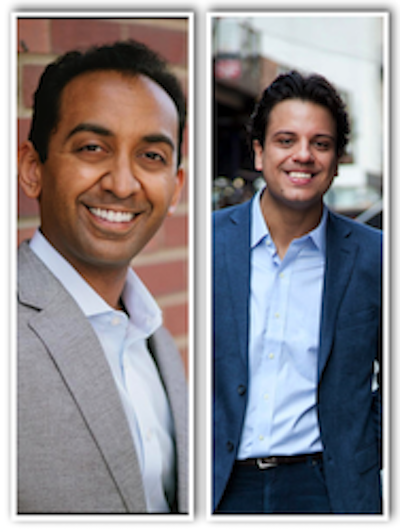
    EVANSTON, IL (TIP): Two Indian American conductors Roger Kalia and Sameer Patel are among nine recipients of 2017 Solti Foundation awards.

    Established in 2000 to honor the memory of Sir Georg Solti by lending significant support to career-ready young American musicians, in 2004, the Foundation concentrated the focus of its award program to exclusively assist talented young American conductors early in their professional careers (its original mission was of a more general arts nature). Since then, it has awarded over $500,000 in grants to American conductors.

    Penny Van Horn, Board Chair of The Solti Foundation U.S. and Elizabeth Buccheri, Artistic and Awards Committee Chair, announced the names of the recipients of the 2017 Solti Foundation Career Assistance Awards. “The Solti Foundation U.S. is thrilled to announce the 2017 Career Assistance Award recipients,” said Ms. Van Horn. “These young conductors are part of the fabric of our future musical landscape, and we are proud to identify, support and encourage these young musicians in the early stages of their classical careers.”

    Co-Founder and Music Director of the Lake George Music Festival in upstate New York, Assistant Conductor of the Pacific Symphony and Music Director of Pacific Symphony Youth Orchestra, Roger Kalia is only the second assistant conductor in the Pacific Symphony’s history to have his contract extended for two additional years. A proud recipient of a 2013 Solti Foundation U.S. Career Assistance Award, Kalia conducted the Memphis Symphony in 2011 after winning Second Prize in their International Conducting Competition, which led to his debut the following season and launched his professional career. In 2011 Kalia served as a fellow at the Cabrillo Festival of Contemporary Music, chosen by Marin Alsop.

    Associate Conductor of the San Diego Symphony, Sameer Patel also begins his tenure as Associate Conductor of the Sun Valley Summer Symphony this summer 2017. Internationally, Patel has guested with the Orchestra Sinfonica di Sanremo, Leipziger Sinfonieorchester, and Orchestra Giovanile Italiana. Recipient of a 2016 Solti Foundation U.S. Career Assistance Award, Patel is also a Felix Mendelssohn-Bartholdy Scholar. In 2013, Sameer was one of only six conductors selected by the League of American orchestras for the Bruno Walter National Conductor Preview.

  • Indian-American entrepreneur latest self-  made billionaire in Chicago

    Indian-American entrepreneur latest self- made billionaire in Chicago

    Highlights:

    •  Rishi Shah came with a USD 600 million infusion of venture capital into Outcome Health
    •  Rishi Shah's Outcome Health is now valued at $5.6 billion
    •  The company took in more than $130 million in revenue last year
    •  The company provides its services to medical providers for free

    CHICAGO (TIP): In yet another refreshing success story, Indian-American Rishi Shah, who quit college 10 years back to pursue entrepreneurial dreams, has become tech’s newest billionaire. And his business partner, Shradha Agarwal, is close behind.

    Their windfall came with a US $600 million infusion of venture capital into Outcome Health, the Chicago healthcare tech company they founded in 2006. It’s now valued at US $5.6 billion.

    Shah grew up in the Chicago suburb of Oak Brook, the son of a doctor who emigrated from India; his mother managed his father’s medical practice. The initial idea for a company providing content to doctor’s offices was inspired, Shah says in an interview to local media, by his sister.

    “My sister has type 1 diabetes,” Shah says. “If she gets on an insulin pump and she is able to achieve better blood sugar control and she is checking her blood sugar more effectively, the device manufacturer wins, the insulin manufacturer wins, the blood glucometer wins, the doctor wins, but the payor wins most of all. And she wins personally.”

    He attended Northwestern University as a transfer student, where he met a woman named Shradha Agarwal, now Outcome’s president. Originally working on a campus magazine, they eventually founded a company called ContextMedia, out of Northwestern in 2008, funding it by taking loans that have over the years reached a combined USD 325 million instead of giving up equity. Knocking on doctor’s office doors around the Chicago area, the two found little appetite for their idea.

    Some doctors didn’t see the value in digital education in their offices; others who did wanted to see revenue to feel comfortable committing to such a fledgling product. Without signing them, however, the entrepreneurs had no revenue with which to placate them. They eked out $1 million in revenue that first year. “Then we were off to the races,” says Shah, doubling most years since. “We had to build a profitable business, or at least a break-even business, from scratch,” says Shah. “We had no margin of error.”

    Outcome Health is not only the newest unicorn company, having earned the honor just last week, but it is also already valued in the top 30 on the list of roughly 200 non-public companies worth $1 billion.

    CEO Rishi Shah, 31 and president Shradha Agarwal founded ContextMedia in 2006 while the two were at Northwestern University. The company began to sell its video monitor services to physicians and hospitals without any outside investment.

    Over the next decade, the company grew and big-time investors noticed, but Shah and Agarwal passed up offers in order to scale organically and retain ownership. In January, the company changed its name to Outcome Health as it slowly pushed towards its first major round of funding.

    According to Crain’s, the company took in more than $130 million in revenue last year and posted an operating profit margin of roughly 40%. Outcome Health doubled its revenue in each of the last two years, and it also grew with its acquisition of AccentHealth last November.

    Today, Outcome Health helps both patients and doctors by providing touch screen monitors to hospitals and health care offices around the country. The company installs large, interactive video boards that allow physicians to better explain a patient’s current health care needs or problems through the use of video, graphics and interactive visual aids.

  • Make these lifestyle changes for a healthy thyroid

    Make these lifestyle changes for a healthy thyroid

    A few lifestyle changes can make a big difference if you have thyroid issues. A well maintained diet and exercise plan can maintain and regulate your thyroid to function well.

    Choose from these foods to have a healthy thyroid:

    • ? To include iodine in your diet you can include sea vegetables and seafood apart from egg, spinach, garlic and sesame seeds.
    • ? For a good selenium count include mushrooms, meat, sunflower seeds and soya bean.
    • ? Zinc encourages a healthy thyroid so have peas, walnuts, whole grains, almonds.
    • ? Iron plays an important role so have oysters, lentils, pumpkin seeeds in good quantity.

    How to Know If You Are Hypothyroid

    Identifying hypothyroidism and its cause is tricky business. Many of the symptoms of hypothyroidism are vague and overlap with other disorders. Physicians often miss a thyroid problem since they rely on just a few traditional tests, leaving other clues undetected.

    The most sensitive way to find out is to listen to your body. People with a sluggish thyroid usually experience:

    Lethargy – Fatigue and lack of energy are typical signs of thyroid dysfunction. Depression has also been linked to the condition. If you’ve been diagnosed with depression, make it a point that your physician checks your thyroid levels.

    ? It’s essential to note that not all tiredness or lack of energy can be blamed on a dysfunctional thyroid gland. Thyroid-related fatigue begins to appear when you cannot sustain energy long enough, especially when compared to a past level of fitness or ability. If your thyroid foundation is weak, sustaining energy output is going to be a challenge. You will notice you just don’t seem to have the energy to do the things like you used to.

    ? Some of the obvious signs of thyroid fatigue include:

    • ? Feeling like you don’t have the energy to exercise, and typically not exercising on a consistent basis .
    • ? A heavy or tired head, especially in the afternoon; your head is a very sensitive indicator of thyroid hormone status
    •  Falling asleep as soon as you sit down when you don’t have anything to do
    • ? Weight gain – Easy weight gain or difficulty losing weight, despite an aggressive exercise program and watchful eating, is another indicator
  • Most women don’t have healthy weight during pregnancy

    Most women don’t have healthy weight during pregnancy

    Avast majority of women are not achieving a healthy weight during pregnancy, an Australian study released on Wednesday has found.

    Researchers from Monash University undertook a comprehensive study of 1.3 million pregnant women worldwide and found that more than half gained too much weight during pregnancy while a quarter did not gain enough weight, reports Xinhua news agency.

    Helena Teede, the lead researcher, warned that women who did not gain enough weight faced an increased risk of premature birth while those who put on too much were more likely to require a caesarean birth.

    Researchers analysed more than 5,300 international studies of pregnant women and found that at the beginning of pregnancy 38 percent of women were overweight or obese, 55 percent were “normal weight” and 7 percent were underweight.

    Teede said women who started at a higher weight were more likely to gain weight quicker as the pregnancy progressed.

    “You should not put on any weight in the first trimester, a little in the second trimester and just a little more in the third,” Teede told Australian media on Wednesday.

    “You should only increase your calorie intake by a small amount. You are not eating for two.” She said the study highlighted the need for strategies to monitor and optimize healthy weight among expected mothers.

    “This latest study means – more than ever – that weight needs to be monitored in pregnancy and women provided with support to improve lifestyle,” Teede said in a statement.

    Health professionals need to be encouraged and trained in having “healthy conversations” introducing relatively simple effective lifestyle interventions to support women before, during and after pregnancy.

    “We know what to do and now need to implement the available evidence into action to help women and the next generation be healthier.”

  • NEW BLOOD TEST MAY PREDICT HUNTINGTON’S DISEASE: STUDY

    NEW BLOOD TEST MAY PREDICT HUNTINGTON’S DISEASE: STUDY

    The blood test may help identify new treatments for Huntington’s disease, a genetic brain disorder, which is fatal and currently incurable. Huntington’s disease is an inherited condition in which nerve cells in the brain break down over time. The study showed that measuring the levels of neurofilament — a protein released from damaged brain cells — may help predict the onset of the disease as well as its progression.

    “This is the first time a potential blood biomarker has been identified to track Huntington’s disease so strongly,” said Edward Wild from the University College London. The results showed that the patients who were carriers of the genetic mutation of the disease had neurofilament concentrations that were 2.6 times that of the control participants.

    Further, the level rose throughout the disease course from premanifest to stage 2 disease, the researchers said. “Neurofilament has the potential to serve as a speedometer in Huntington’s disease, since a single blood test reflects how quickly the brain is changing,” Wild added.

    For the study, published in the journal Lancet Neurology, the team measured neurofilament levels in blood samples from 366 volunteers who were followed for three years. In the group who had no symptoms at the start of the study, the level of neurofilament predicted subsequent disease onset, as volunteers with high neurofilament levels in the blood at the start were more likely to develop symptoms in the following three years. Scientists are presently in the process of testing a new generation of socalled ‘gene silencing’ drugs that may put brakes on the disease. “Measuring neurofilament levels could help us figure out whether those brakes are working,” Wild noted.

    Huntington’s disease is an incurable, hereditary brain disorder. It is a devastating disease for which there is no currently “effective” treatment. Nerve cells become damaged, causing various parts of the brain to deteriorate. The disease affects movement, behavior and cognition – the affected individuals’ abilities to walk, think, reason and talk are gradually eroded to such a point that they eventually become entirely reliant on other people for their care.

    Huntington’s disease has a major emotional, mental, social and economic impact on the lives of patients, as well as their families.

  • F O O D C O R N E R – ANDHRA BRINJAL CURRY

    F O O D C O R N E R – ANDHRA BRINJAL CURRY

    INGREDIENTS

    200 gm cubed eggplant/ brinjal, 1 chopped onion, 1 tablespoon refined oil, 1 dash mustard seeds, 1/2 teaspoon ground garlic, 1/2 teaspoon ground poppy seeds, 1 clove, 1/2 tablespoon powdered jaggery, 1/2 teaspoon red chilli powder, 1 pinch, powdered turmeric, 1/4 cup tamarind extract, 1/2 cup grated coconut, 1/2 teaspoon moong dal, 1/8 teaspoon asafoetida, 1/2 teaspoon coriander powder, 1/2 inch cinnamon stick, 1/2, teaspoon yoghurt (curd), 2 pinches salt, 1/2 teaspoon ground sesame seeds.

    Method

    Heat oil in a pan over moderate flame. Fry the moong dal, mustard seeds, asafoetida with onions. Saute the onions till they turn slightly pinkish in hue. Add ground garlic and fry.

    Keep stirring till the raw smell of the garlic goes away. Now add coriander powder and brinjals. Fry till the brinjals change colour. Cover the pan with a lid and allow it to cook on low flame. Simmer till brinjals are soft. Add poppy seeds, cinnamon and cloves. Stir well.

    After few minutes, add curd, jaggery and salt. Keep stirring. Add sesame seeds, turmeric powder, coconut, chilli powder and cook for a few minutes. Now add tamarind pulp mixed with a little water. Simmer for 5 to 7 minutes with the lid on.

    Once the curry is ready, transfer it to a serving bowl and garnish with coriander leaves. This delicious main dish recipe goes well with naan and steamed rice. Serve hot.

  • GROOM YOUR EYEBROWS AT HOME

    GROOM YOUR EYEBROWS AT HOME

    How many times have you missed going to the salon right before an office party, only to dread partying with undone eyebrows? But worry not, we tell you ways you can do it yourself at home.

    TIPS

    • ? Start by brushing your brows into shape with a spoolie brush.
    • ? Use your finger to pull out a little wax. Run your finger over your brow, going with the direction of the hair.
    • ? Start with a slightly darker color at the arch. …
    • ? You can set the powder by running a brow gel over it, gently.
    Get your tools

    To flaunt a set of striking eyebrows you need the perfect tool for it. For example, gather tweezers, a spoolie brush, a pair of small eyebrow grooming scissors and a brow pencil. These tools will help you groom your eyebrows properly.

    Map it well

    Use the end of your tweezers or the end of your spoolie brush to line it vertically along the outer edge of the bottom of your nose. Then, use an eyebrow pencil to draw a line to mark the start of each eyebrow. But when you are doing this, make sure that the space above the bridge of your nose is centered in between and pluck the stray hairs in between this area.

    Find the end lines

    An excellent way to sport the perfect eyebrows is by lining the ends. Take the end of your tweezer or brush and line it up against your cheek with the top at the end of your nose and the other end at the corner of your eye. Take an eyebrow pencil and draw a line where your hair should end tweeze any hair outside the line.

    Lift your brows

    A great way to grooming your eyebrows well is to use your brush to brush your eyebrow hair upwards. By doing this, your brows will look fuller and your hairs trimmed. Also carefully snip any hairs that are longer than your natural brow line.

    Shape your brows

    No matter what your brow type is – bushy or thin, you can always shape them well. If you have bushy eyebrows, try tweezing the underside of your brows to open up the eye area. If you have thin brows, use an eyebrow pencil or brow powder to draw the shape over your brow before you start and then only tweeze or trim outside of the shape. Source: TOI

  • 97% GIRLS ARE FINE WITH MARRYING A YOUNGER GUY: SURVEY

    97% GIRLS ARE FINE WITH MARRYING A YOUNGER GUY: SURVEY

    A social media study ‘Girls Are Ok, Are Guys,’ conducted by the online matchmaking brand Bharat Matrimony, attempted to bust some myths about what is acceptable to girls when it comes to finding a life partner.

    The survey witnessed over 2100 responses. Bharat Matrimony posed 10 “Are You Ok” questions to girls including “if the guy is a mamma’s boy”, “someone who doesn’t like shopping, “someone who leaves stuff all over the house”, “someone who’s younger to you! Some of the key insights from the survey:

    • ? A whopping 97 percent of girls said that they were ok to marry a guy younger than them.
    • ? 80 percent of those surveyed said that they have no problem with a mamma’s boy and it definitely does not mean they lack independence in life.
    • ? 95 percent of the audience said that are fine with living in a joint family. Out of this, 60 percent were girls and 35 percent guys.
    • ? 90 percent of the girls say that they would leave the room as it is until he cleans the room he has messed up!
    • ? Lack of patience and boredom are main reasons why guys don’t like to accompany girls for shopping.
    • ? Women say that they would emotionally blackmail a guy or cook a nice meal for him when they wish to get the TV remote in their hands!
    • ? Attitude and understanding are more important than looks while choosing a life partner.
    • ? Guys don’t need to sacrifice their hobbies and can continue to play cricket or pursue other games and arts even after marriage.
    • ? Most girls feel that their individuality needs to be respected and that they should not be compared with the guy’s mother.
    • ? 85 percent girls prefer to find a life partner who lives close to their hometown since they can continue to spend time with their parents even after marriage.

      Kaushik Tiwari, VP – head of marketing at Matrimony.com said, “Our social media campaign was to dispel myths about what girls are okay with when it comes to marriage. The campaign offered a platform to build conversations around this and the results were surprising. It helps girls and guys understand each other better.”

      Source: ANI

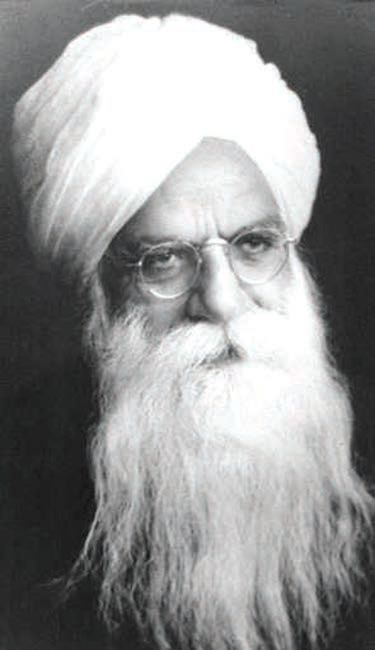
  • Dr. Bhai Vir Singh- The Sixth River of Punjab

    Dr. Bhai Vir Singh- The Sixth River of Punjab

    Remembering the poet, scholar, and theologian of the Sikh revival movement, Dr. Bhai Vir Singh on his 60th death anniversary

    Bhai Vir Singh wrote at a time when Sikh religion and politics and the Punjabi language were under such strong attack by the English and Hindus that the Sikhs had begun to doubt the value of their way of life. With his versatile pen, he extolled Sikh courage, philosophy, and ideals, gathering respect for the Punjabi language as a literary vehicle. The core of his philosophy is that man must overcome his pride or ego before he can realize God. Once the battle of self is won, man can then know God in all of his manifestations.

    Bhai Vir Singh was a poet, scholar and exegete, a major figure in the Sikh renaissance and in the movement for the revival and renewal of Punjabi literary tradition. His identification with all the important concerns of modern Sikhism was so complete that he came to be canonized as Bhai, the Brother of the Sikh Order, very early in his career. For his pioneering work in its several different genres, he is acknowledged as the creator of modern Punjabi literature.

    Born on 5 December 1872, in Amritsar, Bhai Vir Singh was the eldest of Dr Charan Singh’s three sons.The family traces its ancestry back to Diwan Kaura Mall (d. 1752), who rose to the position of vice-governor of Multan, under Nawab Mir Mu’ln ul-Mulk,With the title of Maharaja Bahadur.Baba Kahn Singh (1788-1878) was perhaps the first in the family to be regularly sworn a Sikh. He turned a recluse when he was still in his early teens and spent his entire youth in monasteries at Haridvar and Amritsar acquiring training in traditional Sikh learning. His mother’s affection ultimately reclaimed him to the life of a householder at the age of 40, when he got married. Adept in versification in Sanskrit and Braj as well as in the oriental system of medicine, Baba Kahn Singh passed on his interests to his only son, Dr Charan Singh. Apart from his sustained involvement in literary and scholarly pursuits, mainly as a Braj poet, Punjabi prose-writer, musicologist, prosodist and lexicographer, Dr Charan Singh took active interest in the affairs of the Sikh community, then experiencing a new urge for restoration as well as for change.

    To this patrimony of Bhai Vir Singh was added from his mother’s side a living kinship with another rich tradition of scholarship in exegesis of the Ckiani school, going back to the times of Guru Gobind Singh. His maternal grandfather Giani Hazara Singh compiled a lexicon of Guru Granth Sahib, and wrote a commentary on Bhai Gurdas Varan. As a schoolboy, Bhai Vir Singh used to spend a great deal of his time in the company of Giani Hazara Singh under whose guidance he not only learnt the classical and neoclassical languages, Sanskrit, Persian and Braj, but also received grounding, both theoretical and practical, in the science of Sikh exegesis.

    Bhai Vir Singh was the child of an age in ferment.The extinction of Sikh sovereignty in the Punjab, the decline in the fortunes of Sikh aristocracy, the gradual emergence of urban middle classes, the dissipation of the “national intellectual life” of the Punjab owing to the neglect and decay of indigenous education of the local people from their political destiny aroused among the Sikhs concern for survival and for redefining the boundaries of their faith. Further challenges arose in the shape of modernization, of Christian, Muslim and Hindu movements of proselytization and the agnostic cults such as Brahmo Samaj. Parallel to the developments foreboding gradual appropriation of Sikhism by the Hindu social order emerged a powerful end towards Braj classicism in the Sikh literary and scholarly tradition. Mythologization of the persons of Sikh Gurus, mixing of fiction with historical fact and interweaving of Vedantic and Vaisavite motifs into the essential Sikh teaching were its typical features. The response arose in Sikhism several movements- Nirankari (puritanism), Namdhari (militant Protestantism), Singh Sabha (revivalism and renaissance) and Panch Khalsa Diwan (aggressive fundamentalism).

    Bhai Vir Singh had the benefit of both the traditional indigenous learning as well as of modern English education. He learnt Persian and Urdu from a Muslim Maulawi in a mosque and was apprenticed to Giani Harbhajan Singh, a leading classical scholar, for Sanskrit and Sikh literature. He then joined the Church Mission School, Amritsar and took his matriculation examination in 1891. At school, the conversion of some of the students proved a crucial experience which strengthened his own religious conviction.

    From the Christian missionaries’ emphasis on literary resources, he learnt how efficacious the written word could be as a means of informing and influencing a person’s innermost being.

    Through his English courses, he acquired familiarity with modern literary forms, especially short lyric. While still at school, Bhai Vir Singh was married at the age of 17 to Chatar Kaur daughter of Sardar Narain Singh of Amritsar.

    Unlike the educated young men of his time, Bhai Vir Singh was not tempted by prospects of a career in government service. He chose for himself the calling of a writer and created material conditions for a single-minded pursuit of it. A year after his passing the matriculation examination, he set up a lithograph press in collaboration with Bhai Wazir Singh, a friend of his father’s. As his first essays in the literary field, Bhai Vir Singh composed some Geography textbooks for schools. Bhai Vir Singh began taking active interest in the affairs of Singh Sabha movement. To promote its aims and objects, he launched in 1894 the Khalsa Tract Society. In November 1899, he started a Punjabi weekly, the Khalsa Samachar. He was among the principal promoters of several of the Sikh institutions, such as Chief Khalsa Diwan, Sikh Educational Society (1908) and the Punjab and Sind Bank (1908). Interest in corporate activity directed towards community development remained Bhai Vir Singh’s constant concern, simultaneously with his creative and scholarly pursuits. In this engagement and, at the same time, in his eschewal of political activity, the Christian missionary example was apparently his model.

    In determining the basic parameters of the modern phase of Sikhism, Bhai Vir Singh stressed the autonomy of Sikh faith nourished and sustained by an awakening amongst the Sikhs of the awareness of their distinct theological and cultural identity. Secondly, he aimed at reorienting the Sikhs’ understanding of their faith in such a manner as to help them assimilate the different modernizing influences on their historical memory and cultural heritage. Education of the masses was the first requirement for the fulfilment of these objectives. In the meanwhile, the old educational system which had till then served as a channel for communication of the traditional knowledge to the youth of the race had broken down with the withdrawal, under British dispensation, of state patronage from the indigenous institutions, As if to fill the vacuum as well as to build new channels of intra-community communication, Bhai Vir Singh through his single-minded cultivation of Punjabi language as the medium of his theological, scholarly and creative work, resolved the cultural dilemma which the Sikhs faced at the turn of the century.

    On the one hand was the Sikh literary tradition in Braj language which had collected unmatched riches in multiple directions during the course of its three-centuries-long elitist career, on the other were the compulsions for mobilizing the common Sikhs through their own language. By drawing upon the Sikh tradition of Braj literature for his basic inspiration and cultural motivation and upon the Punjabi literary tradition for its linguistic components Bhai Vir Singh initiated a new literary idiom distinctly different from both.

    The tracts produced by the Khalsa Tract Society introduced a down to earth literary Punjabi remarkable for lightness of touch as well as for freshness of expression. In this writing lay the beginnings of modern Punjabi prose.

    The Khalsa Tract Society periodically made available under the title Nirguniara low-cost publications on Sikh theology, history and philosophy and on social and religious reform. Through this journal Bhai Vir Singh established a living contact with an ever-expanding circle of readers. He used the Nirguniara as a vehicle for his own self-expression and some of his major creative works such as the epic Rana Surat Singh, the novel Baba Naudh Singh, and the lives of the Gurus Sri Guru Nanak Chamatkar and Sri Guru Kalgidhar Chamatkar were originally serialized in its columns.

    In literature,Bhai Vir Singh started as a writer of romances which proved to be the forerunners of the Punjabi novel. His writings in this genre- Sundari (1898), Bijay Singh (1899), Satvant Kaur (published in two parts, I in 1900 and II in 1927)- were aimed at recreating the heroic period (eighteenth century) of Sikh history.Through these novels he made available to his readers typical models of courage, fortitude and human dignity. Subhagji da Sudhar Hathin Baba Naudh Singh, popularly known as Baba Naudh Singh (serialized in Nirguniara from 1907 onwards and published in book form in 1921) shares with Rana Surat Singh (which he had started serializing two years earlier), Bhai Vir Singh’s fascination with the theme of widow’s desperate urge for a re-union with her dead husband. But in Baba Naudh Singh this search is situated in a more mundane setting.

    This makes all the difference. The narrative here is more realistic in tone, and almost contemporary in its appeal. Bhai Vir Singh weaves into the narrative numerous motifs of social reforms moral teaching and religious preaching and depicts several situations of intercommunal and urban-rural confrontation. In 1905, Bhai Vir Singh started serializing through tracts Rana Surat Singh, the first Punjabi epic, written in blank verse of Sirkhand, variety. This long narrative of over 14,000 lines is a striking imaginative evocation of the situation of the Sikhs through a symbolic tale of a widowed queen in quest of her lost paradise. The spiritual voyage of Rani Raj Kaur, the main protagonist of the poem, from external factuality to internal essence has been described by Bhai Vir Singh in the form of a fantasy of spiritual ascension. Apart from living out her earthly destiny of suffering and pain, she symbolized the total ethos of the Sikh people at that historical moment when they were emerging out of their sense of defeat and despair into an era of a fresh beginning.

    Bhai Vir Singh’s quest for new forms of expression continued. Soon after the publication of Rana Surat Singh in book form in 1919, he turned to shorter poems and Lyrics. In quick succession came Dil Tarang (1920), Earel Tupke (1921), Lahiran de Har (1921),Matak Hulare (1922), and Bijlian de Har (1927). Following at some distance was Mere Salan Jio (1953). In this poetry, Bhai Vir Singh’s concerns were more aesthetic than didactic, metaphysical or mystical. He refined the old verse forms and created new ones.

    The metrical patterns Kabir, Soratha, Baint, etc., which he inherited from classical Punjabi literature, were transformed into lights nimble measures. Bhai Vir Singh also naturalized in Punjabi the Rubai which he borrowed from Urdu. By grafting Soratha and Sirkhandv forms on English blank verse, he paved the way for the emergence of Punjabi poem.

    As it happened, the first play written in Punjabi, Raja Lakhdata Singh (1910) also came from the pen of Bhai Vir Singh. Tentative in form, the 1. play did reveal the author’s powers of constructing crisp and witty dialogues Changeover from Braj Bhasa to Punjabi 2. as the main medium of Sikh literary and 3. scholarly expression created the need for new materials such as glossaries, lexicons, encyclopedias and exegetical works. Bhai Vir Singh himself provided several of the tools. He revised and enlarged Giani Hazara Singh’s dictionary, Sri Guru Granth Kosh, originally published in 1898.

    The revised version, published in 1927, gave evidence of Bhai Vir Singh’s command of the science of etymology and of the classical and modern languages. He published critical editions of some of the old Sikh texts such as Sikhan di Bhagat Mala (1912), Prachin Panth Prakash (1914), Puratan Janam Sakhi (1926) and Sakhi Pothi (1950).

    Monumental in size and scholarship was his annotation of Bhai Santokh Singh’s magnum opus, Sri Gur Pratap Suraj Granth, published from 1927 to 1935 in fourteen volumes covering 6668 pages.

    No sooner was the Sri Gur Pratap Suraj Grallth completed than Bhai Vir Singh launched on an even more arduous task. This was a detailed commentary on the Guru Granth Sahib. In a way, exegesis had been his lifelong occupation. Early in his career he had annotated selections from the Holy Book published in 1906 under the title Panj Granth Saiik, and, as he himself declared, all his writing was an exposition of the Sikh Scripture.

    He devoted himself unsparingly to the commentary, but it remained unfinished. A lifetime of unrelieved hard work and the weight of advancing years at last began to tell. In early 1957 signs of fatigue and weakness appeared. He was taken ill with a fever and died in his home in Amritsar on 10 June 1957. The portion of the commentary- nearly one half of the Holy Book- he had completed was published posthumously in seven large volumes.

    Article is based on extracts from the following books: Encyclopedia of Sikhism edited by Harbans Singh , Bhai Vir Singh: Life, Times and Works by Gurbachan Singh Talib, and Attar Singh, ed., Chandigarh, 1973, Bhai Vir Singh by Harbans Singh, Delhi, 1972, Bhai Vir Singh:Poet of the Sikhs. by Harbans Singh and Gurbachan Singh Talib (Source: Sikh-History.com) Encyclopedia Britannica

  • UP may face Mandsaur-like situation, warn farmer bodies

    UP may face Mandsaur-like situation, warn farmer bodies

    LUCKNOW: (TIP): The resentment among Uttar Pradesh farmers, especially sugarcane growers and potato cultivators, may snowball into protests if timely steps are not taken to prevent the simmering agrarian distress from going the Madhya Pradesh way, farmer bodies have warned.

    A faction of one of the organisations–the Bharatiya Kisan Union (BKU)–has even threatened to cut off supply of milk and vegetables to cities from Sunday if their demand for a CBI probe and an FIR into the police firing in Mandsaur, that claimed five lives, are not met.

    Taking a cue from their Madhya Pradesh counterparts, farmers in western Uttar Pradesh are gearing up to raise their own issues, ranging from unpaid dues to poor procurement infrastructure, which, they claimed, have not been adequately addressed by the Yogi Adityanath government despite numerous promises and repeated assurances.

    The activities of cow protection vigilantes in the recent times had added more trouble to the sector, they said.

    The farmers in UP have been closely following the agitations of Madhya Pradesh and Maharashtra, considering the stirs as their roadmap for the future. Under the banner of the BKU, a procession was taken out here on Wednesday to express solidarity with the agitating farmers of Madhya Pradesh and condemn the police action on them in Mandsaur.

    “Now, with these agitations, there is renewed energy among us. There is no end to the problems we face. We will also join the fight,” said Rakesh Tikait, president of the Bhartiya Kisan Union.

    His views have been echoed by leaders of other farmer groups. Another faction of the BKU submitted a memorandum addressed to the prime minister to the Lucknow district magistrate on Wednesday, demanding an FIR against officers responsible for the “unfortunate police firing” in Mandasur and a CBI probe.

  • CHHOTA SHAKEEL’S AIDE ARRESTED, WAS PLANNING TO TARGET PAK-BORN WRITER

    CHHOTA SHAKEEL’S AIDE ARRESTED, WAS PLANNING TO TARGET PAK-BORN WRITER

    New Delhi, June 9 TIP: The Delhi Police’s Special Cell has arrested an aide of gangster Chhota Shakeel, who was planning to target Pakistan-born Canadian writer Tarek Fatah. Deputy Commissioner of Police (Special Cell) P S Kushwah said Junaid Chowdhry was nabbed on the intervening night of June 8 and 7 from Wazirabad road in north-east Delhi.

    Though the DCP refused to divulge details of the target, a senior police officer, on the condition of anonymity, said Chowdhry was planning to target the writer, known for his controversial remarks.

    Even though Fatah was not in Delhi, the aide was here to carry out a recce, he said. Chowdhry was arrested in June last year along with three others with arms and hawala money sent by Shakeel, but was released on bail within four months. They had been planning to kill Hindu Sabha chief Swami Chakrapani at that time. He contacted Shakeel again but after his bail was cancelled he was sent to Tihar. Later, he was again released on bail and once more got in touch with Shakeel. Chowdhry then started carrying out the gangster’s Delhi based activities. He is currently being interrogated. Source: PTI

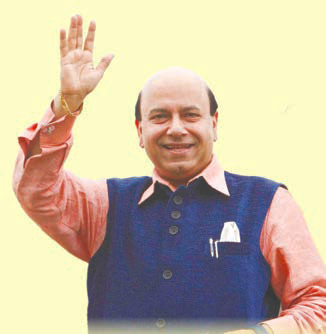
  • Indian Leader Vijay Jolly leading 12 Member Int’l Delegation to Cambodia

    Indian Leader Vijay Jolly leading 12 Member Int’l Delegation to Cambodia

    NEW DELHI (TIP): Vijay Jolly, Indian Leader & ICAPP Standing Committee Member is leading a 12-member International Poll Observers delegation to monitor Cambodia Parliamentary elections. Political leaders of Nepal, Thailand, Sri Lanka, Vietnam, China, Russia, Myanmar & India have been invited as International Poll Observers.

    The Election Commission of Cambodia has invited independent election observers from International Conference of Political Parties (ICAPP), Centric Democrat International (CDI) and the Centrist Asia Pacific Democrats International (CAPDI) to observe the Cambodia Parliamentary Elections to be held on 4th June 2017.

    Indian BJP Leader Vijay Jolly leading ICAPP, launched in 2000, is a global political organization with members of 360 political parties drawn from 53 countries in Asia. They promote exchanges, cooperation & mutual understanding between citizens of Asia, Europe, Africa & Central America.

    Former President of Colombia & President CDI Mr. Andres Pastrana Arango will lead team of 10 observers from 7 countries while Former Speaker of Indonesia & Vice Chairman CAPDI Mr. Agunge Laksono shall lead 8 observers from 4 countries for Cambodia elections.

    These independent, international observers shall play a complimentary role to ensure free & fair Cambodian elections. The ruling Cambodian People’s Party (CPP) has dominated Cambodian politics since 2002 obtaining 60% of the total votes in 2002,won 61.1% in 2007 while in the last elections in 2012 it swept the polls winning 61.8% of total votes in Cambodia.

    The Cambodian National Rescue Party (CNRP) is the top challenger to power in these elections. Indian BJP leader Vijay Jolly shall pay a courtesy call to meet & greet the Prime Minister of Cambodia Hon’ble Hun Sen on Saturday, 3rd June 2017 at Phnom Penh. He shall be briefed by Indian Charge d’Affaires His Excellency Rajiv Kumar at Embassy of India in the Cambodian capital. Jolly shall specially visit the world famous “Angkor Wat” Hindu temple & Buddhist place of worship “Ta Prohm” temple.

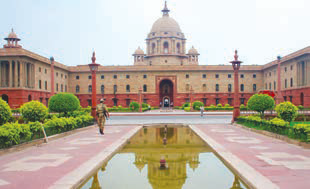
  • RACE FOR RASHTRAPATI BHAVAN –  THIS IS HOW INDIA’S NEXT PRESIDENT WILL BE ELECTED

    RACE FOR RASHTRAPATI BHAVAN – THIS IS HOW INDIA’S NEXT PRESIDENT WILL BE ELECTED

    NEW DELHI (TIP): As President Pranab Mukherjee’s term ends on July 24, the Election Commission today announced that voting for choosing India’s next president will be held on July 17 while counting will be on July 20 if needed.

    Although none of the political parties have come up with names of their candidates yet speculations are on the rife. Some Opposition leaders have been trying to come up with the name of a consensus candidate. The ruling BJP-led NDA is likely to announce their nominee in the next fewdays.

    WHO CAN VOTE

    Only members of the electoral college are eligible to vote in the presidential election. The electoral college comprises elected members of both Houses of Parliament and elected members of the legislative Assemblies of all states including Delhi and the union territory of Puducherry. A total of 4896 voters including 4120 MLAs and 776 elected MPs are eligible to cast their ballot.

    WHO CANNOT VOTE

    All nominated members of Rajya Sabha, Lok Sabha and legislative Assemblies do not have the right to vote. Members of the Legislative Councils also do not have voting rights.

    HOW THE VOTING WILL HAPPEN

    Unlike Lok Sabha and Assembly elections in India, the presidential elections do not have electronic voting system using EVMs. The Election Commission will supply a special pen to all voters to mark their choice of candidate on ballot papers.

    A principle of proportional representation is followed under which the elector has to mark preferences against the names of the candidates. The elector can mark as many preference as the number of candidates.

    While the marking of the first preference is compulsory for the ballot paper to be valid, other preferences are optional.

    WHERE WILL VOTING BE HELD

    Polling for the election will take place in the Parliament House and in the premises of the legislative Assemblies.

    SECRET BALLOT

    The Constitution has expressly provided that election to the office of President shall be by secret ballot. Voting procedure laid down in the 1974 Rules provides that after marking the vote in the voting compartment, the elector is required to fold the ballot paper and insert it in the ballot box.

    NO WHIP

    Political parties cannot issue any whip to their MPs and MLAs in the matter of voting in the Presidential election.

    NOMINATION OF CANDIDATES

    The nomination paper of a candidate has to be subscribed by at least 50 electors as proposers and by at least another 50 electors as seconders. A security deposit of Rs 15,000 is also needed.

    ELECTION SCHEDULE
    June 14: Issue of notification
    June 28: Last date to make nomination
    June 29: Date for scrutiny of nomination
    July 1: Last day to withdraw nomination
    July 17: Date of Election (if needed)
    July 20: Counting of votes will be held in Delhi (if needed)

    Presidents of India

    ? Rajendra Prasad: 1950 to 1962

    ? Sarvepalli Radhakrishnan: 1962 to 1967

    ? Zakir Hussain:1967 to 1969

    ? VV Giri (Acting President): 1969 to 1969

    ? Mohammad Hidayatullah (Acting President): 1969 to 1969

    ? V.V Giri: 1969 to 1974

    ? Fakhruddin Ali Ahmed: 1974 to 1977

    ? Basappa Danappa Jatti (Acting President): 1977 to 1977

    ? Neelam Sanjiva Reddy: 1977 to 1982

    ? Giani Zail Singh: 1982 to 1987

    ? R Venkataraman: 1987 to 1992

    ? Shankar Dayal Sharma: 1992 to 1997

    ? K R Narayanan: 1997 to 2002

    ? APJ Abdul Kalam: 2002 to 2007

    ? Pratibha Patil: 2007 to 2012

    ? Pranab Mukherjee: 2012 to present

  • Saudi, allies issue Qatar-linked ‘terrorism’ list

    Saudi, allies issue Qatar-linked ‘terrorism’ list

    RIYADH (TIP): Saudi Arabia and allies, which have cut ties with Doha, today issued a list of individuals and entities they say are linked to Qatar over “terrorism”.

    “This list is connected to Qatar and serves suspicious agendas in an indication of the duality of Qatar policies,” said the statement from Saudi Arabia, the United Arab Emirates, Egypt and Bahrain.

    It shows that Qatar “announces fighting terrorism on one hand and finances and supports and hosts different terrorist organisations on the other hand,” they said.

    The list, however, contains at least two names already designated internationally as terrorist financiers, and against whom Qatar took action, according to a previous US department of state report.

    Those two, Sa’d al-Ka’bi and Abd al-Latif al-Kawari, are among dozens of individuals and entities named Friday by Saudi Arabia and its three allies. (AFP)

  • Spanish man who fought off London attacker confirmed dead

    Spanish man who fought off London attacker confirmed dead

    MADRID (TIP): The family of a Spanish man who used his skateboard to try to defend a woman from one of the assailants during the London attack confirmed on Wednesday that he had died, after a wait of close to four days.

    “Ignacio didn’t survive the attacks,” Ignacio Echeverria’s sister Ana wrote on her Facebook page. His other sister Isabel also confirmed his death on her Facebook page. “We want to see and be with Ignacio’s body. It seems that we won’t be able to be with his body until Friday at the earliest,” she added.

    Spain’s foreign ministry also confirmed that Echeverria, a 39-year-old HSBC expert in the fight against money laundering, had died in Saturday’s attack that saw three assailants in a van mow down people on a bridge and then go on a stabbing spree.

    “Ignacio Echeverria’s exemplary attitude during the attacks is, for all, a model of solidarity,” it said in a statement. “His courage in defending a defenceless person helps to remember the necessity of remaining united in the face of the scourge of terrorism, faced with those who make violence and terror their only language.”

    Echeverria’s friend said he spotted him during the short, panic-ridden rampage trying to defend a woman from one of the assailants with his skateboard. He was last seen lying on the ground and had been missing since.

    The Islamic State group claimed responsibility for the attack in which police have now confirmed that eight people were killed. Echeverria’s friend said he spotted him during the short, panic-ridden rampage trying to defend a woman from one of the assailants with his skateboard. He was last seen lying on the ground and had been missing since.

    Spanish Interior Minister Juan Ignacio Zoido denounced what he called the sluggish pace of the British victim identification process, calling it “inhumane” for Echeverria’s family. (AP)

  • Israel advances settlement plans despite Donald Trump’s plea

    JERUSALEM (TIP): Israel has advanced plans for more than 3,000 homes in West Bank settlements this week, despite US President Donald Trump’s call to hold back on such projects as he seeks ways to restart peace efforts.

    Israel pushed forward with the plans as it also marked 50 years since the Six-Day War, fought from June 5-10, 1967 and which began its continuing occupation of the West Bank. A total of 3,178 housing units were advanced in a number of different settlements, the Peace Now NGO that tracks settlement growth told AFP on Thursday.

    They are the first new settlement announcements since Trump’s visit to Israel and the Palestinian territories last month, when he tried to encourage both sides back to the negotiating table. Trump has called on Prime Minister Benjamin Netanyahu to hold back on settlement building for now, but the rightwing Israeli leader has been under intense pressure from settler leaders. The powerful settler movement wields heavy influence in Netanyahu’s right-wing governing coalition.

    On Tuesday, a defence ministry planning committee advanced 1,500 units, while more than 900 more were added on Wednesday, Peace Now said. In a separate process, 688 homes were advanced by the committee late on Wednesday and will now go out for a 60-day public comment period during which objections can be filed.

    The plans are at various stages in the process and the units are in a number of settlements across the West Bank. Palestinian president Mahmud Abbas condemned the plan for the new housing units. Israeli authorities did not immediately respond to requests for comment.

    More than 600,000 Israelis live in settlements in the West Bank, including in annexed east Jerusalem. They live alongside some three million Palestinians. Settlements are considered illegal under international law and are seen as a major obstacle to peace and the so-called two state solution — the creation of an independent Palestinian state alongside Israel. Israel blames Palestinian incitement and intransigence for the ongoing conflict.

    While the majority of the planned homes are in pre-existing settlements, some will be built in the first new official settlement in some 25 years, Peace Now said. Last month, Trump visited Israel and the Palestinian territories, meeting both Netanyahu and Abbas as he seeks what he has called the “ultimate deal”.

    However, Trump has given no details about how he plans to restart talks, and there is deep scepticism over whether such an effort would have any chance of success. Netanyahu has said he still supports a two state solution, but peace advocates say his actions show otherwise.

    On Tuesday, the premier told settlers he would keep building across the West Bank. “Netanyahu has been trying to hold back but he has been under very strong pressure from the settlement movement,” Ofer Zalzberg of the International Crisis Group think tank said. “In the last two weeks there has been an allout war and he caved in.”

    Abbas’s spokesman called Netanyahu’s statements a “challenge” to Trump and the international community. “It is a challenge to Trump’s efforts to create an appropriate atmosphere for a serious political process, and a blatant challenge to the international community as a whole,” a statement said. (AFP)

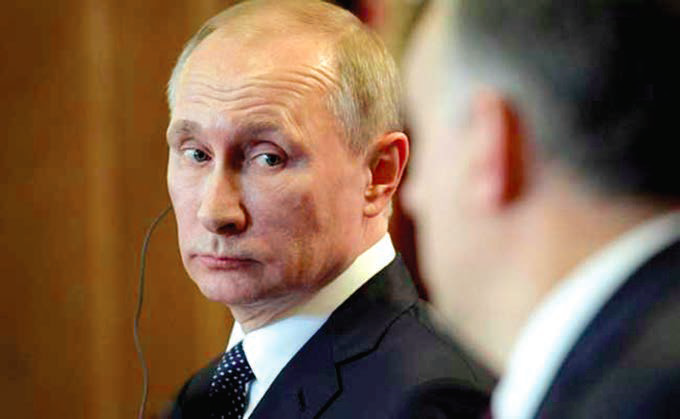
  • Vladimir Putin: I am not a woman, so I don’t have bad days

    Vladimir Putin: I am not a woman, so I don’t have bad days

    NEW YORK (TIP): Film director Oliver Stone, whose series of conversations with Vladimir Putin air next week on Showtime, said he watched Megyn Kelly interview the Russian president on NBC and concluded that “he knew his stuff and she didn’t.” Kelly’s interview, which aired on the debut of her newsmagazine, “Sunday Night with Megan Kelly,” on Sunday, “became machine-gun like,” Stone said, and was an example of how American journalism frequently leaves little room for nuance.

    “I think she was attractive and she asked hardball questions, but she wasn’t in position to debate or counter him, because she didn’t know a lot of things,” he said. NBC News President Noah Oppenheim shot back that “no one here is interested in Oliver Stone’s unsolicited thoughts on Megyn Kelly’s appearance or his ill-informed opinion of her journalism.”

    “But so long as we’re offering each other professional feedback, please let him know I don’t think he’s made a decent movie since the early `90s,” he said. Putin was combative when asked in the NBC interview about hacking in the US presidential election and relations between Russia and President Donald Trump’s team. He’s more serene on Showtime, where more than a dozen interviews that Stone conducted with the Russian president between 2015 and early this year unfold one hour per night for four nights starting Monday.

    As an example of where he believed Kelly was mistaken, Stone said the claim that 17 US intelligence agencies had concluded the Russians were behind election year hacking and used as a preface for a question had been “walked back.” It was a reference to testimony from James Clapper, former director of national intelligence, about a hacking report by three specific agencies. The independent organization Politifact has produced a report that backs Kelly, however, because Clapper had earlier said that all 17 intelligence agencies he had supervised agreed about Russia’s involvement.

    Stone, a controversial figure who has interviewed Fidel Castro and Hugo Chavez and produced a documentary backing Putin’s version of events in the Ukraine, conducts a Putin interview far less confrontational than Kelly’s, at least on the basis of two episodes provided for screening by Showtime. One critic, Marlow Stern in The Daily Beast, called in a “wildly irresponsible love letter” to Putin.

    The filmmaker’s style does include its share of ingratiating remarks. “You have a lot of discipline, sir,” he says at one point. “You are an excellent CEO. Russia is your company,” he says at another.

    Besides office sit-downs, Putin is interviewed driving a car, walking through horse stables at his home and after he played in a hockey game. When Putin makes a claim about a letter he received from the CIA and Stone asks him to produce it, the Russian president says, “My words are enough.” Yet Stone also challenges Putin on his authoritarian style and questions his claims of democratic reform. The filmmaker said in an interview that there are more direct questions about relations with the United States in the unseen third and fourth episodes.

    He asks Putin about assassination attempts and, while it was inadvertent in one case, captures a couple of eyeopening moments. Asked if he ever have bad days, Putin replies that “I am not a woman so I don’t have bad days,” adding a reference to “natural cycles” affecting behavior.

    During a discussion about gay rights, Putin said about a homosexual male: “I prefer not to go in the shower with him. Why provoke him?” Stone is aware that he’ll receive criticism for not pushing Putin hard enough. “I’m not a journalist,” he said. “I’m a filmmaker and I was taking a different approach.”

    The project’s value comes in seeing Putin talking about his life and world view in an extended format, seeing the personal and political history that drives policy for the US’s biggest adversary, and simply how his mind works. At one point Stone asks Putin about a 13 percent inflation rate, and is quickly corrected. “Twelve point nine,” he said. “It’s crucial for the United States to understand another point of view,” Stone said. “I’m interested in preventing a further deterioration in relations.”

    The film also features Stone screening a copy of the Cold War-era satire “Dr. Strangelove” for the stone-faced Russian leader. “I pushed him where I felt he should be pushed,” Stone said. “At a certain point, you know that that person is not going to change his approach. He’s a leader. He thinks things through and he’s made his point. I can’t think of anything more that I could have said or done.” (AP)